



Blonde hair and red roots can go wrong in two very different ways: too bright, and it looks striped; too muddy, and it looks like the color gave up halfway down the shaft. The sweet spot sits between those extremes, where the dark root gives the blonde some structure and the red does what red does best — steal the show without making the whole head look flat.
That balance is why red dark root hair colors for blonde hair have so much staying power. A shadow root softens regrowth, gives you a little depth at the crown, and keeps the red from floating awkwardly on pale lengths. It also solves a problem that anyone with lightened hair knows well: the ends are usually more porous, so they grab red faster and hang on to it in a louder, sometimes harsher way than you expected.
There’s a practical side here, too. A level 10 platinum blonde will read differently from a level 8 beige blonde, even when both are wearing the same red formula. One will look sharper and more electric; the other will look richer and calmer. And yes, the root shade matters almost as much as the red itself. A soft espresso root can make cherry feel polished. A cooler brown root can keep burgundy from turning orange at the edges.
So the trick isn’t simply “add red.” It’s choosing the right red, the right root depth, and the right amount of contrast. That’s where these shades get interesting.
1. Cherry Cola Shadow Root
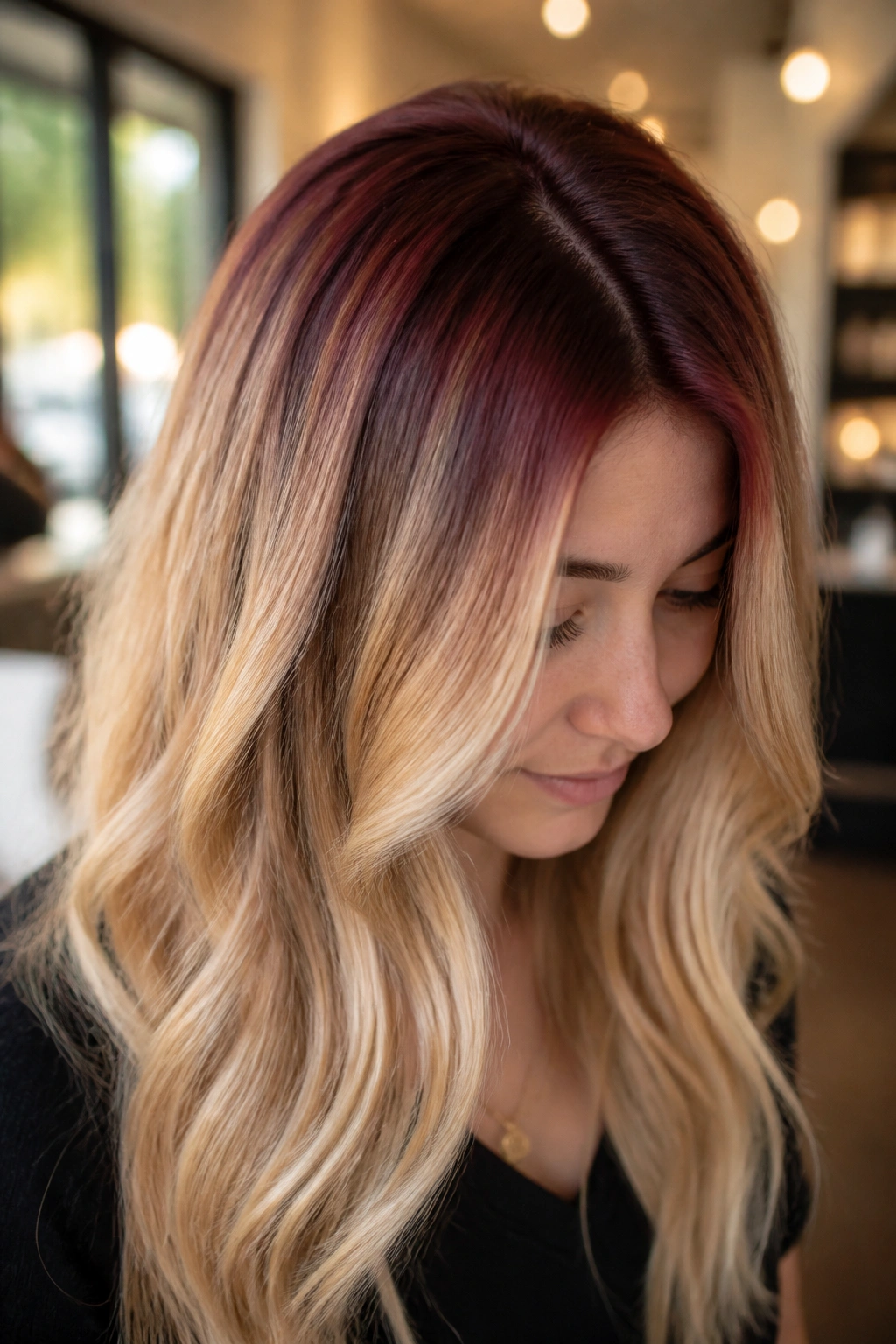
Cherry cola is the shade people think of when they want red hair that still feels wearable with blonde pieces peeking through. It has that dark, almost fizzy depth at the root, then slides into a red that leans cherry instead of tomato. On blonde hair, it looks richest when the root sits around a level 4 or 5 neutral brown and the red melts into lifted lengths rather than sitting in one hard band.
Why It Works
Cherry tones are strong enough to stand up to pale blonde, but they’re not so bright that they scream for attention from across a room. That makes this one easy to live with if you like contrast but do not want a costume-color effect.
The root shadow is doing a lot of the work here. It keeps the grow-out soft, and it stops the blonde from looking like it was accidentally left out of the formula. A soft melt around the crown also makes the red feel more expensive in person.
Quick Formula Notes
- Best on level 8 to 10 blonde with decent porosity control
- Root shade: neutral brown, not black
- Mid-lengths: cherry red or deep ruby gloss
- Ends: keep a little lighter so the melt shows
Pro tip: Ask for the root smudge to stop a half-inch above the ear, not at the hairline. That tiny shift makes the grow-out look cleaner.
2. Copper Penny Root Melt
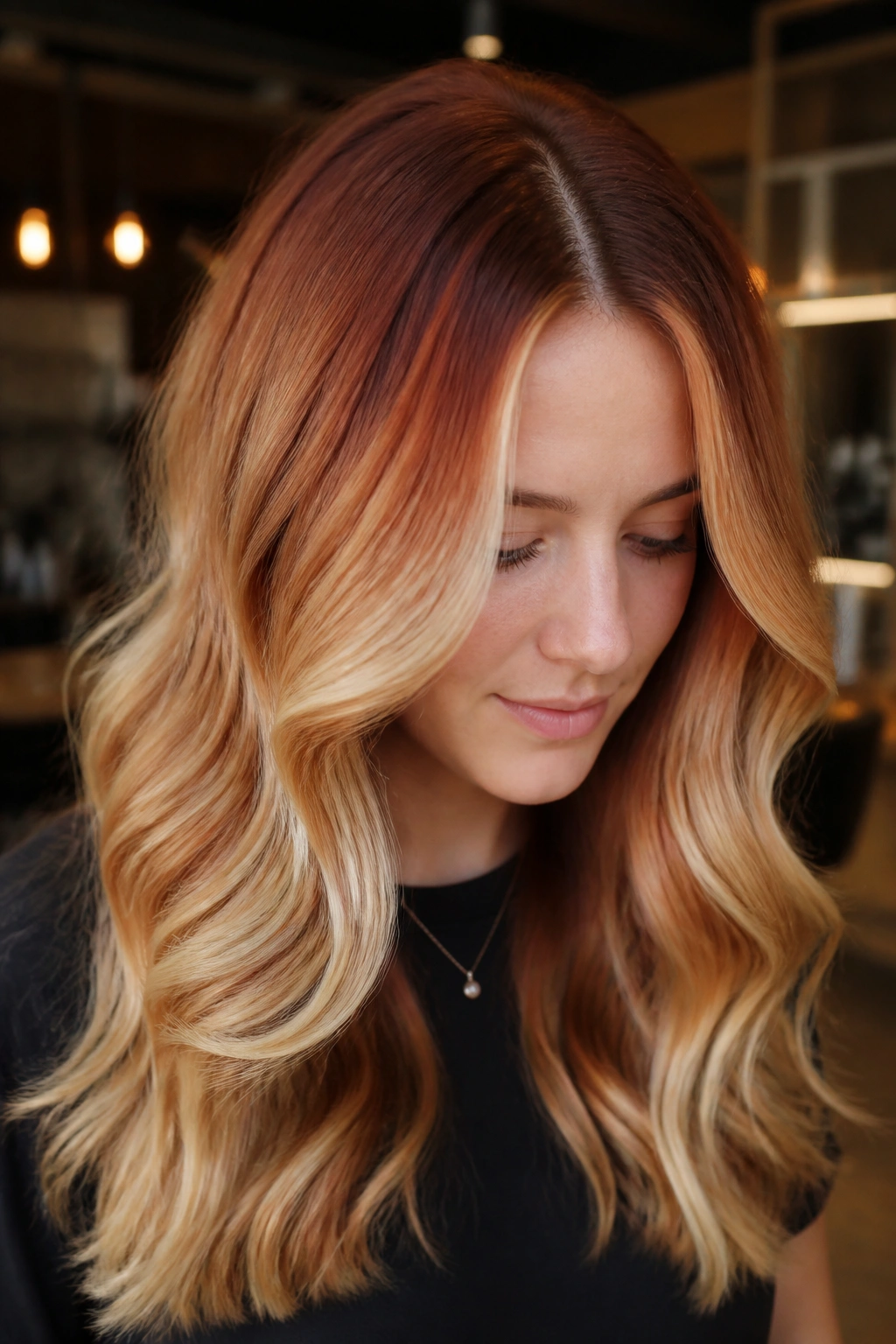
Copper penny is the move when you want warmth that feels bright, not brassy. It sits between red and orange in a way that flatters blonde hair more often than people expect, especially if the blonde has a beige or golden base already. The dark root keeps it grounded, so the whole look doesn’t turn into one giant copper block.
The best version has a root around level 5 chestnut brown and a copper melt that starts just below the crown. If the blonde is very pale, the copper can look sharp at first, then soften as it fades. That fading stage matters. A lot. Copper is one of those shades that either grows out gracefully or starts looking tired fast, and the difference usually comes down to how deep the root was placed.
If you like warm makeup, gold jewelry, and a little shine around the face, this shade is hard to beat. It also behaves well on layered cuts, because the movement in the hair helps the red-gold pieces catch the light without looking streaky. Keep the roots soft, keep the ends glossy, and don’t let the copper get too orange. Orange is where the whole thing starts to wobble.
3. Burgundy Smudge on Honey Blonde
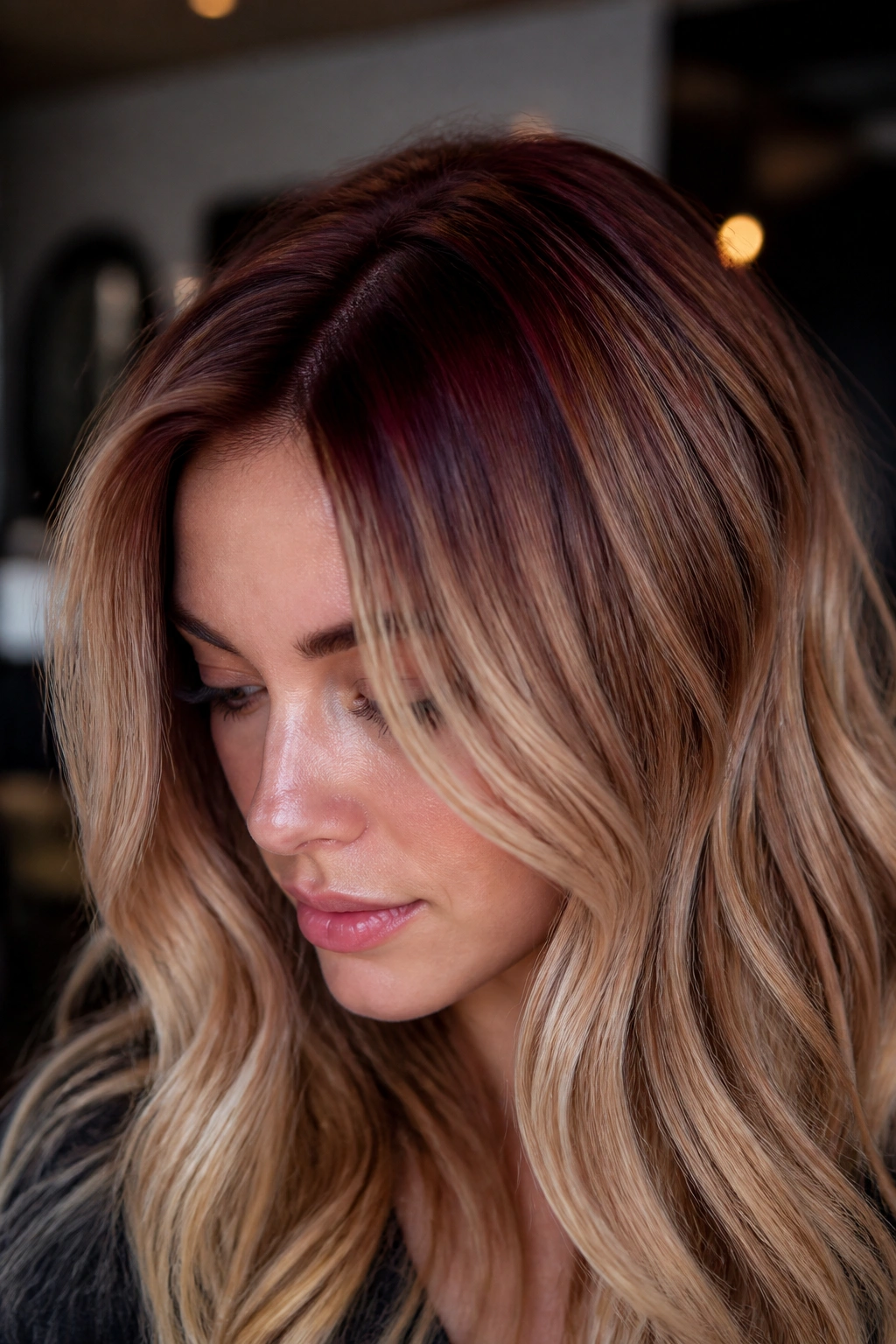
Want red that feels polished instead of loud? Burgundy on honey blonde is one of the easiest answers. The color is deep enough to read luxurious, but the honey blonde underneath keeps it from looking heavy. With a dark root, you get a look that feels deliberate from the first inch down to the ends.
How to Keep Burgundy from Going Flat
Burgundy can turn flat if the root is too dark and the ends are too saturated. That’s the trap. The shade needs some air in it, which means your blonde pieces should still show through in places, especially through the mid-lengths and around the face.
A root at level 4 cool brown works well here. The red itself should lean wine-red rather than plum-black. If the blonde base is honeyed, the burgundy blends into it in a really pretty way; if the blonde is too icy, the contrast gets harder and a little less forgiving.
Best Uses
- Face-framing waves
- Shoulder-length cuts with texture
- Blondes that already pull warm
- Anyone who wants red without a neon finish
How to use it: Ask for a soft root shadow, then a burgundy gloss through the lower half, leaving a few lighter ribbons around the front. That keeps the look dimensional instead of dense.
4. Strawberry Rose Dark Roots
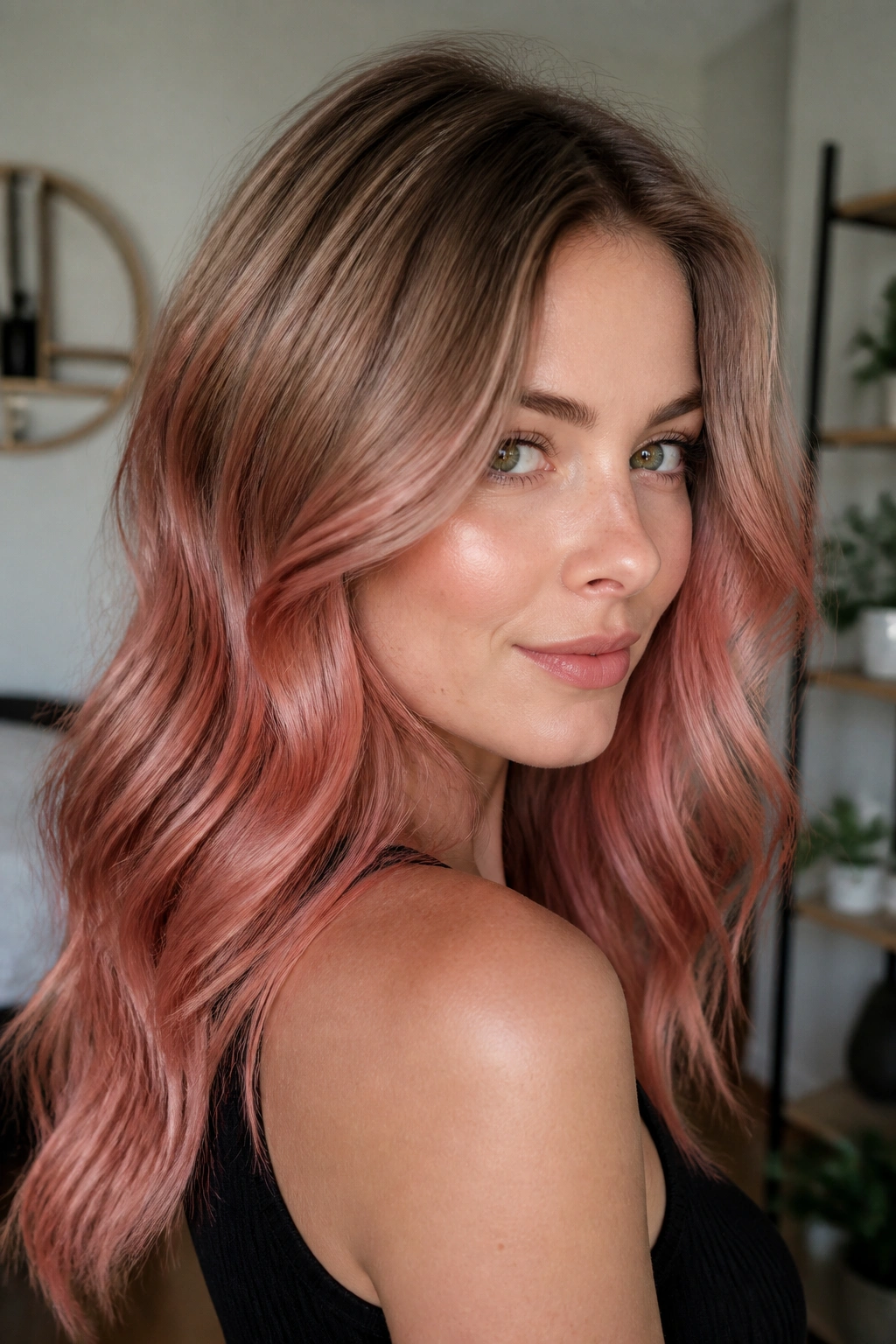
Picture a blonde that still looks blonde from across the room, but blushes red when the light hits it. That’s the appeal here. Strawberry rose sits in the softest corner of the red family, which makes it a good choice if you want something feminine and a little dreamy without losing the dark-root contrast.
The color works best on a base that’s already pale and clean. If the blonde is yellow or patchy, the rose tone can go strange in a hurry. A very soft root shadow — think level 5 beige brown — gives the hair a little spine, while the rose-red ends keep the whole look from feeling too sweet.
This is one of those shades that rewards loose styling. Braids, waves, and half-up styles show off the transition more clearly than pin-straight hair does. That matters because the magic is in the melt. The eye wants to travel from root to root shadow to rose-blonde ends, not stop at a blunt line halfway down.
It also plays nicely with minimal makeup. A washed denim shirt, a cream sweater, a little gloss on the lips — done. That’s enough.
5. Merlot on Buttery Blonde
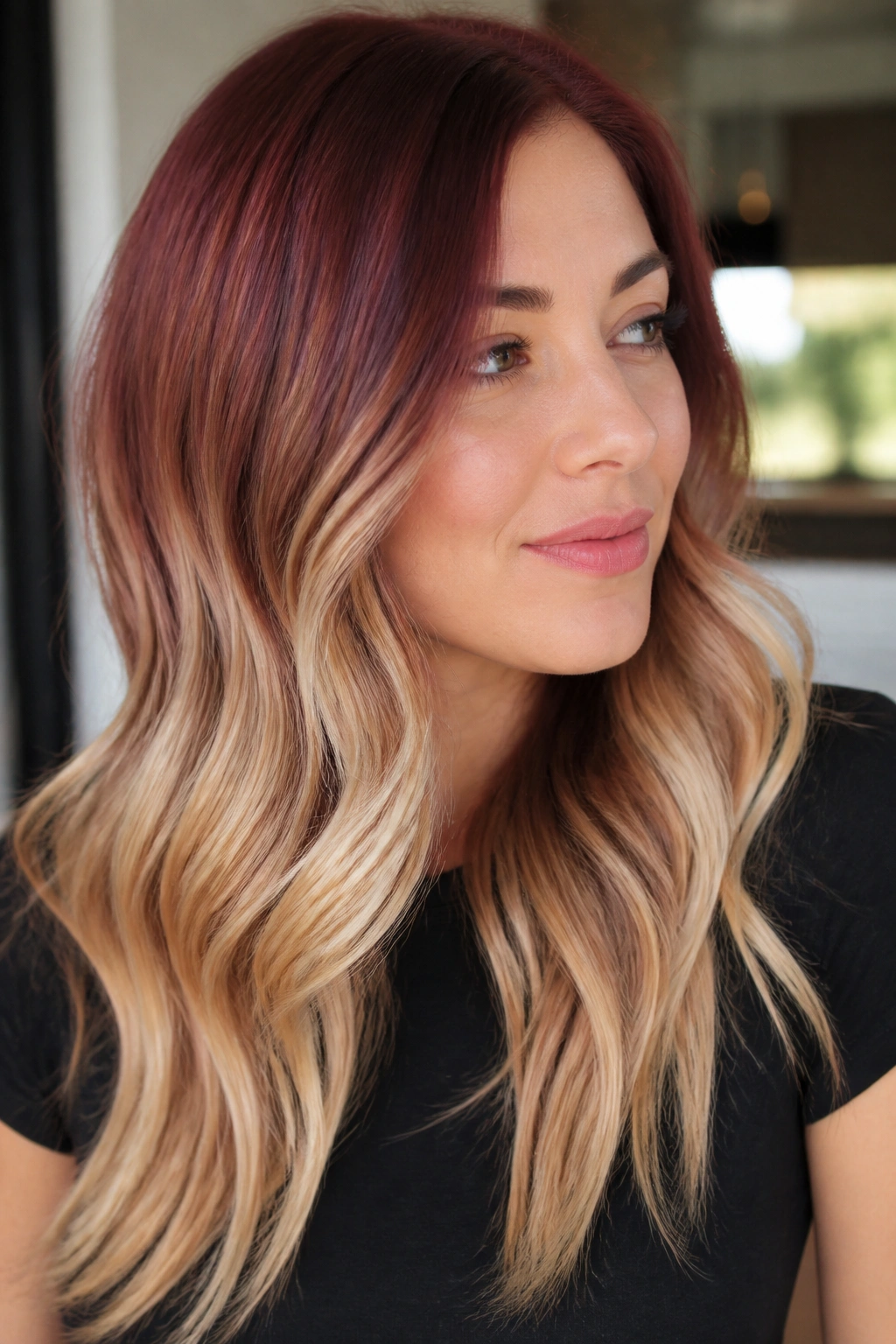
Merlot is the shade I’d point to if someone said they wanted red hair but didn’t want the hair to look high-maintenance. It’s deep, wine-toned, and a little moody, which means it can carry a darker root without losing its shape. On buttery blonde, it feels rich rather than harsh.
The nice thing about merlot is that it does not need perfection to look good. A few lighter strands showing through the mid-lengths actually help it. The color reads like a glossed overlay rather than a hard block of pigment, and that gives the whole style some movement. If your blonde base has a warm beige cast, even better. The red settles in beautifully.
This is also one of the safer choices for hair that has been lightened a few times. Deep reds are less fussy than pale coppers on very porous hair, though they can still grab dark if the ends are overprocessed. That’s why a root shadow matters so much here. Without it, merlot on blonde can look detached, almost like two different heads of hair trying to share the same scalp.
Keep the finish shiny. That’s not optional with this one.
6. Cinnamon Red Money Piece
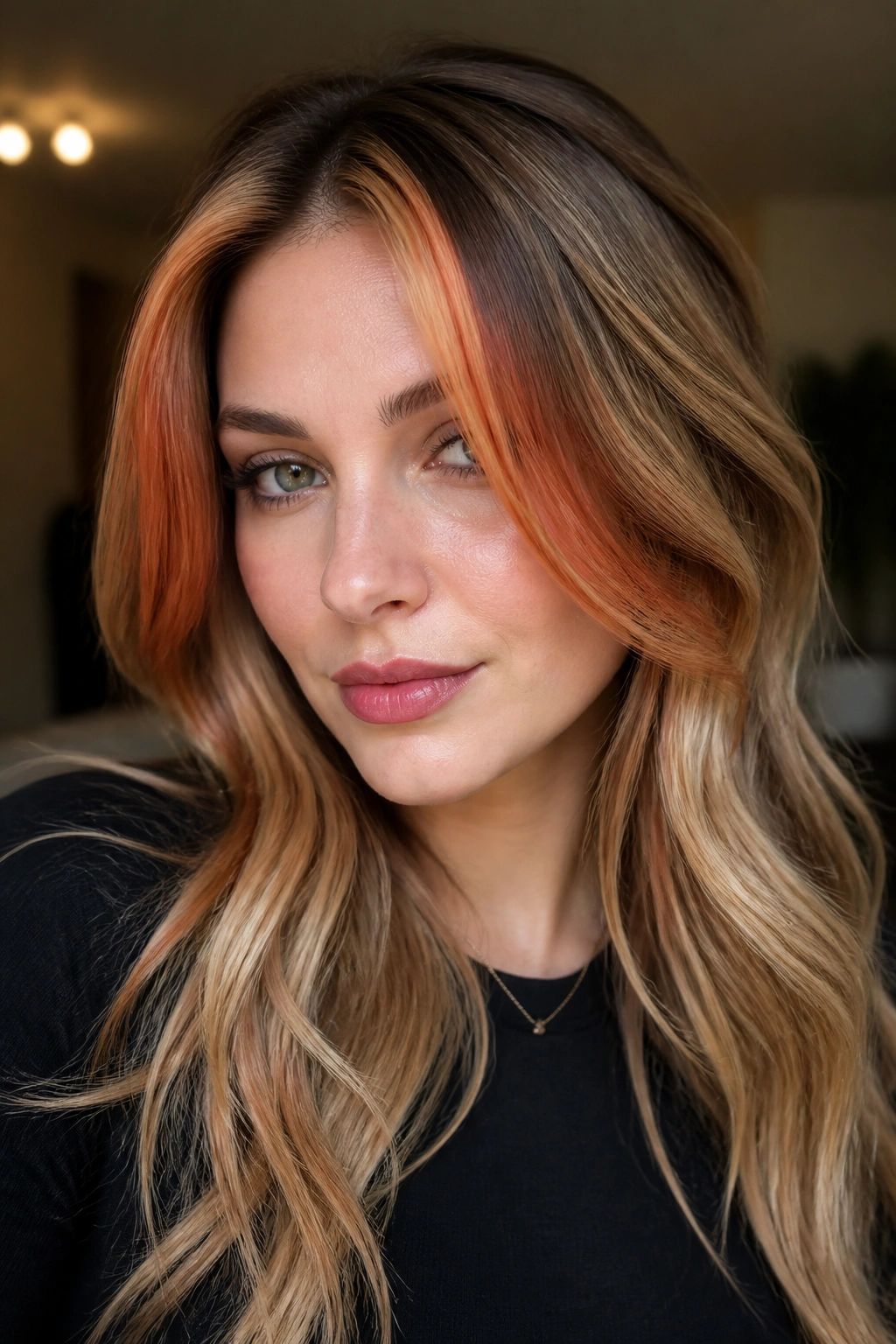
A full head of red is one thing. A cinnamon red money piece with dark roots is a different animal entirely. The blonde stays visible, the face gets the color hit, and the darker root keeps the whole thing from looking like a highlighter exploded near your part line.
What Makes It Different
Unlike an all-over red melt, this style uses red as a frame. The money piece sits around the face and a little into the top layers, while the rest of the blonde remains lighter and calmer. That gives you the impact of red without signing up for full saturation everywhere.
Cinnamon is the right word here because it leans warm and spicy, not fire-engine bright. On blonde hair, it looks especially good when the root is a soft espresso or mocha brown and the face-framing pieces are just a shade lighter than the rest of the red. You get depth, then brightness, then blonde — a nice little visual rhythm.
Who It’s Best For
- People who want red but like keeping some blonde visible
- Medium to long layers
- Side parts and curtain bangs
- Anyone who wants easier grow-out than a full color
My take: If you’re nervous about red, start here. It gives you the mood of red hair without the full commitment.
7. Garnet Wine on Beige Blonde
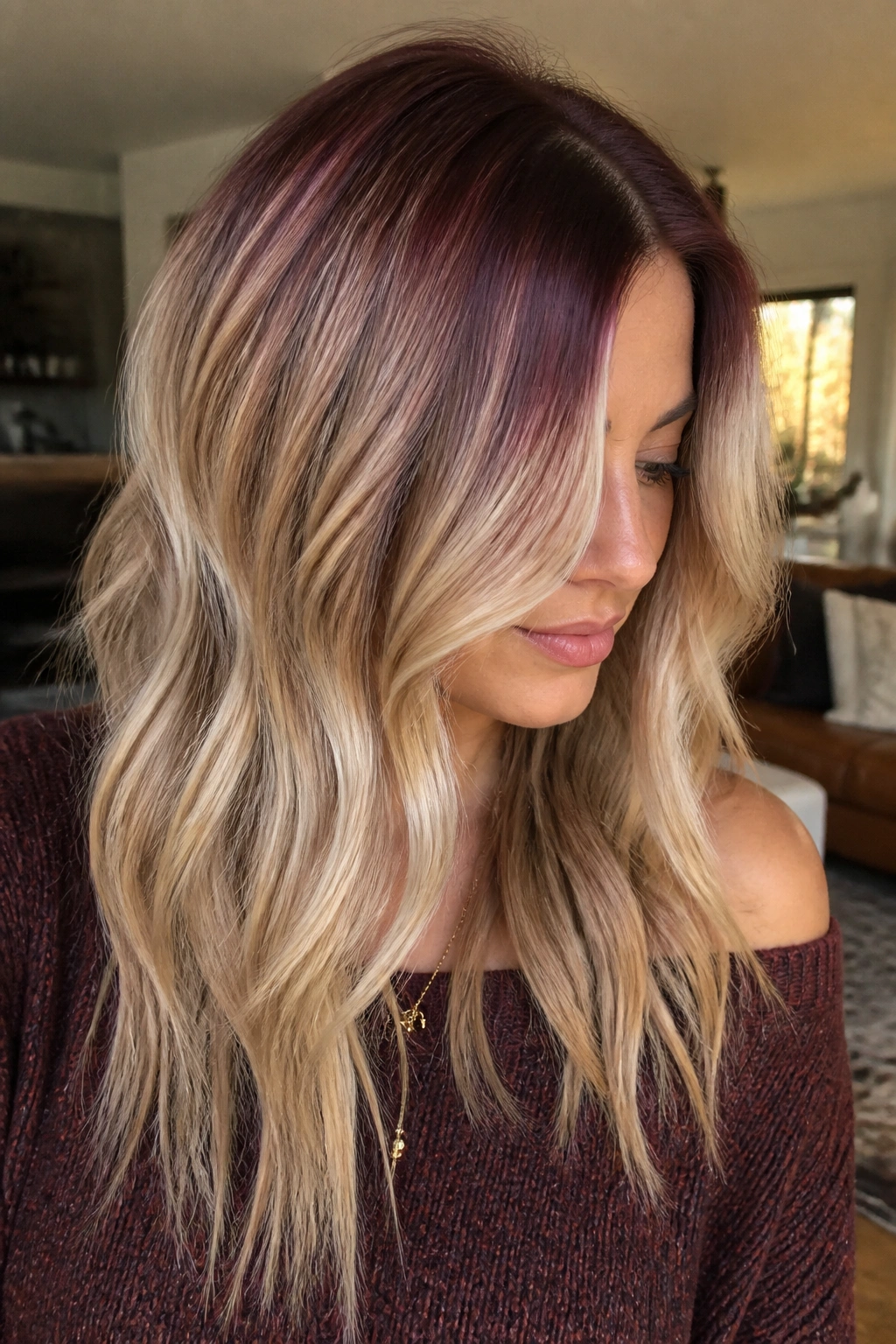
There’s a particular kind of red that looks better at dinner than under bathroom lighting, and garnet wine is it. On beige blonde, it feels deep and plush, with a darker root that makes the color sit low and expensive-looking instead of sugary. If cherry is bright and burgundy is polished, garnet is the one with the velvet jacket.
The reason it works is simple: beige blonde already has enough softness to absorb the darker red tones without going muddy. Add a root shadow, and the look gains a clean anchor at the top. Without that anchor, the red can separate from the blonde and look patched on. With it, the melt feels intentional and the color reads as one piece.
This shade is especially good on hair with a blunt cut or long waves. A blunt line shows off the depth; waves show off the transition. Either way, the root needs to stay soft and slightly cooler than the ends. That keeps the garnet from tipping into rusty territory.
If you’re dressing for rich knits, brown leather, or dark lipstick, this is the shade that quietly wins. Not loud. Just good.
- Root depth: level 4 to 5 cool brown
- Red tone: garnet, wine, or deep berry
- Blonde base: beige or champagne blonde
- Finish: glossy, never matte
8. Rusty Auburn Root Shadow
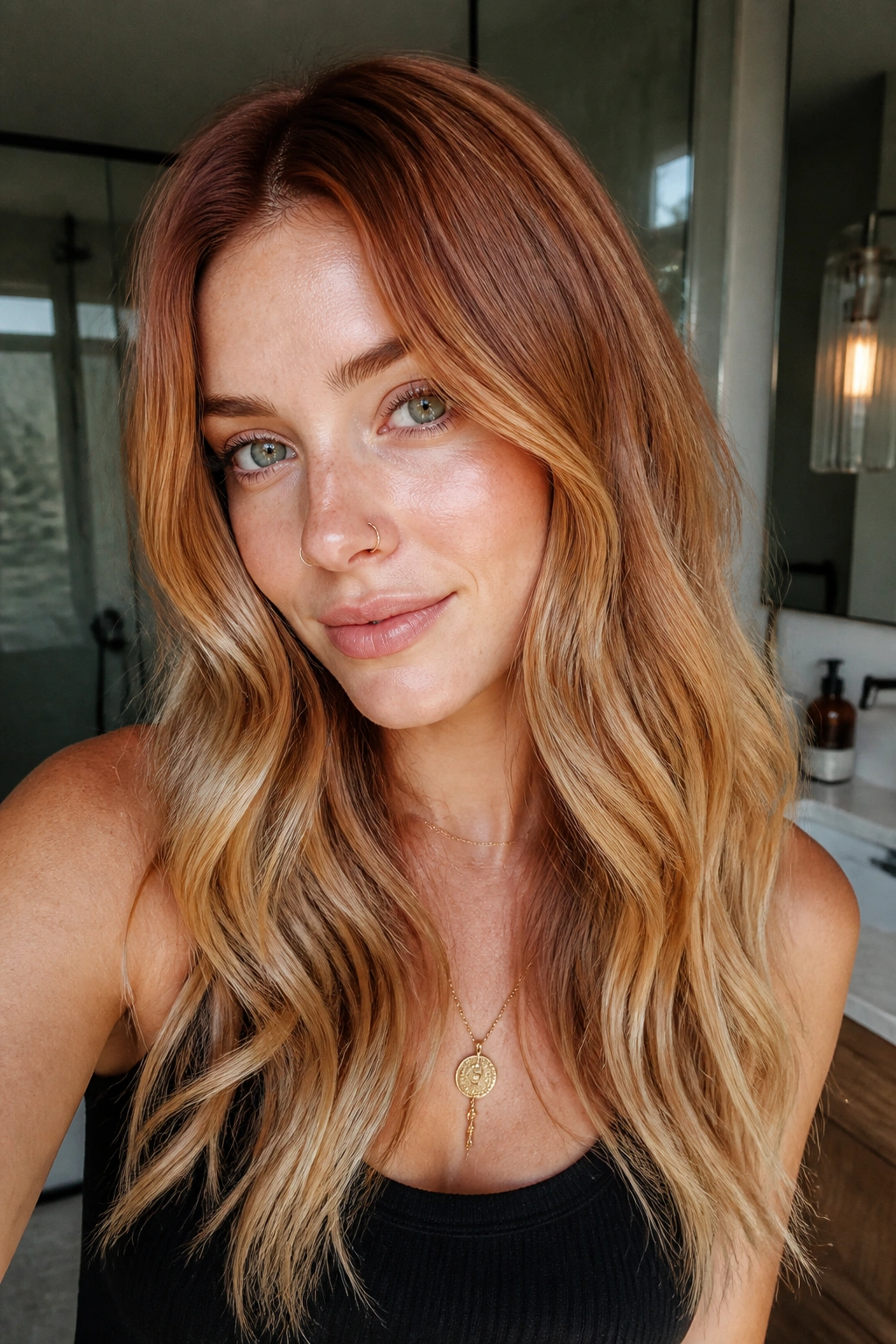
Rusty auburn is what happens when you want red, but you want it to feel grounded enough to wear with denim and a messy bun. It’s warmer than burgundy, darker than copper, and more forgiving than pure red. On blonde hair, the dark root gives it the shape it needs so it doesn’t blur into one orange-brown haze.
What Makes It Different
This shade sits right in the middle of the red family, which is why it tends to look so natural on lightened hair. The auburn notes tie into the blonde, while the rust gives the color enough bite to be noticeable. If the root is too dark, the whole thing gets heavy. If the root is too light, it starts to lose structure fast.
The trick is keeping the dark root soft, then letting the auburn carry the rest. That gives the cut movement, especially if you have layers or a shaggy shape. It also suits people who like a little warmth in their color but do not want copper to take over.
Good Fit For
- Medium blonde bases
- Textured cuts
- Soft waves and blowouts
- Anyone who wants lower-contrast red
My opinion: This is one of the most wearable red dark root hair colors for blonde hair if you work in a place where wild color gets old fast. It looks styled without shouting.
9. Cranberry Root Melt on Platinum
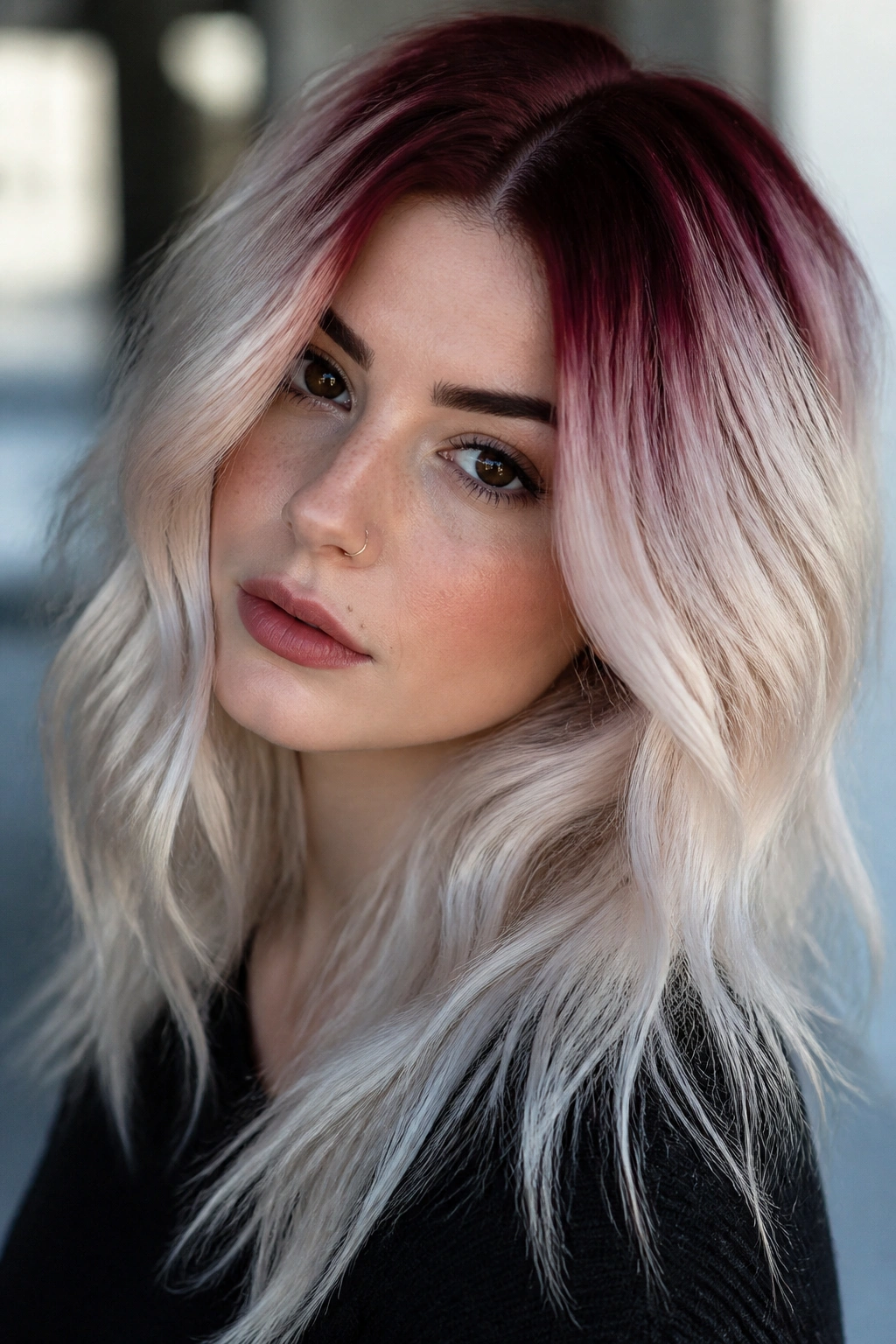
Platinum blonde does not have to stay icy forever. A cranberry root melt can turn that bright base into something sharper, moodier, and a little more interesting without losing the lightness entirely. The contrast is the point, and with platinum, contrast can be gorgeous when it’s handled with restraint.
The first thing to know is that platinum hair is thirsty. It grabs pigment fast. So if you go straight in with a heavy cranberry formula, the ends may pull darker than you wanted, and then the melt stops being a melt. It becomes a block. That’s why a pre-tone or a light filler can matter before the red goes on. It gives the color a more even landing spot.
A deep root shadow helps here even more than it does on warmer blondes. The dark root frames the face, and the cranberry lengths keep the look from going washed out. I like this one most when the red is concentrated from the mids down, with only a soft fade up top. That preserves the platinum feel while still giving you a strong color story.
A quick warning. On very porous blonde, cranberry can darken faster than you expect in the first few washes. That is not failure. It is chemistry. It just means the formula needed a gentler hand.
10. Toffee Copper with Dark Roots
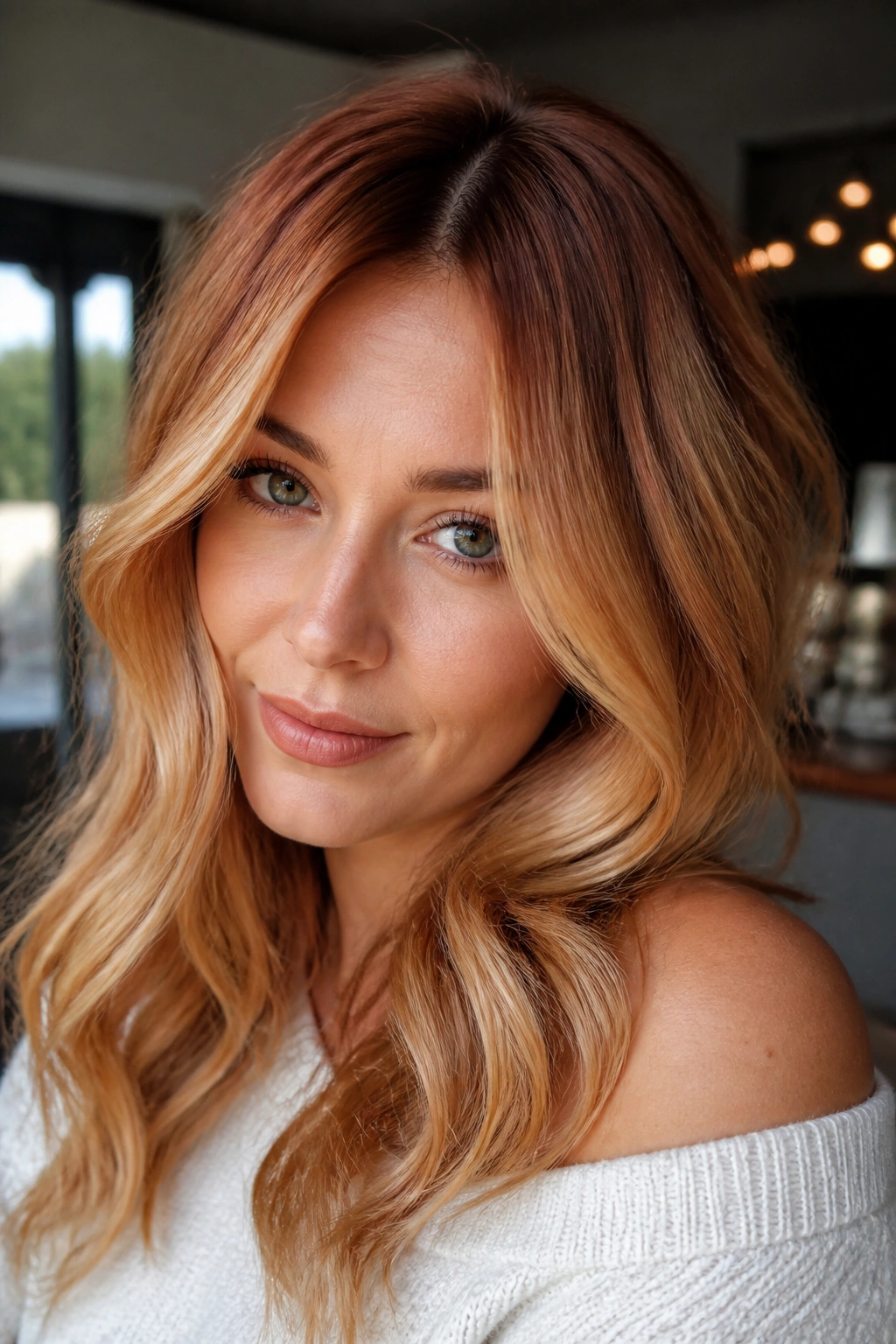
Can red hair be soft? Absolutely. Toffee copper is the proof. It’s warmer and gentler than classic copper, with a caramel edge that makes blonde hair look sun-kissed rather than dyed. Add a dark root, and the result feels more grounded, less flashy.
Best Placement for the Copper
The root should stay in the mocha or soft chestnut range, then the copper should show up most clearly through the face-framing pieces and the outer layers. That keeps the style from turning one-note. If the copper is everywhere, it can start to look flat by the second week. Keep it selective and it stays prettier longer.
This shade is a good pick for people who like warmth but don’t want the red family to take control. It suits beige blonde, dirty blonde, and darker blonde bases that already have a little gold in them. On icy platinum, it can work too, but only if the copper is kept sheer.
- Root: soft brown with no black cast
- Red tone: toffee, copper, light auburn
- Best effect: loose waves or blowout curls
- Grow-out: easier than high-saturation red
The charm here is restraint. A little copper. A little depth. Enough.
11. Brick Red Balayage with Soft Regrowth
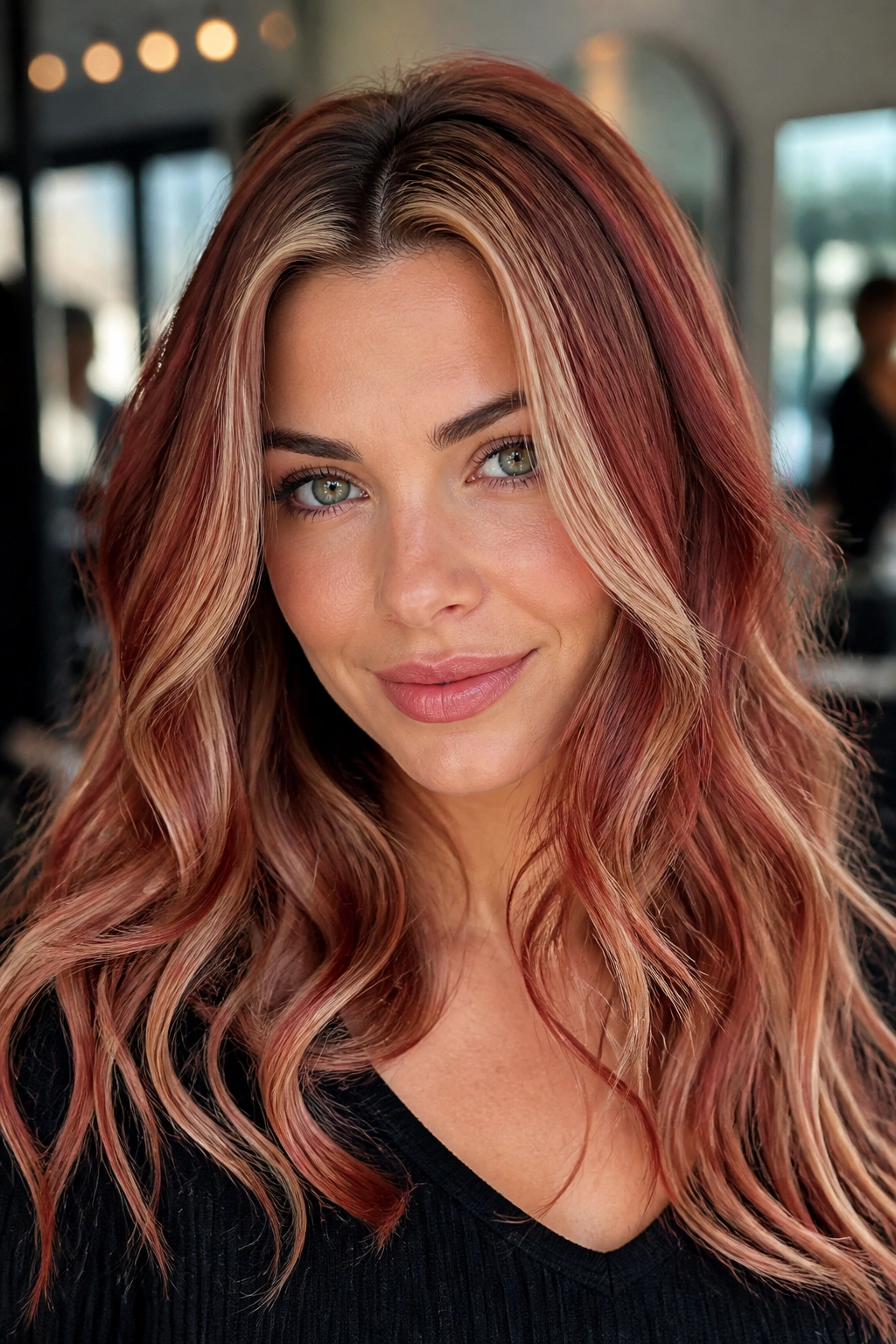
Brick red is for people who want their blonde to stop acting innocent. It has that earthy red-brown feel, a little muted, a little smoky, and it looks especially good when it’s painted through balayage sections instead of saturated from root to tip. The dark root keeps the grow-out soft, which matters because brick red can look harsh if the transition is abrupt.
Think of this as the more grounded cousin of copper. Less shiny. More dimensional. On blonde hair, brick red works because the brown in it gives the blonde somewhere to land. You do not get the same screaming contrast you’d get with cherry or ruby. You get layers. That’s a better result if you like hair that looks expensive in daylight and still interesting under indoor light.
Where to Place It
- Keep the root slightly deeper at the crown
- Sweep red through the mid-lengths in broad panels
- Leave some blonde ribbons untouched near the ends
- Avoid a hard line around the part
That last point matters. Brick red loses its charm if you let it sit in a stripe. Balayage keeps the eye moving, which is what makes the shade feel alive instead of painted-on.
12. Rosewood Root Fade on Champagne Blonde
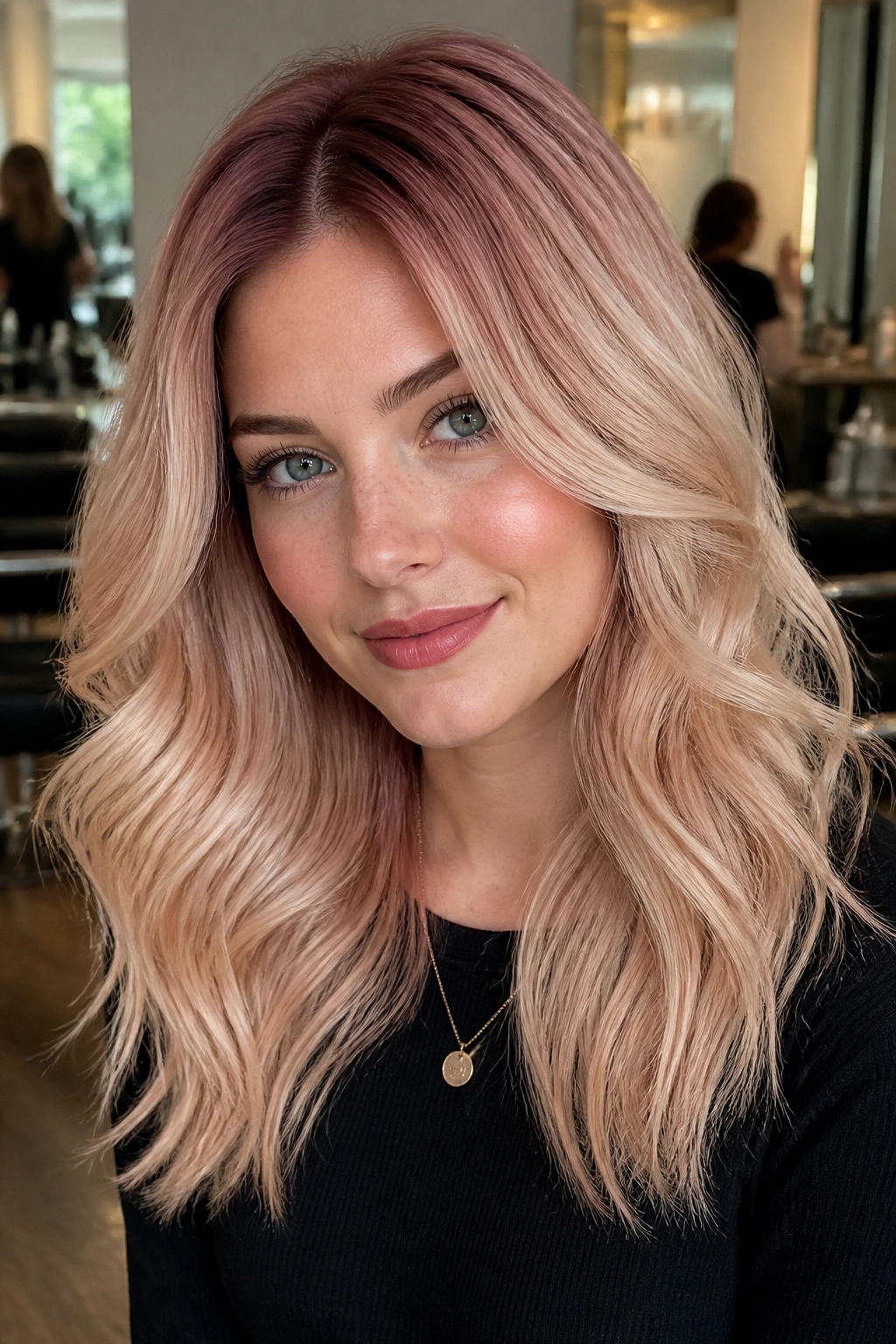
Rosewood is the quieter red in this group, and that is exactly why it works. It has a blushy, wood-toned softness that looks elegant on champagne blonde, especially when the root fades in a little deeper and cooler than the rest. The effect is less “red hair” and more “blonde with a memory of red.”
This one is a favorite when you want color that feels controlled. The champagne blonde brings lightness, the rosewood adds warmth, and the dark root keeps the look from going pale and washed out around the crown. It is also one of the better choices if you are tired of bright copper but don’t want to go burgundy-dark. The shade sits in the middle and behaves well there.
A nice bonus: rosewood grows out gracefully. The root fade gives you a soft line, and the red tends to soften instead of fighting the blonde as it fades. That means fewer awkward weeks where the color looks half done. Good hair color should buy you time, not panic.
If you want a red dark-root blonde that still looks believable when it’s three inches grown out, this is the one I’d keep on the short list. It is calm, a little romantic, and easier to live with than it first sounds.
