



Dark root hair colors for blonde hair work because they make grow-out look deliberate instead of sloppy. That’s the whole magic trick, and it matters more than people think. A darker root also gives blonde hair shape; it keeps the brightest pieces where you want them, usually around the face and through the ends, so the color has depth instead of that one-note, all-over lightness that can start to feel flat.
The shade you choose at the root changes everything. An espresso root says polished and strong. Ash brown says cool and crisp. Mushroom brown, taupe, mocha, chestnut, sable — each one shifts the mood of the blonde in a different direction, and a bad match is easy to spot because the line between root and blonde looks like an accident instead of a blend.
Subtle is safe.
But safe is not always the best look. Sometimes the best dark root is the one that makes the blonde brighter by contrast, and sometimes the smartest move is a root color that softens brass, stretches your salon visits, and gives your waves more depth at the scalp. If you have ever looked at your own blonde and thought it needed a little grounding, the right root shade can fix that fast.
1. Espresso Shadow Root for Blonde Hair
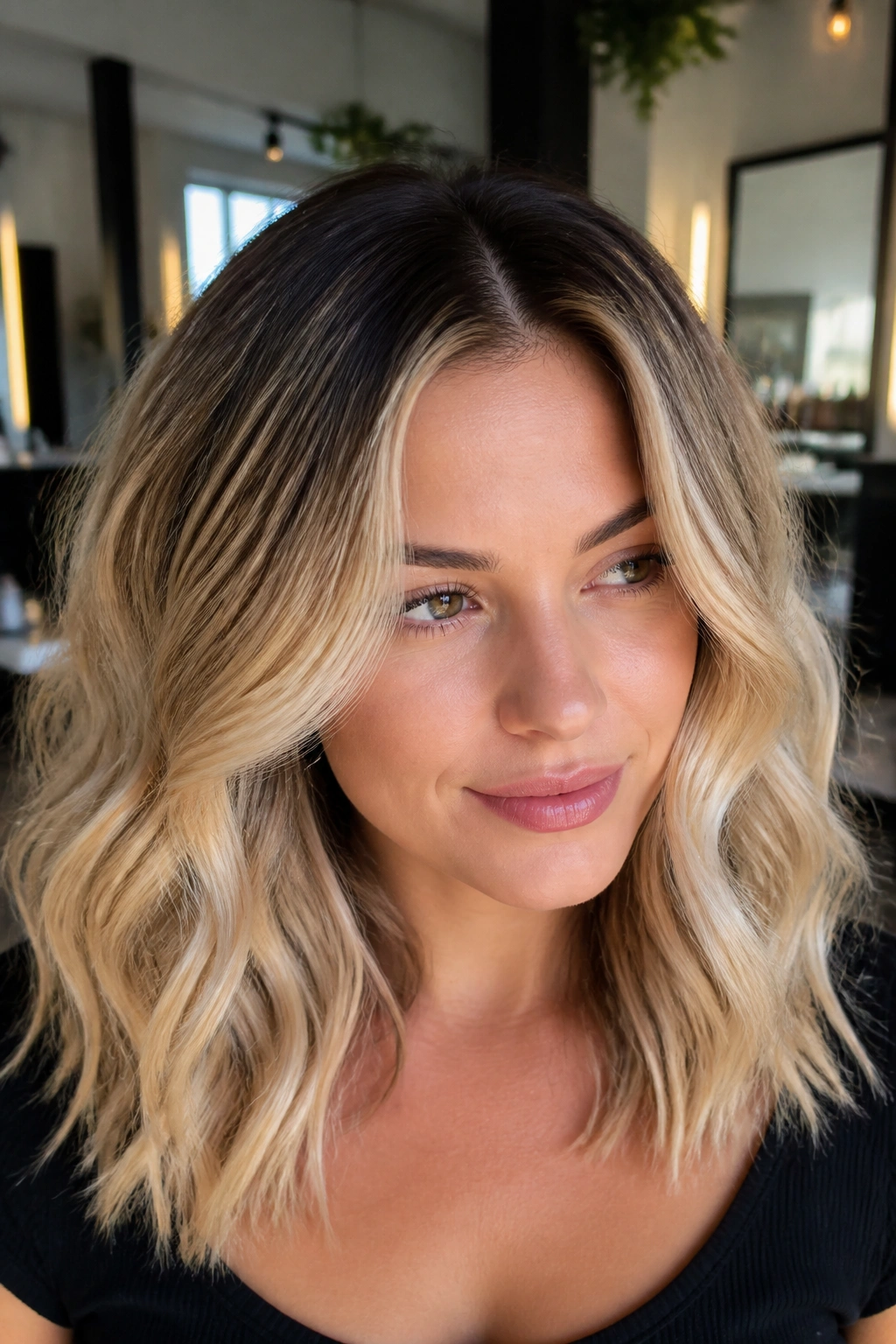
Espresso is the classic for a reason. It gives blonde hair a deep, rich base without turning the whole look heavy, and it works especially well if your blonde is beige, champagne, or creamy platinum. The root stays dark enough to frame the face, while the blonde keeps the movement and shine. Clean. Simple. Effective.
What makes it work
A good espresso root usually sits around level 4 to 5 and melts down about 1 to 2 inches before it softens into the blonde. That short fade keeps the line from looking harsh, which is exactly why this shade wears so well on wavy hair and loose curls.
- Best for natural brunettes who want a softer grow-out.
- Great if your blonde lengths need contrast to look brighter.
- Strong choice for shoulder-length cuts and long layers.
- Ask for a root that is one to two levels deeper than your natural base, not pitch-black.
My take: if you want a dark root that never feels fussy, start here. It’s the one I’d trust on someone who wants low drama and high payoff.
2. Ash Brown Root Melt
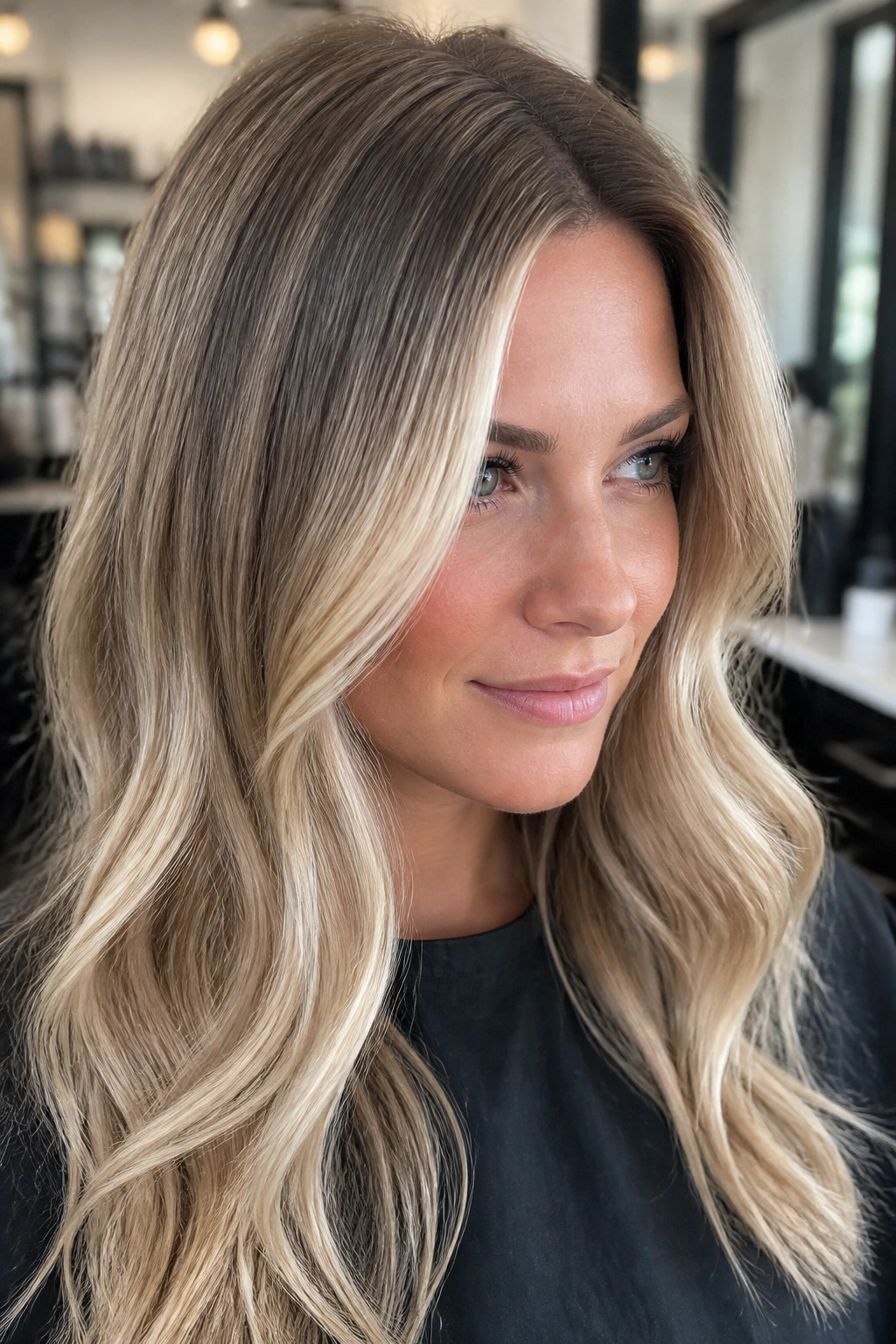
Want blonde hair that looks cooler and cleaner? Ash brown is the shade to reach for. It pulls the root away from warmth and gives the whole style a smoky edge that feels sharp, especially on silver-blonde, pearl-blonde, or icy beige lengths.
The catch is simple: ash brown needs the blonde around it to hold up. If your ends are very golden, the root can look disconnected. When the balance is right, though, the result is crisp and expensive-looking without screaming for attention.
Best salon phrase
Ask for a cool ash brown root melt that blends into the blonde through the crown, not a hard root stripe. That detail matters. If the root stops too abruptly, the whole point is gone.
A cool brown root is also a smart move if your skin tends to go red easily, because the lower-warmth base can calm the overall look. Not everyone wants warmth near the scalp. Some people want clarity.
3. Mushroom Brown Root
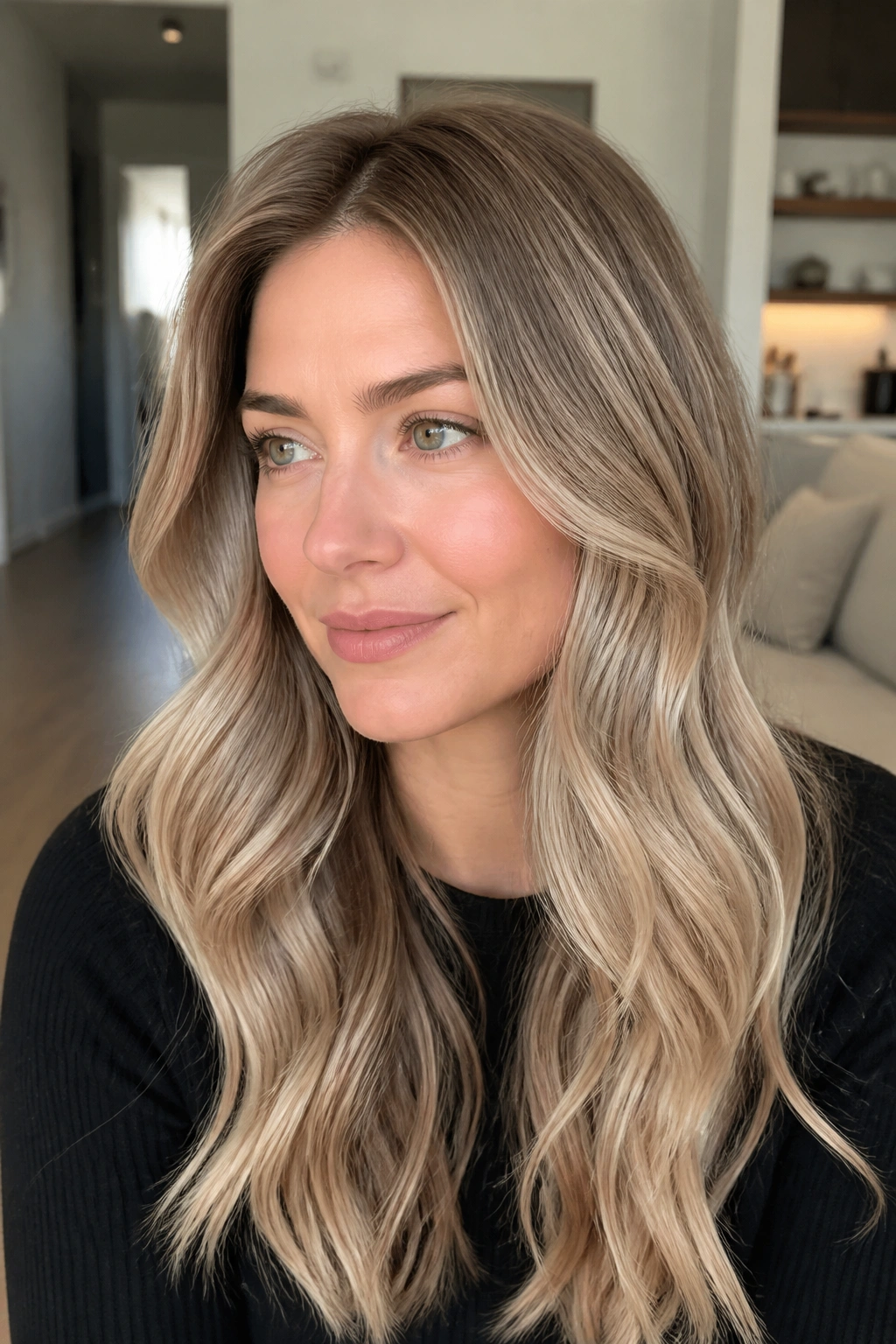
If your blonde is bright but you hate brass, mushroom brown is the shade that saves the day. It sits between taupe and brown, with a soft, earthy feel that doesn’t go muddy. The color looks especially good when the blonde lengths are neutral or slightly cool, because the root gives them a little gravity.
Mushroom brown has a lived-in quality that flat brown roots don’t always have. There’s a softness to it. The best versions feel airy around the hairline and denser only at the scalp, which keeps the grow-out gentle instead of blocky.
Why people keep coming back to it
- It flatters fine hair because the root depth makes the strands look thicker.
- It suits loose waves better than pin-straight styles.
- It works when you want brunette energy without losing blonde brightness.
- It’s easier to wear than a very dark root if your brows are medium brown.
Bring a photo with mushroom tones that look beige, not green. That tiny distinction keeps the color from looking dusty.
4. Mocha Beige Root Smudge
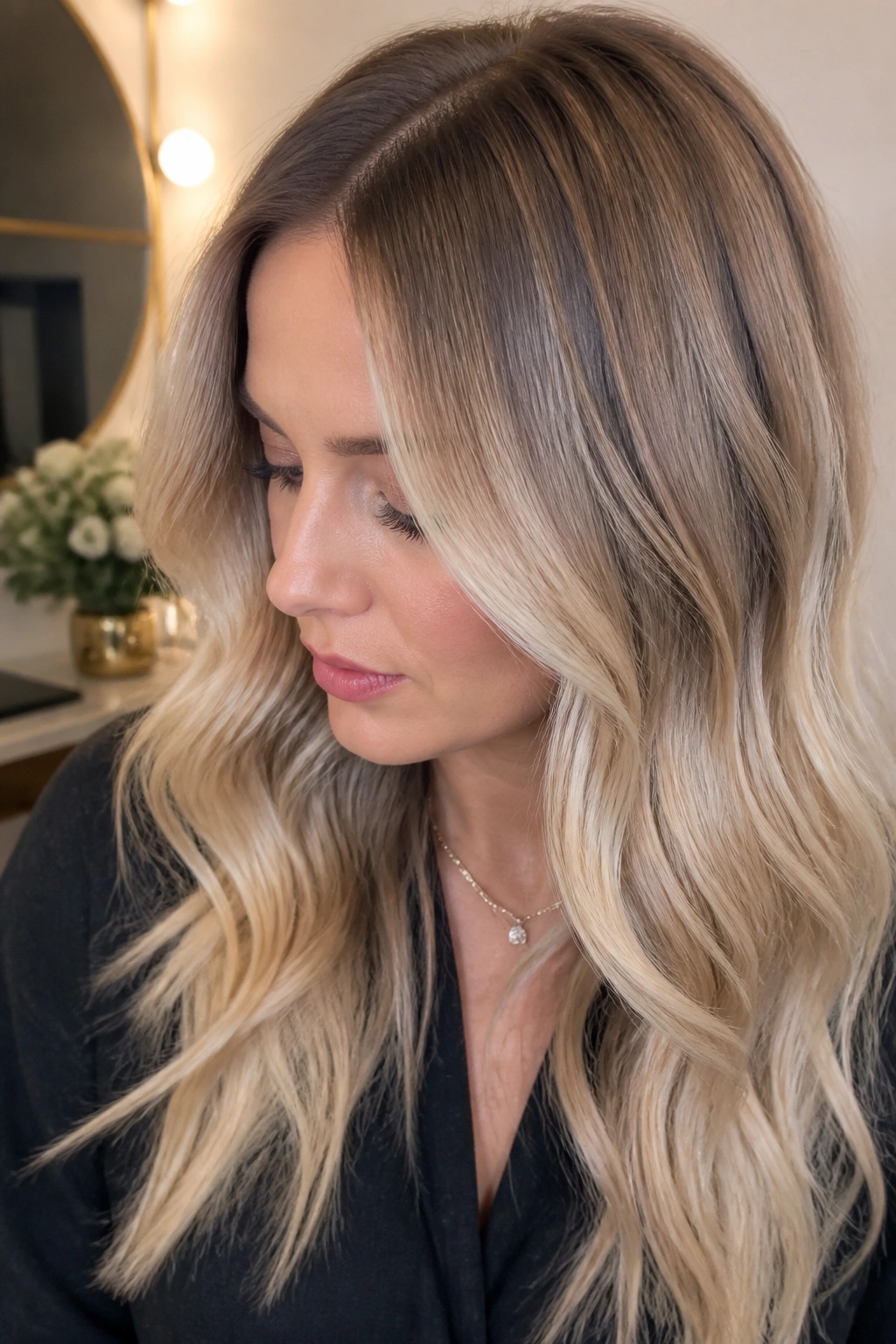
Not every dark root has to be dark-dark. Mocha beige is the softer route, and I like it for people who want a root that blends into blonde without shouting about itself. The beige part keeps the shade from feeling heavy, while the mocha base gives it enough depth to stand up to bright ends.
This is a good choice if your blonde is already dimensional. The root doesn’t need to do all the work. It only needs to anchor the look. On a lob, a blunt bob, or long layers with a soft bend, mocha beige reads calm and expensive without looking severe.
A quick rule
If your blonde is warm, ask for a mocha root with beige reflection. If your blonde is cool, keep the mocha a little grayer. That small tweak keeps the blend from turning orange at the transition.
This is the shade for someone who likes polished hair but does not want a loud line of regrowth. Easy wear. Easy upkeep.
5. Cool Taupe Root Stretch
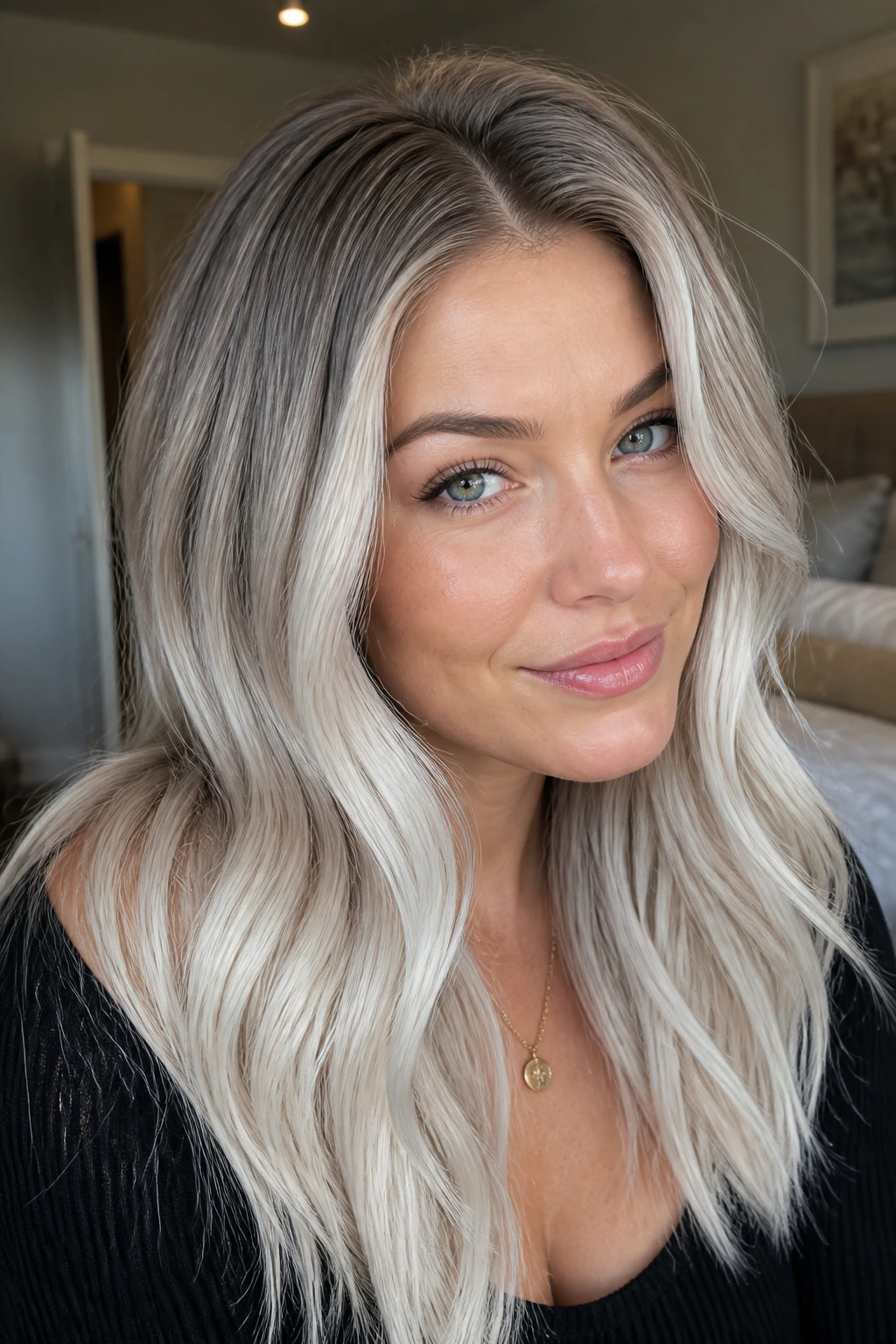
Taupe is the color that keeps blonde from looking yellowed at the scalp. It has that gray-beige cast that makes platinum and pearl tones feel cleaner, and it’s one of the best choices if you like cool blonde but hate the harshness of a dark brown root.
The nicest thing about taupe is the softness of the fade. It doesn’t slam into the blonde. It drifts. On straight hair, that drift looks sleek; on waves, it looks almost misty.
How to get the most from it
Keep the root stretch narrow — about 1 inch to 1.5 inches if your hair is fine, a little wider if it is dense. That keeps the crown bright enough to avoid looking flat. If the taupe is dragged too far down, the blonde loses life.
A taupe root is also a smart fix for people who wear neutral makeup and cool-toned clothes. The whole look stays in the same family. No fighting.
6. Chestnut Root with Golden Blonde Ends
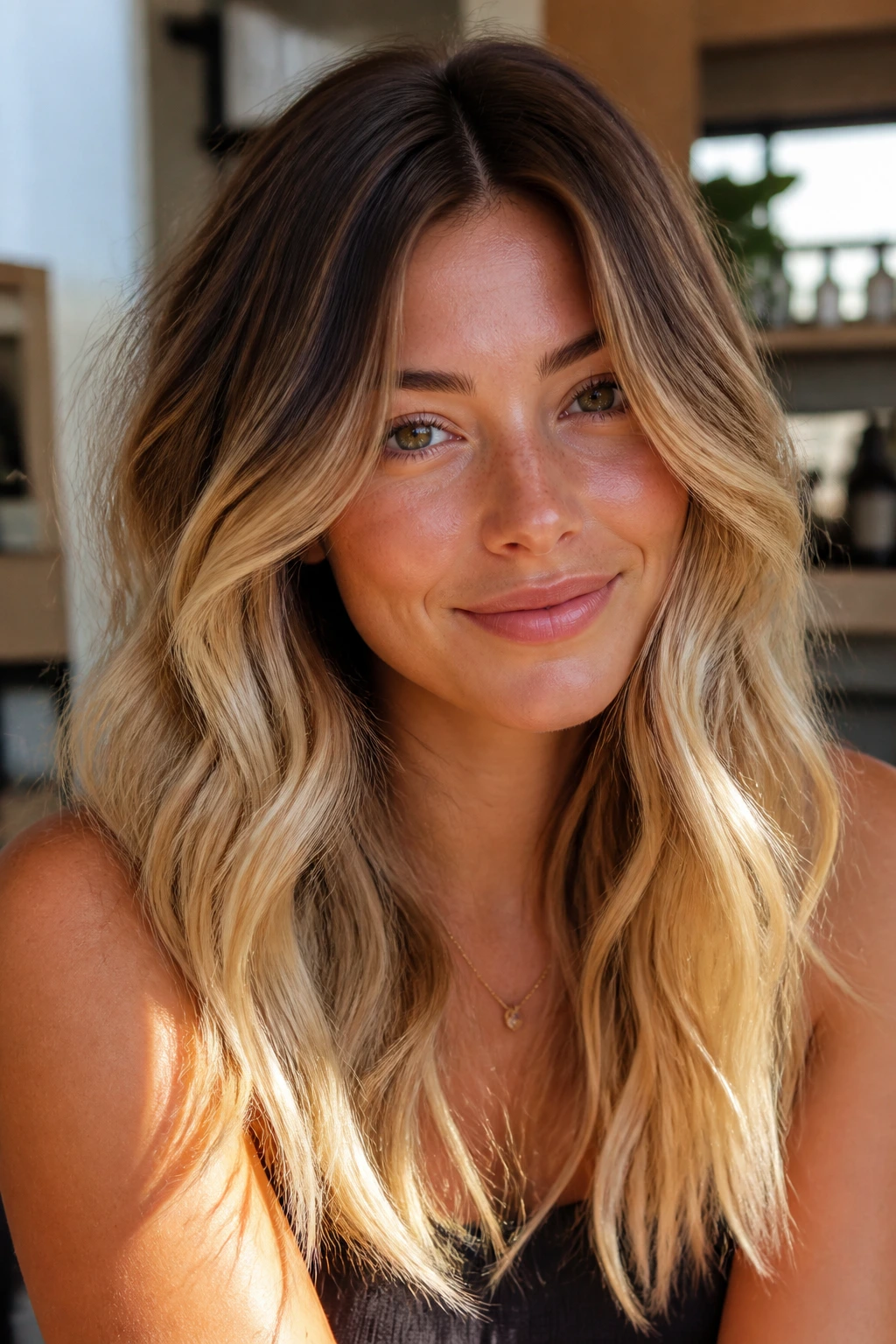
Chestnut brings warmth back into the conversation, and sometimes that is exactly what blonde hair needs. A chestnut root with golden blonde ends feels rich, glossy, and a little sunlit, which makes it a strong choice for wavy hair, curls, and anyone who likes a softer brunette-to-blonde blend.
I like chestnut when the blonde is honeyed rather than icy. The warm root and warm ends can still have contrast, but it’s a friendly contrast. Nothing sharp. Nothing severe. The whole look feels like it belongs on hair that moves.
A salon formula that keeps the chestnut deep brown with a red-brown cast tends to wear better than a flat brown. That tiny warmth helps the color breathe. It also keeps the root from looking as if it was painted on top of the blonde.
If your skin has peach, olive, or golden undertones, this is one of the easiest root shades to wear. It gives blonde hair a softer, fuller look right away.
7. Sable Root with Creamy Blonde Lengths
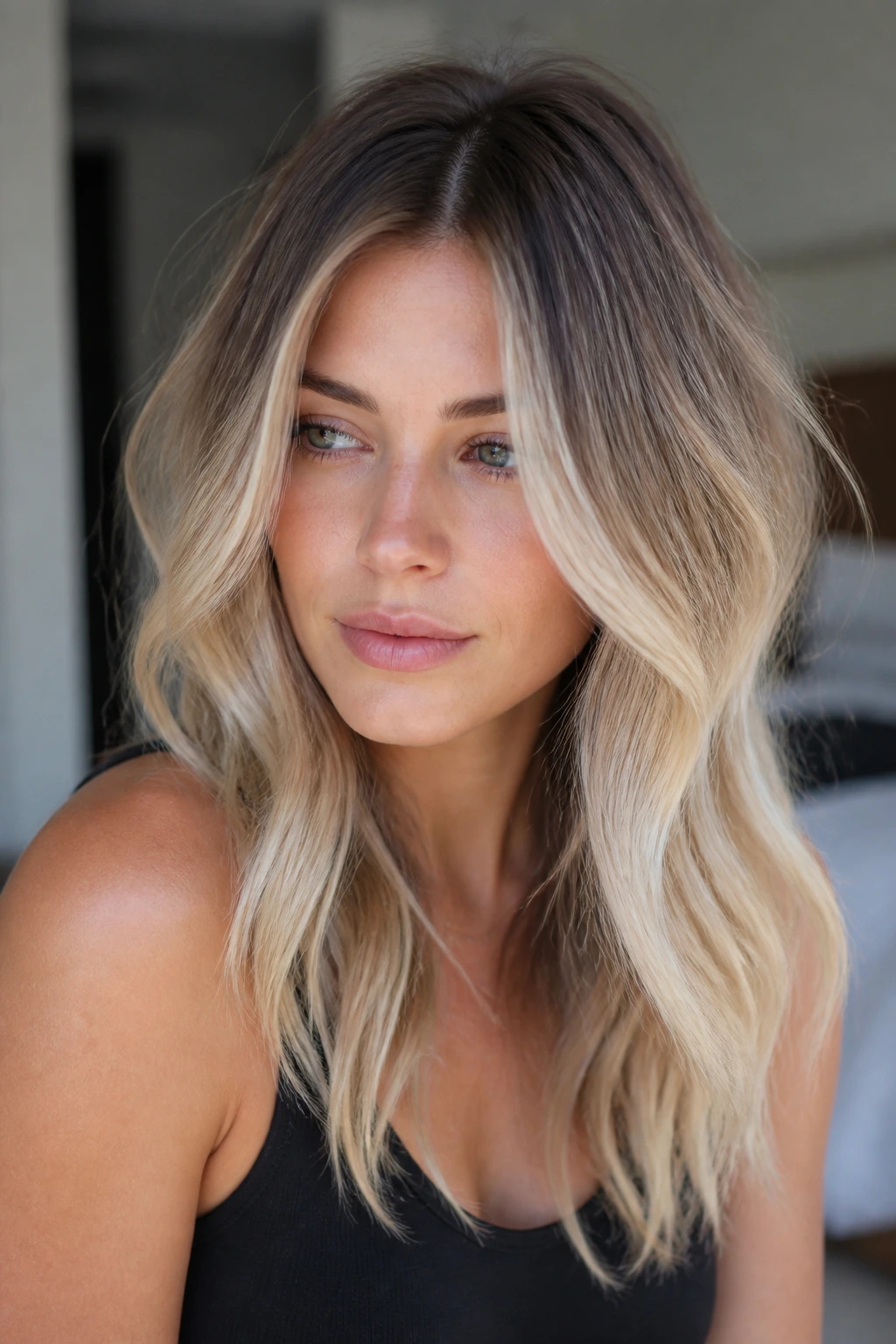
Sable sits in a sweet spot: darker than mocha, softer than espresso. That middle ground is why it works so well on creamy blonde lengths. The root has enough presence to frame the face, but it doesn’t take over the hair. For a lot of people, that’s the ideal.
Unlike a blunt dark root, sable feels blended from the start. The finish is plush, almost velvety, and it’s especially nice on hair with a slight bend or loose blowout. Straight, high-gloss hair can wear it too, but the color really sings when the cut has some movement.
What to ask for
Tell your colorist you want a neutral sable root that fades into creamy blonde, not a warm brown root. Neutral matters here. Warm sable can tip into brass if the blonde below it is pale enough.
This shade is a good pick if you want the dark-root look but you still want the blonde to stay the star of the show. A quiet root. That’s the point.
8. Smoky Charcoal Root on Platinum Blonde
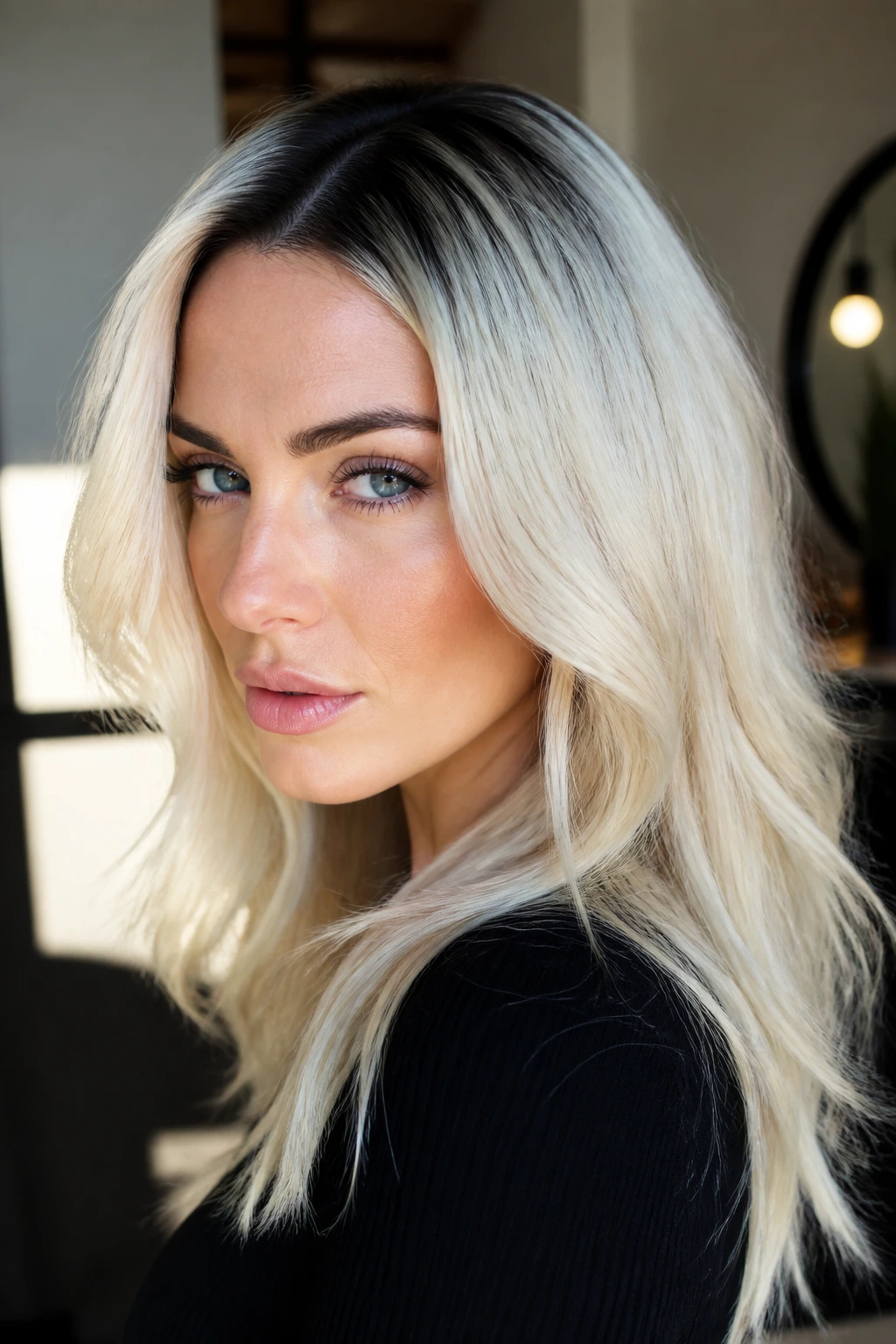
This one is not shy. Smoky charcoal on platinum blonde gives a sharp, editorial contrast that looks clean when the cut is precise and the blonde is bright enough to hold it. If you like the skunk-stripe family of looks but want something a little softer than jet black, charcoal is the better move.
The root should stay narrow. That matters. A charcoal root that spreads too far into the head can look helmet-like, and nobody wants that. Keep the dark area close to the scalp and let the platinum take over through the midlengths and ends.
Who wears it best
- People with cool or neutral undertones.
- Short cuts, blunt bobs, and long layers with a strong center part.
- Anyone who likes a bold contrast but wants less severity than black.
Charcoal can be gorgeous, but it asks for discipline. The blonde has to stay pale, and the root has to stay clean. When both are handled well, the look is sharp enough to turn heads without feeling messy.
9. Caramel Root Melt
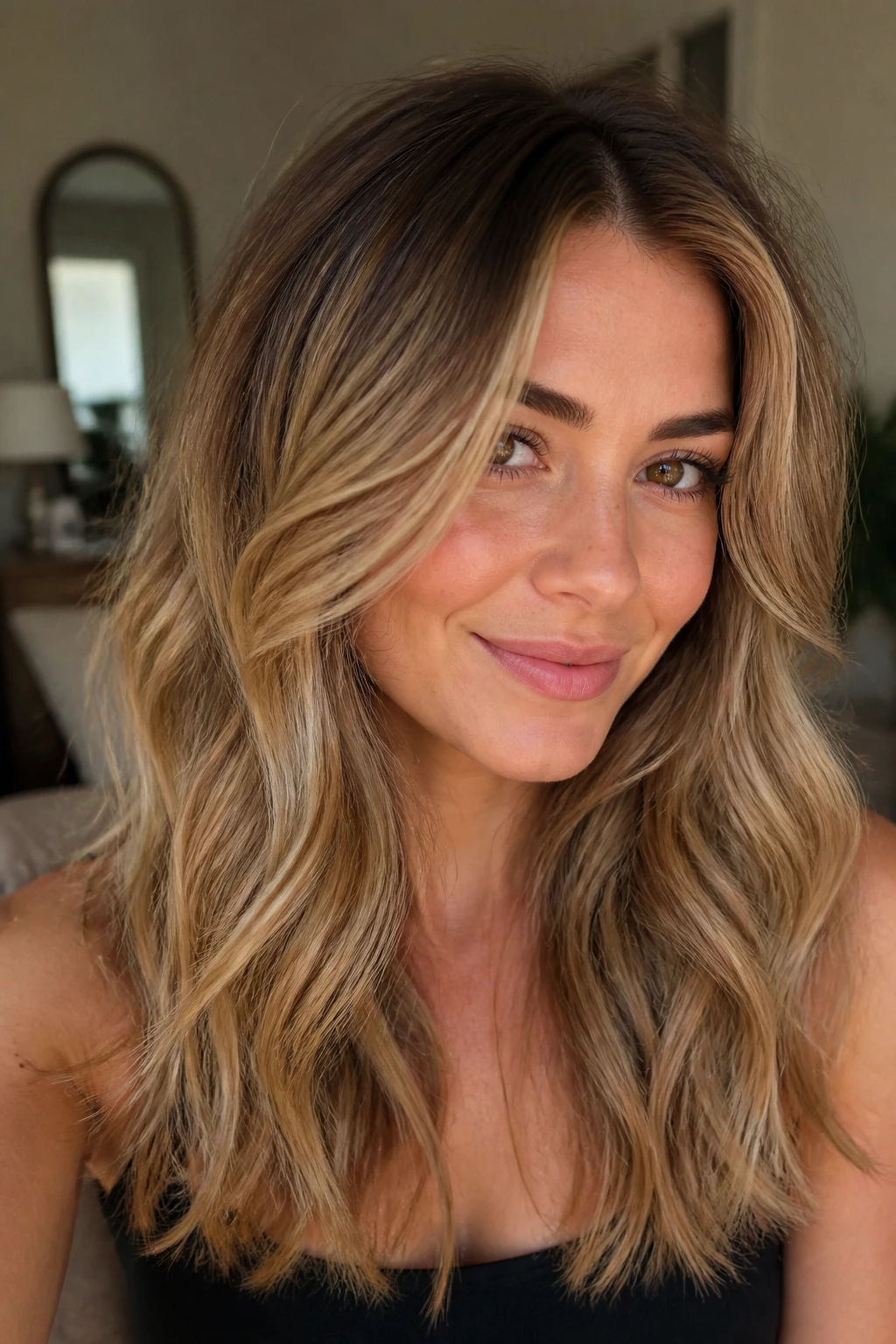
Caramel roots are the easygoing cousin in this group. They bring warmth, depth, and a soft glow to blonde hair, which makes them ideal for honey blonde, butter blonde, and sunlit balayage. The root melt looks especially good when the blonde has a slightly toasted finish instead of a very cool one.
This is a shade that flatters movement. Waves, curls, air-dried bends — all of it. Caramel sits in the hair in a way that makes the transition feel natural, and that’s why people keep reaching for it when they want a brunette touch without losing the brightness of blonde.
A small warning: keep the caramel brown enough. If it gets too orange, the root can fight the blonde instead of blending with it. The best version has a brown base with a warm edge, not the other way around.
This is a strong pick if you want your blonde to feel softer around the scalp and fuller through the crown. Warm roots can do that better than people expect.
10. Bronde Root Blend
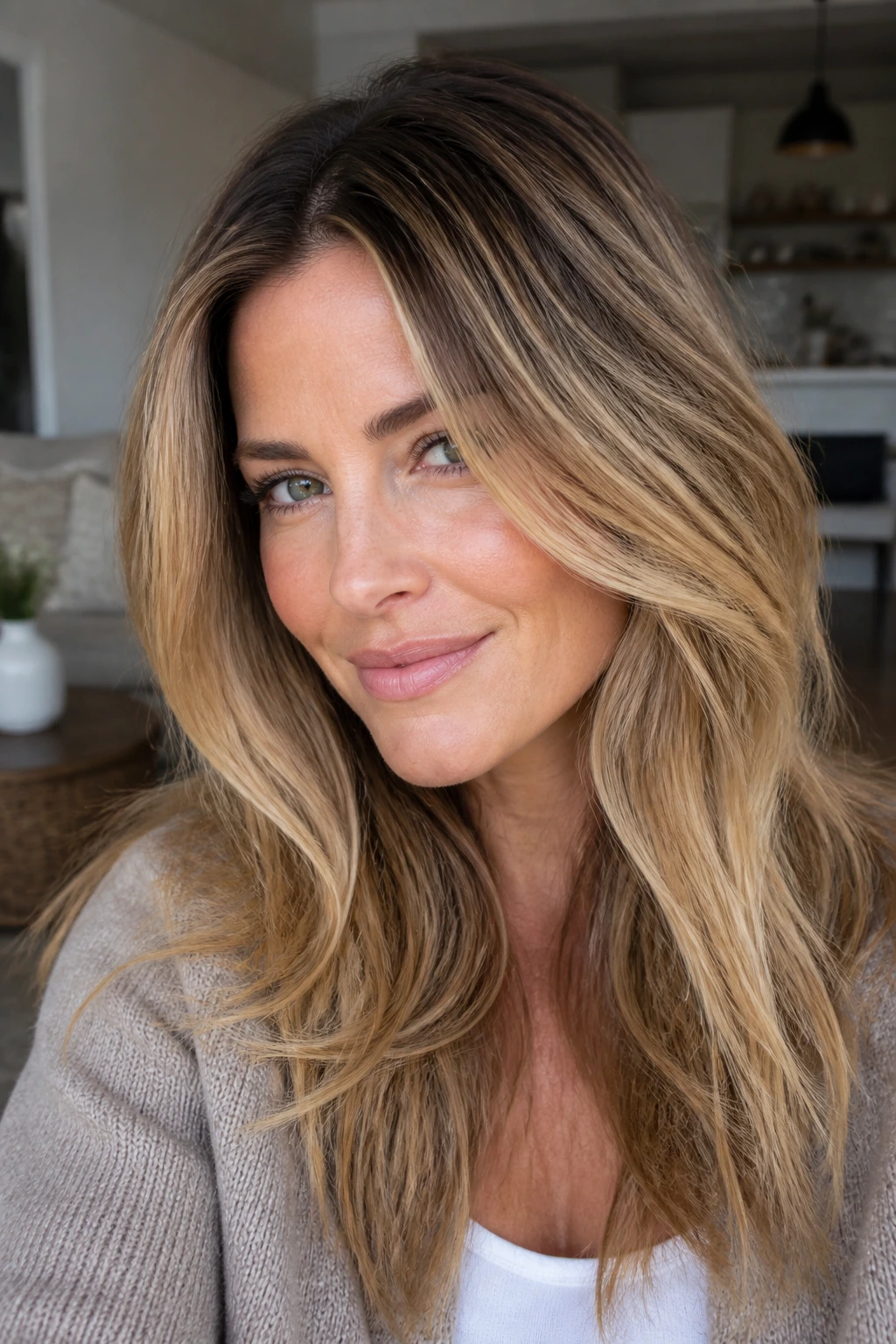
Bronde is still one of the smartest answers when you can’t decide between brunette and blonde. The root sits in that middle lane, and the whole color reads as a true blend instead of a color correction waiting to happen. That balance is why it grows out so well.
The trick is to keep the root and mids in the same family. If the root is too dark and the mids are too pale, the bronde effect disappears. When the tones stay close, the hair looks naturally dimensional, almost like the darker base was there from the start.
Best for
- Readers who want a low-maintenance grow-out.
- Fine hair that needs extra visual thickness.
- Soft waves, lived-in curls, and layered cuts.
- People who like change but do not want a dramatic contrast.
Bronde is not flashy, and that is its strength. It gives you a dark root without the edge of a high-contrast blonde, which makes it one of the easiest shades to wear day after day.
11. Cinnamon Brunette Root
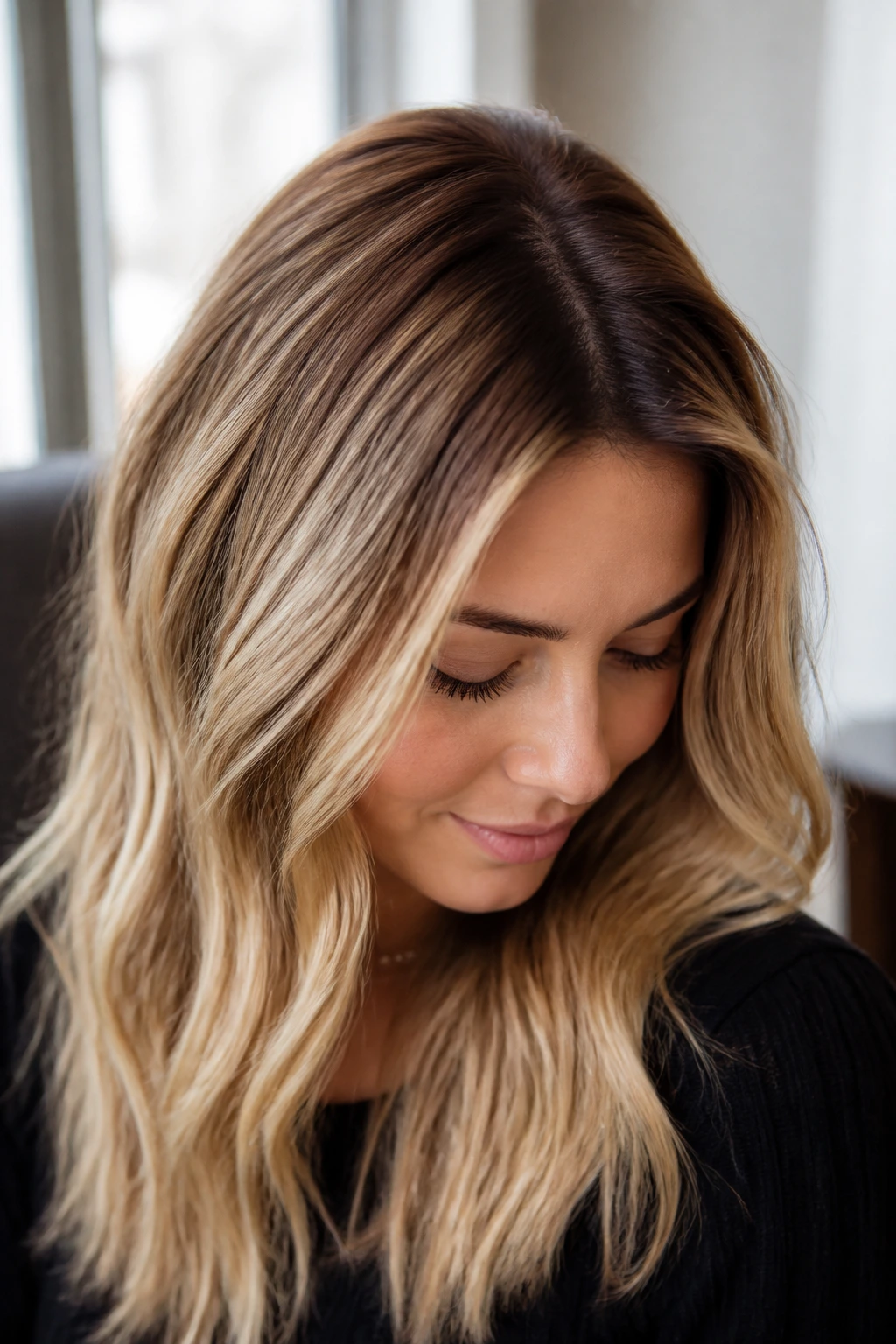
Cinnamon roots bring a little spice to blonde hair. Not a lot. Just enough. The warm brown base with a faint red-gold lean works beautifully with strawberry blonde, golden blonde, and beige blonde, especially when you want the hair to feel richer without going copper all over.
There’s a reason cinnamon roots look so good around the face. The warmth flatters the skin and makes the blonde lengths look more luminous by comparison. If your brows are warm and your makeup leans peach or bronze, this is a very easy shade to live with.
How to use it well
Keep the cinnamon near the root and through the crown, then soften it into the blonde with a glaze or tonal melt. A hard stop will make the red cast look louder than it should. A soft fade keeps it elegant.
Cinnamon can also make waves look thicker because the warmth creates visual depth near the scalp. Small detail. Big difference.
12. Blue-Black Root on Platinum Blonde
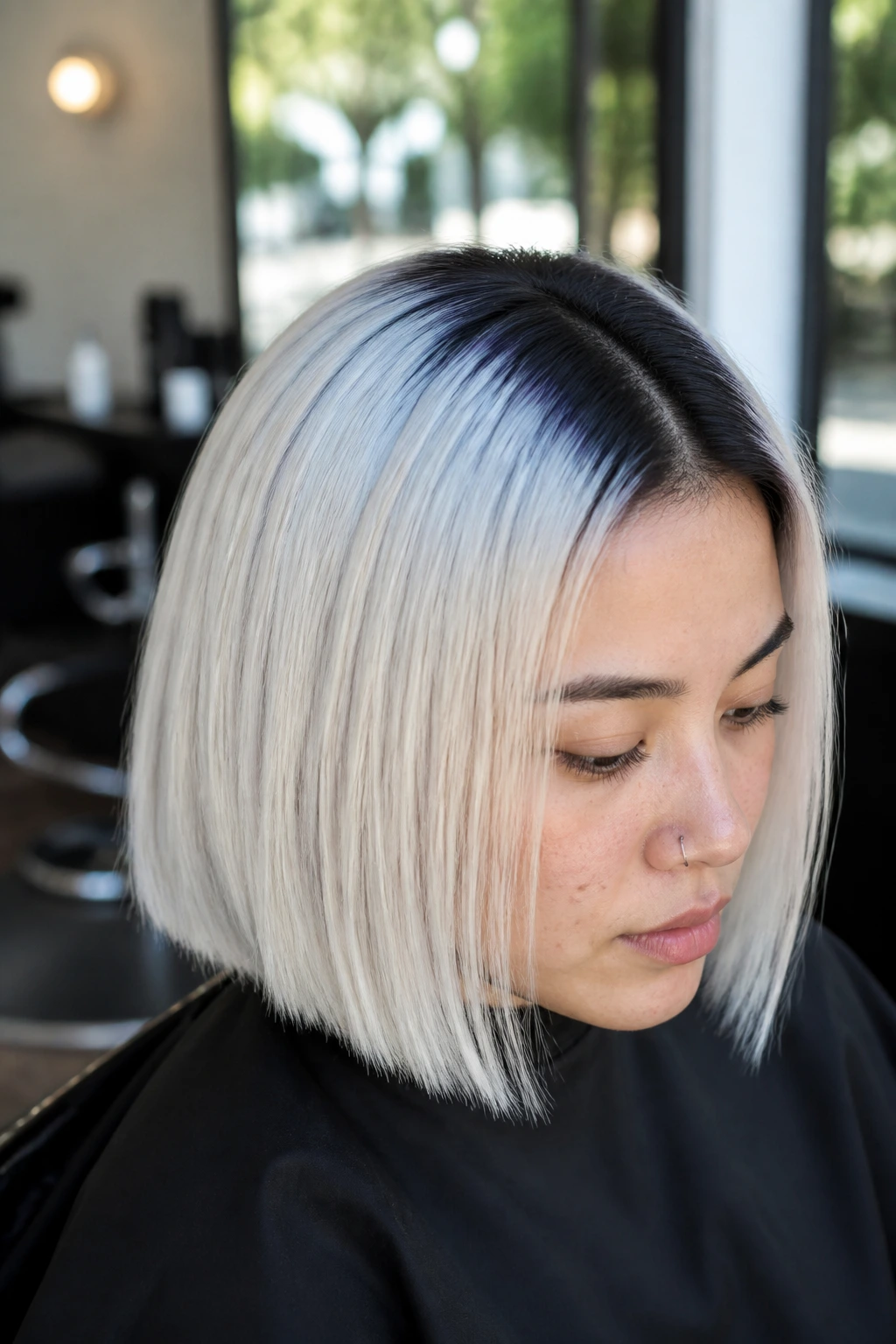
Blue-black on platinum is bold, and the blue cast matters more than people think. Pure black can look flat or green against very pale blonde. Blue-black avoids that problem by cooling the darkness and giving it a sharper finish. The result feels sleek, not muddy.
This is a good choice for blunt cuts, pixies, and high-contrast money-piece styles. The platinum stays bright, the root stays dark, and the whole thing gets a graphic edge. If you like strong lines, this one has real presence.
What to watch for
- The platinum needs to stay clean and pale.
- The blue-black root should stay compact, usually around 1 inch or so.
- Yellowing at the blonde ends can make the contrast look harsh.
My opinion: this shade works best when the haircut is precise. Messy layers can blur the effect in a way that feels accidental. Sharp hair, sharp color. That’s where it lands best.
13. Chocolate Cherry Root
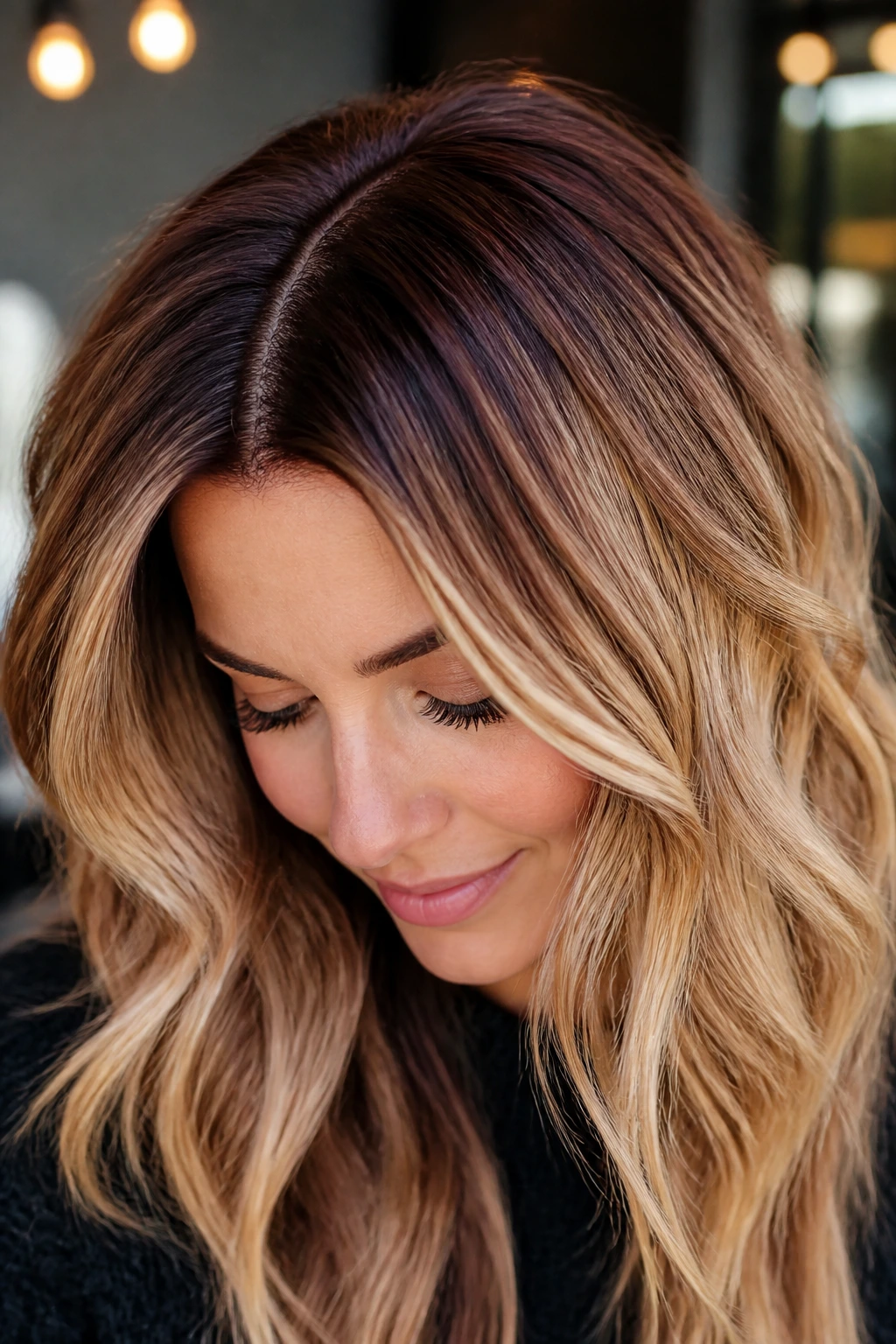
Chocolate cherry is the quiet flirt in the group. It looks like a rich brown at first glance, then the red berry tone slips out under certain light and keeps the root from going flat. On blonde hair, that bit of red can be gorgeous, especially if the blonde sits in the beige, caramel, or rose-gold family.
The shade gives the crown more life. Plain brown roots can sometimes feel heavy against pale blonde, but chocolate cherry keeps the look from sinking. There’s a little glow in it. Not candy red. Not copper. Just enough warmth to matter.
A lot of people overlook this shade because they assume red tones will be loud. They don’t have to be. Kept deep and muted, chocolate cherry can read as polished from across the room and more interesting up close.
If you want blonde hair that feels richer in low light and softer in daylight, this is a strong pick.
14. Mink Brown Root
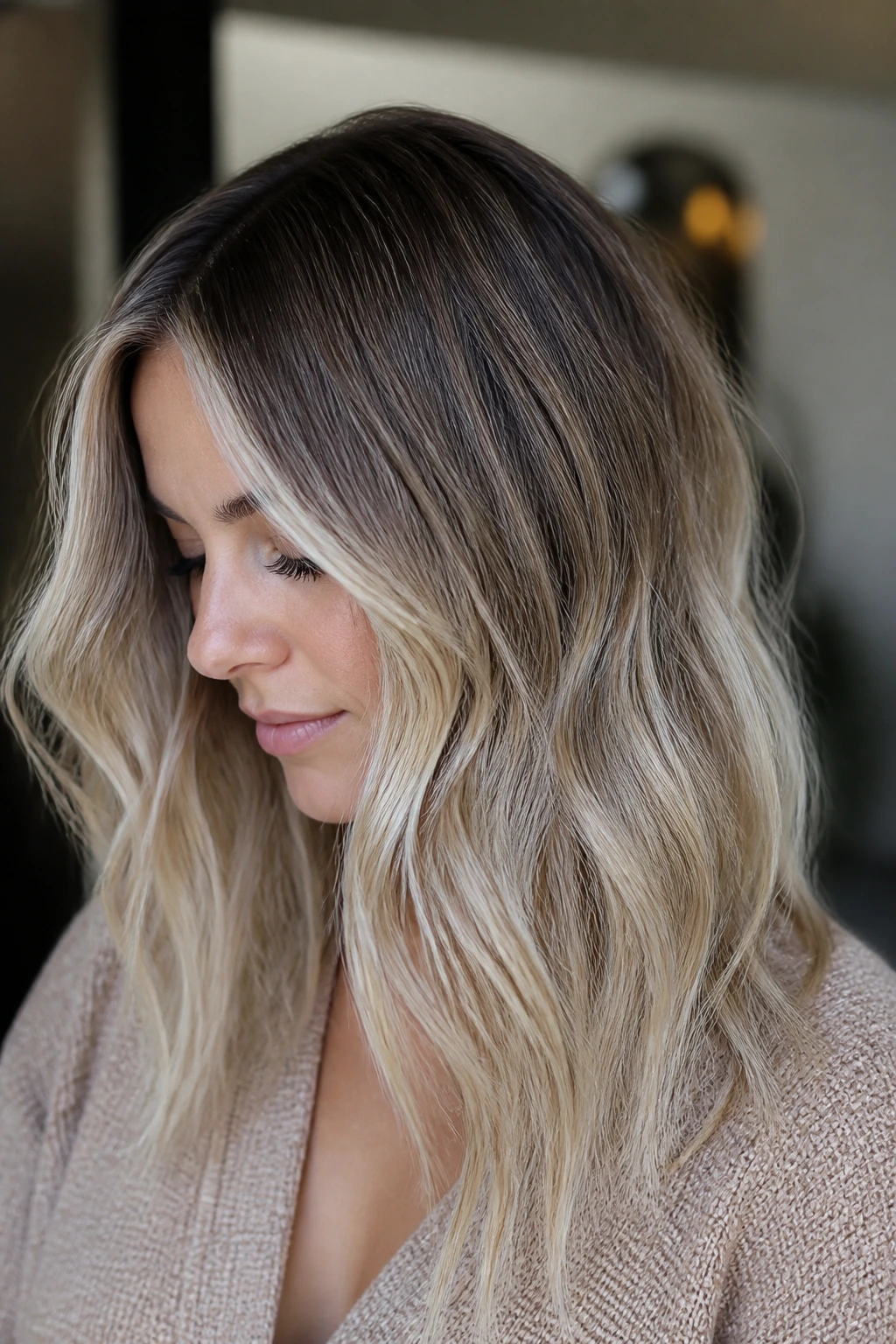
Mink brown is one of those shades that looks expensive without trying too hard. It sits between cool brown and soft neutral brown, which makes it easy to wear on ash blonde, beige blonde, and even some warmer blondes that need a calmer root. It doesn’t shout. It settles in.
Why it stands apart
Unlike espresso, mink doesn’t go severe. Unlike taupe, it doesn’t get dusty. That middle placement is why it’s so useful for people who want a root that can fade quietly over time.
You’ll get the best result when the blonde lengths still have brightness in them — think soft ribbons, not a solid block of color. Mink gives those lighter pieces a frame and makes the whole style look fuller at the scalp.
- Best on medium to thick hair.
- Good choice if you want a root that grows out cleanly.
- Works well with soft curls and a side part.
- Ask for a neutral beige-brown root with no obvious red cast.
If you like understated hair color, this may be the one you keep circling back to.
15. Skunk Stripe Contrast Root for Blonde Hair
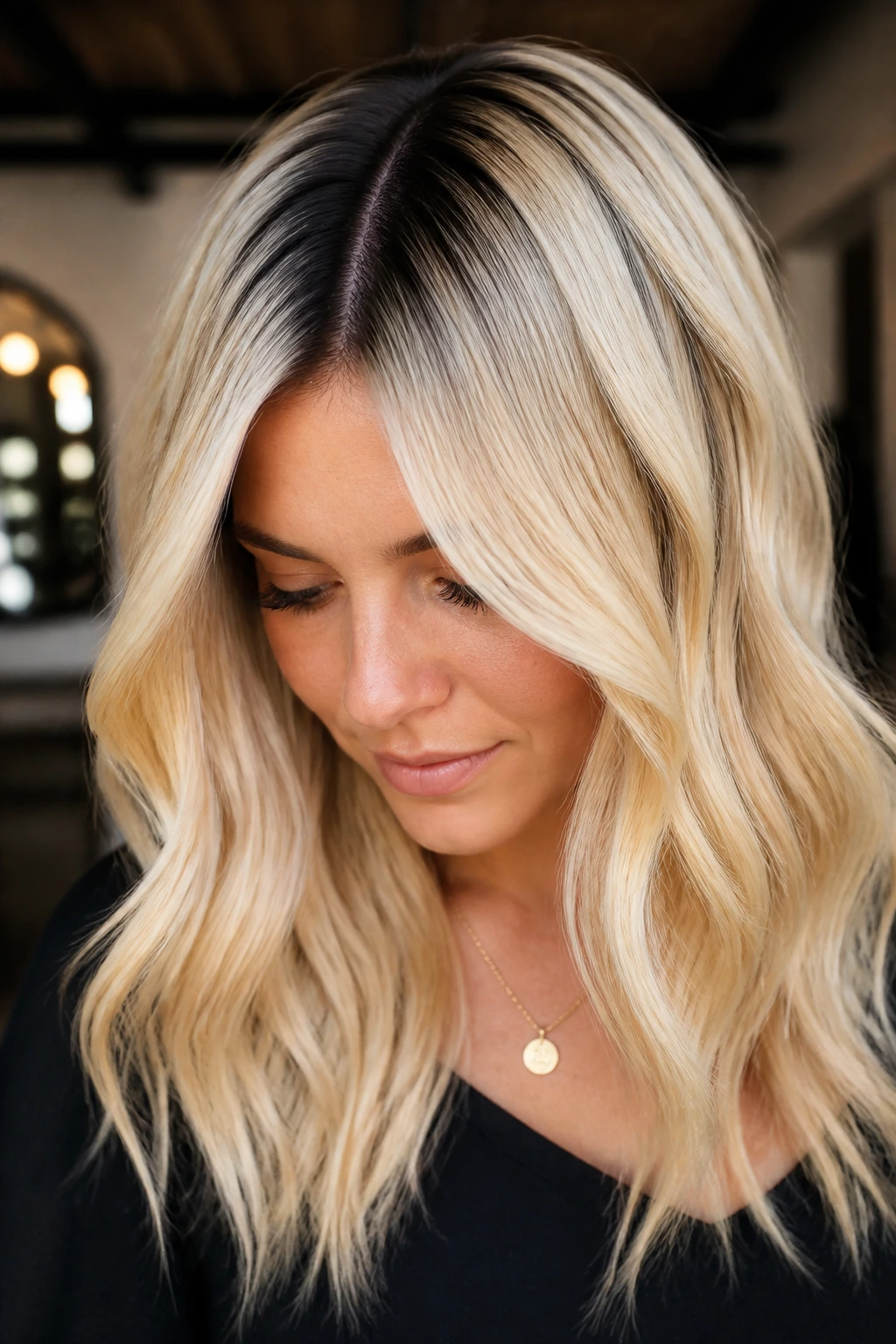
Sometimes the best dark root hair color for blonde hair is not subtle at all. Skunk stripe contrast is for the person who wants the dark root to be seen, not hidden, and that changes the rules completely. Instead of melting softly into the blonde, the root becomes a design element, usually with a strong center part, a face-framing stripe, or a deep dark base that sits against bright blonde lengths.
That contrast looks best when the blonde is clean and bright. If the blonde is dull, the whole style can look tired fast. Keep the light pieces pale, keep the dark section crisp, and do not blur the definition too much.
How to wear it without losing the point
- Place the dark color where the part naturally falls.
- Keep the blonde around the face bright and deliberate.
- Use a gloss on the blonde ends so they stay reflective.
- Maintain the contrast every 4 to 6 weeks if you want the stripe effect to stay sharp.
This is not a background color. It is the whole statement. And if you want your blonde to feel bold, graphic, and a little rebellious, this is the one that does the job without apology.
