



Dark roots can do a lot of heavy lifting on blonde hair. They make the color look more deliberate, they soften the grow-out line, and they stop white-blonde lengths from looking flat or overprocessed at the scalp. That matters more than people think. A pale blonde can look expensive one week and a little brittle the next if the root is too harsh or the toner is off by half a shade.
The sweet spot in white dark root hair colors for blonde hair is contrast with control. You want enough depth at the root to frame the face and give the eye a place to land, but not so much depth that the blonde reads as a strip of color pasted on top. That balance changes depending on whether the blonde is icy, pearl, beige, silver, or creamy. It also changes with hair length, skin tone, and how often you’re willing to sit in a chair for toner.
And yes, root color matters more than the buzzwords around it. A soft shadow root, root melt, and root tap all look close on paper, but they behave differently on the head. One grows out almost invisibly. Another looks sharper and cooler. Another is the choice when you want white hair at the ends but refuse to babysit a line every three weeks.
The best versions feel intentional from the scalp to the ends. The worst ones look like someone ran out of time halfway through the service. That gap is what separates a blonde that gets compliments from one that gets awkward questions about whether you meant to keep the dark part.
1. White Blonde with a Smoky Shadow Root
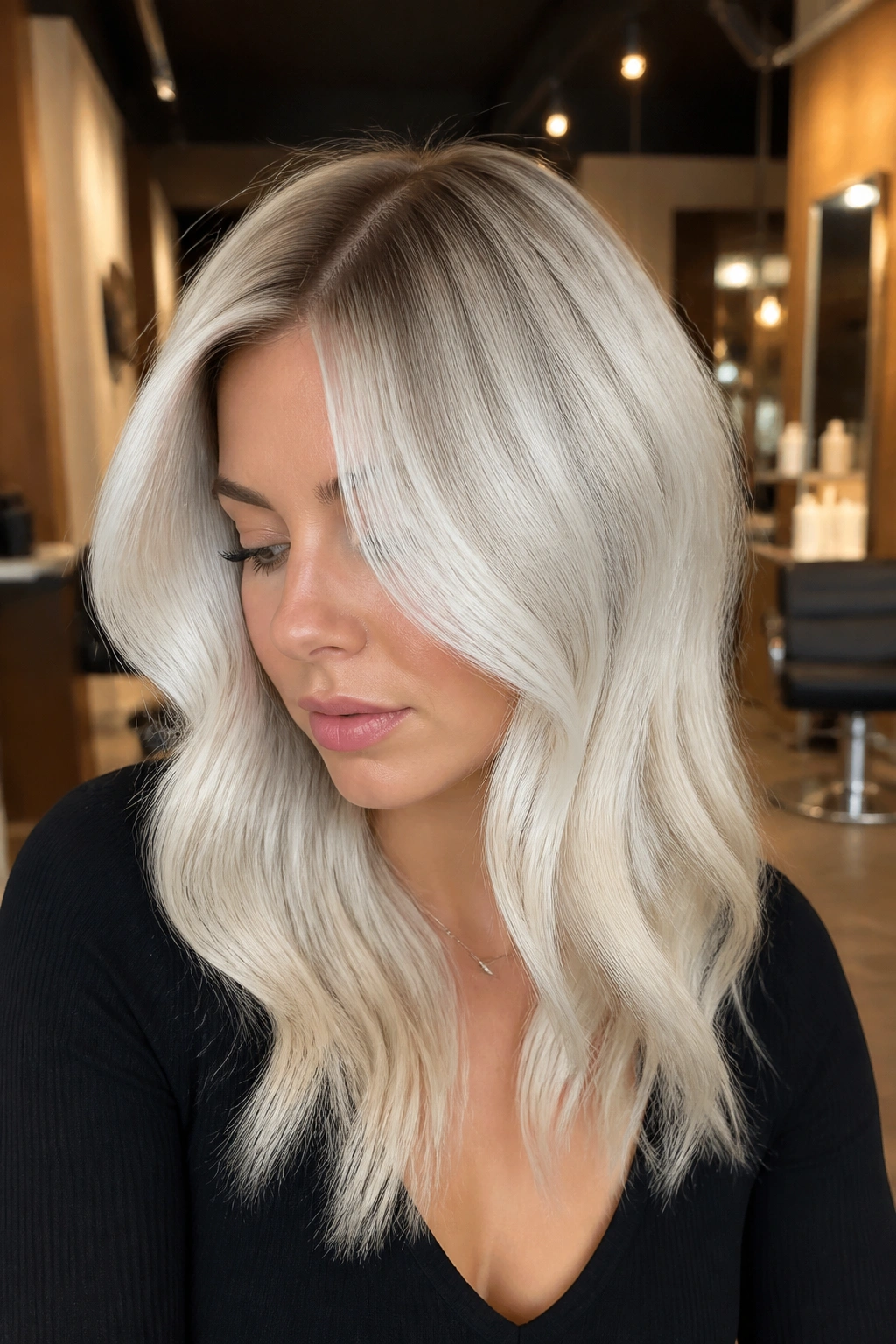
A smoky shadow root is the easiest way to make white blonde feel polished instead of severe. The root stays a couple of levels deeper than the mids and ends, usually around level 6 or 7, while the blonde fades into a pale pearl-white finish. That contrast gives the color shape. Without it, a very pale blonde can look washed out near the scalp.
Why this version works
The smoky tone keeps the scalp area from looking too bright, which is a common problem on finer hair. It also makes regrowth less obvious, since your natural root can blend into the shadow instead of hitting a hard line.
A root melt like this is especially smart if you wear soft waves. The bends in the hair break up the contrast and make the whole color look more expensive. Straight hair can wear it too, but the line will read a little more clearly.
Best for: cool or neutral undertones, medium-to-fine hair, people who want white blonde without constant salon panic.
Tell your colorist: ask for a smoky beige-brown root smudge that melts into a level 10 pearl toner.
Watch out for: roots that are too dark. Once you move into deep brunette territory, the blonde stops feeling airy.
Small tip: keep the root a touch softer around the hairline. It saves the look from feeling harsh in bright light.
2. Icy Pearl Blonde with Espresso Roots
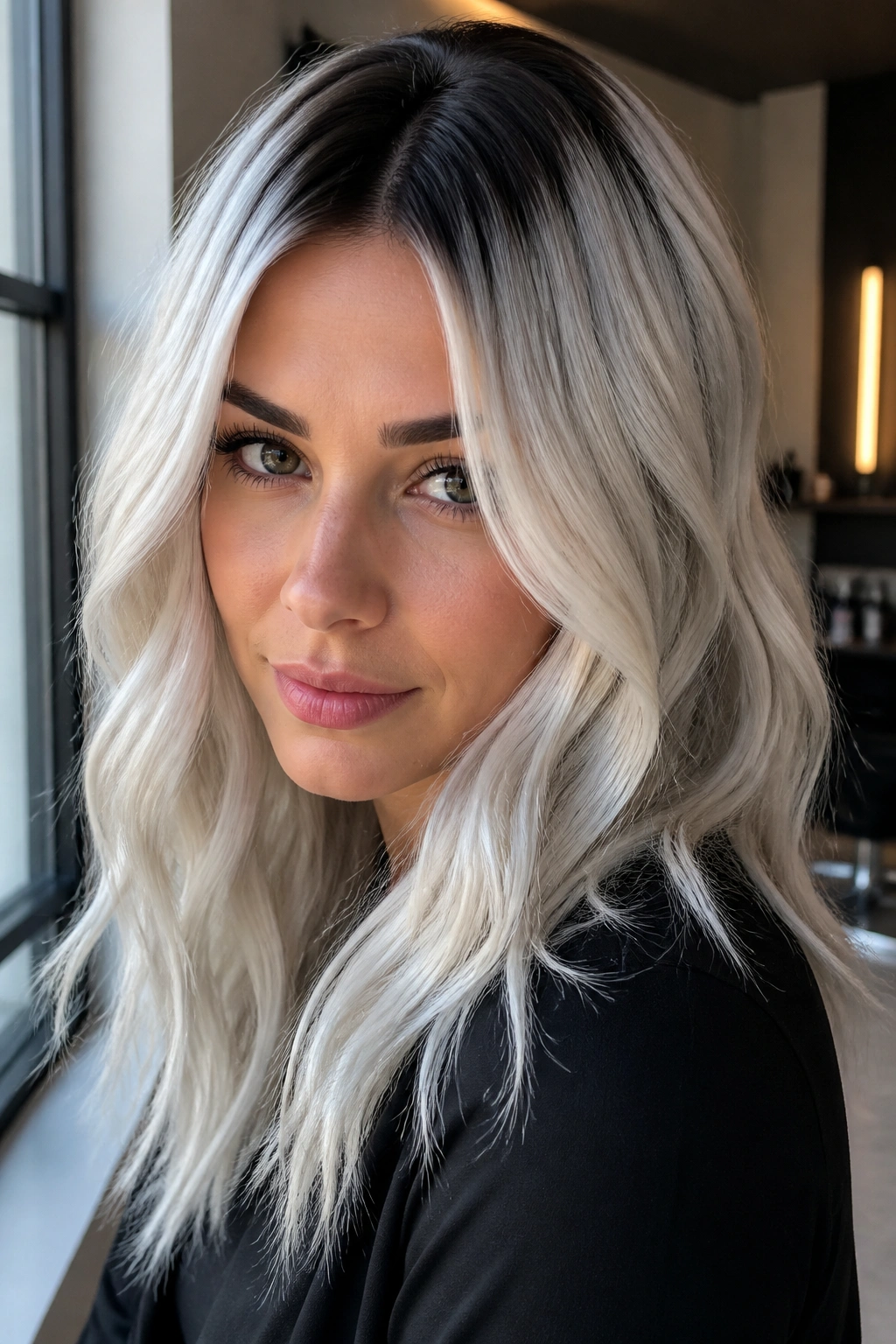
This one has attitude. The espresso root gives the white blonde a crisp frame, and the pearl tone through the lengths keeps it from drifting into flat silver. The contrast is sharper than a smoky melt, which is exactly why it suits people who want their blonde to look sharp and cool, not soft and blended.
What makes it different
Unlike a beige root, espresso reads clean and deliberate. It creates a stronger outline at the scalp, which can be flattering on square and oval faces because it brings more focus upward. The pearl ends then do the opposite: they brighten the lower half and keep the whole thing from feeling heavy.
It’s a good match for blunt cuts, collarbone lobs, and straight styling. Waves can work, but straight hair really shows off the structure. If your hair pulls gold fast, this version needs regular toning because any warmth in the mids will fight the icy finish.
Best for: cool undertones, dark brows, sharper haircuts.
Avoid if: you hate upkeep or you want a root that disappears for months.
Ask for: an espresso root shadow with a pearl-violet gloss through the ends.
That violet note matters. Without it, pearl blonde can slide into dull cream.
3. Snow White Blonde with a Soft Root Tap
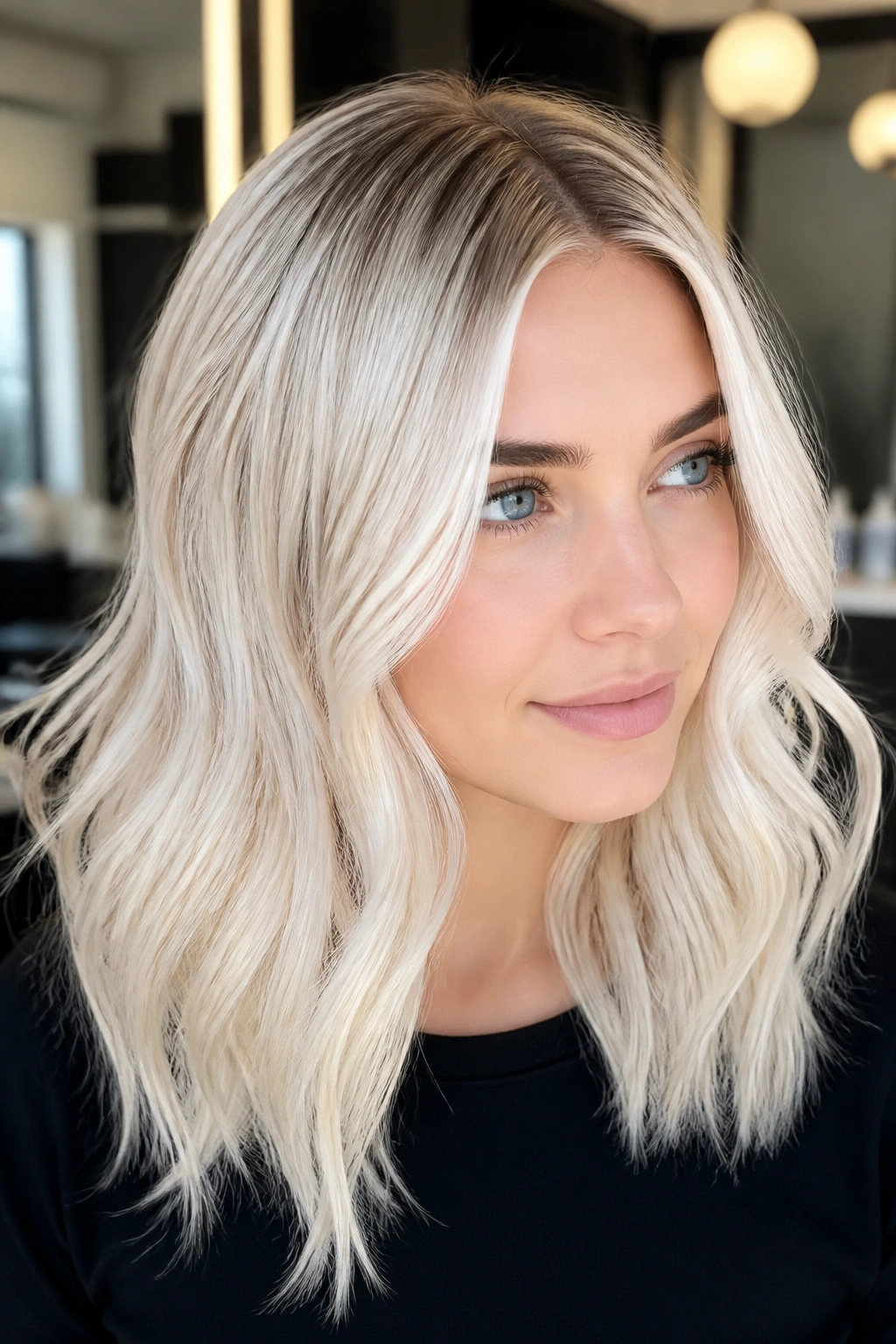
Why does this look so good? Because it gives you the brightest blonde possible without making the scalp look like it’s floating. A root tap is lighter and thinner than a full shadow root, so the color stays airy. The ends can go all the way to snow-white, but the first half inch at the scalp gets a whisper of depth.
The result is almost delicate. Not fragile—just refined. It suits people who want a near-white blonde but don’t want the severe feel of a full platinum block. On long hair, it looks graceful. On shorter cuts, it looks crisp and clean.
How to wear it
This shade works best when the finish is glossy and smooth. Dry, frizzy texture steals the effect fast. A heat protectant and a round brush blowout make a bigger difference here than in darker blondes because every rough patch shows.
A root tap also softens the grow-out line enough that you can stretch salon visits a little longer. You will still need toning, though. White blonde is needy in that way. Pretty. Needy.
A good colorist will usually lift the lengths to a clean pale yellow first, then tone them down to a white-cream finish. Skipping that step leaves the hair looking pale gold instead of white.
4. Mushroom Blonde with Dark Roots and White Ends
Picture someone who likes blonde, but not the obvious kind. Mushroom blonde sits in that gray-beige zone, and when it’s paired with a deeper root, the whole look feels grounded and modern. The ends can still lean white, but the midsection has enough taupe to keep the blonde from looking chalky.
This is one of those shades that photographs differently in soft indoor light versus bright sun. Indoors, it reads calm and expensive. Outside, the lighter pieces open up and the white ends become more obvious.
The root depth here does a lot of work. It gives the beige tones something to sit against, which stops the color from looking muddy. If your natural hair is level 5 to 6, this is one of the easiest ways to move into blonde without trying to erase your base completely.
Best for: neutral skin, people who like understated color, anyone tired of super-bright icy ends.
What to ask for: a mushroom beige melt with white-toned ribbon highlights.
One warning: if your hair is porous from bleach, beige can go flat fast. A clear gloss between appointments helps keep the finish soft.
5. Champagne White Blonde with Cocoa Roots
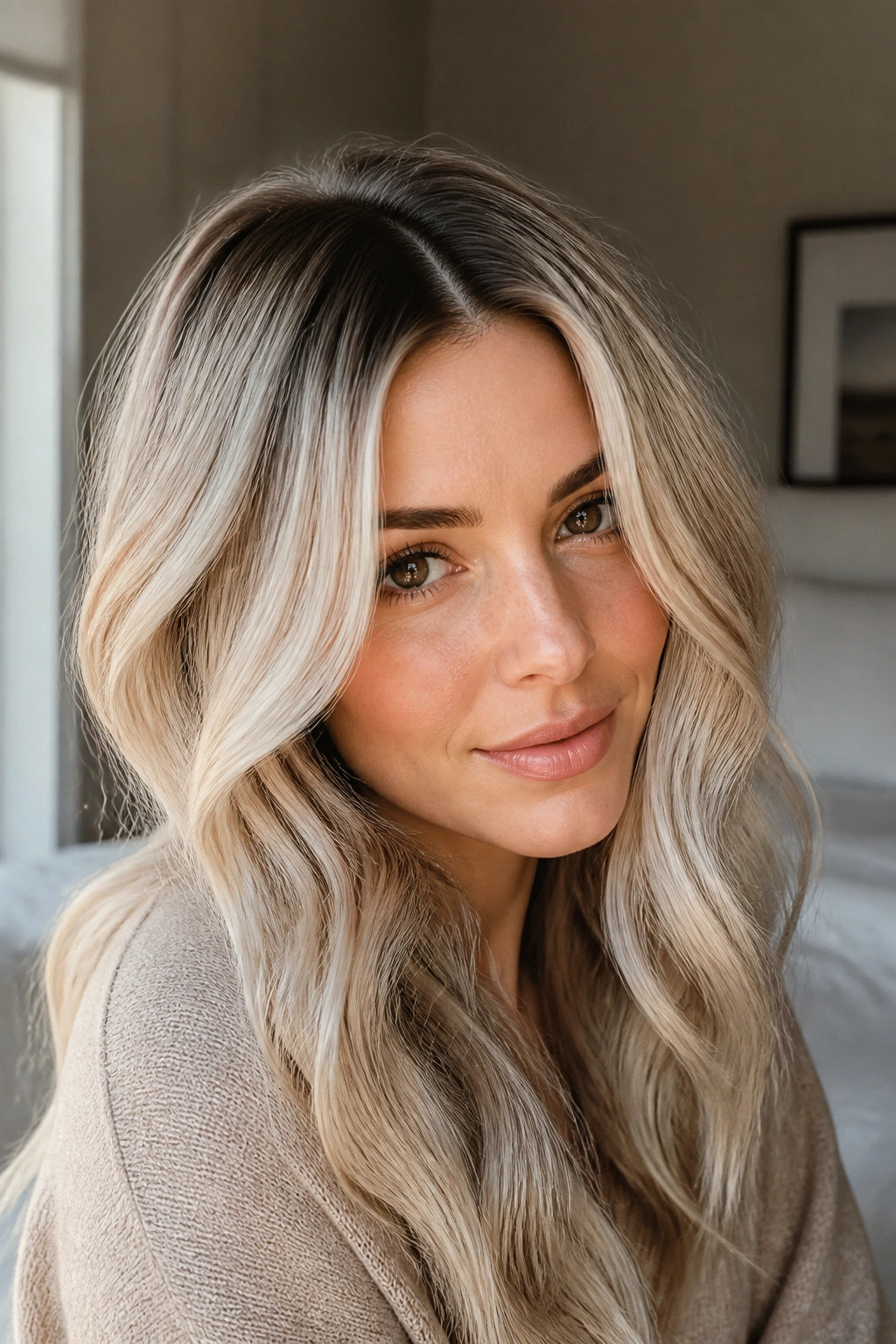
Champagne white blonde is warmer than icy blonde, and that warmth can be a gift. The white pieces still look pale, but they carry a faint creamy glow instead of a blue-white cast. Cocoa roots anchor the color and keep the warmth from turning brassy.
Why I like this one
It flatters people who feel washed out by very cool blonde. The champagne tone brings a little life back to the face, especially around the cheeks and jaw. Cocoa roots also look more natural than a stark black root, which matters if you want the color to read luxe rather than costume-like.
There’s a practical side too. Warmer white blondes tend to feel softer as they grow out, especially if the root is painted with a gradual melt. That doesn’t mean maintenance disappears. It just means the grow-out looks kinder.
A loose wave really suits this shade. The bends catch the warm and cool pieces differently, so the color looks layered instead of one-note.
Best for: warm or neutral undertones, brown eyes, softer features.
Ask for: cocoa shadow roots with champagne-white highlights and a beige gloss on the mids.
Avoid if: you want a blue-white finish. This is a creamier blonde, not an icy one.
6. Silver Ash Blonde with Charcoal Roots
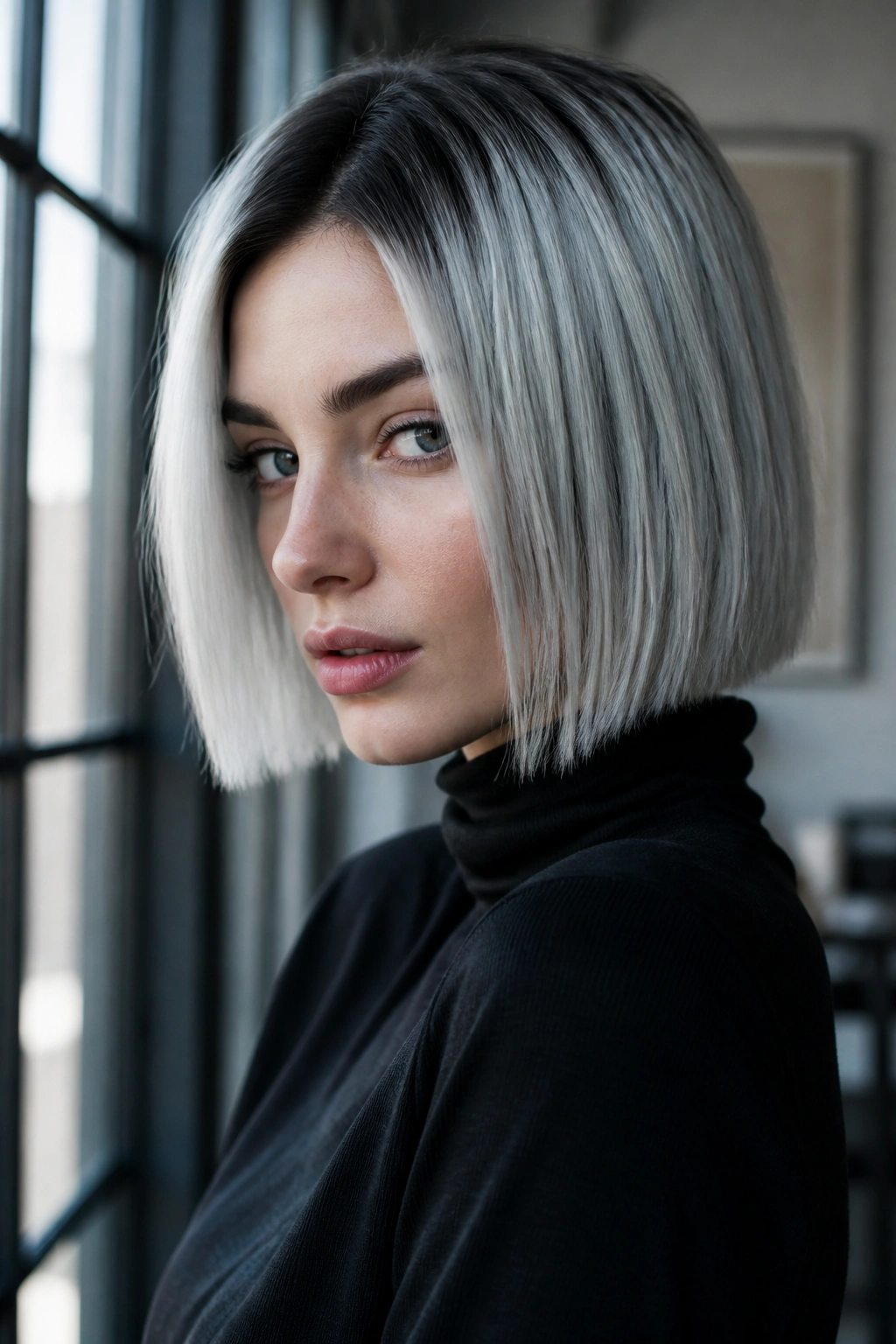
Silver ash blonde can look incredible, but only if the root is handled with a bit of nerve. Charcoal roots give the silver a firm base, and that base is what keeps the color from feeling too fluffy or washed out. It’s a stronger look than pearl blonde. Sharper. Cooler. A little more editorial.
The trick is not letting the silver go dull. Silver ash needs tone, not just lift. If the hair is lifted to a pale yellow and then left alone, the result can tip into beige or stale gray. A good toner keeps the finish metallic and clean.
What makes it different
Unlike icy pearl, silver ash has a colder edge. It reflects light in a flatter, more mirrored way, which is why it looks so strong on straight hair and blunt bobs. The charcoal root gives it a real anchor.
This shade suits people who wear minimal makeup or dark clothing often. The contrast can be dramatic, so if your wardrobe already leans bold, the hair will fit right in. If your style is soft and romantic, you may prefer a warmer white blonde instead.
Maintenance note: silver shades fade quickly if you wash too often. Use cooler water and a gentle sulfate-free shampoo.
7. Creamy White Balayage with Brunette Roots
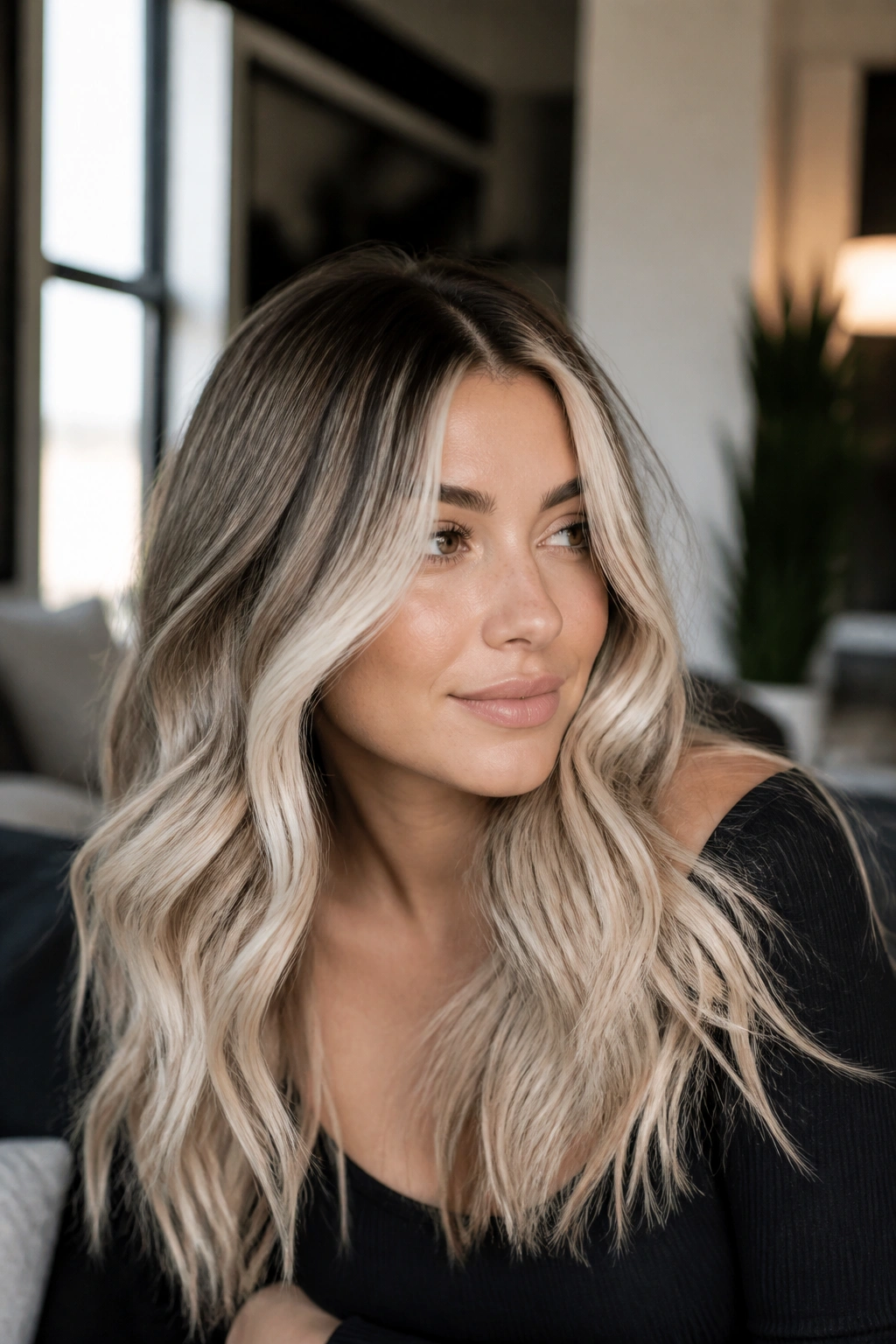
A brunette root with creamy white balayage is the least fussy way to wear this whole look. The blonde doesn’t start at the scalp in a hard block. It comes through in painted ribbons, brighter around the face and lighter through the ends, with the darker root left to do what roots do best: keep the color grounded.
That makes this one easy to live with. Regrowth blends into the base instead of announcing itself. The white pieces still show up, but they look painted on purpose, not sprayed on top.
The maintenance reality
This is the kind of blonde that buys you breathing room. You still need toner, but you do not need constant scalp lightening unless you want the root area to be a lot brighter than it naturally is. People with darker natural hair often choose this because it gives them the white-blonde feel without bleaching every inch.
If you wear it with soft curls, the lighter ribbons pop in a really nice way. Straight and sleek works too, though the balayage placement will read more softly. That’s the trade-off.
Tell your colorist: ask for creamy white face-framing pieces, a rooted brunette base, and feathered ends.
Good for: busy schedules, long hair, low-drama grow-out.
8. Vanilla Ice Blonde with Melted Roots
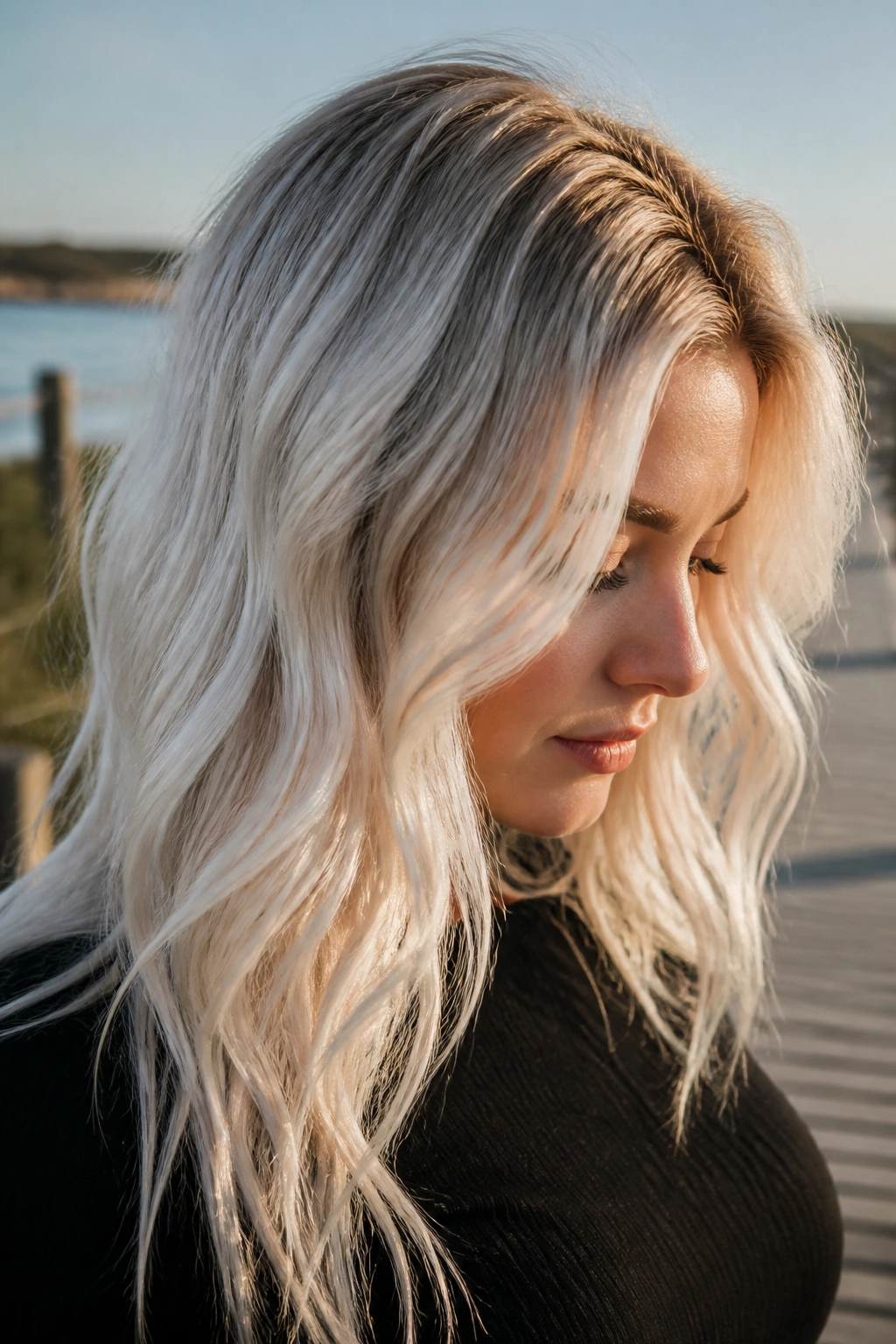
Vanilla ice blonde sits between cool and warm, and that balance is what makes it easy to wear. The white pieces are bright, but not sterile. The root melt keeps the scalp area from looking too stark, and the vanilla tone through the mids adds softness.
This color is a nice middle ground if you like white blonde but hate the way some icy tones can make the skin look flat. The vanilla note gives the face a bit more warmth, even when the overall finish stays pale.
The root melt matters here more than people think. If the root is too hard, the color looks striped. If it’s too soft, the blonde can lose its shape. A good melt usually stretches a few inches down the head, then fades into lighter lengths.
How to style it
Beachy waves make the vanilla dimension visible. A sleek blowout, on the other hand, shows the smooth gradient from root to end. Either works. What does not work is dry, frizzy hair. The color depends on shine.
Best for: medium skin tones, people who want a softer white blonde, hair that holds gloss well.
Keep in mind: toner on vanilla blondes usually fades to a warmer cream, which can actually look better than the original tone.
9. White Blonde with Face-Framing Money Pieces
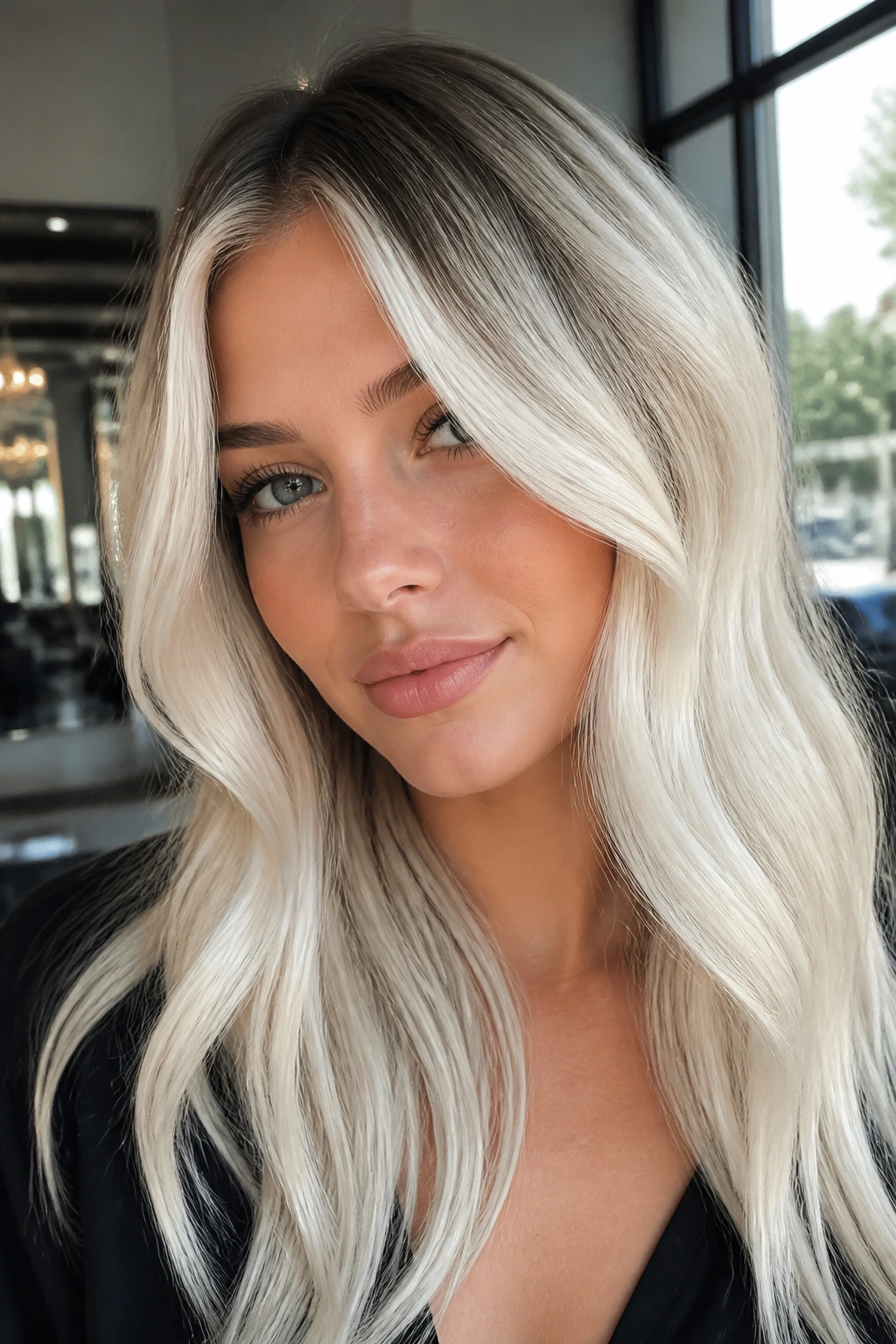
A few bright panels around the face can change the whole mood of white blonde. Add a deeper root, and those money pieces pop even more. The effect is instant brightness where you want it most—around the eyes, the cheekbones, and the front of the hairline.
This look is bolder than a full-root melt because the contrast is built into the front. It’s a smart choice if you want the blonde to look intentional and lifted without bleaching every section of the head to the same level. The rest of the hair can stay a touch deeper, which saves time and keeps the style from feeling overdone.
What to watch for
The front pieces need to be placed carefully. Too wide, and the hairline can look harsh. Too narrow, and the effect disappears once you tuck your hair behind your ears. A good color placement usually starts just outside the part and graduates a little wider as it moves down.
This one works especially well with ponytails, half-up styles, and curtain bangs. You get the bright framing even when the rest of the hair is pulled back.
Ask for: a dark root shadow with white money pieces and softer blonde through the lengths.
10. Pearl Beige Blonde with Soft Shadow Root
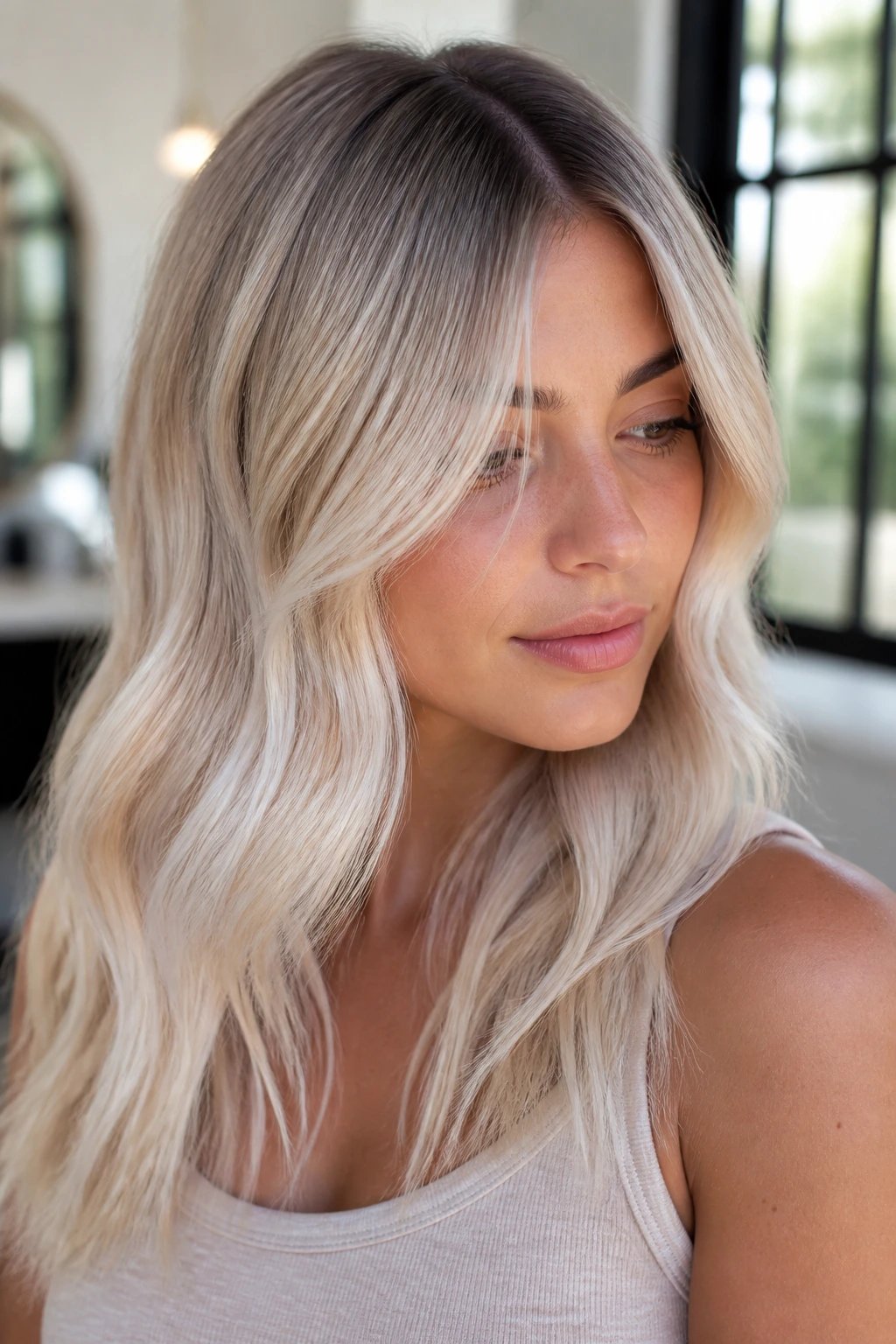
Pearl beige blonde is one of those shades that looks quiet from a distance and expensive up close. The pearl gives it a cool sheen, while the beige keeps it from turning frosty or flat. Add a soft shadow root, and the whole color feels finished.
The appeal here is balance. Too much cool tone and the blonde can look hollow. Too much beige and it can drift toward gold. This version splits the difference. It has enough dimension to flatter movement in the hair, but it doesn’t scream for attention.
Why it suits so many people
The soft root helps this shade work on a wider range of skin tones than a stark platinum does. It also hides a bit of regrowth without making the hair look dark at the scalp. That matters if you like a polished blonde but don’t want a high-maintenance schedule.
A pearl beige blonde looks especially good on layered cuts. The shorter pieces catch the light differently from the longer ones, so the color feels textured. If you keep your hair one length, ask your colorist for a few face-framing pieces to stop the finish from going flat.
Small detail that matters: a beige gloss usually fades faster than a violet-heavy toner. If you love the softer tone, plan on refreshing it sooner.
11. Arctic White Blonde with Dark Underlayers
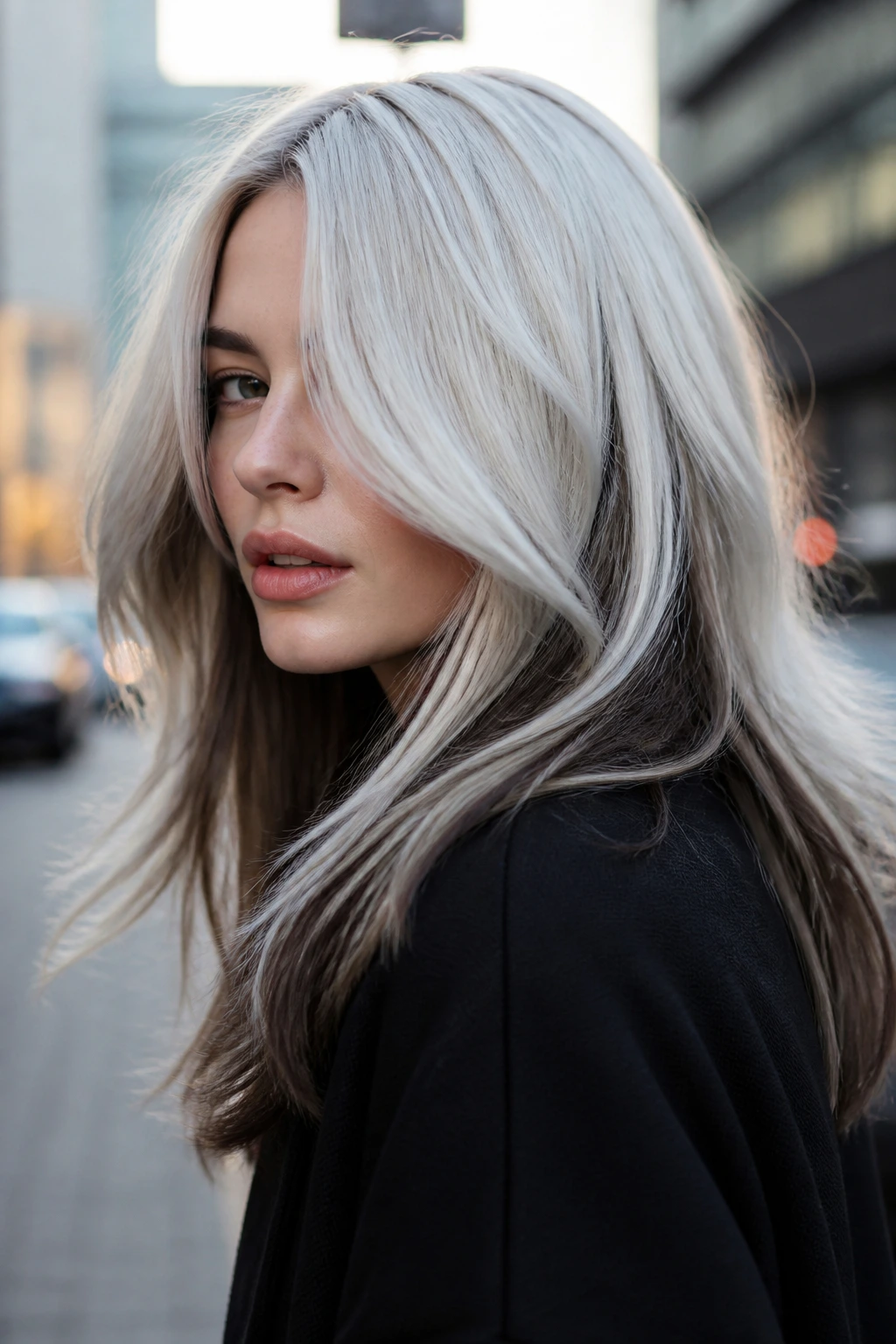
This one has edge. The top layer reads arctic white, but the darker underlayers peek through when the hair moves, which gives the whole style a little depth. It’s not the same as a root melt. The dark lives lower, hidden until the hair shifts.
That makes it a good choice for people who want drama without a full dark root showing all the time. It also works well on thicker hair, because the underlayers stop the blonde from looking like one giant sheet of color.
You can wear it straight, curled, or tucked behind one ear. Every version shows the contrast a little differently. Straight hair gives you the cleanest view of the pale surface. Waves expose the darker pieces underneath and make the color feel more dimensional.
Best for: thick hair, edgy cuts, people who like contrast but don’t want a visible root line.
What to ask for: arctic white surface pieces over a deeper ash-brown underlayer.
That placement is the whole point. If the underlayer is too thin, you lose the effect.
12. Scandinavian White Blonde with Lived-In Roots
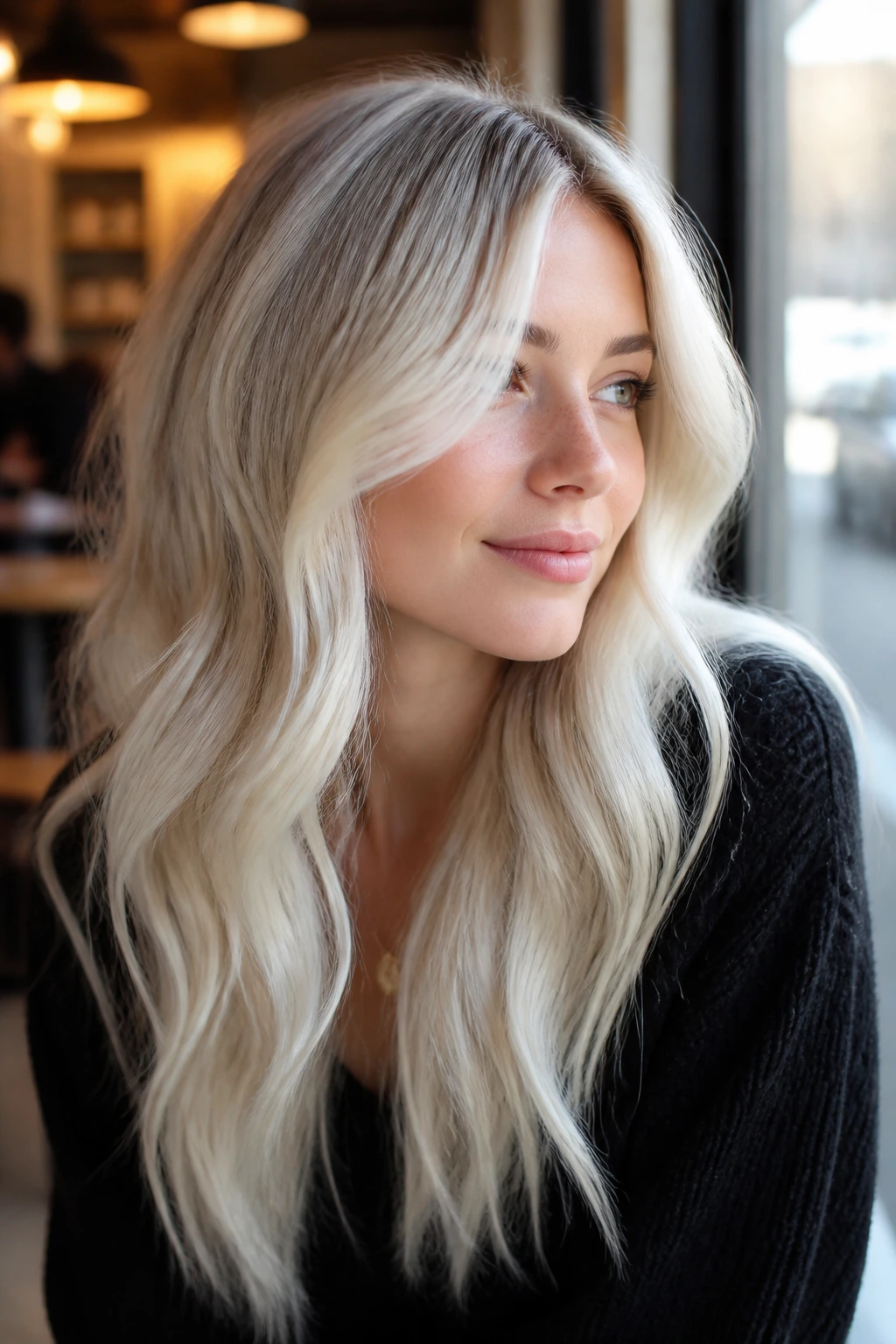
Scandinavian-style blonde gets talked about a lot, and for good reason. The hair looks airy, pale, and clean, but the root is still there on purpose. It’s not a mistake. It’s what keeps the color from becoming a flat sheet of white.
The lived-in root is usually just deep enough to break up the scalp area, then it fades into a near-white blonde through the mids and ends. The contrast is softer than an espresso root, but stronger than a root tap. That middle ground is why so many people end up liking it.
Who it suits
This shade works beautifully on people with naturally dark blondes or light brunettes who want to stay within a believable range. It also suits fine hair because the root depth creates the illusion of thicker density at the scalp.
The catch is upkeep at the toner level. The root can grow out gracefully, but the lengths still need attention. White blonde gets yellow fast if you use the wrong shampoo or go too long between glosses.
I like this look best on hair that falls just past the shoulders. It has enough length to show the gradient without making the ends look stringy.
13. White Blonde Lob with Cocoa Root Melt
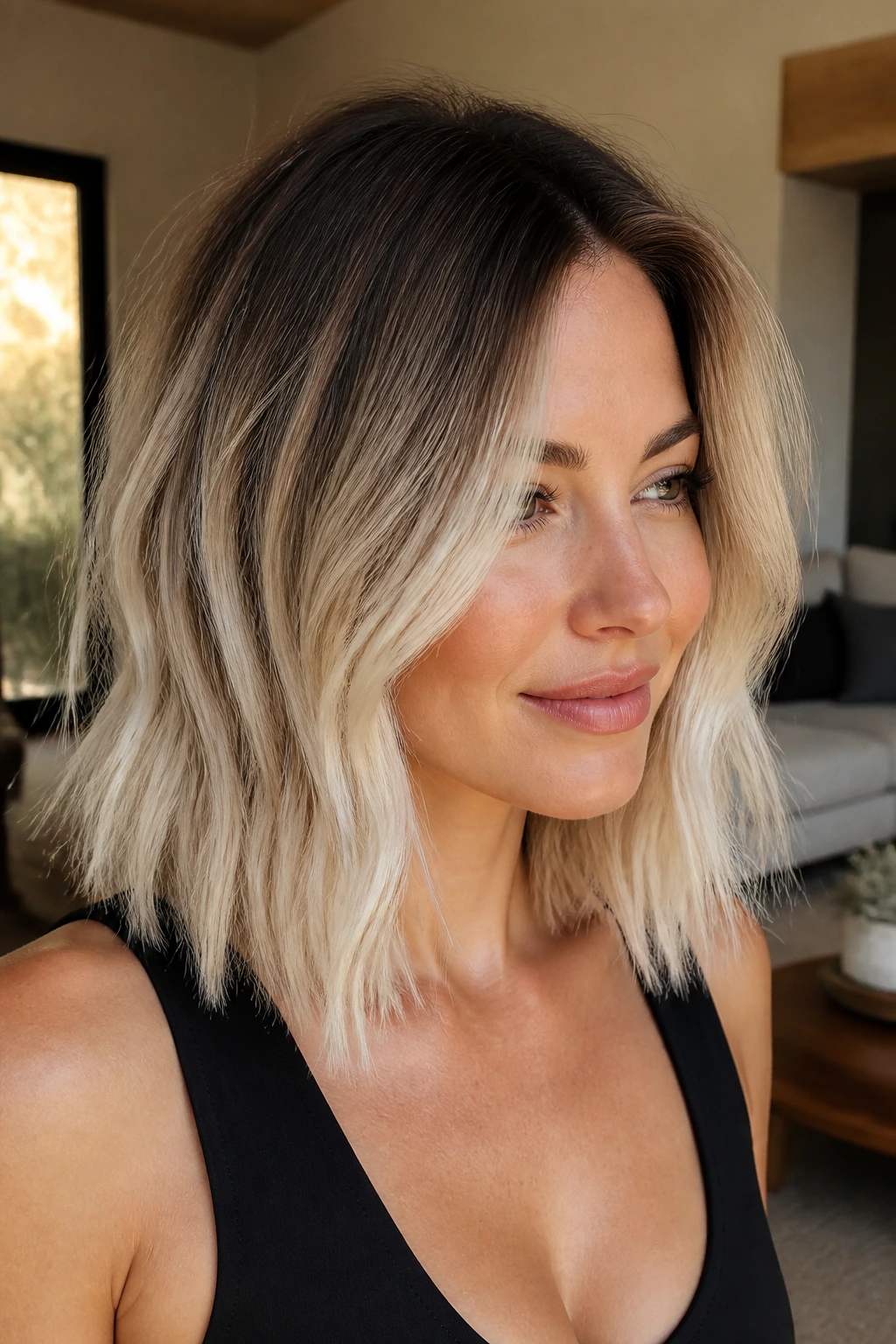
A lob gives this color room to breathe. The shorter length makes the white ends feel fresh, and the cocoa root melt keeps the cut from looking too severe. On a lob, the contrast is easy to read because there isn’t a ton of length for the color to disappear into.
The cocoa root also makes the style feel less precious. That matters on shorter hair. A white blonde bob or lob can look very polished, but it can also tip into wig territory if the root is too bright and the finish too uniform. The darker base fixes that.
How to style it
A blunt lob shows off the line of the cut and the shift from dark root to pale blonde. Soft bends soften the whole thing. Either way, the color benefits from shine spray or a light serum on the ends.
If you want a haircut that makes your root work for you, this is a strong choice. Shorter hair tends to grow out faster in a visual sense, so the darker root becomes part of the design instead of a maintenance issue.
Ask for: cocoa root melt, white blonde mids, and brighter face-framing pieces for lift.
14. Frosted White Balayage with Walnut Roots
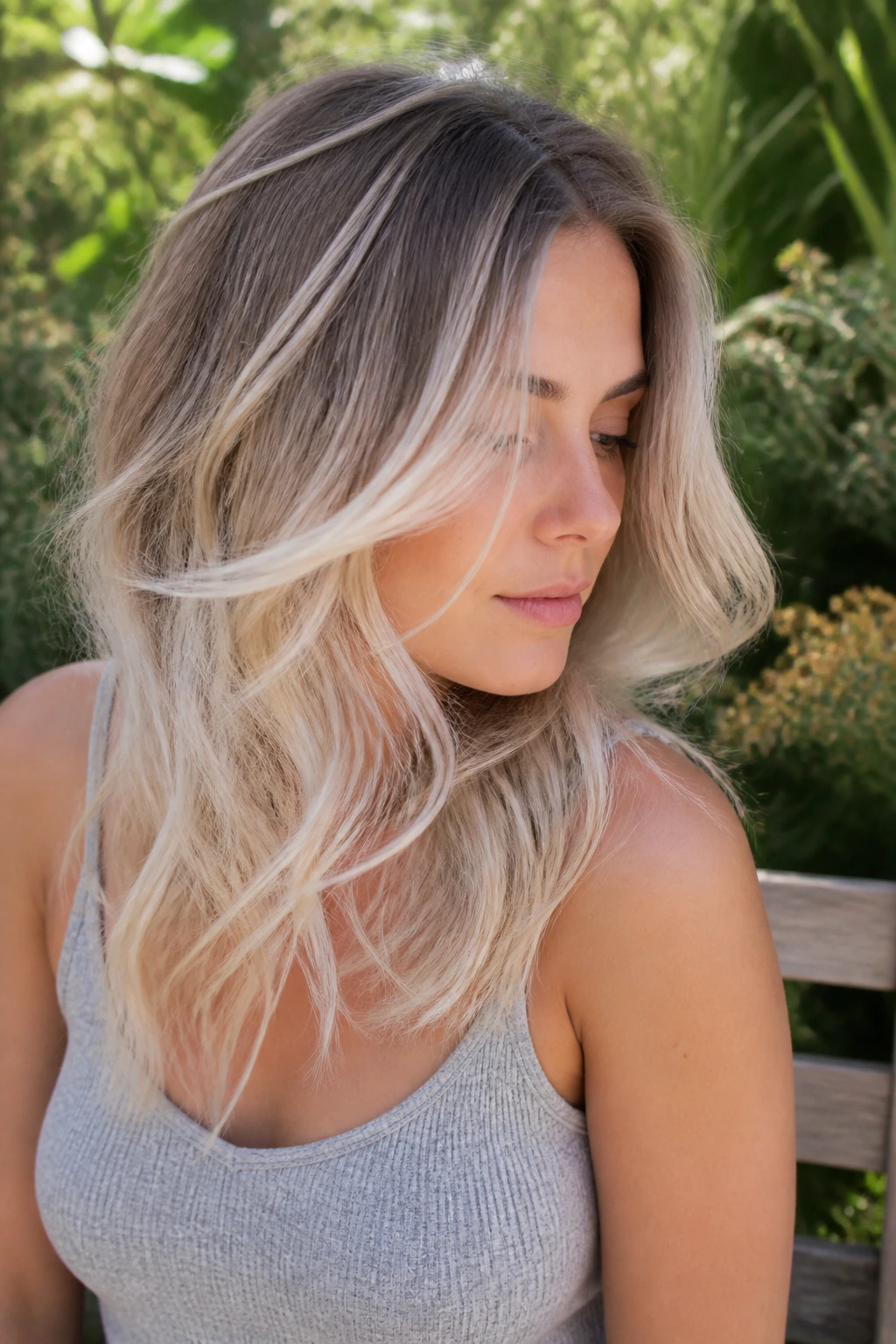
Walnut roots give frosted white balayage a richer base than ash-brown roots do. The tone is a little warmer, a little deeper, and that warmth helps the white pieces look cleaner by contrast. If the roots are too cool, the whole thing can lean flat. Walnut keeps it alive.
This is a good choice if you don’t want all-over bleach. The blonde can live in ribbons and panels, mostly where the hair naturally catches light. The root stays dark enough to make the white stand out, but the grow-out is forgiving because the color is painted rather than packed in.
The practical side
Balayage is a little less uniform, which is part of the appeal. It gives you a softer, more natural distribution of white pieces. The ends can still be very pale, but the transition is gentler than with full foil blonding.
This shade is also kind to longer hair. The root keeps the top from looking over-light, and the frosted pieces at the bottom give movement. If you curl it, the highlights scatter in a way that makes the color look fuller than it really is.
A walnut root can also be easier to maintain than a very dark espresso base. It fades a bit softer and grows out without such a hard edge.
15. White Blonde with Rooted Curtain Bangs
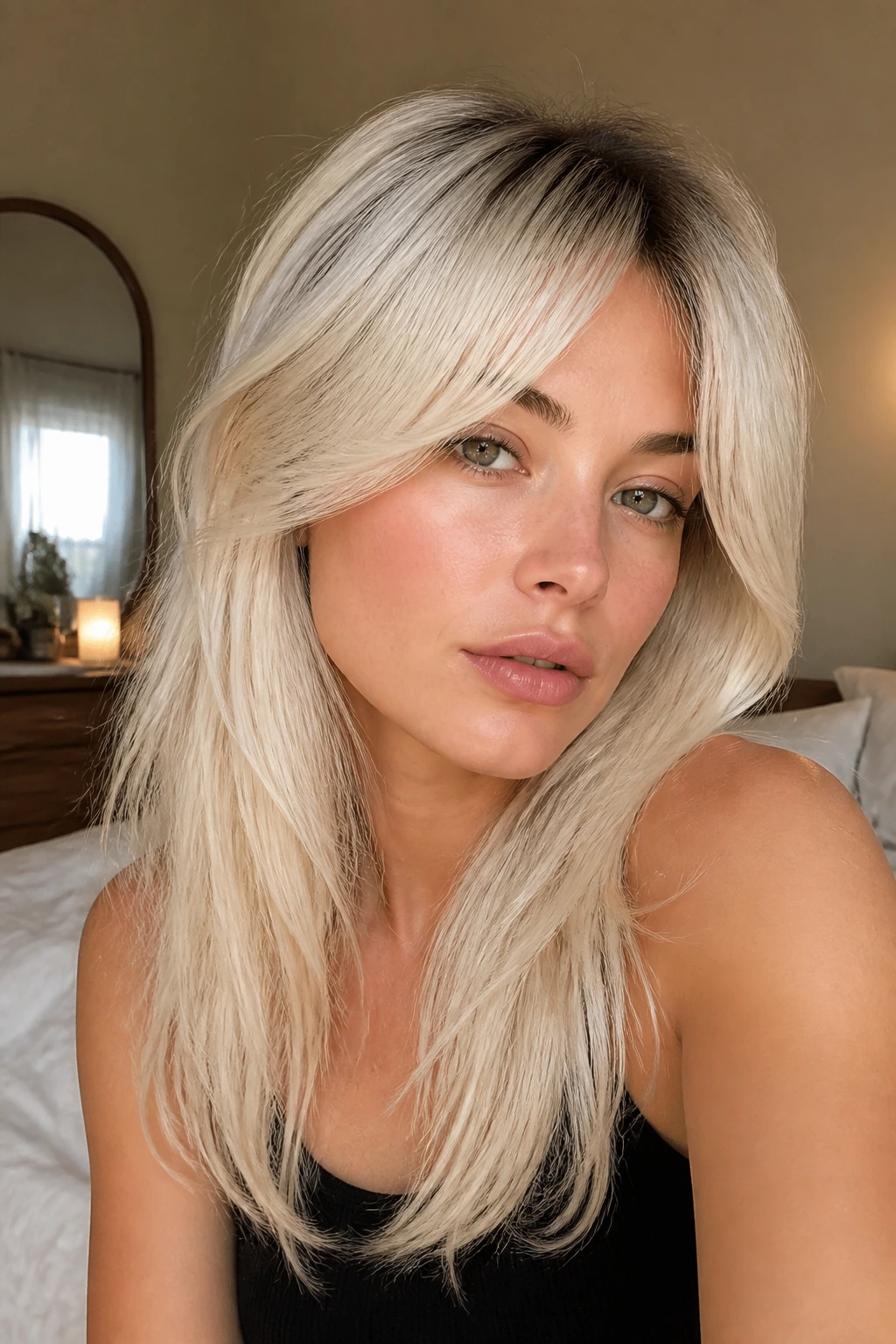
Curtain bangs and dark roots are a good pair. The bangs bring the brightness forward, and the rooted area keeps the scalp from looking too stark around the part. When the rest of the hair is white blonde, the bangs become the part that does the flirting. Slightly annoying, maybe. Also effective.
The rooted bangs help this style feel wearable because they add a small break between the forehead and the pale lengths. Without that depth, white blonde bangs can look a bit too much like a helmet, especially if the hair is straight and dense.
How to make it work
Keep the root soft at the part, then let the white blonde start just below the fringe. The bangs can be a touch brighter near the ends, which makes them swing nicely and keeps the face open.
This look is especially good if you already wear curtain bangs, face-framing layers, or a long shag. The root gives the style shape, and the white blonde keeps it bright.
Best for: people who want softness around the face, layered cuts, and a blonde that still feels fresh on day two.
One good rule: if the bangs are heavily bleached, they need extra care. A small trim every 4 to 6 weeks keeps them from looking wispy.
Final Thoughts
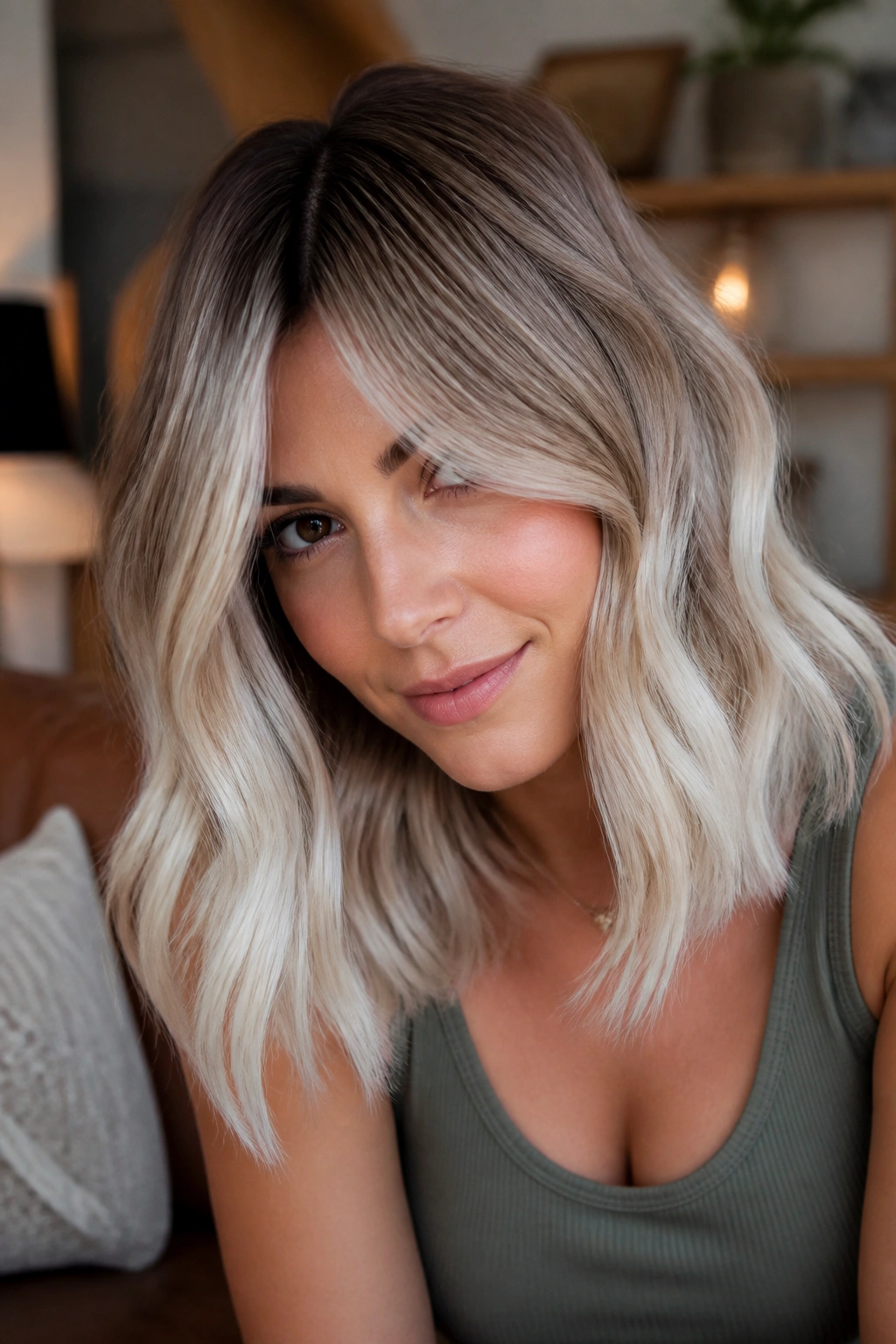
White blonde with dark roots works because it gives the eye structure. The root keeps the color from floating, and the pale lengths keep it from feeling heavy. That’s the whole trick, really.
The best shade for you depends less on the name and more on the contrast level. Some people need a smoky melt. Others look better with espresso roots and icy ends. A few can pull off a root tap so soft it barely shows.
If you take one thing from all of this, let it be this: the root is part of the color, not a mistake to hide. That change in thinking makes the whole look easier to wear, easier to explain to your stylist, and a lot prettier in the real world.
