



A blunt, all-over platinum blonde can make a round face look wider than it is. A darker root changes that fast. It breaks the color up at the scalp, pulls the eye downward, and gives the cheek area somewhere to disappear instead of shouting for attention.
That is why blonde dark root hair colors for round faces work so well when the placement is thoughtful. The trick is not just the shade. It is where the lightness starts, how heavy the root looks, and whether the cut gives the color room to move.
A round face usually has soft curves through the cheeks and a shorter-looking vertical line from forehead to chin. Color can help, but only if it creates length instead of a thick band across the widest part. Dark roots, face-framing brightness, and a bit of movement at the ends do that job better than flat, one-note blonde ever will.
Some versions feel soft and lived-in. Others look sharper and cooler. A few lean warm and glossy, which can be lovely if your skin likes gold tones. The ones below cover the useful range, and the placement details matter more than the label on the box.
1. Ash Blonde Balayage With a Soft Shadow Root
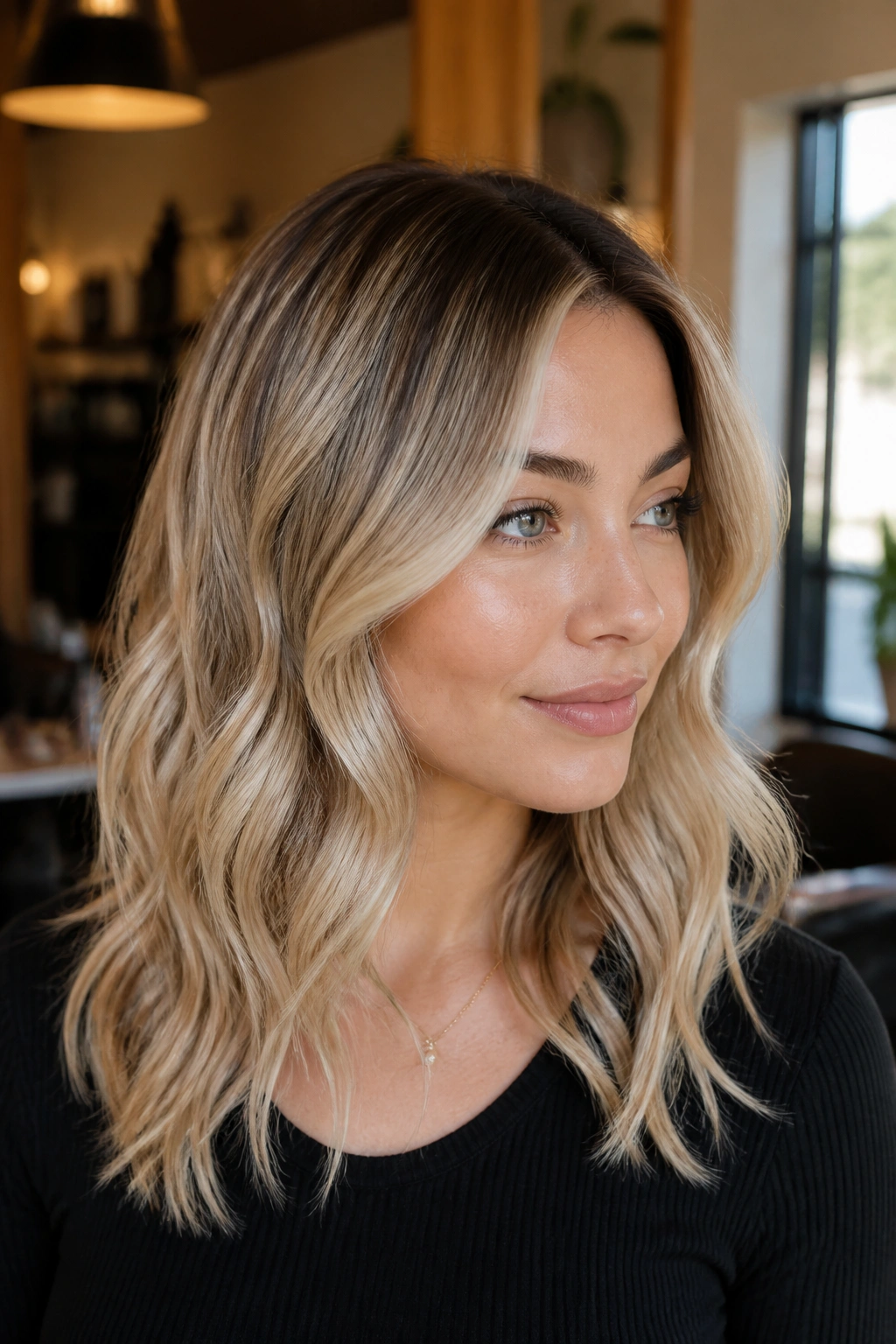
Ash blonde plus a shadow root is one of the easiest ways to narrow the look of a round face without making the hair feel harsh. The cool tone cuts the visual width a little, and the darker root keeps the top from turning into one bright stripe across the head.
Why It Flatters Round Faces
Ash blonde works best when the lightest pieces live below the cheekbone and around the collarbone. That placement creates a vertical pull, which matters more than people think. If the brightest ribbon sits right at the widest part of the face, the whole look can feel fuller.
The shadow root helps even more. It softens the grow-out line and keeps the crown from looking puffed up, which is a sneaky problem on rounder faces. I like this on a medium-length cut with long layers, because the movement keeps the color from feeling stiff.
Ask For This At The Salon
- A level 6 or 7 root melt that fades into ash blonde mids
- Bright pieces kept below the cheekbone line
- A few lighter strands at the front, but not a thick money piece
- Soft waves or a blowout that bends away from the face
Tip: keep the front pieces skinny. Wide panels can widen the face faster than the actual shade ever will.
2. Beige Blonde Lob With a Root Melt
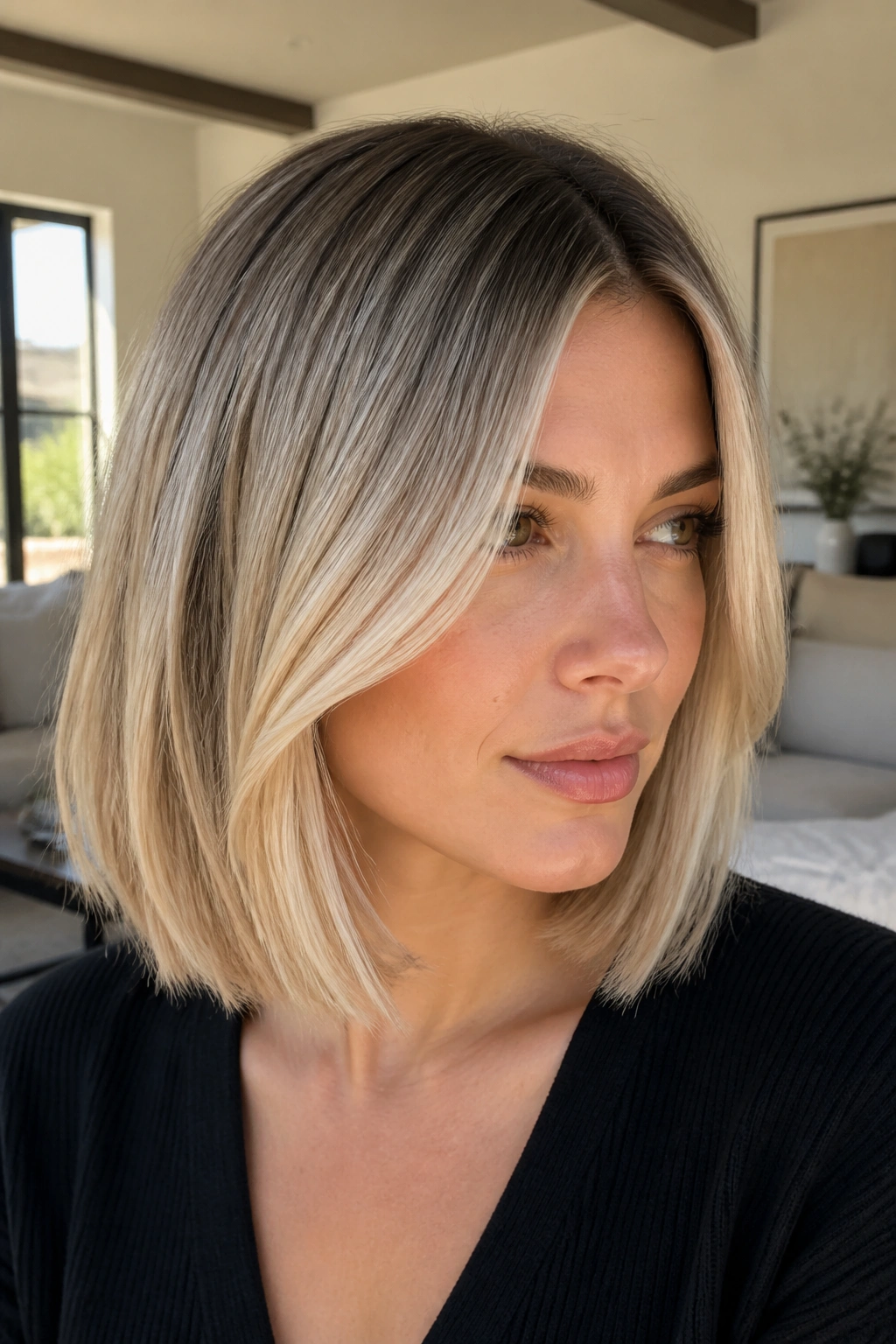
Want something softer than ash but still clean and polished? Beige blonde sits in that middle lane. It has enough warmth to keep the skin from looking flat, but it does not throw extra width across the cheeks the way a heavy golden blonde sometimes can.
A lob that lands around the collarbone helps a lot here. The cut gives the color a long line to follow, and that line is what flatters a round face. The dark root keeps the top grounded, while the beige lengths read smooth instead of overdone.
This is a good choice if you wear your hair straight most of the time. A center part can work, but I like a slightly off-center part better because it breaks the symmetry just enough. No need to overthink it.
The cleanest version uses a root that is about one to two shades deeper than the mids. That small shift matters. Too much contrast looks stripey; too little disappears.
3. Honey Blonde Money Piece Over Dark Roots
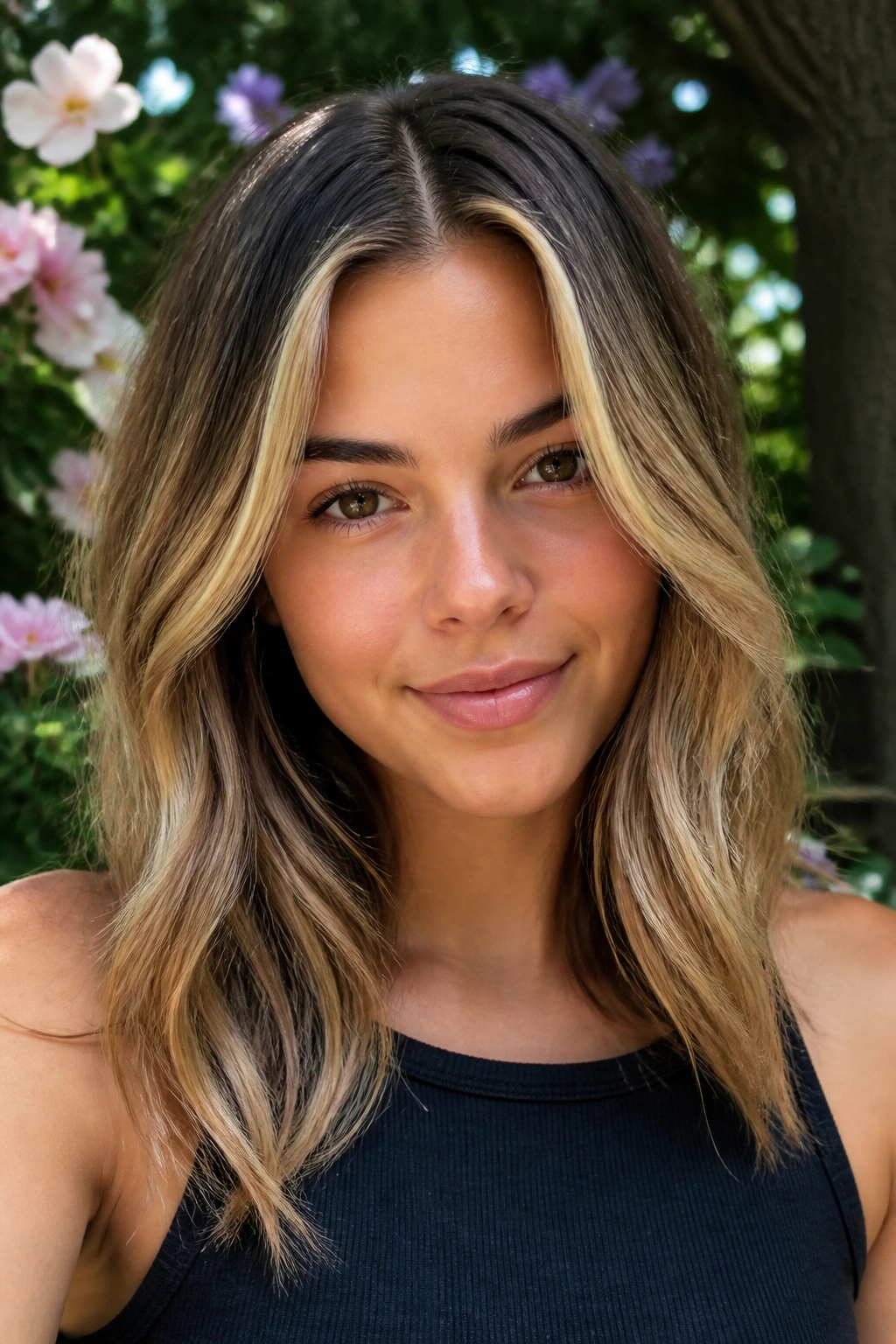
A brighter front piece can look risky on a round face, and that is exactly why placement matters so much. If the money piece starts too wide, it draws a hard frame around the cheeks. If it stays narrow and begins just below the brow, it can actually lengthen the face.
How To Wear It
Think of this version as a thin ribbon of honey blonde around the face, not a thick curtain. The dark root stays visible through the crown, which keeps the top half from looking bloated or too wide. That contrast gives the eye a clear path downward.
It works especially well with loose bends or large waves. The movement breaks up the brightness, so the face-framing pieces do their job without shouting. If your hair is naturally thick, this is one of the better dark-root blonde ideas because the root adds shape while the honey tones bring warmth.
- Keep the money piece no wider than two fingers
- Ask for brightness that starts around the outer brow
- Leave the crown darker for a longer, leaner line
- Style with soft bends, not tight curls
One thing I’d skip: a chunky front stripe that stops at the cheekbone. That can make the face feel broader, not slimmer.
4. Smoky Platinum Ends With a Deep Root
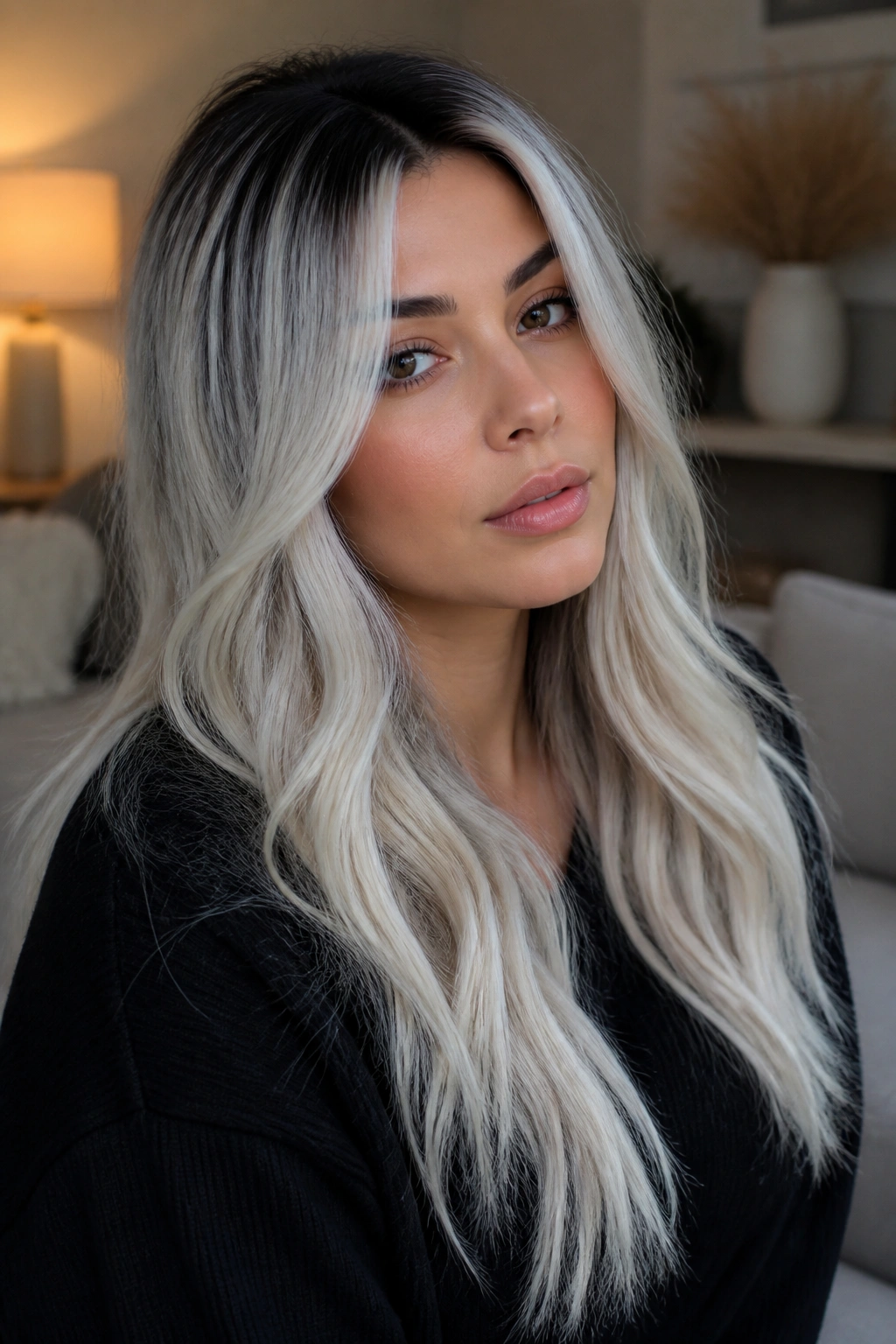
Platinum does not automatically make a round face look bigger. It depends on where the platinum lives. If the ends are icy and the root stays smoky, the eye moves up and down instead of side to side, which is the real trick.
This look works best on long hair or a shoulder-grazing cut with strong layers. The root should stay dark enough to feel intentional, not muddy. Then the platinum takes over through the lower half of the hair, especially around the ends and outer layers. That creates a narrow, falling line.
It is also a smart pick if you like dramatic contrast. The dark root adds weight at the top in a good way, and the lighter lower lengths keep the face from looking boxed in. Shorter round faces can wear this too, but the cut needs length. A chin-length bob with icy ends is a tougher sell.
Skip this if your hair is already fragile from lightening. Platinum needs upkeep, and dry ends around the jaw can puff outward. Nobody wants that.
5. Butter Blonde Waves With a Melted Root
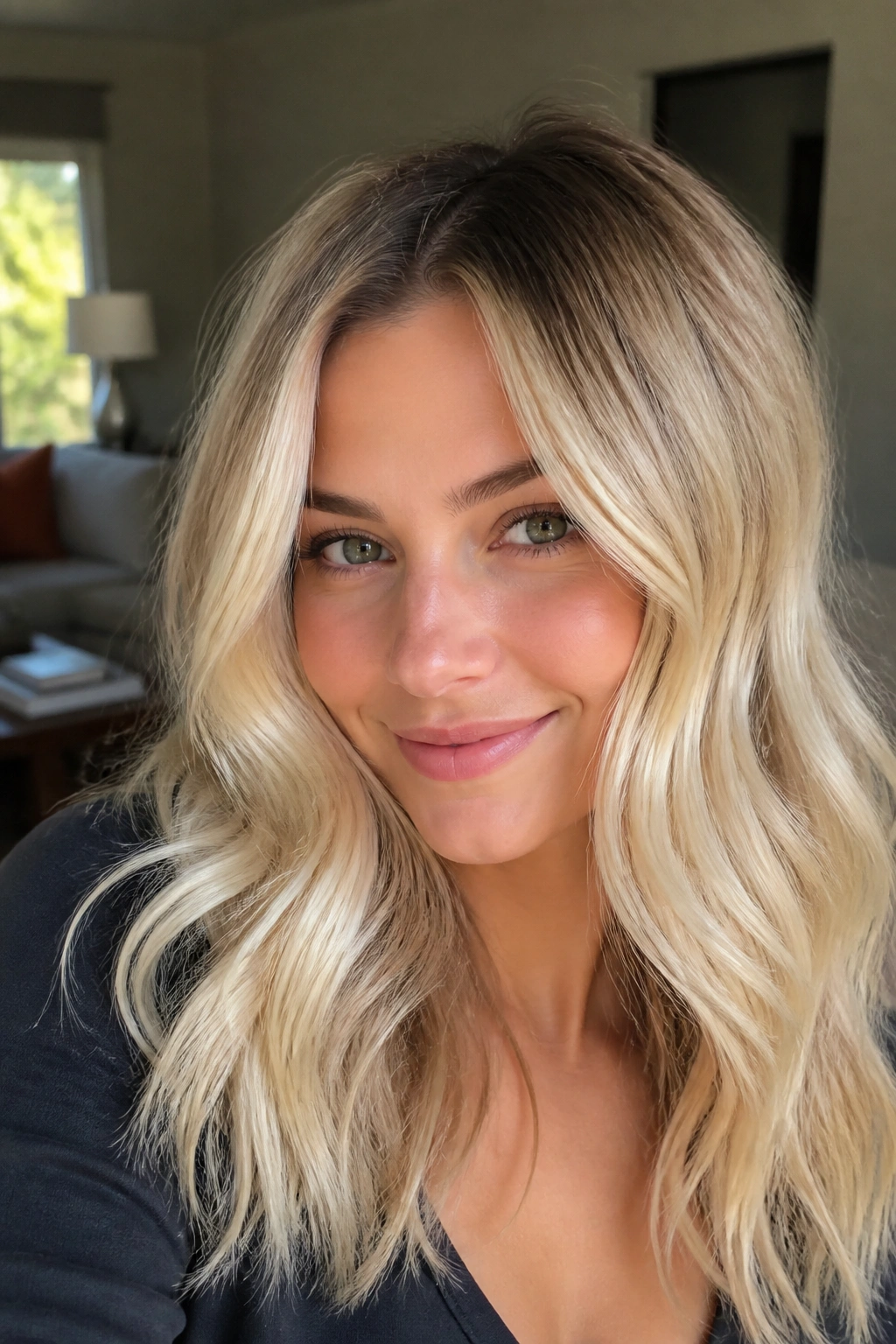
Butter blonde has a softness that can be lovely on a round face, but only when the root is deeper and the brightness is placed with some restraint. If the gold starts too high around the temples, the face can look wider. If it starts lower, the whole effect turns softer and longer.
The color itself should feel creamy, not orange. Think warm milk, not yellow marker. That warmer tone helps blur the edge of fuller cheeks, especially when the hair is waved away from the face. Straight hair can work too, but waves make the movement easier to see.
I like butter blonde on medium-density hair because the color adds plushness without needing a lot of layering. If the haircut is too blunt, the whole thing can feel boxy. A few long face-framing layers fix that fast.
The root melt matters more than people realize. A smooth fade from a darker crown into buttery mids prevents a hard line at the scalp. That line is the part that tends to widen the head visually.
6. Cream Soda Blonde With Long Layers
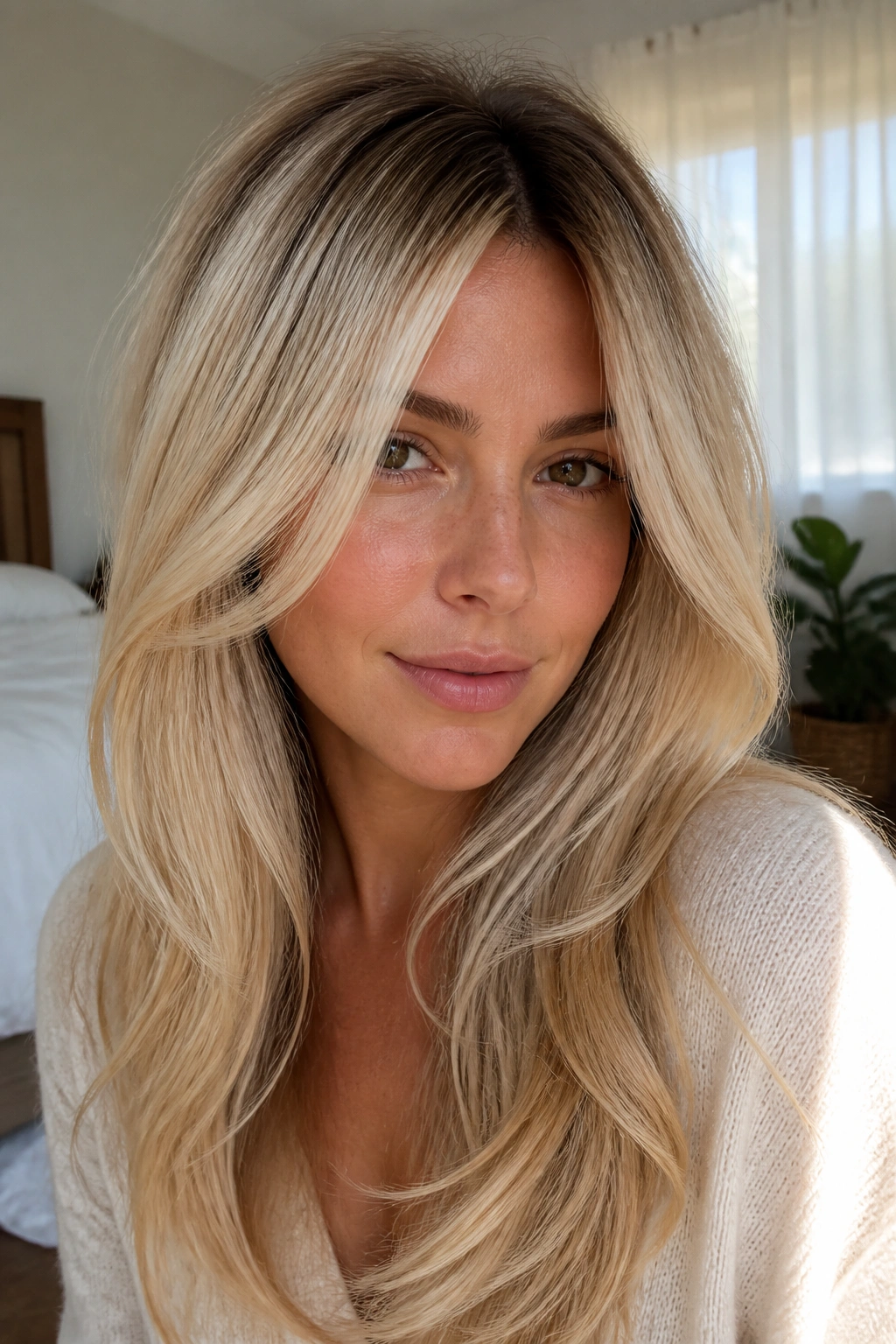
Cream soda blonde sits between beige and pearl, and that middle ground is a gift for round faces. It has enough coolness to look clean, but enough softness to avoid that chalky, flattened effect that can happen with very pale hair.
What makes this shade work is the contrast between the dark root and the long, airy layers. The root gives the top some depth. The layers keep the ends from looking heavy around the jaw. Together, they build a longer shape without needing a drastic cut.
It’s also one of the more wearable blonde dark root hair colors for round faces if you like a softer finish. The shade does not scream for attention. It moves. It shines. It stays calm.
A center part can look good here, but a slightly off-center part often flatters the face more. The little shift breaks the width at the forehead, which is helpful if your cheeks are the widest point.
7. Sandy Blonde With Textured Ends
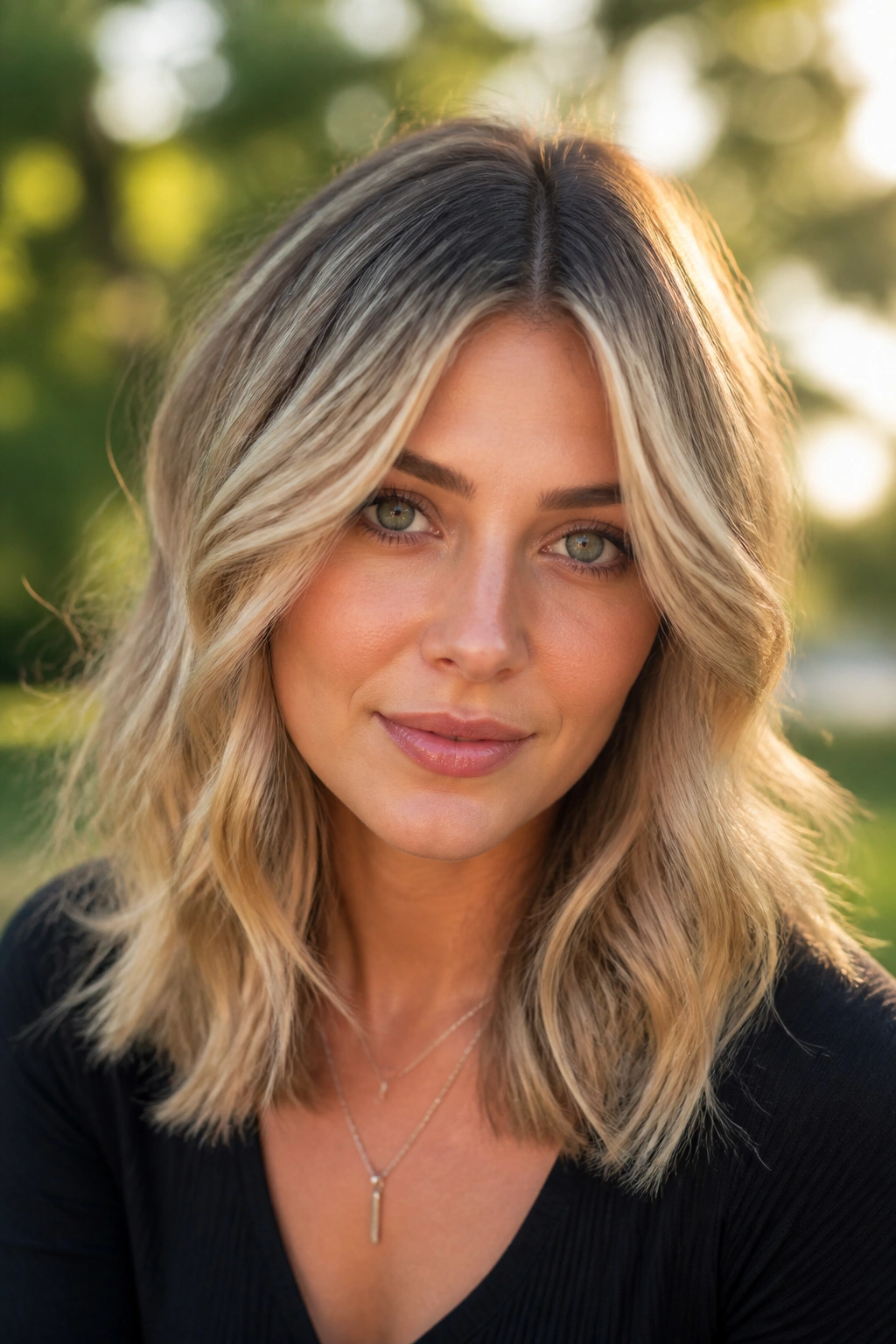
Three things make sandy blonde work on a round face: a darker crown, broken-up mids, and ends that do not stop at the chin. That sounds simple, but it changes the whole feel of the cut.
What To Ask For
- A root shadow that stays about one level deeper than the mids
- Sandy beige highlights placed through the lower half of the hair
- Texture through the ends so the shape does not sit in one round curve
- A few lighter strands around the eyes, not across the full cheek area
Sandy blonde is useful because it looks lived-in without looking dull. There is enough beige to keep the color bright, but not so much gold that the face looks fuller. On a round face, the right texture matters just as much as the tone. Texture breaks up the outline.
This shade also works well on fine hair. The darker root gives it a little lift at the scalp, and the textured ends stop the hair from hugging the jaw too closely. If you wear a lot of white, cream, or denim, this one has an easy, natural feel that does not fight the clothes.
8. Golden Bronde With a Dark Root Stretch
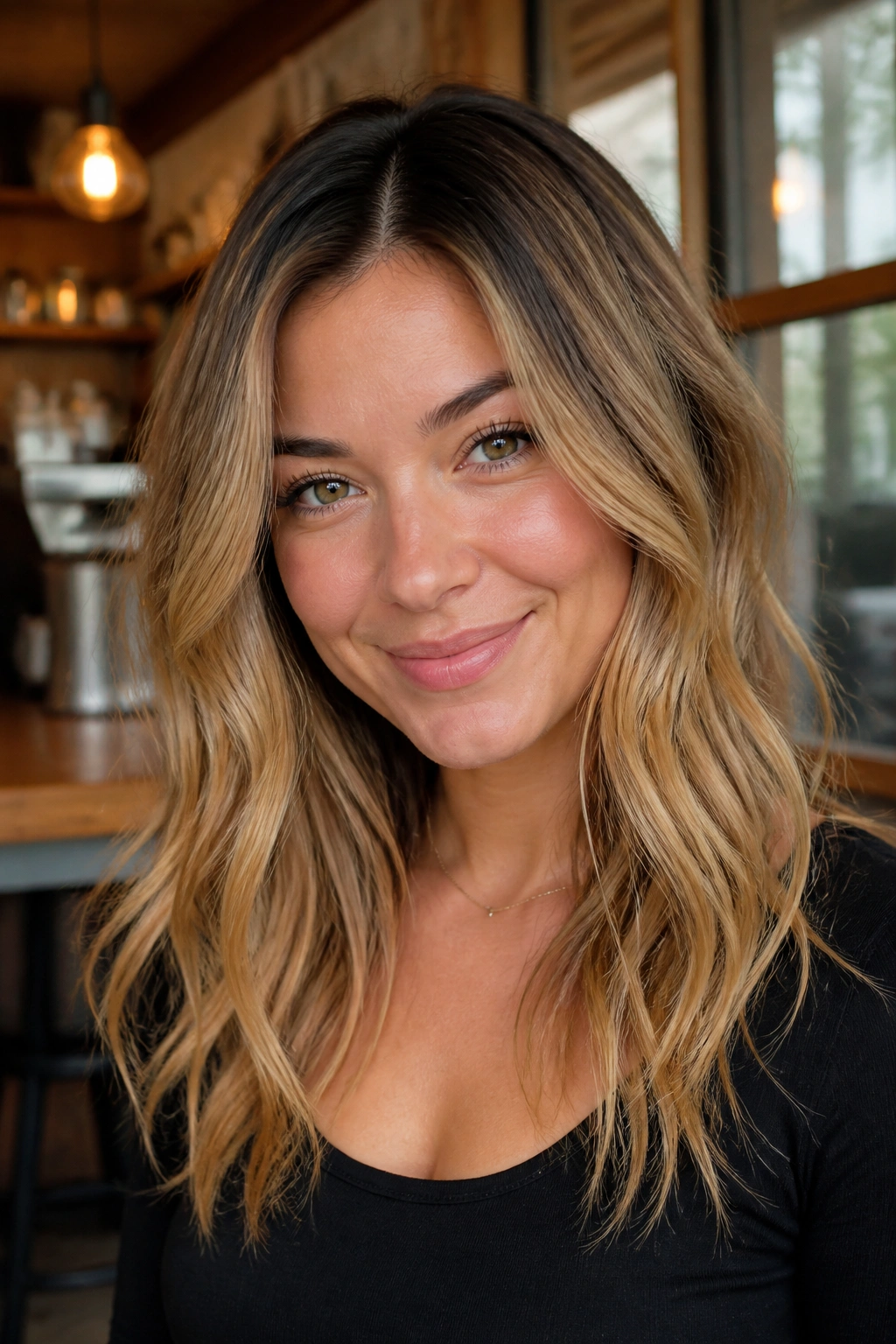
I keep coming back to golden bronde because it does a lot of work without looking like it is trying. The brown base gives the face structure, the blonde ribbons keep the hair bright, and the dark root stretch makes the grow-out feel intentional instead of messy.
That matters on a round face. Too much solid blonde can feel wide, especially at the sides. Bronde keeps the visual weight in the middle and lower lengths, which is where you want it. It also gives your stylist room to place brightness in vertical slices instead of thick horizontal bands.
This is a smart pick if you do not want to live in the salon every few weeks. The root stretch means the color grows out in a softer way. It looks good with loose waves, but it also works straight, which is handy if you don’t style your hair every day.
A bronde shade with caramel and beige pieces tends to flatter more face shapes than a single flat blonde. On round faces, though, it earns its keep because it lets the hair hang longer and leaner.
9. Mushroom Blonde With a Cool Root Shadow
Can a cool brown-blonde actually slim a round face? Yes, if the tone stays smoky and the placement is smart. Mushroom blonde is one of those shades that sounds subdued on paper and looks much more interesting in motion.
The cool taupe base gives the eye fewer warm, wide expanses to land on. That can make the cheeks look a little narrower, especially when the lightest pieces are kept in the lower mids and ends. A strong root shadow helps too, because it gives the crown a cleaner line.
How To Ask For It
Tell your colorist you want a cool beige or mushroom tone with a root that stays deeper through the top quarter of the hair. If you want a few brighter strands, keep them thin and vertical. Not chunky. Vertical.
This color works especially well with curtain bangs or a soft side part. The bangs should sweep, not stop bluntly. A blunt line near the cheeks can box the face in, and mushroom blonde deserves better than that.
10. Cream Soda Blonde With Long Layers
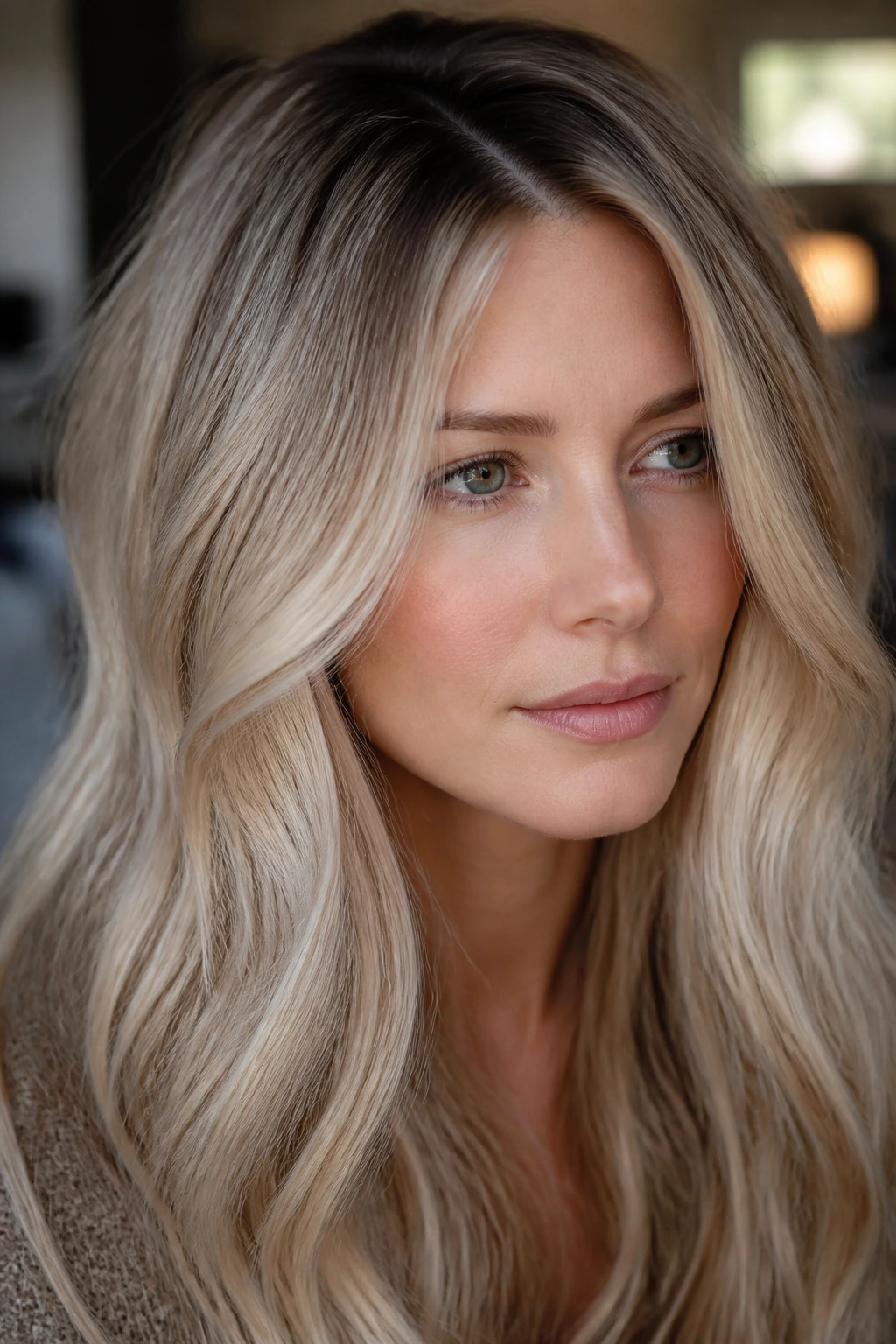
A shoulder-grazing cut and cream soda blonde go together in a way that feels easy, not fussy. The long layers keep the blonde from sitting in one heavy sheet around the face, and the root shadow adds the depth a round face usually needs.
Picture the brightness starting below the chin, then moving downward in soft ribbons. That is the shape you want. It gives the face a longer frame and keeps the widest part from turning into a bright halo.
Styling Notes That Matter
- Use a 1-inch or 1.25-inch iron for soft bends, not tight curls
- Flip the front layers slightly away from the face
- Keep the root area smooth when blow-drying
- Finish with a light shine spray, not a heavy oil
I like this one on hair that has some natural body. If the hair is pin-straight and flat, the color can lose some of its movement. A quick bend through the lower half fixes that. The root stays quiet, the lengths catch the eye, and the face reads a little longer without looking made up.
11. Strawberry Blonde With a Smoky Base
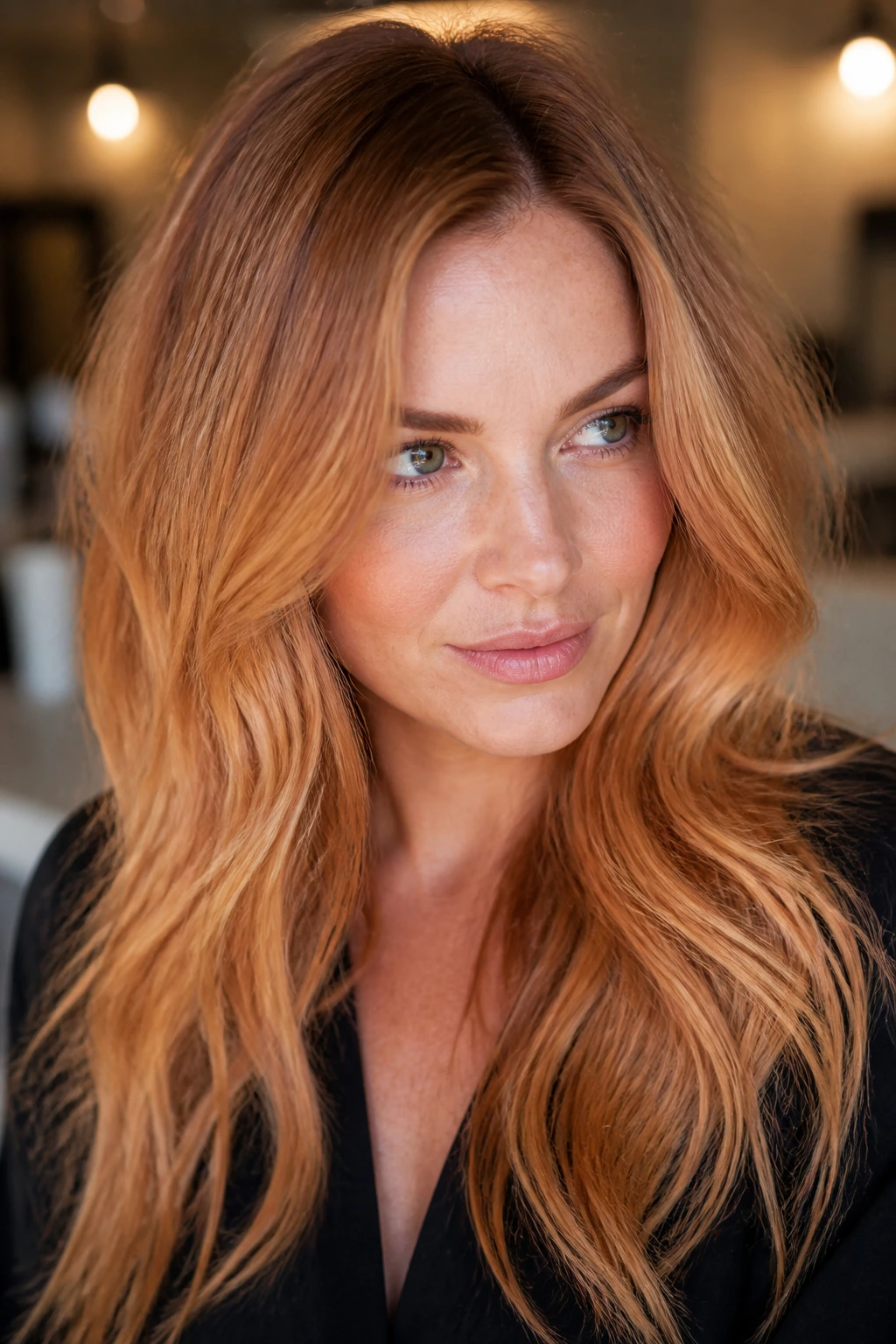
Warm tones are not the enemy on a round face. Strawberry blonde proves it. The mistake people make is putting the warmth everywhere, right from the scalp to the ends, which can make the face feel fuller and the color look flat.
A smoky base changes the whole thing. It gives the red-gold mix somewhere to land, so the warmth feels lifted instead of spread across the face. I like this on neutral or peachy skin because the color can bring life to the complexion without turning orange.
The shape matters as much as the shade. Keep the brightest strawberry pieces through the mids and ends, and let the root stay one or two shades deeper. That keeps the focus lower, where it helps the most. Long layers or soft waves make the color read even better.
This is not the pick if you want icy contrast or a very sharp outline. It is softer than that. More glow, less edge. That’s the point.
12. Pearl Blonde Ombré on Shoulder-Length Hair
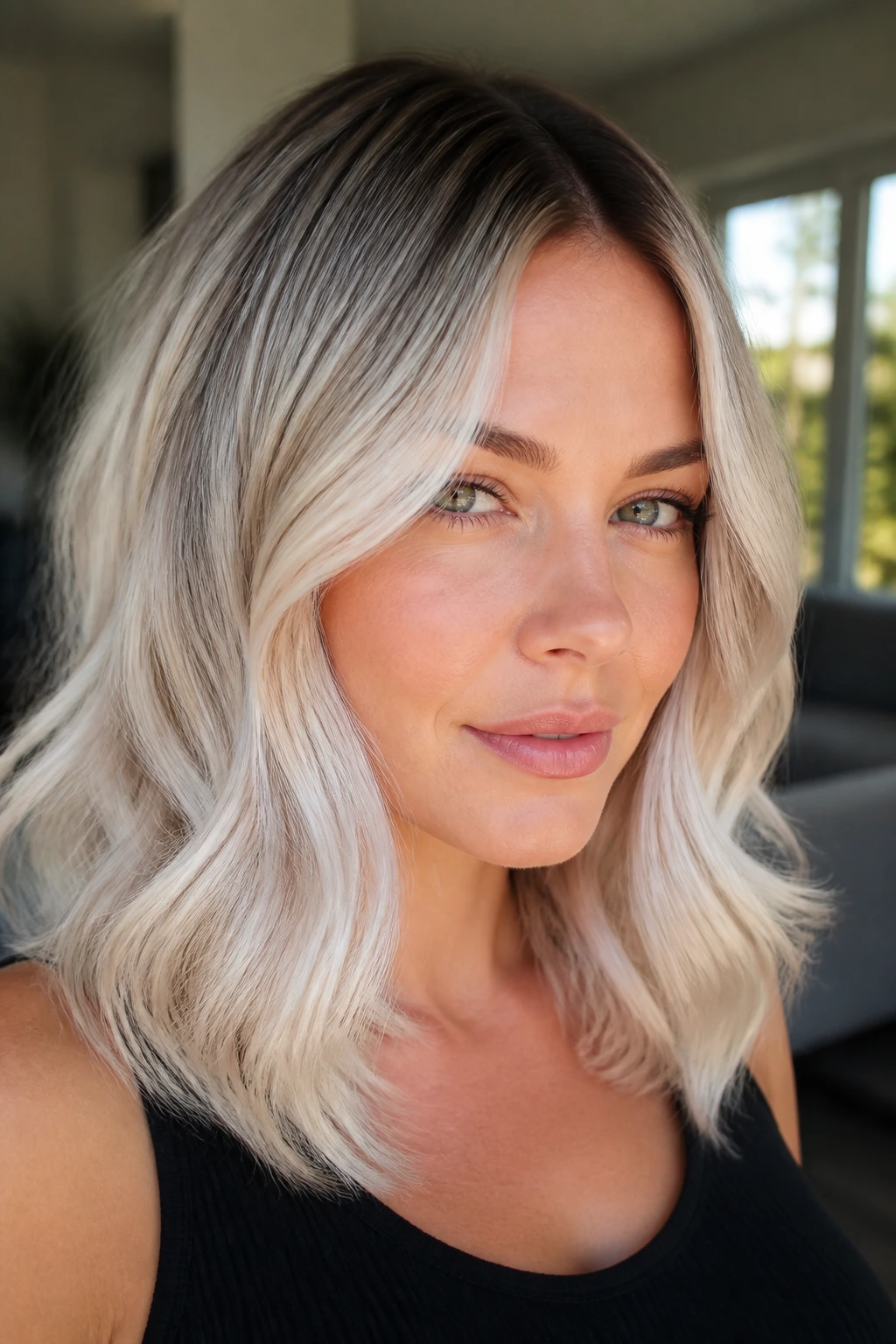
Pearl blonde is cooler than beige and softer than platinum, which makes it an easy middle ground for a round face. The ombré part helps even more because the root stays deep while the ends lighten gradually. That long fade gives the hair a falling line instead of a chopped one.
Shoulder-length hair is a sweet spot for this shade. Shorter than that, and the light ends can spread across the face in a wider shape. Longer than that, and the gradient has more room to breathe. Pearl blonde likes motion, too. A little wave keeps the color from feeling flat.
I would avoid a harsh center stripe at the front with this one. Pearl blonde works best when the brightest ends stay softer around the jaw and collarbone, not at the cheekbones. That little placement change can make a bigger difference than people expect.
A glossy finish helps the pearl tone read clean instead of dull. Dry, matte hair will make this color lose some of its softness. A quick smoothing cream on damp hair usually does enough.
13. Caramel-Infused Blonde With Ribbons at the Cheeks
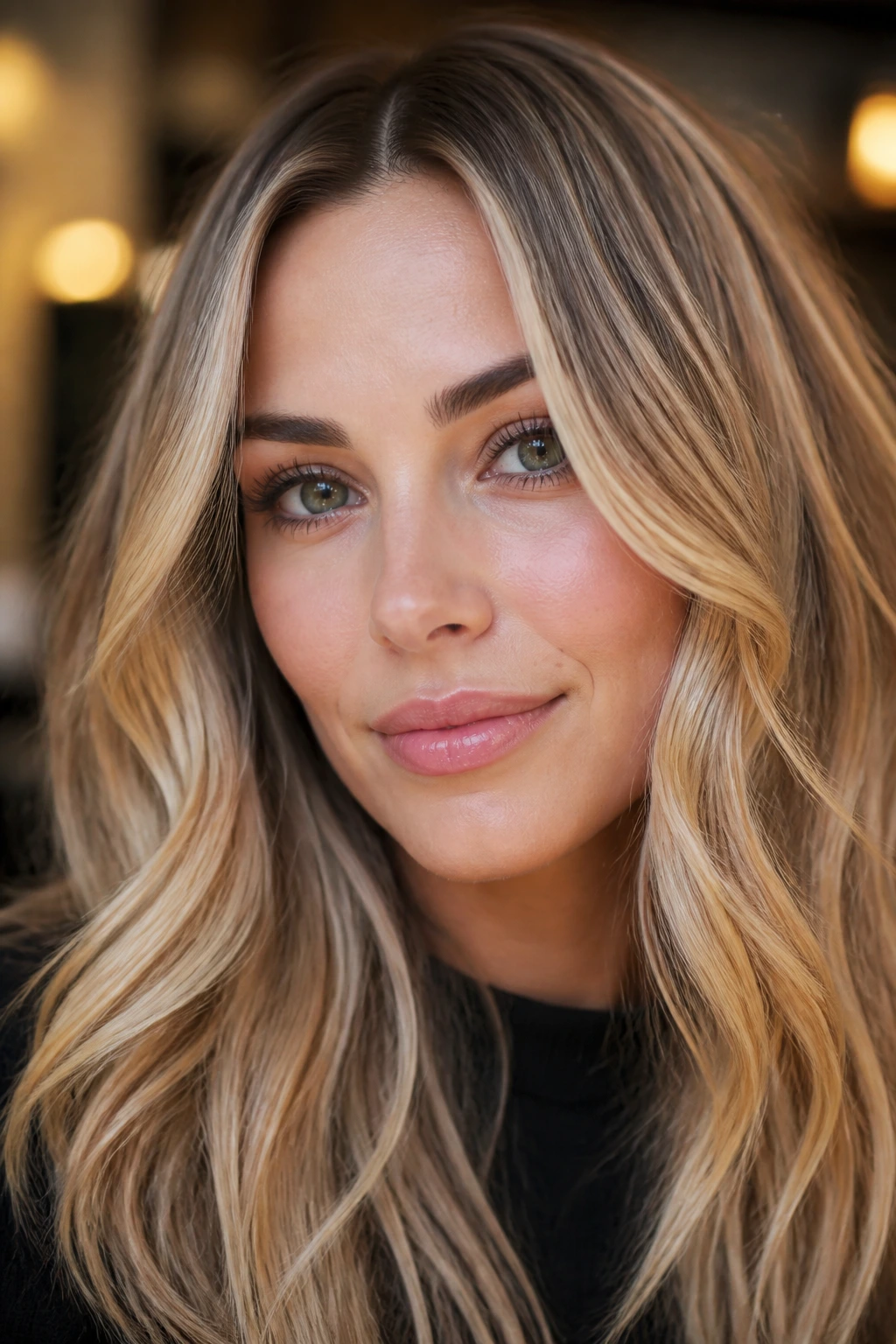
Caramel blonde is the warm cousin in the group, and it has a nice trick up its sleeve. When the ribbons are placed right, the warmth can make a round face look slimmer by keeping the brightness from sitting flat across the widest part.
Where To Put the Brightness
- Keep the caramel pieces below the cheekbone
- Let the root stay a little deeper through the crown
- Place the lightest ribbons around the jaw and collarbone
- Leave the sides softer near the ears so the face does not feel boxed in
A caramel-infused blonde works especially well on thicker hair. The warmth gives the length a rich look, and the darker root stops the style from ballooning out. If your hair has a lot of body, this shade can tame the outline in a good way.
It also plays nicely with waves that are brushed out a bit. Too much curl can crowd the cheeks. A loose bend is enough. The color does the heavy lifting.
My one rule here: keep the cheek ribbons vertical, not horizontal. That is the difference between length and width.
14. Scandi Blonde Bob With a Deep Root
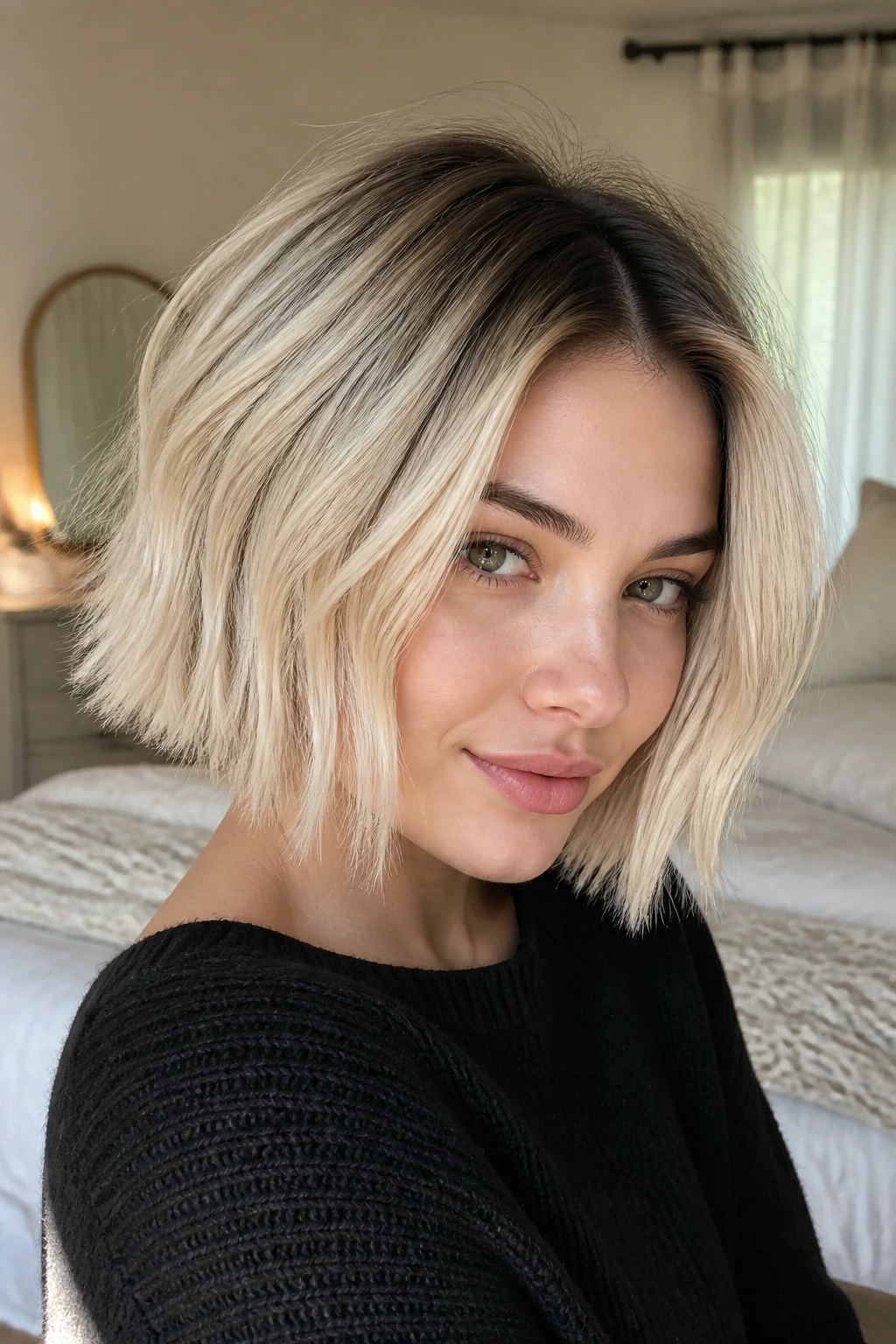
A Scandi blonde bob can flatter a round face if the root is smoked and the ends are broken up. If the bob is blunt and the blonde is too solid, it can widen the face fast. If the root has depth and the ends are piecey, the whole cut feels leaner.
This is a stronger look than some of the softer blondes above. It works because the root gives the crown a darker base, while the pale blonde lifts the shape through the lower edge of the bob. The contrast keeps the cut from reading like one round shape sitting on top of another round shape.
I like this with a slightly off-center part. A middle part can work, but only if the bob has enough movement through the ends. The color itself should not stop at the jaw in a hard line. Softness matters.
Short hair can be tricky on round faces, but not impossible. The mistake is giving the cut too much width through the sides. Keep the ends tucked in a little and let the root shadow stay visible. That helps.
15. Vanilla Blonde With a Narrow Skunk Stripe
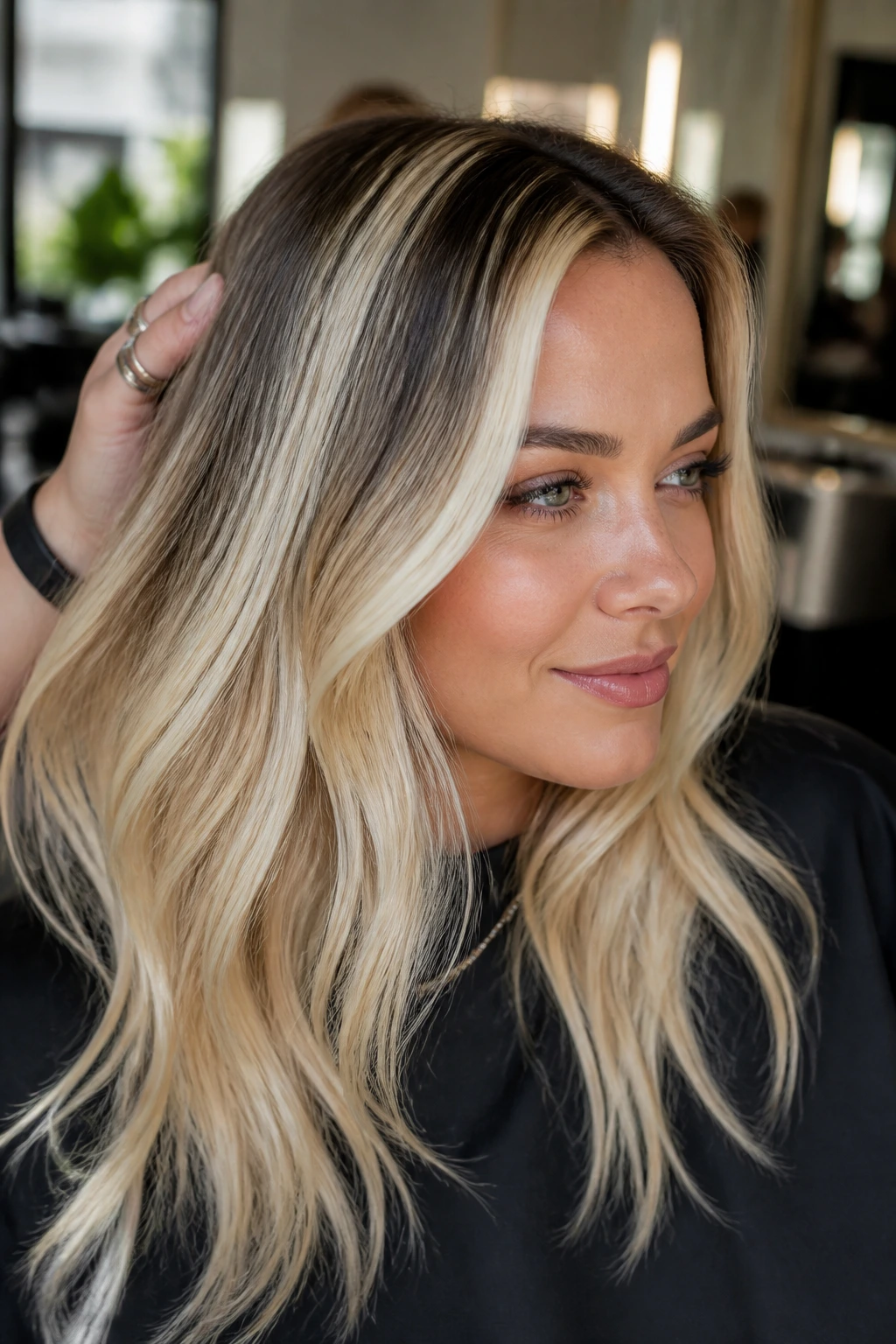
Want one bright panel instead of a full head of pale blonde? A narrow skunk stripe can be sharp in a good way when it is done with restraint. The whole point is contrast with control.
How To Keep It Wearable
The stripe should be one to two fingers wide, starting near the temple and falling down through the front section. It should not be a thick white panel that pushes straight across the cheek area. On a round face, that would do the opposite of what you want.
Keep the rest of the hair in a vanilla blonde range with a deeper root through the top. That keeps the look from turning stripey in the wrong sense. The dark root also anchors the brightness, which makes the face-framing piece read as a detail instead of the whole story.
This kind of contrast looks especially good on straight or softly waved hair. The stripe shows up cleanly, and the root gives the top enough depth to stay balanced. If you like a little edge, this is one of the more interesting blonde dark root hair colors for round faces.
A blunt bob with this color can feel too boxy. Long layers or a shoulder-length cut will usually wear it better.
16. Rose Beige Blonde With a Low-Contrast Root
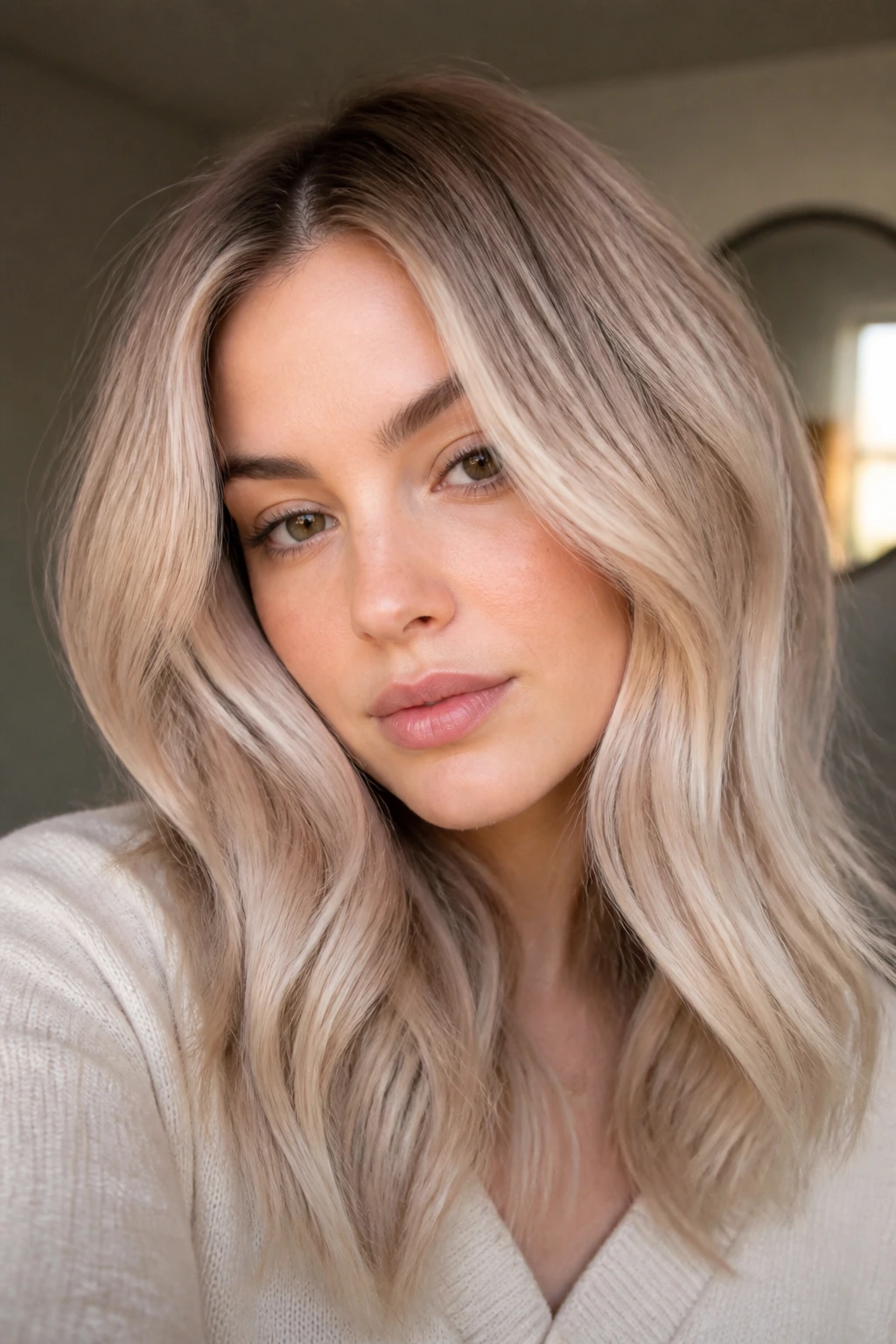
If you hate loud regrowth but still want blonde, rose beige is a smart move. The pink-beige tone gives the hair warmth without looking brassy, and the low-contrast root keeps the whole thing calm around the face.
This works especially well when the blonde is not pushed too close to the hairline. Let the root stay a little deeper, then have the rose beige emerge through the mids and ends. That gives the cheeks a softer outline, which can be useful on round faces that already carry a lot of width through the center.
The color also looks good on medium-length cuts with soft layers. It has enough warmth to feel fresh, but not so much that it competes with the skin. A gloss every so often keeps the rose tone from going dusty.
If you want a blonde that looks light without going icy, this is a strong candidate. It does not shout. It sits nicely. Some people prefer exactly that.
17. Cool Cream Blonde With Chunky Balayage
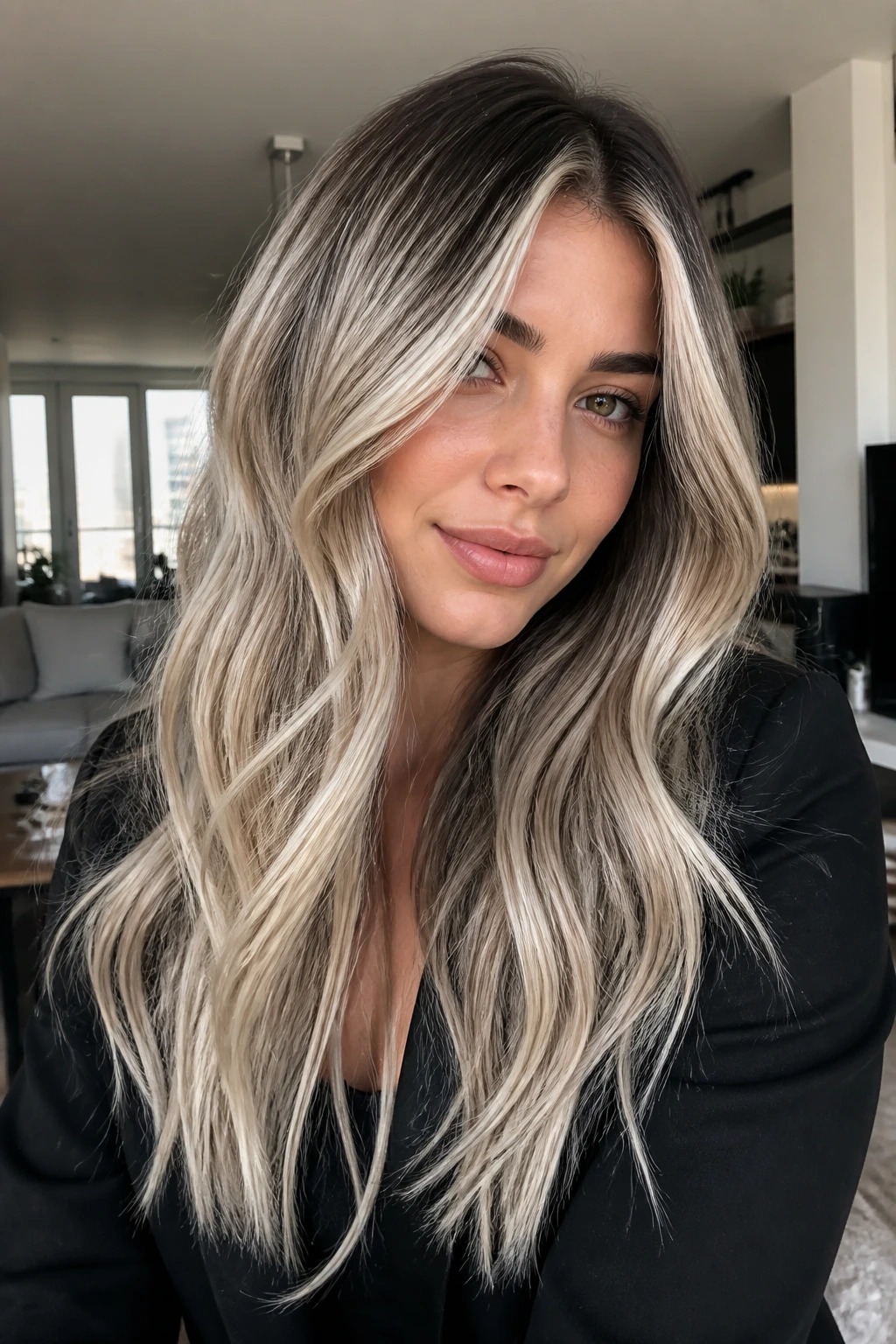
Chunky balayage can work on a round face if the pieces are vertical, not broad horizontal bands. That is the part people miss. Chunky does not have to mean heavy. It can mean visible, if the placement is smart.
Cool cream blonde gives the hair a pale finish while the darker root holds the top together. The balance is what keeps the face from looking too wide. I like this on long layers or soft shaggy cuts, because the texture helps separate the lighter pieces.
A lot of people assume chunky highlights are out of place on softer face shapes. Not true. The issue is placement. If the brighter panels run straight across the cheeks, the face looks wider. If they fall down through the lengths, they create movement.
This shade benefits from a root that is left a little smoky. If the top is too pale, you lose the frame. If it is too dark, the blonde can feel disconnected. The middle ground is where it works.
18. Wheat Blonde With a Soft Money Piece
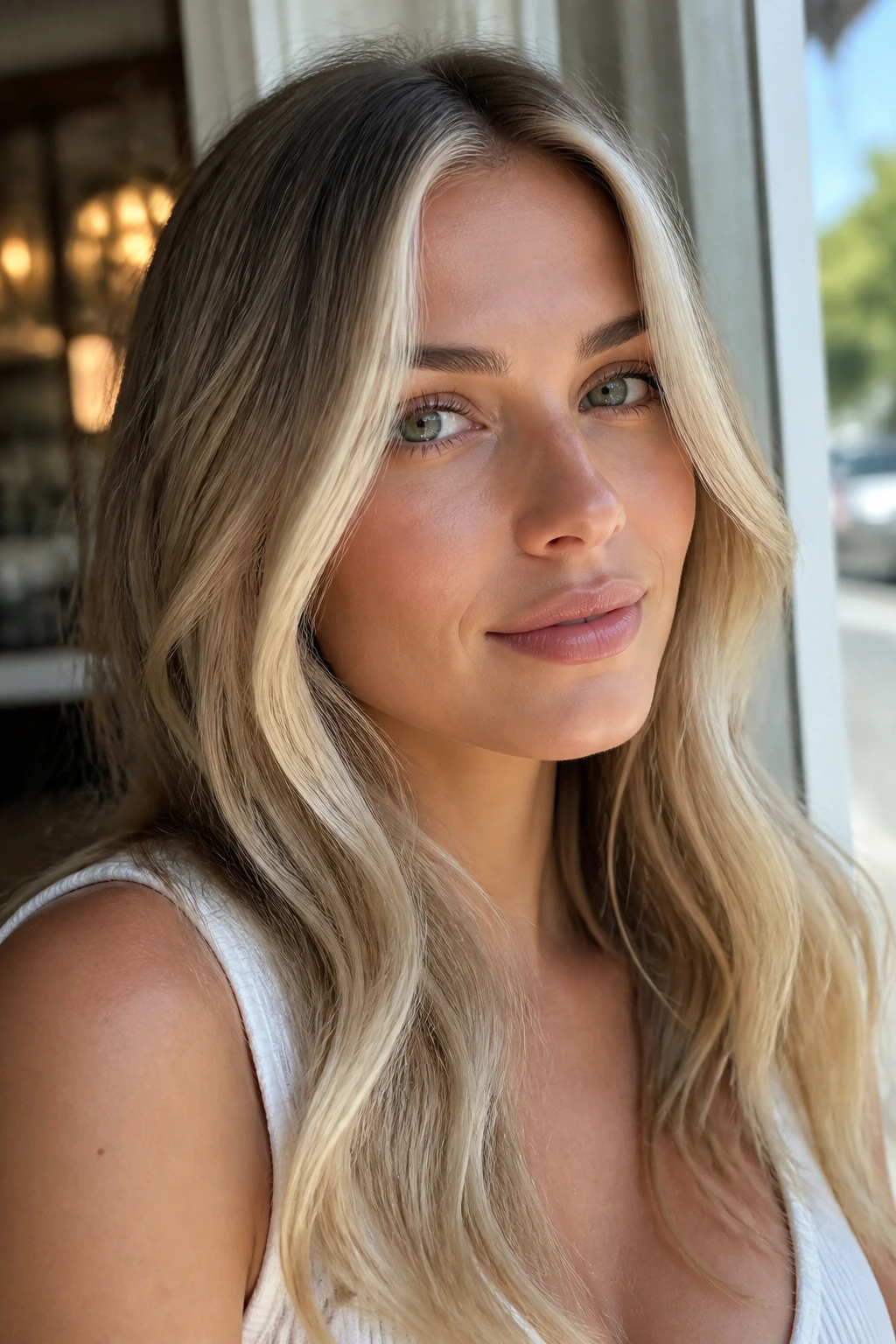
Need brightness around the face without turning the whole head pale? Wheat blonde with a soft money piece is probably the cleanest answer. It keeps the root dark enough to shape the face, then gives you just enough light near the front to open everything up.
The money piece should start softly, not in a hard block. Think of it as a gradual brightening from the temple down toward the collarbone. That shape flatters round faces because it leads the eye downward. It also keeps the cheek area from feeling boxed in.
What To Ask For
- A deep root through the crown
- Wheat blonde mids and ends
- A narrow, blended front piece that is lighter near the bottom
- Long layers that fall past the widest part of the face
This is one of those colors that looks easy from a distance and careful up close. The front piece is doing a lot of work, but it should not look loud. A soft wave and a center or slight off-center part keep it moving in the right direction.
The Shape-Saving Details
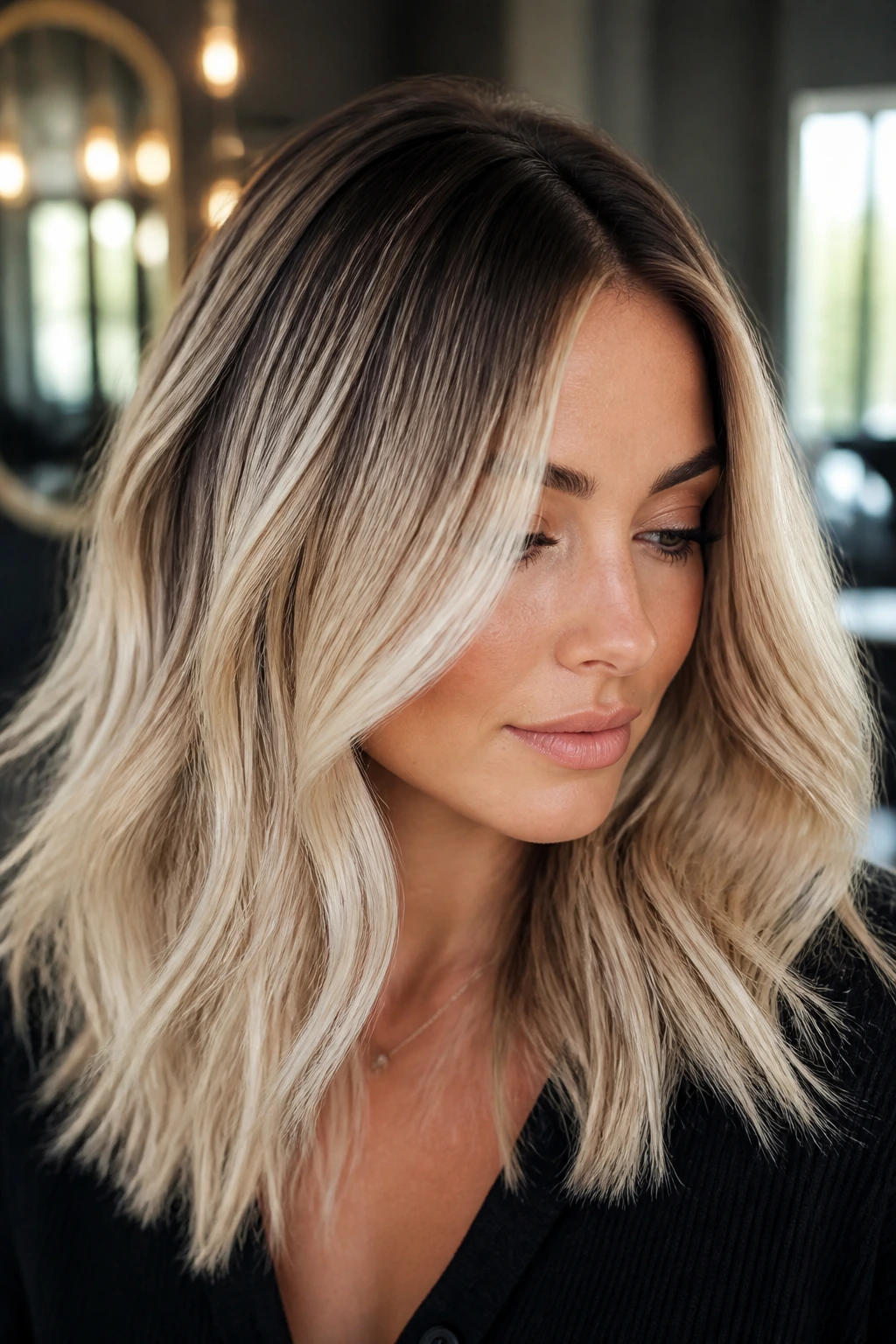
The shade matters, but the placement matters more. A round face usually looks best when the brightest blonde pieces stay below the cheekbone and the root keeps some depth at the crown. That gives the face a longer line and stops the color from spreading too wide across the sides.
Cut and color need to play together. A blunt chin-length line with bright sides can widen the face fast. Long layers, soft bends, and a darker root give the blonde room to fall instead of fan out. That is the part worth remembering.
If you’re bringing a photo to a colorist, point out where the brightness starts, not just the shade itself. That tiny detail is what turns a pretty blonde into a flattering one.
