



Brown hair is a strong base for a skunk stripe because the dark root area already gives the color a frame. One stripe can look sharp, smoky, expensive, or flat-out rebellious, and the difference usually comes down to tone, placement, and how much contrast you build in. Skunk stripe hair colors for brown hair work best when the stripe looks deliberate, not accidental.
That’s the bit people miss. A cool stripe on a warm brown base can look crisp and graphic; a warm stripe on an ash-brown base can look softer, richer, and less harsh. The shade does a lot of the work, but so does the mood you want. Loud is not the only option.
A skunk stripe also has a nice practical side. You get a big visual payoff without coloring every strand on your head, and the grow-out can be part of the look instead of a problem. That’s why this style keeps showing up in different forms: chunky front pieces, face-framing panels, dramatic money pieces, and split-toned streaks that sit right against dark roots.
Platinum is the obvious place to start, and it earns that spot. After that, the palette opens up fast. Some shades make brown hair look sharper and cleaner; others make it look warmer and a little more dangerous, which is honestly where the fun starts.
1. Platinum Blonde Stripe
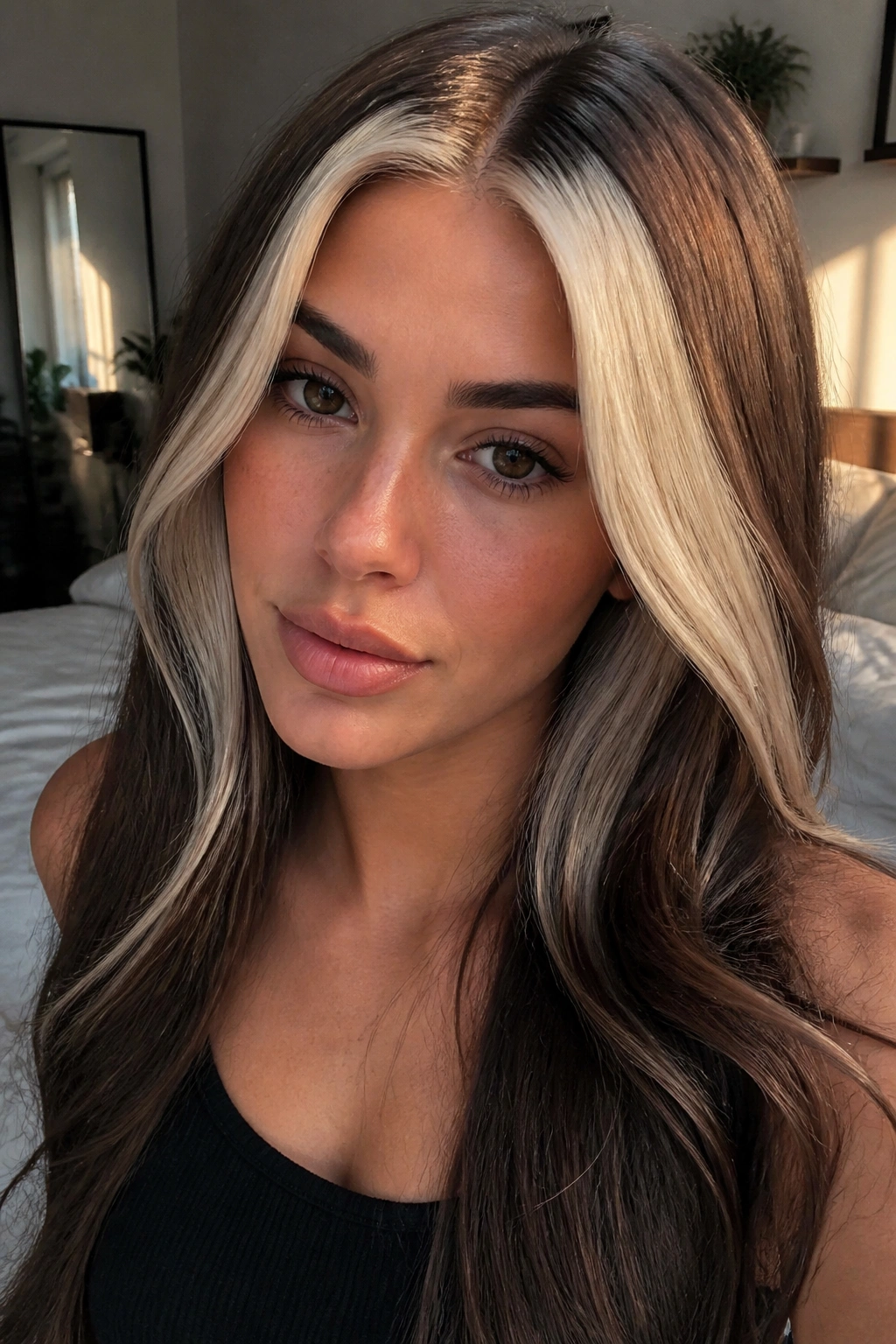
Platinum is the loudest clean choice, and on brown hair it reads immediately. There’s no squinting at it. No guessing. The stripe lands with that bright, pale contrast that makes the face frame pop, especially if the base is medium brown or deeper chestnut.
Why It Hits So Hard
Platinum needs enough lift to stay pale, not beige or gold. That matters more than people think. On brown hair, a weak blonde stripe can turn muddy fast, and muddy is the one thing a skunk stripe cannot afford.
- Best on medium brown, chocolate brown, or neutral brunette bases
- Looks strongest when the stripe is chunky and placed right at the front
- Needs a purple shampoo or toner to keep yellow tones down
- Works well with straight styles, flipped ends, and blunt cuts
Platinum also has one nice trick: it makes brown roots look richer. That contrast can be the whole appeal. If you like a harder-edged look, this is the one that gives it to you without needing neon color.
My blunt tip: keep the stripe wide enough to matter. A skinny platinum streak on brown hair can disappear the minute you curl it.
2. Icy Silver Stripe
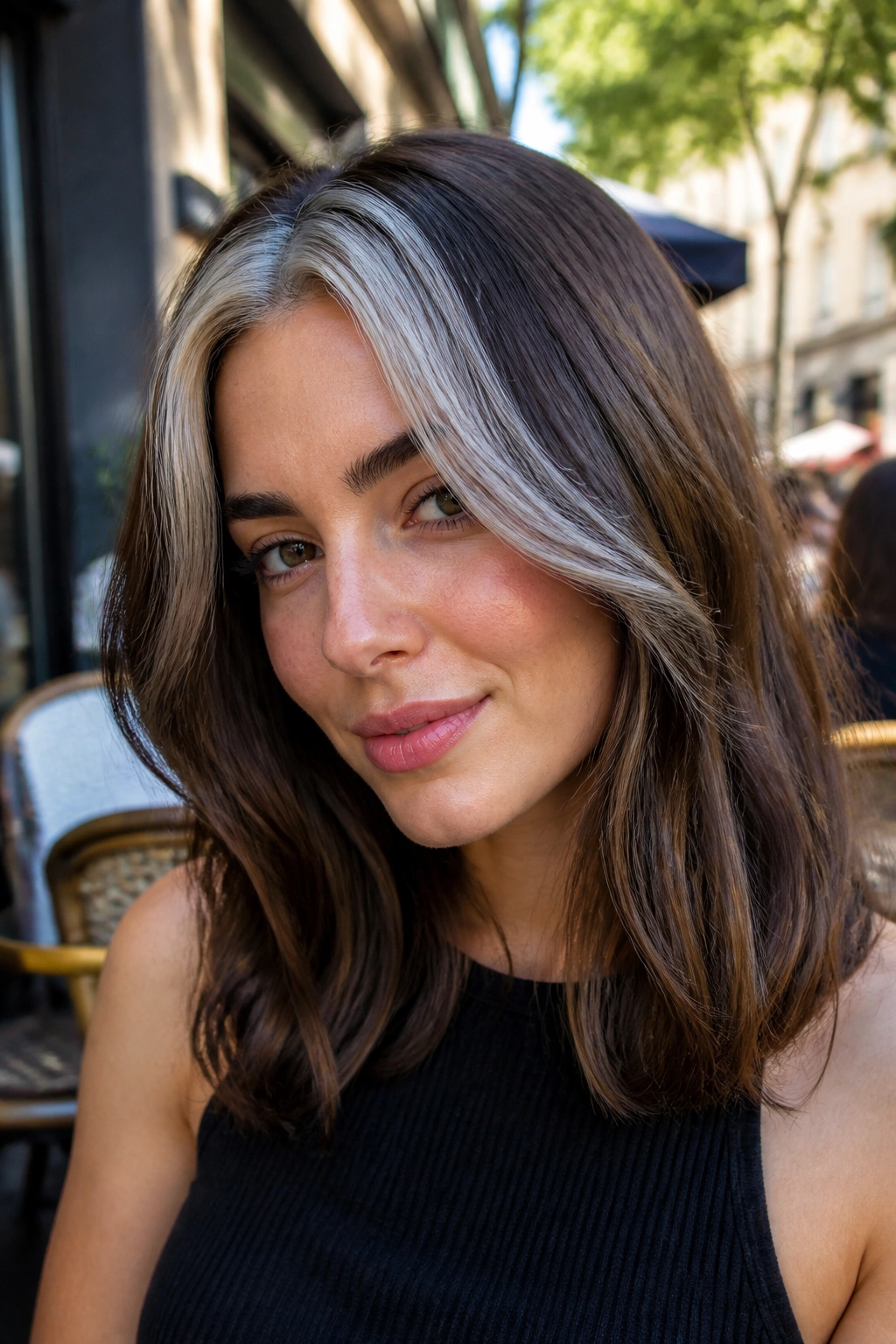
Silver is colder than platinum, and that coldness is the point. It has a metallic feel that looks especially good next to brown hair with cool or neutral undertones. The effect is sleek, not soft. A little futuristic. A little sharp around the edges.
When silver is done right, it does not look gray in a tired way. It looks polished, like brushed metal against dark fabric. That is why it loves brown hair so much. The base gives it depth, and the silver stripe gives the whole style a crisp line.
It’s also one of those shades that changes with movement. In still light, it can look pale and smoky. In brighter light, it flashes almost white. That shift keeps the style from looking flat, which is a real problem with some pale shades.
I like silver best on shoulder-length hair or anything with face-framing layers. The movement helps. A blunt bob can wear it too, but the line gets more severe, so you need to want that. If your brown hair has a slight red cast, silver can fight it a little, so a cooler base makes life easier.
One sentence says it all: silver is for people who want a cold stripe, not a sweet one.
3. Jet Black Stripe
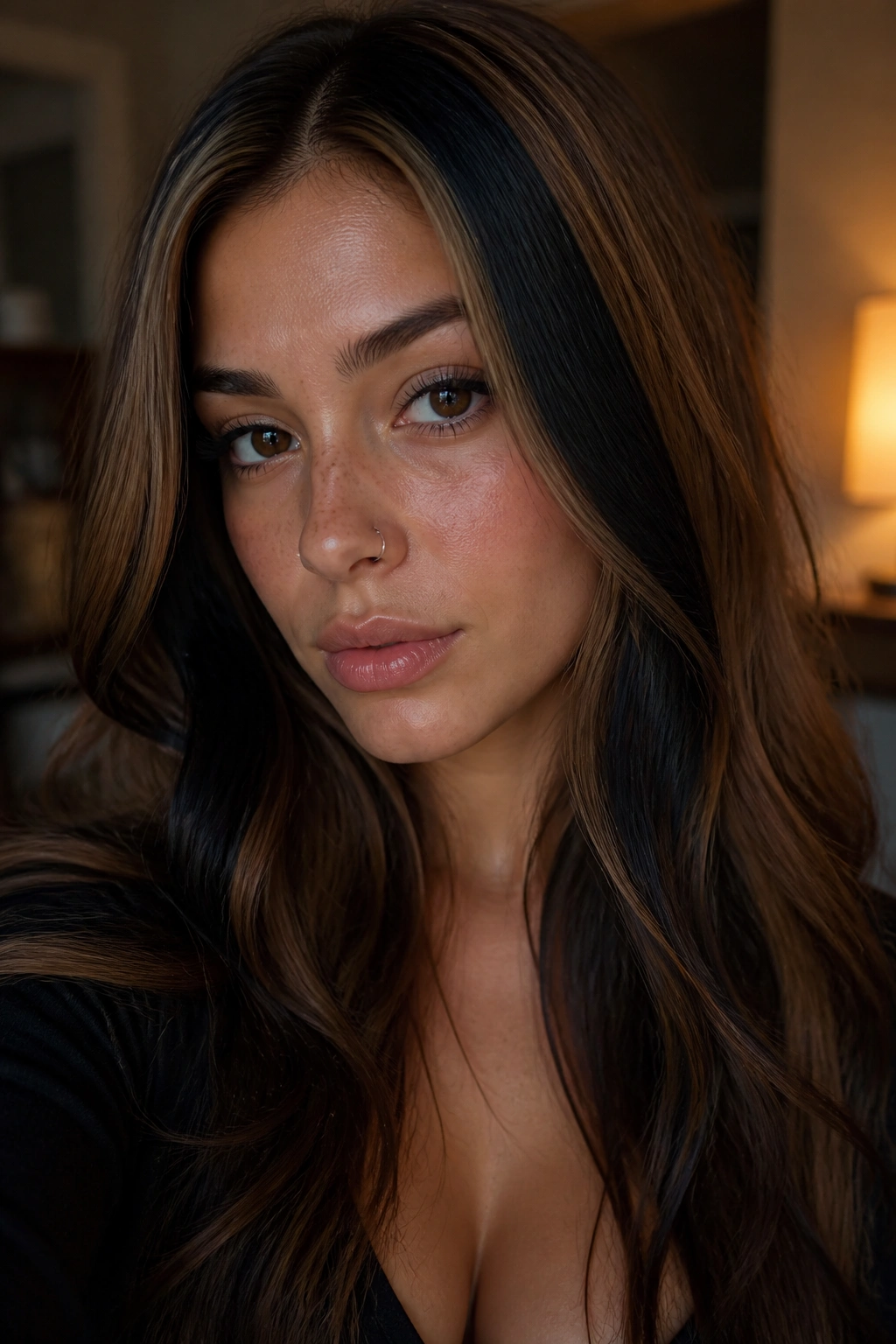
Can a black stripe count as a skunk stripe if the base is already brown? Absolutely. It works because the eye reads the change in density and edge, not just the color family. On medium brown hair, a jet black front panel can look bold, graphic, and oddly elegant.
How to Wear It Well
The key is placement. If the black stripe is too thin, it can disappear into a dark brunette base. If it’s too broad and your hair is already near-black, the whole effect gets swallowed. Medium brown, chestnut, and soft mocha shades usually give the black the most room to breathe.
Best if you want:
- a lower-maintenance skunk stripe
- a strong frame around the face
- a look that grows out without obvious brassiness
- a stripe that does not need bleaching
Black also pairs nicely with blunt bangs, straight styling, and a sharp middle part. It can look moody in a good way. Not costume-y. Not cartoonish. Just graphic enough to change the whole haircut.
If you like contrast but hate bleach, this is the one that makes the most sense. It’s dark-on-dark, yes, but the right placement keeps it from fading into the background.
4. Ash Blonde Stripe
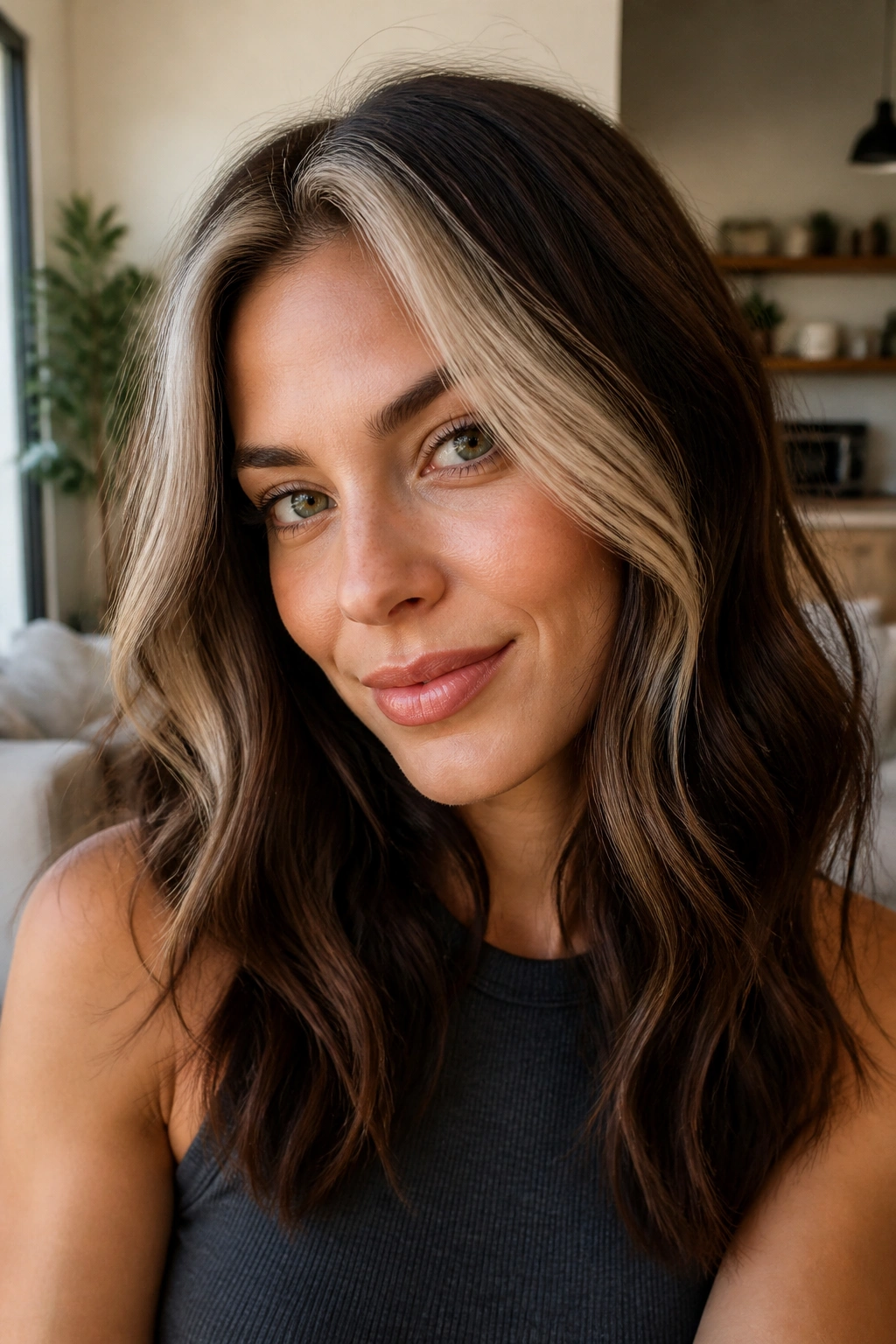
Ash blonde is the stripe I reach for when brown hair has too much warmth and needs a cooler edge. If your base leans red, gold, or coppery, ash blonde cuts through that heat and gives the style a cleaner finish. It’s not as bright as platinum, and that’s exactly why it works.
I’ve always thought ash blonde looks best when the rest of the hair is left a little messy. Loose waves, piecey ends, a rough blow-dry — anything that keeps it from feeling overly neat. The cool tone can look severe if the cut is too perfect, so a bit of movement helps soften the line.
What Makes It Behave Better Than Beige
- Ash blonde is less yellow and less golden than honey or champagne
- It looks cleaner on cool brown bases
- A toner or gloss keeps it from drifting warm
- It suits layered cuts better than ultra-thick one-length hair
The practical upside is that ash blonde grows out with a little less visual drama than platinum. The contrast is still there, but it feels more lived-in. That can be a relief if you want the skunk stripe idea without going full high-voltage.
A stripe like this makes brown hair look cooler in the plain-English sense of the word. Sharper. Less sweet. More collected.
5. Honey Blonde Stripe
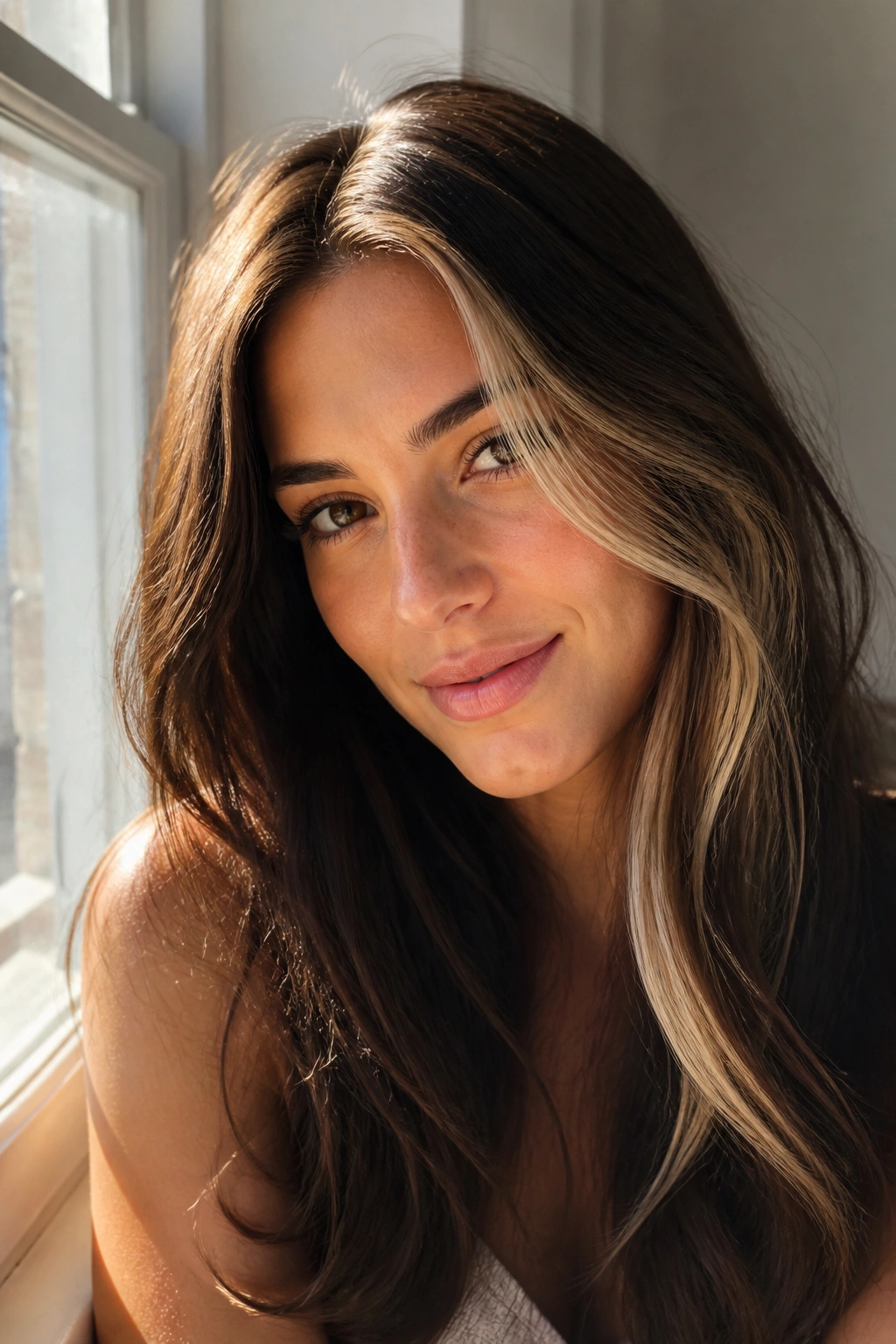
Honey blonde is the softer blonde route, and I like it a lot for brown hair because it doesn’t fight the base. It sits in the same warm family, which means the stripe still shows, but it feels richer and more wearable than icy white or silver. Think brightness with a little sugar in it.
Unlike platinum, honey blonde does not scream from across the room. It glows. That makes it a smart choice if you want contrast but still want the stripe to feel like part of the haircut instead of the only thing anyone notices.
Brown hair with golden undertones tends to take this shade well. The stripe looks especially nice when the rest of the hair is glossy and healthy, because honey tones can look flat if the hair is dry. A shine spray or a light oil on the ends helps more than people expect.
This is the version I’d hand to someone who wants a skunk stripe but does not want that hard, graphic edge. It softens the whole look without making it timid. That balance is hard to fake.
6. Copper Stripe

Copper on brown hair feels alive. It has warmth, shine, and a little bit of heat, but the good kind — the kind that makes the hair look like it belongs under sun, lamps, or candlelight. If blonde feels too pale and red feels too dark, copper sits right in the middle and holds the line beautifully.
What makes copper tricky is that cheap-looking orange can sneak in fast. The shade you want is deeper and richer than that, more penny than traffic cone. A good copper stripe should look like it has brown underneath it, because that depth is what stops it from looking harsh.
It pairs especially well with brunette bases that already have warm undertones. On cool brown hair, copper can still work, but the contrast becomes a little sharper and more editorial. That can be a plus if you like a bolder finish.
Keep this in mind: copper fades fast if the hair is porous, so a color-depositing mask or gloss can help hold the tone between appointments. It does not need to be redder than the base to read well. It just needs enough warmth to stand apart.
7. Cinnamon Red Stripe
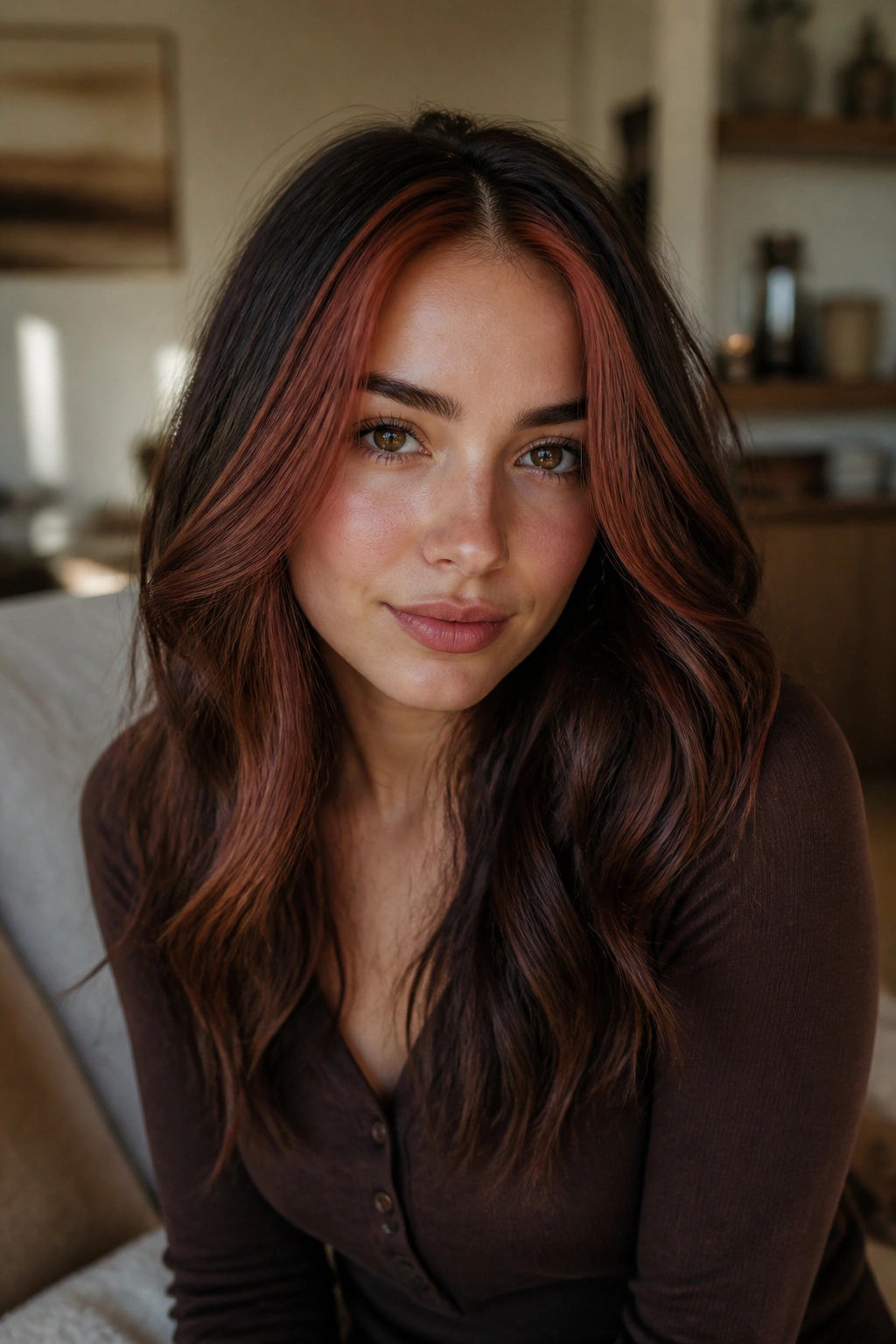
Why does cinnamon work so well on brown hair? Because it behaves like red without going full stoplight. It has that warm spice tone that sits between auburn and red-orange, and that middle ground makes it feel rich instead of loud.
I like cinnamon on brown hair that has dimension already — natural highlights, subtle balayage, or a textured cut with a little movement. The stripe picks up light beautifully when it’s not competing with a flat, one-tone base. It also flatters brown eyes in a way that a cooler shade sometimes does not.
How to Use It
If you want cinnamon to stay refined, keep the stripe thick enough to read but not so wide that it takes over the whole front section. A chunky money piece can handle it. Tiny ribbon pieces usually can’t. The warmth gets lost, and then the color looks faint instead of intentional.
Cinnamon is a nice middle choice for anyone who wants red energy without red drama. It grows out with less shock than a neon color, and it still gives brown hair that rich, autumn-bright look people tend to chase with filters.
There’s a reason this shade keeps coming back. It flatters dark roots without making the hair look flat.
8. Cherry Red Stripe
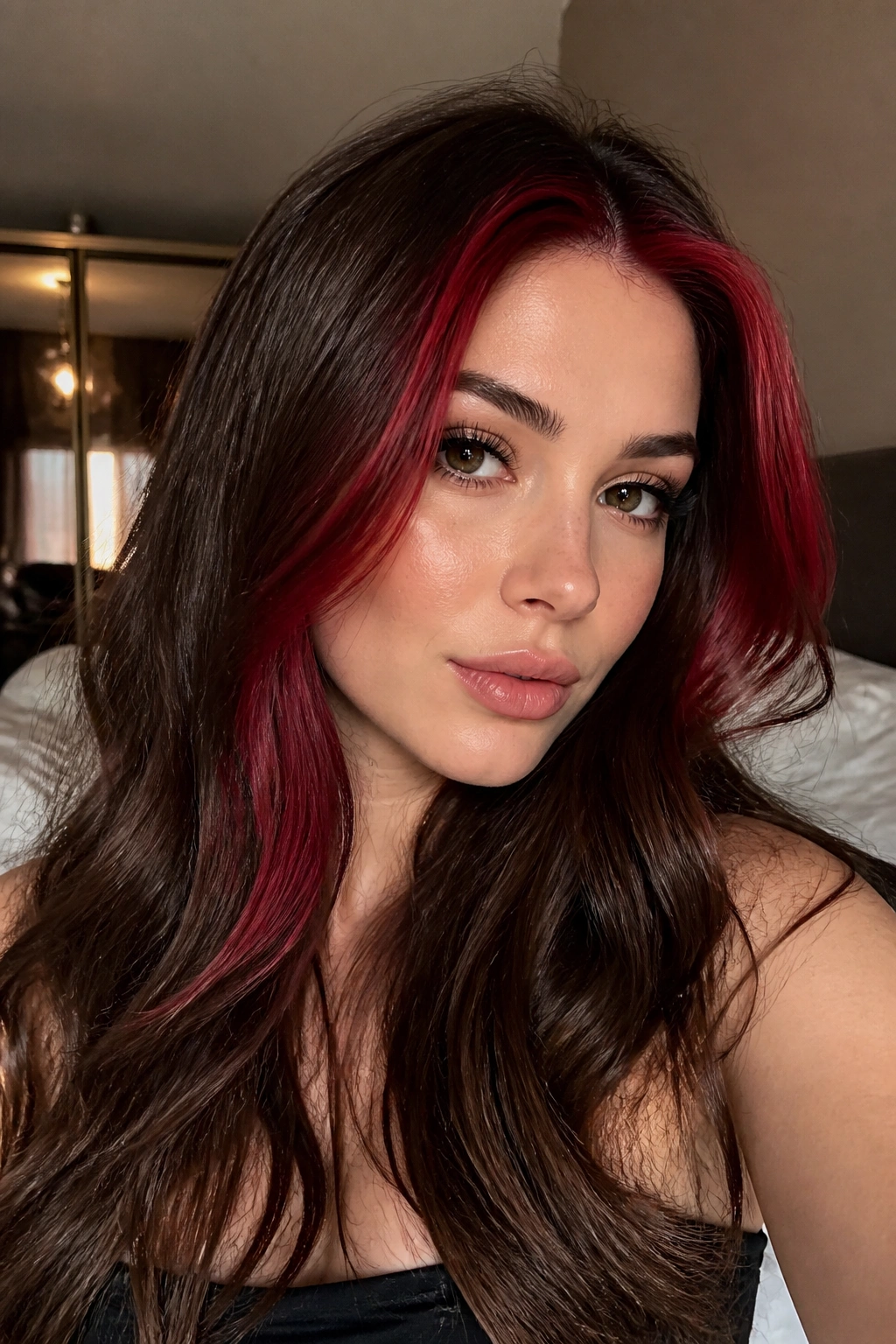
Picture a chestnut brown base with a thick cherry stripe right at the front. That’s the whole mood. It is sharp, glossy, and a little mischievous in the best way. Cherry red has enough blue in it to feel vivid, but it still carries that deep fruit color that works against brown hair instead of fighting it.
The stripe looks best when it has shine. Dull red can go flat fast, and cherry red needs that wet-gloss look to stay rich. A smoothing cream before blow-drying or a light finishing serum helps a lot here. Not because the color needs rescuing, but because red tones look better when the surface is clean.
- Best on medium to deep brown hair
- Strongest when placed as a front money piece
- Needs color-safe washing to keep the red from fading fast
- Works well with black eyeliner, bold brows, and strong contrast makeup
Cherry red is not a subtle choice. That’s fine. It shouldn’t be. On brown hair, though, it still feels grounded because the base keeps it from floating away into cartoon territory.
If you want the stripe to be the star, cherry red is one of the easiest ways to get there.
9. Burgundy Stripe
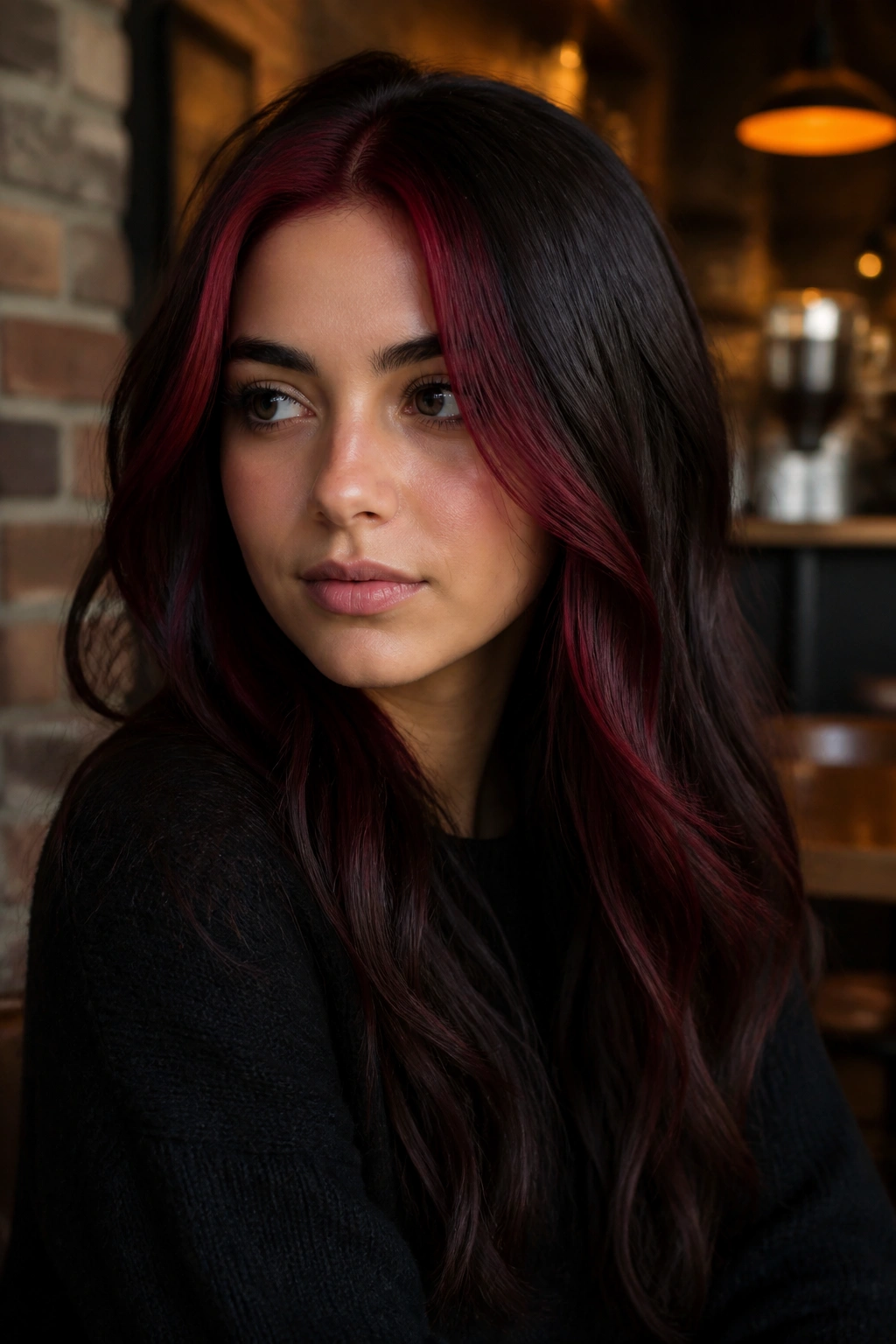
Burgundy is the easiest red-violet shade to wear if you don’t want the stripe to look childish. That’s the truth of it. The wine-like depth gives brown hair something moody to hold onto, and the contrast feels expensive without needing to shout.
It’s also a forgiving shade when the hair starts fading. Burgundy tends to soften into plum or muted red rather than going patchy in a bad way. That matters if you don’t want to be back in the chair every few weeks. The stripe still needs care, sure, but it does not always look ruined the second it loses some intensity.
I like burgundy on darker brunettes because the depth of the brown base keeps the whole look cohesive. On lighter brown hair, it can read brighter and more obvious. Neither is wrong. It just changes the mood.
The practical part is simple: if your wardrobe leans black, cream, denim, or deep green, burgundy slips in easily. It’s a stripe that can look dramatic with almost no effort from the rest of your styling. That’s a useful trait. A rare one, too.
10. Rose Gold Stripe
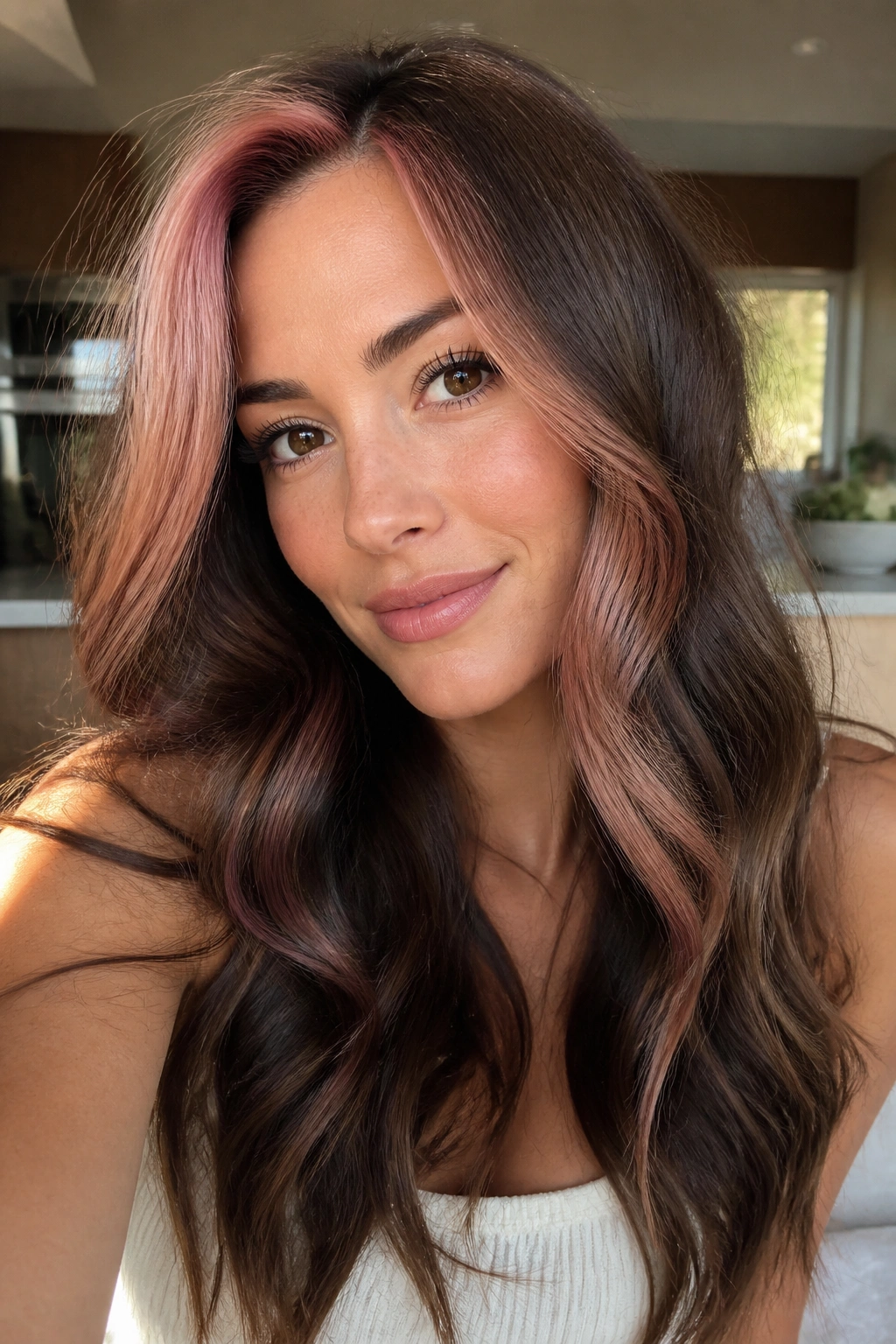
Rose gold sits in a nice middle zone between pink and copper, and that is why it works on brown hair. Pure pink can look a little too sweet or too bright, depending on the base. Rose gold keeps the warmth, so the stripe feels softer and more grown-up.
I’d call this one the friendliest fashion color on the list. It has personality, but it does not come in swinging. On brown hair, it usually looks best when the root area stays deep and the stripe itself has a peachy-metallic finish. Too much pink can tilt the whole thing toward pastel. Too much copper can make it lose the rose part. The sweet spot is narrow, but worth it.
The shade is especially good on medium brown hair with warm undertones. It picks up golden jewelry, warm makeup, and cream-colored clothing really well. It also fades into softer blush tones, which can be lovely if you want the stripe to stay pretty even as it grows out.
Rose gold is not the loudest choice here. It’s one of the prettiest, though, and there’s a difference.
11. Mauve Stripe
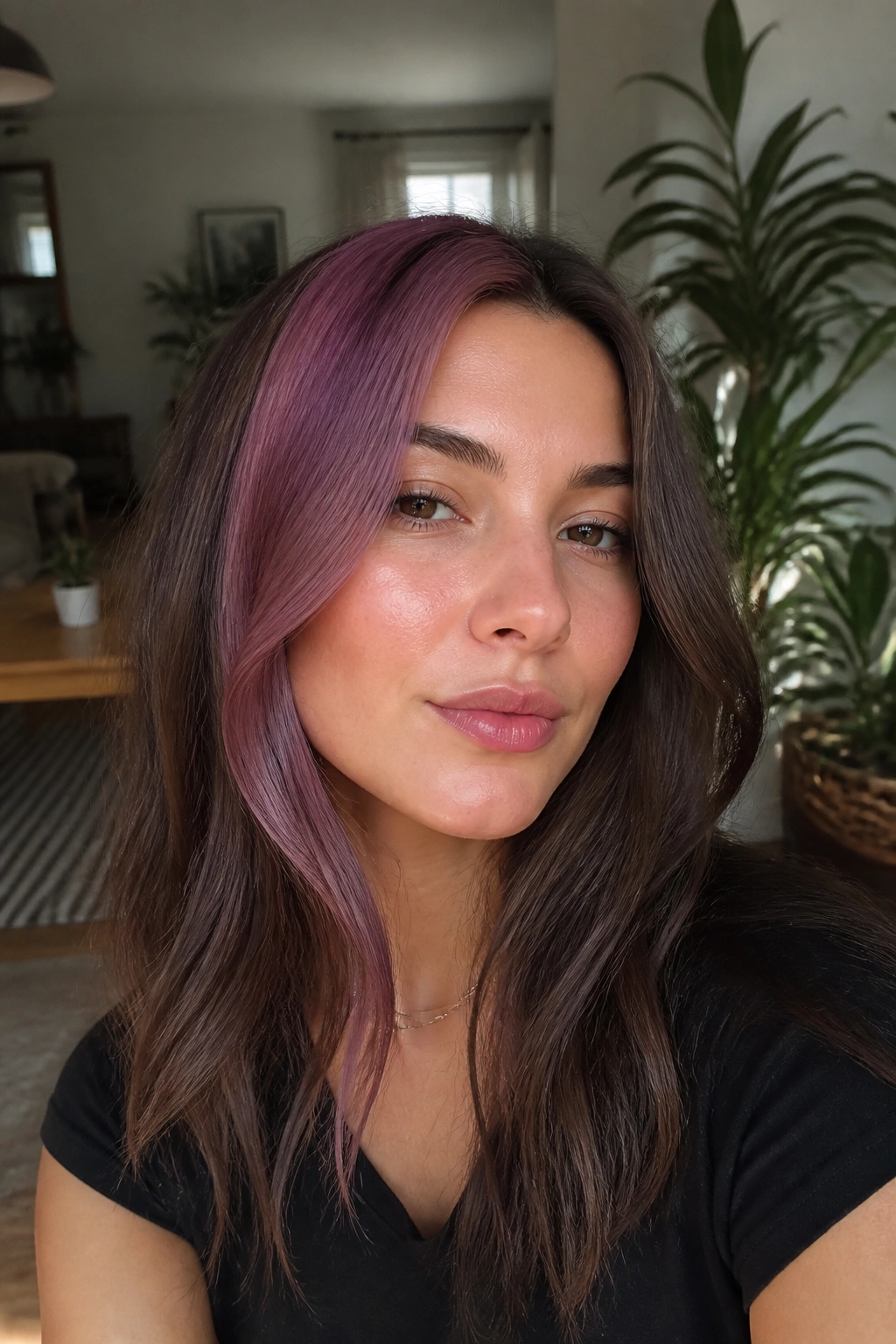
Mauve is the kind of color that surprises people in person. In photos, it can look simple. In real light, it has this smoky pink-purple quality that sits beautifully against brown hair. It’s not as sweet as pastel pink and not as dark as plum, which gives it a slightly dusty, fashion-y feel.
That dusty edge is what makes it work. Brown hair gives mauve a place to land, so the color does not turn chalky or washed out. Instead, it reads soft and muted in a way that feels deliberate. If you like colors with a little mood, mauve does a lot with very little effort.
What I’d Watch For
- Too much pink can make it look bubblegum
- Too much purple can make it look heavy
- A balanced mauve gloss keeps the tone in the middle
- It looks best on cool or neutral brown hair
Mauve also has a nice fading pattern. It can shift toward lilac or smoky rose without losing its charm. That makes it a good choice for someone who wants a statement stripe but does not want the maintenance of a bright fashion color.
It’s a quiet rebel shade. Not silent. Just smarter than it looks at first glance.
12. Lilac Stripe
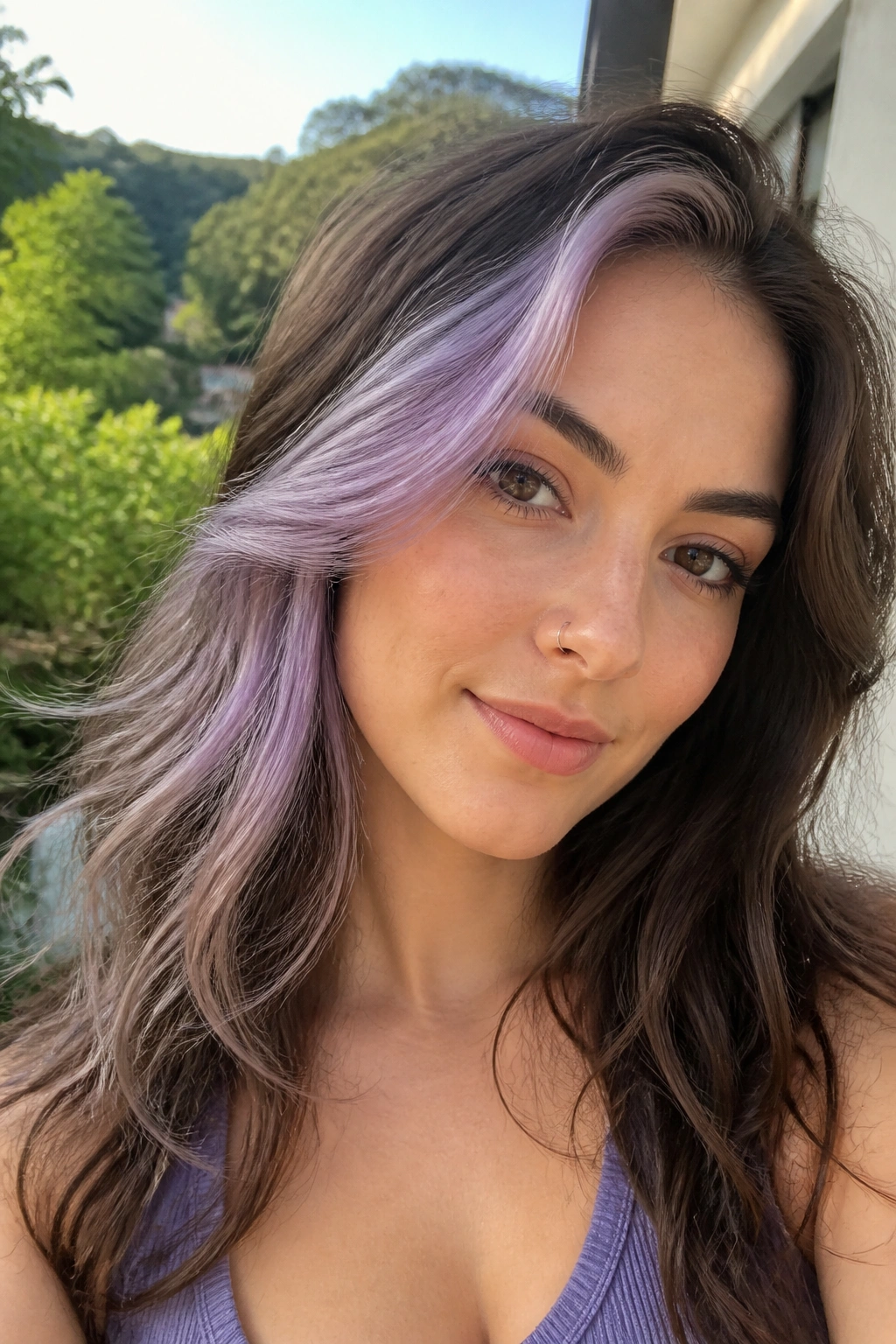
Why does lilac keep showing up on brunette hair boards? Because it gives contrast without looking too heavy. It has enough color to stand out, but it still feels airy. That matters on brown hair, where darker bases can make some pastels look crushed or muddy.
Lilac works best when the stripe is light enough to let the purple read clearly. If it’s too dark, it slides into lavender-gray territory. That can be lovely too, but it’s a different mood. The palest lilac stripes are the ones that give you that neat color-block effect at the front.
How to Keep It Soft
- Start with well-lifted hair, not yellow-orange pieces
- Use cool-toned conditioner to keep brass down
- Keep the stripe wide enough to show the pastel
- Style with soft waves or a smooth blowout so the color looks airy
I like lilac on brown hair because it looks unexpected without being jarring. It has a softer face than blue or red, which makes it easier to wear if you’re testing fashion color for the first time.
The thing people forget is that lilac can be elegant. Not fussy. Not childish. Just pale, cool, and a little dreamy against a dark root line.
13. Electric Blue Stripe
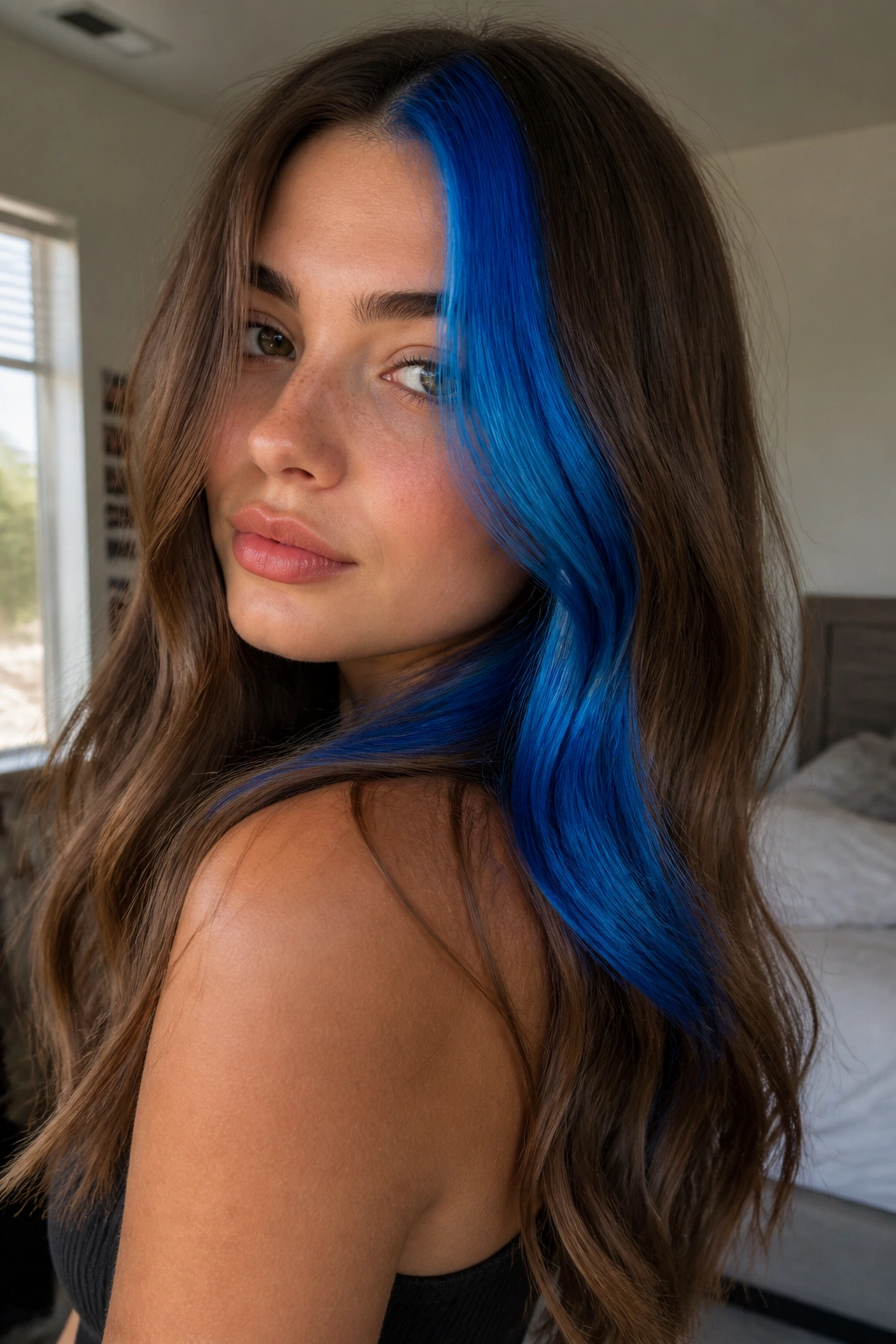
Blue is the shade people think they can’t wear until they see it next to brown hair. Then it makes sense. Electric blue has a crisp edge that brown bases show off better than lighter bases do. The contrast is the whole point. It looks especially good when the stripe is glossy and the cut has some shape.
On brown hair, blue can read almost cobalt in one light and deep sapphire in another. That shift keeps it interesting. A flat blue stripe can look one-note fast, but electric blue has enough punch to stay lively. It also pairs nicely with dark roots because the root area gives the color a natural-looking anchor.
Brown hair with warm undertones can make electric blue feel even brighter. Cool brown bases can make it look cleaner and more graphic. Either way, it is a color that knows exactly what it is doing.
One sentence, because it deserves one: blue on brown hair is not a compromise shade — it is a statement.
14. Teal Stripe
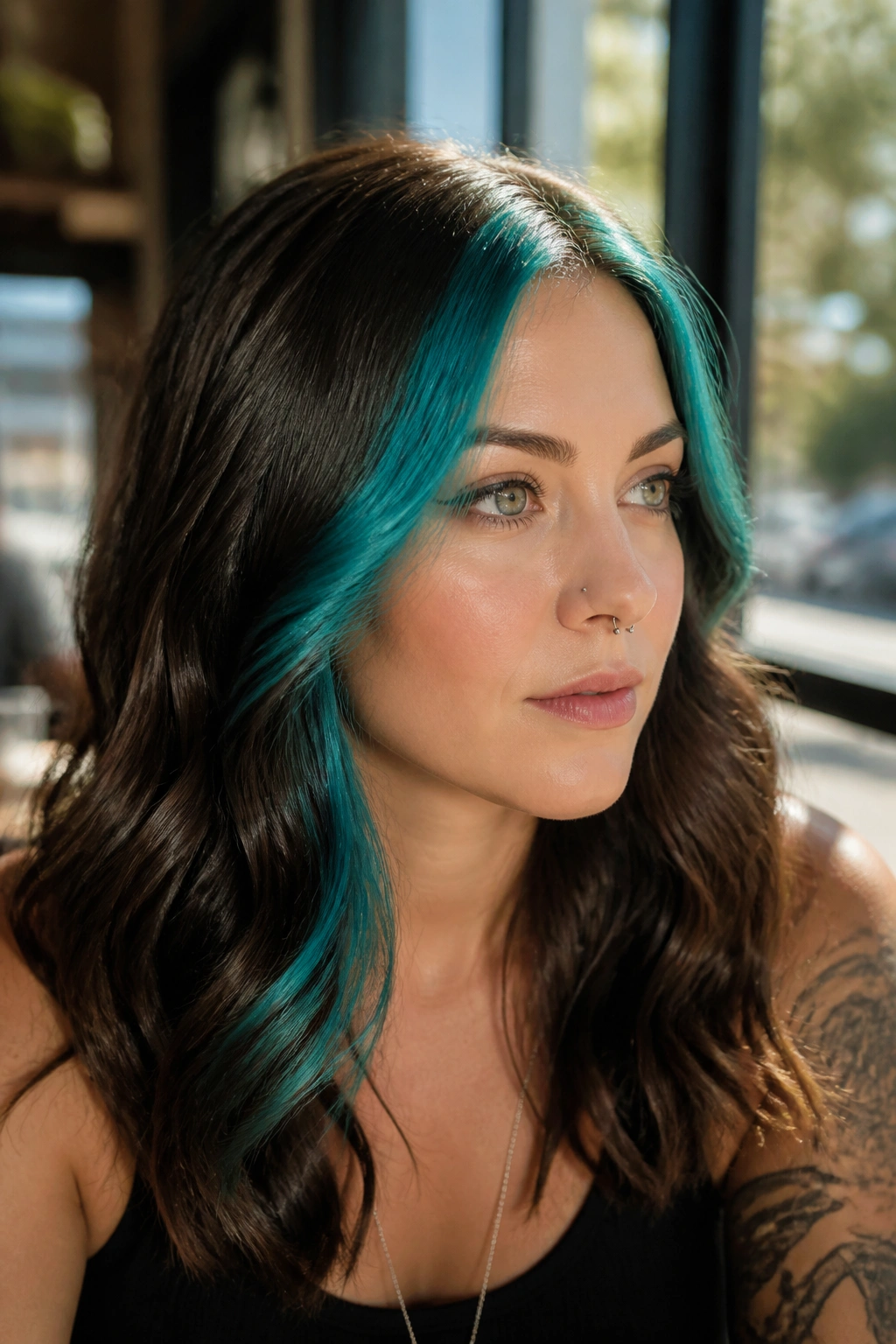
Teal sits between blue and green, and that middle ground gives it a lot of room to work on brown hair. It has depth, but it is not as severe as navy. It has color, but it is not as sugary as turquoise. That balance makes it one of the easiest bold tones to wear.
The stripe looks especially strong when the brown base is deep and even. Teal loves contrast, and dark roots help it look intentional from the start. If you want the style to feel sharp, keep the stripe chunky at the front or through the money-piece area. Thin teal streaks can look decorative. Chunky teal looks like a choice.
Best Placement
- Front panels for maximum contrast
- Face-framing pieces if you want the color near the eyes
- Underlayers if you want a flash of color that appears when hair moves
- A thick, blunt section if you want the skunk stripe feel to stay obvious
Teal is also one of the few vivid shades that can feel cool and rich at the same time. On brown hair, that matters. It does not have to look playful unless you want it to. It can look moody, jewel-like, and a little underwater, which is a much better description than most people get.
If blue feels too sharp and green feels too earthy, teal is the smart in-between.
15. Emerald Green Stripe
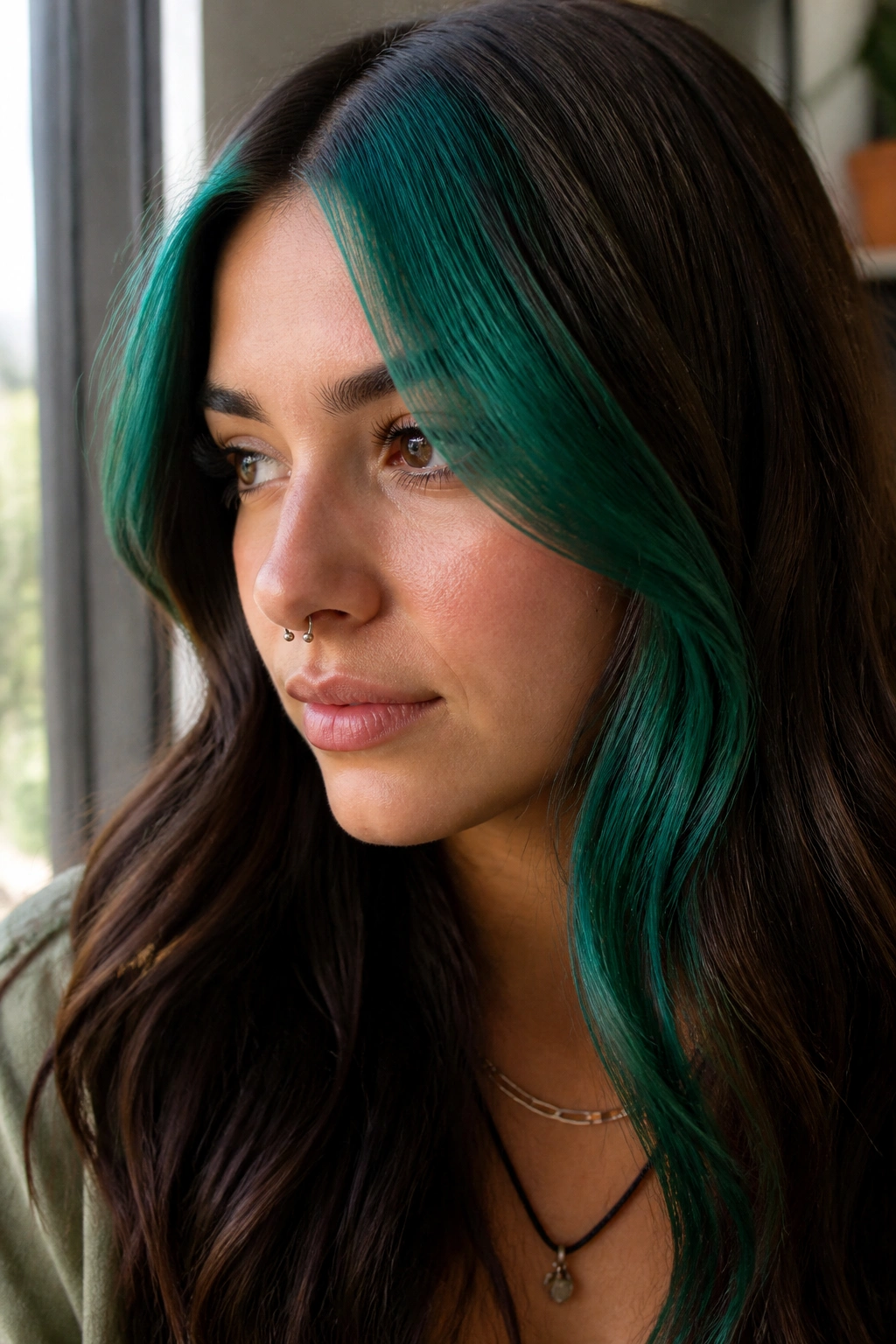
Emerald green looks rich on brown hair because the brown base keeps it from tipping into costume territory. That is the real reason it works. The color itself has enough depth to feel polished, and the dark roots give it a frame that makes the green read as intentional instead of novelty-driven.
I like emerald most on brunettes who want drama but do not want the obviousness of pink or blue. It has a jewel tone quality that feels dense and glossy. When the light hits it, it can look almost black-green at the edges and brighter through the center, which gives the stripe some dimension without needing extra tricks.
A few details matter here:
- A richer emerald looks better than a neon green
- It holds up well when placed as a thick front money piece
- Glossy styling makes the shade look deeper
- It works especially well with dark brows and warm skin tones
Emerald has one more nice trait: it looks expensive next to brown hair without trying too hard. The green is bold, but the base keeps it grounded. That’s the whole appeal of a good skunk stripe anyway — contrast, yes, but with enough control that the hair still feels wearable.
And that’s the part worth remembering. The strongest skunk stripe hair colors for brown hair are not always the brightest ones. They are the shades that give the base more depth, more shape, and a better frame around the face. If the color feels like it belongs beside your brown roots, the whole look lands harder.
