



A round face can take blonde beautifully, but the placement has to be smarter than a flat, all-over lightening job. Blonde dark root hair colors for round faces work because the darker root quietly pulls the eye upward, while the blonde below gives lift and movement where you want it most.
That means the real question is not “Which blonde is prettiest?” It’s “Where does the light start, how wide does it spread, and what does it do around the cheeks?” A chunky bright panel sitting right beside the widest part of the face can make everything look broader. A softer root stretch, on the other hand, can make the whole shape feel longer and slimmer. Small difference. Big payoff.
I also have a soft spot for styles that use contrast without turning harsh. A skunk stripe can absolutely work on a round face, but only if it behaves like a vertical accent instead of a blunt band. The same goes for money pieces, root melts, and balayage ribbons: the front needs to guide the eye, not shout at the cheeks.
The 20 looks below all use that idea in different ways. Some are polished and soft. Some lean bold. A few are low-maintenance and easy to wear for months. And a couple are for the person who wants contrast with a little edge. Placement is the whole trick. Keep that in mind, and the rest gets much easier.
1. Soft Shadow-Root Champagne Blonde
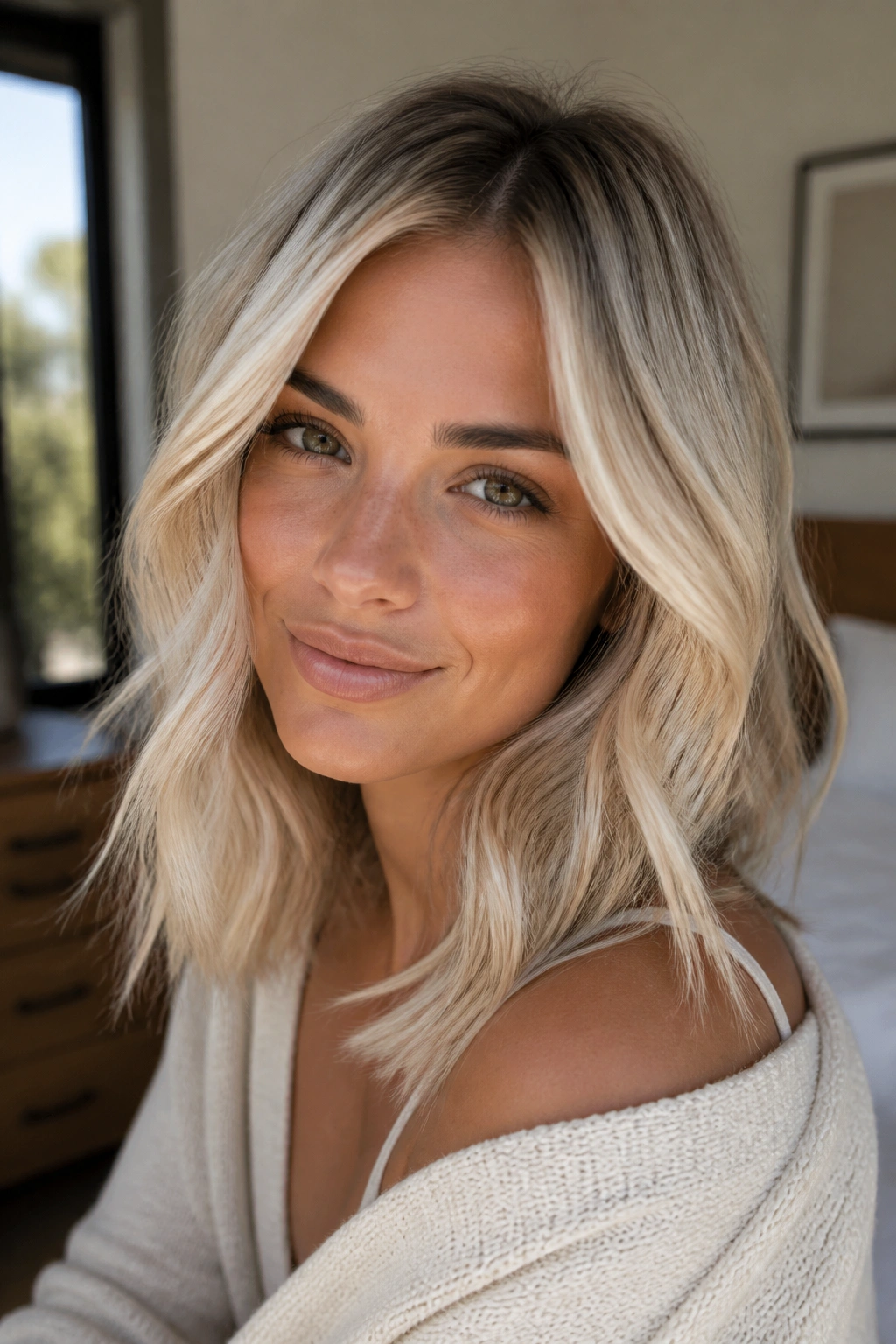
This is the blonde I reach for when someone wants brightness without losing face shape. The soft shadow root gives the crown a little depth, and that tiny bit of darkness makes a round face look longer right away. Champagne blonde then softens the ends so the finish feels airy instead of heavy.
Where the brightness should land
Ask for the lightest pieces to start below the cheekbone, not at the widest part of the face. That matters more than people think. If the blonde begins too high and too wide, the hair starts to flare out visually.
- Keep the root at a level 5 or 6.
- Lift the mids and ends to a pale champagne beige.
- Leave the brightest money pieces slim, not thick.
- Wear it with loose bends, not tight curls.
Best on shoulder-length cuts and long layers. The movement keeps the color from sitting like a helmet, which is the last thing a round face needs.
2. Beige Blonde with a Deep Root Melt
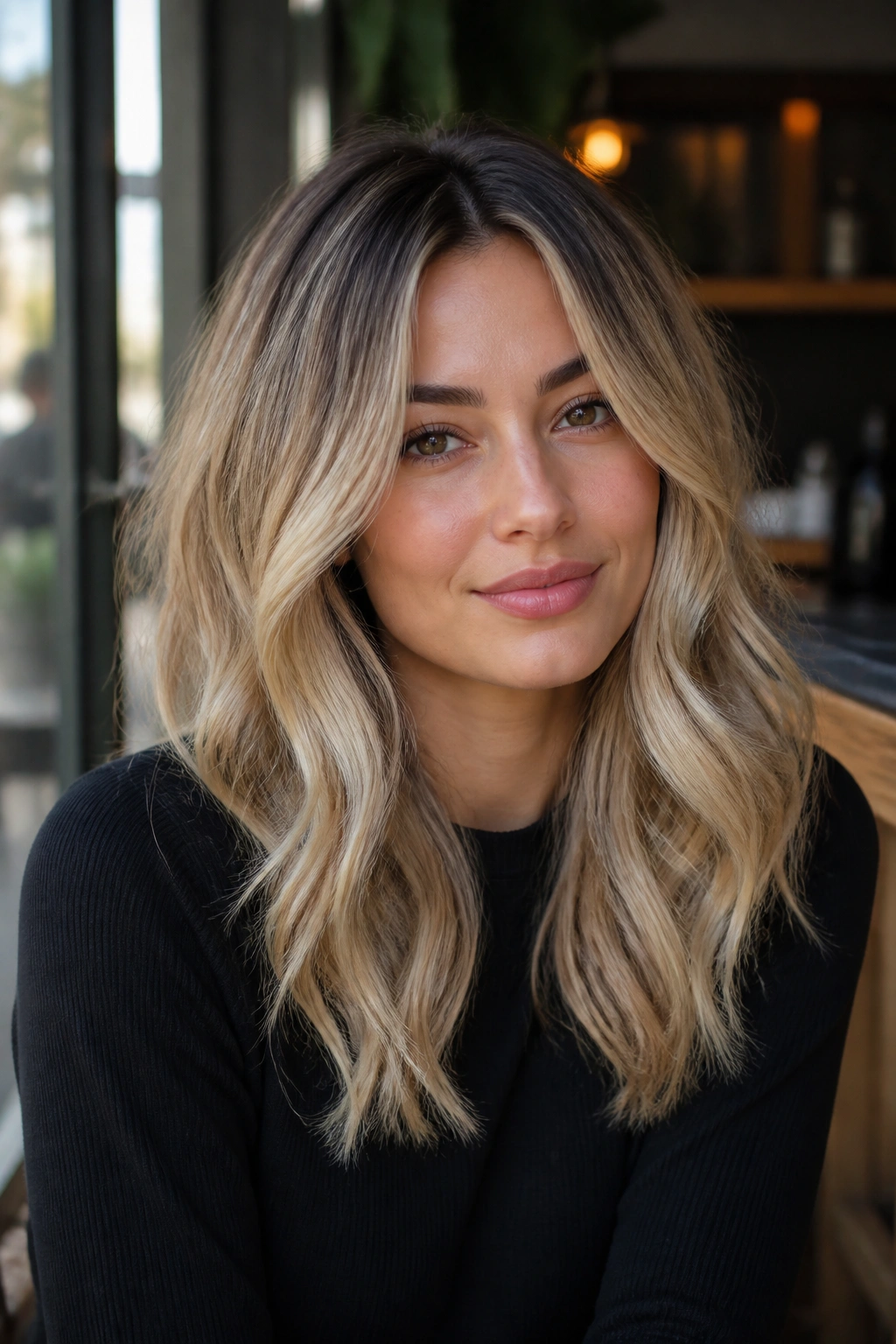
A deeper root melt makes the cut feel longer immediately. That’s the honest reason this shade works so well on round faces. The eye travels from the dark root into the beige blonde, and that vertical shift does a lot of quiet shaping.
The key is softness. You do not want a hard line at the root. You want a blurred fade that looks like the color has sunk into the hair, then drifted out into beige mids and pale ends. On thick hair, this version is especially good because the darker root cuts some of the visual bulk.
A collarbone-length cut is the sweet spot. Shorter than that, and the face-framing pieces can start to bunch around the cheeks. Longer than that, and you get even more length through the silhouette. A center part can work here, but a slightly off-center part usually looks sharper.
3. Honey Blonde Balayage with Curtain Bangs
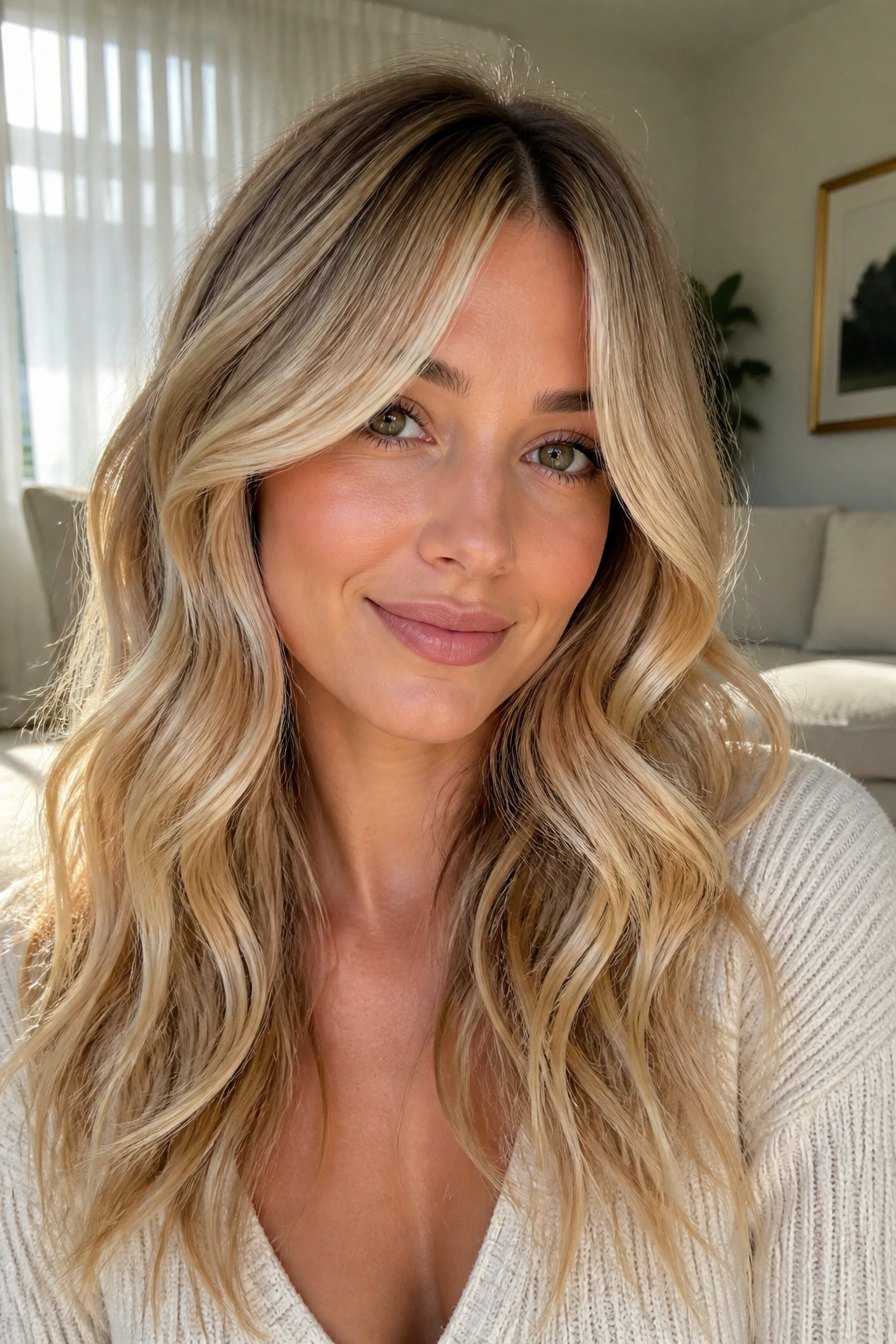
Warm blonde can be a gift on round faces when it is placed well. Honey balayage has enough glow to warm the complexion, and curtain bangs split the front in a way that breaks up width across the cheeks. That little opening in the middle changes the whole feel.
Why curtain bangs change the shape
Curtain bangs should start light and airy, not heavy and blunt. The shortest point can hit around the brow or just below it, then the pieces should slide down toward the cheekbones. That diagonal line is doing work. It leads the eye down and out, which is exactly what you want.
- Ask for soft, face-framing layers around the cheekbones.
- Keep the balayage brightest from the temple down to the collarbone.
- Avoid a dense bang that ends straight across the forehead.
- Use a round brush or large velcro rollers for a gentle bend.
This one looks especially good with a soft wave. Tight ringlets can puff out the sides. Loose bends keep everything moving downward.
4. Mushroom Blonde with Face-Framing Brightness
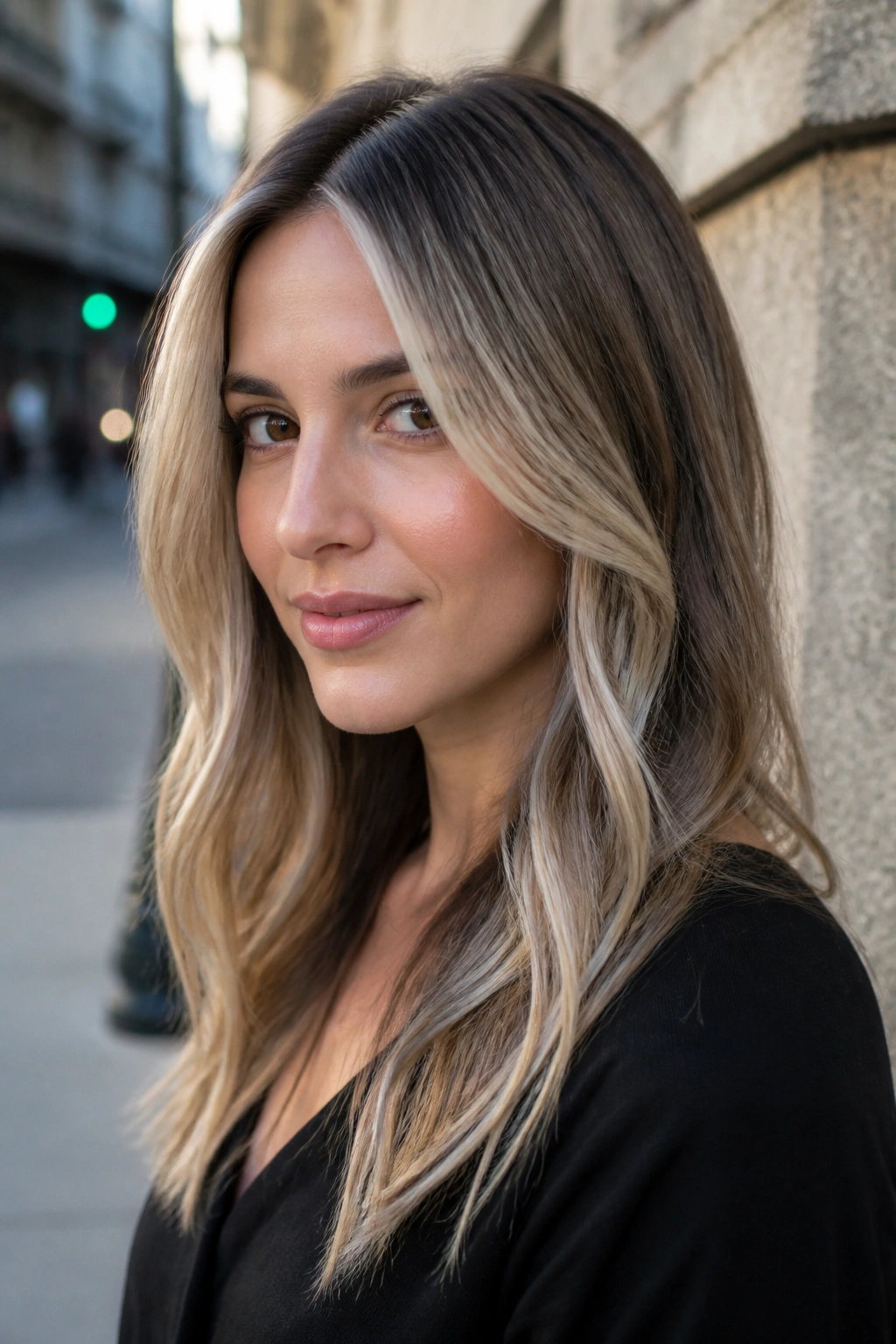
Why does mushroom blonde keep showing up on round faces? Because the tone is cool, smoky, and low contrast, so it does not widen the face the way a bright, high-contrast blonde can. The darker root helps, sure, but the bigger win is the muted middle tone.
The placement that keeps it flattering
You want the brightness tucked into the front pieces and the lower lengths, not spread all over the surface of the hair. That way the color reads long and soft, not puffy. The best versions usually keep the crown a little deeper and let the blonde come alive as it drops past the cheek.
- Root: level 5 ash-brown or mushroom brown
- Mid-lengths: smoky beige blonde
- Ends: soft pearl or tan blonde
- Part: slightly off-center for a longer line
This is one of those shades that looks expensive because it is controlled. Not loud. Not flat. Controlled.
5. Creamy Vanilla Blonde and Root Smudge
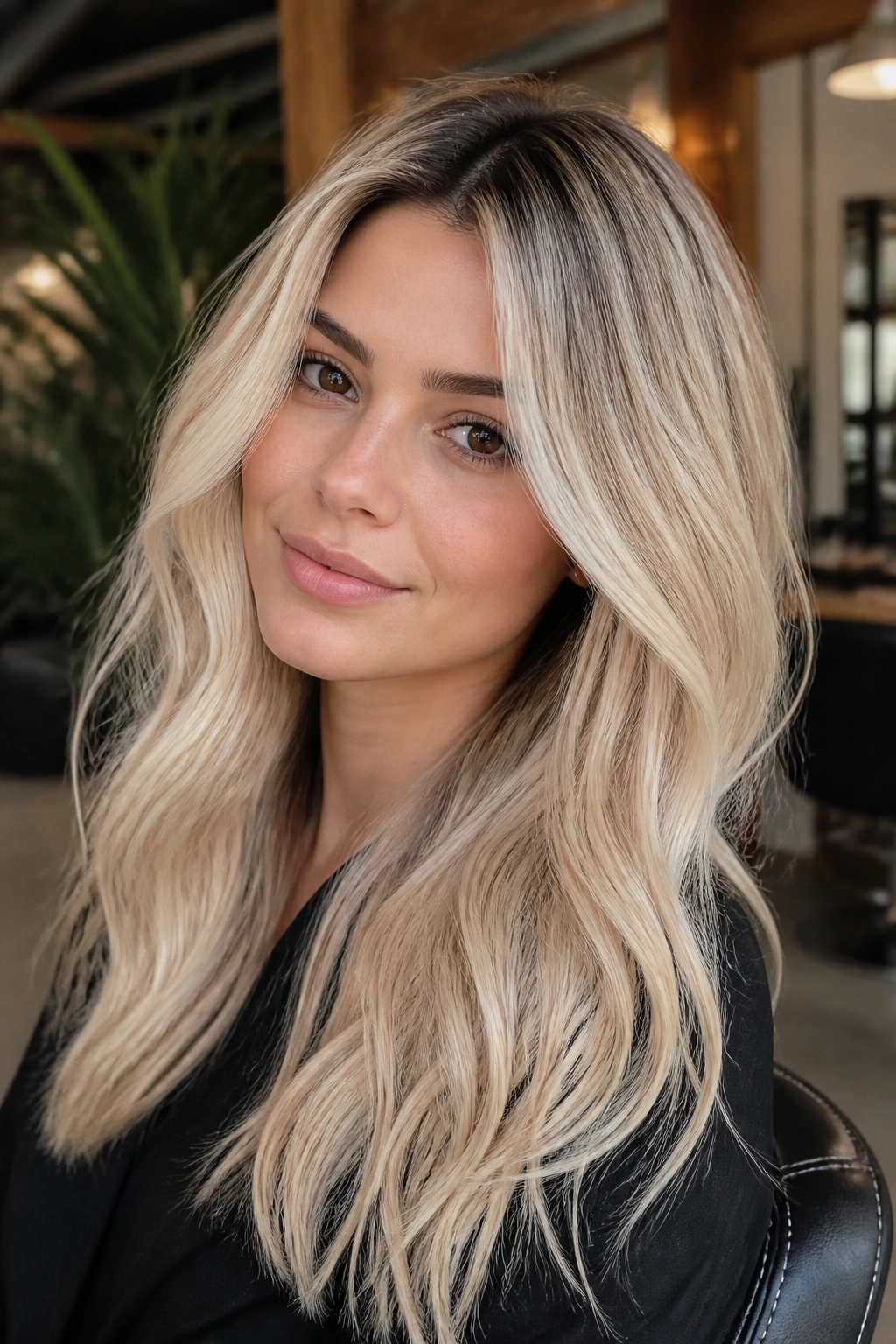
Creamy vanilla blonde is for people who want a clean, polished finish without the icy bite of platinum. The root smudge keeps it wearable, and on a round face that smudge stops the top from looking too wide or too bright. You get the softness of blonde without losing structure.
I like this one on long layers because the layers give the color places to move. If the haircut is blunt and heavy, the blonde can spread sideways and make the face look fuller. Add a few long, invisible layers, though, and the whole thing starts to fall more vertically.
This shade needs a good toner. Vanilla can drift yellow fast if the blonde underneath is too warm. Ask for a beige-vanilla finish, not a stark white one. The latter can be pretty, but it is less forgiving around the cheeks and jaw.
6. Caramel Blonde Ribbon Highlights
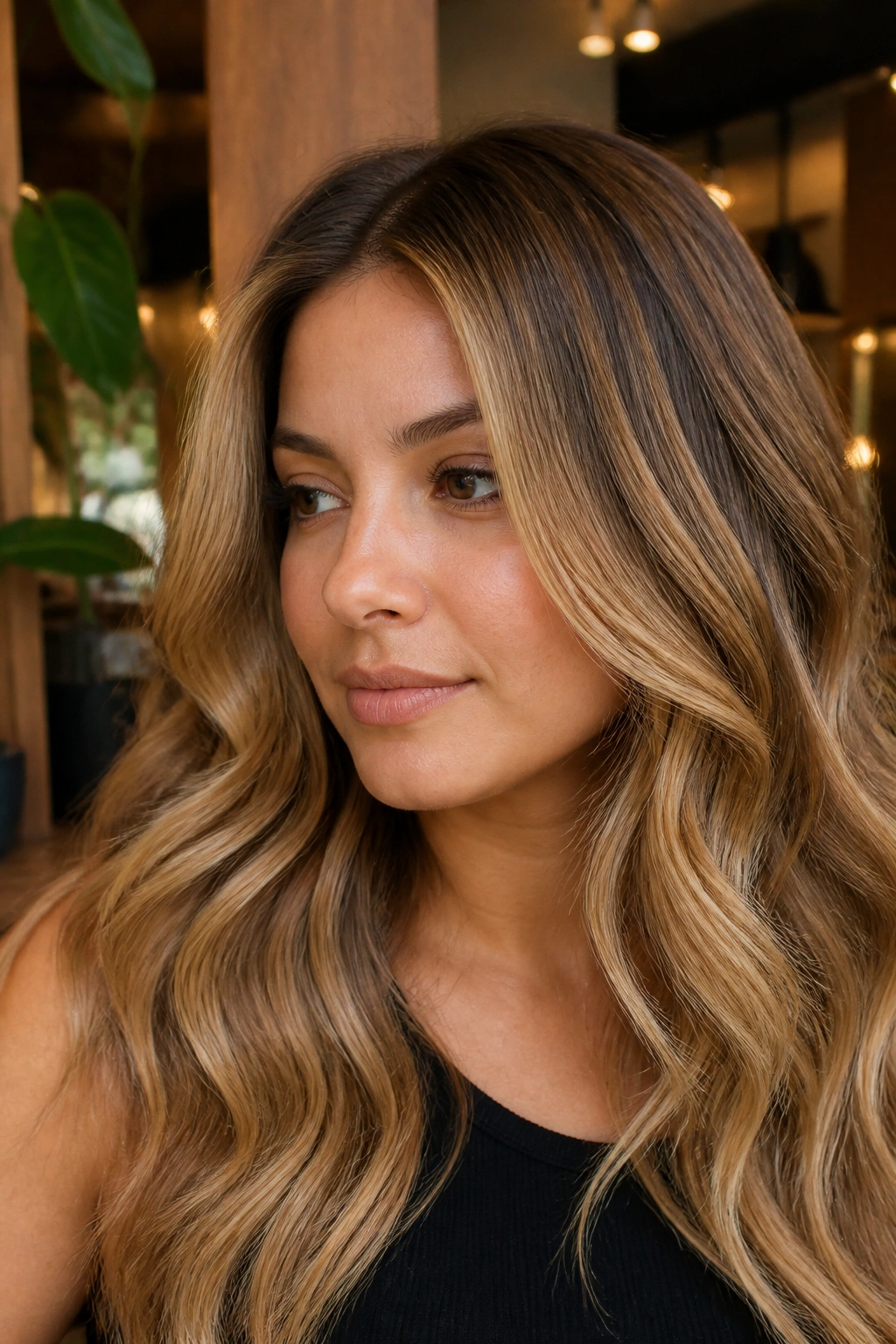
Ribbon highlights are smarter than a full blonde sheet when the face is round. They leave darker depth between the lighter pieces, which keeps the sides from blowing out visually. The caramel tone also adds warmth without turning brassy.
Why ribbons beat a full blonde sheet
A full head of blonde can sometimes spread too evenly across the surface and make the head look wider from the front. Ribbon highlights are different. They sit in curves, dip into the hair, and create thinner flashes of light that read as movement instead of width.
This is a strong choice for wavy or curly hair, because the texture already creates volume. The ribbons give the curl pattern shape without crowding the face. Ask your colorist to keep the brightest ribbons vertical and slightly staggered, especially around the front sections.
It’s also an easier grow-out than a heavy bleach job. That matters if you do not want to live in the salon.
7. Ash Blonde Money Piece on a Dark Brunette Base
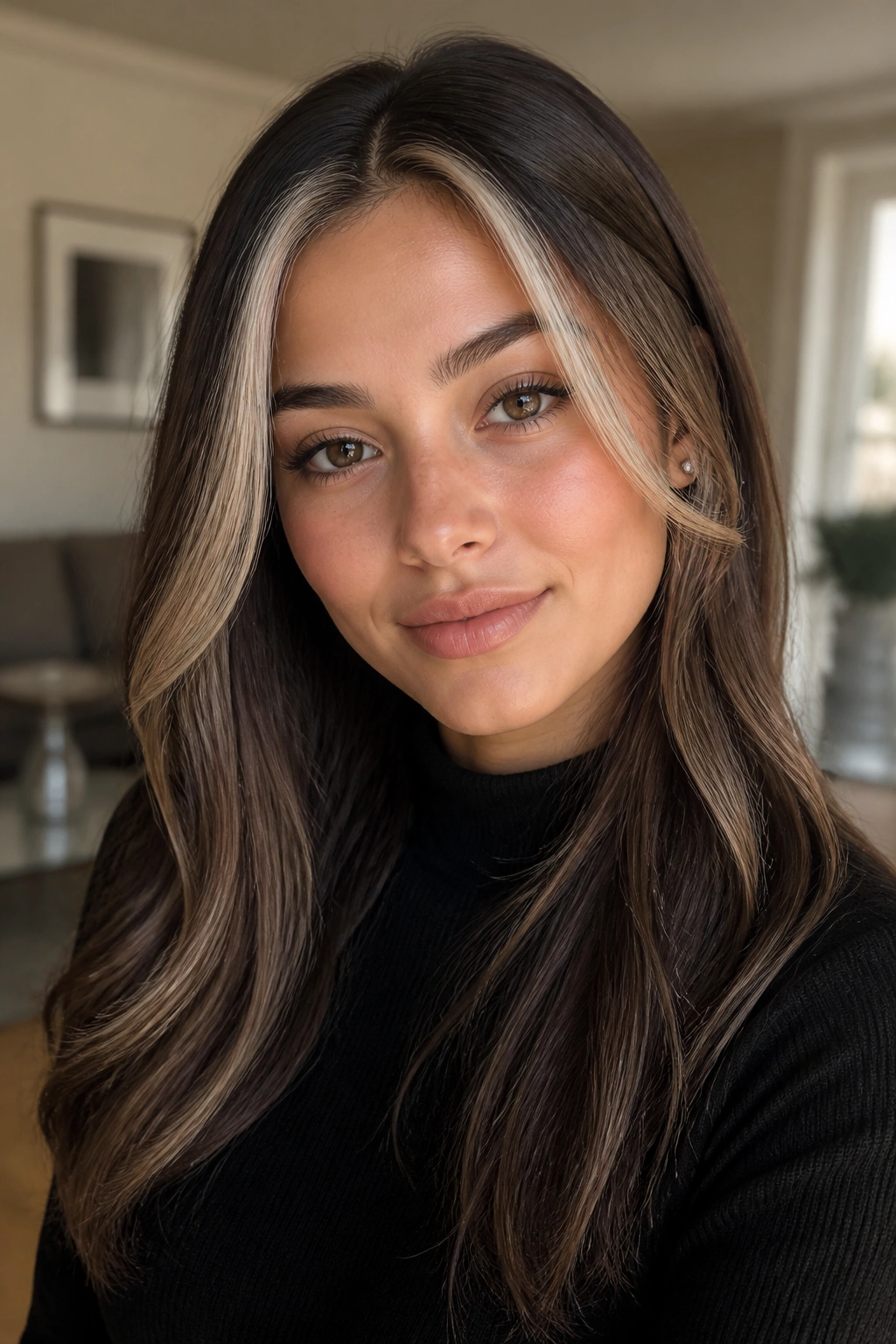
A narrow ash-blonde money piece can be fantastic on a round face, and yes, this is the style where restraint matters. A wide bright panel can feel too square. A slimmer, cooler streak at the front gives the eye a vertical anchor instead.
The narrow-streak rule
Keep the money piece thin enough that it frames the face, not takes it over. Start the lightness near the brow or a touch lower, then let it slide into the cheekbone area. The rest of the blonde should stay blended and soft so the contrast does not split the face in half.
- Base: dark brunette, level 3 or 4
- Front pieces: level 9 ash-blonde
- Placement: narrow and slightly off-center
- Finish: blended roots, no hard line
Narrow beats chunky here. That’s the whole game. If you want a bolder version, keep the stripe slim and pair it with long layers so the hair still falls downward.
8. Icy Pearl Blonde with Long Layers
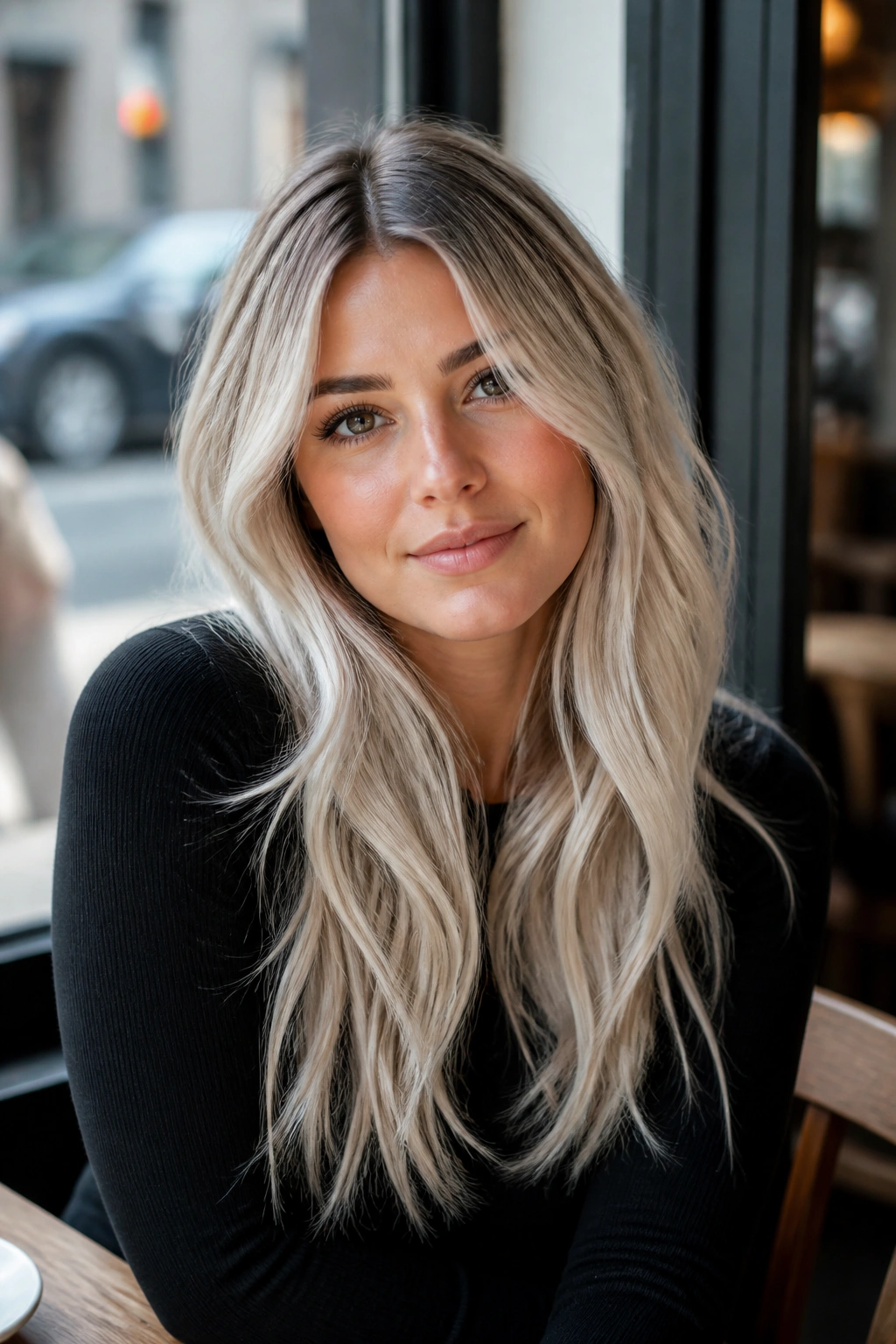
Icy pearl blonde can work on a round face, but only when the cut gives it length. Without that, the cool tone can feel too open around the cheeks. Long layers solve the problem because they build a vertical line through the hair.
The root should stay a little deeper, almost smoky, so the platinum or pearl does not begin right at the scalp. That keeps the top from looking broad. Then the pearl tone can bloom through the lower half of the hair, where it looks crisp and bright.
This is one of the more high-maintenance options on the list. The toner fades, the roots show fast, and the hair needs moisture to keep the ends from going fuzzy. Still, when it’s done well, it has a clean edge that feels sharp on a round face. A center part with long, draped pieces is the easiest way to wear it.
9. Buttery Beige Blonde Lob with a Side Part
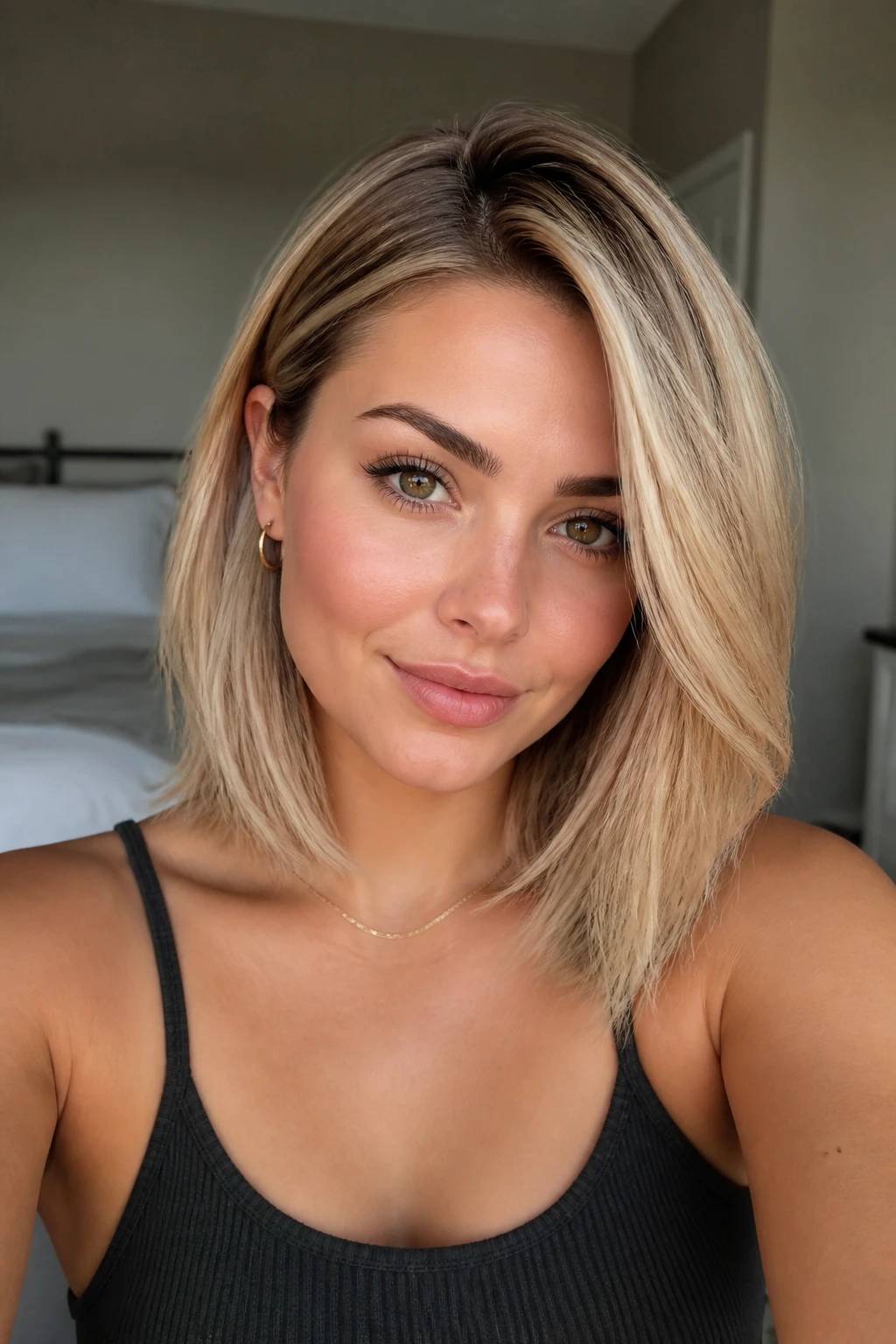
A lob can be a miracle for round faces if it sits at the collarbone and bends a little at the ends. Add buttery beige blonde, a soft root shadow, and a side part, and the whole style suddenly looks longer and slimmer than you’d expect from a shorter cut.
What the lob should do
The lob should skim the jaw, not end at the cheeks. That small difference changes the balance a lot. The side part then creates a diagonal line over the forehead, which helps break up roundness at the top of the face.
This version is friendly if you want blonde that feels soft, not icy. Butter tones keep the look warm and easy, while the darker root keeps the top grounded. It’s also a good choice if your hair is fine, because the color gives the illusion of depth without needing a ton of teasing or volume spray.
Ask for the front pieces to be a touch longer than the back. That little angle matters.
10. Strawberry Blonde Ends with Smoky Roots
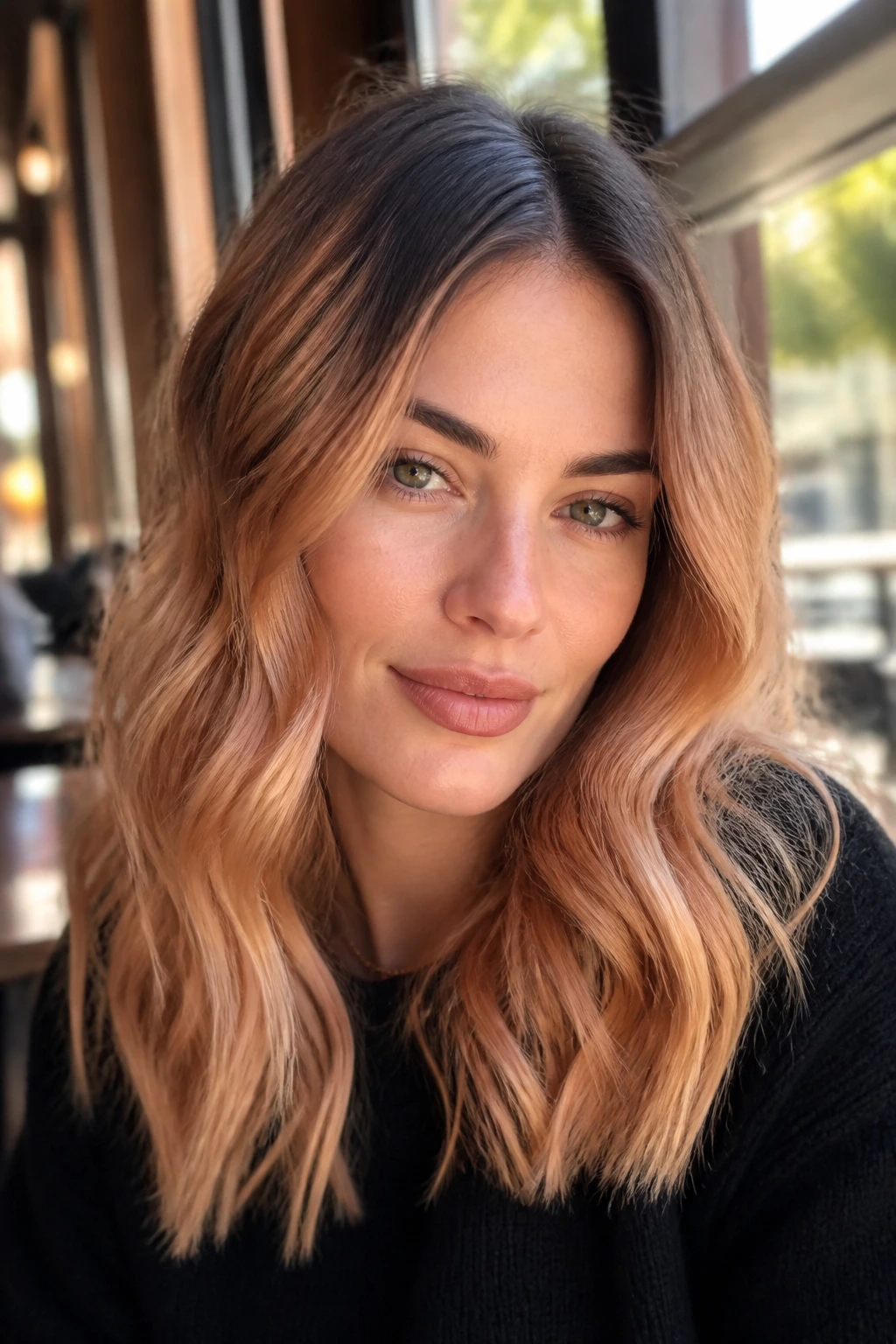
Can strawberry blonde work with a round face? Absolutely, if the roots stay smoky and the redness stays light. A full coppery blonde can add width. A smoky root, though, gives the color a vertical base that keeps the shape from spreading.
This version looks nicest when the strawberry tone sits mostly through the mids and ends, where it reads soft and sun-touched. The front pieces can be a little lighter, but they should still stay thin and airy. Heavy red around the temples is what tends to make the face look fuller.
Warm skin often loves this shade, especially if the hair has a little natural wave. The root depth keeps the style from looking too candy-like. Think soft peach, not orange soda. That’s the line.
11. Toffee Blonde with Piecey Waves
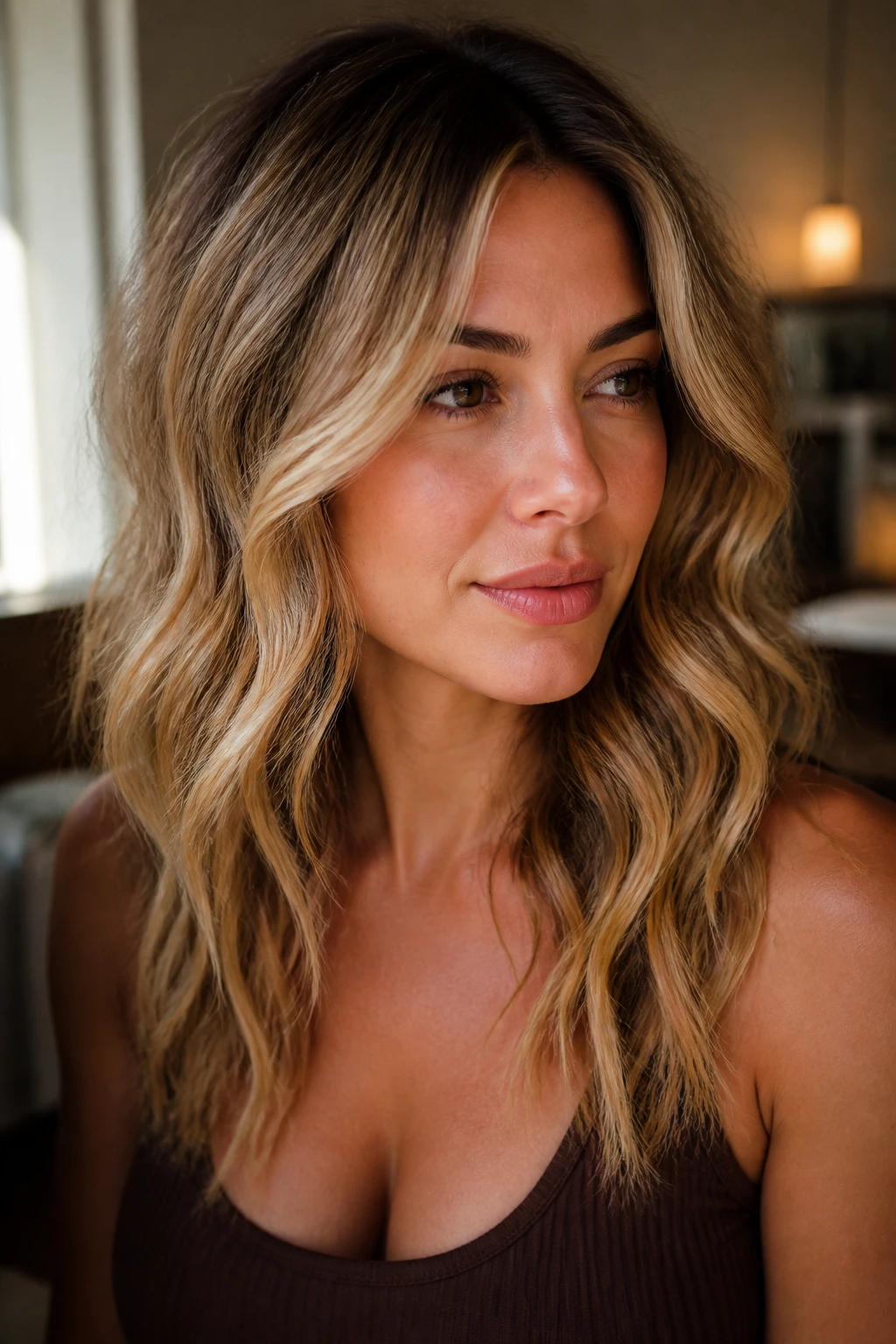
Toffee blonde is one of those shades that looks expensive in the mirror and even better when it grows out a bit. The darker root gives it shape, the warm ribbons add depth, and the waves break everything into smaller sections that are kind to a round face.
What keeps it from looking flat
Piecey waves are the whole point. A single smooth wave can look broad if it falls straight across the cheeks. Piecey texture, though, separates the color into thinner lines and lets the darker root show through at the crown.
- Use a 1 to 1.25 inch curling iron for loose bends.
- Leave the ends straight for a more modern finish.
- Keep the brightest ribbons around the front third of the hair.
- Use a light texturizing spray, not a stiff hairspray.
This is a good everyday blonde. Not fussy. Not boring. Just easy to wear, which is underrated.
12. Bronze-to-Blonde Bronde Melt
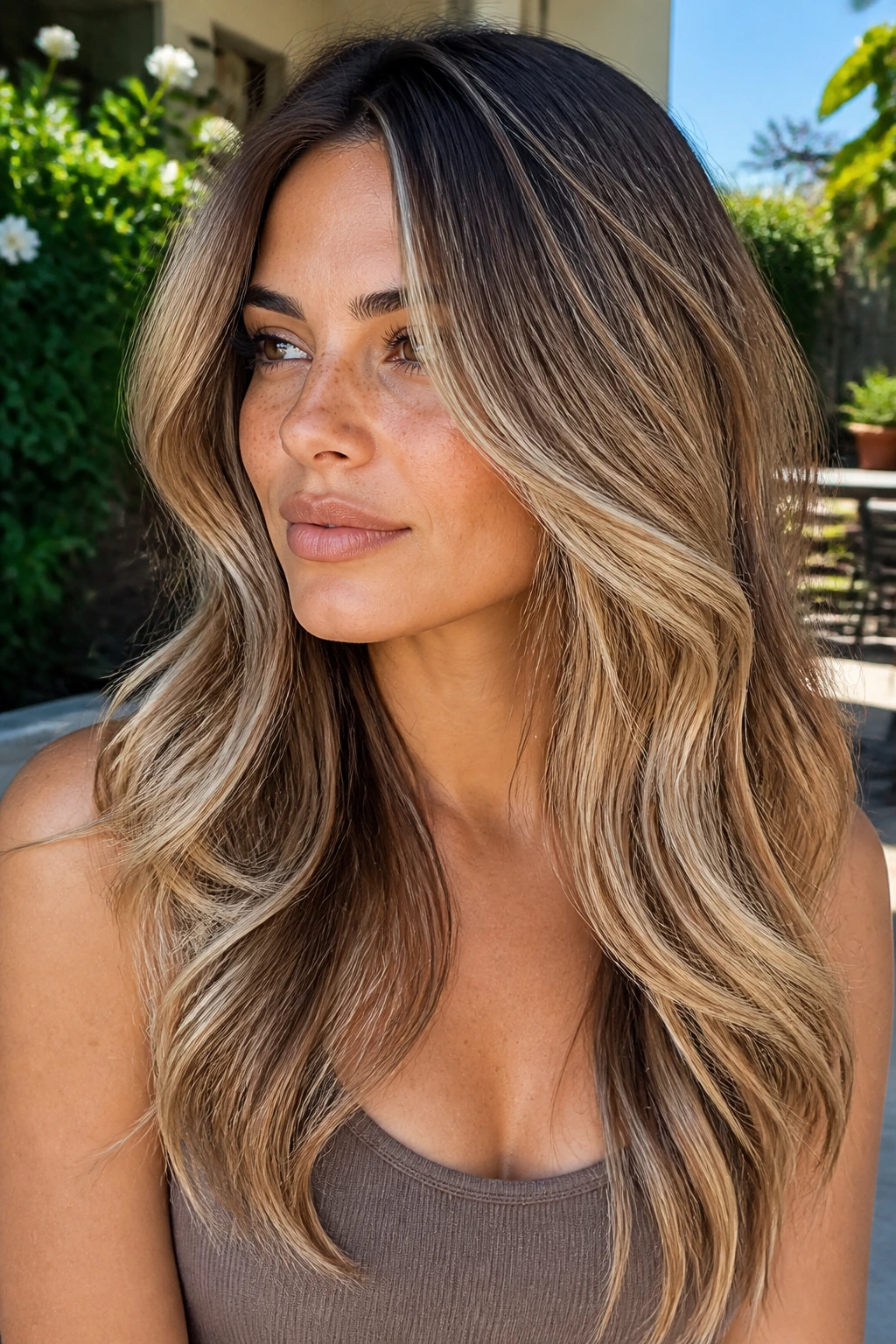
Bronde is the easy answer for people who want blonde without giving up depth. On a round face, that depth matters because it keeps the sides from ballooning. The bronze base gives the hair warmth and body, while the blonde melt brightens the lower half in a long, vertical sweep.
Compared with a full blonde head, this feels calmer. Compared with dark brown, it still looks light and sunny. That middle ground is why it works so well around fuller cheeks. The color never breaks sharply; it just shifts.
A layered cut is the best match. If the hair is one blunt length, the bronde can sit too heavily around the jaw. Layers let the color move. Ask for the blonde to stay 2 to 3 inches away from the roots in the front if you want the face to look longer.
13. Sandy Blonde with Chevron Highlighting
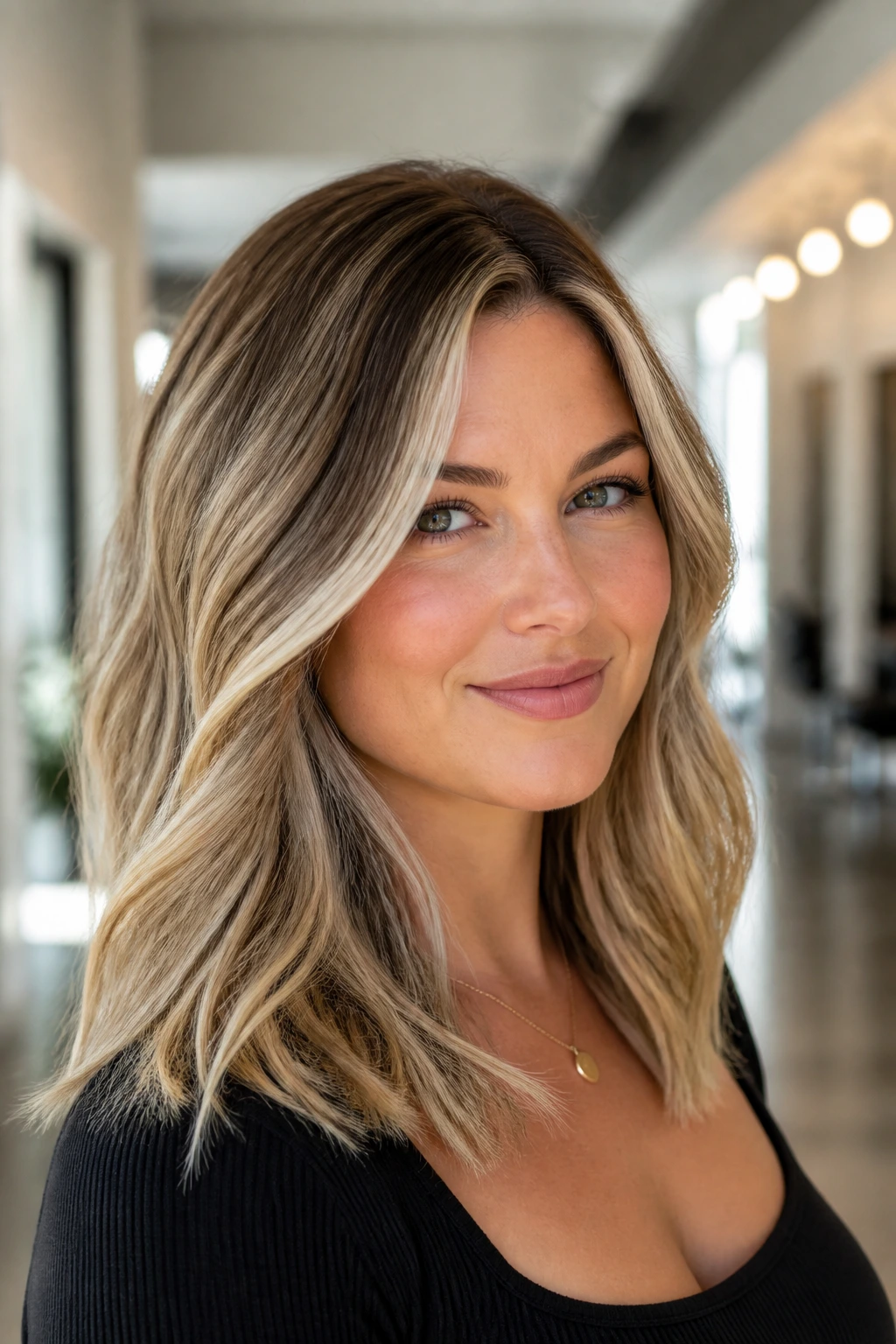
Chevron highlighting sounds technical, but the effect is simple: the foils or painted sections angle downward in a way that guides the eye along the length of the hair. That diagonal pull is a gift for round faces. It keeps the brightness from spreading straight across the widest part of the face.
Why the diagonal matters
Straight horizontal light can make a face look wider. Diagonal placement does the opposite. It creates movement from temple to jaw and from crown to ends, which gives the whole look more length.
Ask for sandy blonde pieces that are softer near the temple and brighter as they drop lower. The root can stay dark enough to hold shape, but not so dark that it looks striped. Sandy tones are useful because they sit between beige and gold, which keeps the finish from feeling too icy or too warm.
This is a good choice if you want something polished but not fussy. It is also a nice option for medium-density hair that needs a little visual texture.
14. Golden Blonde and Airy Layers
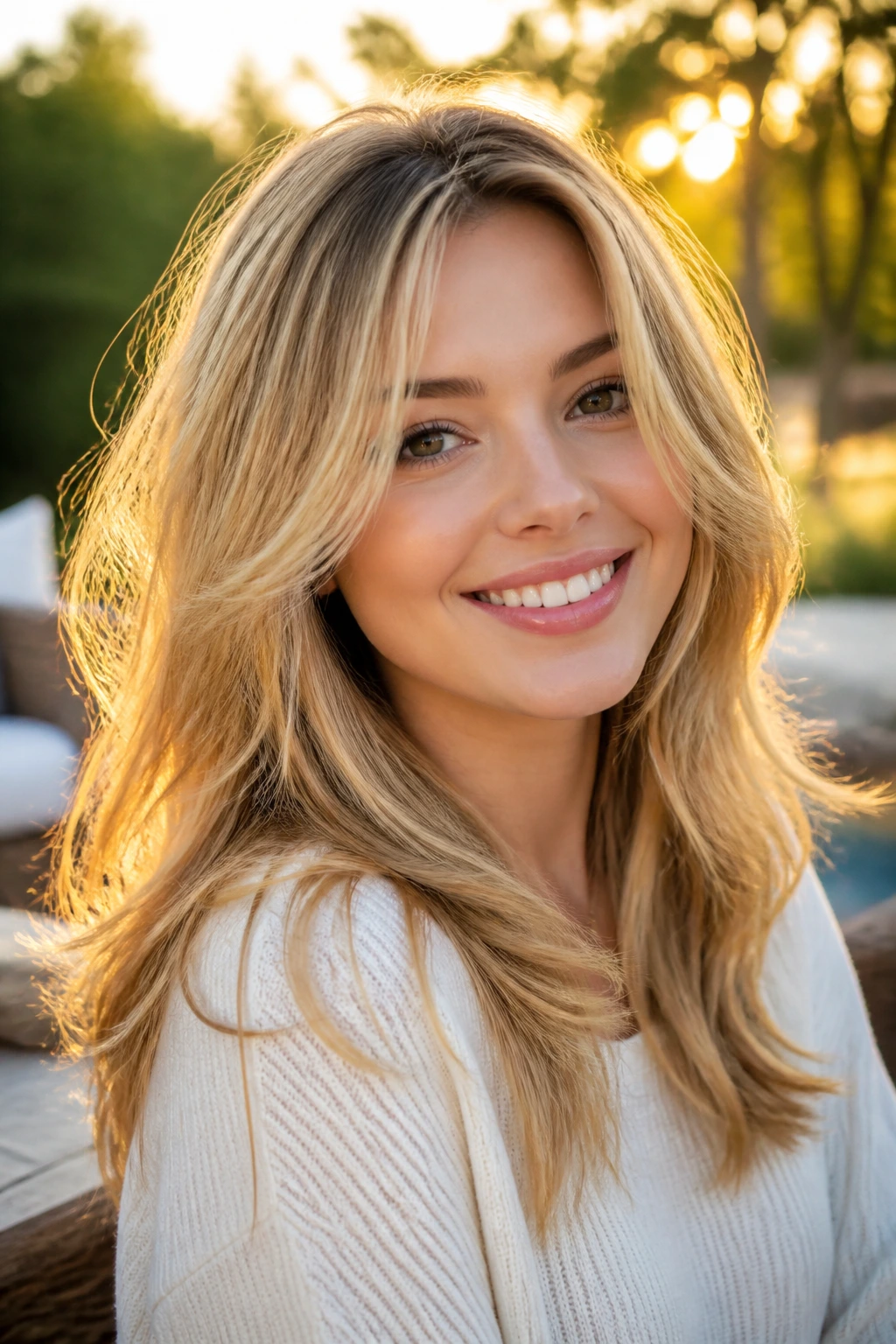
Golden blonde can be lovely on a round face when the haircut does its part. The color itself brings warmth and shine, while the airy layers prevent the ends from feeling heavy. That combination matters more than people expect.
Keep the layers soft. That’s the whole sentence.
If the cut is too blunt, golden blonde can sit like a bright bar around the bottom of the face. Soft, tapering layers keep the light moving. A deeper root helps too, especially if your natural color is medium brown or dark blonde. It gives the eye a place to rest before dropping into the lighter lengths.
This one looks especially good on hair that already has some natural bend. The golden tones catch movement, but they don’t need a perfect curl pattern. A loose blowout or a simple round-brush finish is enough.
15. Cream Soda Blonde with a Mid-Length Cut
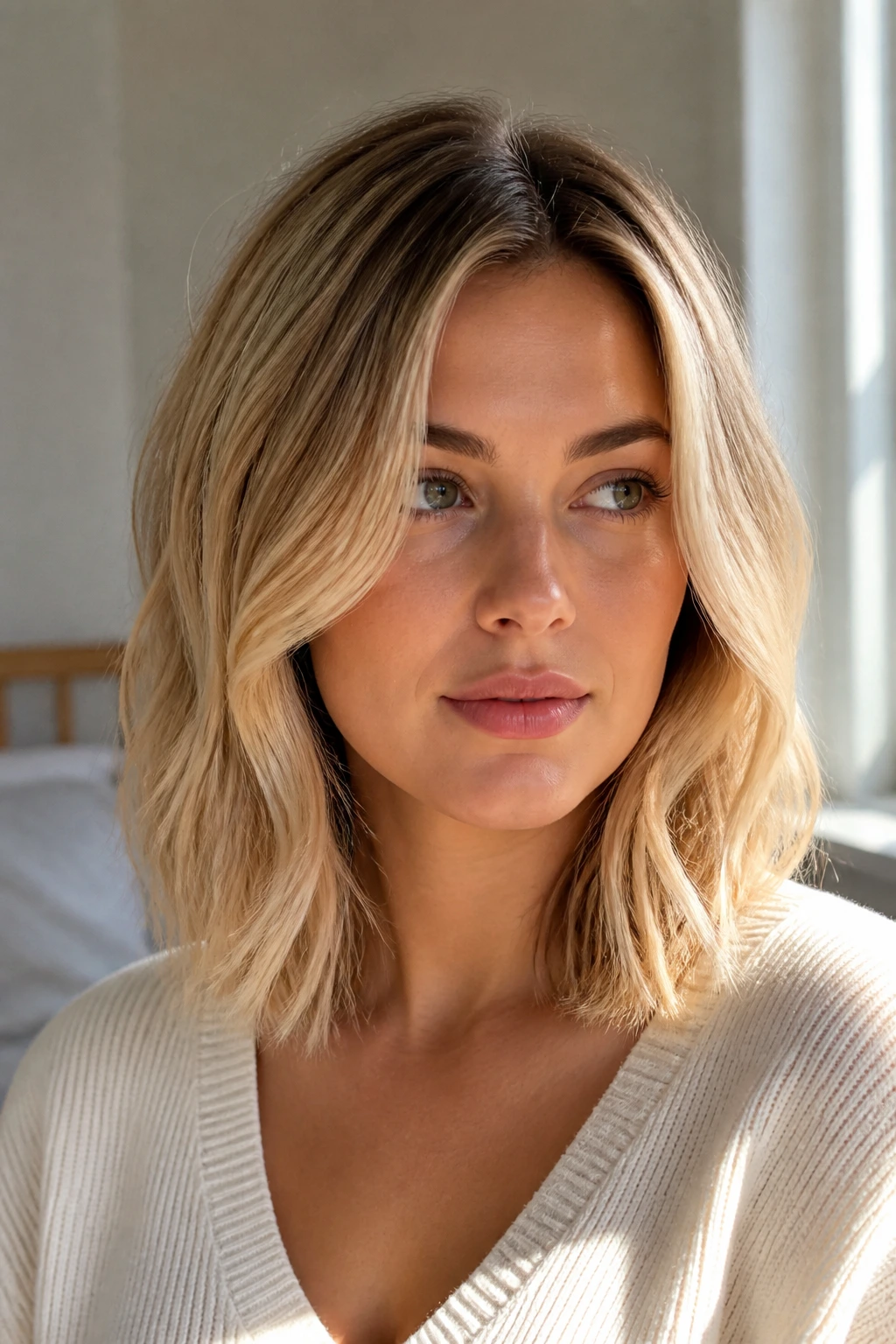
Cream soda blonde is soft, creamy, and a little warmer than vanilla. On a round face, it works best with a mid-length cut because the length pulls the outline downward. A shoulder-length shape or collarbone bob is the sweet spot.
What to ask for
- Root depth at level 5 or 6
- Mids in a beige-gold blonde
- Ends a touch lighter, but not white
- Front pieces that fall below the jawline
The reason this one works is simple: it keeps the light below the widest part of the face. The root stretch stops the top from looking broad, and the mid-length cut gives the hair a clean vertical line. If you wear it with a soft side part, even better.
It is a friendly color for people who want brightness without a lot of upkeep. Every 8 to 12 weeks for a gloss is usually enough to keep the tone fresh.
16. Dirty Blonde with Subtle Lived-In Roots
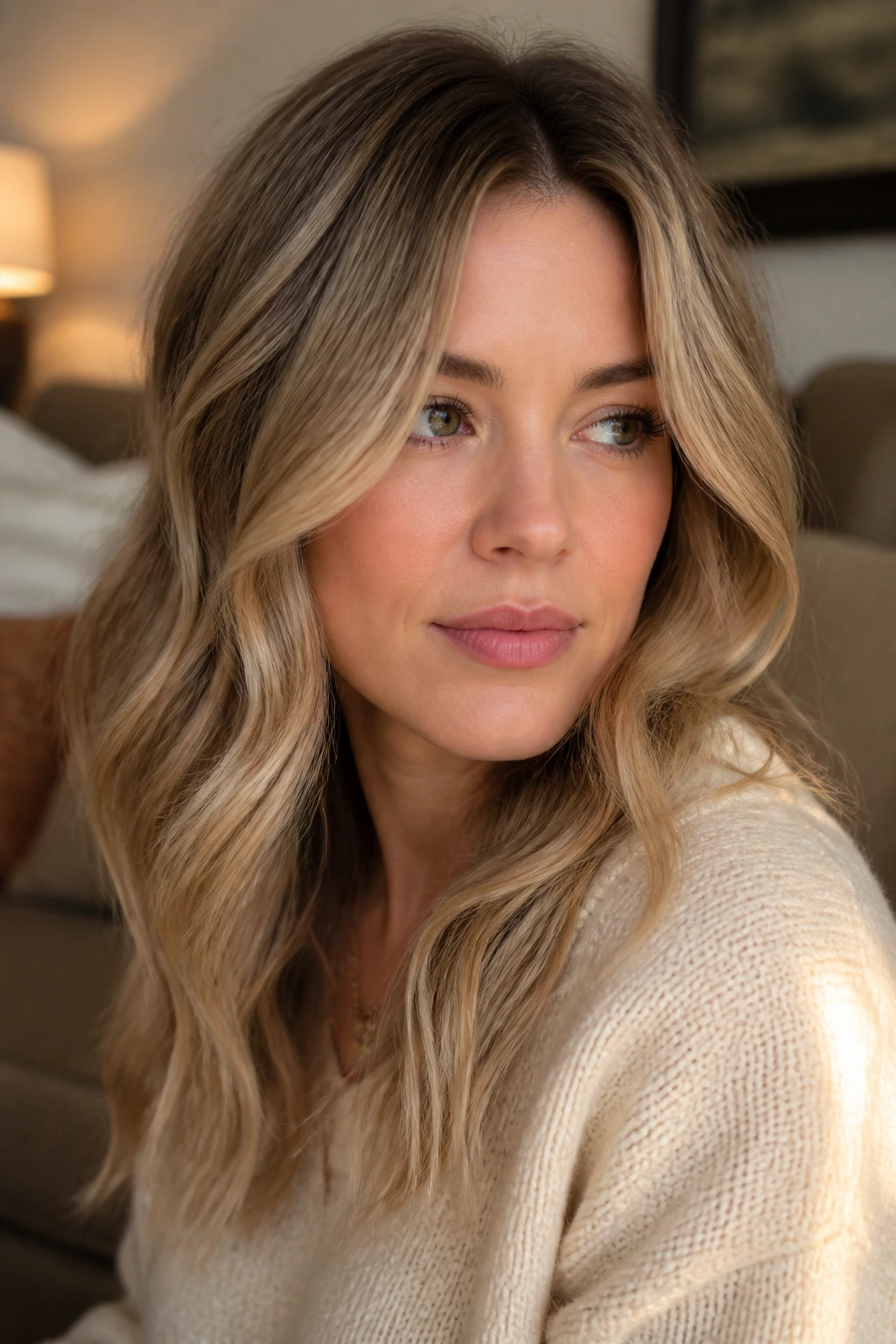
Dirty blonde gets a bad rap from people who think it means dull. It doesn’t. On a round face, the slightly deeper root and muted blonde lengths can be one of the easiest ways to keep the profile slim and soft.
This shade works because nothing is fighting for attention. The roots stay natural or near-natural, the blonde is scattered rather than blasted all over, and the finish looks easy to live in. That relaxed contrast is useful if your hair is thick or if you hate obvious regrowth lines.
A little texture spray helps here. So does a cut with movement around the ends. Keep the front pieces a touch lighter than the back, and you get just enough framing without widening the cheeks. This is the low-drama blonde that still looks styled.
17. Beige-Mocha Blonde with Sliced Highlights
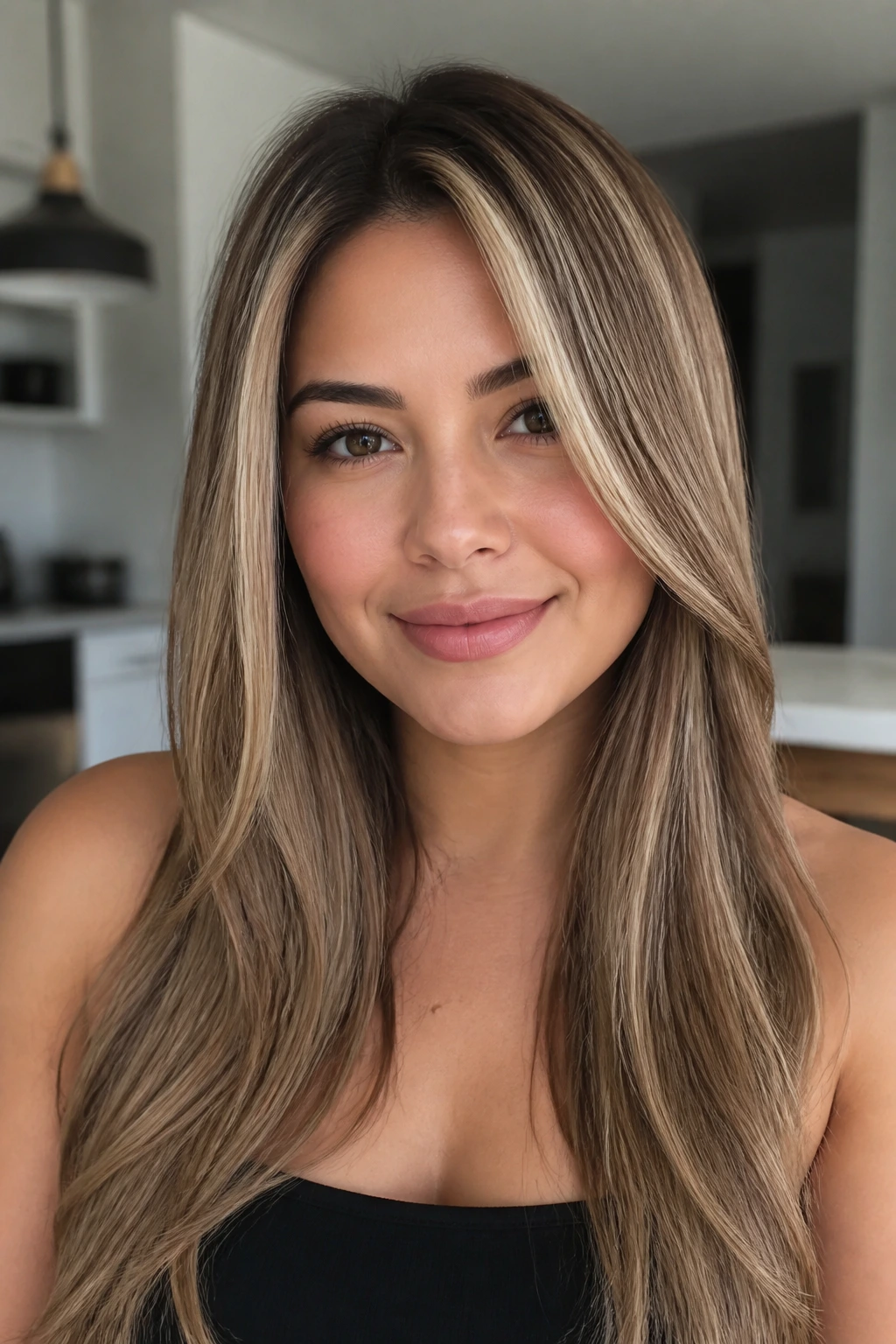
Chunky highlights are not the only way to get dimension. Sliced highlights, especially in a beige-mocha blonde range, can be far more flattering on a round face because they build thin, vertical flashes instead of broad light patches.
Where the slices go
Ask for slices that start around the upper cheek and continue down through the ends. That placement creates length. Put too many bright slices high on the head, and the face starts to look fuller. Put them lower and thinner, and the result feels longer and cleaner.
The mocha base adds enough darkness to hold shape, while the beige pieces keep the hair from looking heavy. This shade is especially good on straight or lightly waved hair, where the slices can show their separation. On curly hair, the same idea works, but the pieces need to be slightly bolder so they don’t disappear.
This is one of my favorite understated options because it looks considered without feeling loud.
18. Soft Skunk Stripe Blonde for Bold Contrast
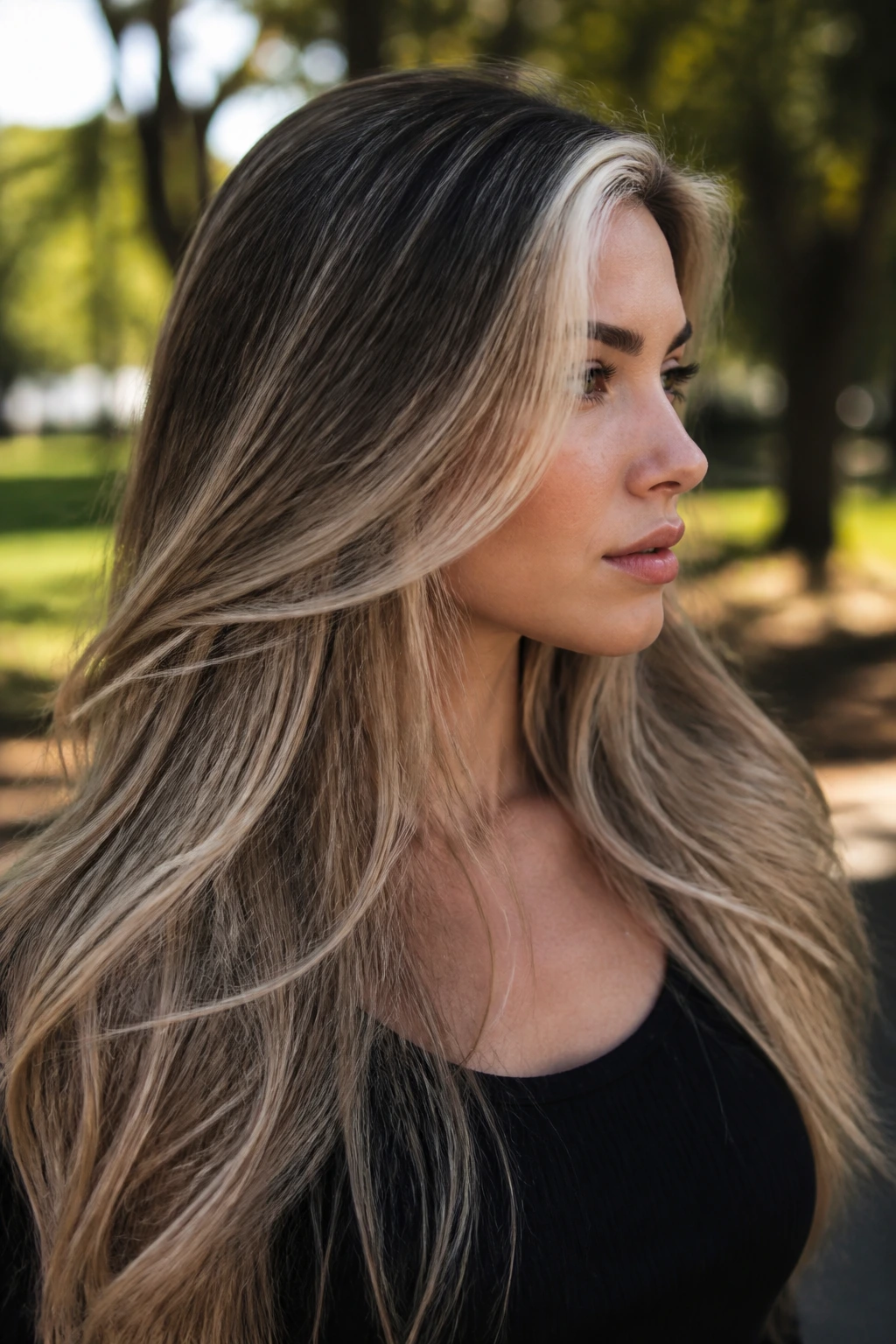
Can a skunk stripe flatter a round face? Yes, but only if it’s handled like a fine line, not a billboard. A soft skunk stripe can actually slim the face because the contrast creates a strong vertical path from crown to ends. The problem is width. Too much width, and you get a blunt block right where you don’t want one.
Start with a dark root base and keep the bright front panel narrow. Feather the edges so it melts into the surrounding hair rather than sitting on top of it. A strip that’s too clean and too thick can make the face look wider. A softer version feels edgy without being clumsy.
This look is strongest on long hair or a layered lob, where the front pieces can swing a little. Off-center placement works better than a dead-center stripe for most round faces. That tiny shift makes the whole thing feel more intentional.
19. Luminous Face-Framing Blonde with a Long Root Stretch
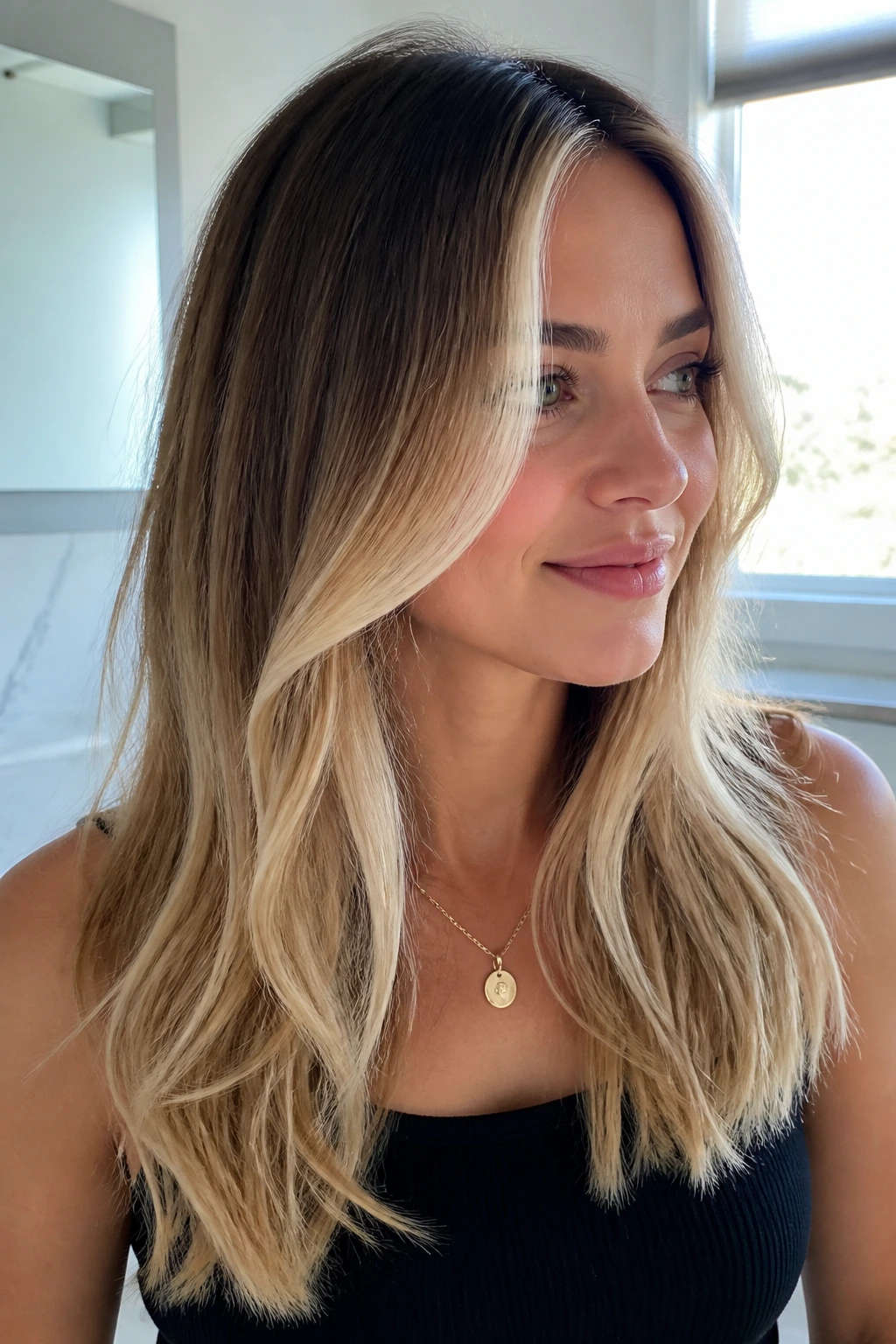
If you want the lightest, brightest frame without losing balance, this is the one to study. A long root stretch gives the face room to lengthen, and the face-framing blonde should taper from the temples down toward the collarbone. The effect is clean, bright, and surprisingly soft.
The trick is not to brighten the whole front panel equally. Keep the brightest point around the cheekbone or slightly below it, then let the color loosen as it drops. That keeps the eye moving downward instead of sideways. If you’ve ever looked at a blonde style and thought, Why does that suddenly make the face look wider? this is usually where the answer lives.
A soft wave makes this even better, but the front pieces should stay sleek enough to show the line. This is one of those styles that photographs well in real life, not just in a mirror, because the shape is doing actual work. The blonde is the decoration. The root stretch is the structure.
20. Vanilla Biscuit Blonde with Dark Root Depth
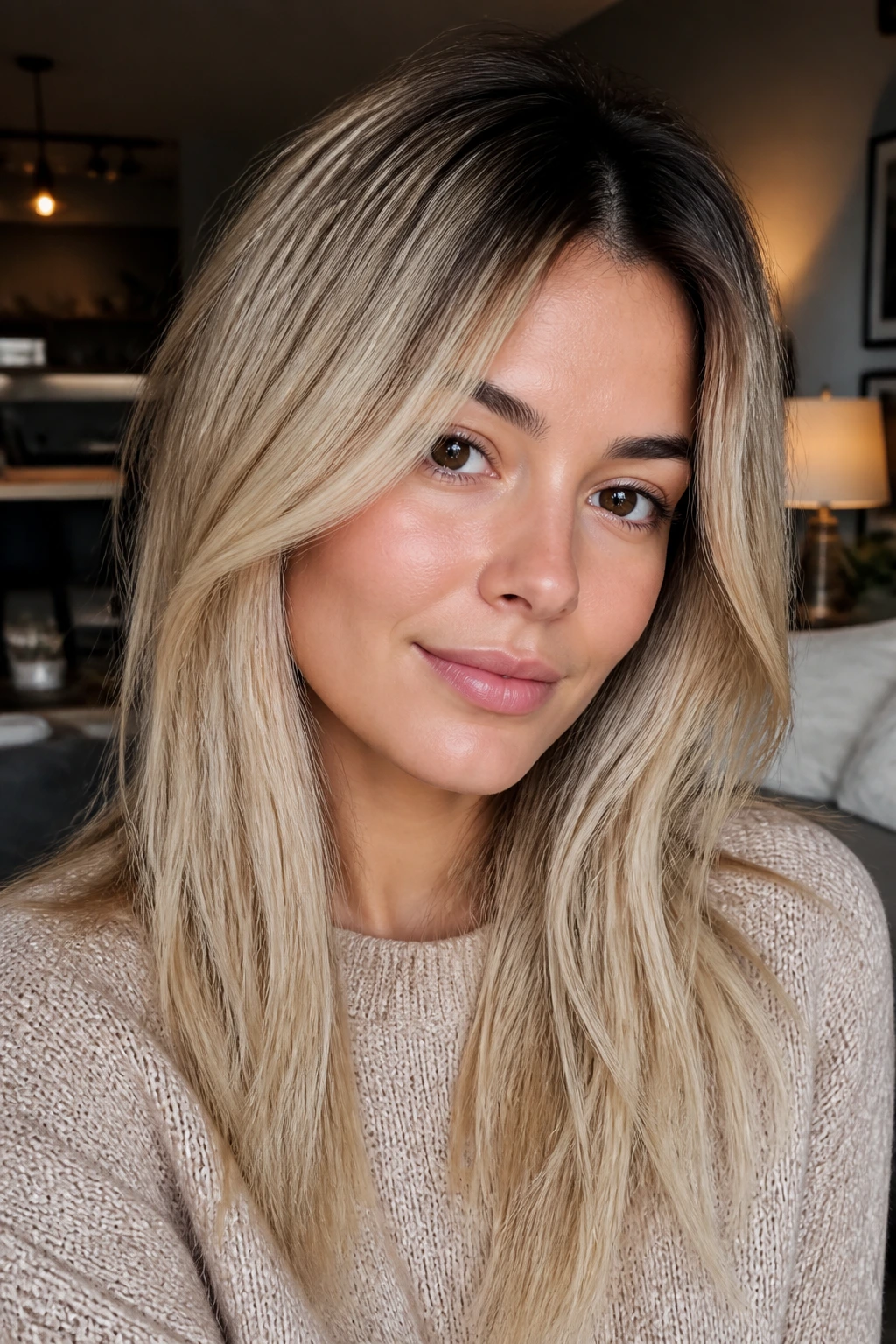
Vanilla biscuit blonde is a gentle, wearable finish for the person who wants light hair that still feels grounded. The darker root depth keeps the crown narrow, while the biscuit-toned blonde through the mids and ends gives warmth without harsh brightness. On a round face, that combination is easy to wear because it softens the cheeks instead of spotlighting them.
I like this shade on long layers or a collarbone cut with soft edges. The reason is simple: the shape needs somewhere to go. If the cut is too blunt, the blonde can spread out and lose that slimming line. If the layers are too choppy, the color can get busy. A calm, flowing cut lets the root do its job and lets the blonde stay light where it matters.
This is also one of the more forgiving options if you do not want constant upkeep. The root can grow a little without looking messy, and the biscuit tone tends to stay flattering even as it softens. That makes it an easy last stop if you want blonde that looks polished, easy, and face-friendly all at once.
