



Round cheeks and a curly mullet can get along. They just need the right shape.
Curly mullet haircuts for round faces work best when the cut does one job well: it keeps the sides from ballooning at the widest part of the face and lets the crown, fringe, or back section do the stretching. That sounds simple. It isn’t always easy, because curls shrink, puff, and shift in ways straight hair never does.
Width is the trap.
A good curly mullet on a round face usually has a little lift at the top, some movement in the fringe, and enough length somewhere below the jaw to draw the eye downward. A bad one lands all its volume at the cheeks and temple area, which can make the face look shorter and fuller than it really is. The difference is often just a few inches of length, one wrong layer, or a fringe cut too high when the hair was still wet.
One detail gets ignored all the time: curly hair should be judged in motion, not only when it’s freshly combed. A curl that looks tame in the chair may spring up hard after it dries, and that matters even more with a mullet shape because the whole cut depends on balance. Dry cutting, or at least cutting with the curl pattern visible, usually gives a better result than guessing.
Some of the cuts below are soft and wearable. Some are sharper and more of a statement. A few are a little rebellious, which is half the fun. The point is to give a round face the right kind of structure without flattening the curls into something stiff or over-managed, and the first cut is the safest place to start.
1. Soft Curtain-Bang Curly Mullet for Round Faces
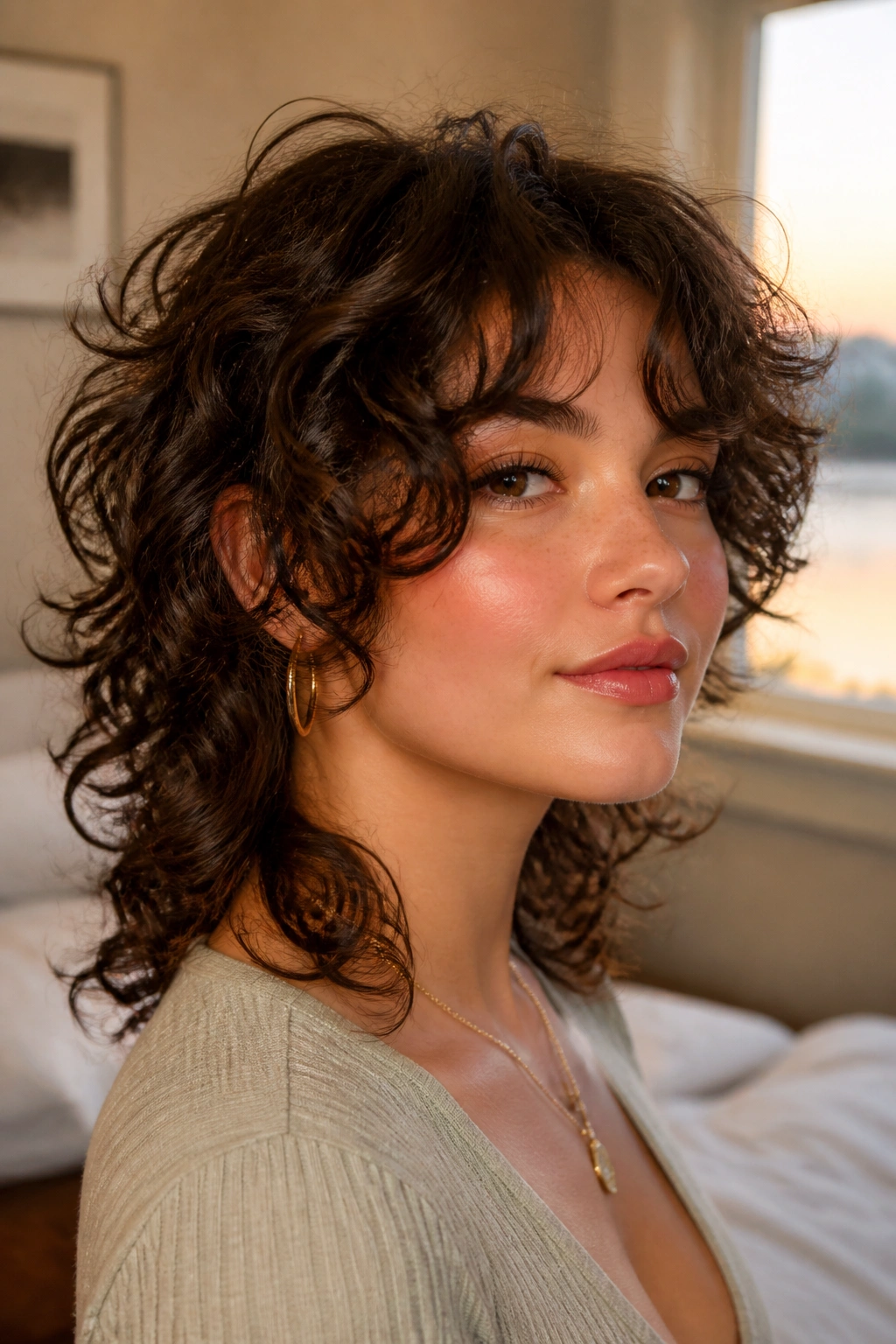
If you want the easiest entry point, start here. A soft curtain-bang curly mullet opens the face in the middle, breaks up the roundness at the cheeks, and still leaves enough texture around the sides to keep the cut from looking too severe.
Why it works
The center split matters more than people think. When curls fall away from the middle and then drift down toward the jaw, the face reads a little longer and a little narrower. That’s the whole trick. You are not hiding the face; you’re guiding the eye.
I also like this version because it keeps the fringe soft. A blunt, heavy bang can sit like a line across a round face and make everything feel shorter. Curtain pieces, especially when they start around the cheekbone and finish below the mouth, do the opposite. They create a gentle diagonal.
What to ask for
- Keep the front pieces long enough to skim the cheekbone or lip when the curl settles.
- Ask for the sides to stay slimmer near the temple instead of puffed out.
- Let the back fall past the jawline so the silhouette has some length.
Best tip: ask your stylist to check the front after the curl has spring in it, not before. A curl that looks like eyebrow length when wet may land halfway up the forehead once it dries.
This cut is the one I’d send to someone who wants movement more than drama. It’s soft, it grows out kindly, and it does not fight the face. That matters.
2. Short Curly Mullet with Tapered Temples
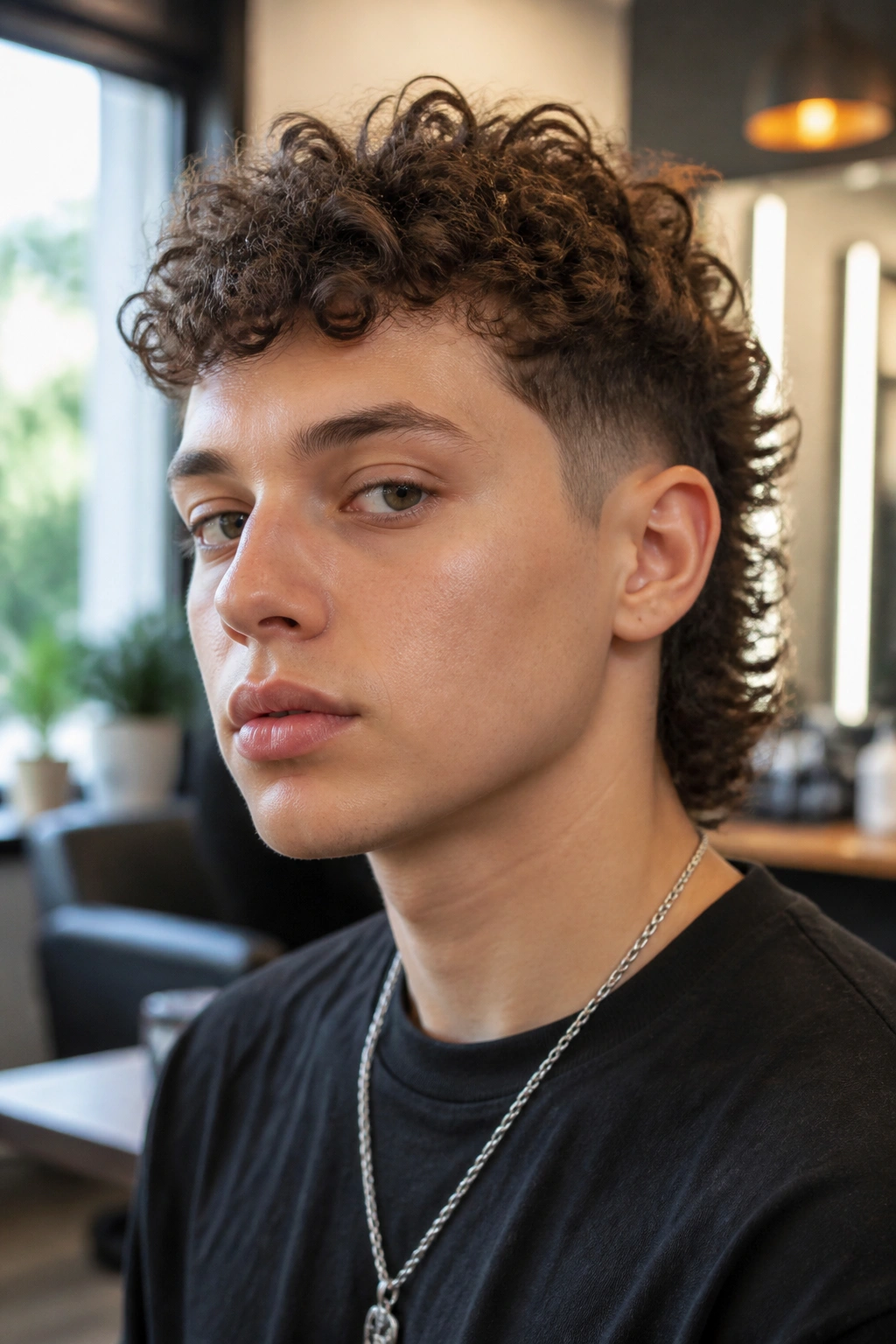
A short curly mullet can make a round face look sharper than a longer one, but only if the temples are handled with care. Leave too much bulk there and the cut turns into a puffed-out circle. Clean up that area, though, and the whole shape gets more edge.
The shortest versions work especially well when the curls have some bounce and the neck is worth showing off. A tapered temple area narrows the visual width right where round faces usually need help. Then the back can stay textured and playful without stealing the whole show. The result is a cut that feels light but not flimsy.
No bulk at the temples.
That sentence sounds harsh, but it’s the truth. If the hair sticks out at the sides, the face looks wider. If the hair hugs the head there and opens through the crown, the eye moves up and down instead of side to side. A short curly mullet thrives on that kind of vertical line.
I’d wear this on looser curls, too. It can work on tighter texture, but the scissor work needs to be precise because short curls expose every uneven bit. Ask for the perimeter around the ear to be softened, not chopped into a hard shelf, and keep the back layer airy rather than blocky. This one looks best when it feels a little alive, not helmeted.
3. Wolf Cut-Inspired Curly Mullet
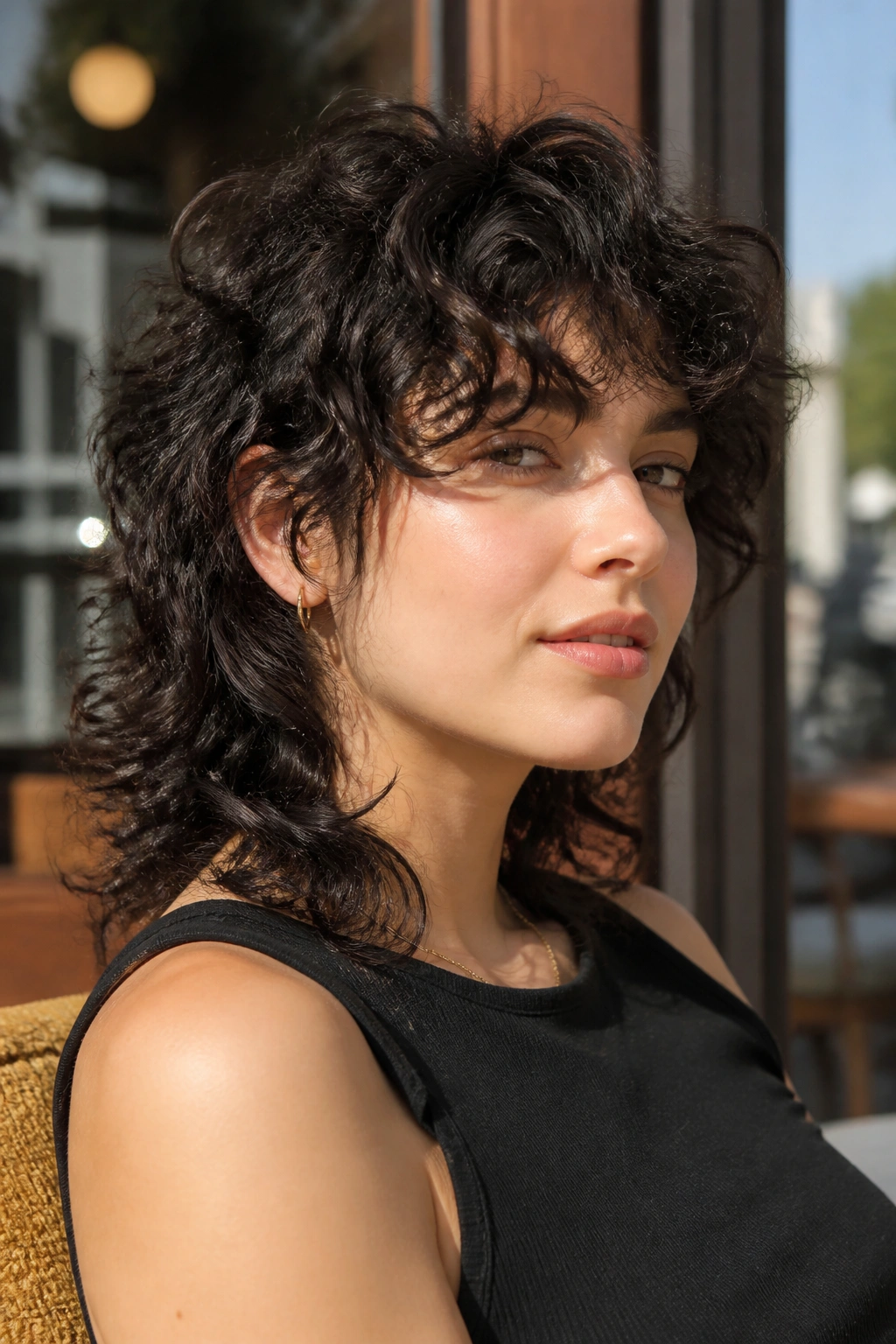
Why do wolf-cut layers work so well on a round face when a rounded shape can go wrong fast? Because the cut builds lift where the face needs length and removes weight where the hair would otherwise widen the sides.
The wolf-cut version of a curly mullet leans into choppy layers and a loose, shaggy crown. That gives the top more height, which pulls the eye upward, while the lower lengths trail away in a softer line. On a round face, that vertical pull can be more flattering than a perfectly even outline. It gives the face a little more angle.
How to ask for it
- Keep the crown layered and airy, not full and dense.
- Leave the front pieces longer than the cheekbone so they don’t cut the face in half.
- Ask for soft separation at the ends, not a blunt shelf.
- Keep the side volume controlled near the widest part of the face.
This cut can turn strange if it’s overdone. Too many short layers around the ears and you get a halo that widens the face instead of framing it. Too little layering and the whole thing collapses into a heavy mop. The sweet spot sits somewhere in the middle, with texture that moves and edges that stay soft.
If you like a more undone look, this is the one. It has personality, and it does not try to behave.
4. Shoulder-Length Curly Mullet for Round Faces
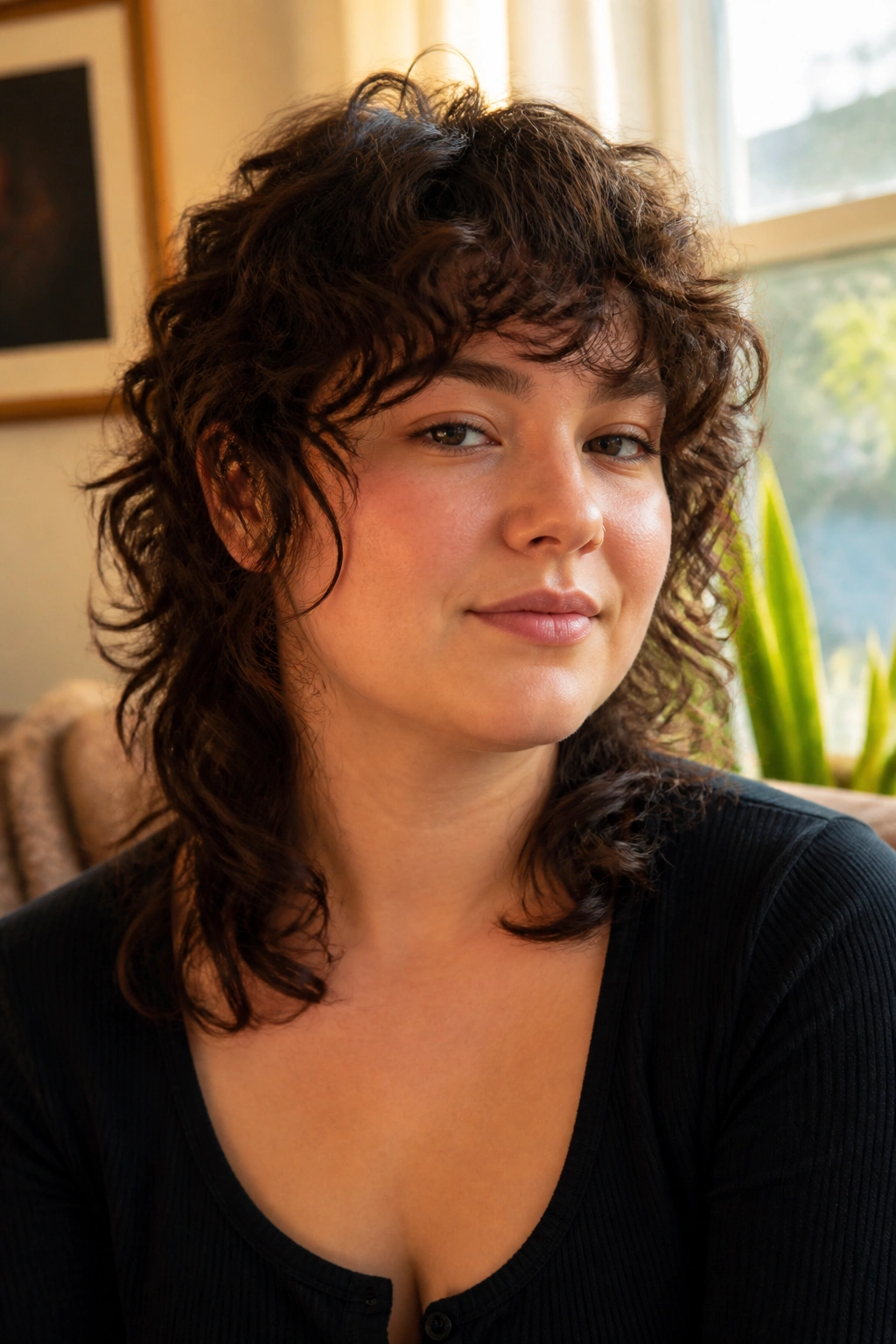
I keep coming back to shoulder length when someone wants a curly mullet but still wants room to breathe. Shoulder-length cuts give round faces a longer outline, and that length is doing real work even when the hair looks relaxed.
The best version usually has front pieces that graze the collarbone or land just below the chin, with the back falling a little lower so the eye keeps moving down. That matters because round faces often look widest in the middle third. A shoulder-length mullet interrupts that width without making the cut feel severe or too chopped up.
You also get a nice compromise with curls here. The shape can stay full and bouncy, but the perimeter still has enough length to avoid puffing outward. If your curls tend to shrink, this is a smart zone to live in. Shorter than this can get risky fast. Longer than this can be lovely too, but the balance changes.
Good details to request
- Internal layers through the crown, not heavy face-framing right at the cheeks.
- A soft perimeter that skims the shoulder line instead of sitting above it.
- Enough length around the front so the curls don’t stop at the widest point of the face.
This is the cut for someone who wants shape without shouting. It still looks cool. It just does it quietly.
5. Long Curly Mullet with a Heavy Back Section
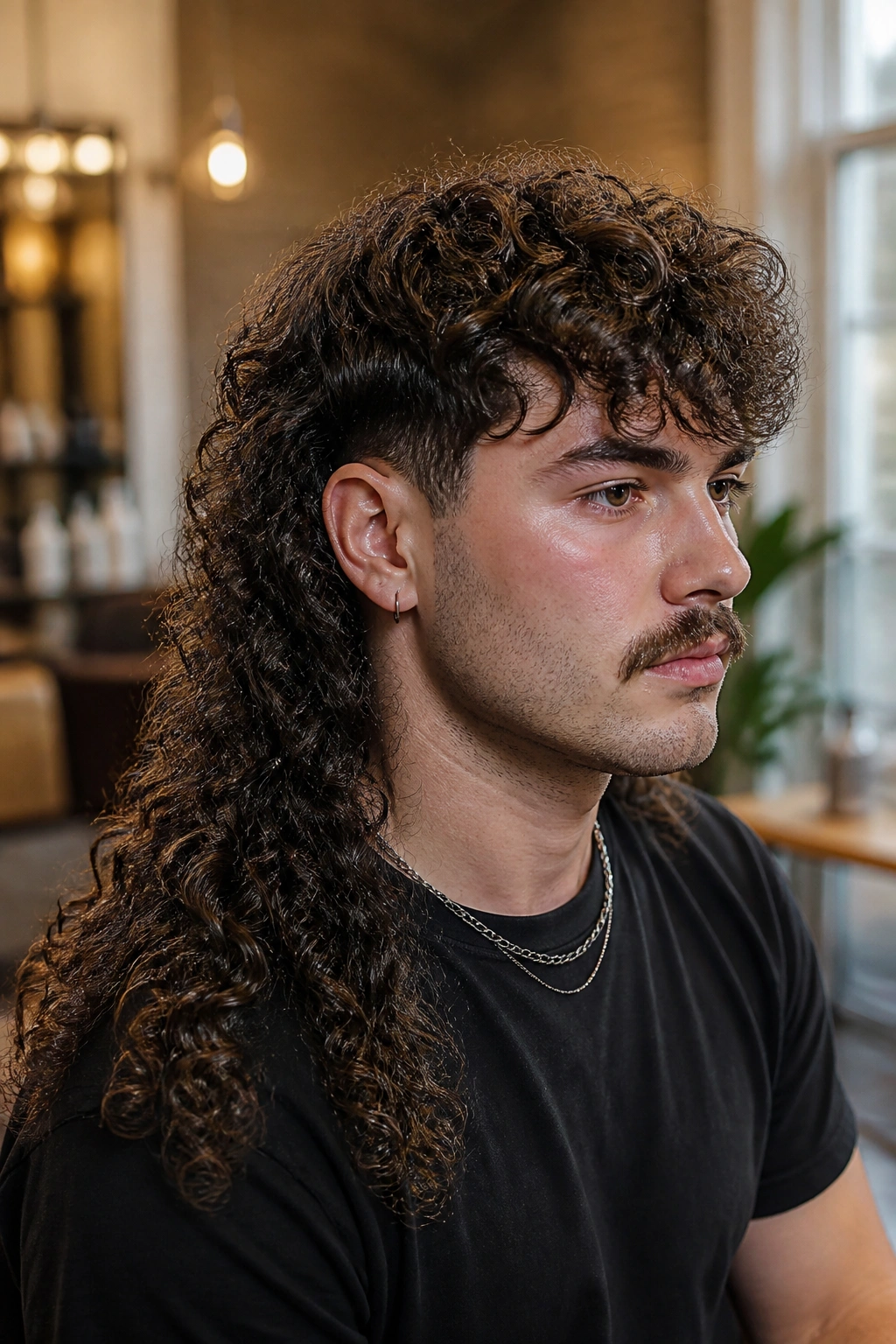
Length does the heavy lifting here. A long curly mullet with a heavy back section gives a round face a vertical line to follow, and that line is often the difference between “nice shape” and “why does everything feel so wide?”
The back should not be over-thinned. That’s the mistake. If you strip out too much weight, the whole thing can bloom outward into a halo, especially on dense curls. Keeping more length in the back lets the curls hang and stack instead of exploding sideways. The front and sides can stay controlled while the rear section gives the haircut its length and movement.
This version suits people who like a little drama but do not want short layers near the face. The front can be long enough to fall past the jaw, which helps stretch the profile. If you wear your curls naturally and rarely blow them out, this shape often behaves better than a heavily layered one because gravity has more to work with.
One-sentence truth: weight is your friend here.
That does not mean dragging the hair down. It means leaving enough substance in the back that the curls settle into long ribbons instead of frizzing up into a wide cloud. If your stylist loves over-layering thick curls, push back. Hard. Ask them to preserve the back length and remove bulk carefully, not aggressively, or the balance will disappear fast.
6. Side-Swept Fringe Curly Mullet
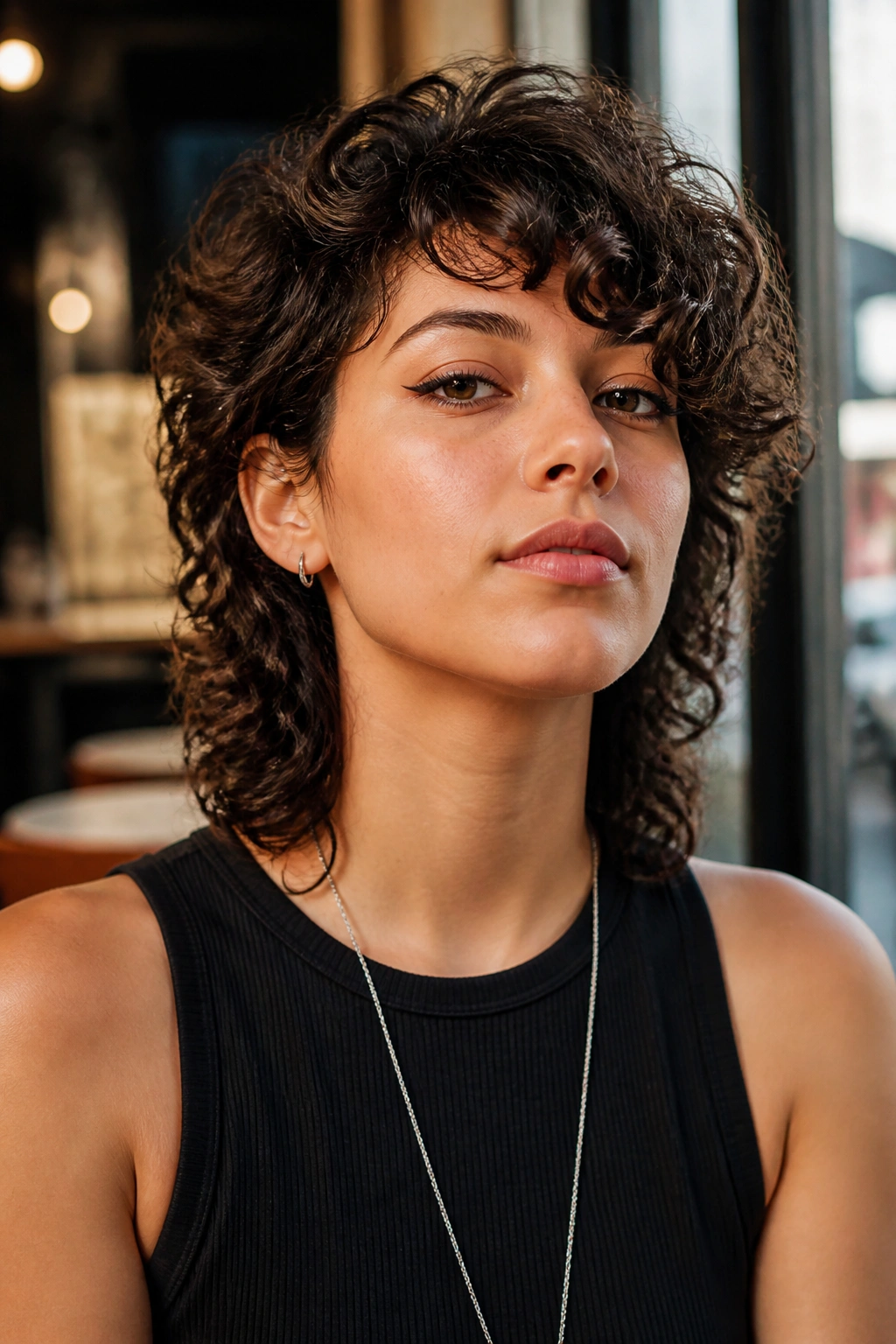
Unlike curtain bangs, a side-swept fringe creates an off-center line, and that single shift can do a lot for a round face. The eye no longer lands on the face in a perfectly balanced way. It lands, slides, and keeps moving.
That movement matters. A side-swept fringe breaks the symmetry that can make round faces feel broader, especially when the cheeks are full and the curls have a lot of spring. The sweep also lets you keep some forehead coverage without laying a straight bar across the face. You get softness, but not a wall.
What makes it different
A side-swept fringe works best when it starts a little higher at the temple and gradually drops toward the opposite brow or cheekbone. That keeps the top from looking boxy. It also leaves space for the curls to separate naturally, which is better than forcing every strand into one polished wave.
Who is this best for? People with a strong side part, a little cowlick at the front, or curls that already like to travel in one direction. If your hair resists the center part, do not fight it. Use it. The mullet shape can take advantage of that bias and turn it into structure.
I’d be careful with very fine curls here. The fringe can get too sparse if the front is over-cut. But on medium to thick texture, it’s a clean, flattering option that feels less expected than curtain bangs and a little more deliberate too.
7. Micro-Bang Curly Mullet
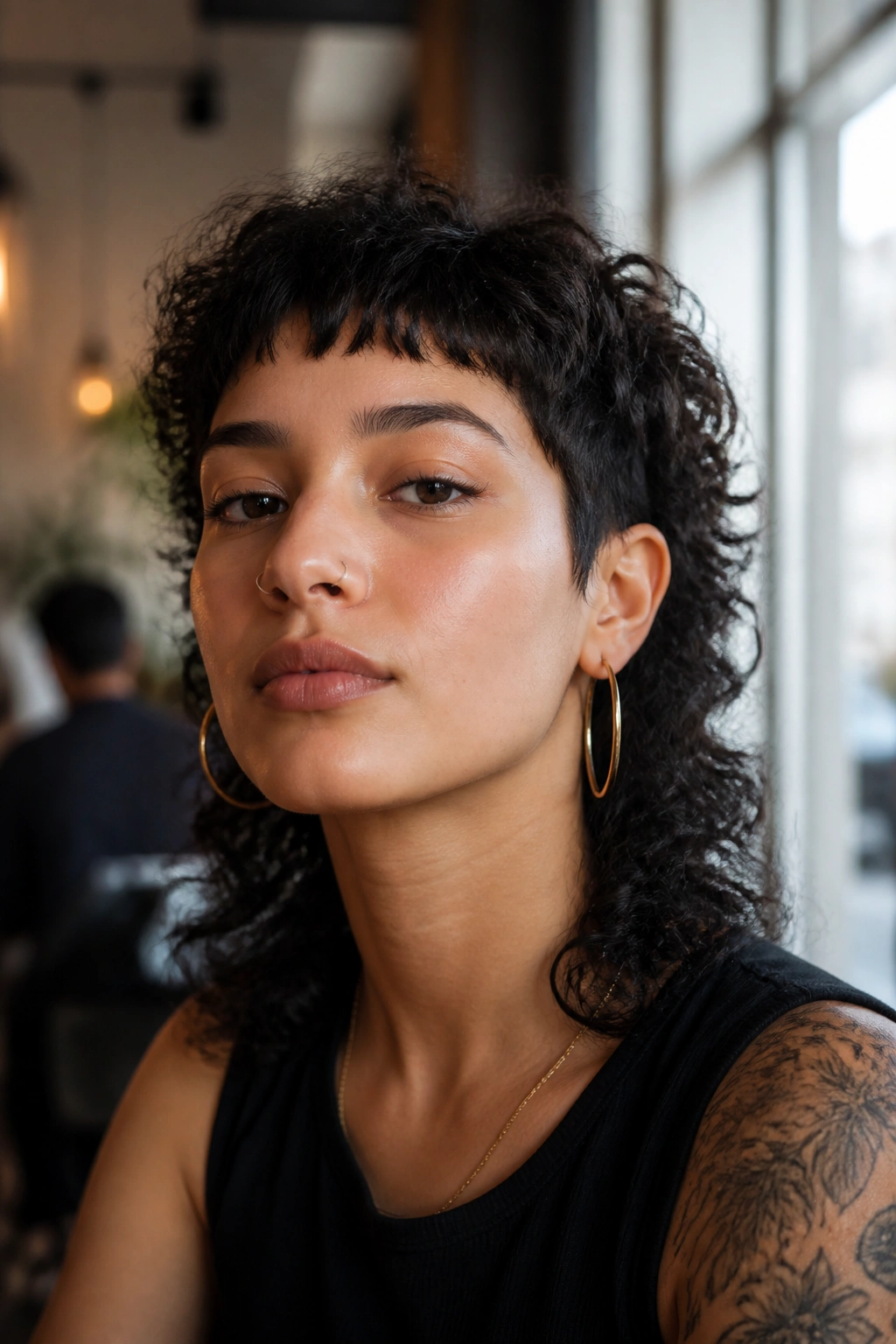
Micro-bangs are the bold move. They can work on a curly mullet for a round face because the short fringe shifts attention upward and creates a break in the face line, but they need a steadier hand than most people expect.
What makes it work
Short bangs can be flattering when the rest of the cut is lean. If the sides are already wide, adding a tiny fringe can make the face feel busier. If the crown is lifted and the temples are controlled, though, the bang becomes a focal point instead of a problem. It can make the haircut feel sharp, a little offbeat, and very intentional.
The real issue is shrinkage. Curly bangs are never as long as they look in the chair. Never. I would keep that in the back of your mind if you’re tempted to ask for eyebrow-grazing length and call it a day. A micro-bang should be cut with the dry curl pattern in mind, not the wet length.
How to wear it well
- Keep the sides tapered so the bangs don’t sit on top of extra width.
- Let the back stay longer to keep the silhouette balanced.
- Ask for the fringe to be checked curl by curl, not in one straight pass.
Do not let anyone cut curly micro-bangs to final length while the hair is soaking wet. That is how people end up with a fringe that feels a full inch shorter than planned.
This one is not for someone who wants to blend in. It is for someone who likes a little weird in their haircut, and I mean that as praise.
8. Razor-Textured Curly Mullet
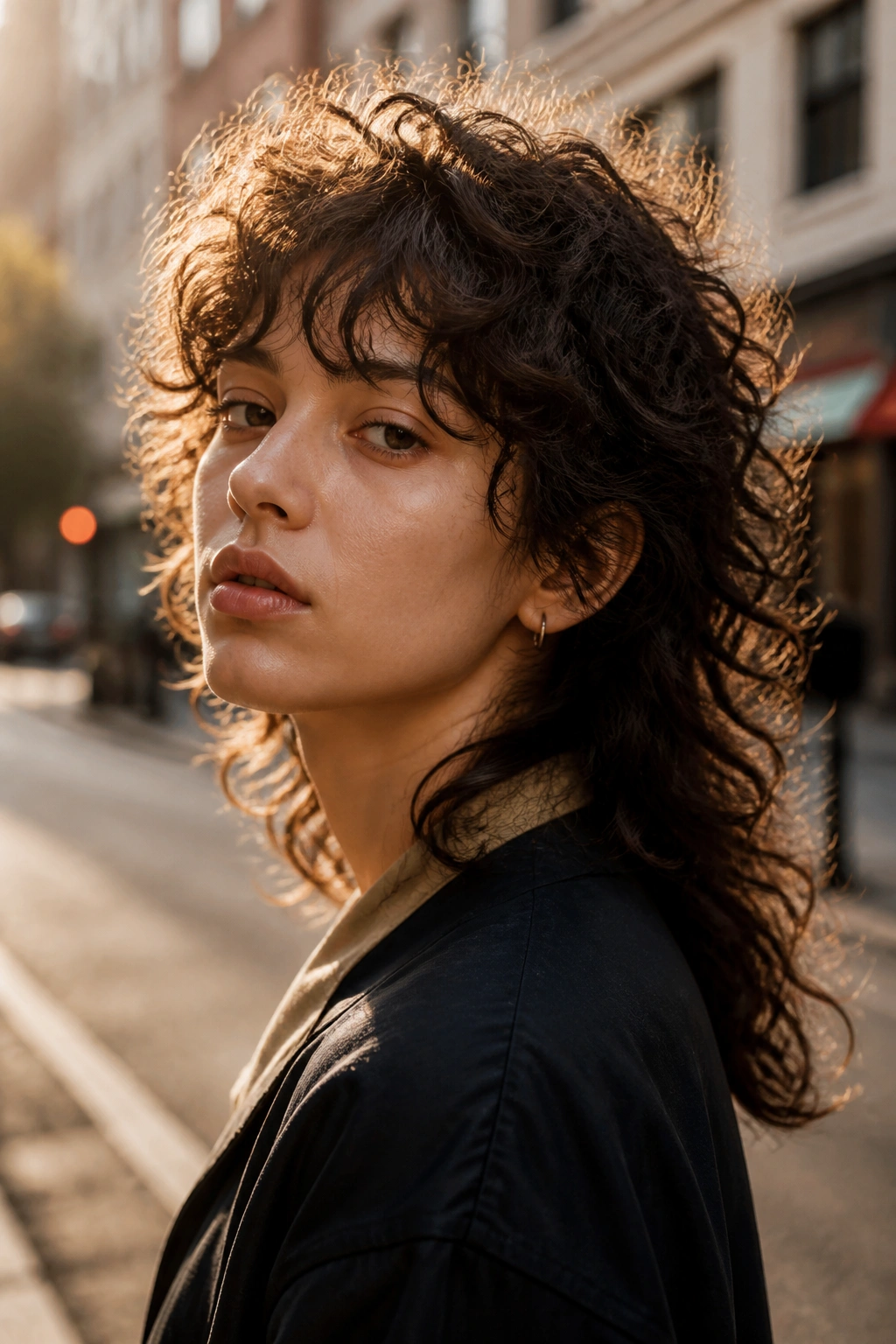
A razor-textured curly mullet can look airy in the best way, but only if the hair type can handle it. On looser curls and waves, the razor helps the ends move instead of sitting in a blunt block. On coarse, dry, or highly porous curls, though, it can chew up the edge and leave the cut frizzy if the hand is too heavy.
That is why this shape works on round faces: the texture removes visual weight from the sides. The hair feels lighter around the cheeks, which keeps the face from getting boxed in. At the same time, the back can stay long enough to stretch the outline. The whole cut ends up moving a little more, and movement is your friend when you are trying to break up roundness.
Heavy sides are the enemy here.
A razor cut is not a license to thin everything out. I’d actually be conservative near the widest point of the face and use the razor mostly to soften the outer shape and the tips. If the stylist goes too deep into the curl clumps, the hair can separate into thin, frizzy strings that never settle nicely. You want softness, not shredded ends.
This is a good choice if your curls look better with a bit of edge and less bulk. It also grows out in an interesting way, which matters if you do not love constant salon visits. The shape keeps changing as the layers relax, and that can be a good thing when it’s done well.
9. Asymmetrical Curly Mullet for Round Faces
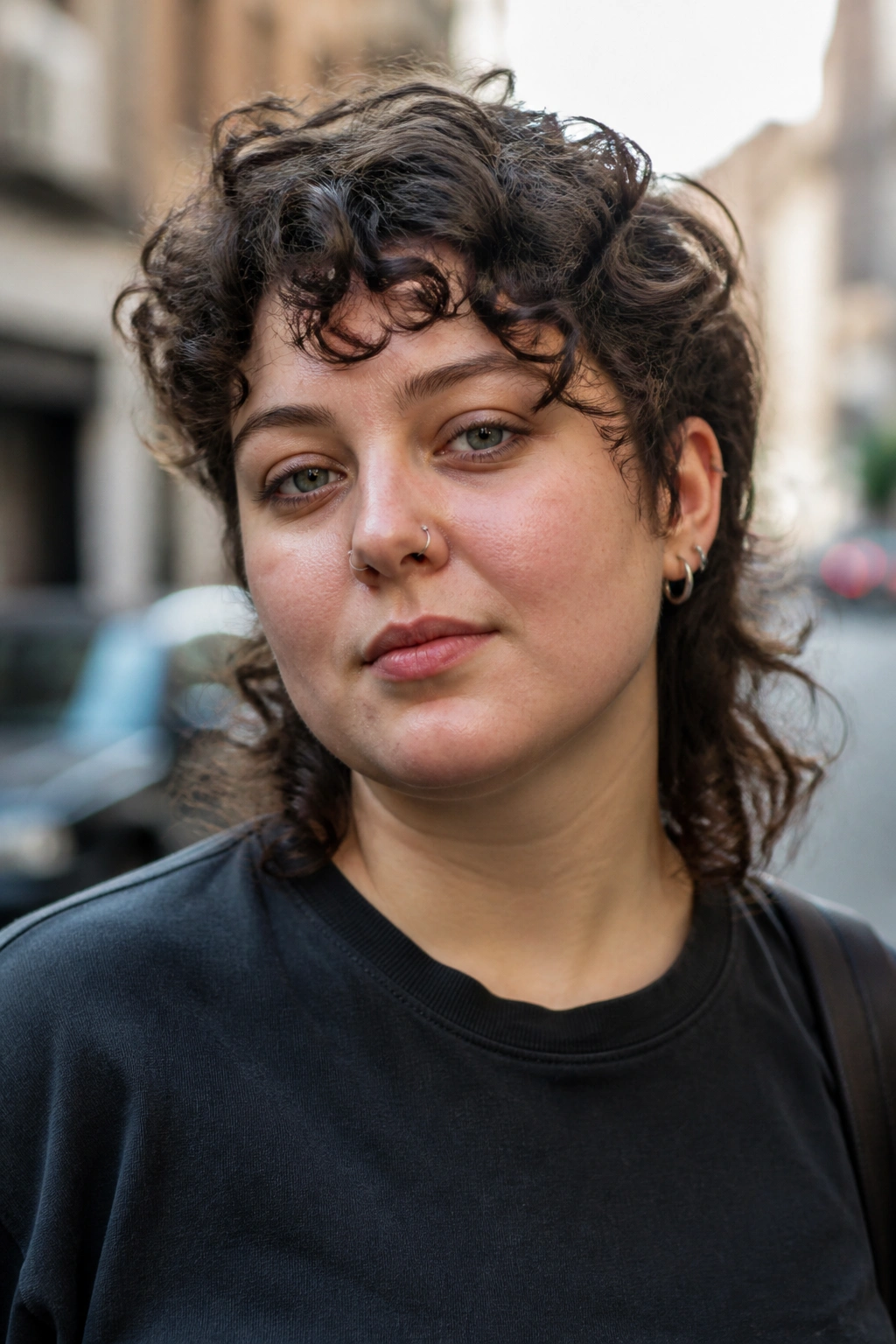
Some faces need a little break in the pattern. An asymmetrical curly mullet does that job by making one side slightly longer, shifting the part off center, or letting the fringe sweep more heavily to one side than the other.
That tiny imbalance is useful on a round face because it interrupts the easy circle the eye wants to make. Instead of reading the face as evenly wide all the way around, the haircut gives it a stronger diagonal. The result feels more angular, even if the curls themselves stay soft.
I like this version when someone wants shape but gets bored fast. It has movement built into the cut. One side can graze the cheekbone while the other sits closer to the jaw, or the back can carry a subtle difference in length that shows up most when the hair swings. You do not need a dramatic undercut to get the effect. A small shift is enough.
Details worth asking for
- A slightly off-center part rather than a perfect middle split.
- One front side that falls a touch longer across the cheek.
- A back section that stays soft and mobile, not blocky.
- A trim schedule of about every 6 to 8 weeks so the asymmetry does not blur out.
This cut is a good fit if symmetry makes your face feel wider than it is. The trick is keeping the imbalance intentional, not accidental. That difference matters a lot more than people think.
10. Soft-Taper Curly Mullet for Thick Curls
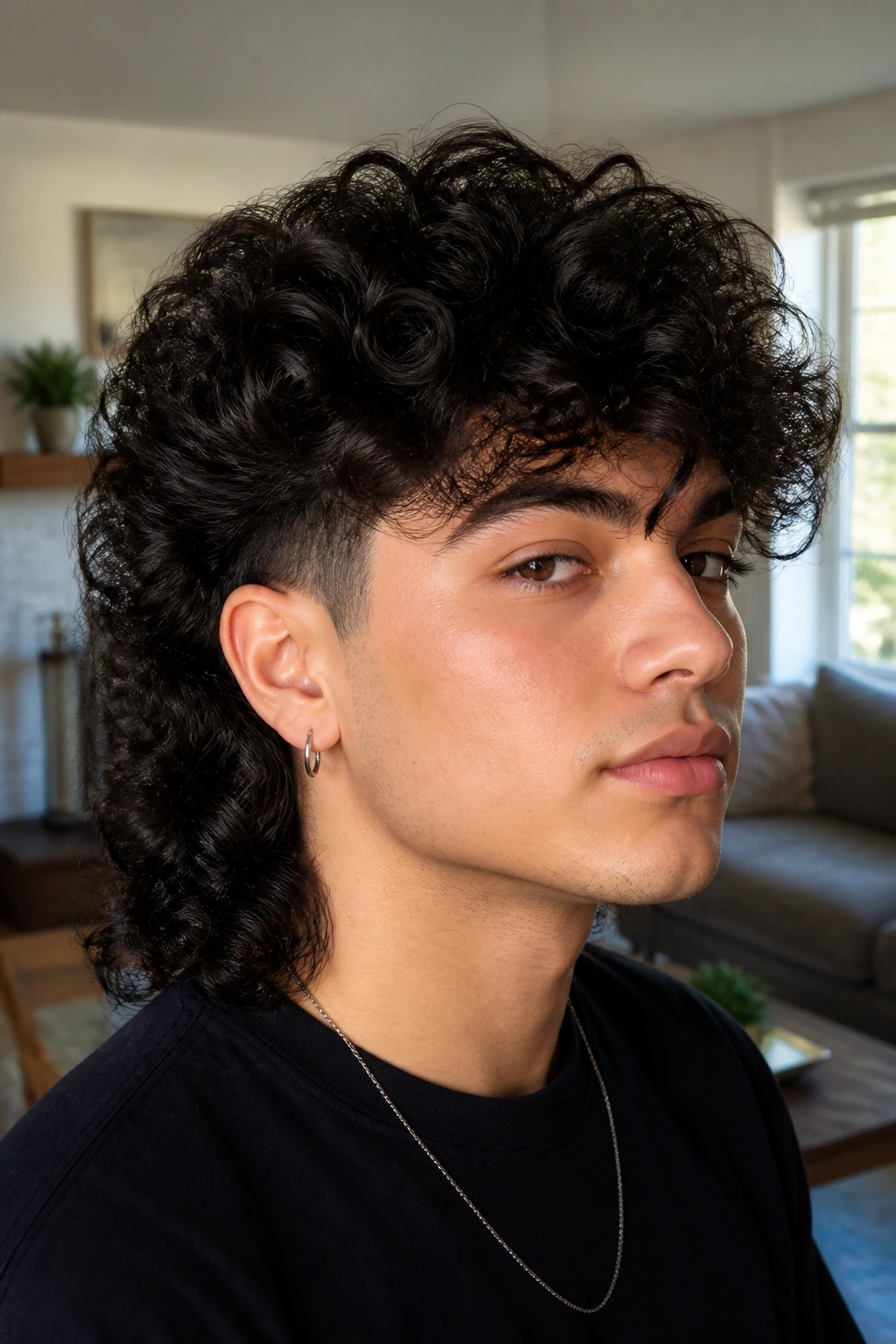
If your curls are dense, do not chase drama with too many layers. The soft-taper curly mullet is calmer than that, and honestly, it usually works better on round faces because it removes bulk where the hair swells while keeping enough length to slim the outline.
The taper around the temples and nape keeps the haircut from ballooning. The top stays lifted, but not spiky. The back keeps its shape without turning into a heavy rectangle. Thick curls often need less cutting than people assume; they need smarter cutting. A little reduction at the right points does more than a dozen short layers scattered everywhere.
I like this version for people who air-dry their hair most of the time. It doesn’t demand a perfect blowout. A little curl cream, a bit of gel, and a diffuser on low can be enough if the shape is already balanced. The curls should land in soft stacks, not sit out from the head like a helmet.
A few things to ask for:
- Keep the nape tapered but not shaved tight.
- Leave the front long enough to pass the cheekbone once dry.
- Remove bulk under the surface, not only on the outside.
- Preserve enough back length that the cut still reads as a mullet, not a shag with ambition.
This is the one I’d hand to someone who wants a curly mullet that works on busy mornings. It grows out nicely, it won’t fight your curl pattern, and it gives a round face that slight vertical pull without trying too hard.
