



Shaggy mullet haircuts for women work because they refuse to behave like neat, polished little helmets.
The shape keeps the crown short and lively, lets the sides fall with movement, and leaves enough length in back to avoid that stiff triangle people still imagine when they hear mullet. A good version depends on weight removal, not just length. Point-cutting, razor work, and face-framing layers all change the mood of the cut, and the wrong mix can make the hair swing from cool to ragged in a week.
That is why two shaggy mullets can look nothing alike. One can feel soft and almost romantic, another can feel gritty and sharp, and a third can look like you stole a rock star’s stylist and made it wearable for errands. The differences are in the fringe, the nape, and how much bulk gets taken out of the ends.
If you sit down with a stylist, the useful words are simple: shorter crown, broken-up ends, longer nape, and a fringe that matches your forehead and brow line. That little sentence does more work than a stack of vague inspo photos. Start with the version that fits your texture, not the one that looks most dramatic from across the room.
1. Soft Curtain-Bang Shaggy Mullet
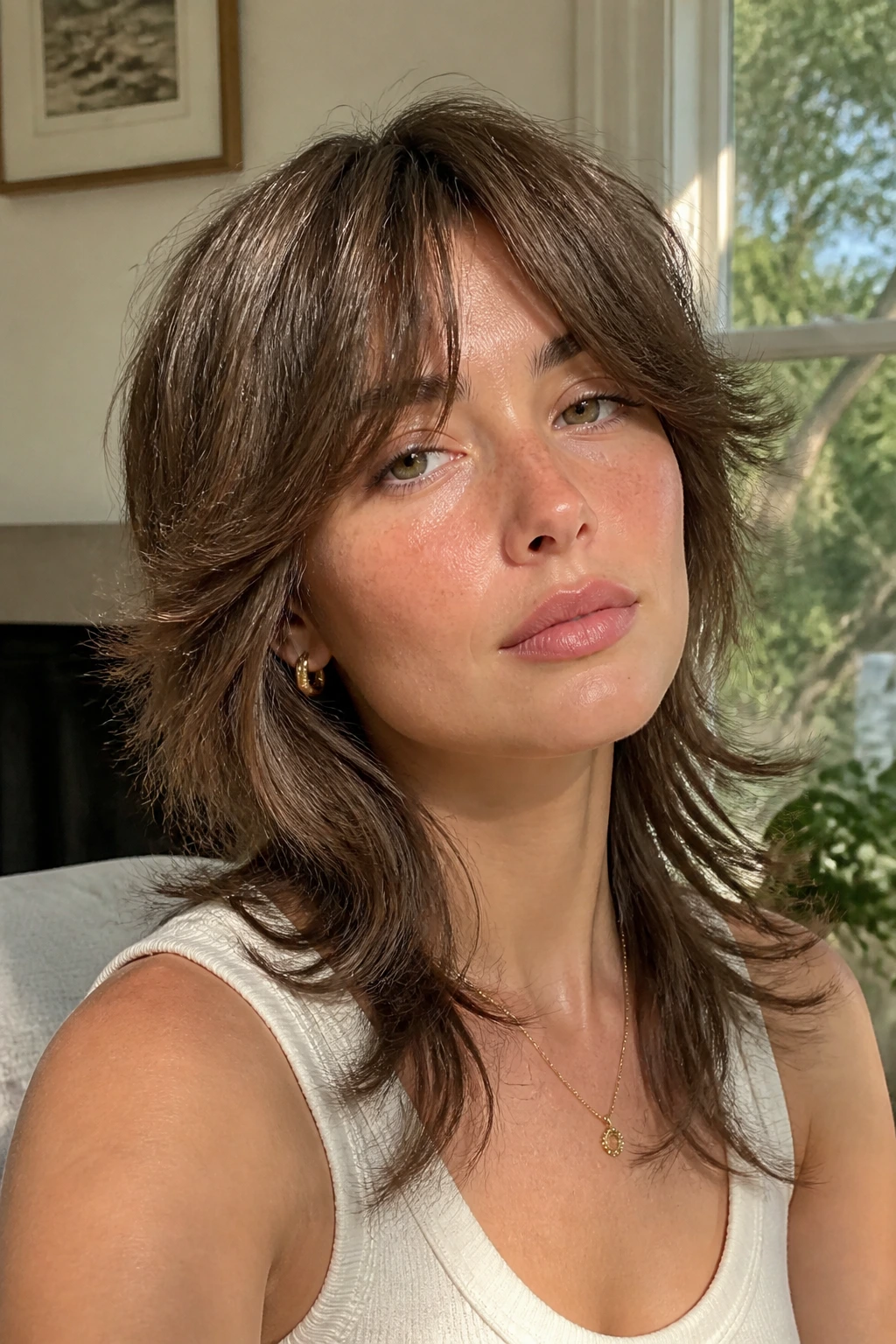
Start here if you want the mullet shape without the shock factor. The soft curtain-bang version keeps the front open and airy, which makes the whole cut feel easier to wear on a Tuesday morning with no styling tools in sight.
Why It Works
The curtain fringe gives the eye a place to land, and that matters. When the front pieces split gently around the cheekbones, the back length reads intentional instead of heavy. The crown still gets enough layering to lift away from the head, but the shape stays relaxed.
This is the shaggy mullet I’d point a nervous client toward first. It works especially well on medium-density hair that has a little bend, because the bangs soften the forehead while the back keeps movement. Too blunt, and you lose the airy part. Too thin, and the whole thing starts looking wispy.
Best Styling Notes
- Ask for the shortest face-framing pieces to hit around the top of the cheekbone.
- Keep the crown layers softly point-cut so they don’t fall in one hard block.
- Let the nape sit a little longer than the collarbone if you want a gentler outline.
- Use a light mousse at the roots, then rough-dry with your fingers.
One small warning: do not let the fringe get chopped too short. Curtain bangs need room to sweep, and if they sit too high, the whole haircut starts fighting your face instead of framing it.
2. Curly Shaggy Mullet with Airy Layers
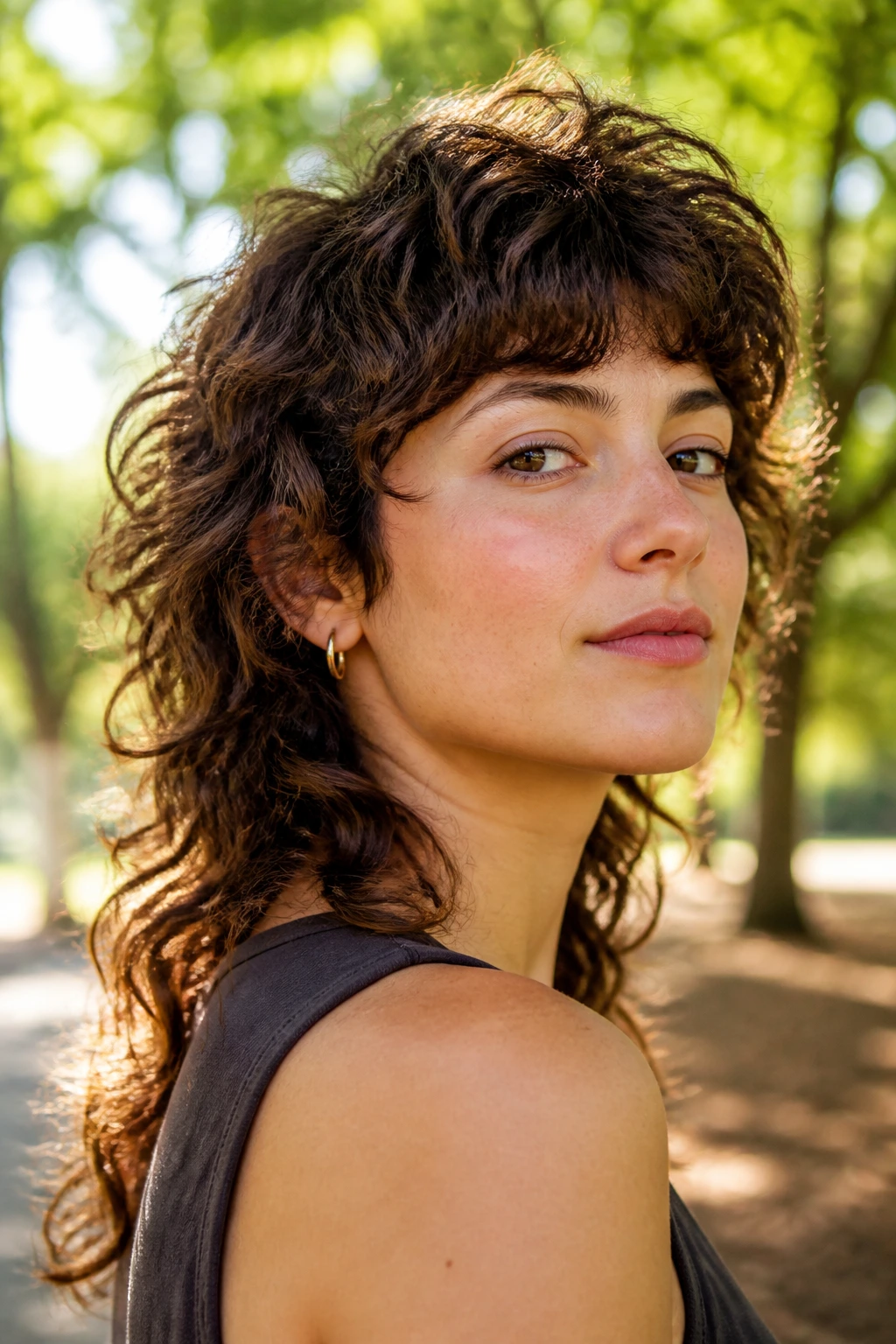
Curly hair can carry a shaggy mullet better than straight hair when the layers are placed with care. That’s the part people miss. The shape is not there to “control” curls; it is there to let them sit where they want without building a triangle around your shoulders.
A good curly version usually needs a dry cut or a curl-by-curl trim, because curls shrink once they dry. If the stylist cuts them wet and guesses wrong, the nape can end up too short and the top can puff out in the wrong place. On looser waves, the difference shows up as softness. On tighter curls, it shows up as shape.
I like this version when the hair needs lift at the crown but not too much bulk at the sides. It gives the face room and keeps the curls from stacking into one heavy halo. The trick is leaving enough length in the back so the curl pattern can spring, not collapse.
A curl cream plus a touch of gel usually does more here than a pile of products. Scrunch the hair while it’s damp, diffuse on low heat, and stop touching it once the cast forms. That last part matters. Constant fiddling ruins the shape faster than a bad cut.
3. Razored Wolf-Cut Mullet
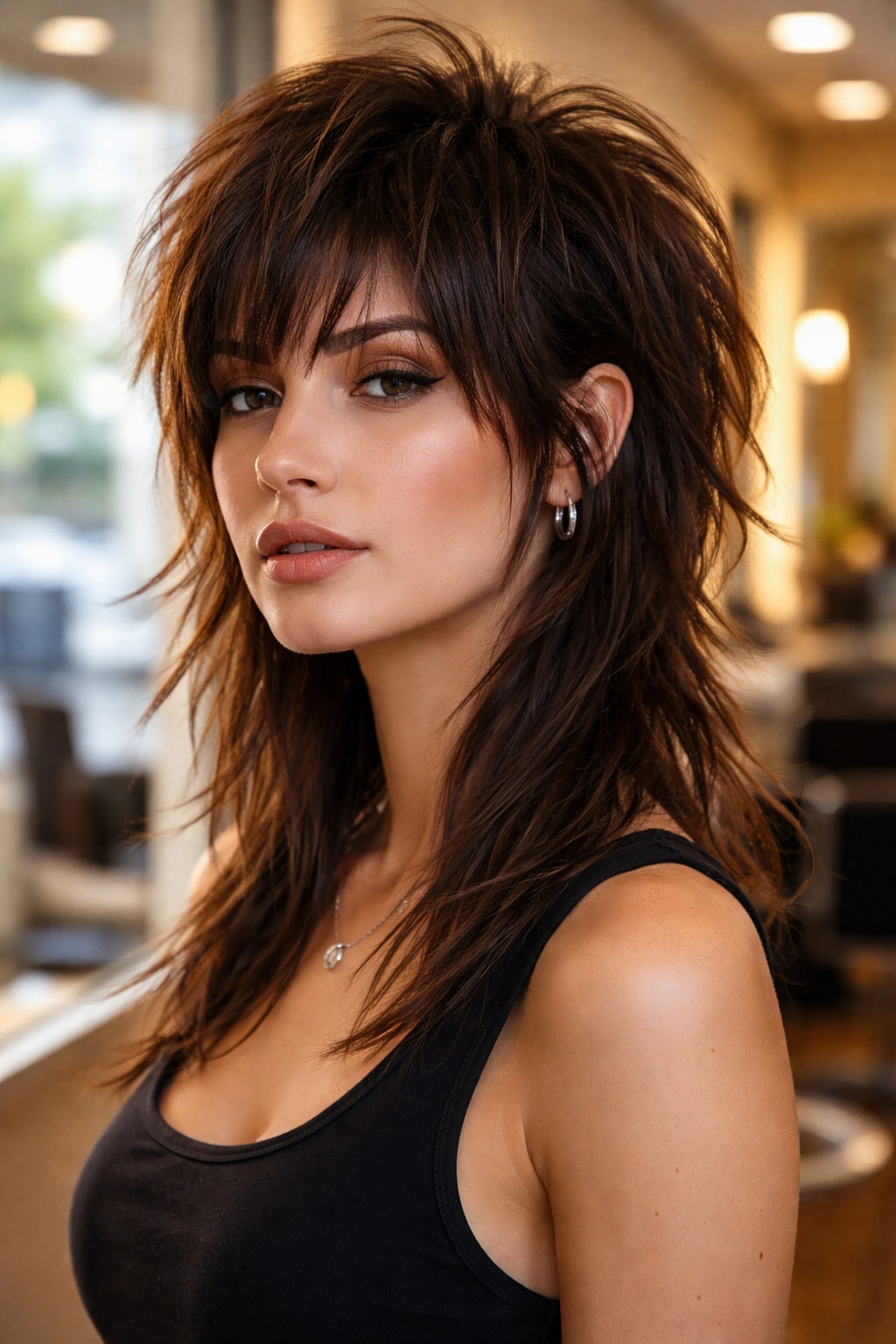
Why does a razored wolf-cut mullet look so sharp on thick hair?
Because the razor takes out bulk without stealing the movement. Thick hair can hold a beautiful shaggy silhouette, but only if the weight is removed in the right places. A blunt cut on dense hair can turn into a shelf at the bottom. A razor-softened wolf cut breaks that line and gives you a piecey finish instead.
This version leans more dramatic than the curtain-bang cut. The crown gets choppy height, the sides stay close enough to the cheekbone to shape the face, and the back falls in uneven strands that move instead of sitting like a block. It has a bit of bite. Not in a bad way.
How to Style It
- Work a walnut-sized amount of mousse through damp roots.
- Rough-dry until the top is about 80 percent dry.
- Use a diffuser if your hair bends naturally; skip heavy brushing.
- Finish with a pea-sized bit of paste on the ends only.
If your hair is fine, be careful with this one. Razor work can make thin ends look frayed if the stylist gets too aggressive. On thick hair, though, it can be a gift. The whole cut feels lighter without losing its shape.
4. Micro-Bang Shaggy Mullet
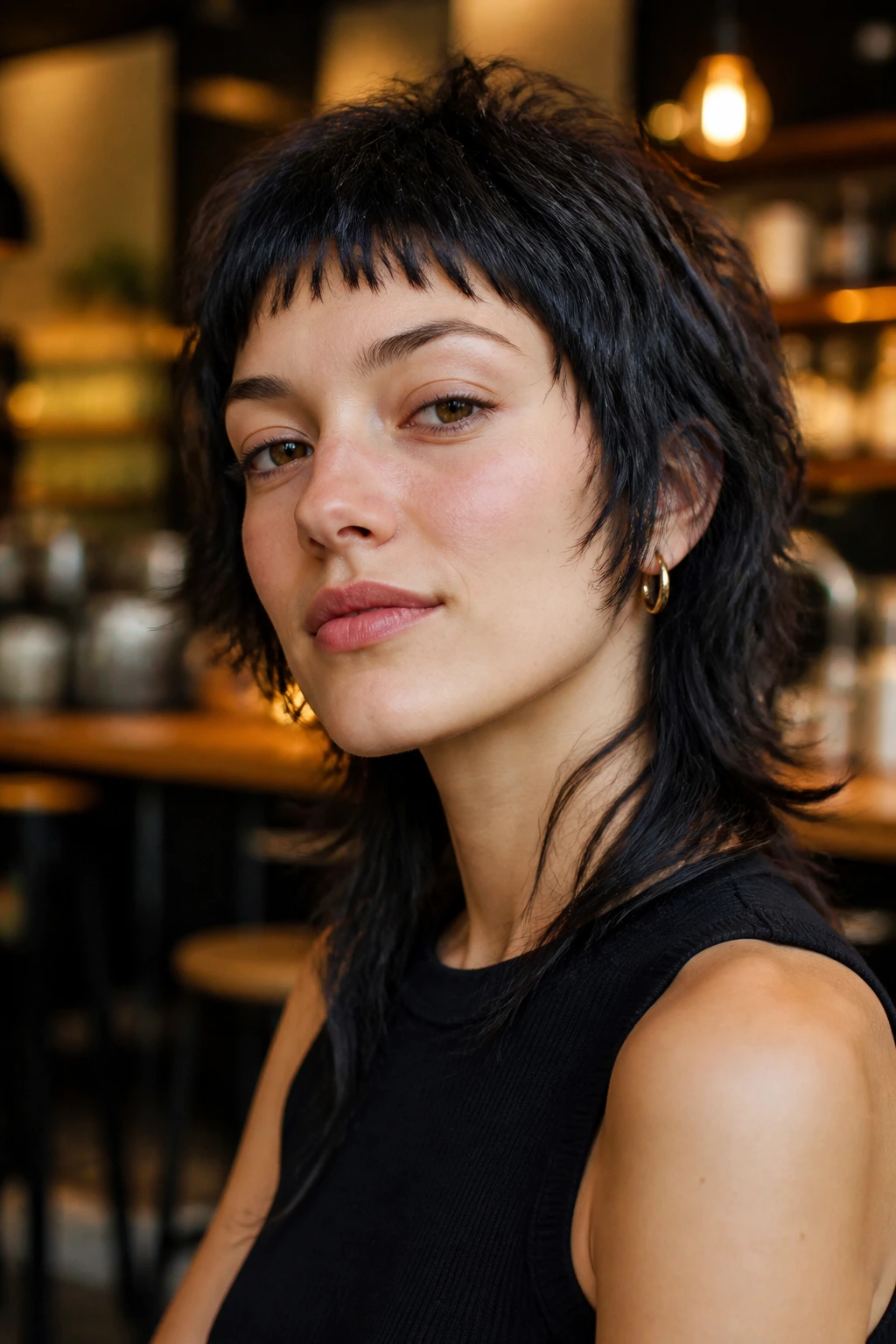
If you want a haircut that looks a little dangerous even with a plain T-shirt, micro bangs bring the attitude. Short fringe changes the whole story fast. The mullet stops feeling soft and starts feeling deliberate.
The front edge sits high on the forehead, so the eyes become the center of the cut. That means the layers in the crown and nape need to stay textured and broken up, or the style can look too severe. A micro-bang shaggy mullet is not subtle. That is the point.
It works best when you like contrast. Soft lengths in the back. Sharp little bangs up front. A little piecey movement near the temples. The cut can be playful, but it needs confidence, because there is nowhere to hide if the fringe is uneven.
- Keep the bangs dry-cut for accuracy.
- Ask for a soft taper at the temples so the fringe doesn’t sit like a box.
- Use wax or pomade sparingly on the bangs if they puff up.
- Expect fringe trims often; short bangs grow out fast and lose their shape.
I would not call this low-maintenance. It is a choice. A good one, if you like a cut that feels a little punk without going full costume.
5. Long Shaggy Mullet with Face-Framing Pieces
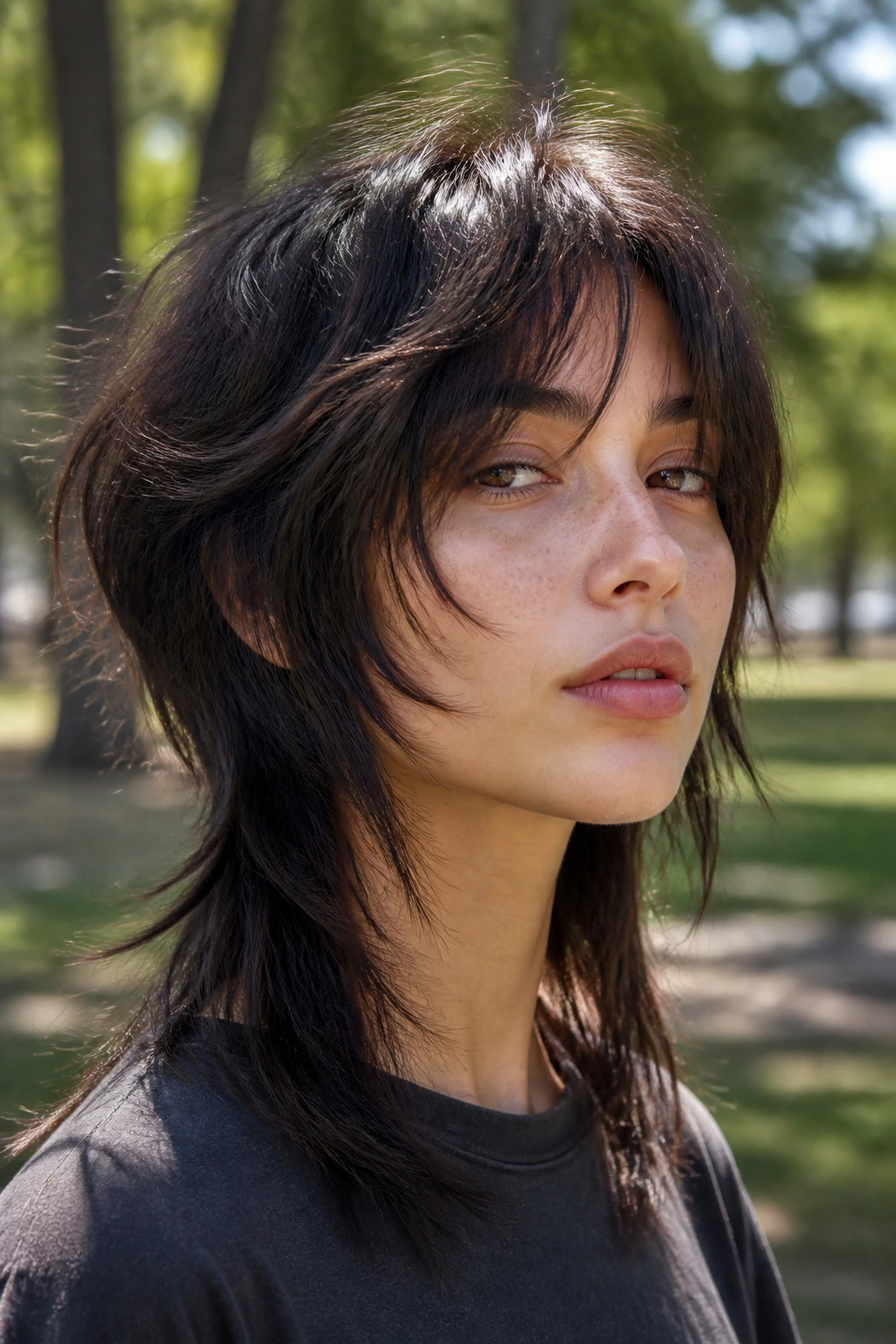
This is the easy one to live with.
A long shaggy mullet keeps the drama in the layers, not the length. The hair can still hit the collarbone, shoulder blades, or lower, which makes it a safer entry point for anyone who likes movement but does not want to lose their ponytail. The front pieces do a lot of the work here, especially when they fall around the jaw and cheekbones.
The best thing about this version is how it grows out. A shorter mullet can start to look blunt once it loses its shape. The longer version buys you time. Even after a few weeks, the face-framing pieces and layered crown still read as intentional, and the back keeps that soft tail shape instead of turning heavy.
I also like it on people whose hair has a habit of looking flat when it gets too layered. Keeping more length at the perimeter gives the hair some swing. The top still needs texture, but not so much that the ends vanish.
If you want a little polish, blow-dry just the face-framing pieces with a round brush and let the rest fall naturally. That one move is enough. You do not need to make every section perfect, which is part of the appeal.
6. Short Choppy Shaggy Mullet
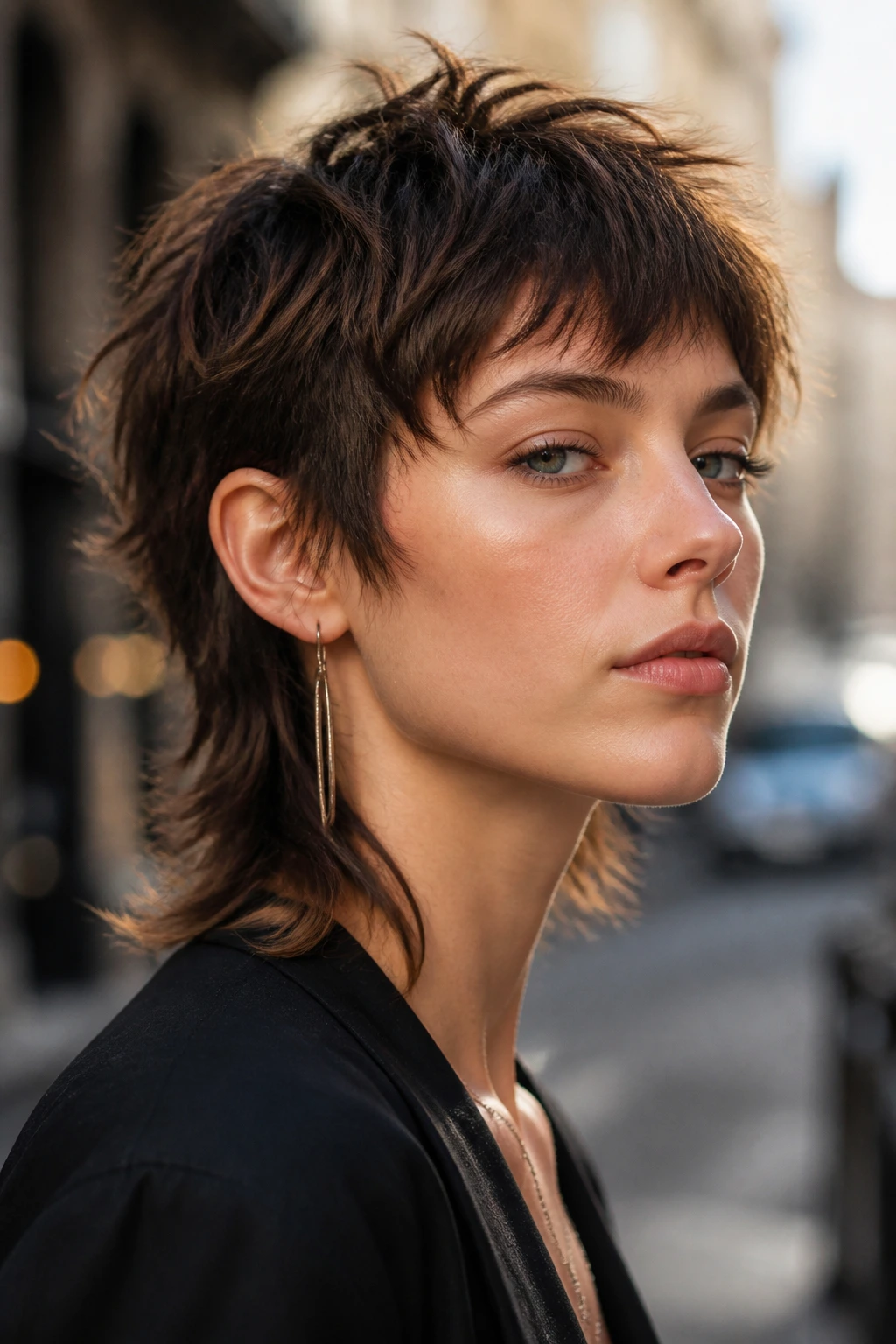
Unlike the long shaggy version, the short choppy mullet puts the focus on the jaw and neck. It feels sharper, lighter, and a little more assertive. If you want hair that opens up the face instead of draping around it, this is the cut.
It looks best when the ends are choppy, not overblended. That sounds small, but it changes everything. Choppy ends give the haircut a little edge and keep the silhouette from collapsing into a soft layered bob with a confused back section. The nape stays short enough to show off earrings, collars, or a clean neckline.
Who It Suits Best
- Women with fine-to-medium hair who want lift without a lot of length.
- Anyone who likes wash-and-go styling and does not mind texture cream.
- Faces that need a bit more openness around the jaw.
- People who are fine with regular trims to keep the outline tidy.
The tradeoff is obvious. You lose the easy tie-back length, and you need the cut to stay fresh or it can look flat fast. Still, there’s a lot to like here. It feels energetic without being fussy, and it’s a smart pick if your hair tends to sit limp when it gets too long.
7. Shaggy Mullet with Bottleneck Bangs
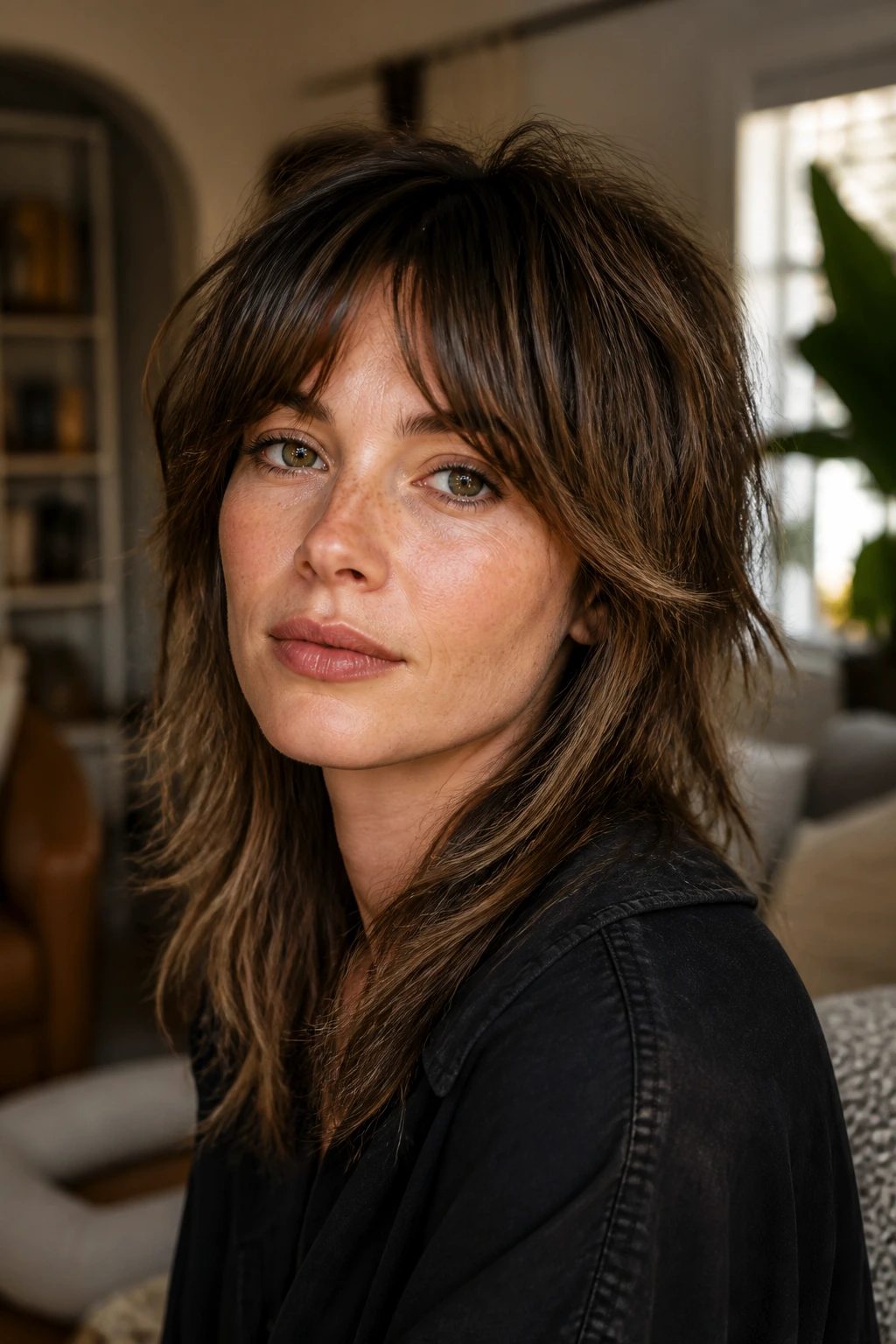
Bottleneck bangs do the heavy lifting here. They start narrow in the center, open around the eyes, and widen again near the cheekbones, which gives the mullet a soft frame without swallowing the face.
That shape matters more than people think. A blunt fringe can make a shaggy mullet feel heavier than it is. Bottleneck bangs keep the top light, and they connect naturally to the front layers. The result is less “statement haircut sitting on your head” and more “hair that knows where it’s going.”
This version is a sweet spot for women who want texture but still want some softness around the eyes and forehead. It can handle a little wave, and it usually grows out better than a super-short bang because the middle section has room to move. You still need trimming, though. Hair doesn’t care about your calendar.
What to Ask For
- A narrow center fringe that opens gradually toward the temples.
- Shortest bang pieces around mid-forehead if you want more shape.
- Side layers that connect into the fringe instead of ending abruptly.
- Texture through the crown so the top never feels boxy.
Use a small round brush on the bangs if they split weird when they dry. A quick bend is enough. No need to turn them into a polished helmet.
8. Wavy French-Girl Shaggy Mullet
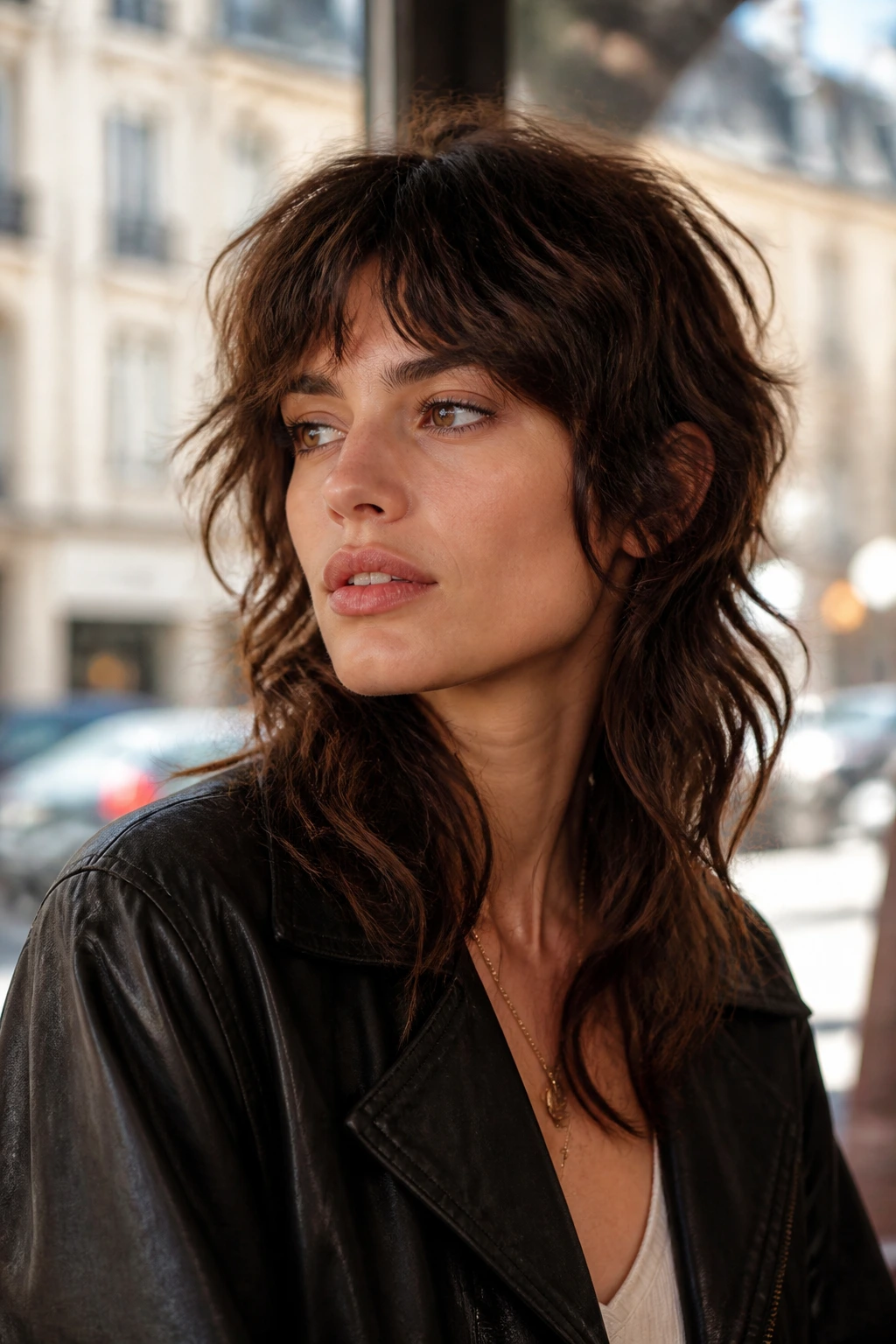
What makes this version feel softer than the rest? The answer is the bend. Loose waves blur the line between shag and mullet, which gives the haircut that airy, lived-in feel without making it look sloppy.
This cut is a strong choice if your hair already forms an S-wave or bends easily with a curling iron. The layers should fall in a way that encourages movement rather than forcing drama. A little shorter around the cheekbone, a little longer at the back, and enough texture through the crown to keep the top from lying flat. That’s the whole trick.
How to Wear It
- Mist damp hair with a salt spray or texture spray.
- Twist 1-inch sections around your fingers while drying.
- Leave the ends slightly undone so the shape stays soft.
- Use a wide-tooth comb only if the hair needs separating.
This is also one of the better choices if you dislike obvious styling lines. The hair can look polished enough for work, then fall apart in a nice way by evening. I mean that in the best sense. The style is meant to loosen up a little as the day goes on.
Keep the layers feathered, not shredded. There’s a difference, and it shows in the mirror.
9. Undercut Shaggy Mullet
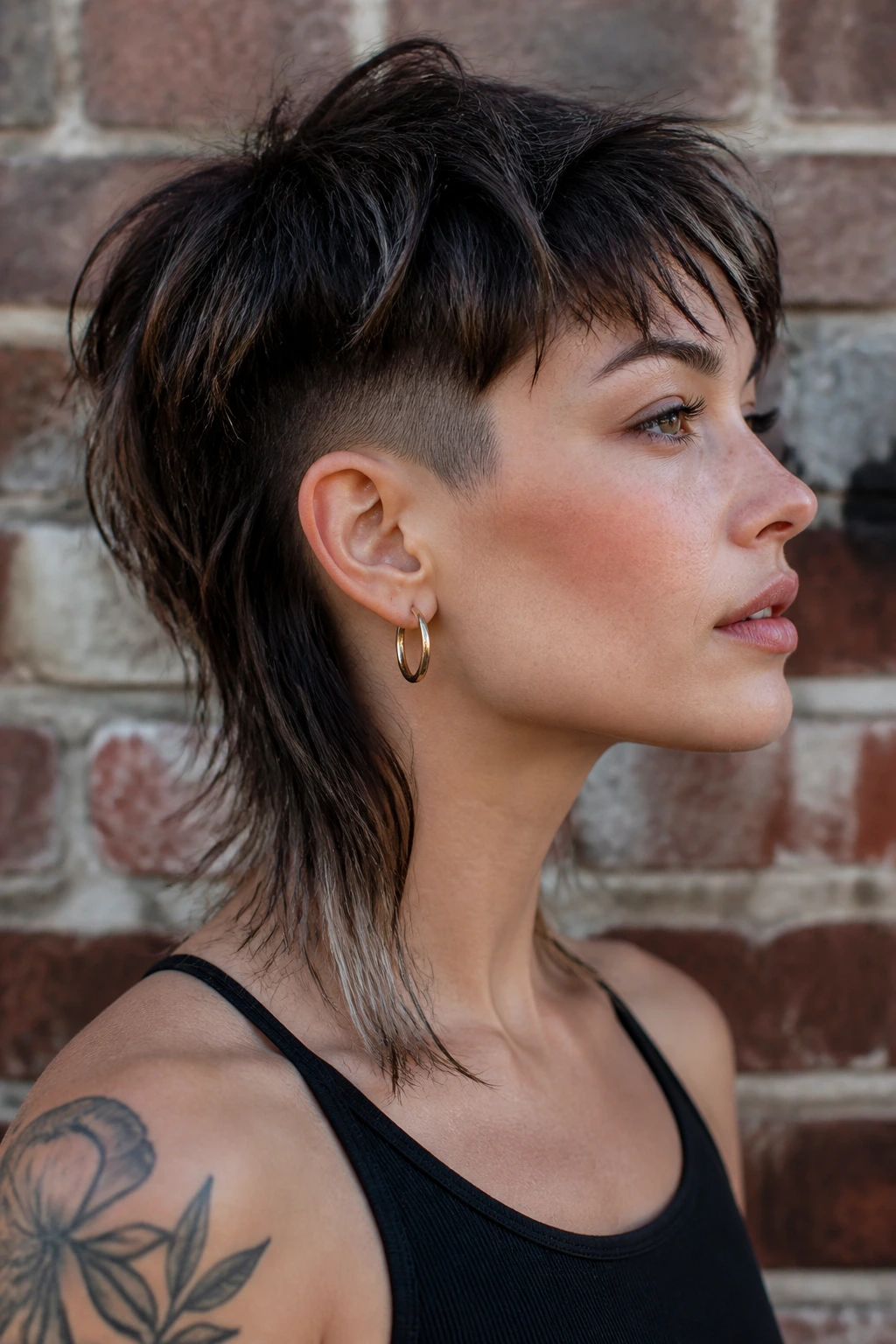
If your hair feels dense at the nape by lunchtime, the undercut version earns its keep. It is the most practical fix for thick hair that balloons under a coat collar or turns into a hot mess after a few hours.
The undercut can sit low at the nape, around the sides, or hidden beneath the longer top layers. That choice changes the mood a lot. A hidden undercut keeps the cut wearable in almost any setting. A more visible one gives the mullet a harder edge. Either way, the goal is the same: reduce bulk where the hair builds up too much weight.
This is not a subtle haircut, and it should not be. It works when you want the top to stay shaggy and textured while the bottom feels lighter and cleaner. If your stylist keeps the overlayer long enough, the undercut only shows when the hair moves. That can be a nice surprise. Or a very obvious one, depending on how much you expose it.
Maintenance is the catch. Shaved sections need regular touch-ups, and grow-out can feel awkward if you wait too long. Still, for dense hair, that tradeoff is worth it. The neck feels lighter. The shape sits better. The whole cut breathes.
10. Feathered Shoulder-Grazing Shaggy Mullet
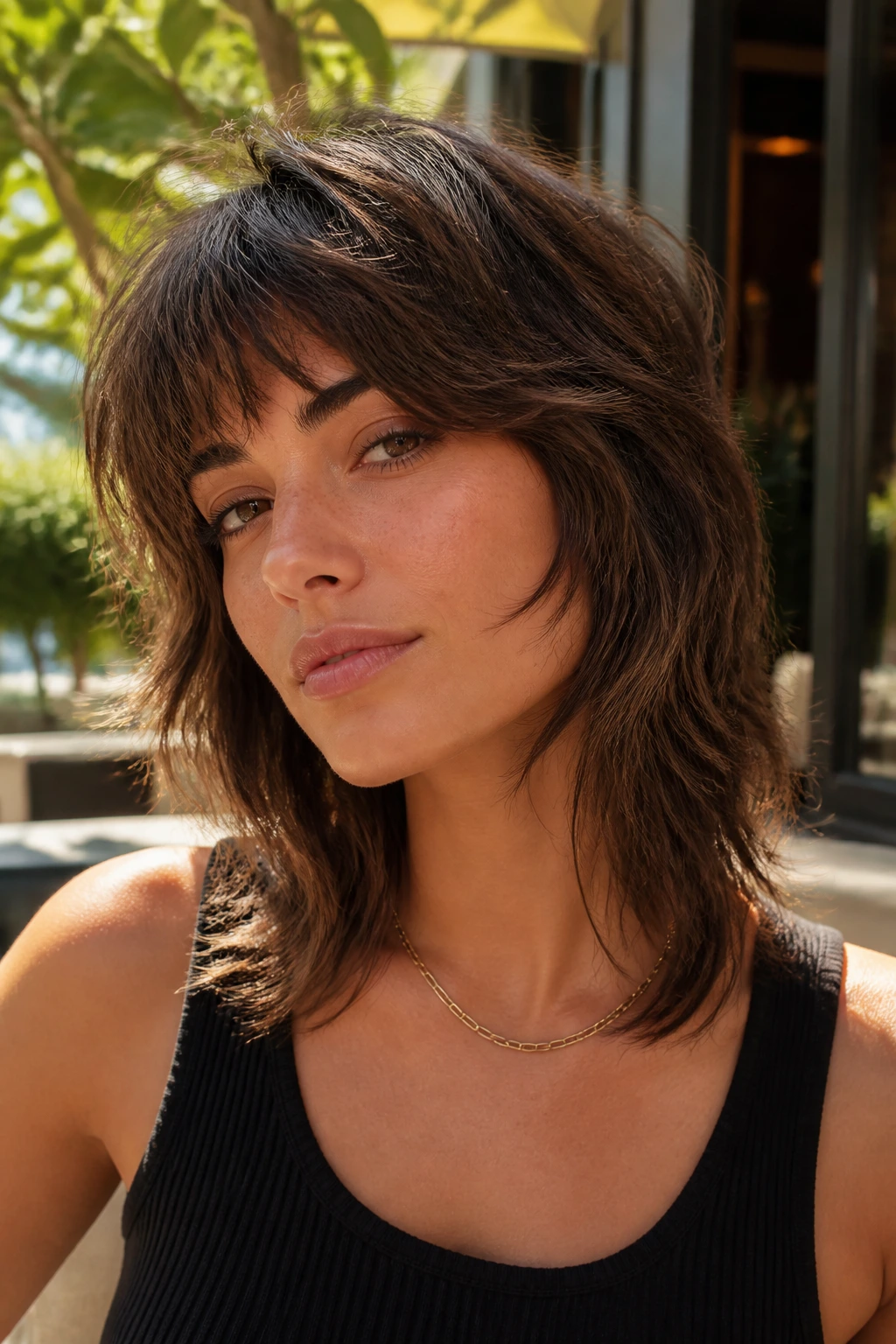
Unlike the harsher mullet shapes, this shoulder-grazing version keeps one foot in shag territory and one foot in classic layered hair. That makes it a solid choice for anyone who wants movement but needs a cut that won’t cause a scene in every room.
The feathering is the key. Instead of a sharp disconnect between top and bottom, the layers feather out around the shoulders and collarbone, so the haircut feels softer from the side. It still has the mullet idea built into it — shorter and livelier up top, longer in back — but the perimeter is gentler. That matters if you work with finer hair, or if you simply want your haircut to blend into the rest of your look.
I like this version because it gives you options. You can air-dry it, blow it out with a round brush, or add a few bends with a curling wand and call it done. It also grows out in a forgiving way. The shape doesn’t vanish the second it loses its edge, which is more than I can say for some sharper mullets.
If you are stuck between wanting something cool and wanting something practical, this is the one I would hand you first. It is still shaggy. It is still a mullet. It just knows when to stop.
If you choose one of these shaggy mullet haircuts for women, the real win is matching the cut to your texture instead of chasing the most dramatic photo. Hair that moves naturally always looks better than hair that has been bullied into shape. A good stylist will work with your bend, your density, and your face frame, then leave you with something that feels like your hair — only sharper.
