



A shaggy mullet can look feral in the best way, or it can look like a haircut that lost a fight with a comb. The difference usually comes down to shape, weight removal, and how brave you want the front to be. When people ask for alt shaggy mullet haircuts, what they usually mean is some version of controlled chaos: enough length to swing, enough texture to feel rough, and enough structure that the cut still looks deliberate when you face the mirror.
That balance matters more than the label. A good shaggy mullet can go punk, goth, soft-grunge, skate, or almost clean depending on where the fringe lands and how much the sides are tapered. The best ones do not rely on one giant trick. They use layered crown length, broken-up ends, and a tail in back that feels like it belongs there.
A lot of bad mullets fail because they try too hard to be edgy. The cut gets too flat at the crown, too bulky at the sides, or too stringy in the back. Shape matters. Texture matters. And if you want the haircut to read bold instead of random, you need to know which version fits your hair type before you sit in the chair.
1. Razor-Layered Wolfy Mullet
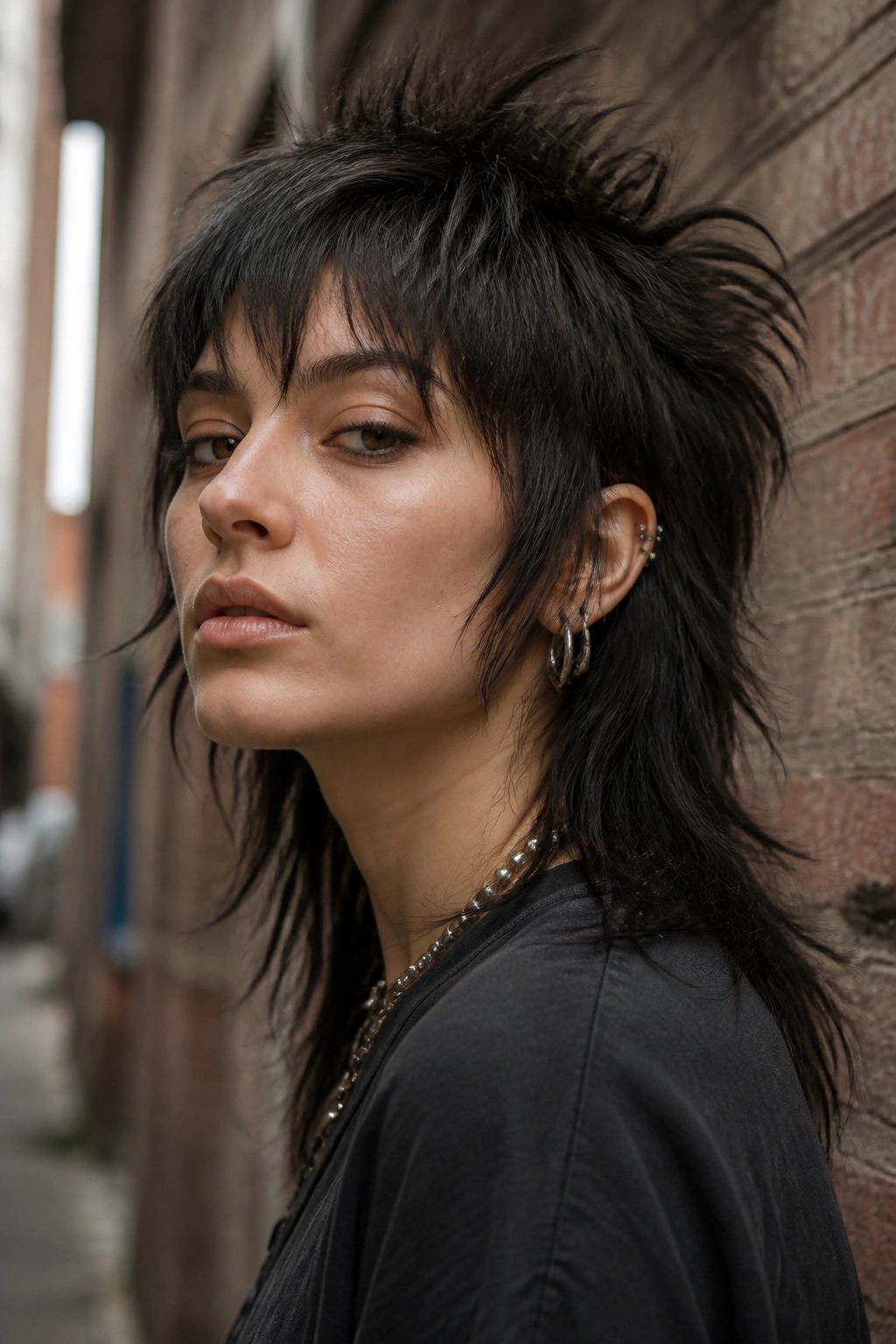
This is the cut I’d hand to someone who wants the most movement for the least effort. The razor-layered wolfy mullet sits right on the edge between shag and mullet, which is exactly why it looks alive when you move. The razor work breaks up the ends so the whole shape feels jagged, not bulky.
Why It Hits Hard
Ask for shorter crown layers, longer nape length, and soft sideburns. A good starting point is around 3 to 4 inches on top and 5 to 7 inches at the back, though that shifts with hair density and curl. The point is contrast, not a neat measurement.
Use this cut if your hair tends to fall flat. The crown gets lifted, the sides stay slim, and the back keeps enough length to flick out from under a collar. It has that slightly unruly look people chase on purpose.
- Request razor texture through the mid-lengths, not just the ends.
- Keep the fringe broken up so it doesn’t fall into one blunt line.
- Ask for the sides to stay narrower than the top, but not shaved tight.
- Style with a matte clay or dry paste on dry hair, working it from the back forward.
Pro tip: blow-dry the crown up and slightly back with your fingers, then pinch a few ends flat so the cut keeps its rough edge.
2. Curly Shag Mullet with Micro Fringe

Can a mullet work on curls without turning into a triangle? Yes, if the cut respects shrinkage. Curly shag mullets look best when the layers are long enough to let the curl pattern do the talking, while the micro fringe keeps the front sharp and a little strange in a good way.
The trick is not to over-thin the curls. That’s where people get into trouble. If the stylist removes too much weight, the top frizzes up and the back loses its shape. Leave the crown a little longer than you think, because curls spring up once they dry. A 4-inch curl can behave like 2.5 inches once it’s set.
How to Style It
Work in a curl cream or light gel on soaking-wet hair, then scrunch gently from the ends upward. A diffuser helps, but use low heat and low speed. High heat can make the fringe go fuzzy before lunch.
The micro fringe should sit just above the brows when dry, not when wet. That little difference matters. Wet curls lie to you.
If your curls are tight, ask for the fringe to be cut in small sections rather than one straight chop. It keeps the front from looking like a block. If your curls are loose, a slightly longer fringe can frame the eyes without stealing the whole haircut.
This version has attitude, but it is not fussy. That’s the beauty of it.
3. Bleached-Tip Grunge Mullet
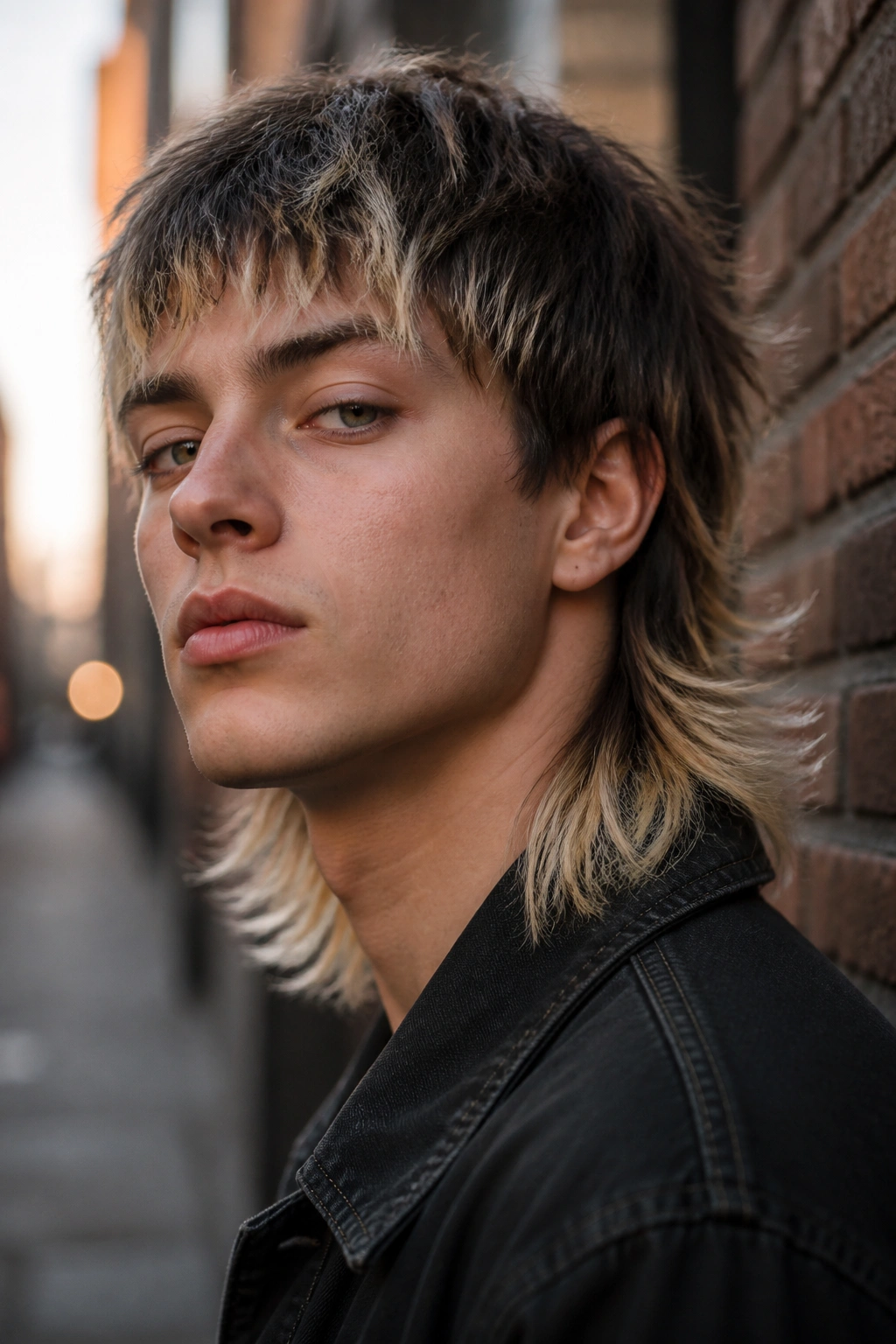
Picture dark roots, chipped-off blonde ends, and a back section that flips when you catch it in a wind tunnel. That’s the mood here. The bleached-tip grunge mullet leans hard into contrast, which is why it works so well with shaggy texture. The cut already has edge; the color just turns the volume up.
I like this version best when the bleach is concentrated on the outer layers and the last 2 to 3 inches of the tail. It keeps the color from looking stripey. Full saturation can be too loud if the haircut itself is already busy. The rougher the layers, the better the lightened ends look.
What to Ask For
- Dark root shadow with lighter tips, not a full all-over blonde.
- Choppy layers around the crown so the color breaks up as the hair moves.
- A slightly jagged fringe that stops just below the brows.
- A toner that keeps the ends beige or smoky instead of yellow.
The maintenance is the catch. Bleached ends need toning, hydration, and a trim before they start snapping. If you run a lightening job on already dry hair, the result can look cool for a week and then feel like straw. Not worth it.
Use this haircut when you want the hair to do some of the outfit work for you. Black tee, ripped denim, heavy boots. Done.
4. Curtain-Bang Shag Mullet
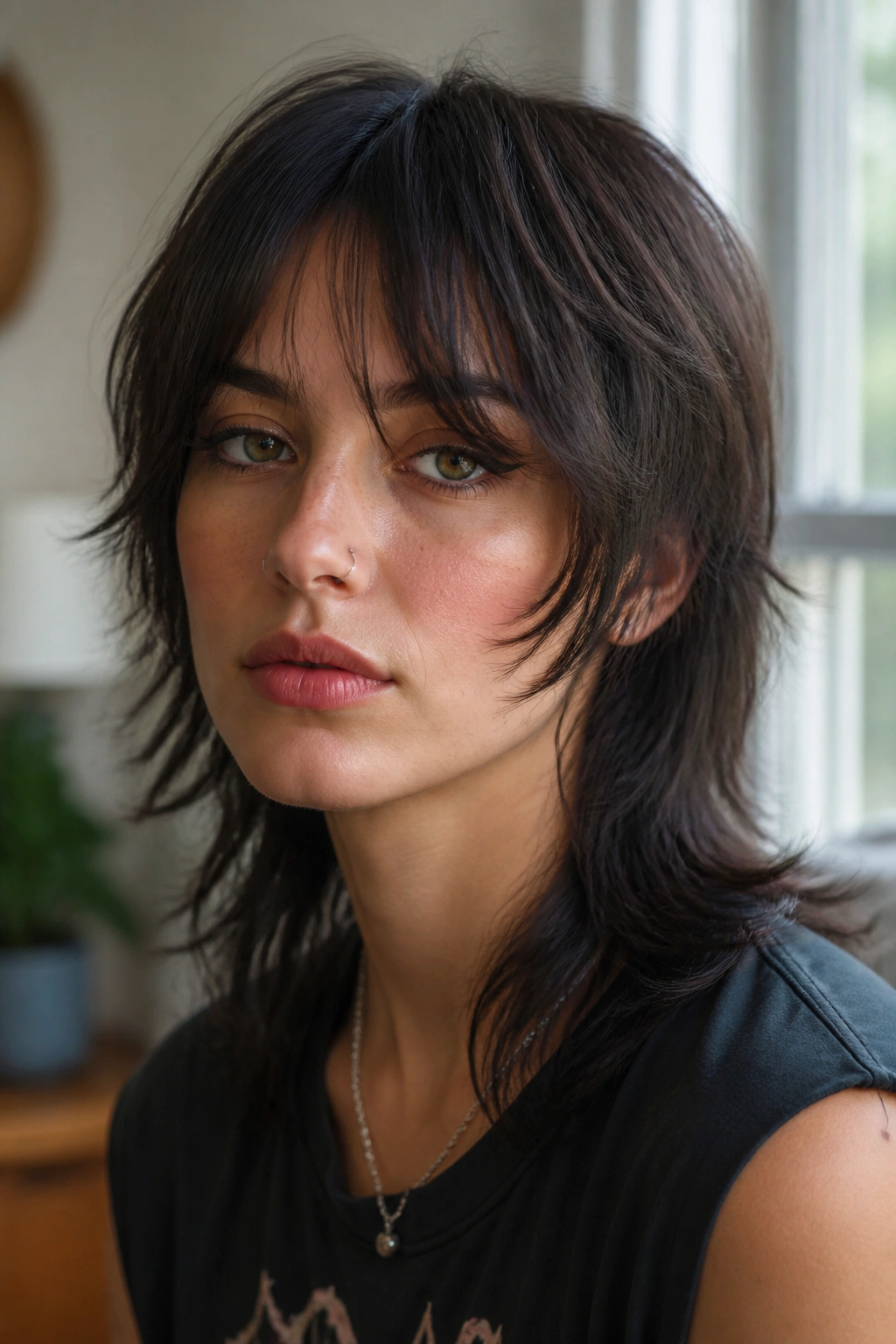
A curtain-bang shag mullet is the version people try when they want something bold but not theatrical. The curtain fringe softens the front, which sounds mild until you pair it with choppy layers and a tail that lands at the nape. Then the whole shape starts to feel sly instead of sweet.
This cut lives or dies on the face frame. The front pieces should start around the cheekbone or just below it, then slide into longer layers that blend into the sides. If the shortest front pieces are too short, the haircut can tip into 1970s cosplay. If they’re too long, the mullet part loses its bite.
I think this is one of the easiest alt shaggy mullet haircuts to wear because the bangs do a lot of the work. They break up a long face. They soften a strong jaw. They also give you room to part the hair a little off-center when you want the style to feel less symmetrical.
The styling is simple, but not lazy. Blow-dry the fringe away from the face with a small round brush, then let it fall open. A light texture spray at the roots keeps the crown from collapsing. If your hair is naturally straight, a bend through the ends helps the layers separate. If it’s wavy, don’t fight the wave. That little bit of bend is the whole point.
It’s a very good cut for someone who wants edge without looking like they raided a costume rack.
5. Burst-Fade Mullet
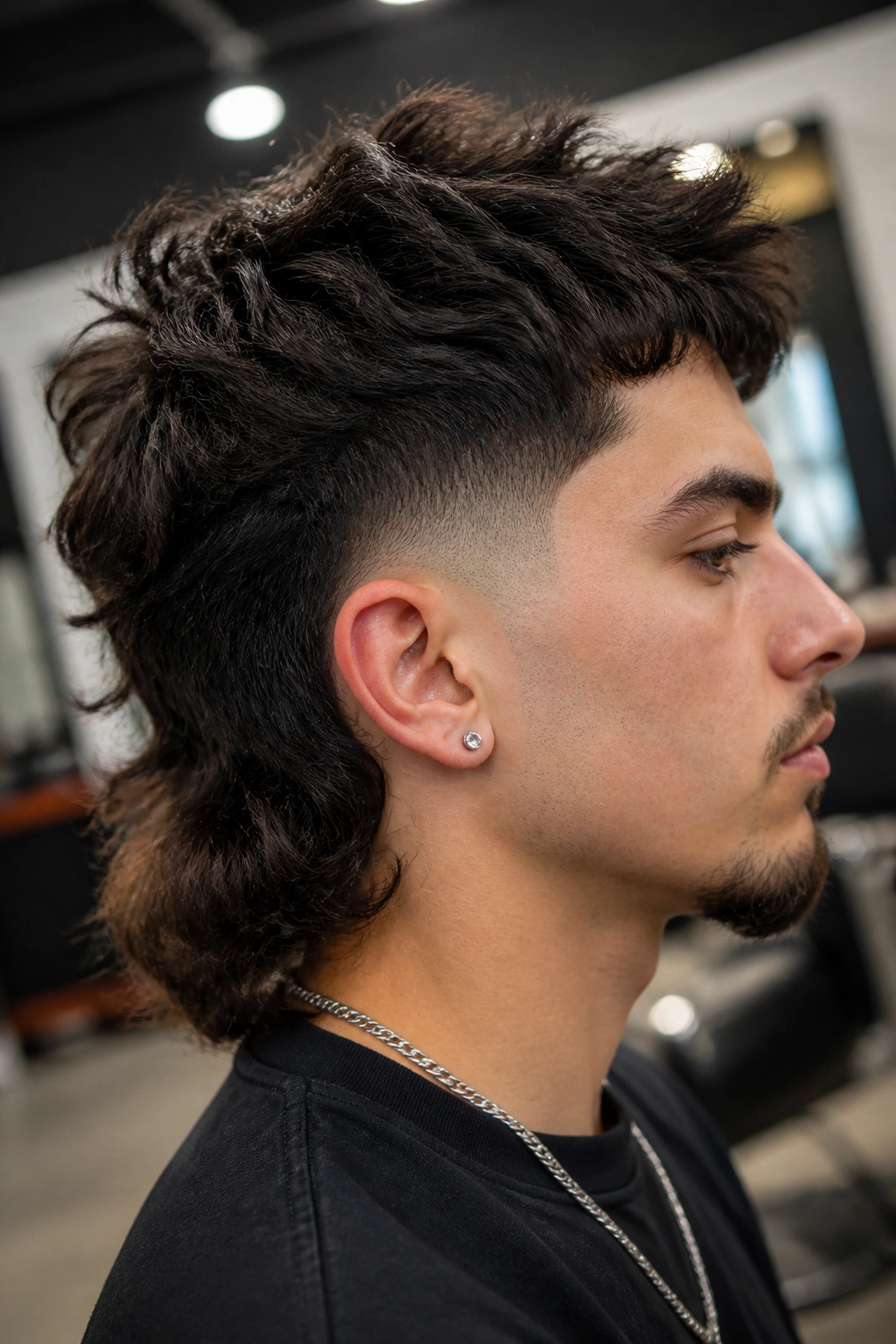
Unlike a full shag mullet, the burst-fade version keeps the area around the ears clean and tight. That contrast is the whole appeal. The top and back stay long enough to give you texture and length, while the fade arcs around the ear like a sharp frame.
This shape is strong on thick hair. Thick hair piles up fast at the sides, and that’s exactly where the burst fade helps. A low or mid fade, usually taken down with a 0.5 to 2 guard, removes bulk without erasing the mullet silhouette. Push the fade too high and the back starts looking disconnected in a bad way.
Who It Suits Best
- People who want a mullet that still feels neat around the ears.
- Thick, coarse, or dense hair that gets bulky fast.
- Straight or wavy textures that hold a crisp edge.
- Anyone who likes a barbered look with a little grit.
The crown should still have lift. If it lies flat, the fade will do all the visual work and the haircut loses personality. Keep the top textured with point cutting or small razor passes, then leave enough length in back to move when you turn your head.
This one can look brutal in a good way. It’s clean at the sides, rough on top, and a little dangerous in profile. If you want a mullet that reads more “street” than “shag,” this is the one to look at.
6. Wispy Fringe Shag Mullet
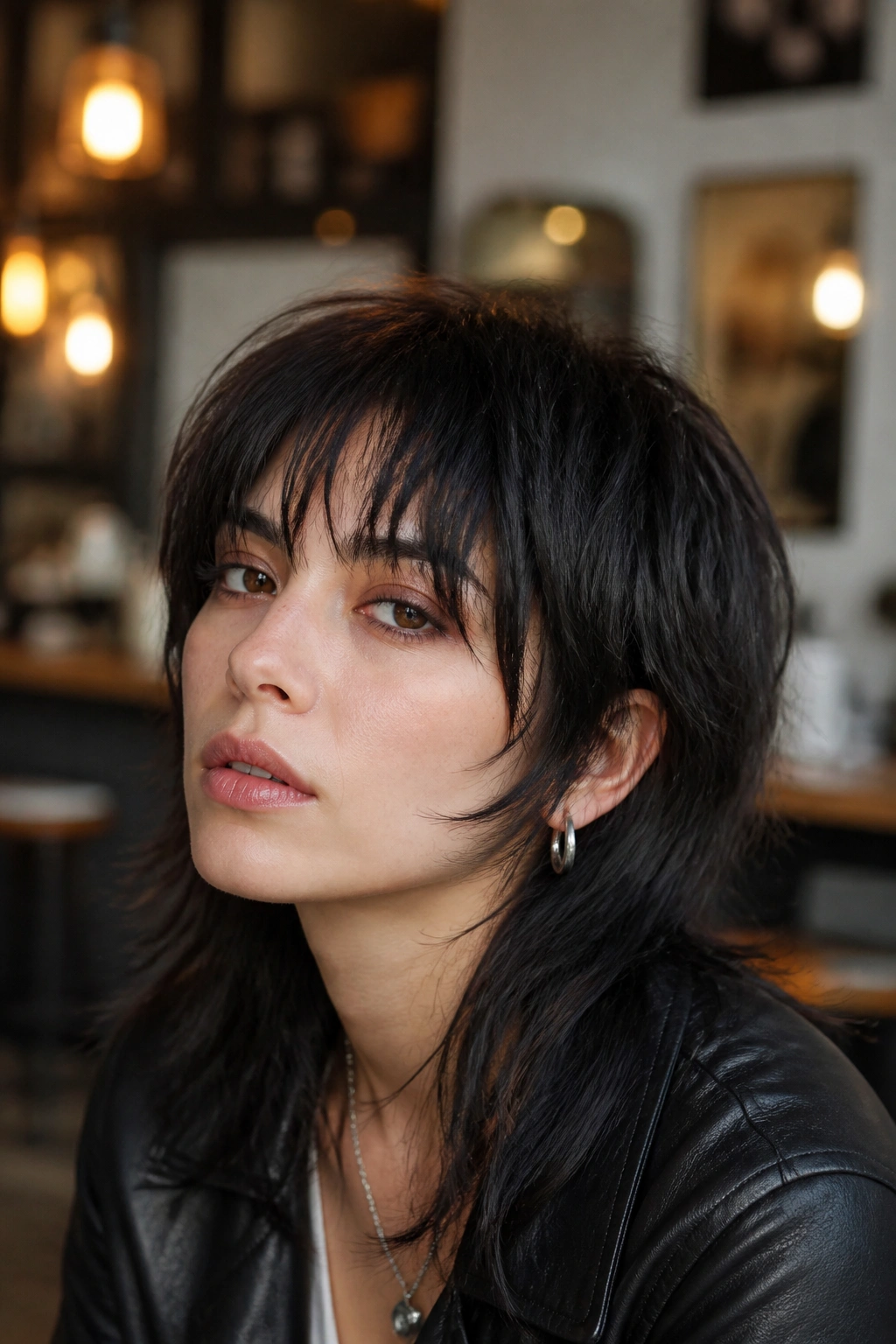
The wispy fringe shag mullet is for people who want the shape without the hard line. No blunt bang. No heavy forehead curtain. Just soft, broken pieces that skim the brow and keep the haircut feeling loose. That softness makes the rest of the cut hit harder, oddly enough.
What I like here is the imbalance. The front feels feather-light, almost shy, while the back carries the attitude. That tension is what keeps the cut from reading as flat or too cute. It’s one of the easiest ways to make a shaggy mullet feel wearable on weekdays and still sharp enough for a night out.
A good stylist will cut the fringe in small, irregular sections so the ends fall separately instead of merging into one strip. The layering around the crown should be just choppy enough to make the top move, but not so sliced that it frays apart. You want separation, not damage.
For styling, use a pea-sized amount of lightweight paste on dry hair or a soft mousse on damp hair. Too much product kills the wispy effect. Too little and the fringe disappears into the rest of the cut. There’s a narrow middle ground, which is annoying but true.
This version suits people who hate high-maintenance bangs but still want something visibly different from a standard shag. It also grows out nicely, which is a small mercy.
7. Tapered Business-Alt Mullet
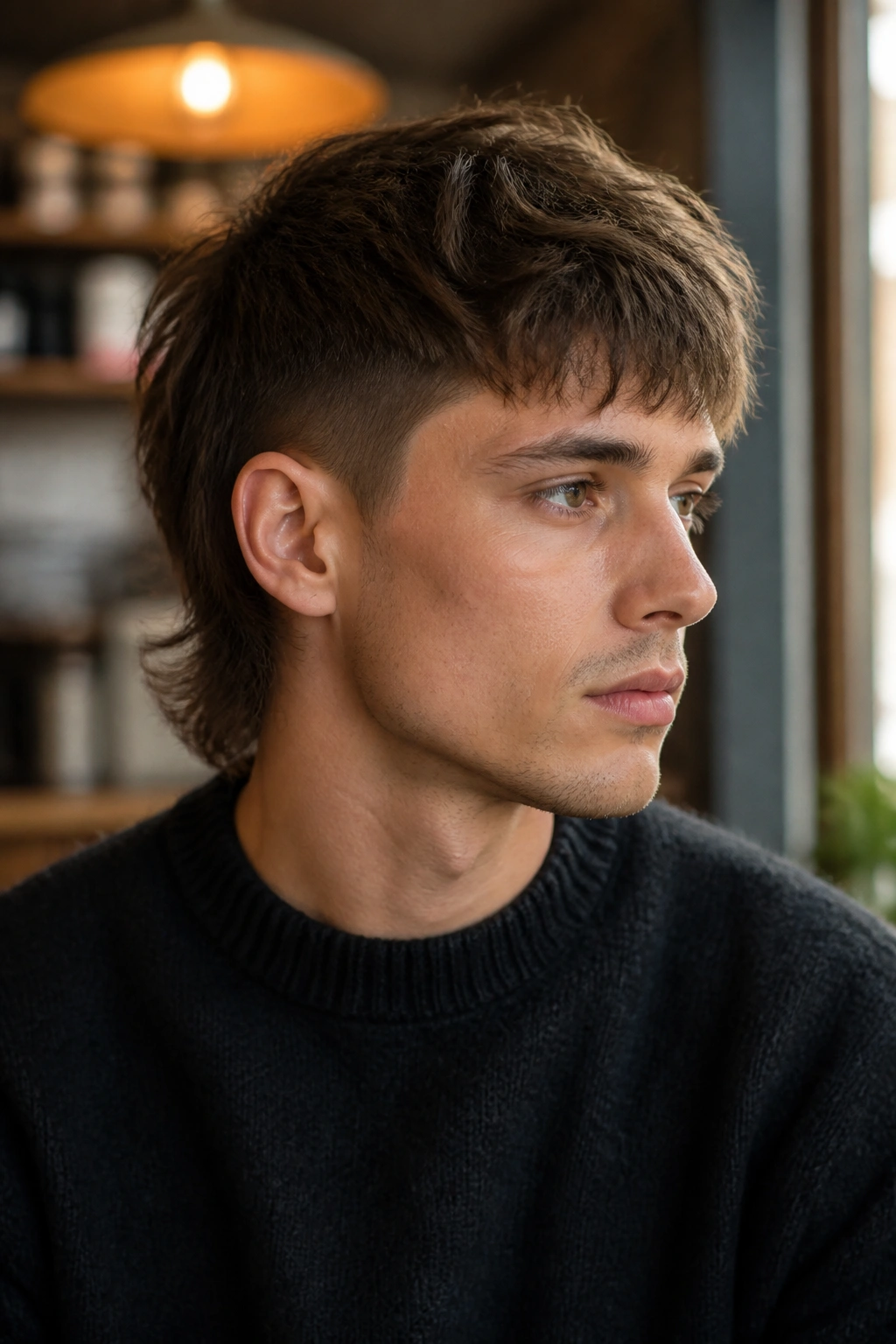
Can a mullet look sharp enough for a blazer and still feel rebellious? Yes, if the taper is controlled and the length is edited with some restraint. The tapered business-alt mullet keeps the back long enough to register as a mullet, but the sides and neckline stay clean so the haircut doesn’t sprawl.
That clean structure is the whole move. The top gets a bit of texture, the fringe stays modest, and the back length usually lands somewhere around collar level rather than drifting halfway down the neck. You still get movement. You just do not get the messy bulk that makes a lot of mullets hard to wear.
I like this cut on people with straight or slightly wavy hair because the shape stays visible without much product. A little cream through the front and crown is often enough. If you have heavier hair, ask the stylist to take weight out from underneath, not just the surface. That keeps the tail from puffing out like a mop.
This is the version for someone who wants the joke to land only partly as a joke. It looks tidy from far away, then a little rude when you catch the side view. That’s a good thing.
A strong taper at the neckline matters here. If the back is left too boxy, the whole cut loses that sly, tailored feel.
8. Gothic Heavy-Line Mullet
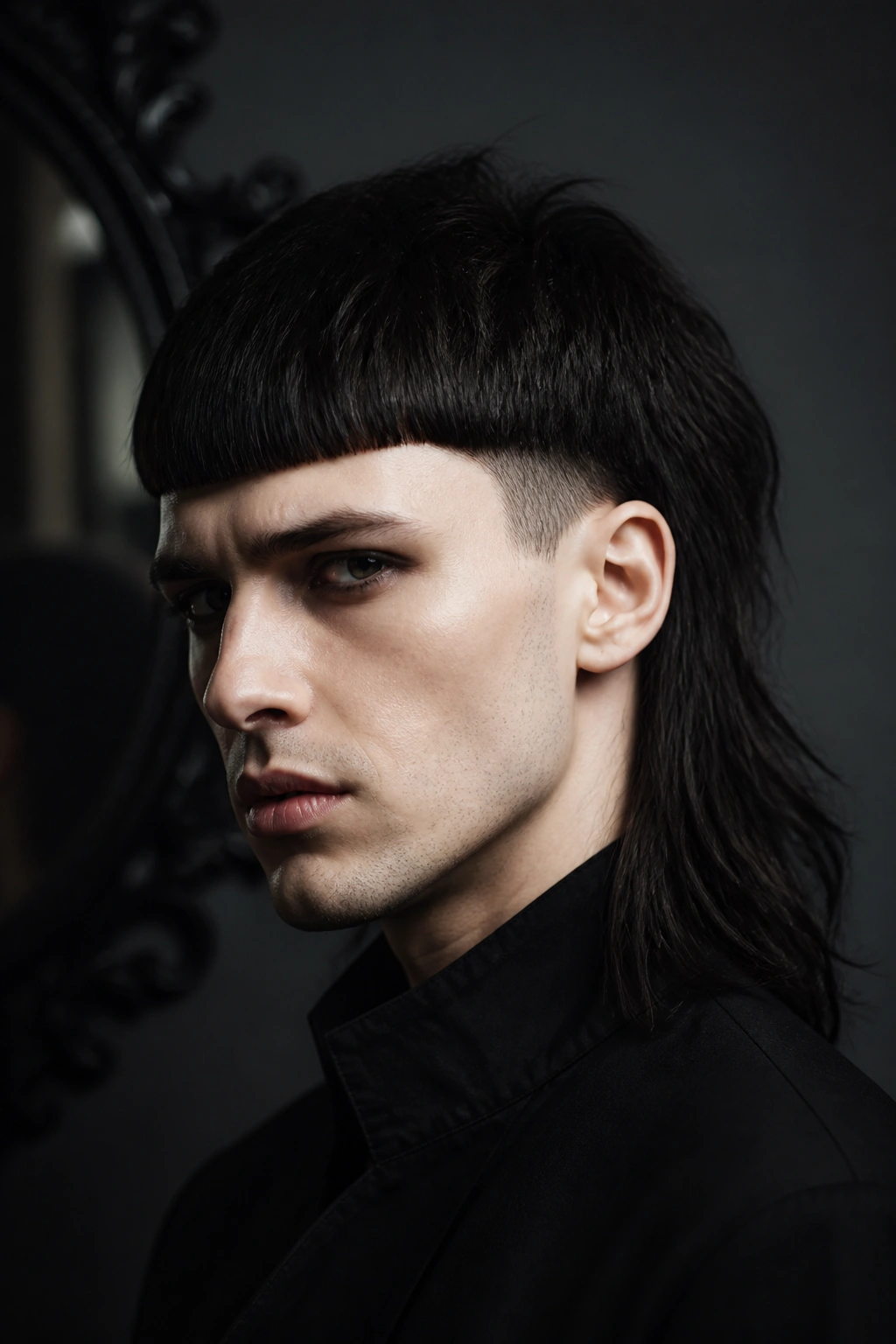
The gothic heavy-line mullet is blunt where most shag mullets are broken up. That’s why it has such a specific mood. It looks severe, especially on dark hair, because the perimeter reads more like a statement than a blend. The fringe is heavier. The sides are tighter. The back still hangs long, but it does so with a straight face.
I’ve always thought this cut works best when the stylist respects the line. Too much feathering can dilute the whole point. You want enough texture to stop it from becoming blocky, but not so much that it loses the hard shape that makes it feel gothic in the first place.
Details That Matter
- Keep the fringe thick enough to sit with weight, usually around brow level.
- Ask for a cleaner perimeter in back instead of a shredded tail.
- Use subtle internal layering so the crown does not puff up.
- Pair it with dark dye or a deep natural shade if you want the full effect.
There’s also a practical side. Heavy-line cuts need regular edge cleanup, especially if the ends start splitting. Around every 6 weeks is a good target. If you let it grow too far, the shape turns from severe to shapeless, and that’s not the same thing.
This haircut has presence. It enters the room before you do. Not subtle. That’s the appeal.
9. Side-Swept Punk Mullet
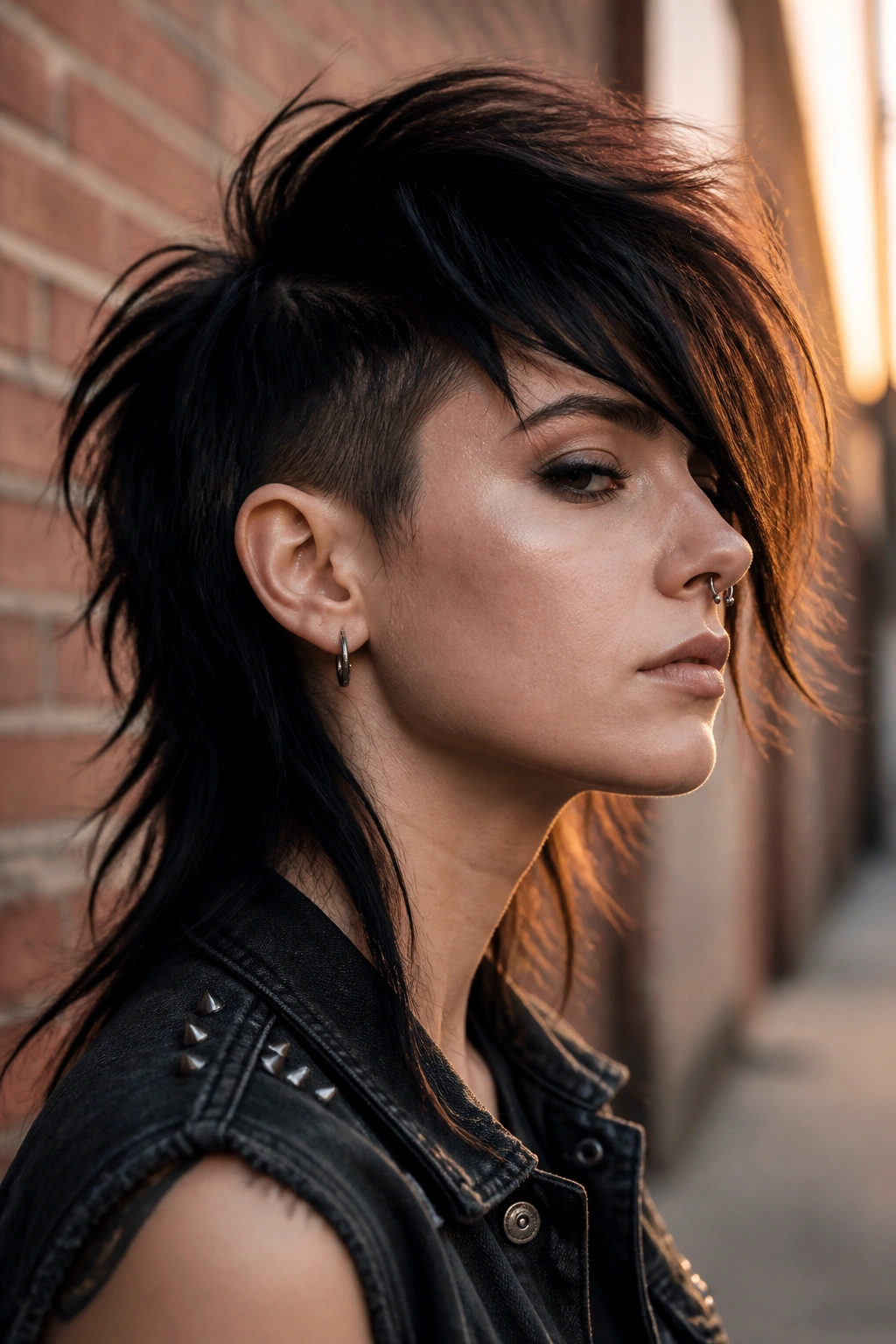
A side-swept punk mullet is what happens when you decide symmetry is overrated. Instead of a centered fringe or curtain shape, the front sweeps hard to one side, sometimes with one temple cut a little shorter than the other. It feels rebellious without needing bright color to sell it.
This is one of the few mullet variations that can look different from every angle. From the front, you get movement and an almost cocky lean. From the side, the back length lands more obviously. From behind, the cut still says mullet in a very plain language kind of way.
The side sweep works best when the front has enough length to lie across the forehead without being heavy. Think brow to cheekbone territory, depending on texture. If the hair is straight, a touch of bend at the ends helps the fringe stay soft instead of helmet-like. If the hair is wavy, let the wave travel naturally and separate the pieces with your fingers.
I’d recommend this version if you want edge but hate the flatness of a center part. It also gives the stylist room to cut one side with slightly more weight, which can sharpen the profile. The result feels a little unstable, in the best possible sense.
It’s less polished than the curtain-bang version. More attitude. Less sweetness.
10. Feathered Retro Mullet
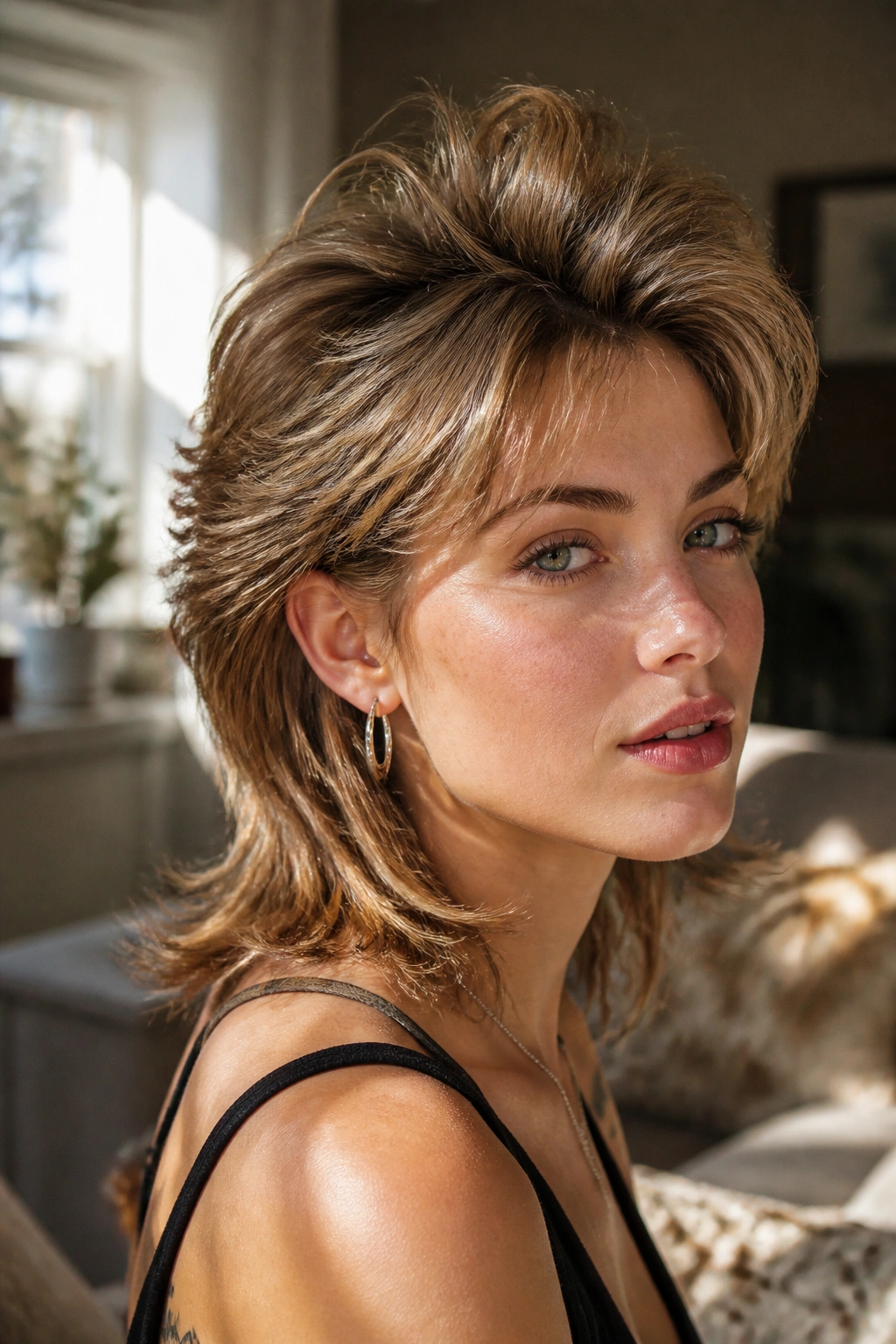
The feathered retro mullet borrows from older feathered cuts, but the texture here is rougher and less precious. Instead of a smooth, round finish, you want light layers that flip away from the face and keep the crown from collapsing. It’s a softer-looking mullet with a real backbone.
What makes this version appealing is the lift. A round brush and blow dryer can coax the front and sides outward just enough to make the shape look airy, not heavy. The hair around the ears should move, not hug the head. The back can still hang longer, but the layers should be feathered enough that the length doesn’t feel like one solid curtain.
How It Should Feel
The crown should feel light when you run your fingers through it. The fringe should separate into pieces, not sit as one slab. The back should swing, not stick. If those three things are happening, the cut is working.
I like this on medium-density hair because there’s enough body to hold the feathered lift without turning into fluff. Fine hair can wear it too, but the layers need to be handled carefully so the ends do not get wispy in a thin, sad way. That’s the line to watch.
Use a round brush at the roots, then finish with a light spray that gives hold without shine. A feathered mullet looks best when it has shape you can see but softness you can still touch.
It’s retro, sure. But not costume-y if the layers stay sharp.
11. Slick-Back Wet-Look Mullet
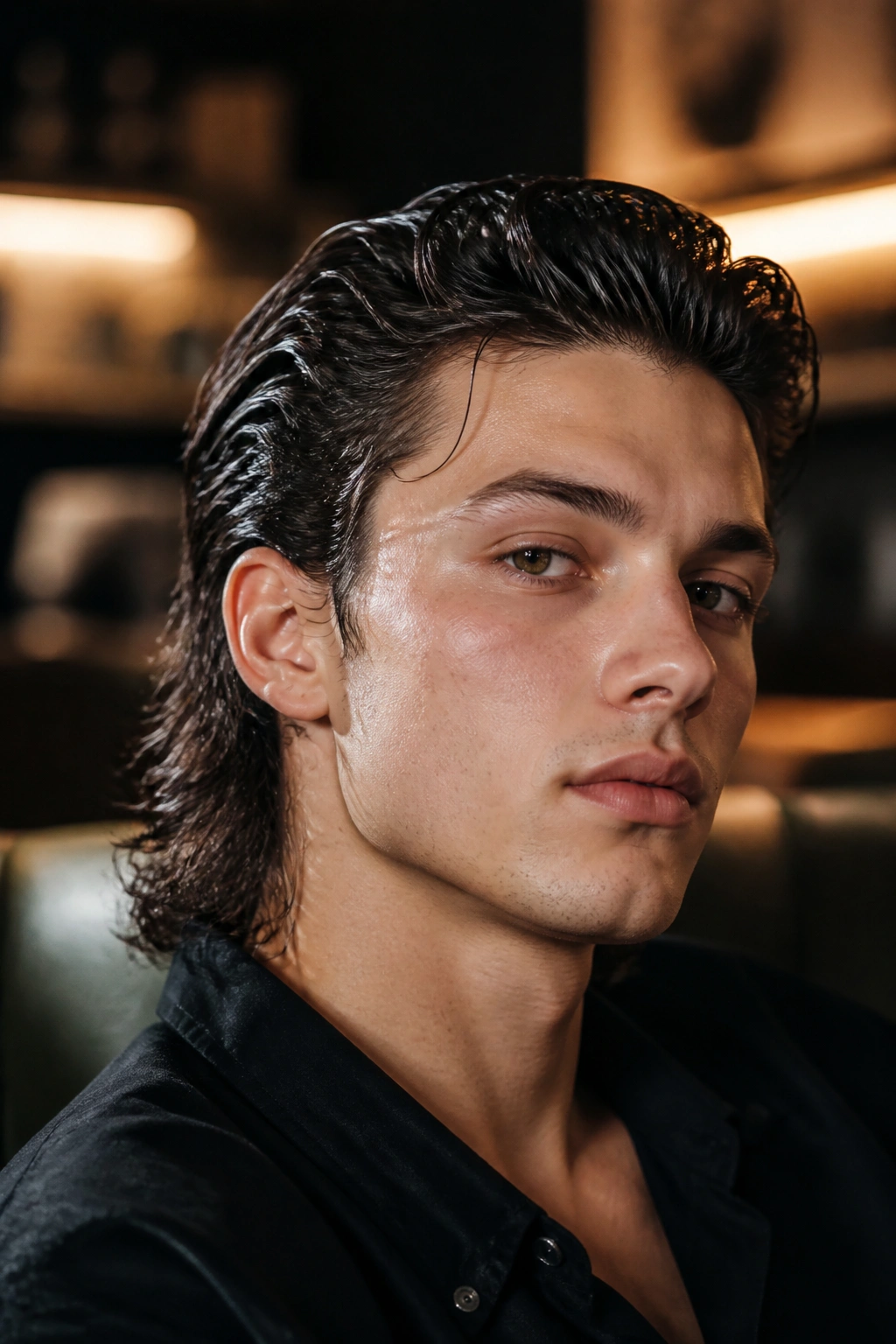
A slick-back wet-look mullet changes the personality of the haircut fast. Same length. Same shape. Different message. Instead of messy and shaggy, the front gets combed back with shine, which makes the tail in back look even more dramatic because the contrast is so clean.
This style works especially well when the haircut itself has enough texture underneath. If the cut is too flat, the slick-back effect just looks greasy. If the top is layered and the back has enough movement, the product holds the front in place while the tail stays loose and visible.
Use a medium-hold gel or cream-gel hybrid on damp hair, then comb the front back from the hairline. Don’t drown the whole head in product. Keep most of it on the top and front, then use whatever’s left on your hands to tame the sides. The back can stay softer. That difference matters.
- Best on straight to wavy hair with medium density.
- Works well when the crown has internal layering.
- Needs a comb with fine teeth for a cleaner finish.
- Air-dry or use a diffuser on low if you want less crunch.
Too much shine can make it look theatrical. Too little and the style loses the point. You want controlled gloss, not a helmet.
This is the mullet for a night out, an art opening, or a closet full of black clothes. It’s sharp. A little slick. Very on purpose.
12. Mini Mullet for Fine Hair
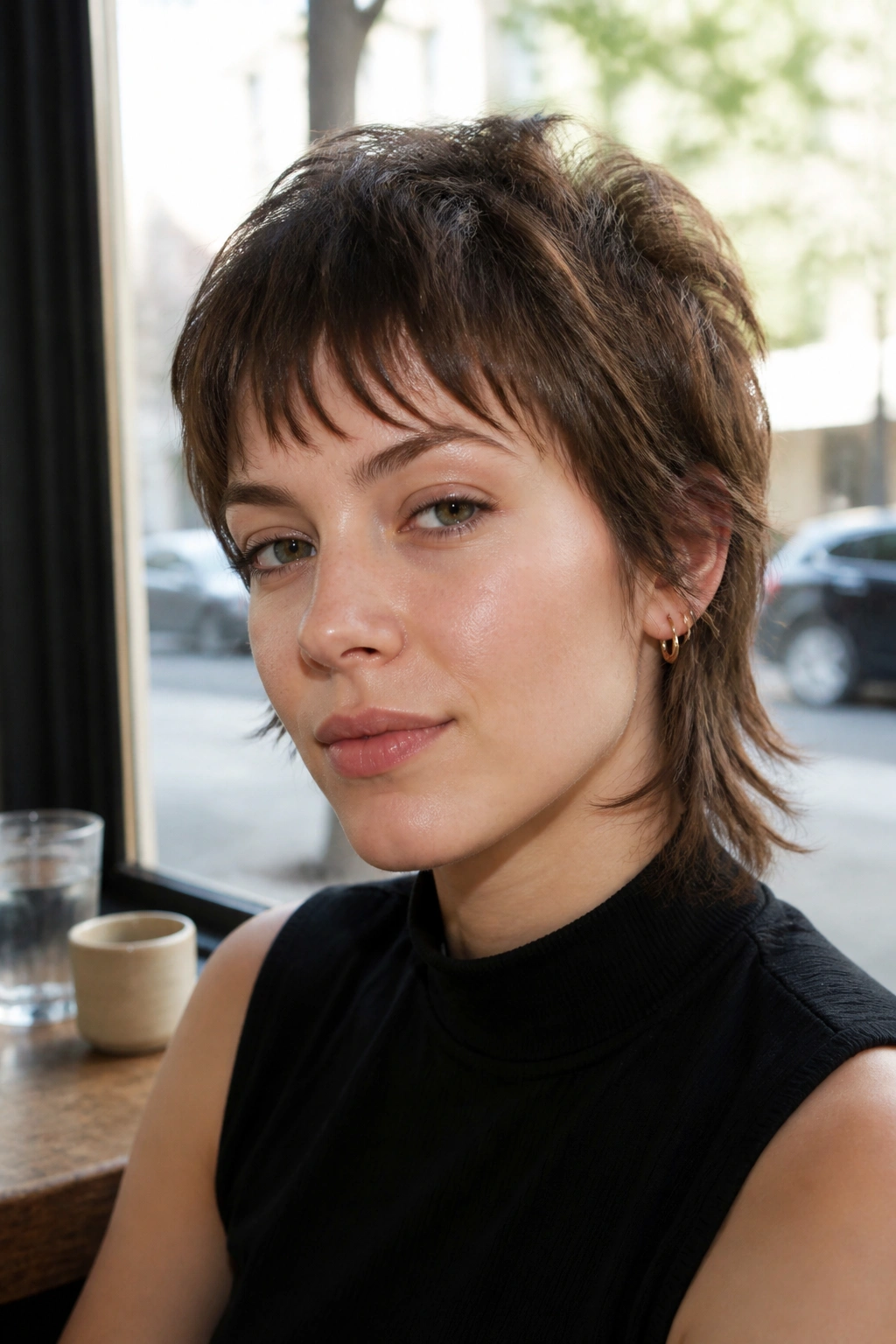
Can fine hair pull off a mullet without looking flat? Yes, if the contrast stays modest and the layers are cut with care. The mini mullet is probably the smartest version for finer strands because it gives you the attitude of the shape without asking the hair to do too much.
The key is keeping the top short enough to hold lift and the back long enough to read as a tail, but not so long that the ends look stringy. A good range is often around 2 to 3 inches on top and roughly 3.5 to 4.5 inches in back, though the exact length depends on density and growth pattern. The gap between front and back does the work.
This cut should not be over-thinned. Fine hair can look sparse fast if the stylist goes wild with texturizing shears. Ask for light point cutting at the ends and enough internal layering to stop the crown from lying like a sheet. A small root-lift spray or lightweight mousse can help the top stay off the scalp without stiffness.
It’s also one of the easiest versions to grow out. That matters more than people admit. A full mullet can feel dramatic for six weeks and then awkward for six more. A mini mullet tends to soften into a shag pretty gracefully, which makes it less of a commitment.
If you want alt energy without a heavy maintenance load, this is the smart pick. Subtle. Still edgy. Easier to live with.
Final Thoughts
The best shaggy mullet is the one that has a point of view. Not every version needs to shout. Some should whisper a little, then turn around and say something rude from the back.
If you’re bringing photos to a stylist, bring at least one front view, one side view, and one back view. That saves a lot of awkward interpretation. The shape of the fringe, the length at the nape, and the way the sides are carved all change the whole mood.
And if you’re still on the fence, start with the version that matches your hair’s natural behavior. Fighting texture is expensive. Working with it is where the good cuts happen.
