



A shaggy blonde mullet haircut for women can look soft, cool, and deliberate—or it can look like you cut the front and forgot the rest. That difference is usually only a few inches of shape, a little bit of weight removal, and the right blonde tone.
Blonde makes the cut louder. Every layer shows, every bend shows, and every awkward corner shows too. That is why this haircut lives or dies on texture: if the crown is too heavy, the whole thing can collapse; if the ends are carved too hard, it can start to look dry and overworked.
The good versions have movement. They skim the cheekbones, flare a little at the nape, and keep enough softness around the face that you do not feel trapped inside a costume. Some read polished, some lean edgy, and some feel almost airy. That range is the fun part.
1. Soft Shaggy Blonde Mullet with Curtain Bangs
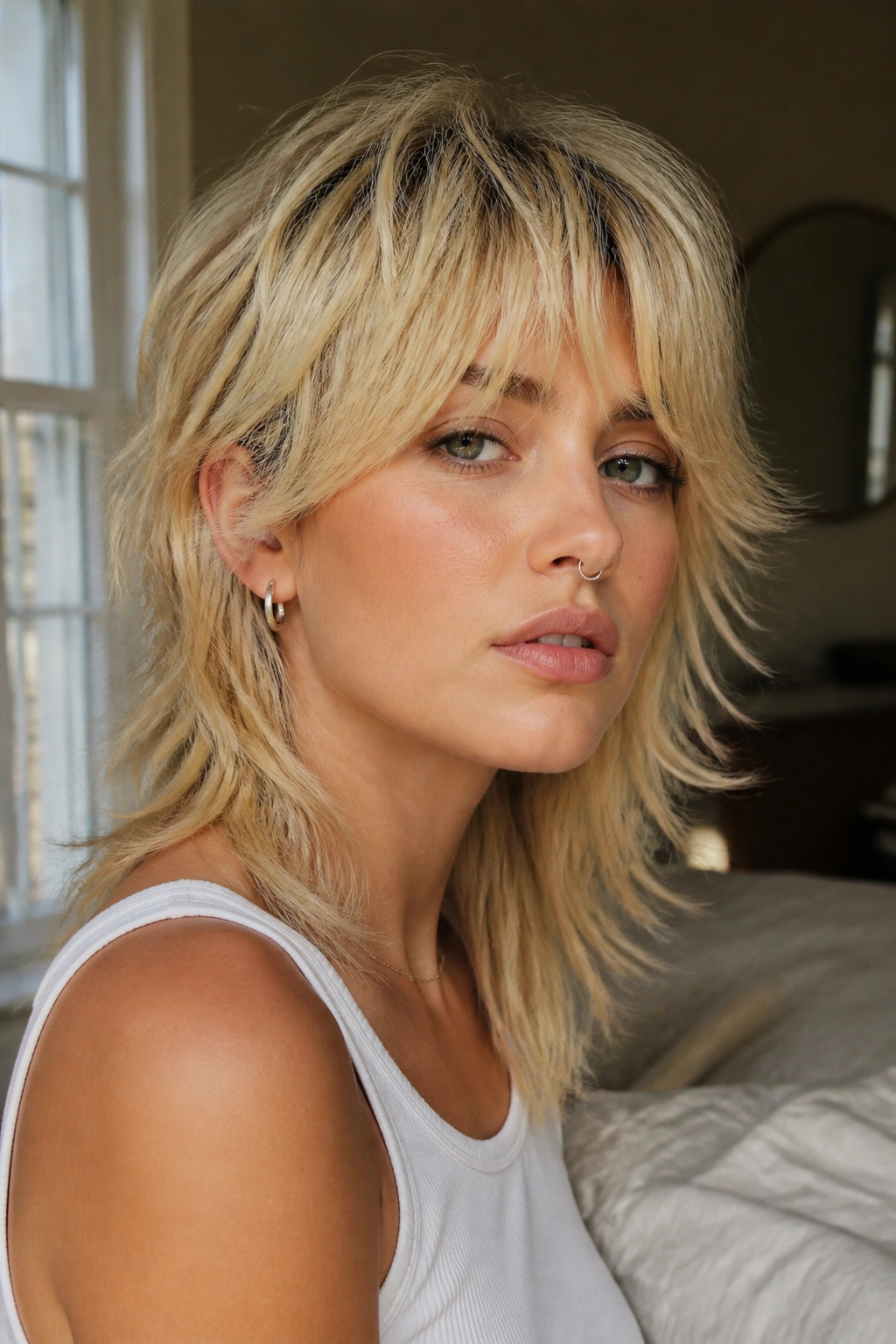
Some cuts ask for confidence. This one asks for a little nerve and a good round brush.
A soft shaggy blonde mullet with curtain bangs is the easiest entry point if you want the mullet shape without the hard lines. The bangs split down the middle, brush past the cheekbones, and give the front a gentle frame while the back keeps that loose, layered swing. It feels a little retro, a little rock-and-roll, and a lot more wearable than people expect.
Why It Works
Curtain bangs do a lot of quiet work here. They soften the forehead, make the haircut feel less severe, and let the mullet shape blend instead of shout. On blonde hair, that softness matters even more because lighter tones show every angle.
This version works best when the layers start high at the crown and then drop into longer, airy ends. You want movement, not bulk. If your hair is wavy, it will sit into this shape fast. Straight hair can do it too, but it needs a bend from a round brush or a large-barrel iron.
What to Ask For at the Salon
- Curtain bangs that start around the bridge of the nose and open near the cheekbones
- Choppy crown layers with a light point-cut finish
- A soft nape that tapers instead of stopping bluntly
- Beige, honey, or buttery blonde tones that keep the texture looking soft
Best detail to remember: ask for soft separation, not razor-thin ends all over the head. That keeps the haircut from looking frayed.
2. Platinum Shaggy Blonde Mullet with Razored Ends
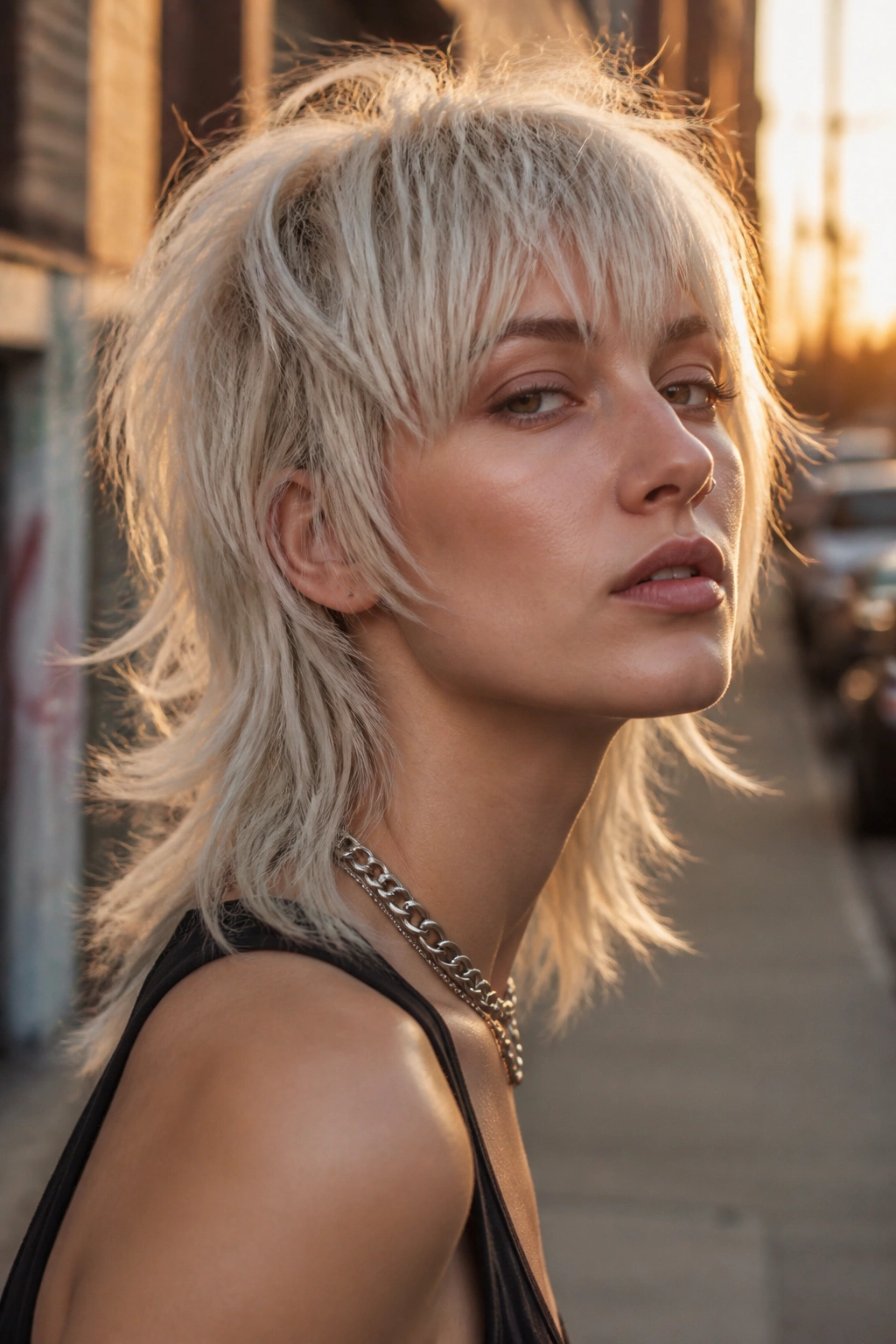
Platinum and razored ends make a mullet look sharp fast. No fluff. No filler. Just a strong shape with a pale blonde that gives every edge more attitude.
This version is for women who want the cut to read a little bolder. The platinum tone pulls attention upward, while the razored finish keeps the ends light and broken up. On straight or slightly wavy hair, that combination can look clean and edgy in a way that a softer blonde sometimes cannot.
The catch is that platinum shows damage faster. If the hair is dry or over-processed, the cut can start looking brittle instead of piecey. That is why this style needs a disciplined finish: bond care, heat protection, and a trim schedule that keeps the razored edges from turning fuzzy.
I like this cut most when the crown is still shaggy but the perimeter stays controlled. You get movement at the top and a cleaner line at the bottom, which stops the whole thing from drifting into chaos. A flat iron bend at the ends—just a tiny wrist turn—helps a lot. So does a pea-sized amount of pomade rubbed between the palms and tapped only onto the tips.
If your wardrobe leans black, leather, denim, or clean neutrals, this haircut slots right in. If you want soft and romantic, it may feel too pointed. That is the trade-off. Strong shape, stronger vibe.
3. Strawberry Blonde Mullet with Wispy Fringe
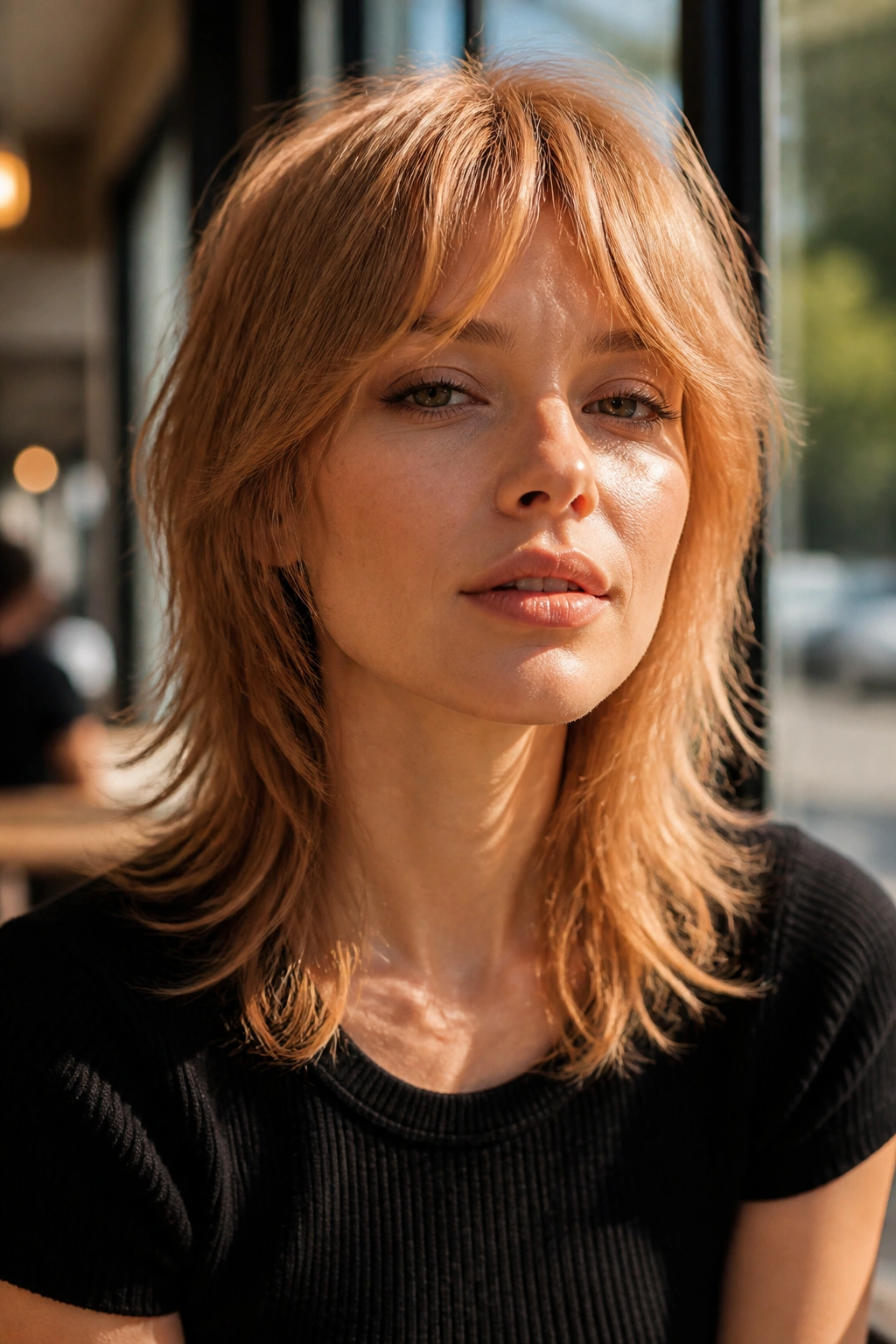
What if you want the mullet shape without the heavy edge? This is the answer most stylists reach for when a client wants movement but still wants the cut to feel light around the face.
A strawberry blonde mullet with wispy fringe has a warmer, fresher feel than icy blonde versions. The color brings a little glow to the skin, and the fringe stays airy instead of dense, so the haircut keeps breathing room around the eyes. It is especially nice on hair that bends naturally, because the wispy pieces do not need to sit perfectly to look right.
The trick here is restraint. Too much fringe turns the cut heavy. Too little layering leaves the back flat. You want a soft, irregular line through the bangs, then longer, feathered pieces through the sides and nape. On fine to medium hair, that gives the illusion of more body without making the cut feel bulky.
If you style it, use a light mousse at the roots and a 1-inch iron only on random pieces. Don’t curl every strand. That makes the haircut look overdone, and this style depends on looking a little spontaneous.
How to Wear It
Let the fringe dry first. Then push it side to side with your fingers until it lands in a soft split.
A few spritzes of texture spray through the mids are enough. More than that can make strawberry blonde hair look dusty, especially if the tone leans peach or copper. Keep the ends soft and touchable, and leave a few uneven pieces around the jaw. That little bit of mess is doing the work.
4. Dimensional Balayage Shaggy Mullet with Feathered Ends
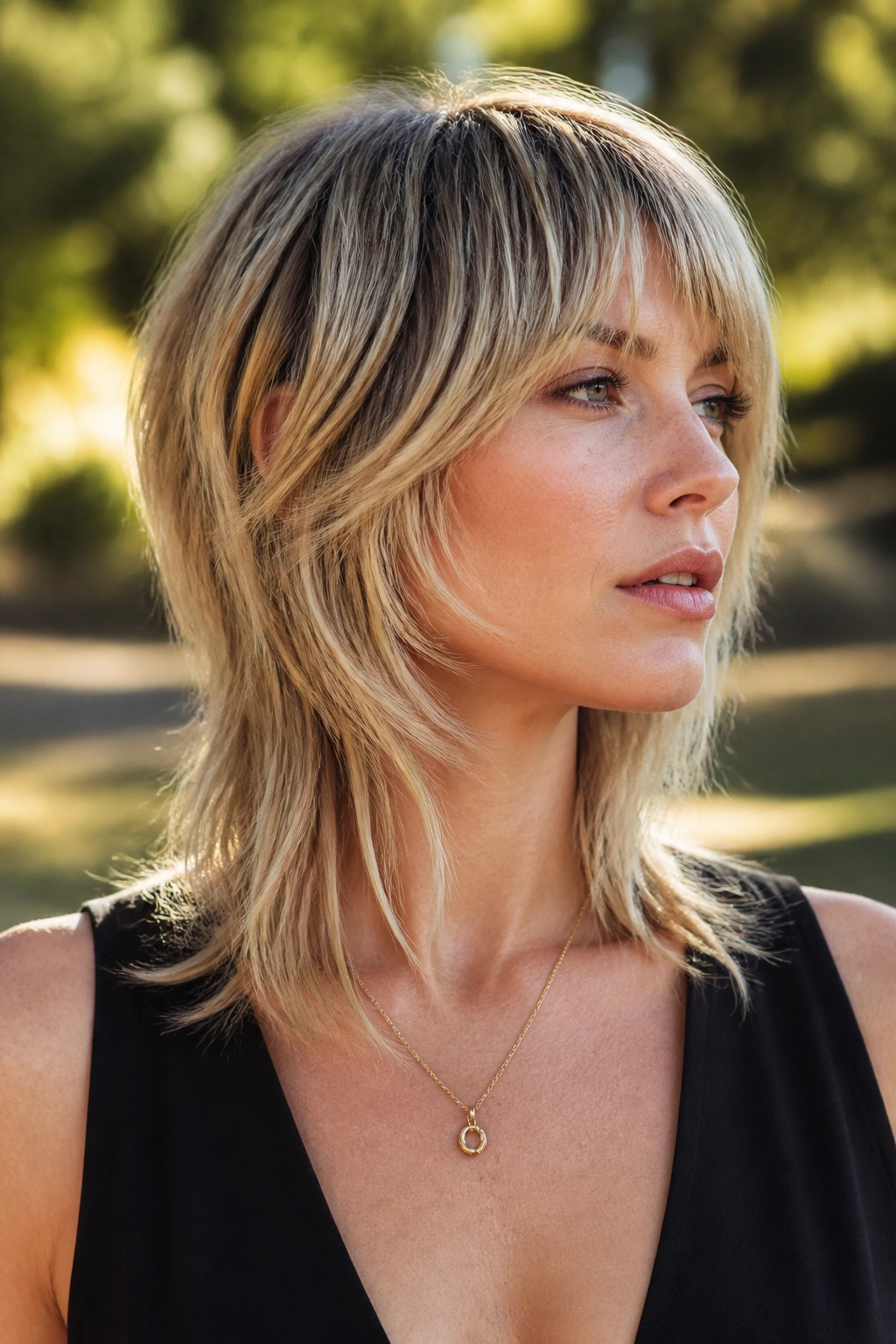
You see this haircut in motion before you notice the shape itself. Sunlight hits the layers, the blonde shifts between darker and lighter ribbons, and the whole cut looks like it was made for movement.
A dimensional balayage shaggy mullet with feathered ends is for women who want the haircut to feel expensive rather than punky. The balayage keeps the color from looking flat, and the feathered ends soften the transition from the crown to the neck. It is a smart choice if you have medium to thick hair, because the layering can be deep without the blonde looking blocky.
The Coloring Trick That Softens the Shape
Balayage works here because it breaks up the outline. A single blonde shade can make the layers look harsh, especially if the haircut is very choppy. Add a second or third tone—think beige, honey, and a slightly deeper root—and the eye stops reading one hard line and starts reading movement.
- Ask for hand-painted lightness around the face and top layers
- Keep the nape a shade deeper for dimension
- Feather the ends so they flip instead of stick out
- Leave some root shadow so the grow-out looks intentional
That root shadow matters more than people think. It keeps the mullet from looking over-bleached and lets the texture stand on its own.
The styling part is mercifully simple. A rough blow-dry with a diffuser or a quick pass of a round brush, then a dry texture spray at the crown, is enough. If the ends are feathered well, they will do half the work for you.
5. Golden Blonde Mullet with Micro Layers
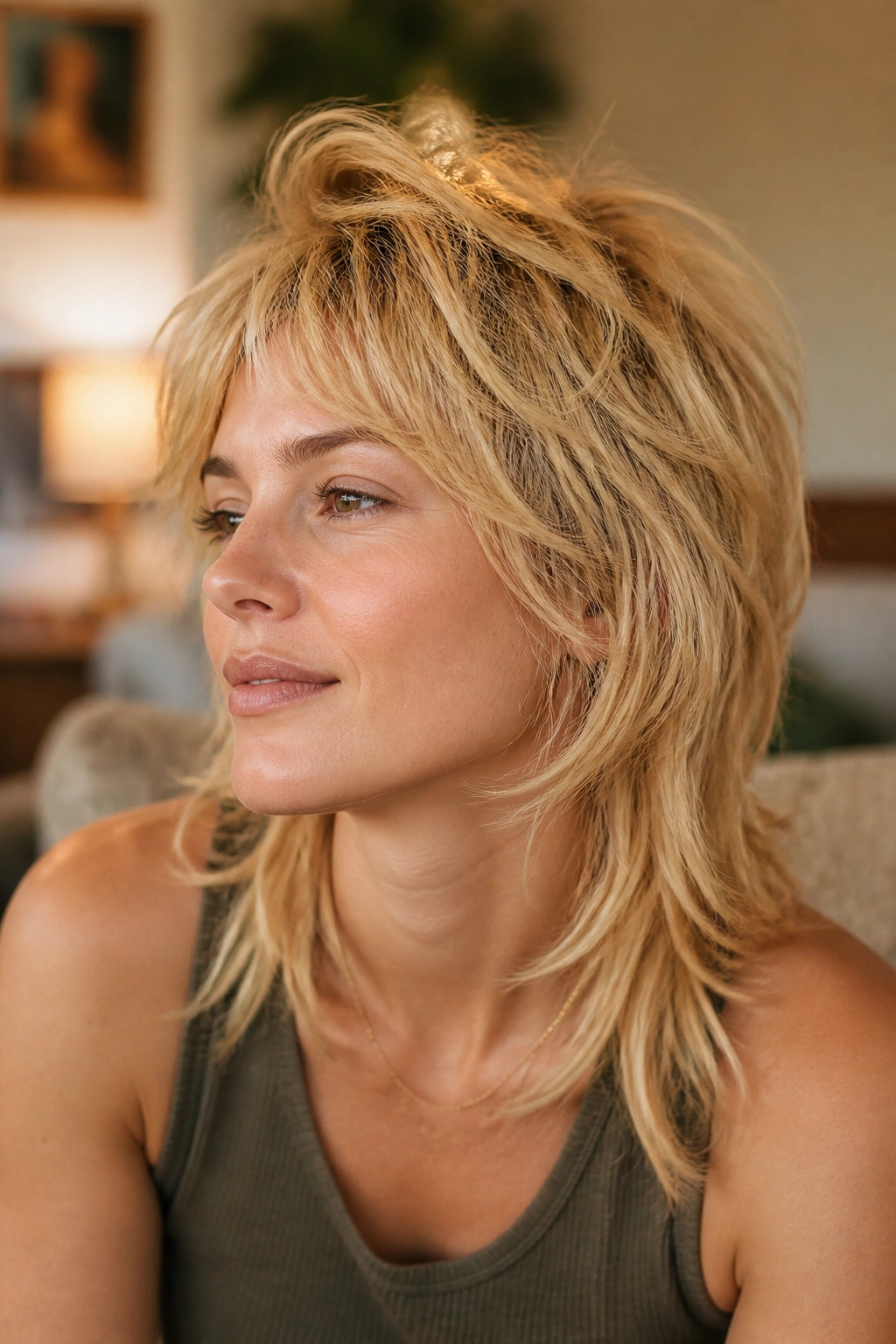
A golden blonde mullet can be warm in a way that icy blondes never are. That warmth changes the whole mood of the haircut.
Micro layers are the quiet trick here. They sit close to the head, mostly through the crown and upper sides, and they help the hair lift without looking shredded. On a golden blonde mullet with micro layers, the result is softer than a classic choppy shag but still has enough lift to keep the silhouette alive.
This is a good cut for women whose hair tends to fall flat at the roots. Micro layers create that little bit of air near the crown, which stops the haircut from clinging to the head. The blonde tone also helps, because golden shades catch the eye and make the layer work visible without needing hard contrast.
I like this version on hair that has some natural bend. Straight hair can work, but if it is very silky, the layers may need a light mousse or root spray to stay open. Thick hair benefits too, as long as the stylist does not over-thin the ends. The danger with micro layers is overcutting them. Too many tiny short pieces and the whole thing starts to puff.
Keep the finish loose. A soft bend through the front and a barely-there flick at the ends is enough. If you go too neat, you lose the point.
This is the mullet for someone who wants texture but not drama. It is quietly good. That’s enough.
6. Short Choppy Blonde Mullet for Fine Hair
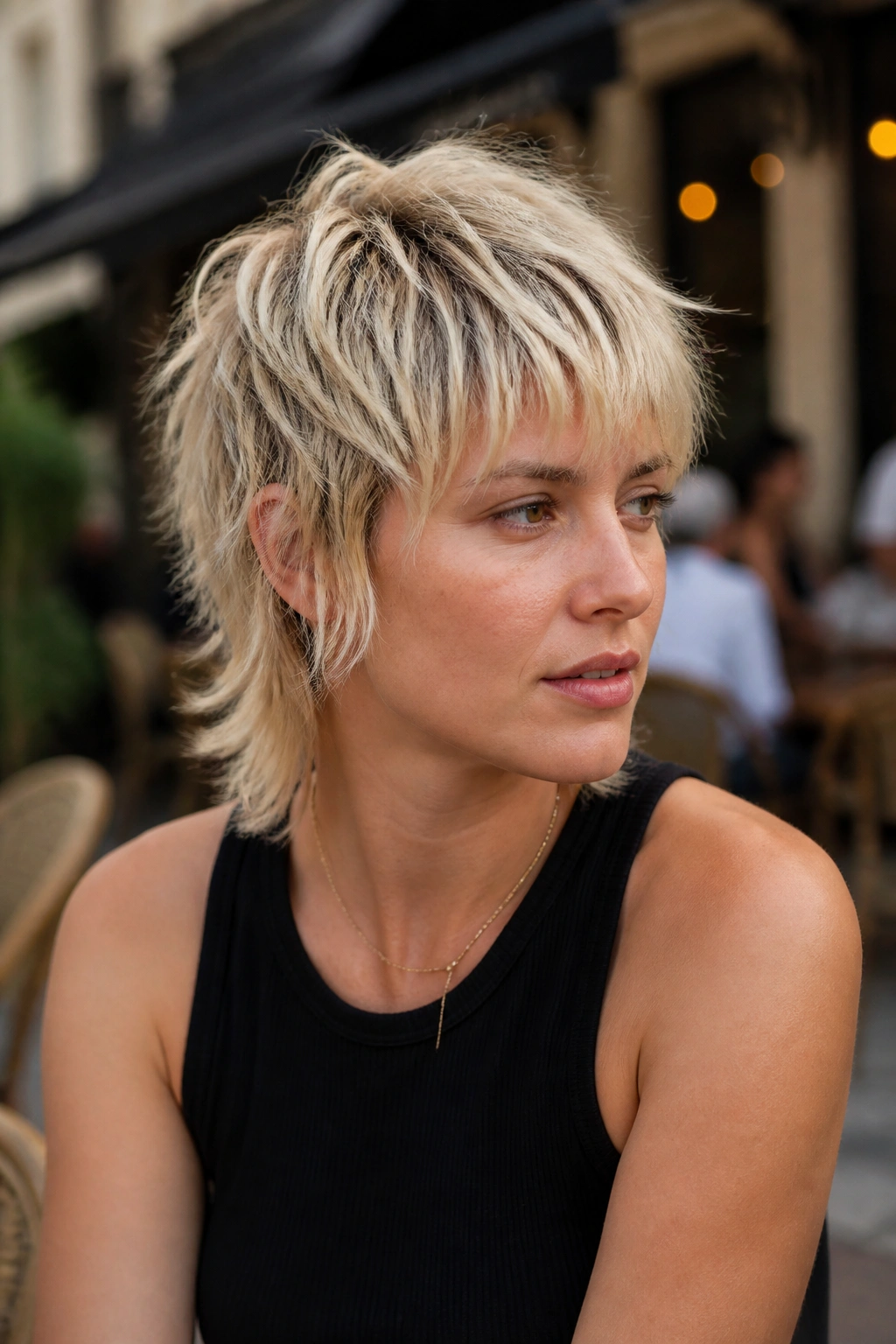
Short hair and fine hair are not the enemy of a mullet. Done right, they are actually the reason it looks good.
A short choppy blonde mullet for fine hair is one of the smartest versions on the list because it stops the hair from hanging limp. The shorter crown creates lift, the cropped top gives the illusion of density, and the longer nape keeps the whole cut from reading like a pixie that gave up halfway through. That last part matters. You want shape, not confusion.
How It Differs From a Pixie or a Wolf Cut
A pixie is usually tighter around the head. A wolf cut leans heavier into the shag. This cut sits in the middle, which is why it works so well on fine hair.
- The top is cropped enough to lift the roots
- The sides stay light so they do not collapse inward
- The nape stays longer to keep the mullet outline visible
- The blonde tone should stay soft, not too ashy, or the cut can look flat
The best version uses blunt-ish texture near the fringe and crown, then a softer taper at the back. If you have baby-fine hair, too much thinning will make the ends look see-through. Skip that. Ask for point cutting and controlled layering instead.
A dry texture spray at the roots will help, but the real magic is in the cut itself. If the balance is right, you can rough-dry it in under ten minutes and still get a shape that holds. That is the appeal here. It does not ask much.
7. Long Blonde Mullet with Face-Framing Layers
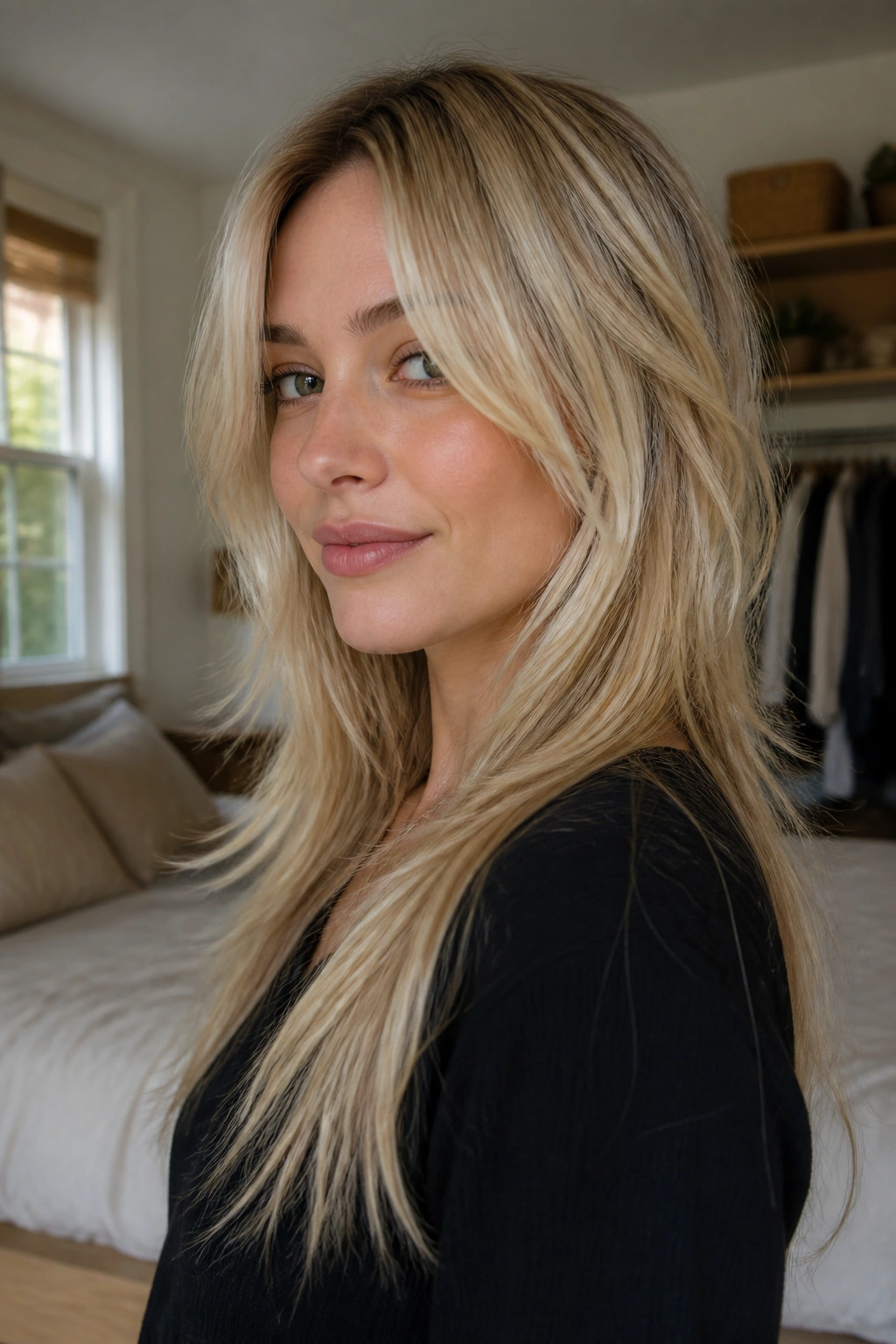
Not everyone wants to go short. Some people want the mullet shape, the shaggy texture, and enough length to tuck behind an ear when they are over it.
A long blonde mullet with face-framing layers keeps the drama in the shape, not the length. The front pieces can fall to the cheekbone, jaw, or collarbone, while the back keeps its layered drop. It is a good fit for thick hair, because the extra length gives the stylist room to remove weight without making the style feel chopped to bits.
Where the Length Should Sit
The front should start with movement near the cheekbones or lips. That keeps the haircut flattering when you wear it loose, tied back, or half up. The back can stay longer, but it should not be one blunt curtain. You want separation in the layers so the ends swing when you move.
This version often looks best with a beige or champagne blonde. Those tones soften the long silhouette and keep the haircut from feeling too severe. A deep side part can make it feel more polished; a middle part turns it softer and a little younger. Both work.
Ask your stylist for face-framing pieces that melt into the crown, not disconnected chunks. That distinction matters. If the front and back feel like separate haircuts, the whole thing loses its ease. And ease is the point.
A few large bends with a curling iron, then finger-combing them apart, is enough styling for most days.
8. Rooty Ash Blonde Mullet with Heavy Curtain Bangs
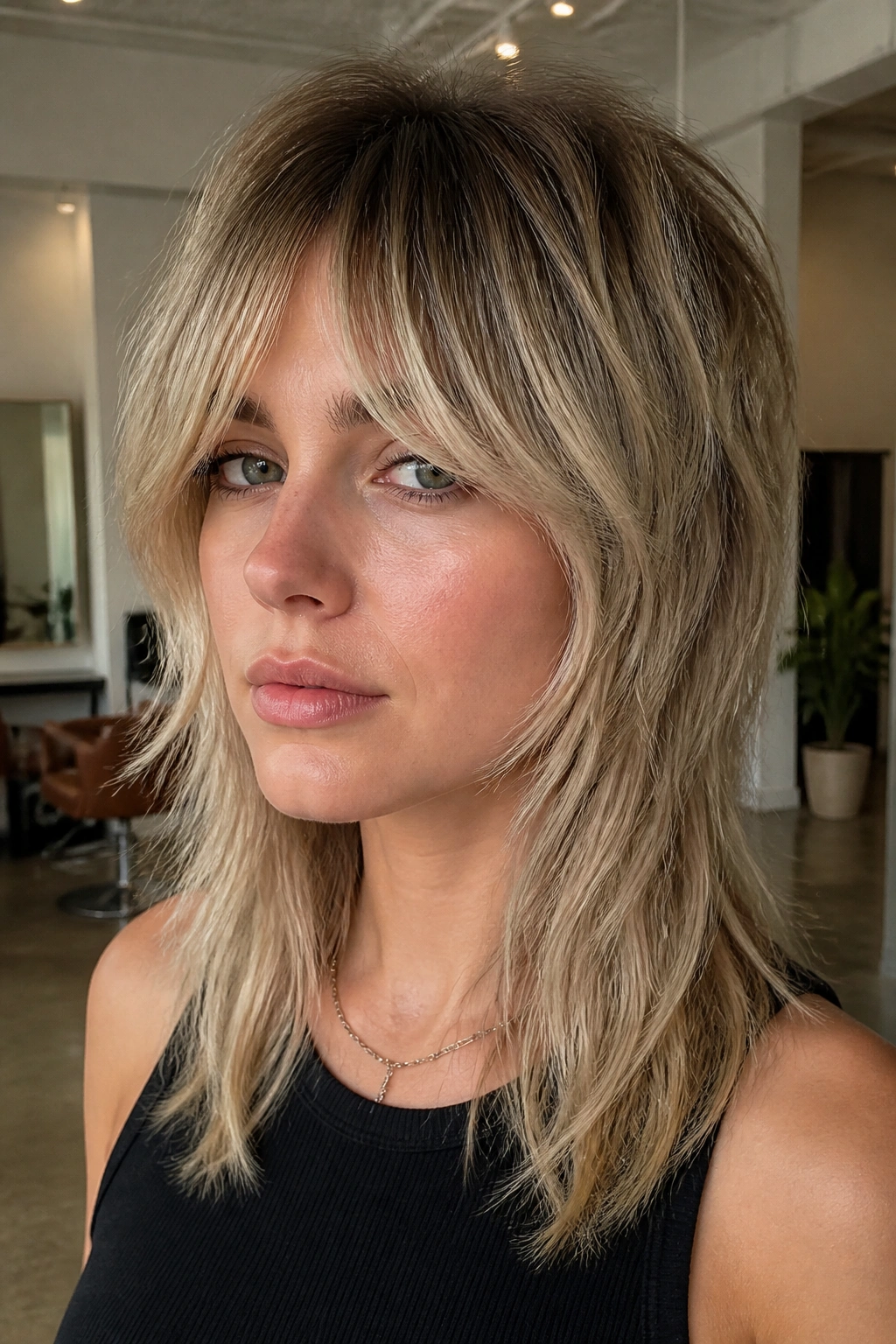
Root shadow is your friend when the cut is this textured. Without it, ash blonde mullets can look washed out or too bright around the scalp.
A rooty ash blonde mullet with heavy curtain bangs has more structure than the softer versions, but it still feels wearable because the darker root gives the eye a place to rest. The heavy curtain bangs make the front feel full, which is useful if your hairline is sparse or if you want the haircut to sit with some weight around the face.
This is one of the best options for someone who likes cooler tones. Ash blonde can be tricky, though. If the tone is too gray, the haircut may look dull instead of chic. If it is too yellow, the shape loses that sharp, smoky feel. The sweet spot sits in the middle: cool beige, soft ash, and a root that is maybe one or two levels deeper than the mids.
I’d keep this style a little messier than you think. Heavy bangs with overly polished ends can make the haircut feel too formal. Let the bangs break apart a little at the bridge of the nose, and keep the sides loose. The nape can be shaggy, but not so shredded that it frays.
If you wear glasses, this cut can look especially good because the fringe frames the frames. Small detail. Big payoff. It gives the whole face a stronger outline.
9. Soft Curly Blonde Mullet with Airy Ends
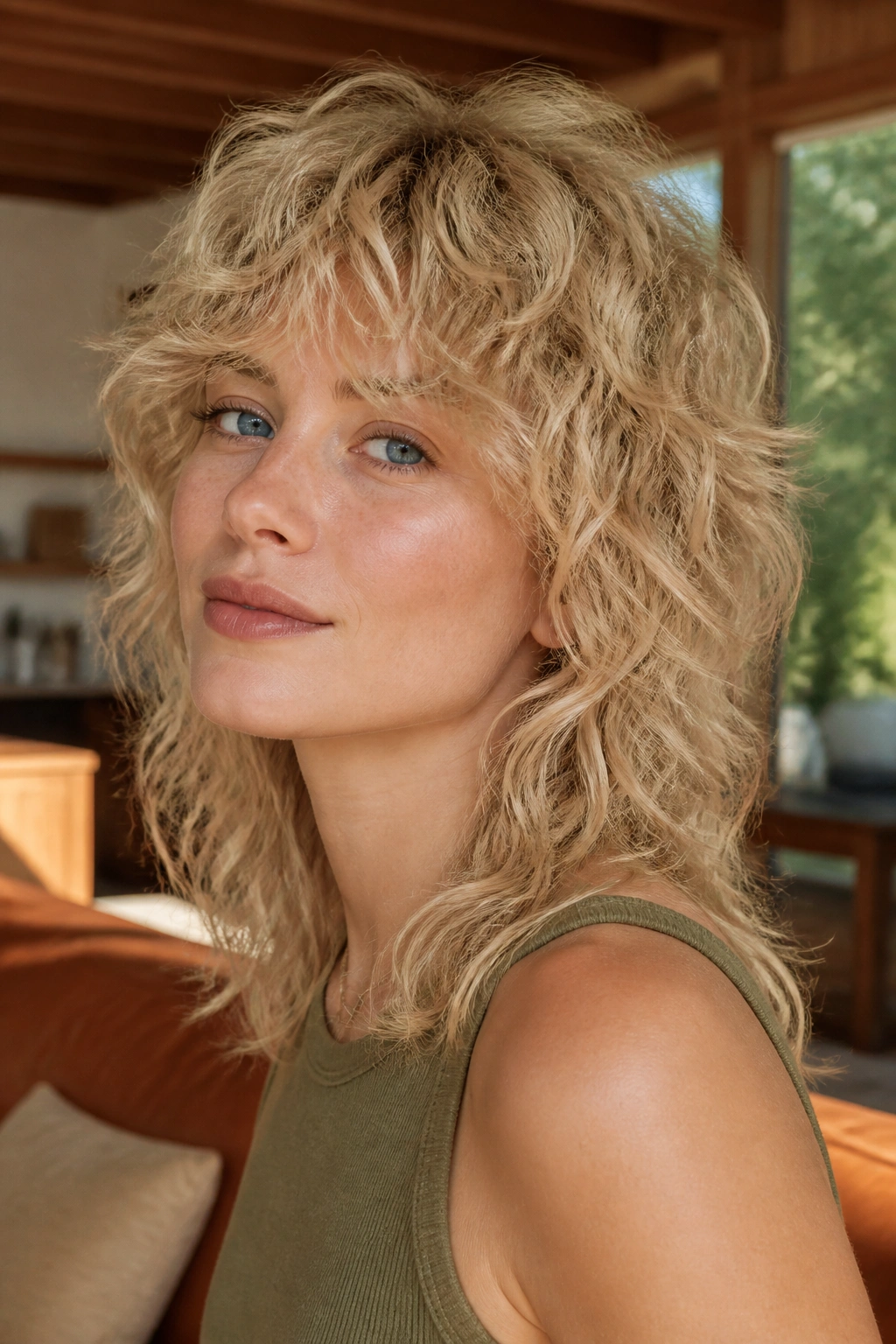
If your hair already bends on its own, the mullet can make those curls look intentional instead of puffy. That is the whole appeal.
A soft curly blonde mullet with airy ends works best when the curl pattern is respected, not fought. The crown stays a little shorter so the hair lifts, the sides stay layered enough to reduce bulk, and the ends are left light so they do not hang in one heavy curtain. On blonde hair, the curl pattern shows even more, which is lovely when the shaping is good and miserable when it is not.
How to Keep Curls from Blowing Out at the Sides
The side layers should be cut to encourage the curl to bounce down, not out. That means the stylist needs to think about where the curl springs from, not only where the hair lands when wet. Dry-cutting can help here, because curls shrink in strange ways once they dry.
A leave-in conditioner and a small amount of curl cream are usually enough. Heavy butters can drag the crown down. A diffuser on low heat keeps the texture open without puffing up the roots into a triangle.
This is a cut where the blonde color can either help or hurt. Soft buttery blonde makes the curls read warmer and more romantic. Pale blonde with too much contrast can make every ringlet look a bit crisp. If your hair is porous, toner fade shows quickly, so keep the color balanced. Not icy. Not yellow. Somewhere calm.
And yes, the mullet shape can look glamorous on curls. Not in a neat way. In a moving, wind-in-your-face way.
10. Tousled Blonde Mullet with Side-Swept Fringe
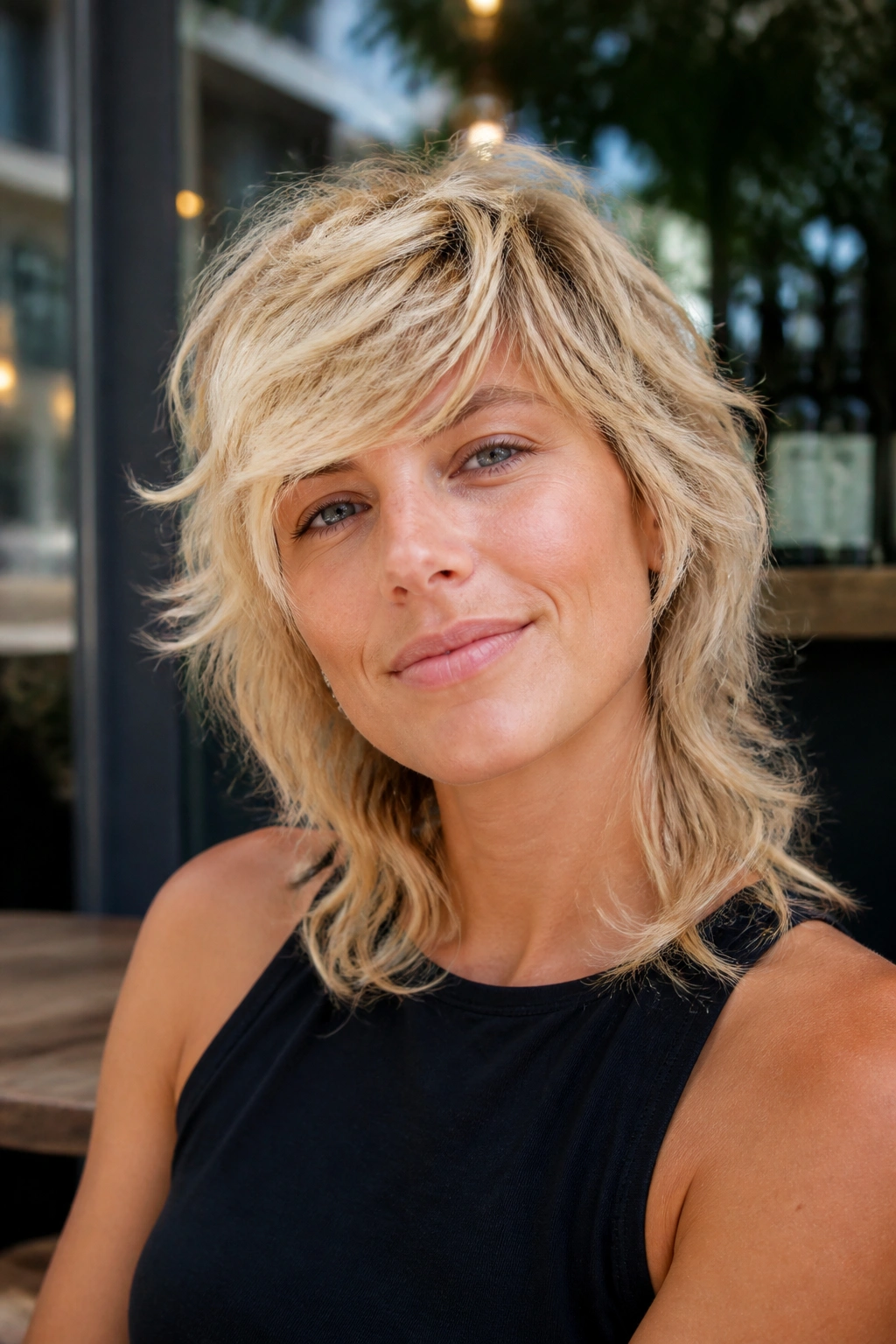
This is the version that makes people think you woke up with perfect hair, which is rude, because the haircut is doing half the job.
A tousled blonde mullet with side-swept fringe feels softer than a center-parted curtain version. The side-swept fringe changes the line across the forehead, which can flatter rounder faces and anyone who wants a little asymmetry without going full asymmetric cut. It also softens a stronger jawline in a way that feels easy rather than deliberate.
The best part is the movement. Side-swept fringe keeps the front from splitting too predictably, and the tousled top adds a little lift without looking teased. On blonde hair, especially a sandy or beige blonde, the texture reads casual and bright at the same time.
You do need a light hand with styling. A medium-barrel iron can give the fringe a bend, but don’t curl it into a perfect wave. Pull the hair forward, twist the iron slightly, and release before the curl sets too hard. Then rake a bit of texture cream through the ends.
If your hair is naturally flat at the front, this is a better bet than a heavy fringe. The side sweep gives you room to breathe. It also grows out with less drama, which is a practical bonus people tend to appreciate only after the first trim.
11. Piecey Blonde Mullet for Thick Hair
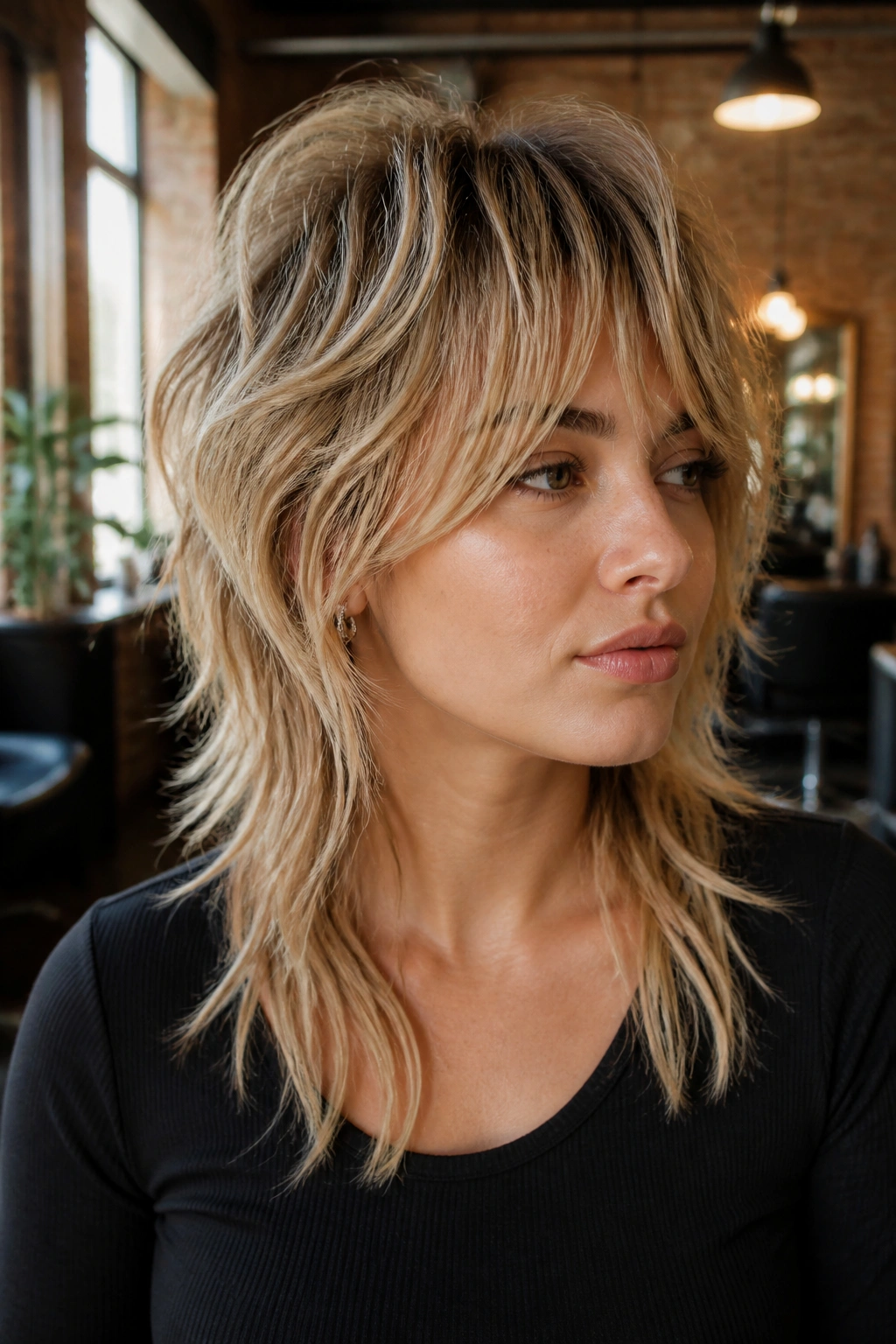
Thick hair can either make a mullet look rich and full or turn it into a helmet. There’s not much middle ground.
A piecey blonde mullet for thick hair is all about removing weight without killing movement. That means the haircut needs internal layers, not just outer shaping. The top should lift. The sides should break apart. The back should move in visible pieces rather than one heavy sheet. If the cut is done well, thick hair suddenly behaves like it has room to breathe.
The Debulking Question
This is where a lot of haircuts go wrong. Stylists sometimes reach for thinning shears too fast, and the result is fuzzy ends that stick out instead of falling nicely. Better move: controlled slicing, strategic point cutting, and enough length left in the perimeter to anchor the shape.
- Keep bulk removal focused near the crown and upper sides
- Leave the ends strong enough to hold their piecey shape
- Use blonde highlights to break up density visually
- Avoid over-layering the very bottom, or the hair can flare out
A creamy blonde with some lighter ribbons works well here. On thick hair, color helps separate the mass visually, which makes the pieceiness look intentional instead of accidental. That is one reason these cuts often look better after the second or third styling, once the layers settle.
A touch of matte paste on the ends can define the pieces, but use less than you think. Thick hair grabs product and keeps it. Too much turns separation into gunk, and nobody wants that.
12. Sunlit Grown-Out Blonde Mullet
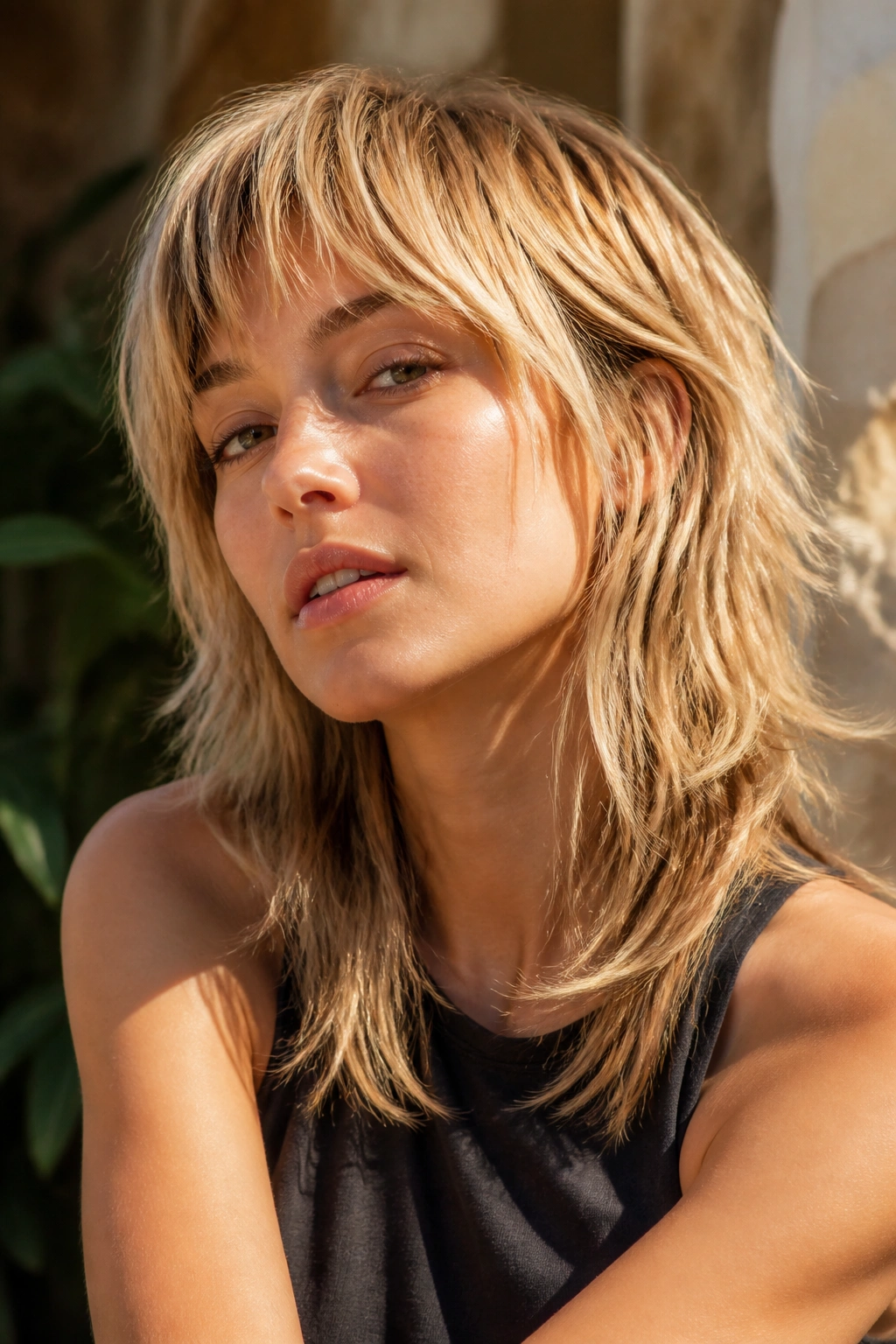
The nicest mullets are often the ones that no longer look brand new. That may sound backward, but it is true.
A sunlit grown-out blonde mullet works because the cut softens as it grows. The bangs get a little longer, the crown relaxes, and the back gains more movement. Instead of losing its shape, the haircut starts to feel lived in. That is often the point for women who want the mullet energy without constant upkeep.
This version is especially good if your blonde is slightly rooted, balayaged, or toned to a soft beige. The grown-out dimension keeps the haircut from reading too severe, and the light catches the different lengths in a way that feels natural. You can still style it with a blow-dry brush or a quick wave iron, but you don’t have to chase perfect symmetry.
What I like about this one is how forgiving it is. The whole cut gets a little better when it stops looking precise. The fringe softens, the nape loosens, and the blonde starts to look sunlit instead of freshly processed. That is a good place to be.
If you want a mullet that will survive busy mornings, this is the one to point to in the salon chair. Ask for long layers, soft texture through the crown, and enough fringe to frame the face without pinning it in. Then leave a few pieces imperfect on purpose. That’s where the charm lives.
