



A good mullet haircut for men is not a joke cut. It works because the shape does two things at once: it keeps the front and sides tight, then lets the back carry movement and length. Done badly, it looks like a grown-out accident. Done well, it looks sharp, a little unruly, and more thought-out than most people expect.
The trick is balance. Short sides make the cut readable; the back gives it attitude. Barbers who know the style usually keep the crown blended and the neckline clean, because the worst mullets are the ones that forget the neck and ears exist.
That is why the range is so wide. A mullet can be low-key and work with a collared shirt, or it can lean hard into fades, curls, and heavy texture. The shape changes a lot depending on hair type, face shape, and how much contrast you want, and the best versions usually make one part of the cut the star while the rest stays in support.
The first version is the cleanest place to start.
1. Classic Tapered Mullet for Men
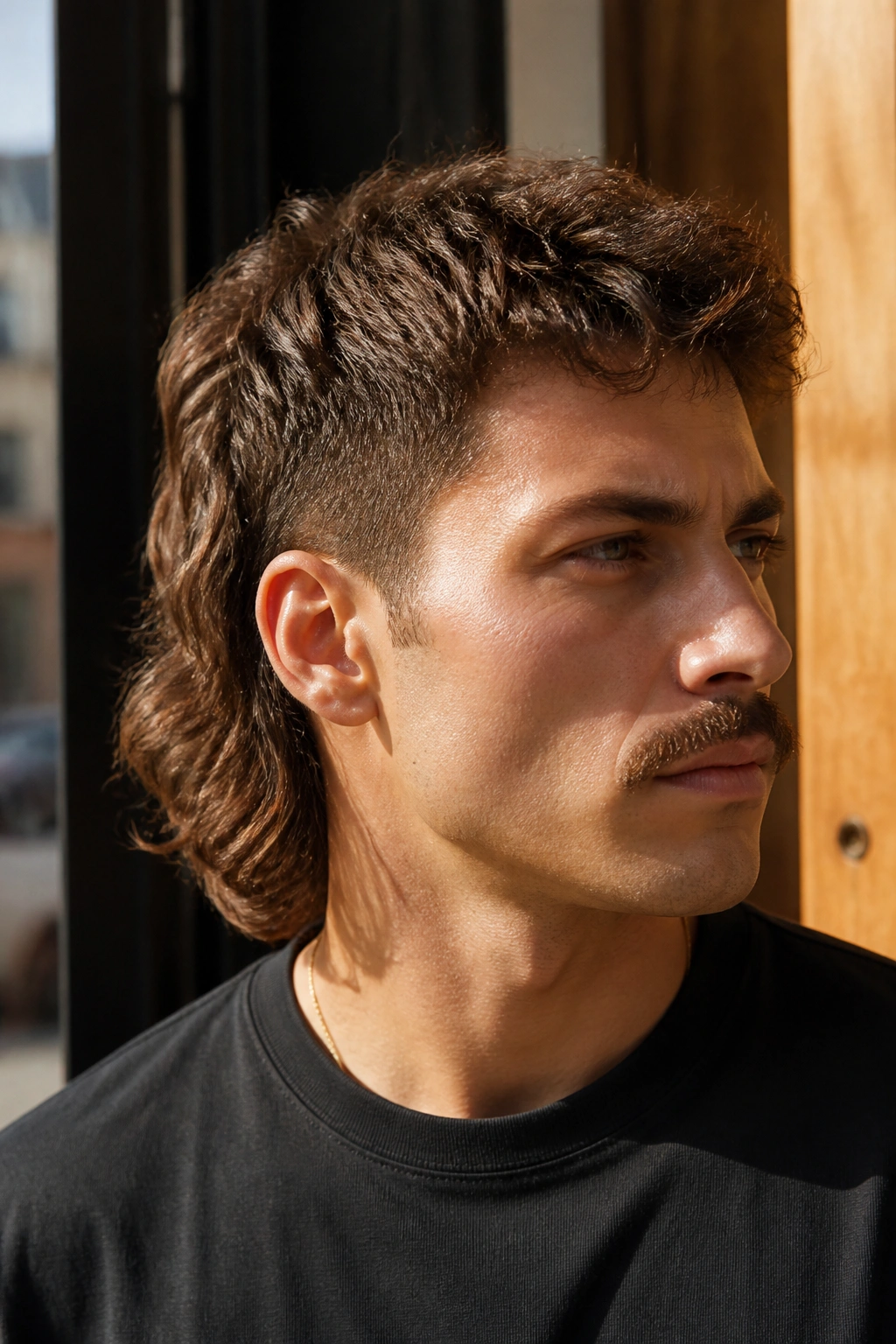
A classic tapered mullet is the version I recommend when someone wants the shape without turning the whole haircut into a stunt. The sides stay neat with a soft taper around the ears and sideburns, the top keeps enough length to move, and the back hangs a little longer than the rest. It reads clean from the front and still has that unmistakable tail when you turn around.
Why It Still Works
The taper does the heavy lifting. Instead of a hard disconnect, the cut shifts gradually from short to long, which makes it easier to wear with jeans, a work shirt, or a hoodie you throw on at 7 a.m. The haircut looks especially good when the crown has a little texture — not stiff, not blown flat, just enough bend that the back doesn’t sit like a dead curtain.
Barbers usually keep the top around 3 to 4 inches and the back somewhere near 4 to 6 inches, though that depends on hair density and how bold you want the silhouette. A guy with straight hair can wear this and keep it tidy. A guy with wavy hair gets a bit more movement for free.
- Ask for a low taper around the ears and nape.
- Keep the top layered, not blunt.
- Leave the back long enough to brush over the collar.
- Style with a pea-sized amount of matte cream or light paste.
Best move: ask your barber to clean the neckline without squaring it off too hard; a soft taper looks more natural than a chunky block.
2. Skin Fade Mullet Haircut
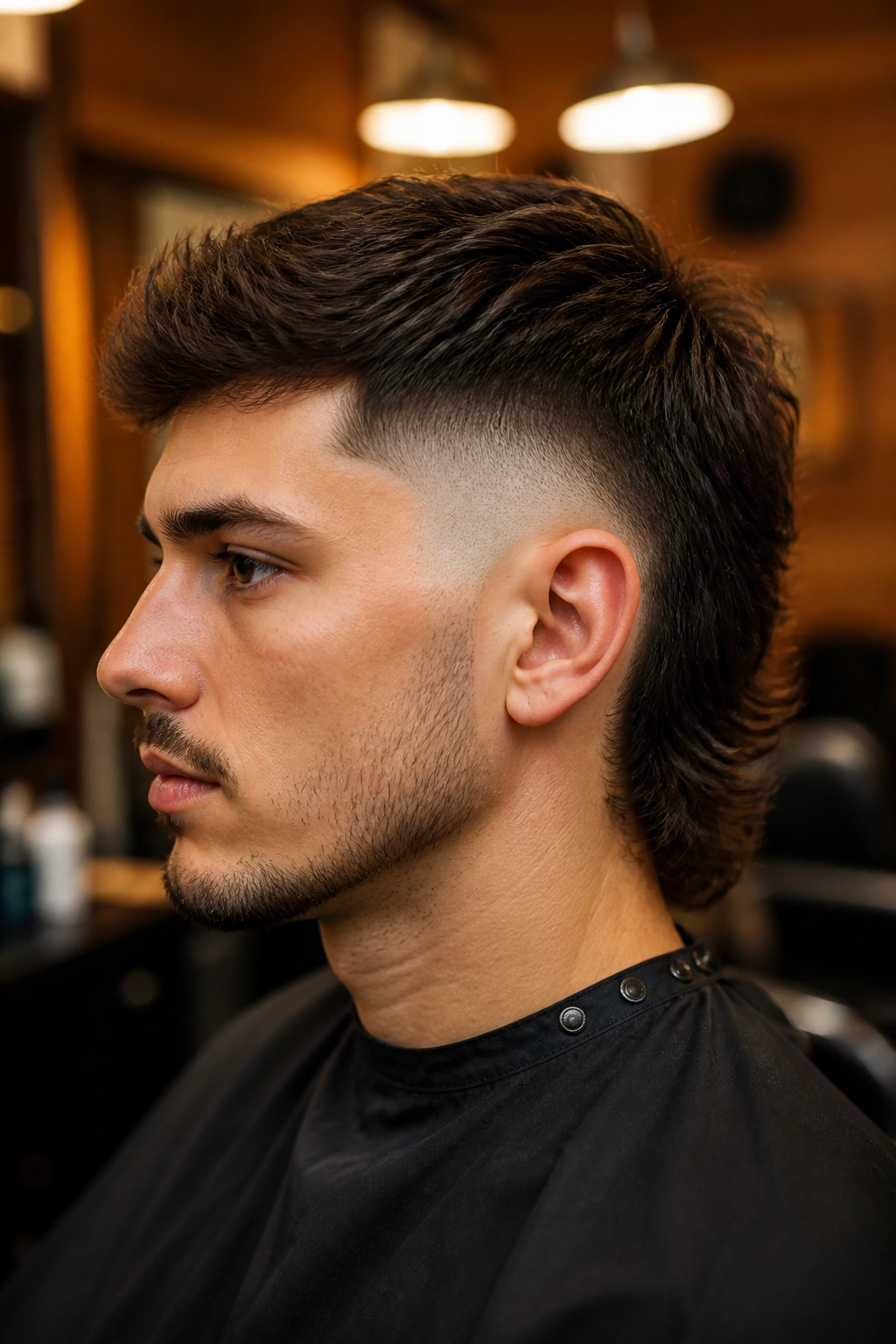
The skin fade mullet is the sharpest version in the lineup. The fade drops all the way to the skin or very close to it, and that empty space makes the back length look deliberate instead of leftover. If you want the haircut to feel crisp from every angle, this is the one.
The appeal is contrast. The top and back can stay fairly modest — think 3 to 5 inches on top and a longer tail that sits just at or below the collar — while the sides get stripped down hard. That contrast makes cheekbones look stronger and gives thick hair a cleaner outline. It also keeps the cut from puffing out around the ears, which is where a lot of mullets go wrong.
This style asks for upkeep. The fade shows regrowth fast, and the shape loses its snap once the sides start filling in. A quick edge-up every couple of weeks keeps the outline tidy, and a matte clay on the top gives the hair a rough finish that suits the cut better than shine.
At the chair, be direct. Say you want a skin fade that stays tight through the temple and blends into a longer back, not a buzzed head with a tail. That one sentence saves a lot of bad assumptions.
3. Curly Mullet That Keeps Its Shape
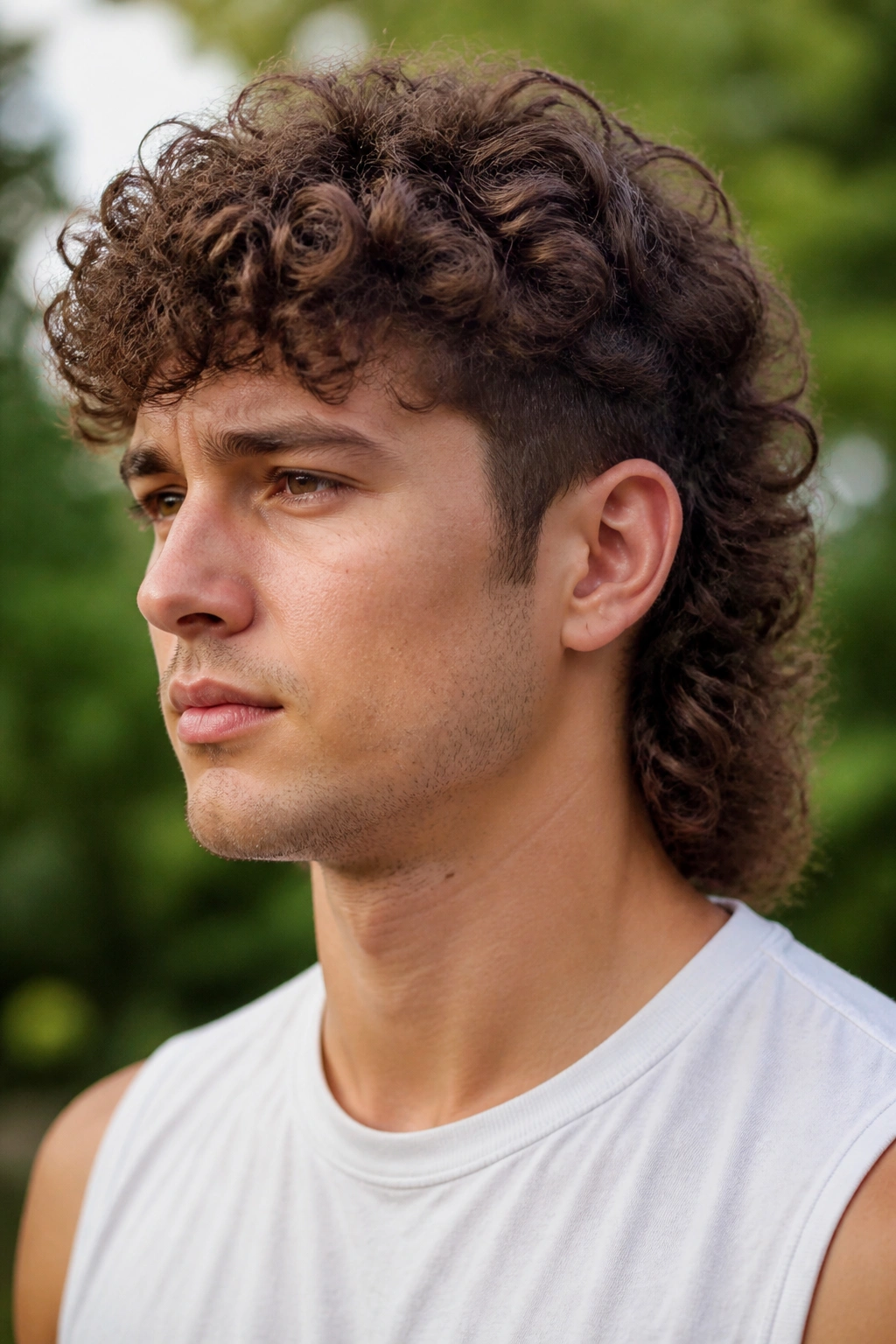
Can curls wear a mullet without looking messy? Absolutely, and curls often make the cut better. The texture gives the top and back built-in lift, so the style feels alive even when you do not pile on product.
The main job is controlling bulk. Curly hair wants to spread outward, especially near the crown and sides, so a barber needs to leave enough length on top for the curl pattern to show while trimming the sides tighter near the temples. If the top gets cut too short, the cut turns puffy. If the back gets left too heavy, it can look like a triangle with attitude.
How to Style It
- Work curl cream through damp hair from roots to ends.
- Scrunch with your hands, then let the curl pattern form.
- Diffuse on low heat if you want more lift at the crown.
- Skip dry brushing; it breaks the curl clumps and makes frizz louder.
- Use a dime-sized touch of light gel on the ends if the hair falls flat.
The best curly mullet has shape, not shellacked curls. Leave a little air in it. That space between the strands is what keeps the back from looking heavy.
4. Shaggy Texture Mullet for Easy Movement

You know the guy with straight hair that refuses to stay in place? This is the cut that gives him some chaos on purpose. A shaggy mullet works because the choppy layers create movement where the hair would otherwise lie flat.
Think of this cut as the relaxed cousin in the family. The top is broken up with point cutting, the ends are softened, and the back is kept loose instead of perfectly shaped. On the right head, that gives you a lived-in look that feels easy rather than sloppy. On the wrong head, it can slip into “I forgot to get a trim,” which is why the layering matters so much.
- Keep the fringe soft and uneven.
- Ask for internal layers through the crown.
- Leave enough length around the ears so the shape does not balloon.
- Use sea salt spray on damp hair, then rough-dry with your fingers.
- Finish with matte paste only on the ends if needed.
The point is movement, not polish. If you like hair that falls in a slightly different way every day, this cut gives you that with two minutes of scrunching and a quick blast of air.
5. Burst Fade Mullet With a Tight Curve
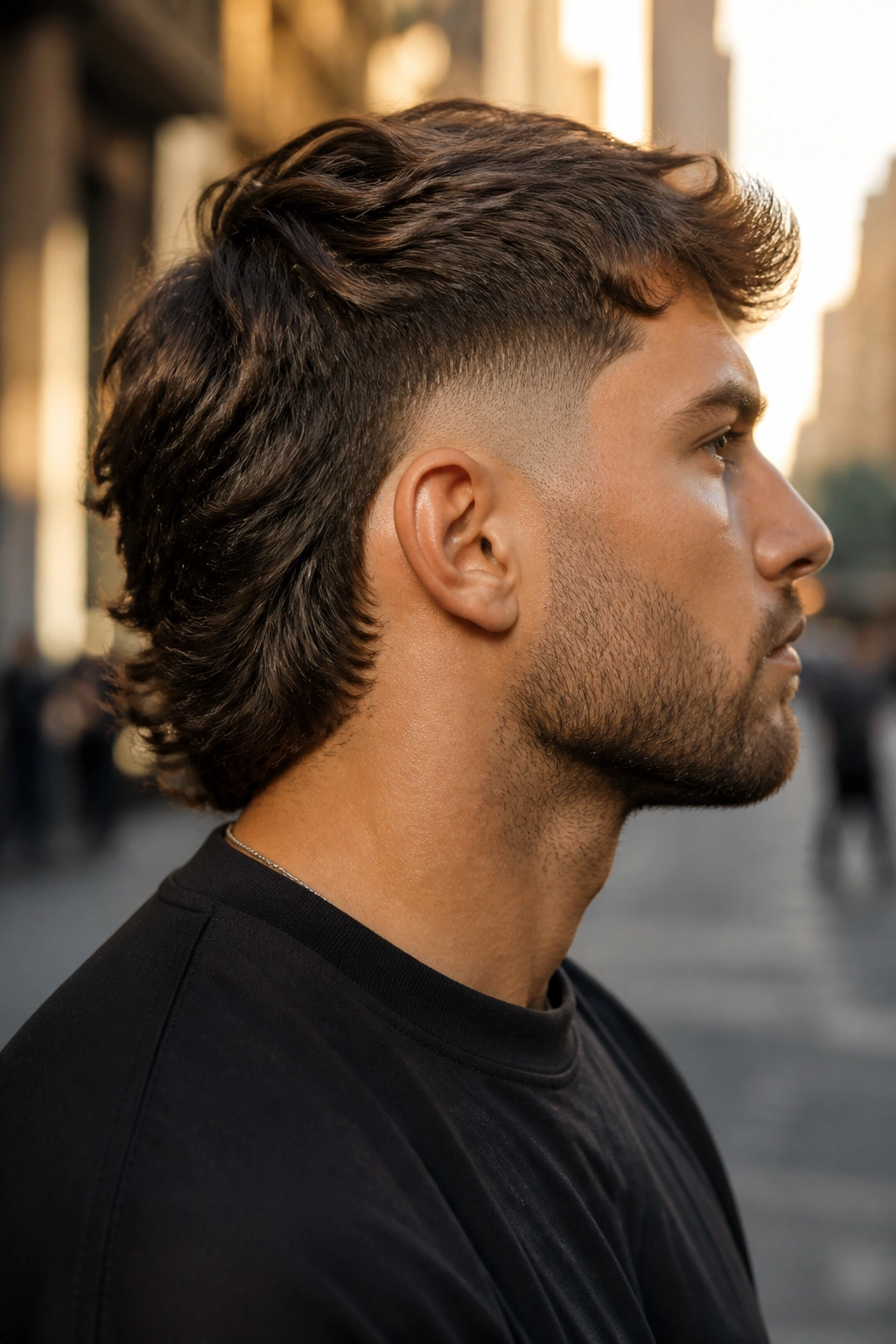
The burst fade is the barber’s cleanest trick for framing the ear. Instead of running straight down the side, the fade curves around the ear like a small sunburst, then disappears into the back length. It makes the cut look carved rather than merely cut.
That curve changes the whole mood. A straight fade can feel severe on some faces; the burst shape softens the sides a bit while still keeping them short. Thick hair handles this especially well because the fade removes bulk right where the hair usually sticks out, while the back stays long enough to give the style some kick.
One thing I like about this version is how it handles profile view. From the front, it looks neat. From the side, the curve around the ear gives the haircut a clear line, which is useful if your hair grows fast and starts to puff by day ten. A low burst fade stays subtle. A high burst fade looks louder and needs more frequent cleanup.
Skip this style if you hate barbershop maintenance. The fade loses its shape when the area around the ear grows in, and the haircut stops looking crisp fast. If you do not mind that, it is one of the more disciplined mullet shapes around.
6. Business-Back Mullet Haircut
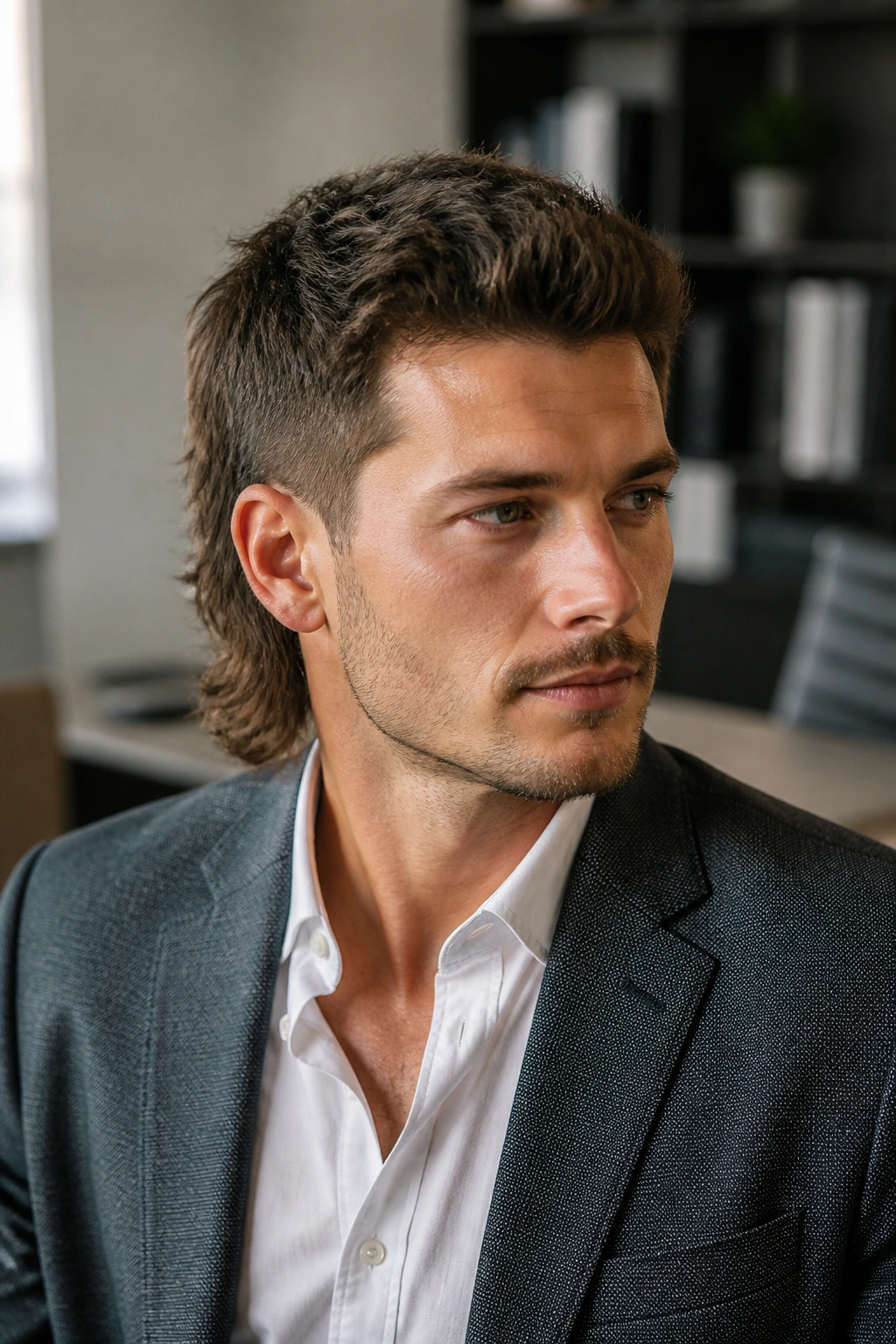
Unlike the loud skin-fade versions, the business-back mullet keeps the sides longer and the back quieter. That is the whole point. From the front, it can pass as a neat textured cut with a soft taper; from the back, it still has enough length to give you the mullet shape without turning it into a spectacle.
This version suits men who need the haircut to work with shirts, jackets, and a clean shave or a short beard. The top usually sits around 3 to 4 inches, the sides stay scissor-cut or lightly tapered, and the back trails a little past the collar. Nothing about it should look disconnected. The barbers who do this well think in lines, not in drama.
I prefer this cut on straight or lightly wavy hair because the shape stays controlled. On very thick hair, it can swell at the sides if the layering is lazy. On very fine hair, it can fall flat unless the top gets enough texture. So yes, the hair type matters. It matters a lot.
Ask for a low taper, a soft crown layer, and no hard line between the sides and back. That phrase saves you from ending up with two different haircuts sharing the same head.
7. Permed Mullet With Built-In Bend
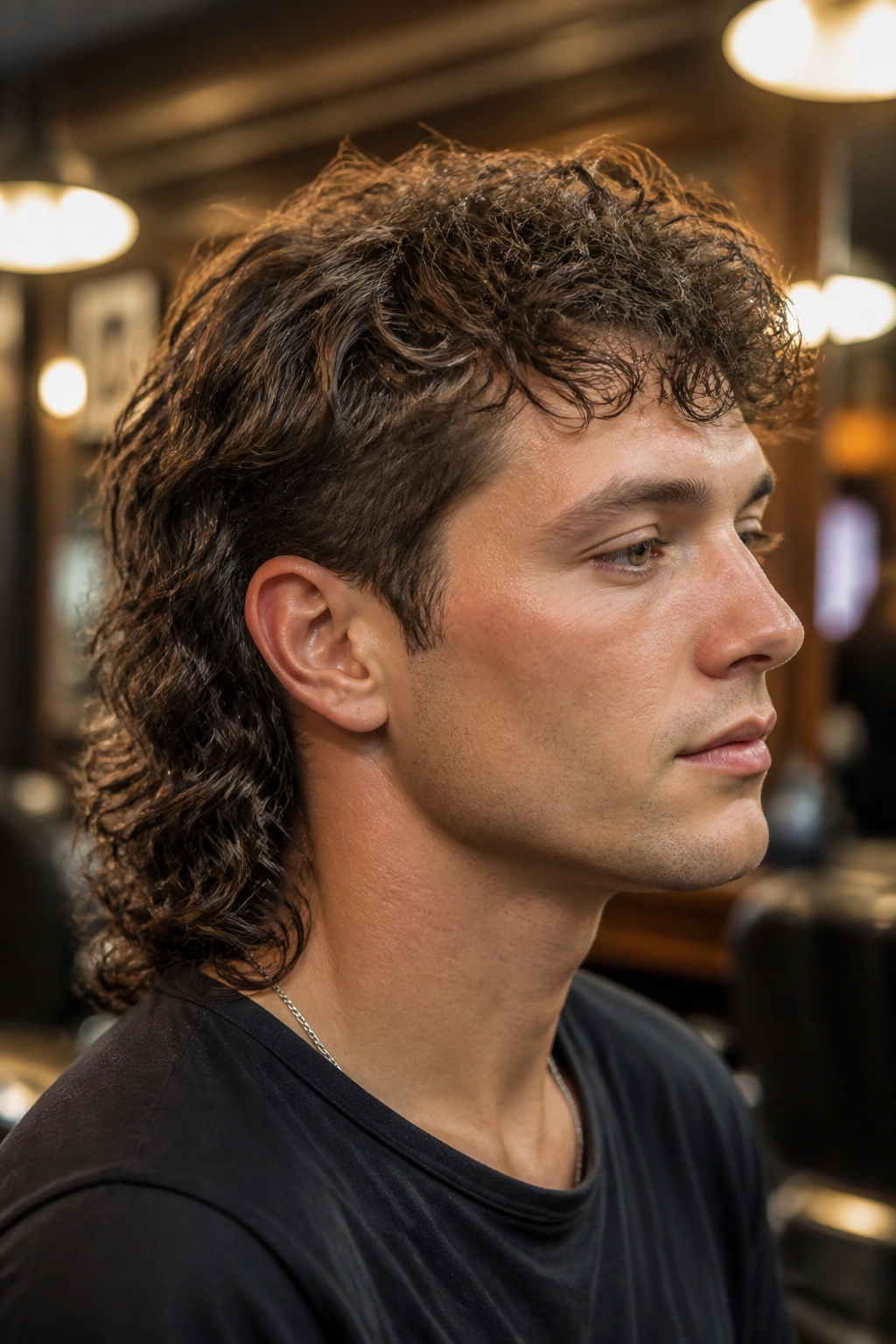
Flat hair can make a mullet look tired by lunchtime. A loose perm fixes that by giving the top and back some bend that stays in place instead of collapsing against the head. It is not about cartoon curls. It is about memory — the hair keeps the shape after you style it.
The best permed mullets use a softer rod pattern, because tight curls can make the back look too busy. Medium rods or a loose wrap create enough lift to keep the crown off the scalp and enough wave through the tail to make the cut feel alive. If your hair is stubbornly straight, this version can be a sanity saver.
Most stylists will also tell you to wait 48 hours before shampooing so the new shape can settle. That part matters more than people think. Rush the wash, and you weaken the bend before it has time to set.
What to Ask For
- Ask for a loose, modern wave pattern rather than tight ringlets.
- Keep the sides shorter so the curl on top has room to sit.
- Leave the back long enough for the bend to show, usually past 4 inches.
- Tell the stylist you want movement, not spiral curls.
After the perm, the haircut needs gentle handling. A wide-tooth comb is safer than rough brushing, and a light cream will keep the texture from turning crunchy. If the rods are too tight or the product is too heavy, the whole thing can tip into costume territory fast. Nobody needs that.
8. Afro Mullet for Coily Hair
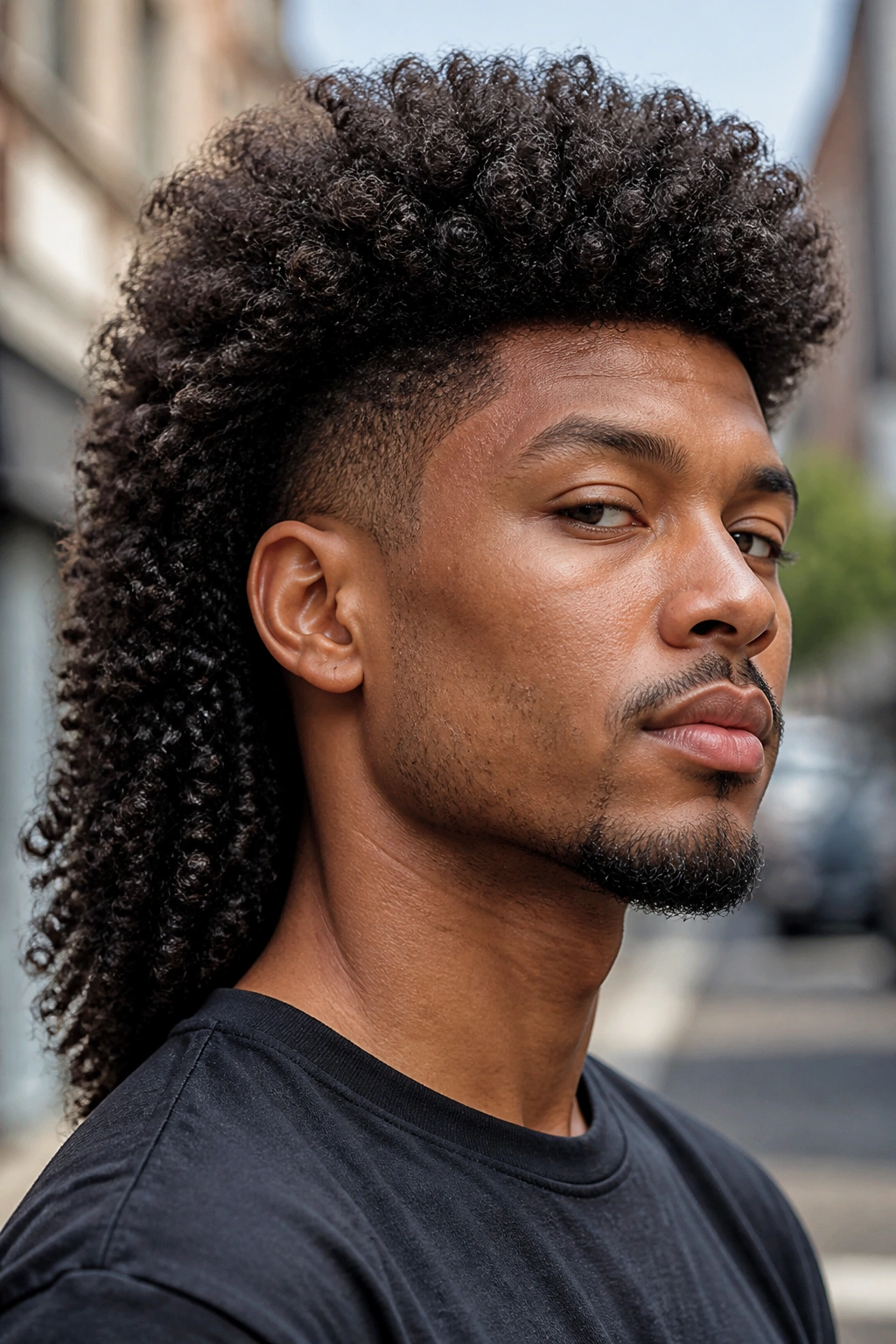
Does a mullet work on coily hair? It does when the cut respects the curl pattern instead of fighting it. The best afro mullets keep fullness through the crown and back while shaping the sides enough to keep the silhouette clean.
Shrinkage changes everything here. A length that looks modest when wet can sit much shorter once it dries, so a barber who knows coily hair usually cuts with the dry shape in mind or stretches the hair first. If the back gets trimmed too aggressively, the whole look loses its character. If the sides stay too round, the cut turns into a helmet. Neither outcome is fun.
How to Keep the Shape
- Moisturize with leave-in conditioner before styling.
- Pick the hair gently at the roots if you want more height.
- Keep the nape shaped so the back does not spread outward.
- Trim on a regular rhythm, because coily hair hides uneven growth until it gets obvious.
A good afro mullet feels balanced. The front and sides are controlled, the top has lift, and the back keeps enough weight to read as a mullet instead of a short afro with a tail. That balance is the whole game.
9. Undercut Mullet With a Hard Edge
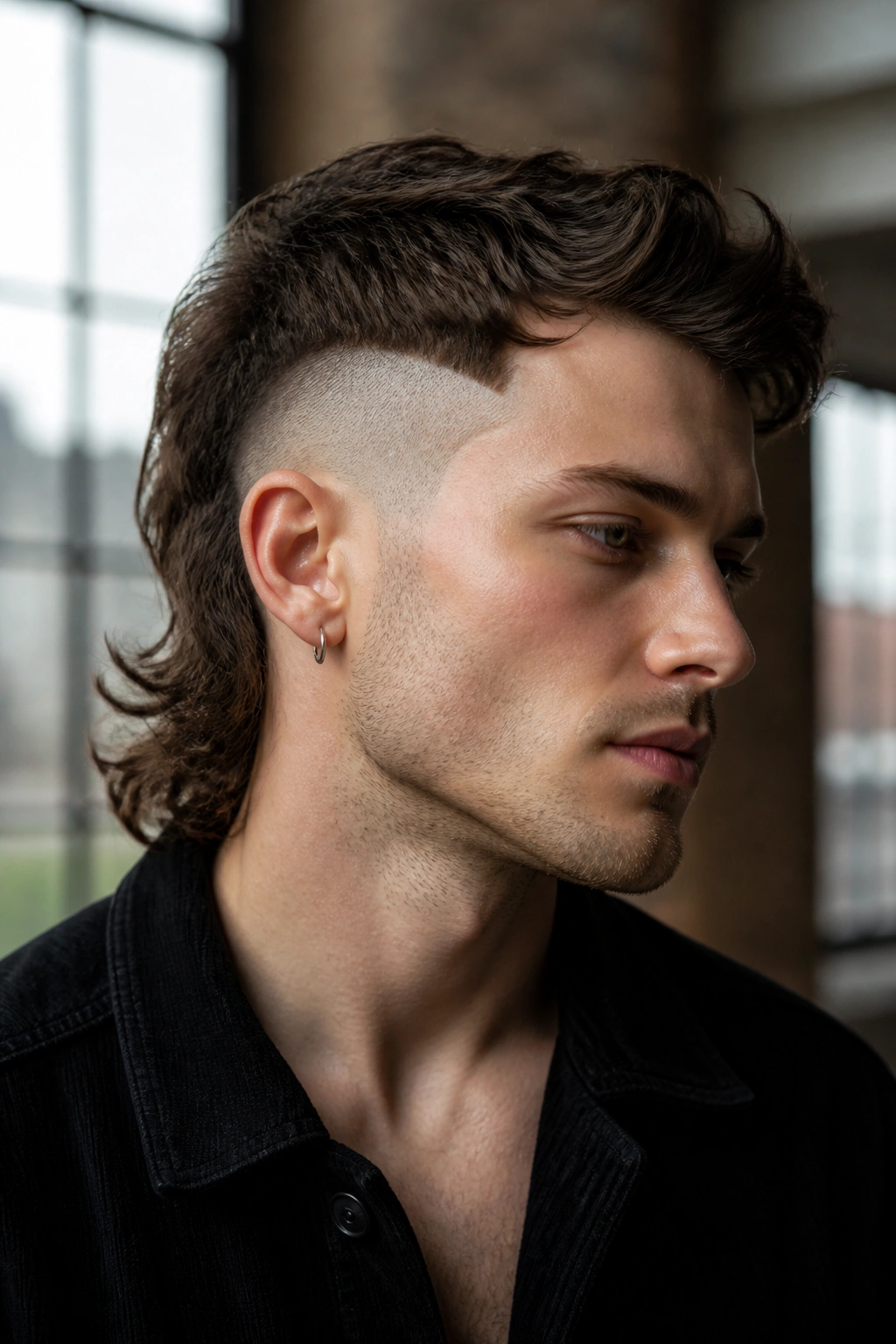
The undercut mullet is the blunt one. The sides drop hard, often with the clippers taking them down in a single step, and the top stays much longer so the separation is obvious. If the taper mullet feels polite, this one feels like it has an opinion.
That hard break gives the cut a strong shape, which works well on thick, straight hair that tends to puff out if left alone. It also creates a strong profile line, so the haircut stands up well in photos and in person. But the same line can look clunky if the top is too short or the back is too thin. This style needs length to justify the disconnect.
The undercut version is a good pick if you want the mullet to read more rock-and-roll than retro-nostalgic. It likes leather jackets, heavy boots, and a bit of product that keeps the front pushed back or swept loose. It does not like overblown shine.
If you go this route, ask for a clear undercut through the temple and a layered back that keeps its shape after a few weeks of growth. The grow-out stage matters here. A lot.
10. Wavy Fringe Mullet With a Soft Front

A wavy fringe changes the whole front of the cut. Instead of pushing the hair back, you let it fall forward in a loose line, then keep the back long enough to hold the mullet shape. The result feels softer than a spiky version and less severe than a fade-heavy cut.
This works best when the fringe is broken up, not chopped into a blunt curtain. Wavy hair already carries movement, so the front can look heavy fast if the ends are cut too straight. A barber who point-cuts the fringe and keeps a little space above the brows gives you a front section that moves instead of hanging like a wet towel.
I like this on men whose hair has some bend but not enough curl to stay in one shape on its own. A light sea salt spray, a quick blow-dry with the nozzle pointed downward, and a small bit of cream at the ends is usually enough. Too much product drags the fringe down. Too little leaves it fuzzy.
The best part is how easy it looks from the side. The front softens the face, the back keeps the attitude, and the whole cut feels less try-hard than some of the sharper mullet variations.
11. Heavy-Layered Mullet for Thick Hair

If your hair is dense enough to stand up by itself, layers are not optional. A heavy-layered mullet removes bulk from the inside of the cut, which keeps the top from sitting like a helmet and gives the back room to move instead of ballooning.
Why the Layers Matter
The barber should work with internal layers, point cutting, and a little weight removal near the crown. That combination keeps the shape airy without making the ends wispy. I like this version on thick straight hair and on wavy hair that tends to expand after it dries.
- Ask for layers through the top and crown, not just the ends.
- Keep the side length controlled so the haircut does not puff out around the ears.
- Leave the back long enough to show movement, usually 4 to 6 inches.
- Use a blow-dryer on medium heat with fingers lifting the roots.
- Finish with a matte clay only where the hair needs hold.
Best move: do not let anyone thin the cut to the point where it looks stringy; a mullet needs shape, not see-through ends.
This is one of those cuts where the inside work matters more than the visible outline. If the layering is right, the hair sits lighter, falls cleaner, and grows out in a way that still looks deliberate.
12. Beard-Blend Mullet With a Clean Finish
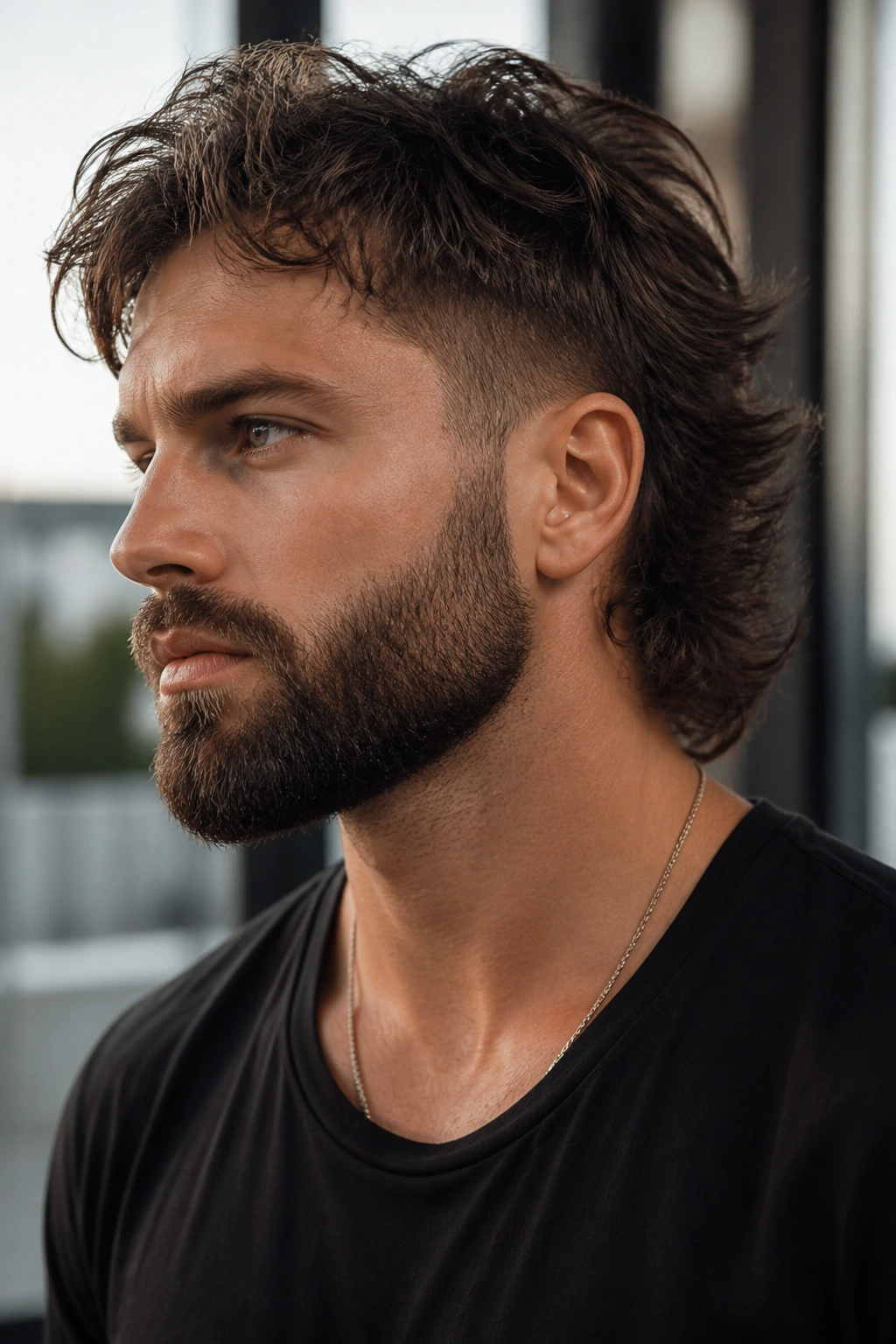
The beard-blend mullet is the one that ties the whole head together. Instead of letting the haircut stop at the sideburns, the barber fades or tapers that area into the beard so the face and hairline feel connected. That small bridge makes a bigger difference than most guys expect.
It works especially well if you already wear a beard with some shape. A full beard, a short boxed beard, even a heavy stubble line can help anchor the longer back. The trick is keeping the sideburn area from becoming a separate chunk of hair. Once that happens, the cut starts to look disconnected in the wrong way.
The blend should move from the temple down into the cheek and jaw with no hard shelf. On the neck, keep the cleanup crisp so the back length does not fight with the beard line. If your beard is thick, ask for the transition to be taken down in one or two guard lengths. If your beard is short, keep the taper softer so the haircut does not end abruptly at the jaw.
I like this version because it finishes the story. The mullet gets the edge, the beard gives it weight, and the whole thing feels balanced instead of top-heavy. That balance is the difference between a haircut that looks planned and one that looks like two separate ideas that landed on the same head.
