



A mullet haircut only works when it looks chosen.
That’s the whole trick. A sloppy grow-out has no shape; a good mullet has a clear front, a controlled side profile, and a back that feels intentional instead of accidental. The difference is usually in the cut lines, not the drama. A few inches too much on the sides, or a neckline that’s left to wander, and the whole thing turns from bold to messy fast.
The best mullet haircuts are not one note. Some are sharp and faded. Some are shaggy and soft. Some lean into curls, length, or punky texture, and some stay surprisingly wearable for people who want edge without looking like they made a joke out of their own hair. That range is why the mullet keeps hanging around. It can be loud, but it can also be smart.
What matters most is balance. Keep the crown too flat and the cut loses energy. Keep the back too long and the silhouette starts to drag. Get the shape right, though, and you get something that looks confident from every angle — and that is exactly what bold looks usually need.
1. Classic Mullet With a Clean Taper
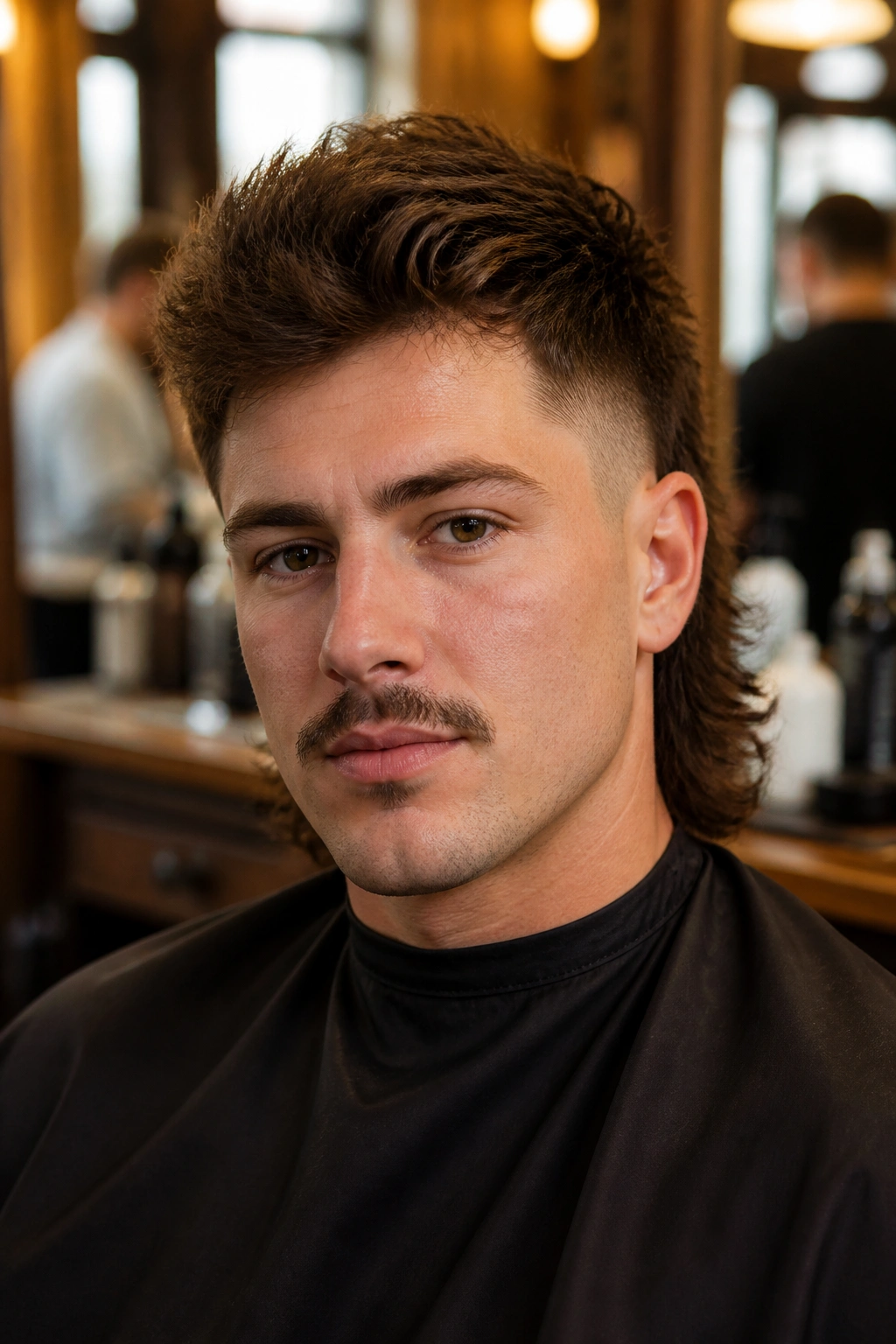
This is the mullet in its most honest form. The front stays neat, the sides stay controlled, and the back gets just enough length to make the shape read from across the room.
Why It Works
The classic version works because it doesn’t pretend to be anything else. You get a tidy top, usually about 2 to 4 inches, with a taper around the temples and ears that keeps the cut from turning into a shaggy helmet. The back can sit a bit longer — often 1 to 3 inches below the crown — but it still needs a clean line. That line is what gives the haircut its spine.
Ask your barber for a low taper at the sideburns and neckline, plus some soft point cutting through the top. That keeps the hair from lying in one heavy sheet. If your hair is straight, a small amount of matte paste is enough. If it’s thicker, a blow-dry with your fingers will help lift the crown before you shape the front.
A classic mullet is a good choice if you want the style to feel recognizable without looking theatrical. It’s the one I’d pick for someone testing the waters. Not too polished. Not too wild.
Barber notes:
- Keep the sides tapered, not buzzed bare
- Leave the back longer, but not draggy
- Add texture through the top with point cutting
- Use a matte product, not a shiny one
One blunt truth: if the neckline is sloppy, the whole cut looks cheap.
2. Skin Fade Modern Mullet
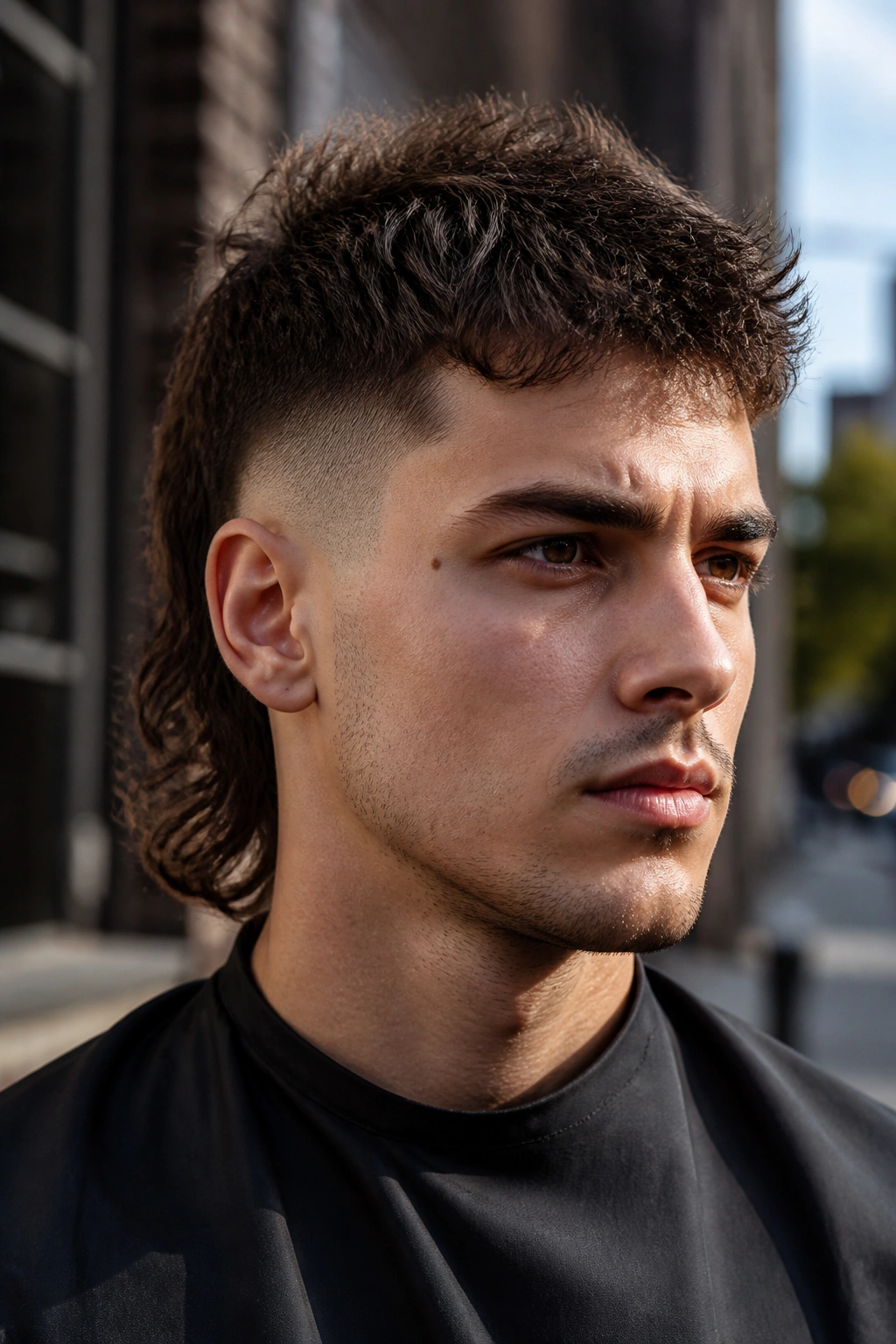
This is the version most people picture when they hear modern mullet. The fade gives the haircut a cleaner edge, and that matters because the mullet shape can look heavy fast if the sides are left too bulky.
A skin fade mullet starts with a tight fade around the ears and drops into longer hair on top and at the back. The contrast makes the crown look taller and the back look sharper. That contrast also keeps the haircut from looking like a retro costume piece. It feels current because the sides are so precise.
I like this cut on straight or slightly wavy hair, especially if you want the top to sit with a little height. A finger-dried finish with sea-salt spray or a light clay keeps the shape from collapsing. If your hair is thick, ask for some internal debulking; otherwise the top can mushroom out and flatten the fade.
What Makes It Different
The fade is the whole personality here. It turns the mullet into something cleaner, colder, and more aggressive.
This cut can be worn with a beard, but it also looks good clean-shaven because the fade does some of the visual work. The key is keeping the back long enough to be obvious — if the back is too short, you lose the point of the style. I’d aim for a back that hangs at least 2 to 4 inches past the crown.
3. Curly Mullet With Soft Layers
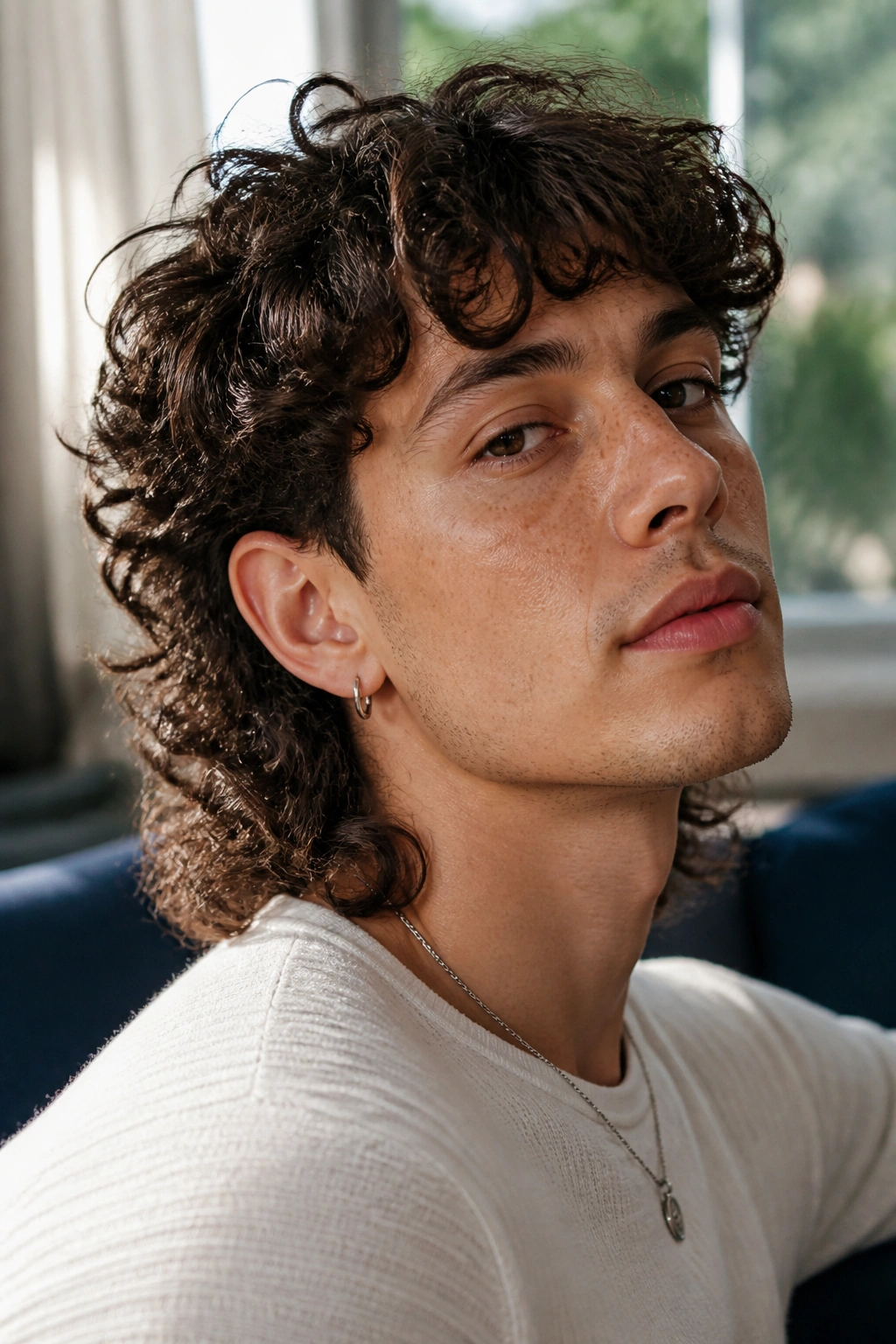
Can a mullet look polished on curly hair? Absolutely. In fact, curly hair gives this style a head start because the natural bend already makes the back and top separate in a nice way.
The trick is not to fight the curl pattern. A curly mullet needs soft layers, not a blunt chop. Ask for the sides to stay neat but not carved too tightly, or the head can start to look wide at ear level. The top should keep enough length to let the curls stack up, while the back should be shaped to fall in a controlled cascade rather than a puffball.
How to Style It
- Work curl cream through damp hair from root to tip
- Scrunch with a microfiber towel, not a rough bath towel
- Diffuse on low heat until the hair is about 80 percent dry
- Separate a few curl clumps with your fingers, then stop touching it
That last part matters. Too much handling makes curly hair frizzy, and frizz at the back of a mullet is a fast way to lose the shape.
A curly mullet looks bold because it has motion. You see it when someone turns their head, when the back catches air, when the curls land slightly differently every time. It has personality without needing a hard edge. If your hair shrinks a lot when it dries, tell the barber to leave a little extra length. Curly cuts always look shorter once they settle.
4. Shaggy Mullet With Heavy Texture
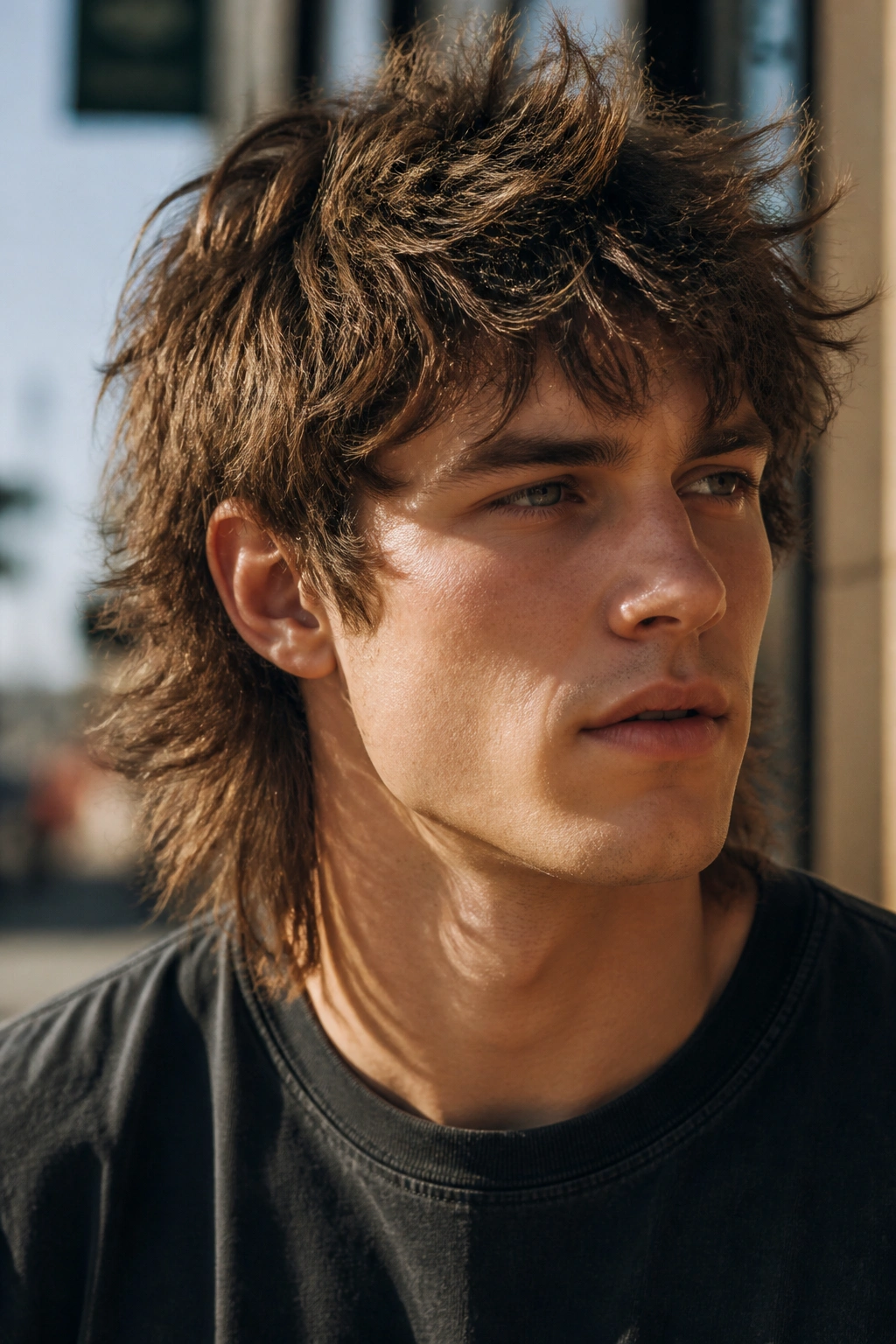
Picture a haircut that looks like it was cut with movement in mind, not symmetry. That’s the shaggy mullet, and it’s a good one if you want the style to feel loose, messy, and a little bit reckless in the best way.
This version leans hard on texture. The top is broken up with razor work or aggressive point cutting, and the back has feathered layers that fall in pieces instead of one heavy curtain. The sides are still shorter, but they don’t need a hard fade. In fact, too much crispness can kill the shaggy feel.
The nicest thing about this cut is that it forgives ordinary hair. If your texture is flat, this shape gives it movement. If your hair is already rough or wavy, the cut can make that look deliberate. A dry cut often works better here because the barber can see where the hair naturally bends and where it wants to stick out.
What to Ask For
- Heavy texture through the top
- Feathered ends through the back
- Softer side shaping, not a tight fade
- A fringe that can fall forward or split apart
You want it to look touched by wind, not exploded by bad sleeping habits. There’s a difference. Use a texturizing spray on dry hair and rough it up with your hands, then leave it alone. The more you keep combing it, the less it looks like a shag and the more it looks unfinished.
5. Burst Fade Mullet
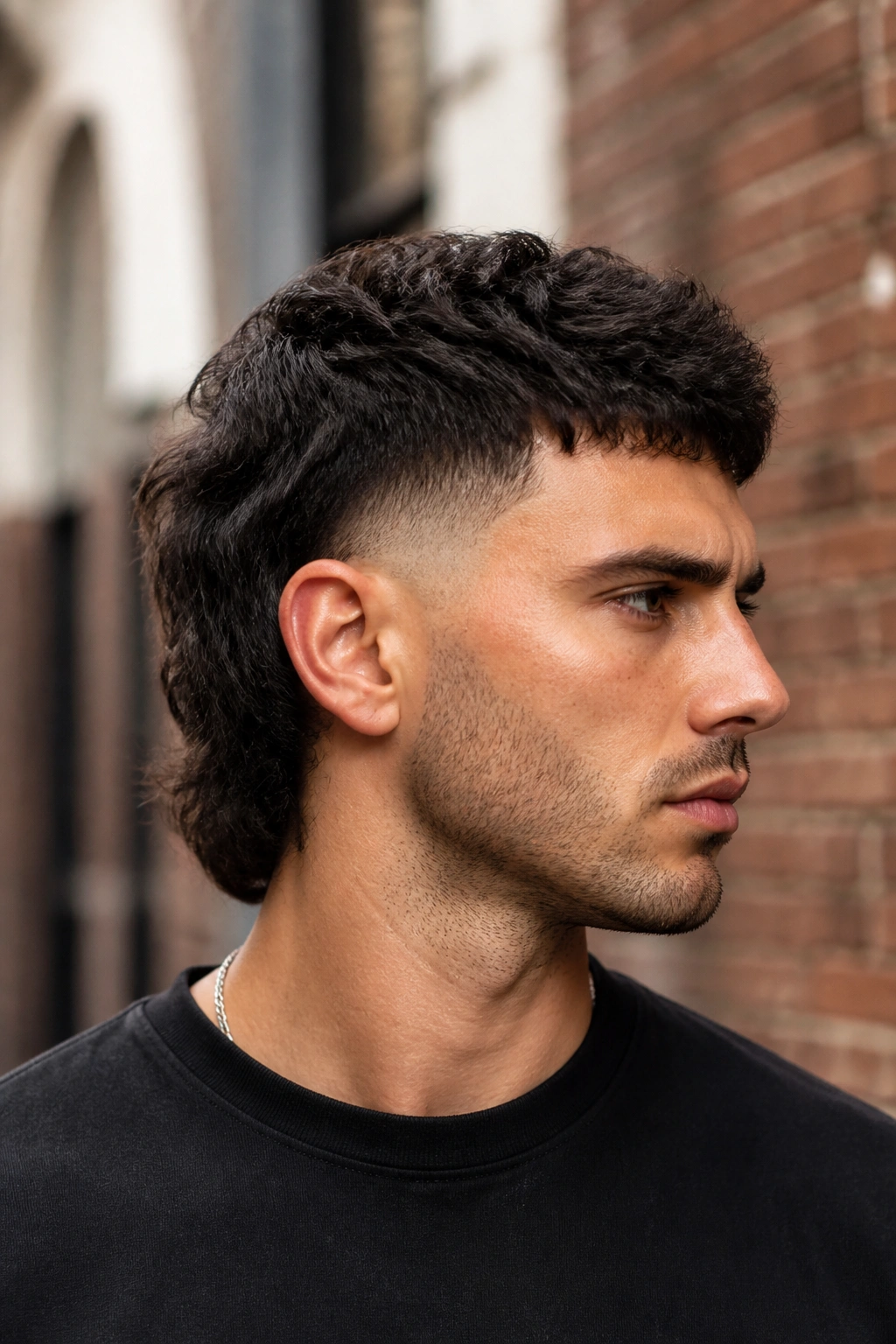
The burst fade mullet has a little swagger to it. The fade curves around the ear in a rounded shape, then drops back into longer hair at the nape. That curve gives the haircut a tight, athletic feel that works especially well if you want the sides to look neat without losing the mullet shape.
It’s a strong choice for thick hair. The burst fade removes weight right where bulky hair tends to puff out, around the temples and ears. That keeps the profile tight, which matters more than people think. A mullet can look huge from the side if the fade isn’t handled well, and this cut solves that problem with clean geometry.
One thing I like about the burst fade is how well it handles a little mess on top. You can push the front forward, lift it up, or let it sit slightly broken up, and the cut still reads well. The curved fade is doing enough work that the rest of the haircut doesn’t need to be perfect.
If you want maintenance to stay reasonable, ask for a low or mid burst fade rather than a high one. High fades grow out fast and can make the top look disconnected if you wait too long between cuts. Low and mid versions keep the shape softer for longer.
A small detail, but a useful one: the neckline should still be cleaned up. If the back is kept long but the edges are fuzzy, the whole cut loses its punch.
6. Tapered Mullet for a Cleaner Finish
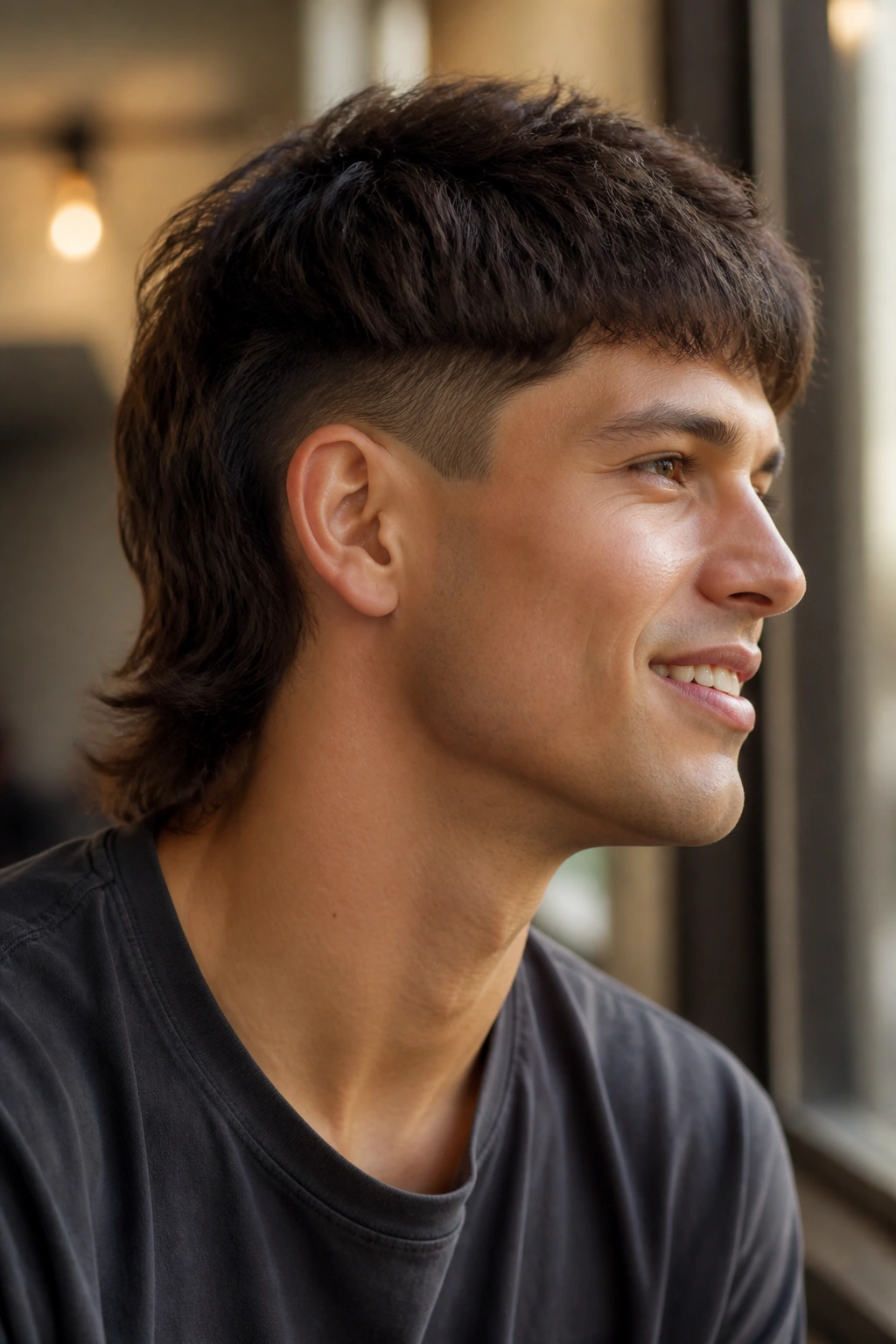
Unlike the skin fade version, this one keeps the edges softer. The tapered mullet is for people who want shape without a harsh contrast, and that makes it one of the easier bold looks to wear every day.
A temple taper and a neat neckline do most of the work here. The sides are gradually reduced instead of dropped all the way down to the skin, which keeps the haircut from looking too severe. That softer transition pairs well with hair that has a bit of wave or bend. You get a visible mullet, but it doesn’t scream for attention the second you walk in the room.
This is also a smart pick if your hair grows fast. Harsh fades show regrowth quickly. A taper hides the grow-out better because the blend is longer and less brittle-looking. That means the haircut keeps its shape longer between appointments.
I’d recommend this version for someone who wants the mullet shape but doesn’t want to explain the haircut every five minutes. The top can be worn forward, brushed back, or left slightly messy, and the result still feels controlled. Use a lightweight cream or paste; anything too heavy will flatten the taper and make the crown collapse.
If you want one clear instruction to give your barber, make it this: keep the sides blended, not bare. That one choice changes the whole mood.
7. Wolf Cut Mullet Hybrid
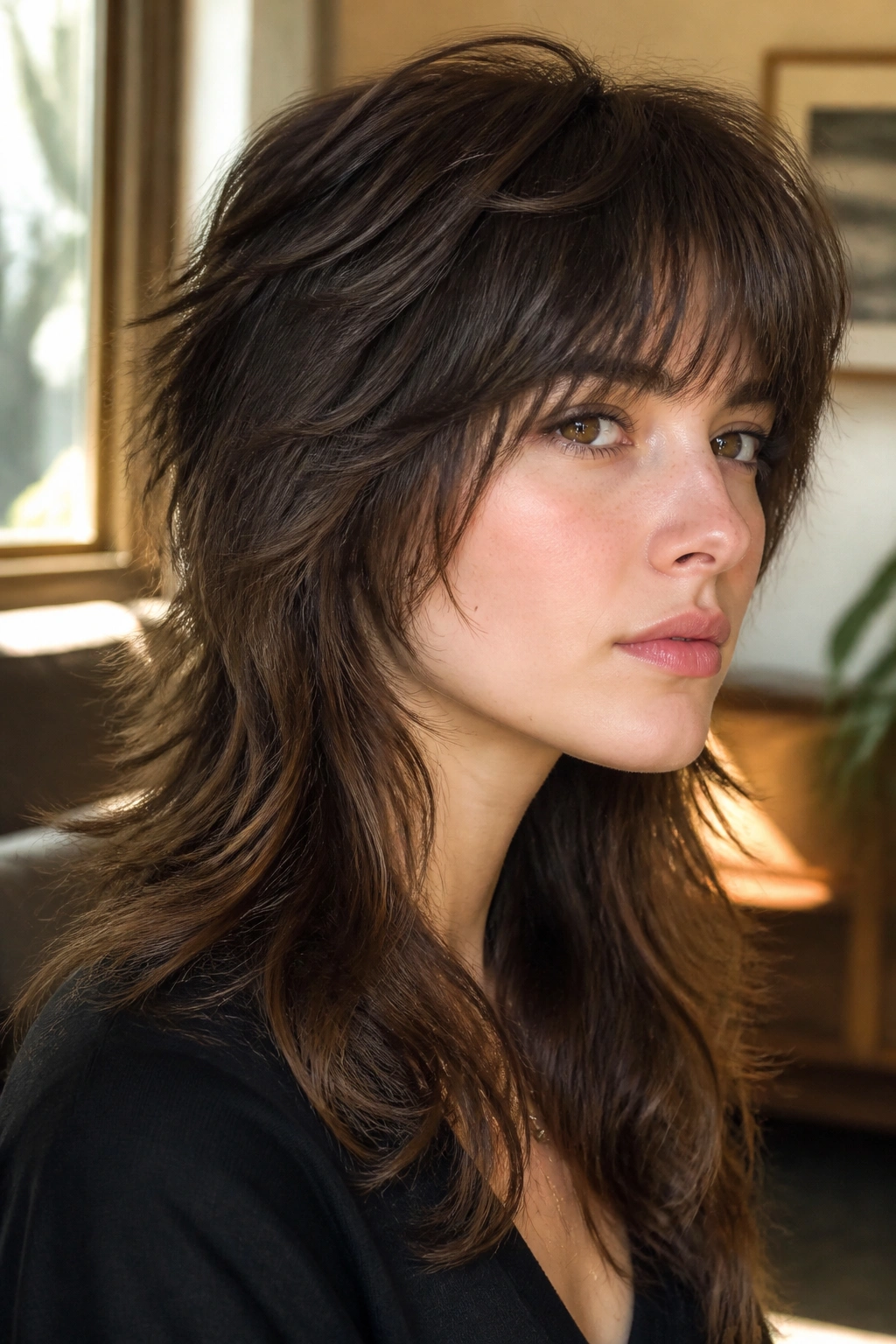
Is this a mullet or a shag? It depends on where you draw the line, and honestly, that’s the fun part.
The wolf cut mullet hybrid takes the rough, layered shape of a wolf cut and lets the back stay longer. That means more movement around the face, more softness through the crown, and less of the hard front-back split that classic mullets have. The fringe usually falls heavier too, often near the eyebrows or just above them, which gives the cut a slightly messy, lived-in look.
What Makes It Different
- The layers start higher up on the head
- The fringe is usually longer and more broken up
- The back still hangs below the crown, but it isn’t the only feature
- The shape works best when the ends are feathered, not blunt
This cut is a good fit if you like the mullet idea but want something that feels looser and less structured. It works well on wavy hair because the layers can stack without looking stiff. Straight hair can wear it too, but it often needs a little more styling with a round brush or diffuser.
The best version of this cut has air in it. You should be able to see movement when the head turns. If the layers are too heavy, it just becomes a long haircut with bad intentions.
8. Long Flow Mullet
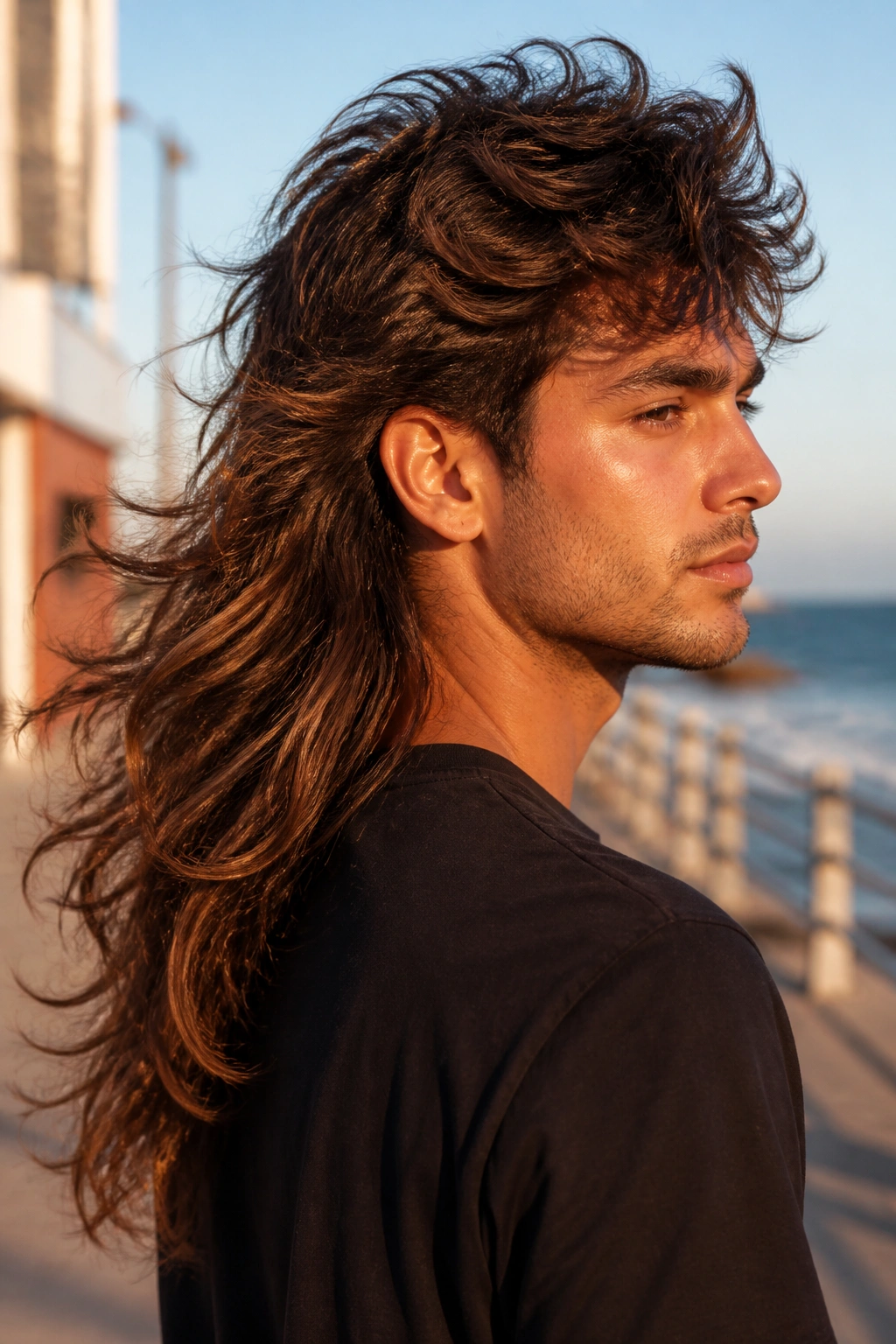
Some people do not want a neat outline at all. They want hair that moves when they turn their head, and the long flow mullet is made for exactly that.
This cut keeps the back significantly longer — often 5 to 8 inches or more below the crown — while still shaping the top and sides so the whole thing reads as a mullet, not a random long cut. The crown should have enough lift to separate from the lengths at the back, or the silhouette gets muddy. That separation matters. It gives the haircut its shape, even when the hair is loose.
I think this version looks best on hair that already has some natural bend. If your hair is pin-straight, you can still wear it, but you’ll need some texture spray or a light wave from a blow-dryer to stop it from hanging like a curtain. The point is movement, not flatness.
This is the mullet for someone who likes a bit of drama and doesn’t mind a haircut that takes up space. It can look surfer-adjacent, rock-ish, even a little romantic, depending on how the top falls. Keep the neckline tidy so the length reads intentional. A long back with a messy neck is where the whole thing starts to slip.
A small bit of advice: if you tie your hair back often, ask your barber to shape the back with that in mind. Otherwise, the loose length can end up awkward when worn up.
9. Short Mullet With Tight Sides
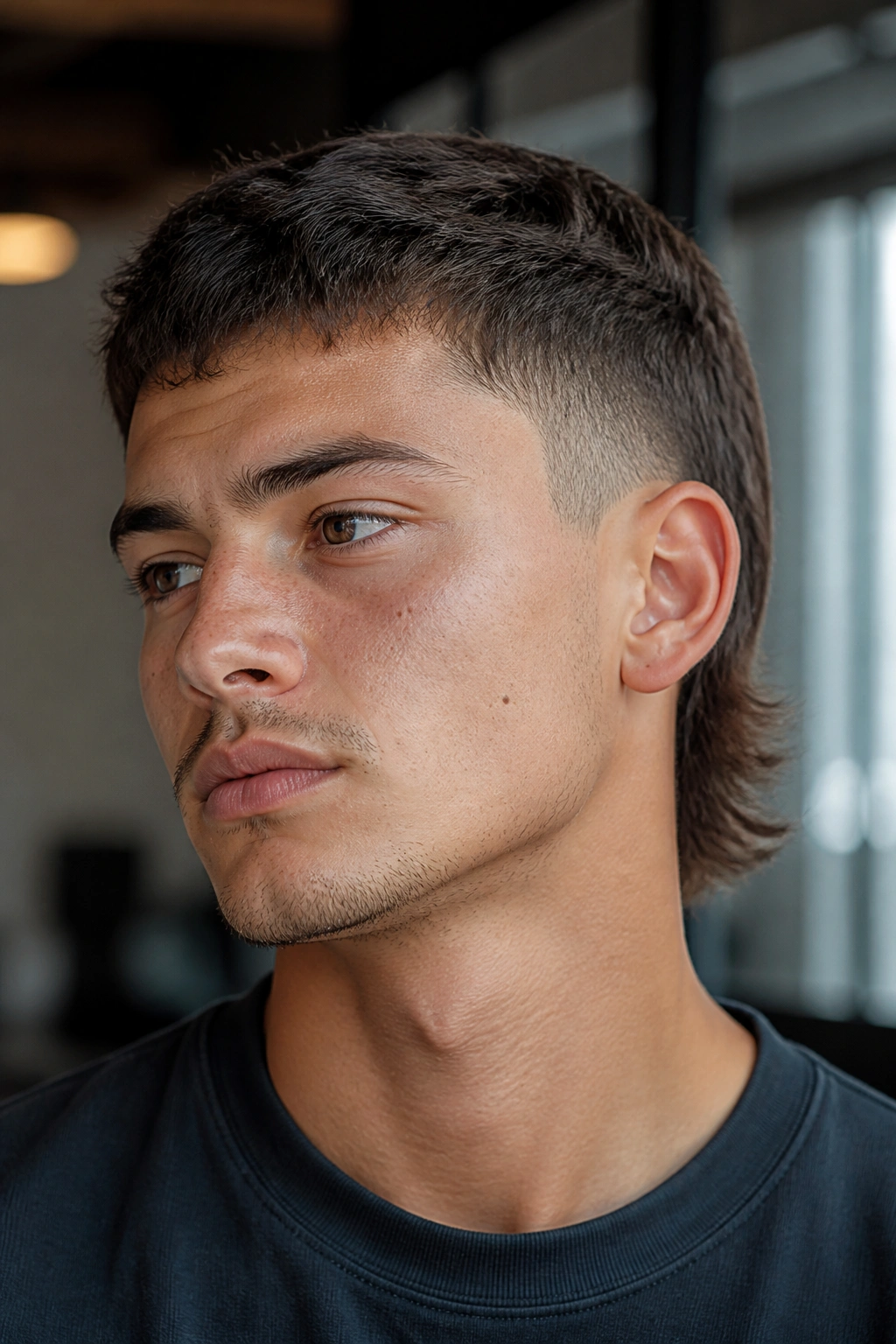
Short doesn’t mean tame.
The short mullet is one of the easiest ways to wear the style if you want something bold but low-maintenance. The top stays cropped, the sides stay tight, and the back only extends a little past the neckline. That smaller size makes the shape read quickly without asking for much styling time.
This is a good cut for thick hair that tends to puff. A short length keeps the bulk under control, and tight sides stop the head from looking too wide. It also suits people who want a haircut they can wake up with, run a hand through, and leave alone. A little matte product helps, but you won’t need a full styling routine.
The risk with short mullets is making them too short everywhere. Then you just get a standard cropped cut with a slightly long neck. The back has to stay longer than the top, even if only by a modest amount, or the whole point disappears. Think in terms of proportion, not length alone.
Best for: people who want the mullet shape without the drama of a long back.
Ask for: a short textured top, tight sides, and a back that tapers into the neckline instead of stopping bluntly.
This one looks especially good when the barber uses scissors on top instead of clippers alone. The extra texture keeps the front from feeling too military.
10. Undercut Mullet
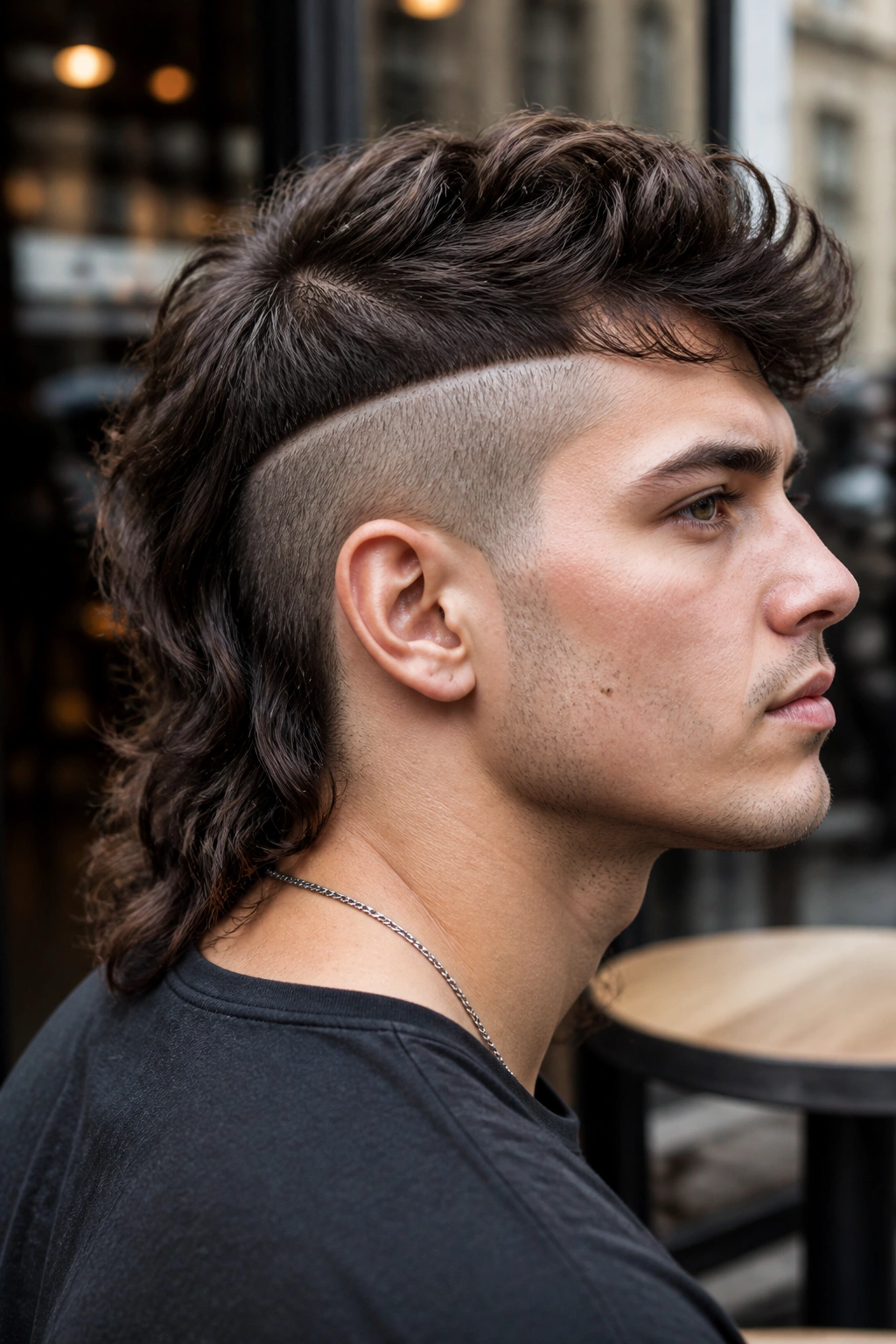
This is the sharpest-looking version in the bunch, and it is not for timid dressers.
An undercut mullet creates a hard separation between the top and the sides. The sides are cut much shorter, often disconnected, while the top and back keep their length. That hard line is the point. It gives the haircut a more graphic, deliberate shape that feels strong from the front and even stronger from the side.
Why It Hits Hard
The undercut lets the top sit almost like a shelf, which can be great if your hair is thick or slightly coarse. The back then drops away from that shape and creates the signature mullet outline. The result is bolder than a taper, more aggressive than a fade, and easier to spot in a crowd.
This cut likes styling. You’ll usually need a blow-dryer, a little volumizing spray, and either pomade or matte paste, depending on whether you want shine or separation. If you skip styling and let the top lie flat, the cut loses a lot of its energy. That’s the trade-off. It looks sharp, but it asks something back.
It’s also a cut that grows out with attitude. The transition from tight sides to longer top can stay interesting for a while, though the edges need cleanup before the disconnect starts looking accidental. If you like structure, this one delivers it in a loud way.
11. Permed Mullet
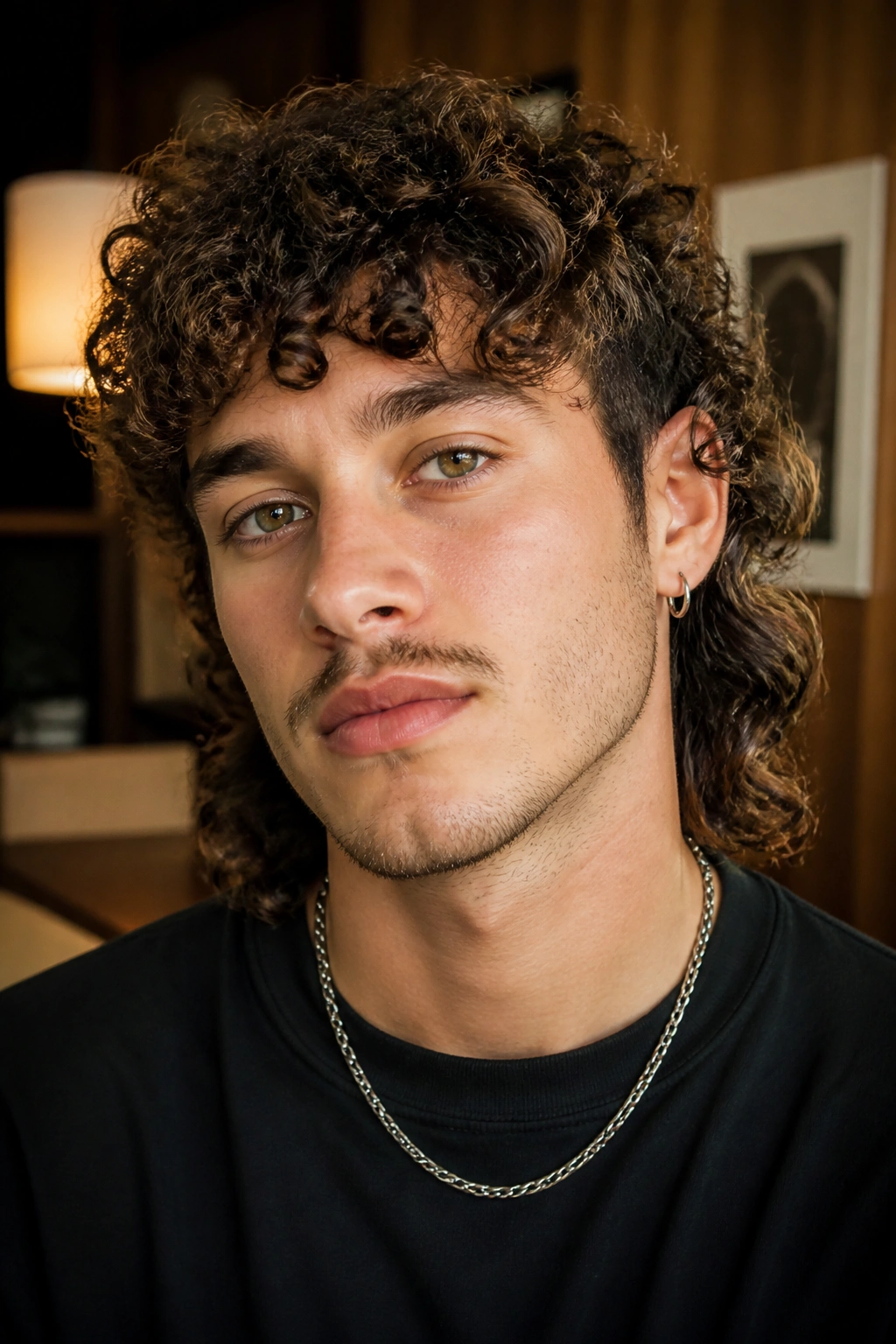
A permed mullet brings extra texture into the equation before the haircut even starts to shape itself. That is why it looks different from a natural curl mullet — the curl pattern is built in, not inherited.
The perm gives the top and back a more springy, lifted feel. When it’s cut properly, the curls land in layers instead of bunching up into one thick mound. The key is keeping the curl size in mind when the barber shapes the hair. Bigger rods make looser waves. Smaller rods make tighter curls. That choice changes the whole haircut.
I would only recommend this if you’re ready for maintenance. A perm needs moisture, gentle shampoo, and regular conditioning, or the texture can get dry and frizzy fast. The haircut itself also needs someone who understands how curls shrink once they dry. If the cut is done too short, the shape can jump way up and lose all balance.
A permed mullet works well when you want height on top and movement at the back without relying on your natural texture. It can be especially good for hair that falls flat on its own. The curls create volume where you need it.
Care notes:
- Use a sulfate-free shampoo if your hair feels dry
- Condition after every wash
- Avoid brushing it dry
- Refresh with curl cream, not heavy wax
This is one of those cuts that looks effortless only because somebody did the hard part first.
12. Choppy Punk Mullet
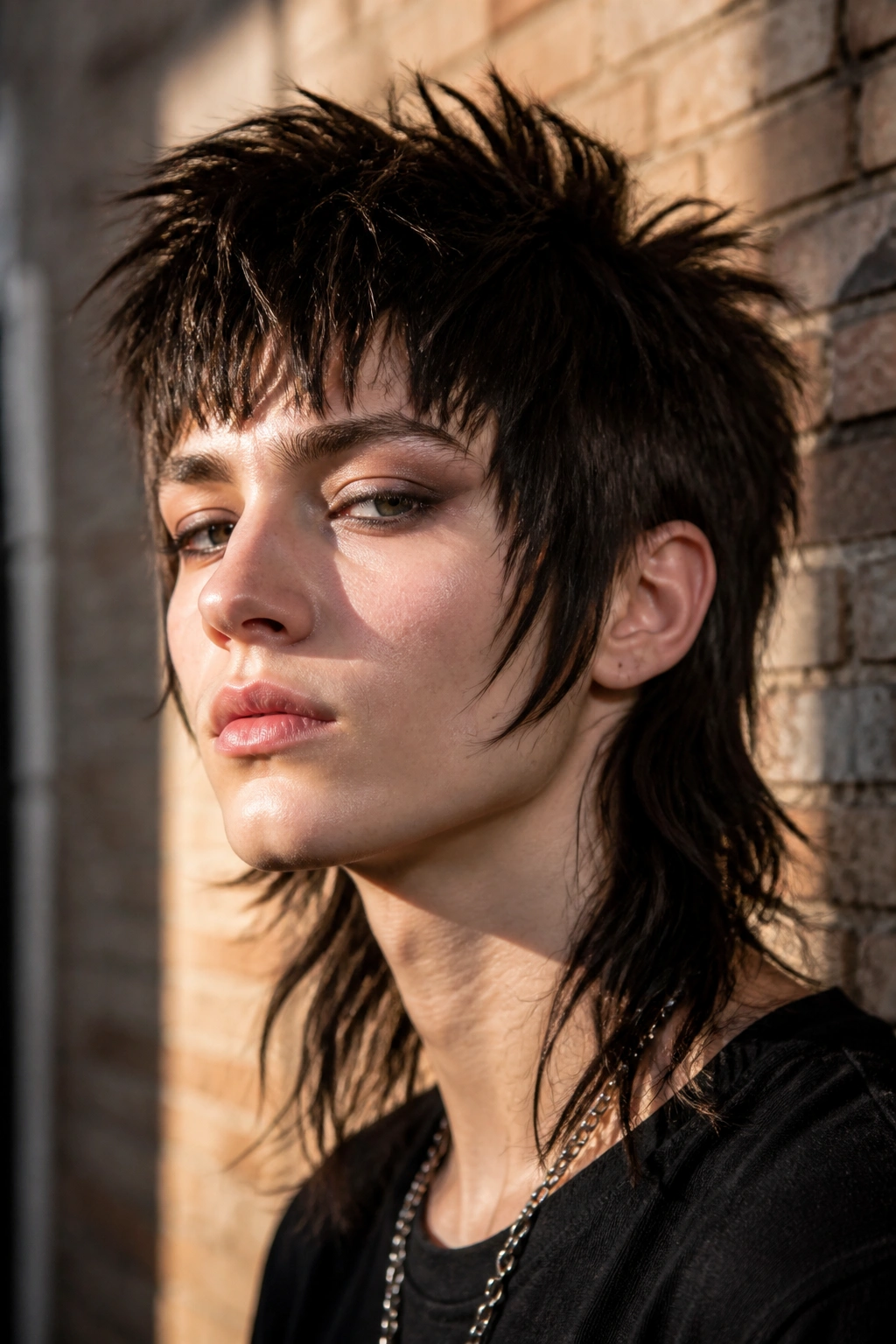
If you want the haircut to look a little dangerous, this is the place to go. The choppy punk mullet leans into broken ends, irregular layers, and a shape that feels deliberately rough around the edges.
The best version has a jagged fringe, a bit of height through the crown, and a back that falls in uneven pieces rather than one smooth tail. That unevenness is what gives it life. A razor can help here, as can aggressive texturizing shears. The goal is not neatness. The goal is energy.
Color can push this cut even harder, but it doesn’t need it. Dark hair with a rough cut already has enough edge. Bleached tips, a sharp fringe line, or a slightly shaved nape can make it louder if that’s your thing. Still, the haircut should stay controlled at the neckline and around the ears. Otherwise it turns from punk into sloppy, and those are not the same thing.
This style suits people who like a little rebellion built into their hair. It’s the least polite mullet on the list, and that’s exactly why it works. Keep the styling product light and tacky rather than glossy. A dry wax or rough paste helps hold the separation without making the hair look wet.
One last thing: this cut looks best when it’s not over-finished. Leave a little roughness in it. That’s the point.
