



A shaggy mullet can look sharp, messy, sweet, or just plain wrong in about the span of one bad snip. The difference is almost always the same: where the weight sits, how soft the layers fall, and whether the back has shape or just length.
That’s why the best shaggy mullet haircuts for women don’t feel like a costume. They feel lived-in. A little undone. A little cheeky. The front still matters, the crown still matters, and the back should not look like an afterthought hanging on for dear life.
What I love about this haircut is that it can be tuned so many ways. You can make it airy and feathered, curly and wild, short and punky, or long enough that nobody calls it dramatic until they see you turn around. The line between “cool textured cut” and “why does this look lopsided?” is thin, though, so the exact shape matters more here than in a plain layered cut.
The trick is matching the mullet to your texture, your face shape, and how much styling you’re willing to do before coffee. That’s where the good versions start to separate themselves.
1. Soft Feathered Shaggy Mullet
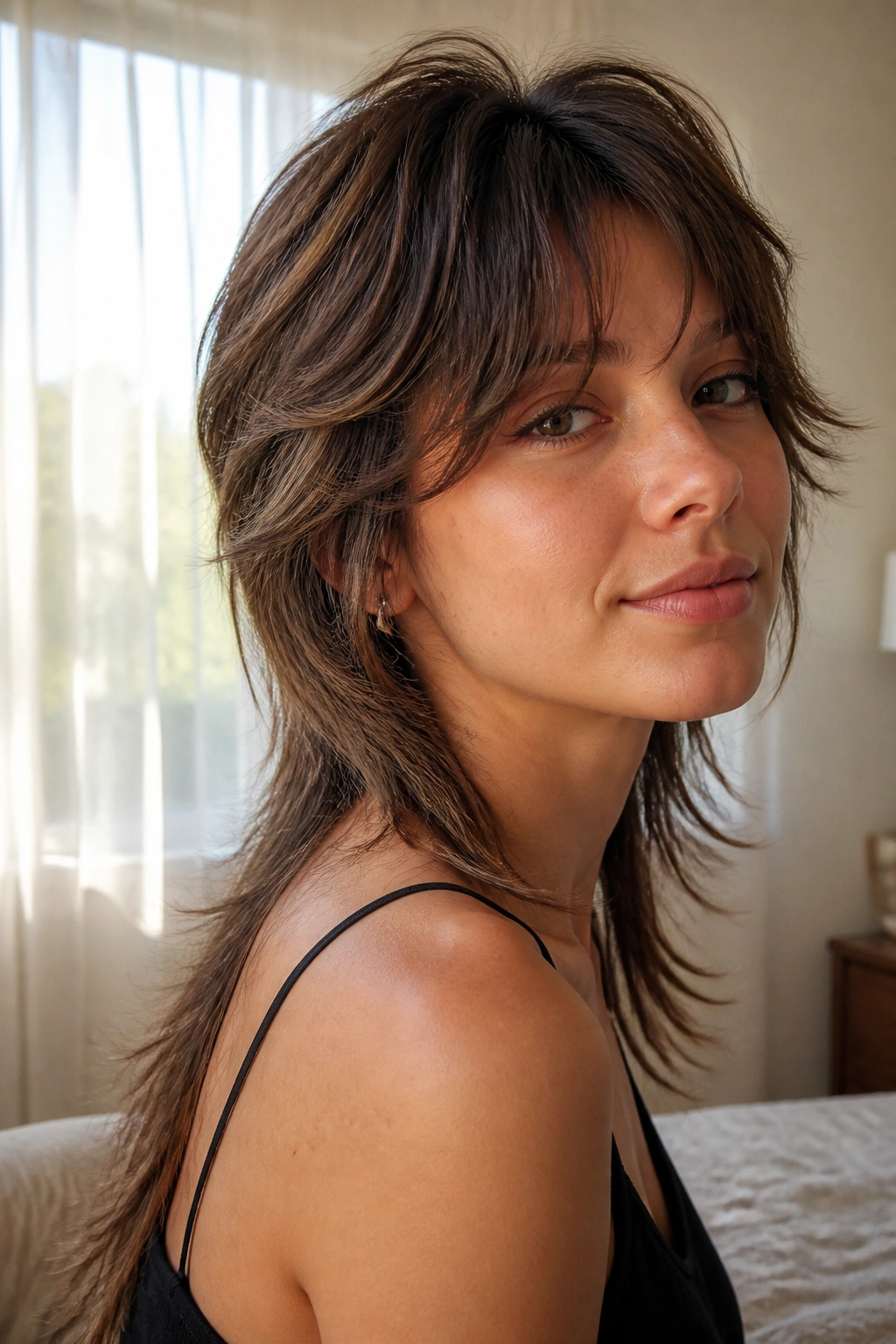
The soft feathered version is the one I’d point to first if you want the shaggy mullet haircut for women without going too hard into edgy territory. It keeps the mullet shape, but the layers are blurred enough that the cut moves instead of shouting. Think feathered ends, light crown lift, and a back section that still has length but doesn’t feel heavy.
Why this version works
This cut looks best on straight to wavy hair, especially if your hair tends to fall flat at the roots. Ask for light internal layers at the crown, then soft point-cut ends through the sides and back. That keeps the silhouette visible without making the perimeter look chopped off.
A good stylist will leave the longest pieces in the back below the shoulder blade or around the collarbone, then bring the front up just enough to frame the face. Too much contrast and the cut gets costume-y. Too little, and it turns into a regular shag with a tail.
How to ask for it
- Crown layers: keep them short enough to lift the top, but not so short that the haircut puffs out.
- Face-framing pieces: ask for cheekbone to jawline length, depending on how much softness you want.
- Ends: request feathering or point cutting, not blunt clipping.
- Styling: a round brush, a small dab of mousse, and a quick bend at the front usually do the job.
One good rule: if the ends look fuzzy instead of airy, the cut was taken too far with thinning.
2. Curly Shaggy Mullet
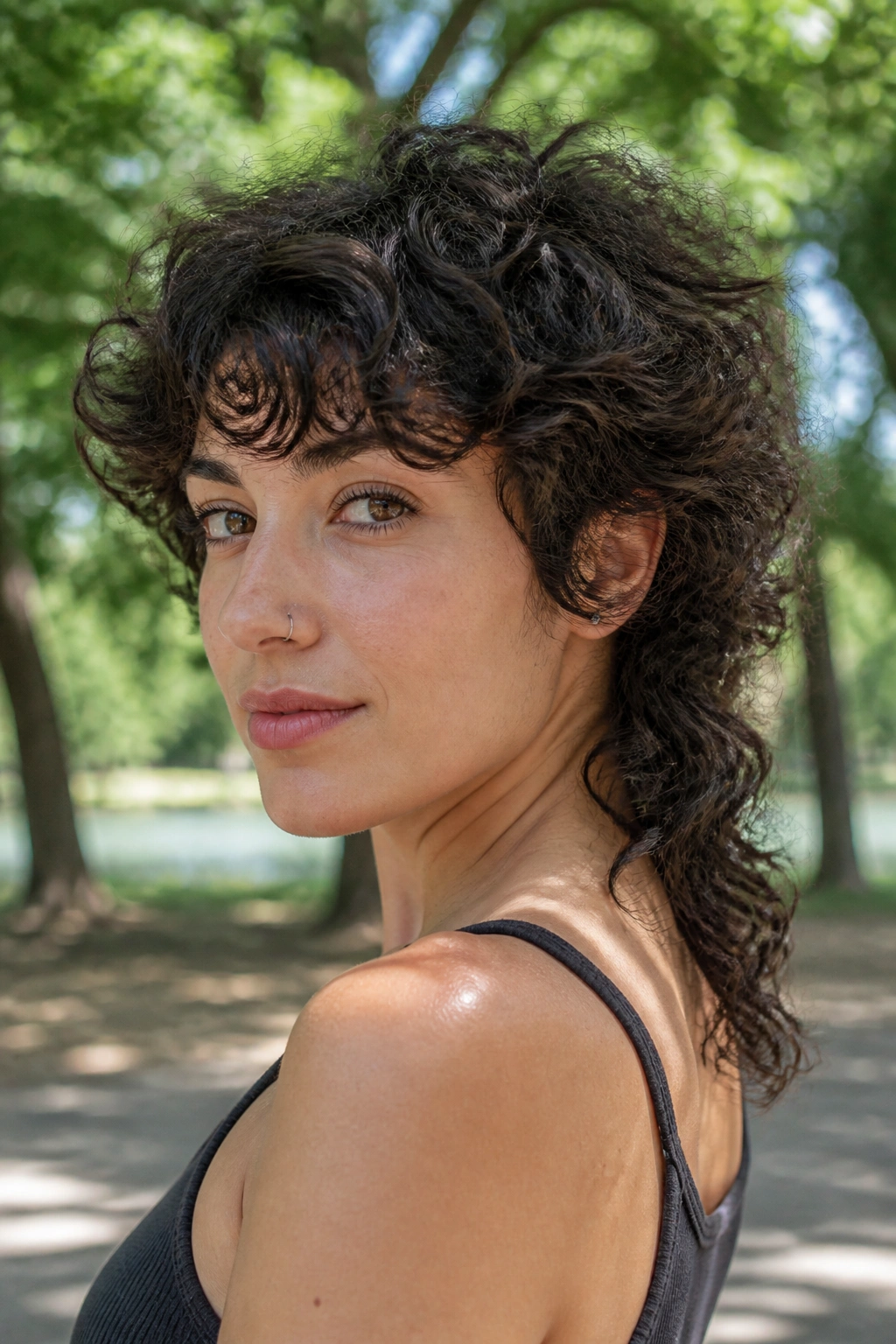
Curly hair and mullets get along better than people expect. The shape gives curls room to stack instead of bulging outward, and the shaggy layers help the whole cut breathe. A curly mullet can look playful, sexy, and a little wild in the best way.
The important part is restraint. Shortening the crown too much creates a mushroom effect, especially on tighter curls. You want the top to have lift, yes, but not so much that the silhouette turns round and puffy. A good cut lets the curls spring up and out while keeping enough length in the back to show the mullet line.
Best styling pattern
- Work in leave-in conditioner on damp hair.
- Add a curl cream or light gel from mid-length to ends.
- Scrunch upward, then diffuse on low heat or air-dry.
- Once dry, break the cast gently with a drop of oil on your hands.
The finish should feel touchable, not crunchy. If the curls separate into defined ribbons, even better. If they collapse into one thick triangle, the layers were either too heavy or too short in the wrong spots.
A curly shaggy mullet is also one of those cuts that looks better a little imperfect. That’s not a flaw. That’s the point.
3. Curtain-Bang Shag Mullet
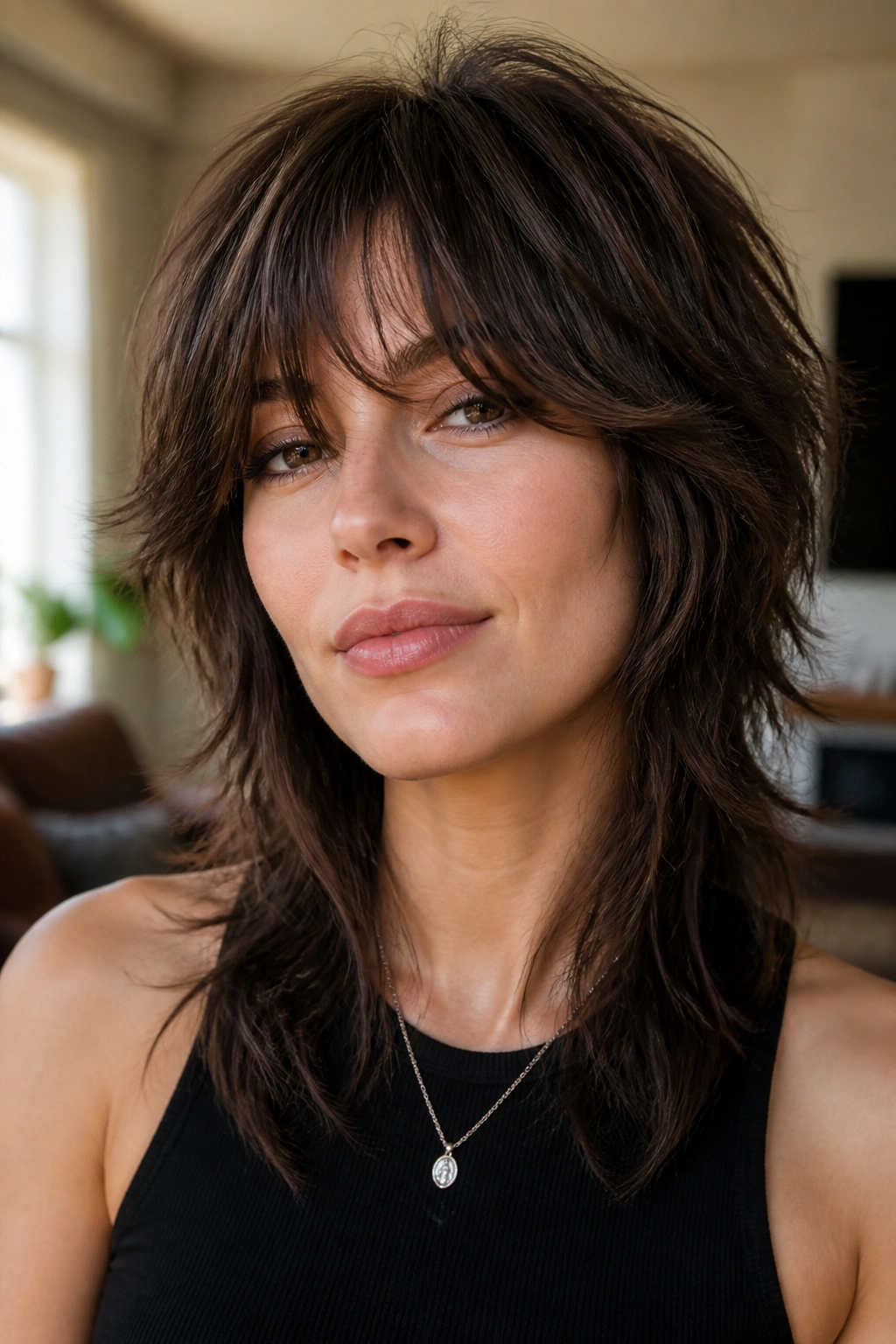
Want the easiest way to soften a mullet fast? Add curtain bangs. They split the face in a flattering way, and they make the transition from short front sections to longer back layers feel intentional instead of abrupt.
This version suits a lot of face shapes, especially round, square, and heart-shaped faces. The bangs should open around the nose bridge or cheekbones, then blend into the side layers. If the fringe is cut too wide, it starts feeling like a 1970s blowout. If it’s too short and sharp, the softness disappears.
What to say at the salon
- Ask for bottleneck-adjacent curtain bangs if you want more shape near the center.
- Keep the shortest pieces around nose to cheekbone length.
- Make sure the side pieces connect to the mullet layers, not sit on top of them.
- Use a round brush or velcro rollers to direct the bangs away from the face.
This cut looks especially good when the bangs are a little piecey. Not perfect. Not stiff. Just loose enough to move when you turn your head.
If you hate how much forehead real estate a mullet can expose, this fixes that problem fast.
4. Razor-Cut Mullet
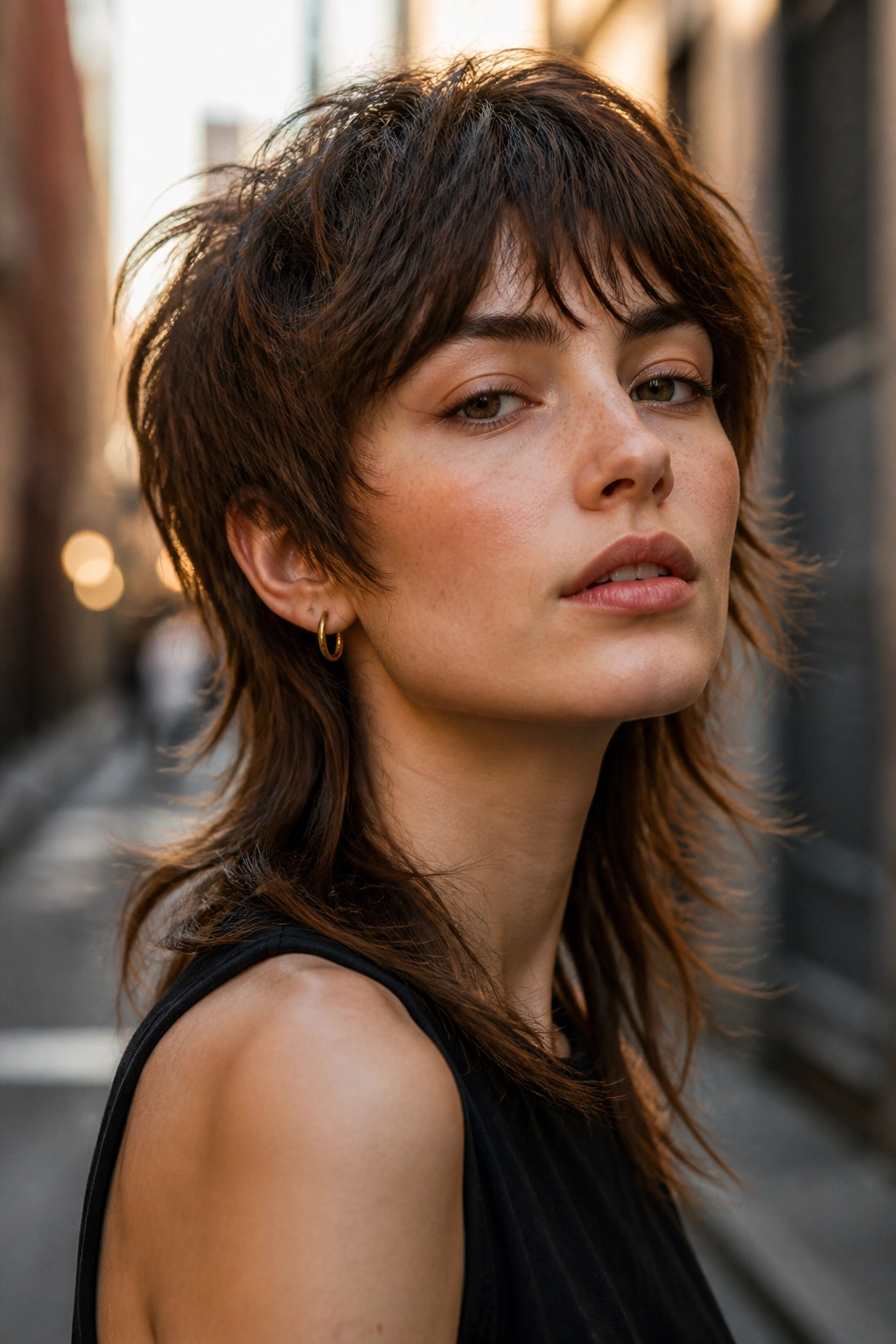
A razor-cut mullet has a sharper personality. The edges look airier, the layers fall in thin slices, and the whole haircut gets a lived-in, slightly rebellious feel. It’s a great choice if your hair is medium density and naturally straight or softly wavy.
The catch is that razors are unforgiving on damaged ends. If your hair is dry, frayed, or bleach-heavy, too much razor work can make the tips look see-through. That’s not the same as texture. It’s just broken-looking hair pretending to be style.
Used well, though, the razor gives you movement that scissors sometimes miss. The back flicks out more easily. The sides don’t feel bulky. The front pieces can skim the cheekbones without that blunt, helmet-like line.
- Best for hair that feels heavy by the second day.
- Best for people who like a slightly messier finish.
- Not great if you want clean, solid ends.
- Not great if your hair tangles badly already.
I like this version on women who wear leather jackets, oversized tees, or sharp collars. It has a little bite. That matters.
5. Wolf-Cut Mullet Hybrid
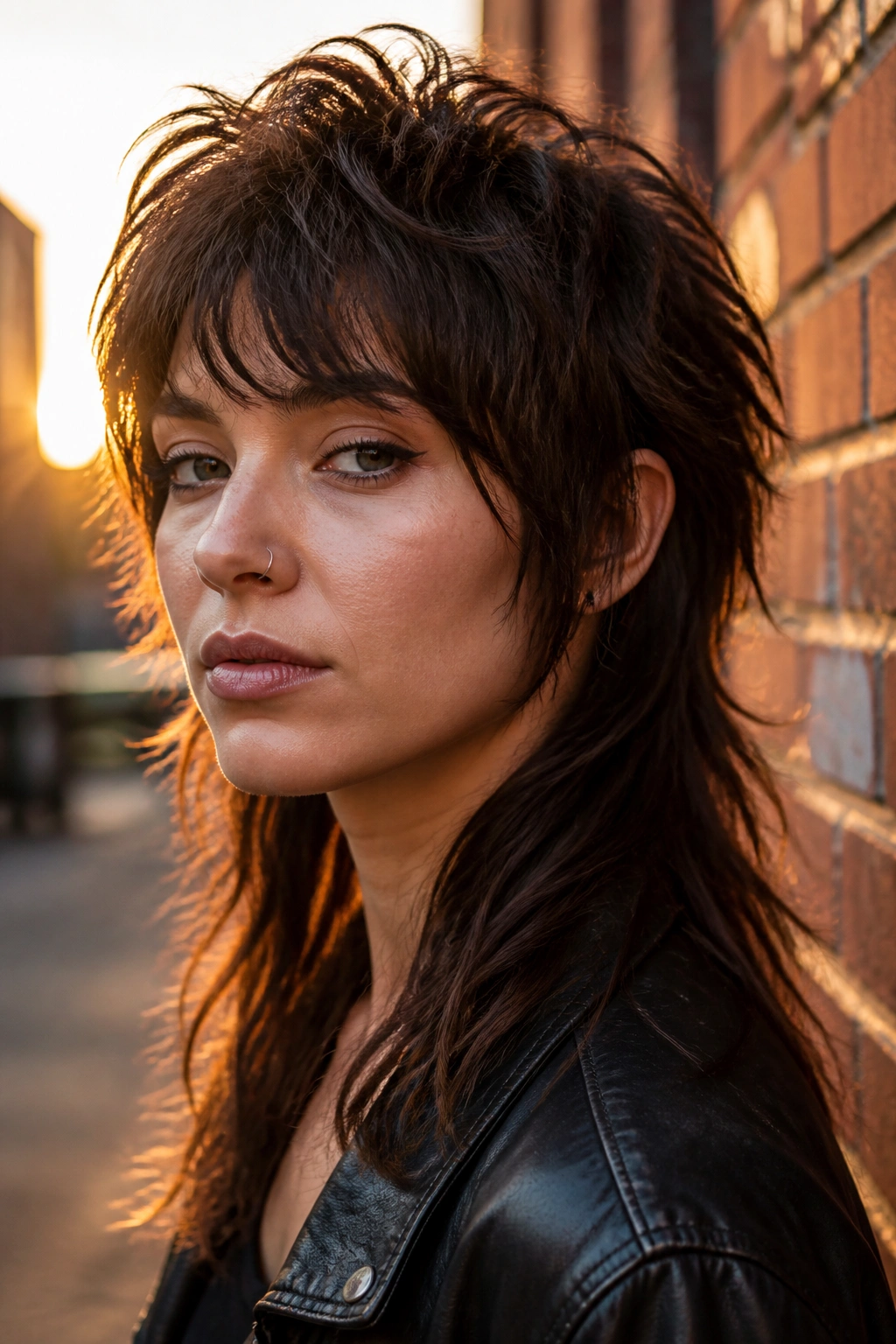
A wolf cut is not the same thing as a shaggy mullet, and the difference shows most clearly at the back. The wolf leans heavier on the crown and top layers, while the mullet keeps more visible length in the back. Blend the two, and you get something messy, flattering, and a little dramatic without being stuck in one category.
This is the cut for someone who wants texture first and shape second. It looks less “designed” than a classic mullet, which is exactly why some people love it. The top has volume, the sides feather outward, and the back still hangs long enough to remind everyone where the inspiration came from.
What makes it different
The wolf-mullet hybrid works well on medium to thick hair because the top can carry a lot of movement. It also plays nicely with waves, because waves naturally help the pieces separate. Straight hair can wear it too, but you’ll usually need a bit more styling foam or texture spray to keep the layers from lying flat.
Who it suits best
- Women who like a rock-and-roll shag but want longer length in back.
- People who don’t mind a cut that looks better a little tousled.
- Anyone who wants volume without a round, fluffy outline.
If you want the haircut to say something before you do, this is the one. Not subtle. Not sloppy. Just vivid.
6. Pixie-Length Shaggy Mullet
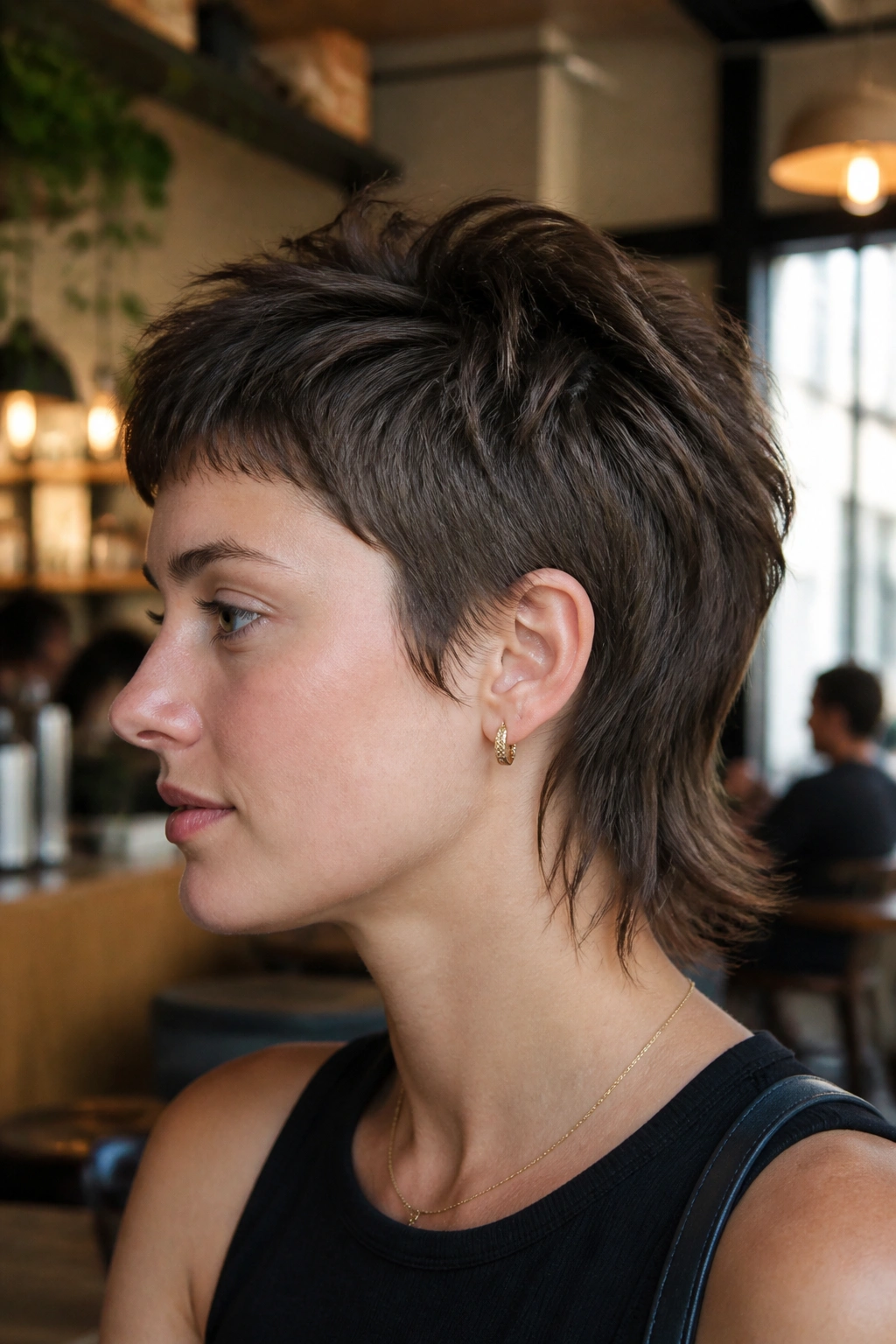
Short mullets can be a little addictive once you see how much shape they can carry. The pixie-length version keeps the sides tight, the top choppy, and the back just long enough to read as a mullet from the side. It’s cropped, easy to wear, and sharper than people expect.
A lot of women go shorter in the summer and then miss the texture once it grows out. This cut solves that weird in-between stage on purpose. The trick is making the top piecey enough that it doesn’t look like a standard pixie from the front. You want separation at the crown and a bit of tail at the nape.
Quick details worth asking for
- Keep the nape soft, not boxed in.
- Leave a little length over the ears so the cut doesn’t turn boyish.
- Use a matte paste or lightweight wax, about a pea-sized amount.
- Pinch the ends instead of smoothing them down.
This is a nice choice if you have strong cheekbones, a small face, or a good neckline you actually want to show off. It also grows out cleanly, which matters more than people admit. Bad short cuts can look awkward for weeks. This one usually just gets more relaxed.
7. Long Shaggy Mullet
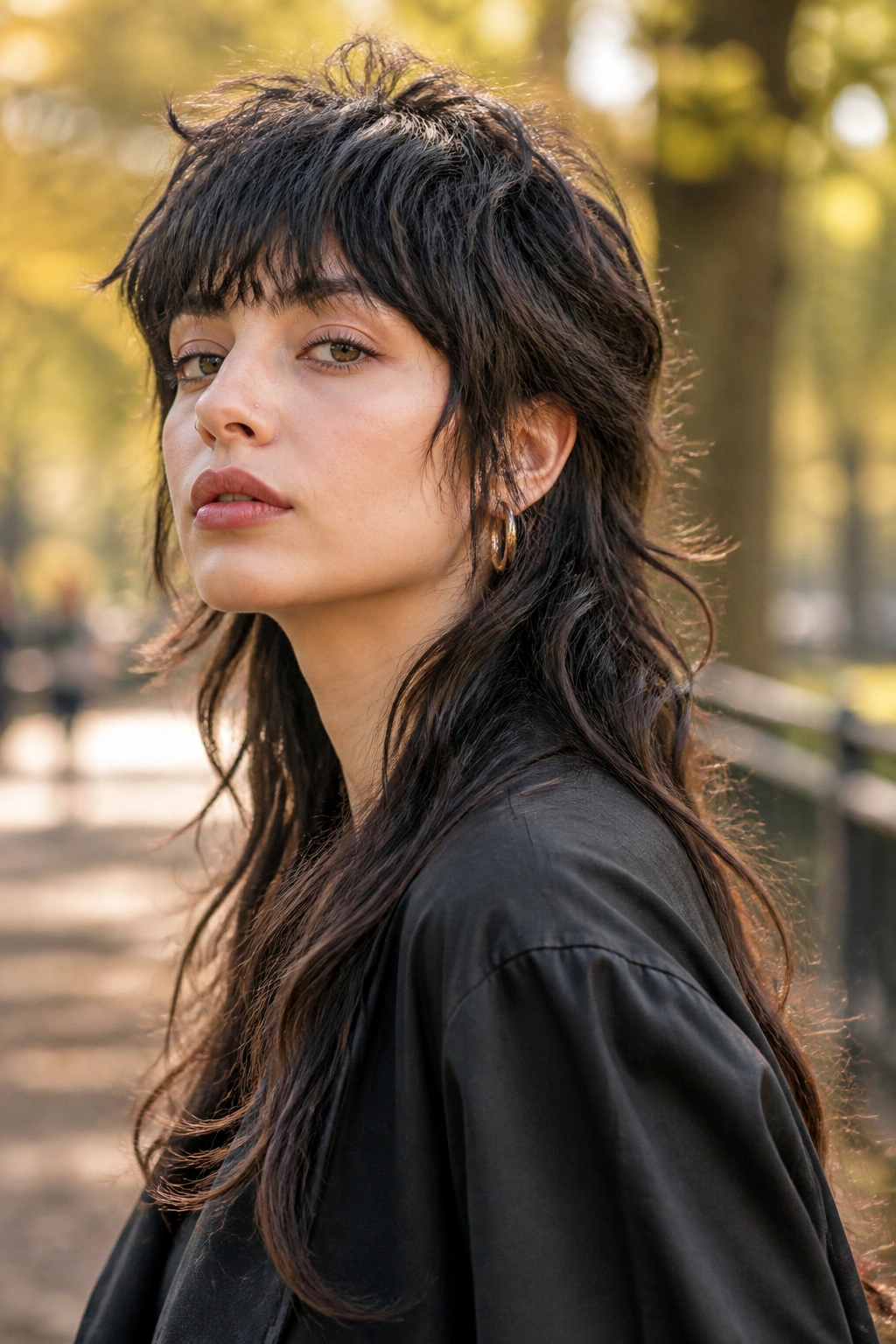
Can a mullet stay long and still read like a mullet? Yes, if the layers are placed with some discipline. A long shaggy mullet keeps the length you like while still giving you that shorter front-to-longer-back slope.
This version is often the smartest choice for women who are nervous about going full mullet. The back can fall below the shoulders, sometimes well past them, while the crown and sides are cut to create movement. The haircut only works if the layers are visible. If the shaping is too subtle, you just get long hair with bangs and no point of view.
Where the shape lives
The shortest pieces usually sit around the cheekbones or jaw, and the top should have enough layering to keep the silhouette from looking flat. A good stylist will keep the perimeter soft, not blunt, so the back moves when you walk.
The long shaggy mullet is also one of the easier versions to wear to work or formal events. You can smooth it, wave it, or tie half of it back and still keep the cut’s personality. That flexibility is rare.
If you like long hair but want more energy around the face, this is a solid move.
8. Shaggy Mullet with Bottleneck Bangs
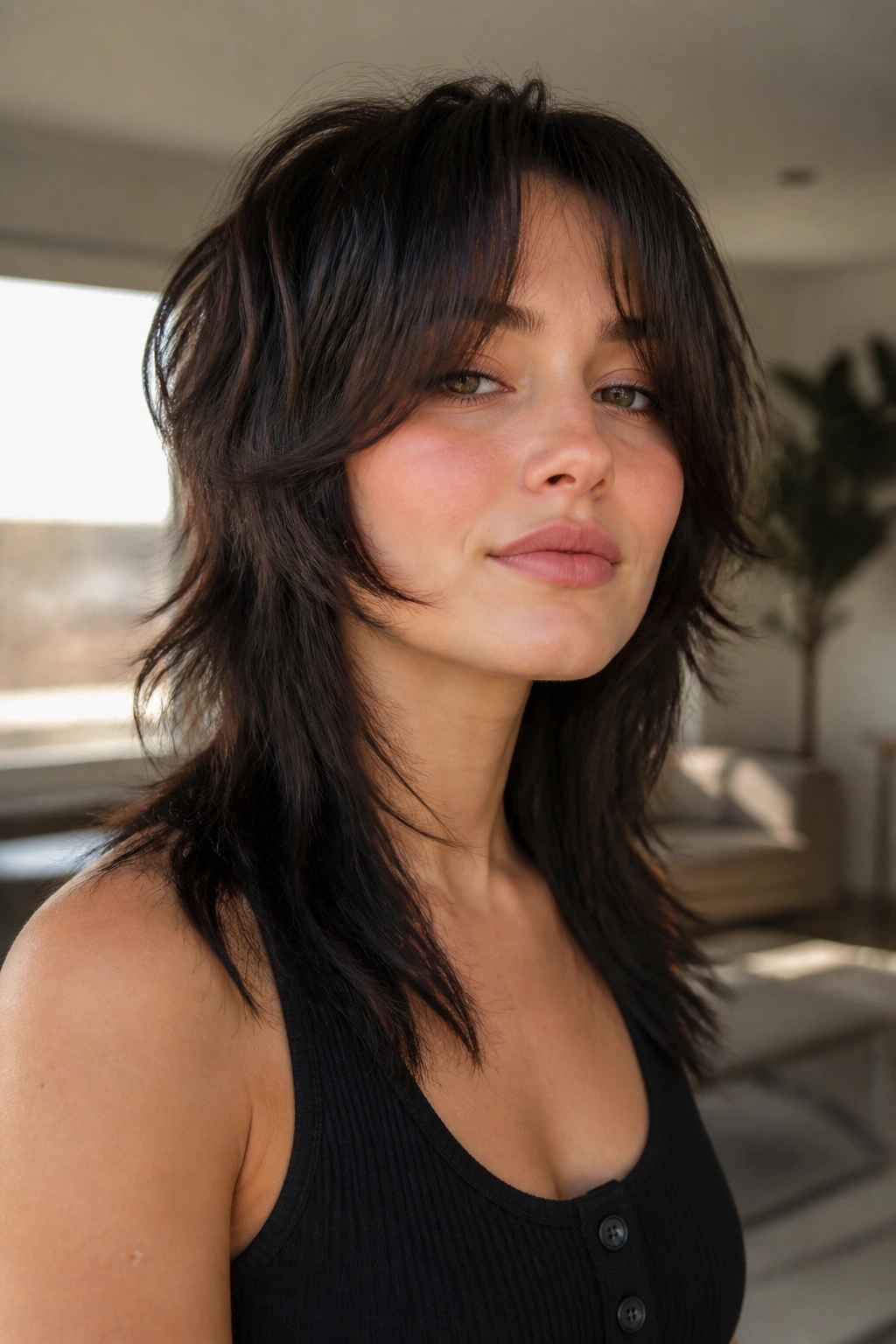
Bottleneck bangs can make a mullet look more polished in a snap. They’re narrower in the center, then open wider around the cheekbones, which gives the face a clean frame without cutting off the forehead completely. On a shaggy mullet, that shape feels balanced and modern without trying too hard.
The front pieces should start slim at the middle and widen gradually, almost like a little funnel of hair that softens the upper face. That keeps the bangs from looking too heavy. It also helps the haircut blend into the side layers, which is where a lot of mullets either shine or fall apart.
When styled well, this version has a nice swing to it. The bangs sit close enough to the face to feel intentional, then the side layers drop into the longer back section in one smooth line. That line matters. A lot.
Use a round brush if you want bend, or just blow-dry the fringe side to side with your fingers if you want a more casual finish. Either way, keep the roots from sticking straight up. That’s the fastest way to make the cut look overworked.
9. Tousled Shaggy Mullet for Fine Hair
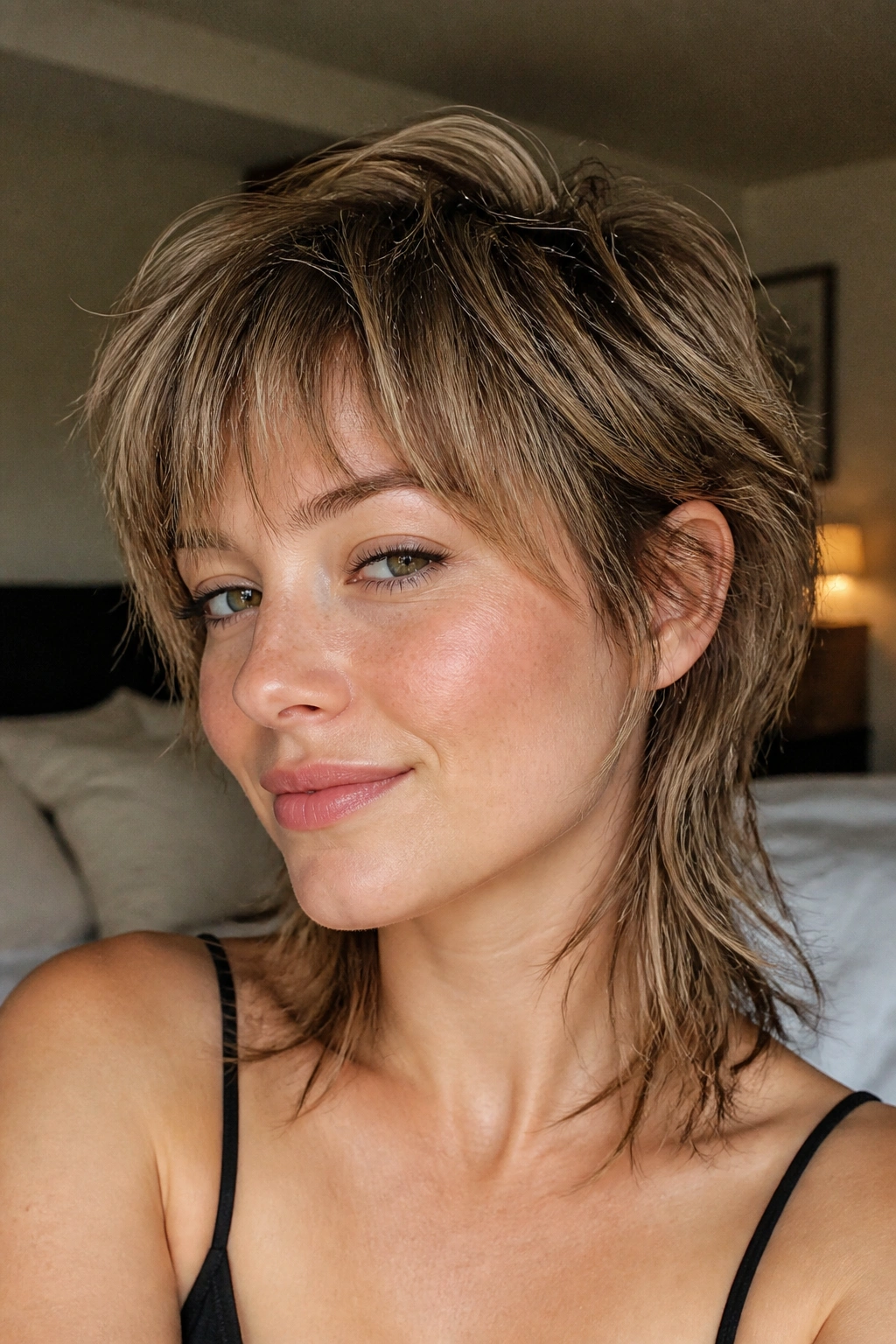
Fine hair needs a light hand. If you take too much out of it, the haircut can go limp by noon and the whole mullet shape disappears. The tousled version solves that by using soft layers and root lift rather than heavy thinning.
This is one of the few cuts where texture spray can actually earn its keep. A mist at the roots, a little mousse before blow-drying, and a quick shake with your fingers can give fine hair enough body to hold the shape. The ends should stay wispy, but not stringy.
What helps fine hair most
- Keep the crown layers long enough to support volume.
- Avoid over-texturizing the ends.
- Blow-dry the roots first, then bend the front pieces with a brush.
- Finish with dry shampoo at the crown for grit.
A lot of people think fine hair needs less cut. Sometimes it needs smarter cut. The mullet shape can work beautifully because the shorter top sections create the illusion of fullness while the longer back keeps the style from looking thin and chopped up. That balance is the whole game.
If your hair is baby-fine and slips out of styles, this is one of the stronger options.
10. Heavy Layered Shaggy Mullet for Thick Hair
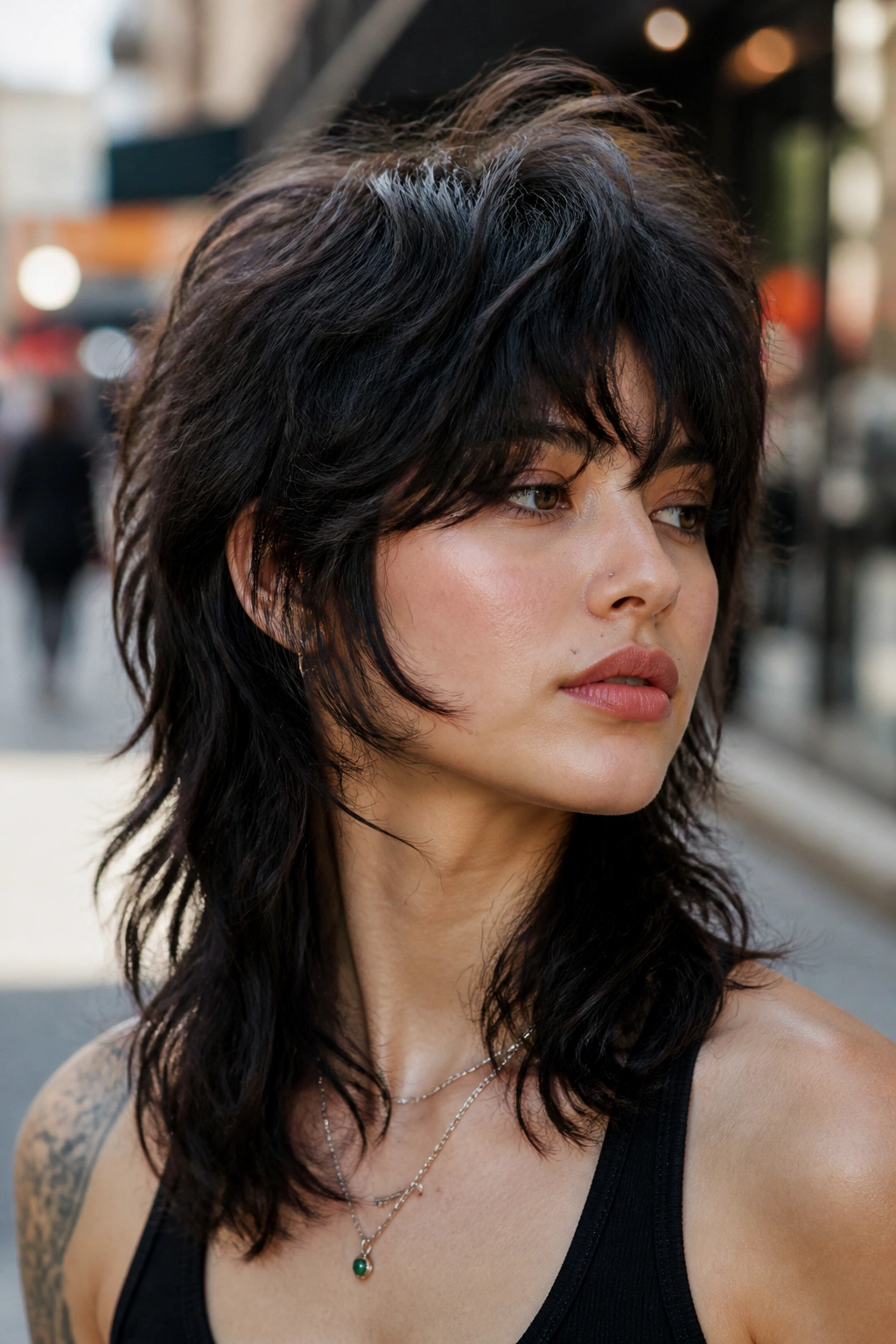
Thick hair wants structure, not just more movement. Without enough internal shaping, a shaggy mullet on dense hair can turn into a triangle with opinions. A heavy layered version fixes that by removing bulk where it collects and leaving enough length to keep the cut from puffing out.
This is where careful debulking matters. Not all thinning is good thinning. Thinning shears used in the wrong spot can make thick hair frizzy and uneven, especially around the sides and neckline. A better approach is long internal layers and strategic point cutting through the back and crown.
Why this version wins
It keeps the silhouette light, which means the hair doesn’t sit like a block. The back can still have weight, but the sides stop flaring out around the jaw. That matters if your hair grows out wide.
This cut also behaves nicely with air-drying or diffuse drying because the layers help the density separate on its own. You won’t spend half your life trying to flatten the shape down. That alone makes it worth considering.
If your biggest complaint is “my hair is too much hair,” this is the version to ask about.
11. Face-Framing Shaggy Mullet
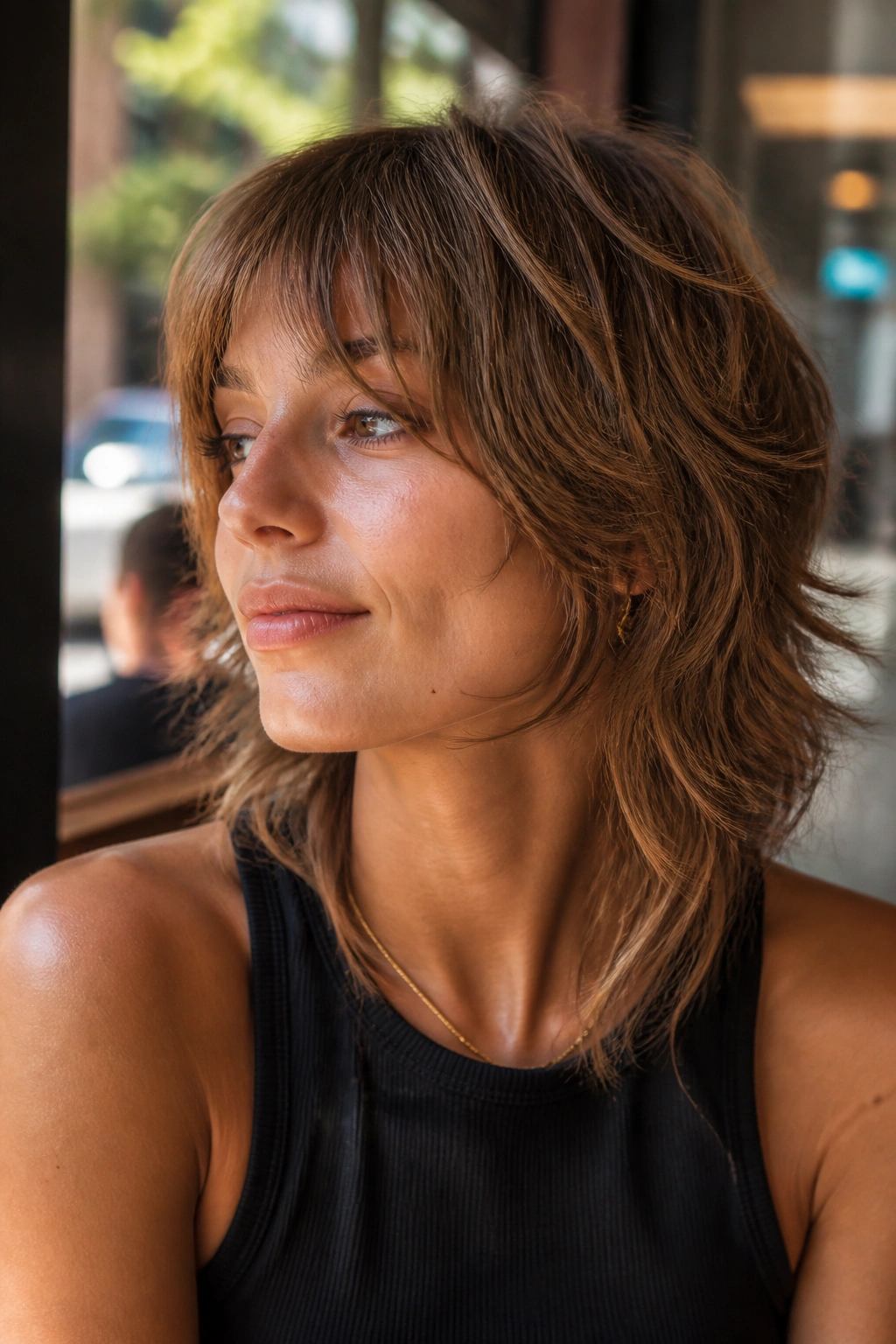
Face shape matters less than where the shortest pieces land. That’s the part most people miss. A face-framing shaggy mullet can be tuned for softness by placing the front layers exactly where you want the eye to go: cheekbones, jaw, or just under the chin.
The best thing about this cut is that it doesn’t force one look on everyone. A round face often benefits from longer front pieces that skim down past the cheeks. A longer face may like fuller bangs or a slightly wider fringe area. A square jaw can look softer with pieces that curve inward instead of dropping straight down.
Three landing points that change the whole cut
- Cheekbone length gives lift and draws attention upward.
- Jaw length softens strong angles.
- Chin length stretches the shape and keeps the front from feeling too short.
The back can stay shaggy and loose while the front does the framing work. That’s what makes this version so useful. It gives you shape without making the haircut feel overdesigned.
A good face-framing mullet is the one that looks like it was tailored to you, not copied from a photo.
12. Micro-Bang Shag Mullet
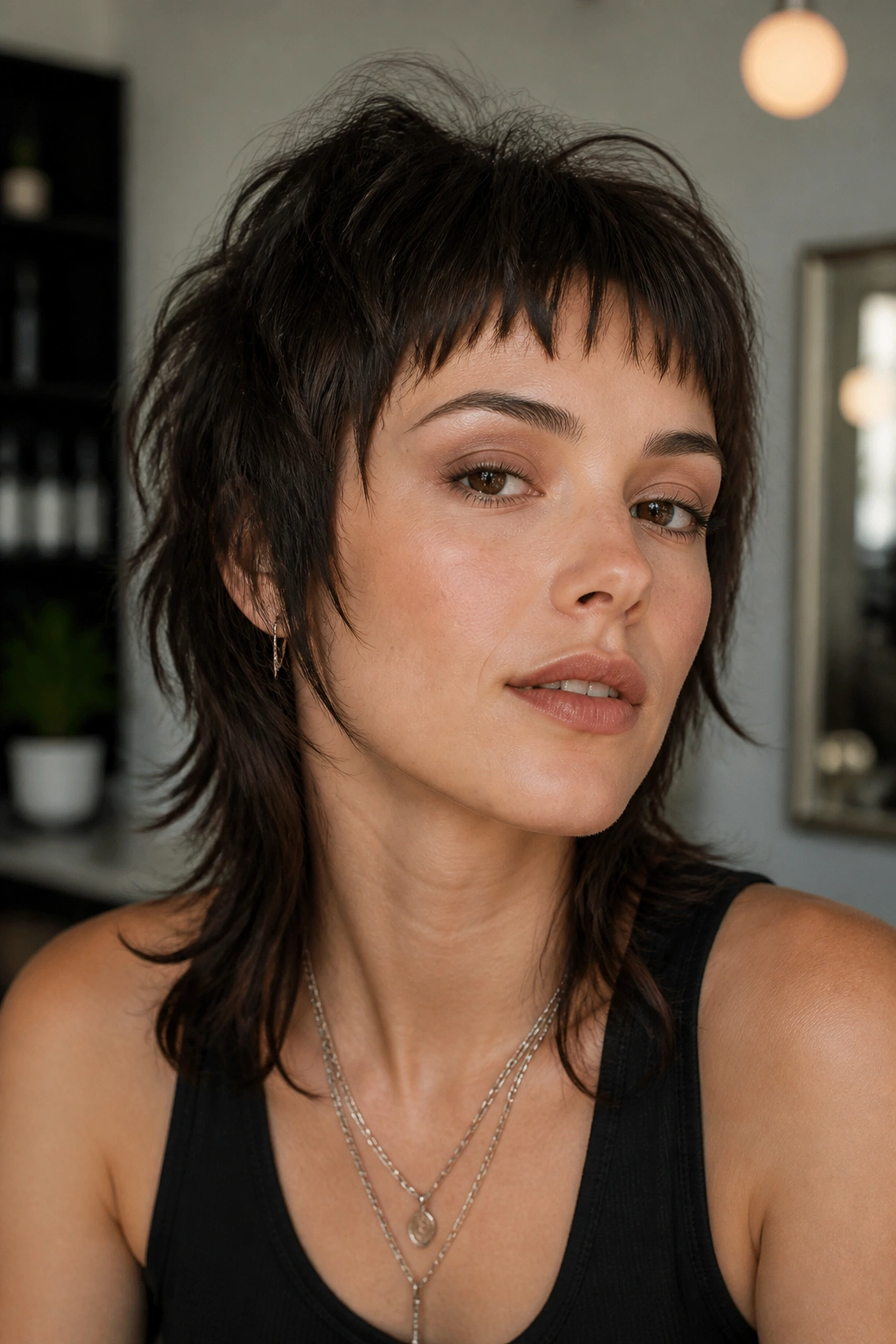
Micro bangs are not for the faint of heart. They make a mullet feel sharper, more fashion-forward, and a little less romantic. Pair them with shaggy layers and the result is strong, graphic, and easy to recognize from across a room.
This version works best when you want the haircut to feel very deliberate. The fringe sits high on the forehead, the crown stays choppy, and the back keeps the mullet line moving. It’s a good match for oval and longer face shapes because the short fringe shortens the face visually. On round faces, it can feel too abrupt unless the side layers are soft enough to balance it out.
What to keep in mind
- Micro bangs need regular trims.
- They show cowlicks fast.
- They can be styled with a tiny flat iron pass and a comb.
- They look best when the rest of the cut has movement, not stiffness.
If you want a low-maintenance fringe, skip this one. That’s the honest version. Micro bangs are cute, but they ask for attention. Not a ton. Just enough to matter.
For the right person, though, this is a killer pairing with a shaggy mullet.
13. Air-Dried Natural Texture Mullet
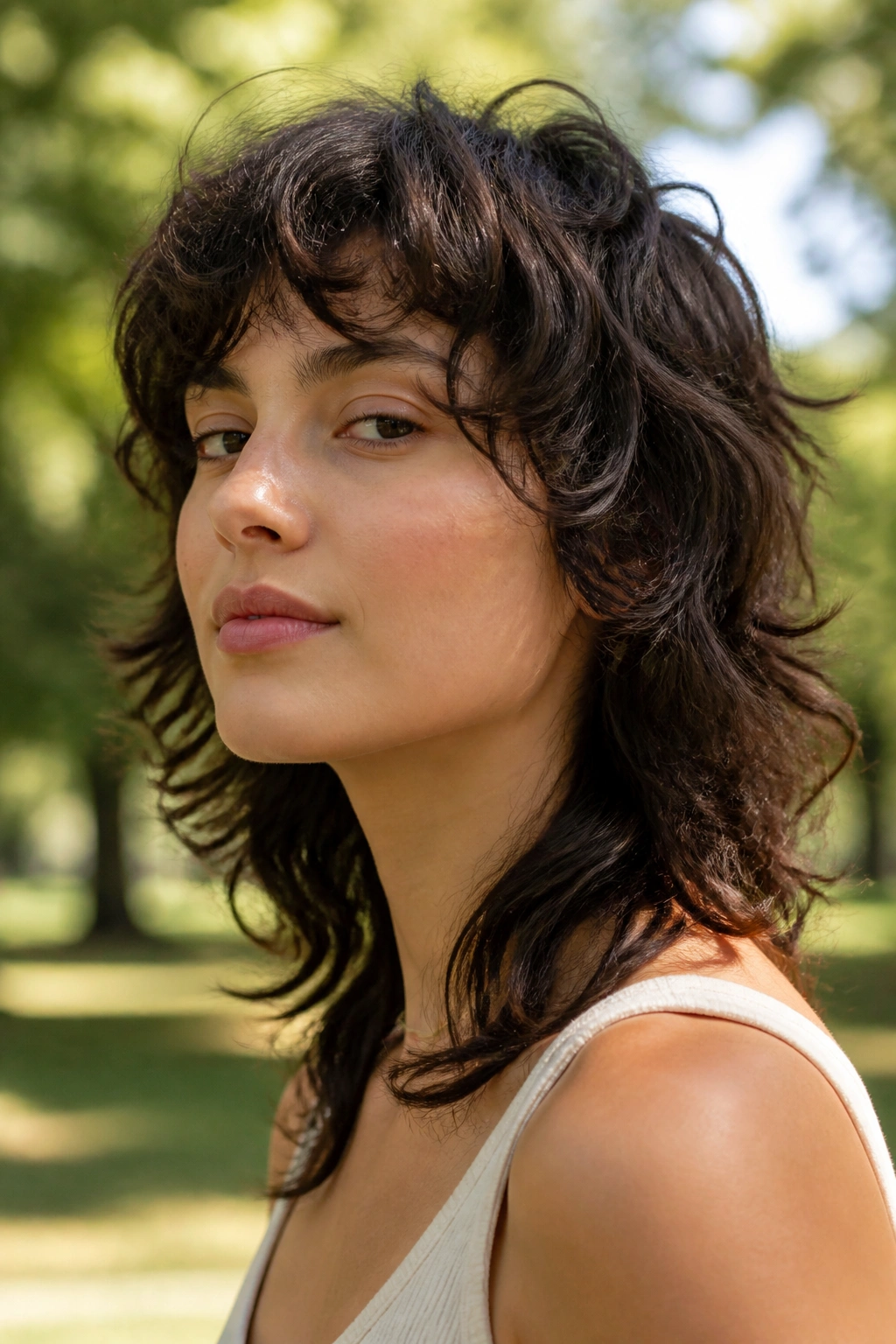
Some haircuts are built around styling tools. This one is built around what your hair already does on its own. A shaggy mullet that works with natural texture can look soft, easy, and surprisingly refined when the cut is shaped to let waves or bends fall where they want.
The key is not fighting the texture. If your hair bends, scrunch it. If it twists, let it twist. If it has loose wave in the mid-lengths and straighter ends, that uneven movement can actually help the haircut look more interesting. The worst thing you can do is chase every strand with a brush and flatten the whole thing.
A simple air-dry routine usually does the trick:
- Apply leave-in conditioner to damp hair.
- Add a small amount of curl cream or lightweight styling milk.
- Scrunch with a T-shirt instead of a rough towel.
- Let the roots dry without touching them.
- Finish with a touch of oil on the ends once everything is dry.
This version is a good fit for women who want personality without a 20-minute styling ritual. It also looks better when it’s slightly imperfect. Hair that moves a little when you walk always feels more alive than hair that’s been forced into place.
14. Glam Shag Mullet
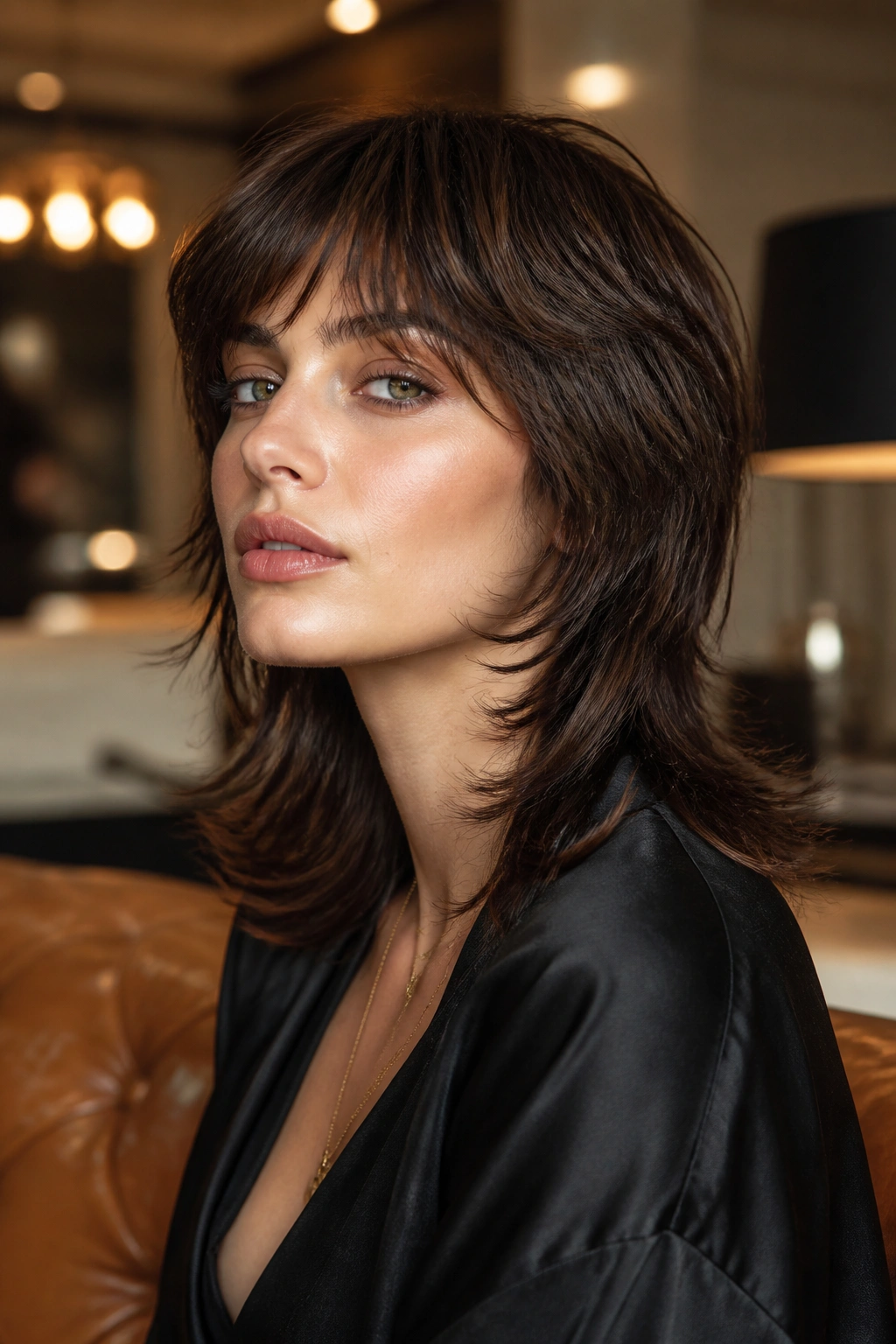
A glam shag mullet is what happens when you keep the shape but smooth the edges just enough to make it feel dressed up. The layers are still there. The back still has length. The difference is in the finish: shinier, sleeker, and a little more controlled around the face.
This is the mullet for people who like texture but don’t want to look punk all the time. You can wear it with a blazer, a silk top, or a plain black tee and still look put together. The styling usually starts with a round brush at the roots, then a soft bend through the mid-lengths rather than a full curl. A light smoothing cream helps keep the top from puffing out, and a small mist of shine spray at the ends finishes the job.
The cut works because it keeps the silhouette visible even when you do almost nothing to it. That’s the part I’d pay attention to. A good shaggy mullet should have enough shape to hold its own on a busy morning, and enough style to look intentional when you actually bother.
If the blunt versions feel too hard and the wispy ones feel too casual, this is the middle ground worth trying.
