



A fairy shaggy mullet is what happens when a mullet stops trying so hard. The shape keeps the short-on-top, longer-in-back idea, but the edges are softer, the fringe is airier, and the whole cut moves like it has a mind of its own.
That matters because most people who want a mullet do not want the hard-edged version that looks like a dare. They want texture. They want cheekbones to show. They want hair that feels a little mischievous, a little romantic, and not at all stiff.
The cut works best when the crown is built with short, shattered layers and the perimeter is left wispy rather than blunt. On straight hair, that stops the shape from falling flat by lunchtime. On waves or curls, it keeps the silhouette from turning into a triangle. A good stylist knows the difference between layered and thinned out too much — and that difference is the whole game here.
These 10 fairy shaggy mullet haircuts lean into different moods: sweet, punky, soft, airy, romantic, and a little feral. If you’ve been saving photos and trying to figure out which version fits your face, your texture, and your patience for styling, the options below make the choice a lot less random.
1. Wispy Crown Fairy Shag Mullet
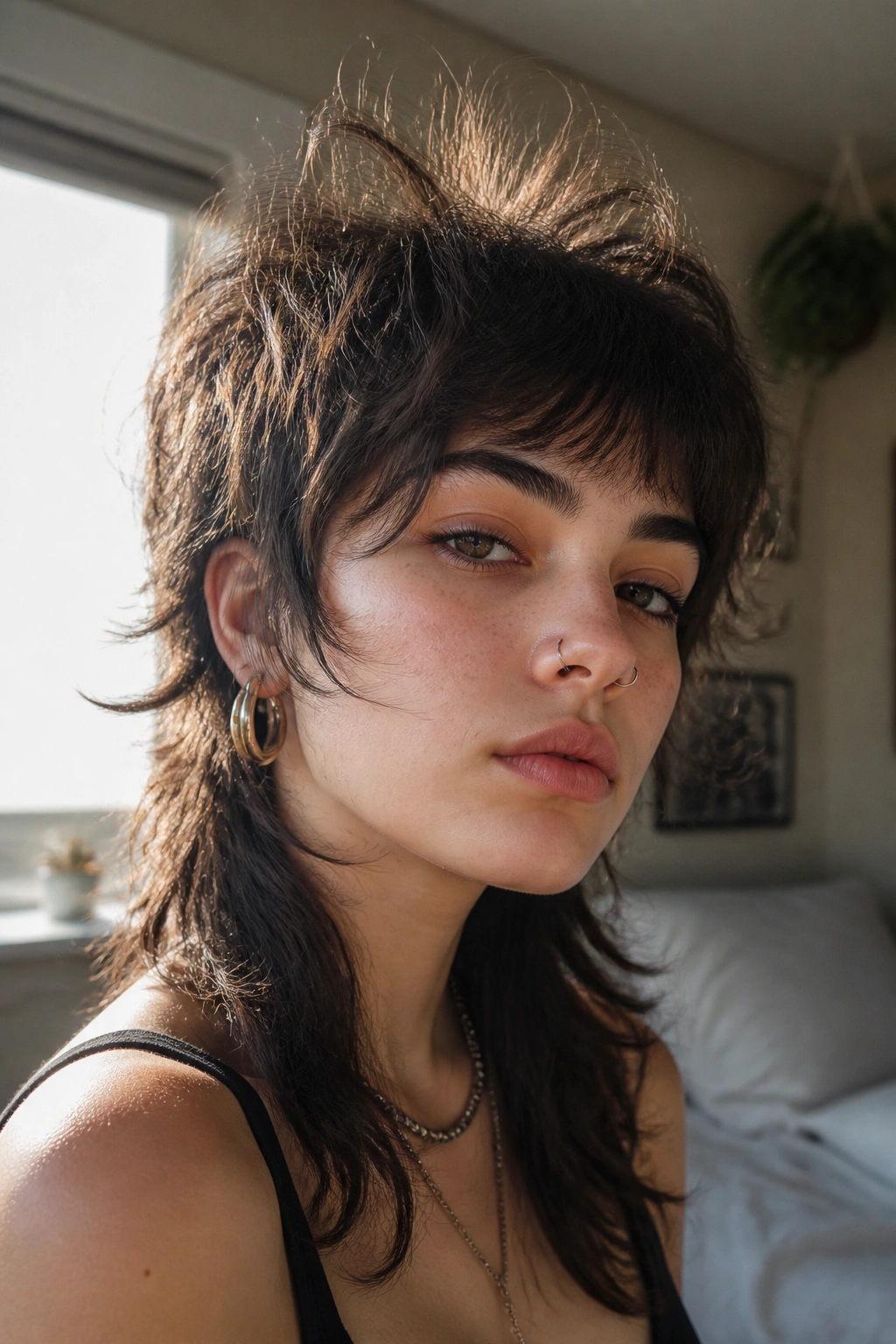
This is the easiest fairy shaggy mullet haircut to wear if you want movement without a dramatic chop. The crown stays light, the sides stay soft, and the back keeps enough length to give you that sly little mullet kick without looking severe.
What makes it work is the balance. The shortest pieces sit around the top and upper sides, while the longer back falls in broken, piecey strands instead of one blunt curtain. That means the shape reads airy instead of heavy, which is a lifesaver if your hair is fine or goes flat fast.
Why It Works on Fine Hair
Fine hair usually looks better with controlled texture than with aggressive thinning. Too much slicing and you end up with stringy ends that separate in a sad way. This cut avoids that by keeping the crown lifted and the ends feathered, not shredded.
If your hair is medium density, it still works. The trick is to ask for soft internal layers and a perimeter that is point-cut, not chopped into a hard line. You want the hair to fall in a soft taper around the nape and ears, not sit like a shelf.
- Ask for layers that start around the temples or cheekbones.
- Keep the back 1 to 3 inches longer than the front sides.
- Use a pea-sized amount of lightweight mousse at the roots.
- Finish with a dry texturizing spray only at the mid-lengths and ends.
Best move: blow-dry the crown with your fingers first, then switch to a round brush only if you want a little bend. That keeps the cut from getting over-polished, which is exactly the wrong mood here.
2. Micro Bangs and Feathered Ends
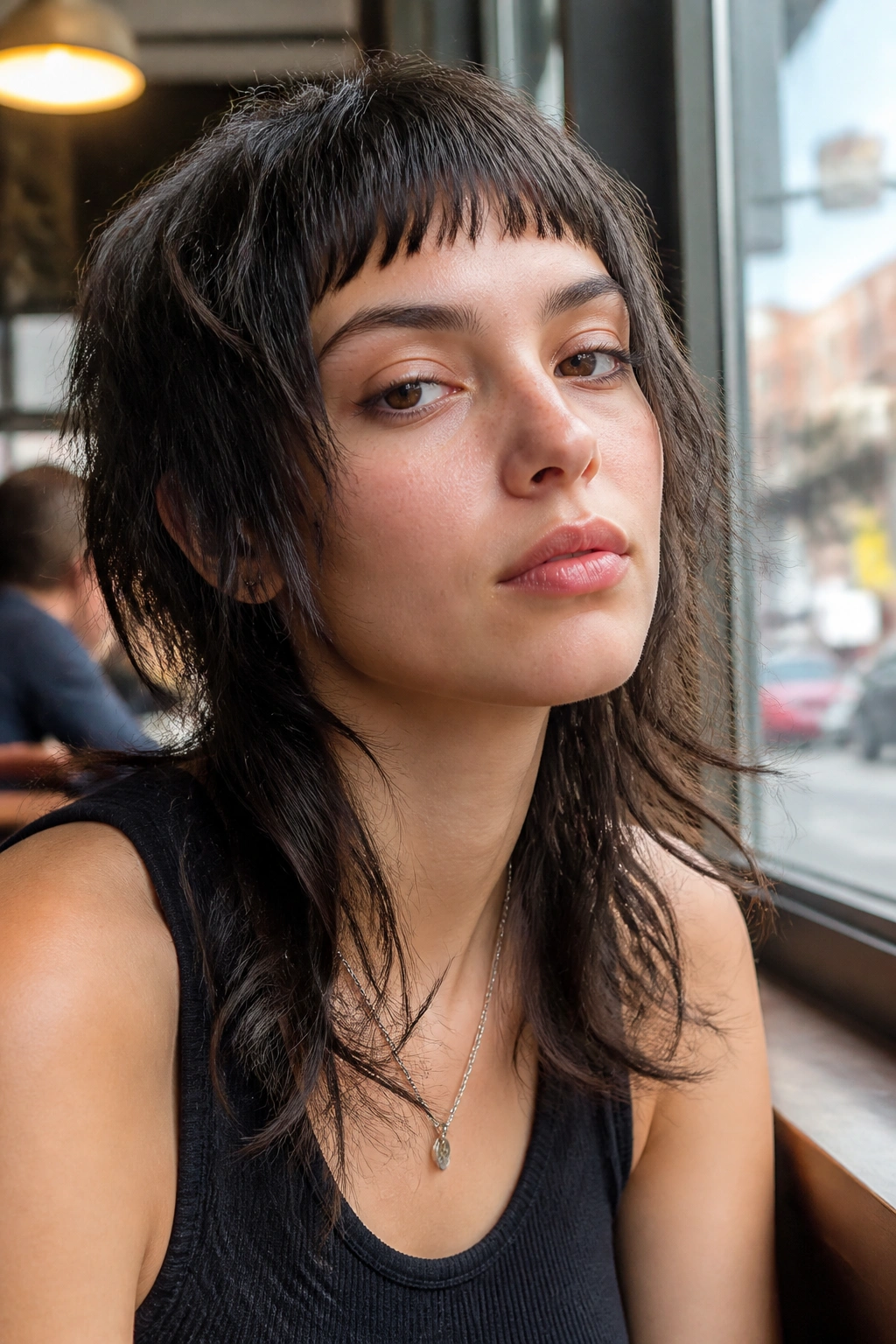
Micro bangs change the whole mood fast. Pair them with a shaggy mullet and the cut goes from playful to sharp in about ten seconds, which is why I like this version for people who want their hair to do some of the talking.
The fringe sits high on the forehead, usually well above the brows, so the eyes become the center of the look. Down below, the lengths stay feathered and loose, which keeps the cut from turning harsh. That contrast is the point. Tiny fringe, soft body, a little chaos in the back.
It is not a low-commitment bang. Trims matter. If your bangs grow fast or your forehead is especially short, this shape can feel crowded before long. Still, when the proportions are right, it gives the face a strong frame and makes the cheekbones look cleaner without trying too hard.
I like this cut on people who wear sharp collars, big glasses, or very simple clothes. The hair becomes the detail, so the rest of the look can stay clean. If you want the cut to feel a little less severe, ask for the fringe to be softened at the center rather than cut dead straight. That tiny difference changes the whole read.
3. Curly Fairy Shag Mullet with Soft Wolf Layers
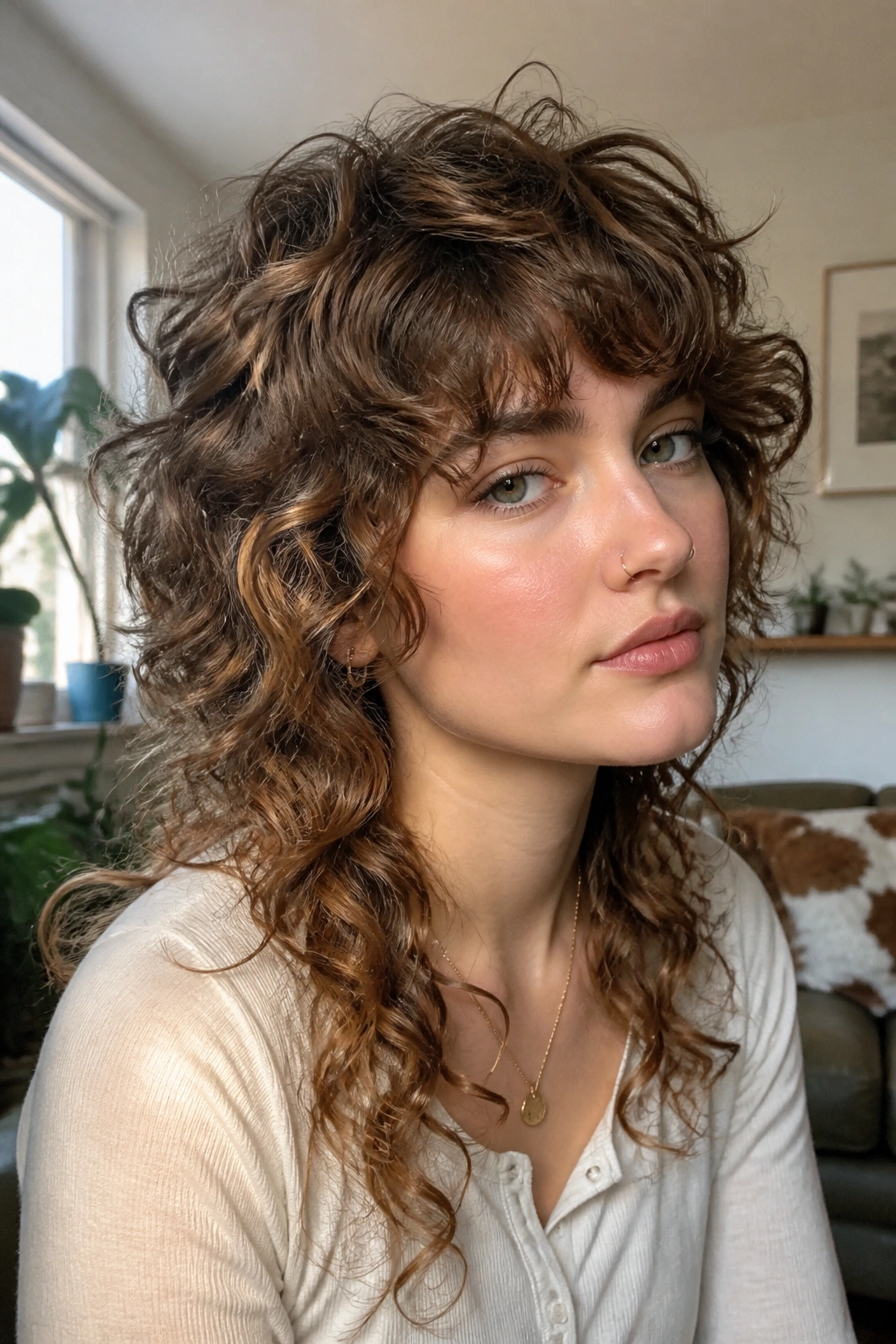
Got curls and worry a mullet will turn into a puffball? That fear makes sense, because a bad curl cut can do that in one appointment. The good version keeps the shape sculpted, the shrinkage planned for, and the ends loose enough to spring instead of swell.
This is one of those cuts that needs a stylist who understands curl pattern, not just scissors. The layers should be cut with the curl’s natural fall in mind, often with the hair dry or mostly dry, so the length doesn’t disappear once it springs up. If your curls are loose waves, you still want that same idea — just with less shrinkage and a softer perimeter.
How to Style It at Home
A curly fairy shaggy mullet loves moisture first, structure second. Start with leave-in conditioner on damp hair, then layer a curl cream or gel through the mid-lengths. Use enough to define the curls, but not so much that the top goes flat and sticky.
- Scrunch the product in from the ends upward.
- Diffuse on low heat and low speed until the roots are about 80% dry.
- Do not rake fingers through it once the curls set.
- Sleep on a silk pillowcase or use a loose bonnet if you want the shape to last.
The nice thing about this version is that it looks intentional even when it’s a little messy. The curls fill out the shape, the longer back keeps the silhouette interesting, and the face-framing layers soften the whole thing without stealing too much volume.
4. Copper Layered Mullet with Curtain Fringe
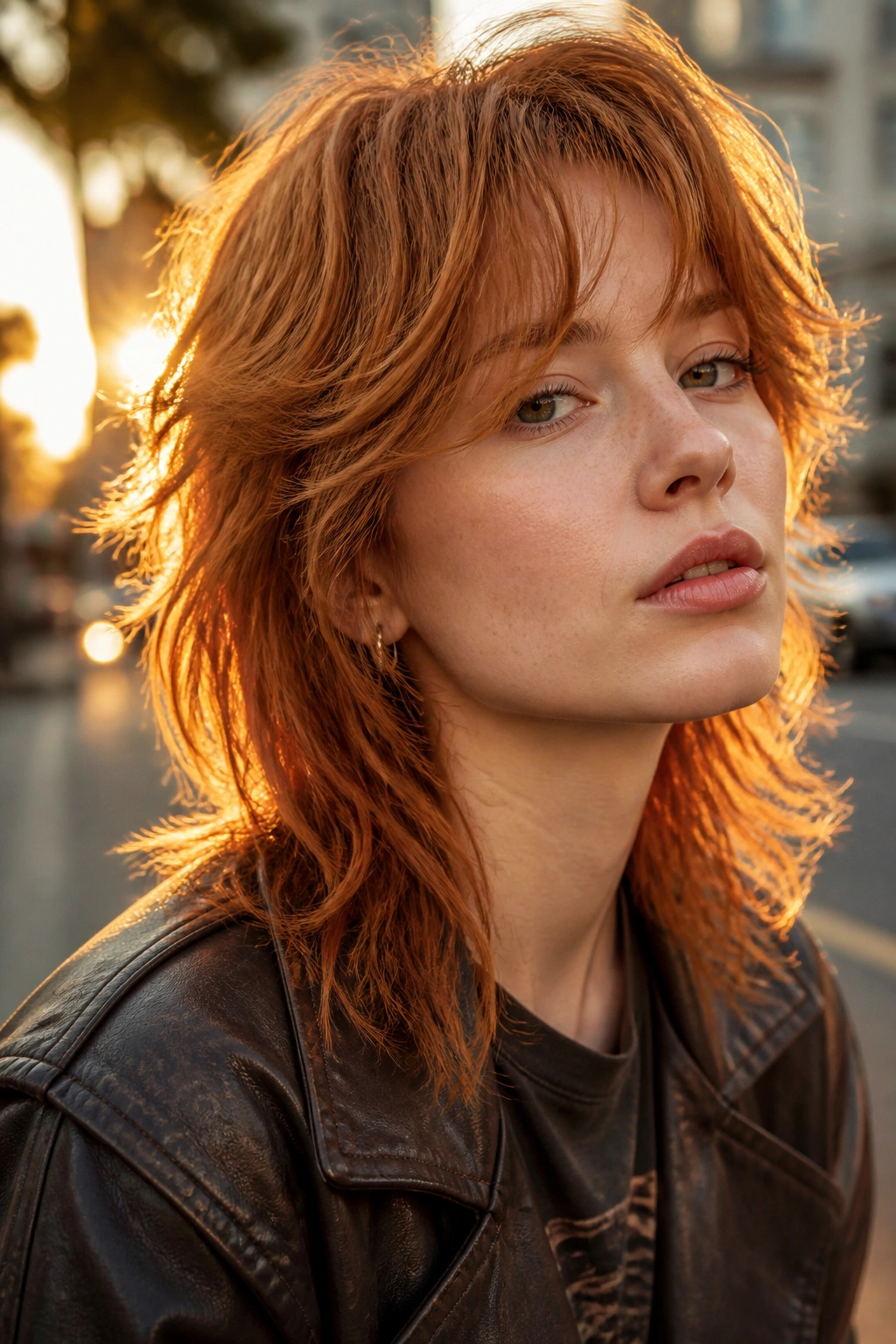
Picture warm copper catching light on broken-up layers, and you already know why this one works. Color can change a shaggy mullet from “cute cut” to “people will ask who did your hair” very quickly, and copper is especially good because it makes the texture visible.
The curtain fringe matters here. It opens the face without flattening the top, and it gives the front of the cut a softer lead-in before the shorter crown layers start doing their thing. On straight or slightly wavy hair, the fringe can be split at the center and bent away from the cheeks. That little sweep does a lot.
What to Ask for in the Chair
Ask for fringe that starts around the bridge of the nose and opens into longer face-framing pieces at the cheekbone. The back should be kept light, but not so short that the haircut stops reading as a mullet. You want a visible shift in length, just softened.
- Choose a copper tone with a warm orange-gold or red-brown base if you want texture to show.
- Ask for the shortest top layers to sit around the parietal ridge.
- Keep the bottom ends feathered so the color moves with the cut.
- If your hair is thick, ask for internal debulking only — not heavy thinning at the perimeter.
This one is especially good if your hair tends to disappear in one flat sheet. Copper catches the eye, the fringe gives shape, and the layers stop the whole look from feeling heavy.
5. Platinum Airy Mullet with Razor-Soft Ends
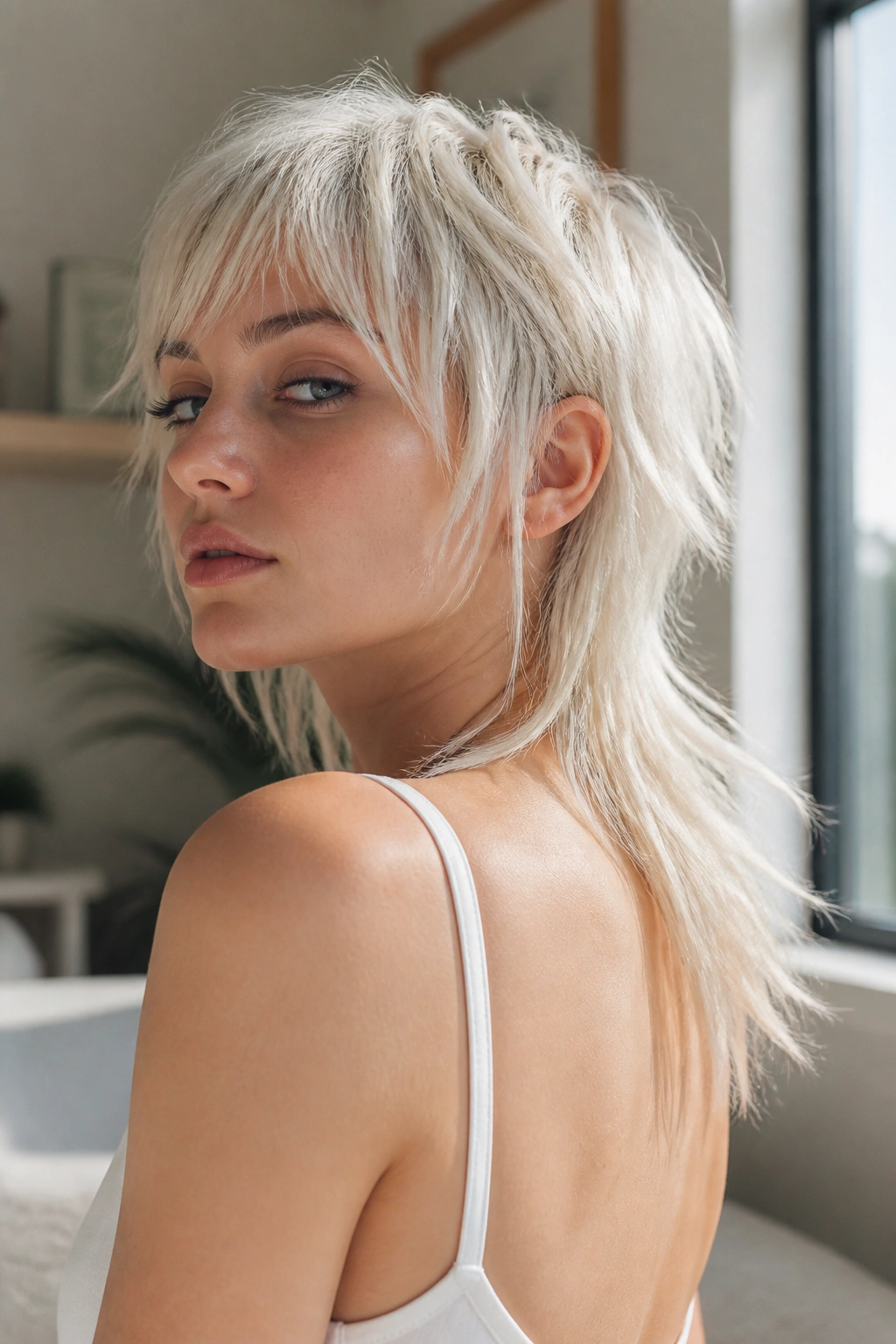
Platinum hair can make a fairy shaggy mullet look expensive, but only if the cut respects the fragility of bleached hair. When the ends are too blunt or too choppy, the whole thing can look fried instead of airy. I prefer razor-soft lines here, with enough taper to keep the shape feathered and easy.
The best version has a delicate top and a slightly longer back that swings when you move. It does not need a ton of bulk. In fact, too much bulk is the enemy, because platinum already has a visual brightness that makes every line louder. A softer edge keeps the haircut from shouting.
Bleached hair also changes the maintenance game. You need tone care, yes, but you also need a cut that won’t snap at the ends. That means no aggressive razoring on compromised hair, and no pretending a high-contrast shape will magically stay healthy with heat styling every day. It won’t.
I like this cut when the finish is a little imperfect. A small bend in the top, a loose flip at the nape, a piece that falls into the cheek once in a while — that’s the good stuff. It feels lived-in, not pasted down. If you’re going blonde to show off a mullet, make sure the haircut is doing some work too. Otherwise it’s just expensive color on a tired shape.
6. Past-the-Chin Shaggy Mullet with Bottleneck Bangs
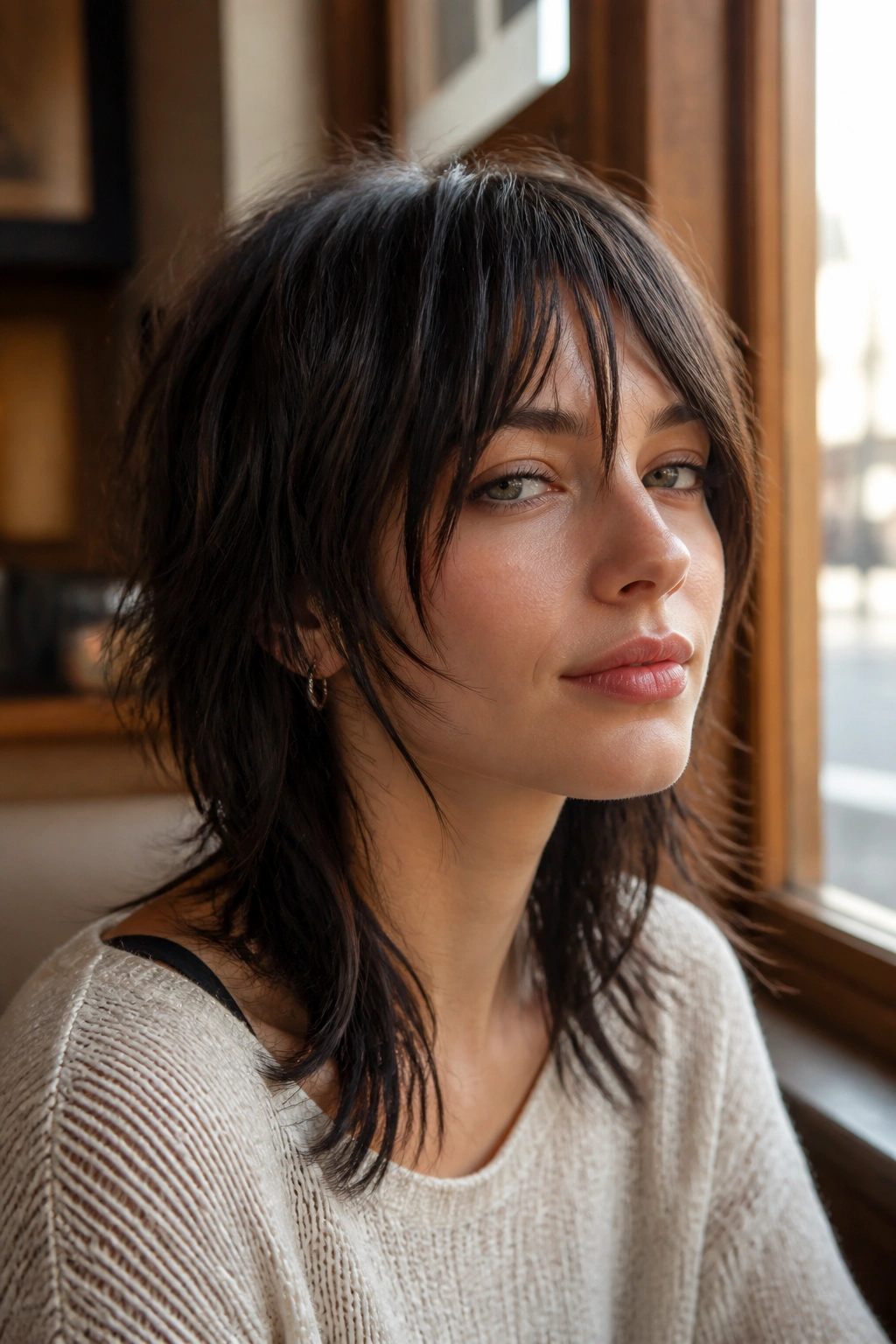
This is the version I point people toward when they like the shag but don’t want the haircut to feel too exposed. The length stays past the chin, the back keeps its mullet shape, and the bottleneck bangs give the front a flattering curve without swallowing the face.
Unlike a classic shag, which can spread volume all around the head, this cut keeps the silhouette narrower at the top and longer through the back. That makes it easier to wear if you want movement without the wild halo effect some shags can create. It is a cleaner shape, but not a neat one. That sounds contradictory; it isn’t. It’s just the charm of the cut.
Why Bottleneck Bangs Matter
Bottleneck bangs start narrow between the brows and open wider toward the cheekbones. That shape gives the forehead some breathing room while still framing the eyes. On round or heart-shaped faces, they can soften the top of the face and draw the eye downward in a nice way.
They also buy you some flexibility. If you hate a straight fringe because it feels boxy, this is the safer move. The bangs can be tucked, split, pinned, or blown to one side without losing the shape of the haircut.
- Best on hair that can hold a bend with a 1 to 1.25-inch barrel iron or a round brush.
- Usually easier to maintain than micro bangs.
- Works well if you like to wear hair half-up or tucked behind the ears.
- Needs a trim every 6 to 8 weeks if you want the fringe to keep its shape.
The one catch is styling commitment. If you hate touching your bangs at all, this cut will bug you. If you’re willing to spend five minutes with a brush and a dryer, it gives back a lot.
7. Mullet Bob Hybrid with Fairy Texture
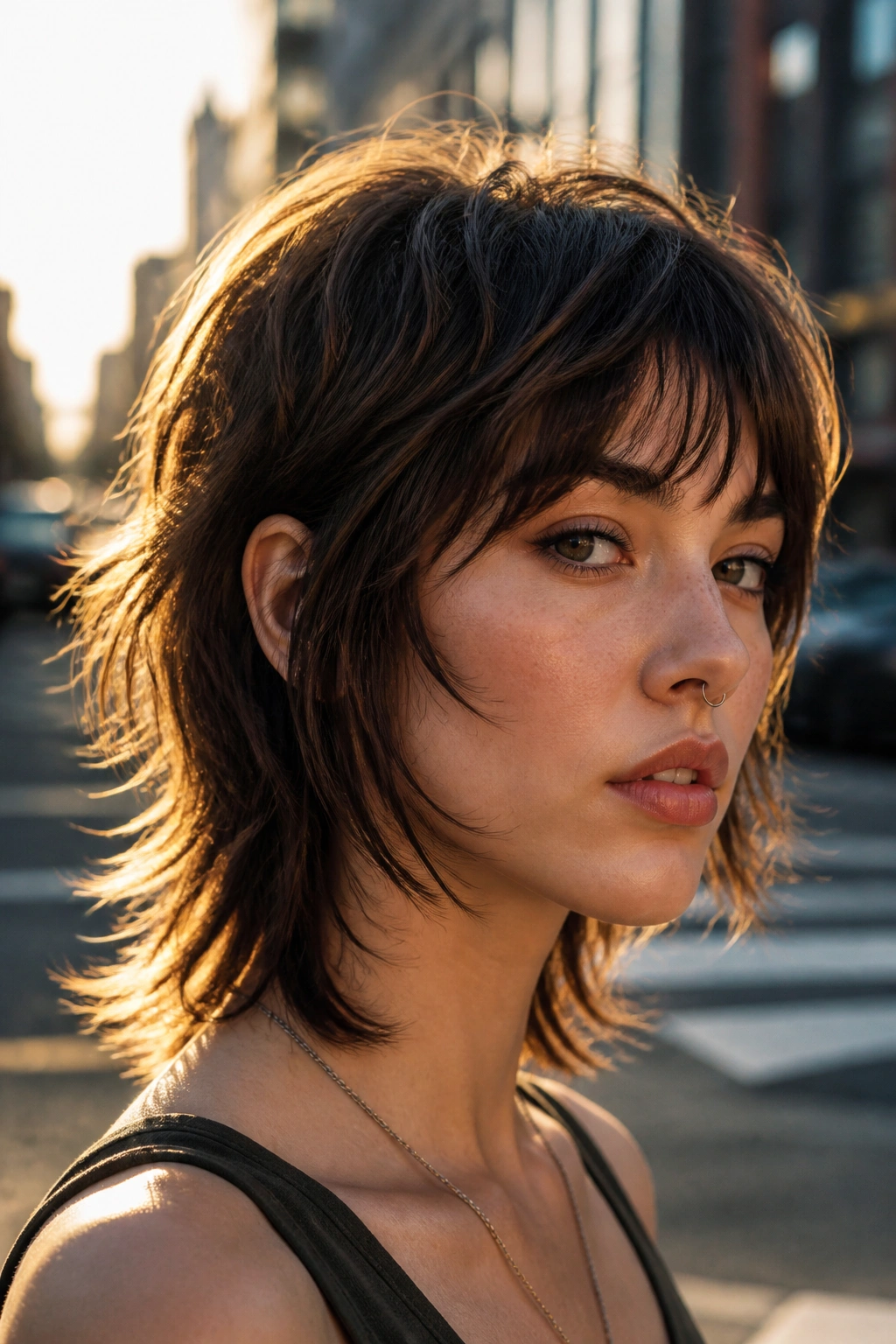
The bob hybrid is the friendly version of a fairy shaggy mullet haircut. It gives you the edge, but it stops short of a full-on dramatic back length, which makes it ideal for anyone who wants to test the waters without looking like they made a life decision at the salon sink.
The shape usually lands around the jaw or just below it in front, while the nape is cropped a little shorter and broken up with soft layers. That’s enough to create movement and lift, but not so much that you lose the sense of a bob. It’s a clever little shape. A bit sneaky.
Where the Shape Sits
The magic is in the transition between the front and back. If the angle is too steep, you get a severe wedge. If it’s too flat, it turns into an awkward bob with random ends. The middle ground is where this cut lives, and that middle ground is what makes it wearable.
It’s also a strong choice for thick hair, because the weight can be removed through the crown and interior without destroying the outline. The cut still looks neat when air-dried, which is useful if you do not want to spend half an hour rough-drying every time you wash it.
Who It Flatters
This hybrid is kind to square faces, because the softer perimeter avoids boxing the jaw in. It also works on finer hair that needs volume at the top but can’t carry long lengths easily. If your hair grows out in a poofy triangle, this version can tame the shape without making it flat.
I’d ask for soft disconnect between the front and nape, plus just enough fringe to keep the forehead from feeling naked. Keep the ends light, not wispy to the point of nothing. There’s a difference, and it matters.
8. Deconstructed Shag Mullet with Face-Framing Ribbons
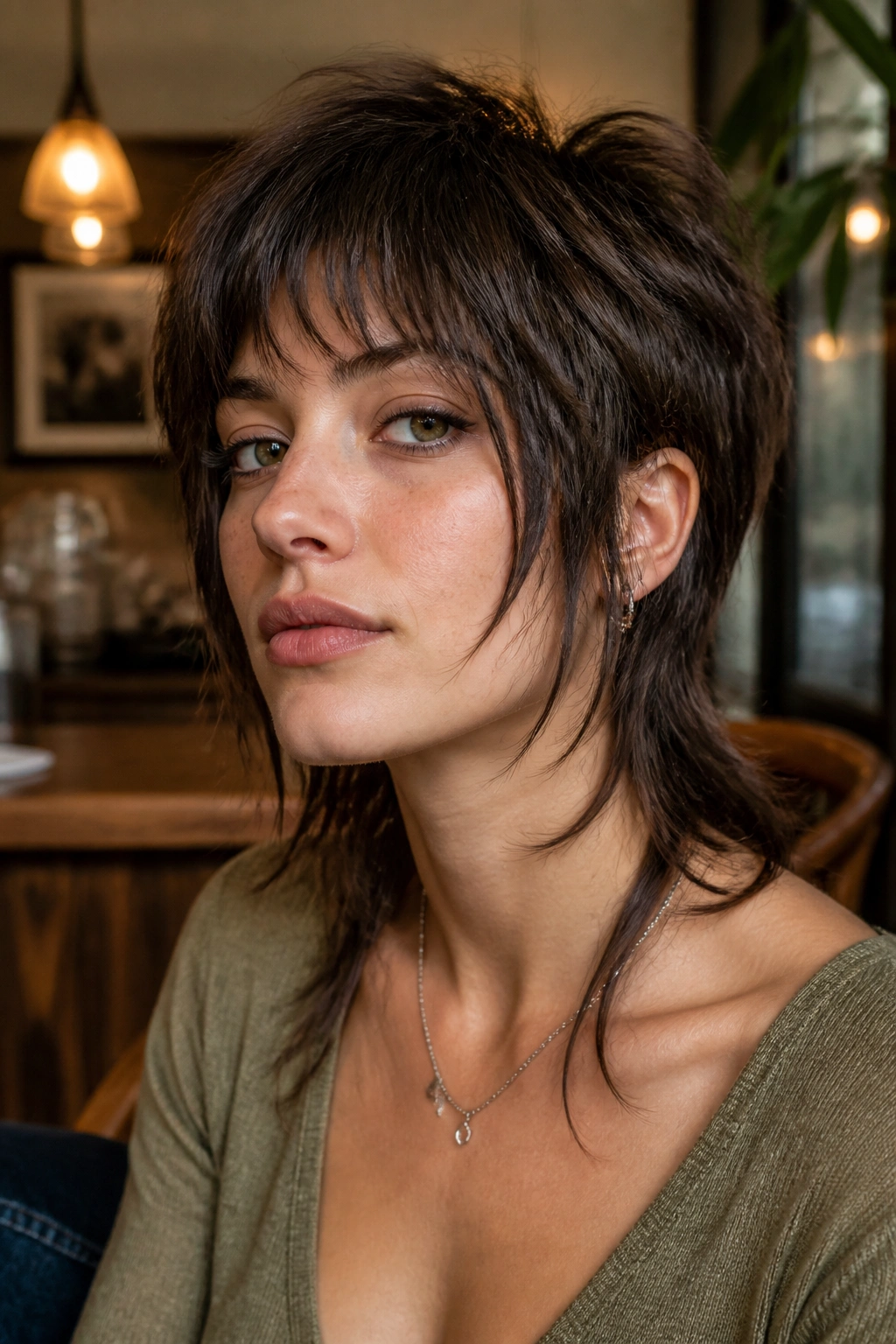
Someone sits down and says, “I want something edgy, but not loud.” That sentence lands in my head as this haircut. The deconstructed shag mullet is made for that exact brief, because it has attitude in the shape and softness in the pieces around the face.
The face-framing ribbons are what make it feel fresh instead of costume-y. Those longer front pieces should fall around the cheek, jaw, and maybe the collarbone depending on your length. They don’t need to be identical on both sides. A slight mismatch can make the cut feel more alive, which is a nice way to say less overworked.
The Pieces That Do the Work
The crown stays broken up with short layers, while the front gets longer, sliced sections that move when you turn your head. The back keeps the mullet line, but it’s shattered enough that you don’t get that hard drop-off some older versions have.
- Ask for piecey face-framing sections that start around the cheekbone.
- Keep the crown layered, but avoid over-thinning the sides.
- Use a flat iron with a slight wrist bend if you want extra separation.
- Finish with a light wax or paste on just the front ends.
This cut is one of my favorites for longer faces or narrow chins because the ribbons widen the face a little without making it look heavy. It also photographs in a nice way in real life, not in the shiny-overfiltered sense people love to overpromise about. It just moves well. That’s enough.
9. Long Fairy Mullet with Hidden Layers
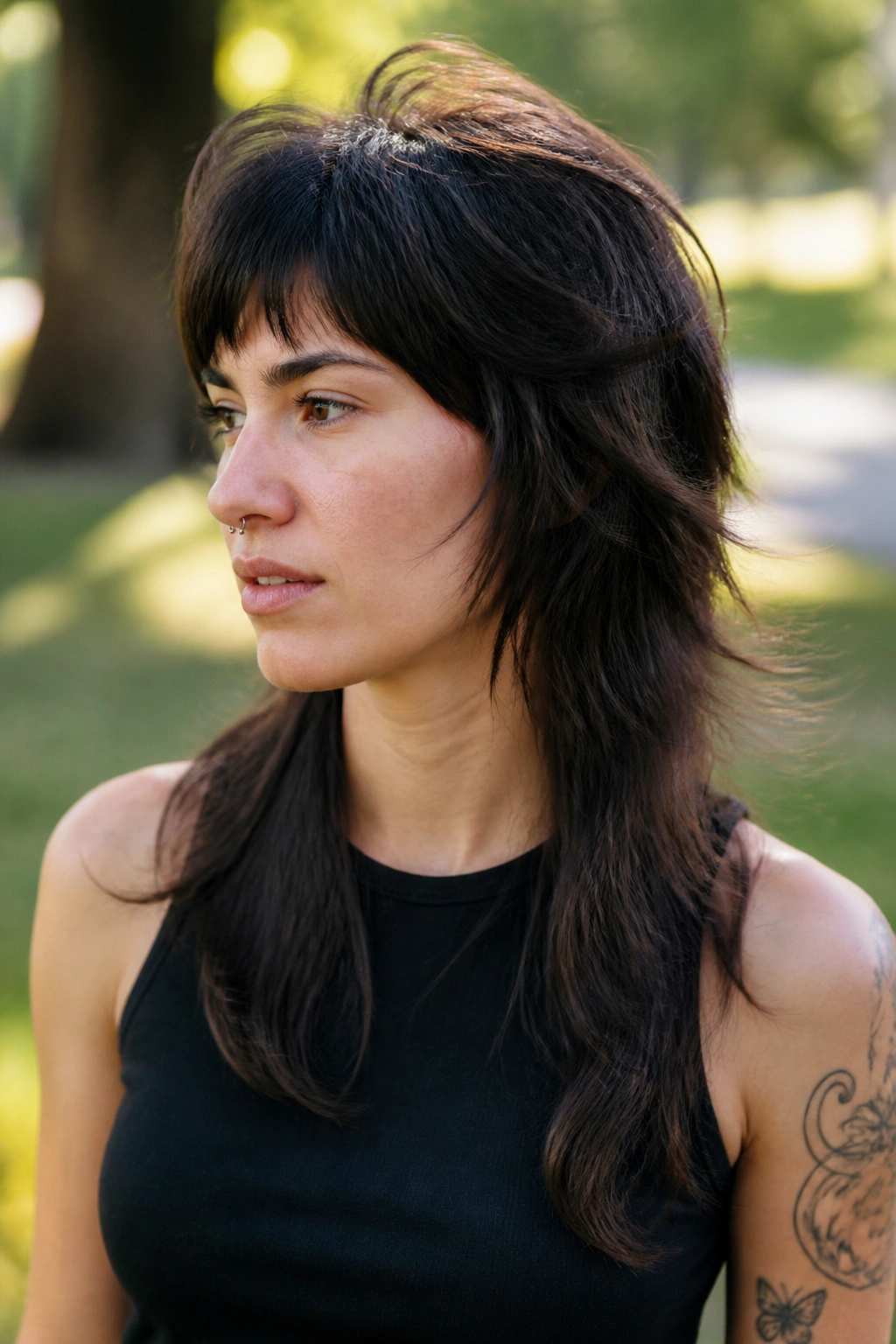
The softest fairy shaggy mullet haircut keeps the length. That’s the whole appeal here. You get the mullet shape, but you don’t have to give up the feeling of long hair, which is a big deal if you like ponytails, braids, or simply having something to tuck under a coat collar.
Hidden layers are the trick. They sit under the top sections and around the crown, so the haircut gets lift without showing every layer line at once. The result is less obvious from the front and more interesting when the hair swings. It has a little secret to it, which I think is the right kind of drama.
What to Ask Your Stylist
Ask for internal layering around the crown and upper back rather than heavy layers all the way through the ends. Tell them you want movement, not chunks. That wording matters more than people think.
- Keep the longest pieces at or below the shoulders if you want ponytail length.
- Add face framing that starts around the mouth or chin.
- Leave the bottom edge soft, not razor sharp.
- If your hair is very thick, ask for weight removal only where the hair feels bulky at the back of the head.
This version is good for people who like a subtle read from the front and a bit more shape from the side. It’s also forgiving while growing out. The haircut doesn’t lose its identity the second it gains half an inch, which is more useful than it sounds.
10. Punky Textured Fairy Mullet with Choppy Bangs
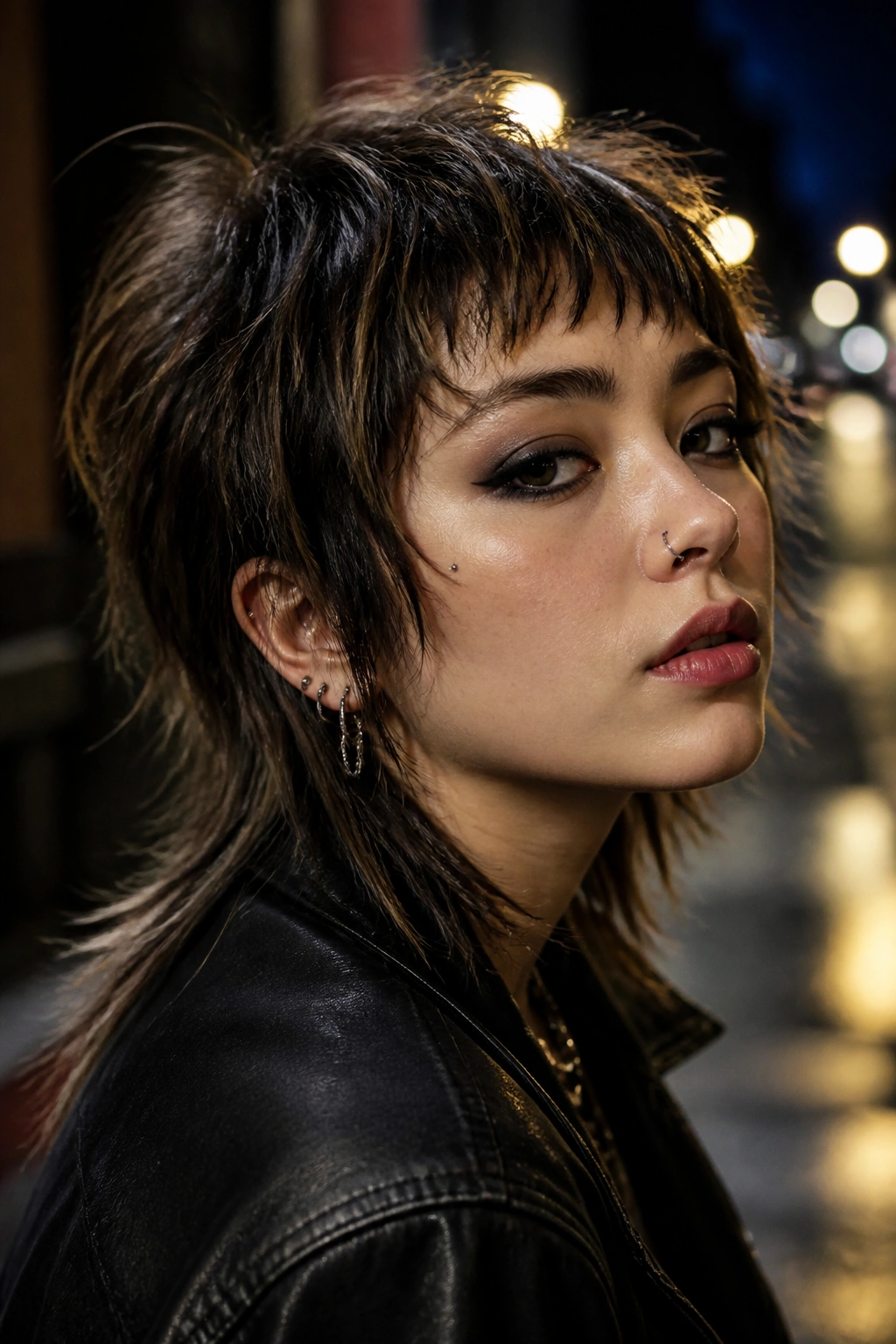
If you want the strongest silhouette, this is it. The punky textured version leans into the mullet side of the fairy shaggy mullet haircut, but it keeps enough softness around the edges that it still feels wearable rather than theatrical.
The choppy bangs are the star. They can sit anywhere from brow-skimming to eyebrow-grazing, but the shape should feel broken and a little irregular, not neat. Down below, the layers are cut to create separation, almost like they’ve been roughed up by hand. That kind of texture works best when you let it look unfinished on purpose.
Why It Reads Punk Instead of Costume
The difference is restraint. A costume cut tries to copy a decade. This one borrows the attitude and skips the cliché. The front can be jagged, the sides can be narrow, and the back can stay feathered enough to move, but the overall effect still needs to feel modern and personal.
I’d reach for this if you like black eyeliner, boots, sharp jackets, or anything with a little bite. The haircut carries that energy without needing a dramatic color change. Dark brunette, copper, and icy blonde all work here, though I think the cut itself matters more than the shade.
If you style it, use dry texture spray or a tiny bit of matte paste on the bangs and front pieces. Not much. Too much product makes the choppy texture clump, and that ruins the whole point. Let the shape stay piecey. Let it look like you didn’t fuss over it for an hour, even if you did.
And honestly, that’s the real appeal of a good fairy shaggy mullet. It can be soft, sharp, romantic, messy, or all four at once. The best version is the one that looks like it belongs to you the second you leave the chair.
