



Thick hair can make a pixie look rich and expensive. It can also make it look like a mushroom if the shape is wrong. That’s the whole trick with long pixie cuts for thick hair: remove bulk where it stacks up, keep enough length to soften the edges, and make the haircut move instead of sitting there like a block.
A long pixie is a sharp little haircut when it’s done well, but it is not forgiving. Leave the sides too square and you get width you never asked for. Thin the top too aggressively and the whole thing can go flat at the crown, then puff out at the ears. The sweet spot is a cut that respects density without turning the head into a helmet.
If your hair is coarse as well as thick, the details matter even more. A heavy razor pass can create fuzz. A little internal layering can save the silhouette. A tapered nape can make the entire cut feel lighter by an inch, even when the actual length barely changes. That’s the kind of thing people notice when the haircut looks “right,” even if they can’t say why.
The 22 cuts below cover soft, sharp, polished, and slightly edgy versions of the long pixie. Some lean neat. Some lean airy. All of them are built to make thick hair behave.
1. Long Pixie Cuts for Thick Hair: Choppy Side-Swept Fringe
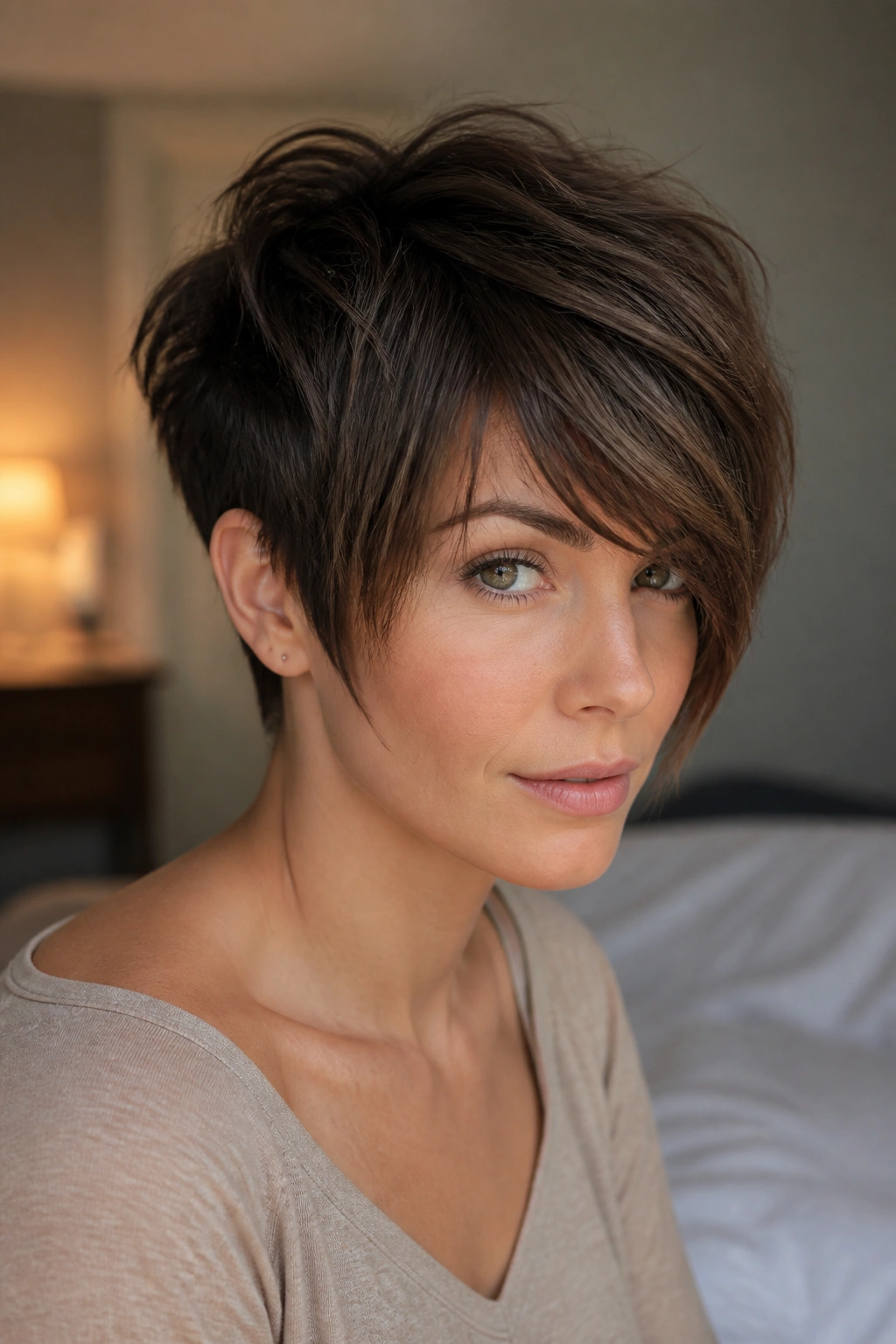
This is the easiest long pixie to like if your hair has real density. The choppy fringe breaks up the front line, and that matters because thick hair loves to pile up across the forehead and temples. A side sweep gives you movement without forcing the whole cut into a tidy little helmet.
Why the Fringe Carries the Cut
Ask for the fringe to fall somewhere between the eyebrow and cheekbone, then keep the top layers around 4 to 5 inches so they can bend instead of standing straight up. The sides can stay closer to 2 to 3 inches, with the nape tucked in tighter. That contrast keeps the shape clean.
A few soft, jagged pieces around the front stop the cut from looking too neat. That’s the point. Thick hair usually looks better when it has a little broken edge, because perfect lines can make it feel heavy.
- Best for round, square, and heart-shaped faces.
- Works well with a blow-dryer and a small paddle brush.
- Needs a trim every 6 to 8 weeks if you want the fringe to stay light.
Pro tip: blow-dry the fringe in the opposite direction first, then sweep it over. It gives the front a little bend instead of a flat sheet.
2. Layered Pixie Bob With a Tapered Nape
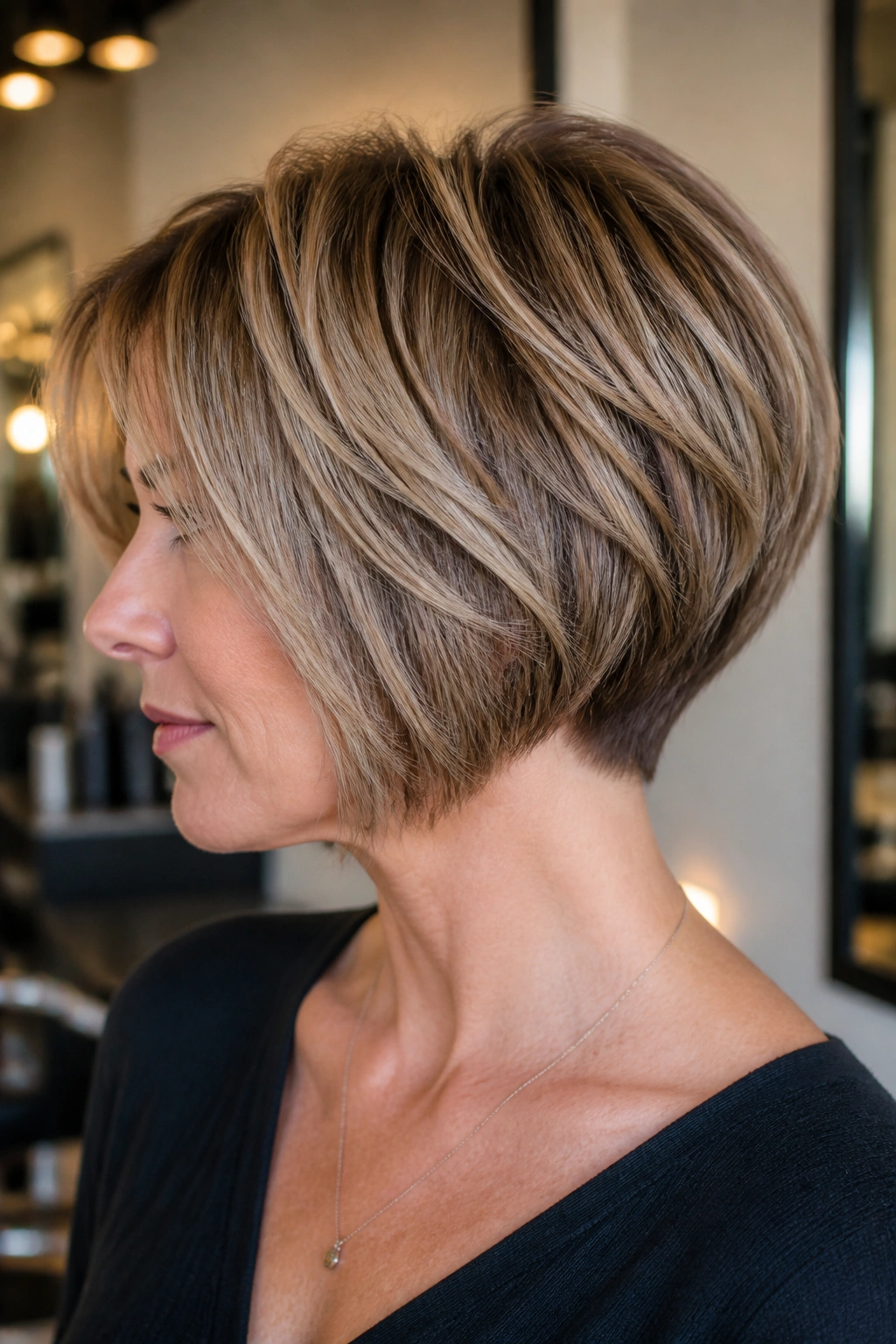
Bulky napes make a pixie look heavier than it is. A tapered nape fixes that fast, and thick hair usually needs that kind of clean ending more than it needs extra length. This version sits in the middle between a pixie and a bob, which is handy if you want short hair without showing every millimeter of scalp.
The front stays longer, usually brushing the jaw or just below it, while the back is stacked in soft layers that lay close to the neck. That shape keeps the head from looking top-heavy. It also helps if your hair grows out fast, because the cut still looks intentional even when it starts to lose its sharp lines.
I like this version on dense straight hair. It holds a smooth curve beautifully, and the tapered nape keeps the silhouette from ballooning. If your hair sticks out at the crown, ask for internal weight removal there instead of relying on surface thinning. Different thing. Better result.
3. Long Pixie Cuts for Thick Hair With Curtain Bangs
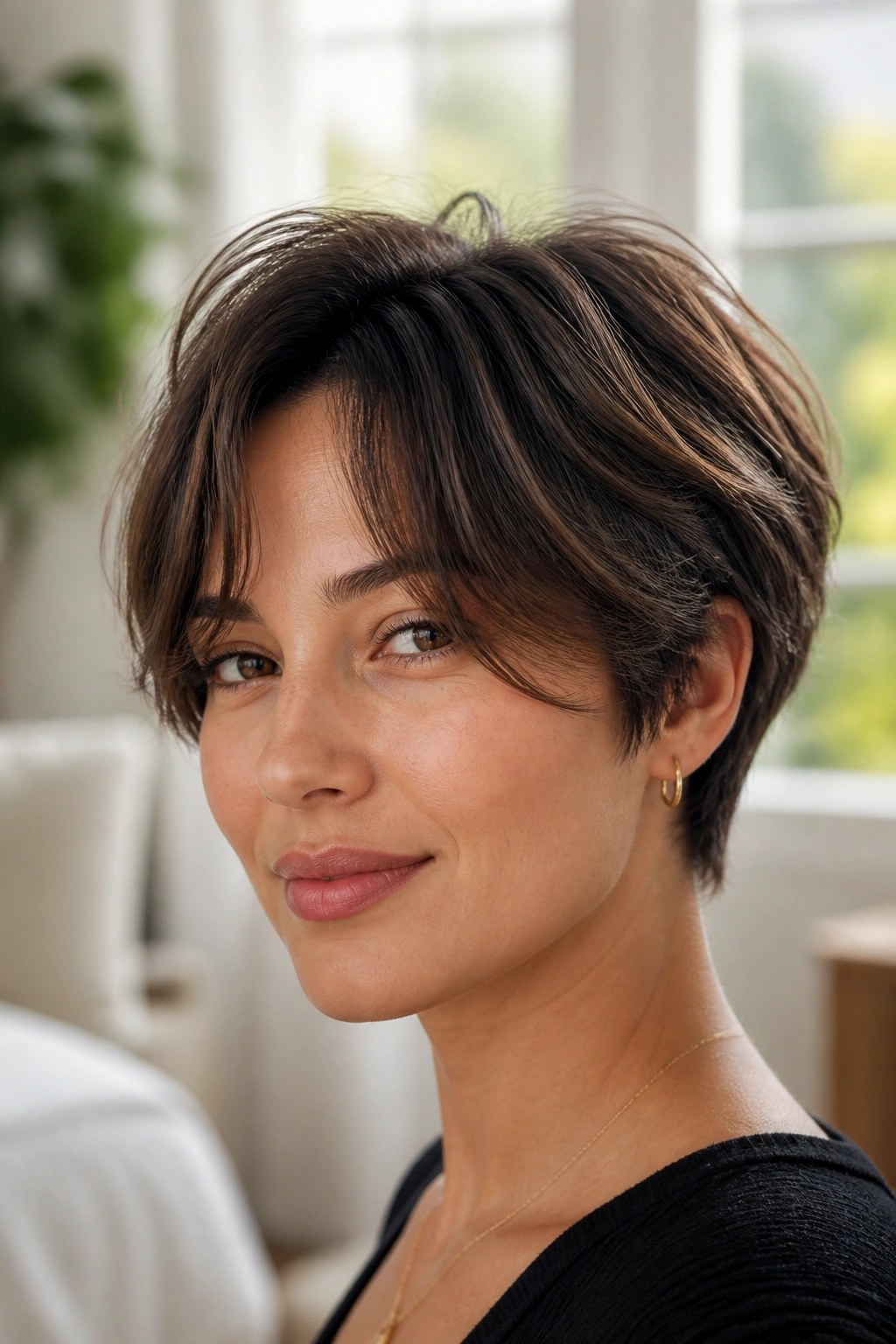
Could curtain bangs be the reason a thick pixie suddenly looks soft instead of boxy? Usually, yes. The split fringe opens the face, and on dense hair it also breaks up all that front weight that loves to hang forward in one big chunk.
The trick is to keep the center of the bangs a little shorter than the sides, then let them drift into the cheekbones. If the bangs are cut too blunt, they just become a heavier curtain. That’s not the mood here. You want the hair to part easily and fold back into the rest of the cut.
How to Style the Split
Use a 1-inch round brush or even your fingers if your hair dries with a bend on its own. Direct the bangs away from the face while they’re still damp, then let them cool in that shape. A dab of light cream on the ends is enough. Too much product will glue the fringe together, and thick hair already has enough mass without that help.
This cut is a nice choice if you want something feminine without being fussy. It has movement built in.
4. Long Pixie Cuts for Thick Hair With an Asymmetrical Shape
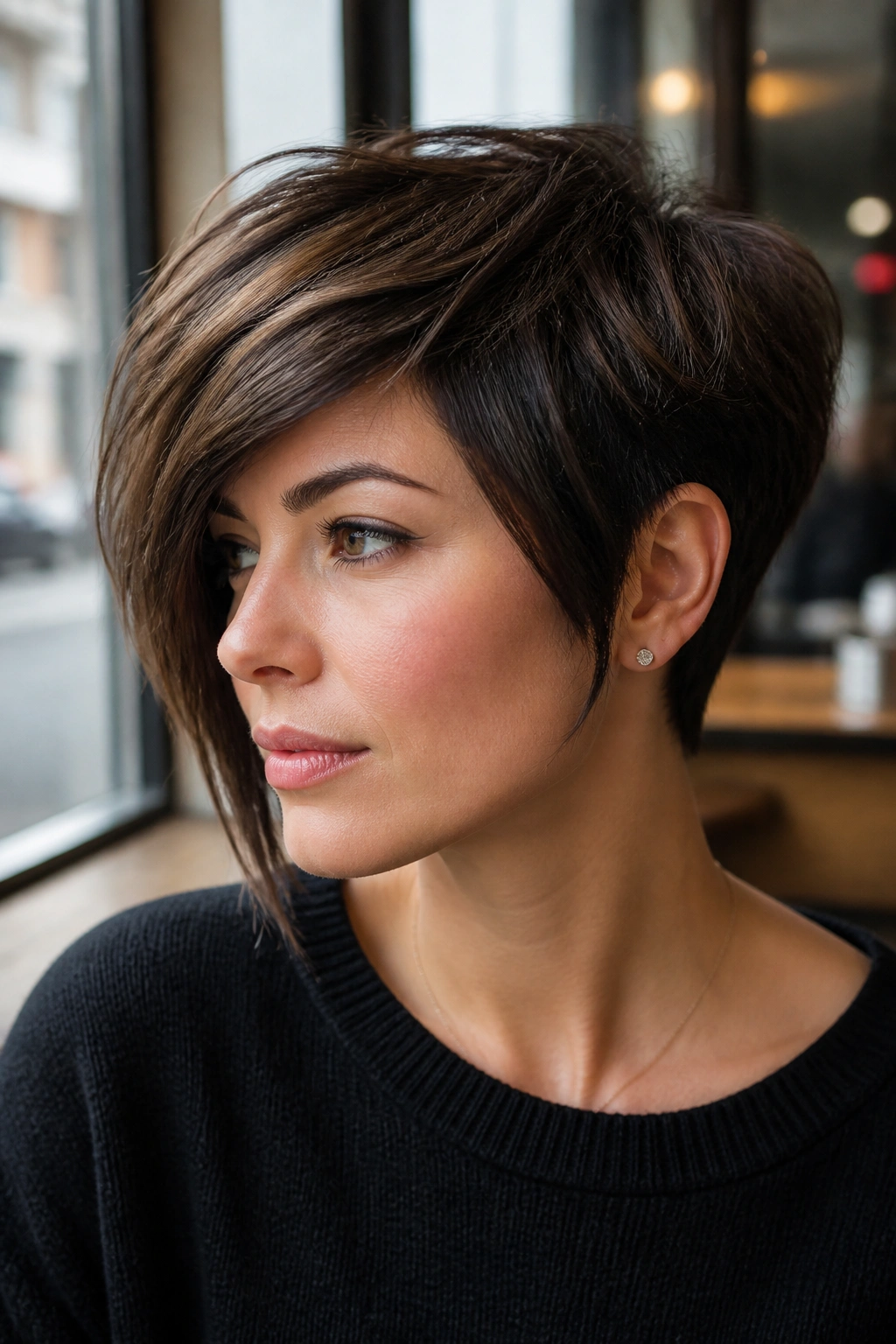
One longer side changes everything. On thick hair, asymmetry gives your eye somewhere to go, which is useful when the natural density wants to read as one solid shape. Even a difference of 1 to 1.5 inches from side to side can make the whole cut feel sharper.
The longer side can skim the cheekbone or jaw, while the shorter side stays tucked and neat. That contrast helps if one side of your head grows in heavier, or if you have a cowlick that always fights the same spot. It also gives the cut a little attitude without turning it into a full edgy crop.
- Good for strong jawlines.
- Nice if you wear one ear tucked and the other covered.
- Less forgiving if you hate trims, because the asymmetry shows growth quickly.
I’d call this one a smart choice rather than a safe one. It has a shape on purpose. That matters.
5. Tousled Pixie With Crown Lift
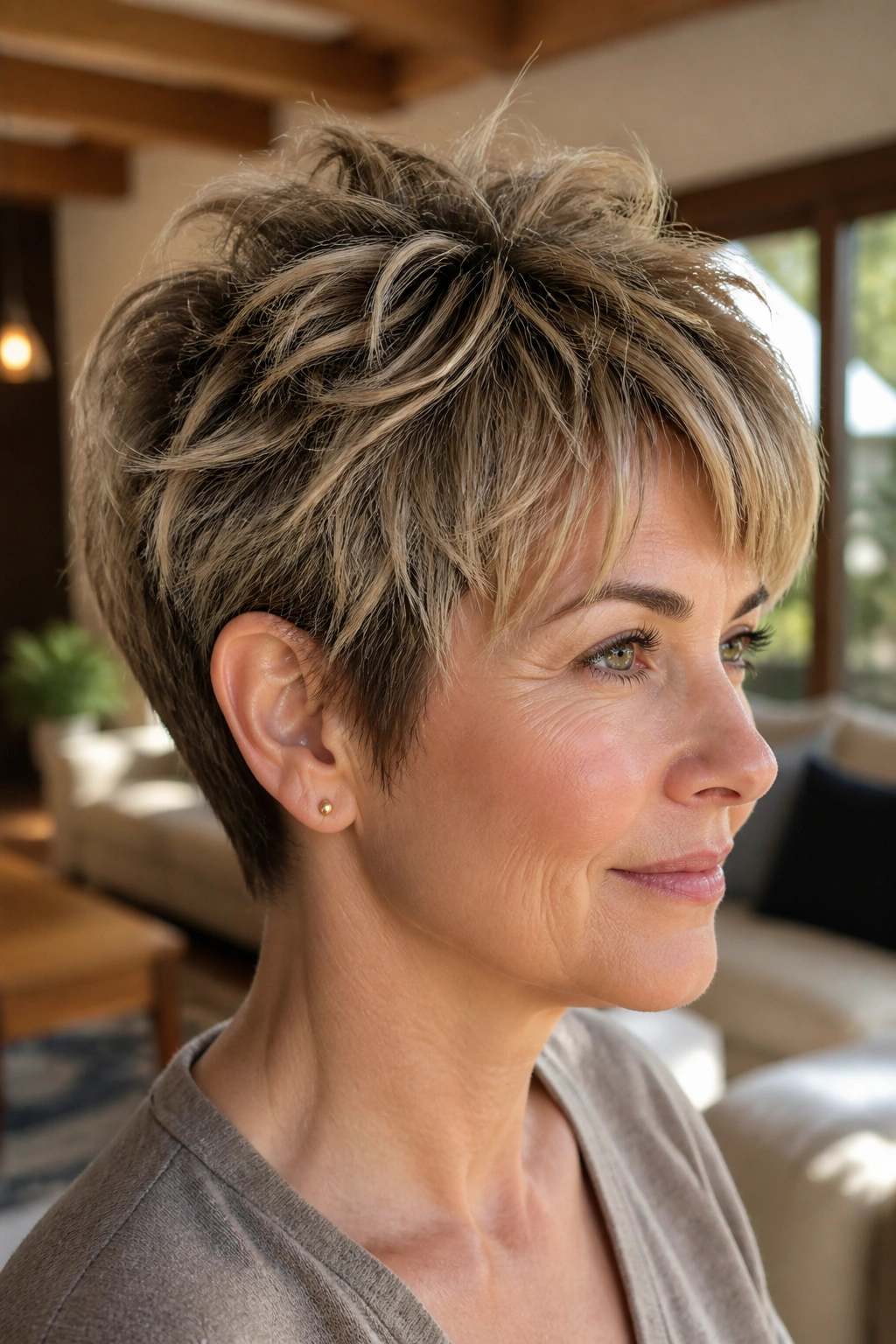
Some cuts need movement more than they need length. This is one of them. Thick hair can collapse at the crown if the top sits too flat, so the goal here is lift at the roots and softness through the ends.
A good stylist will keep the top layered enough to stand away from the head by a little, not a lot. You want airy, not fuzzy. Dry the roots first, using your fingers to push the hair up and away from the scalp, then rough it into place once it’s about 80 percent dry. That timing saves the shape.
Wet roots are the enemy.
A mousse at the crown and a pea-sized bit of paste through the ends is usually enough. I’d skip heavy oils here. They make thick hair look shinier, yes, but they also weigh down the exact parts that need movement. The result should feel loose and touchable, not crunchy or slick. If the crown starts to collapse by lunchtime, the cut probably needs more internal layering, not more product.
6. Softly Feathered Long Pixie
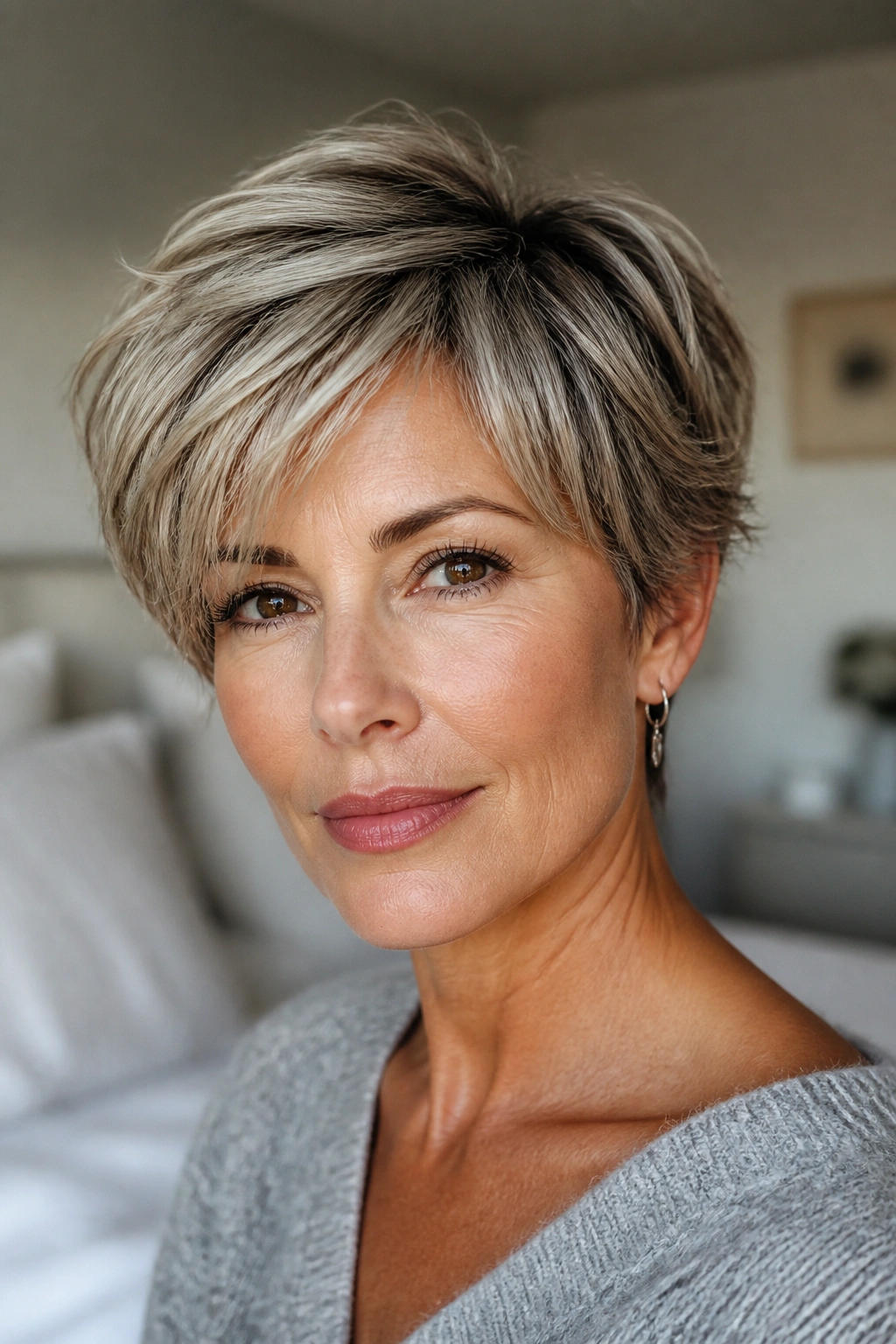
Feathering is not the same as thinning. That’s worth saying because thick hair gets wrecked by too much shearing. Soft feathering removes the hard shelf lines, but it leaves enough body that the haircut still looks full.
This version works especially well when the stylist uses point cutting through the top and around the face. You’ll see little tapered ends instead of blunt blocks. On coarse hair, that can make a huge difference. The cut feels lighter without looking hacked to pieces.
If your hair frizzes easily, ask for feathering with scissors instead of a heavy razor pass. Razor work can be useful, but on rough-textured hair it sometimes creates that dry, fluffy edge no serum can fully calm. A clean scissor cut with soft layering tends to behave better.
Best part? It grows out in a pretty forgiving way. The shape stays soft for weeks, which means you do not have to baby it every morning.
7. Undercut Long Pixie With Hidden Weight Removal
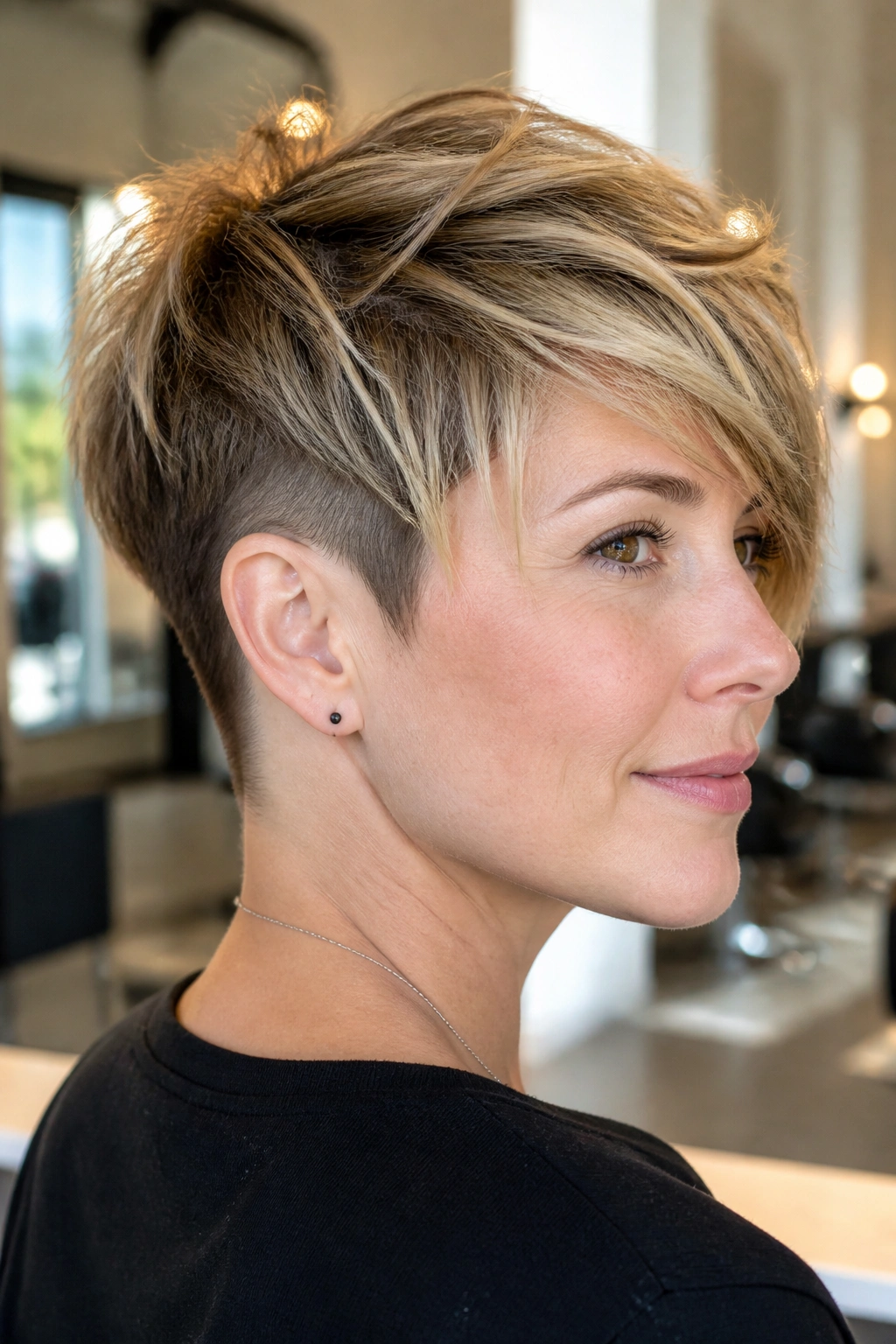
Hidden undercuts are the quiet fix for heavy hair. The top still looks full, but the bulk underneath is gone, and that changes how the whole cut sits. It’s one of my favorite moves for thick hair that feels hot, heavy, or stubborn around the ears and nape.
Where the Weight Comes Off
Usually, the undercut sits just behind the ears and across the lower back of the head. Sometimes it’s barely visible unless you tuck the top layers up. That’s the nice part. You get relief without announcing it.
A good version keeps the upper layer long enough to cover the shaved or clipped section when it’s worn down. If the top is around 5 to 6 inches, you have room to sweep, part, and rough-dry it different ways. The underside can be clipped every 4 to 6 weeks if you want it neat.
- Lightens the cut without sacrificing the long top.
- Helps thick hair dry faster.
- Gives you more control around the nape and ears.
It’s not for someone who wants zero maintenance. Grow-out on an undercut can get weird if you ignore it.
8. Swept-Back Pixie With a Clean Finish
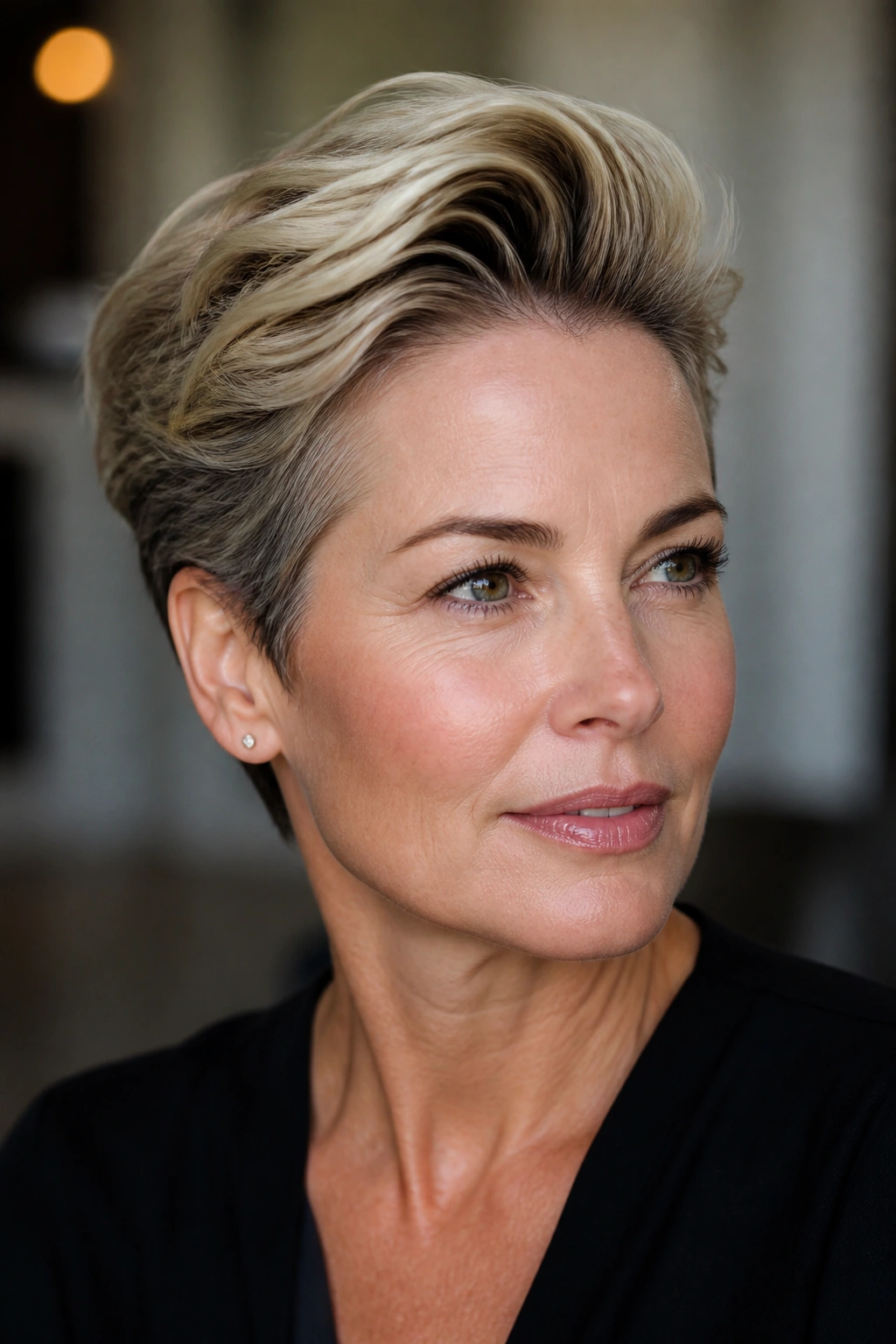
A swept-back pixie looks polished because the front is controlled. Thick hair can carry that shape better than fine hair, honestly, because there’s enough density to hold the lift. The trick is keeping the sides tight enough that the style doesn’t balloon.
Use a root mousse, then blow-dry the front back with a paddle brush or your fingers if your hair already has a natural bend. Once it’s dry, a small amount of flexible spray keeps the shape in place without making it hard. You want movement when you touch it, not a shell.
This cut is especially nice if you wear glasses, because the pushed-back front opens the face. It also works when you want a short style that still looks clean at dinner or in a sharp jacket. Little bit sleek. Little bit cool. Not overdone.
If your hairline has a cowlick at the front, ask the stylist to account for it in the cut. Fighting a cowlick with product is a losing plan.
9. Piecey Pixie With Micro-Layers
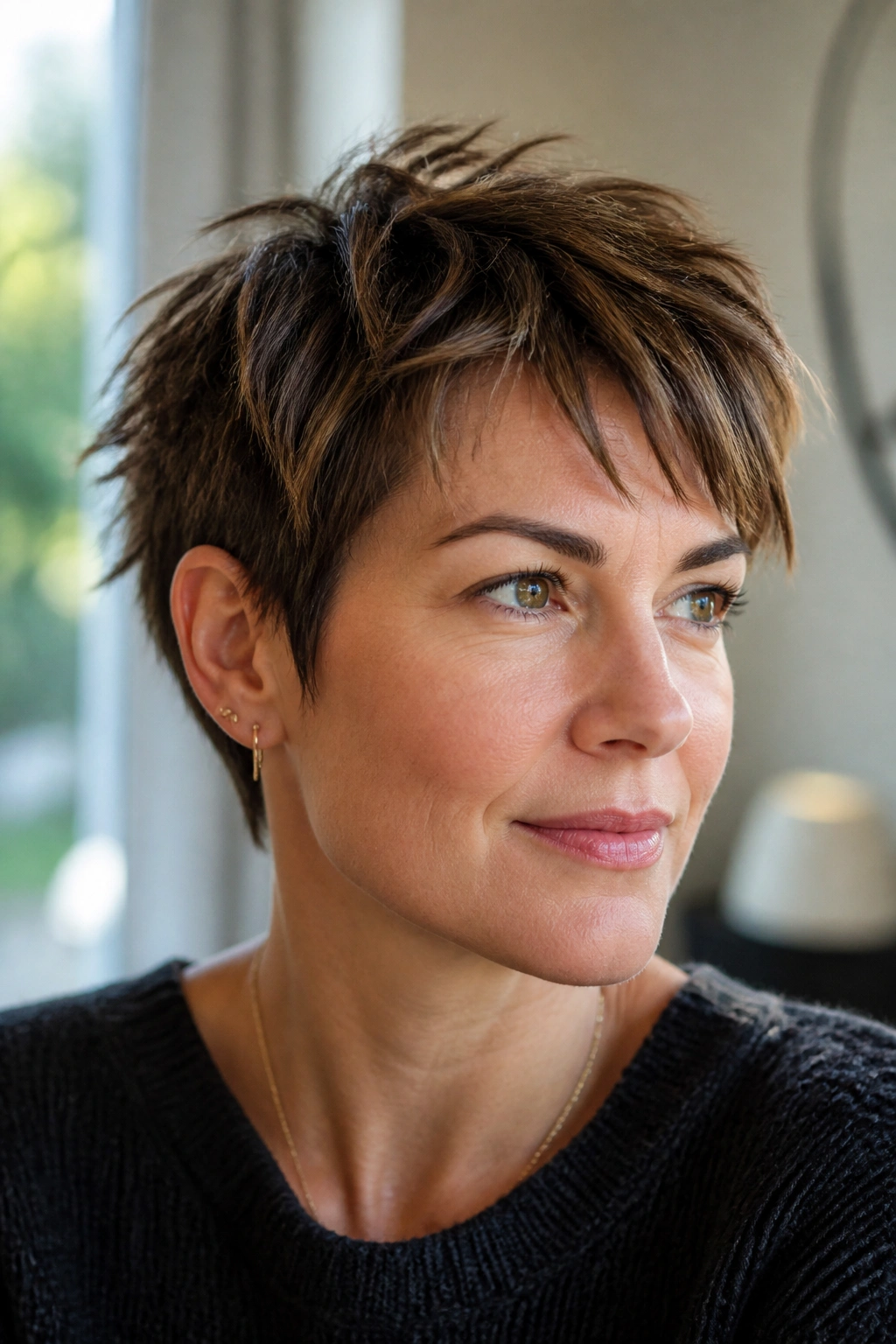
Why do some pixies feel airy while others feel padded? Usually it comes down to how the layers are broken up. Micro-layers create tiny bits of separation, which is exactly what thick hair needs when the goal is texture rather than bulk.
The best versions keep the top pieces short enough to move, but not so short that they stick up like bristles. Think controlled separation. The ends should look slightly broken, not chopped to death. A matte paste works better than a glossy cream here, because shine can make dense hair look heavier.
What Makes It Different
The piecey finish gives you flexibility. Finger-style it messy for daytime, then smooth the front with a comb if you want something neater. That range is useful, and not every short haircut gives it to you.
- Ask for micro-layers through the crown.
- Keep the perimeter soft, not blunt.
- Use a tiny amount of paste; start with a pea-sized amount and add more only if needed.
I’d skip this if you hate touching your hair during the day. It looks best when you separate the pieces a little.
10. Long Pixie Cuts for Thick Hair With Natural Curls
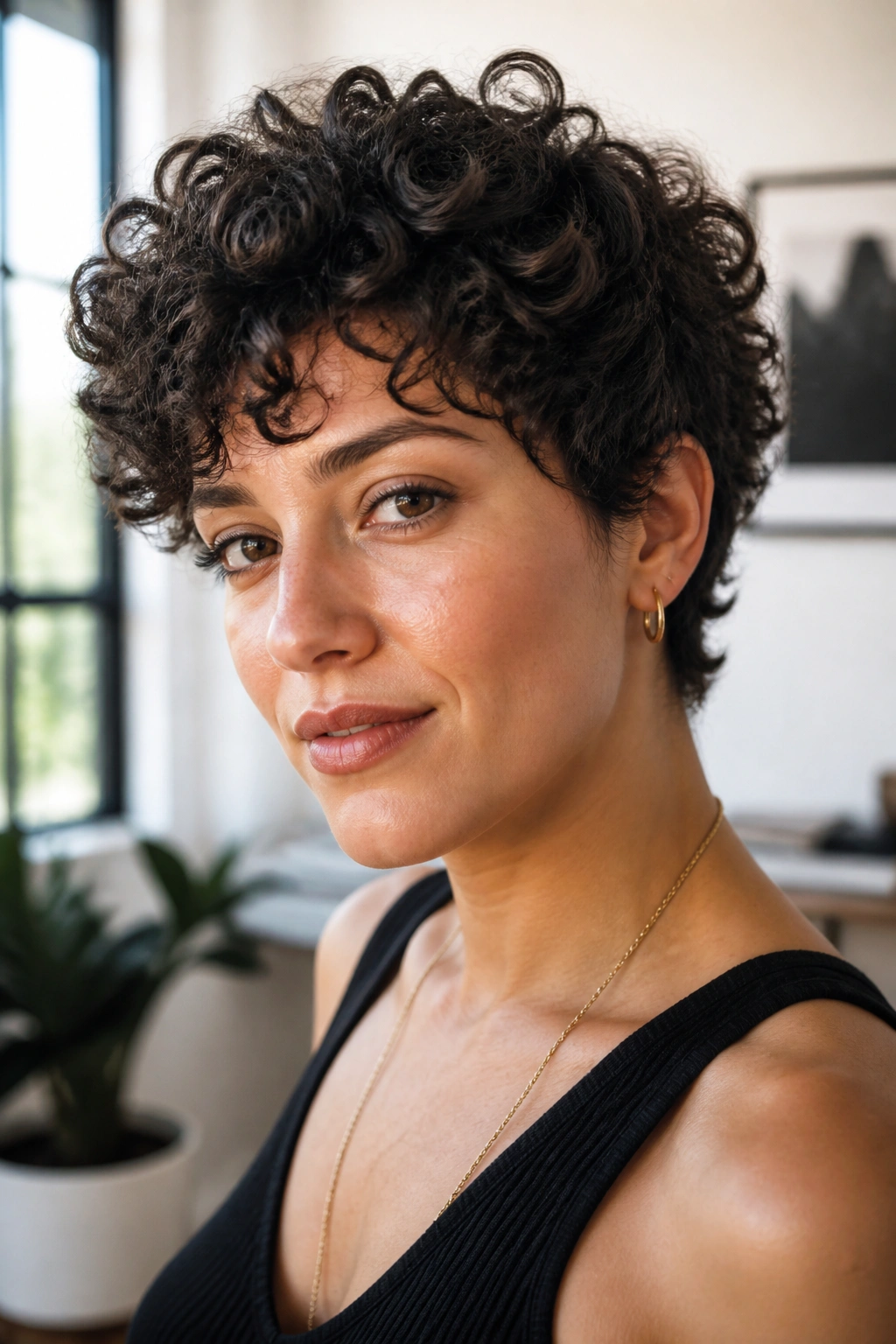
Curly thick hair needs more respect than most pixie cuts get. The curl pattern adds height, the density adds body, and if the cut is too short in the wrong places, the result can turn square fast. A long pixie lets the curls move without becoming a puffball.
The biggest mistake is cutting curls too wet and assuming they’ll shrink into shape later. They might. They might also spring up in odd spots and make one side sit higher than the other. Cutting dry, or at least mostly dry, helps the stylist see where the curl actually lands. That matters a lot.
Shrinkage is real.
Keep the fringe longer than you think you need, especially if your curl pattern is tight around the forehead. A diffuser on low heat will help the shape settle without blasting the curl apart. A leave-in cream is usually enough; heavy butters can make the top look greasy before the day is half over. When the balance is right, curly pixies look playful instead of fussy.
11. Deep Side Part Pixie With Lift on One Side
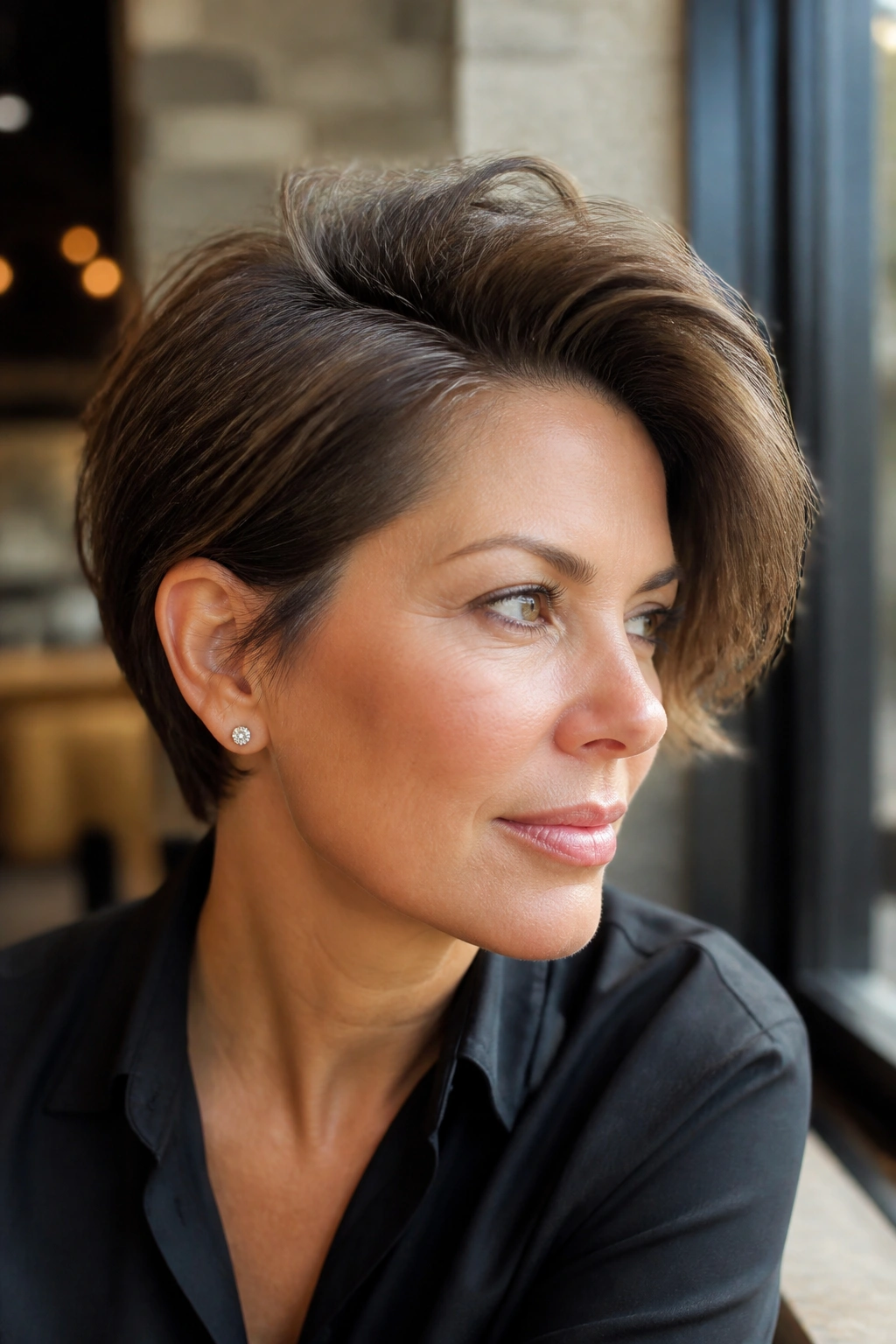
A deep side part does more than add drama. It moves the bulk, and thick hair usually behaves better when the weight is shifted off the center line. That simple change can make a short cut look taller, leaner, and a little more directional.
You can use the part to hide a cowlick, soften a wider forehead, or create lift on the side that naturally falls flatter. If one side of your hair has a stronger bend, lean into it instead of fighting it. Hair that is already trying to go somewhere is easier to work with than hair that’s being forced into place.
- Great for oval and round faces.
- Good if you want volume without teasing.
- Needs a comb through the root area while damp so the part sets early.
I like this one on thick hair because it’s honest. It doesn’t pretend the hair is light. It just redirects the mass and lets the shape do the work.
12. Shaggy Razored Pixie
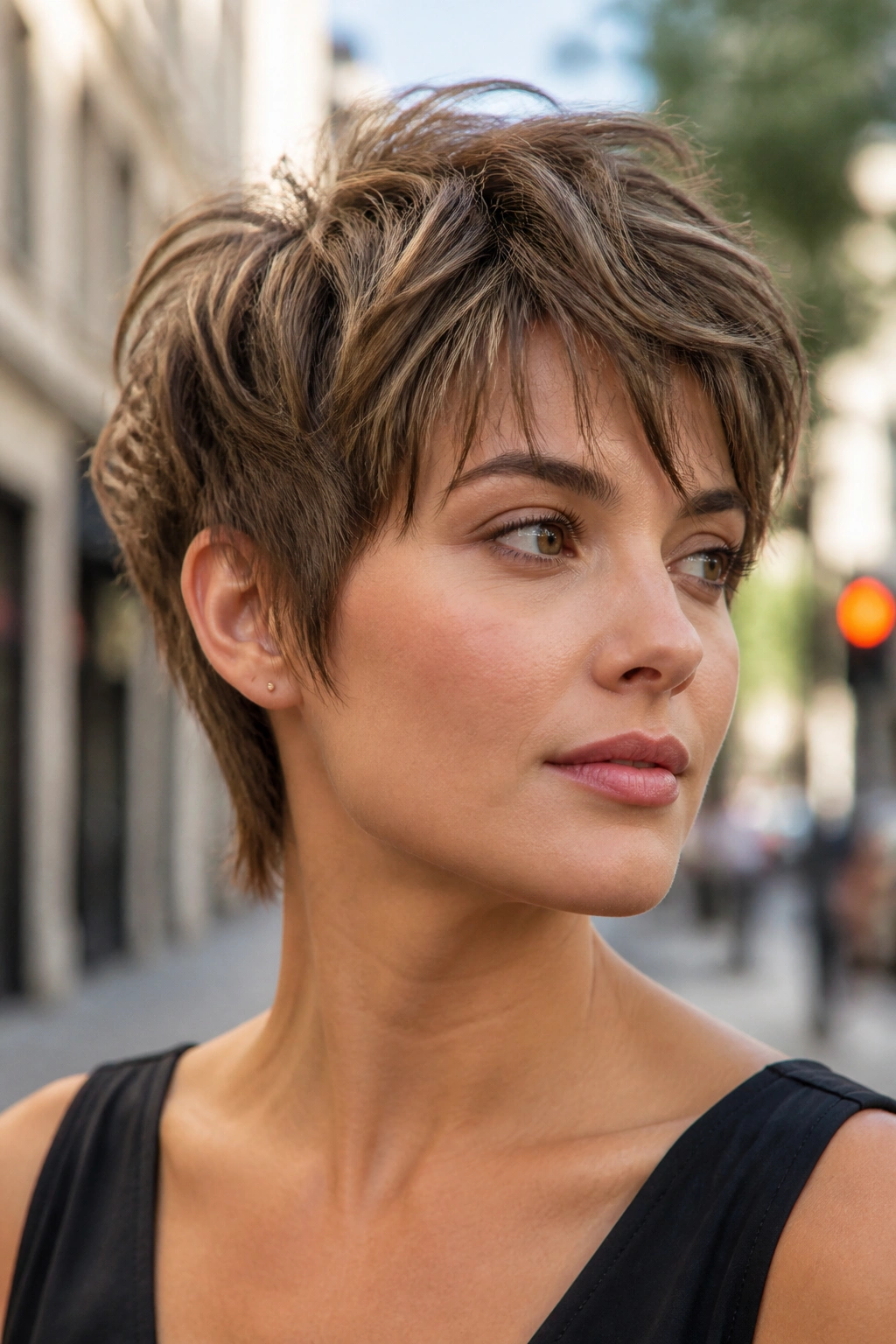
Razored ends can help thick hair, but not blindly. The shaggy pixie depends on soft breakup through the ends, yet too much razor work on coarse hair can leave you with frizz that never settles. That’s why this cut is best done by someone who knows when to stop.
The shape should feel a little wild through the top and sides, with irregular layers that catch the eye. It’s especially nice on hair that sits straight to wavy, because the texture helps the cut move instead of hanging in one heavy sheet. A little length at the crown keeps it from looking too cropped.
What to Ask For
- Soft razoring only on the outer edges.
- Internal layering through the crown.
- A slightly longer front so the fringe can fall across the cheek.
This is a fun cut if you like hair with some edge, but it’s not the one I’d send to someone who hates texture products. It wants a paste or cream to separate the pieces. Without that, the shaggy shape can disappear into itself.
13. Sleek Long Pixie Bob Hybrid
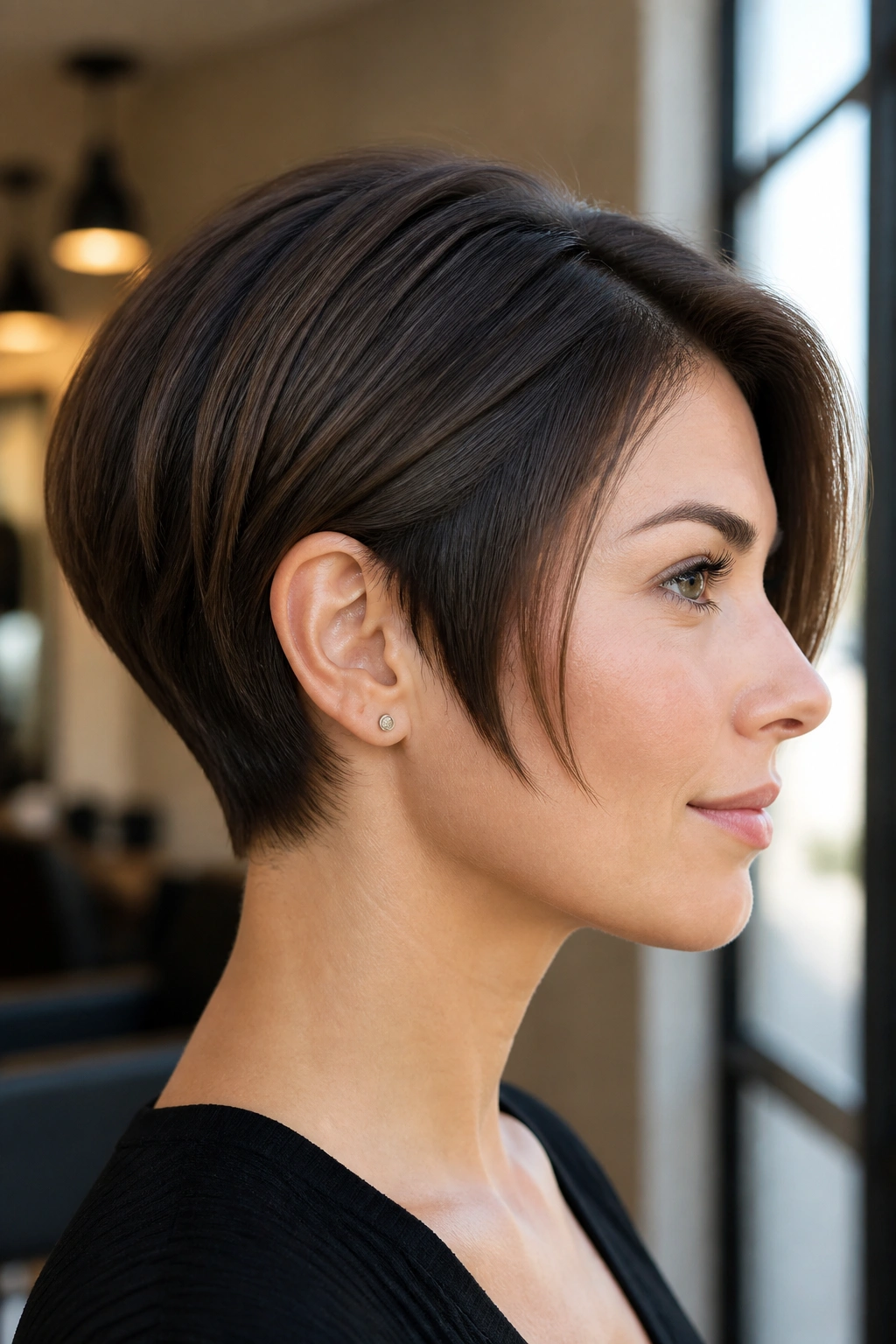
Straight thick hair can wear a sleek pixie beautifully when the perimeter is tight. This hybrid cut keeps the top long enough to smooth back or tuck behind the ear, while the back sits shorter so the head doesn’t look overloaded. It has a tidy finish that feels deliberate, not stiff.
The key is balance. Too much length everywhere and the density wins. Too short everywhere and you lose the softness that makes a long pixie flattering. The best version often includes a rounded brush blowout, a touch of serum on the ends, and a flat iron only where the hair flips outward at the corners.
This is one of the few pixie shapes that can look expensive with very little drama. If your hair is naturally straight and thick, it can almost fall into place on its own once the cut is right. But the cut has to be clean. Messy trimming shows here fast.
I’d call this a good office haircut that still feels like a haircut.
14. Face-Framing Fringe Long Pixie
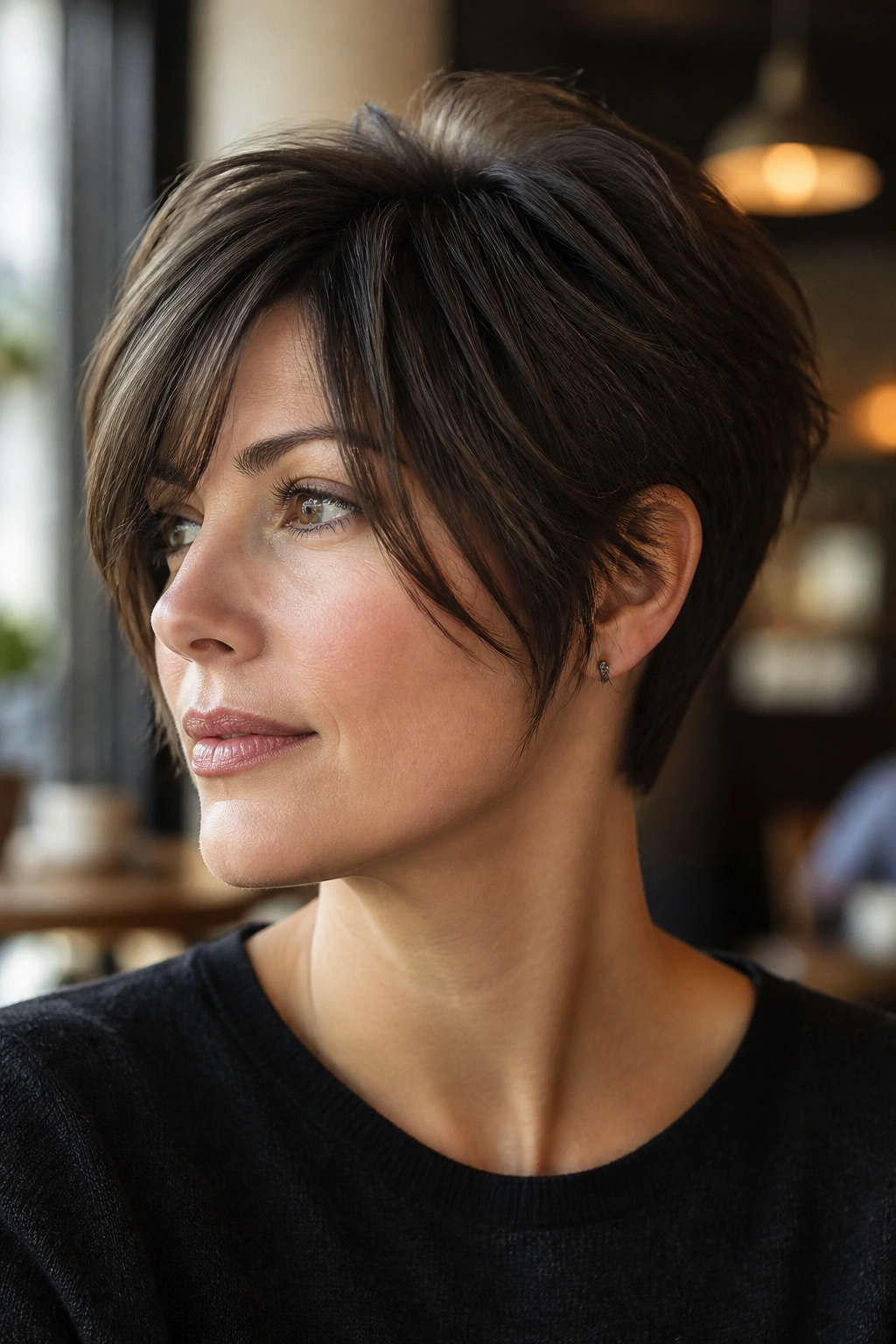
Where should a face-framing fringe actually land? It depends on what you want the eye to do. A fringe that grazes the cheekbone can soften a strong brow. One that ends near the jaw can make the face look a little longer. Thick hair gives you enough body to play with both.
Mapping the Fringe to Your Features
If your forehead feels broad, leave the shortest pieces around brow level and let the sides sweep down. If your cheekbones are the part you want to highlight, push the front toward that area with a side part and a light bend. The whole point is to place the softest part of the haircut where you want the focus.
This cut works especially well when the fringe is cut in small sections instead of one solid line. That keeps the front from sitting heavy. A bit of point cutting at the ends helps too, because blunt fringe on thick hair can look dense fast.
A face-framing pixie is one of those cuts that looks relaxed but still clearly planned. That’s a good thing. Not everything short has to shout.
15. Cropped Sides With an Elongated Top
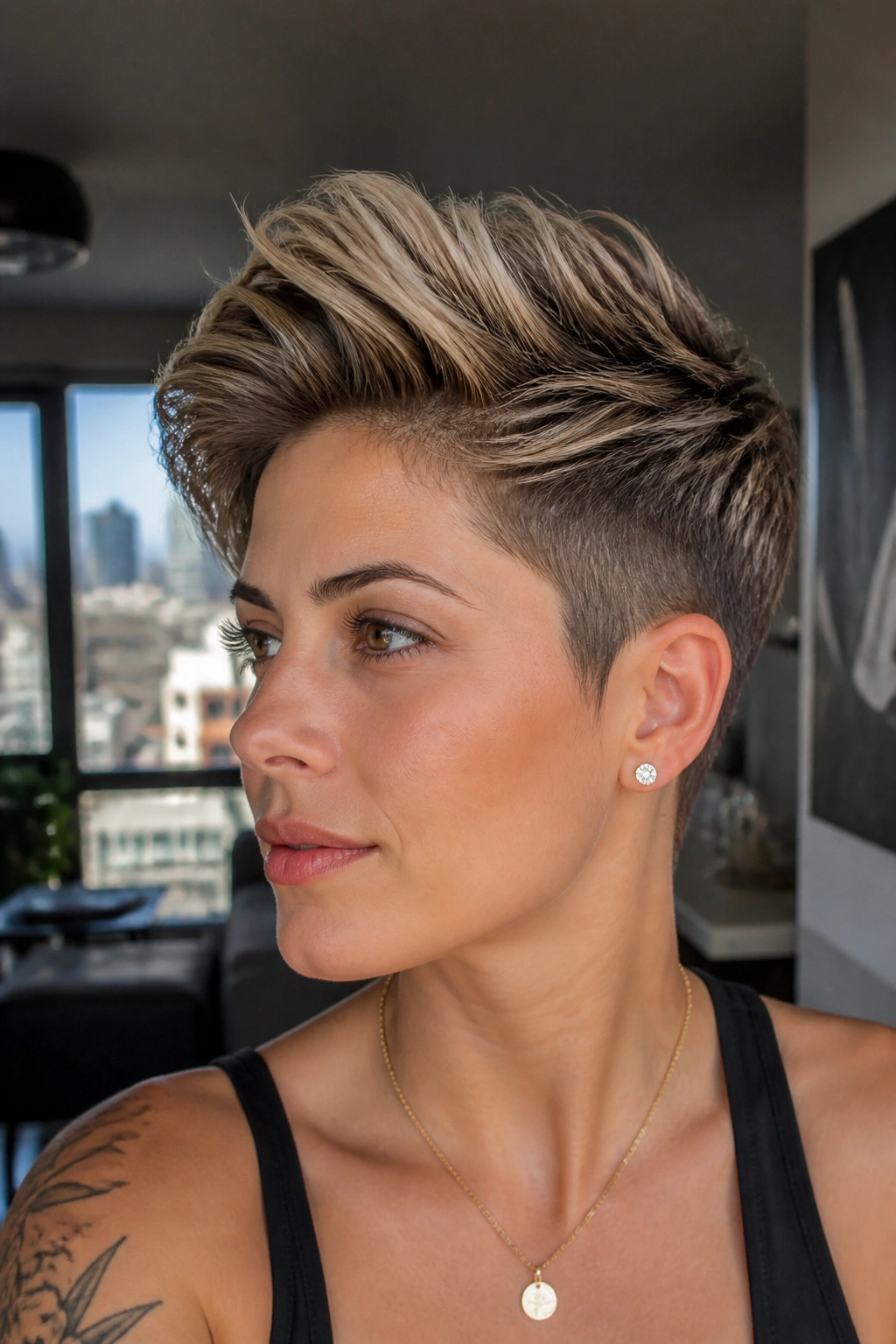
The loudest version of a long pixie is the one with cropped sides and a longer top. It gives thick hair a built-in shape break, which helps because the density on the sides can otherwise make the head look wide at the temples.
The top usually needs to stay around 5 to 6 inches if you want it to sweep, flip, or spike a little. The sides can sit closer to 1 to 2 inches, depending on how much contrast you want. That difference lets you style the top forward, back, or diagonally across the forehead.
- Works well for confident, high-contrast looks.
- Pairs nicely with a strong brow line.
- Needs a light paste or cream to keep the top from fraying.
This is a good choice if you like changing your style from day to day. One day it can be soft. The next, a little sharp. The cut gives you room to play.
16. Soft Mullet-Edge Pixie
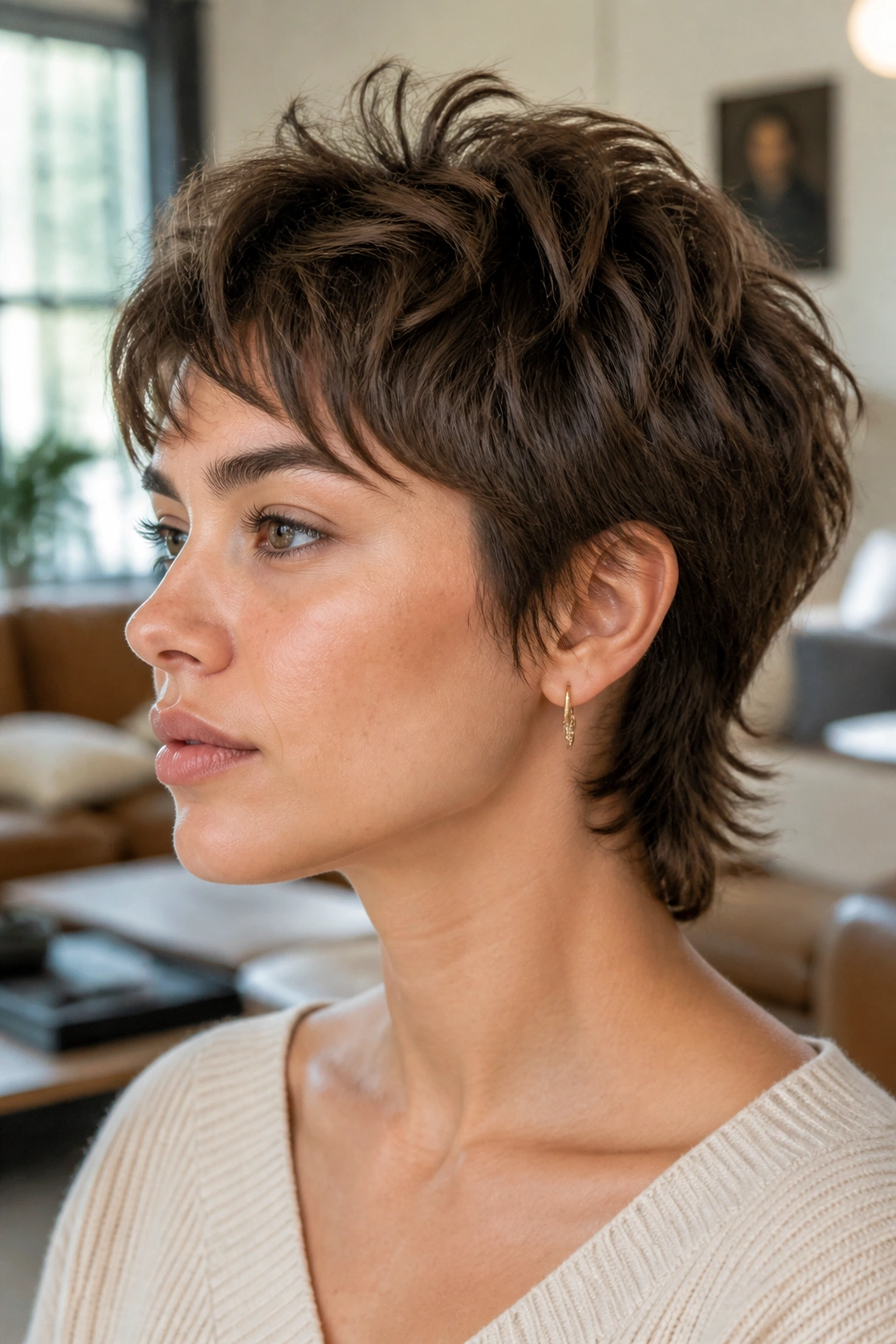
This is the edgy sibling in the bunch. A soft mullet edge keeps the neckline a touch longer while the crown stays layered and the sides stay controlled. On thick hair, that back length can add shape without making the whole cut feel dated or costume-y.
The key word is soft. If the back gets too long or the front gets too short, the cut stops reading as a long pixie and starts leaning into something else entirely. The transition should be smooth, with the nape just a bit longer than the rest and the sides tucked close enough to keep the profile clean.
It suits hair that has body and a little natural bend. Straight hair can wear it too, but the style looks better when it has a bit of movement at the ends. Ask for subtle graduation through the back rather than a hard line. That keeps the silhouette modern.
Honestly, this one is for people who like a cut with personality.
17. Hidden Undercut Long Pixie
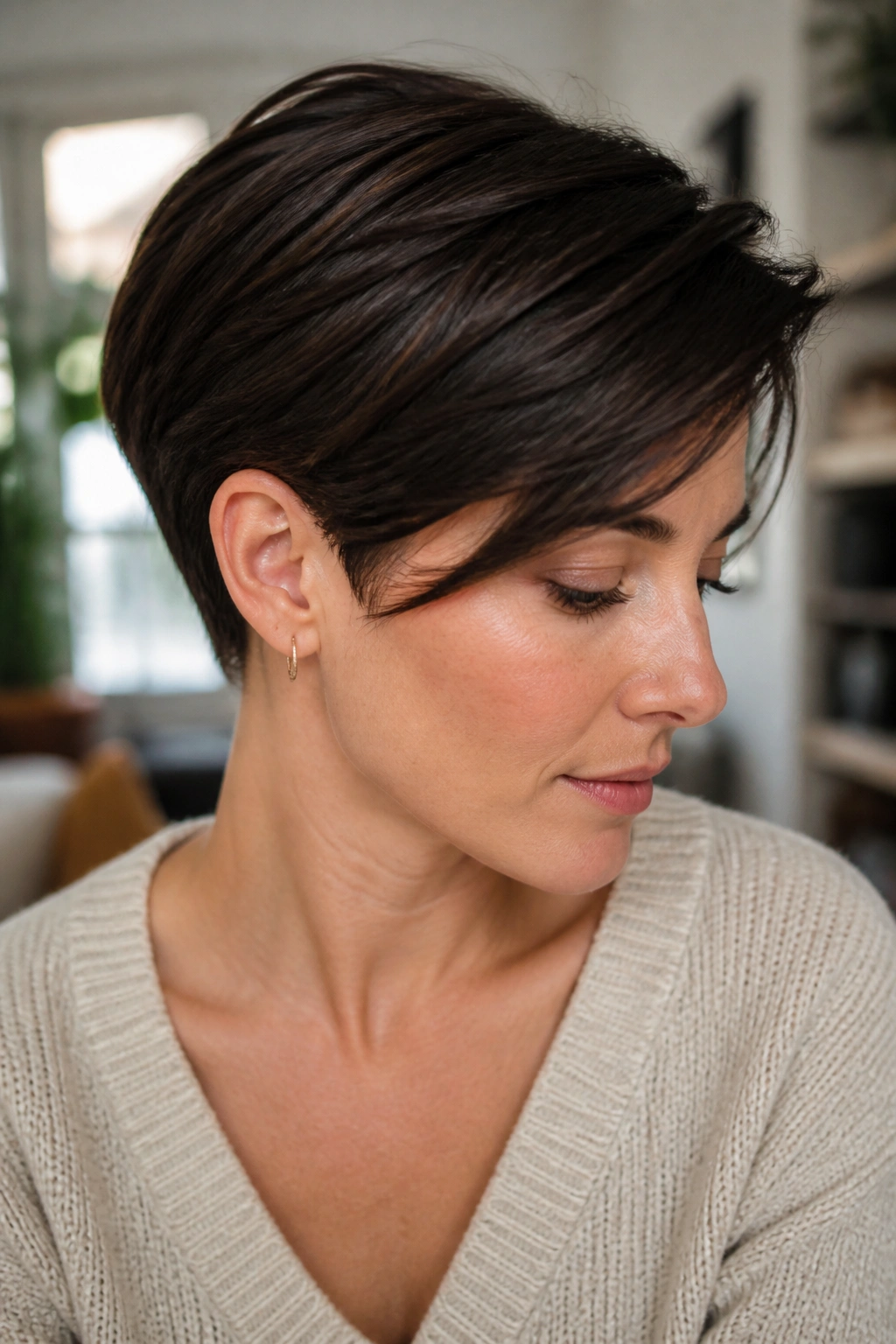
Hidden undercuts are for people who like options. Wear the hair smooth, and nobody needs to know there’s a weight-removal section tucked underneath. Scrunch it up, and the whole cut feels lighter and more casual. Thick hair can use that flexibility.
The undercut usually sits just beneath the top layer, starting around the ear and sweeping into the nape. It clears out the bulk that tends to pile up under a long pixie, especially if your hair grows heavy behind the ears. That hidden release changes how the top falls, and the top falls better because of it.
The one downside is grow-out. When the hidden section starts to come back, the layers above it can separate in a messy way if you leave it too long between trims. Not disastrous. Just annoying. If you want the shape to stay neat, plan on quick maintenance appointments.
This cut is a good compromise if you want a lighter feel without looking clipped short all over.
18. French-Girl Long Pixie
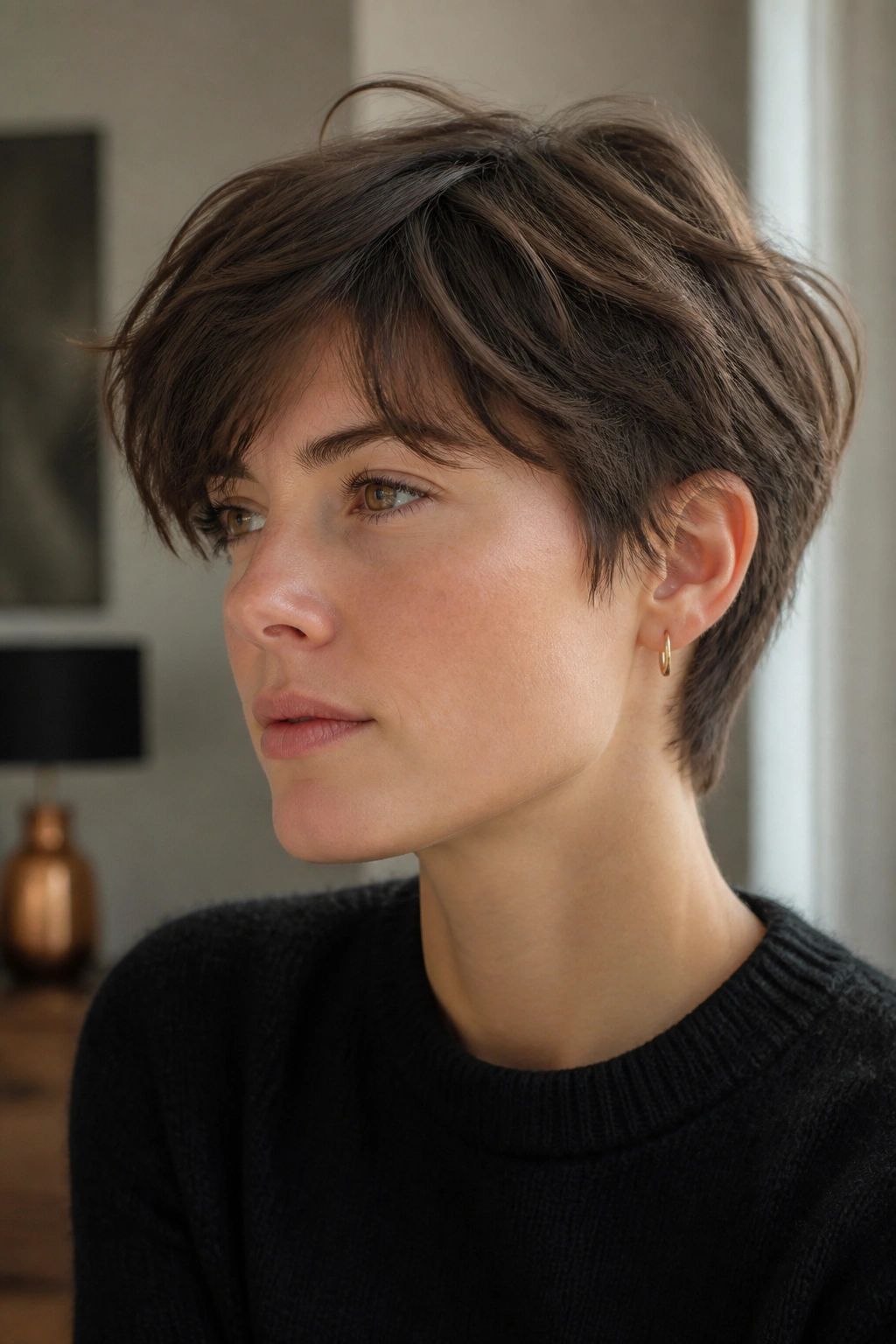
French-girl pixies are all about restraint. The cut is soft, airy, and a little imperfect on purpose. Thick hair helps here because the density gives the style enough body, while the lighter finish keeps it from feeling rigid.
Usually the fringe is a touch longer, the ends are gently broken up, and the overall shape looks like it was finger-styled rather than overworked. That’s the charm. It should move when you turn your head. If it sits too stiff, the whole idea falls apart.
This version is best for hair that already has a slight bend or wave. Straight thick hair can wear it too, but you’ll want a bit of texture spray or a soft blowout to keep it from feeling too polished. I like it on people who want a short cut but don’t want their hair to look “done” every minute of the day.
The beauty of this one is that it forgives a little mess.
19. Jawline-Beveled Long Pixie
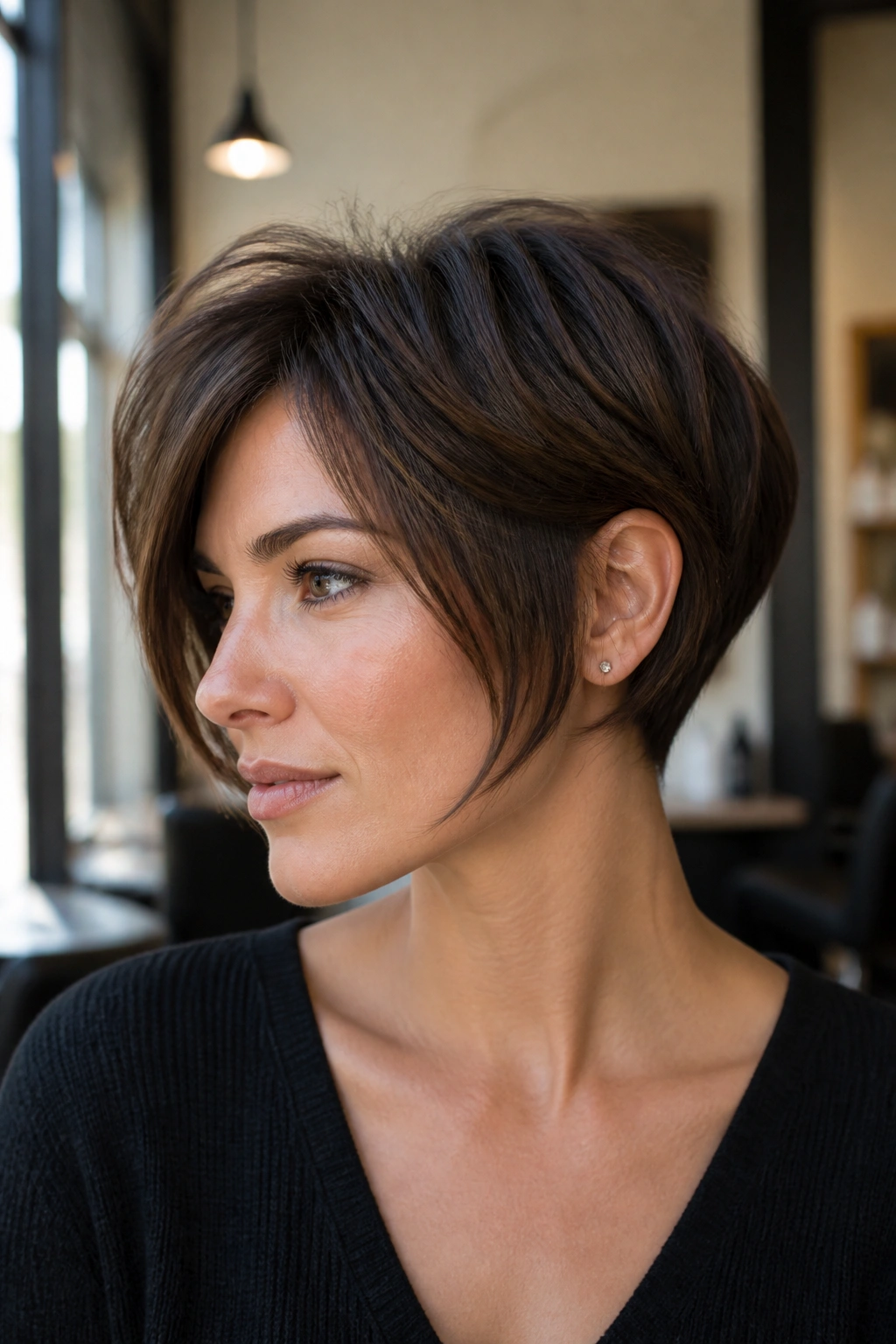
A beveled jawline can change the whole silhouette. Instead of letting thick hair flare out at the sides, the cut angles inward slightly so the edge hugs the jaw. That little inward bend makes the hair look more deliberate and often more flattering.
This works especially well when the front is left just long enough to graze the jaw or the top of the neck. A round brush can shape the bend while drying, but the real work happens in the cut. The layers need to be placed so they support the curve instead of fighting it.
If your face is more angular, the bevel softens things. If your face is rounder, it adds length to the lower half. That’s useful. Not flashy, just useful.
I’d ask for this when you want the haircut to frame the face without stealing the show. It’s one of those styles that looks simple in the mirror and smarter in motion.
20. Wispy Bang Pixie With Textured Ends

Wispy bangs are not the same thing as sparse bangs. On thick hair, they need to be carved out carefully so they feel light at the front while the rest of the cut keeps enough body to look full. Too much bang and the whole forehead area gets heavy. Too little and the style loses its softness.
A good wispy bang usually sits somewhere around brow level, then breaks into tiny pieces at the ends. That broken edge is what keeps the fringe from reading like a thick slab. Pair it with textured ends around the temples and the cheek area, and the haircut starts to feel lighter without losing shape.
- Great if you want forehead coverage without a hard line.
- Works well with dry shampoo at the roots.
- Looks best when the ends are separated a little, not smoothed flat.
This one suits people who like a relaxed finish. It doesn’t need perfect styling, and that’s part of the appeal.
21. Long Pixie Cuts for Thick Hair With Natural Waves
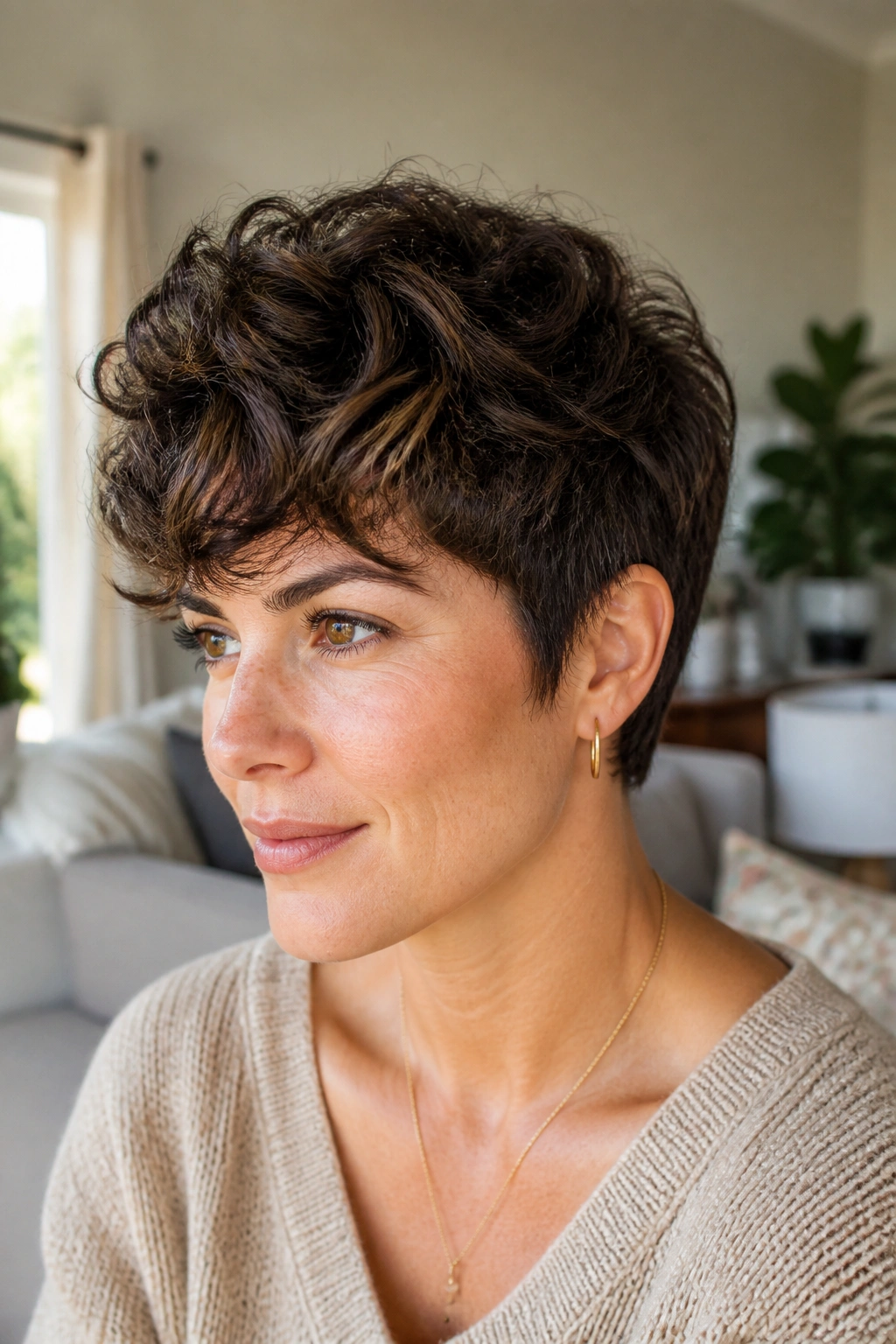
Wave patterns need room to move. If the cut is too tight, thick wavy hair can swell at the sides and lose its shape. If it’s too long, the wave drags itself out and the pixie stops looking like a pixie. The best version sits in the middle, with enough length on top to show the bend.
How to Keep the Bend Without Puffing
Ask for layers that are cut to support the wave pattern rather than flatten it. The top usually does well around 4 to 5 inches, while the sides stay a bit shorter so the wave can curl inward instead of fanning outward. A diffuser on low heat helps, but so does stopping the dry cycle while the hair still has a little softness.
A wave-friendly pixie often needs a light cream at the ends and a small puff of mousse at the roots. Too much product can make the wave clump. Too little and the haircut loses definition. There’s a narrow middle ground here, and once you find it, thick wavy hair looks fantastic in short form.
This is the cut I’d pick for someone who wants movement first and polish second. It has both, if the layers are placed well.
22. Polished Long Pixie With a Soft Nape Length
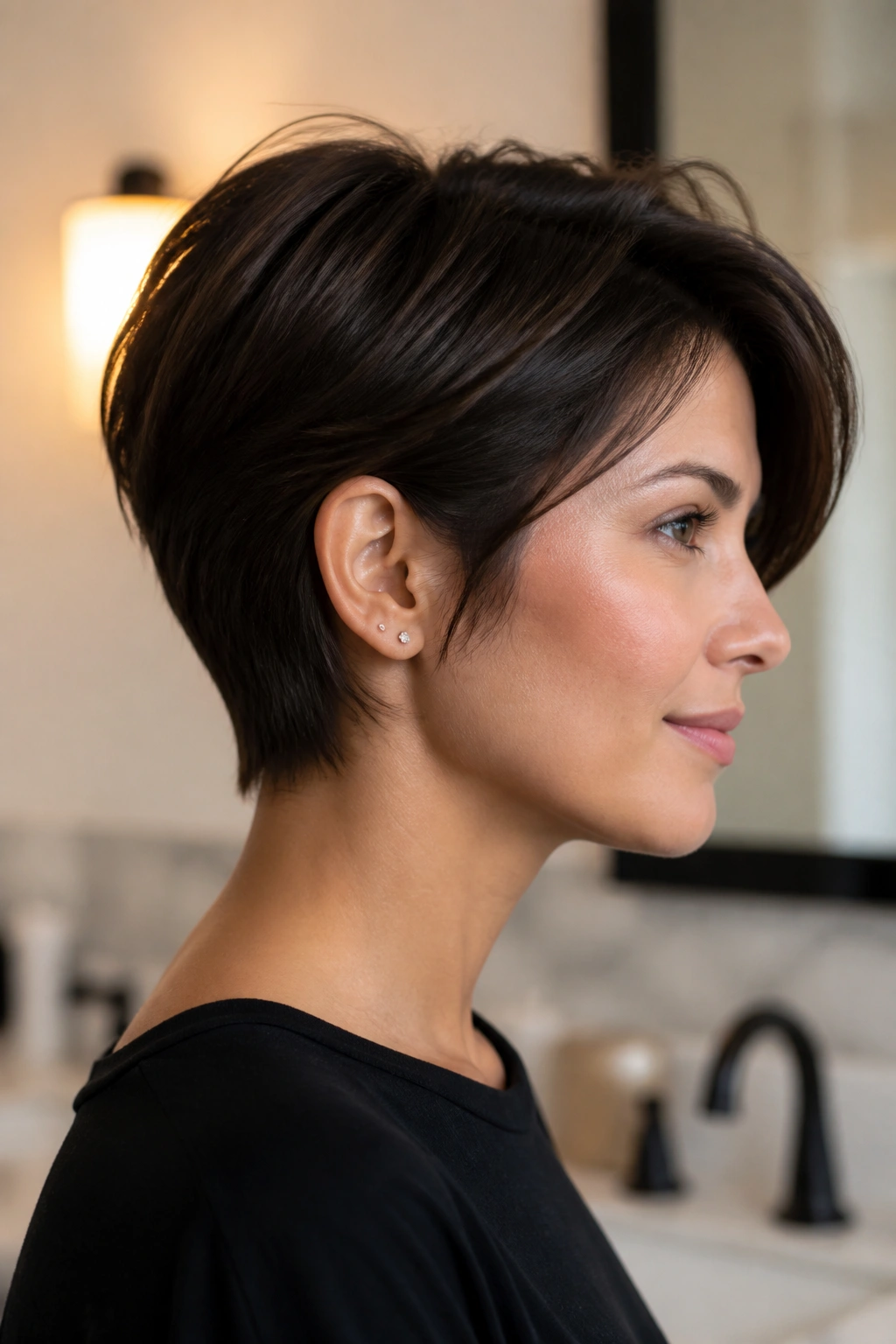
Polish does not have to mean stiff. A long pixie with a soft nape length keeps the neckline neat while leaving enough length through the top and sides to feel relaxed. Thick hair benefits from that kind of control because it stops the silhouette from spreading out.
The nape should taper gently, not end in a blunt shelf. Up top, keep enough length to tuck behind the ear or sweep across the forehead. That gives you options on days when you want the cut to look sharp, and a little softness when you do not. A blow-dryer and a round brush will make this shape behave fast.
This is the version I’d hand to someone who wants one haircut that can live in more than one mood. Clean for work. Softer on the weekend. Easy enough to style in ten minutes, but still structured enough that it never looks accidental.
If thick hair has ever felt like too much haircut in one place, this shape solves the problem without making the cut feel tiny. That’s the real win.
