



Round faces and long pixie cuts have a better relationship than people think. The cut works when it builds height at the crown, keeps some length at the fringe, and stays lean at the cheeks. Cut it the wrong way, though, and the face can look broader instead of sharper.
I like long pixies on round faces because they give you options. You can wear the top smooth, rough it up with paste, sweep the fringe across the forehead, or tuck one side behind the ear when you want more shape. A blunt, mushroomy pixie does the opposite; it piles width where you do not want it.
The trick is placement. A good long pixie uses diagonal lines, a tapered nape, and a little air around the temples — tiny details, but they change the whole face shape in the mirror. That is why the styles below lean on movement, asymmetry, and length where it counts.
1. Side-Swept Long Pixie for Round Faces
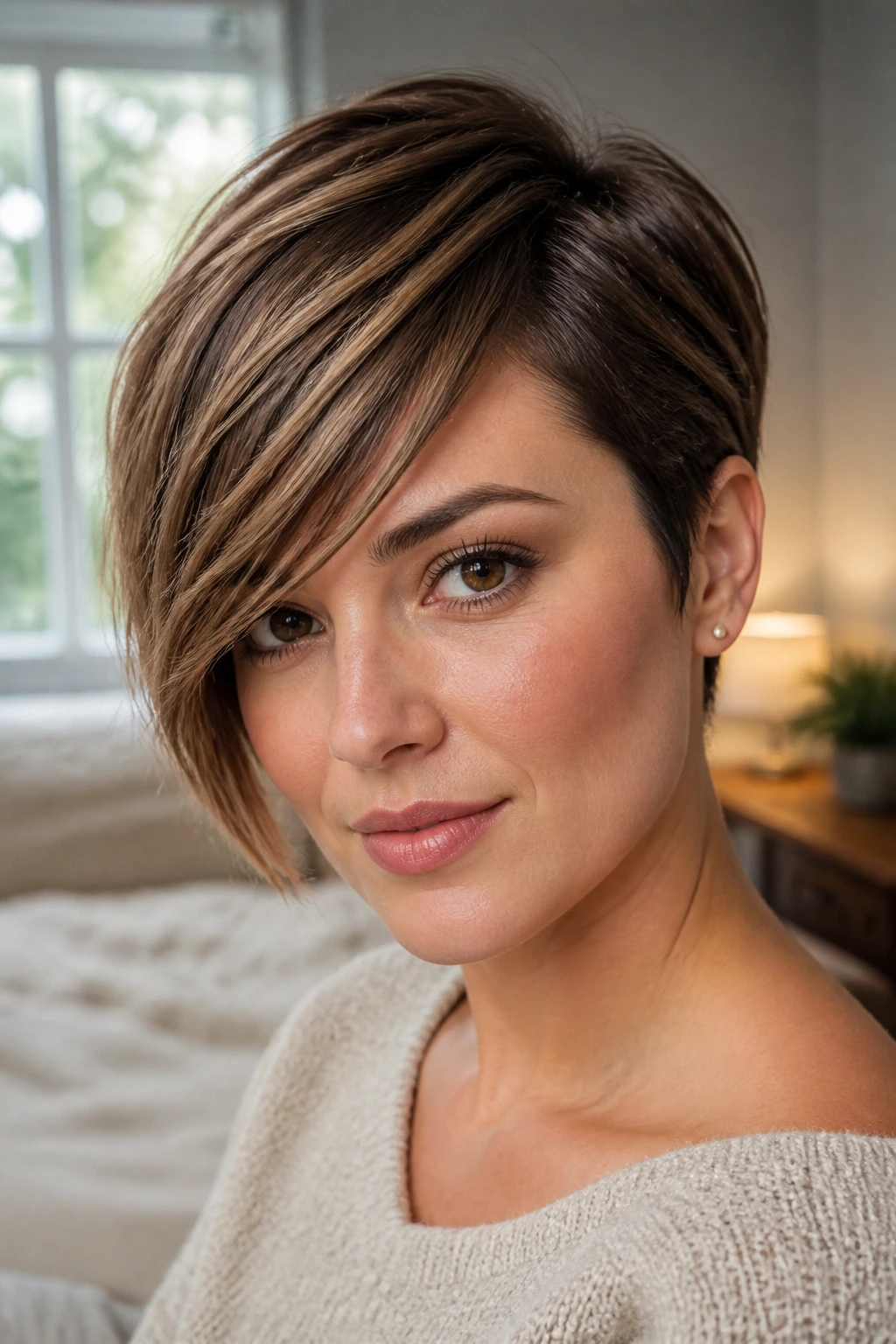
A side-swept long pixie is the easy starting point because it does one thing fast: it pulls the eye sideways and upward at the same time. That diagonal fringe breaks up the width of the cheeks without hiding the face.
Why It Works on a Round Face
The longest piece should skim from the brow toward one cheekbone, not stop dead at the middle of the forehead. That small shift creates a line instead of a circle.
Keep the sides close enough to the head that they do not puff out. This is the whole trick. If the top has movement but the temples stay light, the cut feels longer and leaner.
What to Ask For
- A deep side part that starts above one eyebrow arch
- Fringe length that reaches the top of the cheekbone when dry
- Soft taper at the nape, not a hard shelf
- Point-cut ends so the fringe does not sit heavy
Styling note: blow-dry the fringe from the part line toward the opposite temple with a small round brush. A pea-sized amount of cream or light paste is enough.
2. Crown-Lifted Long Pixie With Tapered Sides
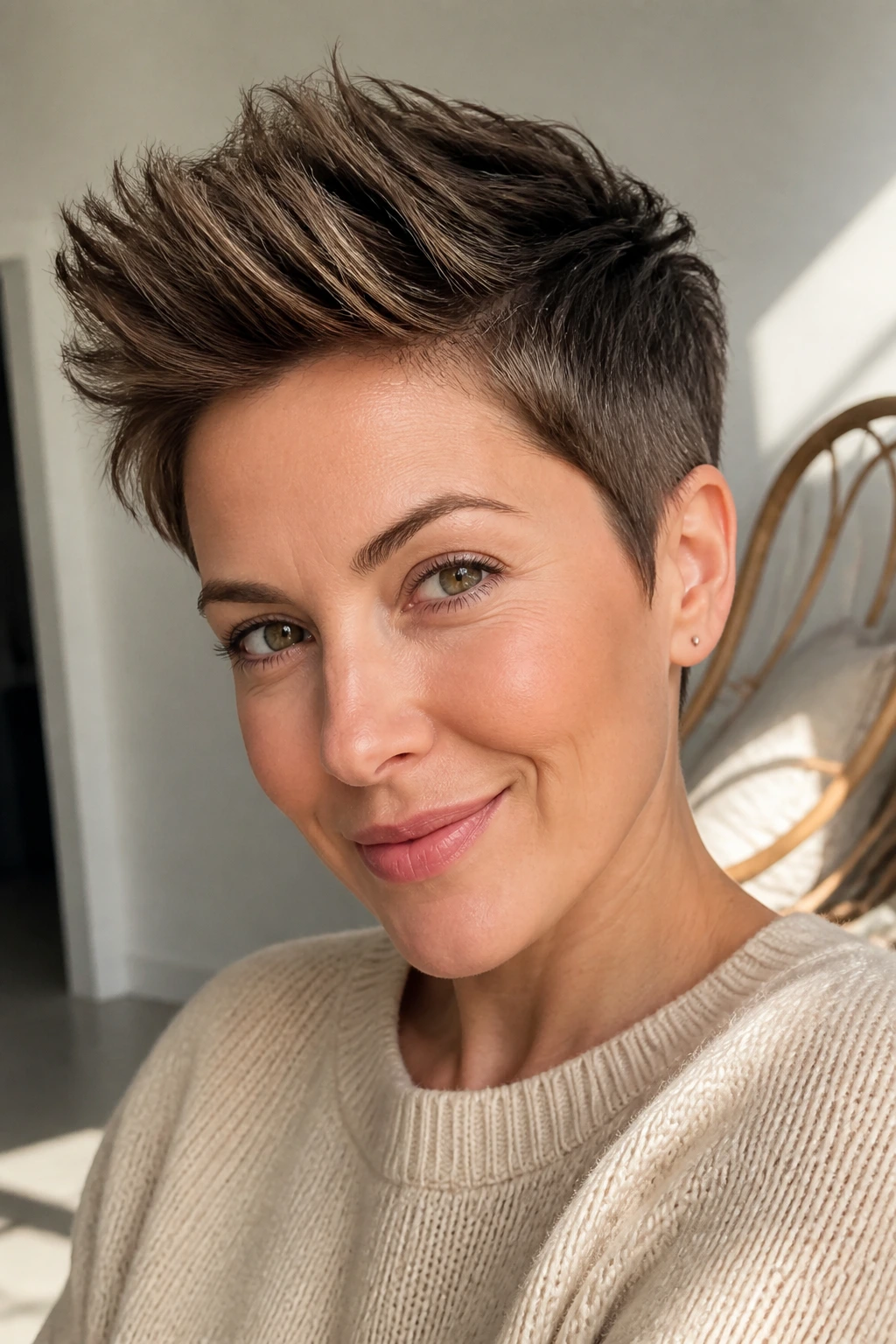
If you want a round face to look longer in a hurry, crown lift does more than almost anything else. The eye follows height, and height changes the whole balance.
This version keeps the top pieces longer and the sides cleaner. The hair is cut to stand up a little at the crown, then fall softly instead of hugging the head all the way down. That keeps the silhouette from turning boxy. It also helps if your hair naturally lies flat and stubborn; a little root support can make the face look less wide.
The taper matters too. Too much bulk around the ears makes the whole shape spread outward. Too little length on top, and the cut turns into a short crop that does not give you the vertical line you wanted in the first place.
Use mousse at the roots, then blow-dry with your head tipped forward for the first minute or two. That old salon trick still earns its keep.
3. Asymmetrical Long Pixie With One Longer Side
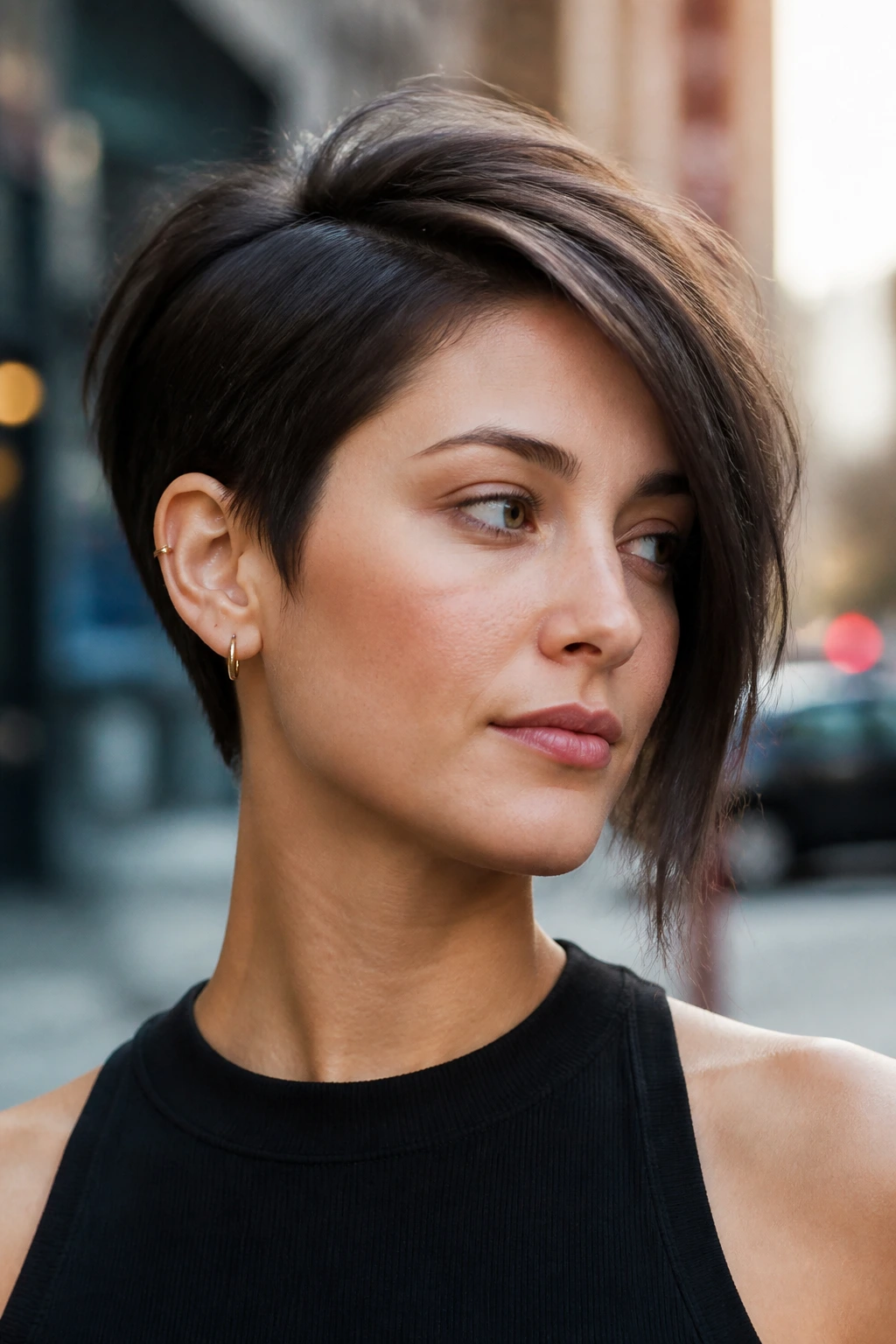
Why does one longer side work so well? Because symmetry can be a trap on a round face. A perfectly even pixie can feel sweet and tidy, but it can also make the face look fuller than it is.
An asymmetrical long pixie breaks that circle with intent. One side sits closer to the jaw, while the other side stays slightly longer and more dramatic. The result is a cut that gives the eye a path to follow instead of a straight horizontal line.
How to Wear It
- Keep the shorter side tucked neatly behind the ear
- Let the longer side graze the cheek or jawline
- Use a flat iron on the longer side only if your hair is straight or slightly wavy
- Finish with a light wax on the ends so the length looks separated, not stringy
This shape suits someone who wants edge but not a full shaved undercut. It has a little attitude. Not too much. And that restraint is what makes it wearable.
4. Feathered Long Pixie With Soft, Airy Ends
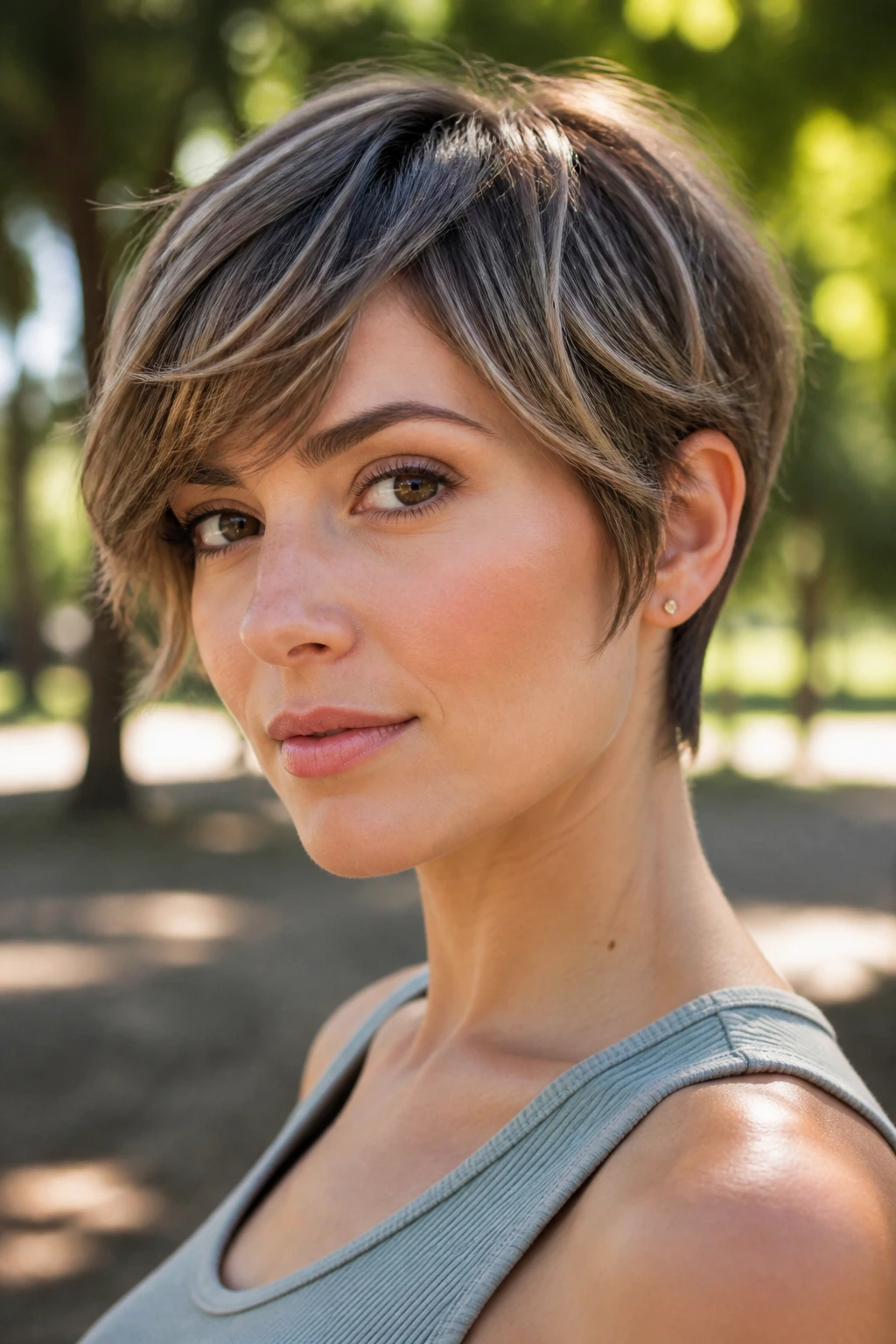
Thick hair can turn a pixie into a helmet if the ends are cut too bluntly. Feathering fixes that. The hair moves instead of sitting in one heavy block.
A feathered long pixie uses light layers through the top and sides, then soft point cutting through the ends so the shape feels airy. On a round face, that matters because heavy ends at cheek level can widen the look. Feathering keeps the bulk moving downward and inward, not outward.
The best version of this cut does not look over-styled. It has a little swing when you turn your head. The fringe may brush the forehead, but it should not sit like a wall.
Best for thick or coarse hair.
Less ideal for very fine hair that needs fullness.
A round brush and a dryer nozzle are enough for styling. Work the top up and away from the head, then let the ends fall naturally. If they flip too much, a tiny dab of cream at the fingertips will calm them down.
5. Choppy Long Pixie With Piece-y Texture
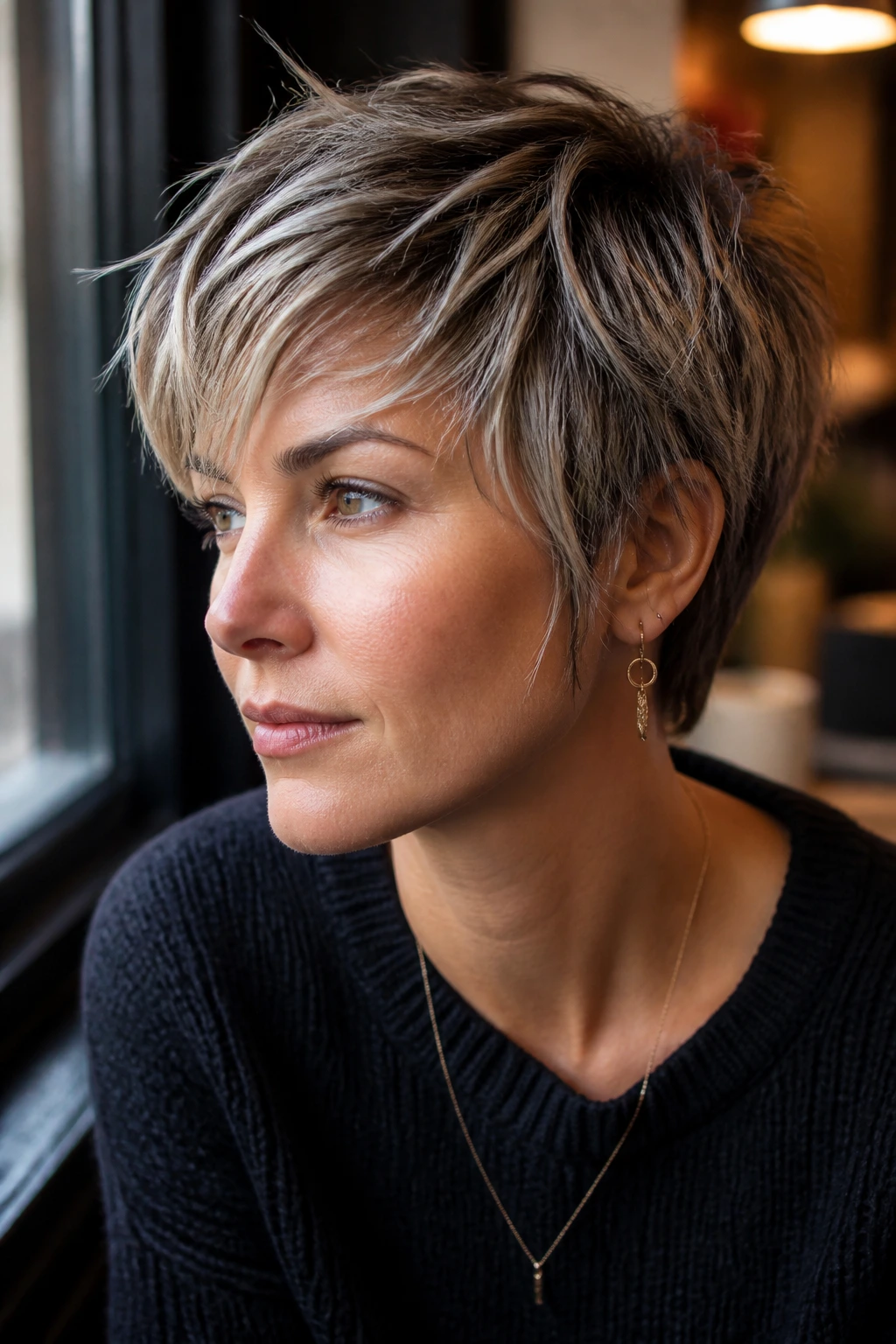
Choppy texture is the friend of anyone who wants a long pixie to feel modern instead of precious. It gives the cut some bite, and it keeps the shape from reading too round.
This is the version I reach for when the hair is straight and wants to lie flat. Choppy ends create tiny breaks in the outline, which makes the cut look lighter. On a round face, that broken line is useful because it keeps the eye from seeing one continuous curve.
A piece-y finish also gives you more control. You can separate the fringe, rough up the crown, or tuck one side and leave the other loose. That flexibility matters. A pixie that only looks good one way gets annoying fast.
Use a matte paste or clay, warm a small amount between your fingers, and pinch it into the ends. Don’t smear it from root to tip like conditioner. That flattens the shape. You want separation, not collapse.
6. Long Pixie With Curtain Fringe
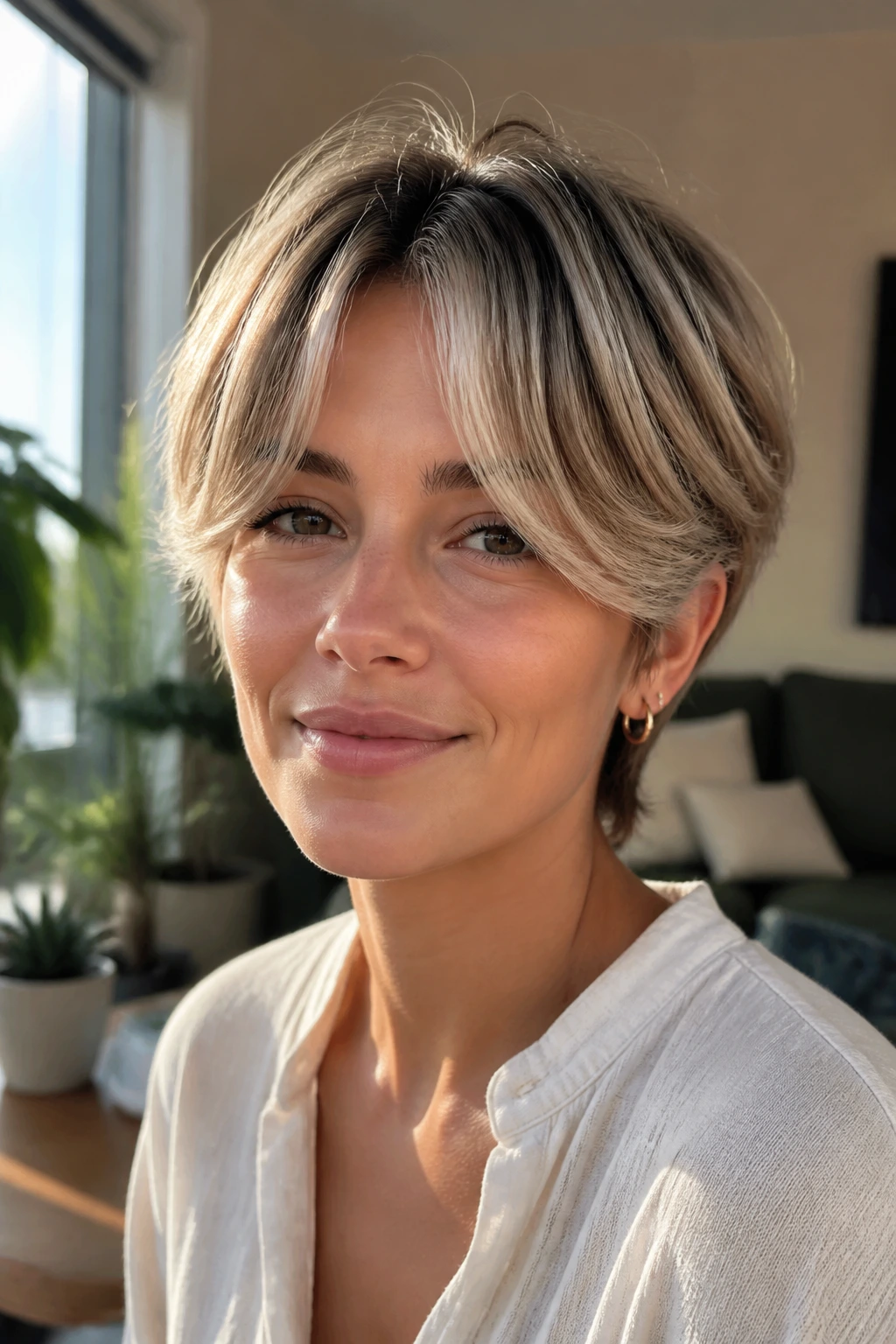
Curtain fringe is one of the gentlest ways to wear a long pixie on a round face. It splits the forehead area in the middle or slightly off-center, then falls outward at both sides like a soft frame.
Unlike blunt bangs, curtain fringe opens the face. That open center line helps stretch the look vertically. It also softens the cheek area without cutting a hard line across it, which is where a lot of shorter cuts go wrong.
This style works especially well if you like a little softness near the eyes. The fringe can be kept longer at the corners so it grazes the cheekbones, while the middle stays shorter and lighter. That gives you shape without making the front heavy.
If your forehead is on the shorter side, keep the center section wispy and avoid a dense curtain. If your hair has some wave, even better. The fringe will fall with less effort and look less staged.
7. Curly Long Pixie That Keeps Height at the Crown
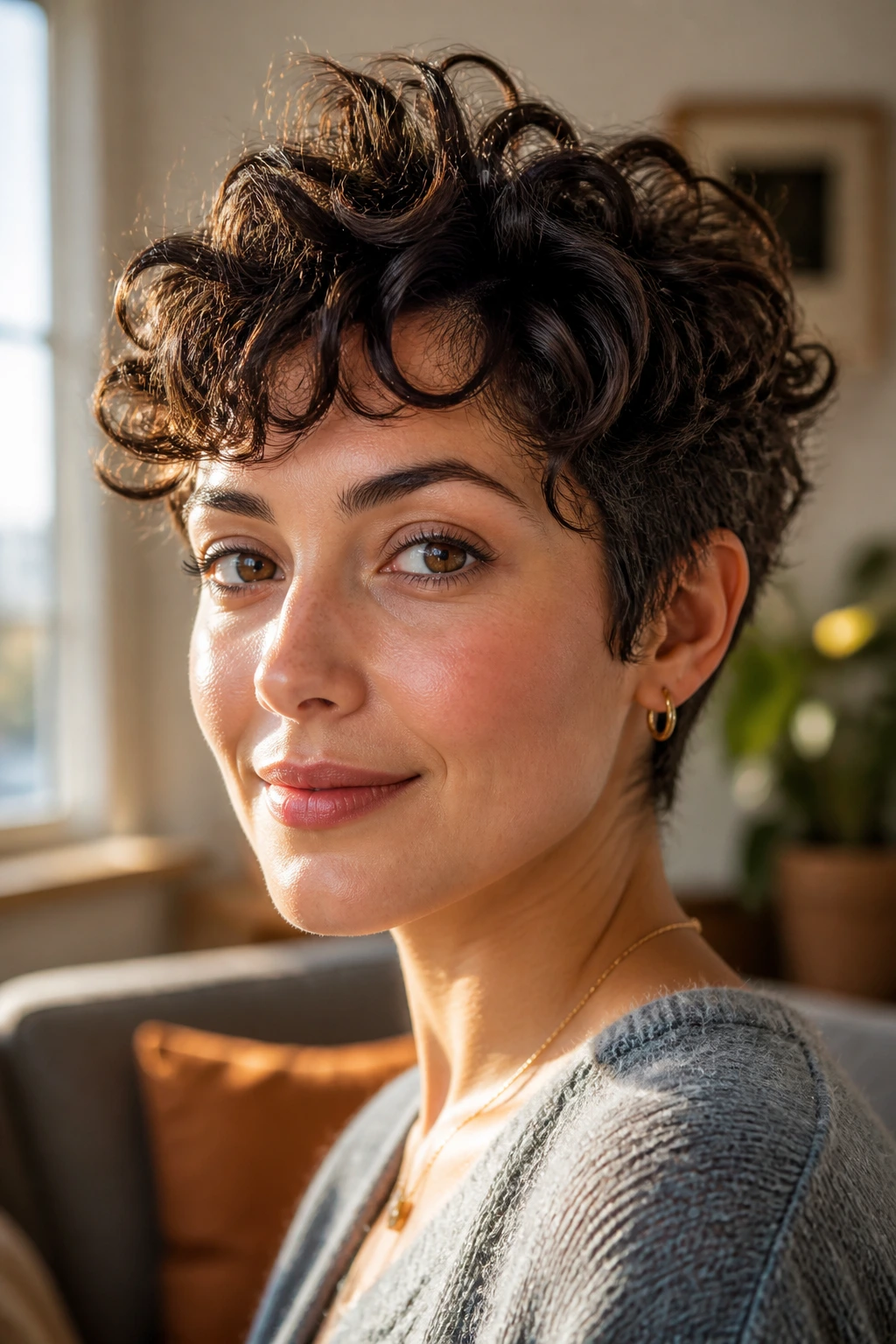
Can curls work on a round face with a pixie? Absolutely. The catch is placement. You want the curl pattern to lift upward at the crown and stay controlled at the sides.
A curly long pixie should never be cut as one even cloud. That’s the fastest route to width. Instead, keep the top a touch longer so the curls can spring up, and trim the sides close enough that they hug the face. The shape becomes oval instead of circular.
Curl Rules That Matter
- Ask for dry cutting if your curls shrink a lot
- Keep the nape tapered so the back does not swell
- Use a diffuser on low heat to preserve the curl pattern
- Scrunch in a light foam, not a heavy cream that weighs the curls down
A curly pixie can be one of the most flattering choices for this face shape because the texture adds movement while the outline stays narrow. It does take a little skill. But when the cut is balanced, the result is lively and clean, not bulky.
8. Wavy Long Pixie With a Soft S-Bend
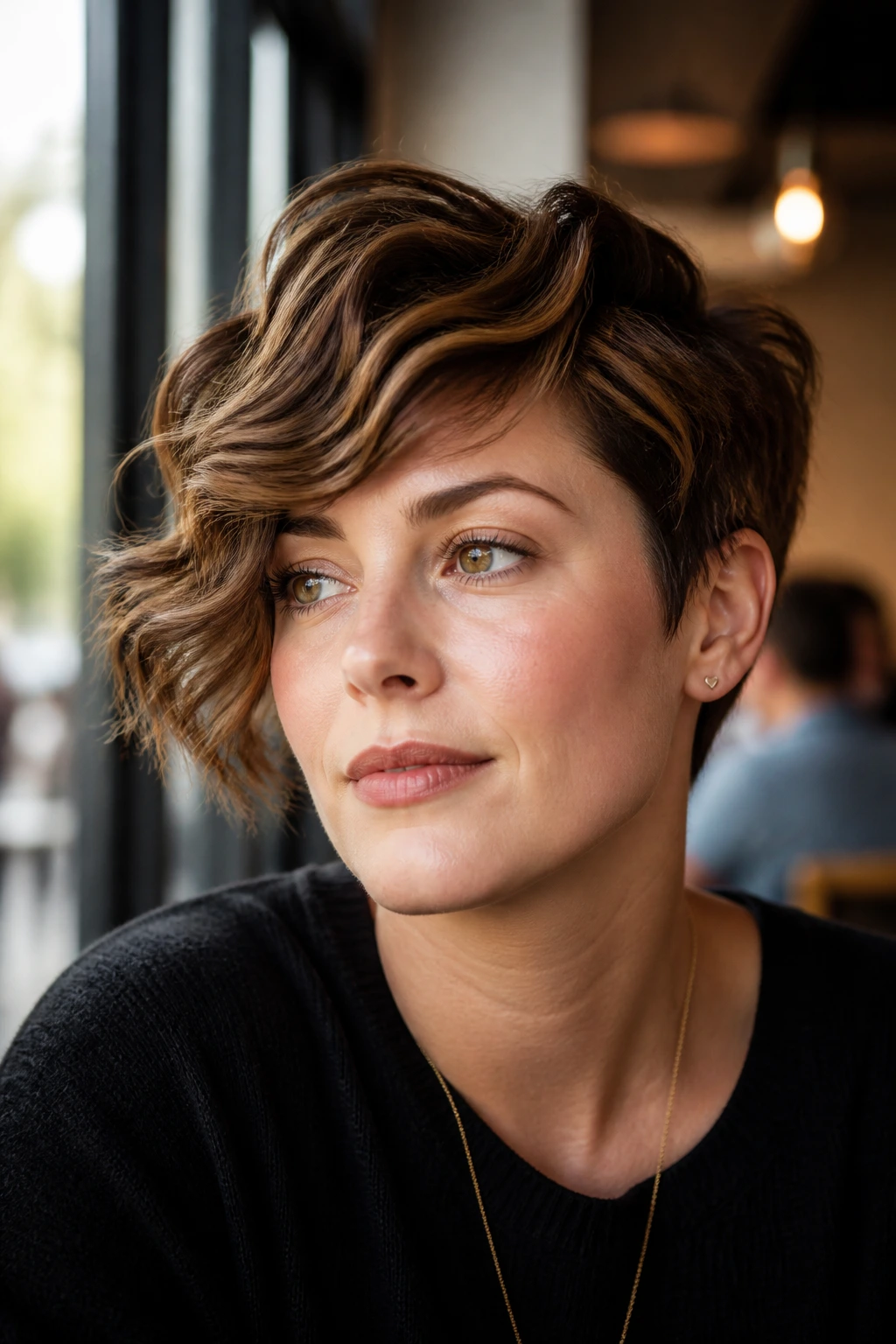
Waves and round faces get along when the wave is loose, not puffy. A soft S-bend gives the hair shape without blowing it into a wide halo.
This version is for people who want the cut to look polished but still relaxed. The top pieces are left long enough to take on a bend, and the front is usually swept across rather than split down the middle. That angled movement makes the face look a little longer.
You do not need a tight curl iron here. A 1-inch iron, wrapped only halfway and brushed out once it cools, is enough. The goal is a bend, not a ringlet. If the hair is already wavy, a bit of mousse and air-drying can do the job on its own.
The sides should stay slim. If the wave sits mainly on top and at the front, the face gets the benefit of texture without extra width near the cheeks. That is the sweet spot.
9. Slick Long Pixie Tucked Behind One Ear
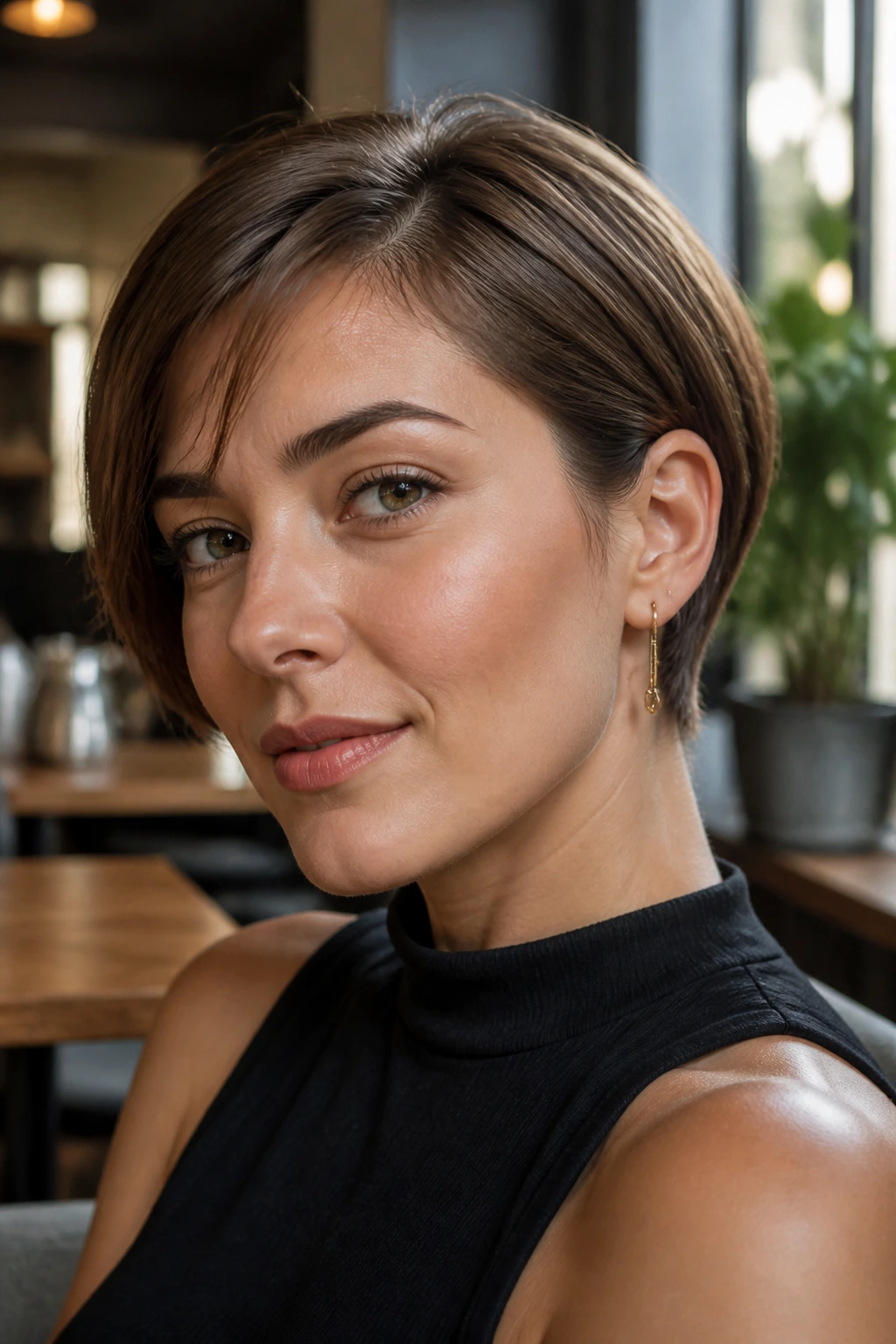
A slick tucked-behind-the-ear pixie looks simple, but it can do a lot for a round face. Showing one ear gives the face a vertical break, and that break matters more than people expect.
This cut works especially well when one side is left slightly fuller at the front and then tucked behind the ear only on one side. The exposed cheekline becomes visible, which creates a little length. It also feels neat without being severe.
The styling itself is straightforward. A small amount of pomade or smoothing cream is enough — about a pea-sized amount if your hair is fine, a touch more if it is thick. Comb the front smooth, tuck one side, and leave the other side looser so the shape does not feel too flat.
This is a good option for glasses wearers too. The open side gives the frames room, and the tucked side keeps the whole look tidy. Simple. Clean. A little sharp.
10. Long Pixie With a Hidden Undercut
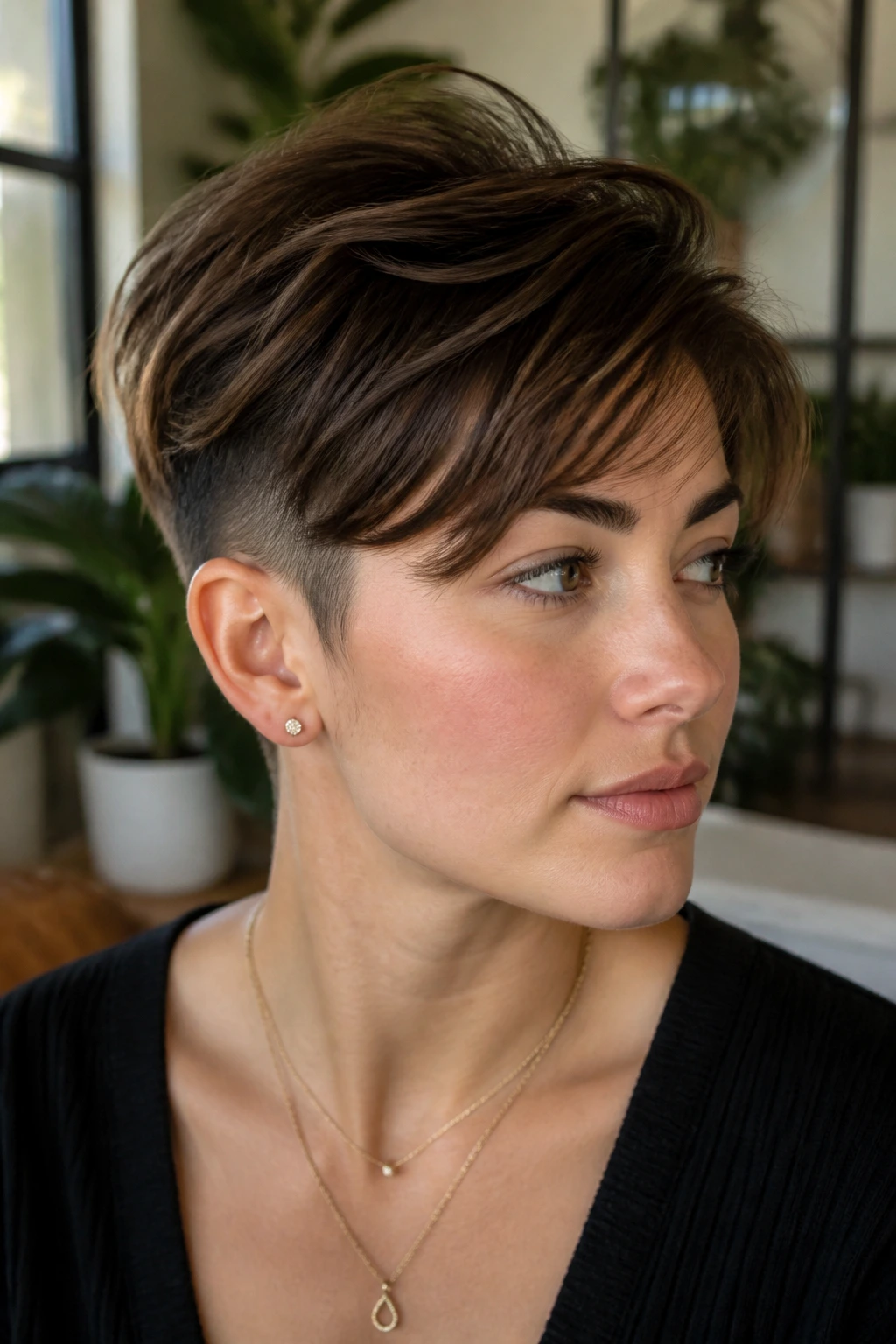
A hidden undercut is the smart answer when the hair is thick and wants to bulge at the sides. You get to keep the long pixie shape on top while removing the bulk underneath.
That makes a big difference on a round face. When the hair stacks out around the ears, the face reads wider. When the weight is removed from underneath, the top layers can sit closer and move better. The cut feels lighter, and the profile gets cleaner too.
Why It’s Useful
- It reduces puffiness behind the ear
- It keeps the nape from looking heavy
- It gives thick hair a place to collapse inward
- It makes the grown-out stage less awkward than a fully shaved side
The best part is that the undercut can stay hidden unless you want it shown. You can wear the top smooth for a polished day, then rough it up later with texture spray. It is a practical cut masquerading as an easy style, and I mean that in the nicest way.
11. Grown-Out Pixie Bob With Face-Framing Pieces
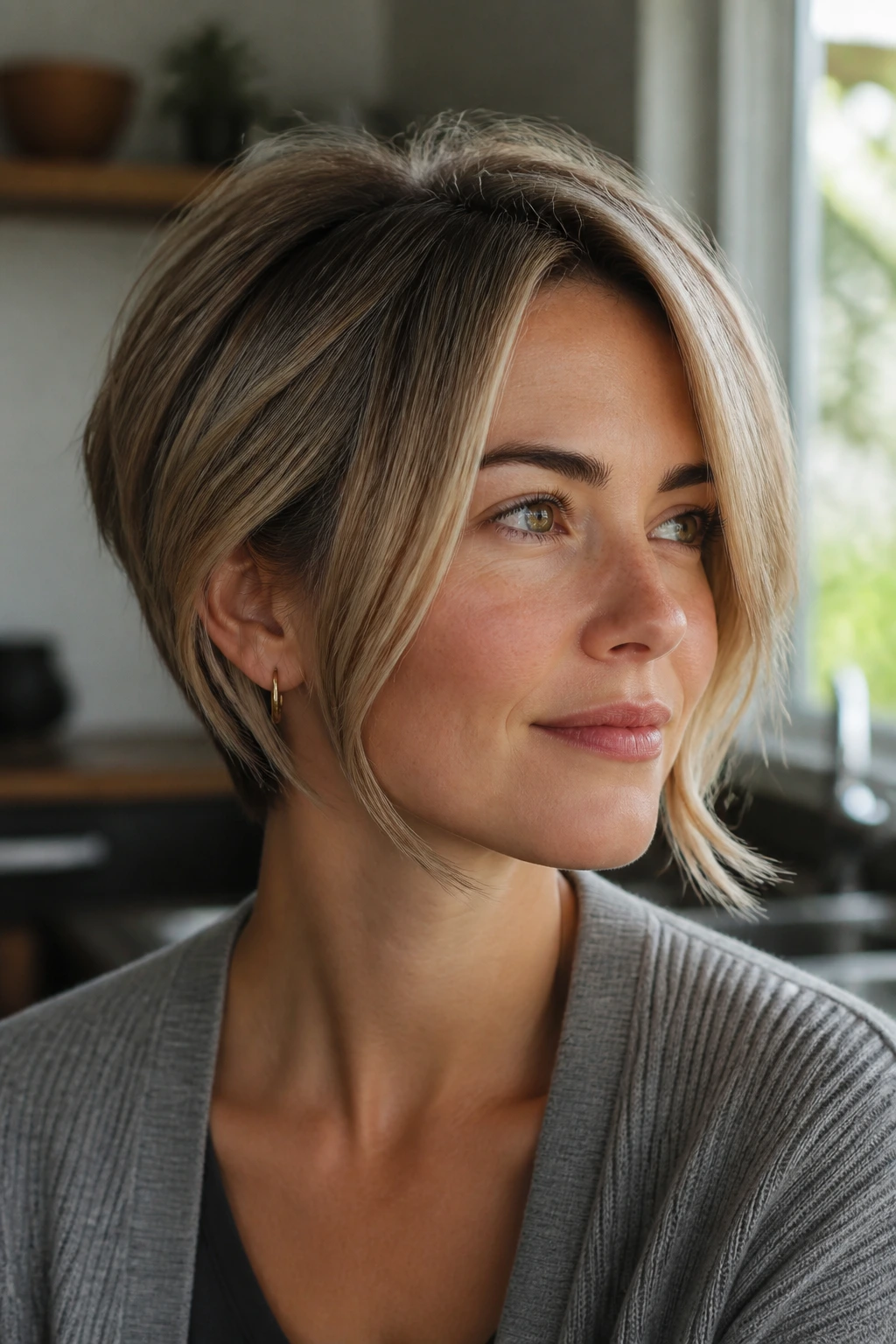
Not everyone wants the shorter, sharper version of a pixie. Some people want a little more hair around the face, and a grown-out pixie bob gives them that middle ground.
This hybrid cut keeps pixie energy at the back and sides, but it leaves longer face-framing pieces around the jaw and cheek. For a round face, that extra length helps stretch the outline. It also gives you more room to tuck, clip, or curl the front pieces depending on your mood.
There is a nice side effect here: it grows out gracefully. A lot of short cuts start looking fuzzy after a few weeks, but a pixie bob can keep its shape longer because the front already has room to move. That makes it less stressful between salon visits.
If you are nervous about going too short, start here. It is still light, still easy, but not so cropped that you feel exposed every time you catch your reflection.
12. Long Pixie With Angled Side Bangs

Angled bangs are the quiet workhorse of long pixie cuts for round faces. They do not shout. They just change the geometry.
A straight fringe cuts the face in half. An angled side bang draws a line from the forehead down toward the cheek, which makes the face read longer and slimmer. The angle should feel deliberate, not random. Shorter near the brow, longer near the cheekbone.
This style is especially handy if your hair has a stubborn cowlick or falls forward on its own. The angle gives that movement a job. Instead of fighting the hair, you build the shape around it.
A Small Chair-Side Detail
Ask for the shortest point to sit above the eyebrow arch and the longest point to land near the cheekbone when dry. That keeps the fringe from dropping into the eyes every time the weather changes or the hair settles. A blunt diagonal can be harsh; a soft one is easier to wear.
13. Long Pixie With a Textured Crown and Clean Nape
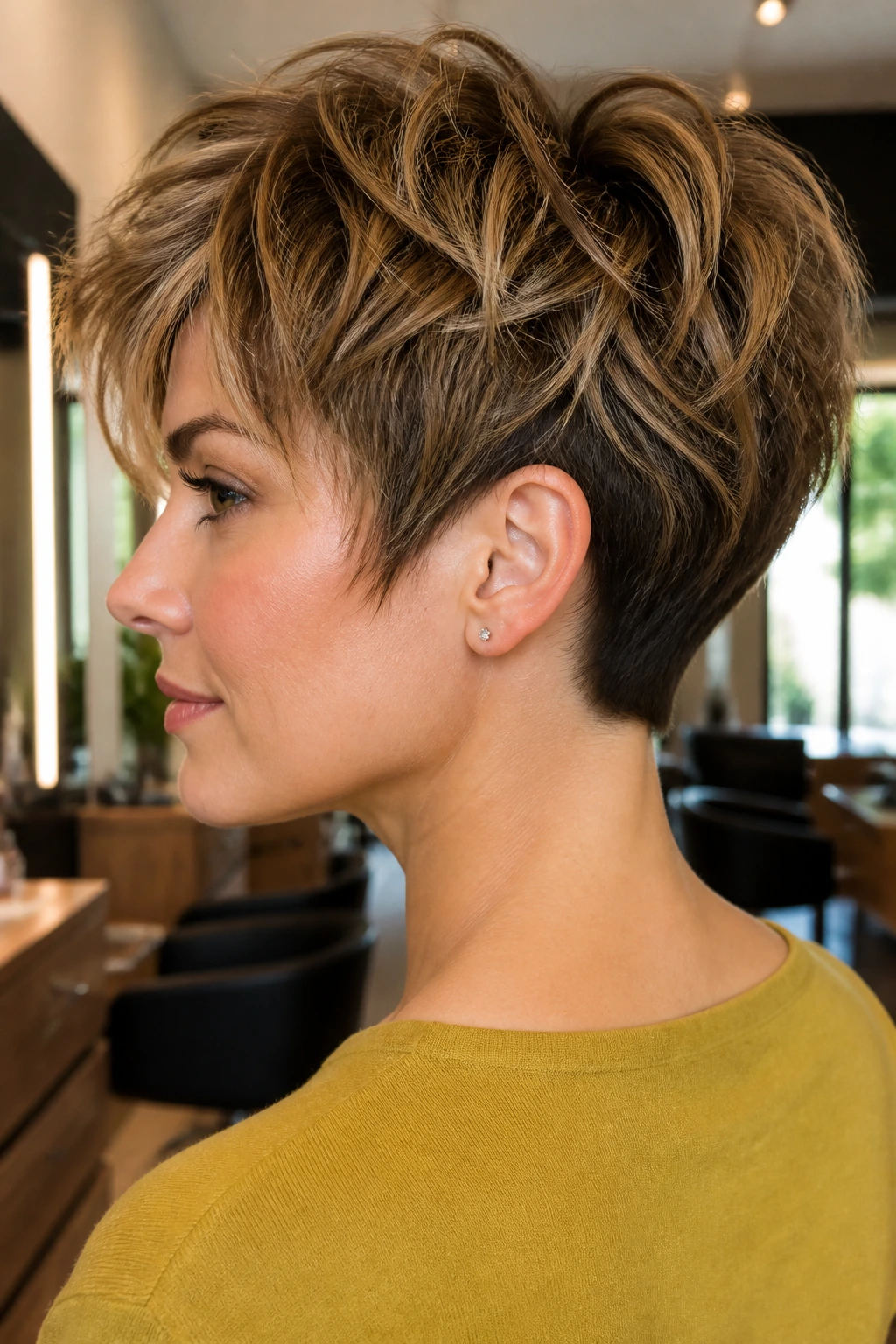
A textured crown paired with a clean nape is one of those combinations that looks more thoughtful than it is hard to wear. The top gets lift and movement, while the neck area stays neat and slim.
That contrast matters on a round face because the eye gets two different jobs at once. It looks up at the crown, then down at the tapered back, and the face appears longer in between. The cut does not rely on bangs to do all the work.
What to Tell Your Stylist
- Keep the crown layers longer than the sides by about 1 inch or so
- Remove weight at the nape with a soft taper
- Leave enough texture up top for finger styling
- Avoid a bulky line behind the ear
This version is good if you like a little volume but hate a puffy outline. It holds shape well on most hair types, and it dries faster than a longer crop because the neck area is kept tight. That part alone is worth the haircut.
14. Swept-Back Long Pixie for Fine Hair
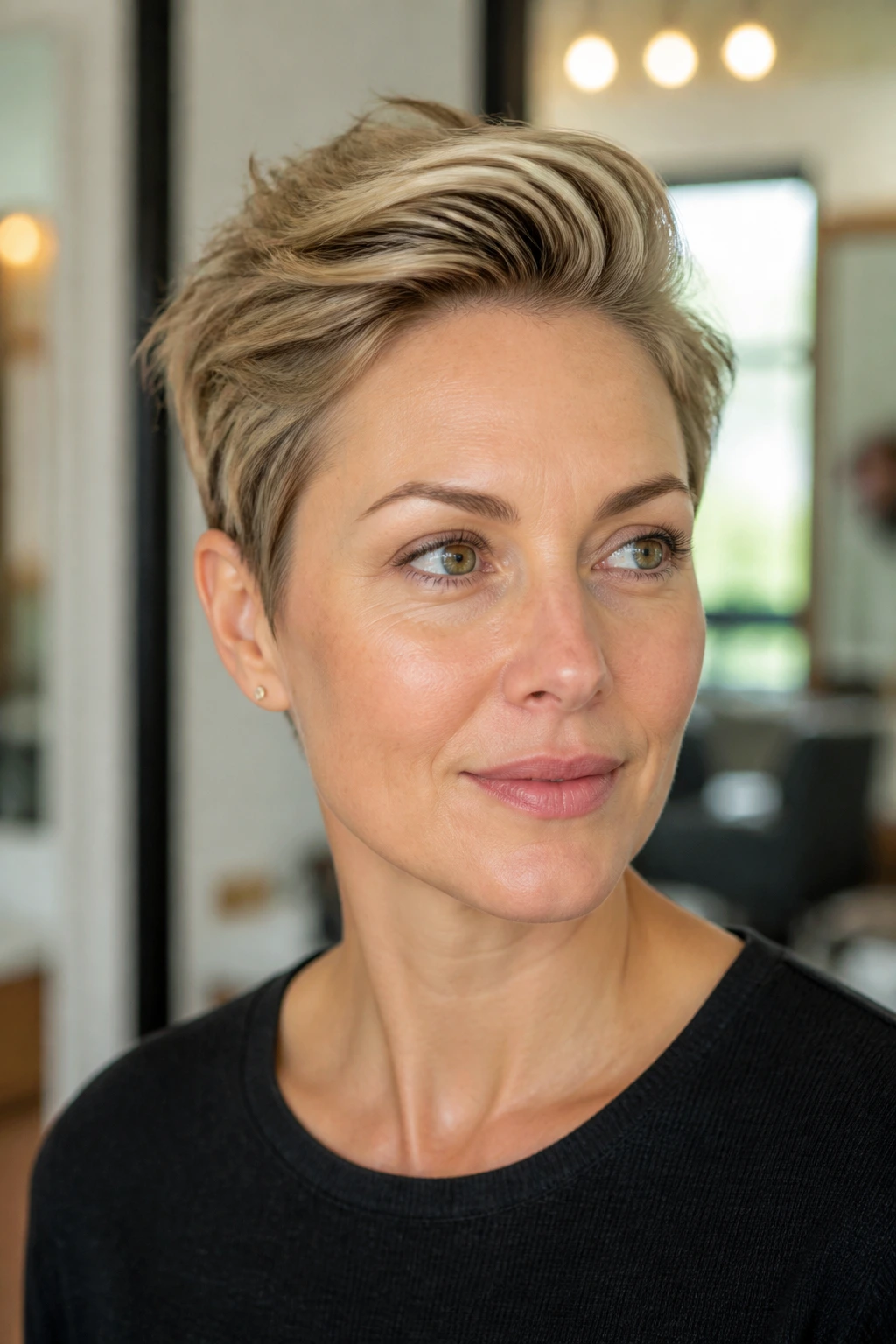
Fine hair needs lift, not bulk. That is why a swept-back long pixie can be a stronger move than a fringe-heavy style that tries to fake fullness in the wrong place.
The hair is cut with length on top and reduced weight around the sides, so the top can be brushed back from the face. That opens the features and stretches the face shape upward. It also keeps the front from falling over the cheeks, which can add width on a round face.
This cut likes lightweight mousse, a round brush, and a quick blast of heat at the roots. You do not need a lot of product. Too much makes fine hair stick together and lose the airy effect that makes the cut work.
A small velcro roller at the crown for ten minutes can help, too. Old-school, yes. Effective, also yes. The volume should sit on top, not at the sides, and that one detail changes everything.
15. Long Pixie With Micro Layers Around the Temples
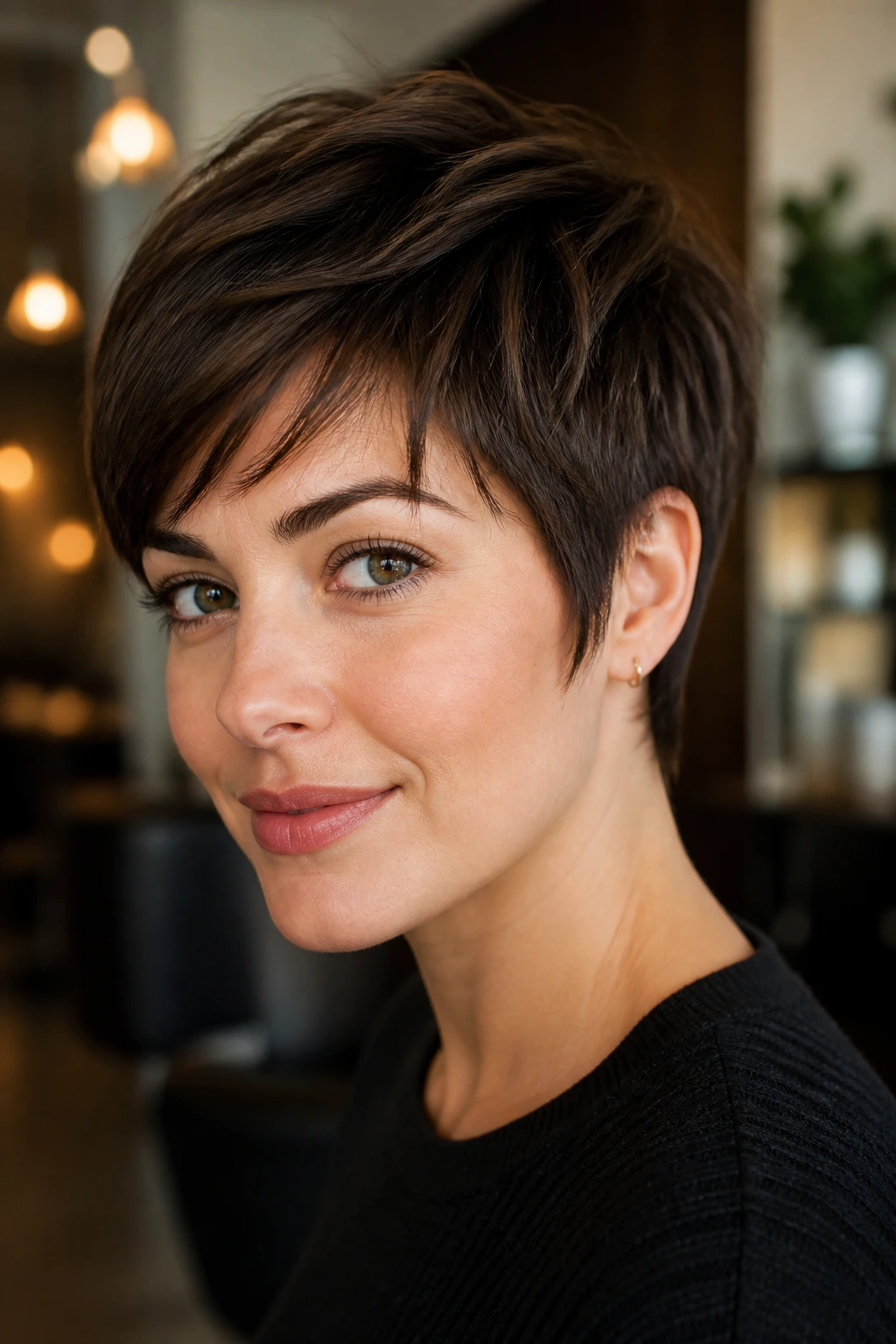
What happens when the widest part of the face needs a little softening? Tiny temple layers help more than a big dramatic fringe.
Micro layers around the temples are short, barely-there pieces that break up the line right where the cheek and forehead meet. On a round face, that can keep the cut from feeling too blocky. They also stop the hair from sitting like one continuous curtain on the sides.
How to Get the Most From It
- Ask for razor-light or point-cut pieces, not chunky chunks
- Keep the layers short enough to move, but long enough to blend
- Style the temple area forward and slightly down, not straight out
- Use a touch of texture spray so the pieces stay separated
This is a detail-oriented cut. It does not look flashy, which is part of the charm. But if your face has fuller cheeks, those tiny temple pieces can make the whole shape look more balanced.
16. Tousled Long Pixie With a Messy Finish
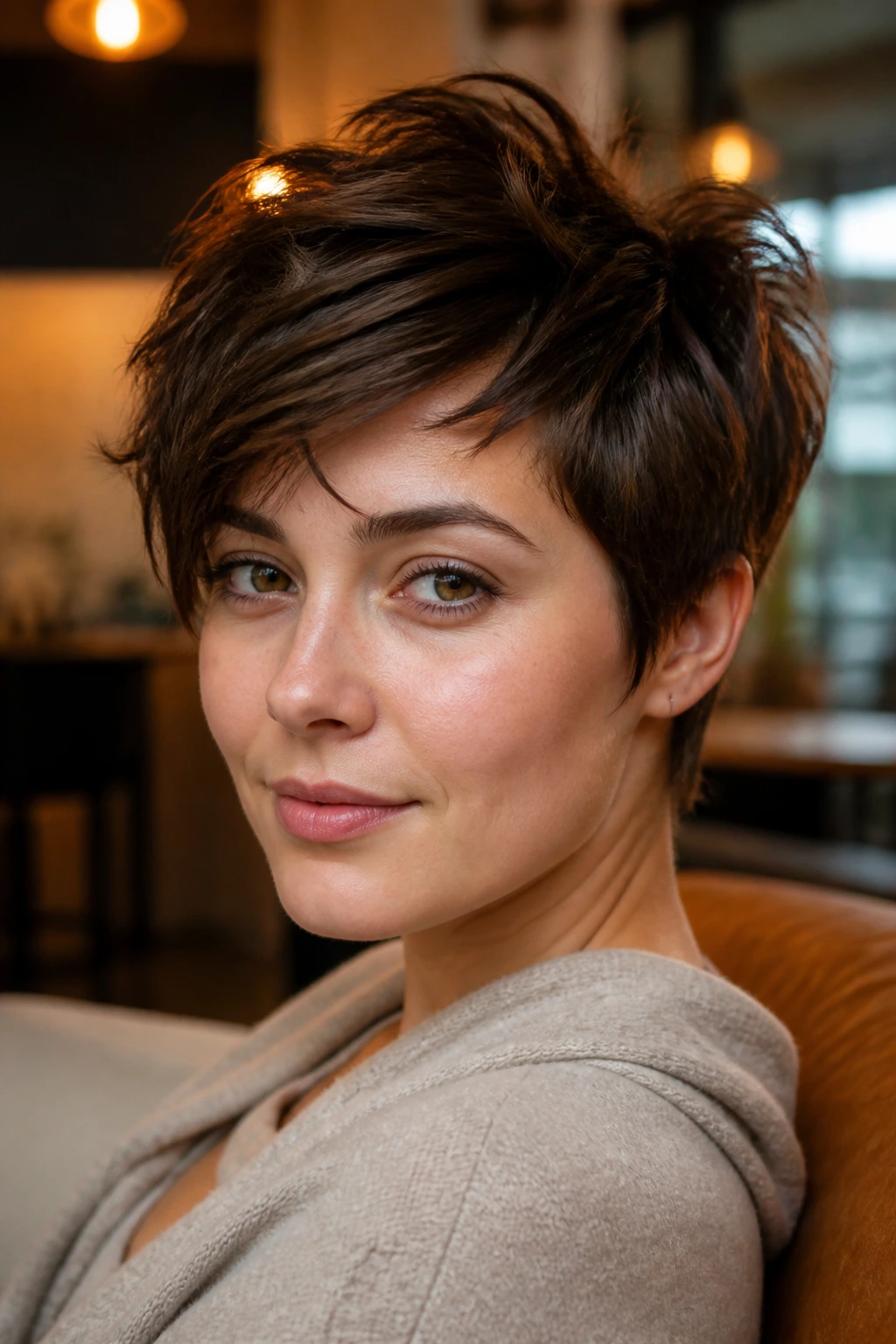
A tousled pixie can look effortless, but only if the mess is controlled. There is a difference between soft texture and hair that looks like it lost a fight with a pillow.
This style uses uneven pieces and a loose finish so the cut never feels too round or too neat. On a round face, that broken texture is useful because it stops the eye from tracing a perfect circle around the head. The shape stays alive.
A matte paste or light clay works better than glossy cream here. Warm a little product in your hands, then push it into the ends and the crown. Do not rake it through the whole head unless you want to flatten the lift you already built.
A few flyaways are fine. A lot of them are not. The goal is controlled movement, not chaos.
17. Long Pixie With a Soft Mullet Edge
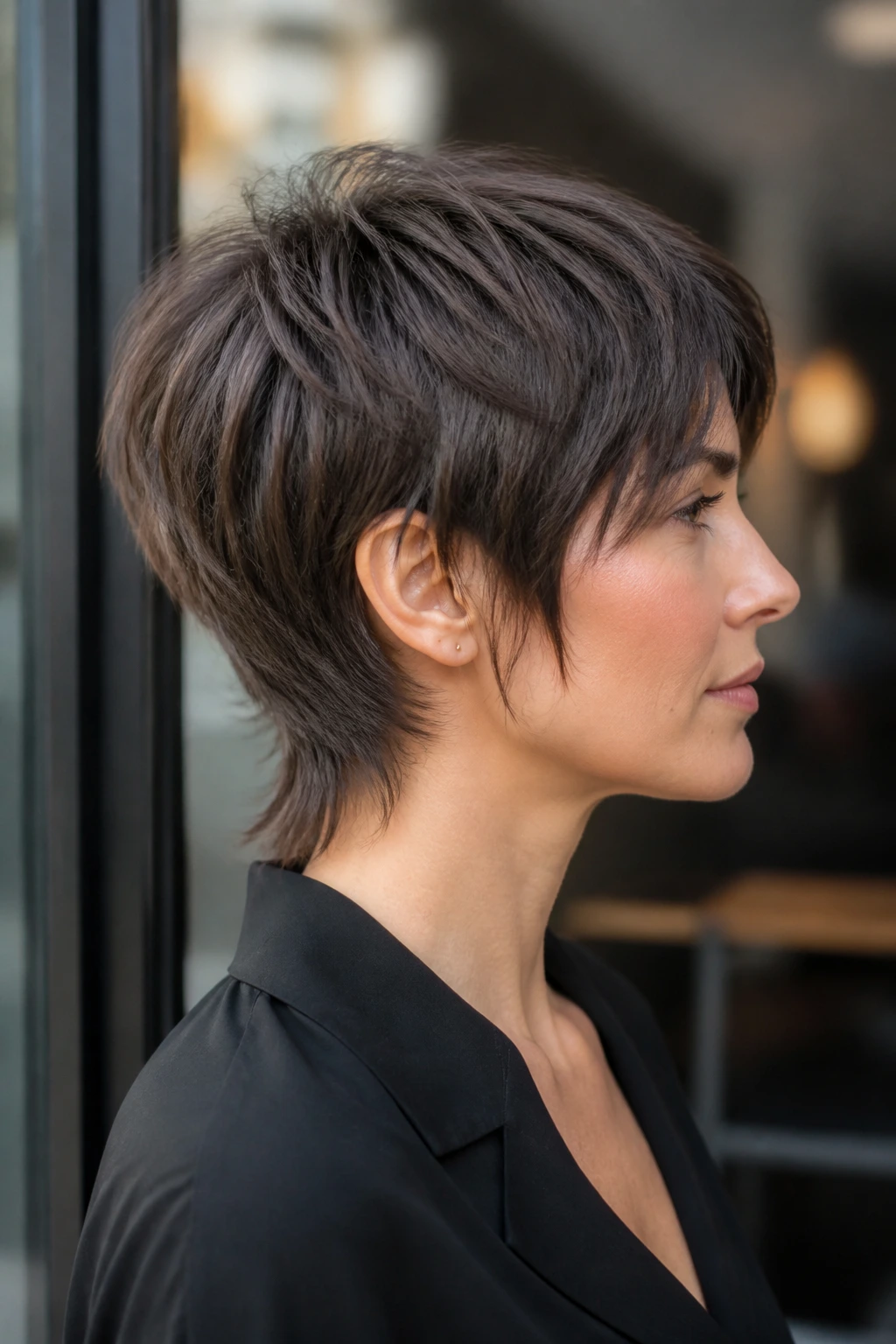
A soft mullet edge sounds bold, and it is, a little. But the grown-up version is much gentler than the name suggests.
The front stays short enough to frame the face, the crown carries some lift, and the back hangs a bit longer so the neck looks drawn out. On a round face, that extra length in back can help create balance, especially if the sides are kept narrow. It gives the whole cut a slight forward-back motion instead of a wide one.
This is not a cut for someone who wants neatness above all else. It has a little rock energy. Still, the soft version is wearable because the transition is gradual, not choppy. The back should blend, not drop into a hard tail.
If you like fashion with a bit of edge, this is a strong choice. It feels current without needing a lot of styling tricks.
18. Elegant Long Pixie With Soft Sideburns
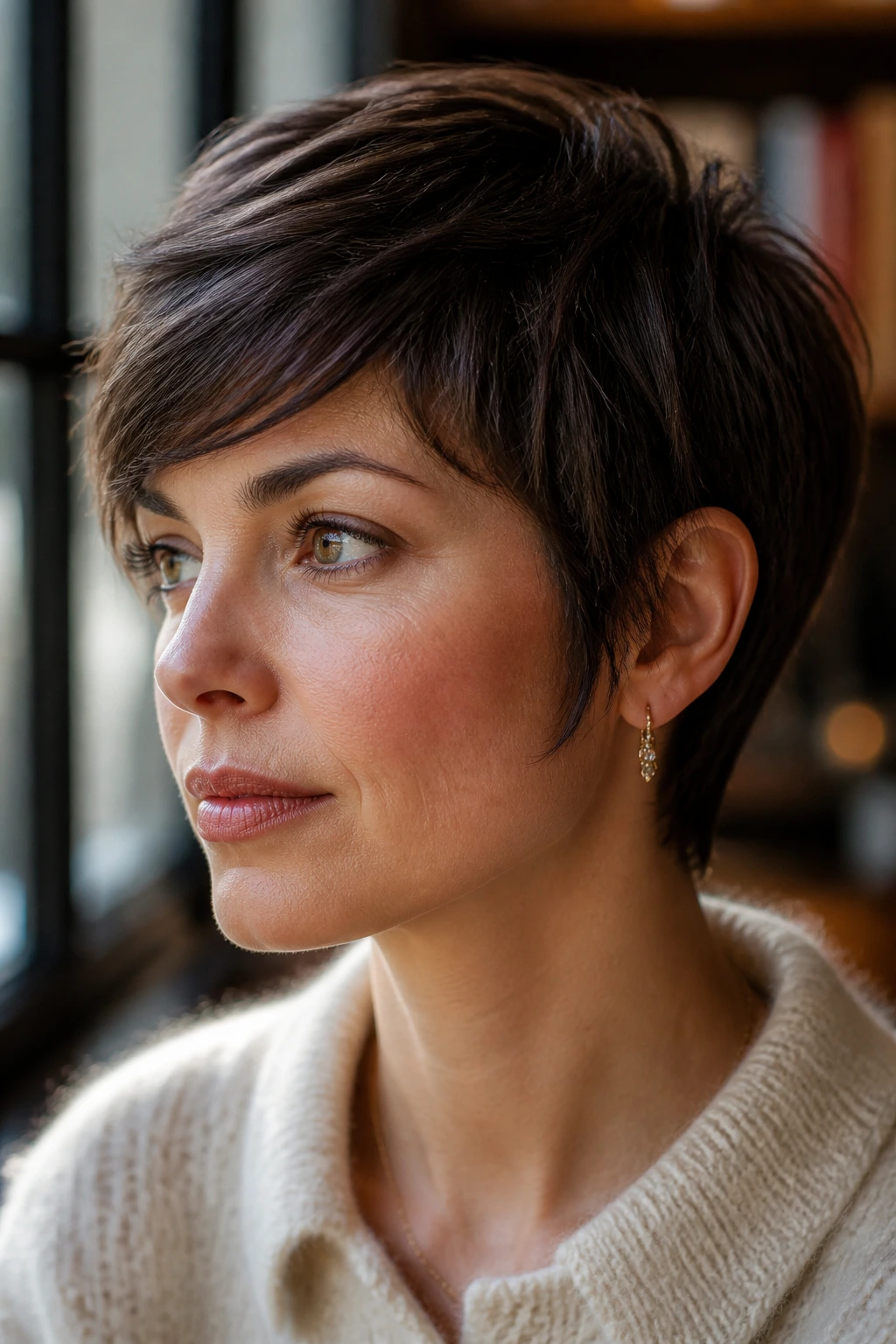
Soft sideburns do a lot of quiet work. They frame the jaw without drawing a hard line, which is useful on a round face where sharp edges can sometimes feel too severe.
This style keeps the overall cut sleek, then leaves the sideburn area a touch longer so the sides do not disappear into the head shape. The result is a softer outline that still looks tidy. It is especially nice if you wear earrings or glasses, because the hair leaves room for those details.
Unlike heavy sideburns, these should blend into the rest of the haircut. You want a gentle taper from temple to jaw, not a thick strip of hair hanging there on its own. That little blend keeps the look elegant instead of dated.
A quick pass with a flat brush and a light smoothing cream is enough. Nothing fussy. The cut does the main work.
19. Long Pixie With Razored Ends
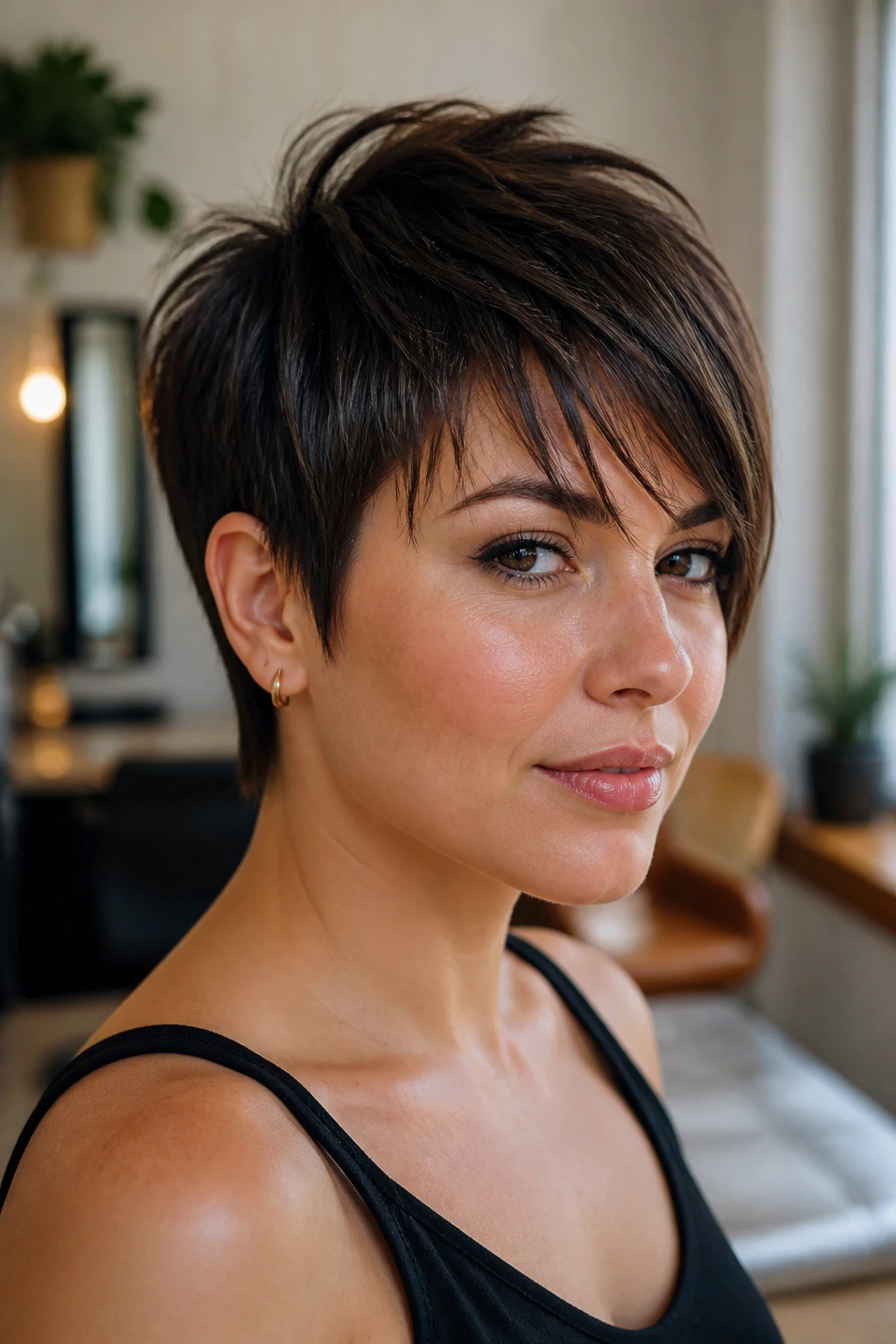
Razored ends can be excellent on dense straight hair because they remove weight without stealing movement. The trick is using the razor with restraint. Too much, and the ends go wispy in a bad way.
On a round face, razored ends help because they keep the outline from looking too solid. A hard edge can make the cut read wider, while broken ends let the shape narrow in around the face. That matters most at cheek level.
Good Signs to Look For
- The top still has enough body to lift
- The ends look separated, not frayed
- The sides sit close to the head
- The fringe can move instead of hanging in one line
If your hair is very fine, a razor cut can sometimes make the ends look thin too fast. In that case, softer point cutting may be smarter. Thick hair, though, tends to love this approach. It gets lighter, and the shape finally behaves.
20. Long Pixie With a Low Side Part and Volume Up Top
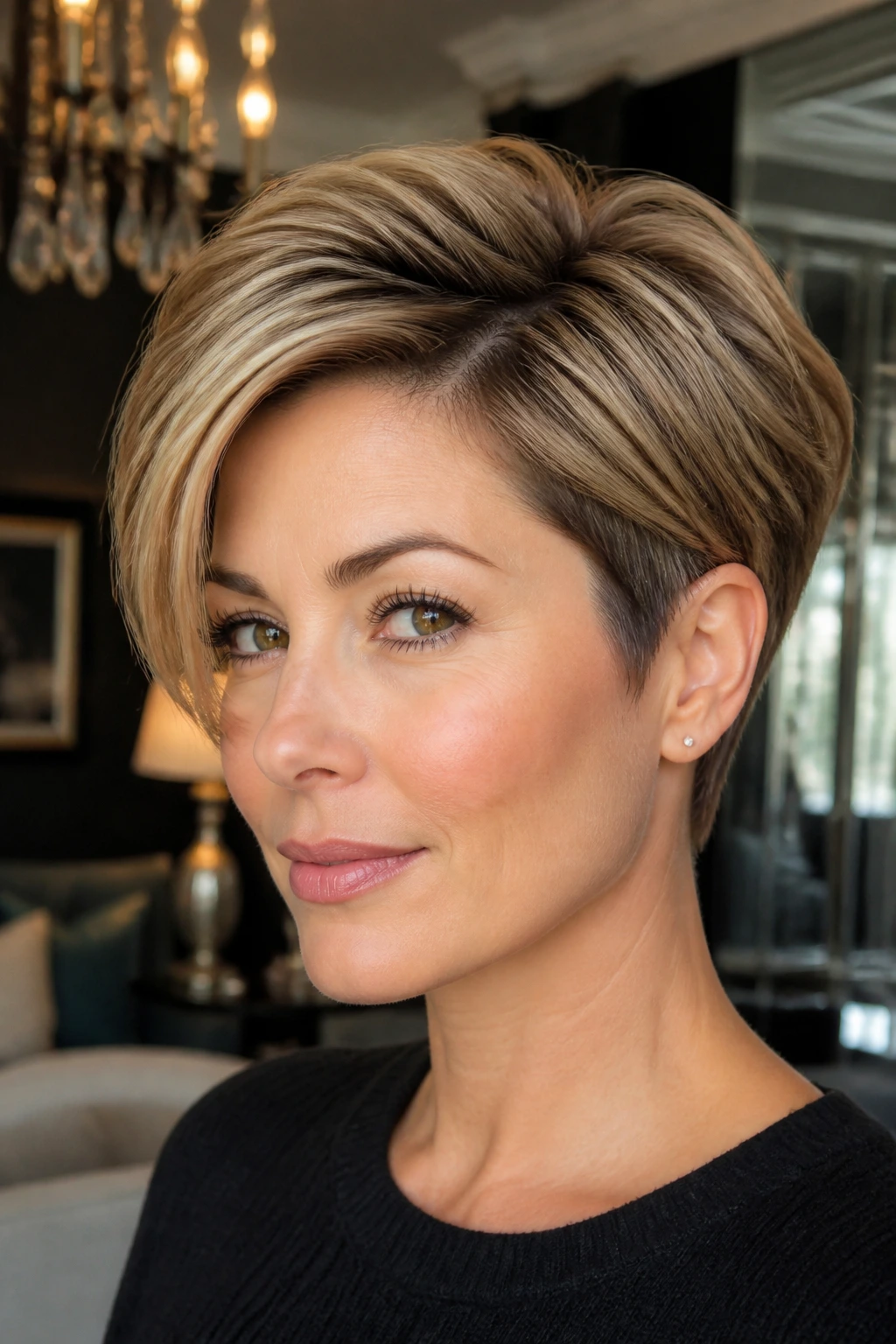
A low side part can be more flattering than a center part on a round face when the top has enough height to carry it. The part line sits lower, but the lift above it creates a nice slope that lengthens the face.
This is a slightly more dramatic cousin of the classic side-swept pixie. The difference is that the part sits lower and the volume is pushed higher, which gives the cut a stronger shape. It works well if you want a little glamour without going full pompadour.
A small round brush at the root helps, but so does a quick dry at the part line before the rest of the hair is styled. If the root is flat at the start, the whole shape tends to slide down by lunchtime. Nobody wants that.
The best part is the finish. You can make it sleek for a cleaner look, or rough it up and let the height stay soft. Same haircut. Different mood.
21. Long Pixie With Long Top Layers and Narrow Sides
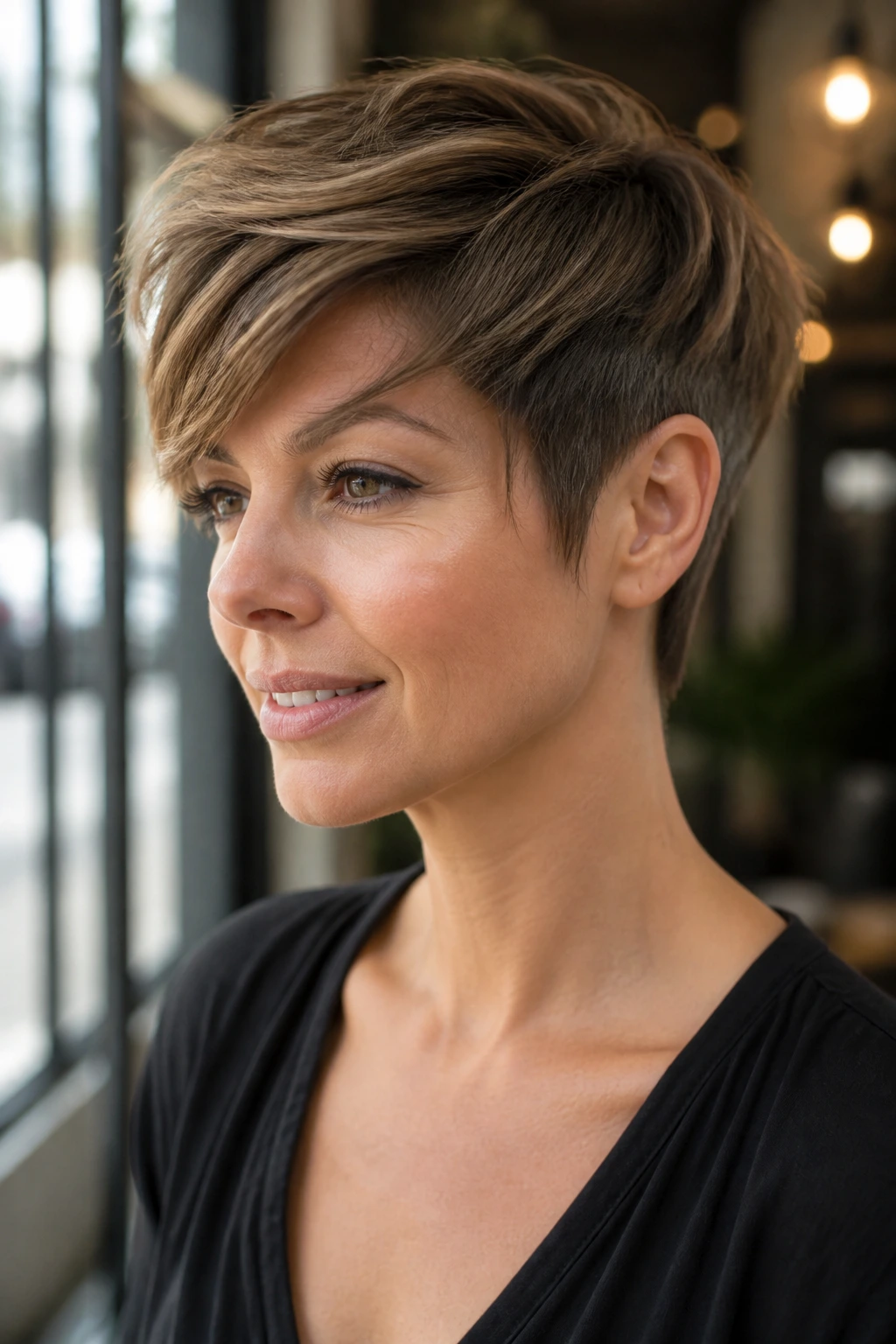
If a round face needs one thing from a pixie, it is usually this: more vertical length, less side bulk. Long top layers and narrow sides do that cleanly.
The top layers should stay long enough to sweep, lift, or tuck back, while the sides are trimmed close enough to keep the shape lean. That ratio is what keeps the cut from turning into a wide little cap. A lot of bad pixies fail here. The sides get too plush, and the face loses definition.
This style is flexible, too. You can wear the top forward on a windy day, brush it up for more height, or let it fall diagonally across the forehead. The cut gives you choices without needing a whole styling ritual.
If you are sitting in a chair wondering what to keep and what to remove, this is a smart answer: keep the top length, reduce the sides, and let the face stay open.
22. Soft, Balanced Long Pixie for Round Faces
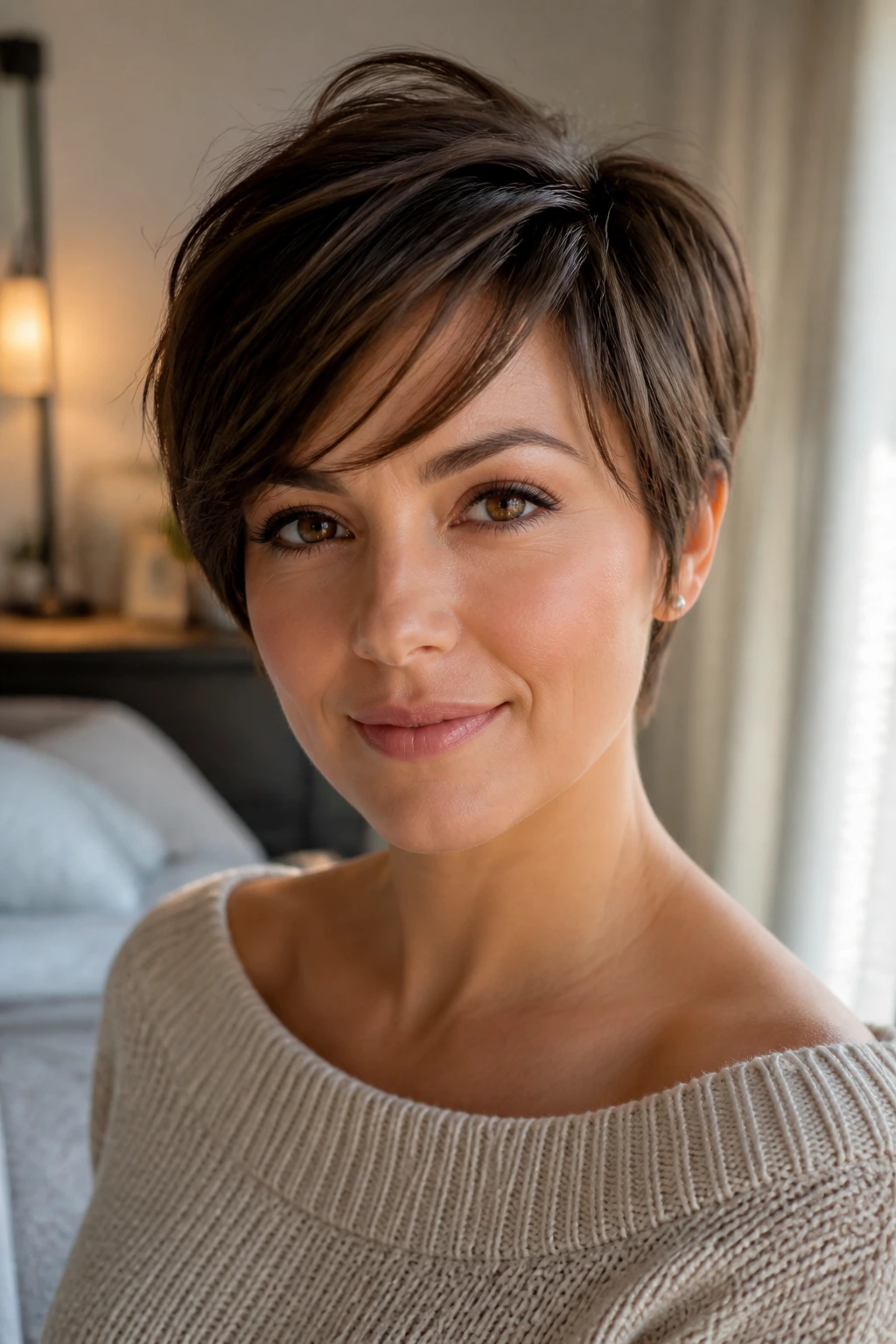
This is the one I’d hand to someone who wants the least risky long pixie cut for a round face. It keeps enough length to feel familiar, but it still trims the sides and nape so the face doesn’t look boxed in.
The shape is built on balance, not drama. The front pieces are soft, the crown has a little lift, and the cheeks are not smothered by heavy layers. That means you can wear it smooth one day and textured the next without the haircut falling apart. It also grows out in a civilized way, which matters more than people admit.
If you want to make the salon conversation easy, keep it simple:
- Top: enough length to sweep or tuck, usually a few inches
- Sides: narrow and light, with no bulging around the ears
- Front: soft, angled pieces instead of a blunt wall
- Back: tapered nape so the neck stays clean
The useful part of a balanced pixie is that it does not lock you into one styling trick. It gives you room. And that, more than anything, is why long pixie cuts for round faces work so well when they’re cut with a bit of judgment instead of a heavy hand.
