



Fine hair can look limp in a cut that asks too much of it. A pixie, done right, usually fixes that faster than shoulder-length layers ever will. The trick is not adding bulk everywhere; it is choosing where the shape should feel full, where the fringe should land, and how much of the nape should stay clean.
I like pixies for fine hair because they stop the hair from dragging itself down. The ends are lighter, the crown can be lifted with a bit of root styling, and even a small change in the front line can make the whole head look denser. A blunt edge helps in one style, a feathered edge helps in another, and a bad texturizing job can make the hair look stringy in a hurry. That’s the part most people miss.
The best pixie cuts for fine hair do one of two things: they either create the illusion of thickness with texture and lift, or they build a crisp outline that makes the hair look deliberate and full. Both can work. Both can also go wrong if the cut is too thinned out or the top is left too long without support.
So the real question is not whether fine hair can wear a pixie. It can. The question is which shape gives your hair enough structure to do its job without turning the back of your head into a daily styling project.
1. Choppy Pixie With Crown Lift
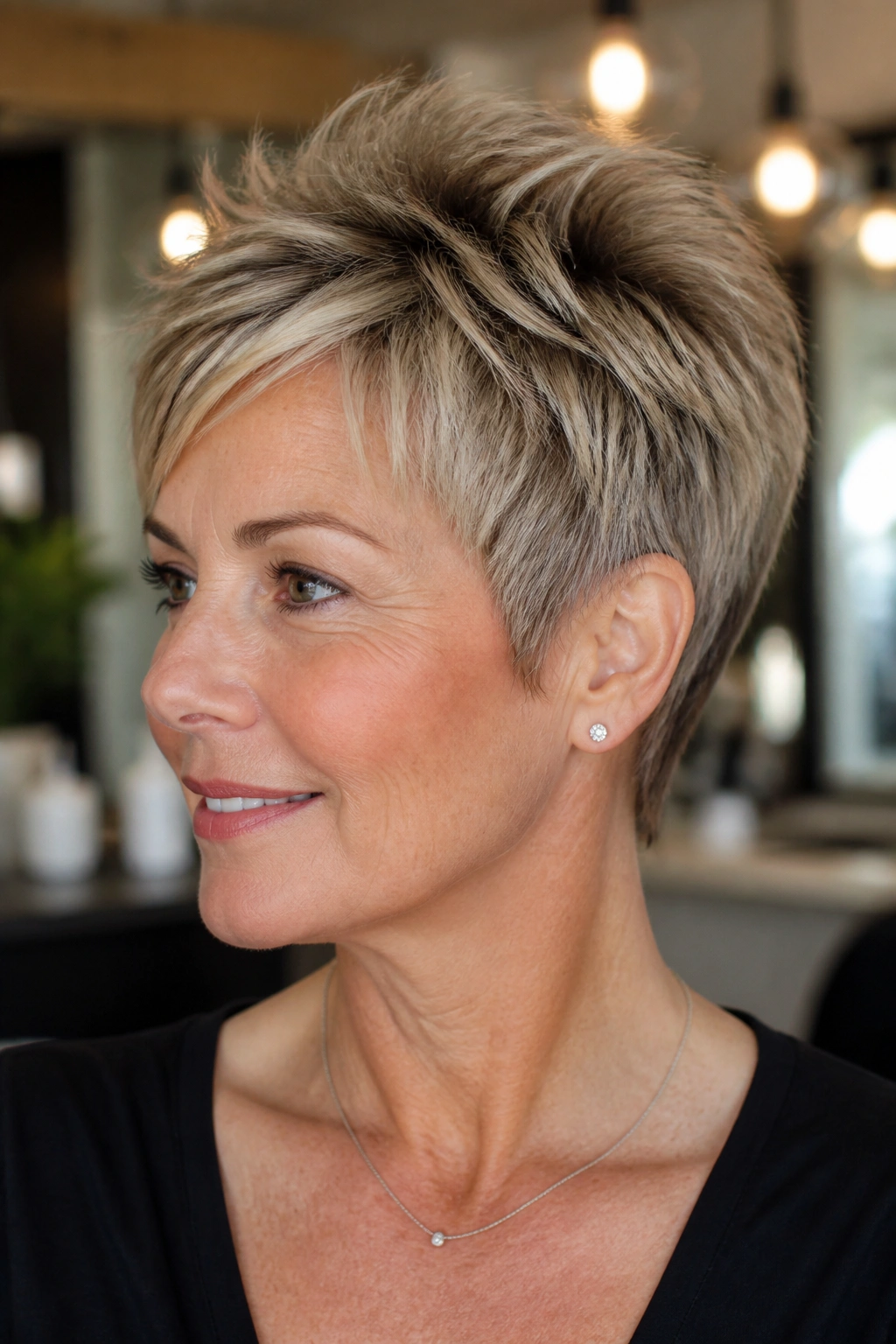
The quickest way to fake fuller hair is to build the shape at the crown and keep the sides tidy. A choppy pixie does exactly that, and it’s one of the better pixie cuts for fine hair if your strands fall flat the second they air-dry.
Why It Works
Short, uneven layers at the top break up see-through spots. That matters more than people think. Fine hair often looks sparse when every strand lies in the same direction, so a little controlled mess gives the eye more to read.
Ask for short, sliced layers through the crown and a clean, narrow nape. You do not want the top over-thinned, because that can turn into little flyaway wisps that look dry instead of full.
How to Style It
- Work a pea-size amount of volumizing mousse into damp roots.
- Blow-dry with your fingers lifting at the crown, not smoothing it flat.
- Finish with a matte paste on the ends only so the texture stays piecey instead of sticky.
- If your hair collapses by midday, flip your part and mist the roots with dry shampoo.
Best tip: ask your stylist to leave the crown a touch longer than the sides. That small difference gives you lift without making the cut look fluffy.
2. Side-Swept Pixie With a Long Fringe
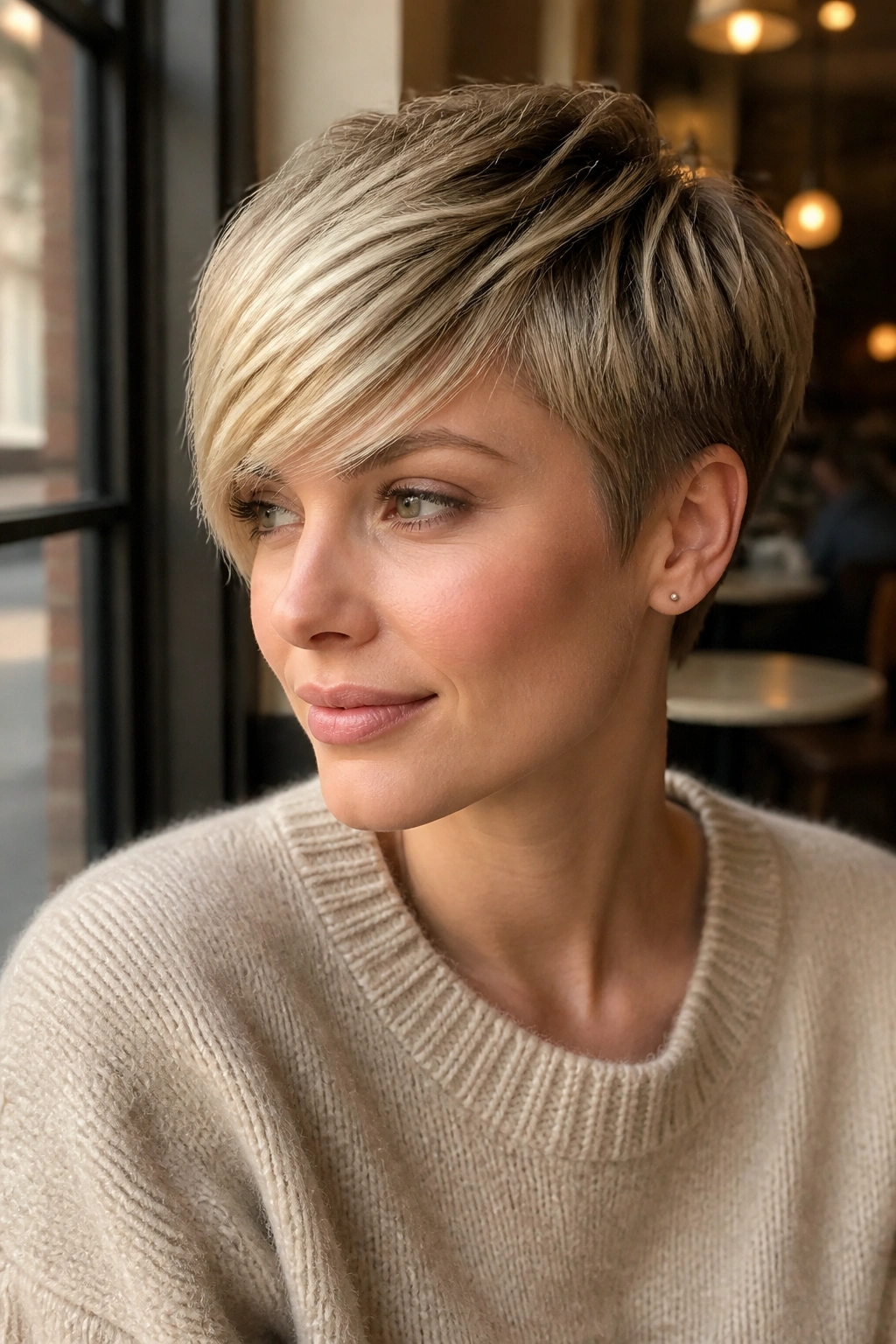
A long fringe changes everything. It gives fine hair a little more visual weight in the front, and that’s often where the eye goes first anyway. If you want softness around the face without giving up the easy feel of a short cut, this one earns its spot.
The length should skim the brow or hit just below it on the longer side. Too short, and the front can look stark. Too long, and the fringe starts dragging the whole pixie down. That balance is the whole story here.
This style works well for people who want a little coverage at the temples or a softer frame around the eyes. It also helps if you have a stronger jawline and want the cut to feel less sharp. Keep the sides close and the fringe loose, and the haircut starts to read as fuller than it really is.
3. Feathered Pixie With Wispy Ends
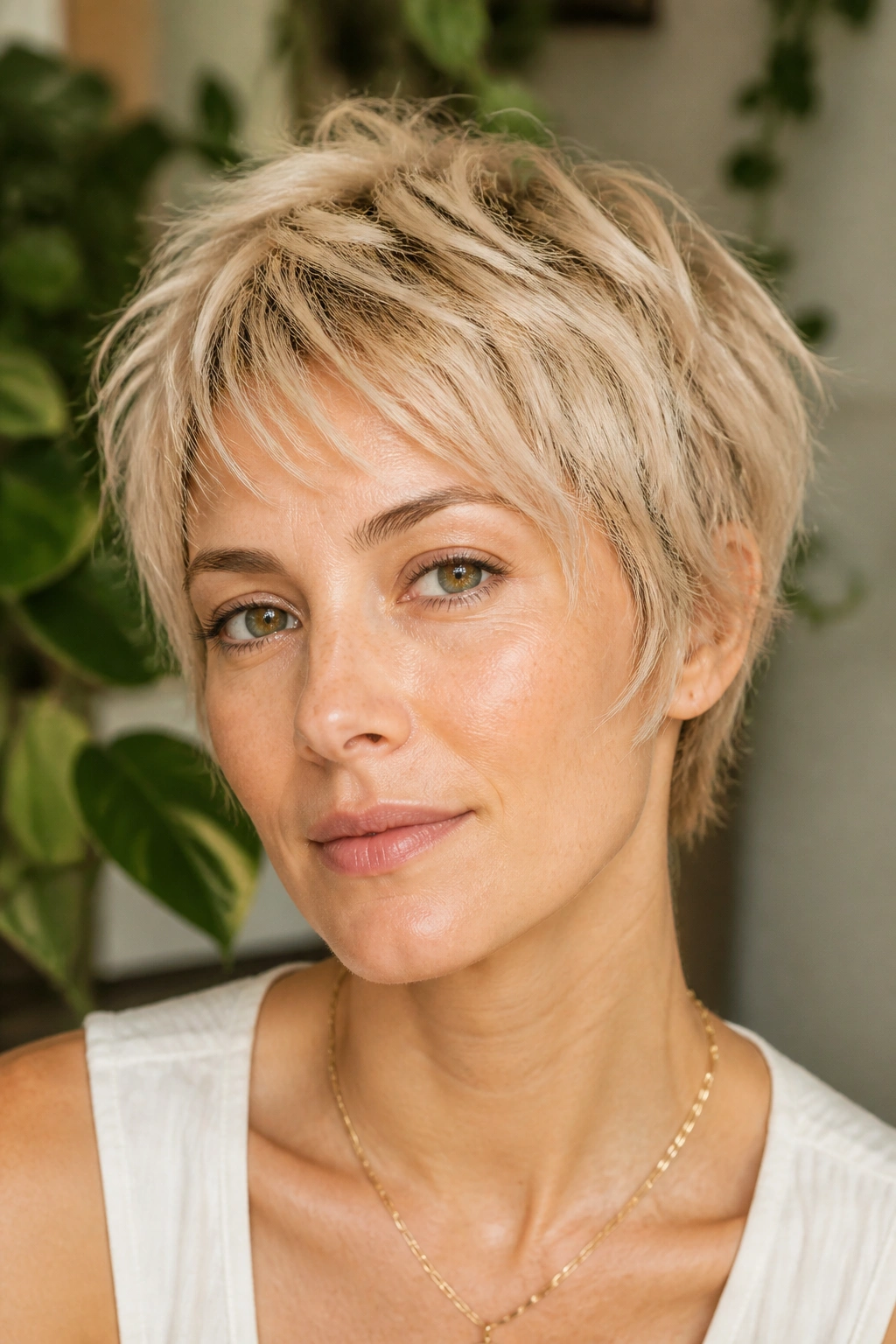
Can a pixie feel soft instead of clipped and severe? Absolutely. A feathered pixie is proof, and it’s one of the most flattering pixie cuts for fine hair when you want movement more than drama.
What Makes It Different
The ends are point-cut or lightly feathered, so they don’t sit as one hard line. That matters for fine hair because blunt ends can sometimes make the cut look thin at the edge, while feathering gives the shape a little air.
This is not the same as over-texturizing. There’s a difference. Good feathering keeps the outline intact; bad thinning turns the hair frayed and weak.
How to Ask for It
Tell your stylist you want soft, airy ends with no bulky shelf around the ears. Ask for movement around the cheekbones and a clean neck line. If your hair is very straight, a round brush and a small dab of lightweight cream will keep the front from sticking to your head.
Watch for this: if the cut looks fuzzy when it’s dry, too much weight was removed. Feathered should mean soft, not shredded.
4. Tapered Nape Pixie
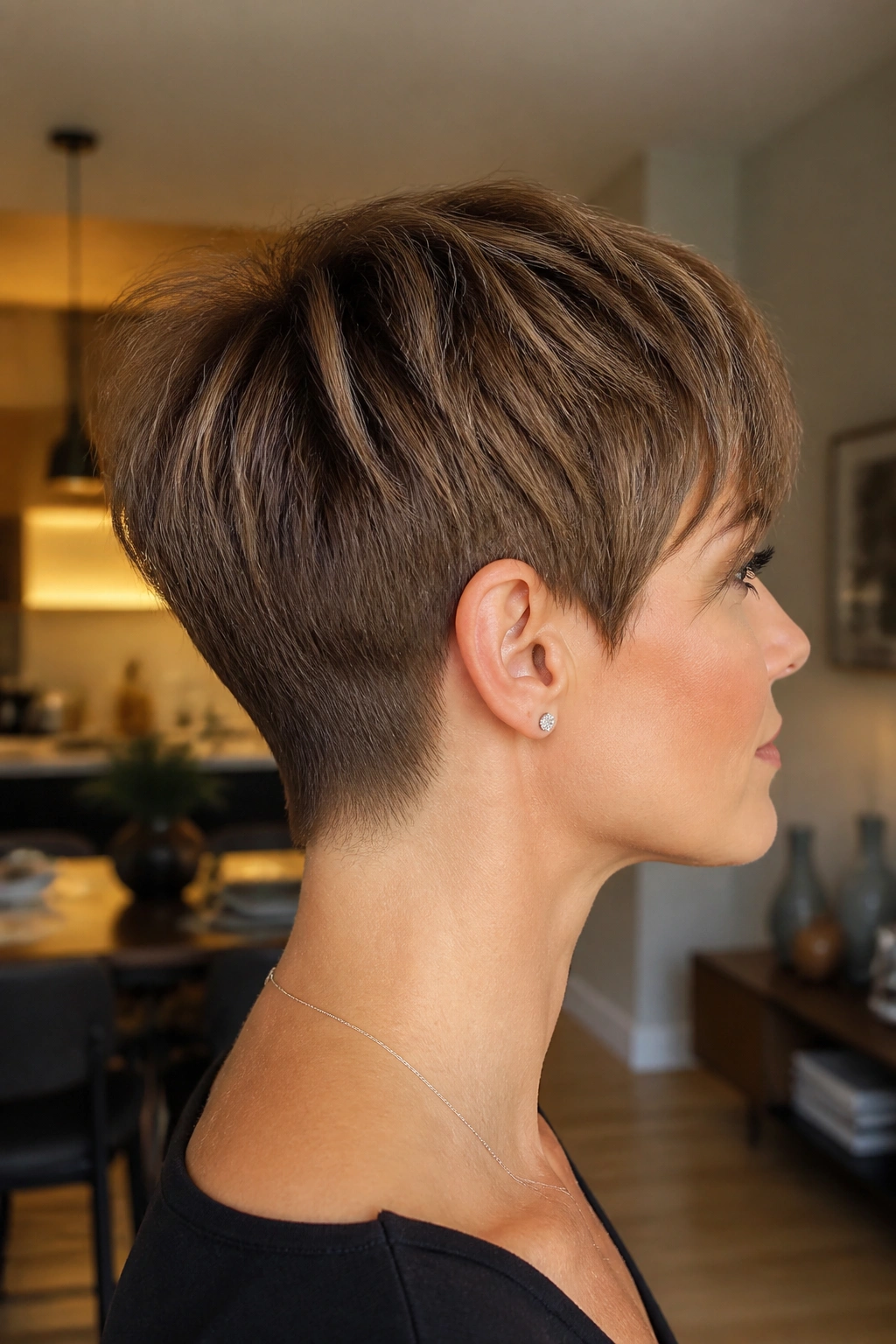
If your hair tends to puff out at the back, the tapered nape pixie is a small miracle. The whole point is to keep the neckline close so the rest of the shape can sit cleanly on top.
It’s a smart choice for fine hair that grows out awkwardly at the neck. A bulky nape makes a short cut look unfinished fast, and that’s a mood killer. A tight taper solves that before it starts.
Key Details to Ask For
- A short, clean nape that hugs the neck
- Slight length left at the sides to balance the profile
- A soft transition behind the ears so it doesn’t look shaved or harsh
- A little extra density at the crown if your hair lies flat
The best version feels neat without looking severe. That’s the sweet spot. You want the back to disappear into the neckline, not announce itself every time you turn your head.
5. Layered Pixie Bob Hybrid
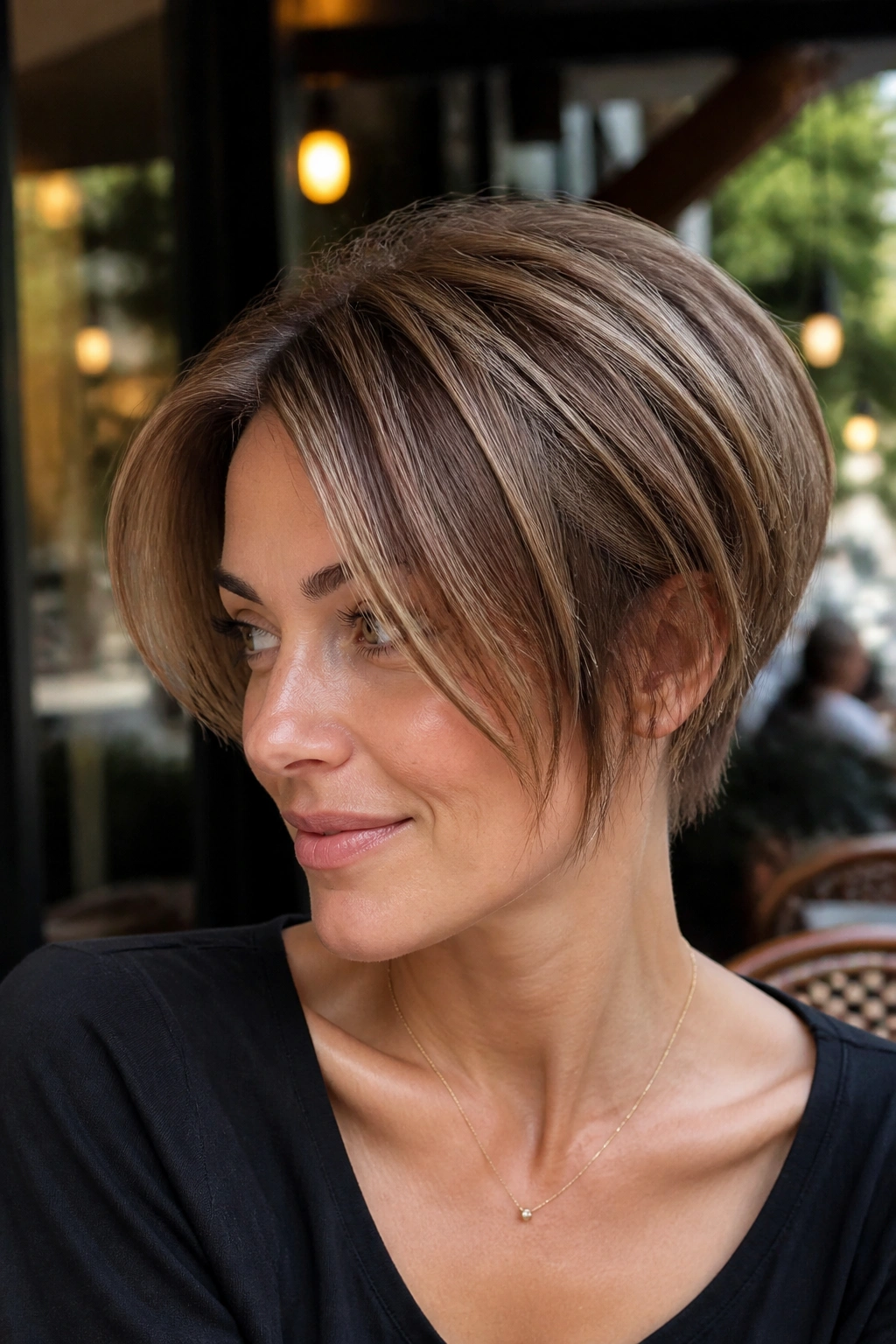
This is the one for the person who wants to go short but not too short. A pixie bob hybrid keeps a bit more length around the face and ears, which can make fine hair look richer simply because there’s more shape to hold on to.
The front usually brushes the cheekbone or jaw, while the back stays shorter and lighter. That contrast gives the haircut structure. It also makes grow-out easier, which matters if you get nervous six weeks after a cut and start missing your old length.
I like this shape for hair that’s fine but not fragile. It can take a bit of styling cream, a round brush, and a side part without collapsing. If you’ve ever had a pixie feel too bare on you, this is the safer bet. It gives you the short-hair feeling without stripping away every last bit of softness.
6. Undercut Pixie With a Soft Top
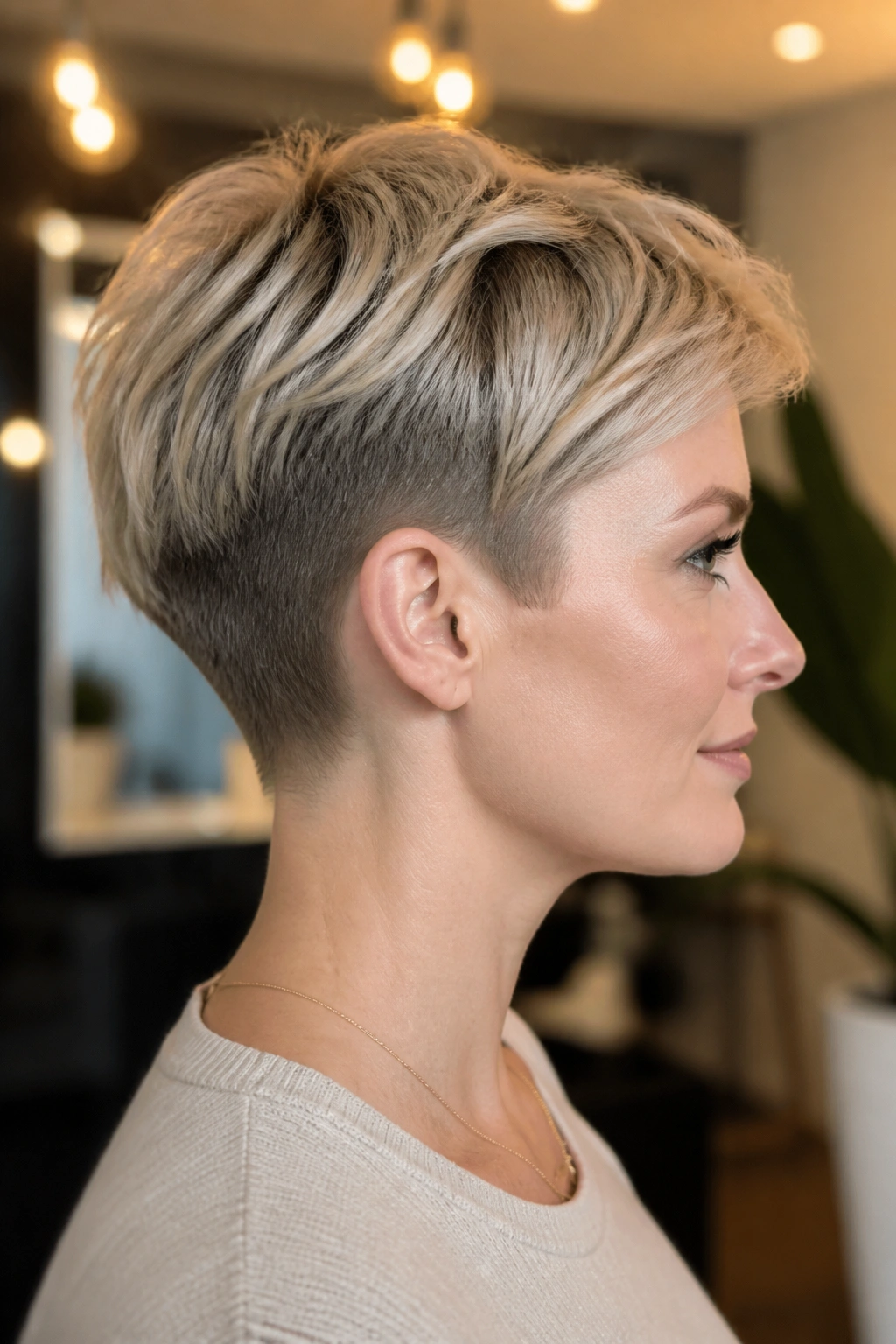
Unlike the layered pixie bob, this version removes bulk below the top panel and leaves the upper section free to move. That’s useful when the hair is fine but sits heavily at the sides or around the occipital bone.
A hidden undercut can make the top look fuller because it takes weight away from places that drag the silhouette down. The catch is obvious: if your hair is already sparse, too much removal can leave the scalp exposed in ways you may not want. This cut works best when there’s enough hair to create shape after the base is thinned out.
I’d ask for a soft undercut, not a shaved strip to the skin, unless you want a sharp edge. Keep the top at 2 to 4 inches if you want movement, and use a lightweight paste to pinch the ends. The result feels modern, clean, and a little tougher than a classic pixie.
7. Wavy Pixie for Fine Hair
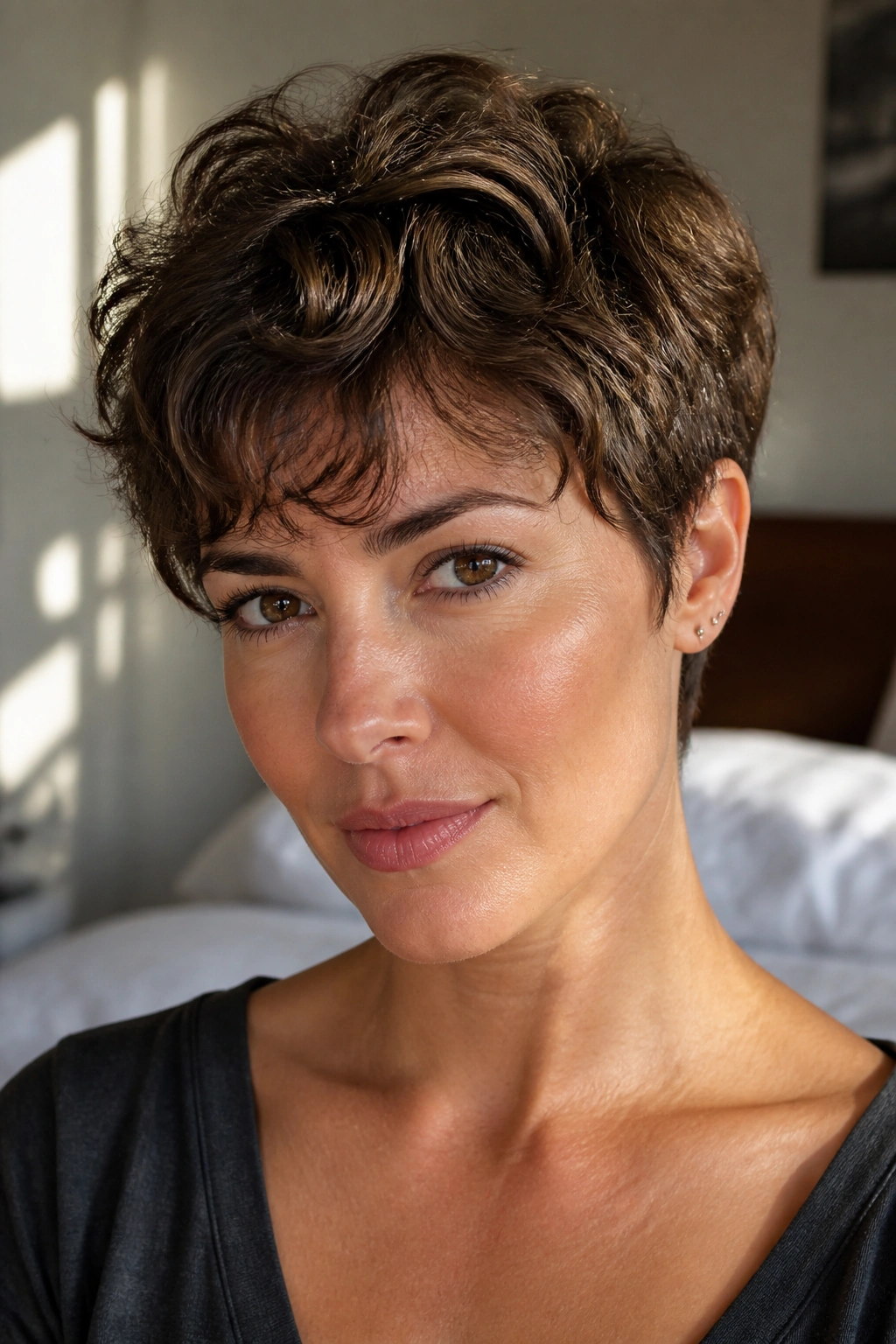
Fine hair with natural wave can look wonderfully alive in a pixie, but only if the cut respects the wave pattern instead of fighting it. A wavy pixie works because it lets the texture do the heavy lifting.
If the hair bends naturally, the cut should be shaped dry or cut in a way that accounts for shrinkage. Otherwise, you get a surprise every time it dries and the pieces jump higher than expected. Nobody wants that.
What to Watch For
- Use a light foam or curl cream, not a heavy butter
- Diffuse on low heat if you want to keep the bend
- Keep layers soft enough to avoid triangle shape
- Leave a little length on top so the wave has room to move
This is one of those styles that looks best when it’s not overworked. Let the wave show. Then stop fussing.
8. Deep Side-Part Sleek Pixie
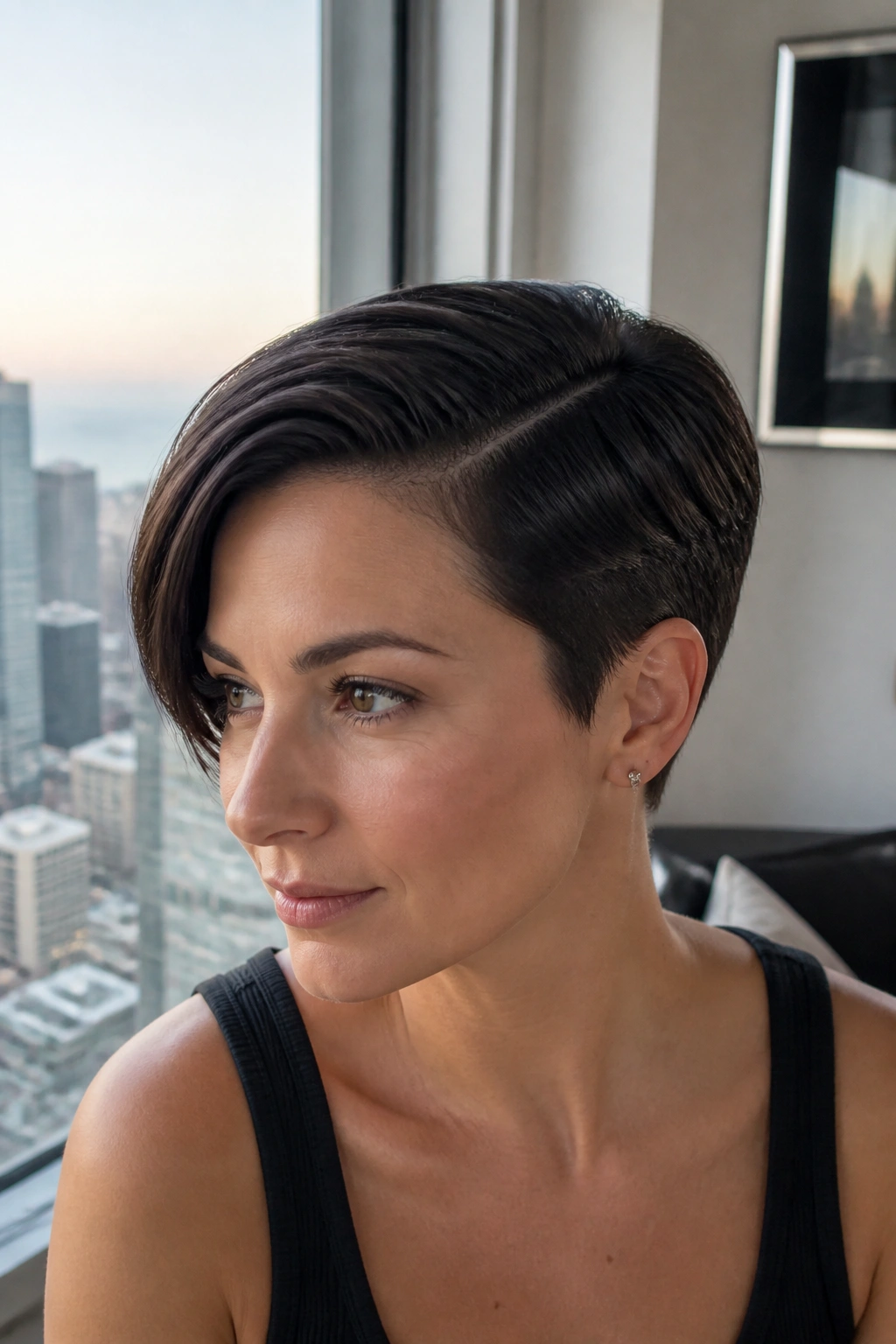
Sleek is not the enemy of fullness. In the right cut, a deep side part can actually make fine hair look denser because the eye reads the heavier side as intentional volume.
The trick is to keep the top long enough to sweep across the head, then tuck the shorter side close so the contrast feels sharp. You want shine and shape, not helmet hair. That means a small amount of smoothing cream through the mid-lengths and almost nothing at the roots except a bit of lift where the part falls away.
This version suits people who like crisp lines and do not want a lot of mess in the morning. It also flatters strong brows and angular features. If your hair is very fine and very soft, keep the part movable. A fixed part can make the scalp show if the top is too short.
9. Piecey Cropped Pixie With Micro Fringe
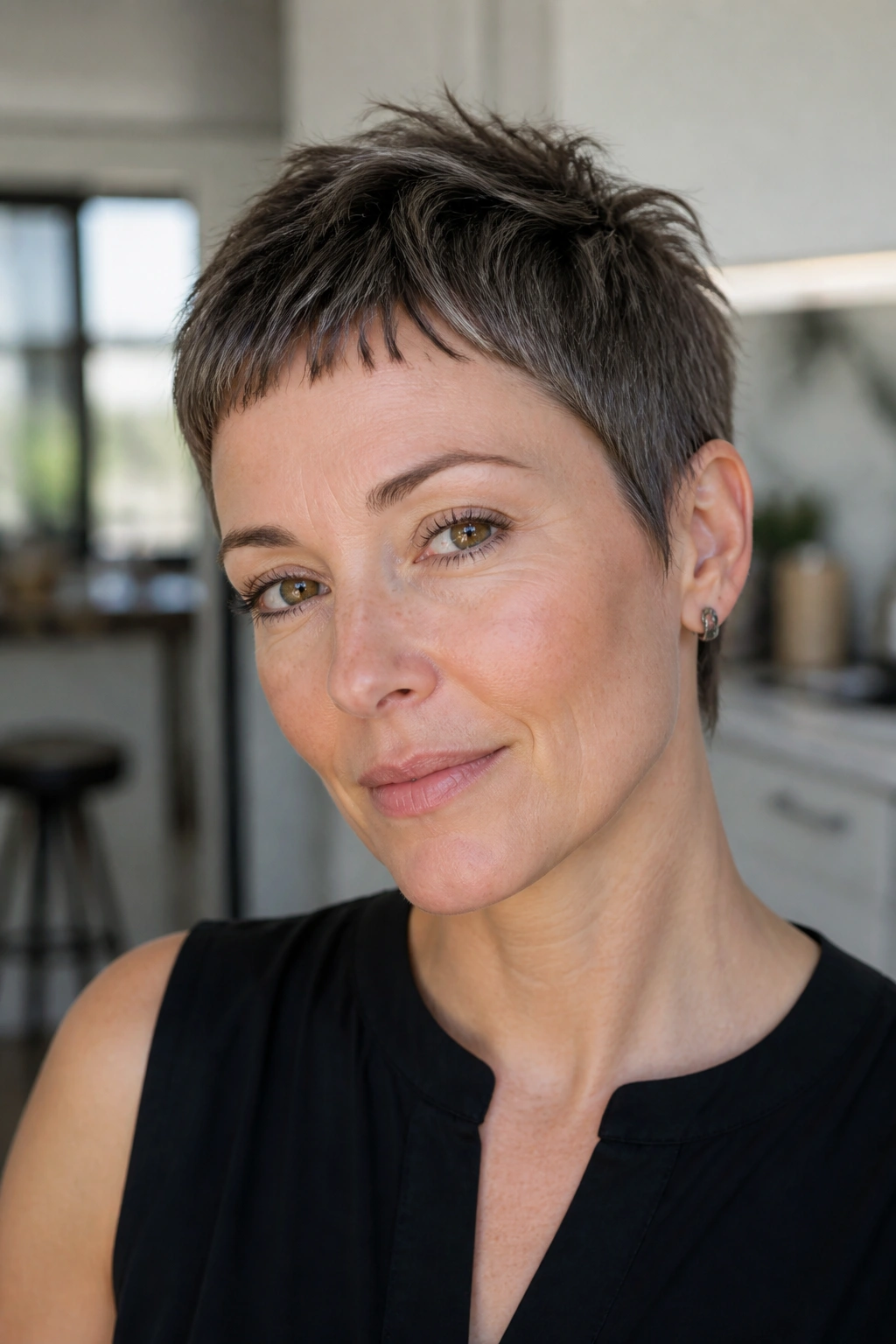
Why does this one look thicker than it is? Because tiny pieces scattered across a short crop give the eye more texture to follow. That’s the whole game.
The micro fringe keeps the front close and tidy, while the top is cut into short, separate bits instead of one smooth cap. It’s a good move when fine hair tends to separate in random places anyway. Better to make that separation look planned.
Styling Move That Matters
Use a matte clay or texture cream and warm it in your palms before touching the hair. Then pinch a few sections at the crown and let the fringe stay broken up, not brushed into a flat line. If you slick it with too much product, the texture disappears. If you skip product altogether, it can look too soft and unfinished.
This cut suits people who like a sharp, slightly editorial feel without a lot of length to manage.
10. Soft Shaggy Pixie
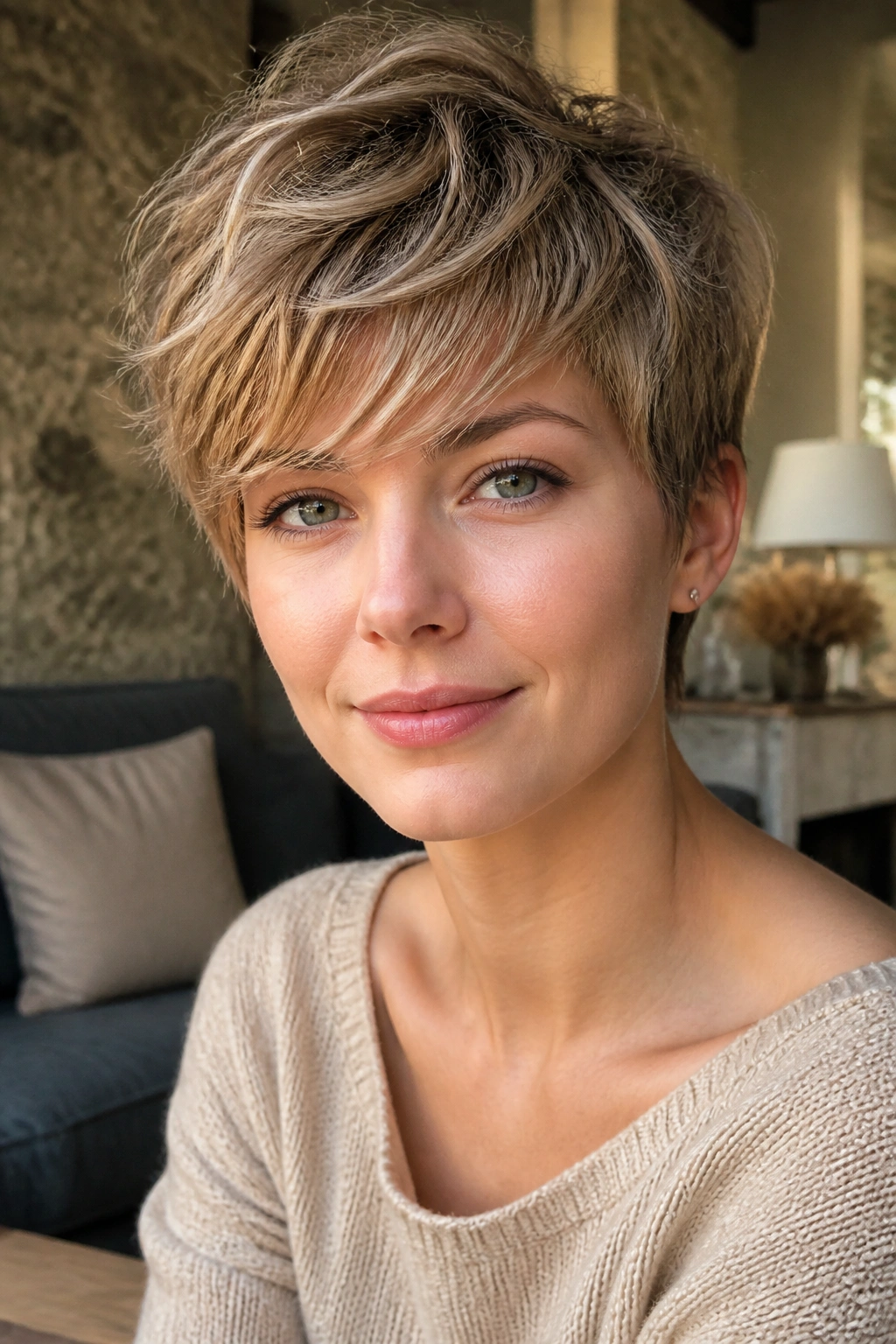
A shaggy pixie can be a gift for fine hair, as long as the shag part stays soft. Too many ragged layers and you lose shape. A little broken texture and the haircut suddenly feels easy.
The best version has airy pieces around the crown, a slightly longer fringe, and tapered sides that do not hug the head too closely. It should feel lived-in, not lazy. There’s a difference, and your stylist will know it if you use the right words.
This cut is great if you want something that still looks good when you don’t blow-dry it. A bit of mousse, a rough dry with your fingers, maybe a touch of dry shampoo at the roots the next morning. Done. If your hair gets too frizzy, keep the layers longer and the ends less chopped up.
11. Asymmetrical Pixie With One Longer Side
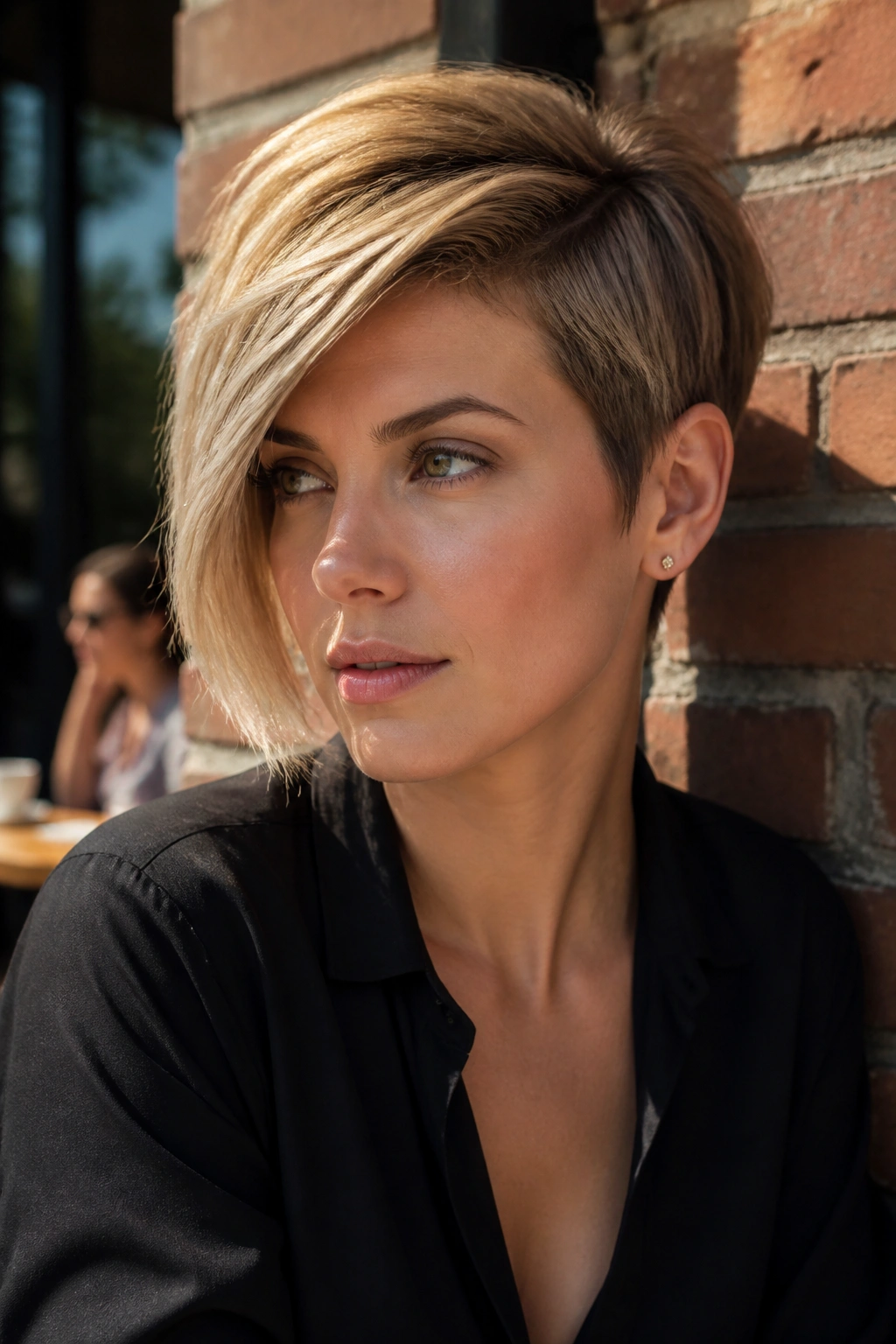
A little imbalance can be a good thing. An asymmetrical pixie draws the eye diagonally, which is useful when fine hair needs motion more than symmetry.
Unlike a balanced crop, this cut leaves one side a bit longer, usually grazing the cheekbone or jaw. The shorter side stays close to the head, so the contrast feels deliberate. That contrast can make the whole haircut appear denser because your eye keeps moving.
It’s a strong choice if you want the haircut to do some of the styling work for you. It also flatters faces that feel wide at the temples or narrow at the chin. I would not ask for a huge difference between the sides unless you want a loud look. A one-inch to two-inch contrast is usually enough. Anything more starts to read like a design choice, which may be exactly what you want—or not.
12. Rounded Pixie With Crown Volume
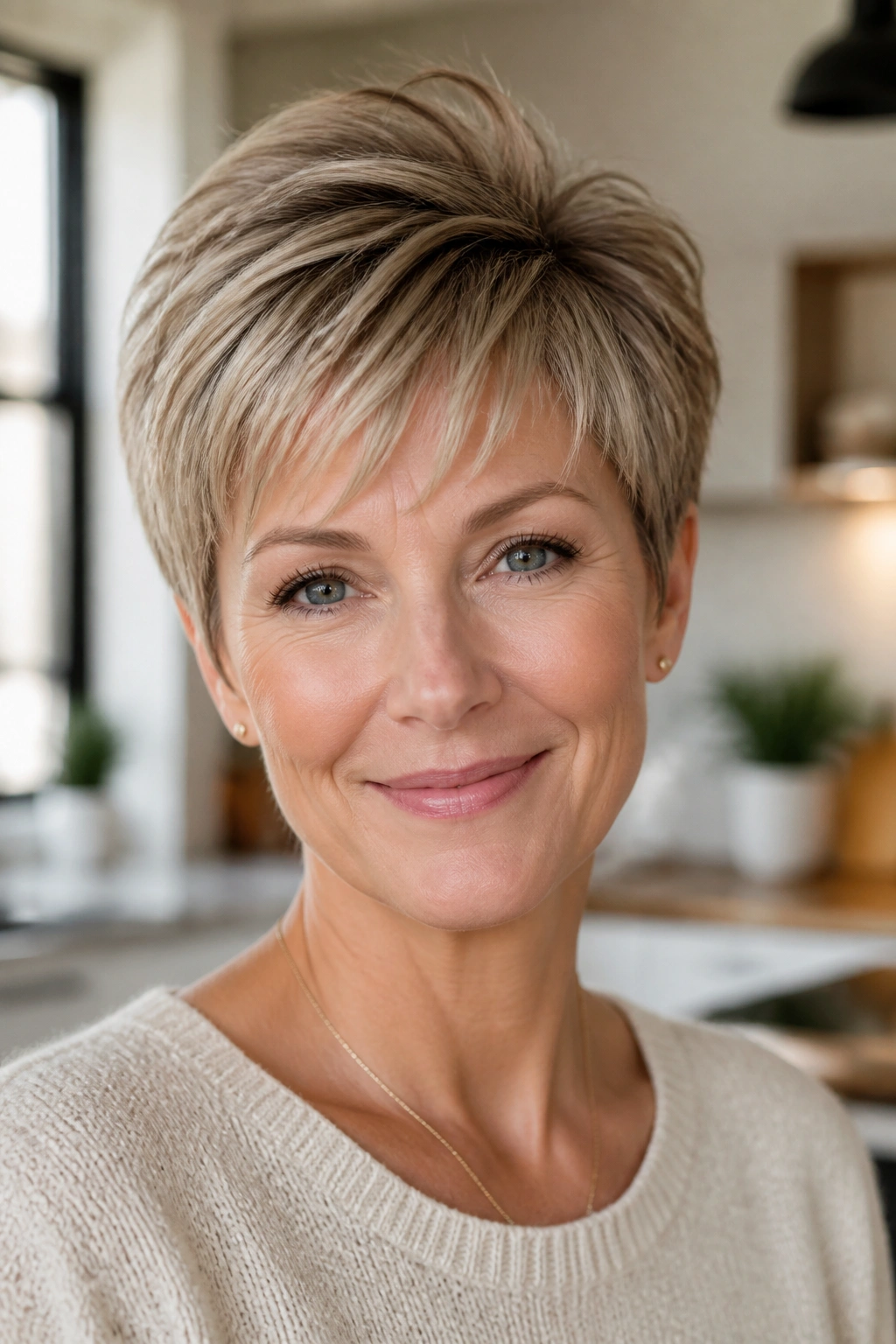
If your face feels longer than you want, a rounded pixie can bring the balance back fast. The volume sits where you need it most: at the crown and slightly around the temples.
This shape is a good fit for fine hair that needs a little lift but not a lot of piecey texture. Too much texture can make the sides look thin. A rounded shape keeps the silhouette smooth and full, which is a cleaner trick than people give it credit for.
Best Styling Pattern
- Blow-dry the top up and slightly forward first, then back.
- Use a small round brush to bend the front without puffing the roots.
- Keep the sides close enough to support the top volume.
- Finish with a light mist of flexible hold spray, not a stiff shell.
The whole point is height without the cartoon effect. Soft lift. That’s it.
13. French Pixie With Micro Fringe
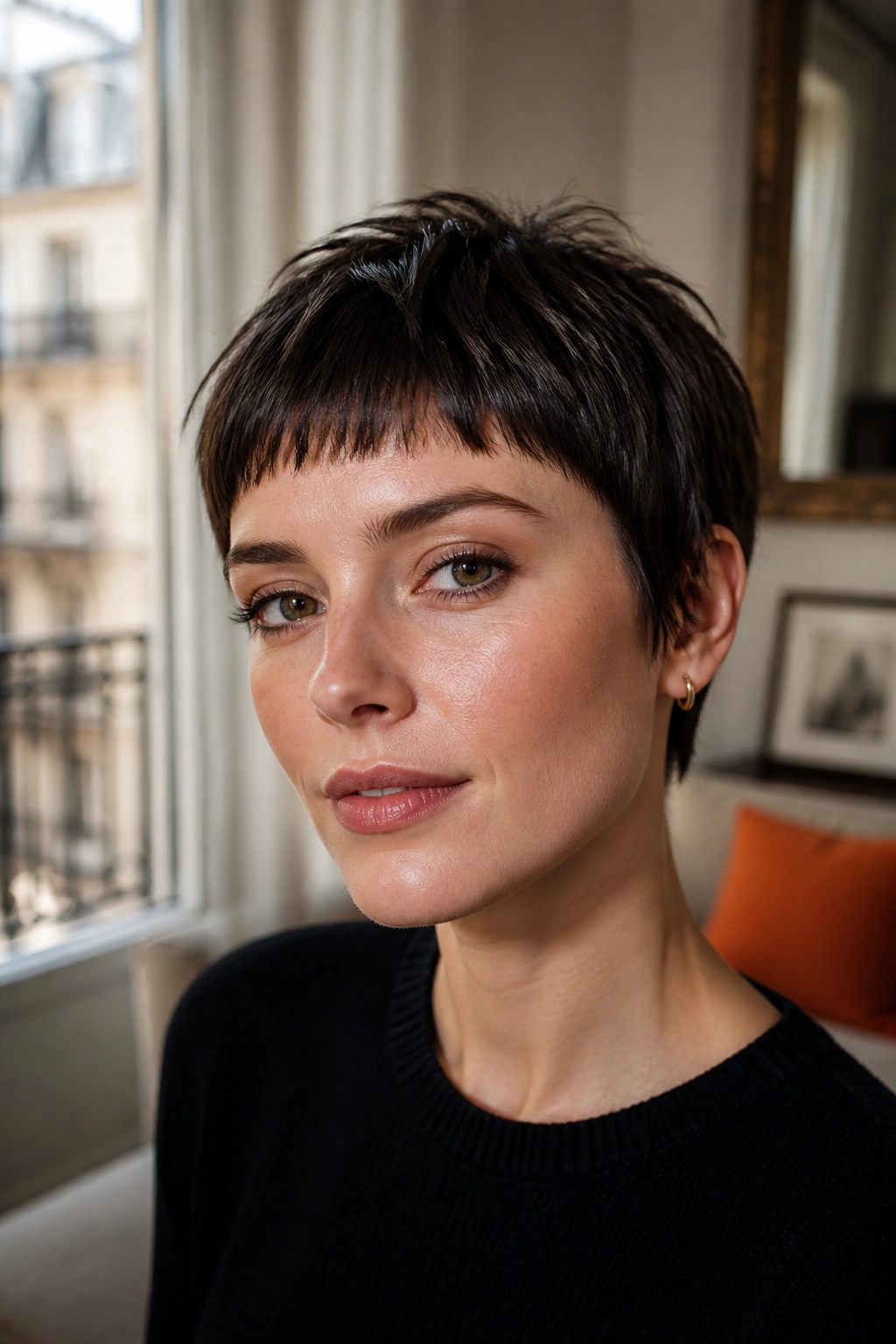
A French pixie feels polished without being fussy, and the micro fringe gives it a little attitude. On fine hair, that tiny front line can make the cut look intentional instead of accidental.
The fringe should sit just above the brows or skim them in the center. Shorter than that, and the cut can feel severe. Longer than that, and you lose the crisp little frame that makes this style sing.
This cut works well when the rest of the hair is kept close to the head and lightly textured. Think neat, not stiff. If your hair is especially soft, a bit of root spray and a quick blow-dry with your fingers can stop the fringe from laying flat. It is a small cut, but tiny details matter here. The line at the forehead changes the whole mood.
14. Messy Bedhead Pixie
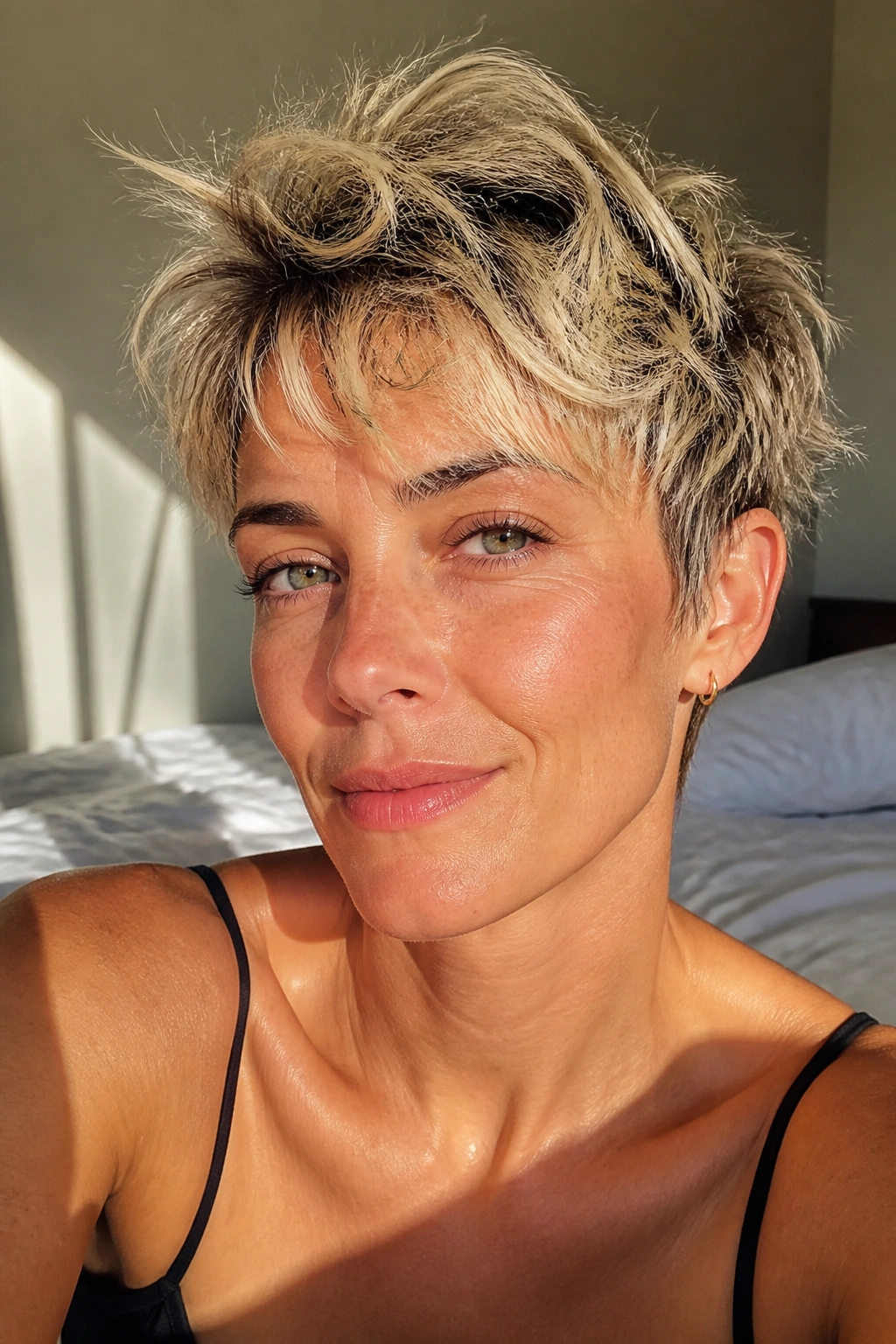
Messy only works when the cut is built for it. That is the part people skip, and then they wonder why their “effortless” hair looks like they slept in a hat.
A true bedhead pixie has broken layers, a short-enough neck, and enough shape on top to keep the mess from sliding into chaos. Fine hair can wear this style well if the texture stays dry and light. Heavy cream will ruin it. So will too much brushing.
What Keeps It From Looking Sloppy
- Rough-dry the roots first, using fingers instead of a brush
- Add a texturizing spray only after the hair is dry
- Pinch a few top pieces and leave the rest alone
- Use a touch of dry shampoo to keep the crown from collapsing
This is a good one for people who like low-maintenance hair with some edge. It should look undone on purpose. Not forgotten.
15. Long Top Layers Pixie
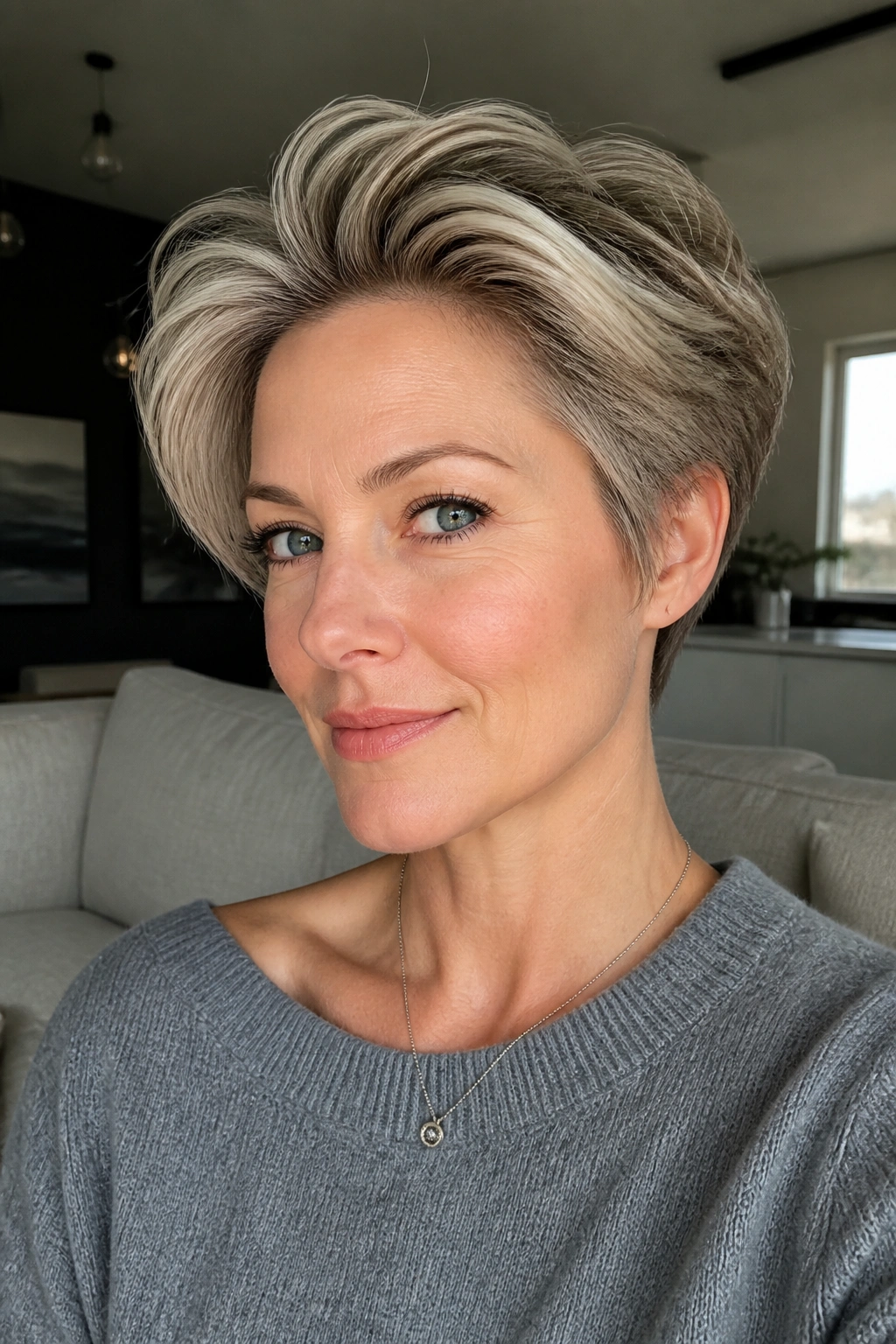
Some fine hair needs length on top to look fuller. Shorter is not always better, and this cut proves it.
Long top layers keep enough hair on the crown to create body, while the sides and back stay tidy so the shape does not get bulky. The result is a pixie that feels flexible. You can sweep it back, part it to the side, or tuck a piece behind the ear without losing the cut.
What to Ask For
- Keep the top around 3 to 4 inches, depending on your hairline
- Layer the crown just enough to prevent a flat cap
- Shorten the sides gradually so the shape tapers cleanly
- Leave the front pieces slightly longer if you want styling options
This cut suits anyone who is nervous about going ultra-short. It gives you room to play, and fine hair often likes that room more than a tight crop.
16. Tapered Pixie With Sideburn Detail
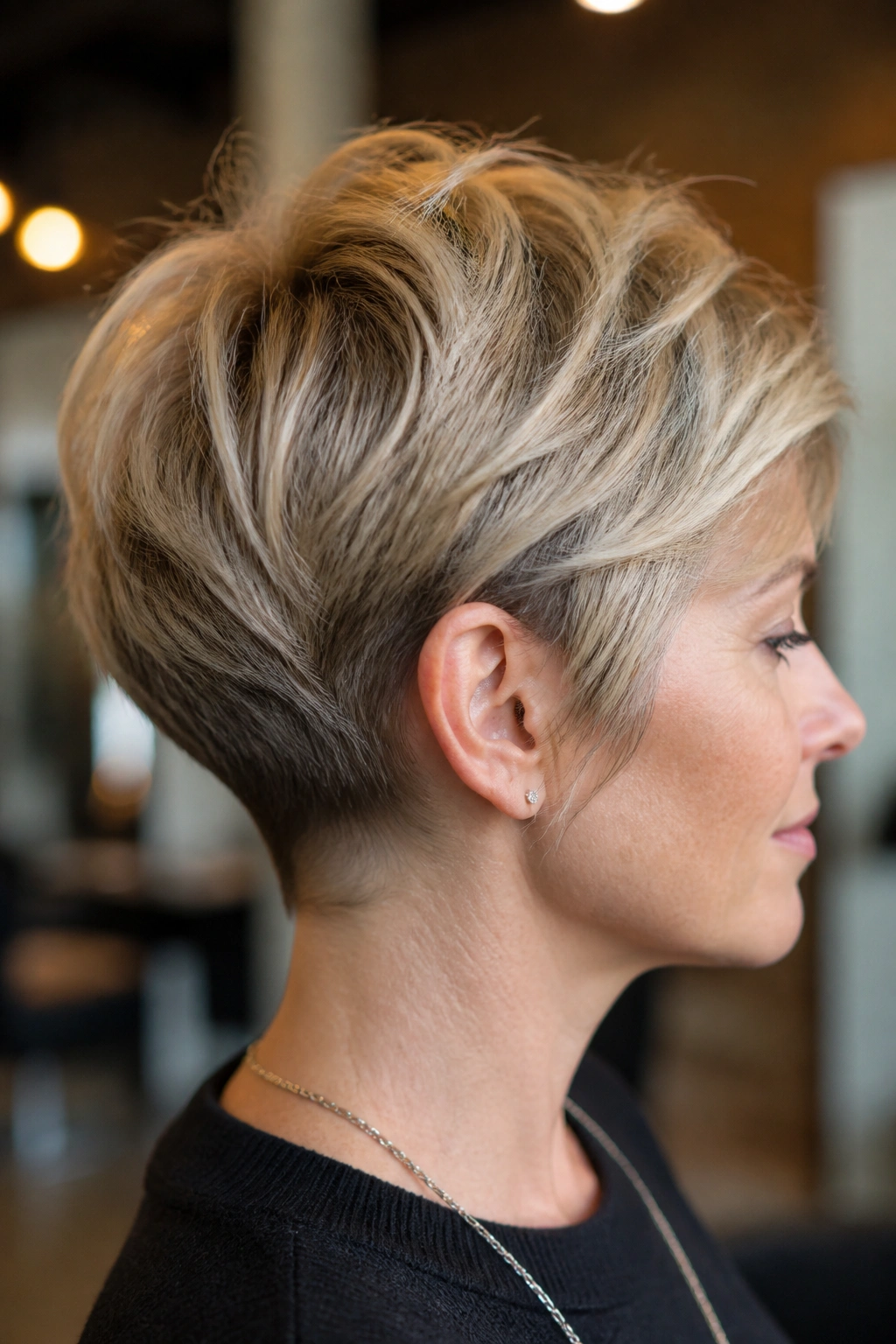
The sideburns matter more than people think. A few well-placed millimeters around the temples and ears can change the whole mood of a pixie.
This version keeps the nape and sides tapered but leaves the sideburn area softly outlined. That makes the cut feel finished, not chopped. For fine hair, that polished edge helps the style read thicker because the outline stays clear.
It’s also useful if you wear glasses or earrings. The small details around the face stop the haircut from disappearing under accessories. Ask your stylist to keep the sideburns soft and slightly longer than the rest of the side taper. If they’re too blunt, the cut can feel boxy. If they’re too wispy, they vanish. There’s a narrow lane here, and it works best when the lines are clean.
17. Dimensional Highlight Pixie
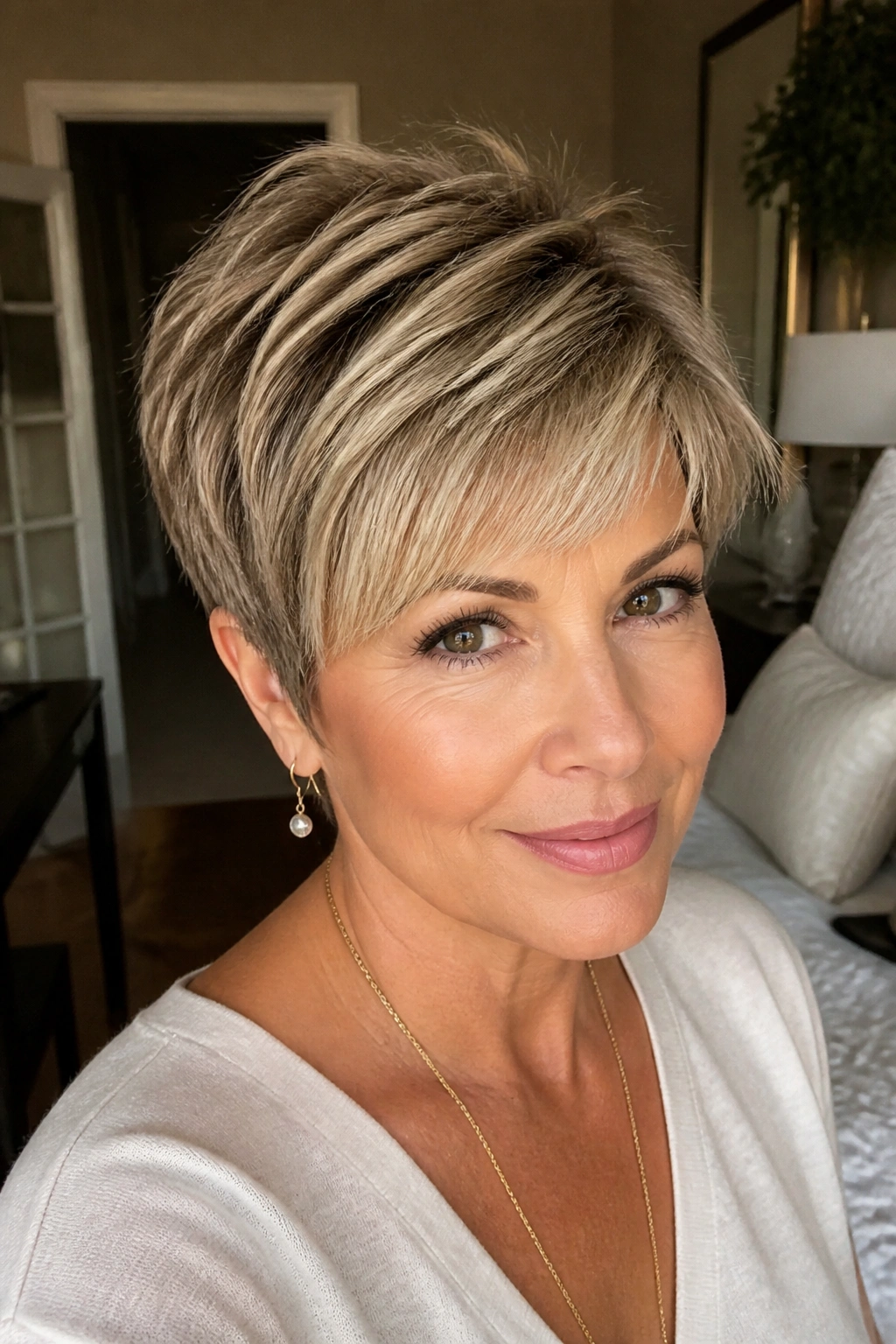
Color can do half the work for fine hair. A pixie with dimension looks fuller because light and shadow create shape where the cut alone might not be enough.
The smartest version keeps the roots a shade deeper and places lighter pieces around the crown, fringe, and maybe the top edge near the temples. That makes the hair look like it has more depth. Chunky stripes are not the move. They can make a short cut look stripy and dated fast.
Where the Lighter Pieces Go
- A few fine highlights at the crown
- Soft brightness around the fringe
- One or two lighter ribbons near the front hairline
- Deeper color underneath to keep the outline strong
Ask for micro-foils or babylights, not broad panels. On fine hair, smaller color placement usually looks richer because it blends into the haircut instead of sitting on top of it.
18. Slicked-Back Pixie
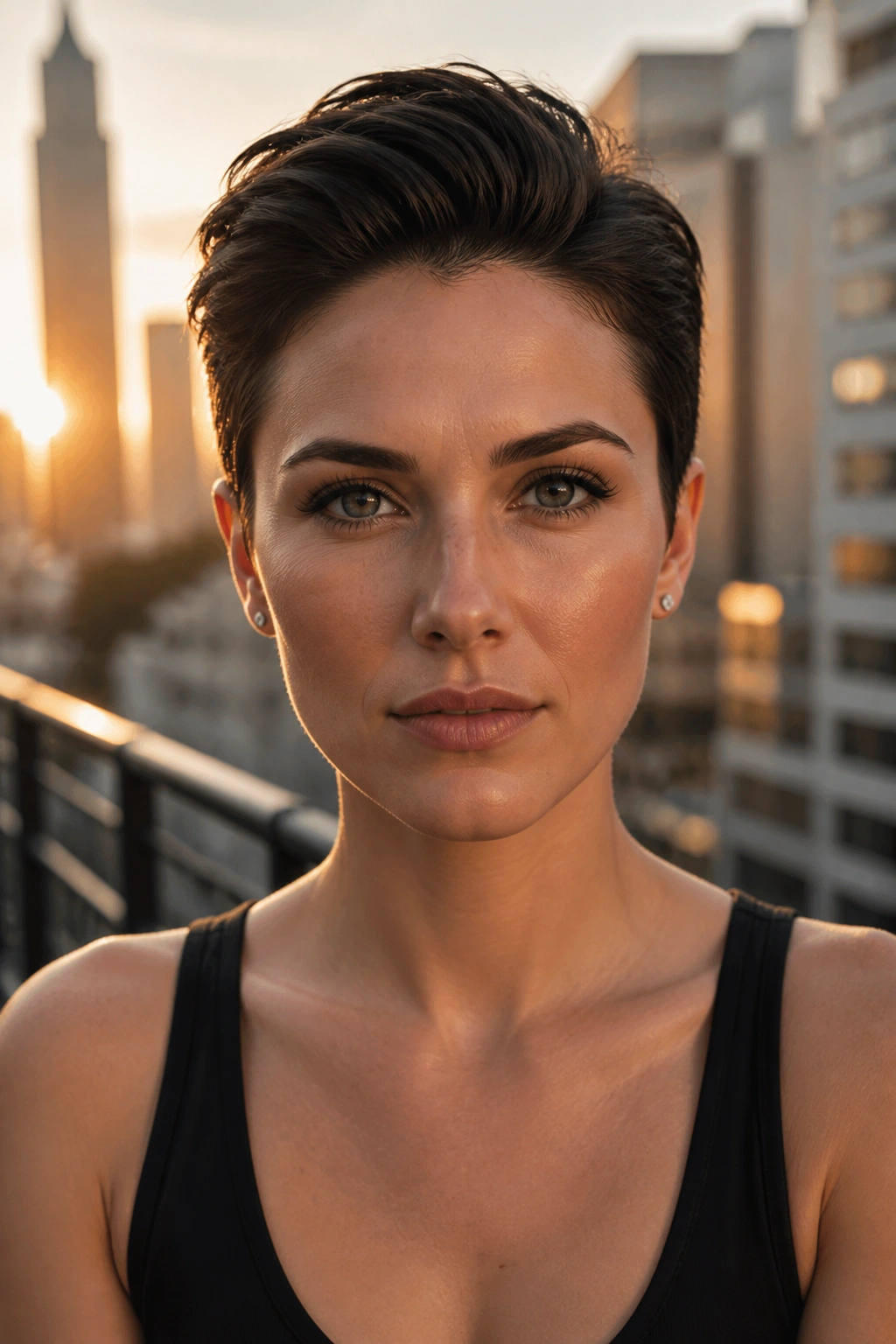
Can fine hair go sleek without going flat? Yes, if the cut is short enough and the product is kept in check.
The slicked-back pixie is sharp, clean, and a little unexpected. It works best when the sides are already short and the top has just enough length to comb away from the face. The style shows off cheekbones, brows, and skin texture, so it reads bold without needing much height.
The mistake is drowning the hair in gel. That only makes the scalp show more. Use a small amount on damp hair, comb it back, then let it set with a touch of air or a cool blow-dry. If you want a softer finish, rake the top lightly with your fingers once it’s half dry. The look should feel slick, not wet for the sake of being wet.
19. Grown-Out Pixie With Soft Neckline
A grown-out pixie is not a failure state. If the neckline stays soft and the fringe still has shape, it can look even better than the first sharp version.
This cut is for anyone between trims or trying to move from a super short crop into something a little longer. Fine hair often grows out in an awkward way, which is why the back and sides need a little guiding. Leave the nape neat, keep the temple area trimmed, and let the top gain enough length to tuck or sweep.
The best part is how easy it feels. You are not fighting for a perfect finish every morning. A bit of mousse, a side part, maybe a bend with a small iron on the longer front pieces. That’s enough. If the whole thing starts to feel puffy, the back probably needs cleanup before the top does.
20. Curtain Fringe Pixie
A curtain fringe gives a pixie a softer front without turning it into a bob. That middle split opens the face and keeps fine hair from looking blocked off by one heavy bang line.
This style works well when the front pieces are long enough to bend away from the center and fall toward the cheekbones. The rest of the cut should stay short and tidy so the fringe gets the attention. If the sides are too heavy, the fringe loses its shape. If the top is too short, it cannot sweep at all.
I like this one for longer faces or high foreheads, though it can work on plenty of shapes if the proportions are right. The key is to dry the fringe in the direction you want it to live. Once it falls the wrong way every day, you’re stuck fixing it every morning. That gets old fast.
21. Spiky Textured Pixie
Spiky does not have to mean punk. On fine hair, a little lift and separation can look clean, modern, and surprisingly soft if you keep the edges under control.
This cut uses short top pieces that can be pushed upward or forward with a matte product. The spikes should be tiny, almost feather-like, not stiff little points. Fine hair often responds well to this because the lighter strands hold shape with less product than thick hair needs.
How to Wear It Without Crunch
- Work a small pea-size amount of matte clay between your fingers
- Lift 3 to 5 tiny sections on top
- Leave the sides smooth so the texture stays concentrated
- Stop before the hair feels gritty
The style suits short faces, strong brows, and people who want the haircut to have some attitude. It’s also useful when the hair is so fine that smooth styling keeps falling apart.
22. Ultra-Short Classic Pixie With Airy Layering
The shortest pixies can be the best ones for fine hair, plain and simple. Less length means less weight, and less weight means the hair has a better chance of standing up on its own.
A classic ultra-short pixie usually keeps the sides close, the nape clean, and the top just long enough to move a little. Airy layering at the crown keeps it from looking flat or helmet-like. If you want low fuss, this is hard to beat. It also grows out neatly if your stylist keeps the perimeter sharp.
One thing I’d say, after seeing this cut on all sorts of hairlines: the outline matters more than the texture. Fine hair looks its best when the shape is crisp. If the edges are messy, the whole cut can feel thin. If the edges are clean, the hair suddenly looks far healthier than you expected.
Final Thoughts
The best pixie cut for fine hair is rarely the shortest one or the trendiest one on a mood board. It is the one with the right balance of fringe, crown, and neckline. That balance does the work your hair would otherwise have to do on its own.
If you’re choosing between two cuts, look at the front first, then the back, then the crown. Fine hair can look fuller with a little lift, a clean edge, or a smart bit of asymmetry. It does not need everything at once. Too much texture can backfire fast.
Bring photos that show the side view and the back view, not just the front. A pixie is three haircuts in one, and the back usually decides whether it looks polished or accidental.
If it still looks good after a windy walk, a rushed morning, and a few days without a perfect blow-dry, you picked the right one.
