



Pixie cuts for round faces work best when they cheat the eye upward. A little height at the crown, a clean taper near the ears, and a front piece that moves diagonally can change the whole shape of the face faster than any contour trick.
The mistake is easy to spot. Hair cut evenly all the way around, especially with a blunt fringe or puffy sides, tends to echo the widest part of a round face instead of narrowing it.
That does not mean you need to hide your face. Not at all. A good pixie can sharpen the cheek area, show off the eyes, and keep the whole cut light enough that it does not sit like a little mushroom cap.
What matters is line, not just length. Some of the cuts below lean sleek, some are rough and piecey, and a few work especially well if your hair is thick, curly, or stubbornly flat. The first one is the safest place to start.
1. Long Crown Pixie With Tapered Sides for Round Faces
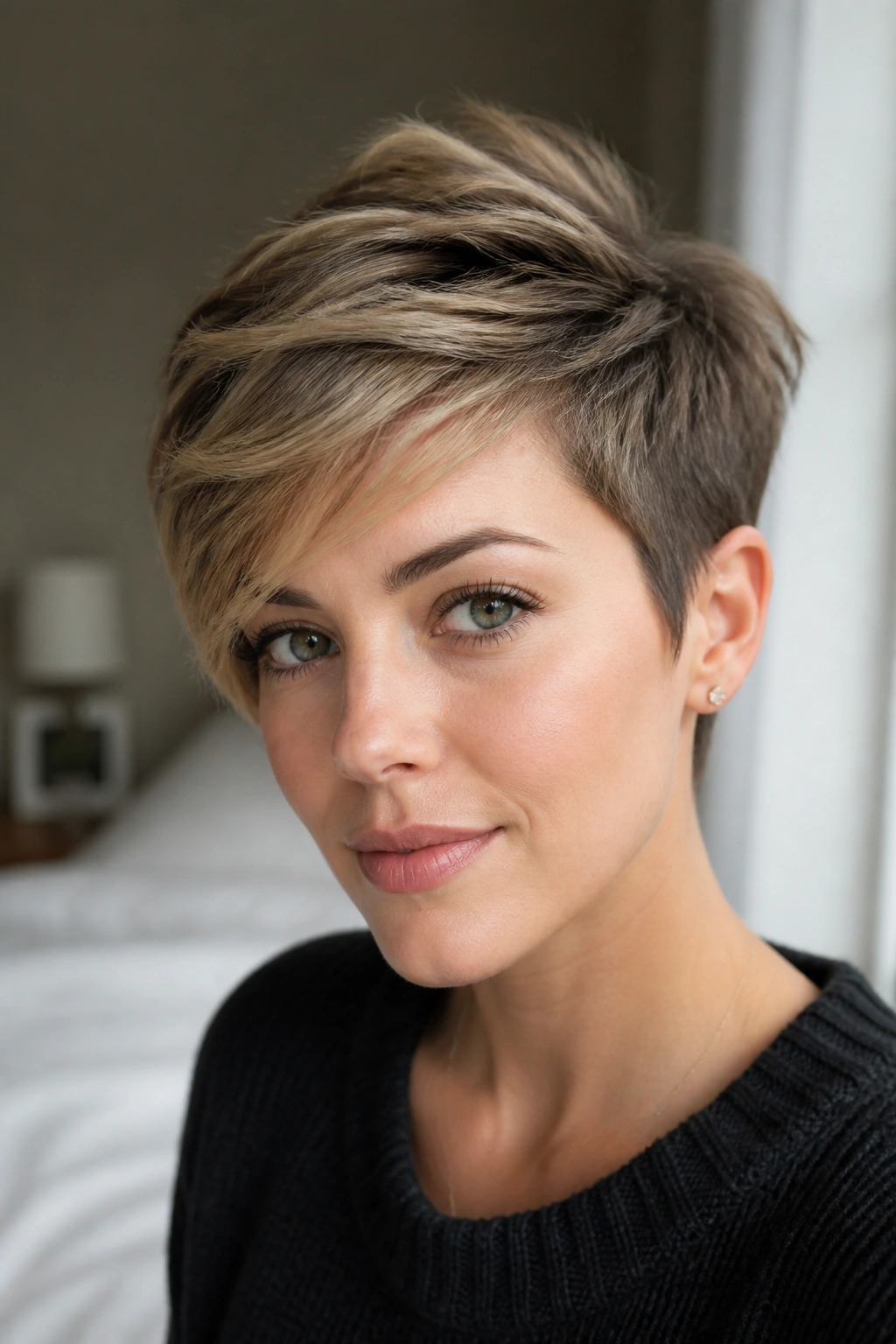
A long crown and tight sides are the most dependable shape for a round face. The extra height on top stretches the face visually, while the tapered sides keep the silhouette narrow instead of puffy.
Why It Flatters a Round Face
The trick is balance. You want the eye to move up, not out.
Ask for 2.5 to 3.5 inches on the crown, shorter tapered sides, and a fringe that can sweep past one eyebrow instead of sitting straight across the forehead. That small bit of angle does a lot of work. It keeps the cut soft, but not wide.
- Keep the top slightly longer than the sides.
- Ask for tapering around the temples and ears.
- Let the front piece land just below the brow.
- Blow-dry the crown upward with a small round brush.
Tip: If your stylist starts talking about equal length all around, push back. That shape is the enemy here.
2. Deep Side-Part Pixie
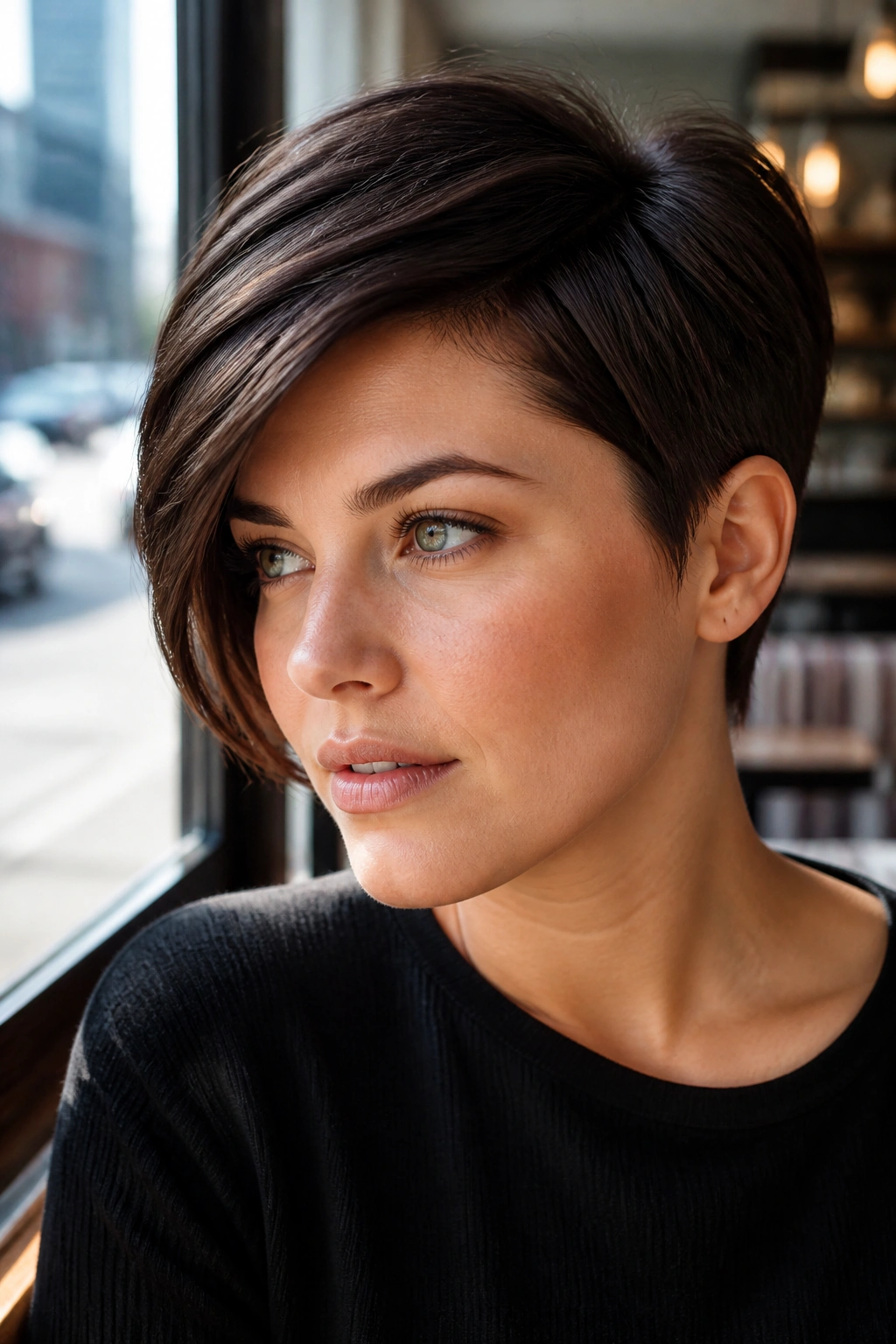
A deep side part can do more than a blunt fringe ever will. It breaks symmetry, and symmetry is what often makes a round face look even rounder.
This cut works because one side gets to fall forward and the other side gets to stay tucked or cropped close. That diagonal line changes everything. It creates movement across the face instead of a hard horizontal stop at the cheek line.
I especially like this option for people who want a quiet, polished pixie rather than something choppy or edgy. It reads clean. It also grows out well, which matters more than people admit. A pixie that falls apart after ten days is annoying.
If your hair is fine, keep the part dramatic and the root lifted. If your hair is thick, ask for light internal thinning near the temple so the front does not sit like a shelf.
3. Asymmetrical Pixie With One Long Fringe
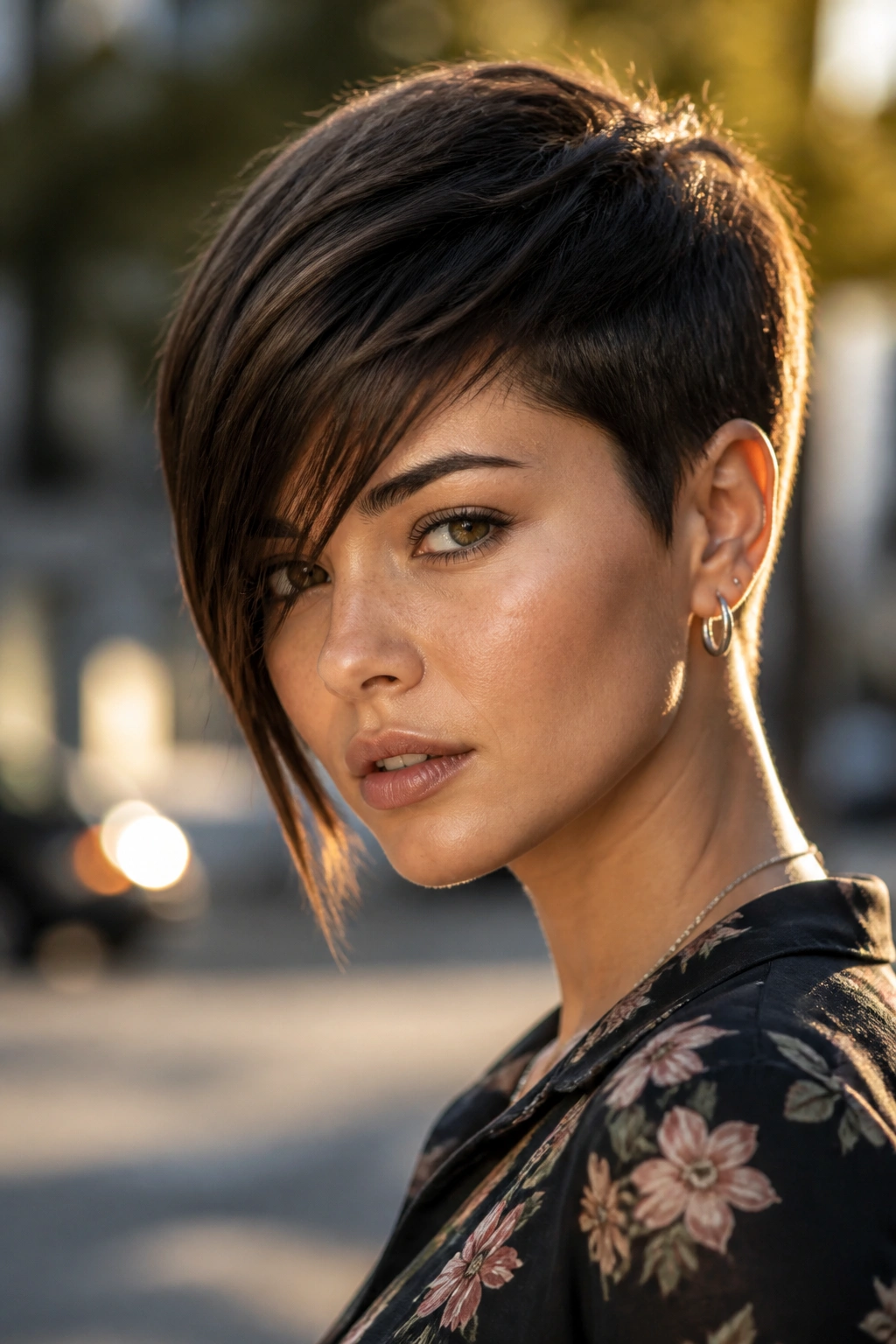
Why does an asymmetrical pixie look so sharp on a round face? Because it refuses to mirror the face shape back at you. One side stays shorter, the other side stretches toward the cheekbone, and that difference is what creates interest.
This cut is especially good if you want the face to look a little longer without losing softness. The longer side can sweep across the forehead or graze the outer corner of one eye. Either way, it cuts the width of the face visually. The shorter side keeps the outline neat so the style does not swell outward.
How to Style It
Use a pea-size amount of matte paste and work it through dry hair, not damp hair. Damp styling tends to collapse the shape.
- Blow-dry the long side in the direction you want it to fall.
- Keep the shorter side close to the head.
- Bend the fringe slightly away from the face with a flat iron if needed.
- Finish with a light mist of flexible hairspray.
A round face usually benefits from this one because it looks deliberate. Not fussy. Just intentional.
4. Choppy Textured Pixie
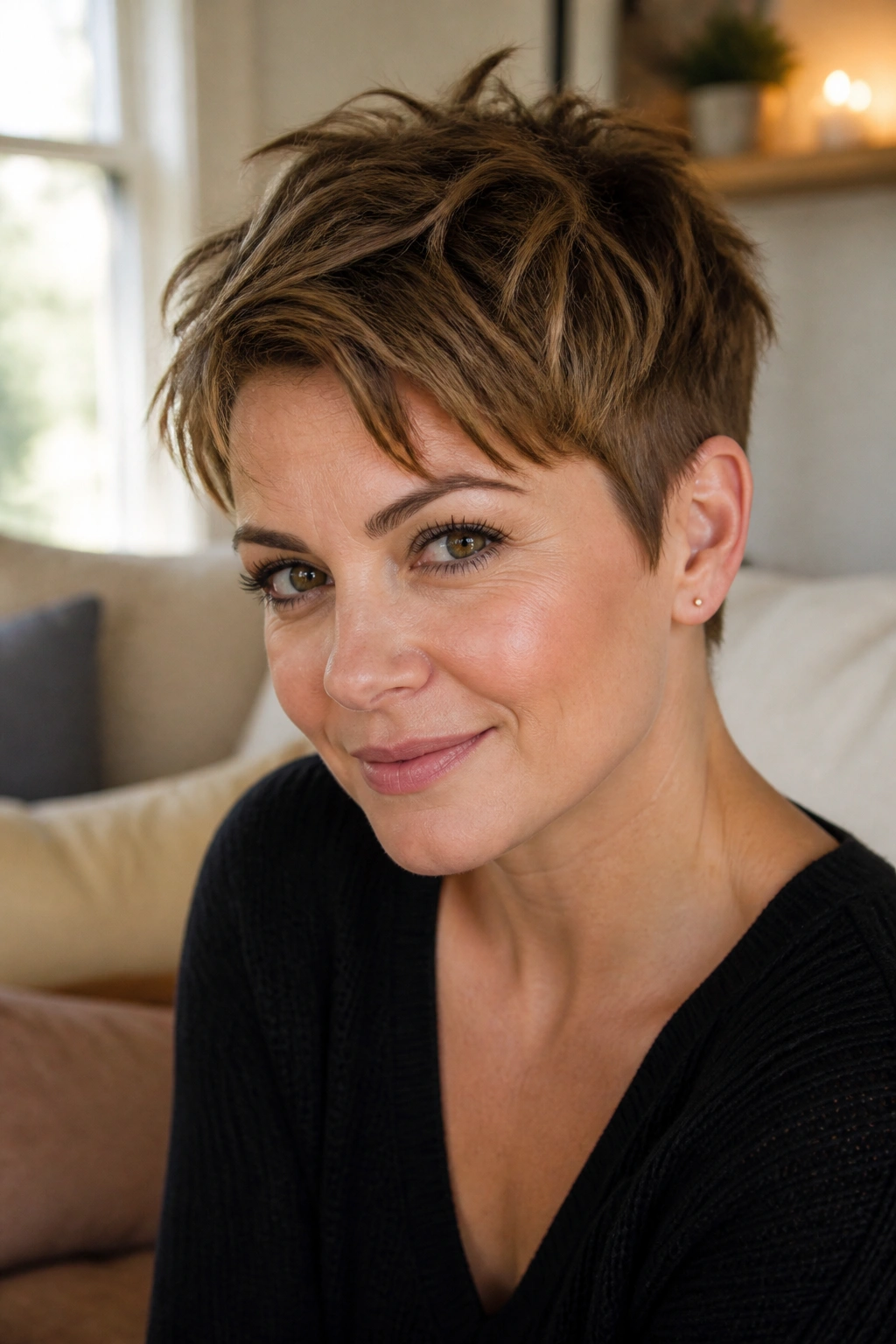
Picture a cut with a cropped nape, a choppy crown, and no blunt edge at the cheek. That’s the whole game with a textured pixie.
The chopped ends break up the outline, which matters a lot on a round face. Instead of one smooth curve, you get little bits of movement that stop the shape from looking too full. Point-cutting helps here. So does a razor, if your stylist uses it carefully and not like they’re trying to shave the whole head.
The best version has a bit of lift at the roots and irregular ends through the top. Nothing should sit too neatly. A tidy pixie can be lovely, but on a round face, too much polish sometimes turns into width.
- Keep the top layered, not blunt.
- Ask for soft ends around the temples.
- Use texture spray at the roots.
- Scrunch the top with your fingers after drying.
Close attention to the outline matters. A choppy pixie should look airy, not shredded.
5. Undercut Pixie
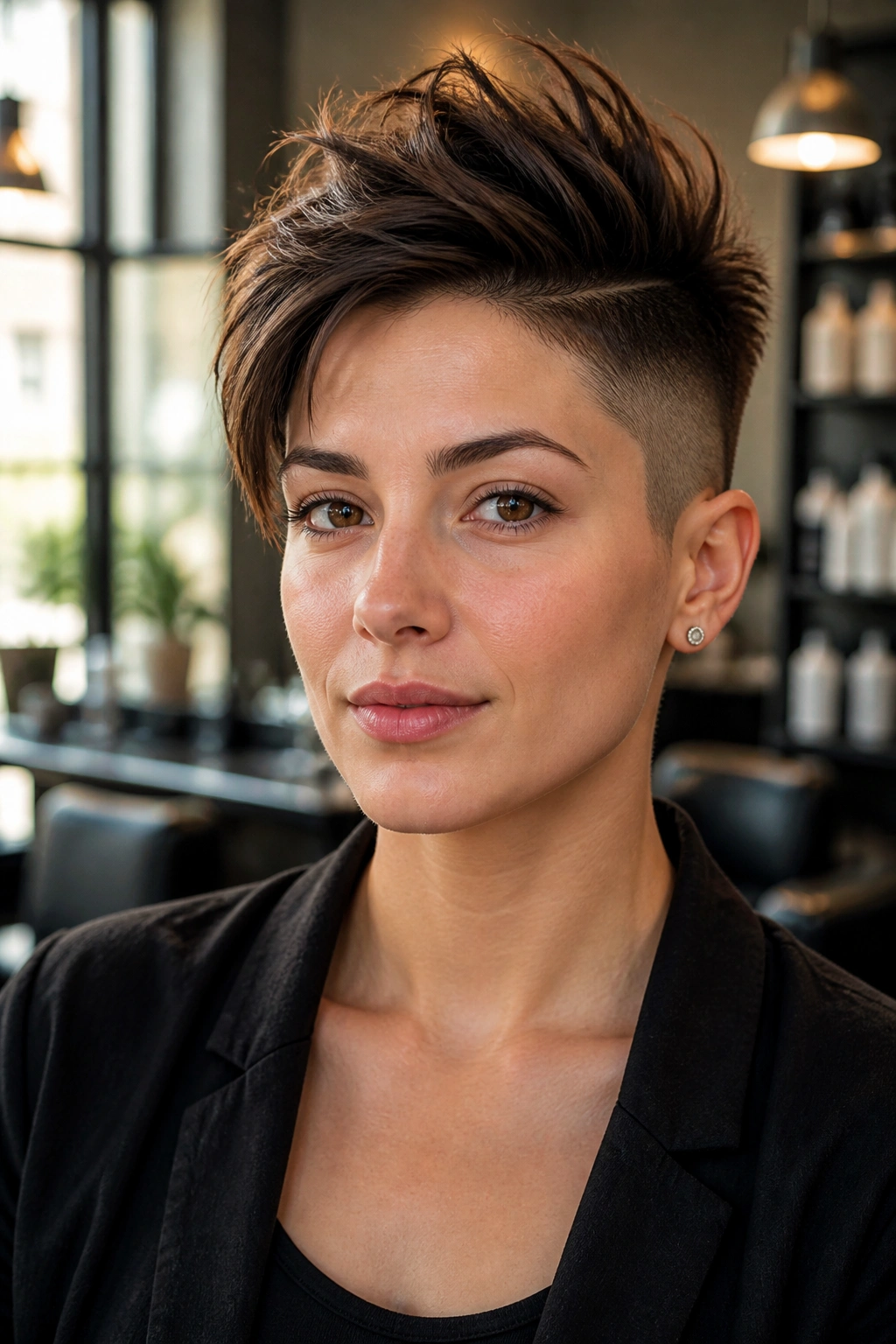
If your hair is thick, an undercut pixie solves the bulk problem fast. It removes weight from the sides and back, which is exactly where round faces do not need extra volume.
The beauty of this cut is simple: the top can stay long enough to shape and lift, while the undercut keeps the head from ballooning out. That contrast creates a cleaner profile. It also makes mornings easier, because the top has room to move without the rest of the hair fighting it.
This is one of my favorite choices for coarse or dense hair. A clippered nape and sides can drop the maintenance a little too, though you will want to keep an eye on regrowth so the shape stays crisp. If you like a bolder look, leave the top closer to 4 inches and push it forward. If you want softer lines, keep the top around 2.5 to 3 inches and feather the ends.
A matte cream works better than a shiny gel here. Shine can make the cut look flatter than it is.
6. Curly Tapered Pixie for Round Faces
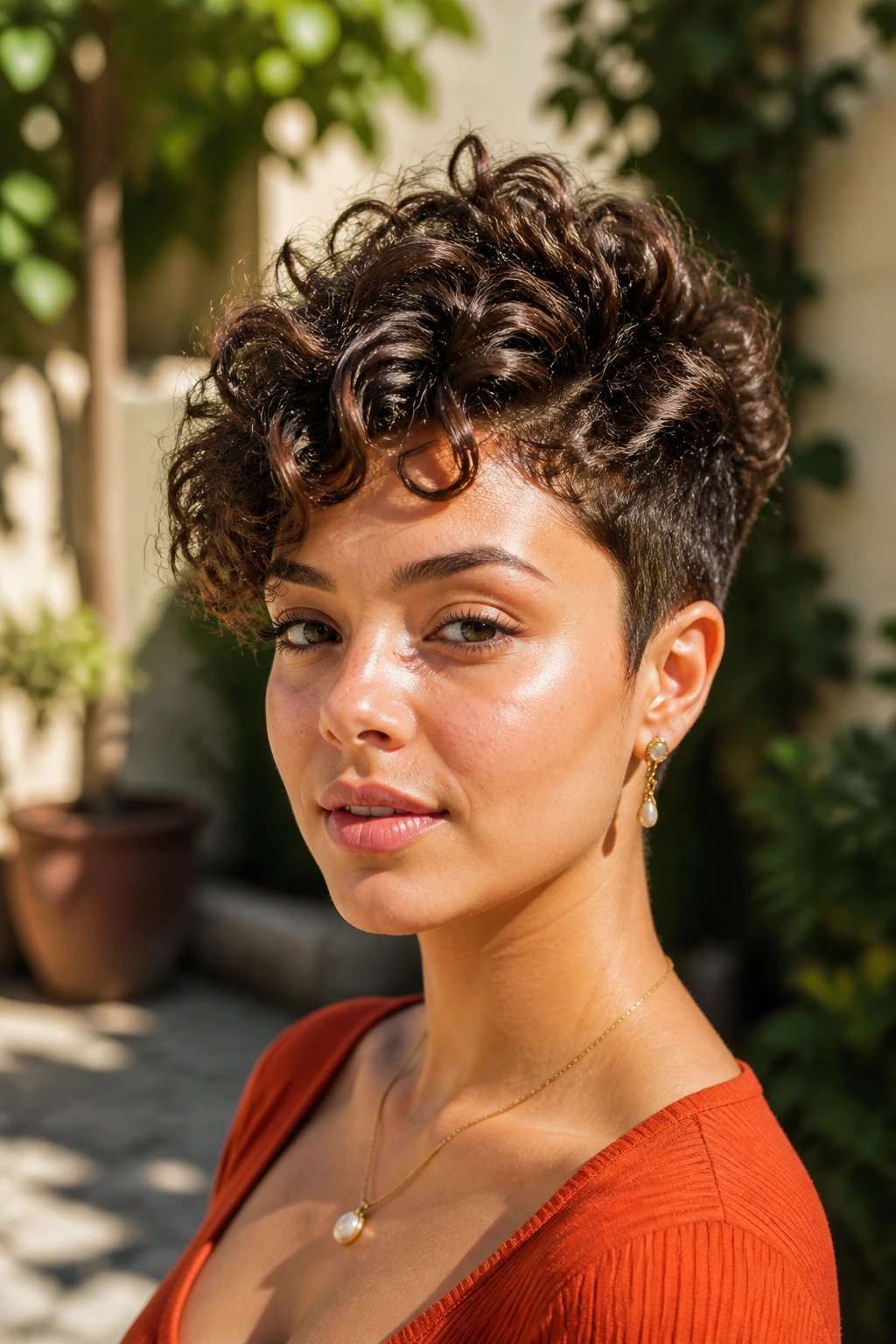
Unlike a curly bob, the curly tapered pixie keeps the curl pile high and the outline narrow. That matters on a round face because the goal is lift, not bulk at the cheeks.
The taper does two things at once. It removes width near the jaw and ears, and it gives the curls a place to sit upward instead of spreading sideways. If your curls spring up when they dry, this cut can look lively without feeling oversized.
The key is to leave enough length on top for the curl pattern to breathe. Too short, and the curl compresses into a little puff. Too long, and it starts to hang into the cheeks. A good range is usually around 2 to 4 inches on top, depending on how tight your curl is.
Ask for a dry cut if your stylist is comfortable with it. Curls lie.
That old truth saves a lot of bad haircuts.
7. Feathered Pixie
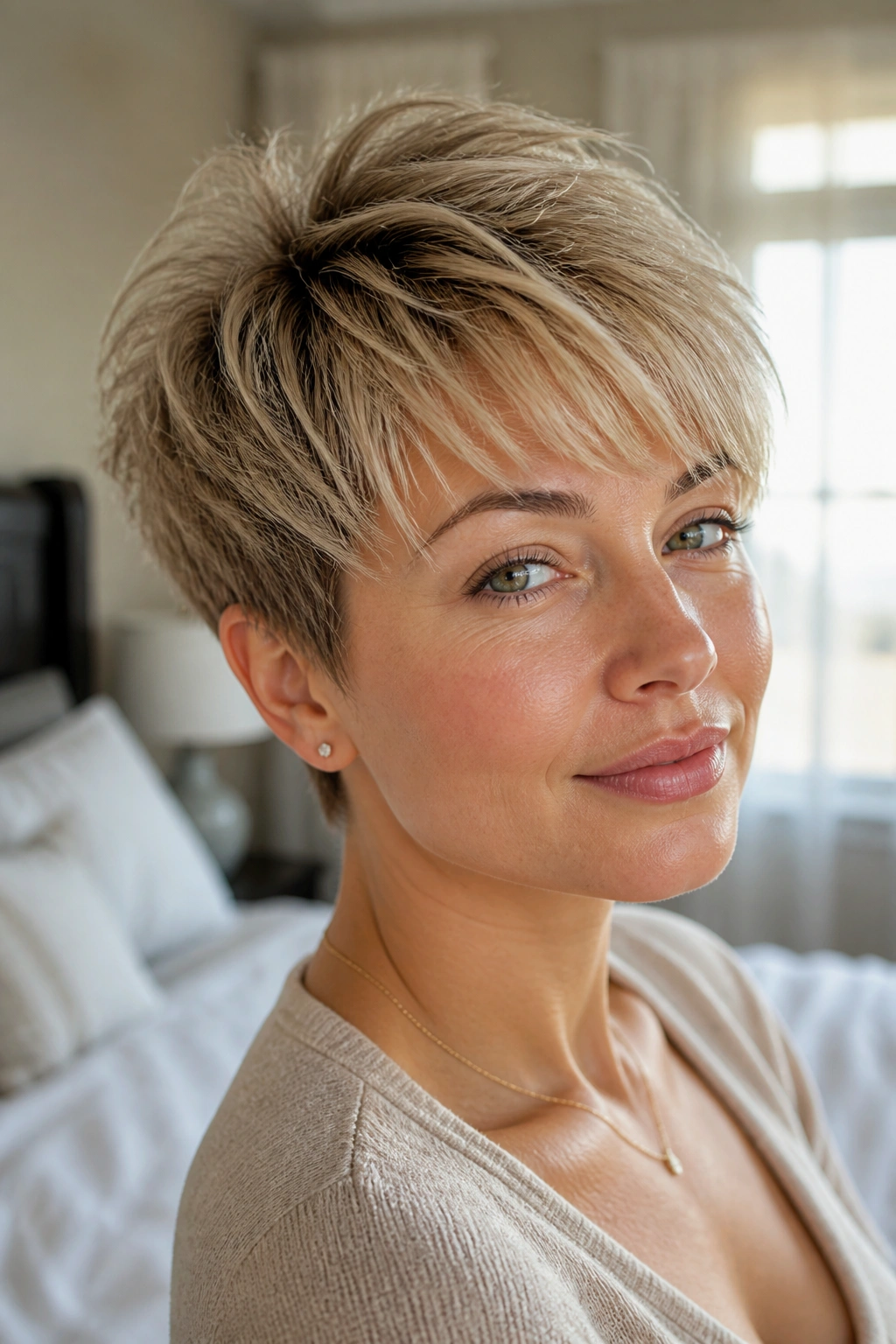
Can a feathered pixie work on a round face? Yes, and it often works better than a stiff, blocky cut. The light layers create a softer edge, which keeps the haircut from sitting like one heavy shape around the face.
Feathering is especially useful around the crown and fringe. It breaks the line without making the hair look thin. If your hair is fine, that can be a gift. If your hair is thick, feathering helps the top move instead of stacking up into a dense, solid shape.
How to Style It
Use a light mousse at the roots and blow-dry with your fingers or a small vent brush. You do not need perfect polish. You need separation.
- Keep the fringe wispy, not blunt.
- Leave a little length at the temples.
- Dry the crown forward, then lift it back with your hands.
- Finish with a small amount of flexible wax on the ends.
The result should feel airy. Not fragile, just light enough that the face keeps its shape.
8. Pixie Bob With Cheekbone-Grazing Front
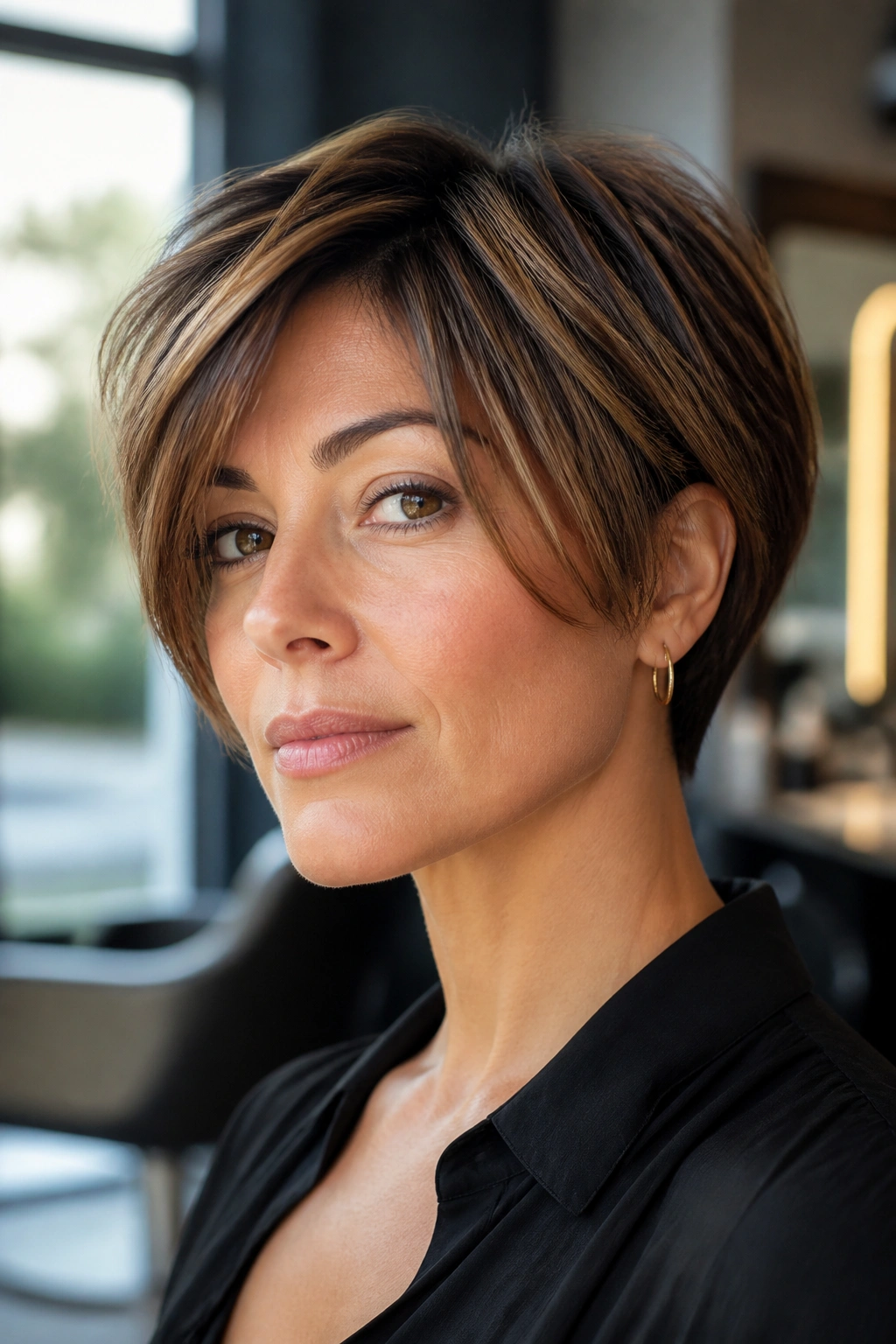
There’s a reason the pixie bob keeps showing up in salon chairs. It gives you the neatness of a pixie with a little more length around the front, which can be a smart move on a round face.
The front pieces should graze the cheekbone or sit just below it, not stop right at the fullest part of the cheek. That small difference keeps the cut from widening the face. The back can stay tucked and compact, with a bit of stacking so the crown does not flatten out.
This is a nice bridge cut if you’re nervous about going very short. It feels less severe than a classic crop. It also gives you something to tuck behind the ear, which I always think makes a haircut look more finished.
- Keep the front longer than the back.
- Ask for soft stacking through the crown.
- Avoid a blunt line at the jaw.
- Use a round brush to lift the roots.
If you want easy grow-out, this one does that job without fuss.
9. Spiky Crown Pixie
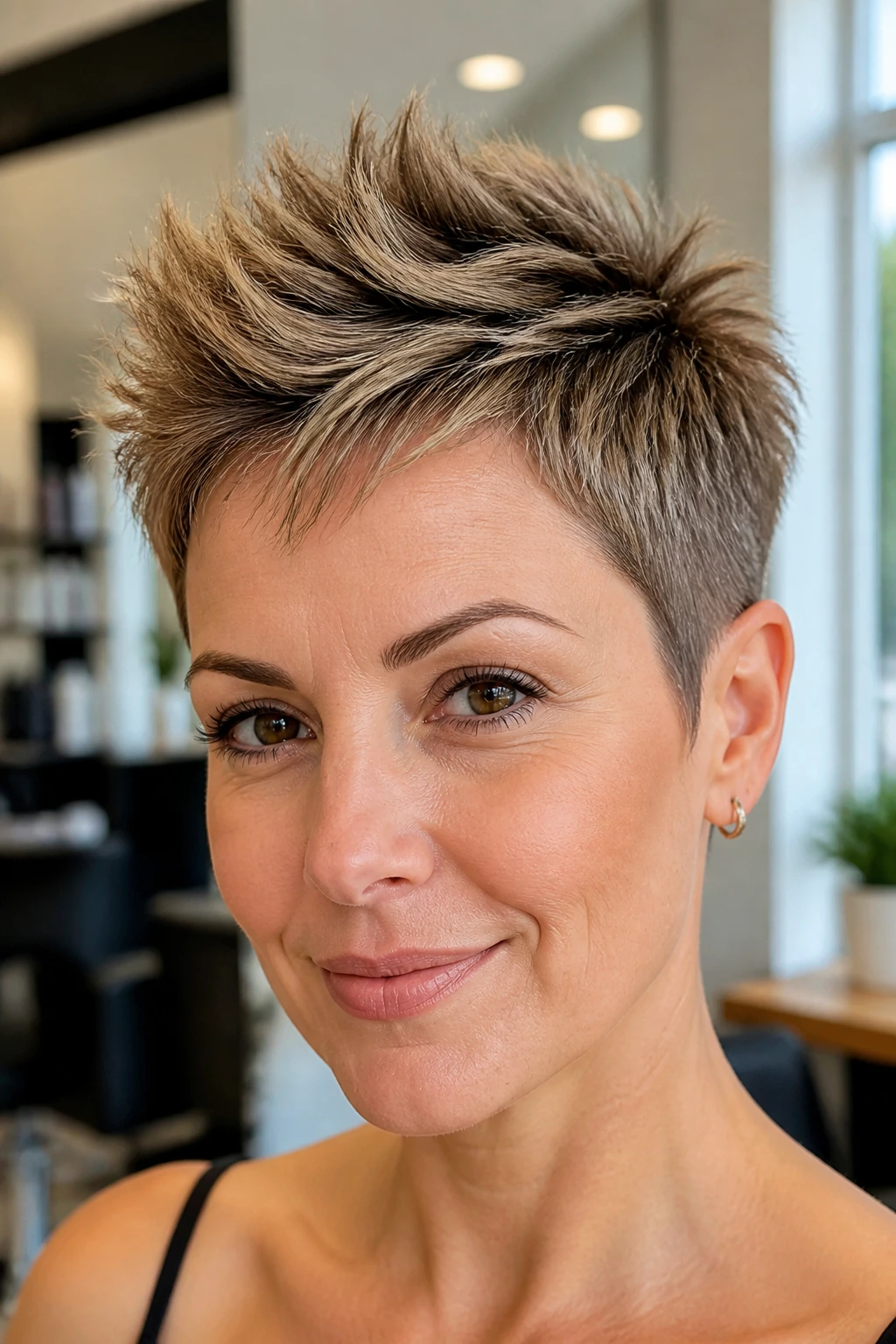
Spikes are not the problem. Flat sides are.
A spiky crown pixie works on a round face because the top goes up and the sides stay close. That vertical lift changes the proportions in a very direct way. You are not trying to make the hair look wild. You are just making sure the top has enough energy to carry the shape.
This cut likes a dry texture. Matte clay or paste is better than anything glossy. A shiny product can make the spikes look stiff, and stiffness is not the goal. Work the product through the crown in small sections, then pinch the ends with your fingers so the pieces separate.
A good version usually has the back tapered and the sides trimmed clean. The top can be about 2 to 3 inches, sometimes a little more if your hair stands up well. Shorter than that, and you lose the height. Longer than that, and the spikes can collapse into a messy fringe.
One small warning: this cut looks best when it is on purpose. Random bedhead is not the same thing.
10. Piecey Fringe Pixie
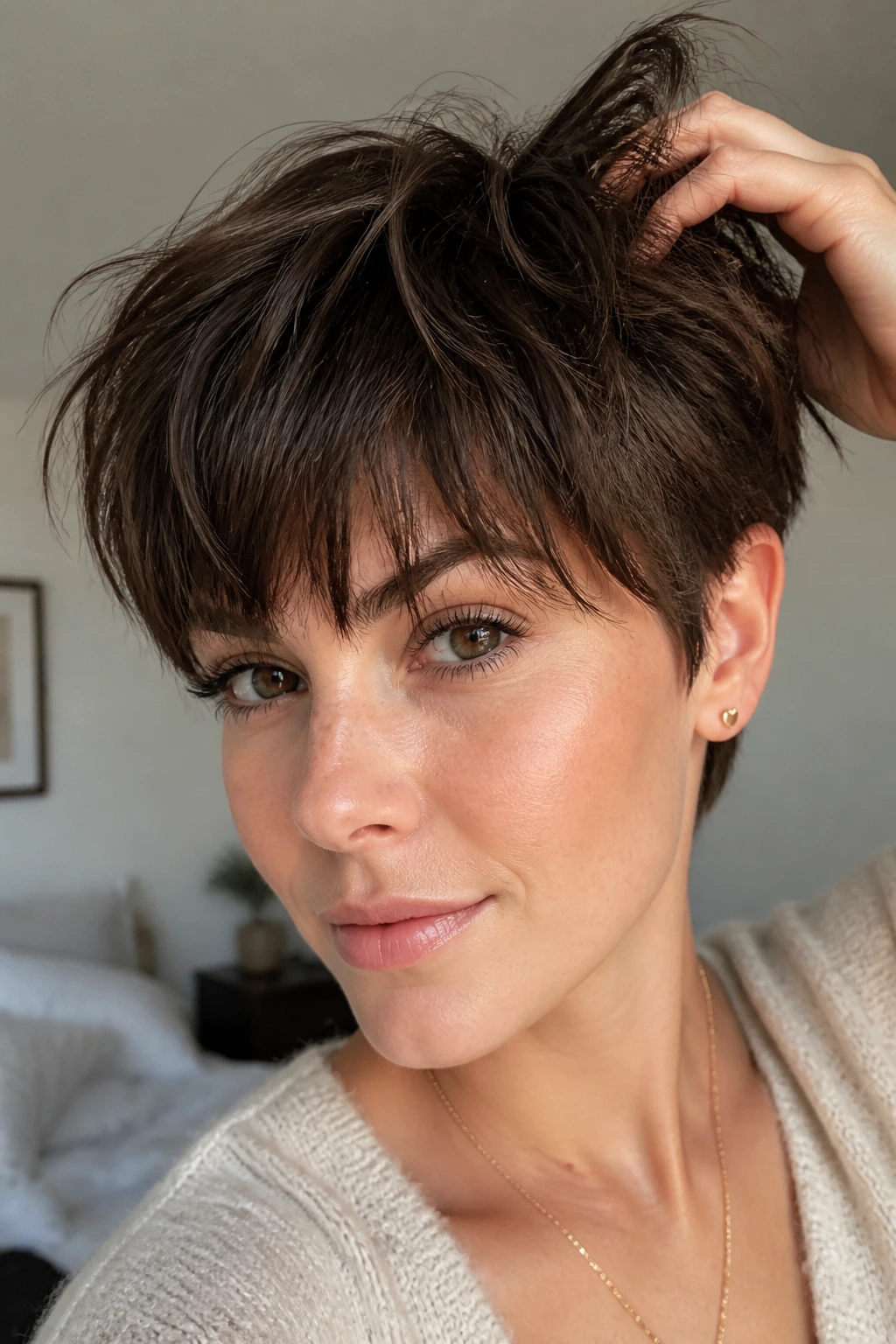
A piecey fringe is one of the easiest ways to soften a round face without making the cut boring. Instead of a solid sheet of bangs, you get little broken sections across the forehead.
That broken line matters. It interrupts the width of the face and keeps the front light. The fringe can fall in separate wisps, some longer than others, which gives the haircut movement even when the rest is short.
What to Ask for
- Fringe that lands around eyebrow length or just below.
- Point-cut ends for separation.
- A slightly longer top so the fringe has room to fall.
- Soft tapering around the temples.
The styling is simple, but the details matter. Blow-dry the fringe from side to side with your fingers until it falls in the direction you like, then use a tiny bit of wax on the ends only. Too much product and the pieces stick together. That ruins the whole effect.
Best tip: Keep the fringe light enough that it moves when you turn your head.
11. Tousled Shaggy Pixie
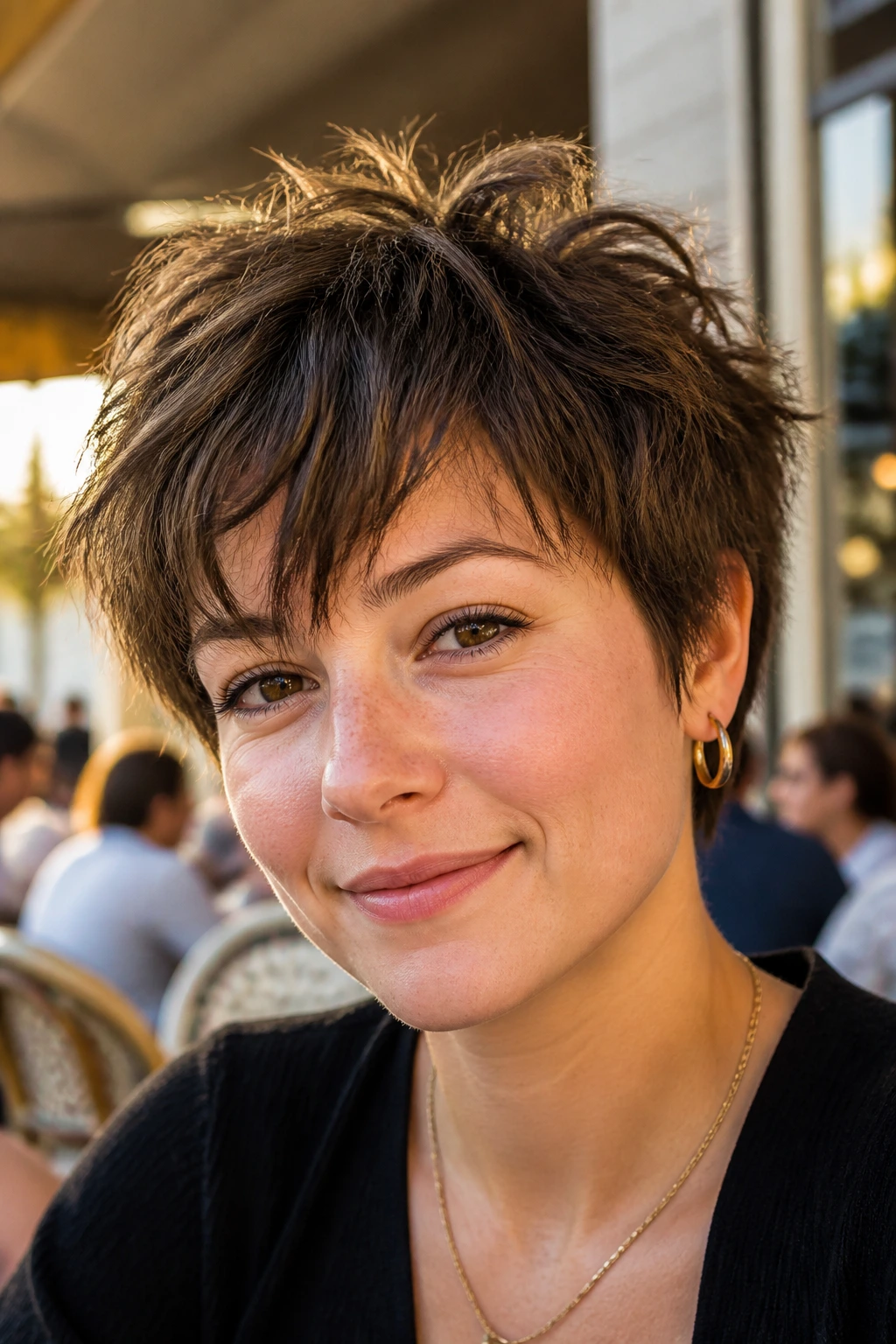
The shaggy pixie is the most forgiving cut in the bunch. It does not ask for neat lines, and that is exactly why it can flatter a round face so well.
The loose layers make the haircut feel a little wild in a good way. Nothing sits too close to the cheeks, and the outline stays broken up instead of smooth. That keeps the face from looking boxed in. It also works nicely if your hair has a wave that wants to do its own thing anyway.
I like this version for people who hate spending twenty minutes with a round brush. A little salt spray, a quick scrunch, and you are most of the way there. If your hair is straight, you can still wear it; just build texture with a matte spray or a bit of dry paste through the ends.
The danger with shaggy pixies is over-layering near the temples. If the shortest pieces swell out, the face looks wider. Keep the layers messy, not puffy.
12. Slicked Side-Part Pixie
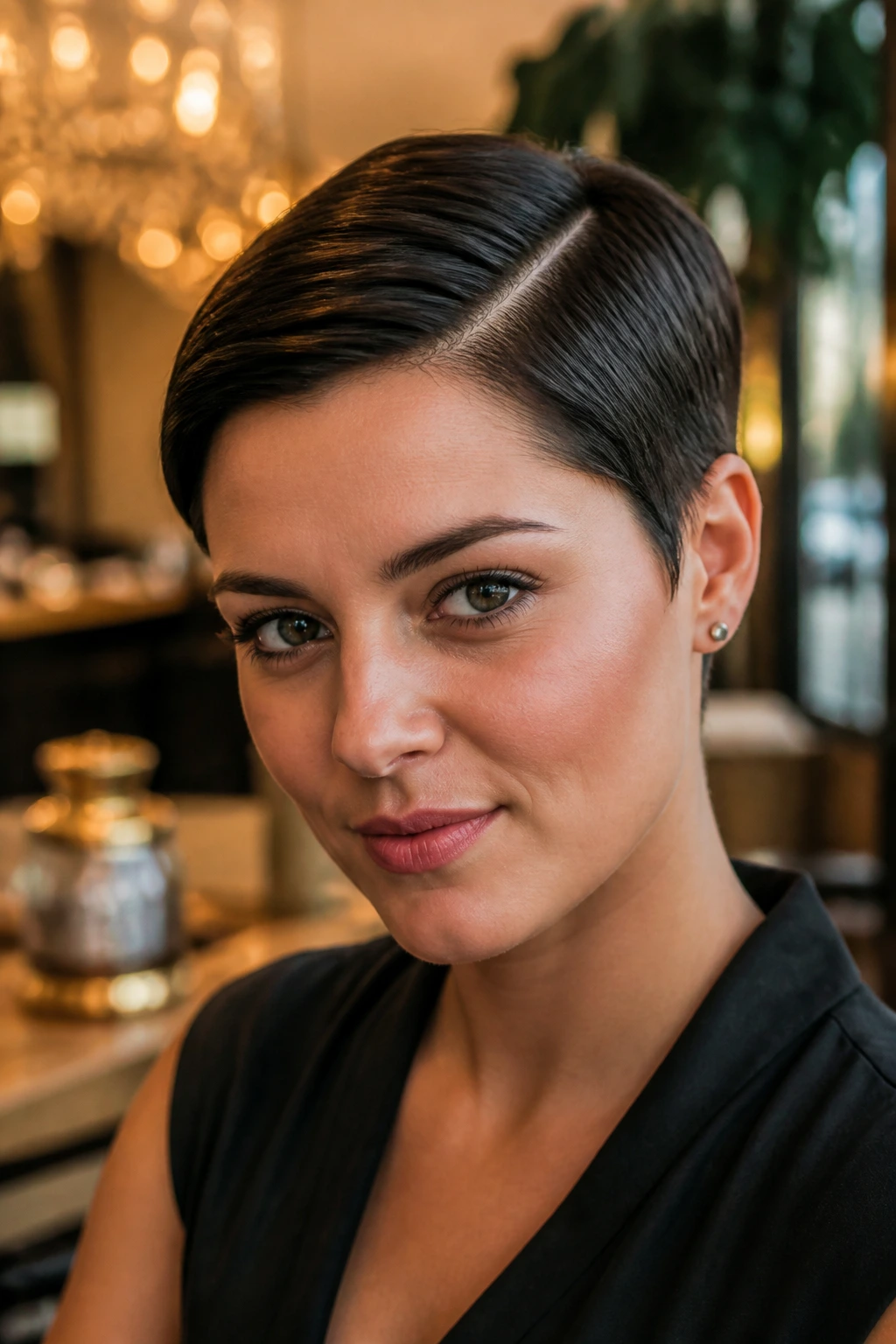
A slicked side-part pixie gives you a cleaner, sharper line than a lot of other short cuts. That can be a nice contrast on a round face because the smooth sweep pulls attention sideways and upward.
Unlike a fluffy crop, this one keeps the sides controlled. The part does the work. A combed-over top can skim the forehead and then disappear behind one ear, which creates a long line from brow to cheekbone. That line is the reason the cut feels so elegant without needing much length.
This is the pixie I’d reach for if you dress up a lot, wear strong earrings, or want a look that holds up in humidity better than a teased style. It’s also practical for second-day hair, which is not nothing.
Use a light cream or smoothing balm, not a heavy gel. You want the hair to move a little, not freeze in place.
A little shine helps here. Too much, and the scalp starts to show in a way that can make the style look thinner than it is.
13. Layered Volume Pixie
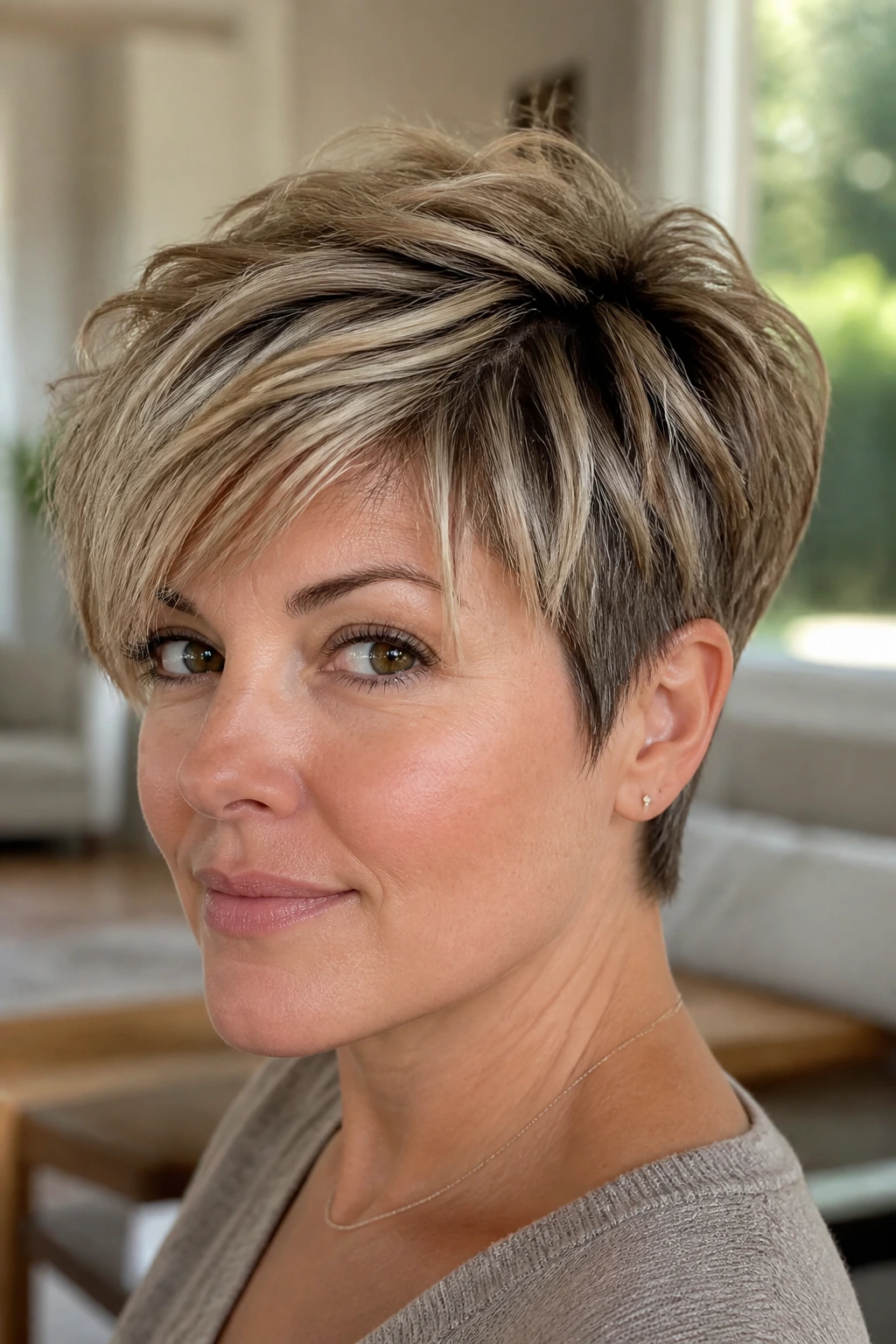
If the back of your head falls flat, this cut fixes that problem without turning the whole style into a puff. The layered volume pixie puts lift where the face can use it and keeps the sides lean.
The crown gets stacked layers. The nape stays tidy. The result is a shape that rises slightly at the back and then narrows near the ears, which is useful on a round face because it changes the profile from soft circle to soft oval. That’s a small shift, but it’s the kind that changes the way a haircut reads from every angle.
What Makes It Work
- Stacked layers at the crown add height.
- A tapered nape keeps the neck area clean.
- Shorter side layers prevent a wide outline.
- A side part can make the lift look even taller.
This cut tends to behave best with a blow-dryer and a little root spray. If you air-dry it completely flat, you lose the shape that makes it useful in the first place.
14. Ear-Length Pixie With Long Sideburns
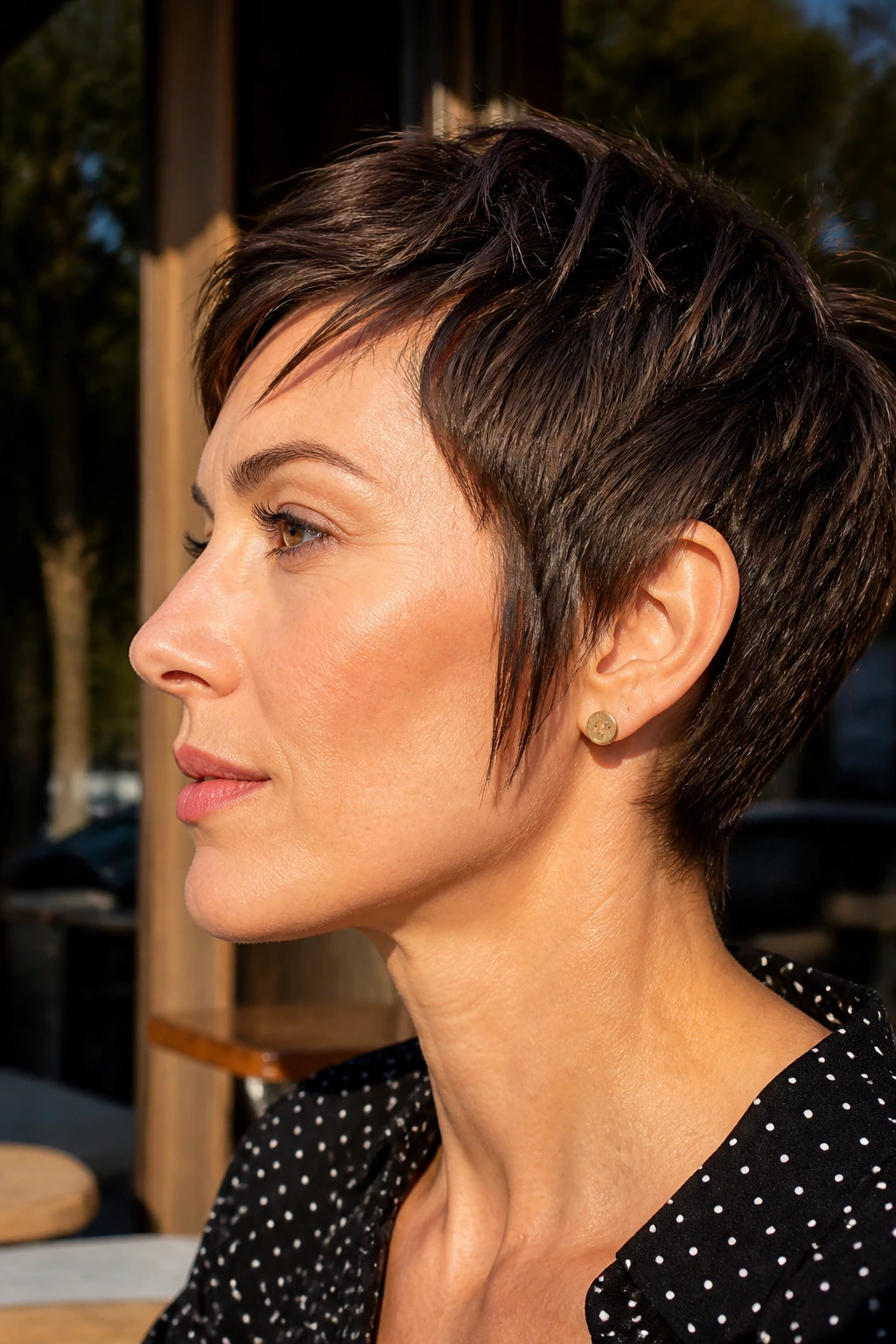
Ear-length side sections can be a gift on a round face, as long as the sideburns are left long enough to create a straight vertical line. That line matters more than people think.
When hair skims the ear and then drops just below it, the face feels a little longer. The eye follows the line downward instead of outward. That is the whole reason this cut works. It gives you softness near the temples without adding bulk at the cheeks.
Those sideburns matter. Short sideburns can make the face feel wider by stopping the line too early.
I like this cut when someone wants a pixie that still has a bit of polish around the ears. It looks especially nice with tucked-back styling on one side. You get a clean profile, but the cut still feels feminine and soft.
Ask your stylist not to overthin the side sections. Thin hair can look wispy fast. A little fullness is fine, as long as the shape stays close to the head.
15. Cropped Nape Pixie With Long Top
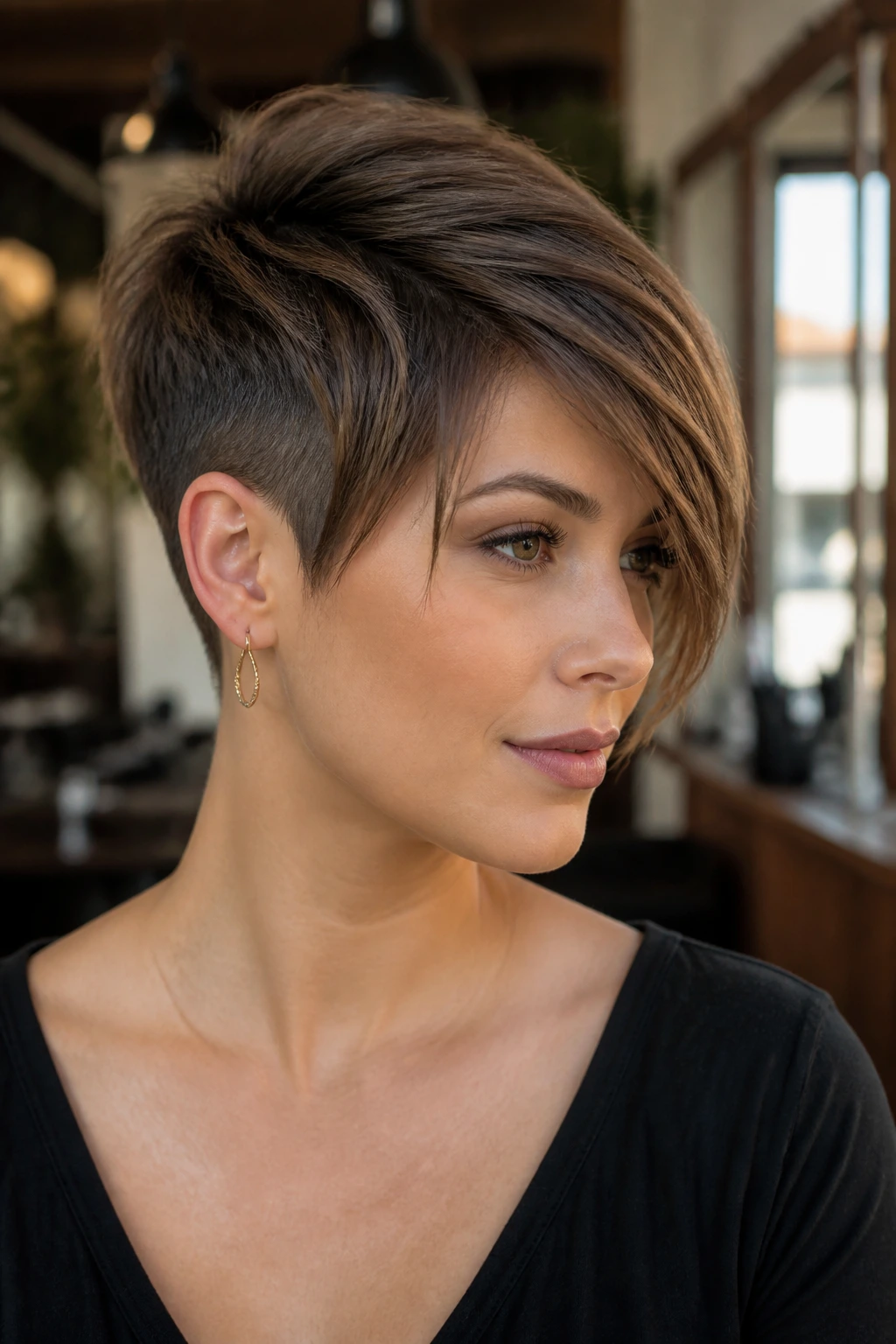
What if you want the back nearly bare but still want softness up front? This is the cut.
A cropped nape pixie keeps the neck area tight and clean, while the top stays long enough to sweep, spike, or piece out. On a round face, that contrast is useful because it removes weight from the lower half and gives the upper half a little extra presence. The shape feels sleek, not heavy.
What to Ask for
- Very short nape with soft blending into the crown.
- Top length around 3 to 4 inches if your hair is straight.
- A front section that can fall diagonally, not straight down.
- Clean outlining around the ears.
This cut does require upkeep. The nape grows fast, and once it starts to blur, the whole shape looks less sharp. Some people love that softer grow-out. Others find it annoying. I’m in the first camp, but only if the top still has enough shape to keep the face elongated.
It’s a good one if you like a little edge and do not mind regular trims.
16. Wavy Long-Top Pixie
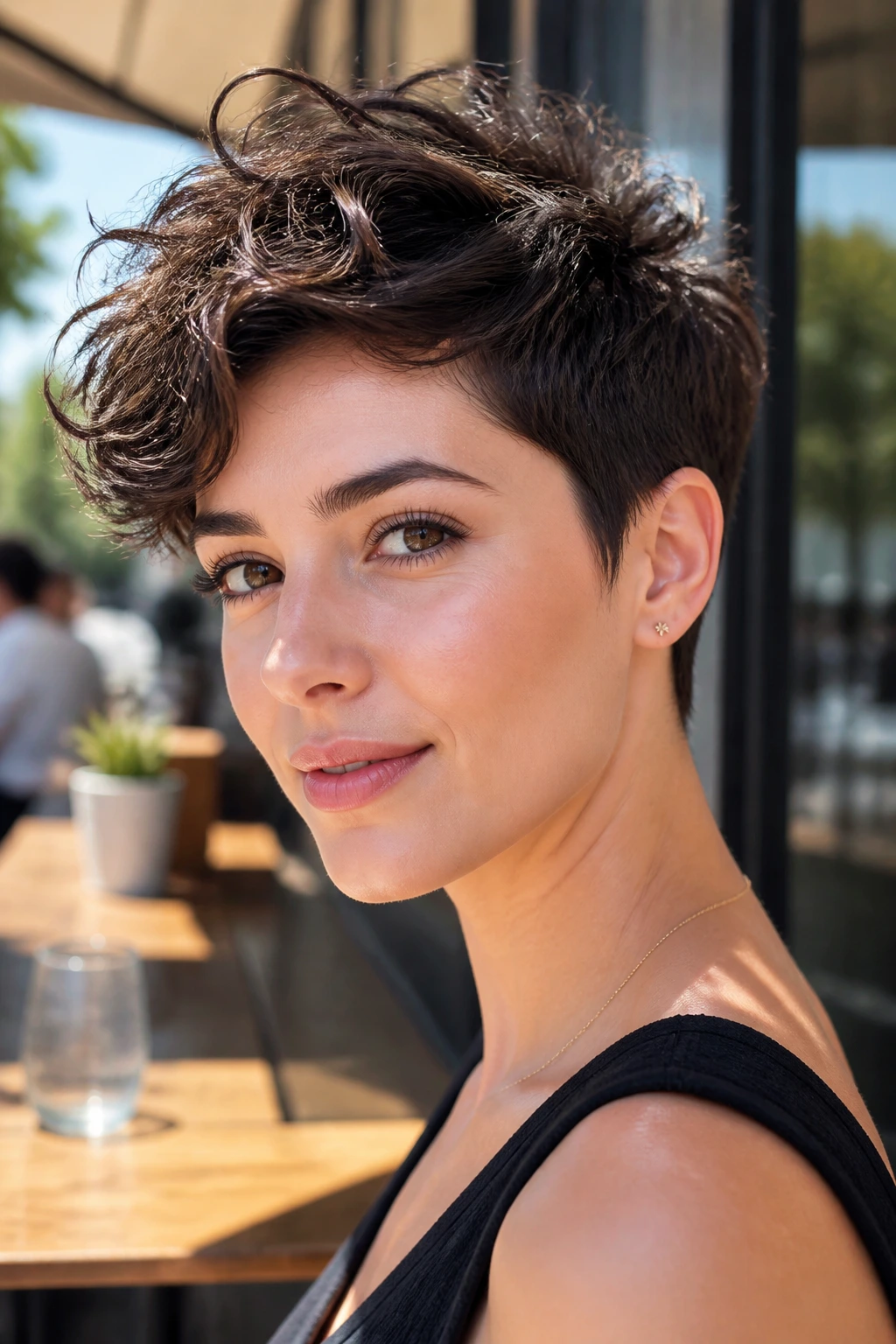
A wave does half the styling for you, which is why a long-top pixie can be such a smart choice for round faces. The bend in the hair keeps the top from lying flat, and that natural lift helps stretch the face visually.
The key is to keep the sides tighter than the top. If the wave spreads too far at the temples, the haircut loses its shape. But if the top keeps its movement and the sides stay neat, the cut looks easy and full of life. It is a nice place to land if your hair has an S-shaped bend that shows up once it dries.
Use a light mousse or curl cream, depending on how strong the wave is. Scrunching works. So does a quick diffuser pass on low heat. What does not work is rough towel drying, which can make the wave swell in the wrong places.
This cut is less fussy than it looks. That’s the appeal.
17. Grown-Out Pixie With Wispy Ends
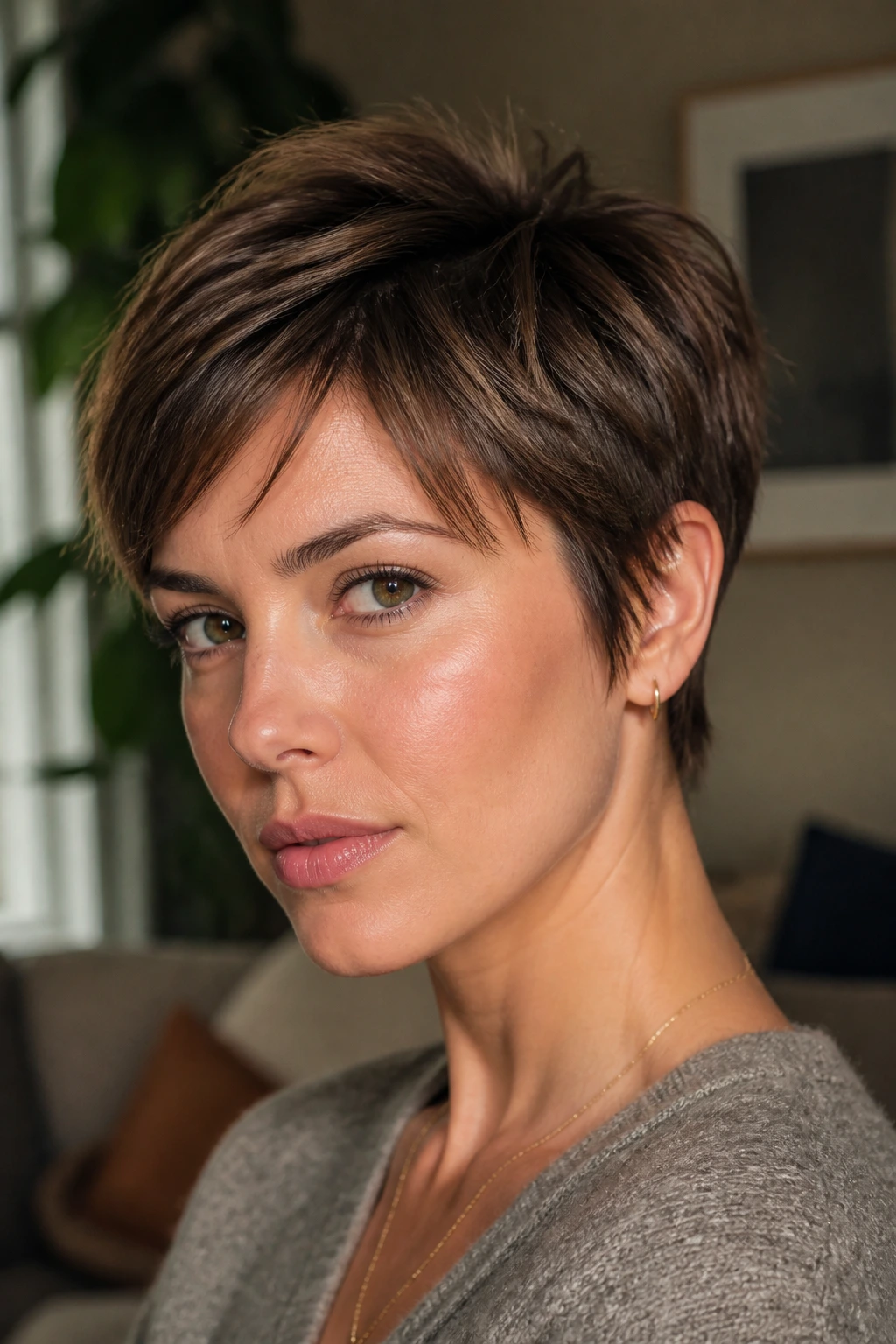
A grown-out pixie can be the prettiest one in the room when it is cut with intention. The wispy ends keep it soft, and the extra length means the shape does not cling too tightly to the face.
That softness helps a round face because the haircut sits away from the cheeks instead of pressing in on them. It also gives you more room to tuck a side back, push the fringe over, or let the crown fall a little messily. In other words, it buys you options.
This is the cut I’d point to for someone who does not want a harsh maintenance schedule. It can go a bit longer between trims and still look like a style, not a mistake. The ends should stay feathered, and the top should keep enough lift to avoid collapsing into a shaggy cap.
- Keep the perimeter soft.
- Leave room around the temples.
- Ask for light layers through the crown.
- Style with a small amount of cream or spray wax.
If you hate being tied to the salon chair every few weeks, this one deserves a close look.
18. Soft Side-Swept Pixie With a Long Fringe
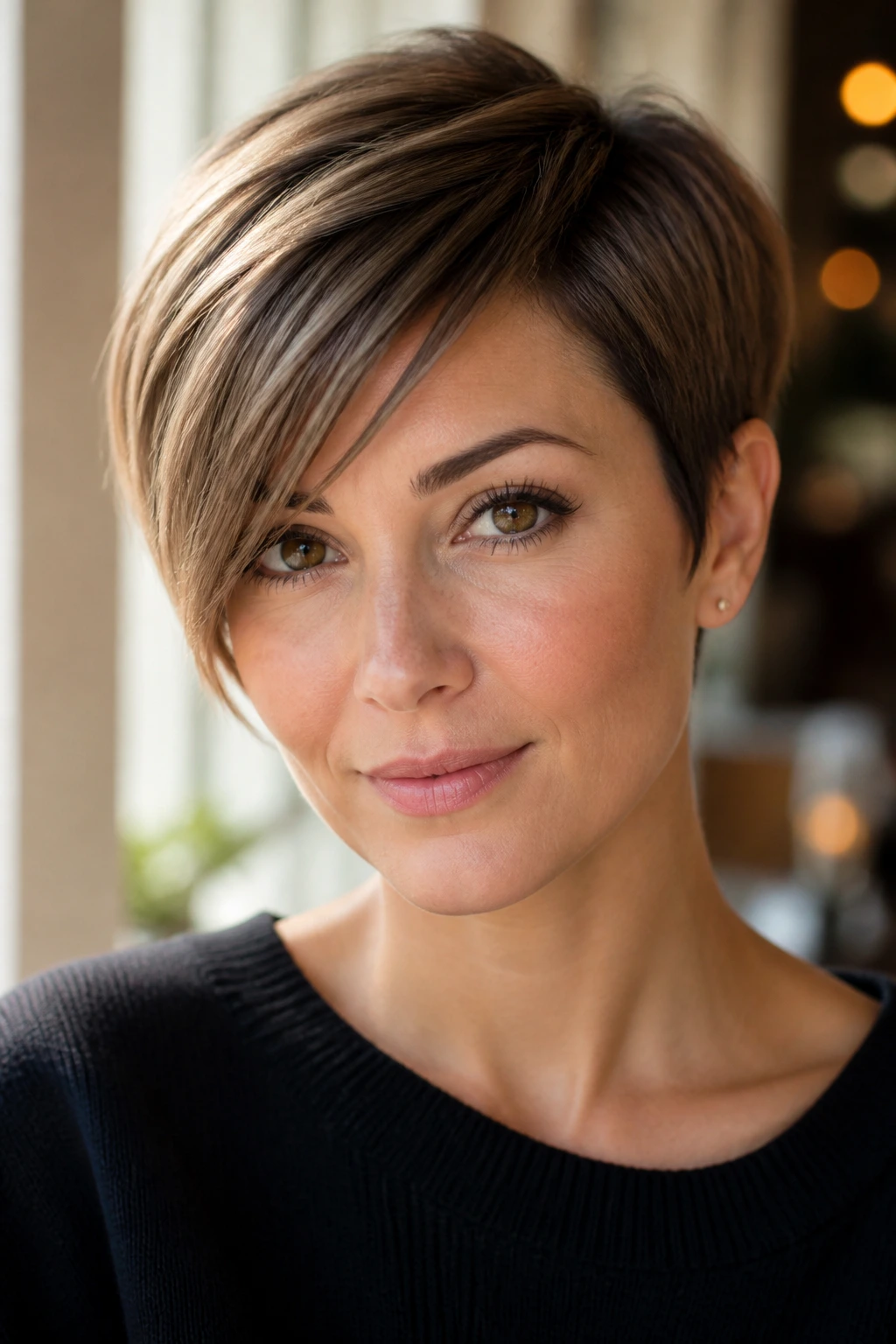
A long side-swept fringe can pull the whole face into a cleaner line. That is why this cut deserves a place near the end of the list, even though it is one of the easiest to wear.
The fringe should start high enough to keep the forehead open and sweep down toward the cheekbone instead of sitting flat across the brows. That diagonal matters. It softens the forehead, narrows the face visually, and gives the eyes a path to follow. Keep the sides close and the ends light, and the whole cut starts to look elegant without feeling precious.
Straight-across bangs usually fight a round face. This is the better answer.
I also like this pixie for people who want flexibility. You can wear it tucked, swept, or a little undone. That matters more than people admit, because a cut that only works one way becomes annoying fast. Ask for enough length in the front that you can move it off your face when you want to, then keep the rest of the cut neat so the shape still reads as a pixie.
A good short cut should make your face look sharper, not hidden. This one does that with less drama than most.
