



Fine hair can look lovely in short cuts, but it has one annoying habit: the minute weight goes missing in the wrong place, the whole shape can go limp and see-through. A feathered pixie cut fixes that more elegantly than most people expect. The soft, tapered edges keep the cut from looking heavy, while the layers give just enough lift to make the hair feel fuller at the crown and around the face.
The trick is not to thin everything out. That’s the lazy version, and it usually backfires. A good feathered pixie for fine hair keeps structure where the haircut needs support, then softens the top, fringe, and sides so the finish moves instead of sitting there like a helmet.
My bias is to keep the outline clean and the texture controlled. Point-cutting, wispy layers, and a little extra length on top can do more for fine strands than aggressive shredding ever will. You want the hair to flick, bend, and separate a little — not disappear.
So if your hair lies flat, grows out awkwardly, or seems to collapse by lunchtime, the right feathered pixie shape can change the whole game. Some versions are soft and romantic. Some lean sharp and modern. A few are deliberately edgy. The good ones all share the same thing: they make fine hair look intentional instead of fragile.
1. Soft Feathered Crown Pixie
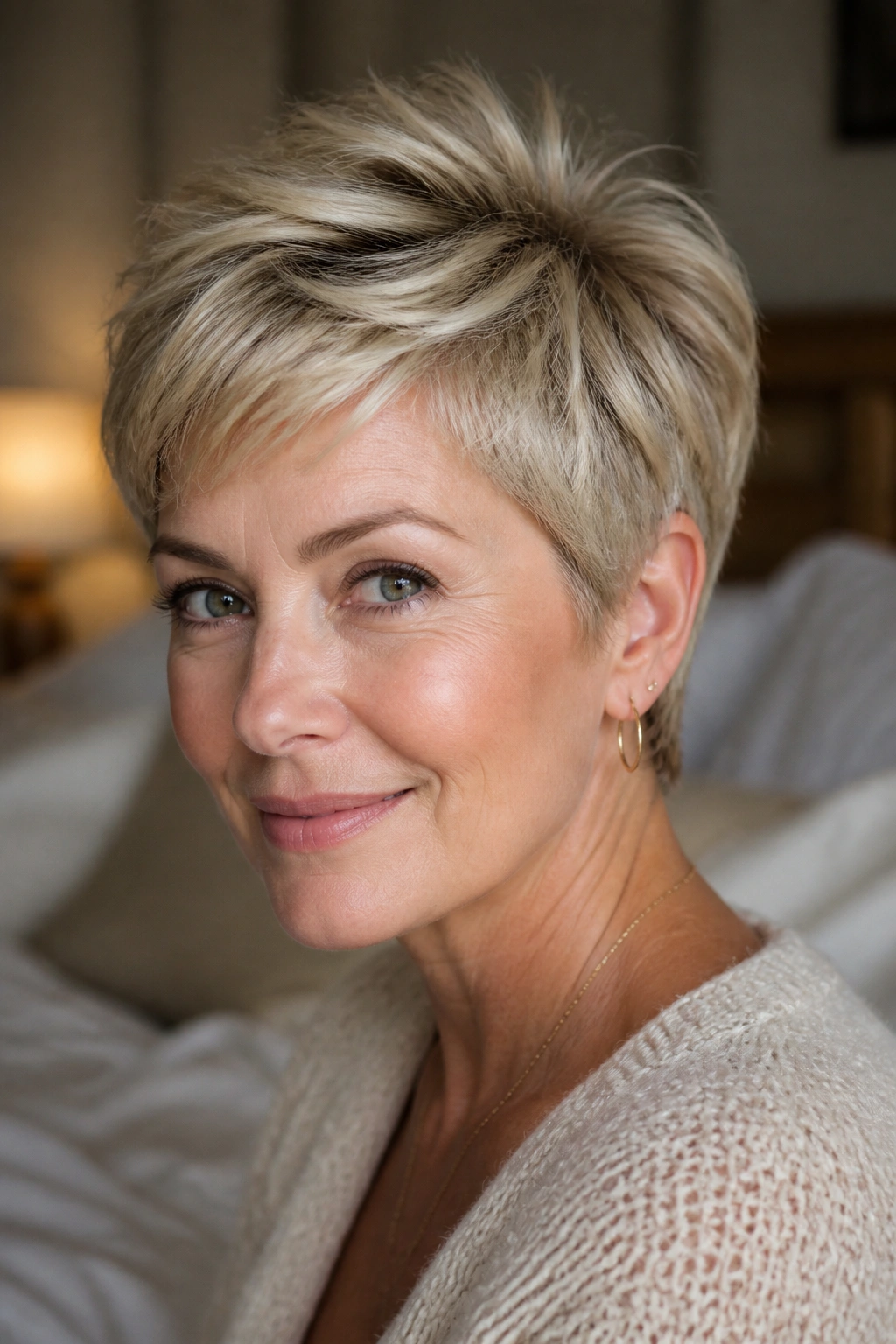
This is the version I reach for when someone wants lift without drama. The crown stays a touch longer, the top is lightly feathered, and the sides are kept close enough to support the shape without flattening it. Fine hair loves that kind of balance because the cut gives the eye somewhere to go — up.
Why It Works for Flat Roots
The crown is where fine hair usually gives up first. By leaving a little extra length there and cutting soft, diagonal layers into the top, the hair can be blown upward instead of pressed down. The result is a shape that looks fuller even when the strand count is modest.
A small root-lifting spray or mousse helps, but the cut is doing most of the work. That’s the part people miss. A flat pixie with the wrong layering will still be flat, no matter how much product you pile on.
- Best for straight or slightly wavy fine hair
- Works well with a side part or a loose forward sweep
- Needs a trim about every 5 to 6 weeks
- Looks nicest when the crown has a bit of bend, not stiff volume
Pro tip: ask for soft feathering, not heavy thinning. Those are two very different things.
2. Side-Swept Feathered Pixie with Long Bangs
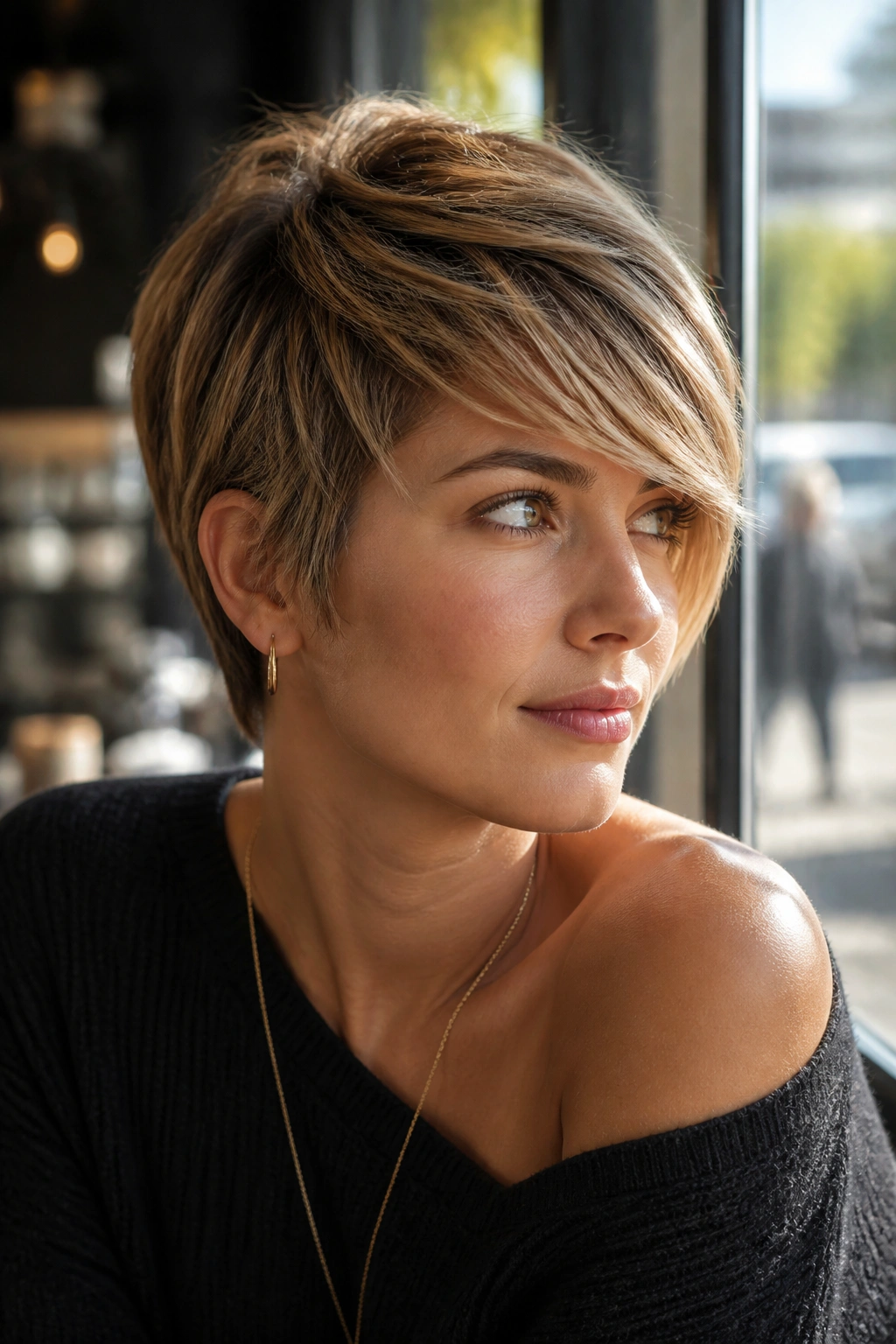
A long side-swept fringe can hide a weak hairline, soften a strong forehead, and give fine hair a thicker-looking front edge all at once. That’s a lot of jobs for one piece of hair, and it does them well if the cut is kept light.
A Diagonal Line Adds More Than Style
The side sweep creates a diagonal shape across the face, which keeps the pixie from looking too short or too severe. On fine hair, that diagonal line also makes the front look denser because the fringe overlaps itself instead of sitting in a thin, blunt strip.
You do need a little length at the front — usually enough to skim the brow or land right below it. Too short, and the sweep loses its softness. Too long, and it can start to hang in the eyes and feel fussy.
The best styling move here is a quick round-brush blow-dry, directing the fringe to the heavier side and letting the ends feather away from the cheek. A tiny bit of styling cream on the tips keeps the bang from splitting open during the day.
3. Tapered Feathered Pixie with a Clean Nape
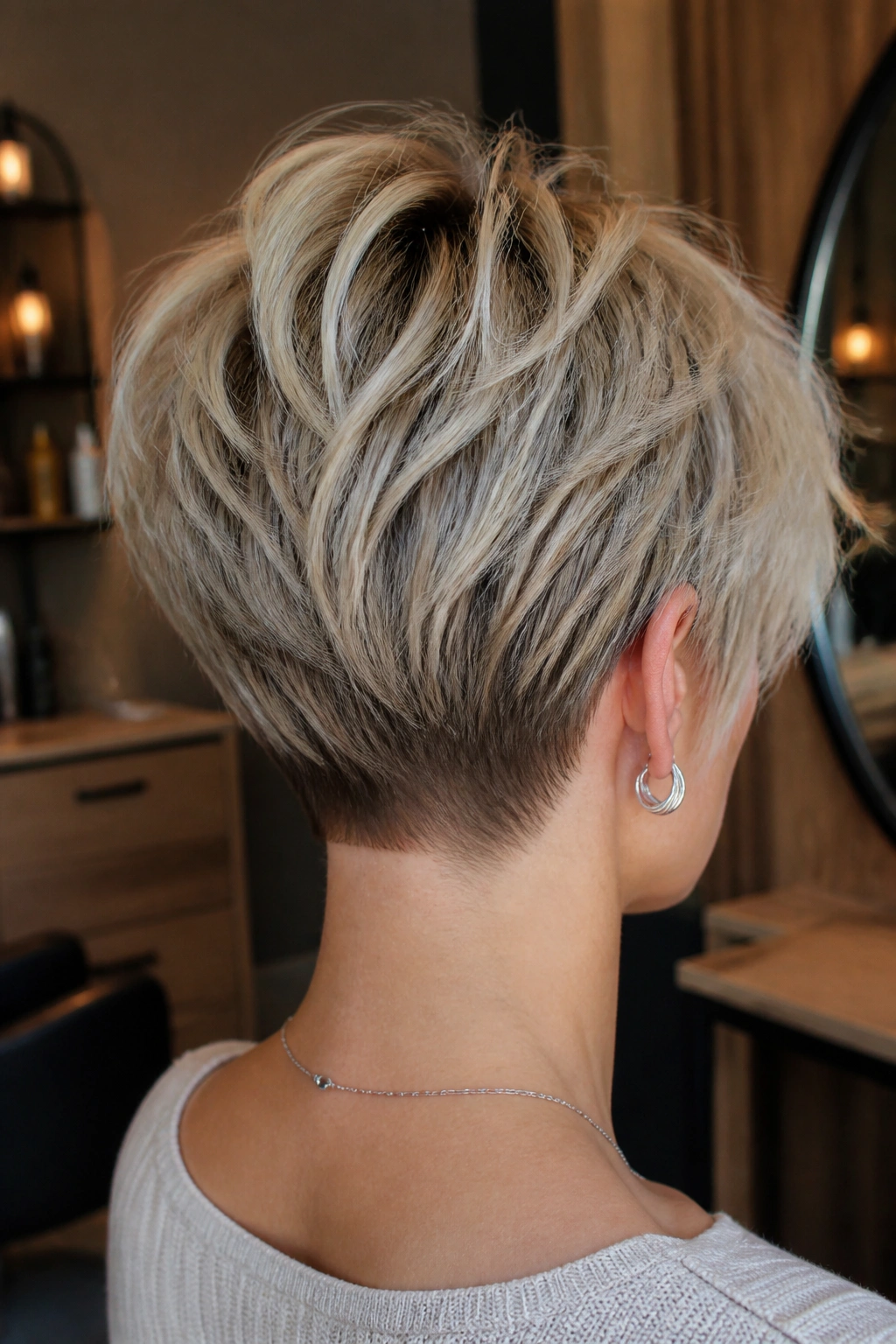
Want the top to look fuller? Keep the back neat. A tapered nape removes bulk where fine hair does not need it and gives the top more visual lift.
How the Shape Changes the Whole Cut
When the neckline is clean and closely tapered, the pixie looks sharper and more deliberate. That’s useful for fine hair because a fuzzy nape can make the entire cut look unfinished, even if the top is nicely layered.
The top can stay feathered and airy, while the back hugs the head in a smooth curve. That contrast is what makes the style work. It also makes your neck look longer, which never hurts.
How to Style It
Blow-dry the nape first with a small brush or your fingers, pushing the hair flat and neat against the head. Then move to the crown and front, where you can create lift with a vent brush or a small round brush. Finish with a light wax at the ends only.
- Best if you like a polished silhouette
- Great for straight fine hair that frizzes at the neckline
- Keeps grow-out cleaner than a shaggy back
- Needs regular neckline cleanup to stay crisp
4. Choppy Feathered Pixie with Piecey Layers
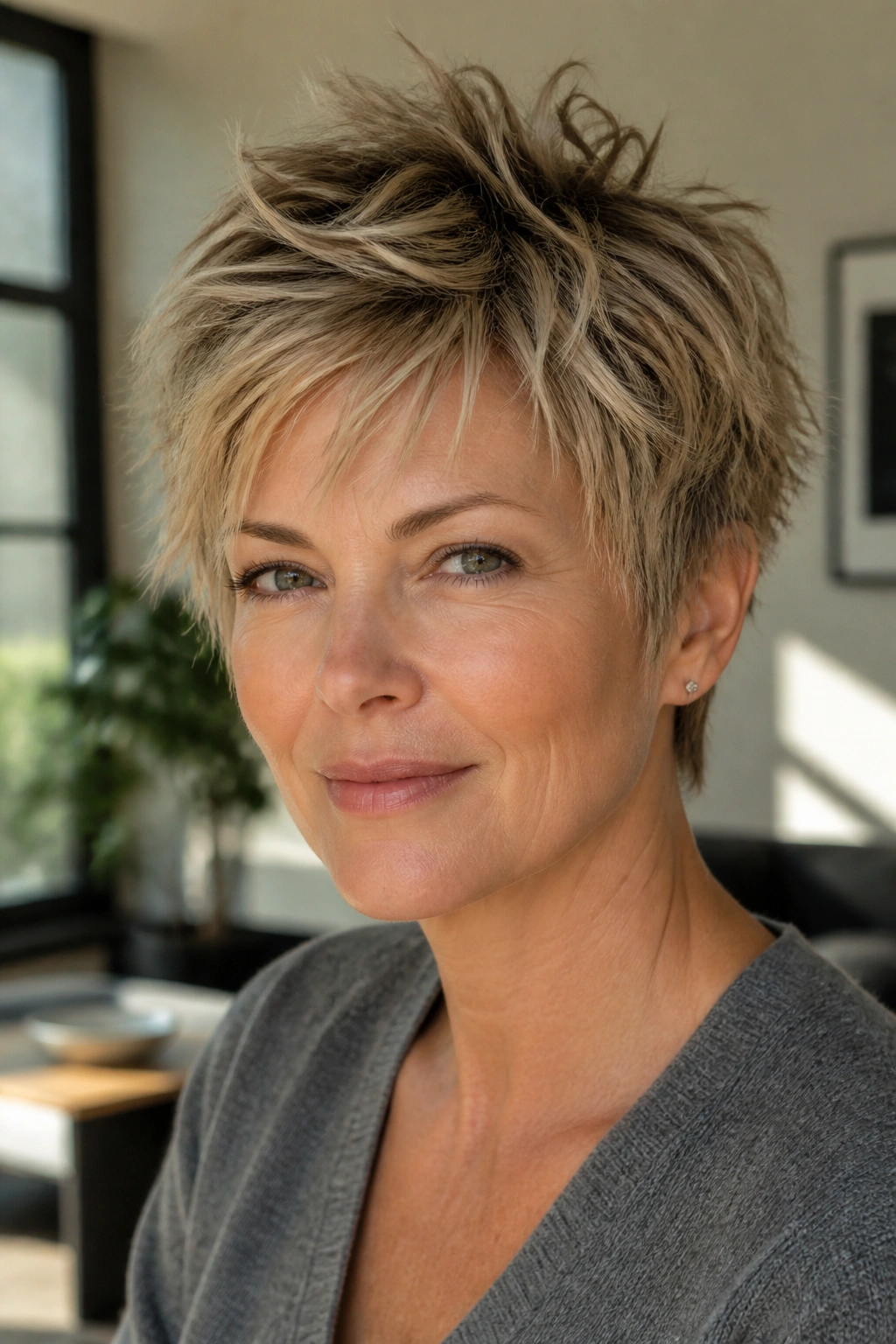
There’s a reason this one keeps showing up in salon chairs: it makes fine hair look busier in a good way. Piecey layers create the sense of separation and thickness, even when the actual strand diameter is small.
The key is restraint. You want the pieces to look deliberately broken up, not hacked to bits. A good stylist will point-cut the ends so the layers sit on top of each other instead of floating apart like dry straw.
This style likes a matte paste or a light texturizing cream. Warm a pea-sized amount between your fingers, pinch a few sections at the crown and sides, and leave the rest alone. Too much product will collapse the airy finish and make fine hair look stringy.
This cut is especially useful if your hair falls into the “neither straight nor wavy enough to behave” category. It forgives a little mess.
5. Feathered Pixie Bob Hybrid
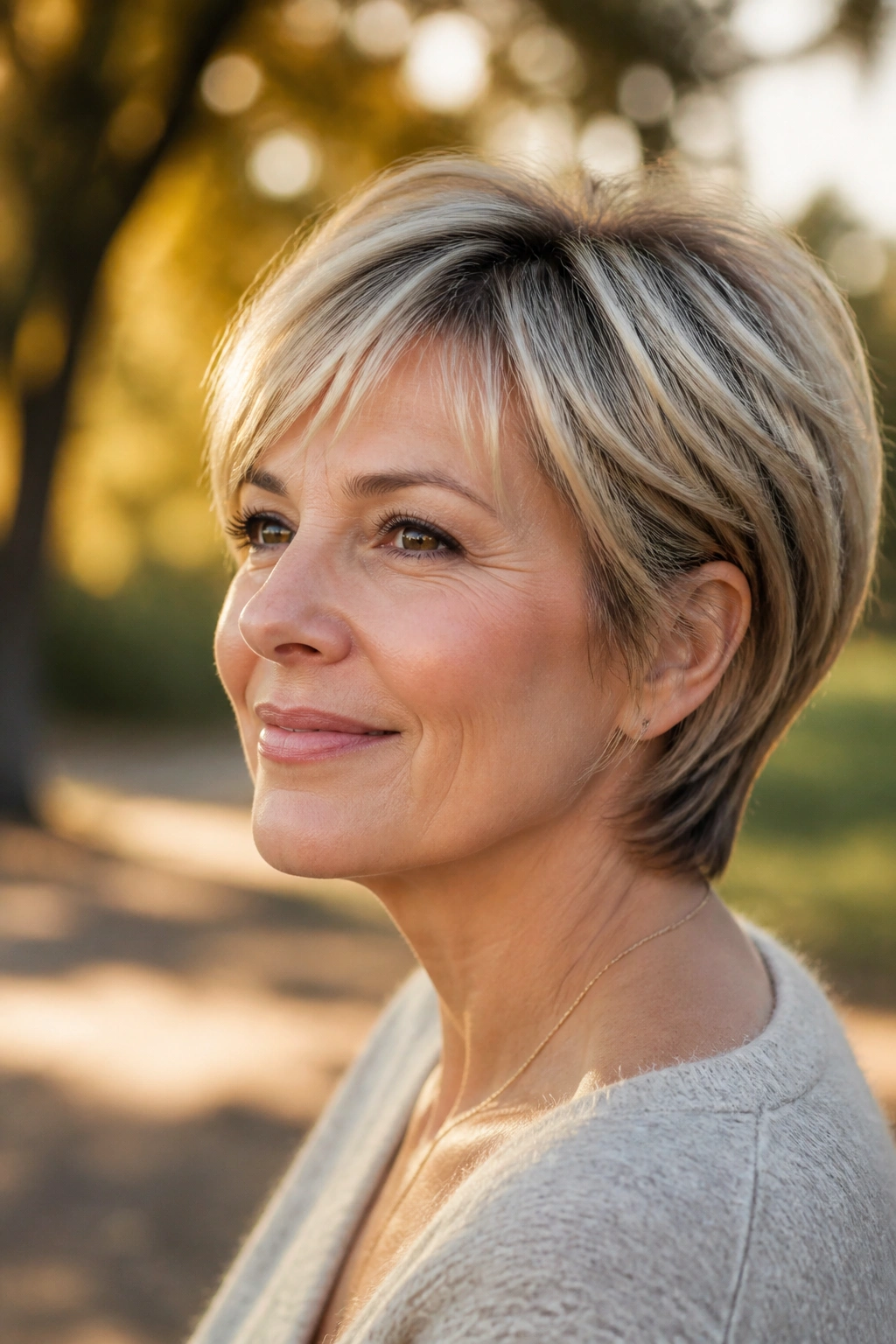
If a classic pixie feels too short and a bob feels too heavy, the hybrid in the middle is worth a hard look. The front and sides have pixie-like softness, but the back and perimeter keep enough length to give fine hair a fuller edge.
This shape works because it avoids the see-through problem that can happen when fine hair is cropped too tightly all over. A slightly longer outline around the ears and jaw makes the cut feel denser, especially when the top is feathered and lightly layered.
I like this version for people who want movement but still want to tuck hair behind one ear or sweep it off the face. It has more styling range than a tight pixie, which matters if you get bored easily. It also grows out in a friendlier way. That alone is reason enough for some people.
The one caution: don’t let the layers get too busy. Fine hair does not need six different lengths fighting each other.
6. Feathered Pixie with Micro Fringe
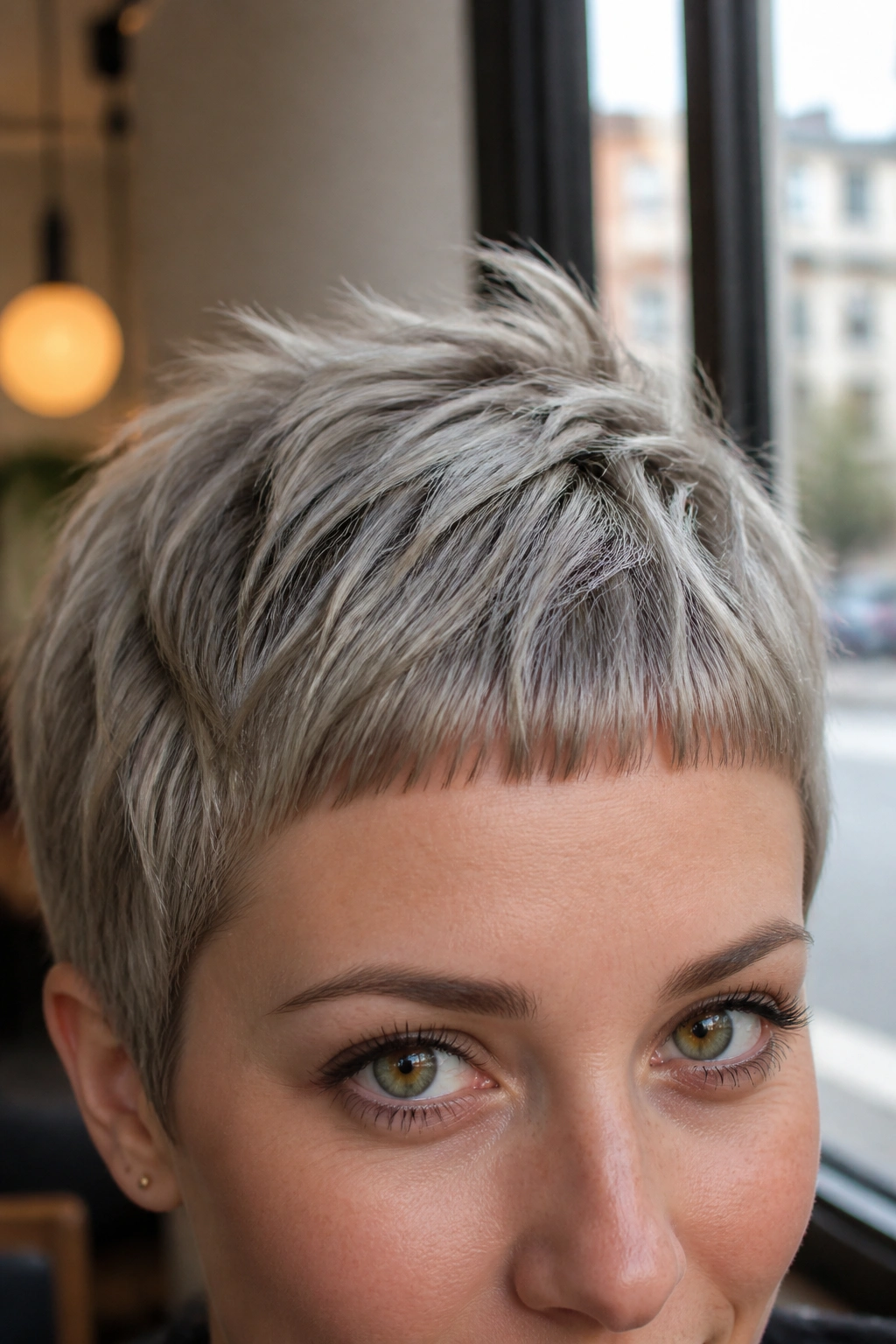
A micro fringe is a bold choice, but it can be a sharp one for fine hair. The short fringe keeps weight out of the front, which lets the top stay light and the crown stay visible.
What Makes It Different
Unlike long bangs, a micro fringe puts all the attention on the eyes and the upper face. It feels graphic, almost architectural. On a feathered pixie, that short fringe creates a strong line while the rest of the cut stays soft, and that contrast is the whole point.
It works best when the hairline is fairly even and the forehead is not extremely short. Cowlicks can be tricky here, so the fringe should be cut with the growth pattern in mind rather than against it. A blunt micro fringe can also show every bit of texture, which is not always a bad thing — it just means the cut has to be precise.
How to Wear It
Keep the rest of the pixie soft and feathery so the fringe has room to stand out. A tiny round brush or a flat brush will smooth the front in seconds, and a touch of light serum can keep the ends from puffing.
7. Long Top Feathered Pixie for Fine Hair
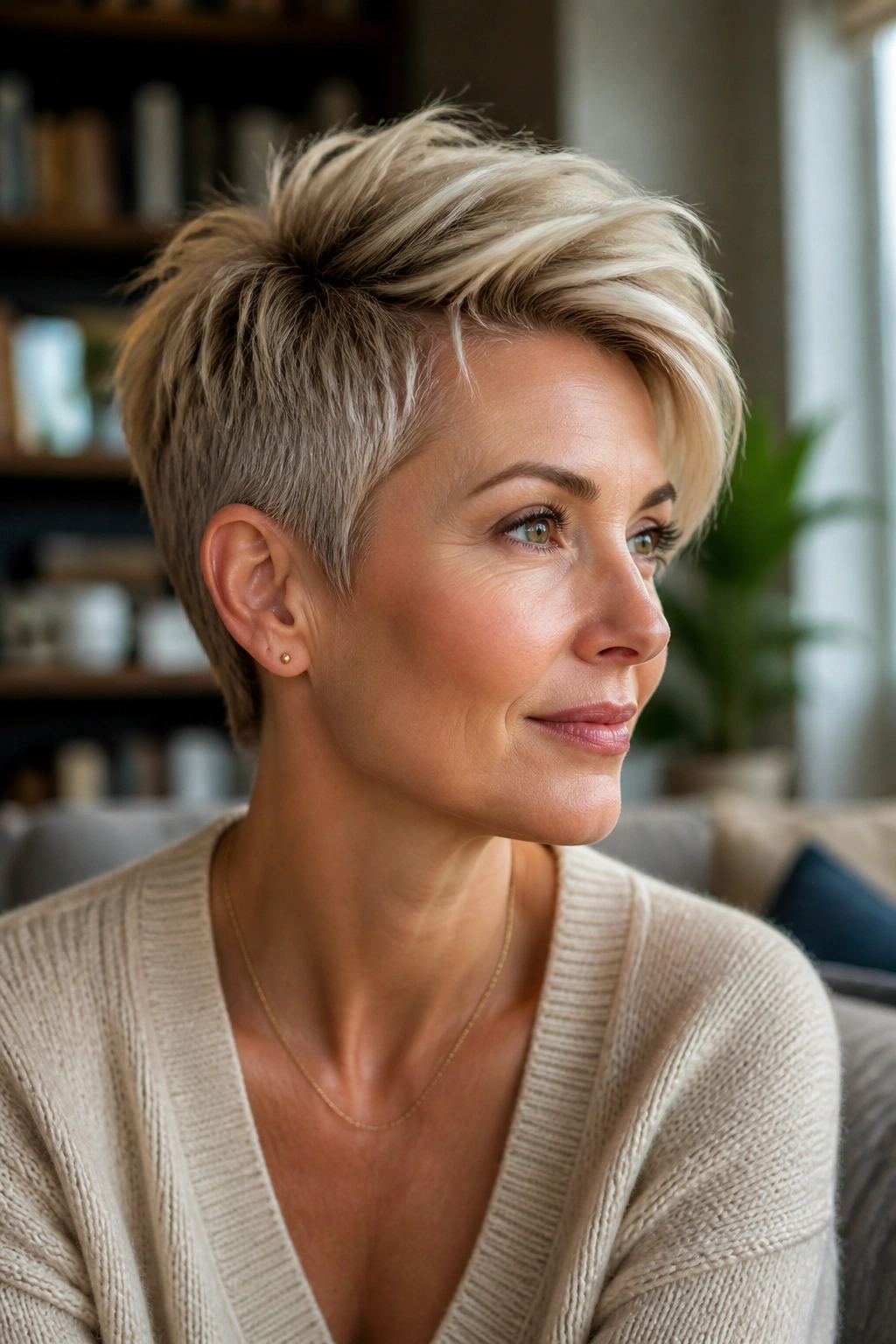
This cut keeps the top long enough to play with shape, which is a huge advantage when your hair is fine. One day you can push it forward and messy. The next, you can sweep it back and let the crown catch a little lift.
Why the Extra Length Matters
Fine hair often looks better when it has room to overlap itself. A longer top does that. It gives the illusion of thickness because the layers can stack and bend instead of lying in one flat plane.
You still want the sides and nape shorter so the cut doesn’t start to mushroom out. That contrast between a lifted top and a neat base is what keeps the style modern. If everything is the same length, the shape turns floppy fast.
- Good for people who like to restyle their hair through the week
- Works with mousse, root spray, or a small amount of paste
- Needs a little blow-dry help on the crown
- Best if the top is cut with soft internal layers, not aggressive thinning
Pro tip: dry the top in the opposite direction from how you plan to wear it, then flip it back. The lift lasts longer.
8. Asymmetrical Feathered Pixie
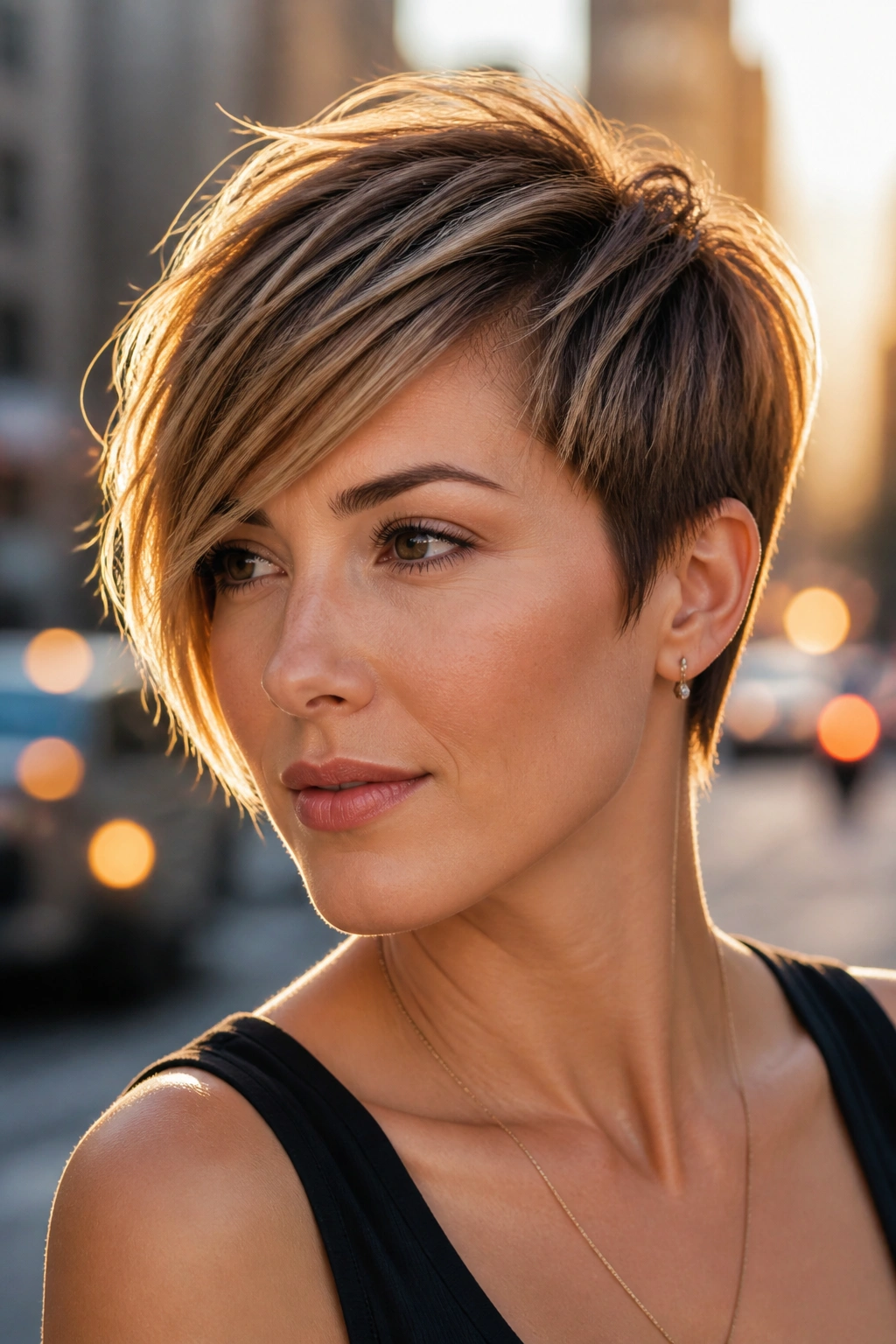
A little imbalance can make fine hair look thicker. Strange but true. When one side is longer, the eye reads the shape as fuller and more deliberate, especially if the front swoops across the forehead.
The asymmetry also keeps the style from looking too neat or too expected. That matters if your hair is naturally soft and needs a bit of attitude to wake it up. The longer side can skim the cheekbone or jaw, while the shorter side stays tight and tidy.
This cut does ask for maintenance. Not because it’s high-drama, but because the balance is easy to lose once it grows. A half-inch can make a visible difference here. So if you hate frequent trims, think twice.
I like this shape most on straight fine hair, where the line can stay clear. Wavy hair can wear it too, though the asymmetry will feel softer and less graphic.
9. Feathered Pixie with Wispy Sideburns
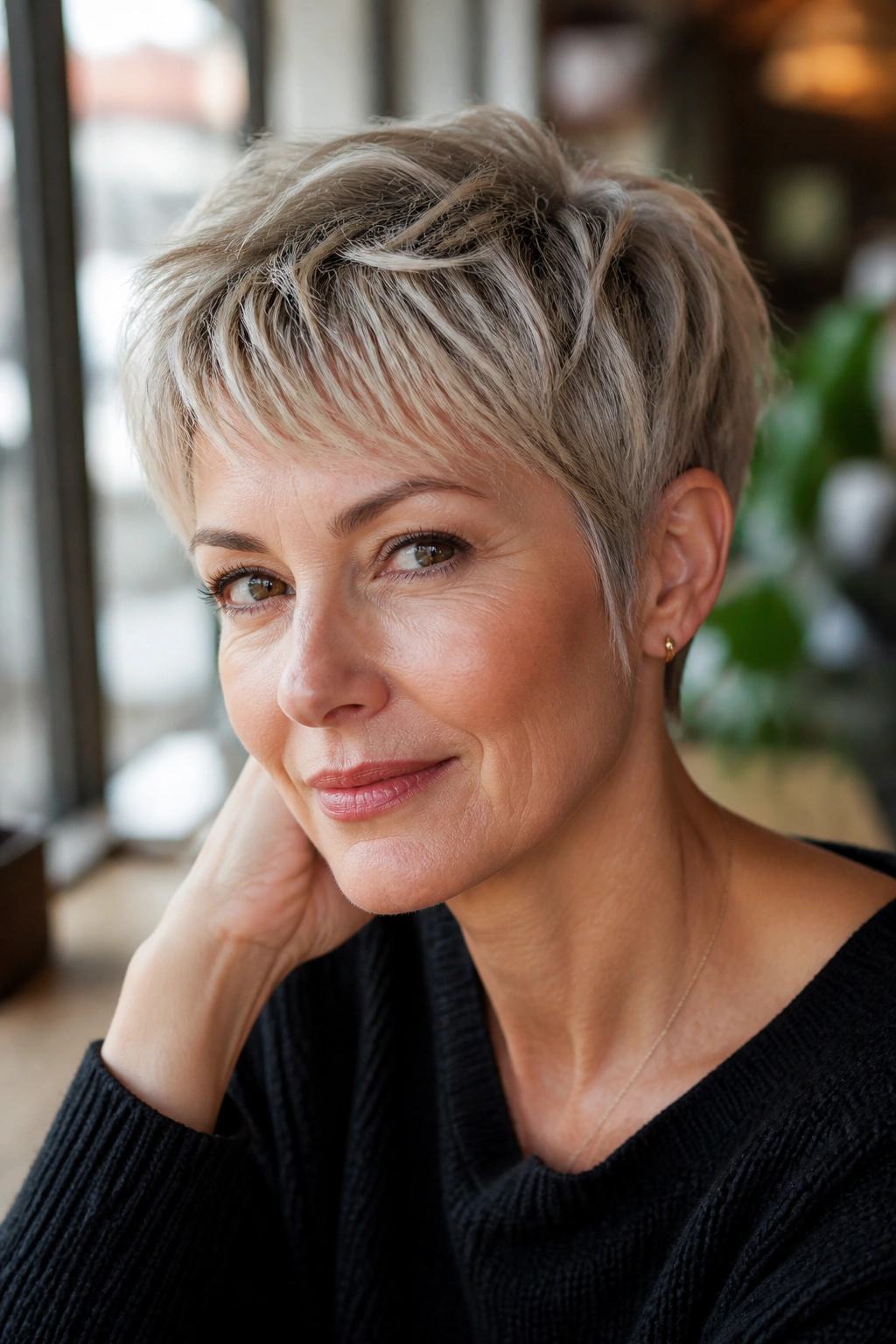
People forget the sideburns, which is a shame because they can do a lot. Wispy sideburns soften the area in front of the ears and help a pixie blend into the face instead of stopping abruptly at the temple.
Why does that matter for fine hair? Because a hard edge can expose how little density is there. Soft sideburns blur that line. They make the cut feel intentional and light, not clipped away.
This is one of my favorite options for anyone with glasses, a narrow face, or a jawline that needs a bit of softness. The wisps don’t need to be long. They only need to be delicate enough to move when you turn your head.
A dab of styling cream is enough. Too much, and the wisps lose their airy look. Too little, and they stick out like tiny antennae. Fine hair likes a light hand here.
10. Shag-Inspired Feathered Pixie
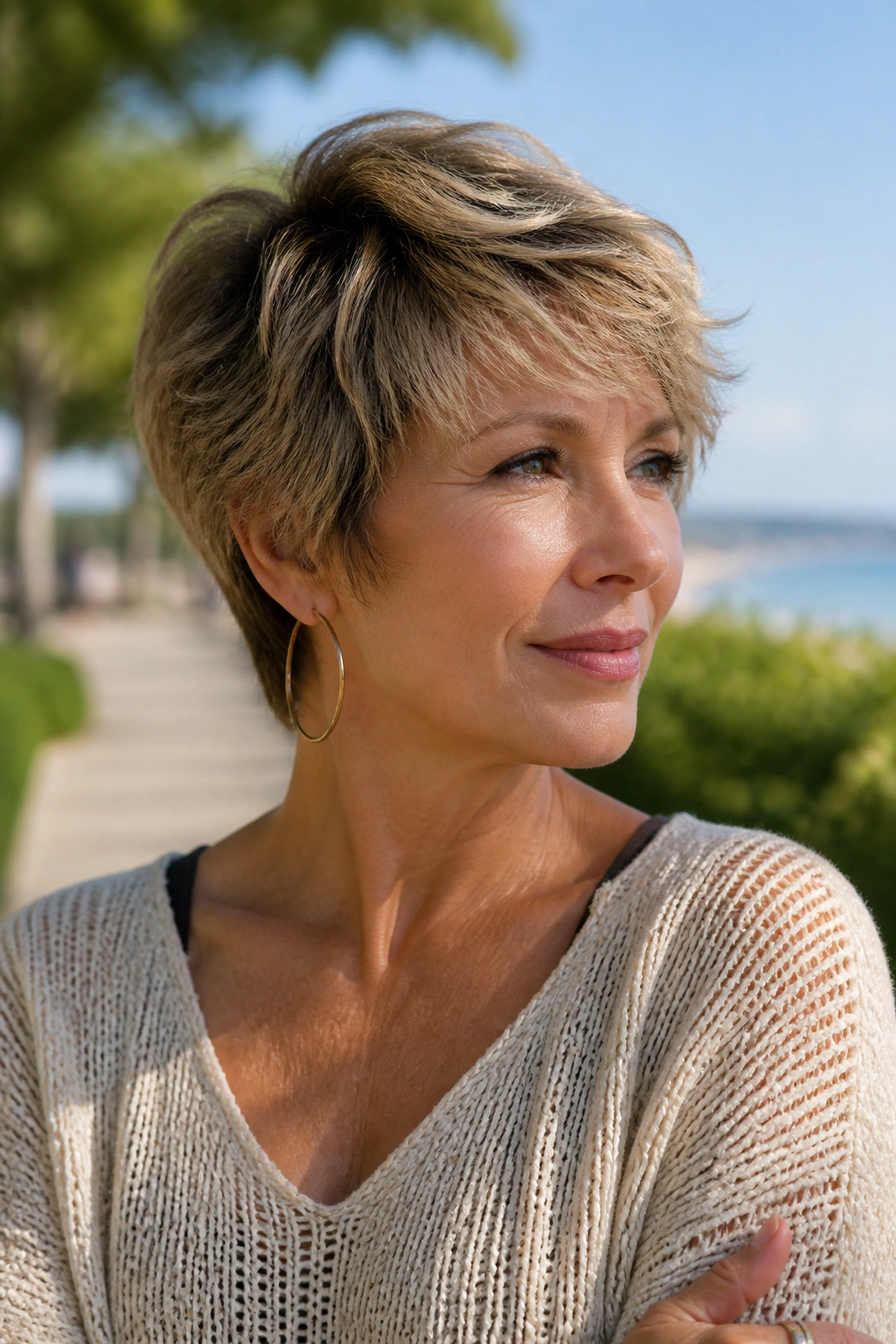
A shaggy influence gives a pixie some swagger. The crown layers connect to the front and sides in a softer, more broken-up way, so the whole haircut feels full of motion.
The Shape Feels Casual, Not Careless
That difference matters. A shag-inspired pixie should look loose, not unfinished. The layers should kick out in different directions, but the cut still needs a clean outline so it doesn’t collapse into fuzz.
This version is especially nice if your fine hair has a hint of wave. The natural bend helps the layers separate without looking overworked. Straight hair can wear it too, though it often needs a bit more product and finger styling.
A light sea salt spray can help, but don’t drown the hair in it. Fine hair dries out fast, and too much salt spray can make the ends rough. A mousse at the roots and a touch of paste at the crown usually gives a softer result.
Quick Styling Notes
- Air-dry for a more relaxed finish
- Blow-dry with fingers for extra root lift
- Use a diffuser only if your hair has real wave or curl
- Ask for soft razoring, not deep thinning
11. Feathered Pixie with an Undercut
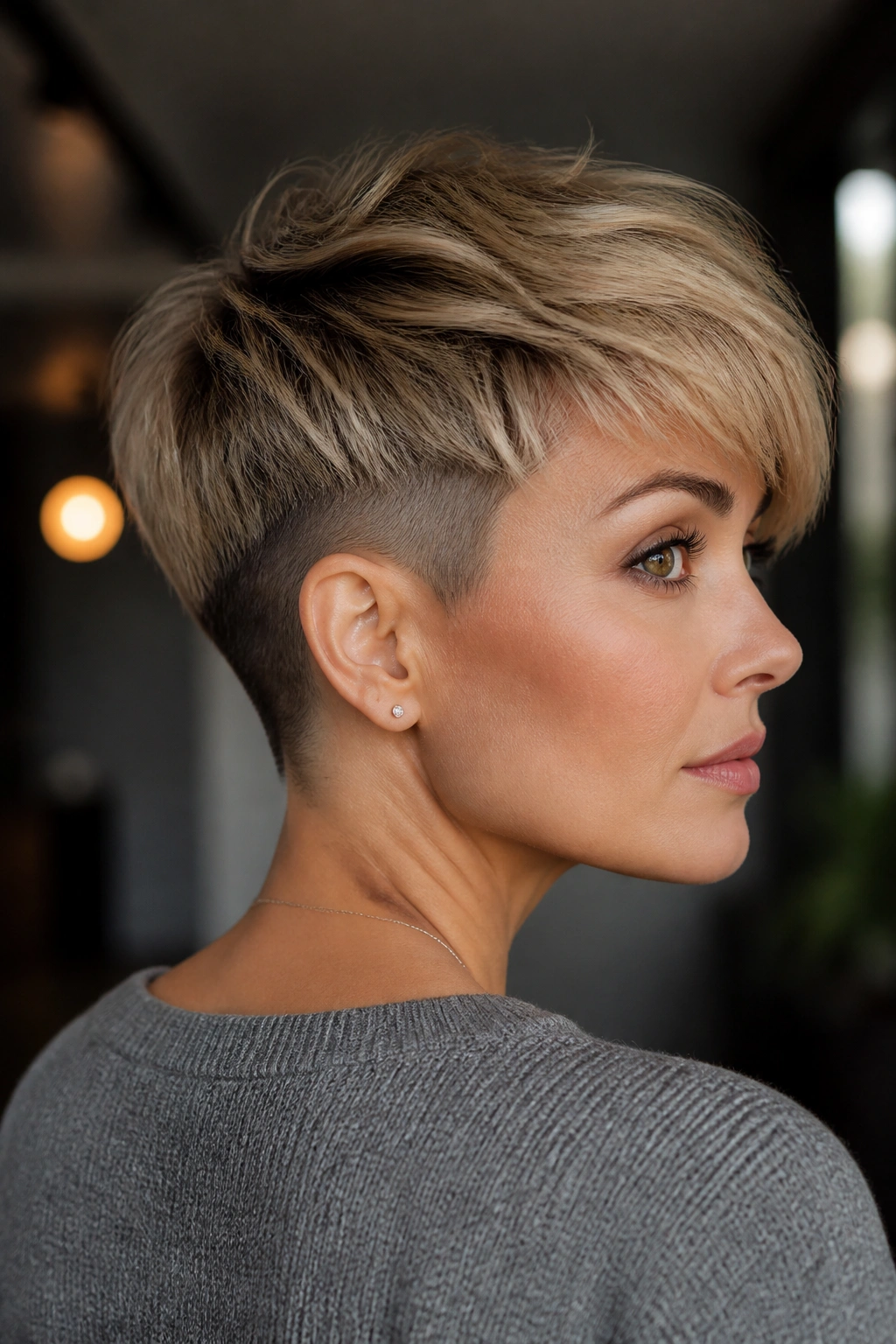
An undercut sounds edgy, and it can be, but for fine hair it often has a practical side. Removing bulk beneath the top layer lets the hair sit closer to the head while the upper section looks fuller and more lifted.
This works best when the top still has enough length to cover the undercut properly. If the top is too short, the contrast can get harsh. If it’s too long, the undercut disappears and the shape loses its point. The sweet spot is somewhere in the middle, where the top can sweep, feather, and move.
I like this cut for people who want a tidy silhouette with a little edge. It feels cleaner than a shag and less sweet than a rounded pixie. There’s a bit of bite to it, which can be refreshing on fine hair that tends to look soft to the point of fading into the background.
The grow-out is the catch. It needs patience, or a stylist who knows how to blend the underside back in without leaving a ridge.
12. Rounded Feathered Pixie for Soft Volume
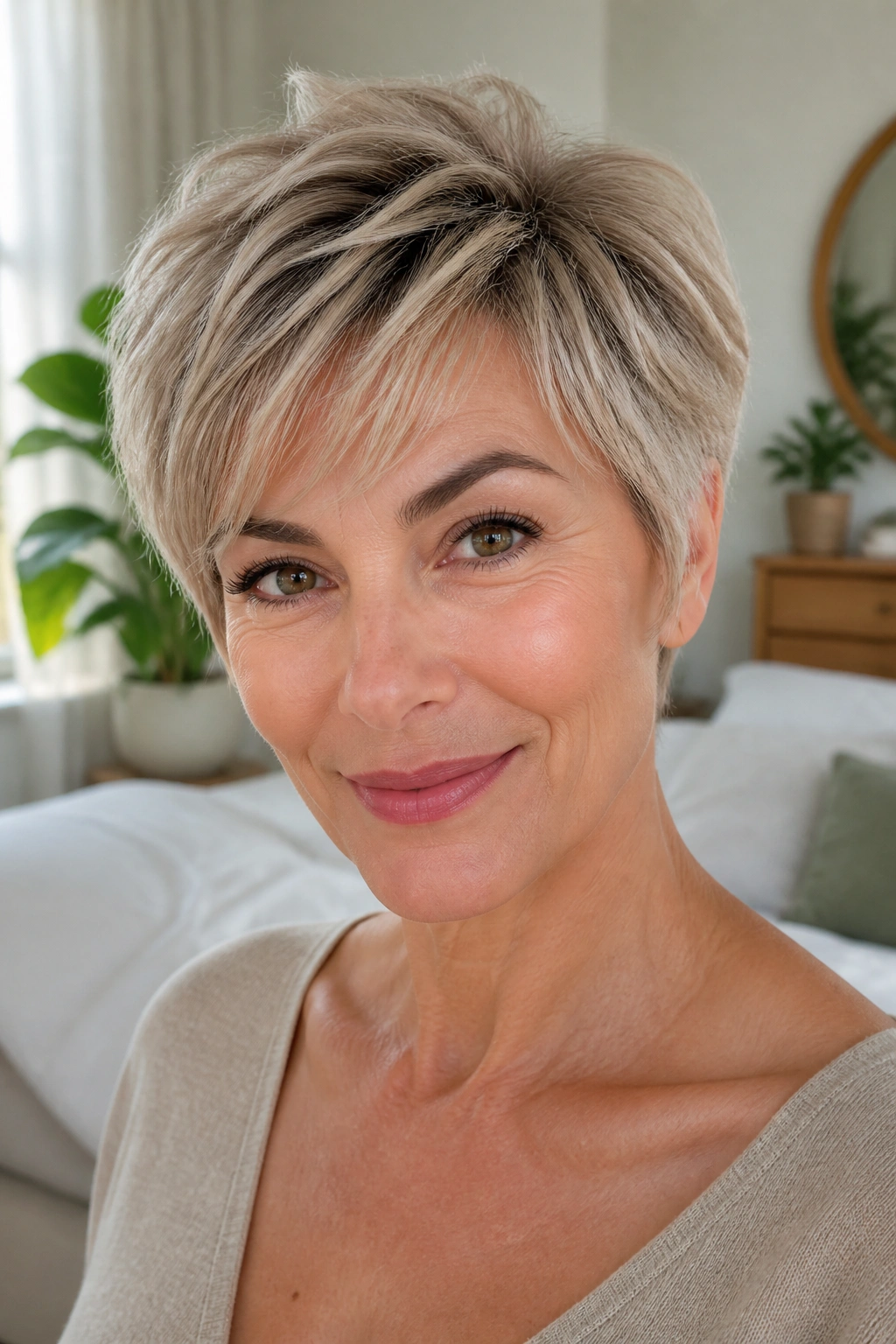
A rounded pixie curves with the head instead of fighting it. That sounds simple, but it’s one of the smartest choices for fine hair because the shape creates fullness without relying on heavy layers.
Unlike sharp, squared-off pixies, the rounded version feels softer around the temples and crown. The feathering is still there, but it follows a gentle arc. That makes the hair read as plush rather than edgy. If your features are delicate or your face is narrow, this shape can be especially flattering.
It also grows out gracefully. The edges do not suddenly turn ragged, and the shape holds together longer between trims. That matters when your schedule is not built around salon appointments.
Ask for soft graduation around the head, a little lift at the crown, and a feathered fringe that blends into the sides. Skip anything too choppy if you want the rounded effect to hold.
13. Curly or Wavy Feathered Pixie
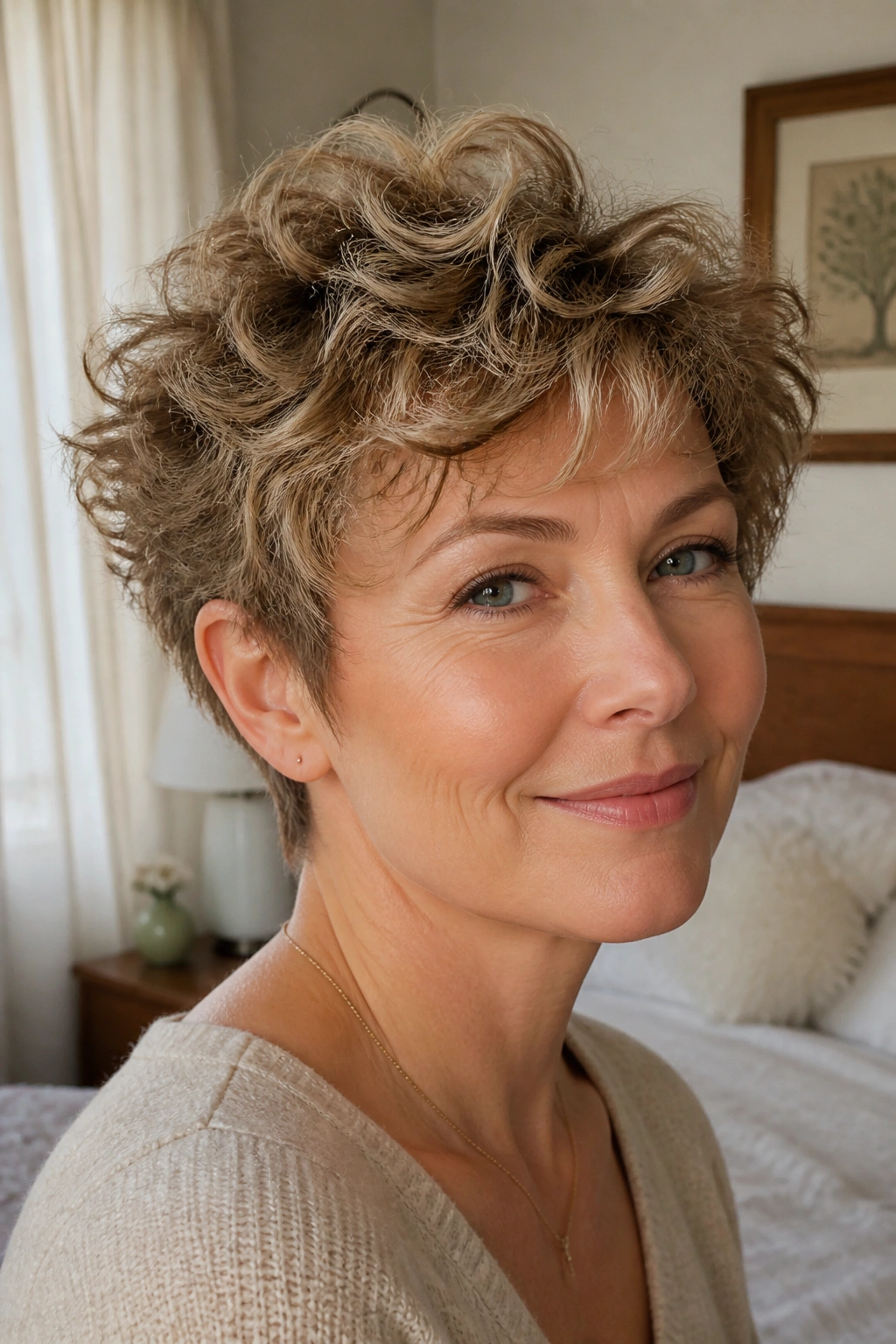
Fine hair with wave or curl needs a different kind of feathering. Too much thinning can leave the ends frayed, but a careful feathered cut gives the texture space to spring instead of puffing out in a triangle.
Why Texture Changes the Rules
Curly or wavy fine hair often looks denser when it keeps some length on top. The layers should support the curl pattern, not chop it into tiny pieces. A good stylist will cut with the curl or wave in mind, leaving the top long enough for the hair to settle naturally.
That softness around the edges is what makes the feathered effect work. The curls do part of the styling for you. Nice bonus.
How to Wear It
- Use a lightweight curl cream or foam
- Scrunch while damp, then let the hair dry with as little touching as possible
- Diffuse on low heat if you want more lift at the crown
- Ask the stylist not to over-thin the ends
This version can be gorgeous when it’s a little imperfect. Clean lines are not the goal here. Bounce is.
14. Feathered Pixie with a Deep Side Part
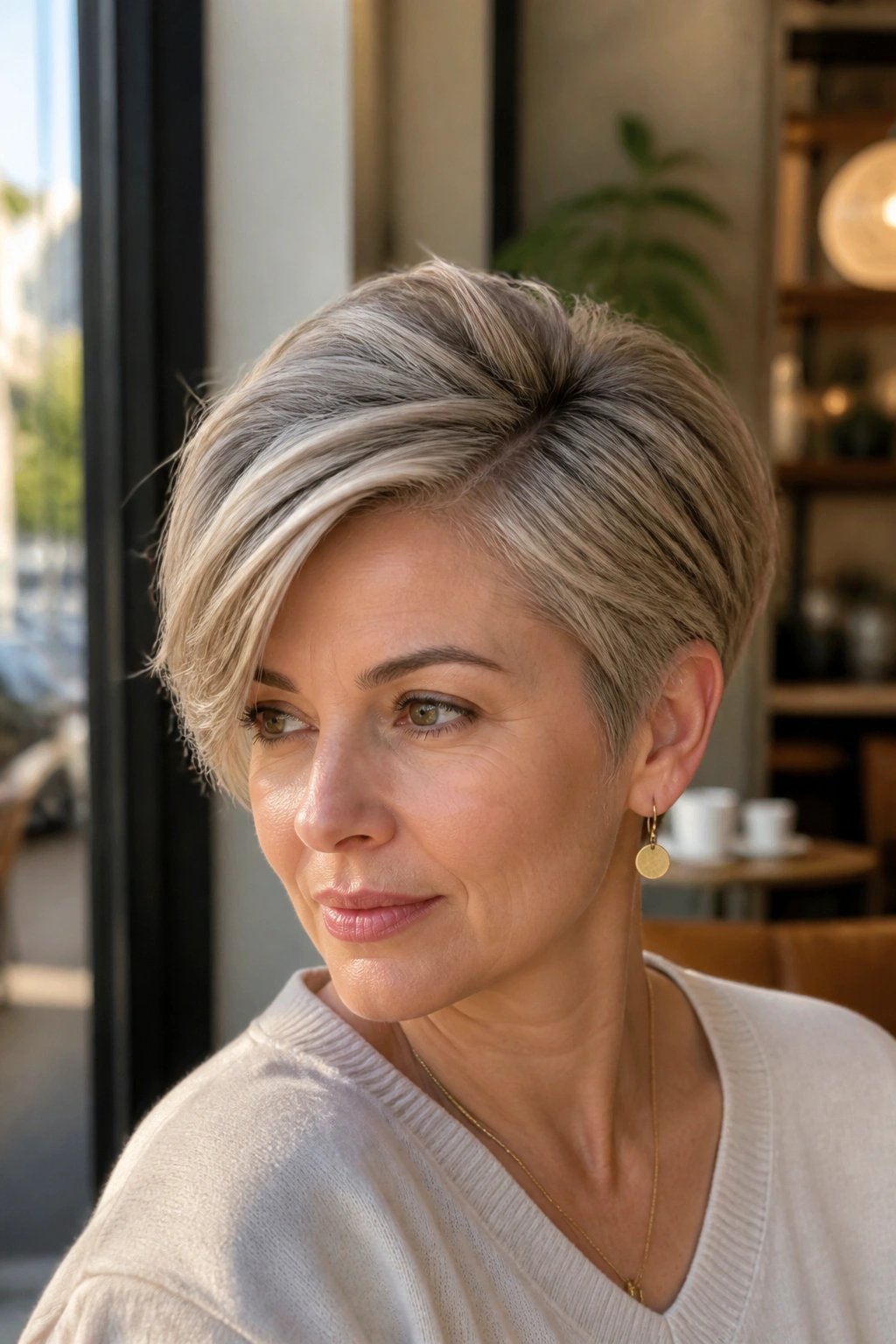
A deep side part is one of the fastest ways to fake more volume on fine hair. It moves the weight of the hair to one side, creates lift at the roots, and gives the cut an instant sense of shape.
The feathering helps the part blend into the rest of the cut so it does not feel abrupt. On the heavier side, the hair can skim the temple and cheekbone. On the lighter side, it can sit tighter and show a little scalp for contrast. That contrast makes the fuller side look even denser.
This cut is a good match for straight or barely wavy fine hair. It can look polished without feeling stiff. If you like a more dramatic look, push the part a little farther over than feels normal — not absurdly far, just enough to make the roots lift.
A root-lifting powder at the part line can help, though a careful blow-dry is usually enough.
15. Blonde Feathered Pixie
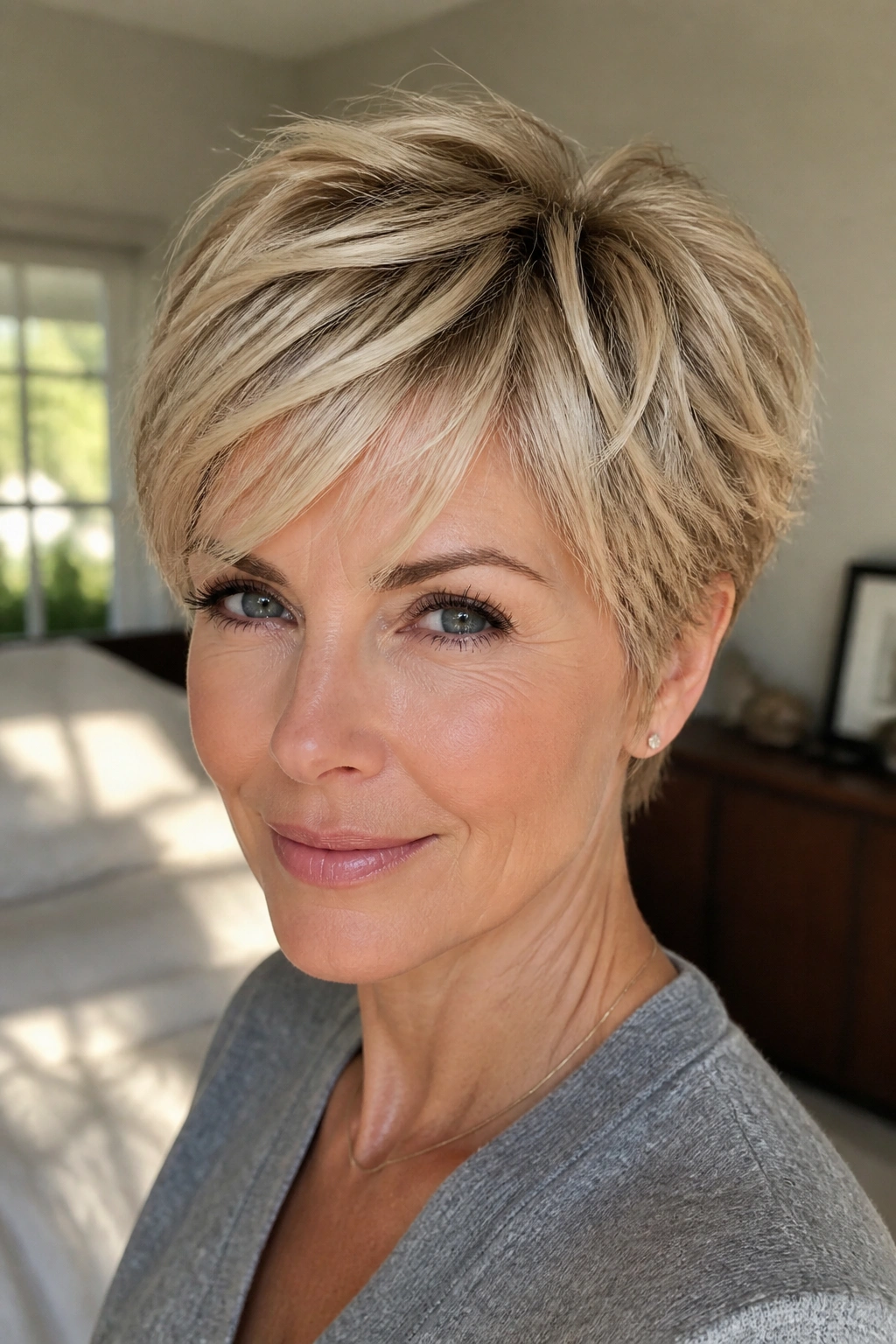
Color and cut work together more than people think. On a blonde feathered pixie, the lightness of the color helps every soft layer show up, which makes the texture look airy and deliberate.
That does not mean lighter is always better. One flat shade of pale blonde can make fine hair look thinner if there is no depth underneath. A better approach is a mix of light and slightly deeper tones — soft highlights, a few lowlights, and maybe a root shadow if the hair needs more visual density.
The shape should stay feathered around the crown and front so the color has something to catch on. A blunt, single-length pixie in a pale shade can look washed out. A feathered one has movement, and movement is what keeps it alive.
If you bleach fine hair, keep the condition in mind. Dry, overprocessed ends will make the layers look ragged instead of light. That is not the same thing at all.
16. Salt-and-Pepper Feathered Pixie
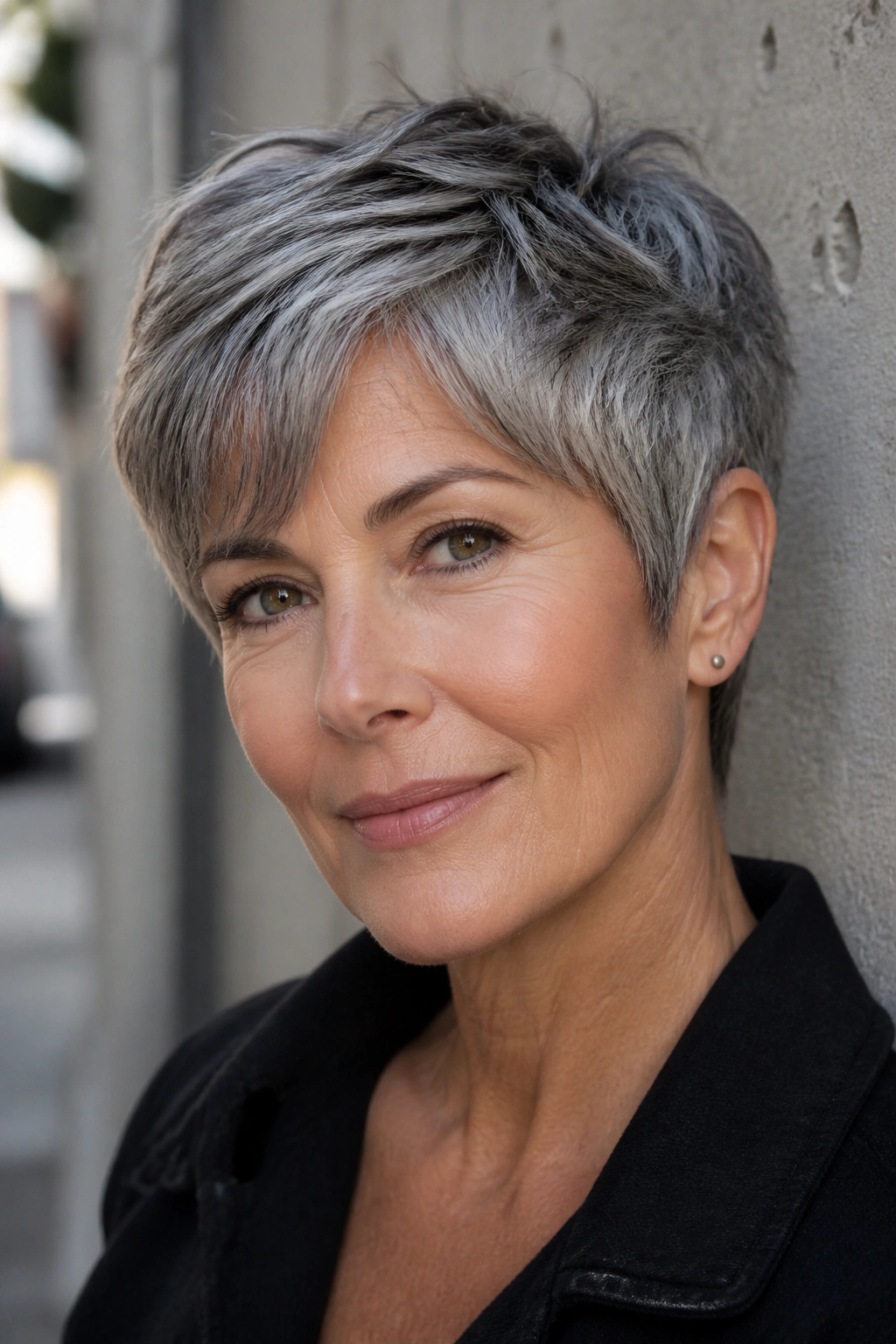
There’s something sharp and elegant about salt-and-pepper hair in a feathered pixie. The mix of silver, white, and darker strands gives the layers natural depth, so even a short cut can look rich and dimensional.
The Color Does a Lot of the Work
With this color pattern, the feathering reads clearly because every small shift in length catches the eye. The result is a shape that feels textured without needing heavy styling. That’s a gift for fine hair.
A soft, feathered fringe and lightly tapered sides help the natural color variation shine. Too much product can mute the contrast, so I’d keep things light. A small amount of cream or serum on the ends is enough.
What to Watch For
- Avoid heavy oils that flatten the silver tones
- Use purple shampoo only when brass starts showing
- Keep the haircut shaped around the crown, or the cut can look too flat
- Ask for soft edges rather than a blunt perimeter
This is one of those styles that looks better with a little movement. Static hair is the enemy here.
17. Feathered Pixie with Tucked Ears
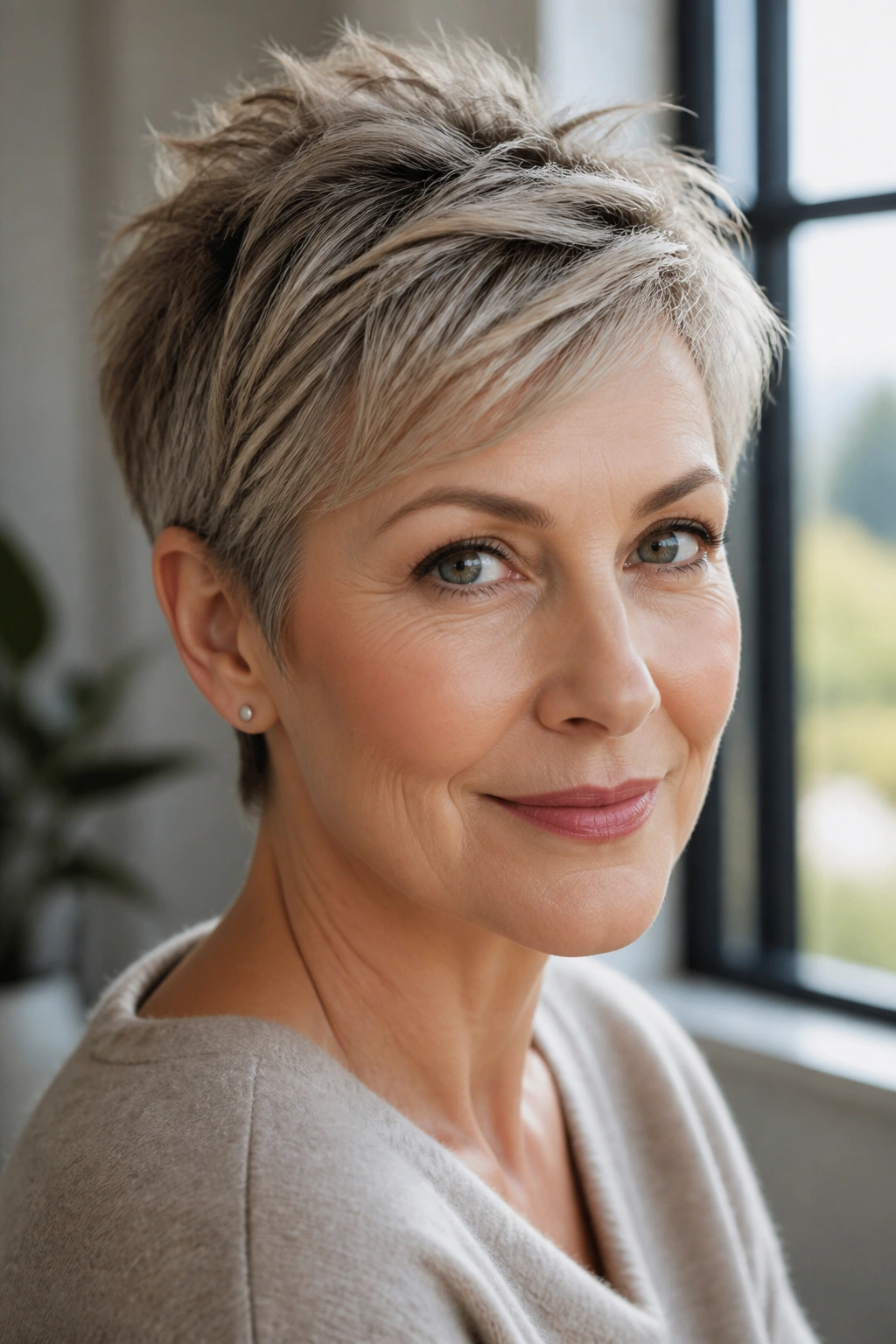
Tucking the hair behind the ears sounds small, but on a pixie it changes the whole mood. It opens the face, shows off cheekbones, and keeps fine hair from sitting too close to the jaw.
The feathering around the ears matters because it gives you something soft to tuck, not just a blunt chunk of hair. A slightly longer side panel can bend backward neatly, while the top stays lifted and loose. That contrast creates a nice, clean frame.
This is a good choice if you wear earrings, glasses, or sharp necklines. The haircut stops competing with the rest of your look. It simply supports it.
A side note: if your hair flips outward at the temples, a small round brush during blow-drying can fix that. Do not fight the hair after it dries. Set the bend while it’s still warm.
18. Airy Feathered Pixie with Razored Ends
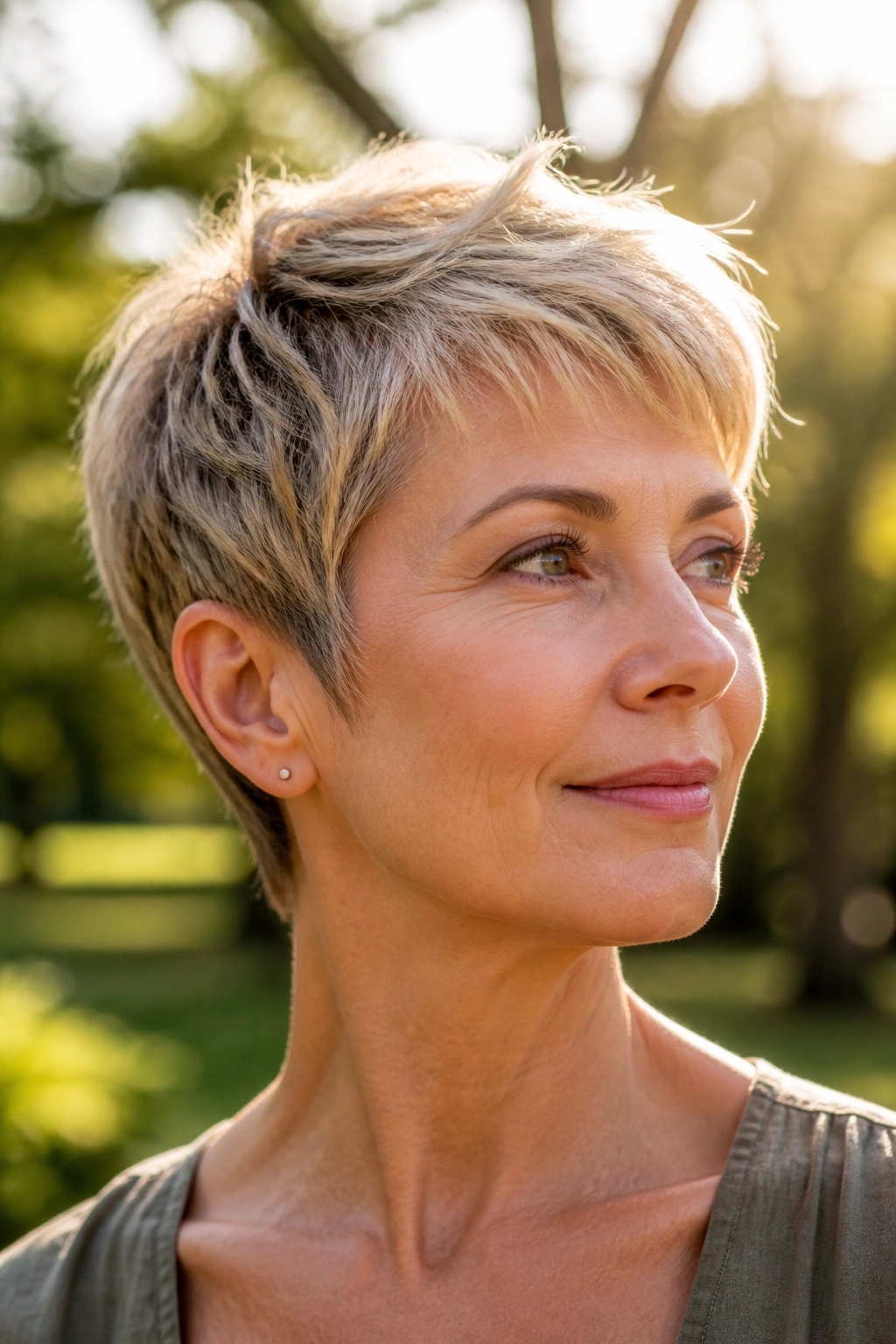
Razored ends can give a pixie a beautifully airy finish, but they need a steady hand. On fine hair, razor work removes weight fast, so the goal is softness, not starvation.
That distinction matters more than people realize. A little razor texture can make the ends flick and separate. Too much can leave the hair wispy in a weak way, especially at the perimeter. If the hair is already fragile or prone to split ends, a gentler scissor-cut feather may be safer.
Scissor Cut vs. Razor Cut
A scissor-cut feather tends to look cleaner and hold its shape longer. A razor cut feels lighter and a touch more broken up. For straight fine hair that wants movement, the razor can be lovely. For hair that’s dry or overly processed, it can be a bad trade.
Use this style when you want a fluttery edge and are willing to maintain the condition of the hair. A leave-in mist and occasional trim matter more here than they do with a blunt pixie.
19. Feathered Pixie for Glasses Wearers
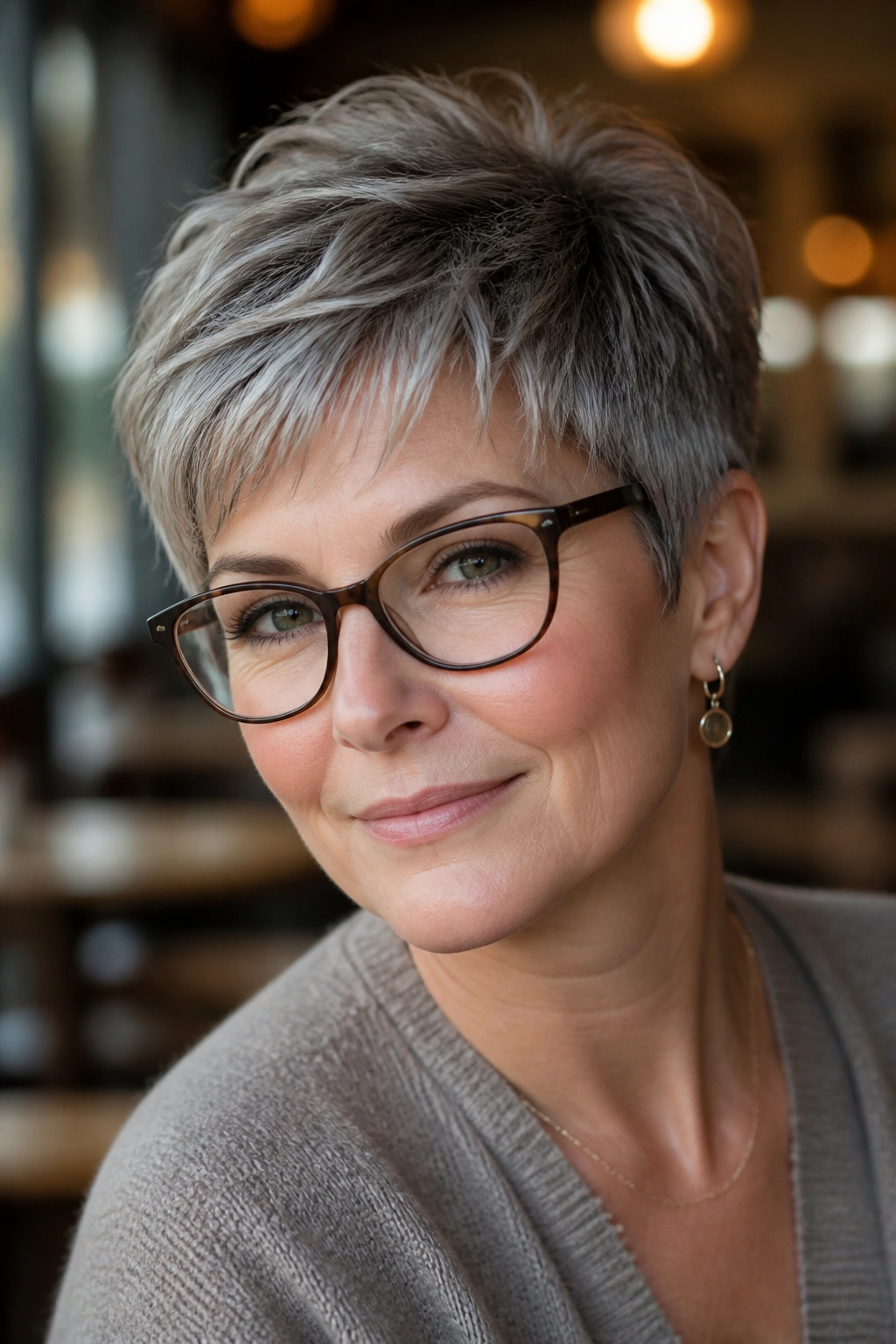
Glasses change the map of the face, and the wrong pixie can sit right on top of the frames in an awkward way. A feathered pixie solves that by keeping the sides soft and the fringe controlled, so the haircut works with the glasses instead of crowding them.
Frame Shape Changes the Cut
Thick, bold frames need a little breathing room at the temples. Lighter frames can handle more hair near the face. Either way, the goal is the same: keep the fringe from landing directly on the lenses, and keep the sides from fanning out into the arms of the glasses.
A feathered top helps here because it can be pushed back, swept over, or lifted slightly without much fuss. The cut should also stay light around the ears so the frames don’t catch on bulky side panels.
Styling Notes That Actually Help
- Dry the fringe away from the face first, then sweep it into place
- Keep a small comb in your bag for midday fixes
- Use a tiny amount of cream near the temples, not the roots
- Ask for cheekbone-skimming length if you want soft framing without lens contact
A good glasses-friendly pixie should look deliberate the moment the frames go on.
20. Low-Maintenance Feathered Pixie for Fine Hair
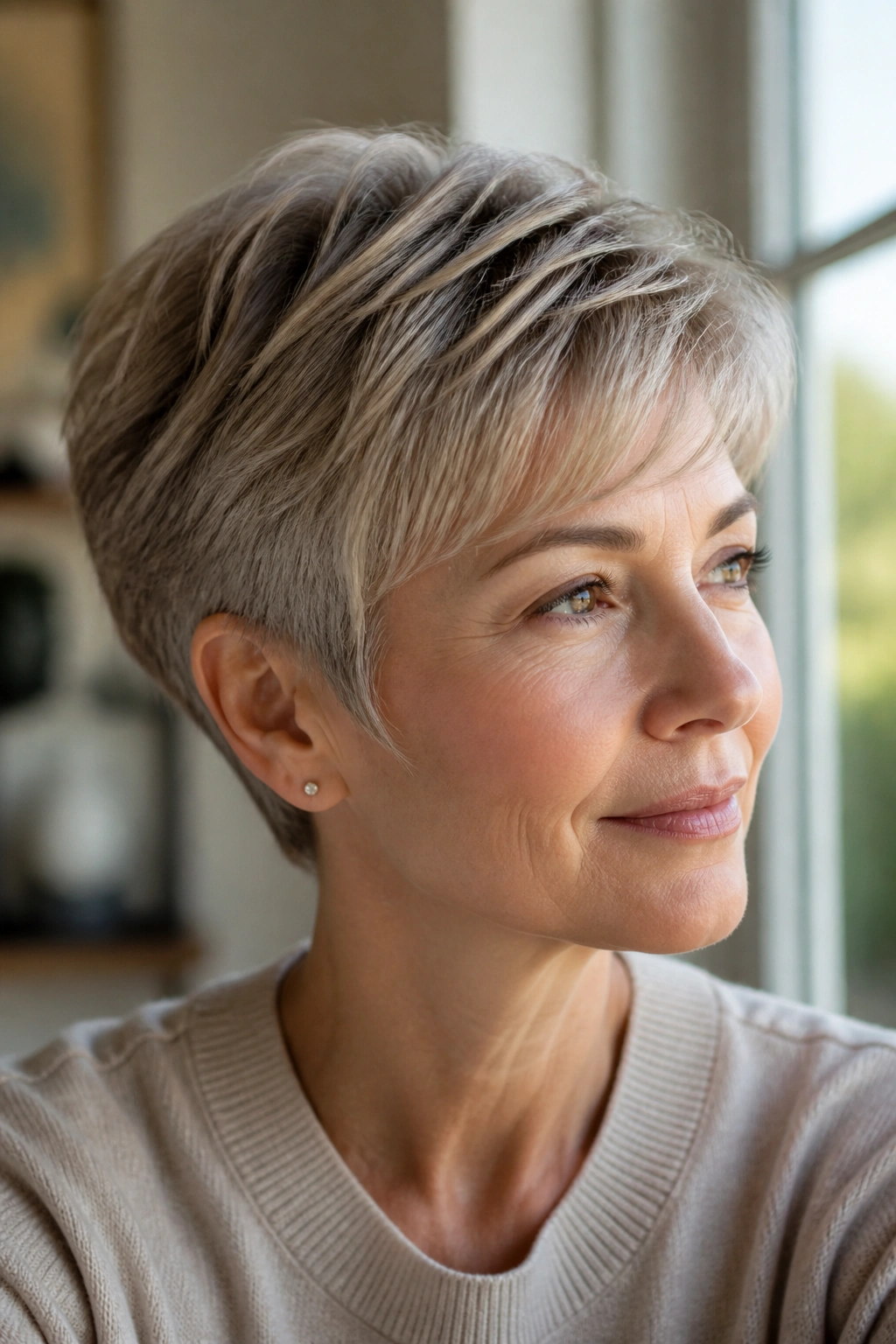
If you want a pixie that looks decent even when you do almost nothing to it, this is the one to ask about. The shape stays soft, the layers stay controlled, and the grow-out does not fall apart the second you miss a trim.
The secret is keeping the cut simple. A longer top, lightly feathered sides, and a clean but not severe nape will usually give the best balance. You want enough structure that the hair falls into place with a quick finger dry, but not so much detail that the haircut only looks good after a full styling routine.
My favorite thing about this version is how forgiving it is. On a busy morning, a little mousse and a rough blow-dry can be enough. On a better morning, you can smooth the front, lift the crown, and make the whole shape look intentional in ten minutes or less. That’s the sweet spot for fine hair: light, tidy, and not needy.
If you remember one thing, make it this — a feathered pixie for fine hair should create shape first and texture second. Get that part right, and the rest is mostly maintenance.
