



A ginger pixie cut can make fine hair look fuller than a longer cut ever does, but only if the shape is doing real work. Fine strands collapse fast. They love to separate, fall flat at the crown, and show every weak line in a blunt cut, which is why the best versions build lift where the eye wants to see it most.
That is the whole trick with ginger pixie cuts for fine hair: the color gives you warmth and dimension, while the cut gives you structure. Copper, auburn, cinnamon, and strawberry tones all catch light in slightly different ways, and a well-placed fringe or tapered nape can make the same head of hair look denser without making it look puffy.
Short does not mean thin.
Some pixies feel airy and soft. Others are sharper, more cropped, and a little cheekier. The right one depends on your hairline, your cowlicks, and how much styling you’re willing to do before coffee. A good short cut for fine hair should never ask you to fight the shape every morning; it should give you lift, movement, and a little attitude from the start.
1. Soft Copper Pixie With a Side-Swept Fringe
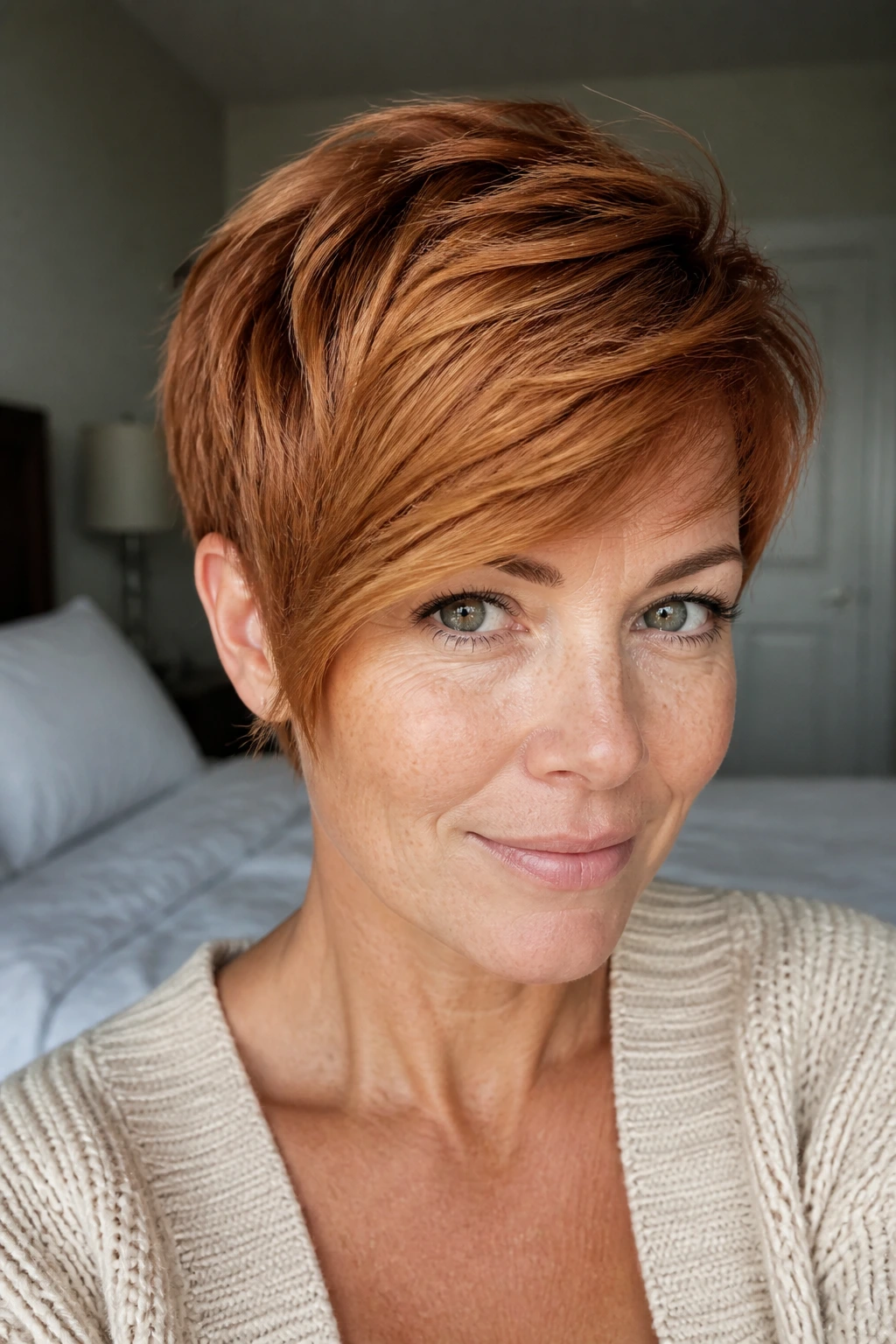
A soft copper pixie with a side-swept fringe is one of those cuts that makes fine hair look expensive without trying too hard. The side fringe creates a diagonal line across the forehead, and that diagonal line is doing more than most people realize. It breaks up the top surface, hides sparse spots at the front, and gives the crown a little room to rise.
Why It Works for Fine Hair
The crown should stay slightly longer than the sides, usually about 1 to 1.5 inches, so the hair can bend instead of lying like a cap. A side-swept fringe also helps because it doesn’t sit in one stiff line. It moves, and movement is your friend when the strands themselves are delicate.
The copper shade matters too. A soft, warm copper with a little gold in it reads fuller than a flat, one-note red. Fine hair can look see-through when the tone is too pale; a richer ginger keeps the cut from disappearing in bright light.
- Ask for a tapered nape so the back doesn’t bulge.
- Keep the fringe long enough to graze the brow, not cover the whole eye.
- Style with a pea-sized amount of mousse at the roots.
- Blow-dry the fringe first, while it’s damp, so it falls in the direction you want.
Tip: Flip the fringe to the opposite side while drying, then sweep it back. That small trick gives the front more lift than brushing it straight down ever will.
2. Choppy Micro Pixie in Bright Ginger
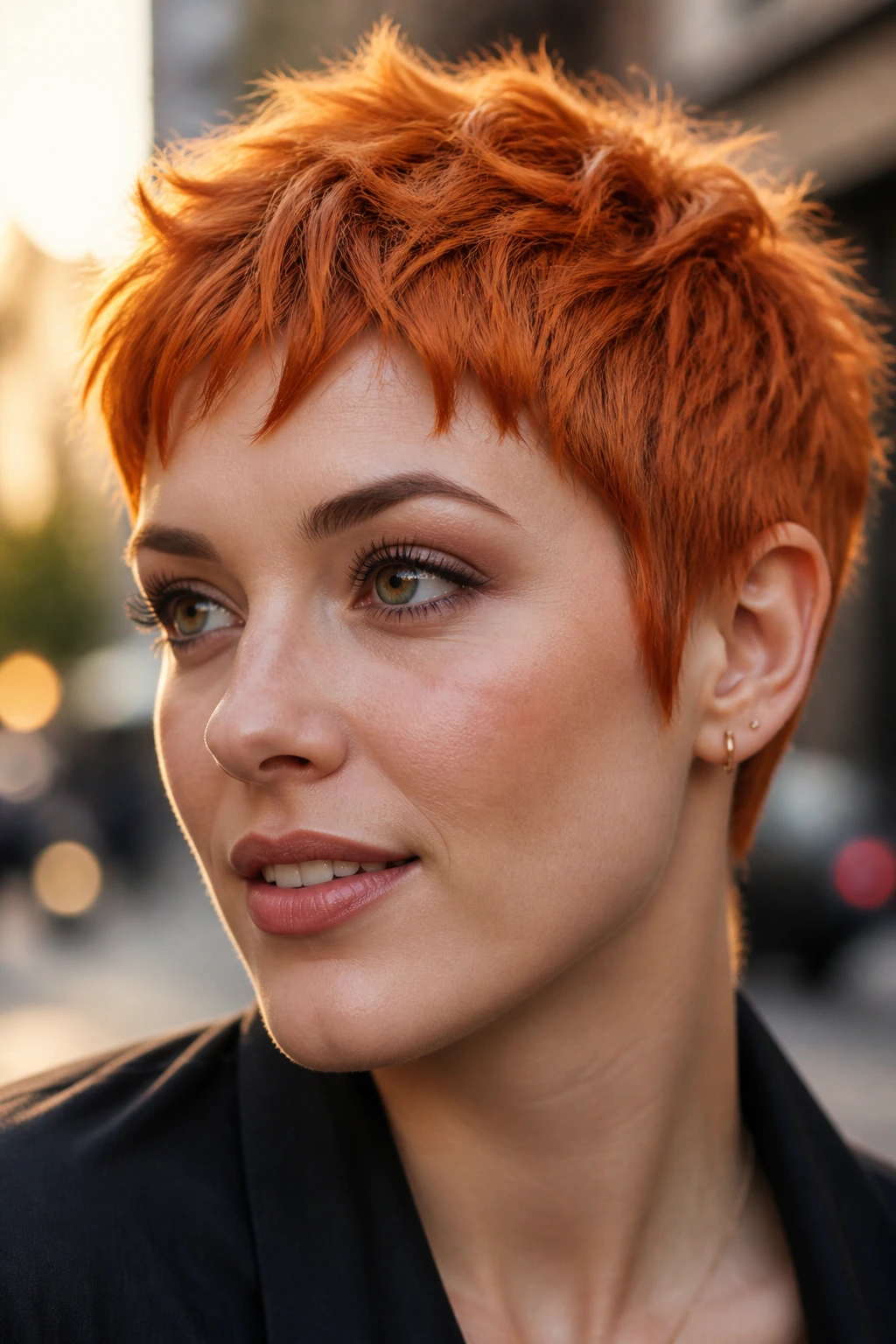
A choppy micro pixie is the haircut I reach for when someone says their fine hair goes limp the second they leave the house. It is short, sharp, and a little bit cheeky. The tiny broken-up layers keep the outline from looking heavy, and the bright ginger color adds enough punch that the cut never reads as plain.
What makes this one work is the separation. Fine hair often looks fuller when it is divided into small, uneven pieces rather than one smooth sheet. A matte paste on the ends is usually enough. Too much product, though, and the whole thing turns into a sticky little helmet. Nobody needs that.
This cut is best if you like a clean neck, a quick morning routine, and a shape that shows off earrings or a strong brow. It also works well when your hair grows fast, because the choppy texture hides the grow-out better than a blunt line does. Still, it is not the cut for someone who wants softness around the face. It leans crisp. A little bold. Very efficient.
3. Long-Top Pixie With Tapered Sides
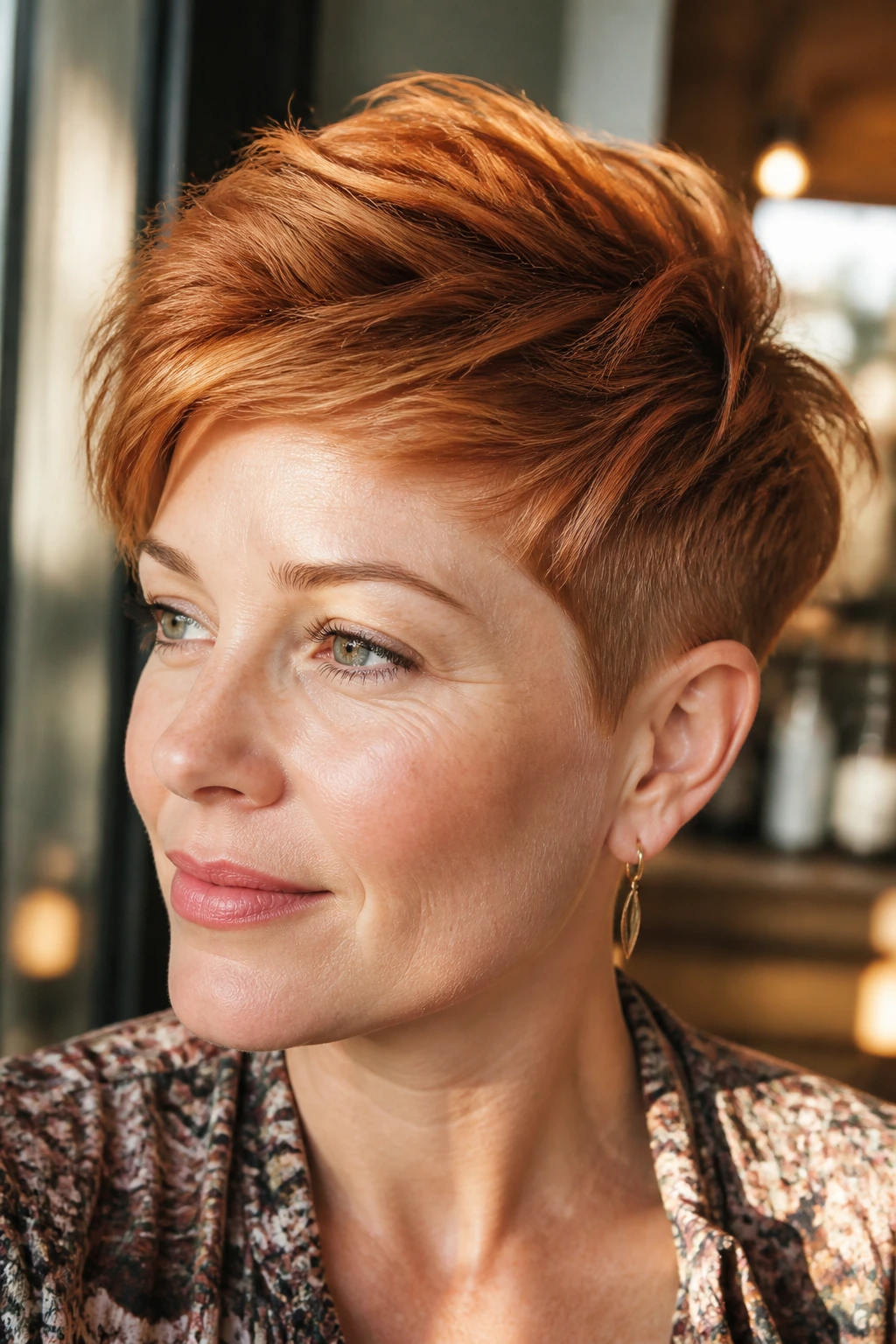
Why does this shape work so well on fine hair? Because it puts the bulk where you want it and removes it where you don’t. The top stays long enough to create lift, while the sides are tapered tight enough to keep the whole cut from drooping outward by midday.
That contrast is the point. Fine hair often needs a little visual tension to feel full, and this style gives it exactly that. The longer top can be pushed forward, swept back, or bent slightly to one side, which keeps the cut from feeling static. It also gives you more room to play if you like changing your part.
How to Style It
A round brush helps, but a small vent brush works too if you’re short on patience. Lift the crown while drying, then set the front section with a touch of heat so it doesn’t flatten against the forehead. A 1-inch barrel can add a soft bend through the top without making the shape too polished.
This version is especially good if your face is a little longer or your forehead feels wide. The extra length on top balances things out. The sides stay neat. The whole cut has a cleaner silhouette than a fluffier pixie, which is exactly why it works.
4. Feathered Auburn Pixie That Moves Instead of Sits Still

I love a feathered auburn pixie on hair that feels soft and slippery, because feathers give that kind of texture somewhere to go. Instead of stacking the ends into a hard block, the cut lets them flick away from the head in thin layers. Fine hair gets movement without losing shape. That is the whole win.
There’s a certain honesty to this cut. It does not pretend the hair is thick. It makes the most of what’s there. The auburn shade helps because it adds warmth near the roots and a little depth through the sides, so the ends don’t look like they vanish into the background.
- Ask for point-cut ends instead of blunt lines.
- Keep the nape soft, not shaved to the skin.
- Use a lightweight cream, not a heavy wax.
- Dry the top with your fingers first, then smooth the fringe with a brush.
The best part is how forgiving it is. If a piece falls loose, it looks intentional. If the front goes a little crooked, it still looks good. That makes this one a solid choice for anyone who wants a pixie that feels lived-in rather than sculpted.
5. Wispy Fringe Pixie With Root Shadow

A wispy fringe does something blunt bangs never quite manage on fine hair: it softens the face without stealing all the lift from the front. The pieces should be light, broken, and a little uneven at the ends. That unevenness is not a flaw. It is what keeps the fringe from looking heavy and boxy.
Root shadow matters here, too. A ginger pixie with a slightly deeper root reads fuller because the eye sees depth near the scalp and brightness toward the ends. The trick is keeping the root shade close to your natural depth, not jumping so dark that the whole thing turns muddy. A soft chestnut or cinnamon root usually blends better than a hard brown-black contrast.
This cut is quietly practical. It works when you want your forehead softened but you do not want the whole haircut to feel too styled. It also plays nicely with glasses, which can be awkward with a thick fringe. The wispy pieces sit lightly above the frames instead of fighting them, and that makes the whole face area feel open.
The only real caution is maintenance. Wispy bangs need trimming more often than side layers, or they start poking into the eyes in a way that looks accidental rather than relaxed.
6. Deep Side-Part Copper Pixie
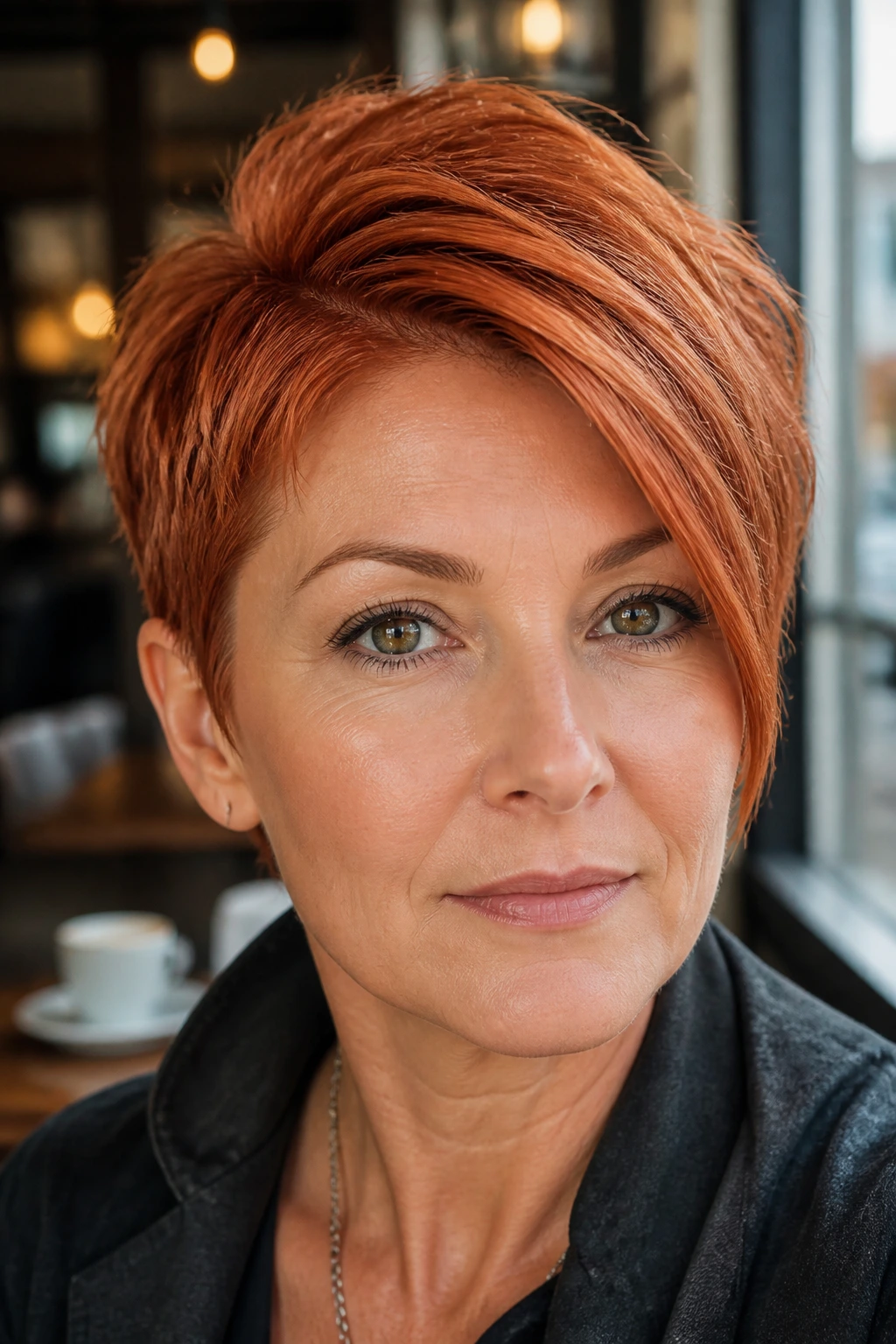
Unlike a center-parted short cut, a deep side-part copper pixie gives fine hair an immediate sense of density. The shift of weight to one side makes the hair look thicker at the root, because the eye sees a fuller mass where the part falls away. Simple. Effective. A little bit sneaky.
A deep side part also flatters fine hair that has a flat crown or one stubborn cowlick near the front. If you part exactly where the hair wants to collapse, the cut can go limp. Move the part about 2 to 3 inches off center, and the top suddenly has somewhere to live. That tiny move changes the whole outline.
This is a strong choice if you want a pixie that feels polished without looking stiff. The side with more hair can sweep over the temple, while the shorter side keeps the shape neat around the ear. I especially like it for someone who wears a bit of eye makeup or earrings, because the asymmetry gives those details room to show up.
A little root spray at the base of the part keeps the lift from falling apart. Don’t overdo it. Fine hair hates too much product, and a sticky crown is harder to fix than a flat one.
7. Curly Ginger Pixie for Fine Wavy Hair
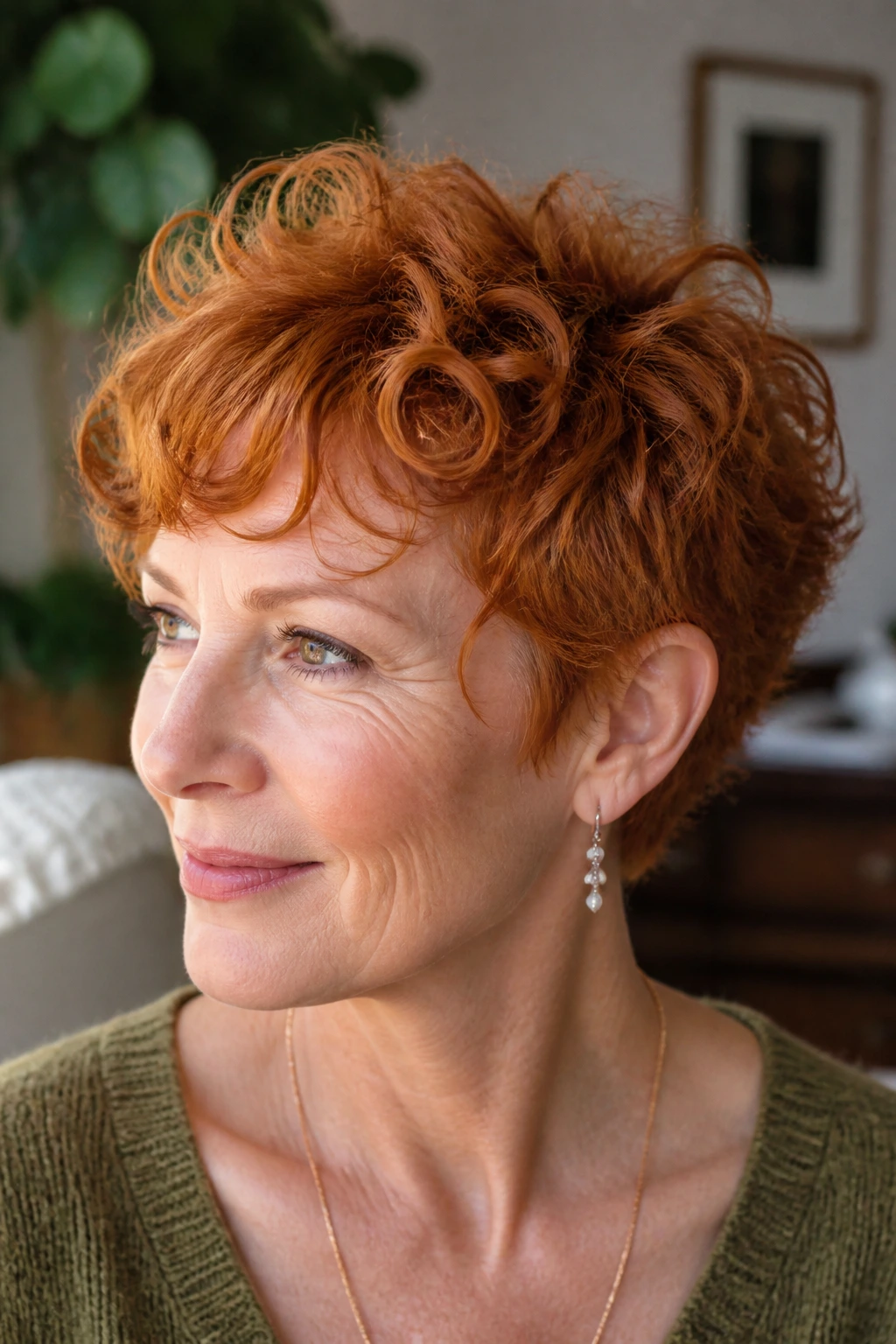
Can fine hair wear curls in a pixie without turning fuzzy? Yes, if the cut respects the wave pattern instead of chopping through it blindly. A curly ginger pixie works because the curl itself creates bulk, and the ginger color makes each bend catch the eye. You get shape and brightness at the same time.
The mistake people make is cutting fine waves the same way they cut straight hair. That usually ends badly. The curls spring up, the top goes shorter than planned, and the shape gets too round. A dry cut, or at least a cut that accounts for the natural bend of the hair, usually gives a better result.
What to Ask For
- Leave the crown a little longer so the waves can lift.
- Keep the sides soft, not carved too close.
- Use a curl cream that feels light, not buttery.
- Dry with a diffuser on low heat until the hair is about 80% dry.
There’s also a nice practical bonus here. When fine waves are cut properly, they can hide a lot of scalp show at the crown because the curls don’t lie flat against the head. That means less fuss with volumizing tricks and more actual shape. Which, frankly, is nicer.
8. Undercut Pixie With a Soft Crown
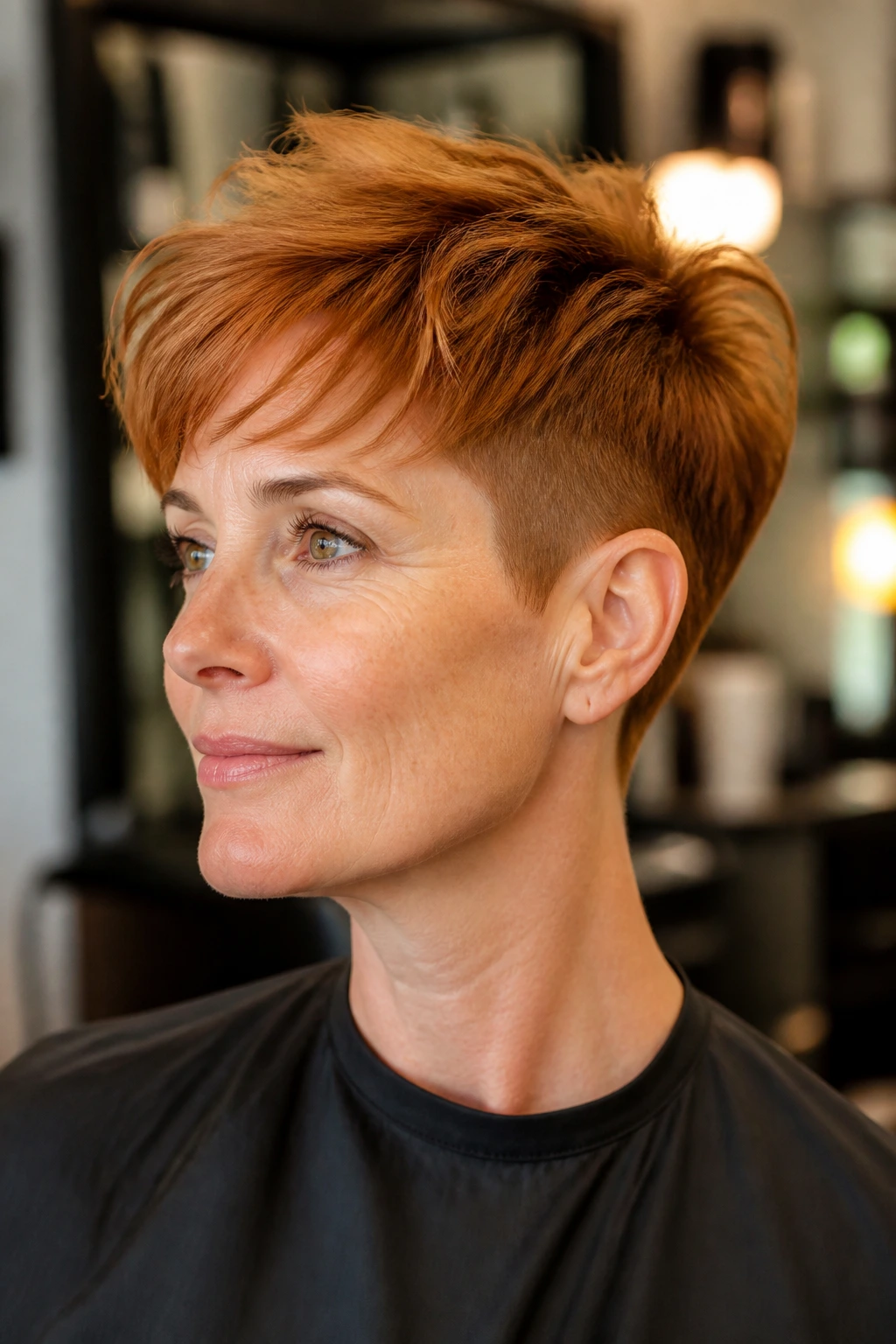
The undercut is not just an edgy move for thick hair. On fine hair, it can work like a reset button. By removing bulk underneath, you let the top layer sit higher and move better. The result is a crown that looks fuller even though there’s less hair on the sides and back.
What keeps this version from feeling harsh is the soft crown. You want enough length on top—usually 2 to 3 inches—so the hair can fall forward or to the side with some bend. If the top is too short, the undercut starts to show too much and the whole thing can look severe. That is not always bad, but it is a strong look.
This cut suits someone who likes a little contrast. Clean nape. Soft lift. Easy ears. It also works well if hair around the neckline tends to puff out, because the undercut removes that extra weight before it can misbehave. A dab of dry texture spray is often enough to keep the top looking airy.
I’d skip this one if your hairline is already very sparse around the temples. In that case, you want more softness at the sides, not less.
9. Layered Pixie-Bob in Ginger
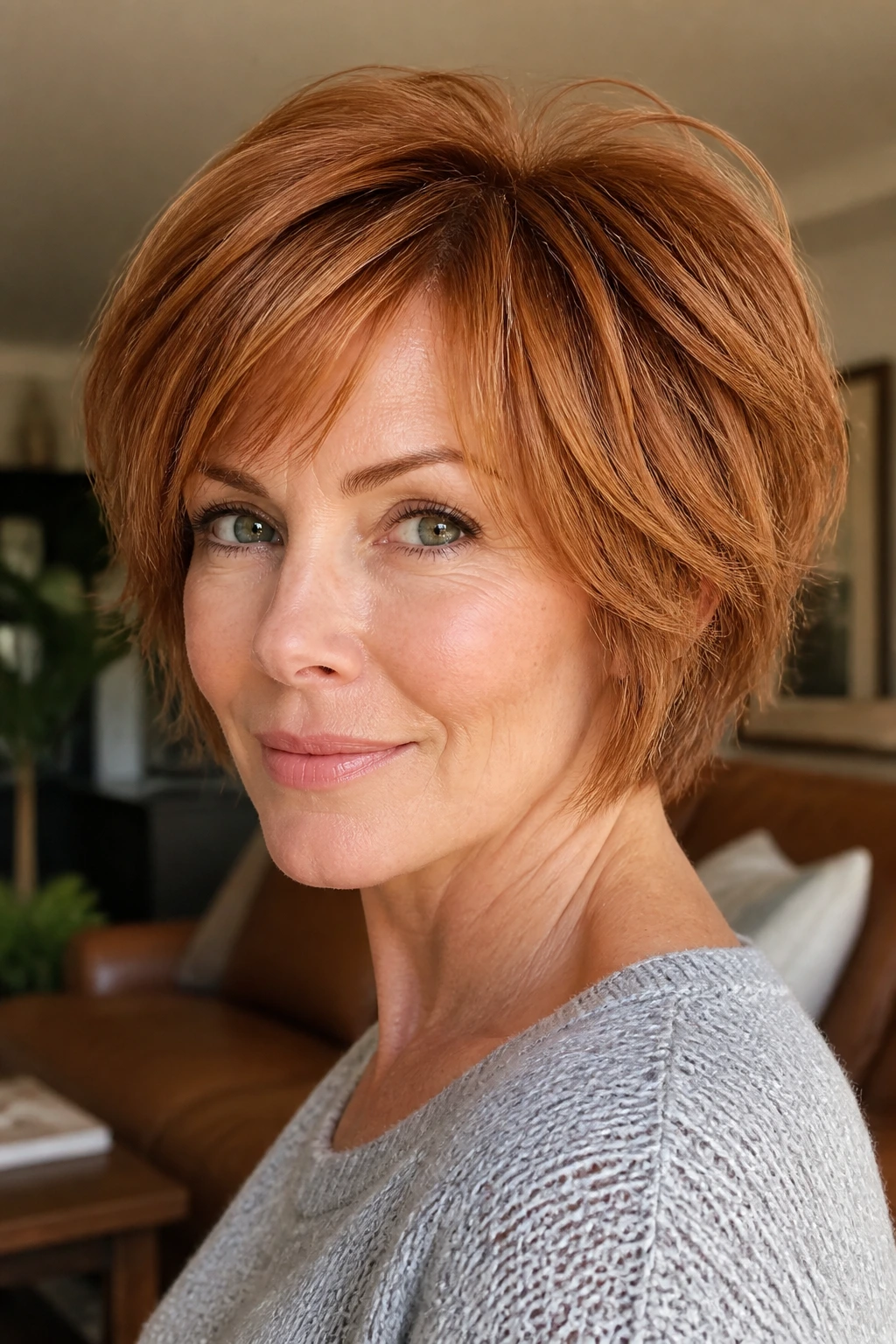
A layered pixie-bob is the compromise haircut for the person who wants the ease of a pixie but isn’t ready to lose all the length. It keeps more hair around the ears and jaw, which can be a gift for fine hair because the extra length gives the eye more to see. The ginger shade keeps the cut lively instead of shapeless.
This one is useful when you want volume without a hard short-crop edge. The top can sit around 3 to 5 inches, while the layers underneath stay light enough to prevent dragging. That balance helps the hair move instead of hanging in one flat sheet. And because the shape brushes the jawline, it can make a narrow face look a little more balanced.
The best version is piecey, not rounded. A rounded pixie-bob can look helmet-like on fine hair if the layers are too soft and too uniform. You want a little bend at the ends, a little tuck behind the ears, and enough separation that the style doesn’t feel frozen. A small amount of mousse at the roots and a quick finger-dry usually does the job.
If you are growing out a shorter cut, this is one of the least annoying stopping points.
10. Baby Bangs Ginger Crop

Baby bangs are not for everyone, and I like that about them. They are blunt enough to feel bold, but short enough to show the forehead and make the rest of the cut feel light. On fine hair, that can be a huge advantage, because a short fringe doesn’t steal density from the crown the way a heavy one can.
The trick is keeping the bangs soft at the edge. You do not want a hard, thick wall sitting across the forehead. A tiny bit of irregularity at the ends helps the fringe sit lightly, and it keeps the crop from looking too severe. The overall shape should still feel neat around the sides and nape so the bangs remain the focal point.
This cut looks especially good with a ginger tone that has a bit of brightness through the front pieces. The lightest strands near the bangs draw attention upward, which helps fine hair read fuller from the front. It is also a nice choice if you like glasses, because the shorter fringe leaves space for the frames.
The one thing I’d warn against is cutting baby bangs too short when the hair is very fine and springy. They can bounce up more than expected.
11. Slicked-Back Copper Pixie
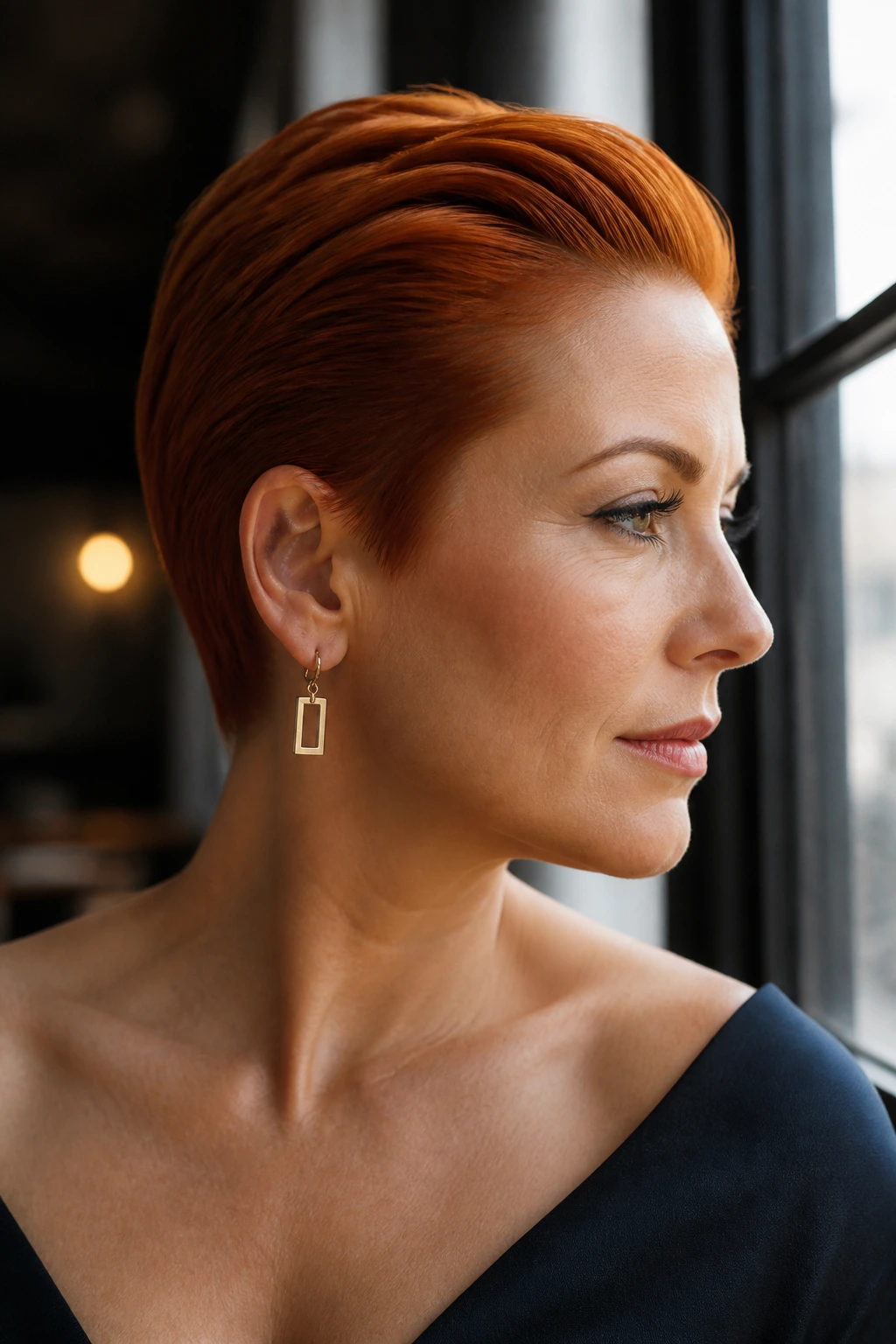
A slicked-back copper pixie is the cleanest way to make fine hair look intentional on a night out, or on any day you want the face to do the talking. Unlike a fluffy pixie, this one leans into shine and structure. The hair is smoothed back, the crown stays controlled, and the copper tone does a lot of the visual lifting.
What works here is the contrast between polish and smallness. Fine hair can look weak when it is left tousled without shape. Slicking it back gives it a purpose. The key is using a lightweight gel or cream that sets without going crunchy. Heavy oil will flatten the roots and make the whole style slip around, which is the opposite of what you want.
This cut suits strong cheekbones, clean jawlines, or anyone who likes a more graphic look. It also works better when the top still has enough length to bend backward without fighting the scalp. If the hair is too short, the slick-back can expose every tiny cowlick. If it’s too long, the style loses that neat, close-to-the-head line.
I like this one because it is honest. No pretending. Just shape, shine, and a little nerve.
12. Asymmetrical Ginger Pixie With a Longer Front
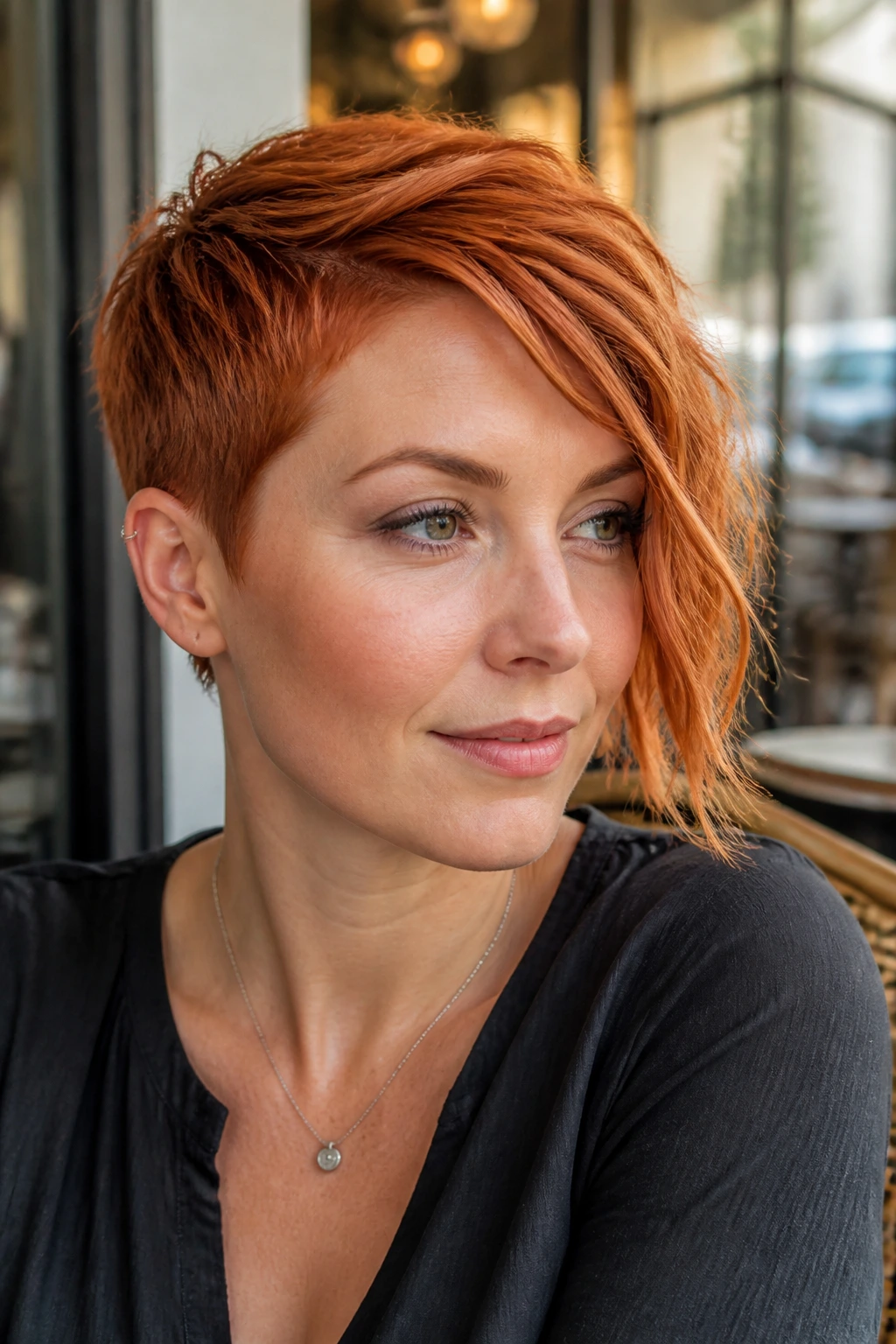
An asymmetrical pixie gives fine hair a visual trick that never gets old: one side carries a little more length, and the whole cut suddenly feels fuller and more interesting. The longer front piece pulls the eye forward, while the shorter side keeps the shape light around the ear. That uneven line does a lot of work.
Why It Flatters Fine Hair
The asymmetry breaks up the outline, which helps avoid that too-neat, too-thin look some short cuts can get. Fine hair often needs a line that feels deliberate but not rigid. A slight diagonal from the crown to the jaw does exactly that. It also works well if one side of your head is naturally flatter than the other, because the longer side can hide that difference.
How to Wear It
- Keep the longer front about 1 to 2 inches past the shorter side.
- Blow-dry the long piece forward first, then sweep it back.
- Use a tiny bit of wax only on the ends.
- Ask for soft texture at the top, not bulky layers.
This is one of those cuts that can look polished or messy depending on how you style it. Either way, the asymmetry gives the ginger color a better stage to play on.
13. Tapered Ear-Hugging Pixie
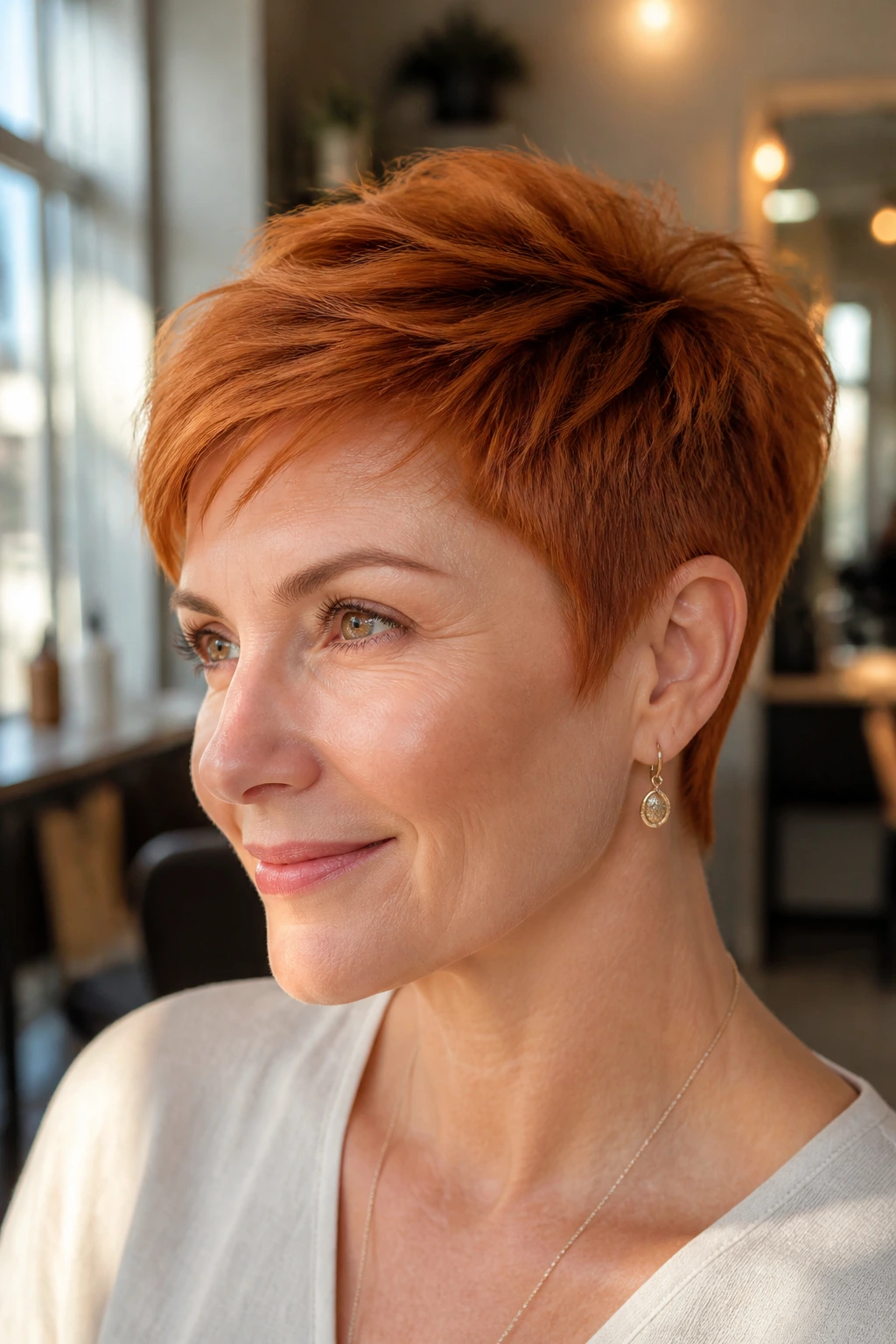
The tapered ear-hugging pixie is clean, sharp, and better than people expect for thin hair. Because the sides sit close to the head, the cut removes the puffiness that can make fine hair look uneven at the temples. The ear line stays neat, the nape stays narrow, and the crown feels slightly lifted by contrast.
This cut is a good fit if you want your features front and center. Earrings show. Glasses sit well. The haircut doesn’t compete with anything. That can be a relief if you’re tired of styles that require too much explaining or too much hand-fluffing in the mirror.
It also gives ginger hair a nice sculpted look. A warm copper or cinnamon tone against a close taper creates a clear shape without needing heavy styling. I’d choose this cut for someone who likes crisp outlines and regular trims, because the beauty of the shape depends on keeping the edges tidy. Once the nape grows out too much, the clean effect disappears fast.
One small warning: if your hairline around the ears is sparse, don’t over-taper the sides. You want close, not exposed.
14. Tousled Rose-Ginger Pixie With Airy Texture
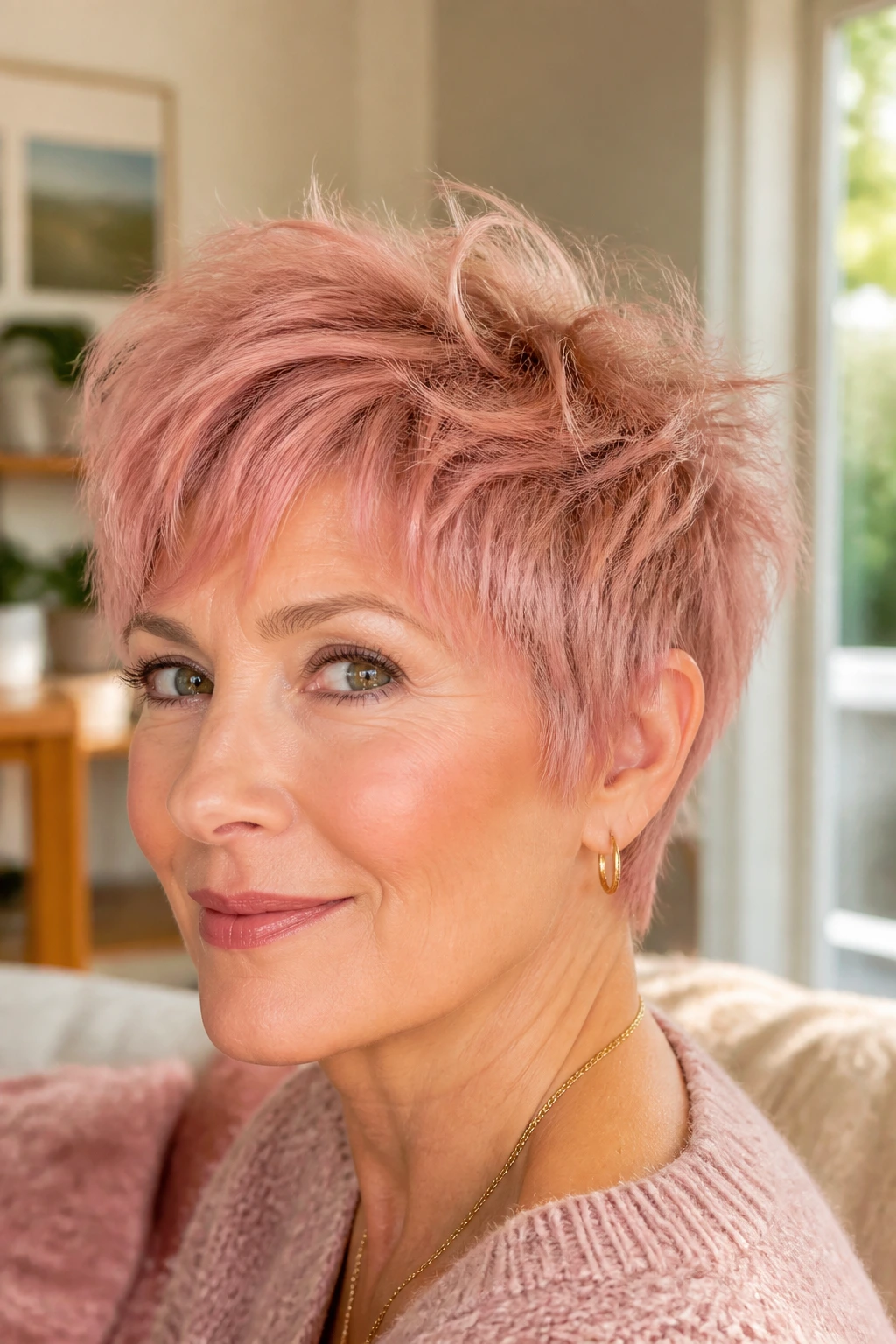
Why does a tousled cut work so well on fine hair? Because separation can fake thickness better than smoothness can. A rose-ginger pixie leans into that idea by making the texture part of the style. The color has a soft pink-copper note, and the shape has little lifted pieces that keep the head from looking too flat.
The best versions are cut with tiny, broken layers through the crown and front. Nothing too blunt. Nothing too heavy. You want the hair to fall in little pieces that can be pushed around with fingers and a dab of texture spray. Not salt spray, if you can help it. Fine hair often gets dry and scratchy with that.
How to Get the Most From It
Use a mousse at the roots on damp hair, then rough-dry until the hair is almost set. After that, pinch a few pieces at the front and top with a light cream or paste. The goal is a soft separation, not a crunchy finish. If the strands start to clump, you’ve used too much product.
This one feels playful. It’s less about precision and more about easy movement.
15. Piecey Crop With Micro-Layers
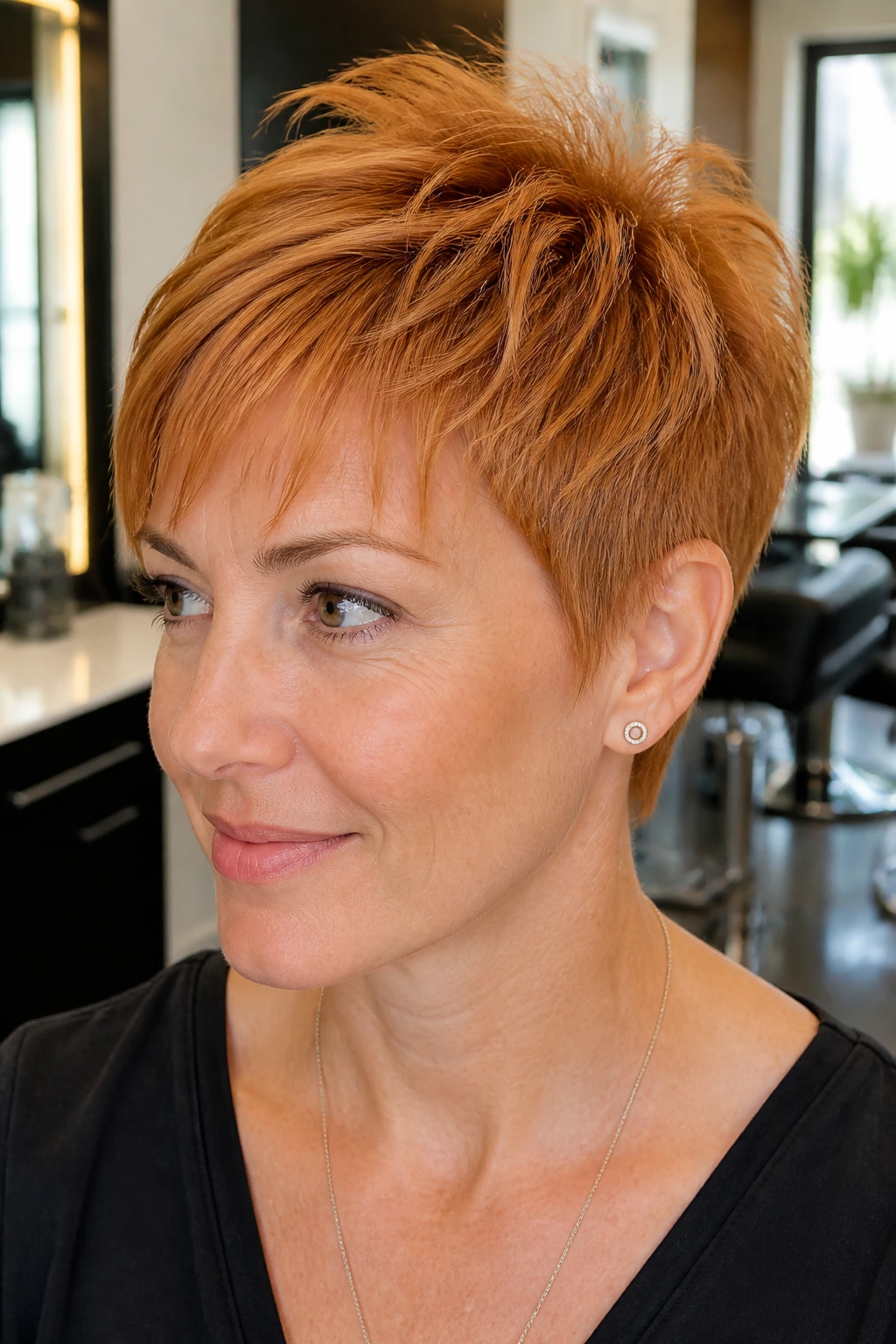
A lot of fine-haired people want body at the crown without ending up with a big puffy shape. Micro-layers solve that problem. They add tiny shifts in length—sometimes only a quarter inch or so—so the hair lifts without losing its outline. On a ginger crop, those small changes show up beautifully because the color catches each layer.
This cut is the one I’d point to for someone who likes the look of a short crop but hates the feeling of hair sticking to the head. The piecey texture gives the style breathing room. A little root lift spray, a little blow-dry with the fingers, and the whole thing gets that rough, airy finish that reads fuller in person than it does in a mirror photo.
- Ask your stylist for micro-layers through the top and crown.
- Keep the sides lightly tapered.
- Choose a matte finish if the strands are very thin.
- Avoid over-conditioning the roots the day you wear it.
The result is casual in the best way. It looks like hair that knows what it’s doing, even when you spent four minutes on it.
16. Brushed-Up Ginger Pixie
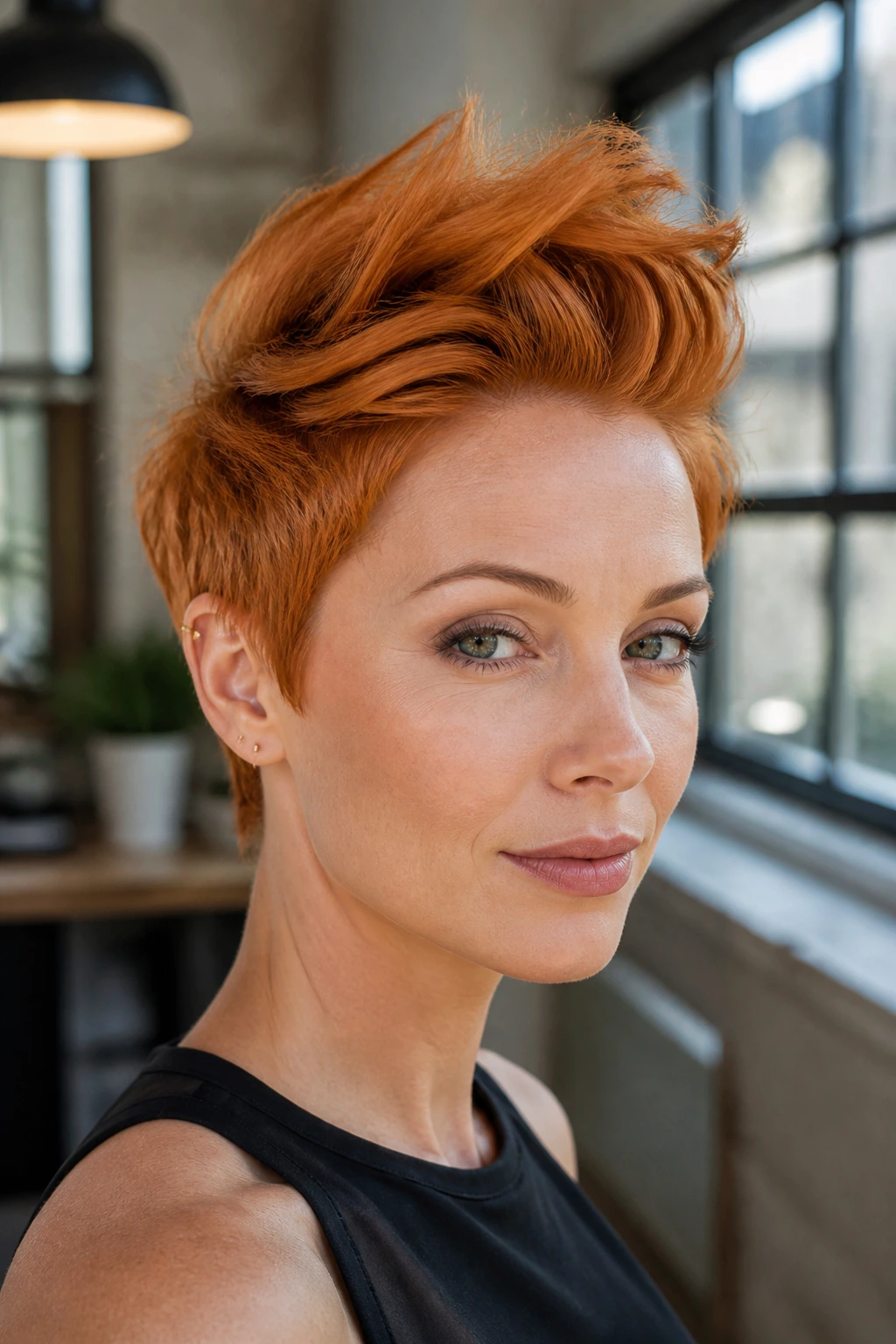
A brushed-up pixie is a strong move for straight, fine hair that refuses to hold volume on its own. The point is height. You build it at the roots, direct the top upward, and let the ginger color frame the shape so it doesn’t disappear into the scalp line. It’s a little dramatic, but not fussy.
What helps here is the front-to-back flow. Instead of pushing everything flat or sideways, you aim the hair up and slightly back. That makes the crown look fuller and gives the cut a lift that lasts longer than a side-combed style. A vent brush and a blow dryer usually work better than a round brush on very fine strands, because the vent brush lets air move fast without pulling too hard.
This cut can look especially good if your face is longer or your forehead is narrow. The extra height adds balance. It also works well with a bold lip or clean brows, because the hair doesn’t steal the whole show. A tiny bit of volumizing powder at the roots can help, but use sparingly. Too much and the hair gets gritty fast.
It’s not the softest pixie in the bunch. That’s the point.
17. Strawberry Copper Pixie With Longer Temples
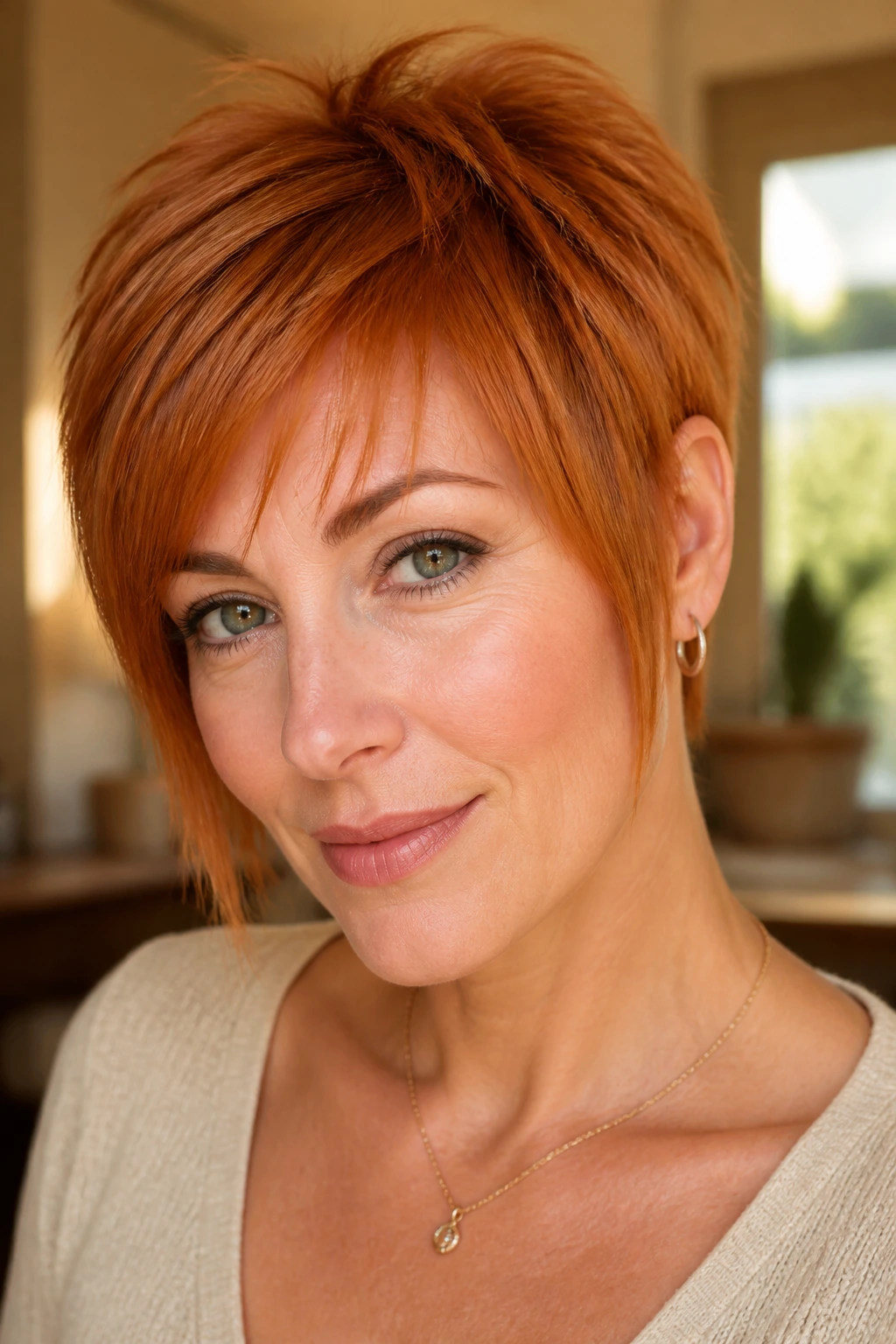
A strawberry copper pixie with longer temples is one of the more flattering short cuts for fine hair because it softens the sides without making the whole shape heavy. The longer temple pieces sit near the cheekbone and jaw, which can be useful if the face needs a little framing or the temples feel sparse.
This version works because it keeps the front area alive. Fine hair can sometimes look almost too minimal around the hairline when it’s cut very close, so those longer temple pieces add a gentle cushion. The strawberry-copper tone does even more work here, because the lighter red-gold blend brightens the face without needing extra length.
I like this cut for heart-shaped faces and anyone who wants a feminine line without going full bob. The temples can be tucked behind the ears or left loose, depending on the day. If you want a little more polish, smooth the top with a soft cream and leave the temples piecey. If you want it messier, pinch the front pieces and let them fall where they want.
The style is easy to overcut, though. Keep the temple length. That’s the charm.
18. Shaggy Ginger Pixie With a Feathered Nape
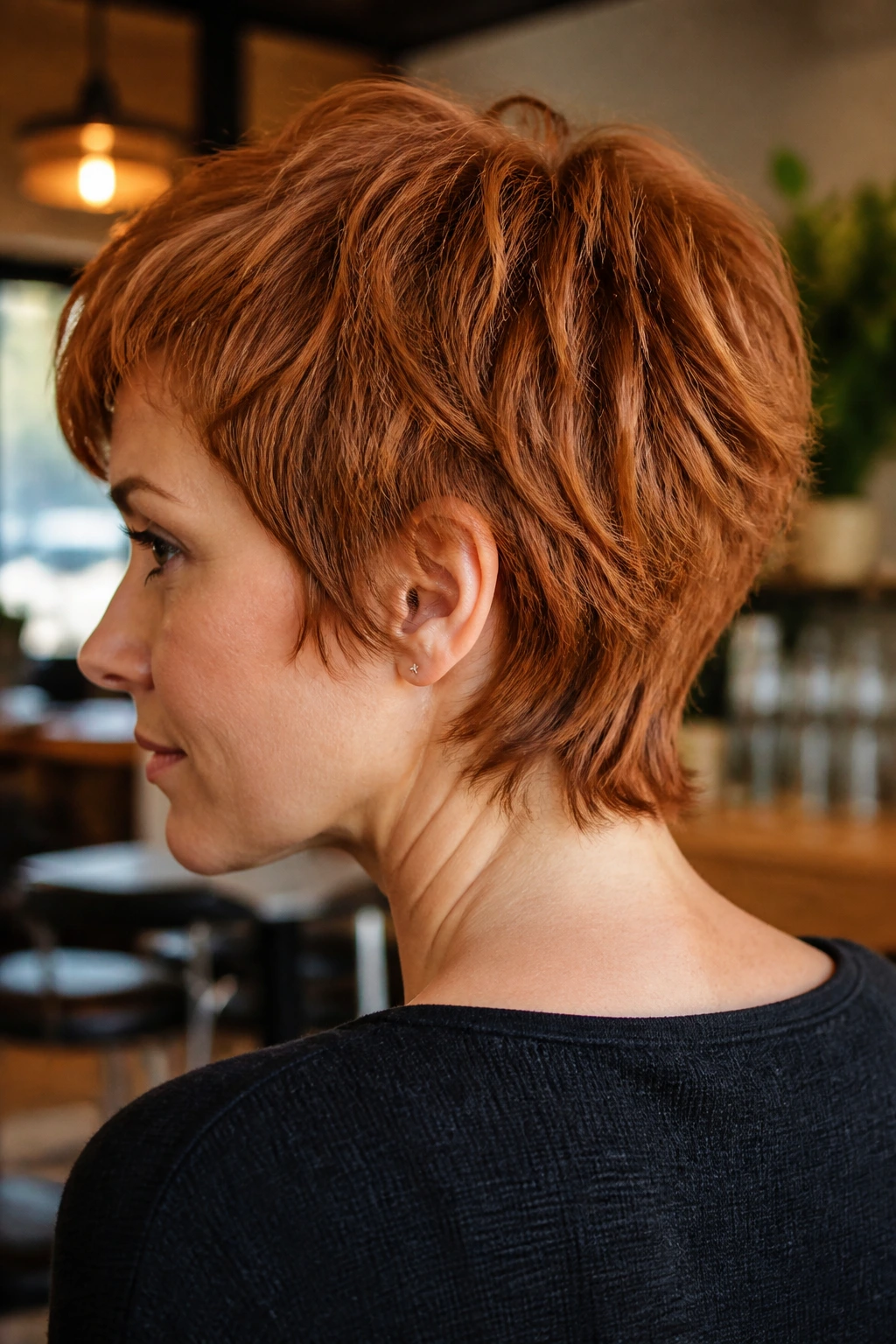
Shaggy and fine hair can sound like a bad match. It isn’t. A shaggy ginger pixie works because the feathered layers create movement without asking the hair to be thick. The nape stays soft and broken up, so the back doesn’t sit as one hard line, and the crown gets enough texture to avoid collapsing.
Why It Doesn’t Collapse
The answer is in the layer balance. The top should stay a touch longer than the sides, and the nape should be cut in tiny, feathered pieces instead of one blunt sweep. That keeps the whole cut lighter and more mobile. Ginger color helps too, because the warm tone reveals the texture instead of hiding it.
What to Ask For
- Soft layers at the crown, not chunky steps.
- A feathered nape that hugs the neck.
- Ends that are point-cut, not razor-thinned to death.
- A styling cream with light hold, used only from mid-length to ends.
This is one of my favorite choices if you want a pixie that feels a little artsy but still wearable. It has edge, but not a lot of maintenance baggage.
19. Soft Mulberry-Ginger Pixie
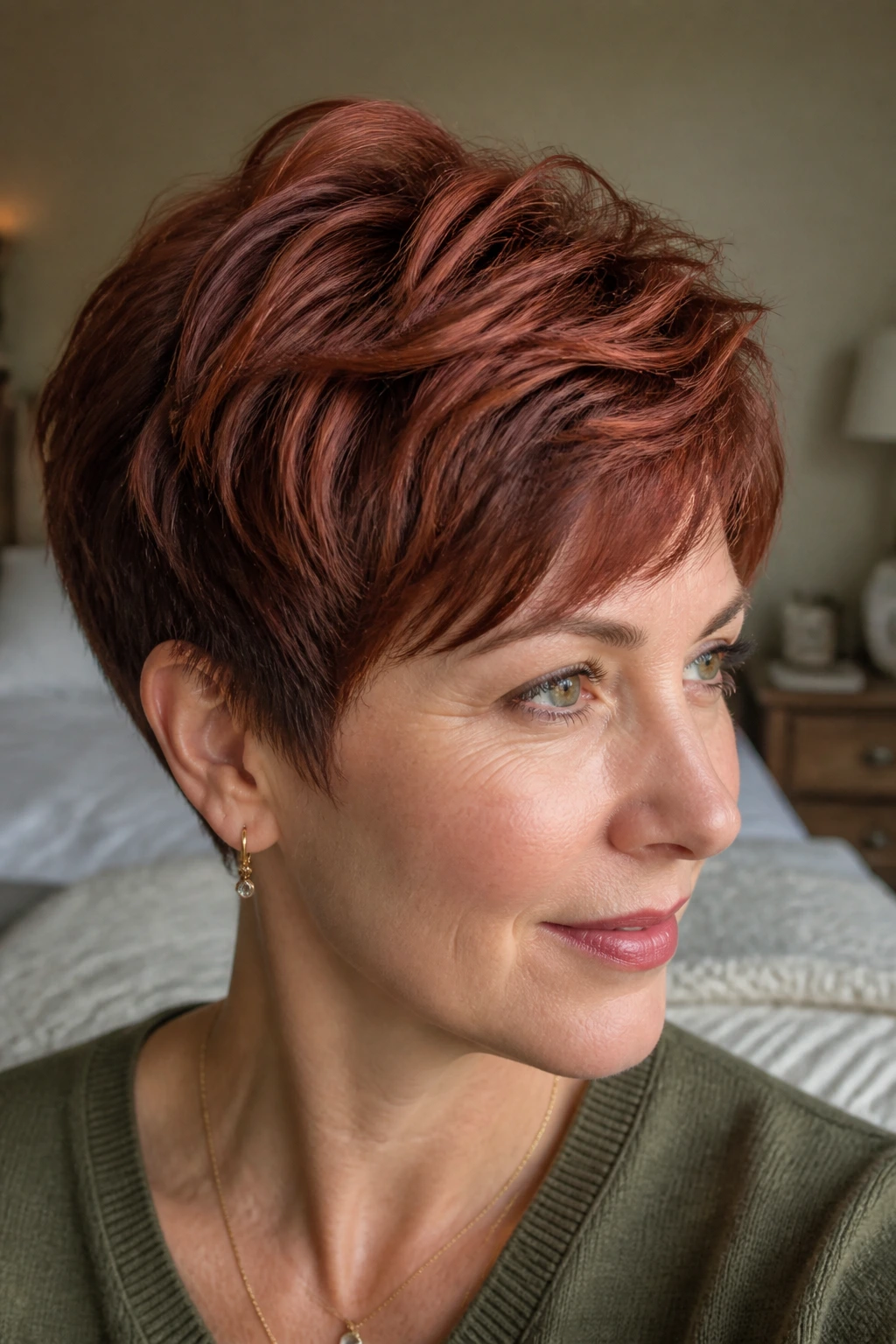
A deeper mulberry-ginger mix can make fine hair look denser than a pale copper because the color has more contrast built into it. That contrast matters. The eye reads depth near the roots and brightness on the surface, which gives the hair a fuller look even before you style it. It’s one of the smartest color choices for short hair that tends to go translucent in bright light.
The cut itself should stay soft around the crown and temples. You don’t want the color doing all the work while the shape disappears. A slightly rounded top with a tapered nape works well here because it lets the darker tones sit underneath and the brighter ginger pieces catch the top layer. It’s subtle, but not boring.
This is also a good option if you like richer reds but don’t want the haircut to feel loud. The mulberry note adds depth without turning the whole thing burgundy. On fine hair, that extra depth can be the difference between a cut that looks airy and one that looks empty. I’d keep styling simple: a light root spray, fingers, and maybe a small round brush for the fringe.
The color does half the lifting. That’s worth repeating.
20. Clean Taper Pixie for Thin Hair
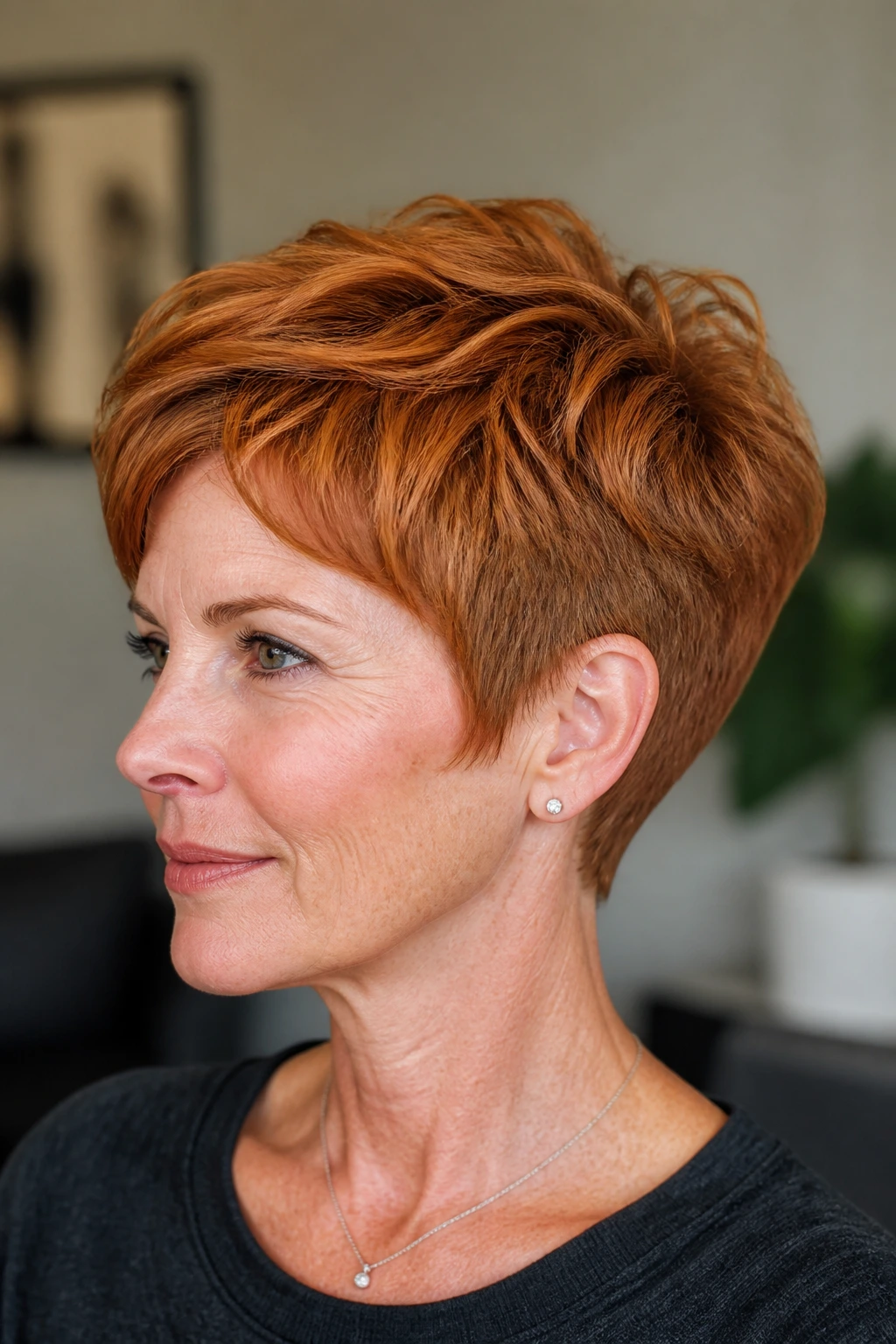
What if you want the least fussy option of the bunch? Go for the clean taper. It’s neat at the nape, tight around the ears, and slightly longer through the crown so fine hair has somewhere to sit. The ginger tone keeps the shape from feeling severe, which is a real risk with very short cuts on thin strands.
The reason this works is straightforward. Thin hair usually looks best when the outline is tidy and the top has enough length to suggest body. A clean taper gives you both. You can wear it smooth, brushed forward, or lightly tousled, and it still holds its shape because the sides are controlled. That matters more than people think. A messy short cut on fine hair can look accidental fast.
I’d choose this one if you wear glasses, have a busy routine, or prefer a cut that looks good after a fast blow-dry and not much else. It also grows out in a cleaner way than many sharper pixies, which means fewer awkward weeks between trims.
If you’re torn between two styles, pick the one that gives you the most lift at the crown and the least bulk at the nape. That balance is what makes fine hair look deliberate instead of fragile.
