



Fine hair and a pixie cut are a better match than most people think. The right shape can make soft strands look fuller, cleaner, and far more intentional than mid-length layers that fall flat by noon.
The catch is that fine hair is not the same thing as thin hair. Fine hair refers to strand diameter; you can have a lot of it and still get that limp, see-through effect if the cut is too wispy or the layers are too aggressive. A pixie works when it builds structure where your hair naturally wants to collapse—at the crown, along the fringe, and around the face.
I’ve always thought the worst advice for fine hair is “add more layers.” Sometimes that helps. Sometimes it turns your ends into dry little feathers and strips away the only density you had left. The better move is usually smarter weight placement: keep enough length where the eye needs it, remove bulk where it drags, and avoid over-thinning the whole head.
That’s the real trick with pixie cuts for fine hair. You want shape, not fluff. And the difference between the two is often one good inch in the right place.
1. Soft Layered Pixie for Fine Hair
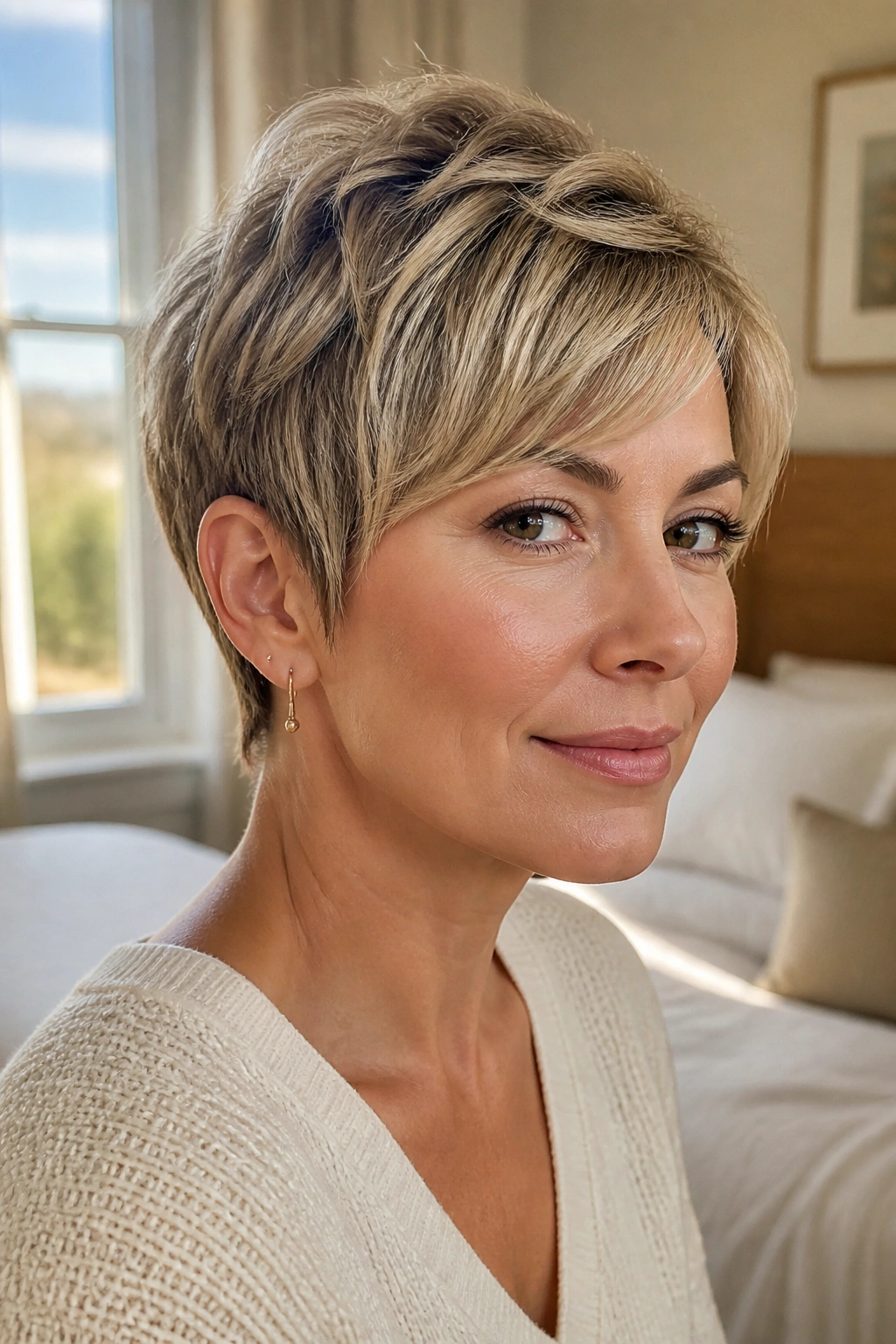
This is the pixie I’d hand to someone who wants movement without gambling with density. The layers are soft, the outline stays clean, and the cut keeps enough length to make fine hair look like it has some body left in it.
Why it works
The best version keeps the shortest layers near the crown and cheekbone area, not all over the head. That gives you lift where you can see it and preserves a little weight around the sides so the haircut doesn’t vanish in bright light. If your hair tends to separate into wisps, this shape holds together better than a heavily razored crop.
A stylist should use light point cutting rather than aggressive texturizing shears. That matters. Heavy thinning can make the ends look frayed, and frayed ends are the enemy when your hair is already fine.
- Ask for a soft perimeter around the ears and neckline.
- Keep the top long enough to pinch between your fingers when styling.
- Blow-dry with a small round brush or your fingertips for root lift.
- Finish with a pea-sized amount of matte paste, warmed in your hands first.
Best tip: if your hair lies flat in the back, let the crown stay a touch longer than you think. That extra half-inch changes everything.
2. Tapered Pixie for Fine Hair
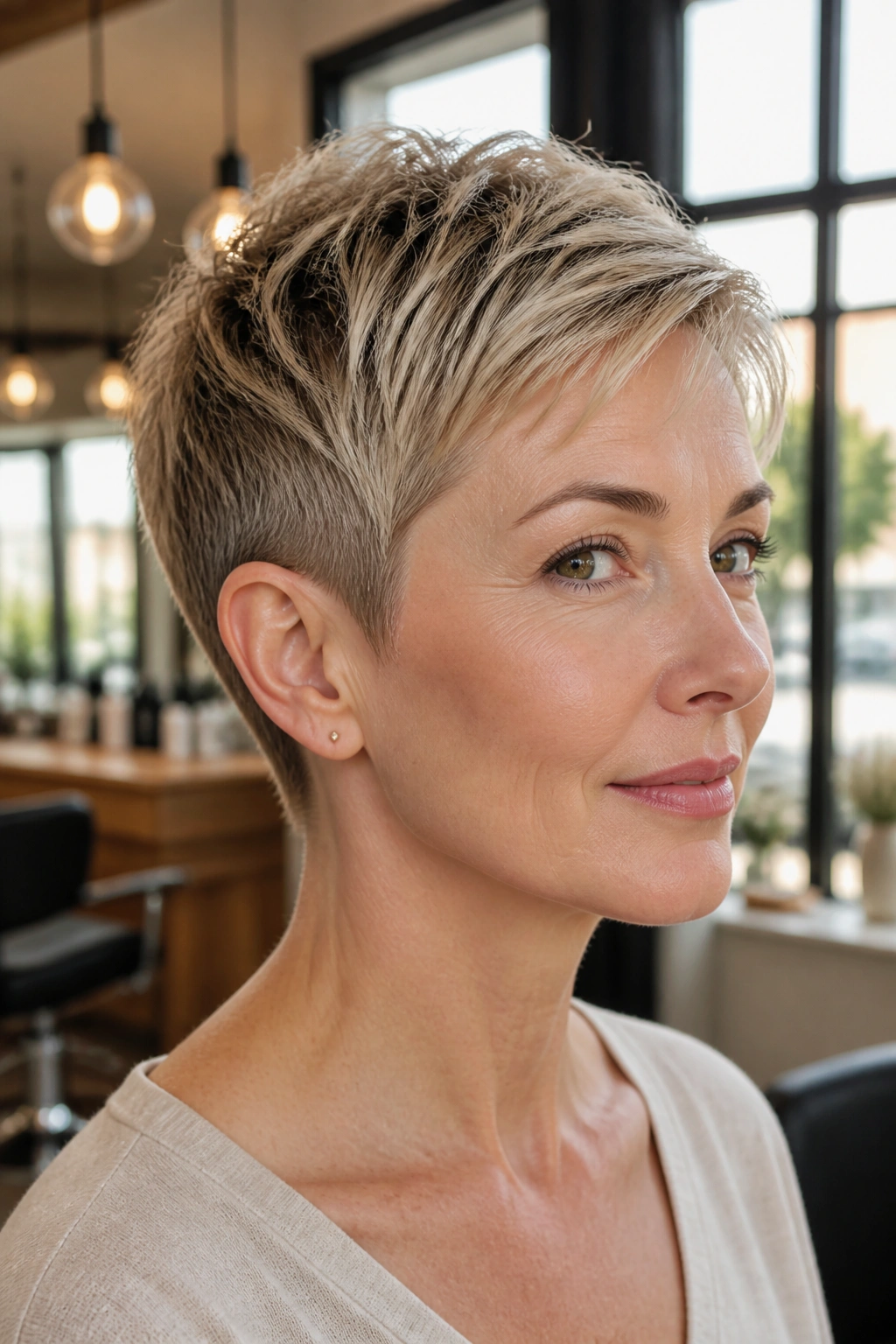
A tapered pixie is the haircut equivalent of a good tailor. The sides and nape sit close to the head, but the shape keeps a little expansion through the top so the whole cut feels sharper, not smaller.
The reason this looks so good on fine hair is simple: clean tapering removes the stragglers that make soft hair look messy before noon. The neckline gets neat. The ears get a tidy frame. The top gets to do the visual lifting. If you’ve ever felt like your hair disappears at the bottom and puffs out in the wrong place, this cut solves that problem without needing a ton of styling.
I like this one on people who want an easy morning routine. It still needs a quick blow-dry, sure, but not much else. A little root spray at the crown, a fast blast with the dryer, and maybe a touch of cream on the ends if they get dry. That’s enough.
It does need maintenance. A tapered shape grows out bluntly at the neck if you leave it alone too long, and fine hair shows that faster than thicker hair does. Every four to six weeks keeps the outline crisp. Wait longer, and the elegance turns fuzzy. Fast.
3. Side-Swept Fringe Pixie for Fine Hair
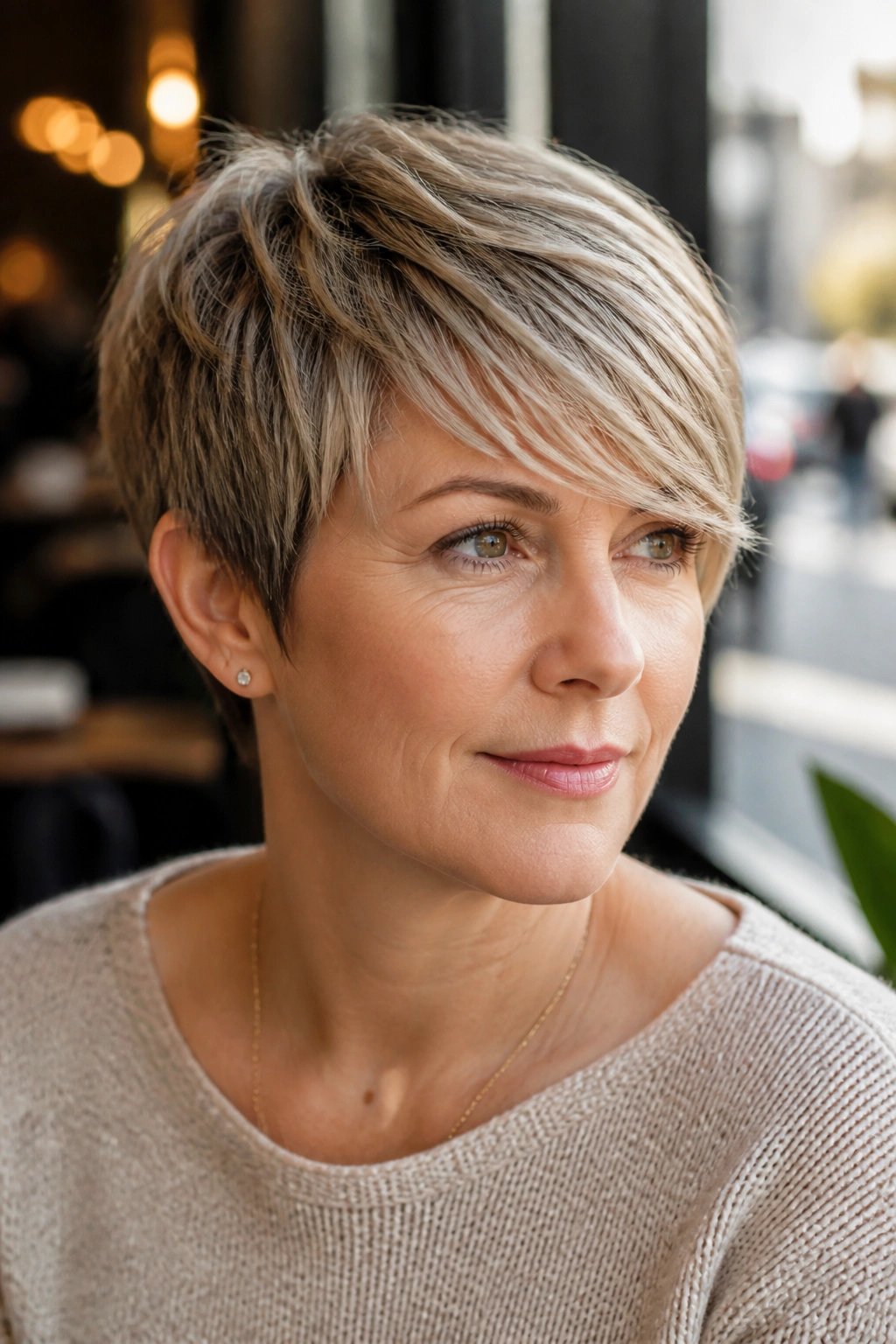
Can a side-swept fringe make fine hair look thicker? Yes, and the reason is more interesting than it sounds.
A side-swept fringe gives the eye a diagonal line to follow, which makes the front of the haircut feel fuller. Straight-across bangs can work too, but they ask more of the hair’s density. A diagonal fringe is kinder. It lets the front move instead of sitting there like a flat strip.
How to wear it
The fringe should start slightly deeper on one side and sweep across the forehead with a soft bend, not a stiff shell. Think length that grazes the brow or sits just above it, depending on your face shape. If it’s too short, the cut can feel severe. If it’s too long, it collapses into the cheek.
A quick styling trick helps a lot here:
- Blow-dry the fringe in the opposite direction first.
- Sweep it back across with a round brush or fingers.
- Let it cool before you touch it again.
That little reset gives the hair a bend instead of a crease.
For fine hair, the fringe is often the most visible part of the cut. Treat it like a feature, not an afterthought. A good side-swept pixie can make the whole haircut look denser than it really is.
4. Choppy Piecey Pixie
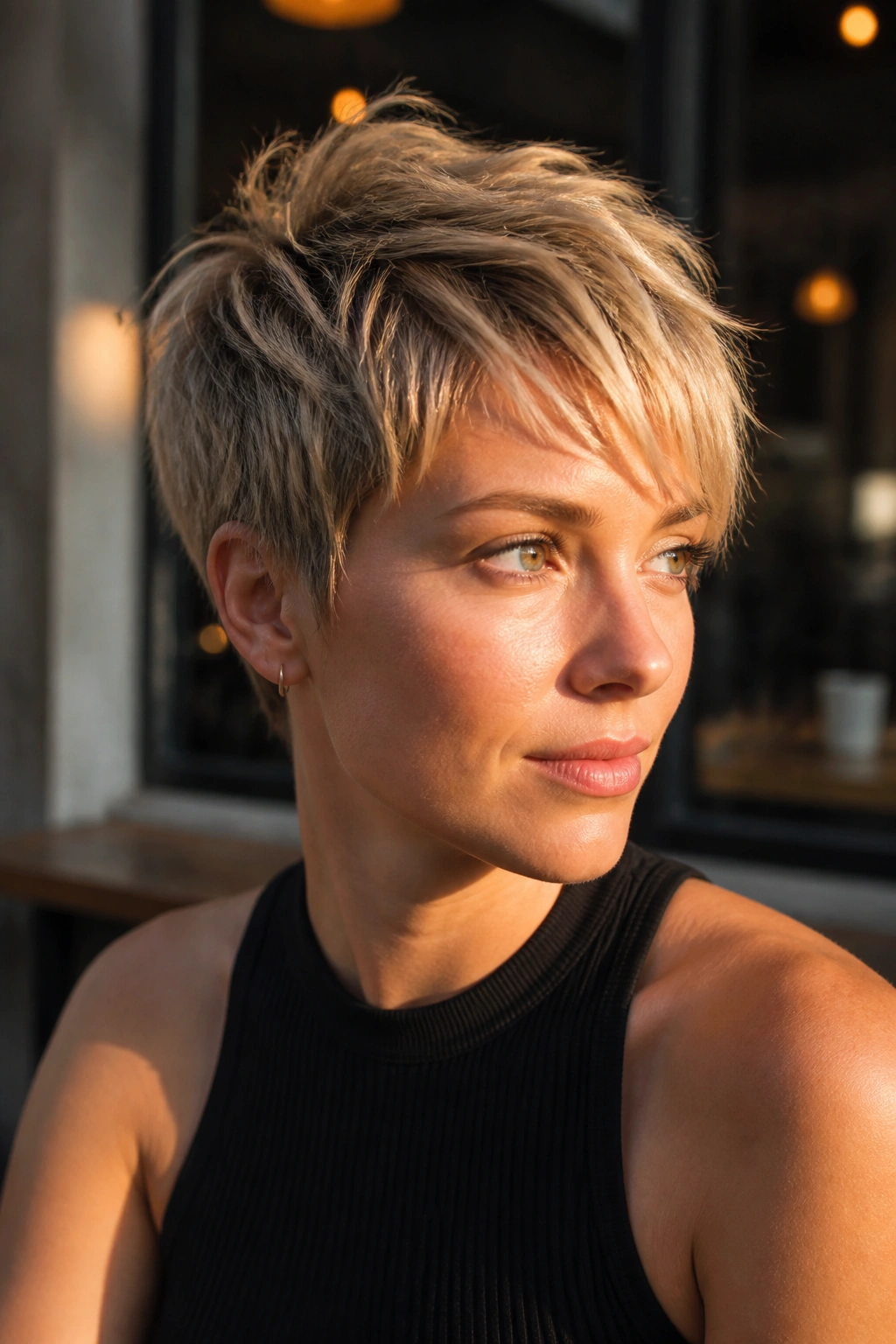
If your hair goes limp the second humidity enters the room, a choppy piecey pixie can save you a lot of frustration. It breaks the shape into visible sections, which gives fine hair a sense of texture even when the strands themselves are soft.
I’ve seen this cut rescue hair that looked too “nice” in the wrong way. Too smooth. Too obedient. Fine hair like that often needs a little disruption so it stops lying in one flat sheet. The choppy version does that by leaving tiny differences in length through the top and fringe.
What to ask for
- Short, broken layers through the crown.
- Slightly longer pieces at the front for movement.
- Minimal thinning at the ends.
- A soft edge around the nape so it does not look choppy everywhere.
A texturizing spray helps, but don’t hose your hair down with it. Fine hair can go sticky fast, and then the pieces stick together in a way that looks greasy instead of separated. One or two sprays at the roots and mid-lengths is usually enough.
The best thing about this style is that it forgives a messy finish. It actually looks better with a little imperfection. That’s rare with short hair.
5. Long-Top Pixie
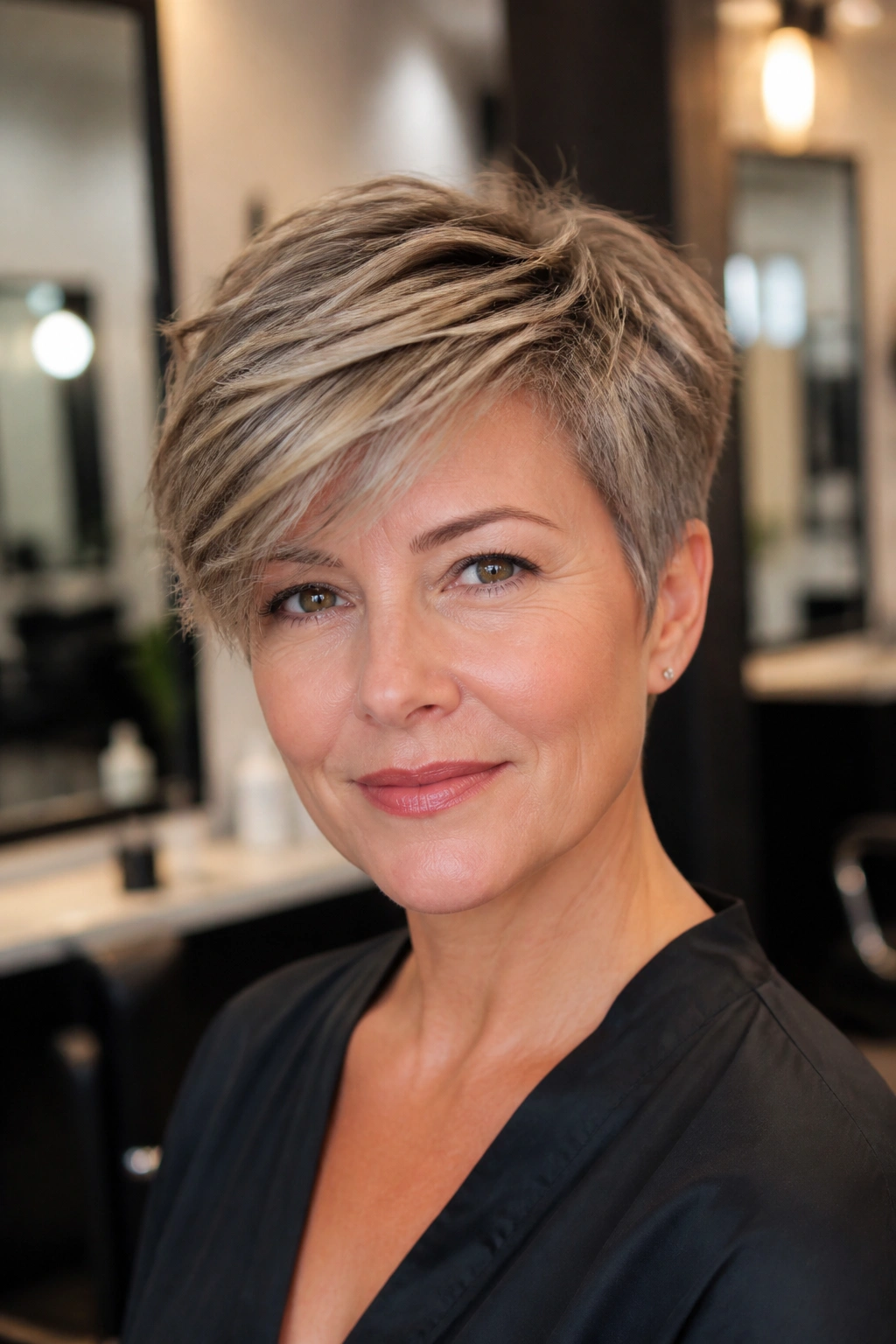
A long-top pixie is the one I’d point to if you’re nervous about going too short. It keeps the sides neat and the back light, but leaves enough length on top to brush forward, over, or slightly upward depending on your mood.
Unlike a super-close crop, this version gives fine hair a little more room to pretend it’s fuller than it is. And I mean that in the nicest possible way. A longer top creates shadow and movement, which both help the haircut look more substantial from the front.
It’s also one of the easiest pixies to grow out. That matters more than people admit. If you’re testing short hair for the first time, a cut that can drift toward a bob without a weird middle stage is worth its weight in gold.
Ask your stylist to keep about 2 to 3 inches on the top if your hair is very fine, maybe a touch longer if your face is longer and you want a little softness. The sides can still be trimmed close. That contrast is what makes the shape work.
This is the kind of pixie that can be blow-dried sleek one day and tousled the next. It gives you options, and with fine hair, options are not small.
6. Feathered Pixie
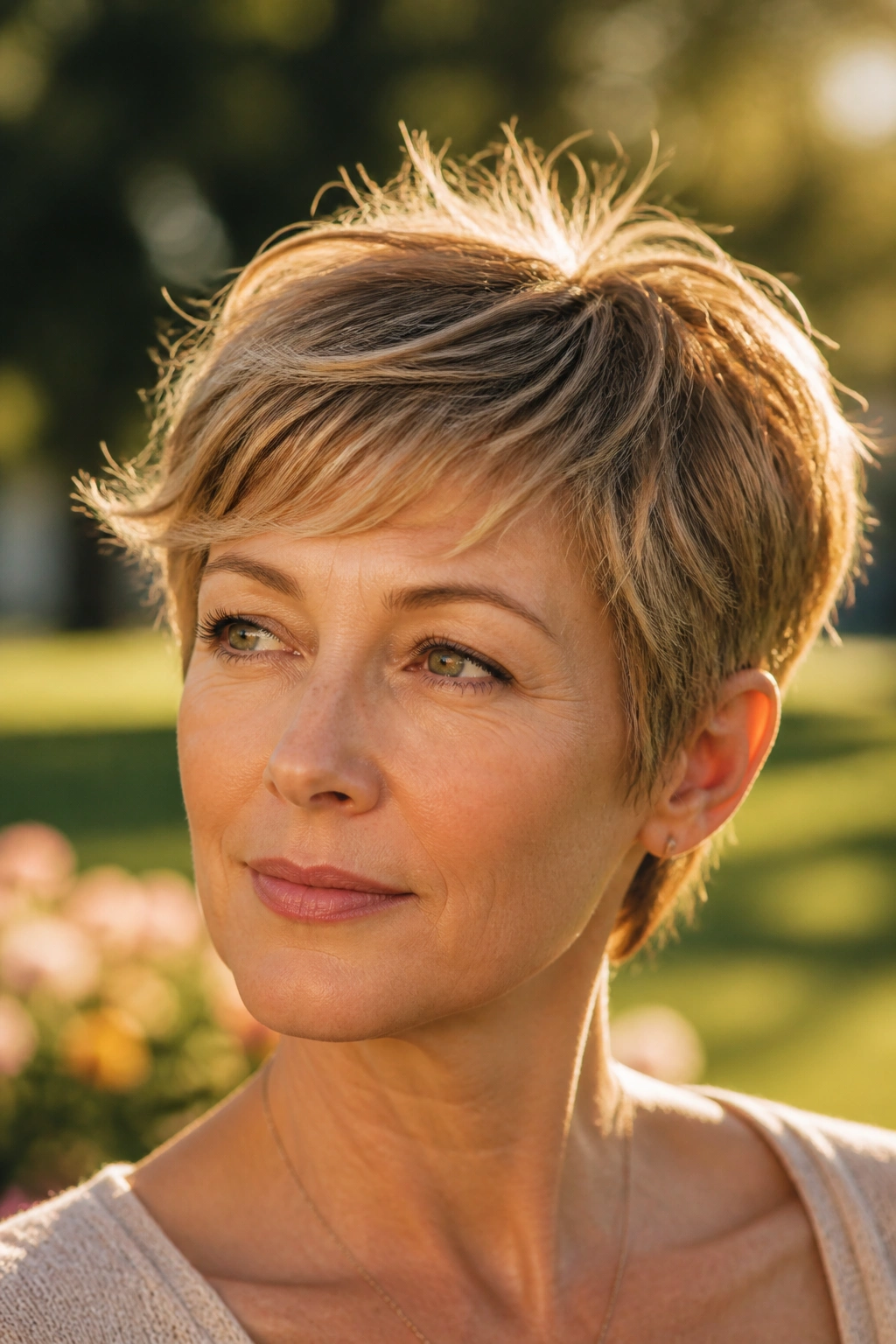
Feathering is one of those words that gets tossed around too casually, but on fine hair it can make the difference between airy and accidental. A good feathered pixie has soft, tapered ends that move when you turn your head. A bad one looks like the stylist took too much weight out and left you with scraps.
The part that matters most
Feathering should happen in controlled sections, not all over the head. The point is to soften the outline, especially around the temples and crown, without hollowing out the perimeter. Fine hair already lacks heft. It does not need to be stripped down to thread.
This cut shines when you want a light, lifted shape that doesn’t feel helmet-like. The layers can arc away from the face, which is especially nice if your features are sharp and you want a little softness around them.
I prefer this style with a light mousse and a low-speed blow-dry. Use your fingers to rough in the shape first, then smooth only the front pieces with a brush if you need polish. The goal is to keep the texture floating, not frozen.
There’s a downside, though. Too much feathering can make fine hair look airy in the wrong sense—like there isn’t enough there. That’s why the perimeter needs some structure. Without that anchor, the whole cut can drift into wispy territory.
7. Undercut Pixie
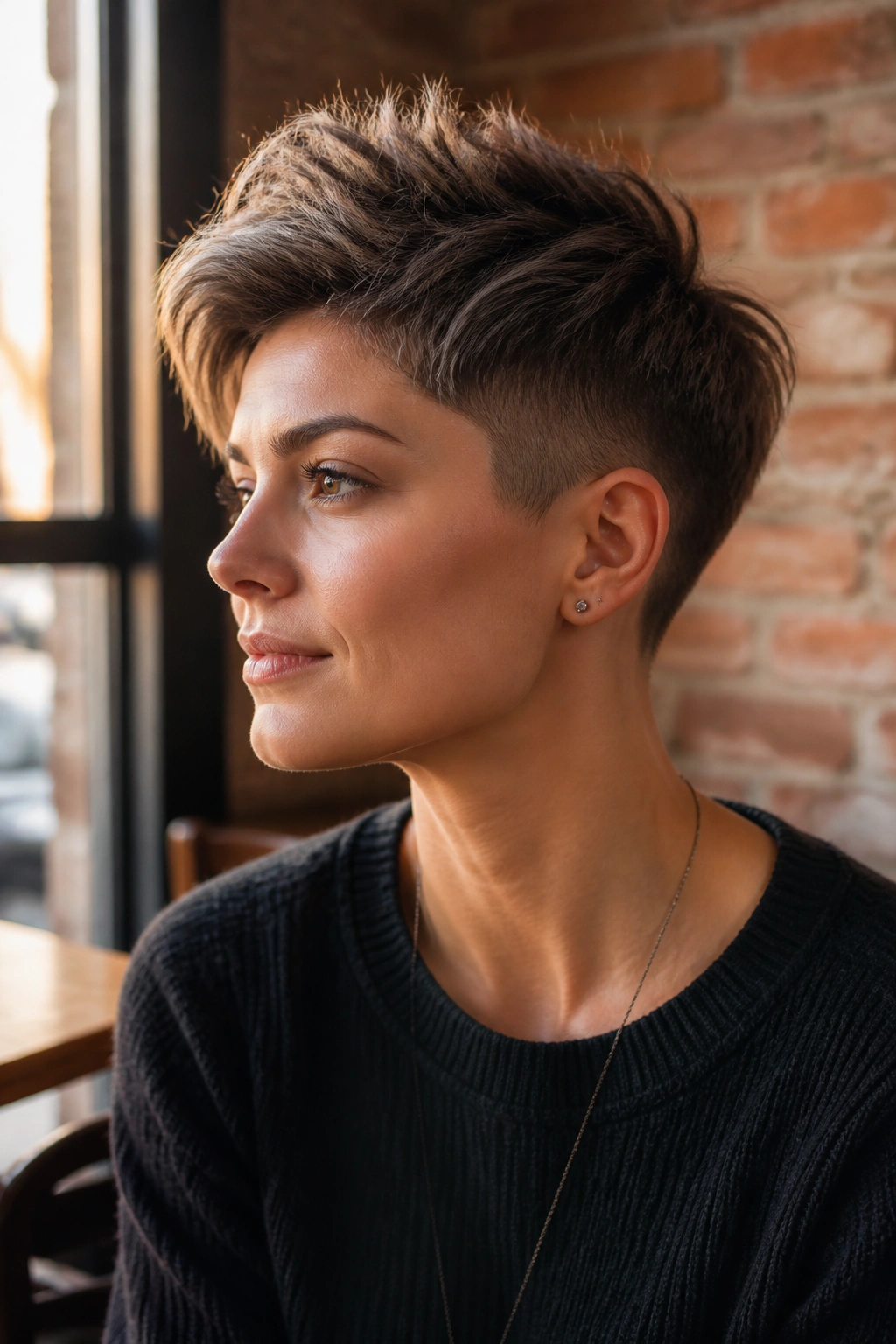
An undercut pixie sounds daring, but on fine hair it can be quietly practical. Removing some bulk underneath lets the top sit higher and cleaner, which creates the illusion of more hair where people actually see it.
The mistake people make is assuming an undercut has to be dramatic. It doesn’t. You can keep it subtle—just enough shaved or clipped away at the nape and lower sides to stop the haircut from lying heavy against the head. That works especially well if the back of your hair grows in puffy while the top stays flat.
The catch
An undercut is not for someone who wants a soft, blended grow-out with zero maintenance. You’ll need trims to keep the shape neat. If the shaved section grows out unevenly, it can look messy fast, and fine hair tends to show that line of demarcation.
- Best for hair that gets bulky at the neckline.
- Good if you want a cleaner silhouette with less daily styling.
- Helpful when the top has enough length to move forward or upward.
- Not ideal if you want a very conservative, low-contrast cut.
I like this option when someone wants the top to feel fuller without adding width around the ears. It gives the haircut a little bite. Not too much. Just enough.
8. Baby Bang Pixie
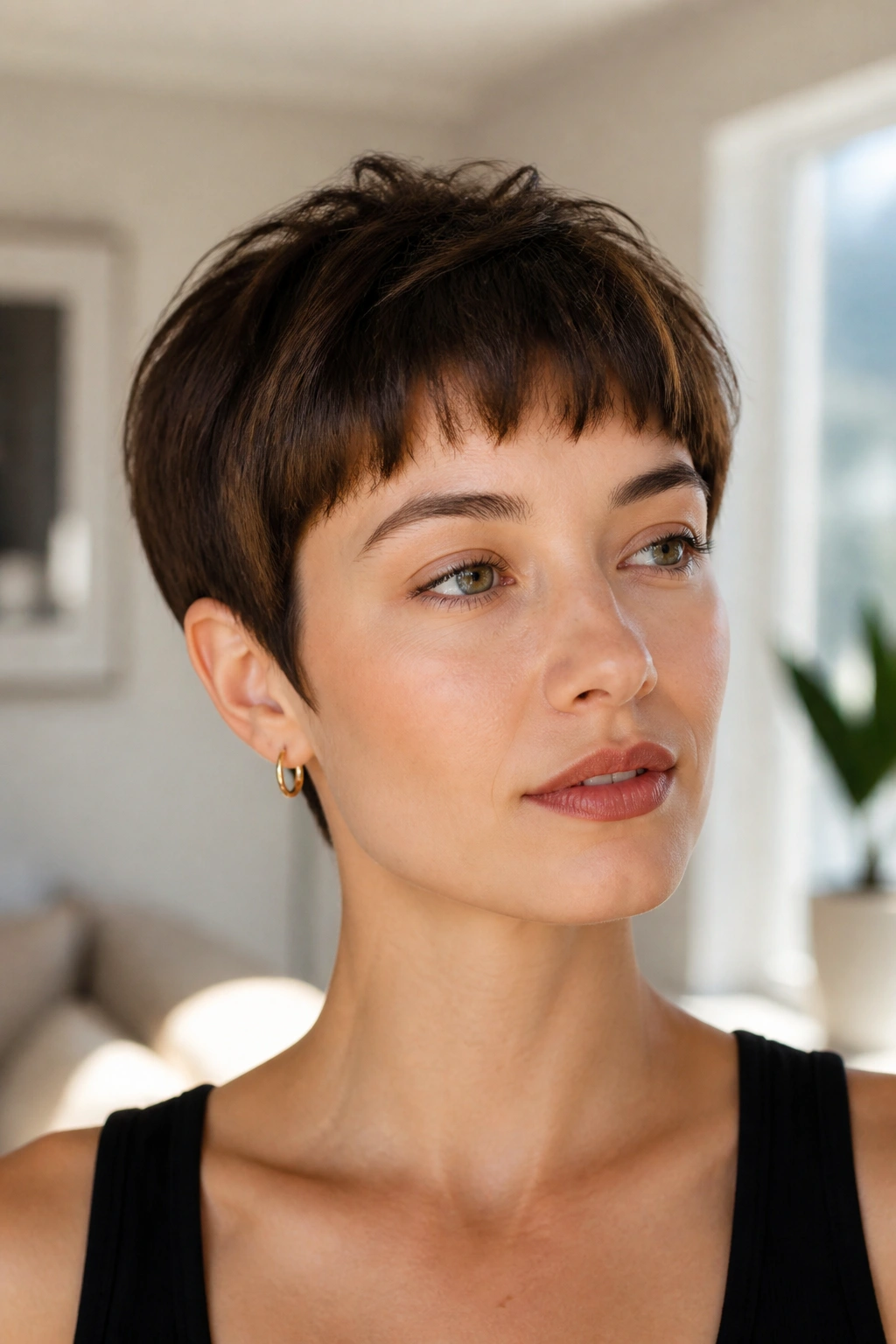
Can baby bangs work on fine hair without looking severe? They can, but the answer depends on the rest of the cut.
A short fringe draws a lot of attention to the face, which is exactly why it can make fine hair look more intentional. It creates a strong front line. If the bangs are kept a little separated and soft, they don’t need to be dense to make an impact. That’s the part people miss. Baby bangs are not only about boldness; they’re about clean geometry.
How to keep it from looking harsh
The fringe should sit roughly 1 to 2 fingers above the brows, not chopped in a blunt line that ignores the rest of the haircut. If your hair is very soft, a slightly broken edge works better than a perfect straight-across cut. You want the bangs to skim the forehead, not sit there like a ruler.
A baby-bang pixie pairs well with a tapered back or a slightly piecey top. That way the fringe feels like one part of the cut, not a separate decision somebody regretted halfway through.
I’d be careful with cowlicks at the hairline. Those little swirls can push short bangs apart in all the wrong places. If your front section grows in strongly to one side, your stylist needs to work with that, not fight it. Short fringe is unforgiving when it’s cut against the grain.
9. Asymmetrical Pixie
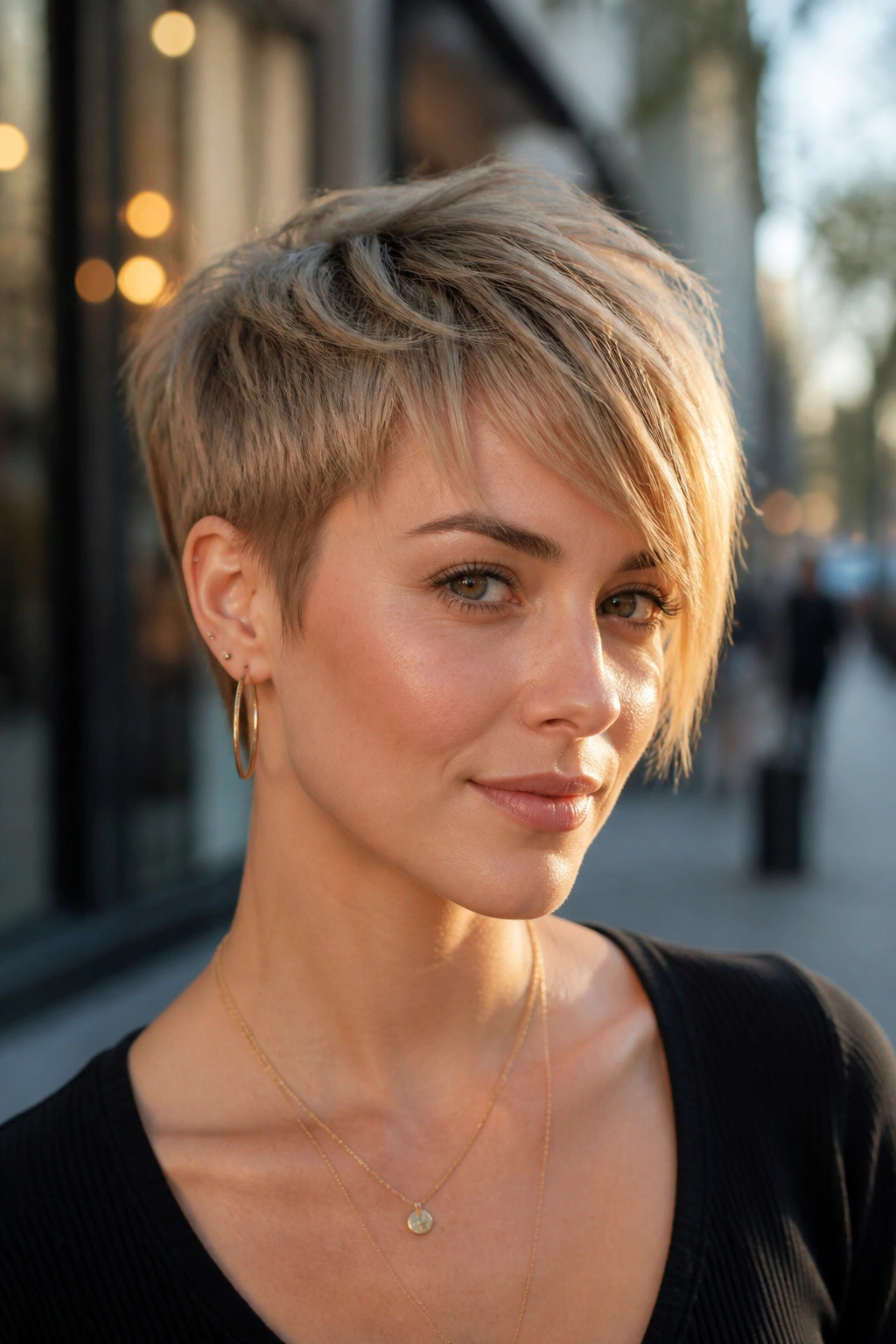
A little asymmetry can do more for fine hair than a perfectly balanced cut ever will. One side stays slightly longer, the other side gets cleaner and tighter, and the eye reads that difference as shape.
I like this cut on people whose hair falls flat but still has a bit of attitude. The longer side gives you something to tuck behind the ear or sweep across the forehead. The shorter side keeps the profile neat. Together, they stop the cut from looking too airy.
What makes it different
- One side can be half an inch to 1.5 inches longer than the other.
- The front usually sits longer than the back, which adds movement.
- It works well with a deep side part.
- It gives you a built-in styling direction, even when you’ve only got five minutes.
The shape can also help if one side of your hairline is stronger than the other. Hair rarely grows in perfect symmetry. Fine hair makes that obvious. An asymmetrical pixie leans into that instead of pretending the head is a sculpture.
I’d avoid making the difference too extreme unless you really want the drama. Fine hair tends to look best when asymmetry feels deliberate, not gimmicky. A subtle shift is enough. Too much contrast and the cut can start wearing you instead of the other way around.
10. Wavy or Curly Pixie for Fine Hair

Fine hair with a wave or loose curl has its own rules, and ignoring them is how people end up with a short cut that puffs in the wrong places. If your hair bends naturally, a pixie should respect that bend. It should not fight it into a flat, stiff shell.
A wavy pixie works because the movement gives the hair visual fullness without needing a ton of actual density. The trick is keeping enough length on top and around the fringe for the wave to form. Too short, and the curl pattern can spring up unpredictably. Too long, and the hair can collapse into shapeless softness. Annoying, yes. Manageable, also yes.
The best version is usually cut dry or partly dry so the stylist can see where the wave sits. Wet hair lies. Dry hair tells the truth. That matters a lot when the strands are fine and the curl pattern is loose.
Use a light cream or foam, not a heavy butter or oil. Fine curls get weighed down easily. A diffuser on low heat helps, but air-drying can work too if you scrunch gently and leave it alone. I know, leaving it alone is the hard part.
11. Razor-Cut Pixie
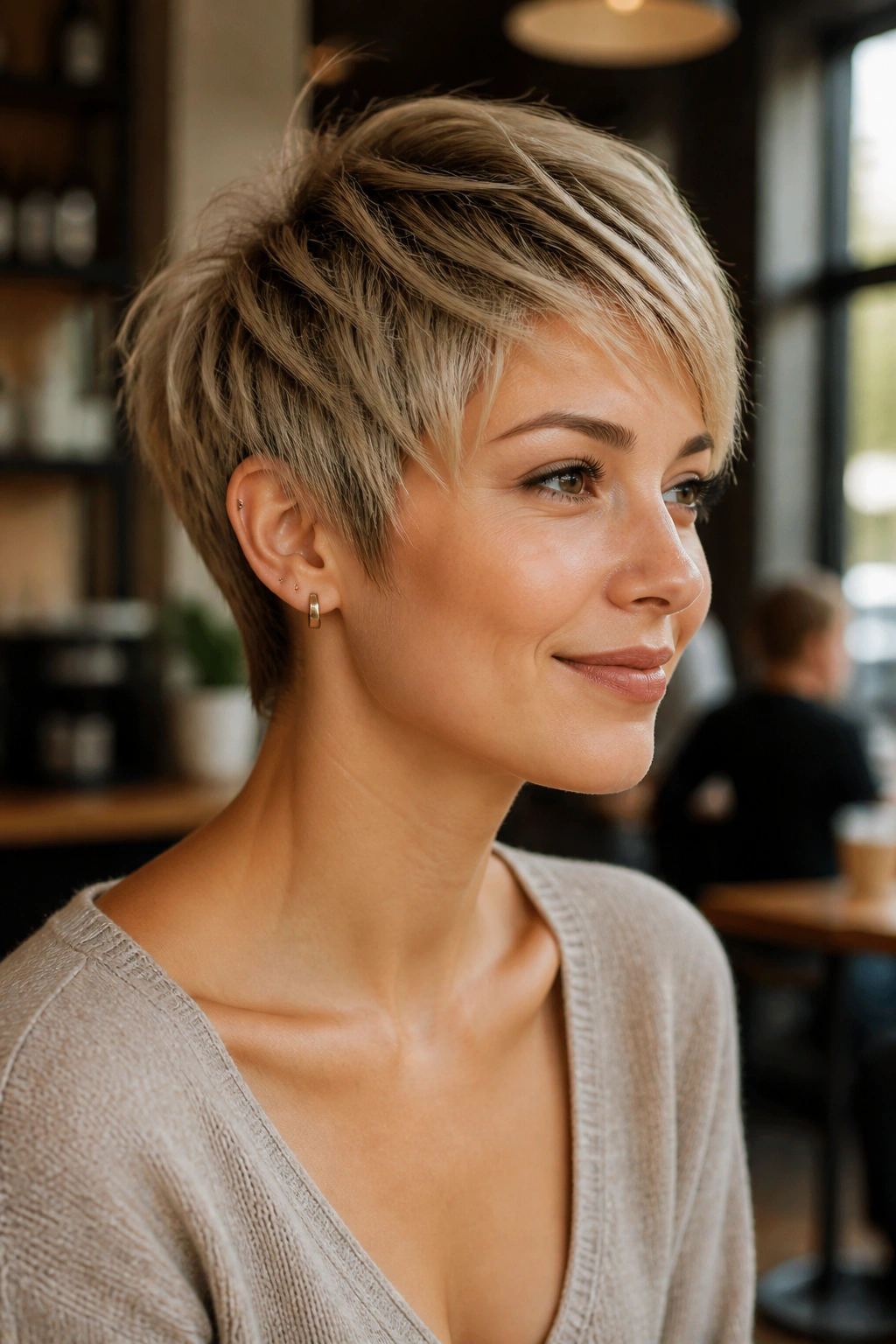
A razor cut can be beautiful on fine hair, but only when the hand behind it knows restraint. The razor creates softer, airier edges than scissors, which gives the haircut movement fast. It can also shred delicate strands if the tool is used too aggressively. Both things are true.
What I like about this version is the way it loosens the shape. Fine hair can look too tidy when it’s blunt all over, and a razor breaks that up in a clean, light way. The ends sit less blocky. The crown looks less puffy. The whole thing feels more relaxed.
That said, this is one of those styles where hair condition matters. If your ends are already dry or fragile, too much razor work can make them look see-through. A stylist should use it selectively, usually around the top and fringe, not all the way through the sides.
Best for hair that has some density but still feels soft. If your hair is sparse, I’d be cautious. A razor can take away the little bulk you need to keep the cut looking full. The effect can be gorgeous, but it needs a careful hand.
12. Crown-Boost Pixie
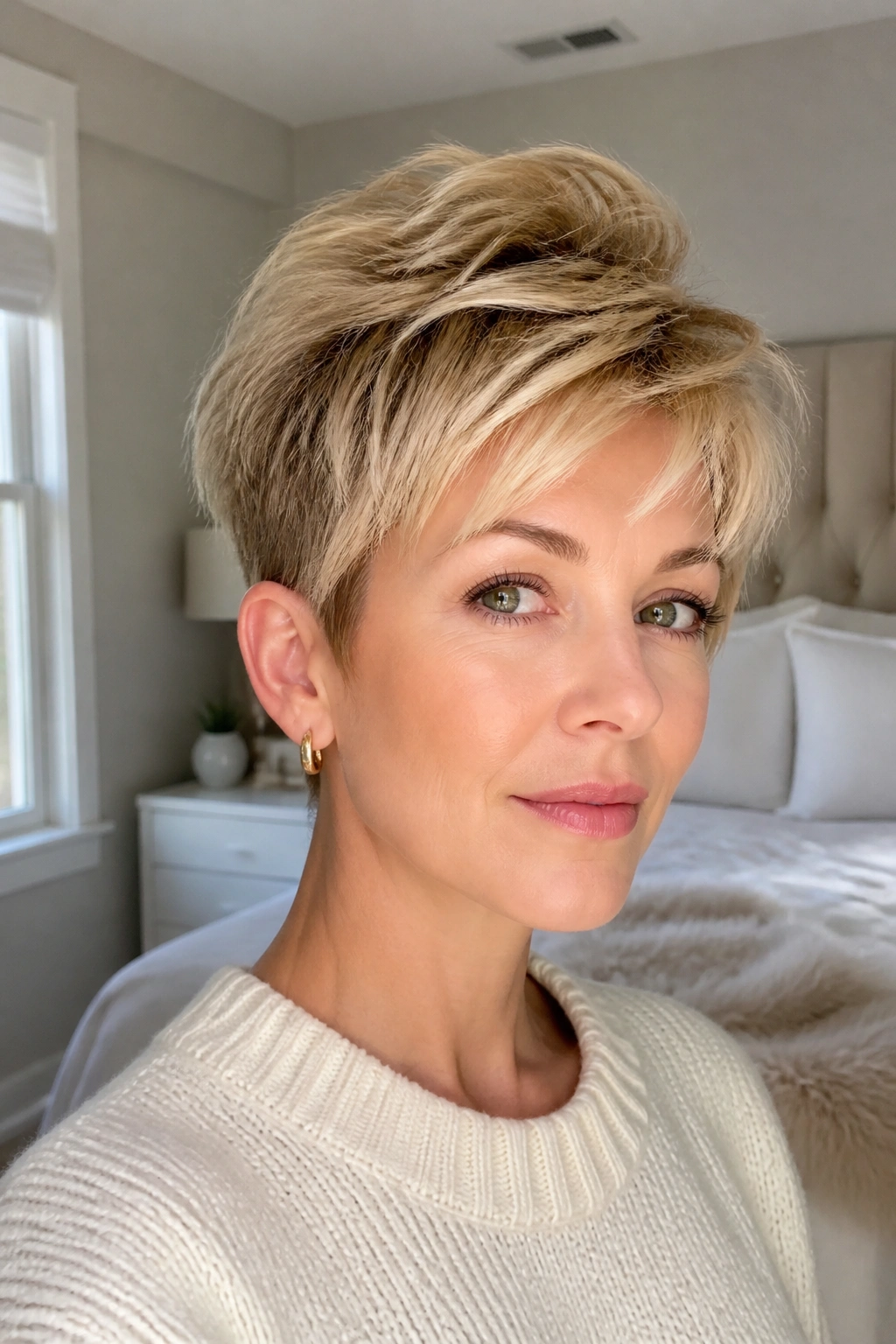
A crown-boost pixie is one of the most useful shapes for fine hair because it solves the one problem people complain about most: flatness at the top. The whole cut is built to create lift where the head starts to round.
This usually means shorter sides and back, plus slightly longer, layered pieces through the crown that can be lifted with a blow-dryer. When the crown has a bit of height, the face looks more open and the haircut feels fuller from every angle. Small change. Big difference.
The styling routine that actually helps
Start with mousse or root spray at the roots while the hair is damp. Then blow-dry the crown first, lifting sections with your fingers or a small brush. If you dry the sides too soon, they pull the whole shape down before the top has a chance to set.
A light mist of hairspray at the roots can help if your hair falls within an hour. Don’t drench it. Fine hair hates being buried under product. A little grip is enough.
This cut is especially good if your natural part has split open and the scalp shows through under harsh light. The crown length disguises that. Not by hiding it completely—nothing does that forever—but by giving the hair a shape that holds better.
13. Bixie Cut
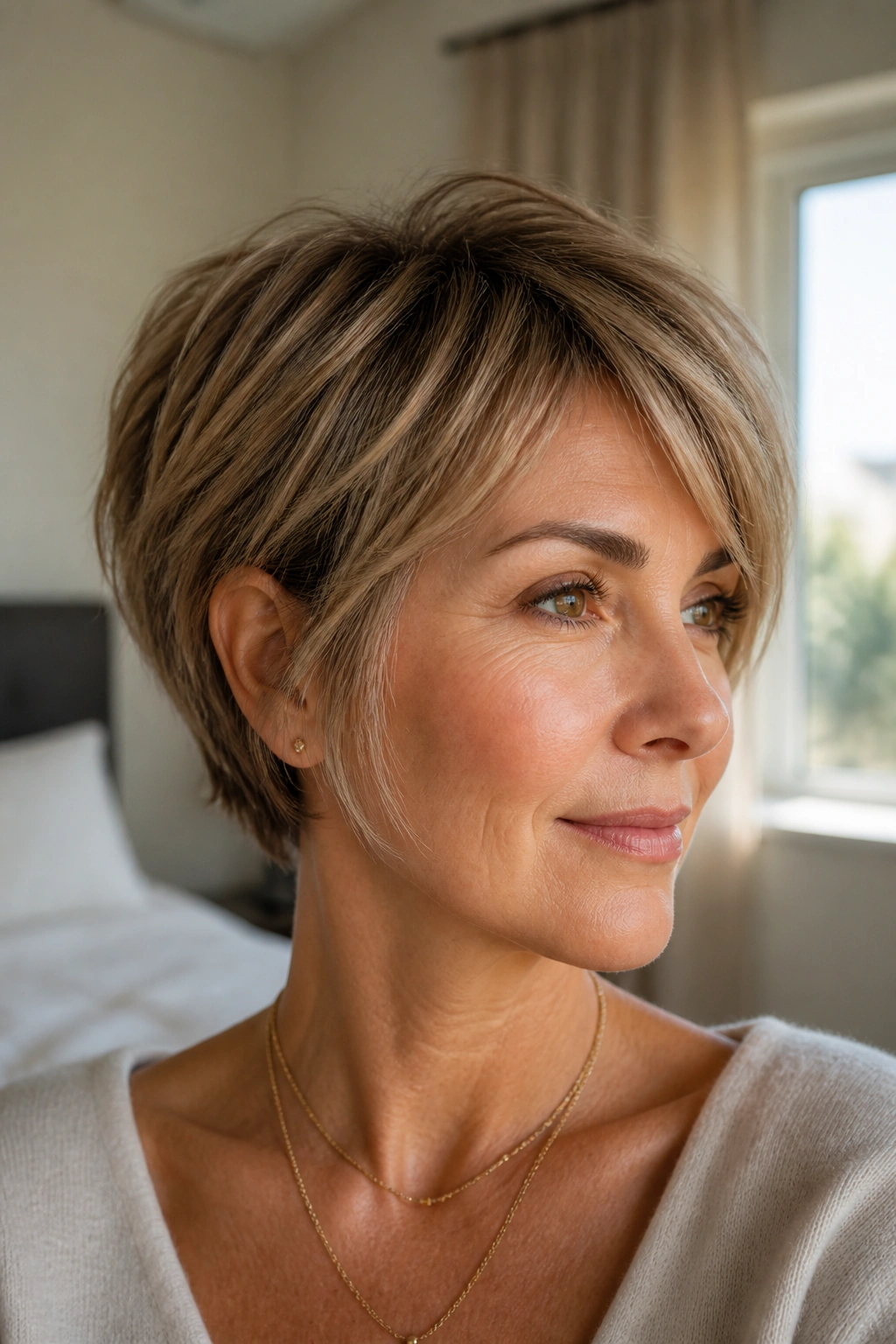
The bixie sits between a pixie and a bob, and that middle ground is exactly why it works so well for fine hair. You get more length around the face, more softness at the jaw, and less of that abrupt “all off” feeling that scares people away from shorter cuts.
Why it flatters finer strands
Fine hair often looks fuller when there’s a little more perimeter to hold onto. The bixie gives you that. It keeps enough length to create density at the ends while staying short enough to feel light and modern. That balance is useful if your hair gets thin-looking when it’s left long.
It also plays nicely with soft waves, side parts, and tucked-behind-the-ear styling. If your hair is one of those types that looks better after it has lived a little, this cut is worth a serious look.
- Ask for a bob-like outline with pixie texture on top.
- Keep the nape shorter so the shape doesn’t collapse.
- Let the front graze the cheekbone or jawline.
- Avoid over-layering the ends; the outline needs some weight.
I like this one for anyone who wants to flirt with short hair without going fully cropped. It’s a good bridge. Not a compromise in the bad sense. A bridge.
14. Slicked-Back Pixie
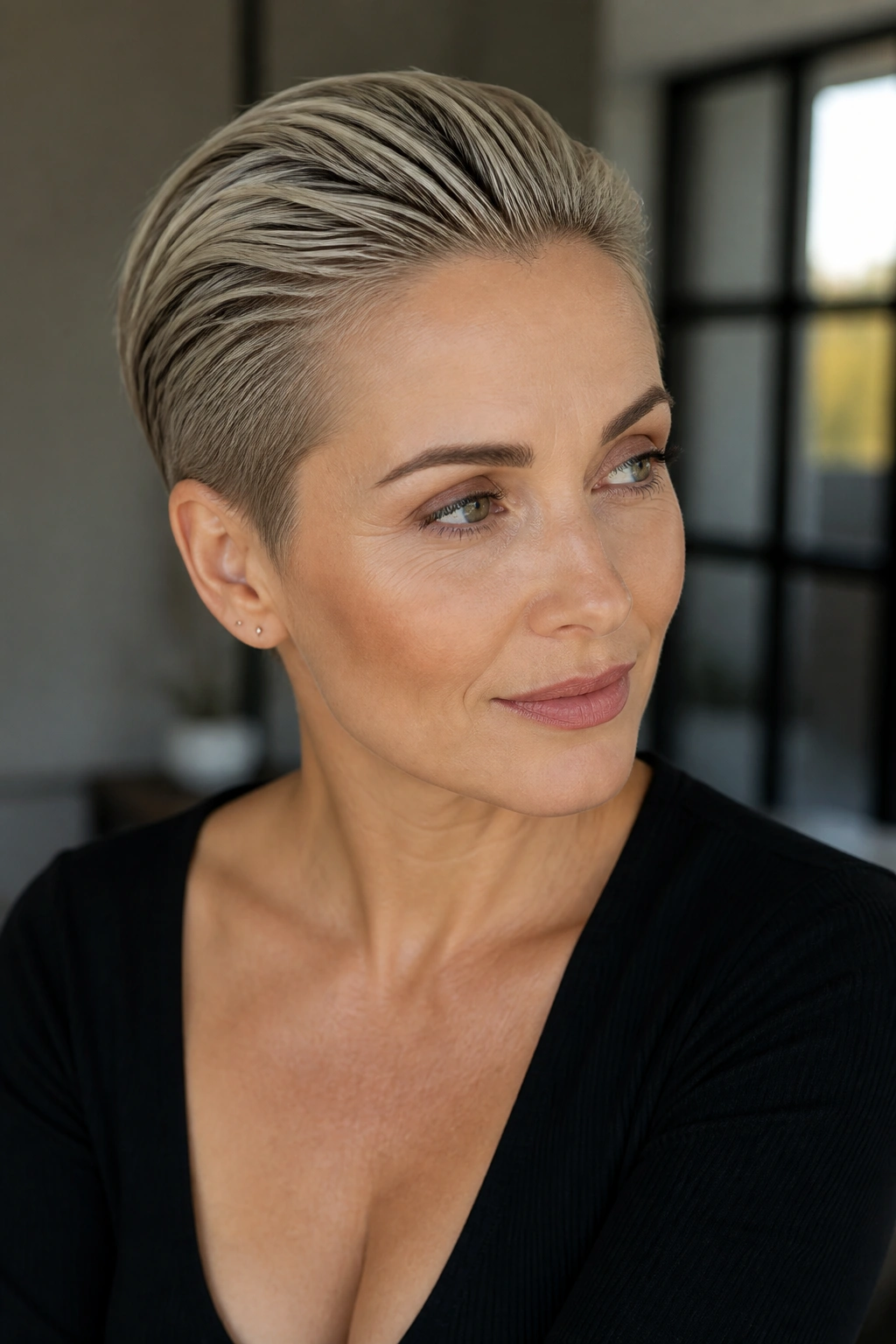
A slicked-back pixie can look sharp on fine hair because it turns the haircut into a shape story instead of a volume contest. If your strands are too soft to hold a giant lift, stop fighting that and go sleek.
The trick is keeping the cut balanced so the head still looks shaped when the hair is pushed back. That means enough length on top to smooth backward, and enough support through the sides so the style doesn’t collapse into your scalp. Fine hair can do this beautifully when it’s cut well.
Use a lightweight gel or cream, not a heavy pomade. Heavy product makes fine hair separate into stringy strips fast, and that is not the same thing as sleek. You want the surface to look smooth, not oily. A fine-tooth comb can help at the front, but fingers often give a softer finish.
This is one of the best pixies for evenings, dressier events, or days when you want the cut to look deliberate with almost no fuss. It’s blunt in a good way. Clean. Controlled. A little bit cool.
15. Ear-Tucked Gamine Pixie
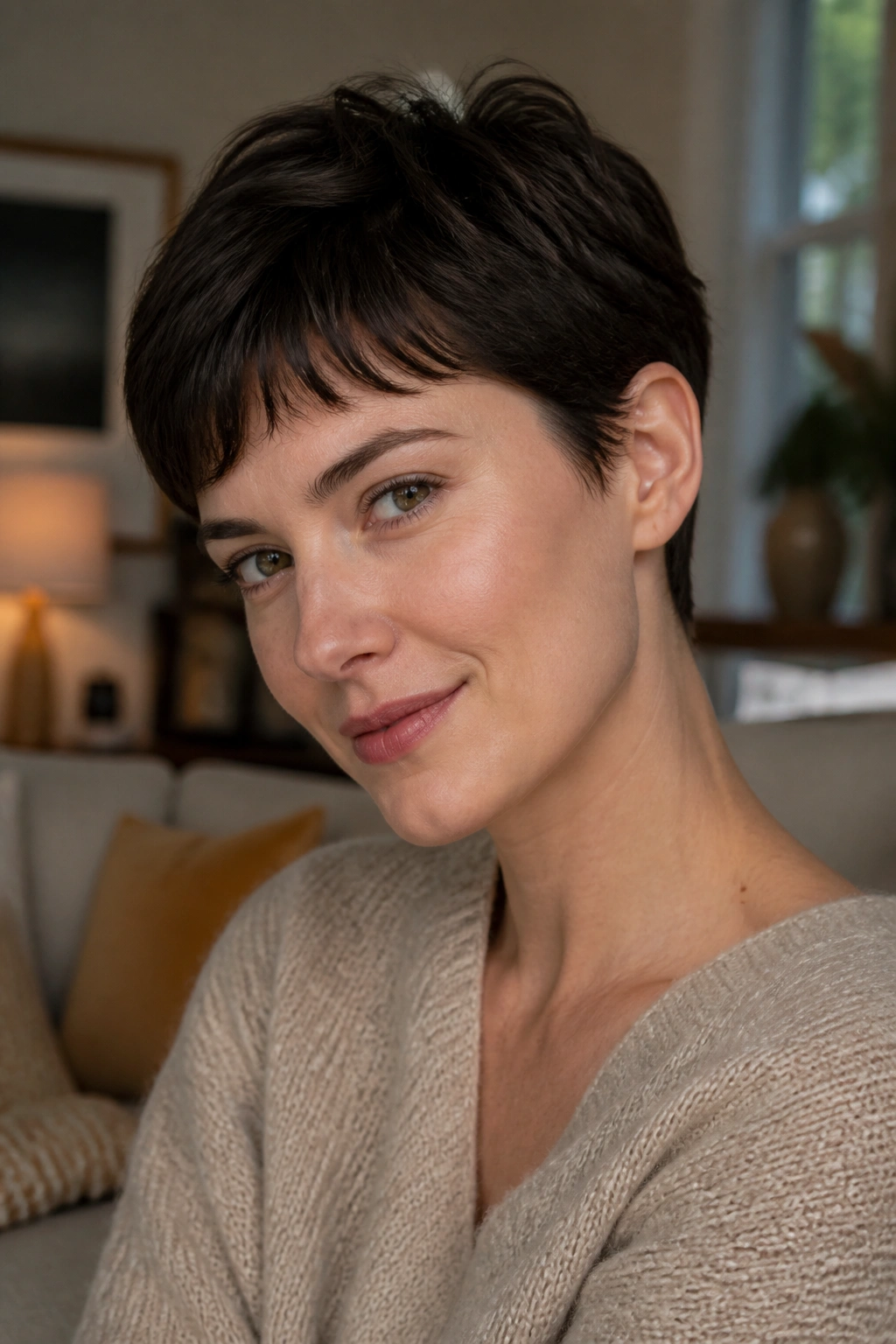
There’s something almost old-school chic about an ear-tucked pixie, and fine hair benefits from that clean little reveal around the face. Tucking the sides behind the ears exposes the cheekbones and keeps the haircut from swallowing your features.
I like this shape because it uses negative space. That sounds fancy, but it just means the haircut looks fuller because your eyes are not trying to read too much hair at once. The ear tuck breaks the line in a good way and gives the top more presence.
A few details that matter
- Keep the top soft and slightly longer than the sides.
- Ask for enough length around the temples to tuck or not tuck.
- Use a tiny bit of cream at the ends so the tuck stays neat.
- If your ears stick out a little, leave a whisper of length instead of going too tight.
This cut is great for people who don’t want to style every strand. You can tuck one side, both sides, or neither, and the haircut still reads as intentional. That flexibility is underrated.
It also grows out without much drama. Fine hair likes that. So do people who hate frequent salon trips. Which is most of us, if we’re honest.
16. Micro-Fringe Pixie
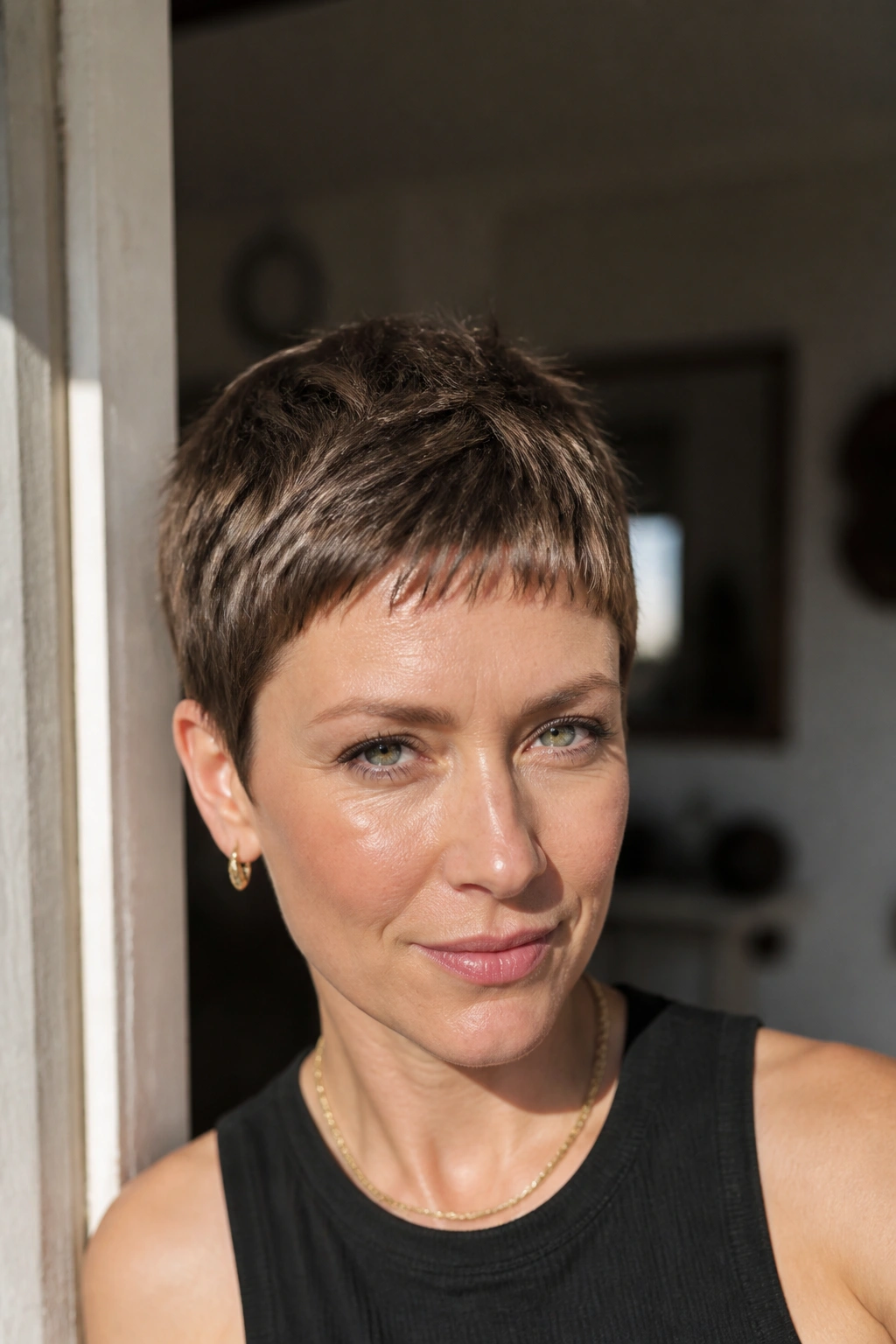
A micro-fringe on fine hair can be fabulous, but it needs confidence and a decent sense of proportion. The fringe sits very short—usually in the center or just above the brows—and the rest of the cut stays soft enough that the look doesn’t turn severe.
What makes it work is contrast. Fine hair often needs a strong front point to make the whole style feel fuller. A short fringe does that immediately. It gives the haircut a clear edge and keeps the top from looking too floaty.
The one thing I’d warn against is making the fringe too dense. A heavy micro-bang can sit like a shelf on fine hair, and that’s a hard look to soften. Better to keep it light, maybe even a little broken at the edges. You want the forehead to peek through a touch.
This style looks especially good when the rest of the hair is cropped close at the ears and nape. The front becomes the star. That’s the whole game here.
17. Disconnected Pixie
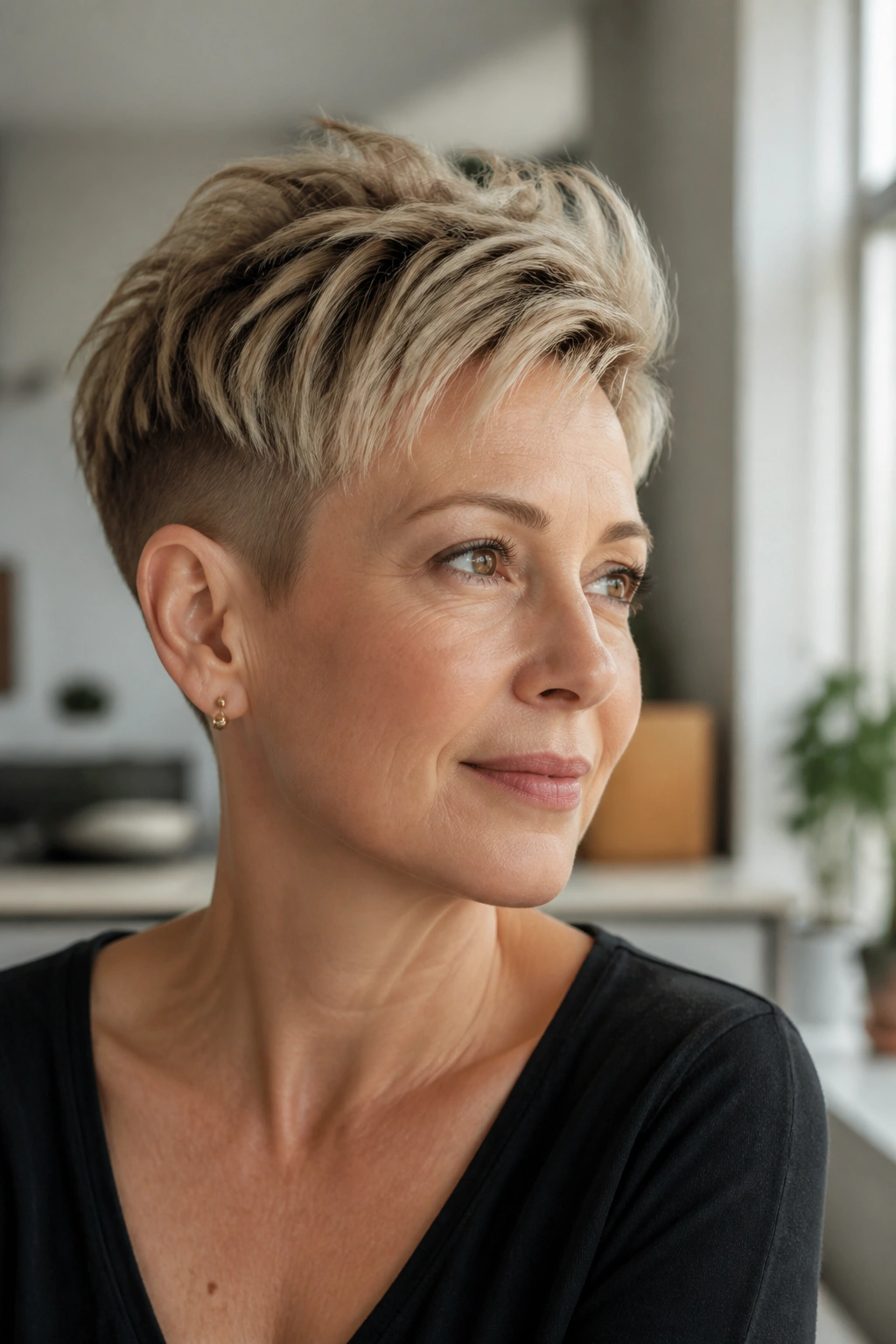
A disconnected pixie is exactly what it sounds like: the top stays clearly longer than the sides, with a visible shift rather than a smooth blend. On fine hair, that contrast can be a gift.
Why? Because a smooth blend sometimes removes too much of the shape you need. Disconnection keeps the top strong. It lets the longer pieces sit on top of the shorter sides like a little cap of movement, which makes the hair look denser from the front.
This is one of the few pixies where a bit of separation actually helps. You can style the top forward, to the side, or slightly lifted, and the contrast does the work for you. A dab of paste at the ends keeps the longer pieces from drifting into one flat sheet.
I’d choose this cut for someone who likes a crisp, modern look and doesn’t mind a visible haircut. It’s not shy. That’s the appeal. Fine hair often needs a shape with a strong opinion.
18. Rounded Pixie

A rounded pixie gives fine hair a soft halo effect, and that can be a smart move when the head shape itself needs a little fullness. Instead of making the sides too tight or the top too spiky, the cut follows a gentle curve around the head.
This works because it builds the illusion of density in a controlled way. The hair doesn’t have to stand up. It only has to hold shape. That sounds small, but on fine strands, holding shape is half the battle.
The rounded outline also helps if you dislike the look of flat temples or a too-narrow silhouette. A softened curve around the head can make the cut feel more balanced. It’s especially nice with side-swept bangs or a little length around the ears.
Styling is simple: dry the hair with a round brush, turning the ends slightly inward, then use a light finishing cream to keep flyaways down. Nothing heavy. Nothing crunchy. Fine hair has no patience for heavy products, and honestly, neither do I.
19. Air-Dried Fluffy Pixie for Fine Hair
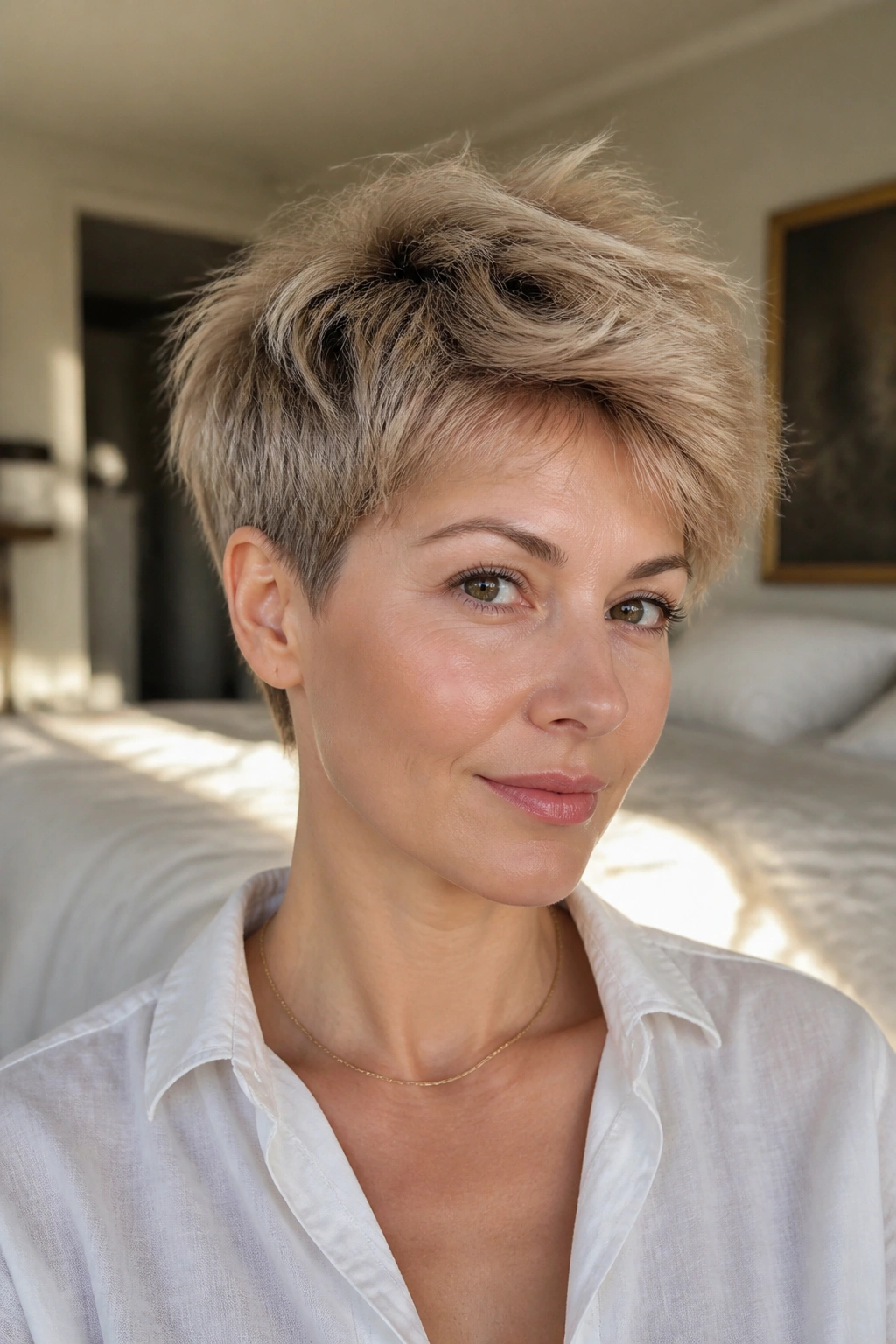
If you hate blow-drying your hair every morning, this one is worth a look. An air-dried fluffy pixie can work on fine hair when the cut is shaped to fall well on its own and the product load stays light.
The drying trick that matters
The trick starts right after washing. Blot the hair with a microfiber towel or a soft T-shirt, then add a light mousse at the roots and mid-lengths. Scrunch a little if your hair has wave. If it’s straighter, rake the product through with your fingers and let it settle.
Do not pile on cream or oil. Fine hair goes limp fast, and air-drying only works when the strands still have some lift left in them.
- Use clips at the roots for 10 to 15 minutes if your crown collapses.
- Keep the front slightly longer so it does not shrink too much as it dries.
- Separate a few top pieces with your fingers once the hair is almost dry.
- Finish with a tiny bit of texture spray only where the hair needs grip.
This style has a casual, slightly undone feel that looks better when it isn’t too perfect. That’s the point. It should feel soft, not messy.
20. Soft Crop Pixie with Sweeping Front
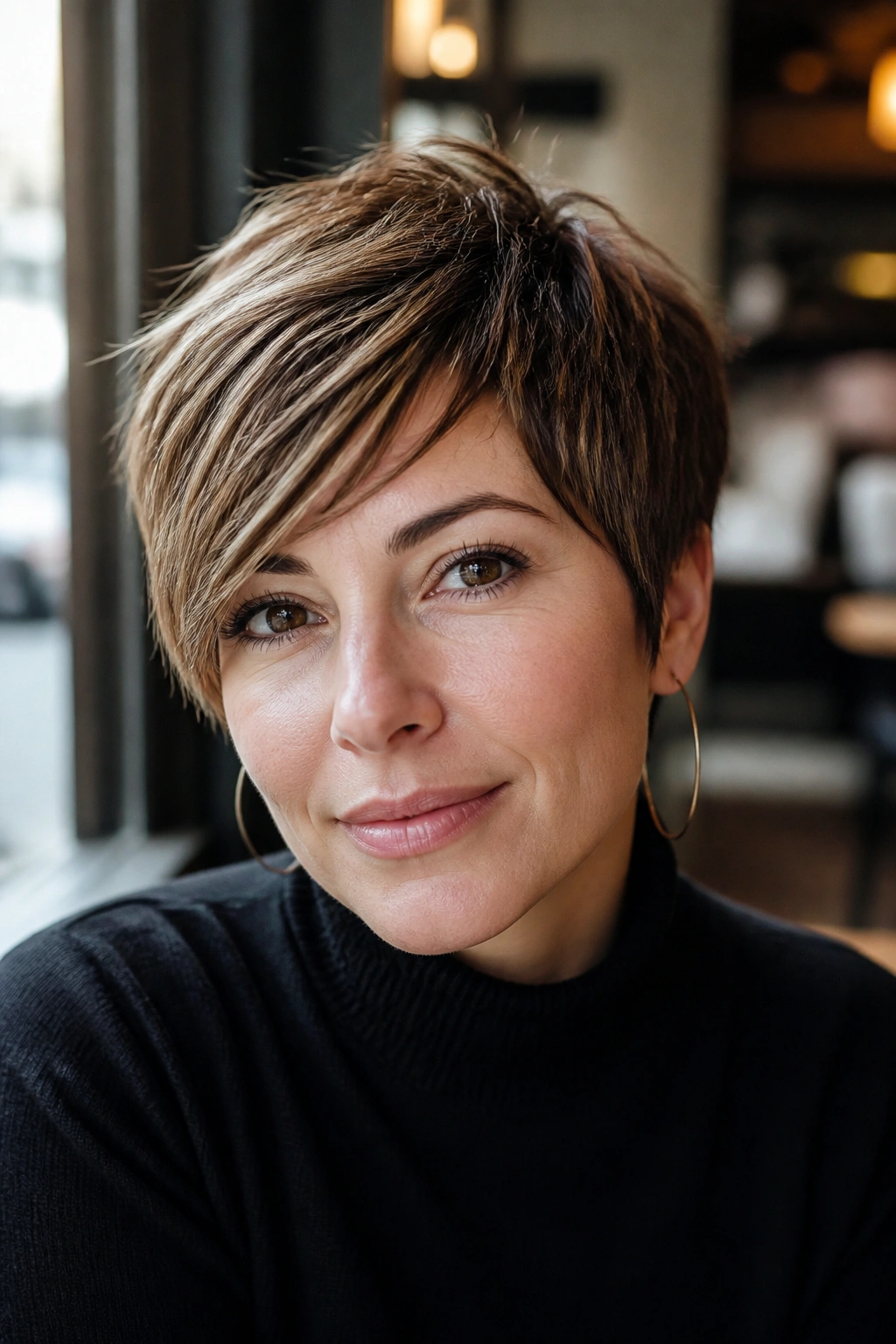
This is the one I’d recommend if you want a pixie that feels easy, flattering, and not at all precious. The sides stay neat, the back stays light, and the front sweeps across the forehead just enough to soften everything.
The reason it works so well for fine hair is that it gives the front a clear direction. Hair that’s too short all over can disappear in a bad way. A sweeping front keeps the eye moving, which makes the whole cut look fuller. It also grows out neatly, which matters if you don’t want to be in the salon every few weeks.
Ask for enough length in the front to tuck, sweep, or piece out with your fingers. The top should be soft but not stripped. The nape can stay tighter so the haircut keeps its shape when the wind does what wind does. A tiny bit of root spray and a quick finger dry are usually enough.
If I had to pick one low-drama pixie for fine hair, this would be near the top of the list. It does its job without trying too hard. That’s usually the smartest haircut in the room.
