



Fine Black hair and a heavy pixie do not get along for long. The cut starts off sharp, then the crown collapses, the outline goes puffy at the wrong spots, and suddenly the whole thing looks flatter than it should.
The trick is not to chop everything down and hope for the best. A good pixie on fine Black hair uses shape on purpose: a little lift at the top, clean edges around the nape, and enough length in one zone to keep the eye moving. That is where the illusion of fullness comes from. Not from bulk. From placement.
That’s why the best black pixie cuts for fine hair are usually the ones that know exactly where to keep weight and where to remove it. Fine strands need structure more than they need length, and Black hair gives you plenty of room to play with shape, line, and texture. A smart pixie can look crisp, soft, or edgy, but it should never look accidental.
If you’ve ever sat in a chair wondering whether your hair would fall flat, puff up, or do both in the same afternoon, this list is for you. Start with the styles that match how much styling you’re willing to do, and keep an eye on the crown, the fringe, and the nape. Those three spots decide almost everything.
1. Soft Tapered Pixie with a Side-Swept Fringe
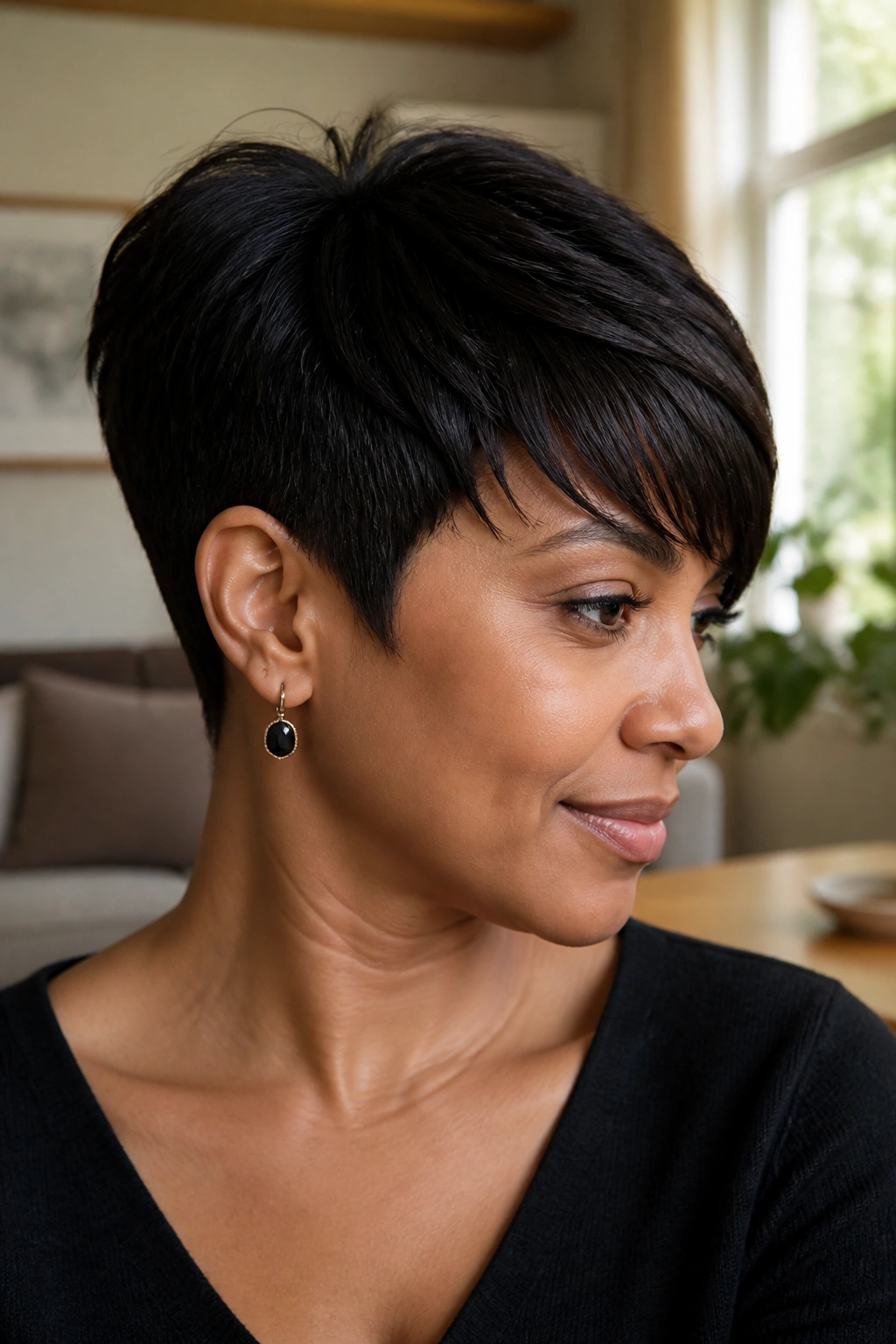
This is the safest place to start if you want a pixie that flatters fine strands without looking severe. The taper around the ears and nape keeps the silhouette neat, while the side-swept fringe gives the top a little more presence than it actually has.
What to Ask For
- Keep the nape close, around ¼ to ½ inch, so the back stays clean.
- Leave the top at about 2 to 3 inches for soft movement.
- Ask for a fringe that can sweep across the forehead, not sit straight and heavy.
- Skip aggressive thinning at the crown; fine hair can lose shape fast.
A cut like this works because it gives the hair one clear direction. The fringe creates a line, and that line makes the whole style feel fuller. You do not need a lot of product here either. A light mousse or a pea-size dab of cream is enough.
Best for: anyone who wants a polished pixie that still feels easy.
2. Finger-Wave Pixie with a Clean Side Part
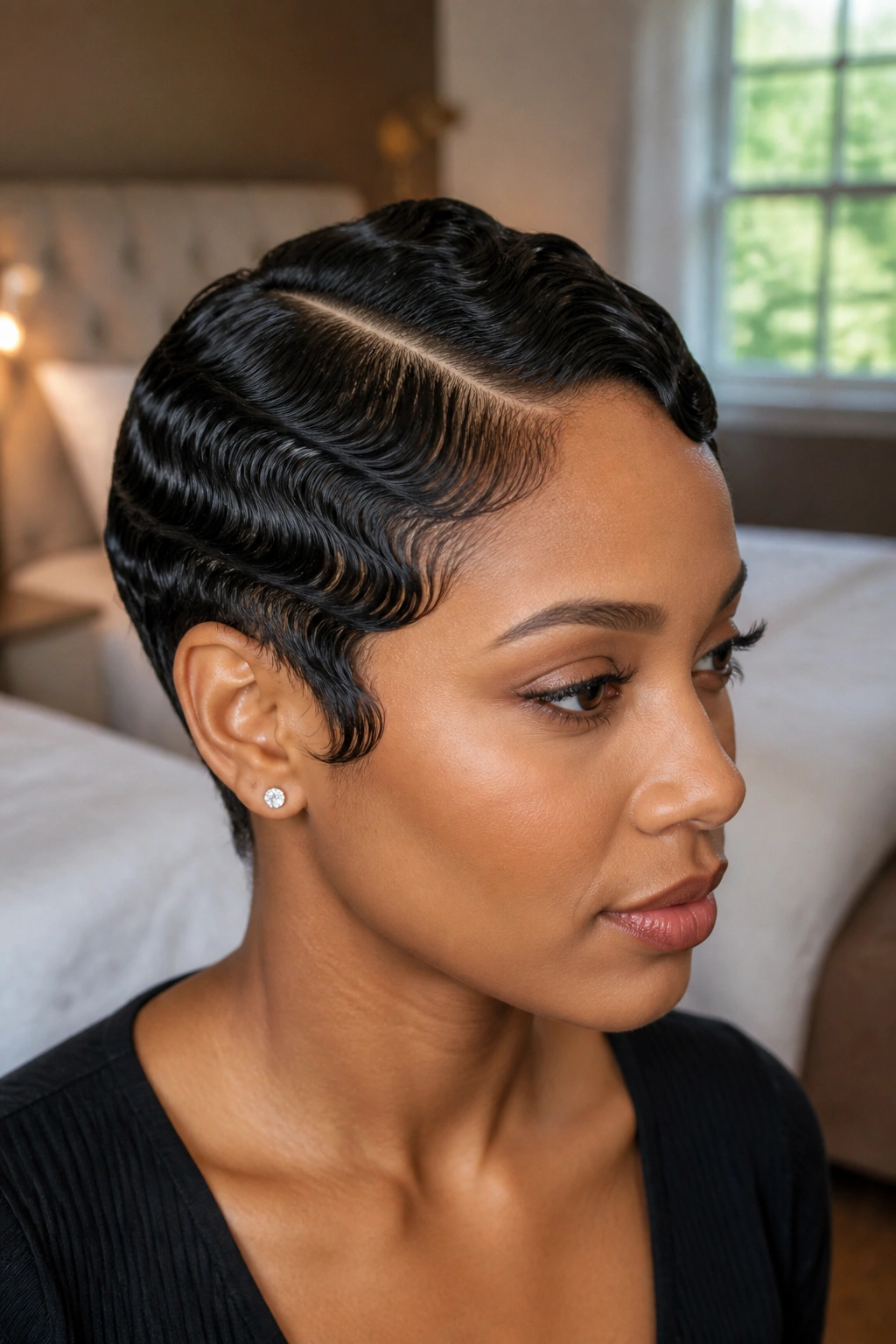
A finger-wave pixie brings structure to fine hair in a way that plain flat styling never can. The waves create visible ridges, and those ridges make the hair look denser without asking for more length.
It helps if your hair is relaxed, silk-pressed, or naturally smooth enough to hold a set. Shorter lengths show off finger waves better than longer ones, and a crisp side part gives the style that old-school polish that never looks flimsy. The key is keeping the waves tight enough to read, but not so tight that the top looks glued down.
At night, a satin wrap or scarf matters more than people think. So does setting lotion. If the waves soften too quickly, they stop doing the job.
The whole cut has a formal feel, but it is not fussy. That’s the charm.
3. Deep Side-Part Pixie with Lift at the Crown
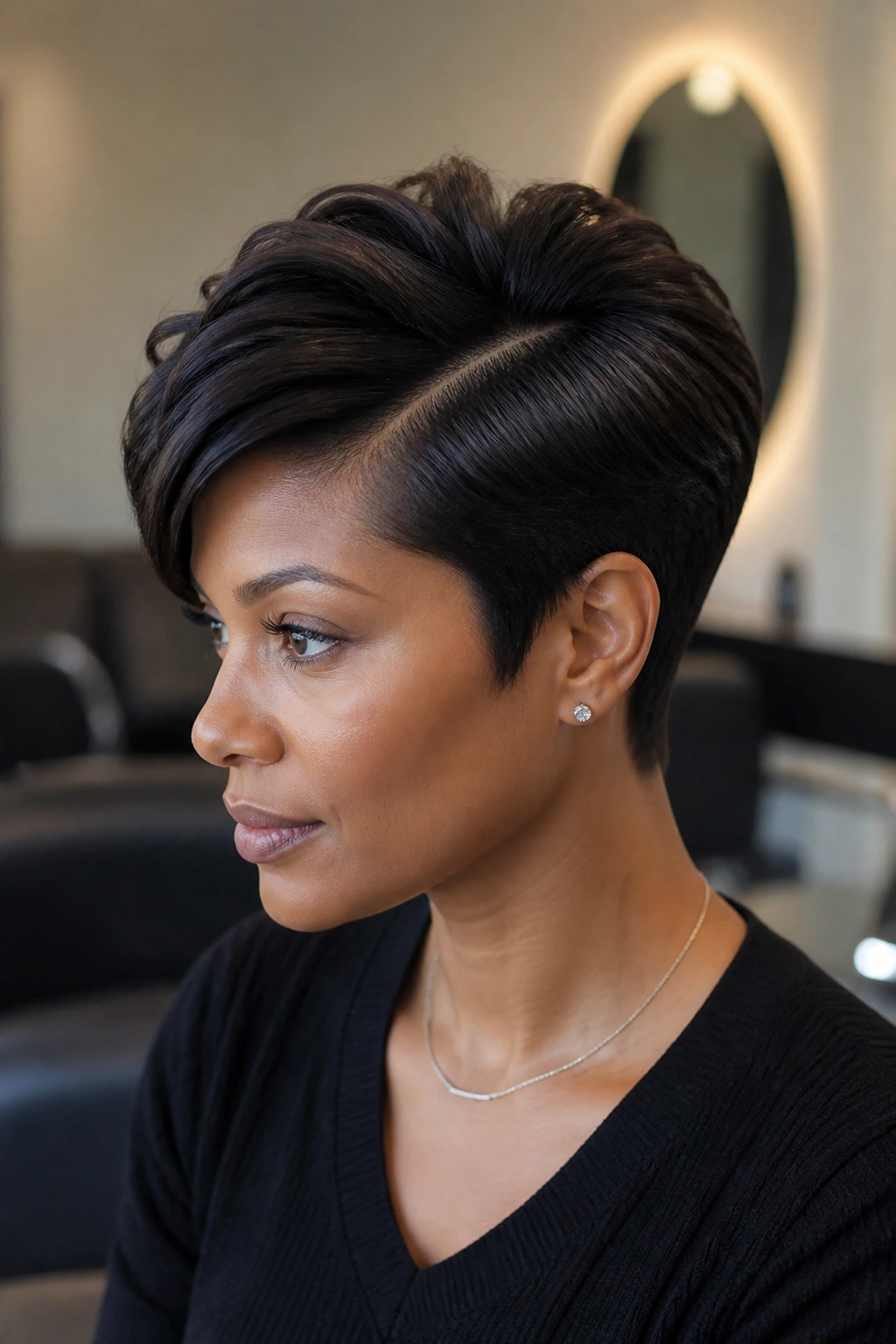
Why does this work so well on fine hair? Because the eye goes straight to the part and then up to the crown, where the lift lives.
How to Build the Shape
Use a root-lifting spray at the crown, then blow-dry with a small round brush or a vent brush, pushing the hair up and away from the scalp. Clip the top for five to ten minutes while it cools. That tiny pause helps the shape hold. A side part that starts a little deeper than usual also makes one side feel fuller than it really is.
This cut looks especially good when the top has 2.5 to 3.5 inches of length and the sides stay tight. It gives you contrast, which is exactly what fine hair likes. Flat all over? Bad. Controlled lift in one zone? Much better.
Use it when: you want volume without teasing the hair into a crunchy mess.
4. Curly Pixie with Pinch-Cut Layers
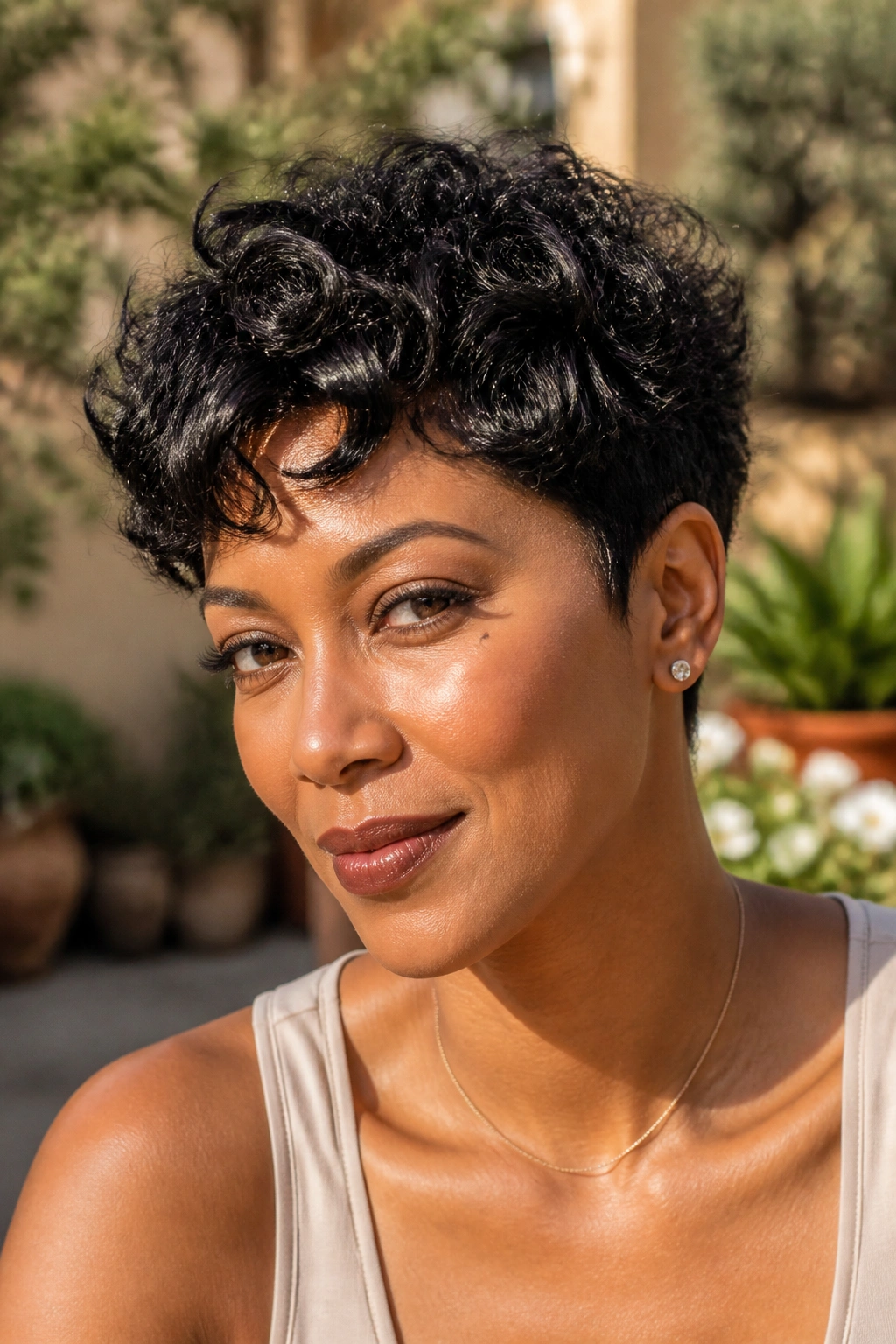
Picture a curl pattern that wants to bloom, but not into a round puff. That is where pinch-cut layers earn their keep. The shape stays light, the curls keep their bounce, and the cut avoids the bulky helmet effect that fine curly hair can fall into when it gets too long.
This one works best when the stylist cuts the hair in a way that respects the curl’s natural spring. On fine curls, over-thinning is a bad move. The ends can go wispy fast, and then the whole style loses body. A better approach is to remove weight in small, careful sections and let the curl pattern do the rest.
- Ask for curl-by-curl shaping if your hair is naturally curly.
- Keep layers soft, not choppy.
- Style with a light cream, not a heavy butter.
- Diffuse on low heat if you want more lift.
The cut lives or dies by restraint. That sounds boring, but it’s the truth.
5. Feathered Pixie with Airy Ends
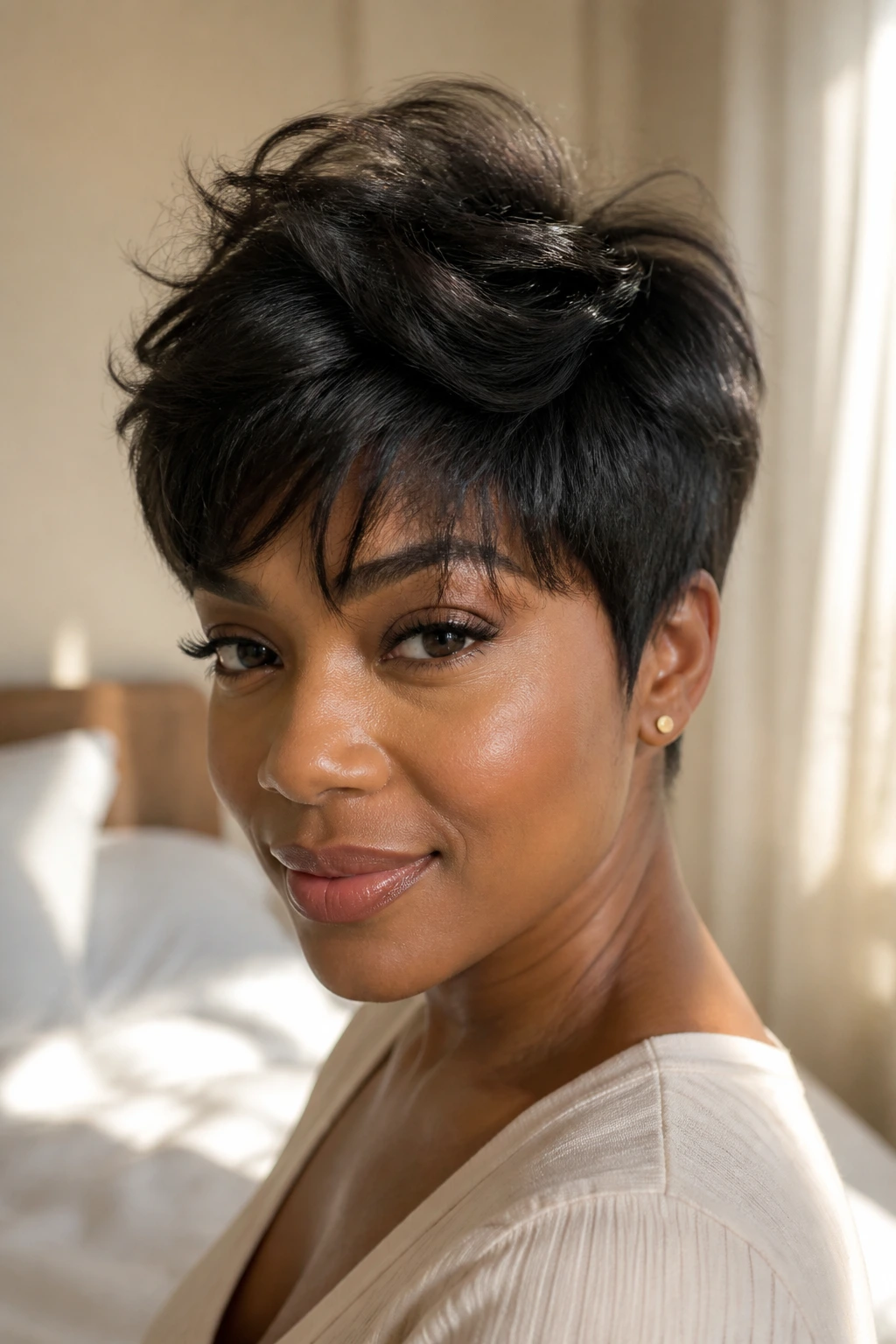
Feathering gives fine hair movement without making the cut look ragged. That matters. A blunt edge on fine strands can look stiff, while a little softness at the ends lets the whole style breathe.
This cut is especially good if your hair tends to lie down near the temple or around the crown. Feathered pieces create little shifts in texture, so the hair catches the light in a natural way. More important, the ends don’t look heavy. They look light, which is half the battle when the strand diameter is small.
I prefer this version when the top is left slightly longer than the sides and the stylist uses scissors instead of a heavy razor finish. Razors can be too much on fine hair. They can chew the ends into fluff. Sometimes that works. Often it does not.
A soft feathered pixie is one of those cuts that looks casual in the best way. Not messy. Just easy.
6. Undercut Pixie with a Longer Top
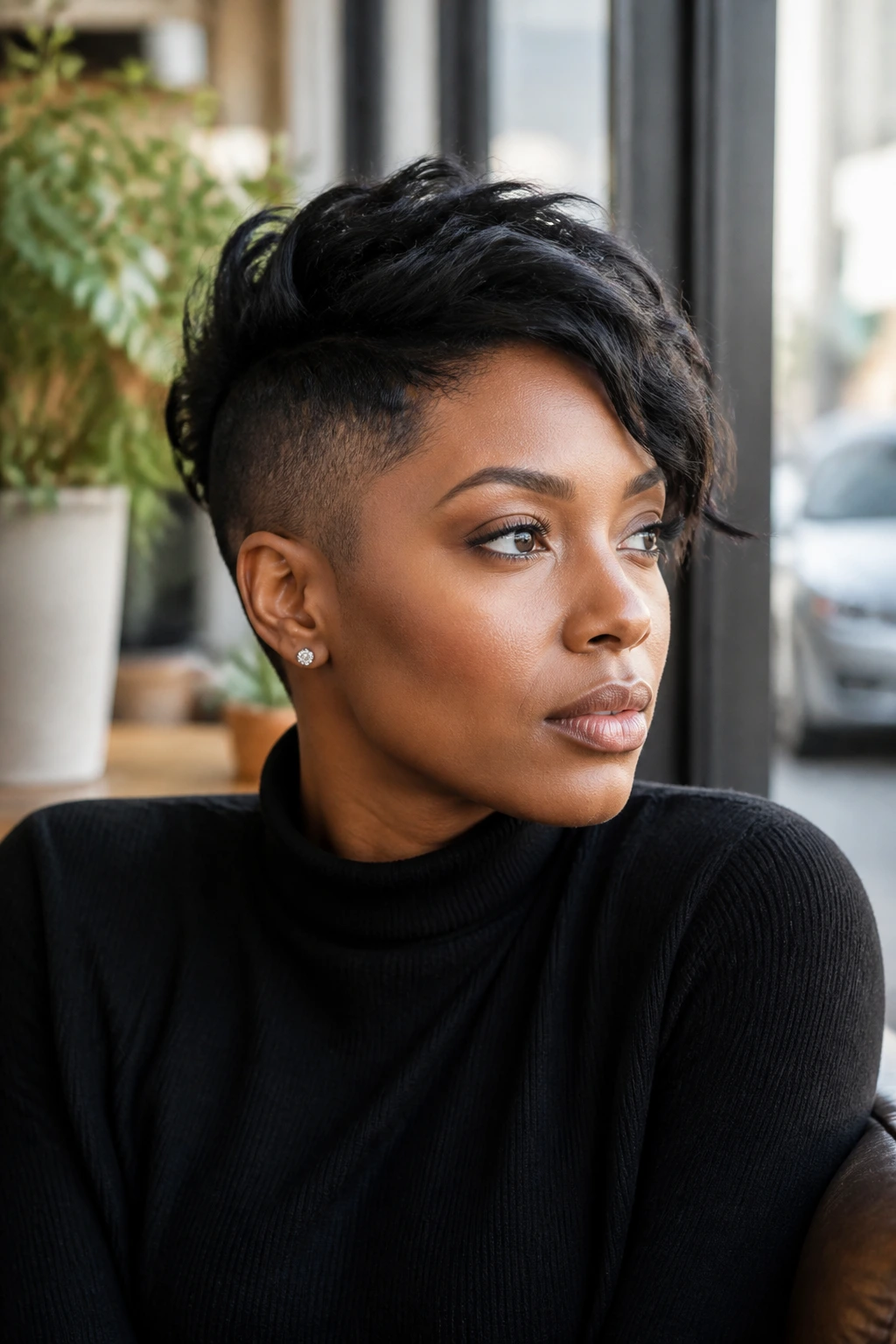
Unlike a uniform crop, this one uses contrast to do the heavy lifting. The sides and nape are clipped very close, while the top stays long enough to sweep, spike, or bend over to one side.
That contrast helps fine hair because it gives you two jobs at once: remove bulk where you do not need it, then keep enough length where fullness matters. The top can sit around 3 to 4 inches, depending on how dramatic you want the shape. Shorter than that, and the style starts losing the effect. Longer than that, and it stops reading as a pixie.
This is the cut for someone who likes a bit of edge and does not mind a trim every 3 to 4 weeks. The undercut grows out fast. No mystery there. But when it is fresh, it looks clean and deliberate in a way that flatter fine strands beautifully.
If you want a cut that can swing from neat to bold with one styling product, start here.
7. Micro-Bang Pixie with Sharp Edges
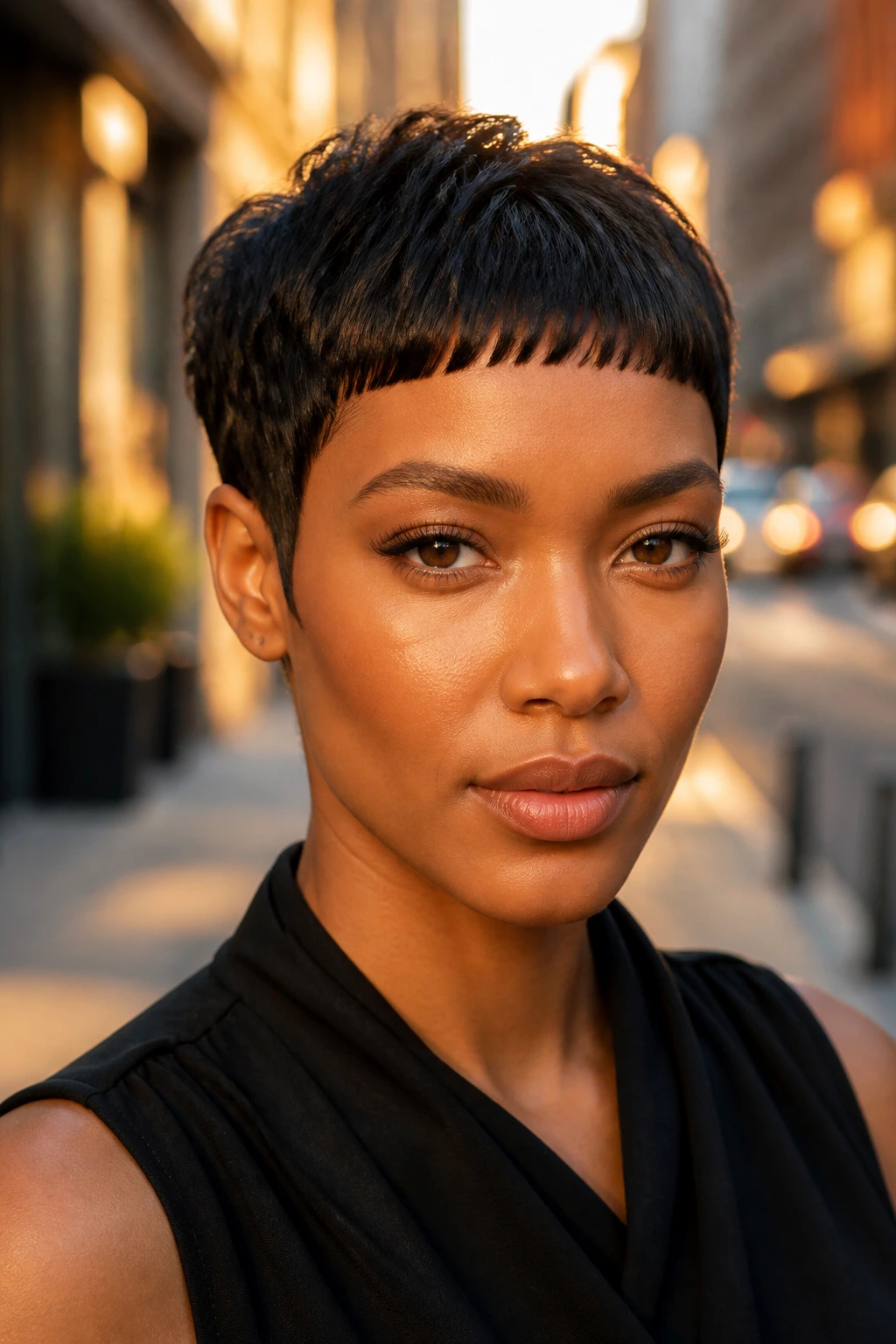
Micro bangs can be a smart move when the rest of the hair is fine, because they shift attention to the front of the face. The fringe sits high and short, so the eye goes to your brows, eyes, and cheekbones instead of looking for bulk in the hair.
That said, this is not a lazy cut. It needs shape. The edges around the temples and neckline have to stay sharp, or the whole thing starts to look unfinished. The bangs themselves work best when they’re cut blunt but not thick, usually just long enough to skim the upper forehead.
What Makes It Work
- The fringe is short enough to stay light.
- The sides stay close so the crown does not look empty.
- The shape looks best with regular cleanups every few weeks.
- It flatters strong brows and defined features.
This is a bold choice, but not a reckless one. Fine hair often benefits from a strong front line, and micro bangs give you exactly that.
8. Tapered Faux-Hawk Pixie
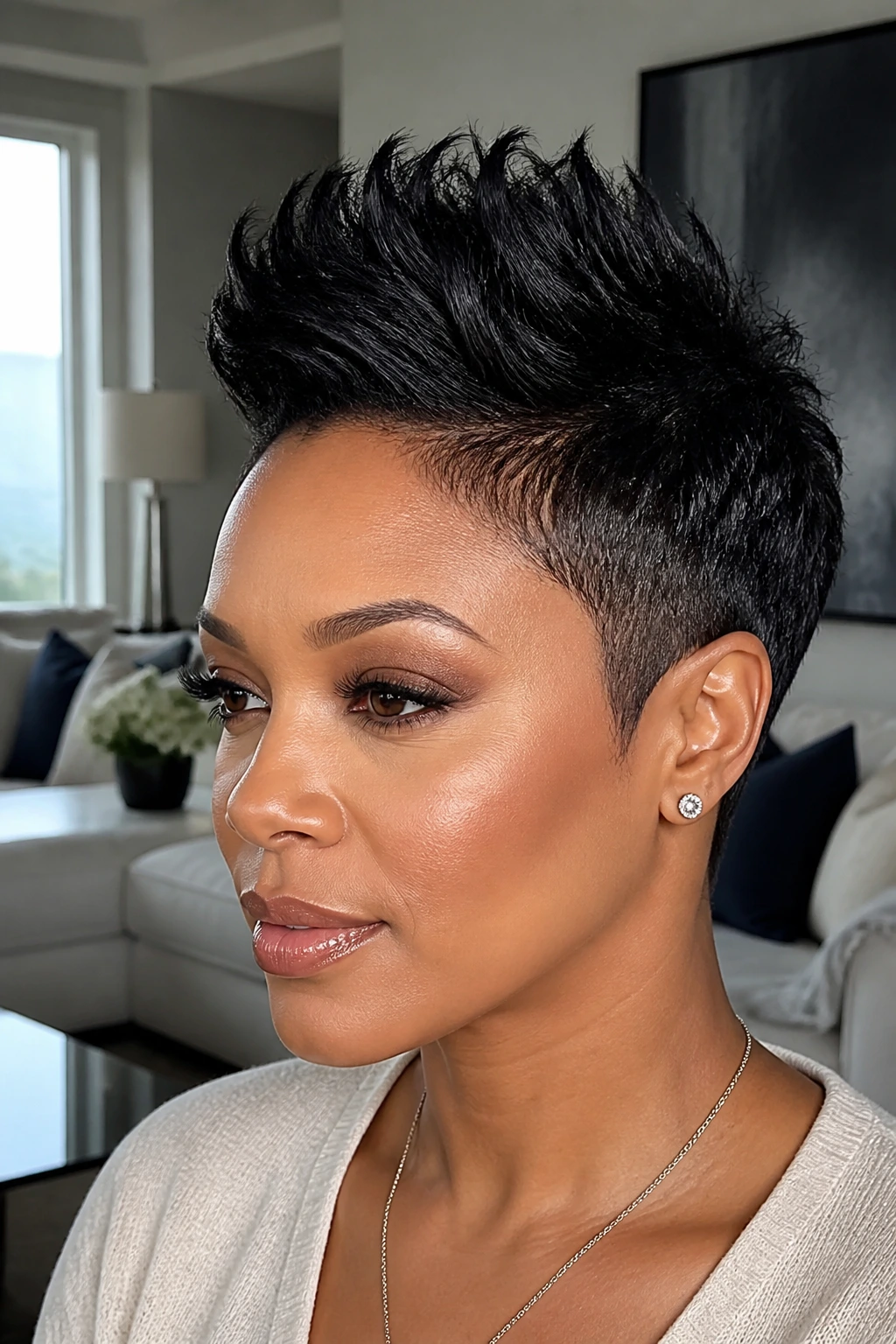
A tapered faux-hawk is one of the easiest ways to make fine hair look more alive. The center ridge gives the illusion of height, while the tighter sides keep the whole thing from spreading outward.
It is a good cut when your hair wants to lie flat on top. Not every pixie needs softness. Sometimes you need a little tension in the shape so the top doesn’t collapse by noon. A light styling paste or foam can push the center up without turning it stiff. Use your fingers, not a brush. A brush can flatten the top too much.
This style reads modern because it has movement built into the cut itself. You are not fighting the hair. You’re directing it. That difference matters more than people think.
If you like a clean neckline and a little attitude up top, this cut delivers.
9. Asymmetrical Pixie with a Long Sweep
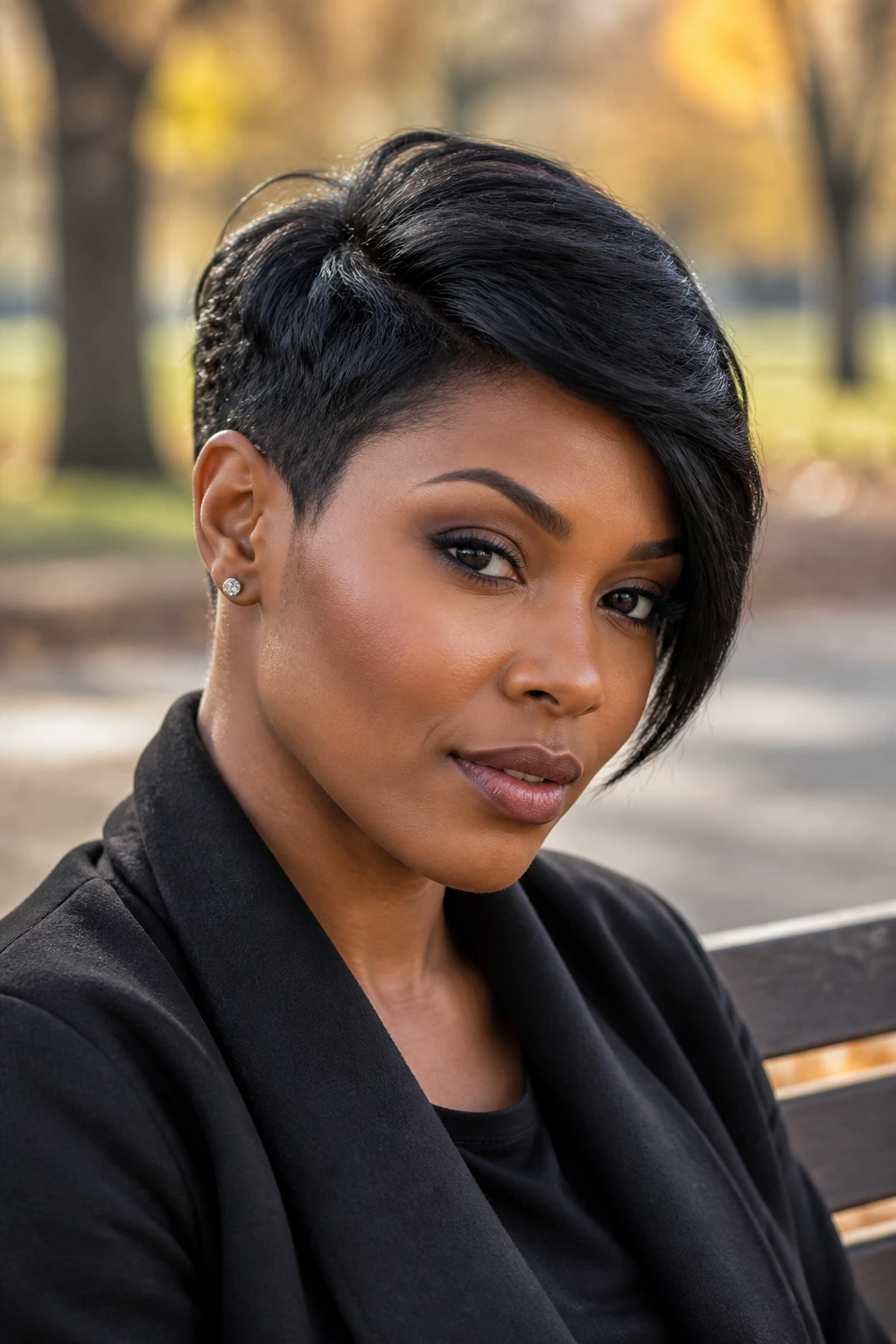
Why does asymmetry help fine hair? Because uneven length creates visual weight where the hair actually needs it.
One side can sit around the cheekbone, while the other stays tighter and closer to the head. That longer sweep gives the cut a clear focal point, and the shorter side keeps the shape from feeling bulky. On fine hair, that contrast does a lot of work. It also makes the style easier to refresh between salon visits, since a little growth tends to look intentional rather than messy.
How to Wear It
- Use a light blow-dry cream to direct the longer side.
- Tuck one side behind the ear if you want more shape at the jaw.
- Keep the perimeter clean so the cut does not turn shaggy.
- Trim before the longer side drops past the cheek.
This is one of those cuts that can feel sleek one day and soft the next. That range is useful.
10. Close Crop Pixie with a Soft Temple Fade
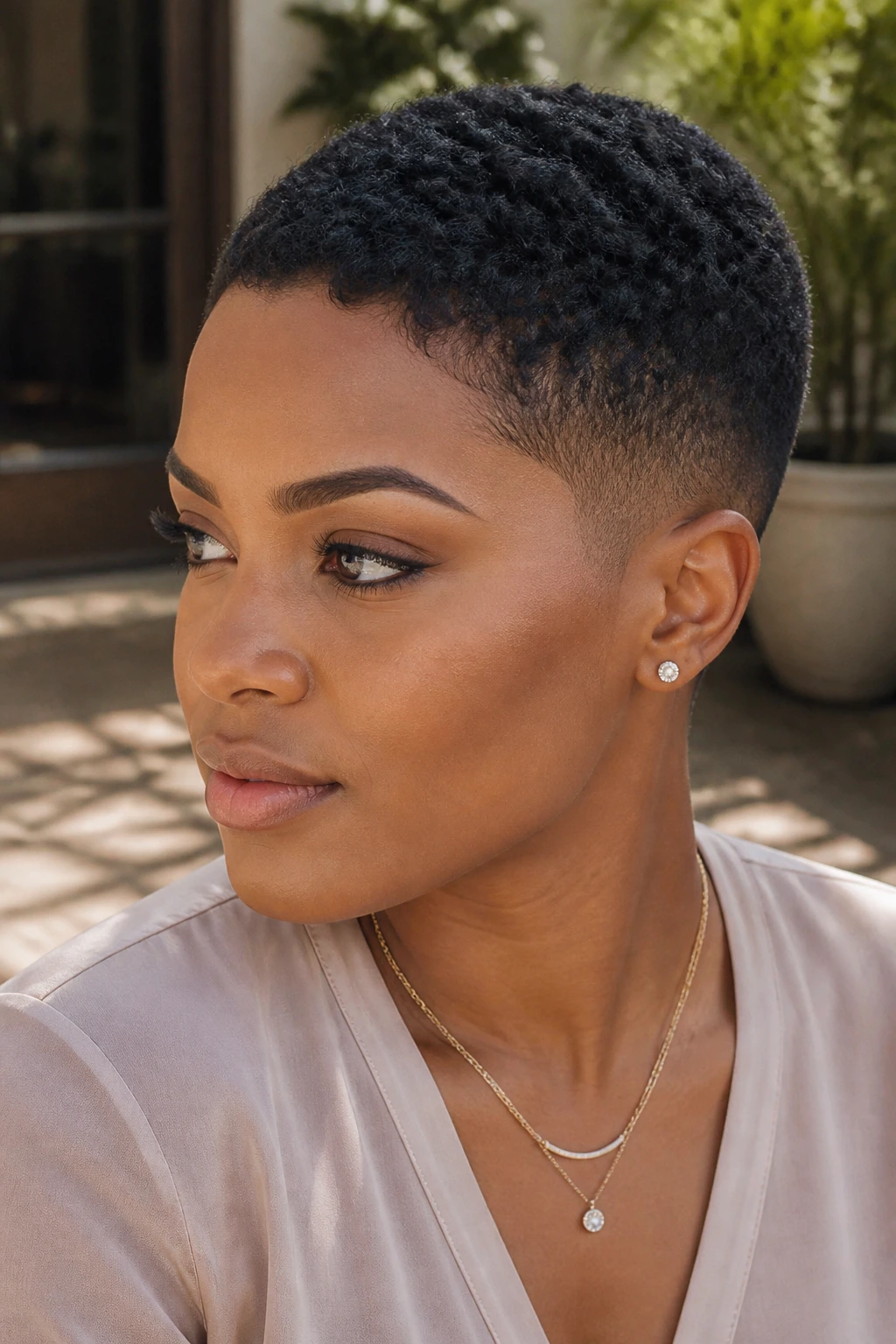
A close crop with a temple fade is a strong choice if you want the easiest kind of maintenance. The fade removes weight from the sides, which keeps the head from looking boxy, and the top stays just long enough to show texture.
The soft part matters. You do not need a hard clipper line unless that is your thing. A gentle fade around the temples gives the cut a smoother finish, which tends to suit fine Black hair better when the goal is elegance rather than drama. The top can be left at 1 to 2 inches so it still has a little lift.
This style is especially good if your mornings are busy and you do not want to spend ten minutes shaping a fringe. A dab of cream or a little foam is enough. If you like bare minimum styling with a clean result, this is a strong pick.
Simple cuts can be the smartest ones.
11. Brushed-Forward Pixie with Face-Framing Texture
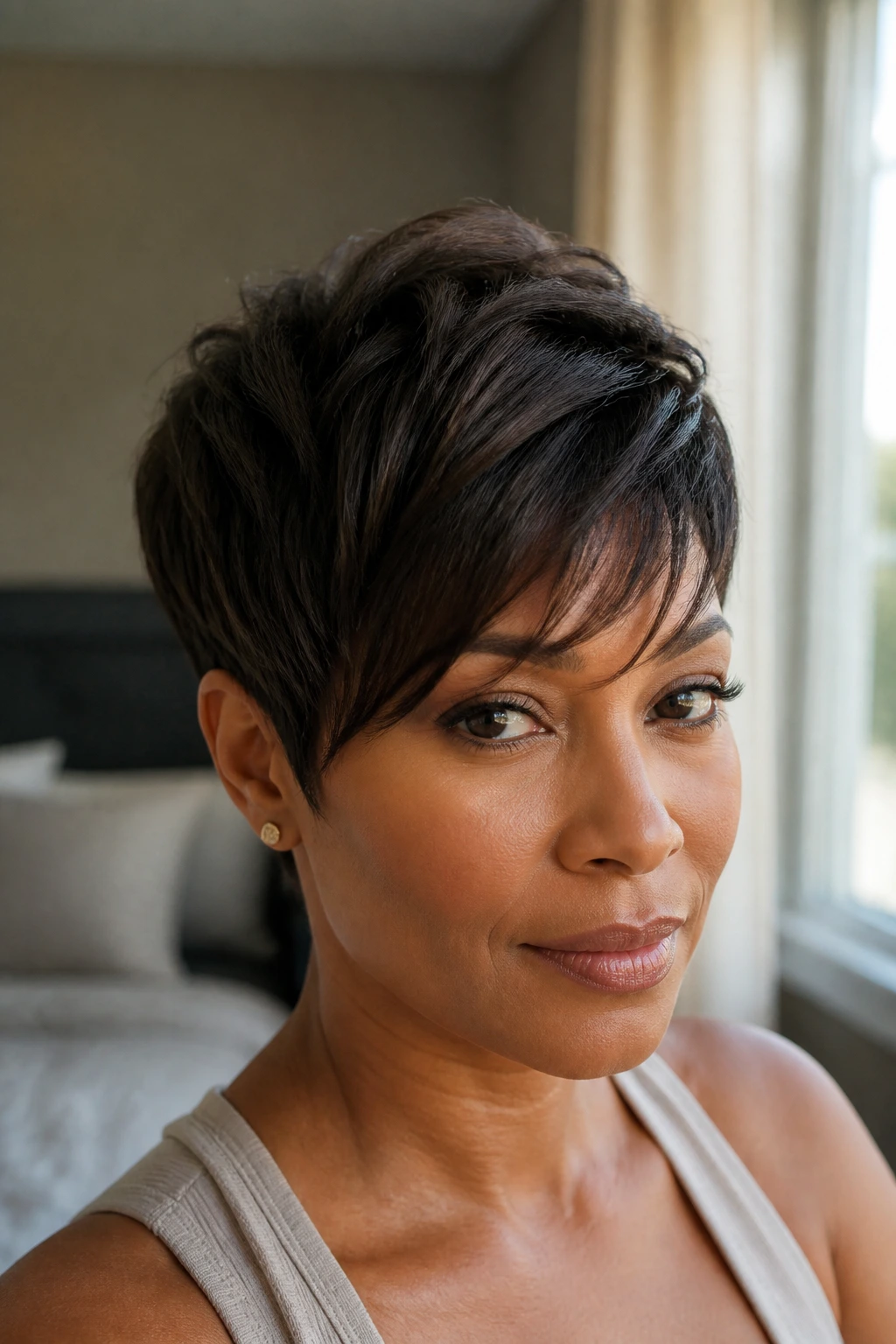
A brushed-forward pixie does something clever: it pushes the weight toward the face, where fine hair often looks denser. That helps the cut feel fuller without needing extra length on top.
The trick is keeping the front soft, not helmet-like. Hair that is brushed straight forward needs tiny breaks in the line, usually from light point-cutting or from a few piecey sections near the forehead. The result should feel like hair that naturally falls that way, not hair forced into position with half a jar of product.
I like this style for people whose crown goes flat fast. It keeps the eye moving forward, and that gives the illusion of thickness where you want it most. A small brush, a mist of root spray, and a little finger shaping go a long way.
It’s a quiet cut. Not boring. Quiet.
12. Sculpted Rounded Pixie
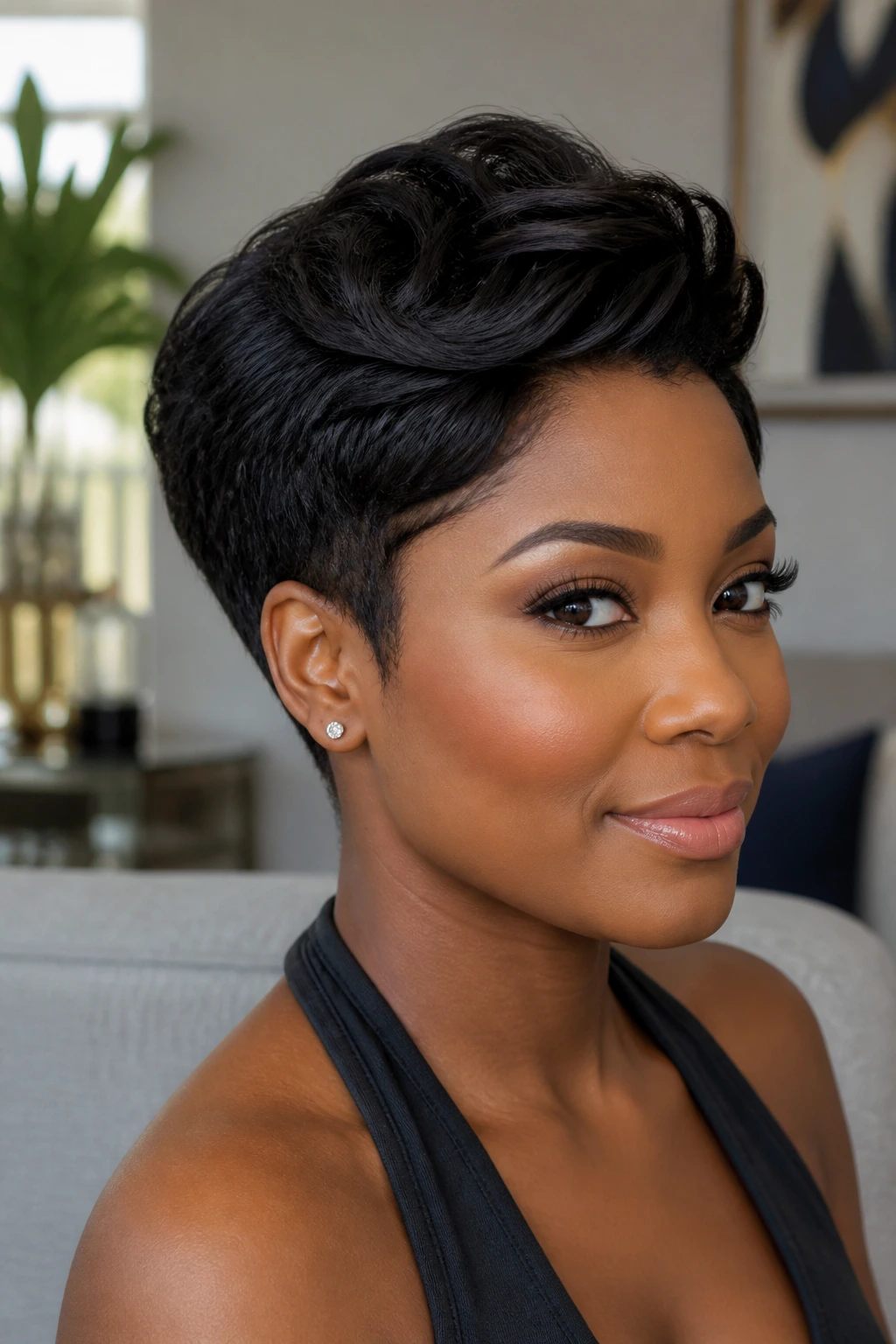
A rounded pixie is the answer when fine hair needs shape more than it needs edge. Instead of sharp corners or broken texture, the silhouette curves gently around the head, which makes the hair look more deliberate and fuller.
This is different from a choppy pixie. Choppy cuts rely on separation; rounded cuts rely on contour. On fine hair, that contour can be a relief because it keeps the style from looking thin at the ends. The crown can be left a touch longer, then blended into a soft side and back shape. No harsh jumps.
It works best for someone who wants the head shape itself to feel balanced. Strong cheekbones, glasses, and a neat neckline all play well here. The style is not trying to be edgy. It’s trying to be clean, and it does that well.
If your hair is fine but you want it to read as polished rather than playful, this is a smart direction.
13. Wet-Look Pixie with Glossy Separation
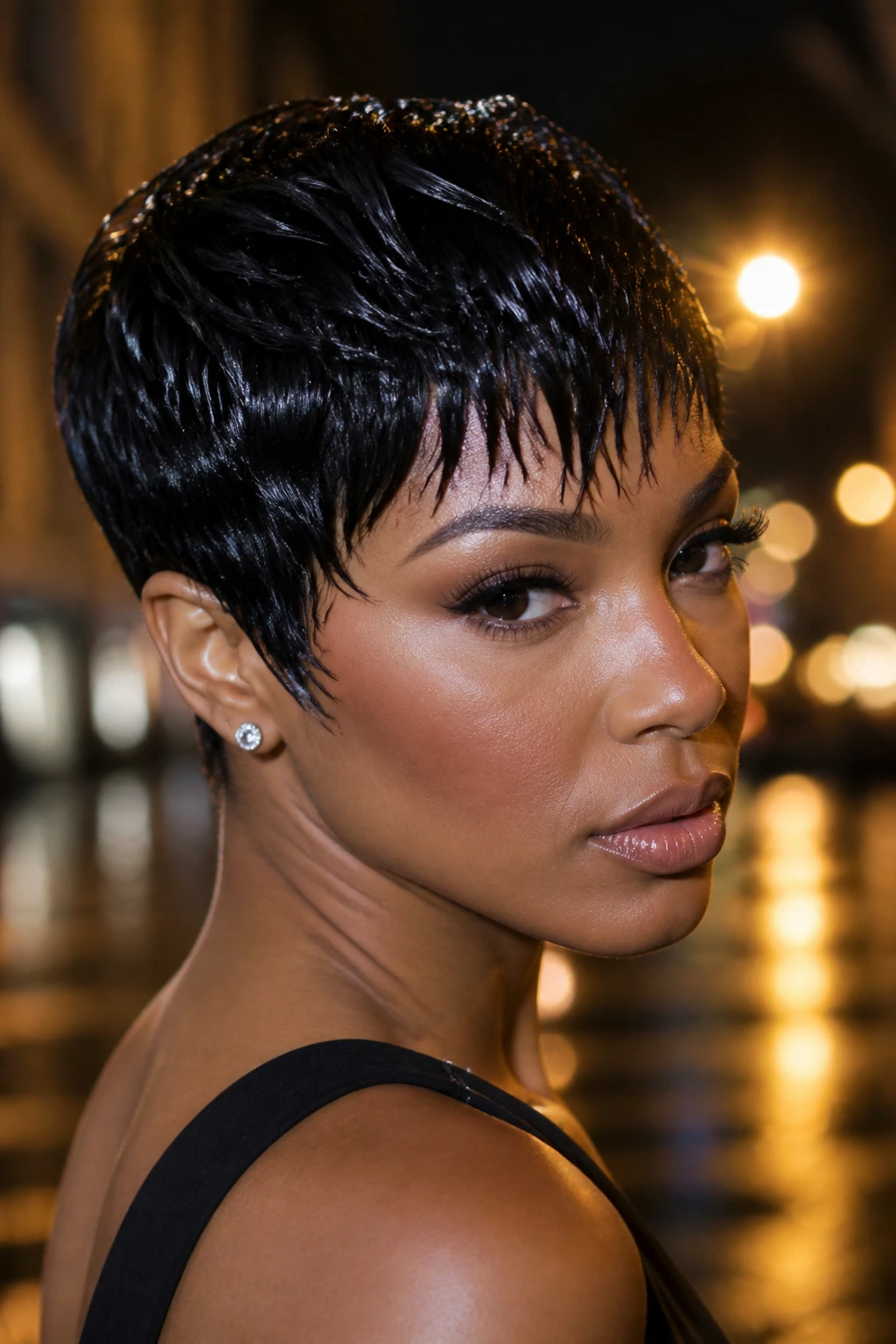
The wet-look pixie can be a gift for fine hair, because fine strands often hold a sleek finish better than thick ones. A little gel or styling cream goes further, and the hair clumps into defined sections fast.
How to Keep It from Looking Greasy
Start with damp hair, not soaking wet hair. Work a small amount of gel through the top and fringe, then comb the product back or to the side depending on where you want the shine to land. Use your fingers to break up the front just a little. Too much combing makes it look flat. A tiny bit of separation makes it look intentional.
- Use a light gel, not a heavy wax.
- Keep the sides close.
- Add shine only where you want attention.
- Wrap it at night so the finish stays smooth.
This is a strong choice for evening looks or anytime you want the cut to feel sleek. It does not need a lot of hair to make an impact.
14. Choppy Piecey Pixie with Light Ends
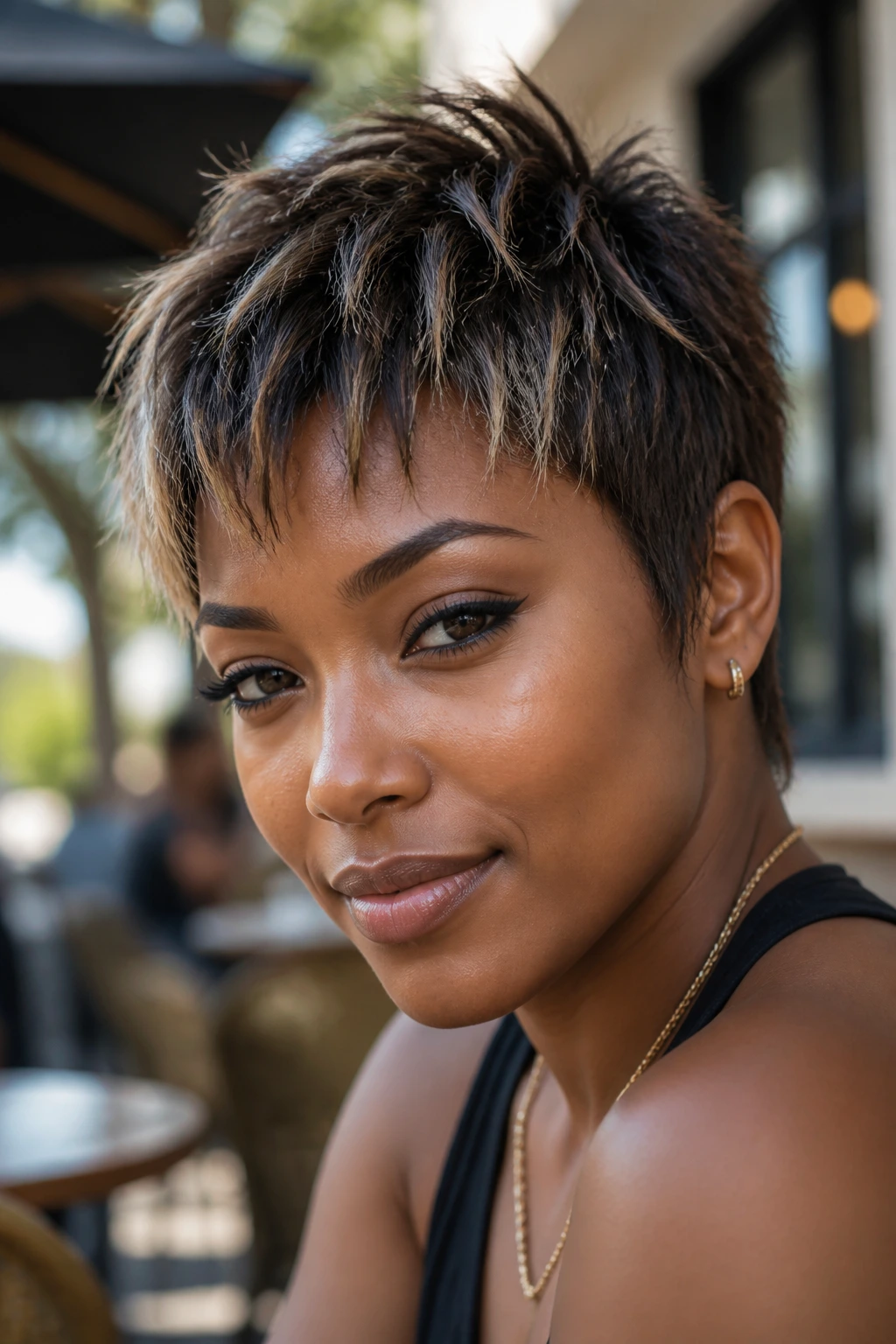
A choppy pixie is the cut for someone who wants texture to show on purpose. Each piece should look like it has its own job, and the ends should feel light, not frayed.
The best version on fine Black hair uses tiny sections of length rather than big chunks. That keeps the texture readable without making the ends wispy. A small amount of styling paste on the fingertips can separate the pieces and give the crown a little lift. The whole cut should feel touched, not overworked.
This is where many stylists go wrong. They thin fine hair too much, then wonder why the style collapses. A better approach is controlled choppiness — enough movement to keep the cut from lying dead, but not so much that the silhouette loses body.
If you like texture you can actually see, this one is worth a shot.
15. Pixie with Long Sideburns and a Narrow Nape
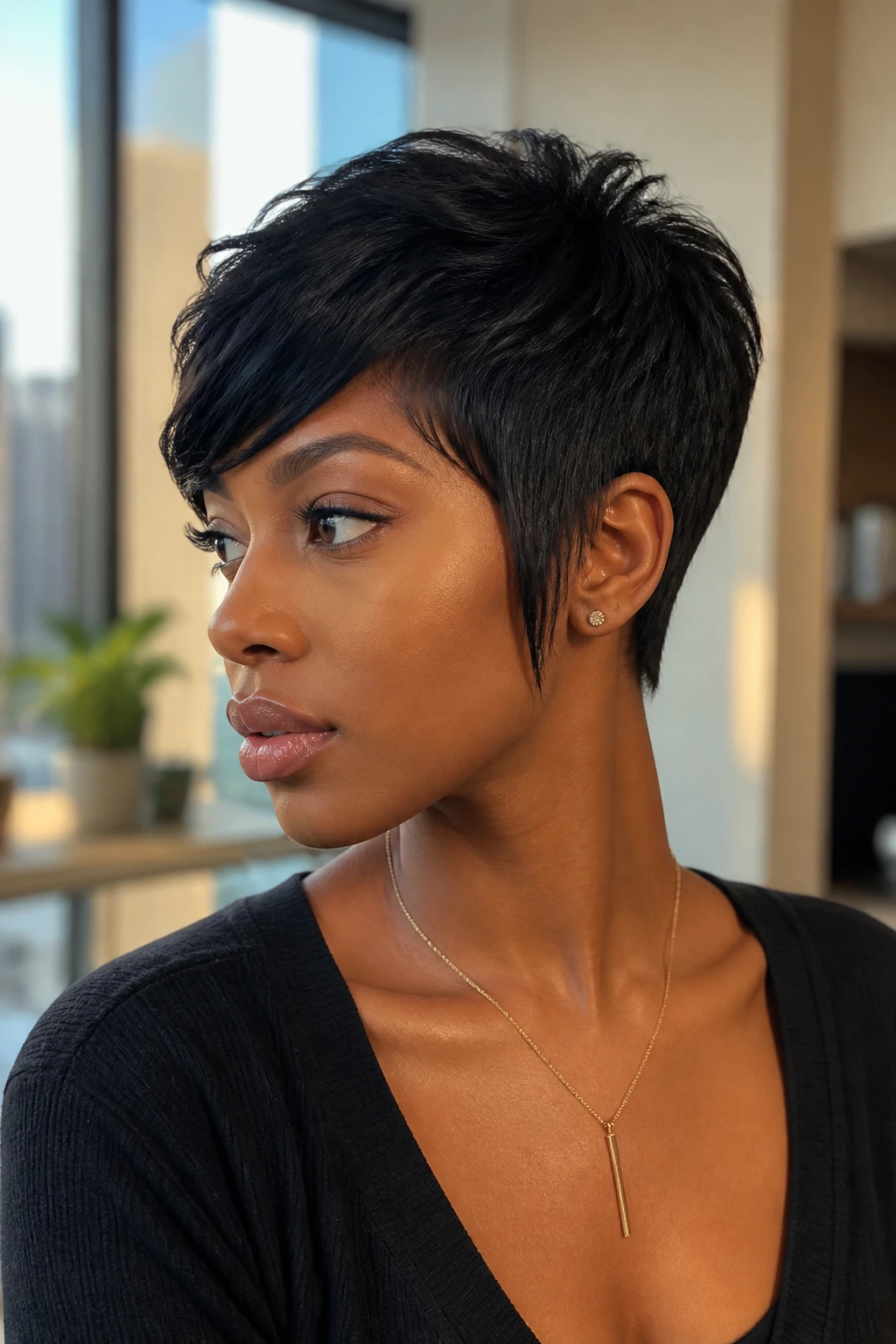
Why keep the sideburns long? Because they frame the face and soften the whole cut without adding weight where fine hair can’t support it.
That longer line near the cheek and jaw gives the pixie a little length in just the right place. The nape stays narrow and clean, which keeps the back from feeling bulky. It’s a smart balance. Not dramatic, not plain. Just enough shape to make the cut feel finished.
Where the Shape Lands on the Face
Longer sideburns work well if you wear glasses, have a strong jaw, or want the cut to feel a little less severe. They can also help if your hairline is irregular and you’d rather soften it than expose it fully. A stylist can taper the sideburns so they sit neatly instead of hanging like afterthoughts.
This is one of those tiny details that changes the whole haircut. People notice the shape first, even if they don’t know why.
16. Stack-Back Pixie with Crown Lift
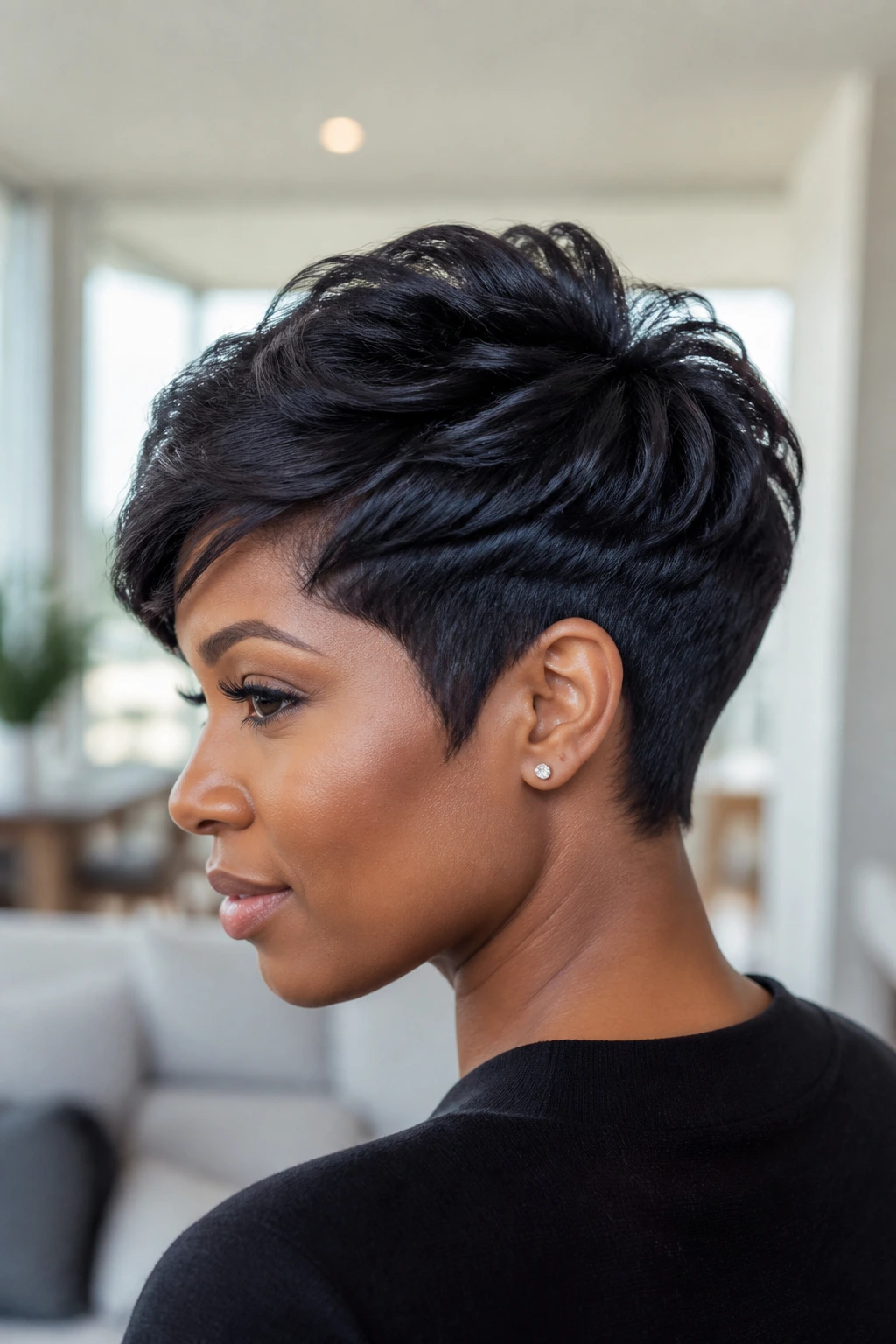
A stack-back pixie builds volume where fine hair usually needs it most: at the back of the crown. The layers are graduated so they sit slightly higher as they move up the head, which gives the silhouette lift instead of collapse.
This cut can be a lifesaver if the back of your hair lies flat against the skull. The stacked shape pushes the outline outward in a controlled way. Not huge. Just enough. Ask for the graduation to stay soft so the back doesn’t turn boxy, and keep the top long enough to connect the crown to the fringe.
- Best when the crown tends to flatten by mid-day.
- Works with a round brush or finger-drying.
- Needs a trim every 4 to 5 weeks to keep the stack visible.
- Looks especially clean with a satin wrap at night.
It’s a tidy cut, and that tidiness is part of the appeal.
17. TWA-Inspired Pixie with Soft Shape
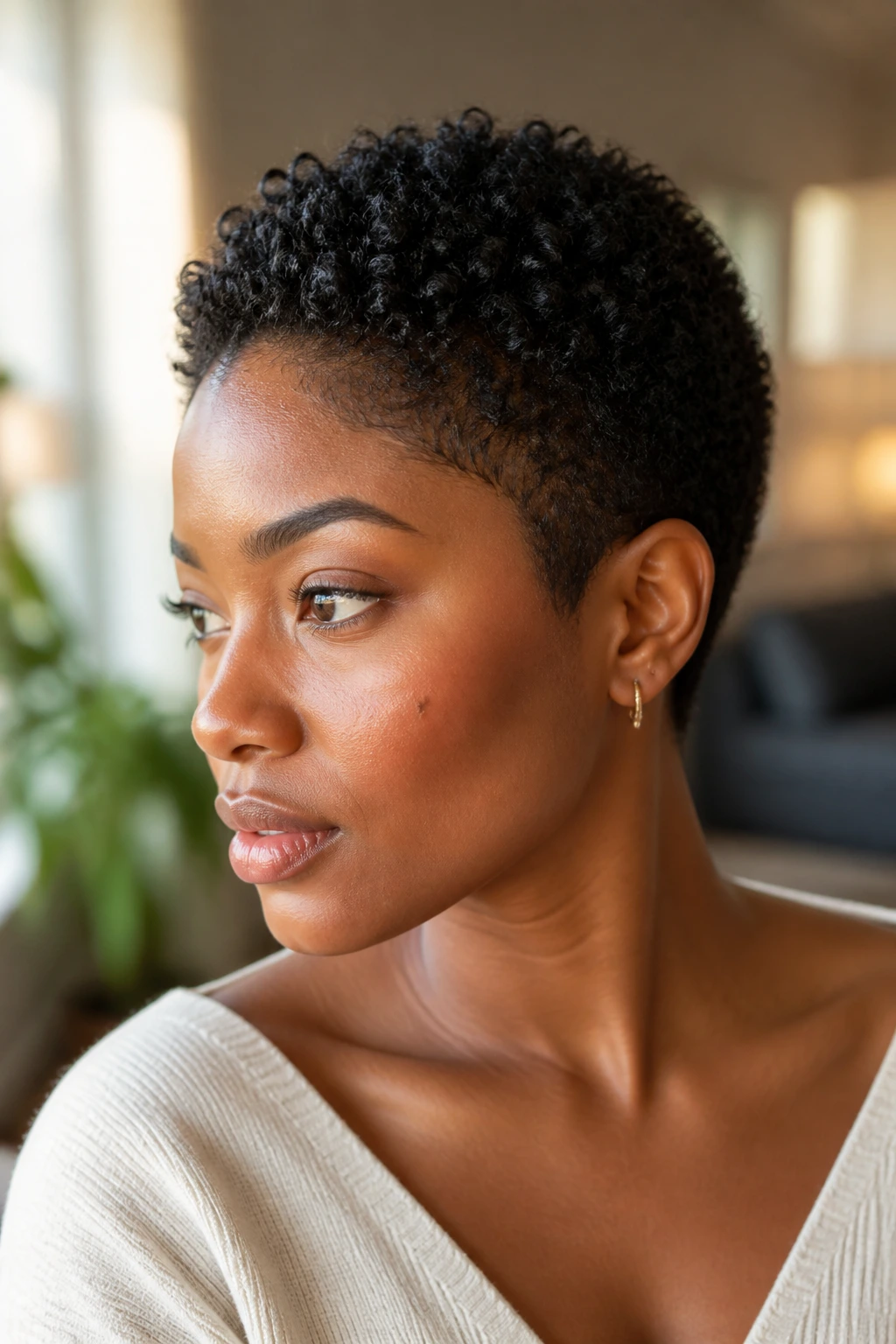
A TWA-inspired pixie keeps the natural texture close to the head, but with a little more shaping around the perimeter. That makes it a good fit if you want something short without losing the character of your curl pattern.
The cut should feel soft at the edges and slightly rounded at the top. Fine hair does not need hard angles here. It needs a shape that lets the texture show without scattering into fuzz. A little leave-in conditioner, a touch of curl cream, and gentle scrunching are usually enough. You do not want to pile on product and weigh the hair down.
This is also a low-stress option if you’re tired of fighting your hair every morning. The style works with the pattern instead of forcing it into a straight line. That alone makes it easier to live with.
For some people, this is the most freeing pixie of the bunch.
18. Side-Swept Pixie Crop with Tucked Sides
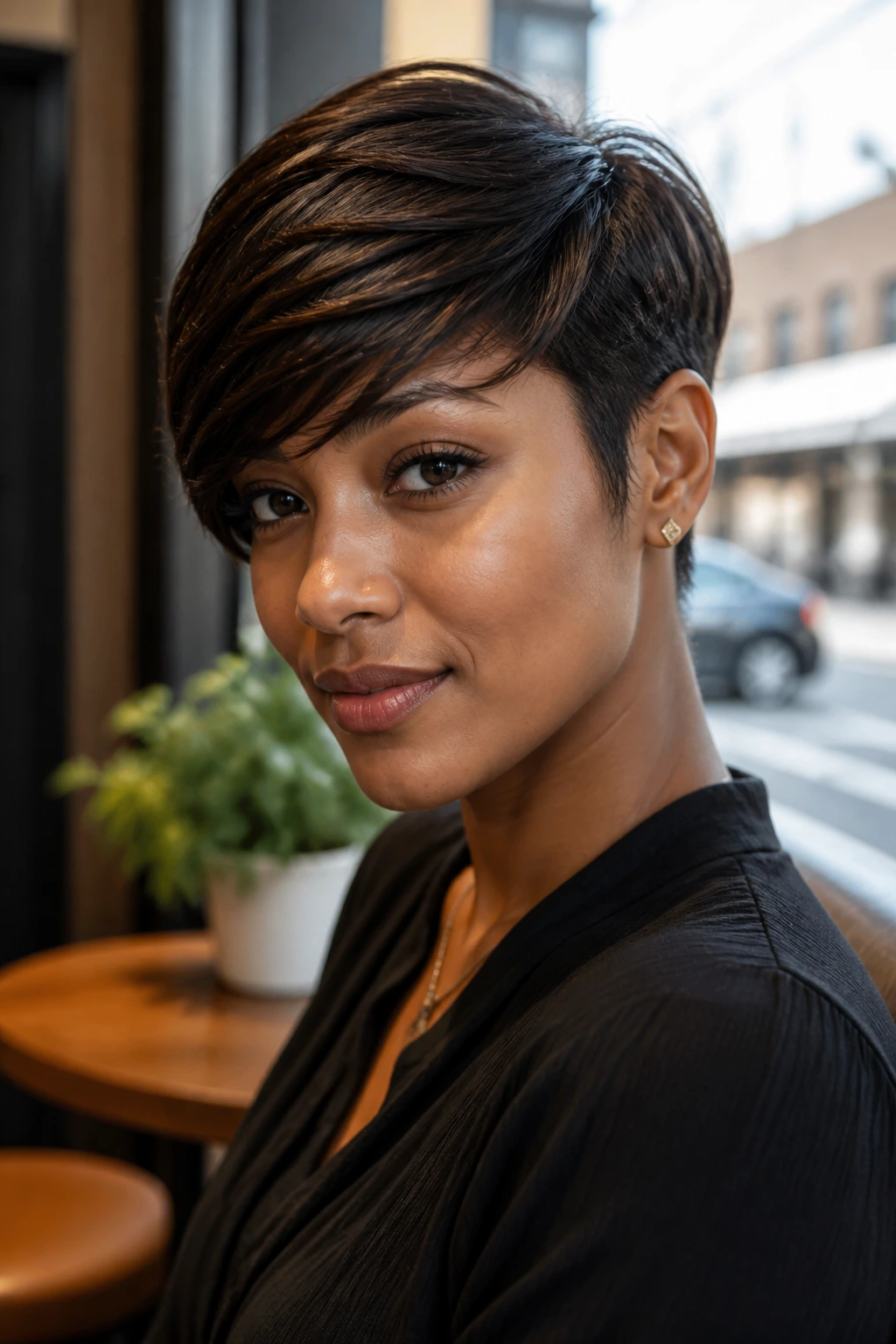
If you’re not ready to go ultra-short, this side-swept crop sits in a useful middle place. It keeps enough length on top to style, but the sides tuck in close so the overall shape still reads as a pixie.
That tucked side is the detail that matters. It gives the face clean edges and keeps fine hair from flaring out at the temples. The sweep across the forehead creates softness, while the cropped sides make the top feel fuller by comparison. It’s a simple trick, but it works.
This style is especially good if you want a transition cut. Maybe you’re coming from a bob, or maybe you just want to test short hair without jumping straight into a close crop. Either way, this one gives you room to adjust.
It’s approachable. That counts.
19. Textured Pixie with Lifted Crown and Wispy Nape
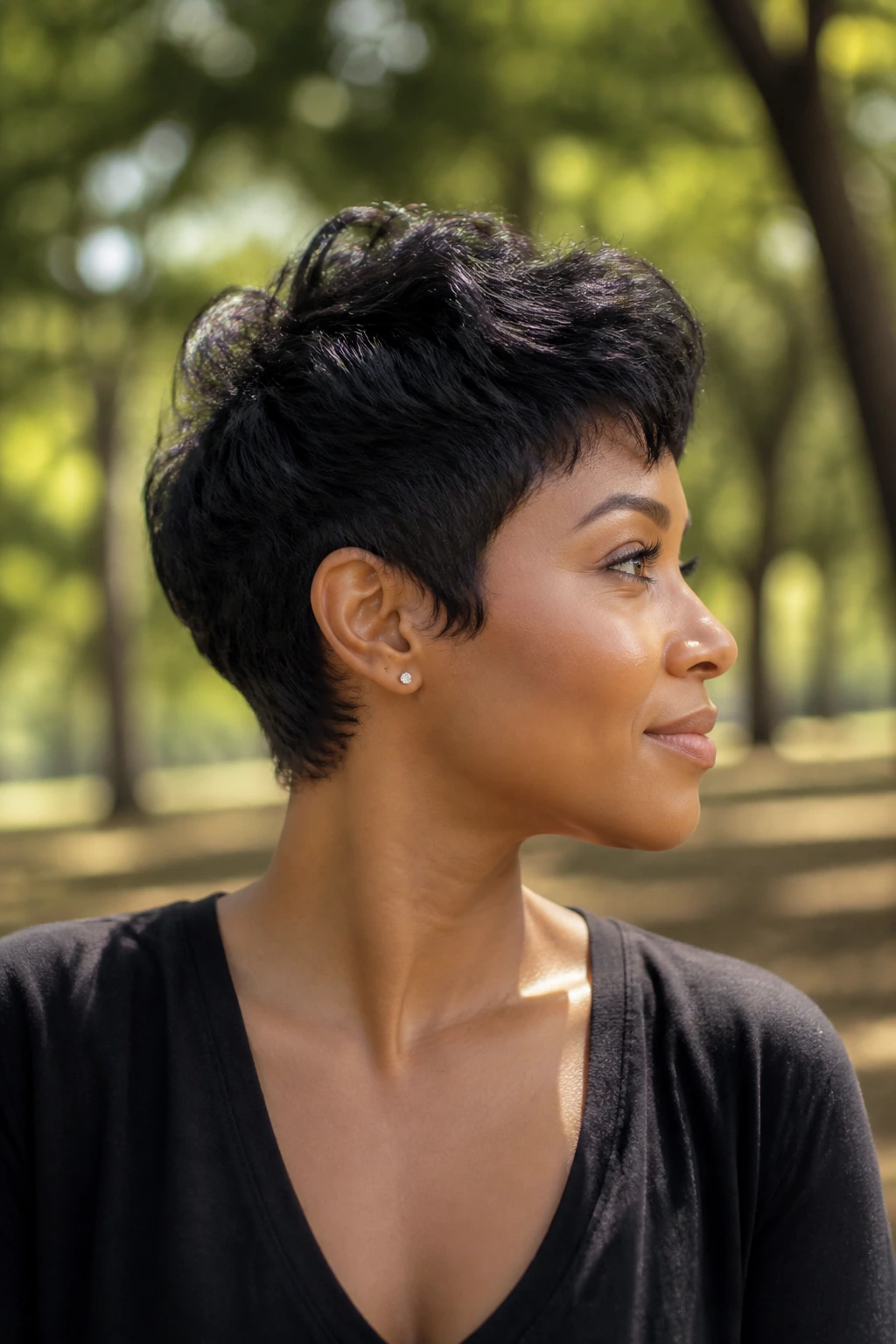
This cut avoids the helmet effect by keeping the crown lifted and the nape airy. That combination is gold for fine hair, because the top gets the visual volume and the back stays light.
Styling Notes That Matter
A root spray or light mousse gives the crown a little grip. After that, you can rough-dry with your fingers, then finish the top with a small brush if you want more direction. The nape should stay soft and a little narrow, not blunt. If the neckline is too solid, the cut starts to feel heavy again.
- Use product only at the roots and top lengths.
- Keep the nape wispy, not over-built.
- Let the crown dry with lift, not pinned flat.
- Avoid heavy oils near the top; they drag the shape down.
This cut feels current without trying hard. That’s probably why it works so well.
20. Clean Close-Cut Pixie with a Curved Fringe
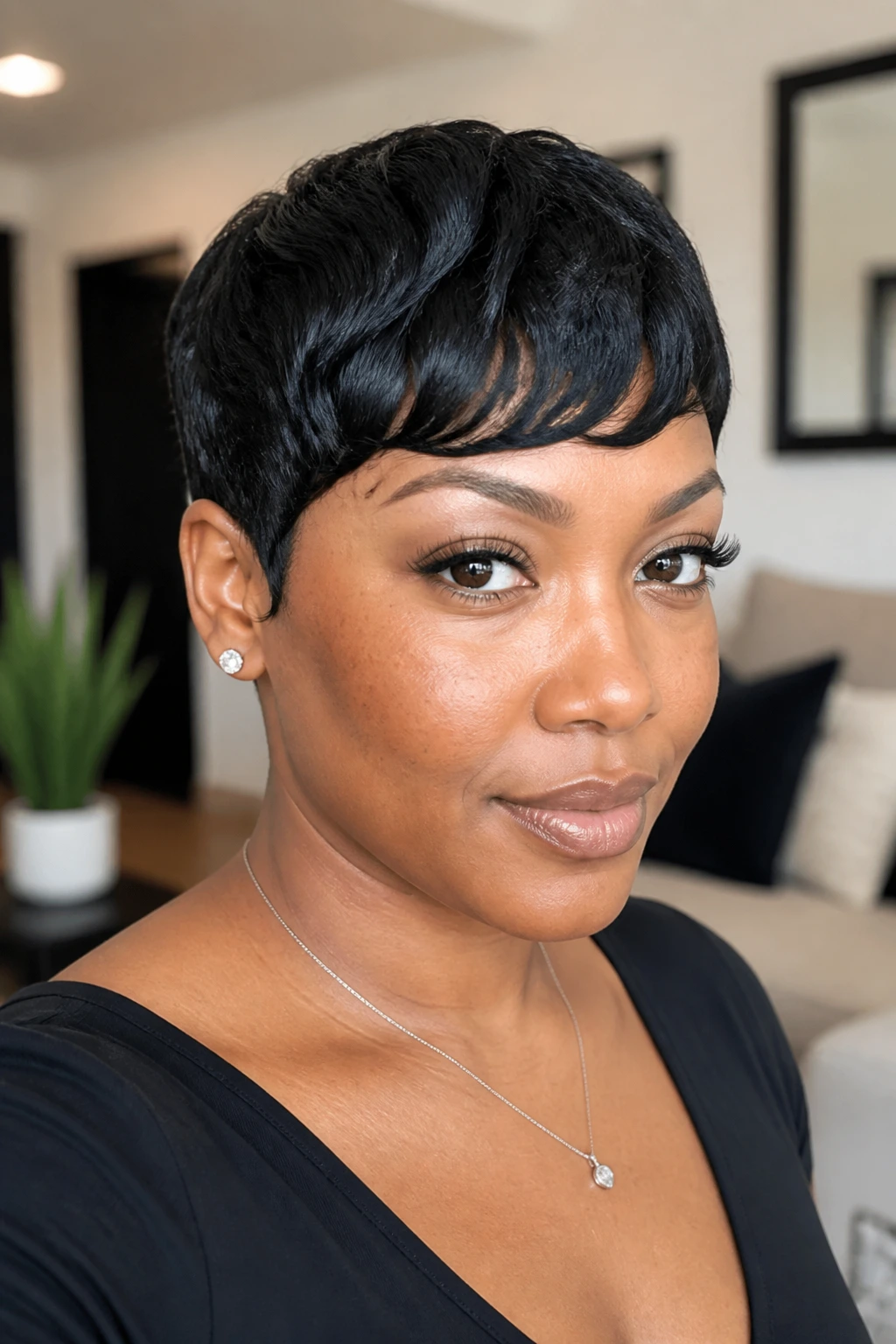
If you want the simplest version that still feels finished, this is the one to keep in your back pocket. The close cut keeps the sides and back neat, while the curved fringe softens the front so the style does not look too severe.
The fringe is the whole point here. It breaks up the line of the forehead and gives fine hair a little shape up front, where people notice it first. The rest of the cut stays compact, which makes maintenance easy. No chasing volume all over the head. Just a clean shape with one soft bend.
This is the pixie I’d hand to someone who wants to wash, dry, and leave the house without wrestling with five products. Ask for a gentle curve through the bangs, a close nape, and just enough length on top to avoid a shaved look unless that’s exactly what you want.
It’s crisp. It’s low fuss. And on fine Black hair, that’s often the smartest combination of all.
