



A round face does not need to be hidden. It needs direction.
That’s why medium curtain bangs can work so well when they’re cut with a little restraint and a little shape. The wrong fringe can widen the face at the cheekbones. The right one pulls the eye down, opens the center of the face, and gives you that easy, broken-up movement people keep trying to fake with a curling iron.
The sweet spot is usually somewhere between the brow and the cheekbone, with the longer pieces dropping toward the jaw or collarbone. Too short, and the bangs can puff out like a shelf. Too wide, and they make the face look broader than it is. Tiny adjustments matter here. A half-inch can change the whole line.
Medium-length hair gives curtain bangs room to breathe. Shoulder-length, collarbone-length, and softly layered cuts all give the fringe somewhere to land, which is half the battle with a round face. The goal isn’t to erase fullness. It’s to create a shape that looks lifted, soft, and a little longer through the center.
1. Cheekbone-Skimming Medium Curtain Bangs
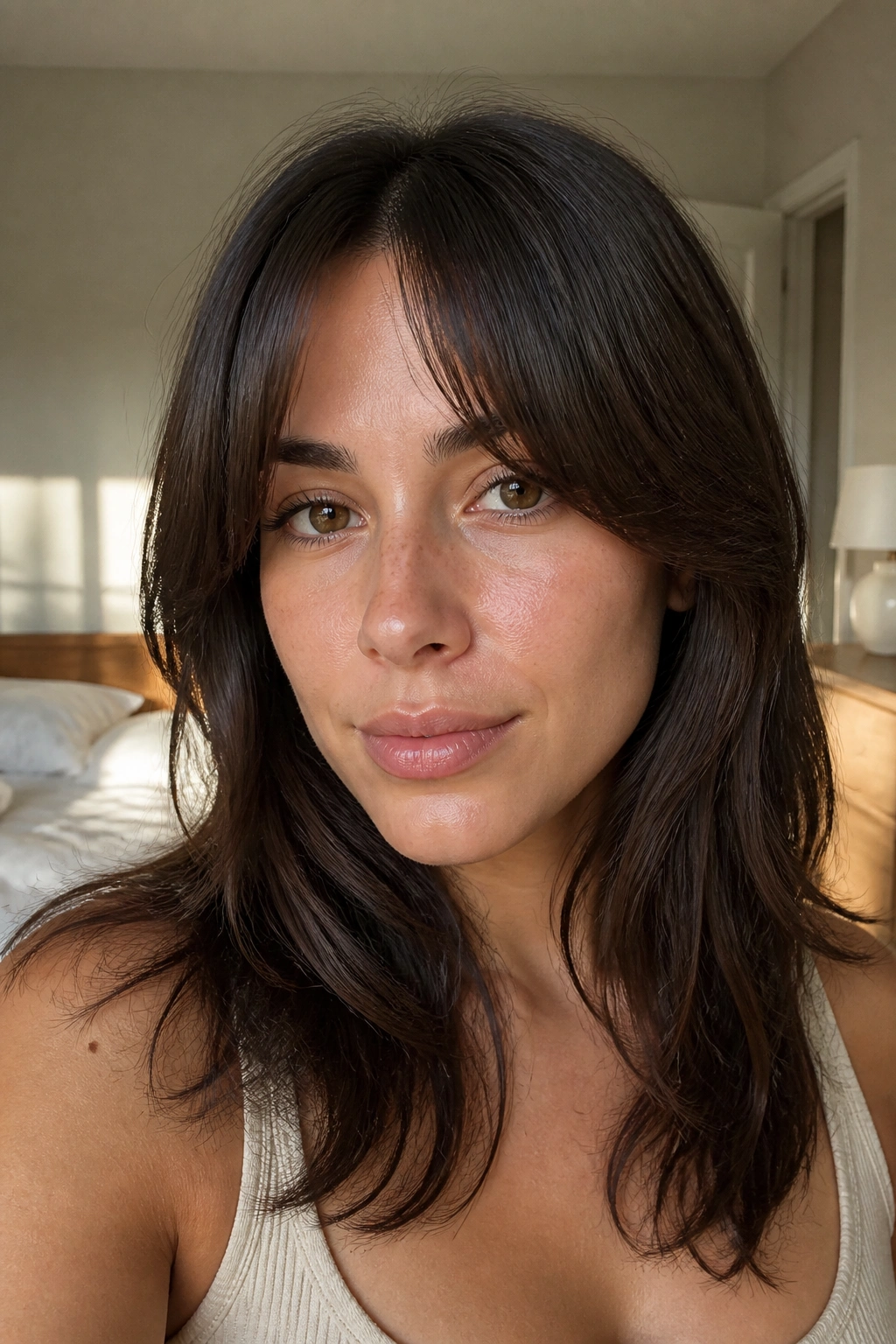
This is the version I reach for first when someone has a round face and wants something flattering without a lot of drama. The shortest point sits around the center of the brow or just below it, then the pieces slide down and away from the face so they brush the cheekbones instead of sitting right on top of them.
That detail changes everything. Cheekbone-skimming curtain bangs create a diagonal line, and diagonals are your friend when you want a face to look a touch slimmer and longer. A blunt horizontal line does the opposite. It stops the eye. These don’t.
Why it flatters round faces
The shape opens the middle of the face while keeping fullness away from the widest part. That matters more than length alone.
A lot of people hear “bangs” and think of width. Not here. These bangs are about movement, and the movement starts near the brow, then falls outward. If your hair has even a little bend, the effect gets softer and more expensive-looking without trying too hard.
- Ask for the shortest piece to land around the brow or slightly below.
- Keep the sides long enough to touch the top of the cheekbone.
- Blend them into medium layers so they don’t look pasted on.
- Style with a round brush and a loose outward bend, not a tight curl.
Pro tip: If your bangs keep splitting too far apart, dry the center first and clip the sides out of the way for 2 to 3 minutes. It helps the fringe stay in place instead of falling flat immediately.
2. Brow-Grazing Airy Curtain Bangs

What if you want the softness of curtain bangs without a heavy fringe? Go lighter. Brow-grazing curtain bangs are a good fit for round faces because they keep the forehead open while still adding shape near the eyes.
The airy version works especially well on medium hair that already has some movement. The pieces are sliced or point-cut so they don’t sit as one thick block. You want a little separation. You want the kind of fringe that moves when you do, not a curtain that hangs there like a sheet.
The shape to ask for
Tell your stylist you want a soft split with ends that stay wispy, not chunky. That phrase matters. Chunky bangs can crowd the face fast, especially if the cut is too short or too dense at the center.
A good brow-grazing fringe should look light when it falls forward, then open cleanly as it’s pushed apart. On a round face, that opening creates a bit of vertical space through the center. It sounds small. It isn’t.
You’ll usually style this with a quick blow-dry and a tiny bit of mousse at the roots. Not a lot. Too much product makes the fringe sit in clumps, and clumps are not the move here.
If your hair is fine, this is one of the easiest places to start. If your hair is thick, the cut needs more internal removal so the bangs don’t balloon.
3. Collarbone Lob With Soft Curtain Fringe
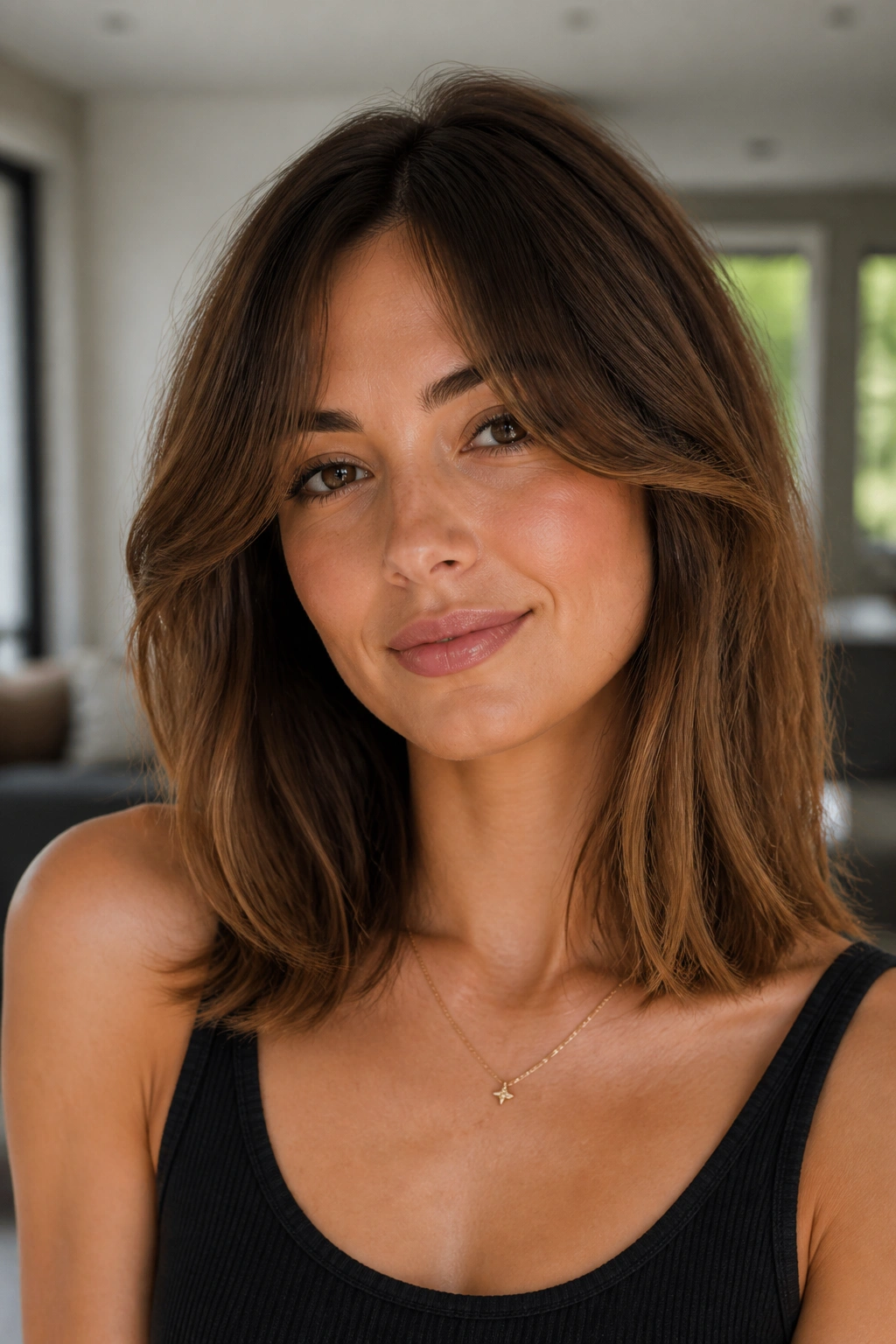
A collarbone lob and curtain bangs is one of those combinations that just makes sense on a round face. The length already gives you vertical line through the body of the hair, and the fringe adds softness without loading up the cheeks.
The key is where the lob ends. If it lands right at the jawline, it can widen the face. If it falls a little lower, around the collarbone or just above it, the cut starts to stretch the profile in a better way. That’s the little trick so many people miss.
Why the length matters
The collarbone is a useful anchor because it’s lower than the widest part of a round face. Hair that sits there naturally pulls the eye down. Add curtain bangs that sweep away from the center, and the whole look starts to feel more balanced.
This style also grows out well. That matters. Medium curtain bangs are not always a one-and-done trim. A lob gives you room to let the fringe slide longer without the whole cut looking neglected.
I like this shape for anyone who wears their hair straight one day and wavy the next. It doesn’t fight either texture. Straight hair looks crisp. A loose wave makes it softer. Both work.
Best styling pattern
- Blow-dry the fringe forward first.
- Turn the brush away from the face at the ends.
- Put the hair behind your ears for 30 seconds once it’s cool.
- Use a light serum only on the ends, not the roots.
That last bit matters. Heavy product at the roots makes a lob fall flat, and flat hair on a round face can make the face itself look fuller.
4. Wavy Medium Cut With Face-Framing Pieces
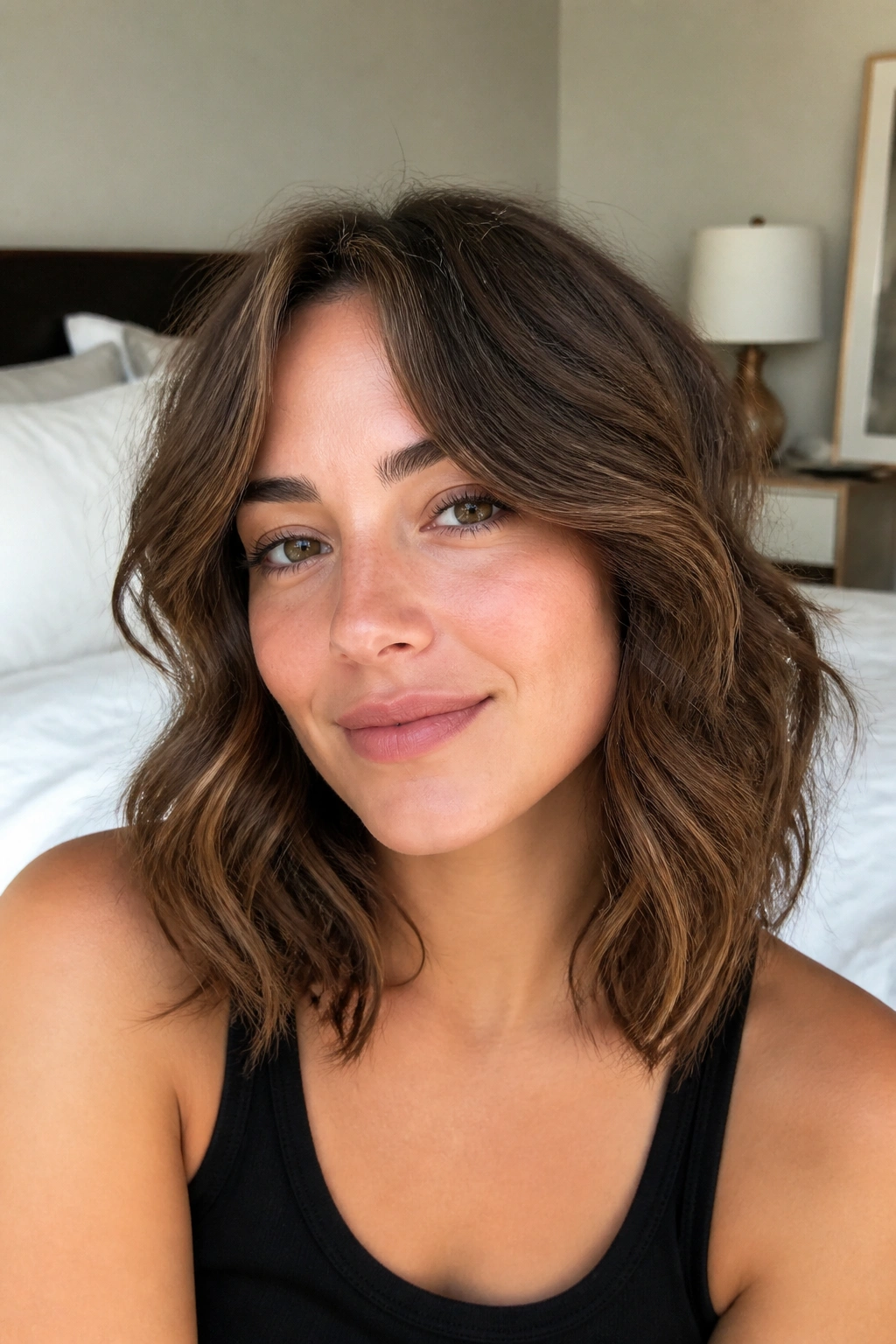
If your hair already wants to wave, let it. A wavy medium cut with curtain bangs is one of the easiest ways to keep a round face from looking too full at the sides. The wave gives you movement, and the face-framing pieces create a soft path down the face instead of a hard wall of hair.
This look is especially good when the bangs are not too polished. A little mess is part of the charm. You want the fringe to break apart into pieces, not sit in one perfect curve.
The face-framing layers should start close to the cheekbone and then soften around the lip or chin. That length gives the front of the haircut a long line without making the overall cut look severe. It’s a friendly shape. Relaxed, but not lazy.
What to ask for at the salon
- Medium length overall, usually around the shoulders or collarbone.
- Curtain bangs that open from the center and stay soft through the ends.
- Face-framing layers that start below the cheekbone, not right at it.
- Internal layering to keep the wave from puffing out wide.
The styling part is straightforward. Scrunch in a little mousse, rough-dry the roots, and use a 1-inch iron only on the front pieces if they need help. You do not need to curl every section. That’s overkill.
One more thing: if your waves are strong, keep the bang length a touch longer than you think you need. Curl has a way of springing up when it dries. Hair lies. Wet hair lies the most.
5. Thick Curtain Bangs With Layered Ends
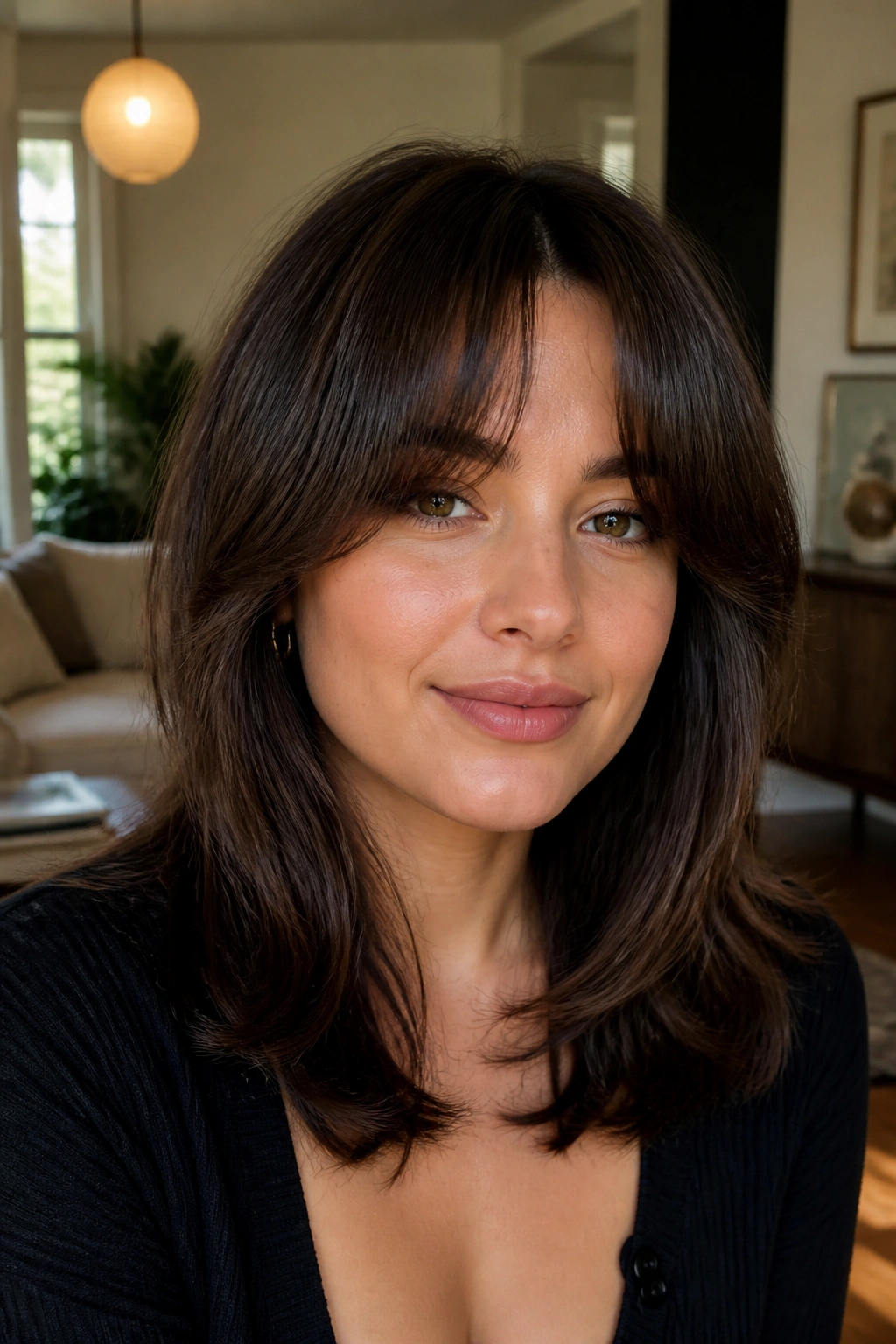
People sometimes say thick bangs make a round face look wider. That’s true when the bangs are blunt, heavy, and cut straight across. It’s not true when the thickness is broken up and the ends are layered into the rest of the hair.
This version has some attitude. The bangs are fuller in the center, then soften as they open toward the sides. On a medium cut, that can look rich and balanced, especially if your hair is naturally dense and a little stubborn about holding shape.
The trick is not to let the weight sit exactly at cheek level. That’s where the face is already broadest. Ask for the fringe to start with a solid center, then taper faster toward the temples. It keeps the shape from spreading sideways.
Who should choose this
Thicker curtain bangs are a smart pick if your hair feels too fine for airy bangs and disappears the minute you style it. They also help if you like a bit of presence around the face. Not everyone wants whispery fringe. Some people want the haircut to be seen.
The layered ends matter because they stop the bangs from turning into one thick curtain. That would be a mistake. You want density, but not a block.
A medium round brush works well here, along with a heat protectant and a low setting. High heat can push thick fringe into weird bends that take longer to fix than they did to create.
Short version? Full is fine. Boxy is not.
6. Wispy Curtain Bangs for Fine Hair
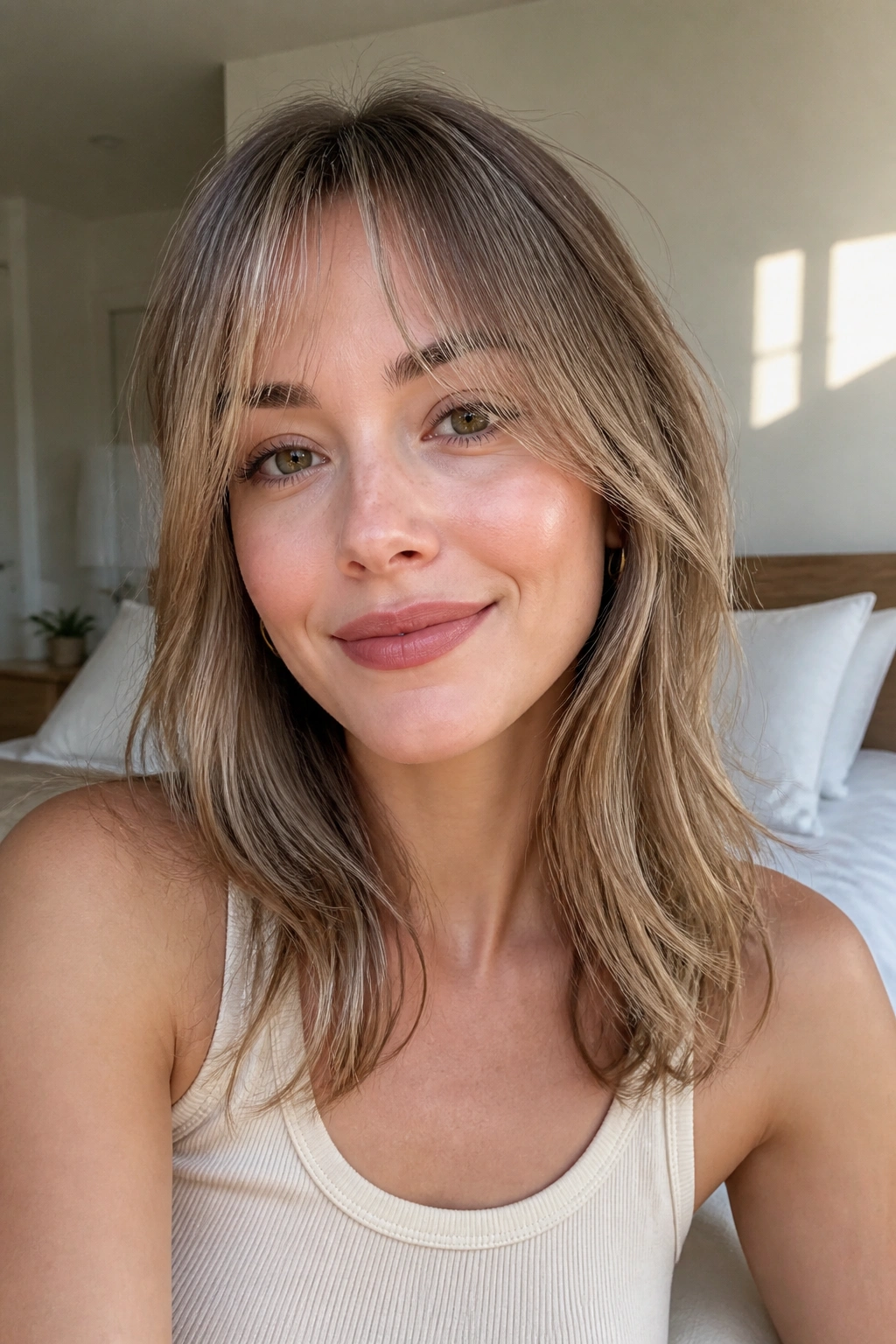
Fine hair can look gorgeous with curtain bangs, but the cut has to stay light. The fringe should feel almost weightless between your fingers, with just enough shape to frame the face and not enough bulk to drag everything down.
That softness is useful on a round face because it adds definition without closing in the cheeks. Thick bangs can swallow fine hair. Wispy ones stay open and easy. They move when you turn your head. That little swing keeps the cut from looking stiff.
How to keep them from disappearing
Ask for soft point-cutting rather than a blunt slice. The ends should look broken up, not straight and heavy. If the stylist over-thins them, though, the bangs can turn see-through in a bad way. There’s a line.
- Use a pea-sized amount of mousse at the roots.
- Blow-dry the fringe side to side, then split it with your fingers.
- Avoid heavy oils near the front.
- Trim every 5 to 7 weeks if the shape starts collapsing.
That last part is the price of fine hair. It grows out fast in a way that can look shaggy rather than soft.
What goes wrong
The most common mistake is trying to create fullness with too much product. That usually flattens the roots and makes the bangs stick together at the ends. Fine hair needs lift, not weight.
A tiny round brush and a quick cool shot from the dryer go a long way. Seriously. Ten seconds of cool air can make the fringe behave for hours.
7. Heavy Face-Framing Curtain Fringe
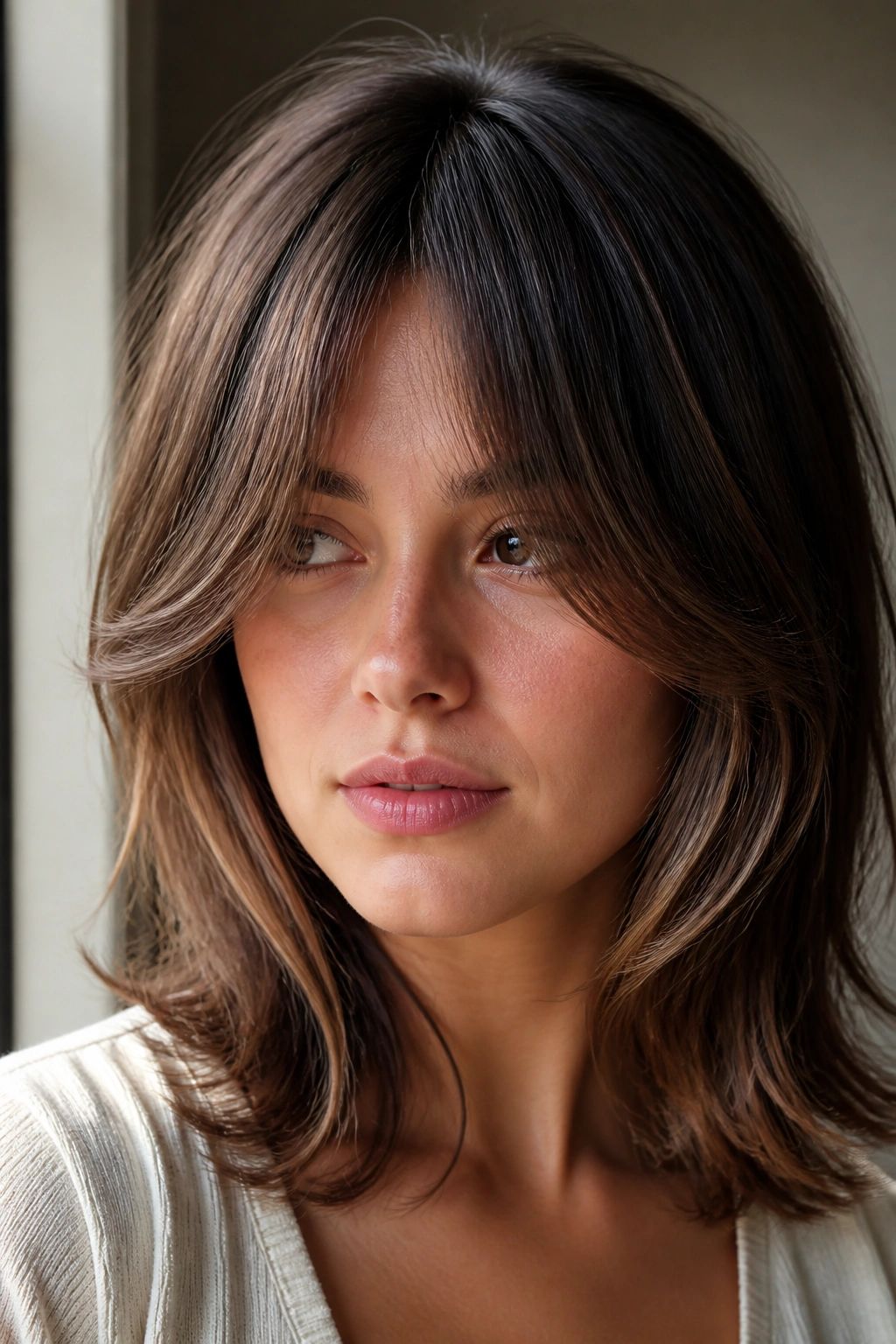
A heavier curtain fringe can work on a round face if it’s shaped with discipline. The old fear is that more hair around the face automatically adds width. Sometimes it does. But when the center is controlled and the sides are allowed to fall longer, the effect can actually feel more narrow and grounded.
This style is good for someone who likes a more noticeable bang. It has presence. The fringe starts fuller near the center, then opens in a clean slope that lands closer to the cheekbone or lip. On medium-length hair, that shape can make the whole cut feel plush without becoming bulky.
The balance to aim for
You want the fullness to live above the widest part of the face, not beside it. That means the shortest point stays higher, while the longer side pieces are doing the framing work lower down.
A good version of this cut looks almost architectural. Not stiff. Just shaped. The bangs sit in a neat center split, then fan out with purpose. On round faces, purpose matters.
I’d choose this if you have medium hair that holds shape well and you’re not afraid of brushing the fringe into place each morning. It’s not a fussy cut, but it does like a little attention. Skip it if you want something you can forget about for a week.
One more note: if the hairline has a strong cowlick, heavier bangs can fight you. A good stylist can cut around that. A bad one will blame your hair.
8. Shag-Inspired Medium Curtain Bangs
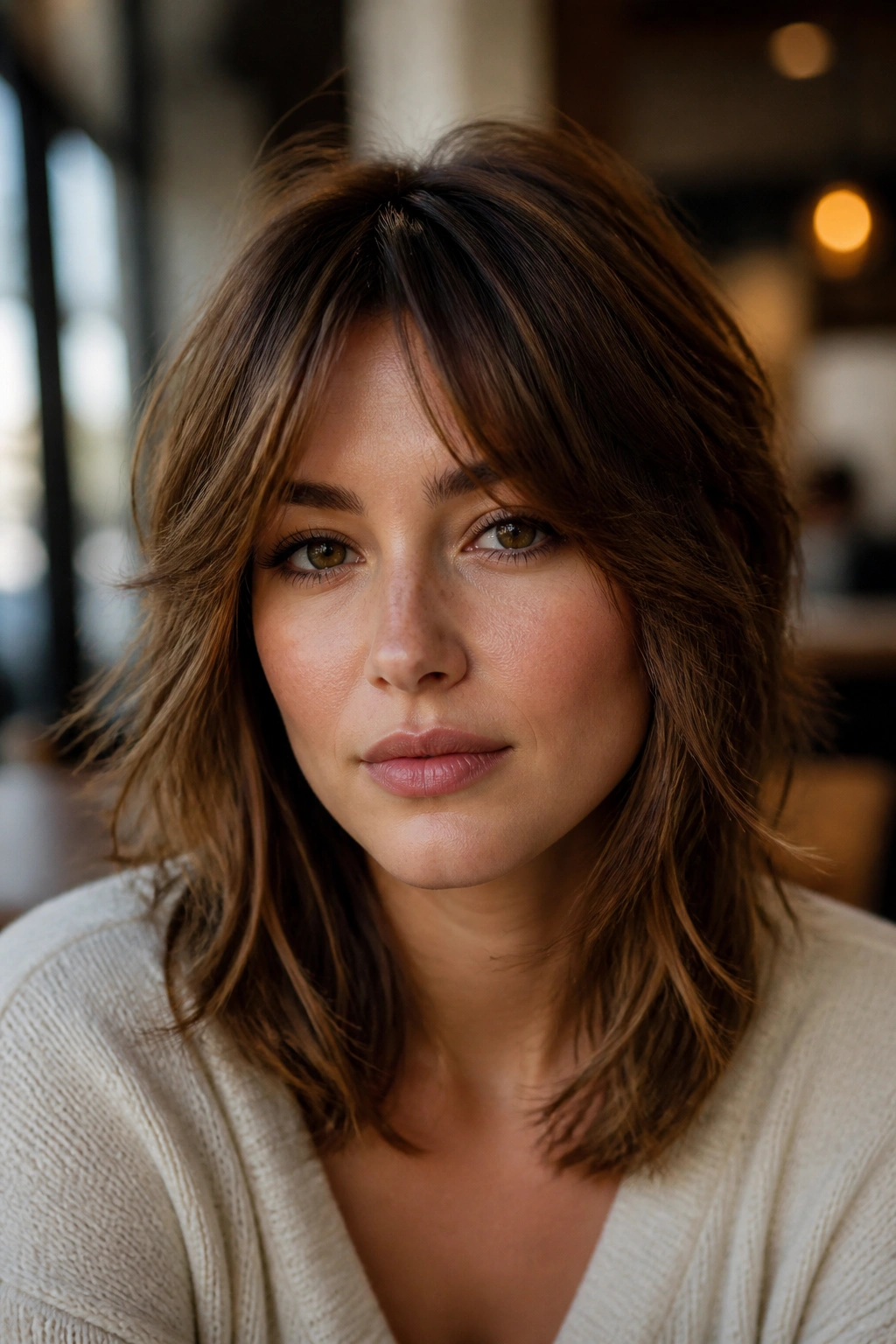
A shag can be a friend to a round face when the layers are placed well. Too many people think shaggy automatically means wild. Not necessarily. A medium shag with curtain bangs can add vertical movement, which helps the face look longer and less circular.
The reason it works is simple. The layers move in different directions, but the fringe still opens down the center. That mix keeps the eye traveling instead of resting on the widest part of the cheeks. It also gives the hair a lived-in feel that’s hard to fake with a single curling pass.
What makes it different
This cut is less polished than the lob styles above. That’s the point.
The fringe is usually a little choppier, the ends a little feathery, and the crown slightly shorter so the shape doesn’t collapse. On a round face, the crown lift matters. If the top lies flat, the cut can look squat. If it has a little height, the whole face looks longer.
You’ll usually wear this with a textured spray or a tiny bit of styling cream. Not both. The hair should feel piecey, not greasy.
Best for
- Medium hair that has natural wave.
- Thick hair that needs shape removed.
- Anyone who likes a low-polish finish.
- Faces that look best with movement instead of smooth curves.
If you want a cut that looks better after a day or two of wear, this is a strong choice. Fresh from the salon can be too neat. A little looseness makes it better.
9. Sleek Straight Medium Curtain Bangs
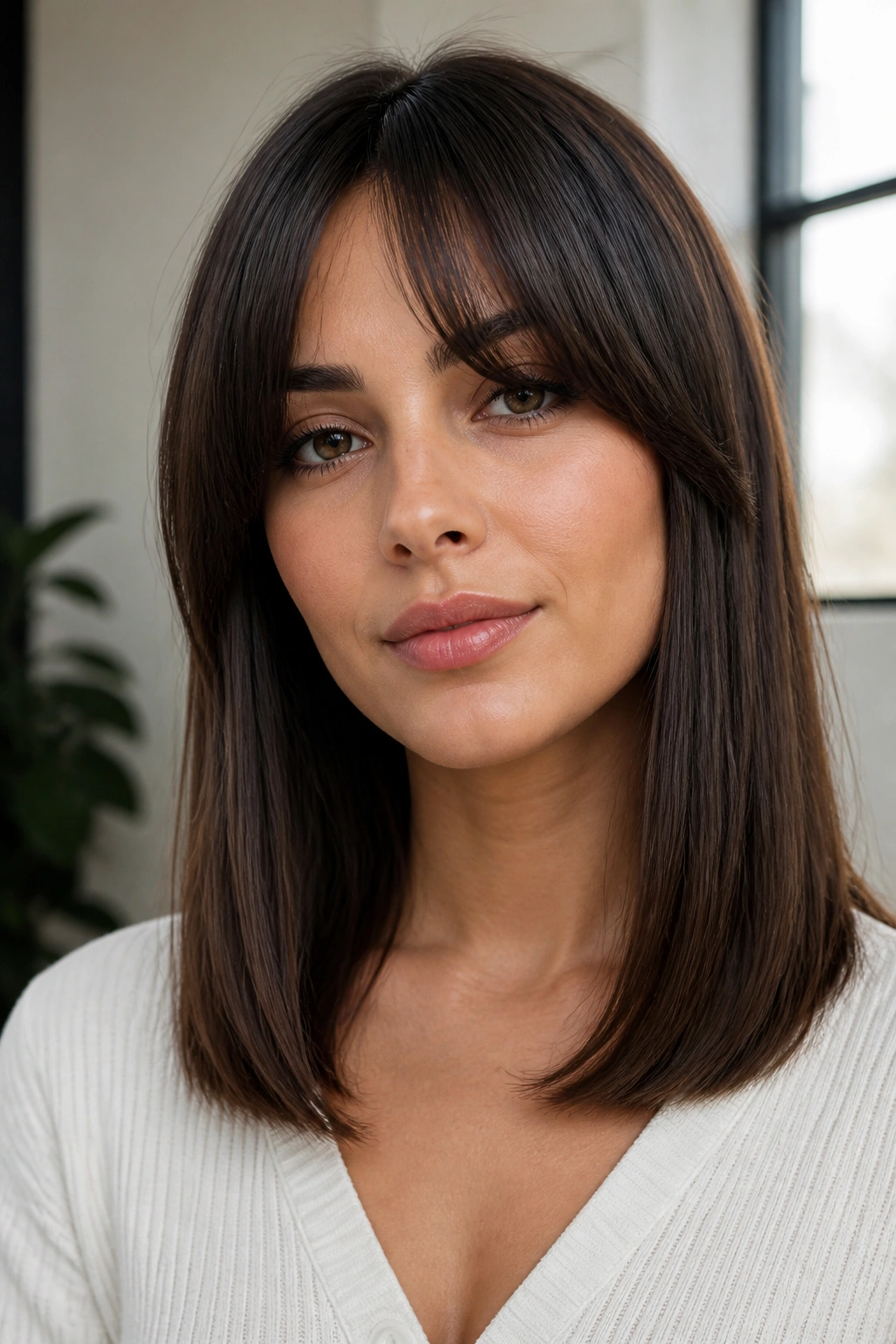
Can straight hair carry curtain bangs on a round face? Absolutely. It just needs cleaner geometry than a wavy cut. The shape should be smooth, the ends slightly beveled, and the side pieces long enough to keep the line flowing down the face.
A straight finish can look sharp in the best way. The trick is not to let the bangs sit heavy across the cheeks. They should skim outward, almost like a gentle frame around the eyes and nose. That keeps the face from feeling boxed in.
The best version of this cut usually hits somewhere between the cheekbone and the jaw, with medium length hair falling to the shoulders or just below. The line from fringe to end should feel continuous. No hard stop.
How to style it
- Blow-dry the bangs using a medium round brush.
- Pull the center forward first.
- Twist the brush slightly away from the face at the ends.
- Finish with a flat iron only on the front pieces if needed, using one slow pass.
That small bend at the ends keeps the hair from hanging limp. Limp is the enemy here.
This look suits someone who likes neat hair and does not want a lot of texture. It can feel modern without trying to look messy. And if your hair gets oily fast, this is one of the easier fringe styles to refresh with a dry shampoo puff at the roots.
10. Soft Flip Ends With Center-Part Bangs
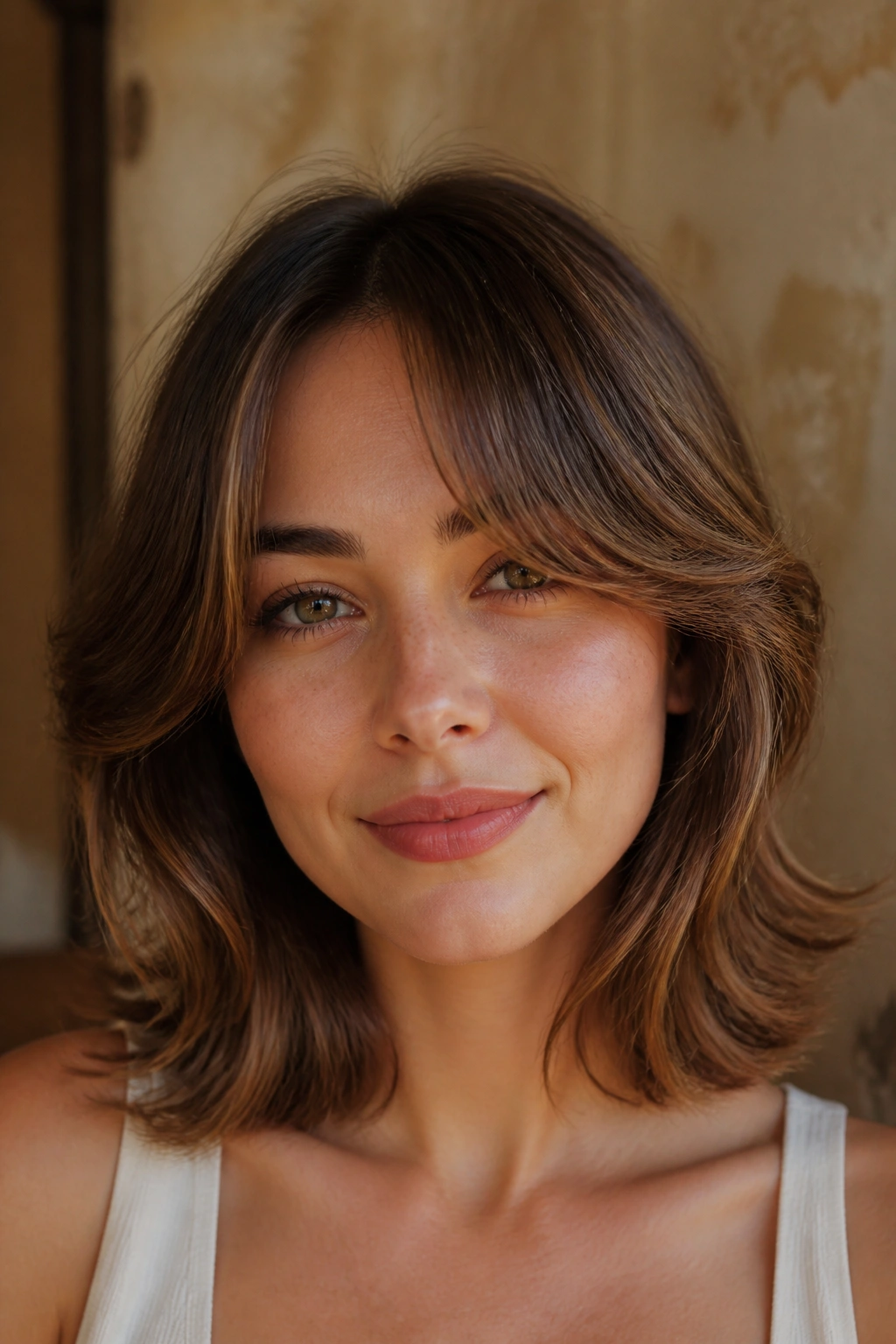
There’s something charming about a medium cut with ends that flip away from the jaw. It has a bit of old-school blowout energy, but softened for everyday wear. On a round face, that flip does useful work: it creates width lower down while keeping the center open and light.
The bangs themselves should start in the middle and drift outward in a smooth arc. The ends of the overall haircut can curl under or flip out, depending on your hair type. Either way, the motion should point away from the cheeks rather than straight into them.
This is one of those styles that looks like it took more effort than it really did. Good haircuts often do.
The visual effect
A round face benefits from anything that breaks up the circle, and the outward flip does exactly that. It gives the silhouette a little rhythm. The front pieces feel airy, while the rest of the hair keeps a clean, medium-length shape.
If you want to create this at home, use a 1.5-inch round brush or a medium barrel iron on the front sections only. Let the ends cool in the direction you want them to sit. Cooling is half the battle. Heat shapes hair, but cooling locks it in.
A tiny bit of hairspray on a brush works better than spraying the whole head. Less crunch. More movement.
This cut is a solid match for people who like a finished look without going full glamour blowout.
11. Curly Curtain Bangs for Round Faces
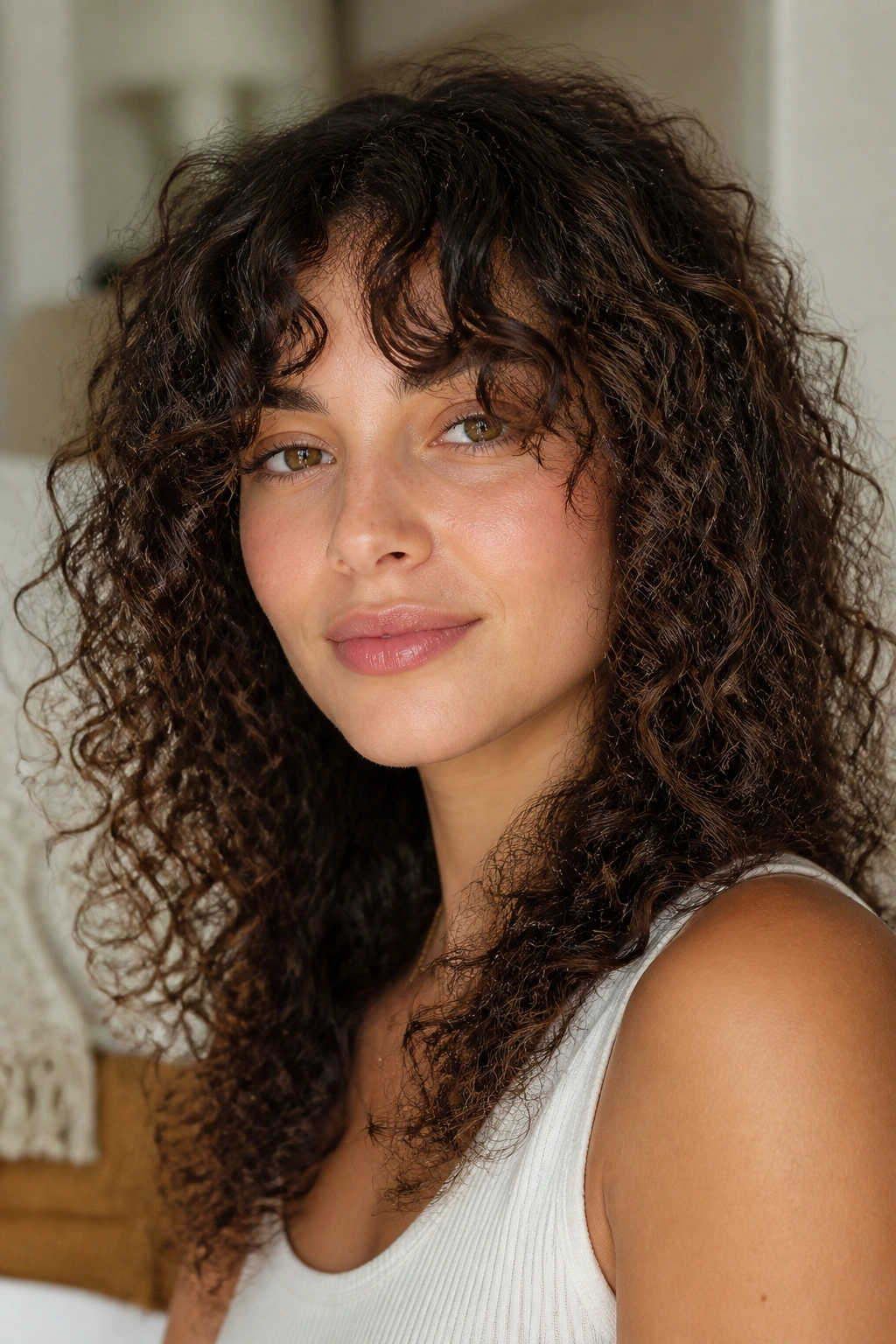
Curly hair and curtain bangs can be a beautiful match, but the cut has to respect shrinkage. A curly fringe should usually be longer than a straight one because the curl pattern will spring up once it dries. If you cut it too short, the center can rise higher than you planned and throw off the whole shape.
For a round face, curly curtain bangs are helpful because they soften the outline without making the cheeks look heavier. The curls already bring texture. The bangs just need to open in the middle and drop around the sides in a gentle arc.
How to ask for the cut
- Have the stylist cut the bangs dry, or mostly dry.
- Ask for the shortest point to stay longer than a straight fringe would.
- Keep the side pieces long enough to reach the cheekbone or lip when dry.
- Blend the front into layers so the curls don’t form a hard shelf.
A dry cut matters here because curl behaves differently when it’s wet. Wet curls stretch. Then they spring back. That can be a nasty surprise if the bangs were snipped too high.
Styling is simple: a small amount of curl cream, scrunched in section by section, and then hands off. Too much touching breaks the curl pattern and gives you frizz right where you don’t want it.
I like this look for people who want softness without losing personality. It’s not polished in the traditional sense. It’s better than that. It feels honest.
12. Bottleneck Curtain Bangs on Medium Hair
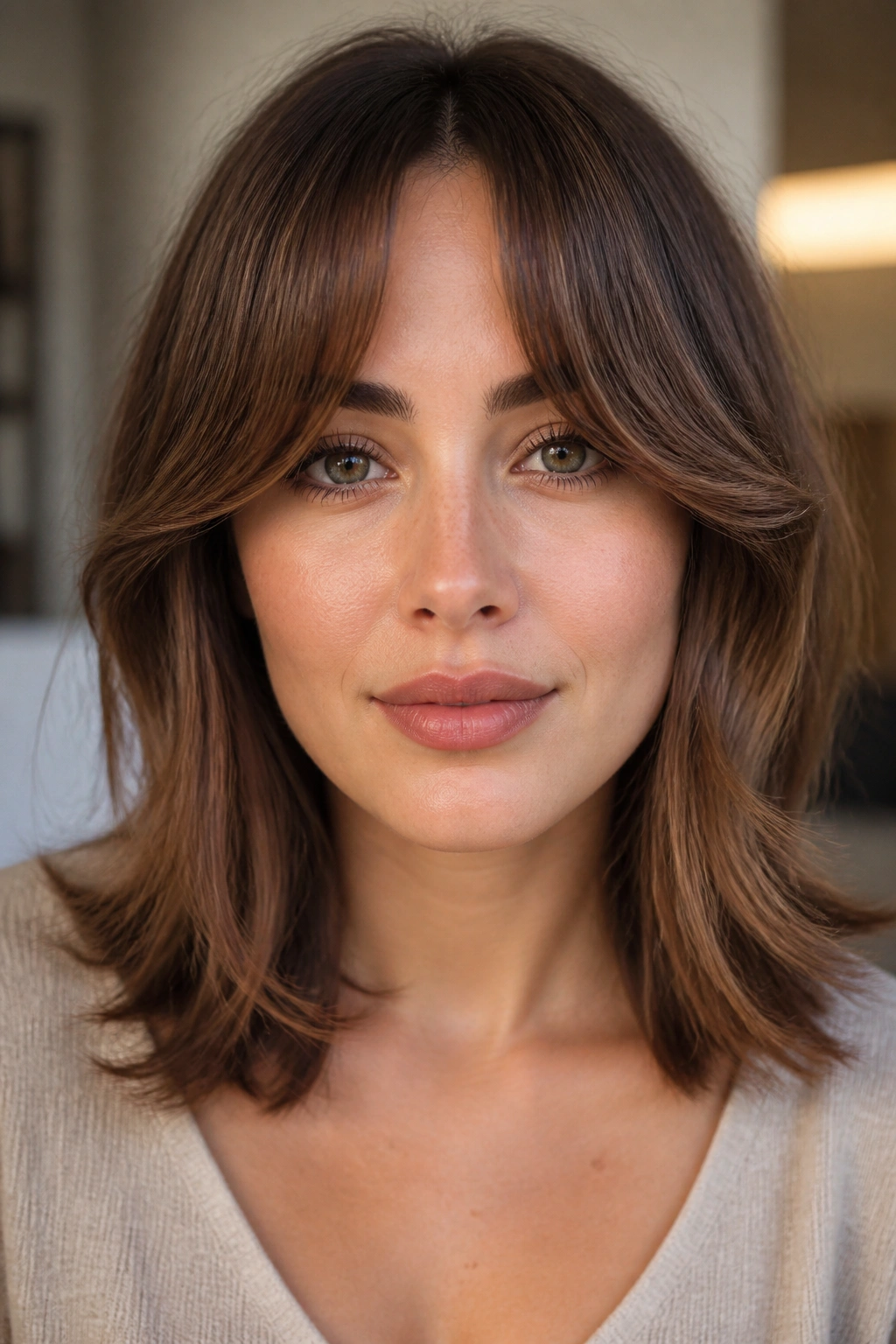
Bottleneck bangs are a smart cousin of the classic curtain fringe. They start a bit narrower through the center, then open wider as they move outward. On a round face, that narrower middle helps keep the forehead from looking crowded, while the longer sides do the face-framing work lower down.
The shape is especially nice on medium hair because the rest of the cut can stay smooth and simple. You don’t need a huge amount of layering to make it work. The bang itself creates the interest.
Why this shape helps
The bottleneck idea gives you a soft funnel effect. Narrow at the top, broader at the bottom. That visual trick draws the eye downward and away from the widest part of the cheeks. It’s subtle, but hair is full of subtle tricks.
This style sits somewhere between breezy and structured. It’s not as airy as wispy bangs, and not as full as a heavy fringe. That middle ground makes it one of the easiest bangs to live with if you’re not sure what you want yet.
You’ll want a blow-dry with a little lift at the root and a bend at the outer corners. If the hair is too flat, the bottleneck shape disappears. If it’s too curled, it turns into a regular fringe.
A good stylist will leave the center slightly shorter, then feather the sides as they descend. That small taper is the whole point.
13. Piecey Curtain Bangs With Textured Ends
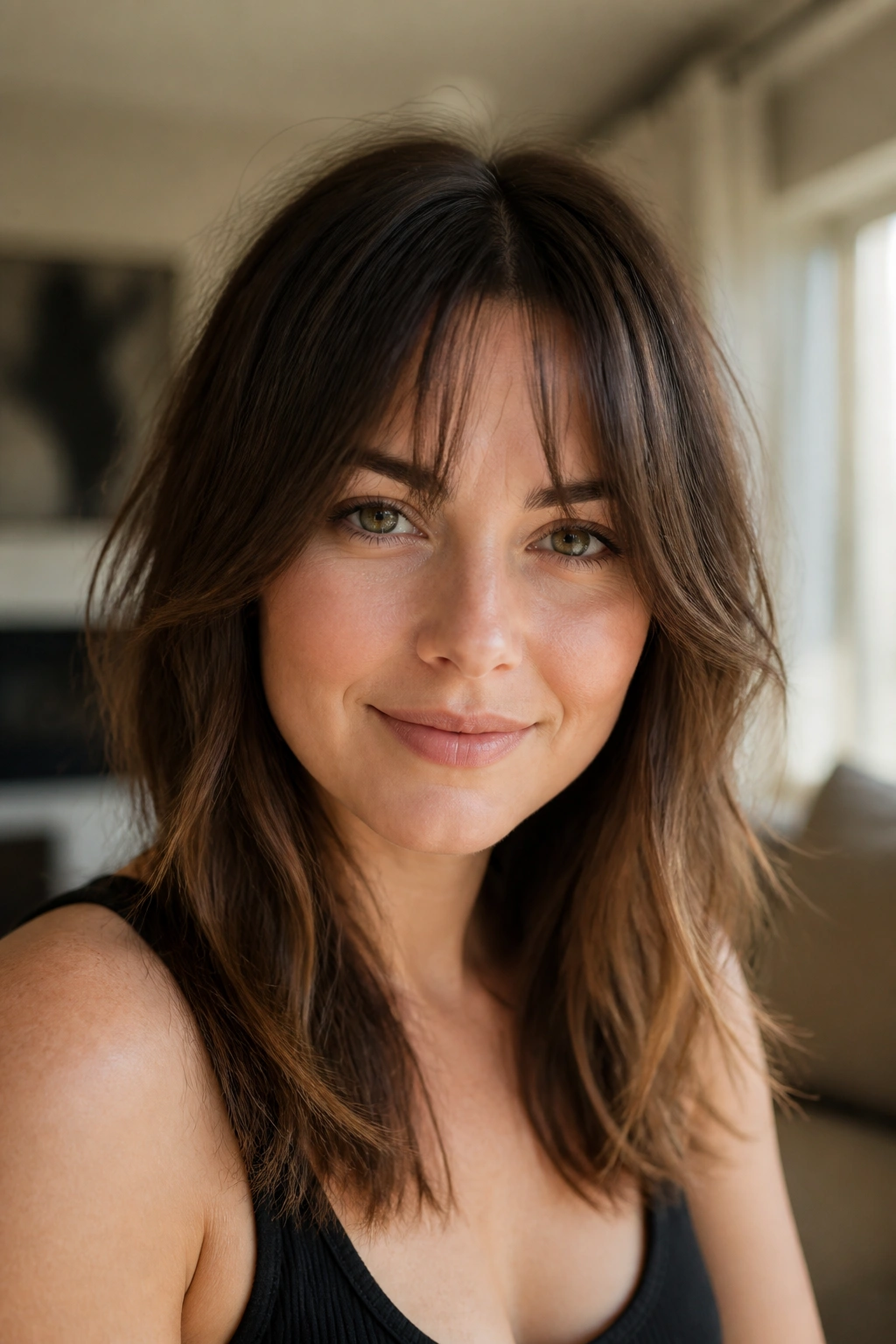
Piecey bangs are for people who like definition. Not solid, not fluffy. Defined. The individual strands should separate a little, so the fringe reads as soft sections instead of one blanket of hair. On a round face, that piecey texture keeps the front from feeling too wide or heavy.
The medium length behind the bangs can stay fairly simple, which is part of the appeal. You don’t need complicated layers all over. The front does the talking.
The sensory part matters here: the hair should feel light and a little airy, never sticky. If the pieces stick together, the shape gets muddy fast. If they’re too dry, they go frayed. Texture spray helps, but a small amount is enough.
How to style piecey bangs
- Start with a rough blow-dry to get the roots dry.
- Use a flat brush or small round brush to bend the front away from the face.
- Twist a few front pieces around your fingers while they cool.
- Finish with a tiny amount of texturizing spray at the mid-lengths, not the roots.
That last point is easy to miss. Product at the roots can flatten the face-framing lift you just created.
This style works best if you like a casual finish and don’t mind touching up a few strands with your fingers during the day. A little separation is the whole look. A lot of separation turns into chaos.
14. Feathered Curtain Bangs With a Side Sweep
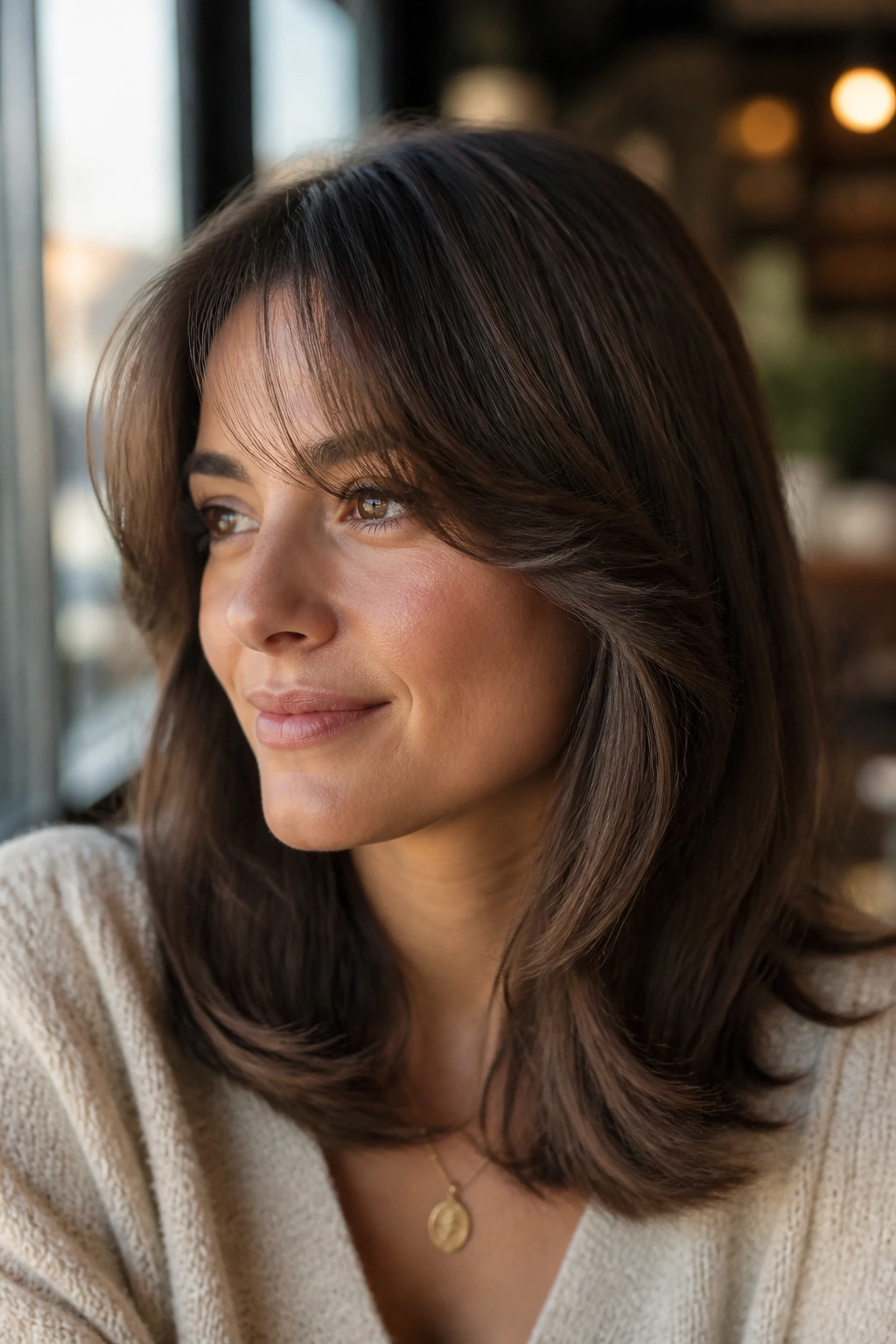
A feathered curtain bang with a soft side sweep can be a nice choice if you want the face to feel a little less symmetrical. Round faces often look good with broken symmetry because it interrupts the circular shape. The sweep adds that interruption without turning into an obvious side bang.
The feathering should start near the center and melt outward in thin layers. Think soft edges, not chopped edges. The side sweep keeps one side slightly more open than the other, which gives the haircut a relaxed finish.
When this style helps most
This is a smart option if your face is round and you also have a strong jaw or full cheeks. The diagonal line from the side sweep can draw the eye across the face rather than across it in a straight line. That makes the overall shape feel longer.
It’s also a good fix if your hair naturally parts a little off-center. Fighting that can be exhausting. Sometimes the smarter move is to work with it.
A blow-dryer and a paddle brush can be enough here. You don’t need a round brush for every pass. Dry the root first, then guide the front section across your forehead and back out. The final shape should still open, just not perfectly evenly.
I’d pick this if you like a softer, less obvious bang that still reads as intentional. It has that easy, slightly undone feeling people keep chasing.
15. Low-Maintenance Medium Curtain Bangs That Grow Out Gracefully
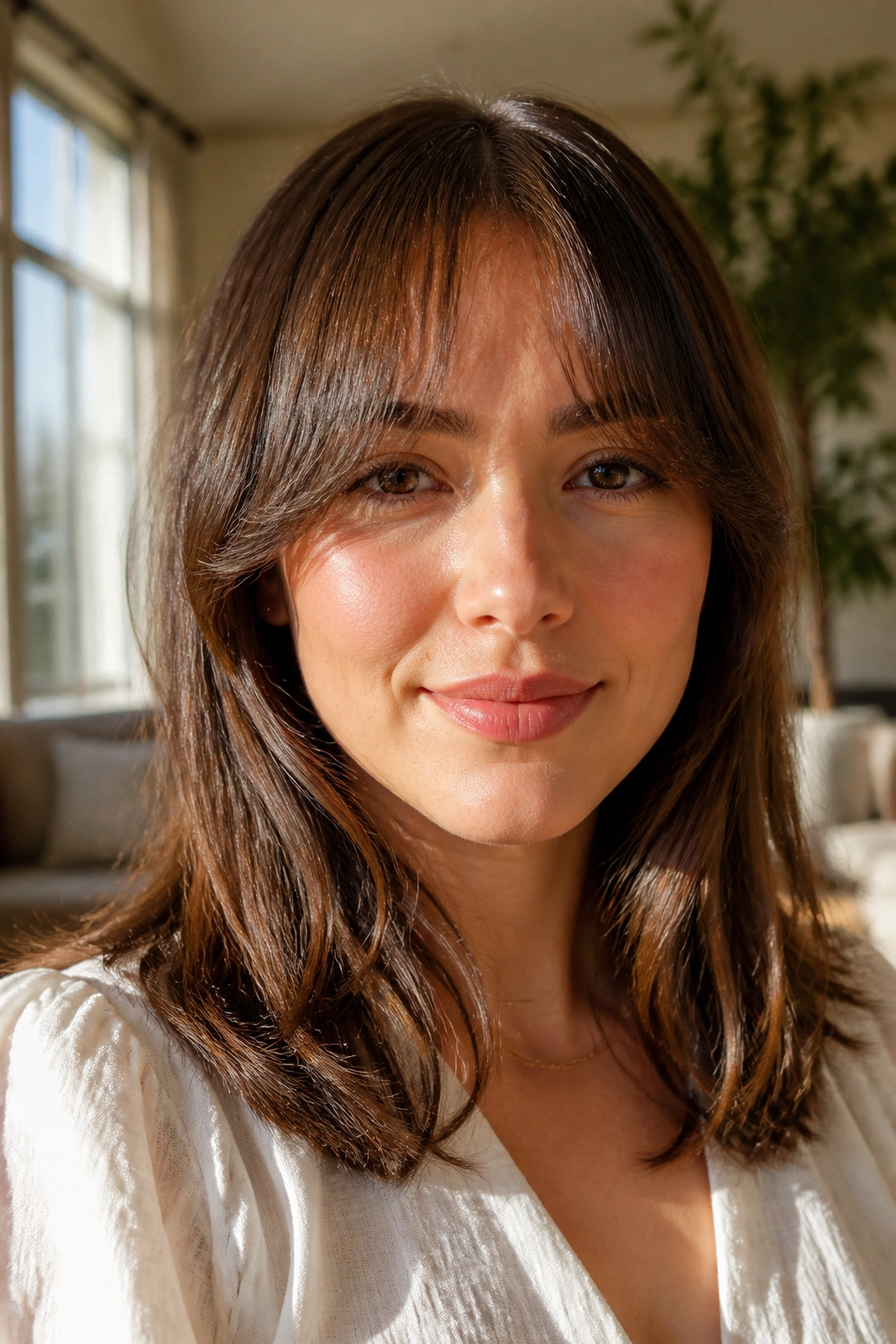
If you hate constant trims, this is the safest place to land. Low-maintenance medium curtain bangs are cut a little longer from the start, with soft corners that blend into the rest of the hair instead of demanding a perfect style every morning.
On a round face, that longer length is doing useful work. It keeps the fringe away from the cheeks, lets the center part breathe, and gives you room to tuck or sweep the bangs if you need a change. The cut doesn’t fight growth. It welcomes it.
That sounds boring. It isn’t. Boring bangs that behave are worth their weight in gold.
What to ask your stylist for
- A longer center point that sits near the brow or slightly below.
- Side pieces that reach the cheekbone, jaw, or even the top of the lip.
- Soft graduation instead of a hard edge.
- Medium-length layers that connect the bangs to the rest of the haircut.
The whole point is flexibility. You should be able to wear them parted, pin them back, or blow them into a soft frame without the cut collapsing.
This is the one I’d recommend to anyone who wants a flattering shape but doesn’t want a high-maintenance fringe routine. It grows out cleanly, it works with straight or wavy hair, and it keeps the face open in a way that still feels polished enough for everyday life.
And if you’re unsure where to start, start here. It gives you the most room to adjust later, which is often the smartest haircut decision of all.
