



A good side bang can do more for a round face than a contour stick ever will. The catch is that the cut has to work with your bone structure, not fight it.
Round faces usually carry their width through the cheeks, with soft jawlines and not much sharp angle at the sides. That means the most flattering fringe is rarely the heaviest one. Choppy side bangs for round faces work because they break up that softness with a diagonal line, a little texture, and a bit of movement near the eyes instead of a straight bar across the forehead.
The sweet spot is usually somewhere between the temple and the cheekbone. Too short, and the bang can make the face feel wider. Too heavy, and it sits like a curtain. The good versions are airy, piecey, and slightly irregular — the kind of fringe that looks better when it is not trying too hard.
Hair texture matters too. Fine hair needs softness so the bang does not look sparse. Thick hair needs weight removed so the fringe does not turn into a chunky shelf. Curly and wavy hair need a cut that respects the bend already in the hair, or the shape gets awkward fast. The styles below give you 25 different ways to make the same basic idea work in real life.
1. Brow-Grazing Choppy Side Bangs for Round Faces
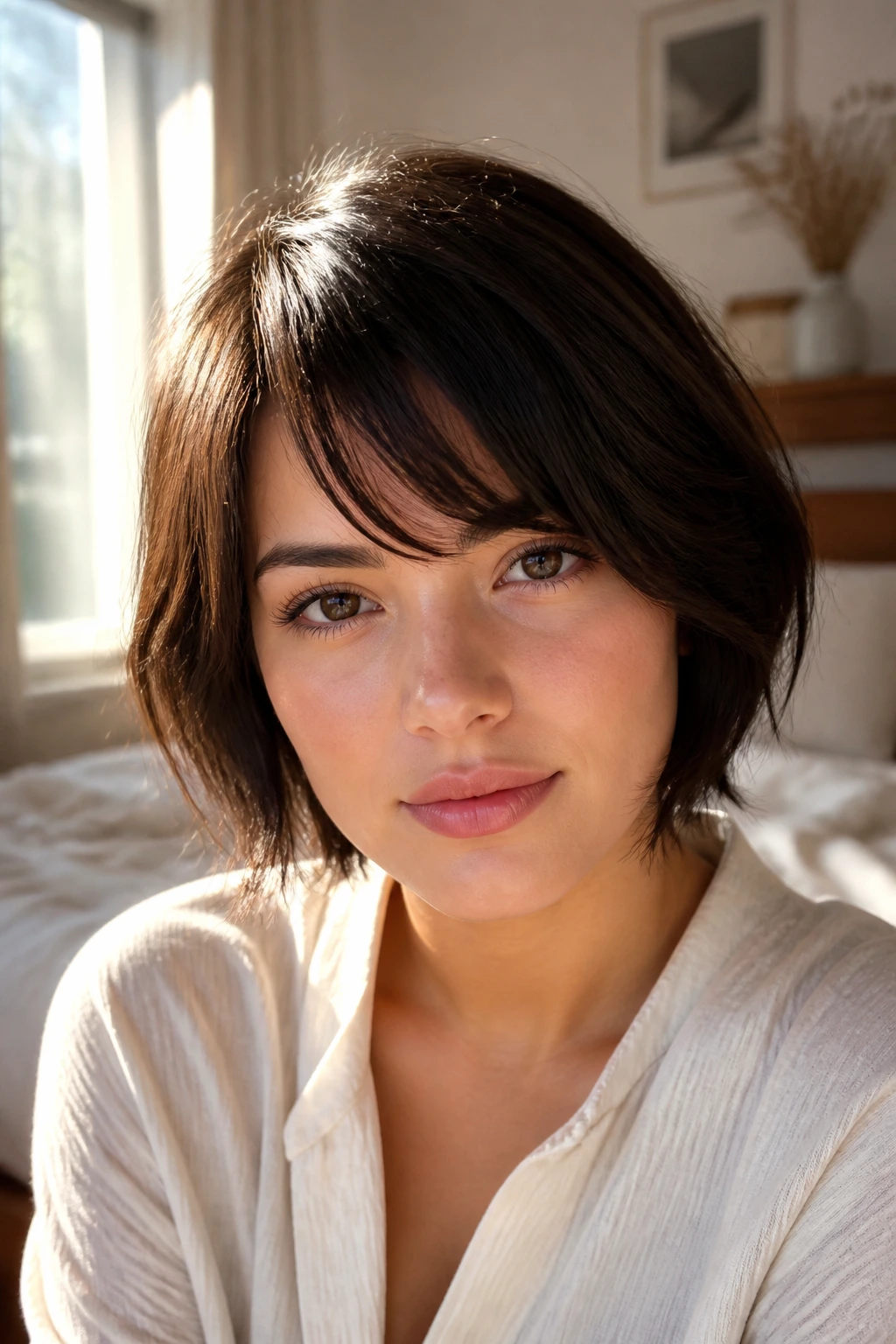
A brow-grazing fringe is one of the easiest ways to add shape without stealing too much forehead space. The longest piece skims the brow, while the shorter ends flick upward or sideways, which keeps the line from feeling stiff.
Why It Flatters a Round Face
- The diagonal sweep pulls the eye across the face instead of straight across the cheeks.
- The choppy ends break up width, which helps the face feel a little longer.
- The length sits high enough to open the cheek area but low enough to soften the forehead.
Best for: medium to thick hair that needs movement but not a ton of layering.
Styling tip: blow-dry the bang in the opposite direction first, then sweep it over with a soft round brush. That gives the root a bend instead of a flat, stuck-to-the-forehead look.
2. Cheekbone-Skimming Side Fringe
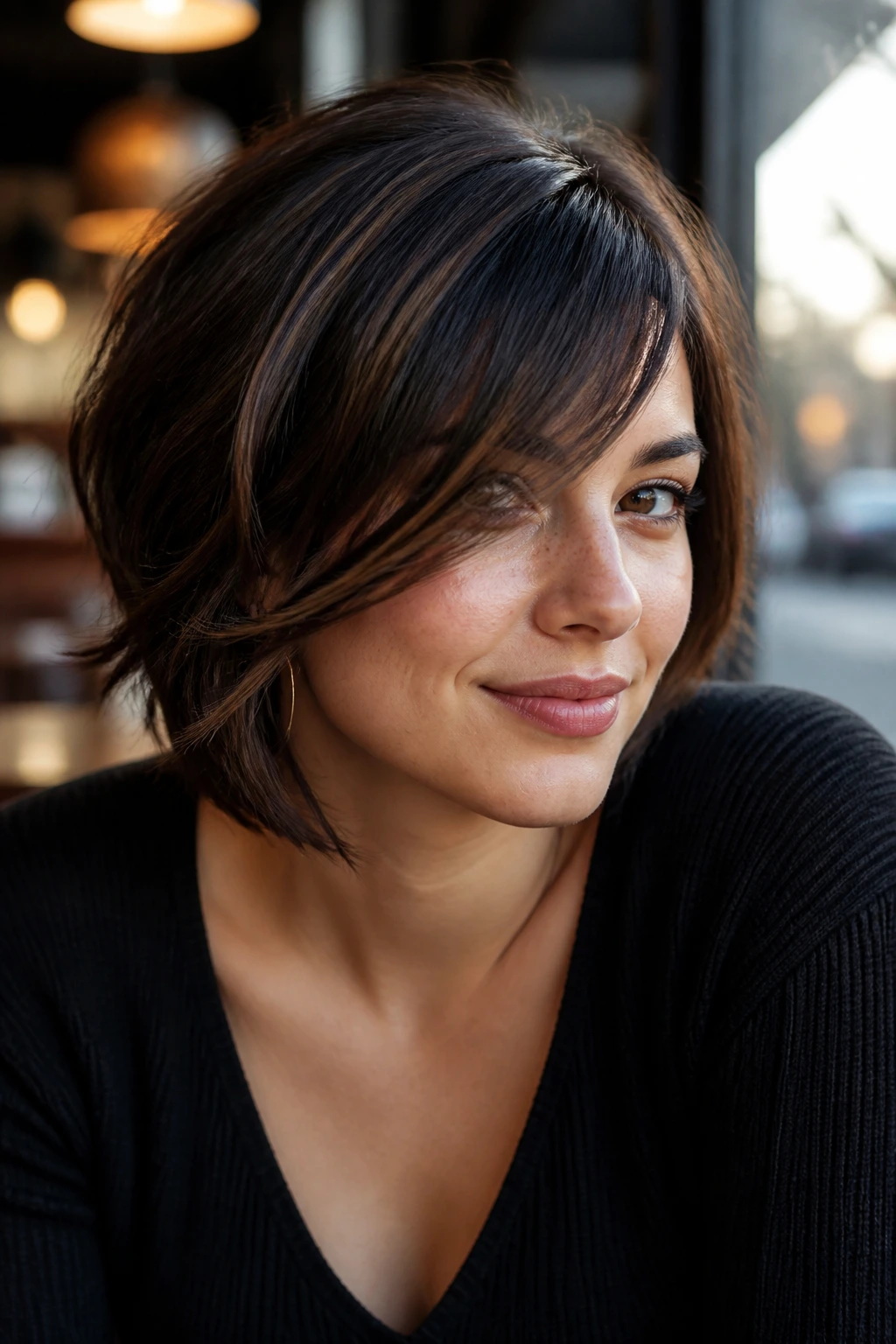
If you want a safer, softer option, go with a side fringe that lands right at the cheekbone. It gives the face a long diagonal line, and that line does a lot of heavy lifting on a round face. A bang that ends here feels intentional, not fussy.
The detail that matters is length. If the shortest pieces stop above the eye and the longest pieces brush the upper cheek, the whole fringe reads as lifted. If it lands too low, it can widen the middle of the face. That’s the part people often miss.
Ask for a slightly shattered edge rather than a blunt finish. A tiny bit of irregularity keeps the fringe from looking like one solid shape. It also makes it easier to tuck behind the ear on busy days, which is a nice bonus when you don’t feel like styling every strand.
3. Feathered Side Bangs with a Deep Side Part
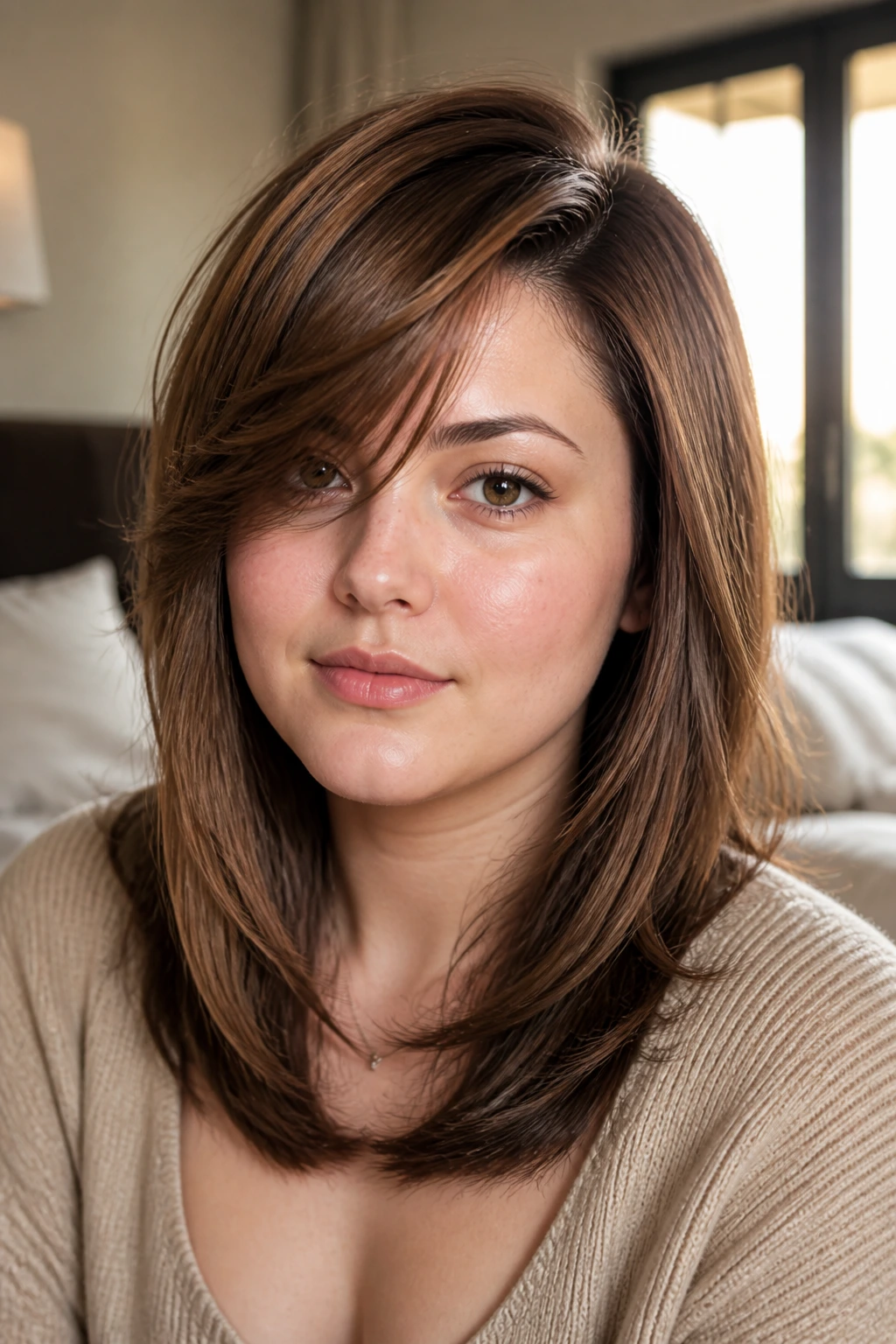
Why does a feathered side bang work so well on a round face? Because it creates motion without bulk. The deep side part lifts the root, then the feathered ends fall in a soft diagonal that stretches the face visually.
How to Style It
Use a small round brush or even a paddle brush if your hair is already smooth. Dry the front section first, directing it away from the face, then pin it for a minute while it cools. That cooling step matters more than people think.
A little light-hold mousse at the roots helps, but keep it to the front third of the hair. If you put product everywhere, the bang can collapse and separate in the wrong spots. The goal is lift at the root and softness at the ends.
4. Piecey Curtain-Style Side Bangs

Picture a fringe that looks like it was cut with air between the strands. That’s the charm here. The bang isn’t a single sweep; it’s a cluster of soft pieces that split and move, which keeps a round face from feeling boxed in.
The trick is to avoid making the fringe too symmetrical. A little unevenness is your friend. One side can sit a touch shorter than the other, and the ends can taper near the cheek instead of ending in a clean line. That broken edge gives the face more angles.
What to Ask For
- Longest pieces near the cheekbone.
- Shorter pieces near the temple.
- Point-cut ends, not a straight blunt edge.
- A loose center-to-side bend rather than a hard swoop.
Tiny warning: if your hair is very fine, keep the layers light. Too much slicing can make the bang look wispy in a bad way.
5. Choppy Side Bangs on a Shoulder-Length Lob
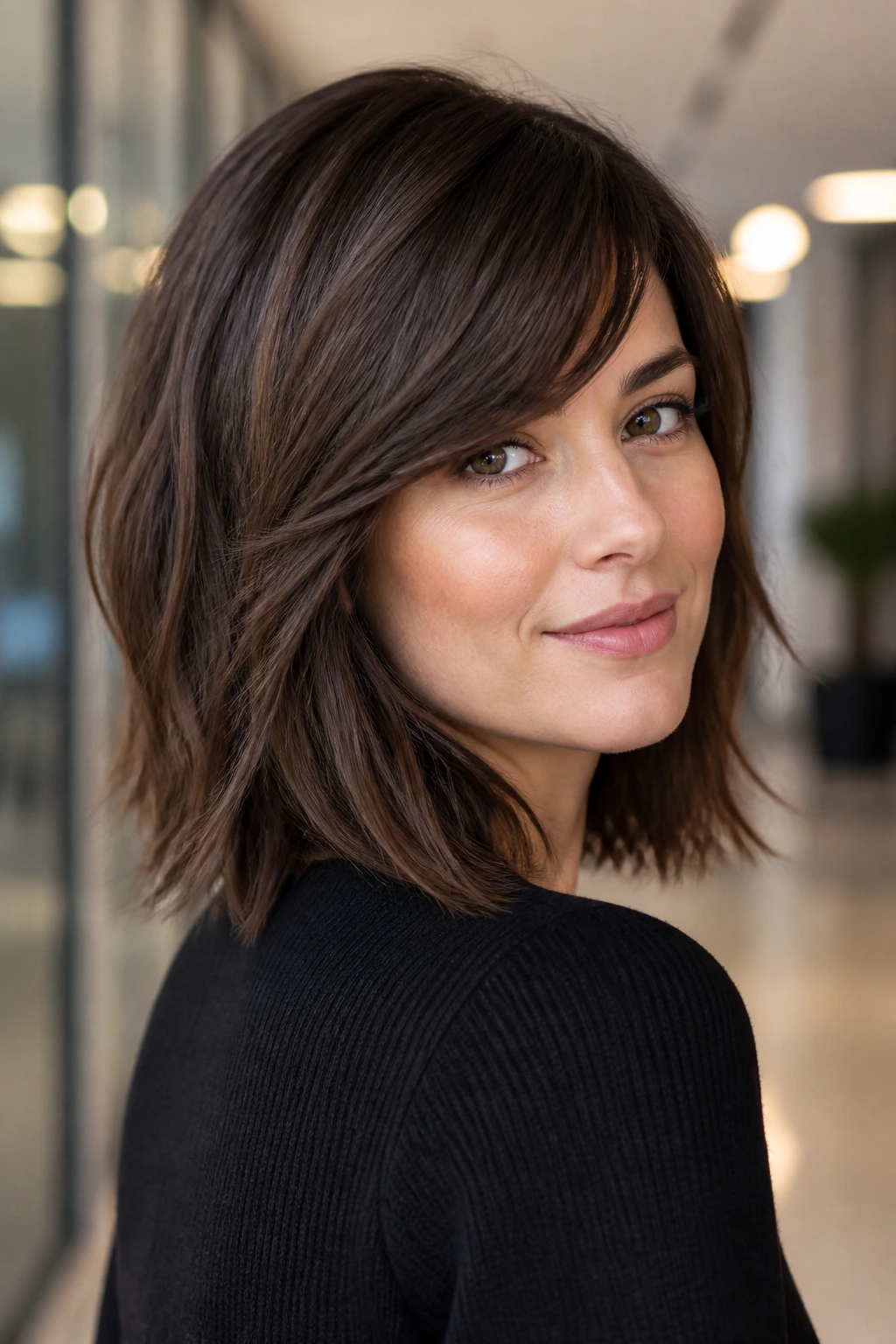
A lob and a side bang are a smart match because the cut already gives the face some length. Add a choppy fringe, and you get a shape that feels balanced without looking severe. It’s one of those cuts that works with a blazer, a T-shirt, or a dressy top. No drama. Just good geometry.
The shoulder length keeps the overall look from feeling too short or too round. Then the side bang breaks up the front. That matters on a round face because too much volume near the cheeks can make the whole silhouette feel wider than it is.
I like this version best when the bang blends into the front layers by the jaw. That connection matters. If the fringe stops abruptly, you lose the long line that makes the cut flattering in the first place.
6. Soft Side Fringe with a Blunt Bob
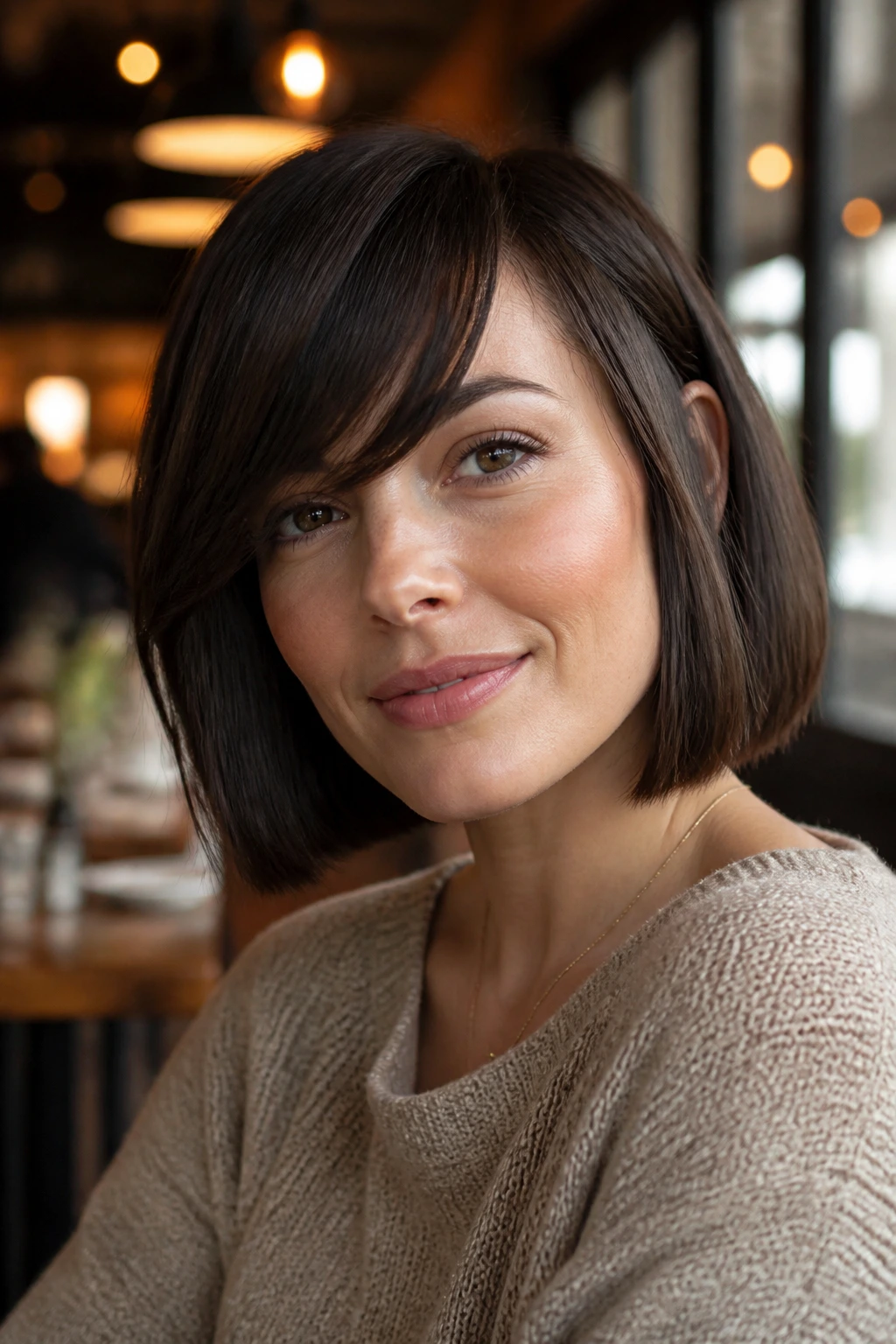
A blunt bob can feel boxy on a round face if it’s worn with a full straight fringe. A soft side fringe fixes that problem fast. The contrast is the point: the bob gives structure, and the fringe loosens it up.
This style is for someone who likes clean hair but doesn’t want the face to look pinned in. The side bang should be cut with light internal texture so it doesn’t sit like a thick triangle. A little movement at the ends keeps the whole shape from feeling too rigid.
Unlike a center-parted bob, this version adds a diagonal line right where a round face needs one. It’s a neat option if you wear sharp collars, bold earrings, or glasses. The cut lets those things stand out without the hair taking over.
7. Long Side Bangs with Face-Framing Layers for Round Faces
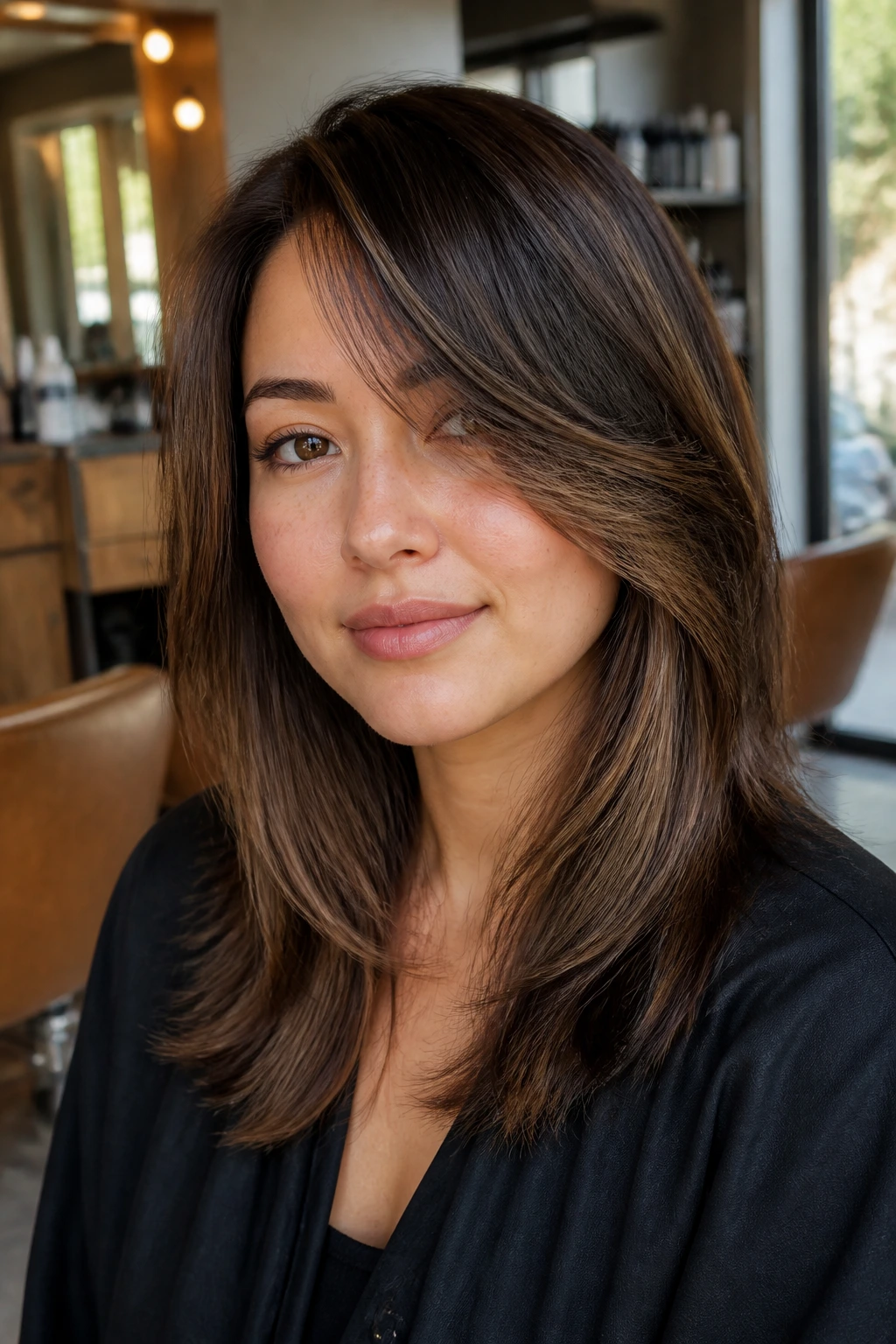
Long side bangs are one of the most forgiving choices if you’re nervous about committing. They can start near the temple and slide down toward the cheek, which makes the face look longer without showing too much forehead. The face-framing layers carry that line downward, and that’s the magic.
The Shape Behind It
The bang should blend into the first layer around the lip or chin. That creates one continuous line instead of a bang sitting on top of the haircut like an add-on. Round faces benefit from that kind of flow because it changes the eye movement.
If your hair is thick, ask for the layers to be cut from underneath so the top still looks smooth. If your hair is fine, keep the front pieces soft and light. In both cases, the bang should move, not split into two sad little strips by noon.
Pro tip: a 1-inch curling iron bend at the ends can make this style look polished in under 5 minutes.
8. Wispy Side Bangs for Fine Hair
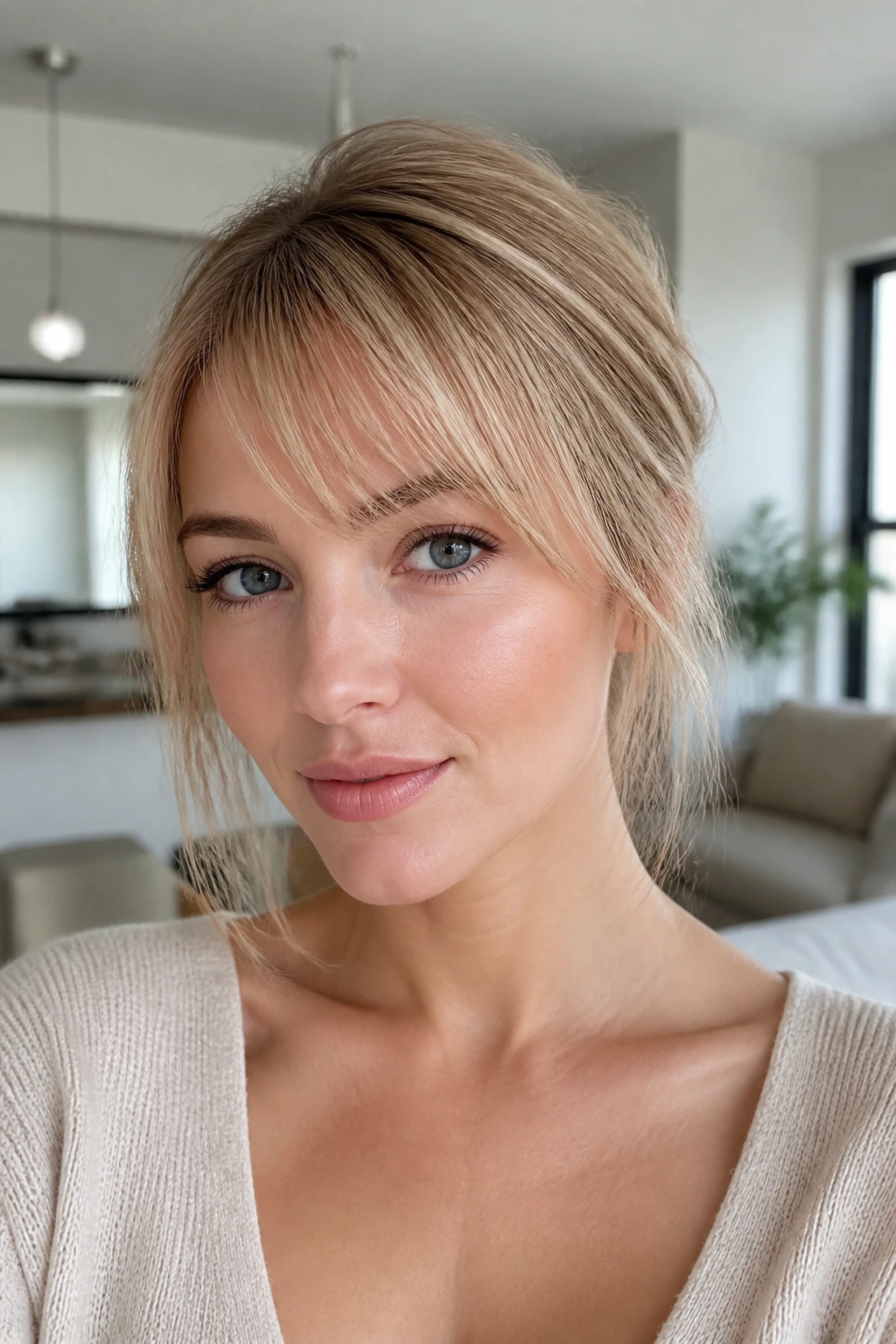
Fine hair and choppy bangs can be tricky, because too much texturizing makes the fringe look thin. The answer is a wispy side bang with a clean shape and just enough separation to keep it from looking flat. It should feel light, not empty.
The best version starts with a small section near the part and lands softly near the outer corner of the eye or the cheekbone. That keeps the hair from clinging to the forehead. A round face often looks better when the bang has a little lift at the root and a soft taper through the ends.
Use a pea-sized bit of styling cream, not a heavy paste. Too much product turns fine hair stringy in a hurry. If you’ve ever had bangs that looked great for 20 minutes and then disappeared into your skin, you already know the problem.
9. Thick, Choppy Side Bangs for Dense Hair
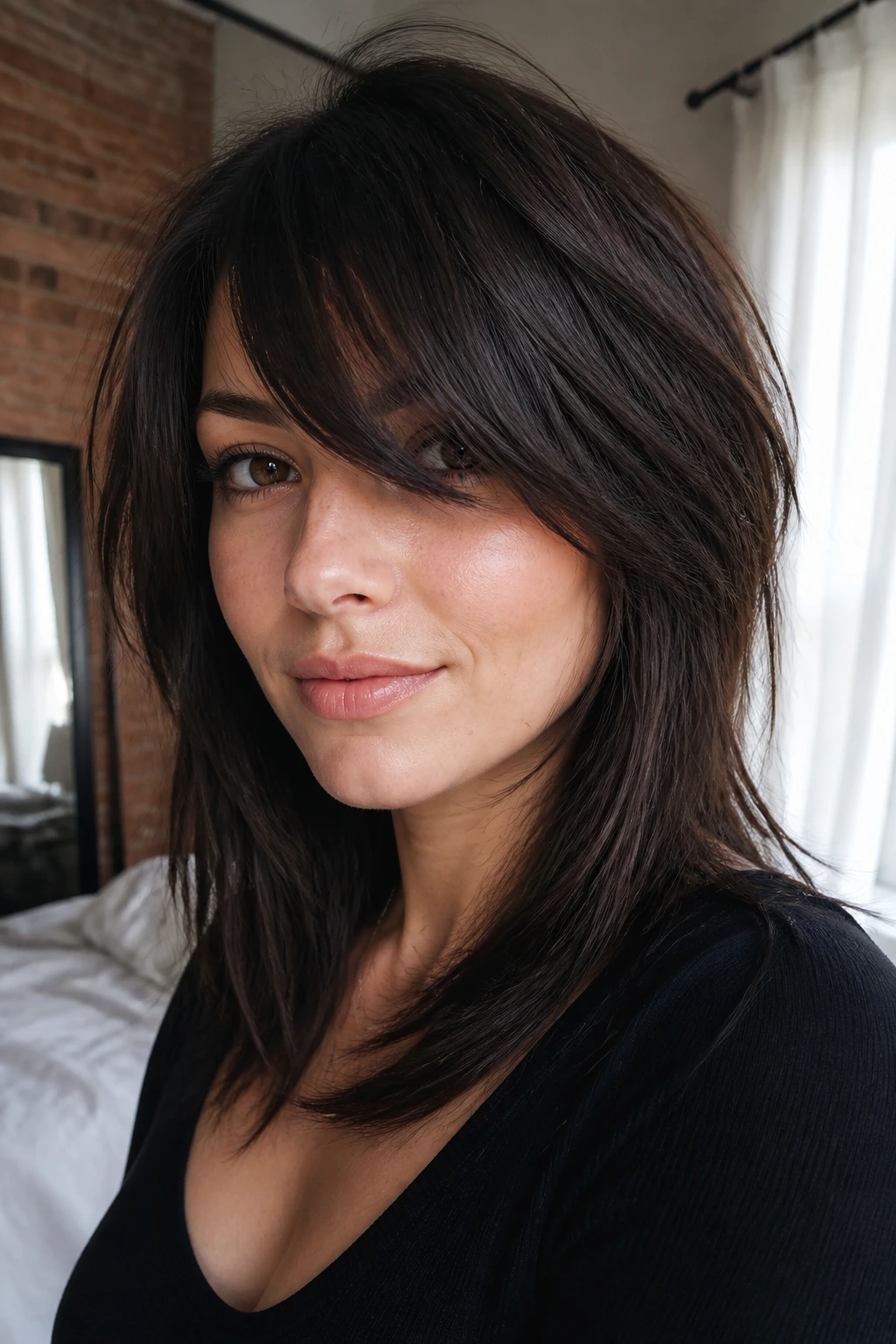
Dense hair needs weight removed, but not in a way that leaves the fringe fuzzy. A thick, choppy side bang can look fantastic on a round face when it’s cut with internal layers that let the front bend instead of puff out. The result feels full, but not bulky.
What Makes It Work
- Weight is removed from the middle, not just the ends.
- The longest piece is kept below the brow line.
- The fringe should be able to sweep, not sit straight down.
A lot of thick-haired people end up with bangs that look good when wet and then explode when dry. That usually means the cut was too blunt or too short at the corners. Ask for soft point-cutting through the edge so the bang has some air in it.
This version looks best with a round brush and a quick blast of heat at the root. Don’t overwork it. A little bend is enough.
10. Shag Cut with a Lived-In Side Fringe
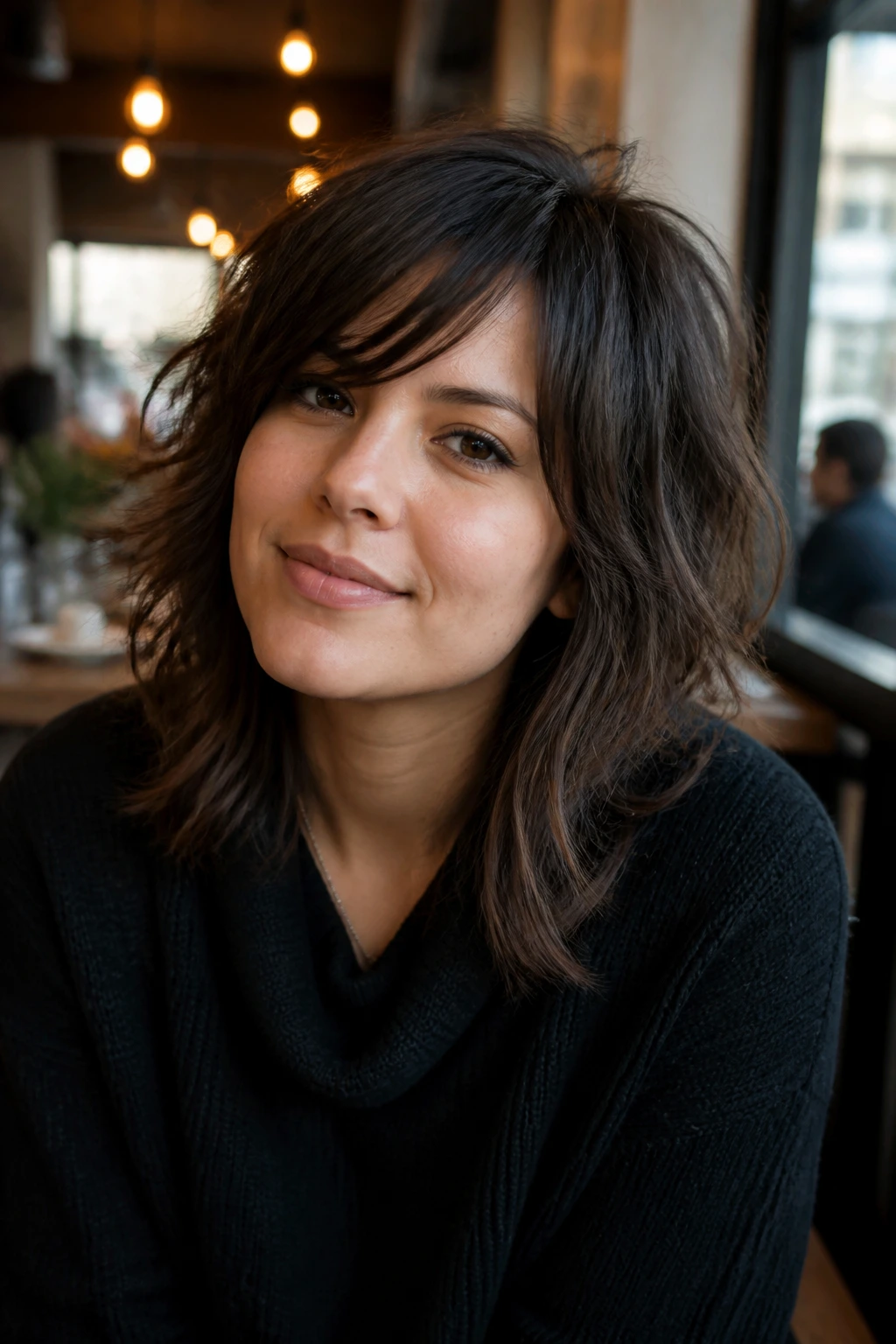
A shag already does half the face-shaping for you. Add a side fringe, and the whole cut starts to pull the eye upward and outward instead of across the cheeks. It’s a good fit for round faces that look better with texture than with polish.
Here’s what I like about this pairing: it doesn’t need perfection. The fringe can be a little tousled, and the layers can fall where they want to fall. That casual movement keeps the face from feeling too centered or too round.
If you’re getting this cut, ask for a fringe that blends into the top layers around the temple. That way the bang doesn’t sit as one separate piece. It should feel like part of the haircut, not a front section pasted on at the end.
11. Wolf Cut with Swept Bangs
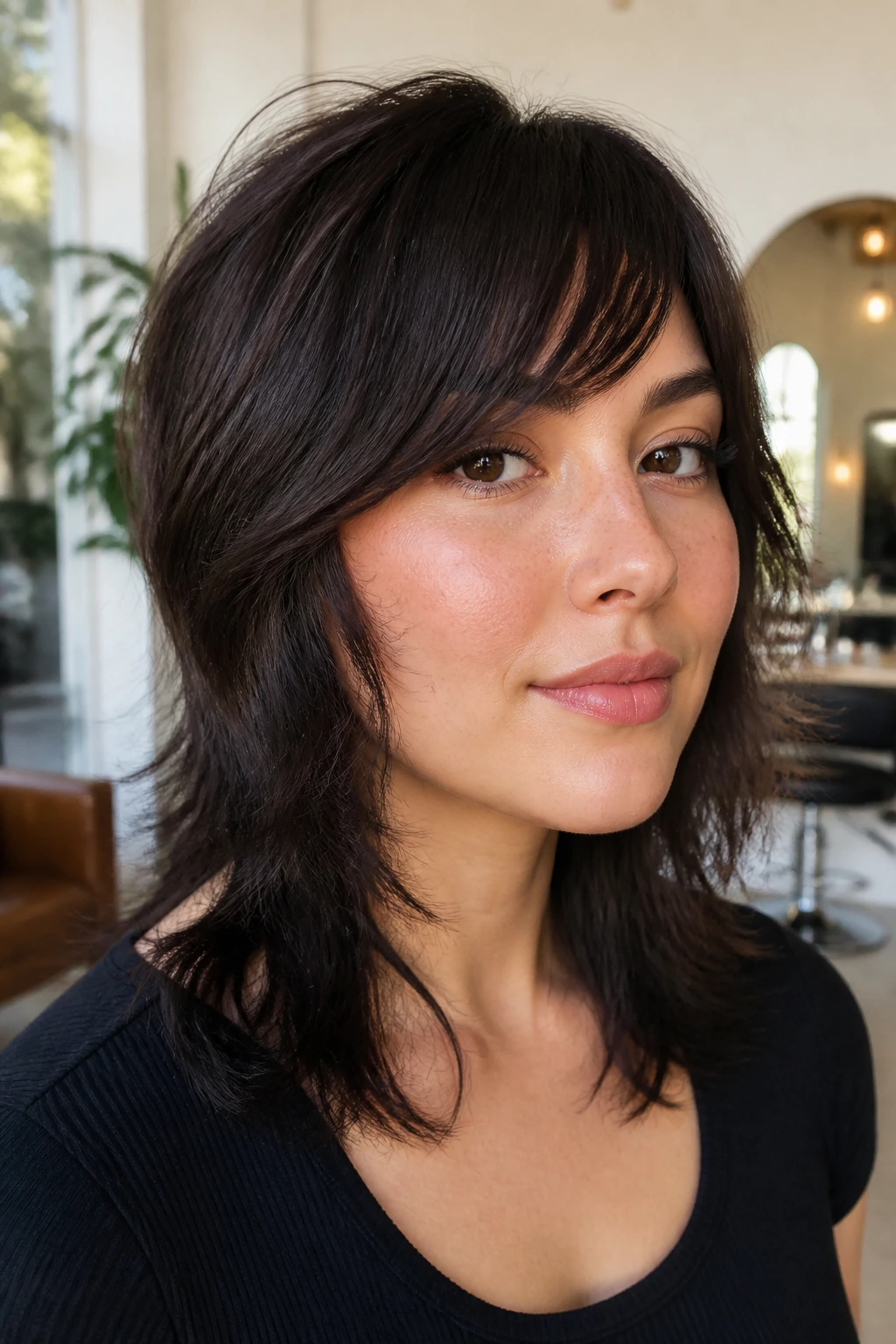
The wolf cut gets a reputation for being edgy, and sure, it is. But on a round face, the interesting part is how the shape creates vertical lift through the crown and cheekbone-length texture around the front. The swept bang helps keep all that movement from getting messy in the wrong way.
A hard, straight fringe would fight the cut. A side sweep softens it. It also gives the eye a place to travel, which is useful when the rest of the haircut is already full of broken layers and movement.
This is a good choice if you like hair that looks a little undone. Not sloppy. Just lived-in. The fringe should be long enough to tuck behind the ear on one side, which makes the grow-out phase much less annoying.
12. Curved Side Bangs for Curly Hair
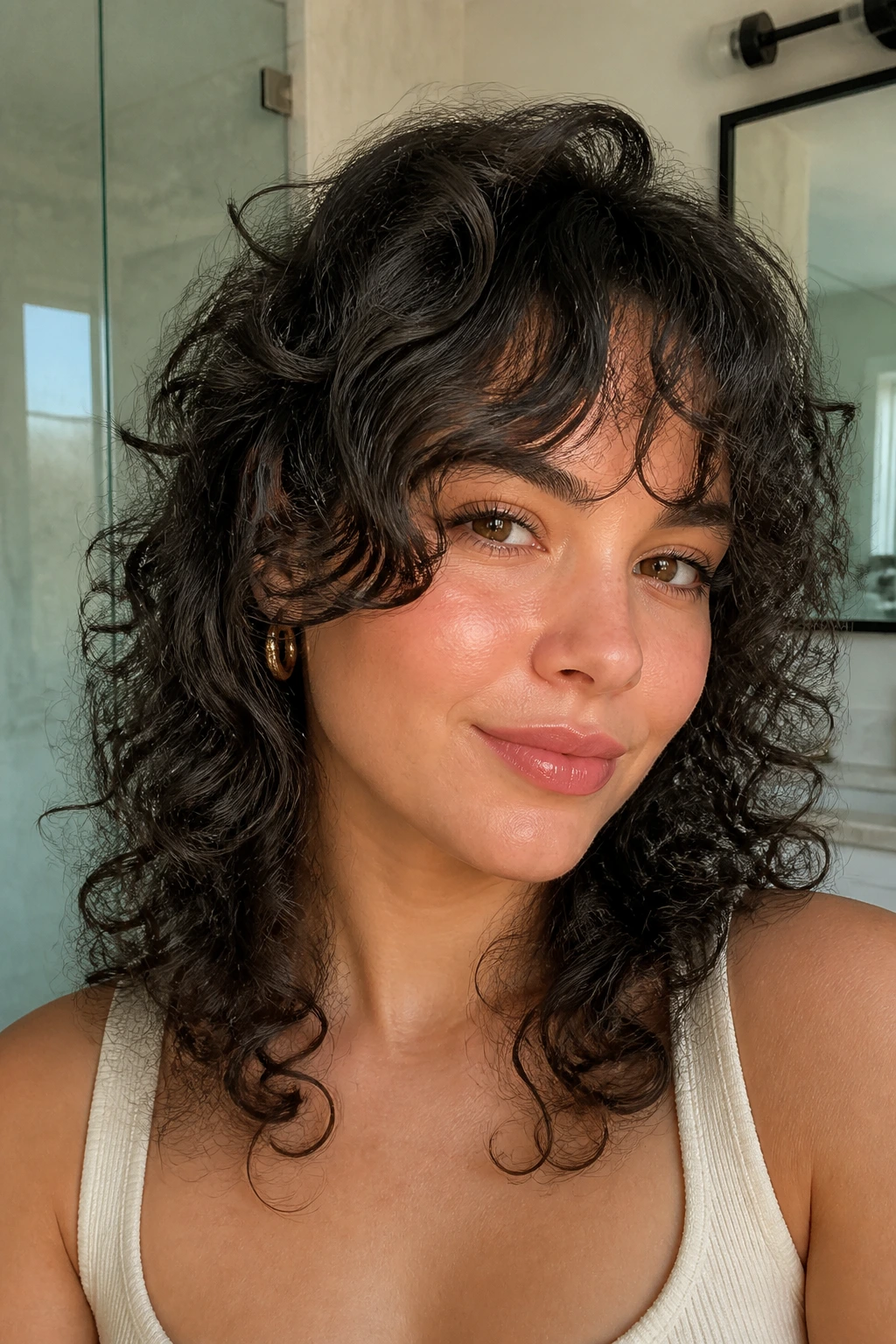
Curly hair needs a different plan. If you cut a side bang like straight hair, it usually springs up in a way nobody expected. The better option is a curved side bang that follows the curl pattern and lands in a soft arc around the face.
Unlike a straight fringe, this version should be cut dry or nearly dry so the curl pattern shows its real length. That gives you a more honest shape. Round faces benefit here because the curve moves upward near the temple and then down again near the cheek, which creates a flattering line.
Best Styling Move
Scrunch in a little curl cream, then twist the bang section once or twice while it dries. Don’t over-twist. You want shape, not a corkscrew. If the curl is looser, a clip at the root can help direct the bang to one side without forcing it.
13. Air-Dried Side Bangs for Wavy Hair for Round Faces
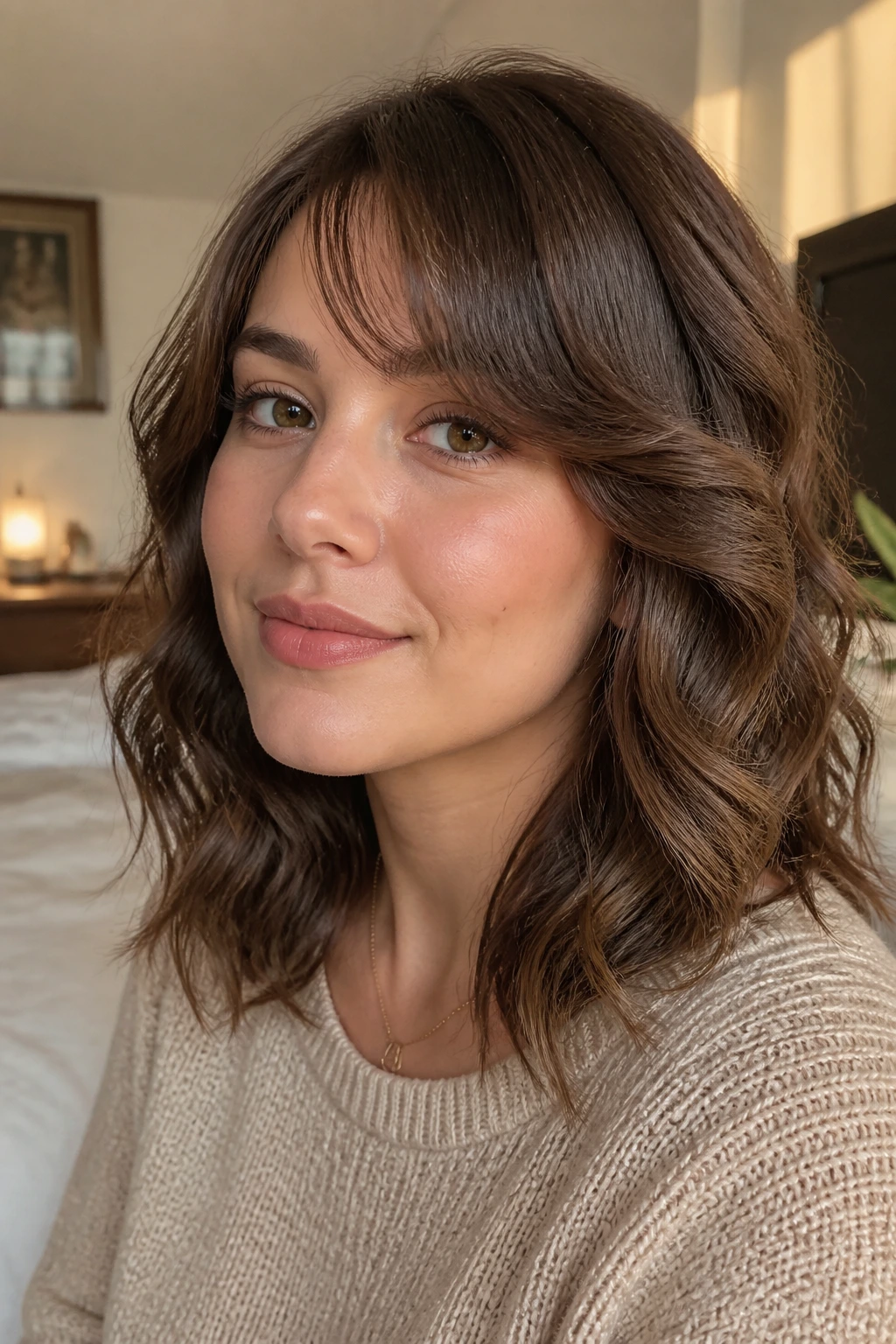
Wavy hair can give you the nicest side bang of the whole bunch, because it naturally bends instead of lying flat. The key is cutting the fringe with the wave pattern in mind so it doesn’t flip in random directions when it dries.
A round face looks good with this because the wave creates tiny changes in length all through the fringe. That movement keeps the front from looking heavy. If the bang starts around the temple and finishes near the cheekbone, the shape reads as soft and long, not wide.
How to Keep It From Puffing Out
- Apply a small amount of wave cream to damp hair.
- Clip the bang to one side while it dries.
- Don’t brush it after it sets unless you want more frizz.
The result is relaxed and a little undone. That works here.
14. Sliced Side Bangs for Straight Hair
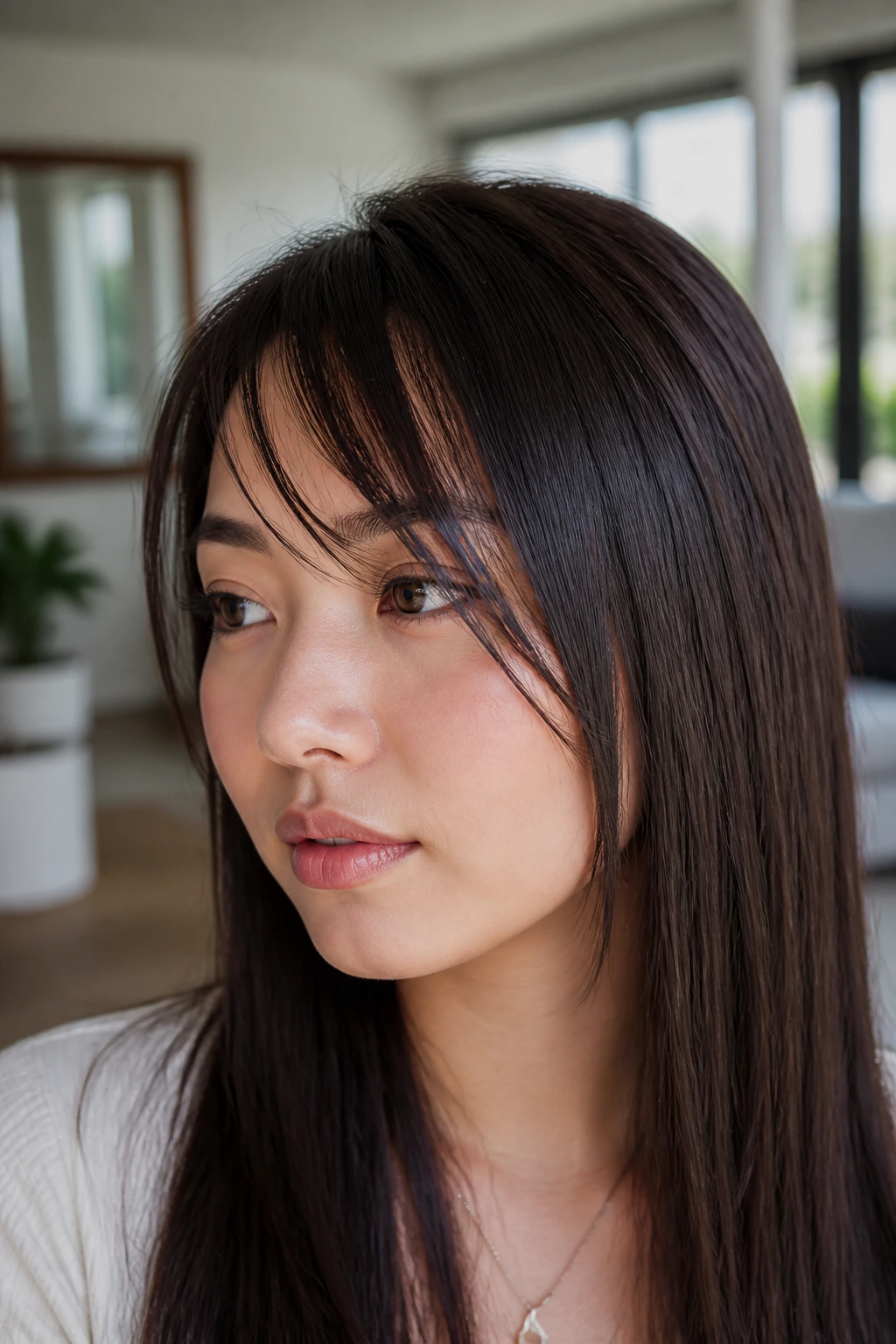
Straight hair can look sleek, but it can also make a fringe feel too flat if the cut is wrong. A sliced side bang fixes that by creating thin, separated sections that move over one another. The face gets softness, the hair keeps its clean line, and the roundness of the face is interrupted in a good way.
This style works best when the shortest piece is near the brow and the longest piece brushes the cheekbone. That step-down shape keeps the eye moving diagonally. It also helps the fringe stay light, which matters when straight hair tends to show every mistake.
If your straight hair is very silky, a dry texture spray at the roots can keep the bang from slipping back into the part. Small move. Big difference.
15. Pixie Cut with a Side-Swept Fringe
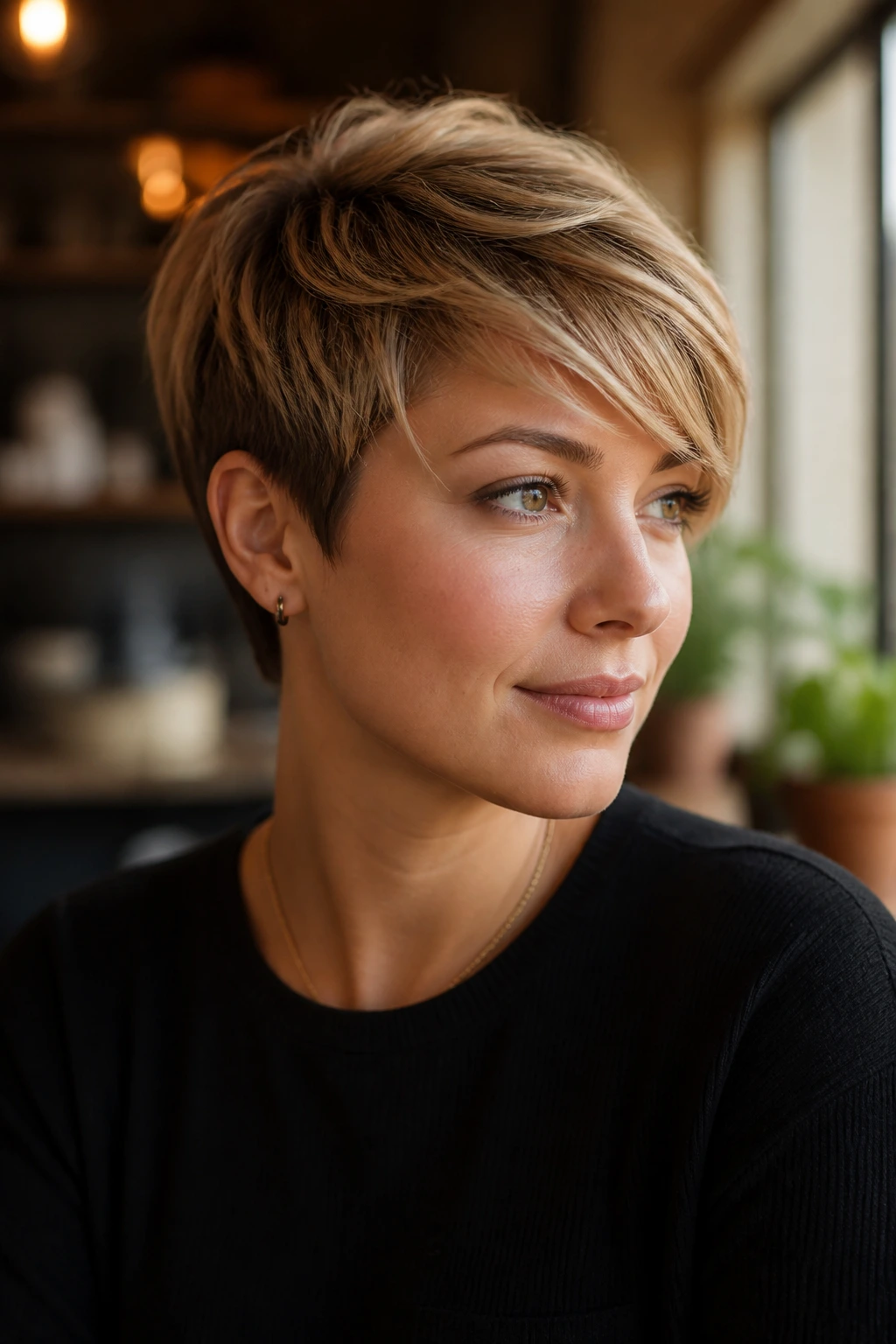
Can a pixie work on a round face? Absolutely, if the fringe is handled well. A side-swept bang adds the missing angle. Without it, a super short cut can sometimes emphasize width. With it, the face gets a cleaner diagonal and the whole look feels sharper.
How to Get It Right
Ask for extra length at the front and lighter weight at the corners. The bang should sweep across one eyebrow, then taper as it reaches the temple. That keeps the cut feminine, sporty, or bold — whichever direction you want — without turning it into a helmet.
The best pixie fringe is never too dense. It should move when you turn your head. If it stays glued in place, the cut loses the softness that makes it work on a round face.
Worth knowing: this one needs more frequent trims than the longer styles. Short hair shows growth fast.
16. Angled Bob with a Longer Side Bang
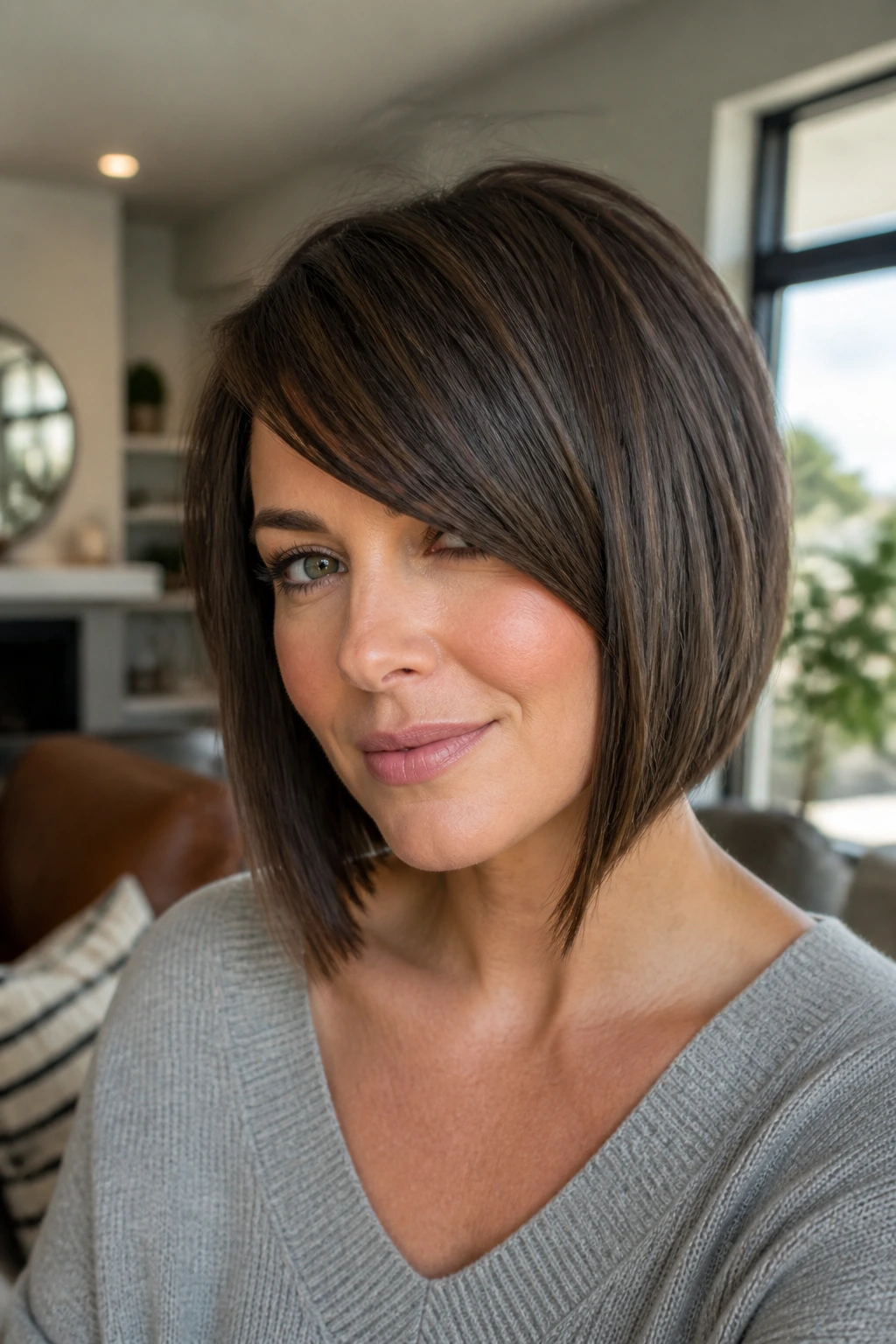
An angled bob already creates a long front line, and that line is a gift for round faces. Add a longer side bang, and the haircut starts pulling the eye down and forward instead of across the cheeks. It’s neat, structured, and easy to wear.
This is one of my favorite combinations for someone who wants shape without a lot of styling time. The front can be just long enough to skim the jaw, while the bang gives the forehead area a softer edge. Together, they make the face feel a bit leaner without looking severe.
If the angle of the bob is too steep and the bang is too short, the cut can feel busy. Keep one element strong and the other softer. That balance matters more than people think.
17. Side Bangs Swept into a Half-Up Style
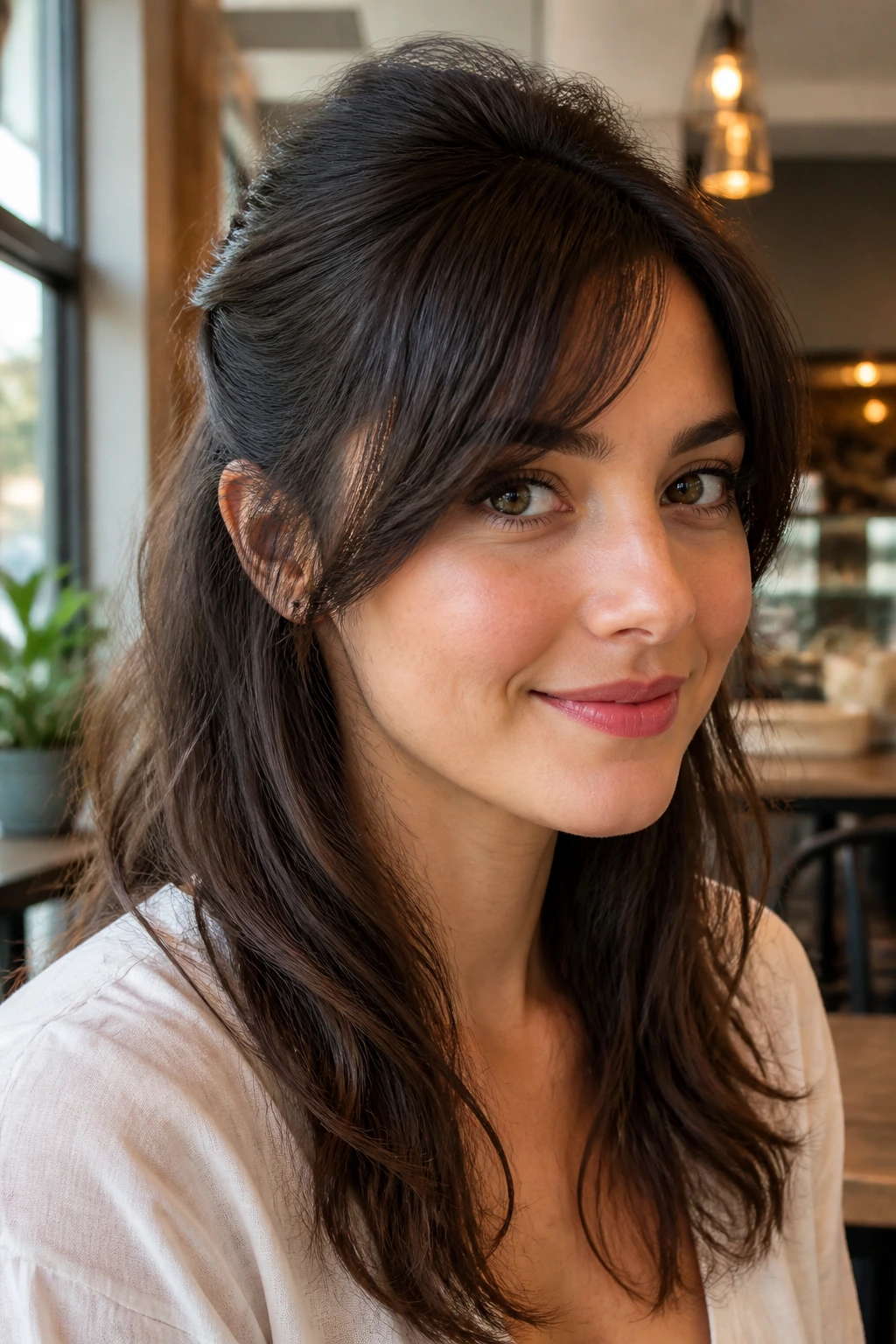
Side bangs are useful on the days you want your hair back but don’t want your face fully bare. A half-up style leaves the fringe out front, where it can break up the forehead and cheek line. On a round face, that tiny bit of front softness makes a big difference.
The bang should sit loose, not pinned tightly to the scalp. If it’s too slicked back, the face can look wider. Instead, let the fringe fall in a soft curve, and leave a little volume at the root so the shape doesn’t flatten out under the half-up section.
This style is practical in a way I love. It works for errands, brunch, work, and nights out. That’s rare. And when the bang is choppy enough, you can rough it up with your fingers and still look intentional.
18. Ponytail-Friendly Choppy Fringe
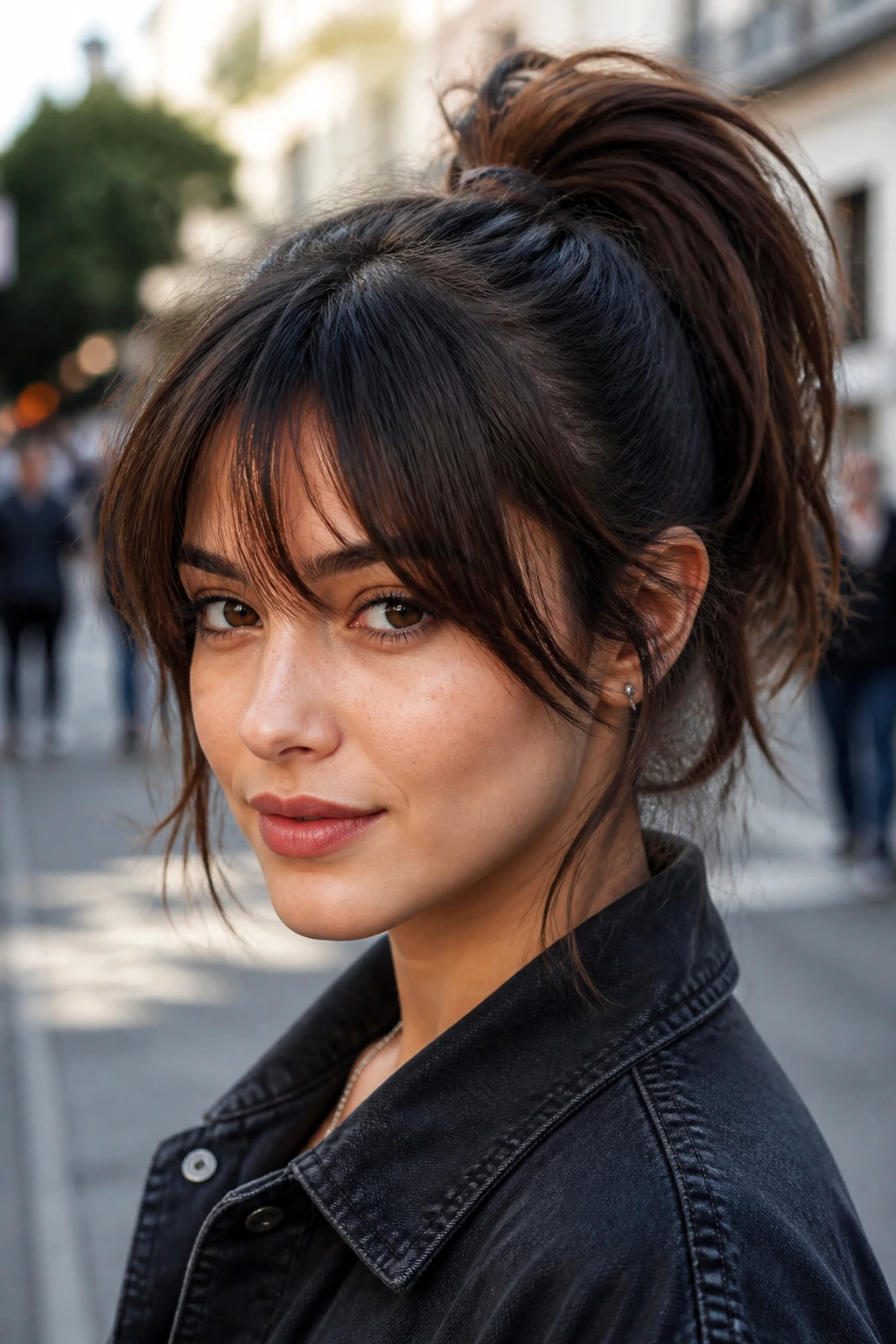
A ponytail can be surprisingly flattering with side bangs, especially on a round face. The ponytail lifts the profile, and the fringe keeps the front from feeling too open. You get a little face framing without having hair all over your neck.
Unlike a full fringe, a side bang in a ponytail doesn’t have to be perfect. In fact, a bit of mess makes it better. The choppy ends should fall softly across the forehead or just under the eyebrow, then taper out by the temple. That line creates movement even when the rest of the hair is pulled back.
I’d keep this one a touch longer than you think you need. Hair pulled into a ponytail tends to tighten the front and shorten the fringe visually. A little extra length gives you room to breathe.
19. Balayage-Highlighted Side Bangs for Round Faces
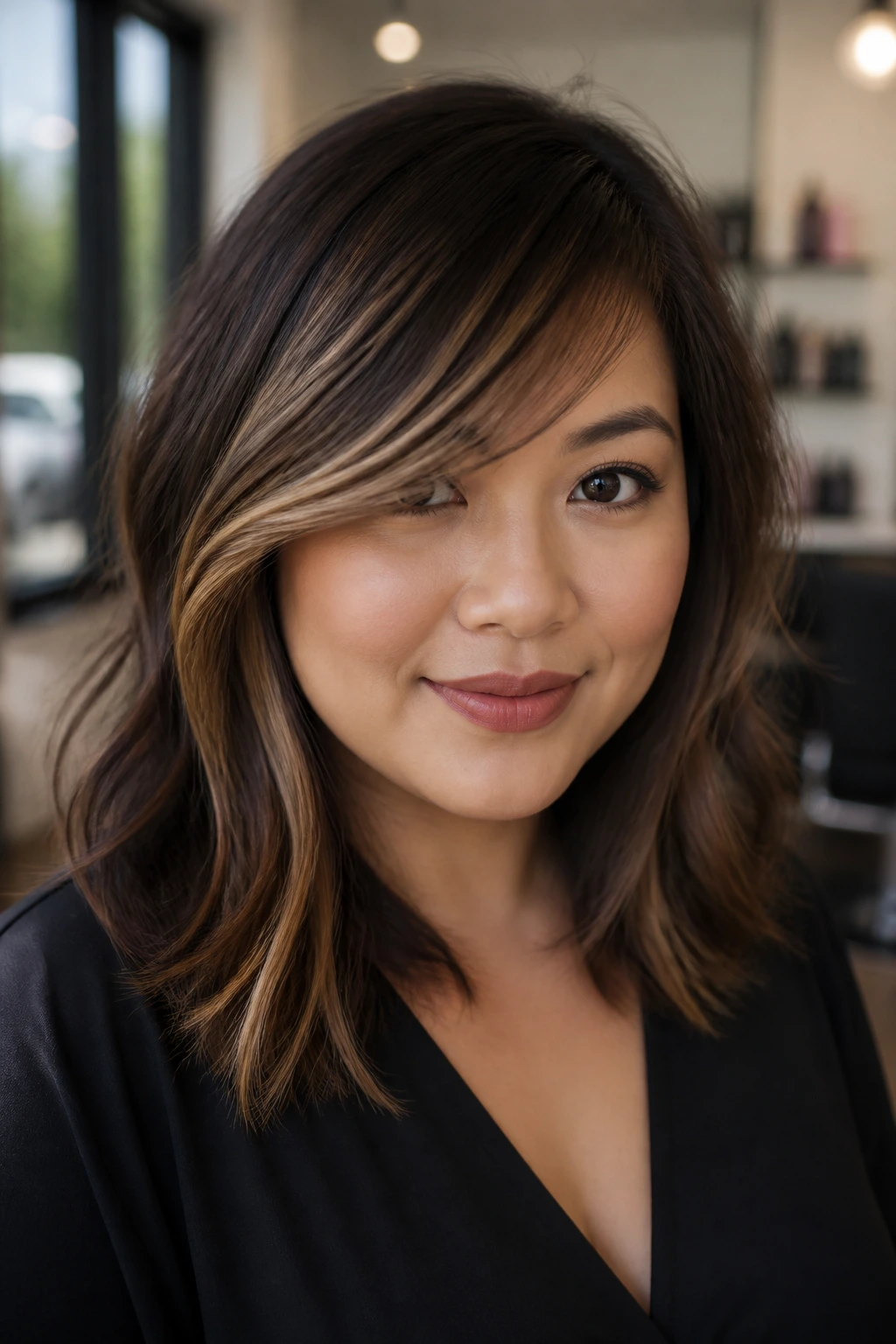
Color can change how a side bang reads. A few lighter pieces through the fringe make the texture easier to see, which matters a lot when the cut is choppy. On a round face, that extra definition helps the bang act like a shape, not just a patch of hair.
Where the Light Should Go
- Focus highlights on the longest pieces near the cheekbone.
- Keep the root area deeper so the fringe still has depth.
- Use a soft, ribbon-like placement instead of heavy streaks.
The reason this works is simple: the eye follows contrast. When the bang has a lighter front piece and darker base, the diagonal sweep stands out more. That gives the face a stronger line and keeps the look from going flat, especially in straight or wavy hair.
If your hair is very dark, even a subtle warm brown ribbon can make the fringe look more defined.
20. Glasses-Friendly Choppy Side Bangs

If you wear glasses, the wrong bang can make you feel crowded fast. A glasses-friendly side fringe sits just above the frame or slips beside it, so the hair and the glasses don’t compete. For round faces, that little bit of space matters because you don’t want extra bulk around the middle of the face.
The best version is choppy enough to move, but long enough that it doesn’t keep poking the top of the frames. A slight bend away from the lens line helps a lot. If the ends are too blunt, they can snag on the frame arm and split in a weird way.
This style is a little more technical than it looks. The length has to be planned around the frame height, not just the forehead. Bring your glasses to the appointment. Seriously. That one detail saves a lot of guessing.
21. Temple-Start Side Bangs That Elongate the Face
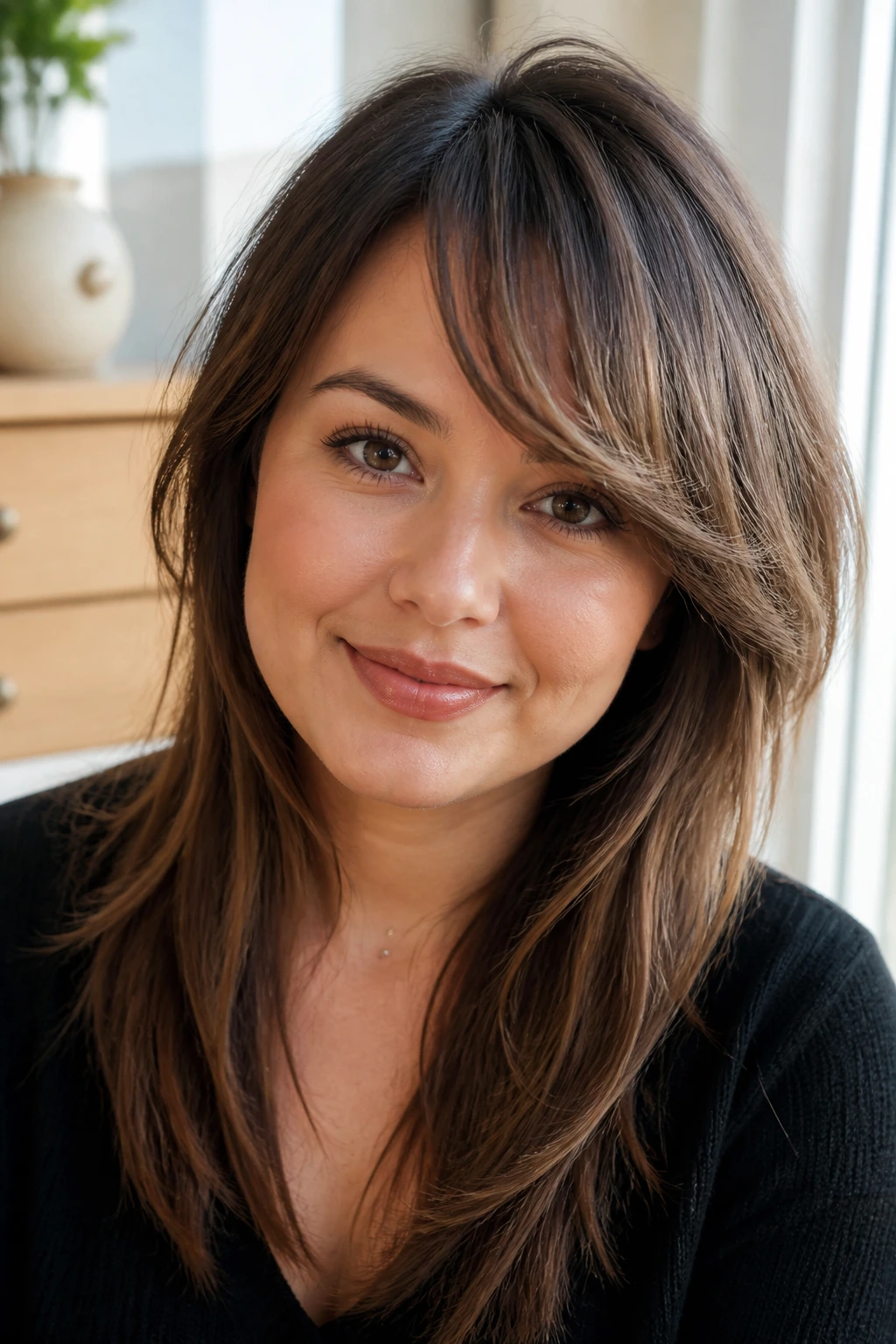
Why start the fringe at the temple instead of lower down? Because that placement gives the face a longer front edge. On a round face, a temple-start side bang helps create the illusion of vertical length before the hair even reaches the cheekbone.
The shape should be soft at the root and gradually fuller toward the middle. That keeps the front from looking patchy. A bang that starts too low can sit right on the widest part of the face, and that is exactly the problem you’re trying to avoid.
How to Wear It
Dry the root first, lift it slightly with a round brush, then sweep the bang across the forehead with your fingers. You do not need a perfect curl. You need a bend. That bend is what gives the face the little bit of length that makes the cut work.
22. Off-Center Part with a Bendy Fringe
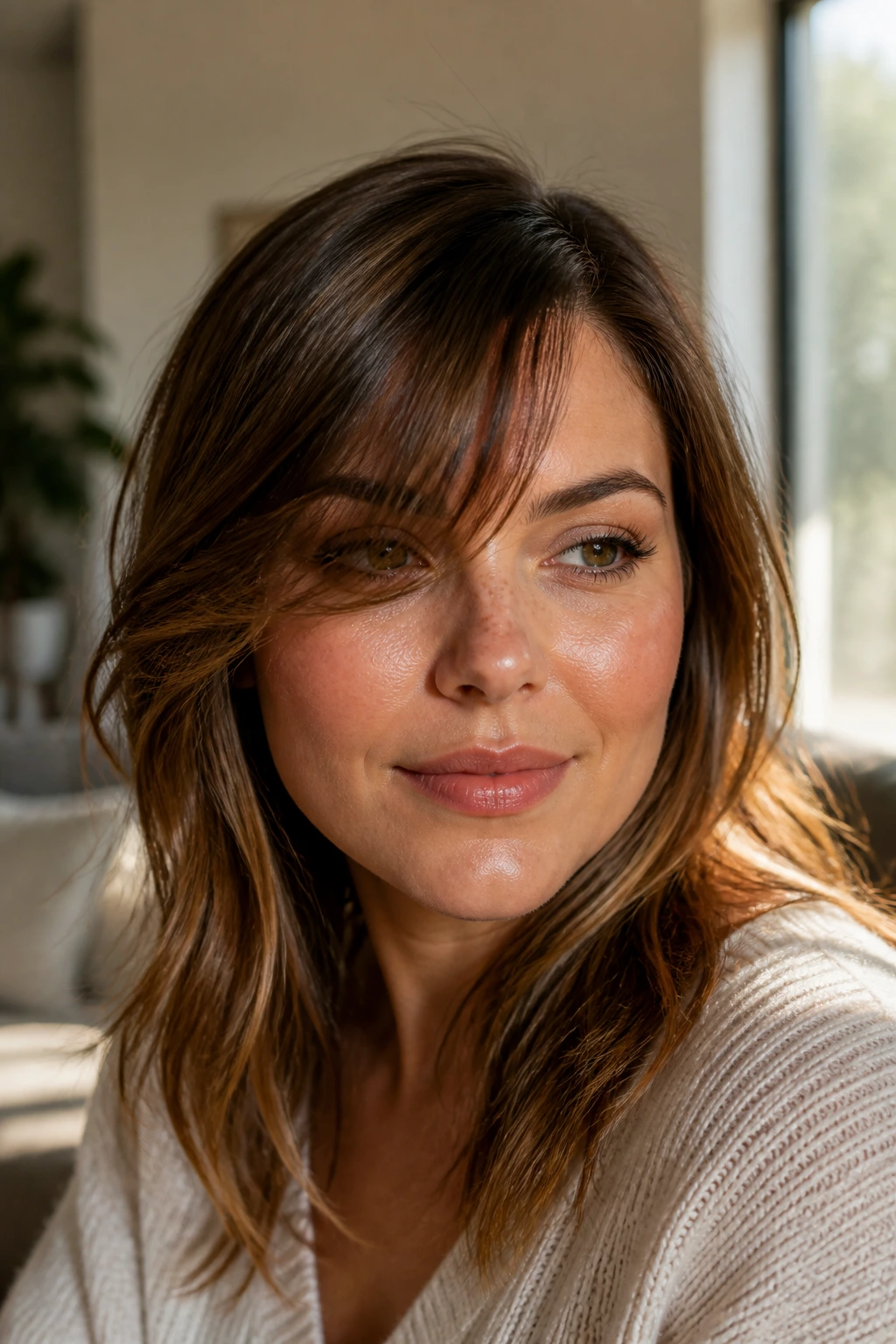
A deep side part is not the only option. An off-center part can be even better if you want something softer and less dramatic. The fringe starts near the part, then bends across the face in a gentle arc that doesn’t feel too forced.
This is a nice middle ground for people who want side bangs but hate the feeling of hair falling in one heavy sheet. The off-center placement keeps the look casual, and the bend keeps the front from sitting flat. On a round face, that combination opens things up without making the forehead feel too exposed.
The best part is how easy it is to grow out. You can shift the part a little more center, let the bang lengthen, and still keep the shape. That makes it a practical choice, not just a pretty one.
23. Micro-Layered Ends for Feather-Light Movement
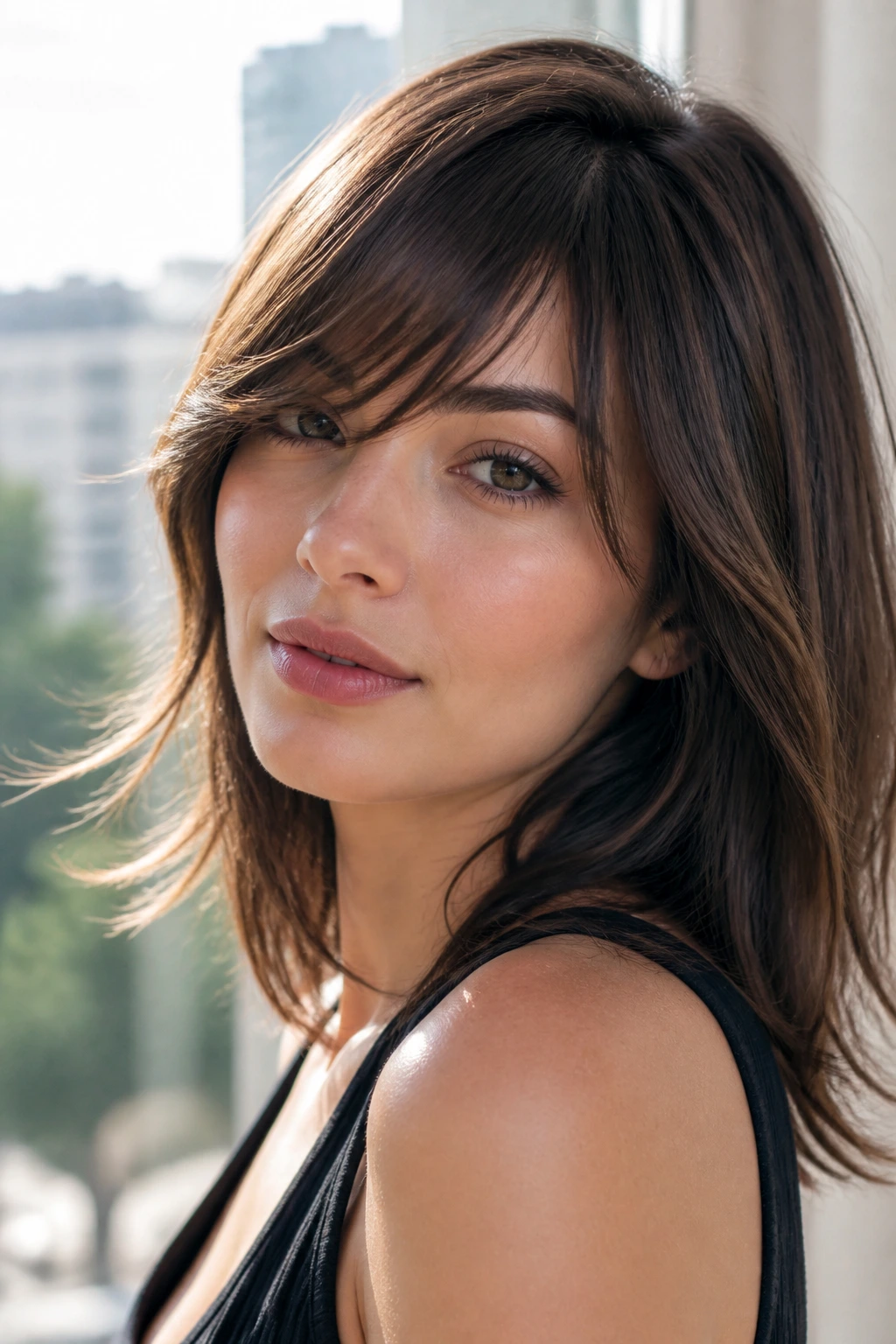
Micro-layering sounds tiny, and it is. The idea is to take a heavy side bang and break the edge into very small, soft pieces so the fringe moves instead of clumping. On round faces, that lightness helps the bang float around the forehead rather than sit on it.
A lot of people confuse texture with thinning. They are not the same thing. Micro-layered ends should still leave enough hair for the bang to look full. You just want the edge softened enough that it doesn’t form a hard line across the top of the face.
This one is especially good if your hair puffs up around the temple area. Those tiny layers let the fringe bend down and out instead of ballooning. The effect is subtle, but subtle is often the point.
24. Collarbone Cut with Long Side Fringe
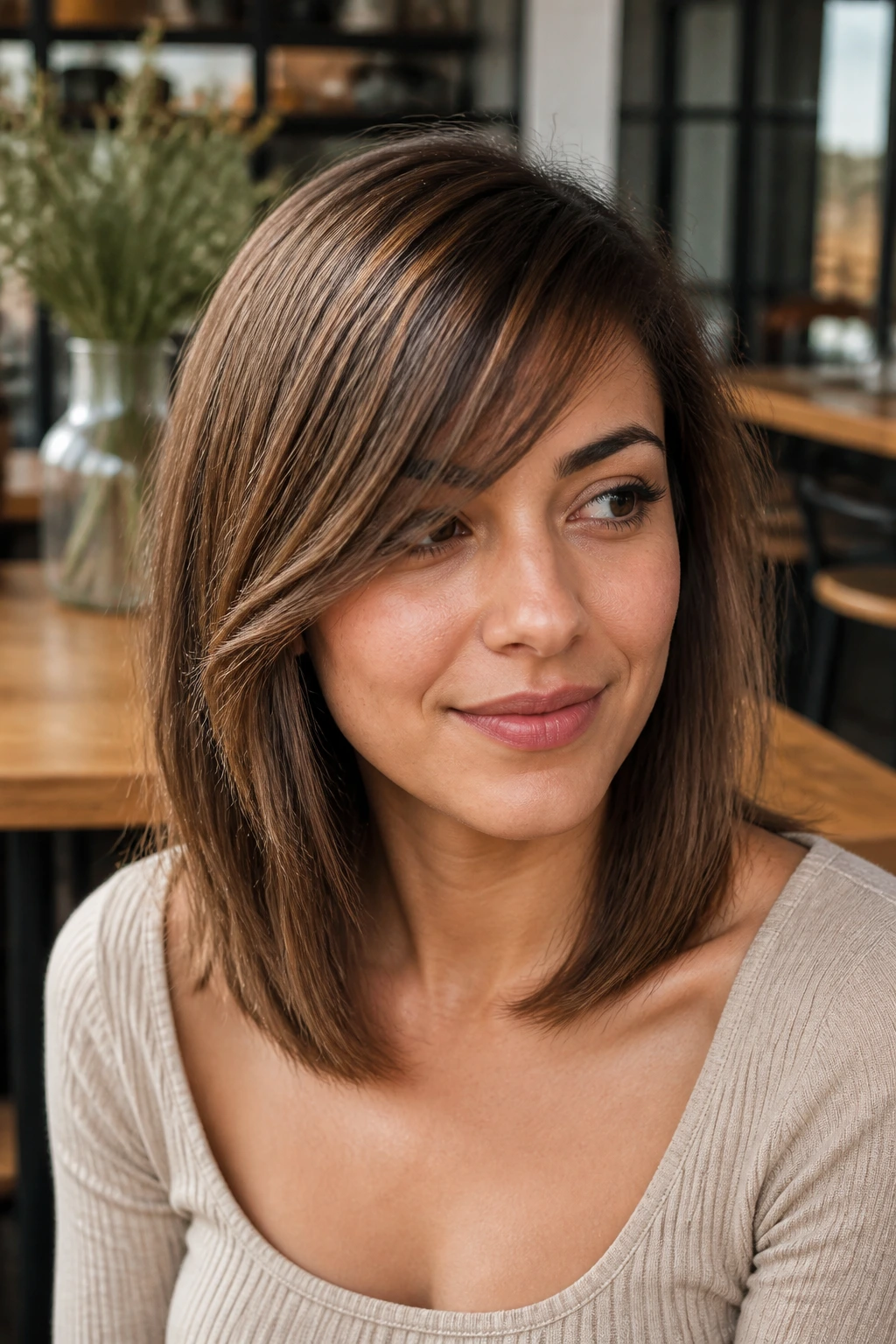
A collarbone-length cut gives a round face a long frame, and the side fringe adds the detail up top. That combination is hard to beat if you want something wearable and not too precious. The hair hits low enough to stretch the silhouette, and the fringe keeps the forehead area interesting.
Unlike a shorter cut, this one doesn’t end right at the jawline, which is where many round faces need help most. The extra length below the chin creates a cleaner vertical line. Then the bang sweeps across the top and finishes the job.
I like this style for people who want their hair to look good with minimal effort. It air-dries decently, it styles quickly, and it does not demand a perfect blowout to make sense. That’s worth a lot.
25. Grow-Out-Friendly Choppy Bangs for Round Faces
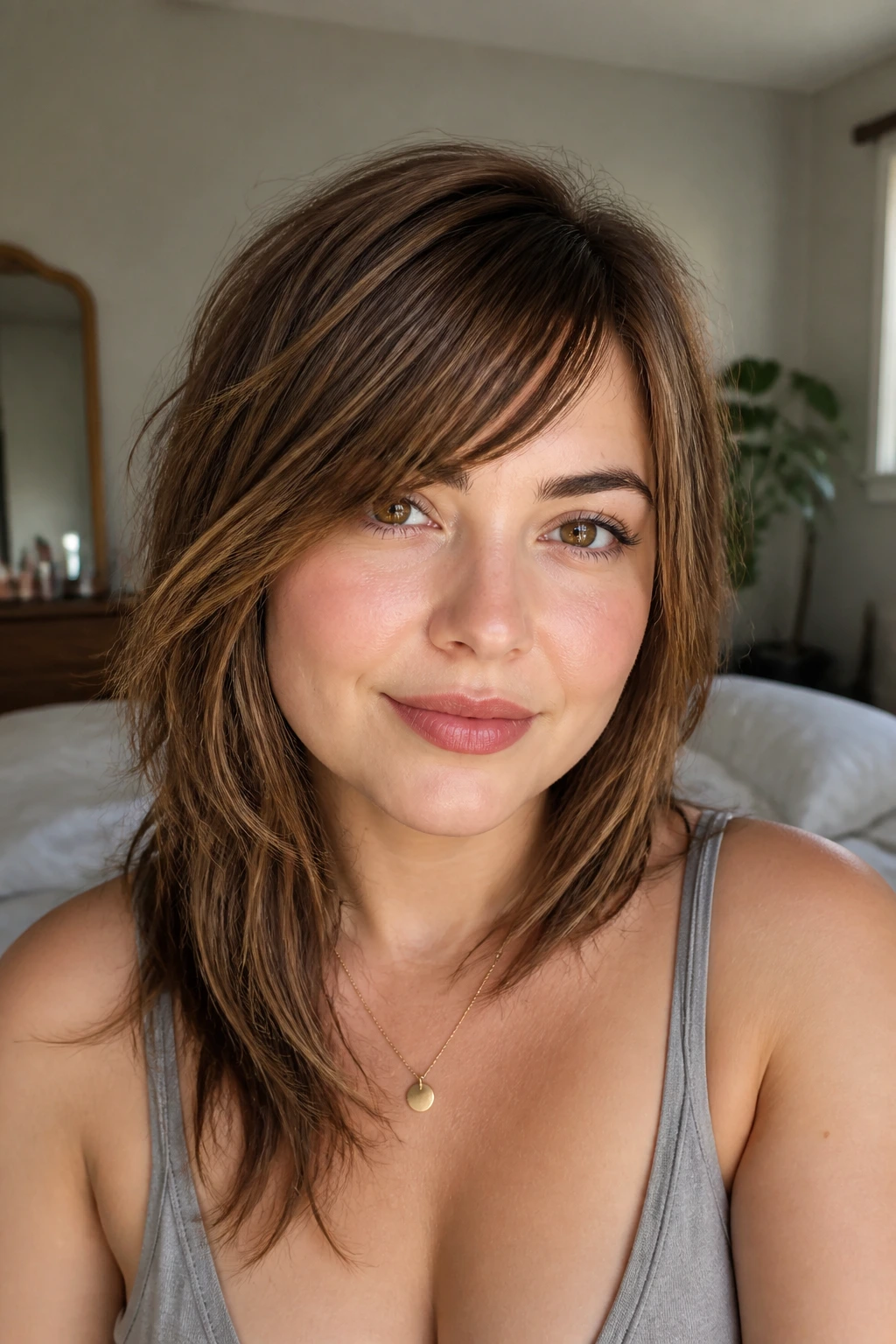
If you hate maintenance, start here. A grow-out-friendly side bang gives you a flattering shape now and a less awkward grow-out later. The longest piece should fall near the cheekbone or even the lip, while the shortest piece stays soft enough to blend when it gets longer.
The Shape to Ask For
- Keep the fringe long through the front edge.
- Use soft point-cutting so the ends don’t look blunt.
- Blend the bang into the front layers early, not late.
- Leave enough length at the temple to tuck behind the ear.
This is the one I’d recommend to the person who wants bangs but fears regret. It gives you the diagonal line that helps a round face, but it won’t punish you three weeks later when it starts growing out.
And honestly, that’s the whole point. A good side bang should help your face first and your schedule second.
Final Thoughts
The best choppy side bangs for round faces do one thing well: they create a diagonal line where the face naturally feels widest. That can mean a brow-grazing sweep, a cheekbone skim, a feathered fringe, or a longer piecey shape that blends into the rest of the cut.
The biggest mistake is going too blunt or too short at the center. That’s where the fringe starts to work against you. Keep the line soft, keep the end piecey, and keep the longest point somewhere that lets the hair move past the cheekbone instead of stopping on it.
If you are torn between two versions, choose the longer one. It is easier to trim a little more later than to grow back a fringe that feels too heavy on day one. And if you want the quickest reality check, tuck the rest of your hair back, look straight in the mirror, then look from the side. The right bang usually makes itself obvious in that second glance.
