



Curtain bangs for round faces work best when they pull the eye up and down, not side to side. That sounds obvious, but it’s the part people miss when they walk into a salon with a screenshot and no plan. A round face usually has softness through the cheeks and a gentle curve at the jaw, so the bang shape needs a little length, a little movement, and a clean opening at the center.
The good versions are never stiff. They skim the cheekbones, break before the widest part of the face, and taper into the rest of the haircut instead of sitting on top of it like a helmet. The bad versions are easy to spot too: bangs that stop right at the fullest part of the cheeks, or a heavy fringe that sits flat and makes the face look shorter. Not cute. Not flattering.
I’ve always thought curtain bangs are one of the easier ways to change a round face without committing to a huge chop. They can make straight hair look softer, give wavy hair more shape, and stop curls from ballooning at the sides if the cut is handled with a little restraint. The trick is choosing the right length and the right amount of weight around the eyes and cheekbones.
Some versions need a round brush. Some need a razor. Some need almost no styling at all. The right pick depends on your hair texture, how much time you want to spend in the mirror, and whether you want a subtle face frame or a full, swingy fringe. The options below cover the looks that actually make sense on a round face — and the little details that keep them from fighting your features.
1. Cheekbone-Grazing Curtain Bangs
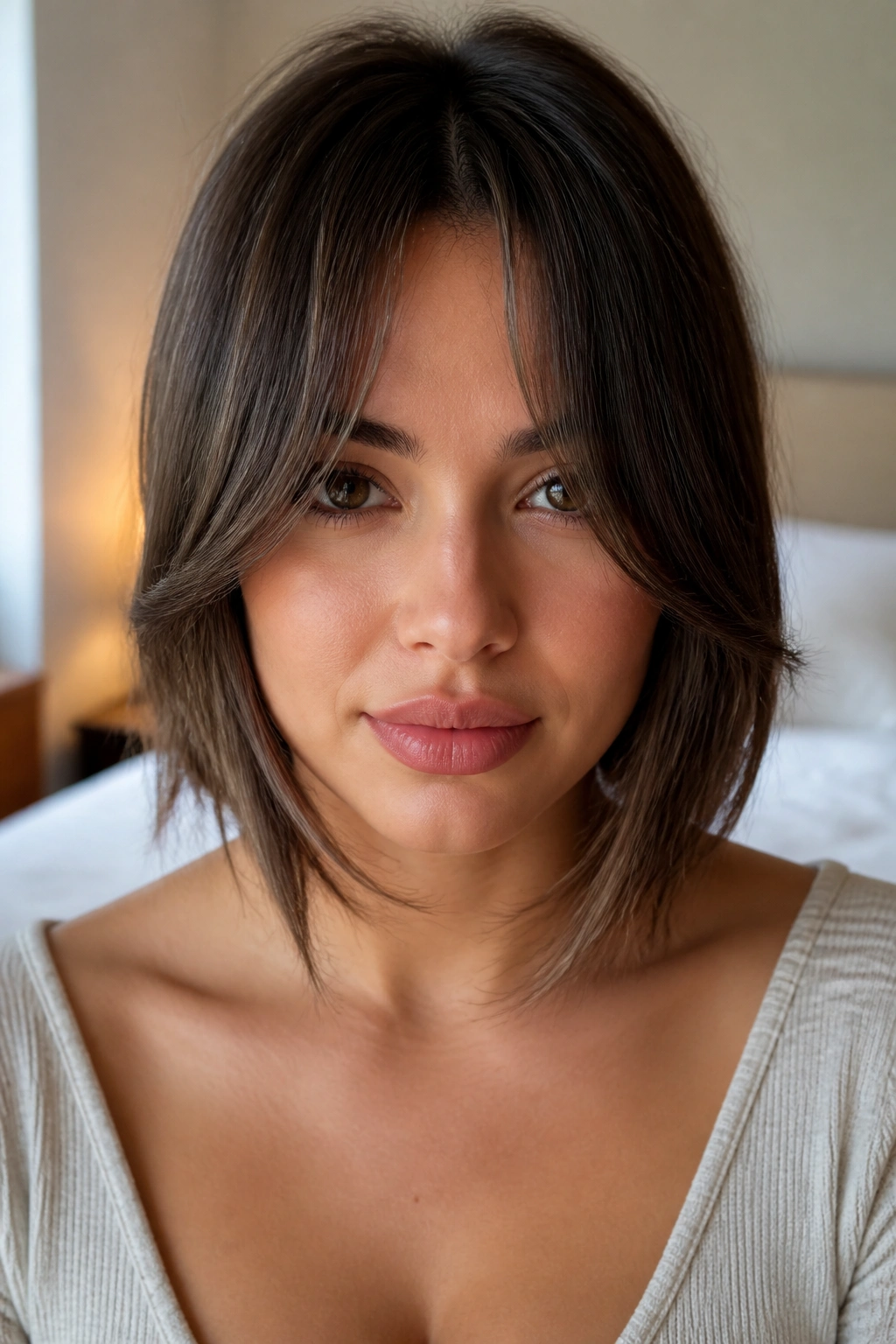
This is the cleanest starting point if you want curtain bangs for round faces without much risk. The shortest point opens around the bridge of the nose, then the sides drop to the top of the cheekbone or just below it. That extra length matters. It gives the face a vertical line instead of cutting straight across the widest area.
Why It Works
The cheekbone is the sweet spot. If the bang ends right there, it frames the face without sitting on top of the cheeks, which is where roundness can get exaggerated. I like this version on straight hair and soft waves because it moves easily and doesn’t need a lot of product.
Ask for a center part, a soft opening, and longer side pieces that angle down rather than out. That angle is the whole game. If the bangs puff away from the face, they widen things. If they fall inward with a slight bend, the face looks longer and cleaner.
2. Chin-Length Curtain Bangs
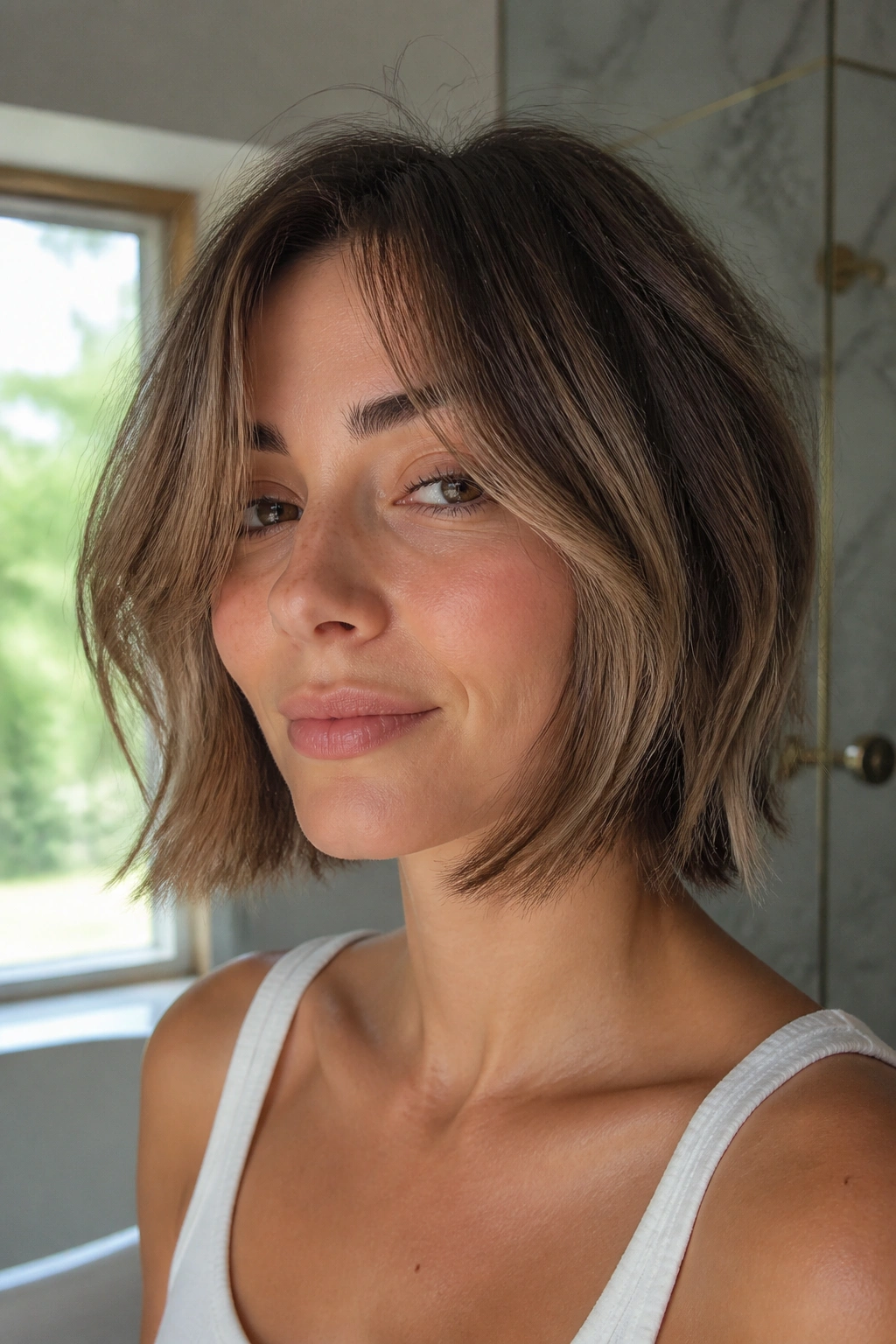
A chin-length version is for the person who wants a stronger frame. The front pieces fall all the way to the jawline, which helps stretch a round face visually. It also gives you something to tuck behind the ear when you want the bangs out of the way, which is a nice bonus on busy mornings.
This shape works especially well if your cheeks are full and your jaw is soft, because the bang line lands below the widest part of the face. That’s what keeps it flattering. Shorter bangs can be cute, sure, but this length has more control and tends to look more expensive when it grows out a little.
What to Ask For
Tell your stylist you want the shortest point to sit around the nose or upper lip, with the longest pieces grazing the chin. Do not let the sides stop at the cheek. That’s the part that can make a round face look wider instead of longer.
3. Brow-Skimming Curtain Bangs
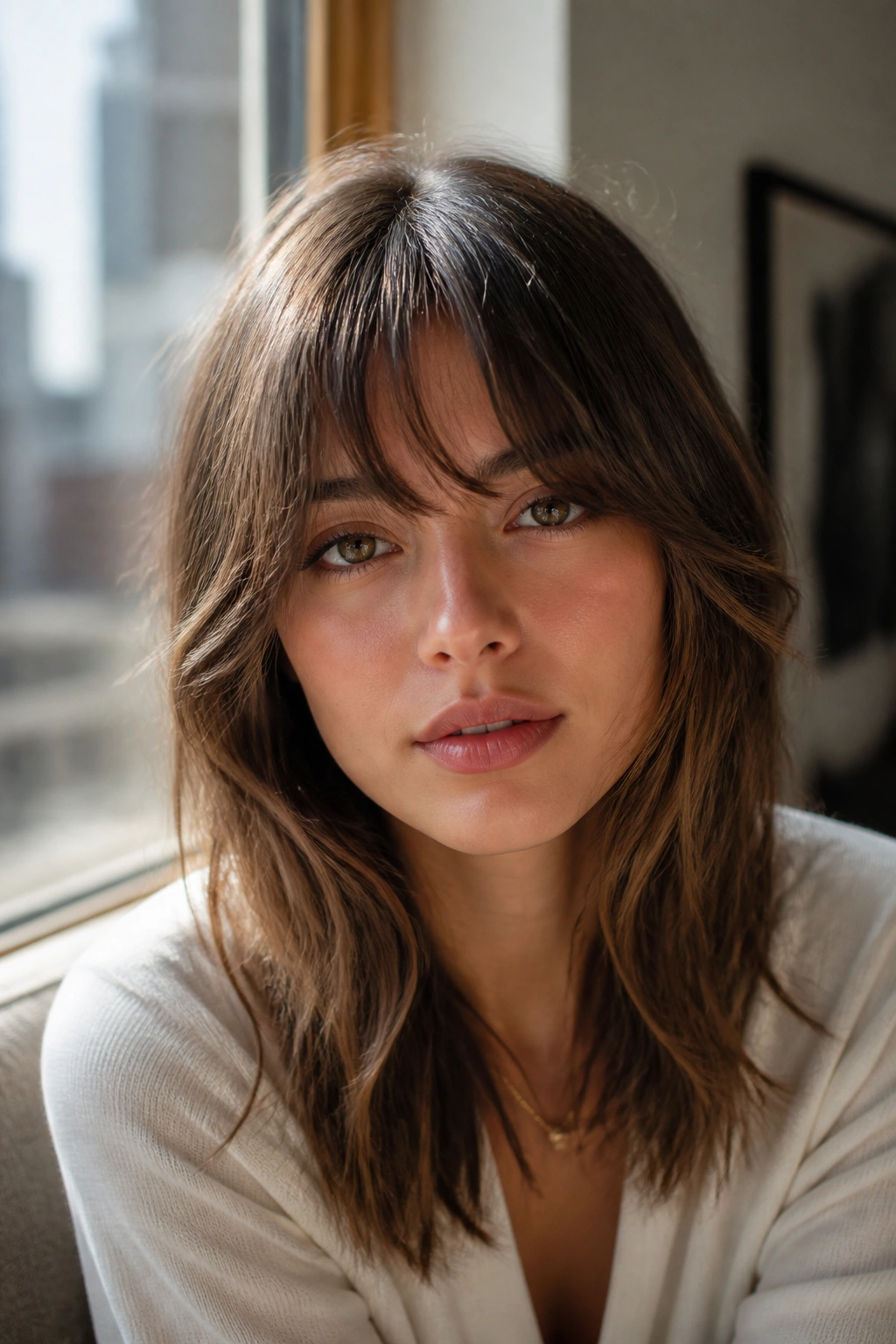
Want a little more fringe without going full bang? Brow-skimming curtain bangs are the middle ground. They open in the center, sit just above or right at the brows, and then fall into longer side pieces that move past the cheekbone. The center feels airy, not heavy.
This works best when the side lengths are doing the real work. A round face usually looks better when the eye keeps traveling downward, and these bangs do that neatly. They’re especially good if you wear your hair in a medium-length cut and like a blowout finish.
How to Get the Most From It
The center should never be blunt. A tiny bit of piecey texture keeps the style soft. If your hair is thick, ask for internal shaping so the fringe doesn’t sit in one solid block. If it’s fine, leave enough density in the middle that the bangs don’t look sparse after they dry.
4. Bottleneck Curtain Bangs
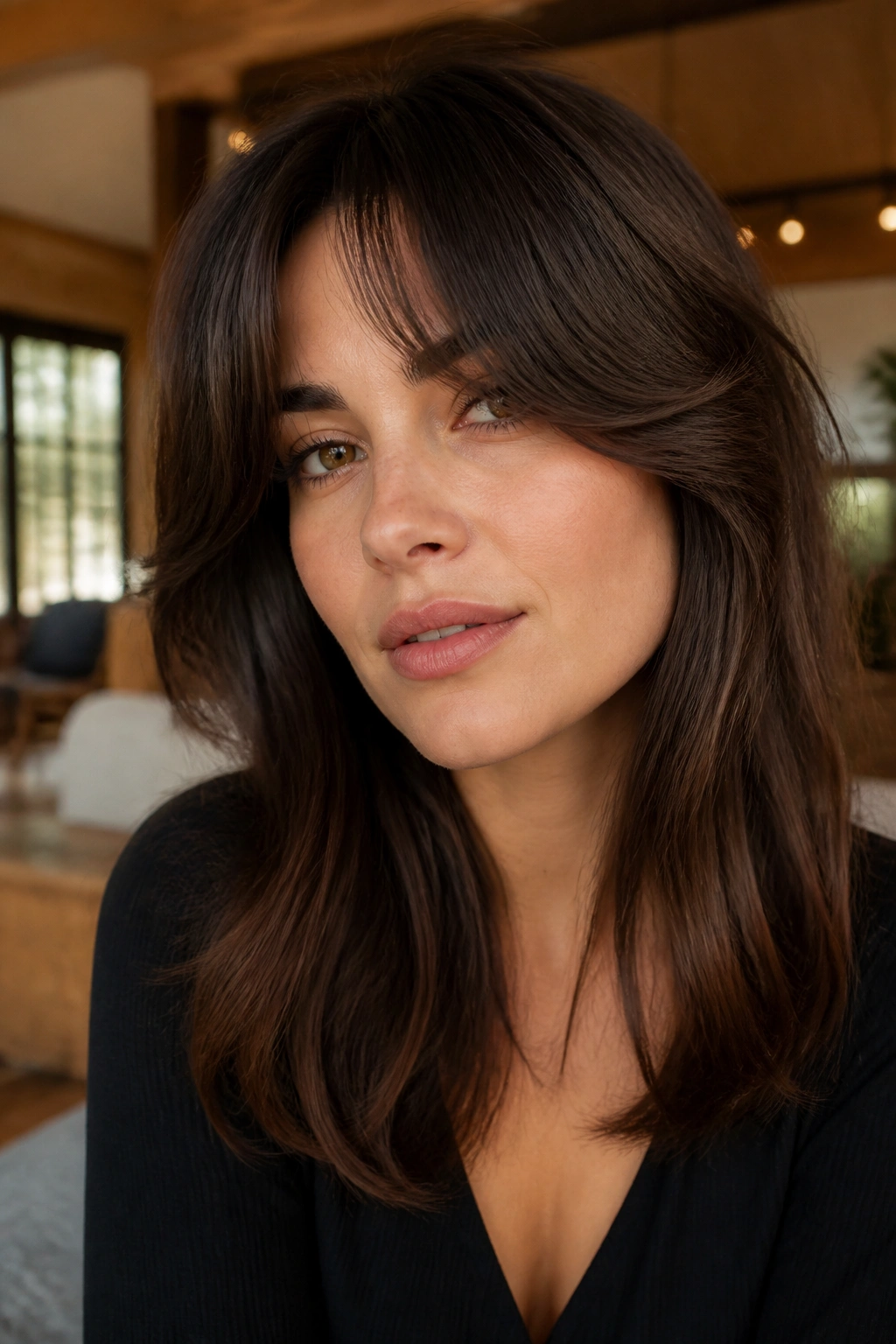
Bottleneck bangs are one of my favorite shapes for a round face because the silhouette is so smart. They start narrow near the center of the forehead, widen as they hit the cheekbones, then taper back in toward the temples. The shape does what a good frame should do: it creates structure without stealing attention.
This style gives you a little of everything. The narrow middle keeps the forehead open, while the wider outer sections add movement around the eyes and cheekbones. It’s softer than a blunt fringe and less fussy than a heavy curtain bang that needs constant brushing.
Best For
- Medium to thick hair that can hold a bend
- Faces that need length at the sides
- Anyone who wants the bang to grow out gracefully
Tip: Ask for softness through the center, not a hard point. Bottleneck bangs are best when they look like they melted into the haircut, not when they were cut with a ruler.
5. Feathered Blowout Curtain Bangs
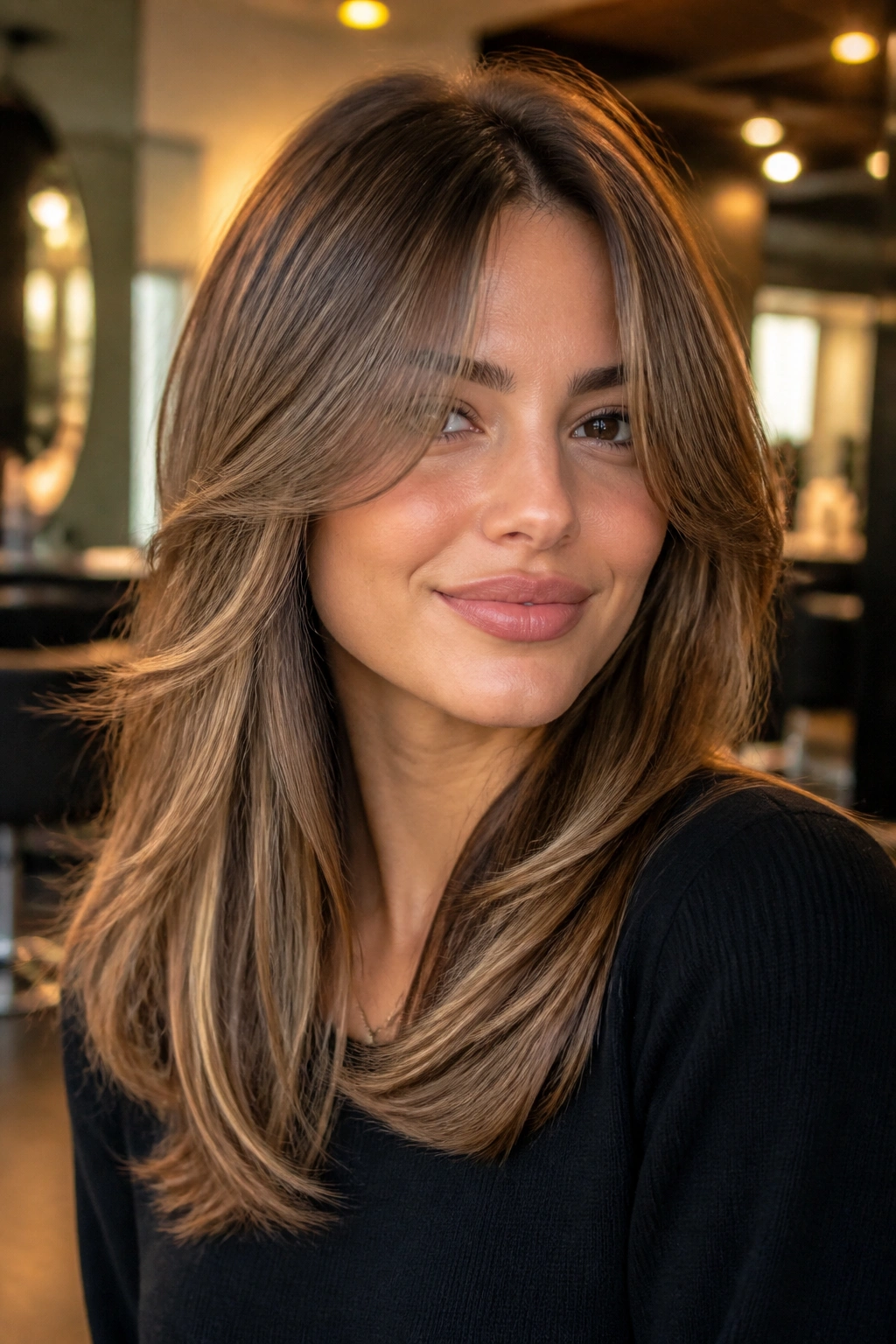
If you love a polished, salon-dry look, this is the one. Feathered blowout curtain bangs start with a soft center split and then curve away from the face in a loose, airy shape. They look especially good when styled with a large round brush and a blast of heat at the roots.
The reason they flatter round faces is simple: they create lift at the crown and motion along the cheek line. That combination keeps the face from feeling too compact. On medium to thick hair, this version can be incredibly flattering because it gives shape without weight.
How I’d Style It
Use a mousse at the roots, dry the bangs side to side with a round brush, and finish by rolling the ends under for a few seconds. You want a bend, not a curl. If the bang flips too hard, the shape gets busy fast.
6. Piecey Curtain Bangs
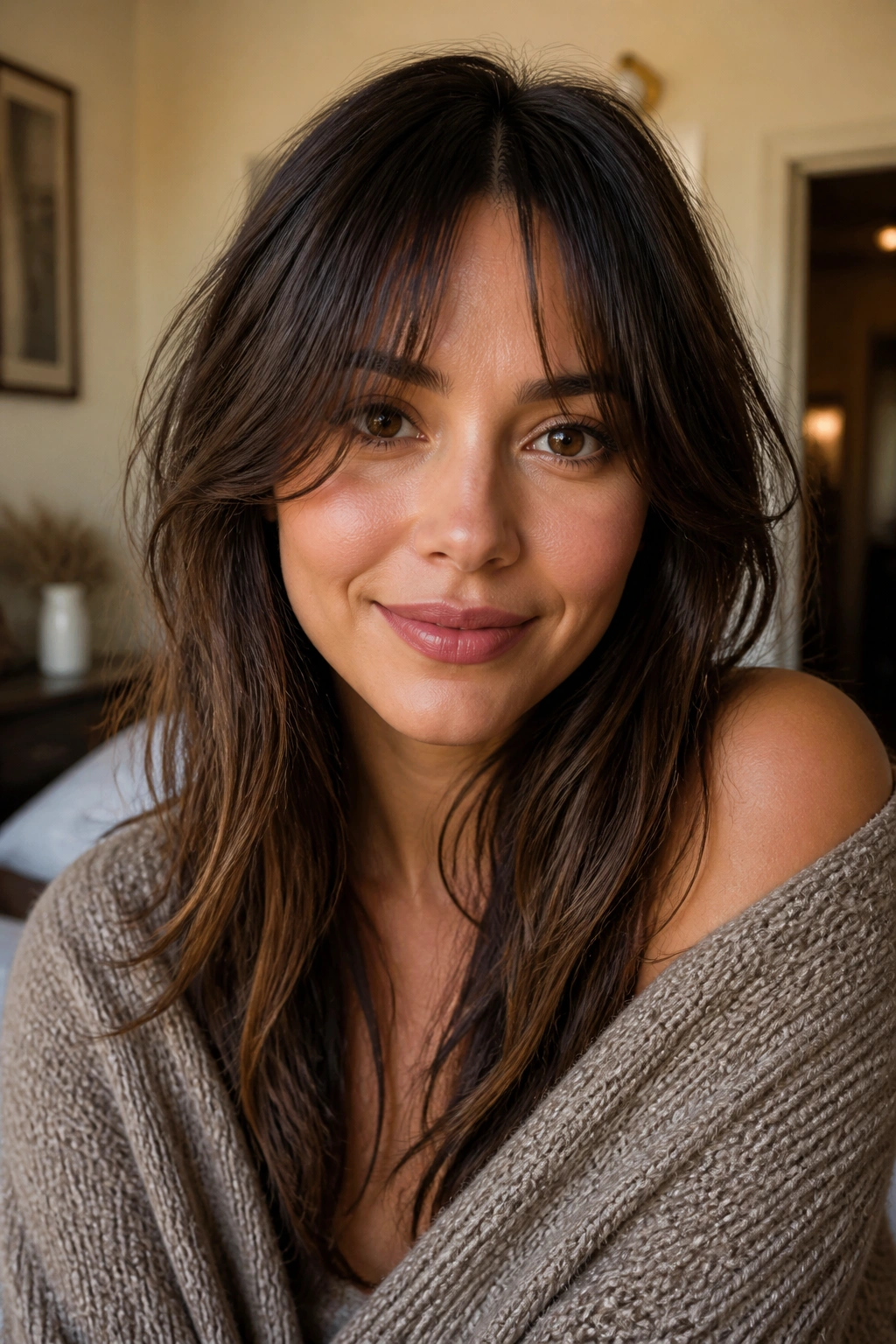
Piecey curtain bangs are a good choice when you want texture to do the heavy lifting. Instead of one smooth curtain, the bangs break into separated strands, which stops the fringe from forming a single wide band across the face. That separation helps a round face look a little longer and less boxed in.
This version is especially useful if your hair is fine to medium and tends to fall flat by noon. A little pieceiness adds grit and movement. It also makes the bangs easier to grow out, since the ends never look too heavy between trims.
What Makes Them Work
A small amount of styling cream or light wax goes a long way. Warm it between your fingers and pinch just the ends, then leave the middle softer. Do not coat the whole fringe. That’s how piecey bangs turn stringy.
7. Wispy Curtain Bangs
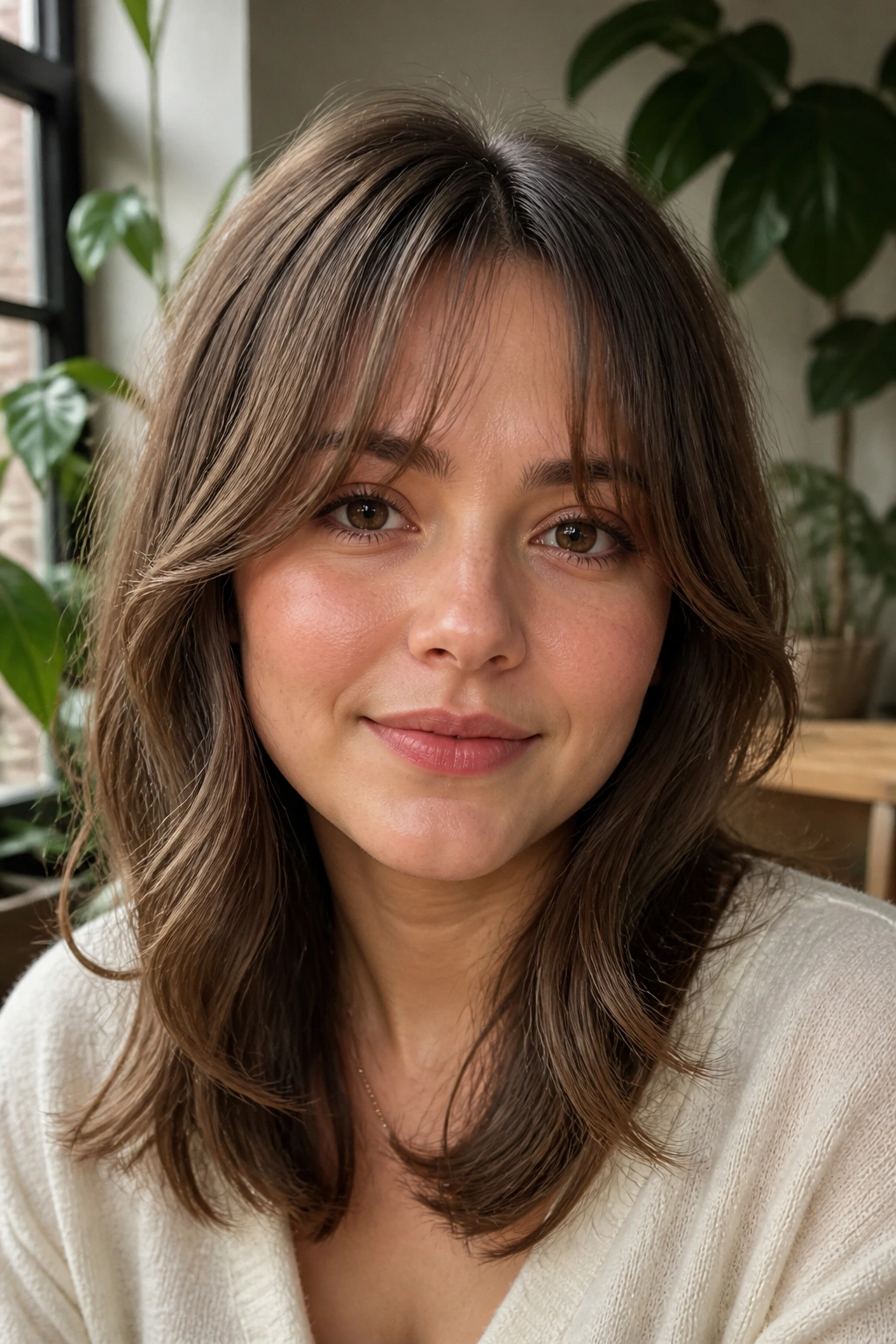
Wispy curtain bangs are for anyone who wants softness first. The density is light, the ends are airy, and the whole thing feels less like a curtain and more like a veil. On a round face, that kind of softness matters because heavy bangs can crowd the forehead and make the cheeks feel fuller.
I like this look on medium-length cuts with a little bend at the ends. It keeps the face frame gentle, which is useful if you already have a lot of natural fullness in the cheeks. Wispy bangs can also be a good entry point if you’ve never had bangs and don’t want to jump into a dense fringe.
The catch is balance. Too thin, and the bangs disappear. Too heavy, and they lose the point. You want enough hair to see the shape at a glance, but not so much that it lands like a wall.
8. Shaggy Curtain Bangs
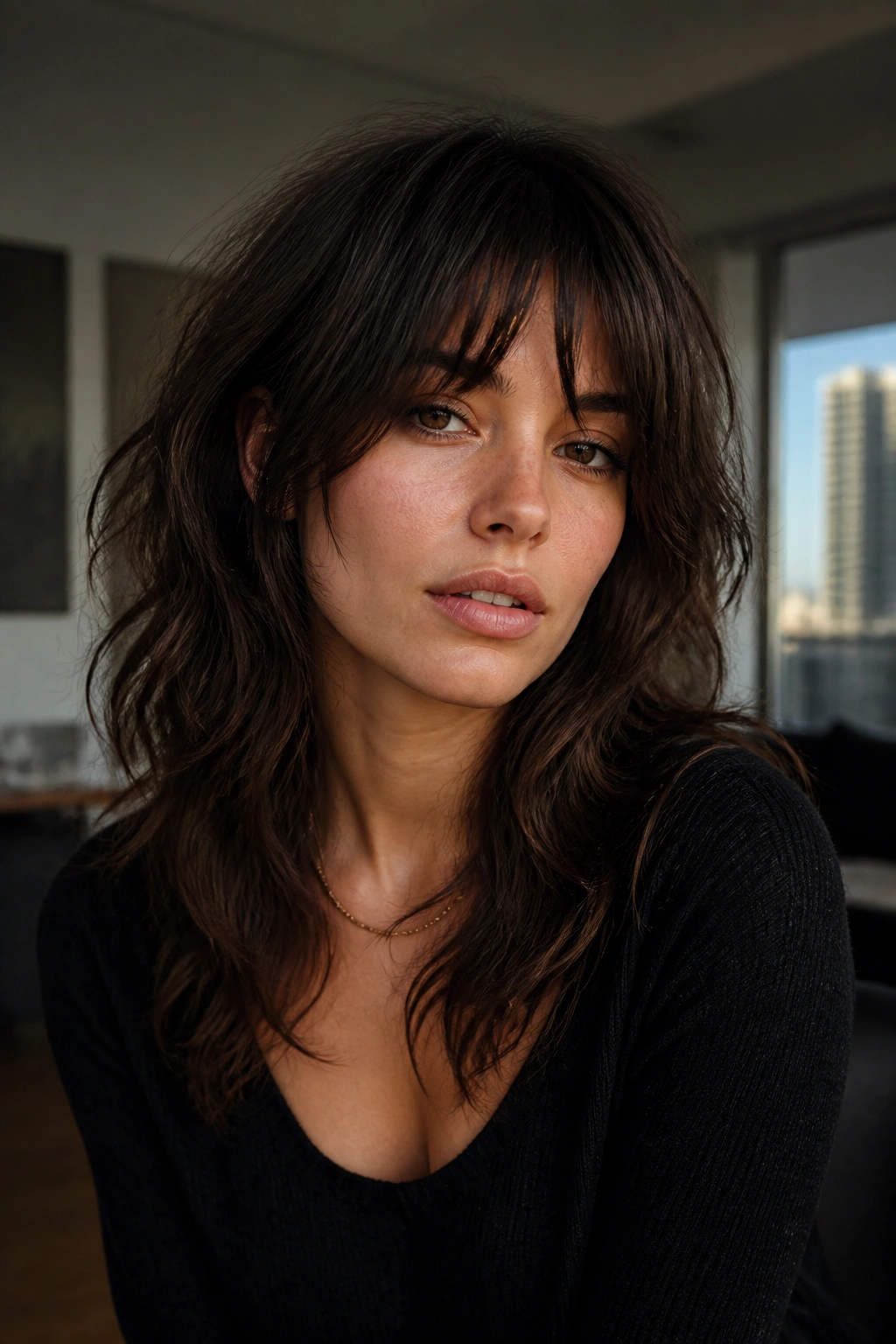
Shaggy curtain bangs bring a little edge, and they’re excellent when your round face needs more angles. The layers are choppier, the ends are broken up, and the overall feeling is loose rather than polished. That roughness helps interrupt all the soft curves in a flattering way.
This style makes sense with a shag cut or any haircut that already has visible layers. The front pieces should blend into the cheek and jaw area, not stop abruptly. When the layers flow, the face looks longer and the hair gets more movement without needing perfect styling.
How to Wear It
Air-dry with a little curl cream if your hair has wave. Blow-dry with a diffuser if you want more lift. The finish should look touched, not shellacked. Shaggy bangs only work when they stay a little imperfect.
9. Butterfly Cut With Curtain Bangs
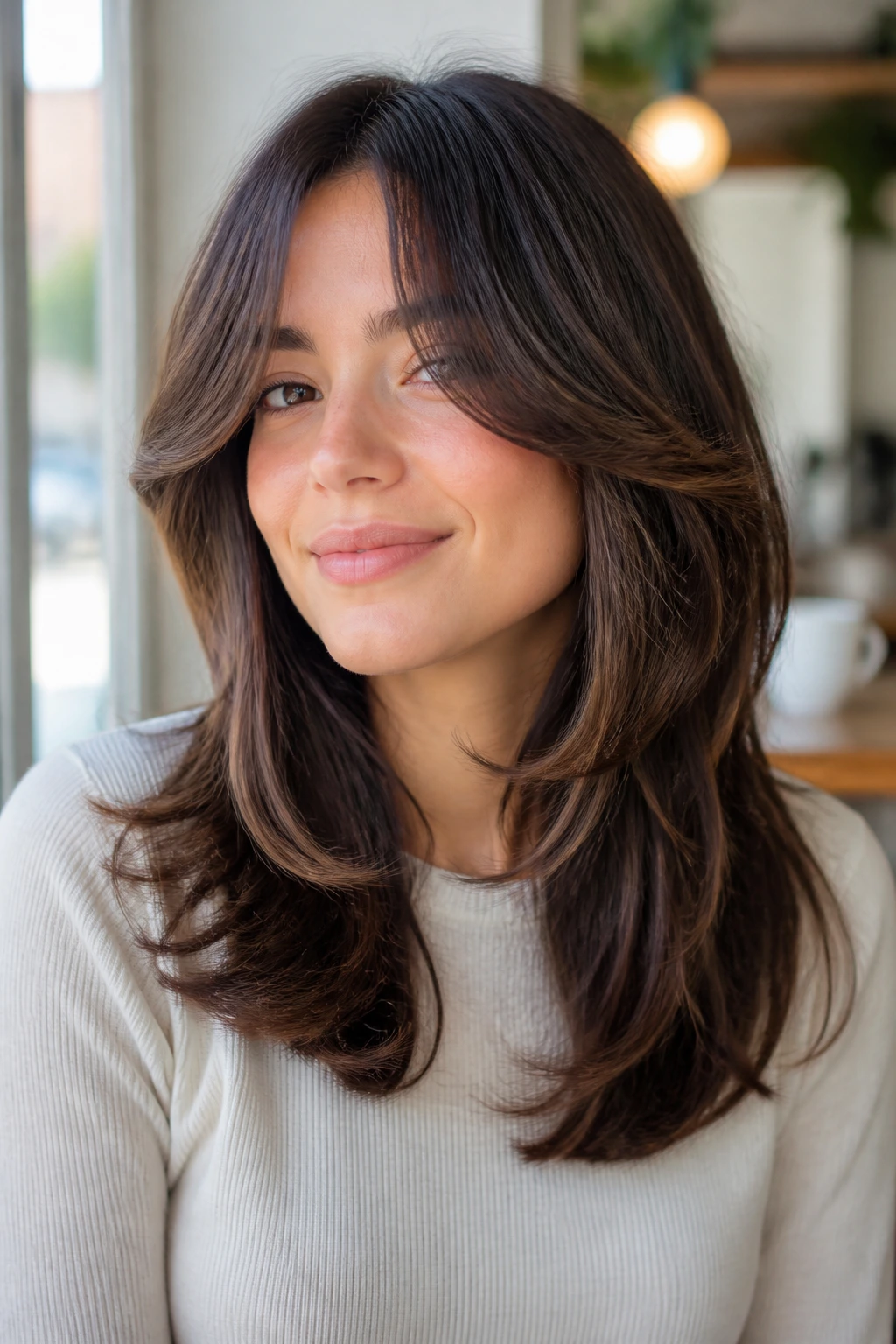
A butterfly cut and curtain bangs are a strong pair for a round face because both pieces of the haircut do the same thing: they build lift and movement high around the face, then let the length fall away. The shorter layers around the crown help the top feel open, while the longer front layers thin out the width.
What I like here is the contrast. You get volume without bulk. That matters on round faces, where too much fullness at the cheek line can make the face feel wider than it is. A butterfly cut gives those bangs room to breathe.
Ask Your Stylist For
- Short layers around the crown
- Front pieces that start near the nose and slide past the cheekbone
- Soft ends, not blunt corners
This is one of those cuts that can look a little plain in a photo and much better in motion. The layers move when you walk. That’s the point.
10. Wolf Cut With Curtain Bangs

Wolf cuts are not for everybody, and I mean that in the nicest way possible. But if you like texture, want a little attitude, and have round features that can handle extra movement, curtain bangs can sit beautifully on a wolf cut. The bang section is usually broken up, textured, and connected to heavier layers through the sides.
The round face benefit comes from the irregular shape. The layers stop the haircut from clinging to the same soft curves your face already has. Instead, it creates angles, lift, and a little visual noise. That can be very flattering if you have thick hair or natural wave.
Keep the shortest pieces long enough to open past the forehead, though. If the bangs are cut too short or too puffed out at the sides, they can widen the face. That’s the one thing to watch.
11. Lob With Curtain Bangs
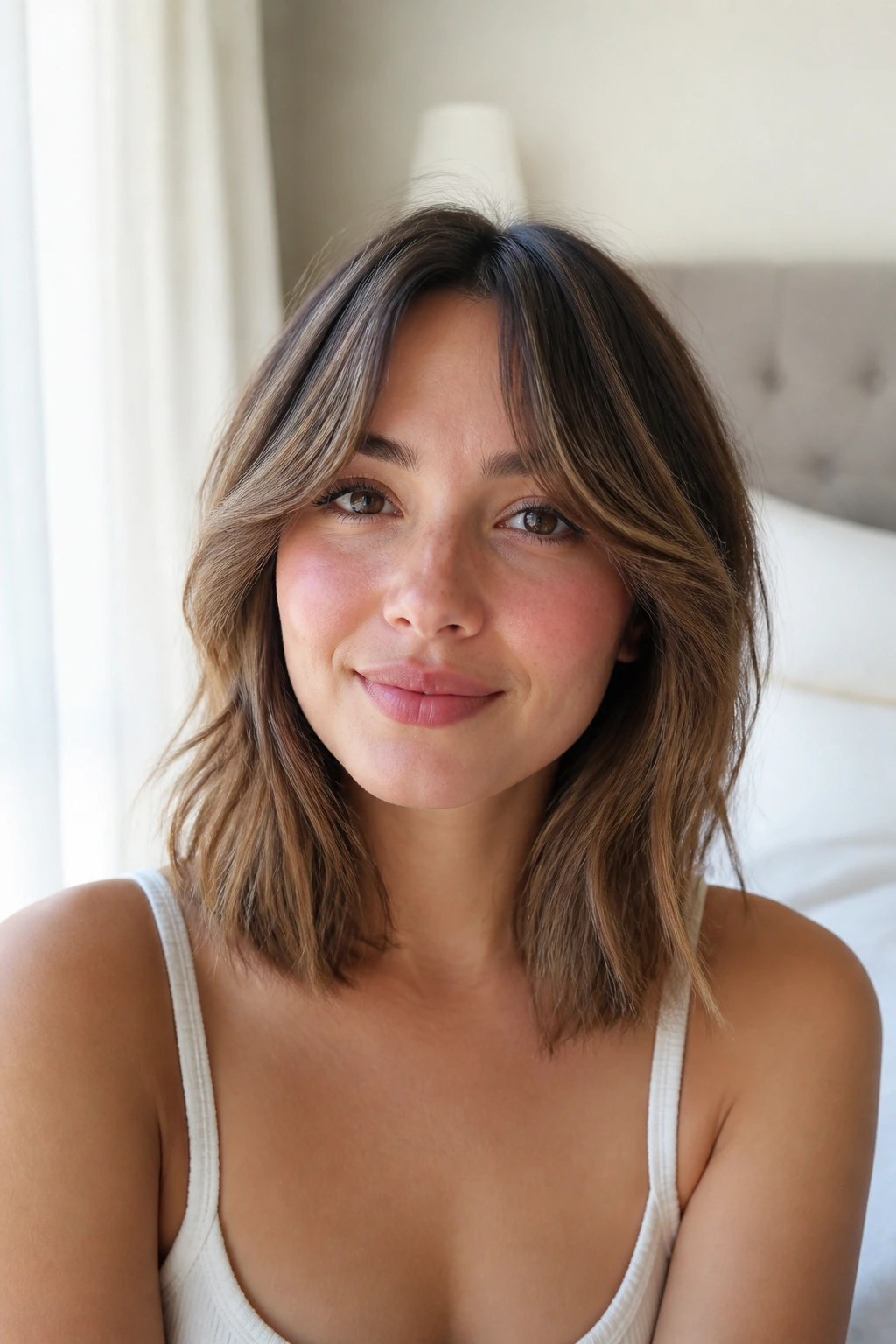
A lob with curtain bangs is one of the easiest combinations to live with. The length usually lands around the collarbone or just above it, which already helps a round face look longer. Add curtain bangs that sweep away from the cheeks, and you’ve got a haircut that feels balanced without being fussy.
The neat part is how the bang line connects to the rest of the cut. The front pieces can flow right into the lob’s ends, so the shape feels continuous. That connection matters more than people think. When everything points in the same direction, the face reads longer.
This is a smart choice if you want something wearable every day. It looks good straight, wavy, or tucked behind one ear. And when you’re tired of styling, it still holds together.
12. Collarbone Cut With Curtain Bangs
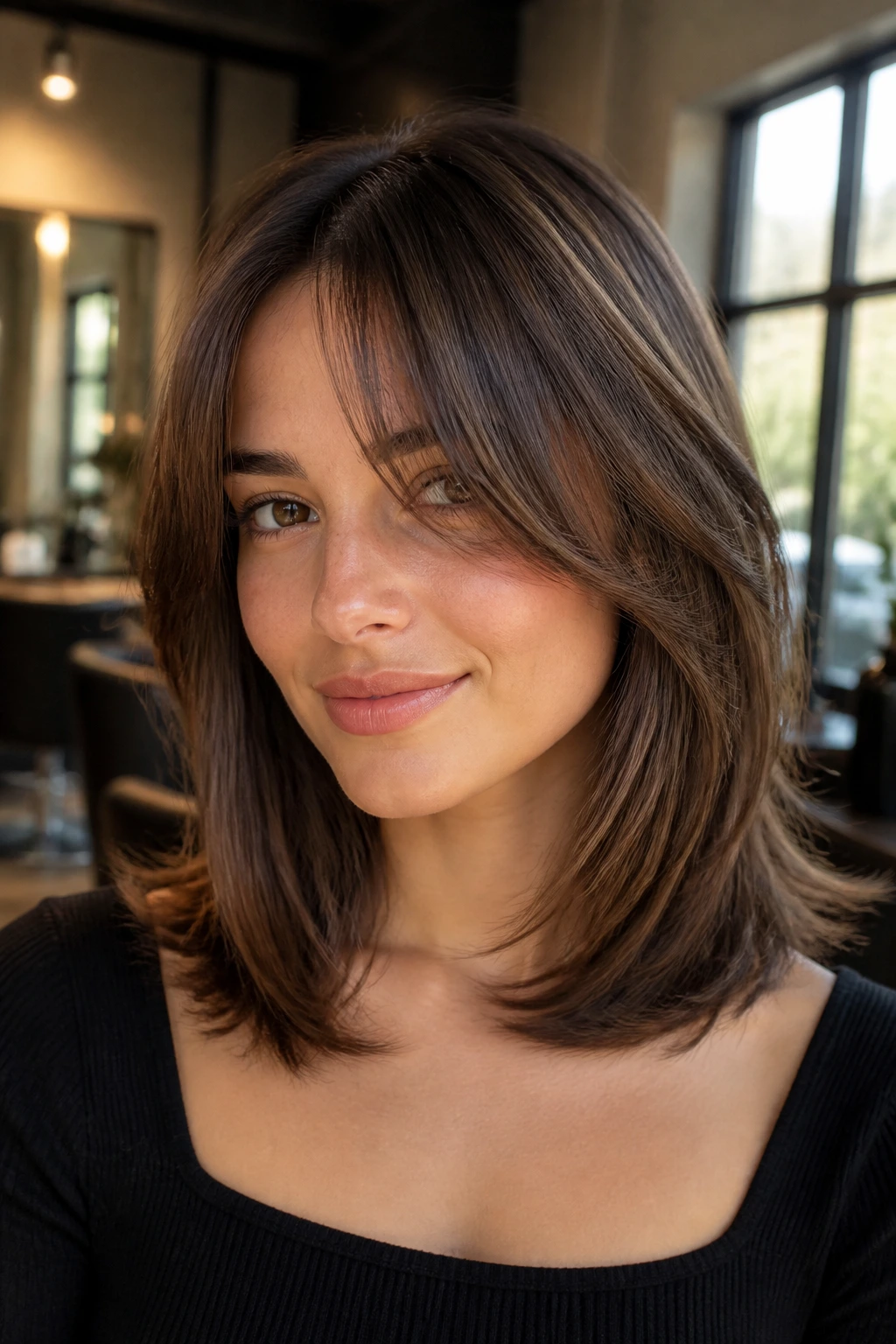
Collarbone-length hair gives curtain bangs room to do their work. The cut sits low enough to stretch the face, and the bangs can fall into the length without making the whole look feel heavy. For round faces, that extra vertical space is useful.
I prefer this length when the bang pieces are soft and slightly tapered. If they start too high or end too wide, the effect can turn boxy. Keep the front pieces moving down toward the collarbone and you get that long-line feel that flatters round features.
A Good Rule
If your hair is straight, add a bend at the ends. If it’s wavy, let the texture stay loose. Either way, the bangs should connect to the cut, not sit on top of it. That’s where the shape starts to feel intentional.
13. Long Layers With Curtain Bangs
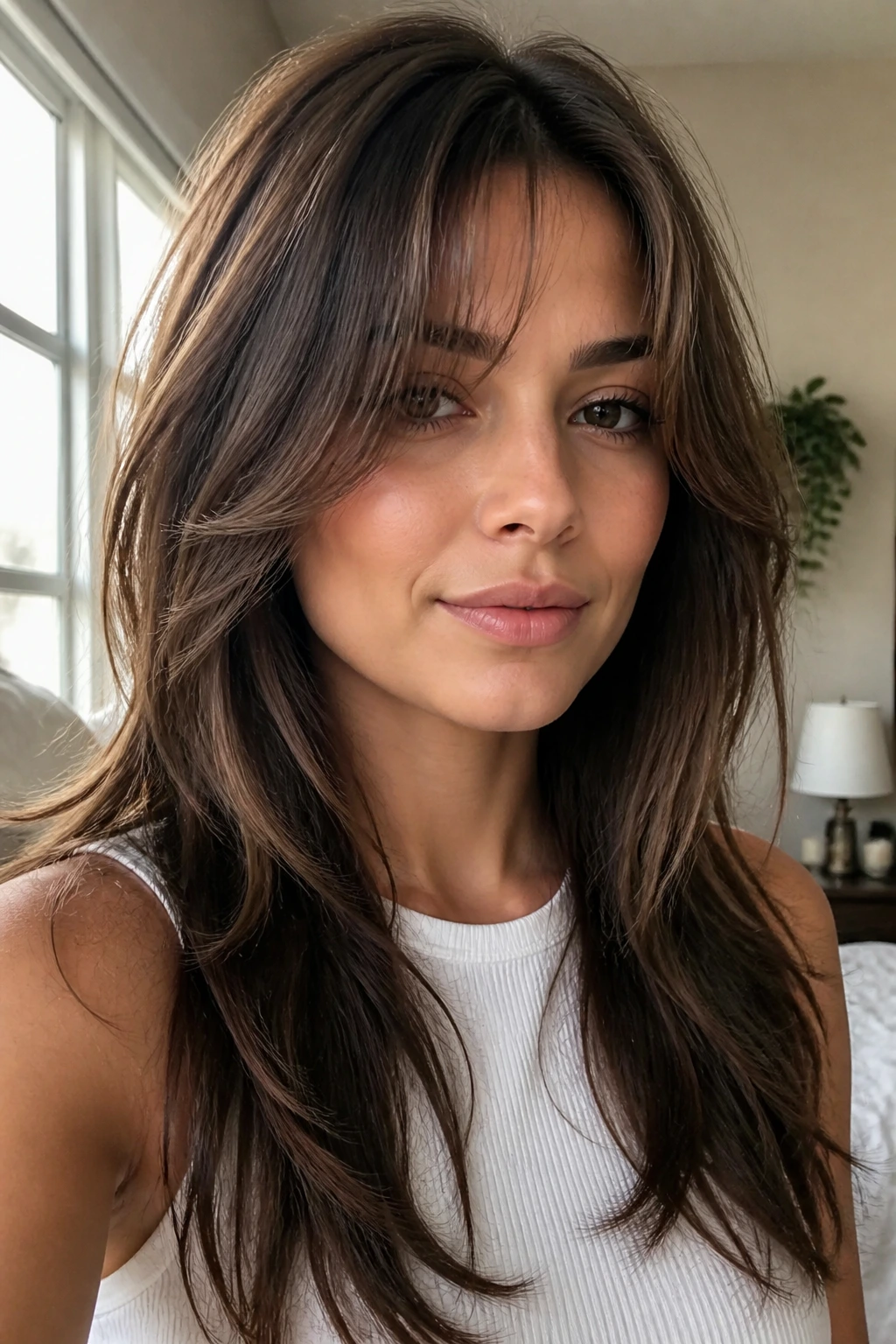
Long layers and curtain bangs are the safe bet, but in a good way. The layers start around the chin or lower, which keeps the fullness off the cheeks and gives the eye more room to travel downward. On a round face, that’s a very useful thing.
This look is especially good if you don’t want to sacrifice length. The bangs give shape up front, while the long layers keep the haircut from feeling heavy at the bottom. It’s a gentle change, not a dramatic one, and that makes it easy to live with.
The best versions have a little movement around the face and a soft taper toward the ends. If the layers are too short all over, the haircut can puff out at the sides. Keep them long and they’ll work with your face instead of against it.
14. Curly Curtain Bangs
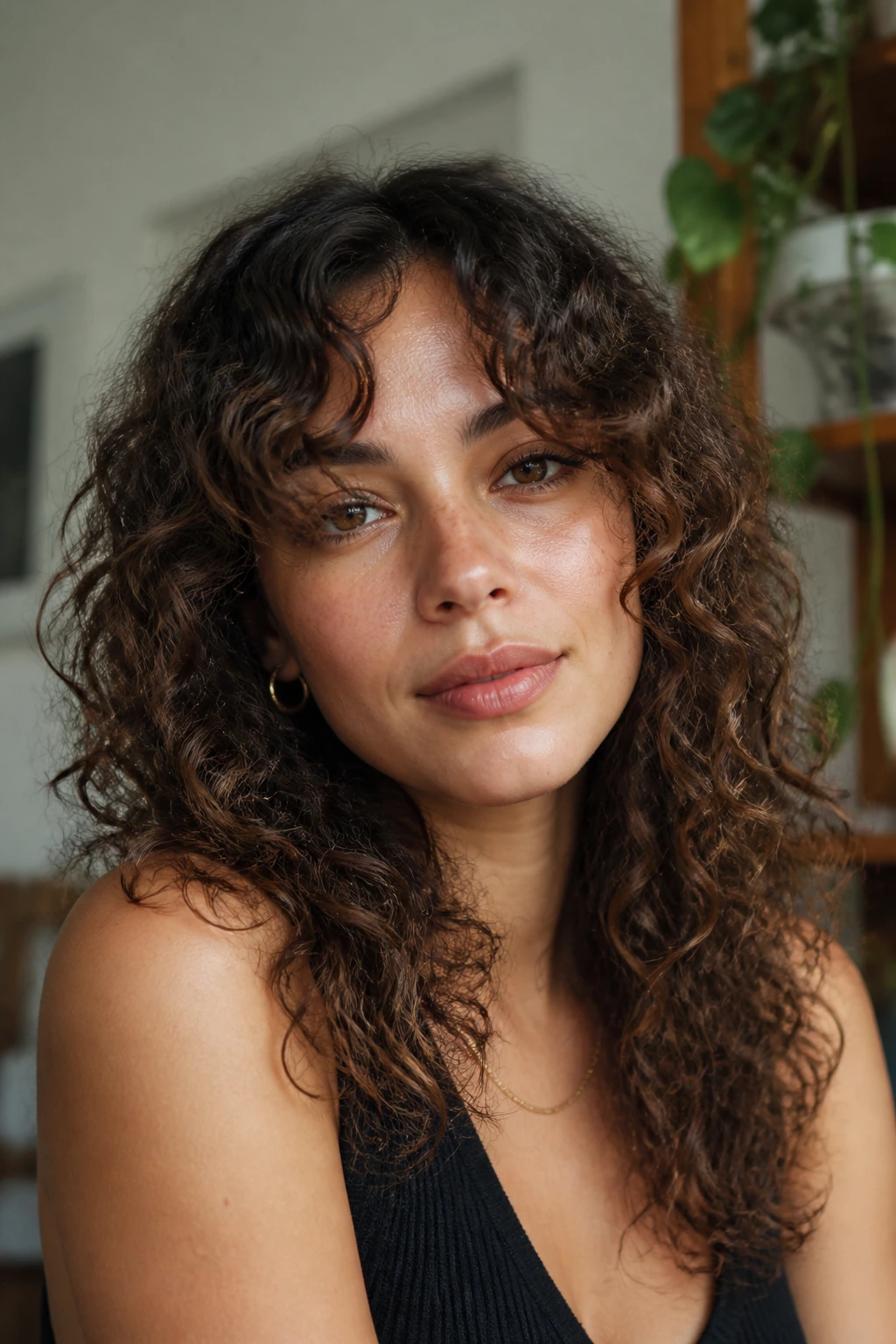
Curly curtain bangs can look fantastic on a round face when they’re cut with shrinkage in mind. The bangs should start longer than you think, because curls spring up once they dry. If a stylist cuts them too short while wet, the shape can land right at the cheek and create width you do not want.
The best curly version opens in the middle and then falls into two soft arcs that curl away from the face. That creates movement around the eyes and keeps the front from looking like one big puff. I like this look when the curls are defined but not crunchy.
How to Ask for It
Ask for the bangs to be cut dry or mostly dry, and ask for the side pieces to stay longer than the center. That keeps the face frame from sitting too high. Longer is safer with curls. Always.
15. Wavy Curtain Bangs
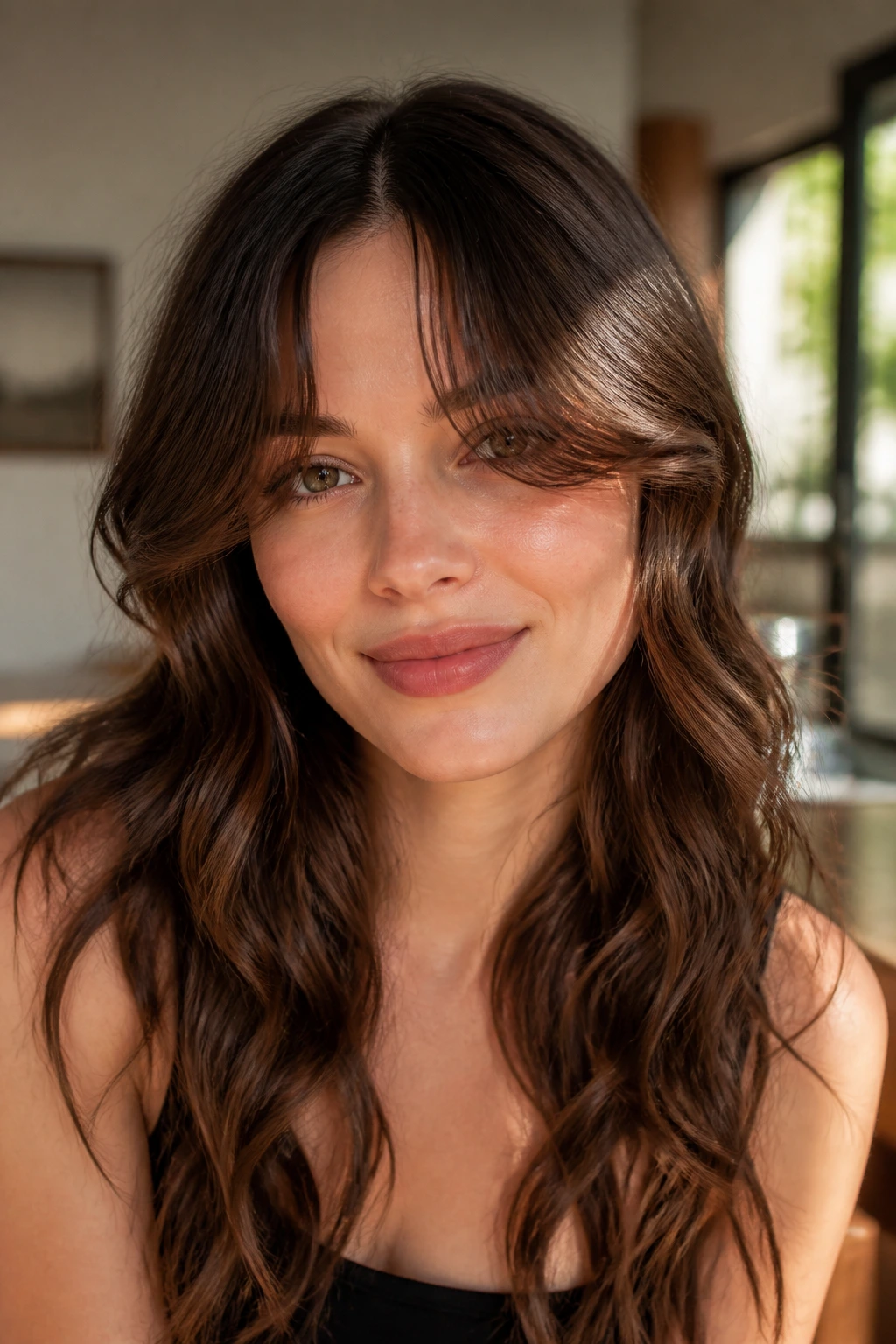
Wavy curtain bangs are easy to love because they already want to fall in the right shape. The bends in the hair help the bangs curve away from the face, which is exactly what a round face needs. You don’t need a perfect blowout here. A bit of softness works better.
This is one of the more forgiving styles on the list. If the hair dries a little unevenly, it still looks fine. If you scrunch in a light mousse and let it air-dry, you’ll get that loose, lived-in feel without much effort. The key is not to brush the wave out too much.
A round face usually benefits when the bangs are slightly longer on the sides, so the wave can drape downward instead of floating outward. That small detail changes the whole silhouette.
16. Straight Hair Curtain Bangs
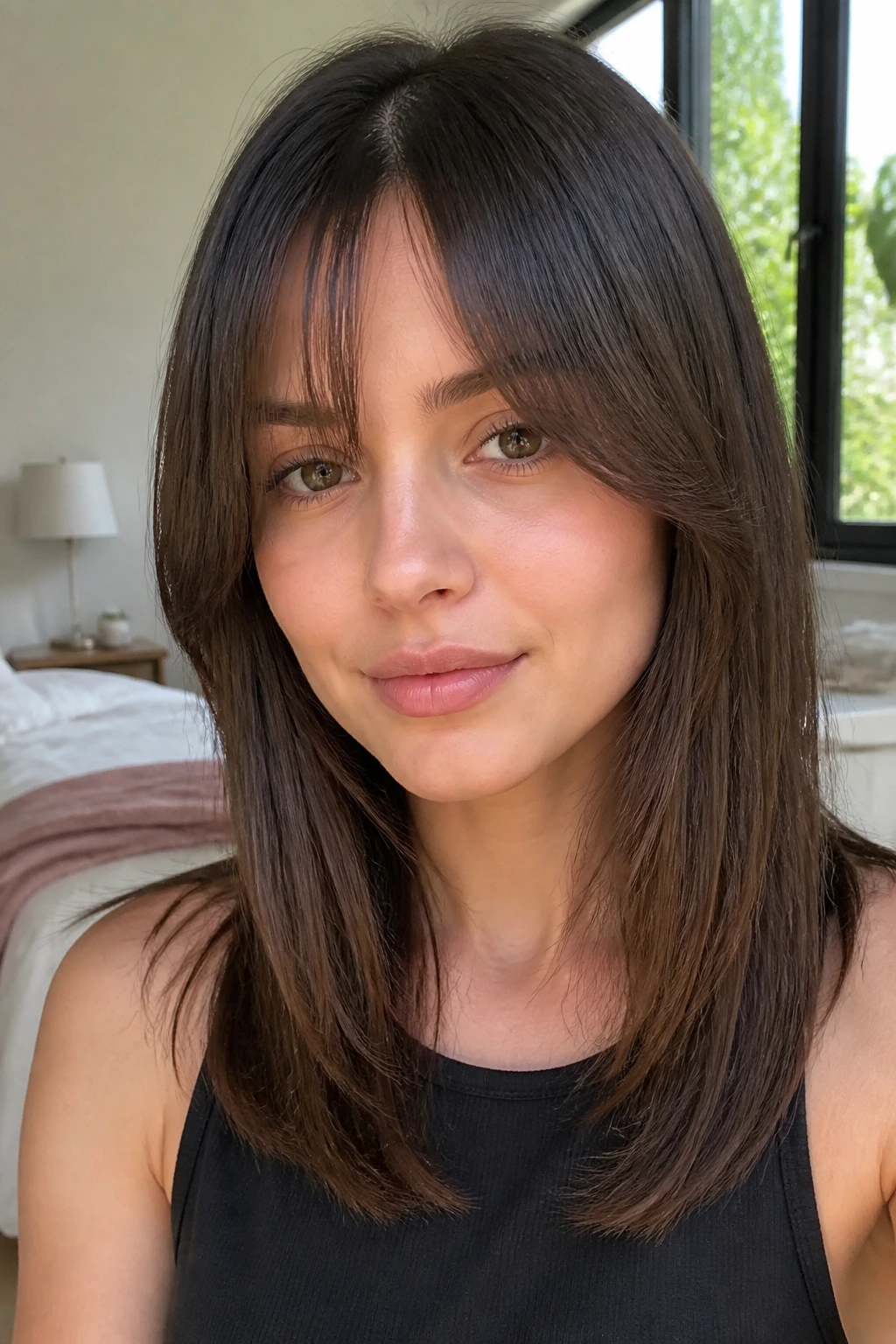
Straight hair needs a little more shaping in the bang section because there’s no wave to soften the line for you. The best straight-hair curtain bangs have a slight bevel at the ends, so they don’t hang flat like strips of paper. That bevel helps them curve toward the cheekbones and jaw.
This look can be very sharp on a round face if it’s cut well. You want softness at the edges and enough length to keep the front from stopping at the widest point. If the hair is pin-straight, a tiny bit of round brush work or a quick bend with a flat iron can make a huge difference.
No heavy product. That’s the trap. Straight bangs get greasy fast, and greasy bangs separate in a bad way. Keep them light, keep them moving, and they’ll frame the face instead of flattening it.
17. Thick-Hair Curtain Bangs
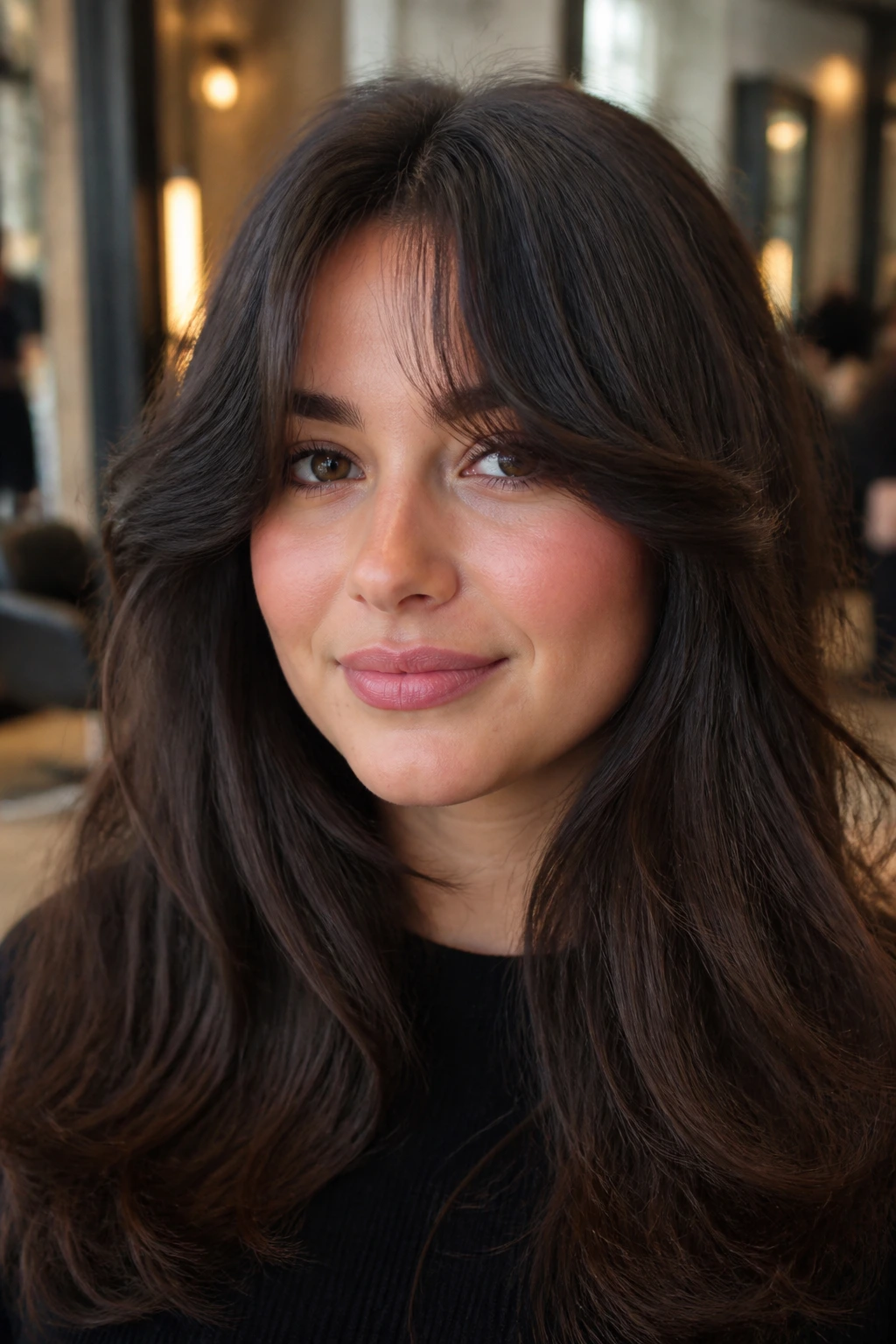
Thick hair can wear curtain bangs beautifully, but only if the bulk is handled well. If the bangs are cut as one dense block, they can sit like a shelf across the forehead. That’s a fast way to make a round face look wider. The fix is internal weight removal and long, soft edges.
A good thick-hair version keeps the center open and the side pieces elongated. The bangs should move, not just exist. I’d rather see slightly too much length than too little, because thick hair shrinks up visually once it dries and settles.
What Helps Most
- Light internal layering, not surface thinning
- A round brush to direct the ends inward
- Regular trims every 5 to 7 weeks
Skip aggressive thinning shears unless your stylist really knows your hair. They can leave thick hair frizzy at the ends, and that’s a headache you don’t need.
18. Fine-Hair Curtain Bangs
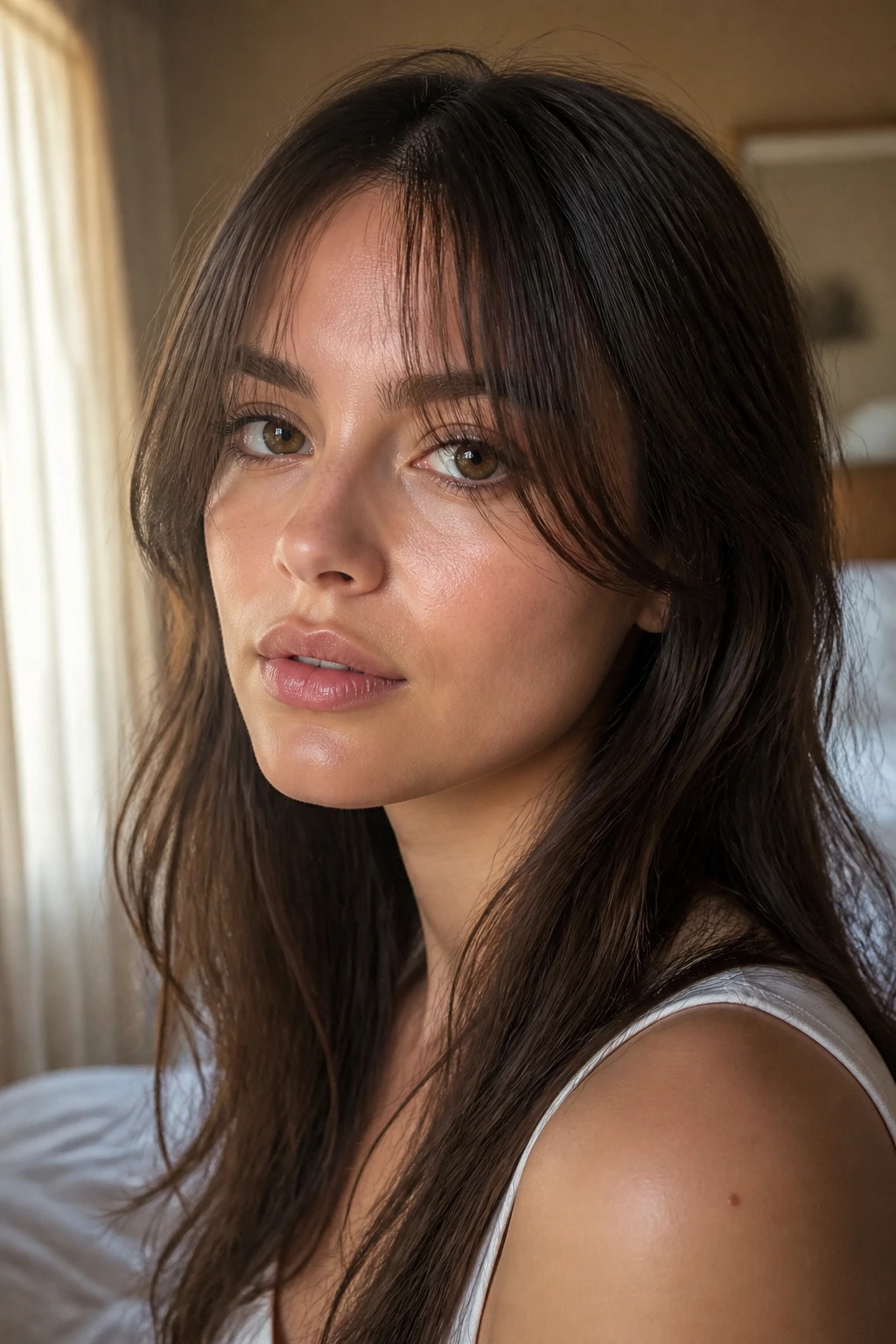
Fine hair needs a different approach. You want enough density to show the shape, but not so much layering that the bangs go see-through at the sides. On a round face, thin bangs can be lovely when they’re soft and airy, but they still need a defined opening in the middle.
The biggest mistake with fine hair is over-texturizing it. That sounds helpful in theory and turns messy in practice. If too much weight is removed, the curtain loses its structure and the face frame disappears by lunchtime. A clean cut with a tiny bend often works better.
A light root spray and a small round brush usually do the trick. You don’t need volume everywhere. You need enough lift at the roots to stop the bangs from sticking flat to the forehead.
19. Deep Side-Part Curtain Bangs
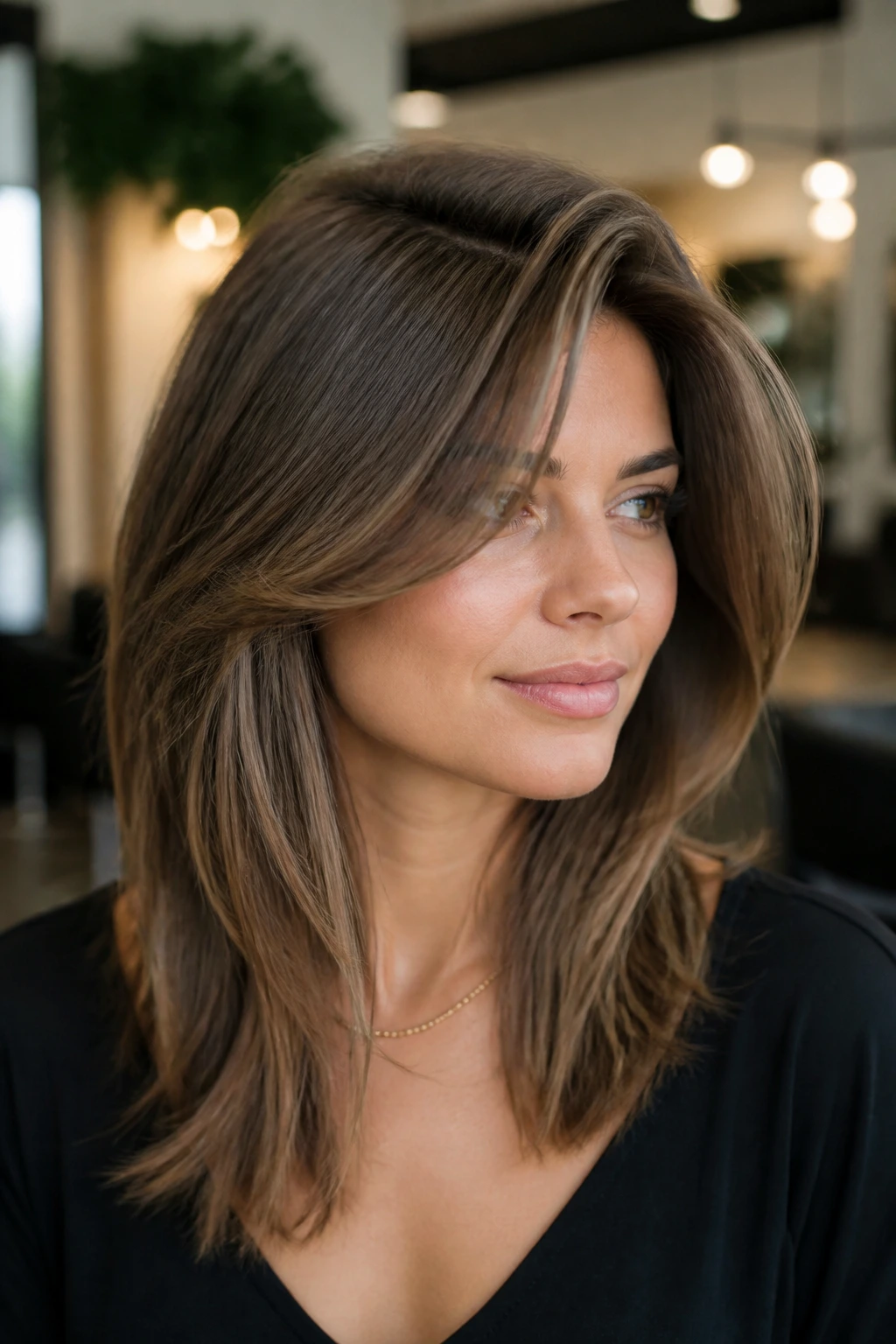
A deep side-part version is a smart move if you want curtain bangs but don’t love perfect symmetry. The part sits slightly off-center, which adds an asymmetrical line across the forehead. That little shift helps lengthen a round face because the eye doesn’t settle in one central spot.
This shape can feel softer and more relaxed than a strict middle split. It also works well on days when the bangs have grown out a bit and need a quick reset. Just push more of the front section to one side and let the longer piece fall across the cheek.
The one thing to watch is balance. If the side part is too deep and the bang mass gets too heavy on one side, the style can start to feel lopsided. Keep the movement loose and the shape will stay flattering.
20. Off-Center Curtain Bangs
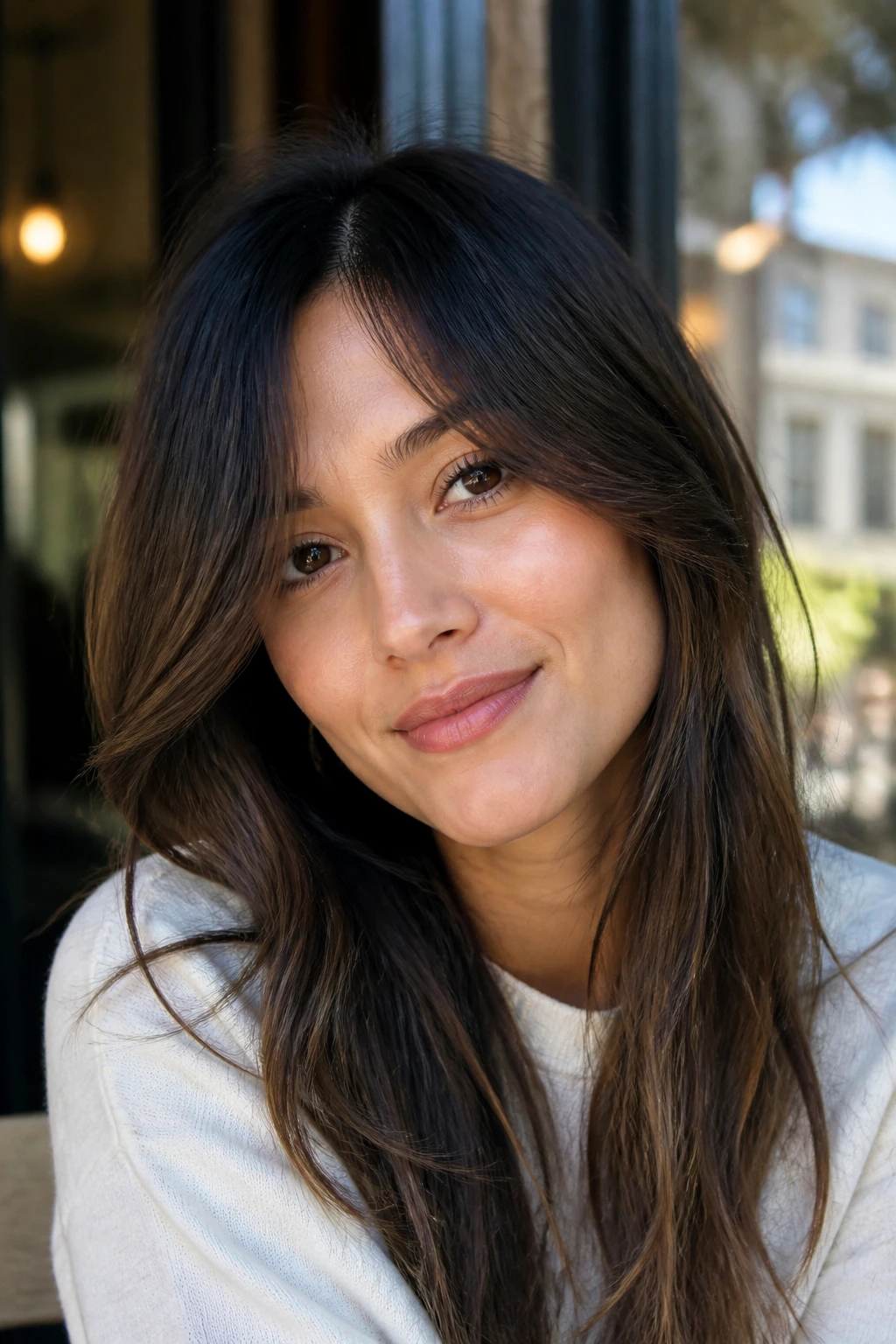
Off-center curtain bangs are the easygoing cousin of the deep side-part version. The split sits a little off the bridge of the nose, maybe half an inch or so, and the bangs fall in a soft, uneven frame. For a round face, that slight asymmetry can be magic because it breaks up the circular shape.
I like this one for people who want less styling pressure. It grows out nicely, works with air-dried texture, and doesn’t need perfect symmetry to look finished. The front pieces can still hit the cheekbone, but the off-center opening keeps the style from feeling too formal.
Best Use Case
If your hair naturally falls to one side, this is an easy match. You can still call them curtain bangs, but they feel a little more lived-in. That softer line is often more flattering than a dead-center part on round features.
21. Razored Curtain Bangs
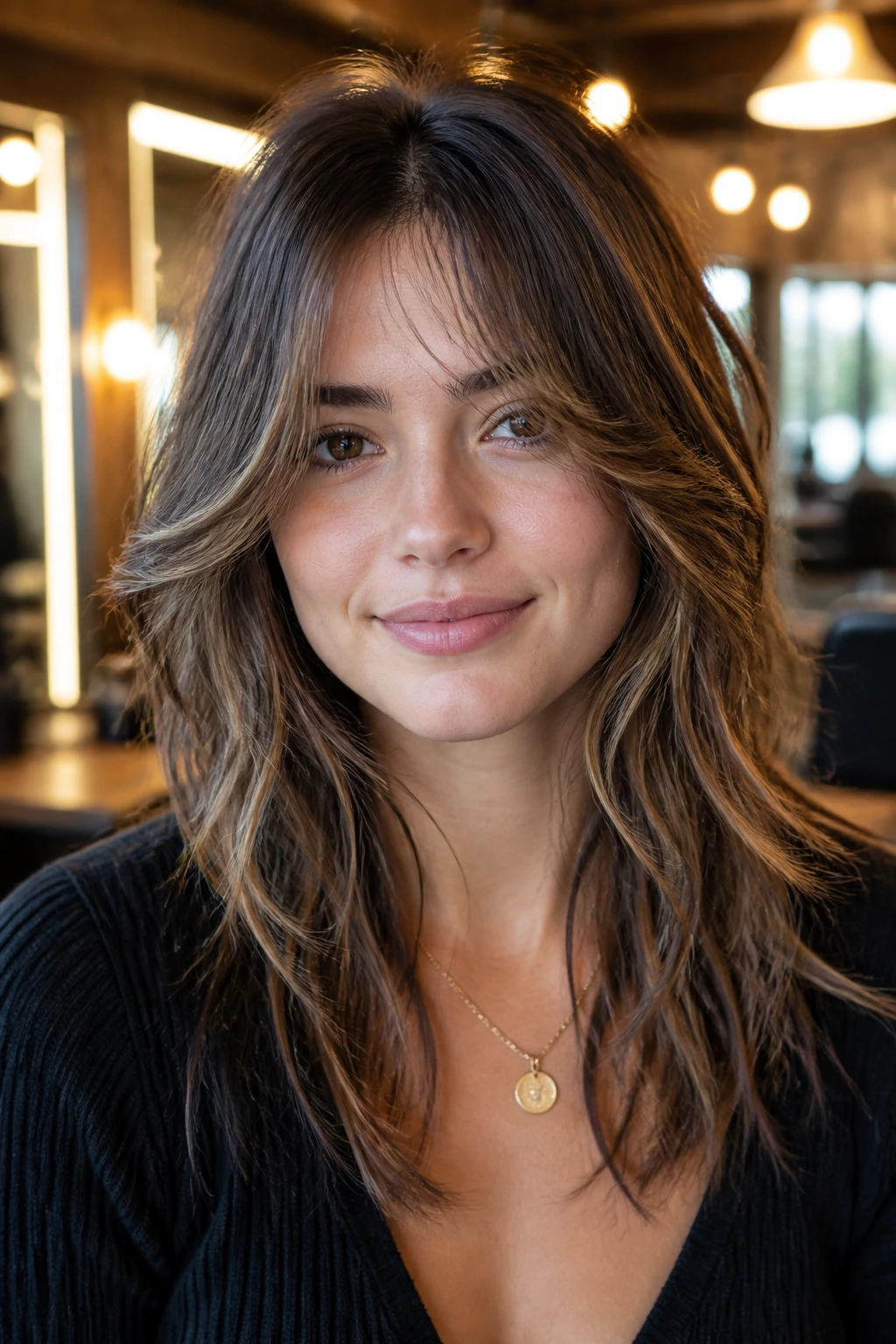
Razored curtain bangs have a soft, broken edge that can look beautiful on thick or wavy hair. A razor removes bulk in a more feathered way than blunt scissors, so the fringe moves easier and doesn’t land as one hard line across the face. That movement helps a round face feel less boxed in.
This cut is at its best when the stylist keeps the pieces long enough to drape. Short razor-cut bangs can get fluffy fast, especially in humidity, and then the whole thing expands sideways. Longer pieces give the cut more control.
I would be cautious with very fine or fragile hair. A razor can fray the ends if the hair doesn’t have enough strength or density. If your hair is delicate, ask for soft slide cutting instead. Same feel, less chance of damage.
22. Tapered Curtain Bangs
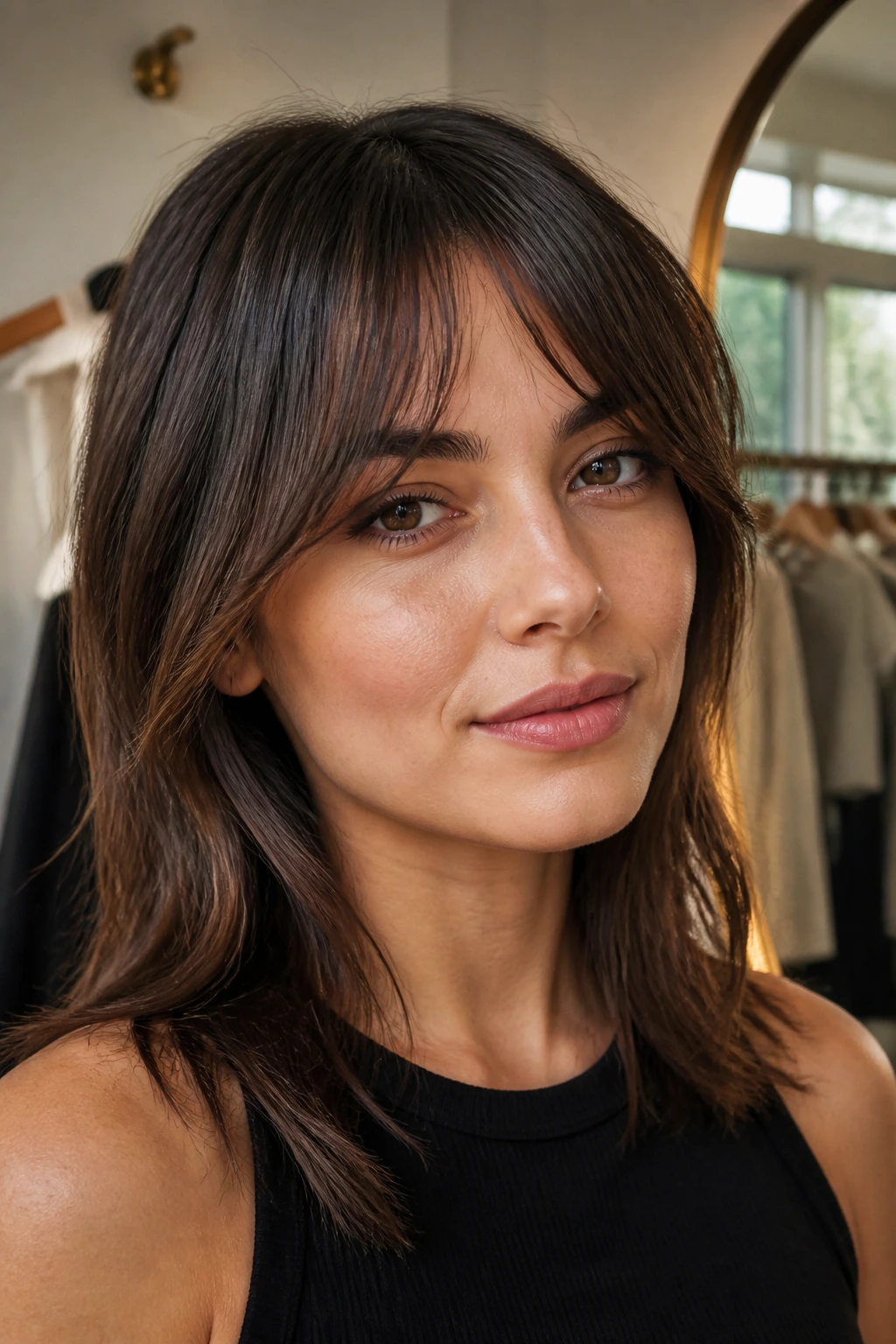
Tapered curtain bangs are all about progression. The shortest point stays in the middle, then each section gets a little longer as it moves toward the temples. That gradual change is what makes the style work on a round face. It avoids a hard horizontal line and keeps the eye moving downward.
This is a really useful shape if you like a neat look but don’t want the bangs to feel heavy. The taper can be subtle or dramatic, depending on your haircut. On longer hair, it looks especially good because the front pieces can keep extending into the layers.
The style also grows out well. That matters more than people admit. A bang that looks good for six weeks and terrible for two months is not a good haircut. Tapered bangs stay useful longer, and that’s worth something.
23. Grow-Out Curtain Bangs
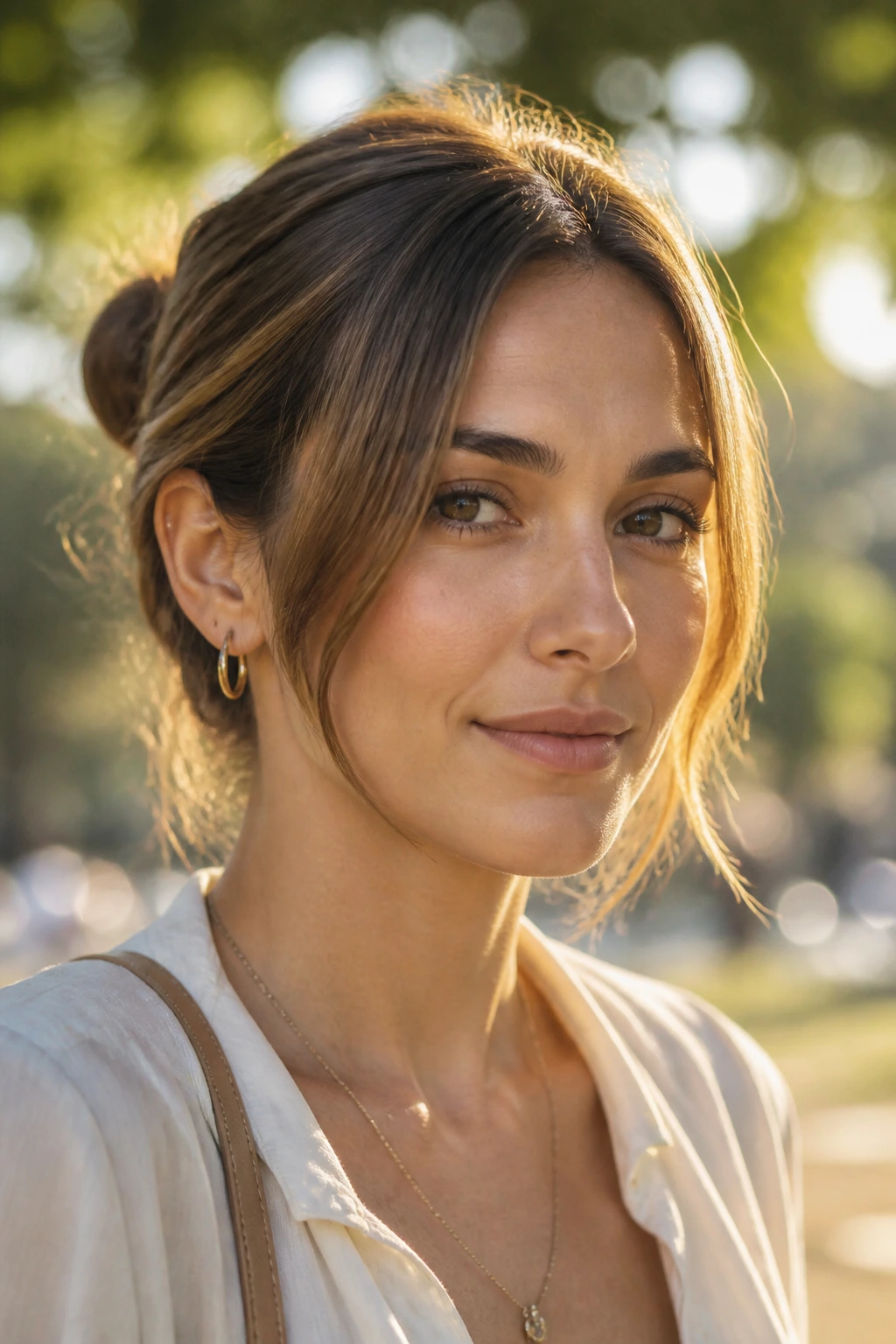
Grow-out curtain bangs are for the person who wants the bang effect without constant trims. The pieces stay long enough to tuck behind the ears, pin back, or sweep into the rest of the hair. On a round face, this can be a smart place to live because the long front sections keep adding vertical length.
The shape still needs intention. If you let the bangs grow with no plan, they can get stuck at cheek level and widen the face. Keep them either clearly above the cheekbone or clearly below it. That middle zone is where things get awkward.
Why They’re Practical
- Easy to pin back on busy days
- Works with ponytails and clips
- Less awkward between salon visits
A grow-out fringe is not lazy. It’s strategic. And on a round face, strategic usually wins.
24. Face-Framing Curtain Bangs for Updos
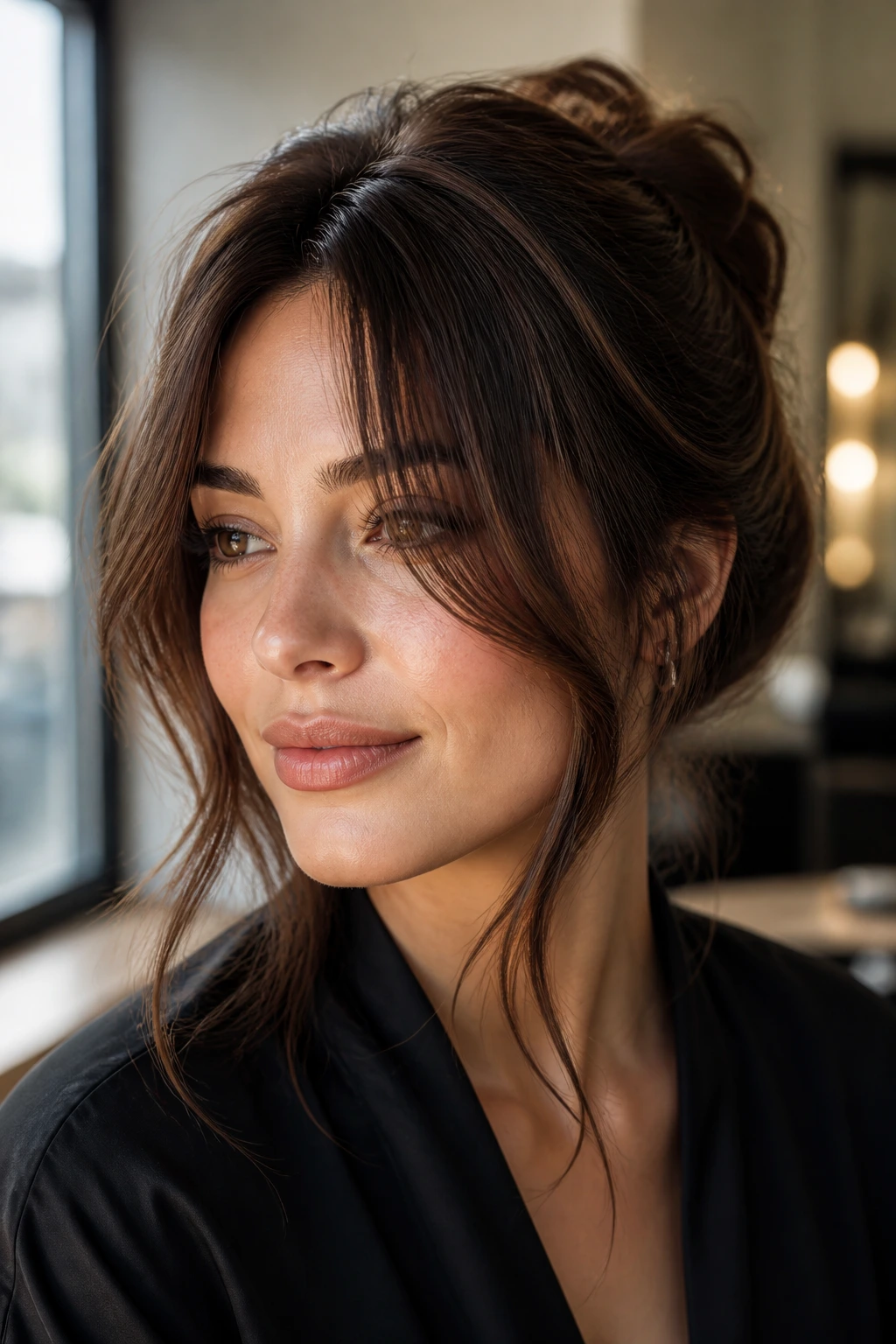
If you wear your hair up a lot, this version is worth paying attention to. Face-framing curtain bangs for updos are cut so they still fall nicely when the rest of the hair is in a bun, ponytail, or claw clip. The front pieces should sweep past the cheekbones and soften the sides of the face without getting stuck at the temples.
That detail matters on round faces because an updo can expose all the width at once. A long curtain fringe keeps some movement around the face, which makes the whole look feel more balanced. You can also tuck one side back and leave the other loose if you want a softer line.
The best versions are long enough to work both down and up. If the pieces are too short, they look disconnected when you pull your hair away from the face. That’s a small issue that becomes a daily annoyance fast.
25. Soft Retro Curtain Bangs
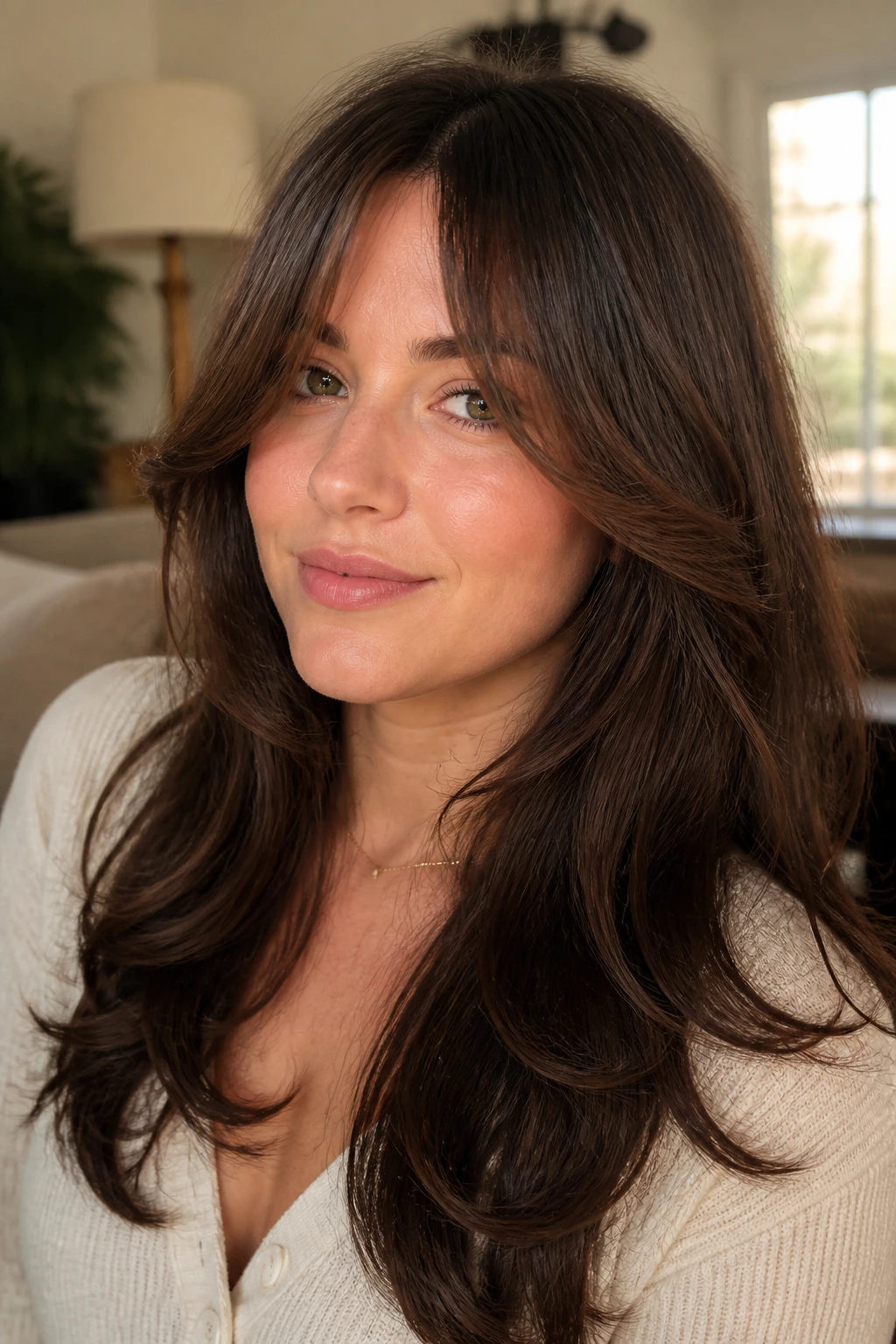
Soft retro curtain bangs borrow the bounce of a ’70s blowout, but they’re tuned for a round face. The center opens cleanly, the sides curve away with a gentle bend, and the whole shape stays a little longer than the old-school version. That extra length keeps the style from adding width where you don’t want it.
I like this look with long layers and a round brush finish. It gives the face a lifted frame without turning into a full helmet of volume. The goal is movement at the cheek and jaw, not a giant flip at the ends. Keep the curl soft, and the face reads longer.
This one is especially good if you want the bangs to feel polished without looking stiff. There’s a little drama here, but not too much. That balance is what makes it wearable.
Final Thoughts
The best curtain bangs for round faces do one simple thing well: they create length. That can come from a cheekbone-grazing shape, a tapered bottleneck fringe, a shaggy cut with broken texture, or a long grow-out version that blends into the rest of the hair. The style matters, but the placement matters more.
If you want the safest bet, stay below the cheekbone and keep the center soft. If you want more edge, add texture with a shag, wolf cut, or razored ends. And if you wear your hair up a lot, make sure the front pieces still do something useful when the rest of the hair disappears.
Bring photos that show both the bang shape and the haircut around it. That saves a lot of guesswork. A good stylist can adjust the length to your face in a few snips, but only if the starting point is clear.
