



French bangs for round faces work best when they break the circle, not copy it.
That sounds blunt, but it’s the whole game. A good fringe can pull the eye upward, skim the cheeks, and give a softer face shape a little more structure. A bad one lands like a curtain rail across the forehead and makes everything feel shorter. Same haircut family. Very different result.
What makes French fringe so useful is the movement. It rarely looks stiff, and stiffness is usually the enemy on a round face. You want pieces that bend, separate, and land at slightly different points — brow, temple, cheekbone — so the face gets lines instead of one solid block.
And yes, the details matter. A half-inch difference in length can change the whole read of the cut. The right version of a French bang can make a round face look longer without trying too hard, and the wrong version can make the forehead feel even smaller than it already is. That’s why the shape, not just the vibe, deserves attention.
1. Soft Center-Part French Bangs
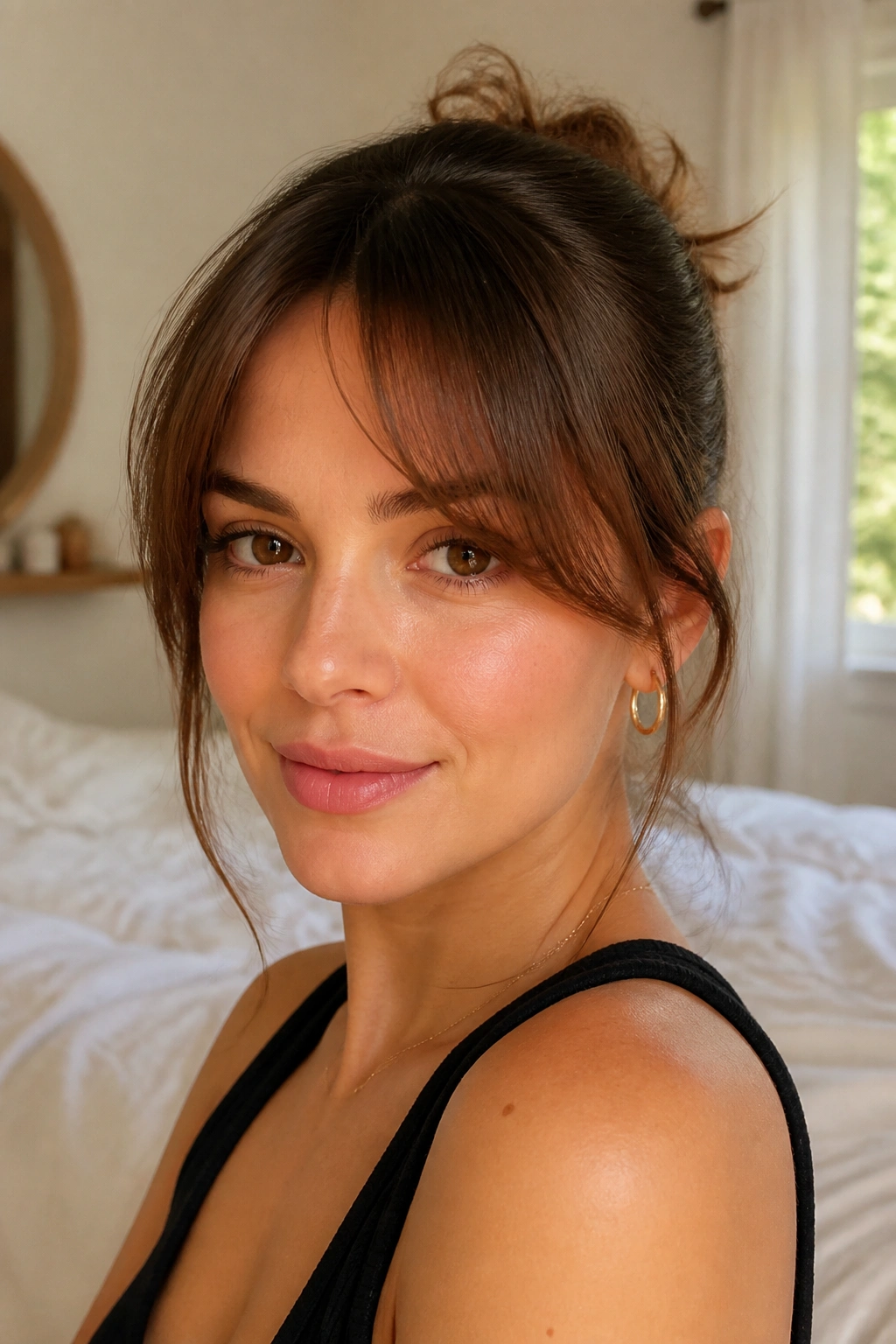
The soft center-part version is the one I recommend first for a round face because it opens the middle of the forehead and lets the fringe fall in two gentle wings. The eye goes down, then back up, which creates a little vertical movement. That helps more than people expect.
Why It Works
A round face usually needs length and lightness at the center. These bangs give you both. Keep the shortest pieces just below brow level, then let the side pieces drift toward the cheekbones. That little slope is doing real work.
- Ask for the middle to sit around the brow or just under it.
- Let the outer pieces fall closer to the upper cheek.
- Keep the ends soft, not chunked into a blunt line.
- Blow-dry with a small round brush, about 1 to 1.5 inches, to get a bend, not a curl.
The nice thing here is that the cut can look polished or messy and still behave. It’s forgiving. That matters on a round face, because you do not want a fringe that only works on day one.
2. Side-Swept French Fringe That Cuts Across the Cheeks
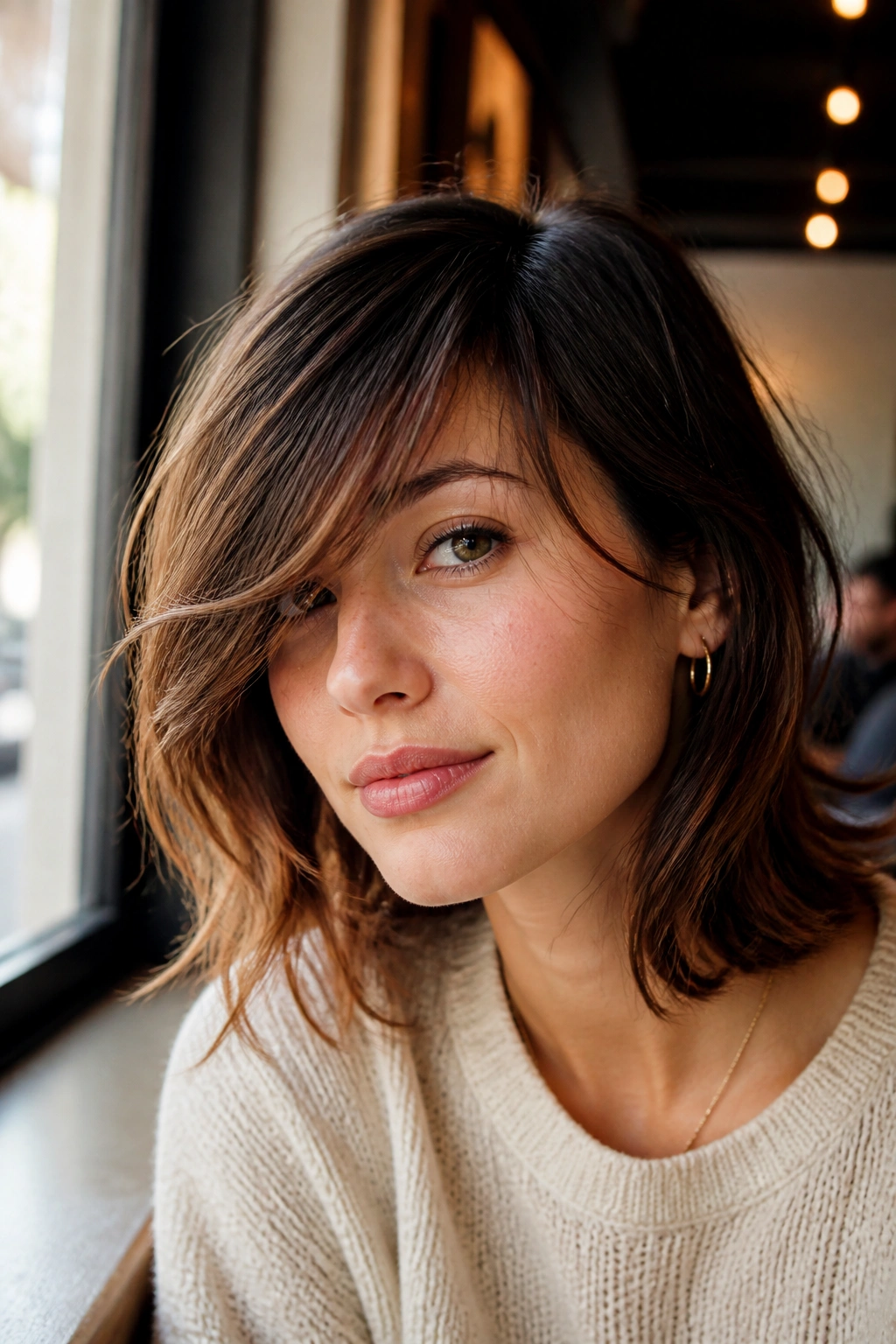
Why does a side-swept fringe help so much? Because it draws a diagonal across the face, and diagonals are a round face’s best friend. Straight lines can feel boxy. Curves can feel heavier. A diagonal gives the eye somewhere to travel.
The trick is to keep the sweep loose, not helmet-like. You want hair that starts fuller near the part and thins as it moves across the forehead. If the longest piece lands near the upper cheek, even better. That little end point creates the illusion of length without screaming “I’m trying to slim my face.”
This version suits people who like their hair to look done but not strict. Air-dry it with a touch of mousse, then redirect the front pieces with a brush and the dryer. Don’t force every strand to lie flat. A tiny bit of lift at the roots keeps it from looking pasted on.
3. Brow-Grazing Wispy French Bangs
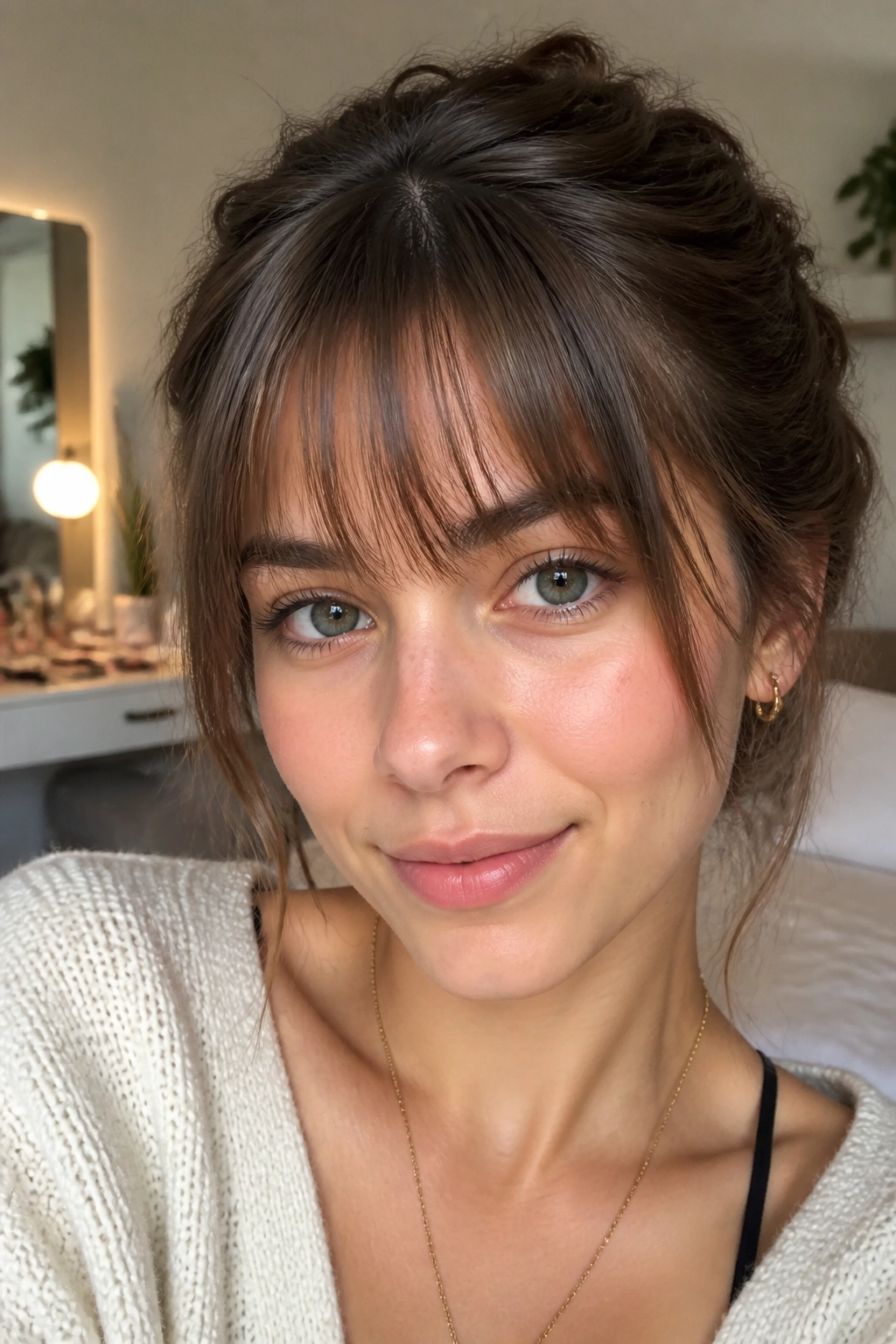
A wispy fringe can be a gift on a round face if you want softness without weight. The danger with bangs is density. Too much density makes the forehead feel boxed in. Wispy ends solve that by letting skin, brow, and forehead peek through.
What To Ask For
Tell your stylist you want point-cut ends and a lighter center. That keeps the fringe airy instead of blunt. If your hair is fine, this can be especially flattering because the cut does not need to fight for volume.
- Keep the line just at or slightly below the brows.
- Leave tiny separations between pieces.
- Avoid a heavy center section.
- Use a little dry texture spray after styling.
This style looks best when it moves a little. Not messy. Just alive. And if you wear glasses, it can be easier than a heavier fringe because the frame of the glasses won’t have to compete with a thick wall of hair.
4. Bottleneck Bangs With Longer Temples
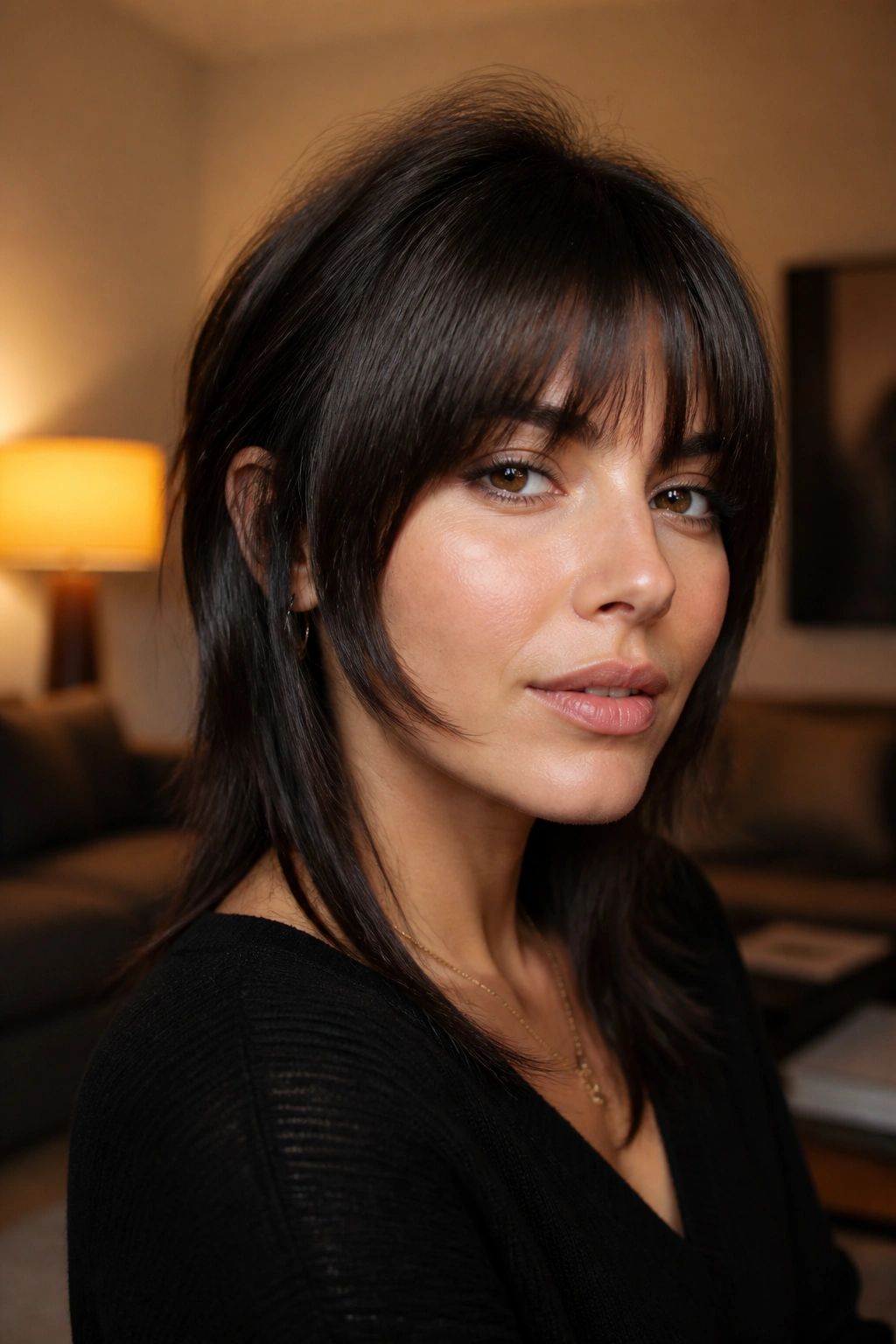
Bottleneck bangs are one of the smartest shapes for a round face because they start narrow in the middle and widen out near the temples. That shape does two things at once: it opens the center of the forehead and creates structure near the sides of the face.
How To Ask For It
The shortest point should sit around the brows, sometimes a touch above. The temple pieces should keep going, often to the cheekbone or just under it. That gives the face a longer outline instead of a wide one.
If you like a cut that grows out well, this is a strong pick. It does not go from “freshly cut” to “awkward” in two weeks. The shape gets softer as it lengthens, which is half the charm.
A round face usually looks best when the fringe is short in the center and longer at the edges. Bottleneck bangs do exactly that without looking precious. They also work well with ponytails, buns, and half-up styles, which is useful if you do not want bangs to run your entire life.
5. Choppy Piecey French Bangs
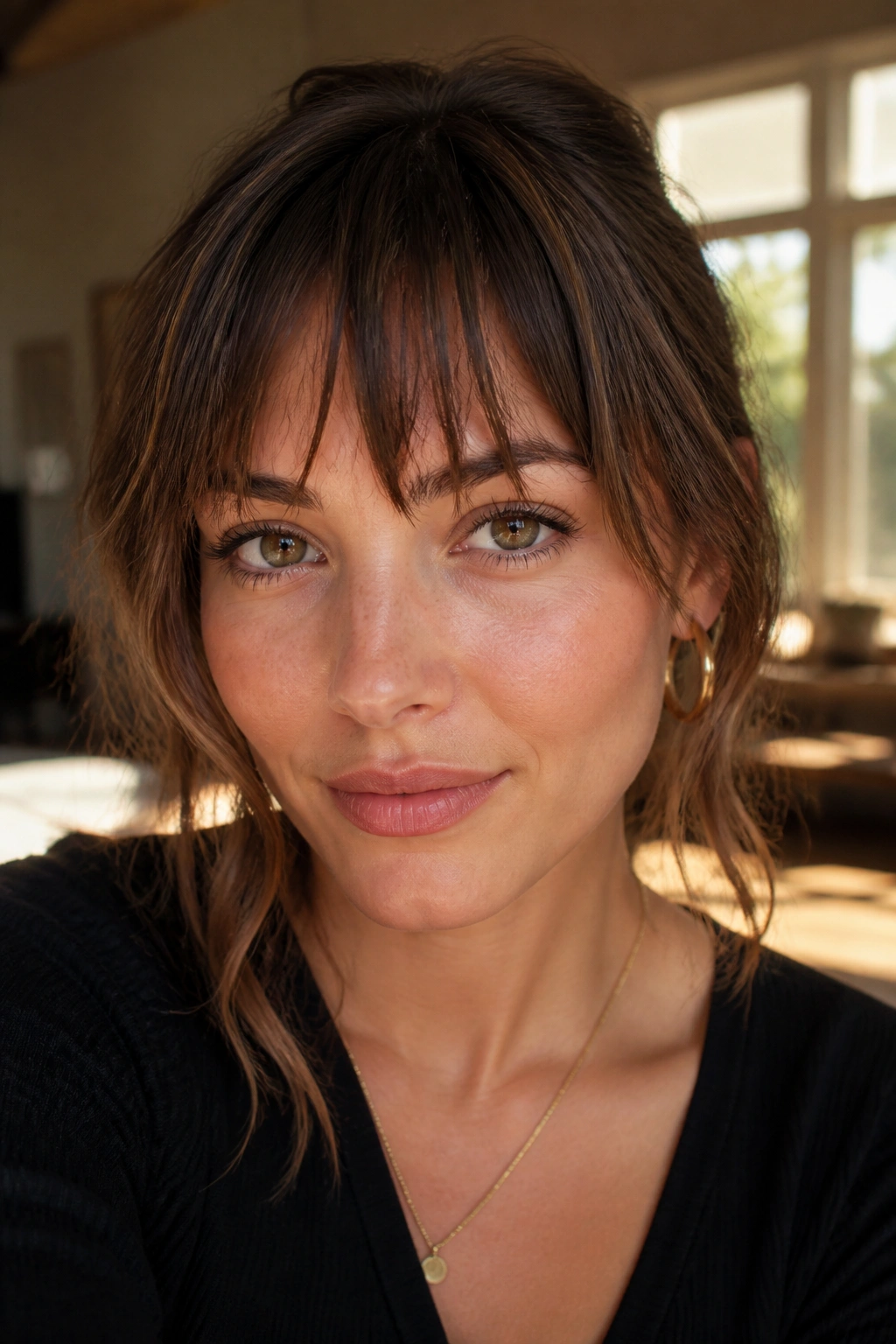
If you’ve ever had a fringe that turned into a solid sheet, you already know why choppy ends matter. Piecey French bangs break up that heaviness fast. They let air between strands, and that air is what keeps a round face from feeling crowded.
This look works especially well if your hair has a bit of natural bend or if you like a lived-in finish. The edges should look slightly irregular on purpose. A tiny bit of difference in length between strands makes the whole front feel less blunt and more relaxed.
I like this cut on people who don’t want to spend ten minutes taming their bangs every morning. A little texture cream, a quick pass with fingers, done. If the fringe starts to look too perfect, it usually means it’s lost the point. The whole appeal is that broken, airy edge.
6. Cheekbone-Skimming Long Fringe
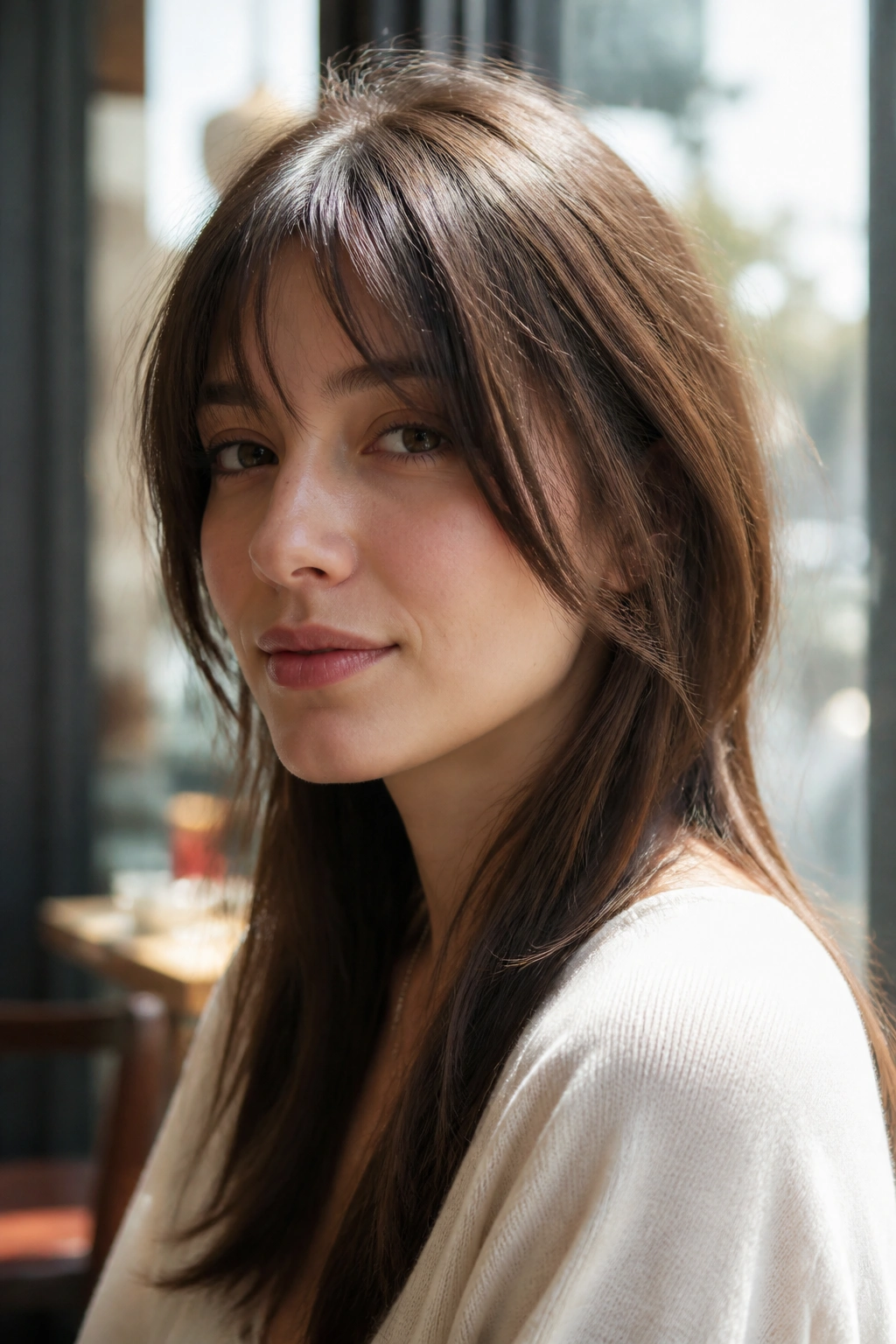
Long French bangs that skim the cheekbone are one of the easiest ways to flatter a round face. They give the face a longer side line and keep the forehead from feeling cut off. That’s a very good trade.
The length matters more here than people realize. If the fringe stops too high, it can widen the middle of the face. If it lands around the upper cheek or just below, the eye gets a vertical path. That’s the sweet spot.
This is also a nice choice if you’re nervous about bangs because it behaves almost like a face-framing layer. You can tuck it, blow it outward, or wear it swept back on lazy days. No drama. Just shape.
Styling Note
A 1.5-inch round brush and a dryer nozzle help more than a flat iron here. Bend the ends away from the face, then let them cool before touching them. That cooling step matters. If you handle the hair too early, it drops flat.
7. Rounded Arch French Bangs
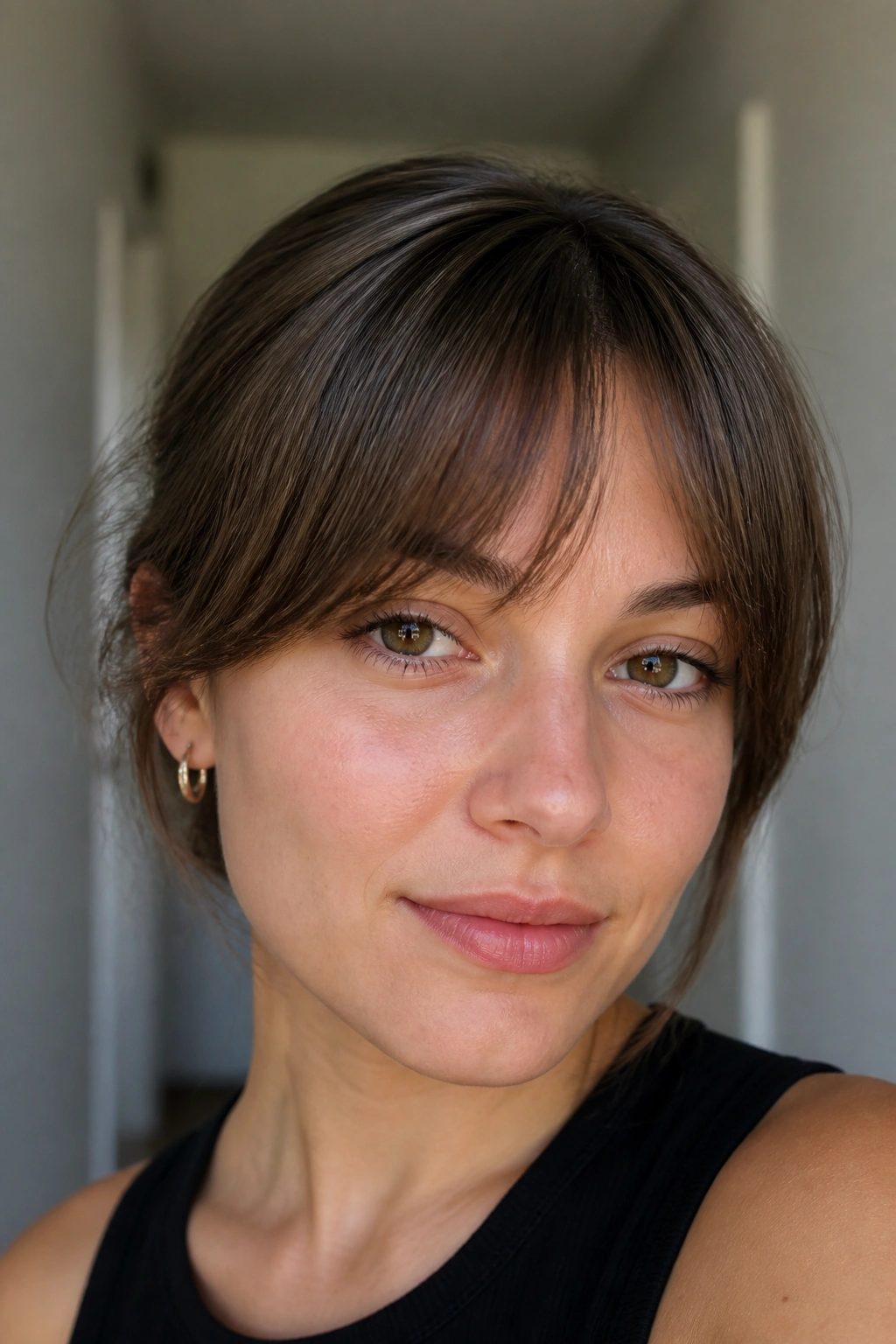
A rounded arch can sound risky on a round face, and honestly, it can be if the curve is too tight. But a soft arch with light ends gives the face lift around the eyes without making the forehead feel heavy.
Think of it as a gentle hill, not a dome. The center can sit a little shorter, then the sides should taper gradually. That keeps the shape elegant and avoids the cartoon effect some curved bangs can get.
The Shape To Request
- Keep the middle soft and browside.
- Let the corners fall longer.
- Ask for texture through the ends.
- Avoid a hard, clean U-shape.
This style works best when you want polish. It suits blowouts, tucked-under bobs, and even sleek ponytails. If your hair is thick, the arch can help remove the sense of bulk. If your hair is fine, the curve needs a lighter hand so it does not collapse.
8. Shaggy French Bangs With Lived-In Texture
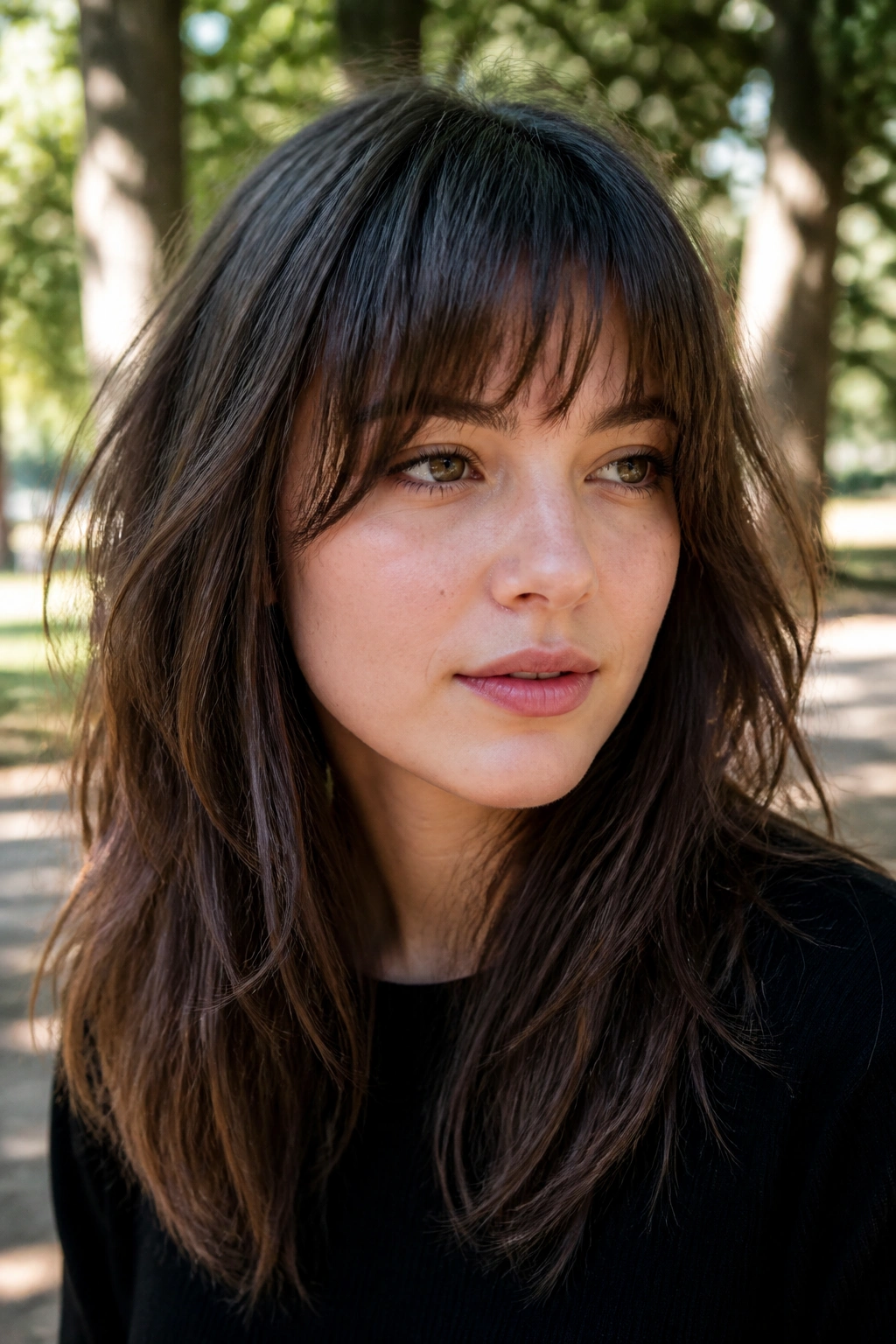
Shaggy bangs are a round face’s sneaky ally because they never look too even. That unevenness creates vertical movement, and vertical movement is exactly what softens width. The cut feels casual, but it’s doing geometry in the background.
These bangs usually sit somewhere between brow and eye level, then break apart into softer bits around the temples. They work well with layers in the rest of the haircut, especially if the hair falls somewhere between jaw and collarbone. That keeps the whole look from becoming one round blob.
I’m partial to this version on wavy hair. The natural bend gives it shape without heat. On straighter hair, a little mousse at the roots and a quick rough-dry with fingers gets you most of the way there. You do not need perfect separation. You need enough pieceiness to keep the front from closing in.
9. Asymmetrical French Bangs

An asymmetrical fringe is one of the quickest ways to disrupt a round face shape in a good way. One side is longer, the other shorter, and that uneven line keeps the face from reading too evenly balanced across the width.
Unlike a blunt straight-across bang, this cut gives the eye a path. It moves. That movement is the whole point. If the shorter side lands near the brow and the longer side brushes the cheekbone, the face gets both lift and length.
This style suits people who like a little edge but don’t want anything severe. It feels modern without needing to shout about it. And because it is not symmetrical, it can hide a cowlick or a stubborn front section better than a perfectly even fringe ever will.
A quick side note: this one looks especially good when the rest of the hair has some volume at the crown. Flat roots plus asymmetry can make the face feel wider than it is.
10. Feathered Baby French Bangs
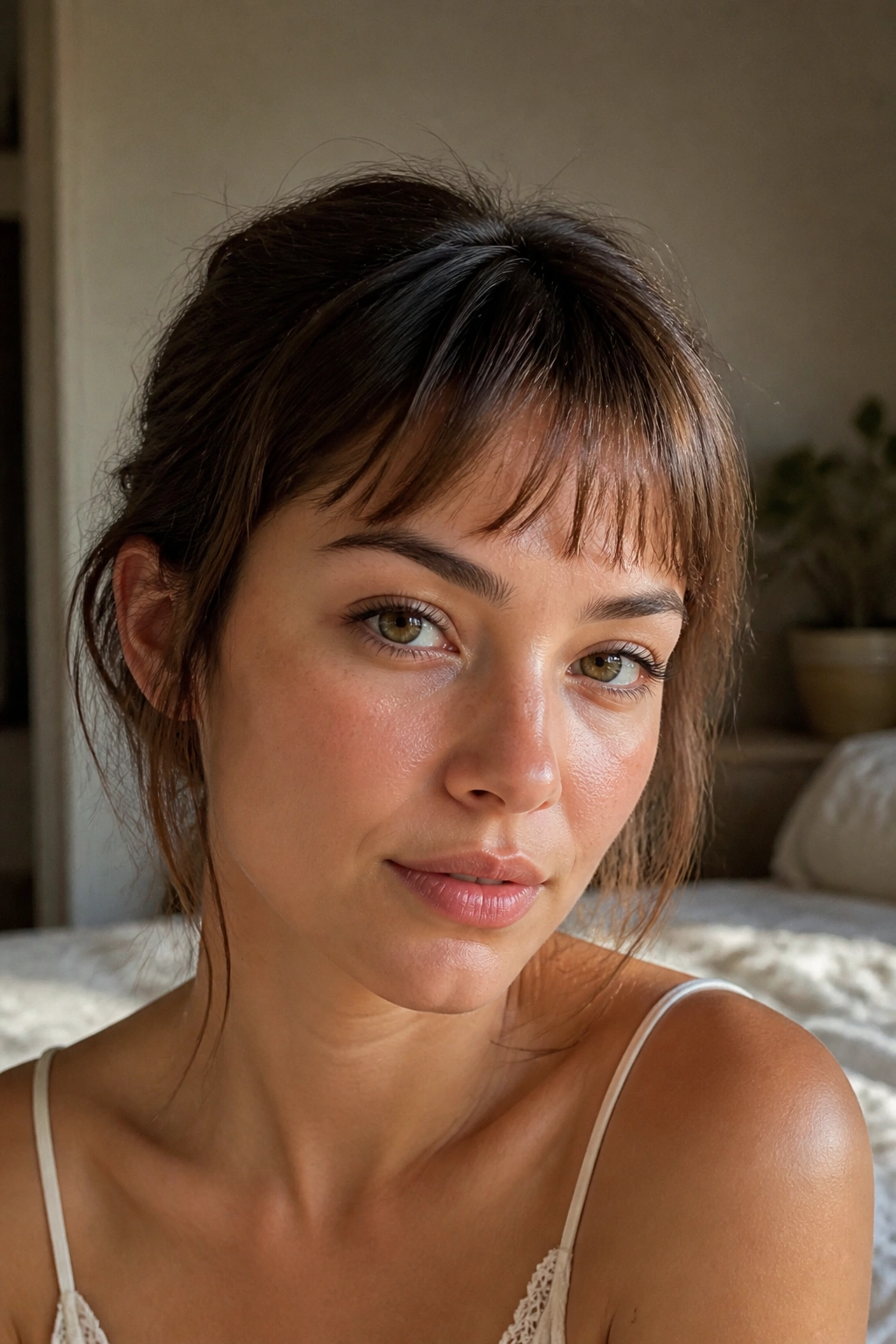
Baby bangs are not the obvious choice for a round face, and that’s exactly why they can work when they’re feathered instead of blunt. The lightness keeps them from feeling heavy, and the short length opens a lot of forehead space.
They are not for everyone. Let’s be honest. If you want something low-key, this is the wrong lane. But if you like a bolder front shape and you’re willing to keep the edges soft, feathered baby bangs can make a round face look sharper and more editorial.
What Makes Them Work
The key is not the shortness alone. It’s the balance around them.
- Keep the center piece light and airy.
- Leave longer temple pieces on both sides.
- Cut with texture, not a hard line.
- Style with a tiny bit of paste, warmed in the fingers.
That longer side framing is what saves the look. Without it, the face can feel too exposed. With it, the short fringe becomes a focal point instead of a mistake.
11. Deep Side Part French Fringe
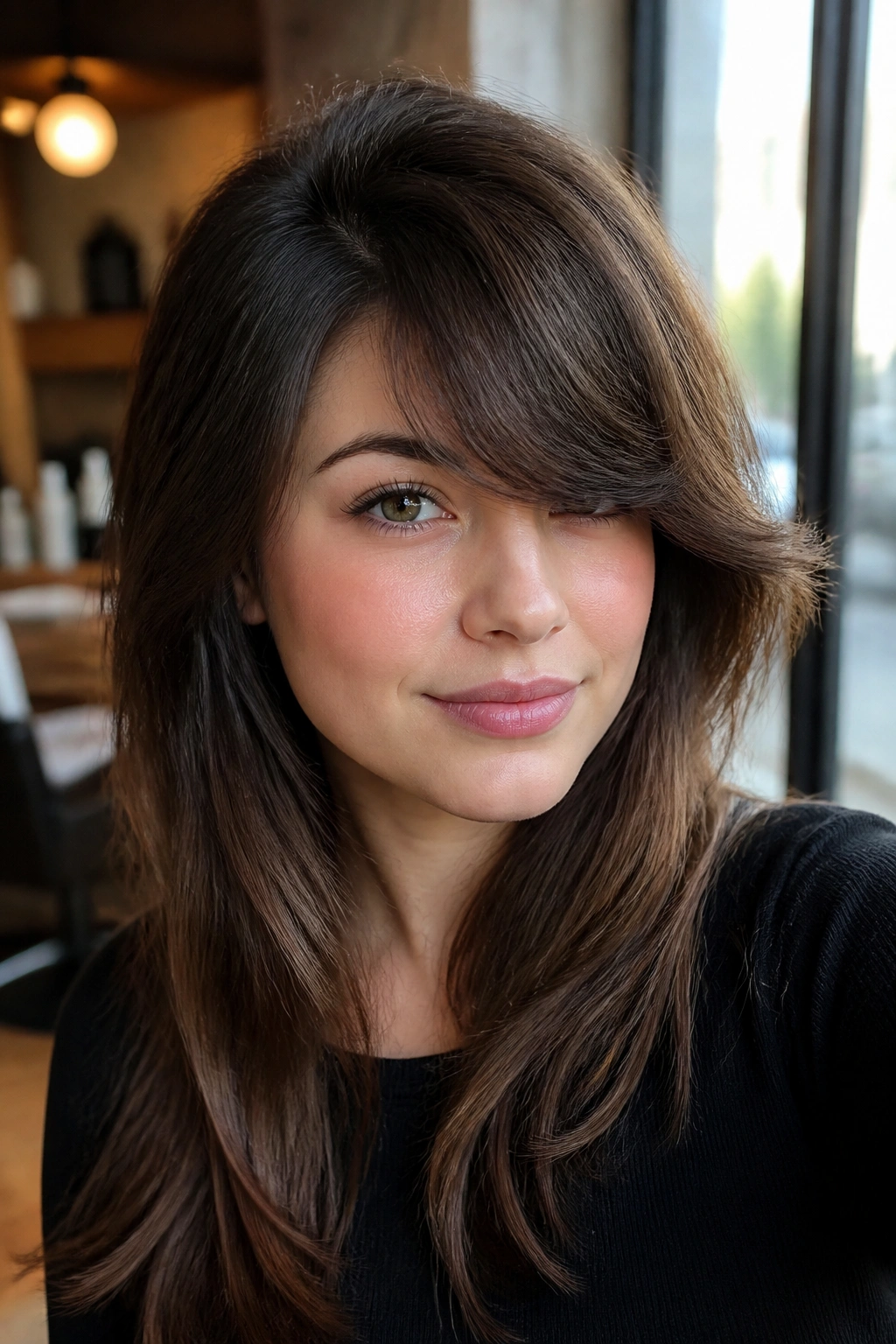
A deep side part is an old trick, but it still earns its keep on round faces because it instantly creates asymmetry. The forehead looks longer on one side, the cheek line gets a break, and the whole face stops reading so evenly circular.
What I like about this version is that it can be subtle or dramatic. You can keep the bangs soft and brush them into the part, or you can let them fall across more of the forehead. Either way, the part does the heavy lifting.
Styling The Sweep
Use a dryer and brush the fringe in the opposite direction first. Then redirect it into the deep part once it has a little bend. That gives the root some lift instead of making the hair collapse flat against the scalp.
A round face usually benefits from height near the crown. A deep side part gives you that without teasing the hair into a helmet. The result feels effortless, but it’s really just smart placement.
12. Open V-Shaped French Bangs
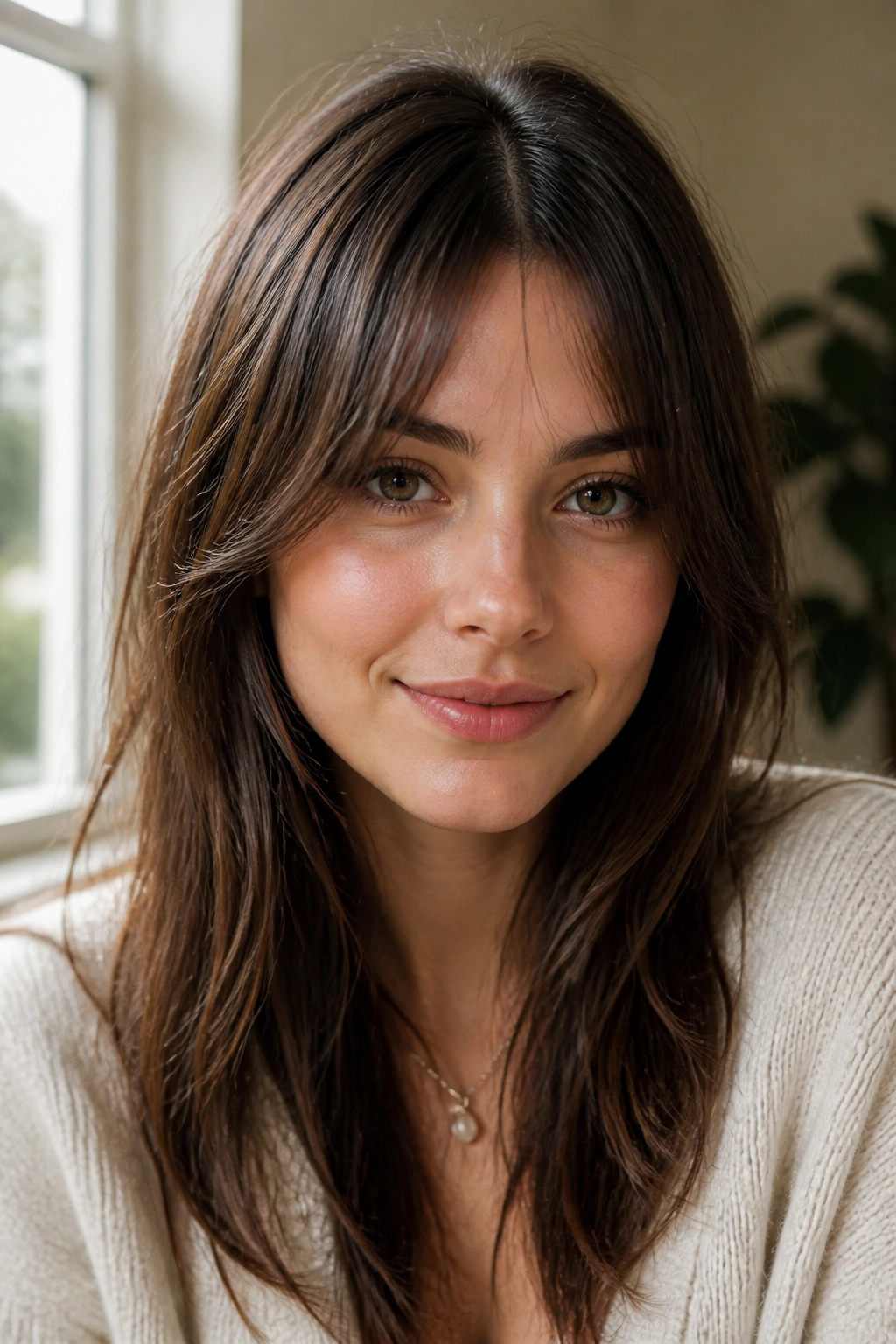
A V-shaped fringe opens in the middle and falls longer at the edges, which is excellent for round faces because it builds length where you need it. The center shows a bit more forehead, and the outer pieces guide the eye downward.
This is a nice choice if you want bangs but hate the feeling of a solid block. The V shape avoids that heaviness. It also plays well with medium and long hair, where the sides of the bang can blend into face-framing layers.
The cut should not be too sharp. A hard V can look fussy. Keep the shape soft, almost like a loose triangle with air built into it. That way it feels French rather than theatrical.
And if your hair grows fast, this shape is a little forgiving. The line softens as it grows out, so you do not go from polished to awkward overnight. That matters more than people admit.
13. Wavy-Texture French Bangs
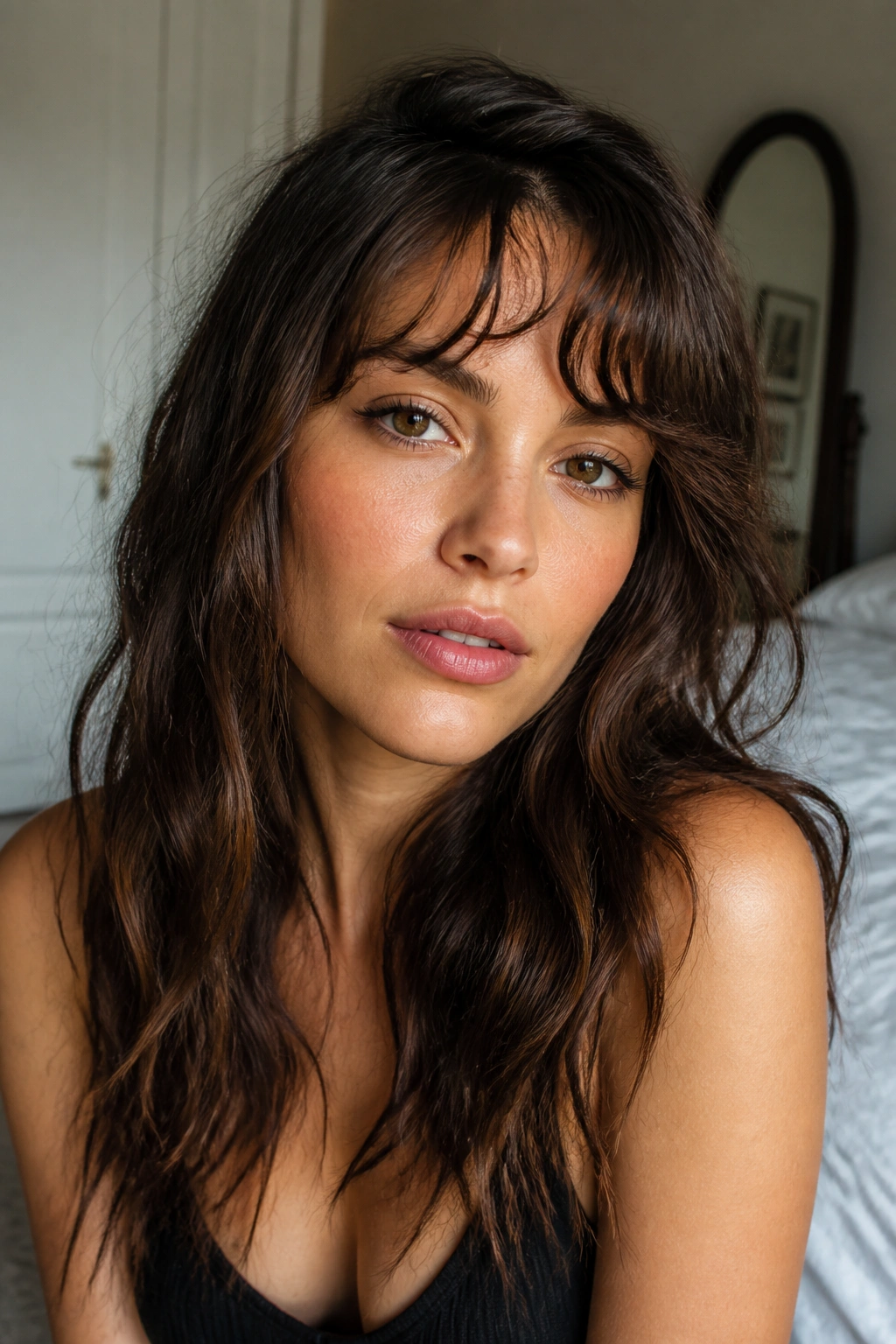
Wavy hair and French bangs usually get along because both like movement. On a round face, that bend helps the fringe avoid sitting like a straight curtain. Instead, it curves, separates, and leaves tiny gaps that keep the forehead visible.
How It Behaves
The goal is not perfect symmetry. It is a soft, bendy front section that looks better with a little mess in it.
- Cut the fringe to follow the wave pattern.
- Dry with a diffuser or air-dry with a light cream.
- Separate the pieces with fingers, not a comb.
- Leave the ends a touch longer than you think you need.
If you fight the wave, you lose the shape. Better to work with it and let the bangs move around your face. Round faces tend to benefit when hair does not cling too close to the cheeks. A wavy fringe keeps some air in the cut.
14. Straight Blowout French Bangs
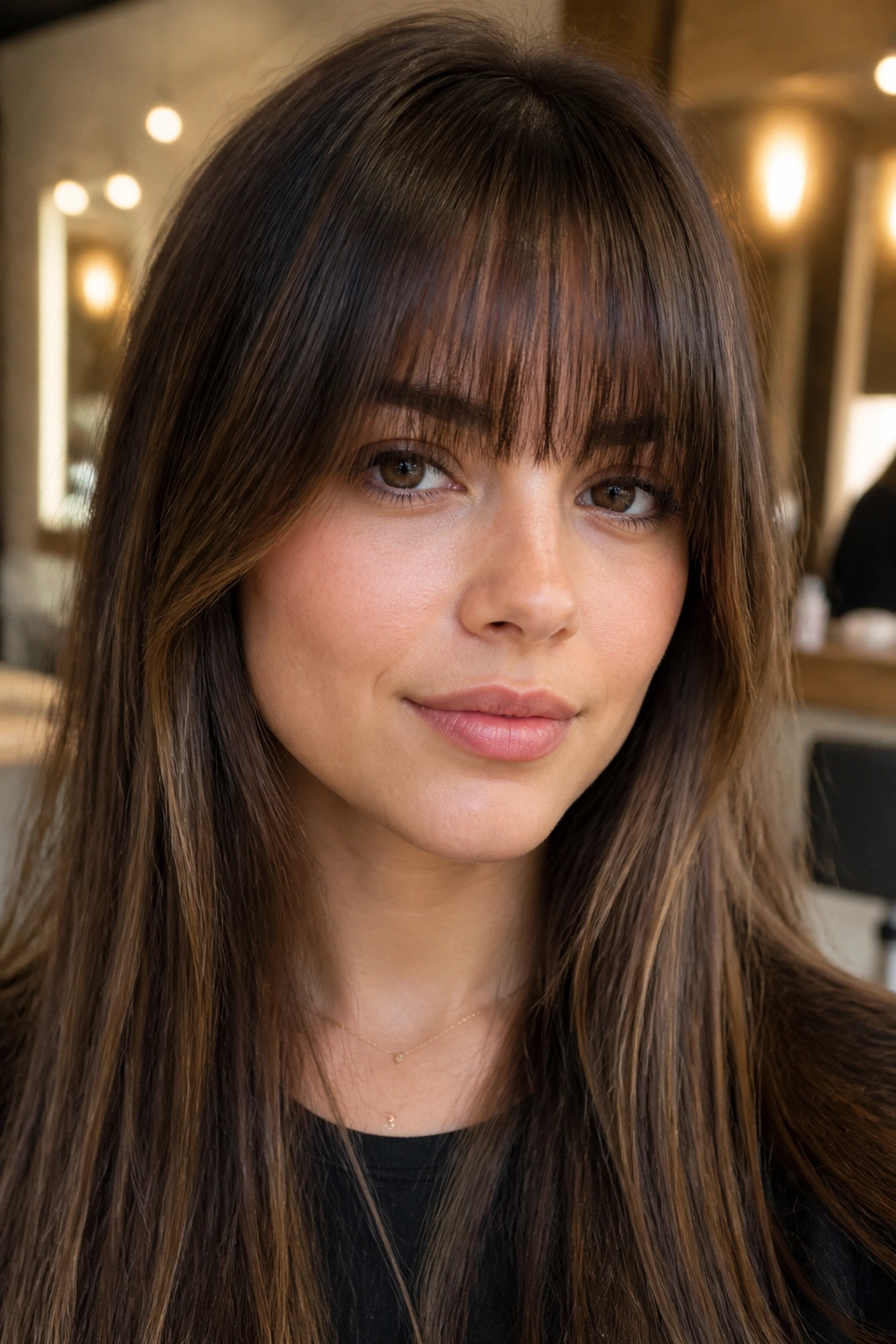
A straight blowout fringe can look sharp on a round face as long as it is not stiff. The trick is to keep a tiny bend at the ends and a little lift at the roots. That stops the style from turning boxy.
This is a good option if you like a cleaner finish. The line at the brows can look polished, while the side pieces soften the outline. It’s a neat contrast. Strong center, soft sides.
A round brush makes a difference here. Use medium tension, not a death grip. Pull the hair forward, then curve it under or slightly away from the face depending on where you want the ends to sit. A dab of smoothing cream helps, but do not overdo it or the bangs will separate into oily strings by lunch.
The best version of this cut keeps the eye on the front, not the bulk. That means the ends should stay light enough to move.
15. Curly French Bangs
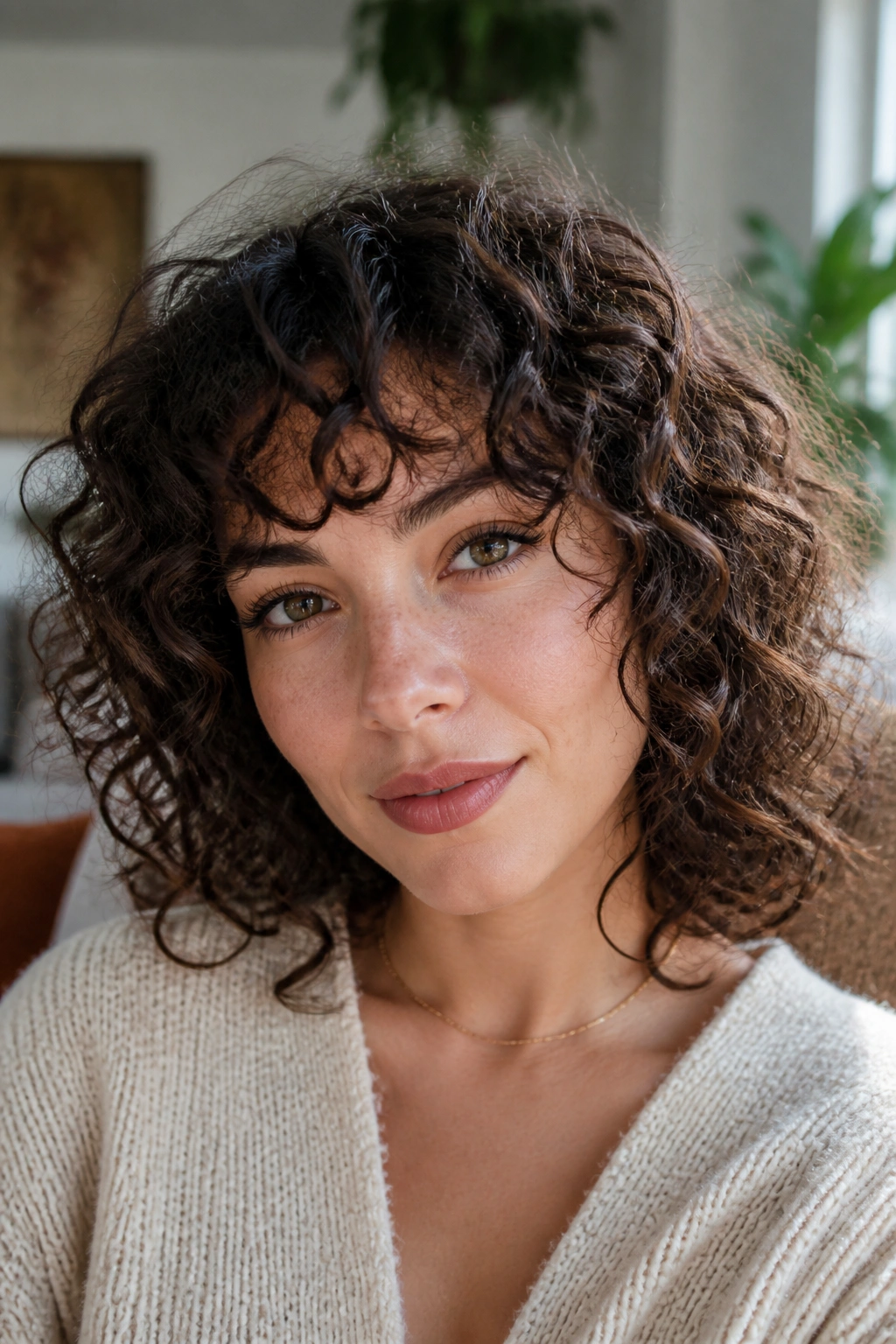
Curly bangs can be gorgeous on a round face because the curl pattern adds texture without forcing a hard line across the forehead. The main rule is simple: cut them dry, or at least cut them in their natural curl pattern. Wet curls lie.
What To Tell Your Stylist
Ask for a fringe that lands around the brow when stretched, with a little extra length at the temples for shrinkage. That extra length matters. Curly hair can spring up more than you expect once it dries.
- Keep the center soft and slightly longer than the shortest curl.
- Let the side pieces blend into face-framing curls.
- Avoid blunt corners.
- Trim in small steps.
A round face and curly bangs can work beautifully when the curls are allowed to form their own shape. The goal is not control. It is balance. If the bangs sit too high, the face can look wider. If they hang too long and heavy, they can drag the face down. That middle ground is where the good stuff happens.
16. Micro Fringe With Long Side Pieces

Micro fringe on a round face is bold, but it can work if the sides stay long and soft. The short center creates an open upper face, while the longer pieces around the temples stretch the silhouette. That contrast is what saves it.
This is not a timid haircut. It has opinions. If you like strong style lines and don’t mind some upkeep, it can look fantastic with a round face because it refuses to blend into the cheeks. It makes the face feel framed, not boxed.
The key is to keep the fringe feathered rather than thick. Heavy micro bangs can feel harsh and shorten the face too much. Feathering gives the forehead room and stops the cut from turning severe. You want sharp, yes. Not rigid.
This style pairs especially well with short bobs, sharp lobs, or hair that already has a bit of structure. It needs the rest of the cut to hold its own.
17. Grown-Out French Bangs
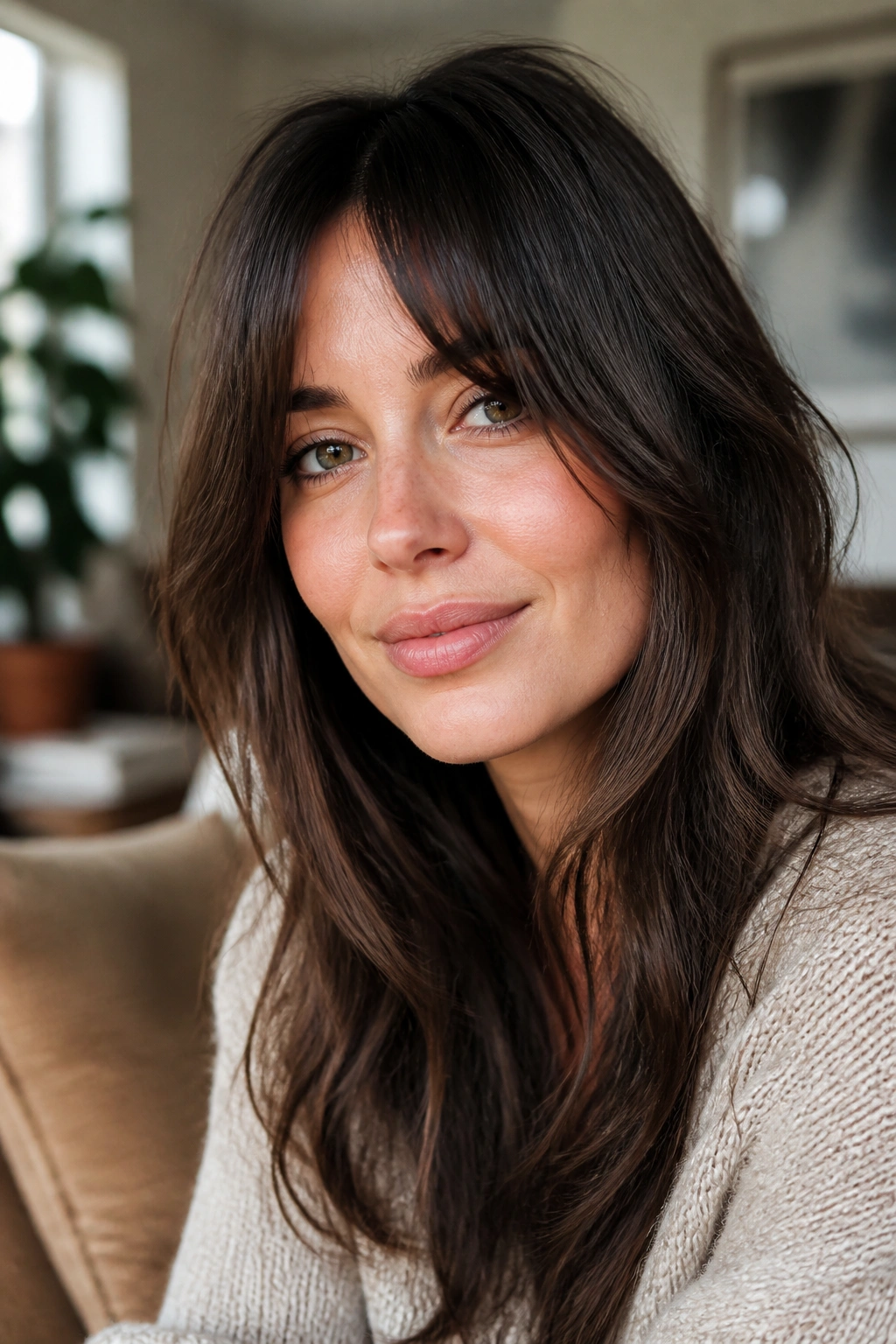
Grown-out bangs might sound like a compromise, but on a round face they can be one of the most flattering stages to live in. The length usually lands somewhere around the cheekbones or even lower, which creates two long lines down the front of the face.
That extra length is useful. It narrows the visual width of the cheeks and gives the face more vertical movement. It also means you can tuck pieces behind the ears, sweep them across the forehead, or let them sit loose without the cut looking unfinished.
Why People Keep Coming Back To It
Because it’s easy. Because it works. Because it doesn’t demand a salon visit every few weeks.
You can shape grown-out French bangs with a quick bend from a flat iron or a round brush. Or you can let them air-dry and call it a day. The slightly undone look reads intentional on a round face because the longer pieces create clean, flattering lines around the cheeks.
18. Layered Fringe With Flipped Ends
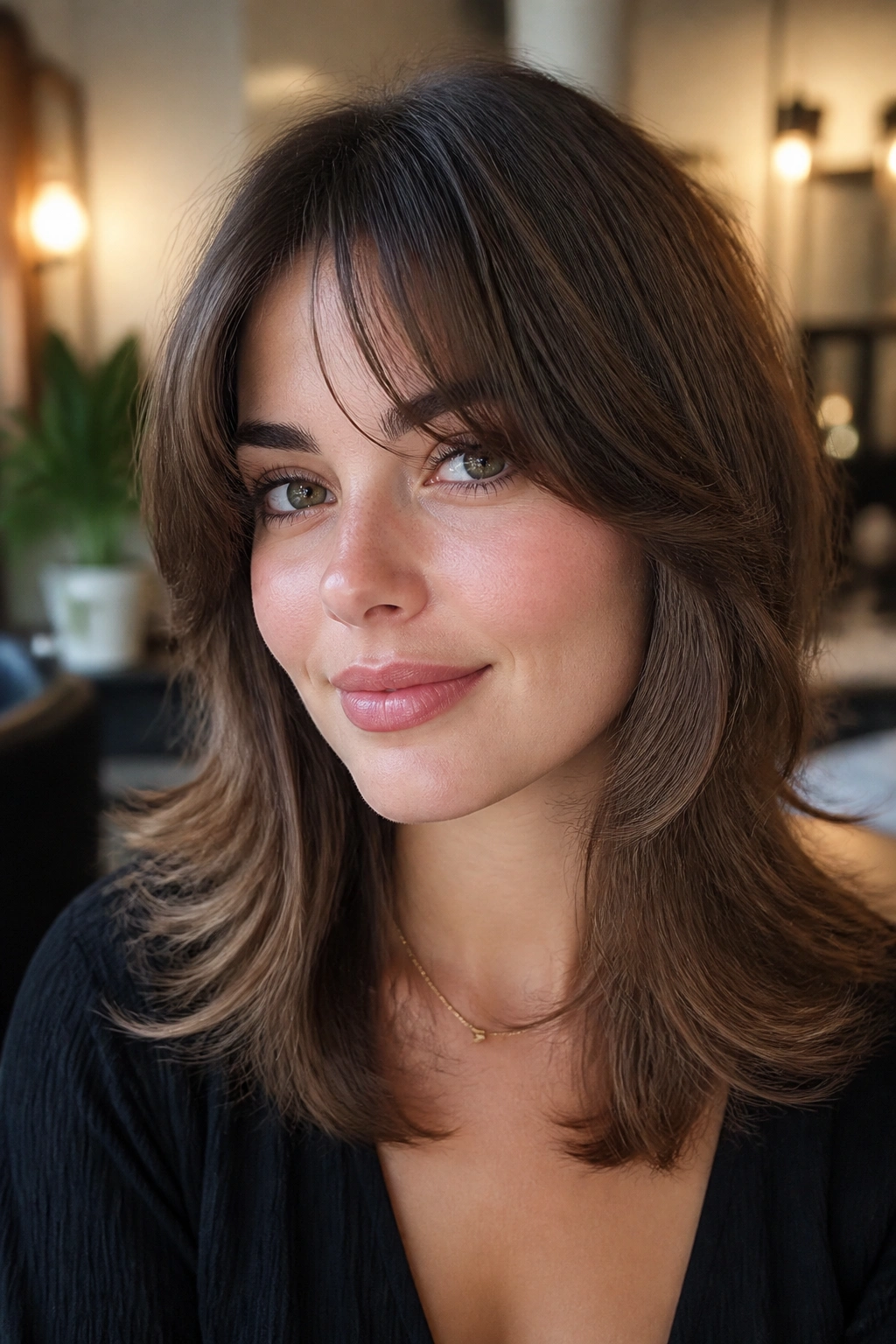
A layered fringe that flips away from the face is a smart way to add lift around a round cheek line. The flipped ends create a small outward motion, and that motion pulls the eye outward and down at the same time, which helps the face feel less wide.
This cut works especially well with shoulder-length and longer hair, where the front pieces can blend into the rest of the layers. You do not want a hard break between bang and haircut. You want a soft transition that starts at the brow and keeps going.
The styling is pretty simple. Dry the fringe forward, then turn the ends away from the face with a brush or a flat iron. A touch of flexible spray helps the bend stay in place without making the hair crunchy. That matters. Crunchy bangs are a crime.
19. Thick Softened Full Fringe
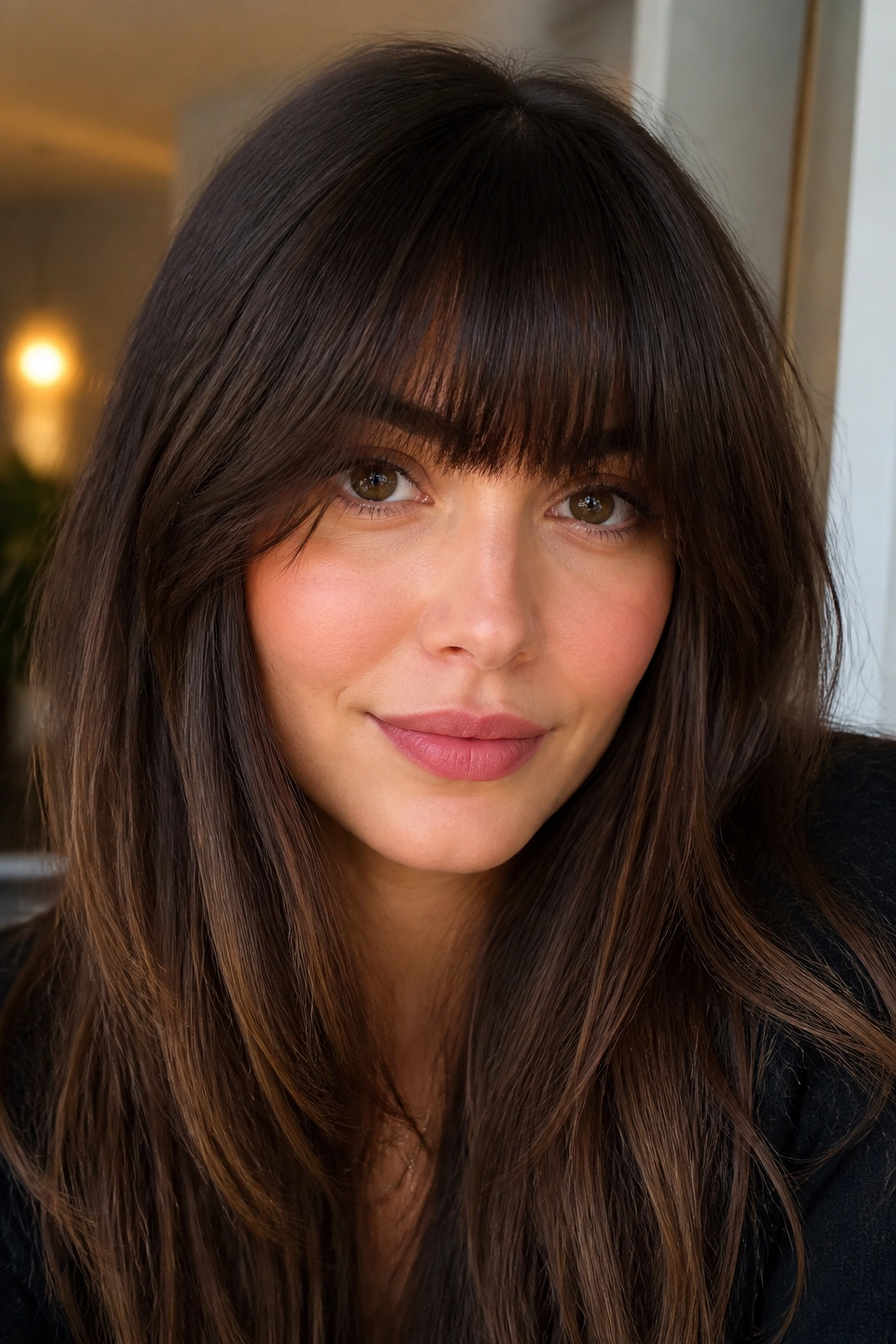
A thicker French fringe can work on a round face if the line is softened enough to avoid that flat, heavy wall across the forehead. People often assume thick bangs always widen the face. Not quite. The problem is bluntness, not thickness by itself.
What To Request
You want the density kept, but the edge broken up. That means some internal layering, a little point-cutting, and longer corners that melt into the temples.
- Keep the center full but not solid.
- Remove bulk from underneath.
- Let the side edges sit lower than the middle.
- Style with a round brush to create movement, not a board-straight line.
This style is good if you have dense hair and need the fringe to feel substantial. On fine hair, it can disappear too fast. On thicker hair, it can look rich and deliberate. The softened edge is what keeps a round face from losing definition.
20. Whisper-Light Invisible French Bangs
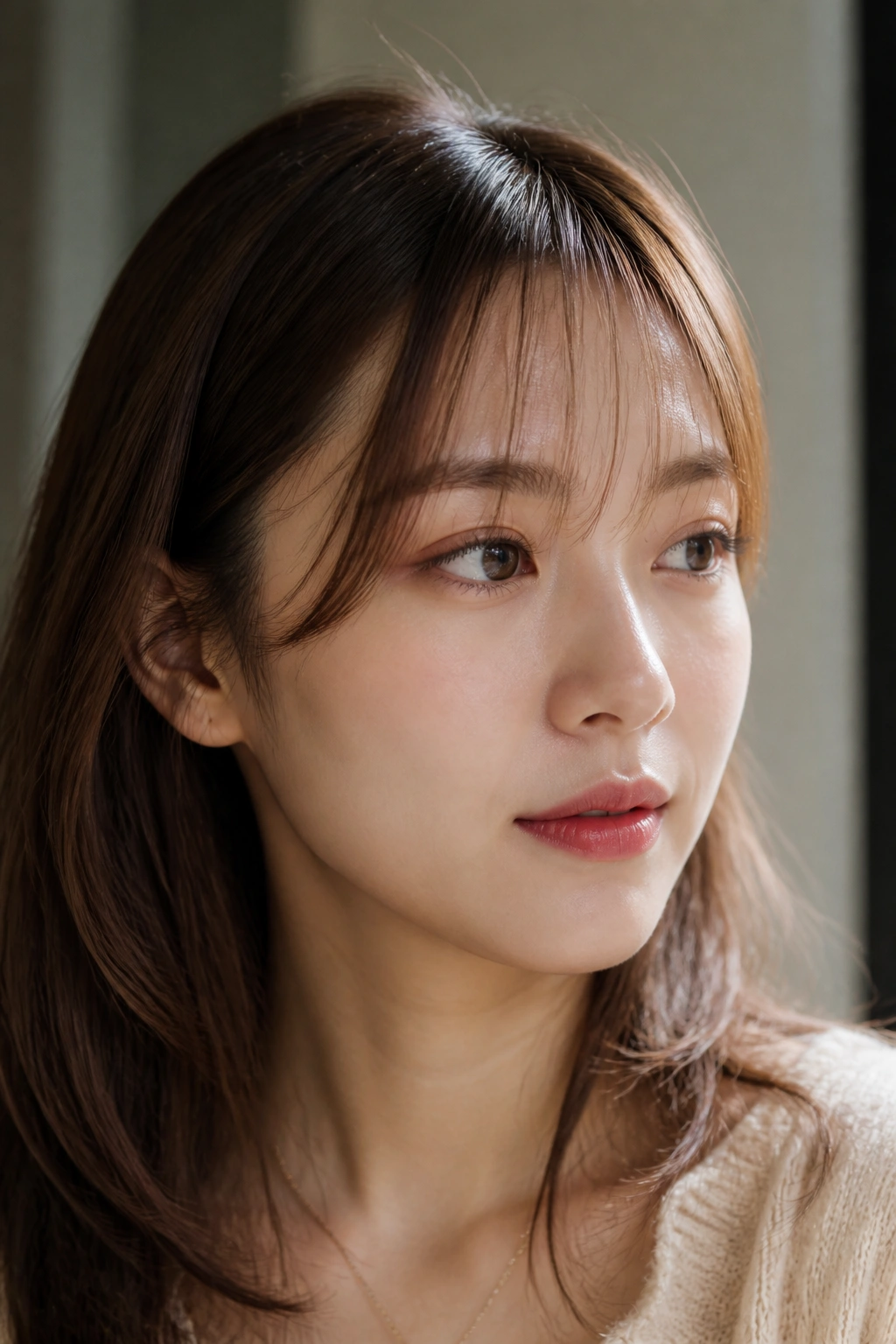
Invisible bangs are the shy cousin of a full fringe. They sit there softly, almost like a shadow across the forehead, and that faintness is exactly why they can flatter a round face. They don’t chop the face in half.
The best version has a few visible pieces around the brows and temples, but nothing dense enough to feel heavy. It’s more suggestion than statement. That makes it a good choice if you’re trying bangs for the first time and want a low-risk entry point.
These bangs work especially well with layered hair because the fringe blends into the rest of the cut. You can style them with a bit of dry shampoo at the roots to keep them from separating too much. Or you can let them fall flat and enjoy the soft, undone effect. Both work.
A round face often benefits from styles that leave the center open. This one does that gently.
21. Fringe Plus Face-Framing Layers
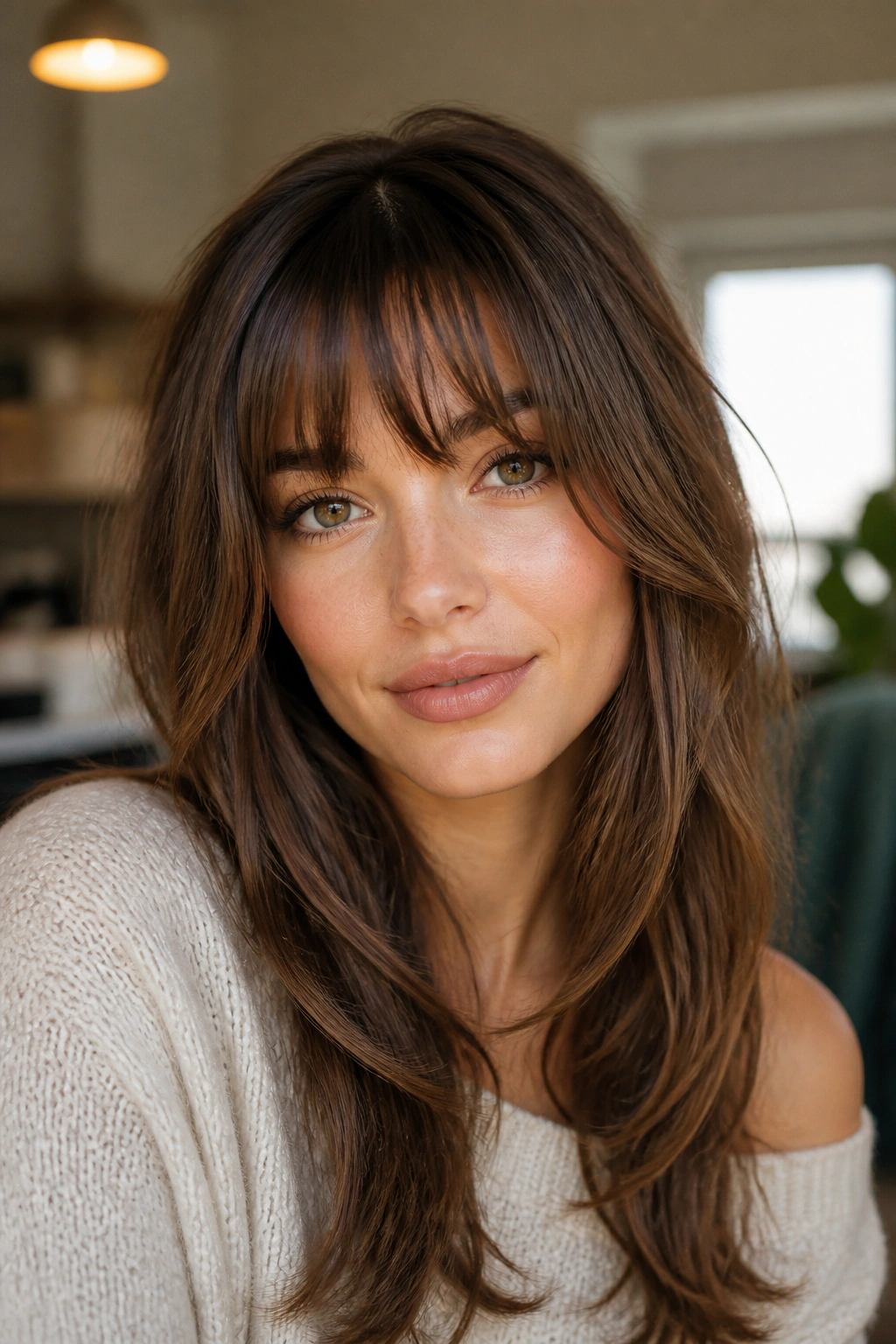
Sometimes the bang itself is only half the story. Pairing French bangs with face-framing layers gives a round face more than one line to work with, and that is where the shape starts to look longer and more sculpted.
The fringe can sit at the brows while the layers begin at the cheekbone or mouth. That creates a kind of visual ladder down the face. The eye doesn’t stop at the cheeks. It keeps moving.
Ask For This
- Fringe that brushes the brows.
- Layers that start around the cheekbone or upper lip.
- Soft edges, not chunky steps.
- Enough length to tuck one side behind the ear.
This is one of my favorite approaches for lobs and longer cuts because it feels complete, not like a fringe dropped onto an existing haircut. The layers do the softening. The bangs do the framing. Together, they make a round face look longer without making the style feel severe.
22. Diagonal Fringe With a Short Center
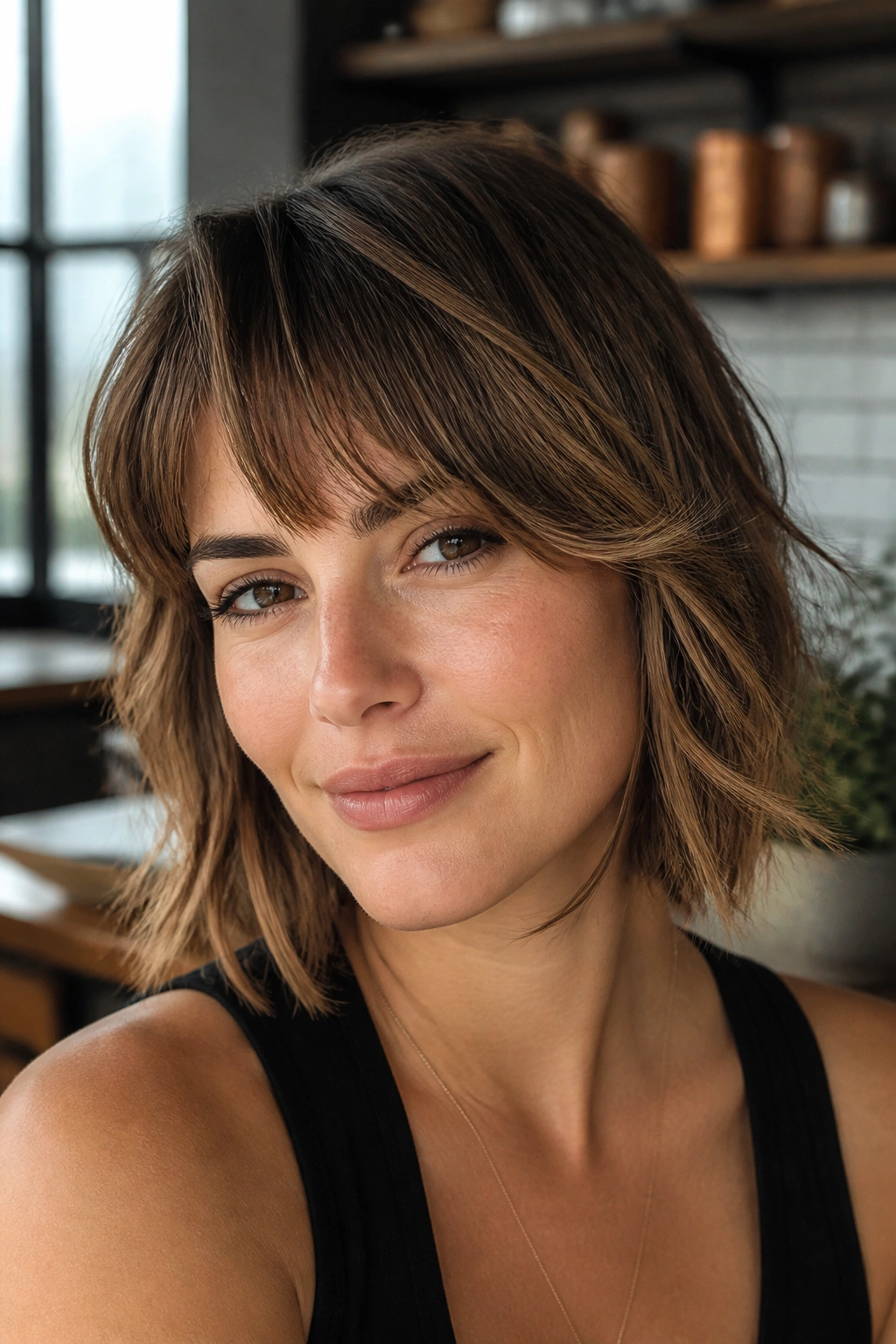
A diagonal fringe with a slightly shorter center is a subtle way to cheat the eye. The center opens the forehead just enough, and the diagonal flow across the front stops the face from reading too evenly wide.
Compared with a standard side-swept bang, this version feels a little sharper. Not harsher. Just more directional. That direction matters on a round face, because it creates movement instead of a flat band of hair.
This cut is especially good if you like some forehead showing but still want a fringe. It gives you both. The center gap makes the style feel lighter, while the longer side keeps the cheeks from taking over the whole frame.
You’ll usually want to style this one with a side-directed blow-dry and a light mist of spray at the roots. The shape should move, but not fall apart.
23. Split Fringe Just Above the Brows

A split fringe that parts just above the brows has a nice, open feel that can work beautifully on a round face. It shows off the forehead, which helps lengthen the face, and it leaves a little softness around the temples so the cut doesn’t feel stark.
This is close to curtain bangs, but shorter and more compact. The split creates a natural line down the center, and that line keeps the face from feeling too wide. If you wear bold brows, even better. The openness lets them matter.
The shape needs regular styling, though. If you let it dry with no direction, it can separate in strange places. A quick brush and a small amount of heat usually solve that. You’re aiming for a soft opening, not a dramatic split that looks accidental.
The nice part is that it grows out with grace. That’s not nothing.
24. Tousled Undone French Bangs

Tousled bangs are for people who want movement without fuss. On a round face, the messy texture keeps the fringe from becoming one solid shape that sits too neatly across the forehead. The looseness matters.
This style looks best when it feels slightly imperfect. Pieces can fall at different heights. Some can graze the brow, some can hover above it, and the ends can be a little broken up. That irregularity helps the face look less symmetrical, which is useful when the goal is to soften roundness.
A salt spray or lightweight texture cream is enough. You do not need sticky product. In fact, too much product ruins the effect fast. The fringe should move when you turn your head, not stay glued in place.
This one has a casual feel, but it still benefits from a well-cut shape. Messy only works when the structure underneath is doing its job.
25. Chin-Length Curtain Fringe
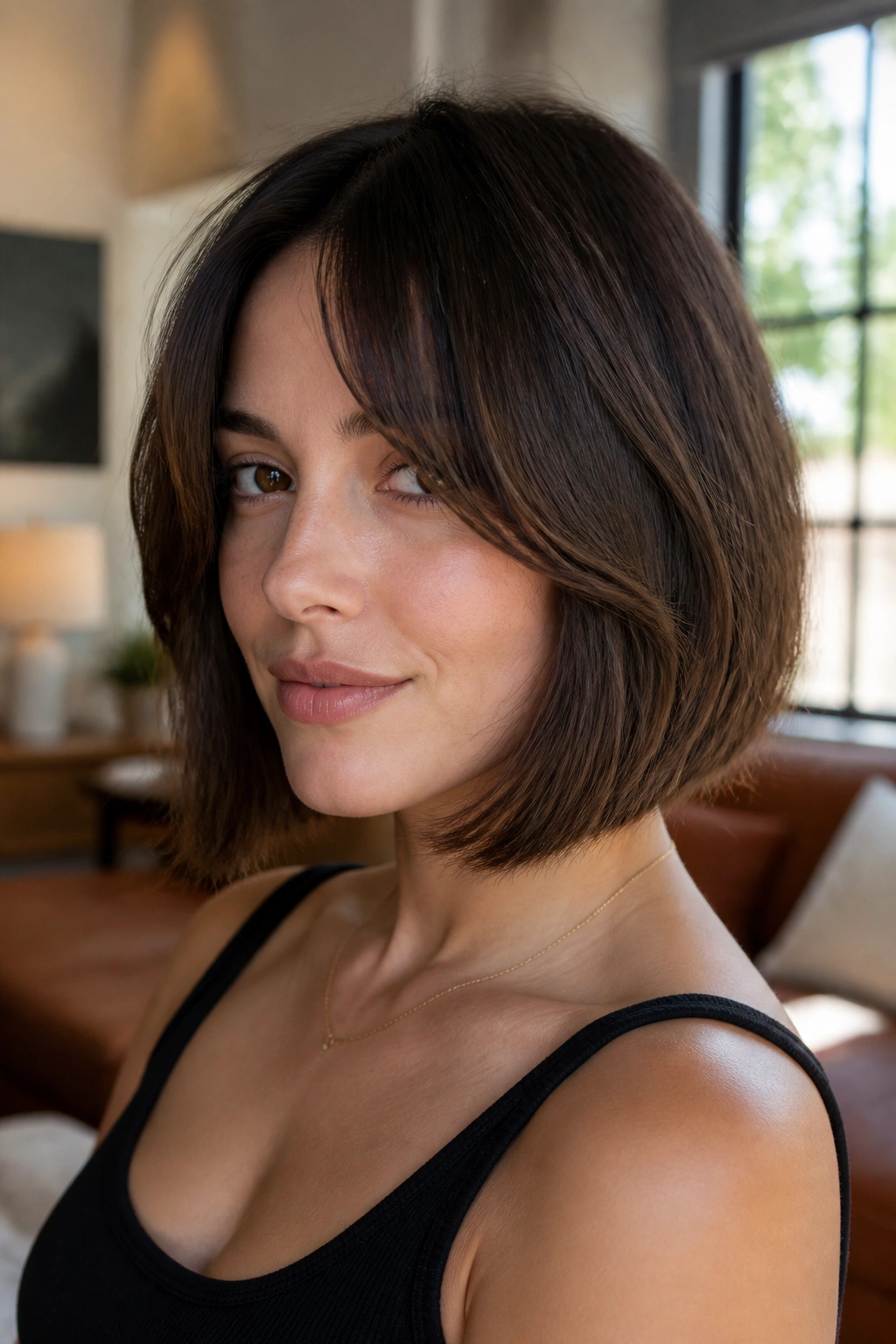
If you want the safest elongating option on a round face, chin-length curtain bangs are hard to beat. They draw two long lines down the front of the face, which naturally makes the cheeks feel less dominant. That longer length also gives you room to tuck, bend, or sweep the pieces depending on the day.
This is the version I’d point to for someone who wants maximum flexibility. You can wear it as a curtain, part it off-center, blow it out smooth, or let it fall with a little wave. It does not lock you into one look.
The key is keeping the shortest part high enough to open the forehead but long enough to keep the face from feeling boxed in. If the side pieces hit the chin, the whole face gets a vertical frame that round shapes usually love.
And yes, it takes a little styling. Not forever. Just enough to get the bend right. Once the shape is there, it tends to look good from more angles than a shorter fringe ever does.
One Last Thing
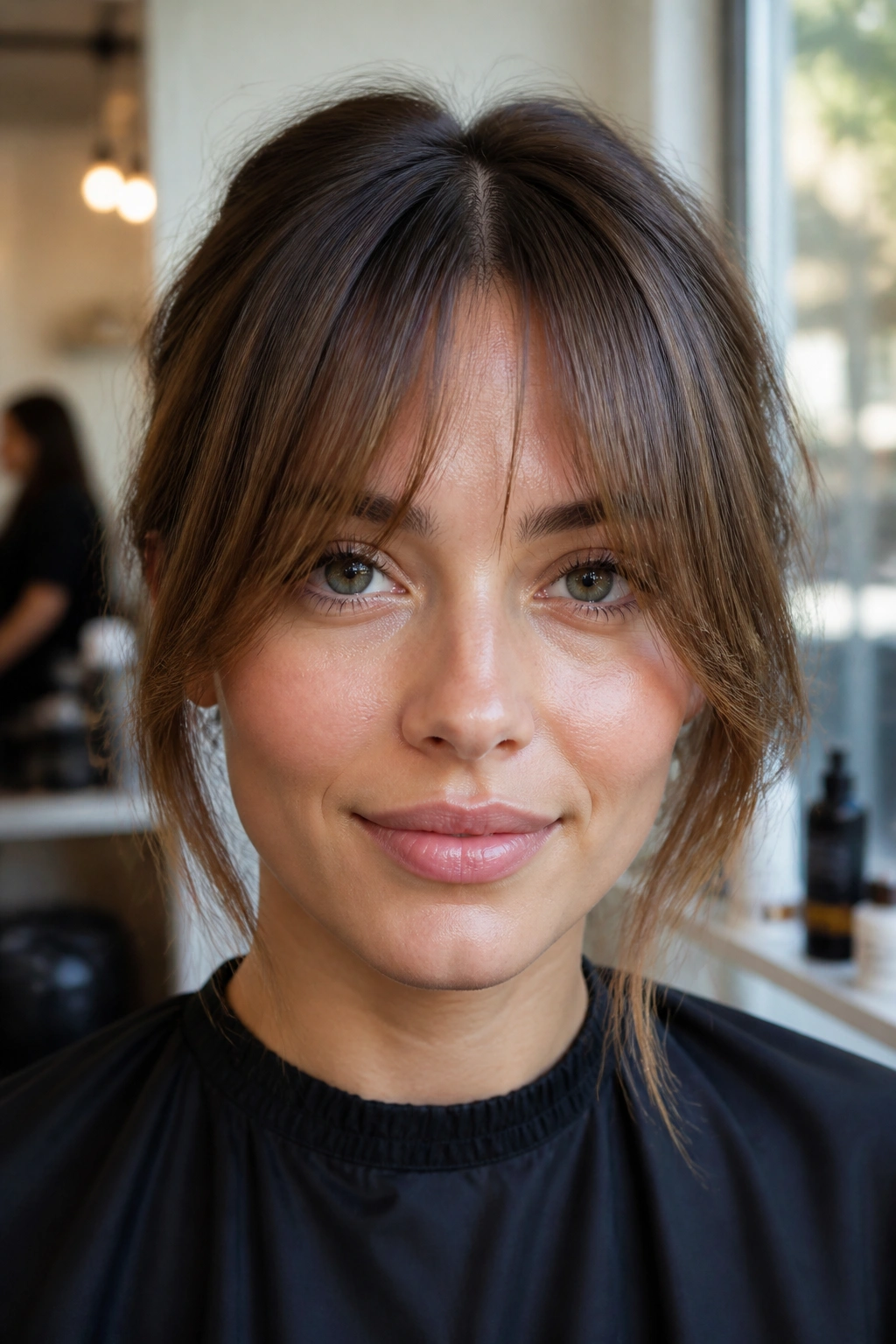
Pick the version that gives you the most length at the temples if you’re torn between two styles. That small detail is often what separates a fringe that flatters a round face from one that sits there and does nothing useful.
Bring photos, yes, but also point out the exact part you like: the center length, the corner length, the amount of texture. Those are the details that matter when a stylist translates a picture into a cut that works on your face, your hair, and your daily routine.
