



Straight hair makes French bangs look crisp in the best way—and unforgiving in the worst. Every millimeter shows. If the center is cut too short, the fringe can sit like a hard shelf; if the corners are too long, the whole thing can collapse into hair that looks like it missed a trim.
That’s why French bangs on straight hair need more thought than people expect. The cut has to look relaxed, but it can’t be lazy. A good fringe gives you softness around the face, a little movement at the brow, and just enough shape that you don’t spend half the morning trying to force bend into hair that wants to lie flat.
The trick is usually not more texture. It’s the right kind of texture. A slight bevel at the ends, a little point cutting, and a length that sits somewhere between confident and forgiving can make all the difference. Straight hair shows the line of the cut, which is exactly why French bangs can look so elegant on it when they’re done well.
What follows are 25 distinct ways to wear the look without turning your forehead into a science project. Some are soft and easy. Some are sharper. A few are for people who like a little drama with their blow-dry. All of them work because they respect the one thing straight hair never hides: the shape of the fringe itself.
1. Soft Center-Part French Bangs
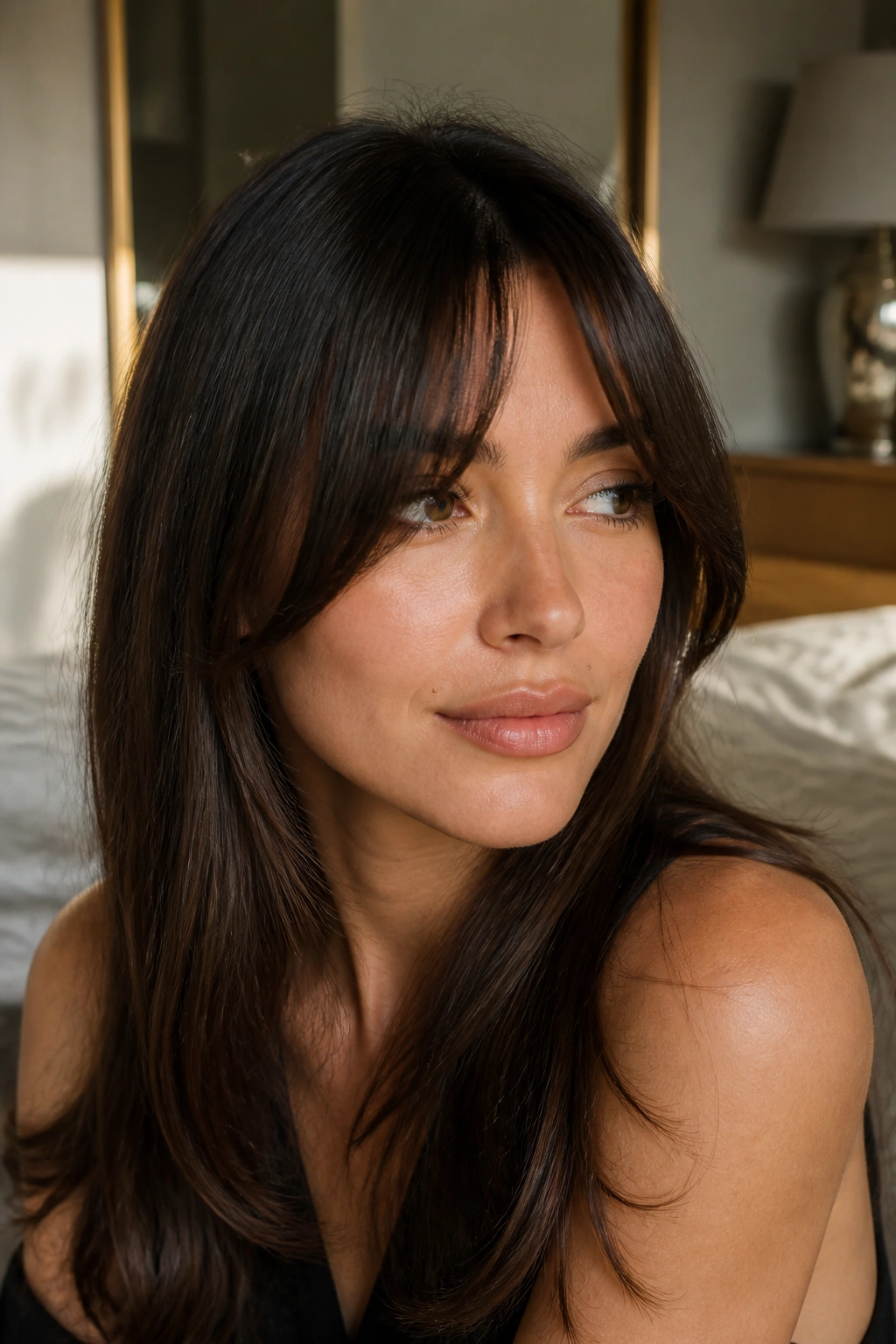
If you want the easiest entry point, start here. Soft center-part French bangs fall in the middle, then drift a little wider at the temples so the whole thing feels airy instead of boxed in. On straight hair, that gentle split keeps the fringe from reading like a flat strip across the forehead.
What to ask for
Ask for a fringe that’s slightly shorter at the center and longer toward the sides, with the shortest point landing somewhere around the brow line. The temples should graze the cheekbone, not stop above it. That little drop on the edges is what makes the shape feel relaxed.
A good stylist will usually soften the line with point cutting so the ends don’t look blunt. You want movement, not shredded pieces. That matters even more on straight hair because the strands won’t hide a harsh cut.
- Center length: brow to just above brow
- Side length: cheekbone territory
- Finish: soft, not choppy
- Best for: first-time fringe wearers
Tip: Blow-dry the fringe forward first, then split it with your fingers and a cool shot. That tiny routine keeps the center from sticking straight down like a curtain.
2. Feathered Brow-Skimming Fringe
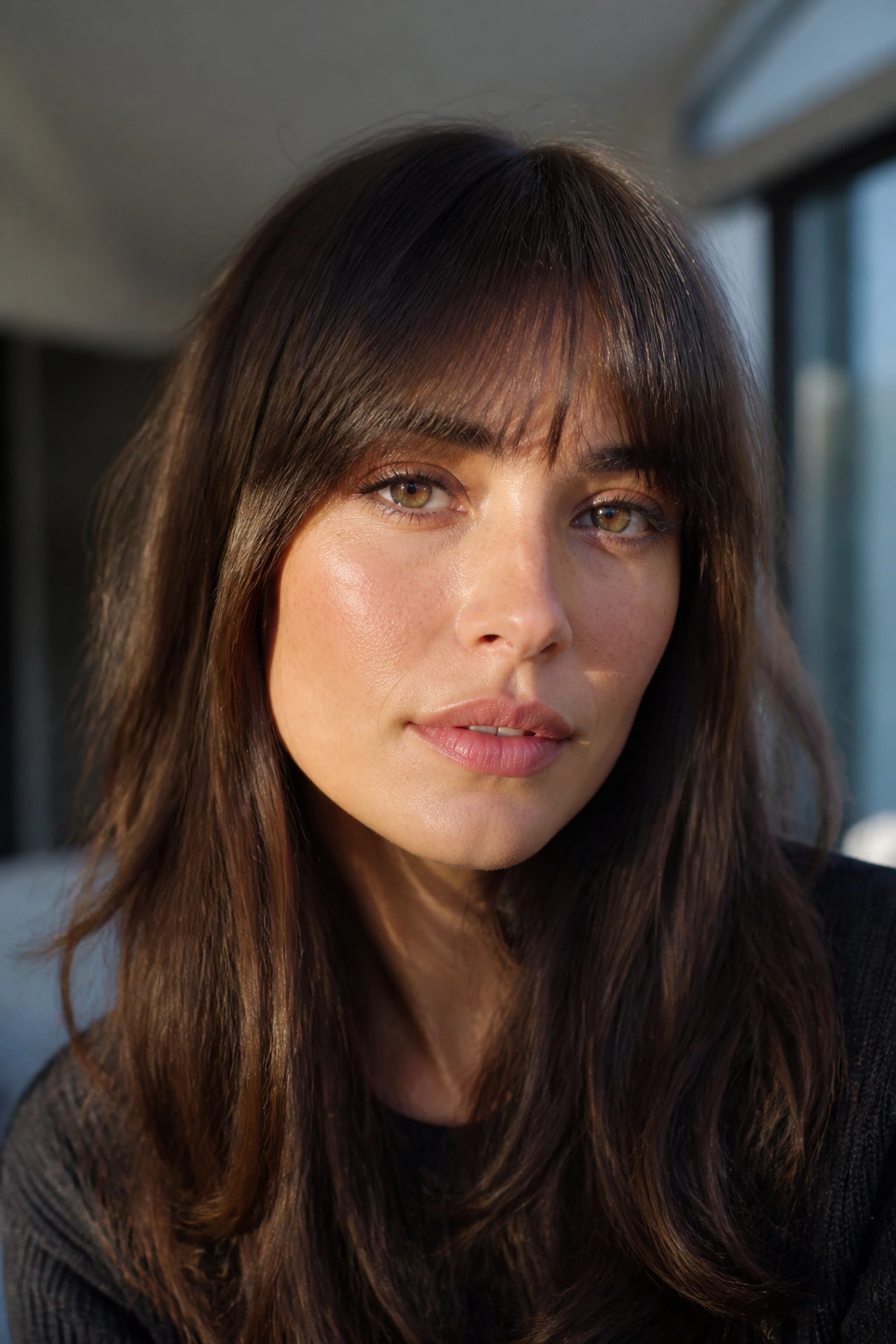
A feathered brow-skimming fringe is the quickest way to soften a straight haircut. It sits right at the eyebrow line, but the ends are so lightly textured that the whole thing moves when you turn your head. That little bit of swing matters.
Straight hair can make a fringe look severe fast. Feathering breaks the line, so instead of a hard edge, you get a light frame around the eyes. It’s one of those cuts that looks casual but still has shape, and that’s harder to pull off than people think.
I like this version when someone wants bangs but hates the idea of daily fuss. A round brush, a quick bend under the ends, and a dab of light cream are usually enough. No drama. No overthinking.
3. Long Curtain-Influenced French Bangs
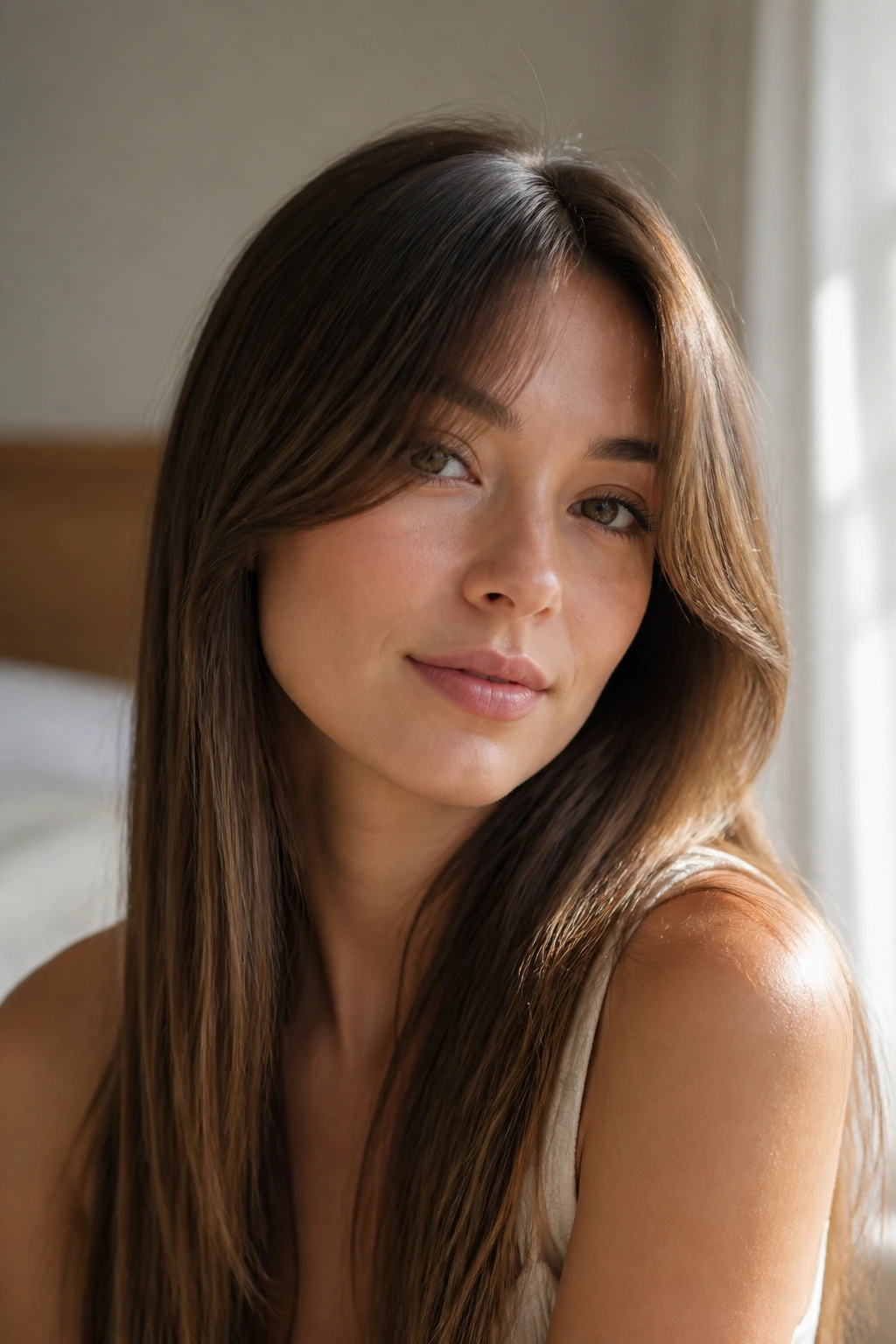
Why do longer French bangs stay useful for so long? Because they give you the fringe feeling without trapping you in a full bang commitment. The center still opens in the middle, but the sides are long enough to blend into the rest of the haircut.
That makes them a smart match for straight hair. They don’t need a lot of natural bend to look good. A slight blow-dry away from the face is enough to create shape, and if you’re having a lazy hair day, they still sit in a believable way.
How to wear them
Wear them with loose lengths, tucked behind one ear, or split and blown outward for a little lift. They also grow out cleanly, which is underrated. A fringe that survives the grow-out phase is a fringe worth having.
4. Piecey Point-Cut Bangs
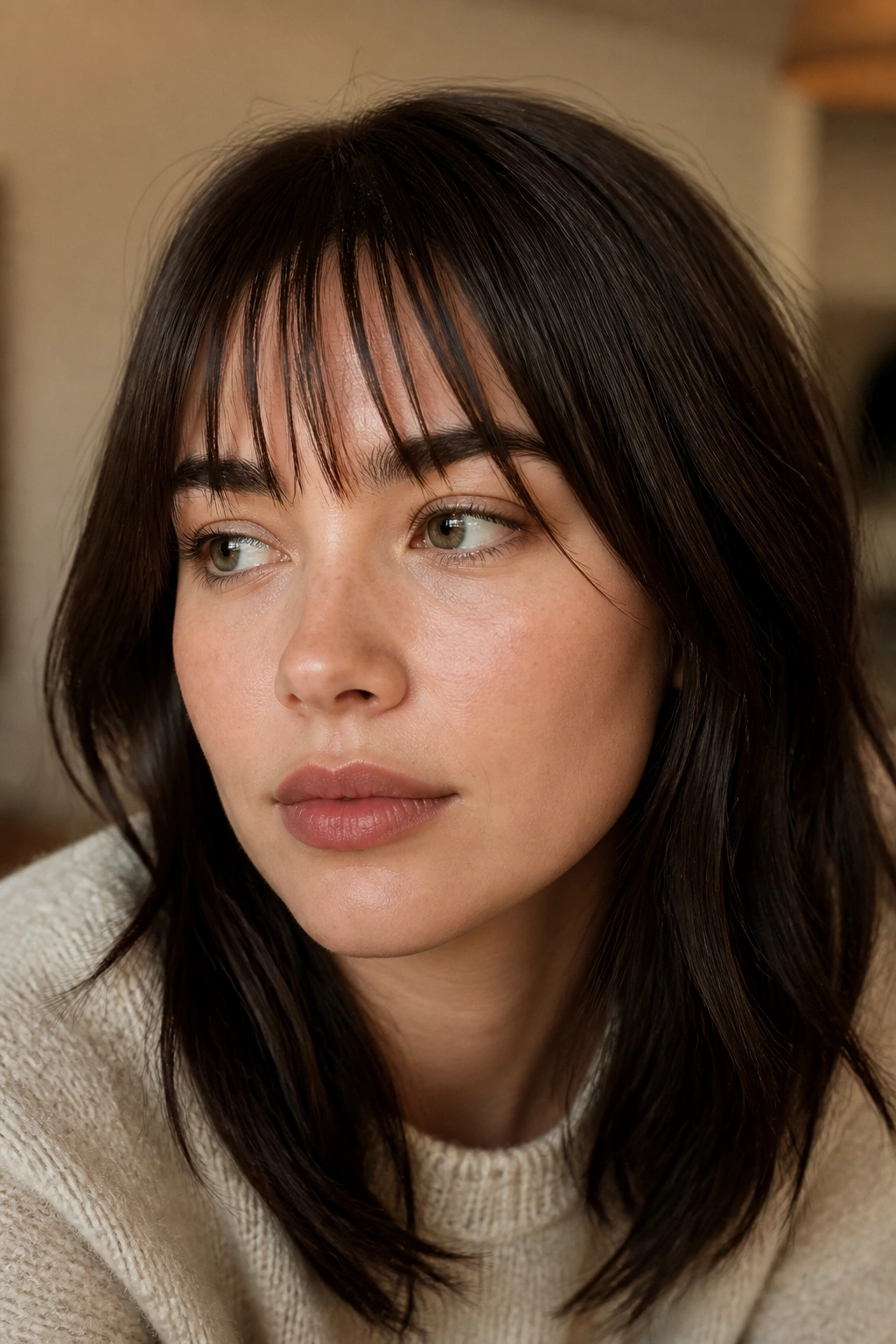
If your bangs tend to look like one solid sheet, point cutting is the fix. Piecey French bangs are cut so the ends break up into little sections instead of forming a single block across the forehead. On straight hair, that difference is huge.
The cut gives you texture without making the fringe look thin. That’s the balance most people miss. Too much thinning and the bangs go stringy. Too little and you get the broom-handle effect. Point cutting, done lightly, gives you those separated pieces that move instead of sitting there like a wall.
Ask your stylist to leave the middle soft and to lighten the corners just enough so the fringe doesn’t land too hard at the brow. It’s a small shift, but it changes the whole mood.
Good move: Style with your fingers, not a heavy brush. Piecey bangs look better when the finish is a little imperfect.
5. Bottleneck French Bangs
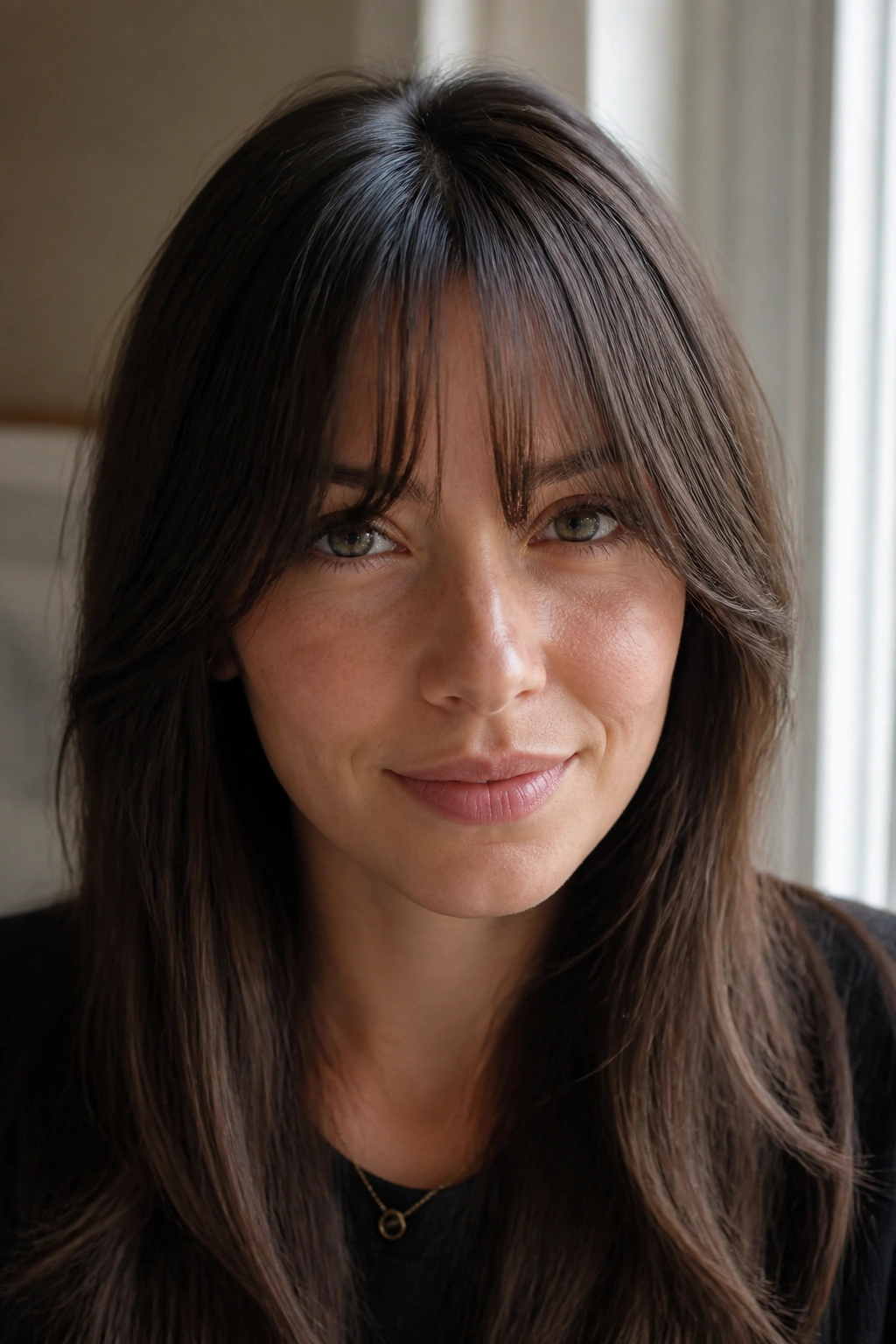
Bottleneck bangs are narrow through the center and wider as they move toward the temples, which is exactly why they flatter straight hair so well. The shape opens the forehead without making the fringe disappear. You get coverage where you want it and breathability where you need it.
This is a cut with some discipline behind it. The center sits close to the brows, then the sides swing outward in a soft curve. On pin-straight hair, that curve keeps the look from becoming flat or blocky. It also plays nicely with a center part, which helps if your hair naturally wants to split that way anyway.
I’m a fan of this version for people who want their bangs to feel intentional but not heavy. It’s polished, sure, but not stiff. And it doesn’t demand a full styling session every morning.
6. Micro French Bangs
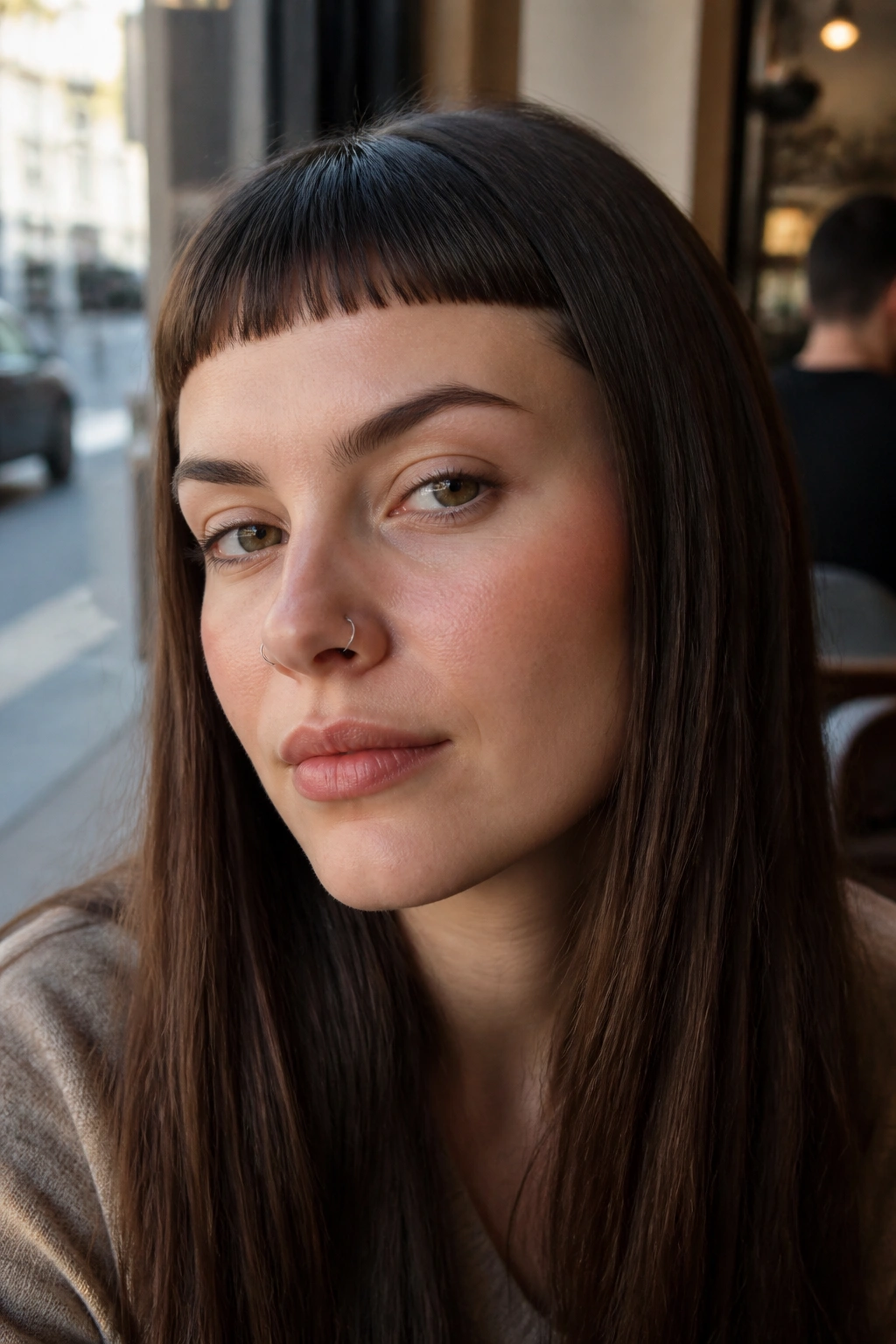
Micro French bangs are for people who want the forehead in the conversation. They sit well above the brows, which makes the eyes and bone structure do more of the work. On straight hair, the effect is sharp and clean, sometimes almost graphic.
This is not a shy cut. If you like a soft veil, keep scrolling. Micro bangs have a little attitude, and straight hair helps them hold that shape without puffing up. The trick is to keep them neat at the edges so they don’t start looking accidental.
The best version is short, but not helmet-hard. A tiny bit of texture through the ends keeps them from feeling too severe. I’d also leave the sides slightly longer than the center so the cut can still connect to the rest of the hair.
If you wear strong brows, this look can be excellent. If you don’t want attention on your forehead, it can be a lot.
7. Cheekbone-Grazing French Fringe
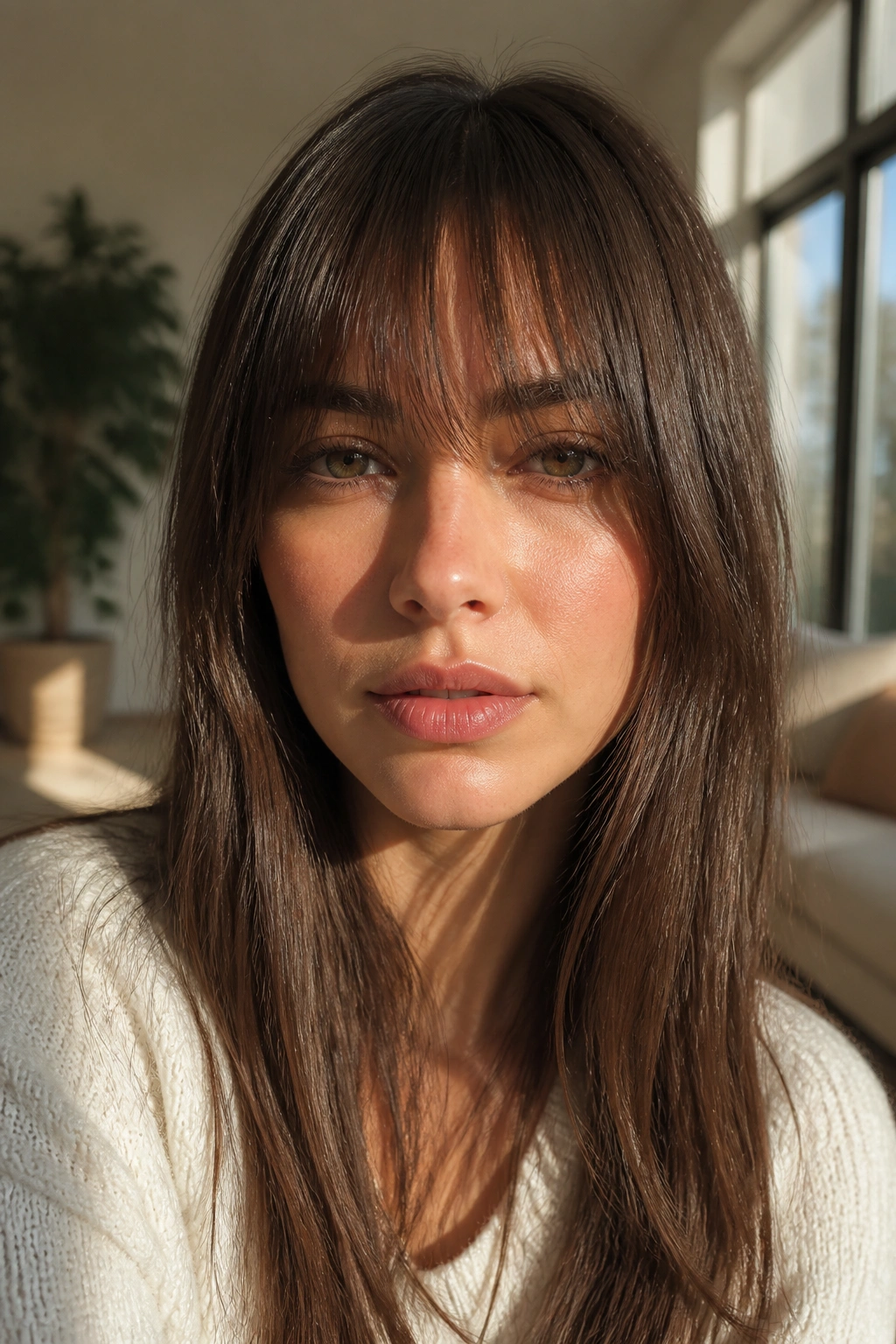
Think of this as a fringe that starts at the forehead but ends up framing the face. Cheekbone-grazing French bangs are longer at the sides, and that length is what gives straight hair some much-needed softness near the jaw and eyes.
They’re especially good if your hair lies flat around the crown. The fringe gives you movement up front, while the longer side pieces pull the eye downward in a controlled way. That sounds technical, but it just means the cut stops the face from feeling too open or too rigid.
This shape also works well if you like to tuck hair behind your ears. The longer outer pieces still fall back into place, so you don’t lose the shape the second you touch it. Small thing. Big payoff.
8. Side-Swept French Bangs
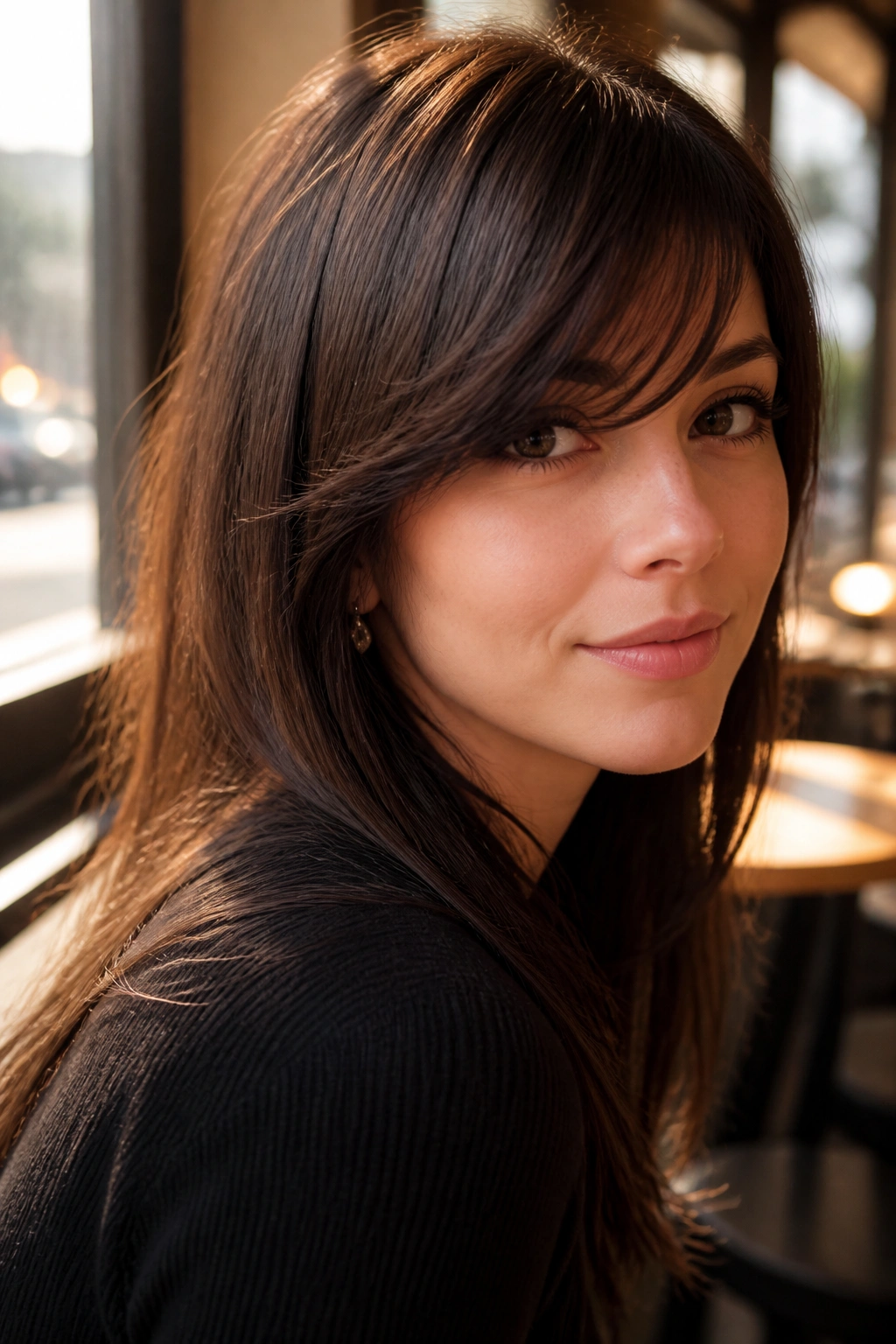
A side-swept version is the answer when a center part feels too neat for you. The fringe still has the French softness—shorter in the middle, longer at the sides—but the whole thing leans over with a little more movement.
Why it works
Straight hair can fight a center part if you have a stubborn cowlick or a very flat hairline. A side sweep works with that instead of against it. The fringe lands in a softer diagonal, which means you’re less likely to spend the morning re-shaping the same section over and over.
Use a blow-dryer nozzle and brush the bangs toward the side you want them to live on. A small round brush helps, but a flat brush can work too if you want the finish less curled and more bendy.
Best for: people who want French bangs but don’t want to commit to the exact symmetry of a center split.
9. Rounded French Bangs
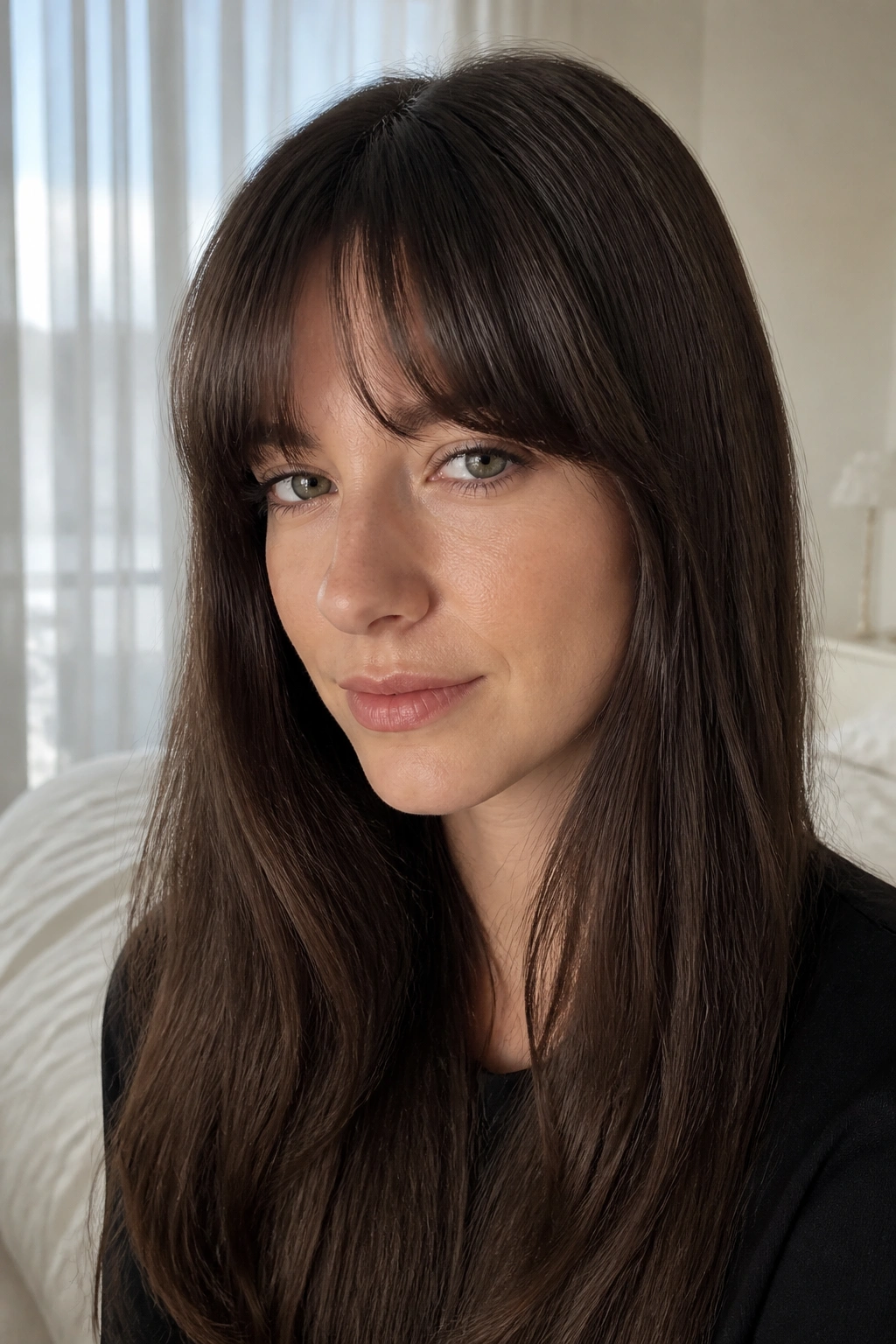
Rounded French bangs are cut in a soft arc, not a straight line. The center is a touch shorter, and the edges curve down toward the temples, which gives straight hair a little shape without making it feel overbuilt.
Why does that matter? Because straight hair can make any strong line look harsher than it does on wavy hair. The curve keeps the fringe friendly. It also helps the bangs connect better to the rest of the haircut, especially if your hair is long and mostly one length.
This is one of my favorite versions for someone with a strong forehead who still wants the bangs to read as light. There’s enough coverage to feel like a fringe, but the softness keeps it from taking over the face.
A round brush and a quick bend at the ends are usually enough. Don’t overdo the curl. You want a curve, not ringlets.
10. Heavy But Soft French Fringe
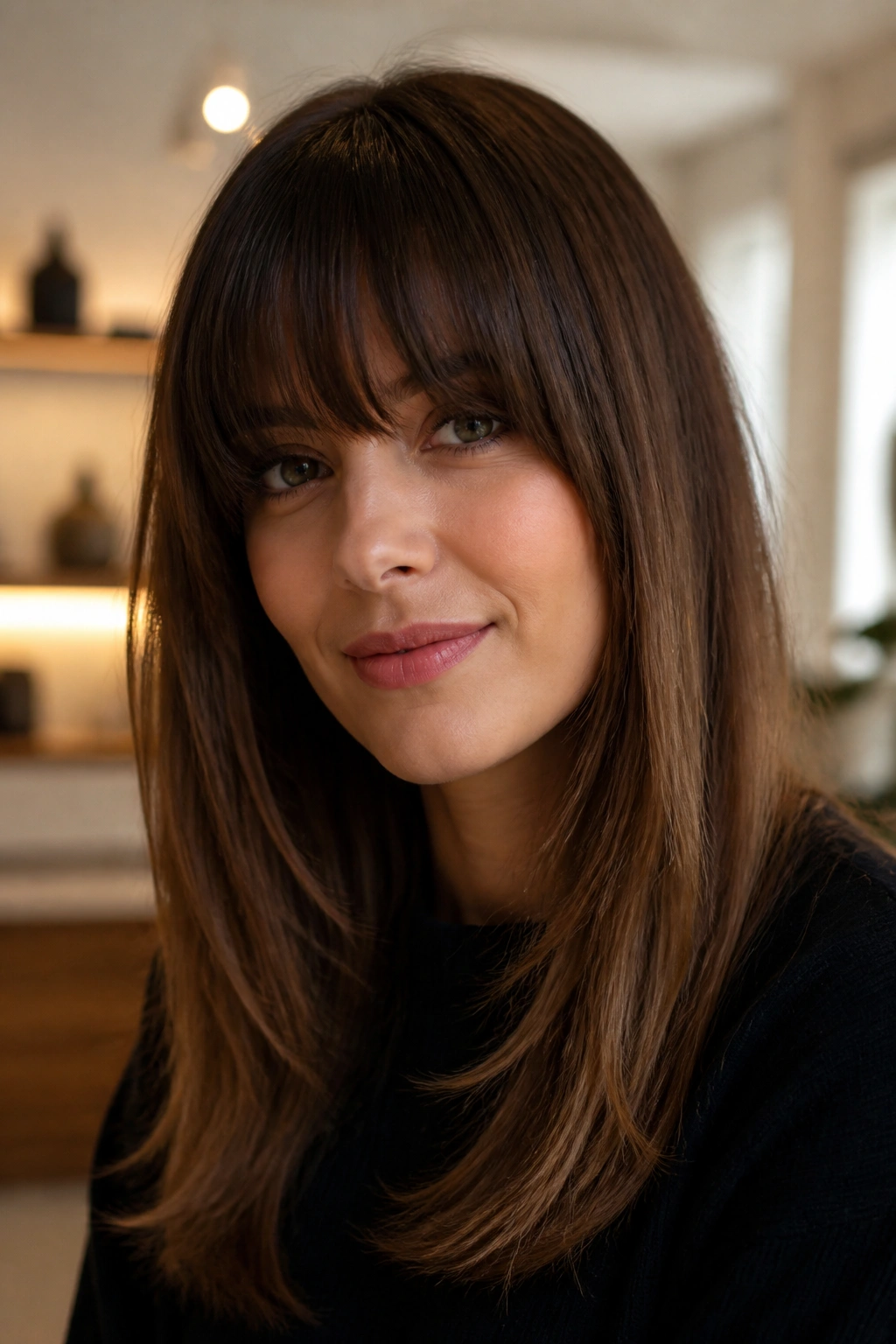
A heavier fringe sounds intimidating, but on straight hair it can look rich and expensive when it’s cut with restraint. The goal is density without a hard edge. You want enough hair in the bang area to feel full, then just enough internal shaping to keep it from sitting like a block.
This cut is useful if your forehead is broad or if you like a more visible fringe. The softness comes from the ends, not from making the bangs too thin. That distinction matters. Thinning shears everywhere can leave straight hair looking weak and frayed, and that’s a bad trade.
Ask for a solid-looking fringe with the bottom softened. It should still have presence when it hangs naturally. Think full, not blunt.
Avoid: over-thinning the middle. That’s how you end up with pieces that separate in odd spots and refuse to settle.
11. Short Vintage French Bangs
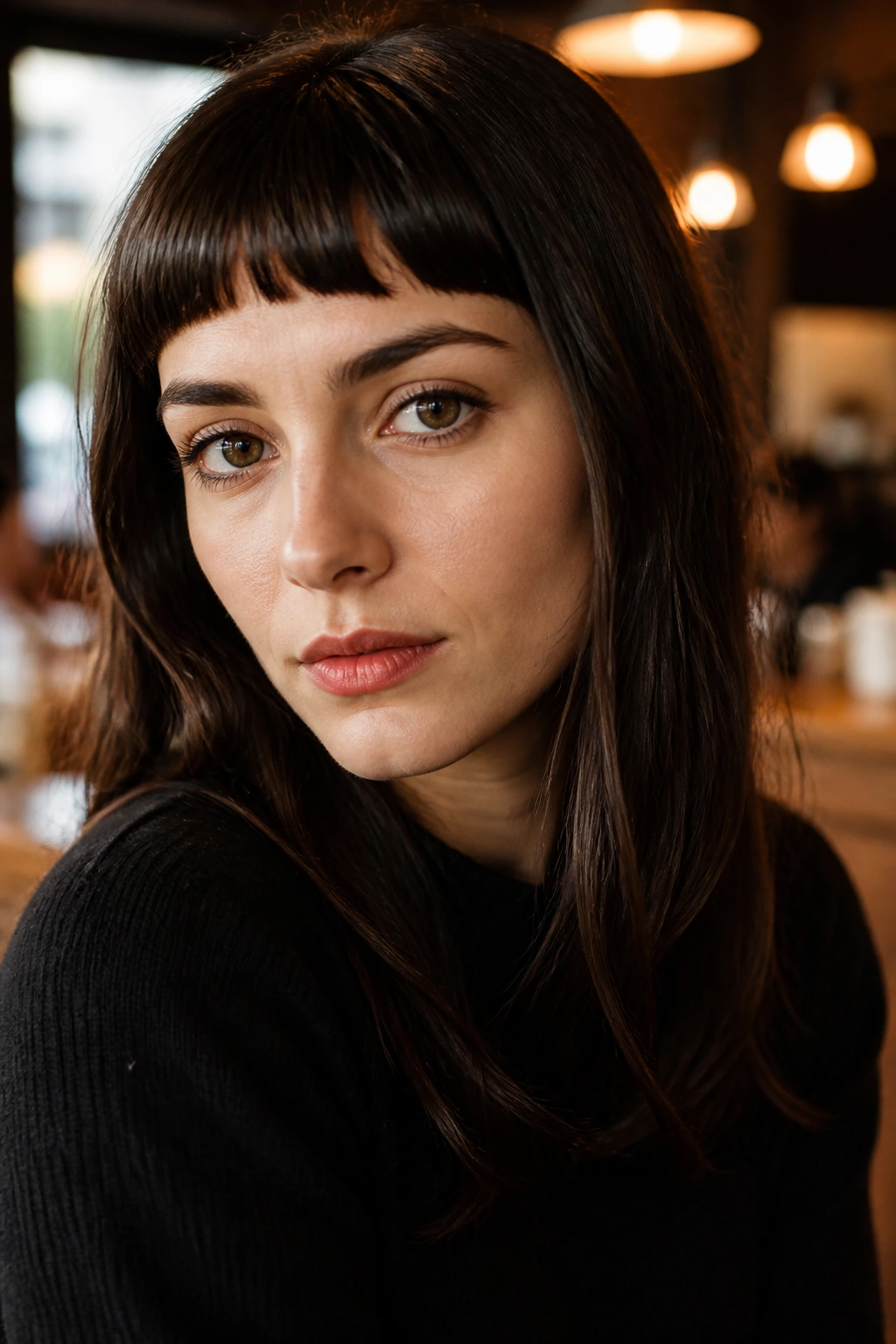
Short French bangs have a little old-school charm, especially on straight hair where the line can feel neat and deliberate. They sit above or right at the brows, which opens the face and gives the haircut a sharper outline.
This version works best when the rest of the cut has some softness. If the hair is too blunt from root to end, the bangs can look severe. A soft bevel at the bottom fixes that fast. The contrast between the short fringe and smoother lengths is what gives the style its appeal.
It’s also a good cut if you like your brows to show. Not everyone does, and that’s fine. But when the brow shape is strong, short bangs can frame it in a way that feels polished rather than fussy.
You do need a trim schedule with this one. Short bangs grow out fast. There’s no magic there.
12. Collarbone Layers With French Bangs
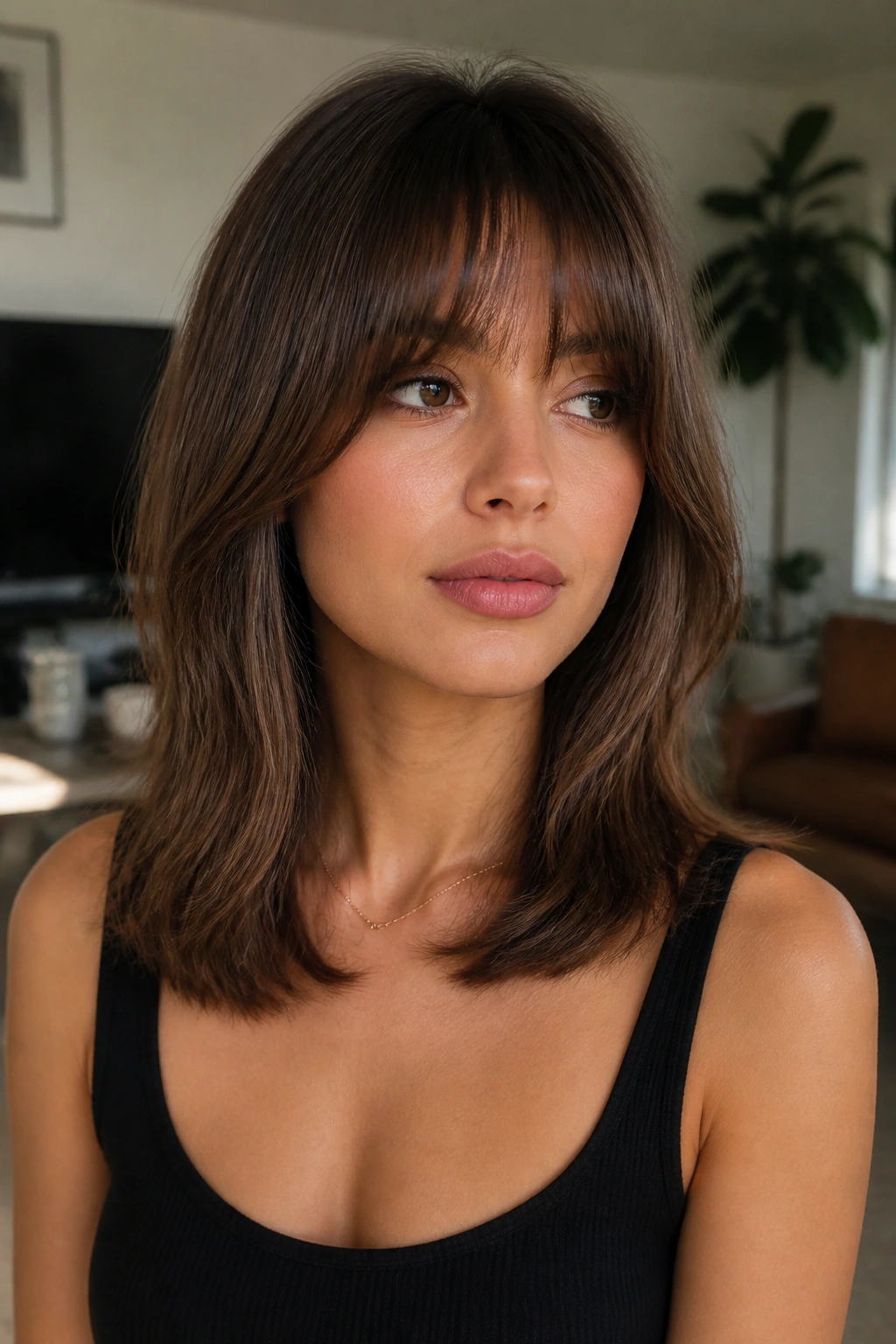
French bangs get easier to wear when the rest of the haircut helps them out. Collarbone layers do exactly that. They take some weight off straight hair, then let the fringe melt into the lengths instead of floating on top like a separate piece.
That connection is the whole point. If the bangs are the only thing with shape, the haircut can feel disconnected. Collarbone layers fix that by giving the front sections somewhere to go. The result is more movement around the face and less of that heavy, single-plane look straight hair can fall into.
This is a smart choice if you wear your hair down a lot. The bangs won’t feel trapped, and the layers give you options for air-drying or quick styling. A little bend through the front pieces, and you’re done.
13. Grown-Out French Fringe
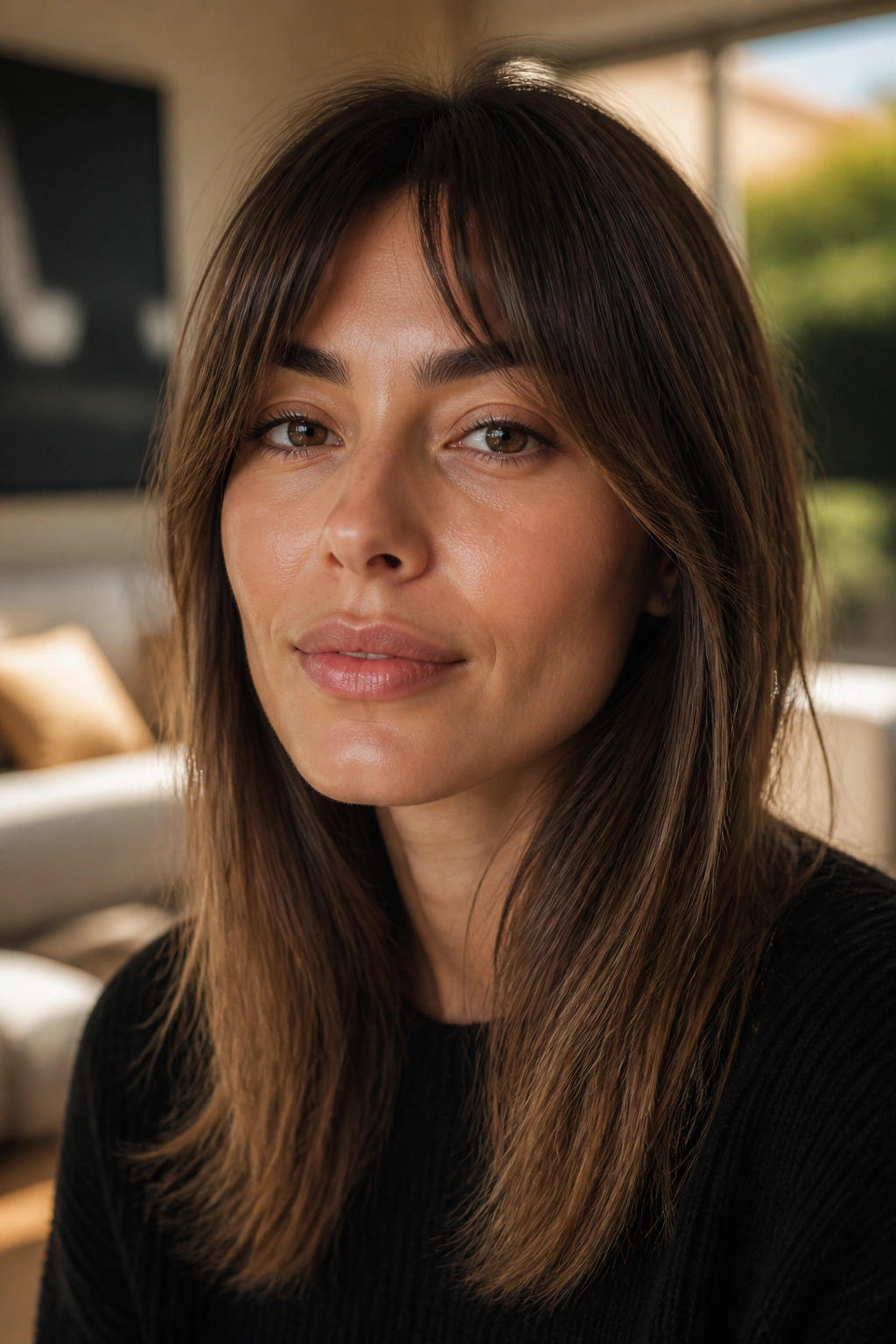
A grown-out fringe is for the person who misses trims but still wants the look to make sense. The center stays short enough to count as bangs, while the sides are left long enough to blend into the rest of the hair. On straight hair, that shape can look surprisingly chic because it avoids the awkward half-and-half stage.
The key is intention. If the corners are cut with a purpose, the grow-out reads as style, not neglect. This is where French bangs beat a lot of stricter fringe shapes. They forgive you. A bit.
Why people keep this version
- It needs fewer salon visits than short bangs.
- It tucks into clips and ponytails easily.
- It still frames the face when you wear it down.
- It looks good with minimal styling.
If you hate the feeling of being trapped by your haircut, start here.
14. Face-Framing Layers With French Bangs
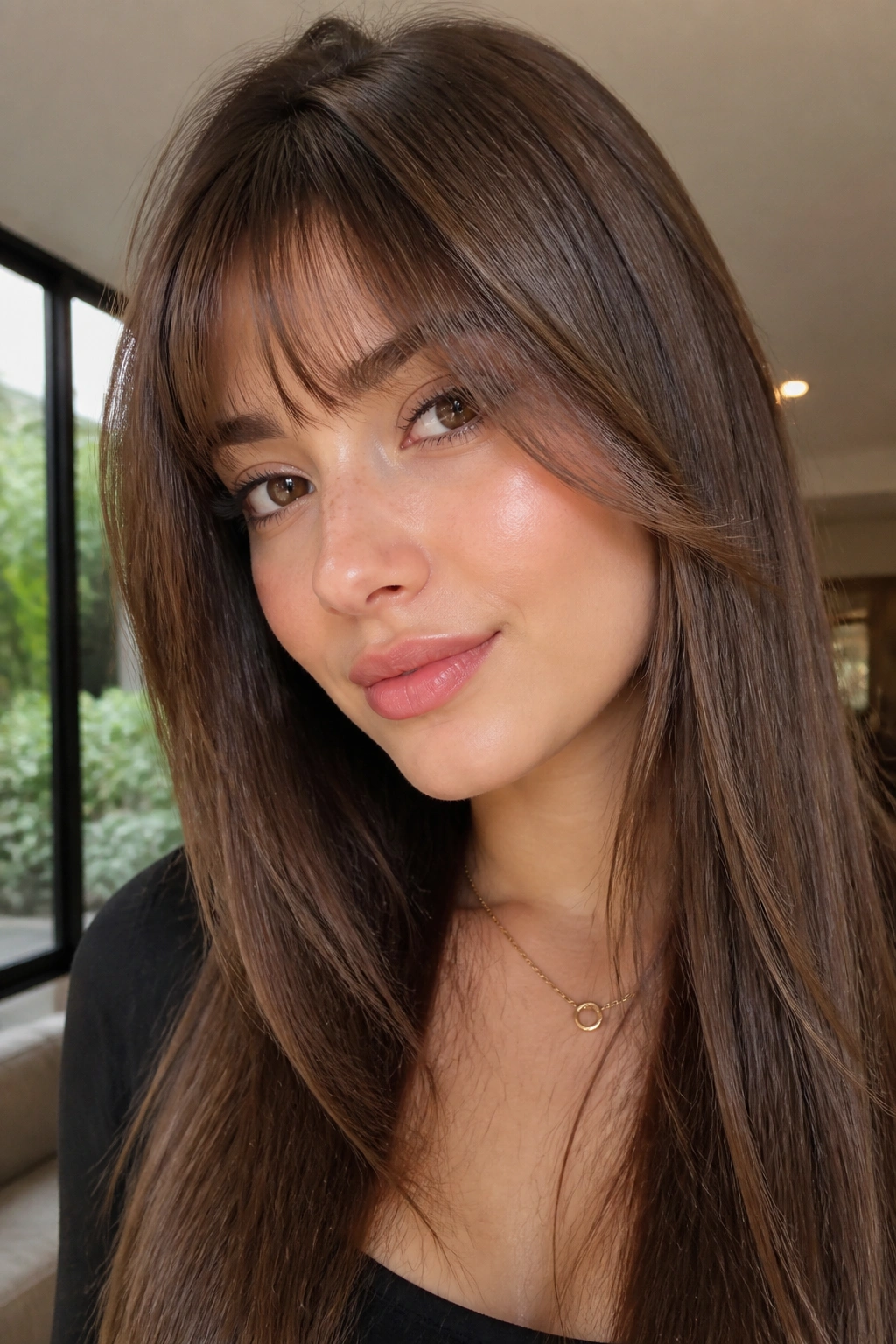
French bangs can look too isolated if the rest of the haircut is one long, heavy sheet. Face-framing layers solve that by giving the front sections some lift and movement, usually starting around the cheekbone or chin.
On straight hair, this matters more than people expect. The layers stop the fringe from feeling like a separate accessory. Instead, the bangs connect to the rest of the cut, which makes the whole shape read as softer and more natural.
I especially like this version on long hair because it keeps the front from dragging. The bangs may be the first thing people notice, but the layers are what keep them from looking too placed. That’s the quiet part of the haircut, and it does a lot.
Ask for layers that begin below the fringe, not inside it. That way the bangs stay clean while the rest of the hair does the moving.
15. Glass-Hair French Bangs
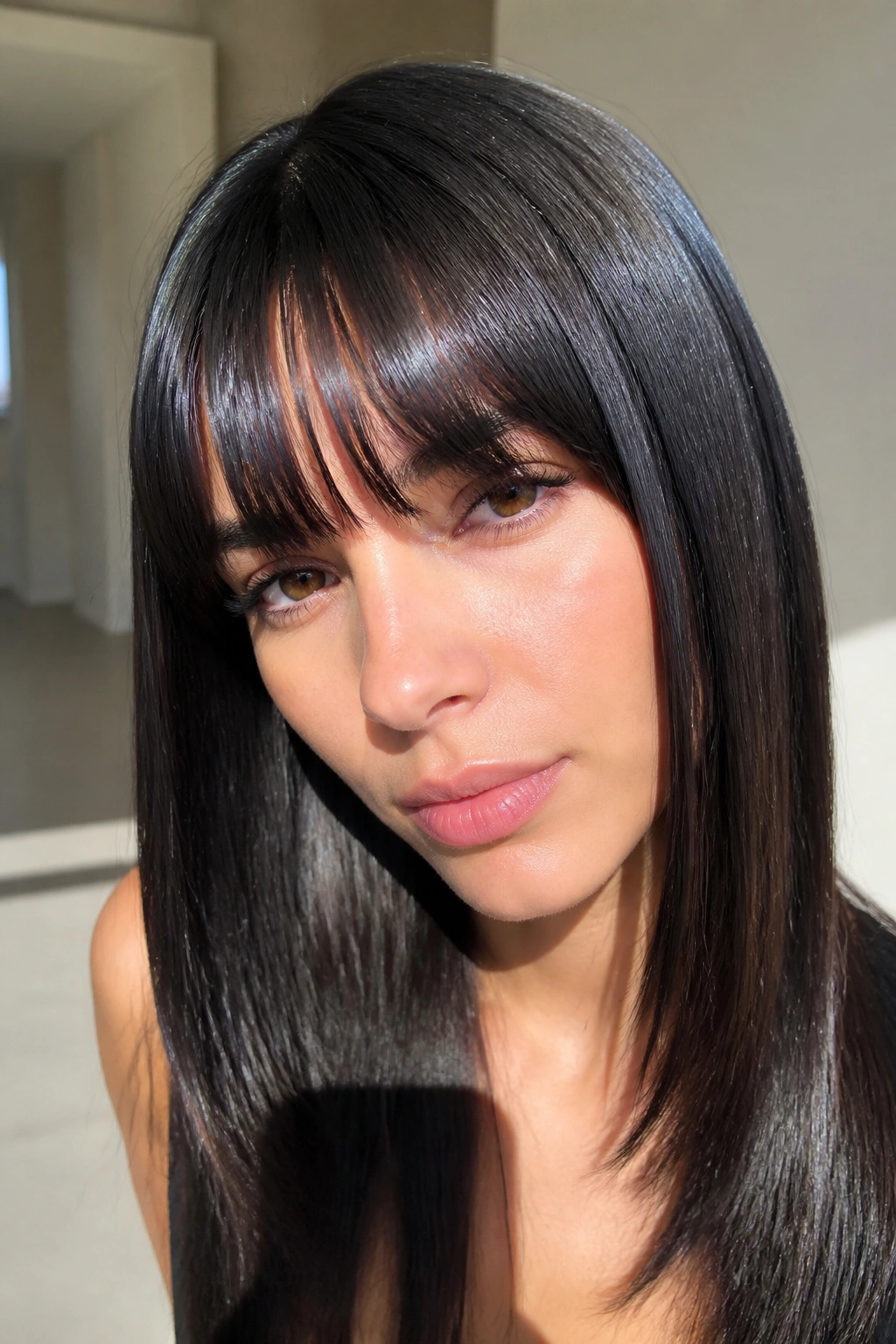
Glass-hair French bangs lean into the sleekness straight hair already has. The finish is smooth, reflective, and controlled, which means the fringe sits with a polished line instead of a fluffy one. If your hair likes to go shiny and flat, this cut can feel made for it.
The trick is in the styling. Use a blow-dryer with a nozzle, a flat brush, and a tiny amount of serum on the ends only. Keep the roots clean and the fringe smooth, then finish with a cool shot so the shape stays put. Too much product and the bangs start looking greasy fast.
Why it works on straight hair
Because straight hair already wants to lie down, you’re not fighting the texture. You’re refining it. That makes this one of the easier French-bang looks to wear if you like your hair neat and close to the head.
It’s sleek. It’s tidy. And yes, it does need regular washing if your forehead gets oily.
16. Side-Connected French Fringe
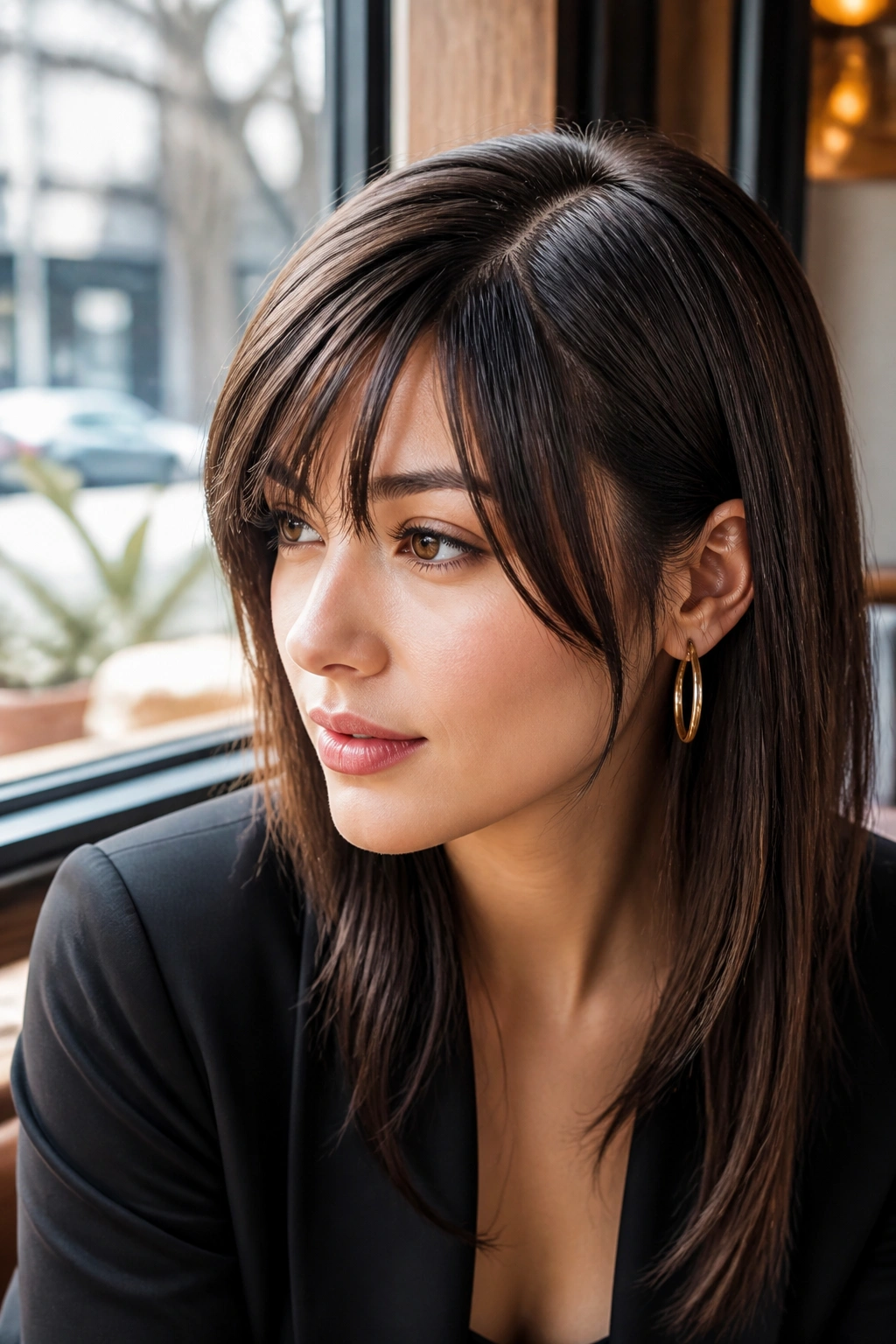
A side-connected fringe blends into one side of the haircut more than the other. The part is often deep, and the bangs taper into face-framing pieces that travel toward the cheek or jaw. It’s a little less symmetrical than classic French bangs, which is exactly why it feels fresh.
Straight hair is a good canvas for this shape because the line stays visible. You can see where the fringe starts and where it melts away. That clarity gives the cut some edge without making it hard to wear.
I like this look for anyone with a cowlick that refuses to cooperate in the middle. A side-connected fringe works with that natural push. It also grows out in a useful way, since the longer side already behaves like a face frame.
If a center split keeps collapsing on you, this version is worth a serious look.
17. Wispy See-Through Bangs
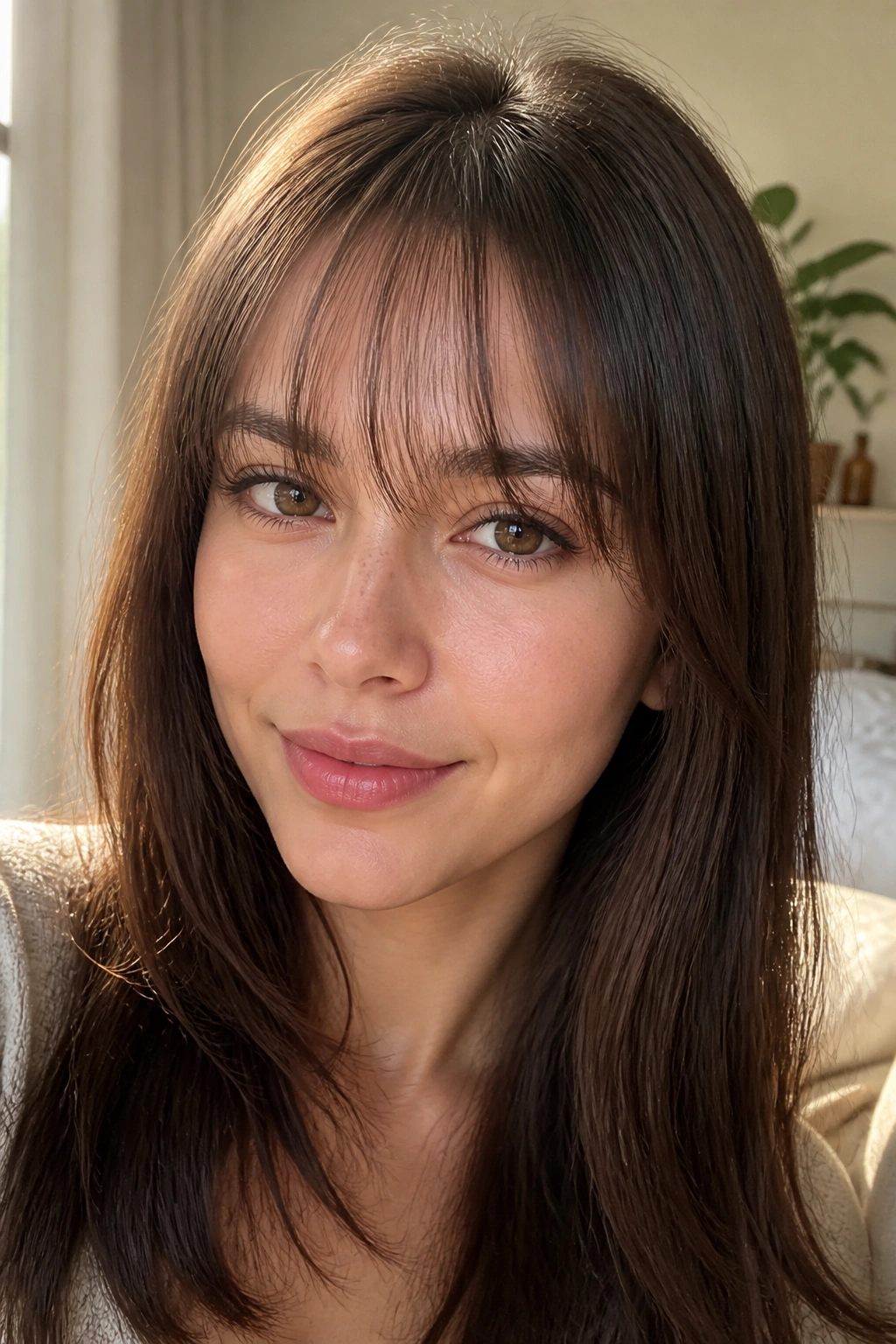
Wispy see-through bangs are lighter and more transparent than a full fringe, which makes them a good match for straight hair that already sits close to the head. You still get the shape, but you can see bits of forehead through the hair.
That transparency is the point. It keeps the bangs from feeling heavy, especially if your hair is fine or your face runs smaller. The danger is over-thinning. Too much removal and the fringe starts to look sparse instead of airy.
What to ask for
- Soft density through the center
- Lightly tapered sides
- No blunt bottom edge
- A finish that still lies flat
This style works best when the bangs are cut with control, not enthusiasm. A little goes a long way here.
18. Deep Side-Part French Bangs
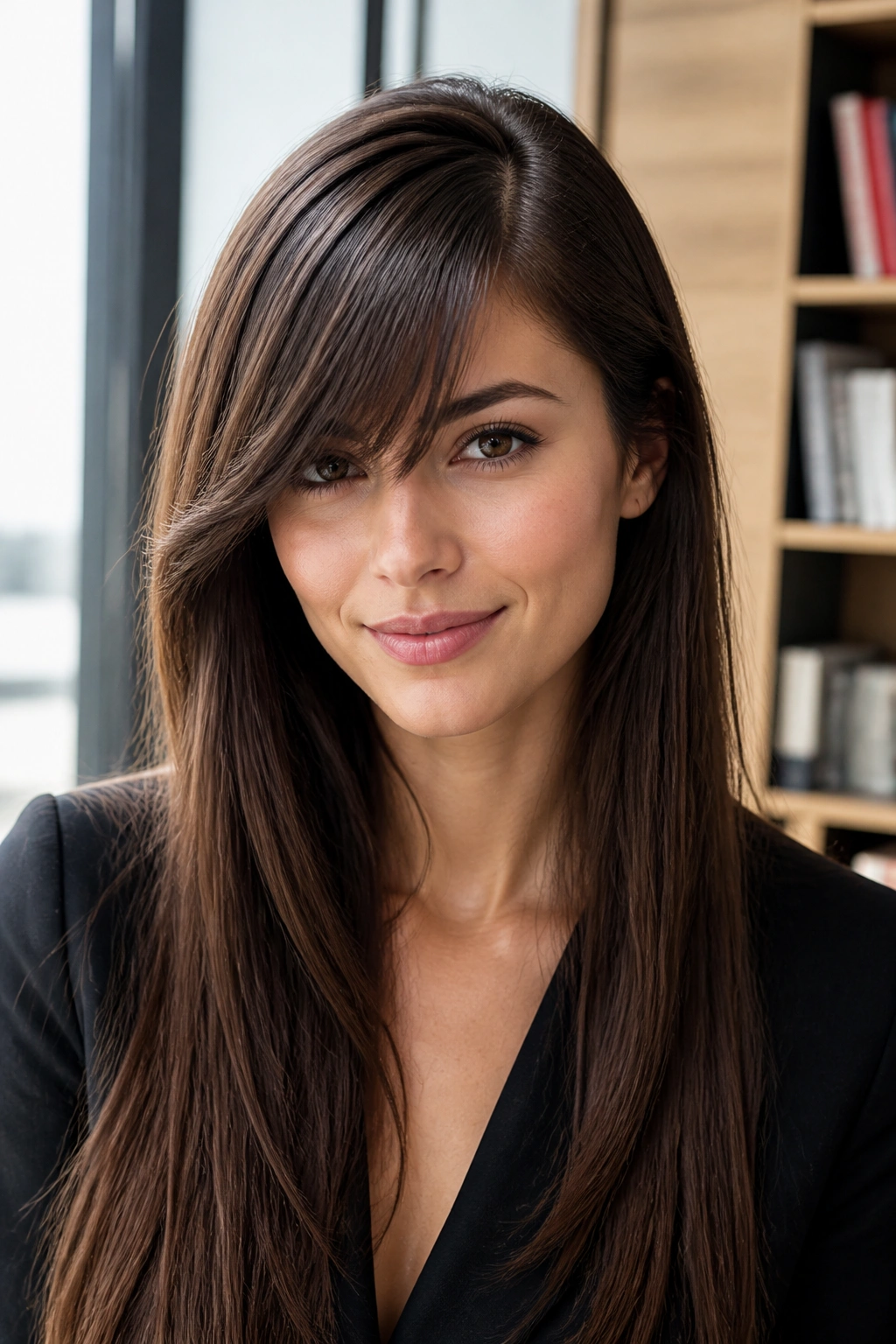
A deep side part changes everything. The fringe no longer sits as a balanced frame; it sweeps across the forehead with a clear direction, which gives straight hair a stronger line and a bit more attitude.
This cut is useful if one side of your hair naturally falls flatter than the other. Instead of fighting that, the fringe leans into it. The result feels more sculpted and less symmetrical, which can be a good thing if your face has strong angles or if you want the haircut to look a little less sweet.
It’s also a clever option when you want bangs but not the classic center-part look. Same softness. Different energy.
If your daily styling takes ten minutes or less, this can be a friendlier choice than a perfectly centered fringe.
19. Razor-Cut French Bangs
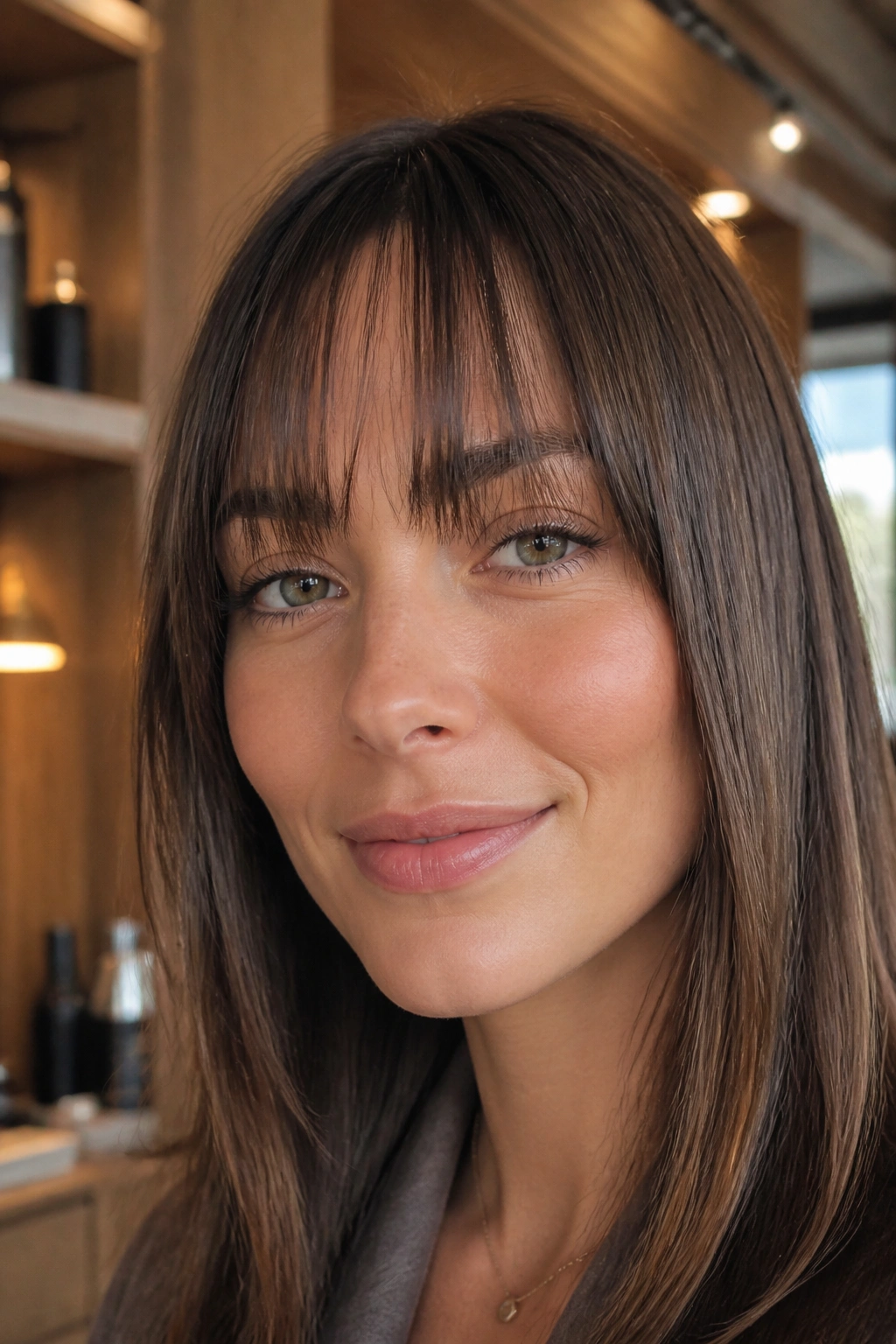
Razor-cut bangs can look gorgeous on straight hair when the hand behind the razor knows exactly what it’s doing. The ends come out softer and slightly airier than a scissor-cut fringe, which gives the bangs a looser finish.
That looseness can be a gift. It keeps the line from feeling too hard, and it can add movement to hair that otherwise lies very flat. But there’s a catch: on straight hair, a bad razor cut shows fast. Frayed ends and over-thinned sections are easy to spot.
So this is the version I’d only do with a stylist who cuts fringe often. Ask for a light hand and a soft edge, not a dramatically shredded look. The best razor cuts feel lived-in, not damaged.
The payoff is a fringe that has a little air in it. Nice. Not messy.
20. Shag-Inspired French Bangs

A shag-inspired fringe brings more pieces around the face, which is useful if straight hair feels too tidy on its own. The bangs stay French in spirit—soft center, longer sides—but the surrounding layers are more broken up and textured.
That extra movement helps the front of the haircut breathe. Straight hair can make a simple fringe look too exact, and the shag influence loosens the whole thing. You get shape without the hard edge. You also get that slightly undone feel that never really goes out of style because it doesn’t try too hard.
This version is especially good if you like air-drying. A little mousse at the roots, some finger-twisting around the fringe, and you’re in business. Not fancy. Just useful.
If your hair falls flat by lunchtime, this is one of the better cuts to try.
21. Bob With French Bangs
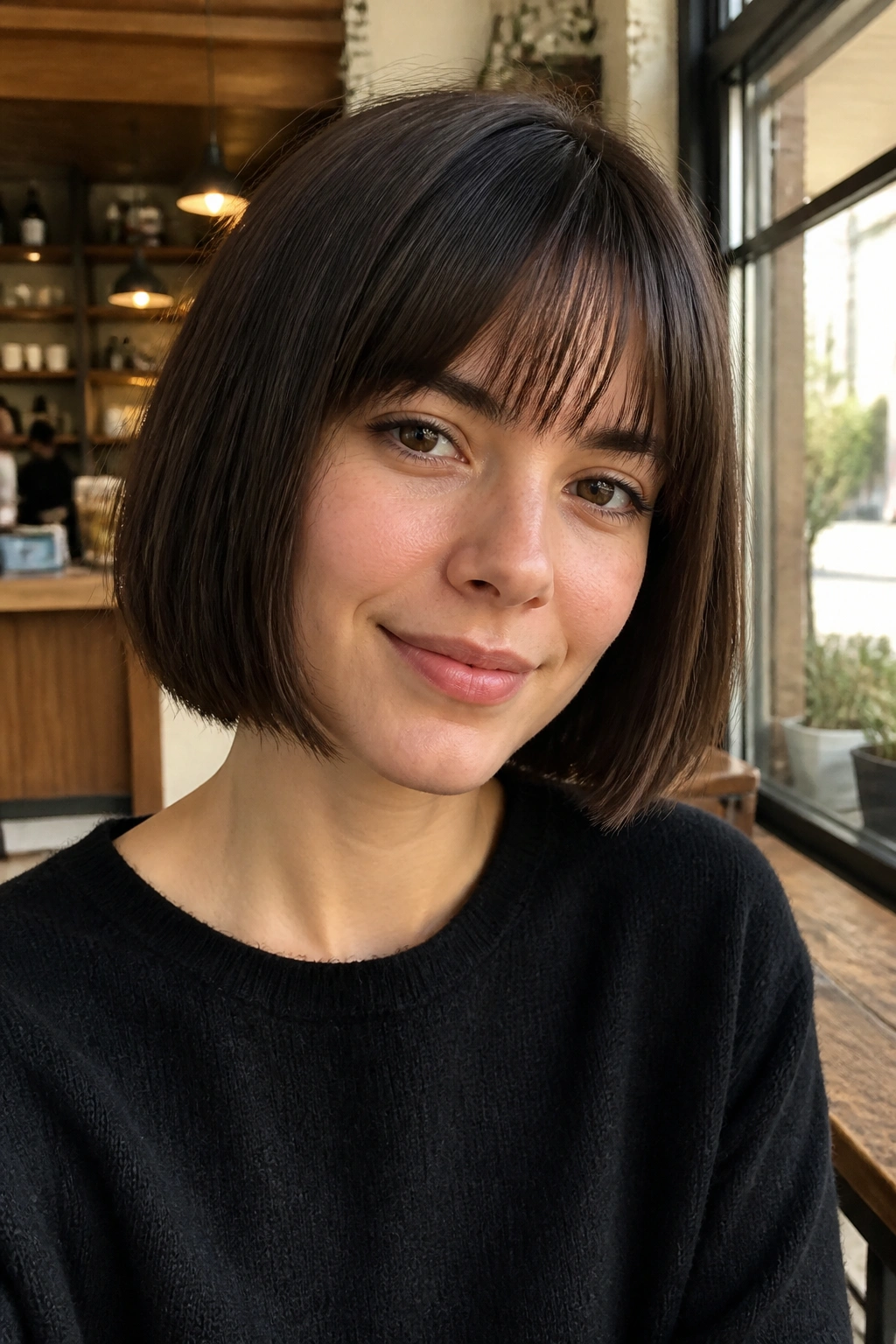
A bob and French bangs together can look sharp in a way that longer hair sometimes cannot. Straight hair helps here because the line of the bob stays clean, while the bangs soften the front so the cut doesn’t feel too severe.
The length matters. A chin-length bob with French bangs can feel bold and compact. A slightly longer bob, brushing the jaw or collarbone, gives the fringe more room to breathe. If the bob is too blunt and the bangs are too blunt, the whole look can turn boxy fast.
I like this combination when someone wants structure. There’s a reason it keeps showing up in salons: it works. The bangs stop the bob from feeling helmet-like, and the bob gives the bangs a stronger backdrop.
A quick bend under the fringe and a flat iron through the bob ends is often enough. Clean lines, done.
22. Ponytail-Friendly Long Fringe
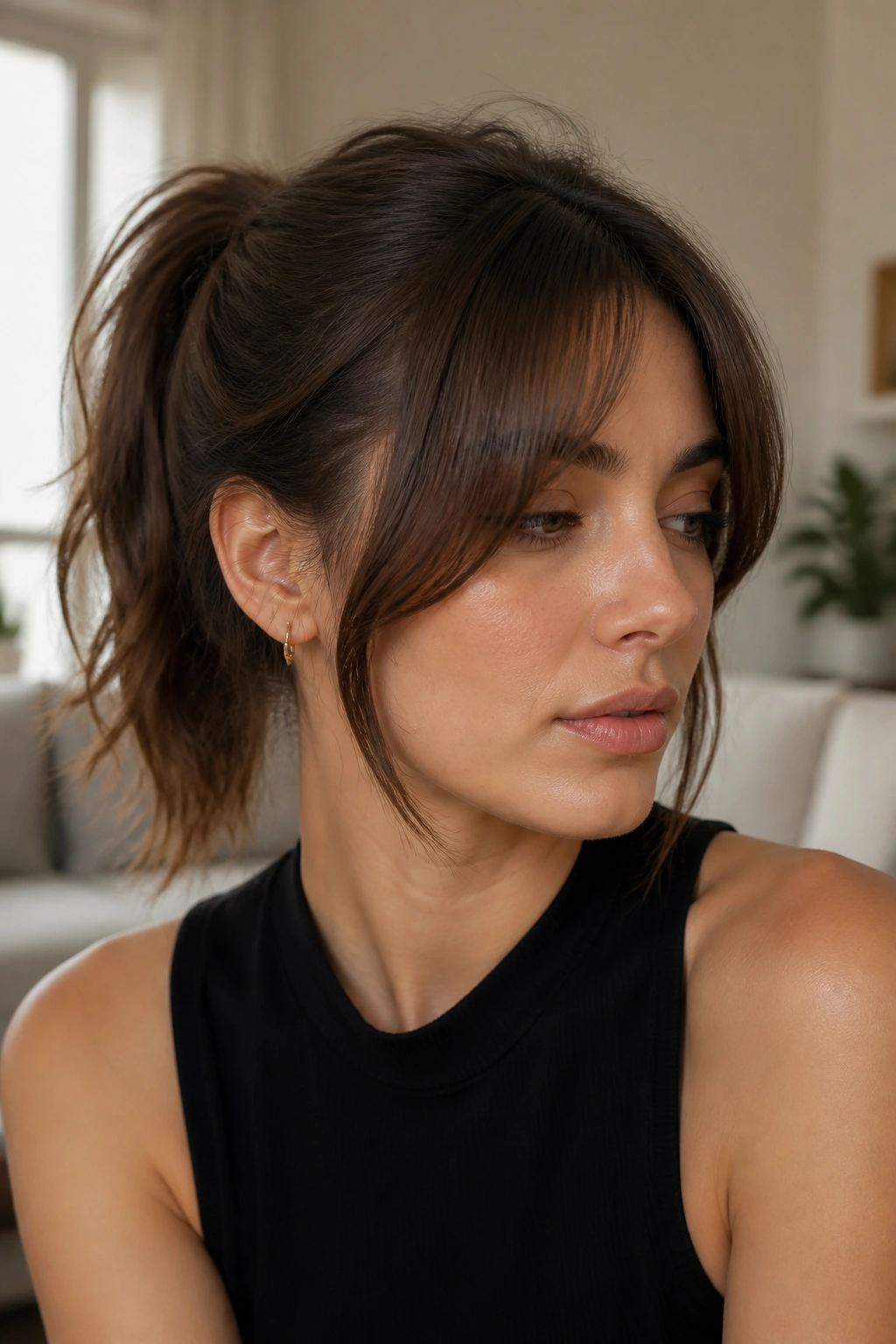
If you wear your hair up a lot, long French bangs are the version that earns their keep. They’re short enough to frame the face when down, but long enough to tuck into a ponytail, clip back, or leave loose without looking awkward.
That flexibility is the draw. Straight hair makes the fringe easy to re-shape, and the longer sides can be pulled into the rest of the style instead of hanging there uselessly. You don’t have to choose between bangs and convenience.
Best when you
- Wear low ponytails or buns
- Want a fringe that grows out slowly
- Like tucking hair behind one ear
- Need a style that can look formal or casual
A long fringe like this can be brushed forward in the morning, then pinned off the face later. That kind of range is worth something.
23. French Bangs for Dense Straight Hair
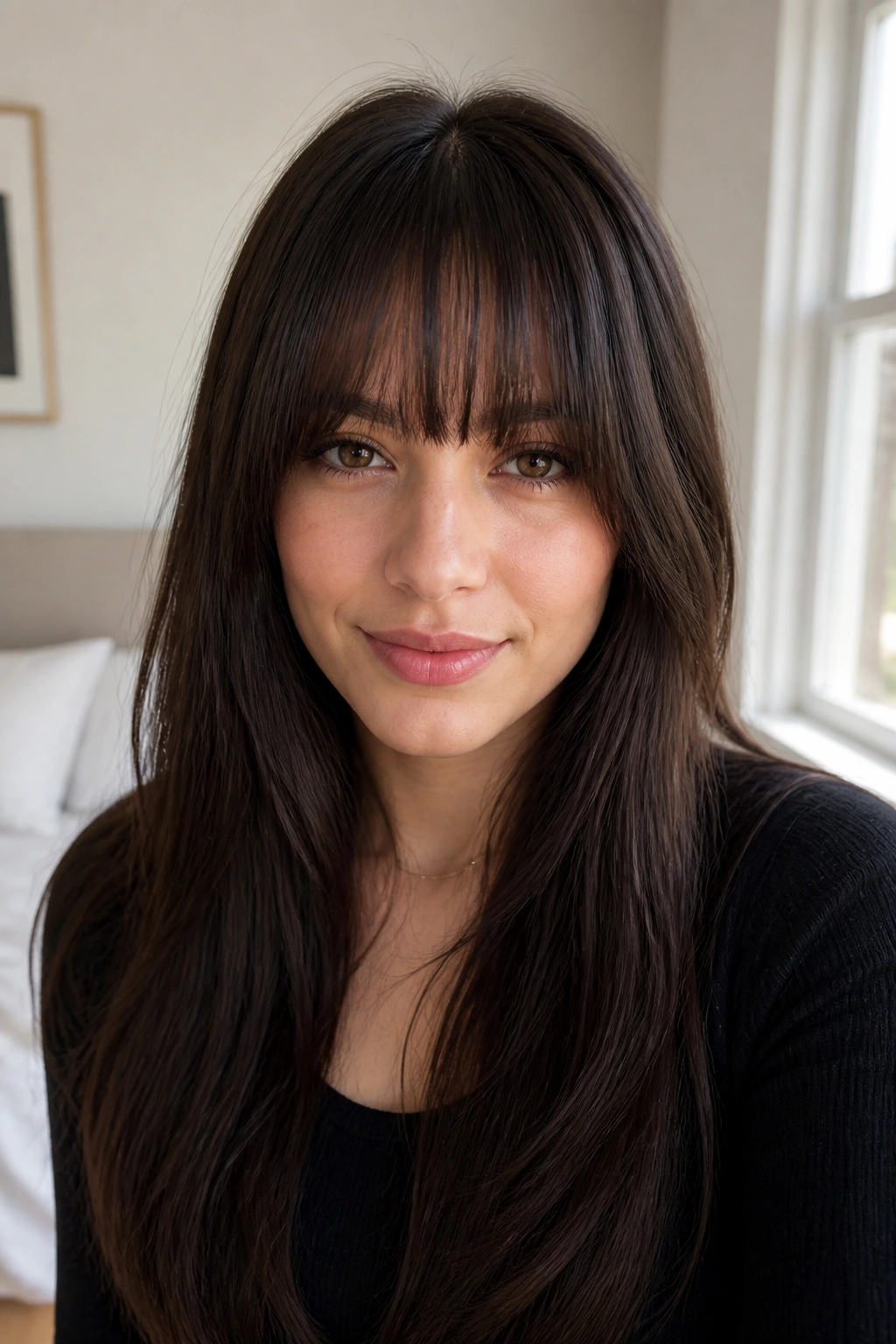
Dense straight hair needs a different touch. If the fringe is too thick, it can sit like a heavy panel; if it’s thinned too much, it loses all its strength and starts splitting in annoying places. The middle ground is where the good cuts live.
For this hair type, I’d ask for controlled weight removal at the edges and a center that still has presence. The bangs should lie cleanly, but they should not feel bulky. That means the stylist has to respect the density instead of fighting it with aggressive thinning.
A dry shampoo at the roots can help a lot, too. Dense straight hair often drags itself down by midday, especially at the forehead. A little lift keeps the fringe from collapsing into the skin.
This is one of those cases where less styling can actually look better. Let the haircut carry the shape.
24. French Bangs for Fine Straight Hair
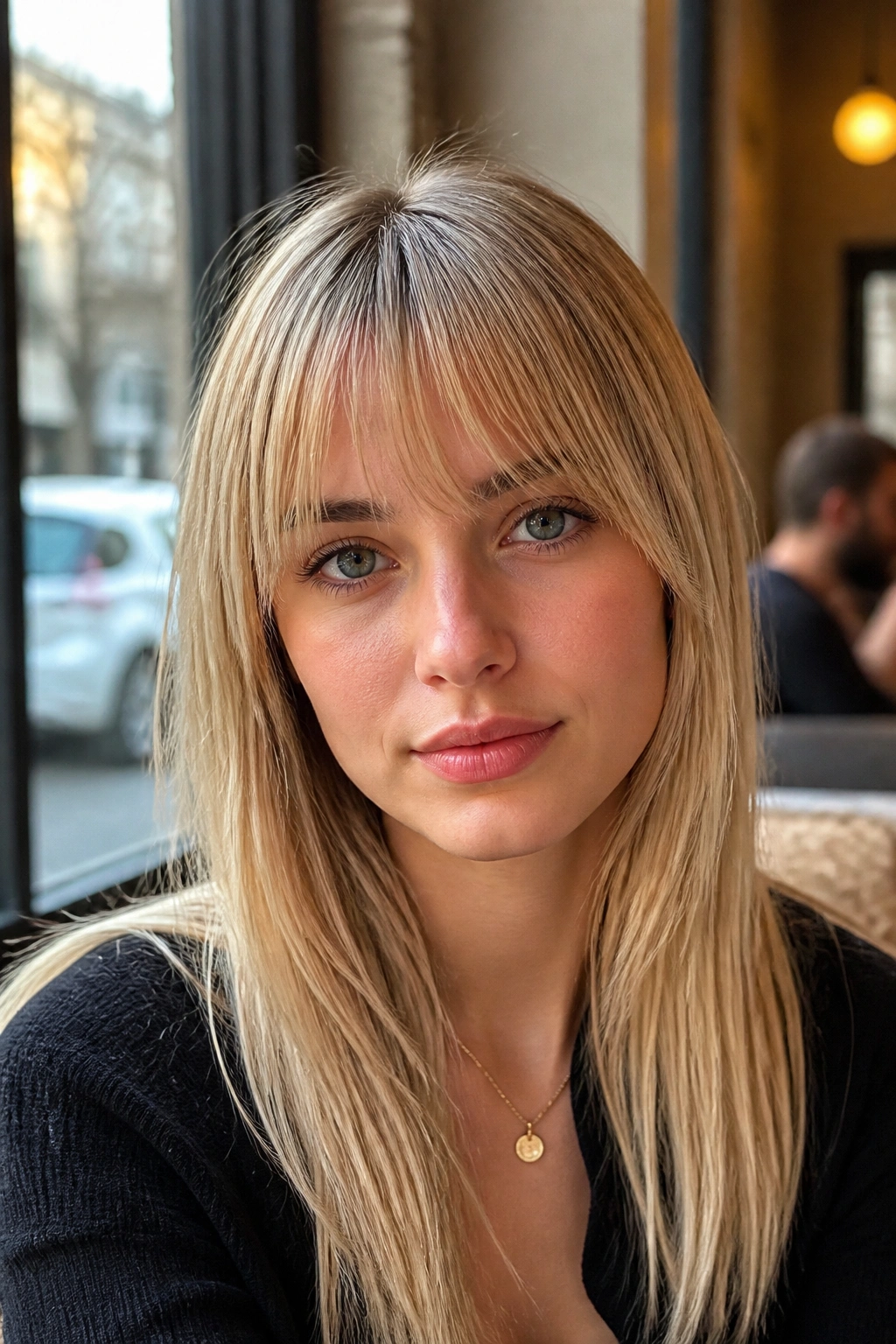
Fine straight hair needs the opposite approach. Here, the fringe has to look like enough hair without getting too wispy too fast. A lighter French bang can be lovely, but if the sections are too narrow, the forehead starts showing through in places that look accidental.
The best version uses modest density and clean edges. You want enough hair to create a line, but not so much that the fringe steals all the volume from the rest of the cut. A root-lifting spray helps, and a small round brush can give the bangs a bit of bend without flattening them further.
This is where restraint matters. Over-cutting fine hair is easy. Recovering from it takes patience.
A slightly longer fringe often works better than a super short one, because the extra length gives the illusion of fullness. Tiny difference. Big visual payoff.
25. French Bangs Tailored to Your Face Shape
The smartest French bangs are the ones cut for your face, not the one in the photo you saved three weeks ago. Straight hair makes that even more true because the shape of the fringe shows up cleanly. No camouflage. No foggy texture to hide mistakes.
Round faces usually look good with longer corners that open the forehead a bit. Square faces often benefit from soft feathering at the ends so the fringe doesn’t echo the jaw too hard. Long faces can take a fuller center or a wider spread at the sides to make the face feel less stretched. Heart-shaped faces often like a fringe that doesn’t get too bulky in the middle, because that can crowd the features fast.
Bring photos, sure. But bring a clear sentence too: soft, airy, longer at the sides, not too blunt. That gives your stylist something useful to work with, and it keeps the cut from turning into a copy of somebody else’s hair.
A good French fringe on straight hair does one thing especially well: it makes the haircut look like it belongs to you, not to a mood board.
