



Round faces and asymmetrical bangs get along for a simple reason: a diagonal line changes how the eye moves. Instead of stopping across the forehead like a clean horizontal bar, the fringe pulls the gaze downward and off to one side, which softens width at the cheeks and gives the face a little more shape.
That does not mean every uneven fringe will flatter a round face. Some versions are too heavy. Others sit too short, too blunt, or too centered, and then the face reads even rounder than it did before. The useful ones have a plan. They start high, curve or sweep across the brow, and end somewhere that helps draw a longer line through the face.
The best part is how flexible this cut can be. Fine hair, thick hair, straight hair, waves, curls, pixie cuts, bobs, long layers — there’s a version that can work if the angle is placed well and the density is handled with a little care. A good fringe here is not about hiding your face. It’s about steering attention.
1. Deep Side-Swept Bangs With a Long Tail
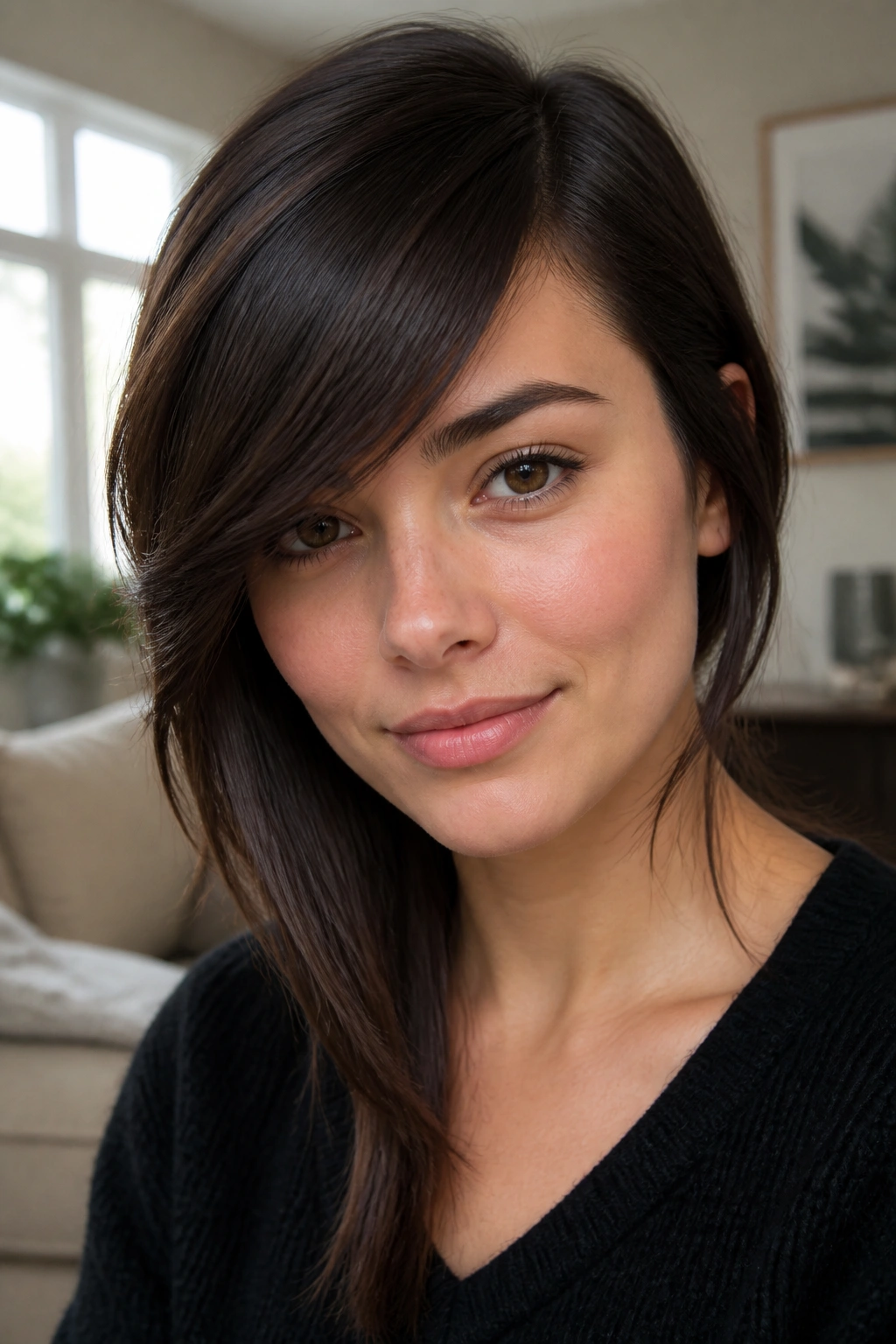
A deep side part gives round faces one of the easiest wins. The bang starts higher on one side, crosses the forehead on a clean diagonal, and leaves a longer tail near the cheekbone on the other side. That longer end matters. It keeps the cut from looking like a quick sweep and makes the whole front section feel intentional.
Why It Works on Round Faces
The long tail creates a vertical line right where round faces need it most. Instead of sitting evenly across the forehead, the fringe breaks the width and pulls the eye down past the widest part of the cheeks.
- Best on medium to thick hair
- Looks strongest when the longer side reaches the outer corner of one eye or the top of the cheekbone
- Keeps some forehead visible, which helps the face feel open
- Works with both straight blowouts and soft bends
Pro tip: Ask for the shortest point to start no lower than the arch of the brow. Any shorter and the sweep can get boxy fast.
2. Off-Center Curtain Bangs
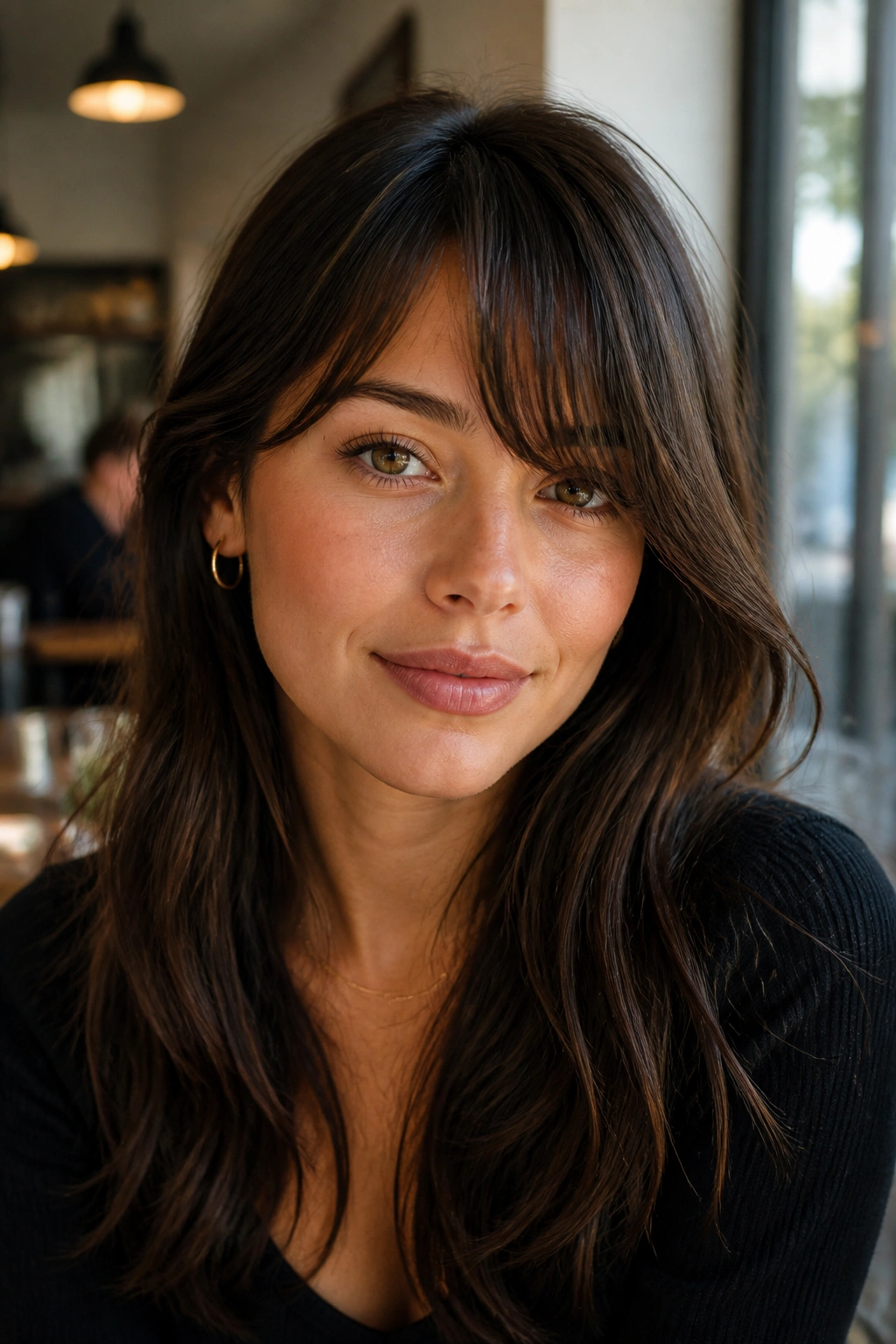
Off-center curtain bangs are softer than a hard side fringe, but they still give you that uneven line round faces usually need. One side opens a little earlier, the other side drops longer and frames the face in a gentler way. The result feels relaxed, not fussy.
That little shift away from the exact middle changes the whole read of the haircut. A centered curtain bang can feel symmetrical and broad. Push the part over by even an inch, and the face gets more movement. It’s a small thing. It changes a lot.
These work especially well if you like a lived-in style and don’t want to restyle your fringe every morning. Let them bend away from the face with a round brush, or air-dry them and tuck one side behind the ear once they’re barely damp. Either way, the off-center shape keeps the front light.
3. Feathered Side Fringe Skimming the Brow
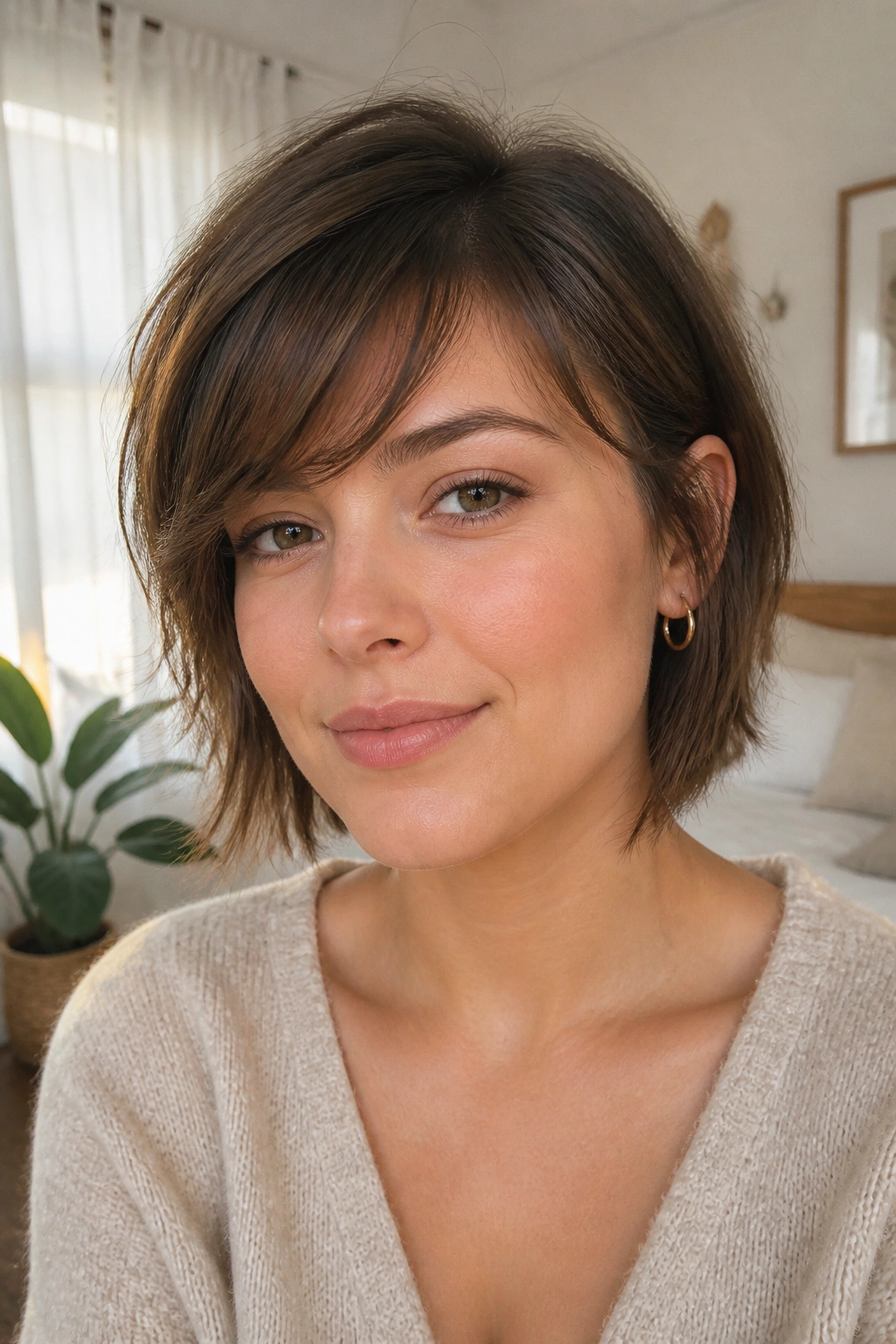
Can a fringe be soft and still do real work? Yes. Feathered side bangs are proof. They skim the brow instead of sitting on it, and the feathering keeps the edge from turning into a solid wall across a round face.
How to Style It
Use a small round brush and dry the roots first. Then bend the bang away from the face with low heat and a touch of tension. You want the ends to move, not flip hard.
The trick is to keep the density light. If the fringe gets packed too thick, it loses that airy line and starts acting like a curtain. A little see-through space near the brow makes the face feel longer.
This is a good choice if your hair is fine or medium and you hate a heavy bang. It also grows out cleanly, which saves you from that awkward in-between stage people always pretend is no big deal. It is a big deal.
4. Long Diagonal Bangs With a Soft Bend
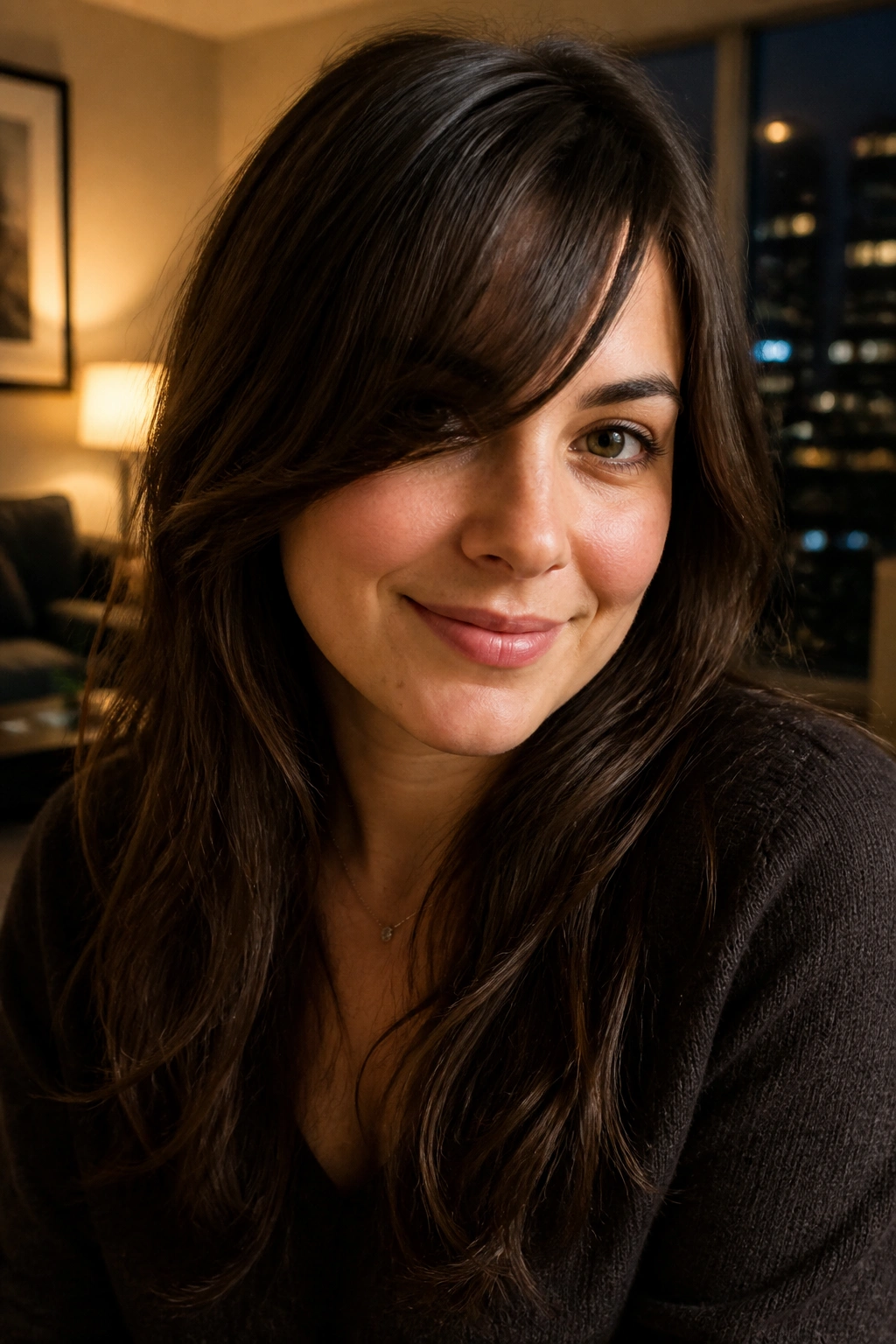
Picture a fringe that starts near the crown, falls across one side of the forehead, and then bends softly toward the cheek. That’s the shape here. It’s one of the most forgiving asymmetrical bangs ideas for round faces because the line is long, not stubby.
The soft bend matters more than people think. A straight diagonal can look sharp in a good way, but a little curve near the ends makes the fringe feel smoother and keeps it from cutting across the face too aggressively. On round faces, that softness helps the cut flatter without shouting.
Best of all, this version works with a casual wave or a polished blowout. If your hair has any natural movement, let it do some of the work. A 1-inch curling iron, used only on the ends, is usually enough.
- Keep the longer side past the brow
- Point the shorter side toward the arch
- Use heat protectant before any hot tool
- Finish with a light mist, not a stiff spray
5. Piecey Razor Bangs With a Side Part

Razor bangs have a little attitude, and that’s exactly why they work on round faces. The cut edge is broken up, so instead of a flat strip of hair, you get thin, separated pieces that move. That broken line takes pressure off the cheeks.
A side part keeps the whole thing from becoming too even. One side can fall across the forehead in soft chunks while the other side slips shorter and stays closer to the temple. The difference between the two sides is what makes the fringe interesting.
I like this look on hair that has a bit of grit to it. Straight hair can still wear it, but you’ll want a dab of styling cream or paste to keep the pieces from falling flat. If the ends start to look wispy in a bad way, ask for point cutting rather than more razoring. There’s a line there. Too much slicing and the fringe turns stringy.
6. Chin-Grazing Fringe That Blends Into Layers
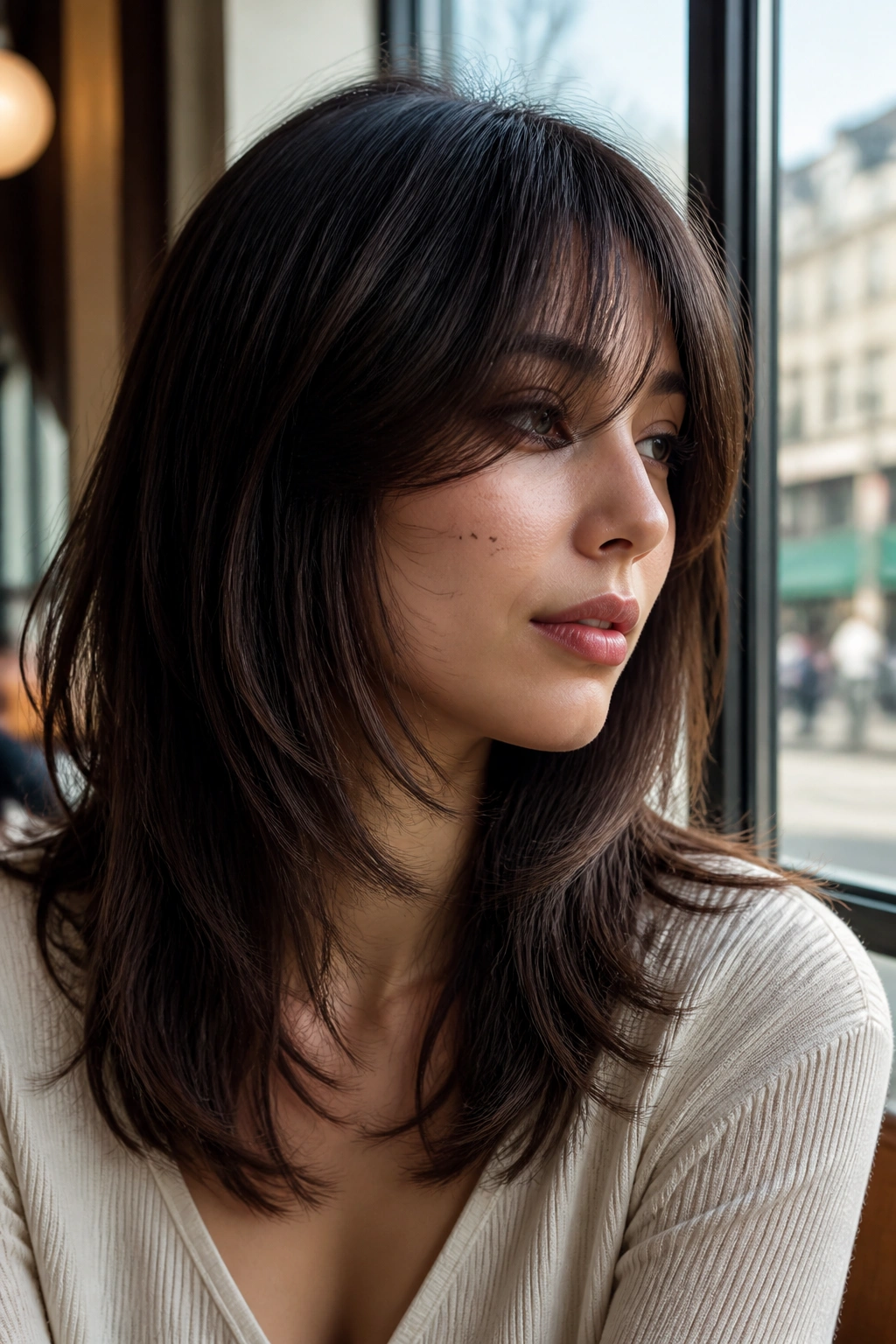
This version is sneaky in the best way. It barely reads like bangs at first glance, because the shortest front pieces blend into layers that graze the chin. On a round face, that length gives the front of the cut a long, clean edge.
Unlike a short fringe that stops at the brow and can widen the forehead, chin-grazing pieces keep the eye moving downward. They also work beautifully with a lob or a collarbone-length cut, since the front pieces echo the length of the haircut instead of fighting it.
There’s a nice practical side here, too. If you’re nervous about bangs, this is one of the safest ways in. The pieces can be tucked back on busy days, air-dried on lazy ones, and styled with a quick bend only when you want more shape. No drama. Just enough structure to change the face.
7. Micro Asymmetrical Bangs for Short Cuts
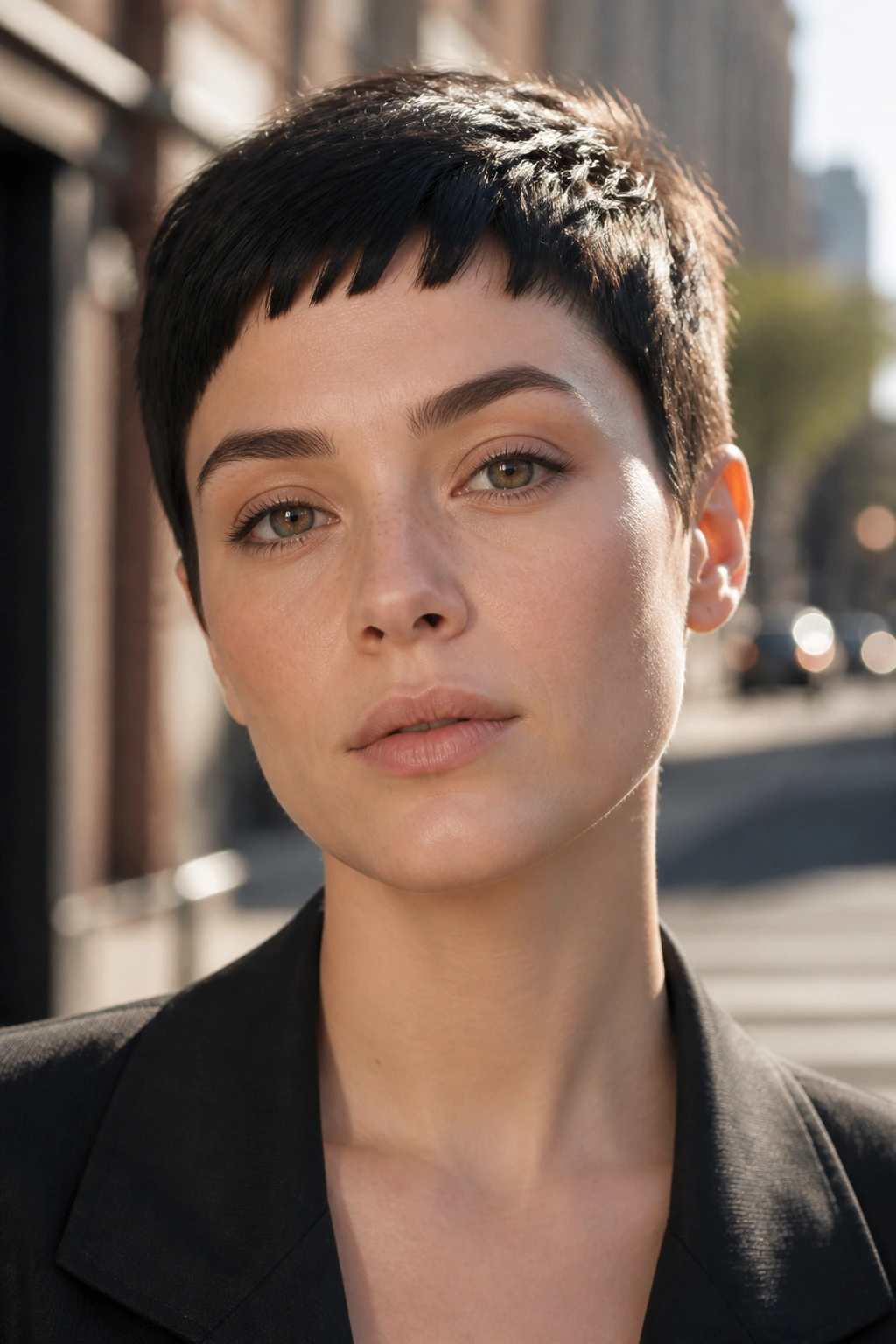
Short bangs can work on round faces if they’re handled with some restraint and a clear angle. A micro asymmetrical fringe sits high, but one side is left slightly longer so the line doesn’t become too square. That little difference keeps the cut from feeling harsh.
What Makes Them Bold
The short side shows off the brows, while the longer side sends a diagonal across the forehead. On a pixie or cropped bob, that contrast can give the face more edge without adding width.
- Best when the longer side lands near the outer brow
- Works on straight or slightly wavy hair
- Needs regular trims to keep the shape from drifting
- Looks strongest with a neat texture, not a fluffy one
Pro tip: If your face is very round, keep some length in the temple area. That one detail makes the whole cut read longer.
8. Long Sweeping Bangs That Start at the Crown
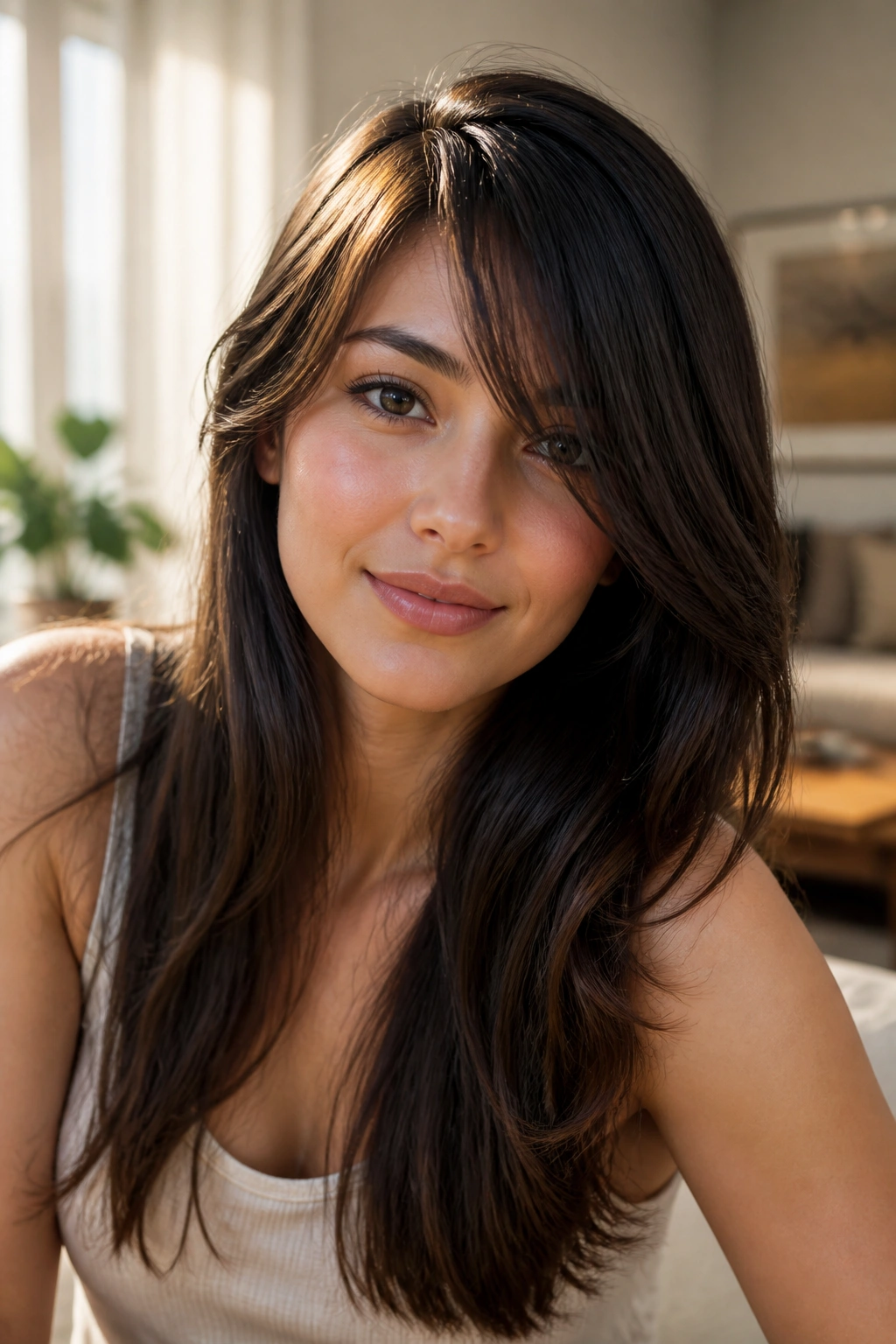
A lot of people cut bangs too low. That’s the trap. Long sweeping bangs that start higher up near the crown give round faces more lift because the eye follows the line from the roots, not from the middle of the forehead.
The effect is subtle in photos and stronger in person. The hair feels like it’s flowing across the face instead of sitting on top of it. That makes the front of the haircut seem taller, which is exactly the kind of shape a round face can use.
This style likes a blow-dryer and a round brush. You do not need a perfect salon finish every day, but the roots should be lifted first and the ends should be guided into a soft sweep. If the roots sit flat, the whole look collapses and the angle loses its shape. A little clip at the crown while it cools helps more than people expect.
9. Soft Arched Bangs With One Shorter Side
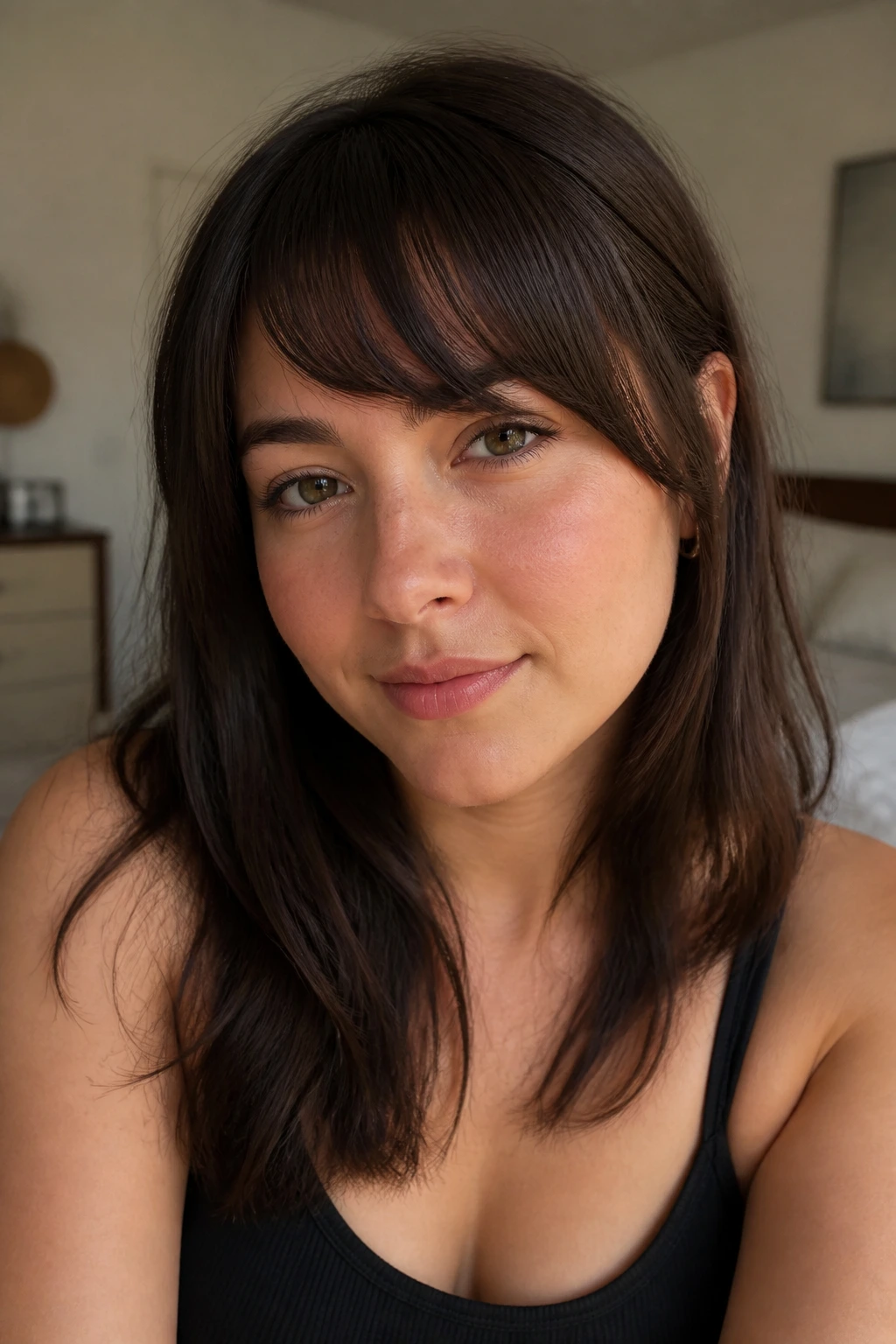
Could a rounded shape still flatter a round face? It can, if the edge isn’t even. Soft arched bangs curve gently through the center, then one side is cut a touch shorter so the line leans instead of sitting straight across.
How to Ask for It
Tell your stylist you want a soft arc, not a perfect crescent. Then show which side you’d like to open up more. That keeps the fringe from becoming too symmetrical.
The arch gives the forehead some shape, while the shorter side breaks the width. It’s a nice middle ground for someone who wants bangs but doesn’t want anything too dramatic. The look feels polished without turning severe.
This is especially good if your hair naturally falls forward. The curve works with that motion instead of fighting it. And if you wear glasses, the soft arch can clear the frames better than a heavy diagonal fringe. Small thing. Useful thing.
10. See-Through Side Bangs
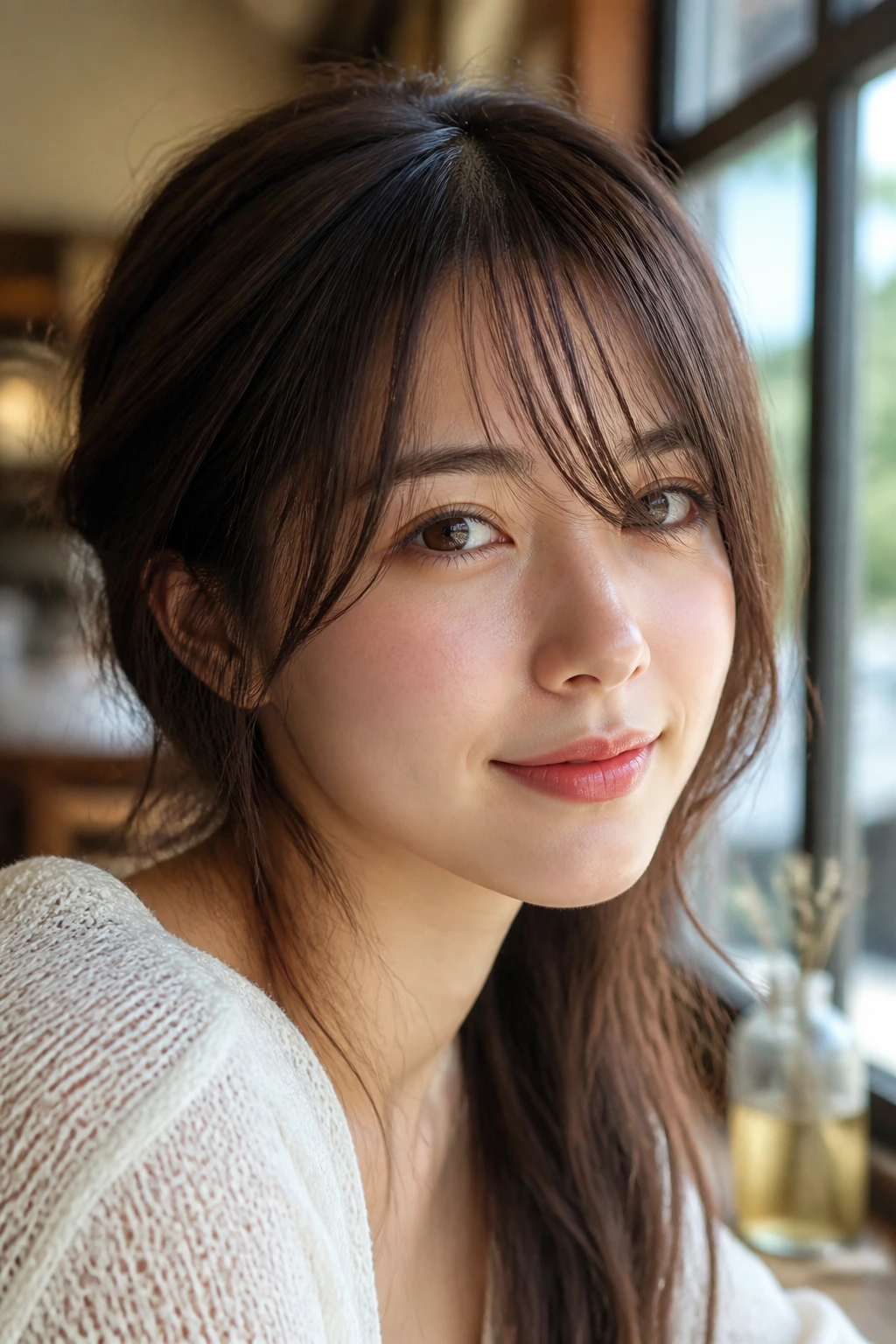
See-through bangs have a lighter density, which is why they work so well on round faces. They don’t cover much skin, so the forehead stays open, but the diagonal shape still breaks up the width of the face. That combination is hard to beat if you want softness without heaviness.
The best versions leave tiny gaps between the strands. You can see a little forehead through them, and that airiness keeps the style from feeling heavy at the temples. A dense fringe can weigh the face down. A sheer one moves.
What to Watch For
These bangs need a careful trim. Too sparse and they look unfinished. Too full and they stop being see-through. The sweet spot is a fringe that brushes the brow in loose strands and gets longer as it travels to one side.
They work best with light styling — a quick blast from the dryer, a little finger-combing, and a small amount of cream at the ends. Nothing rigid. Nothing sticky.
11. Shaggy Uneven Bangs
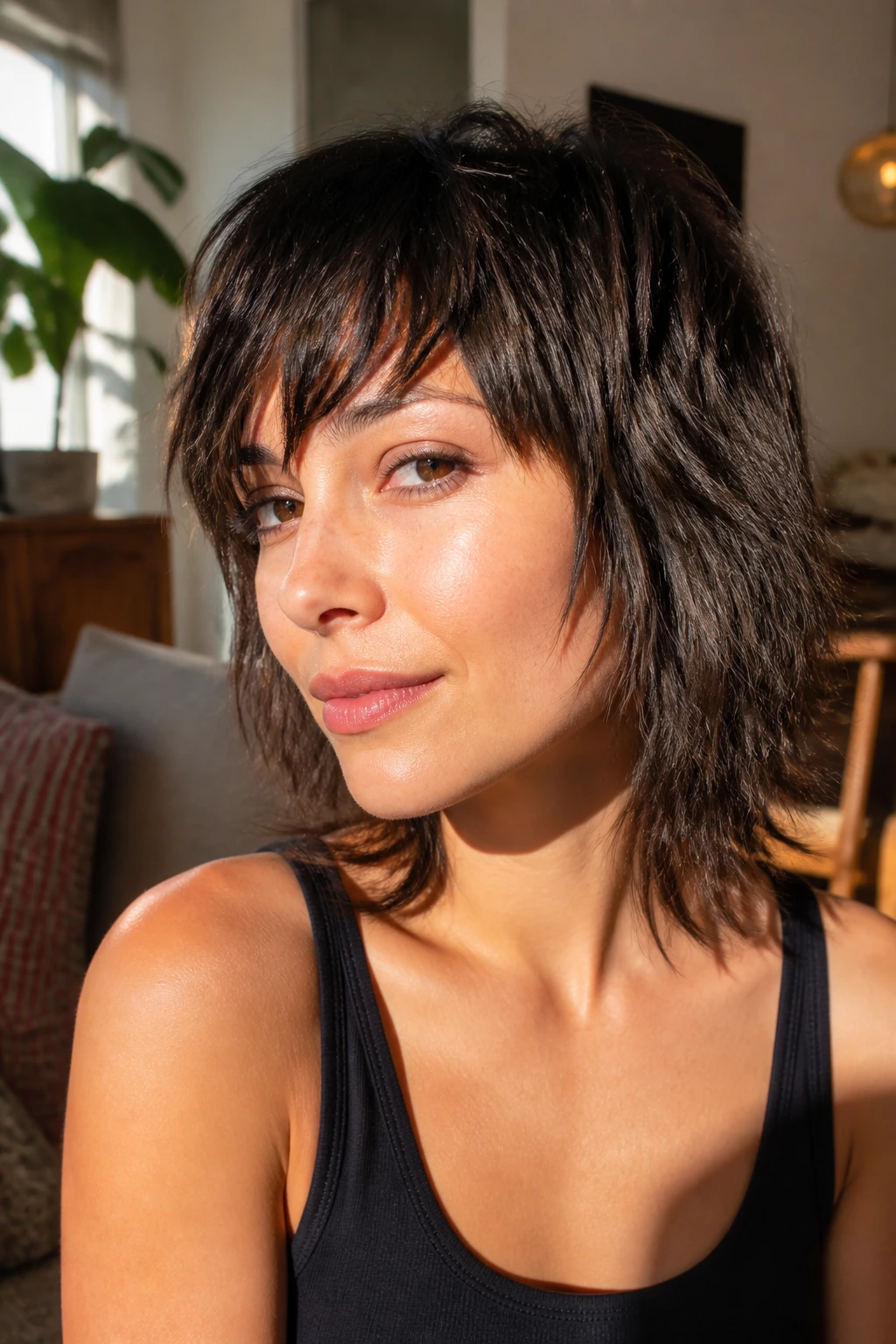
Shag bangs are messy in the right way. The lengths are uneven on purpose, which makes them ideal for round faces that need movement more than polish. The broken edge keeps the fringe from drawing one solid line across the forehead, and that alone changes the whole shape.
If your hair already has texture, this is a gift. Wavy hair gives shag bangs extra lift and separation, while straight hair can be roughed up with a bit of salt spray or dry texture spray. The point is not perfection. The point is direction.
I like these because they make the face look less boxed in. The fringe can land shorter on one side, longer on the other, and still feel balanced because the rest of the cut is intentionally loose. It’s one of those styles that looks like it came together without trying too hard, even though it absolutely did.
12. Slanted Blunt Fringe
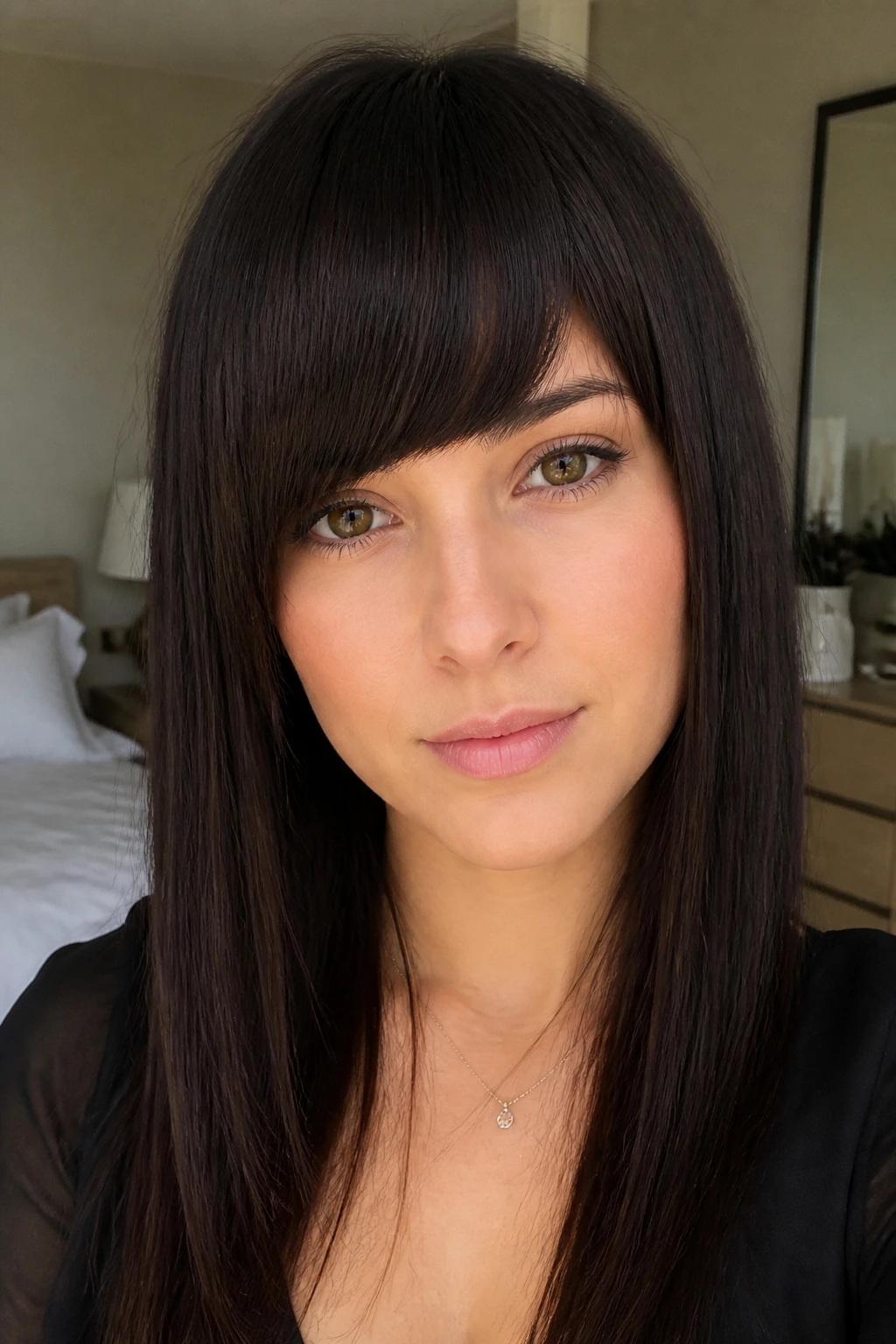
Blunt bangs can be tricky on round faces. Straight across, they often widen the forehead and flatten the face shape. Slanted blunt bangs solve that problem by keeping the edge full but angling the line so it drops to one side.
That little tilt changes the mood. You still get the strength of a blunt edge, which can be great on thick hair, but the diagonal prevents the fringe from feeling boxed. It reads cleaner on the face and puts more attention on the eyes.
This cut likes precision. If the angle is too steep, it loses the blunt effect and just looks uneven. If it’s too shallow, the face can feel broad again. The sweet spot is a clean line that slides from shorter to longer in a way you can see at a glance. Straight hair is easiest here, though a smooth blowout can tame mild wave.
13. Heavy Side Bangs With Lift at the Root
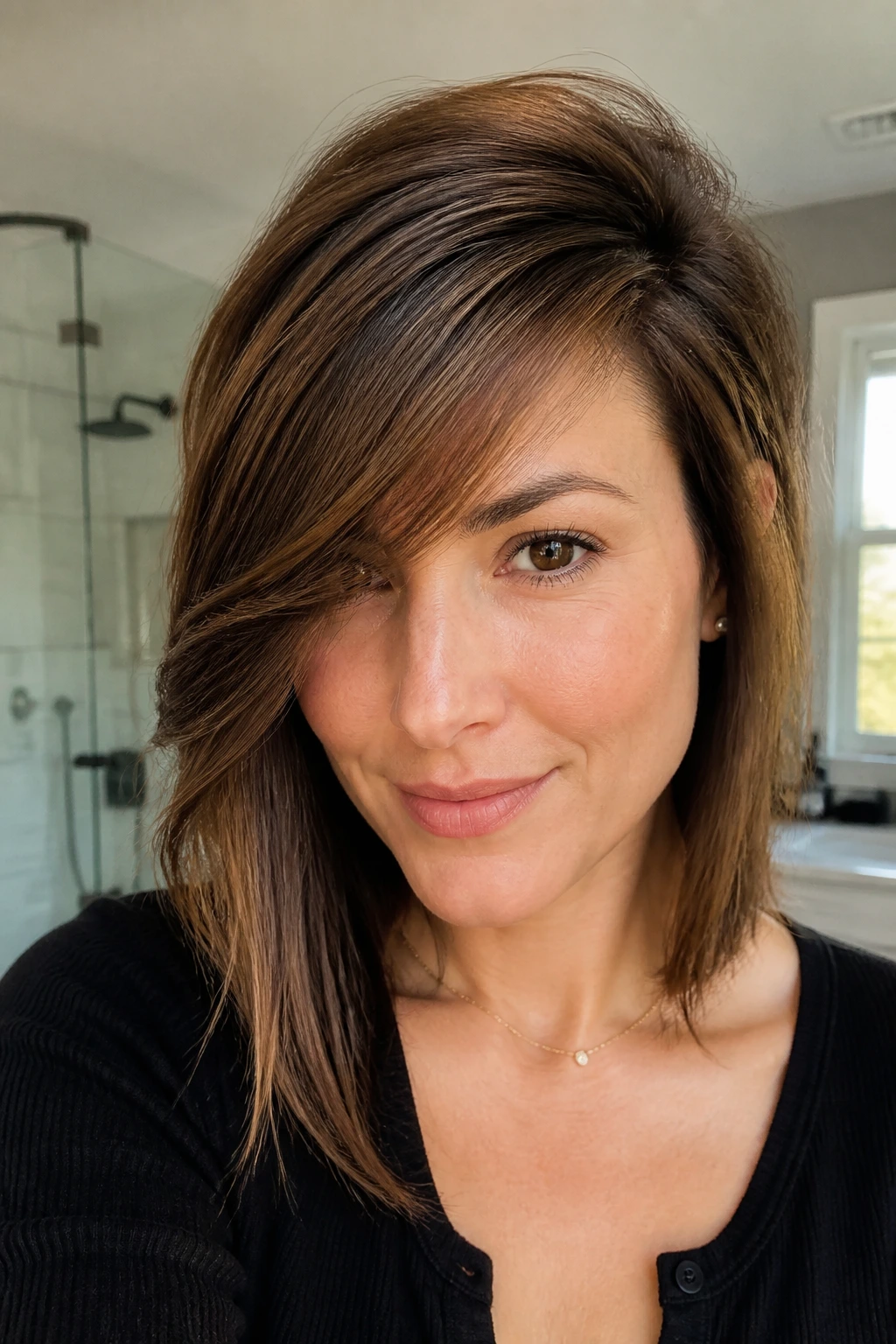
Heavy side bangs sound intimidating, but on round faces they can work if the root area has lift. The weight gives the fringe presence, while the lift keeps it from laying flat across the forehead like a curtain.
Why the Root Matters
Without lift, the bang collapses and sits too close to the cheeks. With lift, it arcs away from the face and creates a better line from the forehead to the jaw.
- Best for dense hair that can hold shape
- Needs a round brush or Velcro roller at the root
- Works well when the longest side reaches the upper cheek
- Benefits from a point-cut edge instead of a blunt block
Pro tip: Clip the bang up for 5 to 10 minutes after blow-drying. That cooling time helps the root hold its bend.
14. Cowlick-Friendly Angled Bangs

Cowlicks can make bangs feel impossible. They push hair the wrong way, split the front, and turn a good cut into a daily argument. Angled bangs are one of the easier ways around that because the shape works with the swirl instead of forcing it down.
The shorter side can sit where the hair naturally wants to rise, and the longer side can follow the direction of the cowlick. That means less fight at the mirror and fewer weird gaps. A round face also benefits from the asymmetry because the angled line keeps the front from feeling flat.
I’d ask for a dry cut if your cowlick is strong. Wet hair hides the real behavior. Once it dries, the truth shows up fast. A stylist who watches how the hair falls before cutting can save you a lot of future frustration.
15. Brow-Skimming Fringe With a Temple Piece
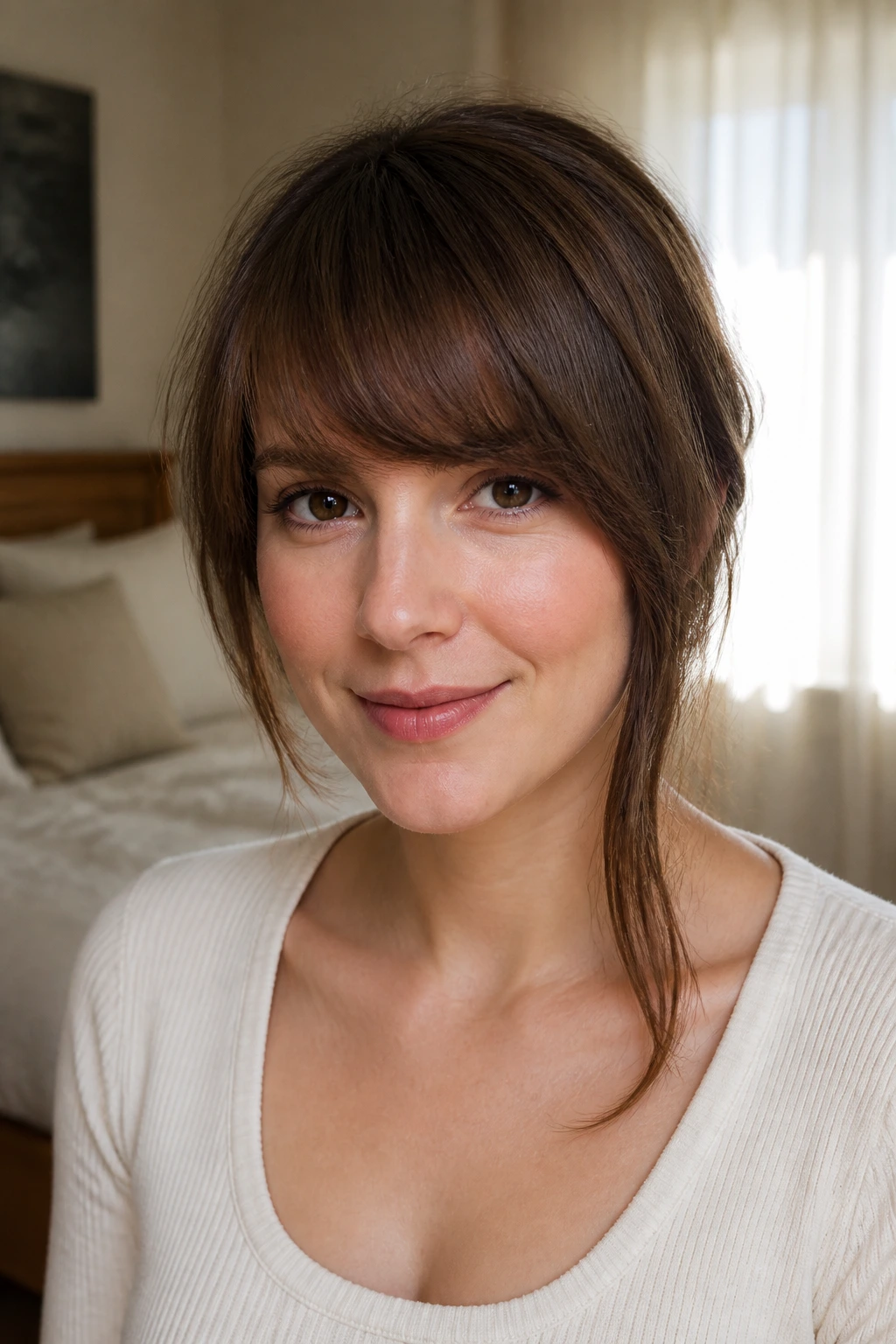
What if you want bangs but still want the face open? Brow-skimming asymmetrical fringe does that nicely, especially when one side keeps a little temple piece longer. That extra piece softens the edge and gives round faces a cleaner vertical line.
How to Get the Most From It
Ask for the fringe to kiss the brow in the center, then graduate longer toward the temple. The temple piece should blend into the side layer rather than hanging out on its own.
This is a smart choice if you grow out bangs slowly or if you hate visiting the salon all the time. The temple piece gives you some room to move the fringe around. You can tuck it, sweep it, pin it, or let it fall.
It also works nicely with minimal styling. A quick pass of the blow-dryer and a small round brush is enough. If you like hair that still moves when you turn your head, this one has that built in.
16. Curved Diagonal Bangs for Wavy or Curly Hair
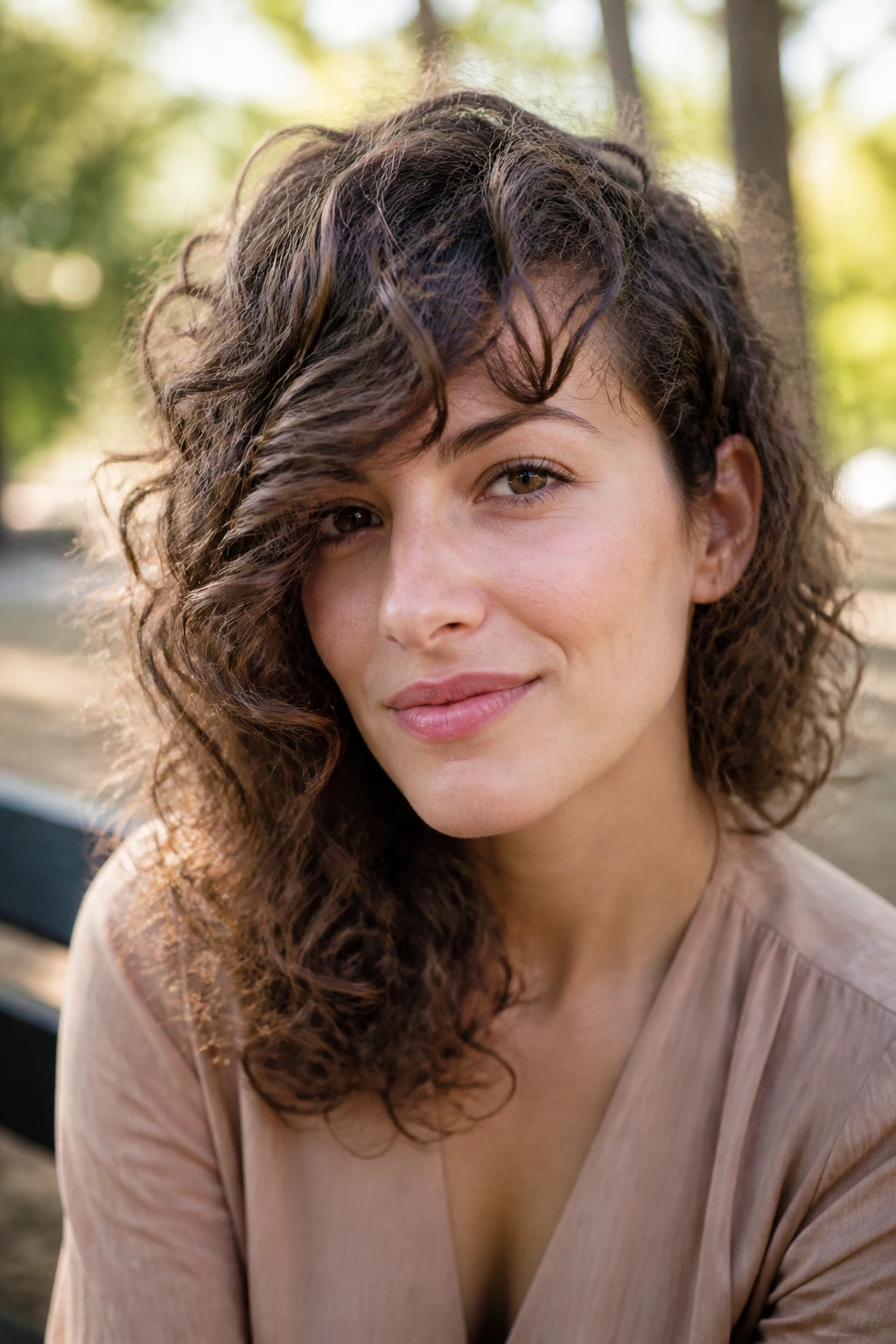
Wavy and curly hair does not need to be flattened into a straight-bang shape to flatter a round face. A curved diagonal fringe lets the natural bend do the work. One side stays shorter, the other side stretches longer, and the curl pattern adds a soft line that feels alive.
The important part is cutting the fringe dry or nearly dry. Curly hair springs up in ways that are hard to predict when it’s wet. If you cut it straight across while stretched, it can shrink too far and end up sitting high on the forehead, which is the opposite of what you want.
A curved diagonal shape also keeps the front from feeling bulky. That matters with curls, since a dense fringe can pile up and make the face look wider. A few well-placed pieces around the brow are often enough. Let the curl form. Don’t bully it.
17. Face-Framing Bangs With Uneven Lengths
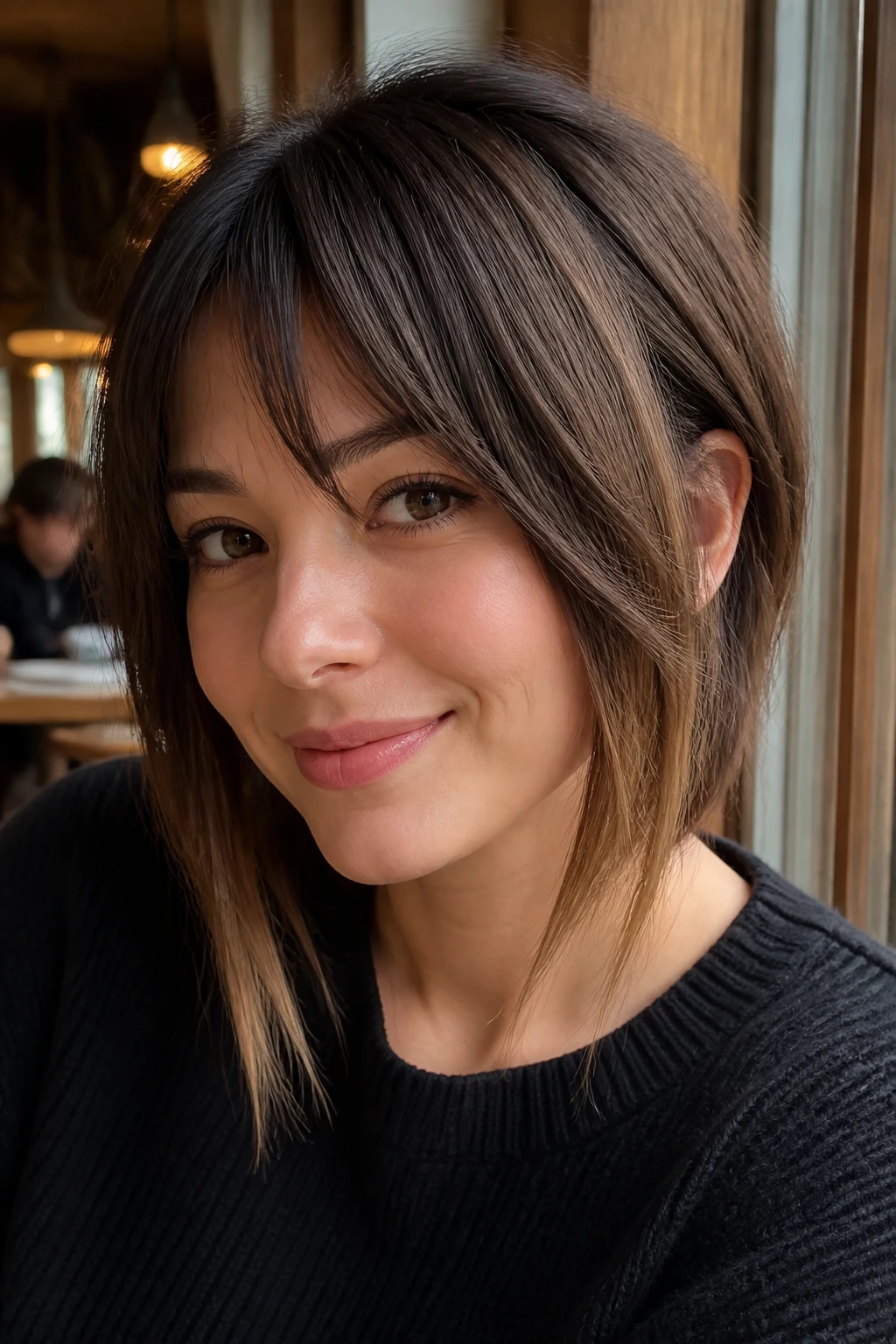
Face-framing bangs are really a front layer with a fringe attitude. The lengths are uneven on purpose, and that irregular shape is a gift for round faces because it breaks the circle without creating a hard line.
This style is useful if you want something that blends into the rest of your haircut. The front pieces can start near the brow, then drop into the cheekbone and jaw area. That gives the face a longer outline, which is the whole point here.
It’s also easy to live with. On one day, the pieces can sit forward and soften the face. On another, they can be tucked back behind the ear and still leave enough shape around the forehead to matter. If you like flexibility, this is one of the better choices.
18. Dramatic Off-Center Split Fringe
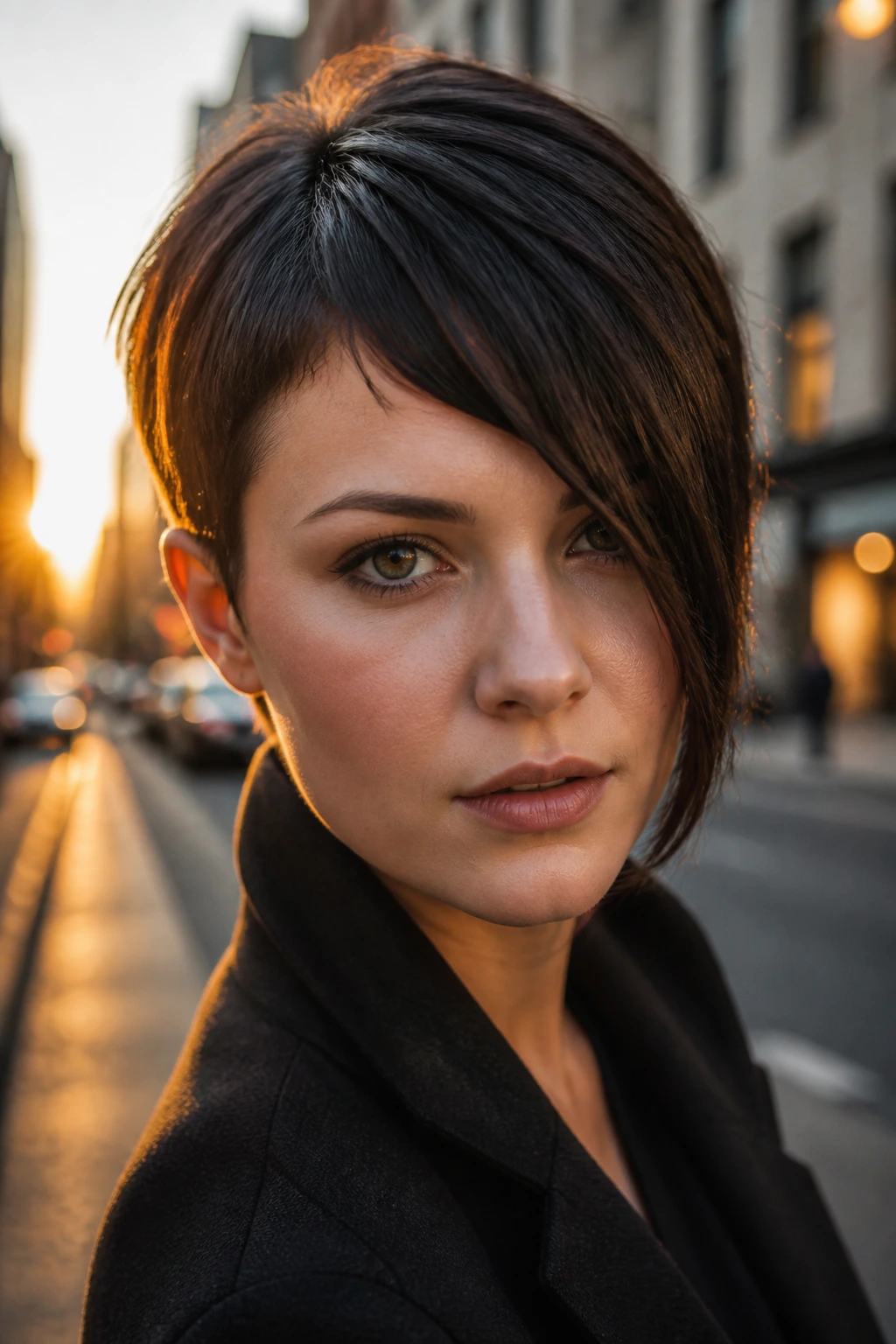
A dramatic off-center split fringe is a little bolder than the softer curtain versions. One side opens early, the other hangs longer and tighter to the face. On a round face, that uneven split gives you a strong diagonal without making the fringe look airy or weak.
Unlike balanced curtain bangs, this style has edge. It works best when you want the haircut to make a statement. The split should be visible at the roots, not just at the ends. That root placement is what gives the front the off-balance feel that flatters the face.
This cut likes a smooth finish. A bit of bend at the ends is fine, but too much frizz can blur the angle and make the fringe puff out. If your hair is thick, ask for internal weight removal near the center so the split lies cleanly instead of standing up.
19. Wispy Lived-In Side Bangs
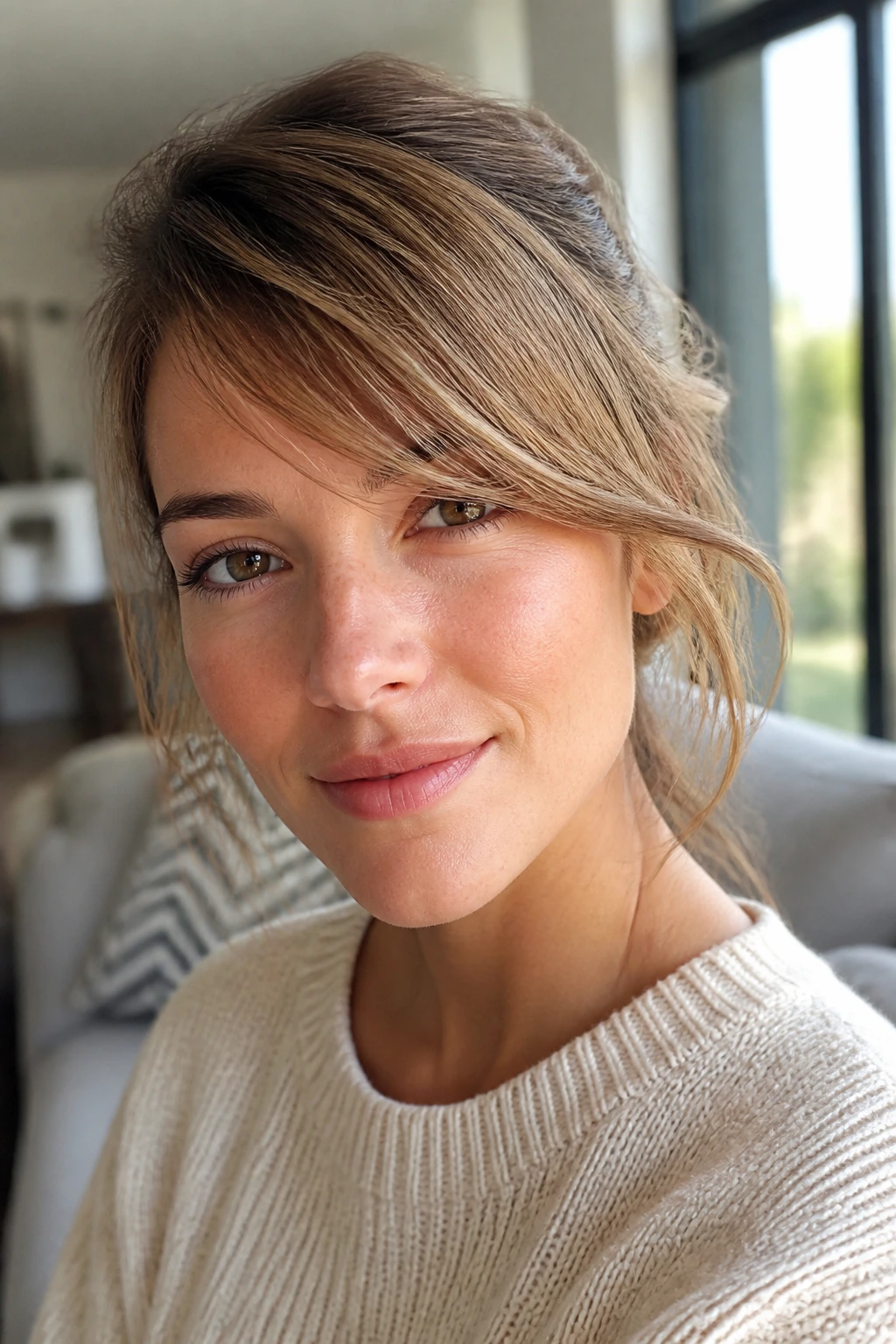
Wispy side bangs are the kind you can wear on a tired morning and still look put together. They’re light, a little broken up, and easy to move around. For round faces, that lightness matters because it keeps the forehead from being swallowed by hair.
What Makes Them Different
They’re not thin for the sake of being thin. They’re thin in a deliberate way, with enough length on one side to keep the line diagonal. That means they still shape the face while staying soft.
- Good for fine to medium hair
- Low effort to style
- Grows out neatly into face-framing layers
- Looks better with a little texture than with a perfectly smooth finish
Pro tip: If the fringe starts to separate too much, add a pea-sized amount of cream to damp hair and twist the front pieces once before drying.
20. Flippy ’90s Angled Bangs
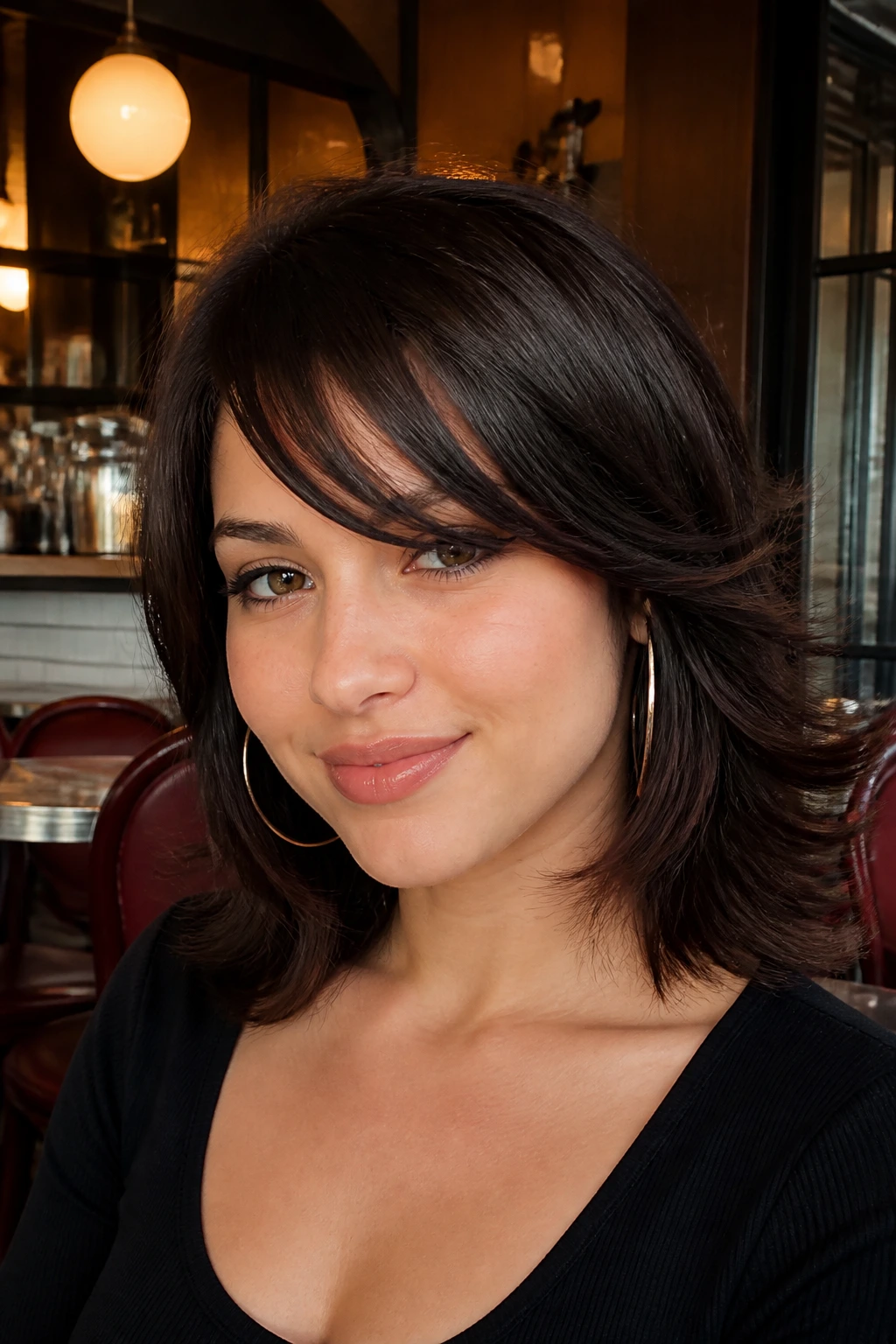
Flippy bangs have that lifted end that curves away from the face, and on a round face that little outward kick can be useful. It keeps the fringe from sitting heavy at the cheeks and gives the front more lift from the roots down.
The angle should stay obvious. A mild side sweep with a flip at the end is enough. If the bang gets too long and heavy, the flip can look forced. If it’s too short, the style loses its shape and becomes a random curl at the brow. That’s not the goal.
A round brush is almost nonnegotiable here. Dry the bang from side to side, then roll the ends away from the face. The movement should feel soft, not stiff. Shoulder-length cuts and layered lobs are especially good homes for this fringe because the bang and the rest of the haircut speak the same language.
21. Layered Fringe That Hits the Cheekbone
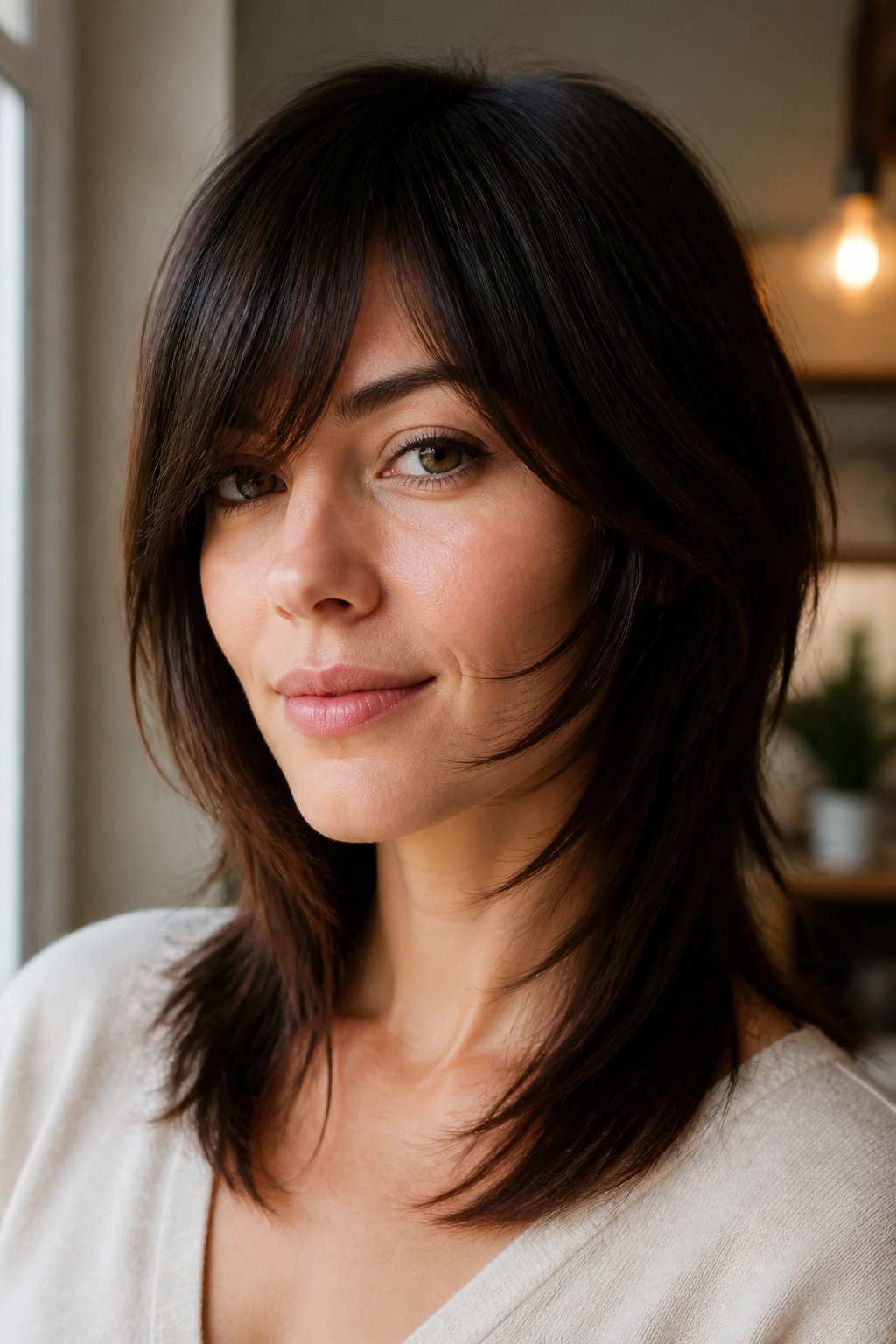
Why does the cheekbone matter so much? Because it gives the eye a stop point above the widest part of a round face. A fringe that lands there creates shape where the face starts to open out again.
How to Style It
Guide the front pieces so they bend toward the cheekbone, then let the longest one fall just past it. The shorter side can skim the brow or hover around the temple.
This kind of fringe is a good fit if you already wear layers. The bangs don’t need to be a separate event. They can melt into the cut and help it feel lighter around the face. That keeps the overall look from getting too heavy or too blunt.
The danger is over-layering. If every front piece gets thinned down, the fringe can go stringy and lose the clean diagonal that makes it work. Keep some shape. You want movement, not fuzz.
22. Angled Bangs Paired With a Bob
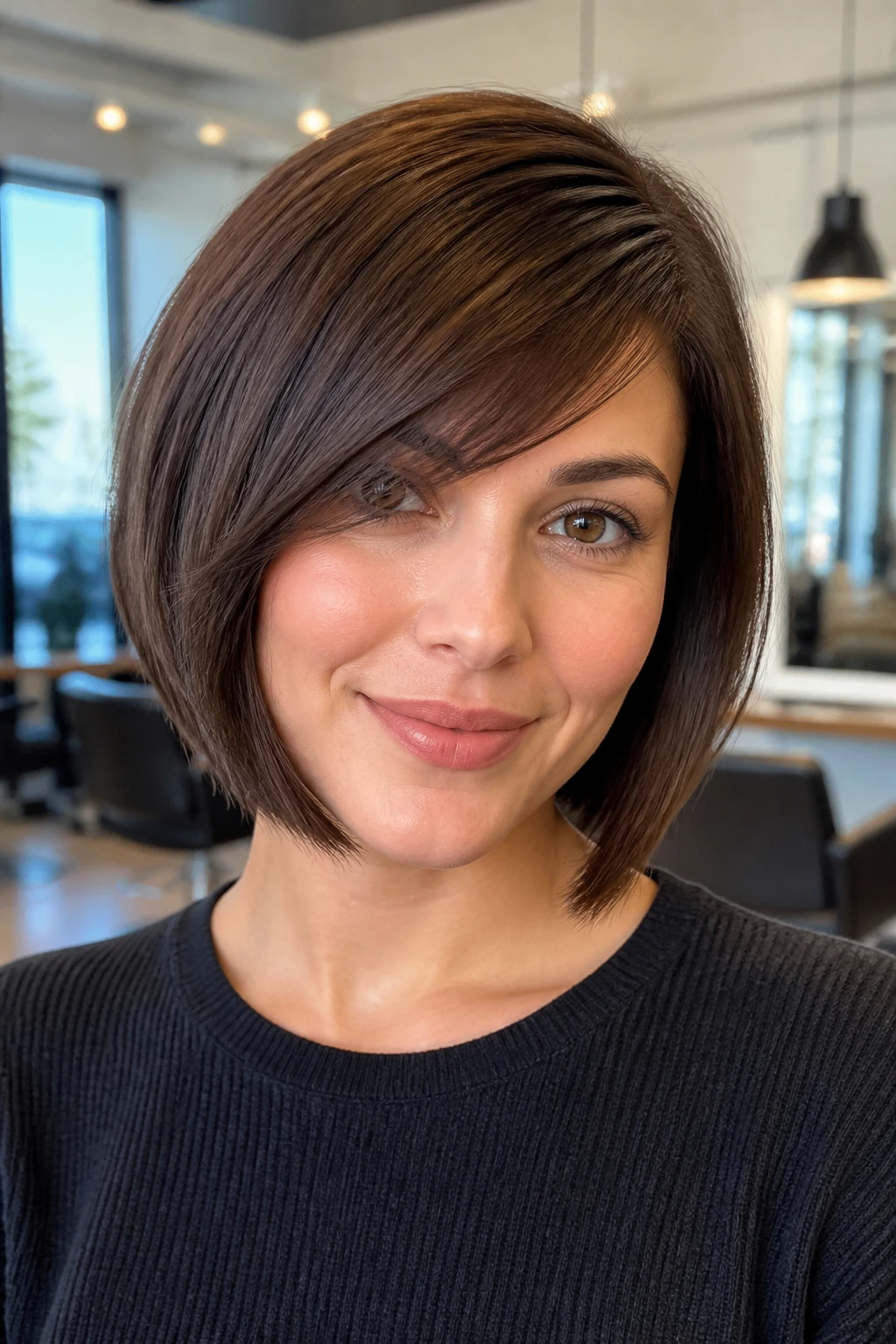
A bob and angled bangs are a strong pair when the face is round. The bob gives structure near the jaw, while the bangs break up width at the forehead. Put those two ideas together and the face tends to read longer and narrower.
The fringe should not be cut too bluntly here. A straight, heavy bang can make the bob feel boxy, especially if the bob itself ends near the chin. A slight diagonal keeps the line moving. That movement is the whole point.
This look is good if you like clean shapes and don’t mind a bit of upkeep. Bobs show every trim, and bangs do too. Still, when they’re cut well, the payoff is immediate. The haircut feels crisp the second it dries.
- Best with a side part or off-center part
- Strong choice for straight or slightly wavy hair
- Needs regular trims to keep the line neat
- Works nicely with a tucked-behind-the-ear side
23. Asymmetrical Bangs for a Pixie Cut
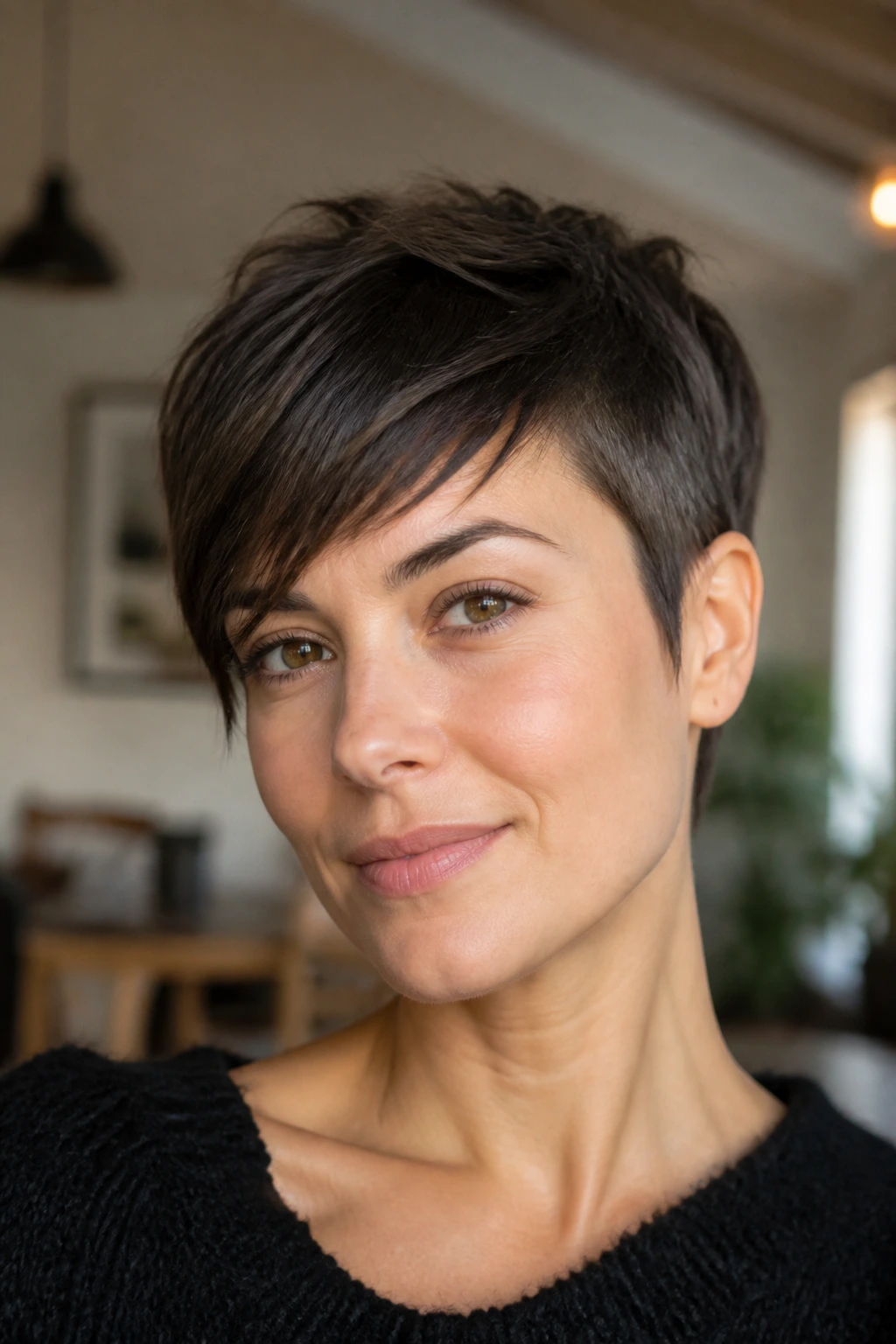
Short hair can wear asymmetry better than people expect. On a pixie cut, one longer bang across the forehead can stop the style from feeling too round at the hairline. The uneven front piece gives the cut a little tension, and that tension is flattering.
The longest part usually sits on one side and falls toward the eyebrow or temple. The opposite side stays shorter and exposes more forehead. That difference makes the face feel less wide at the top. It also lets the brows show, which keeps the whole look bright.
I like this best when the top has a little texture, not helmet-like smoothness. A touch of paste or matte cream is usually enough to push the bang where it needs to go. If the sides are clipped close, the front piece becomes even more important, so it should be cut with purpose.
24. Long Fringe With a Beveled End
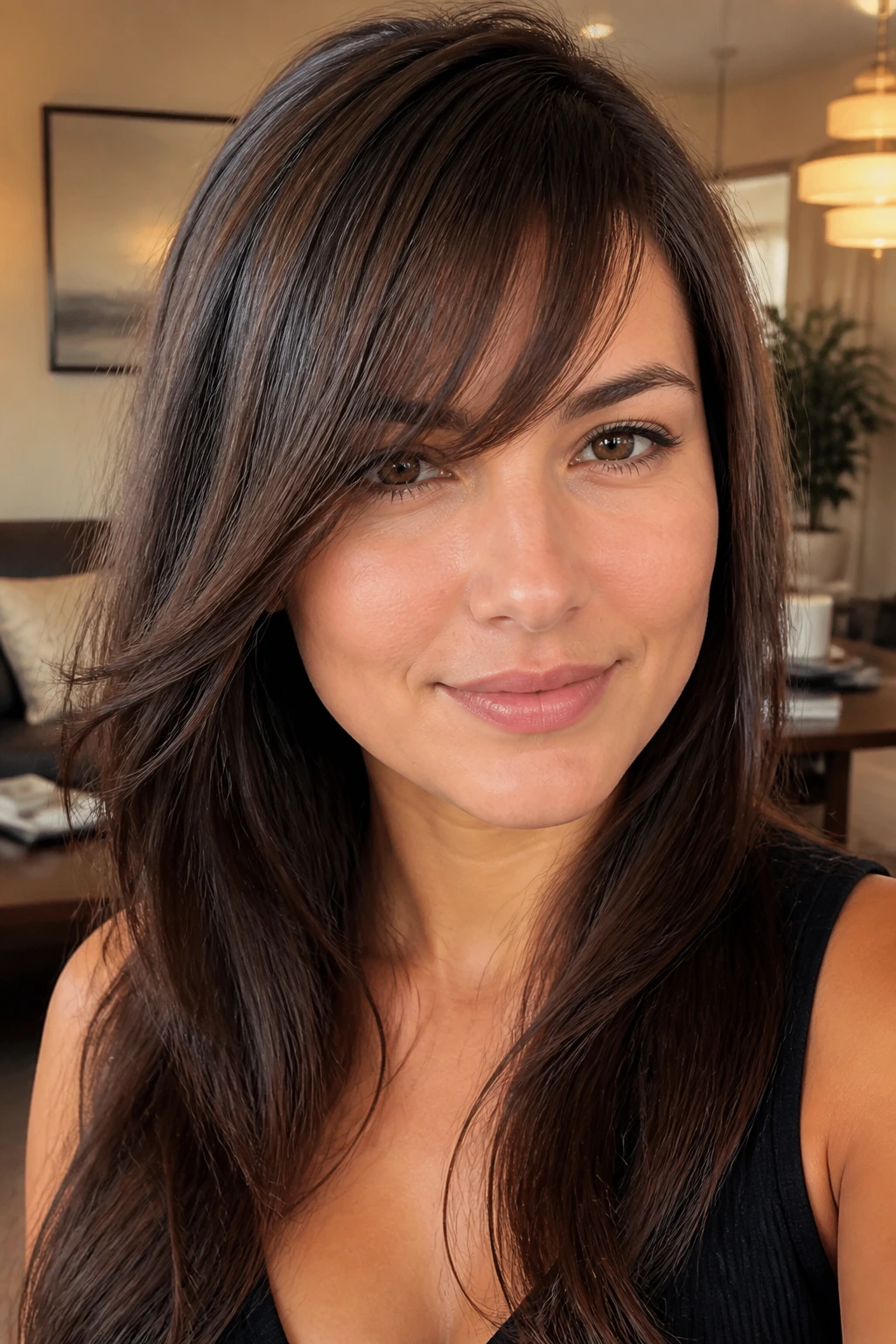
A beveled end gives a fringe a cleaner edge than a blunt one, but softer movement than a razor cut. That middle ground works well on round faces because it creates a visible angle without making the front look shredded.
The longer side should taper a little toward the cheek. Think of it as a shape that bends, not a shape that stops. That little bevel helps the bangs sit against the face instead of floating away from it or sticking flat in one block.
This style behaves nicely on straight to wavy hair. The bevel keeps the ends from puffing out, which can happen when the front section is cut too square. If your hair is coarse, ask for a very light point cut through the ends so the fringe bends instead of kicking outward.
25. Feathered Side Bangs for Thick Hair
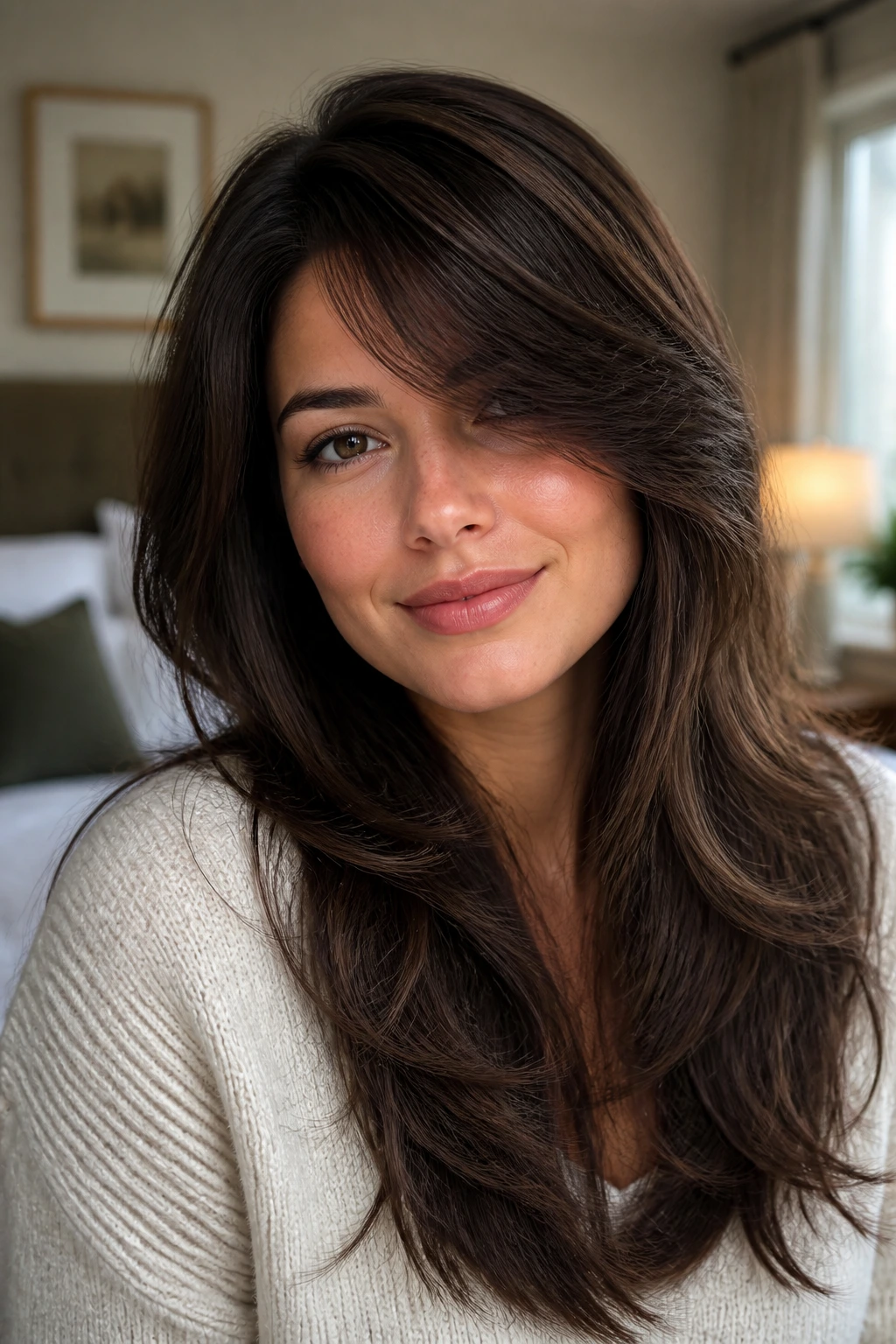
Thick hair can take a lot of weight in the front, and that’s where feathered side bangs come in. They remove enough bulk to keep the fringe from sitting like a shelf, but they still leave enough hair to create a strong diagonal line.
Why It Matters on Thick Hair
A heavy bang on thick hair can make the face look smaller up top and wider at the cheeks. Feathering opens that front section and gives it motion.
- Better with point cutting than aggressive thinning
- Needs a strong part line to keep the angle visible
- Should graze the brow on the shorter side
- Grows out well if the temple pieces are left a little longer
Pro tip: If the fringe feels bulky when dry, dry the roots side to side before touching the ends. Root shape comes first. Always.
26. Piecey Bangs for Medium-Length Hair
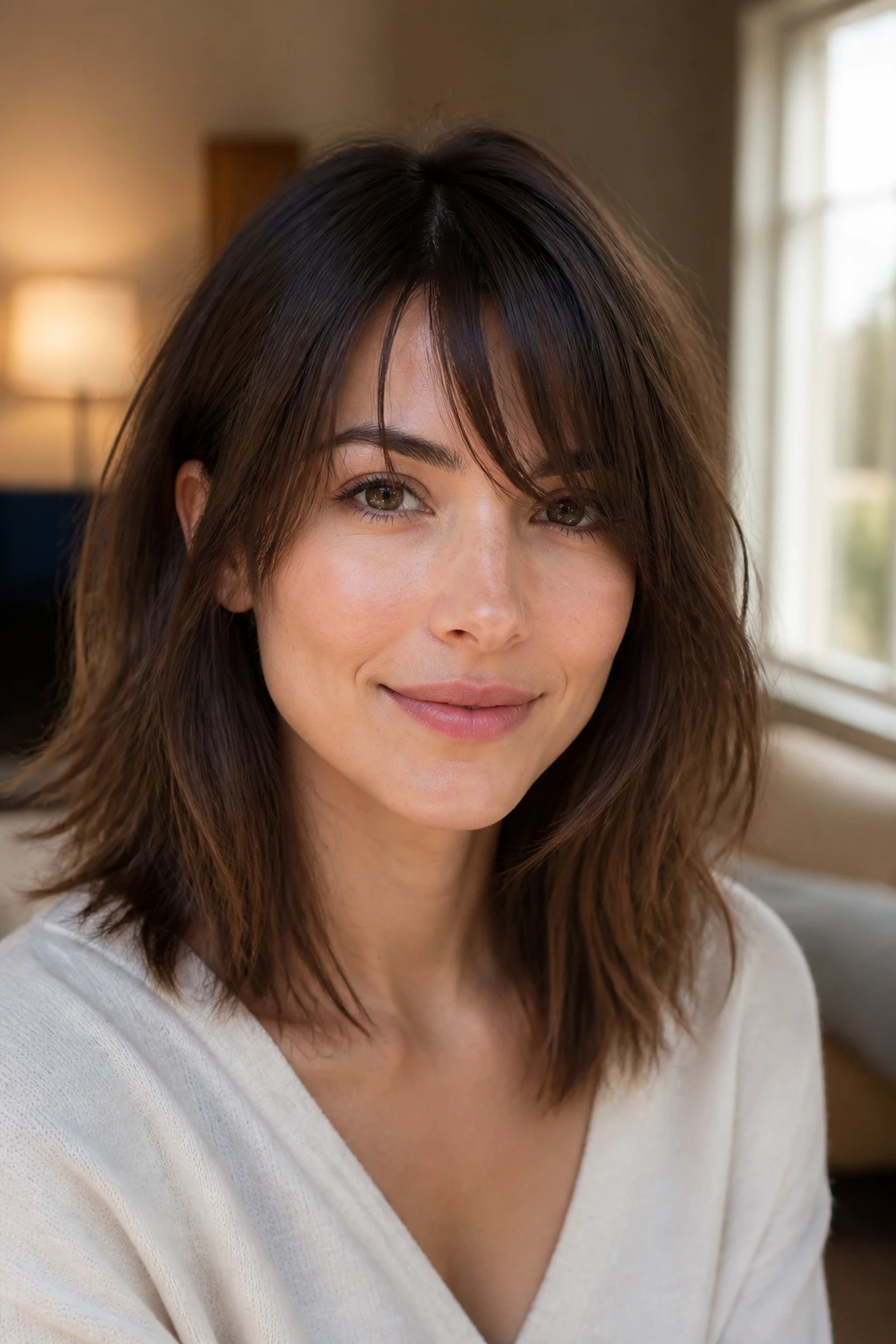
Piecey bangs are the easygoing cousin of a more polished fringe. They’re separated into little sections, which keeps them from reading as one solid band across a round face. That separation creates enough movement to soften width.
The medium-length haircut behind them helps, too. Hair that lands at the collarbone or just above it has enough length to balance the front. The bangs don’t have to do all the work. They just need to tilt the eye in the right direction.
This is a good daily style if you don’t want to fuss. A bit of texture spray and a quick finger-twist at the front can be enough. The trick is not to over-comb them. Once piecey bangs get too brushed out, they lose the definition that makes them flattering.
27. Soft Uneven Fringe With a Swoop
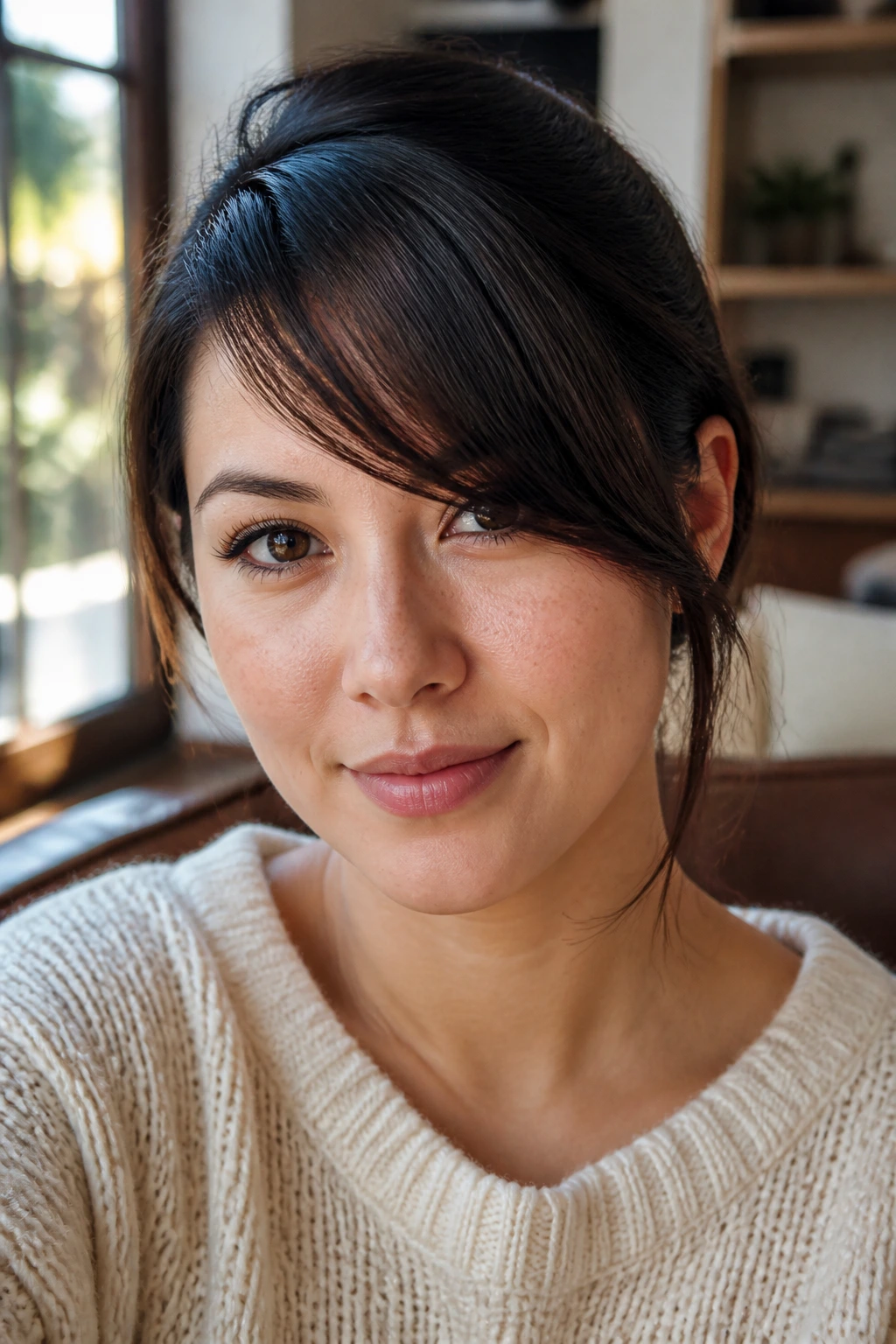
Could a fringe be soft and still feel directional? Yes, if it swoops. A soft uneven fringe uses a longer side to carry the eye across the forehead and a shorter side to keep the cut from feeling centered.
How to Get the Most From It
Dry the shorter side first so it doesn’t collapse into the forehead. Then shape the longer side with a round brush or a warm air brush, guiding it across the face rather than straight down.
This shape works well on round faces because it doesn’t stop at the widest point. The swoop keeps things moving, and movement is what breaks up softness. It’s also a nice fit if you wear your hair behind one ear. The bang and the ear tuck talk to each other.
If you want a fringe that still looks good on day three, this is a smart pick. A little dry shampoo at the roots and a quick re-bend at the ends usually brings it back.
28. Blowout Bangs With Side Volume
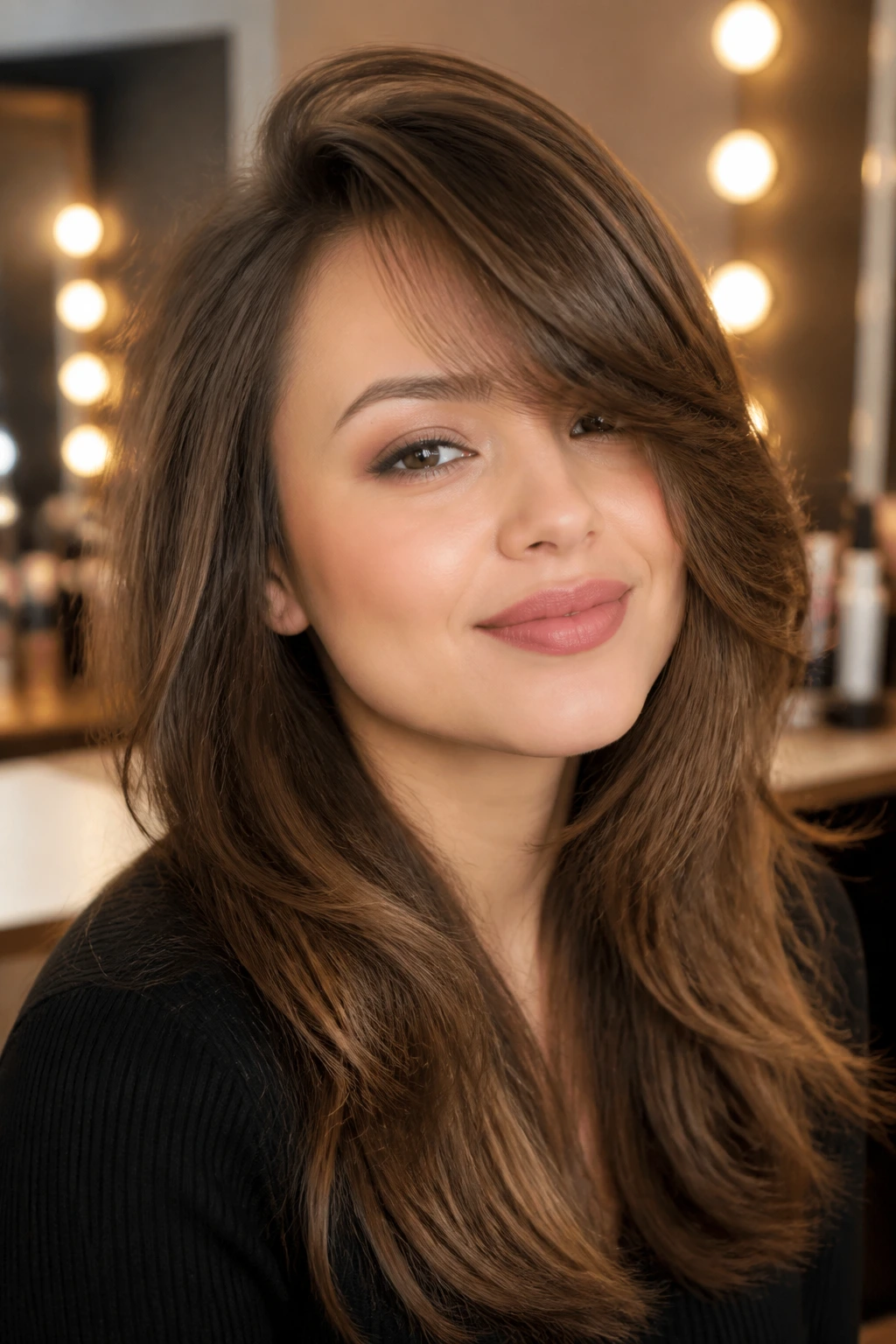
A blowout fringe with side volume gives round faces more height and less width. The lift at the root makes the forehead area feel taller, and the side sweep keeps the line off-center so the face doesn’t read too symmetrical.
This style is the opposite of flat. It wants a round brush, a bit of tension, and enough heat to set the bend. The side volume should feel airy, not stiff. If it starts looking like a hard shell, the brush was too small or the product was too heavy.
I like this for dressier days or when the haircut needs a bit of polish. It’s also one of the better choices if you have a strong cowlick and need to counter it with shape. The key is to lift at the roots while the hair cools. That cooling time is where the style sticks.
- Use heat protectant first
- Roll the front away from the face
- Let the roots cool in place
- Finish with a light mist only
29. Asymmetrical Bangs for Naturally Straight Hair
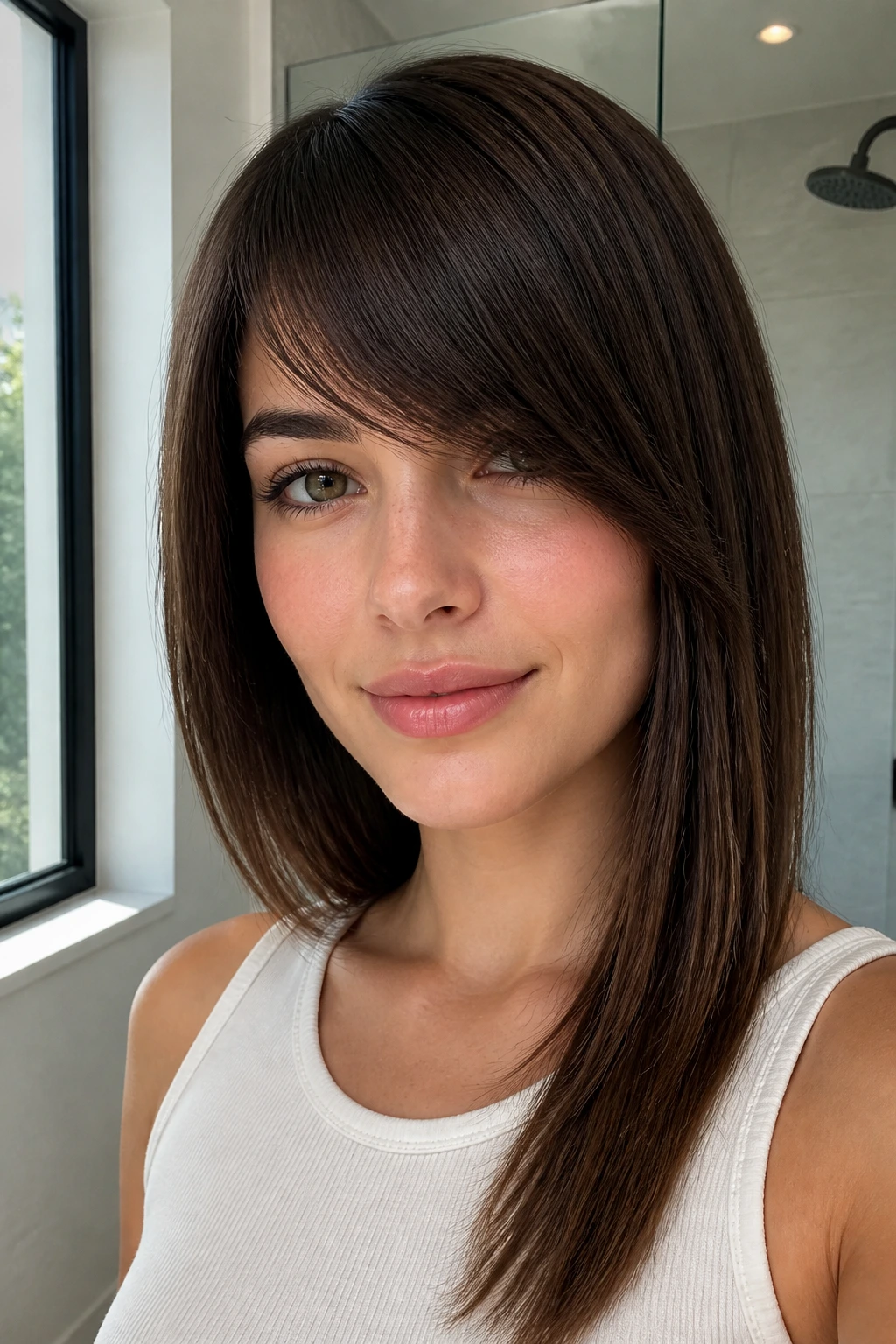
Straight hair shows every line, which is a blessing and a curse. On round faces, asymmetrical bangs for round faces work especially well on straight hair when the cut is precise, because the diagonal reads clean and the eye follows it fast.
The danger is making the fringe too even. Straight hair can expose every imbalance, so the length difference needs to be obvious enough to matter but not so sharp that it looks accidental. A slight bevel, a longer tail, or a deeper side part can make the angle feel deliberate.
This is one of the easier textures to style, though. A quick blow-dry and a little bend at the ends can be enough. If the hair lays too flat, a root-lifting spray at the front can help. No need to pile on product. Straight hair punishes that fast.
30. Low-Maintenance Angled Fringe
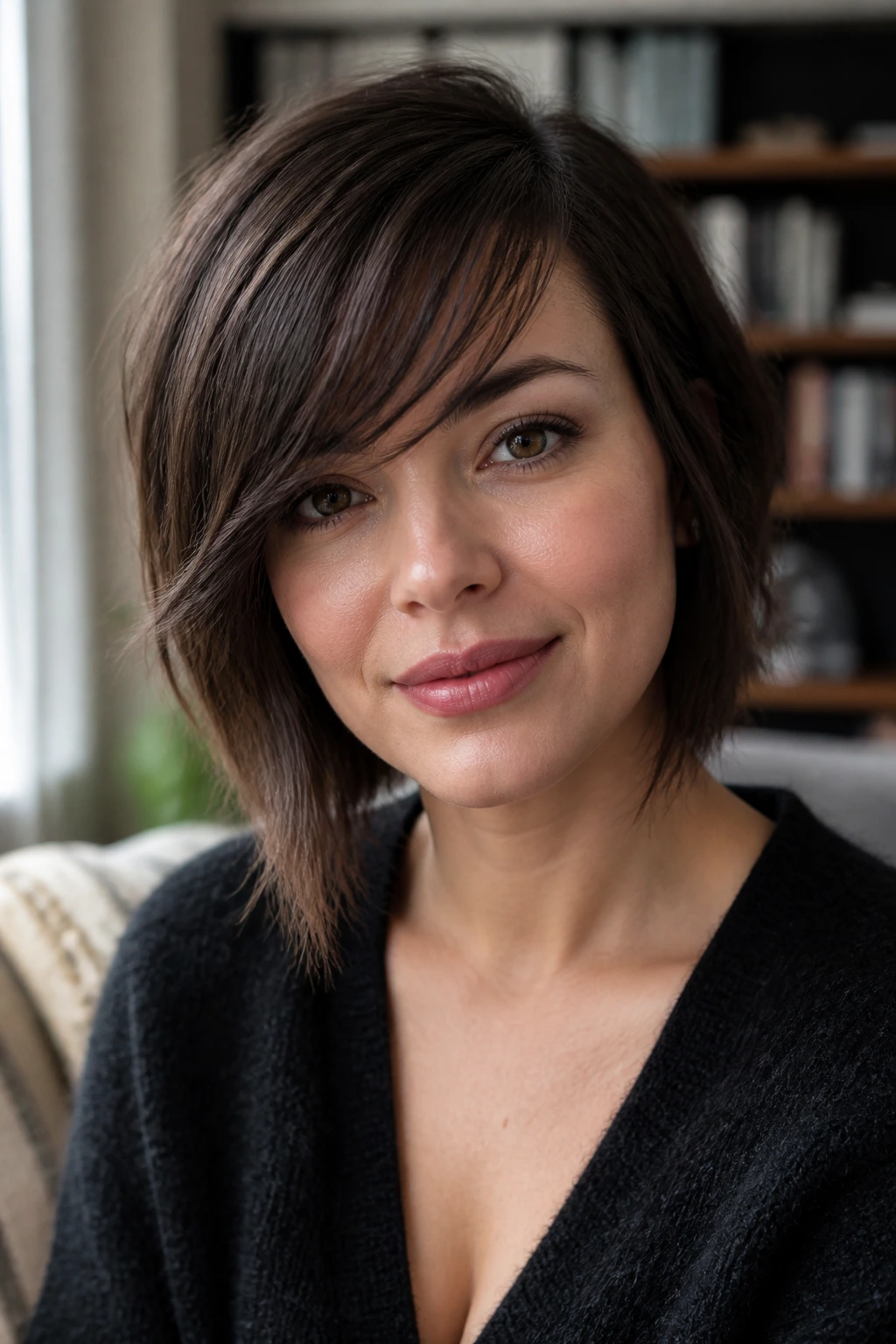
Low-maintenance bangs are not lazy bangs. They’re bangs cut with grow-out in mind, and that matters a lot on round faces because a bad grow-out stage can widen the face before it softens again. A smart angled fringe keeps one side longer from the start, so the shape still works even after a few weeks.
The best version is one you can wear with a quick side part, a finger comb, and maybe a little dry shampoo. No round brush required every day. That does not mean the cut should be sloppy. It just means the angle should be generous enough to survive real life, not only salon lighting.
If you want the simplest answer, this is it: keep one side visibly longer, keep the front light, and avoid a hard horizontal line. That single rule covers most of what flatters a round face. The rest is just fine-tuning the length, texture, and how much forehead you want to show.
