



Long side swept bangs for round faces work for a simple reason: they cut across width instead of sitting on it.
That diagonal line changes the whole feel of the haircut. It pulls the eye from one side of the forehead down toward the cheek, which is exactly the kind of movement a softer, fuller face shape tends to wear well. Straight-across bangs can be lovely, but they often stop the eye right where you do not want it to stop.
The part, the length, and the texture matter more than people think. A side sweep that starts too low can sit like a shelf. One that’s too blunt can make the face look wider. The sweet spot is usually some mix of lift at the root, softness at the ends, and enough length to skim the cheekbone or jaw instead of cutting the face in half.
Start with the part line. That small move changes everything.
1. Deep Side Part With a Long Swoop
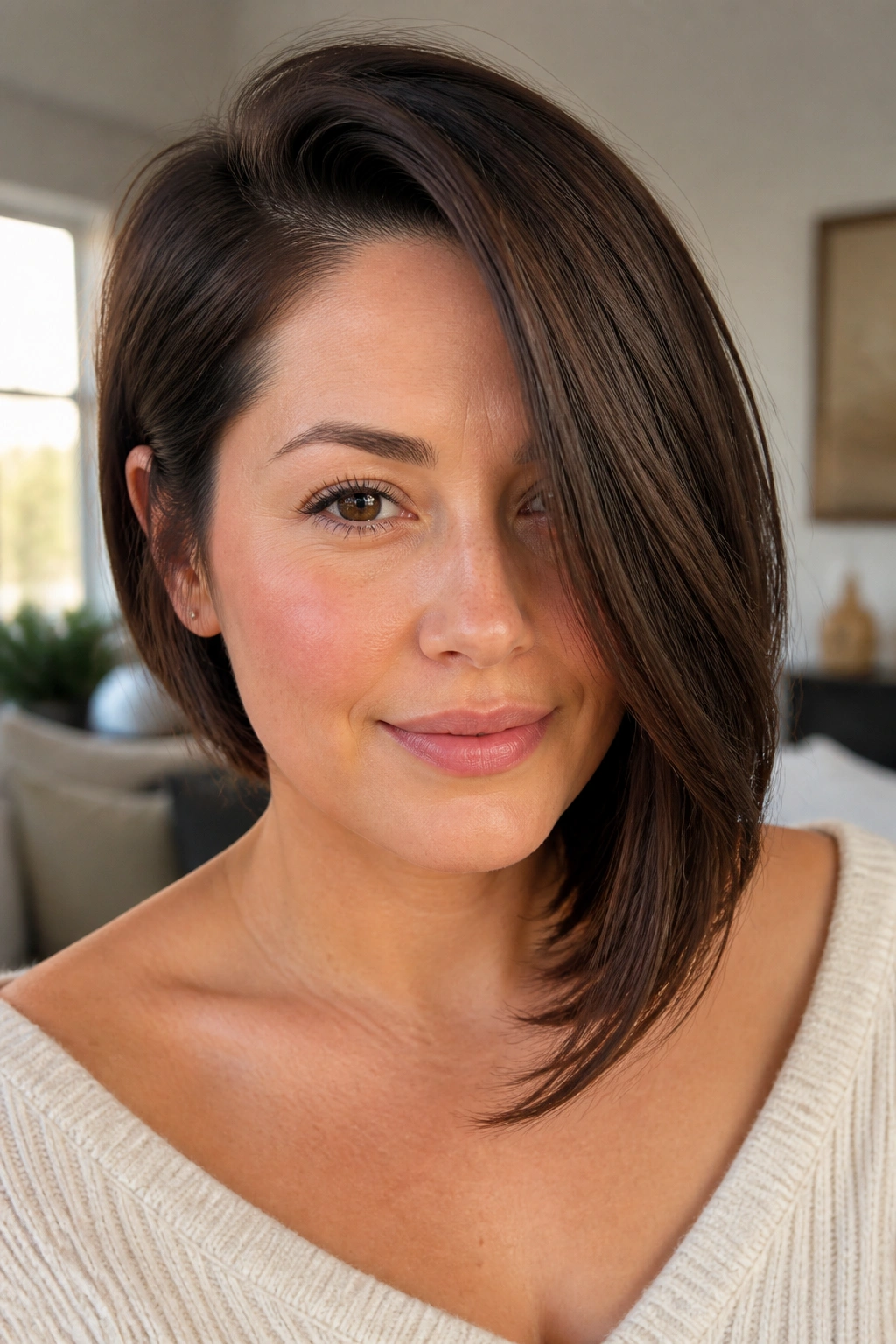
A deep side part gives a round face the easiest kind of shape shift: instant asymmetry. The eye follows the long diagonal line, and that alone makes the face read a little longer and a little leaner. It’s one of those cuts that looks simple but does a lot of heavy lifting.
Why the angle helps
Ask for the part to sit about one eyebrow’s width off center, then let the longest piece fall just below the cheekbone when dry. That length matters. Too short, and the bang sits right on the widest part of the face. Too long, and it stops looking like a fringe at all.
- Keep the root lifted at the part.
- Let the shortest piece start around the outer brow.
- Leave the ends soft, not jagged.
- Style it with a round brush or a flat iron bend, not a stiff curve.
Best move: have your stylist cut the bang a little longer than you think you need; hair shrinks when it dries, and a side swoop that’s two inches too short can suddenly feel boxy.
2. Brow-Grazing Feathered Ends
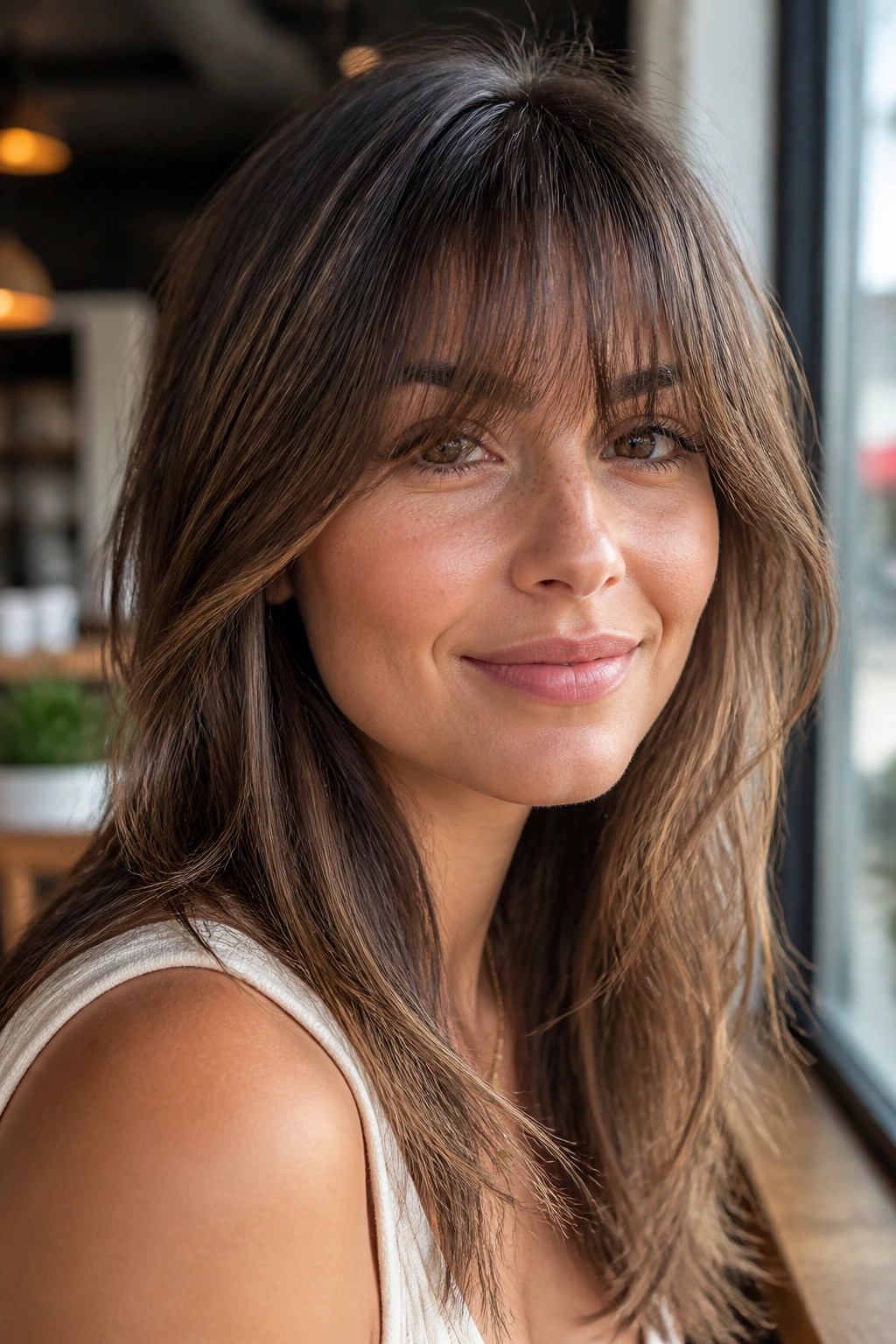
Feathered ends make side swept bangs feel lighter, and that lightness is the whole point here. This version works when you want movement near the face without the weight of a thick fringe. On round faces, that softness helps the front of the haircut breathe instead of crowding the forehead.
The trick is in the finish. The bang should skim the brow, then break into soft, separated ends that don’t sit in one solid sheet. I like this shape on medium-density hair because it keeps the fringe from swallowing the face. It also grows out gracefully, which is a rare and underrated thing.
The cut should feel airy in the hand, not stringy. If the ends are too shredded, the bang can frizz up and look thin around the temple. If they’re too blunt, you lose the benefit.
A little flexible-hold spray and a soft brush are usually enough. You do not need to lacquer this one down. Let it move when you blink, when you turn, when you laugh. That movement is what keeps the style from feeling heavy.
3. Cheekbone-Length Sweep With a Strong Bend
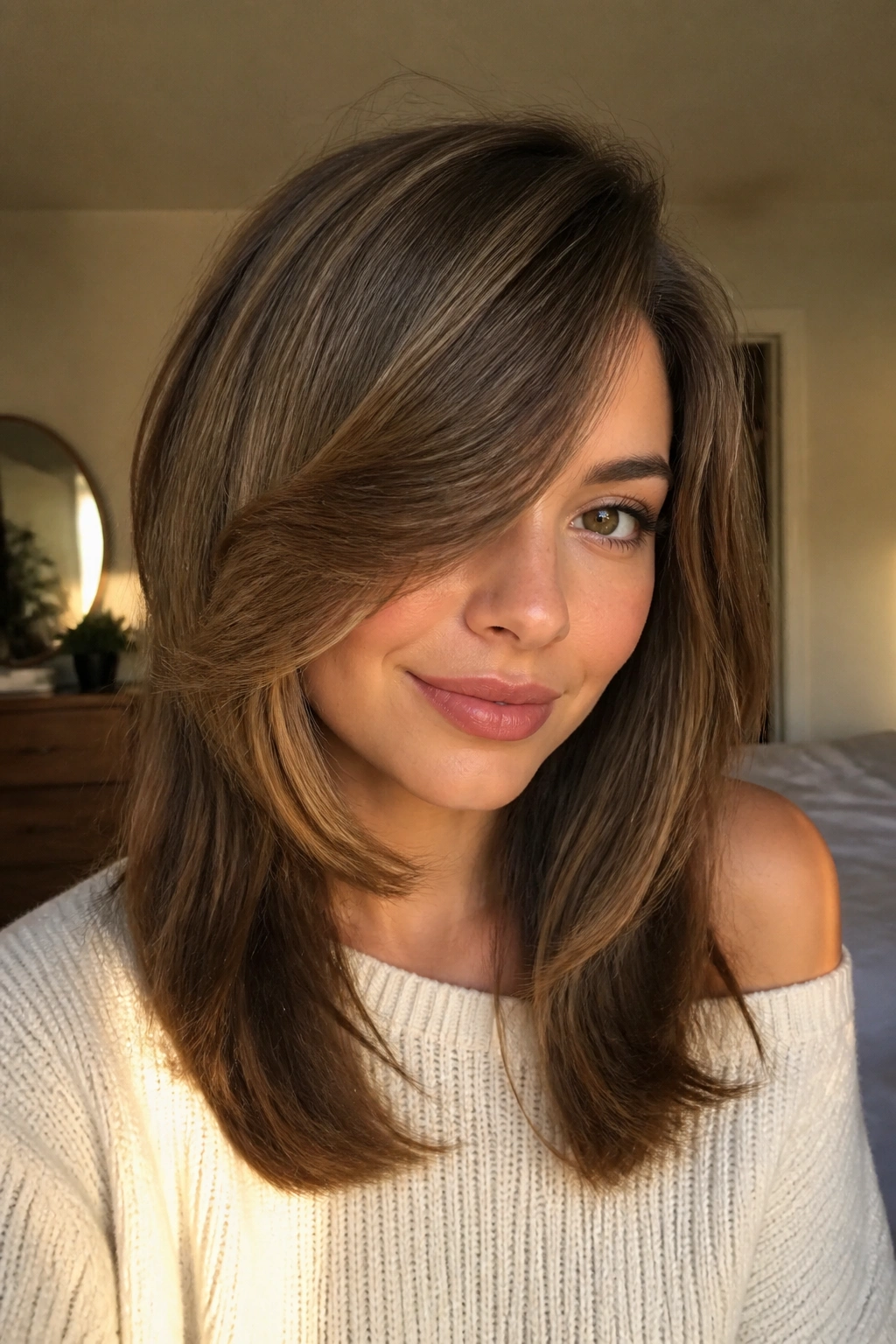
Want the side sweep to do real face-shaping work? Put the longest point at the cheekbone. That’s where the line starts to become more than decoration. It becomes structure.
The reason this looks good on a round face is pretty straightforward: the bang draws a sharp diagonal right across the center of the face, then exits near the side rather than ending at the brow. That route changes the proportions. It gives the eye a place to travel.
How to wear it
Use a large round brush, or even a 1.5-inch velcro roller, and push the fringe away from the face while it cools. The bend should be soft, not curled into a helmet shape. A gentle sweep that curves near the cheekbone is enough.
- Dry the bang almost all the way first.
- Direct it across the forehead, then let it cool to one side.
- Keep the ends tucked into the wave, not flipped out.
- Use a small amount of styling cream, no more.
A strong bend can look glamorous or casual, depending on the rest of the cut. That’s the nice part. It works with straight hair, but it gets even better if your hair has a little body to it.
4. Layered Side Bangs With a Lob
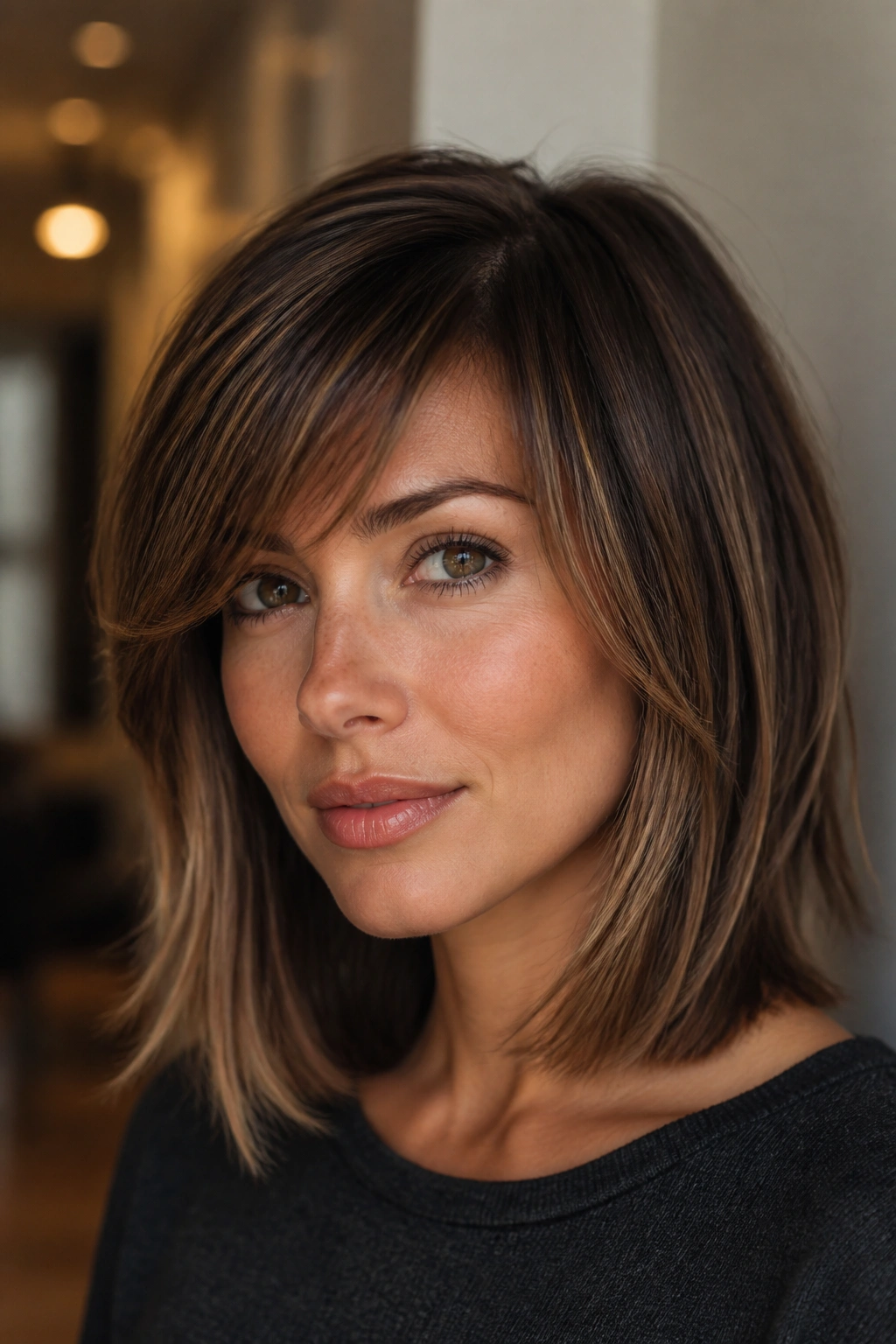
Picture this: you tuck one side behind your ear, and the fringe still falls forward enough to frame the face. That’s the charm of a layered side bang with a lob. It gives you shape without making the front look chopped up.
This is a smart cut for round faces because the lob already adds a clean vertical line around the jaw and collarbone. The side sweep joins that line instead of fighting it. When the front layers are blended correctly, the bang looks like part of the haircut rather than an extra piece sitting on top.
The shortest section should land near the outer brow, then melt into the front layers that skim the cheek and jaw. If the transition is too abrupt, the whole front can look blocky. If it’s too blended, the bang disappears. There’s a narrow middle ground, and it’s worth asking for it by name.
A side bang with a lob also gives you options. Wear it sleek on workdays, bend it with a flat iron on busy mornings, or let it air-dry into a soft wave. It never asks for much, which is part of why I keep coming back to it.
5. Soft Wavy Side Bangs on Natural Texture
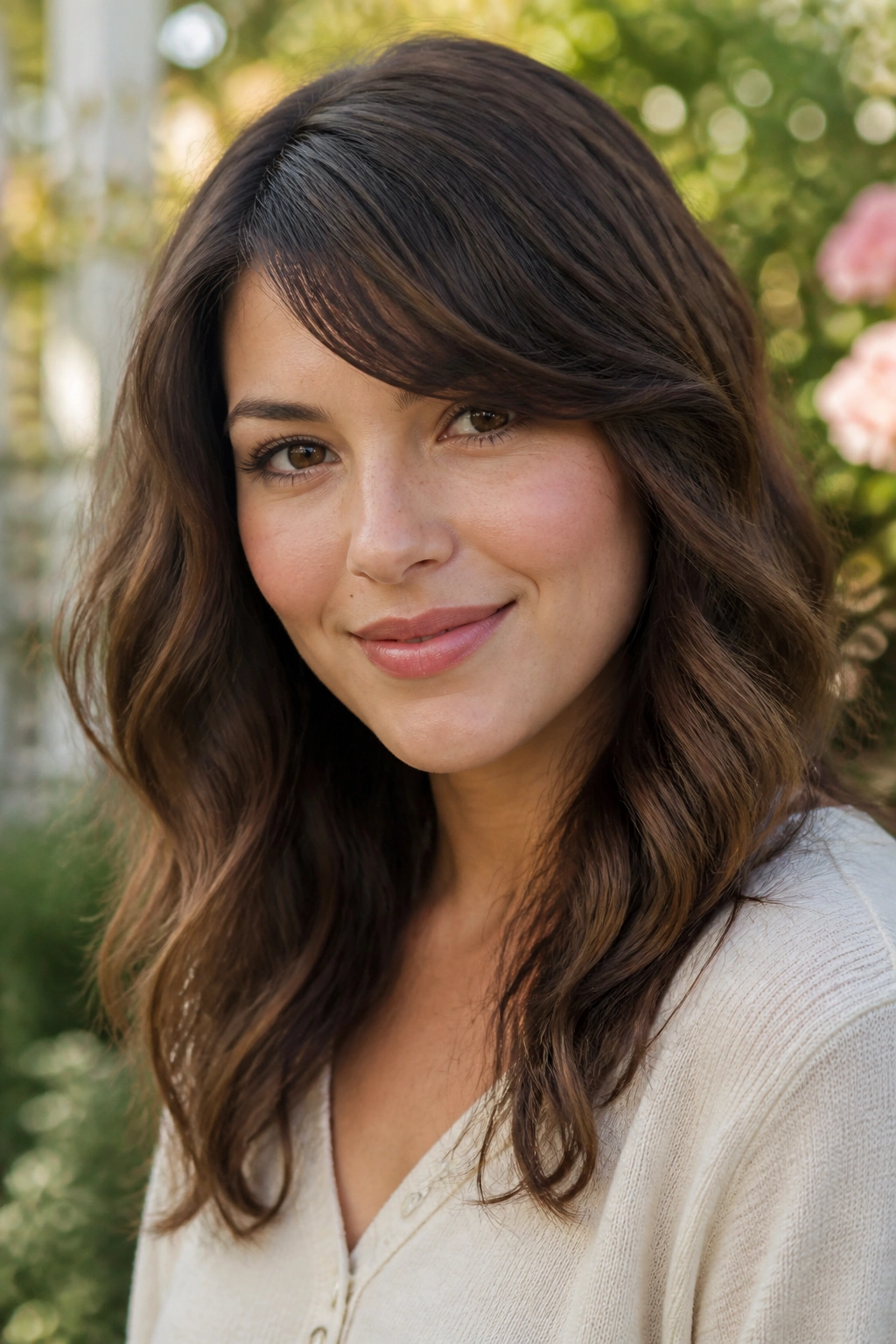
Soft waves change the whole conversation. A side swept bang does not need to be poker-straight to flatter a round face. In fact, a little bend can make it look more relaxed and more believable, which is usually what hair wants to be anyway.
This version works best when you stop trying to force the front into a rigid shape. If your hair bends naturally, let it. If the bang wants to curve under at the end, that’s fine. The goal is a diagonal line that feels loose, not a perfect ribbon. A round face usually benefits from that softness because it keeps the front of the haircut from feeling too severe.
I’d reach for a light curl cream or a small dab of leave-in conditioner, then scrunch the bang with your fingers as it dries. If you use heat, keep it low and finish with a cool blast. That little temperature change helps the wave settle instead of puffing out.
Leave the irons in the drawer if your texture already knows what to do. Seriously. The more you flatten natural movement, the more the fringe starts to look pasted on.
6. Shaggy Side Swept Bangs With Choppy Layers
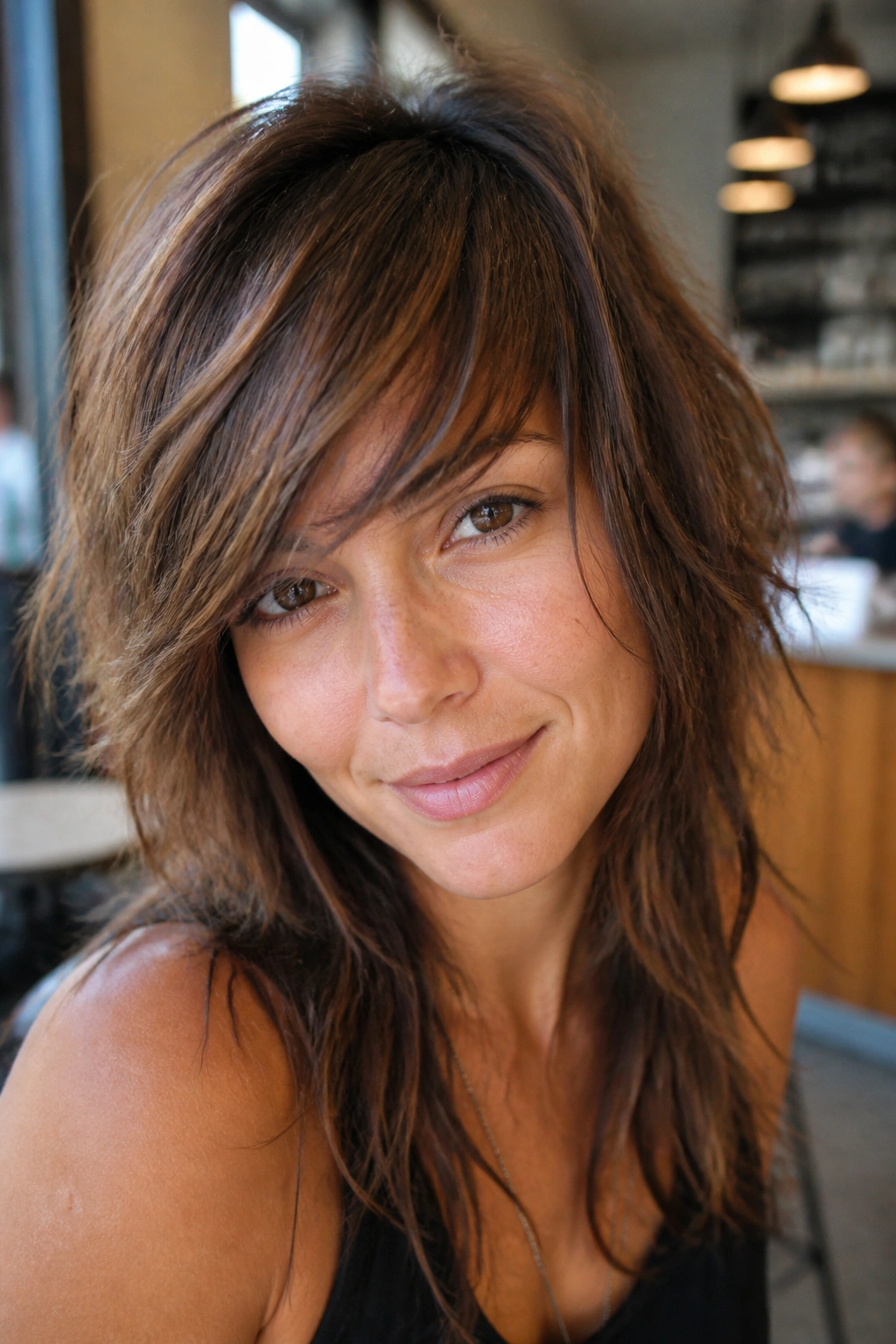
Compared with a neat side bang, a shaggy fringe has broken edges and a little attitude. That difference matters on a round face because the choppiness interrupts the curve of the cheeks. The result feels less sweet and more lived-in.
This is the one I’d send to someone who likes hair that moves without trying too hard. The layers are short enough to feel light, but they still sweep across the forehead in a clear diagonal. The ends are uneven on purpose, which keeps the front from settling into a heavy block.
It suits wavy hair and loose curls especially well. The texture does some of the work for you, and the fringe ends up looking like it belongs there instead of being forced into shape every morning. If your hair is pin-straight, you can still wear this cut, but it will need a bit more product and a little messier styling.
The only thing I would avoid is over-brushing. A shag looks best when the pieces stay a bit separated. Brush it too hard and you lose the point. That’s the part many people miss. It isn’t supposed to be polished.
7. Long Side Bangs That Blend Into Face-Framing Layers
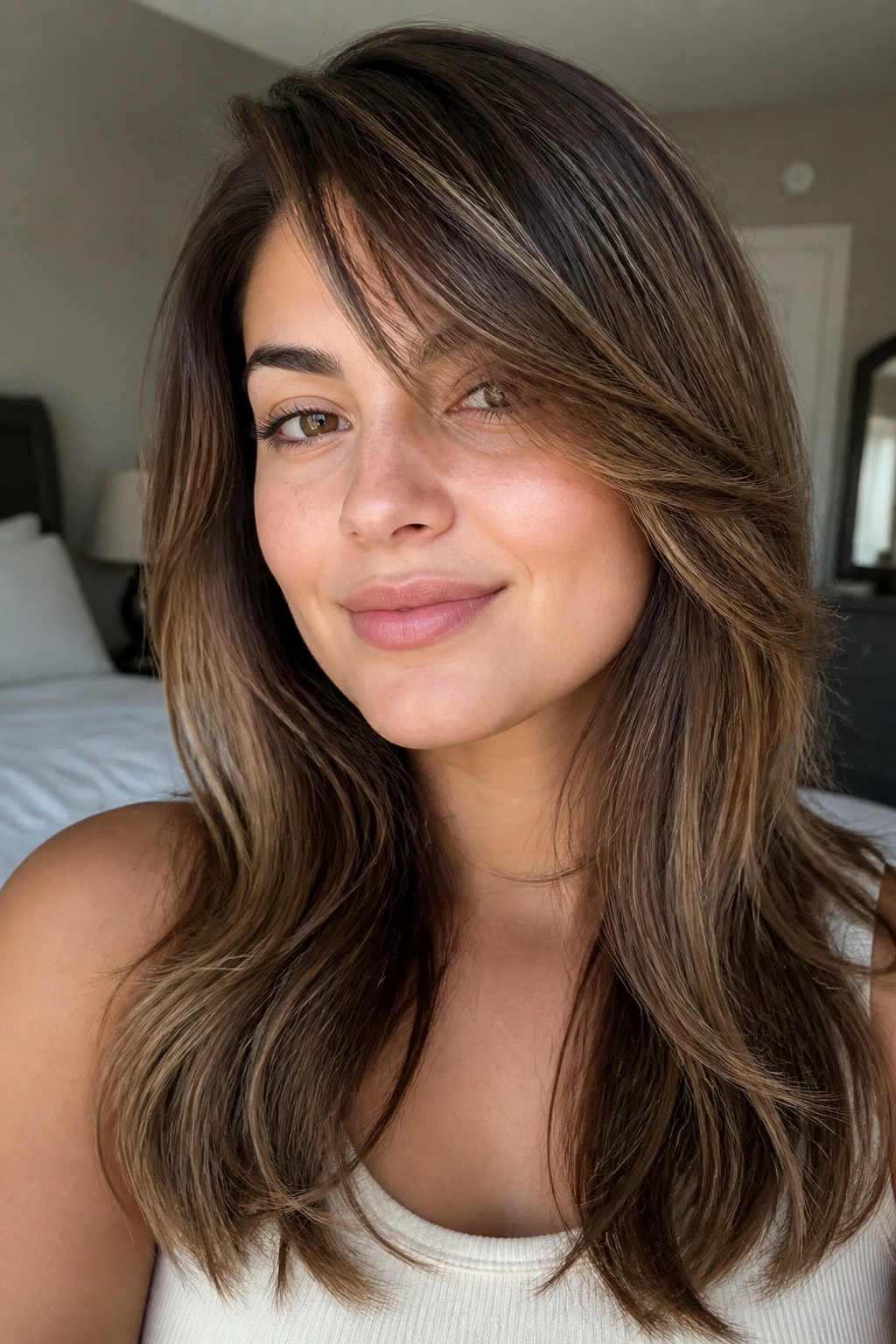
A side bang that melts into the front layers is the quietest version here, and that’s its strength. It doesn’t announce itself. It just slides into the haircut and makes the whole front look longer and softer.
What makes the blend work
The cut should start with a side sweep near the brow, then transition into longer layers that skim the cheek and jaw. On a round face, that continuous line is more flattering than a bang with a sharp endpoint. The eye moves downward instead of stopping at the fullest part of the cheeks.
- Ask for the shortest point near the outer corner of the brow.
- Let the next layer graze the top of the cheekbone.
- Keep the front pieces long enough to tuck behind the ear.
- Avoid a hard line at the ends.
This is a good choice if you want bangs but don’t want to feel locked into a fringe. It grows out in a clean way, and the front layers still do the face-framing work long after the bang itself has loosened up. That’s practical, and it saves a lot of salon frustration.
8. Thick Side Swept Bangs That Start Higher
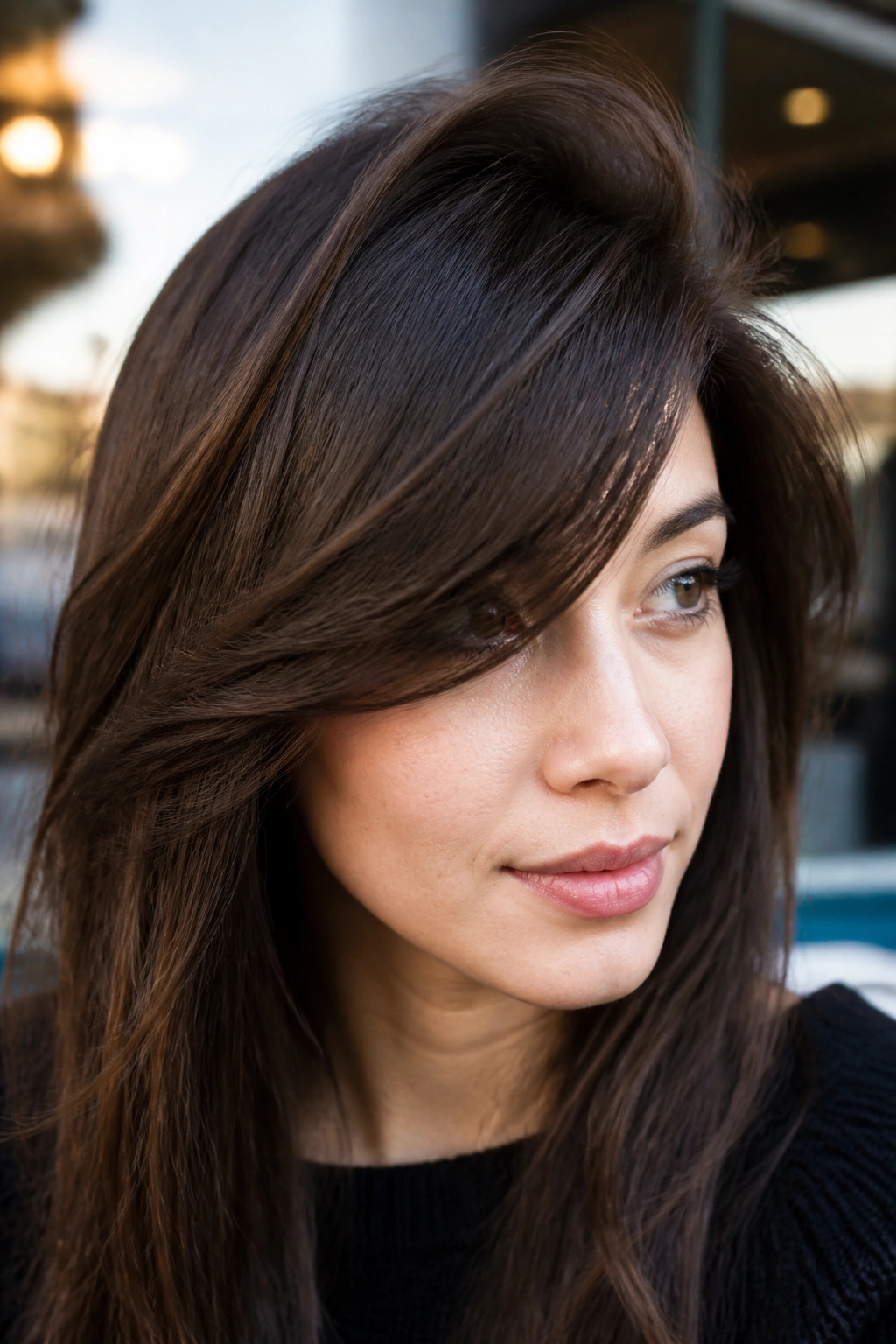
Thick hair is not the problem. Bad bulk is.
A dense side swept bang can look fantastic on a round face when it starts a little higher on the head and is carved with enough weight removed from the underside. That keeps the front from drooping straight down. You want lift, not a curtain. The volume should live near the root and taper as it moves across the forehead.
This version works best if your hair has a natural bend or some grit to it. The thickness gives the sweep a full, rich shape, and the diagonal line helps break up the width of the cheeks. If the bang is cut too low, though, it can sit heavy and shorten the face. So placement matters a lot here.
I’d ask for internal layering, not a full thinning-shears attack. Too much thinning can leave thick hair fuzzy at the edges. A better cut keeps the perimeter clean and lets the interior hold the weight. That gives you a fringe that moves without puffing up.
When you blow-dry it, focus on the root first. Once the base is set, the rest is easier. If you skip that part, the fringe will usually fall in the direction it wants, and that direction is rarely flattering.
9. Airy Side Bangs for Fine Hair
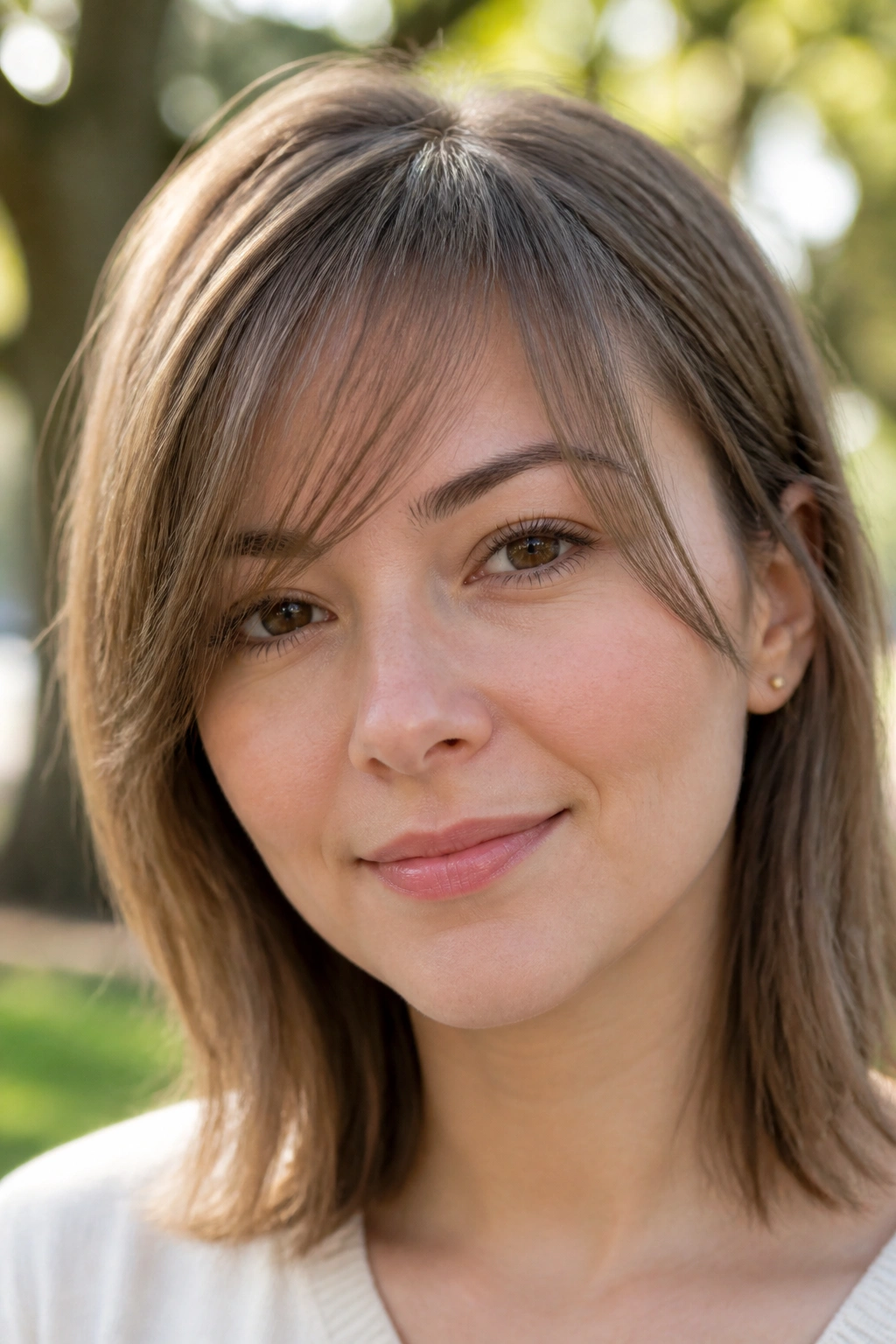
Can fine hair pull off a side sweep without collapsing? Yes, if the cut stays light and the root gets a little help.
The mistake people make with fine hair is loading the bang with too much product. That turns a soft sweep into a greasy strip. What you want instead is support at the scalp and a clean, see-through finish through the ends. The bang should move, not cling.
How to get lift without stiffness
A small round brush, a root-lifting spray, and a cool shot from the dryer usually do more than heavy mousse ever will. You want just enough body that the bang doesn’t split apart by noon.
- Spray the roots only, not the full fringe.
- Dry the bang over the brush until it sets.
- Pin it to the side for a few minutes if it keeps falling flat.
- Finish with a tiny mist of flexible hairspray.
This shape is especially good on round faces because it keeps the forehead open while still giving a diagonal line. The bang doesn’t need to be dense to do the job. It just needs direction.
10. Curly Side Swept Bangs That Follow the Curl Pattern
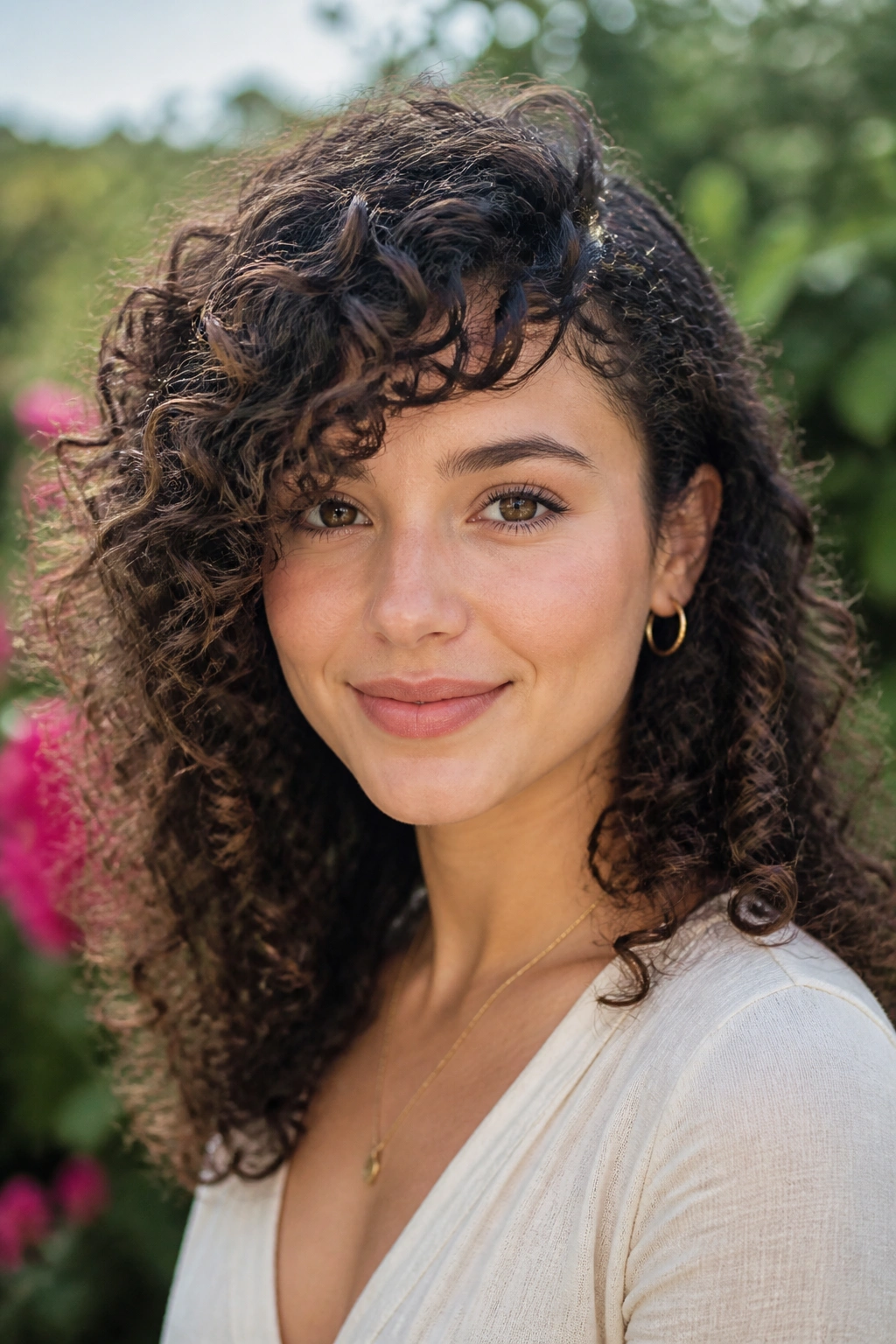
Curly fringe needs a different rulebook. Cut it dry, or close to dry, and respect the way the curl springs up when it settles.
A round face and curly side swept bangs can be a lovely match because the curl brings built-in movement to the front. The bang arcs across the forehead, then softens at the side in a way straight hair sometimes struggles to mimic. It feels easy, but only if the cut is shaped around the actual curl pattern.
The main mistake is cutting it too short when wet. Curl bounces up more than people expect. A curl that lands at the cheekbone when wet may rise to the brow once it dries, and that can change the whole shape. Leave length for that.
Use your fingers more than a brush. A brush can stretch the curl into a vague puff, while fingers keep the diagonal line intact. A little curl cream on damp hair helps, but too much will weigh the fringe down and make it separate in odd places. Keep the front soft, not sticky.
11. Side Swept Bangs With a Long Bob and a Tucked End
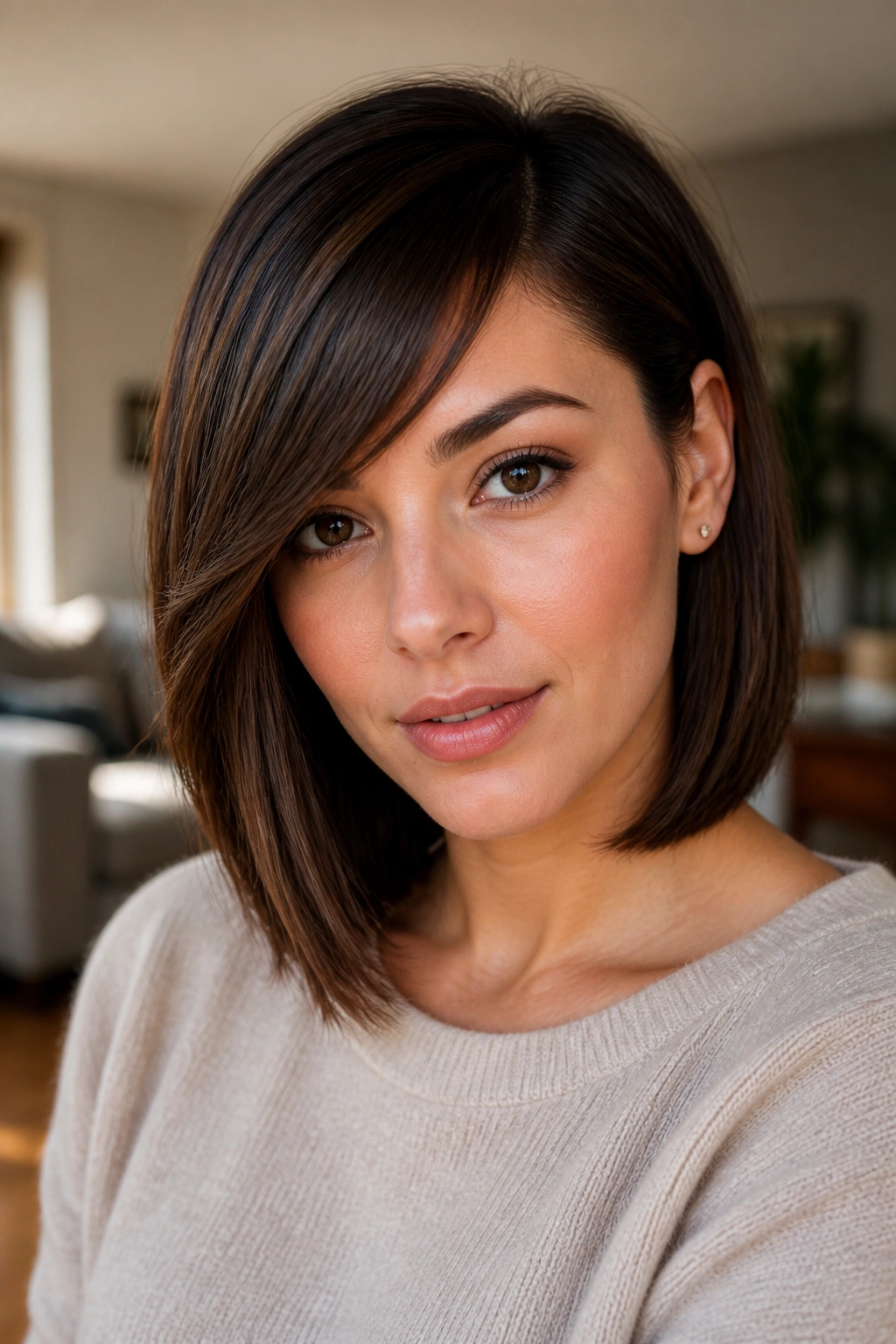
Long bobs and side swept bangs get along because neither one wants to hog the whole face. The lob gives you a clean edge around the jaw, and the fringe gives you a diagonal line through the front. Together, they make a round face look more tapered without feeling severe.
One reason this combo works so well is the tuck. Tucking one side behind the ear opens the cheek and jaw on one side, which creates a little visual length. The side sweep then covers the other side just enough to keep the face from looking too broad. It’s a small trick, but it changes the balance fast.
I like this version best when the lob is blunt at the ends and the fringe is soft. That contrast keeps the haircut from feeling flat. If both the bob and the bang are too layered, the shape can get busy. You want one strong line and one soft line, not ten competing pieces.
It also plays nicely with straightening irons if you want a polished look, but a loose wave works too. The key is that the front should look intentional, not accidental. That sounds simple. It isn’t always.
12. Glam Side Bangs With a Smooth Blowout
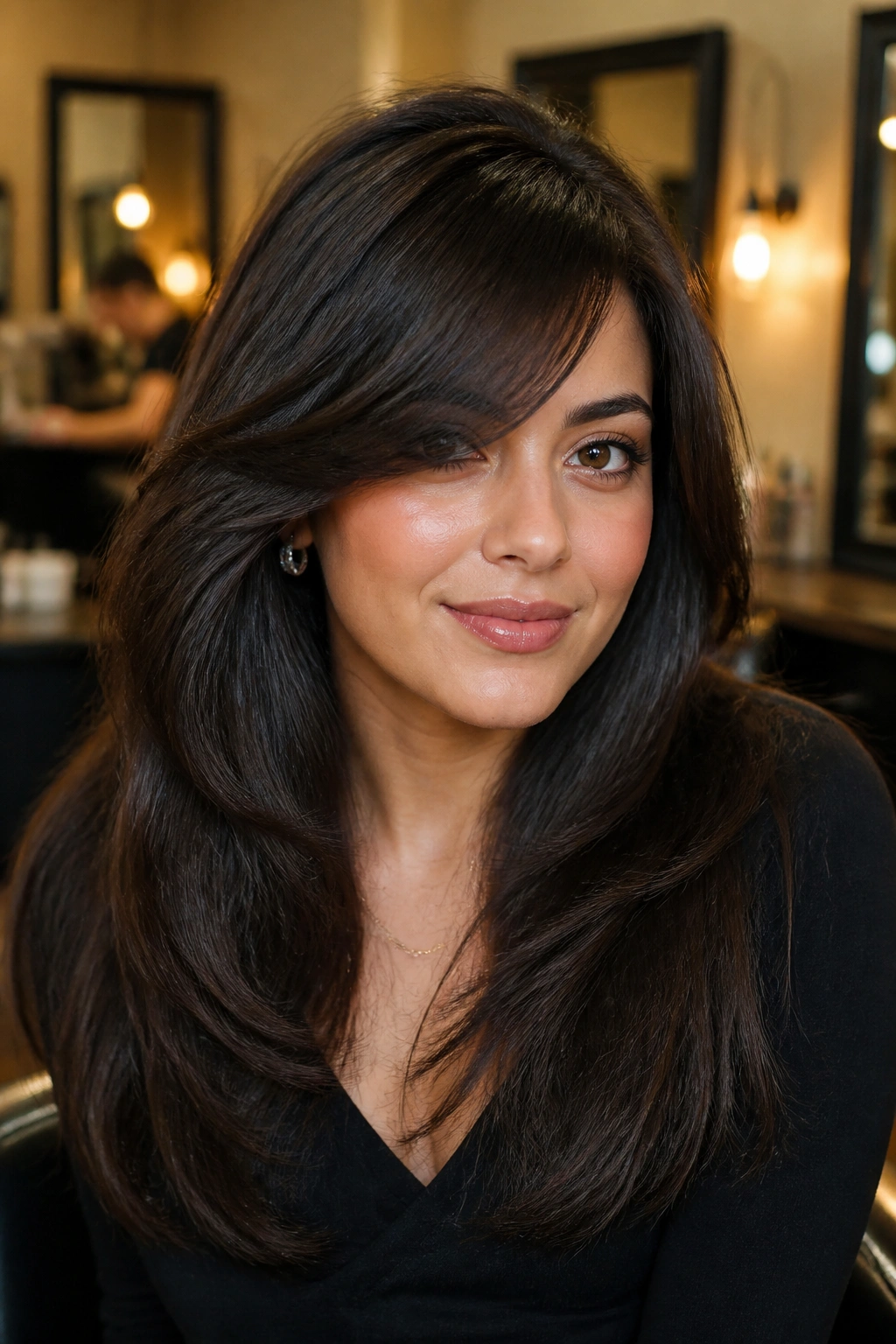
Smooth blowouts make side bangs look careful and glossy in the old salon sense. There’s a reason this shape keeps showing up on round faces: the curve starts high, sweeps across the forehead, and opens out at the side in a clean arc.
Unlike shaggy or piecey fringe, this version is all about control. The bang should feel soft in motion, but each section needs enough tension to lie in the same direction. That gives the style a little drama without turning it stiff. A medium or large round brush usually handles it better than a tiny one, which can overcurl the front.
Why it suits round faces
The blowout adds lift at the root and stretch through the lengths, which helps lengthen the face visually. The cheek area stays visible, but the front still has enough coverage to create a diagonal frame.
I’d reach for this when the rest of the haircut is simple. A clean lob, long layers, or a straight collarbone cut all make the fringe stand out more. If you want hair that looks done without looking fussy, this is a strong route. You will need a heat protectant and a little patience, though. No shortcuts there.
13. Side Swept Bangs With an Off-Center Ponytail
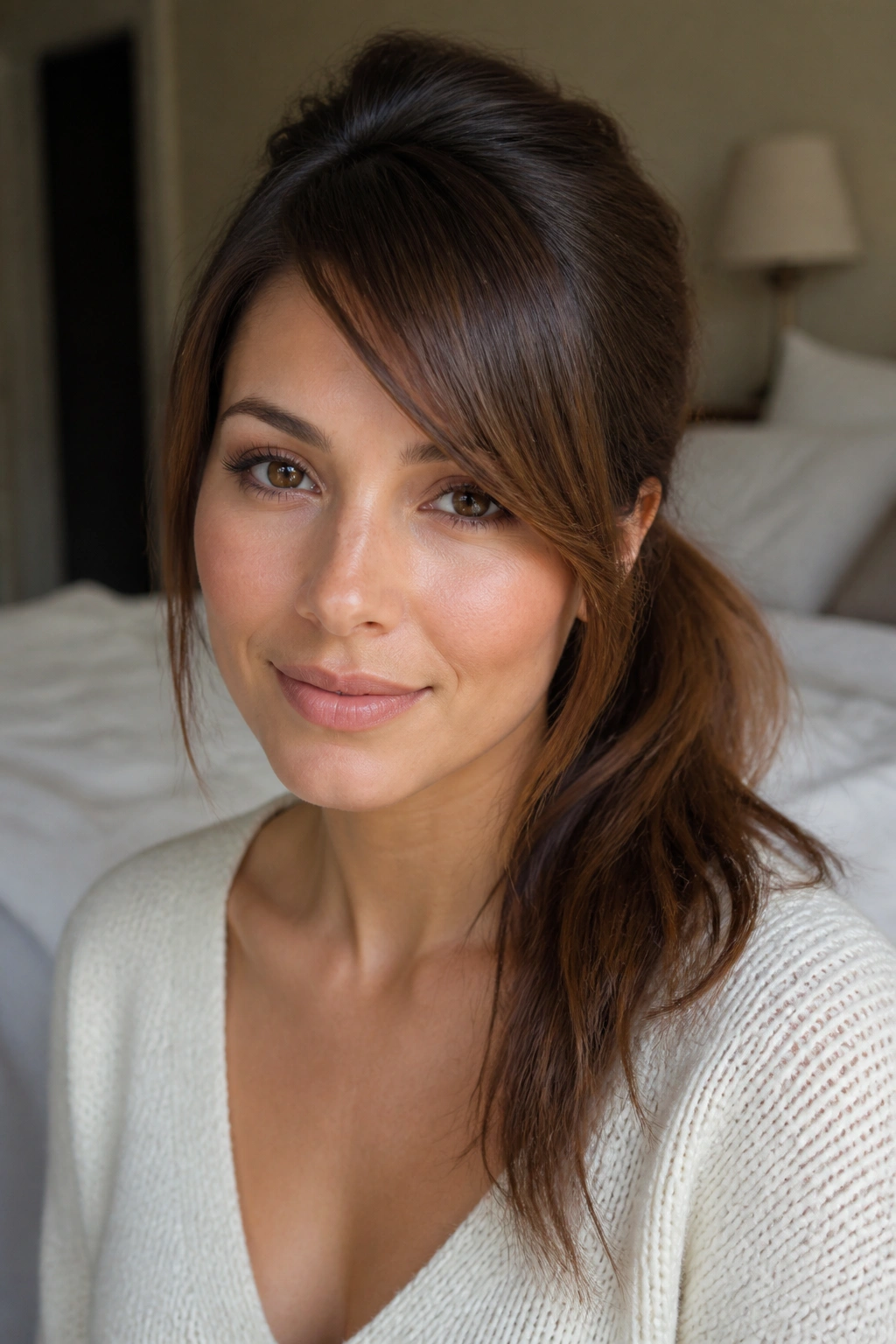
An off-center ponytail with long side bangs does more for a round face than people expect. The ponytail lifts the whole silhouette, and the side sweep keeps the front from looking too bare.
Where the lift should sit
Place the ponytail a little above the midpoint of the back of the head, not low at the nape. That gives the crown a bit of height, which is the part that helps round faces look longer. Then let the bang fall across one temple so the front still feels framed.
- Tease the crown lightly before tying it back.
- Leave one front section loose and side swept.
- Keep the ponytail soft, not pulled tight.
- Wrap a small piece of hair around the elastic if you want a cleaner finish.
This style is useful on days when you don’t want to fully wear the hair down, but you still want shape around the face. The bang becomes the styling piece. It gives the ponytail a little personality and keeps the look from feeling plain.
I also like it with second-day hair. A touch of dry shampoo at the roots gives the fringe more grip, and that grip helps the sweep stay put.
14. Piecey Side Bangs With a Textured Crop
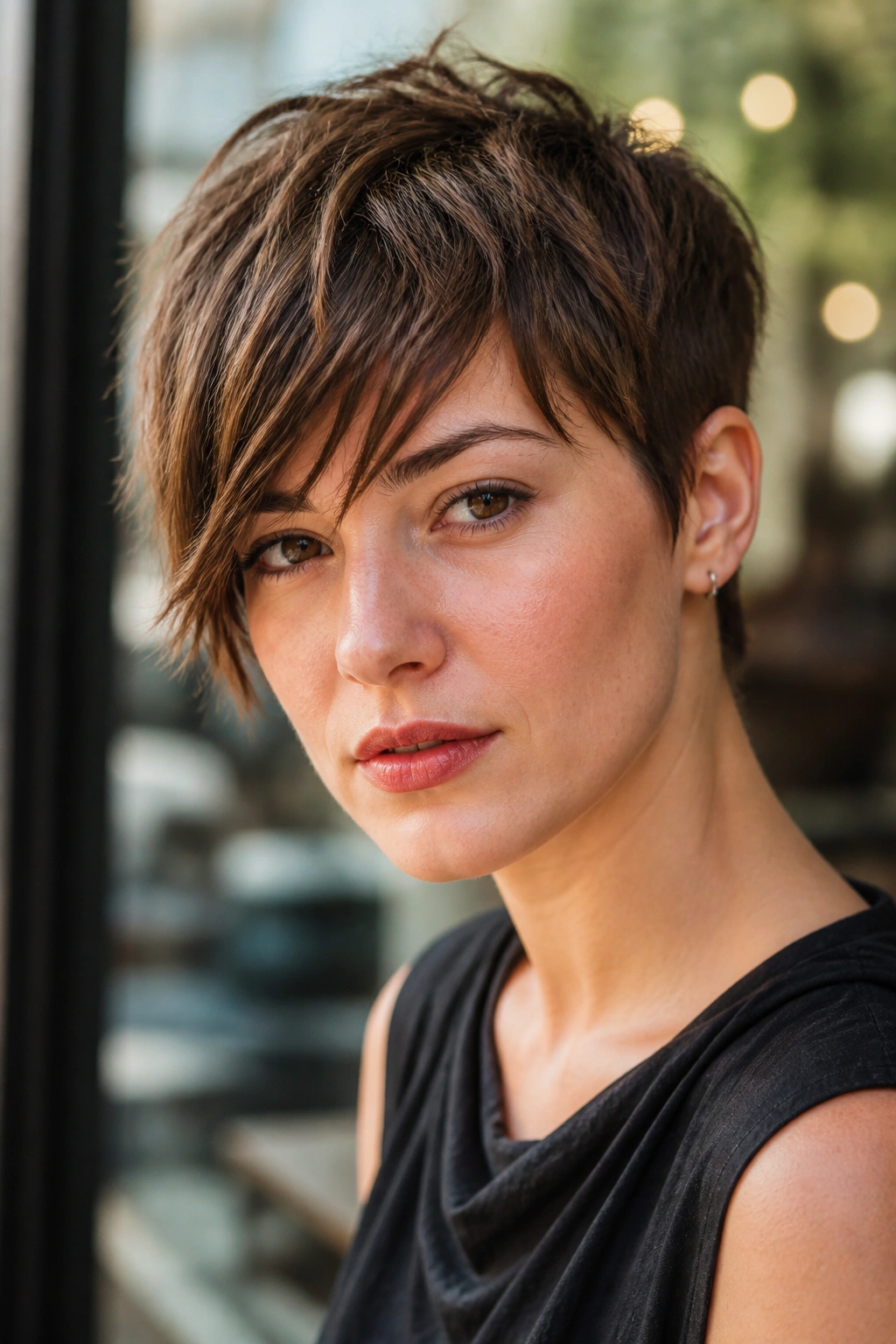
Shorter cuts need the fringe to work harder. A piecey side bang on a textured crop does exactly that. It brings movement to the front without hiding the face, which is useful if your cheeks are full and you still want a little edge.
This style is not about softness. It’s about separation. The bang should break into little sections that move across the forehead in a loose diagonal. On a round face, those broken lines keep the front from looking like a single rounded shape. The haircut feels sharper, but not harsh.
I’d choose this if you like shorter hair that doesn’t look too tidy. The pieces can be twisted with a touch of wax or pomade, then let fall where they want. A tiny amount goes a long way. Too much product and the front turns heavy fast.
The shape also works when the rest of the crop is slightly longer on top and tighter at the sides. That contrast gives the side sweep a place to sit. Clean at the temples. Messier through the fringe. That balance matters.
15. Side Swept Bangs Paired With Long Layers Past the Collarbone
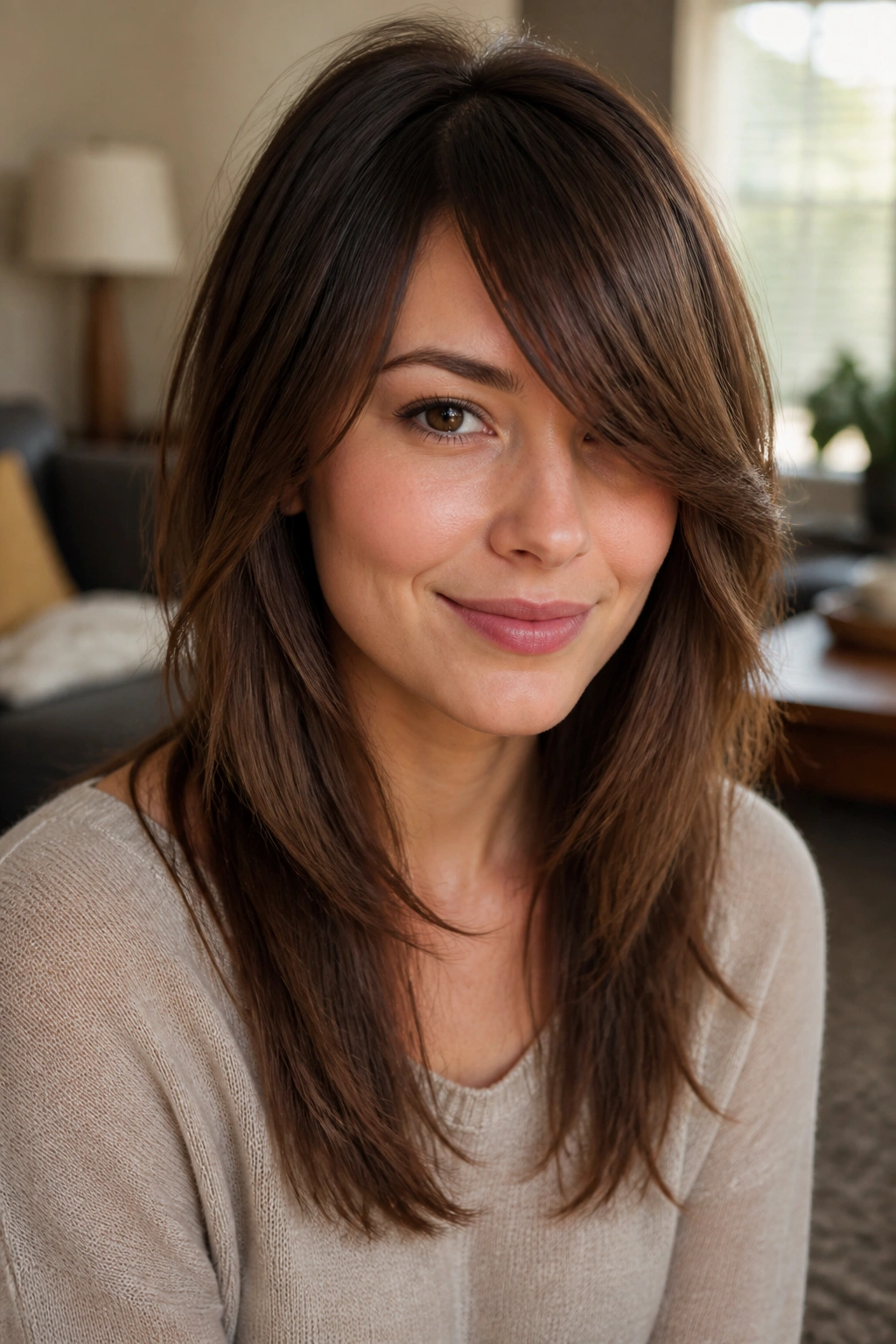
Do long layers make a side sweep look heavy? Only if the cut line is off.
When the layers fall past the collarbone, the bang has room to stretch out without dragging the rest of the haircut down. That’s useful on round faces because the length around the shoulders helps pull the eye vertically, while the side sweep keeps the front from feeling flat. The whole shape feels longer, which is the point.
What to ask for at the chair
Ask for a side bang that starts near the outer brow and blends into layers that begin below the jaw. That keeps the front from puffing out at the cheeks. If the shortest piece is cut too low, the bang can sit on the widest part of the face and lose its edge.
- Keep the front layered, not chopped.
- Leave enough length to tuck the bang behind the ear.
- Let the lower layers stay soft and mobile.
- Avoid a hard shelf around the chin.
This is a good cut if you like hair down most days. It works with waves, but it also looks polished when blown straight. The fringe is long enough to travel with the rest of the length instead of fighting it, and that makes styling easier than people expect.
16. Side Swept Bangs With Curtain Fringe Energy
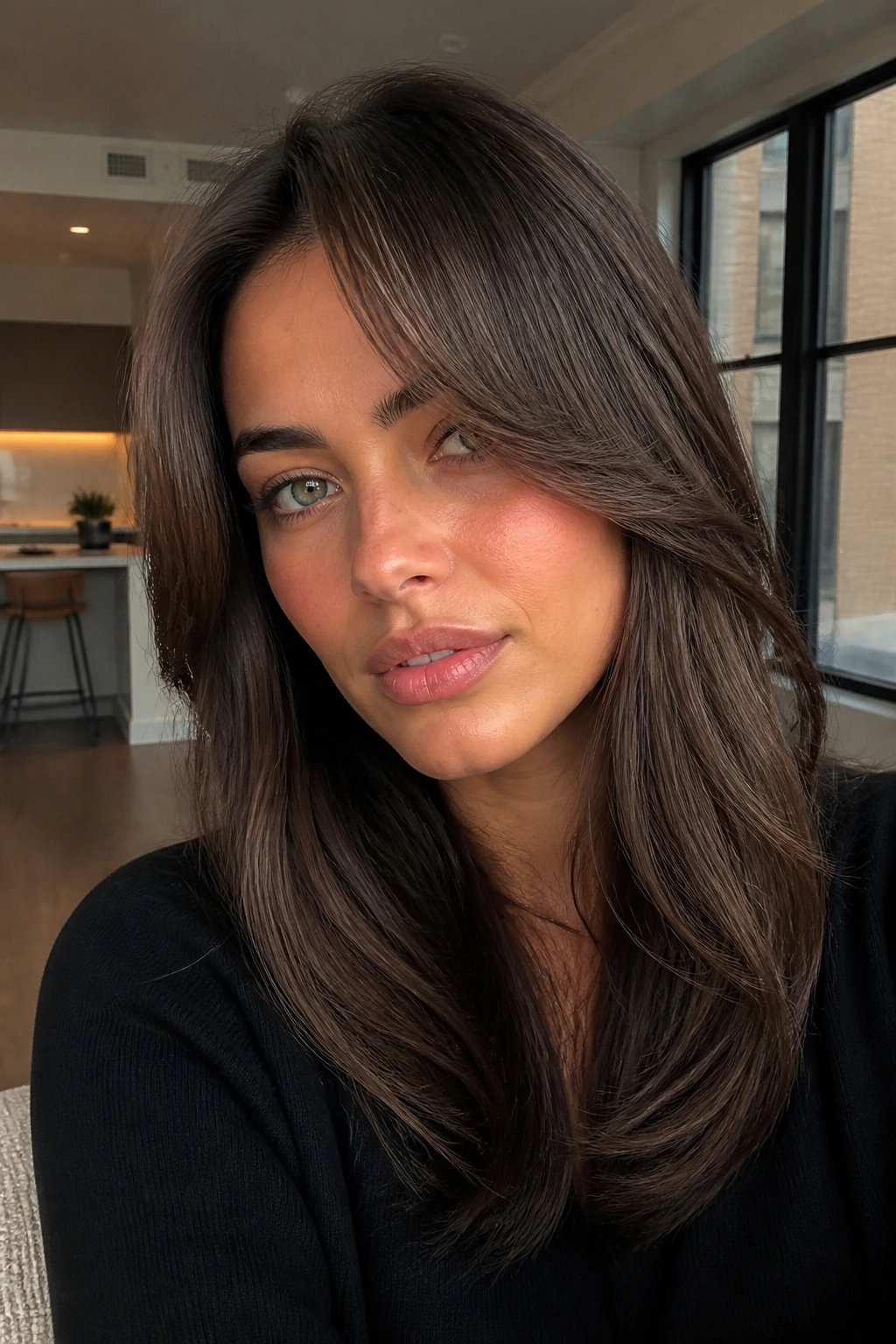
Part curtain fringe, part side sweep. That’s the sweet spot here.
This style is useful if you like changing your part from one day to the next. The fringe opens near the center, then falls more heavily to one side, which softens the forehead without making the front look blocked. On a round face, that open center space helps create a little vertical lift, and the side weight gives you the diagonal line you still need.
The cut works especially well on medium-density hair with a bit of wave. The front has enough movement to separate naturally, and the longer edges can slide into the rest of the haircut. It feels less committed than a blunt bang, which is part of its charm. You can push it flatter, part it wider, or tuck one side back and it still behaves.
I’d style this with a round brush at the roots and fingers through the ends. You want the center area to lift, not poof. That distinction is small, but it matters. Poof adds width. Lift adds shape.
17. Side Swept Bangs for Thick, Heavy Hair
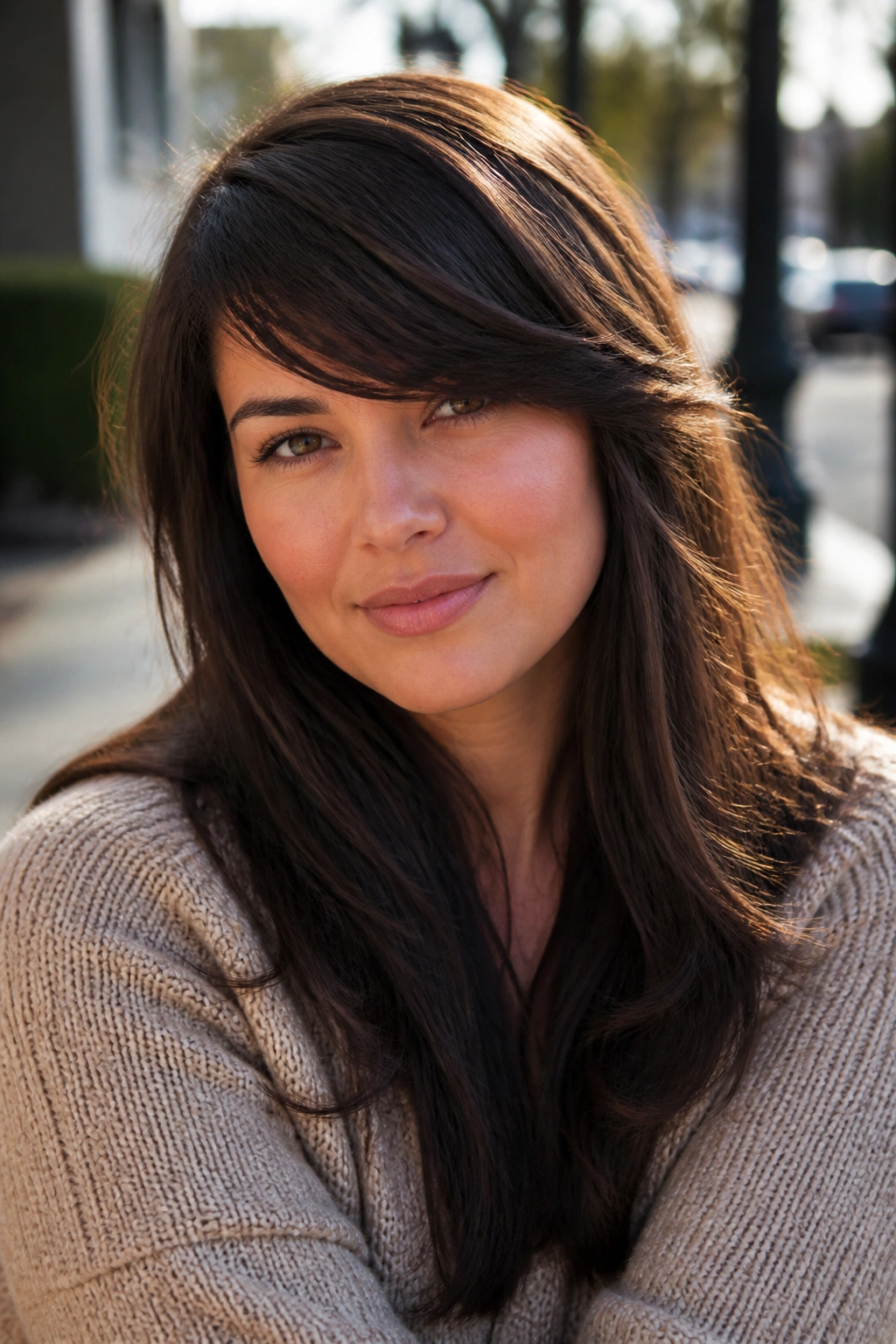
Thick hair wants movement, not just thinning.
A heavy side sweep can look gorgeous on a round face when the weight is controlled the right way. The bangs need enough density to feel full, but they also need enough internal removal to avoid sitting like a block across the forehead. That balance is the whole game. Too much bulk, and the front takes over. Too little, and the fringe turns fuzzy.
I’d avoid aggressive thinning shears here unless the hair is very coarse. A better cut usually uses point-cutting through the lower half of the bang, which softens the line without making it wispy. That keeps the front strong enough to hold its shape. Thick hair can do that. It just needs direction.
When you blow-dry it, focus on tension. Pull the bang gently across the forehead while directing heat from root to ends. The front should cool into the side sweep, not spring back in every direction. Thick hair has opinions. You need to outvote it.
This style is especially useful if your hair tends to puff in humidity. A clean diagonal shape with a controlled edge holds up better than a heavily layered fringe that breaks apart.
18. A Soft Side Sweep With Low Effort
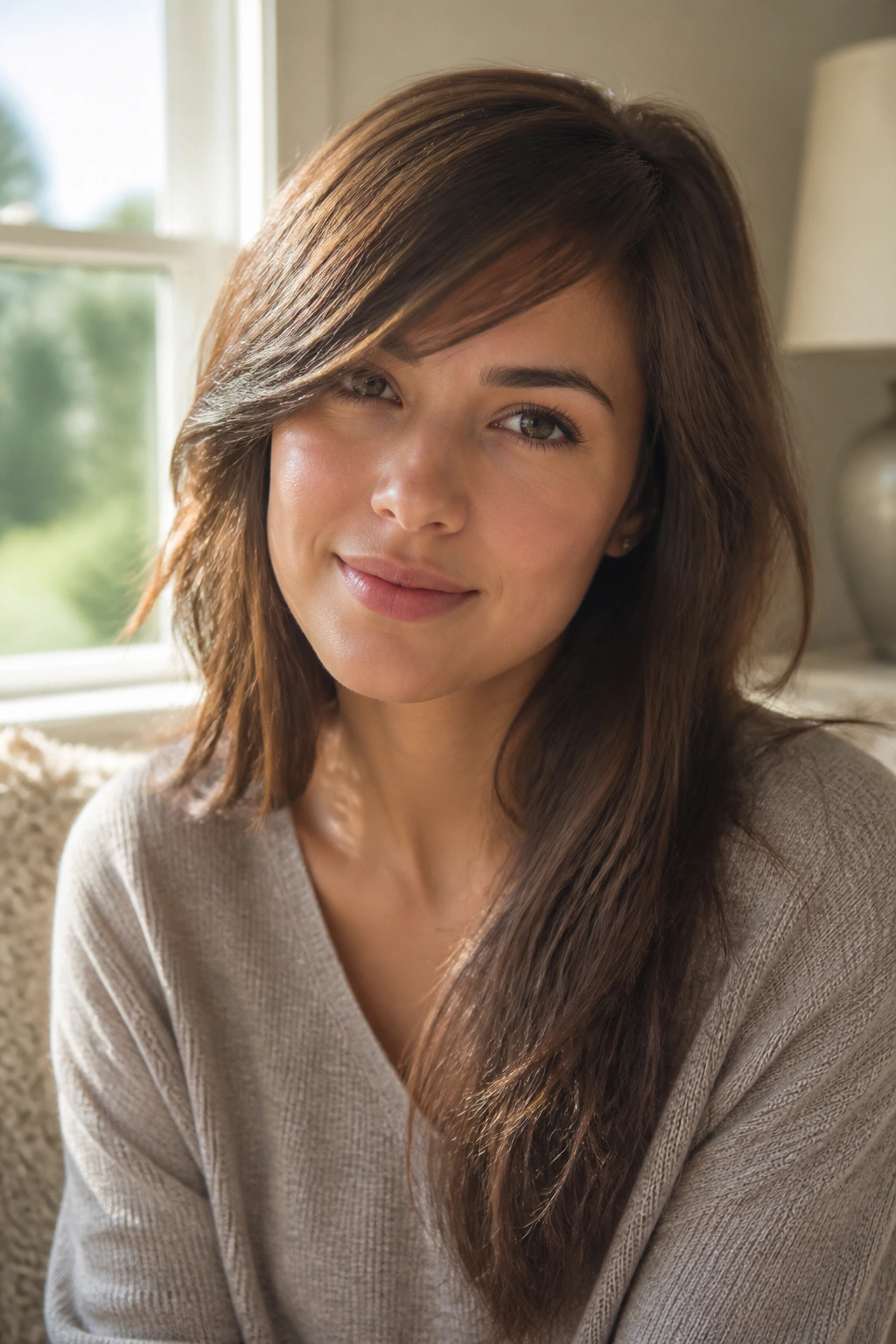
Some days you want a fringe that behaves even when you don’t.
This softer side sweep sits somewhere between a bang and a face frame. It’s long enough to clip back when needed, but it still falls forward naturally when you let it down. On a round face, that flexibility is a gift. You get the diagonal line, the cheek-softening effect, and a shape that doesn’t demand a full styling session every time you wash your hair.
The finish should be loose. Not flat, not polished to the point of stiffness. Let the shortest piece land around the brow, then let the rest slip toward the cheekbone in a slow taper. If the ends are too blunt, the style stops feeling easy. If the front is too short, it starts acting like a true bang, which is a different commitment.
I like this one for people who wear their hair up a lot or switch between air-drying and heat styling. It gives you enough structure to frame the face on tired mornings, and enough length to move out of the way when you need it to. That’s the kind of haircut people keep reaching for.
The one thing I would not do is cut it so short that it sits straight across the widest part of the face. Keep the line soft, let it drift, and let the shape do its work without announcing itself.
