



Straight hair is brutally honest. It shows every snip, every bend, every place where a fringe was cut half a centimeter too high or left a touch too heavy on one side. That is exactly why the best bangs ideas for straight hair are the ones with a clear shape, a clean line, and a plan for how they’ll fall once they’re no longer under the comb.
The upside is big. Straight hair makes bangs look crisp, shiny, and intentional in a way wavy hair sometimes can’t match without more styling. The downside is equally obvious. If the fringe is too blunt, too short, or too dense for your face, there’s nowhere to hide. No texture to soften it. No bend to blur it. Just the cut, right there on your forehead.
So the sweet spot is a cut that works with straight hair instead of fighting it. Some bangs sit flat and sleek. Some break up into airy pieces. Some lean soft and grown-out, which is often the smartest move if you do not want to be chained to a round brush every morning. A good fringe on straight hair should look deliberate at 8 a.m. and still make sense by lunch.
1. Blunt Micro Bangs for Straight Hair
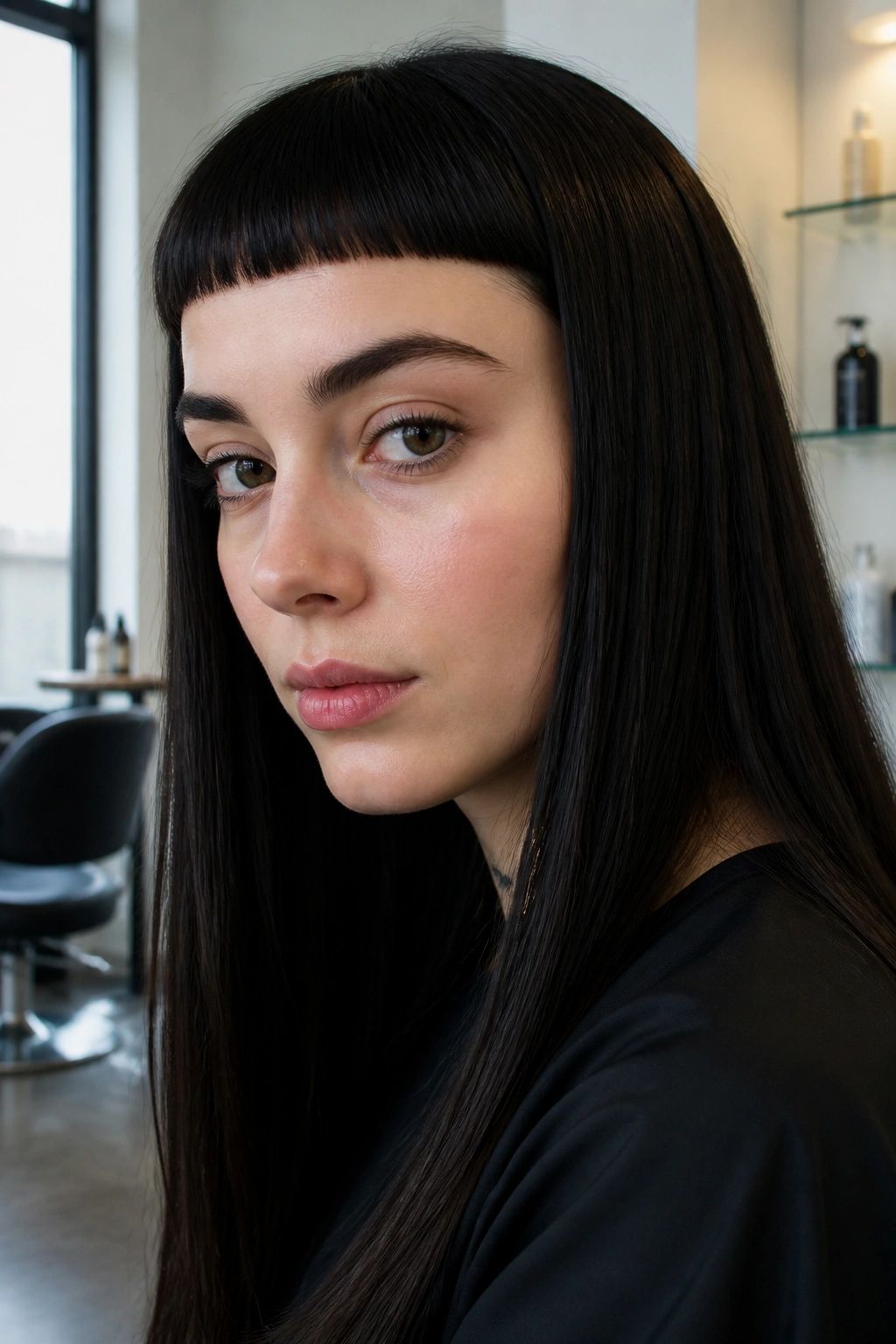
Blunt micro bangs are not shy, and that’s the point. On straight hair, they land with a sharp, graphic finish that looks clean rather than fluffy, which is why this style can read so strong in real life. The line sits high on the forehead, so the whole cut needs confidence and a bit of edge.
Why They Work So Well
Straight hair keeps micro bangs from puffing out or curving in weird ways, which is half the battle. A stylist usually cuts these dry or nearly dry so the final length is easier to judge, because even a few millimeters matter here. Too short and the bangs feel severe. A little longer and they start to look cool instead of costume-y.
- Best on thick or medium-thick straight hair
- Needs a clean, blunt edge
- Usually asks for a trim every 2 to 4 weeks
- Looks best with a sleek center or soft side part in the rest of the hair
My take: keep the rest of your hair very simple if you choose this fringe. The bangs should be the headline.
2. Classic Full Fringe
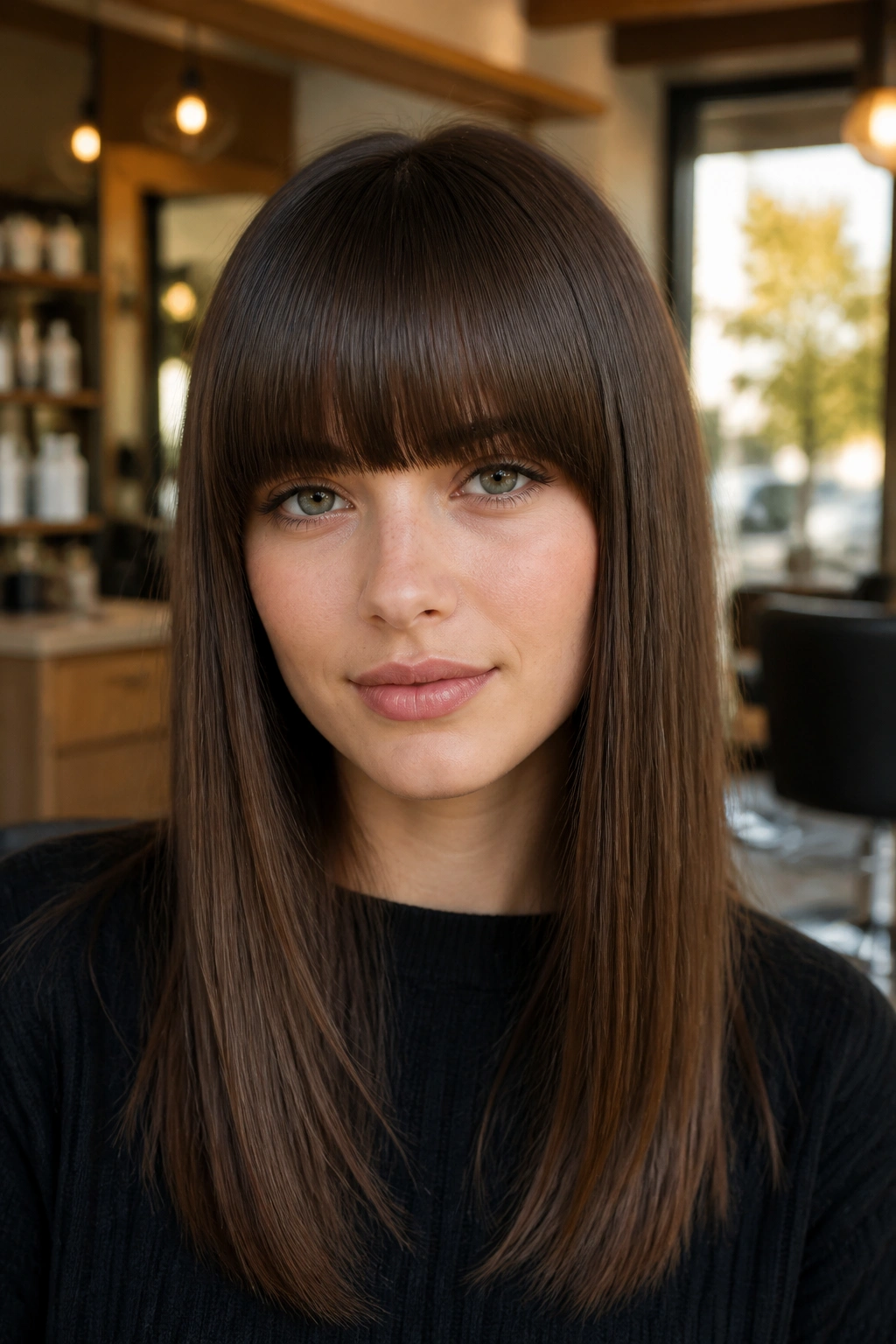
A classic full fringe is the style most people picture when they think about bangs, and straight hair makes it look especially crisp. This is the dense, straight-across version that skims the brows or sits just above them, with enough weight to feel polished but not heavy.
The trick is density. If the fringe is too thin, it can look see-through in a way that feels unfinished. Too thick, and it can swallow your forehead. The good version has a soft edge at the bottom so the line does not look like it was drawn with a ruler. That tiny softness matters.
I like this option when someone wants bangs that feel substantial but still easy to style. A quick blow-dry with a flat brush is usually enough. No drama. No fussy bend. Just a smooth, even fall.
3. Brow-Grazing Bangs
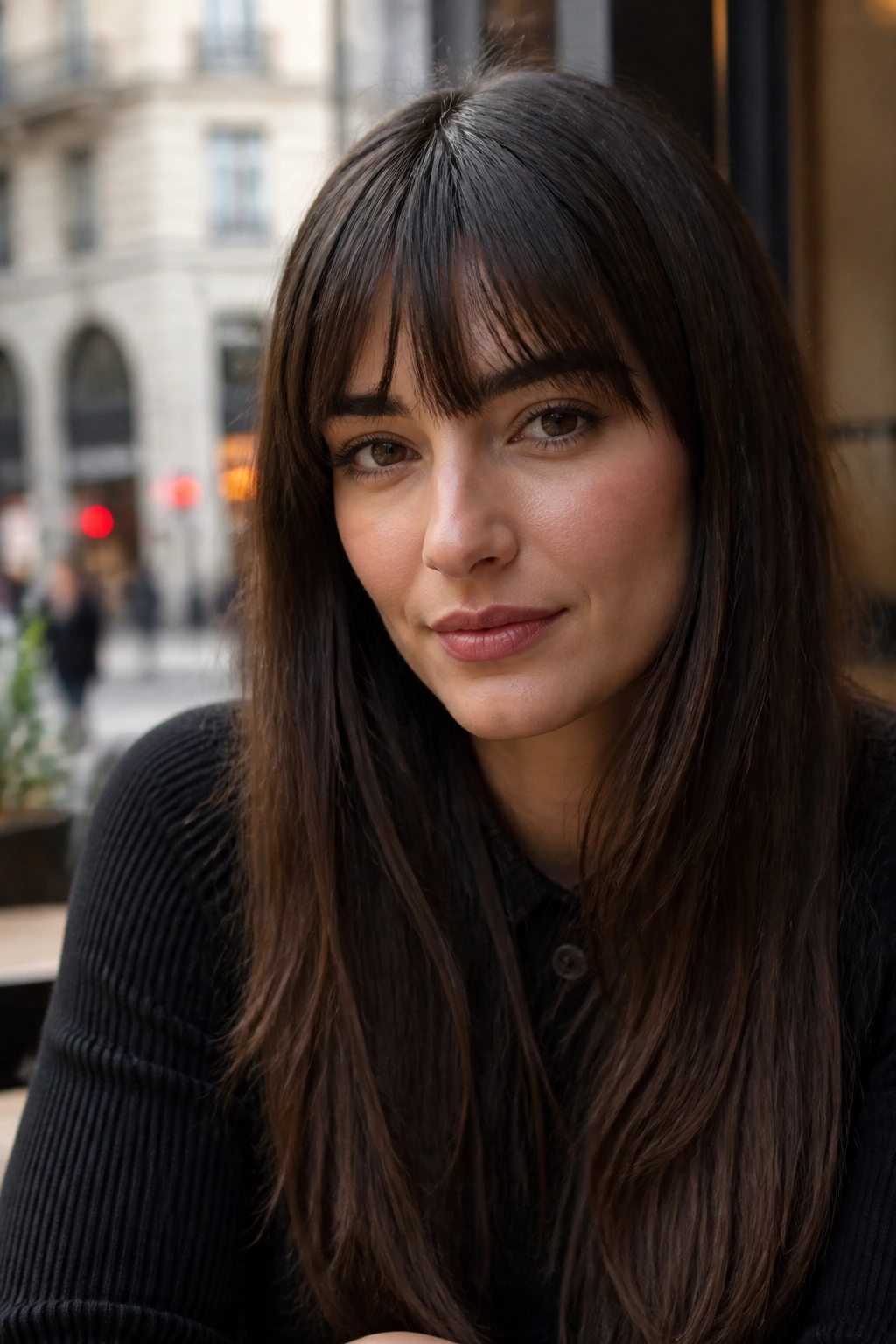
Do you want bangs without committing to a hard line? Brow-grazing bangs are the safest place to start. They sit right around the eyebrow area, which gives you the feeling of bangs without making the forehead disappear.
What Makes Them So Useful
Straight hair makes this length especially neat. The fringe falls cleanly, so you can wear it with glasses, a middle part, or a soft off-center part without the ends fighting you. It also grows out gracefully, which is a huge deal if you get bored fast or hate frequent salon visits.
A brow-grazing fringe tends to work best when the center is just a touch shorter than the sides. That keeps the shape from looking blocky. Ask for a soft point-cut finish at the ends if you want movement rather than a hard shelf.
How to Style It
- Blow-dry the roots forward for 20 to 30 seconds
- Use a small round brush only if the fringe kicks up at the ends
- Finish with a tiny bit of lightweight serum on the tips, not the roots
A good shortcut: if the bangs still look too straight, bend only the last half-inch with a flat iron. That’s enough.
4. Curtain Bangs for Straight Hair
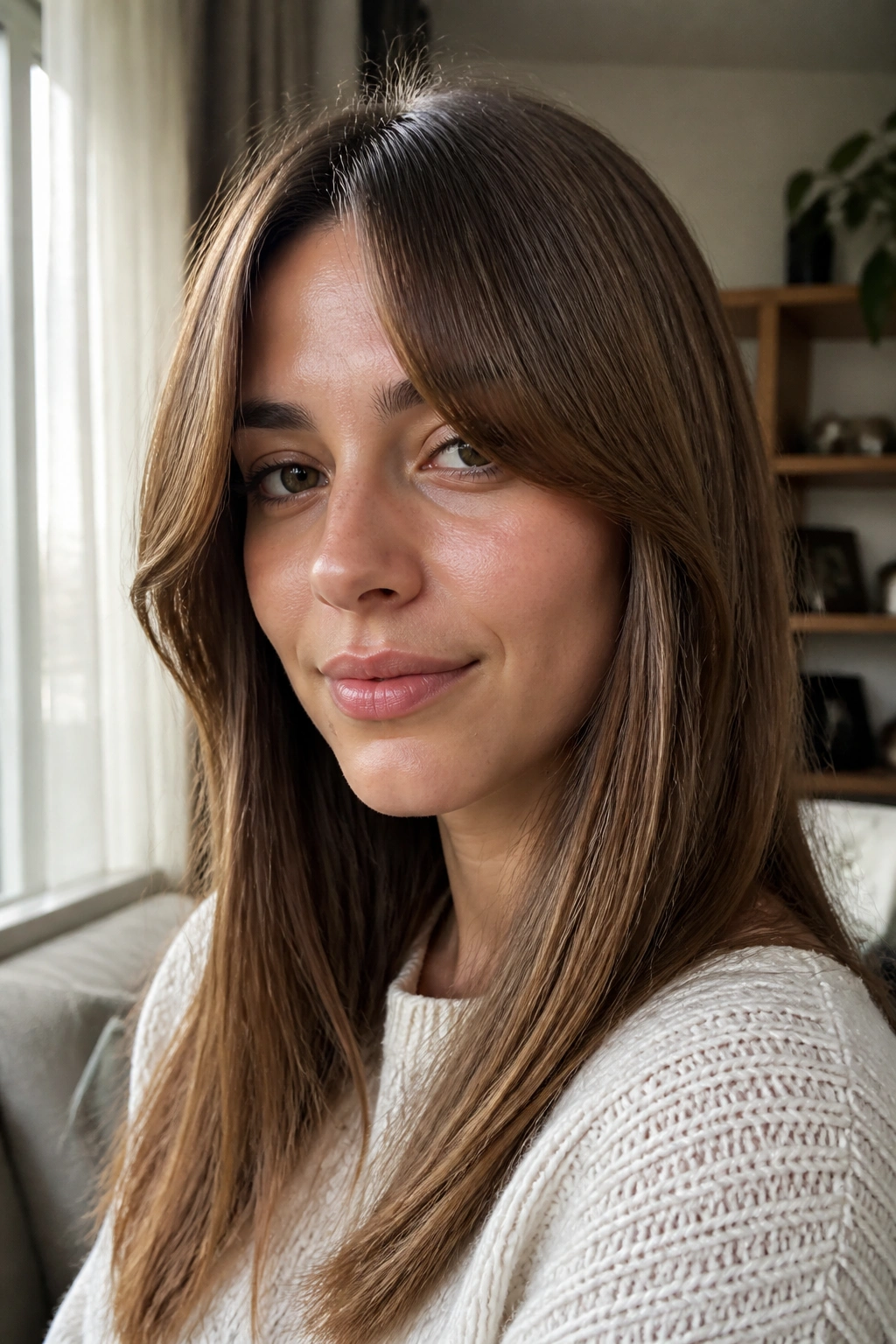
Curtain bangs are the easygoing classic for a reason. On straight hair, they open down the middle or slightly off center and fall away from the face in a way that feels relaxed, not messy. They also give you bangs without making your forehead feel boxed in.
The best part is the grow-out. Curtain bangs can drift into layers without looking like you missed a salon appointment. That matters more than people admit. If you’re unsure about fringe but still want something visible, this is the one I’d put near the top of the list.
Quick Facts That Matter
- Start shorter near the center, longer toward the temples
- Ask for a soft face-framing sweep, not a hard blunt line
- Works well with slightly thick straight hair
- Needs only a light round-brush bend or a flat-iron curve
Curtain bangs also play nicely with ponytails and clips. They don’t demand perfect styling to look right. That’s a huge win on a busy day.
5. Bottleneck Bangs
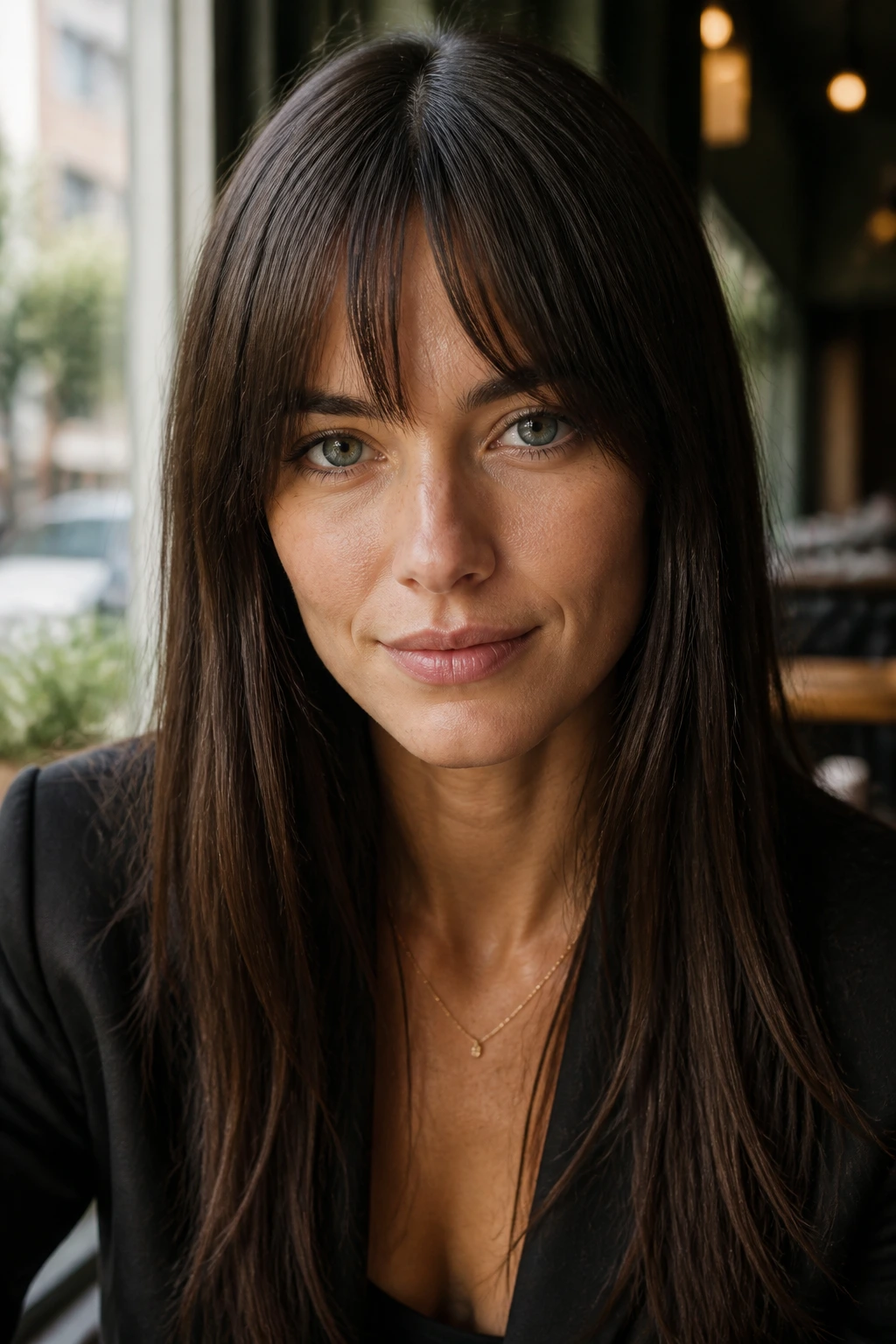
Bottleneck bangs start narrow at the center, then widen gently near the eyes and temples. On straight hair, that shape looks clean and a little smarter than a full curtain fringe, because the outline has more purpose. It is one of those cuts that sounds subtle but makes a real difference on the face.
The name makes sense once you see it. The middle is the tight neck of the shape, and the sides fan out. This gives you softness around the cheeks without losing the structure that straight hair does so well. If your hair tends to lie flat, bottleneck bangs can keep the front section from looking like one flat sheet.
I like these on people who want the ease of curtain bangs but a touch more design. They feel modern without shouting about it. And they grow out in a nice, believable way.
6. Side-Swept Bangs
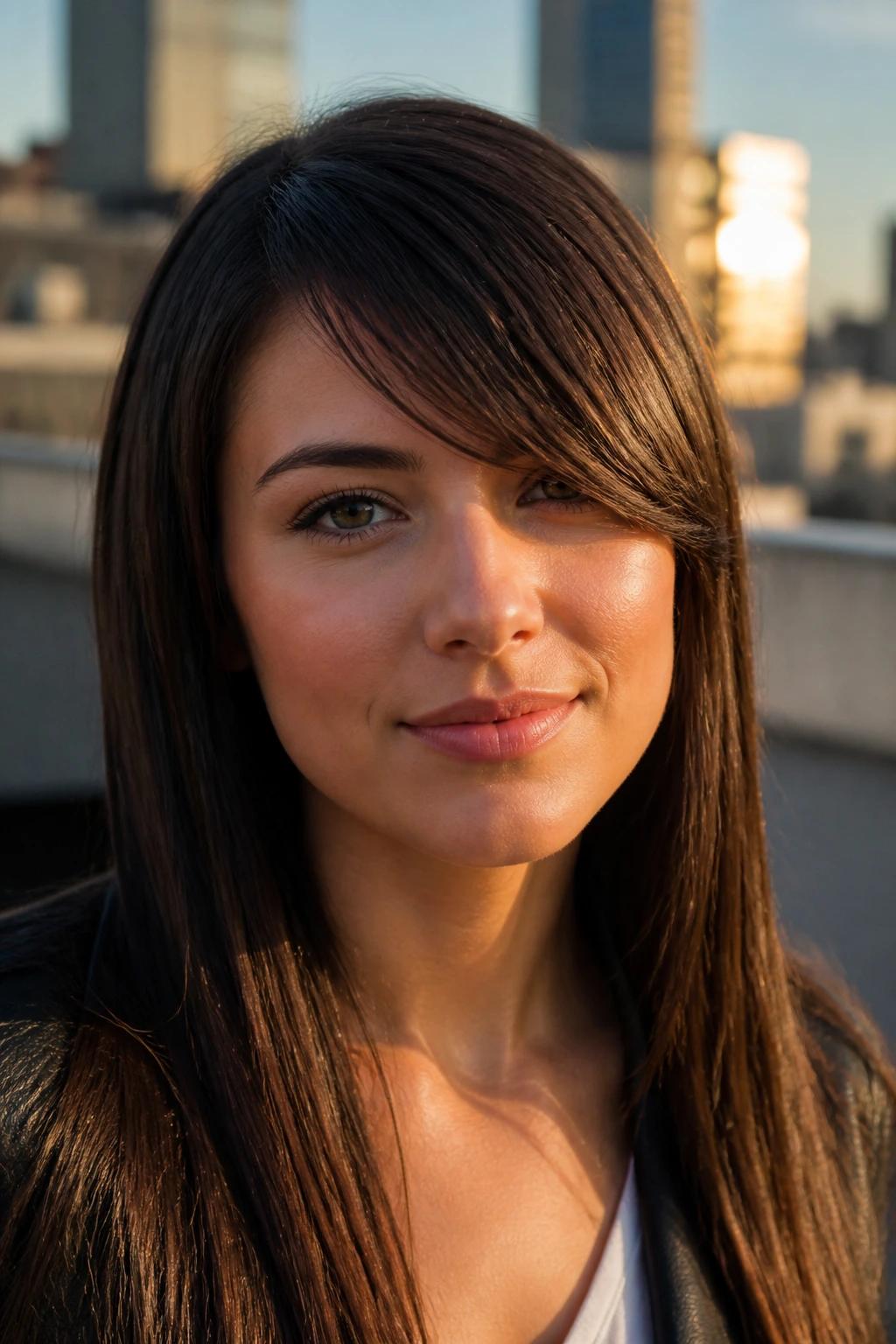
Side-swept bangs are the friendliest answer for anyone nervous about fringe. They work especially well on straight hair because the sweep holds its line without needing a ton of shaping. If your hair has a stubborn cowlick, this style can often work with it instead of fighting it.
A deep side part gives the bang more drama. A softer side part makes it feel quieter. Either way, the diagonal line pulls the eye across the face, which can be useful if you want to soften a broad forehead or break up a very symmetrical cut.
Best For
- People who want easy grow-out
- Anyone who wears a side part already
- Straight hair that gets oily near the front, since the sweep hides a little flattening
- Low-maintenance mornings
The only catch is that side-swept bangs need the direction to stay consistent. If you keep flipping them around every day, they lose shape faster than you’d like.
7. Wispy See-Through Bangs
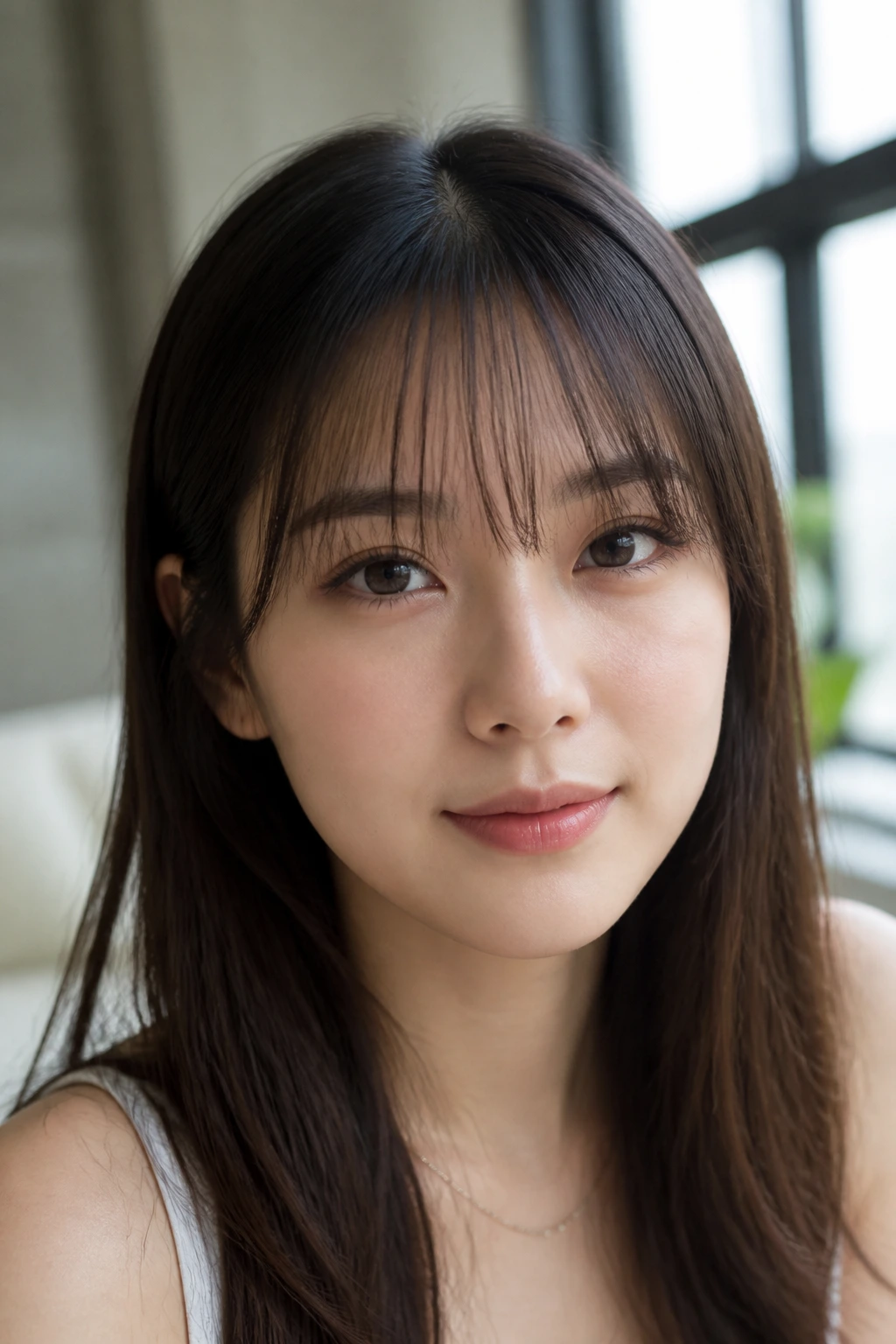
Wispy bangs are a nice answer when you want fringe but do not want heaviness. Straight hair can make them look airy instead of stringy, which is the whole point. The strands separate a little, leaving forehead peeks between them.
What Makes Them Different
They are cut with less density, often through point-cutting, so the edge looks soft and lightly broken up. On straight hair, that means they sit neatly without turning poofy. Fine hair can wear this look well, but so can medium hair if the stylist keeps the section small and the ends delicate.
These bangs usually feel best when styled with almost nothing. A quick brush forward, maybe a tiny touch of heat, and done. Too much product ruins the lightness. Heavy cream makes them clump, and that defeats the whole point.
Best move: keep them separated with your fingers, not over-brushed into a single sheet.
8. Piecey Choppy Bangs
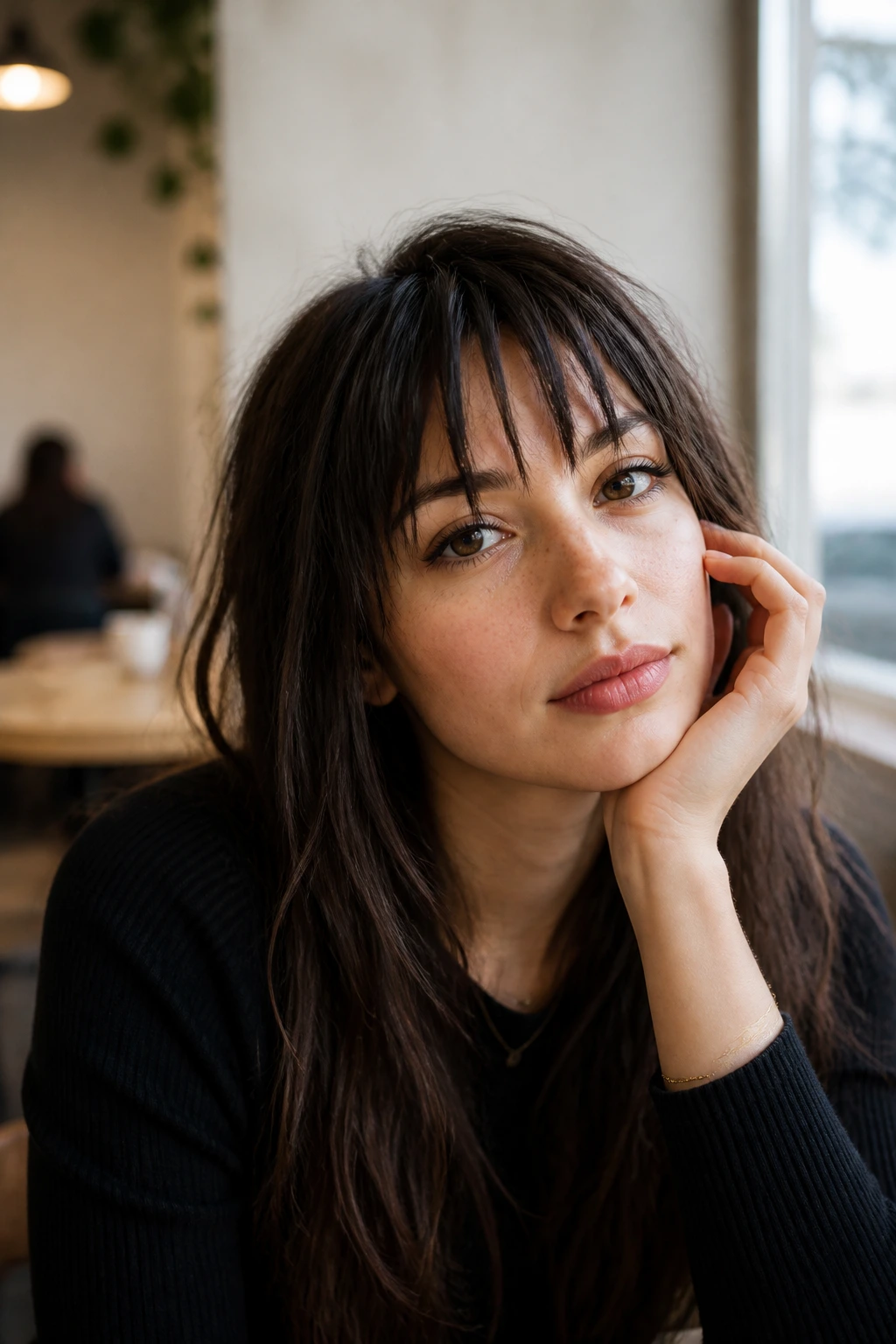
Piecey choppy bangs bring a little grit to straight hair, which can otherwise look too polished if every strand sits perfectly in place. These bangs are cut to separate into visible little sections, so the line feels broken up in a deliberate way.
That separation is useful if you like styles that look a bit undone. Not messy. Just less formal. A straight, glossy base with choppy bangs has a nice contrast, and the front of the hair gets some movement without turning into a fluffy curtain.
You do need to style these with a light hand. A tiny bit of texturizing spray or a matte paste at the tips can help the pieces stay apart. Too much product, though, and they start to look sticky. That is a fast way to kill the effect.
9. Rounded Fringe
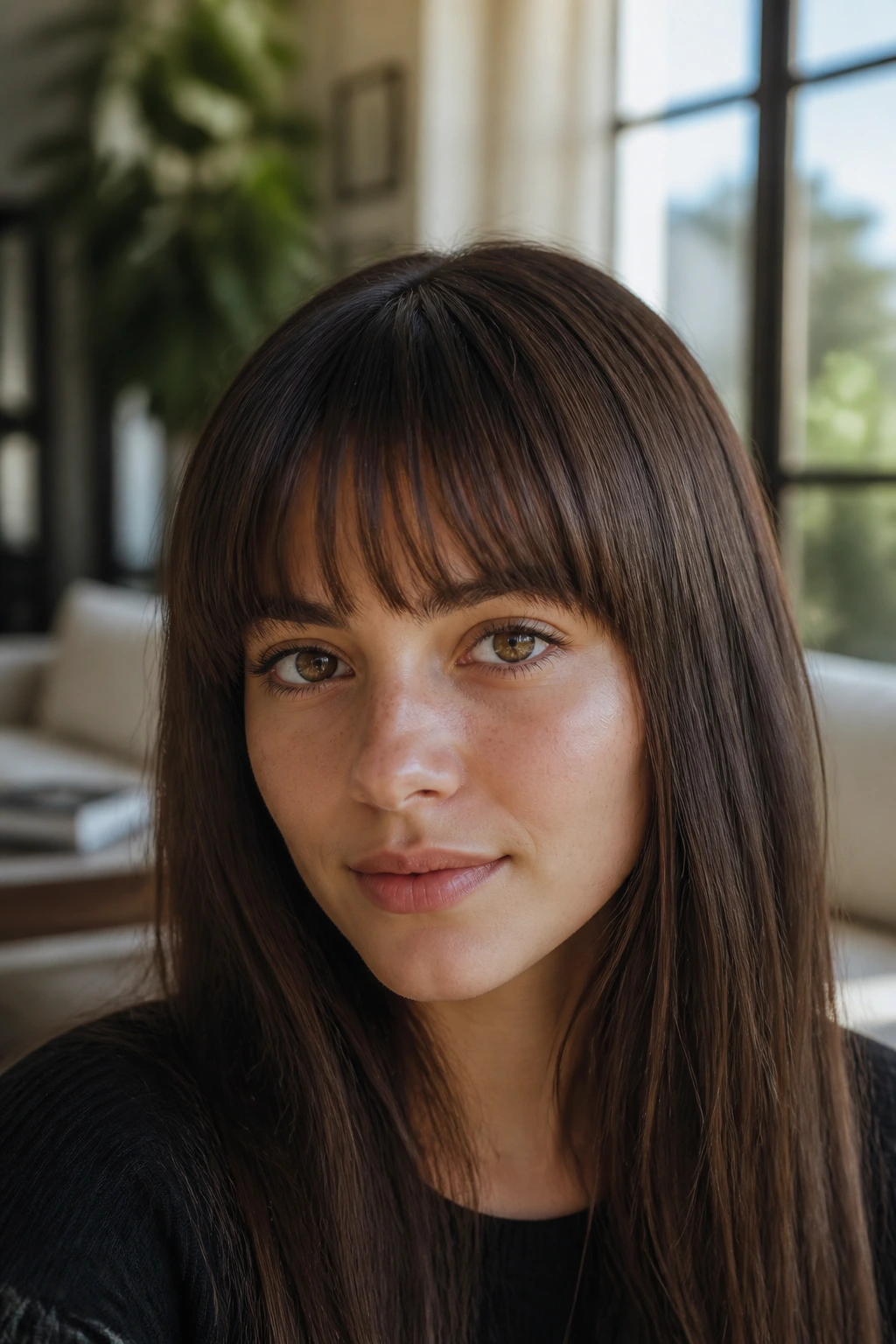
A rounded fringe curves gently across the forehead instead of cutting in a hard line. On straight hair, that curve reads especially clean because the hair lays flat enough to show the shape clearly. It softens angular features and keeps the bang from feeling boxy.
This style works best when the center is a little shorter and the corners are slightly longer, creating that soft arc. The line should feel intentional, not overly perfect. A hairdresser can shape it with subtle layering so the fringe hugs the face instead of sitting like a cap.
I reach for this style when someone wants something classic but not severe. It has a neat, almost tailored look. If you like your hair to look smooth and structured, this one is worth a close look.
10. Long Sweeping Bangs
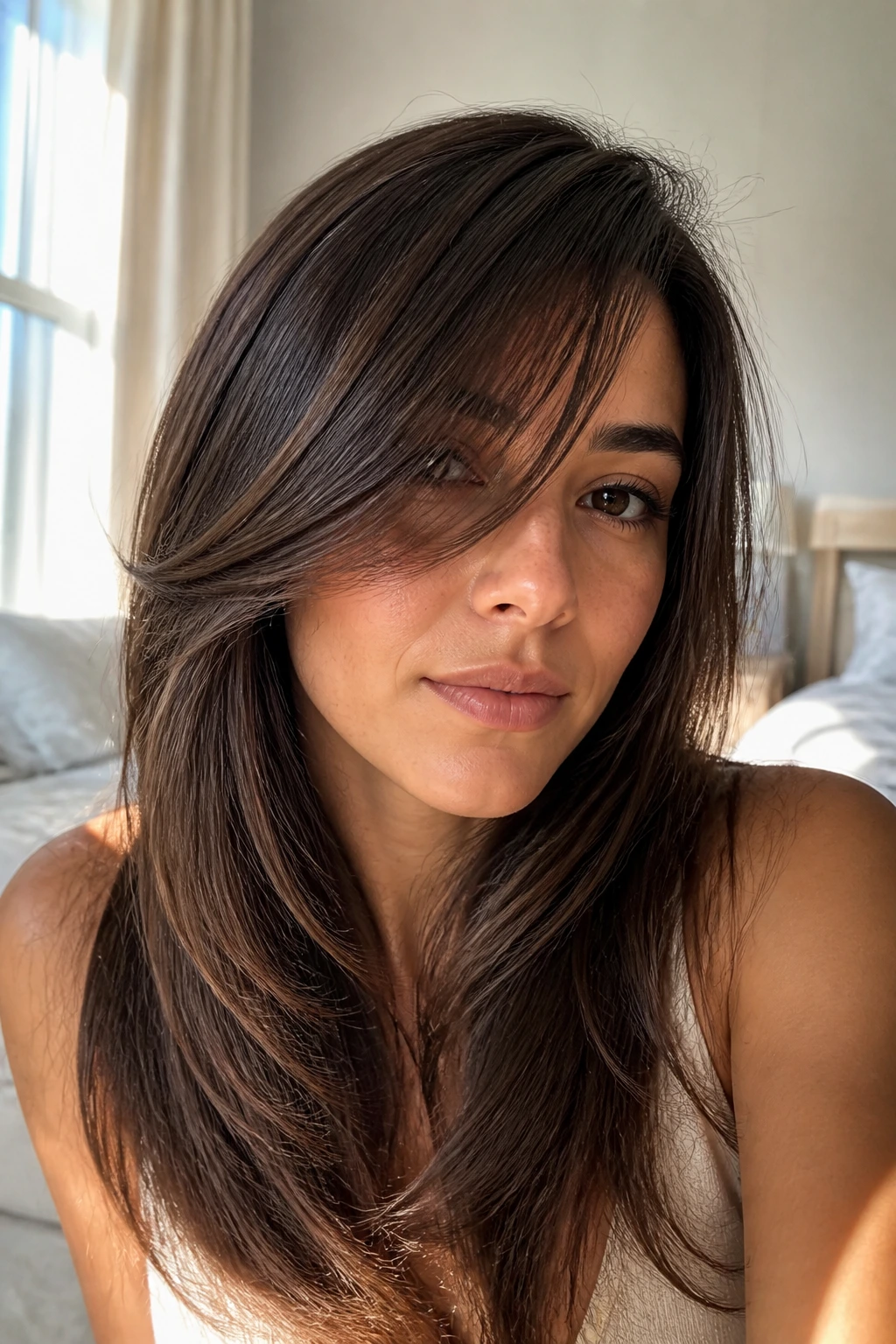
Long sweeping bangs are the practical cousin of side fringe. They start near the brow area and drift diagonally into the rest of the hair, which makes them one of the easiest bangs ideas for straight hair if you do not want a big maintenance bill in your life.
They blend better than a short fringe, so they are useful if you wear your hair up often or move between straight and tucked-back styles. The longer length also means they can be blown out with a paddle brush instead of a tiny round brush, which saves time.
There is something nice about bangs that do not demand all the attention. These sit in the mix, do their job, and let the rest of the haircut breathe. They are not loud. They are useful.
11. Arched Bangs
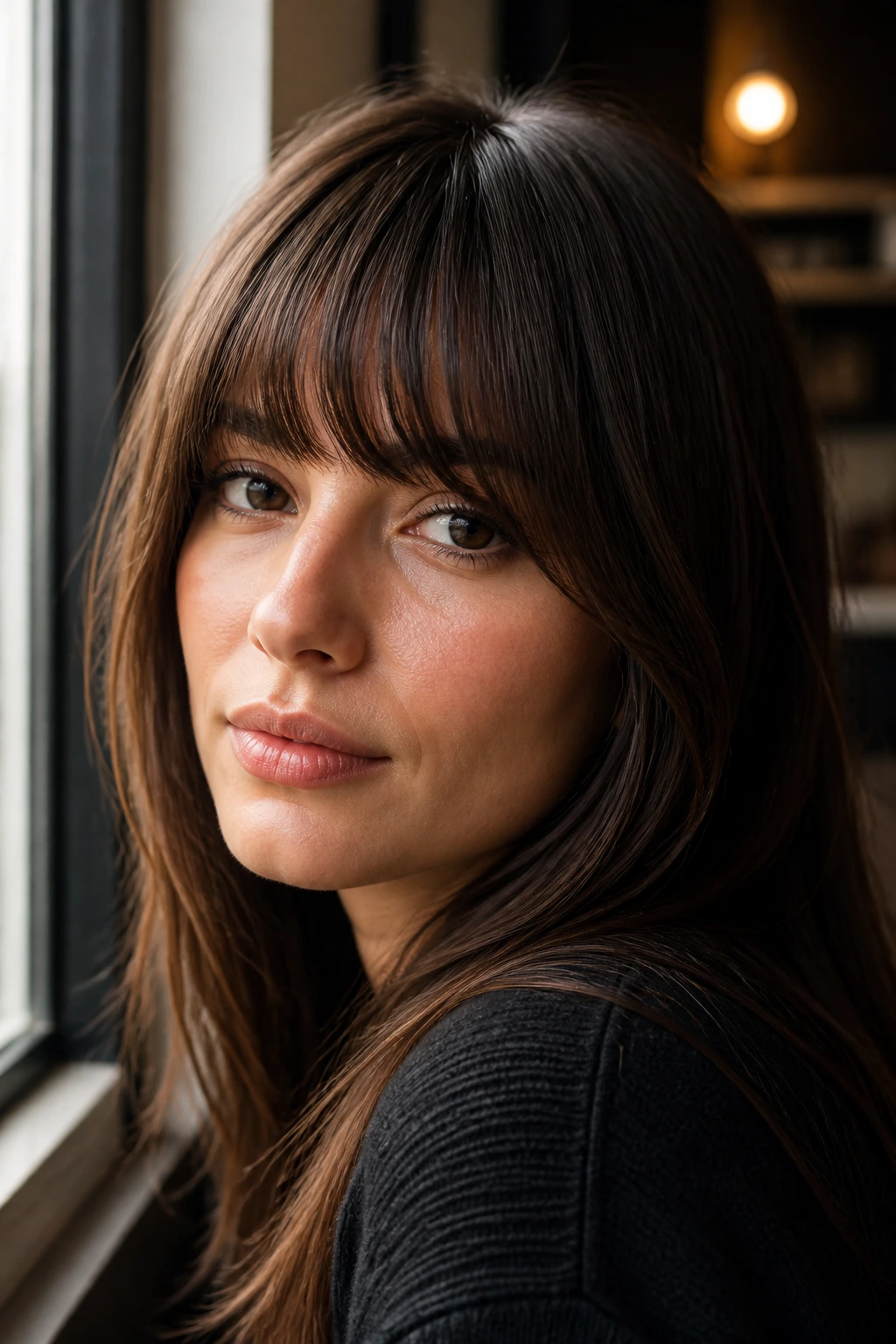
Arched bangs form a subtle curve that opens a bit at the center and lands lower at the sides. On straight hair, that shape is easy to read because the smooth texture shows the arch with almost no effort. It feels neat, almost tailored.
Why the Shape Matters
A straight-across fringe can sometimes feel blunt in a way that dominates the face. An arched line eases that pressure. It creates a little lift at the center and frames the eyes without making the forehead vanish.
This is a strong pick if your hair grows flat at the front and you want a small shape detail without a full curtain effect. The curve needs a light blow-dry or a brush bend, but not much else. Overstyling can make it look too curled, which ruins the point.
Styling Cue
Watch the ends. They should follow the face, not flip outward like parentheses.
12. Soft-Corner Straight Bangs for Straight Hair
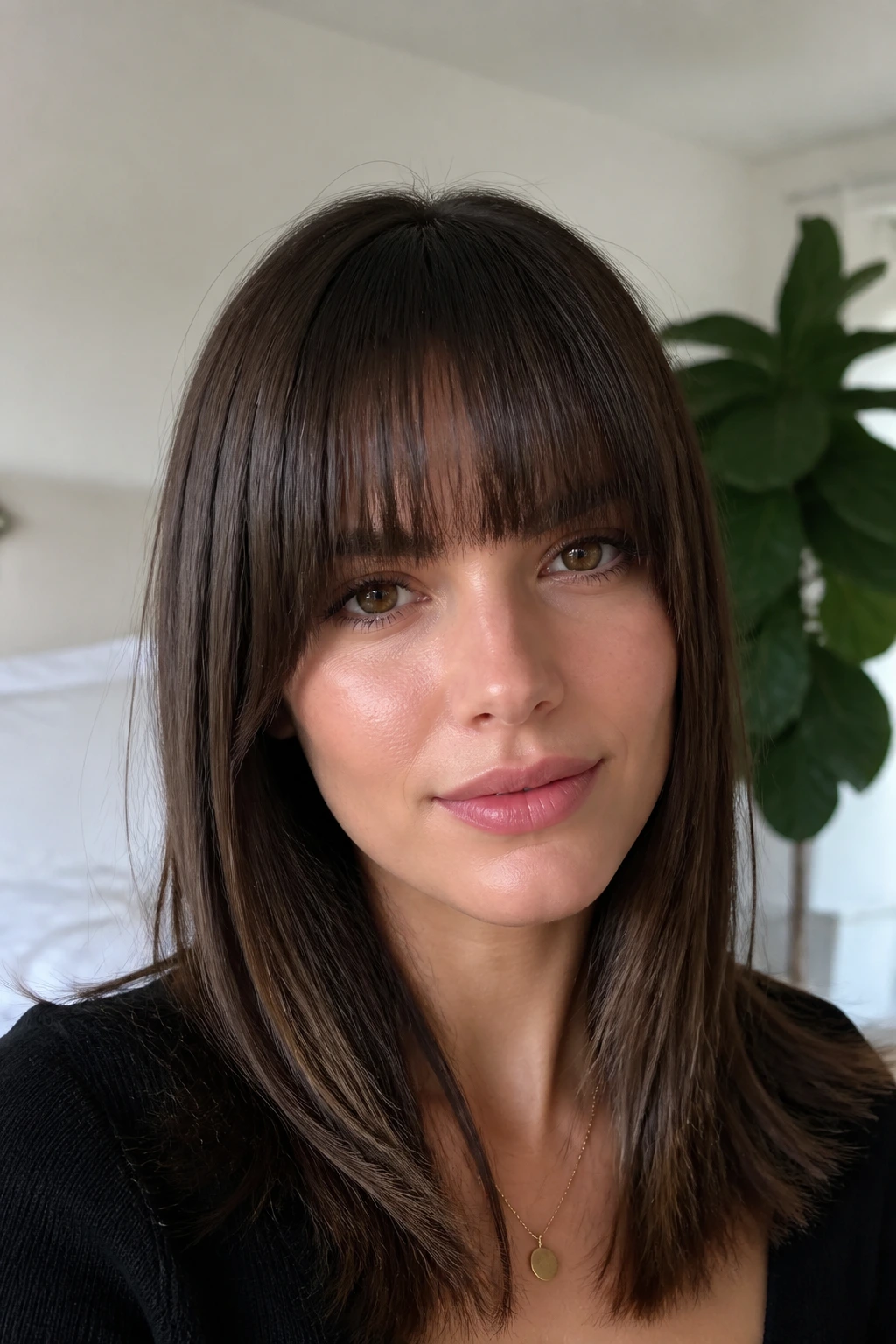
A soft-corner straight fringe is the answer to people who want full bangs but do not want the hard edges that sometimes come with them. The center stays straight, while the corners feather just enough to stop the line from feeling boxy.
This is one of my favorite bangs ideas for straight hair because the texture does not need to do much work. Straight hair already gives you that clear line. The soft corners add movement, which keeps the bang from looking harsh against the brow bone.
It’s a good middle ground if you love the confidence of a full fringe but want something slightly easier to live with. Ask for the corners to be point-cut, not thinned to death. Those are not the same thing, and the difference shows up fast once the hair dries.
13. Feathered Bangs
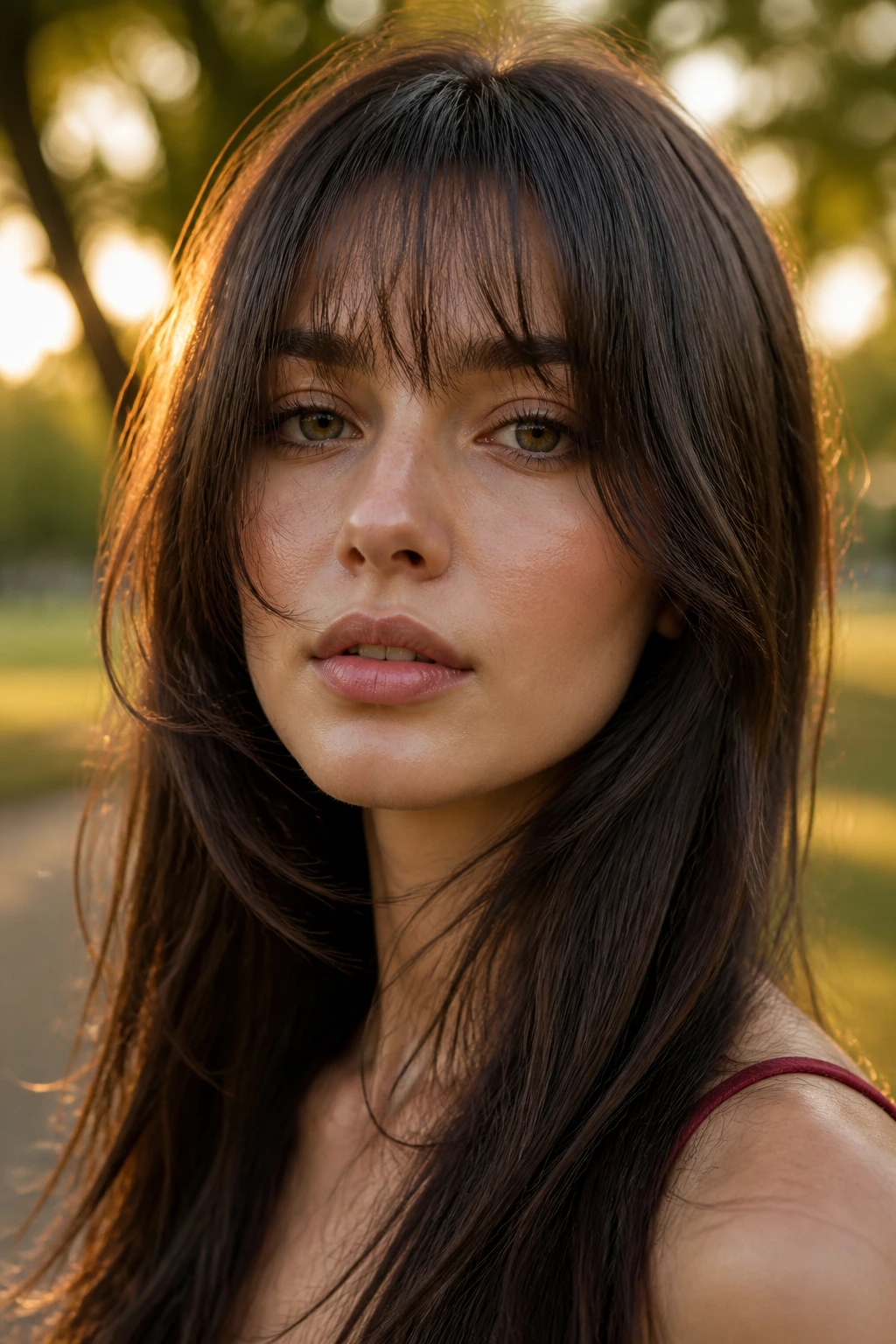
Feathered bangs are all about lightness at the edges. Straight hair can make them look smooth instead of frizzy, which is why this style often feels so wearable. The fringe has a soft, brushed-out finish rather than a heavy wall of hair.
The cut usually removes bulk through layering or point-cutting, then the styling keeps the strand movement visible. A little air movement in the ends helps. So does a round brush, but only if you keep the bend subtle. Too much curl and the whole effect disappears.
I like feathered bangs on people who say they want bangs but get nervous about the upkeep. They are softer on the face and easier to push aside if needed. A fringe that can move is useful. Full stop.
14. Split Fringe
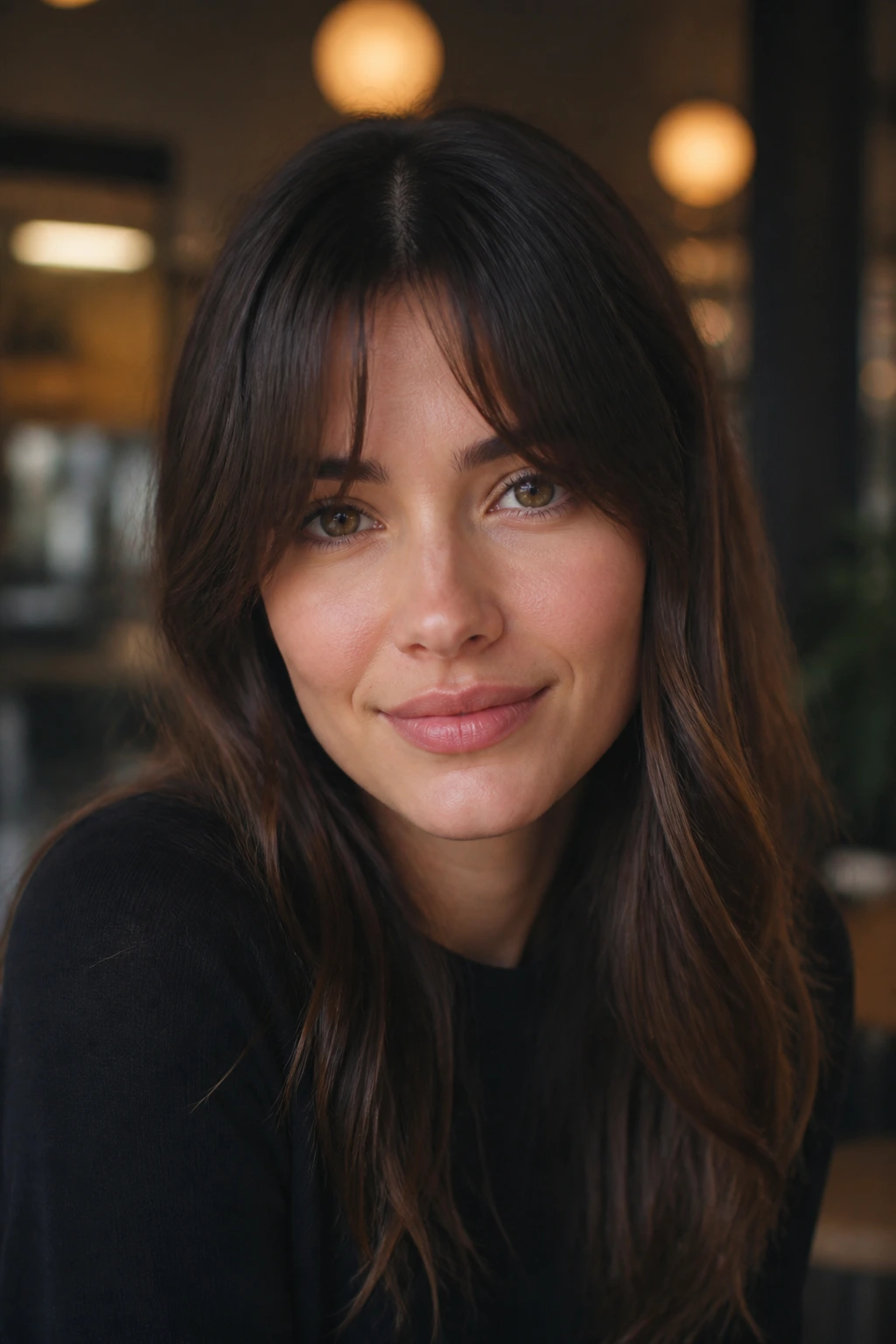
A split fringe sits near the center and opens enough to create a small gap, almost like a very restrained curtain bang. On straight hair, the split looks neat instead of sloppy because the strands fall in clean lines on either side.
It works well if you do not want bangs touching the middle of your forehead all day. The opening makes the face feel longer and keeps the style from closing in on the eyes. It also behaves well with a center part, which is handy if you like your hair symmetrical but not severe.
This cut can be dressed up or left casual. On a good hair day, it looks thoughtful. On a lazy one, it still looks intentional enough to pass. That is a rare thing.
15. Shag Bangs
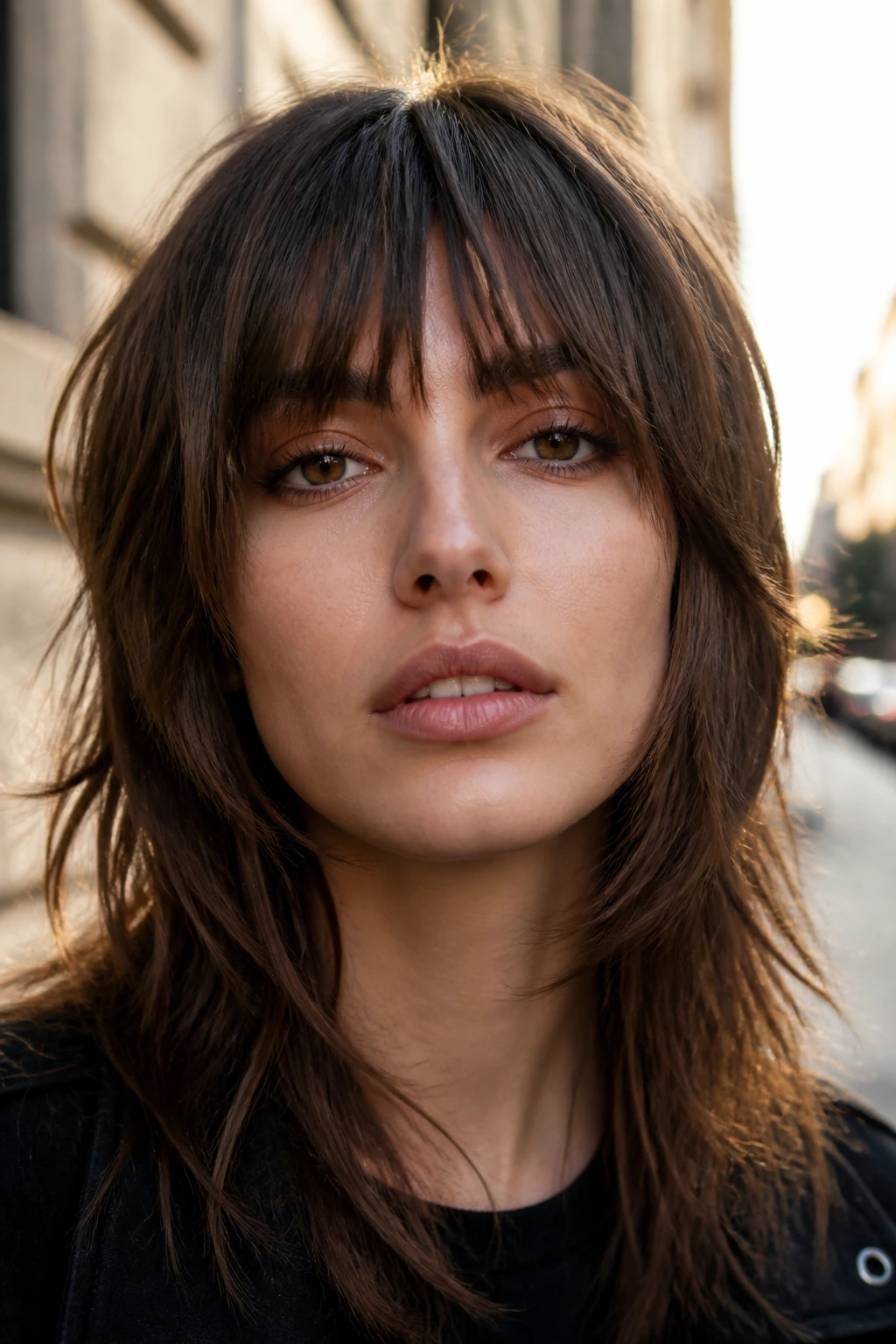
Shag bangs bring texture first and neatness second. Straight hair can wear them well because the layers keep the fringe from becoming too stiff or too flat. If you like hair that has a little attitude, this is a strong pick.
The key is separation. These bangs should not form one single sheet. They should break into soft, uneven pieces that sit around the brows and temples. A shaggy fringe often looks better when it is a little imperfect, which is nice if you are not obsessed with mirror-finish styling every morning.
Pair this with a layered haircut and the whole thing starts to make sense. The bangs are not a separate object sitting on your face. They are part of the shape. That matters.
16. Parisian Bangs
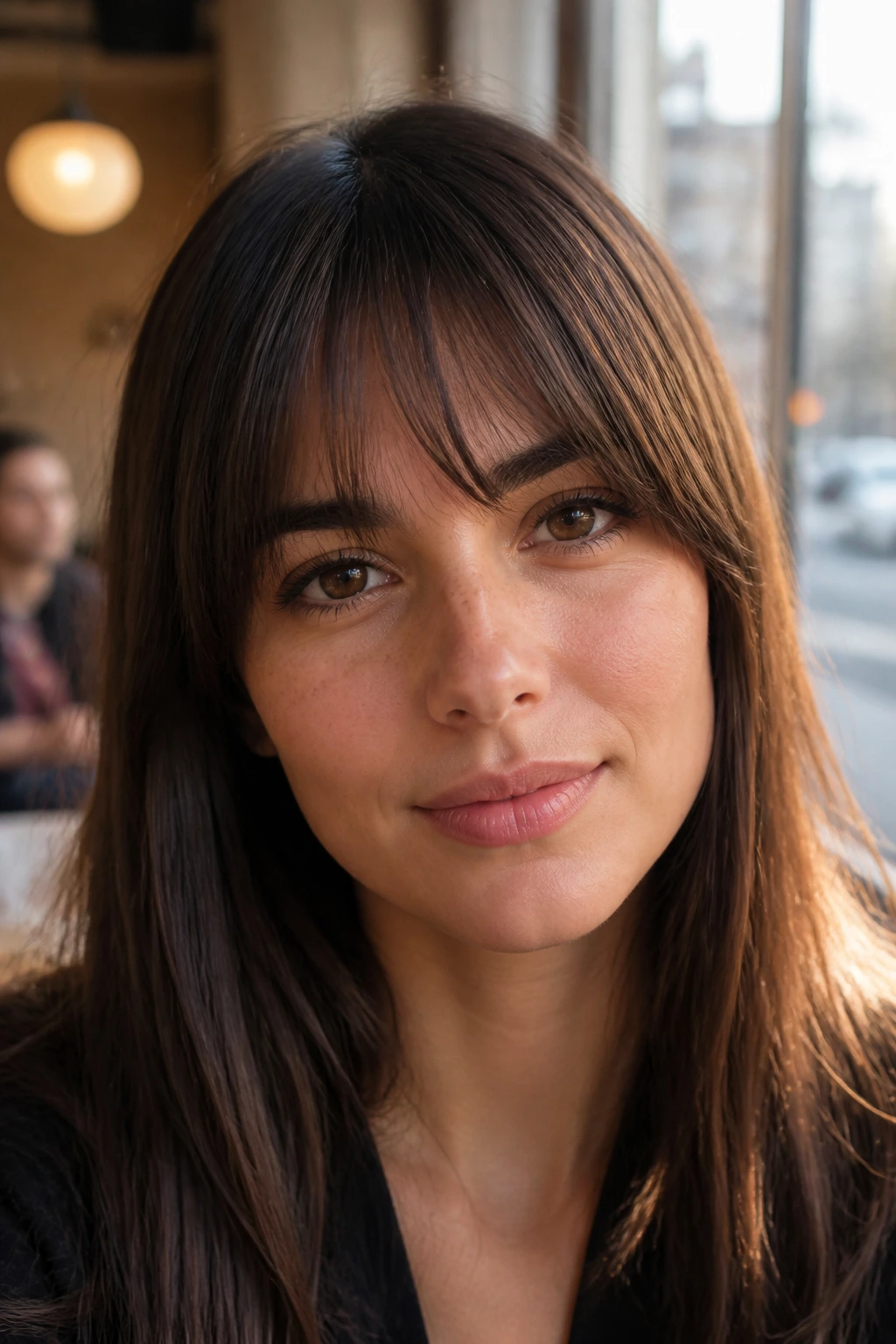
Parisian bangs have that slightly lived-in feel people keep trying to describe in prettier words. On straight hair, they can look effortless in a real, useful way because the texture stays smooth while the ends stay a little undone.
What Makes Them Work
They are usually softer than a full blunt fringe and shorter than long sweeping bangs, which gives them a pretty sweet spot. Not too severe. Not too invisible. The styling often leaves a hint of bend in the middle and a softer finish at the corners.
A good version should look like it happened naturally, even though it did not. That means the cut needs enough structure to hold shape, but not so much precision that the fringe looks stiff. A tiny bit of separation at the ends helps a lot.
If you like a style that feels a little romantic but still modern, this is a strong lane. It works best with hair that already lies fairly smooth at the front.
17. Asymmetrical Bangs
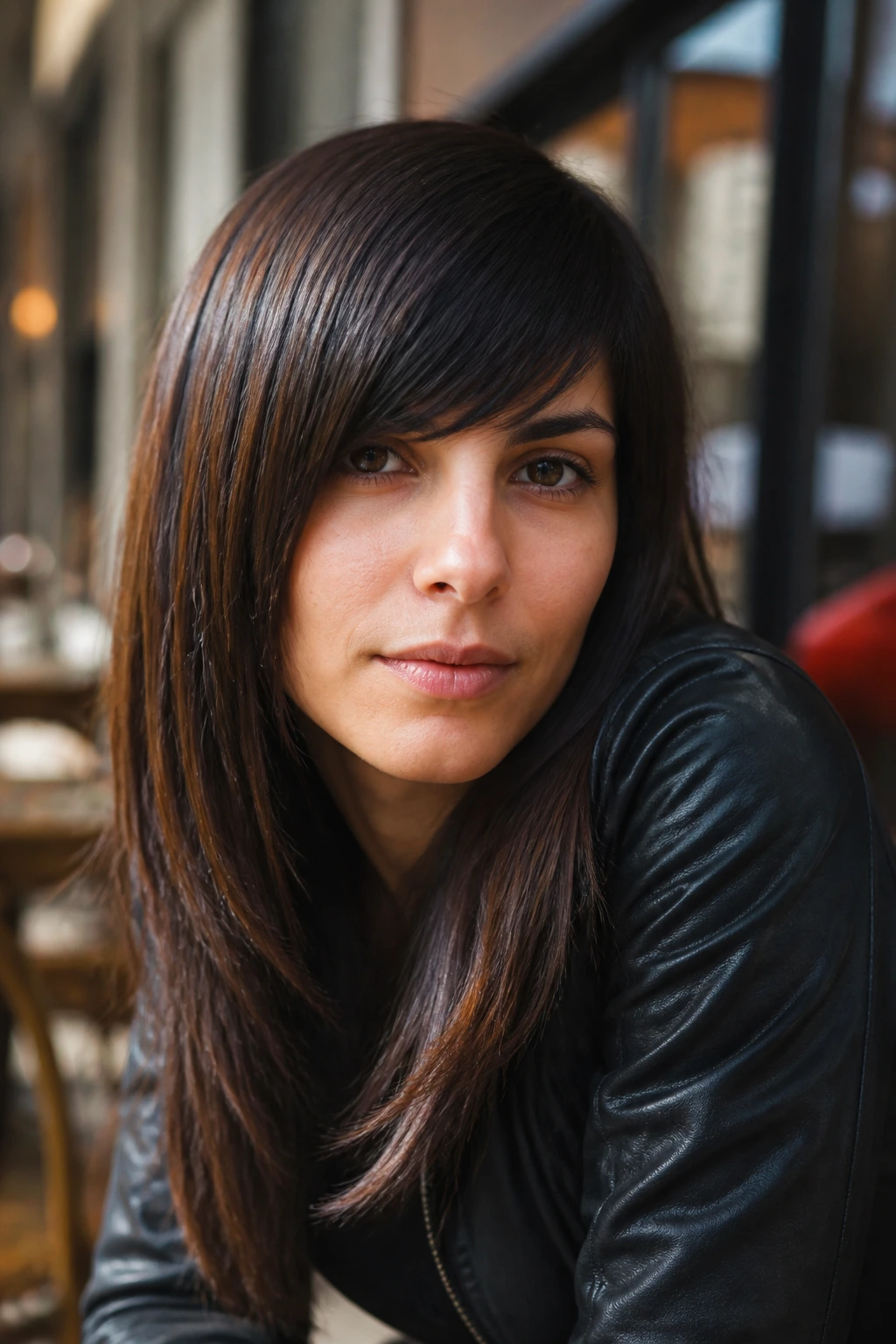
Asymmetrical bangs are for anyone bored by balance. One side is longer or heavier than the other, which creates a diagonal line across the face. Straight hair makes that imbalance obvious in a good way, because the clean texture shows the angle instead of hiding it.
They can be subtle or bold. A mild asymmetry might just shift the weight to one temple. A stronger version can feel almost editorial. Either way, the bang gets personality from the cut itself, not from styling tricks.
This is one of those styles that asks for a steady hand at the salon. The line needs to look intentional from every angle, or it can slip into accidental unevenness. That is a big difference. If you like order, skip it. If you like a little edge, keep reading.
18. Hidden Curtain Bangs for Straight Hair
Hidden curtain bangs are for people who want options. On straight hair, they lie close enough to the face to blend in, but they still have enough length to sweep open when you part them. That makes them a clever middle step between a full fringe and long face-framing layers.
They are especially useful if you’re unsure about commitment. Wear them in the center, wear them off center, pin them back, tuck them, let them fall. The hair has enough length to move between those modes without looking awkward.
How to Get the Most From Them
- Keep the center slightly shorter than the sides
- Ask for soft layering near the cheekbones
- Use a small round brush only at the roots
- Let the ends stay loose
The real charm here is flexibility. They can look like bangs on Monday and look like layers by Friday. That is a rare bargain.
19. Ear-Tuck Bangs
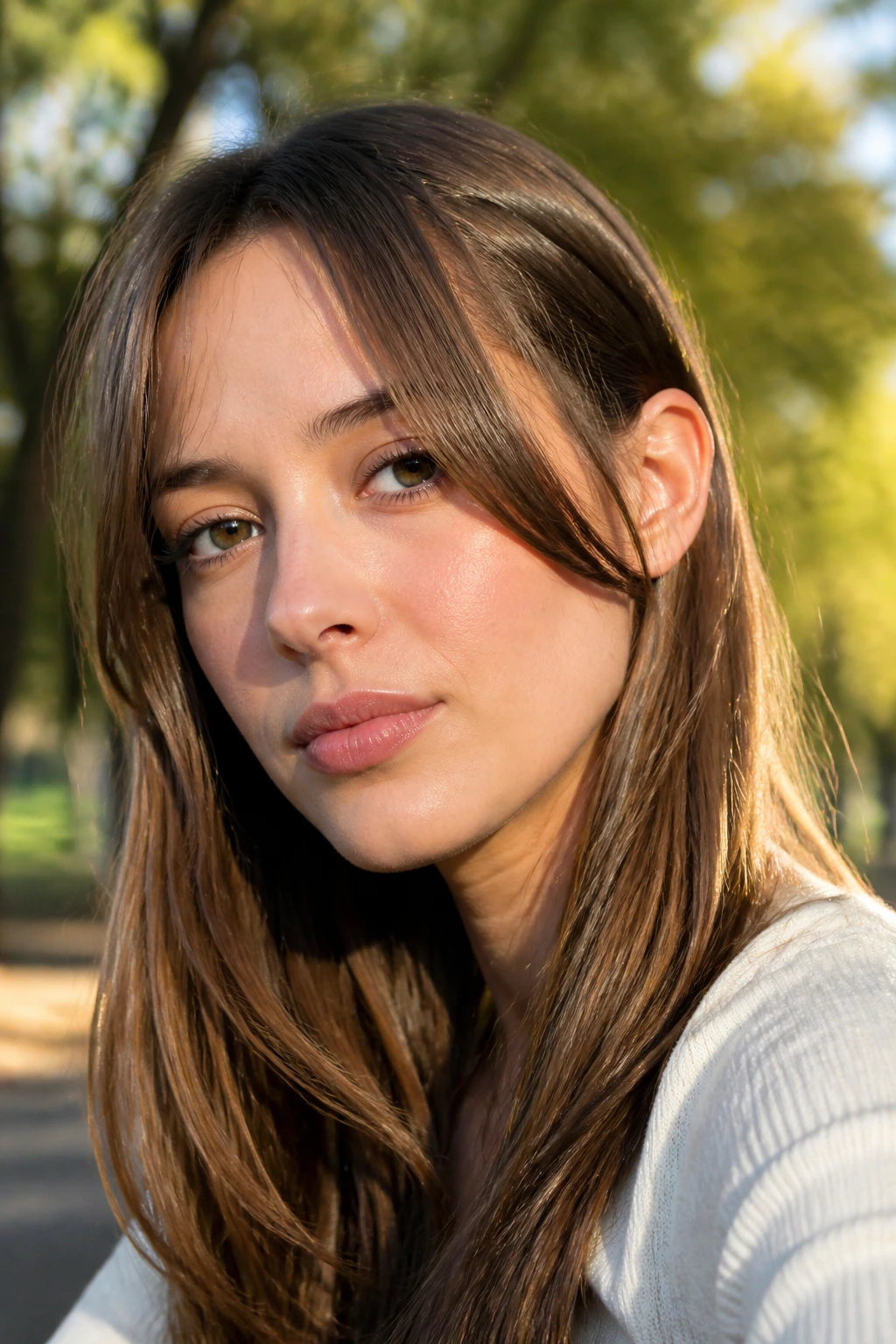
Ear-tuck bangs are a long fringe idea that plays well with straight hair because the pieces fall neatly enough to tuck behind one ear without fighting the shape. You get the feeling of bangs, but nothing gets trapped in your face all day.
This style works especially well if you move a lot, wear glasses, or hate the feeling of hair brushing your cheeks. It also gives you a very easy escape hatch: if the bangs feel annoying, tuck them. Done.
The cut usually lives somewhere between a fringe and a face frame. The shortest pieces sit near the brows, and the outer pieces graze the cheekbones or jaw. That range makes the whole thing look light without disappearing.
20. Layered Fringe Blend
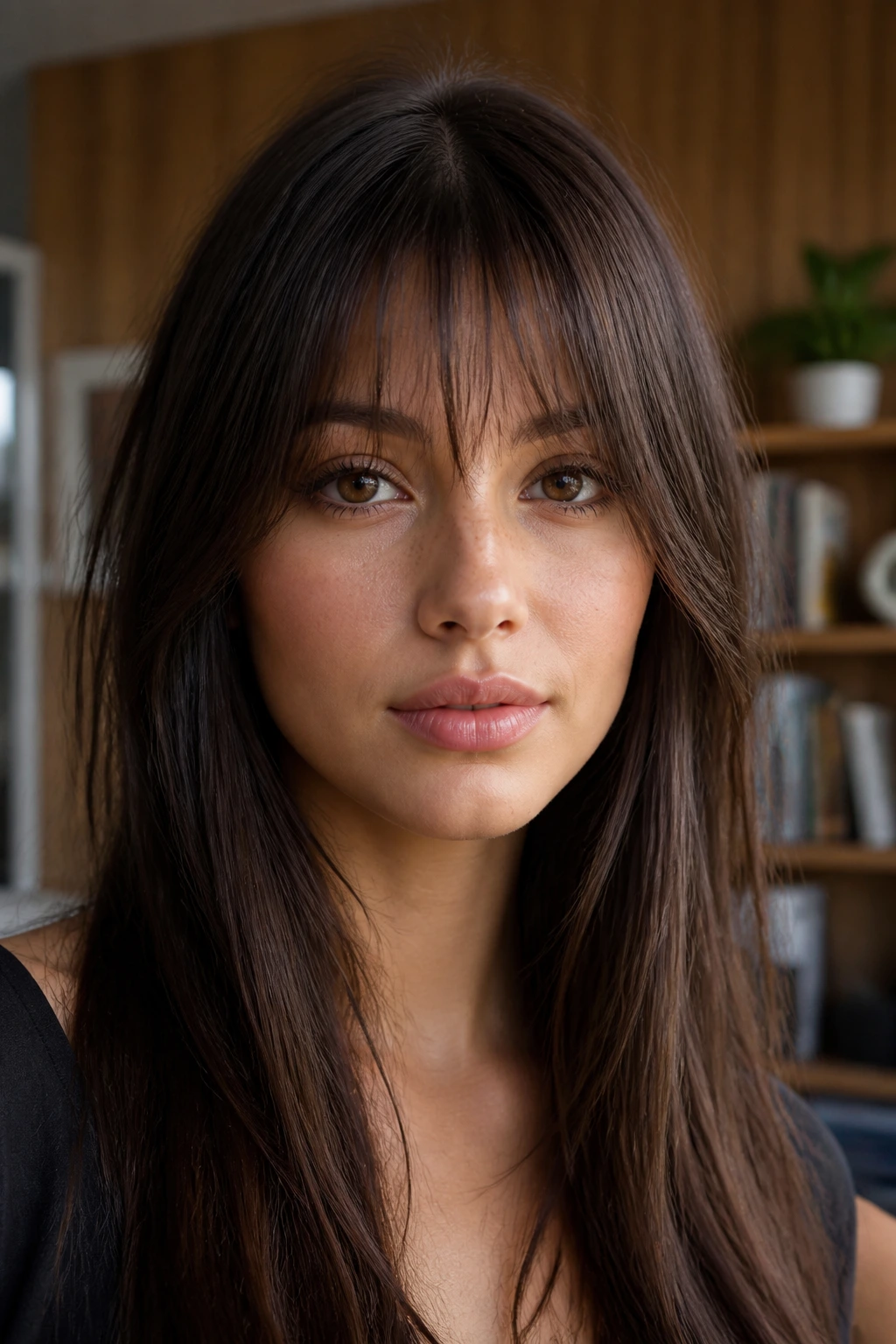
A layered fringe blend is less about a hard bang line and more about a smooth transition from forehead to face frame. On straight hair, that transition looks especially clean because the layers can fall like thin ribbons rather than frizzy steps.
This is a smart choice if you want bangs that do not announce themselves. The front still changes the haircut, but the result feels soft and connected to the rest of the length. Nothing sits there like an afterthought.
I like this on medium to long straight hair because it keeps the front interesting without taking away styling options. It also gives you more freedom on day two hair, when a full fringe can start looking too neat or too flat. The blend hides the small mess. Convenient, honestly.
21. Choppy Baby Bangs
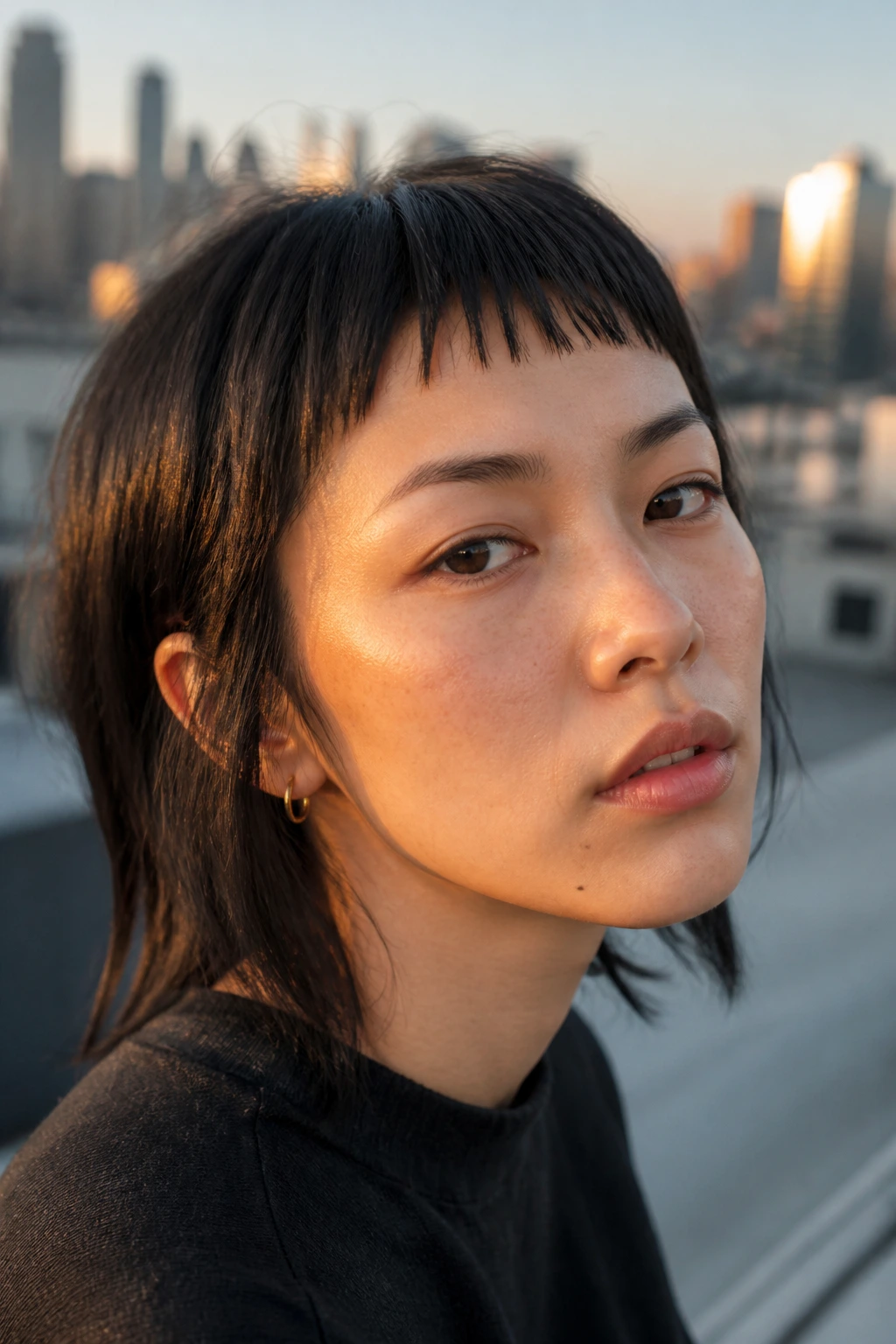
Choppy baby bangs are shorter than brow-grazing fringe but not as blunt as micro bangs. Straight hair helps them stay neat, while the choppy finish keeps them from looking too severe. Think short fringe, but with a little broken edge.
They are a good option if you want to show more forehead without going all the way into a crisp micro bang. The texture makes them feel a bit more relaxed, which can take some of the pressure off a short cut. Short bangs can feel bossy. These are less bossy.
A point-cut finish is usually the right move here. It softens the line and gives the fringe a bit of separation. If the cut is too blunt, the whole thing can get harsh fast. Tiny bangs need breathing room.
22. Grown-Out Fringe
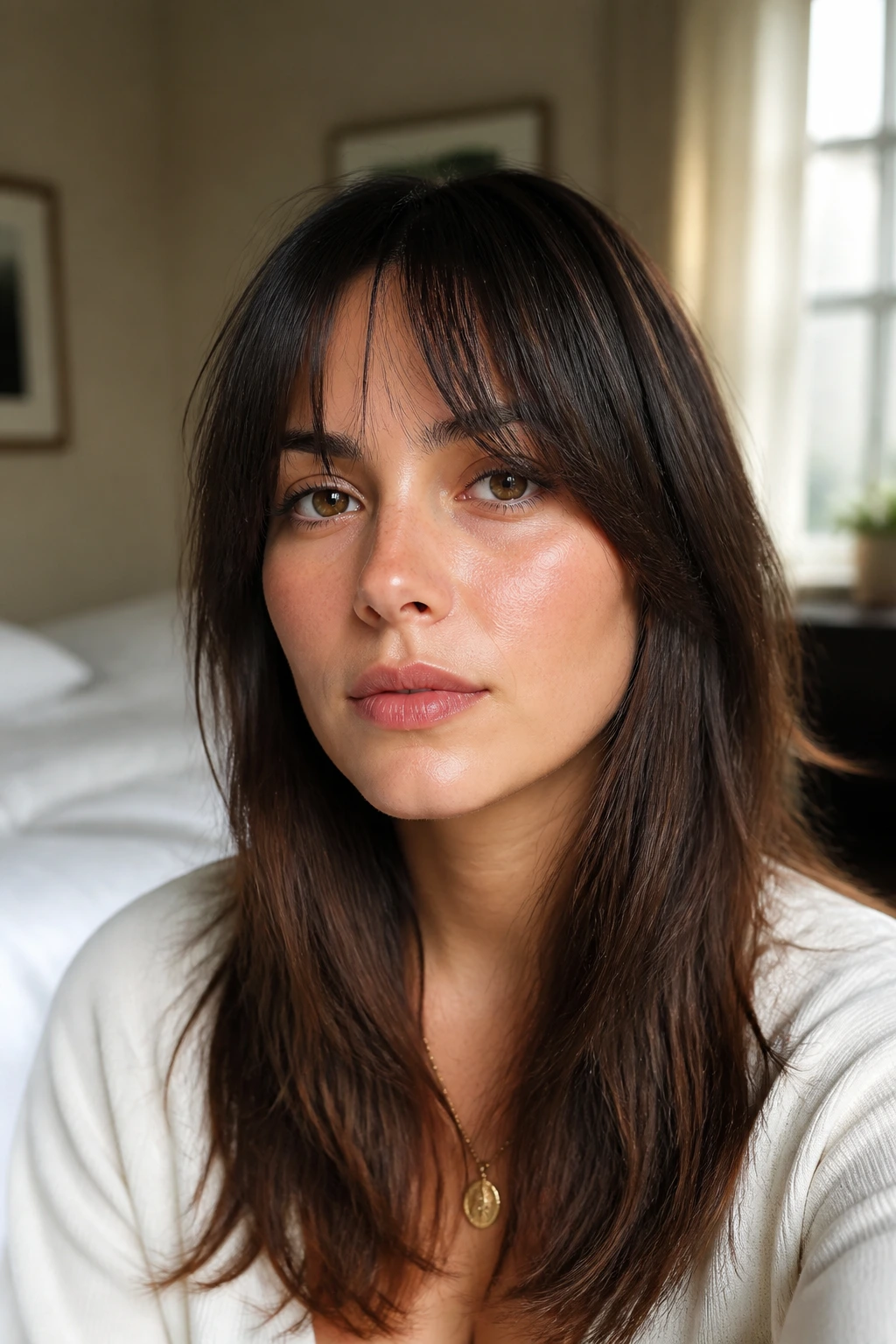
Grown-out fringe is not a mistake if you cut it on purpose. On straight hair, a longer, slightly overgrown fringe can sit in that sweet space between bangs and layers, which is often where people end up living anyway.
The shape is forgiving. The front can be pushed to the side, split in the middle, or tucked away. That makes it a good option for anyone who likes the idea of bangs but not the maintenance that comes with shorter styles. There is no shame in choosing the easier version.
This look is especially nice if you are in a transition phase and want your haircut to keep looking intentional while it grows. It does not fight the process. It turns the process into the style.
23. Deep Side-Part Fringe
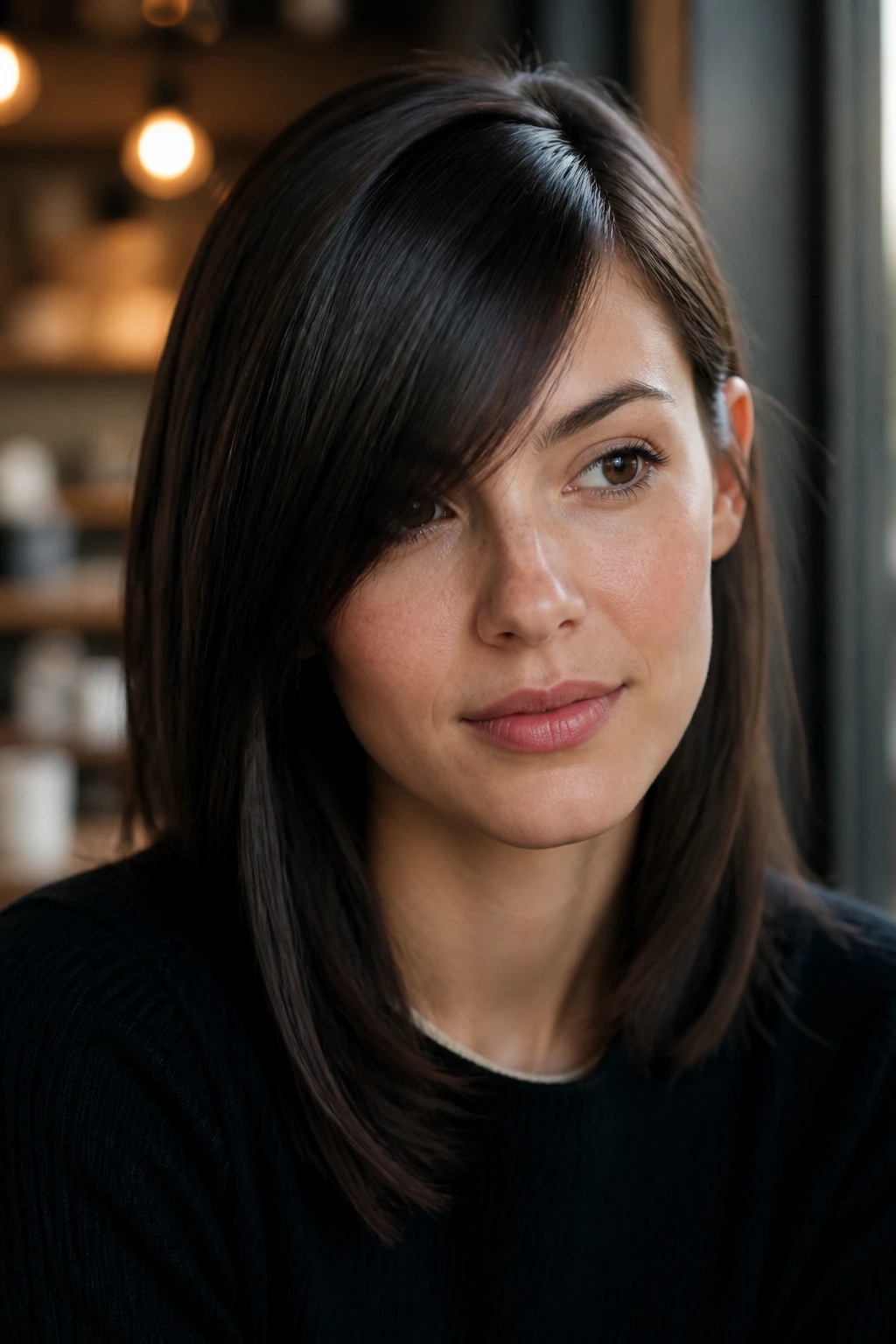
A deep side-part fringe has drama built in from the start. Straight hair lets that sweep sit flat and glossy, which makes the shape look even stronger. The result is sharp in a good way, especially if the rest of the cut is minimal.
This works well when you want the front of the hair to change the silhouette of the face without cutting a large section across the forehead. A deep part opens one side and pushes the fringe toward the other, which can feel very clean.
It’s a strong choice for straight hair that likes to fall in one direction naturally. Fighting the part every morning is a waste of energy. If your hair already leans one way, use that to your advantage.
24. Half-Moon Bangs for Straight Hair
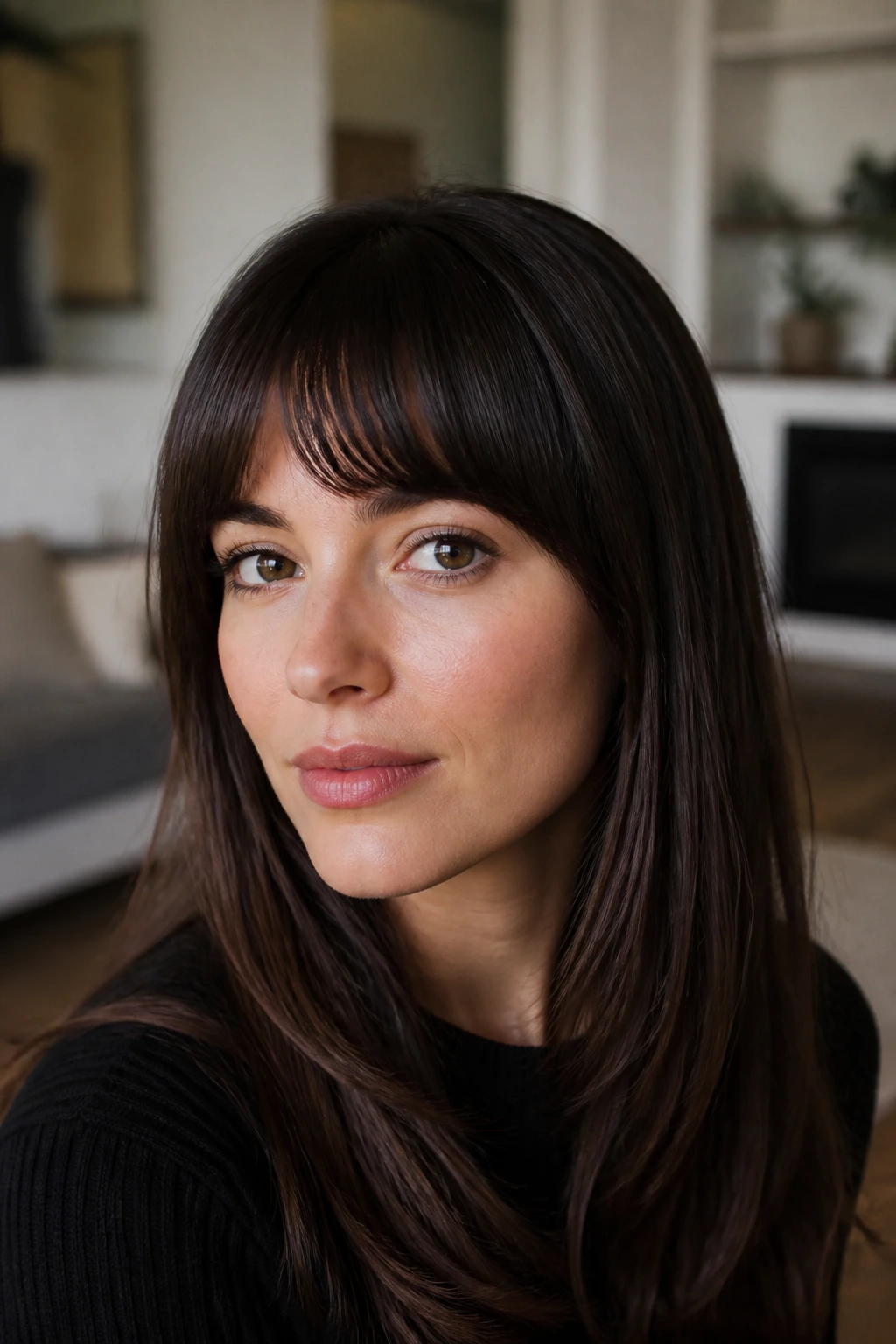
Half-moon bangs curve higher in the center and lower at the sides, which creates a rounded shape across the forehead. Straight hair shows that curve plainly, so the cut needs to be neat. When it is done well, the effect feels soft and a little polished.
This style suits people who want something with shape but not a harsh edge. The arc can make the face look gentler and can also help a long forehead feel a little more balanced. It is not the loudest fringe in the room. That’s part of the charm.
Best Used When
- You want a visible shape without a blunt line
- Your hair falls smoothly and flat
- You prefer soft structure over sharp geometry
- You can spare a few minutes with a brush or flat iron
The line should look rounded, not cartoonish. That small difference matters more than people think.
25. Tapered Edge Bangs
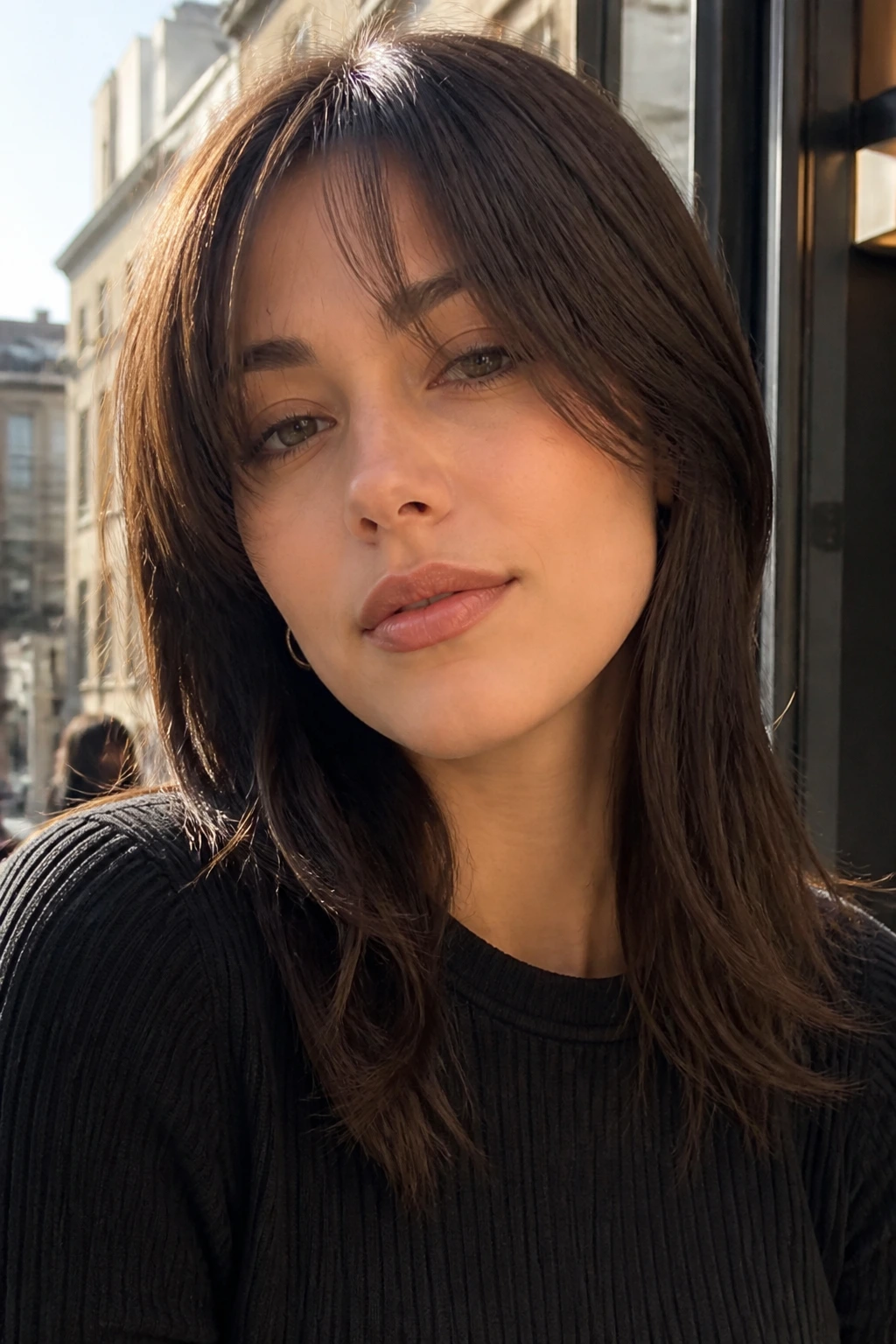
Tapered edge bangs keep the center fuller and ease off toward the sides. On straight hair, that taper keeps the fringe from looking blocky near the temples, which is where a lot of full bangs start to feel too heavy.
The tapered finish is useful if you want a cut that opens the face a little more. It also helps the bangs blend with longer layers around the cheeks. The overall shape feels a bit lighter, even if the center still has enough weight to register as bangs.
This is one of those styles that looks almost plain in a photo but better in motion. The edges move with the rest of the haircut. That makes it more wearable than a hard-edged fringe for many people.
26. U-Shaped Fringe
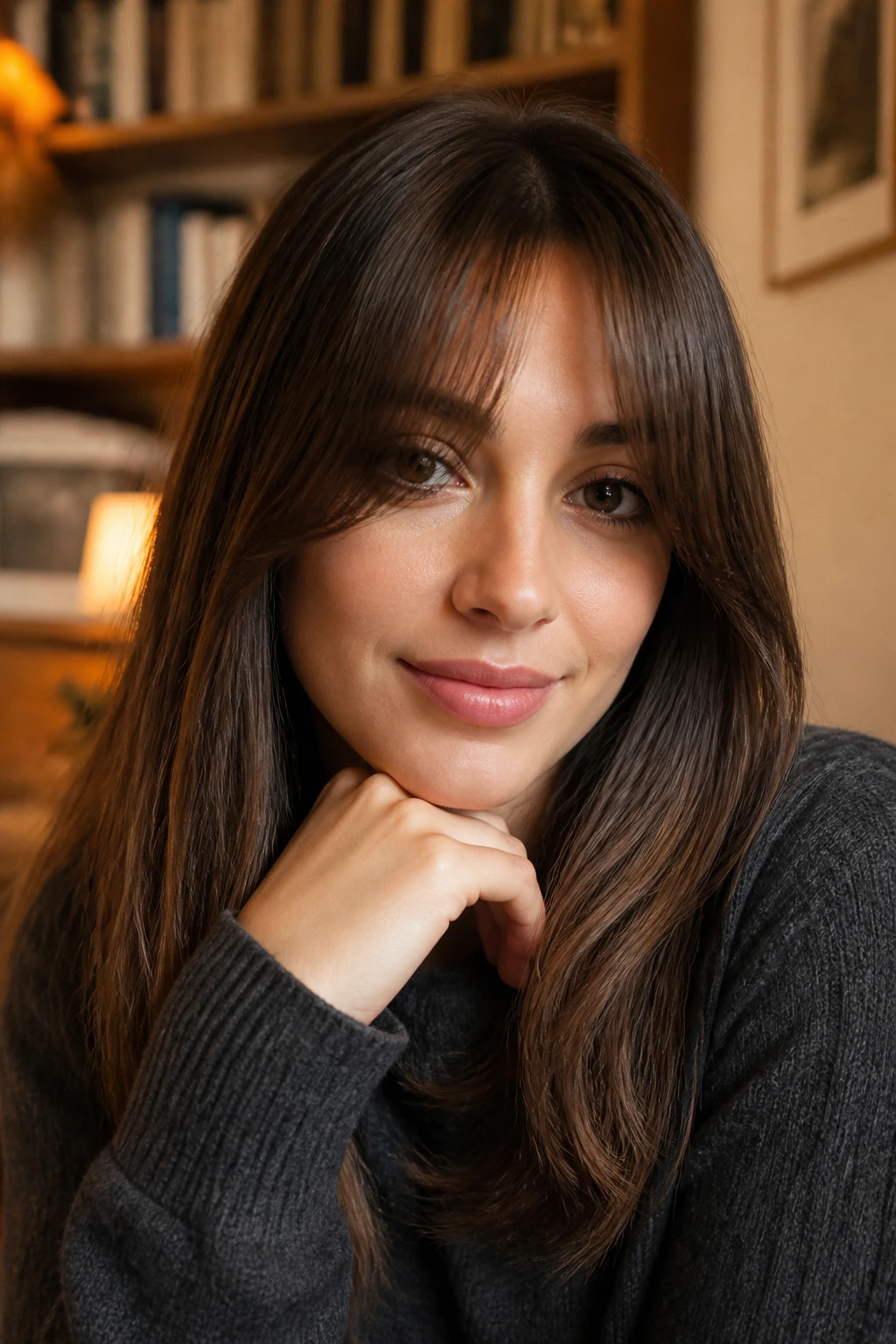
A U-shaped fringe dips slightly lower in the middle and rises toward the sides, creating a soft curve that feels easy on straight hair. It is a nice answer if you like balance but do not want the squared-off feel of a blunt cut.
The U shape keeps the middle from sitting too heavy on the brow line while letting the sides soften into the rest of the haircut. That helps a straight fringe feel less rigid. It also gives the eye a gentle path inward, which can be flattering on faces that want a bit of framing without a lot of drama.
Ask your stylist to keep the curve subtle. If the dip is too deep, it can look dated fast. A shallow U is much easier to live with.
27. Face-Framing Fringe
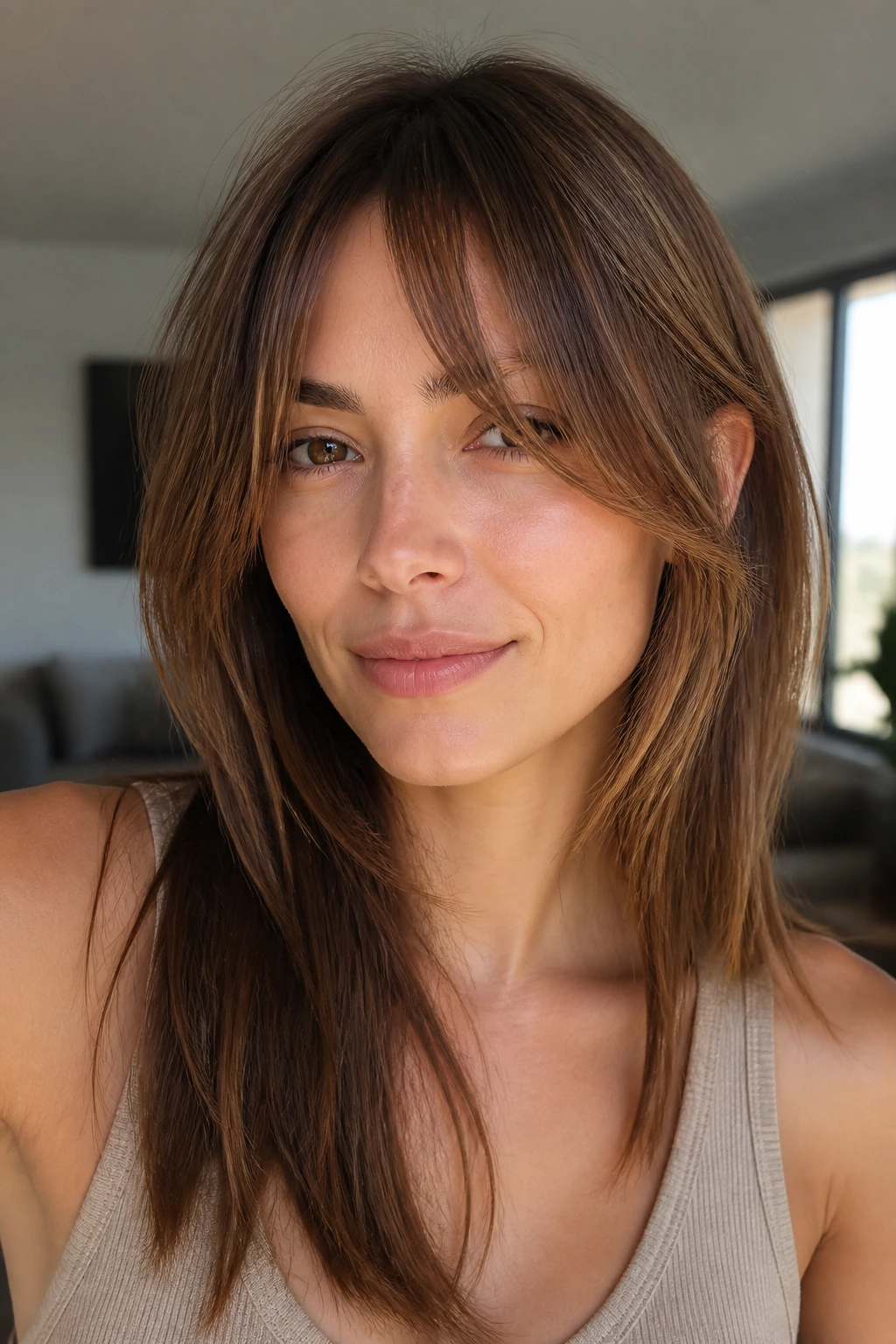
Face-framing fringe is almost a cheat code for straight hair. It gives you the bang feeling around the face without committing to a full forehead cover. The shortest pieces sit near the eyes or cheekbones, then melt into longer front layers.
That makes styling easier than people expect. You can wear it sleek, tuck part of it behind the ears, or let it hang loose. The hair still feels styled even if you did not spend much time on it.
Why It’s So Flexible
The cut works because it follows the shape of the face instead of drawing one hard line across it. Straight hair keeps the layers visible, so the front pieces have a clean fall. You can also grow this out into a long fringe without an awkward stage, which is one of the nicest things a haircut can do.
If you are indecisive, start here. It is hard to hate.
28. Razor-Soft Bangs
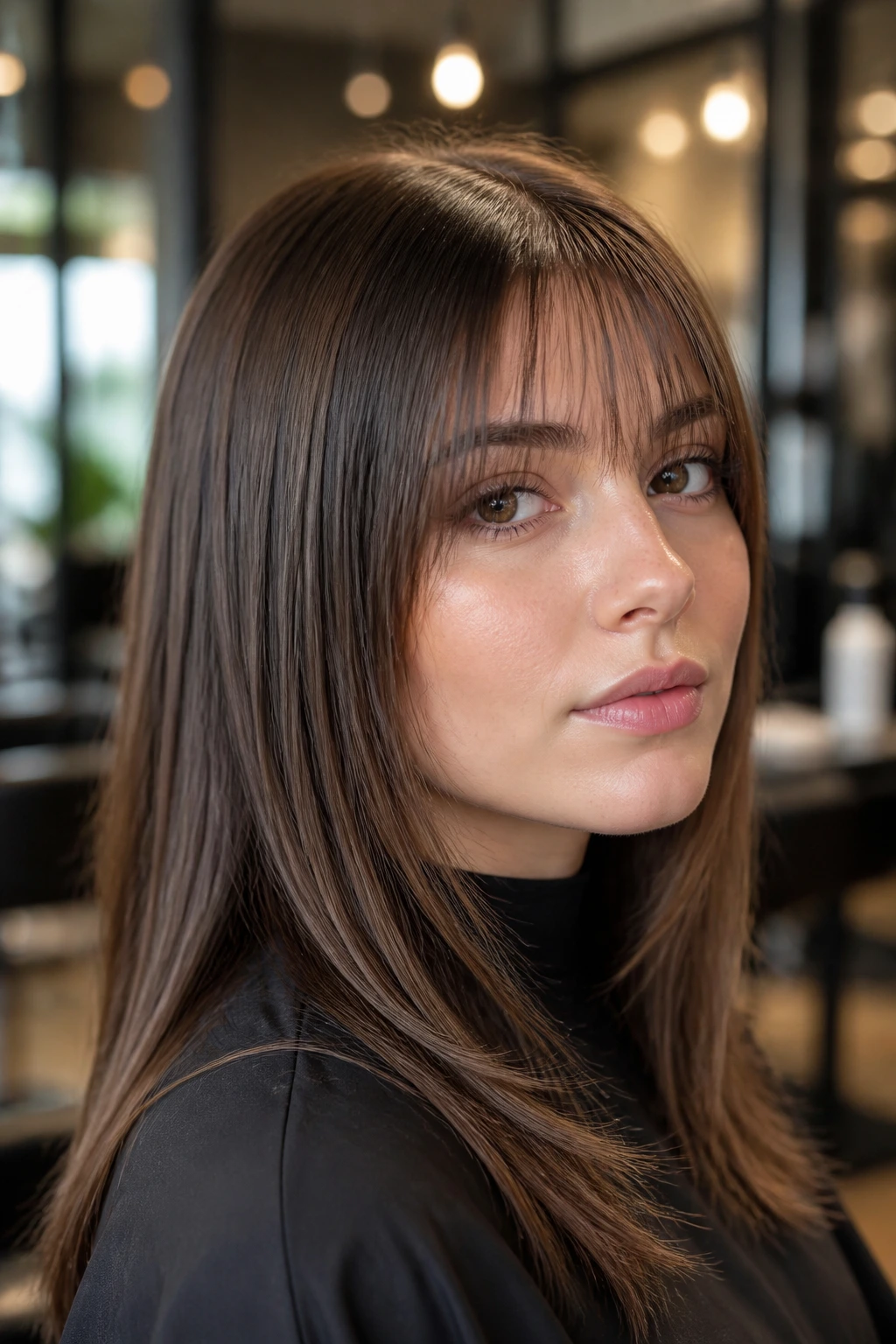
Razor-soft bangs use a looser, lighter finish to keep the fringe from feeling too dense. On straight hair, that softness can be beautiful if the cut is handled well, because the strands fall in thin, sleek pieces instead of one thick curtain.
This is not the style I’d hand to every client, though. It needs a stylist who knows how to keep the edge soft without making it wispy in a bad way. The wrong razor work can leave the ends stringy. The right one gives you movement and air.
Razor-soft bangs are a good match if you want your fringe to feel modern, light, and a little less polished than a blunt cut. They pair nicely with straight hair that already has a natural slip to it. Clean. Soft. Not fussy.
Final Thoughts
Straight hair can make bangs look expensive when the cut is right, and unforgiving when it is not. That is the whole game. The best bangs ideas for straight hair are the ones that respect how flat, shiny, and exact this texture can be.
If you want the easiest route, curtain bangs, brow-grazing fringe, or a long sweeping bang are safe bets. If you want something sharper, blunt micro bangs, a classic full fringe, or a rounded shape will give you more edge. Either way, the clean finish of straight hair is doing a lot of the heavy lifting.
A small shift in length or density changes everything. That is why the consultation matters, and why a fringe should be cut with the way you actually wear your hair in mind, not just how it looks in the chair.
