



A round face does not need to avoid fringe. It needs the right fringe.
The wrong cut can make the cheeks look wider and the face feel shorter. The right one does the opposite. It adds a little lift, pulls the eye up and down instead of side to side, and gives the front of the hair some shape instead of letting it sit there like a curtain.
I’ve always liked fringe on round faces when the cut has intention. Curtain bangs that open near the center, side-swept fringe that cuts across the forehead, and soft broken pieces around the cheekbones usually do more work than blunt bangs that land in one solid line. There’s a reason some styles keep showing up in good salons: they change the whole shape of the face without making the haircut feel fussy.
The best part is that fringe is not one thing. It can be airy, heavy, short, long, messy, polished, sharp, or almost invisible. That gives you room to work with your texture, your cowlicks, and the amount of styling you actually want to do on a weekday morning. Start with the shape you want the eye to follow. Everything else gets easier after that.
1. Curtain Bangs That Open in the Center
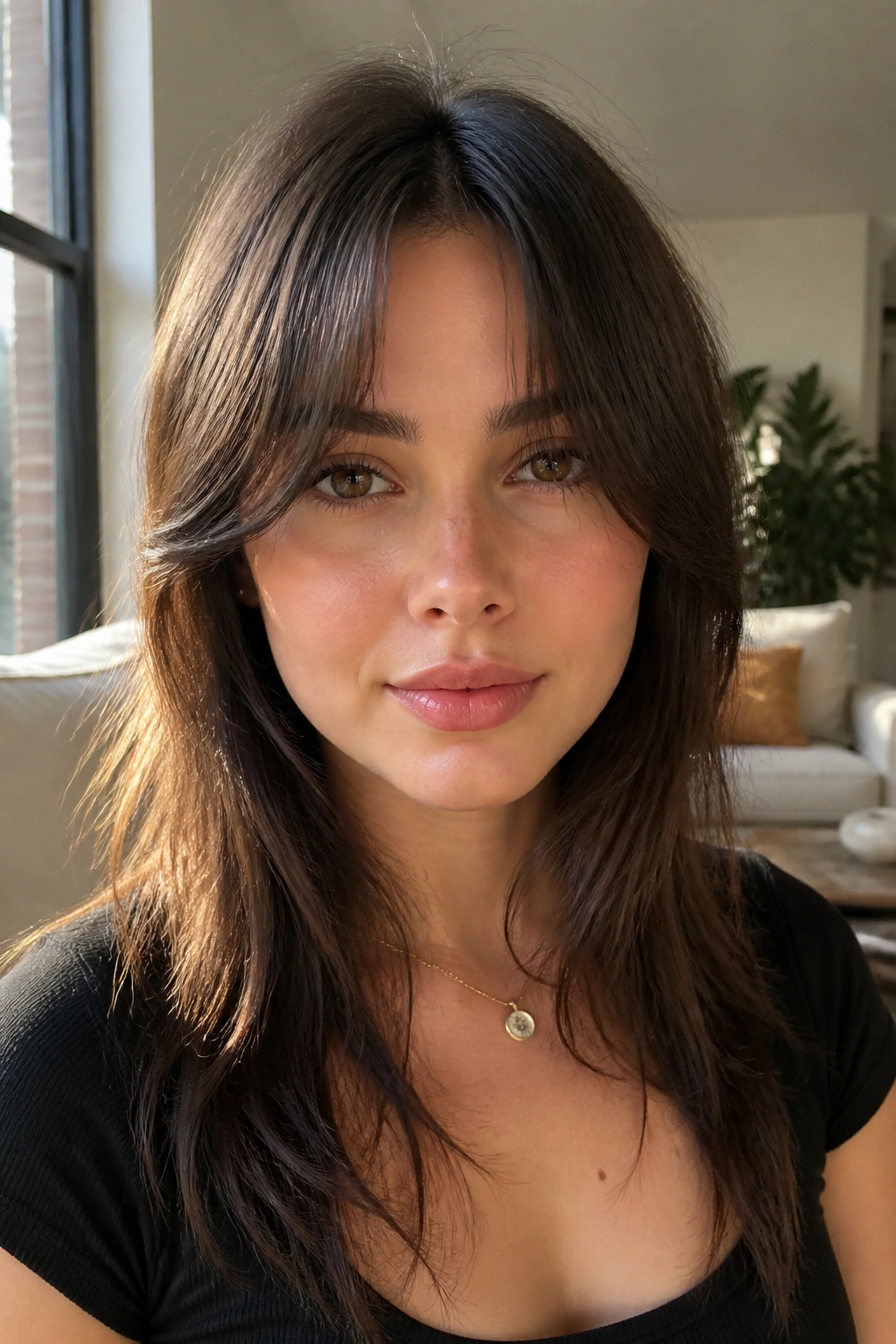
Curtain bangs are the safest first stop for a round face, and I mean that in the nicest way. The center opening breaks up the width at the cheeks, while the longer sides fall in a soft diagonal that makes the face look a little longer.
Why They Work So Well
Ask for the shortest point to sit around the brow or just above it, then let the sides graze the cheekbones. That shape gives you movement without boxing the face in. If your hair is thick, your stylist may need to remove some bulk so the bangs do not puff out like a shelf. If it’s fine, a little bend and a light blow-dry are enough.
- Keep the center slightly shorter than the corners.
- Blow-dry the fringe forward first, then sweep it away from the face.
- Use a round brush only at the ends if you want a softer curve.
Best for: medium to long cuts, especially if you want fringe that grows out gracefully.
2. Side-Swept Fringe With Long Layers

Want something softer than a full curtain bang? Side-swept fringe is one of the easiest ways to add angle to a round face. The diagonal line across the forehead changes the whole read of the haircut, and that slant is doing real work.
The trick is keeping the fringe long enough to move. If it’s too short, it can bounce in the wrong place and look choppy in a weird way. A longer sweep that starts deep at the part and drifts toward one cheek is better. It pairs nicely with shoulder-length cuts and longer layers, because the side movement at the front keeps the shape from feeling too symmetrical.
This is one of those styles that looks even better when it’s not overstyled. A little bend from a flat iron, then a finger-comb through the ends, and you’re done. Easy. No helmet hair.
3. Bottleneck Bangs With Soft Edges
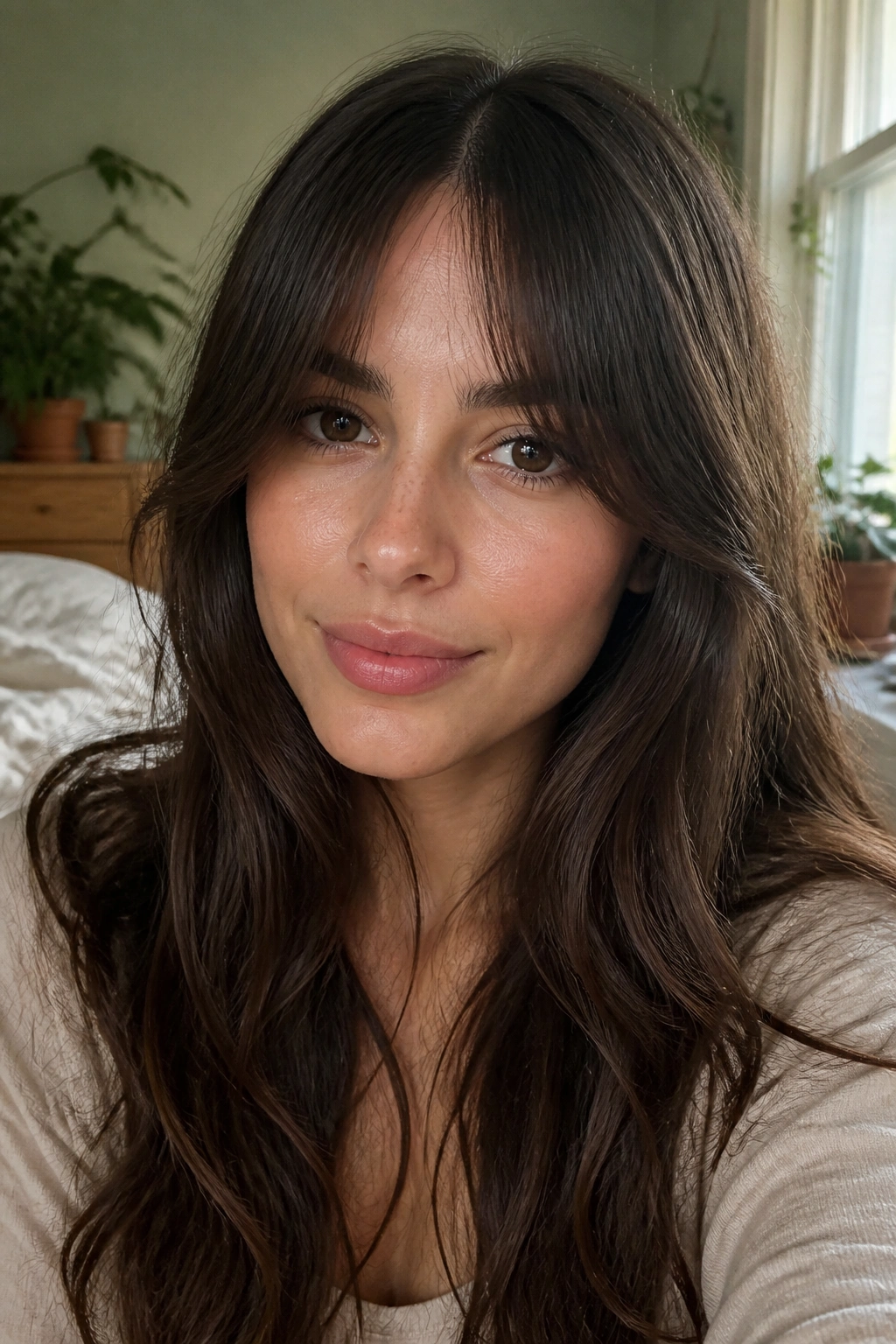
Bottleneck bangs flatter round faces because they start narrow and open out. That opening effect matters. It draws the eye to the center of the face first, then lets the fringe fall away from the cheeks instead of stopping right on them.
They sit somewhere between curtain bangs and a more classic fringe, which is why they’ve stayed so wearable. The center is shorter, but not micro-short. The edges are longer and softer, so the whole thing feels less blunt. If you’ve ever wanted bangs that look deliberate but not severe, this is the lane.
What To Ask For
Tell your stylist you want a fringe that curves away from the temples and stays light at the corners. A little texture through the ends helps a lot. On round faces, the main goal is to avoid one heavy horizontal line. Bottleneck bangs dodge that problem neatly.
They work especially well with layered lobs, shaggy cuts, and longer hair that needs front movement.
4. Wispy Eyebrow-Grazing Fringe

Wispy fringe is for people who want bangs without the commitment of a full block across the forehead. It sits light, it moves easily, and it leaves enough skin showing that the face does not feel closed in.
For a round face, that airflow matters. Heavy bangs can make the face look shorter. Wispy fringe does the opposite. The texture creates little breaks in the line, so the eye keeps moving instead of stopping at one hard edge. It also plays well with finer hair, which can get swallowed by denser fringe.
Use a small flat iron or a round brush to add a slight curve, not a big bend. Too much shape and the bangs start to look overworked. Keep them soft, keep them a little uneven, and let a few strands fall forward on their own. That looseness is the point.
5. Choppy Shag With Broken Fringe
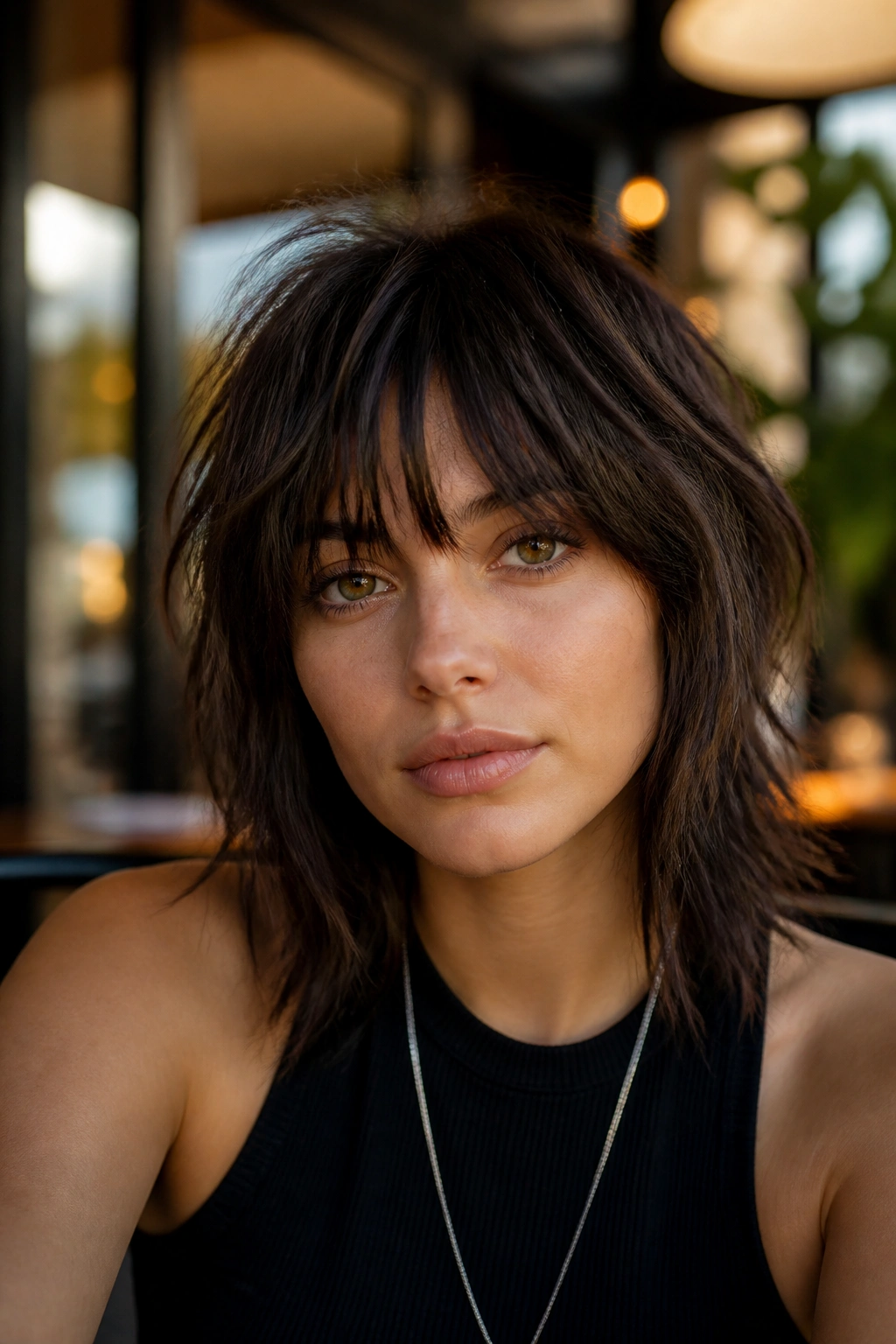
A shag is one of those cuts that can wake up a round face fast. The chopped layers and broken fringe build vertical movement, and that keeps the face from feeling wide or flat.
This is not a neat hairstyle. Good. It should look a little rough around the edges. The bangs are usually cut into separated pieces rather than one solid line, and the layers around the crown help the whole cut sit higher. That height matters more than people think. It draws the eye upward, which is exactly what you want.
If your hair has a bit of wave, you’re in a good spot. If it’s straight, a salt spray or texture cream can give the front some grit. I like this style on round faces because it has attitude without needing a lot of precision every day. It looks cool when it’s slightly imperfect. Better, even.
6. Lob With a Long Diagonal Fringe
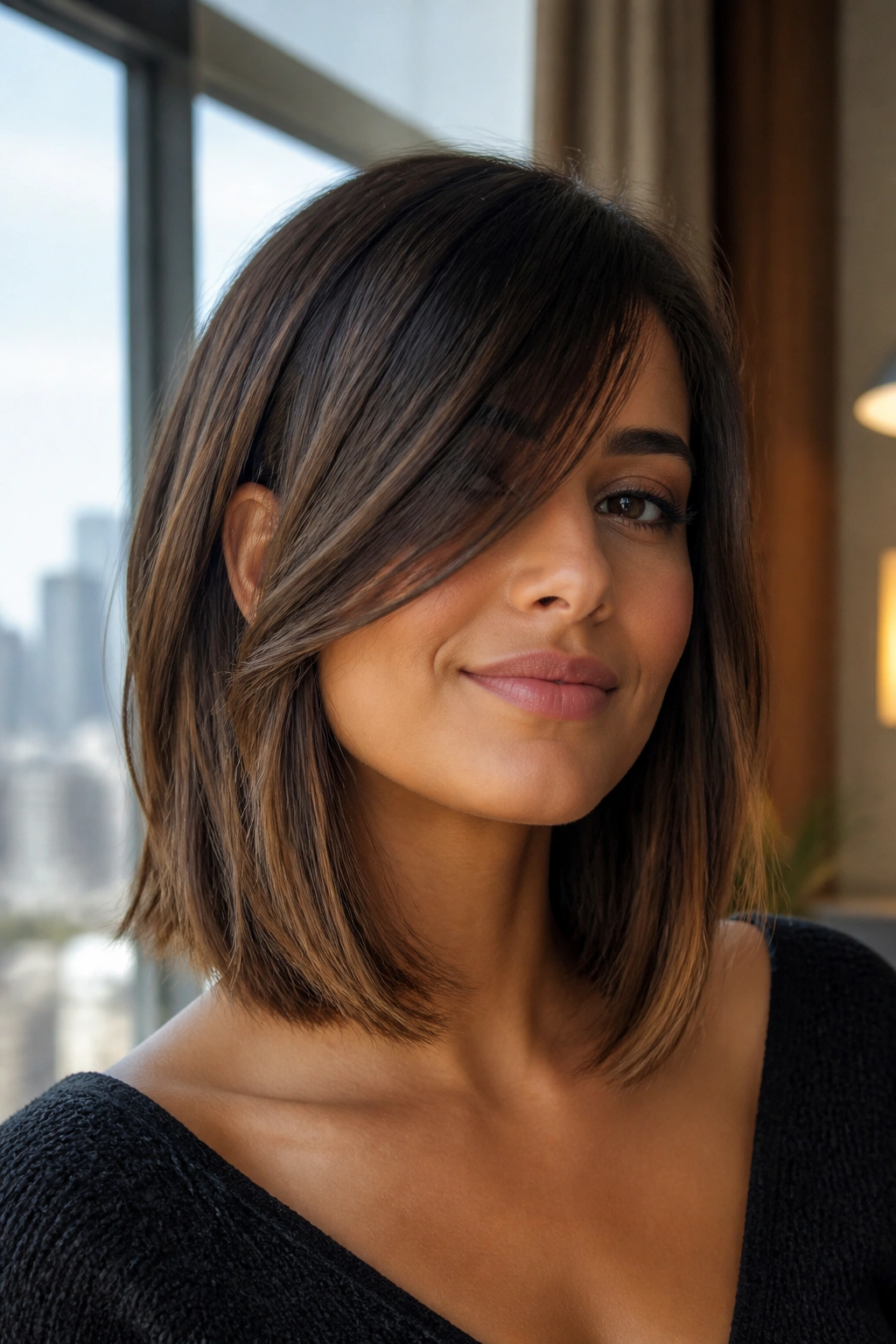
A lob with a diagonal fringe is a smart move when you want polish but not stiffness. The length keeps the haircut modern, and the fringe cuts across the face in a way that softens the widest points.
The diagonal part is the real trick here. It pulls the fringe off-center, which makes the face read a little longer. If the ends of the lob are blunt and heavy, the fringe should stay soft. If the lob is layered and airy, the bang can carry a little more weight. Balance matters.
Styling Notes
- Blow-dry the fringe in the direction of the part first.
- Add a bend, not a curl.
- Keep the ends of the lob slightly beveled so the shape does not sit like a box.
This cut is a good one if you want something office-friendly that still feels current. It’s tidy, but not boring.
7. Feathered Fringe With a Blowout
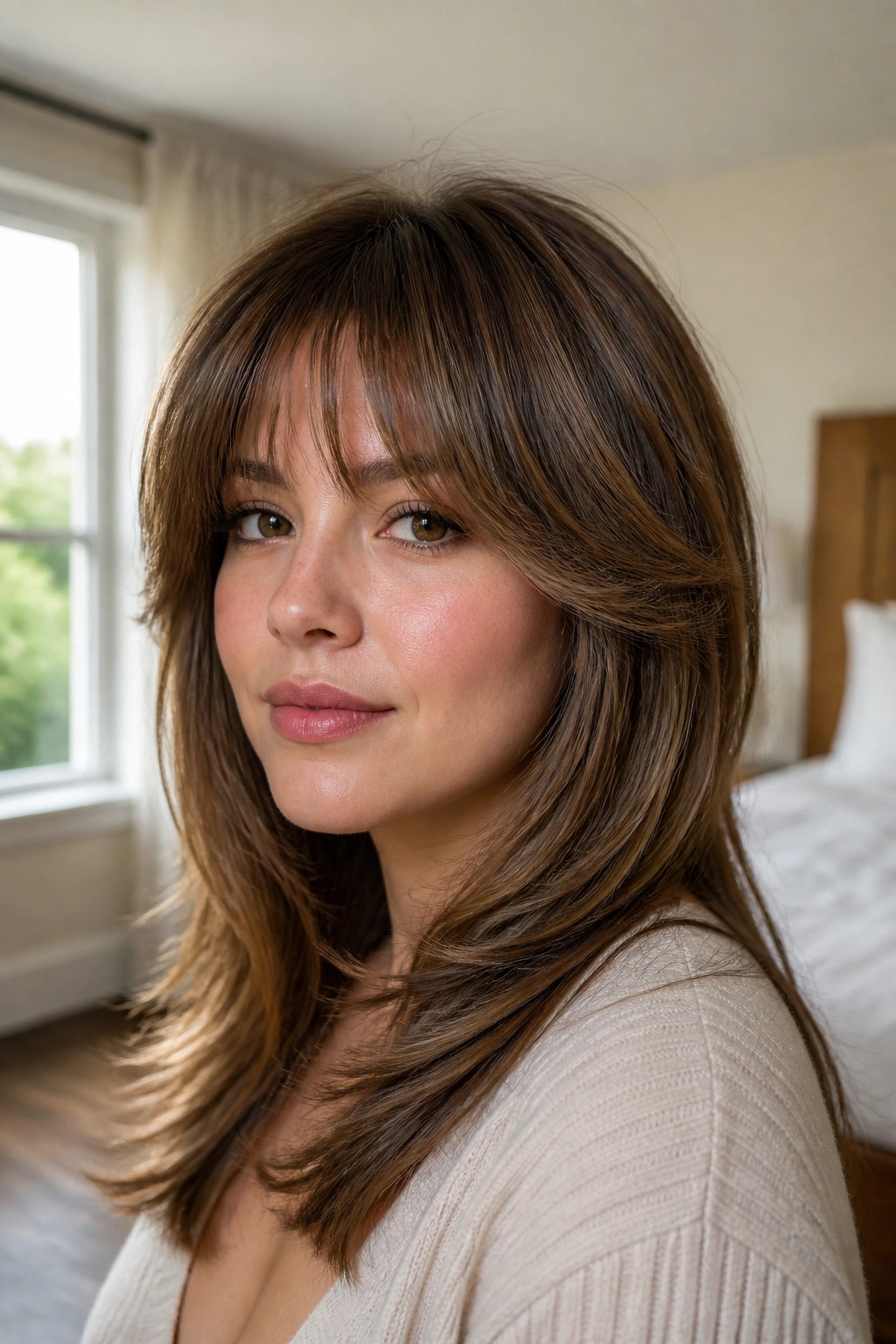
Feathered fringe has a very specific charm. It skims the forehead and brushes the temples instead of sitting heavy across them. That makes it a nice pick for round faces that need a bit more vertical length.
The blowout part is what makes it sing. Use a medium round brush and direct the fringe slightly away from the face, then finish with the brush rolled under just at the ends. You do not want stiff curls. You want a soft wing. If the hair is thick, ask for internal thinning so the fringe does not take over the whole front.
This style has a bit of 90s energy, but in a way that still feels easy to wear. It looks especially good with layers around the chin and collarbone, because the front movement keeps everything from floating together. Pretty hair, yes. But also shape. That’s the point.
8. French Bob With a Soft Fringe
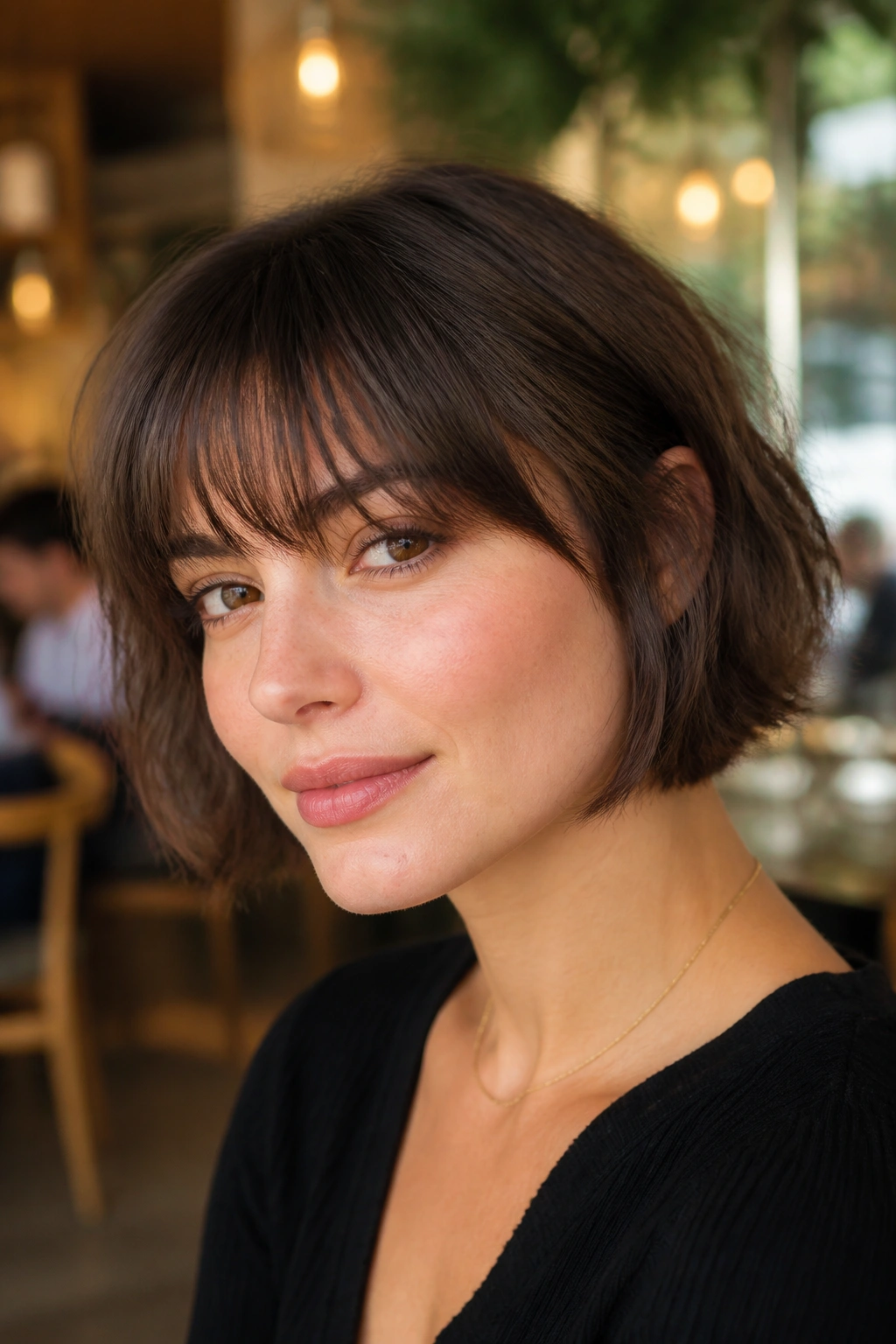
A French bob can work beautifully on a round face, as long as the fringe stays soft and the bob does not end at the fullest part of the cheek. That’s the line to watch.
The haircut is short, so the front has to do more of the balancing. A soft fringe that brushes the brows or splits lightly in the middle keeps the style from feeling boxy. A tiny bit of texture at the ends helps too. You do not want the bob cut so blunt that it turns into one big circle with your face.
This look is best when the hair has a little natural bend. Air-dry texture, a quick wave, or a soft blowout all work. If you like short hair that feels chic without trying too hard, this is one of the strongest options on the list. It is neat. It is a little cheeky. And it gives a round face some edge.
9. Wolf Cut With Tapered Bangs

The wolf cut is rougher than a shag and often a little louder, which is exactly why it works. The tapered bangs and heavy top layers create a strong vertical line through the crown, and that changes how a round face sits in the frame.
How To Keep It From Looking Puffy
Ask for shorter layers near the top and a fringe that narrows toward the center. The sides should stay longer and more broken up. If the cut gets too wide around the cheeks, the whole point gets lost. You want lift at the top and softness around the jaw.
A little mousse at the roots helps. So does diffusing if your hair has wave or curl. This cut does not need to look polished. It needs shape. That’s a useful difference. If you like a style that looks a bit wild in the best way, the wolf cut is a strong place to spend your money.
10. Micro Fringe on a Textured Pixie
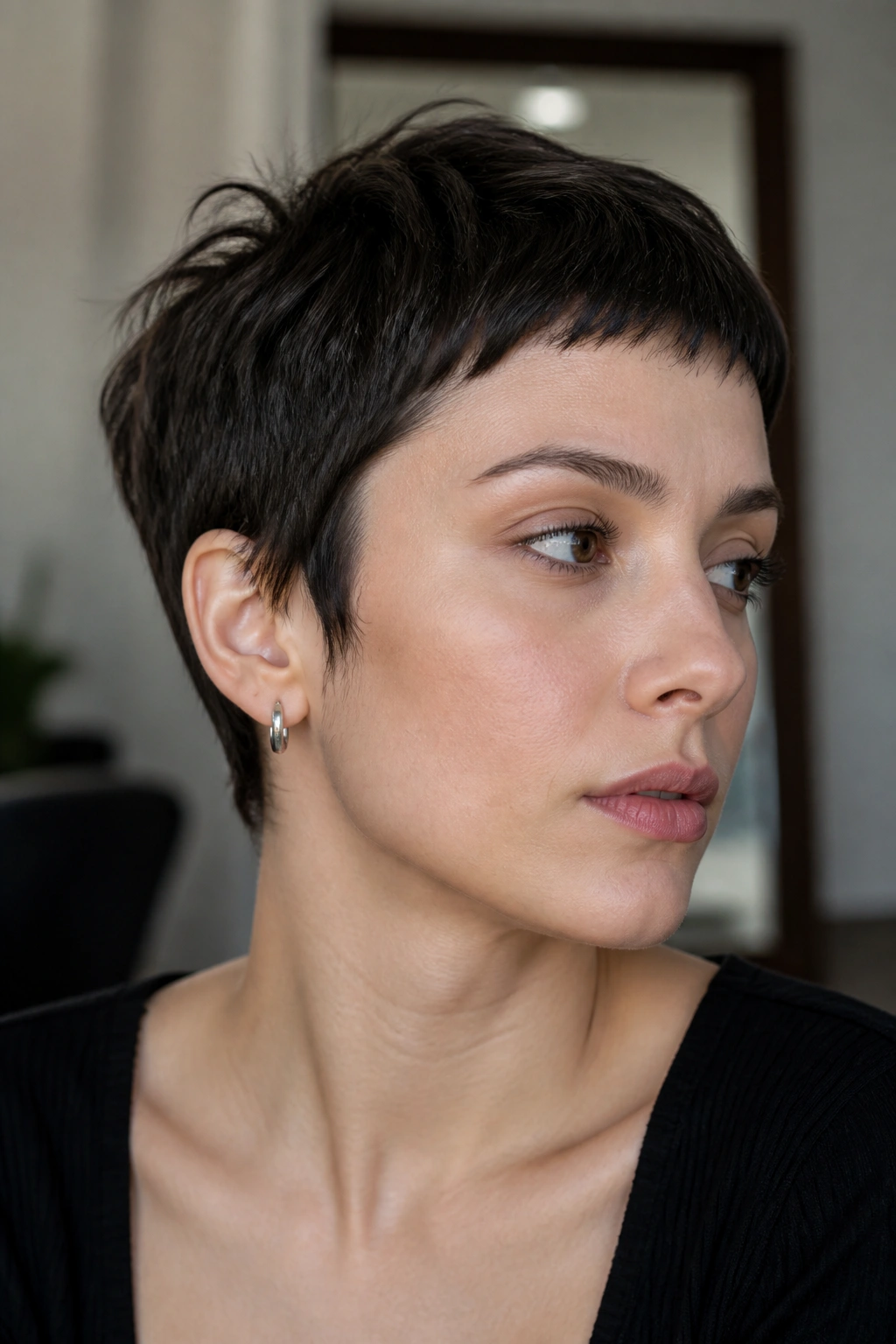
Micro fringe is bold, no question, but it can flatter a round face when the rest of the pixie stays lean. The short front creates a sharp horizontal break, and that contrast can make the face look more angular.
The key is texture everywhere else. Keep the sides close and the crown lifted so the cut does not turn into one soft ball. A little pieceiness in the bangs helps too. You want the fringe to look deliberate, not like it was cut in one hurry at the sink.
Use a matte paste or lightweight wax and work it through dry hair with your fingertips. Don’t over-slick it. That only emphasizes the roundness you’re trying to counter. This style is not for someone who wants to hide behind hair. It’s for someone who likes a little bite.
11. See-Through Bangs on Long Hair
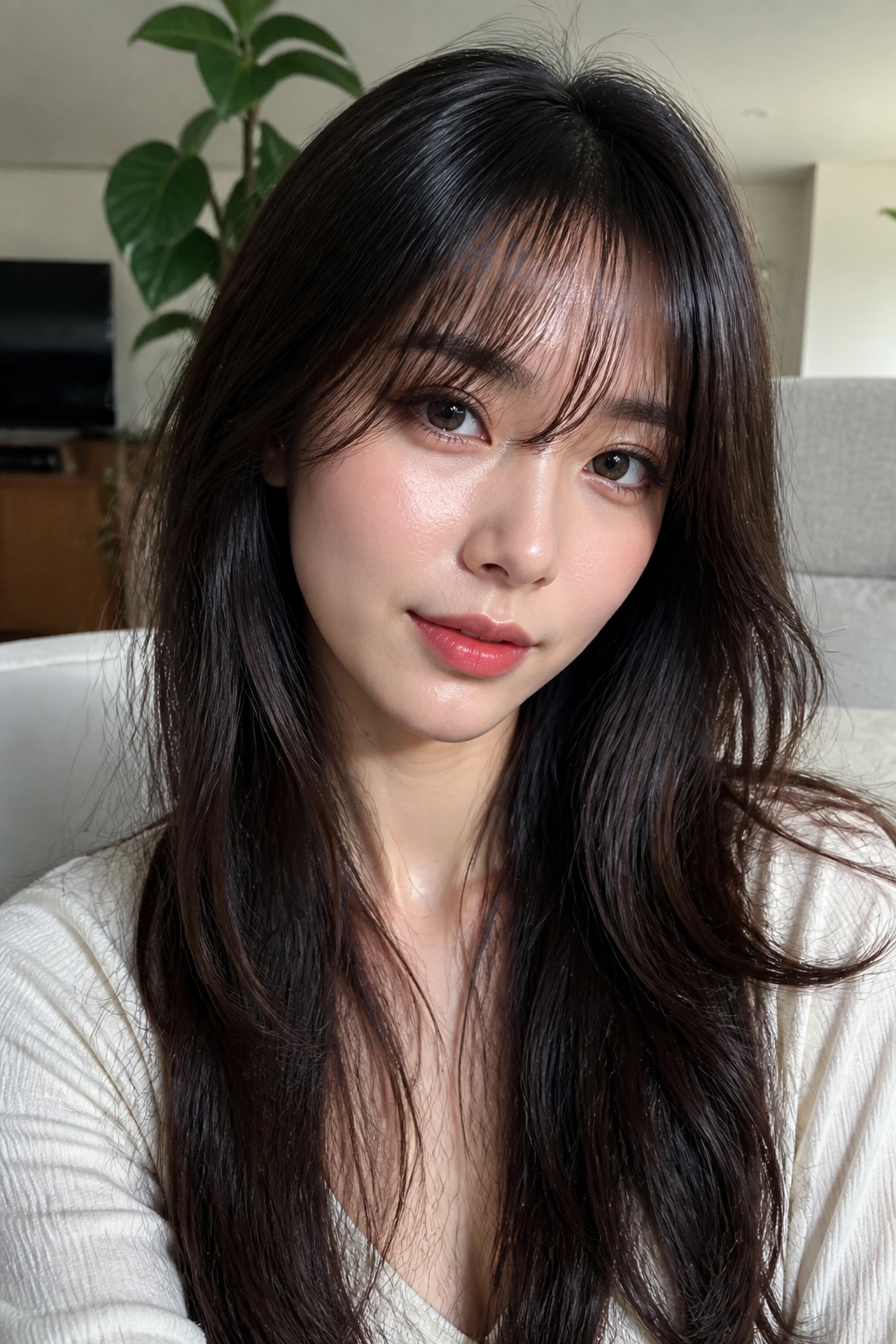
See-through bangs are a quiet fix for a round face. They show enough forehead to keep the style light, but they still frame the eyes and bring some shape to the front.
This works especially well on longer hair because the length below the shoulders keeps the whole look from feeling top-heavy. The fringe should be separated, not packed together. Think soft strands, not a solid wall. A tiny amount of volume at the roots is enough. Too much and the bangs start to fight the rest of the cut.
You can wear them with straight hair, soft waves, or even a loose bend from a curling iron. They’re forgiving. That’s the nice thing. If you like fringe but hate the feeling of constant upkeep, this style gives you a lot of breathing room.
12. Butterfly Cut With Curtain Fringe
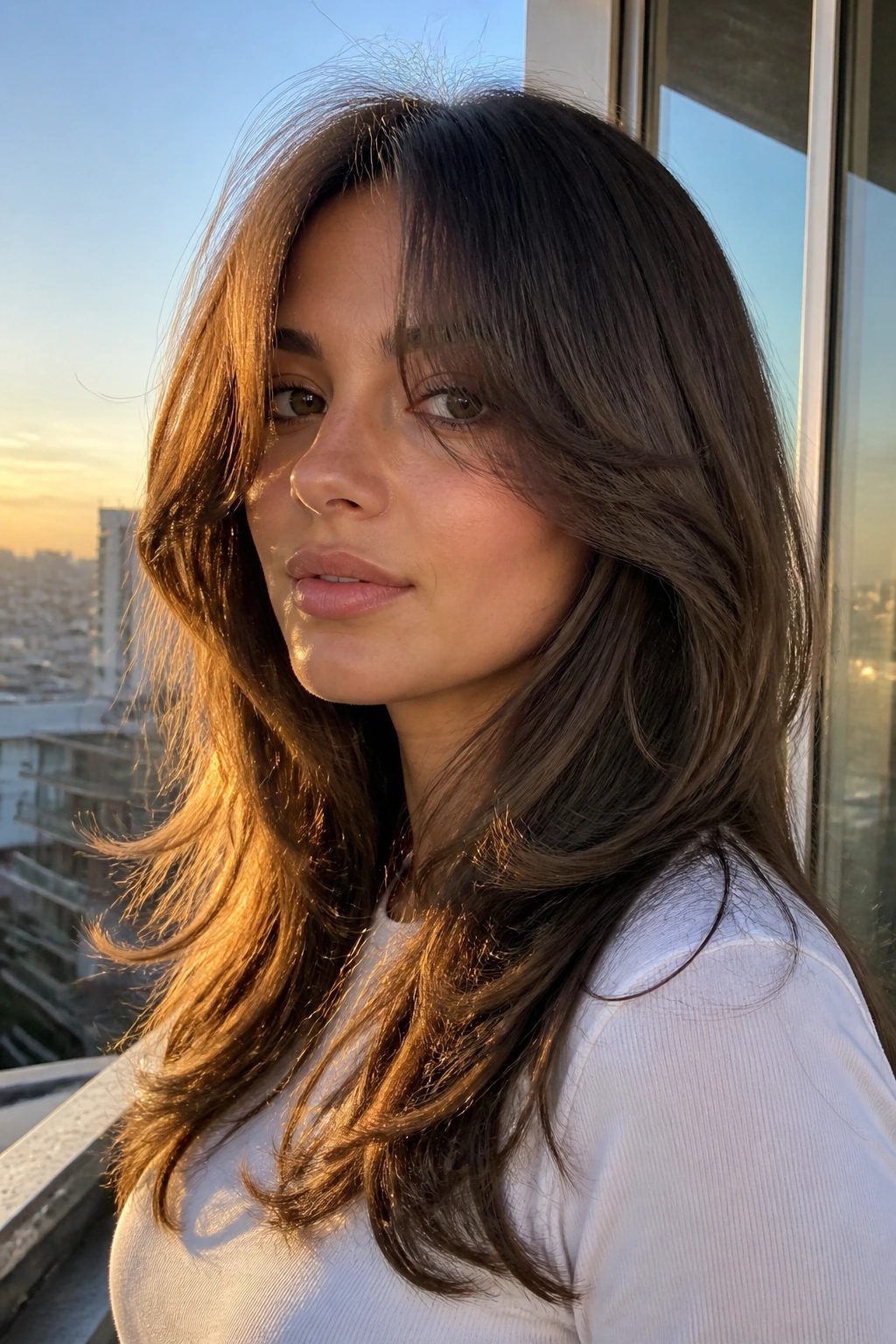
The butterfly cut gives round faces a lot to work with, because the shorter face-framing layers and longer lengths create a clean, stretched-out shape. Add curtain fringe, and the front opens beautifully.
What makes this cut useful is the movement between the layers. The shorter top section brings lift near the crown, while the longer pieces keep the hair from feeling chopped. The bangs blend into that structure instead of sitting on top of it like an afterthought. That blend is what keeps the face from looking wider.
Styling It Well
Use a big round brush or a blow-dry brush to lift the crown and sweep the fringe away from the center. Finish by flipping the front pieces out just slightly. Not a full curl. Just enough to keep the lines soft.
If you have thick hair, ask your stylist to remove bulk under the top layer. Otherwise, the front can feel too dense. This cut loves movement. It does not love heaviness.
13. Side Fringe on a Shoulder-Length Cut
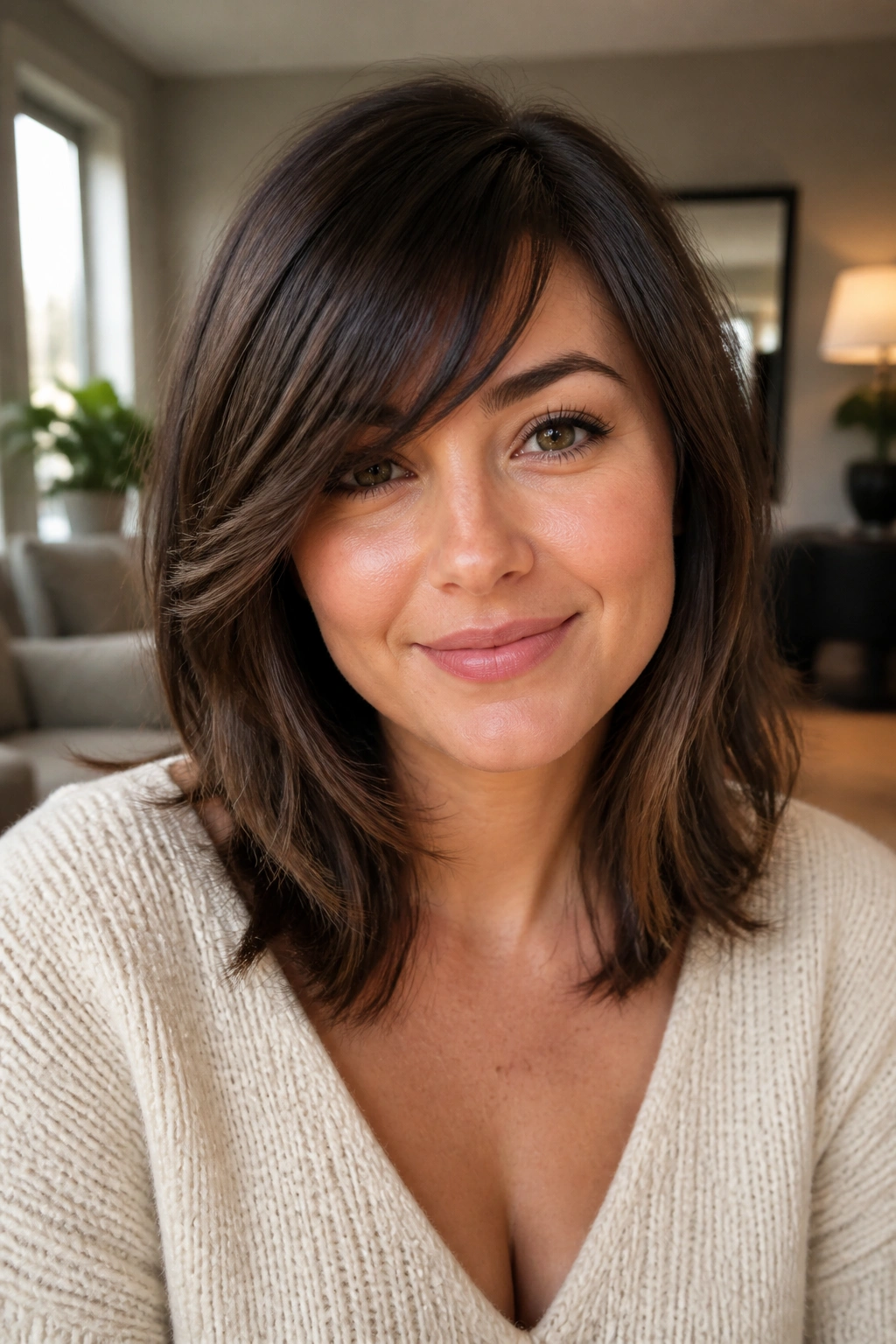
A shoulder-length cut with side fringe is one of those styles that looks ordinary until the angle hits right. Then it changes everything. The fringe should start deep at the part and fall across the forehead with a long, easy slope.
That slope is what helps a round face. It breaks the symmetry and pulls the eye diagonally, which makes the face feel a little narrower. Keep the rest of the cut softly layered around the shoulders so the fringe has something to connect to. If the ends are too blunt, the cut can feel stiff.
- Ask for a fringe that lands around the cheekbone or just below.
- Keep one side slightly longer than the other.
- Style with a side part, not a center part.
This is a good choice if you want fringe that blends into everyday hair without screaming for attention.
14. Piecey Blunt Bangs
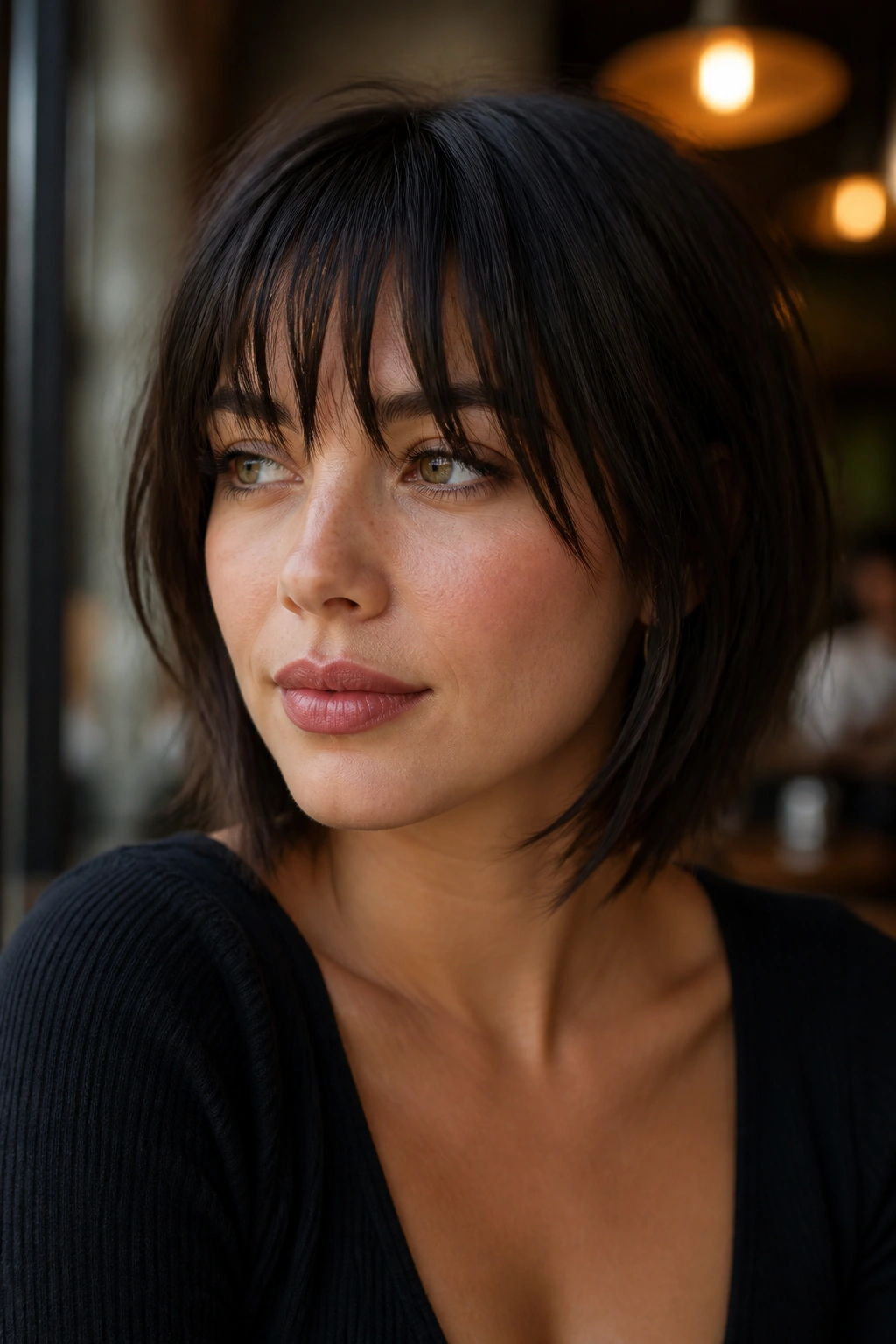
Blunt bangs get a bad name on round faces, and I get why. Too thick, too straight, too low, and they can make the face look shorter. But piecey blunt bangs are a different animal.
The secret is separation. The line can still be straight, but the ends should be feathered and the center should not feel dense. That break in the texture keeps the fringe from forming one heavy shelf across the forehead. On a round face, that matters more than the exact length.
This style works best when the bangs hit around the brows and the rest of the hair has some movement. A sharp bob, a long layer, even a sleek lob can handle it. The fringe gives structure; the rest of the cut keeps it from feeling boxy. If you love a cleaner look but still want face-softening fringe, this is a solid bet.
15. Grown-Out Fringe With Mid-Length Waves
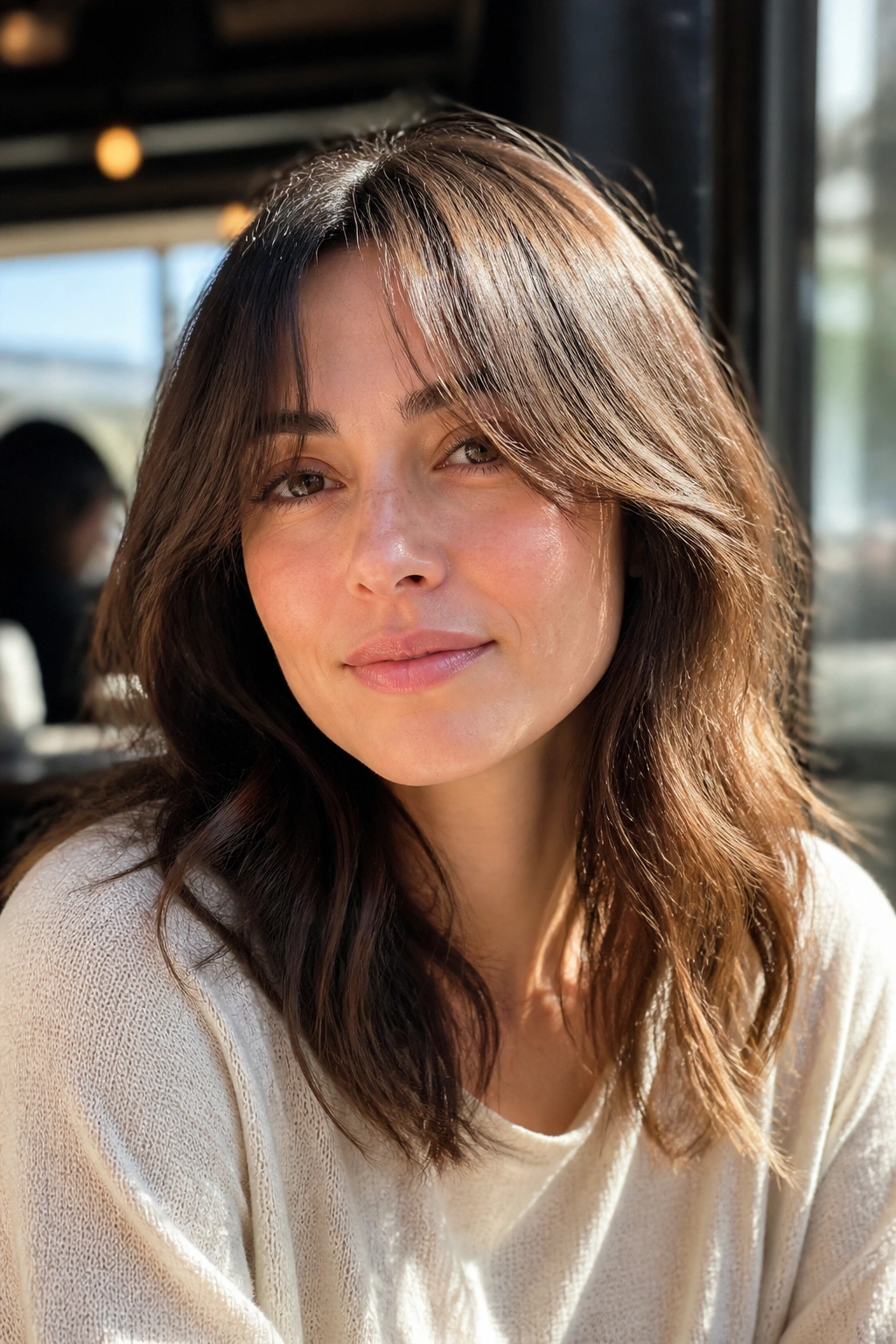
There’s a stage where fringe is neither short nor fully grown out, and honestly, it can look better than the original cut. That in-between fringe is soft around a round face because it lands in broken pieces instead of one obvious line.
Mid-length waves help a lot. They keep the front from sitting flat against the cheeks, which is where some fringe styles go wrong. Ask your stylist to blend the bangs into the front layers so the whole shape falls together. You want the eye to move from the forehead to the cheekbone to the jaw in one smooth path.
What To Watch For
If the grown-out fringe flips inward too hard, it can create bulk at the cheeks. A quick pass with a flat iron or a large round brush usually fixes that. If your hair is fine, a little dry texture spray at the roots gives the front enough lift to stay away from the face.
16. Tapered Pixie With Longer Fringe
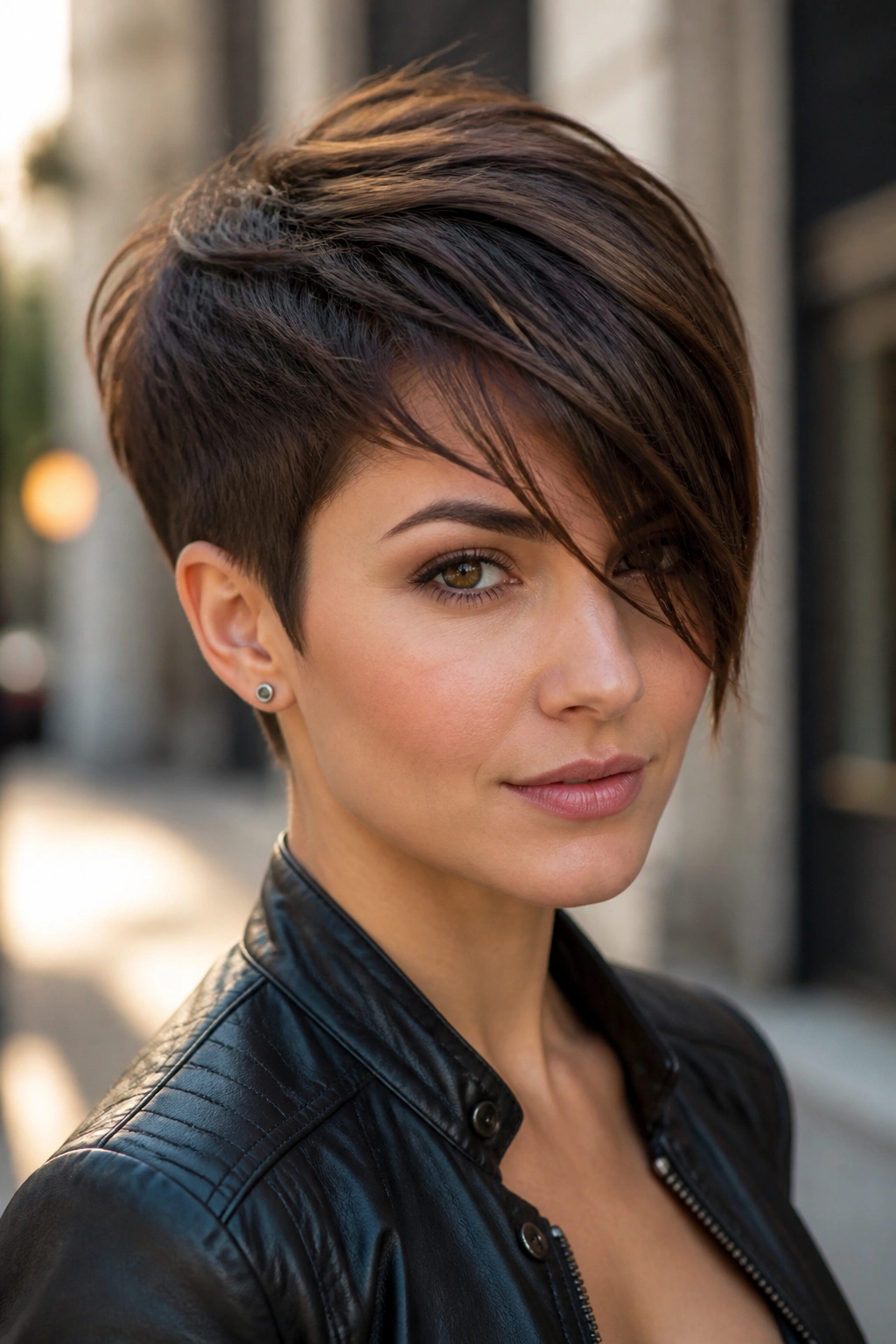
A tapered pixie can be surprisingly flattering on a round face when the fringe is left longer and the sides are kept tight. That contrast gives the haircut shape instead of puffiness.
The longer front piece is what pulls the face downward a bit. It can be swept sideways, pushed forward in a soft curve, or worn messy for a more casual feel. The taper at the nape and sides keeps the silhouette slim, which is the part people often forget. Short hair still needs structure.
- Keep the crown lightly lifted.
- Ask for the sides to be narrowed close to the head.
- Let the fringe stay longer than you think.
This cut is good if you want a clean neck, easy upkeep, and enough fringe to soften the forehead without losing the bite of a short style. It has attitude. And useful hair is always better than decorative hair.
17. Textured Shoulder-Length Cut With Broken Bangs
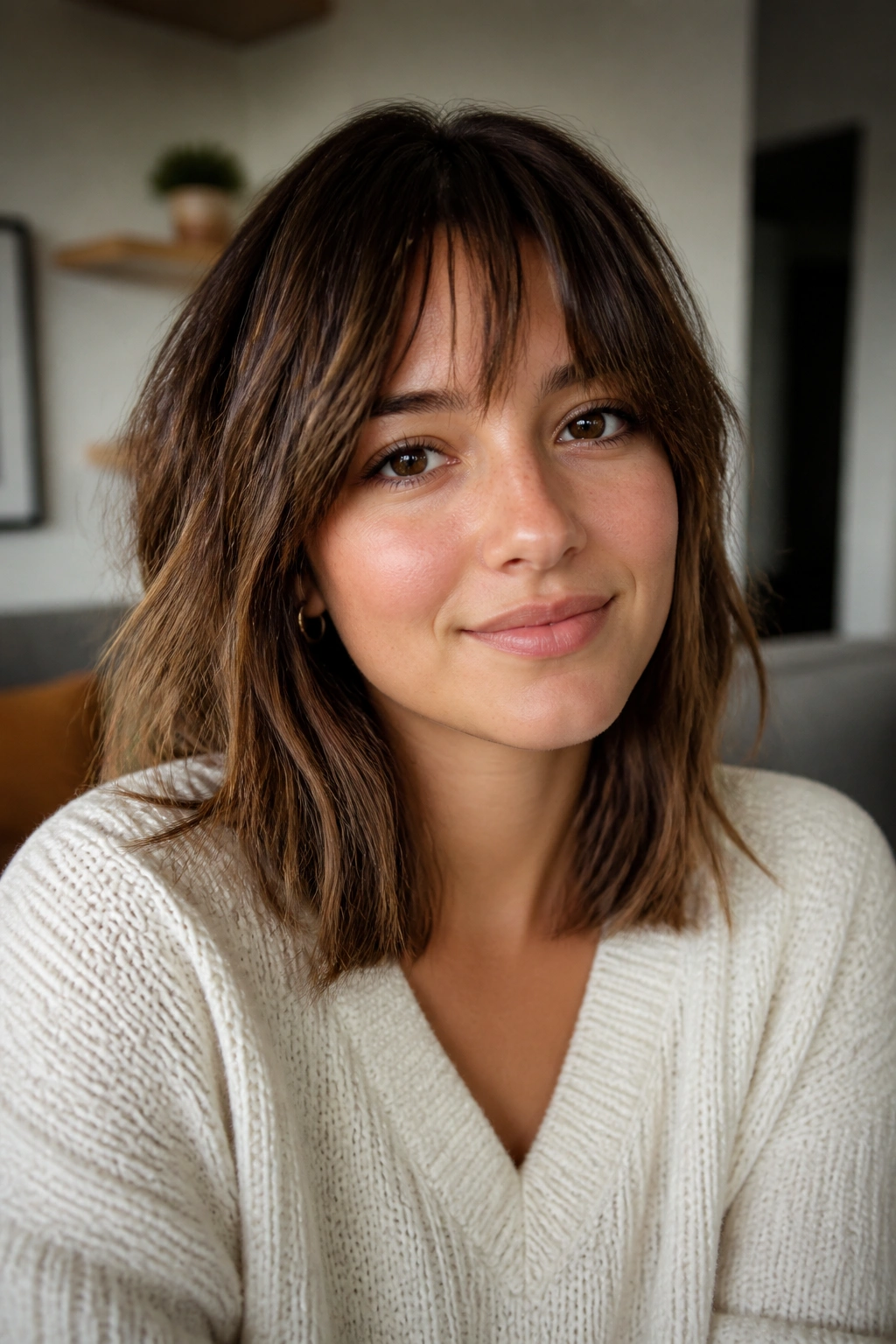
Textured shoulder-length hair is a nice middle ground for anyone who wants fringe without committing to a huge shape change. Broken bangs keep the front airy, and that airiness keeps a round face from feeling boxed in.
This cut works because nothing is too tidy. The ends are touched with texture. The fringe is separated. The front layers fall in slightly uneven lengths that move when you turn your head. That movement matters. A still haircut can make roundness look more obvious than it is.
If your hair is thick, ask for point-cutting at the ends so the fringe does not sit heavy. If it’s fine, keep the layers soft and avoid too much thinning. Either way, the goal is a front section that has some bite without becoming choppy for the sake of it. Nobody needs that.
18. Curly Fringe With Shaped Layers
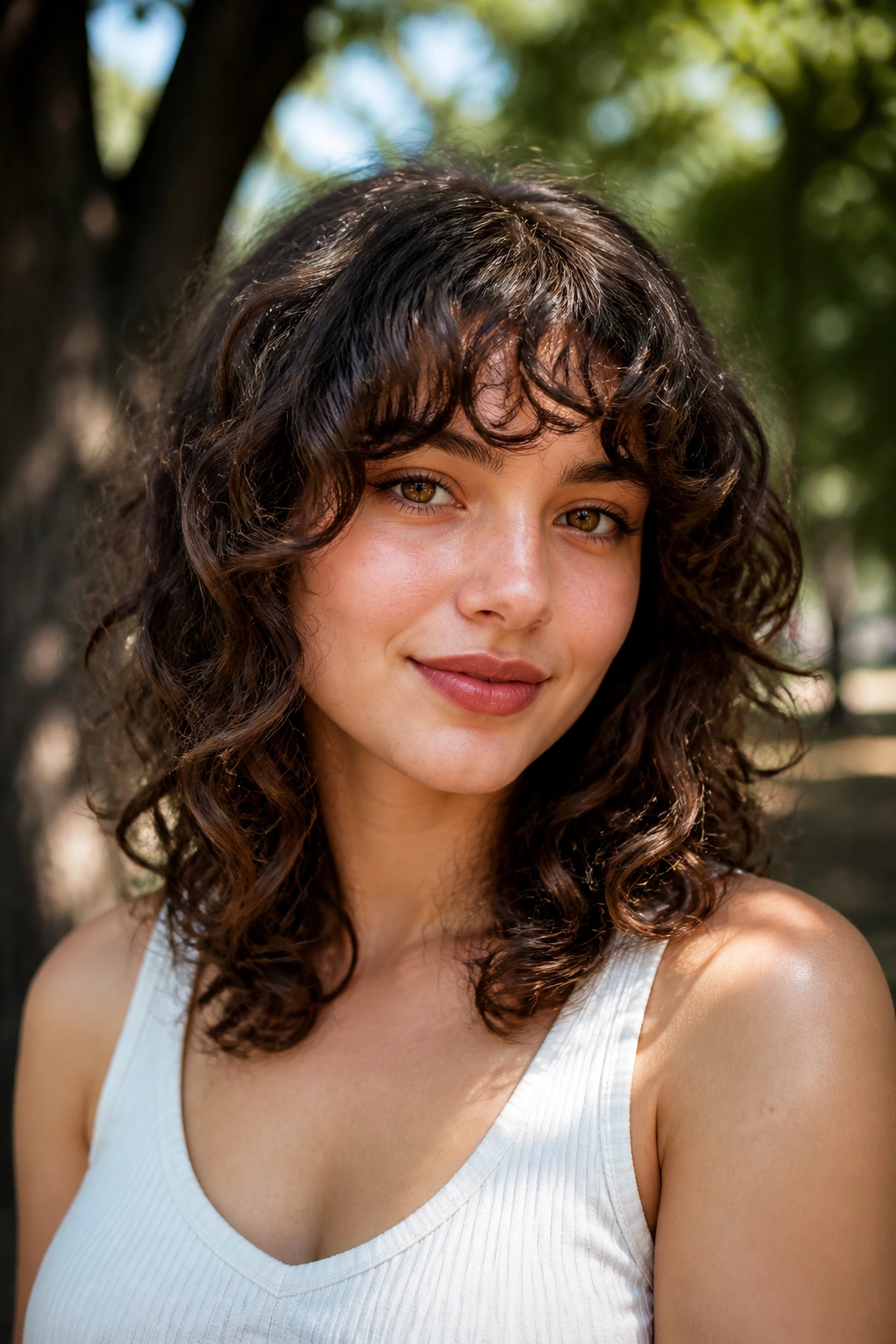
Curly hair can handle fringe on a round face, and often better than people think. The right curly fringe adds shape without flattening the whole head into one wide circle.
The important part is where the curl falls. You want the fringe to land a little longer than it looks dry in the salon chair, because curls spring up. The shape should open near the center or angle slightly away from the cheeks. Shaped layers around the sides keep the volume from sitting at the widest part of the face.
Styling Notes
- Cut curls dry or mostly dry so the shape reads correctly.
- Keep a curl cream light at the front.
- Let the bangs separate into a few soft pieces.
This style is especially good if you like natural texture and don’t want to fight it every morning. The curls do the softening for you. You just need the cut to leave room for them.
19. Arched Fringe With Straight Lengths
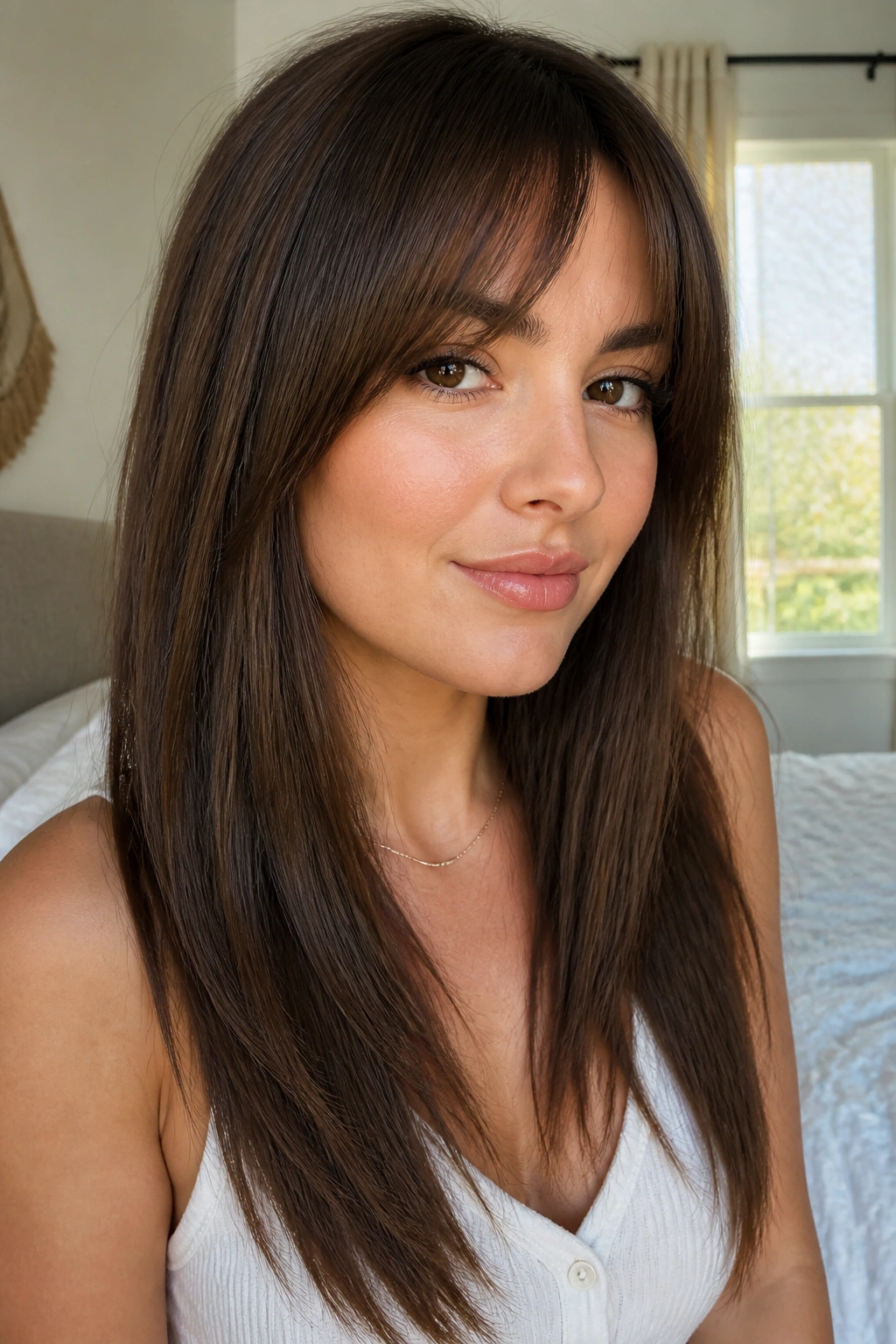
Arched fringe is a neat choice when you want the eyes to stay in focus. The center sits slightly shorter, and the sides drop longer, which gives a round face a more vertical feel.
The shape looks clean on straight hair, especially if the lengths below the shoulders stay smooth and sleek. That contrast helps. The fringe offers a curve, but the rest of the hair stays streamlined, so the face doesn’t get overwhelmed by volume at the cheeks.
This style can go wrong if the arch is too dramatic. Keep it soft. You’re aiming for a gentle lift in the center, not a cartoon shape. A quick blow-dry with a paddle brush and a tiny bend at the ends is usually enough.
It’s a good pick for someone who likes neat hair but wants more character than a plain center part.
20. Shaggy Bob With Off-Center Fringe
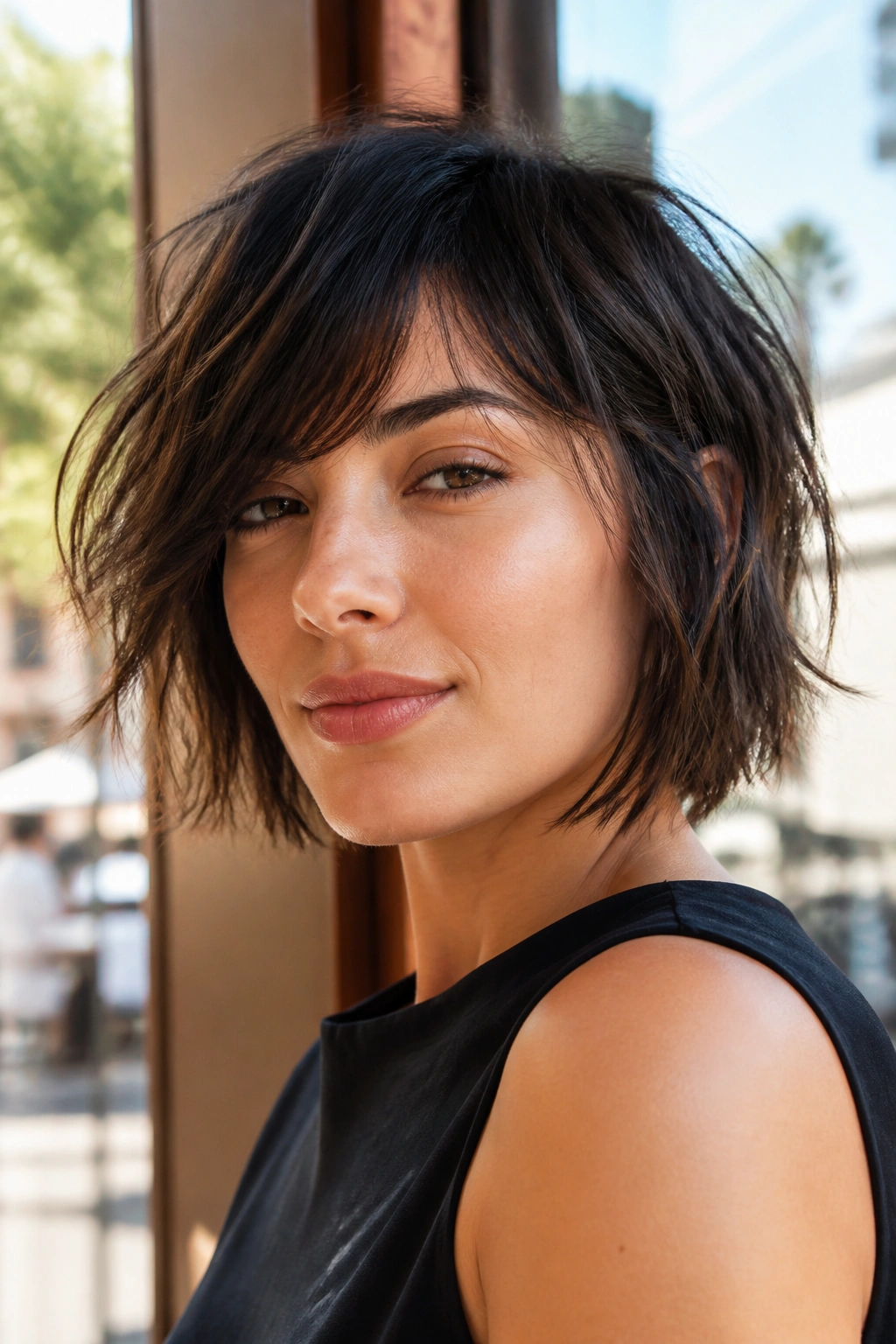
A shaggy bob is already doing a lot, which is part of why it works on round faces. The off-center fringe adds asymmetry, and asymmetry makes the face feel less circular.
Why The Angle Matters
When the fringe falls a little to one side, the eye stops reading the face as one even shape. The bob can sit at the jaw or just below it, with soft texture through the ends and a bit of choppiness near the front. That keeps the haircut lively.
The best versions of this look are not too neat. A slight bend, a rough-dried finish, maybe a touch of texture cream at the ends — that’s enough. If you tuck one side behind the ear, even better. It gives the whole shape a bit of movement without needing a lot of effort. Nice hair. Not fussy hair.
21. Soft Blunt Fringe With Internal Layers
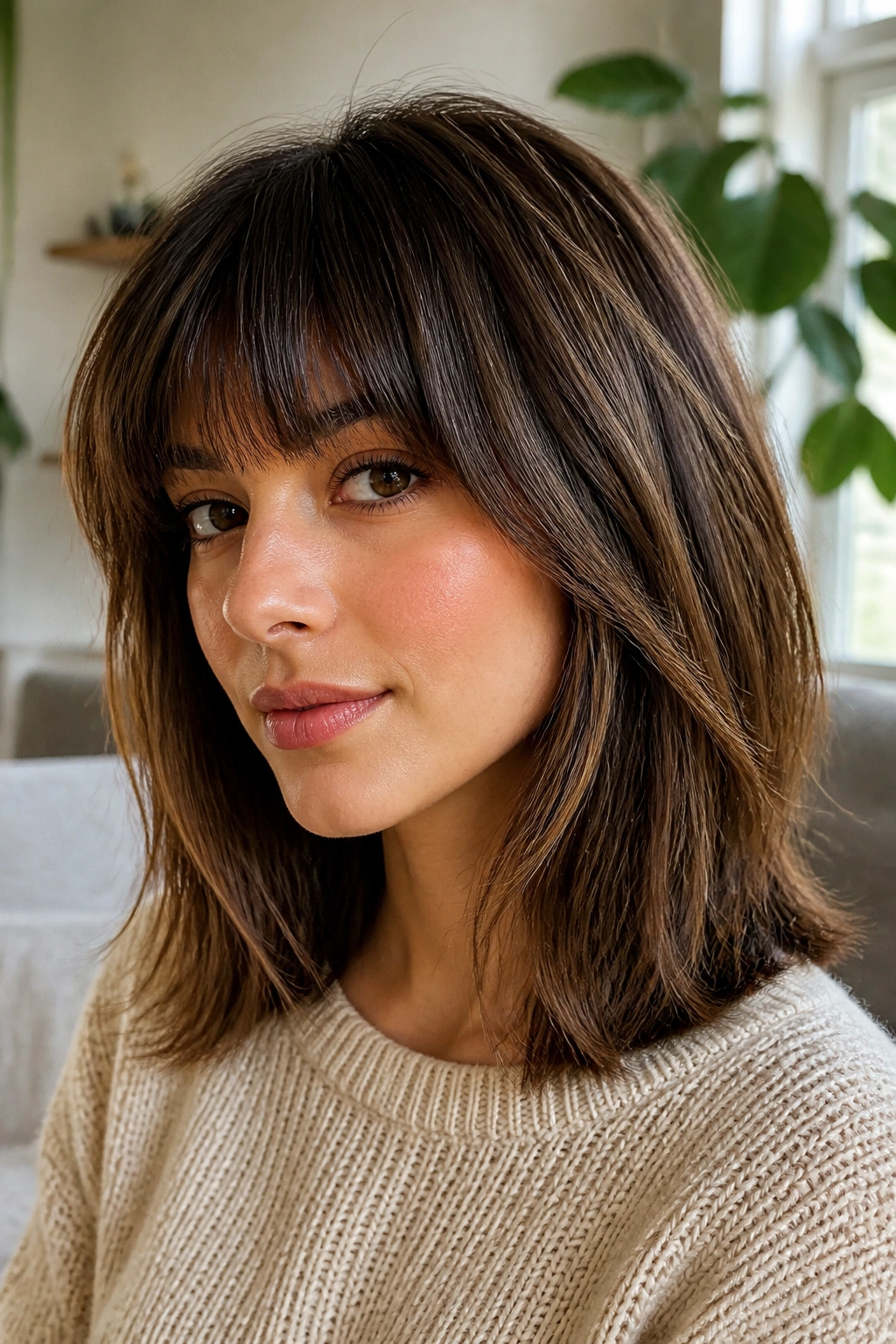
Soft blunt fringe gives you the line of a classic bang without the heaviness that can flatten a round face. Internal layers remove bulk from the inside, so the fringe sits cleanly instead of puffing out.
That inside structure matters more than people realize. The surface still looks smooth, but the weight underneath is lighter, which helps the bangs fall straight without looking solid. If you want a more polished style that still feels wearable, this is a good middle path.
- Ask for thinning inside the fringe, not at the very edges.
- Keep the length at or just above the brows.
- Pair it with a lob or shoulder-length cut for balance.
This is a strong option if you like the look of a blunt fringe but know your hair tends to swell up in humidity. The shape stays calm when the layers are handled well. That’s the whole game.
22. Face-Framing Fringe With High Layers
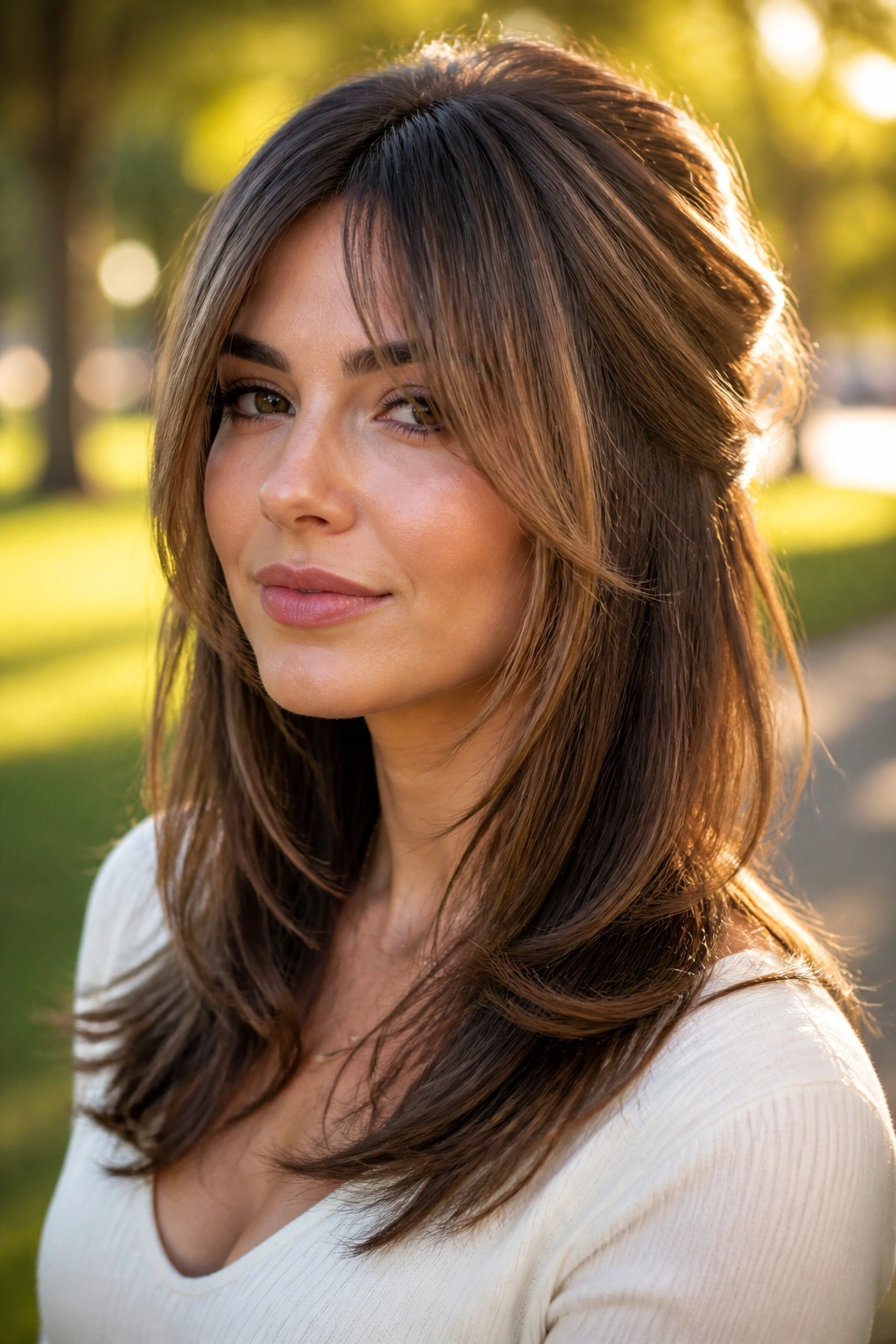
High layers around the crown and face-framing fringe can change the shape of a round face fast. The lift starts higher up, and that creates a longer line from top to bottom.
The fringe itself usually begins around the cheekbone and curves back toward the jaw. That shape is useful because it keeps attention near the center of the face while softening the sides. When the upper layers are cut shorter, the whole style gets more height, which is one of the easiest ways to counter roundness.
This is a good haircut if you like movement but do not want an obvious bang. The fringe blends into the layers, so you can wear it swept, tucked, or blown forward. It is flexible. That’s why I like it. Some cuts only work one way. This one gives you options.
23. Swoopy Fringe and Collarbone Length
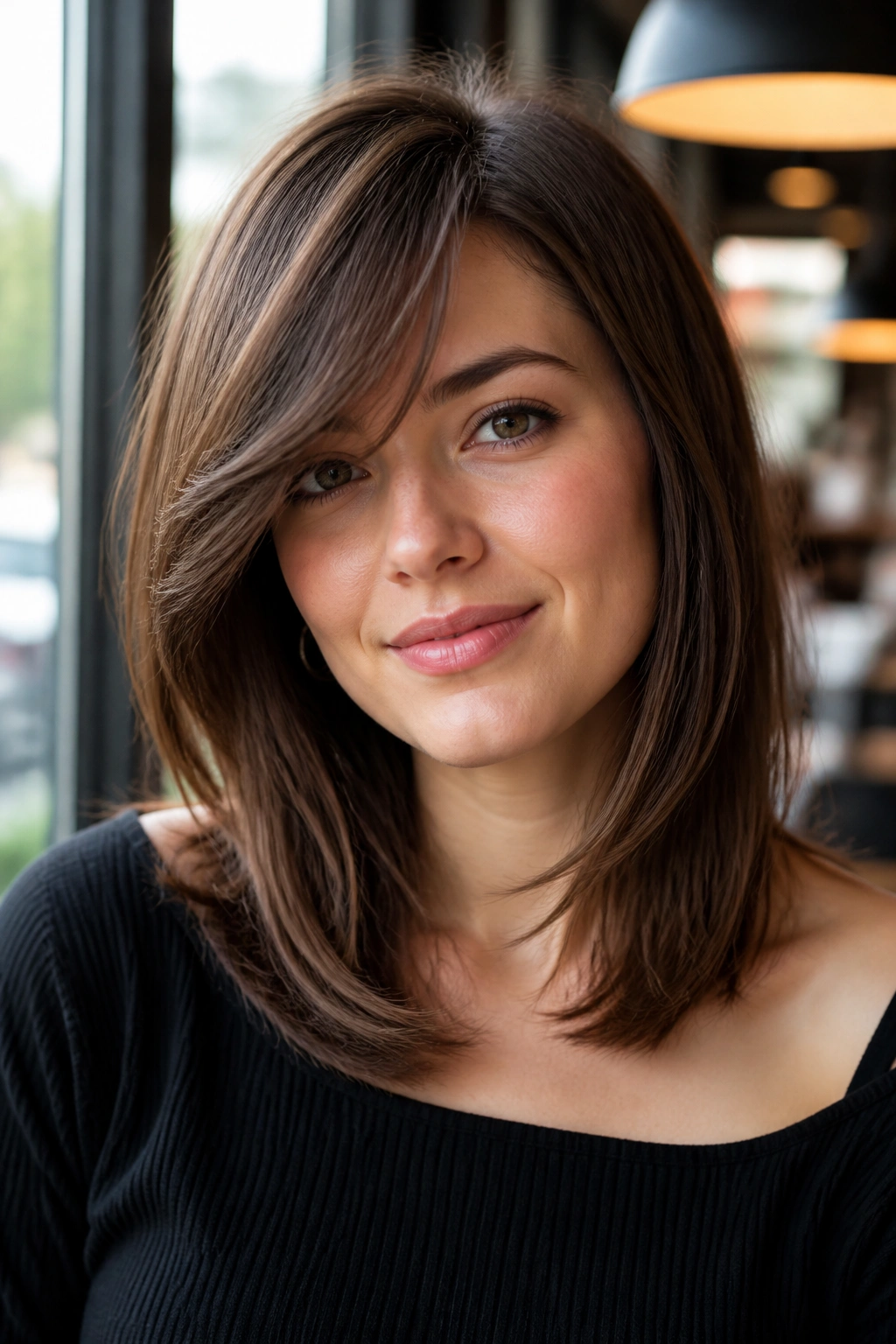
Collarbone-length hair already gives a round face some breathing room, and a swoopy fringe keeps that softness from turning flat. The front moves away from the forehead in one smooth sweep, which creates a long diagonal line.
The style looks especially good when the ends of the hair bend slightly outward and the fringe follows that same motion. It’s a little glamorous, but not in a stiff way. Think big brush, not shellacked finish. If you want the face to look more oval without cutting a huge amount of length, this is one of the more reliable shapes.
How To Style It
Use a large round brush or velcro rollers at the front. Direct the fringe away from the center and let it cool there for a minute before touching it. That cooling step matters. Skip it and the hair drops too fast. A light mist of flexible spray is enough to hold the movement.
24. Tousled Crop With Fringe
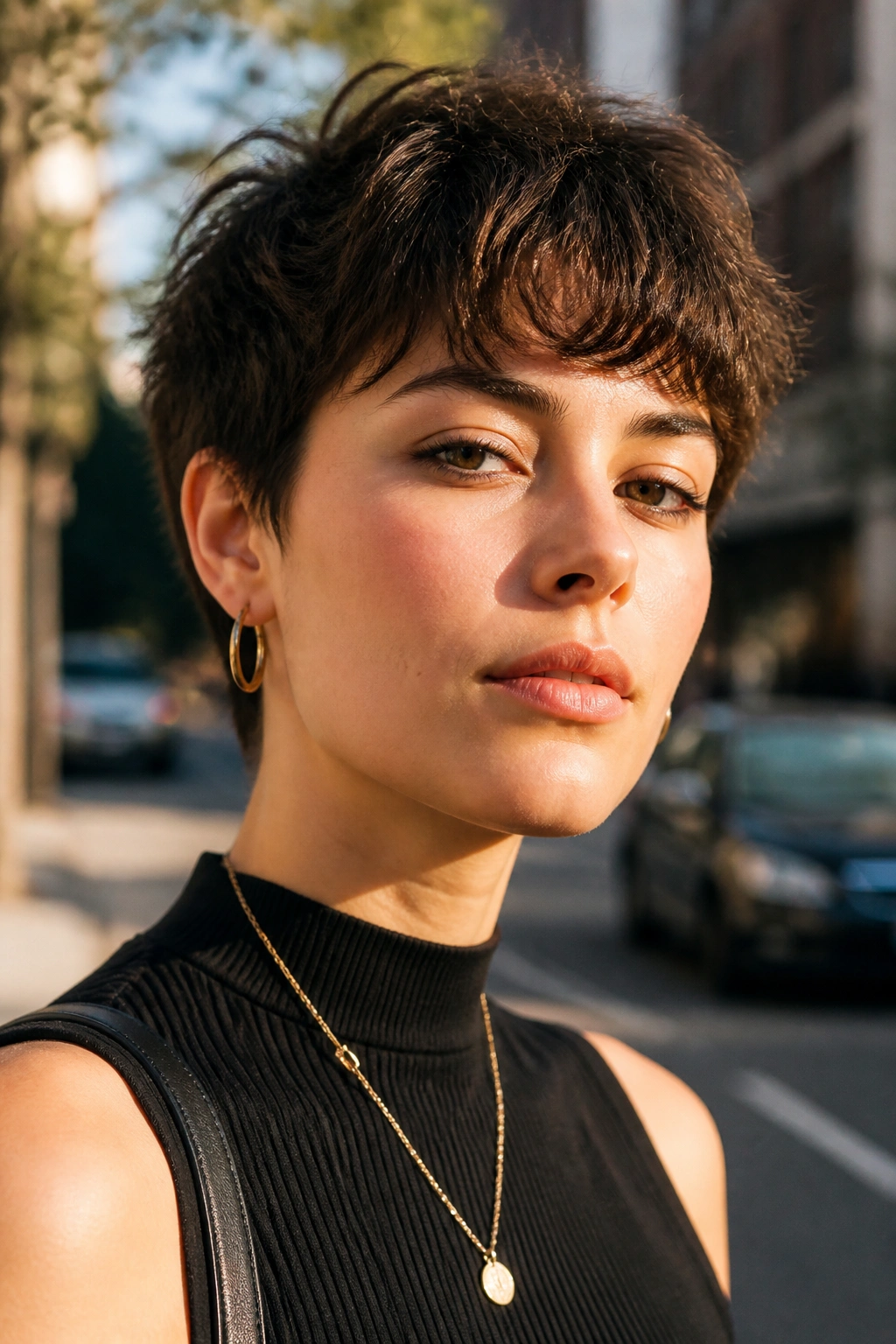
A cropped cut with fringe is not for everyone, but on a round face it can look sharp in a good way. The tousled texture keeps the crop from becoming a neat little circle, which is the main trap with short hair.
The fringe should be broken up and slightly longer at one side so the front never feels too even. A textured top adds height, and that height is what changes the face shape. Keep the sides tidy. Keep the crown a little messy. That contrast is where the style lives.
- Work a pea-sized amount of matte paste through dry hair.
- Push the fringe in different directions until it looks lived-in.
- Leave a little length at the temples so the cut softens instead of hardening.
This is a haircut with attitude. It looks best when it is not overthought.
25. Long Bouncy Layers With Deep Curtain Fringe
Long hair does not have to hide a round face. Long bouncy layers with a deep curtain fringe can make the face look longer while keeping the length intact.
The deep part in the fringe gives the front shape right away, and the longer side pieces fall past the cheeks instead of stopping at them. That matters. It keeps the eye moving downward, which is what you want when the face is naturally soft and full. The layers below should stay light enough to move, not so feathered that the ends look thin.
This is a good style for someone who likes length but wants the front to do more than just sit there. It’s especially nice with a big blowout, loose waves, or a soft bend at the ends. The cut feels polished, but not rigid. And that’s usually the sweet spot.
