



Round faces can wear short bangs better than most people expect. The trick is not to chase a harsh line or hide the forehead under a thick curtain. It’s to use the fringe to create angles, broken texture, and a little lift where the face naturally reads widest.
That’s why the best short bangs for round faces usually do one of three things: they open at the center, sweep off to one side, or break into soft pieces that don’t draw a straight horizontal line across the face. A blunt, bowl-like shape can make the cheeks look fuller. A cropped fringe with texture, on the other hand, can sharpen the whole cut without making it fussy.
Hair texture changes the game too. Fine hair can go wispy and airy. Thick hair needs weight removal or it turns into a shelf. Curly hair needs a cut that respects shrinkage, not one that fights it. And if your crown swirls in the wrong direction, the best bangs in the world will still need a smart blow-dry.
So the best approach is not “short bangs, yes or no.” It’s choosing the right kind of short fringe for your face, your hair, and your daily routine. Some are crisp. Some are shaggy. Some barely touch the brows. Some stop higher and leave the center open. The good ones make the face look a little longer, a little leaner, and a lot more interesting.
1. Piecey Micro Fringe
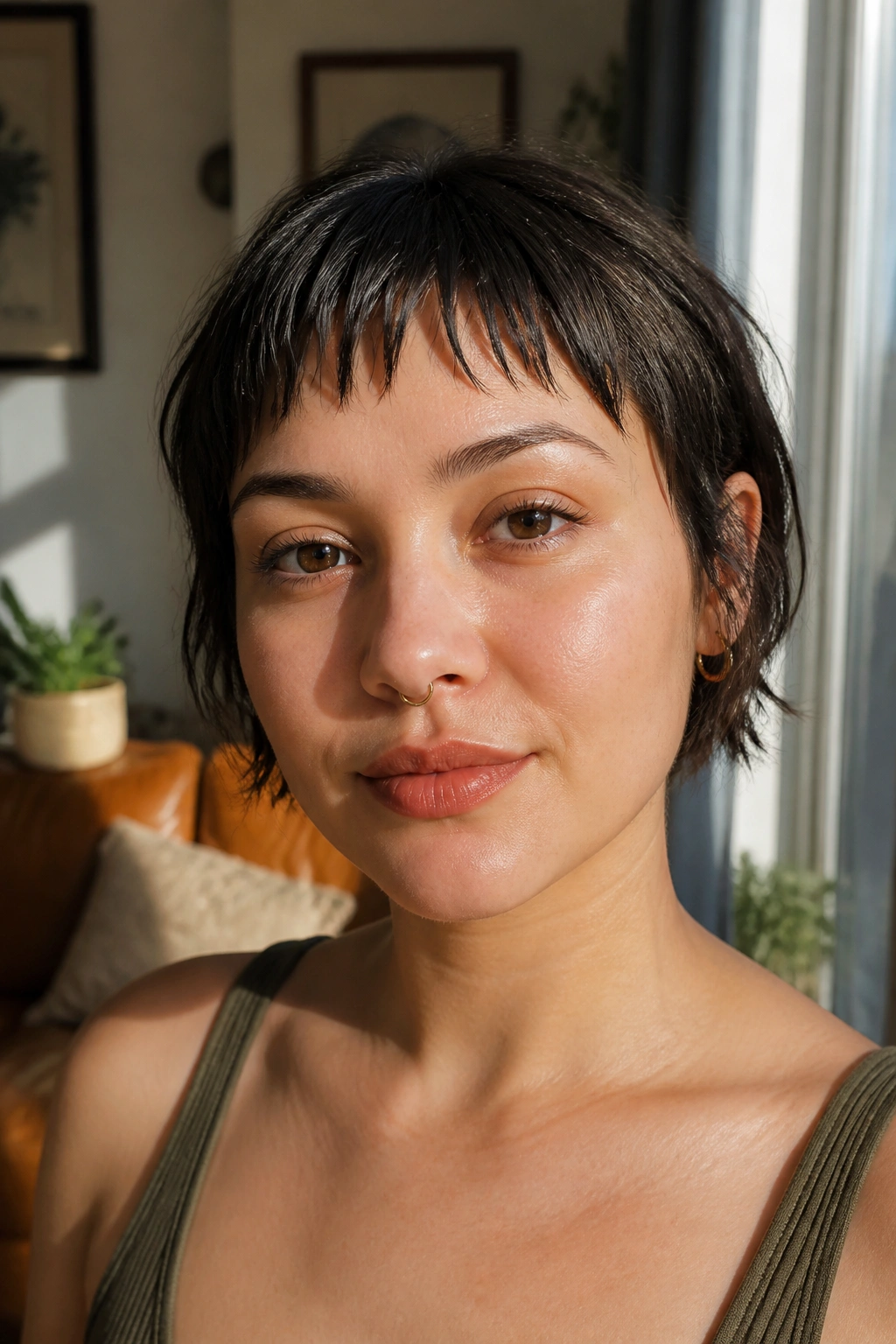
Piecey micro fringe is the bold little cut that can make a round face look sharper fast. The pieces sit short, usually well above the brows, but they’re never cut as one solid block. That broken edge is what keeps the look from turning heavy.
Why It Works on Round Faces
The short length pulls the eye upward, which helps stretch the face visually. The gaps between the pieces matter almost as much as the hair itself. They stop the fringe from becoming a flat band, and that makes the forehead feel taller.
A good micro fringe here should be cut with a small amount of separation at the ends. Think soft points, not a blunt shelf.
- Ask for a fringe that sits about 1 to 2 inches above the brows.
- Keep the ends lightly point-cut so they move.
- Style with a tiny dab of paste, then separate with your fingers.
- Avoid a rounded outline that echoes the cheeks.
Best for: straight to slightly wavy hair, especially if you like a sharp look with low styling time.
2. Side-Swept Baby Bangs
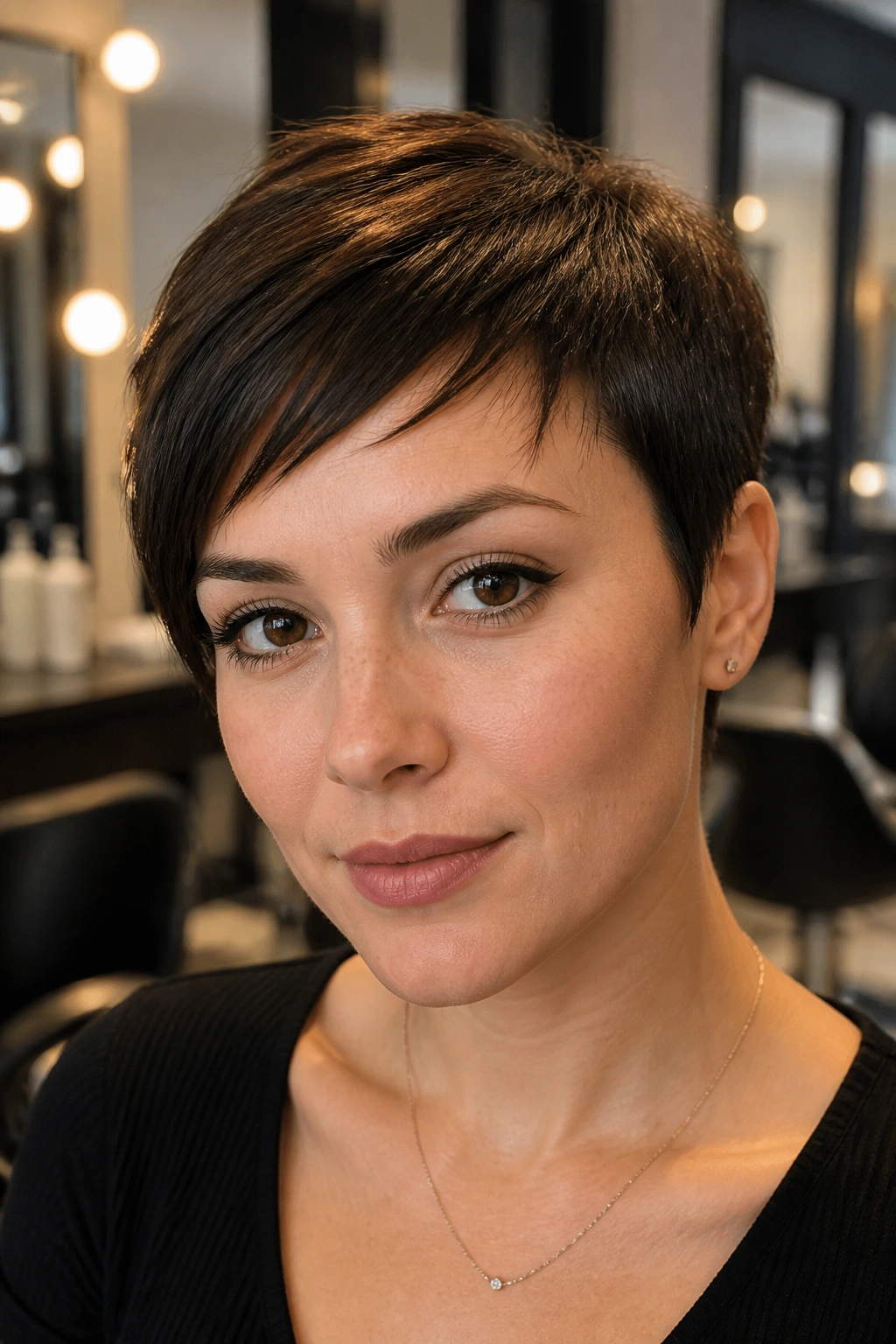
Side-swept baby bangs are one of the safest short bangs for round faces. They keep the front light, and the diagonal line gives the face a bit of direction instead of sitting squarely across it. That angle matters more than people think.
The cut usually starts short near the center and gets a touch longer toward one temple. That tiny shift can make the whole face read less circular. It also softens the forehead area without closing it off, which is why this fringe works on both fine and dense hair.
You can wear it with a pixie, a bob, or a shag. I like it most when the rest of the cut has some movement too. If the hair behind the fringe is pin-straight and heavy, the bangs can feel pasted on. A little texture keeps the look honest.
For styling, blow-dry the fringe forward first, then push it across with your fingers while it’s still warm. Let it fall where it wants. Forced symmetry is the enemy here.
3. Wispy Brow-Skimming Bangs

Why do wispy bangs work so well on round faces? Because they leave air between the hair and the skin.
A dense fringe makes a strong horizontal line. Wispy bangs break that line into smaller strokes, which keeps the center of the face open. When the ends hover around the brows instead of pinning them down, the cut feels light and the cheek area doesn’t get boxed in.
How to Ask for It
Tell your stylist you want a soft fringe that barely kisses the brows and has see-through sections. The shape should be narrow in the middle and a little wider at the sides. That keeps it flattering without sliding into helmet territory.
This is a good choice if you wear glasses, because the fringe can sit above or just behind the frames without getting bulky. It also grows out well, which is a nice bonus if you hate upkeep.
Use a small round brush or even a flat brush to guide it forward. A heavy spray is too much. A light mist of flexible hold is enough.
4. Textured Short Curtain Bangs
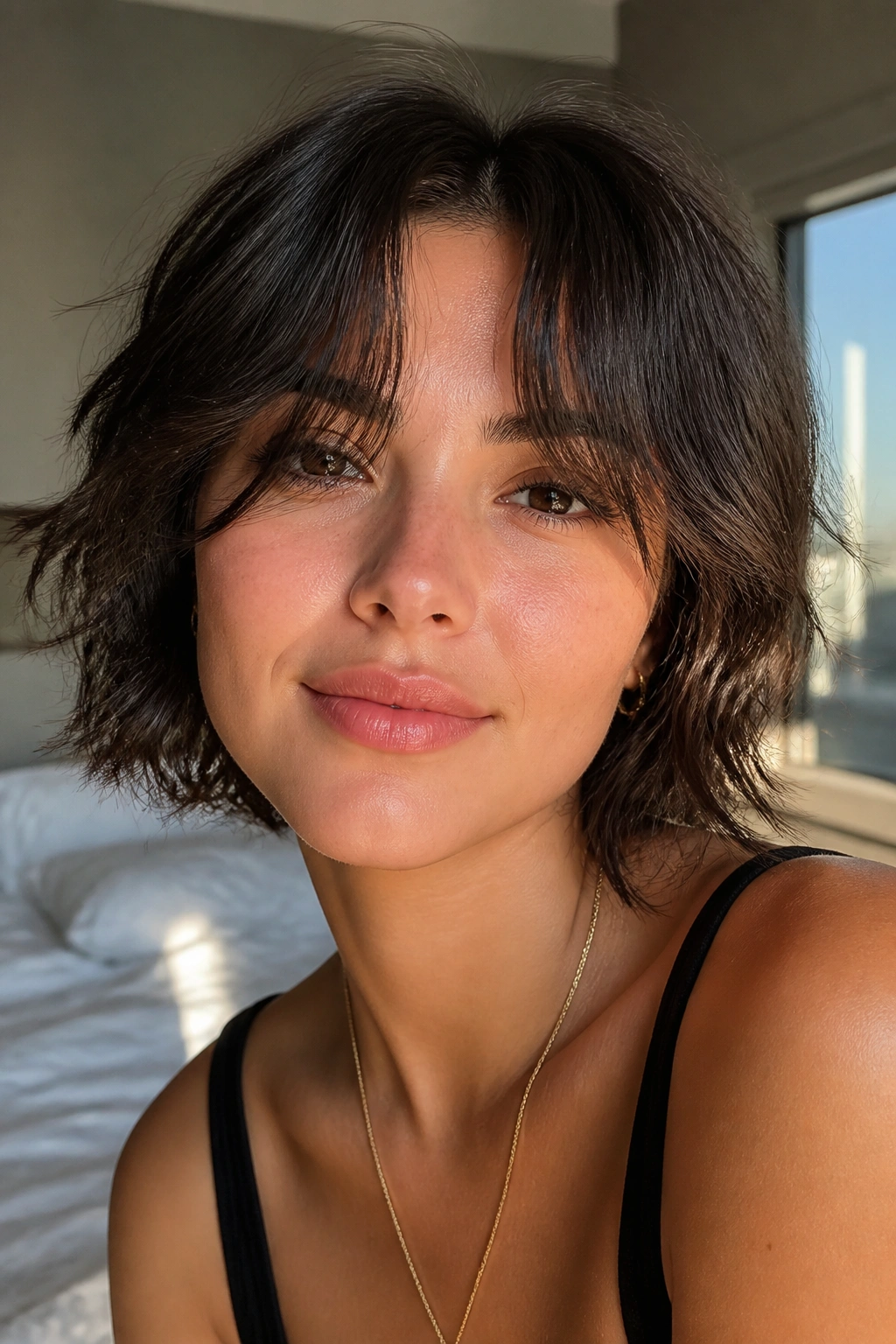
A lot of people think curtain bangs have to be long to work. Not true. Short curtain bangs can be brilliant on round faces when the center opens early and the sides fall away toward the cheekbones.
Picture a fringe that parts in the middle, stays short at the bridge of the nose or slightly above, then softens as it angles outward. That shape gives the face a vertical center line and a pair of diagonal side pieces. It’s tidy, but not stiff.
What Makes the Shape Different
The key is the center gap. If the middle sits too low, the bangs start to crowd the eyes. If it’s too rounded, the face can look wider. The best version feels almost like a tiny arch that breaks open in the middle.
- Center opening should start before the brows.
- Side pieces should graze the upper cheek area.
- Ends should be textured, not sliced blunt.
- Dry with a round brush only at the roots.
Use this if: you want bangs that can soften into face-framing layers later without a harsh grow-out phase.
5. Choppy French Fringe
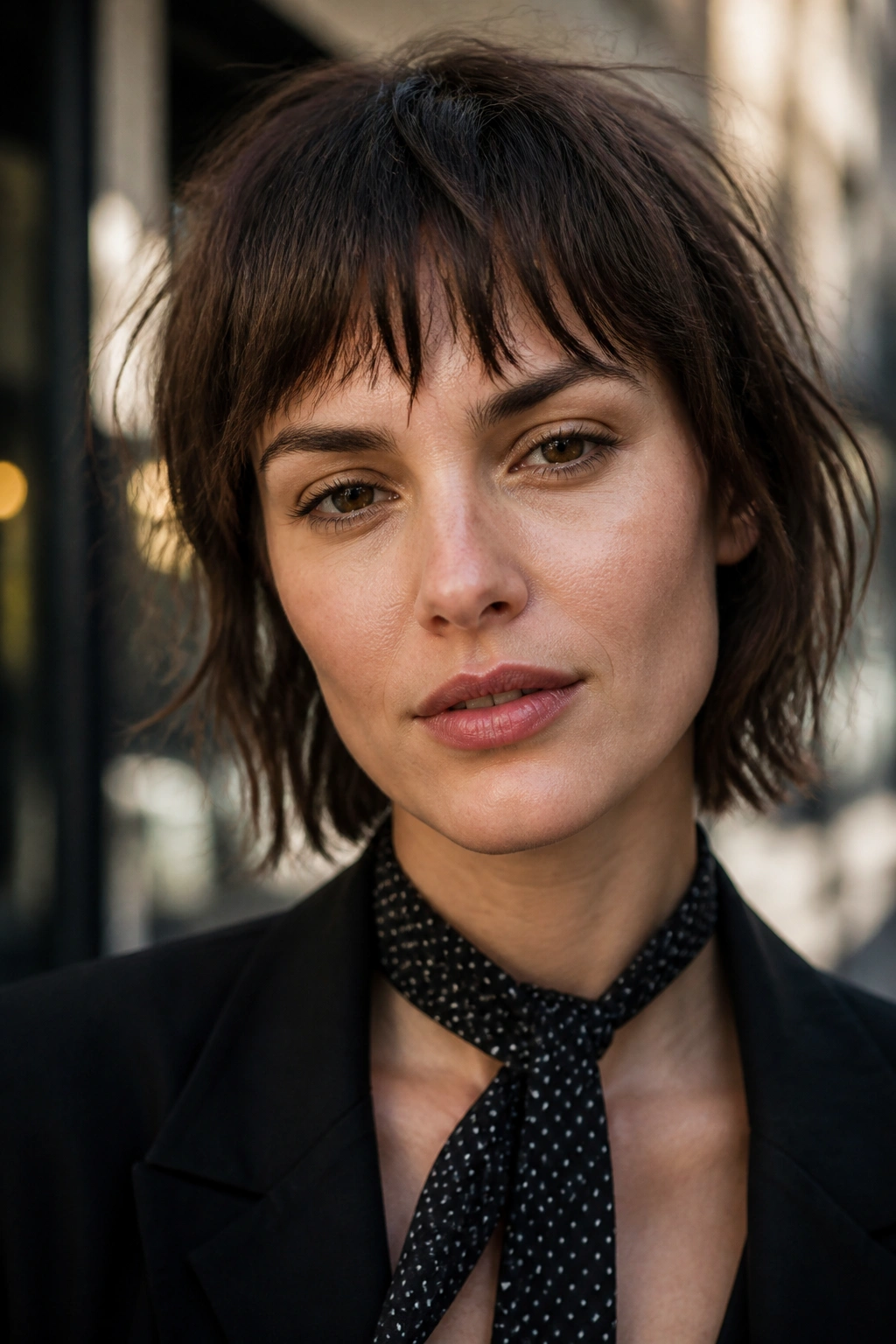
Choppy French fringe has a lived-in feel that round faces benefit from. It’s shorter than a classic full fringe, but the ends are never neat enough to create a hard line. That loose, slightly undone finish is the whole point.
The shape usually sits around brow level or just above it, with uneven bits that open and close as you move. On a round face, that movement is better than perfection. A perfect line can make the width of the face more obvious. Choppiness blurs that edge.
I like this fringe on hair that already has some bend, because it looks like it belongs there rather than being pasted on. If your hair is straight, you’ll want a quick rough-dry and maybe a tiny bit of wax rubbed between your fingertips.
It also plays nicely with a short bob or collarbone cut. The fringe adds attitude, but the cut still feels wearable. That balance is why people keep coming back to it.
6. Asymmetrical Fringe
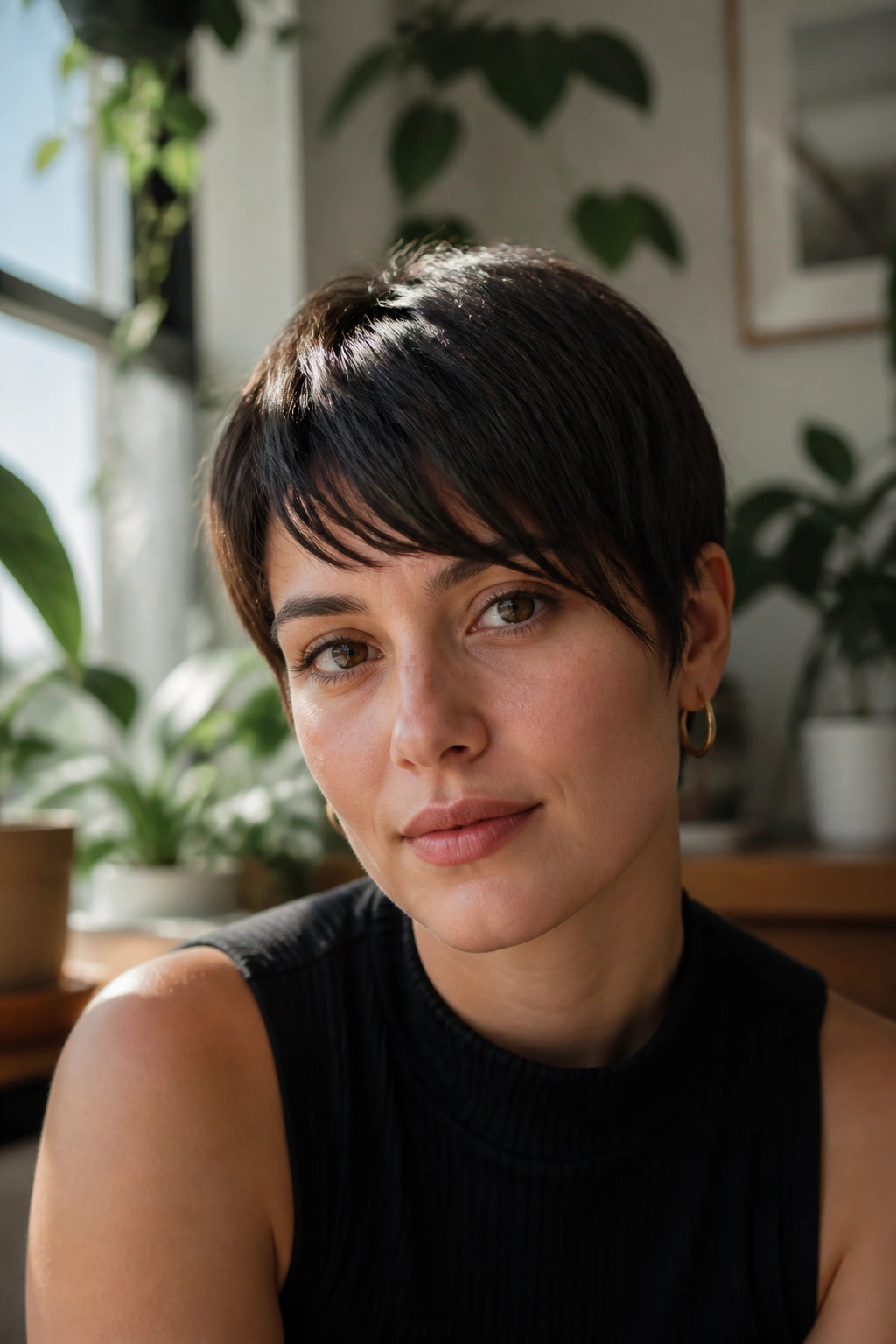
Asymmetry is your friend when your face reads soft and round. A fringe that lands a little longer on one side creates an uneven line the eye has to follow, and that line can make the face feel narrower.
The beauty of this cut is that it doesn’t need to be dramatic. Even a slight difference — half an inch, maybe a little more — can change the whole effect. One side can brush the brow while the other skims closer to the temple. Small shift, big payoff.
This is one of the easiest options if you want short bangs without a full commitment to a very short front. It feels intentional, not experimental. And it gives you some wiggle room on days when the bangs refuse to cooperate, which happens to everyone.
Pair it with a side part if you want more length through the front. Pair it with a textured bob if you want the cut to feel sharper. Either way, keep the edges light. A heavy asymmetrical fringe loses the point.
7. Feathered Pixie Bangs
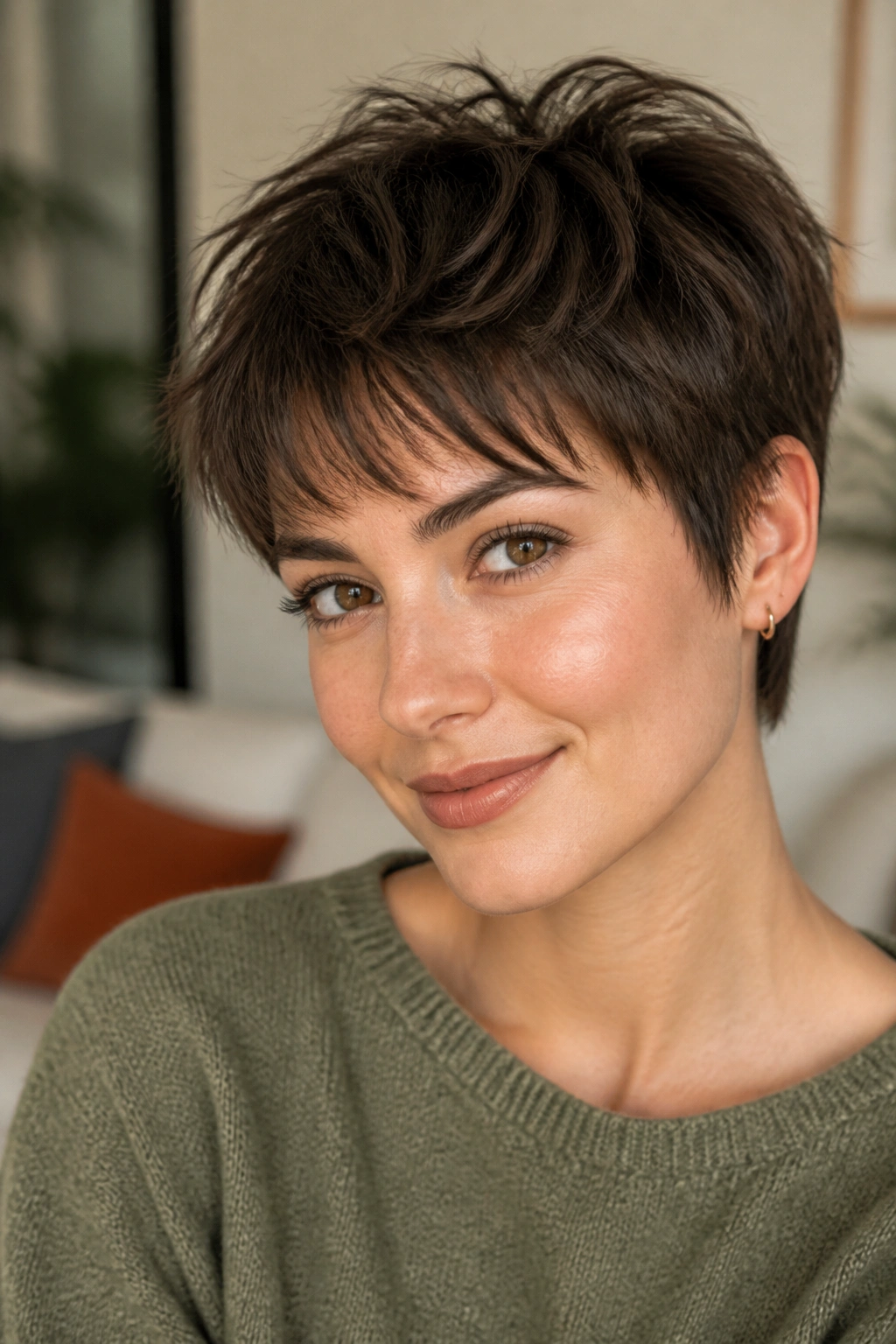
Feathered pixie bangs are soft, quick to style, and quietly excellent on round faces. They keep the front short, but the ends are brushed out and thinned just enough to avoid a blocky shape.
The feathering matters because it creates tiny vertical strokes around the forehead. Those strokes make the face look less wide at the middle. They also let the bangs blend into a pixie without creating a hard edge where the fringe ends and the haircut begins.
Why They Sit So Well
A feathered fringe works best when the longest pieces hit just at the brows or a touch above them. Shorter than that can turn spiky, which is fine if you want edge, but not if you want softness. The cut should feel light in the hand and airy at the tips.
A little volumizing mousse at the root helps. So does blow-drying the fringe forward first, then raking it slightly to one side. Don’t overdo the product. Feathered bangs lose their charm fast when they get sticky.
8. Bottleneck Bangs, Cut Short
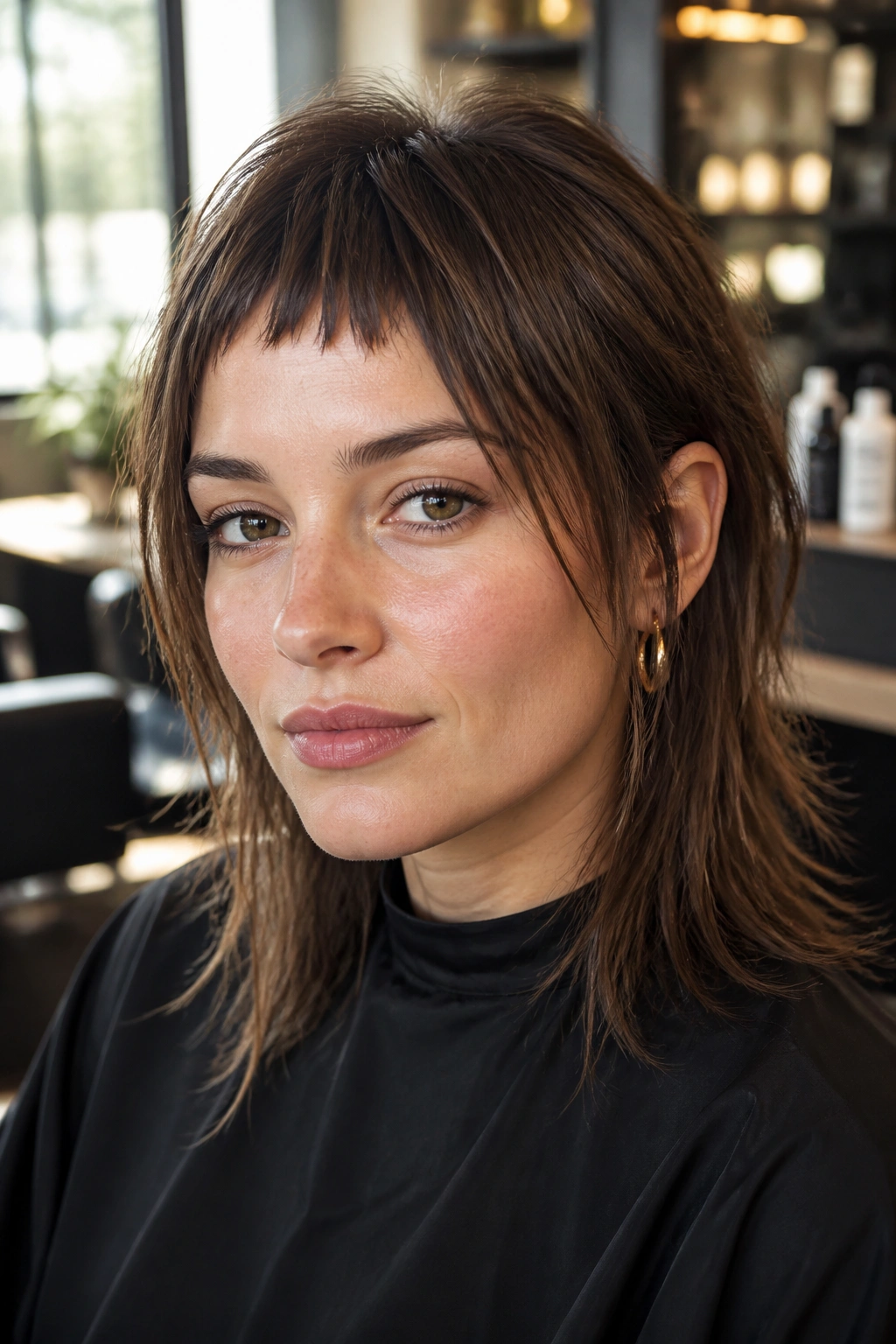
Bottleneck bangs are usually thought of as a longer fringe, but the shorter version can be a sharp fit for round faces. The center starts short, then curves longer at the temples, almost like a narrow neck opening widening out.
That shape is useful because it narrows the look of the forehead while keeping the cheeks from getting boxed in. The side pieces act like little frames that guide the eye downward and outward at the same time. That’s the sweet spot.
If you want this cut to work, the center cannot be too dense. The open area between the center and the temple pieces is what keeps it from feeling flat. A blunt bottleneck shape loses the benefit. A broken one looks much better.
This fringe loves a bob, a shag, or even a short lob. It’s also nice if your hair grows quickly, since the shape still reads well during the grow-out phase.
9. Textured Blunt Fringe With Broken Ends
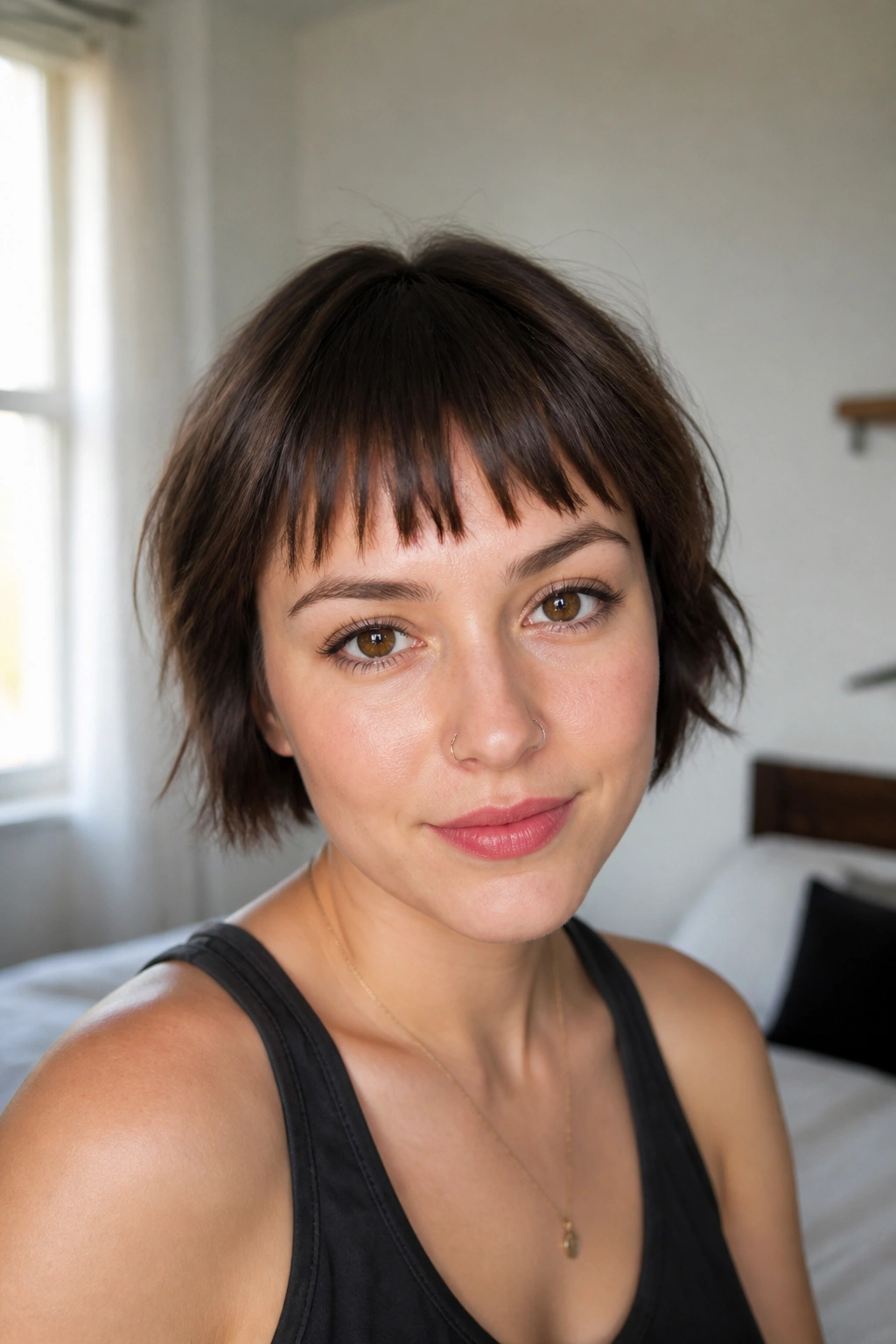
A blunt fringe can work on a round face if it’s not too neat. That’s the part many people miss. The base can be straight, but the ends need to be broken up so the line doesn’t turn into one solid bar across the forehead.
The Science Behind the Shape
A clean, heavy blunt cut makes the upper face feel shorter. Texture changes that. By softening the last quarter-inch or so of the fringe, the eye sees movement instead of a ruler-straight edge. That keeps the style from widening the face.
This works especially well on thick hair that naturally holds a line. The weight gives the fringe substance, while the texture keeps it from feeling boxy. Ask for a blunt baseline with point-cut ends or a little razor work at the tips.
- Keep the fringe just above the brows or right at them.
- Ask for soft internal texture, not choppy holes.
- Style with a flat brush and a quick bend at the ends.
- Skip thick creams; they can make the fringe sit like a shelf.
A blunt fringe needs confidence, but it does not need stiffness. There’s a difference.
10. Crescent Fringe
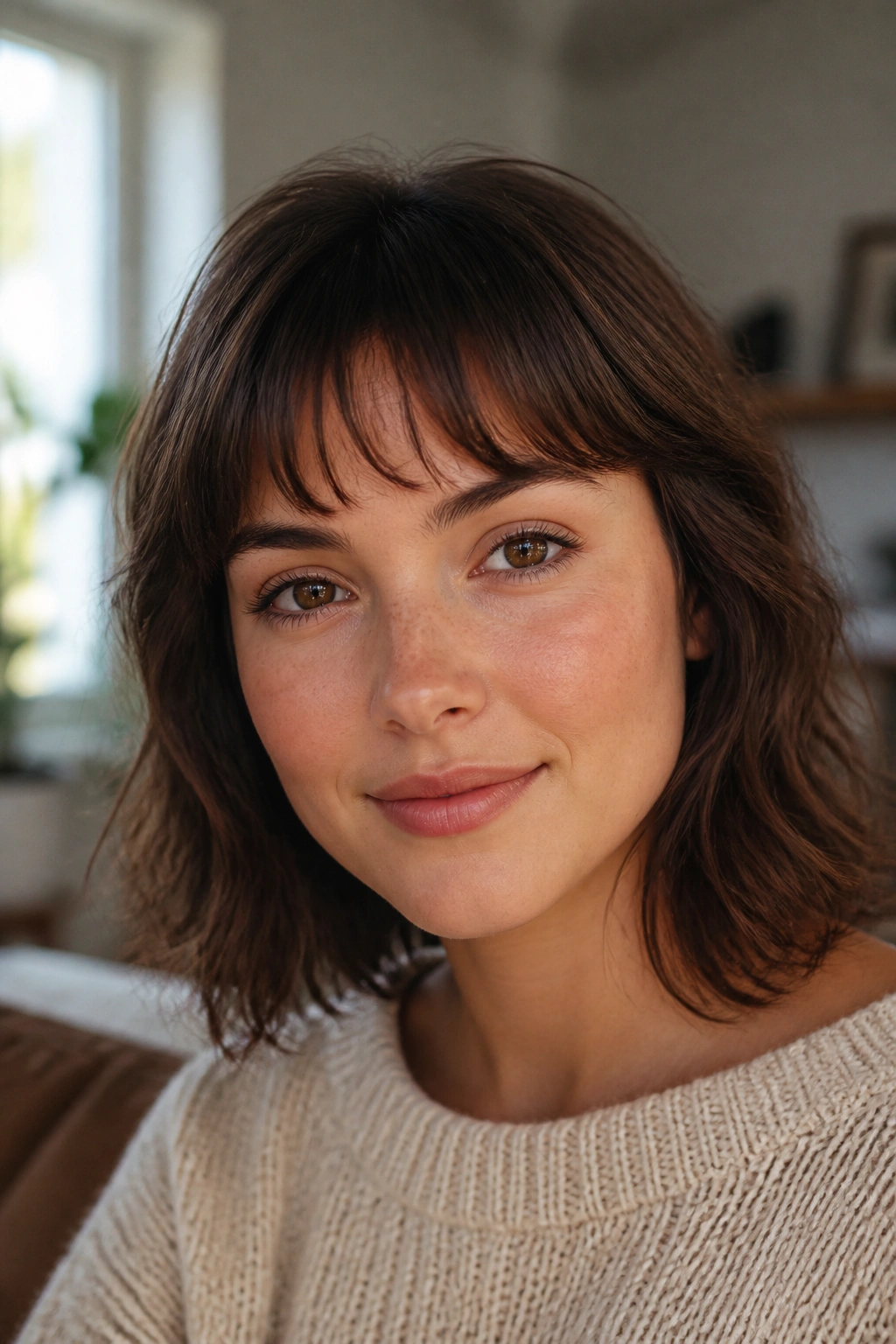
Crescent fringe curves gently at the edges, and that curve can be kinder to a round face than a straight line. The center sits shorter, then the sides sweep down just enough to frame the eyes without hugging the cheeks too tightly.
What I like about this shape is the balance. It gives you a little structure up top, but it still feels soft. The arc also creates a mild vertical lift, which helps if your face is widest through the cheeks.
It’s a smart cut if you want a fringe that looks intentional even when it’s slightly messy. The crescent shape still reads clearly after a long day, a humid commute, or a flat blow-dry. That’s not nothing.
Keep the curve gentle. A deep semicircle can pull the face wider. The better version is subtle, almost like a soft moon shape rather than a perfect arch. It’s one of those cuts that rewards restraint.
11. Razored Shag Fringe

Razored shag fringe has a rougher edge, and that roughness is what keeps it flattering on round faces. Instead of one clean block of hair, you get strips, splits, and shorter pieces that float over the forehead.
The cut is especially good if your hair has a bit of natural wave or volume at the root. Razor work removes weight and gives the fringe a broken finish, which helps the face look less circular. The front doesn’t sit still, and that’s the whole advantage.
What to Watch For
Too much razor work on very fine hair can make the fringe go wispy in a sad way, not a cool way. On thick hair, though, it can be gold. The key is to keep enough density at the base so the bangs still show up.
A shag fringe also likes a haircut with layers around the cheekbones and jaw. If the rest of the cut is flat, the bangs can feel disconnected. A few lived-in bends in the lengths make the whole thing click.
This is not a polished, formal fringe. Good. That’s why it works.
12. Curly Halo Bangs
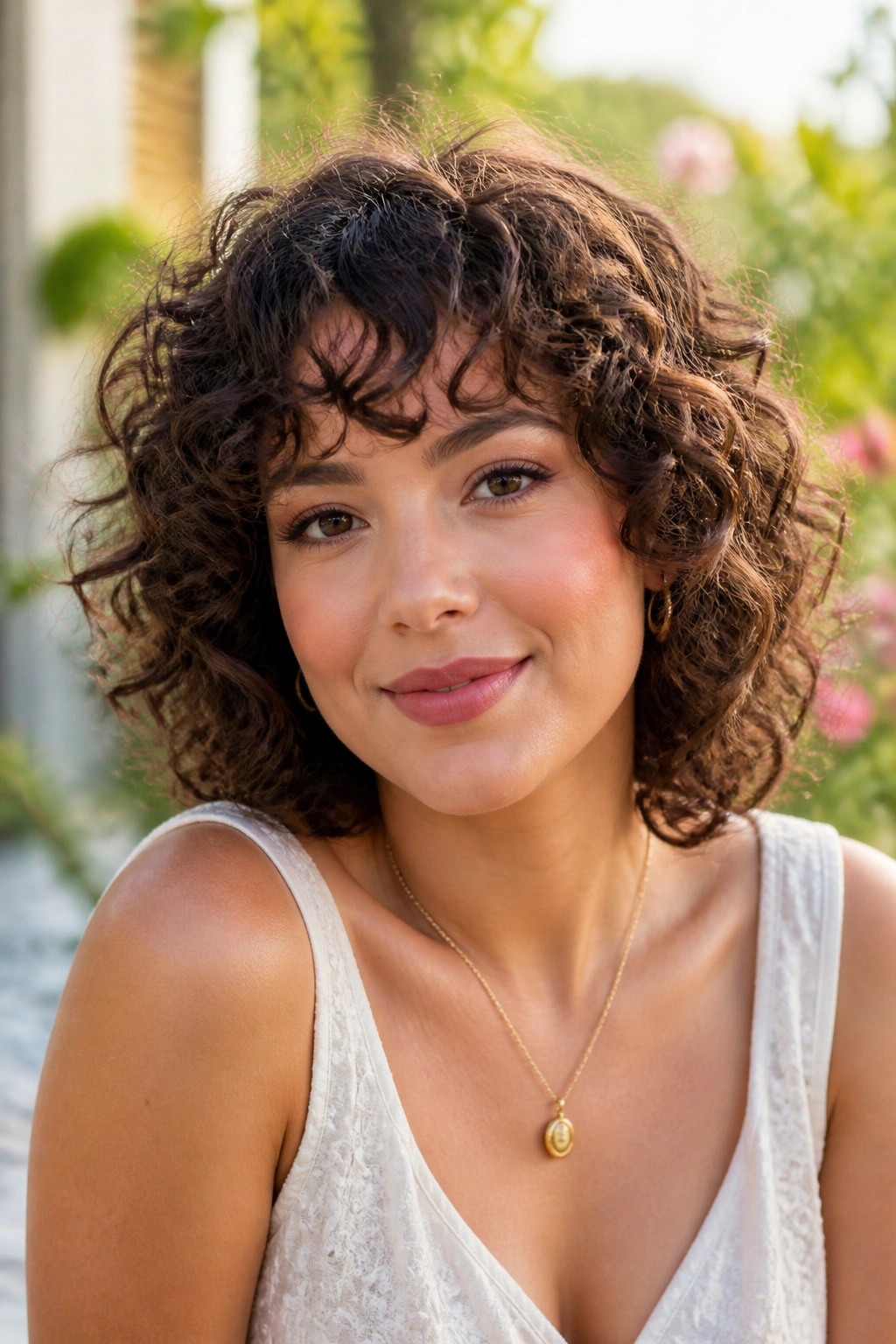
Curly halo bangs are a strong choice for round faces because they keep the curls lifted and soft instead of pressing them straight across the forehead. The shape opens above the brows, then lets the curls float in a loose arc around the face.
A lot of curly bangs fail because they’re cut as if the hair were straight. That usually ends with too much shrinkage and a puffed-up center. A halo shape respects curl pattern and gives the front room to spring without becoming a helmet.
The best version usually lands somewhere between the brow and the upper forehead once dry, though the wet cut will look longer. That shrinkage is real. Plan for it.
This fringe looks best when the rest of the haircut also has curl-friendly layering. If the lengths are heavy and triangular, the bangs can feel trapped. A rounded silhouette around the head usually works better.
13. Deep Side Fringe

Deep side fringe is old-school in the best way. It gives a round face a long diagonal line, and diagonal lines are good at interrupting circular shapes. Simple as that.
The fringe starts with real weight on one side and sweeps across the forehead toward the opposite temple. It can be short enough to sit near the brow or a little longer so it blends into the front layers. Either way, it shifts attention away from the center of the face.
What makes this version especially useful is how forgiving it is. If one side gets flat, you can still tuck it behind the ear a little. If your hairline is uneven, the sweep helps hide that. If you wear a bob or pixie, it gives the whole cut a cleaner front edge.
I’d pick this one for anyone who wants polish without losing softness. It’s a strong shape, but not a loud one.
14. See-Through Bangs
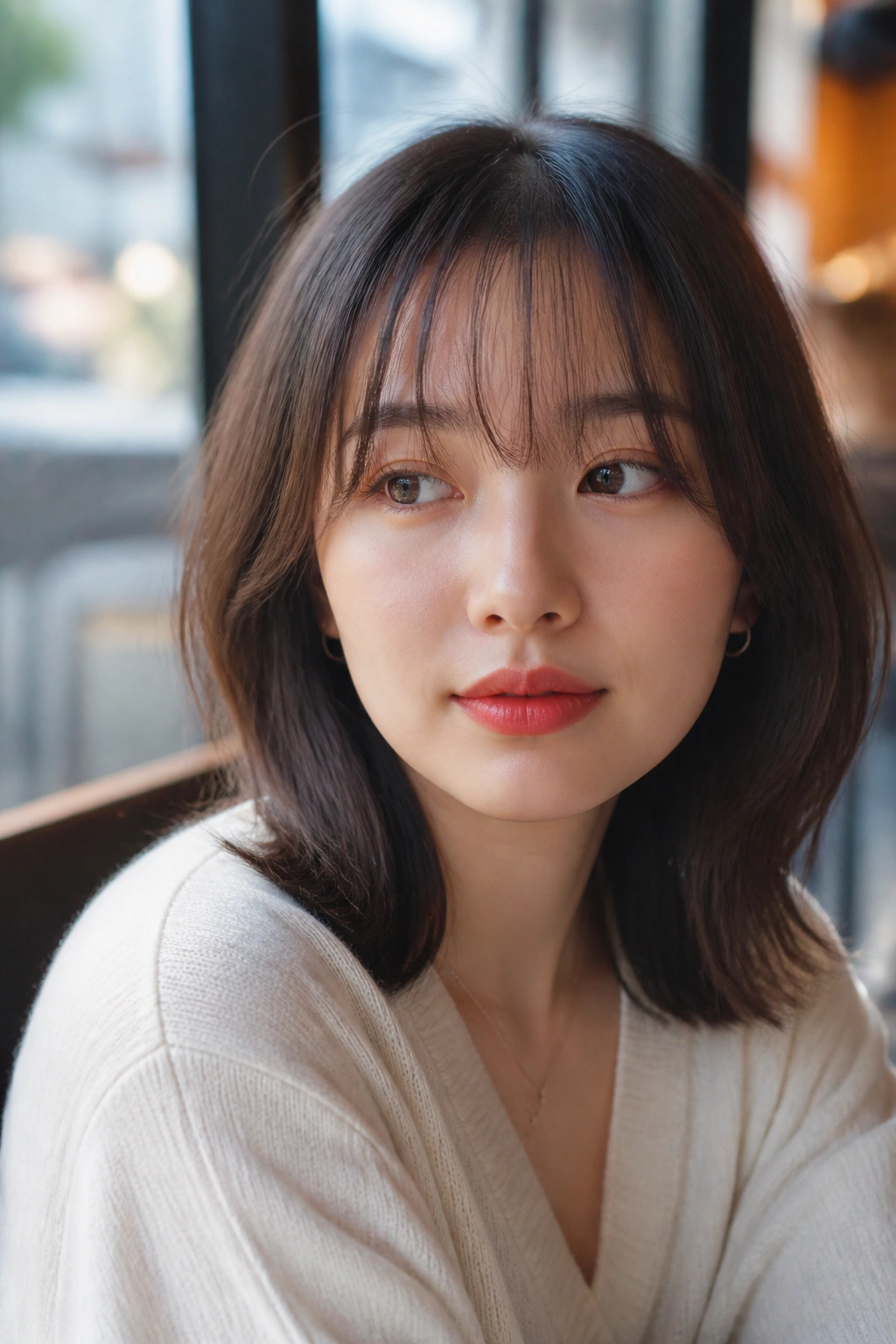
See-through bangs keep the forehead visible while still giving the face a bit of frame. That alone makes them useful for round faces. The transparency breaks up the width without creating a dense wall of hair.
How to Get the Most From It
The cut should be sparse, but not thin in a stringy way. You want spaced-out pieces that move separately. Too little density and the fringe disappears. Too much, and you lose the airy effect.
These bangs are especially nice if your face is round and your hair is fine, because they don’t demand much weight. They also suit glasses well, since the fringe won’t crowd the frames. A little root lift is enough. You do not need big brushing or heavy spray.
- Keep the fringe soft at the ends.
- Let a little forehead show through.
- Dry from side to side, not straight down.
- Use a light mist, then finger-comb.
They’re subtle, which is part of the charm. Sometimes subtle is exactly the right move.
15. Mini Birkin Bangs
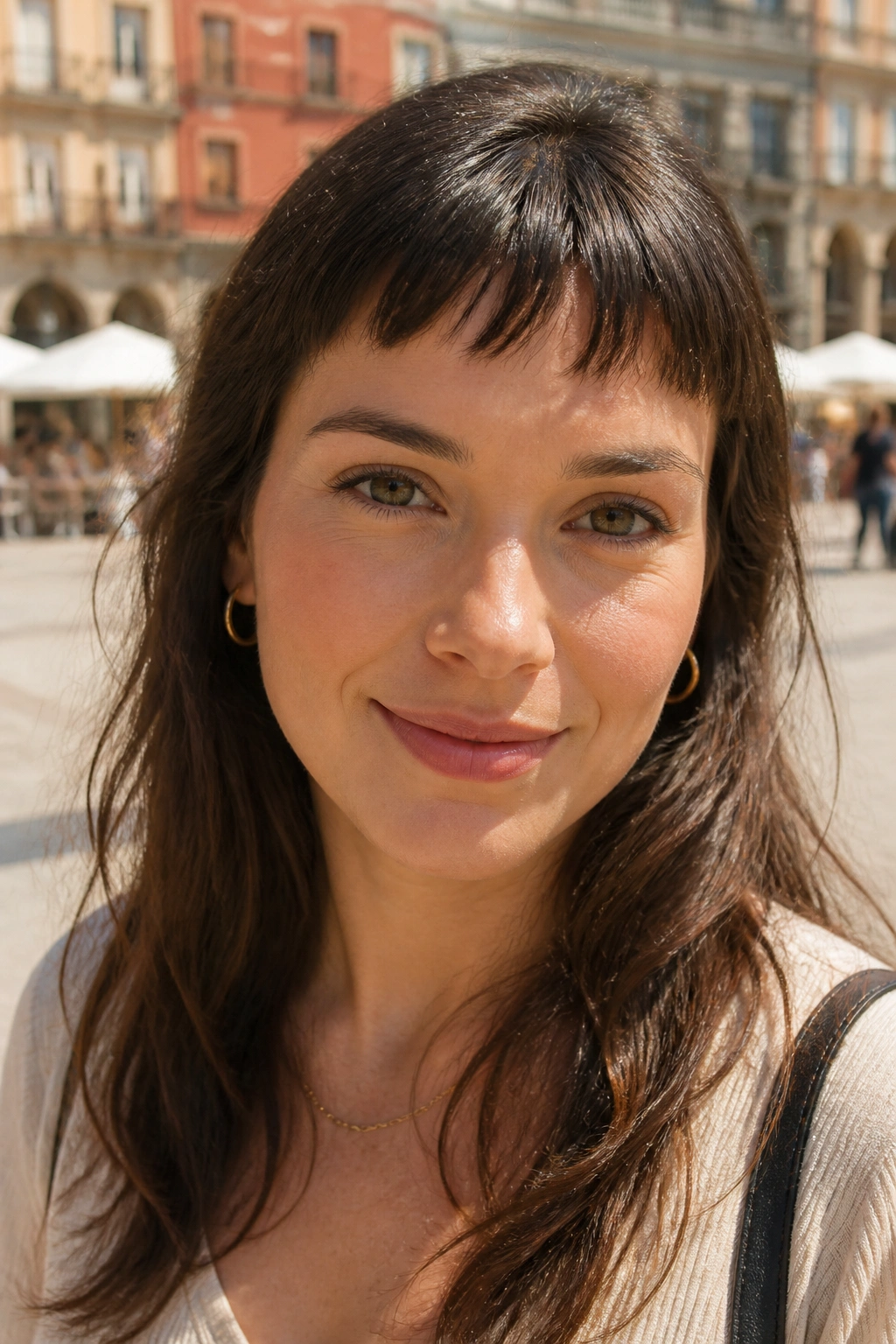
Mini Birkin bangs sit above the brows, but they feel softer than micro bangs because the edge is a little longer and the shape is less severe. On round faces, that softer line matters. It gives you the cropped look without making the face look boxed in.
The cut works best when the ends are slightly uneven and the width is narrow. You don’t want a thick wall. You want a fringe that opens the face and makes the eyes the focus. That tiny strip of exposed forehead helps the face read longer too.
These bangs are a nice bridge between classic and edgy. They can look artsy with a short bob, or sharp with a pixie. The style has enough personality to stand on its own, but it still plays well with other cuts.
If your brows are strong, this fringe can be especially flattering. It gives them space to show, which keeps the upper face from feeling crowded.
16. Layered Bangs With a Bob
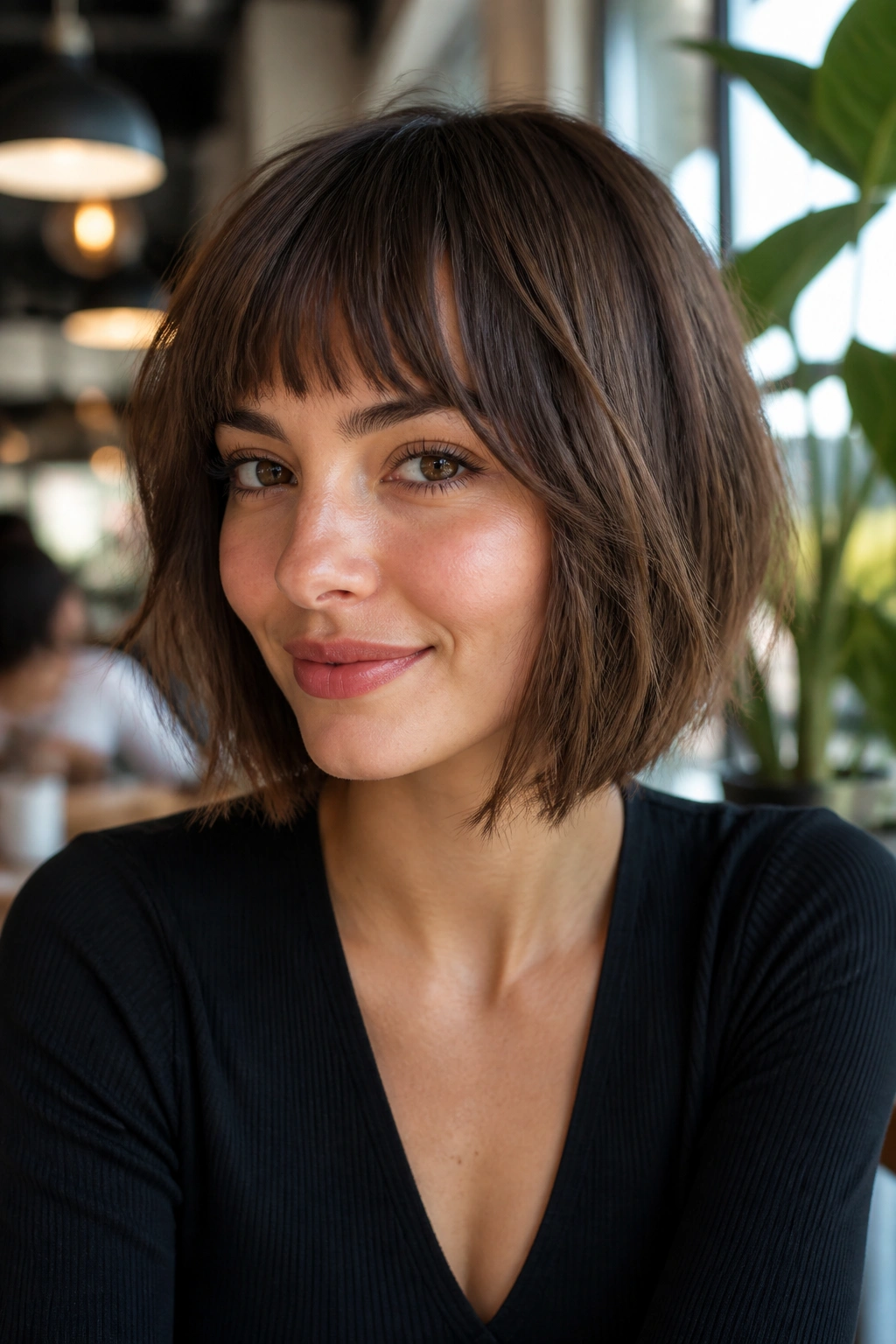
Layered bangs with a bob are a smart answer for anyone who wants short bangs on a round face without committing to a harsh shape. The front pieces are cut shorter than the rest, but they connect into the bob so the whole haircut feels one-piece, not pasted together.
That connection is the important bit. A disconnected fringe can sit on top of a round face like a sticker. Layered bangs melt into the cut and make the face look longer through the front. The eye moves from fringe to cheekbone to jawline instead of stopping at one line.
This works especially well when the bob has a tiny bit of bend under the ends. A flat, one-length bob can make the bangs feel heavy. A softer outline keeps everything in motion.
If you want to ask your stylist for this, say you want fringe that leads into the face-framing layers on both sides. Short at the center, a touch longer near the temples. That sentence gets you close.
17. Split Fringe for a Pixie Cut
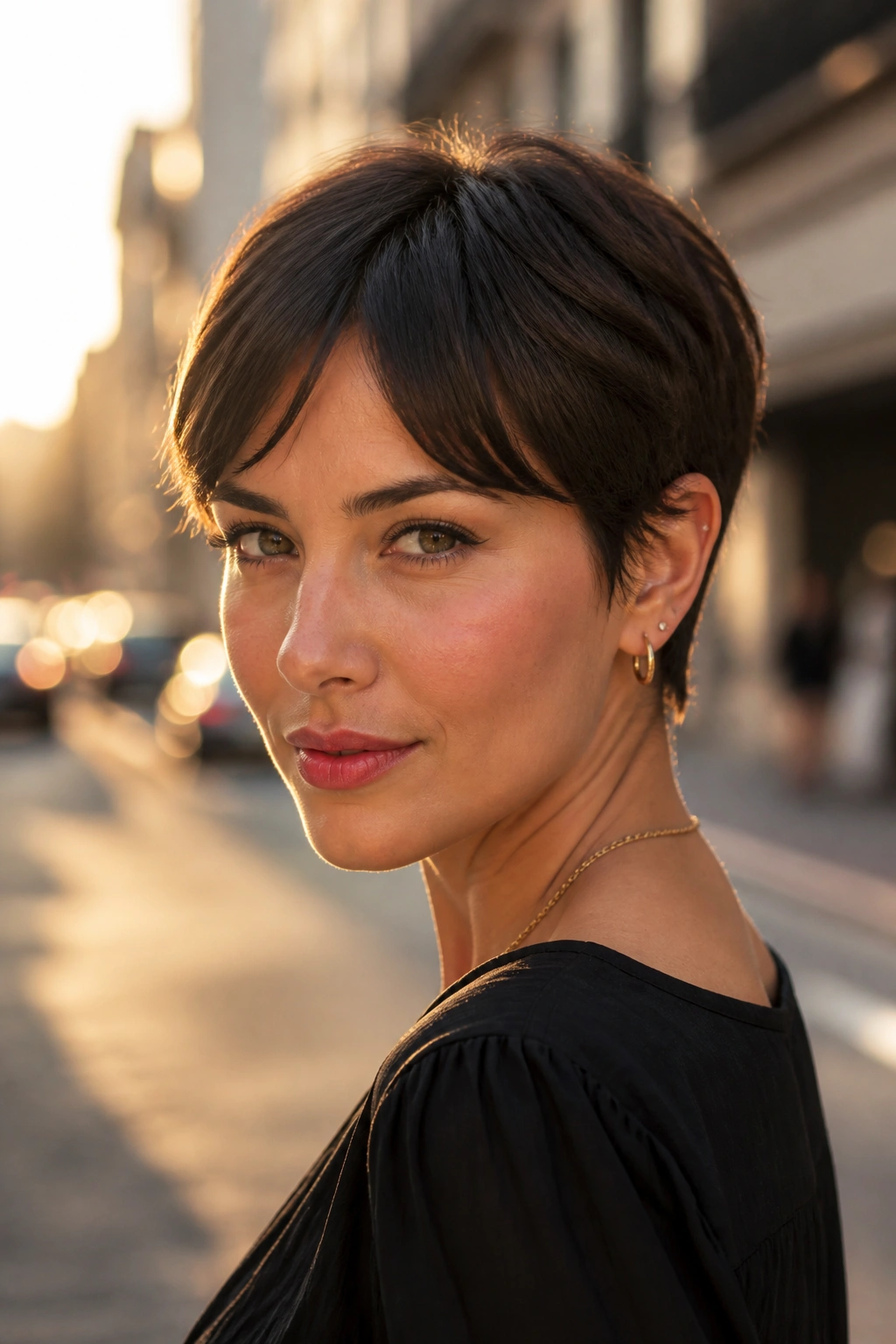
A split fringe on a pixie cut is one of the easiest ways to keep short bangs from widening a round face. The center part opens the forehead, and the two sides lean away from each other instead of forming one solid block across the top.
What Makes It Work
The split should not be a deep, dramatic gap. A narrow opening is enough. What matters is the direction of the hair. Each side should angle slightly outward so the face looks lifted rather than compressed.
This style is great if you like short hair but still want some movement near the eyes. It also plays nicely with glasses, sideburn length, or a little undercut at the temple. The fringe can be styled forward for softness or pushed apart for a sharper feel.
I’d choose this cut for someone who hates high-maintenance bangs. It can be tousled in seconds, and it still looks intentional when it’s not perfect. That’s a real benefit.
A split fringe also grows out better than many people expect. The opening just gets a little wider. Not a disaster.
18. Brow-Skimming Fringe With Face-Framing Pieces
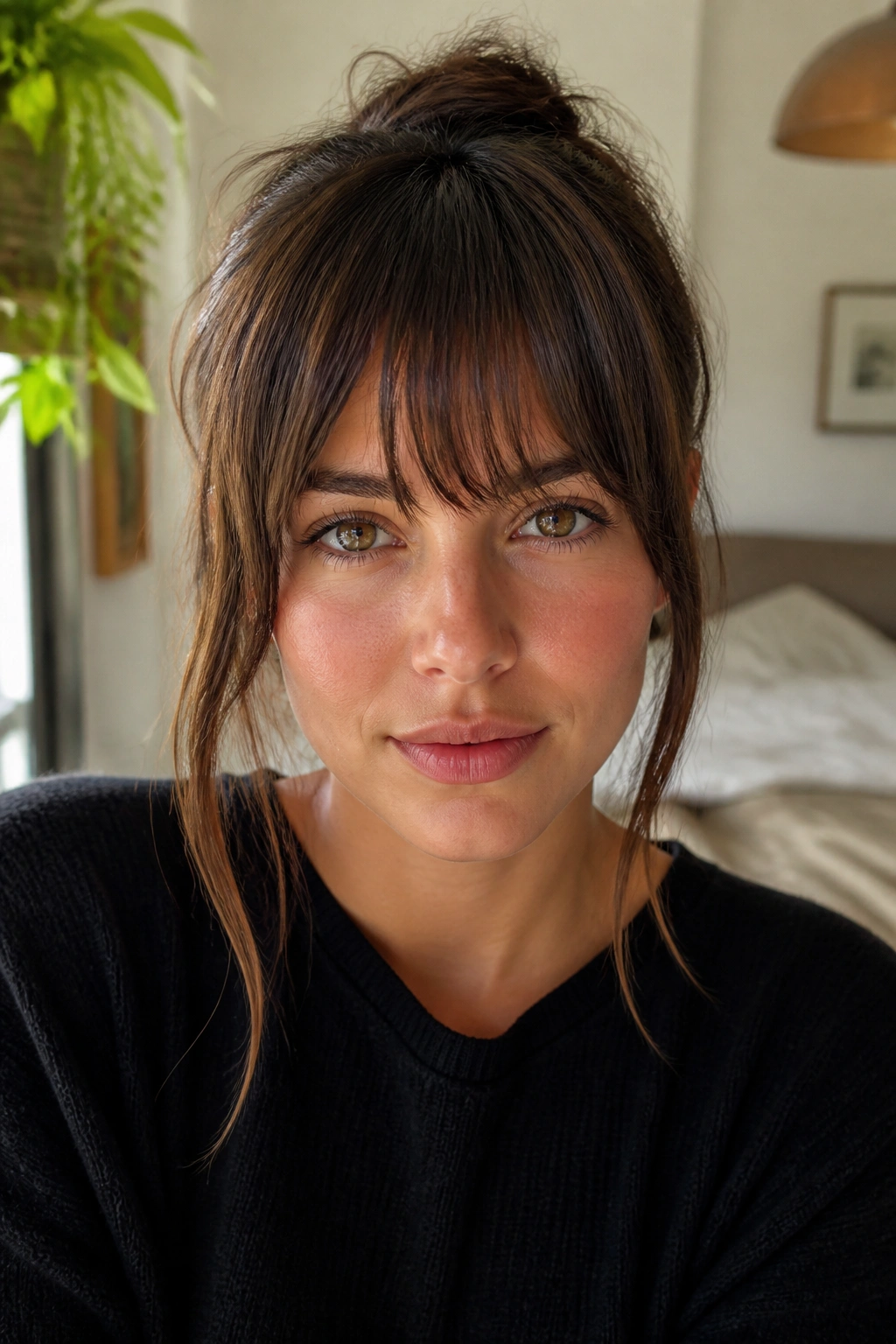
What happens when you want bangs, but you don’t want the face to feel closed in? You leave the center light and let the sides do more of the work.
That’s the sweet spot here. The bangs skim the brows, then blend into longer pieces at the temples and cheekbones. On a round face, those outer pieces help stretch the shape down the sides. They act almost like vertical rails, which is exactly what a softer face shape often needs.
This is a useful cut if you’re nervous about going too short. The fringe gives you the feeling of bangs, but the face-framing sections soften the commitment. It also makes styling easier, because the pieces can dry in a messy but flattering way.
A round brush helps if you want lift. A flat iron can sharpen the front if you need a cleaner finish. Either way, avoid letting all the weight sit directly in the center. The side pieces are doing a lot of the visual work here, and they should be allowed to.
19. Spiky Cropped Fringe
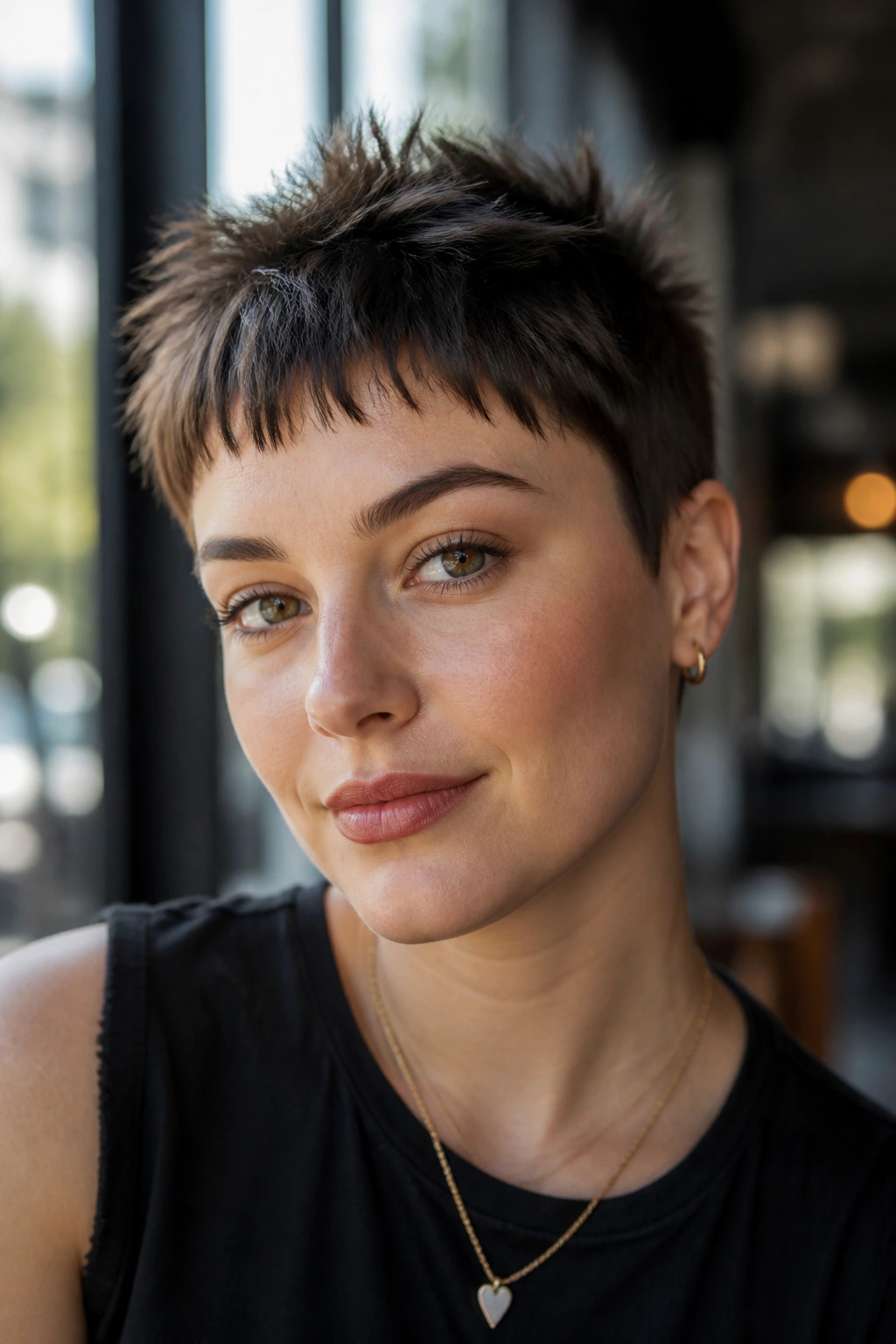
Spiky cropped fringe is a fearless little cut, and it can look excellent on round faces because it refuses to sit flat. The short pieces lift upward and break apart, which creates height at the front of the face.
That vertical energy is the whole reason it works. Round faces often look best when something in the haircut pulls the eye up. Spiky fringe does that without needing long hair to help it. It’s especially good on pixies, short shags, and cropped cuts with a bit of texture through the crown.
Best Way to Wear It
Keep the pieces uneven and lightly separated. A tiny amount of styling paste is enough. If the product turns the bangs shiny and stuck together, the cut loses its edge. You want small, distinct tips.
This is not the fringe for someone who wants soft romance. It’s for someone who likes a bit of bite in the haircut. Still, it can be surprisingly flattering, because the broken shape keeps the face from looking wider at the cheeks.
The best version feels playful, not aggressive. There’s a difference, and you can usually see it right away.
20. Tapered Fringe With a Wolf Cut
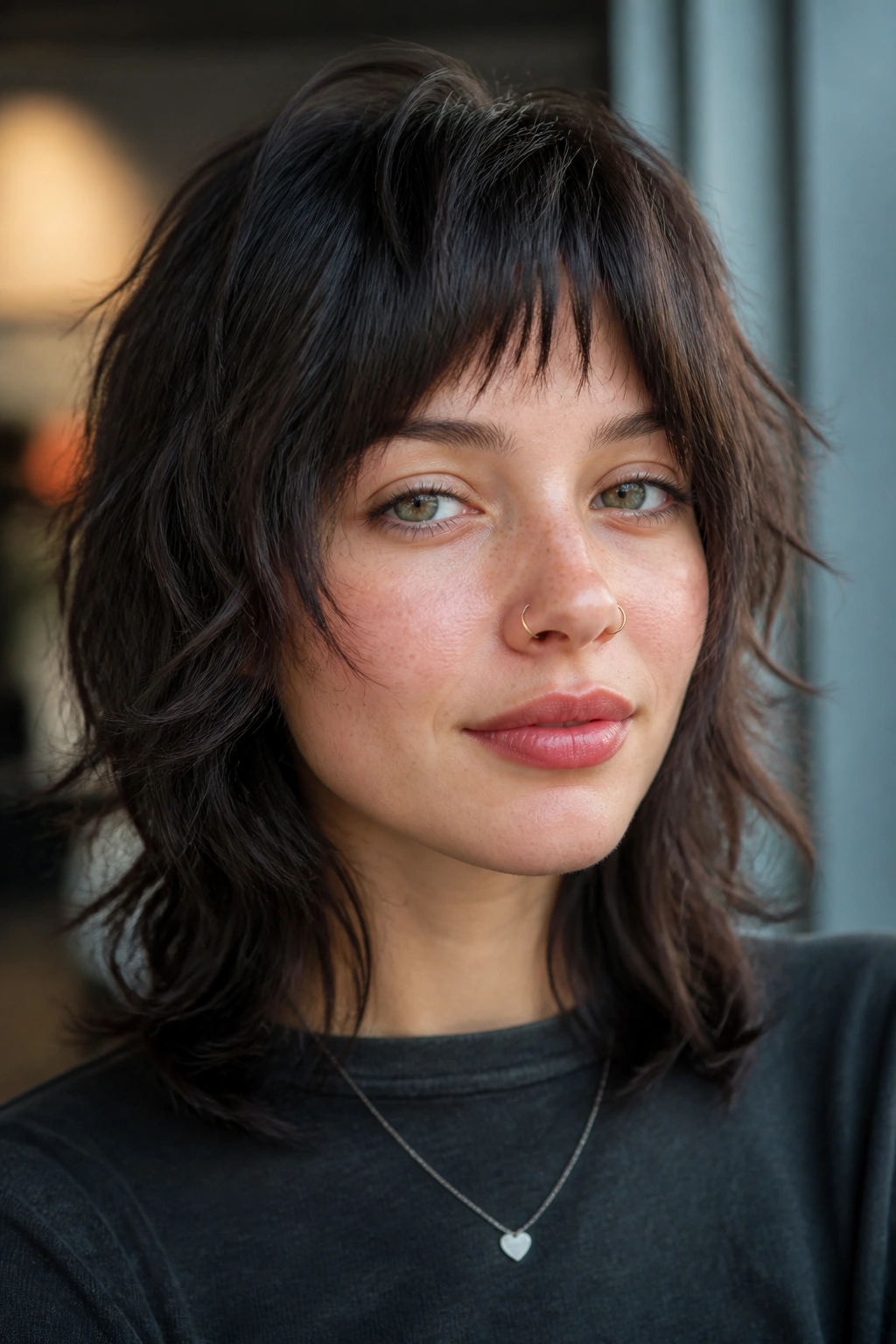
A tapered fringe is one of the most forgiving short bang choices for round faces, especially when it’s paired with a wolf cut. The center starts shorter, then the sides lengthen and blend into the layers around the cheekbones and jaw.
That taper matters because it creates movement without a blunt stop. The eye keeps traveling. A round face benefits when the front of the hair doesn’t arrest attention in one place. It’s one reason wolf cuts keep showing up on people who want texture without losing shape.
The fringe itself can be worn messy, brushed forward, or split a little off-center. If your hair has wave, this style almost styles itself. If your hair is straight, you’ll need a quick tousle and maybe a bit of dry texture spray.
This cut is also kind to grow-out. The fringe becomes part of the layers before it gets annoying, which saves you from that awkward in-between stage that some bangs hit hard.
21. Short Fringe With an Undercut
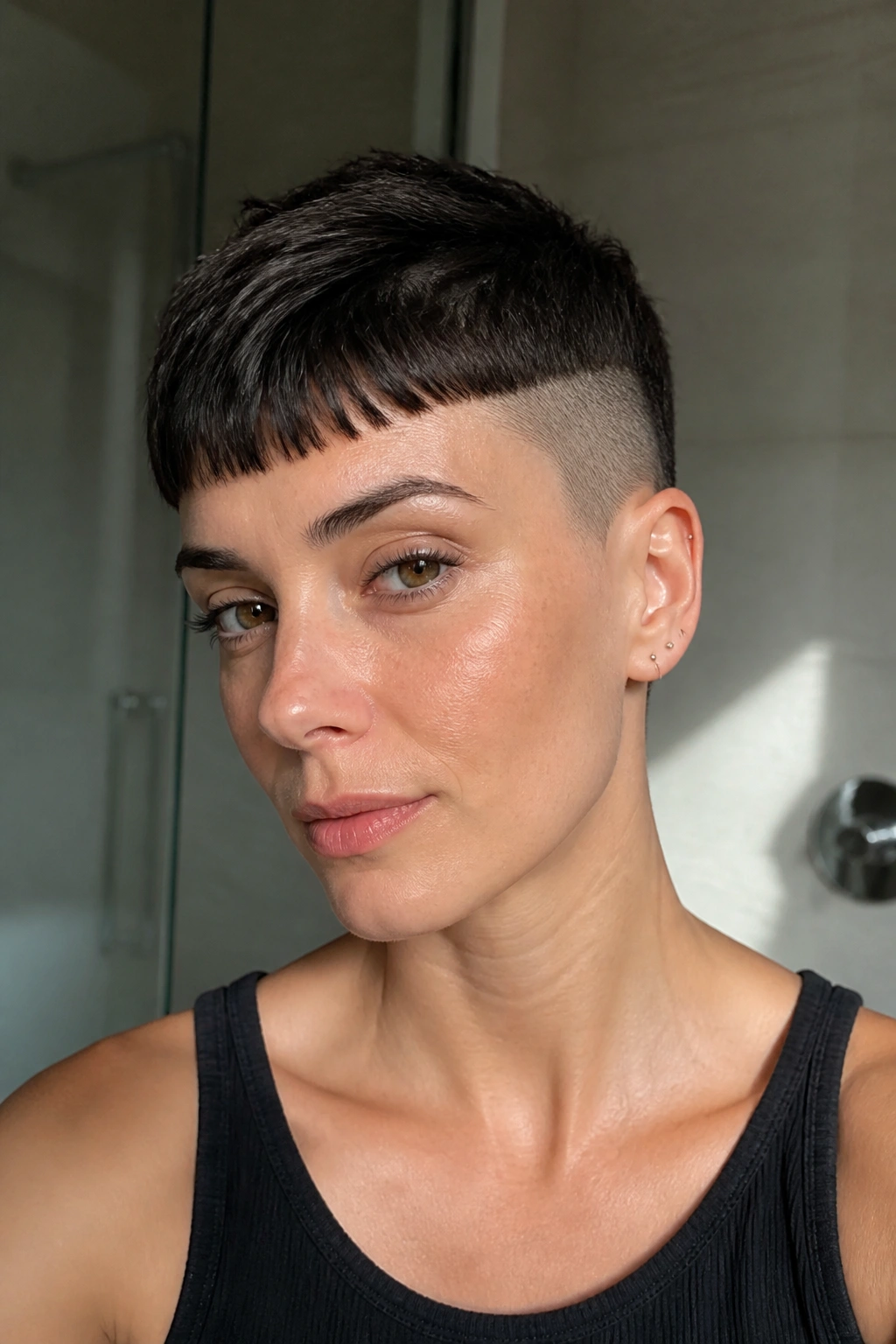
Short fringe with an undercut sounds severe, but on a round face it can actually read clean and balanced. The undercut removes bulk at the sides or back, which keeps the focus on the top of the head and the fringe itself.
How the Shape Helps
When the sides are tighter, the short bangs don’t have to compete with wide hair at the cheeks. That matters. Round faces often need a bit of visual narrowing around the jaw and temple area, and an undercut can do that without forcing the fringe to be long.
The bangs can be blunt, piecey, or slightly side-swept. I’d lean piecey if you want softness, blunt if you want edge. The haircut is strong enough that the front doesn’t need to do all the talking.
- Ask for the undercut to stay hidden when hair is down.
- Keep the fringe narrow rather than wide.
- Style with a quick blow-dry or finger-dry.
- Use a light wax if the ends need separation.
This one is not shy. That’s the appeal.
22. Wavy Piecey Bangs

Wavy piecey bangs are the easygoing cousin of the micro fringe. They sit short, but the wave pattern keeps them from looking flat or severe. On round faces, that little bit of irregular movement helps carve out more shape than a strict straight cut.
The bangs usually hit around the brows or just above them, and the pieces separate naturally as they dry. That separation is useful because it breaks up the width of the forehead. It also keeps the style from feeling too polished, which can be a problem when the rest of the haircut is short and smooth.
I like this choice for naturally wavy hair because the texture does half the work. You can scrunch in a little mousse, let the fringe air-dry, and get a lived-in finish without wrestling the front into submission. If the wave pattern is strong, avoid over-cutting the center. Too short and it can pop up in odd ways.
It’s relaxed, but it still has shape. That’s the sweet part.
23. Airy Side Curtain Bangs
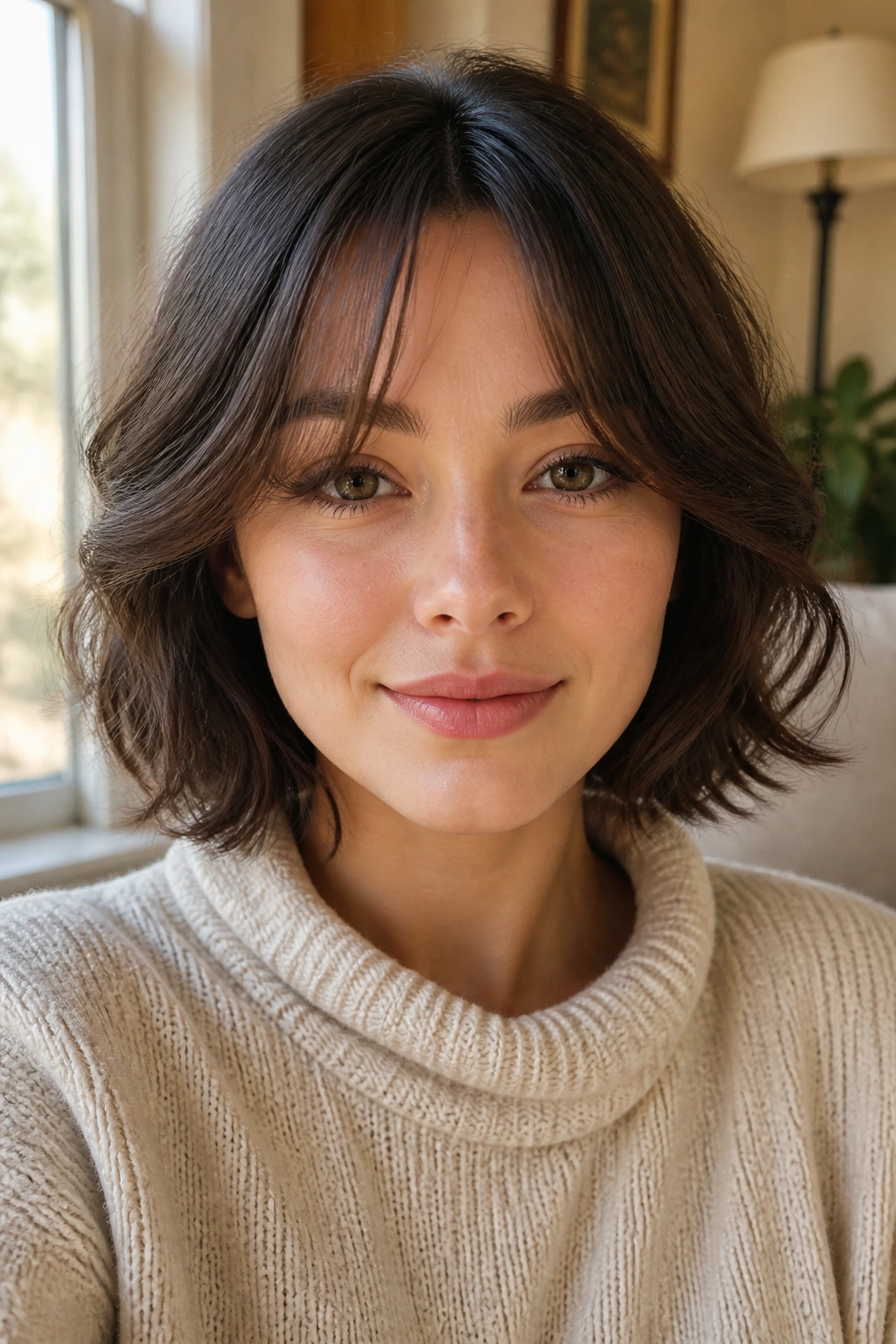
Airy side curtain bangs are a nice middle ground for someone who wants short bangs but not a heavy front line. The center stays open, and the side pieces float away from the face with enough space to keep the cheeks from feeling crowded.
That airy quality is what makes this shape flattering on round faces. The bangs do not sit as a single line across the forehead. They split the face into smaller zones, which makes the whole shape feel longer and less circular.
This style is easy to live with because it grows out into face-framing layers. It also works with a center or offset part, depending on how your hair wants to fall. If you have a cowlick, a side part can make your morning easier. If your hair is obedient, a center split can look cleaner.
The best version is soft at the ends and slightly longer toward the temples. If you keep the sides too short, the curtain effect disappears. Then you just have bangs.
24. Mixed-Length Fringe

Mixed-length fringe is exactly what it sounds like: pieces that do not all stop in one place. Some sit above the brows, some brush them, and a few fall a little lower near the temples. On a round face, that uneven edge can be a gift.
What Makes It Different
A uniform fringe draws one straight line. A mixed-length fringe creates several small lines, and the eye has to keep moving. That motion helps the face feel less broad. It also gives you a more casual look, which is useful if you do not want bangs that feel precious.
This cut can be sharp or soft depending on how much texture you keep. On straight hair, the irregularity shows up cleanly. On wavy hair, it gets even more broken up, which can be lovely if you like something a little undone.
- Let the longest bits land near the temples.
- Keep the center slightly shorter, not boxed in.
- Use a small round brush only where lift is needed.
- Trim little by little; this fringe goes weird fast if overcut.
I’d call this one low-drama, high-payoff.
25. Short Fringe That Sits Above the Brow
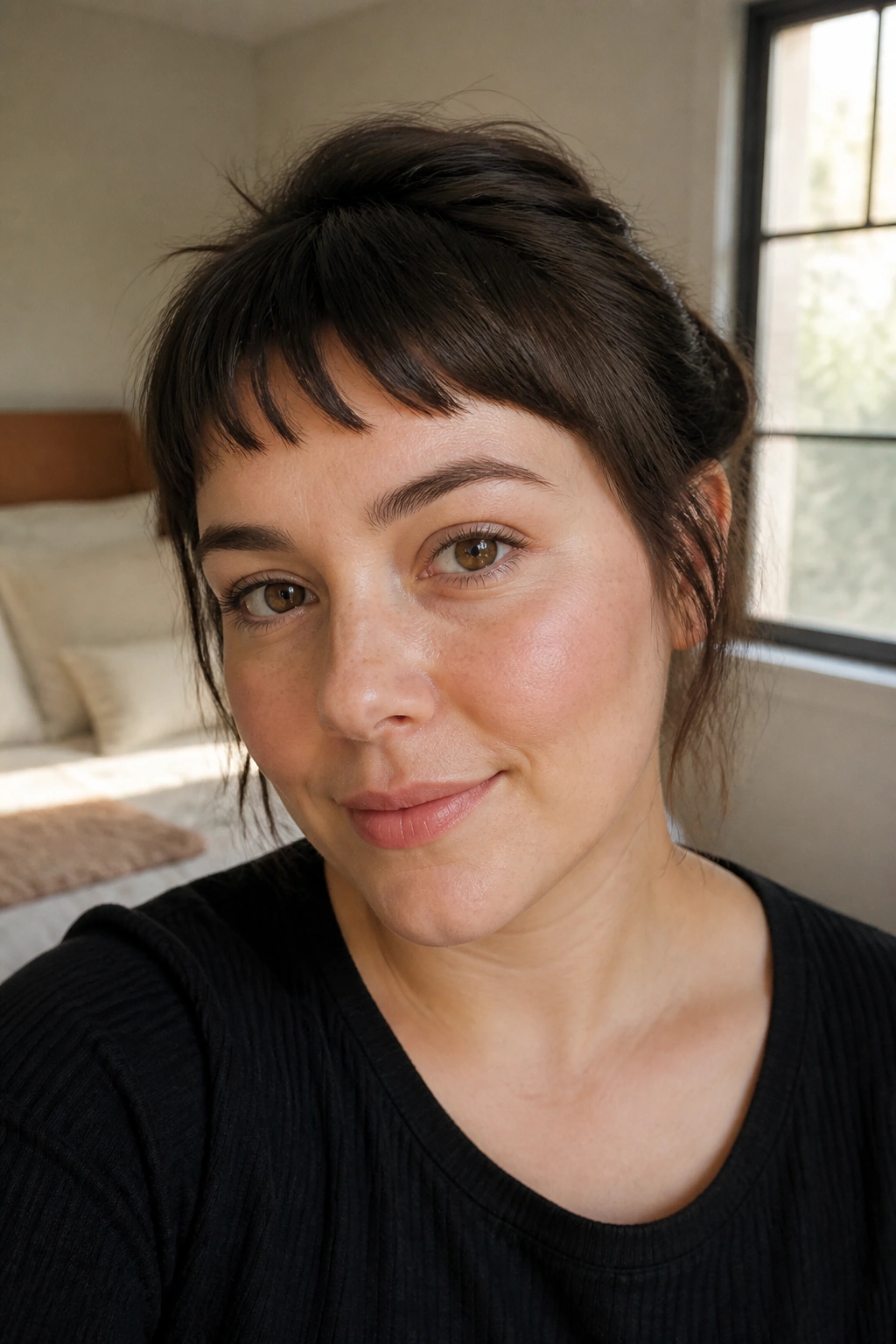
Short fringe that sits above the brow gives a round face breathing room. That space between the hair and the eyes changes the whole balance of the haircut. Instead of closing the upper face, the fringe opens it.
The cut works best when the line is soft, not severe. You want the fringe to look deliberate, but not locked into a rigid strip. A little texture at the ends helps the short length feel fresh rather than severe. If the fringe is too clean, it can emphasize the width of the face. If it’s slightly broken, the eye moves upward and outward.
This is a great choice for people who like bold cuts but do not want to hide their forehead. It also pairs well with strong brows, which can take center stage when the fringe stops high enough. That can be a nice effect, especially on round faces where the brow line brings back structure.
If you go this short, be ready for regular trims. The grow-out is not difficult, but the shape changes fast. Fast enough that you will notice it.
26. Rounded Yet Broken Fringe
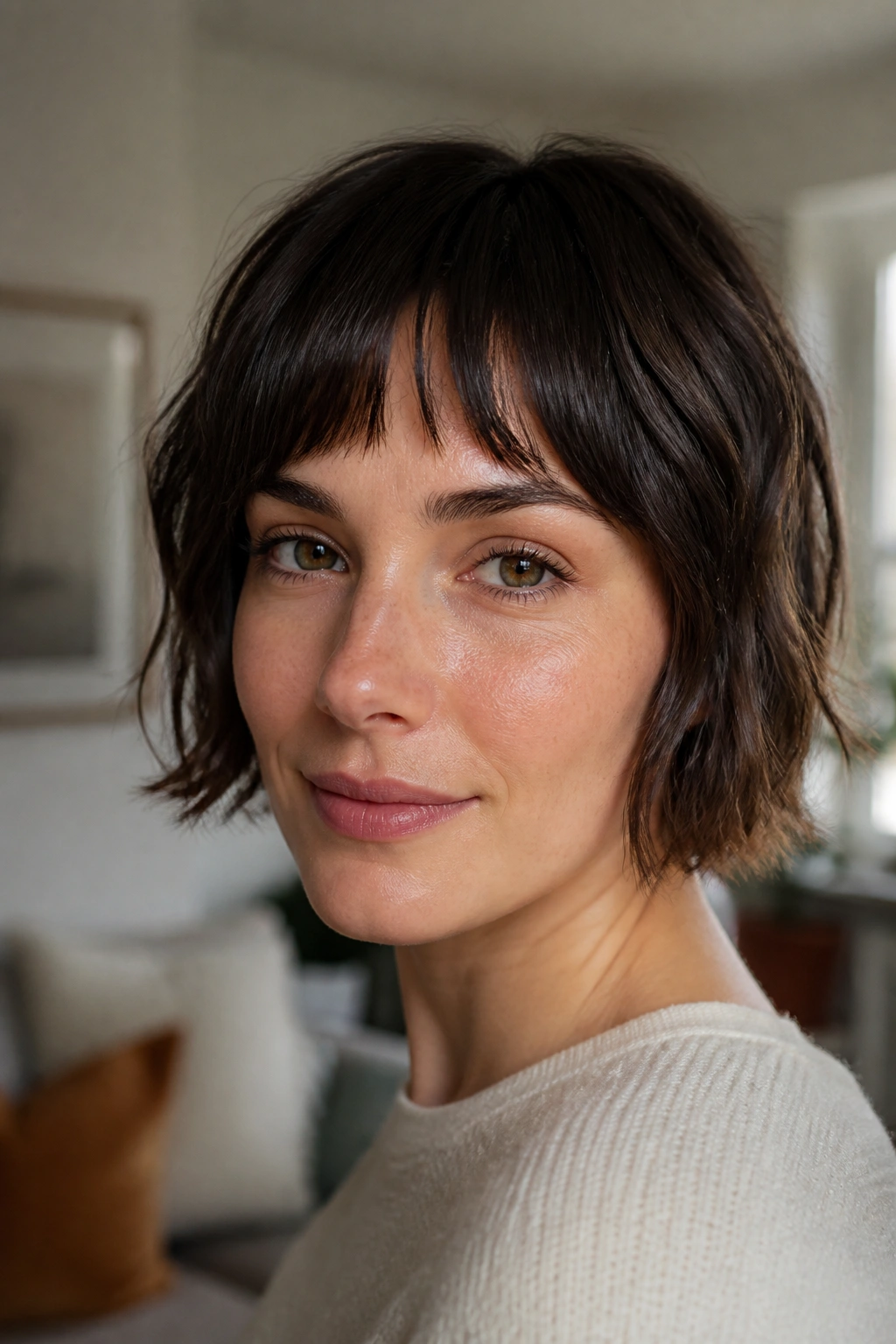
A rounded yet broken fringe sounds contradictory, and that’s exactly why it can work so well. The overall shape is curved, but the edge is interrupted by texture and gaps, so it never turns into a perfect circle.
That broken curve matters on round faces. A complete arc can echo the shape of the cheeks and make the face feel wider. A broken arc gives you the softness of a curve without the matching outline. It’s a small adjustment, but it changes the whole read.
The Best Version
I’d ask for a curved fringe with point-cut ends and a slightly shorter center. The sides can drop a touch longer, but they should not hang into the cheeks. The goal is a soft frame, not a halo that clings to the face.
This style is especially nice with a shaggy bob or layered crop. The texture of the haircut keeps the fringe from looking too precious. It’s a fringe for someone who likes shape, but not perfection. Frankly, perfection would ruin it.
27. Grown-Out Fringe

Grown-out fringe is one of the most underrated short bangs ideas for round faces. It sits in that in-between phase where the bangs are still clearly bangs, but they’ve softened enough to blend into the rest of the haircut.
That softness is useful because the face gets less boxed in. A very fresh fringe can be crisp, but a grown-out fringe has longer side pieces and a looser center, which helps lengthen the face visually. It’s almost flattering by accident, which is often how the best hair happens.
This option is also practical. If you’ve had shorter bangs before and got tired of trimming every few weeks, this is your escape hatch. The shape is forgiving, and it usually works with side parts, middle parts, or a tousled push-back style.
A little wave through the front helps a lot. So does not overbrushing it. Grown-out fringe should look lived in, not like you forgot to comb it.
28. Soft Choppy Bangs for Thick Hair
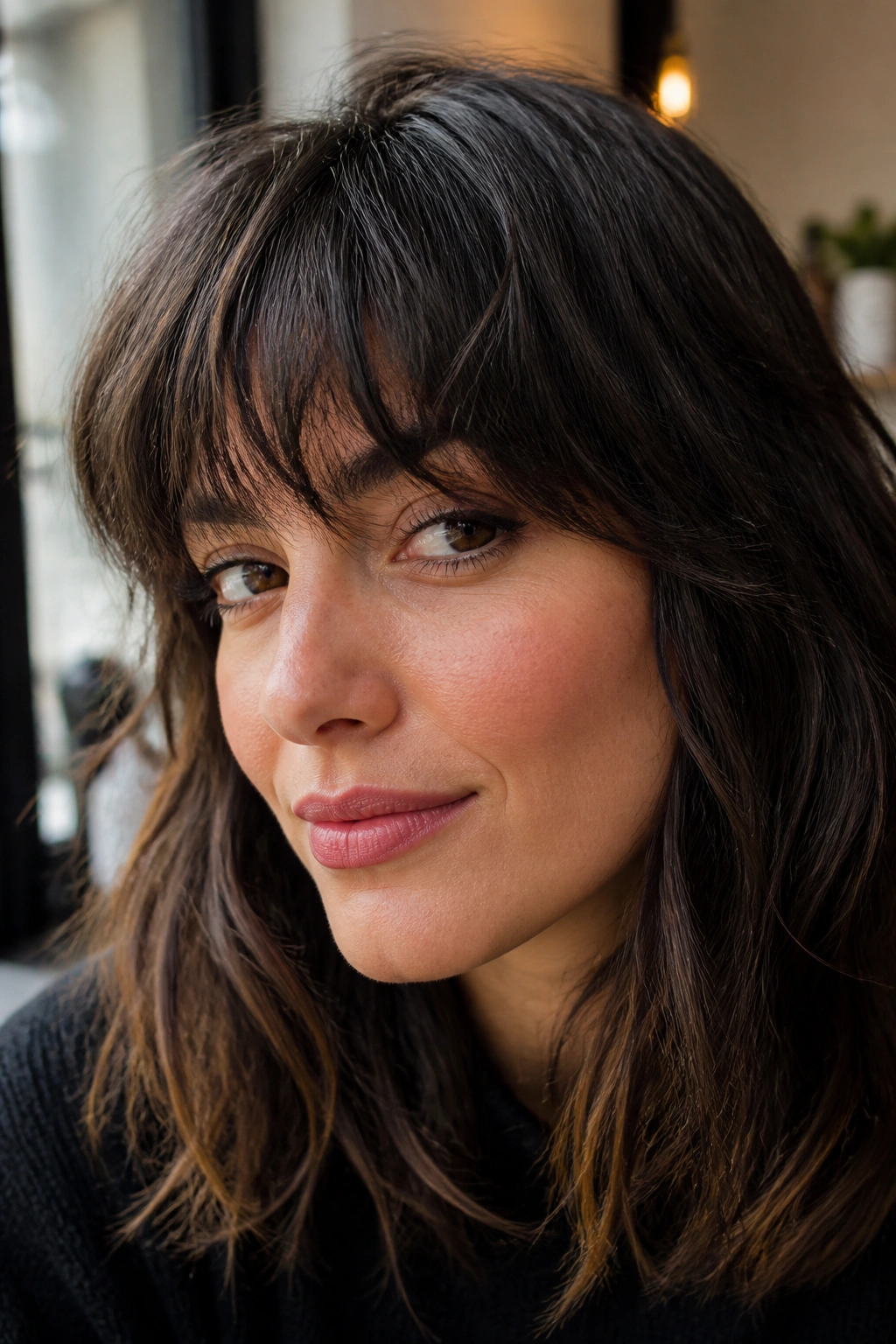
Thick hair can make bangs look heavy fast, so soft choppy bangs are a smart fix for round faces. The choppiness removes the solid mass that can widen the forehead, while the soft edges keep the cut from feeling harsh.
The trick is thinning with intent, not carving away so much hair that the fringe turns see-through. Thick hair needs enough weight to sit in place, but it also needs movement. A choppy edge gives it that movement without sending the fringe into frizz mode.
This style is especially good if your hair has a little wave or bend, because the bangs can settle into natural pieces. Dry them forward first, then shake them apart with your fingers. A round brush can help, but only if you want polish. Most of the time, a less-perfect finish looks better.
If you’ve got thick hair and a round face, this is one of those cuts that can save you from the shelf effect. That shelf is the enemy.
29. Light Fringe for Fine Hair

Fine hair needs a different approach. Heavy bangs can collapse, split, or show every scalp line, and none of that is flattering. A light fringe keeps the front airy and short without asking the hair to do more than it can.
Why It Flatters
On a round face, a light fringe works because it avoids adding bulk at the widest part of the face. The strands are spaced enough to leave some forehead visible, which helps the face feel longer. A little separation also keeps fine hair from clumping into flat strips.
- Cut the fringe with a soft, narrow shape.
- Keep the density low, but not wispy to the point of disappearing.
- Use a root-lifting spray before blow-drying.
- Avoid heavy oils near the front; they make fine hair collapse.
This is a good choice if your hair gets limp by midday. It also survives sweat and humidity better than a dense fringe, because there’s less weight to fight. If you’ve always assumed fine hair can’t wear bangs, this is the kind of cut that proves the opposite.
30. Temple-Framing Fringe
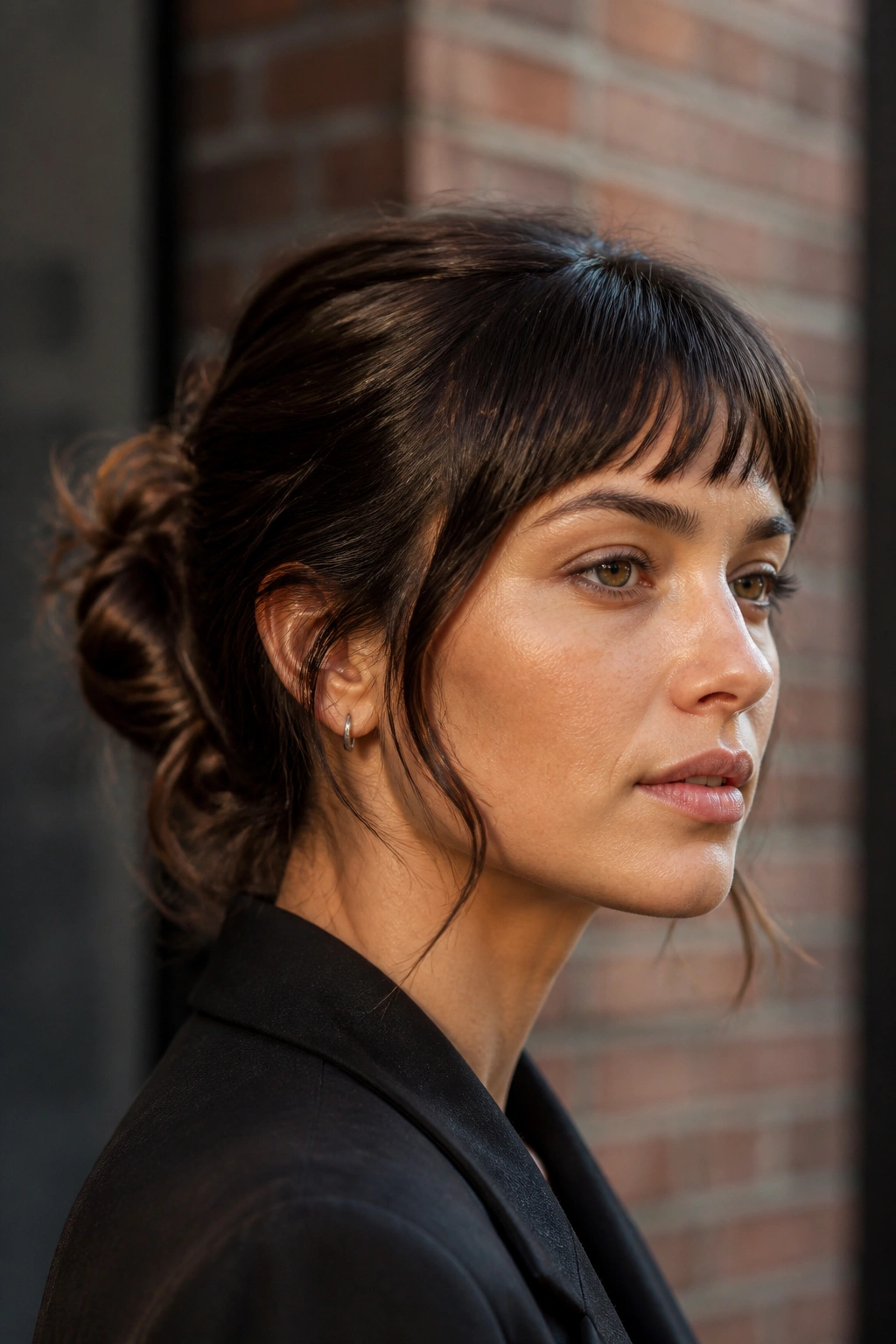
Temple-framing fringe is a smart final option because it works with the round face instead of fighting it. The center stays short enough to read as bangs, but the outer pieces stay longer near the temples, which helps carve out shape on the sides of the face.
That temple length is doing real work. It pulls attention away from the cheeks and gives the haircut a little vertical drop near the sides, which can make the face look narrower. It also keeps the front from feeling too abrupt. Short bangs alone can be a sharp move; short bangs with temple length feel more considered.
This style is easy to pair with a pixie, bob, or short shag. It’s also a good choice if you want a fringe that can grow out without getting ugly fast. The temple pieces soften the transition.
I’d choose this for anyone who wants the effect of bangs without losing too much softness around the face. It’s subtle. And that’s exactly why it works.
Final Thoughts
Round faces do not need to avoid short bangs. They need the right kind of short bangs. Texture, asymmetry, soft openings, and temple length all help the face feel longer and less boxed in.
The styles that tend to work best are the ones that break a clean horizontal line. Keep that in mind, and the shortlist gets much easier.
If you’re deciding between two options, pick the one with more movement and less density. That single choice solves a lot of problems before they start.
