



A heavy fringe can make a round face look wider than it needs to. Choppy fringe hairstyles for round faces solve that by breaking the line, showing a little forehead, and pulling the eye down through the length of the hair instead of letting it rest on one broad horizontal shape.
That sounds like a small thing. It isn’t.
Round faces usually have soft cheeks, a gently curved jaw, and about the same width and length. The trick is not to hide the face — that almost always backfires — but to add angles, movement, and a bit of lift where the eye wants to travel. A choppy fringe does that better than a blunt, heavy bang because it feels light, irregular, and a little undone. The ends are broken up. The line is not straight. That matters more than people think.
A hard line is the problem.
The best cuts here usually keep some length below the jaw, leave a little air around the temples, and avoid stopping at the widest part of the cheek. If the fringe is cut with point-cutting, razor work, or soft texturizing, it can sit across the forehead without making the face feel boxy. And yes, hair texture changes everything — a curly fringe needs a different hand than straight hair, and fine hair needs less removal than thick hair. You can make all of this work, but the shape has to be deliberate.
Softness wins here.
1. Long Shag with a Choppy Fringe for Round Faces

This is the cut I reach for when someone wants movement without losing length. A long shag builds vertical lines from the crown down, which helps a round face look a little longer and a little leaner. The choppy fringe keeps the forehead from feeling too open, but because the ends are broken up, it never turns into that flat, helmet-like bang shape.
The sweet spot is in the layers. Ask for crown layers that start high enough to create lift, plus face-framing pieces that begin around the cheekbone and slide below it. The fringe should be cut with a light hand — not dense, not blunt, and not cut in one straight line across the brow.
Why It Works
A shag gives you texture at the top and length at the sides, which is exactly the kind of shape that flatters a round face. It doesn’t add width where you don’t want it. It creates motion where the eye can travel.
- Ask for point-cut fringe ends so the front looks broken and airy.
- Keep the longest front pieces at or below cheek level.
- Use a root-lifting mousse before blow-drying.
- Finish with a small amount of matte paste just on the fringe tips.
Best tip: blow-dry the fringe forward first, then bend it slightly with your fingers so it doesn’t sit too perfectly.
2. Collarbone Lob with Soft Broken Fringe

Can a lob flatter a round face without feeling too plain? Absolutely, if the length lands in the right place and the fringe stays light. A collarbone lob gives you a long, clean line that drops the eye downward, and that alone helps with balance. Add a broken fringe and the whole cut feels softer, less boxy, less stiff.
The important part is where the ends fall. If the lob ends right at the fullest part of the cheek, it can puff the face up. Let it hit the collarbone or just below it. That creates a nice line past the jaw, and it keeps the shape from stopping too early.
This cut is one of the easiest to wear on straight or wavy hair. It grows out nicely. It also behaves well in everyday life, which is not a small thing if you do not want to wrestle with your hair every morning.
Keep the fringe slightly longer at the temples, and let the middle sit a touch shorter. That tiny shift gives the cut a natural curve without turning it into a solid block. If your hair is thick, ask for internal removal rather than thinning the very ends — blunt bulk at the bottom is what makes a lob feel heavy fast. If your hair is fine, keep the layers soft. Too much texturizing can make the fringe look stringy.
3. Curly Shag with Piecey Fringe

A curly shag can look fantastic on a round face because curls already bring life to the hair, and the shag shape keeps that life from ballooning outward. The fringe needs to be handled with care, though. A curly bang cut too short can spring up and sit right in the wrong spot. That’s how you end up with extra width across the forehead.
The better move is a piecey fringe that follows the curl pattern instead of fighting it. Leave enough length for shrinkage. If your curls bounce up an inch or more when dry, the fringe needs to be cut longer than you think. This is one of those cases where dry cutting or cutting at the curl’s natural state makes a huge difference.
Styling Notes
- Use a curl cream or lightweight gel on the fringe while it’s damp.
- Scrunch, don’t rake.
- Diffuse on low heat until the curls set.
- Separate only the largest clumps with a little serum on your fingertips.
A curly fringe should look like it belongs to the rest of the cut, not like a separate little helmet sitting on top. That’s the whole trick. Keep the top a little taller and the sides a little narrower, and the face gets framed instead of crowded. One more thing: if your curls are very tight, ask for fringe pieces that can be worn swept aside on heavy days. That little bit of flexibility saves you from a lot of frustration.
4. French Bob with Airy Choppy Fringe
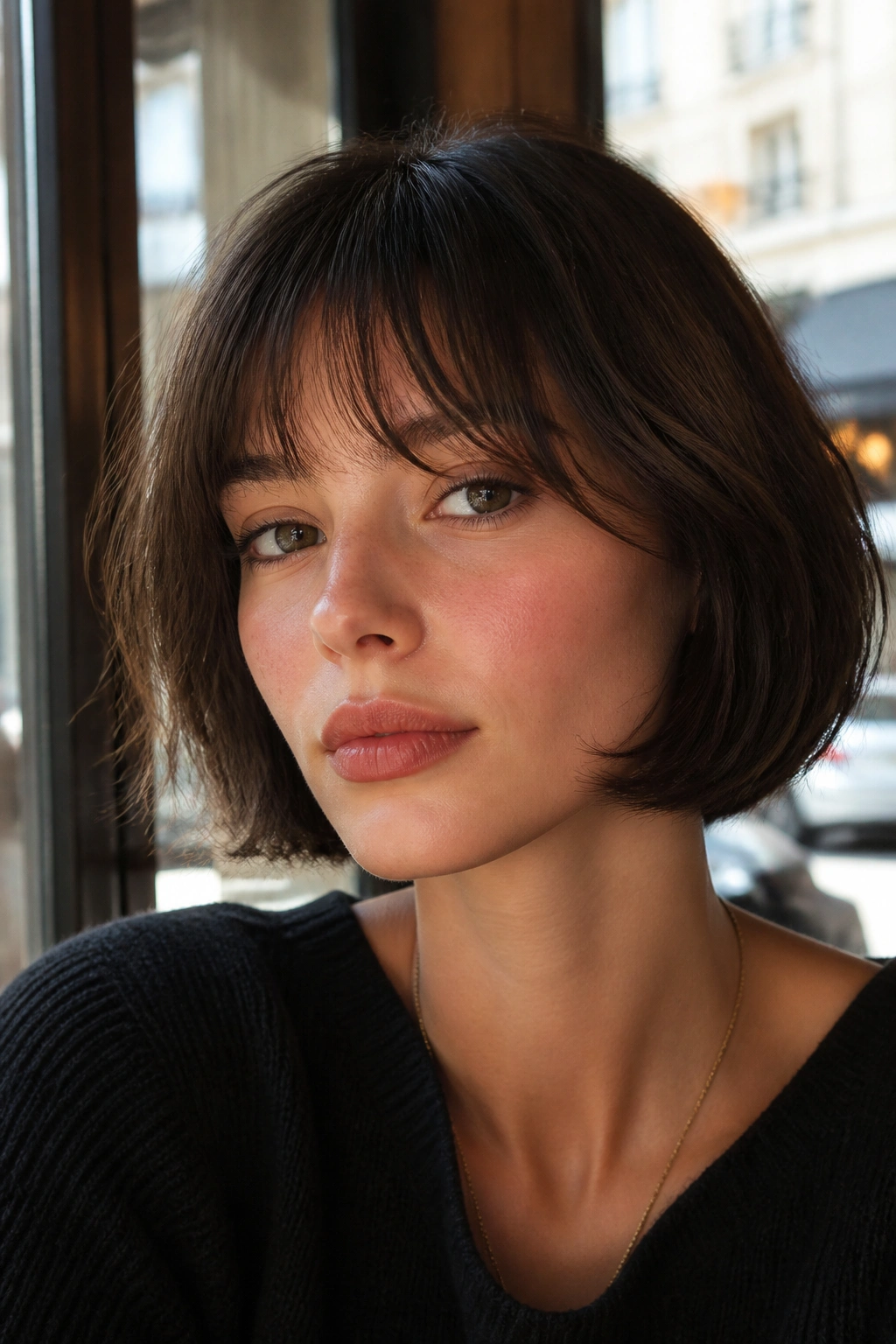
A French bob can work on a round face, but only if it stays airy. A blunt chin-length bob with a hard fringe can make the face look wider and shorter. A softer French bob, though — especially one that sits a touch below the cheekbone and moves a little at the ends — has enough edge to feel polished without boxing the face in.
The fringe is what makes this version interesting. Instead of a thick, straight band, the front should be broken into small pieces that sit lightly over the forehead. Think of it as texture, not coverage. The more the fringe moves, the less it competes with the roundness of the face.
This cut likes hair that bends a little naturally, though a flat iron can add a soft curve if needed. It also benefits from a side part or an off-center part, which keeps the front from looking too symmetrical. Symmetry sounds neat. On a round face, it often just means more width.
The French bob is also one of those cuts that looks expensive even when it’s not heavily styled. A quick blow-dry with a small round brush, a bit of bend at the ends, and a textured fringe are enough. You do not need a big curl or a rigid finish. A little mess is the point.
5. Wolf Cut with a Choppy Fringe for Round Faces

The wolf cut works because it puts volume in the crown, not the cheeks. That matters a lot for round faces. A lot of cuts claim to be “edgy” and then pile width exactly where you don’t want it. The wolf cut is different. It stays shorter and fuller at the top, then drops into tapered, shredded lengths that keep the face feeling longer.
The fringe should be broken, not blunt, and it should blend into the front layers instead of sitting on its own. That’s what makes the cut feel intentional. If the fringe is too dense, the whole style gets heavy fast. If it’s too thin, it can look accidental.
What to Ask For
- A layered crown with lift at the top.
- A shattered fringe that skims the brows.
- Tapered sides that do not flare out at the cheekbone.
- Ends that are textured, not chopped into one hard line.
This cut is especially good if your hair is thick or wavy and tends to spread outward. The wolf shape trims some of that bulk from the lower half and puts the energy higher up, which visually lengthens the face. If your hair is fine, keep the layers longer so it doesn’t look wispy and sparse. Shorter is not always better here.
6. Side-Swept Choppy Fringe with a Layered Mid-Length Cut

What if you want fringe, but you do not want a full-on bang? Then side-swept choppy fringe is the sensible answer. It breaks up the forehead without cutting a straight wall across it, and that diagonal line is a gift for round faces. Diagonals make the face feel slimmer. Straight-across lines do the opposite.
A layered mid-length cut gives the fringe a place to blend. The hair should hit somewhere between the chin and the shoulders, with long layers that move away from the cheeks. That keeps the whole shape from ballooning at the sides. If the cut is too even, the face can look wider. If the layers are too short, the front can get fuzzy.
This is also a forgiving choice for people with cowlicks or a tricky hairline. A side-swept fringe works with natural growth patterns instead of fighting them. It can be tucked, pinned, parted differently, or worn looser on busy days. That flexibility is worth a lot.
Dry the fringe across the forehead first, then pin it for a minute while it cools. That little trick helps the bend stay in place without needing a ton of product. A light mist of texturizing spray at the roots is enough. Heavy hairspray is overkill.
7. Pixie Cut with Jagged Fringe
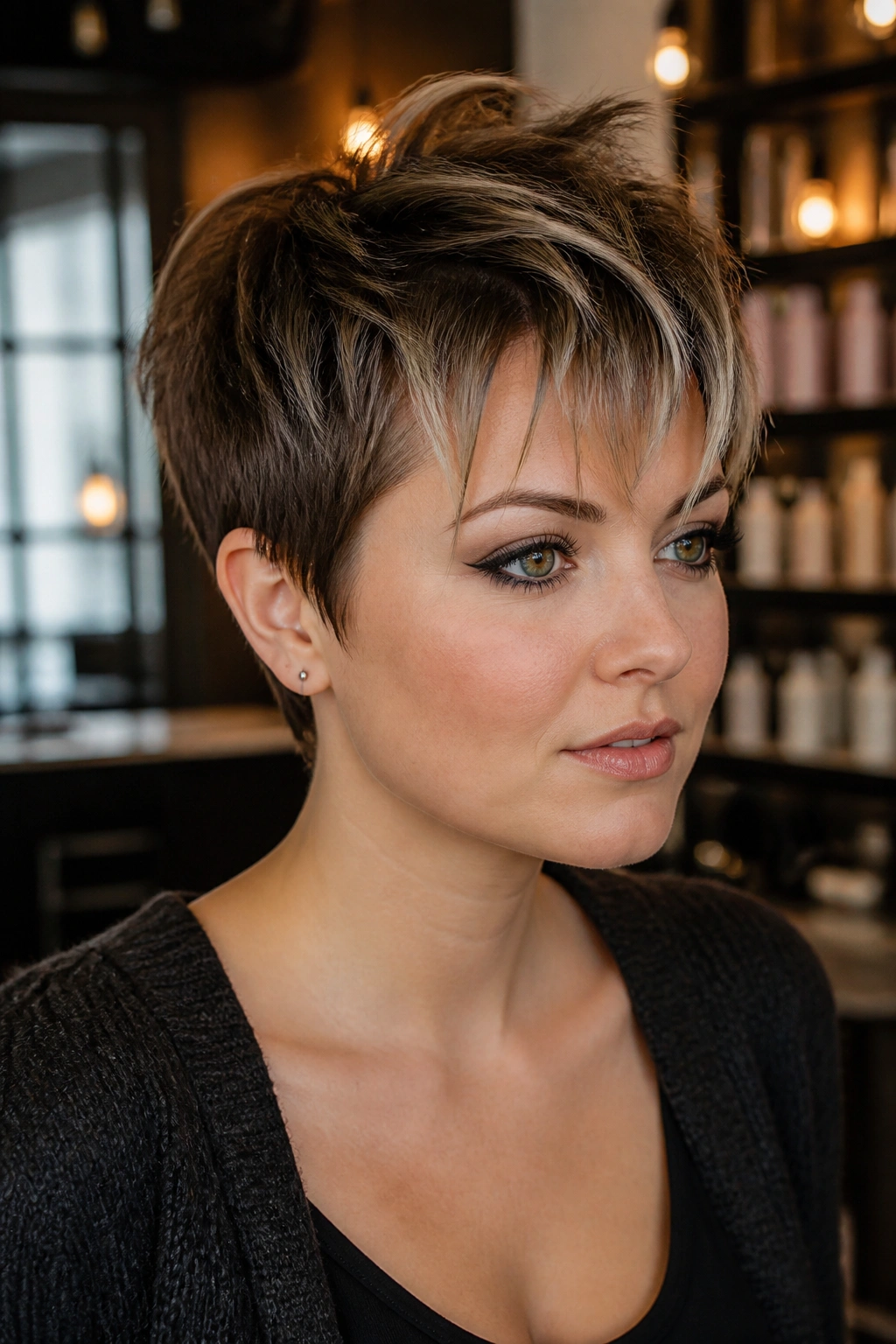
Short hair can flatter a round face if the shape is right. A pixie with a jagged fringe does the job by putting height on top and keeping the sides close. That creates a longer look through the center of the head, which helps offset the width of the cheeks.
The fringe should never be rounded and puffy. Jagged is better. Piecey is better. A slightly uneven front gives the eyes something to move through, while a smooth, rounded bang can make the face feel sweeter than you probably want. There’s a fine line there, and this is where a good stylist earns their keep.
A pixie like this works best when the crown has a little lift. Even half an inch of extra height changes the whole read of the cut. If the top sits flat, the roundness of the face comes forward. If the top has movement, the face feels more sculpted.
No heavy styling needed. A tiny amount of wax or pomade, rubbed warm between your palms, can separate the fringe pieces and keep them from looking like one solid strip. Keep the product away from the roots unless you want the hair to look greasy by noon. Short cuts show everything.
8. Butterfly Layers with Feathered Fringe
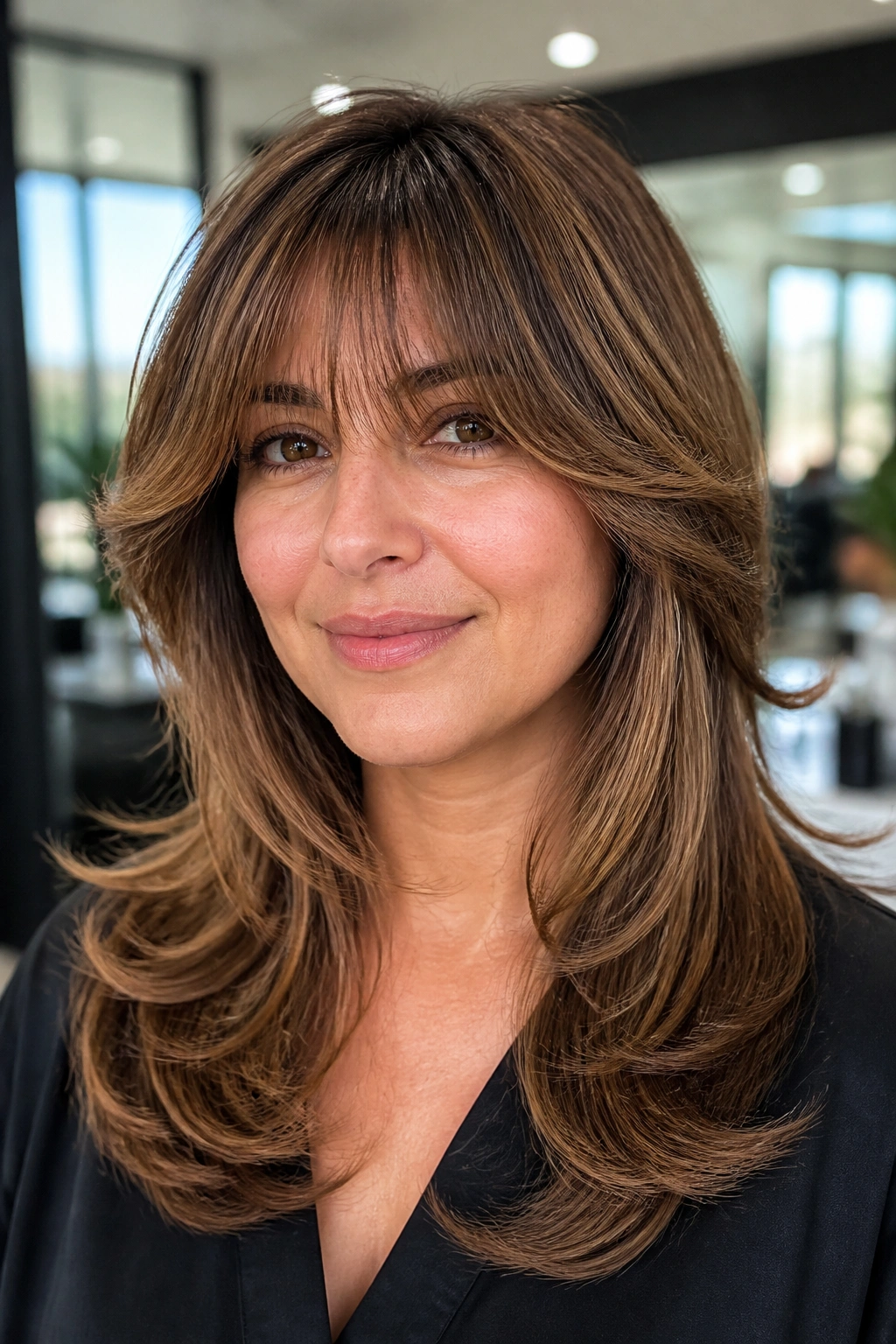
A butterfly cut is built for movement, and movement is your friend on a round face. The shorter top layers create lift near the crown, while the longer lengths keep the lower half of the hair from fanning out at the widest point of the cheeks. It’s a clever shape. Not fussy, either.
The fringe should be feathered enough to blend into the face-framing layers. Think light, separated, and a little soft around the temples. If the front is too thick, the whole cut loses its airy feel. If it’s too wispy, the balance disappears. You want that in-between space where the fringe feels like it belongs to the rest of the haircut.
The Part That Matters
The shape around the cheekbone is doing the real work here. The front layers should start where the face begins to curve outward, then drop below that point. That keeps the eye moving down the length of the hair instead of parking on the cheeks.
A large round brush or a few Velcro rollers can make this cut look polished without turning it stiff. The goal is bend, not curls. Just enough shape to show the layers. If you like big hair but worry about width, this is one of the smarter ways to do it.
9. Razor-Cut Long Layers with Bottleneck Fringe for Round Faces
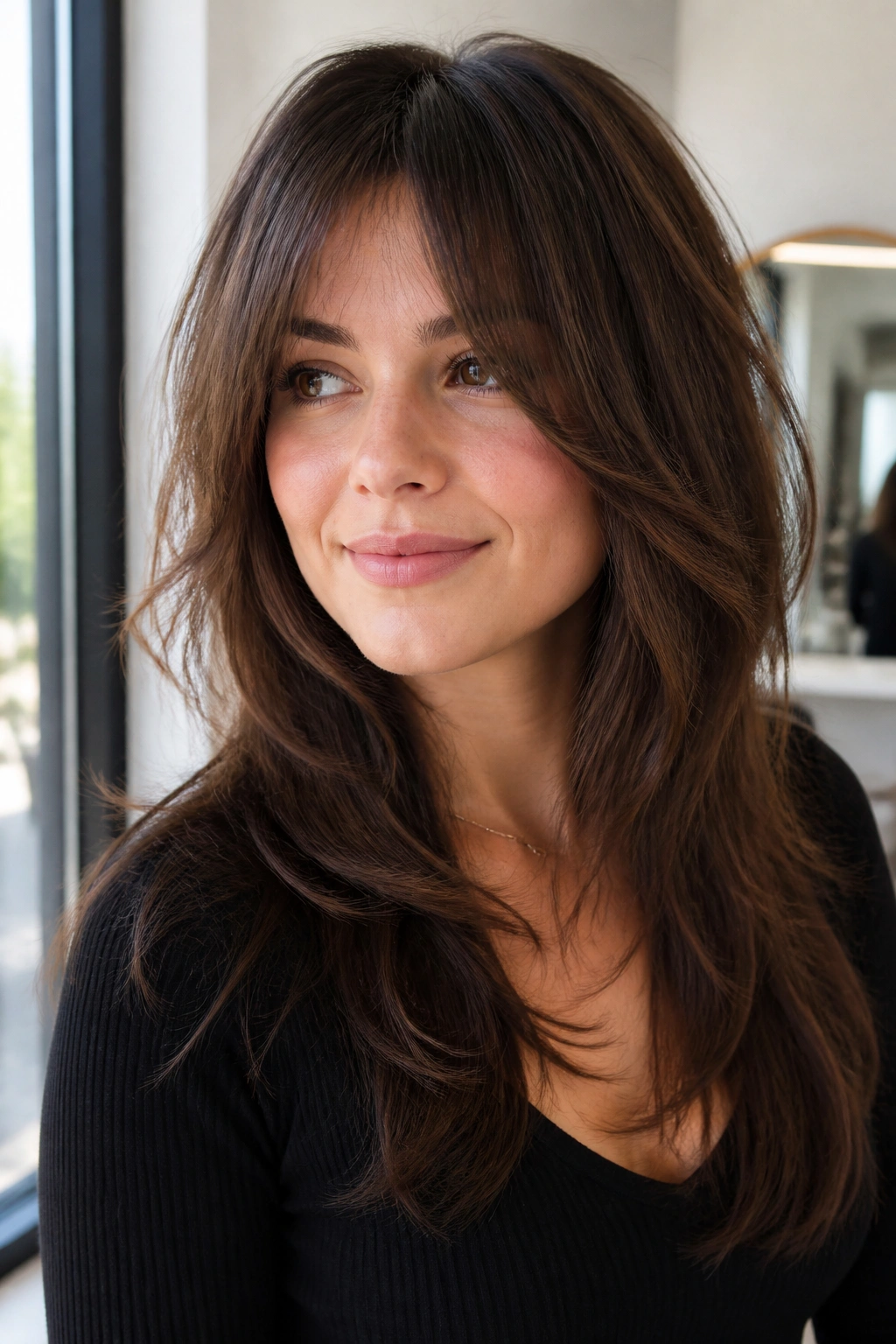
A bottleneck fringe is one of the smartest fringe shapes for a round face because it starts narrow in the center and opens out toward the cheekbones. That gives you the softness of a fringe with a built-in lengthening effect. It does not sit like a block. It frames like a curve.
Pair that with razor-cut long layers and you get a cut that moves without getting bulky. The razor creates soft edges and keeps the ends from looking heavy, which is useful if your hair has a lot of density. On thick hair, blunt ends can feel like a curtain. On fine hair, they can feel limp. Razor-cut layers sit somewhere better.
This style works especially well when the fringe is worn slightly off-center or split softly in the middle. That little gap lets the forehead breathe and stops the front from becoming one broad shape. A round face usually benefits from that kind of openness.
- Ask for long face-framing pieces that begin below the cheekbone.
- Keep the center of the fringe shorter, but still soft.
- Use a light smoothing cream instead of a heavy serum.
- Let the ends stay feathered, not too neat.
If you want something that looks modern without screaming for attention, this is a strong option. It has shape. It has movement. It still behaves.
10. Tousled Shoulder-Length Cut with Shattered Fringe

Shoulder length is tricky on a round face, and that’s exactly why texture matters. A one-length shoulder cut can land right where the face is widest and make the whole look feel broad. Add shattered ends, though, and the shape changes fast. The hair stops reading as one flat line and starts moving in little pieces.
The fringe should be loose enough to break apart with your fingers. Not feathered to the point of disappearing, but definitely not thick and dense. A shattered fringe gives the cut a casual, lived-in feel that works especially well with a slight wave. If your hair dries straight, you can still bend the ends outward a touch with a brush or flat iron.
This is one of those cuts that looks best with a bit of mess. Day-two hair usually behaves better than day-one hair. That’s not a flaw; it’s part of the charm. A little dry shampoo at the roots and a mist of texture spray through the mids can make the whole shape fall into place faster than a long blowout.
The shoulder-length zone needs careful handling because it can widen the face if the ends flip outward at the cheek. Keep the flip below the jaw, not level with it. That tiny difference matters more than most people realize.
11. Bixie with Textured Fringe
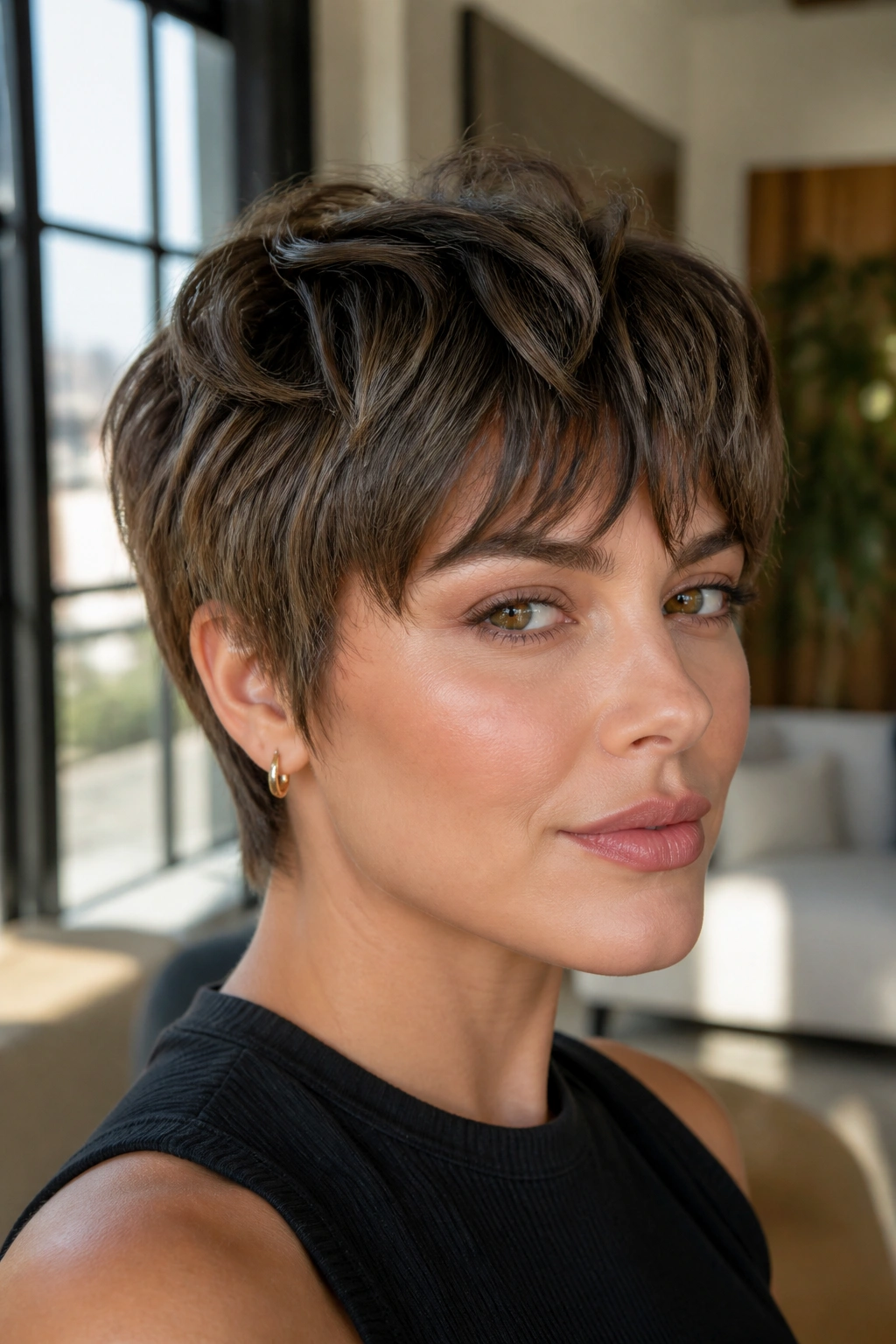
A bixie sits right between a bob and a pixie, and that middle ground is where it gets interesting. On a round face, a bixie can be sharp in a good way because it keeps the sides neat while letting the crown stay a little fuller. The fringe adds softness up front, which keeps the cut from feeling too severe.
The best version is textured, not spiky. The fringe should be broken into bits that can sweep across the forehead or lift up slightly with product. If you keep the front too neat, the cut loses all of its charm. If you keep it too short and too rounded, the face can look wider. Again, balance.
How to Wear It
- Blow-dry the crown up and slightly forward.
- Keep the sides closer to the head than the top.
- Use a pea-sized amount of styling paste, not a scoop.
- Tuck one side behind the ear when you want a cleaner line.
A bixie suits people who want shape with less hair to manage. It’s quick. It’s lively. It also gives the face some angles, which is the whole point here. If you like earrings, glasses, or a little edge in your style, this cut has a lot going for it.
12. Air-Dried Wavy Cut with Eyebrow-Skimming Fringe

Some people want a cut that works with almost no fuss, and this is the one. An air-dried wavy cut with an eyebrow-skimming fringe can look soft and balanced on a round face because the fringe is short enough to show the eyes but not so short that it crowds the forehead. The wave through the lengths does the rest.
The key is not to overwork the hair. If you brush waves into submission, they often puff outward. That puff adds width. Let the pattern stay loose and natural, and encourage the front pieces to bend forward and down rather than out. A little curl cream or leave-in conditioner goes a long way.
A fringe that skims the eyebrows should still have some give. It should move when you smile. It should not sit like a stiff shelf. If your hair shrinks when it dries, cut the fringe a touch longer and let it settle before you decide whether it needs more trimming. That patience saves a lot of regret.
This style is ideal if you like low-effort mornings. Scrunch, air dry, and go. Sometimes a gentle twist on each front section is enough. Nothing about it feels overworked, which is why it suits people who want softness more than drama.
13. Deep Side Part with Choppy Curtain Pieces
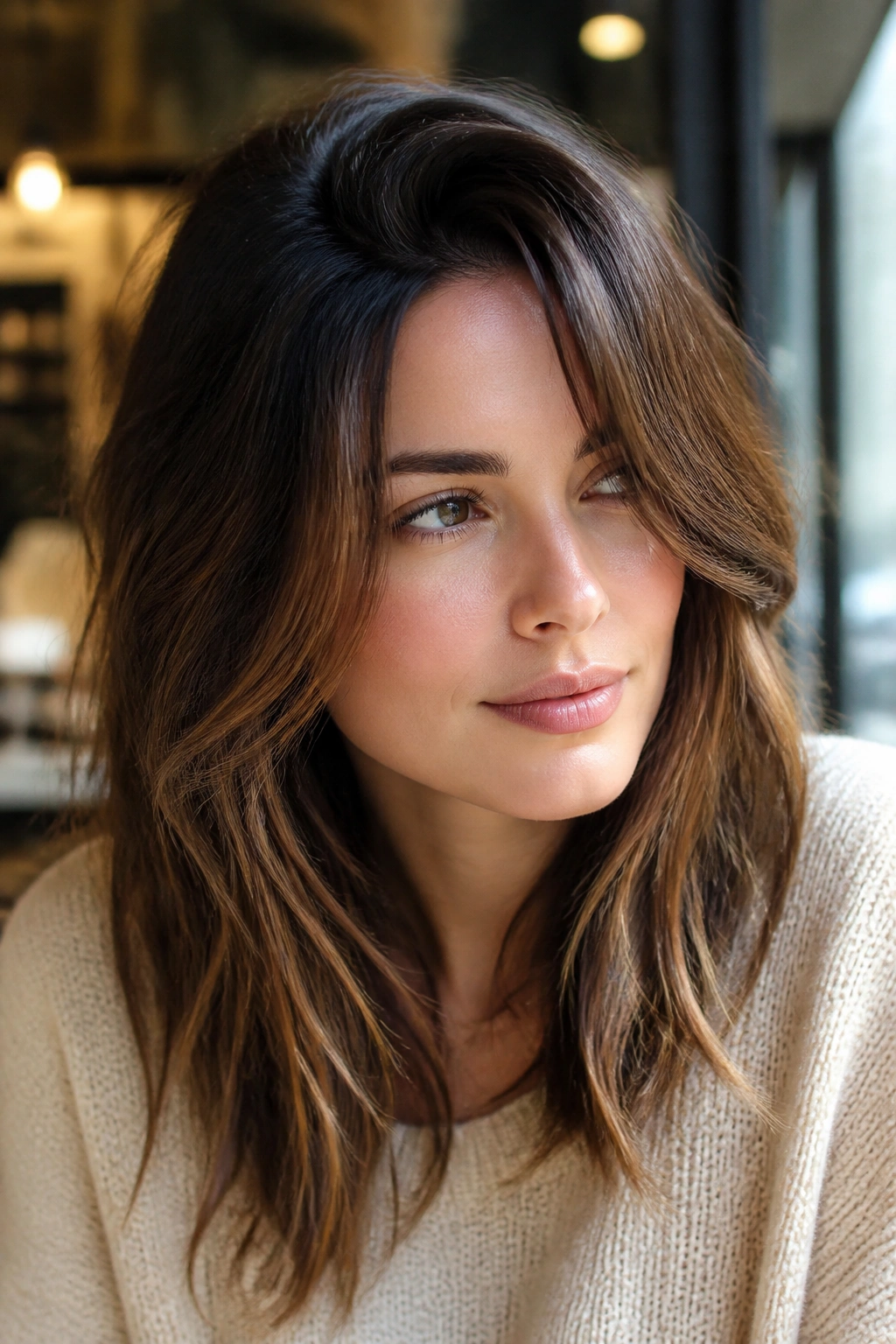
A deep side part changes the geometry of a round face in a pretty useful way. It creates asymmetry, and asymmetry is flattering because it breaks the circular feeling of the face. Add choppy curtain pieces that fall around the cheekbones, and you get a shape that feels relaxed but still deliberate.
This cut is especially good if you’re growing out bangs. The front pieces can be split, swept, or tucked depending on what you need that day. They should be cut long enough to move across the face without sitting right on the cheek’s fullest point. That avoids the dreaded “stuck on the sides” effect.
The part itself does a lot of work. A deep side part lifts the roots at the crown, and that small lift visually stretches the face. Keep the hair from getting too flat against the scalp on the heavier side, because flat roots plus cheek-level bulk is a rough combination.
If you like a little glamour without the commitment of a big style change, this is worth trying. It looks especially good with a soft bend through the lengths and a bit of shine spray on the front pieces. Not a ton. Just enough to catch the light when the hair moves.
14. Soft Mullet with Broken Fringe

A soft mullet is not as wild as people think, and on a round face it can be surprisingly flattering. The crown gets lift, the sides stay tucked in, and the nape keeps some length, which helps stretch the overall shape. The fringe, if it’s broken and soft, adds the final bit of balance up front.
The word soft does a lot of work here. A severe mullet with heavy contrast can feel harsh around a round face if the sides are cut too blunt or the fringe is too short. The version you want should blend. The transition from top to sides should feel feathered, not chopped into a hard step.
What to Avoid
- A fringe that sits in one solid block.
- Too much width at the temples.
- A nape that is overgrown but not shaped.
- Heavy layering that ends exactly at the cheek.
This cut is a strong fit for wavy and thick hair because it removes bulk in the right places. It can also give fine hair some attitude if the crown is cut with enough lift. There’s a little edge here, sure, but it’s practical edge. The cut wants motion. It wants a hand-scrunched finish or a rough blow-dry, not a polished helmet.
15. Voluminous Layered Cut with Long Choppy Fringe for Round Faces
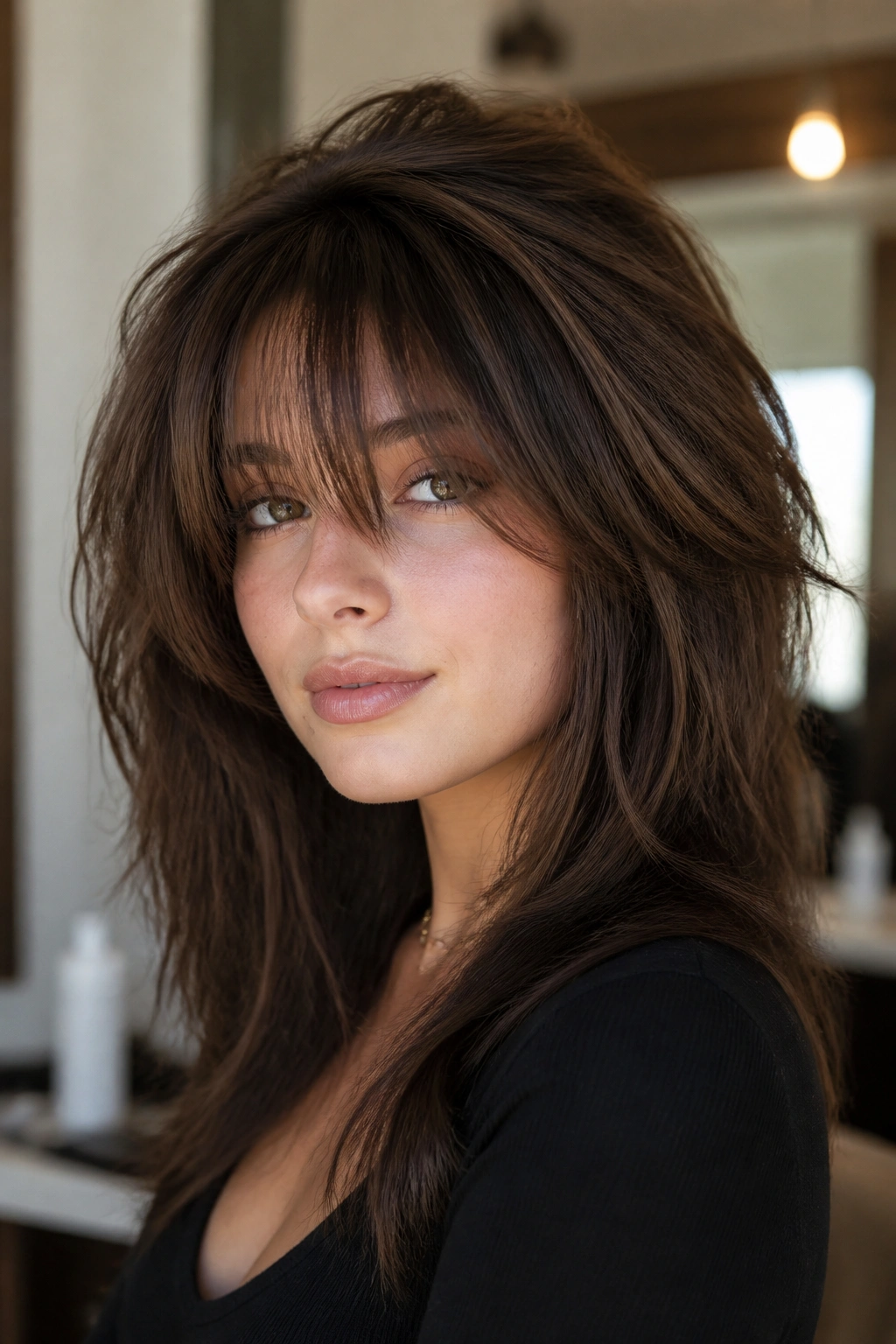
If you like hair with movement and a bit of body, this one’s hard to ignore. A voluminous layered cut can make a round face look longer as long as the volume stays at the crown and through the lengths, not just at the sides. The long choppy fringe helps frame the face without chopping it in half.
This is one of the best choices for people with medium to thick hair who want a fuller look without losing shape. The layers should fall in a way that opens around the cheeks and jaw, then drops lower. That keeps the face from feeling boxed in. The fringe can sit between the brows and the cheekbone, depending on how much forehead you want to show.
A big round brush, root-lift spray, and a few Velcro rollers can make a huge difference here. So can a good blow-dry direction. Pull the front up and away from the face first, then let the fringe settle into a soft bend. If the ends kick outward at cheek level, smooth them under. That part is worth the extra two minutes.
- Best for hair that likes body and bounce.
- Works well when you want a soft glam finish.
- Needs root lift, not flat air-drying.
- Looks best when the fringe has broken ends, not a clean line.
It’s a cut with presence. Not loud. Just present.
Final Thoughts
Round faces do best with hair that creates movement, not heavy symmetry. A choppy fringe gives you that movement fast, especially when the cut keeps bulk away from the cheeks and uses length to stretch the shape.
If you’re taking one thing to your stylist, make it this: keep the fringe light, keep the sides from flaring out, and don’t end the shortest layers at the widest part of the face. That one instruction solves a lot of bad haircuts before they happen.
Bring photos, yes, but bring the right photos — ones with the same texture and similar length to your own hair. A fringe that looks airy on straight hair can sit very differently on waves or curls, and that’s where people get tripped up. Tiny detail. Big payoff.
And if you’re unsure, start a little longer. A fringe can always be shortened. The reverse is where the panic begins.
