



Round faces and bangs are not enemies. They only look that way when the fringe is cut too blunt, too wide, or too short in the wrong place. Half bangs change the equation because they leave a little forehead visible, split the weight, and send the eye downward in soft lines instead of one hard bar across the brow.
That tiny shift matters. A fringe that sits straight across the cheeks can make a round face read wider, while a half bang usually does the opposite: it adds movement, breaks up the width, and gives the face a bit more length. The sweet spot is usually somewhere around brow level or just below it, with the outer pieces sliding toward the temples or cheekbones.
Hair texture changes the result too. Fine hair needs air and separation, thick hair needs removal of bulk, curly hair needs extra length because of shrinkage, and straight hair needs some bend so the fringe does not look stiff. The right cut is not about hiding your face shape. It is about steering the eye where you want it to go.
Short. Soft. Slightly open. That is the whole trick, and the styles below use it in very different ways.
1. Long Curtain Half Bangs That Skim the Cheekbones
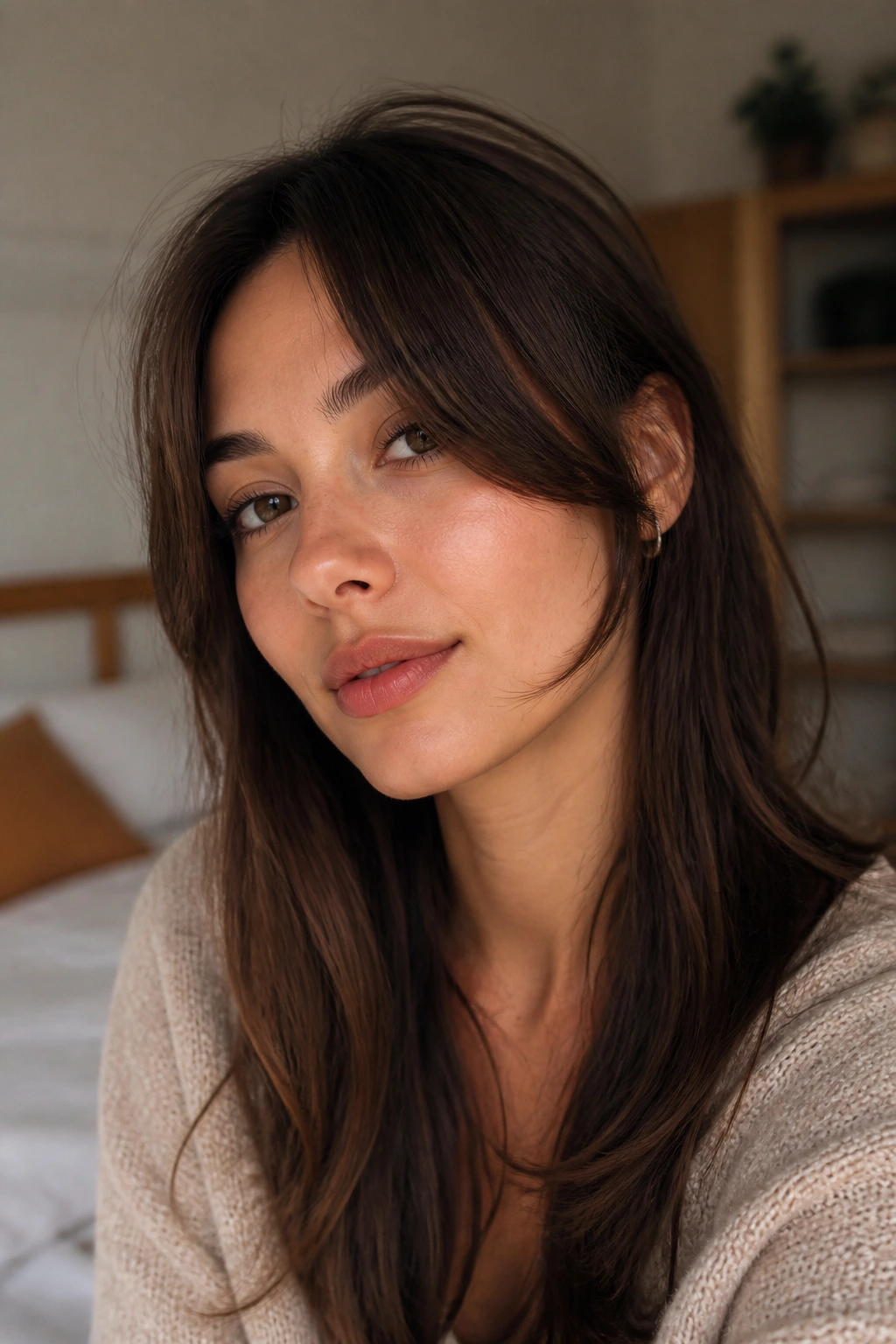
Long curtain half bangs are the easiest place to start if you want softness without feeling trapped by a full fringe. The center opens near the part, then the pieces drift out toward the cheekbones and jaw. On a round face, that shape does the useful work of lengthening the center and loosening the sides.
Why it flatters round faces
The open middle gives the forehead a little breathing room, which keeps the face from looking boxed in. The longer sides create a diagonal line, and diagonal lines are your friend when the goal is to make a round face feel a touch slimmer and longer.
How to style it
- Blow-dry the center section forward first, using a small round brush.
- Bend each side away from the face, not under it.
- Finish with a light spray or a pea-sized cream, because heavy product makes curtain bangs collapse.
Ask for the shortest point to sit around brow level, then let the sides graduate down to the top of the cheekbone. That shape is gentle, but it is not boring. It has enough movement to work with ponytails, loose waves, and blunt lobs without fighting the rest of your haircut.
2. Bottleneck Half Bangs With a Slim Center
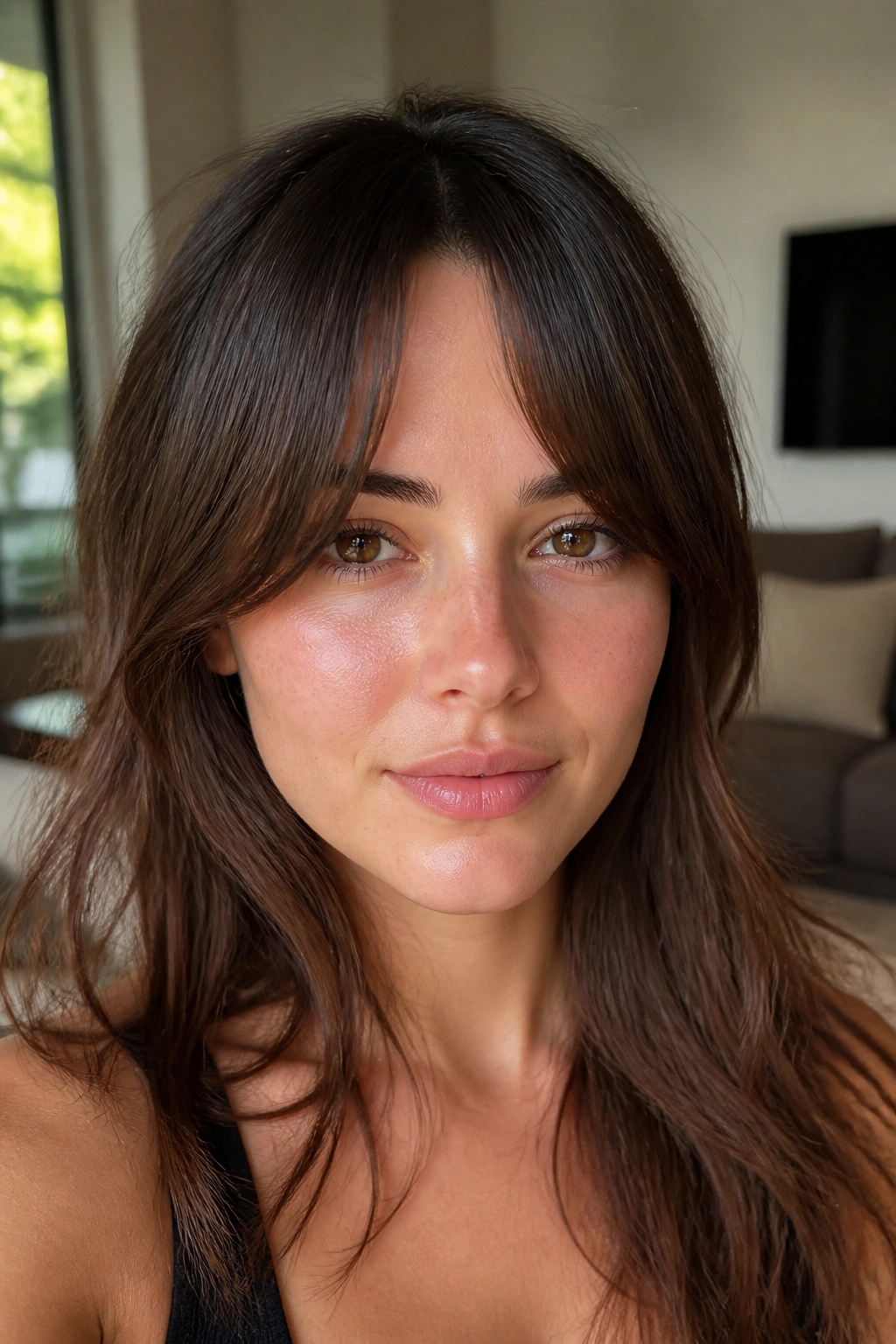
Bottleneck half bangs are a little more tailored than classic curtains. The middle is narrower and slightly shorter, then the fringe opens out in a wider shape near the temples. On round faces, that narrow center is the whole point. It pulls attention to the middle of the face first, then releases it outward in a controlled way.
The cut feels cleaner than fluffy curtain bangs, which makes it a good fit if you dislike anything too airy or romantic. It also works well when your cheeks are full, because the widest part of the fringe lands higher than the widest part of the face. That small shift matters a lot.
A good bottleneck bang should never look heavy at the temple. If it does, the whole face can read wider. Ask for point-cut ends and a center that is sparse enough to show a little skin. The result is soft, polished, and easier to grow out than a straight fringe.
3. Feathered Brow-Grazing Half Bangs
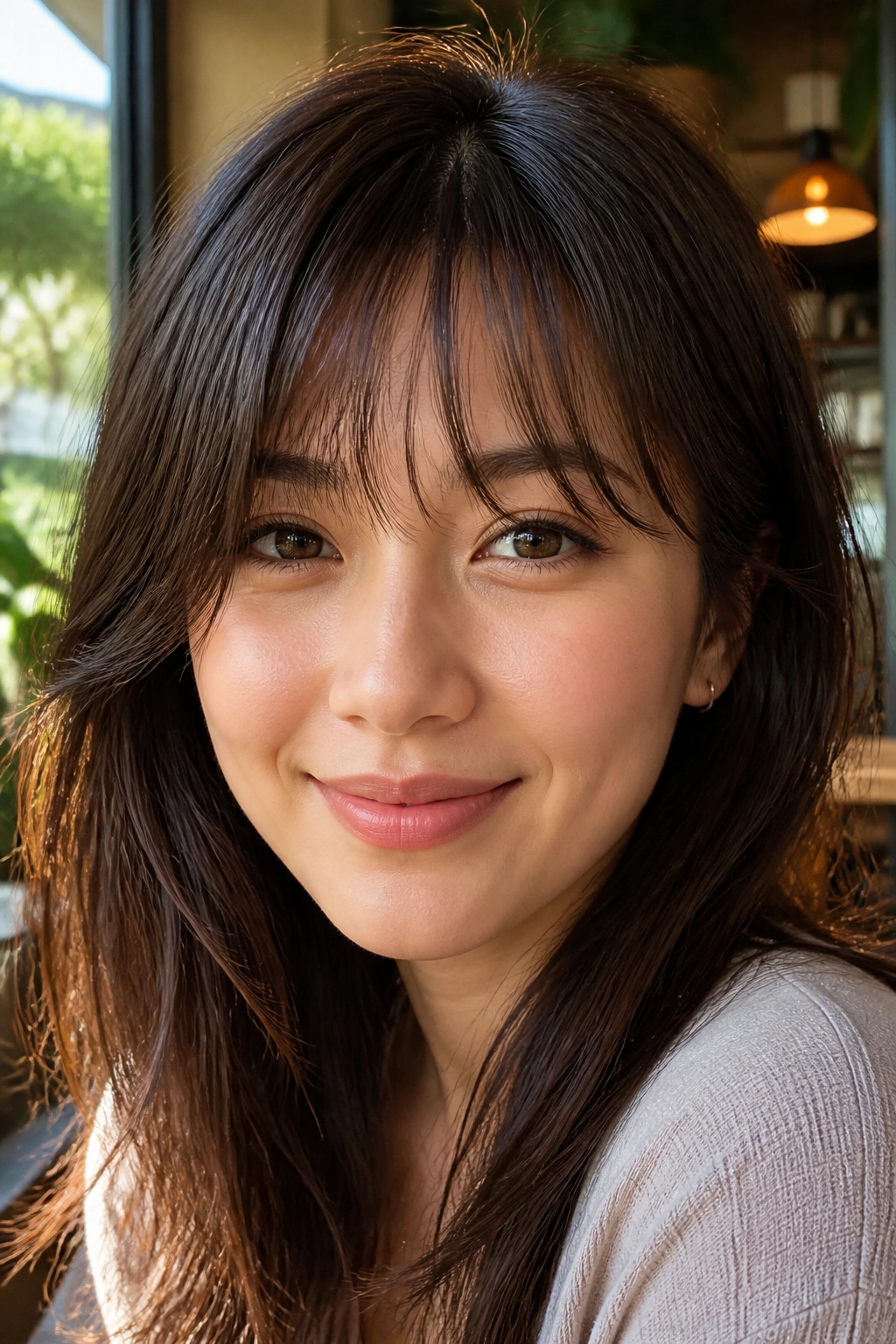
Do the feathering right and these bangs almost disappear into the haircut. That is the charm. They sit near the brows, but the ends are broken up so the line never feels hard or blocky. Round faces usually do well with that kind of movement because it keeps the eye from stopping at one blunt edge.
The key detail
Feathered half bangs should look light, not thin by accident. There is a difference. A skilled cut removes bulk with small snips, leaving the fringe airy enough to move when you blink or turn your head, but still dense enough to frame the eyes.
This style is especially good if your hair has a natural bend. Straight hair can wear it too, but it needs a quick blow-dry with a round brush or a flat brush and a slight bend at the ends. The shortest pieces should land around the brows, and the outer pieces can sit just above the cheekbone. That keeps the forehead open without making the face feel too long.
4. Deep Side-Swept Half Bangs
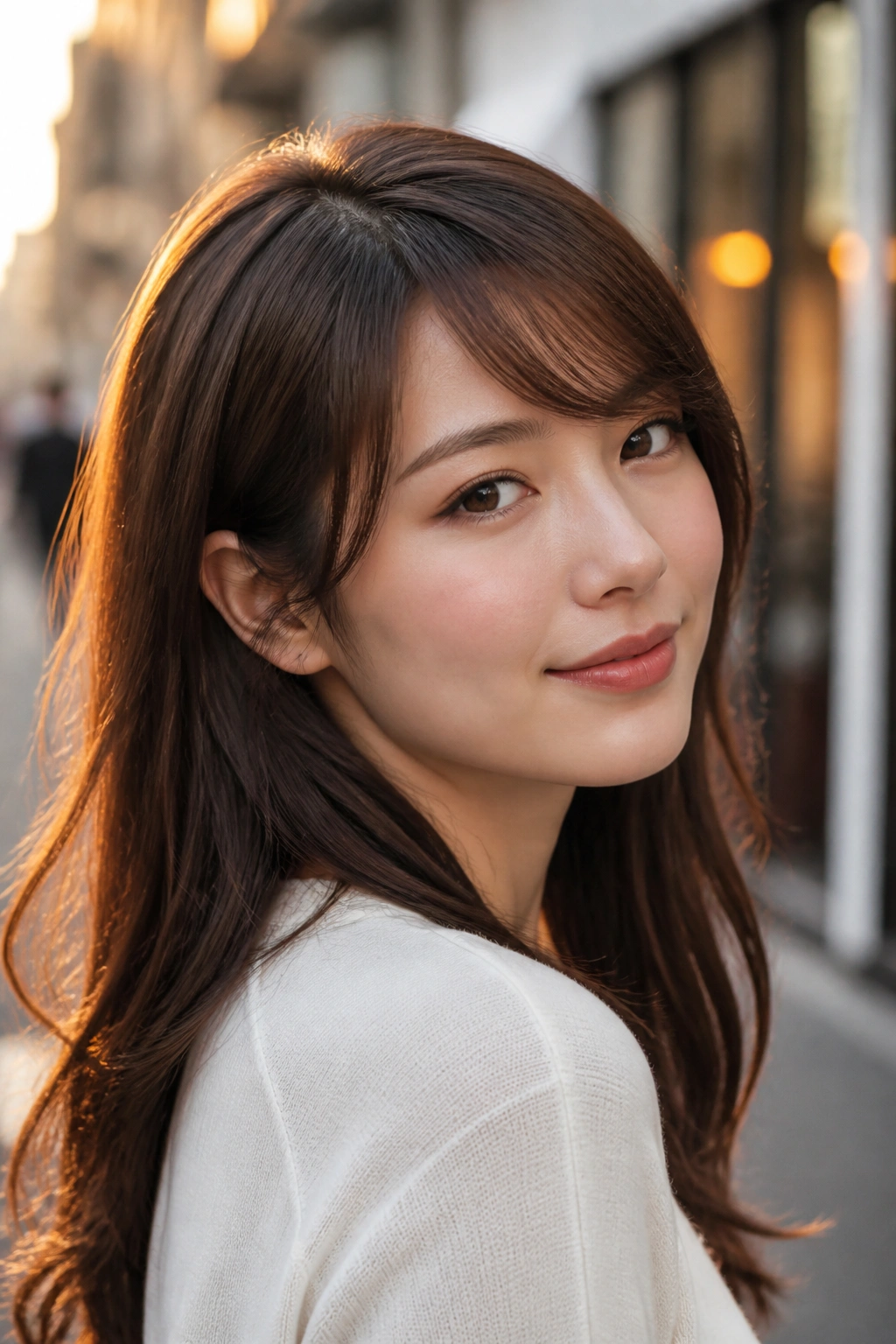
A deep side-swept half bang is a quiet cheat code for round faces. The fringe starts on one side, crosses the forehead at an angle, and lands somewhere near the opposite temple or cheekbone. Nothing here is symmetrical. That is the whole advantage.
The diagonal motion stretches the face visually, and it also softens any fullness around the cheeks. If you wear a side part already, this is the bang shape that feels most natural. It does not demand a radical new styling routine. It just needs a clean part and a bit of direction from the blow-dryer.
- Part the hair about 2 to 3 inches off center.
- Blow-dry the fringe across the forehead first.
- Use a flat brush if you want a smoother finish, or a round brush if you want lift.
- Keep the ends soft, not curled tight.
There is a catch. If the side sweep is too heavy, it can cover the face instead of lengthening it. Ask for a light, movable shape, not a curtain that has been shoved to one side.
5. Wispy See-Through Half Bangs
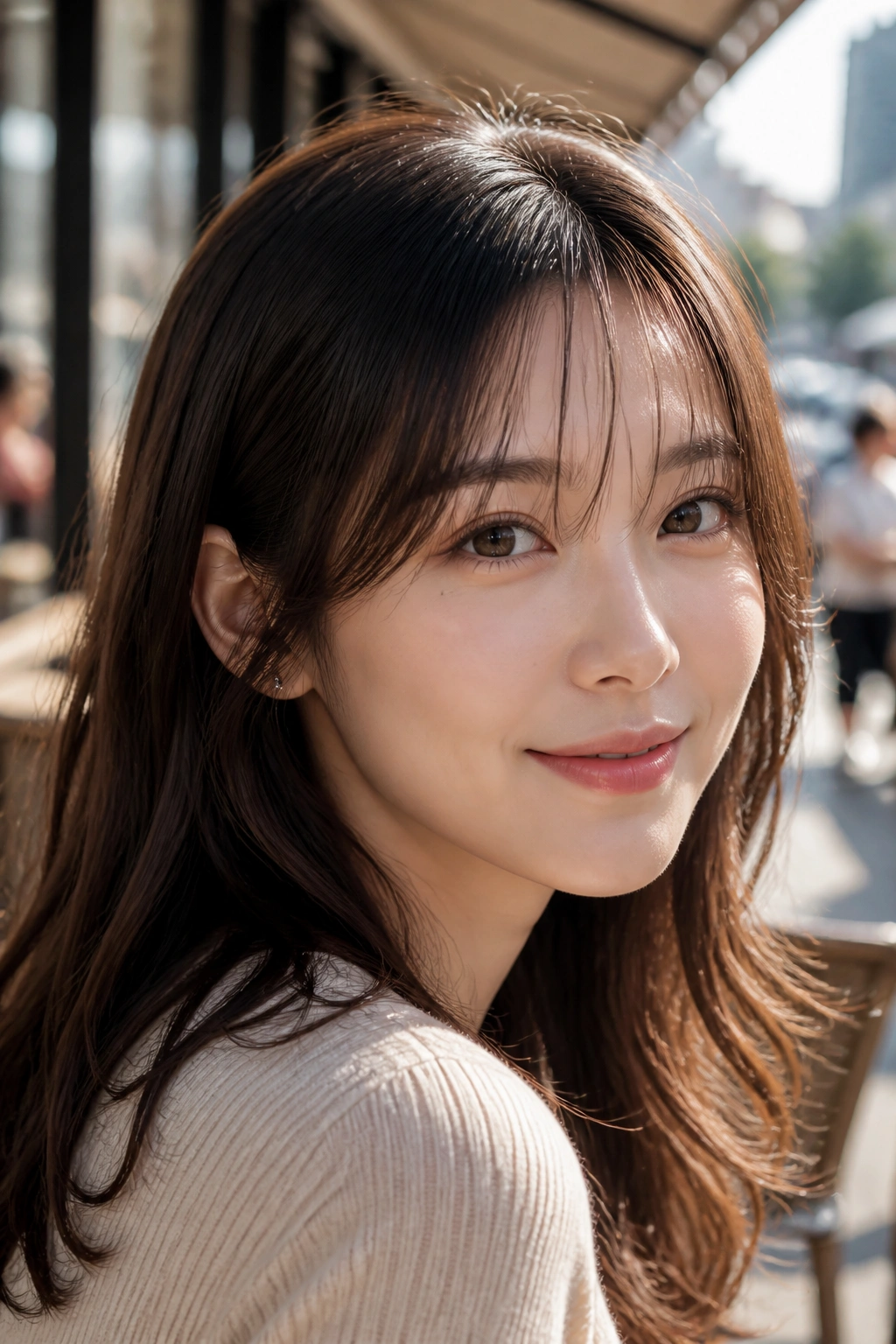
Wispy half bangs are for people who want bangs but do not want the feeling of having bangs, if that makes sense. The forehead stays partly visible, the fringe falls in separated pieces, and the whole shape reads light rather than dense. On a round face, that little bit of transparency helps a lot.
Accidental thinness is not the goal. Controlled softness is. The best wispy fringe still has a clear outline at the edges, just with less hair in the center. That keeps the cut from looking stringy.
This style is especially handy for fine or medium hair that gets flattened by heavy fringe. It can also make a round face feel less enclosed because the skin shows through in small sections. Use a touch of dry texture spray at the roots and pinch the ends apart with your fingers. No hard brushing. No thick paste. Keep it soft and a little imperfect.
6. Cheekbone-Length Face-Framing Half Bangs
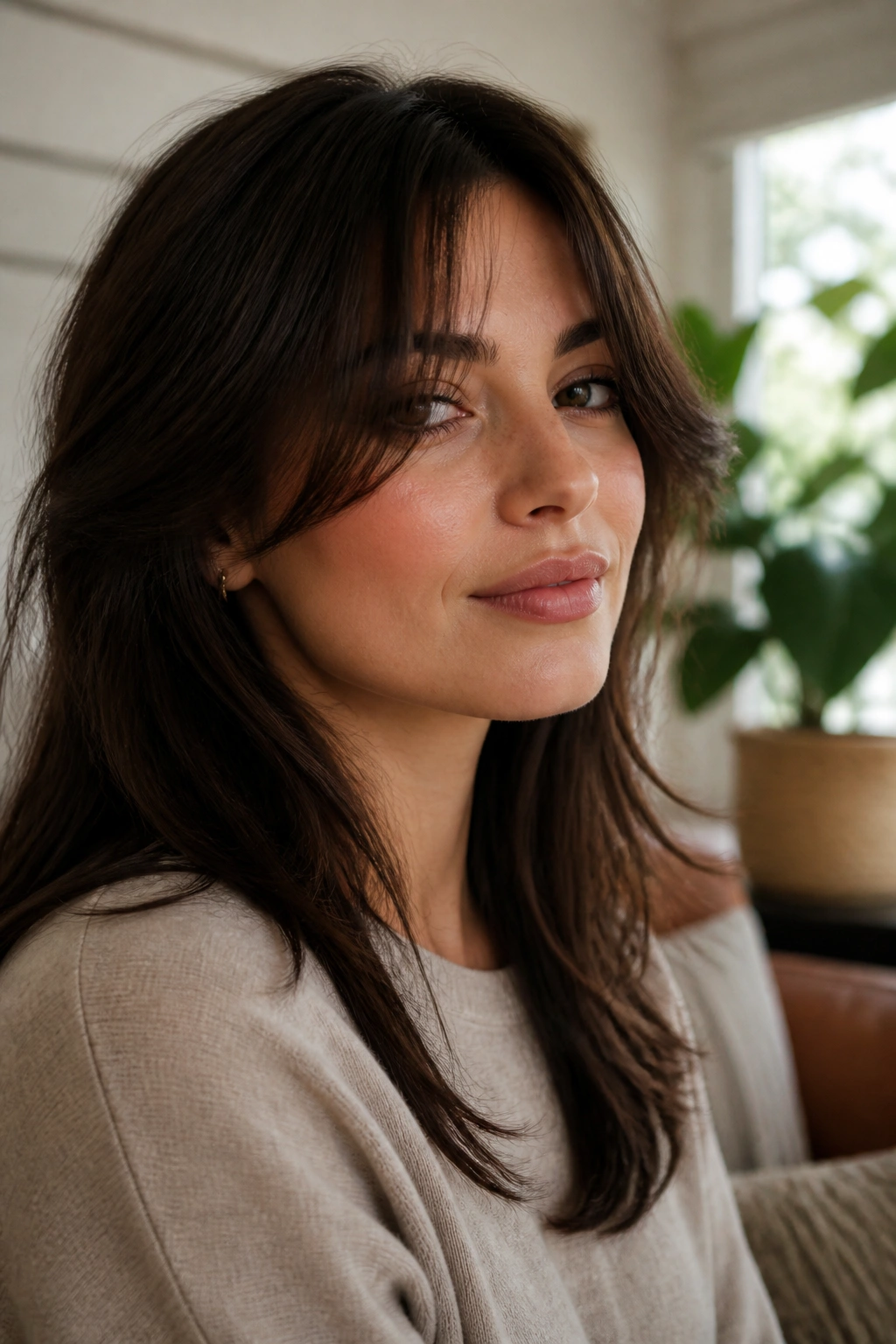
Cheekbone-length face-framing half bangs do one thing better than most cuts: they turn your cheekbones into the focal point. That is useful on round faces because the eye stops reading only the width of the face and starts following a longer line from brow to cheek to jaw.
Unlike shorter bangs that end at the eyebrows, this version starts the visual line a little higher and lets it fall lower. The result is a stronger contour effect. You can wear them straight, bent, or tucked behind one ear, and they still do the job.
What makes them different
The shortest point should sit around the top of the brow or just below it. The longest pieces should brush the upper cheekbone, not stop at the temple. If they end too high, the effect gets lost. If they drop too low, they become regular face layers.
This one is especially good with medium to long hair. It blends into layers instead of sitting like a separate piece, which keeps the whole haircut feeling balanced.
7. Split Fringe With a Soft Middle Part
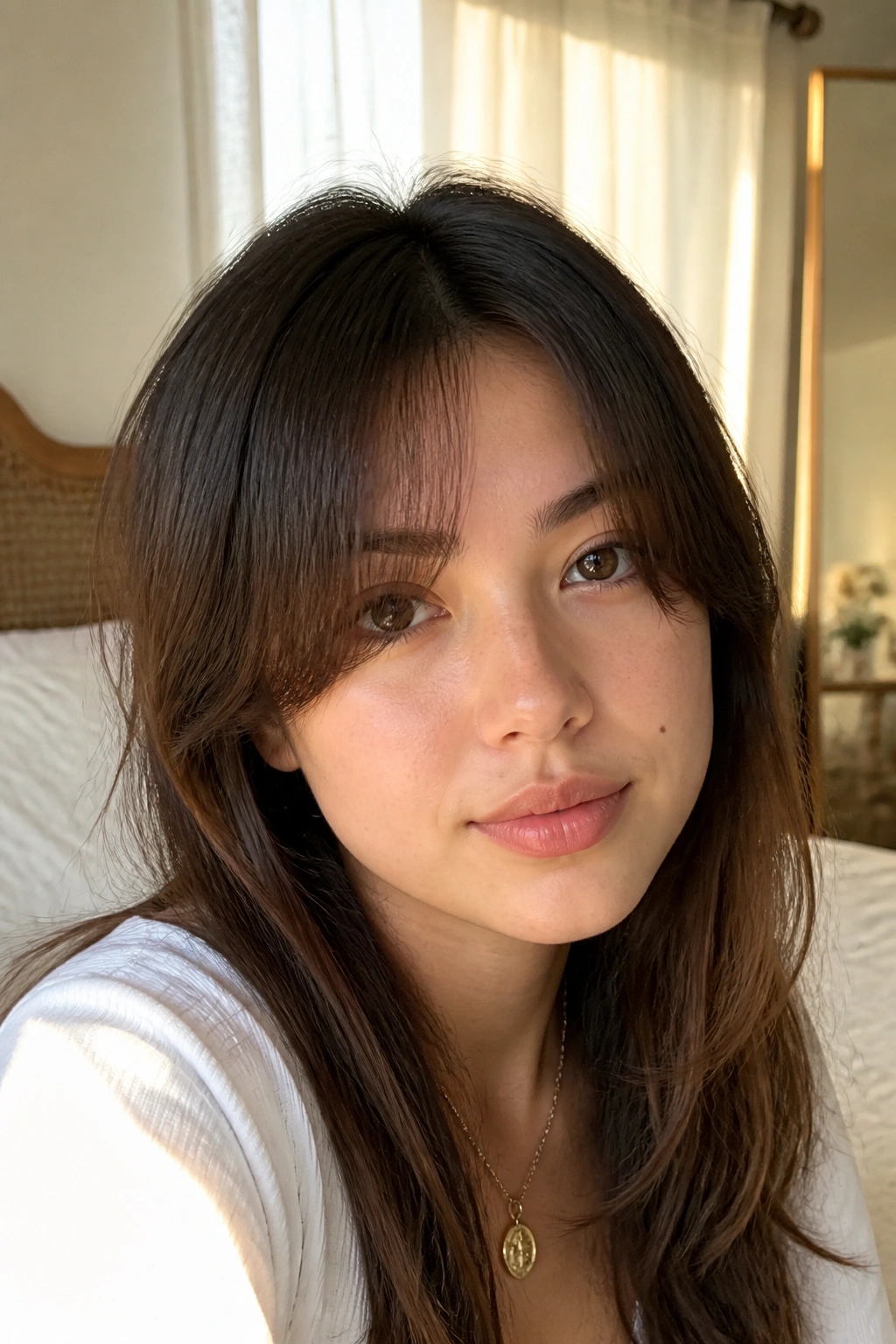
A split fringe with a soft middle part is the cleanest version of half bangs. The center opens just enough to show the forehead, then each side falls away from the face in a gentle sweep. There is structure here, but no stiffness.
How to ask for it
Ask for a center split that starts narrow and widens gradually toward the temples. That wording matters. If the stylist hears “split fringe” without the “soft” part, you can end up with pieces that look disconnected instead of blended.
Best hair textures
- Straight hair that needs shape without heavy styling.
- Wavy hair that already has a natural bend.
- Thick hair, if the ends are point-cut instead of blunt.
The reason this flatters round faces is simple: the open middle creates a vertical line, and the side pieces break the width near the temples. It is one of the easiest styles to tuck behind the ears when you want your face fully open. That flexibility is underrated. You’ll use it.
8. Curved Half Bangs With a Soft Arch
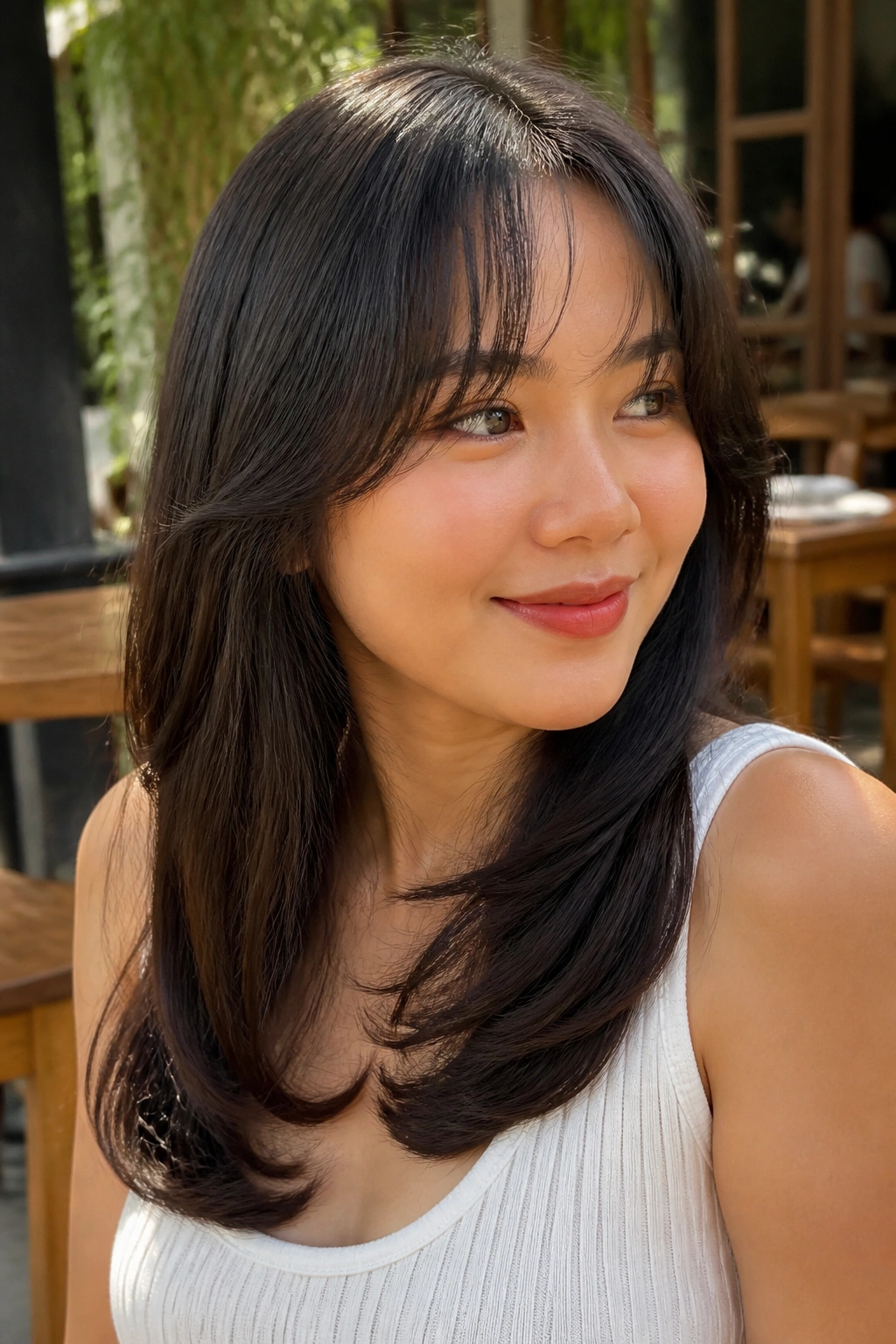
Straight is not the only way to frame a face. A little curve can do more than a lot of bluntness. Curved half bangs follow a gentle arch across the forehead, with the center a touch shorter and the sides easing out toward the temples.
On a round face, that arch gives you lift where you want it most. It pulls the eye upward toward the brows and eyes instead of letting it sit on the fullest part of the cheeks. The shape feels polished, but not severe.
The trick is keeping the curve soft enough that it still looks like hair, not a drawn-on line. A round brush helps, but so does a quick pass with the fingers once the hair cools. If the curve is too round, the face can start to look shorter. If it is too flat, the whole point disappears. Somewhere in the middle is where it lands.
9. Shaggy Half Bangs With Choppy Ends

If your haircut already has layers, do not fight them. Shaggy half bangs with choppy ends feel at home in a shag, a wolf cut, or a heavily layered lob. The fringe is broken into small pieces, which keeps the face from looking boxed in.
The texture matters here. A clean, blunt edge would feel too neat. Choppy ends make the fringe move with the rest of the haircut, which is what keeps it flattering on round faces. The eye sees irregularity instead of a wide, solid band.
- Keep the shortest pieces around the brows.
- Let the outer pieces hit near the temples or upper cheek.
- Use texture spray on dry hair, not wet hair.
- Avoid overcombing; piecey is better than smooth.
This style is a good match for anyone who likes hair that looks a little undone. It is not fussy. It also grows out well, which is a nice bonus when you do not want to book trims every month.
10. Blowout Half Bangs With a Big Bend
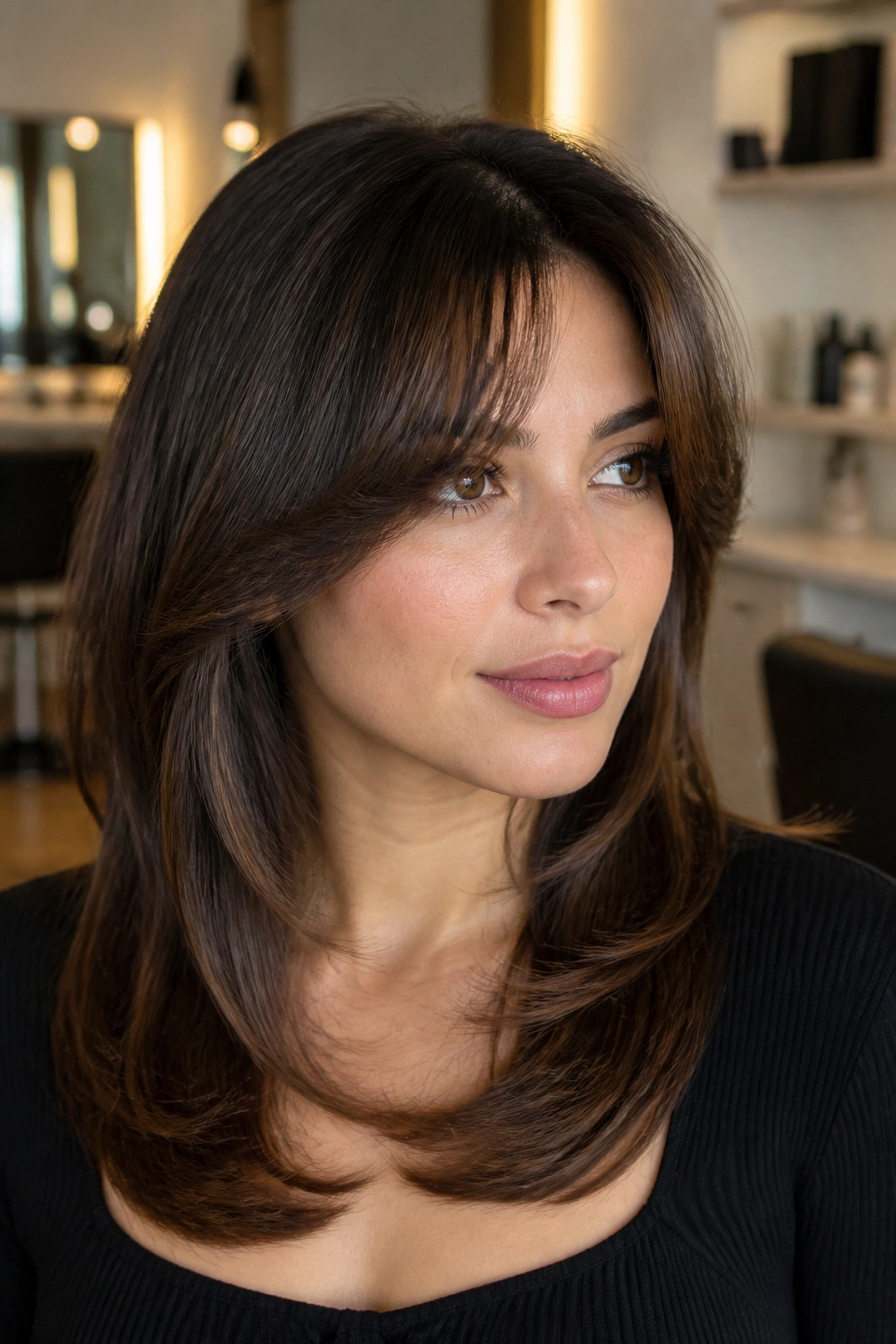
Blowout half bangs are the polished cousin in this group. They rely on movement, volume, and a gentle bend that starts at the root and curves away from the face. On a round face, that bit of lift makes a bigger difference than people expect.
The crown area matters here. If the roots are flat, the fringe can sit too close to the cheeks and emphasize width. If the roots have lift, the face reads longer and a little more lifted. A 1- to 1.5-inch round brush usually does the job. Roll the hair away from the face, hold it for a second, then let it cool before you touch it.
This style likes a smooth finish, but not a frozen one. Think soft bounce, not helmet. A tiny bit of serum on the ends can keep the fringe from frizzing, but too much product will kill the shape. If you enjoy a salon-style blowout, this is one of the best half bang ideas for round faces.
11. Long Curly Half Bangs
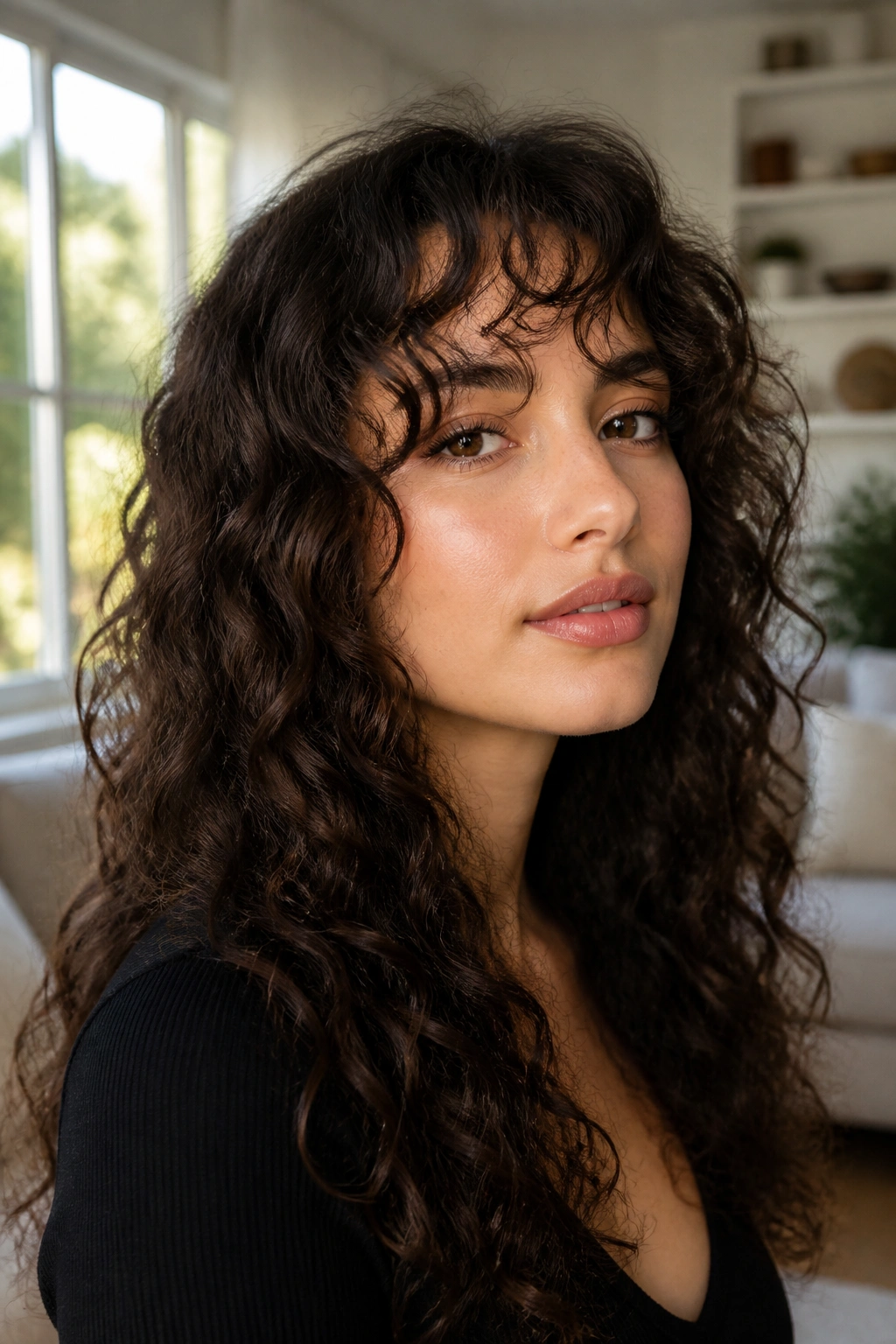
Can curly hair wear half bangs on a round face? Absolutely. The mistake is cutting curly fringe too short. Shrinkage will bite you. Hard.
Curly half bangs need extra length so the finished curl lands where you actually want it. A good starting point is around the bridge of the nose or even a little lower, depending on curl pattern. Once the curls spring up, the fringe should still open the forehead and frame the eyes instead of jumping above them.
What to ask for
Tell the stylist you want curly-friendly length and a soft split, not a blunt curl line. Ask for the curls to be cut in their natural state if possible. Dry curly cutting can work too, but the goal is the same: leave enough room for the curl to bounce.
This shape softens a round face because it keeps the center open while the curls add texture at the sides. It looks lively, not heavy. And when the curls behave, it is one of the most flattering fringe shapes around.
12. Wavy Half Bangs That Look Lived-In
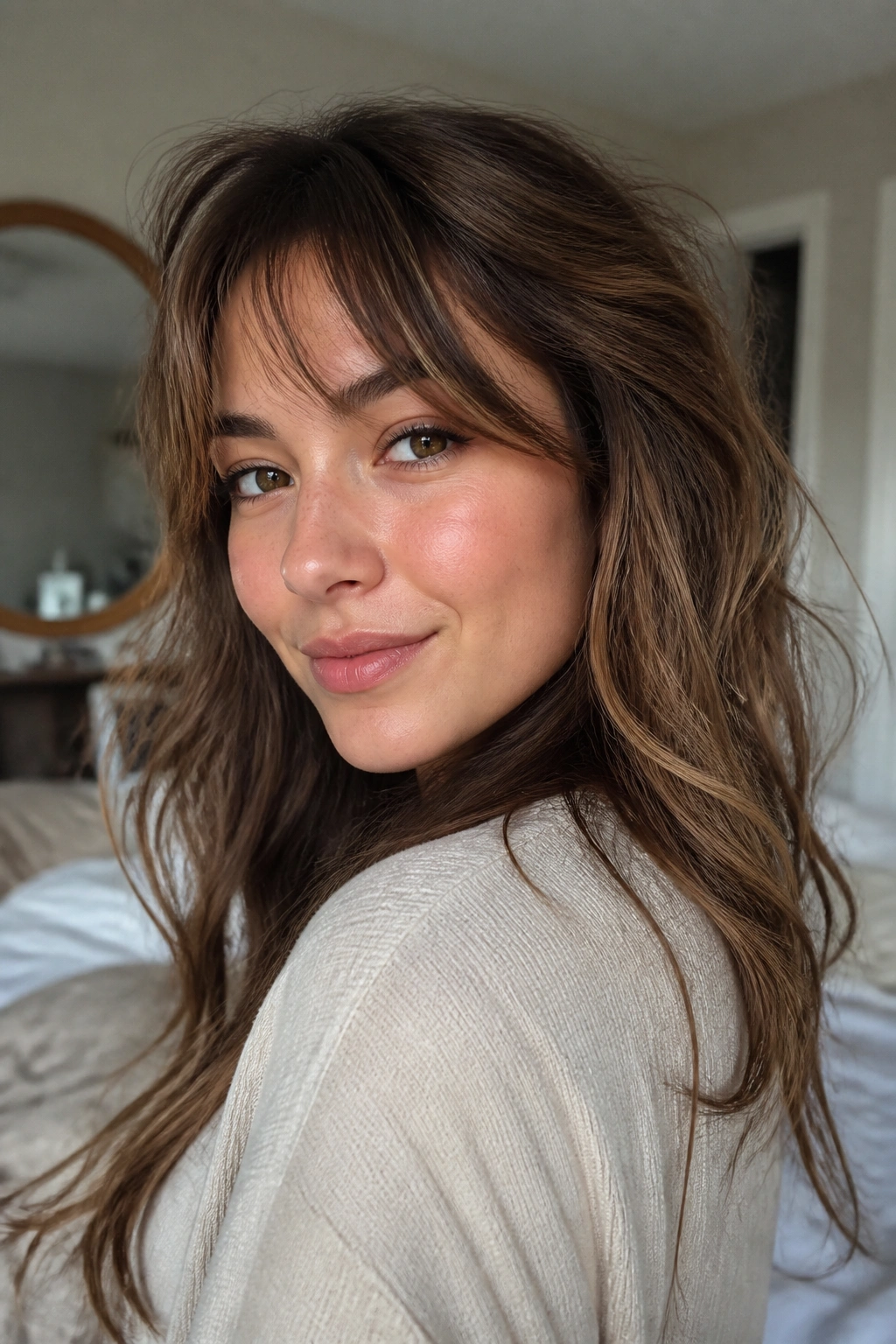
Messy is useful here. Wavy half bangs with a lived-in finish break up the face in a way that feels relaxed instead of styled within an inch of its life. The waves interrupt the width of a round face and give the forehead a softer frame.
The best part is how little fuss they need. A quick air-dry, a twist at the front, maybe a finger rake with a tiny bit of cream. That is enough. You do not need to force every strand into place. In fact, trying too hard can make the fringe look rigid, which is the opposite of what this style wants.
A good lived-in bang should look touched, not sprayed.
If your hair leans wavy already, this is one of the easiest half bangs ideas to wear. The fringe can split naturally and settle into slightly different shapes day to day, and that slight imperfection is what keeps it flattering on a round face.
13. Thinned-Out Half Bangs for Thick Hair
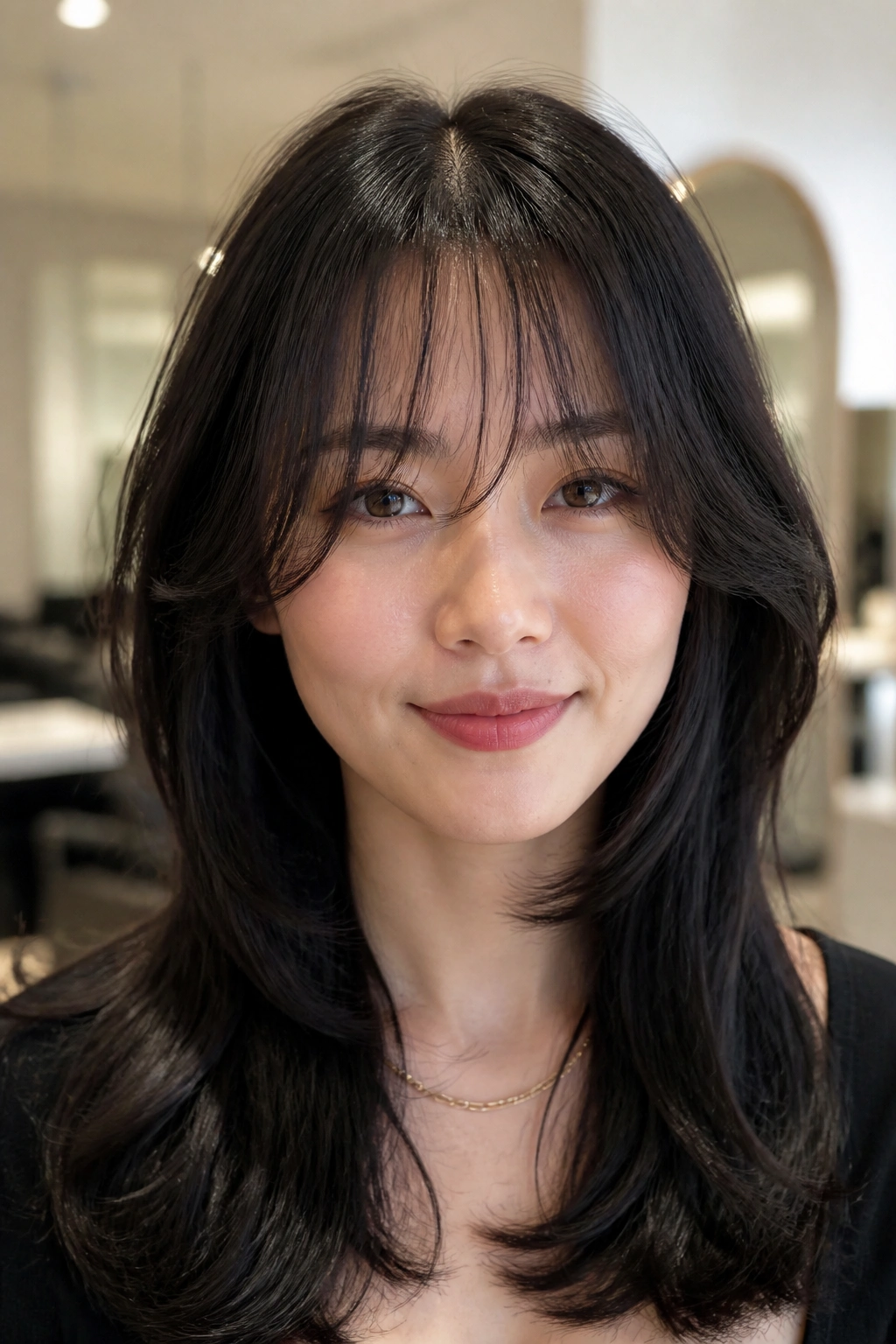
Thick hair needs a different kind of handling. If the fringe is cut in one solid line, it can sit like a shelf across the forehead and make a round face feel wider than it is. Thinned-out half bangs fix that by removing bulk where it matters most.
A stylist should use point-cutting or light internal texturing, not aggressive thinning shears that chew up the ends. The goal is to reduce weight while keeping the hair healthy-looking. You want movement, not frizzed-out ends that stick straight up.
Where the bulk should come out
- Around the center, if the bang feels too dense.
- Near the temples, if the fringe spreads too wide.
- At the ends, if the line feels heavy.
That balance lets the fringe drape instead of bulking out. On a round face, a draped fringe tends to be kinder than a dense one. It leaves room around the cheeks and keeps the shape from turning boxy.
14. Airy Half Bangs for Fine Hair
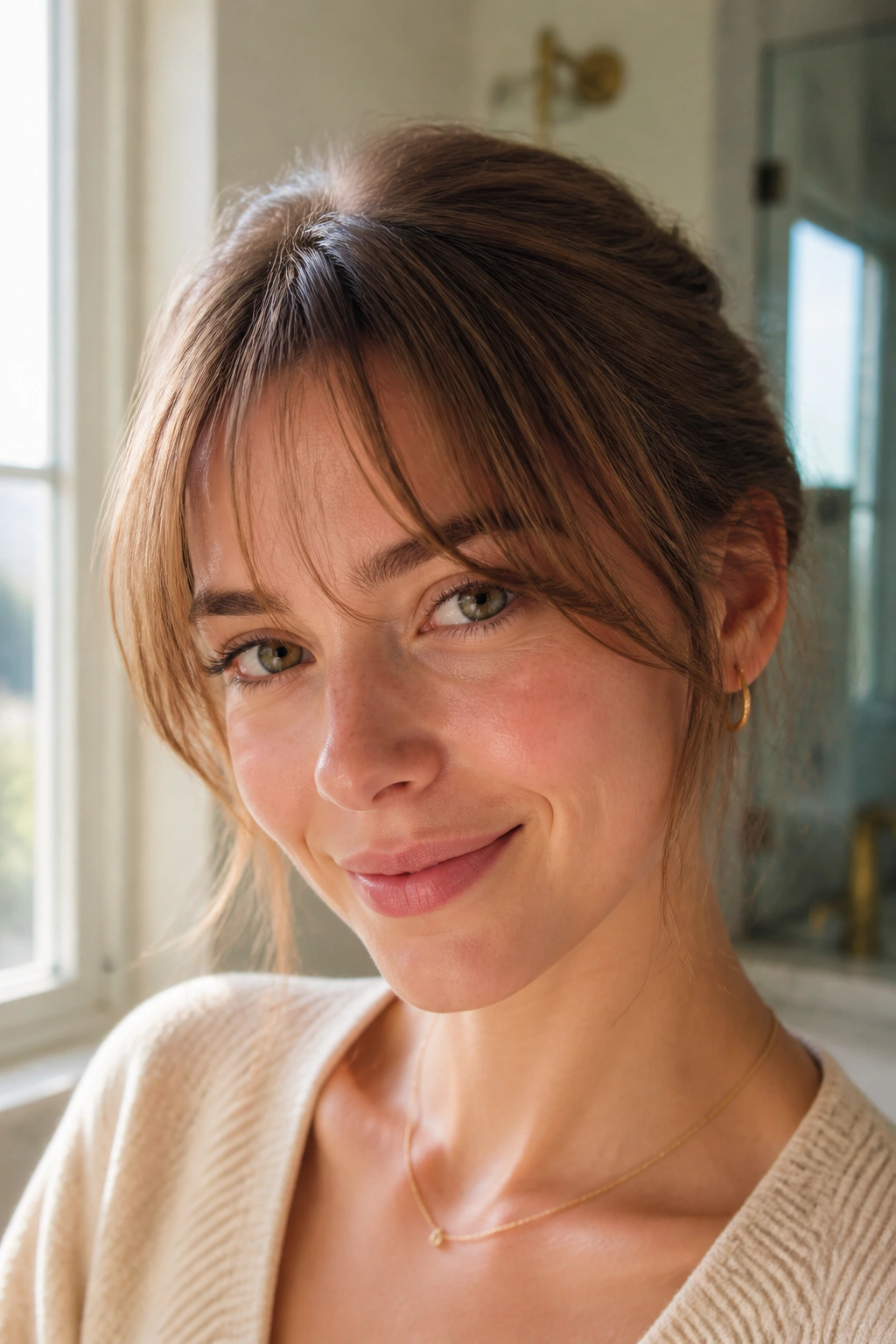
Fine hair gets punished fast by a heavy fringe. It can go flat, separate oddly, or disappear into the rest of the haircut. Airy half bangs solve that by keeping the cut light enough to move, but not so sparse that it looks accidental.
The useful part here is root lift. A little volume at the base makes the fringe look fuller, which keeps the face balanced. If the roots sit flat, the hair can cling to the forehead and emphasize roundness in the cheeks. If the roots have a little lift, the eye travels upward first.
This style likes a light mousse or a root spray, used sparingly. Blow-dry the fringe forward, then bend it apart with your fingers. Do not overwork it. Fine hair often looks better when you stop touching it too much. That sounds simple. It is. And it matters.
15. Deep Side-Part Half Bangs
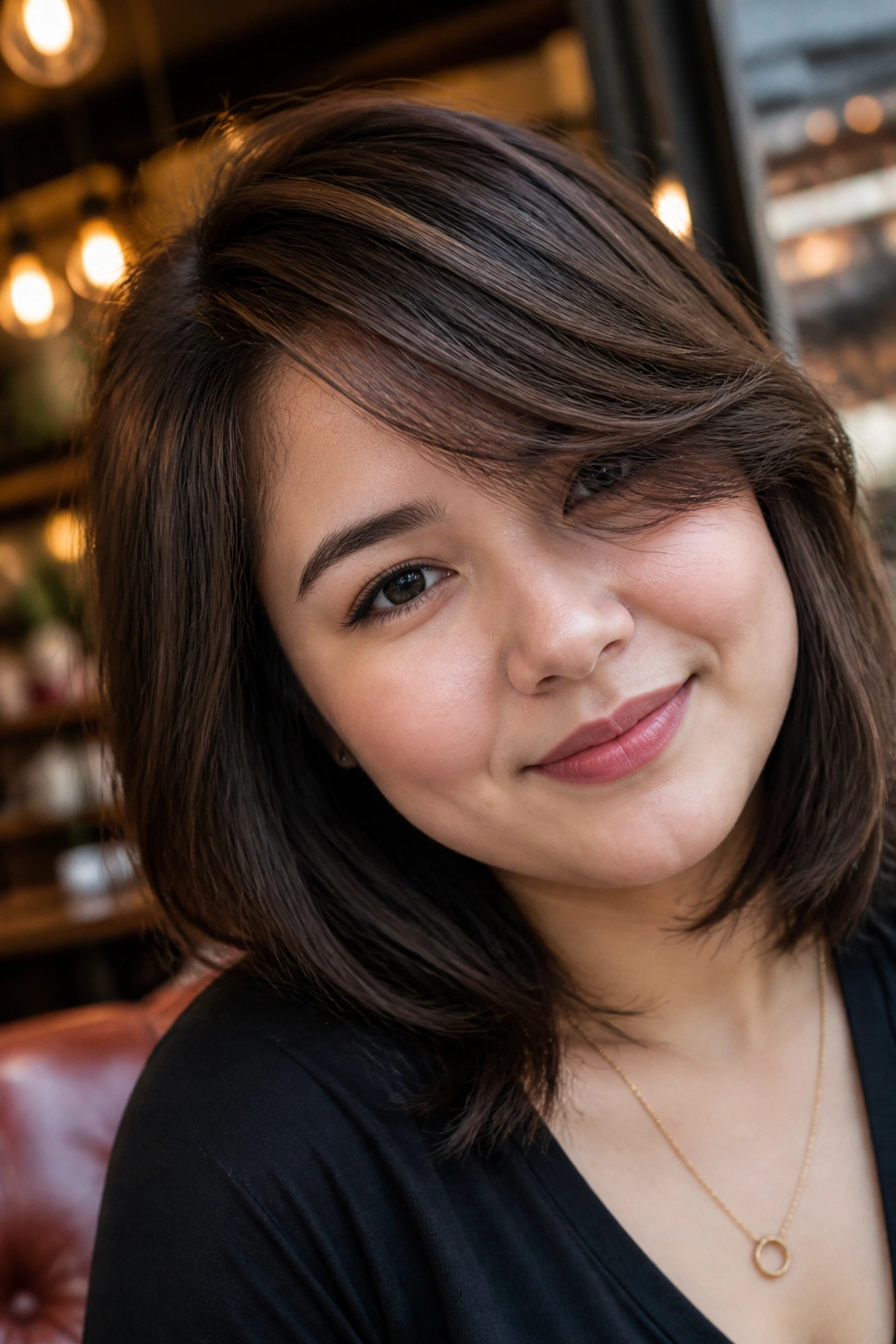
A deep side-part fringe is one of the fastest ways to break up the symmetry of a round face. Instead of splitting the forehead down the middle, the hair starts off to one side and sweeps diagonally across the front. That diagonal line is doing a lot of heavy lifting.
Unlike middle-part fringe, which tends to frame both sides evenly, this one gives the face a strong direction. That can be useful if your cheeks are full or your chin is softly rounded. The asymmetry pulls the eye off-center and makes the face feel longer.
Set the part about 2 inches farther over than you normally would, then direct the bang across the forehead with a brush or fingers. Keep the ends soft. A hard flip looks dated fast. A soft sweep looks intentional without trying too hard.
16. Arched Half Bangs That Open at the Center
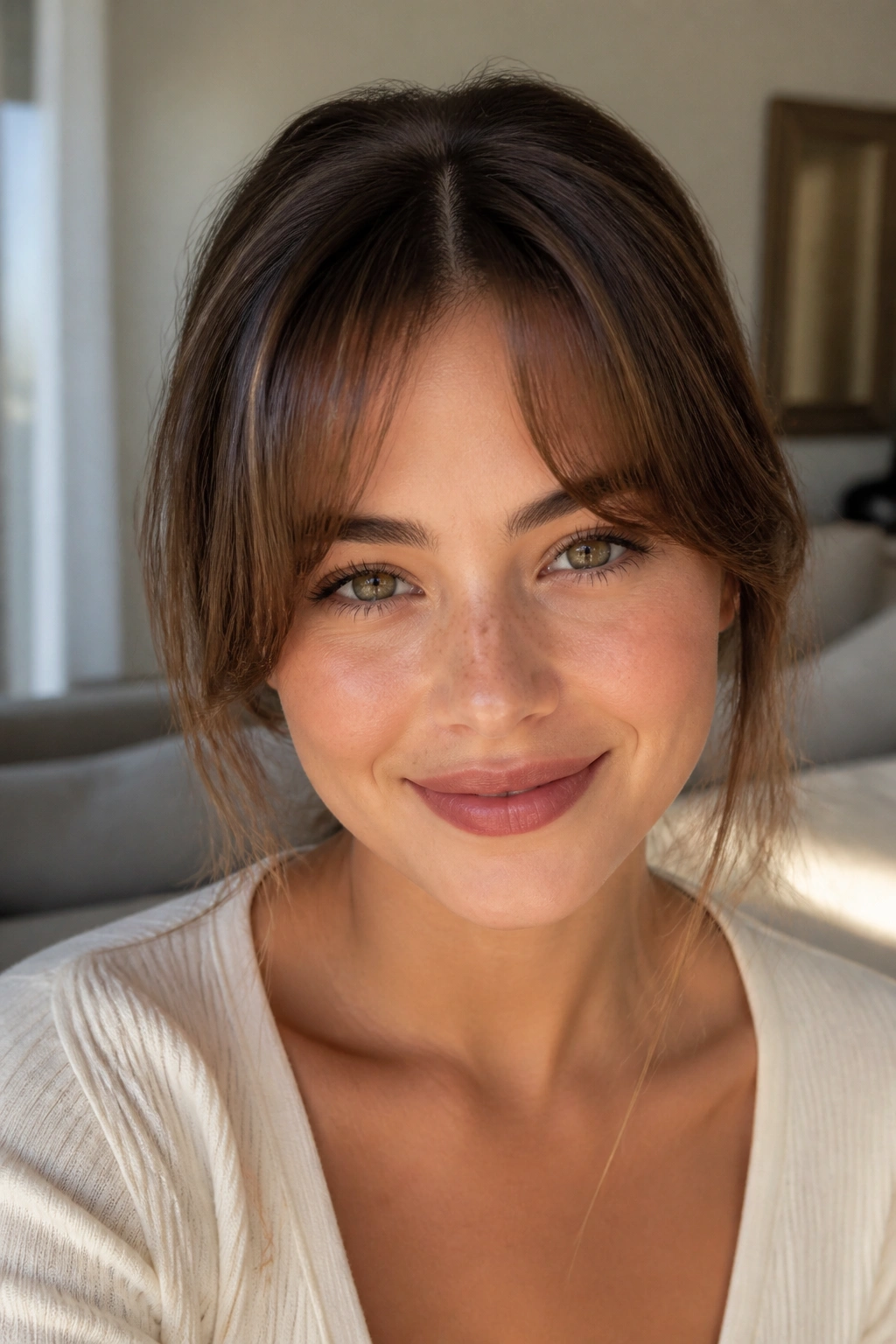
Arched half bangs sit somewhere between curtain bangs and a soft brow frame. The center is lightly lifted, then the sides curve out in a shape that follows the brow line. On a round face, that gentle arch creates a small pocket of space above the eyes, which helps the face feel less compressed.
The shape works because it avoids one long horizontal edge. A straight line across the brow can shorten the forehead. An arch breaks that line and gives the face a little upward motion. The result is subtle, but it shows up in photos and in motion.
This is a good option if you want bangs that feel a bit more styled than wispy fringe, but less obvious than a full curtain. It looks best when the ends are soft and the center is not too thick. If it gets heavy, the arch loses its lightness. Keep the density in check, and the shape stays elegant without becoming fussy.
17. Collarbone Lob With Piecey Half Bangs
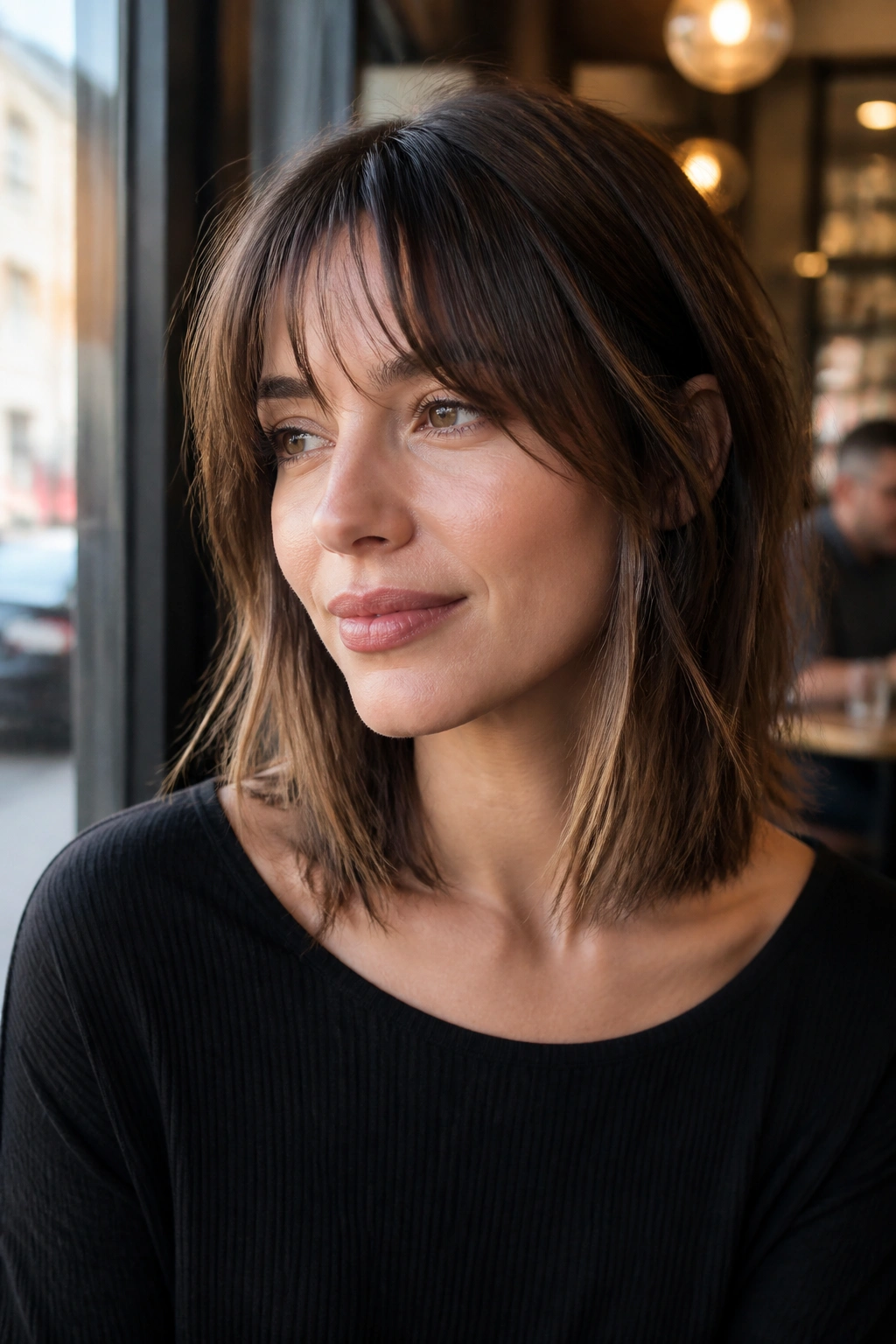
Sometimes the bangs are only half the story. A collarbone lob gives round faces a useful frame because it stops the hair from widening at the cheeks, and piecey half bangs add a broken, open feel at the front. The two together make a strong case.
Why the haircut matters too
A fringe can only do so much if the rest of the haircut is too bulky. A lob that hits around the collarbone keeps the outline long and clean, while the bangs soften the front. That combination keeps the face from being surrounded by too much width at one level.
Good signs to ask for
- Ends that are blunt enough to keep shape.
- Light layers around the face.
- Bang pieces that can tuck or sweep out.
This is a smart choice if you want a haircut that behaves in a ponytail, a loose wave, or a straight blowout. The bang does not have to do all the work on its own. It gets backup from the cut.
18. Ponytail-Friendly Half Bangs
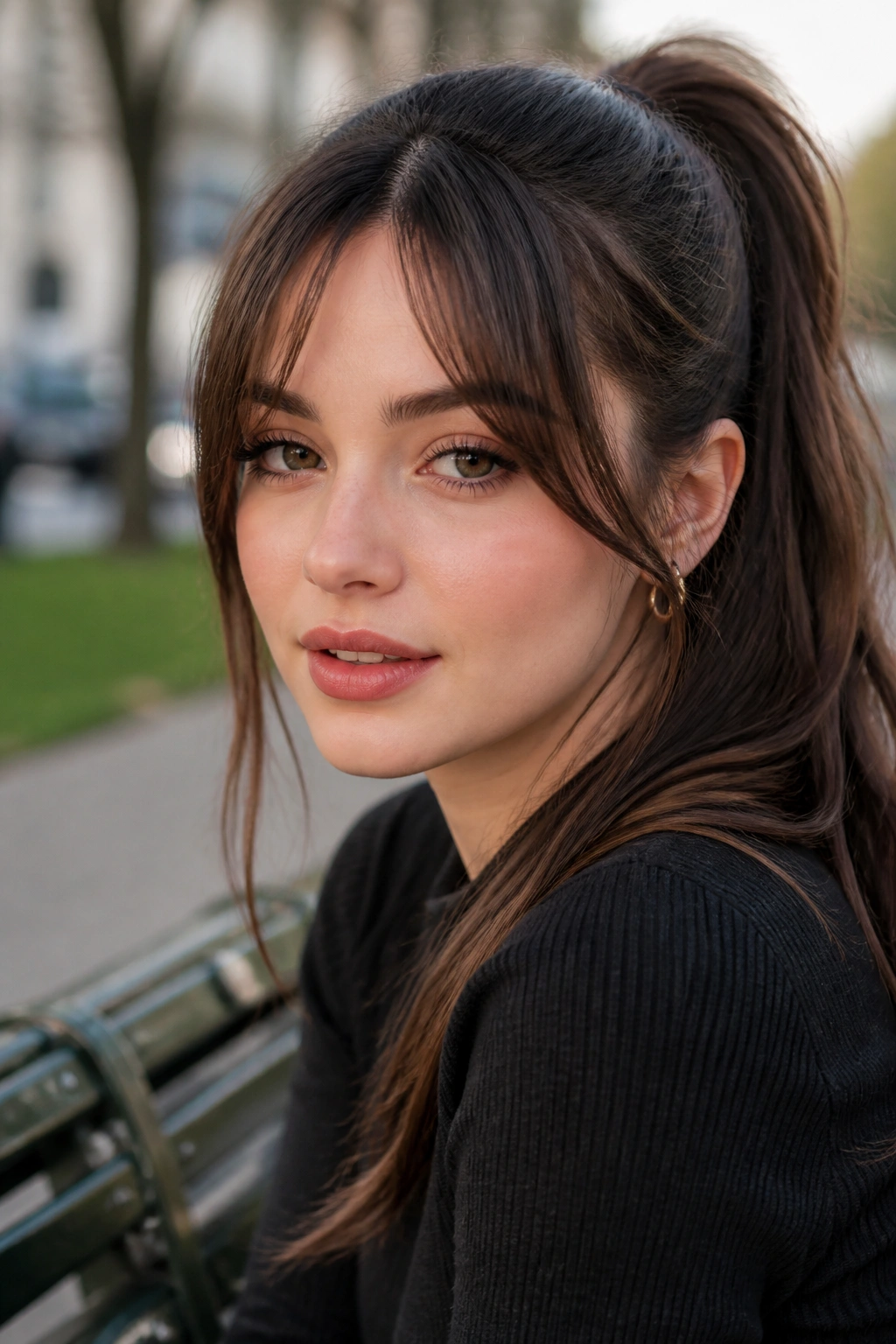
Some fringe looks lovely only when you wear your hair down. This is not that kind. Ponytail-friendly half bangs are cut long enough to move with buns, clips, and ponytails, which makes them practical for people who actually put their hair up.
For round faces, that matters because a full-up style can expose the cheeks and make the face read wider if the front is pulled too tight. Half bangs soften that edge. They fall forward a little, then sweep aside when you want a cleaner look. The face stays open, but not bare.
Keep the shortest point just under brow level and the outer pieces long enough to tuck behind the ear. That gives you options. Busy day? Clip the rest back. Want more framing? Pull the bangs loose and shake them out. Simple. Useful. No drama.
19. Razor-Cut Half Bangs
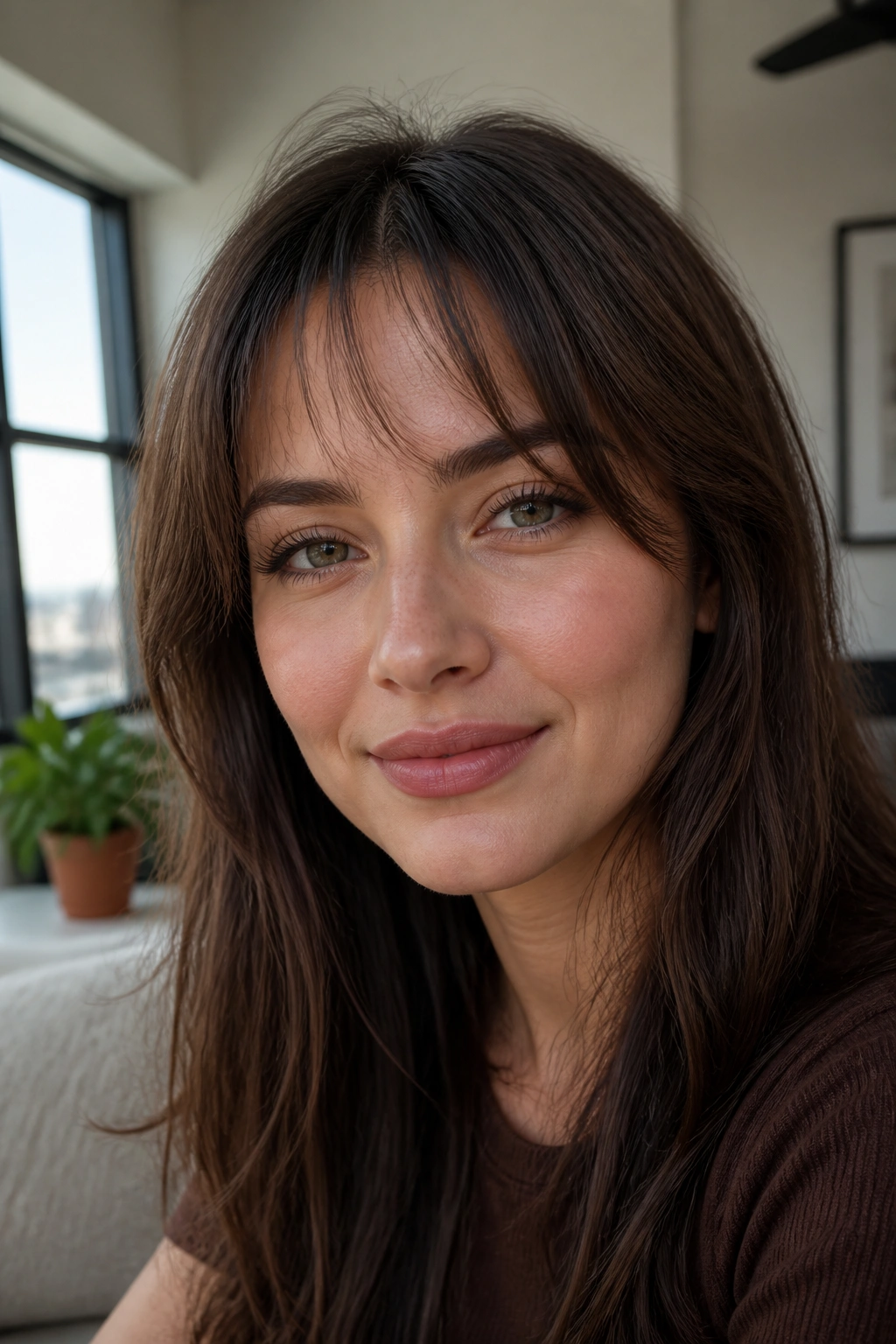
A razor can help, but only if the hair cooperates. Razor-cut half bangs use broken ends and a softer edge to remove the sense of weight across the forehead. On a round face, that broken edge can keep the cut from looking too blocky.
What to watch for
- Frizz-prone hair may puff up.
- Very curly hair can lose definition.
- A bad razor cut can look shredded, not soft.
That is why this one needs a stylist who knows how the hair behaves when dry. The benefit is that the fringe gets movement without looking over-layered. The downside is that the texture has to be right, or the cut turns fuzzy fast.
If your hair is straight, medium, or softly wavy, this can be a lovely option. The fringe feels light, the forehead stays partly visible, and the face gets a gentler frame than a blunt cut would give it. It is not the safest choice on the menu, but when it works, it looks effortless in the best sense.
20. Temple-Sweeping Half Bangs
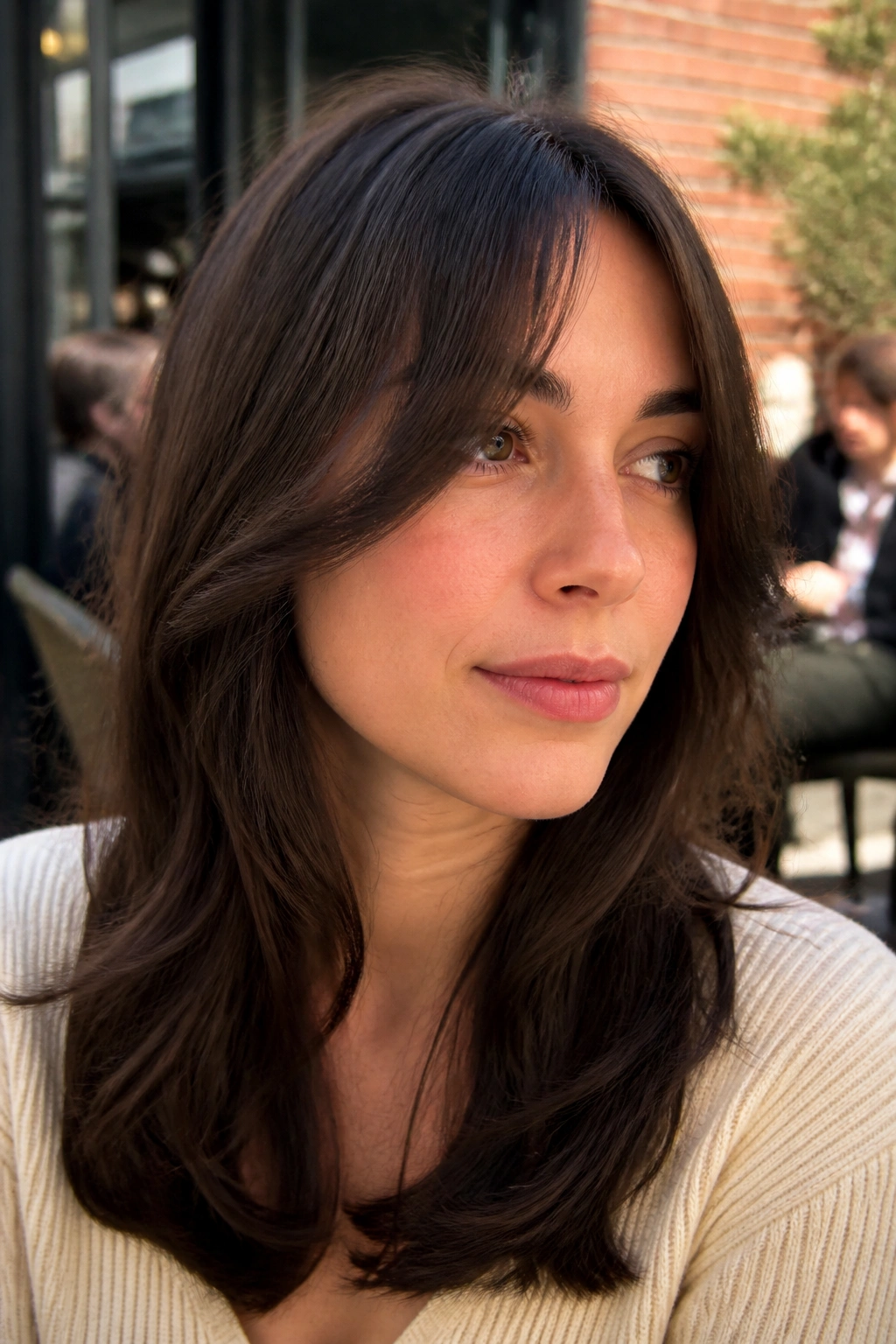
If you want the most forgiving version, start here. Temple-sweeping half bangs keep the forehead open and send the weight outward from the temples instead of crowding the center of the face. On a round face, that outward sweep is gold.
The shortest pieces usually begin closer to the temple than the brow. Then they flow across the upper face in a soft curve, almost like a face-framing veil. It is a subtle shape, which is exactly why it works so well. You get softness without losing structure.
This is also one of the better options for grow-out. The pieces can blend into side layers as they get longer, and the shape still reads on purpose. If you are unsure about bangs but want something that changes the face without shouting about it, this is the one I would start with. It does not fight your features. It edits them a little, and that is enough.
