



Wispy curly fringe hairstyles for round faces can be a gift when the shape is right and a headache when it isn’t. A blunt bang across the forehead tends to widen the face, while a soft, broken fringe pulls the eye down and out. That small difference changes everything.
What works best is movement. A center split, a side sweep, a feathered edge, or those tiny tapered pieces at the temples all help create a little vertical line in a face that already has plenty of width through the cheeks. Curls do half the styling work for you, which is nice, but they also make the cut behave differently once it dries. That’s where a lot of people get tripped up.
The catch is shrinkage. A curl that sits at eyebrow level when wet can spring up an inch or two once it dries, and coily hair can bounce up even more. That is why dry cutting, point cutting, and a careful check of the finished shape matter more here than with straight hair.
Round faces are not hard to dress with fringe. They just need the fringe to move with the curls instead of fighting them.
1. Side-Swept Curly Fringe for Round Faces
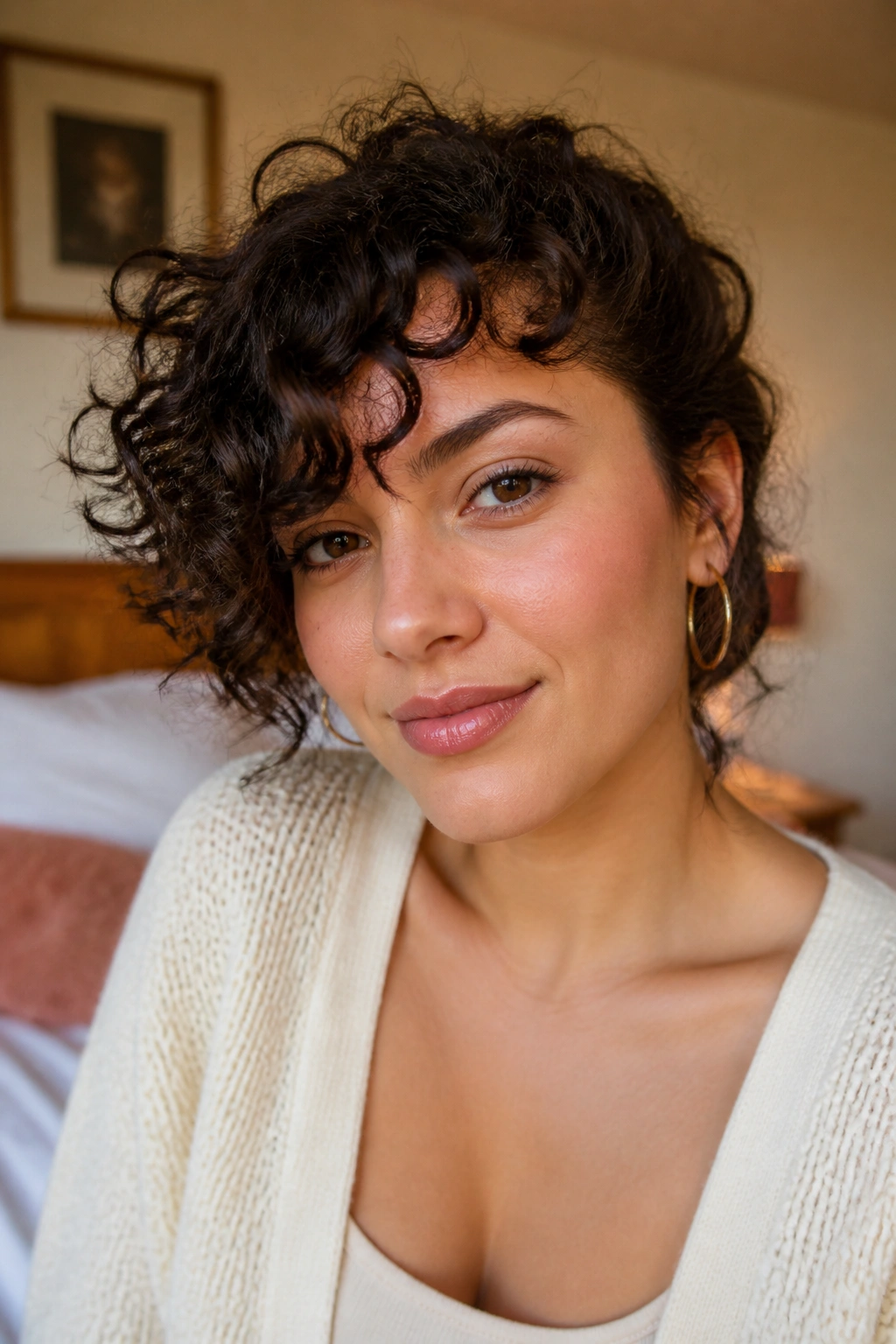
A side-swept fringe is one of the easiest ways to soften a round face without making the forehead disappear. The diagonal line breaks up fullness at the cheeks and gives the eye a place to travel. It feels relaxed, not fussy, which is exactly why it works so well with curls.
The best version keeps the shortest piece near the high point of the brow and lets the fringe fall longer toward the temple. That shape does not sit flat like a helmet. It bends, drapes, and leaves a little skin visible at the forehead, which keeps the cut from looking heavy.
Ask for the fringe to be cut dry, curl by curl. That matters more than people think. If your stylist trims it while the hair is stretched wet, the final shape can land much shorter than expected once the curl snaps back.
A tiny off-center part helps too. Not a dramatic side part. Just enough to send the fringe across the face instead of straight down it. Use a pea-sized amount of lightweight gel or curl cream on the front section, then finger-twist the ends in the direction you want. If one side wants to puff up, clip it against the forehead for five minutes while it dries. Small thing. Big difference.
2. Curly Curtain Bangs with a Center Split

Why do curtain bangs keep showing up on round faces? Because they create two slim vertical lines right where the face needs them most. The split opens the forehead, and the longer sides fall near the cheekbones instead of stopping at the widest point of the face.
Why It Flatters Round Faces
Curtain bangs work best when the shortest point lands between the brows and the curl pattern is loose enough to move. That middle gap gives the face length, while the longer edges soften the cheeks. You get shape without a hard edge.
The important part is not the split alone. It’s the length at the temples. Let those outer pieces graze the top of the cheekbone or just below it. Too short, and the fringe balloons. Too long, and it starts behaving like a face-framing layer instead of bangs.
How to Style It
- Part the front section with the tip of a tail comb, making the opening just wide enough to show a sliver of forehead.
- Diffuse on low heat, then pinch the bangs gently to encourage the curl pattern instead of brushing it out.
- If the center curls too tight, stretch it with two finger coils while damp.
This style is a good one for people who want fringe but don’t want to feel trapped by it. The grow-out is easier too, which is a mercy.
3. Airy Curly Shag with a Feathered Fringe
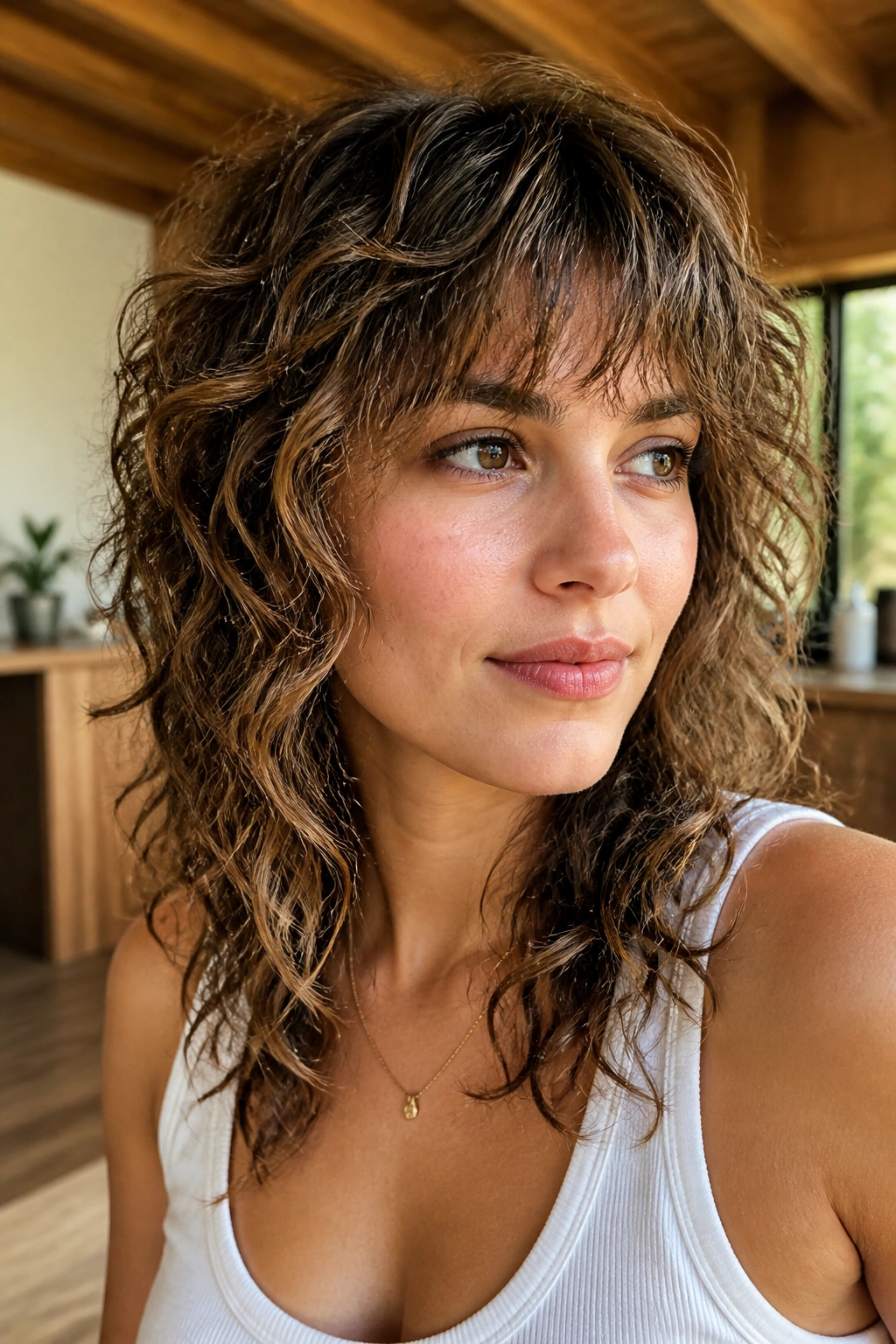
The shag is the haircut that says, “I like volume, but not in a boxy way.” On a round face, that matters. A curly shag removes bulk from the sides, lifts the crown, and keeps the fringe broken up enough that it does not sit like a solid curtain across the forehead.
What I like about this shape is the way it makes curls look lighter without thinning them to death. The layers are the story. The fringe is just the opening line.
Ask for layers that start around the cheekbone or slightly above the jaw, then taper into a fringe that is cut with pointy, feathered ends rather than blunt scissors. The front pieces should feel a little shaggy near the brow and longer at the temples. That unevenness is the point.
If your curls are dense, the shag can be a lifesaver. It takes the width out of the sides and sends the eye upward. If your hair is finer, though, do not let anyone over-layer the crown. Too much removal at the top can leave the fringe looking stringy, and that’s a bad trade.
A little mousse at the roots and a diffuser set on low heat usually gives this cut the lift it wants. Leave the ends alone. They should look lived-in, not polished into a shape they never had in the first place.
4. Brow-Skimming Curly Bob with See-Through Bangs

A curly bob does not have to close off a round face. The trick is keeping the length under control and the fringe light enough to let the forehead breathe. See-through bangs do that well. They look soft, a little broken, and nowhere near as heavy as a full fringe.
The bob itself should sit just below the jaw or right at the top of the neck. If it lands exactly on the widest part of the cheek, it can make the face feel wider than it is. A half-inch lower changes the whole shape. That tiny difference counts.
The bangs should be sparse on purpose. Not thin because the hair is fine. Thin because the shape needs space. A few piecey curls over the brow, a few gaps in between, and then longer edges that fall near the temple. That is the sweet spot.
This cut looks best when the front curls are defined but not overworked. Use a small amount of cream, then scrunch with your hands and let the curls separate on their own. If they clump too tightly, the fringe starts to look like a solid shelf. No one wants that.
5. Long Layers with a Shattered Curly Fringe
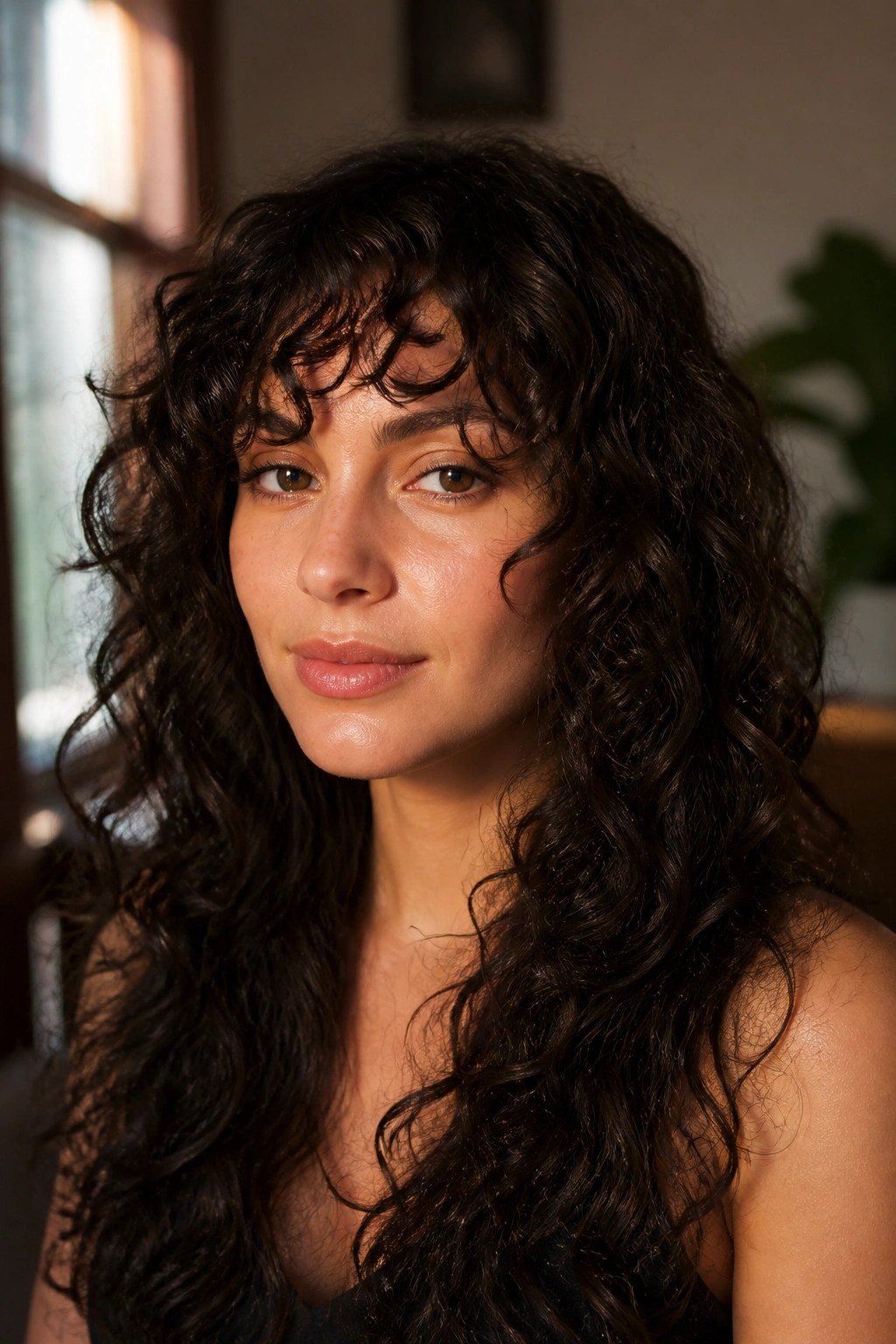
Long hair on a round face can feel safe, but safe is not always flattering. One-length curls can hang heavy at the sides and make the face look broader. Long layers fix that by pulling the bulk downward and giving the fringe a job instead of a burden.
Where the Shape Matters
The face-framing pieces should start around the mouth or chin and then taper into longer lengths. That draws a clean vertical line. The fringe itself should be shattered into little curl-sized pieces, not carved into one full row. If the front is too solid, the eyes go straight across the face. A broken fringe changes the direction.
Best for These Curls
- Medium to thick curl patterns that need weight removed.
- Hair that grows wide at the temples.
- Longer lengths that feel flat without face framing.
A fringe like this looks better a bit longer than expected. Seriously. Curls bounce up, and a bang that seems generous when wet can end up short and stubborn after drying. Aim for the fringe to sit at or just below the eyebrow in its dry state.
This is the style I’d point to for anyone who wants fringe but still likes to tuck hair behind the ear. You get options, which is half the battle.
6. Curly Pixie with a Soft Forward Fringe
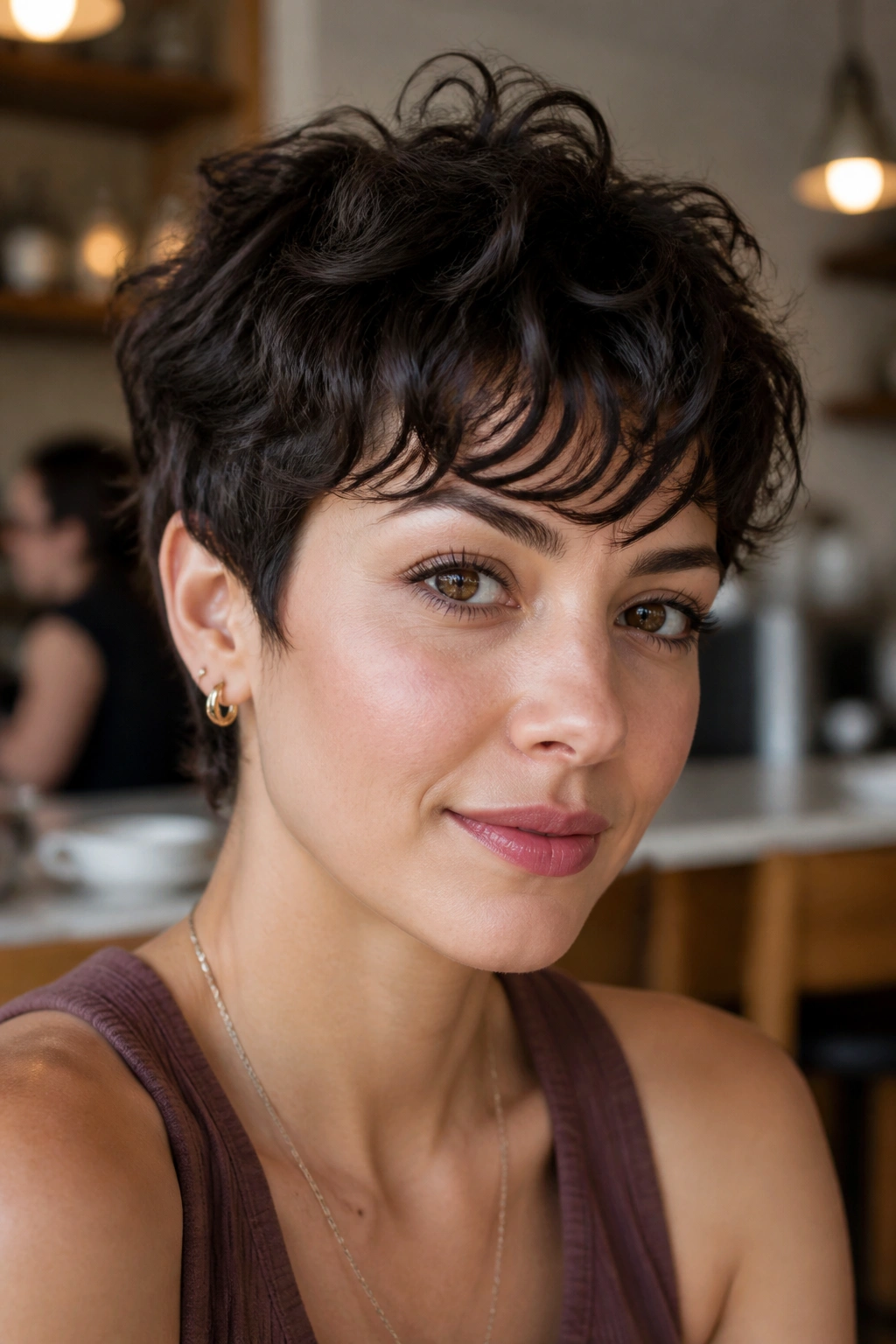
Can a pixie work on a round face? Yes, if the top stays longer than the sides and the fringe moves forward instead of straight down. That’s the whole game. Height on top. Softness in front. Clean edges at the sides.
The best curly pixie for a round face keeps about 2½ to 4 inches on top, depending on curl tightness, with the fringe brushed forward and slightly to one side. The sides and nape should be tapered close enough to reveal the shape of the head, but not shaved so high that the cut starts looking harsh.
What to Ask Your Stylist For
- Longer crown layers that can sit up and forward.
- Fringe pieces that land around the brow when dry.
- Tapered sides that do not puff out at the ear.
This cut works because it shows the face instead of hiding it. That can feel scary the first day. Then it starts to feel sharp and easy, especially if you hate long drying times.
The fringe needs a bit of product, but not much. A dime-sized amount of curl cream is plenty for most hair. Push the front forward with your fingertips, let it dry a little, then fluff the roots lightly. If the top lies flat, the whole cut loses its shape.
7. Bottleneck Fringe Lob for Round Faces
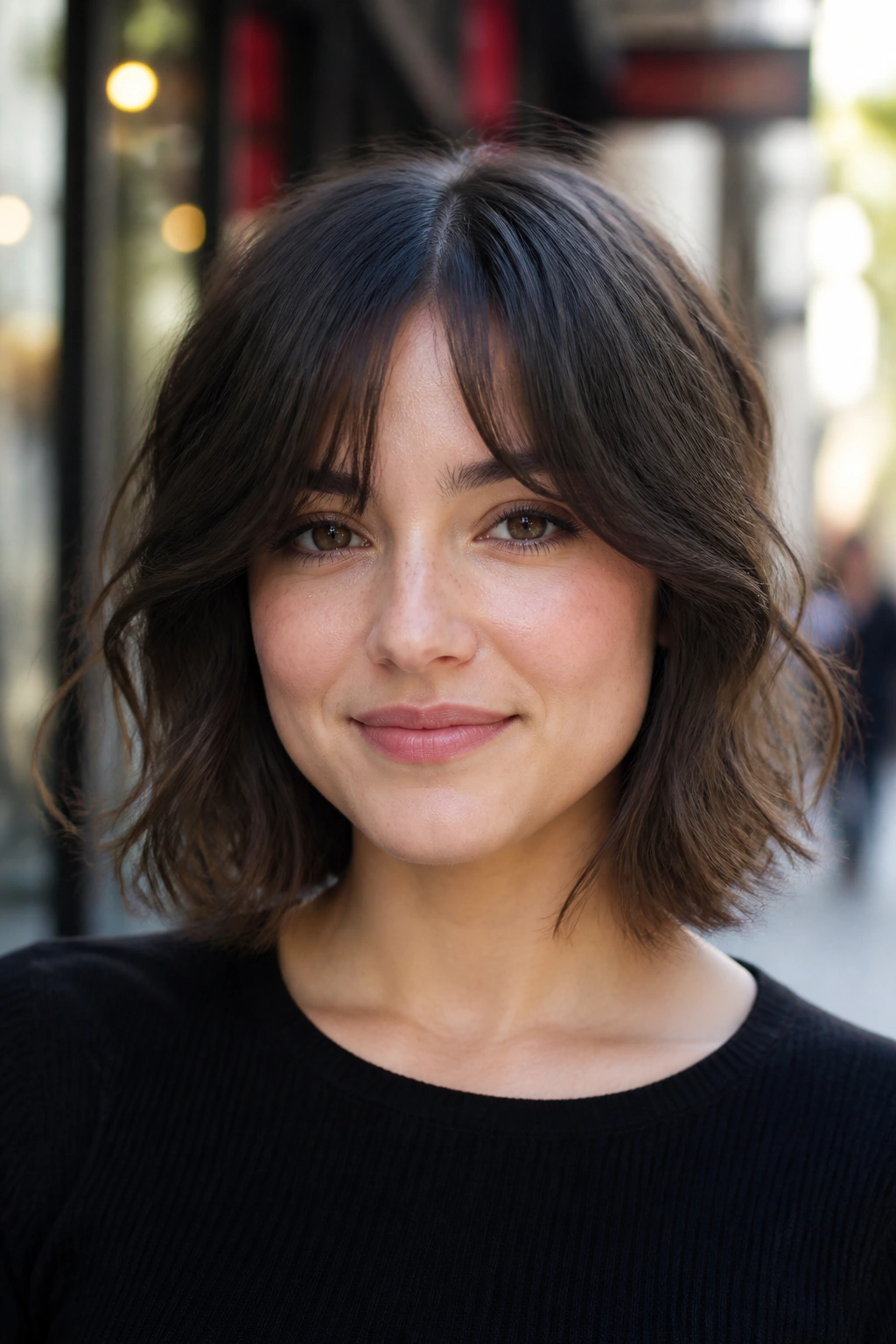
A bottleneck fringe is one of the smartest fringe shapes for round faces because it starts narrow at the center and opens out toward the temples. That gives the forehead breathing room while the longer sides drift down near the cheekbones. Pair it with a lob, and the whole cut starts to look calm in a good way.
The lob should hit somewhere between the collarbone and just above it. Shorter than that, and the cut can start to sit on the jaw. Longer than that, and the fringe can lose its visual job. The bottleneck shape depends on contrast. Short in the middle. Longer at the edges. That is what gives it structure.
Do not cut the temple pieces blunt. Let them taper. If they stop dead, the fringe stops reading as soft and starts reading as chopped. Different mood entirely.
This style is useful for people with medium-density curls that want a little face framing but not a full curtain bang. It also grows out with less drama than a straight-across fringe, which matters if you are the kind of person who goes six weeks too long between trims.
8. Deep Side-Part Fringe for a More Angular Look

Not every round face needs the same answer. A deep side part can do more than center-split fringe if your curls are thick, springy, or a little resistant to control. It creates asymmetry fast, and asymmetry is a nice way to shave some visual width off the face.
The part should start a few inches from the natural center, usually near the outer arch of the eyebrow. From there, the fringe can sweep diagonally across the forehead and blend into a longer front layer on the heavy side. That line makes the face feel less circular without making the cut look severe.
This style is especially good when one side of your hair naturally wants to fall flatter than the other. Instead of fighting that, use it. Curls usually behave better when they are allowed to lean the way they want.
A deep side-part fringe also buys you time on busy mornings. If the front looks uneven, it often reads as intentional. That is a nice little gift. Not every hairstyle can say that.
9. Halo Layer Cut with Wispy Temple Pieces
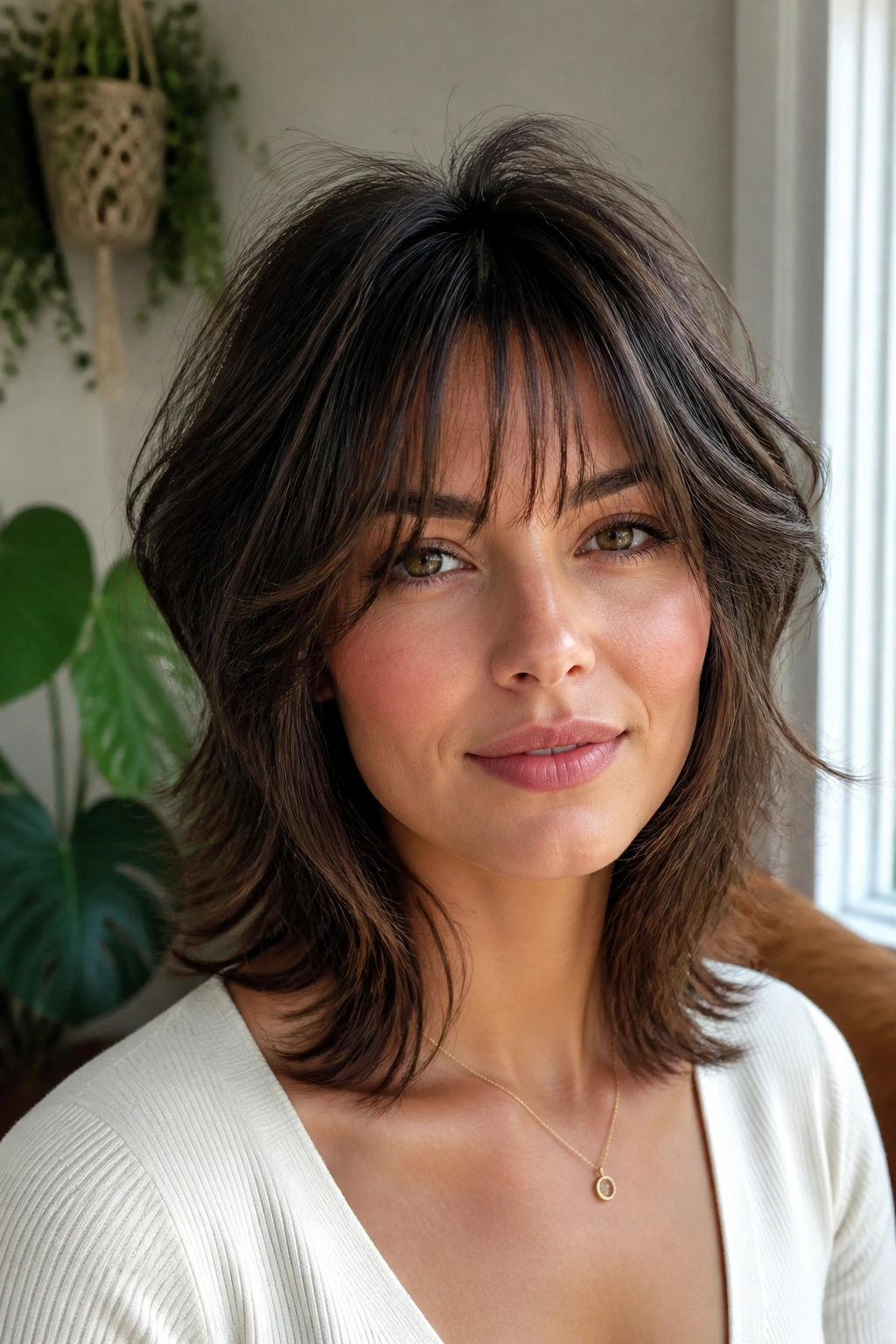
A halo layer cut is for people who want volume at the crown and a softer outline at the face. On a round face, the trick is to keep the widest part of the shape above the cheeks, not right beside them. Wispy temple pieces help with that.
The halo effect comes from layers that lift around the top and upper sides while the lower perimeter stays softer and a little longer. Then the fringe slips into the design with just a few broken pieces at the temples and center. It does not need to be thick to be useful.
What Makes It Different
- The top has lift, which adds length visually.
- The temples stay light, so the face does not look boxed in.
- The fringe is more suggestion than wall.
This cut likes curls with a bit of personality. If your hair is very flat at the roots, the halo shape may need mousse or root clips while drying. If your hair is already big, you can lean into the natural volume and keep the fringe lighter than the rest.
The best version does not look styled in a rigid way. It looks like the hair falls into place with a little help. That is the whole appeal.
10. Wolf Cut with a Soft Curly Fringe

Why does the wolf cut work so well on curls? Because it puts the bulk where it helps and removes it where it hurts. The crown gets shape, the lower layers get movement, and the fringe stays soft enough that it does not cut the face in half.
A curly wolf cut should never feel overbuilt. The layers around the crown need to be shorter than the lengths below, but not so short that the top goes puffy. The fringe can sit around the brow or a little below it, with jagged ends that break up the line across the forehead.
What to Watch For
- Too many short layers can make the top balloon.
- A heavy fringe cancels out the face-slimming effect.
- The nape should stay loose enough to move.
This is a strong choice for dense curls and medium to thick texture, especially if the hair tends to get triangular when it grows out. The wolf cut fixes that shape problem by building a little chaos into the haircut. Controlled chaos, though. Not a mess.
If you like hair that feels cool without trying hard, this is one of the best options on the list. It has edge, but it still flatters a round face instead of fighting it.
11. Chin-Length Curly Bob with Piecey Bangs

A chin-length bob can work on a round face if the fringe stays broken and the perimeter is not a perfect circle. The bob gives structure, and the piecey bangs stop it from becoming too compact. That balance matters.
The chin length should be handled carefully. If the hair naturally springs upward, the visual finish may sit closer to the jaw after it dries, which can make the face look fuller. Cutting the bob a touch longer than chin level usually gives more room for shrinkage and better movement.
The bangs should be tiny, separate curls rather than one continuous strip. Think of them as a few front pieces that happen to sit together. That keeps the forehead from disappearing and makes the whole cut feel lighter.
This style is a nice fit for people with loose curls who want a bob but do not want to look severe. It also works when you like to air-dry. The shape will not be identical every day, and that’s fine. In fact, that slight inconsistency is part of why it looks good.
12. Tapered Coily Cut with an Airy Fringe
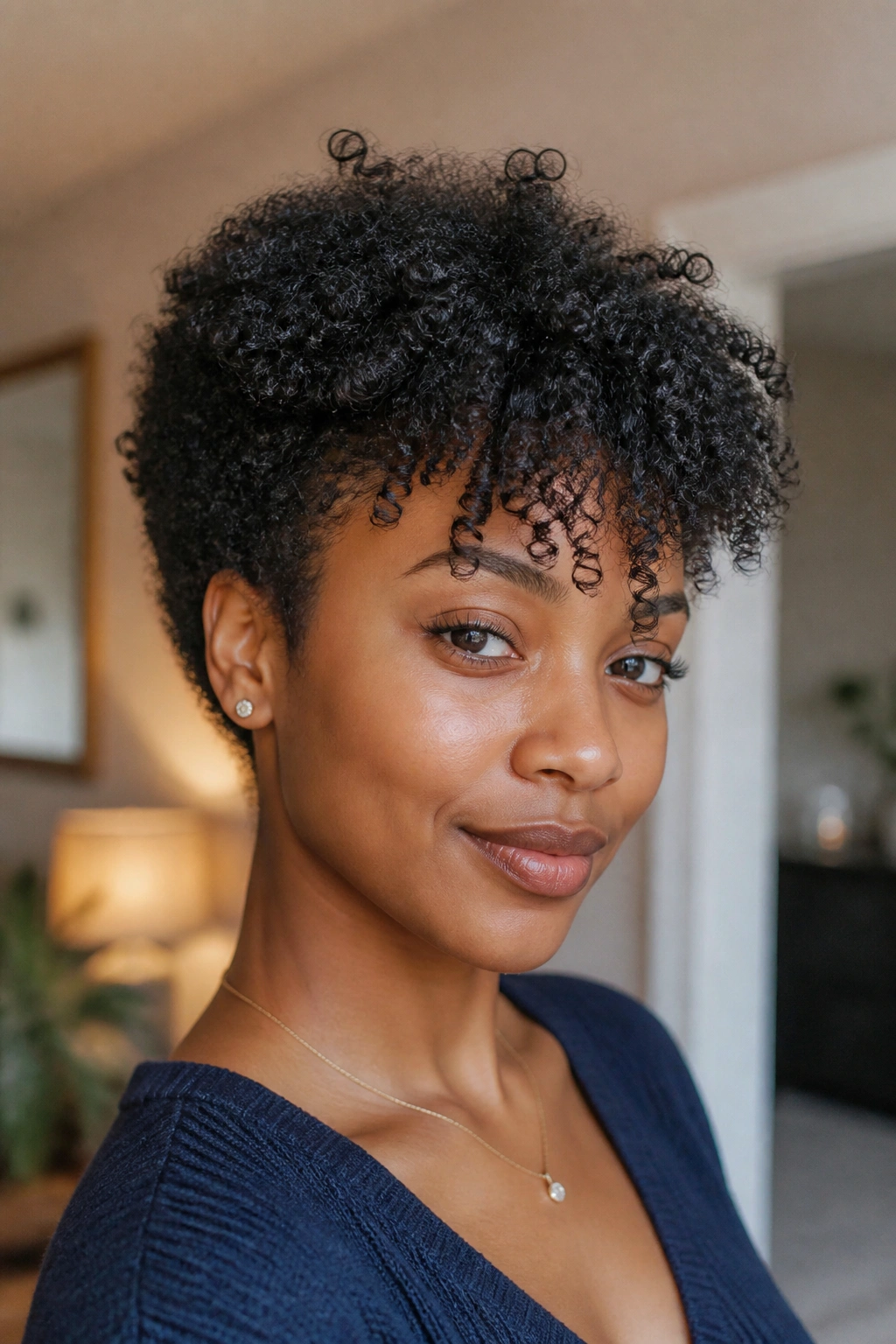
Coily hair needs its own logic. A tapered cut with an airy fringe gives shape to the head without forcing a round face into a boxy outline. The taper at the sides and nape trims away width, while the fringe brings attention up front without turning into a heavy band.
For 4A to 4C textures, the front should usually be cut on dry hair or at least stretched hair. Wet coils can lie. They can look longer, looser, and far more obedient than they really are. Then they shrink back and surprise everybody.
The fringe itself does not have to be long. It just has to be soft and broken up enough that it does not sit as one flat row. A few tapered pieces over the forehead and some slightly longer curls at the temples are often enough.
This style is especially good if you wear twist-outs, braid-outs, or stretched curls on the regular. It keeps the front from looking blunt after the style sets. A little oil on the ends helps with sheen, but don’t drown the fringe. Coily bangs can go limp faster than people expect when overloaded with product.
13. Rounded Afro with a Feather-Light Fringe
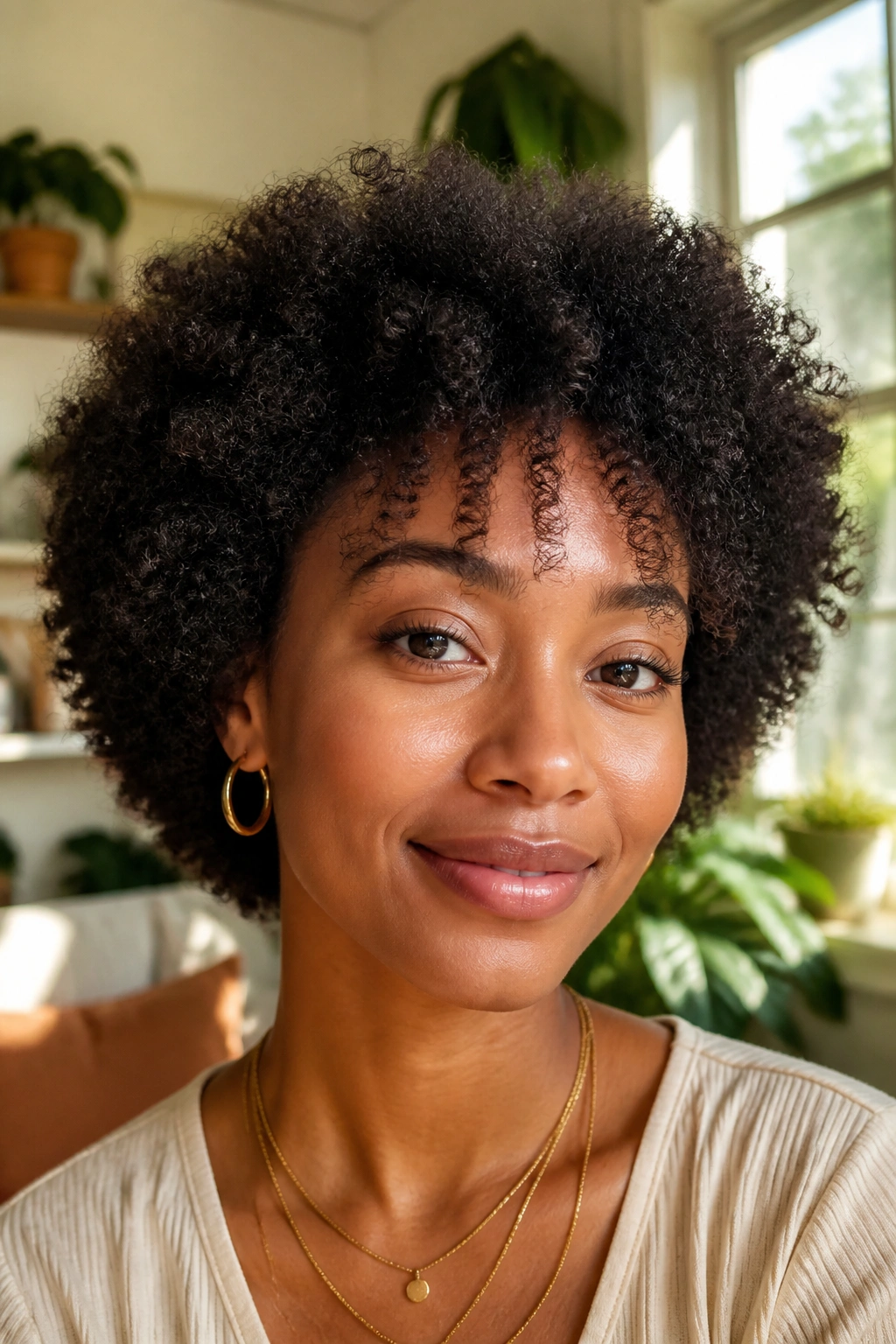
A rounded afro can flatter a round face when the silhouette is taller than it is wide and the fringe stays feather-light. The danger comes when the front is cut into a hard line. That can flatten the face and make the shape feel too compact.
The better move is a soft fringe made from a few loose front pieces, sometimes barely more than a suggestion of bangs. That keeps the forehead visible while still giving the cut a front edge. The overall shape should rise above the sides and stay airy around the temples.
This cut is built on proportion. If the sides are too full and the top is too short, the face ends up looking broader. If the top has lift and the fringe stays light, the eye goes upward instead. That’s the effect you want.
A few practical points help here:
- Keep the fringe a little longer than you think after shrinkage.
- Trim the shape in a dry state if possible.
- Moisture and hold matter, but heavy gels can make the front look stiff.
The result is soft, bold, and very wearable. Not delicate. Never delicate. Just shaped with care.
14. Midi Cut with Split Fringe and Cheekbone Pieces
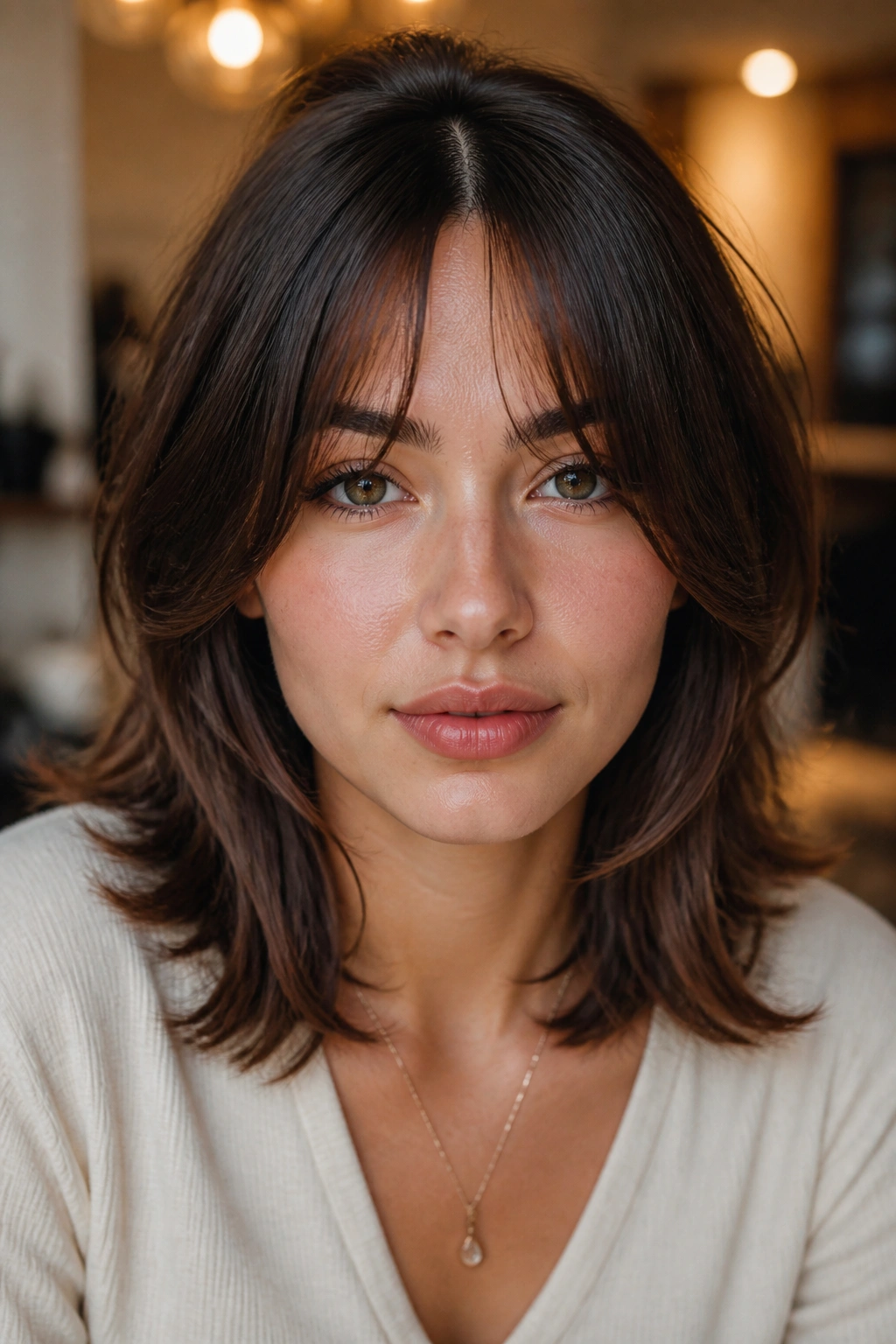
A midi cut sits in that sweet spot between short and long, which makes it handy for round faces. Add a split fringe, and the cut gets a built-in opening at the center plus soft movement at the cheeks. That combo is hard to beat.
The split fringe should not be so wide that it disappears into the rest of the hair. Keep the opening narrow enough to show a bit of forehead, then let the two sides fall into cheekbone-length pieces. Those front pieces act like gentle rails along the face.
Why It Beats a Heavy Fringe
A heavy fringe can make the face look shorter. A split one does the opposite. It lets the eye move down the center while the cheekbone pieces add shape without piling volume in one place.
This cut works well for medium curl density and for people who like to wear their hair half-up. The fringe still looks intentional when you pull the top sections back, which is useful. Not every hairstyle survives a messy bun this gracefully.
If the curls around the face tend to puff, ask for the cheekbone pieces to be point-cut and slightly longer than the rest of the front. That small extra length keeps them from springing right up and sitting in the wrong spot.
15. Long Curly Layers with the Softest Everyday Fringe

If you want fringe but do not want the haircut to run your life, this is the safest place to land. Long curly layers keep the shape open, and the fringe stays soft enough to blend on days when you do not feel like styling every piece by hand.
The fringe should be a little longer at the temples and slightly shorter at the center, but never chopped straight across. Think of it as a quiet frame, not a statement. The rest of the hair should fall below the shoulders with layers that start around the collarbone or lower. That keeps the face from getting buried.
This is also the easiest version to grow out. If you get tired of bangs, the front pieces slide into the layers with less awkwardness than a blunt fringe. That matters more than people admit. Nobody wants to be trapped by a bad trim for four months.
A few habits help keep it looking fresh:
- Trim the fringe every 6 to 8 weeks.
- Diffuse the front first if it tends to separate weirdly.
- Keep a tiny bit of curl cream just for the bangs, not the whole head.
This is the one I’d hand to someone who wants a round-face-friendly fringe without turning the mirror into a morning project. It’s easy, but not boring. That’s the real win.
The best curly fringe for a round face is the one that respects the curl pattern and keeps some space around the forehead. Once you stop asking bangs to lie flat and start asking them to move, the whole haircut gets easier to wear.
