



Round faces get bad haircut advice all the time. “No bangs” is the one that gets repeated most, and it’s a lazy rule.
The real issue is placement. A fringe that stops right at the widest point of the face can make the cheeks feel wider, while a softer line that starts higher or falls longer at the corners pulls the eye down and out.
Texture matters too. Fine hair needs less bulk, thick hair needs internal removal, and curls need room to spring after they dry. If you cut every fringe the same way, you end up fighting the face shape instead of working with it.
That is why the best bangs for round faces come in a few different shapes. Some make the forehead look taller. Others break up width with a diagonal line. A few do both, which is the sweet spot.
1. Curtain Bangs That Split at the Cheekbones
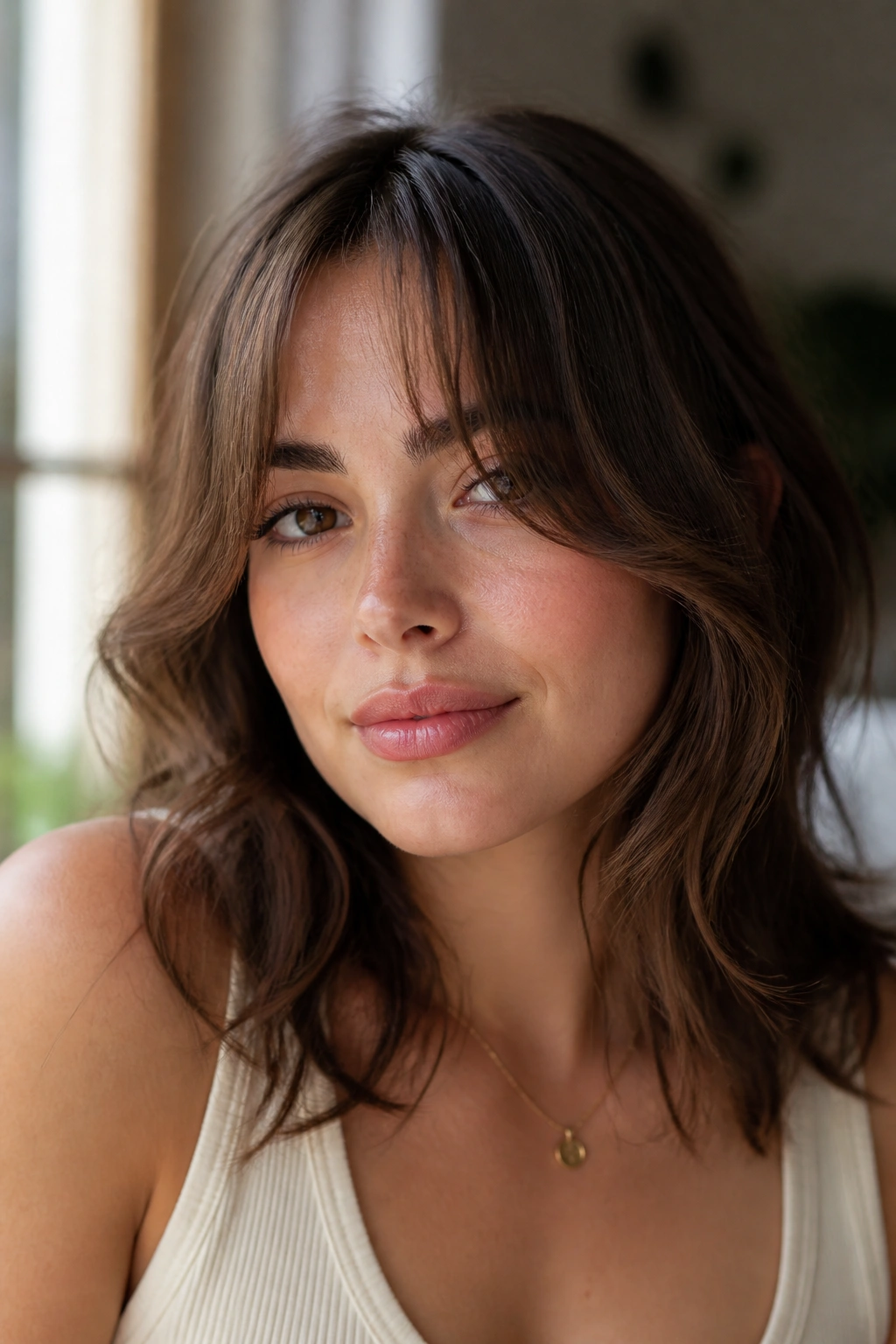
Curtain bangs earn their keep on round faces because they split the forehead instead of drawing a hard line across it. The center opens up the face, and the longer sides slide along the cheek area, which helps create a more vertical look.
They work best when the shortest point sits around the brow or just below it, then blends longer toward the temples. That little bit of length is doing a lot. Too short, and the shape can feel choppy. Too blunt, and you lose the softness that makes curtain bangs so useful in the first place.
What to ask for
- Keep the center piece light and movable.
- Let the outer corners hit near the cheekbones.
- Use point-cutting or feathering, not a hard edge.
- Ask for a center part that can shift slightly off-center.
Best tip: blow-dry curtain bangs side to side with a small round brush, then let them cool in place. That bend is what keeps them from collapsing into a flat little curtain on the forehead.
2. Deep Side-Swept Fringe with a Clean Part
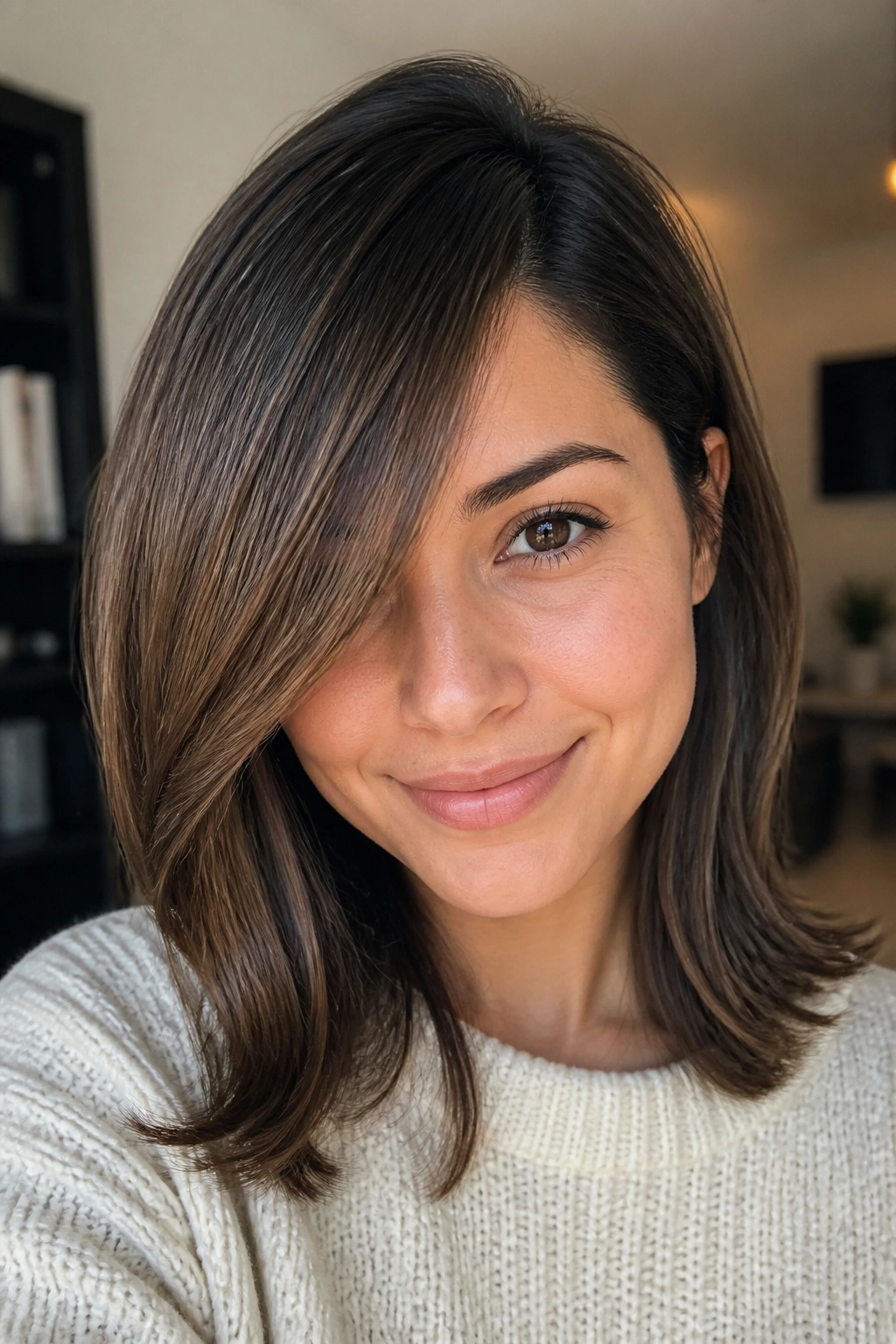
A deep side part does more for a round face than most people expect. The diagonal line breaks up symmetry, and symmetry is what makes a round face feel widest when the hair is too even on both sides.
This style is especially good if your hair already has some root lift or a little natural bend. The fringe can sweep across the forehead and open up one eye, which gives the face a longer read without looking stiff. It’s one of those cuts that looks calm but does a lot of work.
The trick is not to make the sweep too heavy. If the fringe is thick all the way through, it can sit like a curtain with attitude. A lighter hand at the ends keeps it moving.
It also helps to blow-dry the roots in the opposite direction first. That sounds fussy, but it is the difference between a side part that falls flat by noon and one that still has shape after a long day.
3. Bottleneck Bangs with a Narrow Center
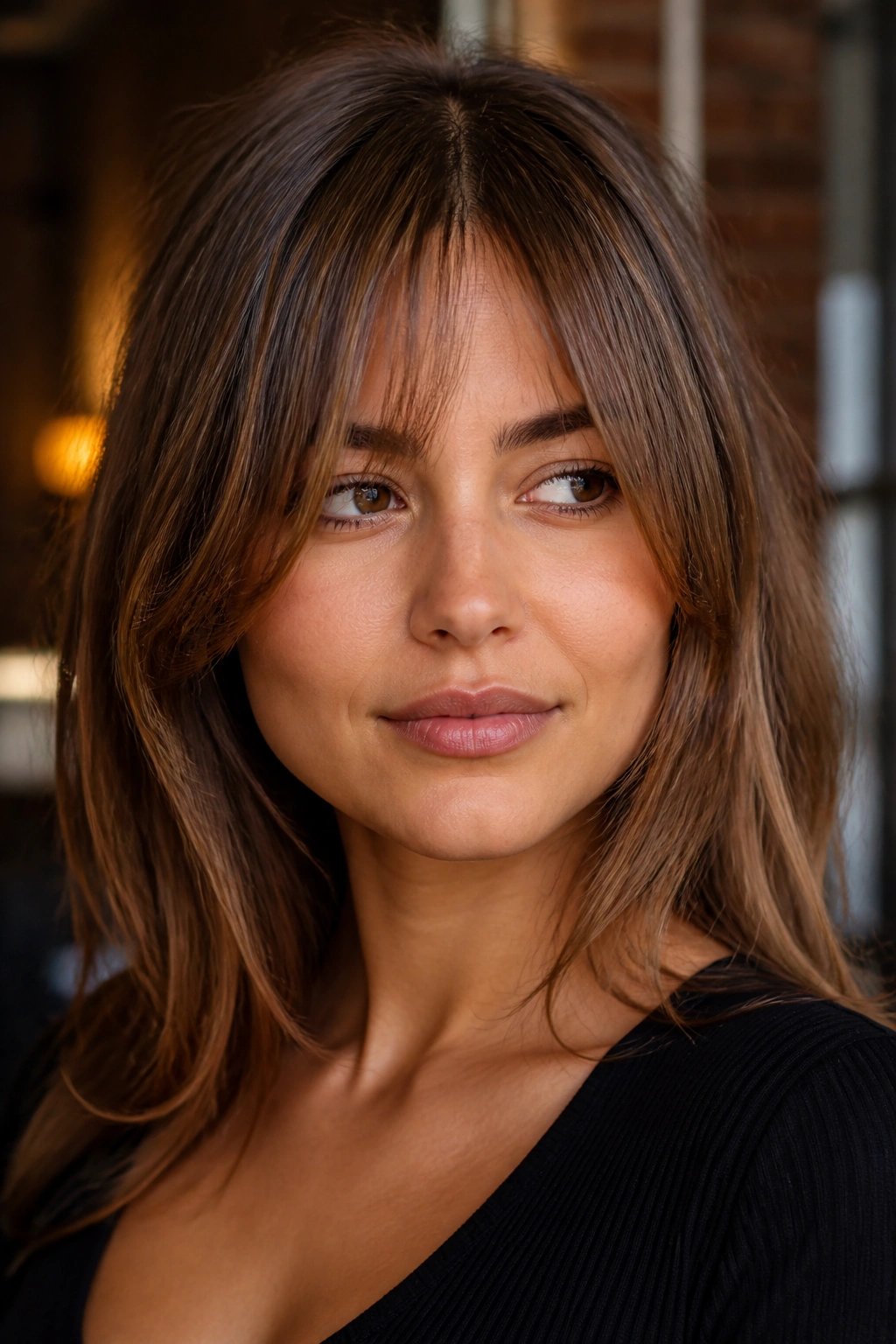
Why do bottleneck bangs look so good on round faces? Because the shape does the narrowing for you. The center stays shorter and lighter, then the pieces widen as they move outward, almost like the neck and shoulder of a bottle.
That design creates a gentle frame around the face without building a heavy line across the widest part. It’s softer than blunt bangs and a little more tailored than full curtain bangs. I like them on people who want a fringe that looks intentional but not overdone.
How to ask for the shape
- Shortest in the center, around the brow line.
- Longer through the corners, grazing the cheekbones.
- Soft separation between pieces.
- Enough length at the sides to tuck into layers.
The styling is easy once the cut is right. A quick round-brush bend at the center and a bit of finger-tousling at the sides usually does it. Do not overflatten the middle or you lose the narrow effect that makes this fringe flattering.
4. Wispy Brow-Grazing Bangs for Light Movement
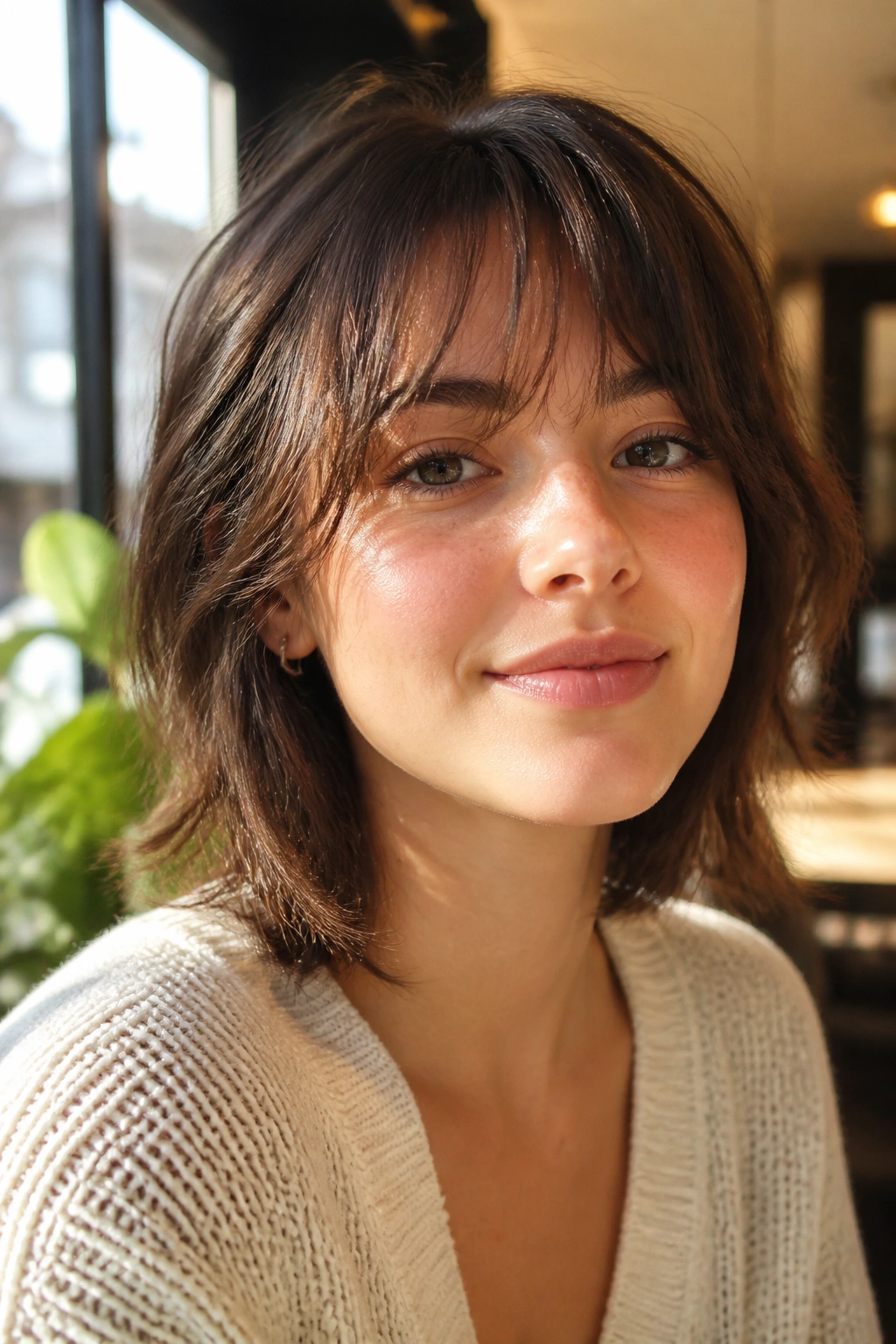
If you hate a heavy fringe, wispy bangs are the easy answer. They let some forehead show through, which matters on a round face because that open space helps the face read a little taller.
These work best when the density is controlled. You want pieces, not see-through scraps. There’s a difference, and stylists know it. The bangs should look soft and airy, not thin because somebody took too much off.
They’re a smart choice for fine to medium hair, especially if your hair tends to sit close to the head. A wispy fringe gives movement without needing a lot of volume. On thick hair, though, wispy bangs need careful thinning, or they can puff at the edges and look fuzzy by the end of the day.
A light mist of styling cream or flexible spray helps. Heavy wax is too much. You want the bangs to fall in soft lines, not stick together like damp thread.
5. Long Face-Framing Fringe That Melts into Layers
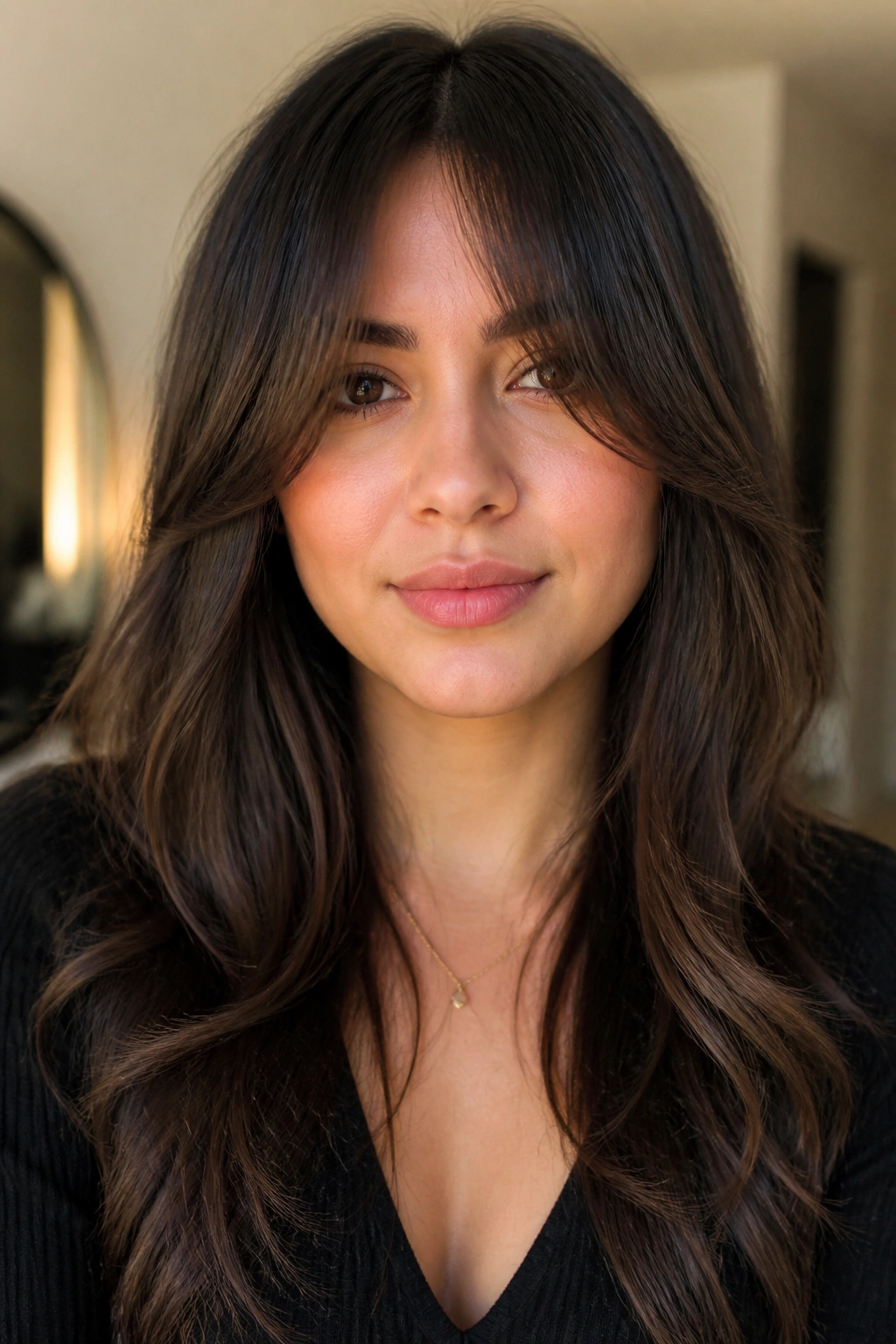
Unlike a short bang that stops above the eyes, long face-framing fringe behaves more like a soft contour line. It starts near the forehead, then drops down into the cheek and jaw area, which helps stretch the face visually.
This is the one I send nervous clients toward. It gives the feeling of bangs without the full commitment of a straight-across fringe, and it grows out gracefully. That matters more than people think. A style that looks good only on day one is not much of a win.
The strongest version blends into a cut that already has layers around the face. Think of it as a frame inside a frame. The shorter front pieces guide the eye downward, while the longer lengths keep the silhouette from getting boxy.
It also buys you styling flexibility. You can wear it middle-parted, tuck one side behind the ear, or let it fall forward when you want more softness around the cheeks.
6. Shag Bangs with Choppy Texture
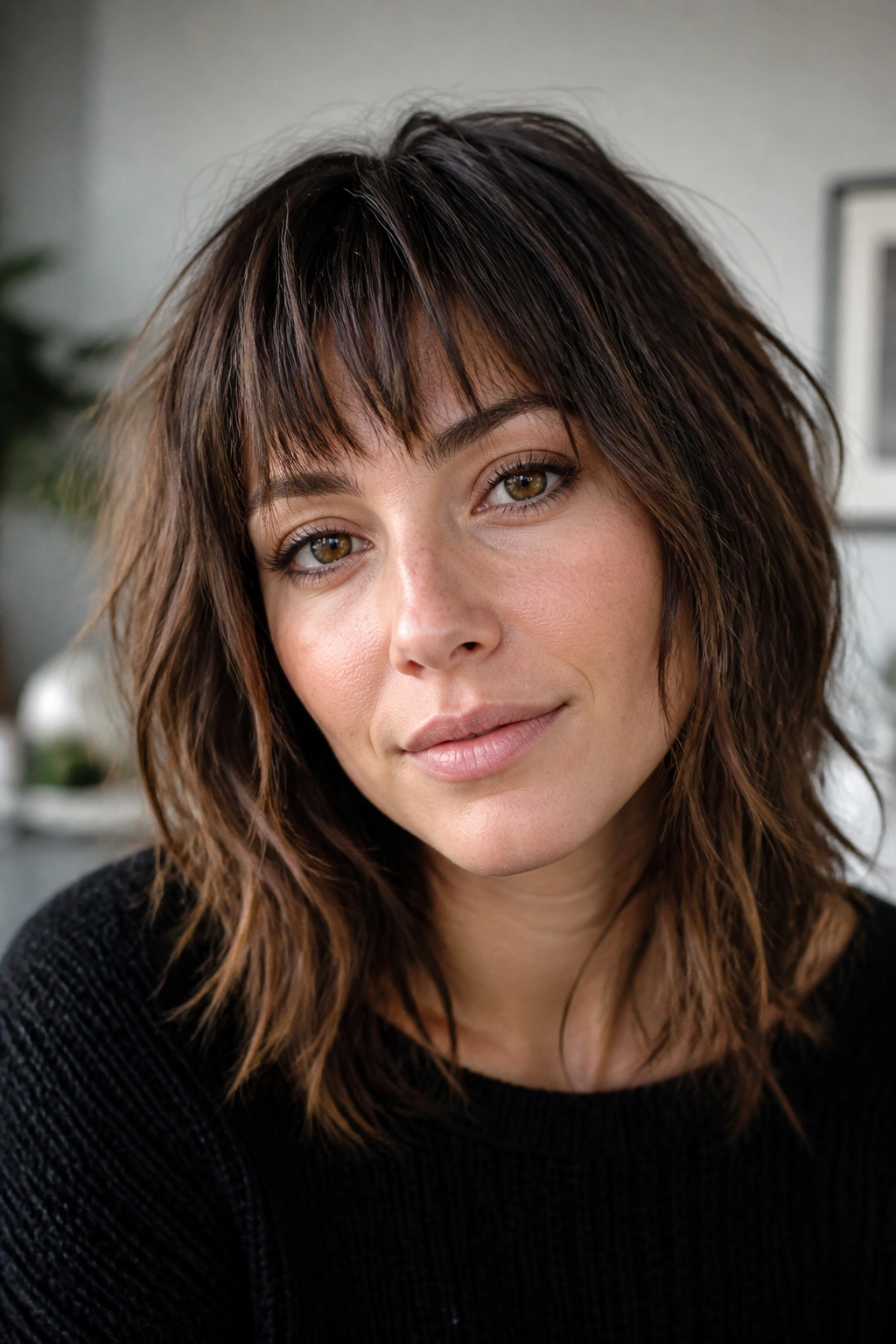
The shag is one of the easiest ways to make bangs work on a round face. The reason is simple: the cut is built on movement, not a hard shape, so it breaks up width instead of adding to it.
Shag bangs usually sit somewhere between curtain bangs and a wispy fringe, but the texture is the real point. The ends are broken up. The line is never too perfect. That looseness keeps the front of the haircut from feeling dense, which is the mistake I see most often with round faces and bangs.
This style likes a bit of mess. A little mousse at the roots, a quick scrunch, and some air-drying can be enough. If you use a blow-dryer, keep the nozzle moving and avoid pressing the bangs flat against the forehead. They need lift.
Best of all, shag bangs are forgiving. A slightly uneven piece does not ruin the look. It usually improves it.
7. Soft Arched Bangs That Follow the Brow
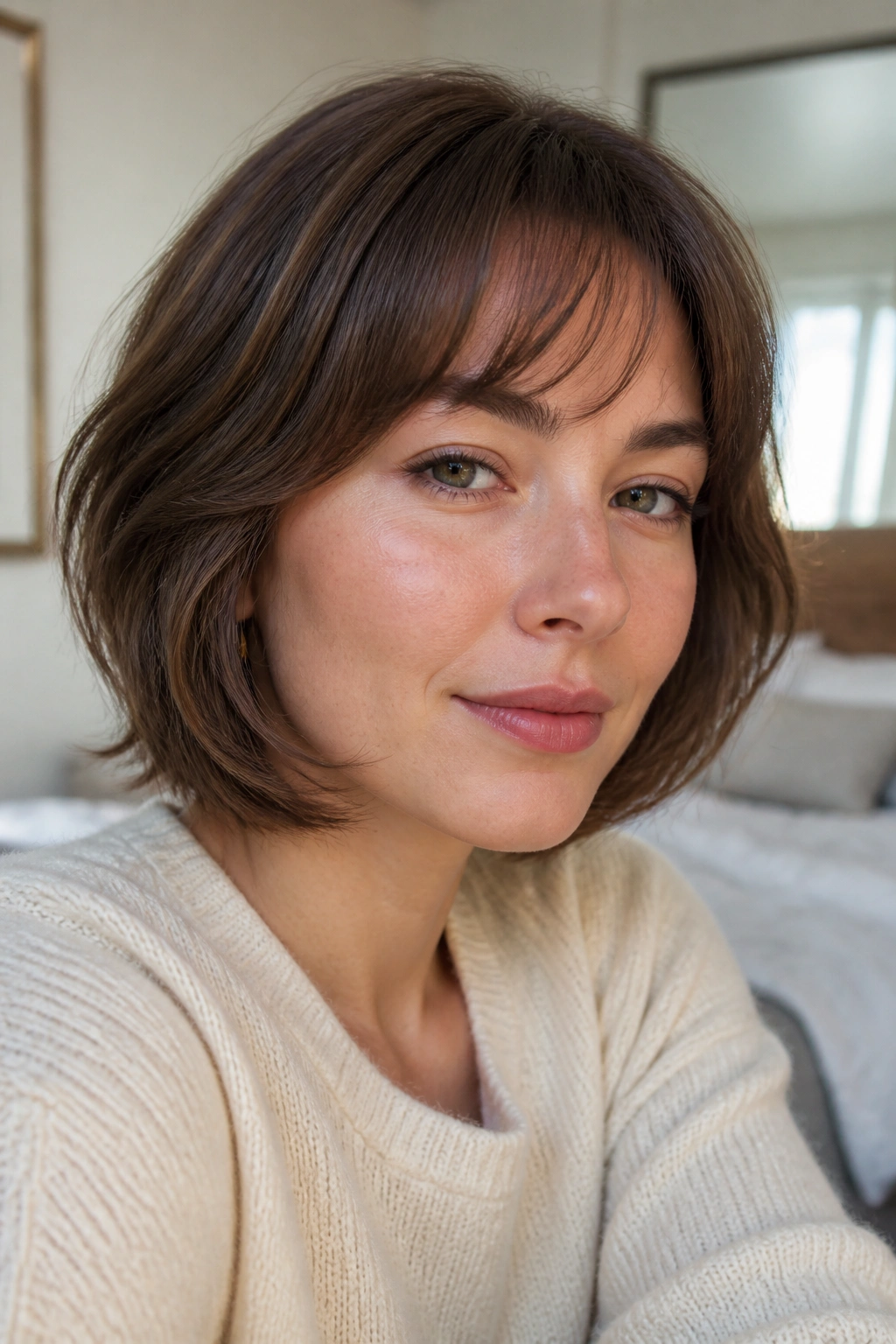
Arched bangs are underrated because they follow the brow line instead of chopping across it. That gentle curve opens the center of the forehead while keeping the outer edges longer, which works beautifully on a round face.
What makes the arch useful
- The center stays shortest, so the eye moves upward.
- The sides fall longer and help narrow the cheek area.
- The curve feels softer than a straight horizontal line.
- Point-cutting keeps the arch from looking too polished.
The key is to keep the arch subtle. A severe, high curve can look dated fast and can pull too much attention to the forehead. A soft arch, on the other hand, feels natural. It has that easy, lived-in look that makes a haircut seem less engineered.
This shape also suits people with medium-density hair because the curve is easier to hold without looking bulky. If your hair is extremely fine, the arch can go sparse at the corners, so the cut needs a careful hand.
Best tip: ask for the arch to sit just above the brows at the center, then fall a little longer toward each temple. That tiny shift changes the whole line.
8. Asymmetrical Fringe for a Diagonal Line
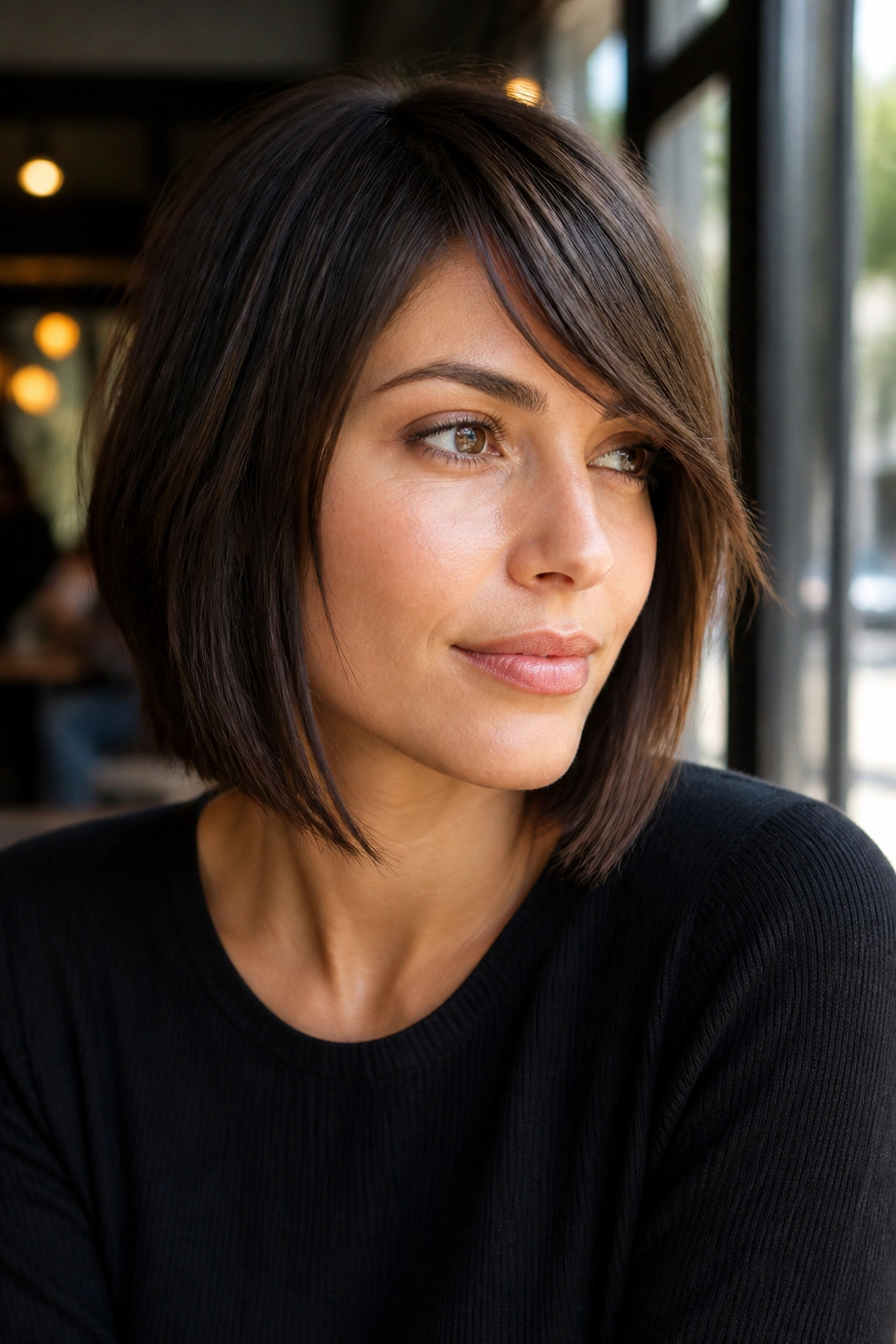
Symmetry can be the enemy here. A perfectly even fringe can sit like a bar across the face, while an asymmetrical fringe sends the eye diagonally, which is far more flattering on round features.
This is a bolder choice, and I like it for people who want something with edge. One side may skim the brow while the other side drops closer to the cheekbone. That difference gives the haircut motion before you even style it.
It works especially well with a bob or a shoulder-length cut that already has a little shape. The asymmetry becomes part of the whole haircut instead of looking pasted on. You can also wear it with a side part to make the diagonal feel even more natural.
There is a line you should not cross. If the slant is too steep, the look can feel fussy. The goal is movement, not drama for its own sake. Keep the shorter side soft enough to blend, and let the longer side do the heavy lifting.
9. Feathered Bangs That Stay Airy
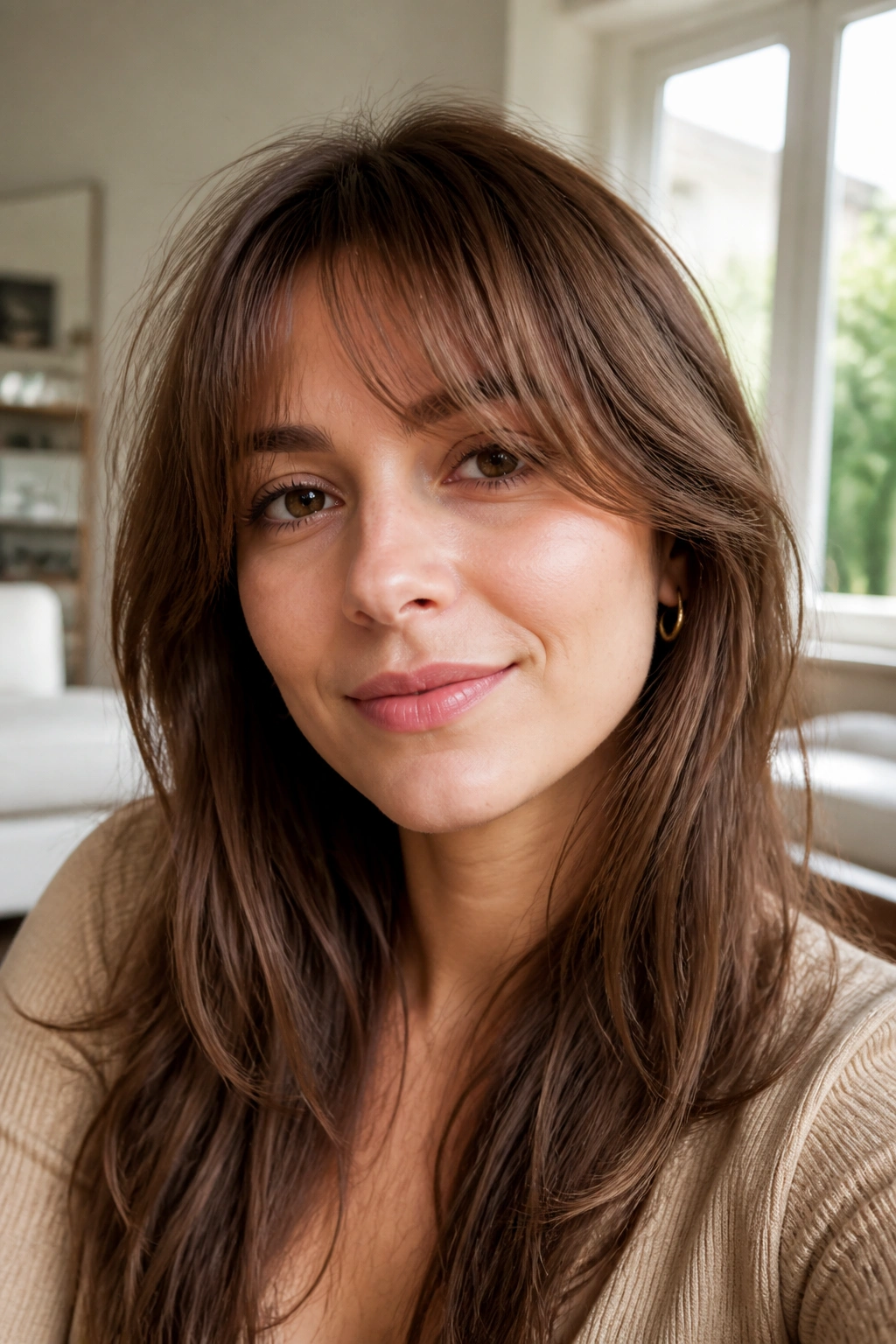
Want bangs that breathe instead of sitting there? Feathered bangs are the answer. The cut removes weight inside the fringe, so the pieces separate a little instead of falling as one solid block.
That separation matters on a round face because it keeps the front of the haircut from adding width. Feathering makes the bangs look light around the edges and gives them a bit of swing when you move. It also helps thick hair stay from going helmet-like, which is a real problem with blunt fringe.
Styling note
- Use a medium round brush, not a huge one.
- Aim the dryer downward first, then bend the ends.
- Finish with a tiny amount of lightweight cream.
- Skip heavy oils unless your hair is very dry.
Feathered bangs are one of the few styles that can look polished and relaxed at the same time. They are not fussy. They just need a cut that respects the hair’s natural movement.
If your hair is pin-straight and stubborn, the feathering has to be subtle. Too much texturizing and the fringe loses shape. Too little, and you are back to a heavy line.
10. Soft Blunt Bangs with Longer Corners
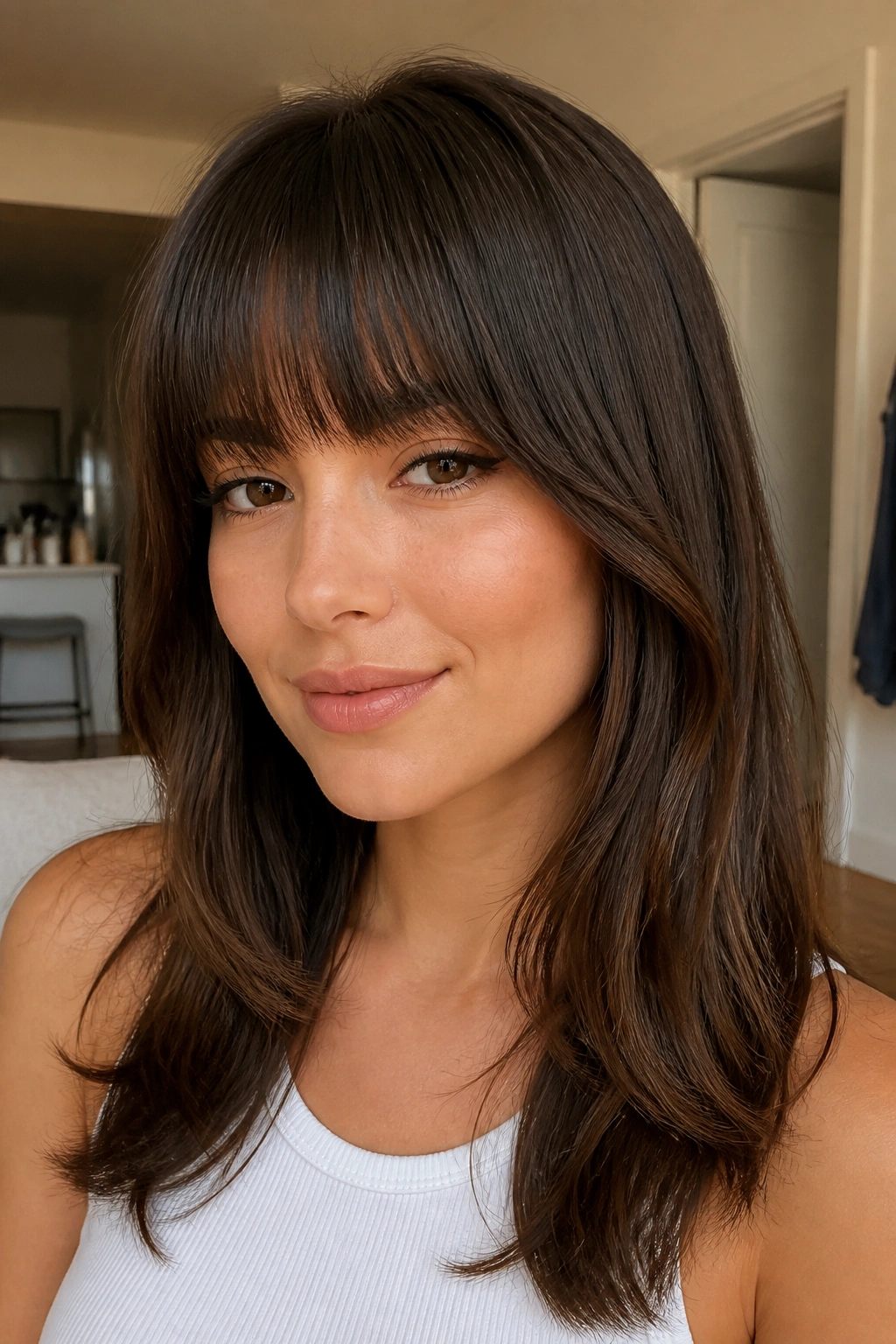
A client wants full bangs but worries about looking boxed in. That is where soft blunt bangs come in. They give you the presence of a full fringe without drawing a sharp rectangle across the forehead.
The difference is in the corners. The center can sit right at or just under the brows, while the sides stay a little longer and angle toward the temples. That keeps the line from widening the face in the wrong spot.
What to keep in mind
- Ask for the corners to stay soft.
- Keep the center dense enough to show shape.
- Use texturizing only at the very ends.
- Avoid a razor-straight finish if your hair is thick.
This style is good when you want a stronger bang but still need movement. It looks especially nice with straight hair and with slightly wavy textures that can hold a smooth bend.
A hard blunt fringe can be unforgiving on a round face. Soft blunt bangs are the cleaner version. Same confidence, less boxy shape.
11. Side-Part Bangs with Crown Volume
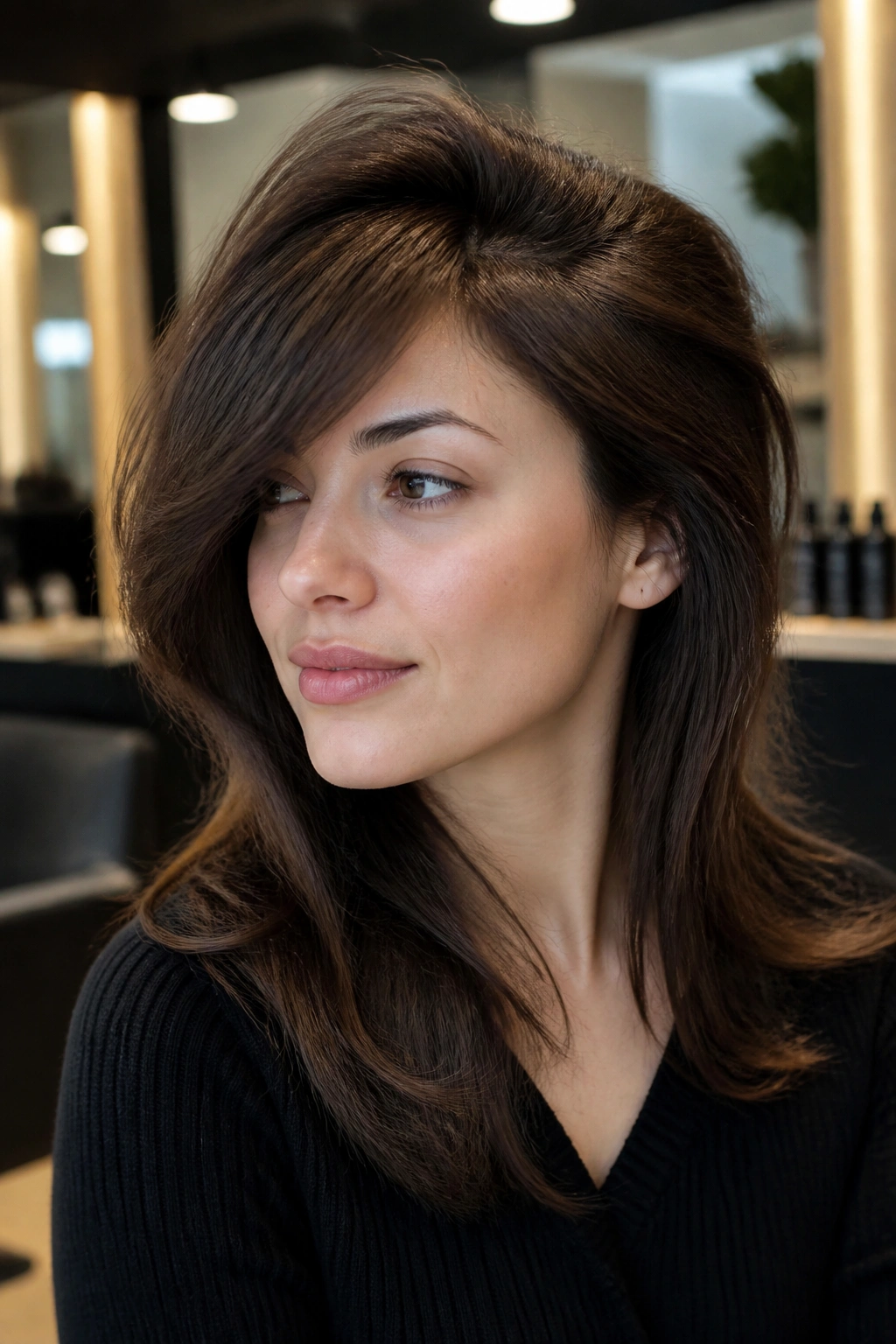
A deep side-part fringe is for anyone who likes a little drama, but not the kind that looks costume-y. The lift comes from the crown, not from piling on texture everywhere else, and that matters on a round face because height at the top changes the whole silhouette.
This style starts with a part that sits several inches off center. The bangs sweep across the forehead, then disappear into the rest of the haircut. The forehead opens on one side, the face gets a longer line, and the crown gains enough height to keep the look from collapsing inward.
It is not the same as a casual side-swept bang. The side-part version leans into volume and shape a bit more. You can use a root-lifting mousse or a light spray at the scalp, then blow-dry with the front section rolled away from the face.
The look works especially well with medium to long hair. Short cuts can do it too, but the longer lengths make the sweep feel smoother and less abrupt. If your hair sits flat at the crown, this cut can be a little needy. Worth it, though.
12. Curly Bangs Cut for Your Curl Pattern
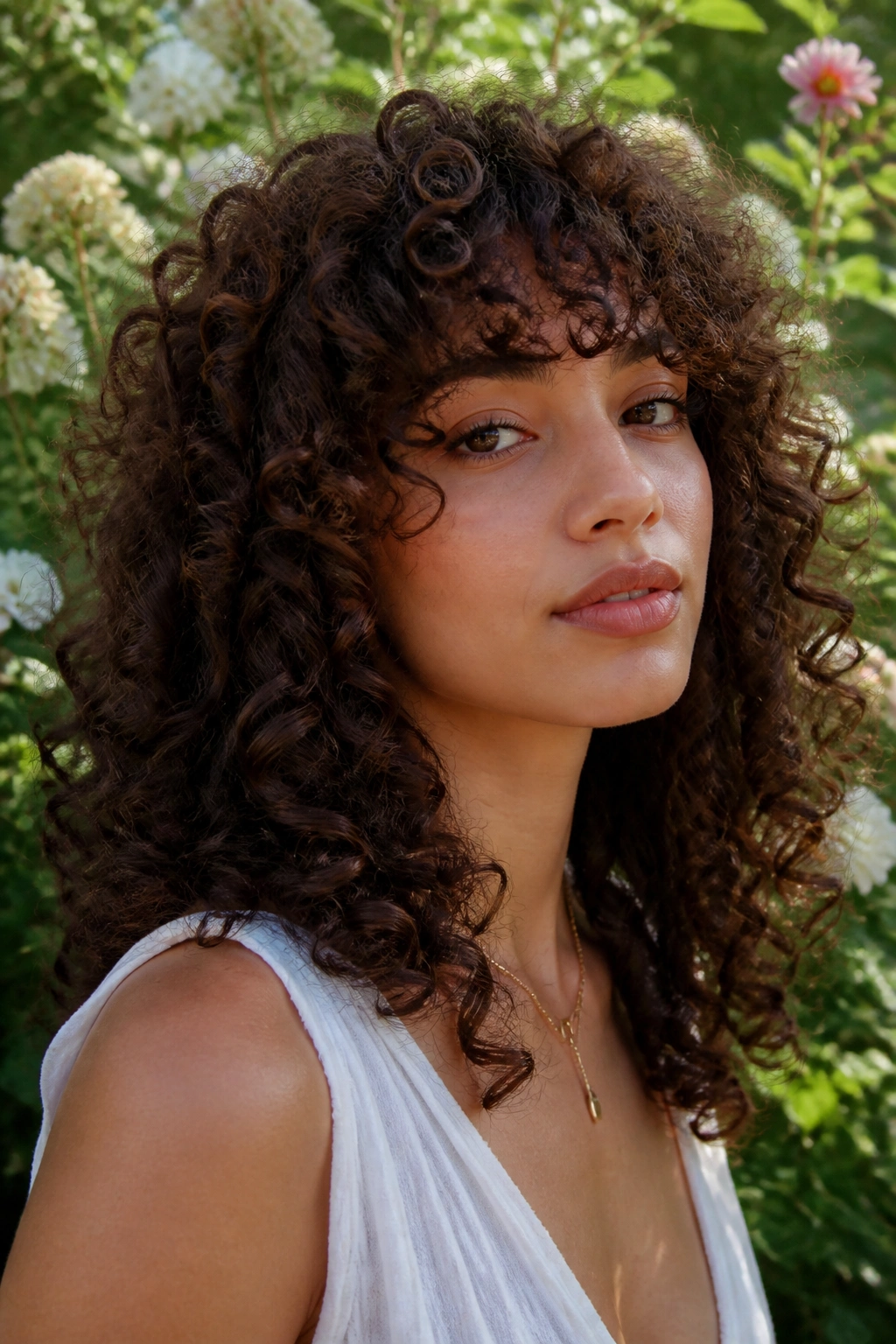
Can curly hair wear bangs on a round face? Absolutely—if the fringe is cut for the curl, not against it. That part is nonnegotiable. A dry curl pattern can spring up more than you expect, and if the cut ignores that, the bangs end too short and too wide.
The best curly fringe is usually a touch longer than straight-hair bangs would be. That extra length gives the curl room to shrink and form a clean curve. On a round face, the bounce adds vertical movement, which is exactly what you want.
What to ask for
- Cut with the curls in their natural state, or nearly dry.
- Keep the center long enough to shrink.
- Let the sides soften into the rest of the haircut.
- Avoid a hard, heavy line across the forehead.
Curly bangs also do well with a little separation. A dab of curl cream or light gel can keep the pieces defined without turning them crunchy. Air-drying often works better than rough-drying with a diffuser on high heat.
The nice thing here is that the curl itself does some of the shape work. You do not need a perfect blowout every day.
13. Razor-Cut Piecey Bangs for Thick Hair
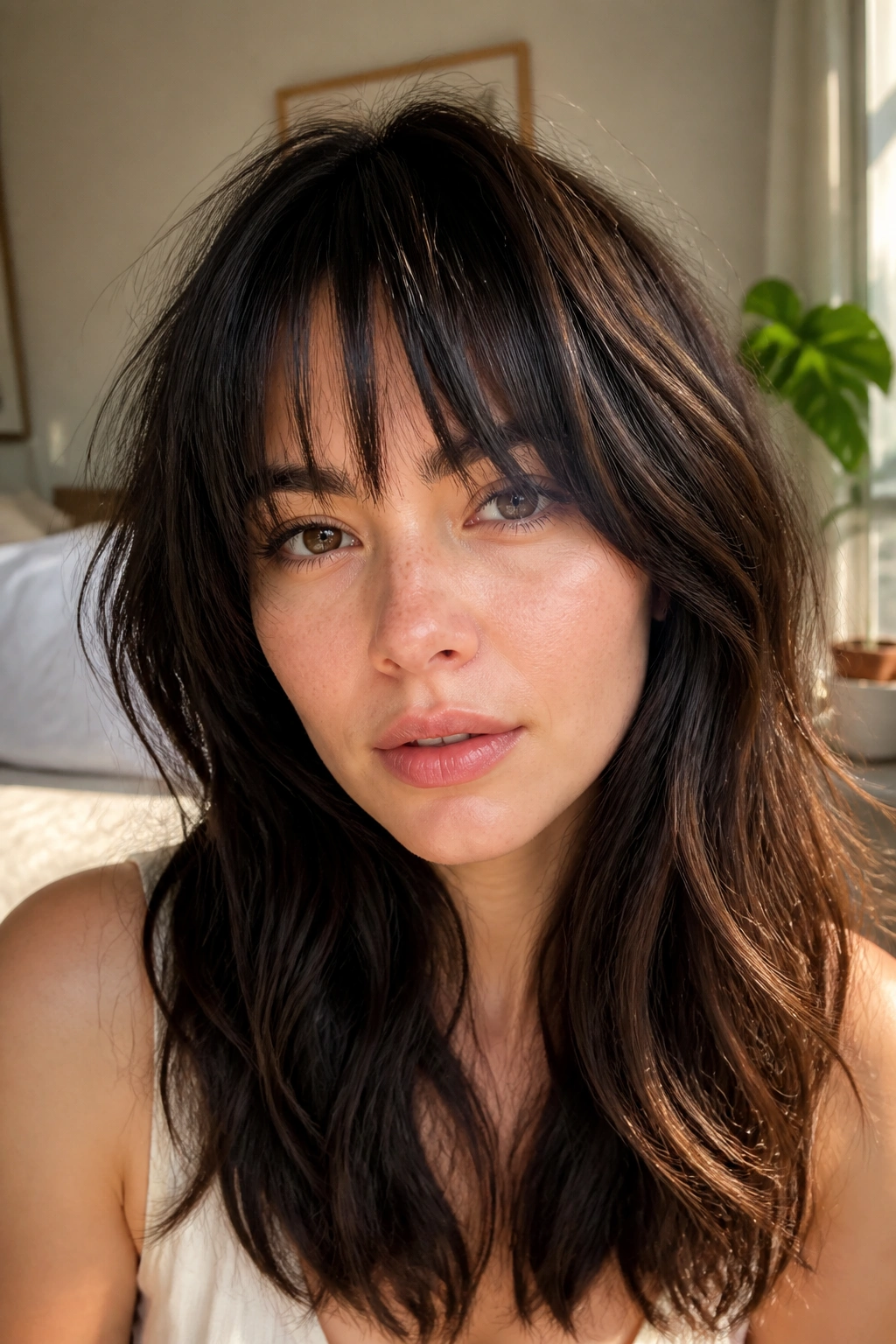
Thick hair loves a razor-cut fringe more than a blunt line. A heavy straight-across bang can sit like a shelf, and on a round face that shelf adds width right where you do not want it.
Piecey bangs solve the problem by breaking the fringe into narrow sections. A razor or point-cut finish removes bulk and creates little gaps between pieces, so the bangs move instead of sitting in one solid sheet. The result feels lighter around the forehead and less severe at the sides.
This style is especially useful if your hair takes forever to dry or tends to puff up around the face. A piecey fringe dries faster and can be reshaped with your fingers instead of needing a full heat-styling session every morning. That is a small mercy, but a real one.
The one catch: over-texturizing can make thick hair look frayed. The goal is separation, not damage. If the ends start looking shredded, the cut went too far.
14. Peekaboo Fringe with Long Temple Pieces

Unlike a classic curtain bang, peekaboo fringe shows less forehead and gives you an easier grow-out. The center pieces stay long enough to hover near the brows, while the temple sections hide into the side lengths and soften the whole face.
I like this shape for people who want bangs but are not ready for a full, obvious fringe. It is gentler at the hairline and easier to pin back on rushed mornings. That alone makes it practical.
The longer temple pieces are what flatter a round face. They create a slim vertical line down the sides and keep the widest part of the face from feeling boxed in. A middle part can work, but a slight offset often makes the shape feel looser.
This is also one of the best transitional fringe cuts if you are growing out older bangs. Instead of looking awkward between stages, the shape looks deliberate. That is rare. Usually grow-out hair is a little clumsy.
15. Grown-Out Fringe That Blends into the Rest of the Cut

What if you want bangs but do not want a trim every few weeks? Grown-out fringe is the answer. It sits long enough to blend into the rest of the haircut, usually somewhere between the brow and the cheekbone, and that extra length gives a round face more vertical line.
The style works because it behaves like layers, not a separate block of hair. You can part it in the middle, sweep it to one side, or let it fall naturally after air-drying. That flexibility is why it’s so good for people who want the look of bangs without the constant upkeep.
It still needs shaping, though. A trim every 6 to 8 weeks keeps the ends from getting stringy and stops the front from swallowing the eyes. If your hair grows fast, you may need it a touch sooner. If it grows slowly, you have more room.
The best part is that this fringe does not fight the face. It softens the forehead, slims the sides with those longer edges, and grows out in a way that still looks like a haircut instead of an accident. That is the kind of bang I can live with.
