



Fine hair and a heavy fringe do not get along.
French fringe hairstyles for fine hair work because they frame the face without swallowing the density you already have. The sweet spot is soft, broken, and a little cheekbone-skimming — not a blunt shelf of bangs that sits there and drags everything down.
I’ve seen the same mistake over and over: someone asks for “texture,” then walks out with a fringe that’s too thick, too low, and too hard to style. The hair at the front collapses by lunchtime. The ends go wispy. The whole cut starts looking tired faster than it should.
A good French fringe gives fine hair movement right where people notice it most. The right version also makes the rest of the cut look fuller, which is why tiny details matter so much: point-cut ends, a slightly longer center, a clean part, and enough root lift to keep the fringe off the forehead. The styles below all use that idea in different ways.
1. Airy French Fringe with a Collarbone Bob
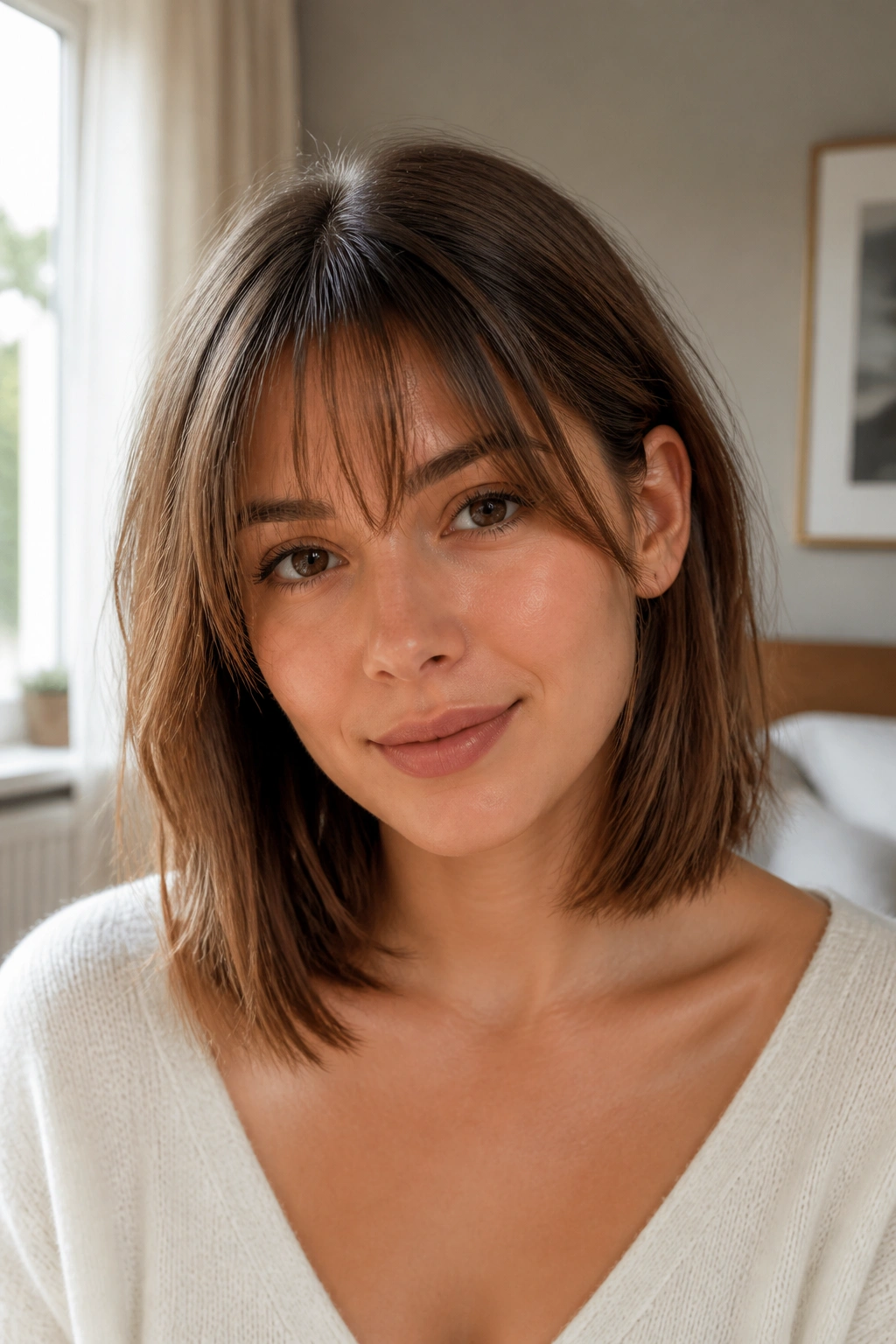
A collarbone bob is one of the easiest places to start if your hair is fine. It gives you enough length to tuck behind an ear or bend with a round brush, but it stops before the weight starts dragging the whole shape flat.
Why It Works
The fringe stays soft, while the bob gives the cut a clean line. That contrast matters. A blunt-ish bob makes fine hair look denser at the ends, and the airy fringe keeps the front from feeling heavy or boxy.
Ask for point-cut ends on the fringe and a bob that grazes the collarbone rather than sitting at the jaw. That little bit of extra length helps the hair swing instead of sticking out.
- Keep the fringe between the eyebrow and upper lash line when dry.
- Ask for a gentle center section that opens slightly at the temples.
- Blow-dry the fringe forward first, then split it with your fingers.
- Use a light root spray at the crown, not a greasy cream near the forehead.
Tip: Fine hair loves lift at the roots and restraint at the ends. Too much product near the fringe will flatten the whole look.
2. Chin-Length French Fringe with Micro-Texture
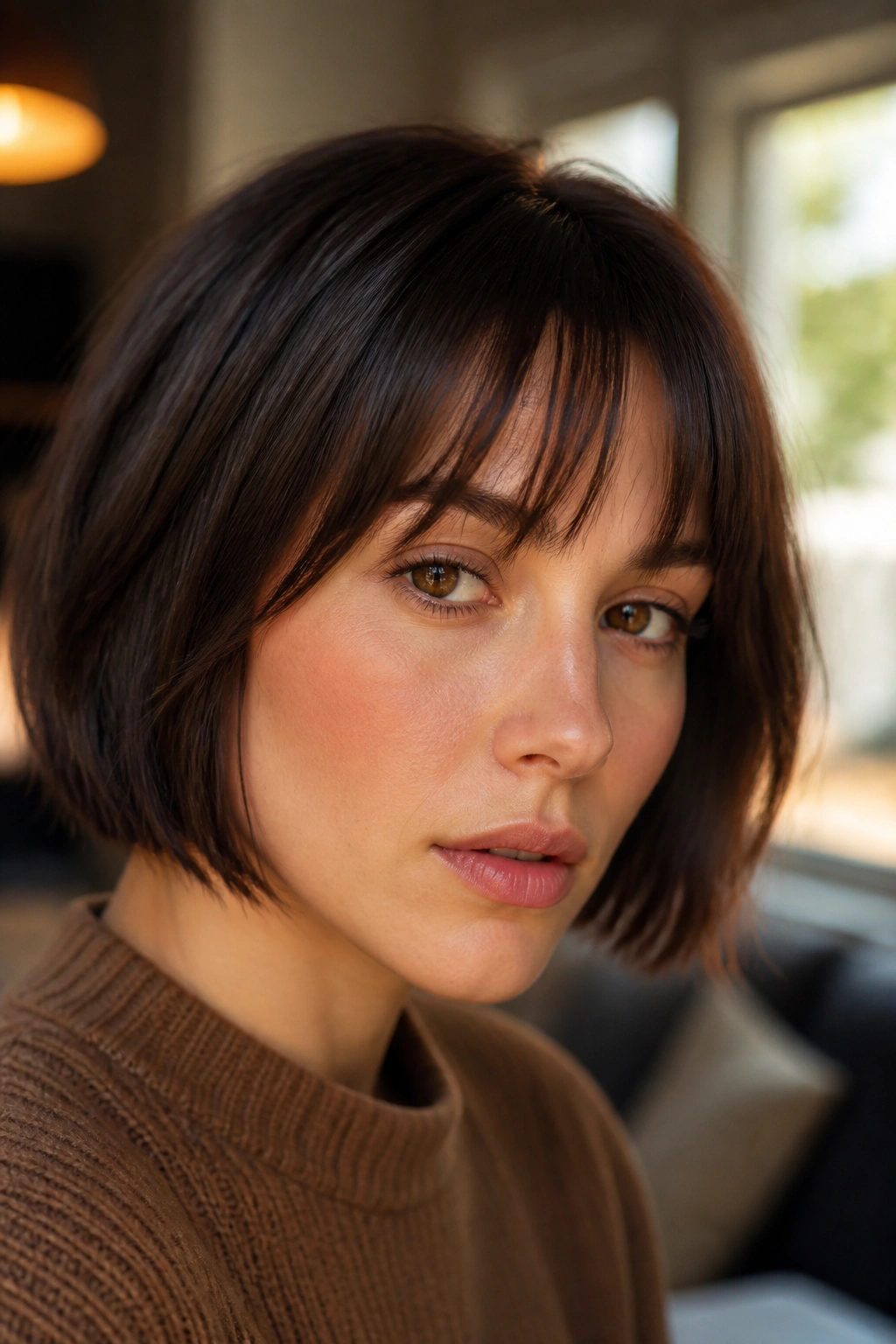
This cut is short enough to feel sharp, which is exactly why it works so well on fine hair. Chin length gives the eye a clear stopping point, so the hair looks fuller than it does when it hangs past the shoulders and loses shape.
The fringe should stay light and broken, almost like a soft curtain that was trimmed into place with a careful hand. Not choppy. Just airy. The worst thing you can do here is over-texturize the ends, because fine hair turns stringy fast when too much weight is removed.
A chin-length shape also makes styling easier. You can rough-dry it, bend the fringe with a small brush, and leave the rest mostly straight. That unfinished edge often looks more expensive than a stiff blowout.
Skip thick layers. Keep the perimeter blunt and let the fringe do the flattering work.
3. Long Layers with a Whisper Fringe
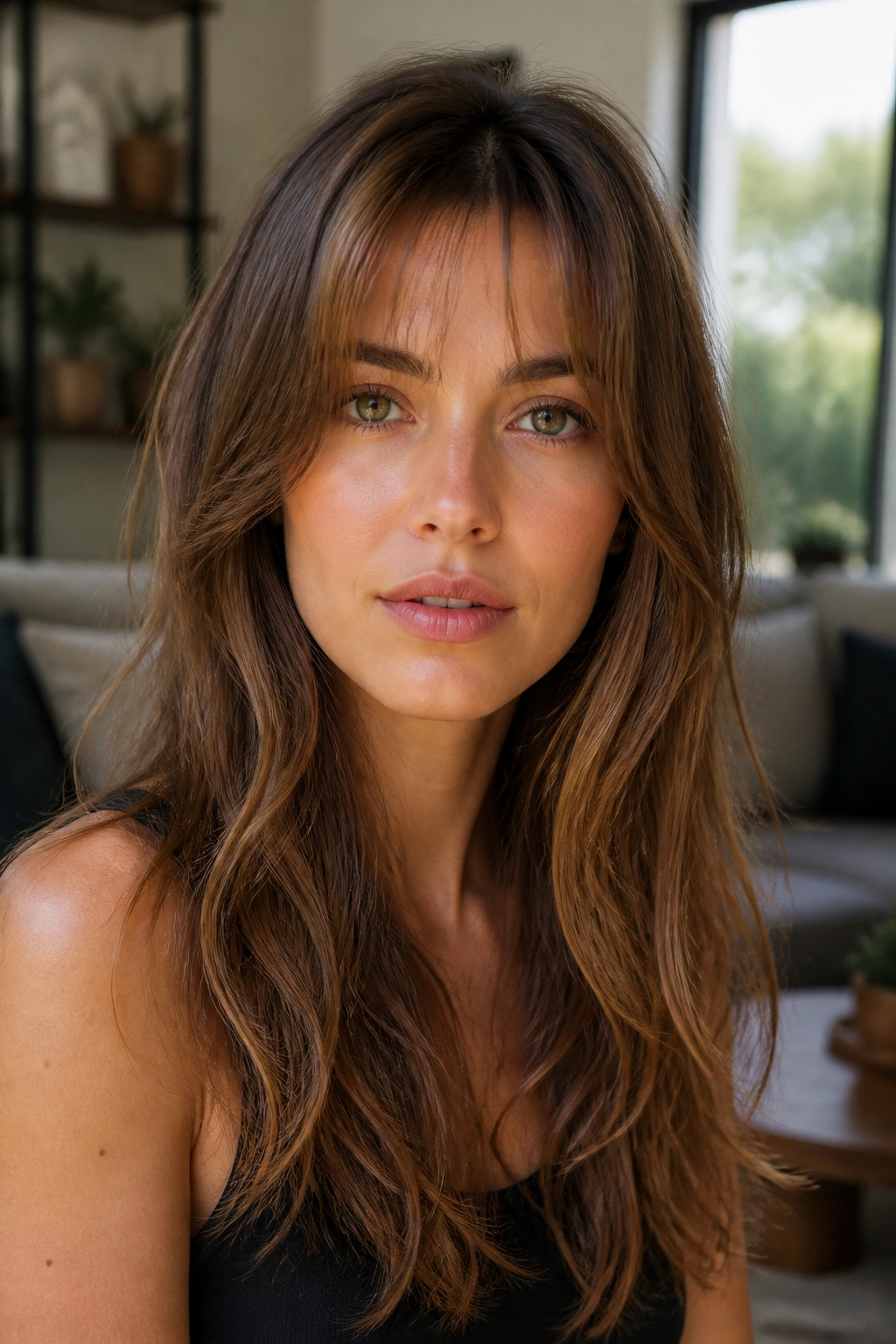
Can fine hair wear long hair and a fringe? Absolutely, if the layers stay low and the fringe stays light. The trick is not to start the layers too high, because high layers can make the ends look thin and scattered.
How to Style It
A whisper fringe should skim the forehead instead of sitting like a solid block. Think soft separation, not full coverage. If your hair falls flat at the crown, a little root lift spray at the part makes a bigger difference than adding more layers ever will.
- Keep the first layer below the cheekbone.
- Ask for the fringe to be slightly longer at the temples.
- Use a 1-inch round brush or Velcro rollers for 8 to 10 minutes.
- Finish with a dry texture spray on the mids, not the fringe itself.
This look suits anyone who wants movement without losing length. It also grows out politely, which is a nice thing to say about bangs, because not all of them do.
4. Soft Shag with French Fringe
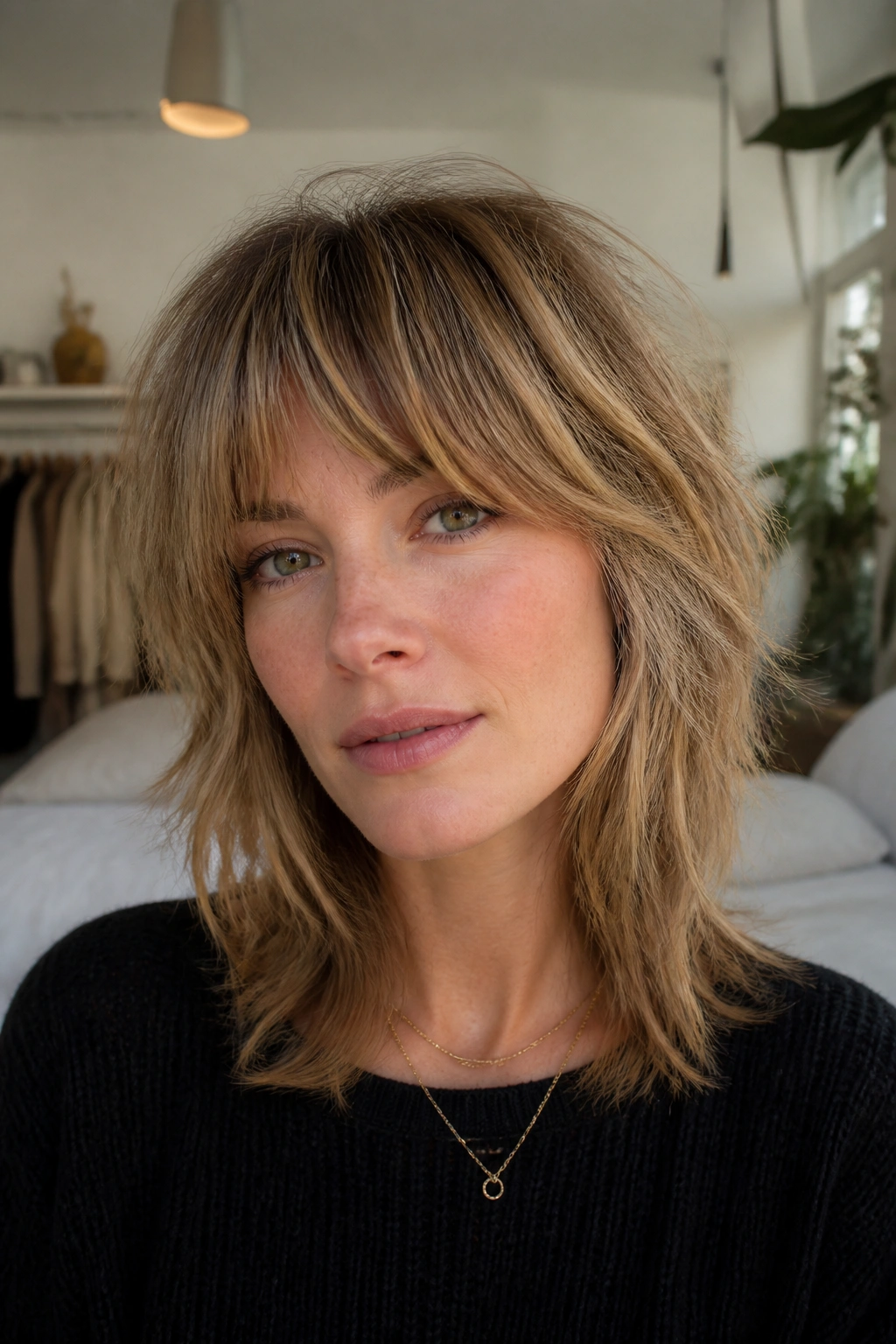
If your fine hair goes limp by the middle of the day, a soft shag can rescue it. Not the wild, over-layered kind that eats through the length. A gentler version, with a French fringe and just enough internal layering to keep the cut moving.
The fringe should blend into the sides instead of stopping abruptly. That lets the eye travel through the cut instead of landing on a hard line. Fine hair needs that kind of motion more than it needs drama.
What to Ask For
- Light layers around the crown, not everywhere.
- A fringe that opens at the cheekbones.
- A perimeter that still holds some weight.
- No aggressive thinning shears through the bottom.
The finished look has a bit of air around the face and a little lift at the roots. That is what makes it feel French rather than overworked. It should look touched, not fussed over.
5. Side-Swept French Fringe on Straight Hair
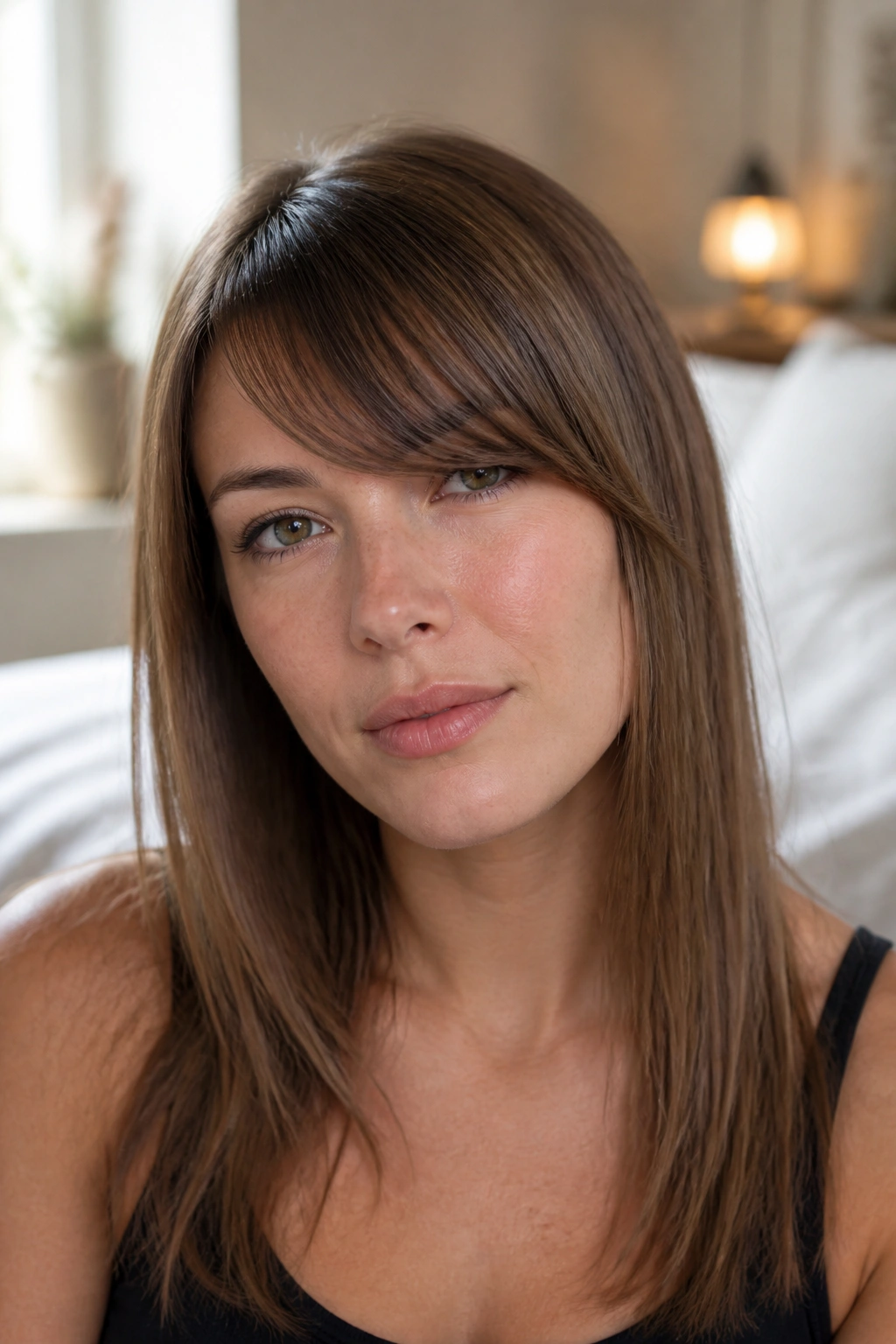
Straight fine hair can make a center-part fringe fall flat in a hurry. A side-swept version solves that without changing the basic French fringe shape. It gives the roots a push in one direction, and that alone can make the whole cut look fuller.
The side part also softens the forehead area. Instead of two equal panels hanging straight down, you get a diagonal line that feels easy and a little offhand. That matters more than people think.
Blow-dry the fringe in the opposite direction first. Then sweep it across with a flat brush and let it cool for a few seconds before touching it. That tiny reset helps the hair remember the shape.
A small bend at the ends makes the style look intentional. Too much curl and it starts looking like prom hair. Too little and it drops.
6. Blunt Bob with a Wispy French Fringe
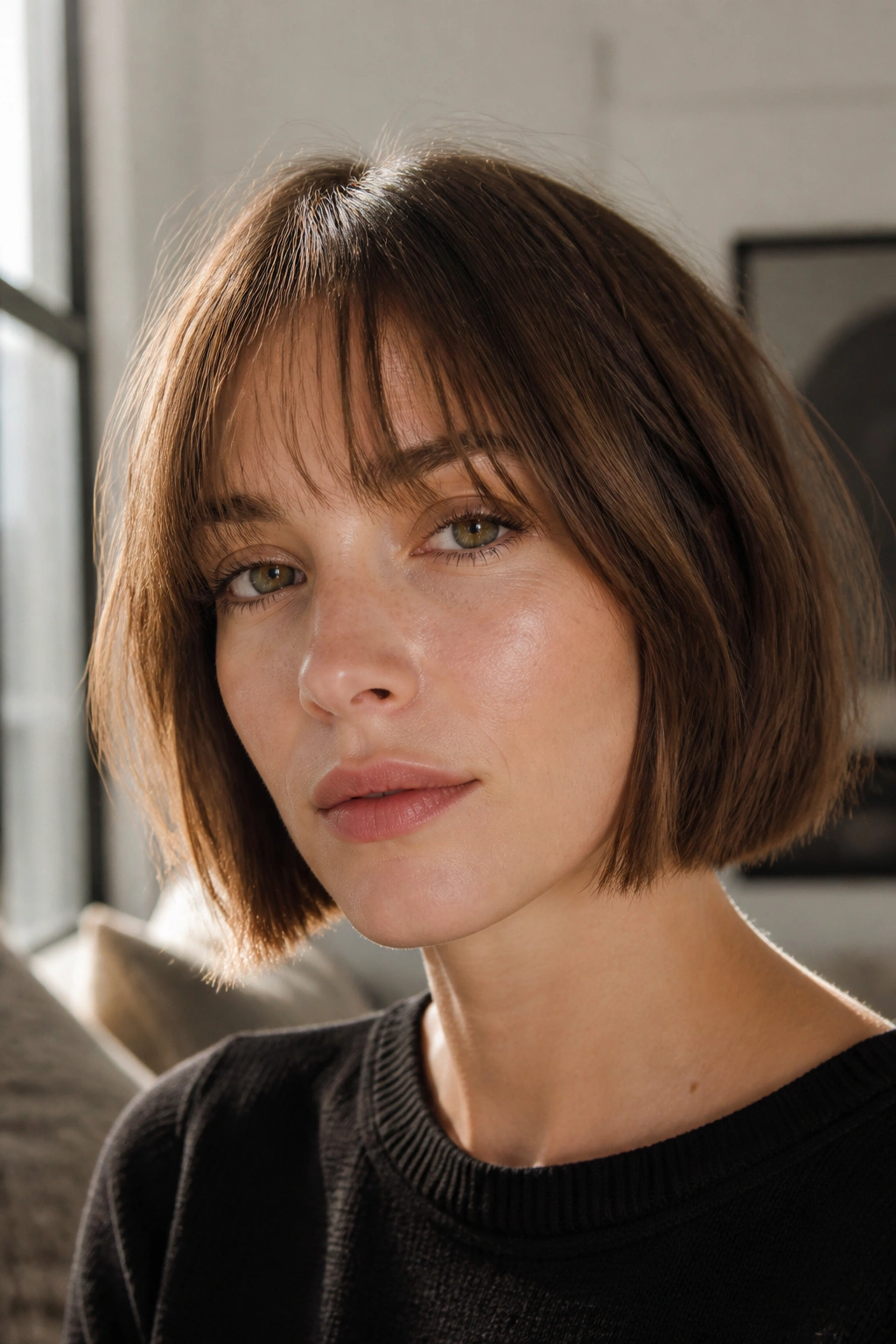
A blunt bob is one of the smartest cuts for fine hair because it creates the illusion of thickness at the edges. Add a wispy French fringe, and the result feels balanced instead of severe.
That combination works because the bob carries the weight while the fringe keeps the face soft. If the fringe were thick too, the whole cut would turn heavy. If the bob were layered too much, you’d lose the clean line that gives fine hair its best chance at looking full.
What to Tell Your Stylist
Ask for the bob to sit at the jaw or just below it, with almost no texture at the perimeter. The fringe should be lighter in the center and slightly longer at the sides so it opens naturally.
A tiny point-cut through the fringe ends keeps them from looking blunt in the wrong way. That detail matters. Fine hair can look beautiful when it is crisp, but it can also look chopped if the line is too harsh.
7. Tousled Lob with Face-Framing Pieces
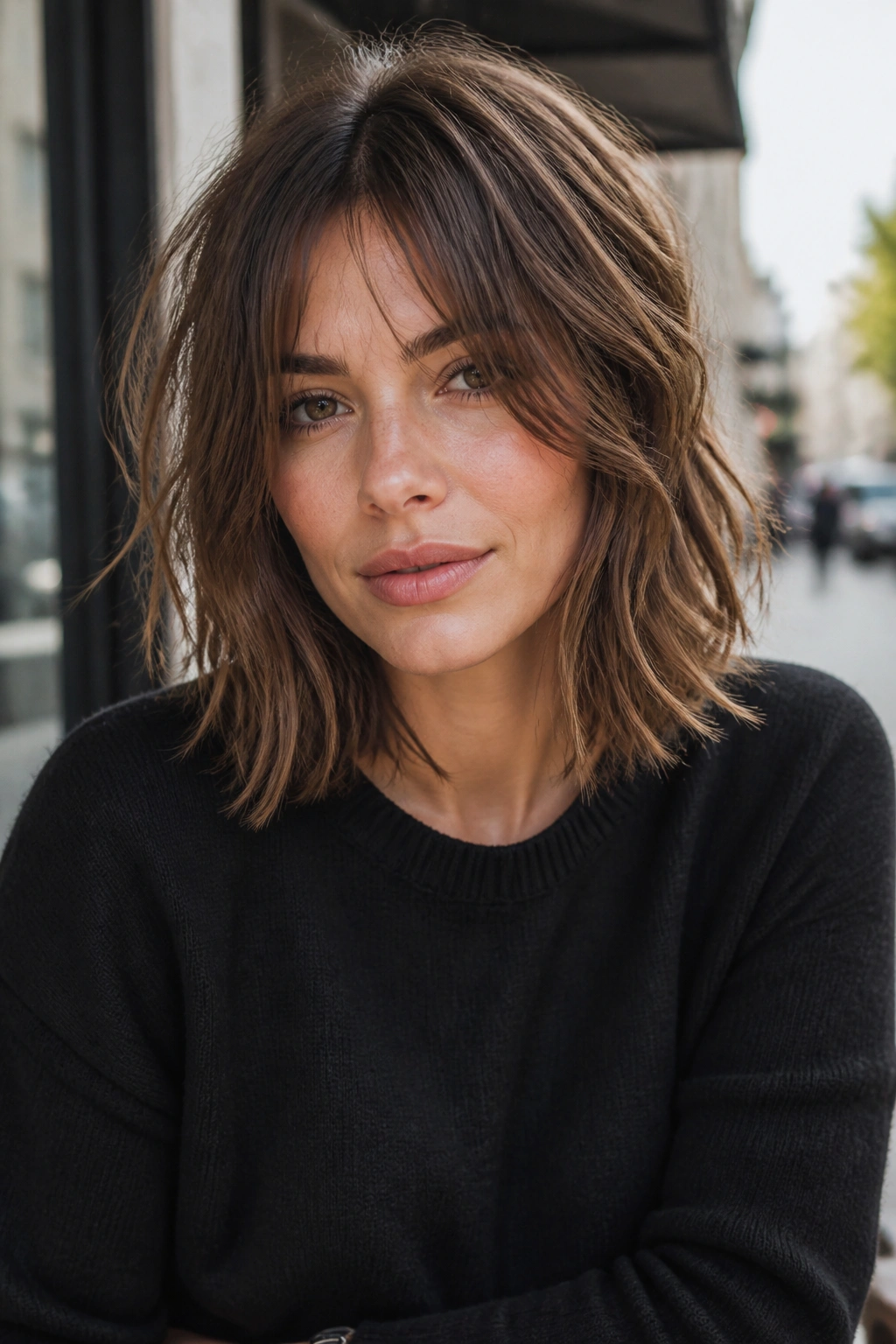
A tousled lob gives fine hair movement without making it look over-layered. It sits in that easy middle ground where you can wear it straight, bend it, clip it back, or leave it a little messy and still look put together.
The fringe should connect to the front pieces in a soft sweep. If the face-framing sections start around the cheekbone, they’ll help the fringe blend into the rest of the cut instead of hanging like an afterthought.
Use a 1-inch curling iron and wrap the hair loosely, leaving the last inch out. That gives you a bend instead of a curl. Much better. Then brush it out with your fingers so the pieces separate a little.
This is one of those cuts that benefits from being a little imperfect. Fine hair often looks fuller when the texture is relaxed, not polished to death.
8. French Fringe Pixie with Crown Lift
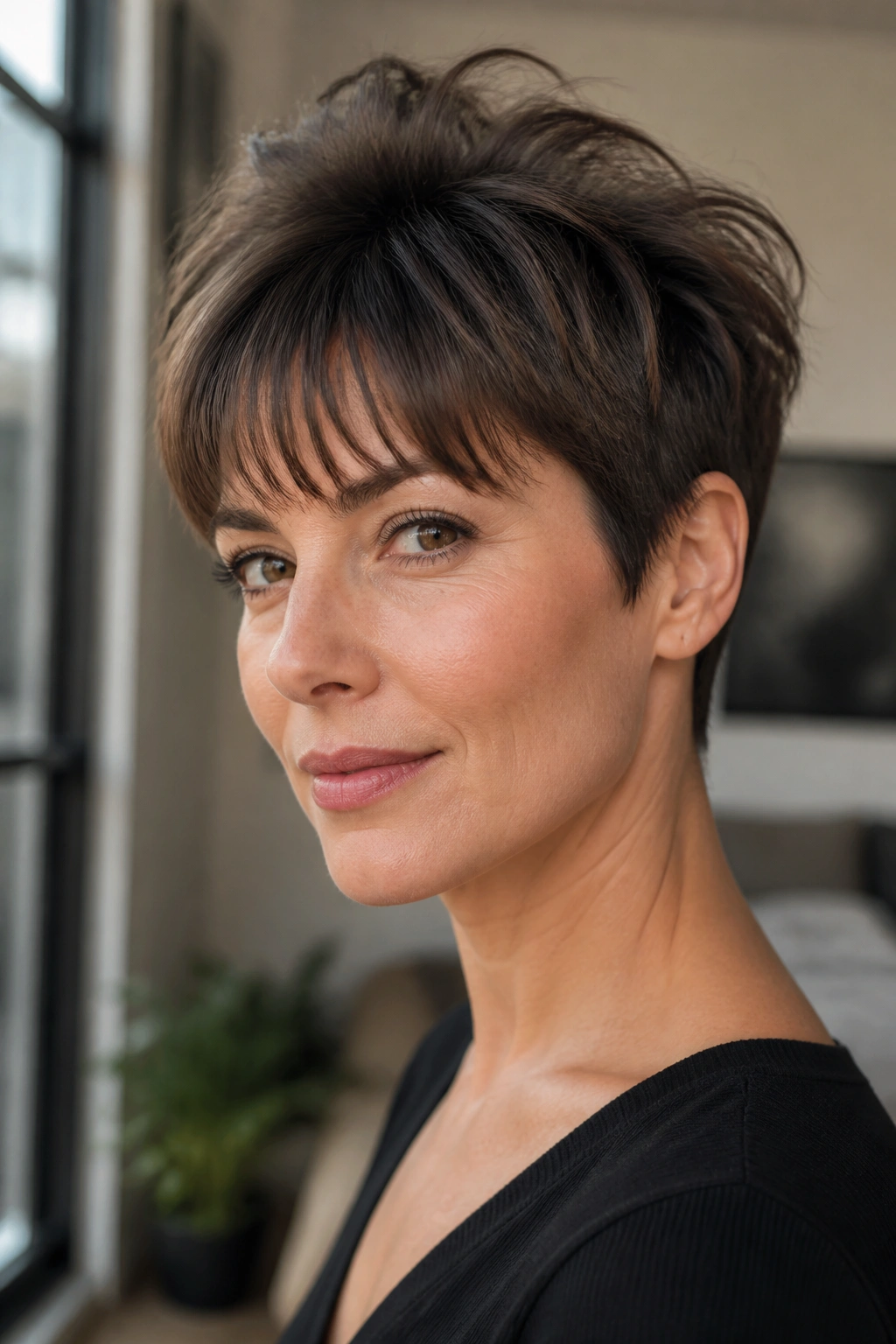
Short hair and fine hair can be a brilliant match, especially when the fringe stays soft. A French fringe on a pixie brings the cut down to a human scale. It stops the style from feeling severe or too exposed.
The crown needs lift. If the top lies flat, the pixie can look helmet-like, and nobody wants that. A little root spray, a quick blow-dry with your fingers, and a touch of paste only on the ends is usually enough.
The fringe should graze the brow or sit just above it, depending on your face and how fast your hair grows. Keep it piecey. Keep it light. A sharp, straight mini-bang can look cool, but it does not give the same softness that makes French fringe work so well on fine strands.
This cut is for people who like structure and do not want to fight their hair every morning. Low effort. Good shape.
9. Layered Curls with a Curved Fringe

Fine hair with wave or curl has its own rules, and fringe is one of the places where people get tripped up. If you cut it too short, the curl bounces up and the front can end up looking tiny. If you cut it too long, it hangs in the eyes. So the length has to be handled with a bit of patience.
How to Cut It
The best version is cut dry or nearly dry, so the stylist can see the curl pattern. The fringe should follow a curve, not a straight line, and the sides should be left a touch longer to blend into the rest of the hair.
- Leave the shortest point around brow level when dry.
- Let the sides fall to cheekbone length.
- Avoid razor-heavy cutting if your hair frays at the ends.
- Diffuse on low heat with the fringe pinned up for a minute first.
A curved fringe on fine curls gives softness without making the front look sparse. It’s a small adjustment, but it changes everything.
10. Sleek Low Bun with Loose French Fringe
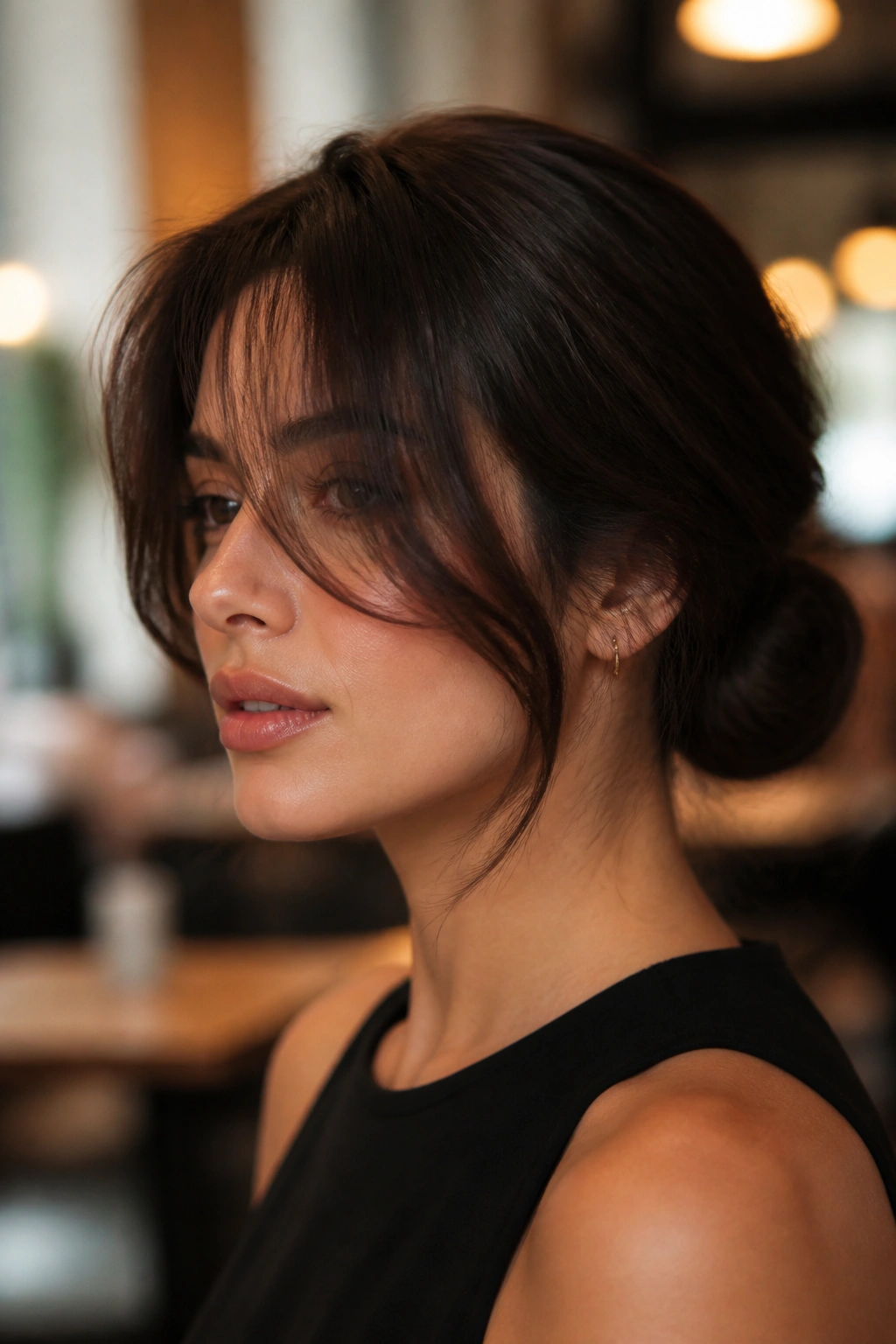
A French fringe can save a low bun from looking too strict. Without it, the bun can feel a little severe on fine hair, especially if the ends are tucked tight and the crown is slicked back.
Leave the fringe loose and let a few face-framing bits fall naturally. That softens the whole style and gives the illusion of more hair around the hairline. Keep the bun low, around the nape, and a touch undone so it does not pull the rest of the hair too hard.
A smoothing cream belongs on the mid-lengths and bun, not on the fringe itself. The front pieces need movement. If they get coated with too much product, they’ll separate in a sad, stringy way.
This is a nice one for dressy days when you want your hair up but still want some softness around the face. Clean, easy, not fussy.
11. Half-Up Twist with a Separated Fringe
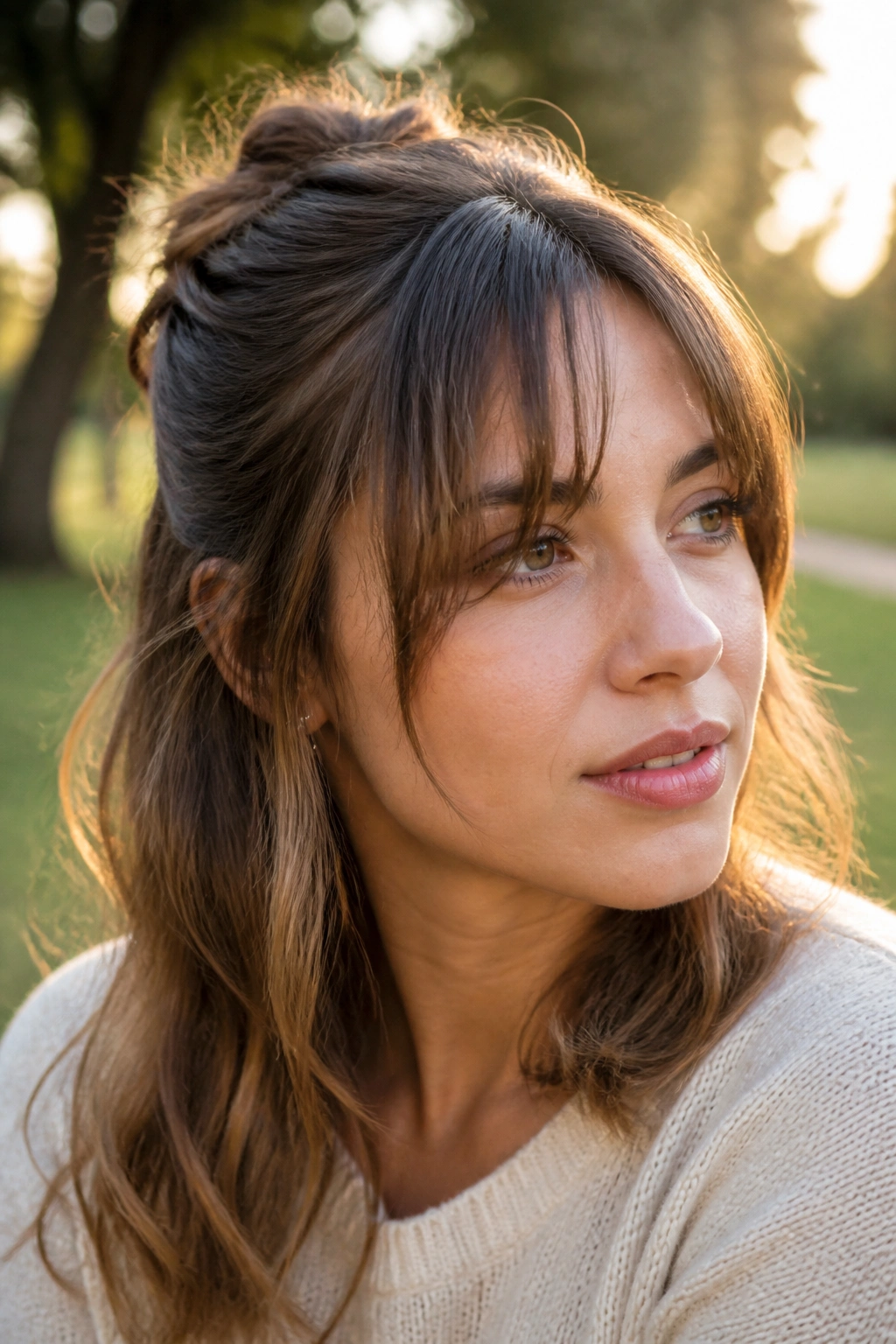
Half-up styles are useful for fine hair because they lift the crown without asking the whole head of hair to do too much. Add a French fringe, and the face keeps its softness while the top section gets a little extra shape.
A twisted half-up version works better than a tight ponytail. The twist feels looser, and it doesn’t pull the front flat. Leave the fringe separate and let it skim the forehead instead of tucking it too neatly back.
Use two bobby pins crossed in the twist if your hair slips. Fine hair often needs a little hidden support there. A tiny bit of dry shampoo at the roots also helps the style stay airy longer.
The charm of this look is that it feels casual but still finished. It’s the sort of style that looks like you had a plan, even if you did it in five minutes.
12. Shoulder-Length Flip with Feathered Ends
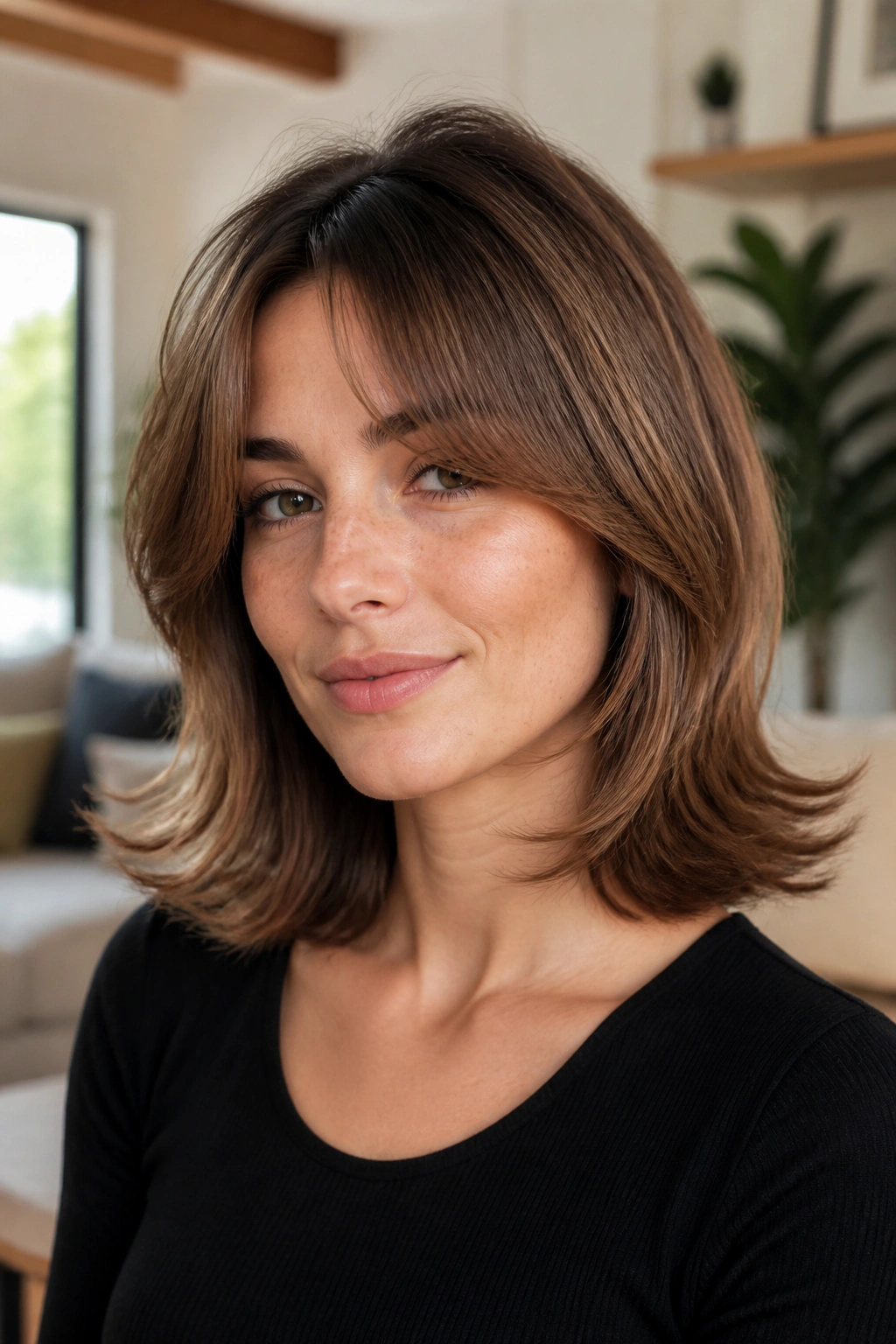
A shoulder-length cut with flipped ends can do more for fine hair than people expect. The flip adds motion, and motion makes the hair look alive instead of limp. French fringe belongs here because the front needs the same kind of softness.
Feathered ends are the key. Not ragged. Feathered. That means the ends are light enough to move, but they still keep enough shape to prevent the whole cut from thinning out.
Use a medium round brush and roll the ends under and away from the face in alternating sections. That little variation keeps the shape from looking too neat. Then let the fringe fall naturally, with only a small bend at the ends.
This cut feels a little retro in the best way. Not costume-y. Just easy and flattering, which is usually the sweet spot for fine hair.
13. Bottleneck French Fringe on Fine Hair
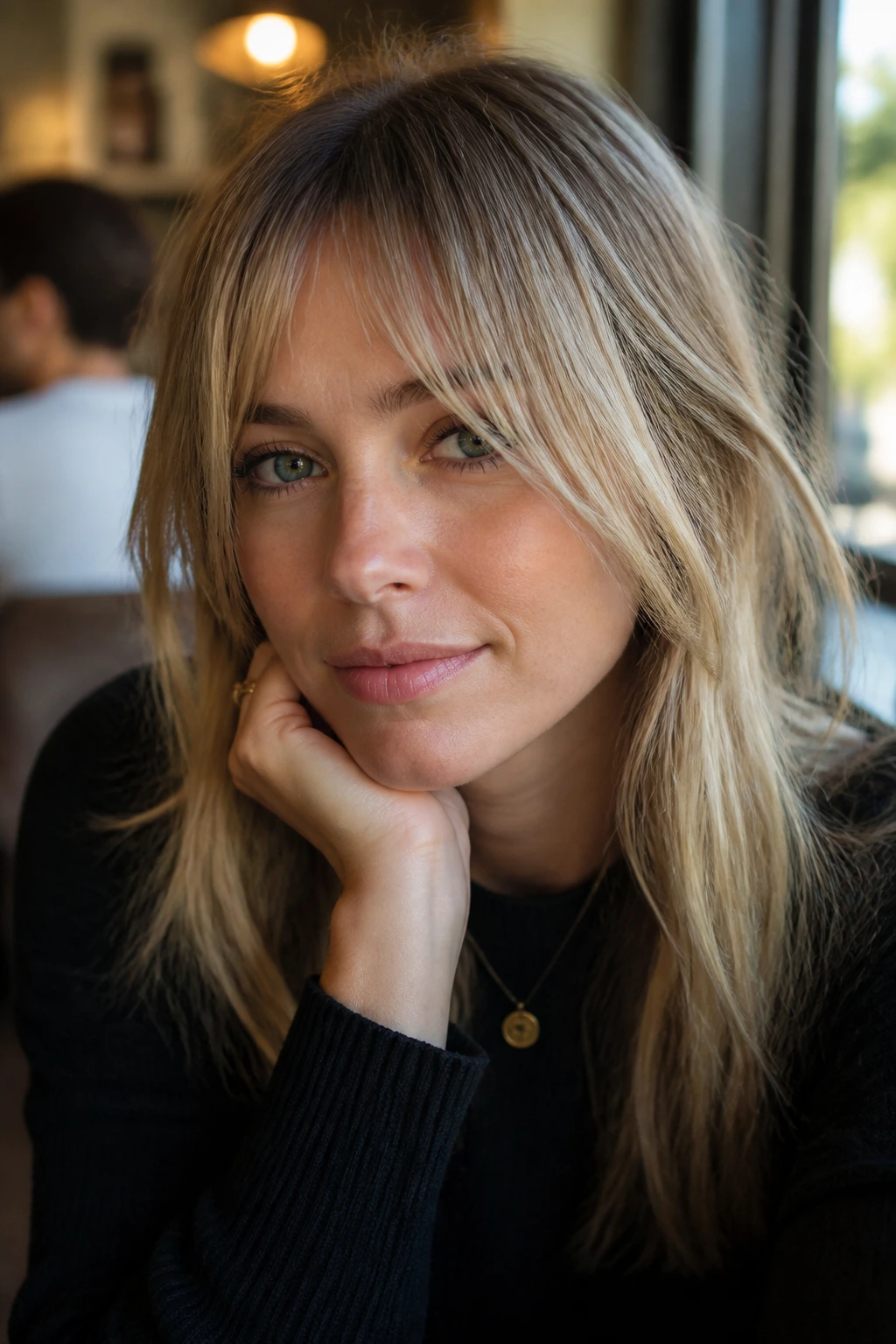
Bottleneck fringe gets its name from the shape: shorter in the middle, longer at the sides. On fine hair, that shape is a smart move because it keeps the center light and gives the edges a softer blend into the rest of the haircut.
The result is less dense than a full blunt fringe, which is exactly why it works. Fine hair needs structure without too much bulk at the front. A bottleneck French fringe gives you that balance and grows out well, which matters more than people like to admit.
How to Ask for It
Ask for the shortest point to land around the upper brow, with the sides tapering to cheekbone length. The middle should not be cut so thick that it sits like a wall.
- Keep the center airy, not boxed in.
- Blend the sides into the face-framing layers.
- Let the fringe open naturally in the middle.
- Style with a round brush, then separate with fingers.
This is one of the smartest choices if you want fringe without the maintenance of a heavy bang.
14. Wavy Mid-Length Cut with Invisible Layers
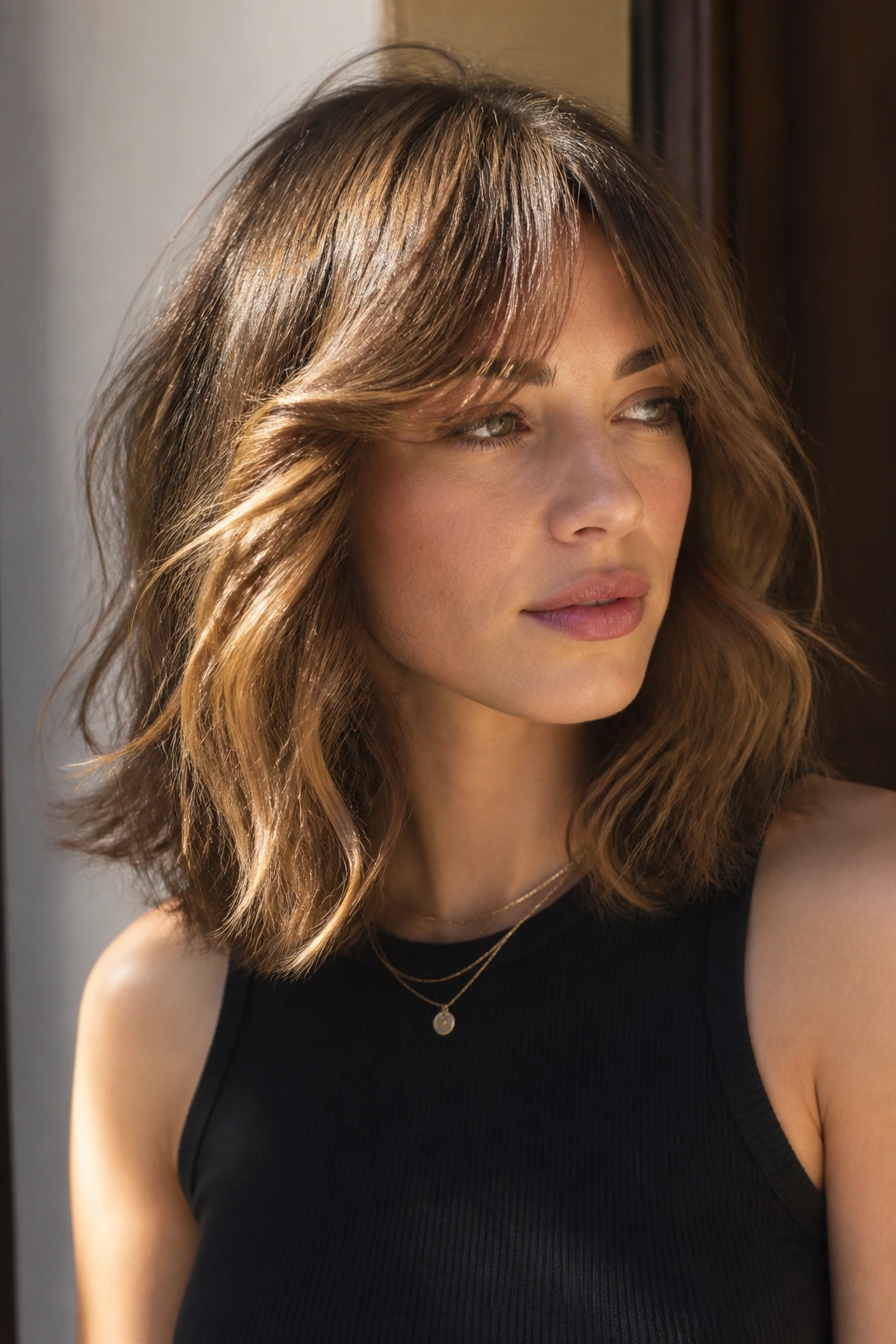
Invisible layers are exactly what they sound like: layers that create movement without flashing all over the haircut. Fine hair loves that trick. You get lift and swing, but the eye still reads the hair as full.
A mid-length cut sits beautifully with a French fringe because the fringe gives the face shape while the body of the hair keeps some weight. The cut should fall somewhere between the collarbone and the shoulders. Any shorter and the waves can puff; any longer and the shape may lose its spring.
Invisible layers are cut underneath, not through the top surface. That keeps the outline soft. It also means you can air-dry a wave and let the cut do a lot of the work for you.
This style feels easy in the real world, which is probably why so many people keep coming back to it. It does not ask for perfection. Good enough looks good here.
15. French Fringe with a Rounded Blowout
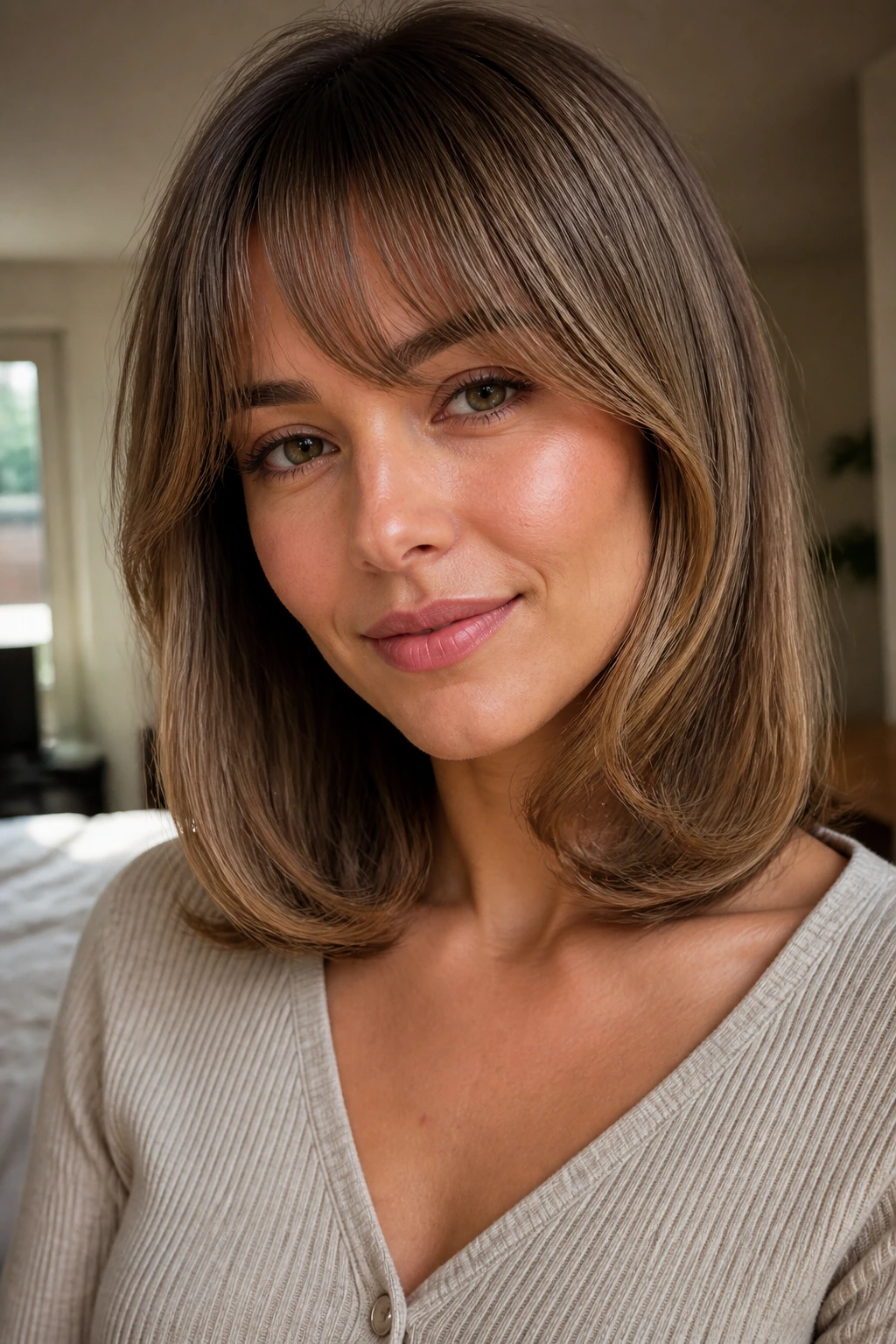
A rounded blowout makes fine hair look polished without making the fringe stiff. The round shape gives the roots a little lift, and the movement at the ends helps the whole cut feel fuller.
Start by rough-drying the roots until they’re about 80 percent dry. Then switch to a medium round brush and wrap the fringe forward, aiming the air down the hair shaft so the cuticle lies flatter. That keeps the fringe smooth without making it flat against the forehead.
The rest of the hair should be rolled under just enough to create a soft curve. You do not need big salon drama here. A gentle bend is enough.
This is the kind of finish that works especially well when your hair has gone a little limp after a wash. It’s a controlled look, but not a rigid one. Big difference.
16. Jaw-Length Crop with Tucked Sides
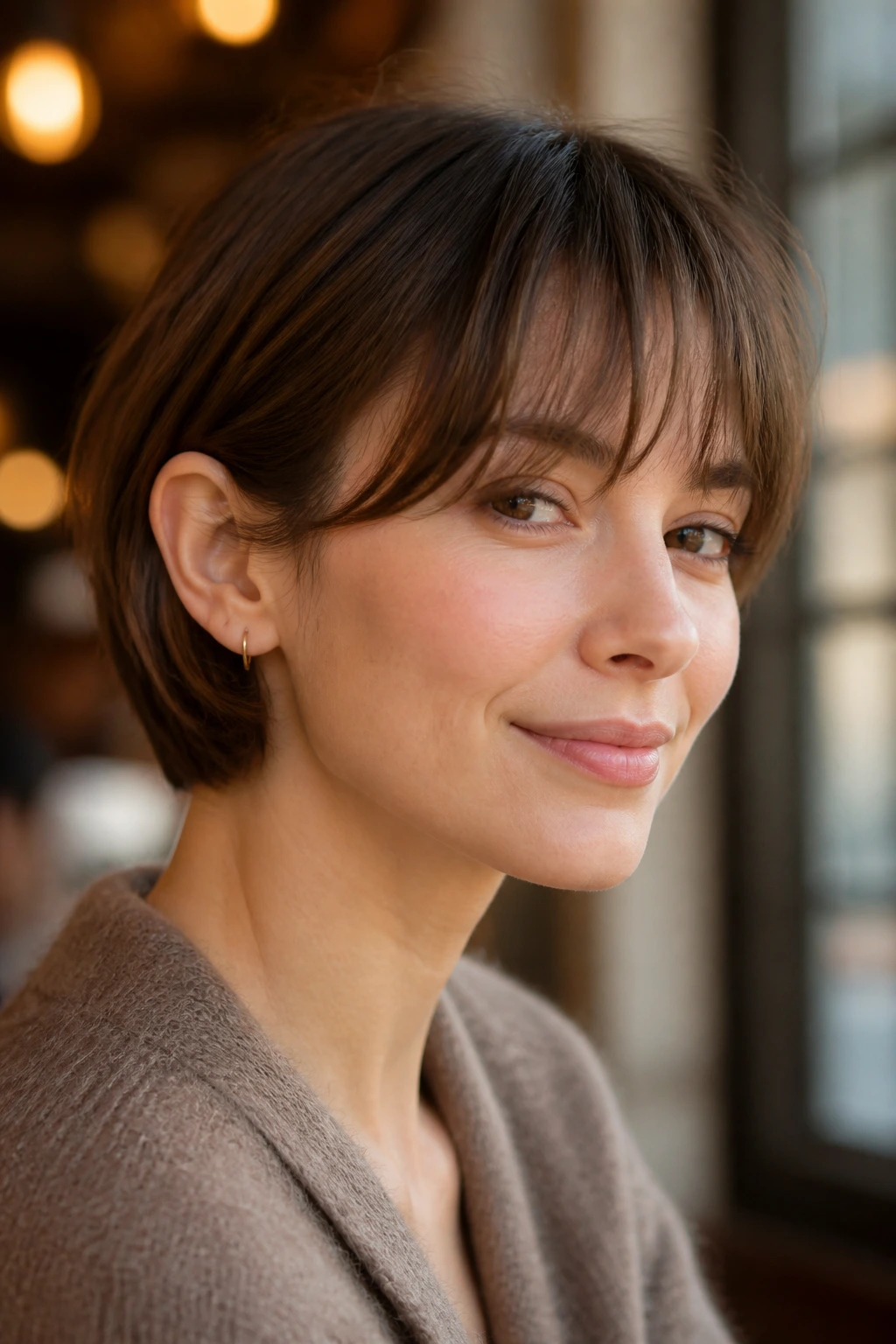
A jaw-length crop gives fine hair a crisp shape that reads as fuller from across the room. The French fringe softens that strong line so the cut does not feel severe.
Tucked sides are part of the appeal. When the hair is slightly shorter and sits close to the face, a small tuck behind the ear opens the cheekbones and shows off the fringe. It also makes the cut feel lighter without actually removing much hair.
The fringe should be the softest part of the haircut. Keep it broken, not thick. If you like a slightly polished finish, smooth the top with a little serum, but leave the fringe with movement.
This is a sharp look for people who like neat edges and do not want their hair pretending to be thicker than it is. It works because it is honest about the shape.
17. Messy Bun with a Curtain-to-French Fringe
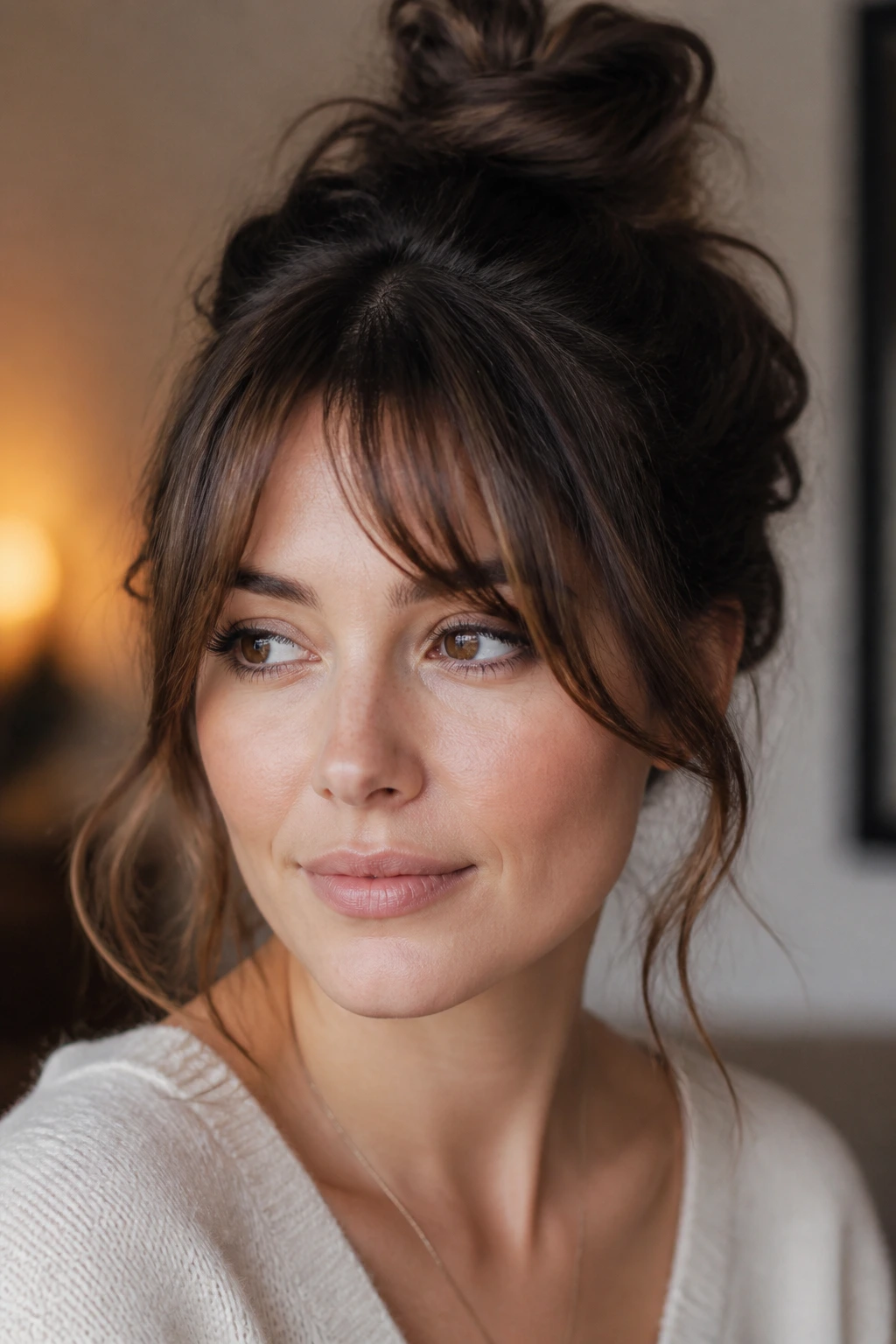
A messy bun can look too plain on fine hair unless the front has some shape. That is where a French fringe earns its keep. It gives the face a frame, and that alone makes the bun feel more thought-out.
Let the fringe blend into longer curtain-like pieces at the sides. That soft transition helps when you pull the rest of the hair back. A few loose ends around the temples are enough; you do not need a full halo of tendrils.
Dry shampoo at the roots makes the bun easier to build because it gives the hair a little grip. Use one or two hidden pins to keep the bun from sliding down, then pull at the crown slightly for lift.
This style is good for second-day hair, errands, dinner, and all the other times you want your hair up but not severe. Easy, but not boring.
18. Long Bob with a Deep Side Part
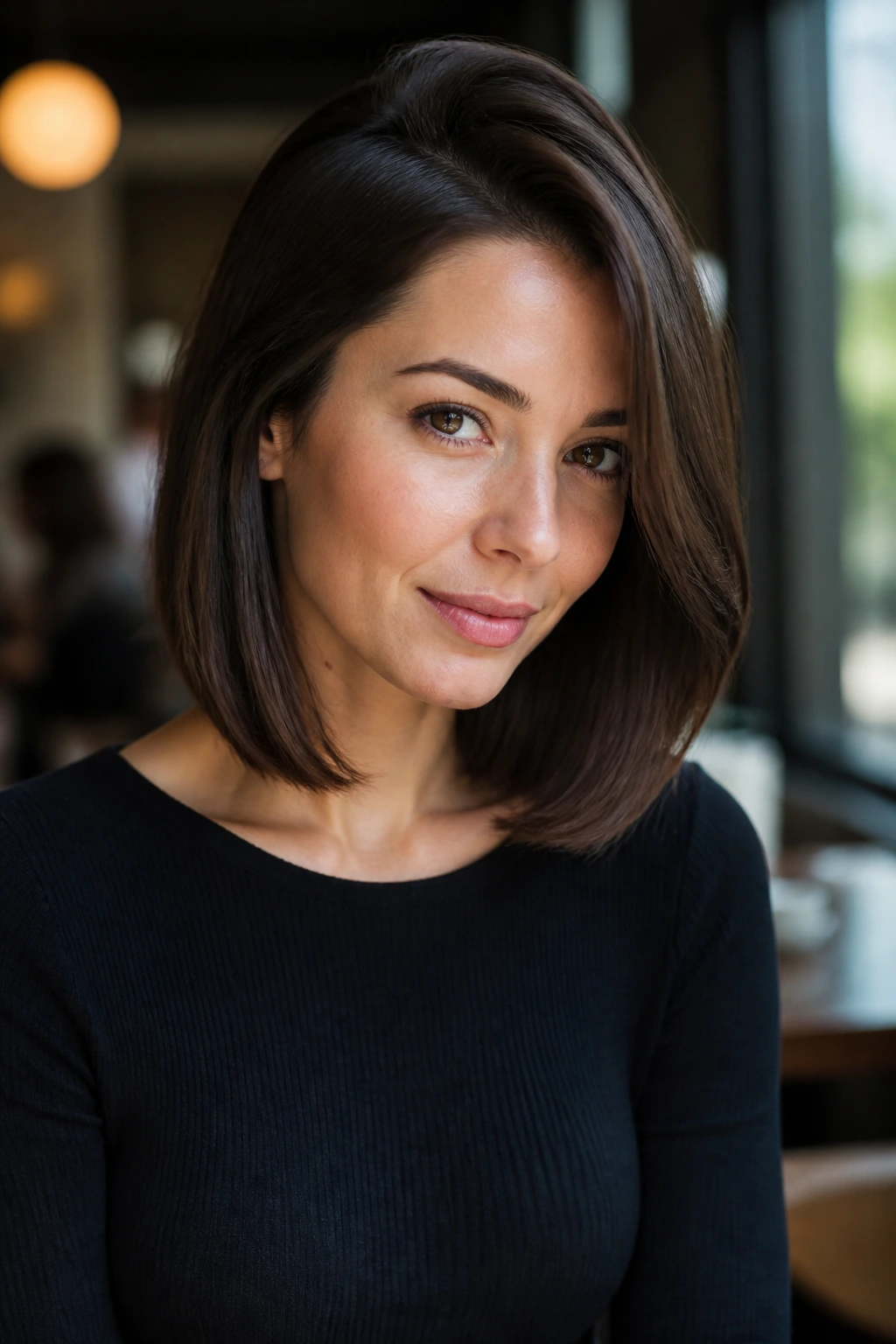
Want lift without cutting your hair too short? A long bob with a deep side part does a lot of the heavy lifting for you. Fine hair often looks fuller the moment you shift the part away from the center.
Why the Part Matters
A deep side part gives one side more height at the root, which creates the feeling of extra density. It also changes how the French fringe falls, so the front no longer sits flat across the forehead.
- Part the hair while it’s damp.
- Clip the heavier side up for 5 to 10 minutes while blow-drying.
- Push the roots in the opposite direction first.
- Release the fringe and let it settle softly across the brow.
The cut itself should stay smooth through the ends, with just enough bend to keep it from looking stiff. This one is especially good if your hair naturally wants to lie down and behave. We’re not letting it.
19. Soft Wolf Cut with Airy Perimeter
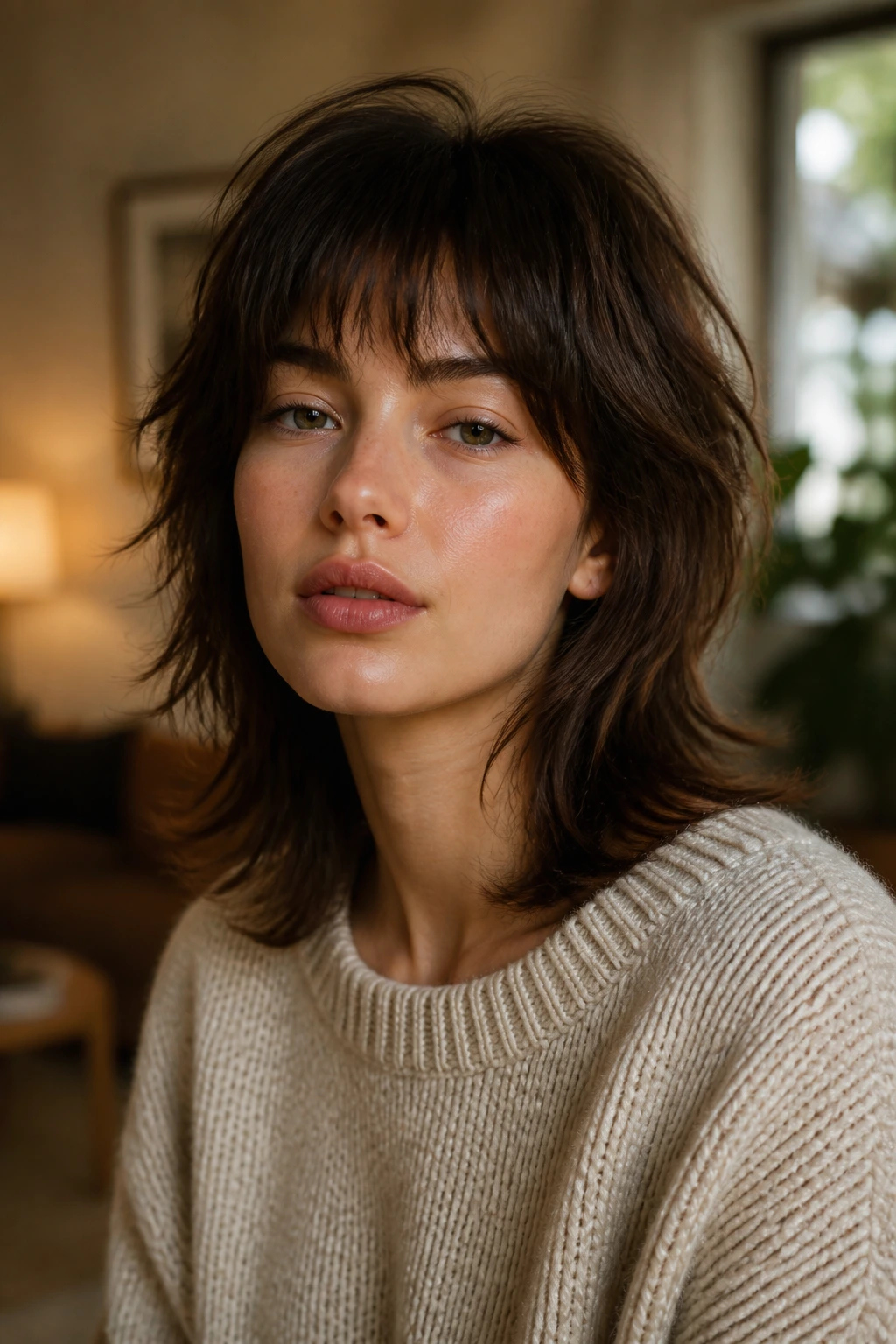
A wolf cut can work on fine hair, but only if it stays soft. Too much shag, too much thinning, too much crown lift — and you end up with ends that look like they’ve been chewed up by scissors.
The version that works keeps the perimeter airy while preserving some weight through the lengths. The French fringe should stay light and a little longer at the sides so the front doesn’t feel disconnected from the rest of the cut.
This is a good cut for people who want texture and do not mind a bit of edge. It still needs balance. The best wolf cut on fine hair looks lived-in, not shredded.
Avoid overusing texturizing paste. A small amount goes a long way. If the ends start separating in thin strands, you’ve gone too far.
20. Polished Straight Cut with Piecey Fringe
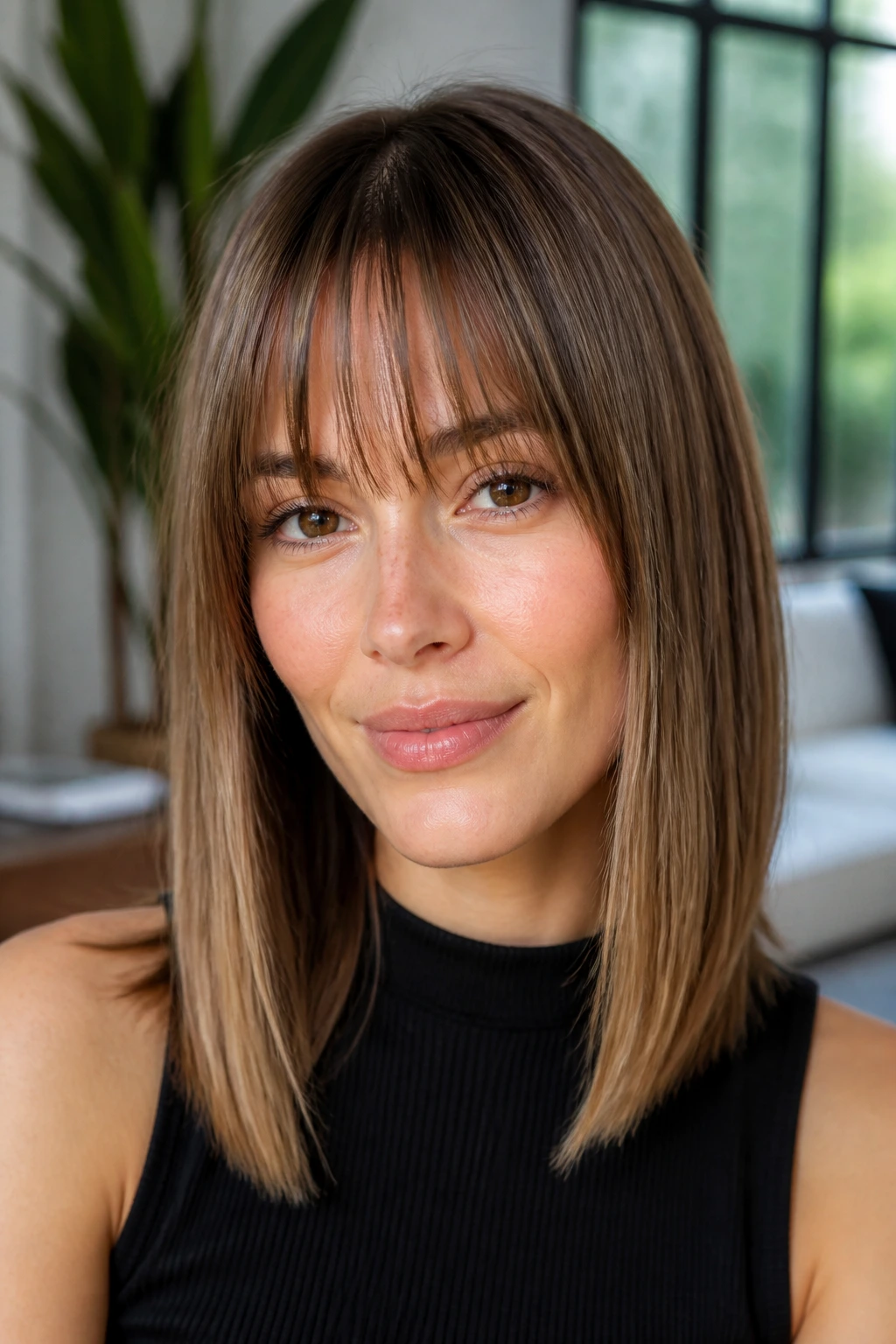
Straight hair can wear a French fringe beautifully if the ends are healthy and the fringe is cut with enough variation. A piecey fringe keeps the front from looking flat, while the straight lengths give the whole cut a sleek finish.
The trick is restraint. Don’t chase too much texture. Fine hair can look especially elegant when the lines stay clean, and a little separation in the fringe is enough to stop it from looking severe.
Use a flat iron only once through each section. Multiple passes can leave fine hair too soft and too limp. Then use a tiny bit of serum on the ends, not the roots, so the shape stays crisp.
This look suits anyone who likes hair that feels neat but not stiff. It’s one of the few styles here that can look equally good tucked behind the ears or left straight down.
21. French Fringe with a Hair Clip and Volume at the Crown
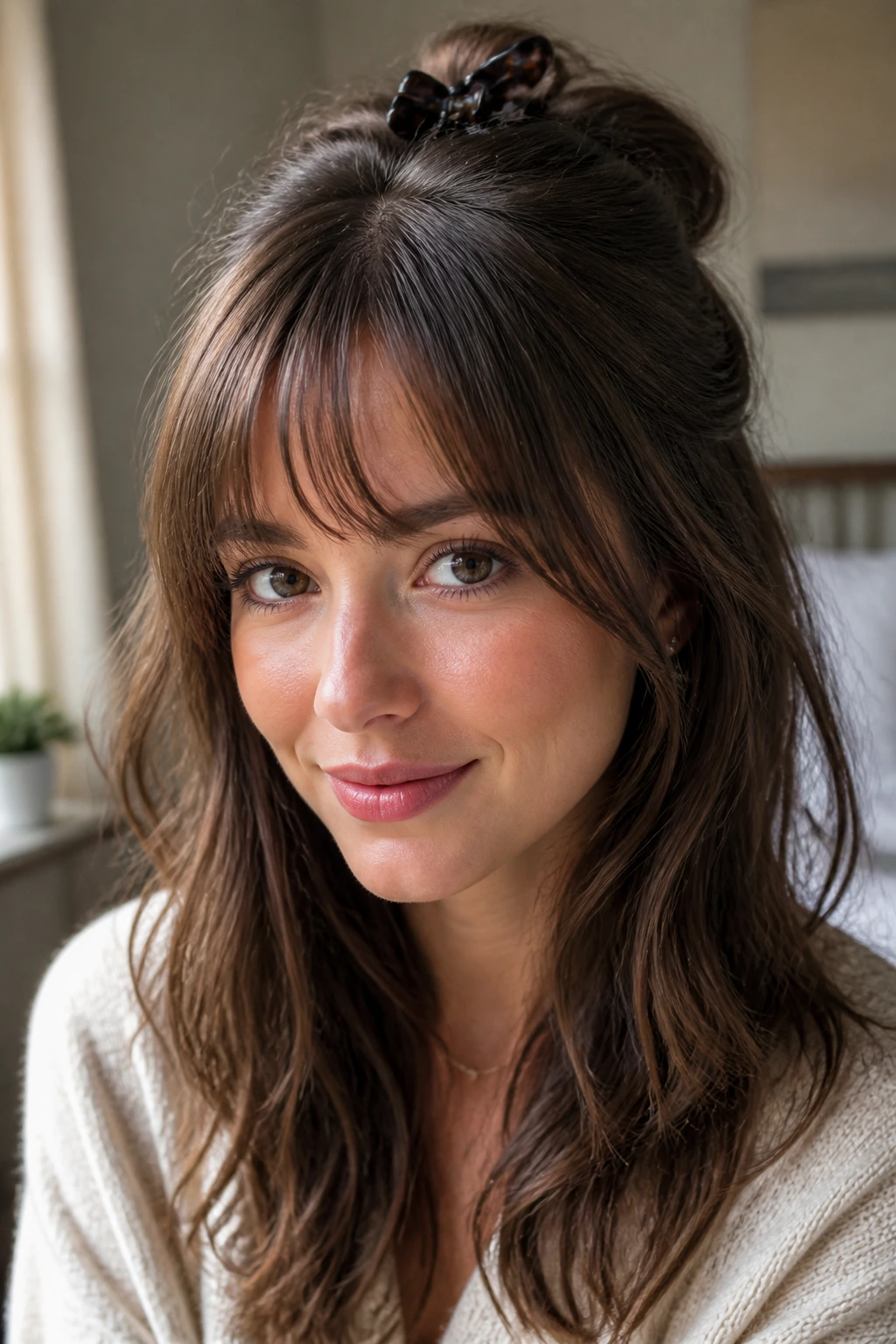
Sometimes the easiest style is the one people overlook. A French fringe with a simple hair clip gives fine hair a quick lift at the crown and keeps the front soft and visible.
The clip should sit high enough to hold the side sections back without crushing the roots. A small clamp can work, but an oversized clip gives the style a bit more personality and keeps the hold gentler. That matters if your hair is slippery.
A touch of volume at the crown changes the whole read of the haircut. Lift the top section with your fingers, mist lightly with dry texture spray, and clip the side back so the fringe stays loose in front.
This is a good weekday style because it does not ask for much. Clean part, soft fringe, one clip. Done.
22. Grown-Out French Fringe That Still Looks Intentional
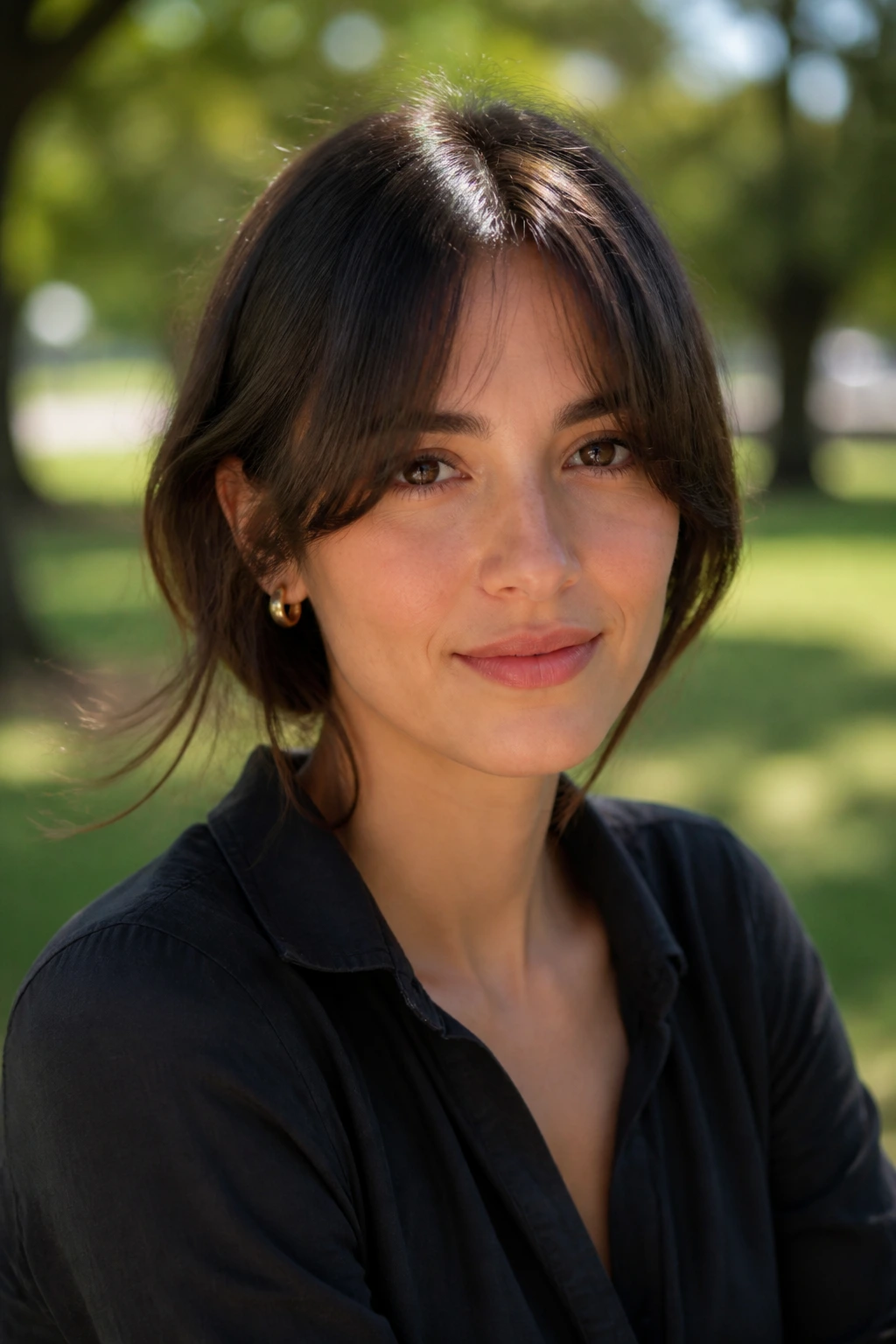
A grown-out fringe on fine hair can look fantastic when it is handled on purpose. The worst version is the one where the bangs are halfway to the eyebrows and nobody adjusts the shape. The better version is softer, longer, and easy to wear to one side or split in the middle.
Let the fringe reach cheekbone length, then guide it with your fingers rather than forcing it into a straight line. A side part or a loose center split can keep the hair from hanging in the eyes. If the edges start to look blunt, a tiny cleanup around the fringe line keeps everything soft.
This is also the most forgiving option if you do not want to trim bangs every few weeks. The shape can drift a little and still look good. That is rare, and worth appreciating.
Fine hair grows out best when the fringe was never too thick to begin with. Keep it airy, keep it soft, and let the haircut age gracefully instead of fighting it.
