



Round faces and curtain bangs can be a sharp match when the fringe behaves like a line, not a bar. The whole point is to create movement that falls down the face instead of stopping right at the widest part of the cheeks.
Short, blunt bangs usually do the opposite. They can make the face feel fuller, even if the haircut is technically well done.
The sweet spot is length, softness, and a clean center opening. A fringe that starts a little higher near the brow and drifts lower toward the cheekbone or mouth can change the whole balance of the cut. Not by magic. By shape.
If you’ve ever left the salon with bangs that felt too wide, too heavy, or just oddly puffy at the sides, the fix is usually not “no bangs.” It’s a better curtain shape. Some versions are airy, some are shaggy, some are polished, and some are built for curls or thicker hair. The first few below are the safest place to start.
1. Long Curtain Bangs That Slip Past the Cheekbones
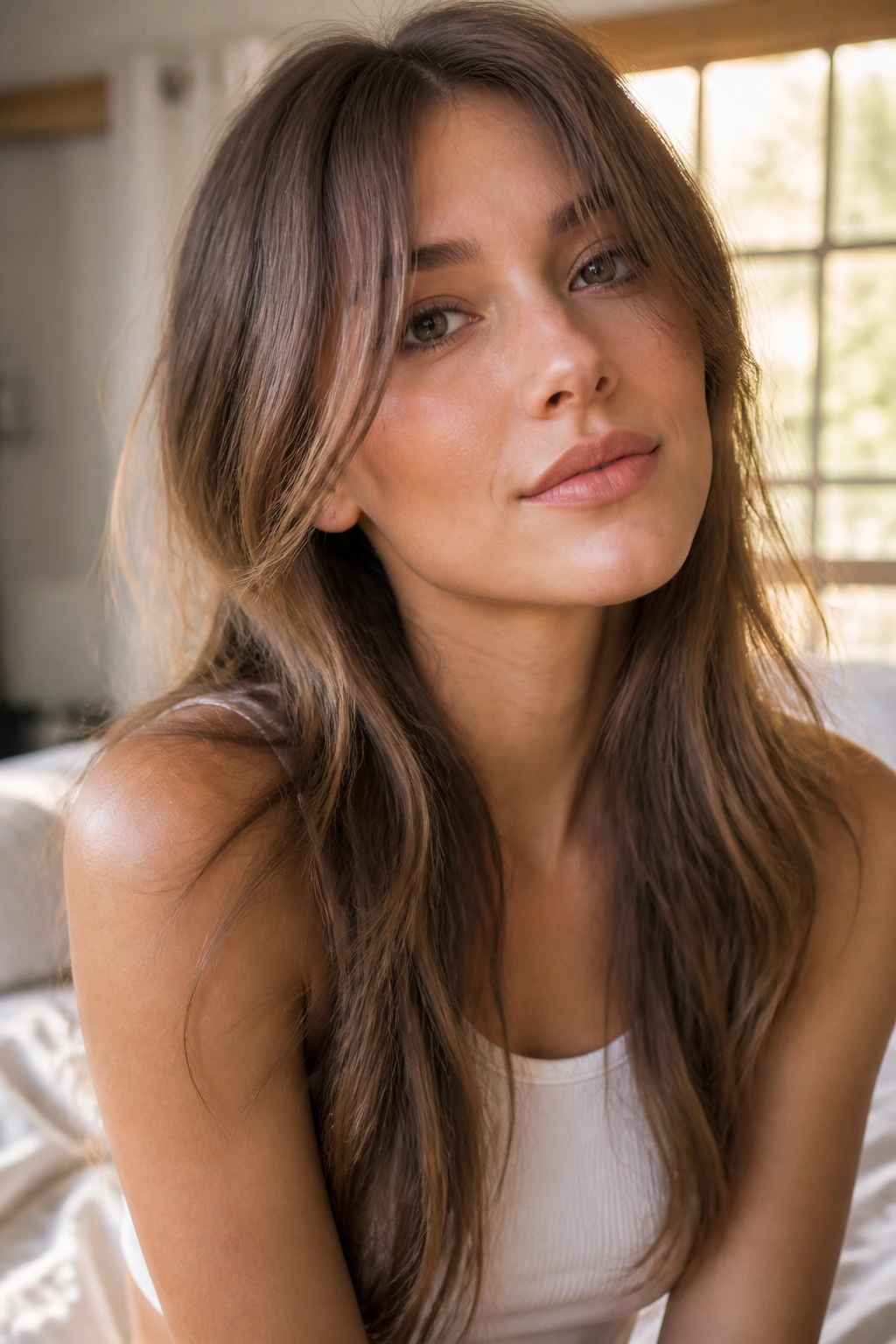
Long curtain bangs are the easiest win for a round face. They give you that soft split in the middle, but the real advantage is where the ends land: below the cheekbones, not on top of them.
That little difference matters more than people think. If the fringe stops right at the widest part of the face, it can make the cheeks look broader. If it drops lower, the eye follows the line downward, and the whole face looks a bit longer.
Ask for the shortest point to sit near the outer brow, then let the sides descend toward the jaw. I like this shape on straight hair and loose waves because it stays readable without looking stiff. It also grows out well, which is handy if you do not want to be in the salon every few weeks.
The finish should feel soft, not helmet-like. If the ends are too blunt, the shape loses that airy curtain effect and starts acting like a grown-out fringe in the bad way.
2. Bottleneck Curtain Bangs
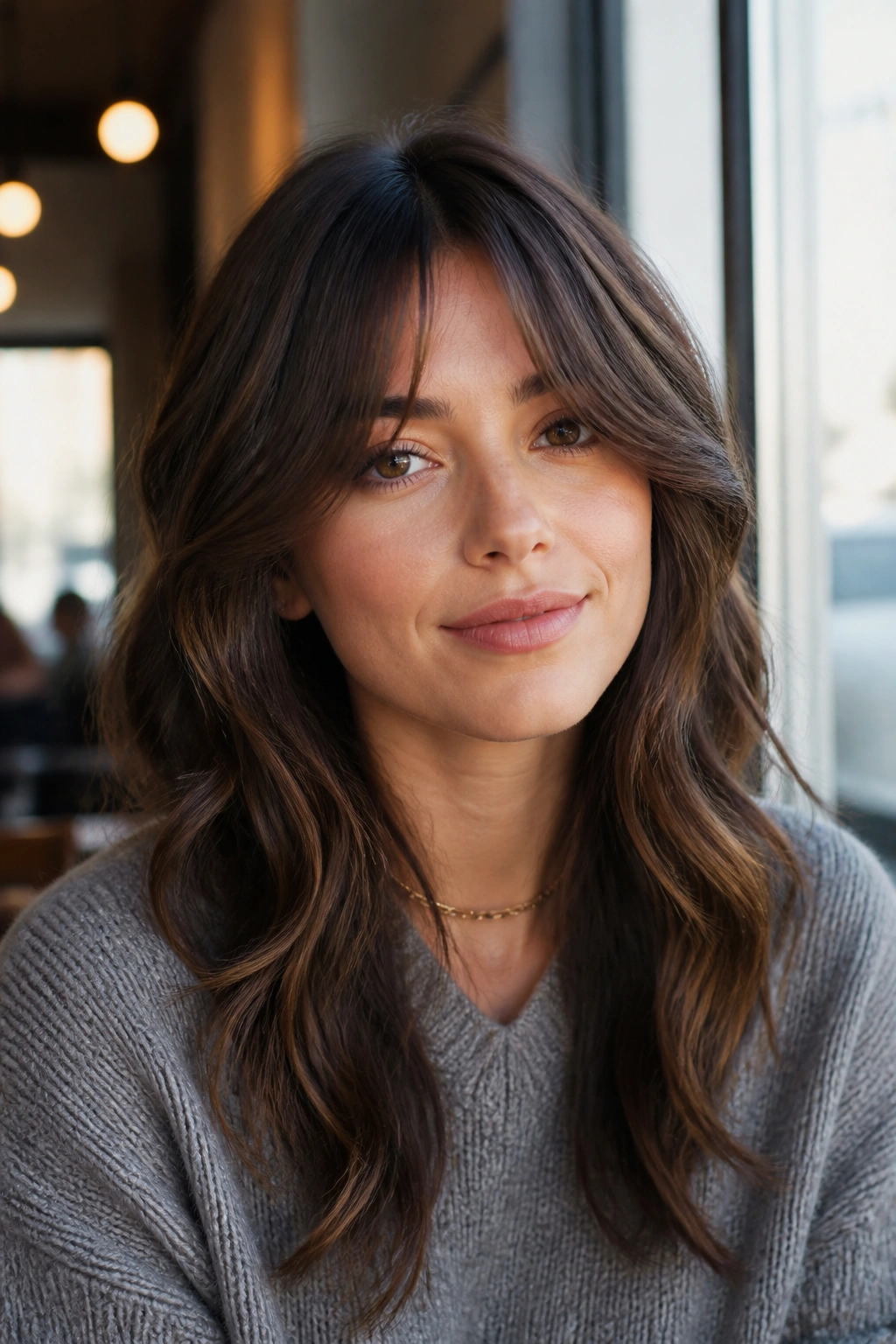
Why do bottleneck bangs flatter round faces so often? Because they start narrow in the center and open wider as they move outward, which mimics the shape of a long, slim line instead of a wide block.
That taper is the whole trick. The inner pieces sit closer together above the bridge of the nose, then the fringe fans out around the eyes and cheekbones. On a round face, that keeps the middle from looking wide and gives the haircut a little vertical pull.
How to style them
- Blow-dry the center first with a small round brush so it sits close to the forehead.
- Direct the outer pieces away from the face while they cool.
- Keep the shortest pieces just above the brow line, not high on the forehead.
- Use a light cream or mist, not a heavy balm, so the fringe stays separated.
Best for:
- Fine to medium hair
- Soft waves
- Anyone who wants a little shape without a thick wall of bangs
If your hair tends to swell up in humidity, this cut still works, but it needs less bulk at the temples. That’s the part stylists sometimes forget.
3. Wispy See-Through Curtain Bangs
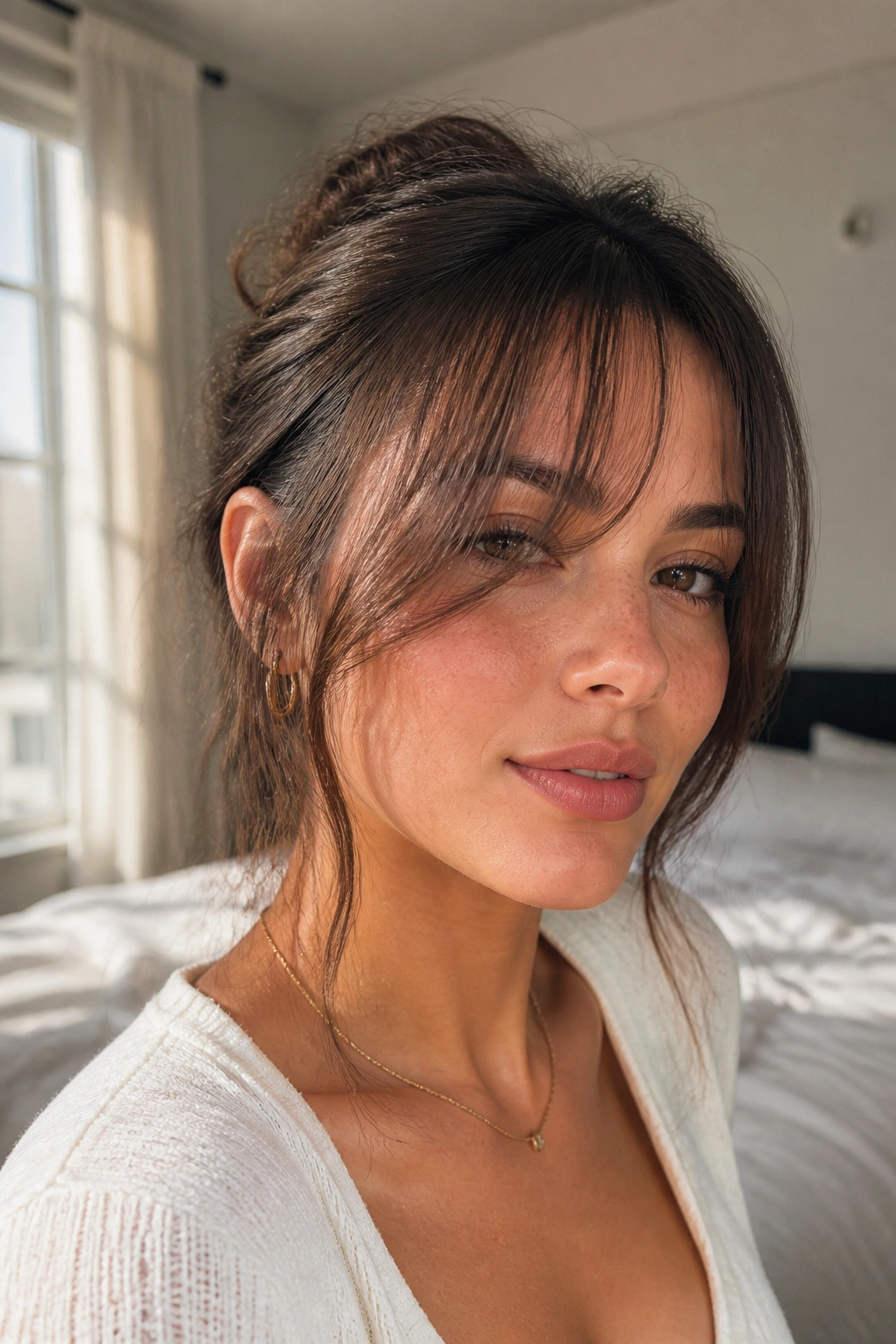
If you hate the feeling of heavy bangs on your forehead, wispy curtains are the gentler answer. They let some skin show through, which keeps the front of the haircut from looking dense and wide.
The reason they flatter round faces is simple: they add texture without adding much width. A full fringe can act like a visual shelf. A wispy fringe breaks that line apart.
What keeps them airy
- Ask for point-cut ends instead of a blunt snip.
- Keep the density soft through the middle.
- Let the side pieces stay longer than the center.
- Dry them with a side-to-side motion, not straight down.
A lot of people over-thin these and end up with weak, stringy pieces that separate in odd places. That is not the goal. You still want enough hair there to make a shape. Just not so much that it crowds the face.
These are especially nice if you like your bangs to feel more like a veil than a statement. Quiet, but not boring.
4. Curtain Bangs That Blend Into Collarbone Layers
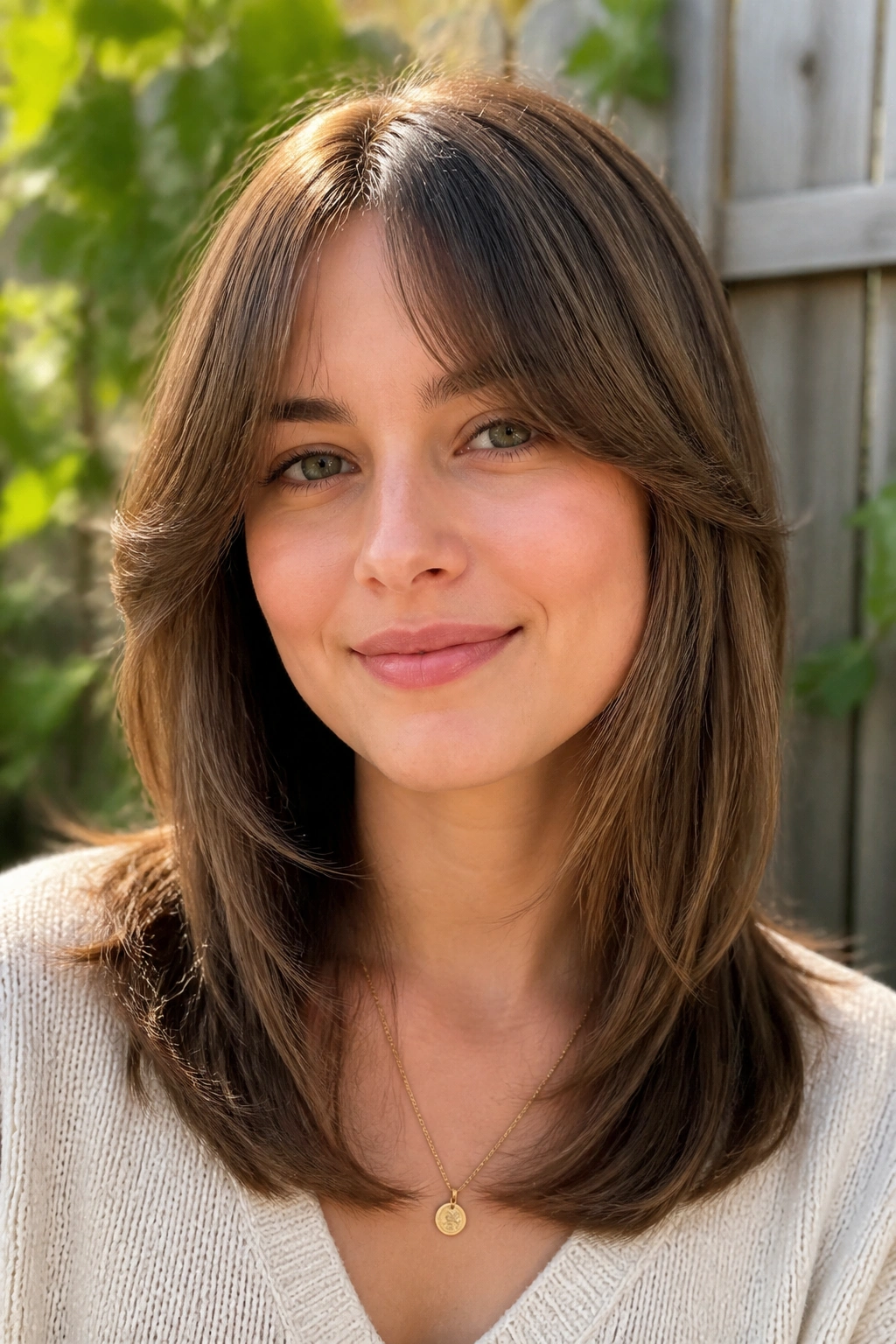
The best thing about a longer haircut is that the bangs can disappear into it. When curtain bangs blend into collarbone layers, the face frame becomes one long, continuous line, and that line is flattering on a round face.
I like this cut because it doesn’t stop at the cheeks and flare out. It keeps moving. The longest pieces can graze the mouth or even slip into the front layers at the collarbone, which helps the cut feel narrow and stretched instead of wide.
A shoulder-length or collarbone-length base gives you room to build that shape. On shorter cuts, the curtain bang has to do more work. Here, the layers help carry the line.
The styling is fairly forgiving, too. A loose bend with a medium barrel brush or a flat iron twist is enough. The fringe should fall like part of the haircut, not like it was pasted on later.
5. Shaggy Curtain Bangs With Soft Ends

Shaggy curtain bangs suit round faces when you want movement first and polish second. They create a little edge, but not the kind that feels sharp or severe.
What to ask for at the salon
- A soft center split.
- Light layering through the front.
- Ends that are feathered, not chopped blunt.
- Shortest pieces around the brow or just below it.
- Longer side pieces that blend into the cheek and jaw.
The shag shape works because it builds texture away from the widest part of the face. That loose, broken outline keeps the fringe from turning into a heavy rectangle. It also looks good when it grows out a bit, which is one reason people keep coming back to it.
A tiny bit of texture spray goes a long way here. Too much, and the fringe gets crunchy. Too little, and the whole cut collapses into flatness.
My take: if you like hair that looks a little lived-in, this is one of the smartest curtain bang options for a round face.
6. Side-Weighted Curtain Bangs
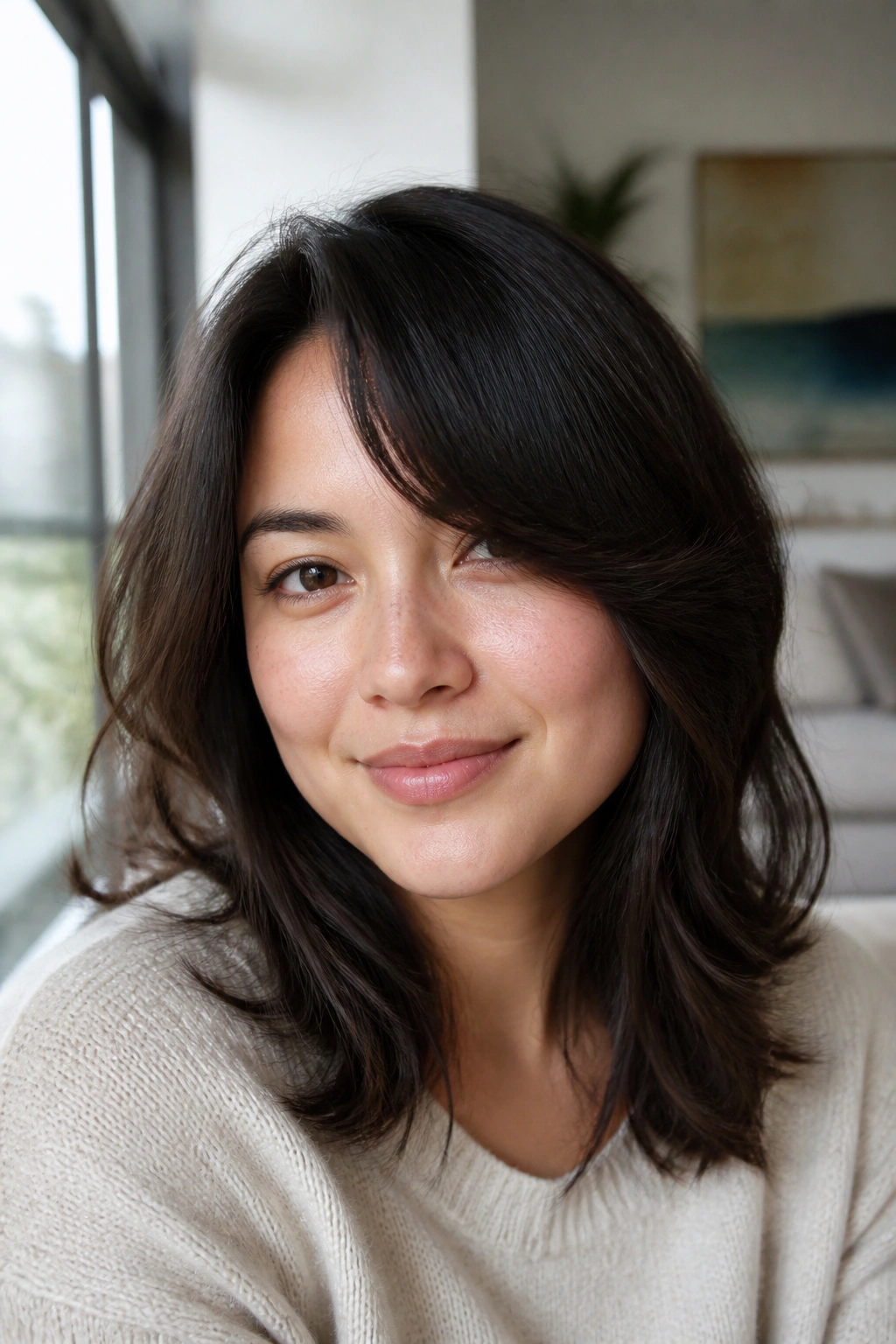
Unlike a blunt side fringe, side-weighted curtain bangs still keep the center open. That makes them a cleaner choice for a round face because they don’t carve a hard line across the forehead.
The side weight gives you a softer diagonal. One side can fall a touch fuller than the other, or one side can be tucked just enough to keep the face from feeling too symmetrical. That slight imbalance is useful. Perfect symmetry can make a round face look wider than it is.
This shape is especially handy if you part your hair a little off-center or tuck one side behind your ear a lot. The fringe follows your habits instead of fighting them. And that matters. Hair that fits how you actually live always looks better than a cut you have to babysit.
If you like a more relaxed finish, ask for a curved, not straight, transition from bang to layer. The curve does the flattering work.
7. Chin-Grazing Curtain Bangs
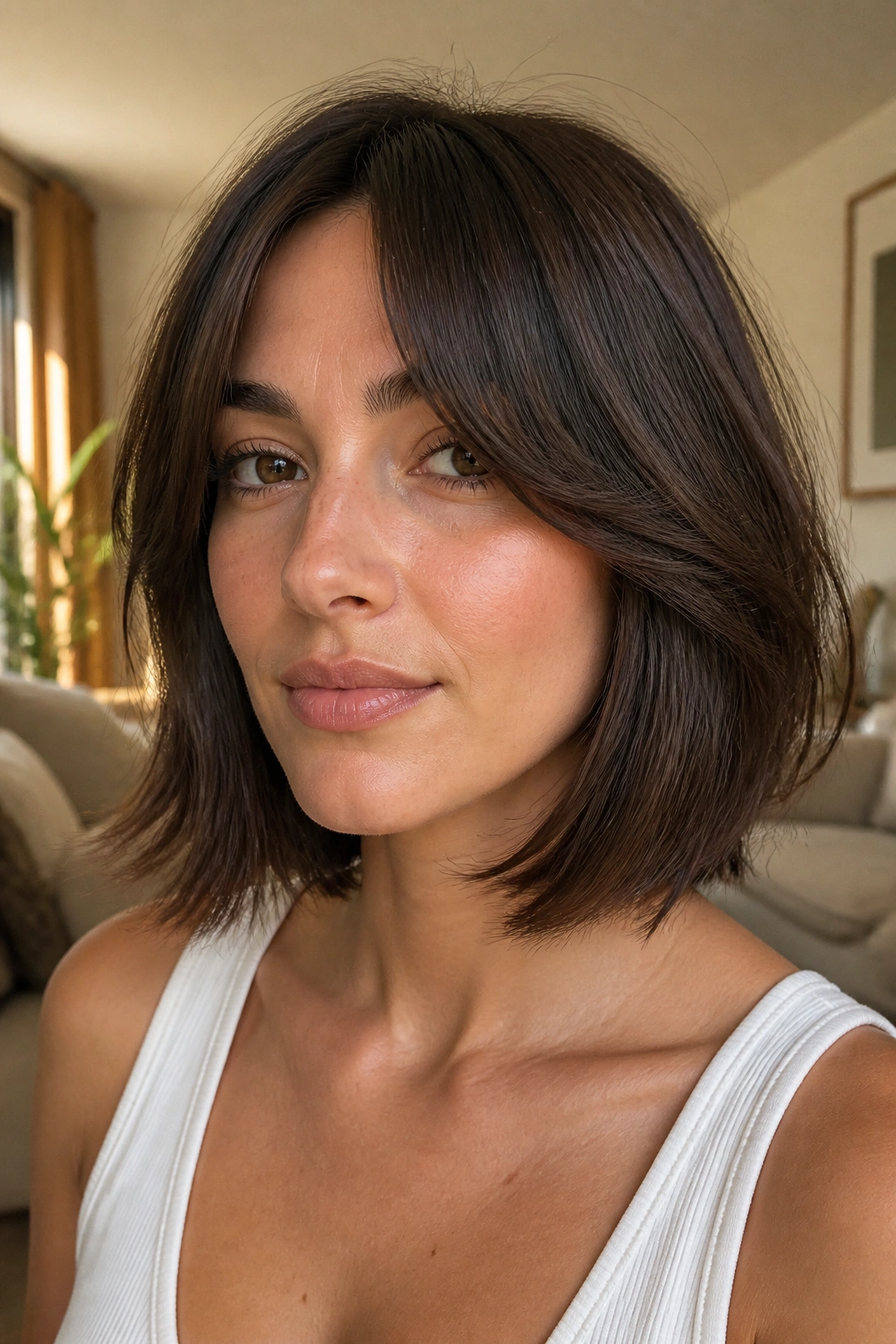
Chin-grazing curtains are a strong move when you want real length. They pull the eye down to the jaw area, which helps balance fuller cheeks and gives the face a leaner read.
This version needs a bit of nerve because it feels long in the chair. It is long. That’s why it works. Once the ends hit the chin, the fringe stops fighting the lower half of the face and starts framing it.
The catch is placement. If your chin is already the widest part of your face, you may want the side pieces a little longer than that. If your jaw is softer and your chin is narrower, the length can land right there and look elegant without feeling fussy.
I like this cut on wavy hair because the bends keep the front from looking flat. Straight hair can wear it too, but the curve matters more. Use a round brush or a small bend from a flat iron so the pieces sweep away from the face instead of hanging like cords.
8. Airy Blowout Curtain Bangs
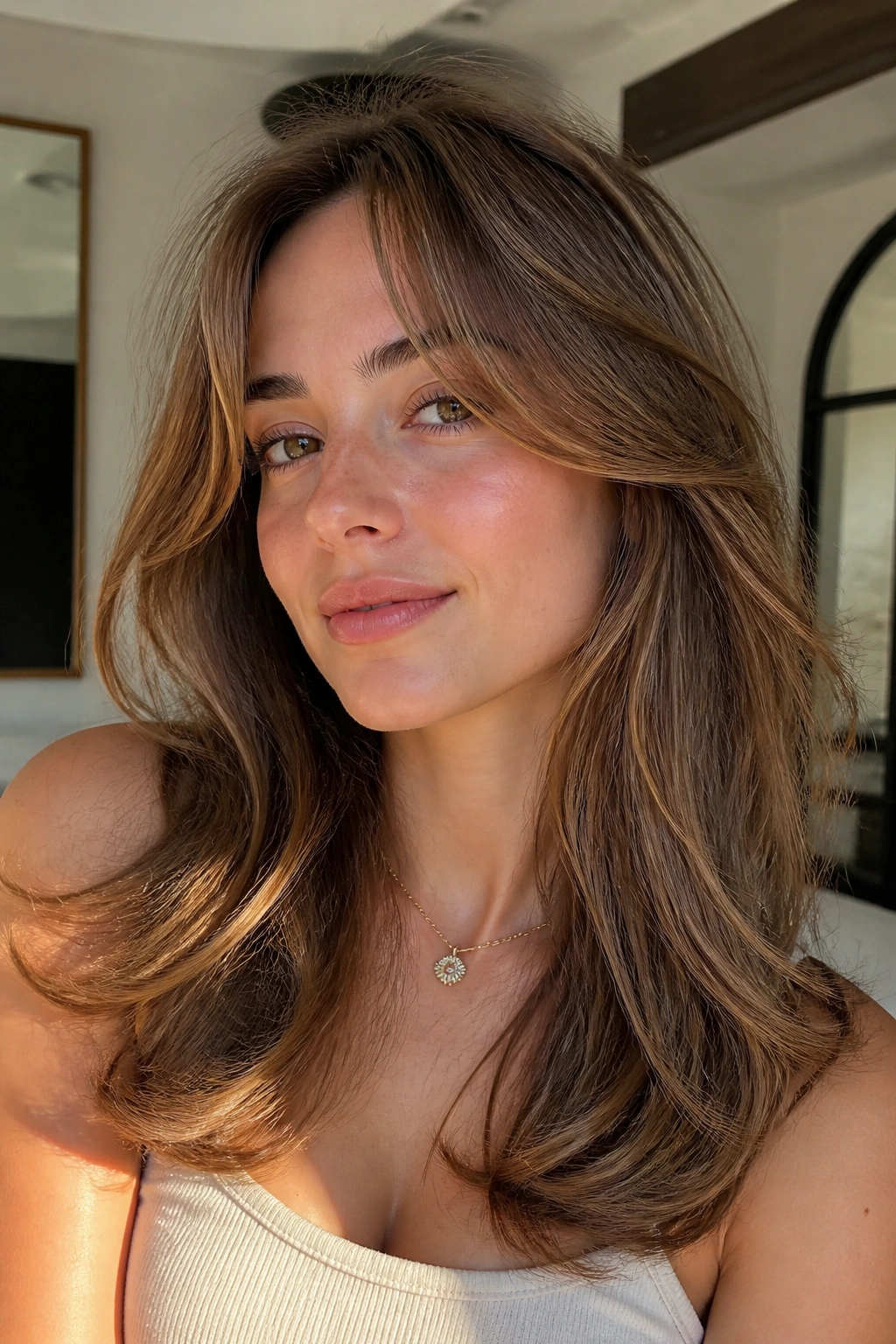
Why do blowout-style curtain bangs look so flattering on a round face? Because the roots lift first, then the lengths fall away from the cheeks in a clean curve.
That lift at the crown creates space. Without it, bangs can sit low and push the face wider. With it, the whole front of the haircut feels lighter.
How to get the shape at home
- Start with damp hair, not soaking wet.
- Rough-dry the fringe until it’s about 80% dry.
- Wrap each side around a 1.25-inch round brush and roll away from the face.
- Hit the roots with the dryer nozzle pointing upward.
- Let the bangs cool before touching them.
The cooling part is not optional. Warm hair forgets shape fast. Cool hair holds it.
This style is the one I’d suggest if you like a polished finish and do not mind a little effort. It reads soft and airy, but it takes a proper blow-dry to stay that way.
9. Curly Curtain Bangs
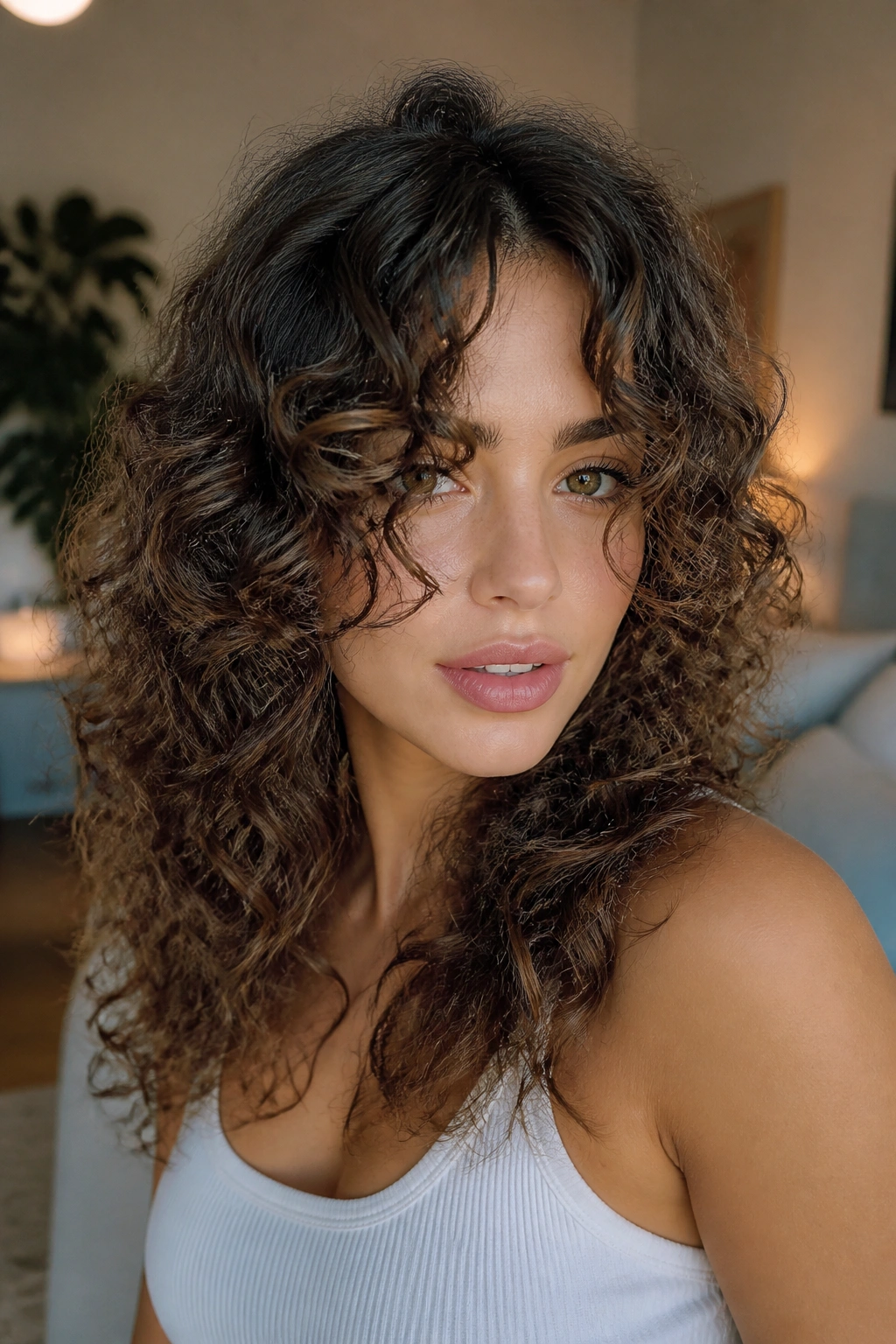
A round face and curly curtain bangs can be a very good pairing, but only if the cut respects shrinkage. Cut too short, and the fringe rises above the cheekbones. That’s where things get dicey.
The safest route is to cut curls dry or nearly dry, then leave more length than feels necessary in the chair. Curly hair springs up. Always. The front pieces should be long enough to drape into the face, not float above it.
- Keep the center a touch shorter than the sides.
- Separate larger curl groups rather than carving tiny bits.
- Ask for the side pieces to land near the cheekbone or mouth.
- Use a curl cream that gives slip, not stiffness.
The best curly curtain bangs have shape without puff. That means the curls need room to move, but not so much space that they flare sideways. A few well-placed layers around the face usually help more than a heavy thinning job.
If your curls are strong, this cut can look gorgeous. Soft. Easy. A little romantic, without getting too precious.
10. Thick Curtain Bangs With Tapered Ends
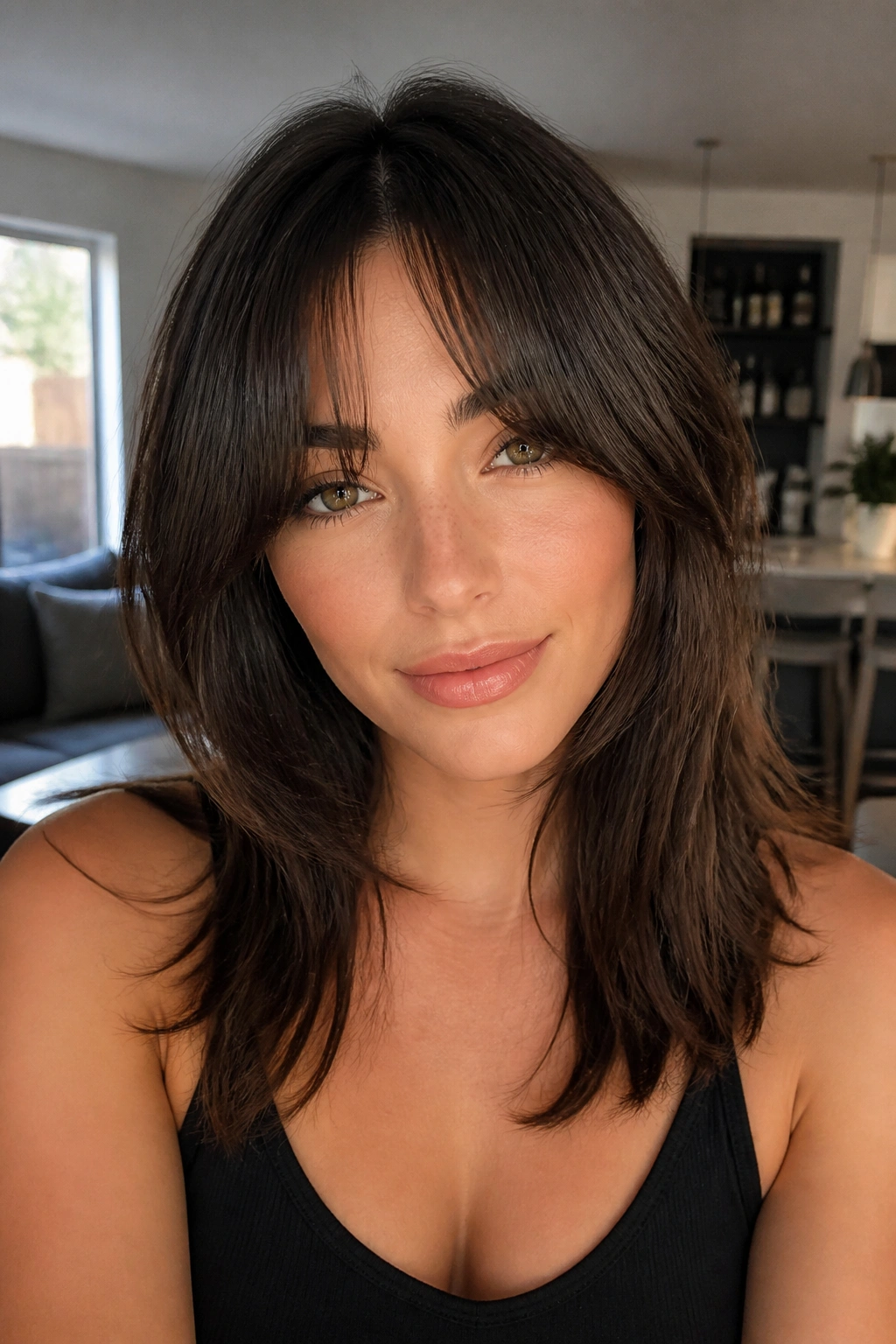
Thick hair can wear curtain bangs beautifully. The trick is not to leave all that density sitting right on the forehead like a shelf.
A thick fringe works on a round face when the stylist removes bulk from the underside and keeps the edges tapered. That way the middle still has enough presence to frame the eyes, but the sides don’t balloon out around the cheeks.
This is one of those cuts where inside work matters more than the surface. If the interior stays too heavy, the bang can puff out when it dries. If the ends are too blunt, the whole shape looks square. Neither is helpful on a round face.
Ask for soft layering from the mid-bang down, with the longest pieces blending into the front sections. A little weight should stay in the center. Too much thinning, and the fringe turns wispy in a bad way and loses its shape by noon.
This version looks especially good with smooth blowouts, but it can also work with natural wave if the front is guided away from the cheeks.
11. Feathered Curtain Bangs With Soft Lift
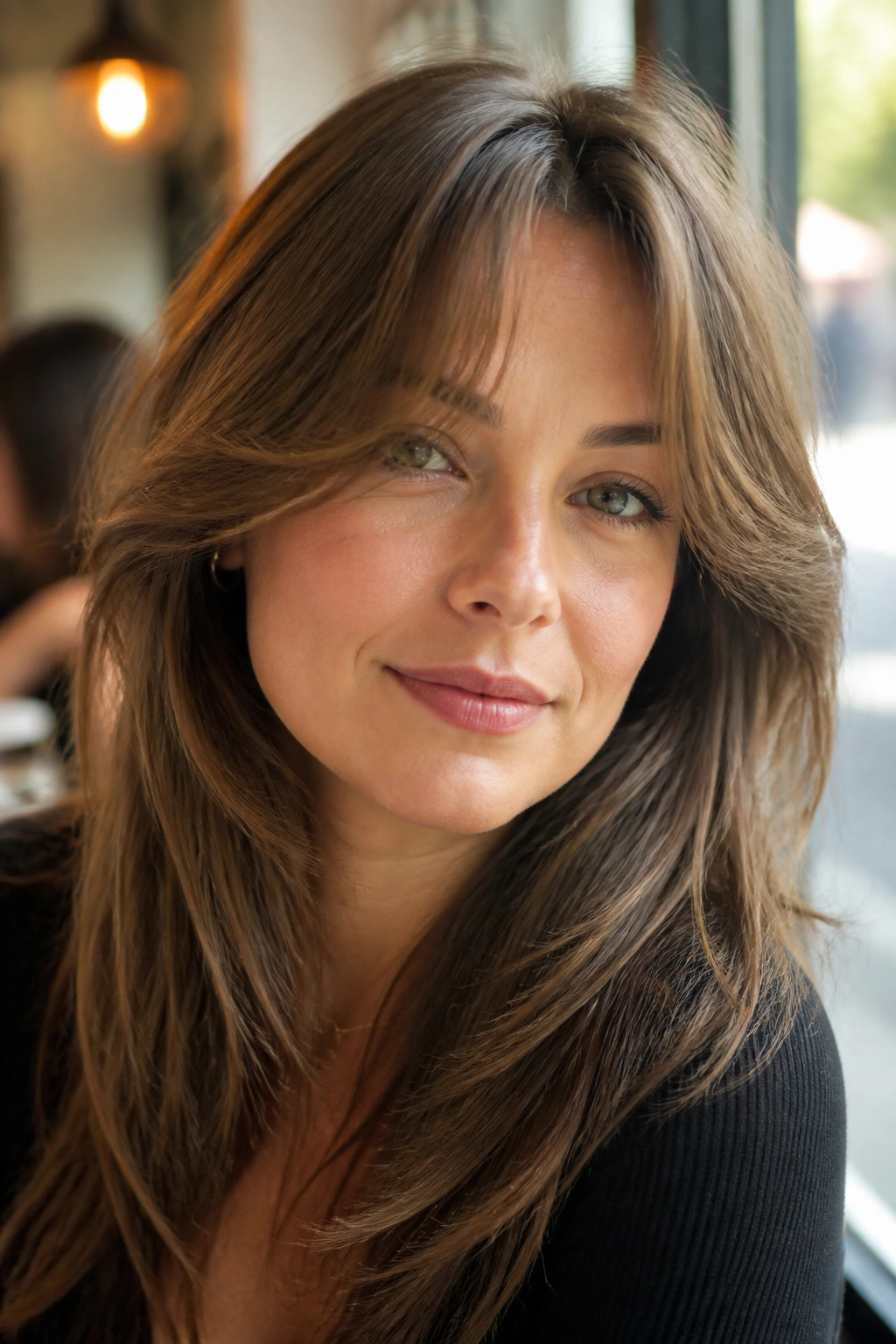
Feathered curtains are a smart choice when you want the fringe to feel light but still visible. They don’t sit flat. They move.
What makes the shape work
The hair is cut and styled so the ends break apart slightly, almost like brushed-out feathers. That soft separation keeps the fringe from widening the face. Instead of a broad curtain, you get narrow pieces that taper as they slide down.
What to ask for
- A center split that opens gently, not sharply.
- Softly feathered ends around the brow and cheekbone.
- Longer side pieces that blend into the first layer.
- A blow-dry direction that sweeps the hair away from the center.
I’d pick this shape for medium-density hair that can hold a little bend. It’s not the strongest option for very fine hair unless you want a barely-there finish. But on the right texture, it looks airy and flattering without screaming for attention.
Good sign: when you shake your head, the bangs should move with you instead of sticking in one shape.
12. Lob and Curtain Bangs
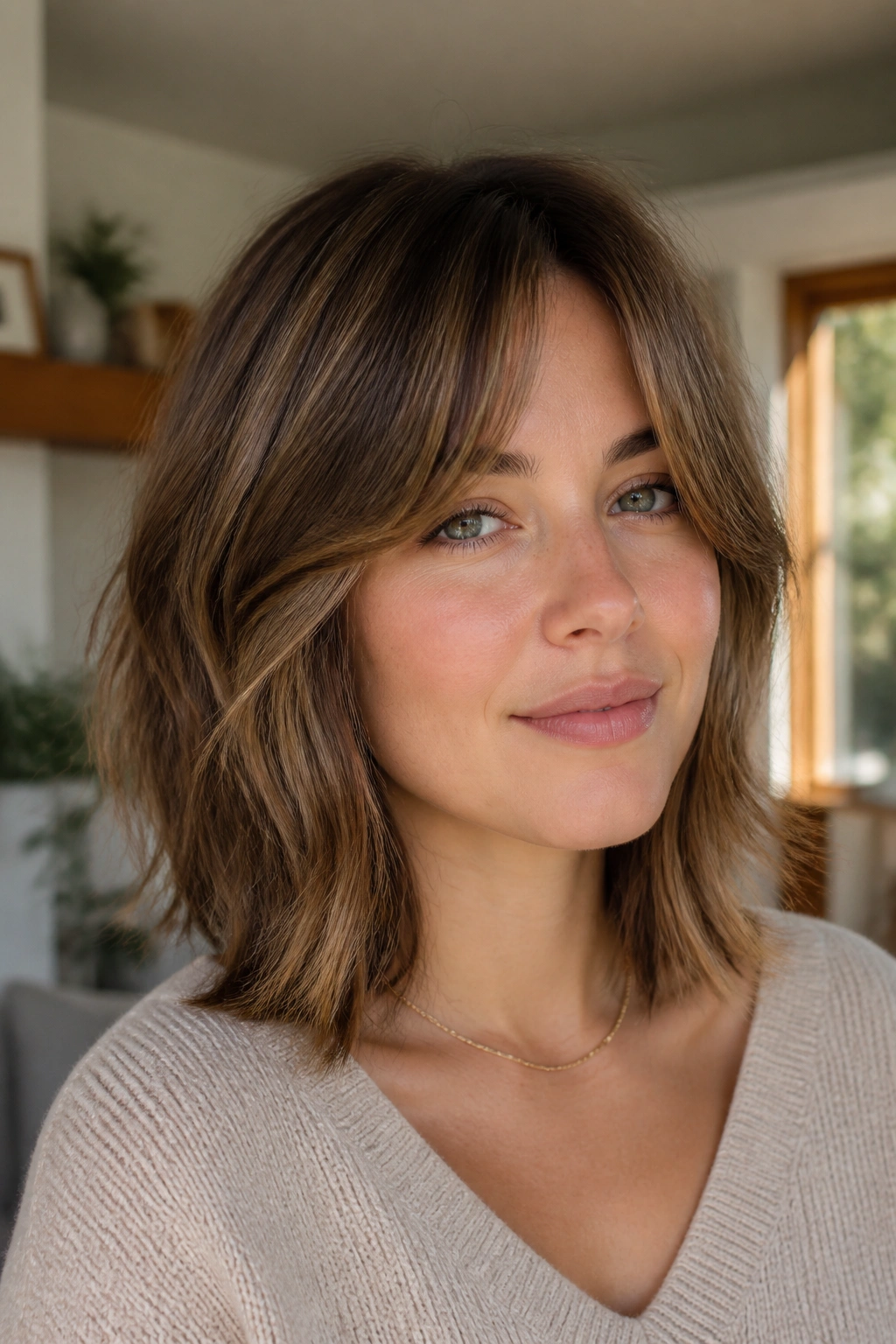
A lob with curtain bangs is one of the easiest combinations for a round face because the haircut gives you length everywhere that matters. The lob creates a vertical frame. The fringe softens the forehead. Together, they stop the face from reading too wide.
Unlike a blunt bob, which can end right at the cheek or jaw and feel boxy, a lob keeps some length around the neck and shoulders. That extra drop helps the eyes move downward. The bangs then act like an opening, not a wall.
This combo is also practical. You can wear it smooth, tucked, waved, or half-up without losing the shape. If you’re the type who wants one haircut that behaves in a few different ways, this is a good bet.
I’d ask for the lob length to sit around the collarbone, with curtain pieces that start near the brow and taper toward the mouth. That spread keeps the cut from bunching up around the widest part of the face.
13. Piecey Curtain Bangs
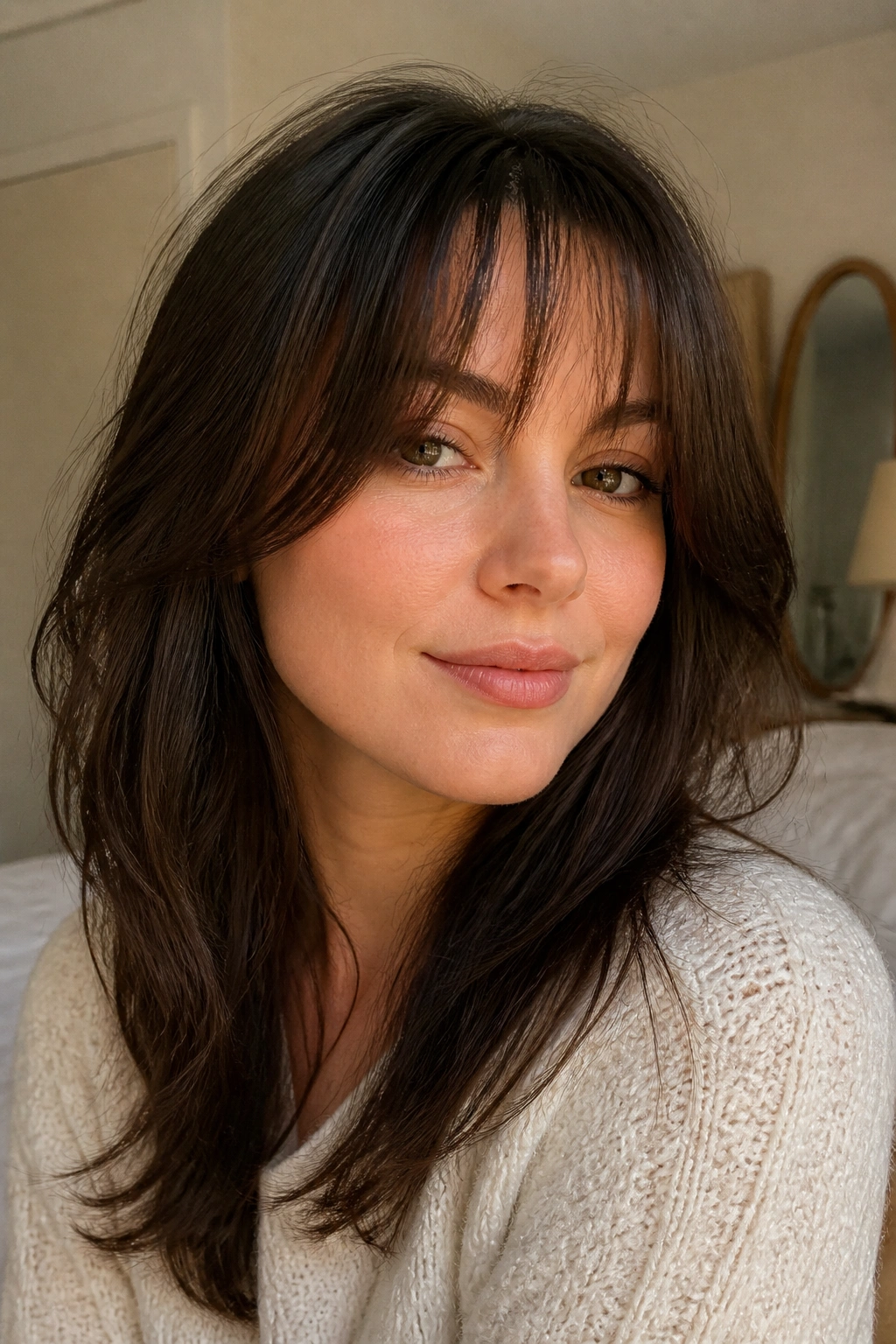
Piecey curtain bangs are for people who don’t want their fringe to look too perfect. The separation is the point. Those slim, broken strands keep the front of the haircut from turning into one solid block.
That matters on a round face because chunkier bangs can make the face look wider if they sit too heavily across the cheeks. Piecey ends let small gaps of forehead show through, which lightens the whole shape.
A tiny amount of styling paste or cream can help here. Tiny. Think pea-sized, warmed between your fingers, then pressed only through the ends. If you put it near the roots, the bangs go greasy fast and lose their lift.
This style works well on straight hair that needs a little character and on wavy hair that already has some bend. It’s less about volume and more about smart separation. I’d call it a good choice if you like your hair a little undone, but not messy.
14. Deep Center-Part Curtain Bangs
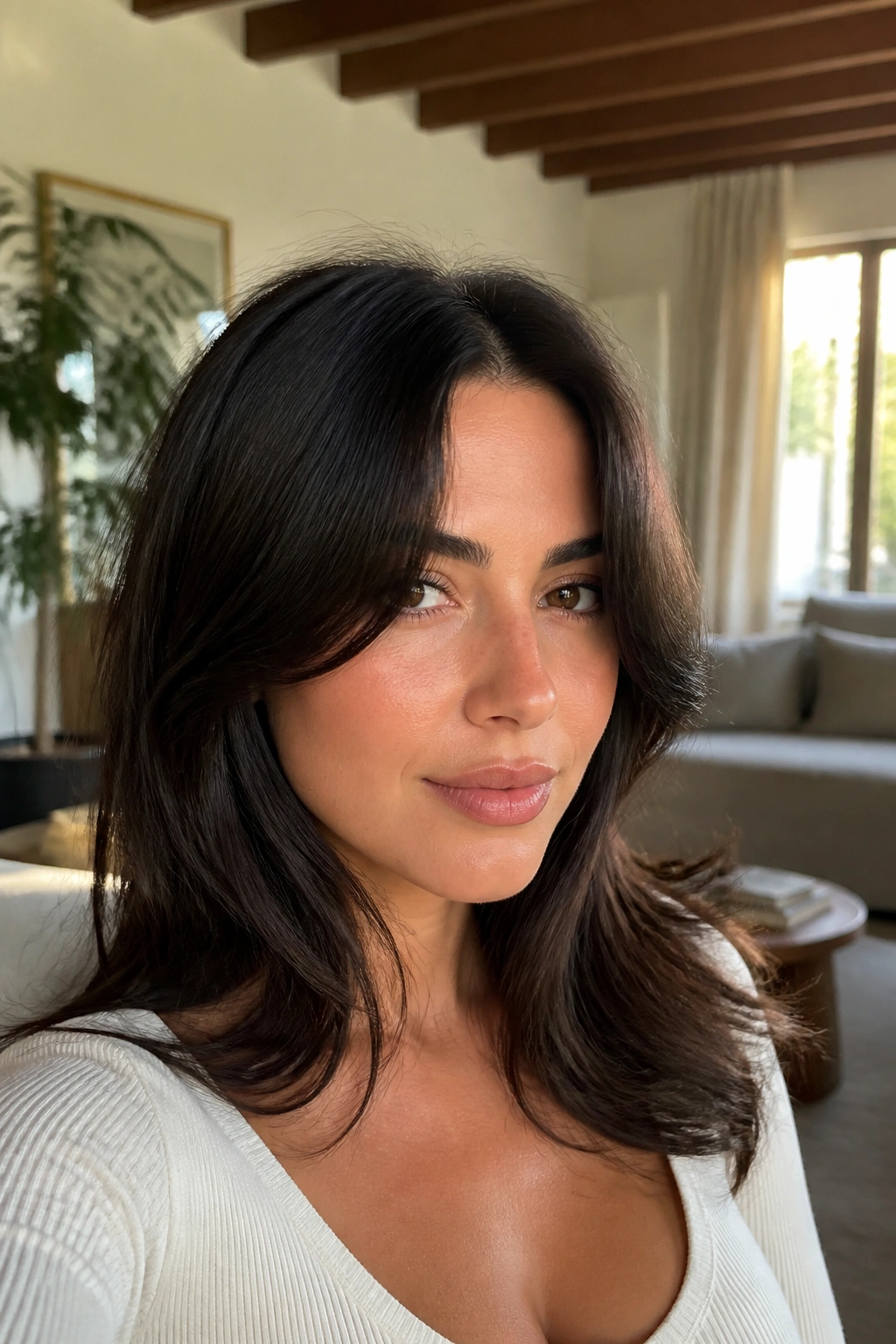
Why does a deeper center part matter so much? Because it creates a strong vertical line before the bangs even start doing their job.
That line helps round faces by opening the forehead and stretching the middle of the haircut. Once the curtain pieces fall away from the center, the face gets framed on both sides without feeling crowded. It’s a small change with a big payoff.
How to wear it
- Place the part slightly behind the natural center if your hair wants to split that way.
- Keep the shortest bang pieces low enough to graze the brow.
- Style each side away from the face, then let them settle naturally.
- If the part collapses, dry the roots in the opposite direction first.
This shape looks especially clean on medium-length hair with some layered movement. It can also soften a strong forehead without shortening the face. That’s a nice balance. Not too open, not too heavy.
15. Blended Face-Framing Layers
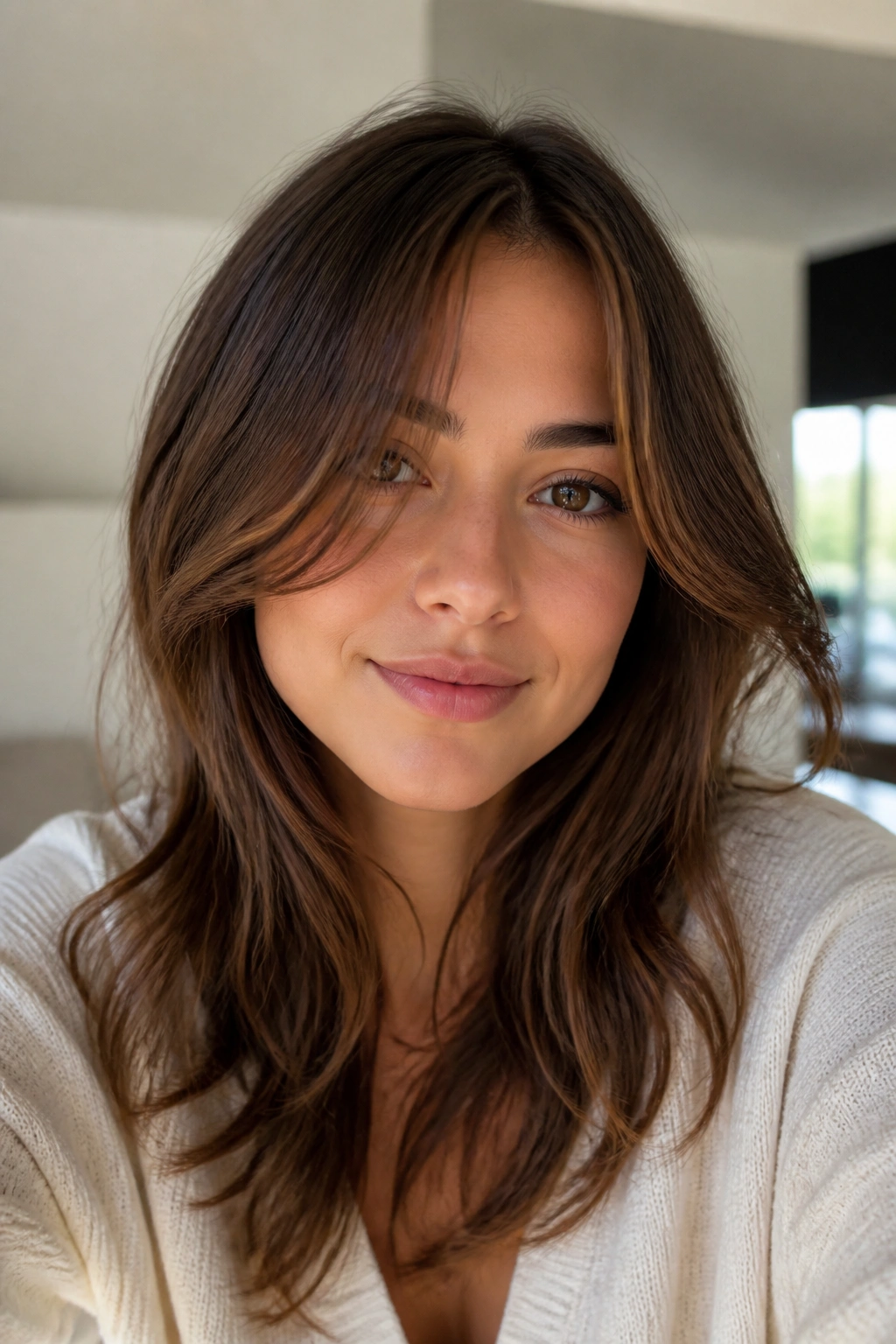
If you want curtain bangs without a dramatic fringe moment, blended face-framing layers are the quiet option. They still give you the center opening and the soft side sweep, but the bangs melt into the haircut faster.
A round face usually benefits from that kind of softness. There’s no hard edge to stop the eye. No obvious shelf. The line just keeps moving downward.
Ask for these details
- Shortest pieces near the brow or outer brow.
- Longer front layers that keep descending toward the jaw.
- Soft internal layering so the front doesn’t puff.
- A little movement around the cheekbone, not all the volume there.
This is the cut I’d suggest for someone who wants a change but still wants to look like themselves. It’s subtle. That can be a good thing. Especially if you wear your hair up often or need the front to work with glasses, hats, or a low ponytail.
The face frame should be visible from the front and even better from a three-quarter angle.
16. Asymmetrical Curtain Bangs
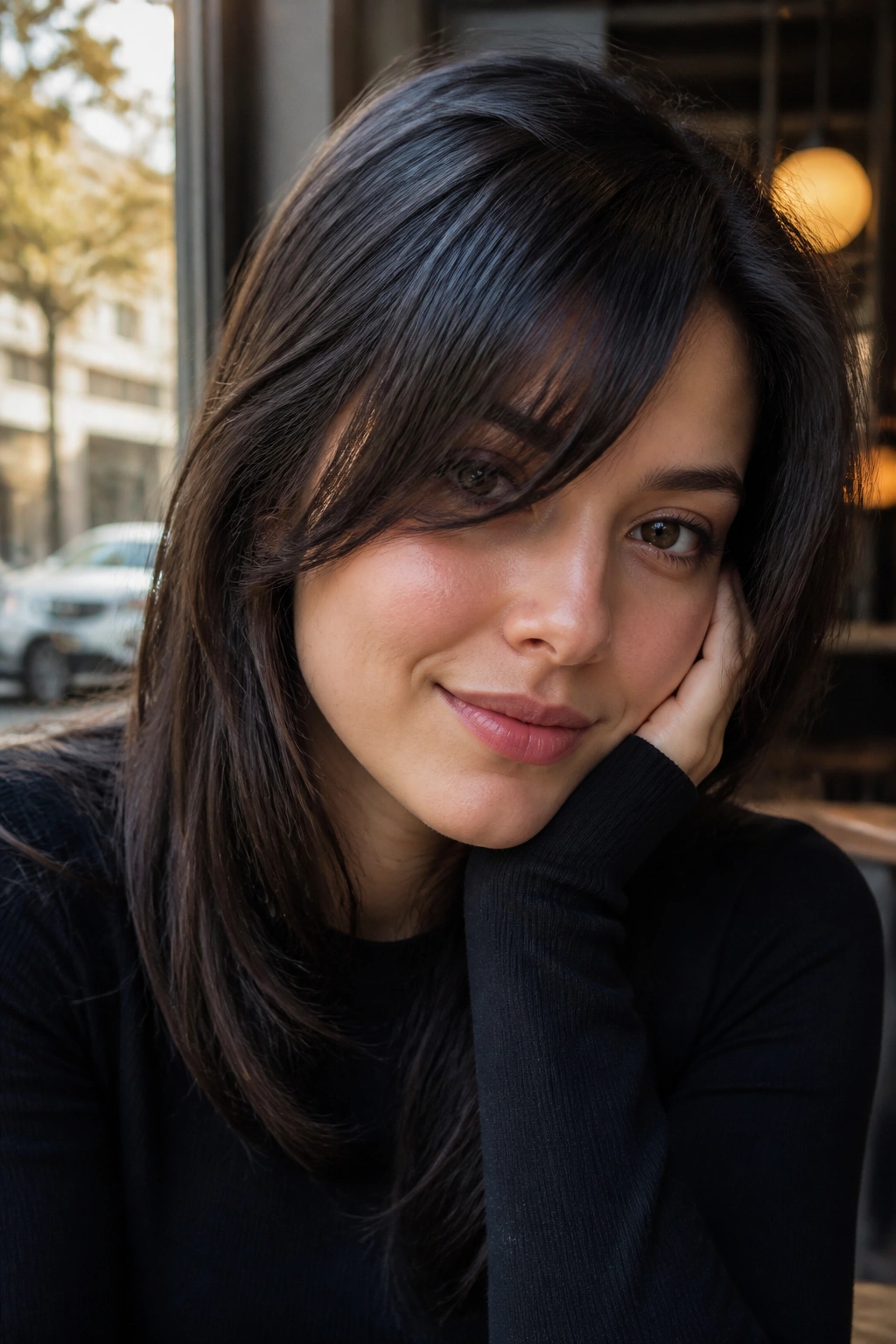
Asymmetrical curtains are a little less obvious than you might expect. One side can sit slightly longer or fuller than the other, but the shape still reads as a curtain because the center remains open.
That slight imbalance helps a round face by breaking symmetry. Perfect symmetry can make the face feel broad and static. A tiny shift in length or weight gives the eye somewhere else to go.
I like this option when the wearer naturally parts their hair a little off-center or likes to tuck one side behind the ear. The haircut starts to feel personal instead of cookie-cutter. And that matters more than people admit.
Keep the difference subtle. We’re talking about a noticeable variation, not a lopsided bang that looks accidental. The shortest point should still stay low enough to avoid that boxy effect around the cheeks.
17. Crown-Lift Curtain Bangs
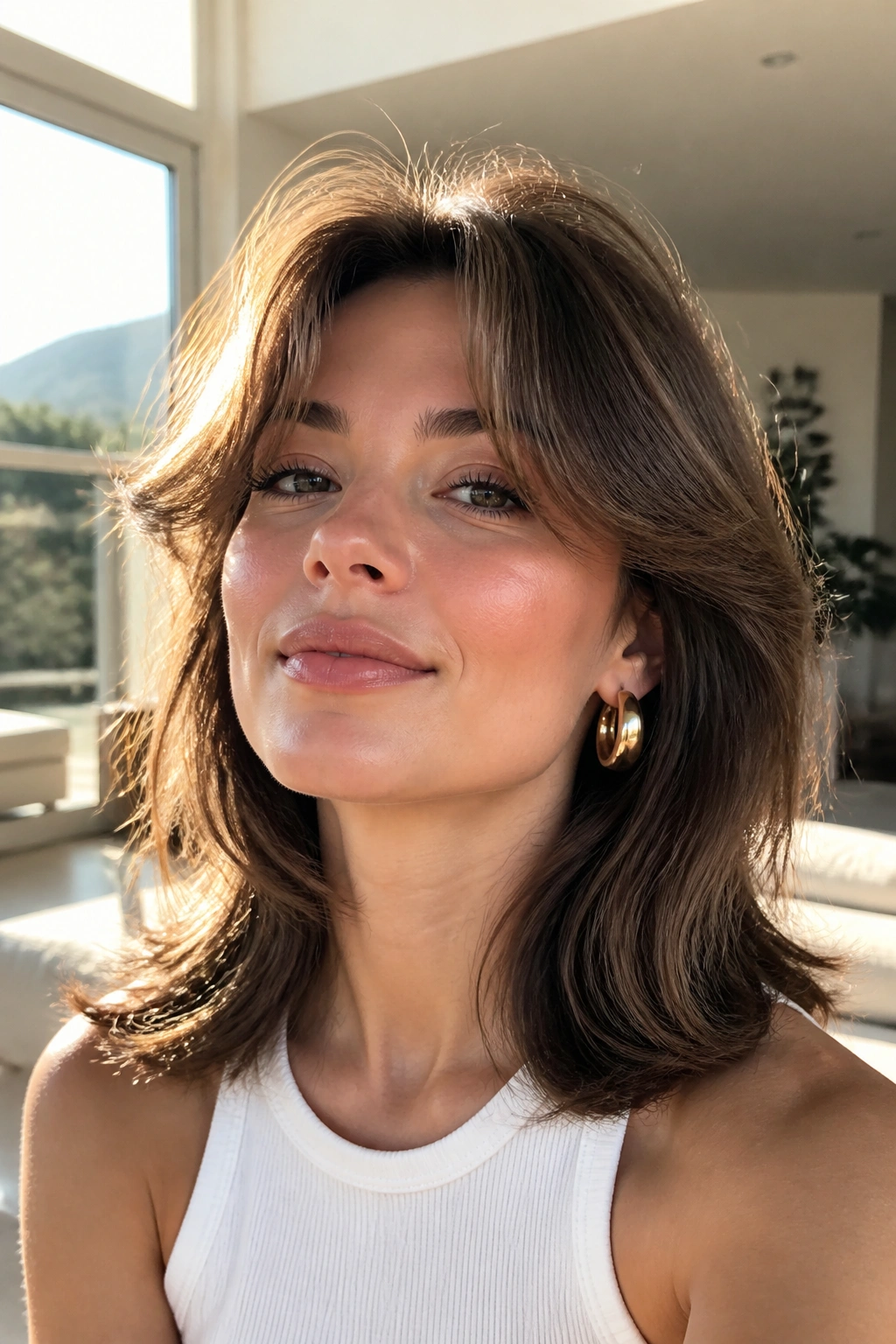
Volume at the crown changes everything. On a round face, lift at the roots helps the haircut travel upward before it falls outward, and that’s exactly the kind of movement you want.
Styling note
Use a light mousse or root spray at the top, then dry the fringe with upward tension first and outward direction second. That keeps the hair from collapsing into the cheeks. If the roots go flat, the side pieces can widen the face faster than you’d think.
- Lift the roots at the center part.
- Roll the front away from the face.
- Let the ends cool in place.
- Don’t overload the fringe with product.
This cut looks especially good if your hair is naturally flat on top. The lift adds shape where you need it most. Not at the sides. Not at the jaw. Up top, where it changes the silhouette.
It’s a small thing, but I’d pick crown lift over extra width at the temples every time.
18. Grown-Out Curtain Bangs
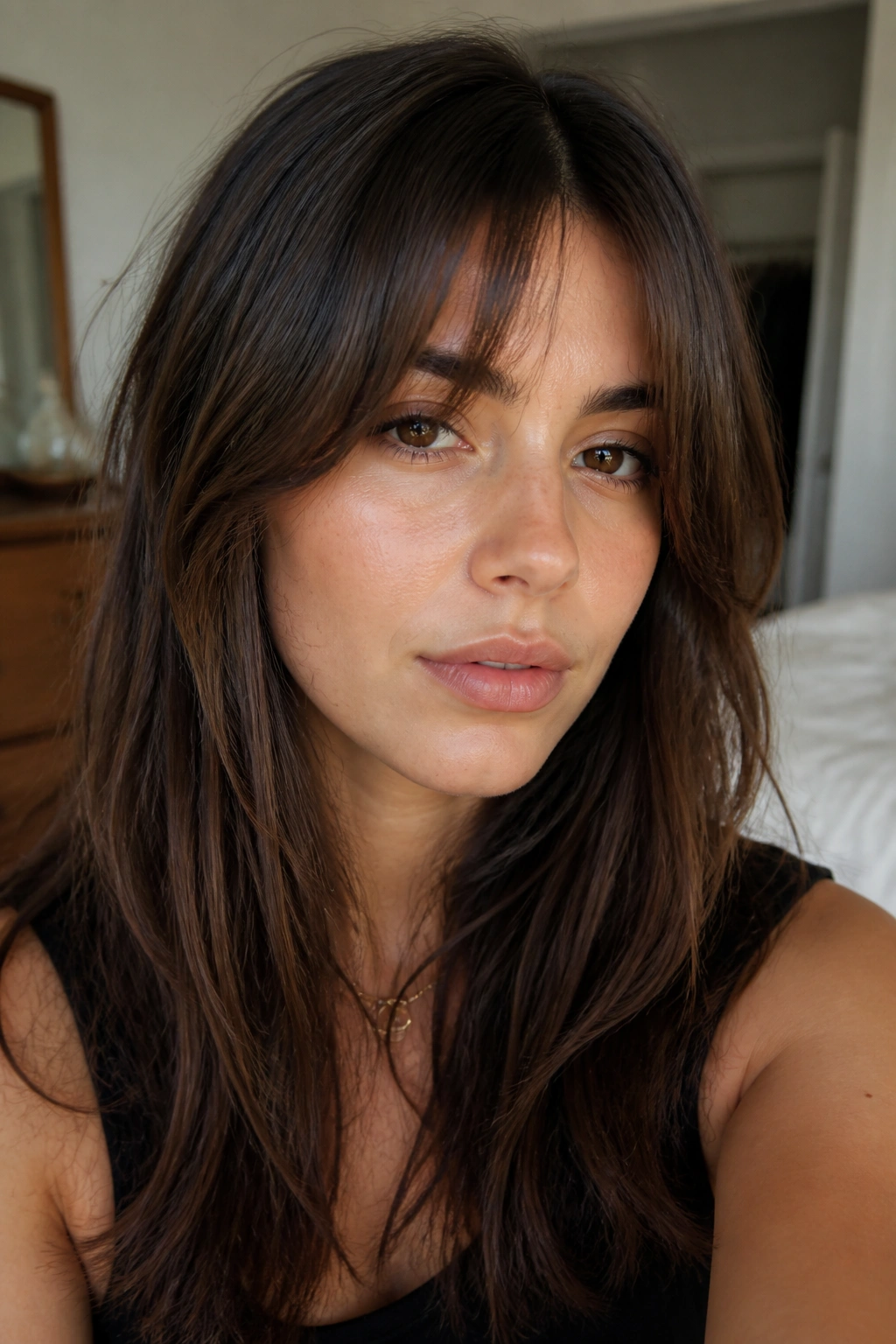
Unlike freshly cut fringe, grown-out curtain bangs give round faces a softer, longer line. The edge isn’t crisp, so the haircut feels less severe around the cheeks.
That softer growth phase is one reason curtain bangs are so practical. They don’t become useless the second they lose their exact shape. They evolve into face-framing layers and keep doing the job.
This version is best if you don’t want a high-maintenance bang. The length can sit well past the brows and drift into the front layers, which makes styling easier on busy mornings. It also means the hair can be pushed a little more open on days when you want to show the forehead.
If you are planning a cut like this on purpose, don’t let the fringe get too short to begin with. A slightly longer starting point gives you a better grow-out. That’s the whole game here. You’re building in a softer second life for the cut.
19. Fine-Hair Curtain Bangs With Airy Ends
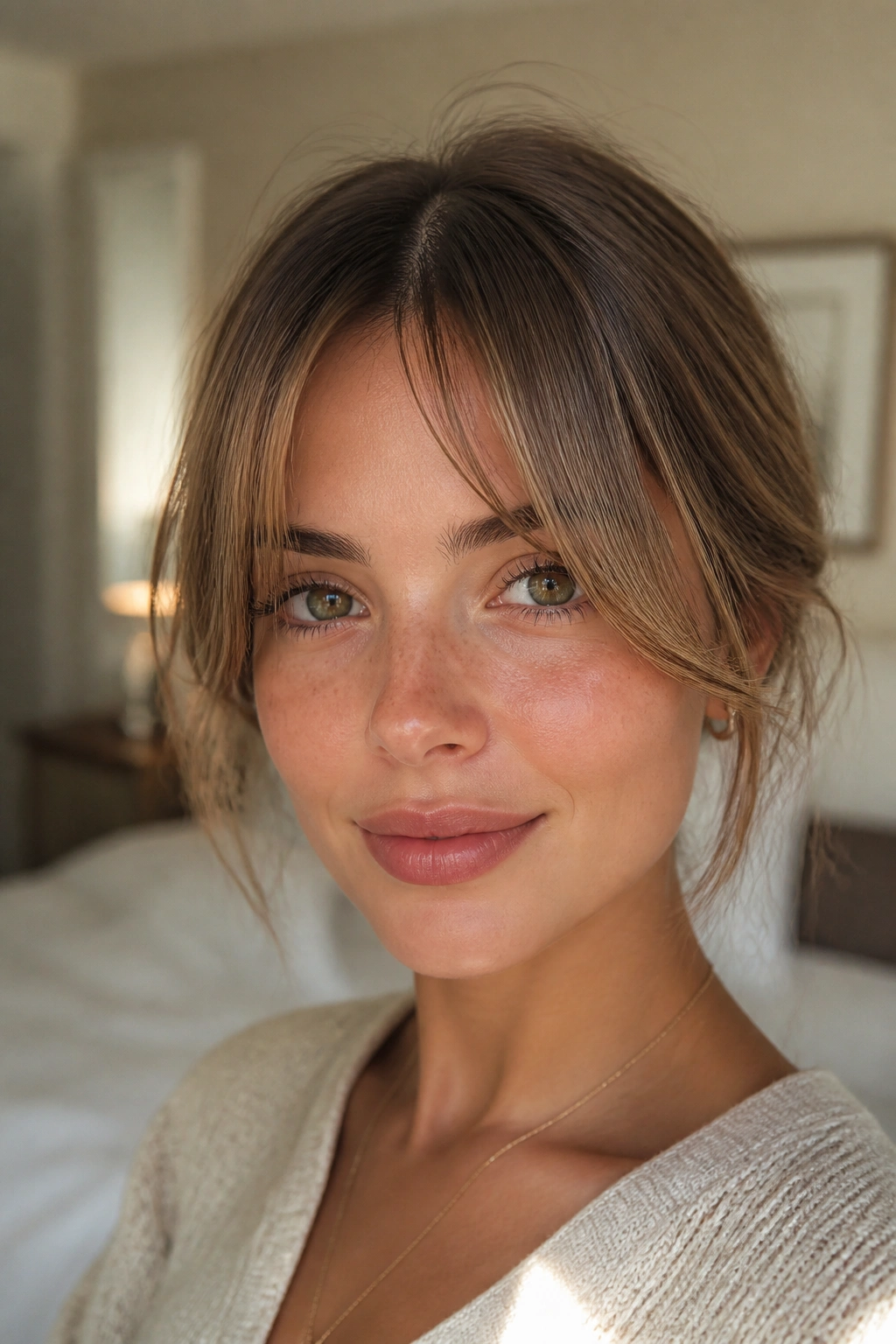
Fine hair needs curtain bangs that breathe. Heavy bangs on fine strands can fall flat fast, and on a round face that flatness can make the front feel wider than it should.
The answer is a light, airy fringe with a clean center split and soft ends. Not thin in the sad sense. Light in the sense that the hair moves and separates without sticking together.
I’d ask for subtle point cutting and very little bulk at the sides. The ends should taper enough to keep the eye moving downward. If the bangs are too dense at the temples, they can flatten against the face and add width where you don’t want it.
Dry shampoo can help on day two, but only at the roots. If you spray the lengths, they go dull and sticky. A little lift near the part is enough.
This shape is one of the easier ways to get fringe without dragging down fine hair.
20. Thick-Hair Curtain Bangs That Stay Light

Can thick hair wear curtain bangs without turning puffy? Yes. The cut just has to be cleaner than the average salon version.
The secret is removing bulk from the inside, not hacking at the surface. Thick hair often hides weight underneath, and if that weight stays there, the fringe can balloon right at the cheeks. That’s the part that makes round faces look broader.
Best approach for thick strands
- Keep the center slightly heavier than the edges.
- Thin from underneath, not across the top.
- Leave enough length to control shrinkage if the hair waves.
- Use a brush with tension while drying so the fringe stays smooth.
This style is especially good if your hair tends to hold volume all day. That can be a blessing or a curse. Here, you want control, not extra width.
A lot of people ask for “less hair” in the front when what they actually need is better weight placement. Different thing. Better result.
21. Soft Swoop Curtain Bangs
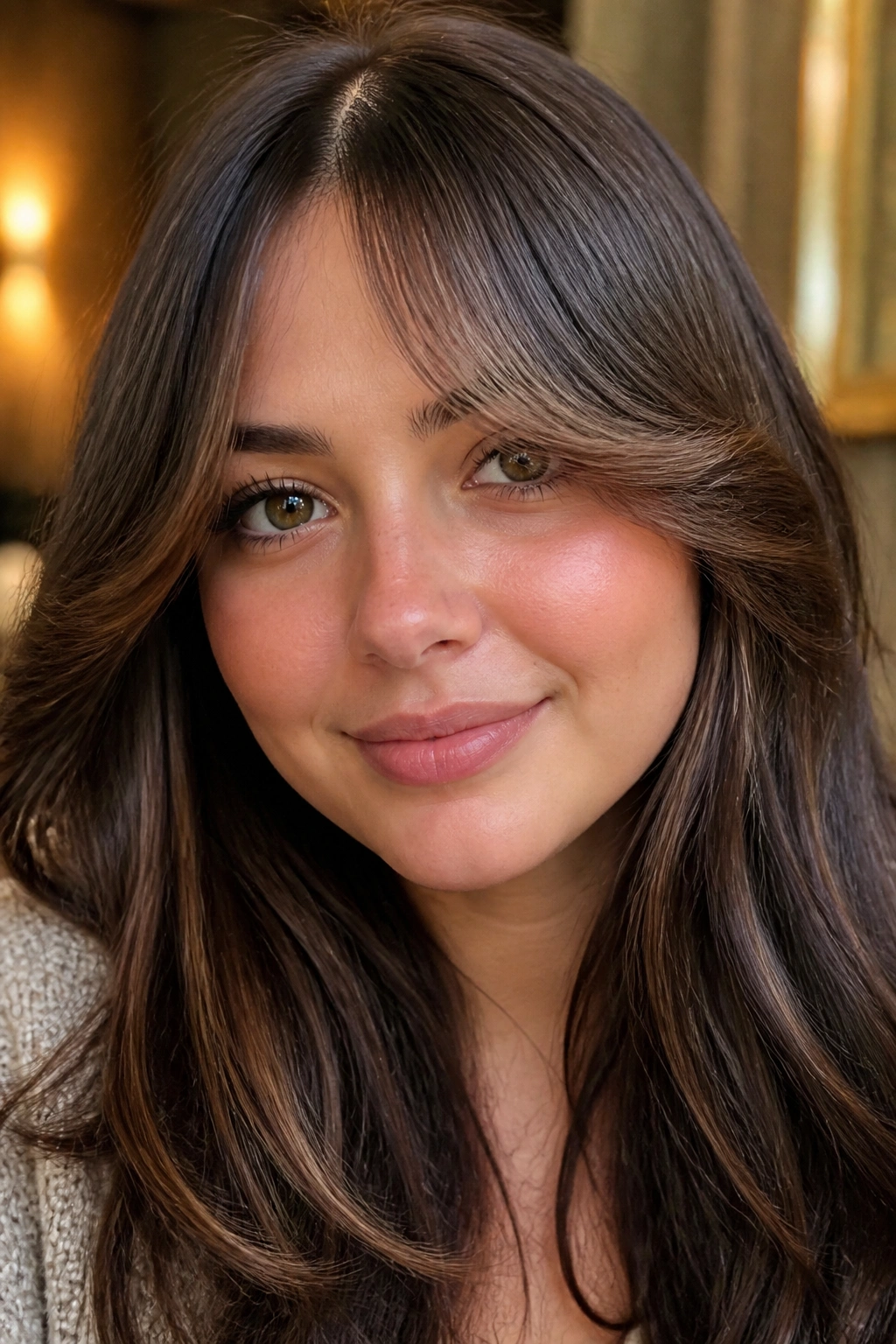
Soft swoop curtains work well when you naturally part your hair a little off-center or like a gentler shape across the forehead. The fringe still opens in the middle, but the motion leans sideways as it falls.
That sideways sweep is useful on a round face because it breaks the straight-down effect. The eye sees movement first, then length. Not width.
A few things to watch for
- Keep the shortest point below the brow.
- Make the sweep gradual, not dramatic.
- Let the side pieces fall past the cheekbone.
- Use a medium round brush to guide the bend.
This is one of those cuts that looks casual even when it’s carefully shaped. I like that. It doesn’t scream “I got bangs.” It just makes the haircut feel softer and a little more lifted.
If your face is very round, make sure the swoop does not fan out too much at the cheeks. The motion should travel downward as much as sideways.
22. Invisible-Layer Curtain Bangs
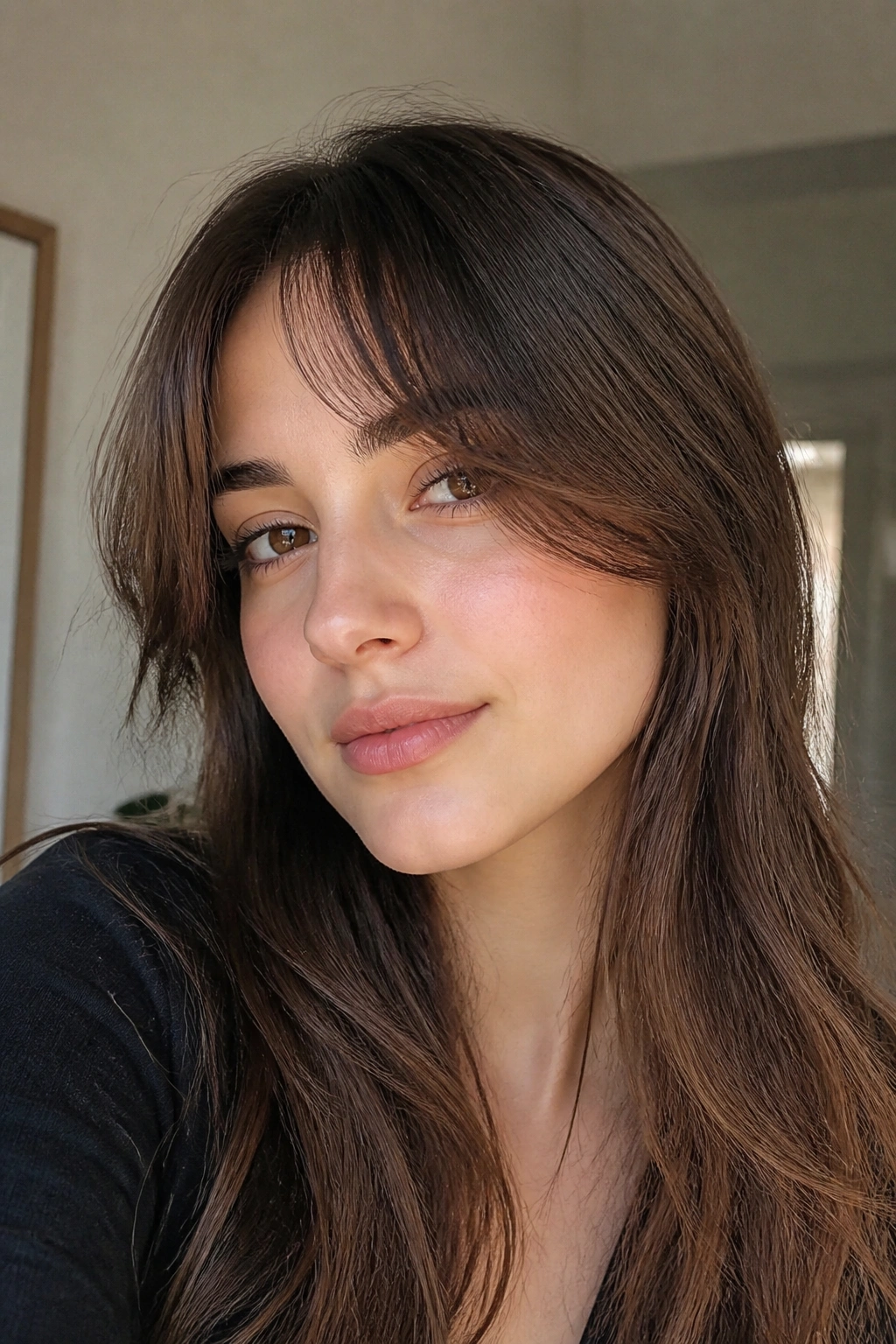
Invisible-layer curtain bangs are the stealth option. They give the face frame of a curtain fringe, but the layers are blended so well that the bang almost disappears into the haircut.
That’s a strong move for a round face because the outline stays long and soft. There’s no hard line to widen the cheeks. No dense edge sitting across the forehead. Just a smooth shift from fringe to layer.
This version works especially well if you want the haircut to look natural from every angle. Front view, side view, hair tucked back, hair loose — it all still makes sense. The cut is there, but it doesn’t dominate the conversation.
Ask your stylist to keep the front pieces connected to the first few layers, with no sharp shelf at the temples. That shelf is the enemy here. It can make the front look square fast.
I think this is one of the smartest choices for people who want bangs but don’t want bangs to be the whole story.
Final Thoughts
The strongest curtain bangs for round faces do one thing well: they create length where the eye needs it. That usually means a soft center opening, longer side pieces, and enough movement to keep the cheeks from feeling boxed in.
If you’re deciding between two versions, choose the one that stays below the cheekbone or drifts toward the jaw. That’s the safer line. Shorter bangs can work, but they need more care and a better cut to avoid widening the face.
Bring photos, yes, but bring the right kind. Show your stylist the front view you want and the side view you like. A good curtain fringe is all about where it starts, where it opens, and where it falls. Get those three points right, and the rest falls into place fast.
