



There is a persistent myth that people with round faces should avoid bangs at all costs. The logic usually goes something like this: bangs shorten your face, and a round face is already short, so you will end up looking like a ball. It is a tired, outdated rule that ignores the geometry of hair design entirely. You do not need to hide your features. You need to frame them.
The goal when working with a round face shape is to create verticality and angles. Think of your hair as a tool to draw the eye where you want it to go—up, down, or toward the cheekbones. If you cut a heavy, perfectly horizontal, blunt line across your forehead, yes, that will emphasize the width. But if you introduce texture, wispy layers, or sweeping angles, you actually create the illusion of a longer, more oval face.
Finding the right fringe is less about the shape of your jaw and more about the texture of your hair and how much effort you are willing to spend in front of the mirror each morning. You can have a heavy fringe, a soft curtain, or a bold, choppy cut. You just have to know how to tailor the length and the weight. Here are twenty ways to wear bangs that complement, rather than constrain, a round face.
1. Soft Curtain Bangs
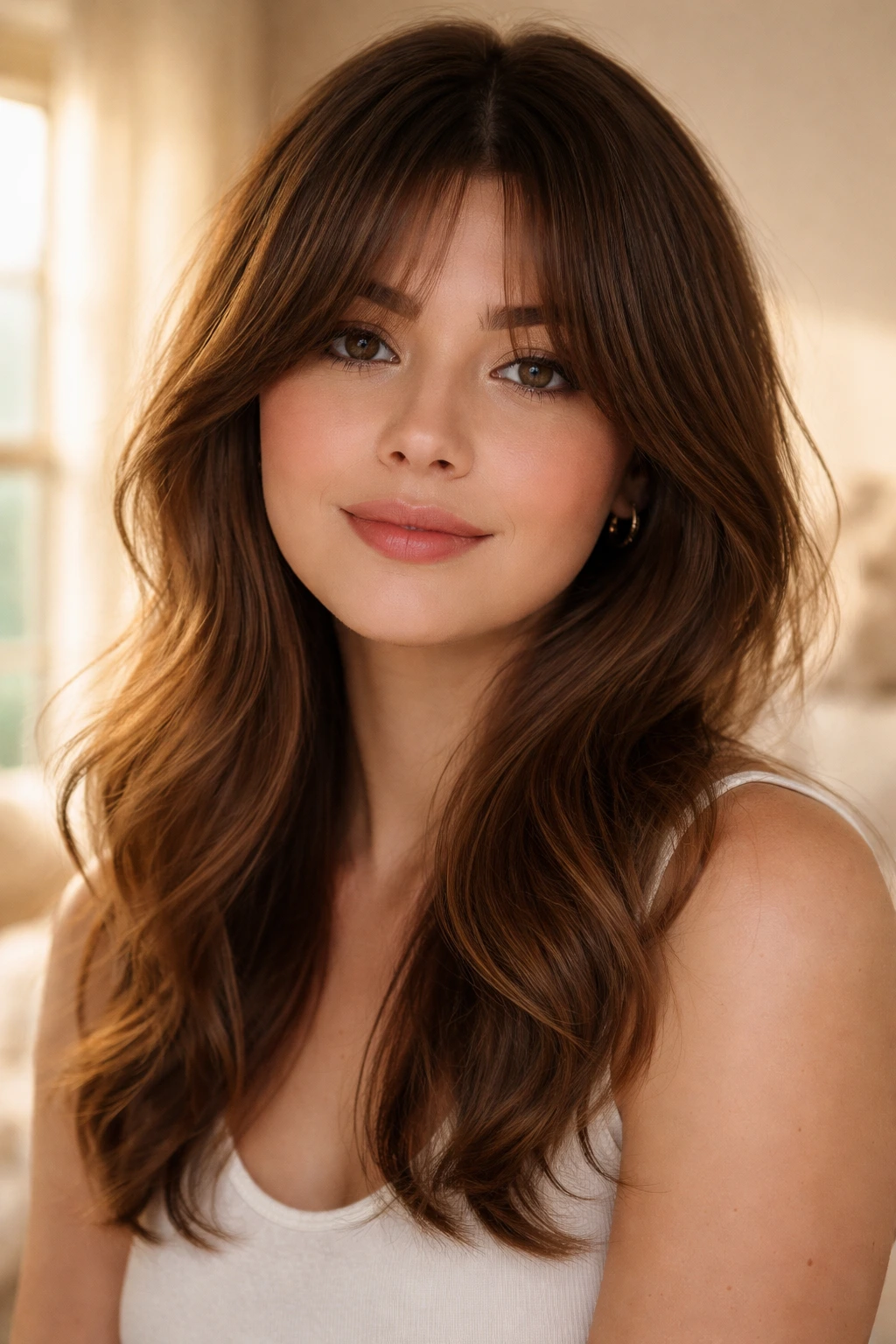
Curtain bangs are arguably the most universally flattering option for any face shape, but they perform a specific magic on round faces. Because they part in the middle and sweep outward, they create a visual arrow pointing down toward your cheekbones. They do not cut the face off; they open it up.
Why They Work for Roundness
The length here is the secret weapon. When you cut the bangs to hit right around your cheekbones or the tip of your nose, you create diagonal lines that cut into the widest part of your face. This visually narrows the cheeks and draws attention to your eyes.
How to Style Them
- Use a round brush to blow-dry them away from your face while the hair is damp.
- Apply a lightweight styling cream or a small amount of texture paste to keep them piecey.
- Avoid heavy pomades, which can weigh the center down and make the hair look greasy.
Pro tip: If you have fine hair, use a light-hold volumizing spray at the roots before blow-drying to ensure the curtain effect stays lifted rather than falling flat against your forehead.
2. Wispy See-Through Bangs
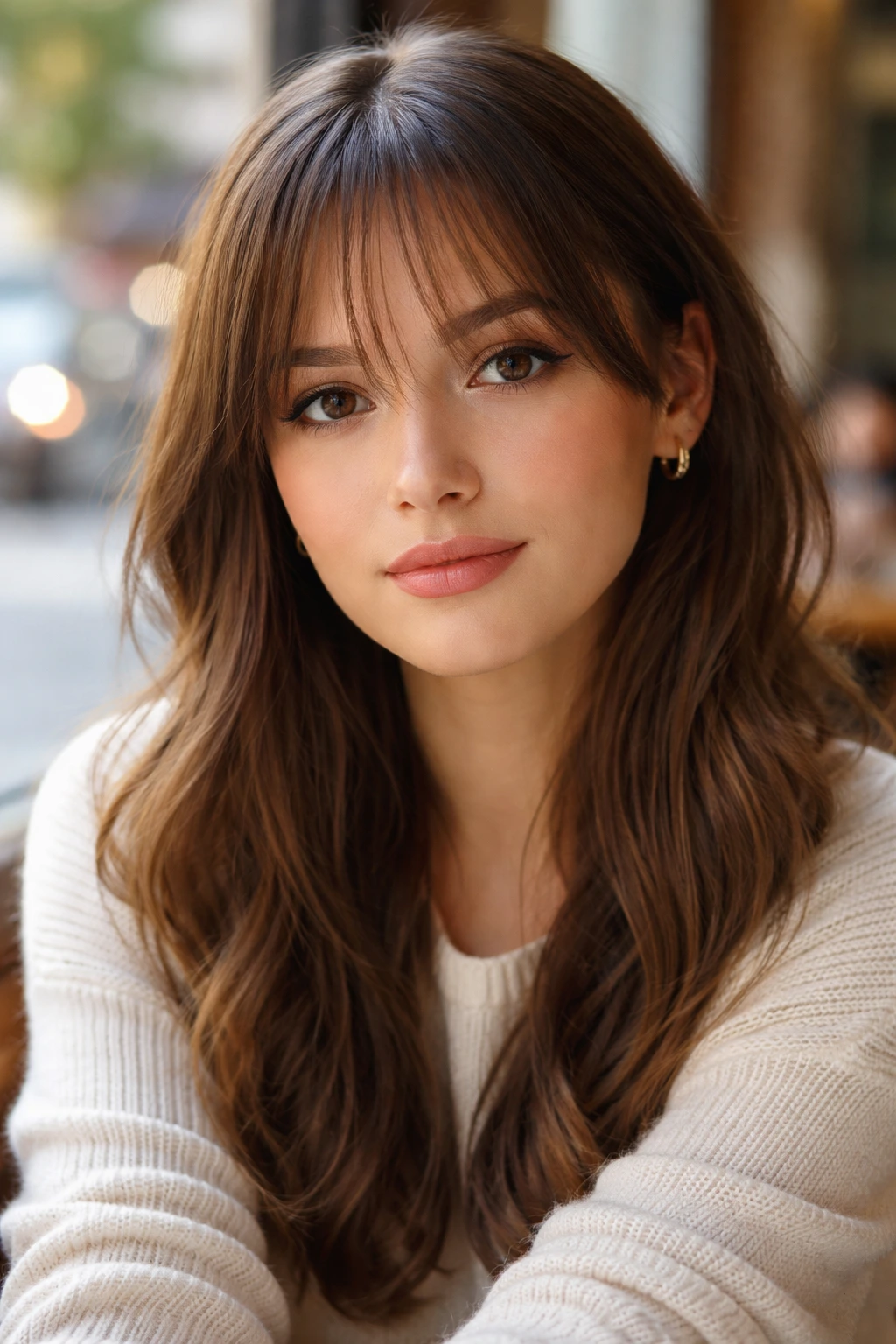
If the idea of a heavy fringe terrifies you, start here. Wispy bangs, often referred to as “see-through” bangs, are incredibly light and airy. They allow a peek of forehead to show through, which breaks up the density that can sometimes make a round face look smaller.
The Anatomy of the Cut
Unlike a solid block of hair, these are cut with a thinning shear or a razor. You want just enough hair to frame the eyes but not enough to create a solid wall. This is a low-commitment style because they grow out fast and can easily be swept to the side if you get tired of them.
Best Hair Types
This style thrives on straight or slightly wavy hair. If your hair is extremely thick and coarse, it might be difficult to keep these thin enough to look “wispy.” You will constantly be battling the density of your own hair.
- Always ask for them to be cut slightly longer than your eyebrows initially.
- You can always go shorter, but you cannot add length back once the razor hits.
3. Textured Shag Fringe
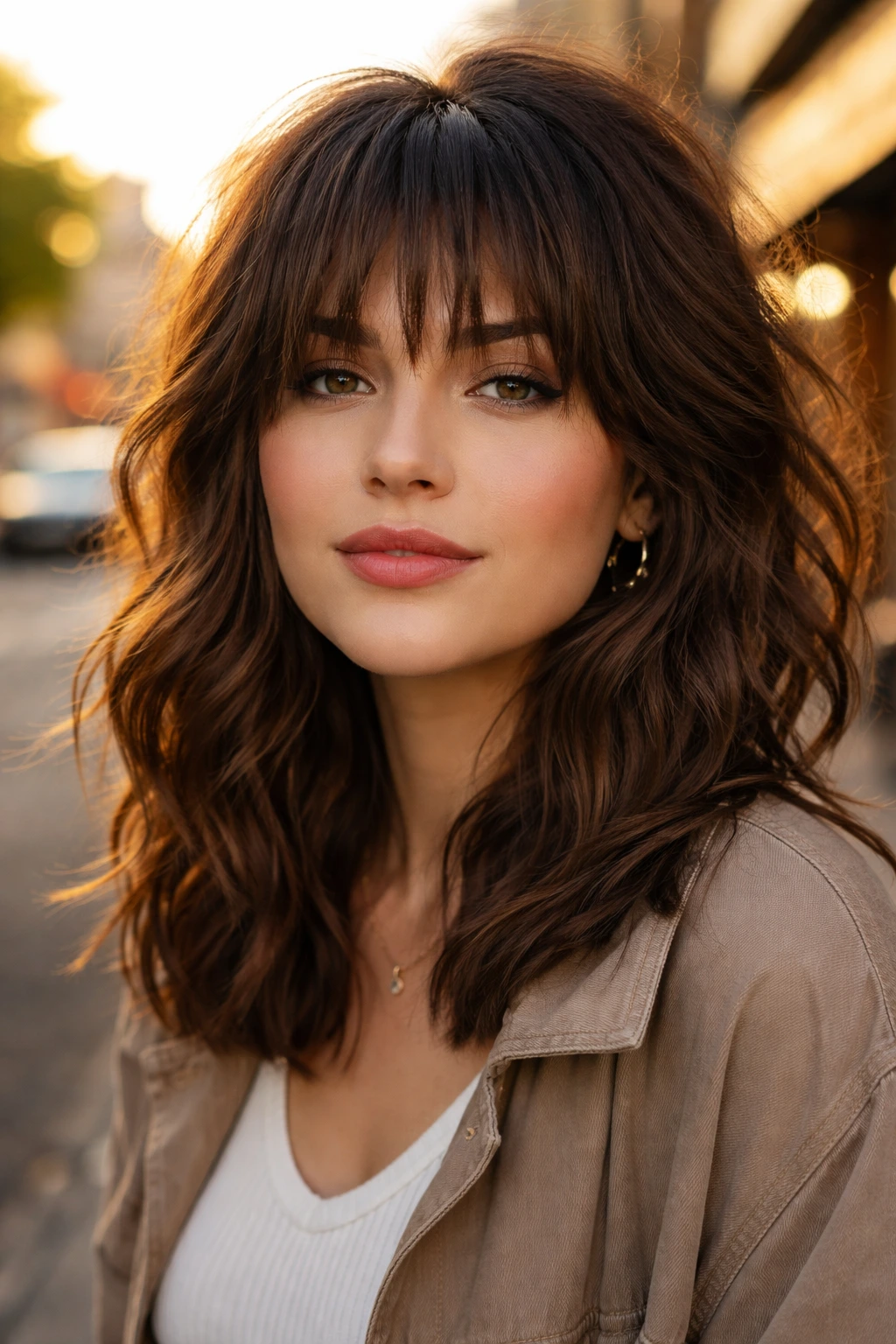
The shag haircut has been a staple for decades, and the fringe is the best part. A textured shag fringe is all about messiness. It is not meant to be perfect. In fact, the more chaotic it looks, the better it works on a round face.
Why It Balances the Face
A round face often benefits from volume on top. By keeping the fringe choppy and layering it into the sides of your hair, you create a top-heavy silhouette that draws the eye upward. The jagged edges break up the roundness of the jawline effectively.
Essential Styling Tools
You need a good salt spray or a dry texturizing spray. This isn’t a “polished” look. It’s a “woke up like this” look. You want the fringe to have movement and grit.
4. Face-Framing Layered Bangs
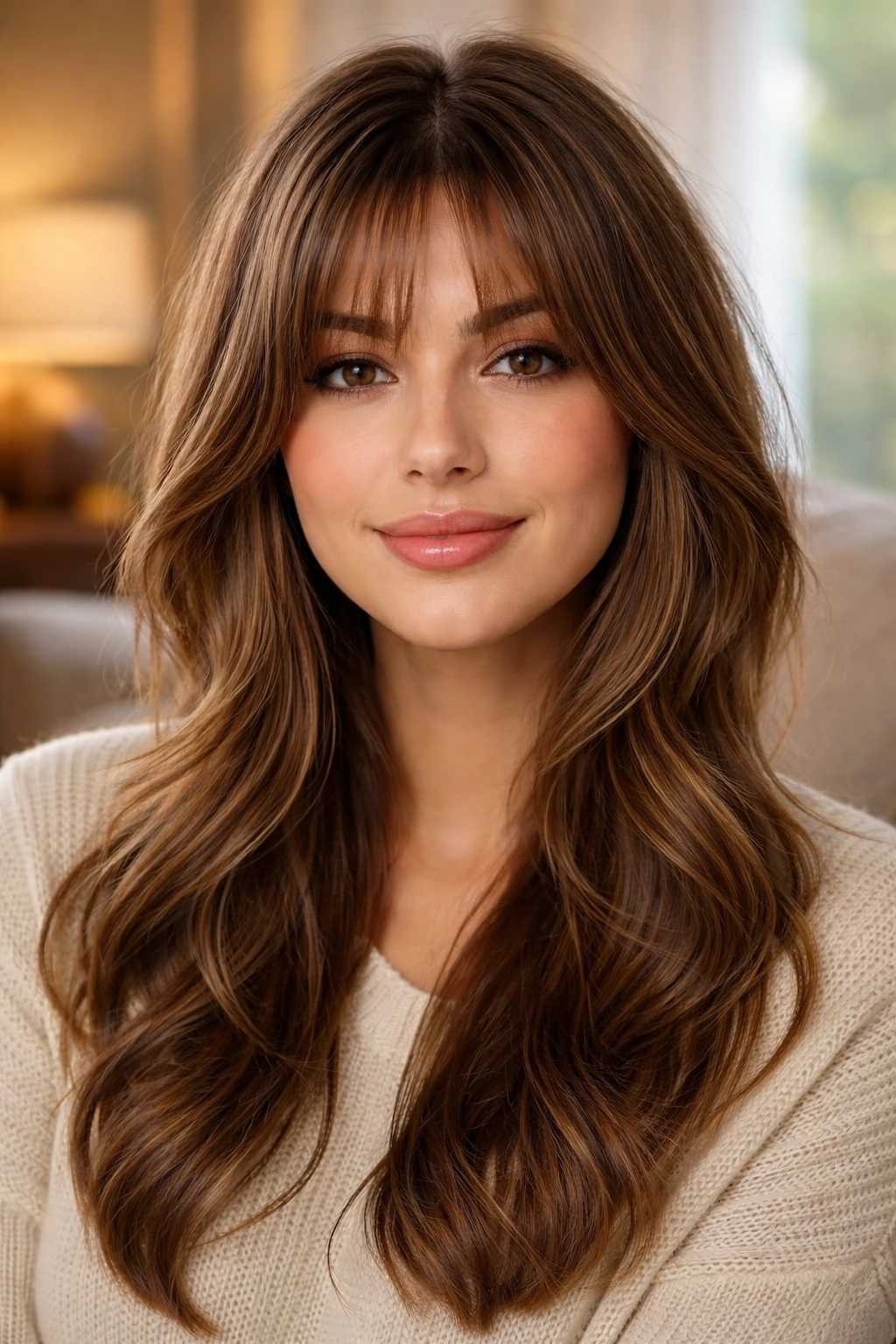
These are technically long, blended layers, but when styled properly, they act as bangs. They start shorter in the center and cascade down into the rest of your hair. This creates a soft, face-framing effect that is extremely forgiving.
Why This Style Succeeds
This is the safest bet if you have never had bangs before. Because they are not cut straight across, they don’t have that “shock” factor. They blend seamlessly into the rest of your layers, providing softness around the cheeks.
How to Keep Them Fresh
- Avoid using heavy oils at the front.
- If you notice them separating too much, use a small amount of dry shampoo, even if they aren’t dirty. It adds the grip needed to keep them styled in place.
5. Long Side-Swept Bangs
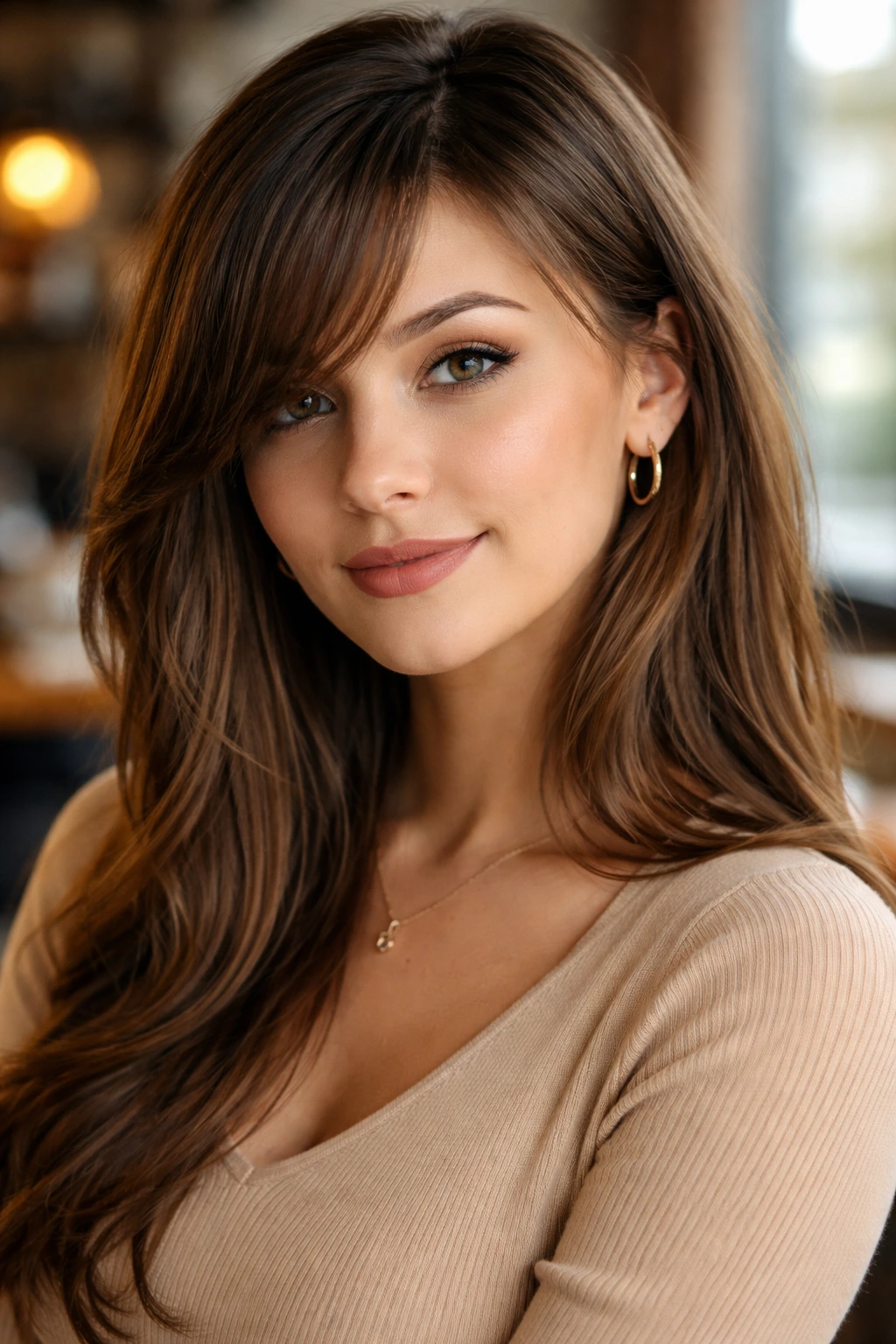
Asymmetry is the best friend of a round face. When you sweep your bangs to the side, you create an angled line that slices through the horizontal width of your face. This instantly creates the illusion of more length.
The Mechanics of the Cut
The key is the length. You want these to start at the arch of your eyebrow and taper down to the cheekbone or jawline. If they are too short, they won’t have the weight to stay swept to the side. They will just fall forward and look like an accidental curtain.
A Note on Maintenance
Side-swept bangs require frequent trims. Once they hit your eyelashes, they become annoying and lose their sleek shape. Budget for a quick trim every four to five weeks to keep that angle sharp.
6. Choppy Baby Bangs
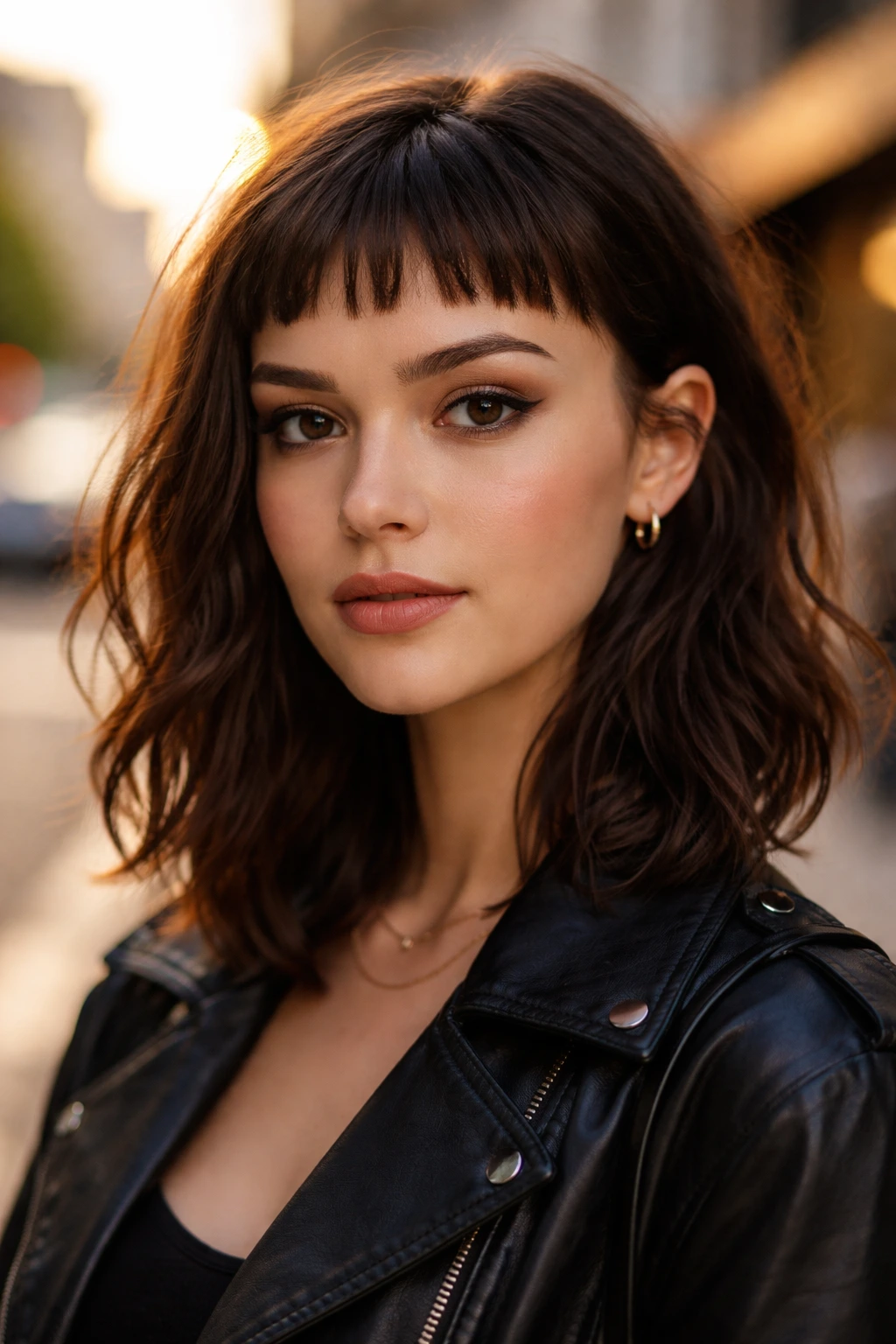
Let’s go bold. Baby bangs—or micro-bangs—are short, cut well above the eyebrow. While conventional wisdom says round faces shouldn’t do short bangs, the secret is making them choppy and asymmetrical rather than a straight, blunt line.
Why They Work
They expose the forehead entirely, which creates a massive amount of vertical space. This is the opposite of the “hiding” technique. By revealing the full length of the forehead, you trick the eye into seeing a longer face shape.
Who Should Avoid This
If you have a very small forehead or a prominent brow bone, this might emphasize those features rather than the face shape. Proceed with caution if you have cowlicks near your hairline, as they will be impossible to hide here.
7. Bottleneck Bangs
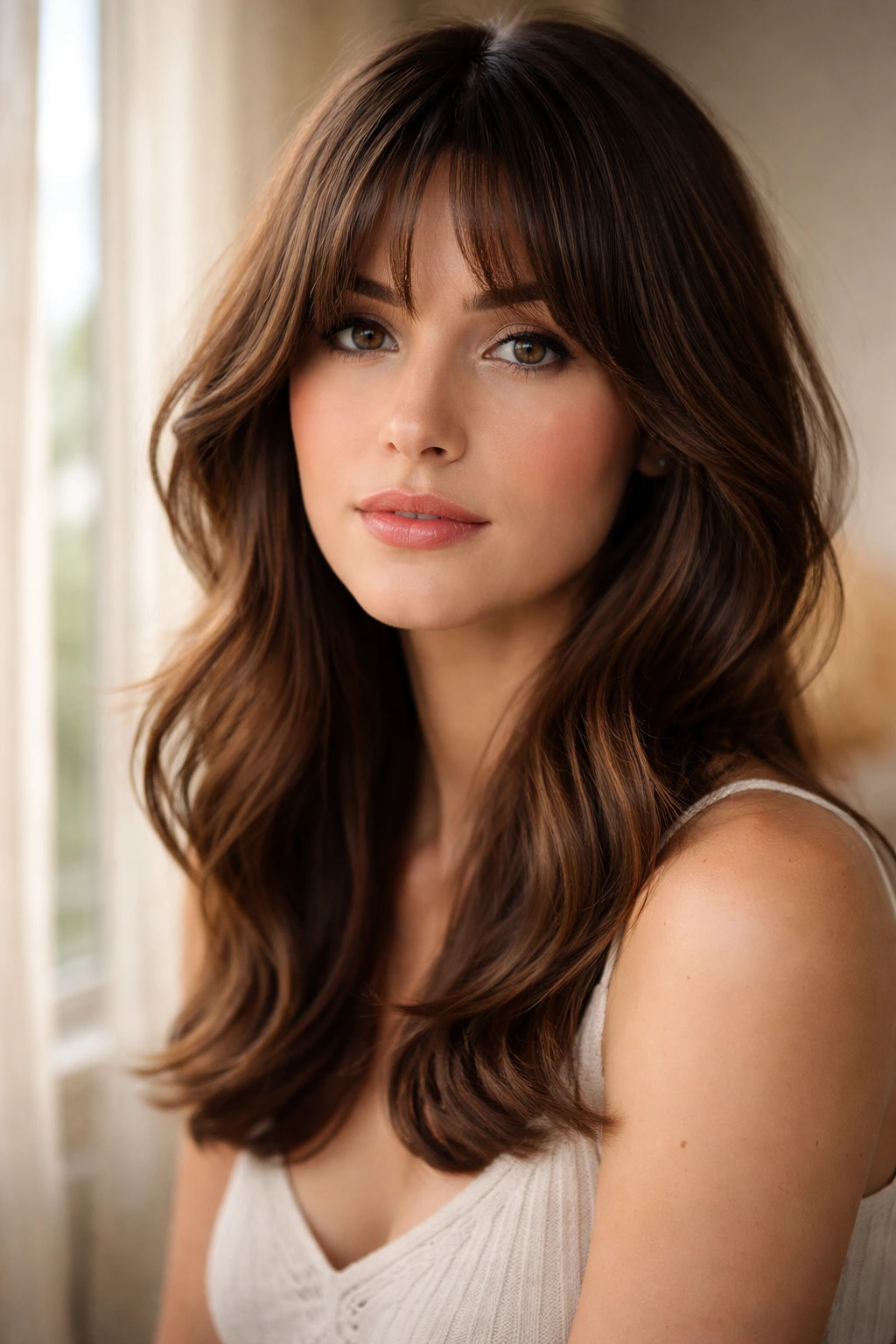
Bottleneck bangs are essentially a mix of curtain bangs and a shorter, textured fringe. They are narrow in the middle (like the neck of a bottle) and wider at the sides, framing the eyes perfectly.
Why They Are So Popular
They provide the softness of curtain bangs but with more structure. The tapering effect is perfect for round faces because it directs the focus right to the center of the face, narrowing the visual appearance of the cheeks.
Styling the “Neck”
You need a smaller round brush for this. The center section needs to be curled under slightly, while the longer sides should be swept back. It’s a bit more styling effort, but the payoff in facial framing is huge.
8. Blunt Cut Bangs with Face-Framing
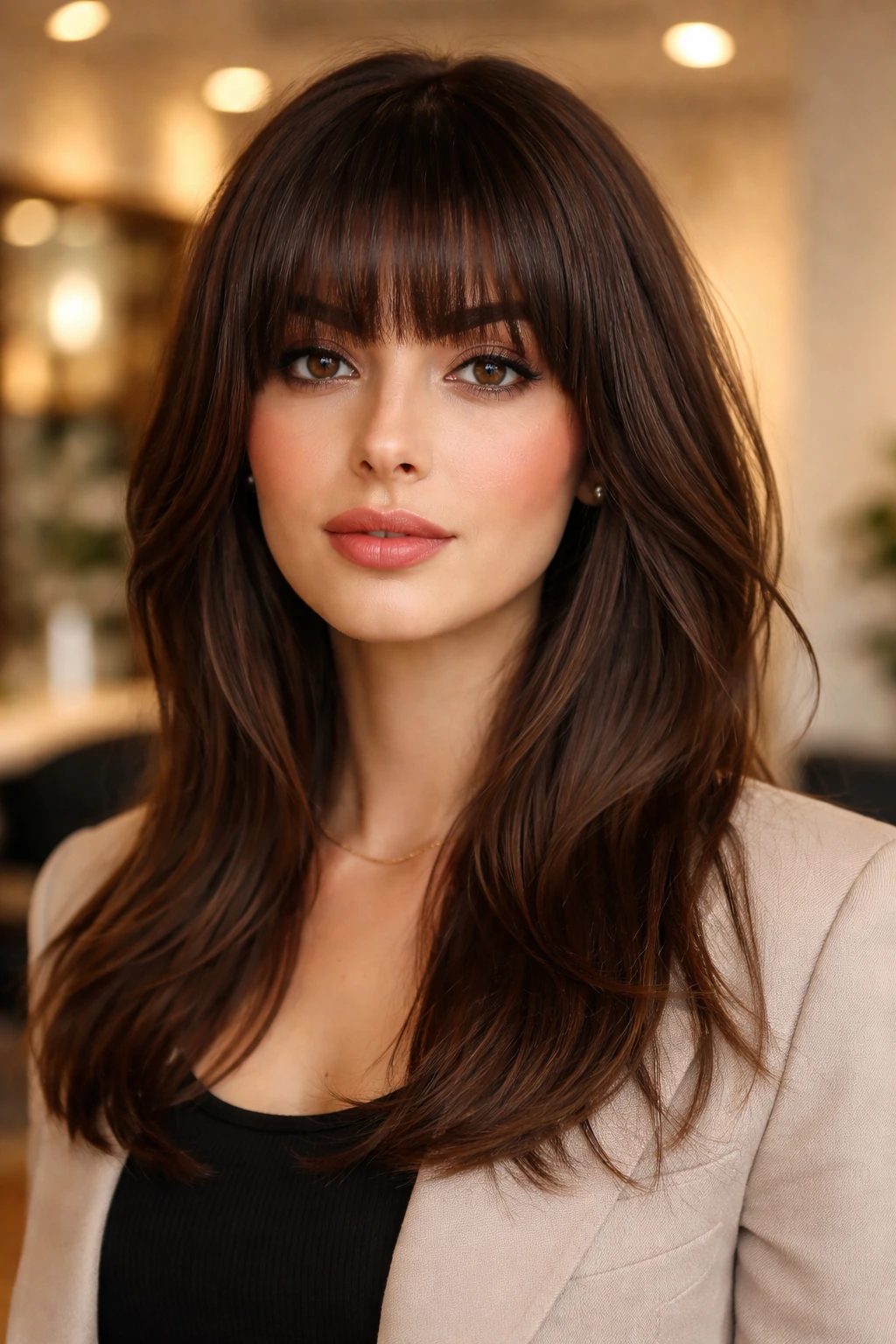
I know I said blunt bangs can be tricky for round faces, but there is an exception. If you pair a blunt fringe with long, face-framing layers that extend below the jawline, you create a “frame” that breaks up the roundness.
The Contrast Factor
The harshness of the blunt line is softened by the longer, flowing layers on the sides. You get the benefit of a dramatic, high-fashion fringe without the risk of your face looking wider.
Essential Stylist Instruction
Tell your stylist: “I want a blunt fringe, but please leave the sides longer and blended into face-framing layers.” If they just cut a straight line from ear to ear, you will lose the elongating effect.
9. Curly Shag Fringe
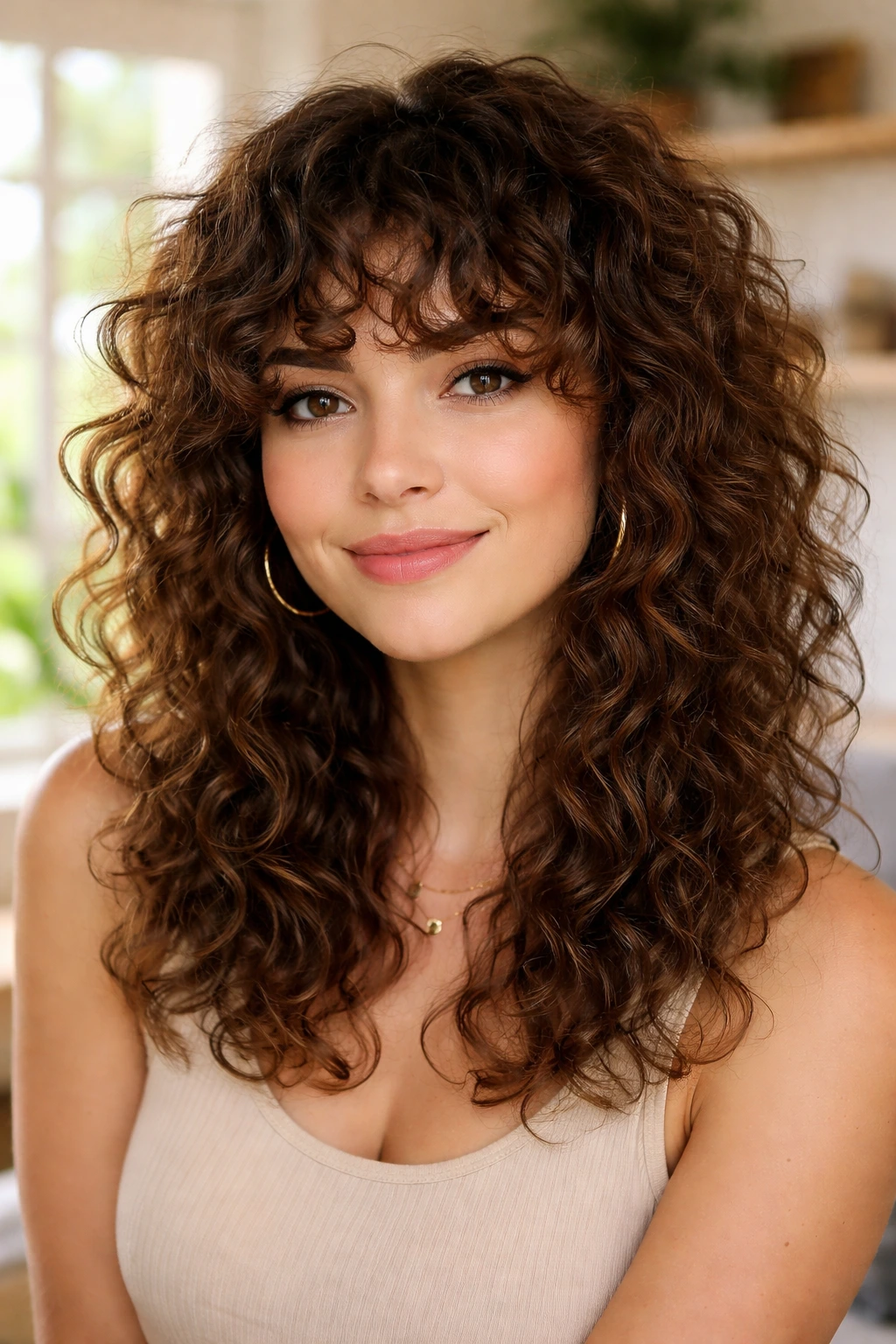
If you have natural curls, you are actually at an advantage. Curly hair has built-in texture and volume, which is exactly what a round face needs. A curly shag fringe is all about letting the hair do what it wants.
Why You Should Embrace Your Texture
When you straighten your hair, you are removing the volume. Keep the curls, keep the height, and let the bangs be wild. A curly fringe adds height above the head, which is the easiest way to combat a round jawline.
Drying Tips for Curls
- Never brush your bangs while they are dry.
- Use a diffuser attachment on your blow dryer, or better yet, air dry them with a little bit of curl cream.
- Ensure the stylist cuts them while your hair is dry and in its natural state. Curls shrink, and you do not want to end up with bangs that are too short.
10. Piecey Textured Bangs
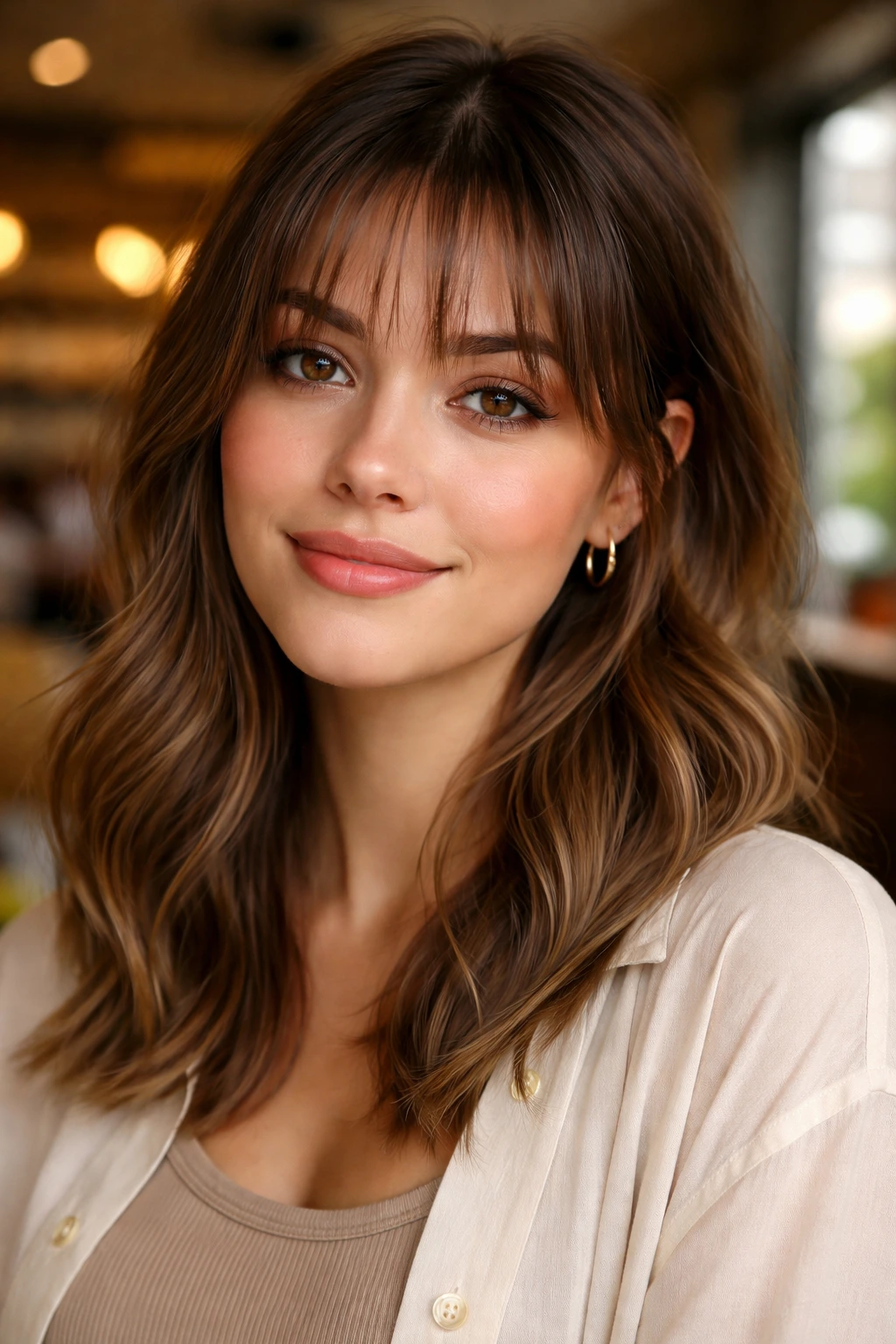
This is a specific look achieved with styling products rather than just the cut. Think of this as the “undone” cousin of the blunt bang. It’s a bit thinner, a bit messier, and very intentional.
The “Piecey” Secret
It’s all about the separation. You don’t want a solid sheet of hair. You want visible gaps between the strands of hair in the fringe. This allows the forehead to show through, which—as we’ve established—is vital for breaking up a round face shape.
Product Selection
- Use a matte clay or a texturizing pomade.
- Rub a tiny amount between your fingertips—literally, a pea-sized amount—and twist individual strands together.
- Do not apply this to the root, or you will end up with an oily mess.
11. Curtain Bangs with Face-Framing Layers
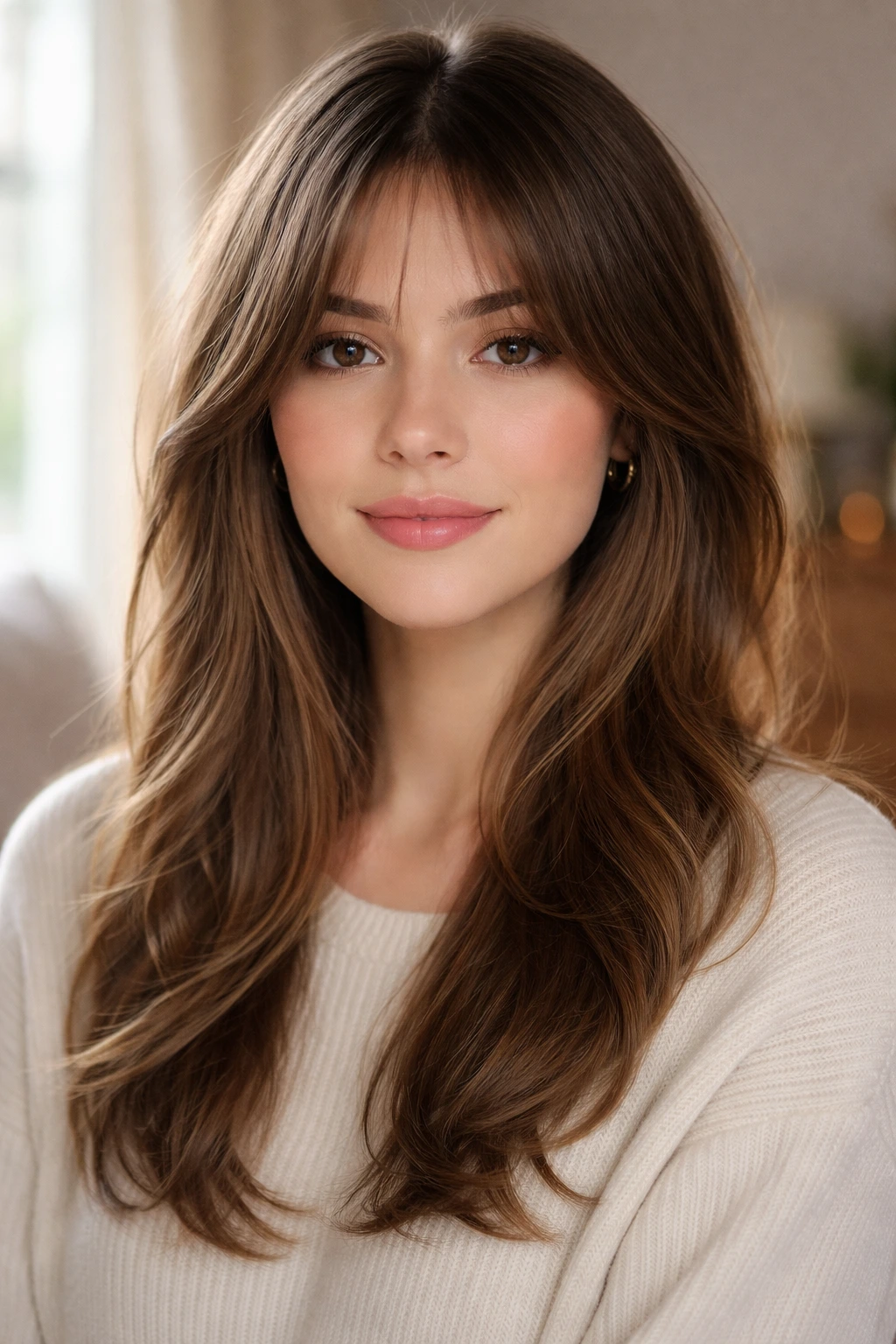
This is the elevated version of the standard curtain bang. By adding deeper, longer layers that start from the chin, you create a cohesive style that draws the eye vertically down the entire face.
The Impact on Round Faces
The combination of the center-parted fringe and the long, sweeping layers creates two distinct angles on either side of the face. This framing effect acts like a contour, slimming down the appearance of the cheeks.
Styling for Volume
- Flip your head upside down when you blow-dry to get maximum lift.
- Use a velcro roller on the bangs section while the rest of your hair cools down. This gives them that bounce that keeps them from falling flat against your cheeks.
12. Bardot-Inspired Heavy Fringe
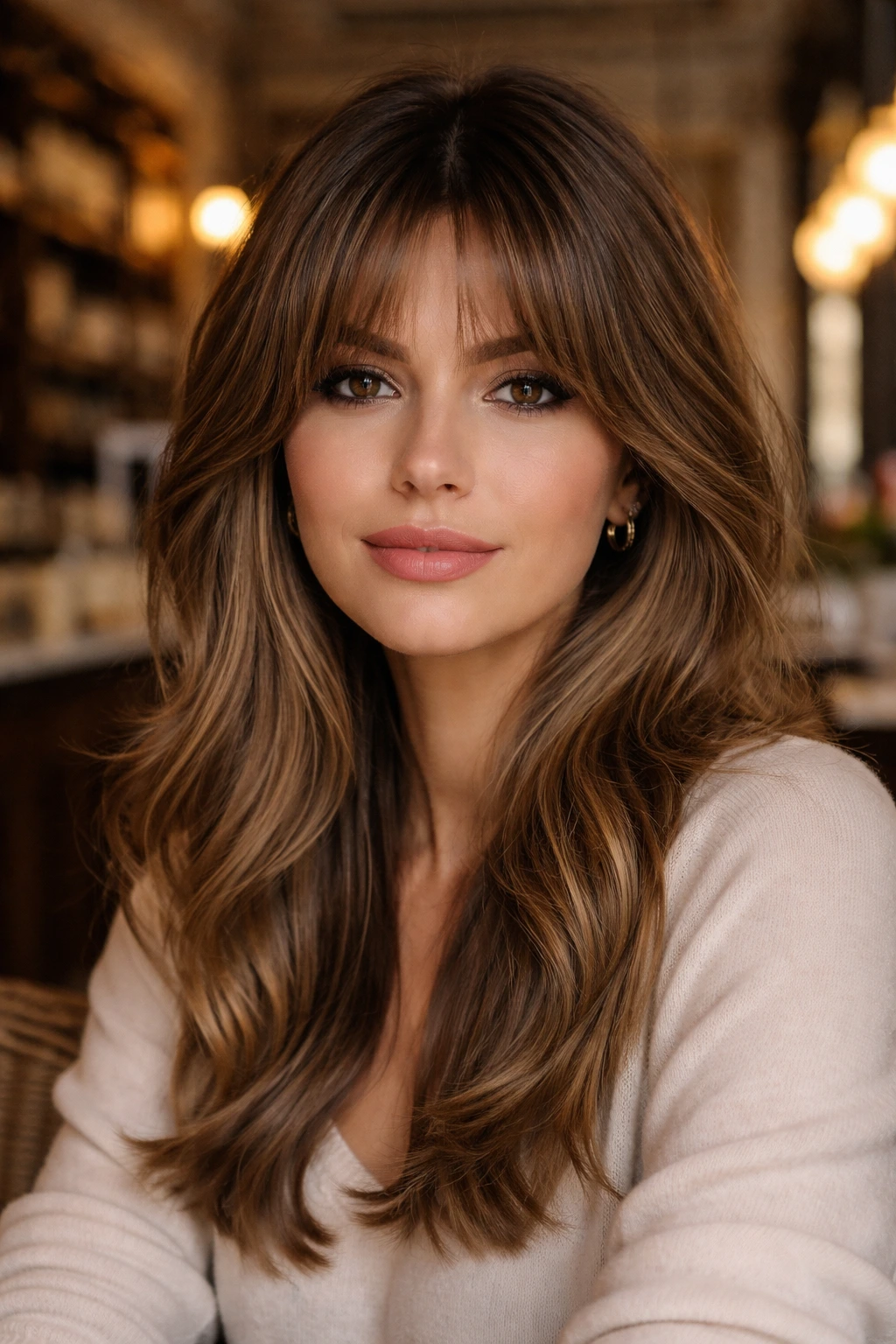
Think Brigitte Bardot. This style is heavy, slightly parted in the middle, and usually a bit longer on the sides. It is iconic, dramatic, and surprisingly workable for rounder faces because of that central part.
Why the Bardot Look Works
It isn’t a solid, heavy-set block. Because it is parted in the middle, it creates an inverted “V” shape. This V-shape is the holy grail for round faces because it creates the illusion of a longer face shape by exposing the forehead.
Maintenance Note
This style looks best when it is slightly unkempt. Do not obsess over making it perfectly smooth. It’s supposed to look like you just woke up in the French Riviera.
13. Feathered Bangs
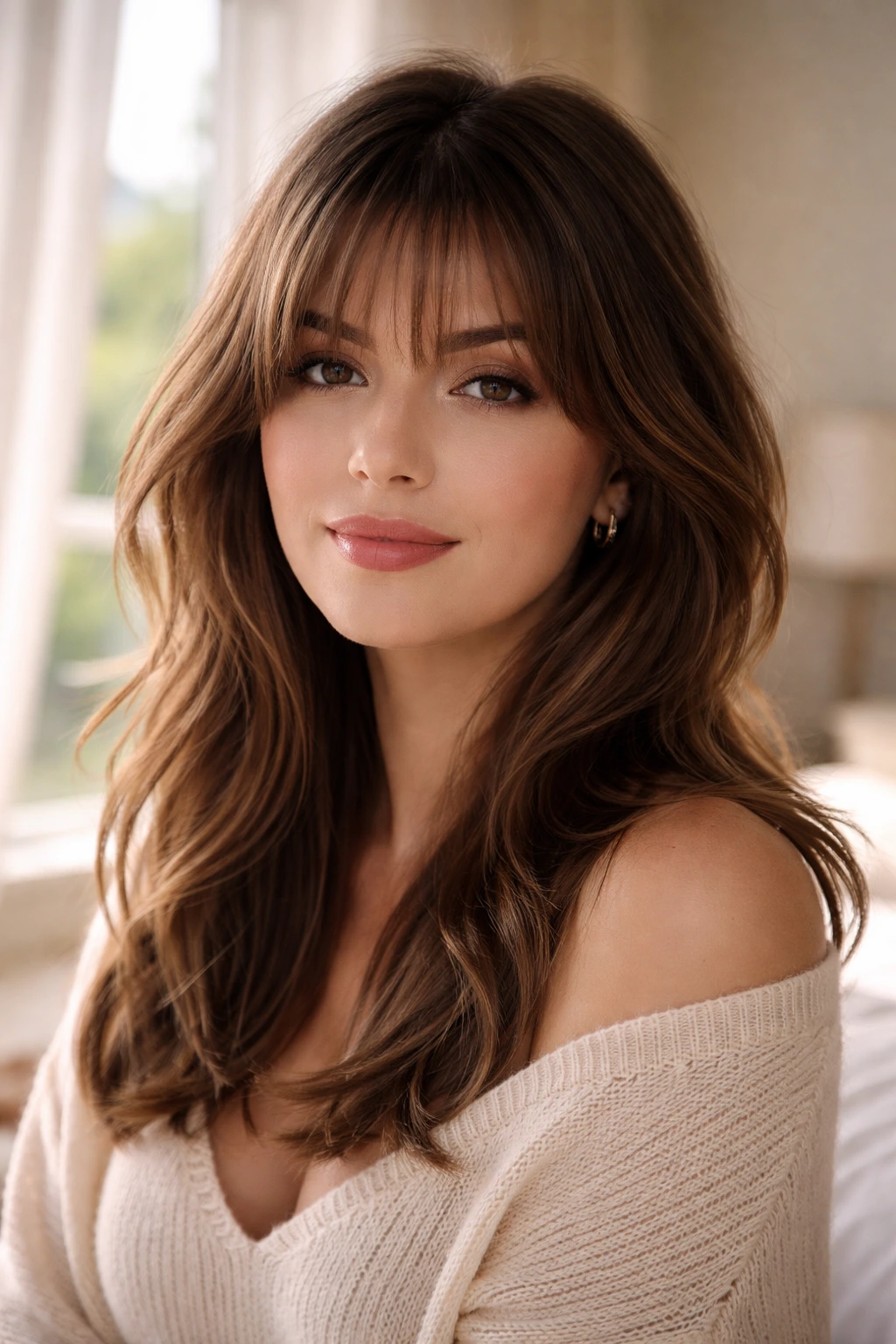
Feathered bangs are cut with a razor to create soft, tapered ends. They look light, feathery, and move easily with the wind. They are the antithesis of the heavy, blocky bang.
The Softening Effect
Because the ends are tapered, they don’t create a sharp horizontal line. This softness is perfect if you feel that a standard bang makes your face look too “boxed in.” They blend gracefully into the rest of your hair.
How to Style
A flat iron is usually the enemy of feathered bangs. Use a round brush to give them a slight bend, but keep the ends straight and airy. If you iron them, you will lose the “feathered” texture and they will just look flat and limp.
14. Asymmetrical Deep-Part Bangs
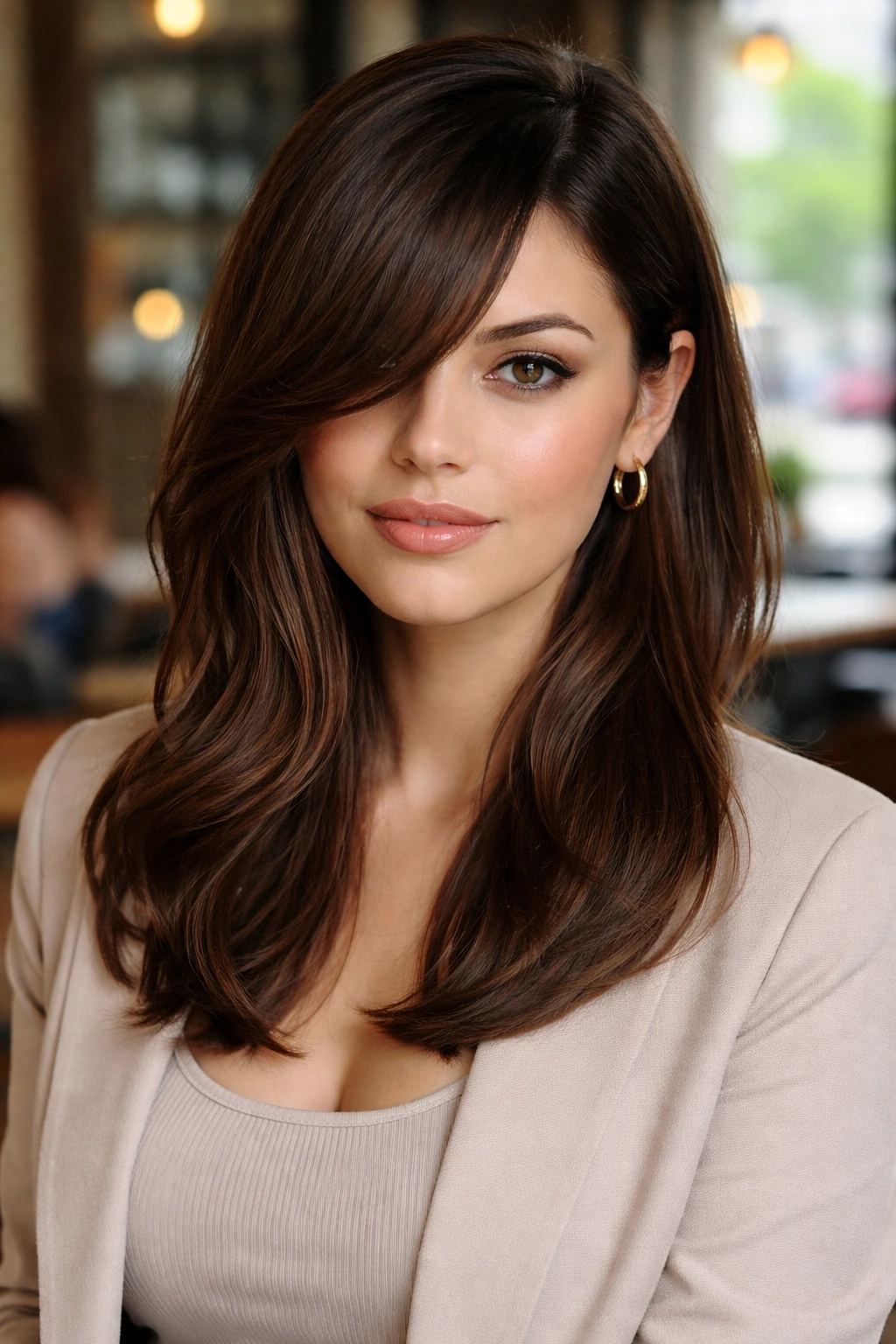
If you love a deep side part, lean into it. By pushing the majority of your hair—and your fringe—to one side, you create a dramatic diagonal line. This is the ultimate “lengthening” trick.
How to Achieve This
You need a fringe that is cut longer on one side and tapers toward the other. The goal is to have the hair sweep across your forehead, covering a portion of it and creating an angle that shifts the focus away from the center of your face.
Daily Ritual
- Train your part. If you usually part in the middle, your hair will fight you for a few days.
- Use a bobby pin to hold the sweep in place while your hair air dries, then remove it once dry.
15. Razored Fringe
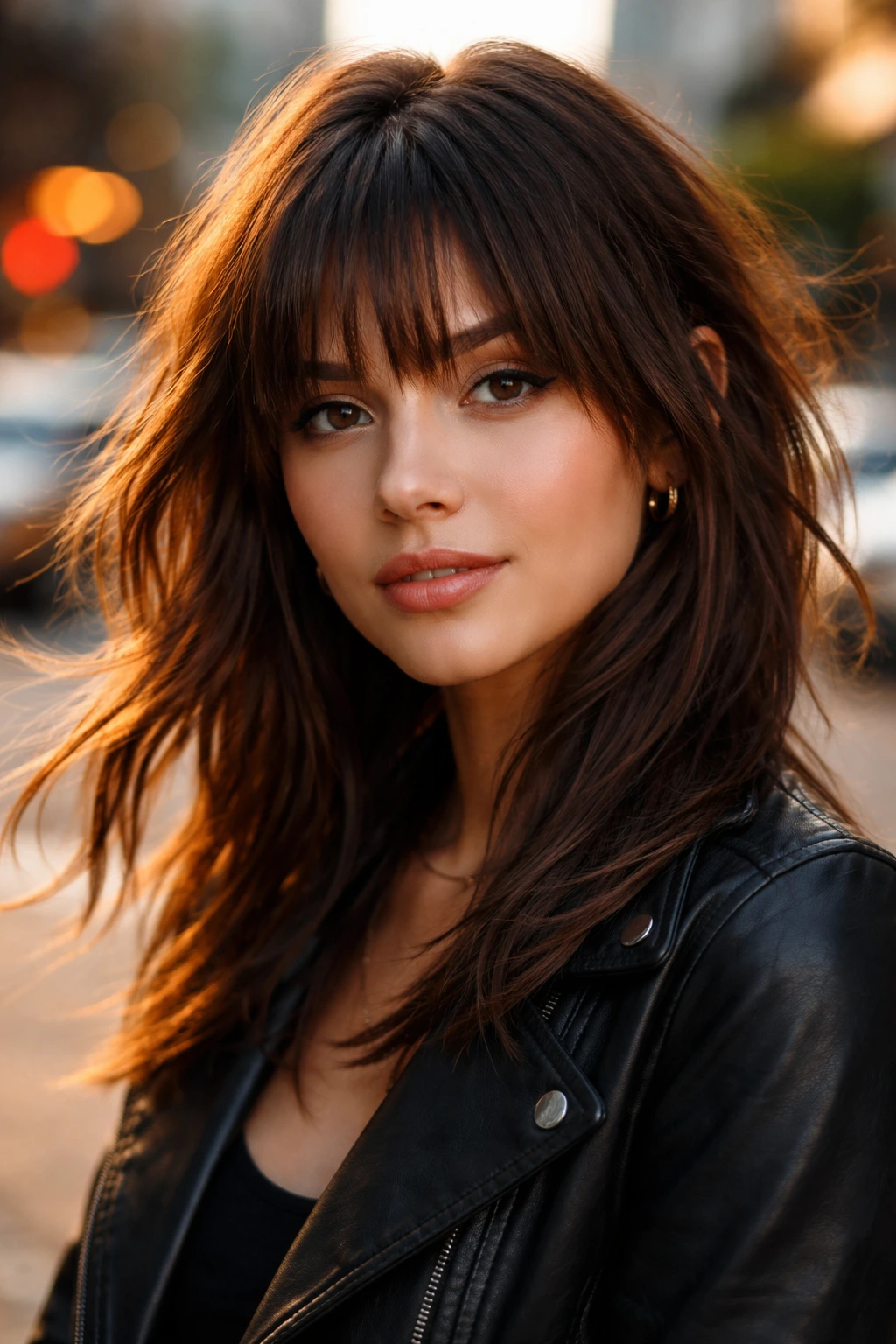
A razored fringe is about movement and edge. Instead of using scissors to create a clean, blunt line, a stylist uses a razor to shave the ends of the hair. This creates a jagged, lived-in aesthetic.
Why This Suits Round Faces
Sharp, clean lines (like a perfect blunt bob or fringe) can sometimes emphasize the softness of a round face. A razored fringe, however, is imperfect and textured. It breaks up the face shape and adds a bit of grit to your overall look.
The Warning
Only go to a stylist who is confident with a razor. It is an art form. If done incorrectly, you can end up with split ends and frizz. When done right, it is the coolest haircut you will ever have.
16. Long Arched Bangs
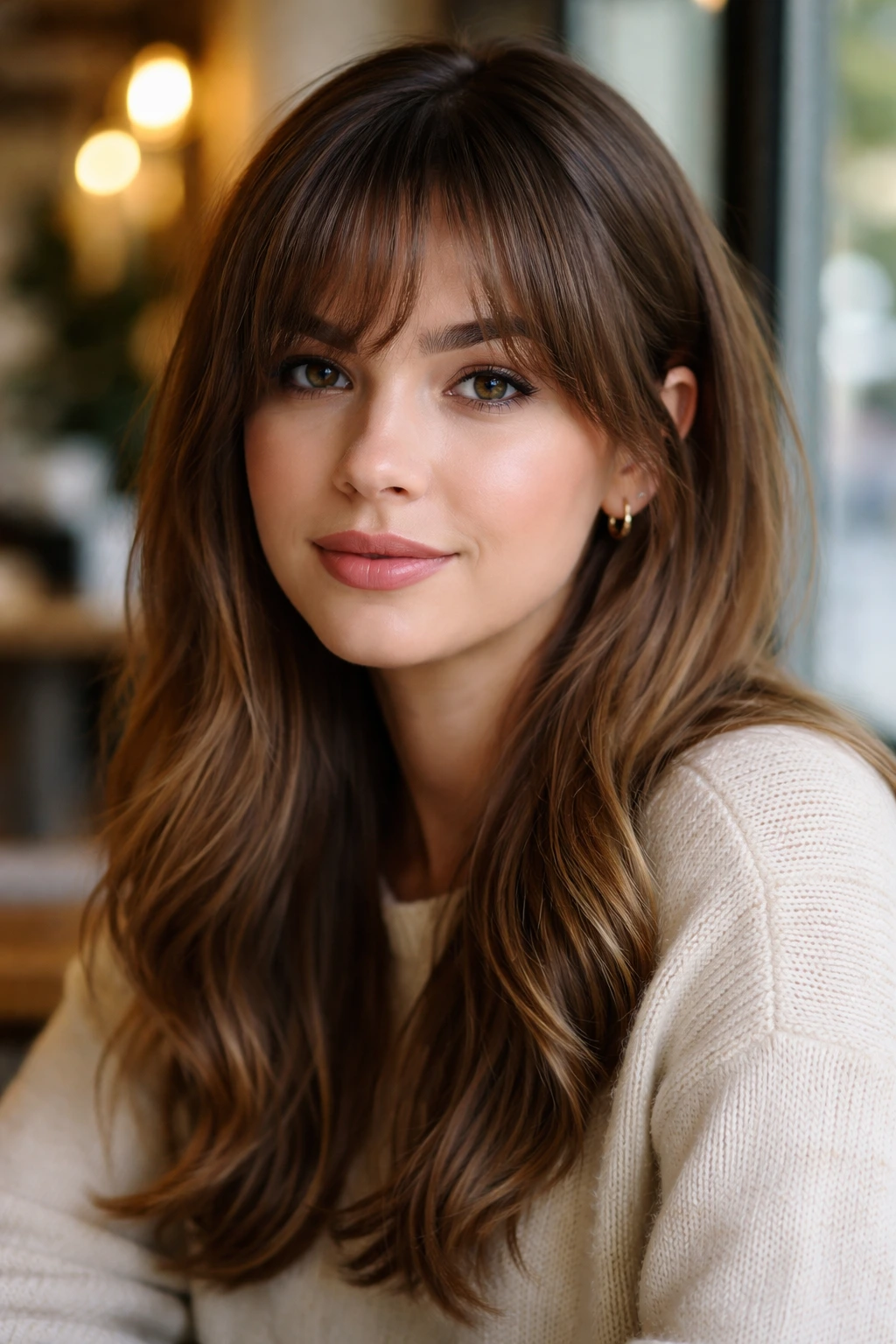
These are cut in a curve: shorter in the center and gradually getting longer toward the temples. The arch is the key—it mimics the natural shape of the eyebrow and draws the eye upward.
The Geometric Benefit
A straight-across bang creates a horizontal bar. An arched bang creates an upward curve. Which one do you think is better for adding length to a face? The arch. It creates a soft “peak” that creates a bit of height.
Who Should Get This
This is an excellent style if you wear glasses. The arch allows the bangs to clear your frames rather than getting stuck behind them or hitting them constantly.
17. Bottleneck Bangs with Shag Layers
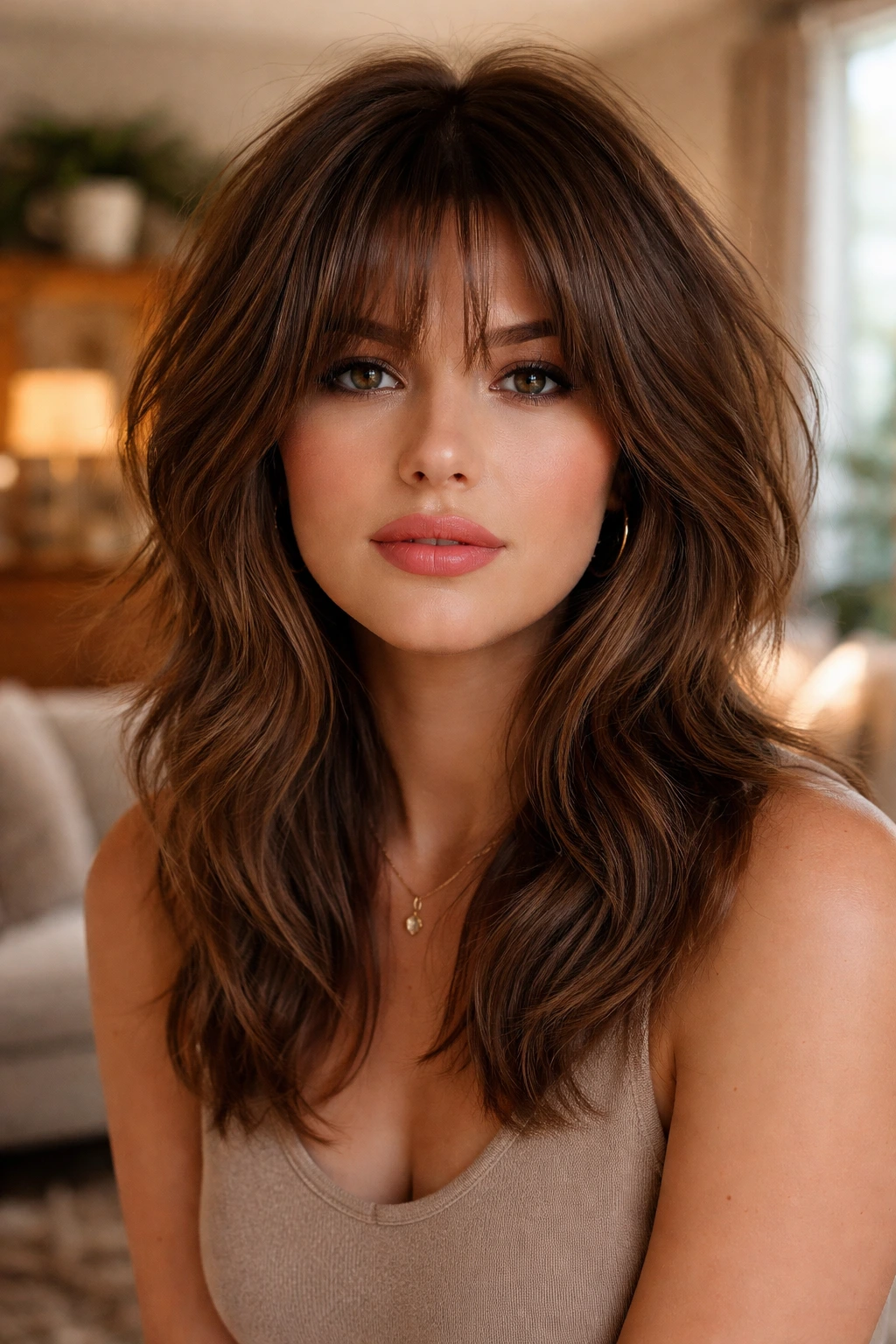
This is the “maximalist” option. Combine the bottleneck fringe (the tapered, eye-framing center) with heavy shag layers throughout the rest of the head. It is a full-volume, high-texture style.
Why It Works for Volume
Round faces can handle a lot of hair. Sometimes, a sleek, flat hairstyle makes a round face look wider by contrast. A big, shaggy cut provides a “frame” for your face, making the face look smaller by comparison.
Styling Requirement
You need a texturizing paste and a lot of confidence. This is not a “wash and go” style if you have flat hair. You will need to put in the work to get the volume right at the roots.
18. Soft-Center Part Fringe
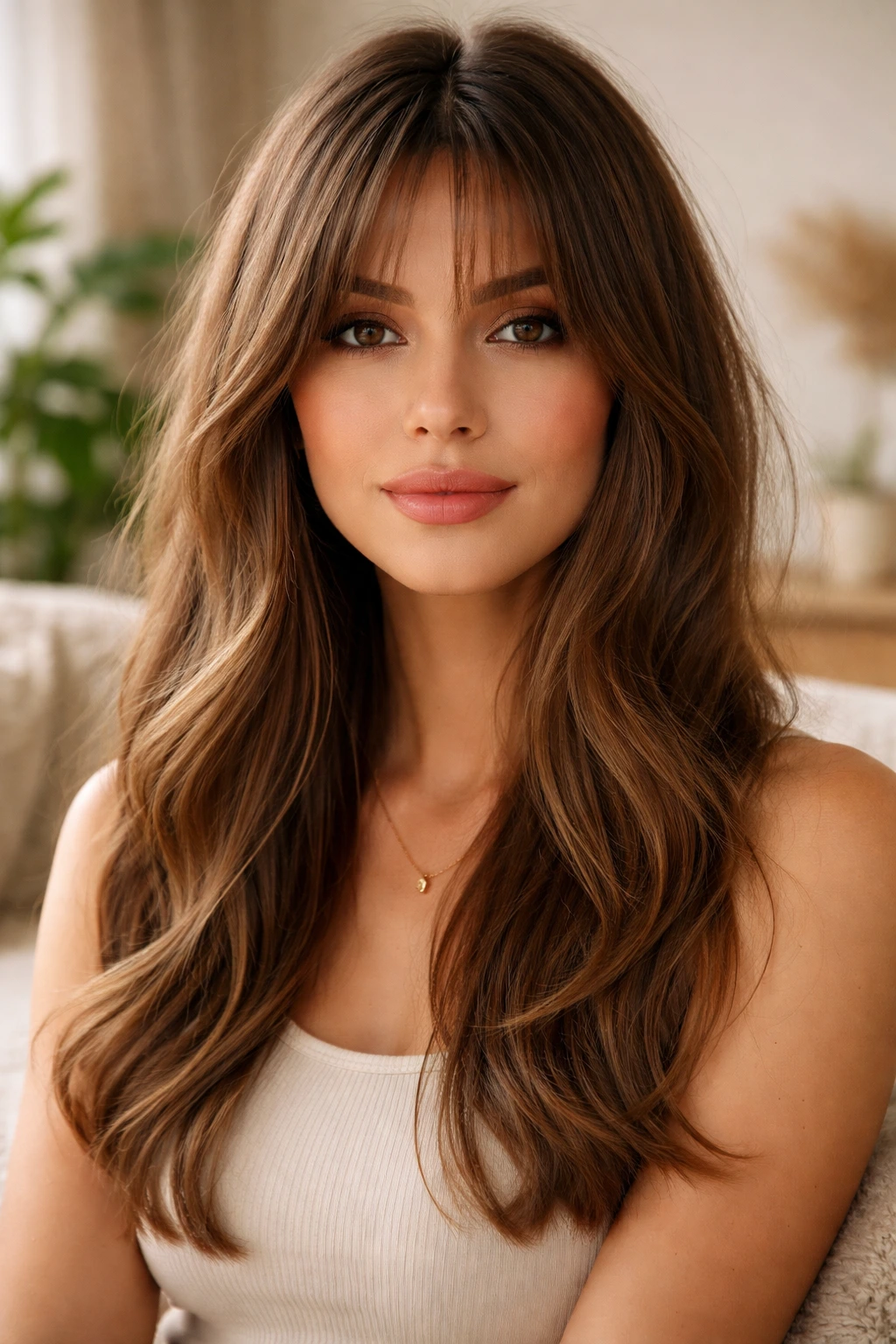
This is for the minimalist who wants bangs without the maintenance. It’s essentially two long, wispy curtains that hit just below the cheekbone. They aren’t a full “fringe” in the traditional sense, but they provide the same face-framing benefits.
The “Cheat” Bang
If you are worried about the commitment of bangs, start here. These are essentially long layers that start at the bridge of the nose. They offer the styling versatility of bangs without the immediate “I have bangs” commitment.
Styling Versatility
You can tuck these behind your ears when you want your face totally clear, or pull them out to frame your face when you want that soft, romantic look.
19. Layered Curtain Bangs
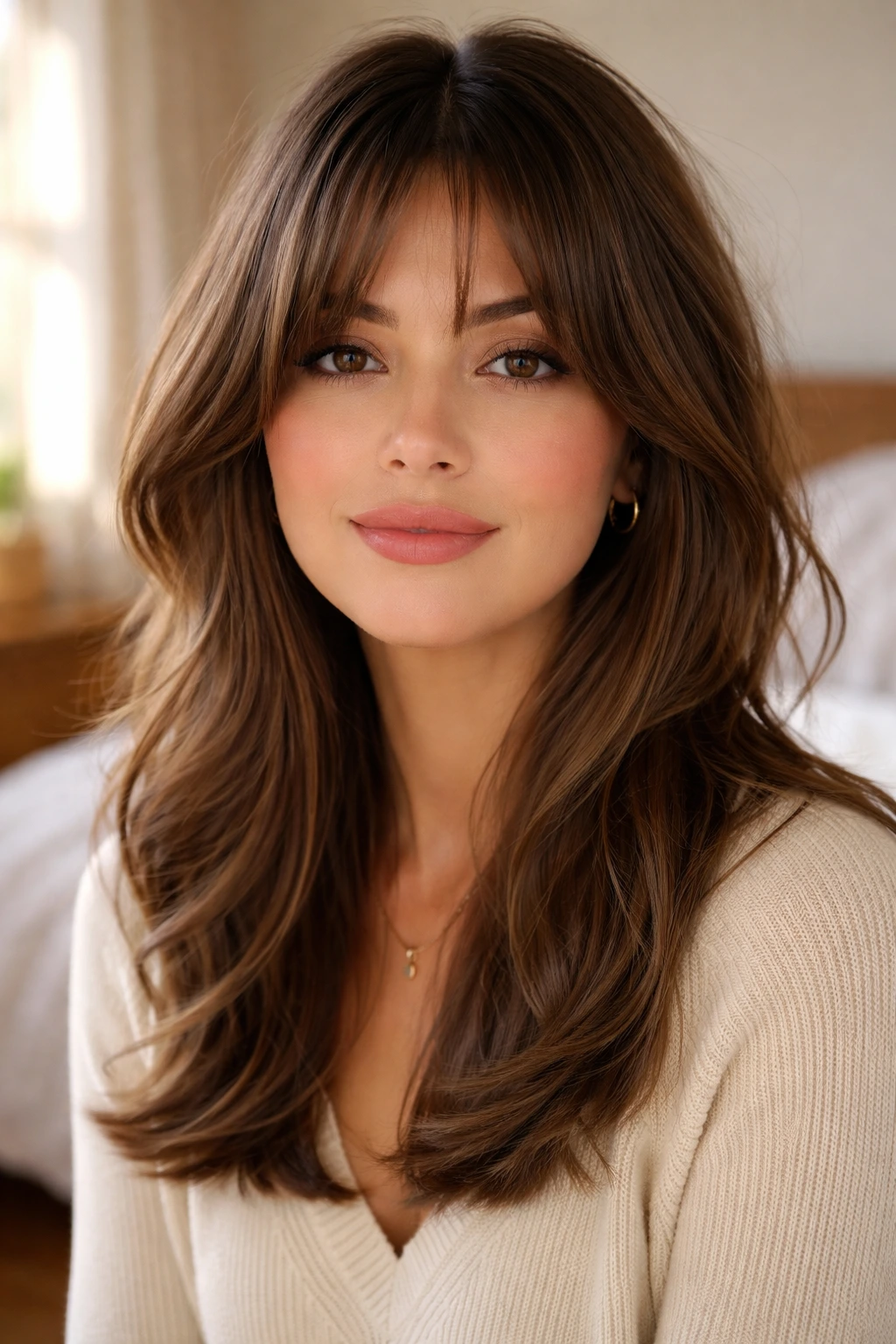
This is a subtle variation on the classic curtain bang. Instead of one long piece, you add slight layers to the curtain fringe itself. This lightens the weight and makes the bangs sit more naturally.
Why This Changes Everything
For women with thick, coarse hair, curtain bangs can sometimes feel like a heavy weight sitting on the forehead. By layering them, you remove that bulk. They become more manageable and sit with a much softer, more natural movement.
How to Ask for It
Ask for “internal layering” or “point cutting” on the bangs. This ensures the ends aren’t blunt and heavy, but instead are soft and textured.
20. Wispy Arched Fringe
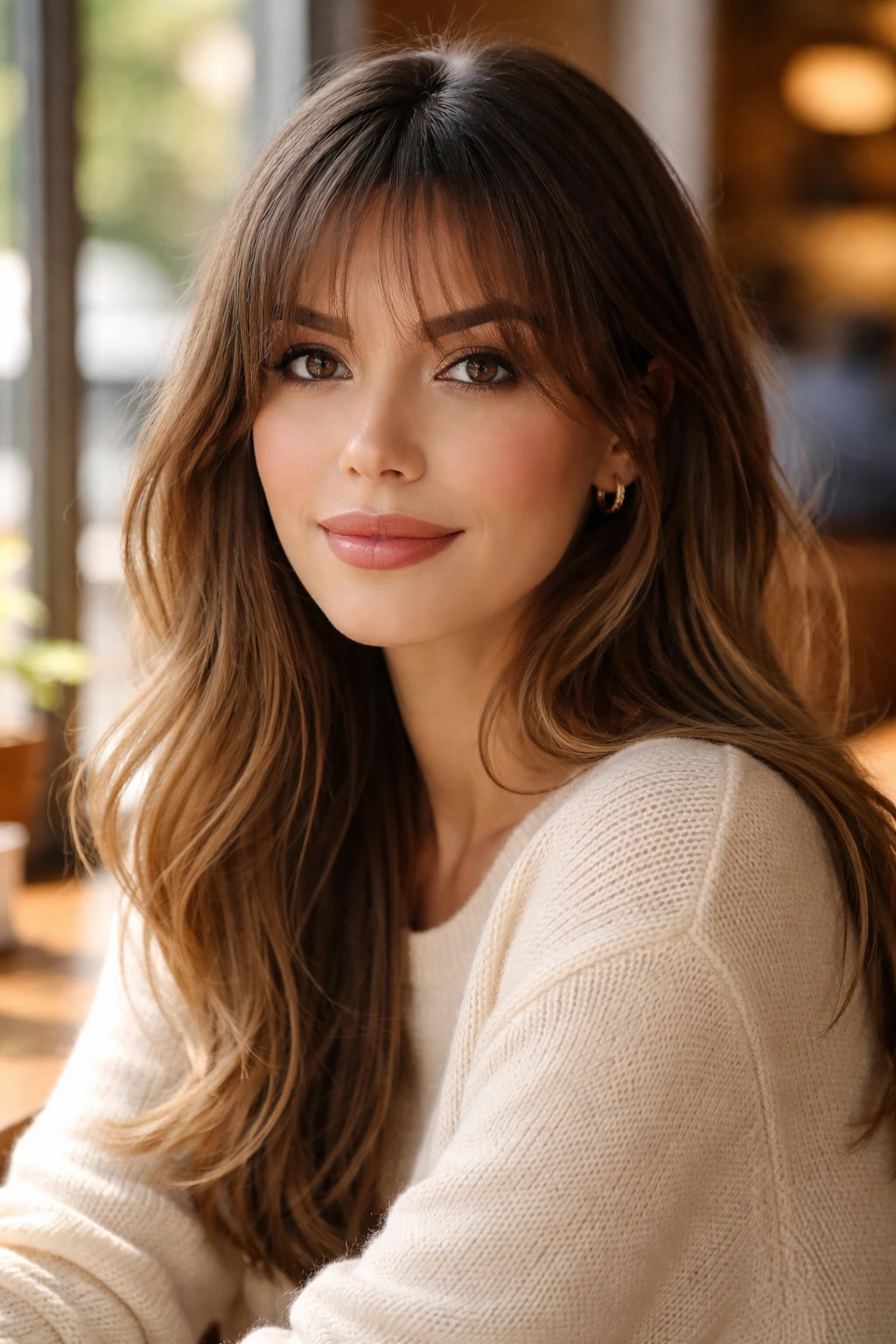
Combine the lightness of wispy bangs with the elongating shape of an arch. This is the ultimate “refined” fringe. It is soft, feminine, and incredibly flattering.
Why It’s the Best of Both Worlds
You get the forehead-exposing benefits of the wispy style, plus the vertical-lifting benefits of the arch. It is the perfect balance for someone who wants bangs but is terrified of looking like they have a “bowl cut” effect.
Final Advice on Choosing
Don’t get bogged down in the rules about what “shape” you are. Take these photos to your stylist. Show them what you like. The best hair is the hair that makes you feel confident when you look in the mirror—and if that means a fringe that technically “breaks the rules,” do it anyway.
The Bottom Line
When it comes to picking the right bangs for a round face, the only real rule is to avoid anything that creates a solid, heavy horizontal line across your forehead. Everything else is fair game. Whether you opt for the messy, textured shag or the soft, romantic curtain bang, the goal is to create movement, angles, and verticality.
Your hair should feel like an accessory that highlights your favorite features, not a curtain that hides them. Experiment with length and weight. If you start with longer, wispy bangs, you can always go shorter and bolder later. Hair grows back, and trends change, but the confidence of finding a style that feels like “you” is the one thing that never goes out of style.
