



A blunt fringe can flatten a round face fast. So can a bang that stops right at the widest part of the cheeks. The better bangs ideas for round faces do the opposite: they add a little vertical line, a little movement, and a little space around the temples so the whole face feels longer and lighter.
That does not mean round faces should avoid bangs. It means the cut has to work with the shape instead of sitting across it like a ruler. Length, density, and where the fringe opens matter more than the trendy name on the salon mirror. A soft center part can make a huge difference. So can a single inch of extra length at the corners.
And yes, some bangs are fussy. Some are high-maintenance in a way no one warns you about until you’re sweating over a round brush at 7 a.m. But the right fringe can make your haircut look more expensive, more balanced, and a lot more intentional — without trying too hard.
The sweet spot is shape, not severity.
1. Curtain Bangs
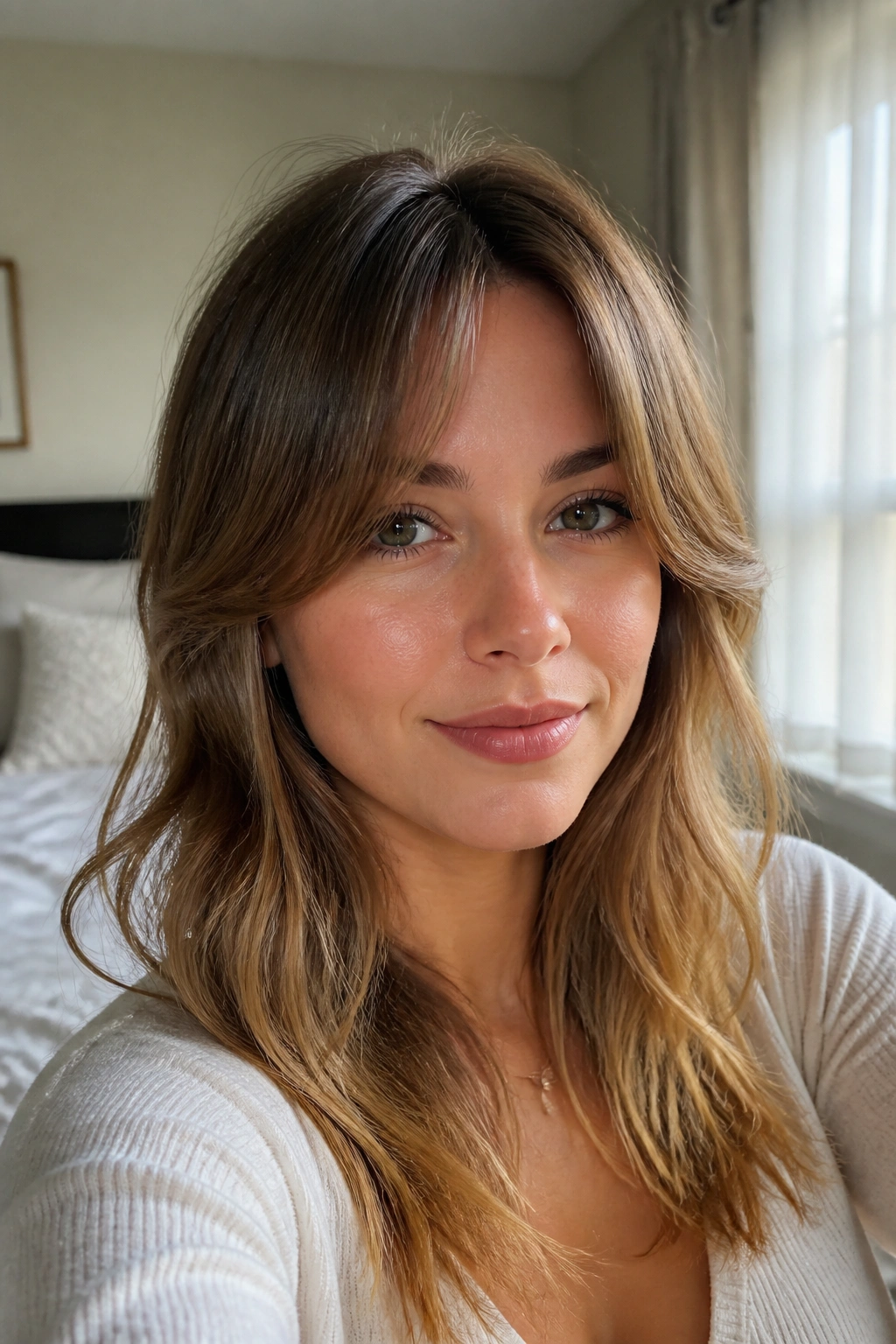
Curtain bangs are usually the safest first move for a round face because they split the forehead in the middle and fall away from the cheeks instead of boxing them in. The center stays shorter, the sides stay longer, and that diagonal line does a lot of quiet work.
Why the shape matters
The best version starts around the bridge of the nose or just below the brows, then drifts down toward the cheekbones. That extra length at the sides helps pull the eye downward, which is exactly what you want when a face reads as soft and full.
- Ask for the center to sit a little above the brow line.
- Let the outer pieces land around cheekbone height or slightly lower.
- Keep the ends feathered, not blocky.
- Blow-dry them away from the face with a round brush or Velcro rollers.
Pro tip: If your hair is dense, have the stylist remove weight from the underside only. Thinning the top layer too much can make curtain bangs separate in weird little strings.
2. Side-Swept Fringe
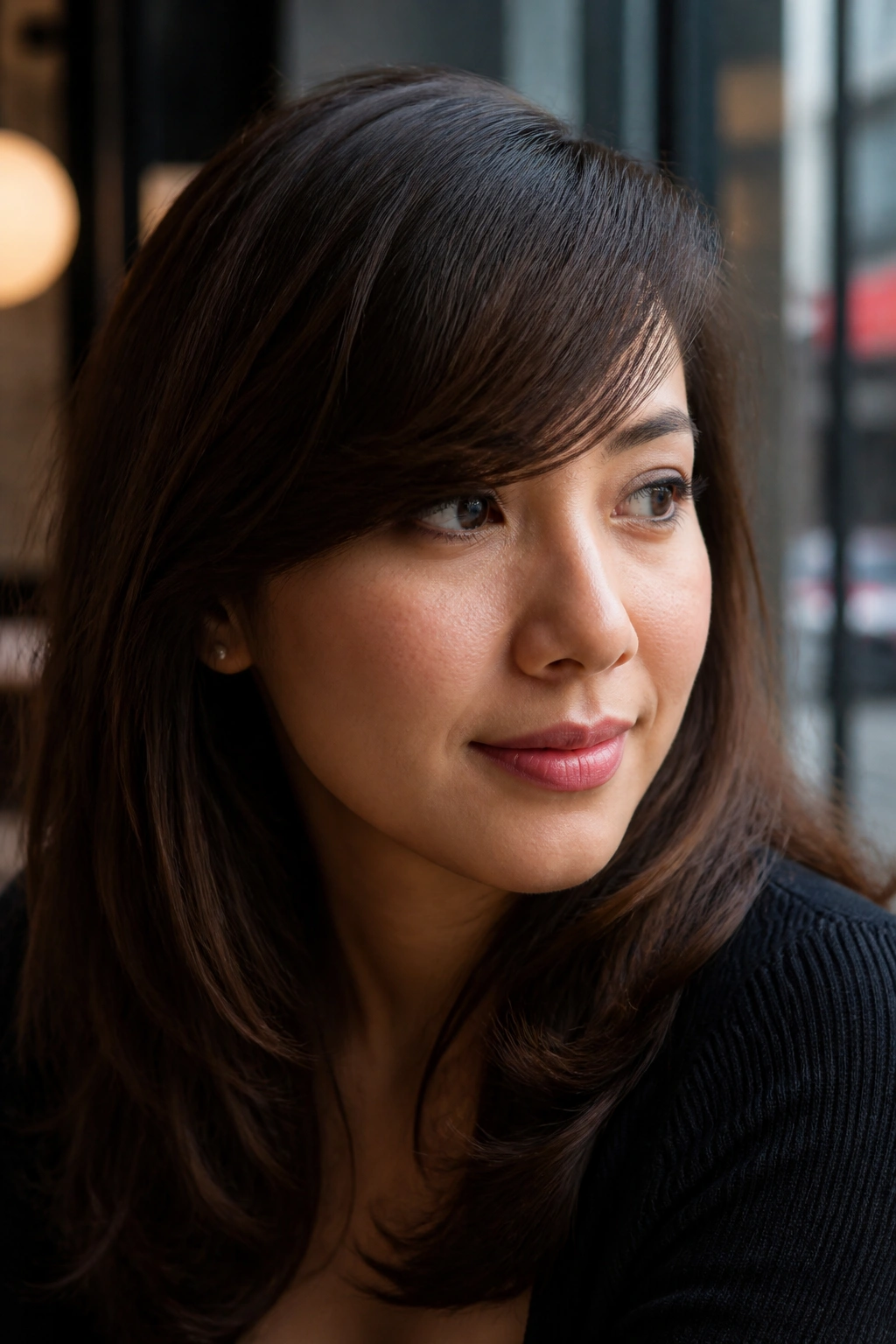
Side-swept fringe works because it draws a clean diagonal across the face. That diagonal is doing real visual work; it interrupts the circle shape and creates a longer line from forehead to jaw.
I like this option for anyone who wants bangs but doesn’t want the full commitment of a straight-across cut. It also gives you a little wiggle room on growing them out, which matters more than people admit. A soft side sweep can be tucked behind the ear, clipped back, or worn loose on days when you want less fuss.
Ask for a deep side part and a fringe that starts near the outer brow, then tapers into the rest of the haircut. If the bang is too short, the effect disappears. If it’s too heavy, it starts to look like a sideways curtain from the early 2000s. The sweet spot is a long, fluid sweep that lands near the cheekbone and blends into the front layers.
3. Wispy Bangs
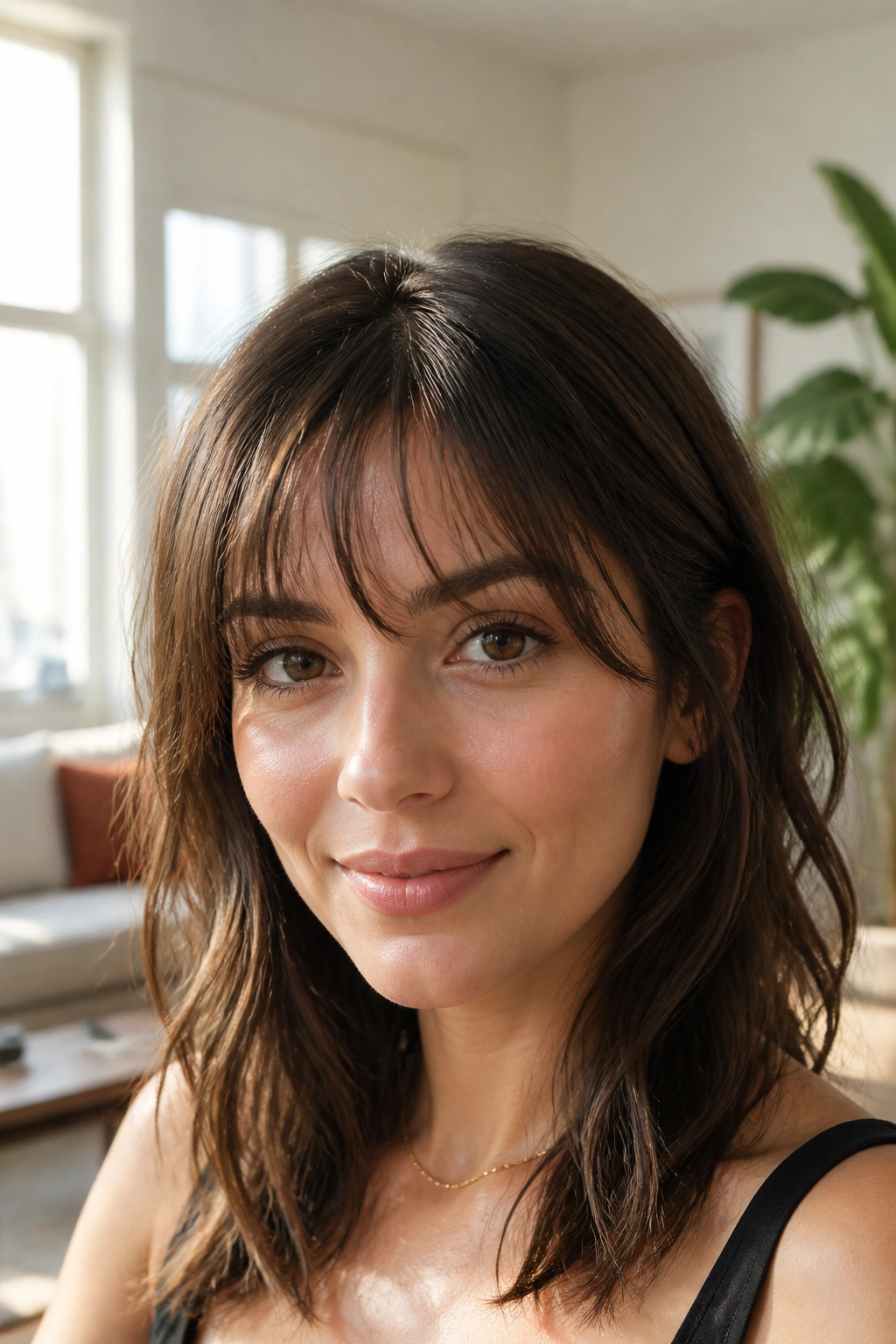
Wispy bangs are the answer when you want softness, not weight. They let some forehead show through, which keeps a round face from feeling closed in.
Picture a fringe that looks almost airy when it moves. That’s the whole point. Heavy bangs can make the top third of the face feel crowded, but wispy fringe leaves room around the eyes and gives the haircut a lighter finish. It’s especially good if your hair is fine to medium, because too much density can defeat the look.
How to keep them from going flat
- Ask for point-cut ends instead of a blunt line.
- Keep the density light, especially in the center.
- Style with a low heat setting and a small flat brush.
- Finish with a pea-sized amount of texturizing cream, not a heavy balm.
One warning: wispy bangs can separate too much in humidity. If your hair is very frizzy, you’ll want a little more structure than this cut usually gives.
4. Bottleneck Bangs
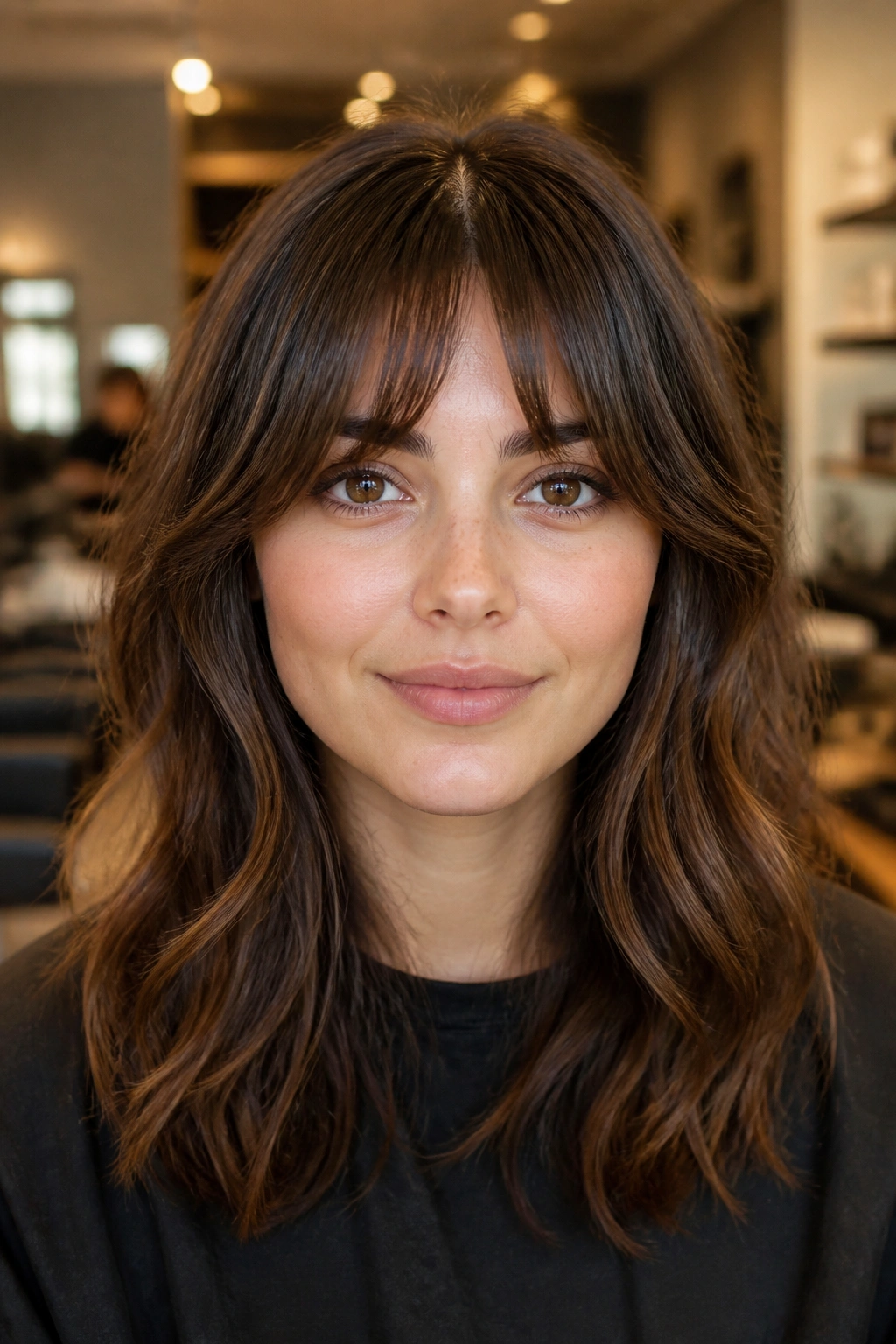
Why do bottleneck bangs keep showing up on round faces? Because they start narrow at the center, then widen gently toward the temples and cheekbones. That shape creates a soft frame without cutting the face into a short, wide block.
The name sounds technical, but the effect is easy to like. The center sits a little shorter, often around the brow bone, while the side pieces lengthen into the front layers. That gives the top of the face some lift and the sides a little movement. It’s flattering in a way that doesn’t shout for attention.
How to wear it
Ask for a shorter center section and longer wings that hit somewhere between the cheekbone and upper lip. The sides should not stop abruptly. They need to melt into the rest of your haircut. A little bend at the ends helps a lot, especially if your hair is naturally straight and can look stiff when cut too bluntly.
5. Brow-Grazing Fringe
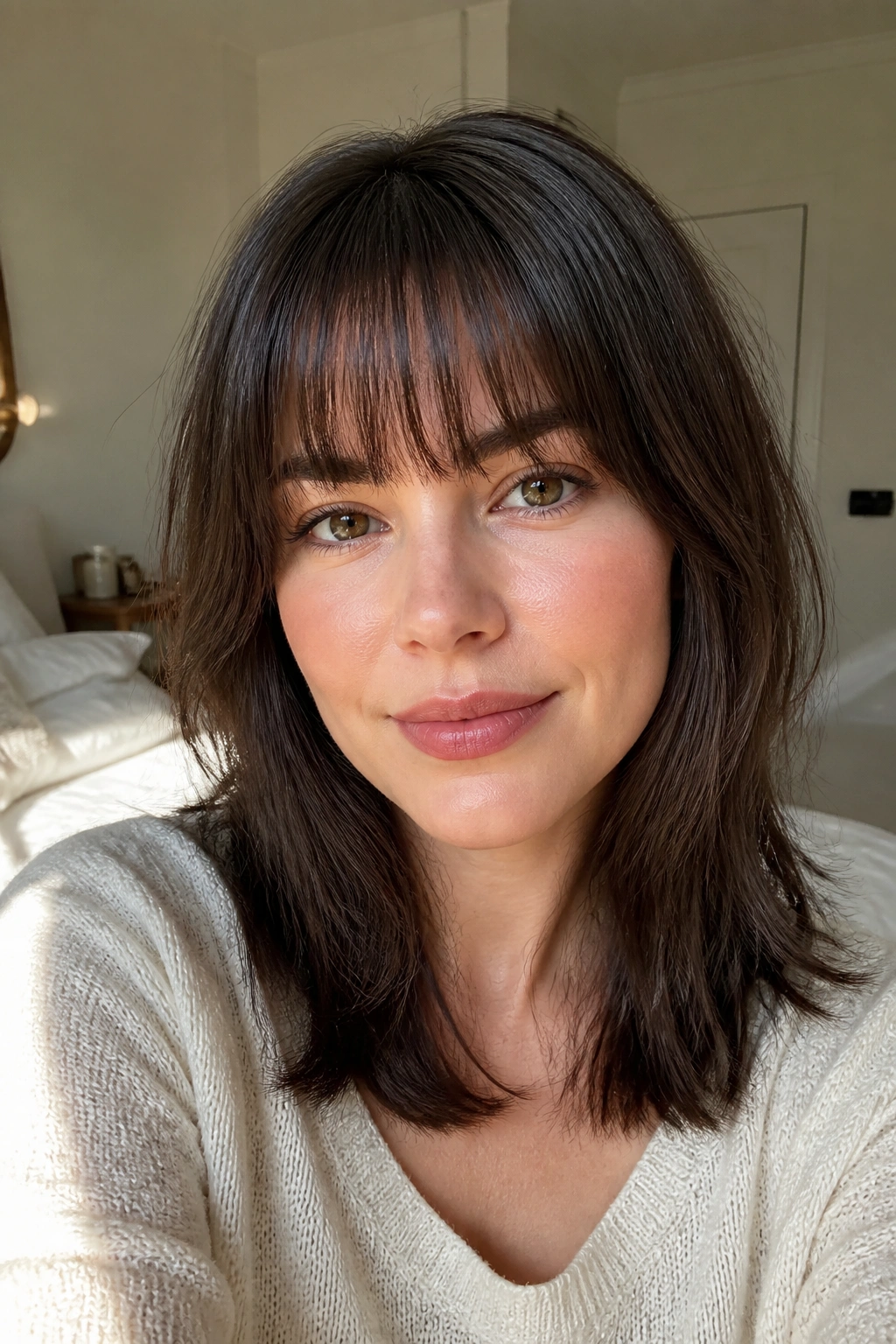
Brow-grazing fringe sits in a sweet spot: long enough to soften a round face, short enough to show shape. It doesn’t split the forehead the way a heavy blunt bang does, and it doesn’t retreat so far that it disappears.
What I like most here is the movement at the edge. A tiny bit of taper at the sides keeps the bang from feeling square. If the fringe is cut cleanly right across at brow level, it can make the face look shorter. If the outer corners are left a touch longer, the whole cut feels more balanced.
This style works well with straight to wavy hair and with medium-density hair that can hold a line without looking thick. Blow-dry it forward first, then sweep the ends slightly side to side so it doesn’t sit like a helmet. If your forehead is short, keep the center just under the brows rather than above them. That tiny change matters.
6. Choppy Bangs
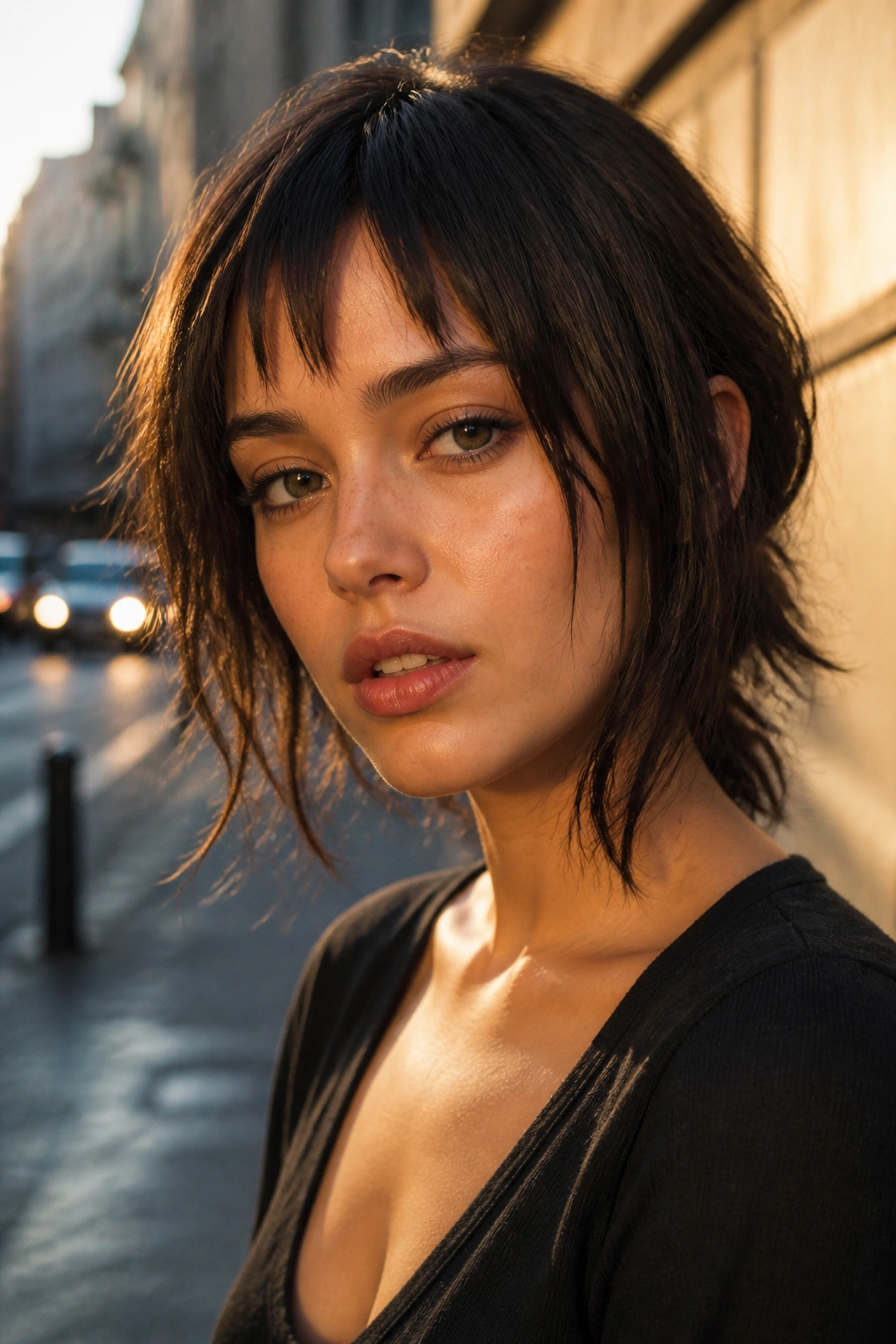
Choppy bangs are the opposite of neat, and that’s the point. The uneven ends break up the roundness of the face and keep the fringe from reading as one solid horizontal stripe.
What makes them different
Unlike a blunt bang, choppy fringe has tiny variations in length. Some pieces fall a little lower, some stop a little higher, and that irregular edge keeps the eye moving. On a round face, movement is your friend. Stillness can make the face look wider than it is.
This cut is especially good with shags, layered lobs, and hair that already has some texture. A razor cut can work, but point cutting usually gives more control. If you have very thick hair, ask the stylist to remove bulk in small sections so the fringe doesn’t puff out at the center.
Best use: pair it with longer front layers that start around the chin. That gives the face a frame instead of a hard top line.
7. Soft Blunt Bangs
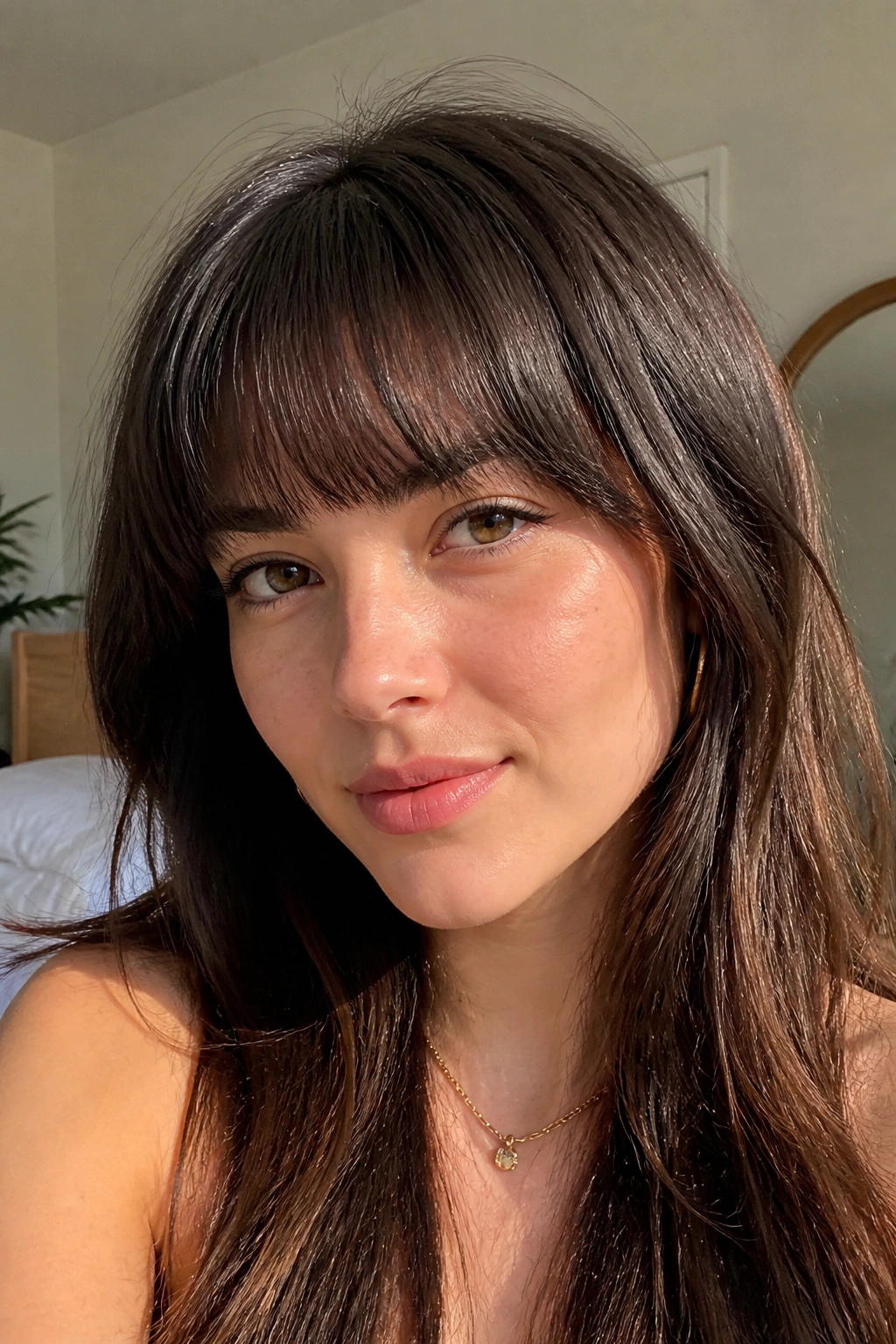
A blunt bang can work on a round face, but it needs a softer edge than people usually imagine. The corners should be a little longer, the ends should be feathered, and the line should feel deliberate rather than heavy.
If you want that polished, straight-across look, this is the version to ask for. The mistake is cutting it too dense and too short. Then the bang sits like a shelf and the face loses length. Keep the center just below the brow, let the sides graze the temples, and don’t let the finish get too thick.
The part that matters most
The line should still read as blunt from a distance, but the edges need air up close. A stylist can do that with a slight point cut at the tips. You’ll also want a flat brush or a small paddle brush for styling, because this shape looks best when it lies smooth and controlled. A round face can wear blunt bangs. They just have to be softened enough to bend the eye, not stop it.
8. Arched Bangs
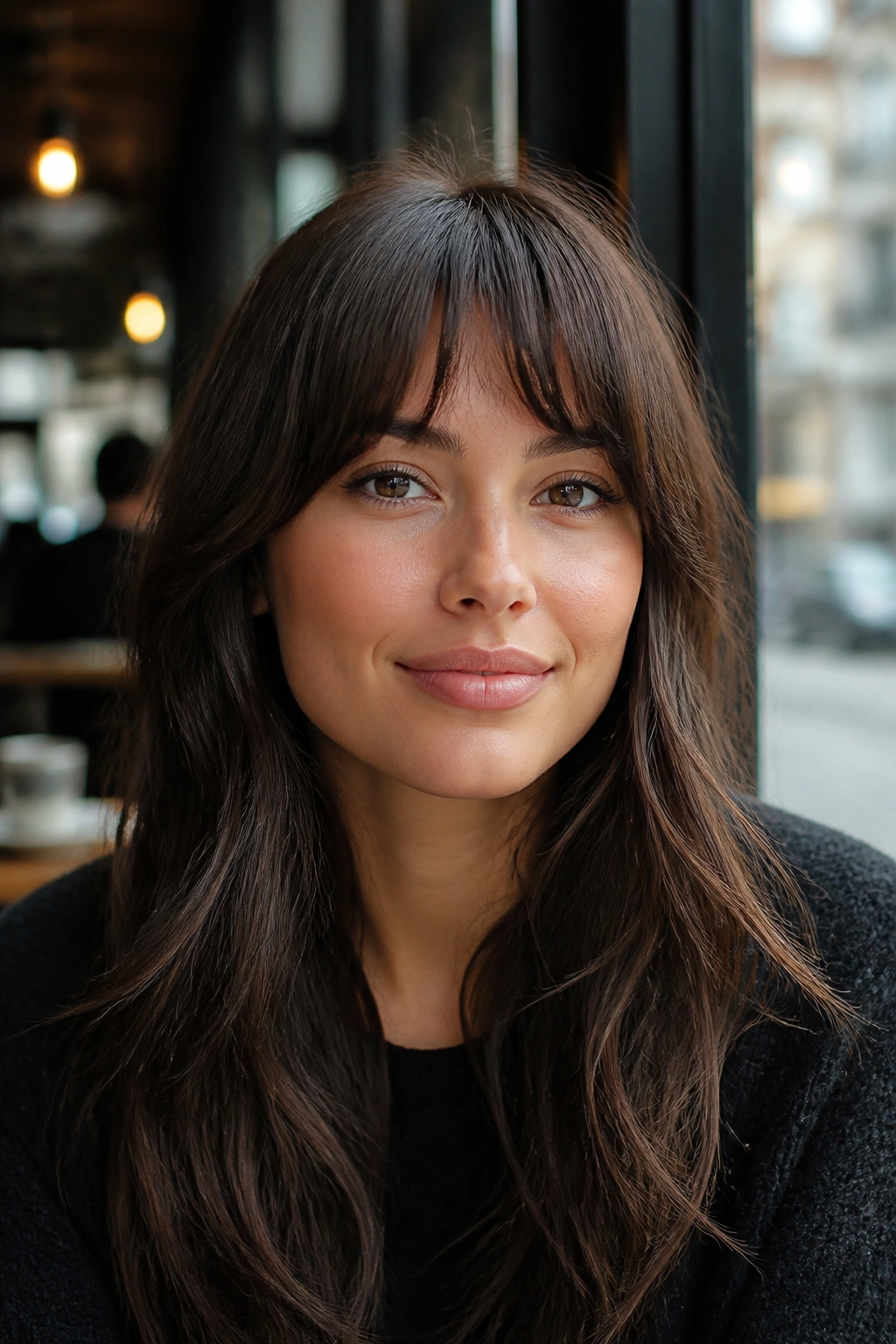
Arched bangs follow the curve of the brow instead of fighting it. That shape can be a smart move on a round face because it lifts the center without making the whole forehead feel boxed in.
The arch gives you a little visual height in the middle and slightly longer sides near the temples. That subtle rise helps elongate the face. Straight bangs cut harshly across a round face can feel severe; an arch feels kinder and more tailored.
This one works especially well if your brows have a strong shape already. The fringe can mirror that line and make the whole front of the face feel more deliberate. Keep the arch soft, though. Too much curve and it starts looking dated. I’d ask for a gentle sweep, not a dramatic semicircle.
9. Micro Bangs
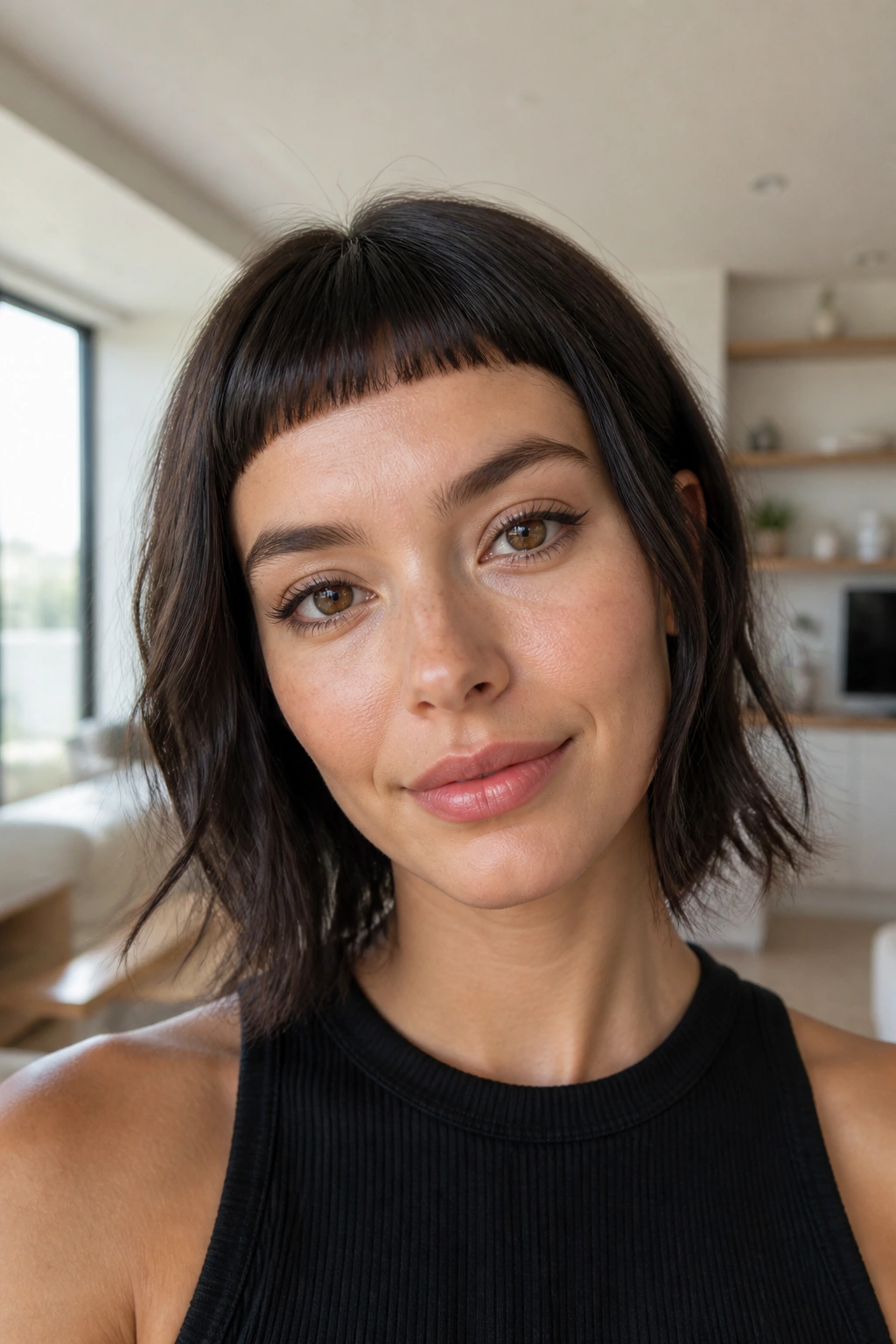
Micro bangs are a risk. They are also a statement.
On a round face, they can work because they expose more forehead and create a sharp contrast between the short fringe and the softer cheeks below. That contrast can make the face seem longer, especially when the rest of the haircut has length around the jaw and collarbone.
The catch is obvious: micro bangs show everything. Cowlicks, forehead texture, uneven growth, all of it. If your hairline is strong and your forehead is average to high, the cut can look cool rather than severe. If your hair grows forward in multiple directions, it takes more styling than most people want.
- Best on straight to slightly wavy hair.
- Needs trims about every 3 to 4 weeks.
- Works better with a strong haircut, like a bob, shag, or pixie.
- Keep the edges blunt but not too wide.
10. Feathered Bangs
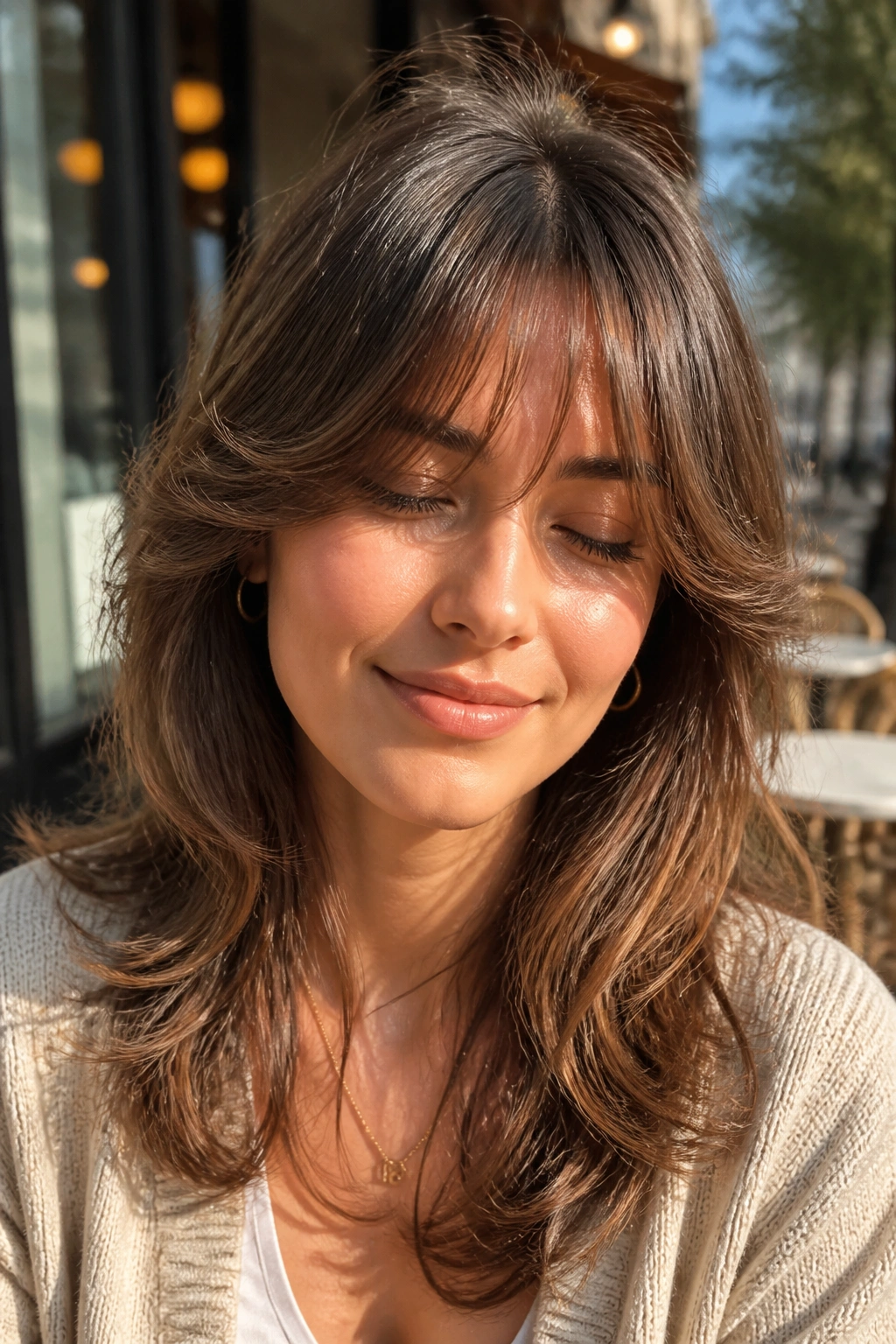
Feathered bangs are one of those old-school ideas that keeps coming back because it works. The ends are layered so the fringe flicks away from the face instead of hanging in one thick strip.
That matters on a round face. A feathered edge softens the cheek line and keeps the haircut from feeling bottom-heavy. The movement also makes the front of the haircut look lighter, which is helpful if your hair is thick or naturally full at the crown.
I’d ask for point cutting or razor work if your hair can handle it. A feathered bang should move when you blink. It should not sit in a flat sheet. Style it with a quick blow-dry and a small round brush, then let the ends fall away naturally. A touch of dry texture spray at the roots can keep it from collapsing by lunch.
11. Face-Framing Fringe
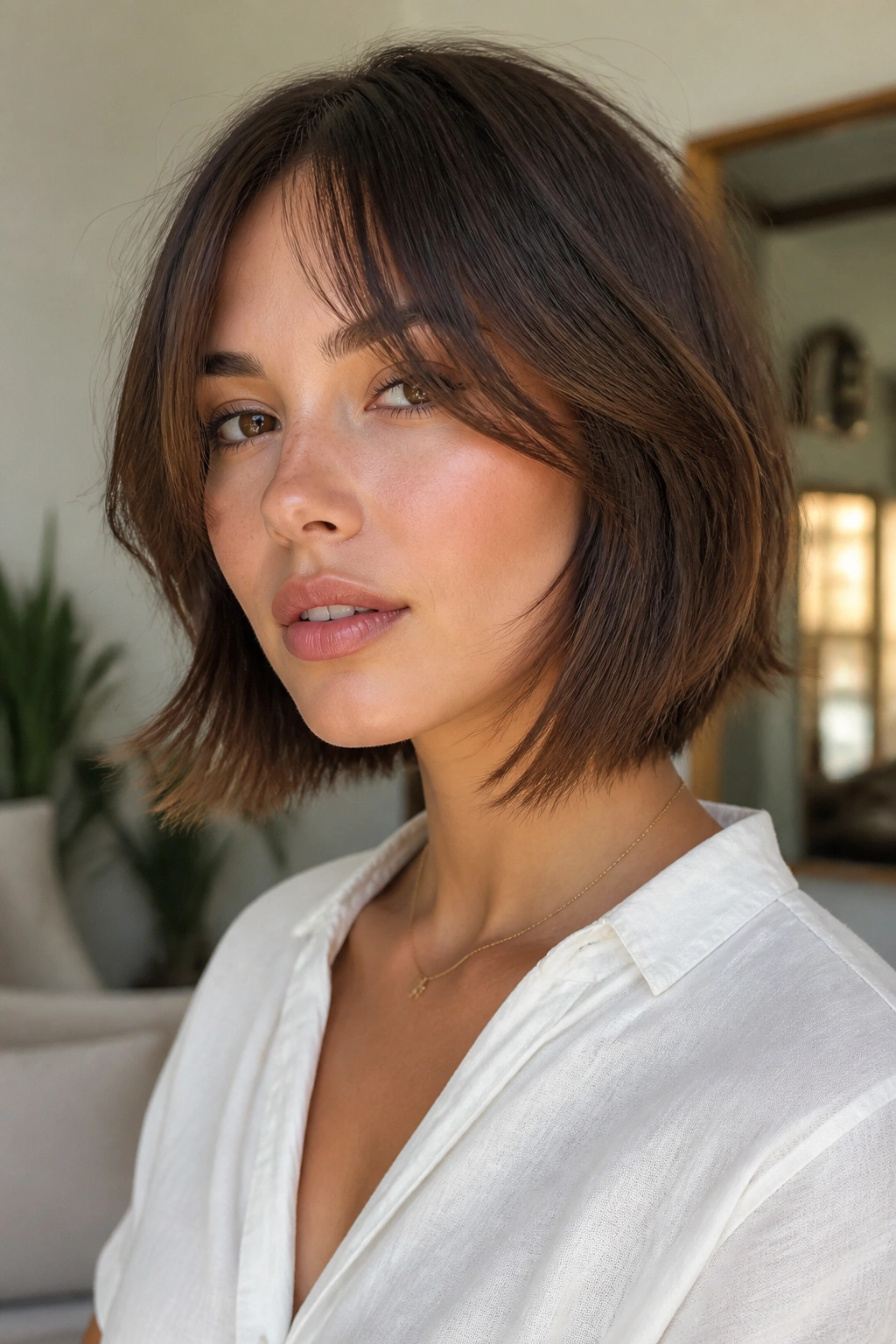
Face-framing fringe is not quite curtain bangs and not quite long layers. It lives in that space between the two, with more weight around the front of the face and longer pieces that blend into the haircut.
Unlike curtain bangs, this version keeps more coverage at the cheekbone and jaw. That makes it useful if you want the forehead softened but you don’t want the center of the fringe to split too cleanly. A round face benefits from those longer diagonal pieces because they break the face into vertical sections instead of one broad circle.
How to ask for it
Tell your stylist you want a fringe that starts near the brow, then melts into chin-length front layers. The key is the transition. If the front pieces are too short, the haircut jumps. If they’re too long and too straight, the whole look can go limp.
This is a strong choice for medium to long hair, especially if you wear it loose most days. It also grows out better than a crisp bang, which is a quiet but real advantage.
12. Curly Bangs
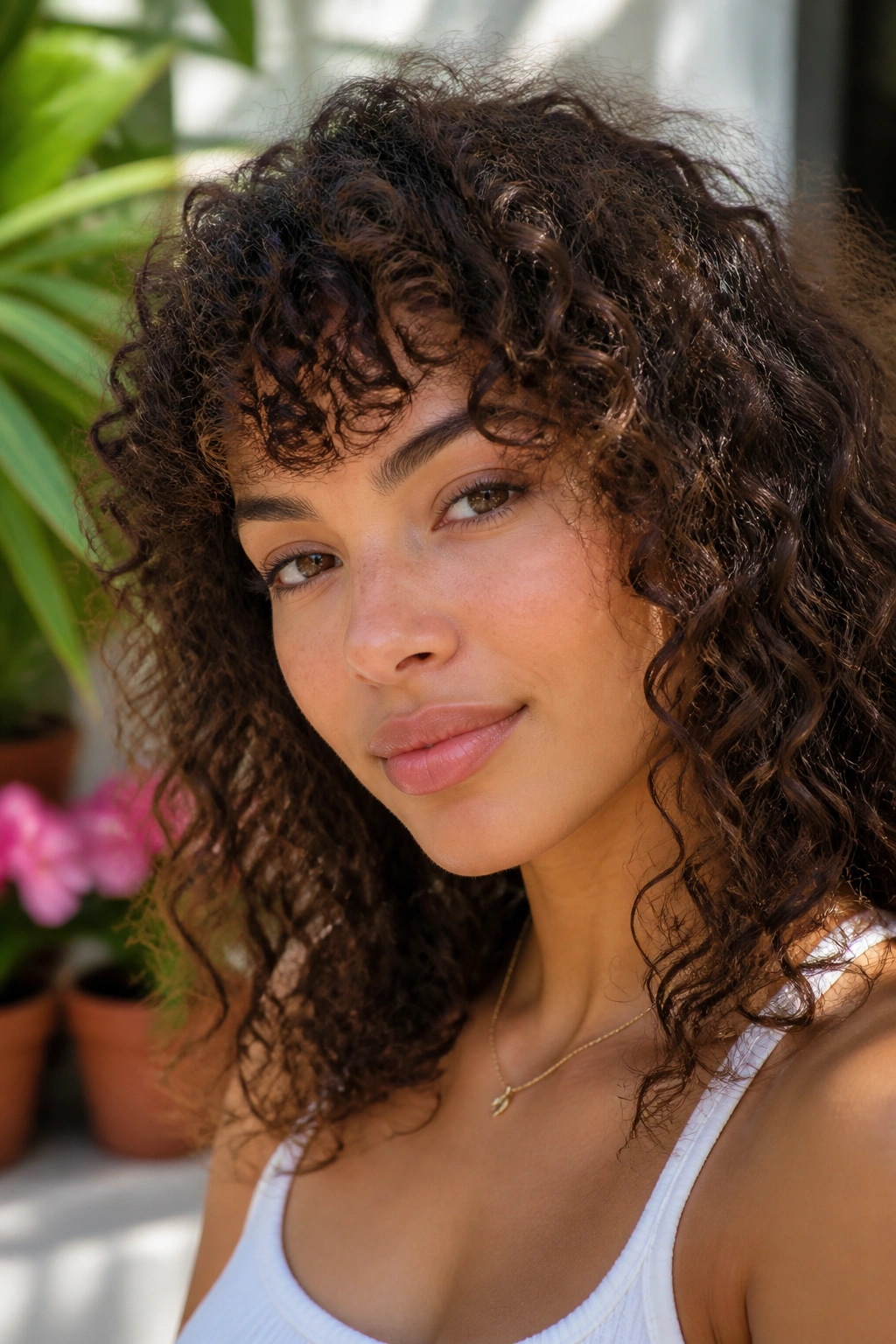
Can curly bangs work on a round face? Absolutely — if they’re cut with the curl pattern in mind, not against it.
Curly fringe adds shape at the forehead without relying on a hard line. That softness can be gorgeous on a round face because it creates height and texture up top. The trick is shrinkage. A curl that looks eyebrow-length when wet may spring up a full inch once it dries, sometimes more if the coil is tight.
Cut them dry or mostly dry. That’s the part a lot of people skip, and it’s why curly bangs end up too short. Keep the longest pieces near the temples so the face keeps some length, and ask for light layering so the fringe doesn’t puff into a triangle.
How to get the most from it
Use a cream that defines curls without crunch, and scrunch the fringe upward with your fingers rather than brushing it flat. If your curls separate, that’s fine. A little separation keeps the look from turning into a solid wall.
13. Shaggy Bangs
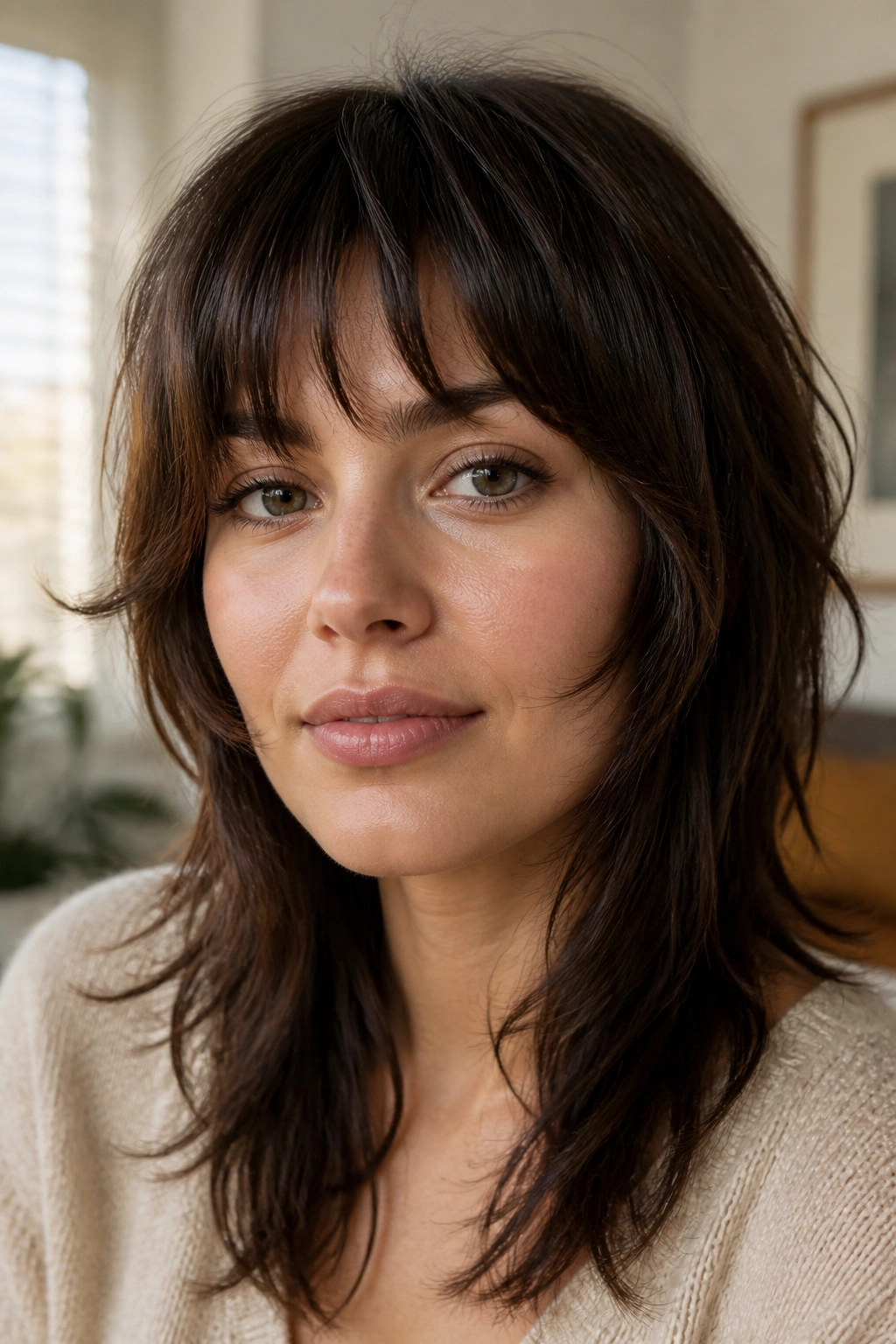
Shaggy bangs suit round faces because they borrow the same logic as a good shag haircut: layers, movement, and a broken-up outline. Nothing sits too neatly, which helps the face feel less circular.
This style usually lives with longer layers through the sides and back, so the bangs are part of a bigger shape rather than a separate piece. That’s why it looks so easy when it’s done well. The fringe can sit near the brows, then fall into cheekbone pieces that move as you turn your head.
The danger is density. If the bangs are too thick, the shaggy effect disappears and you end up with a heavy curtain that wants constant styling. Ask for irregular ends, not a mushy blur. There should still be shape. It just should not feel precise.
- Works well on wavy hair.
- Easier to air-dry than polished bangs.
- Needs a trim before the ends grow too wispy.
- Looks strongest with lived-in texture, not glossy stiffness.
14. Asymmetrical Fringe
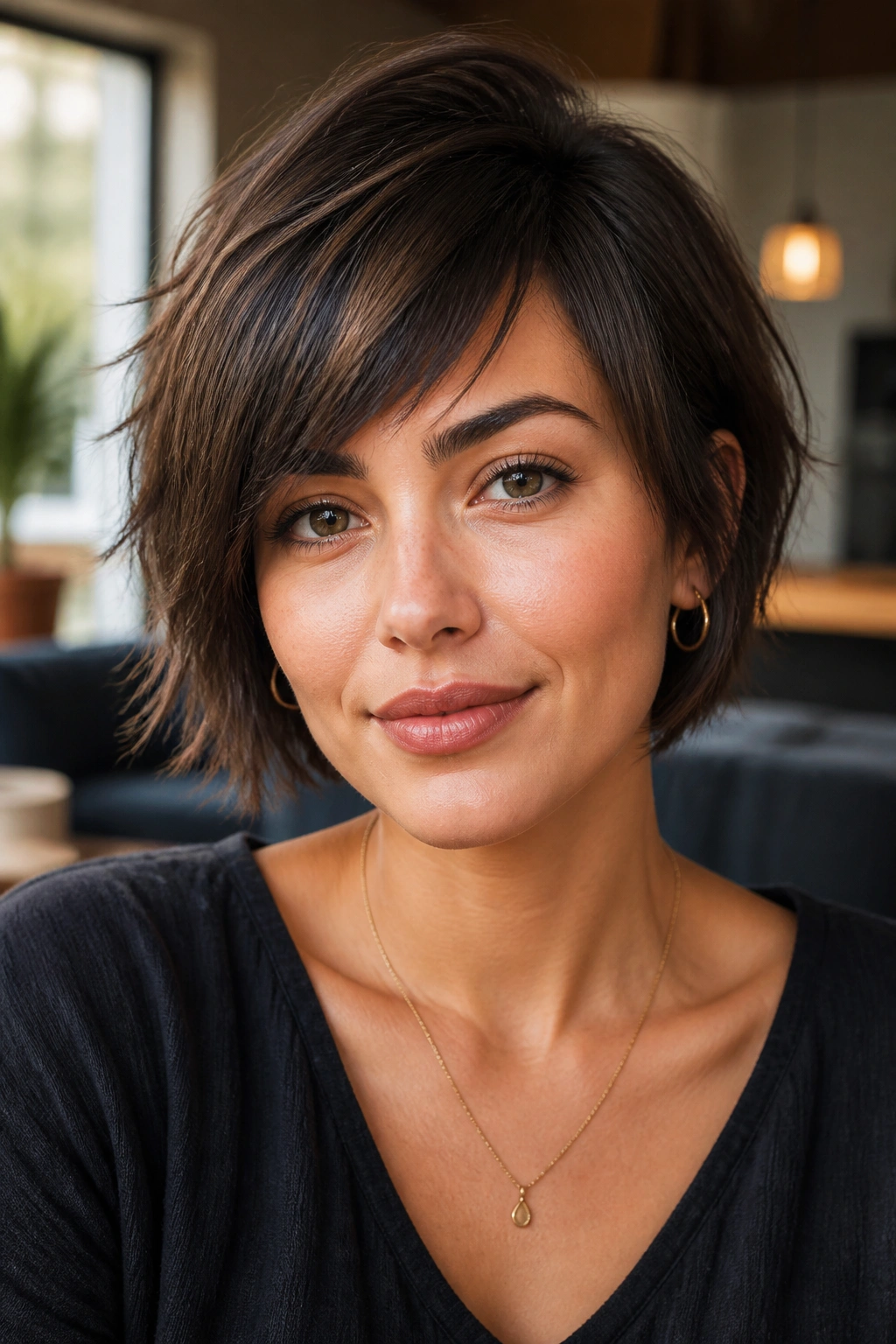
A straight, even fringe mirrors the width of a round face. An asymmetrical one breaks that mirror. That’s why it can look sharper, longer, and a little more unexpected.
The idea is simple: one side lands higher or shorter, and the other side falls longer across the forehead. That off-balance line draws the eye in a diagonal path, which can make the face seem narrower. It also gives you a bit of edge without going all the way into a dramatic chop.
I’d keep the difference subtle unless you like a stronger fashion look. A tiny shift of 1 to 2 inches is usually enough. If the imbalance is too extreme, the bang starts to wear you instead of the other way around. The best asymmetry feels like movement, not a mistake.
15. Piecey Fringe

Piecey fringe is built from separated strands instead of one continuous line. On a round face, those gaps matter. They let bits of forehead show through, which softens the overall shape and keeps the top of the face from feeling crowded.
The look works especially well if your hair naturally separates a little. If not, you can still fake it with a light styling cream and a touch of dry wax at the ends. The goal is not stiff spikes. It’s a controlled, broken texture that looks touched, not sprayed into place.
A piecey fringe pairs well with bobs, lobs, and any haircut that already has movement in the lengths. Keep the longest pieces near the temples so the fringe doesn’t widen the face. You want little vertical breaks, not a straight wall across the forehead. That’s the whole game here.
16. Long Layered Fringe
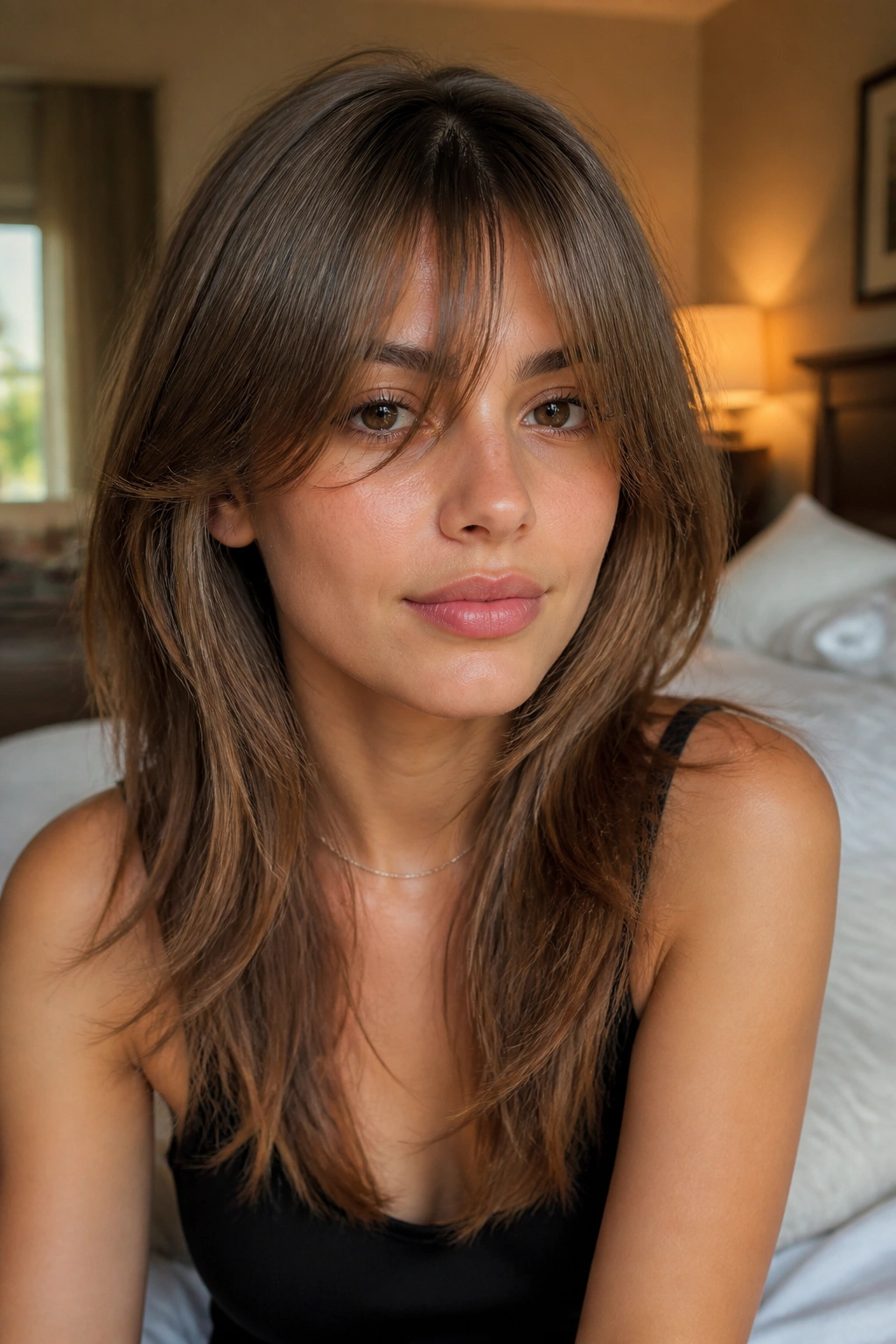
Long layered fringe is one of the most forgiving bangs ideas for round faces because it barely feels like bangs at all. The front pieces are long enough to tuck behind the ears, sweep across the forehead, or blend into face-framing layers.
That flexibility is the appeal. You get the softness of a fringe without the commitment of a short cut. On a round face, long layers can stretch the silhouette downward and keep the forehead open at the same time. It’s a quiet haircut move, but it works.
Ask for the shortest piece to start somewhere around the brow or just below it, then let the layers slide down toward the jawline. If the pieces all stop at the same point, they look heavy. The good versions are staggered. They move. They also grow out well, which saves you from the awkward “I need a trim this week” feeling that comes with sharper bangs.
17. Split Fringe

Split fringe is a cleaner, more deliberate version of a center opening. Unlike full curtain bangs, it doesn’t always feather outward as much. The gap is the point.
That small opening in the middle adds a vertical line right where a round face needs it most. It lets the forehead breathe and keeps the shape from reading too wide. If you wear your hair straight or in a soft wave, the split can look sleek without feeling harsh.
This works best when the two sides are long enough to rest near the cheekbones. If the pieces are too short, the split looks accidental. If they’re too thick, the whole thing loses its lightness. A good split fringe should make the forehead look framed, not covered.
Best way to wear it
Use a center part, then guide the front pieces away from the face with a dryer nozzle or a wide brush. A little bend at the ends is enough. You do not need a full blowout every morning.
18. U-Shaped Fringe
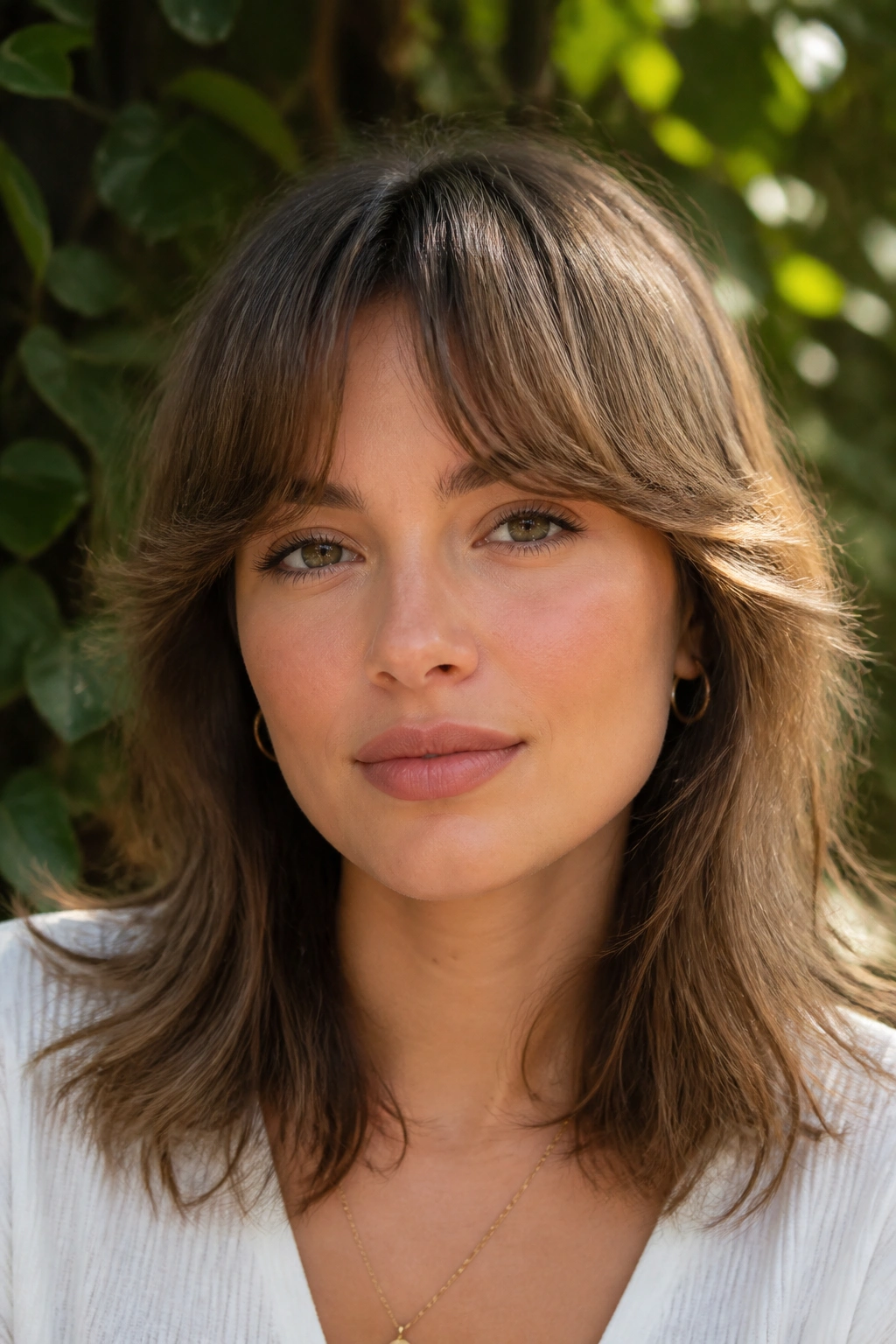
Why do some round faces look better with a U-shaped fringe than a straight line? Because the center can sit shorter while the sides stay longer, which builds a soft curve instead of a hard shelf.
That curve is kinder to full cheeks. It draws attention upward in the middle, then lets the fringe fall away near the temples. The result feels balanced without looking severe. It’s also a nice option if you want bangs but still want your brows to show through in the right light.
Why stylists like it
- The center can skim the brows.
- The sides can dip toward the cheekbones.
- It blends well into longer layers.
- It softens a broad forehead without boxing it in.
If you wear glasses, this shape can be easier than a blunt fringe because it gives the frames room. The line has movement, which keeps the front of the haircut from feeling crowded.
19. Heavy Full Fringe
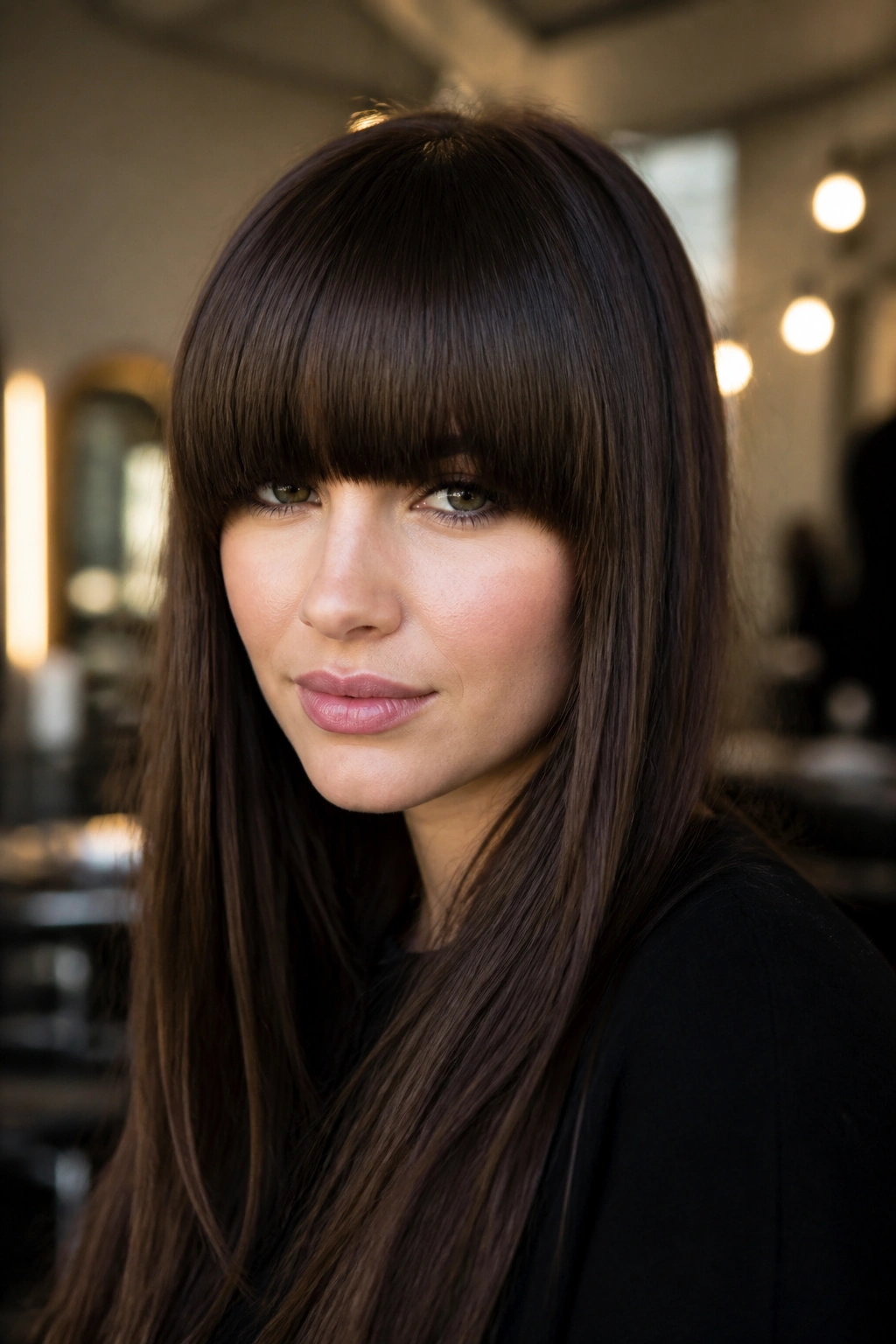
The weight of a full fringe can be excellent on a round face if the cut is handled with some restraint. Too blunt, too short, too dense, and it turns the face into a square-ish block. Keep the corners a little longer and the center just below the brows, and the effect changes fast.
A full fringe brings drama. There’s no way around that. It’s the kind of bang that says you mean it. On a round face, the drama works best when the rest of the haircut is longer, sleeker, or layered enough to create contrast.
- Best on straight or slightly wavy hair.
- Needs regular trims to avoid a droopy line.
- Works better when the ends are softened with point cutting.
- Avoid if your hairline has a lot of cowlicks at the front.
If you love the look of sharp brows and a clean shape, this can be one of the strongest choices on the list.
20. Grown-Out Fringe
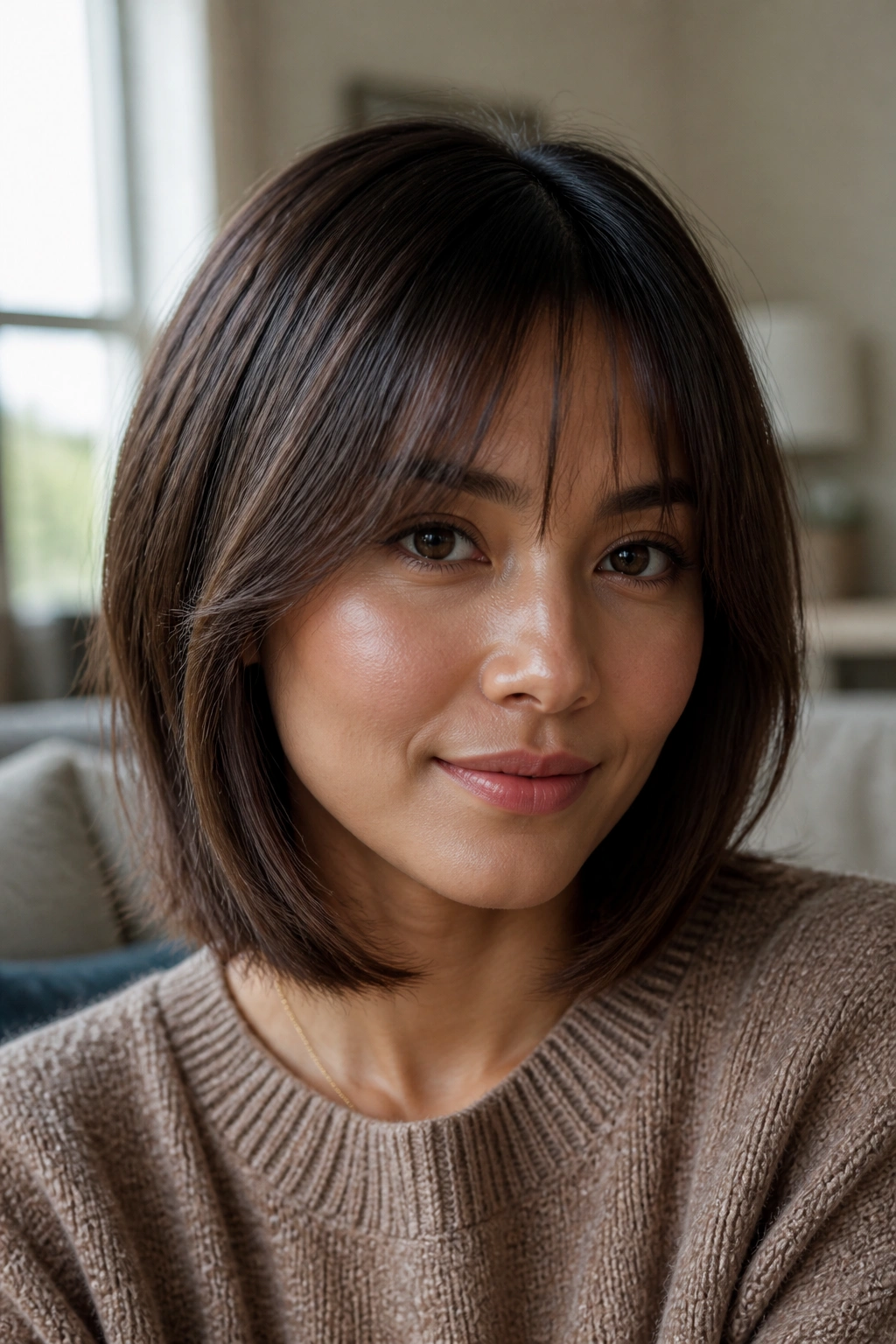
A grown-out fringe is what happens when bangs are allowed to relax into the haircut instead of being held at a strict length. On a round face, that can be a gift. The longer pieces soften the cheeks and create a sleeker front line.
This is the cut for someone who wants bangs without the weekly maintenance. The fringe sits low enough to move, high enough to keep shape, and long enough to clip back on busy mornings. It also looks better the second day, which is not true of every bang style. Some need a fresh blow-dry. This one can handle a little imperfection.
The best grown-out fringe has a purposeful shape. Ask for the front pieces to blend into the length around the chin and collarbone. If they’re left to drift too far, the style loses its frame. A little structure keeps it from looking neglected.
21. Swoopy Fringe
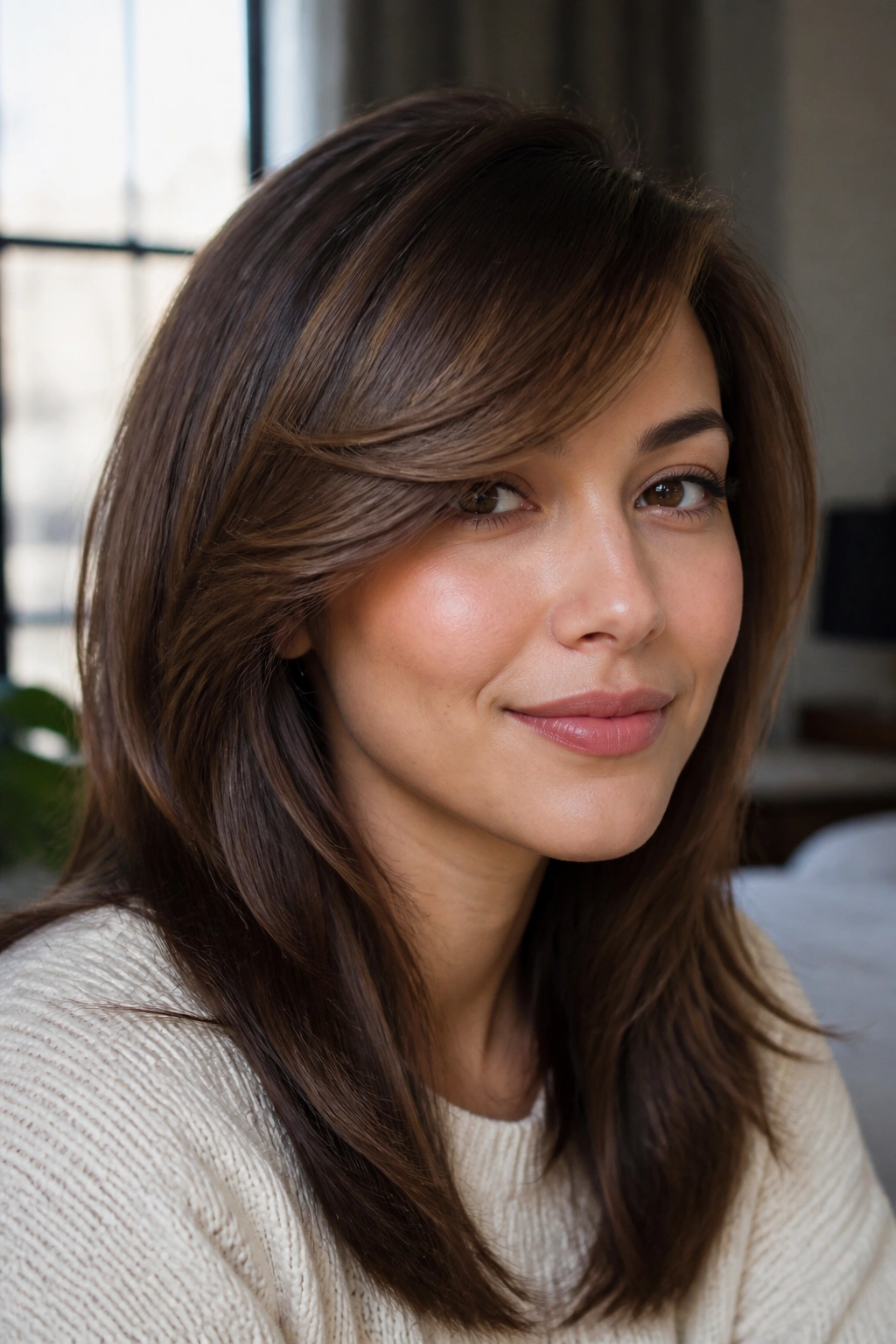
A swoopy fringe gives you motion, which is what makes it useful on a round face. The front section sweeps across the forehead in one long curve, usually from a deep side part, and that curve pulls the eye down and out.
I think this is a strong choice if you like a polished blowout. It looks especially nice when the front is rolled back with a round brush and then allowed to fall in a soft arc. The swoop should feel airy, not shellacked. If it stays frozen in place, the haircut loses its charm.
This style also works when you want a little asymmetry without a dramatic chop. The sweep can hide a higher forehead on one side and open the cheek area on the other. It’s a small shift, but it changes the face shape in a real way.
22. Crescent Bangs
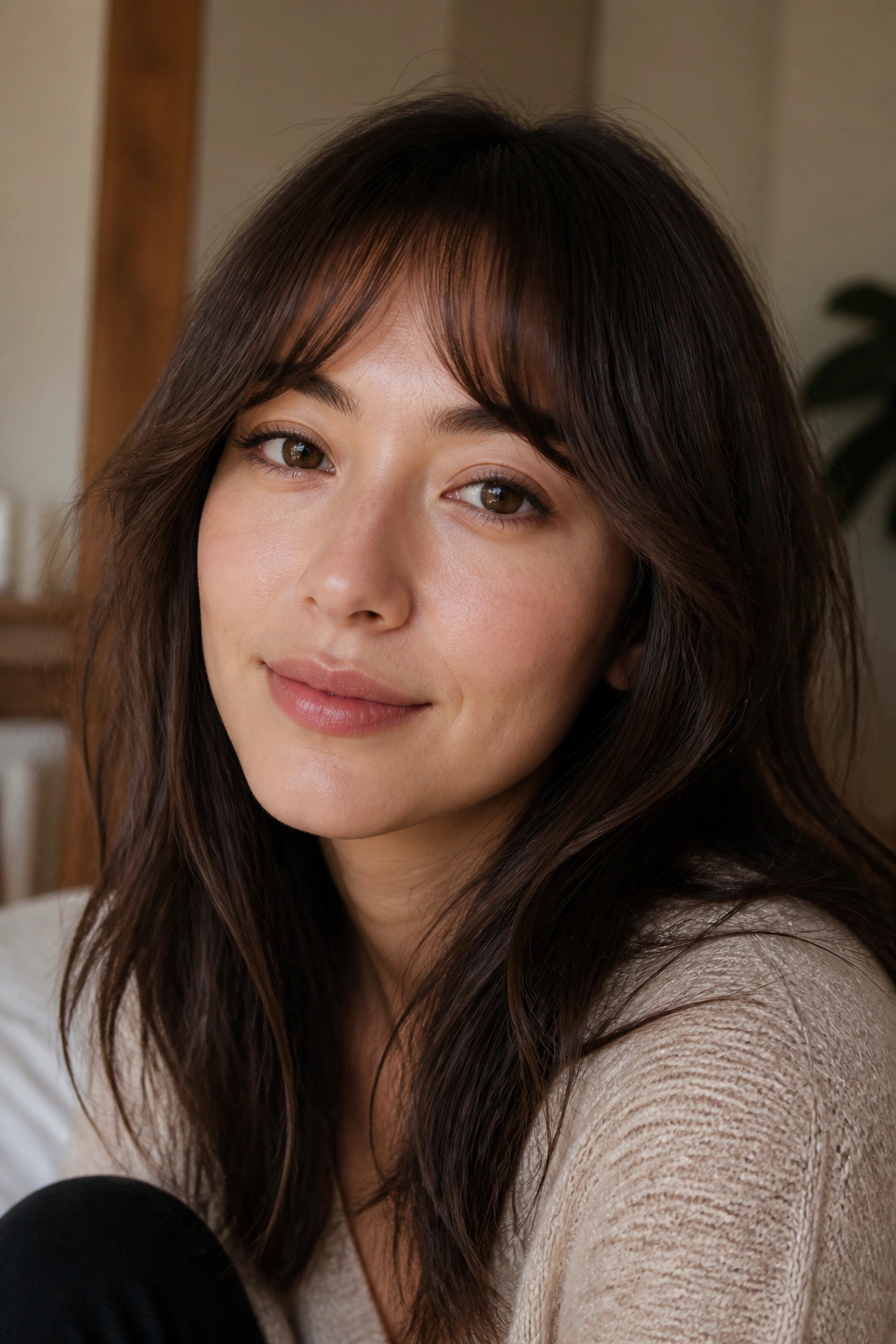
Crescent bangs trace a soft moon shape across the forehead — shorter in the middle, longer at the sides, and curved enough to keep a round face from feeling boxed in. They sit somewhere between arched bangs and curtain bangs, which makes them useful if you want softness without a full split.
What I like about this shape is how it frames the eyes without making the forehead disappear. The curve gives a bit of height at the center and a little length at the edges, so the whole front of the haircut reads as balanced rather than heavy. It’s a quiet, flattering move.
If you’re choosing among these bangs ideas for round faces and want the least risky place to start, this is one of the easiest bets. It has shape, but not too much attitude. It grows out gracefully. It plays nicely with straight hair, waves, and even a low-maintenance air-dry if the ends are cut with enough softness.
The best fringe for a round face is the one that makes your features look longer, cleaner, and a little more open — not the one that hides the most forehead. That’s the part people get backward. Shape wins. Every time.
