



Fine hair often comes with a set of unspoken rules that many stylists repeat like gospel. You’ve likely heard that you need to avoid heavy layers, steer clear of certain conditioners, and absolutely never—under any circumstances—get bangs. The prevailing wisdom suggests that cutting into the perimeter of fine hair will leave you with a sparse, lackluster look that clings to your forehead like a wet curtain.
That advice is outdated. The French approach to bangs—what we often refer to as the “French fringe”—is built on the exact opposite philosophy. Instead of trying to force fine hair to look thick and heavy, this style celebrates the lightness, the wispy texture, and the delicate nature of the hair. It is about creating movement and framing the face with an effortless, almost undone quality.
The secret to pulling this off isn’t having thick hair; it is about proper sectioning and the right cutting technique. When you ask for French bangs, you are asking for a cut that utilizes point-cutting and texturizing shears to ensure the fringe remains airy rather than solid. A solid, heavy block of bangs is the enemy of fine hair, but a soft, translucent fringe? That can make your hair look fuller by concentrating weight around the face.
The following thirty ideas offer a roadmap for working with your natural texture. We are focusing on styles that add visual density, frame your features, and require that specific, lived-in ease that makes French beauty look so appealing. Forget the old warnings. It is time to look at your hair differently.
1. The Classic Wispy French Fringe
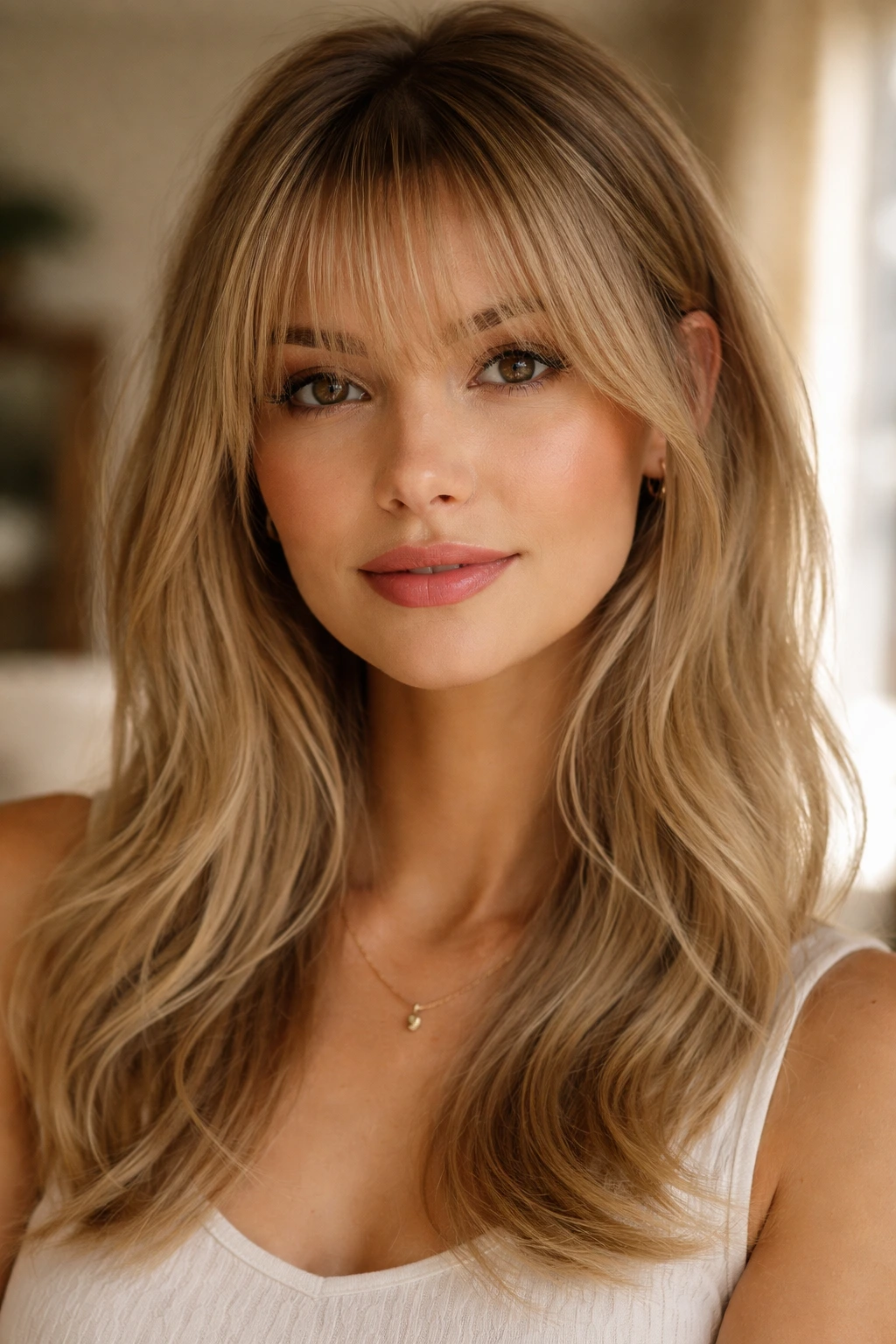
This is the quintessential look. It relies on a delicate, see-through structure that allows your forehead to peek through, which prevents the heavy, “helmet-like” appearance that often plagues fine hair.
The key to this style is the sectioning. Your stylist should not pull too much hair forward. A smaller triangle section starting just behind the hairline keeps the fringe lightweight and manageable.
Why It Works for Fine Strands
By using a smaller amount of hair, you ensure that the bangs don’t look sparse—they look intentional. If you have fine hair, the struggle is usually volume. A wispy fringe creates the illusion of more hair density around the face because the ends are shattered, not blunt.
Maintenance Note
Trim these every four to five weeks. Because they are wispy, they grow out quickly and can start to irritate your eyes if left too long.
2. Face-Framing Curtain Bangs
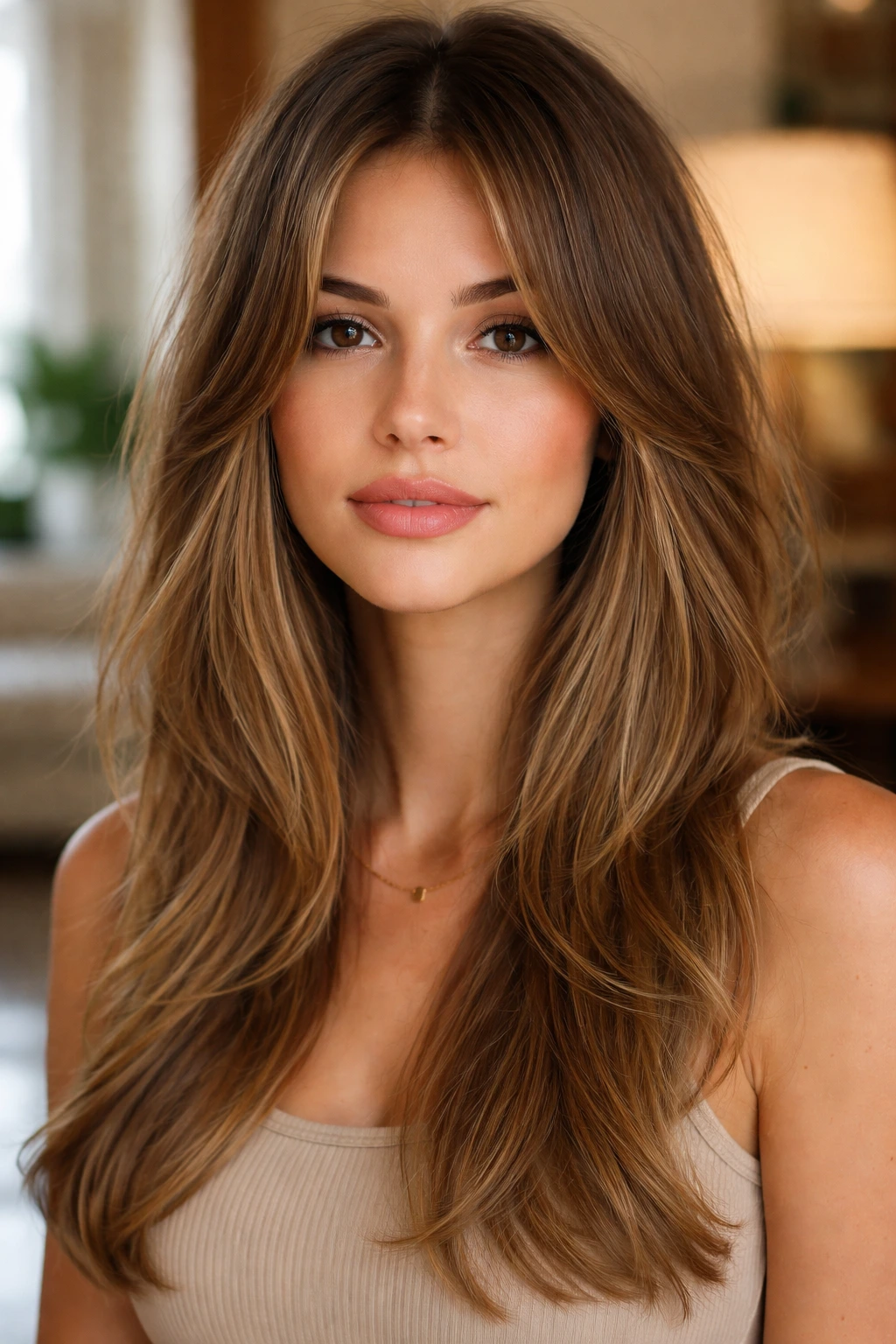
Curtain bangs have become a staple for a reason. They are the gateway to fringe for anyone who is nervous about commitment. They sweep away from the center of the face, blending seamlessly into the rest of your hair.
These are essentially long bangs that have been parted down the middle. They act like drapes, softening the angles of your face. For fine hair, this is brilliant because you can use texturizing spray to give them a bit of grit, making them appear thicker than they actually are.
Styling Tip
Use a round brush while blow-drying to create that slight curve. If your hair is stick-straight, a small amount of sea salt spray before drying will give it the hold it needs to stay “curtained” rather than falling flat.
3. Brow-Grazing Textured Bangs
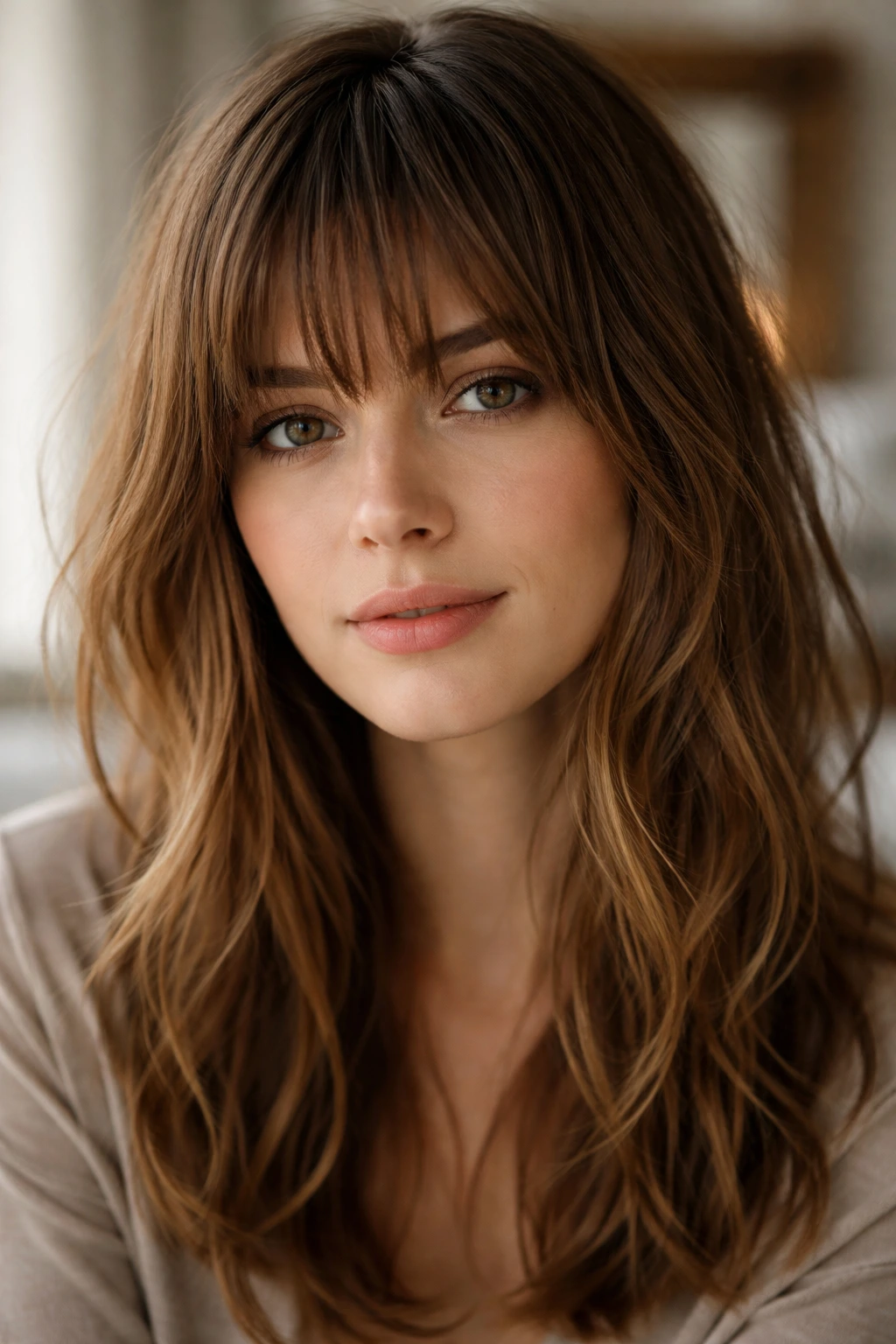
Sometimes you want the drama of a full bang without the weight. Brow-grazing fringe hits just below the eyebrow line, offering a strong, clean edge that draws attention directly to your eyes.
The texture here is critical. You do not want a blunt, straight-across cut. You want the ends to be “shattered” or “point-cut.” This creates a jagged, uneven hemline that adds character and prevents the fringe from looking too severe or sparse.
When to Choose This Style
If you have an oval or heart-shaped face, this length is exceptionally flattering. It balances out the proportions of the face and highlights the brow bone.
4. Bardot-Inspired Center Part
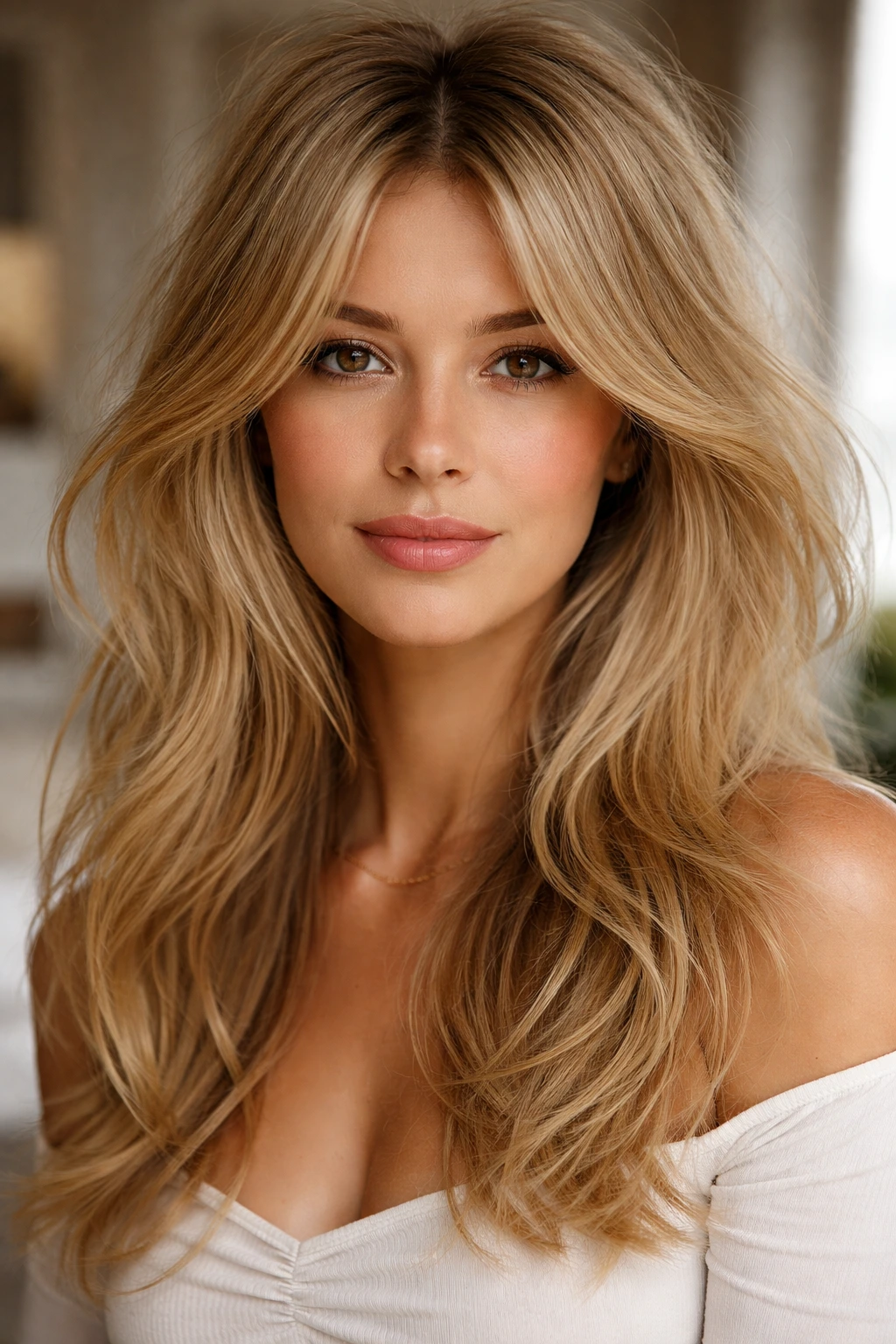
Think Brigitte Bardot. This style is about volume at the root and a soft, sweeping fringe that feels like it has been styled by the wind. It is inherently romantic and deeply rooted in the French aesthetic.
To get this, the bangs need to be cut slightly shorter in the center and longer on the sides. The length gradation is what allows them to swoop naturally. It is less of a “bang” and more of a “frame.”
The Volume Factor
Since fine hair can fall flat, use a light root-lifting mousse. Apply it to damp hair, focusing only on the bangs and the roots around the crown, then blow-dry with a large round brush.
5. The Feathered Edge
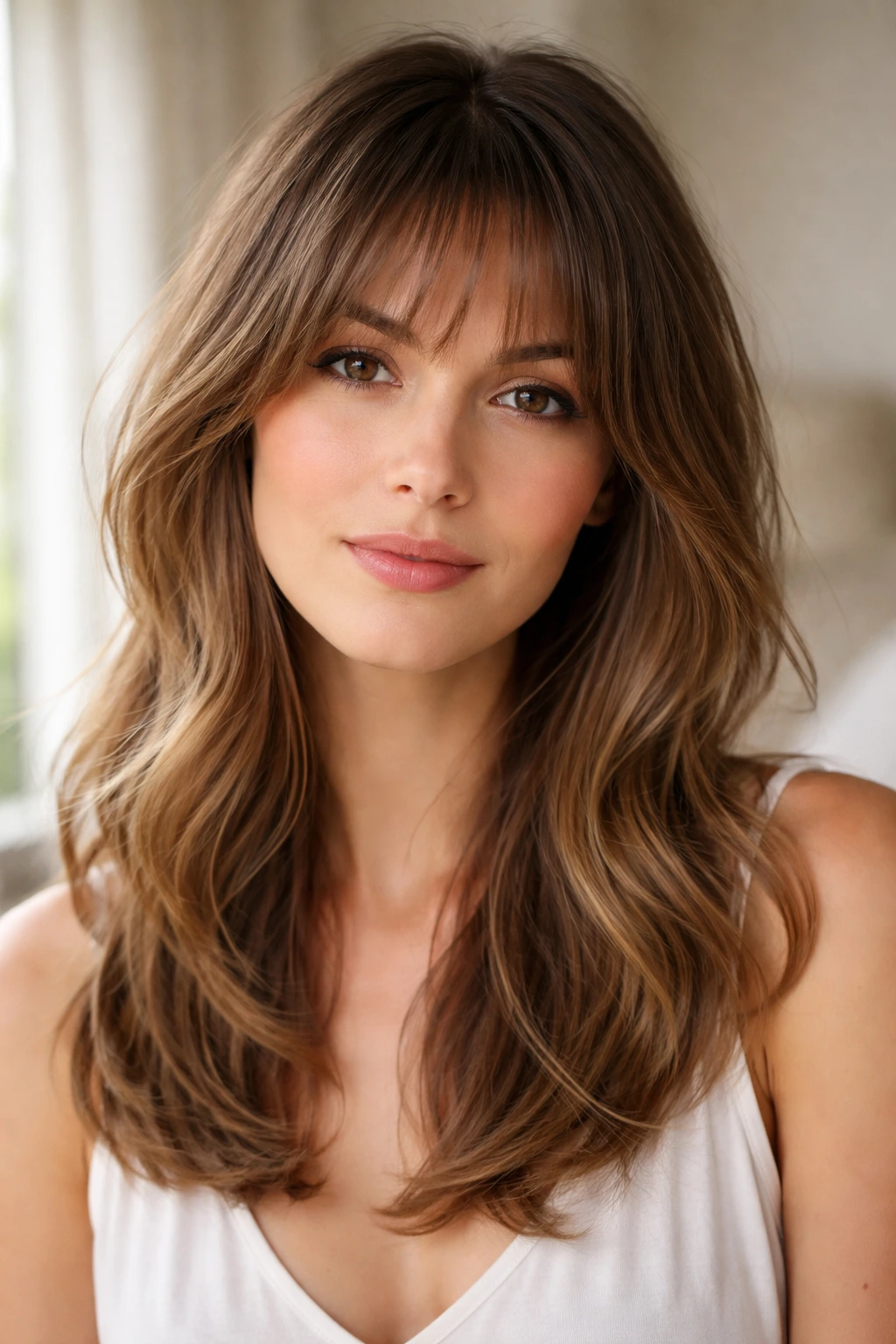
This style focuses on the ends of the bangs. Instead of a solid line, the edges are tapered to be whisper-thin. This creates a soft, hazy look that feels very feminine and light.
It works exceptionally well if you have fine hair because it mimics the natural way hair falls when it is not weighed down by heavy product or blunt-cut edges.
Product Recommendation
A weightless styling cream or a tiny drop of hair oil on the very tips is all you need. Anything heavier will cause the “greasy forehead” effect that everyone with fine hair dreads.
6. Micro-French Bangs for Texture
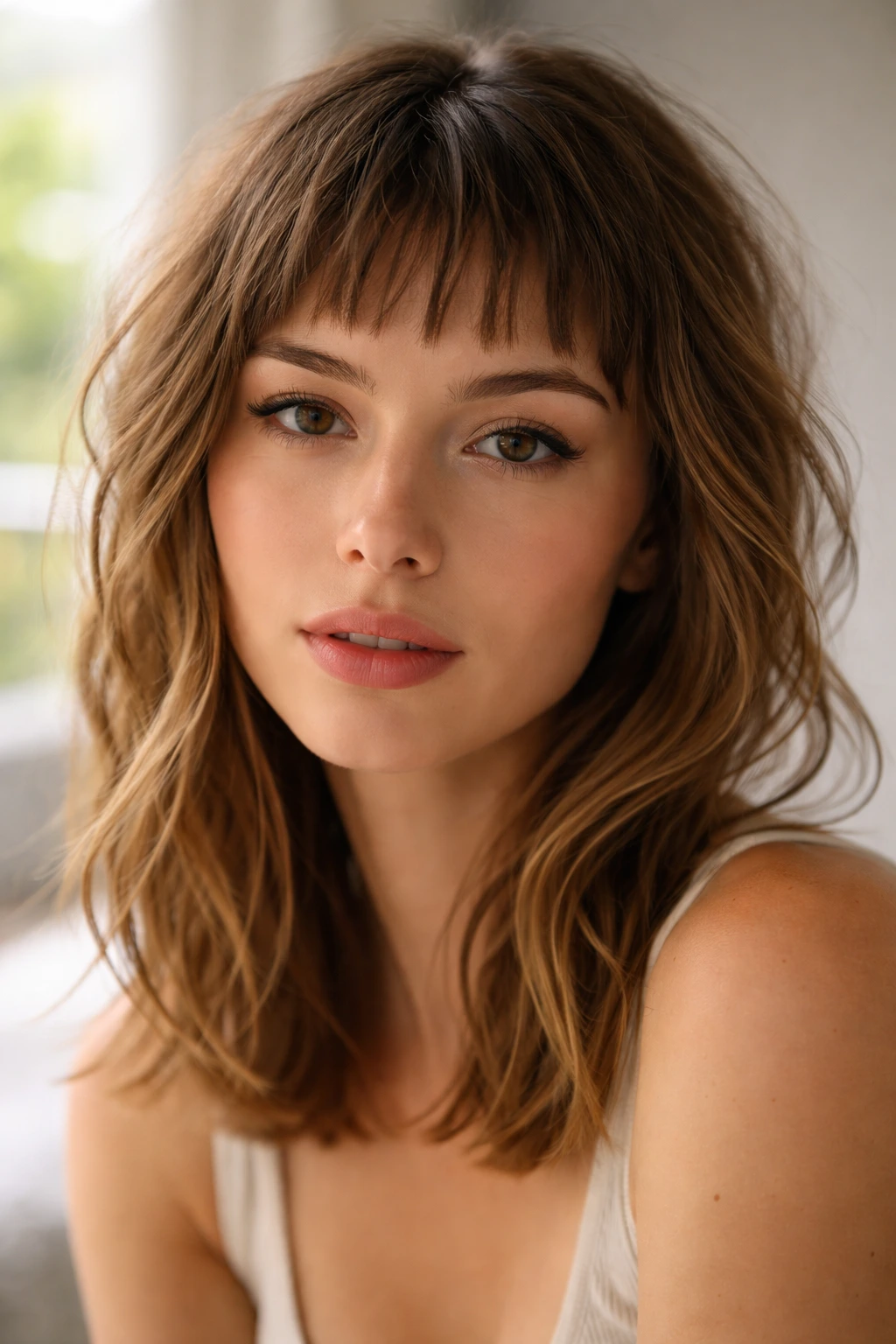
Micro-bangs are short, hitting well above the eyebrows. They are bold, edgy, and surprisingly easy to style. Because the hair is shorter, it has more natural lift and bounce.
People with fine hair often avoid short bangs, fearing they will look like a child’s haircut. However, when paired with a textured, messy bob, they look incredibly high-fashion and intentional.
Styling Strategy
Don’t use a brush. Use your fingers to mold them while drying. A little bit of texture paste provides the separation needed to keep them from looking like a single, flat sheet.
7. Long, Face-Framing Tendrils
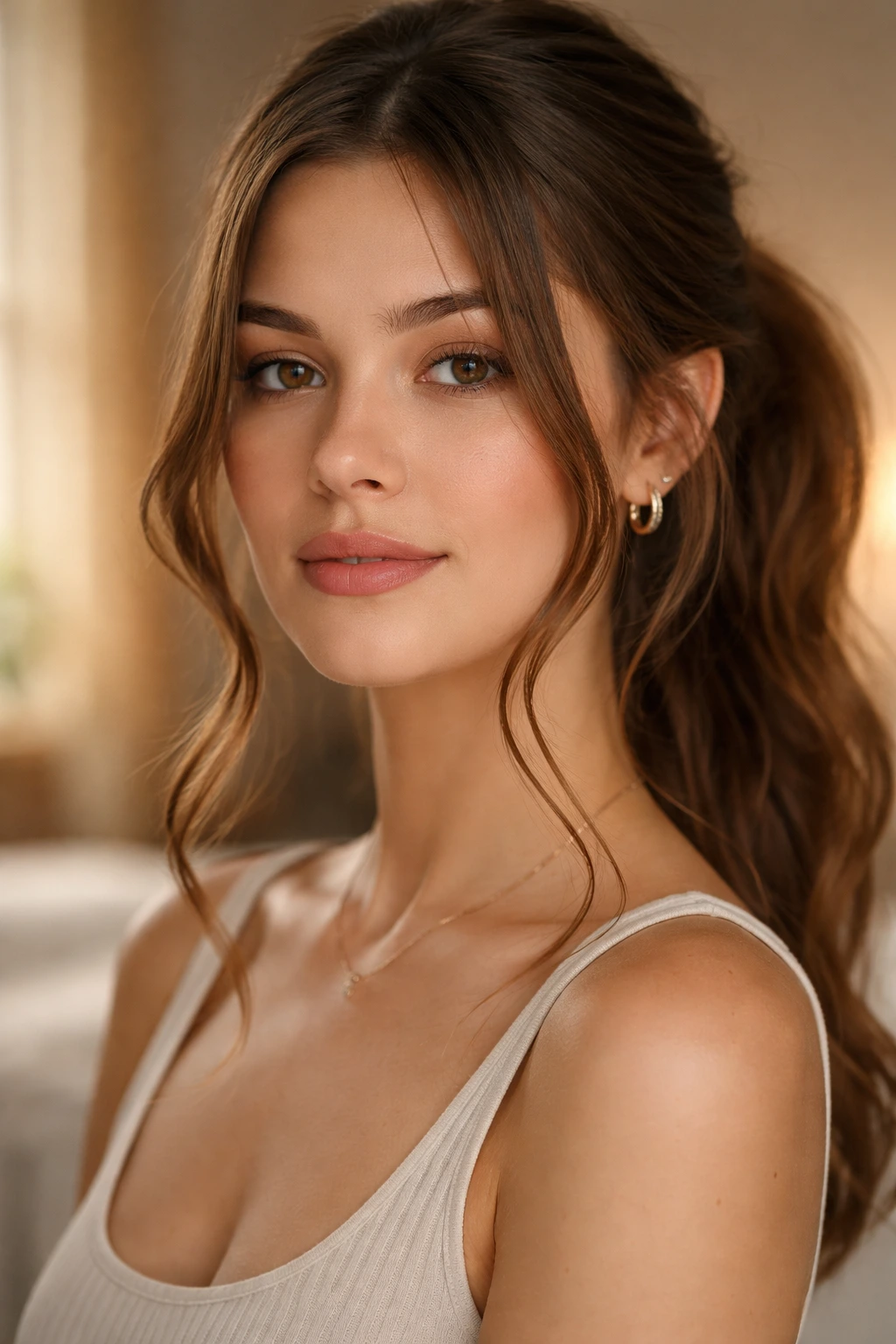
Are they bangs? Not quite. But they function like bangs. These are long, disconnected pieces cut to frame the jawline. They are perfect for people who want to change their look without cutting into their actual fringe area.
These tendrils break up the straight lines of long, fine hair. They add interest to the sides of the face and look beautiful when you pull the rest of your hair back into a low ponytail or a messy bun.
Who Needs This
Anyone with a rounder face shape. These tendrils elongate the face and draw the eye downward.
8. The Shaggy French Cut
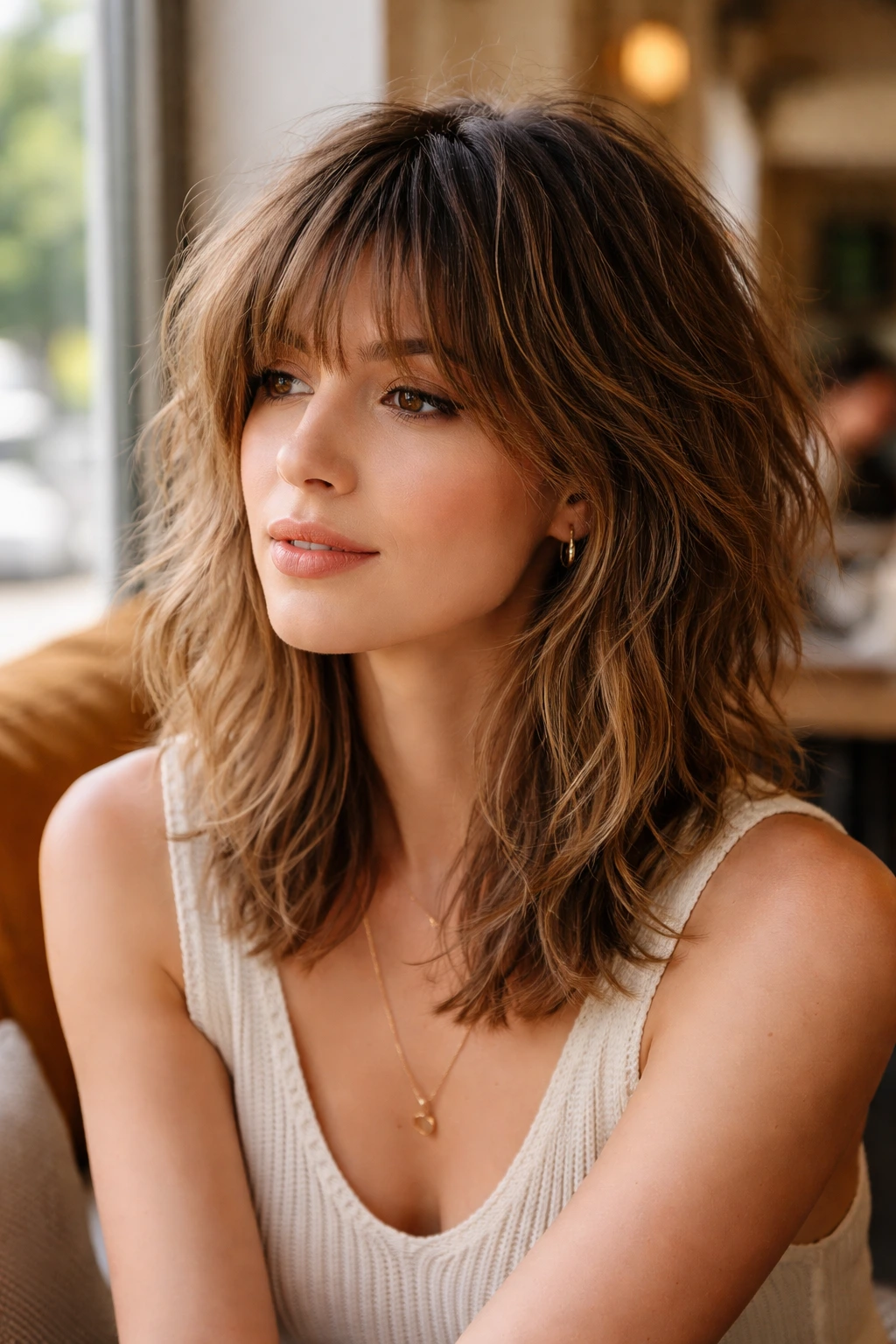
The shag is a chaotic, layered masterpiece. It is built on layers that create built-in volume. The bangs in a shag cut are usually choppy, messy, and integrated deeply into the rest of the hair.
For fine hair, the shag is a lifesaver. Because you are layering the hair, you are essentially reducing the weight that pulls the hair down. More layers equal more movement, which makes the hair look thicker.
Handling the Mess
Do not try to make this look perfect. The beauty of the shag is in its imperfection. If a piece sticks out, let it. That is the point.
9. Blunt-Cut Ends with Soft Sides
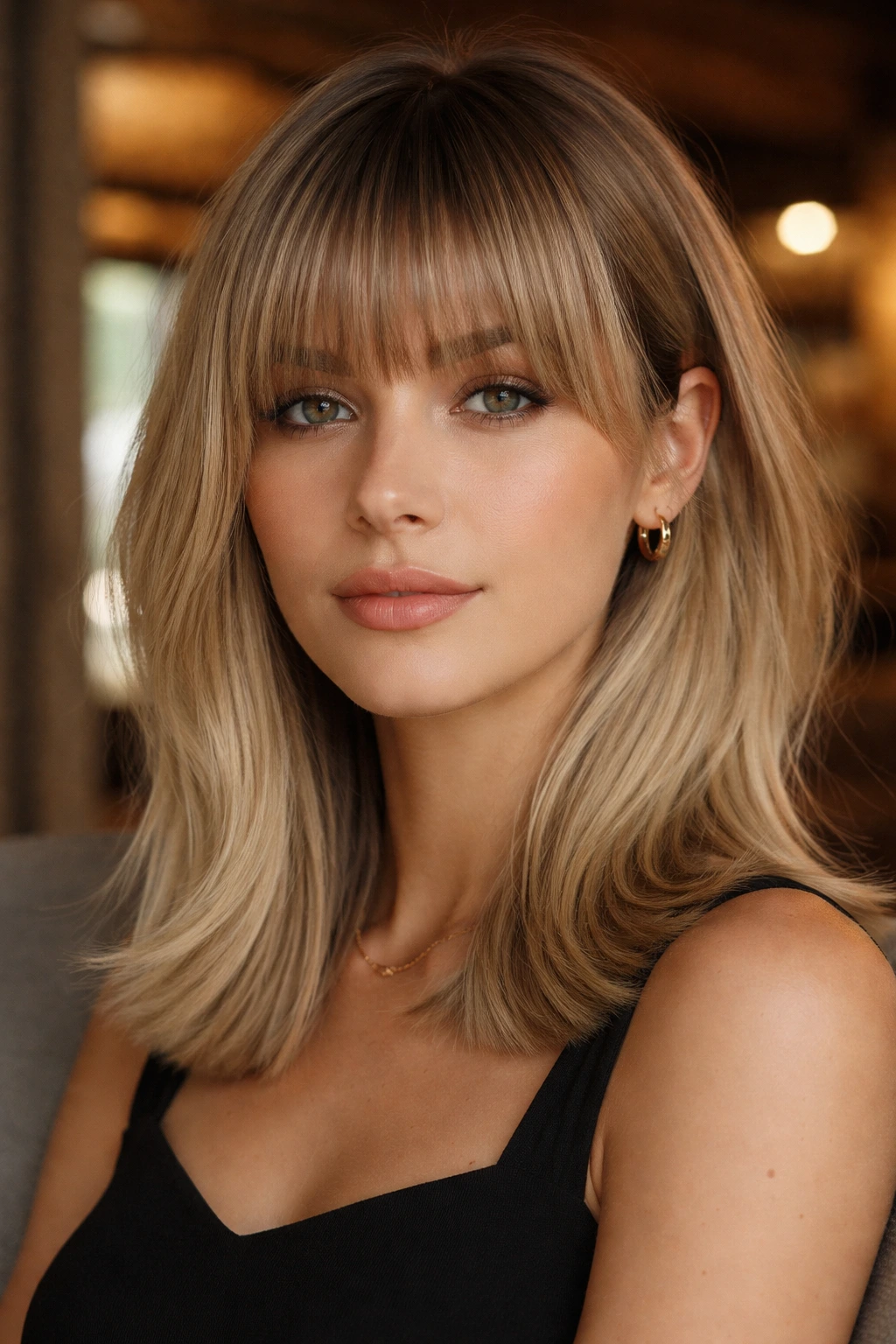
This is a hybrid style. You have a straight-across line at the very bottom of the bangs, but the sides are soft and blended. It gives you the “cool girl” blunt look without the harshness.
It feels modern and clean. If your fine hair is prone to flyaways, the slight bluntness at the tips can actually add a sense of structure that makes the hair look more groomed.
The “French” Twist
Pair this with a messy, undone hairstyle. If your hair is too slick, the blunt bangs will look out of place. Keep the rest of your hair tousled.
10. Piecey Bangs for Volume
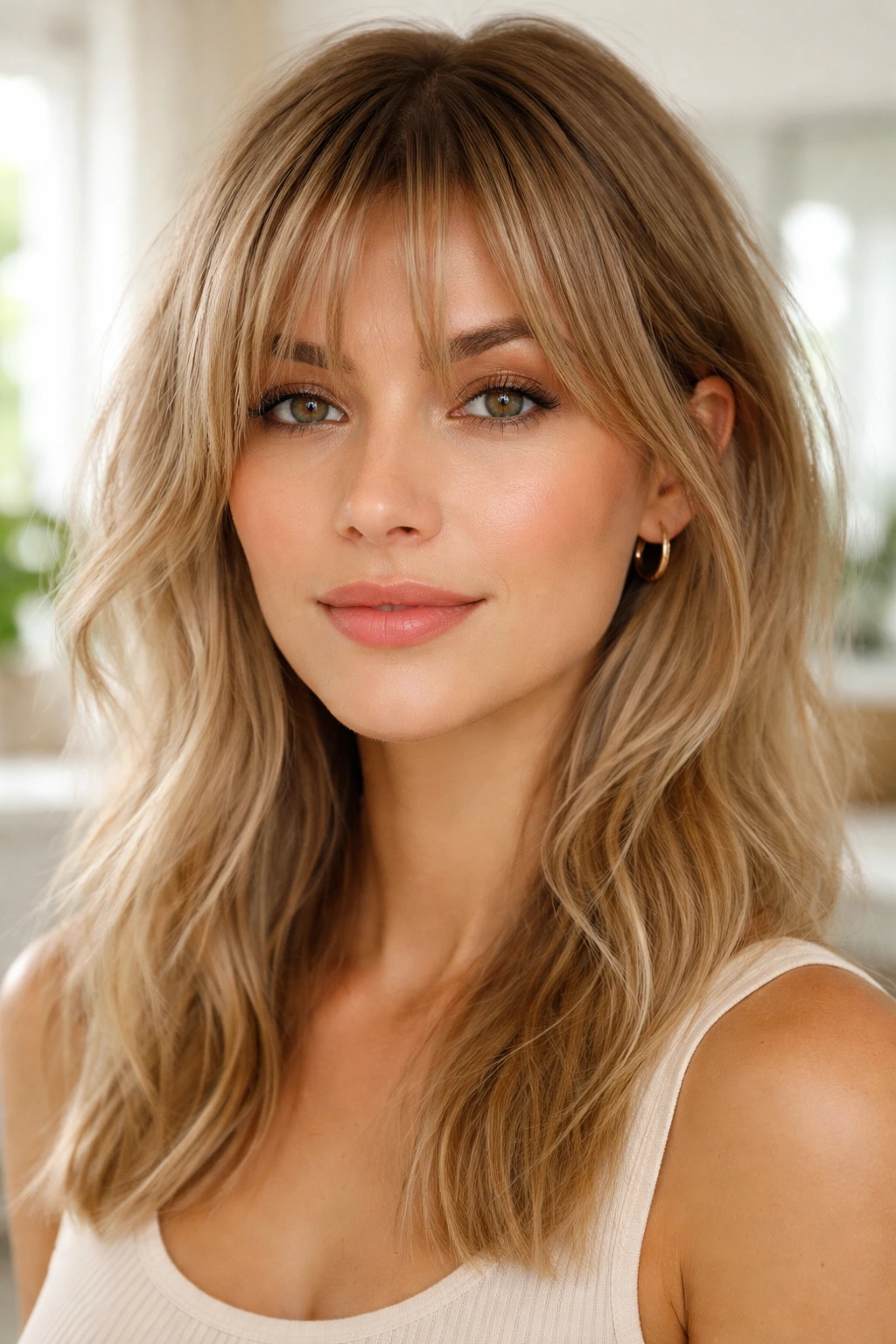
Piecey-ness is achieved through specific cutting techniques—using thinning shears to take out bulk, not length. It creates distinct “clusters” of hair rather than a continuous curtain.
This is the ultimate hack for fine-haired individuals. By separating the bangs into distinct segments, you create space. The brain perceives this spacing as intentional styling rather than a lack of density.
Pro Technique
When styling, use a tiny bit of pomade. Rub it between your fingers until it is almost invisible, then pinch the ends of your bangs together to create those defined, piecey sections.
11. Side-Swept French Fringe
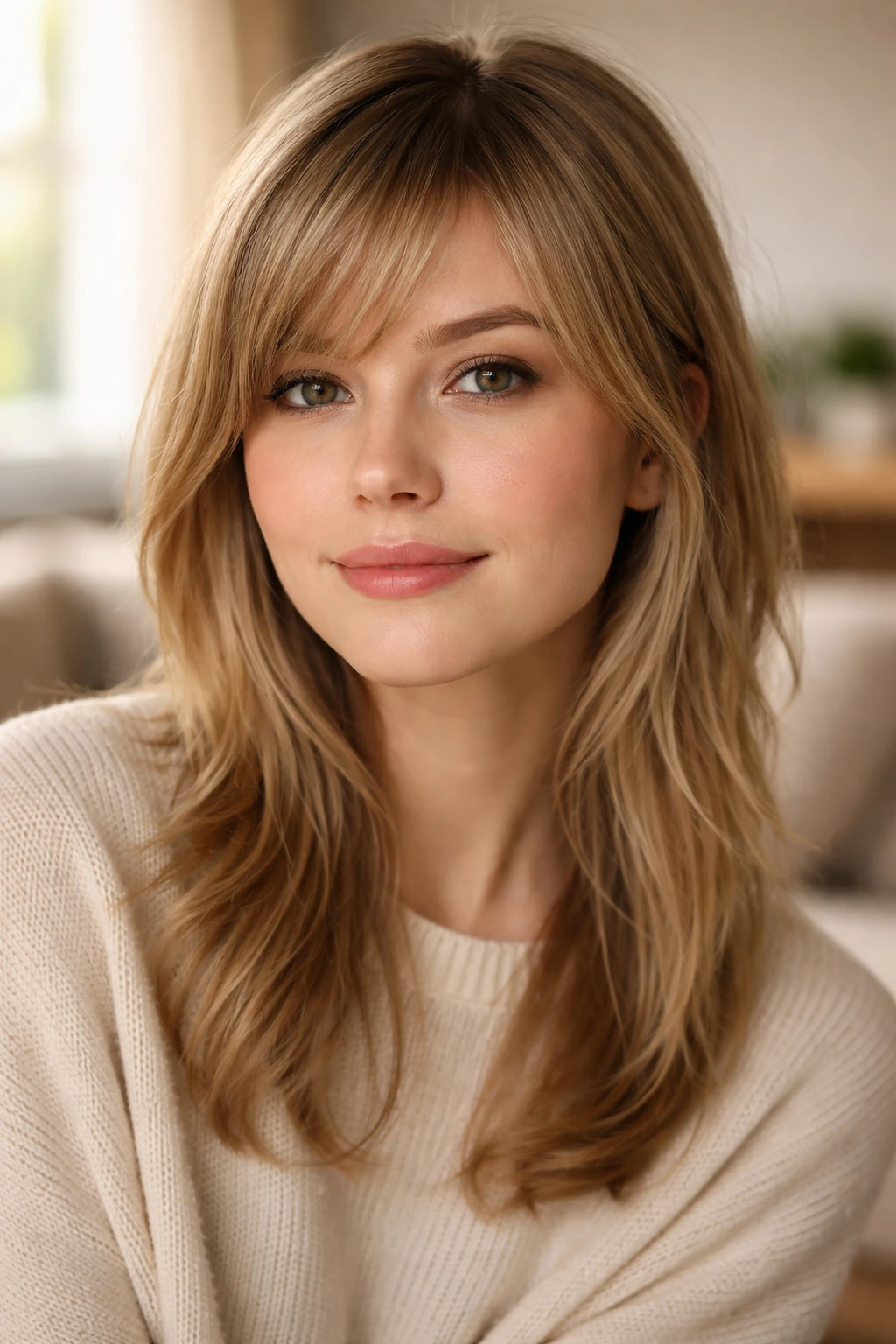
Side-swept bangs are classic, but the French version is softer and less structured. It isn’t a hard, deep side part; it is a gentle lean to one side that looks like you just woke up and brushed it over.
It is arguably the most low-maintenance option on this list. It doesn’t require precise trimming because it is designed to blend into the sides of your hair.
Styling Tip
Use a boar bristle brush to sweep the hair while it is wet. The natural bristles help smooth the cuticle without creating static, which is a common enemy of fine hair.
12. The “Bedhead” Look
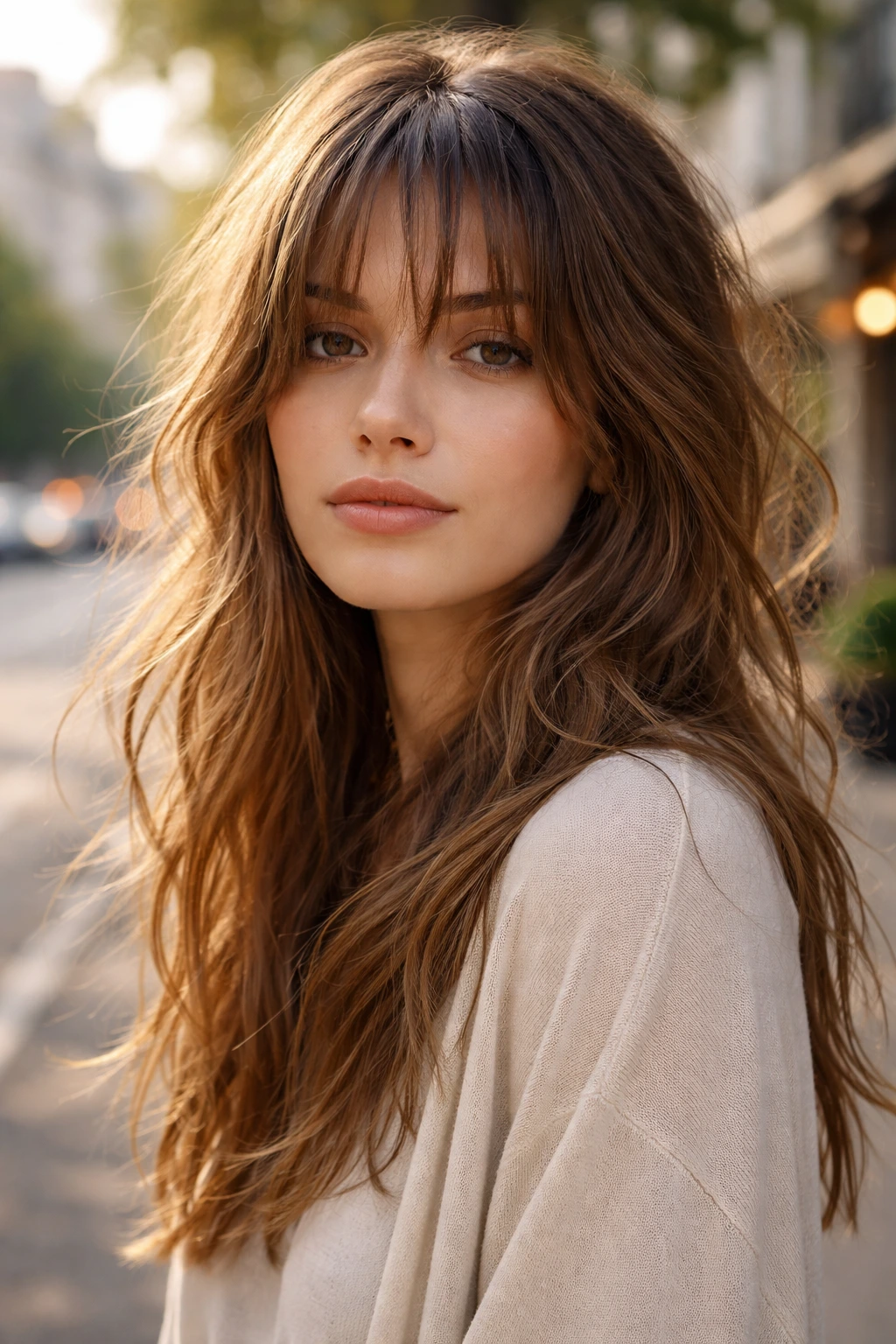
This is less of a cut and more of a styling philosophy. The bangs are long, uneven, and slightly messy. They look like you spent hours getting them to look “undone,” but they actually take two minutes.
This relies on minimal heat. Let your hair air-dry until it is about 80% dry, then use a blow dryer to flip the ends slightly. It creates a natural, effortless vibe that is quintessentially French.
Why It Lasts
Because it isn’t perfectly structured, it doesn’t matter if it gets a little mussed during the day. Wind is your friend with this style.
13. Curly French Bangs
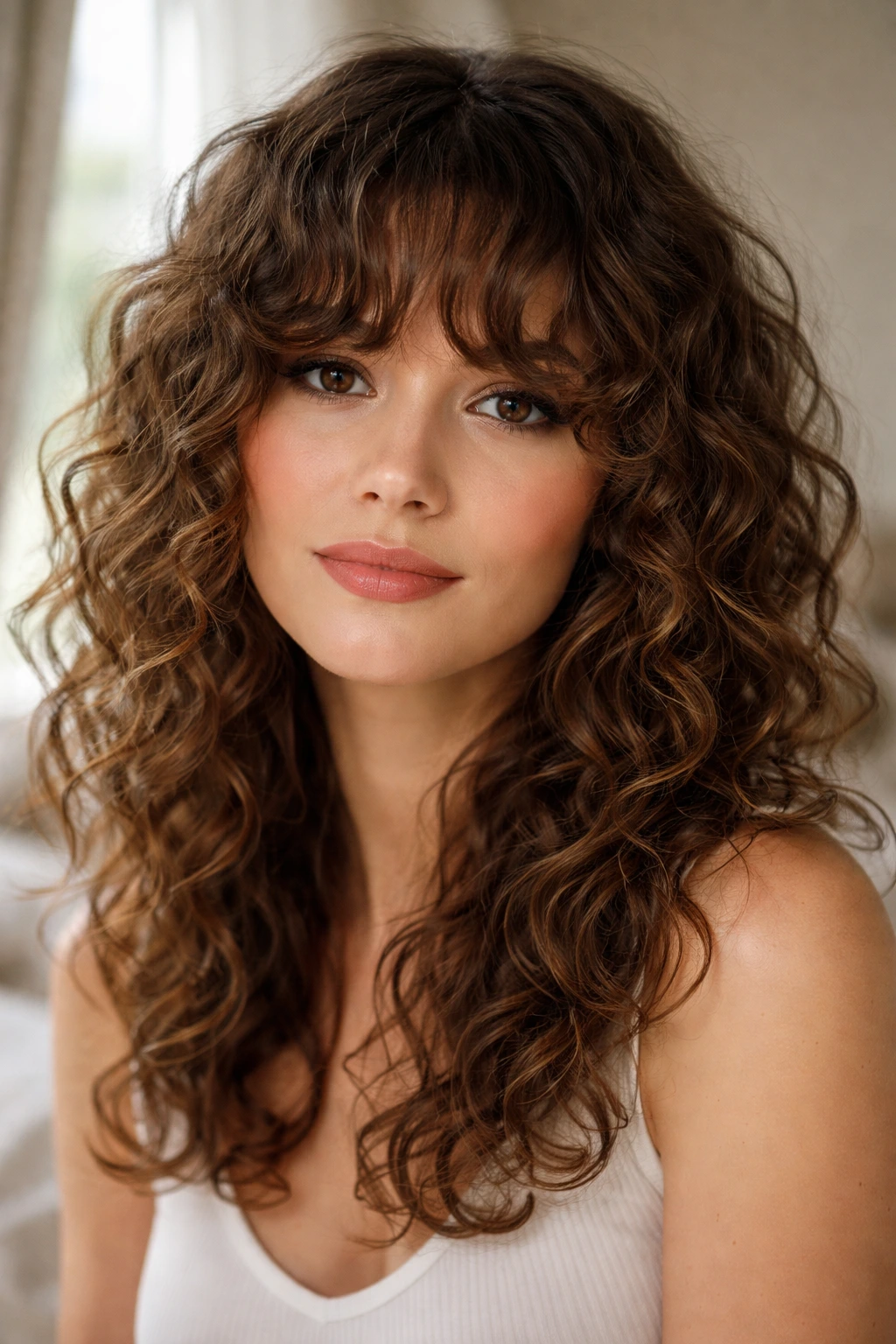
If you have fine, wavy, or curly hair, you might think bangs are a nightmare. They aren’t. They can be your best accessory. Curly French bangs are cut longer to account for the “shrinkage” that occurs when the curl dries.
The key here is hydration. Fine curls can easily become frizzy. A good curl cream applied while the hair is soaking wet will help define the coils without weighing them down.
The Cut
Find a stylist who knows how to cut hair dry. Cutting curls wet on fine hair is a recipe for disaster, as you cannot accurately predict how the spring pattern will react once it bounces up.
14. Asymmetrical French Cut
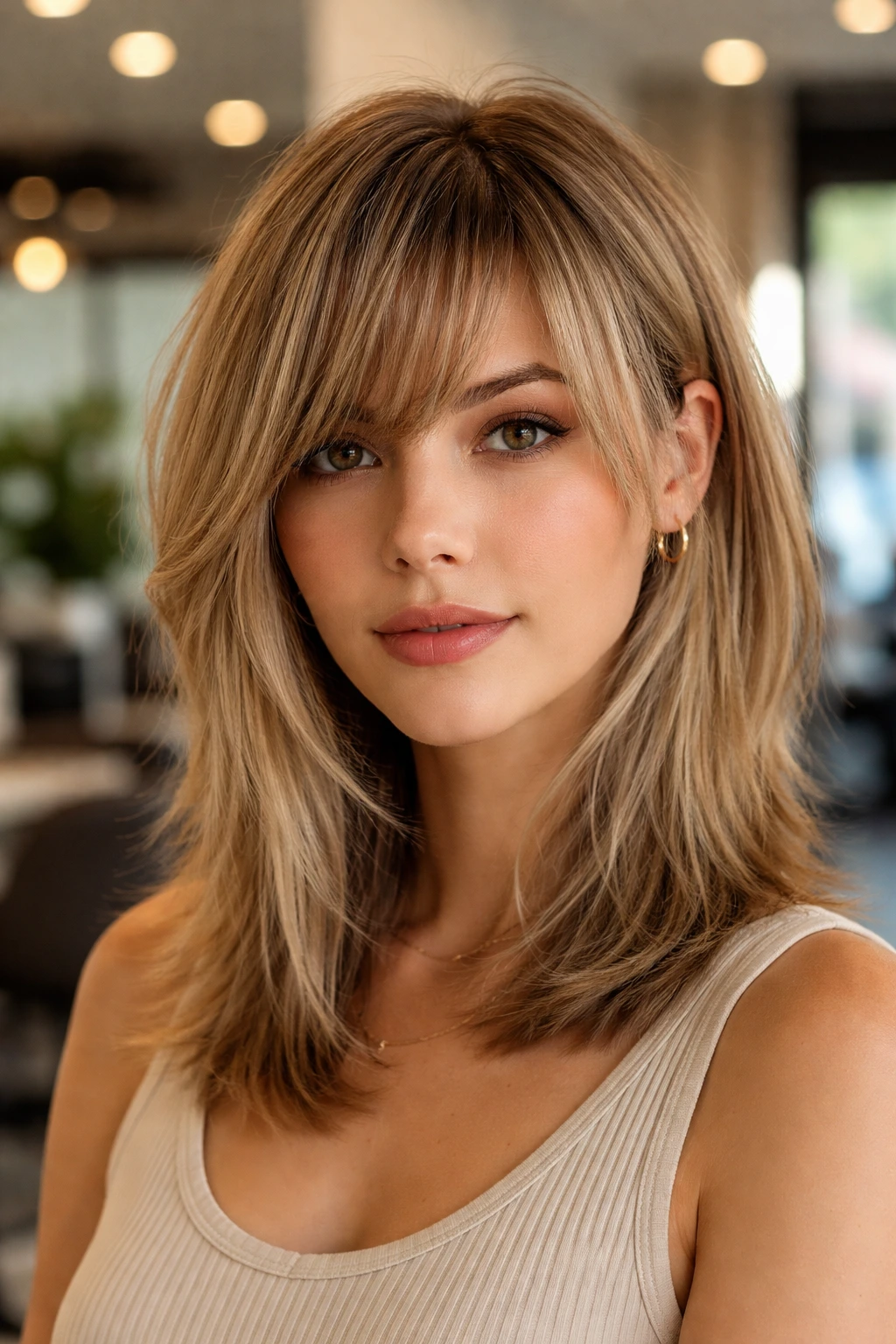
This is a bolder choice. One side of the fringe is slightly longer than the other, or the angle of the cut mimics the natural part of your face. It is subtle but makes a significant difference in how the hair frames the eyes.
Asymmetry adds visual interest. It forces the eye to move across the face, which can be very flattering if you want to downplay a feature or highlight your cheekbones.
When to Avoid
If you have a very square jawline, extreme asymmetry might accentuate it. Stick to a softer, more subtle angle instead.
15. Baby Bangs with Soft Tapers
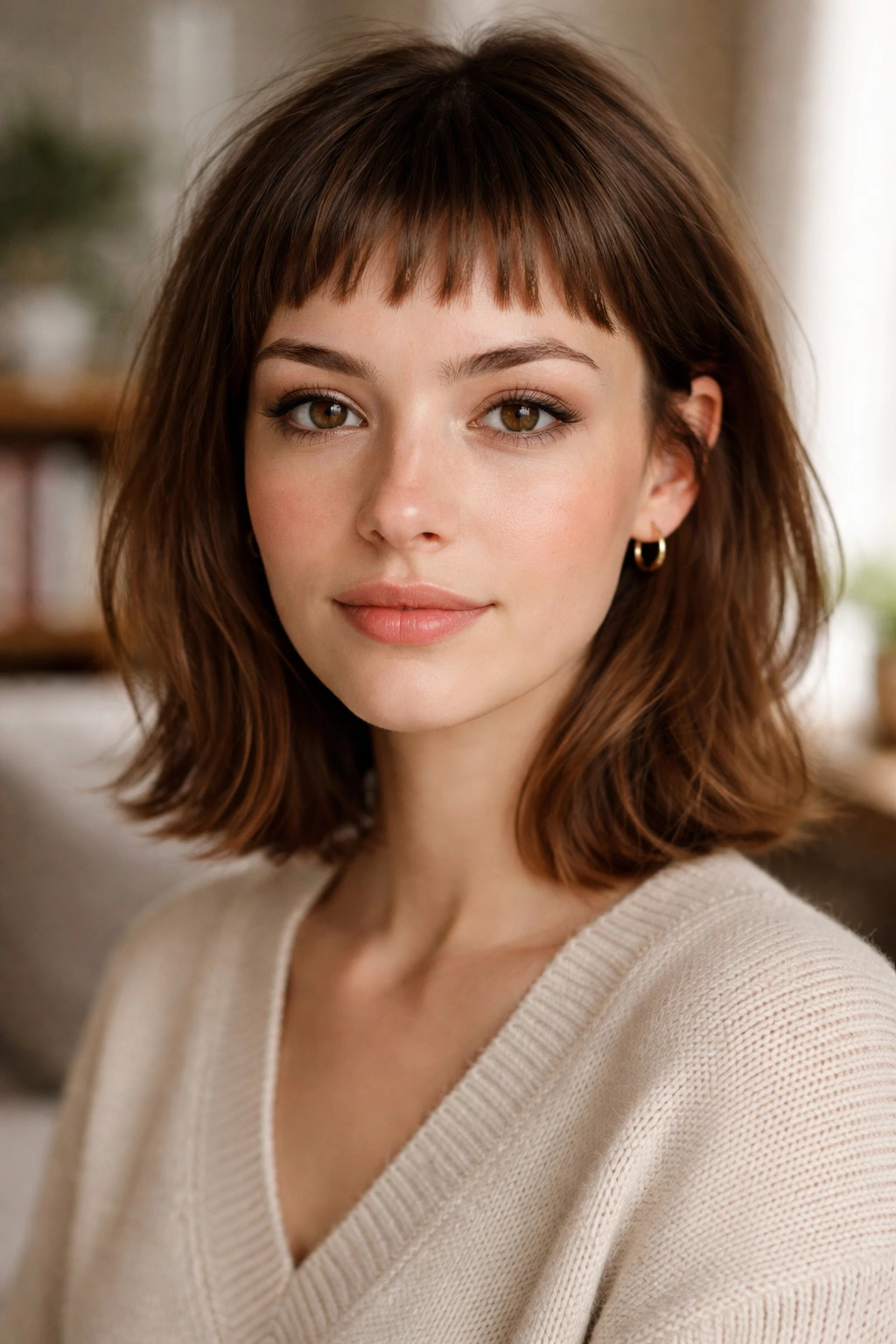
Baby bangs are essentially very short fringe, but with a “soft taper,” we aren’t talking about a straight, sharp line across the forehead. The ends are texturized and softened.
They look like a piece of art. They are great for people with smaller foreheads who want to experiment with bangs but are afraid of them overwhelming the face.
The Commitment Factor
These do require more frequent trims than longer styles. You will need to see your stylist every three to four weeks to keep them at that “baby” length.
16. The Grown-Out Shag Fringe
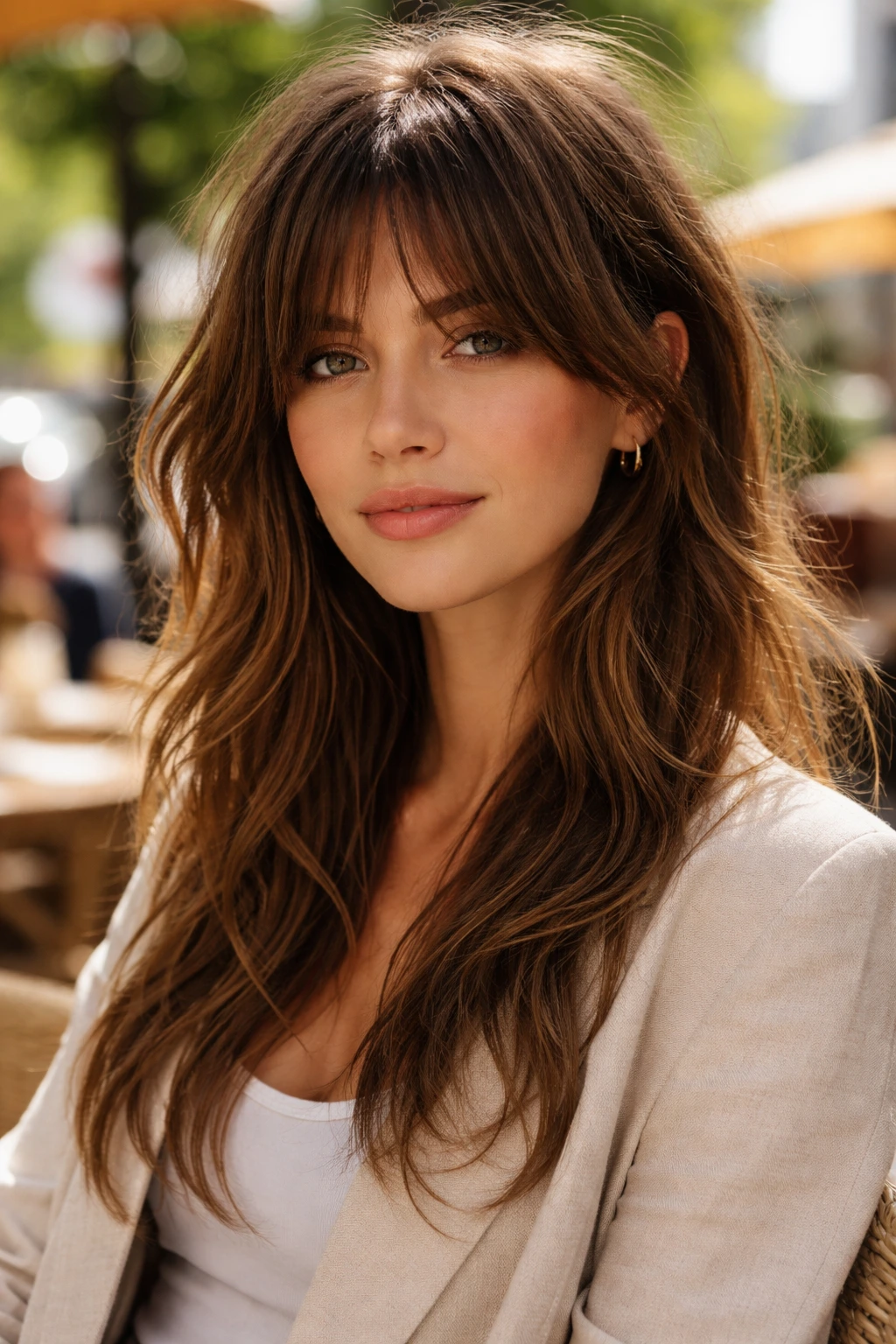
This is the look that says, “I haven’t been to the salon in six months, and I don’t care.” It is long, grazing the cheekbones, and perfectly disheveled.
It is low-pressure. You don’t have to worry about them sitting perfectly. They are meant to be tucked behind the ears, swept to the side, or left to fall over your eyes.
How to Style
Simply twist them away from your face while they are damp and let them air dry. They will pick up the natural texture of the rest of your hair.
17. Bottleneck Bangs
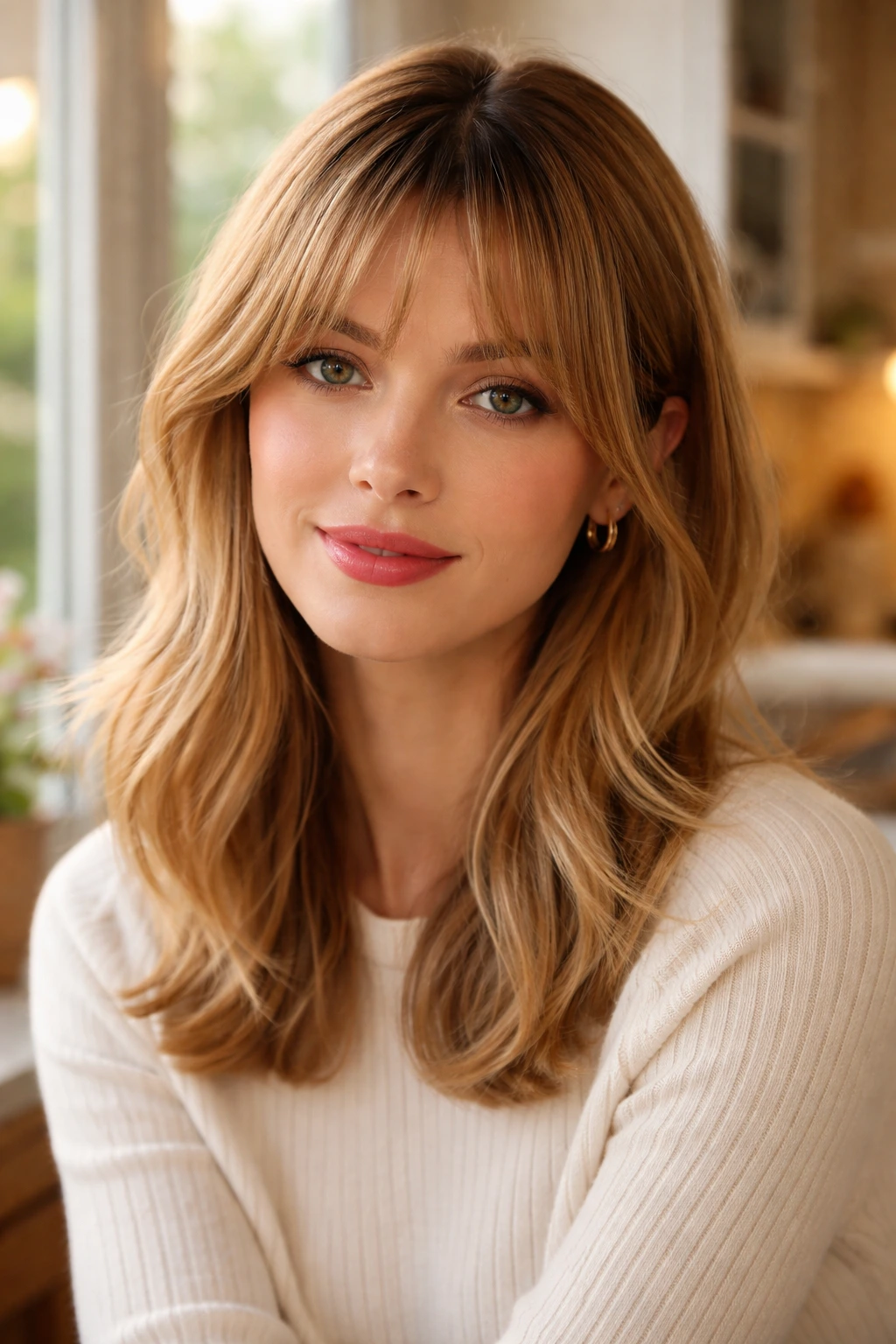
Bottleneck bangs are narrow at the top and wider at the bottom, mimicking the shape of a bottle neck. They are a trend that has incredible staying power because they are universally flattering.
They start shorter in the center and get longer as they move toward the temples. This creates a very soft transition into the rest of your hair, making them feel like a natural extension rather than an add-on.
Why They Work
The wider shape at the bottom helps balance the face, while the narrower top prevents the bangs from looking too dense on a fine-haired individual.
18. Airy, See-Through Bangs
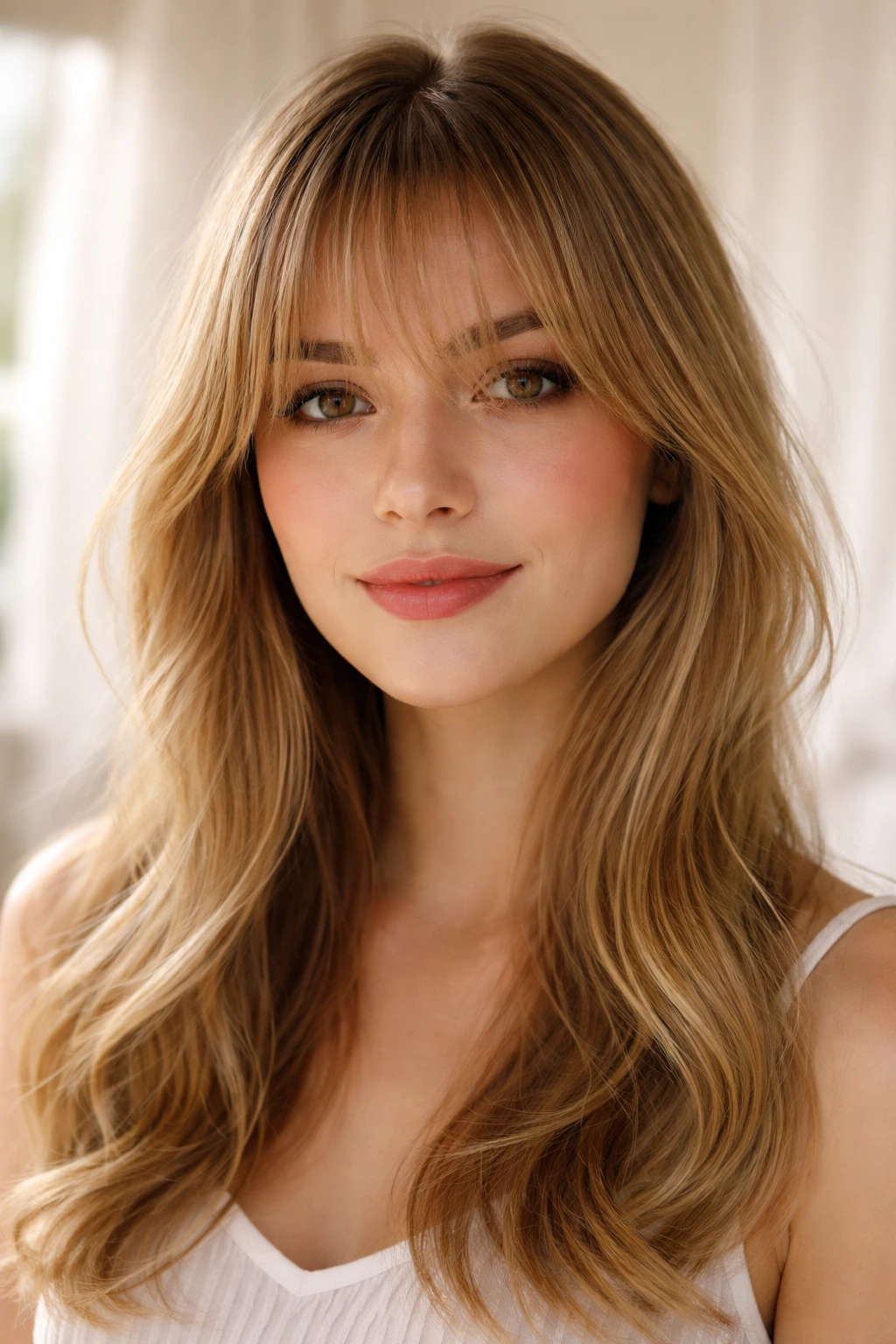
This style is specifically designed to be lightweight. The hair is cut to be extremely thin, almost like a veil. You can see the skin of your forehead clearly through the fringe.
This is the antidote to the “too much hair” feeling. If you are terrified that bangs will make you look like you are hiding behind a mask, this is your solution.
Best Hair Texture
Straight or slightly wavy fine hair excels with this style. If your hair is too kinky, see-through bangs might just look like frizz.
19. The “Wolf” French Hybrid
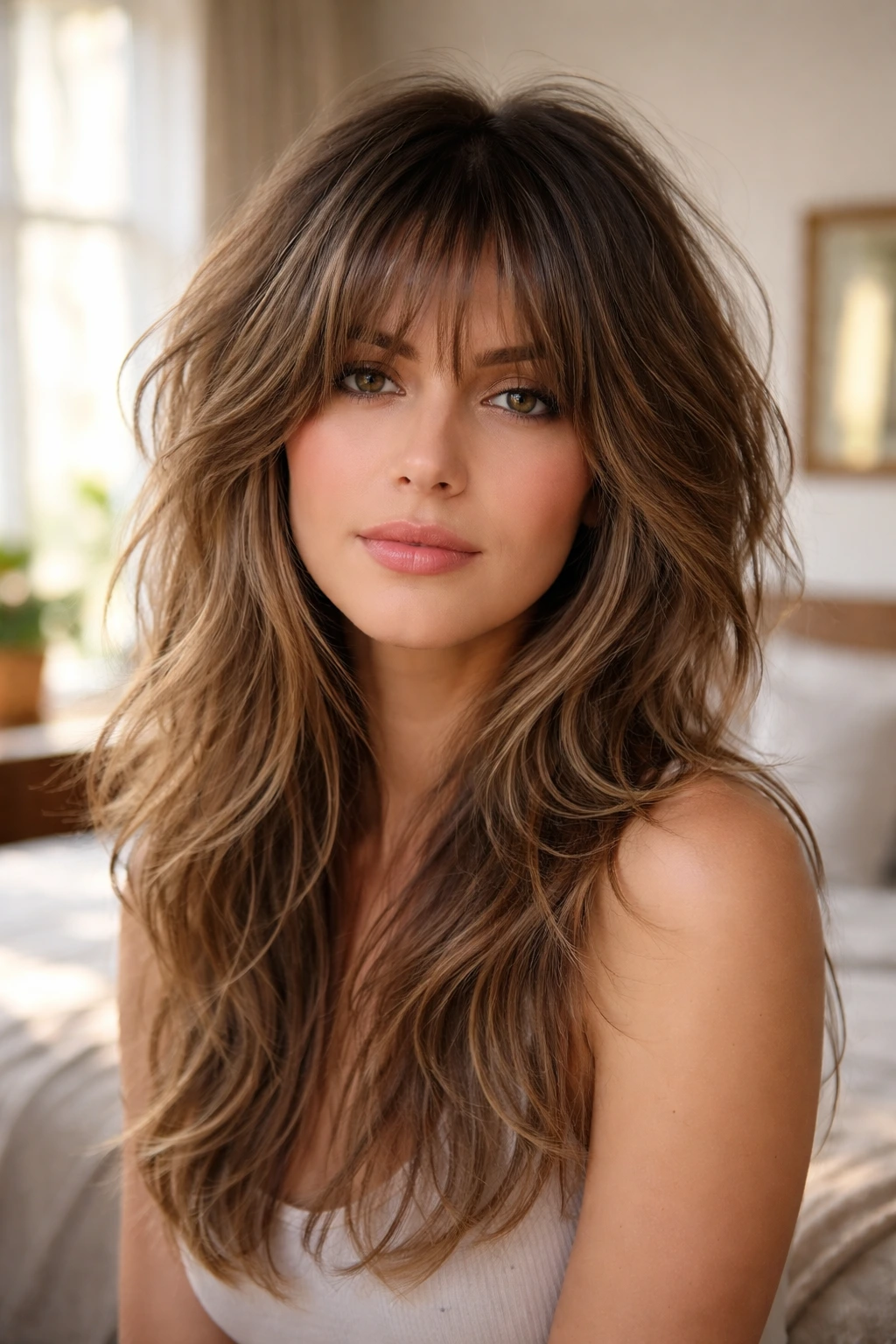
The Wolf cut is all about volume, layers, and movement. When you mix it with the French fringe, you get a softer, more romantic version of the usually edgy Wolf cut.
The fringe here is long, layered, and deeply textured. It blends right into the side layers, creating a continuous flow of movement from the bangs down to the ends.
The Volume Trick
Use a root-lifting powder. It provides invisible grip that helps the layers stand up and out, giving you that iconic volume without the crunchy feel of hairspray.
20. Layered French Fringe
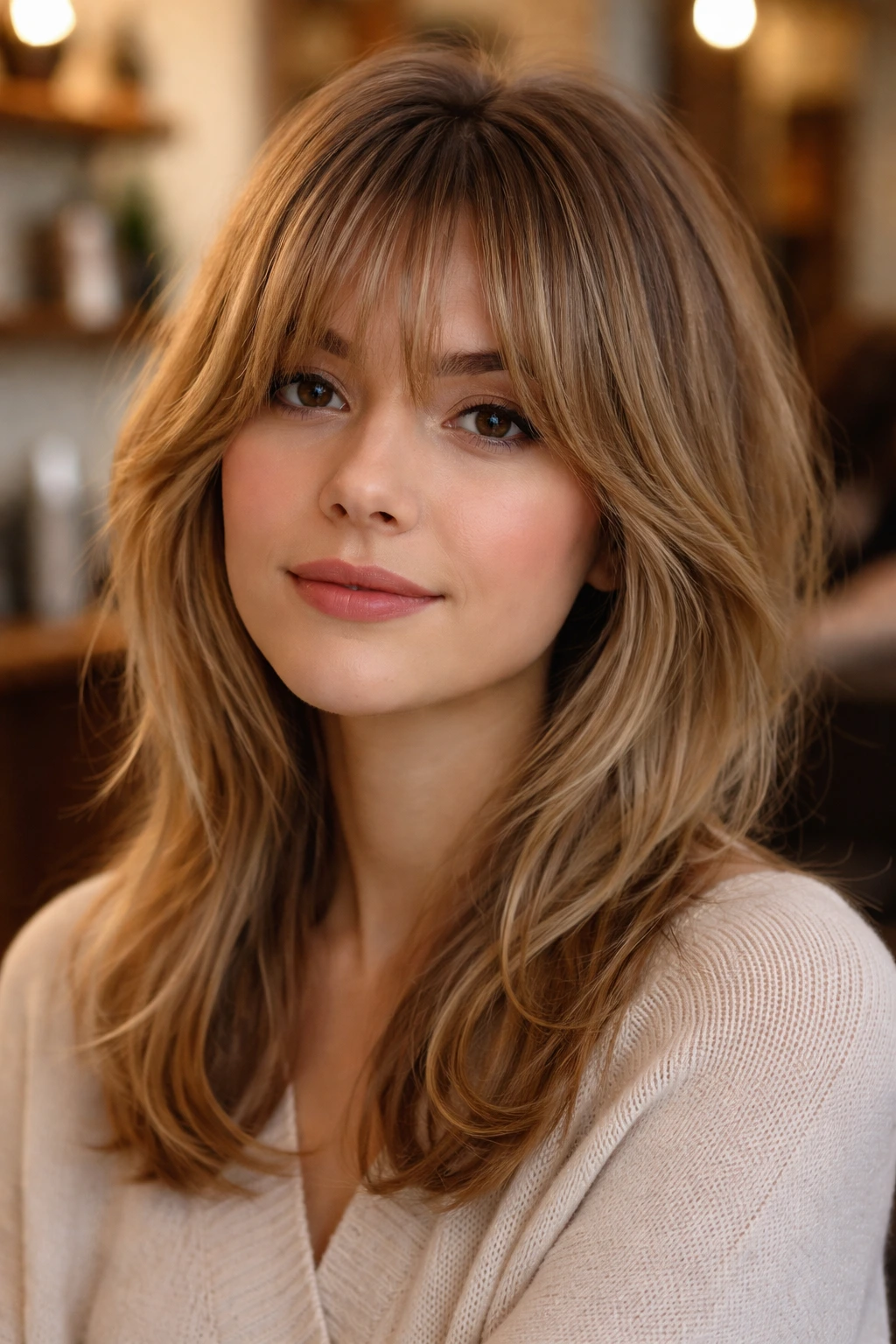
Instead of a single length, the fringe itself is layered. This creates internal movement within the bangs. It sounds counterintuitive for fine hair, but it works because layers remove the weight that drags the hair down.
By creating shorter pieces within the fringe, you are creating natural “lifts” that help the bangs sit off the forehead rather than sticking to it with oil.
The Maintenance Factor
This requires a skilled hand. If your stylist isn’t careful, the layers can look choppy. Ensure they use a razor or thinning shears to keep the transitions seamless.
21. The Mid-Length “Cool Girl” Cut
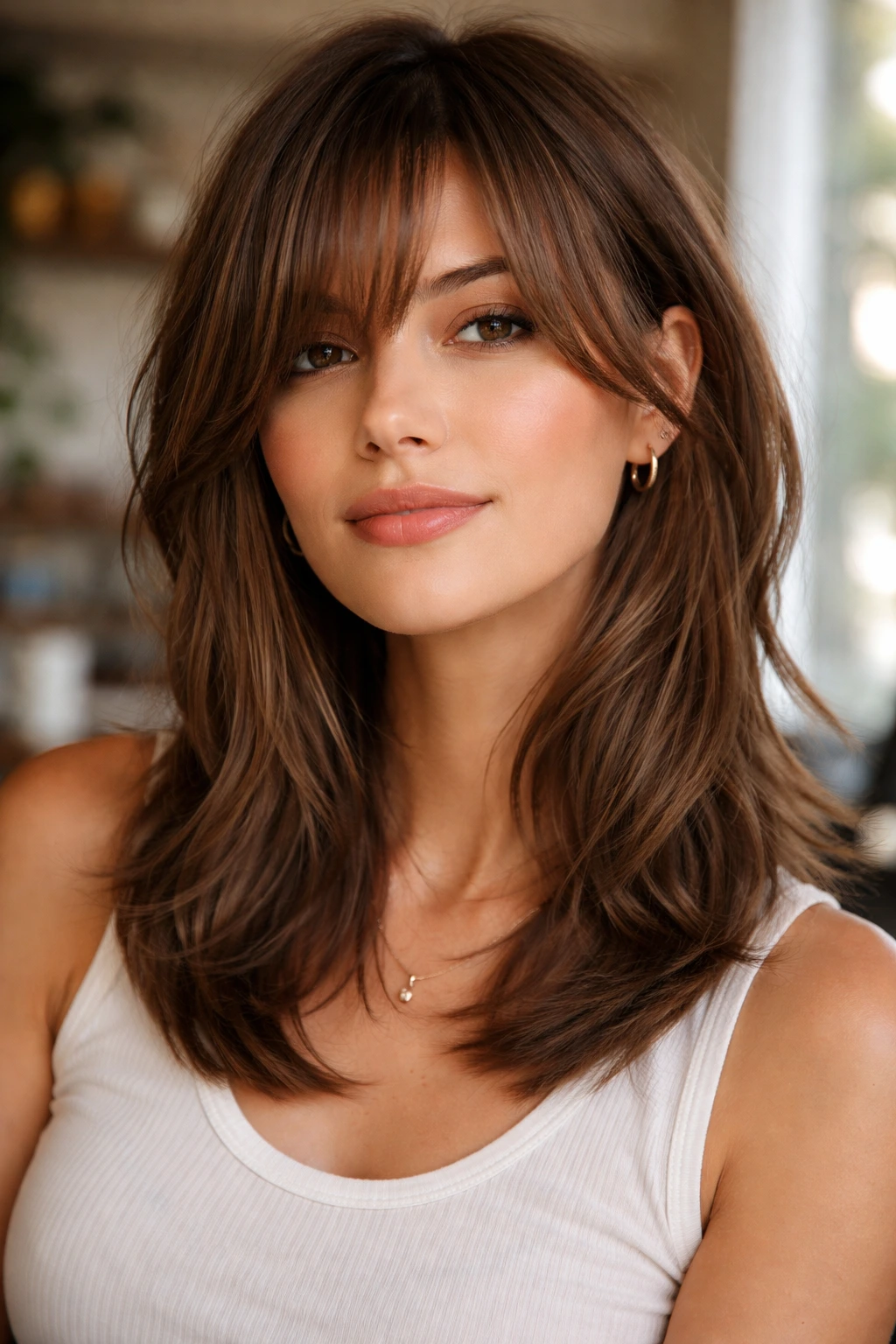
This refers to a fringe that sits right at the cheekbones. It isn’t a traditional bang; it’s a long, sweeping fringe that defines the jawline and cheekbones.
It is the epitome of the French “je ne sais quoi.” It implies you are too busy to style your hair, yet it looks intentional and flattering.
Why It’s Great for Fine Hair
Because the hair is longer, it has more weight to hold its shape naturally. You don’t need heat styling; gravity does most of the work for you.
22. Soft Undercut Bangs
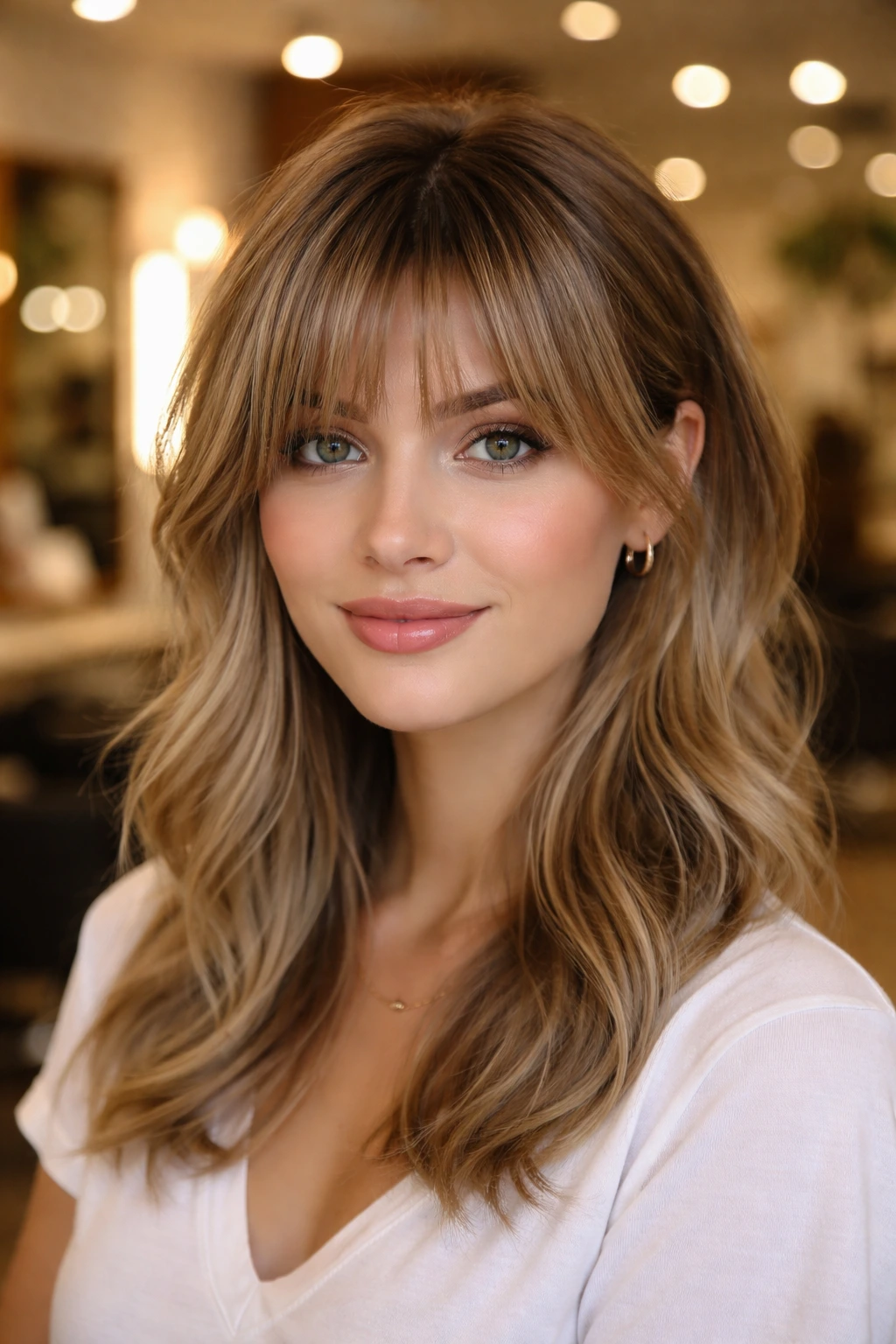
This is a clever trick for fine hair. An undercut in the context of bangs means the hair underneath is cut shorter to push the hair on top up.
It creates an invisible structure that forces the bangs to sit with more volume. You won’t see the undercut because it is hidden by the longer top layer of the fringe.
When to Do This
If your hair is extremely fine and tends to lie completely flat against your forehead, this is the most effective way to change its behavior.
23. The 90s Minimalist Fringe
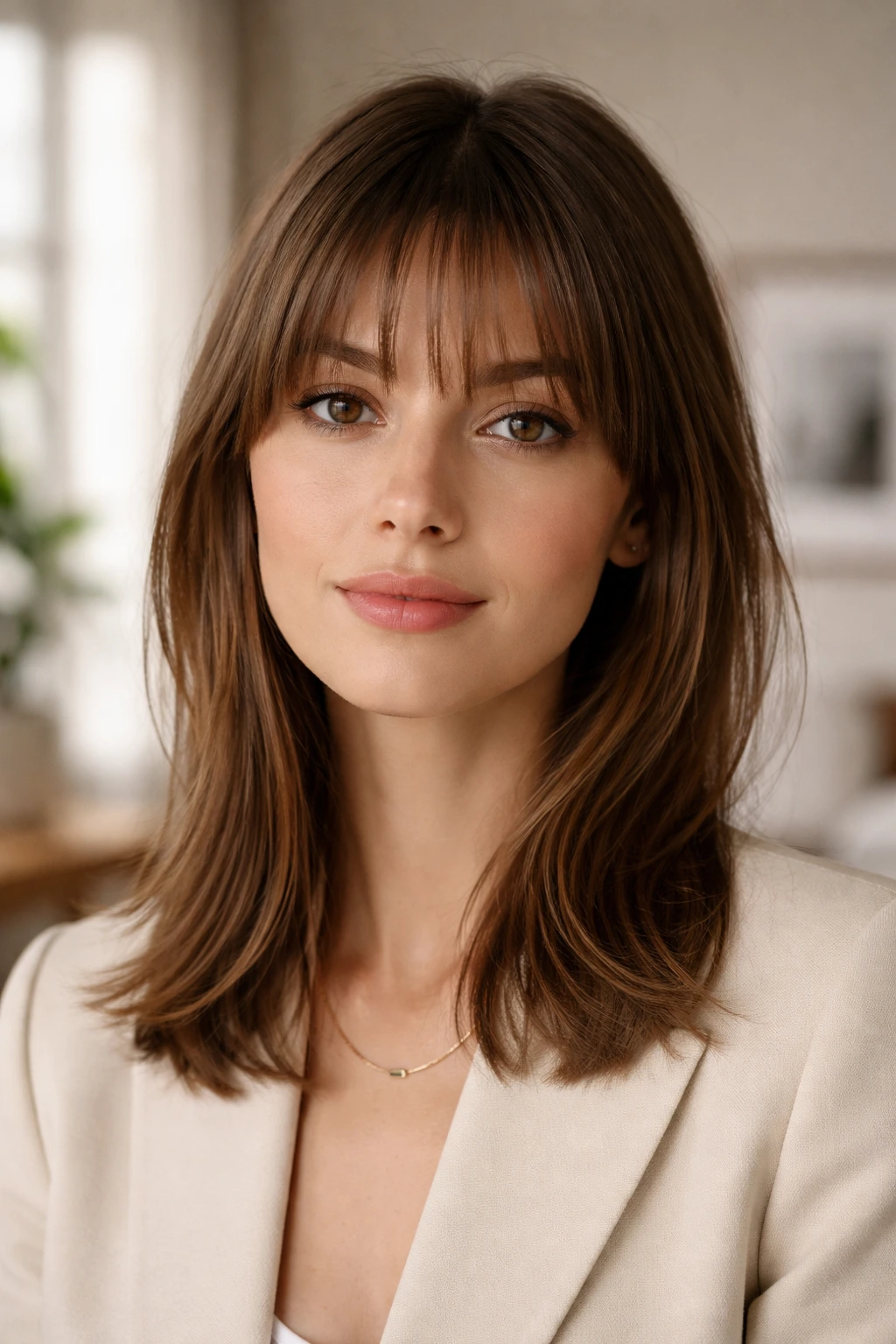
Think of the 90s supermodel era. The bangs were simple, clean, and understated. They were usually centered and slightly parted, never over-styled.
This is a great look if you have a professional environment where “messy” hair isn’t always appropriate. It is tidy but still retains that classic French soft edge.
The “90s” Secret
Use a round brush to bevel the ends under. That subtle inward curve is what defines the 90s aesthetic. Keep it minimal.
24. Texturized Root-Boost Bangs
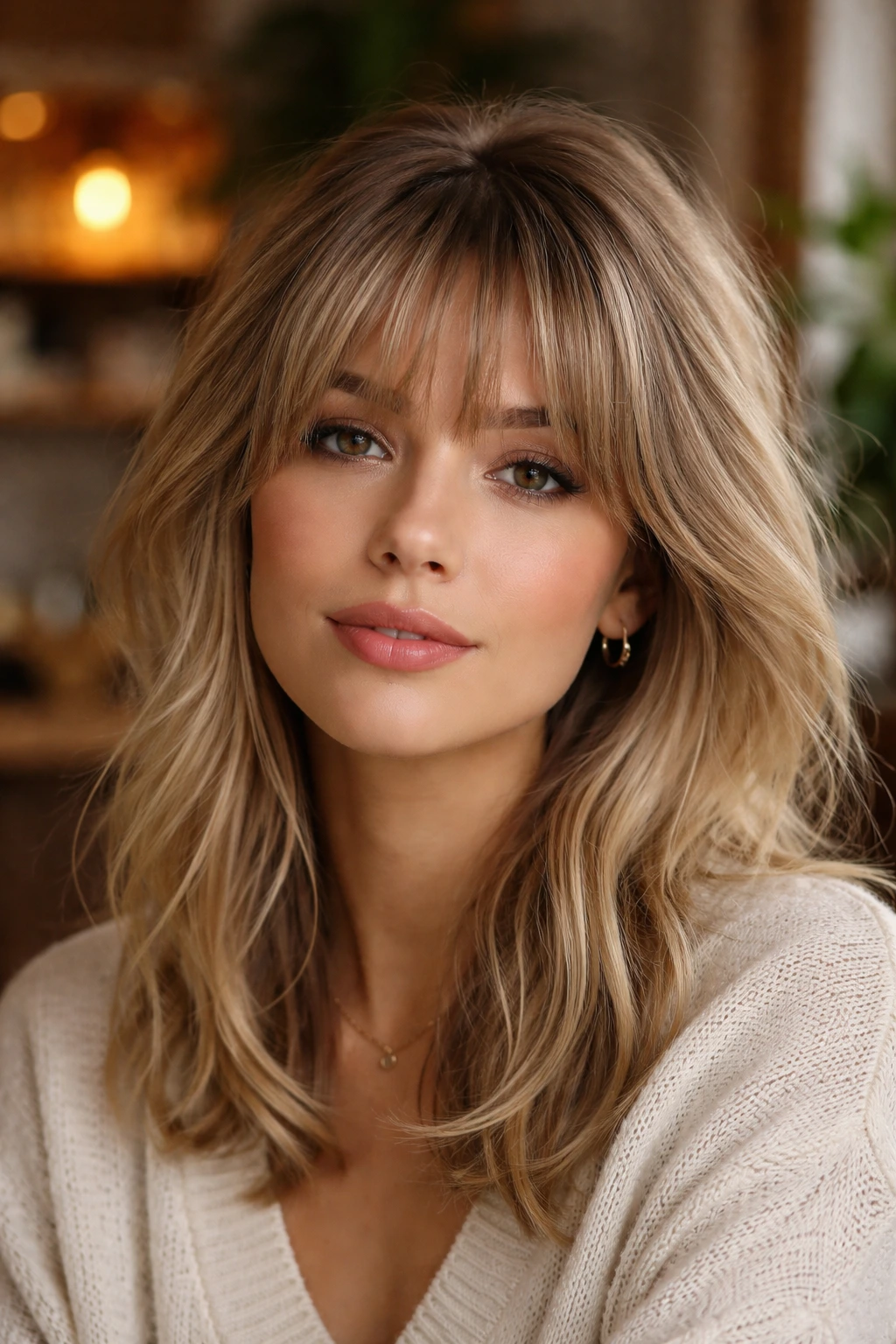
This is a styling technique combined with a cut. The hair is cut with a deep point-cutting technique, and the styling involves using a root-boost mousse at the hairline.
The texture is the story here. It isn’t about smooth, shiny hair. It’s about grit, movement, and a slight matte finish that looks modern and fresh.
Essential Tool
A dry texturizing spray. It is lighter than hairspray and helps your hair “grip” itself, creating the illusion of thicker, fuller strands.
25. Rounded French Fringe
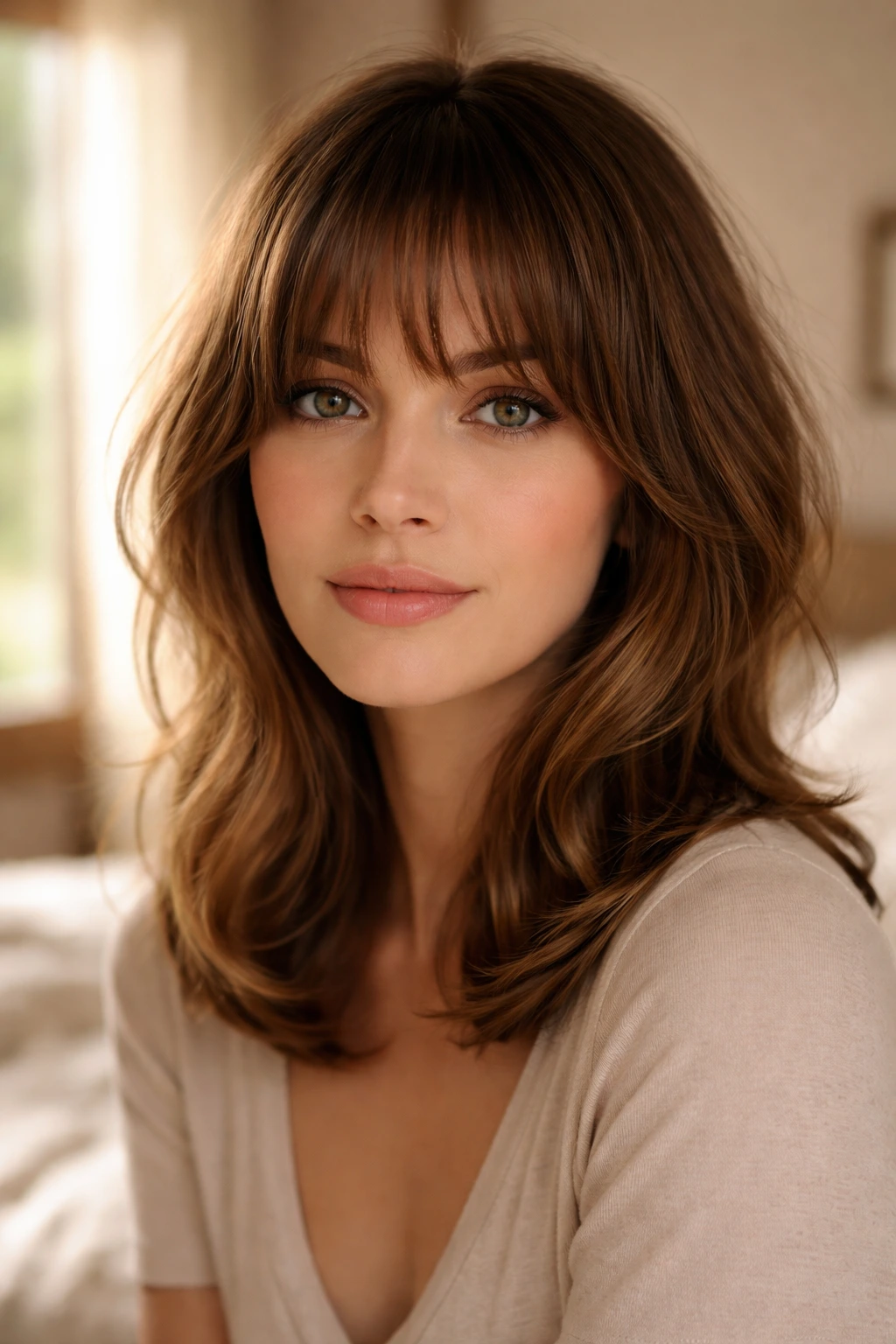
Unlike the angular, shattered looks, the rounded fringe follows the curve of your face. It is soft, even, and frames the eyes in a gentle arc.
It is particularly good for people who want to soften a sharp, angular jawline. The rounded shape brings a level of softness to the entire face.
The Shape
Make sure your stylist cuts them while your hair is in its natural state. If they pull the hair too tight while cutting, the “rounded” shape will be lost when the hair naturally relaxes.
26. The Modern Mullet Fringe
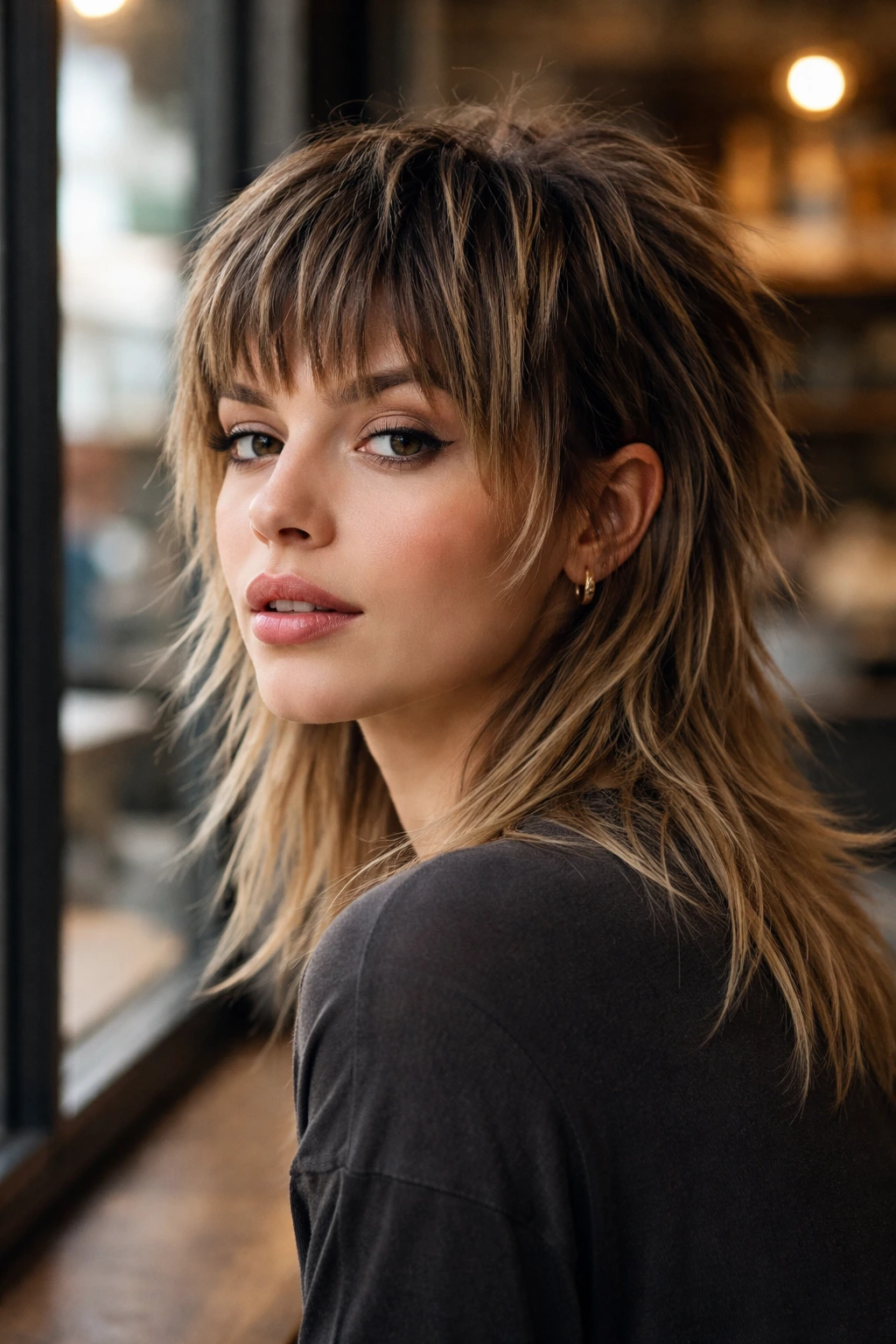
Yes, the mullet has evolved. It is now a chic, edgy style that features a short, choppy fringe paired with longer, piecey layers in the back.
The fringe in a modern mullet is intentionally choppy and uneven. For fine hair, this works because the choppiness creates a “spiky” volume that looks very intentional and cool.
Confidence Level
This is not for the faint of heart. It is a statement. But if you have the confidence to pull it off, it is incredibly liberating for fine hair.
27. Fringed Pixie Cut
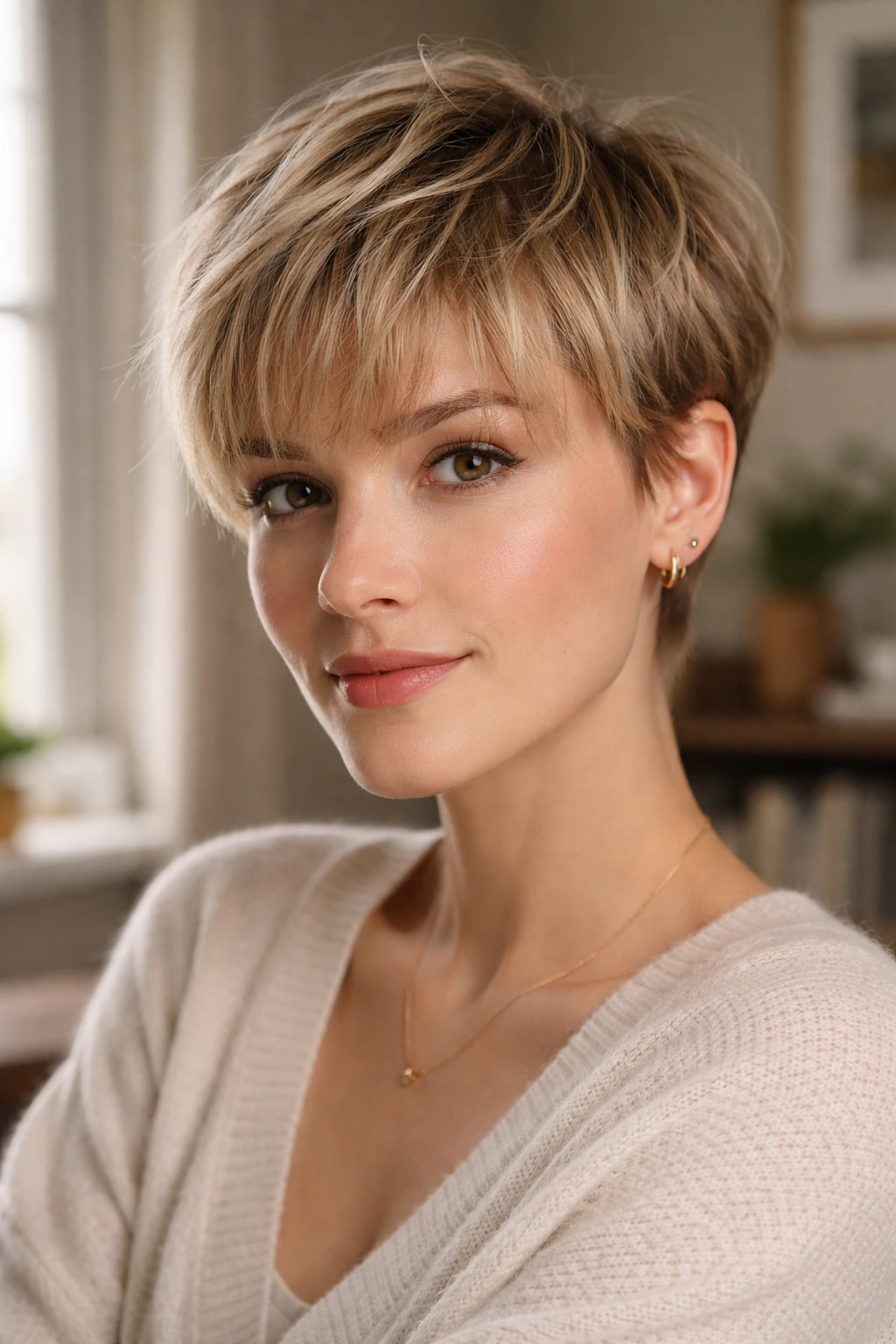
If you are willing to go short, a pixie with a fringed front is the ultimate way to maximize volume. Fine hair creates a beautiful, wispy texture in a pixie cut.
The fringe in a pixie cut is short and blended. It softens the severe look of a short cut, making it feel more feminine and “French.”
The Benefit
You will spend almost zero time styling this. A little texturizing paste and you are out the door. It is the ultimate wash-and-go.
28. The Long Bob with Wispy Bangs
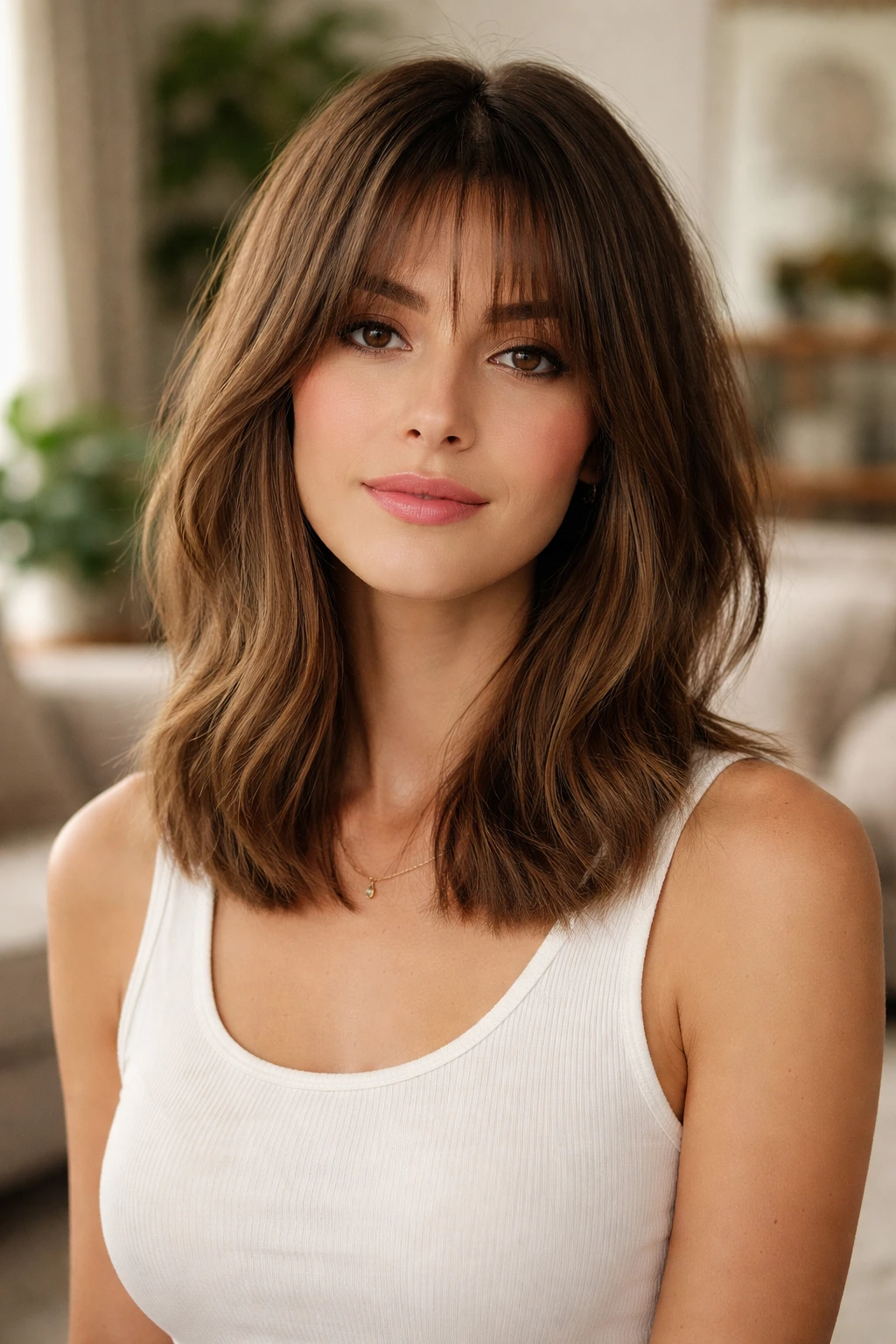
Also known as the “Lob,” this is the most popular hairstyle for a reason. Adding a wispy fringe to a lob elevates it from “standard haircut” to “styled look.”
The fringe breaks up the horizontal line of the bob, making the whole style feel lighter and more interesting. It is the perfect marriage of a timeless cut and a trendy finish.
Versatility
This style can be worn sleek and straight, wavy, or air-dried. The fringe will adapt to whatever texture you choose for the rest of your hair.
29. Copper-Toned French Fringe
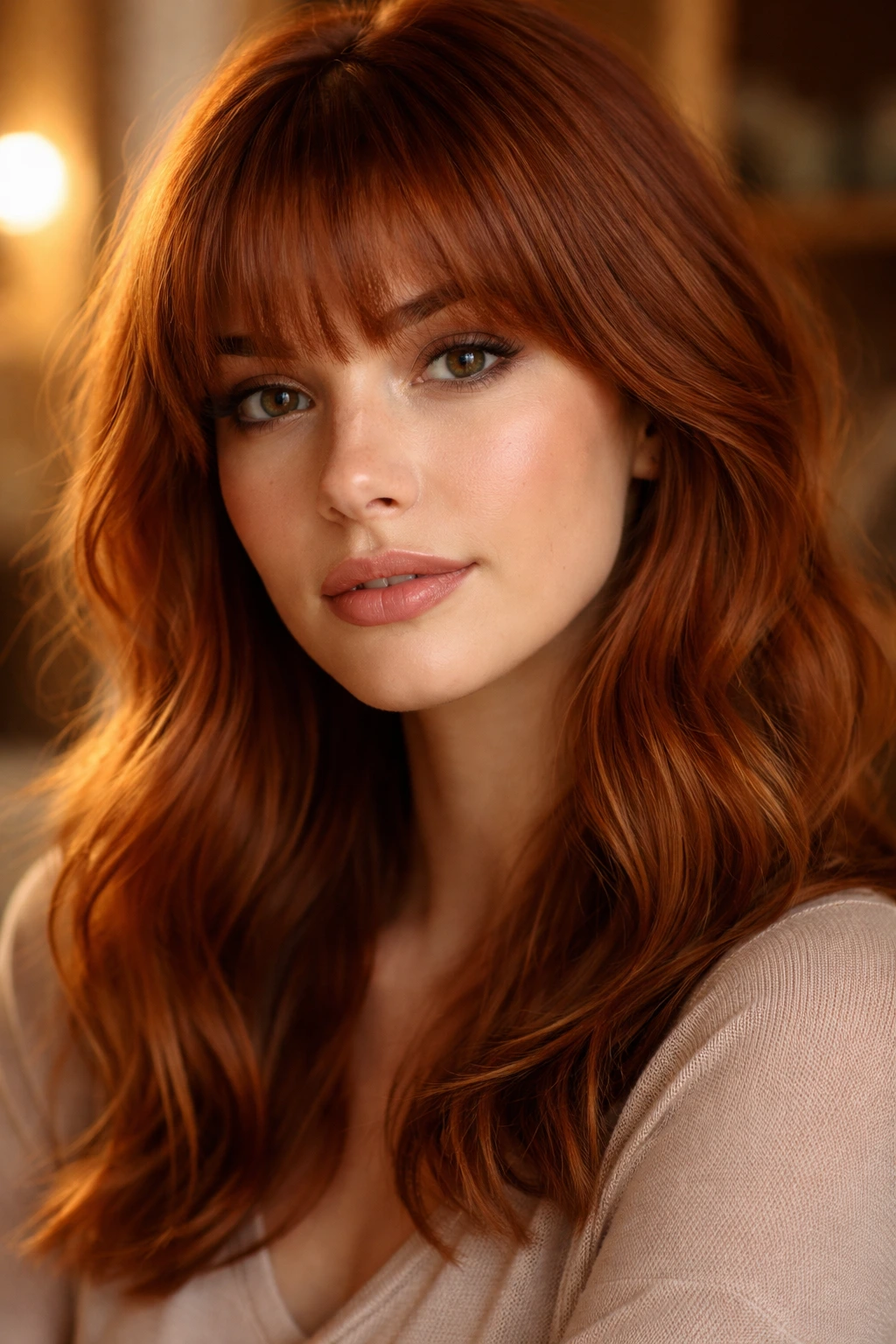
While this is a color suggestion, it is also a volume hack. Red and copper tones naturally add depth and the appearance of thickness to fine hair.
When you pair a rich copper shade with a textured French fringe, the color adds a visual “weight” to the hair that helps the bangs look less like wisps and more like a structured element.
Color Maintenance
Red tones fade quickly. Use a color-depositing shampoo once a week to keep the vibrancy alive. It will make your hair look healthier and thicker.
30. The “Low-Maintenance” Trim
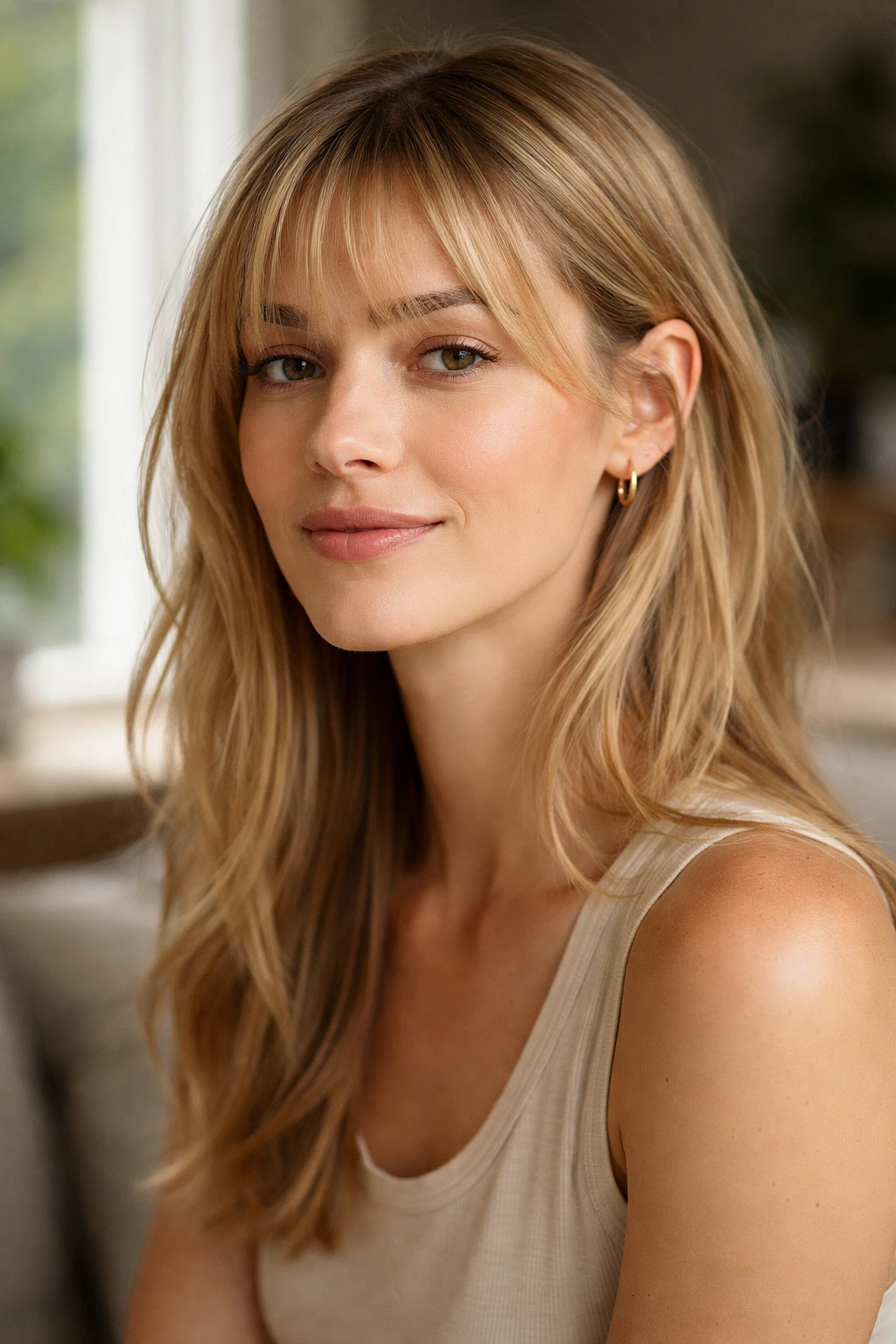
This is less a style and more a commitment. The best French bangs are the ones you don’t overthink. This idea is about finding the length that feels right for your face and sticking to it.
The secret to low maintenance is to avoid going too short. If you keep the fringe at a length where you can tuck it behind your ears, you give yourself the option to hide them on days when you just don’t feel like styling.
Final Advice
Talk to your stylist about the “grow-out” plan. A good haircut should look good even three months down the line. If your bangs look terrible the moment they grow an inch, they weren’t cut correctly for your face.
How to Cut Fine Hair for Maximum Volume
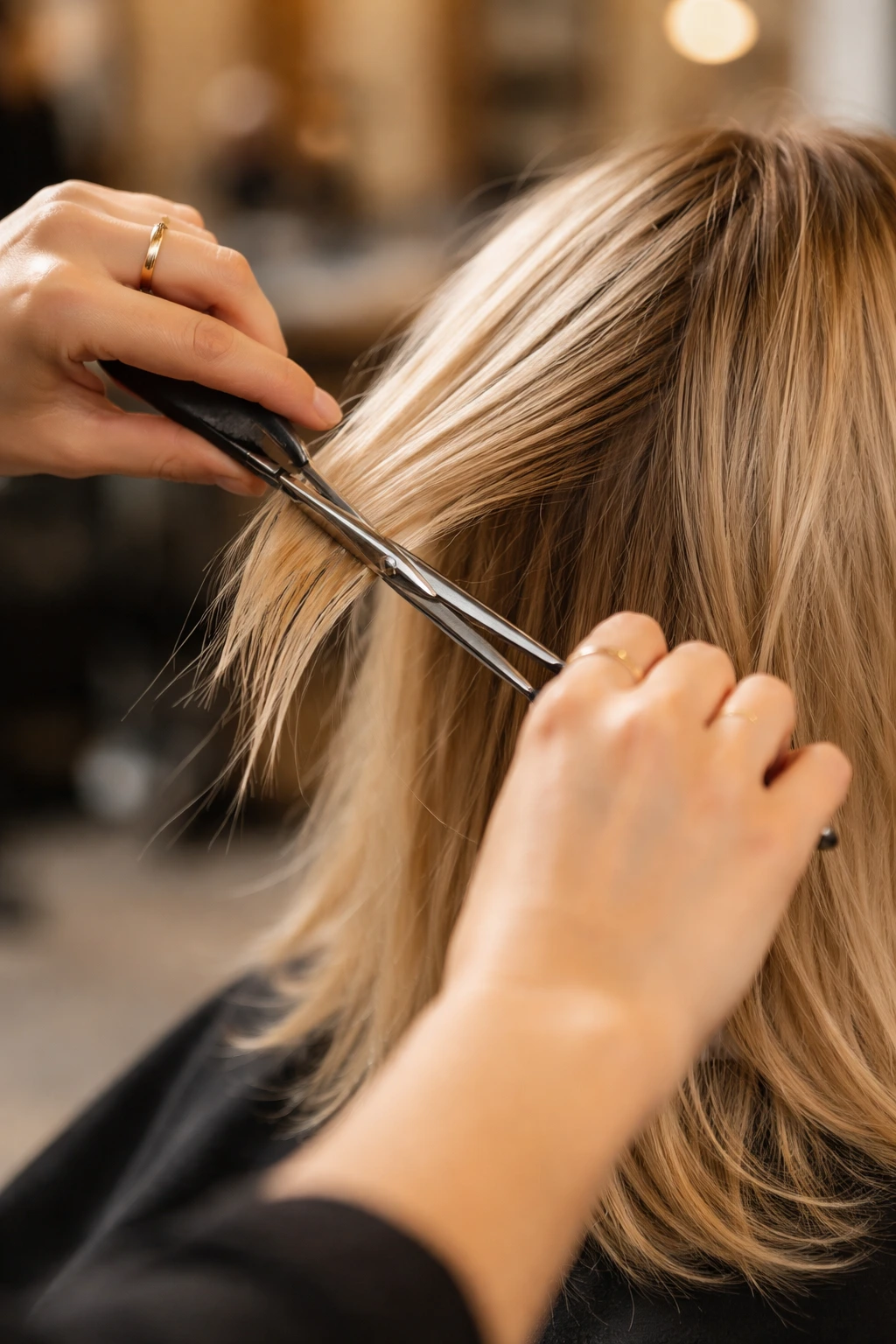
Cutting fine hair requires a specific set of skills. The biggest mistake stylists make is treating fine hair like coarse hair. If you have fine hair, heavy, blunt cutting is the enemy. It creates a weight that pulls the hair flat against the skull, highlighting the lack of density.
Instead, ask your stylist to focus on interior layering and point-cutting. Point-cutting involves using the tips of the scissors to cut into the hair at an angle, rather than straight across. This removes the “bulk” at the ends, which stops the fringe from becoming a solid, heavy block. This technique is essential for the French aesthetic. It creates softness and movement, which are the hallmarks of a good fringe.
Why Weight Matters
Think of your hair like fabric. Thick, coarse hair is like denim—it holds its shape easily. Fine hair is more like silk. It needs movement to show off its best qualities. When you cut into the hair, you are removing the weight that causes it to drape limply.
Essential Tools for Styling French Bangs
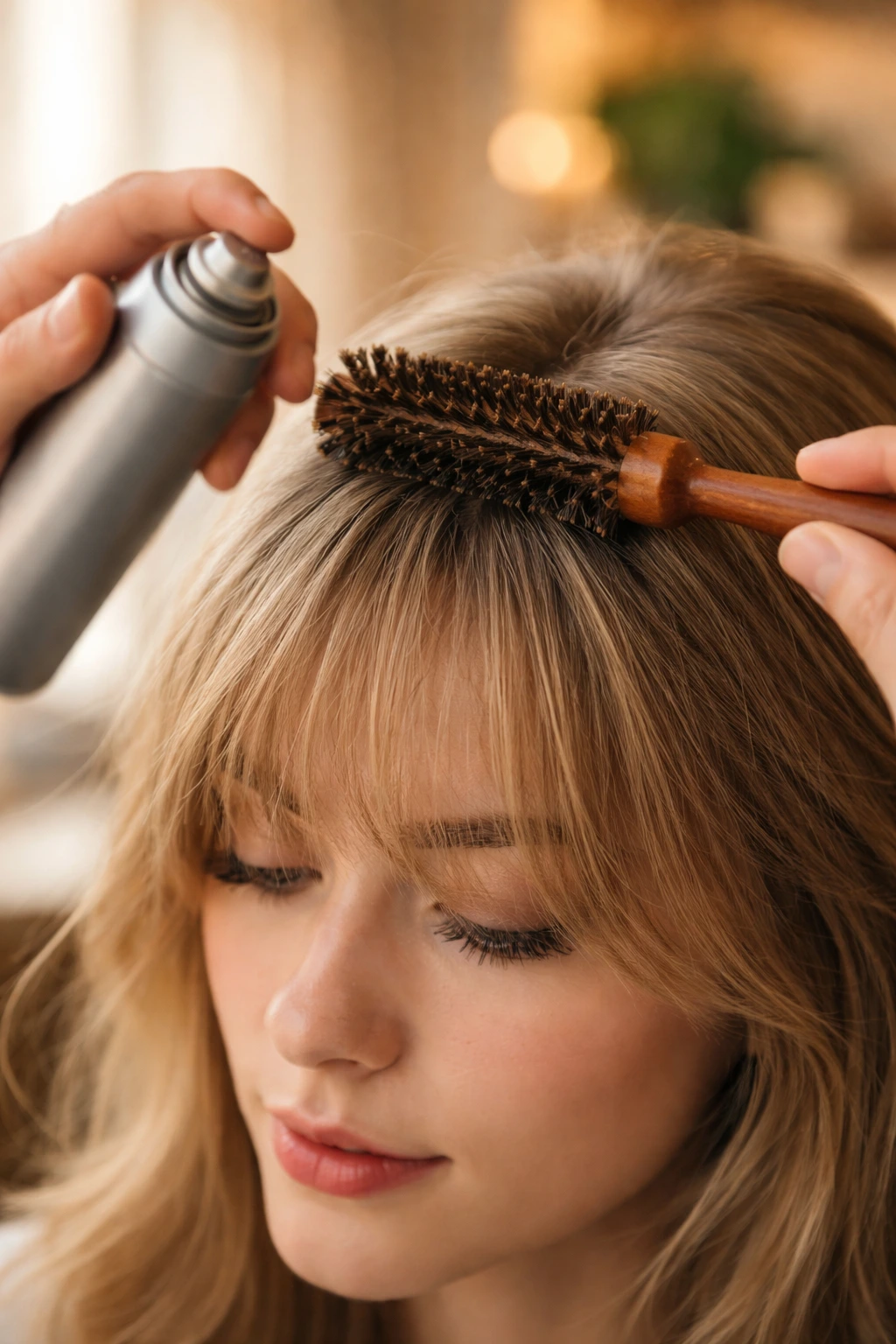
You do not need an arsenal of expensive equipment. In fact, minimalism is better for fine hair. Over-styling is a common cause of limp, greasy-looking bangs.
First, invest in a small round boar-bristle brush. The natural bristles grab the hair gently, providing the tension you need to smooth the cuticle without creating the static electricity that synthetic brushes often cause.
Second, a dry texturizing spray is your best friend. Unlike hairspray, which can leave a sticky residue that weighs fine hair down, texturizing spray adds grit. It mimics the natural texture of day-two hair, which is actually the ideal state for styling bangs.
The Blow-Dry Technique
If you are using a dryer, use the concentrator nozzle. This directs the airflow specifically at the roots of your bangs. Dry them in a cross-hatching motion—brushing from the left, then the right, then back again. This prevents the hair from developing a permanent part, which can cause the bangs to split in the middle.
Washing Strategies for Fine-Haired Fringes

Your bangs are the first part of your hair to get greasy. This is a scientific reality of fine hair; the oils from your forehead and skincare products travel directly into the fringe.
Do not wash your entire head every single day—that will strip your hair of its natural oils and make it look even thinner and more brittle. Instead, adopt the “fringe wash.” Simply pull your bangs forward, clip the rest of your hair back, and wash just the fringe in the sink with a tiny amount of shampoo.
The Skin Care Connection
Your skincare routine might be the culprit. If you are applying heavy creams or oils to your forehead, your bangs will inevitably soak that up. Try to keep your skincare products away from the hairline, or wait for them to fully absorb before letting your bangs fall into place.
Avoiding the Greasy Bang Trap
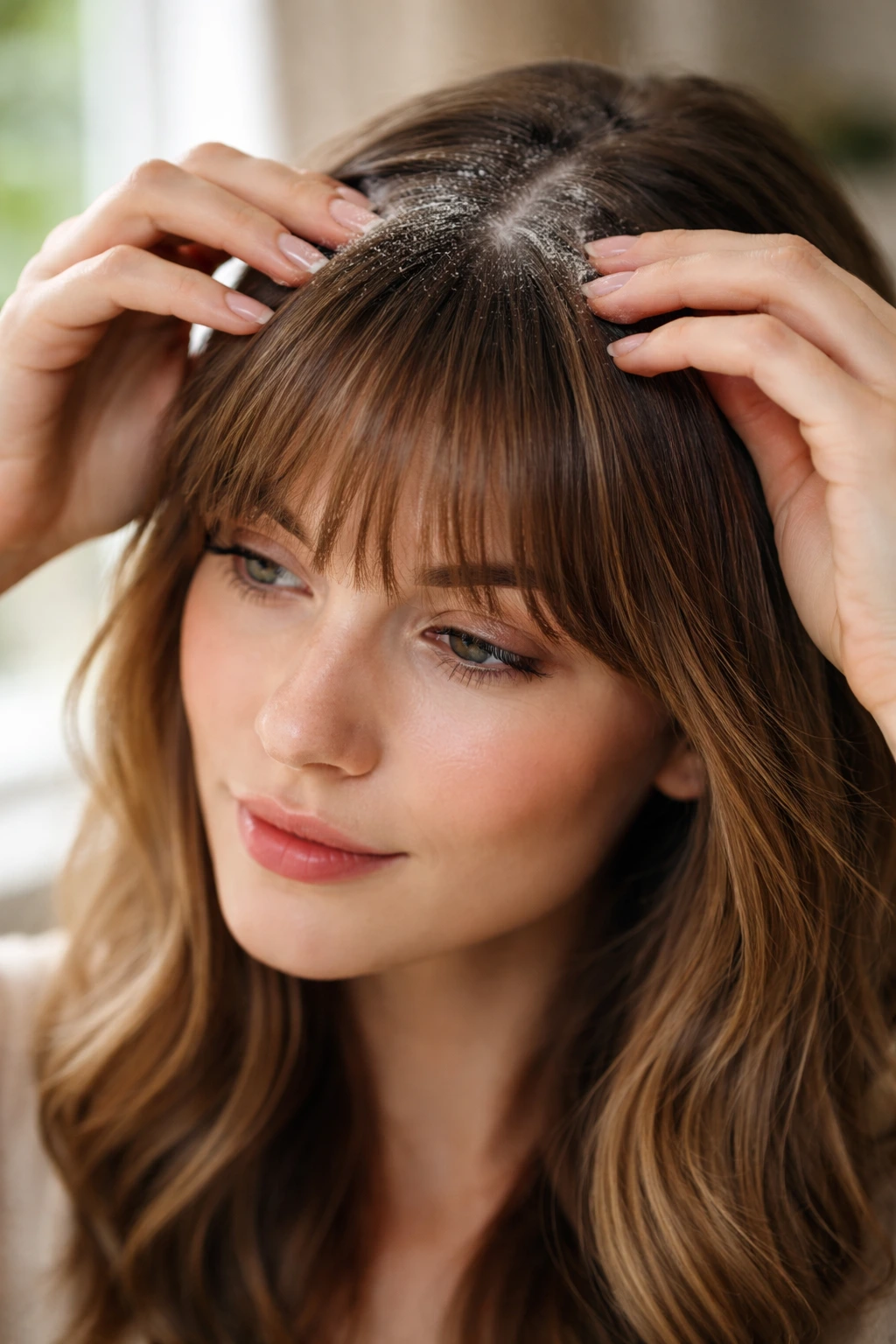
The greasy bang trap is the primary reason many people with fine hair avoid fringe. It starts when the bangs absorb the oils from your face, leading to that dreaded “stringy” look by midday.
Dry shampoo is the standard solution, but you must use it correctly. Don’t spray it directly onto the bangs. Spray it onto your fingertips first, then massage it into the roots of your bangs. This allows you to control the amount of product and prevents that powdery, white buildup that fine hair cannot hide.
The “No-Touch” Rule
This is the hardest rule to follow, but it is the most important: stop touching your hair. Every time you push your bangs out of your eyes, you are transferring oils from your hands to your hair. The more you touch, the faster they will get greasy.
The Final Verdict on Bang Maintenance
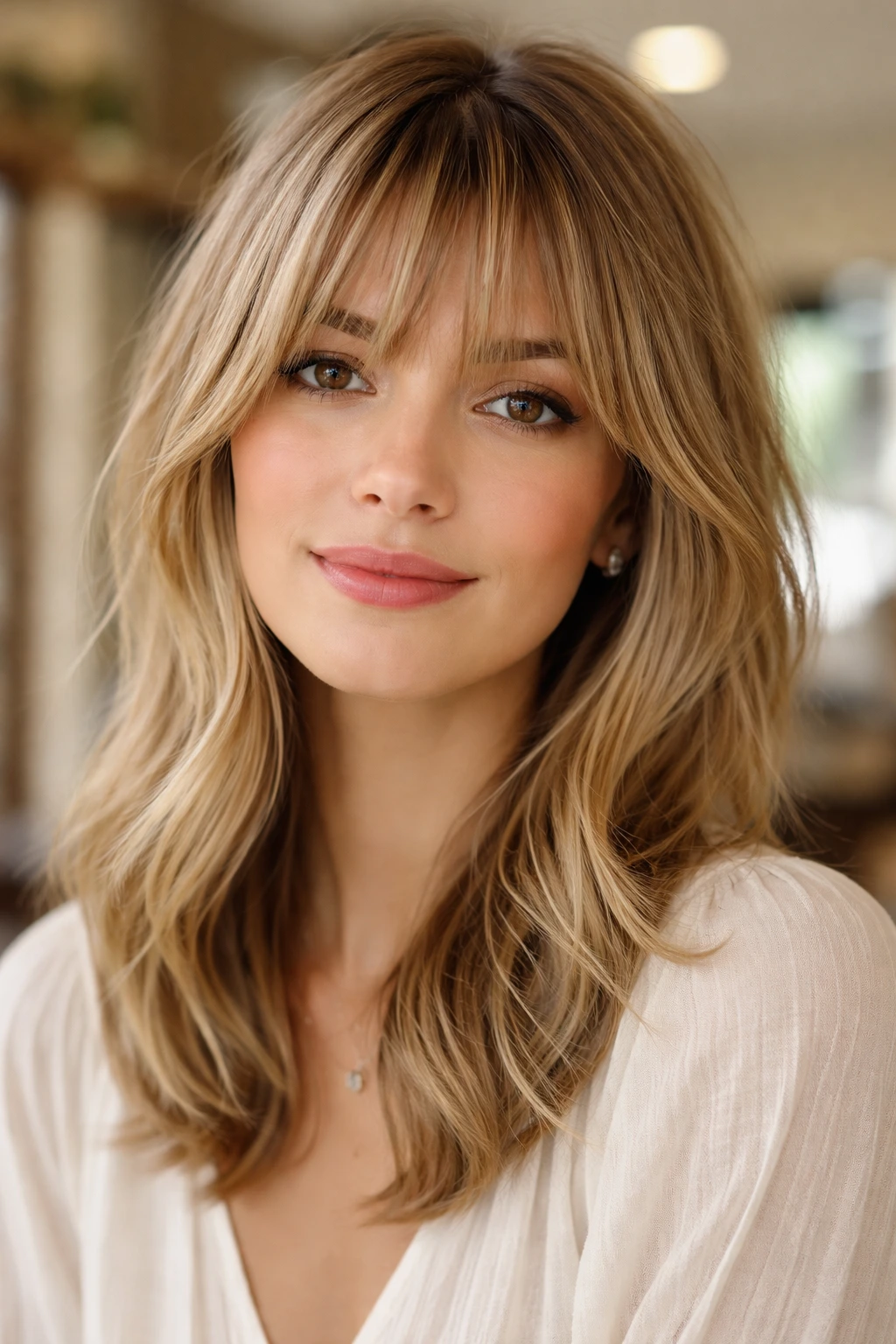
The reality of French bangs is that they require a bit of upkeep. They are not a “set it and forget it” style. Because fine hair grows quickly and loses its shape easily, you should expect to see your stylist for a “fringe trim” every 4 to 6 weeks.
Many salons offer these for free or for a very low cost as a courtesy between haircuts. Don’t be afraid to ask. If you try to trim them yourself at home, you run the risk of cutting them too short or creating a line that is too blunt.
Developing Your Style
It takes time to learn how your hair reacts to different products and drying techniques. Some days, your bangs will look like they came out of a magazine. Other days, they might just want to be flat. That is okay. The French aesthetic is built on embracing those days. If they don’t sit right, pin them back with a decorative clip or sweep them to the side. The goal is to feel comfortable and confident, not perfect.
