



Round faces and blunt bangs do not always get along.
A heavy fringe can make the face read wider, while a soft, broken-up cut can do the opposite: it pulls the eye upward, adds lines where the face is naturally curved, and keeps the forehead from feeling boxed in. That’s why short wispy bangs can be such a smart move here. They give shape without that hard wall of hair across the front.
The trick is in the cut. A good wispy fringe is rarely one clean line; it’s a mix of tiny lengths, softened corners, and just enough forehead showing through to keep the whole thing light. Short is fine. Choppy is fine. What usually fails is density. Too much hair in the bang area turns into a shelf, and nobody wants a shelf on a round face.
I’m partial to bangs that look a little imperfect. They move, they shift, they don’t demand a full production every morning. If your face is round and you want something fresh without losing balance, these 15 versions are worth a serious look.
1. Brow-Grazing See-Through Fringe

This is the easiest place to start. A brow-grazing see-through fringe gives you the feel of bangs without building a hard line across the face, which is exactly why it flatters rounder shapes so well. The spaces between the strands matter here. They let the forehead show through and stop the cut from feeling heavy.
Why it flatters a round face
The center sits close enough to the brows to feel intentional, but the density stays light enough that the face still opens up. That small gap of skin above the eyebrows adds a little vertical space, and that matters when your face has soft curves all the way around.
Ask for point cutting, not a blunt edge. A stylist who snips into the ends at different angles will give you that airy finish instead of a block. If your hair is straight, this one falls fast and clean. If it’s wavy, it gets a softer, lived-in bend.
- Keep the middle just at or a touch above the brow line.
- Let the sides graze the temples instead of stopping at the outer eyebrow.
- Style with a small round brush and low heat.
- Skip heavy creams; they clump the strands.
Tip: if the bang area dries too flat, mist it with water and redirect it with the brush for 20 seconds. That tiny reset changes the whole shape.
2. Soft Side-Swept Arc
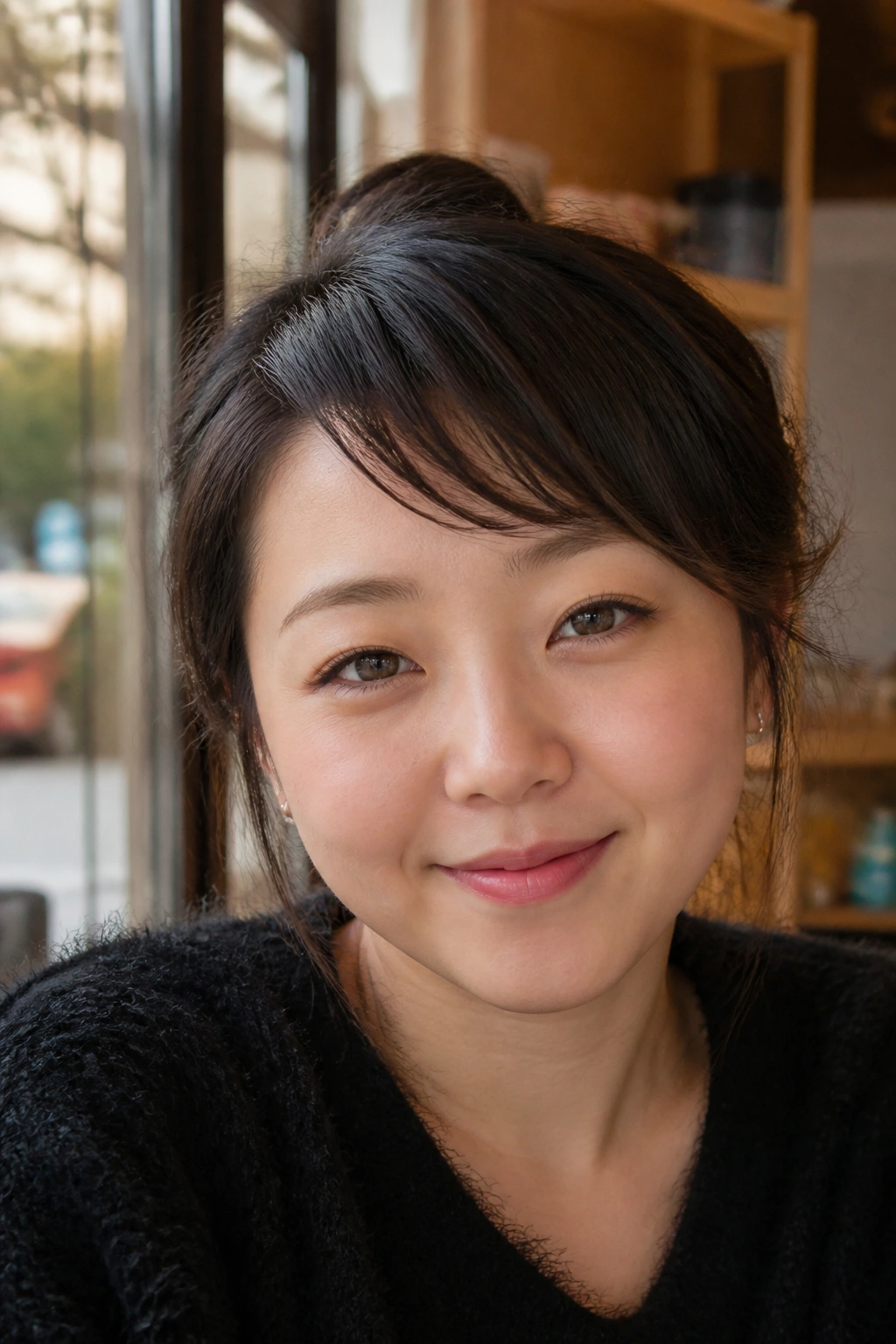
Side-swept wisps are not boring. On a round face, they can do more shape work than a dramatic blunt bang ever will.
The diagonal line is the point. Instead of cutting across the forehead, the hair moves from a shorter point near one brow into a longer sweep that melts toward the temple and cheekbone. Your eye follows that line, which softens the width of the face and gives the front of the haircut some motion.
This version also behaves well if you have a cowlick or a strong natural part. You are not fighting the hair. You’re letting it lean where it already wants to go, then cleaning up the edge so it looks deliberate rather than accidental.
For styling, blow-dry the fringe across the forehead first, then clip it in place for a minute while it cools. That cooling step matters more than most people think. Once the hair sets, it holds the sweep instead of falling back into the middle of your face.
3. Choppy Baby Bangs with Tapered Ends

Can baby bangs work on a round face? Yes, if they’re broken up enough to keep the forehead from feeling boxed in.
A short baby bang can go wrong fast when it’s cut as one straight strip. The fix is texture. You want tiny, uneven ends, a little separation between strands, and corners that soften into the haircut instead of sitting like a hard frame. Done right, the cut gives edge without adding width.
How to wear them
The best version usually stops somewhere between mid-forehead and just above the brows, but the ends should not all sit at the same level. That unevenness is what keeps the fringe from reading too severe. On fine hair, a pea-size dab of matte paste is enough. On thicker hair, a dry texture spray gives the pieces grip without making them sticky.
This style is strongest on straight or lightly wavy hair. Curly textures can wear it too, but shrinkage gets real fast. If you like a clean brow line and a sharper feel, this is the boldest option on the list. If you want softness first, keep reading.
4. Bottleneck Wispy Bangs Cut Short
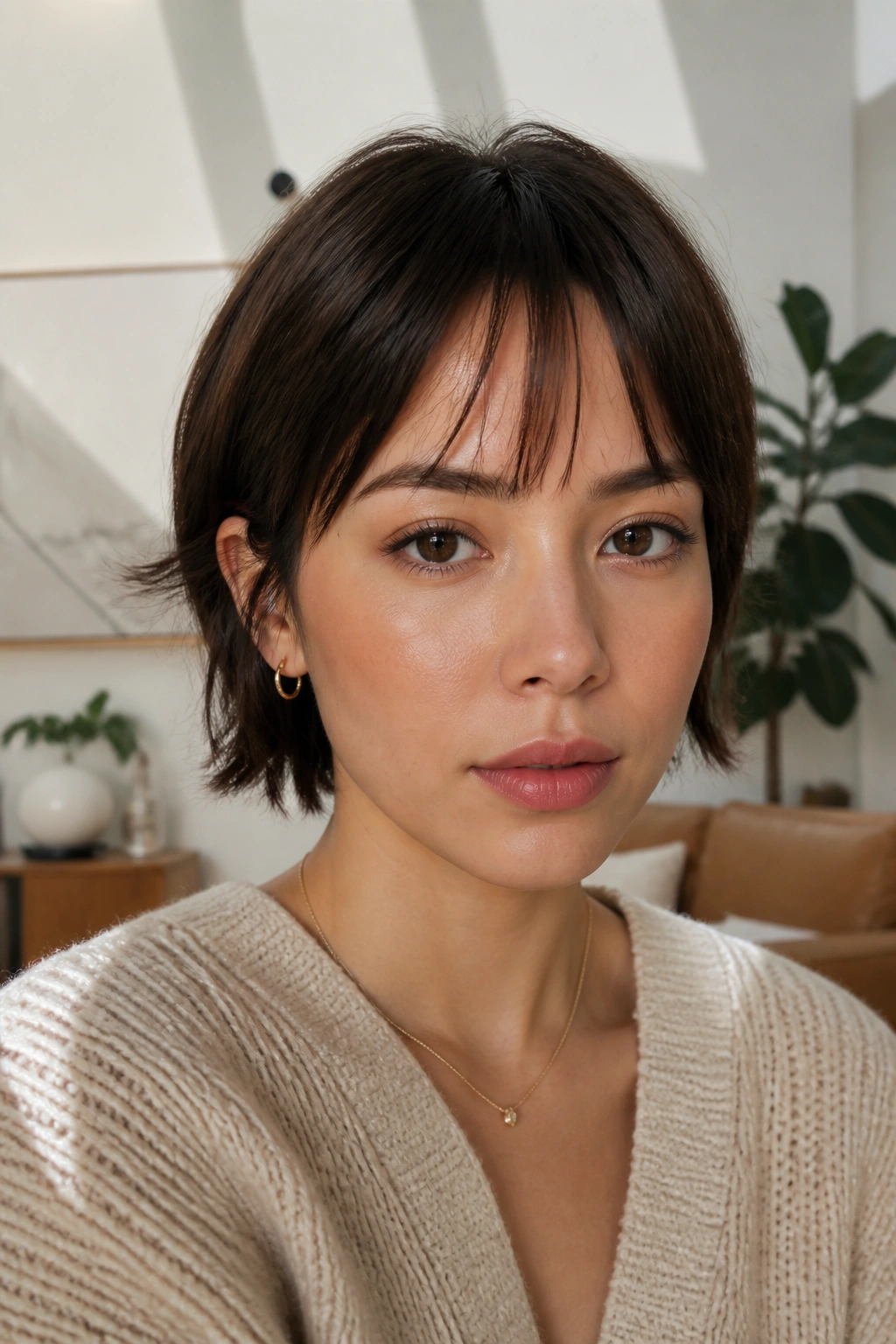
If you like the idea of short bangs but hate the helmet effect, bottleneck bangs are the neatest compromise.
They start narrow in the center, then open out a little as they move toward the temples. That shape matters on a round face because it gives the forehead breathing room while still holding enough hair near the top of the face to feel styled. It’s a subtle shape, but subtle is often the point.
- Keep the center piece about 1/2 inch to 3/4 inch above the highest brow point.
- Let the side pieces graze the upper cheekbone area.
- Ask for a soft bevel, not a crisp horizontal edge.
- Blow-dry the center forward and the sides slightly outward.
The whole cut feels easy once it grows out a little, too. That makes it useful if you don’t want bangs that look strange after three weeks. Short bottleneck fringe keeps its shape longer than a tiny blunt bang, and it still leaves your face open where it needs to be open.
5. Piecey Curtain Bangs Trimmed Short

Curtain bangs do not need to be long to work.
The short version usually sits around the brow line, sometimes a little higher, and splits away from the middle so the forehead stays partly visible. On a round face, that opening is doing a lot of heavy lifting. It creates a vertical line through the center of the face and pushes some attention toward the eyes instead of letting everything bunch at the cheeks.
What I like about this cut is how easy it is to live with. It has enough length to tuck into the rest of the haircut on lazy days, but it still falls forward when you want a little shape. That flexibility is gold if you wear your hair up a lot.
Style it with a medium round brush, directing each side away from the face and giving the ends a soft bend. A light texture spray at the roots keeps the split from collapsing into one flat curtain. If your hair is wavy, even better. The natural bend gives the fringe a softer drape and keeps it from looking too staged.
6. Feathered Fringe That Curves at the Temples

Unlike a straight-across fringe, this one bends quietly toward the temples, and that bend is the whole point.
A feathered fringe like this gives the face a longer line near the sides, which helps a round shape look less circular. It does not shout for attention. It just changes where the eye lands. The face feels a little narrower, a little more lifted, and a lot less boxed in.
This is a good choice if you wear glasses, too. The curved edge keeps the bangs from crashing into the frame line, which is a problem I see all the time with straighter cuts. Ask for slide cutting or light point cutting through the corners so the ends don’t sit in one blunt row.
Who does it suit best? Medium to thick hair that can hold a soft sweep without going limp. If your hair is super fine, you may need a bit of root lift or the fringe can drop too close to the forehead. That’s manageable, but it’s worth knowing before you commit.
7. Shattered Wispy Bangs with a Center Split
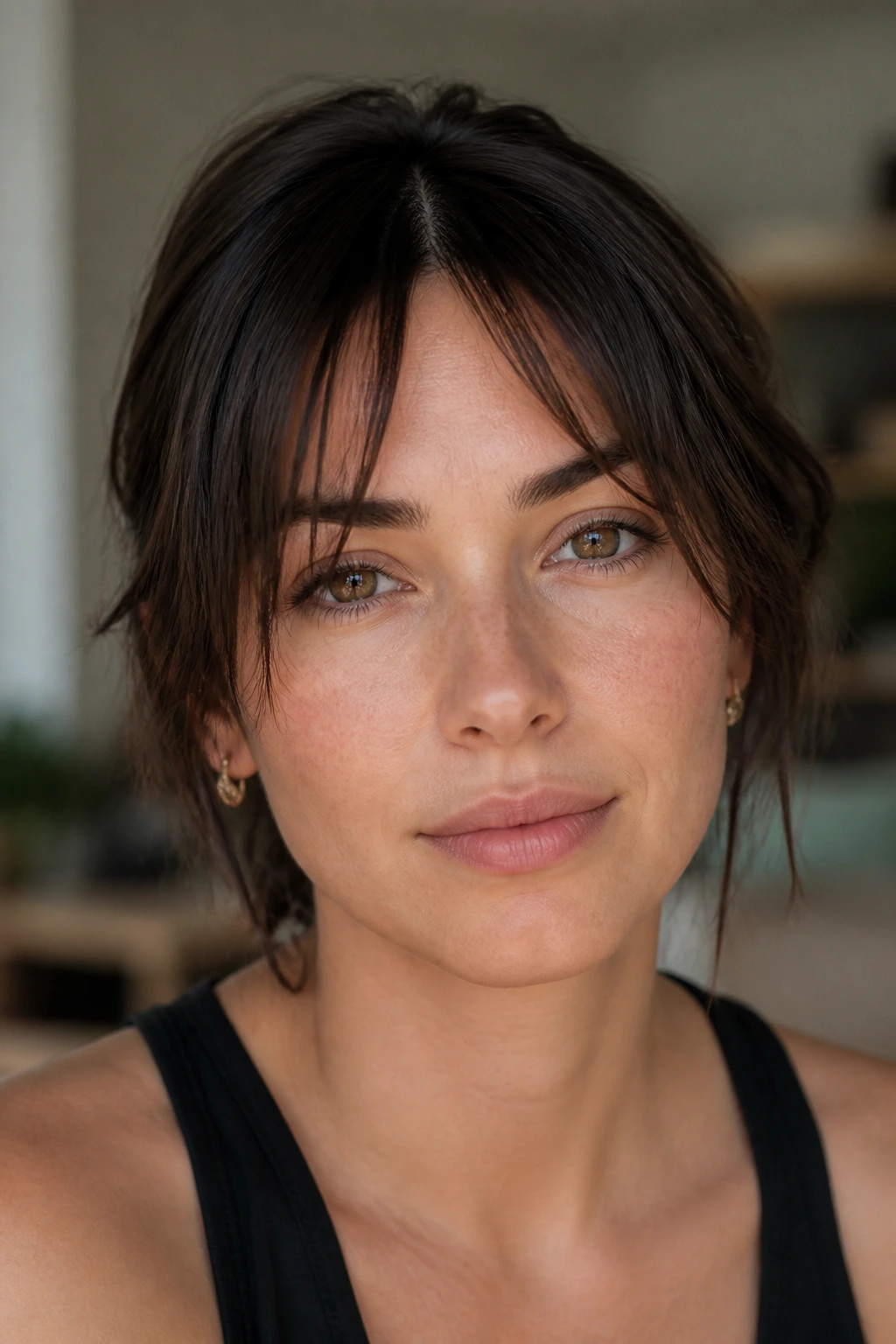
Some bangs look best when they are not trying too hard.
A shattered fringe with a center split gives you that feeling immediately. The split opens the middle of the forehead and turns the bangs into two diagonal pieces, which is useful on a round face because diagonals bring shape where curves already dominate. It’s a small thing, but it changes the whole read of the haircut.
What makes the split matter
If the part is too neat, the bangs can feel fussy. Let it stay loose. The strands should fall in uneven bits rather than mirror each other perfectly. That broken edge keeps the fringe light and stops it from feeling like a mini curtain.
- Keep the split soft, not ruler-straight.
- Let the shortest bits touch mid-forehead or the brow area.
- Use a tiny amount of styling cream, then pinch the ends apart.
- A touch of dry shampoo on day two helps the separation last.
I like this one for people whose hair has a little natural movement and for anyone who hates constant combing. It looks better when it is slightly imperfect. Frankly, that’s why it works.
8. Temple-Skimming Fringe for Round Cheeks

If your cheeks are the widest point on your face, this is the safest short fringe I know.
The idea is simple: keep the center short enough to feel like bangs, then let the sides skim the temples so the width is moved upward instead of sitting right over the cheeks. That shift matters more than people think. A round face usually looks best when the bang shape supports length, not width, and temple-skimming pieces do exactly that.
You can ask for this with a soft center and longer side points that angle outward by the time they hit the temples. No dense block. No hard corner at the outer eye. The whole thing should feel lifted and airy, like the fringe is opening instead of closing down.
This style also pairs well with layered cuts because it blends into the front of the hair instead of sitting on top of it. If your haircut already has movement around the jaw, these bangs add another diagonal line without stealing the show. That balance is the reason I keep recommending them.
9. Curly Wispy Bangs That Sit Lightly

Can curly hair wear short wispy bangs? Absolutely. It just needs a cut that respects shrinkage.
The biggest mistake is cutting curly fringe too short when it’s wet and stretched. Once the curl springs back, the bangs can jump an inch or more. For a round face, that can mean the fringe sits too high and pushes all the attention to the widest part of the face. Cut dry if you can. Or at least cut with the curl pattern visible.
How to use it
Leave a little extra length in the center and shape the sides so they feather outward rather than puff straight across the forehead. Diffuse on low heat, then separate the curls with fingertips once they’re dry. A small amount of cream is enough; too much product makes curly bangs clump and lose that wispy feel.
This version is lovely when the curls are soft and springy rather than tight and uniform. It gives height near the forehead and keeps the shape from going wide. If your hair leans into volume at the sides, ask your stylist to keep the fringe narrow and piecey so the width stays controlled.
10. Shaggy Wispy Bangs with Face-Framing Layers
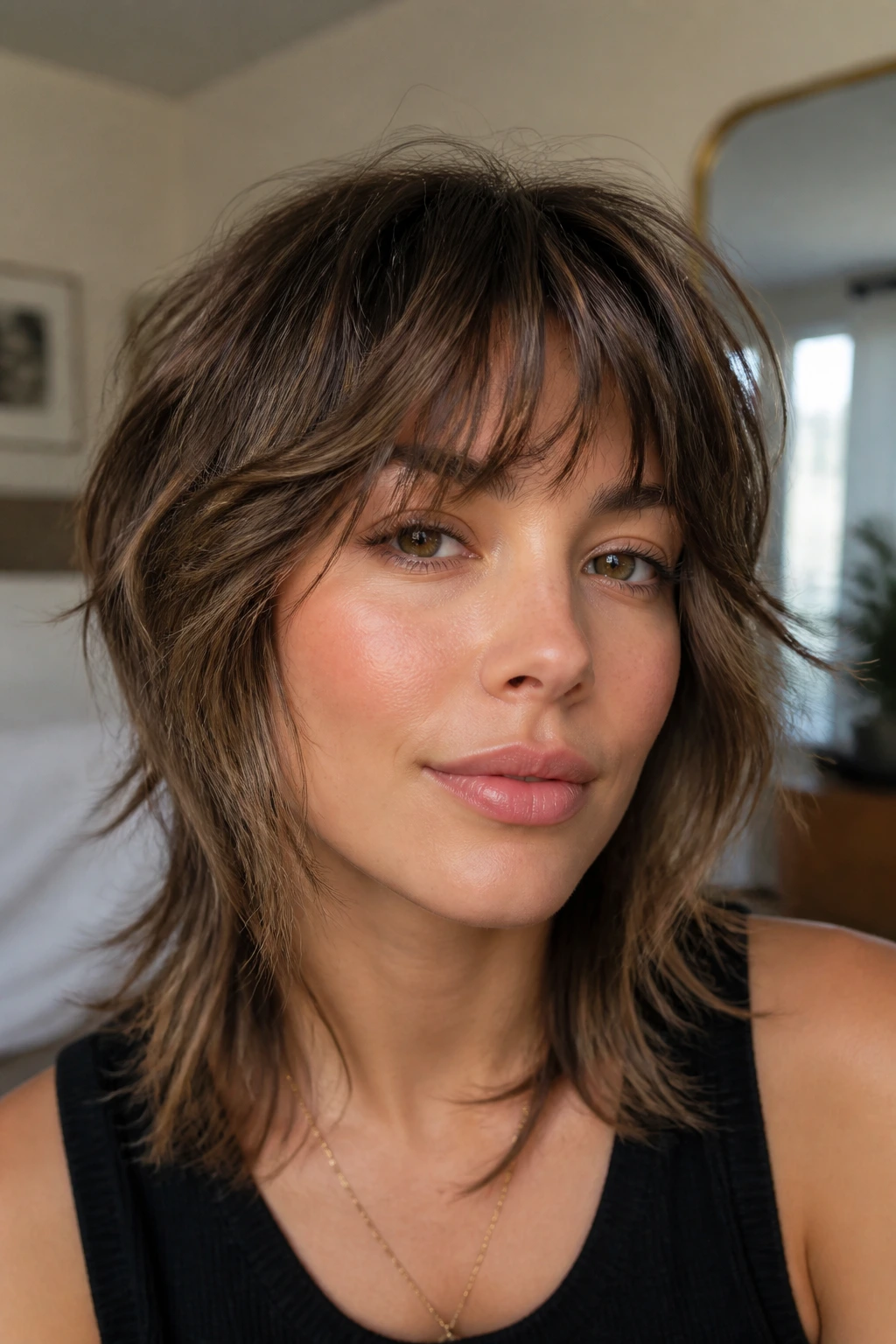
A shag cut can save you from overthinking bangs.
That’s the charm here. The fringe does not sit alone as a separate piece. It melts into the rest of the haircut, and that blending is useful on round faces because it removes the obvious horizontal line that can make a face feel broader. Everything falls in one loose, broken shape instead of one straight stripe.
The short wispy bang in a shag usually sits around the brows and then breaks apart into shorter layers at the temples. It looks especially good when the rest of the cut has a little roughness to it. Clean, polished hair can wear this too, but the haircut really wakes up when there’s texture and movement.
A quick blast from the blow-dryer with your head upside down gives the roots some lift. After that, scrunch in a light spray or rough-dry it with your fingers. You do not need perfect symmetry here. A little mess makes the whole thing feel more relaxed and less round-face-obsessed, which is honestly part of the appeal.
11. Razor-Cut Micro Fringe with Soft Corners

A razor-cut micro fringe can look sharp, but the soft corners keep it from taking over the face.
That makes it a stronger choice than a blunt micro bang for round faces. The razor work gives the ends a broken, airy finish, and the soft corners keep the eye moving outward instead of stopping dead at one thick line. You get edge. You also get some forehead visible, which stops the cut from feeling heavy.
This one asks for confidence, and a little upkeep. The shorter the bang, the faster you notice growth, so plan on trims every few weeks if you want the shape to stay crisp. The upside is that the style wakes up the eyes and works especially well with strong brows, because the bang does not fight them for attention.
I would not call this the easiest option. It is a choice. But if you like clean lines, low density, and a fringe that feels sharp without feeling severe, it has a nice bite to it.
12. Tapered Fringe That Opens in the Middle

Do you want bangs that disappear into the rest of your haircut? This is the one.
A tapered fringe opens in the middle and gets a touch longer toward the sides, which makes a round face look less boxed in. The center still gives you bang coverage, but the opening breaks up the width across the forehead. That little gap is doing the slim-down work.
Unlike full bangs, this style does not ask you to commit to one look every day. You can wear it straight down, split it with your fingers, or push it off-center when you want a softer line. That flexibility matters if your hair changes with humidity or if you hate fighting a cowlick each morning.
For styling, blow-dry the fringe forward first, then sweep the center slightly apart with a brush or your fingers. A flat brush works better than a huge round one here because you want control, not a big bend. If your stylist point-cuts the edges at an angle, the fringe will grow out in a nicer way too.
13. Airy Fringe for Thick Hair

Thick hair needs less bang, not more.
That’s the part people miss. Dense hair can turn a short fringe into a heavy curtain in a matter of minutes, and on a round face that heaviness usually feels like more width. The fix is to remove bulk without stripping the fringe bare. You want air between the strands, not a solid wall.
Ask for internal texture, a soft perimeter, and a center that is slightly lighter than the sides. I’m cautious with thinning shears around the edge because they can fray the ends if they’re overused. Point cutting is safer. So is slide cutting in the hands of someone who knows when to stop.
A blow-dryer nozzle aimed downward at the roots helps keep the fringe from puffing out. Finish with a small round brush only at the ends, just enough to give a bend. If your hair is very thick, you may prefer the shortest point to sit a touch lower at first, since thick bangs shrink up a little as they dry.
14. Feather-Light Fringe for Fine Hair
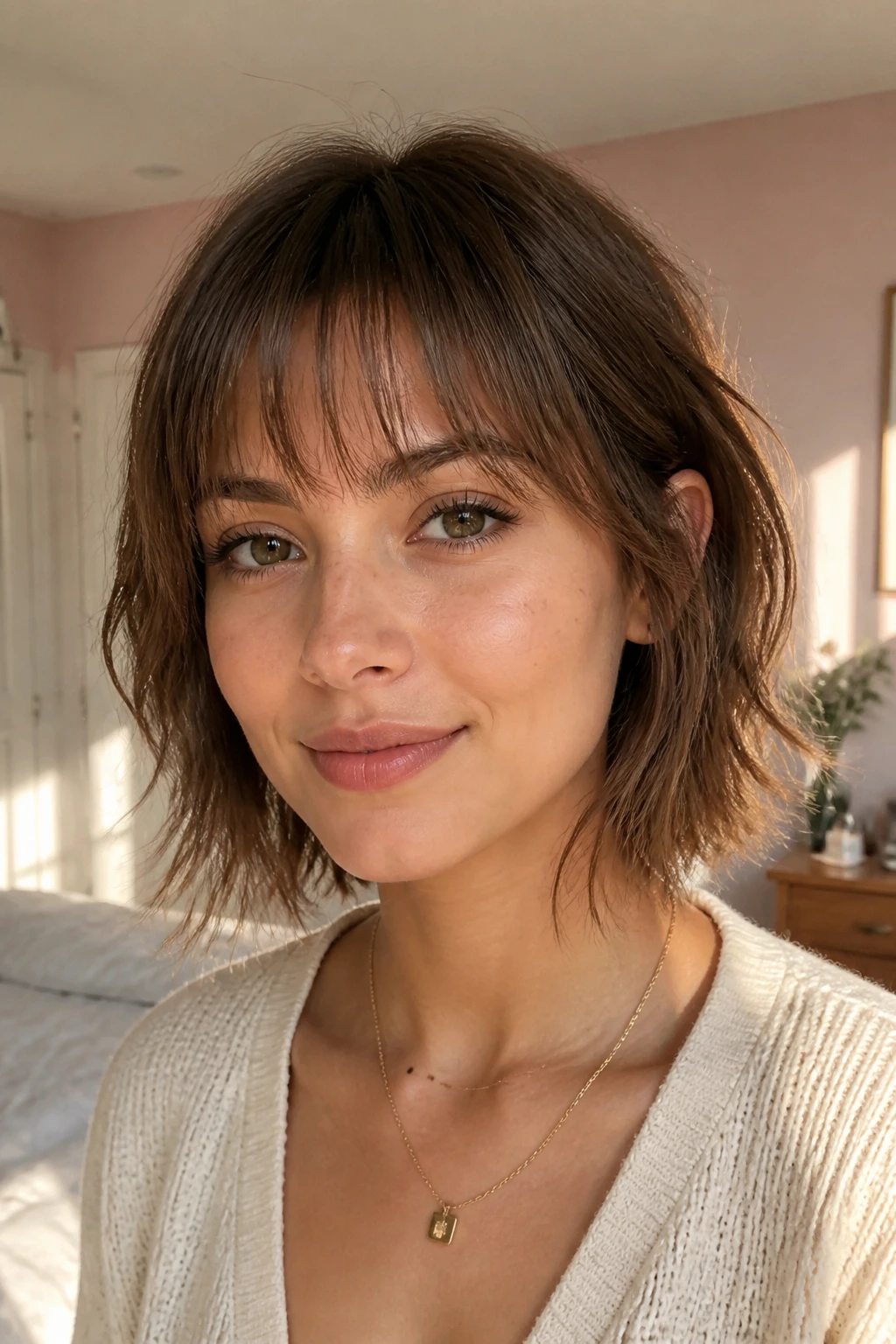
Do fine strands need a different short bang cut? Absolutely.
If the fringe is too sparse, it can split apart and show more scalp than you want. If it’s too heavy, it can fall flat against the forehead and lose all the wispy charm. The sweet spot is a soft, feather-light fringe with enough density in the center to read as bangs, plus tapered edges that keep the shape open.
How to keep it from looking stringy
Use root lift at the bang area, not through the ends. A light volumizing spray or mousse at the base gives the hair some body without turning it stiff. Dry the bangs side to side first, then bring them back to the center. That little movement creates lift.
- Keep the center slightly denser than the edges.
- Avoid heavy oils near the fringe.
- Use a tiny round brush or a flat brush, depending on your texture.
- Trim often enough to keep the shape from falling apart.
This style is good if you want something soft and delicate rather than sharply styled. It does not need much product, and that’s part of the appeal. Too much of anything—cream, oil, spray—will make it collapse.
15. The Soft Everyday Fringe to Start With

If you want one version that is easy to live with, pick the soft everyday fringe.
It sits between side-swept and see-through, which is why it works so well on round faces. The cut gives you some forehead coverage, some movement at the temples, and enough softness that the bangs do not feel like a separate object sitting on top of your face. They belong to the haircut. That’s the goal.
This is the version I’d point a nervous first-timer toward. You can wear it straight, split it, tuck it, or let it drift a little off center when you’re in a rush. It grows out without causing a scene, which matters more than people admit. A fringe that only looks good on salon day is not much of a win.
- The shape is easy to restyle with fingers.
- It doesn’t sit hard across the widest part of the face.
- It works with ponytails, buns, and loose hair.
- It gives you room to adjust later if you want it shorter or softer.
If you’re standing in front of the mirror trying to decide, start here. It’s the cut that gives you options, and options are worth a lot when your face shape already has enough curve to deal with.
