



Round faces can wear bangs beautifully, but the cut has to earn its keep. Medium inverted bangs for round faces work because the center sits a little shorter while the sides drift longer, which breaks up that wide horizontal feeling across the cheeks.
That shape matters more than people think. A blunt fringe that lands in one straight line can make the face look wider, while a soft inverted shape pulls the eye upward and outward. It’s a small difference on paper. On your face, it changes everything.
The good versions are never stiff. They bend, skim, and move a little when you turn your head. The bad ones sit there like a shelf. If you’ve ever left a salon with bangs that looked cute in the chair and oddly heavy by lunch, you already know the difference.
Some of the ideas below lean airy and lived-in. Others ask for a round brush and a little patience. Both can work, as long as the fringe helps the face look longer instead of boxing it in.
1. Soft Center-Short Curtain Bangs
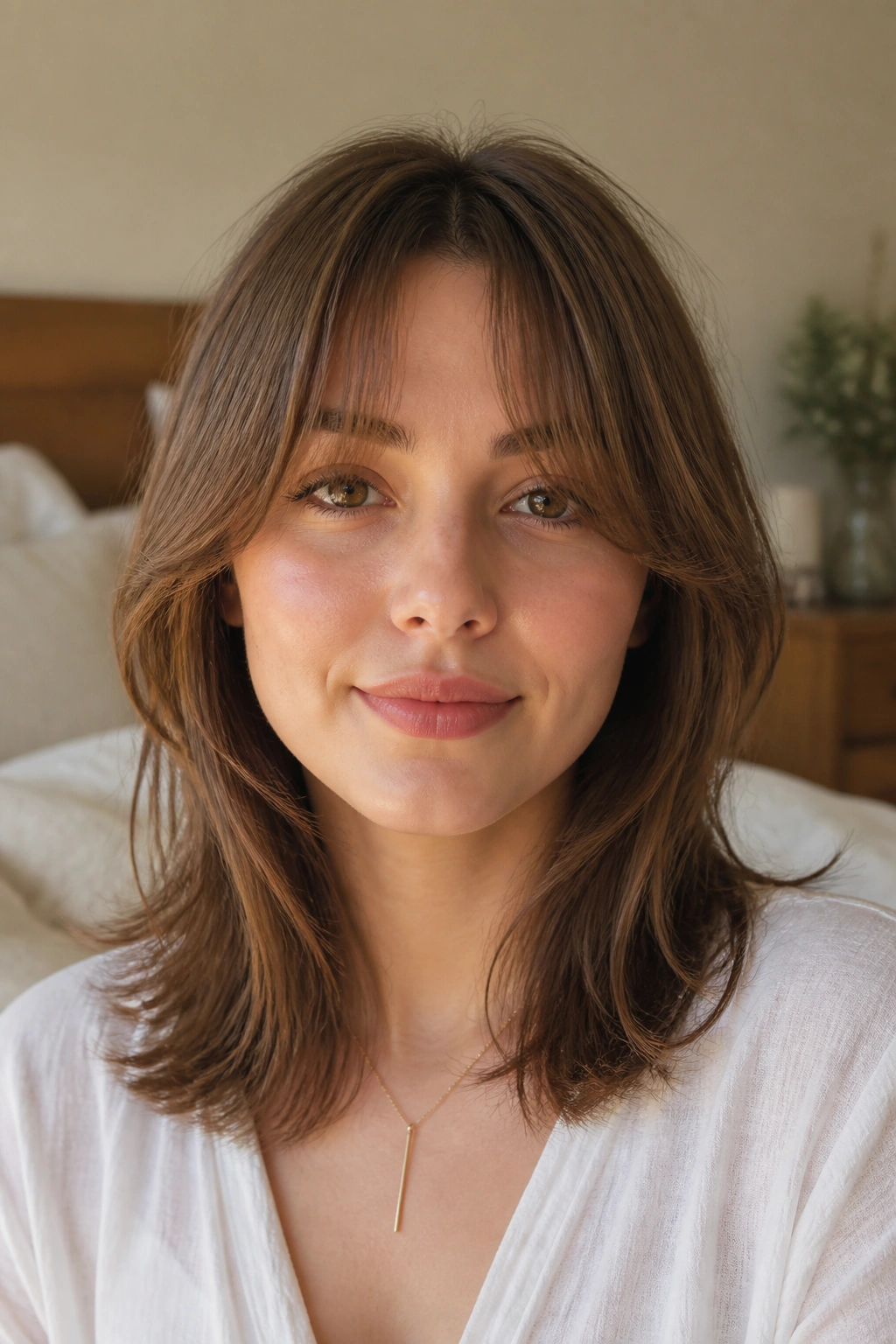
Soft curtain bangs are the easiest place to start if you want the inverted effect without a dramatic haircut commitment. The center lands around the brow line, then the pieces open out and skim past the cheekbones. That little bit of lift in the middle gives a round face a more vertical read right away.
Why the Center Lift Helps
The shortest point keeps the eye from settling on the widest part of the face. The longer sides do the real work; they blur the cheeks and make the cut feel more open.
- Ask for the middle to sit at the brow or just above it.
- Let the side pieces reach the outer eye or cheekbone.
- Keep the ends soft, not blunt.
Best tip: Blow-dry the center first, then guide each side away from the face with a small round brush so the curve stays gentle instead of flipping out.
2. Cheekbone-Grazing Bottleneck Fringe

This is the safest “dense enough to matter” fringe for a round face. A bottleneck shape starts narrow in the center and widens as it drops toward the temples, which gives the face a little structure without making the forehead look heavy.
The nice part is the length. It usually sits somewhere between the brows and the cheekbones, so it works with medium cuts instead of fighting them. That middle-short, side-long shape is doing quiet contour work. You can wear it with straight hair, loose waves, or a rough blowout, and it still reads intentional.
Ask for the shortest point to stay airy, not choppy, and make sure the sides are long enough to touch the upper cheek. If the corners stop too soon, the whole thing loses its shape. If they go too low, it starts to feel like regular face-framing layers instead of bangs.
3. Side-Swept Inverted Bangs
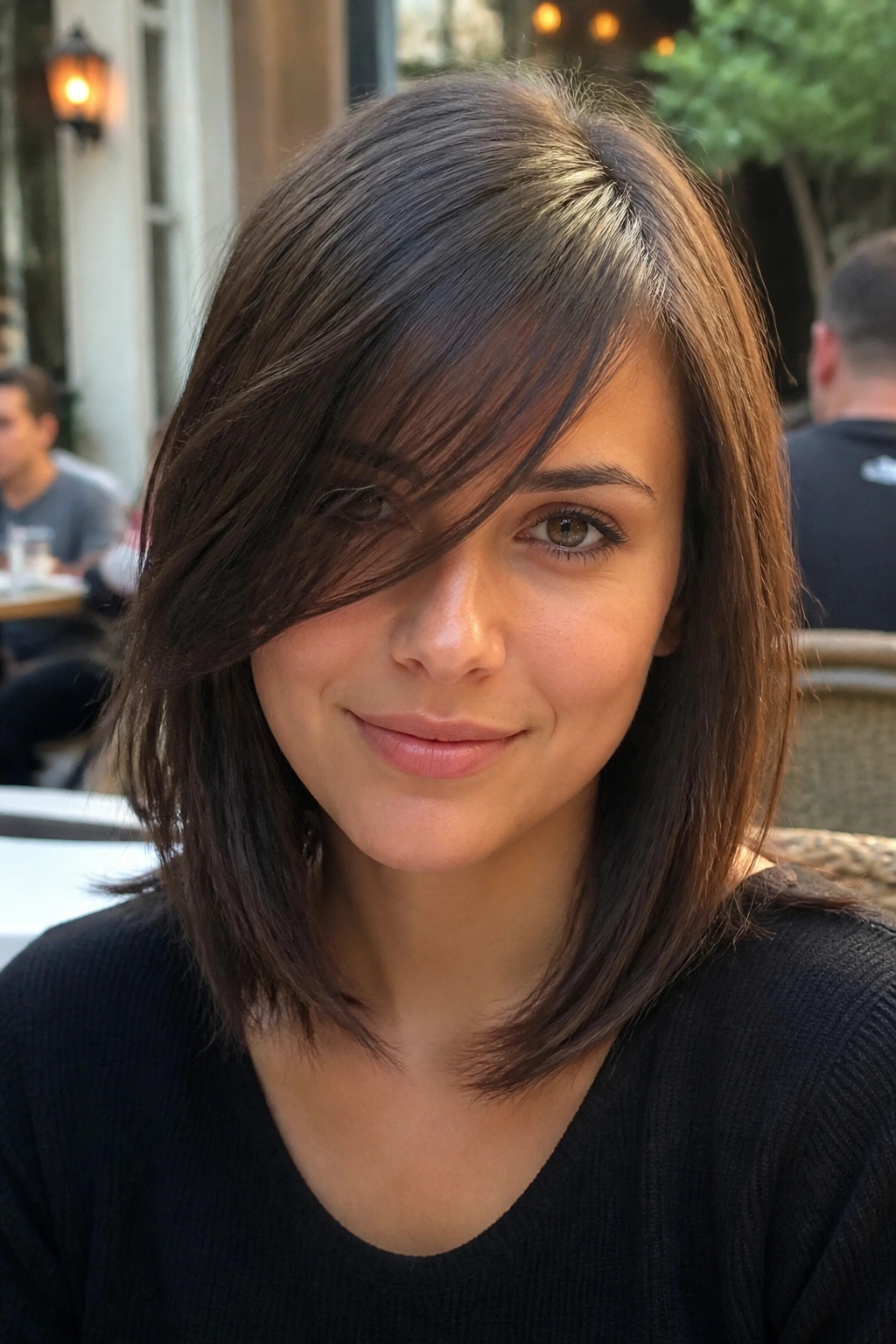
Can a side part change the whole feel of a round face? Yes, if the fringe is cut with enough slope to matter. Side-swept inverted bangs create a diagonal line across the forehead, and diagonals are your friend when you want to break up softness.
How to Ask for It
Tell your stylist you want the shortest section to start near the part and the longest piece to graze the cheekbone on the opposite side. That gives the fringe a clean sweep instead of a lazy bend.
A deep side part helps, but the cut is the real trick. The bangs need enough length to tuck, flip, or brush across the forehead without springing back into a blob. If your hair grows in with a strong cowlick, this is one of the more forgiving choices because the part already gives the fringe a direction.
It’s also one of the better options if you wear your hair in a lob or a shoulder-length cut. The angle in the bangs and the length in the rest of the hair work together. That matters.
4. Feathered French Bangs
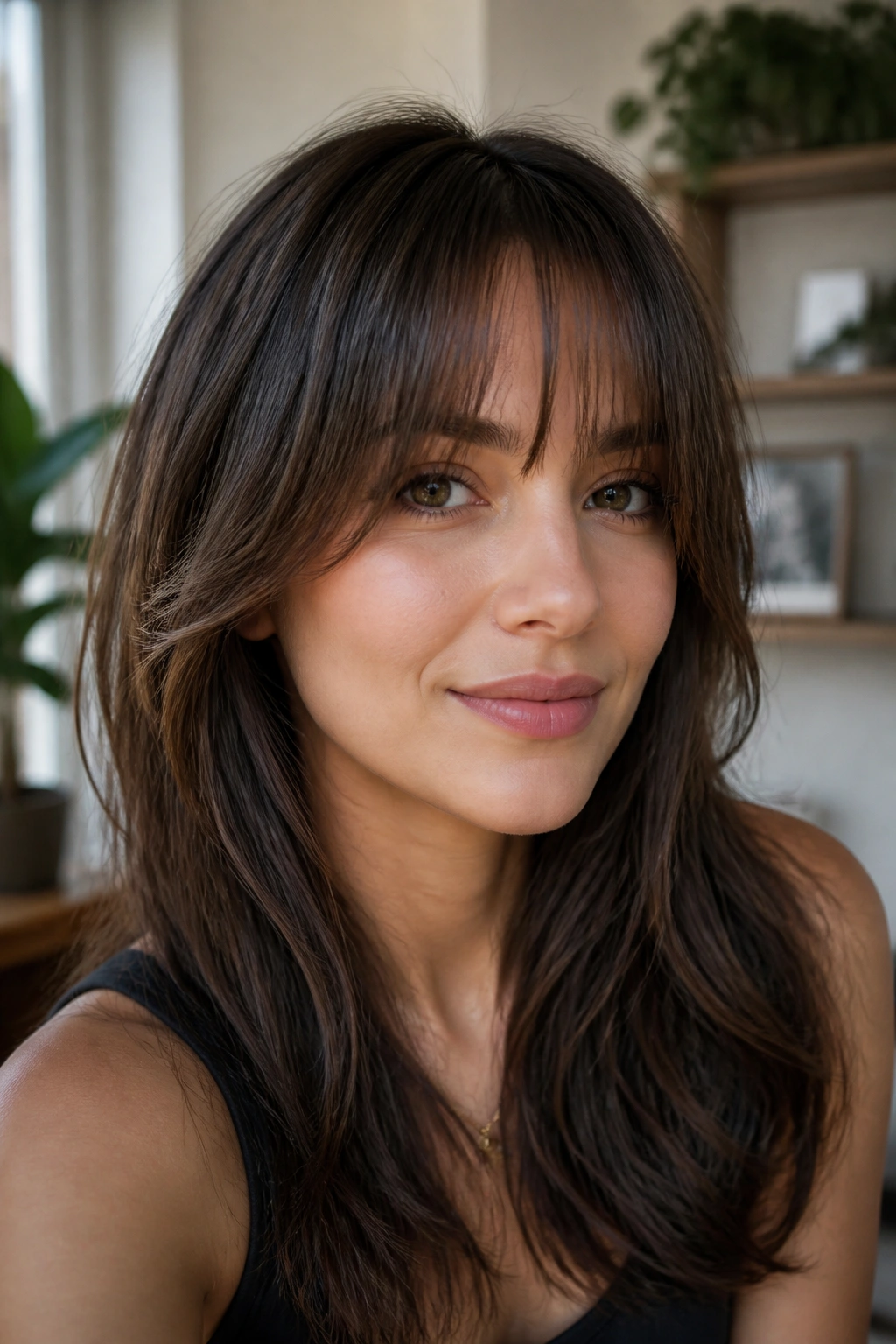
Picture someone who wants bangs but hates the helmet feeling. Feathered French bangs are usually the answer. They’re soft at the ends, a little piecey, and cut so the center opens the face while the sides drift into the rest of the haircut.
The feathering matters more than the label. A round face can look even rounder when the fringe is too dense, but broken-up ends take the edge off that horizontal line. The cut feels lighter because the hair isn’t sitting in one solid strip. It moves.
- Best on fine to medium hair.
- Works well with a light mousse or volumizing spray.
- Needs a trim before it gets too shaggy, or it loses the shape.
A good feathered fringe should look like it belongs with the haircut, not pasted on top of it.
5. Piecey Shattered Fringe

Piecey bangs do one thing really well: they stop the eye from reading the forehead as one wide block. That’s useful on a round face, where anything too even can make the face look fuller than it is.
The shattered look comes from uneven, softly separated strands rather than a clean line. It’s not the same as thinning the fringe into nothing. I’m not a fan of over-thinned bangs; they can go stringy fast and show every cowlick you own. What you want is movement through the ends and a little irregularity through the middle.
On medium-length hair, this style looks best when the rest of the cut has some texture too. A blunt shoulder-length cut with piecey bangs can feel mismatched. Add a few face-framing layers, and the whole thing settles down. Use a lightweight cream or a tiny bit of wax on the very ends, never the roots.
6. Blowout Bangs with Long Corners
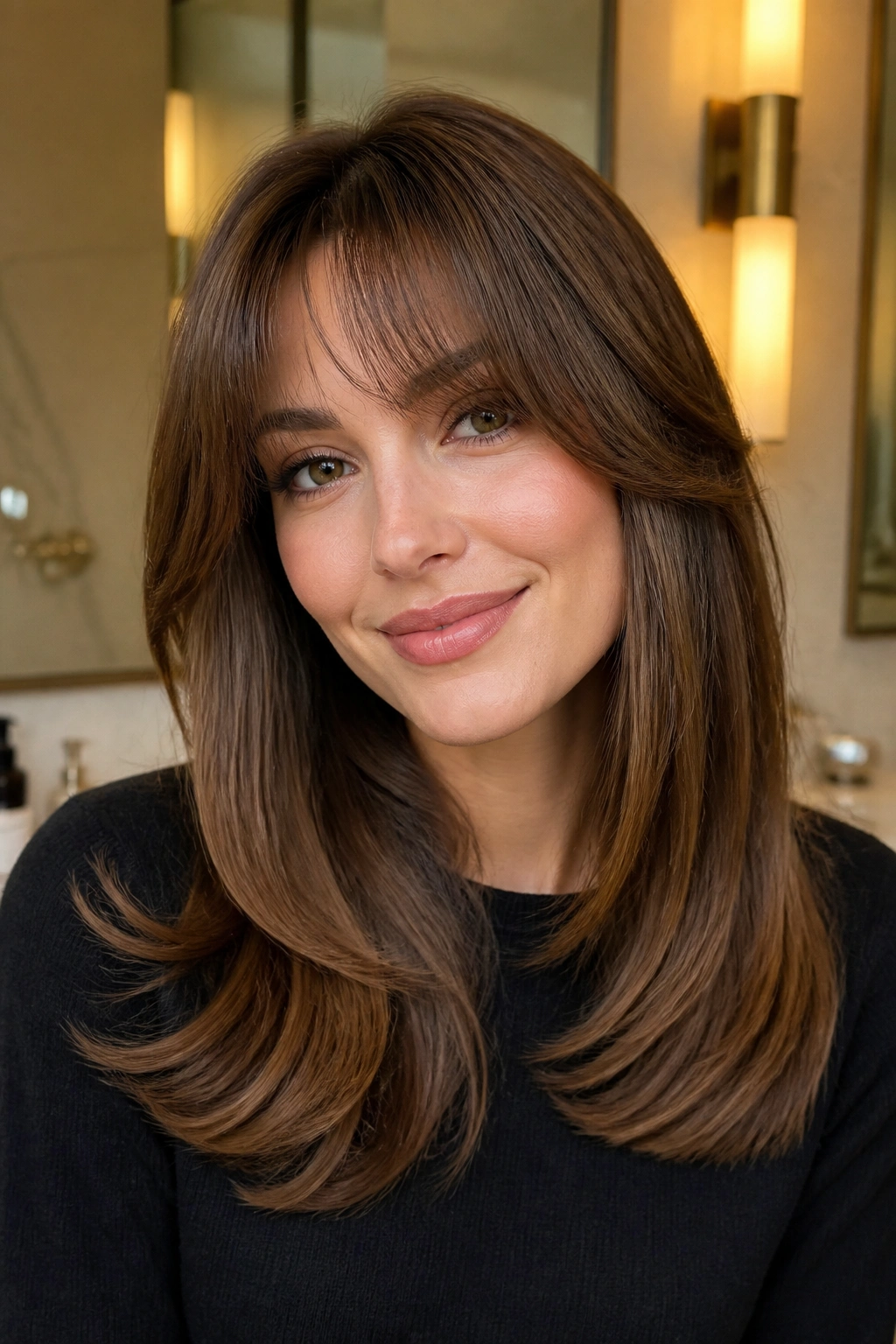
If you like a polished look, this is the one to save. Blowout bangs with long corners create a clean curve that starts shorter in the center and opens toward the cheekbones, which gives a round face more length without looking severe.
Unlike a blunt fringe, these bangs are meant to move. You dry them with tension, not a hard flat brush. A medium round brush and a couple of passes are usually enough. Too much heat, and the ends get flicky in the wrong way. Too little, and the fringe collapses into the forehead.
The long corners are the secret sauce. They draw the eye down the sides of the face, which is the opposite of what a wide, straight line does. This version works especially well if the rest of your hair has a little bend or volume at the ends. Keep the roots lifted, keep the corners soft, and skip heavy serum near the brow area.
7. Razor-Soft A-Line Fringe
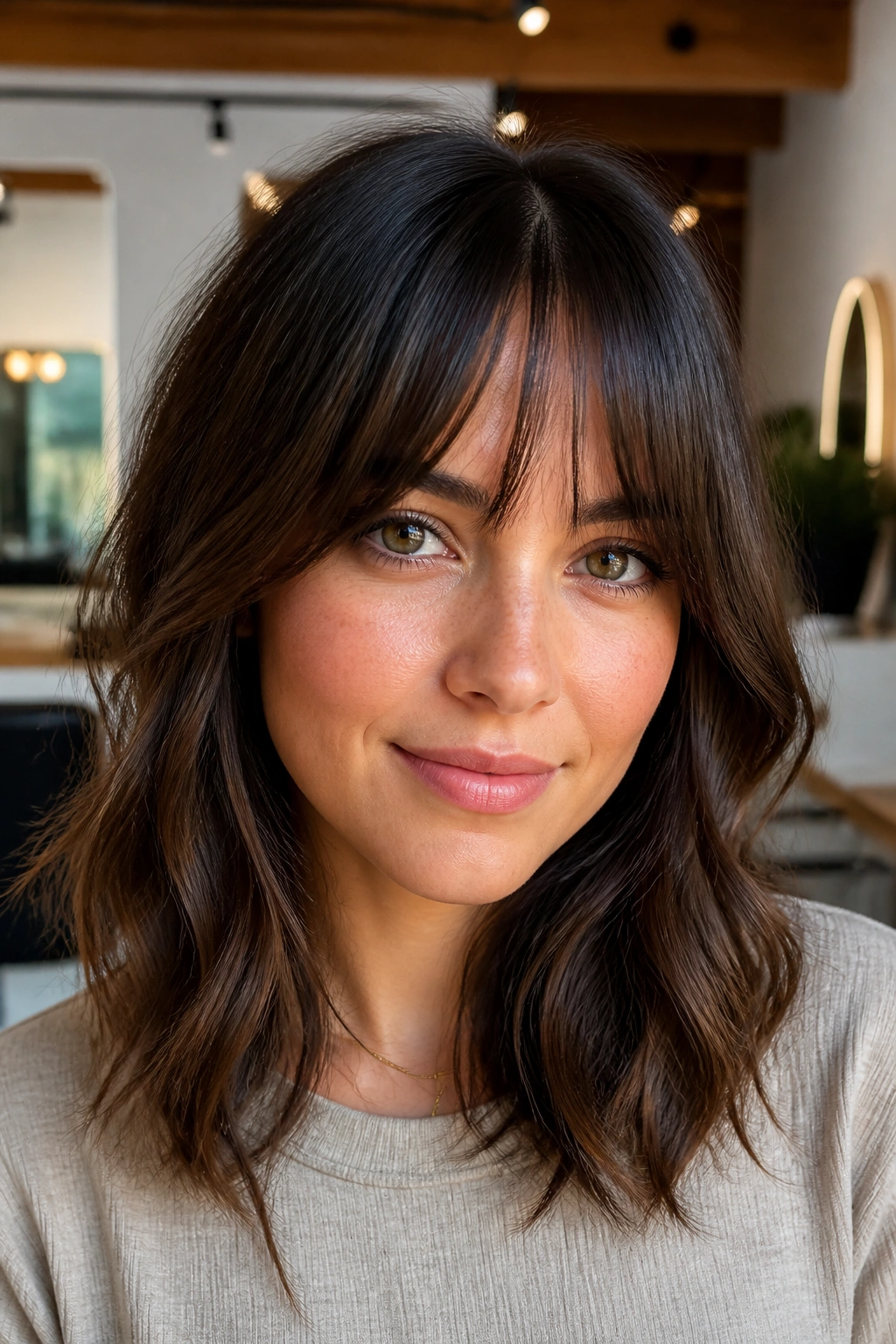
A razor-soft A-line fringe has a little edge to it, but not the harsh kind. The shortest point lands in the middle, then the shape extends gradually toward the temples. Think of it as a gentle triangle, not a sharp one.
What Makes the Angle Feel Soft
The cut should be refined enough to lie close to the forehead, yet loose enough to keep the face open. Razor cutting can help, but only when it’s done lightly. Too much razor work on fine hair can leave the ends wispy in a bad way.
- Best for straight or slightly wavy hair.
- Keep the center between brow and upper lash length.
- Let the sides touch the cheekbone or the top of the jaw.
A round face needs the angle, not the severity. That’s the difference. If you want a fringe that looks modern but still wearable every day, this is a strong choice.
8. Temple-Sweeping Split Bangs
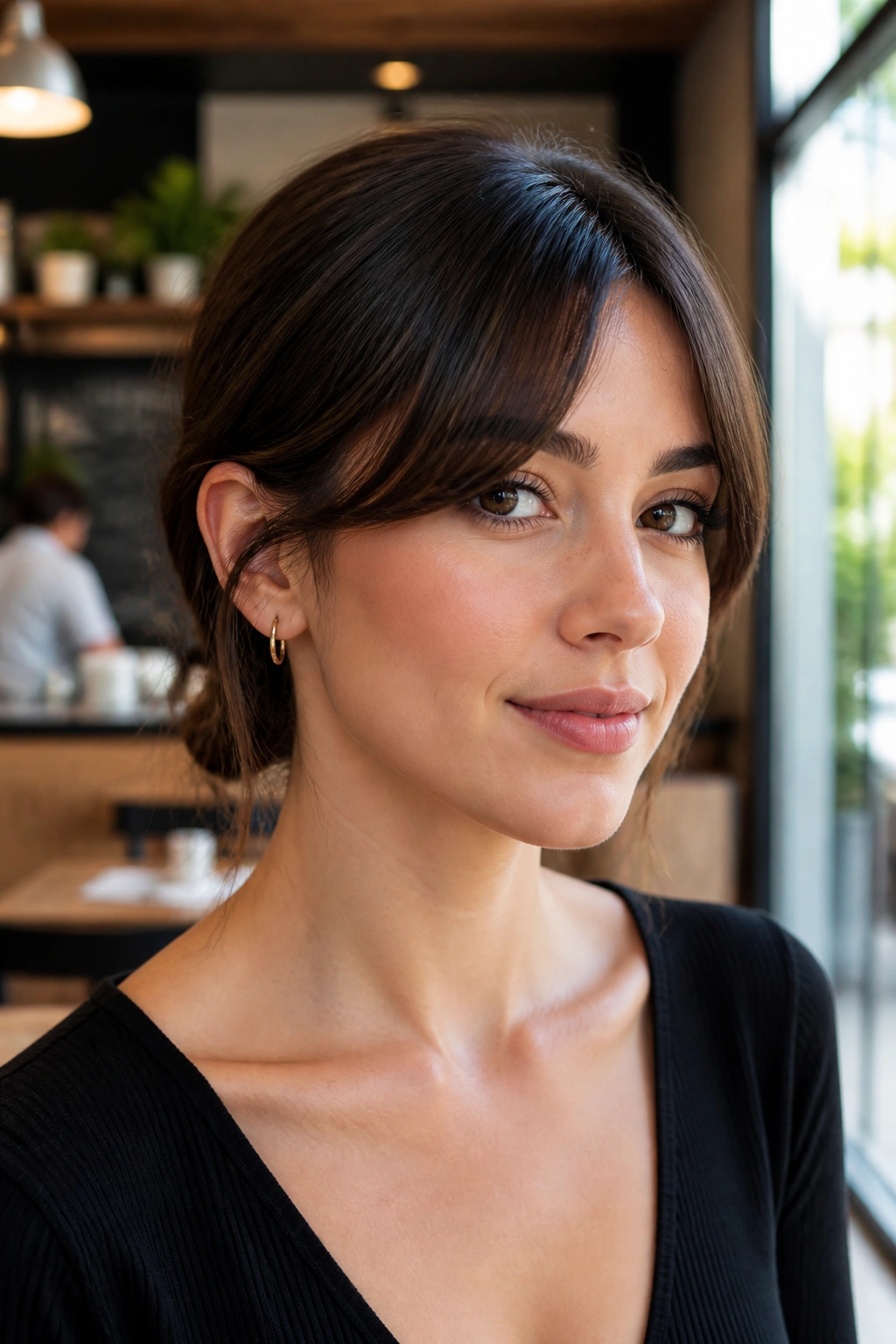
Temple sweeping is where the magic happens. A split fringe that opens at the center and widens toward the temples creates the kind of side emphasis a round face needs. It makes the forehead look taller and the cheeks look less dominant.
This cut usually sits at medium length, so it can be tucked behind the ears on lazy days or blown open for a more finished look. The split doesn’t have to be perfect. A slight off-center part can make it feel softer and less posed.
The most useful part is the way the fringe connects to the sides of the haircut. If the hair around your temples is too short, the whole effect stops. If it’s long enough to skim the outer cheek or the top of the jaw, the face gets a better frame. Ask for the middle to stay airy and the temple pieces to melt into the rest of the cut.
9. Wispy Inverted Bangs for Fine Hair
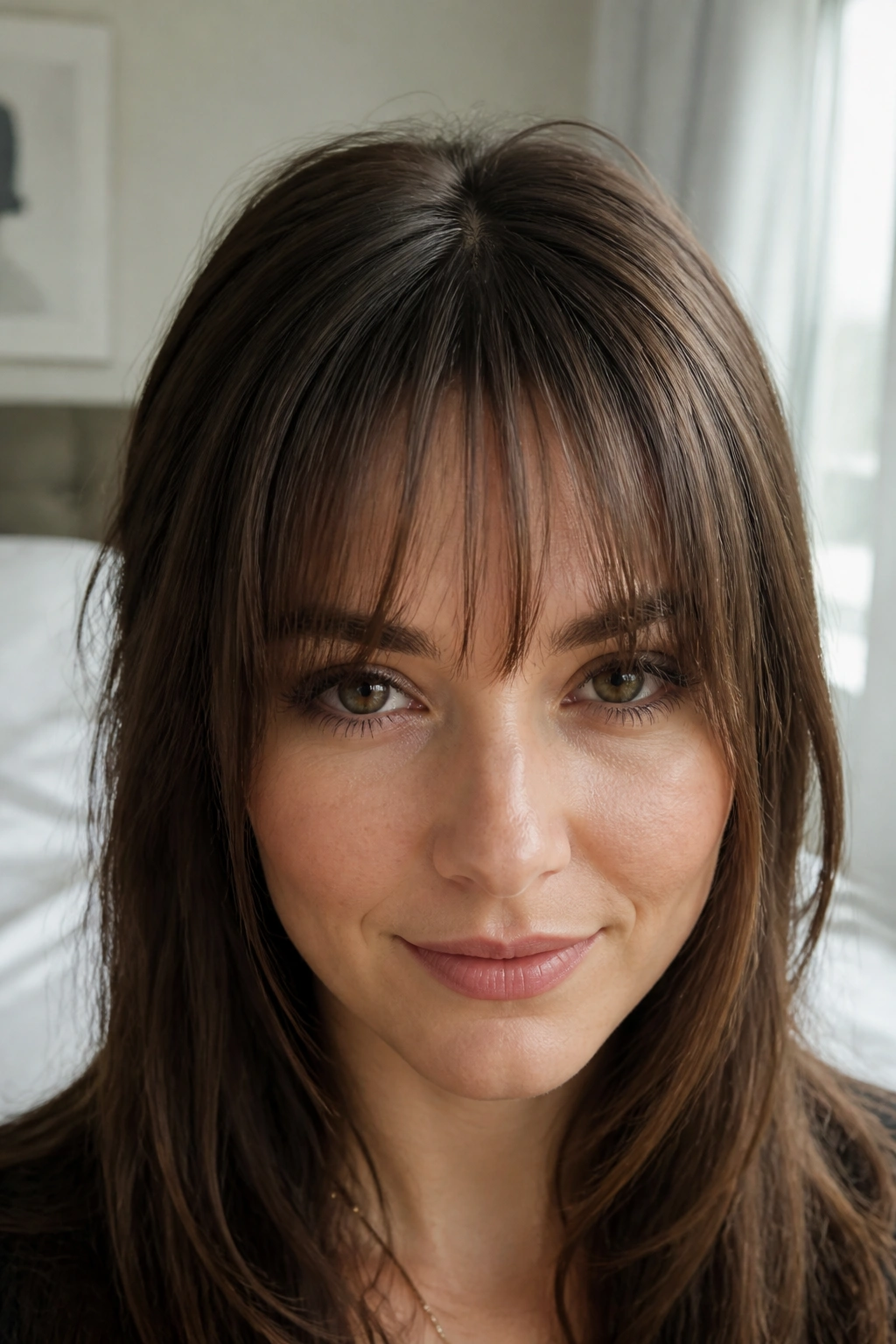
Can wispy bangs work on a round face? Absolutely, as long as they aren’t so thin that they vanish. Fine hair needs shape, not starvation. The inverted version gives you that shape without a heavy block across the forehead.
The center should still be the shortest point, but the whole fringe needs soft separation so it doesn’t cling to the skin. A tiny round brush, low heat, and a mist of flexible spray are enough. If you use too much product, fine hair collapses fast and the bangs start to look stringy by midday.
How to Keep Them from Disappearing
Ask for internal texture rather than aggressive thinning. That keeps the fringe light while still leaving enough density to frame the face.
A good wispy inverted fringe should look airy in motion and visible when still. Those are not the same thing, and stylists sometimes confuse them.
10. Dense but Tapered Bangs for Thick Hair
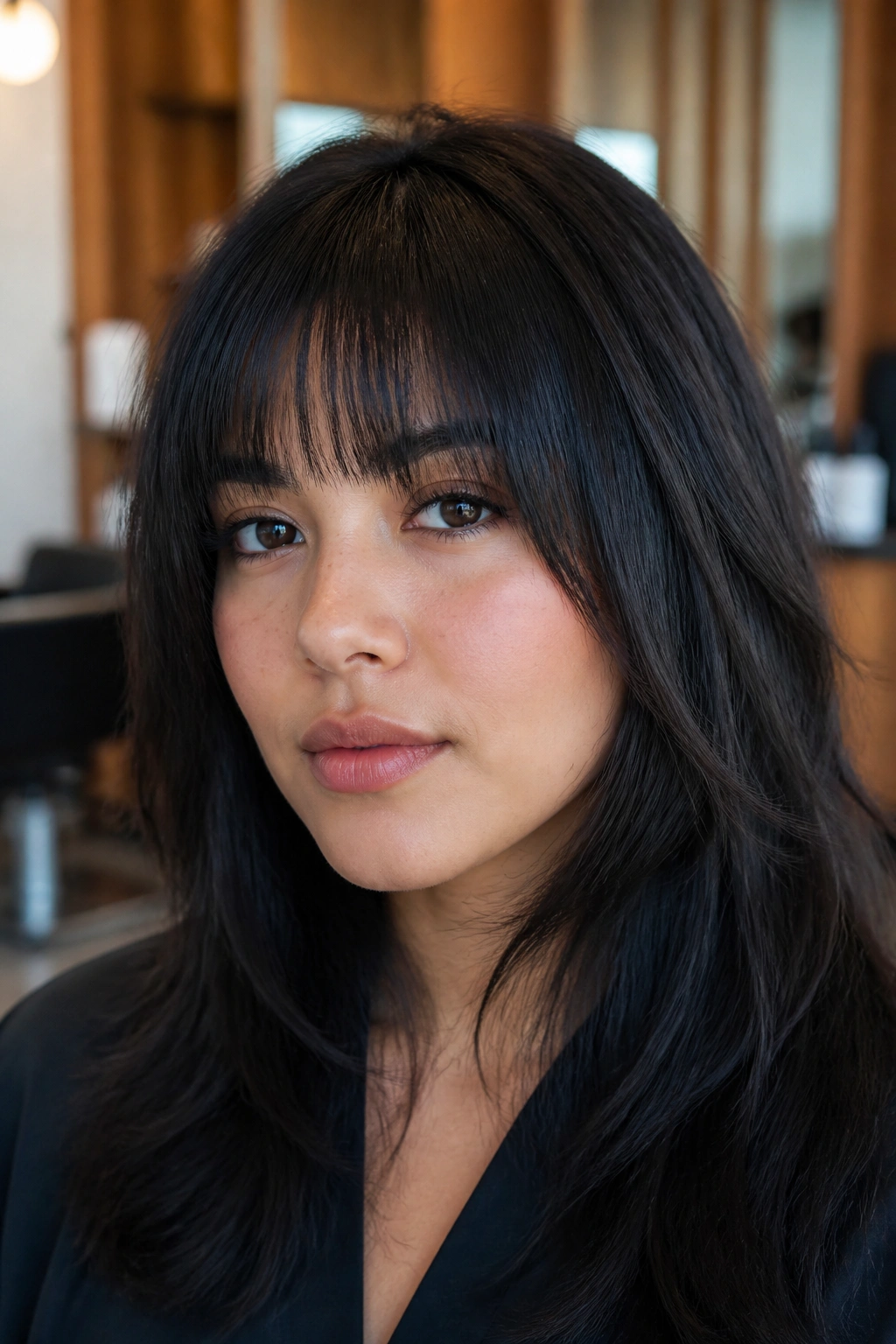
Thick hair on a round face can be tricky because a heavy fringe can overpower everything. But when the center is tapered and the edges are carefully thinned, the result is strong and flattering instead of bulky.
I like this shape on people who want bangs with substance. There’s enough hair to hold the cut, which means the fringe stays put and doesn’t separate into random pieces by lunchtime. The taper keeps it from looking like one giant curtain.
- Request internal removal of bulk, not a full thinning-out.
- Keep the shortest point around the brow.
- Let the outer pieces slide to the cheekbones.
The biggest mistake is cutting thick hair into a blunt wall. It looks cool in a photo, and then it grows out like a problem. Tapered edges solve that. They give the hair room to move.
11. Shag Bangs That Blend Into Layers
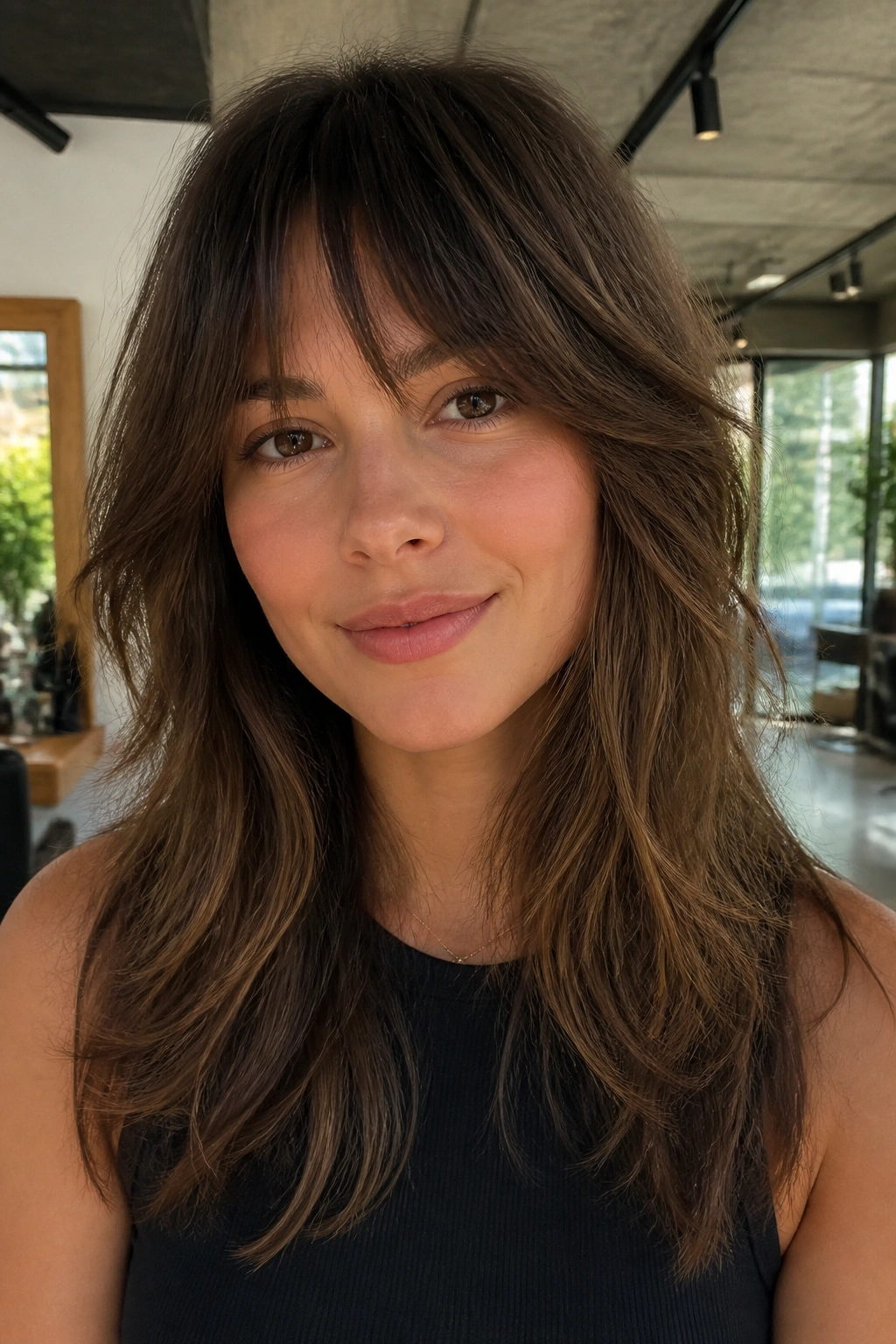
Shag bangs are honest bangs. They don’t pretend to be neat, and that’s exactly why they work on round faces. The broken texture around the forehead and temples keeps the face from feeling boxed in, while the layers underneath help the haircut fall in a softer line.
The best part is the blend. These bangs don’t end; they dissolve into the rest of the haircut. On medium hair, that gives the face a longer outline and stops the fringe from sitting like a separate piece. If you like a bit of mess, this is a good home.
The downside? You need to be comfortable with some imperfection. Shag bangs are not for someone who wants the same shape every morning. But if you enjoy a little roughness and you already wear your hair with texture, they’re hard to beat. A touch of sea salt spray at the roots can help, though don’t go crazy or the ends get dry fast.
12. Wavy Curtain Bangs with a Middle Lift
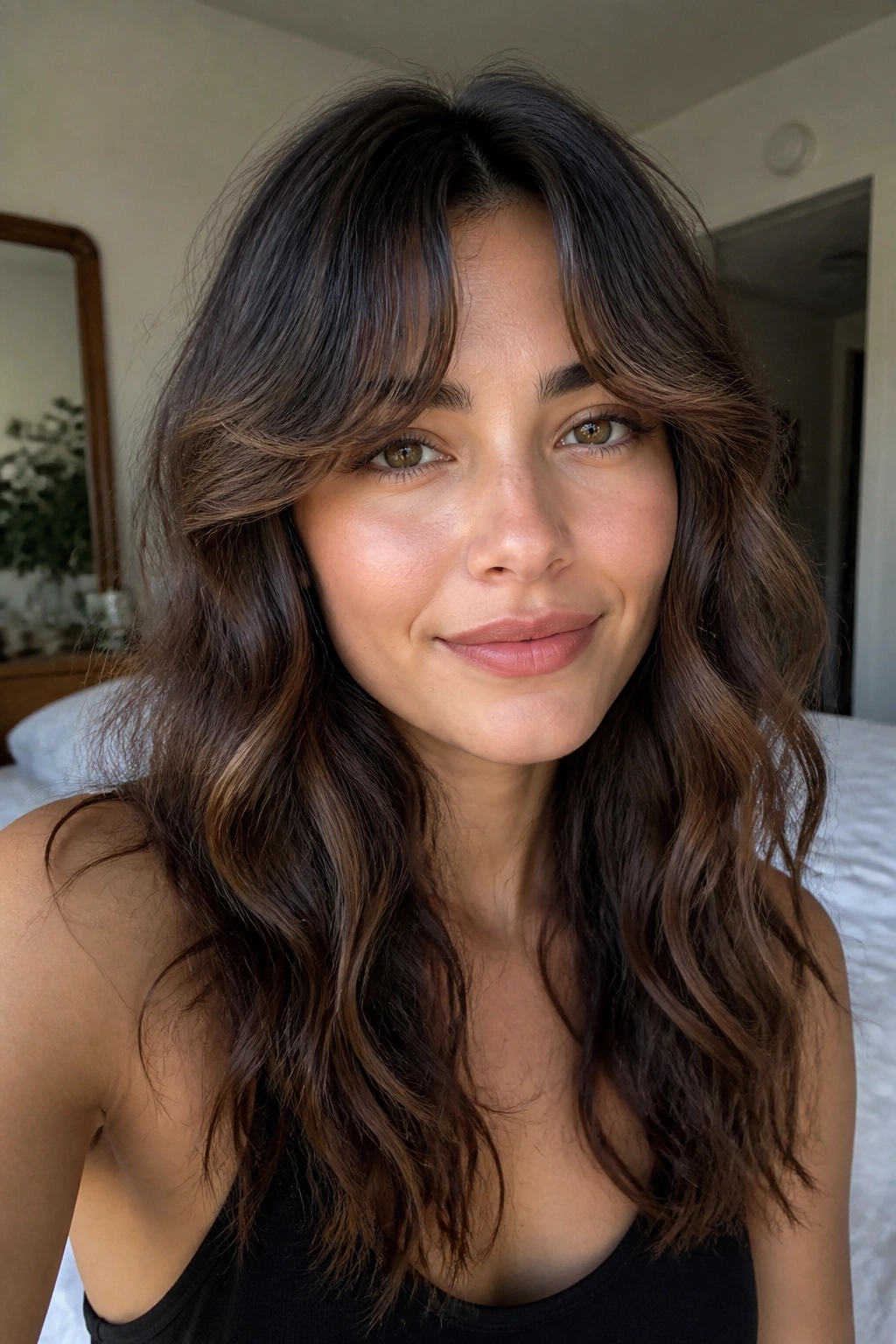
Natural wave changes the whole conversation. Straight curtain bangs and wavy curtain bangs are cousins, not twins. On a round face, the wave adds vertical movement that makes the middle feel lighter and the sides feel more open.
The center should still sit a bit shorter, but the rest of the fringe can bend softly away from the face. That bend breaks up the width around the cheeks. If your wave pattern is loose, a small diffuser or a few twists with your fingers are usually enough to set the shape. If your hair is more stubborn, clip the center up while it cools so it keeps its lift.
This style is best for people who don’t want a polished blowout every day. Air-dried texture works here. So does a quick brush-through after drying. The bangs should look like they belong to the hair’s natural movement, not a separate project you have to babysit.
13. Deep Side-Part Swoop Bangs
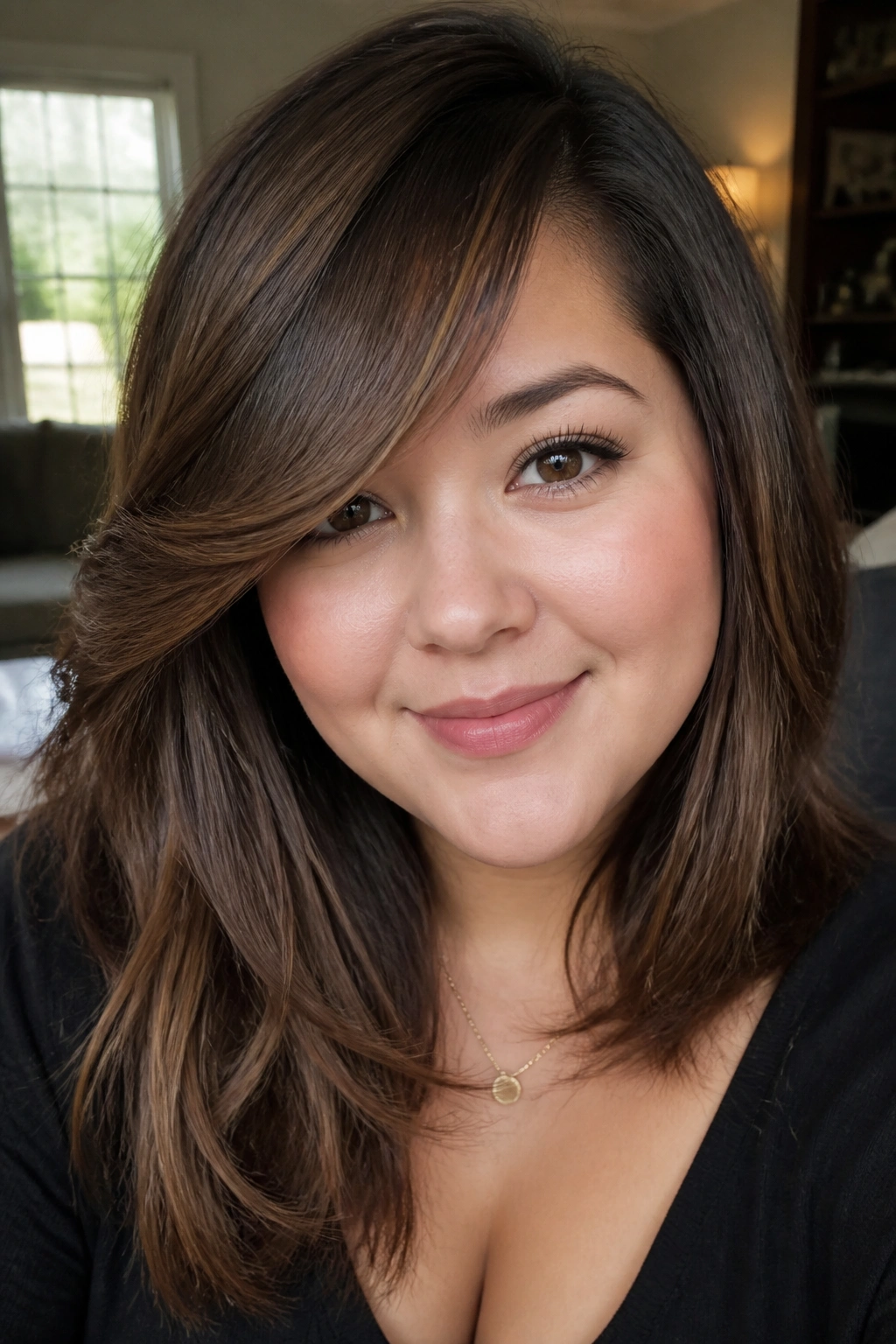
A deep side part gives a round face instant direction. The swoop fringe rides that line, starting high near the part and dropping across the forehead in a long curve. It’s a smart choice if you want bang coverage but do not want the forehead broken into a straight line.
Why the Swoop Helps
The diagonal brings the eye upward first, then down along the face. That path matters. It keeps the face from reading as wide in the middle.
For styling, use a medium round brush or a velcro roller while the hair is still warm. Push the roots up at the part, then guide the longer pieces across with a soft bend. If the curve is too tight, it can look old-fashioned fast. Too loose, and it loses the point. The sweet spot is a sweep that moves without sitting flat.
This one works especially well with a shoulder-length cut or a long bob. The bang line and the haircut line echo each other, which makes the whole style feel smoother.
14. Glasses-Friendly Brow Gap Bangs

If you wear glasses, this is the fringe you should think about first. A brow gap keeps the bangs from colliding with your frames, and the inverted shape still gives the face length where you need it. Too many people try to force full bangs under glasses and spend the whole day pushing hair out of their eyes.
The safest version sits a little above the frames at the center, then drops longer toward the temples. That keeps the eye area open. It also lets the bangs move instead of sitting like a heavy strip right on top of the lenses.
Bring your frames to the consultation if you can, or at least wear the pair you use most. The bridge height changes everything. A low frame wants more clearance. A high frame can handle a shorter center. That sounds picky, but it saves a lot of regret later.
15. Air-Dried Bangs on a Lob
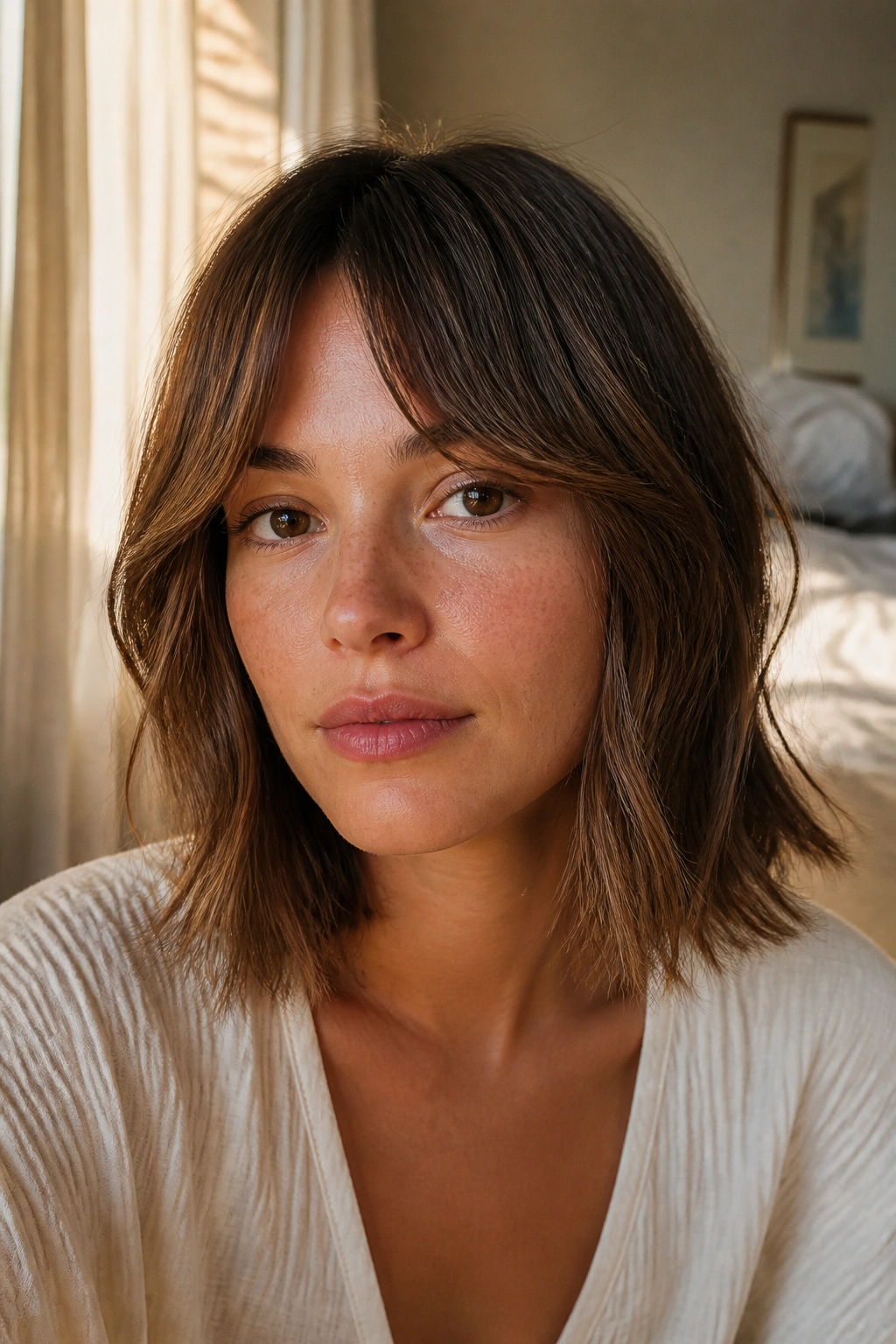
Can you let inverted bangs air-dry and still get a shape that flatters a round face? Yes, if the cut is smart. A lob gives the hair enough length to fall softly around the jaw, and the bangs only need a little guidance to keep the center shorter than the sides.
The key is setting the bend while the hair is damp. Twist the front sections away from the face, clip the center up for a few minutes, then release and finger-comb once it’s nearly dry. That usually gives enough lift without forcing a blown-out look. If your hair is naturally straight, a tiny bit of mousse at the roots helps. If it’s wavy, less is more.
This is the sort of fringe that looks better with a little lived-in texture. Not sloppy. Just not overworked. That matters on a round face because a soft, relaxed shape keeps the eyes moving instead of locking them on one hard edge.
16. Jawline-Emphasizing Fringe

There’s a simple reason jawline-ending bangs work on round faces: they create a new lower point. Your eye stops at the jaw instead of staying trapped in the middle of the cheeks. That makes the face look longer and a little sharper, even if the cut itself is soft.
This style usually starts shorter in the center and then drops in a slow line until the outer pieces reach the jaw area. It’s almost like face-framing layers decided to become bangs. I like it on medium hair because it gives the haircut a shape that feels finished, not accidental.
- Best if your jawline is one of your favorite features.
- Good for hair that holds a bend.
- Ask for the outer pieces to sit no higher than the upper jaw.
A lot of people ask for chin-length pieces and then cut them too short. Resist that urge. The whole point is the drop.
17. Soft V-Cut Bangs
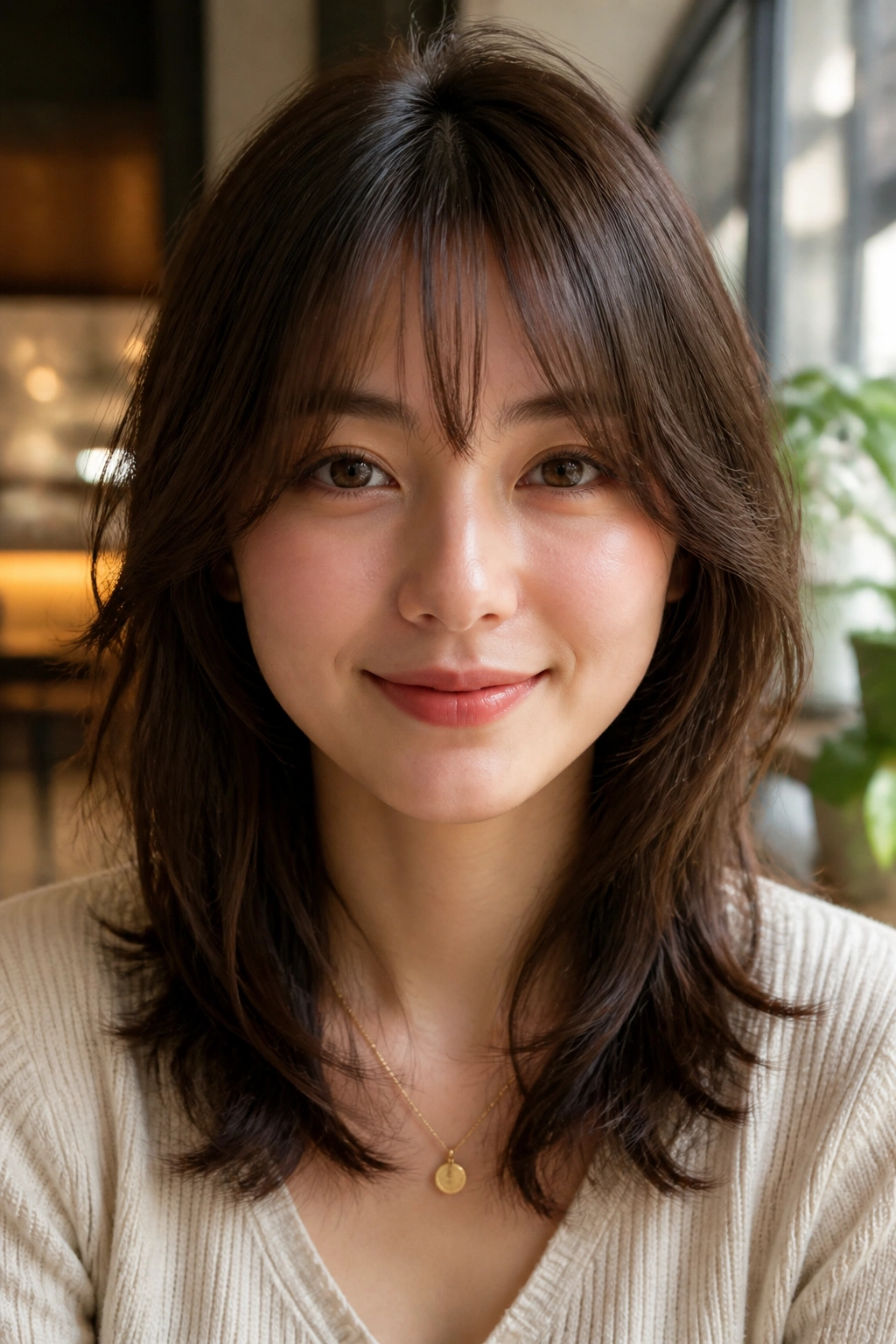
Soft V-cut bangs create the kind of center emphasis that round faces usually need. The middle is the shortest point, the sides lengthen gradually, and the shape opens like a narrow V instead of a flat bar. That keeps the forehead from looking broad.
I prefer this version when someone wants a little more edge than a curtain fringe but not the sharpness of a straight cut. The V should be subtle. If it becomes too dramatic, it can feel costume-y, and that is not what most people want from medium bangs.
The cut works especially well if your hairline has a small cowlick in the middle. The center point can help organize the growth pattern instead of fighting it. Ask for the outer corners to stay feathered, because hard edges make the V too obvious. Soft ends give you the benefit without the theatrics.
18. Overgrown French Fringe

An overgrown French fringe is the lazy girl’s smart haircut. It still gives shape to a round face, but it doesn’t demand a fresh trim every minute. The shorter center sits near the brow, while the sides slide into the cheek area and keep the face open.
What makes it different from a newer, tighter French fringe is the length. These bangs live a little longer, which is helpful if you don’t love constant upkeep. They also wear well with texture, ponytails, and half-up styles. That flexibility counts.
If your hair grows fast or you hate visiting the salon often, this is worth considering. It looks especially good when the ends are softly carved rather than chopped straight across. A dry shampoo at the roots can help the fringe stay lifted on day two, but keep the spray light. Too much product around the bangs makes them stiff fast.
19. Rounded-Edge Inversion
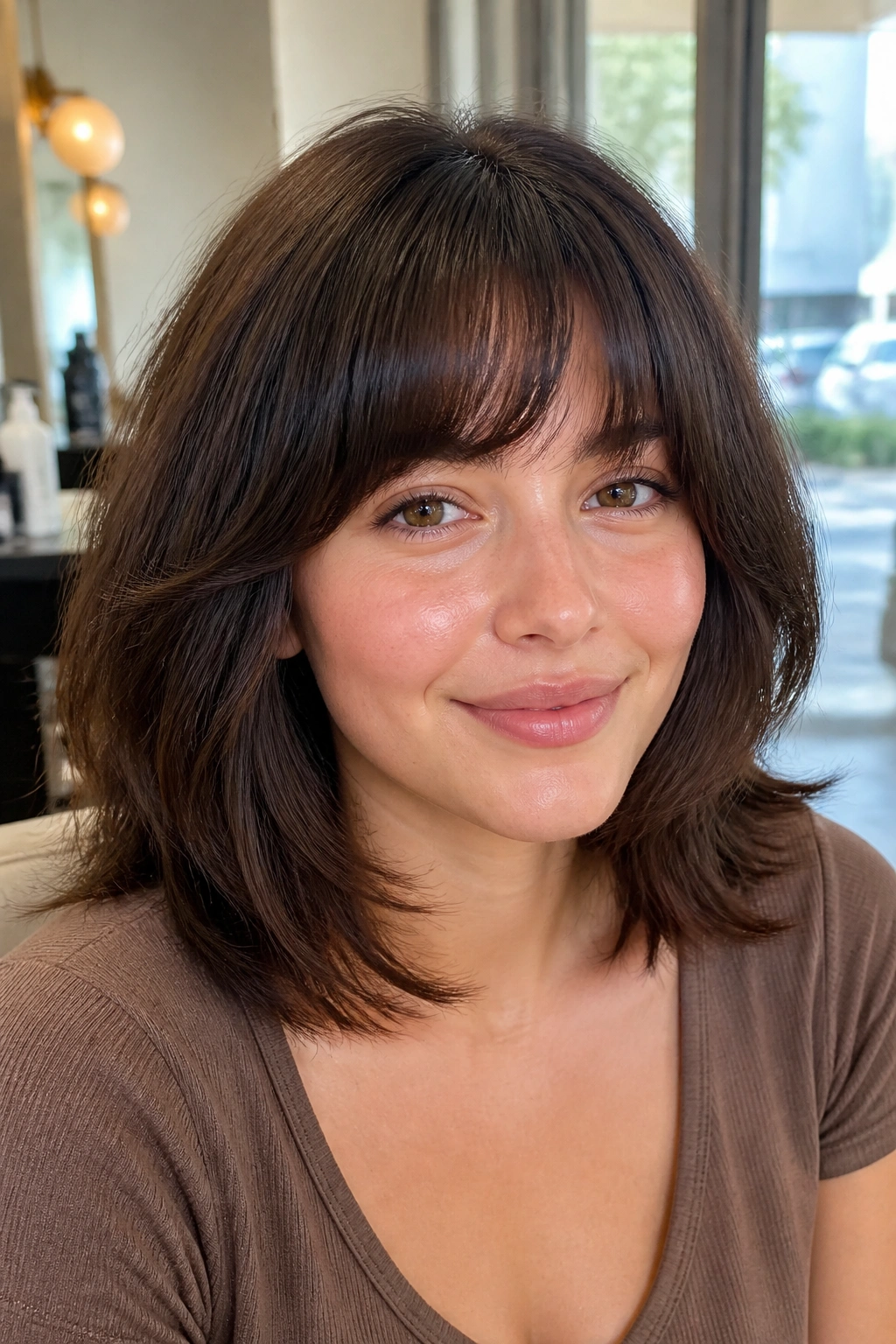
A rounded-edge inversion is for people who want softness without losing the face-slimming effect. The center is still shorter, but the line curves gently instead of hitting the forehead in a hard shape. That curve helps round faces because it echoes the face shape while also breaking it up.
The Shape Without the Shelf
The mistake here is making the fringe too semicircular. That just doubles the roundness and can make the forehead look wider. The better version has a curve with movement, not a perfect arc.
- Keep the center slightly above the brows.
- Let the sides drop past the cheekbones.
- Use point cutting so the edge doesn’t feel heavy.
This works well on medium hair that has a little body. If your hair is pin-straight and flat, the curve can collapse unless you style it. A small roller at the center can save the shape.
20. Hidden-Layer Bangs
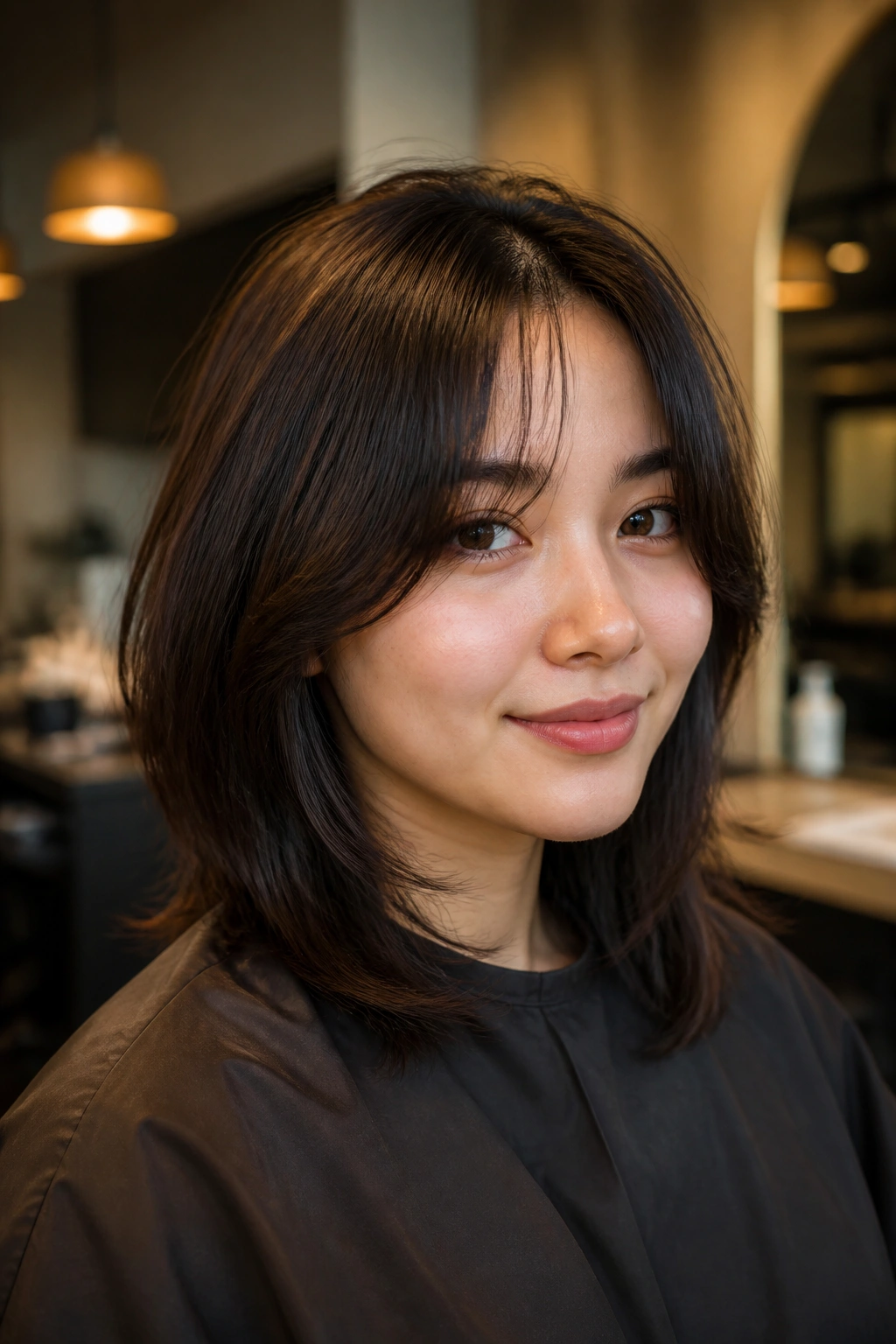
Hidden-layer bangs are sneaky, and I mean that as a compliment. The shortest bits sit inside the haircut, so the fringe reads as a soft face frame instead of a separate chunk on the forehead. On a round face, that subtlety helps a lot.
These are ideal if you want the inverted effect but hate obvious bangs. The outer pieces are longer and blend into layers around the cheeks. The center still lifts the eye, but the whole look feels quiet. Not boring. Just less announcing itself.
They’re especially useful if you wear your hair down most of the time and want the bangs to disappear into the rest of the shape when needed. Ask your stylist to build the front layers first, then leave the visible fringe a little lighter. That keeps the cut from turning into a blunt frame that sits right across the widest part of the face.
21. Retro Volume Fringe
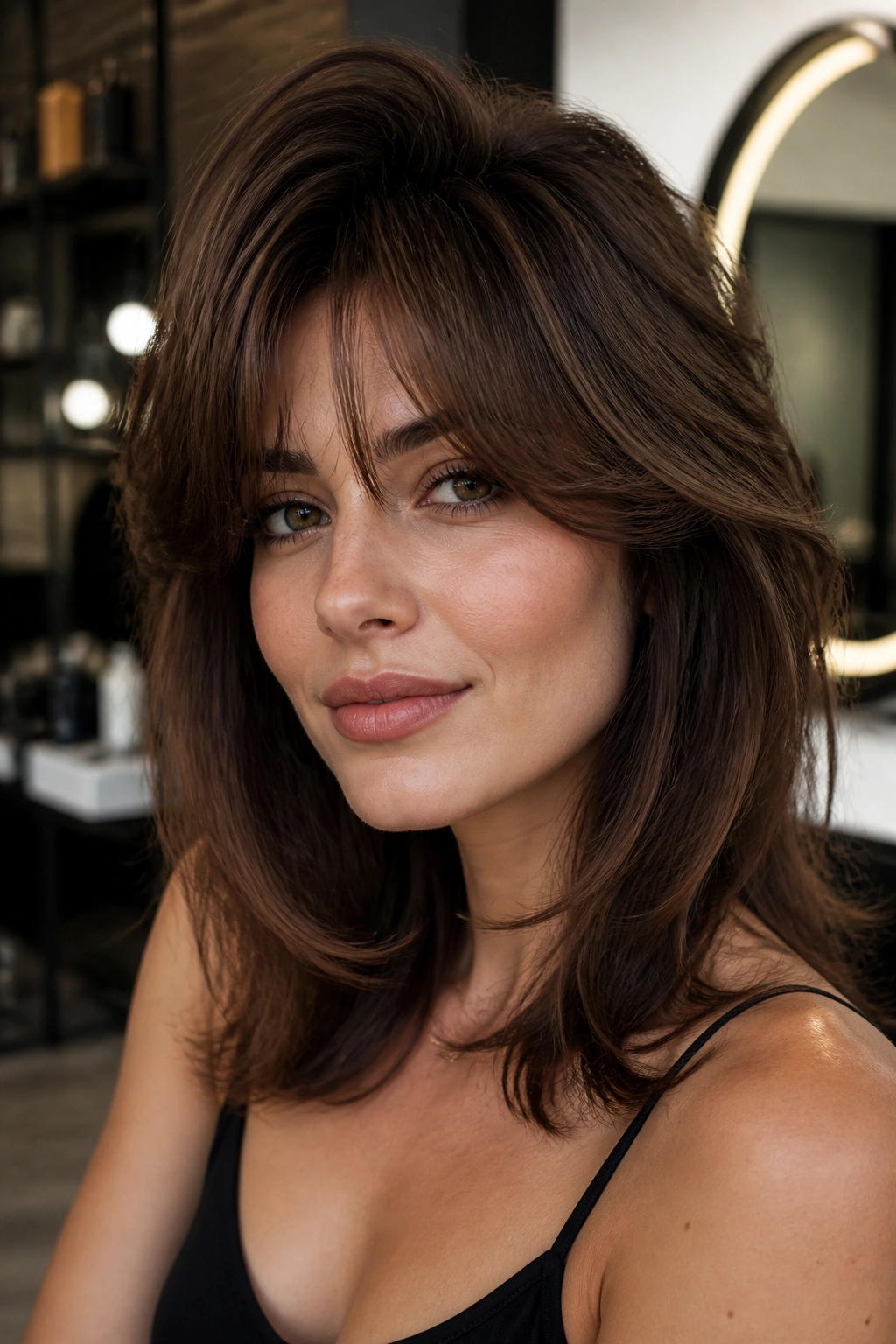
Retro volume bangs bring a little drama, and sometimes that’s exactly what a round face needs. The height at the roots lengthens the face visually, while the sides fall away in a soft sweep that keeps the cheeks from feeling boxed in.
This style works best if you enjoy a blowout. A medium round brush, a setting spray, and a few pins while the hair cools can make a huge difference. The bang should lift before it falls. That’s the part people skip, then wonder why the shape collapses by noon.
I like this one on medium-length cuts that already have body through the ends. If the haircut is too flat, the fringe does all the talking and can feel disconnected. If the haircut has movement, the volume at the front feels like part of the plan.
22. Collarbone Lob with Bangs
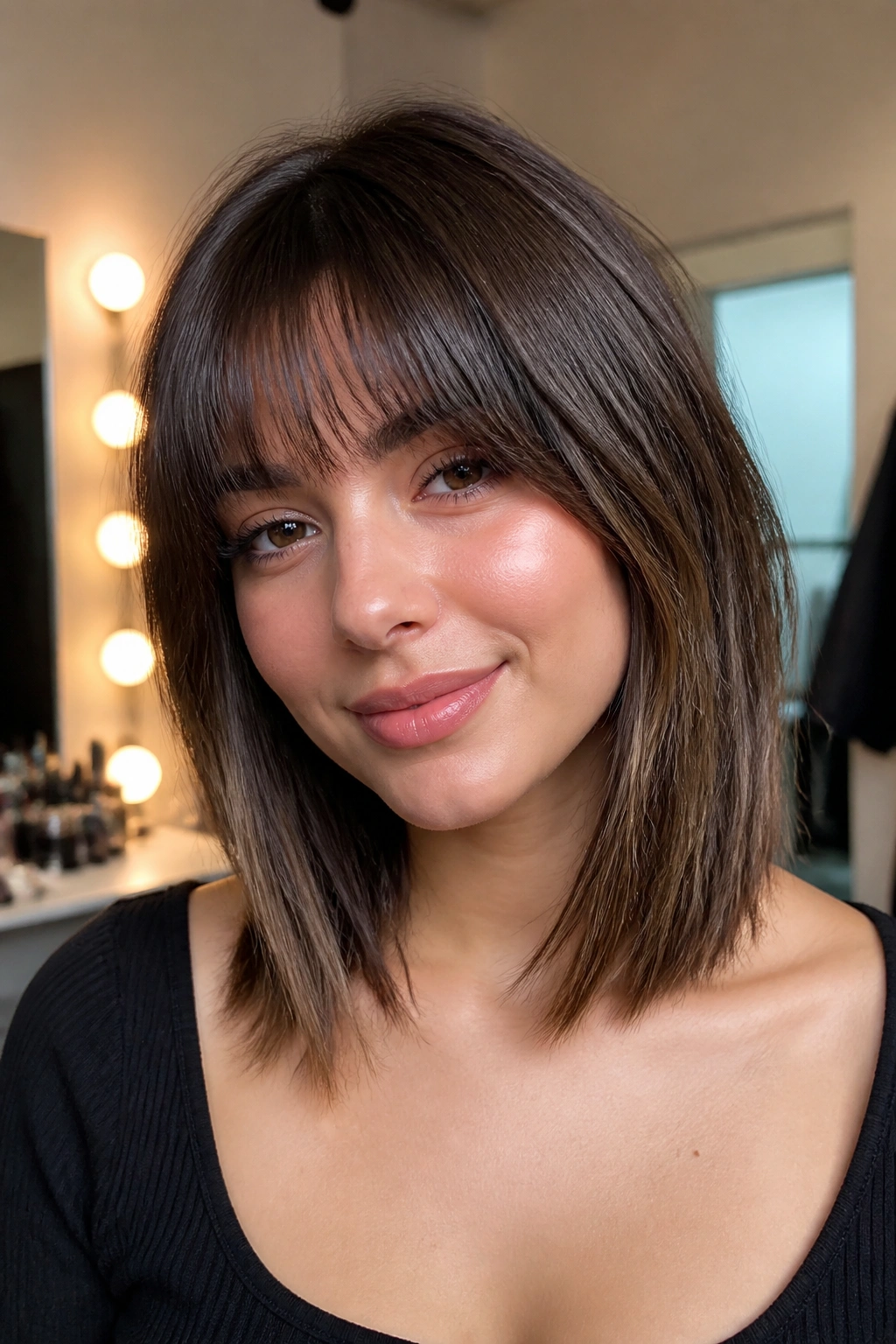
A collarbone lob changes the whole balance of a round face because it gives the lower half of the haircut some weight. Pair that with medium inverted bangs, and the face starts to look longer in a very natural way.
The bangs should stay soft at the center and stretch toward the cheekbones, while the lob itself keeps the overall line below the chin. That matters. A round face with a chin-length cut and heavy bangs can feel compressed. A collarbone length gives the eye somewhere to go.
- Keep the lob slightly longer in front than in back.
- Ask for the bangs to connect into the front pieces.
- Style the ends with a loose bend, not a tight curl.
This is one of the most balanced combinations on the list. It’s also easy to wear when you’re growing out a shorter cut.
23. Curly Inverted Bangs
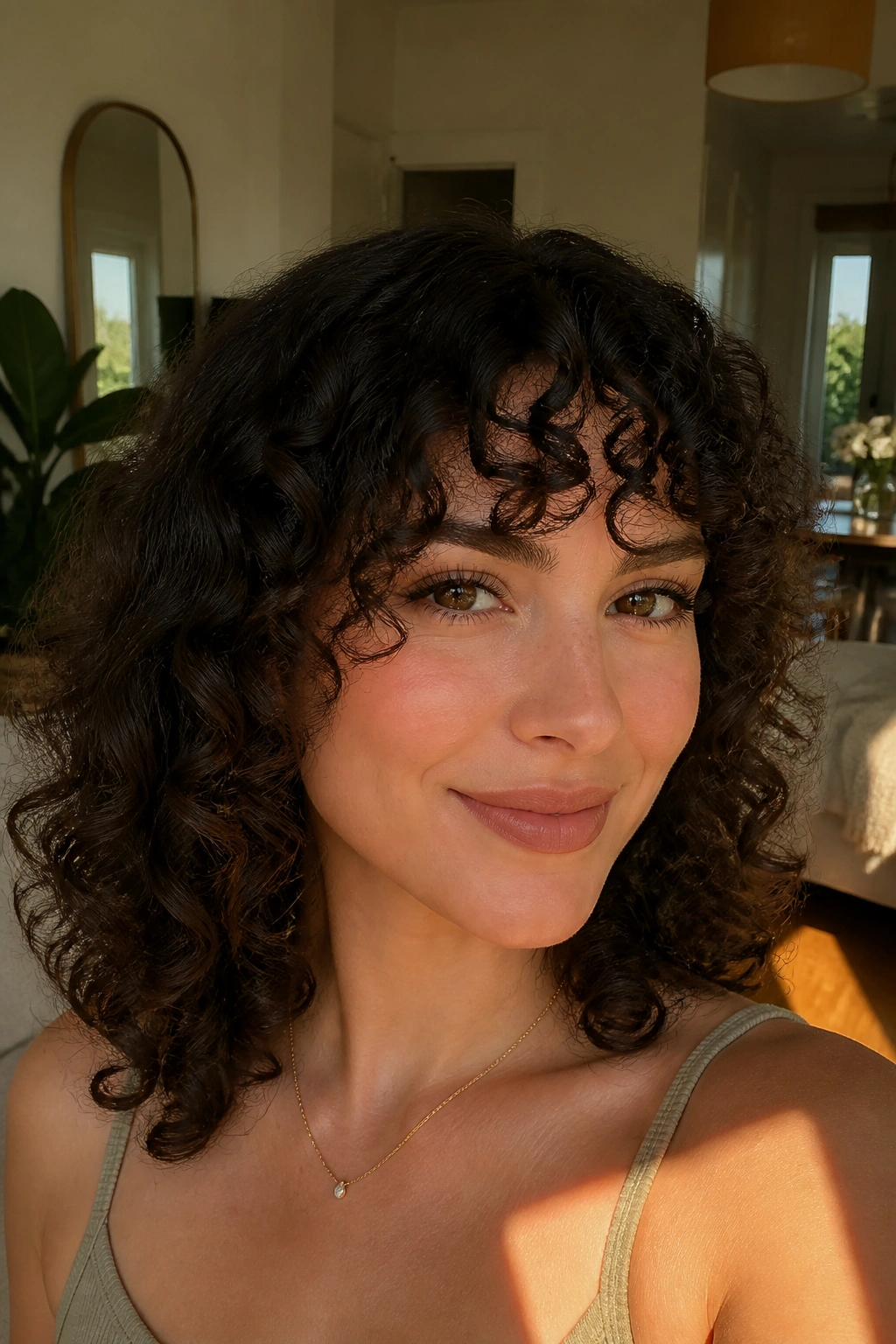
Curly hair changes the rules, and thank goodness for that. Curly inverted bangs can look fantastic on round faces, but the cut has to respect shrinkage. If the center is cut too short, it can spring up and make the forehead feel crowded.
The safest approach is to cut longer than you think you need. Let the curl pattern tell you where the fringe lands once it dries. The shorter center can still sit above the brows, but the side pieces should have enough length to curl toward the cheekbones. That side fall is what gives the face structure.
Dry cutting usually helps here because it shows where the curls live. A stylist who understands curl behavior is worth the trouble. You do not want someone guessing. A little curl cream and a diffuser are enough for daily styling, and the result should feel soft, not stiff. Frizz can add charm, but shape has to come first.
24. Underlayer Fringe
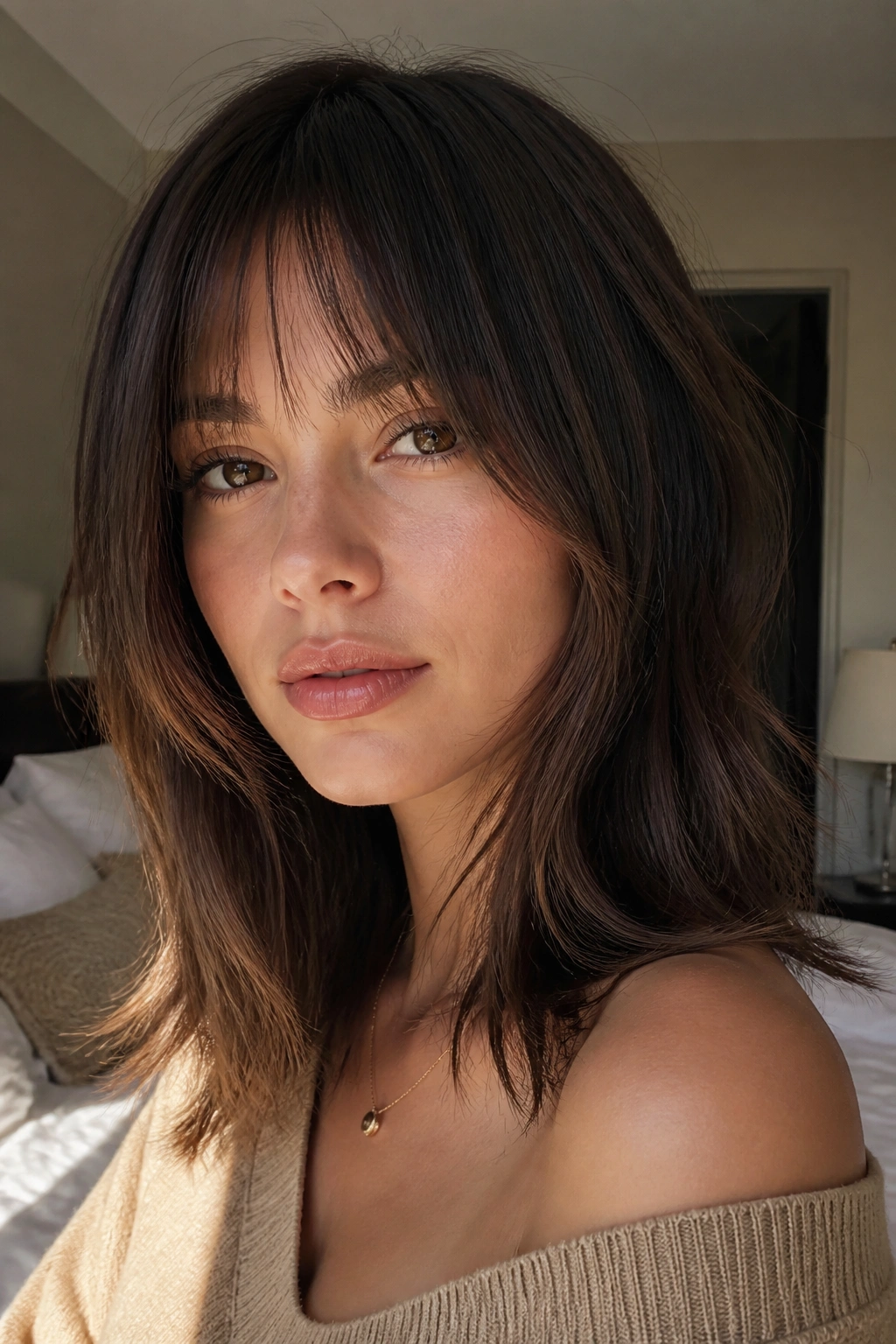
Underlayer fringe is a smart choice if you want the look of bangs without a front-heavy feel. The shortest pieces hide under the top layer and peek through, which makes the face frame softer and less obvious. On a round face, that hidden quality helps because it never turns into a hard line.
This style works especially well with medium hair that has thickness or wave. The top layer keeps things smooth, while the underlayer adds movement around the forehead and temples. It’s a little more subtle than curtain bangs, and that’s why some people love it.
The trick is placement. If the underlayer is cut too far back, it loses the bang effect. If it’s too far forward, it becomes a regular fringe. The sweet spot is just enough depth to create a soft front shadow. That gives the face definition without shouting about it.
25. Bob with Bottleneck Bangs
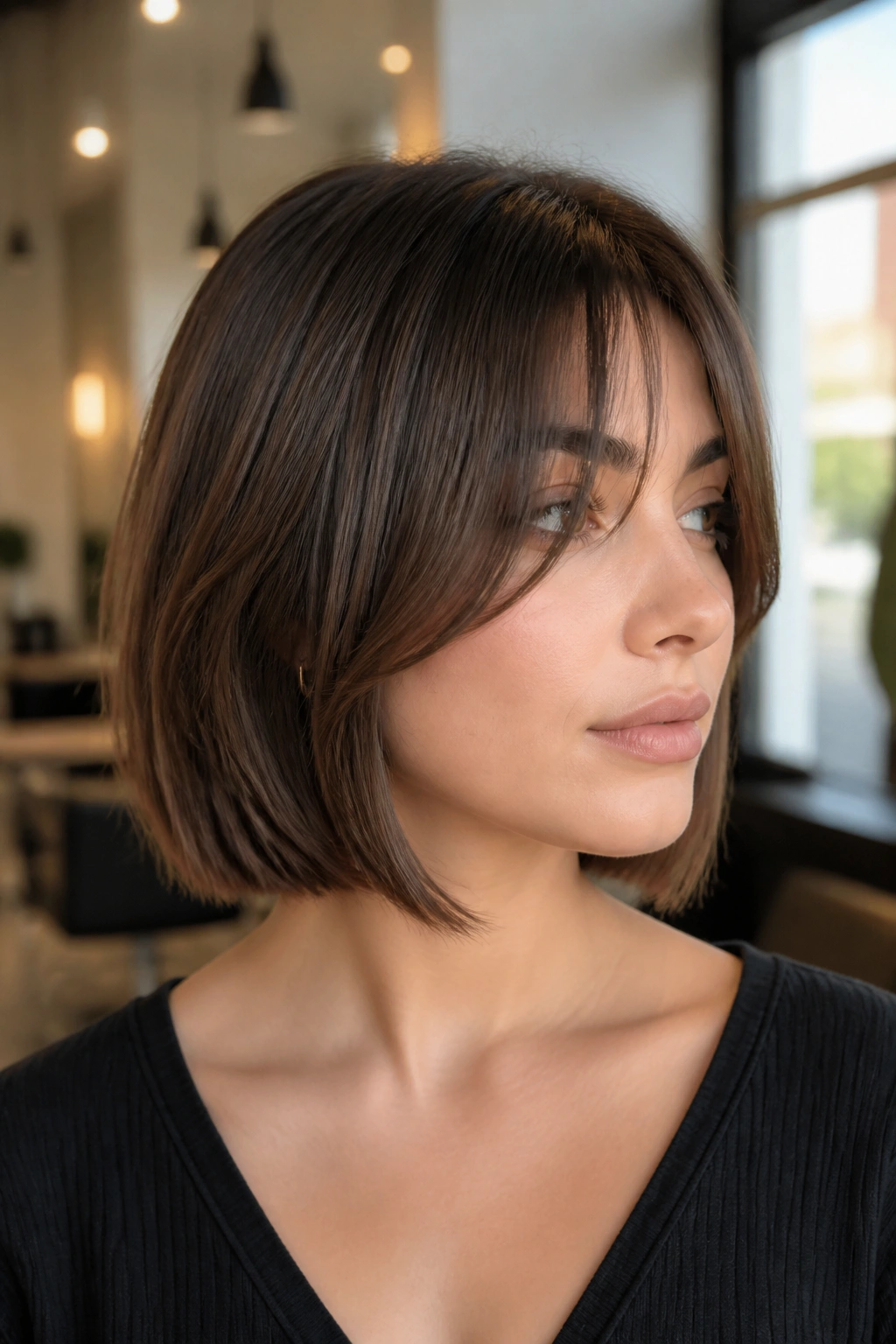
A bob and bottleneck bangs make sense together because both shapes rely on controlled softness. The bob gives the haircut a clean lower line, and the bangs give the forehead that center-short, side-long balance that flatters round faces.
How the Pairing Works
The bob should not end exactly at the cheek. That can widen the face. A little lower, around the jaw or just below, gives the jawline more presence. The bangs then lead the eye upward before guiding it back down the sides.
This combo is especially good if you like structure. It’s neat without being severe. If you want the bangs to stay light, ask for internal texture near the center and smoother corners near the temples. That stops the fringe from feeling bulky against the bob.
The pairing does need maintenance. Not constant fussing, but some. A bob grows out in a way that can flatten the whole look if you ignore it for too long. Still, when it’s fresh, it has a clean, expensive-looking shape without needing anything fussy.
26. Softly Shattered Side Fringe
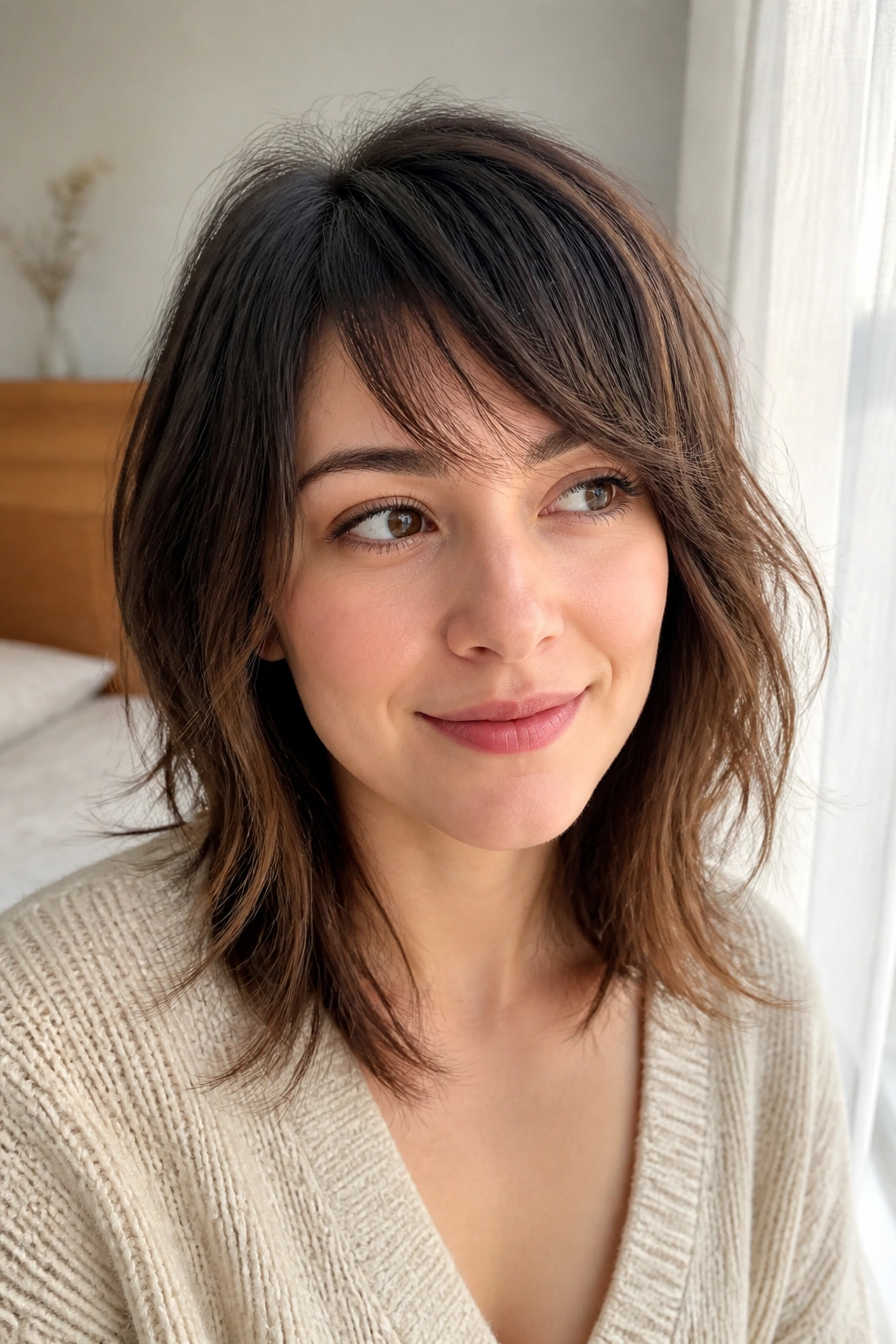
This is the fringe for anyone who wants movement first and bangs second. A softly shattered side fringe bends across the forehead on a diagonal, but the ends are broken up enough that the shape never feels heavy. That’s a useful quality on a round face, because the diagonal line does the slimming work while the texture keeps things relaxed.
I like it on medium hair that has some natural body. Straight hair can wear it, too, but you’ll probably want a quick blow-dry to train the direction. The good news is that the style doesn’t need perfection. A little asymmetry looks better than a rigid sweep.
If you want the fringe to stay soft, avoid heavy oils at the root and keep the styling product concentrated near the mid-lengths. That keeps the front from clumping. A face shape with softer cheeks usually benefits from this kind of broken-up side line more than from a straight horizontal bang, and I’d argue that’s the cleaner choice for most people.
27. Feathered Temple Sweep

A feathered temple sweep does exactly what the name suggests: it sends the eye toward the sides of the head, not across the widest part of the face. For round faces, that’s useful because the temples become part of the frame instead of disappearing.
Where to Keep the Length
The shortest part should not sit too low on the forehead. Let it start near the brow, then feather the sides out toward the upper cheek. That gives the face a longer outline and keeps the fringe from turning dense.
- Best with a side part or a soft center part.
- Works on straight, wavy, and relaxed curly hair.
- Ask for the ends to be sliced lightly, not chopped bluntly.
This is a good choice if you want bangs that look mature and easy rather than trendy and loud. The feathering is subtle, which means the haircut can survive a windy day, a busy commute, or a week where you don’t feel like styling it much.
28. The Softest Everyday Inversion
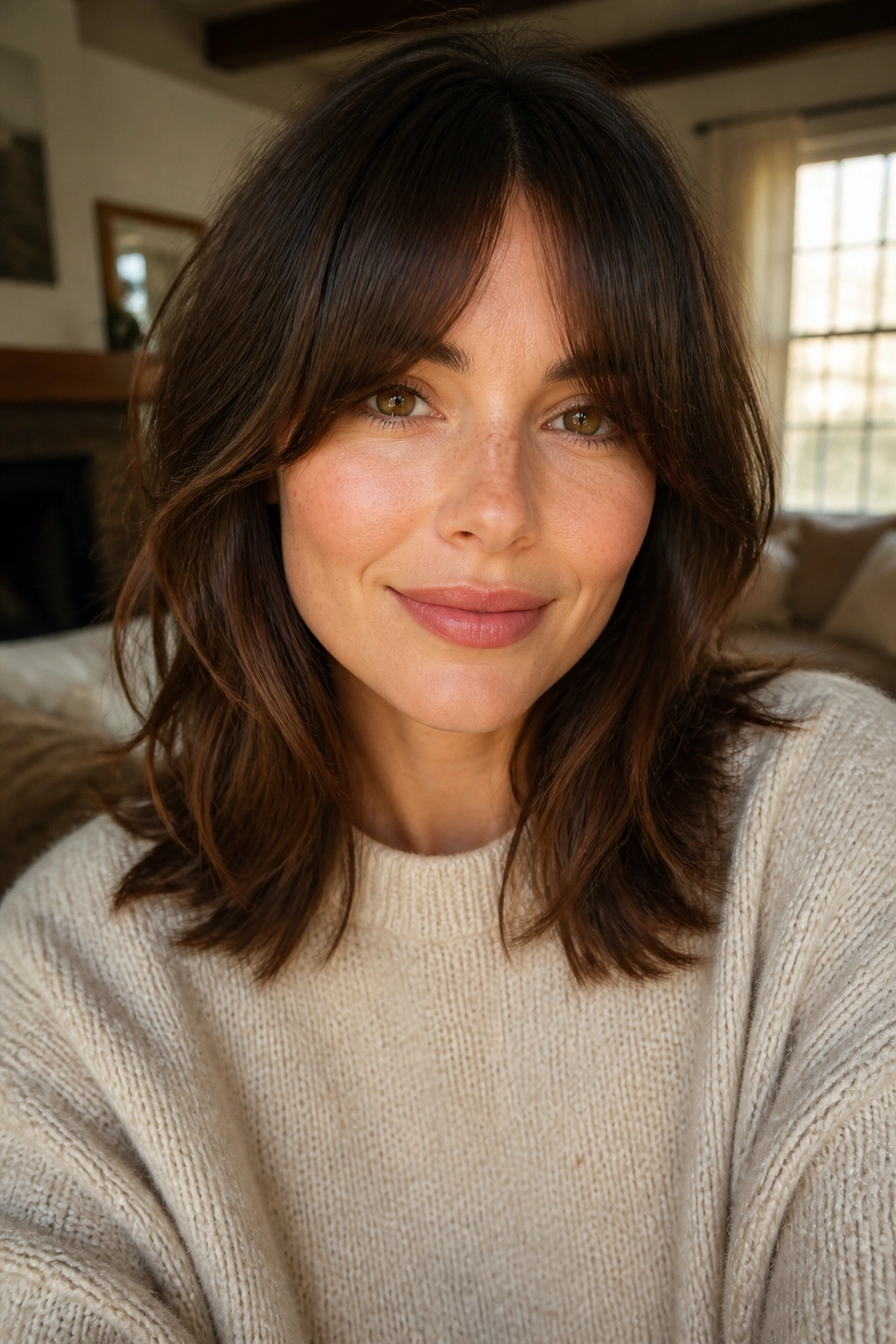
If you want one version that works across most medium haircuts, start here. The softest everyday inversion keeps the center slightly shorter, lets the sides fall past the cheeks, and avoids any hard line that would pin the face in place. It is the least fussy idea on the list, and honestly, that matters.
The shape is gentle enough to grow out well, which is a gift if you’re not a regular salon person. It also plays nicely with air-dried texture, loose waves, and quick blow-dry days. The face looks longer because the fringe opens at the sides instead of stopping dead at the center. Simple. Effective.
If you’re unsure what to ask for, bring a photo of a center-short curtain fringe and say you want the sides longer than the brows, lighter at the edges, and soft enough to move. That sentence tells your stylist almost everything they need. And if you remember nothing else, remember this: round faces usually look best when the bangs make room at the temples, not when they crowd the forehead.
