



Messy bangs for round faces work because they break up width without turning the forehead into a hard line. Not blunt. Not boxy. Just enough movement to pull the eye upward and downward at the same time, which is the whole trick.
A round face usually reads wider through the cheeks and softer at the jaw, so the wrong fringe can make everything feel even more compact. Heavy, straight-across bangs tend to sit right where the face is broadest. A broken edge, a soft bend, or a little asymmetry does the opposite.
The details matter more than people think. A bang that starts too high can make a face look shorter; one that sits too thick can feel like a curtain wall; one that’s cut too cleanly loses the lived-in look that makes messy bangs flattering in the first place. The good versions have air in them. They move when you blink.
Some of these ideas are soft and easy. A few are a little bolder. All of them are built to create shape where round faces usually want it most: at the cheekbones, along the temples, and just off the center line.
1. Curtain Bangs That Brush the Cheekbones
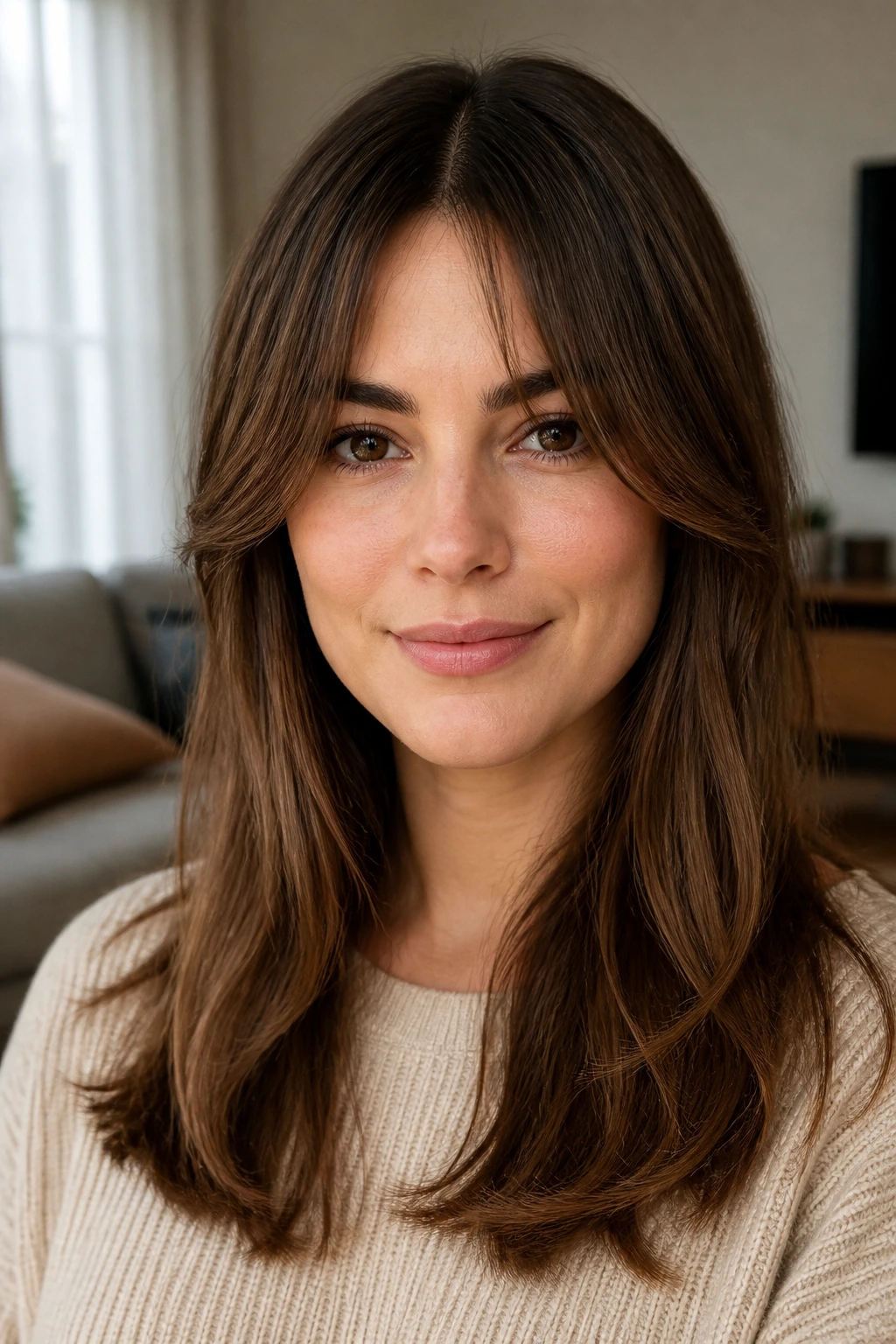
Curtain bangs are the easy favorite for a reason. The center stays open, the sides sweep out, and the whole shape gives a round face more vertical line without looking severe. I like this version best when the shortest point lands around the brow and the longest pieces graze the top of the cheekbone.
Why They Flatter a Round Face
The middle part creates space. The longer sides draw the eye downward. That little bit of length keeps the face from feeling cut in half.
- Best with hair that bends a little on its own
- Works well on medium and long lengths
- Ask for soft point-cut ends, not a blunt edge
- Style with a 1-inch round brush or a flat iron bend
Pro tip: tell your stylist to keep the center light and let the sides do the framing. That’s where the shape lives.
2. Deep Side-Swept Fringe With a Soft Fall

This one has attitude, in a quiet way. A deep side part gives a round face a strong diagonal line, and diagonal lines are your friend when you want to stretch the face visually. The fringe should skim the forehead, then fall across one temple and into the rest of the haircut.
Side-swept bangs work best when they do not sit as one thick sheet. You want a little separation at the ends, a little lift at the root, and enough length to tuck behind the ear if you need to.
If your hair grows in with a stubborn cowlick, move the part a half inch farther over than you think. That tiny shift can make the whole fringe lie better. Small fix. Big difference.
3. Choppy Brow-Skimming Bangs
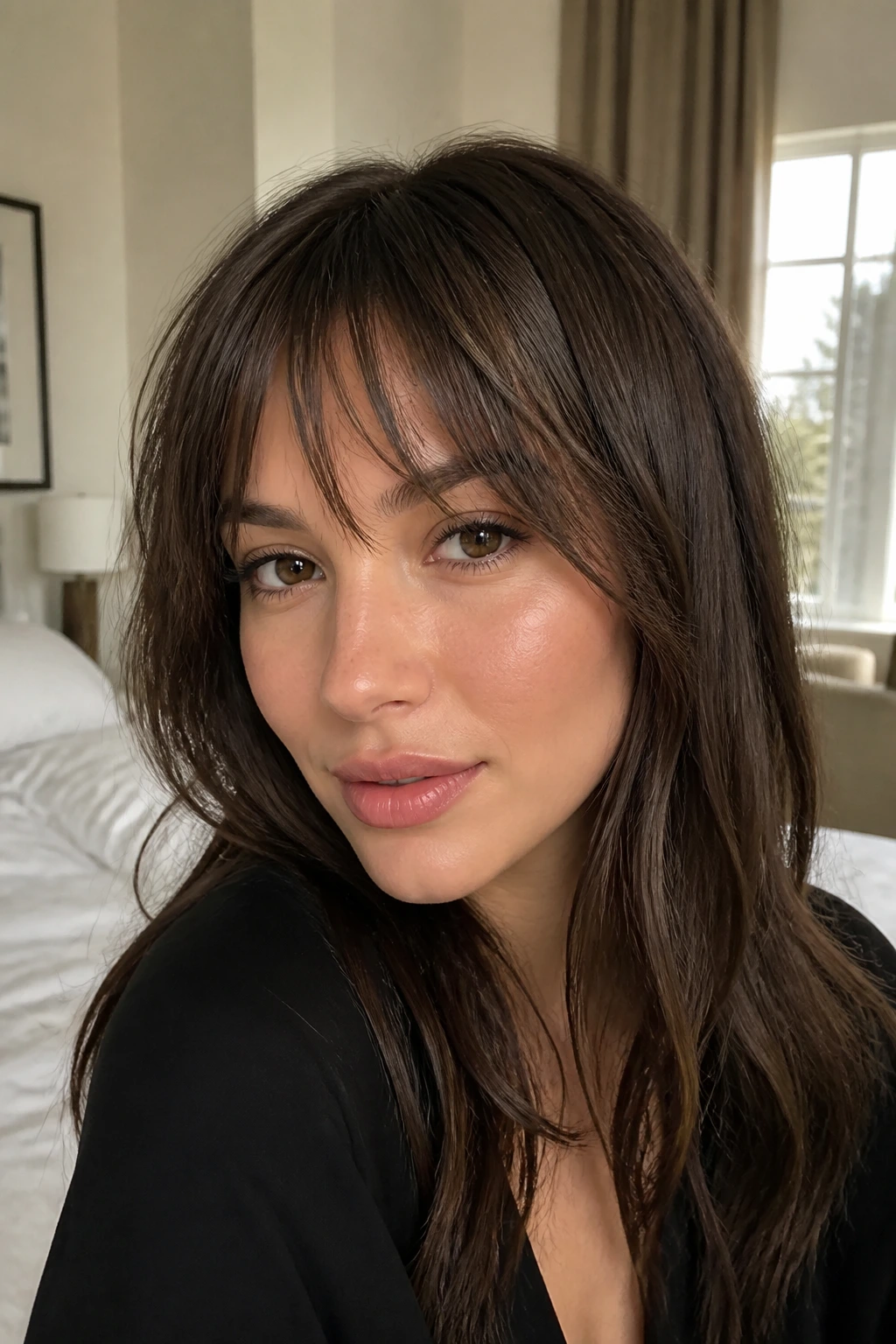
Why does this work so well on a round face? Because the line is there, but it never feels heavy. Choppy brow-skimming bangs leave a little forehead visible, which stops the top of the face from closing in. They also make the eyes look sharper and more open.
How to Wear It
Ask for the ends to be point-cut, not chopped straight across. A good stylist will remove just enough weight so the fringe breaks into pieces instead of forming a solid block.
Dry them first. Always. Bangs set fastest, and if you style the rest of your hair before the fringe, you’ll end up fighting cowlicks by the time you get to it. A light mist of texture spray at the end gives that unfinished feel without making the hair crunchy.
4. Bottleneck Bangs With Messy Ends

Picture the narrow neck of a bottle, then a wider opening at each side. That shape is exactly why bottleneck bangs flatter round faces. The center stays shorter and lighter, while the side pieces widen toward the temples and cheeks, which adds shape where a round face usually wants it.
The messy version is better than the neat one here. Clean bottleneck bangs can feel too tidy if the rest of your hair has movement. A rougher edge keeps the fringe from looking pasted on.
- Shortest point: around the middle of the forehead
- Longest point: at or just below the cheekbone
- Best with a soft blowout or loose wave
- Avoid a heavy, blunt center
The shape does most of the work. You barely need to fuss with it after that.
5. Wispy Bangs That Sit Just Above the Brows

Wispy bangs are all about air. They leave space between the strands, so the face keeps breathing instead of getting boxed in. On round faces, that matters more than people realize. The lighter the fringe, the less it fights the soft shape of the face.
I like this cut for anyone who hates a thick bang but still wants something visible in the front. Keep the ends soft and a touch uneven. Let a few pieces sit a little lower than the rest. That tiny irregularity is what keeps the look from feeling helmet-like.
If your forehead is short, don’t go too high. Short wispy bangs can get cute fast, then awkward fast. Keep the length just above the brows and let the texture do the rest.
6. Shaggy Fringe With Face-Framing Layers
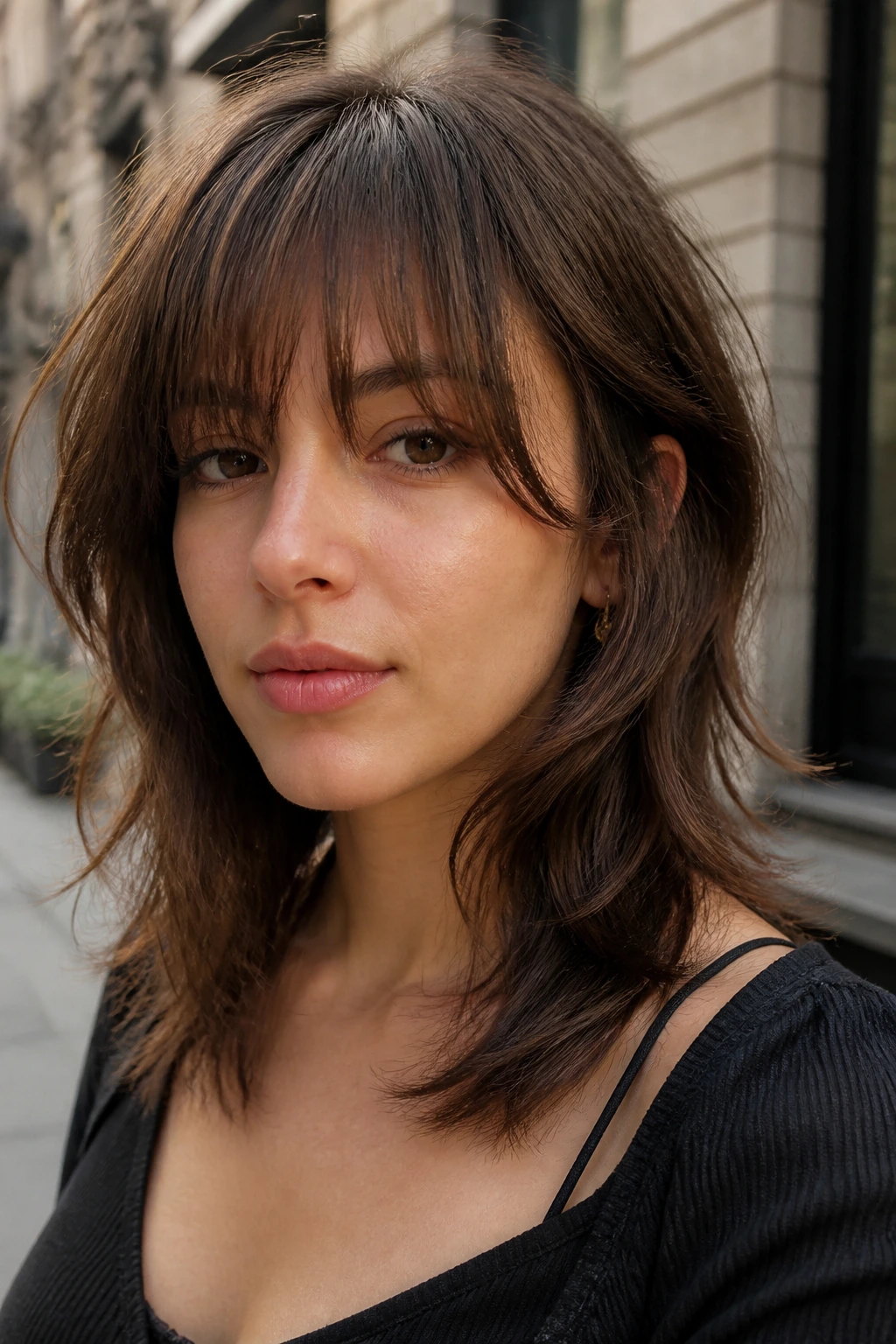
Unlike blunt bangs, a shaggy fringe doesn’t stop at the forehead and call it a day. It spills into the sides, which is exactly why it suits round faces so well. The haircut keeps moving downward, and that movement helps balance width through the cheeks.
What Makes It Different
A shag fringe should feel connected to the rest of the cut. Ask for layers that start around the cheekbone and fall into the jawline. If the bang area is too separate, it can sit there like a little shelf. Nobody wants that.
This style is especially good on thick hair because it removes bulk without making the front look thin. If your hair is wavy, even better. A little bend gives the shag its charm. Flat-ironed shag bangs can work too, but they need texture spray or they lose their point.
7. Long Grown-Out Bangs With a Soft Flip
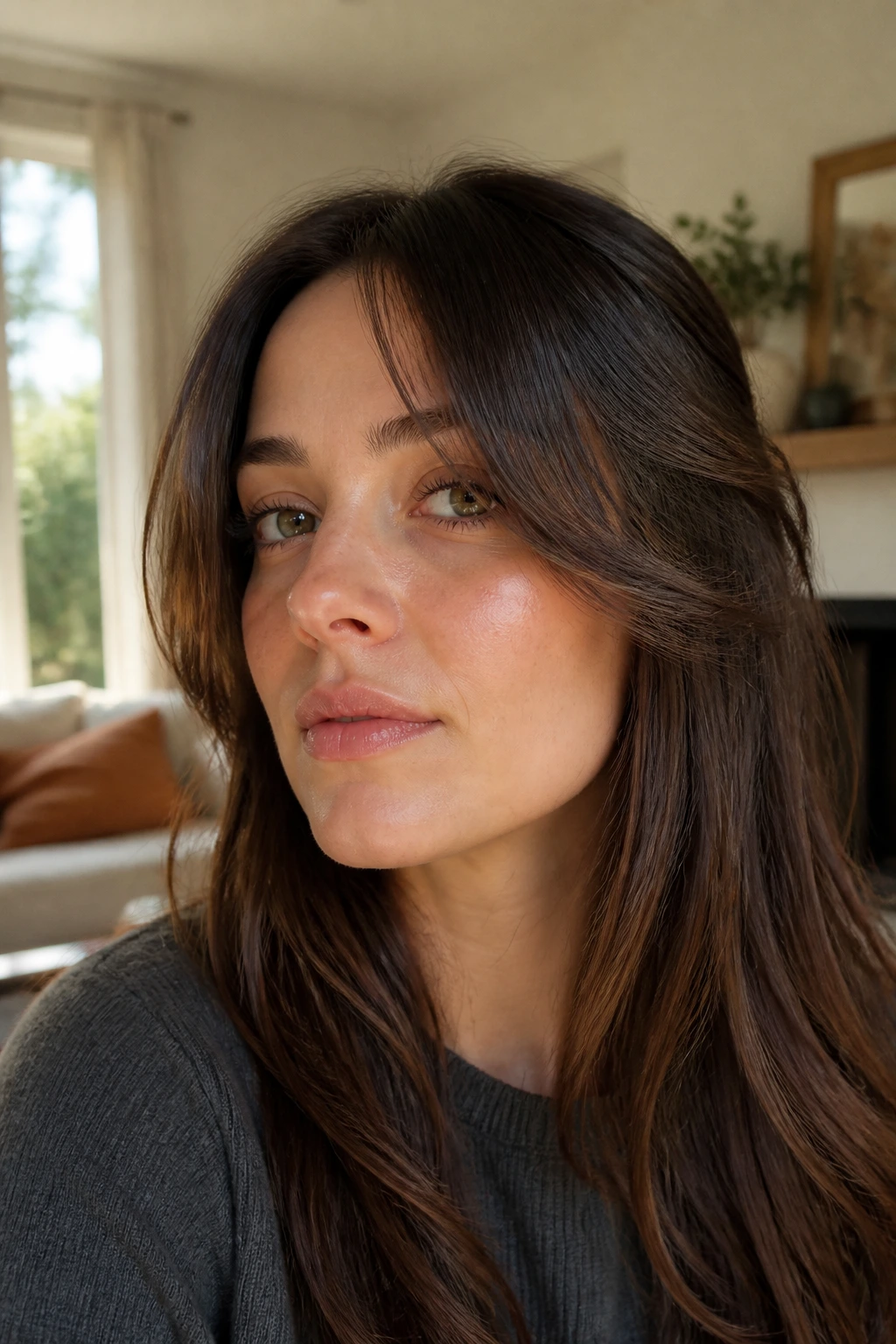
If you’re in the awkward grow-out stage, don’t fight it. Long bangs that flip away from the face can look better on a round face than a fresh, short fringe ever did. The length should reach at least the cheekbone, maybe a little lower, so the front feels like part of the haircut instead of a sudden stop.
This shape is also kind to people who like to tuck hair behind the ears during the day and let it fall free at night. It moves with you. That matters.
A quick pass with a round brush or a wide flat iron bend at the ends is enough. You want the flip to feel loose, not curled. Tight ringlets at the front can pull the eye in and add width.
8. Asymmetrical Messy Bangs

This is the fringe when you want a little edge without going full drama. One side sits longer. The other side lifts a bit higher. That uneven line breaks up a round face in a way that feels almost like contouring, only with hair.
The key is to keep the difference obvious enough to matter, but not so sharp that it reads as a hard diagonal slash. Softness still wins. The shorter side should graze the brow area; the longer side can slide toward the cheekbone.
I like this most on straight or slightly wavy hair. It gives you a shape that stays visible even when the rest of the style falls flat. If your hair is very dense, ask for interior thinning, not just a shorter cut.
9. Curly Fringe With Loose Spiral Pieces
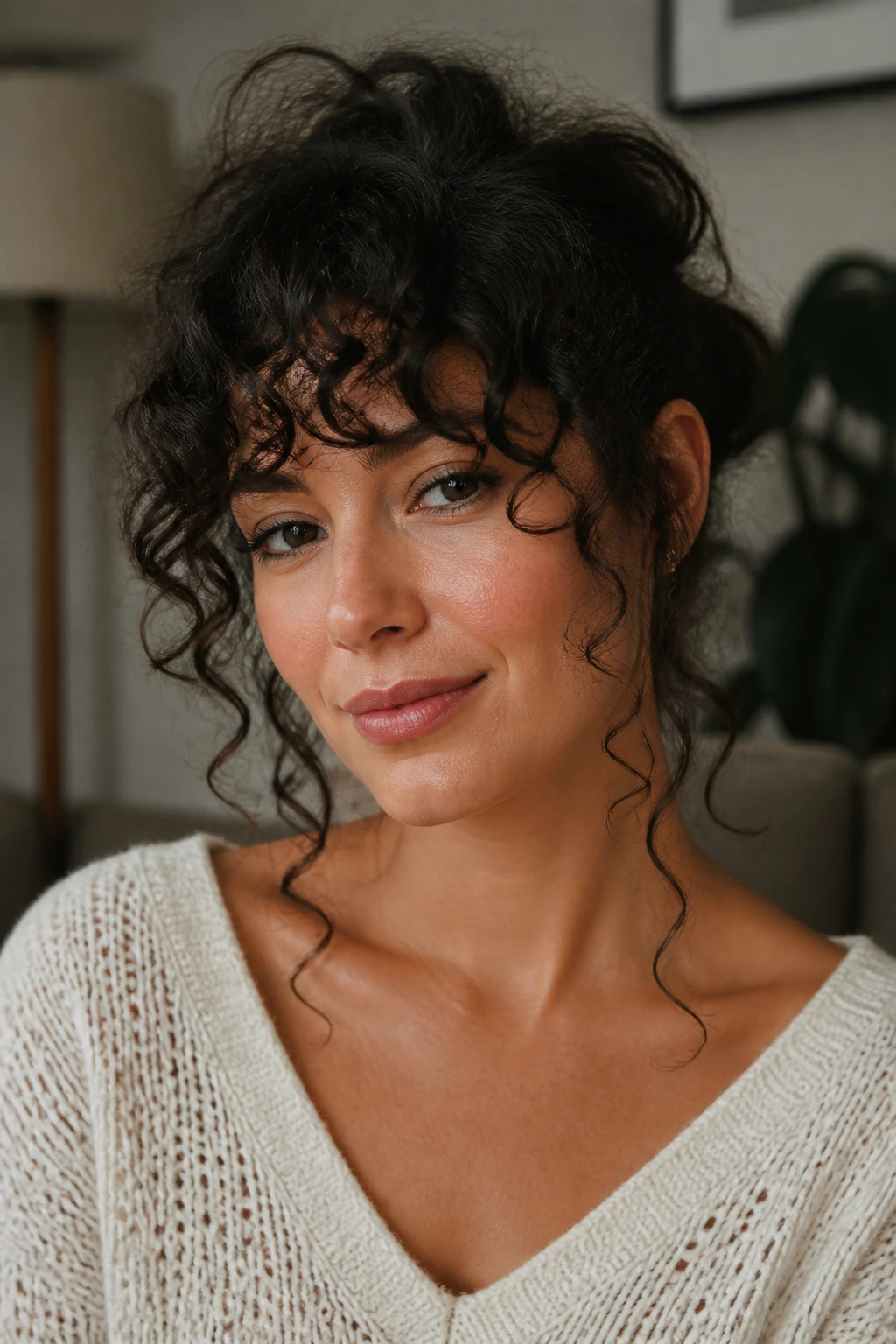
Can curly bangs work on a round face? Absolutely, if they’re cut the right way. The trick is not to fight the curl pattern. Cut them dry, let the shrinkage show itself, and keep the shape loose enough that the curls land in separate pieces instead of one puffed-up curtain.
How to Get It Right
Curly fringe needs room. A lot of people go too short because the hair looks long when wet. Then it dries and jumps up three inches. That’s the mistake that causes panic in the mirror.
- Cut curls dry or nearly dry
- Leave the longest curls at cheekbone level
- Use curl cream, not heavy gel
- Diffuse on low heat if you want the fringe to sit forward
The payoff is worth it. A few springy pieces at the front can soften the cheeks and make the whole haircut feel fresh instead of strict.
10. Feathered Bangs With a Razor Cut Edge
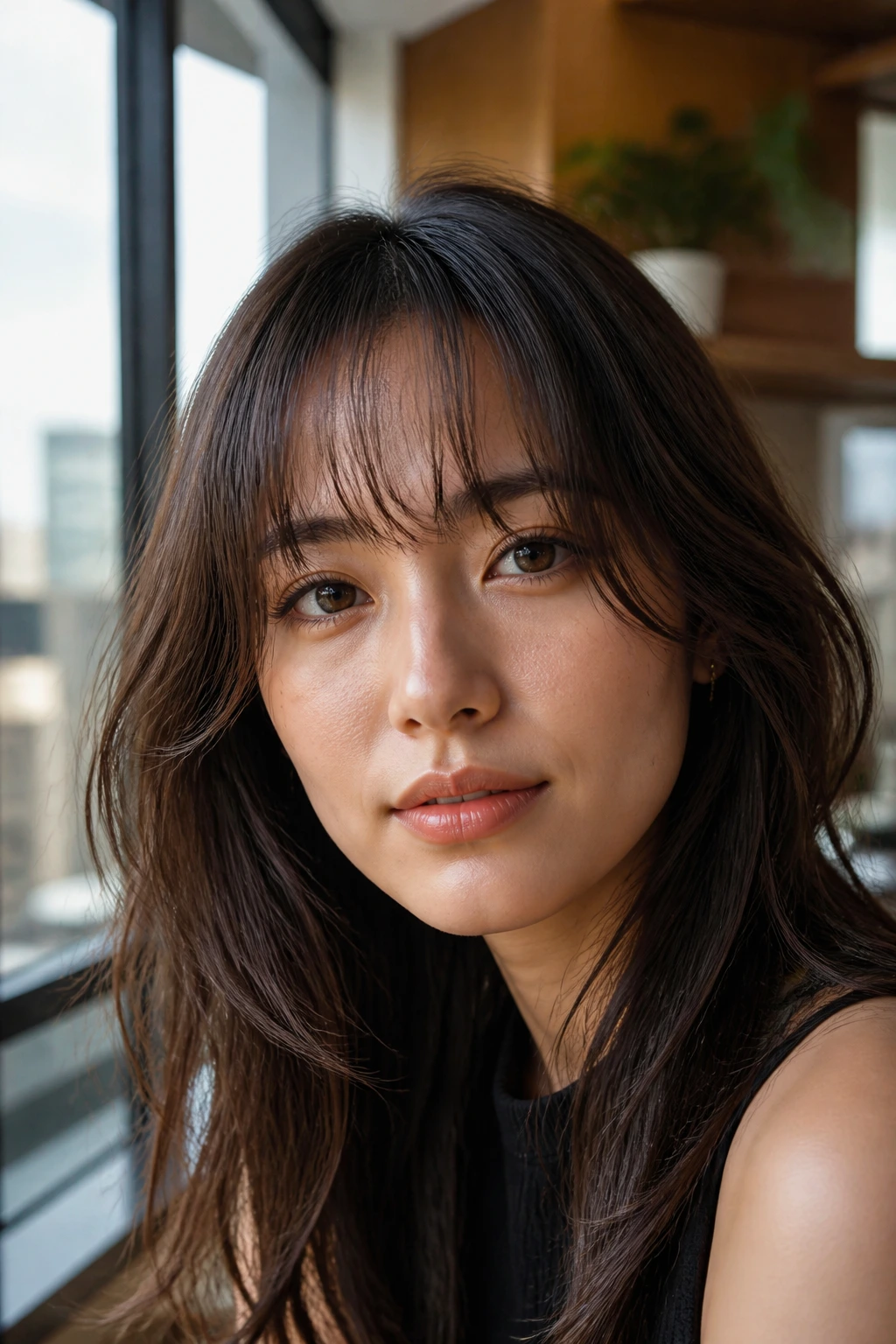
Feathered bangs bring movement by shaving away bulk at the ends. On round faces, that lightness is gold. A heavy fringe can crowd the forehead; a feathered one lets the skin show through and keeps the top of the face from looking crowded.
Razor cutting is the thing that gives this fringe its soft edges. It’s not for every hair type, though. Very fragile ends can get fuzzy if the razor work is too aggressive, and super frizzy hair may need a gentler hand.
If your hair can take it, this fringe looks especially good with a blowout that bends away from the face. The edges catch a little air and never sit flat for long. That’s the charm.
11. Piecey French Girl Bangs

This is the kind of fringe that looks like it was tossed together after coffee, but the shape still matters. Piecey French girl bangs sit close to the brows, separate into slim sections, and keep enough texture that they never feel heavy on a round face.
The secret is restraint. Don’t make every strand behave. Let a few pieces fall a little unevenly. Let the center part of the fringe show a sliver of forehead. That break keeps the look soft.
I’d pair this with natural waves, a relaxed bob, or shoulder-length hair that has some bend. Too much polish kills it. A dry shampoo mist at the roots and a quick shake with your fingers usually beats a round brush here.
12. Layered Side Bangs That Blend Into a Lob

A lob can look a little flat around a round face if the front is too even. Layered side bangs fix that by adding a diagonal line that folds into the cut instead of sitting on top of it. The whole front feels longer and slimmer, without trying too hard.
Unlike a hard fringe, this style gives you a soft transition from bang to length. That matters if you like a haircut that moves when you turn your head. The shortest pieces should skim the brow. The longest should melt into the cheek and jaw area.
It’s one of my favorite choices for people who want bangs but do not want a bang that screams “I have bangs.” Subtle. Useful. Easy to grow out.
13. Air-Dried Fringe for Natural Waves
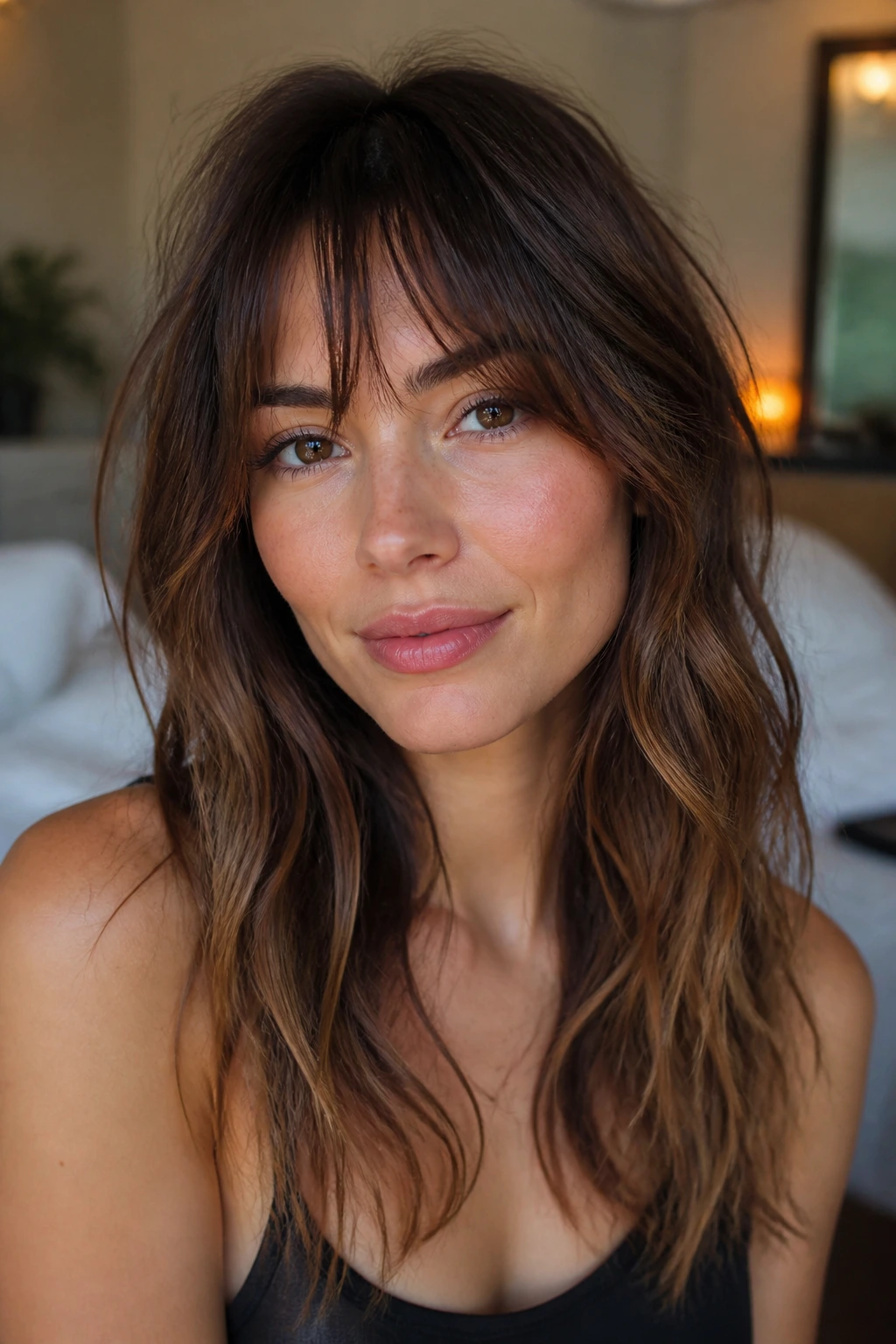
Some fringes fall apart the minute you brush them too much. Air-dried bangs are for those cases. If your hair already has a wave pattern, let it do some of the work and keep the shape soft, broken, and loose at the front.
How to Style It
Start with a small amount of leave-in cream through damp bangs, then separate them with your fingers. No big round brush. No overthinking. Clip the roots for ten minutes if they want to split in the wrong direction, then let them dry on their own.
Once dry, a touch of texture spray gives the ends a little grit. That stops the fringe from sticking to the forehead. For round faces, the lift at the root matters almost as much as the cut itself.
This style looks best when it doesn’t look finished. Funny, but true.
14. Textured Micro Bangs With Soft Sides

Micro bangs are a risk on a round face, so I wouldn’t call them the easy choice. Still, a textured version can work if the sides stay soft and slightly longer. The point is contrast, not severity.
A tiny fringe with broken edges creates space above the brows and can make the face feel more open than a straight, dense mini cut. The catch is that the rest of the haircut has to support it. You need some length at the temples, or the look turns abrupt fast.
I’d keep the sides grazing the temples and the center a touch uneven. That gives the cut a little breathing room. If you want something edgy but not harsh, this is the lane.
15. Arched Bangs With Broken Ends
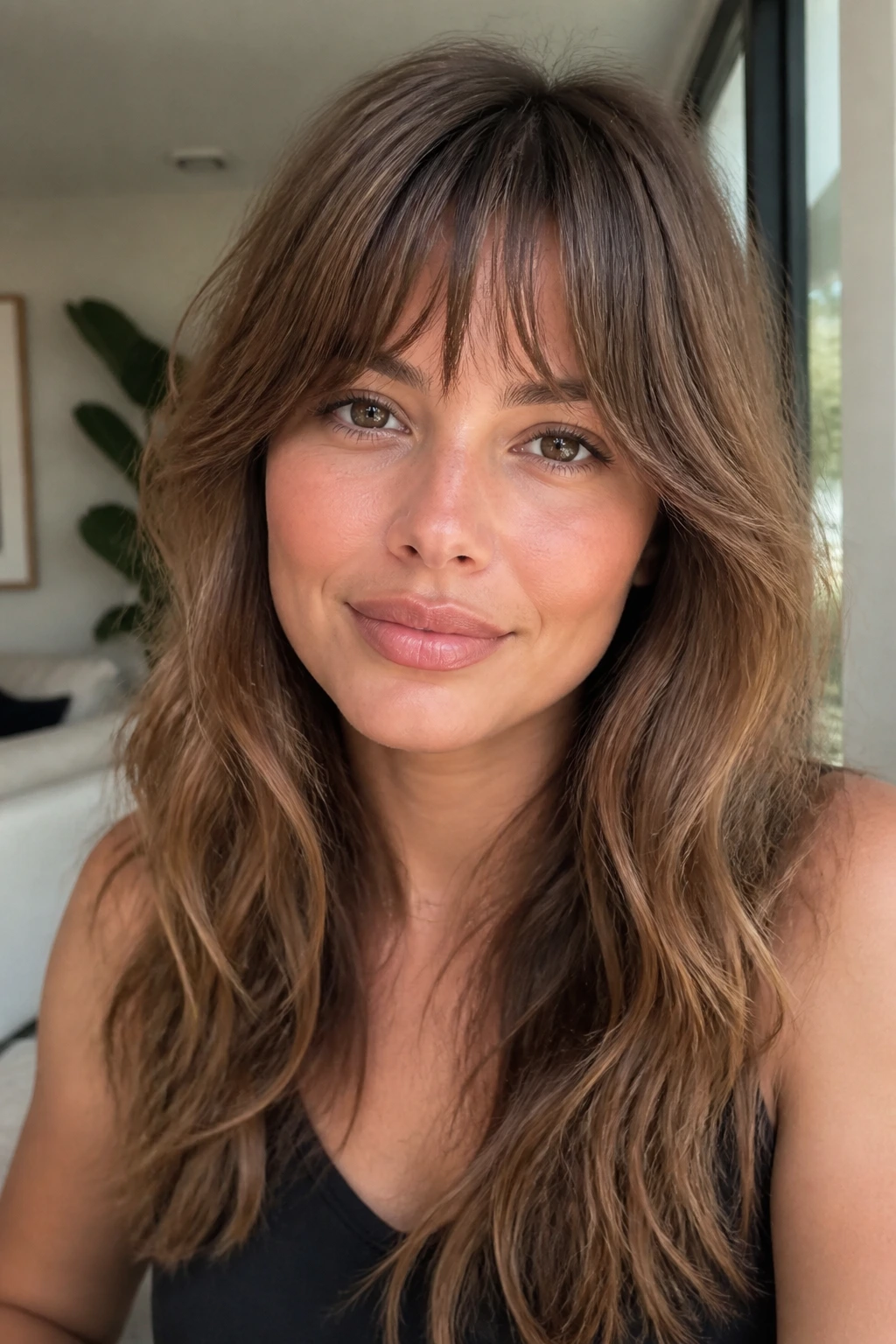
An arched fringe follows the brow shape, which makes it feel a little neater than some of the messier options here. The broken ends are what save it for round faces. They stop the arch from becoming a solid line and soften the frame around the eyes.
Why does the arch help? Because it creates a gentle upward curve before the hair drops away at the sides. That subtle lift makes the forehead area feel a little taller.
What to Watch For
Keep the curve light. Too much arch can look dated fast, and too much density makes the front heavy. Ask for the ends to be thinned with point cutting so the line never looks carved.
This is a nice choice if you want order at the front but still want movement. It sits between polished and messy, which is where a lot of people actually live.
16. Swept-Over Fringe for Fine Hair
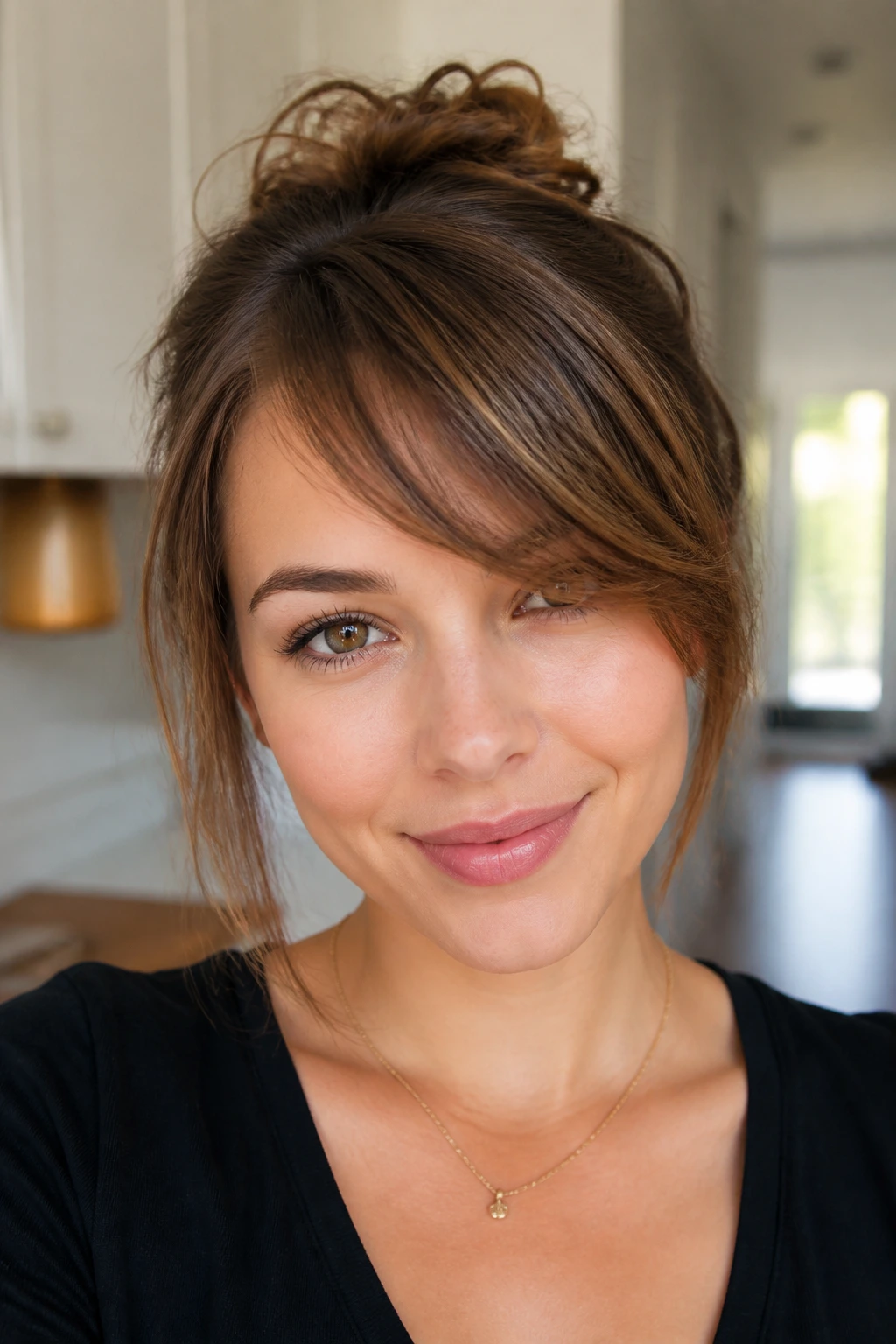
Fine hair can go limp fast, and bangs show that instantly. A swept-over fringe gives the front enough shape without asking for a heavy chunk of hair. On a round face, that sweep adds a diagonal line and keeps the forehead from feeling boxed in.
A root-lift spray at the base helps a lot. Blow the fringe across the forehead with a flat brush, then let it cool in place before touching it. That cooling step sounds small, but it’s the difference between a bang that stays and a bang that collapses in twenty minutes.
If your fine hair separates too easily, a tiny bit of dry shampoo at the roots gives it more grip. The goal is lift, not puff.
17. Heavy Bangs Lightened at the Center
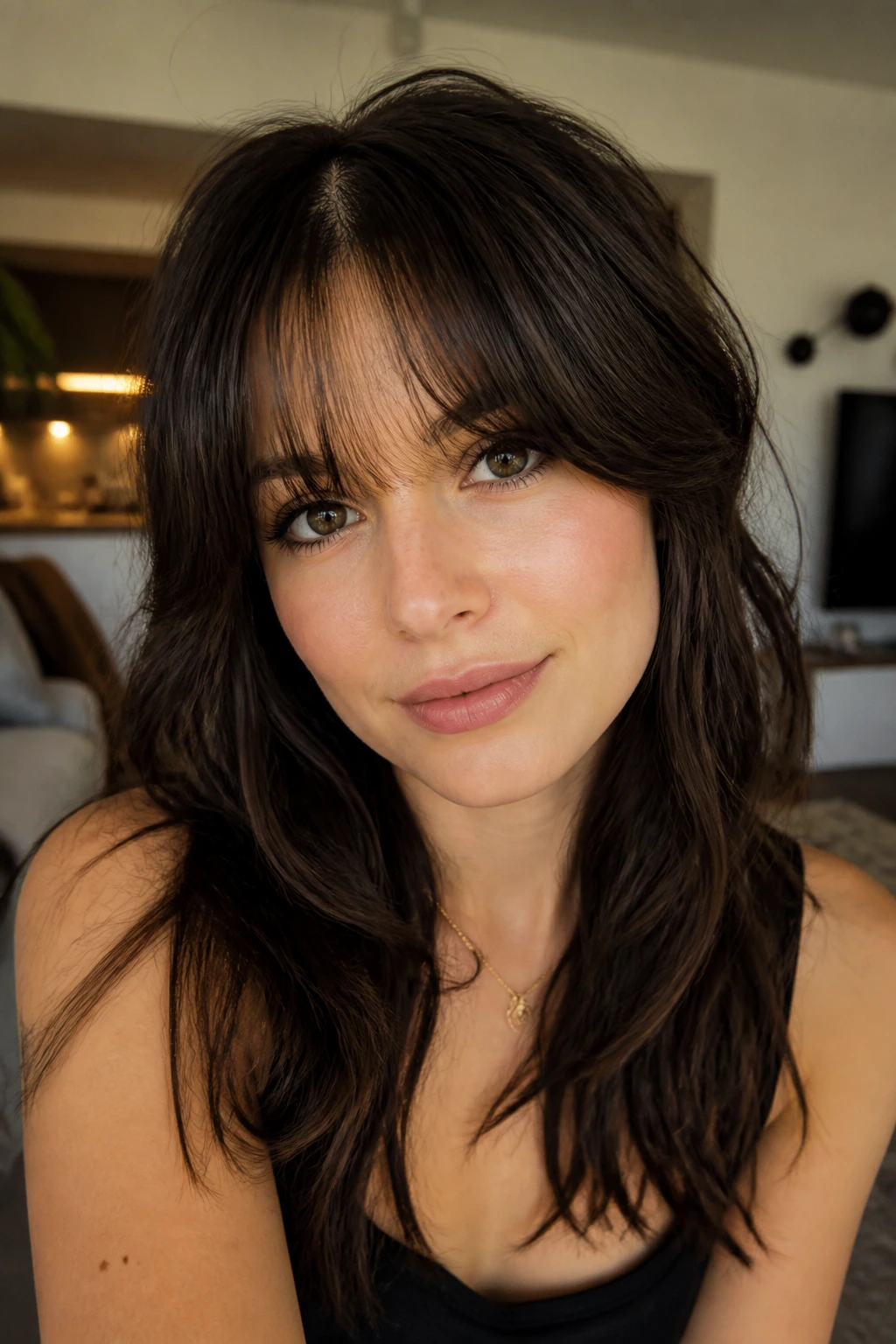
This one is for thicker hair that needs weight but not a wall. A fuller fringe can work on a round face if the center is softened and the ends aren’t cut into a hard line. You still get presence at the front. You just don’t get that blunt shelf effect.
The shape is useful if your hair tends to split apart the second it dries. A little density helps the fringe stay visible. The trick is to keep the inside of the bang lighter than it looks from the outside, so the front doesn’t feel too dense when it falls.
A stylist with a razor or shears used in small bites can make this look less severe. That’s the difference between “heavy” and “heavy-handed.” Huge difference.
18. Grown-In Curtain Bangs for Low-Maintenance Days
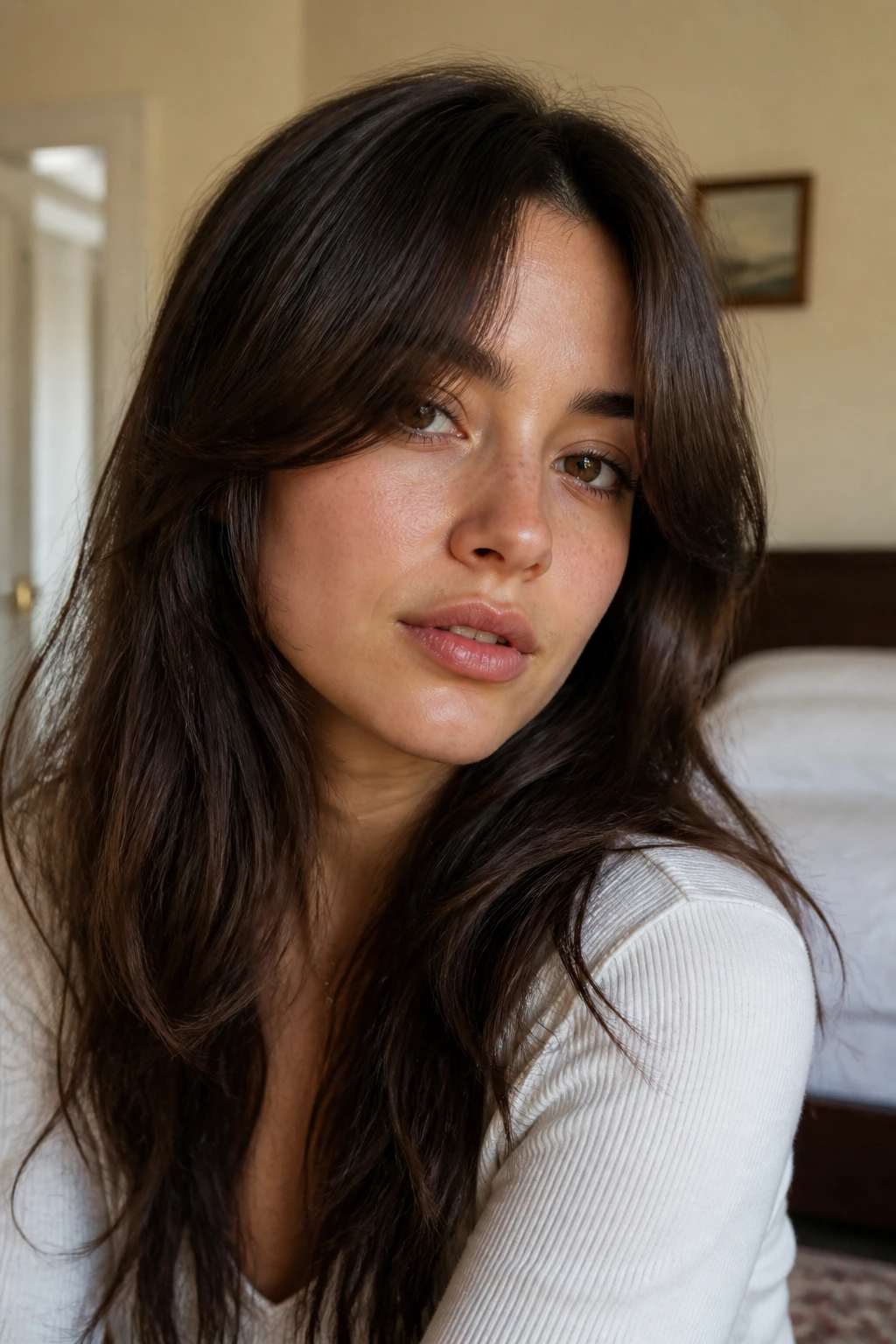
If you like the idea of curtain bangs but hate regular trims, this is the version to ask for. The pieces sit longer, usually past the brow and closer to the cheekbone, so the grow-out phase still looks intentional. Round faces benefit from that extra length because it keeps the frame open.
Why It’s Easier to Live With
The front is soft enough to tuck away when you want, but it still gives shape when you wear your hair down. That means fewer bad hair days and fewer moments of staring at the mirror wondering what happened.
- Best for people who wear their hair in clips or half-up styles
- Works with straight, wavy, or loosely curly hair
- Needs less frequent trimming than a short fringe
- Looks good with a center part or a gentle offset part
This is the one I’d hand to someone nervous about committing. It grows out kindly.
19. Wavy Shag Bangs With a Middle Part

A middle part plus shag layers can be a little magic on a round face. The center split opens the forehead, and the shaggy texture keeps the sides from swelling too wide. You get movement without the bulk.
What makes this cut work is the way the bang area blends into the rest of the layers. The front should not stop at one blunt point. It should dissolve into the haircut, almost like the fringe was always part of the shape.
If your hair is naturally wavy, don’t fight it with too much brushing. Let the waves live. A little sea salt spray on damp hair and a rough dry with your fingers is often enough.
20. Side Curtain Bangs That Open the Face

Side curtain bangs are a smart compromise when you want the softness of curtain bangs but need a stronger direction. One side opens more than the other, so the face gets a visible diagonal line and a bit of asymmetry without losing the relaxed feel.
This works nicely on round faces because it keeps one side light near the brow while the longer side skims the cheekbone. That little opening gives the forehead room to show, which keeps the haircut from feeling crowded.
I like this shape on hair that already has some bend or volume at the root. If the hair is pin-straight, you’ll need a small round brush or hot brush to make the side fall the right way. Otherwise, it can look floppy instead of soft.
21. Choppy Bangs With a Rounded Bob

A rounded bob can add width at cheek level, so the bang has to pull its weight. Choppy bangs help because they break the top line and stop the haircut from becoming too circular. The fringe gives the eye a place to go upward, then downward again.
Pairing Notes
Keep the bob ends a little below the jaw if you can. If the cut stops right at the widest part of the face, the whole shape can feel tight. The bangs should be feathered enough that they don’t form a second circle on top.
The best version has piecey ends, a bit of root lift, and a touch of texture through the crown. That crown lift matters more than people expect. Without it, the bob and the bangs can both sit flat and the face looks fuller than it is.
22. Soft Birkin-Inspired Fringe

A Birkin-inspired fringe has that loose, slightly imperfect feel that never looks stiff. On a round face, the softness keeps it flattering. The center can sit a little shorter, then the sides taper out and rest just at the brows or slightly below.
The point is not to copy the original look exactly. It’s to borrow the relaxed shape and make it messier, softer, and easier to wear. The bangs should separate a bit when they dry. A tiny bit of forehead showing through is a good thing here.
This style is especially nice if you want the fringe to feel lived-in from day one. It doesn’t need much. A light mist of texture spray and a finger comb is often enough.
23. Textured Bangs With a Pixie Cut

Short hair can be tricky on round faces, because there’s less room to hide a bad shape. That’s why textured bangs matter so much with a pixie. A little piecey fringe adds movement, while a soft crown keeps the face from reading too wide.
The fringe should not be cut into a hard line. It needs broken ends and enough length at the temples to soften the transition into the sides. If the front is too blunt, the whole cut can feel boxy fast.
A matte styling paste works well here. Use a pea-sized amount, warm it in your hands, then pinch the ends into separate pieces. That keeps the pixie modern and avoids the helmet effect.
24. Piecey Bangs That Hit the Brows and Split

These are the bangs that look simple until you try to make them. Then you realize the shape is doing a lot of work. The fringe hits the brows, breaks in the middle, and falls into little sections instead of one solid line.
For a round face, that split matters. It makes the forehead feel wider in a good way and stops the front from closing off the face. The brows stay visible, too, which helps the whole look stay open.
Unlike a blunt eyebrow bang, this style can be worn with almost anything from a lob to long layers. A dry texture mist and a quick shake with the fingers is often all it needs. Not glamorous. Just effective.
25. Blowout Bangs With a Bend at the Ends
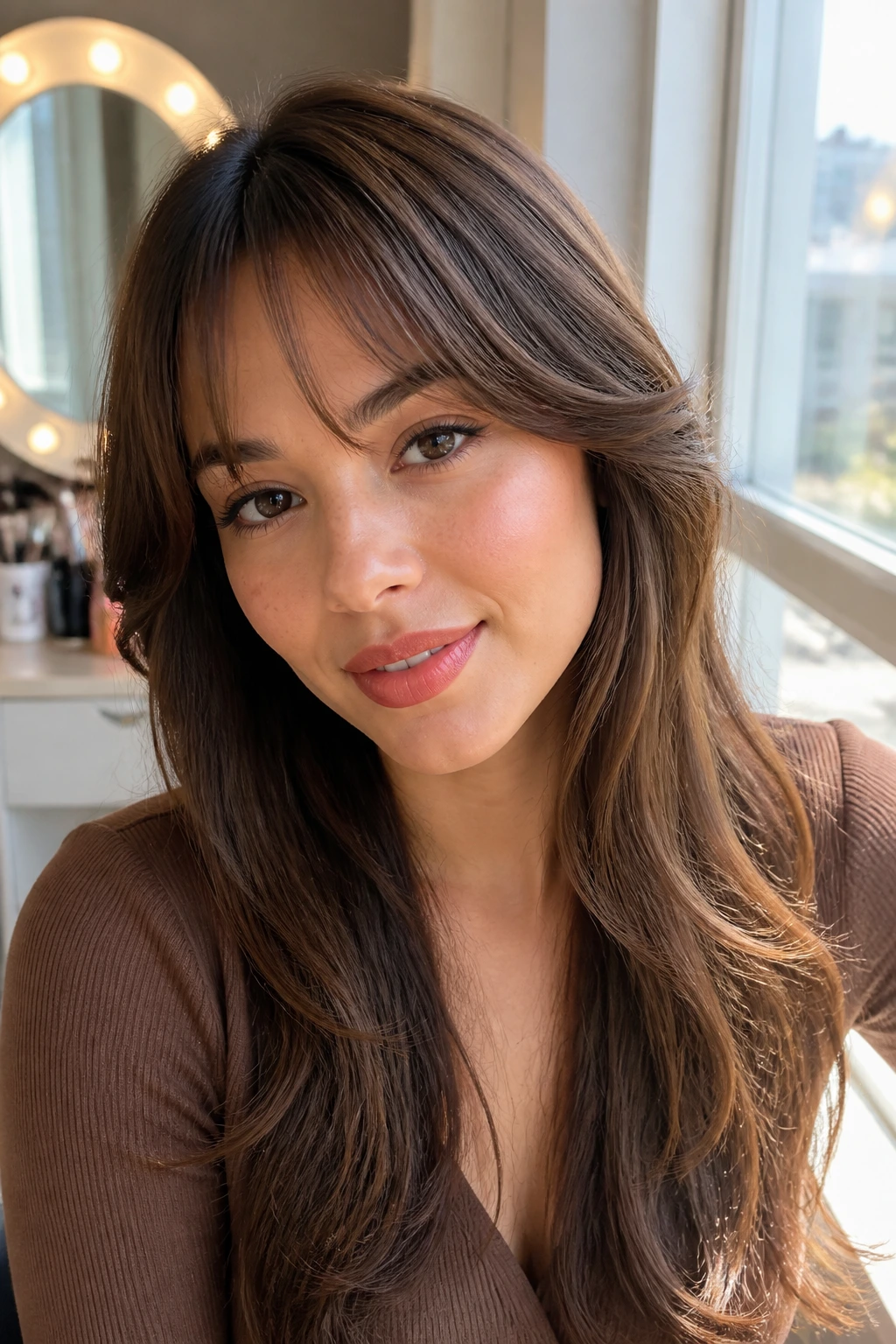
If you like a fuller front with some bounce, this is the one to ask for. Blowout bangs create softness by curving the ends away from the face, and that bend keeps a round face from feeling too centered on the cheeks.
How to Blow Them Out
Use a round brush about 1 to 1.5 inches wide. Pull the bangs forward while they dry, then twist the brush slightly away from the face at the ends. Hold the shape for a few seconds before letting it go.
- Keep the roots lifted first
- Bend only the last inch or so
- Let the fringe cool before touching it
- Use a light spray, not a stiff one
The result should feel airy, not blown into a perfect curl. That small bend is enough.
26. Wispy Fringe for Thick Hair
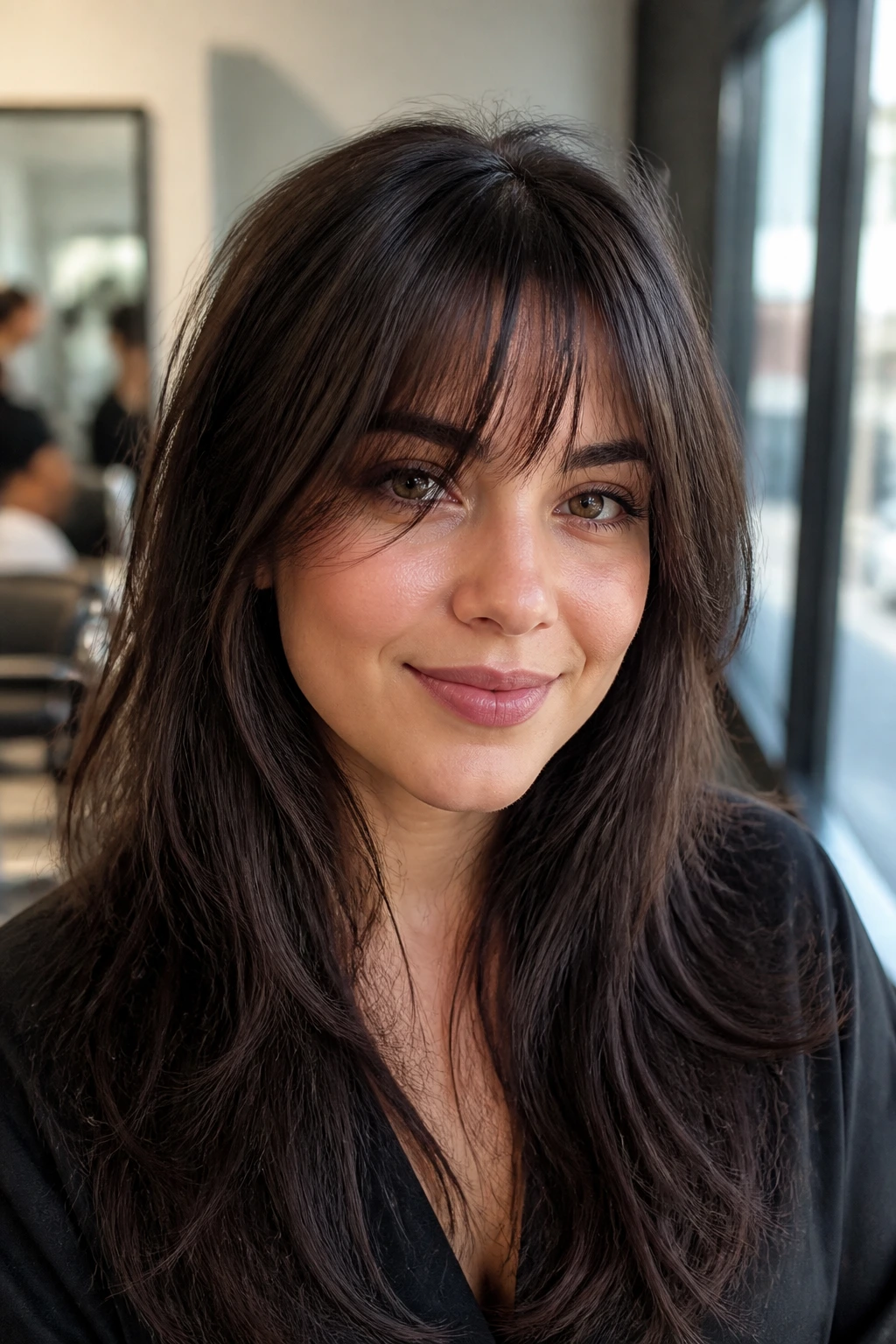
Thick hair needs a careful hand at the front. If the fringe is cut too heavy, it swallows the face. If it’s thinned correctly, though, wispy bangs can look excellent on round faces because they keep the forehead area open and the cheek area from feeling crowded.
The cut should be tapered through the underneath, not just chopped on top. That’s how you remove bulk without making the bangs look see-through in a bad way. You want soft density, not a random gap.
This style also likes movement. A little bend at the ends helps, especially if your hair has a natural wave. Straight, thick bangs can behave, but they need more styling time than people expect. There’s no getting around that.
27. Messy Bangs on Long Layers
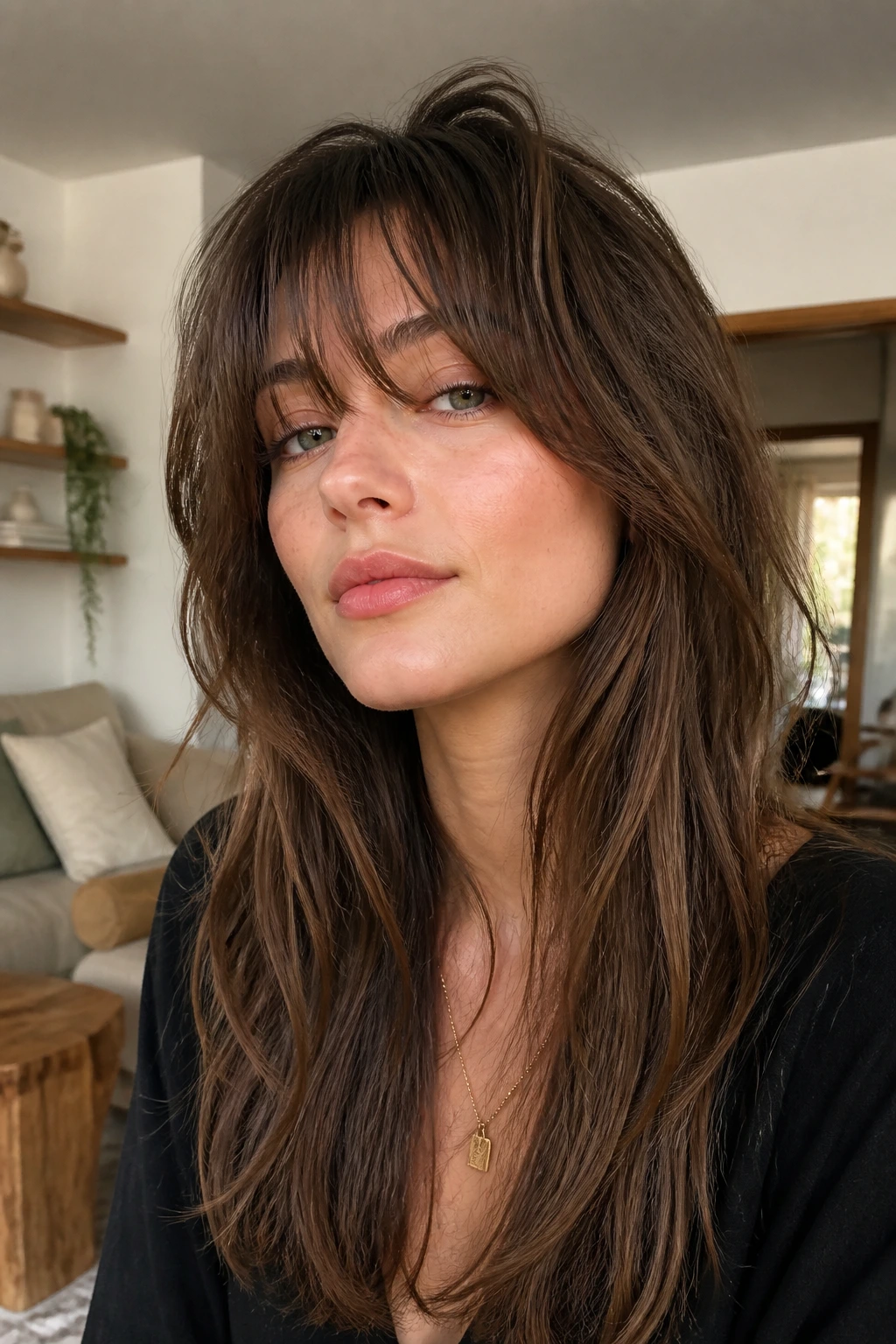
Long hair can carry a bang beautifully, but the front has to connect to the rest of the cut. Messy bangs on long layers work because the fringe is not isolated; it falls into the face-framing pieces and keeps the whole shape moving.
Why the Length Matters
If the front pieces are too short and the rest of the hair is very long, the bang can feel detached. That’s the bad version. The good version uses cheekbone-length layers to bridge the gap.
A little volume at the crown helps too. It keeps the face from feeling too round and gives the front room to lift. If your hair is heavy, ask for internal layering rather than lots of visible choppiness. That keeps the ends soft.
This is the kind of cut that looks casual on purpose, which is harder to get right than it sounds.
28. Long Split Fringe With a Deep Side Shift

If you want one messy bangs shape to take to a stylist and not panic halfway through the cut, this is the safest bet. A long split fringe with a deep side shift gives a round face length, angle, and softness all at once. The split keeps the forehead open, and the side shift stops the fringe from feeling too symmetrical.
It’s the most forgiving version of all the ideas here. You can wear it parted, brushed across, tucked back, or bent into a softer curve with a round brush. It grows out well, too, which matters more than people admit.
I like this one because it does not fight your face shape. It works with it. If you want something that looks lived-in on day one and still looks decent six weeks later, this is the move.
