



Feathered bangs for round faces work best when they pull the eye diagonally, not straight across. That sounds like a tiny detail. It isn’t.
A blunt fringe that sits right over the widest part of the cheeks can make a round face feel even rounder. Feathering softens that line, breaks up the width, and gives the front of the hair some lift without turning the whole cut into a helmet. The sweet spot usually lands somewhere between the bridge of the nose and the cheekbone, depending on how dense your hair is and how much forehead you want to show.
The other trick is movement. A good feathered fringe should shift a little when you turn your head, tuck one side behind your ear, or rough it up with your fingers after a long day. Flat hair around the face is the enemy here. Soft edges, a bit of bend, and a shape that opens near the temples usually do far more for a round face than bangs that try too hard to hide it.
1. Long Curtain Feathered Bangs for Round Faces
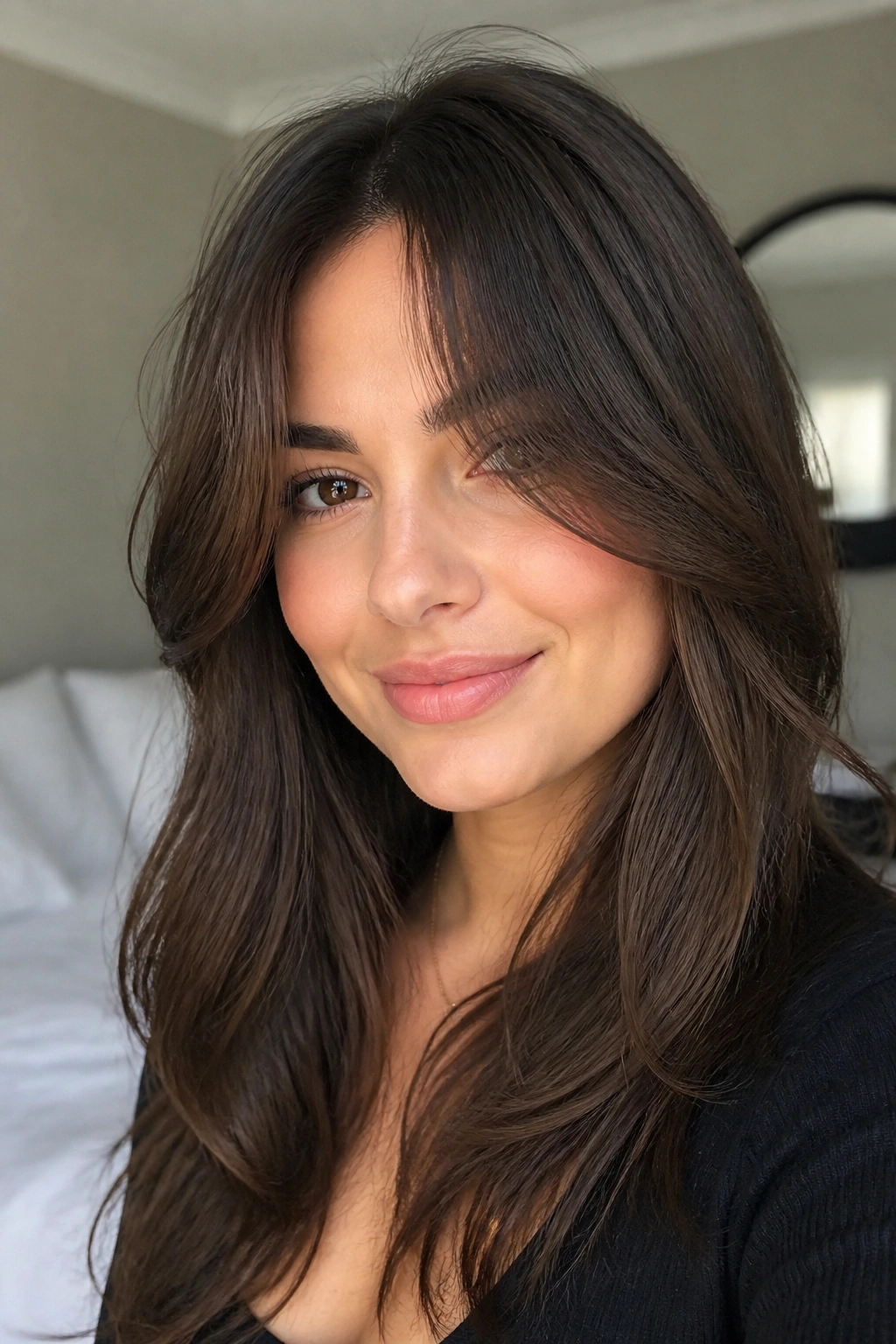
If I had to hand someone one safe, flattering starting point, it would be this. Long curtain bangs split near the bridge of the nose and fan out toward the cheekbones, which gives a round face some clean vertical movement without making the forehead feel boxed in.
Why it works
The center stays light, so the eye doesn’t stop in one wide horizontal line. The longer sides do the real work, because they drag attention downward and outward at the same time. That makes the face look a little longer and a little leaner, even when the rest of the hair is soft and full.
Ask your stylist to keep the shortest point around the bridge of the nose or just below it, then let the side pieces graze the upper cheek. A 1.25-inch round brush and a quick bend away from the face are enough to keep the shape alive.
- Shortest point: bridge of the nose
- Longest point: cheekbone or just below
- Best styling tool: medium round brush
- Best finish: soft, touchable, not stiff
Tip: If the center gets cut too short, the whole fringe starts to look square. That’s the line you do not want.
2. Deep Side-Swept Feathered Fringe
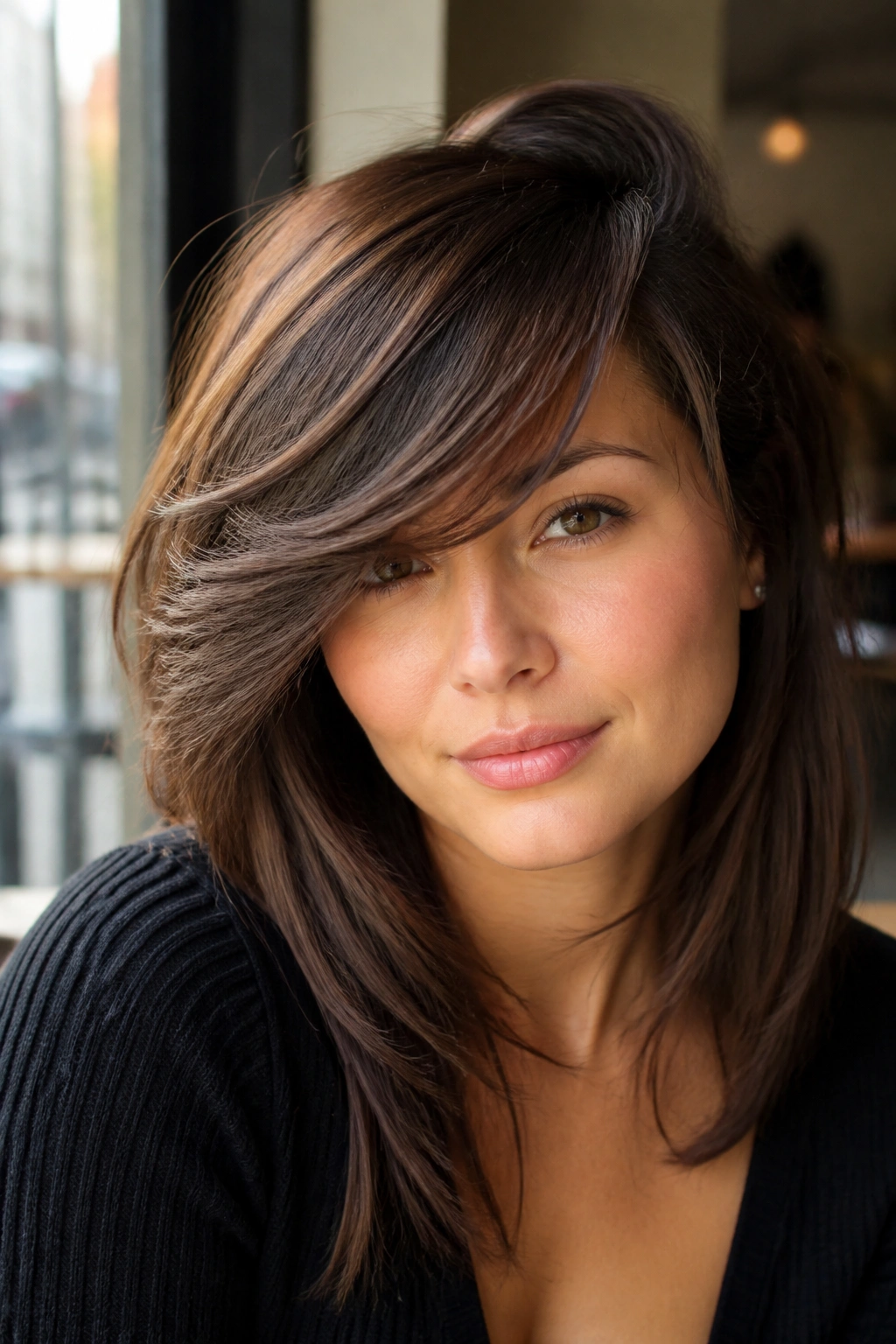
Why does a side part help so much? Because it turns the whole front of the haircut into a diagonal, and diagonals are kind to round faces.
A deep side-swept fringe works especially well when the hair has a little body. The sweep should start high on one side, then fall across the forehead and taper into the opposite temple. Keep the shortest section above the brow line, not at cheek level, or you lose the lengthening effect.
This shape is a good match for people who want bangs without committing to a heavy front. It also grows out well, which matters more than people admit. Nothing is more annoying than a fringe that looks great for ten days and then turns into a maintenance chore.
The styling is straightforward. Blow-dry the bang section in the direction you want it to live, then flip it back once it cools. That cooling step locks the curve in place. Skip it and the hair tends to fall flat by lunch.
3. Bottleneck Feathered Bangs with Soft Temples
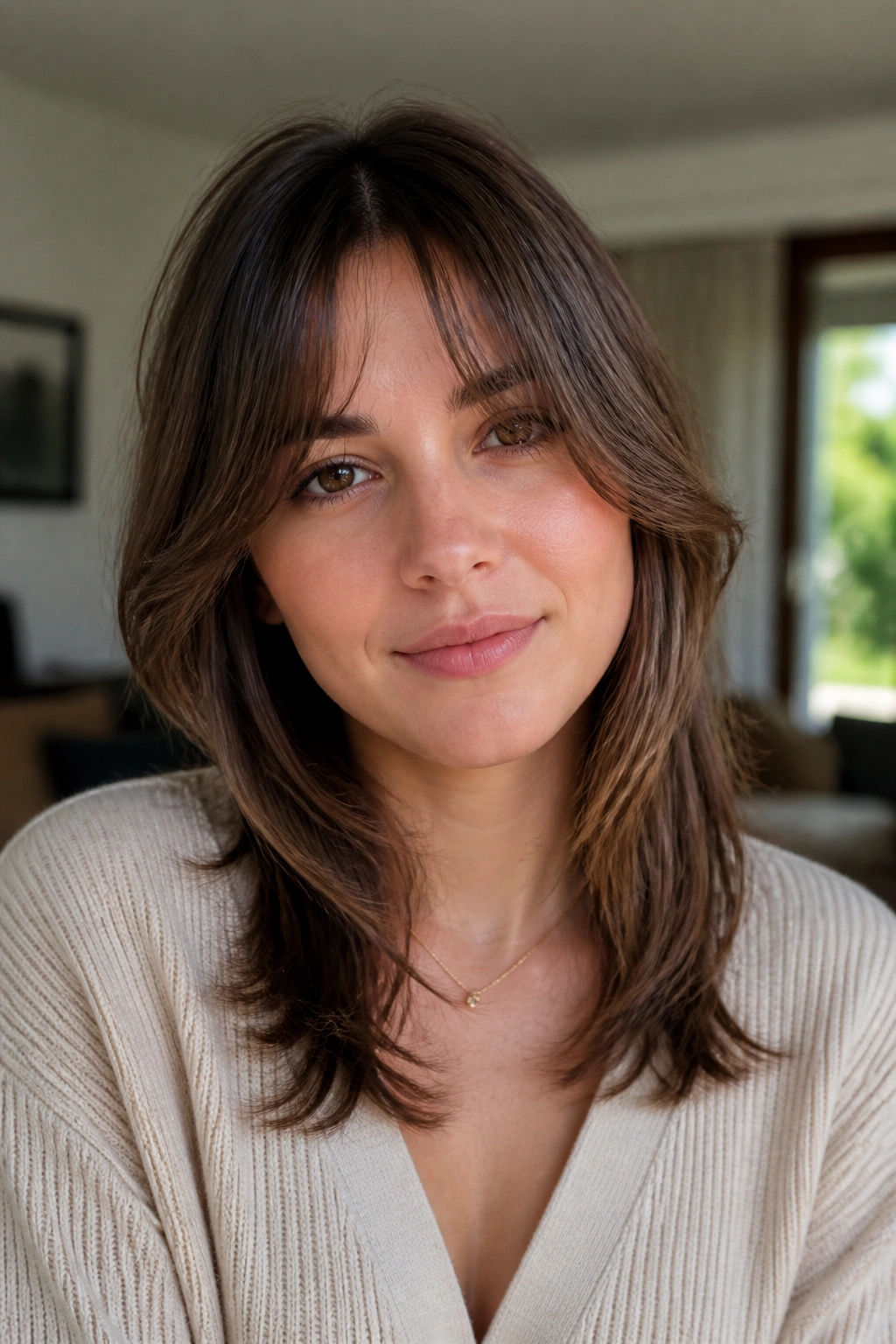
The center is narrow. The sides are softer. That little shape shift is why bottleneck bangs can be so good on a round face.
Shape notes
A bottleneck fringe starts slim in the middle, then opens a little wider at the temples. The shape feels almost like a narrow curtain bang, but with a softer, more tapered front. It’s a smart choice if you want something that looks current without being fussy.
The key is keeping the center delicate. If the middle gets too heavy, the whole fringe can add width right where a round face already has plenty of it. The side pieces should begin to skim near the brow and then drift toward the cheekbone, not stop abruptly at the outer eye.
What to ask for
- A narrow center panel
- Feathered ends, not blunt ends
- Temple pieces that open outward
- Length that reaches the upper brow or slightly below
This shape looks especially good on straight or slightly wavy hair, where the separation stays visible. On very thick hair, ask for light point cutting so the fringe doesn’t sit like one solid block.
4. Brow-Skimming Feathered Bangs
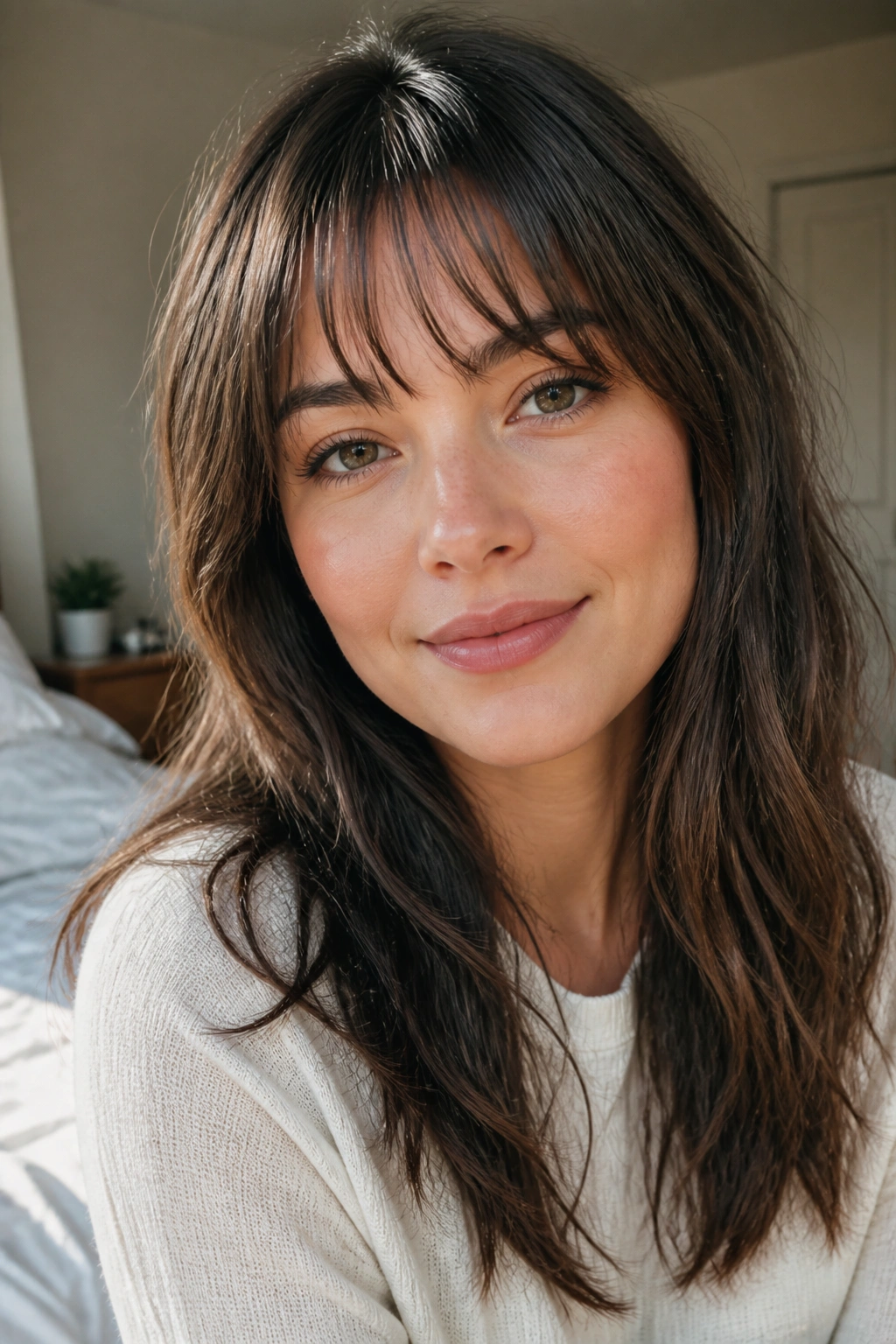
Not every round face needs long bangs. Sometimes a soft, brow-skimming fringe is enough, as long as it has air in it.
The mistake people make here is cutting the fringe too dense. A heavy brow bang can feel charming on the right face shape, but on a round face it can pull the eye straight across. A feathered version keeps tiny gaps between the ends, so the forehead still shows a little skin and the whole cut feels lighter.
This is the one to choose if you like seeing your brows. It works nicely with expressive eyes, strong brows, or a haircut that already has a lot of movement through the ends. Keep the line soft and slightly irregular. Too perfect looks stiff. Too blunt looks blunt, which sounds obvious, but it gets ignored all the time.
A light mist of texturizing spray and a quick finger rake are usually enough. If you need a brush for every single morning, the fringe is probably too full.
5. Shaggy Feathered Bangs with Crown Lift
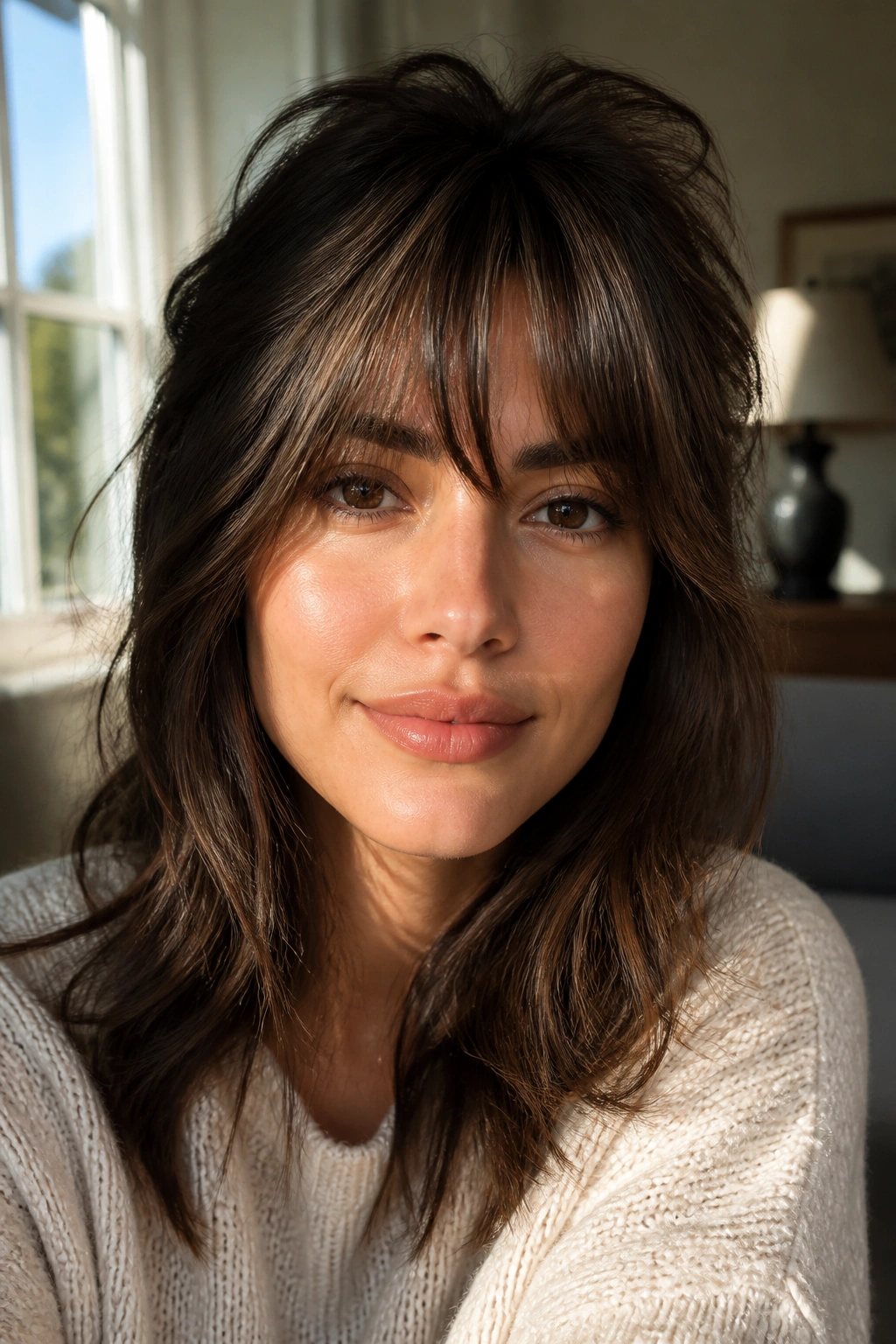
A little lift at the crown changes everything. It keeps the face from feeling pinned down.
What makes it different
Shaggy feathered bangs are built to blend into the top layers of the cut. The fringe is not sitting there by itself like a separate panel. It connects to choppy layers near the crown, which helps create height where a round face benefits from it most.
The trick is not to overdo the shag. You want movement, not fuzz. Ask for soft, broken ends through the fringe and a bit of lift at the roots, especially if your hair falls flat on day two. A dab of root spray at the front and a round brush at the crown can keep the shape from collapsing.
How to style it
- Blow-dry the roots upward first
- Direct the fringe slightly away from the cheeks
- Use a small amount of mousse, not a heavy cream
- Finish with fingers, not a paddle brush
This style works beautifully with naturally messy texture. It also helps if you do not want bangs that look polished all the time. Some mornings the fringe will sit a little wild. That’s part of the point.
6. Face-Framing Feathered Bangs for Round Faces
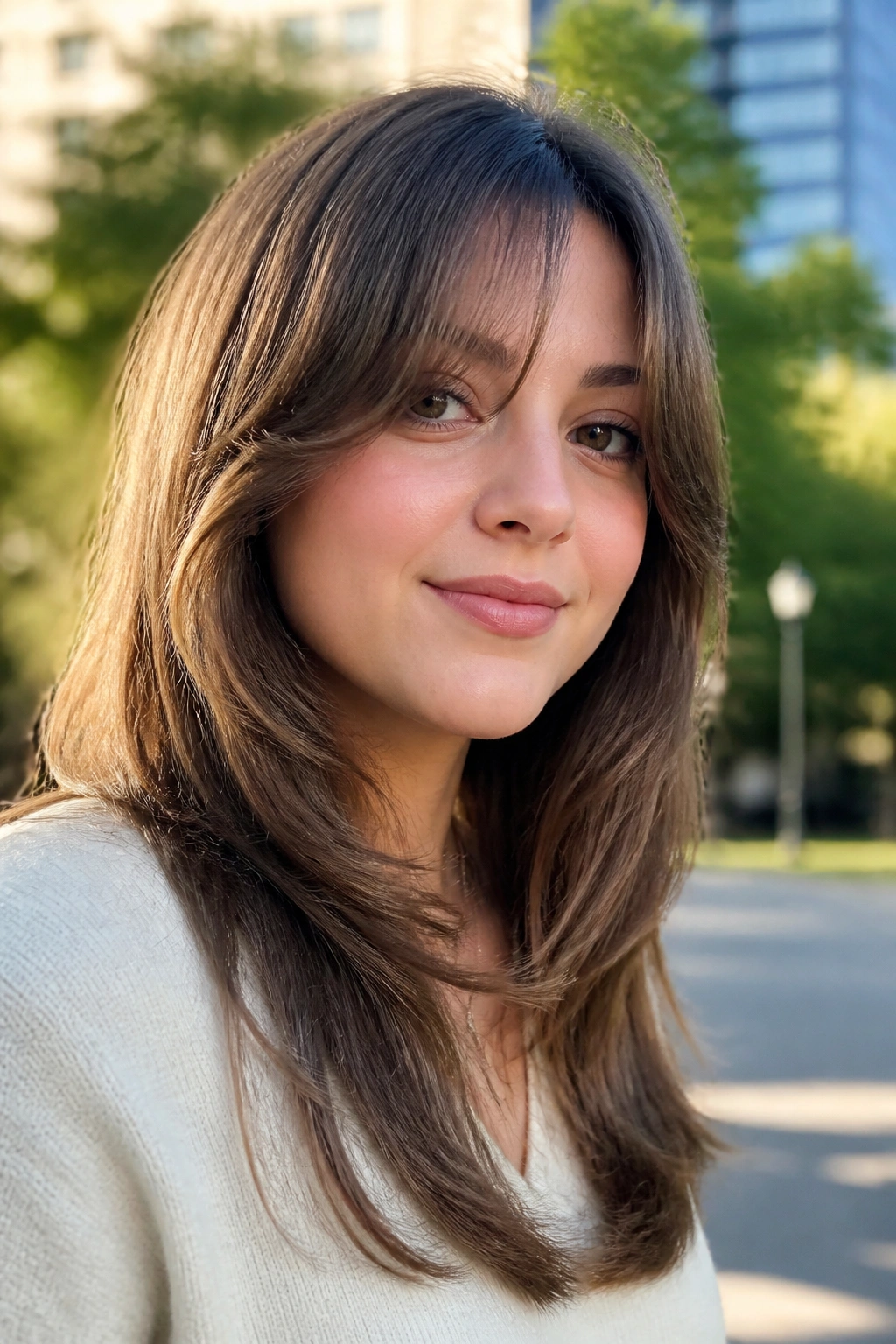
This is the version I reach for when someone says, “I want bangs, but I do not want to feel trapped by them.”
The haircut starts with short, feathered pieces near the front and lets them melt into longer face-framing layers. Nothing stops sharply at the temples. Everything blends, which is exactly why it suits a round face so well. The eye keeps traveling down the length of the hair instead of getting stuck at the widest point of the cheeks.
Ask for the shortest face-framing piece to land around the cheekbone or upper lip, depending on how much forehead you want to show. If the hair is thick, point cutting helps keep the front light. If the hair is fine, the stylist should be careful not to remove so much weight that the whole thing disappears.
You can wear this with long hair, medium hair, or even a shoulder-length cut. That flexibility is the real payoff. It gives you the bang effect without a hard line.
7. Feathered Bangs with a Collarbone Lob
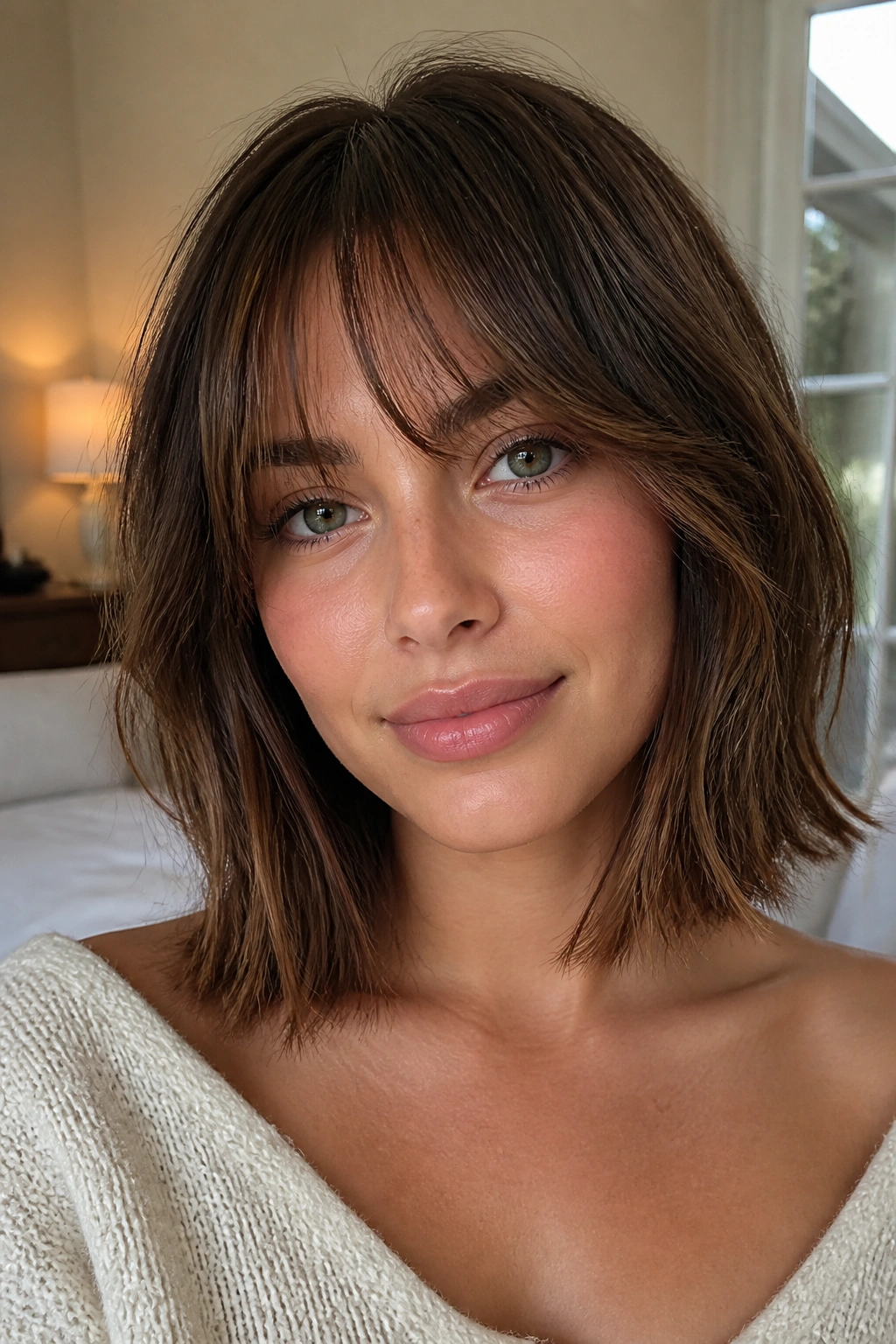
A collarbone lob already gives a round face some length. Add feathered bangs, and the whole cut starts working in the same direction.
The lob is the quiet hero here. Because it sits below the jaw, it does not add width at the cheek level. The bangs then soften the forehead area, so the face feels balanced from top to bottom. If the lob has a slight bend at the ends, even better. Straight, flat ends can feel heavy. Soft bends keep the shape fresh.
This is a good match if you want a haircut that looks tidy in a ponytail and still has enough shape down. A center part with curtain-style feathering is probably the easiest route. But a soft side part works too, especially if one side of your face tends to feel wider in photos.
One practical note: if the lob sits right at the chin, the whole cut can feel boxy. Keep it a little longer. Chin length is a tricky place on round faces.
8. Feathered Bangs with a Blunt Bob
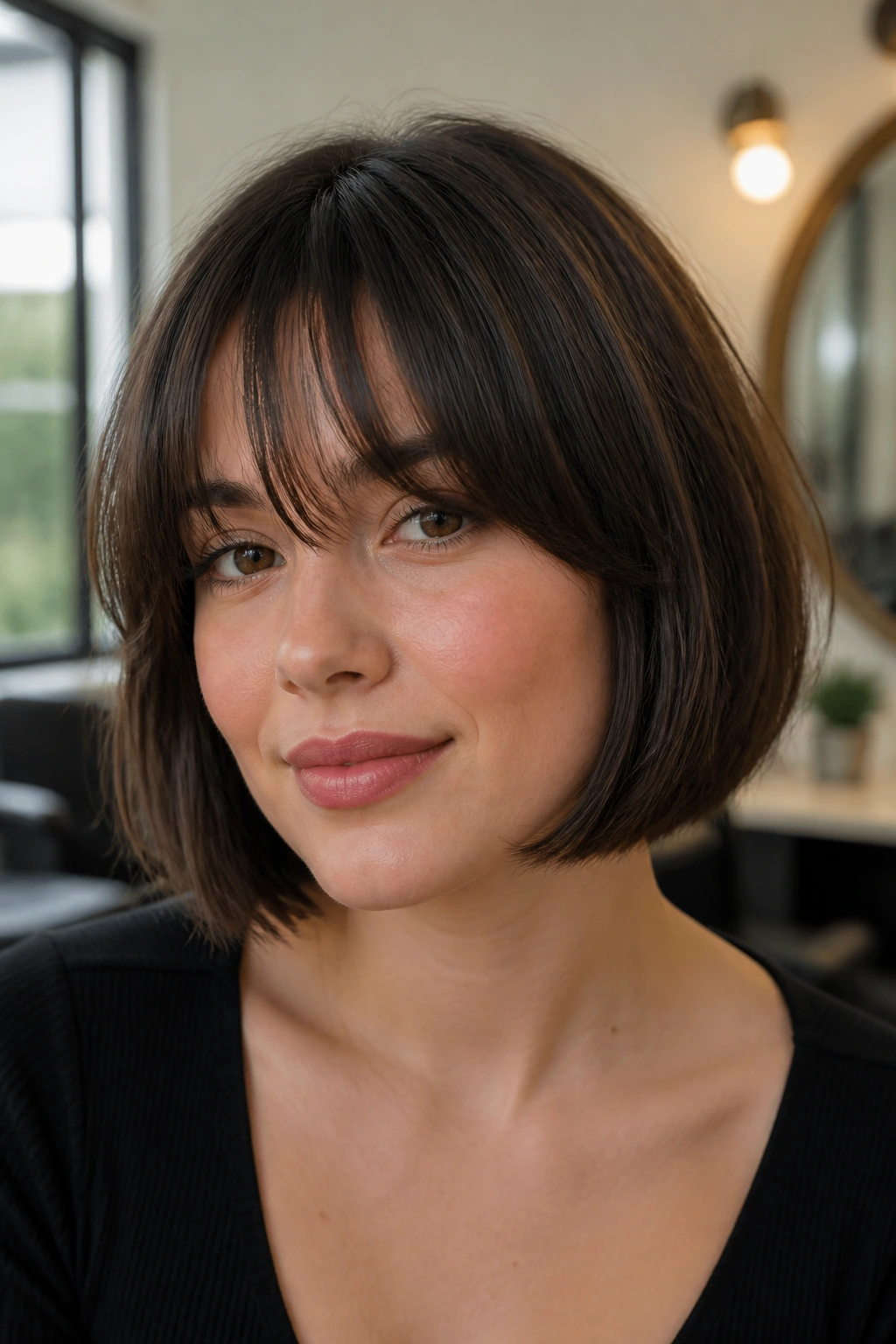
A blunt bob and feathered bangs sound like opposites, and that is exactly why the pairing works.
The bob gives the cut structure. The feathered fringe keeps the front from feeling too hard. On a round face, that contrast can be useful, as long as the bob is not cut too short at the jaw. A chin-length blunt bob can widen the lower half of the face fast. A bob that lands closer to the mouth or just under the jaw tends to behave better.
The fringe should be softer than the bob, with broken ends and some see-through texture. That keeps the focus on the eyes instead of the cheeks. It also stops the haircut from feeling too severe.
If you want the bob to do extra work, tuck one side behind the ear and let the fringe fall diagonally. That single move can change the whole mood. Small adjustment. Big difference.
9. Feathered Bangs for Wavy Hair
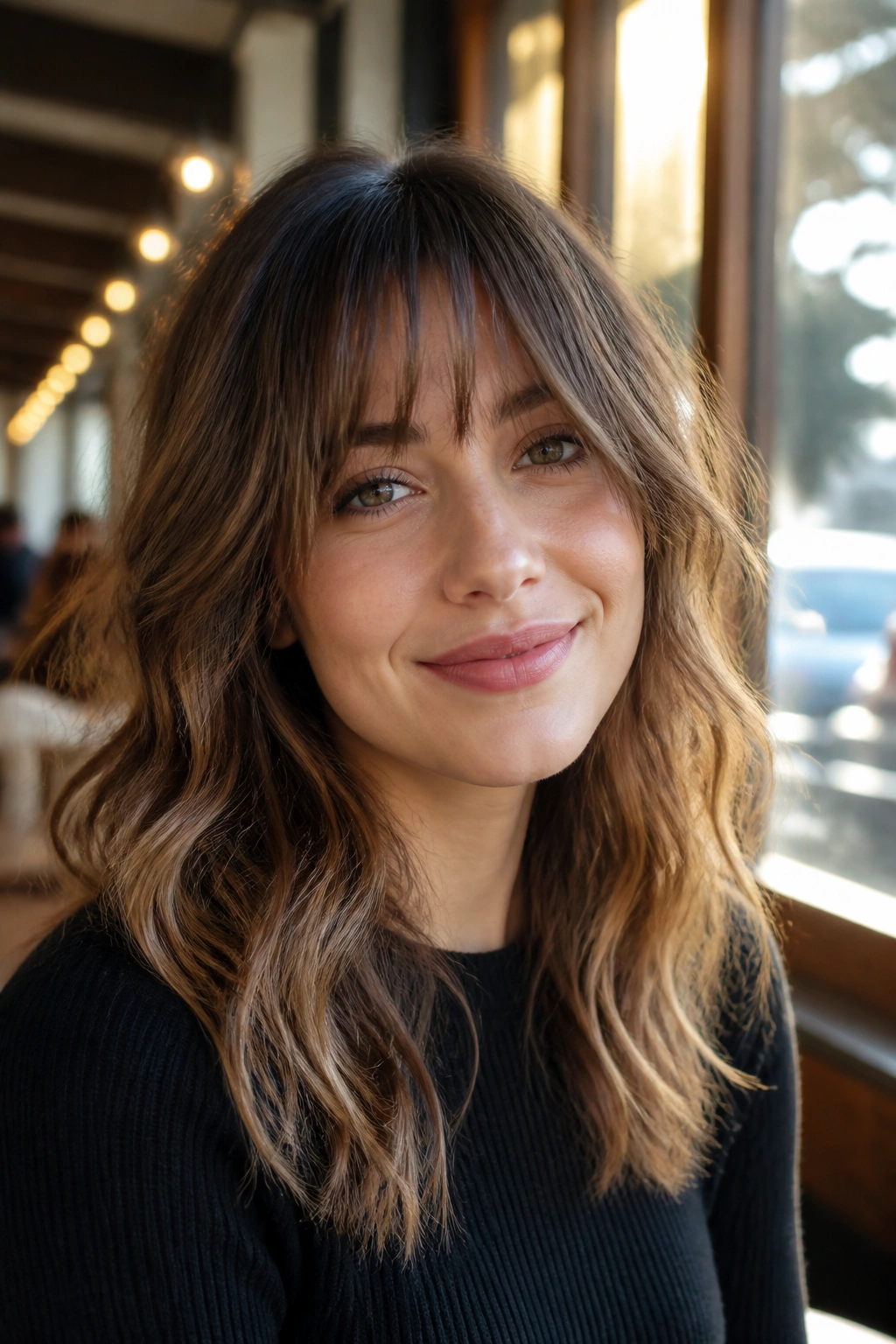
Wavy hair has an advantage here: it already knows how to move.
The catch is shrinkage. A wave can spring up more than you expect once it dries, so feathered bangs for wavy hair should usually be cut a touch longer than the final look you imagine. The shortest piece should still sit safely above the eyes, but not so high that it bounces into the middle of the forehead after air-drying.
How to get the shape right
- Cut or trim when the hair is dry or nearly dry
- Keep the center slightly longer than straight hair would need
- Use a diffuser on low heat if you want the wave to set
- Scrunch a little cream through the ends, not the roots
The best thing about wavy feathered bangs is the softness around the face. They blur the roundness in a flattering way without making the cut look overstyled. If your wave pattern is uneven, even better. A little irregularity keeps the fringe from reading as one solid block.
10. Feathered Bangs for Curly Hair
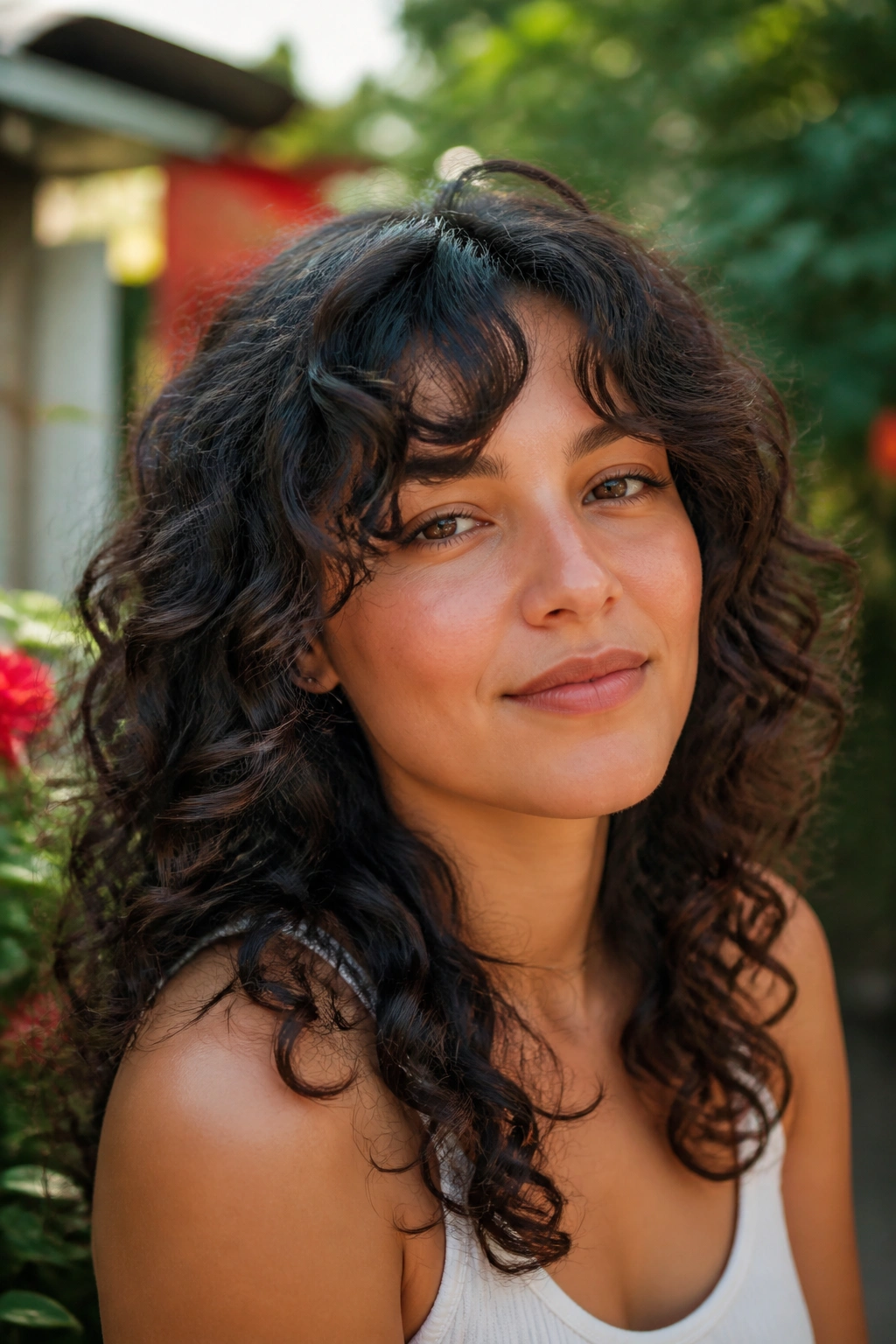
Curly hair and feathering can be a gorgeous pairing, but only if the cut respects shrinkage.
That’s the part people get wrong. Curly fringe is not meant to behave like straight fringe after a flat iron pass. It has to live in its own shape. The safest move is to cut it dry, curl by curl, so the stylist can see where each piece really lands. If they cut it wet and hope for the best, you may end up with bangs that spring much shorter than planned.
Round faces tend to do well with curly feathered bangs when the center is kept airy and the sides are allowed to fall a bit longer. That length around the temples helps stretch the face visually. Dense curls right across the forehead can feel heavy fast, so a feathered approach is worth the extra attention.
A curl cream and a tiny bit of gel at the ends usually beats a heavy styling butter. Heavy products can collapse the shape and make the fringe sit flat against the forehead. Nobody wants that.
11. Razor-Cut Feathered Bangs for Fine Hair
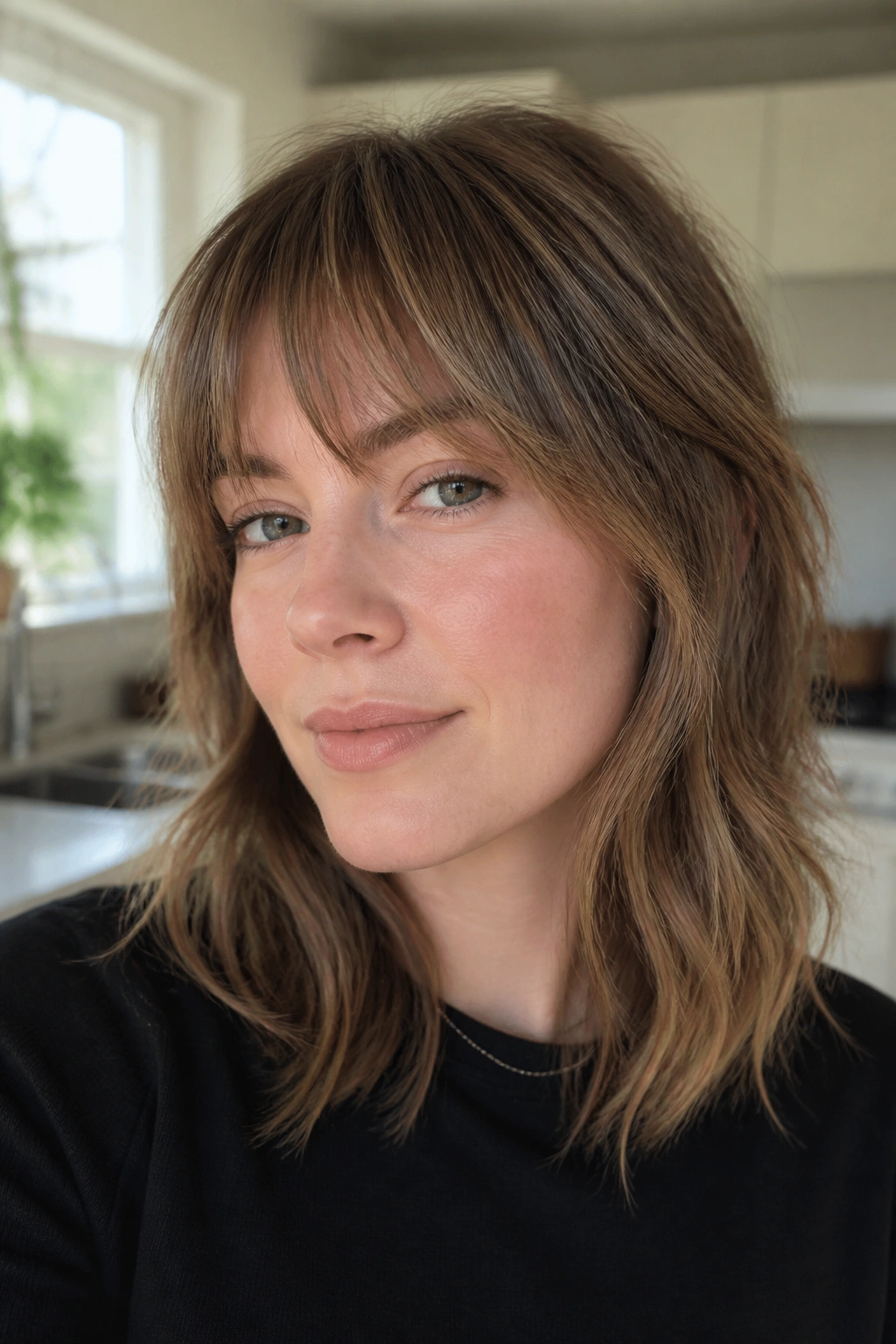
Fine hair can wear feathered bangs well, but the cut has to be handled carefully.
A razor can create a soft edge that looks lighter than scissor-cut bangs. That matters for round faces because you want the fringe to move, not sit in one solid strip across the forehead. But here’s the catch: a razor can also make fine hair look wispy in a bad way if too much is removed. The goal is lightness, not see-through scraps.
Ask for subtle point cutting and a feathered finish, especially around the outer corners. Those edges should drift toward the temples rather than stopping short. A little root lift at the front helps, too. Fine hair that lies flat can make the face look wider simply because the bangs disappear into the head shape.
A light mousse or volumizing spray does more here than a heavy serum. Heavy products sink fine hair fast. Keep the front clean, airy, and touchable.
12. Heavy-to-Light Feathered Bangs for Thick Hair
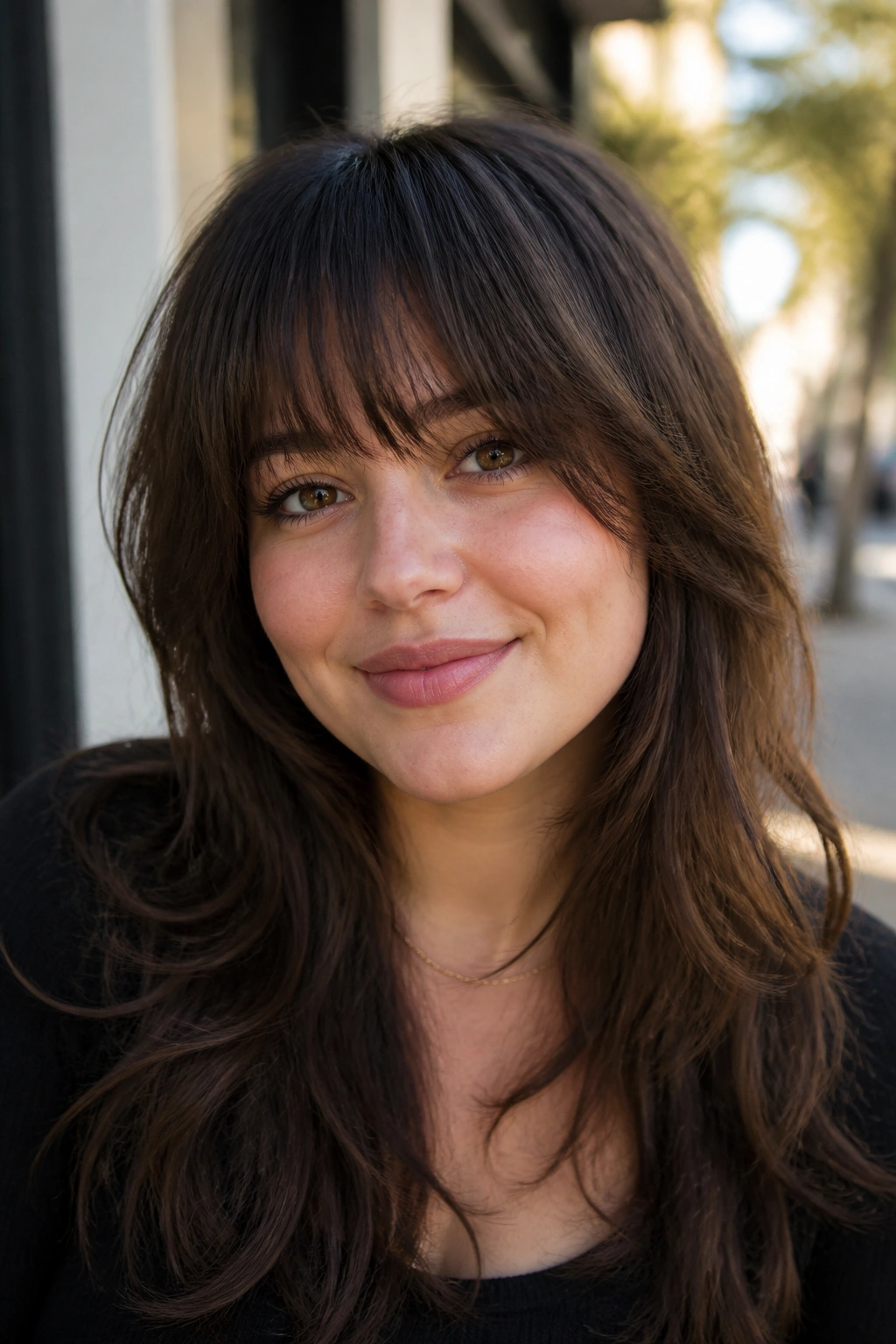
Thick hair can carry more bang without looking flimsy, but it can also turn into a curtain of weight across the forehead.
That’s why the heavy-to-light idea matters. You keep enough fullness to avoid gaps, then taper the ends so the fringe doesn’t sit like a wall. The middle should still feel substantial. The outer corners should feel softer and a little lighter, especially as they drift toward the cheekbones.
What to ask the stylist to do
- Remove bulk through the center without chopping too high
- Leave length near the temples
- Use point cutting instead of a blunt horizontal cut
- Avoid over-thinning the very front, which can frizz
This is one of those cuts that can look amazing or awkward depending on the weight balance. Too much density across the brow adds width. Too much thinning makes the hair puff at the wrong places. The sweet spot is a fringe that moves but still has enough substance to lie cleanly.
A smoothing cream and a round brush can tame the front without flattening the shape. And yes, thick hair often needs a little more drying time. That is the trade-off.
13. Feathered Bangs with a Wolf Cut
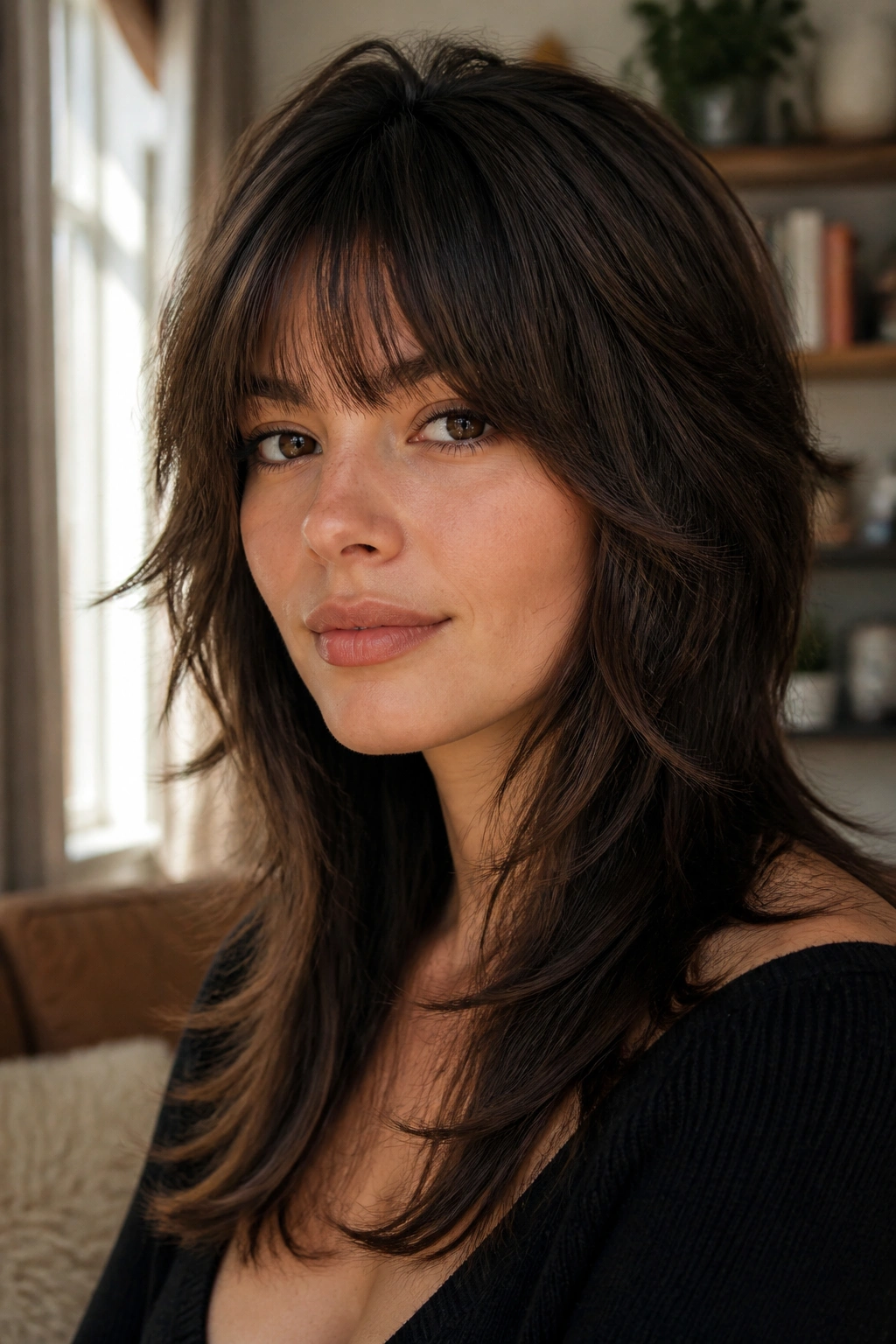
The wolf cut is not shy, so the bangs should not be either.
Still, round faces need the chaos controlled a little. A wolf cut with feathered bangs works best when the front pieces stay longer and the crown has enough lift to elongate the head shape. Short, heavy bangs can make the face feel broader than it is. The feathered version keeps the cut from swallowing your features.
This style suits someone who likes texture and does not want a polished finish every day. The layered body through the top and sides gives the bangs something to blend into. That blend matters. If the fringe looks pasted on, the cut loses its shape.
A quick blast with a diffuser or a rough dry with a little salt spray is often enough. The fringe should fall a little broken, a little uneven, and still feel intentional. That’s the sweet spot.
14. Soft Arched Feathered Fringe
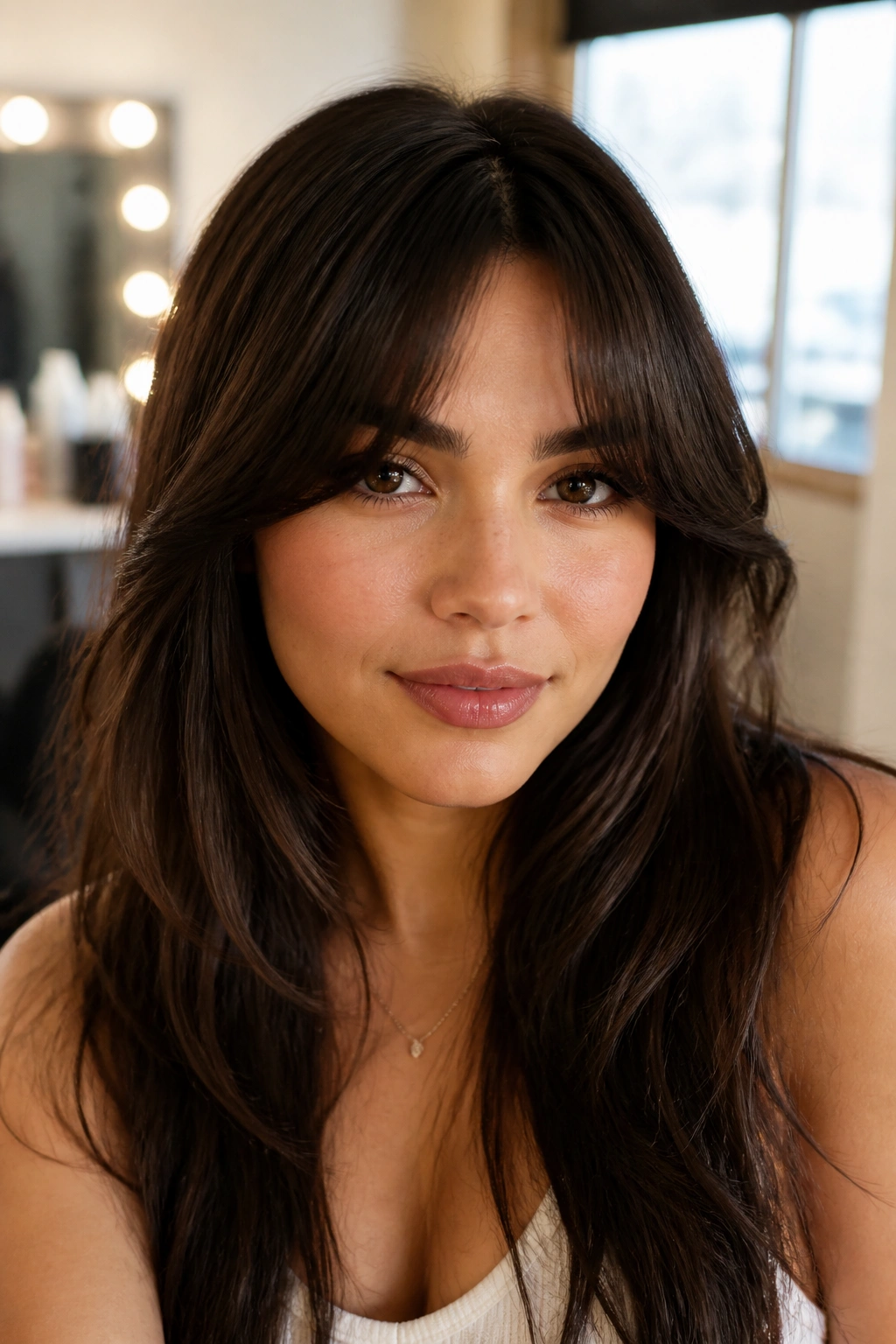
A soft arch can be a smart move if you want the eyes to stay open and the face to look longer.
The arch should be subtle. Not a cartoon curve. Just enough rise in the center to show a bit of forehead, with the sides dropping softly toward the temples. On a round face, that slight lift in the middle pulls attention upward and keeps the widest part of the cheeks from taking over.
This is not the fringe for someone who wants zero styling. The shape needs a little attention to keep the arch from collapsing. A small round brush and a quick pass of heat at the root usually do the job. Let it cool before you touch it. Heat without cooling is half a style, and half a style usually falls apart fast.
One warning: if your forehead is very short, the arch can feel cramped. In that case, go longer and keep the curve loose.
15. Long Swoop Bangs You Can Tuck Behind the Ear
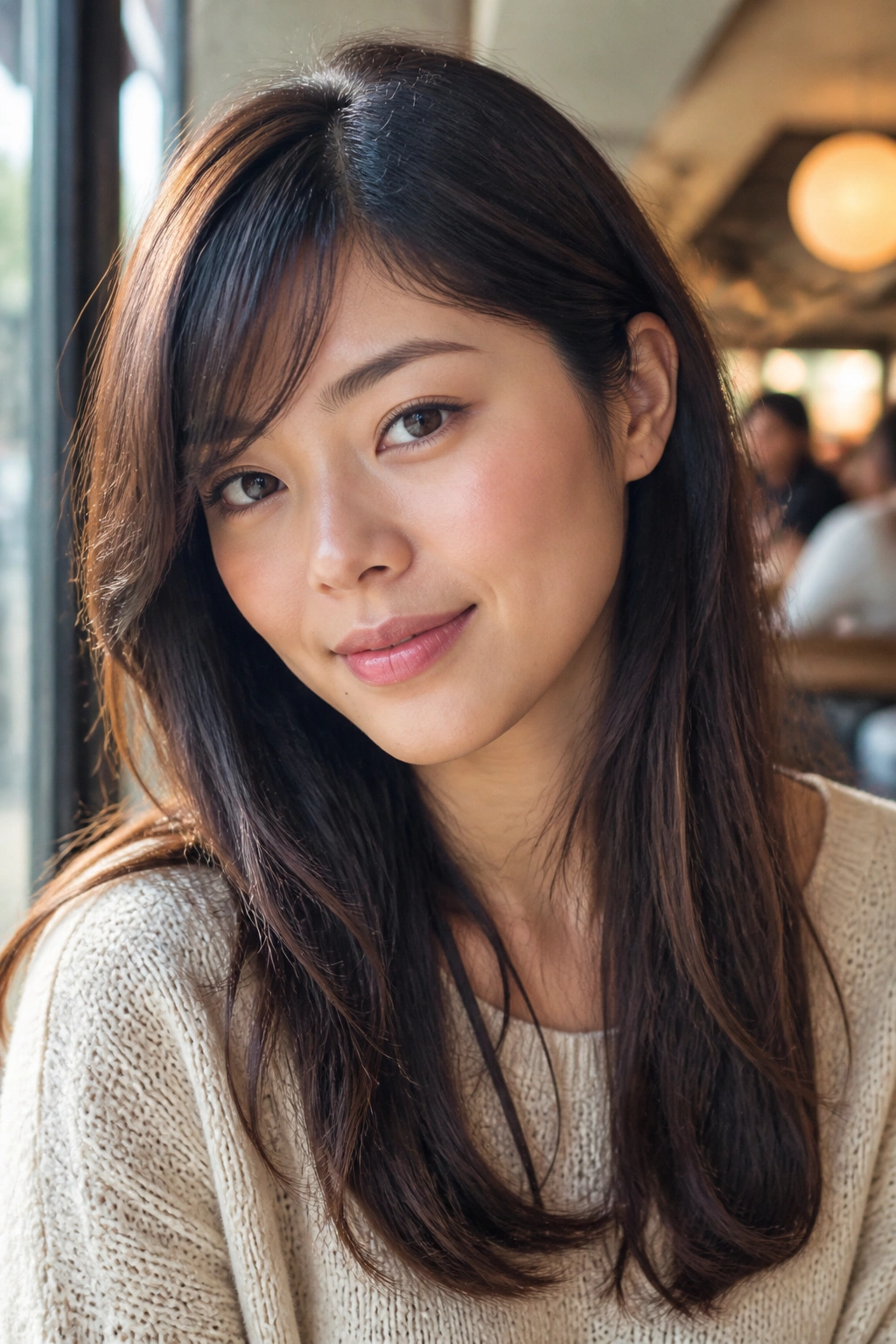
A long swoop is one of those cuts that looks casual but does a lot of quiet work.
It opens the face on one side and gives the forehead a diagonal line that suits round cheeks. The extra length means you can tuck it behind the ear on busy days or let it fall forward when you want more softness. That flexibility is gold. Hair that behaves in more than one way tends to get worn more often.
The key is the bend. You want the bang to swoop across the forehead, then taper down around the cheekbone or jaw. If it ends too high, it can feel choppy. If it ends too low, the swoop loses its shape. Somewhere in the middle is the sweet spot.
Good for:
- Side part lovers
- Growing-out bang phases
- Days when you want one side off your face
- Hair that can hold a curve without stiff product
A soft hold spray keeps the shape in place without making it crunchy. Please, no helmet hair.
16. Glasses-Friendly Feathered Bangs for Round Faces

Glasses change everything. The frame line becomes part of the haircut, whether you want it to or not.
For round faces, the best glasses-friendly fringe usually lands just above the frames or kisses the top edge without sitting directly on the lenses. That small gap keeps the eyes visible and stops the bangs from competing with the glasses. Feathered ends help because they break up the line and keep the front from looking crowded.
What to watch for
- Avoid bangs that sit right in the middle of the frames
- Keep the sides longer so they move past the temples
- Choose lighter density if your frames are bold
- Test the shape with your glasses on during the cut if possible
This is one of those cases where a tiny change in length makes a huge difference. A fringe that looks fine without glasses can feel too short once the frames are on. Ask for a dry check at the end. That little pause saves a lot of regret.
The nicest part? Feathered bangs can make glasses look more intentional, not less. The cut frames the frames. That sounds funny, but it’s true.
17. Feathered Bangs with a High Ponytail or Bun
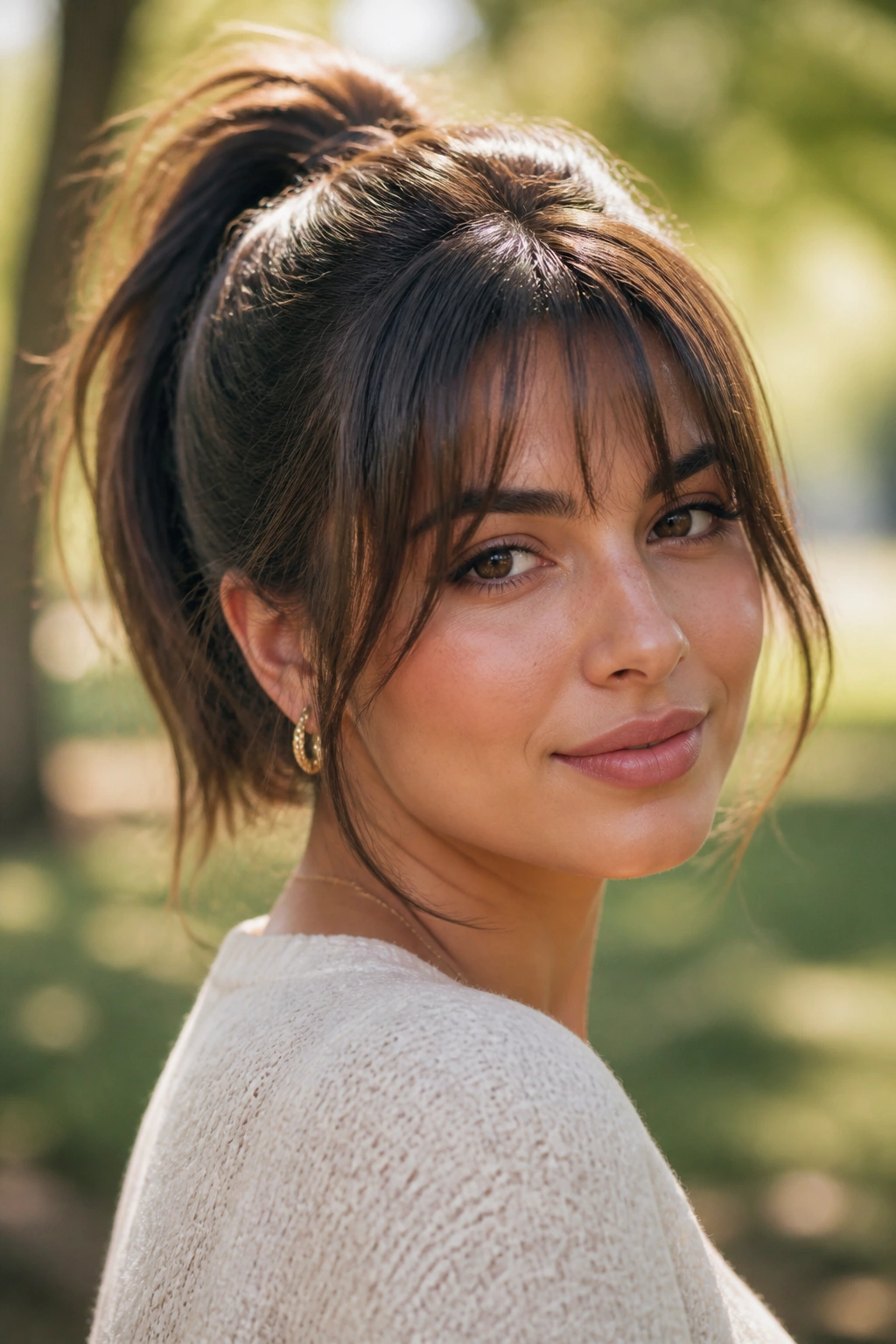
A high ponytail changes the whole face shape, and feathered bangs keep it from feeling severe.
When the hair is pulled up, the front fringe becomes the soft part that balances the lift at the crown. On a round face, that upward pull can be useful because it makes the head shape look taller. The feathered fringe then keeps the forehead from looking too bare or too tight.
This style is great for people who wear their hair up often but still want something around the face. Leave a few longer temple pieces out, and let the fringe fall in a gentle curve. A quick bend with a flat iron or round brush is enough. You do not need the bang to be perfect. It just has to sit in the right place.
One practical note: if the fringe is too short, it can pop straight up when the ponytail goes tight. Keep enough length to tuck or sweep it. That gives you options, and options are the whole point here.
18. Butterfly-Cut Feathered Bangs and Face-Framing Layers
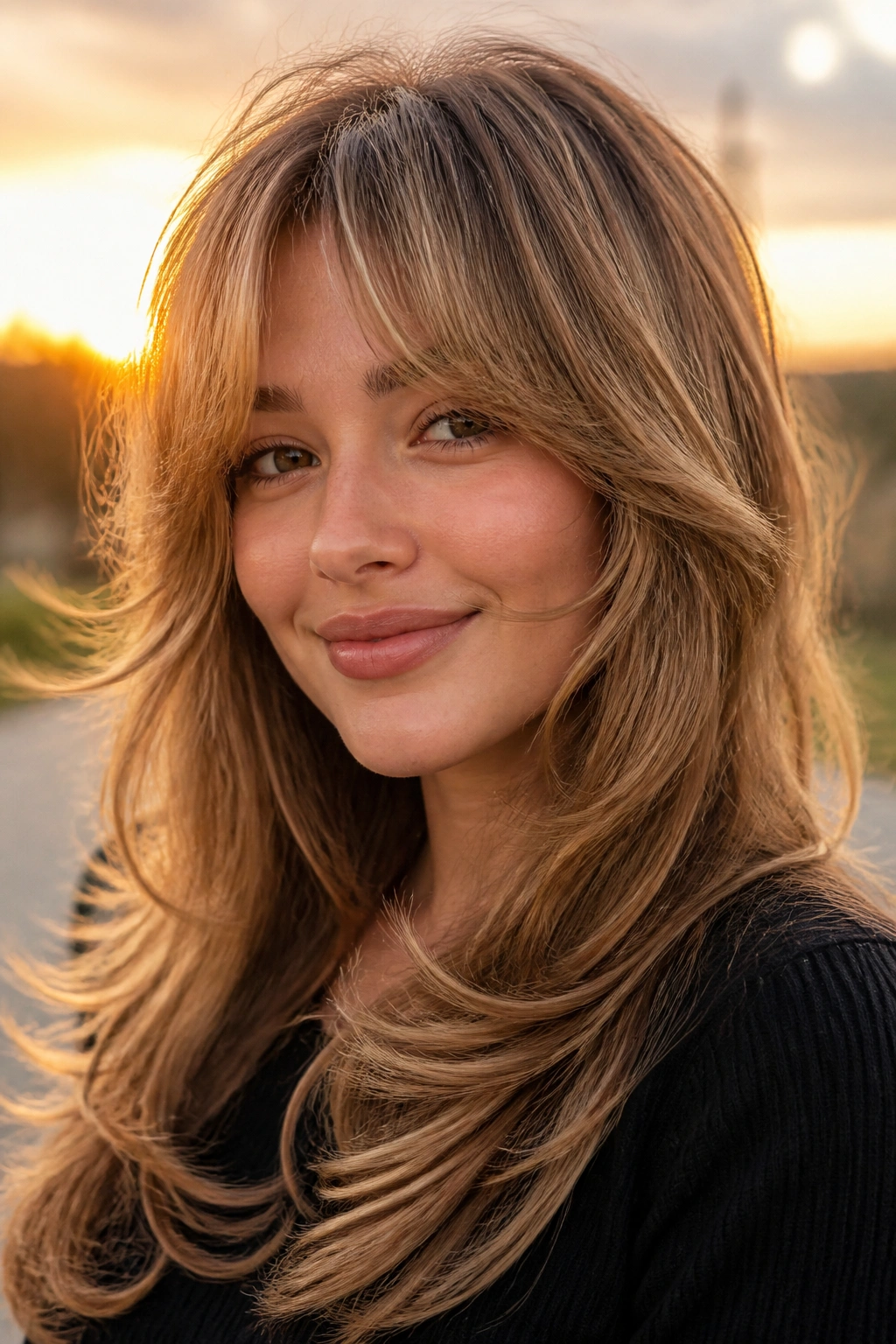
This is the dramatic one, but it does not have to look dramatic.
Butterfly-style layers start higher around the face and get longer as they move down, so the fringe section blends into long, floating pieces that skim the cheekbone and jaw. On a round face, that long taper can be a gift. It gives you movement near the front, lift near the crown, and length around the sides where you need it most.
The bang area should stay soft and broken up, not cut into a hard line. Think airy center, feathered edges, and long side pieces that connect into the rest of the haircut. If the face frame stops too high, the width around the cheeks becomes more noticeable. If it stretches too far down, you lose the lightness that makes the cut appealing.
This style is a good fit if you like hair that looks full in motion. It’s also a strong choice if you often wear your hair in loose waves, because the bend through the layers makes the fringe feel part of the whole shape instead of a separate chunk.
Final Thoughts
The feathered bangs that flatter round faces most are the ones that keep the center soft and the sides longer. That extra length near the temples and cheekbones does more than people expect. It makes the face feel a little taller, a little narrower, and a lot less boxed in.
If you’re nervous, start longer. Seriously. Long bangs can be trimmed down in tiny steps, but a short, heavy fringe is a pain to grow out, and round faces usually look better when the bang has room to move.
Bring photos, yes, but bring a side view too. That’s the part stylists actually need. Front-facing inspiration is fine, but the profile tells the real story.
