



Curly bangs on a round face can look sharp, soft, or a little wild — sometimes all in the same hour. The difference usually comes down to where the fringe lands, how much width it adds at the cheeks, and whether the cut respects your curl pattern instead of pretending it’s straight hair. If you’re looking for curly bangs ideas for round faces, the smartest shapes are the ones that pull the eye up or down, not straight across.
That’s why some people look better with curtain pieces, while others do better with a side sweep, a bottleneck shape, or a fringe that barely kisses the brow. Straight-across bangs can work on a round face too, but only when the curls are light enough and the ends are softened. Otherwise the whole thing can puff out at the widest part of the face.
The mistake I see most often is simple. The bangs are cut wet, they spring up half an inch or more, and suddenly the shortest curl sits somewhere between the eyebrow and the hairline. Curly hair has a memory, and it is not always polite.
Cut dry when you can. Or at least cut with the curl fully visible. That one choice changes everything.
1. Long Curtain Bangs That Split Cleanly at the Center
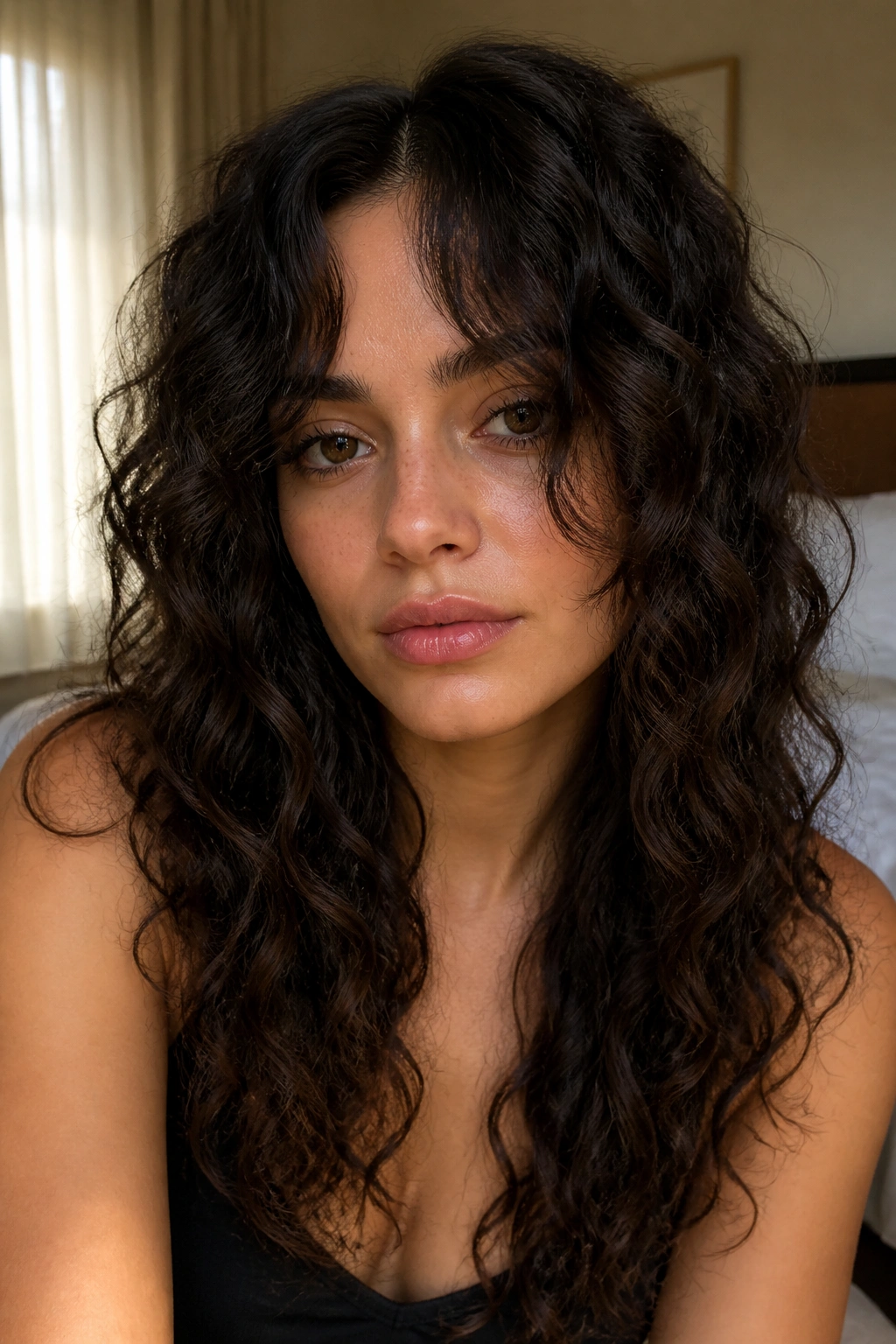
If you want the safest place to start, start here. Long curtain bangs do a lot of quiet work for a round face because they open the middle of the forehead and let the curls fall away from the cheeks instead of sitting on top of them.
The center split is the whole trick. It creates a vertical line right where a round face benefits most, and the longer sides soften the jaw without making the face look wider. I like this style best when the shortest curl lands about 1/2 inch below the brow once the hair is dry, with the longest front pieces grazing the top of the cheekbone.
Why the middle split helps
A middle part can feel a little exposed if you’re used to heavier bangs, but on curly hair it usually looks more relaxed than formal. The curl pattern keeps the split from looking severe, which is half the point. You get movement near the face, but the center line still gives the eye a place to travel downward.
Ask your stylist for:
- A dry cut or a mostly dry cut so the shrinkage is obvious
- The shortest pieces to sit just under the brows when dry
- Longer side pieces that reach the cheekbone or just below it
- Soft point-cut ends instead of a blunt edge
This version is especially nice if your curls clump well and you don’t mind a little daily finger styling. It’s not a wash-and-go miracle. But when it settles in, it gives round faces a longer, leaner frame without feeling stiff.
2. Brow-Skimming Curly Fringe
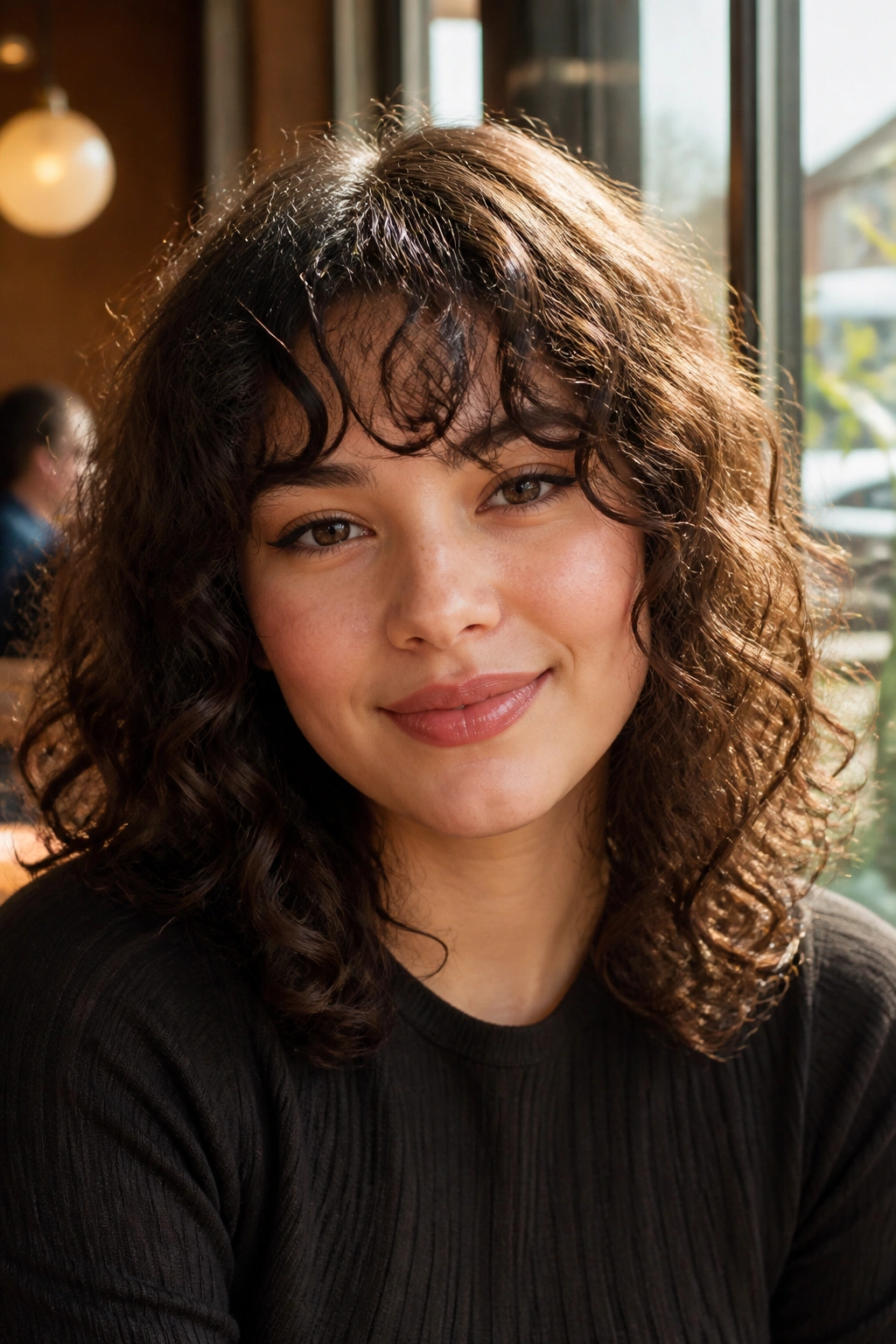
Can curly bangs sit right on the brows without making a round face look wider? Yes — if the fringe stays airy and doesn’t turn into one heavy block.
This cut works because it shows a bit of forehead while still giving you the face-framing effect people usually want from bangs. The brow-skimming length draws the eye up, which matters on a round face where fullness tends to sit through the cheeks. Keep the line soft. Sharp edges are the enemy here.
A brow-skimming curly fringe also looks better when the curls are allowed to separate slightly. Not every curl needs to sit in a perfect row. A few small gaps keep the bangs from turning into a dense curtain, and that little bit of openness keeps the style from feeling heavy.
Skip this shape if your curls spring up dramatically or if your forehead is already short. The difference between flattering and awkward can be less than an inch. That sounds fussy, but bangs are fussy. Better to admit it.
3. Side-Swept Curly Bangs
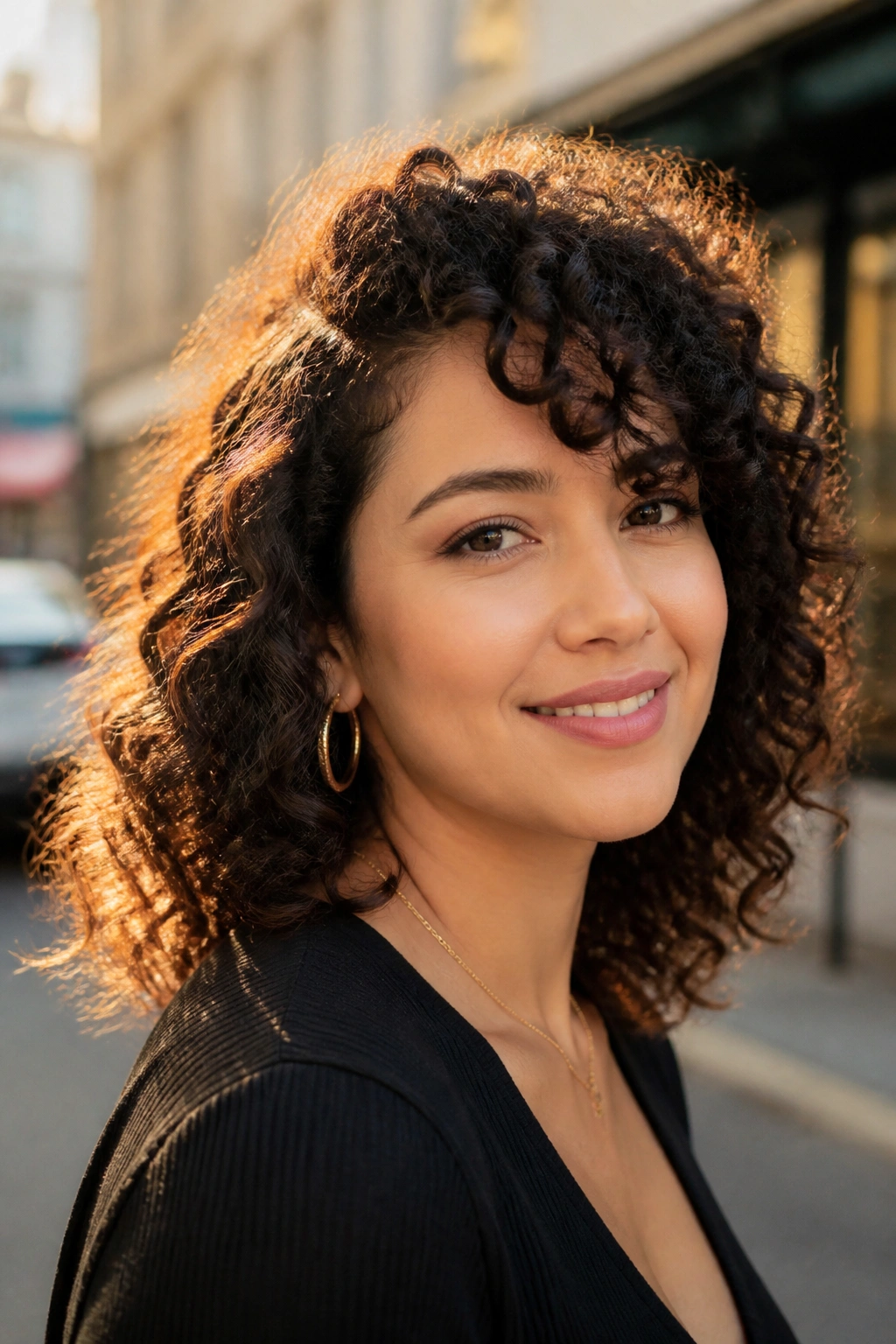
What if you want fringe, but not the obvious kind? Side-swept curly bangs are the answer most people overlook, and they are one of the easiest ways to soften a round face without adding width at the center.
The diagonal line matters. It breaks the symmetry that can make a round face feel even rounder, and it pushes volume off to one side instead of stacking it across the forehead. That side angle also looks good with curls because it lets the natural bend do the work. You’re not fighting the pattern. You’re just giving it a direction.
How to wear it
Use a side part that sits 1 to 2 inches off center, not all the way at the edge unless your hair is very thick. Then dry the bangs in that direction with a diffuser or a small round brush, depending on how loose your curl pattern is. A tiny clip at the root near the crown can help train the lift while the hair dries.
The nicest thing about this style is that it grows out well. That matters. A lot. If you are not ready to trim bangs every few weeks, side-swept curls are far less annoying than a blunt fringe that starts misbehaving the second it loses its shape.
4. Bottleneck Bangs With Extra Length at the Temples
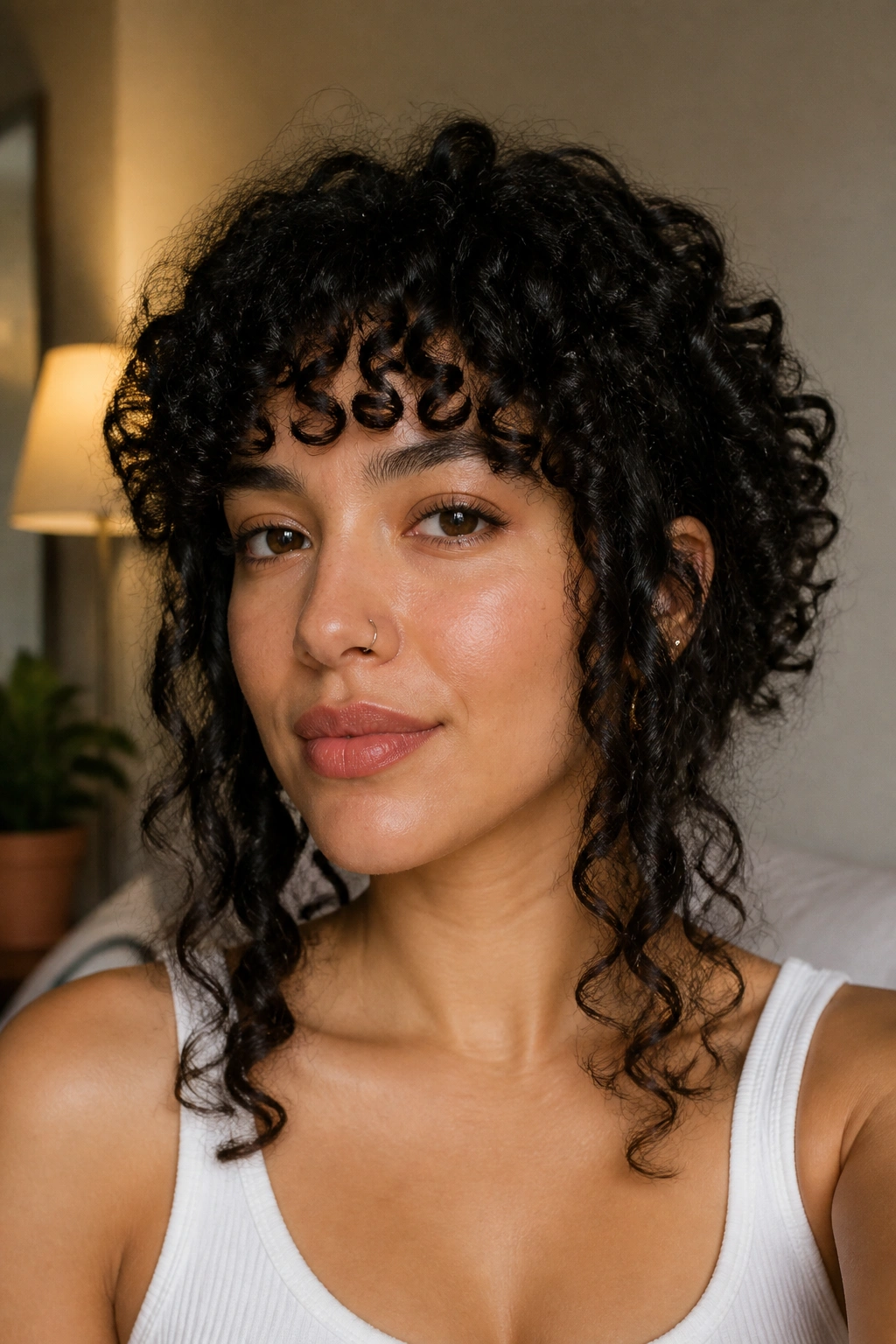
Bottleneck bangs are one of those cuts that sound like a salon trend and then turn out to be genuinely useful. For round faces, they work because the center is shorter while the sides stretch longer, which pulls attention inward and downward at the same time.
That shape is especially flattering when your curls are medium to thick. The shorter center opens the face, and the extra length at the temples makes the front feel narrower where a round face usually needs the most help. It’s a clever shape. Not flashy. Just smart.
The shape to ask for
Tell your stylist you want:
- A shorter center piece that lands around the top of the brow
- Temple pieces that reach the outer corner of the eye or slightly below
- A soft taper through the sides, not a straight drop
- Enough room for shrinkage if your curls tighten a lot
This is one of my favorite options for people who want bangs but hate the feeling of a hard horizontal line. The curve in the shape keeps things soft, while the extra length near the temples helps the face read longer. It’s not a heavy bang. That is exactly why it works.
5. Soft Arched Bangs
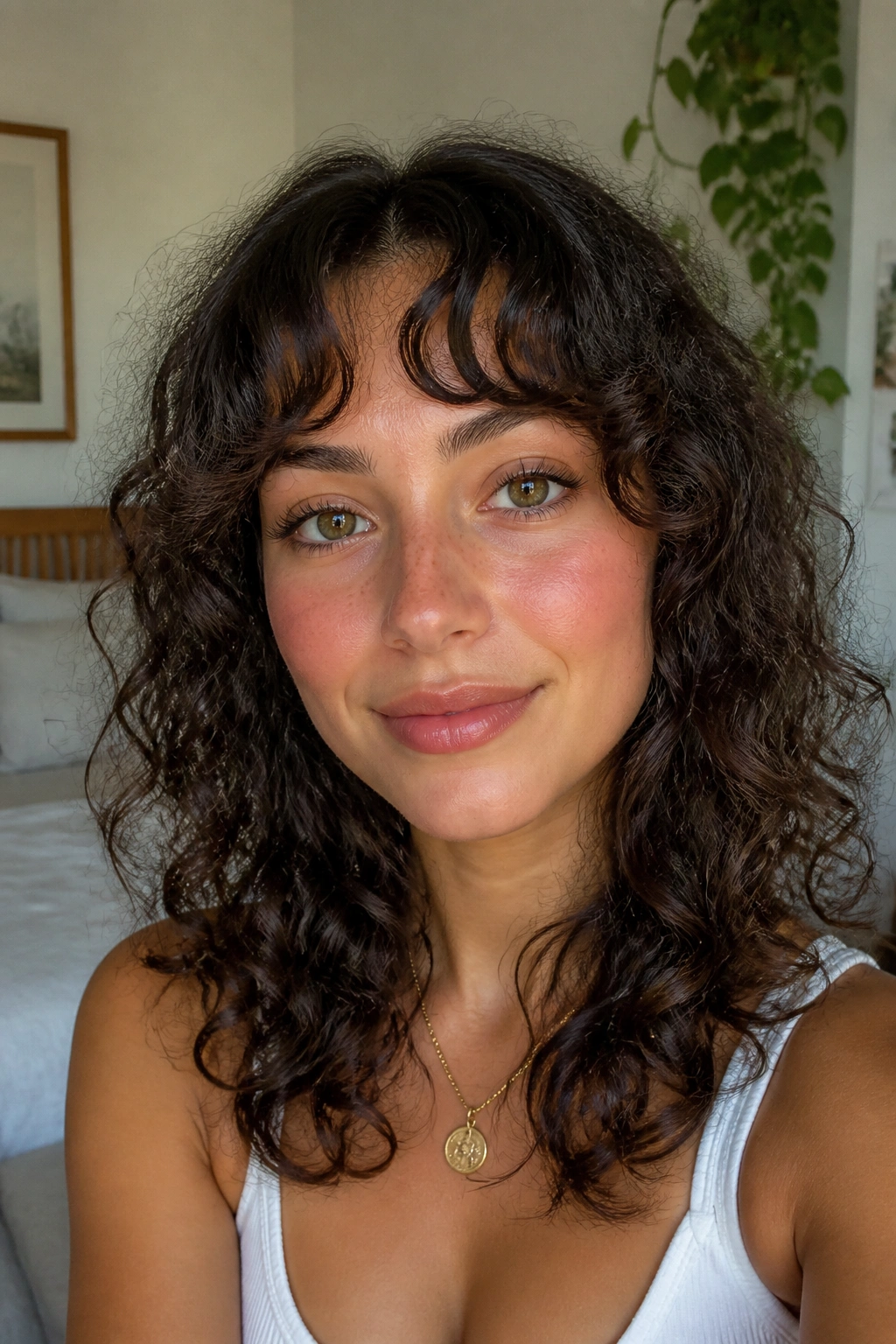
A shallow arch can flatter a round face in a way a flat line never will. It sounds backwards at first, because round faces are already soft and curved, so why add more curve? The answer is that the right curve is narrow and lifted, not wide and heavy.
Soft arched bangs sit a little shorter in the center and slightly longer toward the outer edges, but the sweep is gentle. Think of the shape as a small smile above the brows, not a full moon across the forehead. On curls, that bend keeps the bang line from feeling stiff, and the narrow center helps open up the face.
This style looks especially good when your curls are loose enough to fall in distinct clumps. If the fringe is too dense, the arch can blur into a solid wall. And nobody wants that. The whole point is lightness at the center with enough movement on the sides to echo the cheekbones without mirroring them too closely.
It’s a pretty cut, but not a precious one. That matters more than people think.
6. Micro Curly Bangs With a Loose Edge
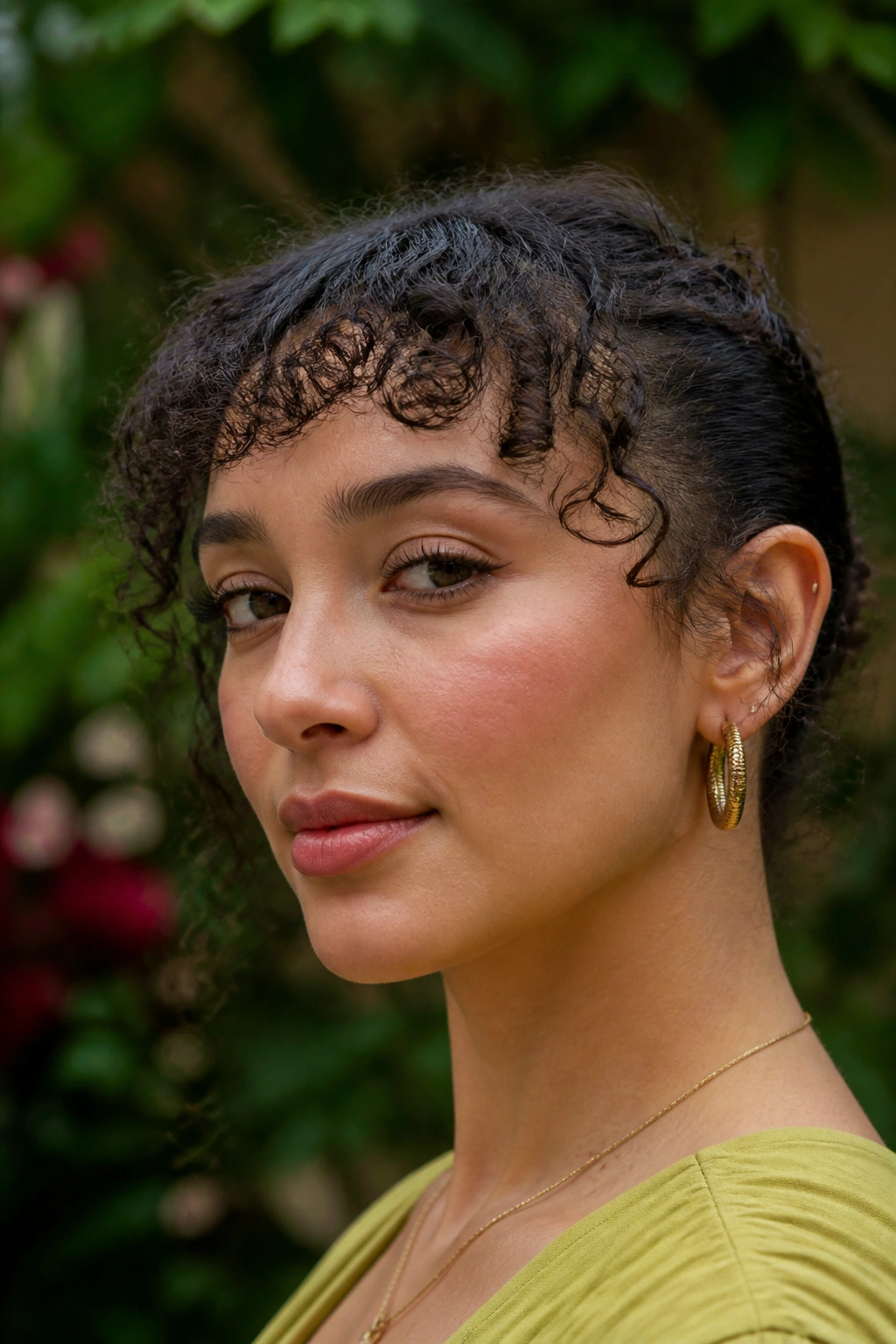
Micro bangs on curly hair are not a safe choice, and that’s exactly why some people love them. On a round face, the trick is to keep them loose, not severe. A blunt little slab of fringe can make the forehead feel boxed in. A textured micro bang does the opposite — it throws attention upward and gives the face a sharper top line.
What makes them different
Unlike straight micro bangs, curly micro bangs need room to move. The ends should look slightly broken up, with small differences in length so they don’t sit like a ruler across the face. I like them best on dense curl patterns that can hold shape without puffing out too much.
They also work better when the rest of the haircut is leaner around the cheeks. If the sides are too full, the bangs lose their edge. If the top is too flat, the whole look falls apart. So yes, this is a high-maintenance choice. But it can be excellent if you want something bold and a little punk.
Best for: tighter curl patterns, strong brow bones, and people who are fine with frequent trims.
7. Shaggy Curly Bangs With Choppy Layers
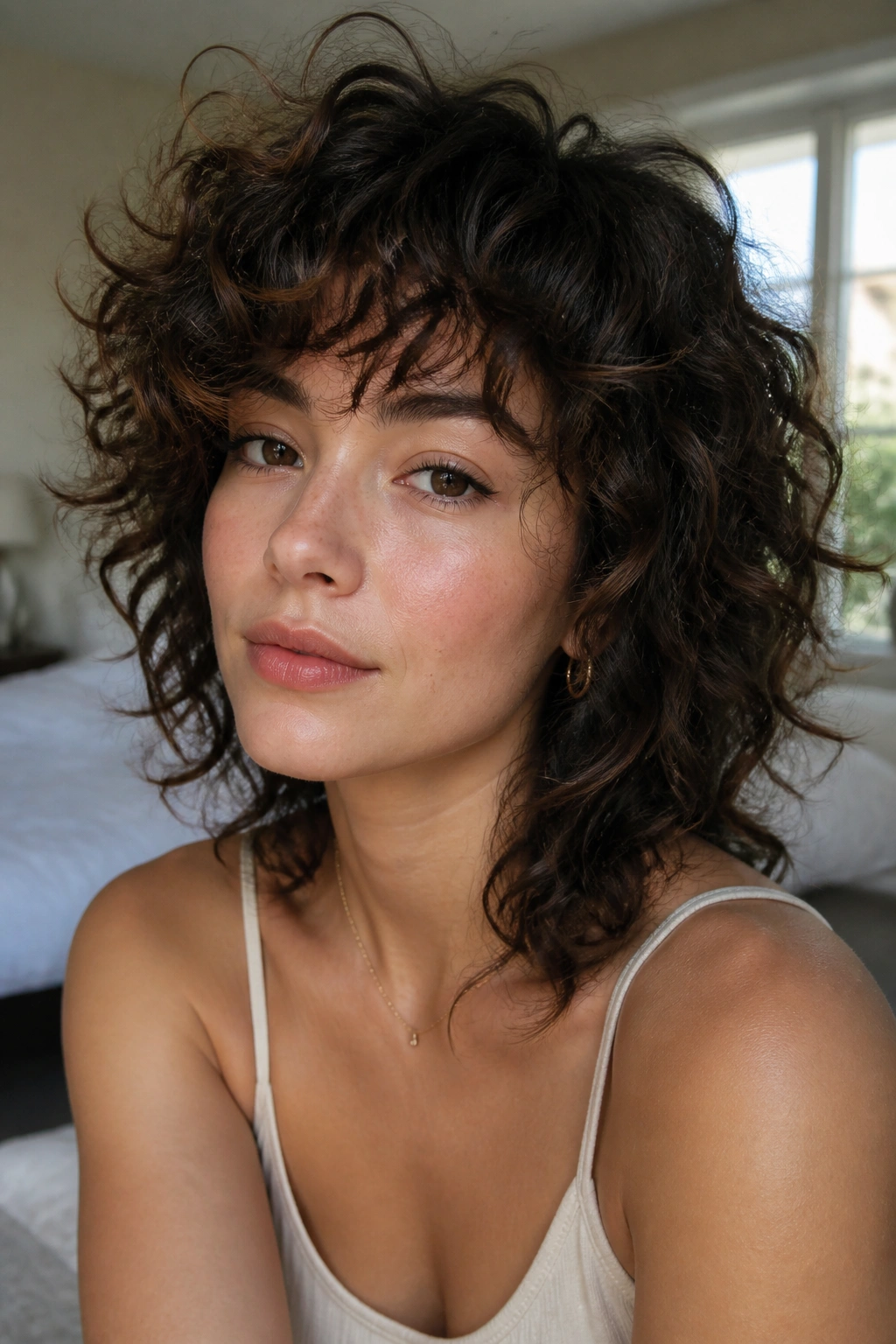
A shag is one of the easiest ways to make curly bangs feel lived-in instead of fussy. For round faces, the reason is obvious once you see it: the layers create movement around the head, but the weight drops lower through the sides, which keeps the face from looking too wide at the cheeks.
This is the style I reach for when someone wants volume without the helmet effect. The bangs blend into the haircut instead of sitting on top of it like an afterthought. That matters more than people think. A fringe that belongs to the cut always looks better than fringe that was bolted on at the end.
Shaggy curly bangs can be short, long, or somewhere in the middle, but the real key is the breakup of the line. Choppy pieces let the curls spring in different directions, which keeps the front from looking blocky. If your curls are dense, ask for internal layering so the bang section does not get too bulky. That one detail saves a lot of trouble.
8. Heavy Curly Fringe With Tapered Sides
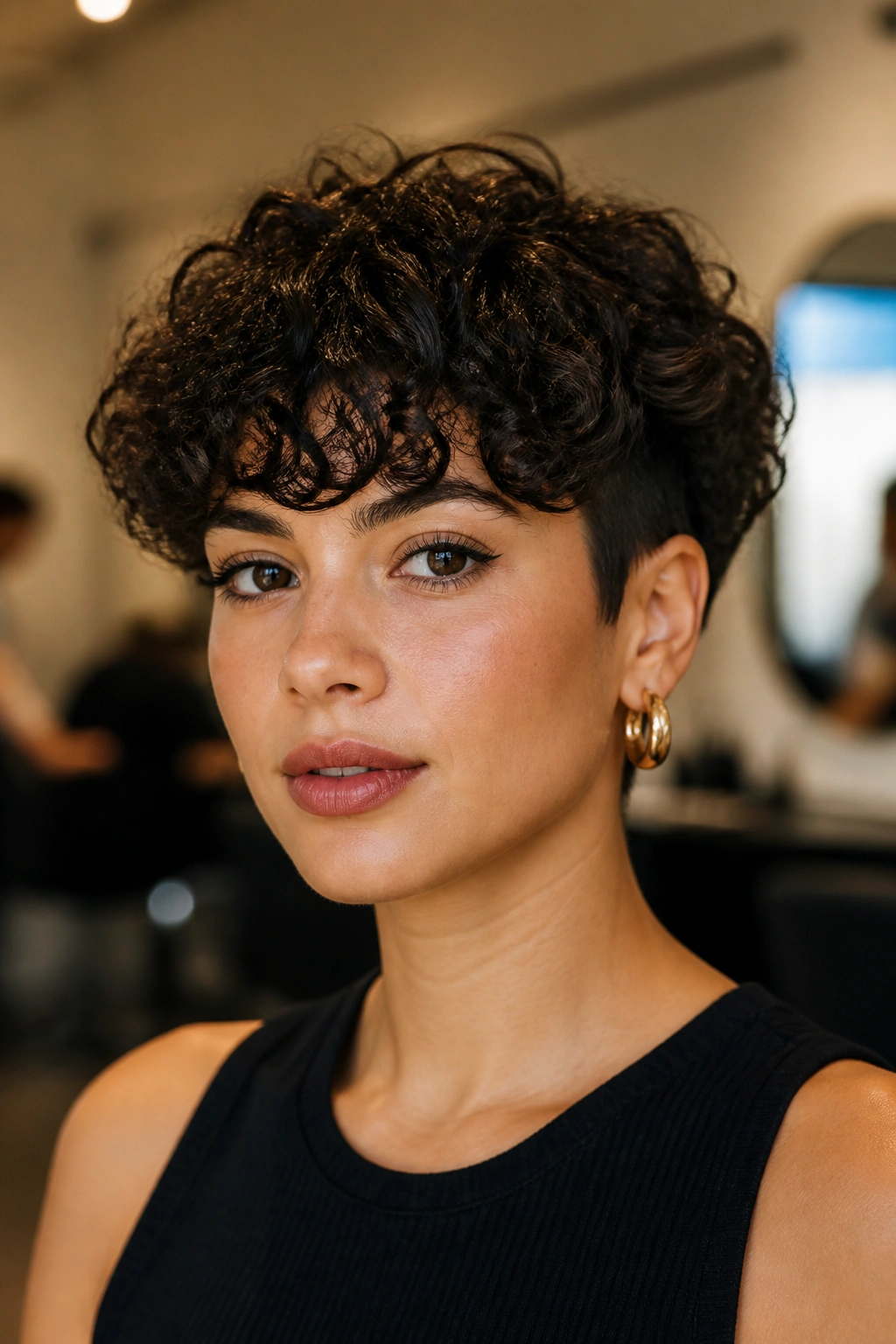
A heavy fringe can work on a round face. Really. The catch is that the sides must be tapered, or the whole thing turns boxy fast.
This style is a good match for people with thick, springy curls that hold shape and don’t collapse by midday. The fullness across the forehead can look striking, but the taper at the temples keeps the width from spreading too far across the face. That contrast is what makes it flattering. Dense in the center, lean at the edges.
Ask for this, not that
- Ask for bulk removal underneath so the fringe doesn’t puff out
- Ask for the center to sit just at or just below the brow
- Ask for temple pieces that narrow toward the cheekbone
- Ask for point cutting, not a blunt straight line
This is not the cut for somebody who wants zero styling. It needs a little shaping each morning. Still, I like it because it gives strong presence without relying on super-long face-framing pieces. If your curls are thick enough to hold that shape, use it.
9. Rounded Curly Bangs That Sit at the Brow Bone
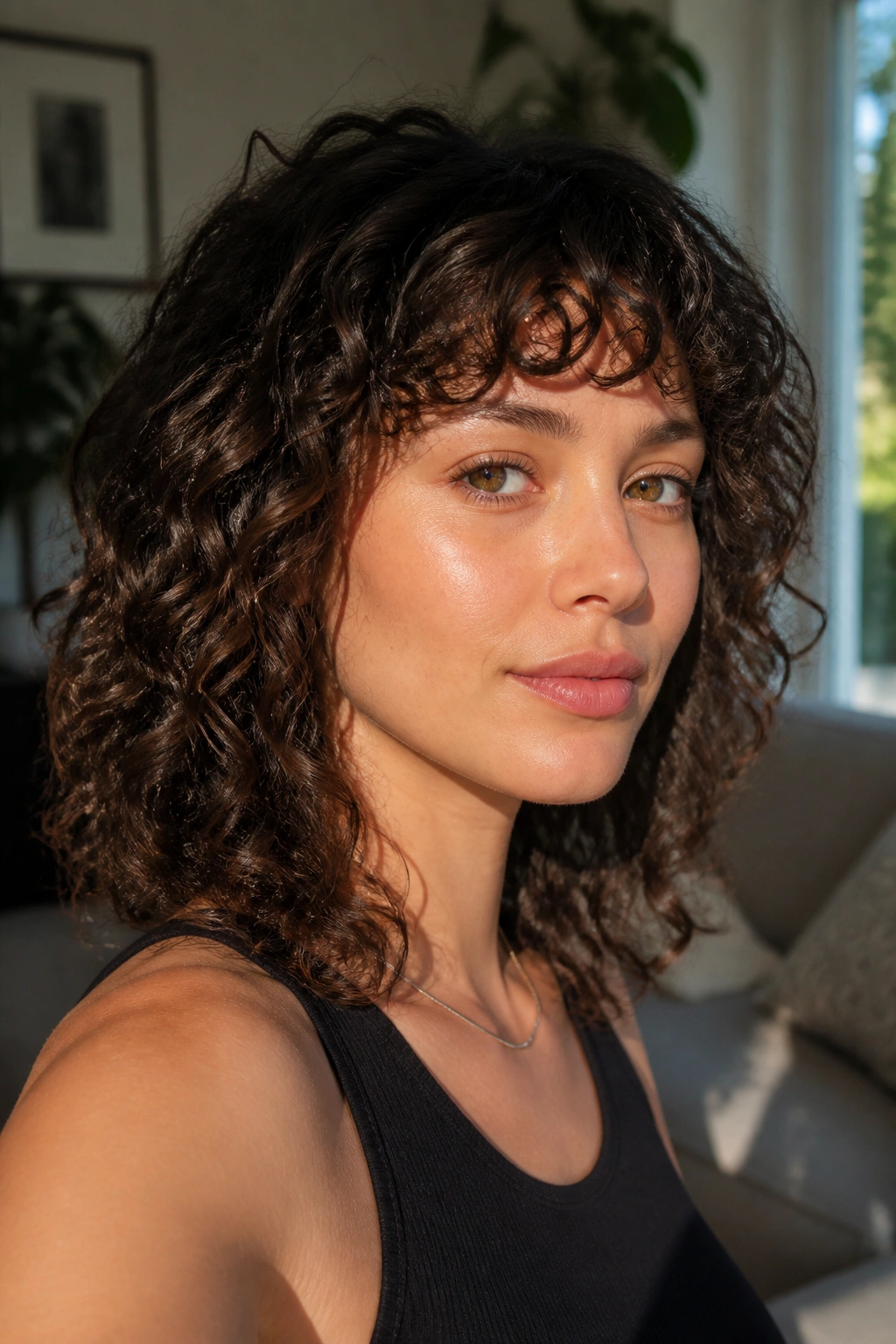
Rounded bangs sound like a bad match for a round face, and I get why people hesitate. The word itself seems to echo the face shape. But when the curve is narrow and sits high enough, it can actually sharpen the look around the eyes.
The important detail is placement. These bangs should not spread wide across the forehead. They should sit close to the center of the face, with a soft curve that lands near the brow bone and then lifts away at the sides. That keeps the shape contained. Contained is good here.
This style works well with shoulder-length curls and layered bobs because the rest of the cut provides enough vertical movement to balance the softness up top. If your hair is very flat at the crown, skip it. The rounded fringe needs a little lift behind it, or it can read too heavy. But when the crown has height, the look feels polished without getting stiff.
10. Piecey Curly Bangs With Face-Framing Tendrils
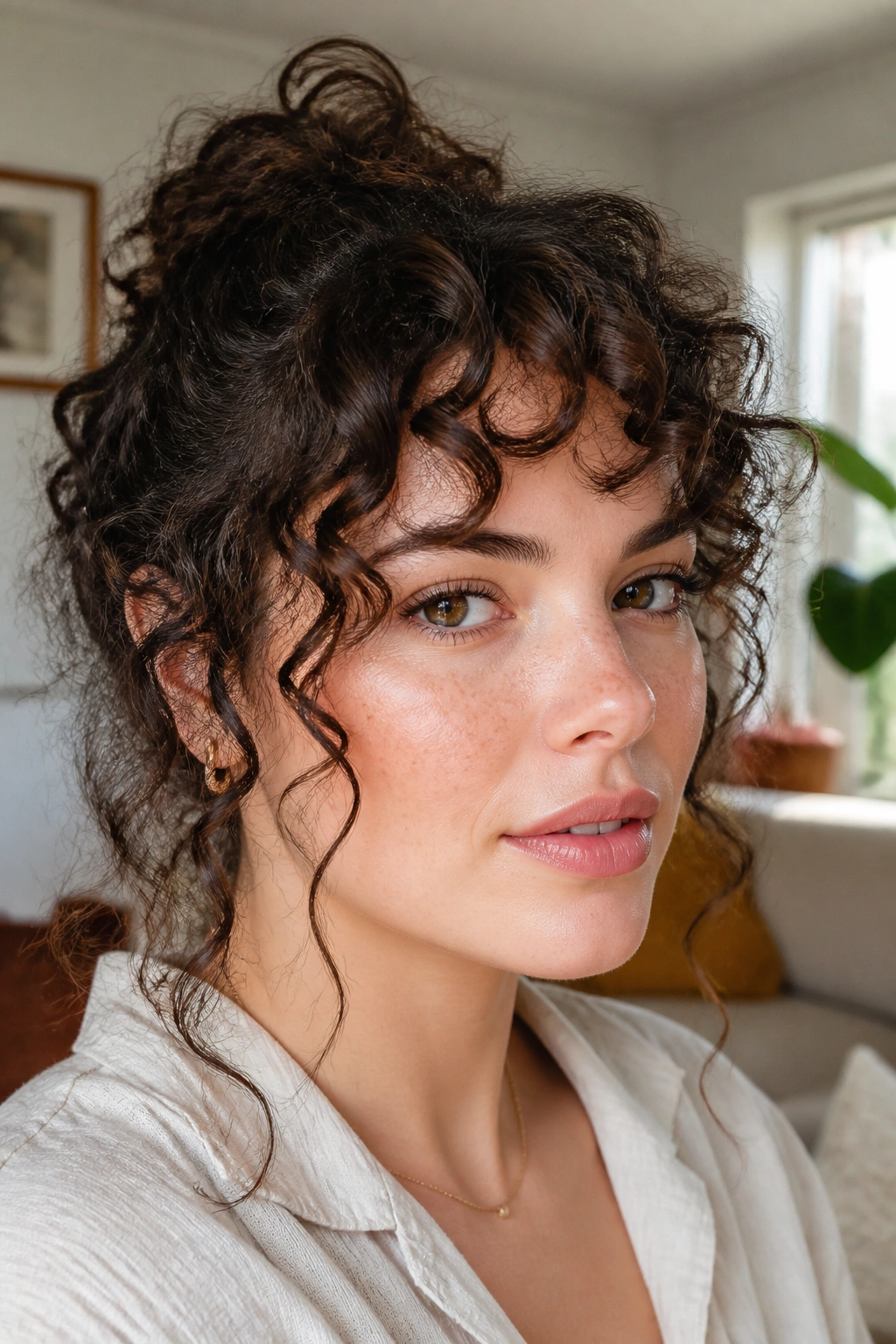
Why do piecey bangs work so well on round faces? Because gaps are your friend. Small spaces between curl clumps break up width, and the loose tendrils near the cheekbones keep the face from looking boxed in.
This style is less about a solid fringe and more about a cluster of front curls that look intentionally separated. That’s the part people either love or ignore. I think it’s one of the smartest curly bangs ideas for round faces because it gives shape without making a hard line across the forehead.
How to separate the curl clumps
Use a light cream or gel, then pinch apart the front pieces while they’re still damp. Don’t rake through them too much or you’ll turn the curls fuzzy. A dab of product on the fingertips is usually enough.
- Separate only the front 3 to 5 curls
- Keep the center slightly shorter than the sides
- Let one or two tendrils fall near the cheekbone
- Avoid over-brushing once the hair dries
The style looks casual, but it’s not random. The curls still need a plan. That’s what makes it work.
11. Wispy Curly Bangs for Finer Hair
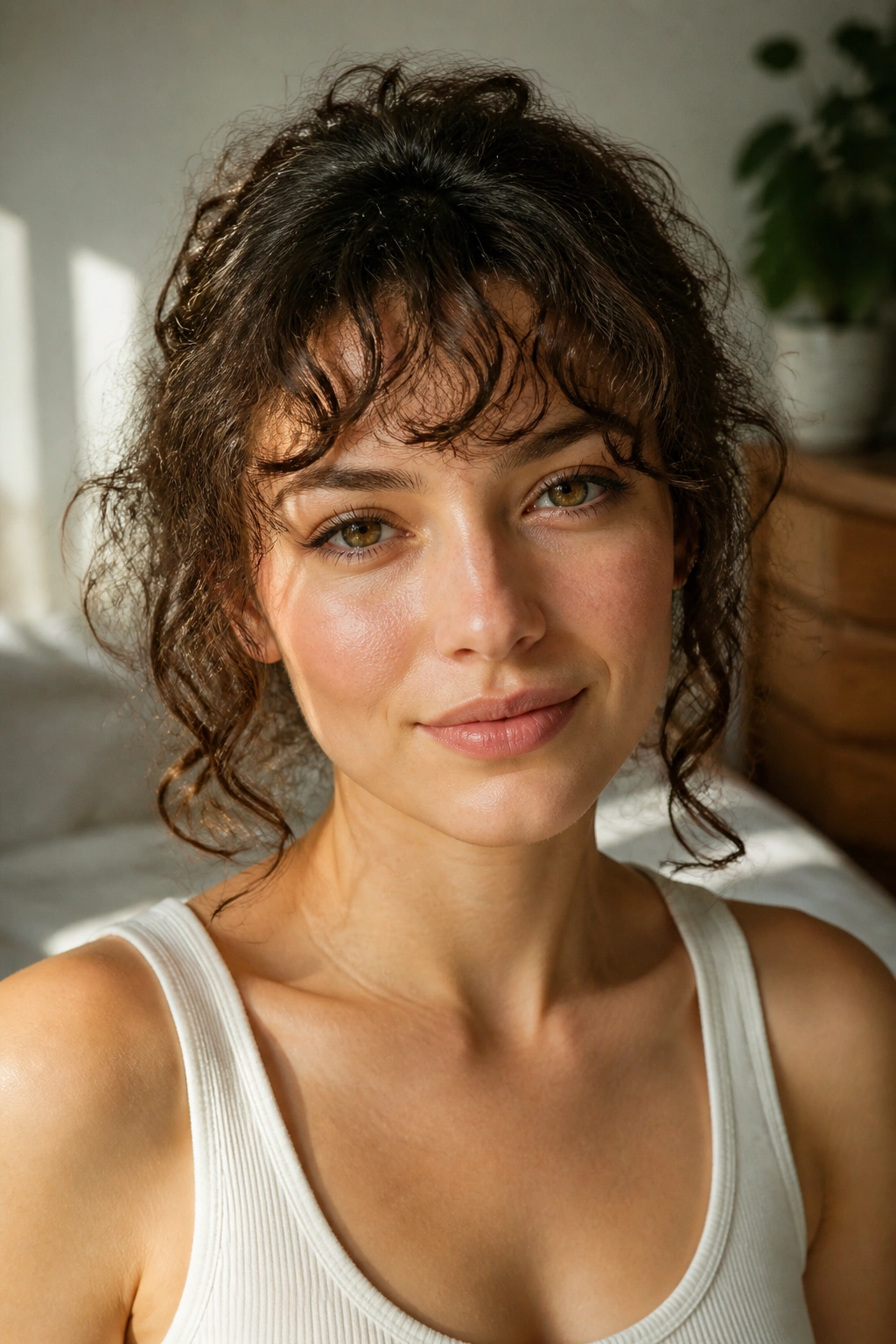
If your curls are fine, heavy bangs can overwhelm your face fast. Wispy curly bangs solve that problem by keeping the density light and the edges soft, so the forehead never disappears under one thick slab of hair.
This is not the same thing as piecey bangs. Piecey bangs can still be fairly full; wispy bangs are much airier. They use less hair, which keeps the front from building too much bulk. On a round face, that lighter density helps because the bang shape stays close to the forehead instead of ballooning outward.
Best styling products
- A lightweight mousse for lift at the roots
- A soft gel if the curls need more definition
- A tiny bit of serum only on the ends, not the roots
The cut should be conservative. That’s the whole point. Ask for a little more length than you think you need, then trim again once the curl pattern has settled. Fine curls can look shorter than expected when they dry, and a bang that lands too high can make the face feel exposed in the wrong way.
12. Deep Side-Part Bangs With Volume at the Crown

Sometimes the answer is not more fringe. Sometimes it’s less.
A deep side-part bang gives a round face a diagonal line and puts the volume where it helps most — at the crown, not across the cheeks. That lift changes the whole silhouette. The face reads longer, and the hair feels less symmetrical in a good way.
This style is especially useful if you have loose curls or waves that collapse when they’re cut too short. Instead of fighting for a full bang section, you let a longer front sweep fall over one side of the forehead. It almost behaves like bangs, but it keeps enough openness to stop the face from looking crowded.
The crown volume matters here. Clip the root at the top while drying, or diffuse with your head tipped slightly to one side. If the crown goes flat, the whole cut loses its shape. That’s the tradeoff. You get a lot of face length from the part, but you have to support it above the forehead.
13. Curly Birkin Bangs

Birkin bangs have a softer, fuller feel than curtain bangs, and on curly hair they can look especially good when the curls land in little broken groups instead of one continuous sheet. For a round face, the appeal is the balance: enough coverage to frame the eyes, enough movement to keep the face open.
I like this style when the fringe is a little longer in the center and tapers toward the sides, but not as aggressively as a bottleneck shape. It feels a bit more relaxed, a little less engineered. That matters if you want softness without looking over-shaped.
The length should hover around the brows, not bury them. If the curls are too long, the fringe starts to sit in the eyes. If they’re too short, the whole thing loses the gentle, lived-in feel that makes Birkin bangs worth wearing. It’s a fine line, and curls always make that line more interesting.
14. Grown-Out Bangs That Barely Touch the Brows
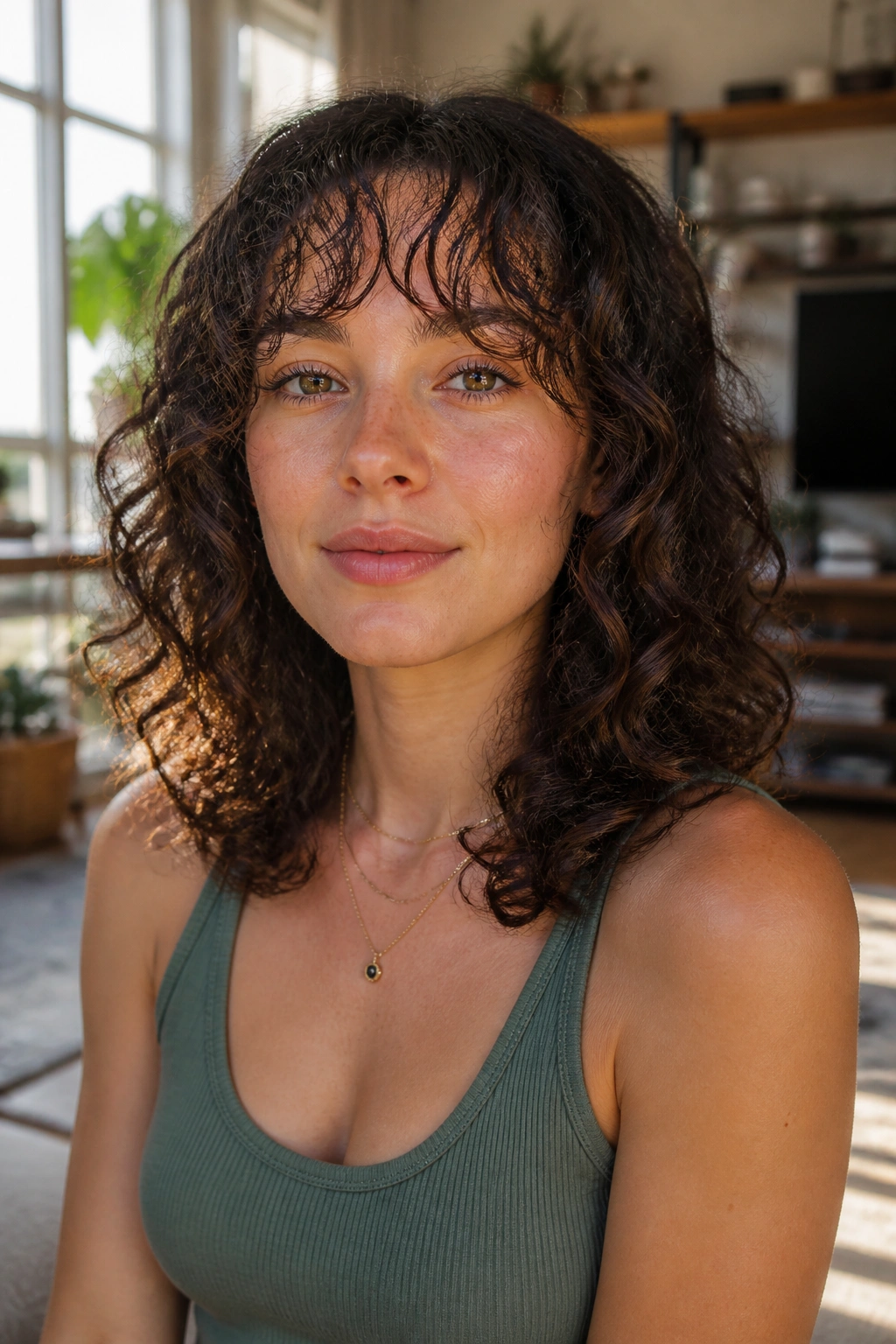
Not everyone wants a crisp new fringe. Sometimes the best curly bangs are the ones that look like they’ve been growing for a month and somehow still feel intentional.
This length is useful on a round face because it gives you the bang effect without cutting the forehead in half. The curls skim the brows, then drift away toward the cheekbones, which adds length instead of width. It’s also forgiving. If your curl pattern changes from day to day, a slightly grown-out bang hides the inconsistency better than a short one.
That makes this style a practical choice for people who hate frequent trims. You can push it to the side, wear it forward, or tuck one side back with a clip. It works with a messy bun, a low puff, or loose curls worn down. There’s a reason people keep coming back to this length. It’s useful, and usefulness counts.
15. Curly Bangs With a Wolf Cut
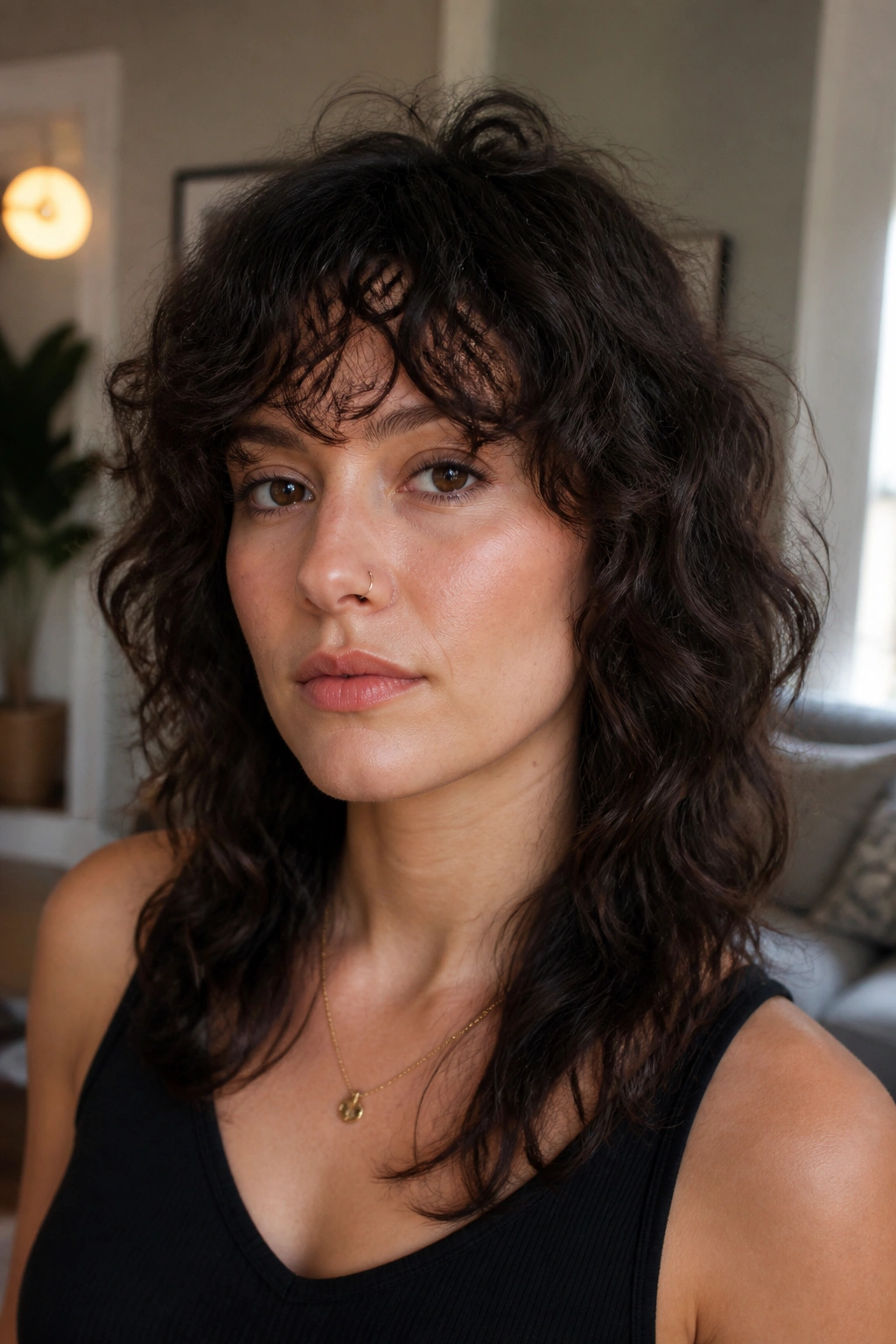
A wolf cut and curly bangs are a strong pair because the haircut already has built-in angles. The crown stays fuller, the sides get broken up, and the front fringe can sit in a way that makes a round face look longer and less wide.
That’s the big advantage. The wolf cut removes the feeling of one solid shape. Instead of a round face meeting another round shape at the hairline, you get rough edges, layers, and movement that interrupt the curve. It sounds chaotic. In practice, it’s often one of the easiest curly cuts to wear.
Why the wolf cut helps round faces
- It creates height at the crown
- It breaks up width around the temples
- It lets the bangs blend into the layers
- It keeps the ends from stacking into a heavy line
This is a good choice if you like texture and don’t mind a haircut that looks a little rebellious. It is not polished in the traditional sense. That’s part of the charm. The fringe can be short, long, or choppy, but it should never sit as one blunt slab across the forehead.
16. Short Coily Fringe for Type 4 Texture
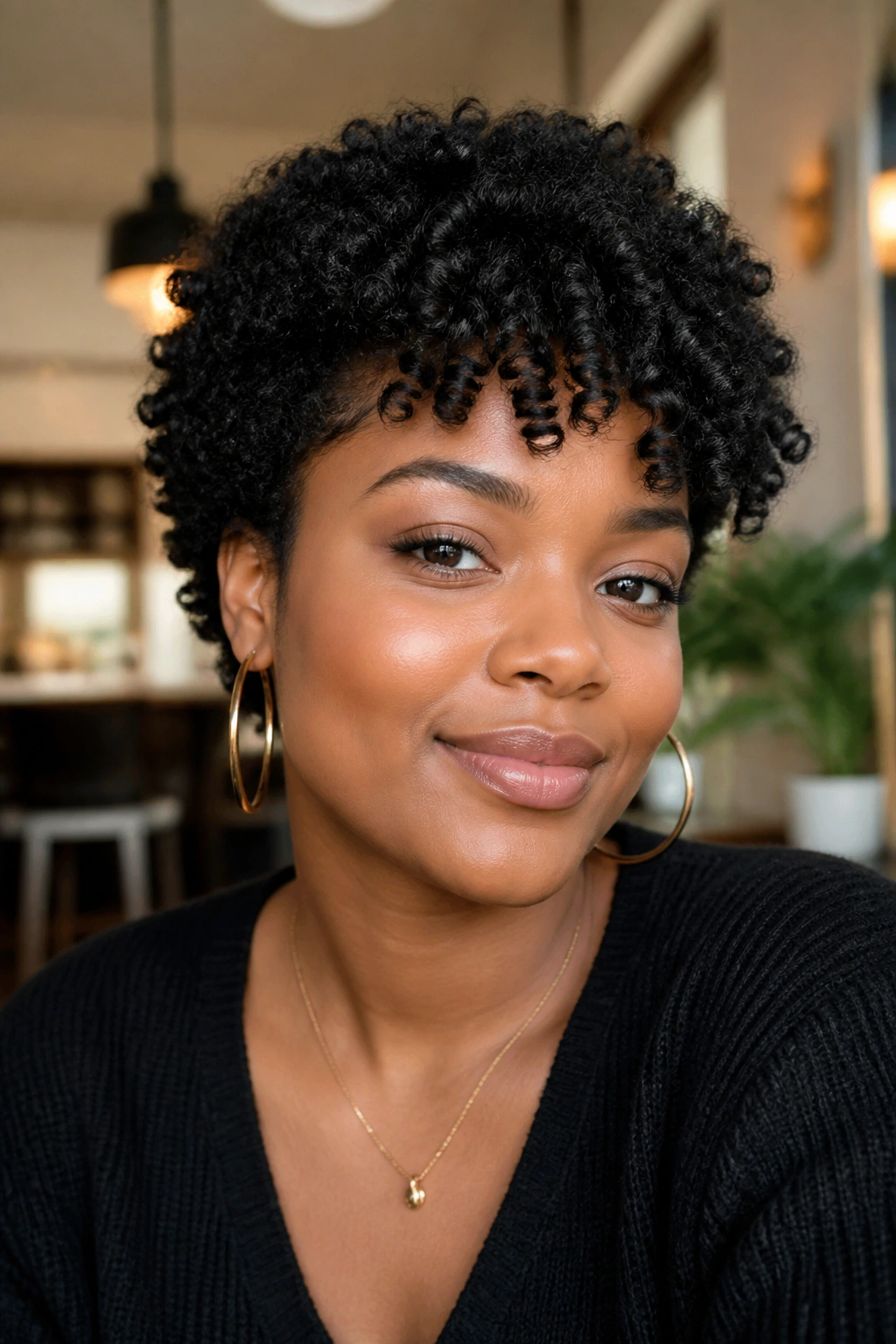
Short coily fringe can look incredible on a round face, but it needs the right shape and the right attitude. Coily hair shrinks more than people expect, and a fringe cut too high can jump above the brows faster than you meant it to.
The win here is structure. A short coily fringe adds lift at the front, which helps round faces avoid looking too wide through the middle. It also puts the focus on the eyes and the top third of the face. That gives a little more edge to the silhouette.
The cut pattern matters
For coily textures, the bang section should be shaped dry and cut with the natural spring in mind. Ask for a slightly longer starting point than you want the final result to be. Seriously. The visual gap between wet and dry can be dramatic, and this is not the place to guess.
Good details to ask for:
- A dry shape around the natural curl pattern
- Tapered sides near the temples
- Enough length to touch the brow after shrinkage
- Soft edges, not a clean box
The best versions of this fringe look deliberate and sharp, not tiny or accidental. That difference comes from the side shaping. Without it, the bang can feel too square. With it, the whole cut reads cleaner.
17. Split Bangs With a Soft Center Gap
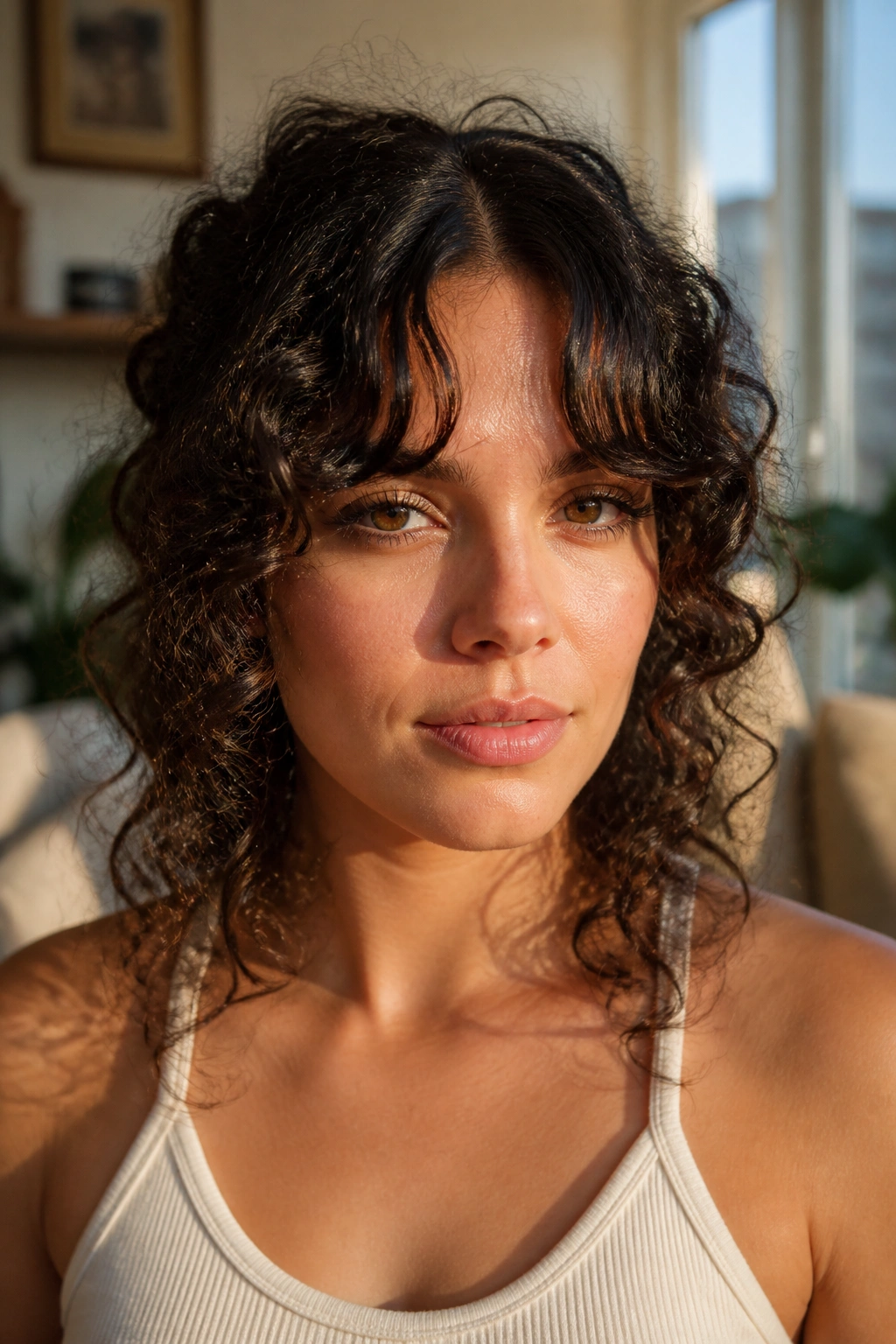
Split bangs are close cousins to curtain bangs, but the center opening is more noticeable. On a round face, that little gap can do a lot of work because it creates a vertical seam right where the eye needs a break from all the curve.
The style feels airy, even when the curls themselves are fairly dense. That’s why I like it. It gives you fringe and forehead at the same time, which sounds like a small thing until you wear it in real life. You get shape without the heavy feeling of a fully covered forehead.
A soft center gap also gives you flexibility. On dry days, the split may stay obvious. On humid days, it may collapse a bit and still look fine. That resilience matters. A lot of curly bang styles only look good under perfect conditions. This one is more forgiving, especially if the longest front pieces hit around the cheekbone and the shortest curl stays just below the brow line.
18. Cheekbone-Grazing Curly Bangs
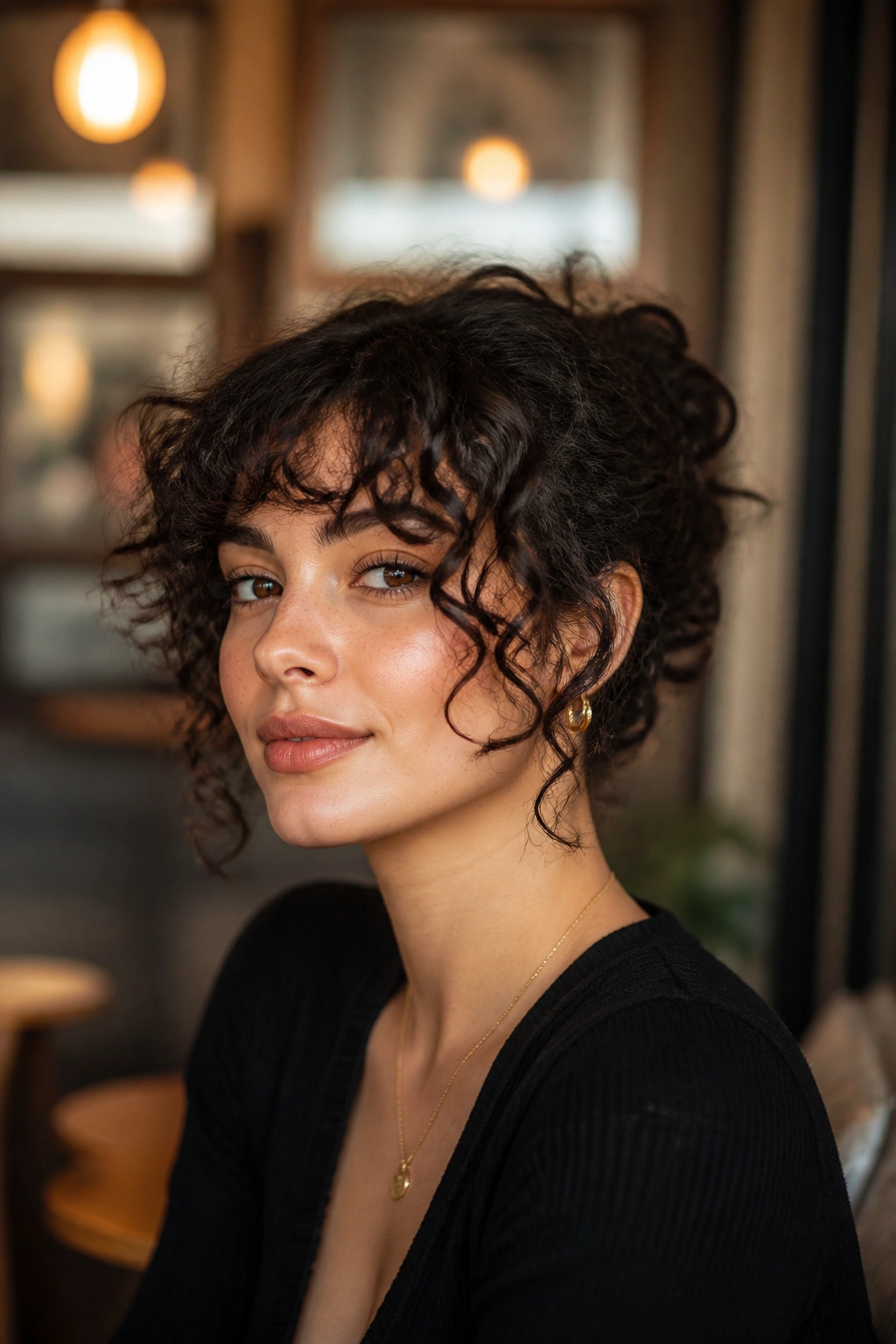
If I had to hand someone one curly fringe option and say, “Start here, then decide what you like,” this would be near the top. Cheekbone-grazing bangs are flattering on round faces because they sit low enough to slim the upper face while still leaving some forehead visible.
The length is the reason. Bangs that hit the cheekbone create a strong diagonal path from the forehead down the side of the face, which is exactly the kind of movement a round face benefits from. They also blend easily into updos, half-up styles, and ponytails, so they never feel trapped into one look.
This is the style for someone who wants bangs but does not want to babysit them every morning. They can be worn forward, tucked behind one ear, or pushed slightly apart at the center. If your curls are medium or loose, this length usually behaves well. If your curls are tighter, keep the front a touch longer so the shrinkage doesn’t turn them into a short fringe by accident.
There’s a reason this shape shows up so often in good curly cuts. It flatters without trying too hard. And that, honestly, is the kind of fringe I trust most.
