



Round faces can wear bangs beautifully, but the wrong fringe can make the face look shorter and wider than it really is. Soft medium bangs for round faces work because they don’t draw a hard horizontal line across the forehead. They bend, split, feather, and sweep, which gives the eye somewhere to travel.
That movement matters. A round face usually carries more width through the cheeks, so the smartest fringe shapes add a little length and a little angle. The best versions usually sit somewhere between brow-grazing and cheekbone length, with softer outer corners and a lighter center. Too blunt, and the whole thing can feel boxy. Too dense, and the bangs start doing all the talking.
Texture changes the result more than people expect. The same cut can look airy on wavy hair and heavy on straight hair if the ends are left too blunt. Point-cutting, a small amount of root lift, and a soft side or center break make a huge difference.
Some of these ideas are low-maintenance. Some need a round brush and a minute or two of shaping. All of them stay in that gentle zone that flatters a round face instead of fighting it.
1. Soft Curtain Bangs for Round Faces
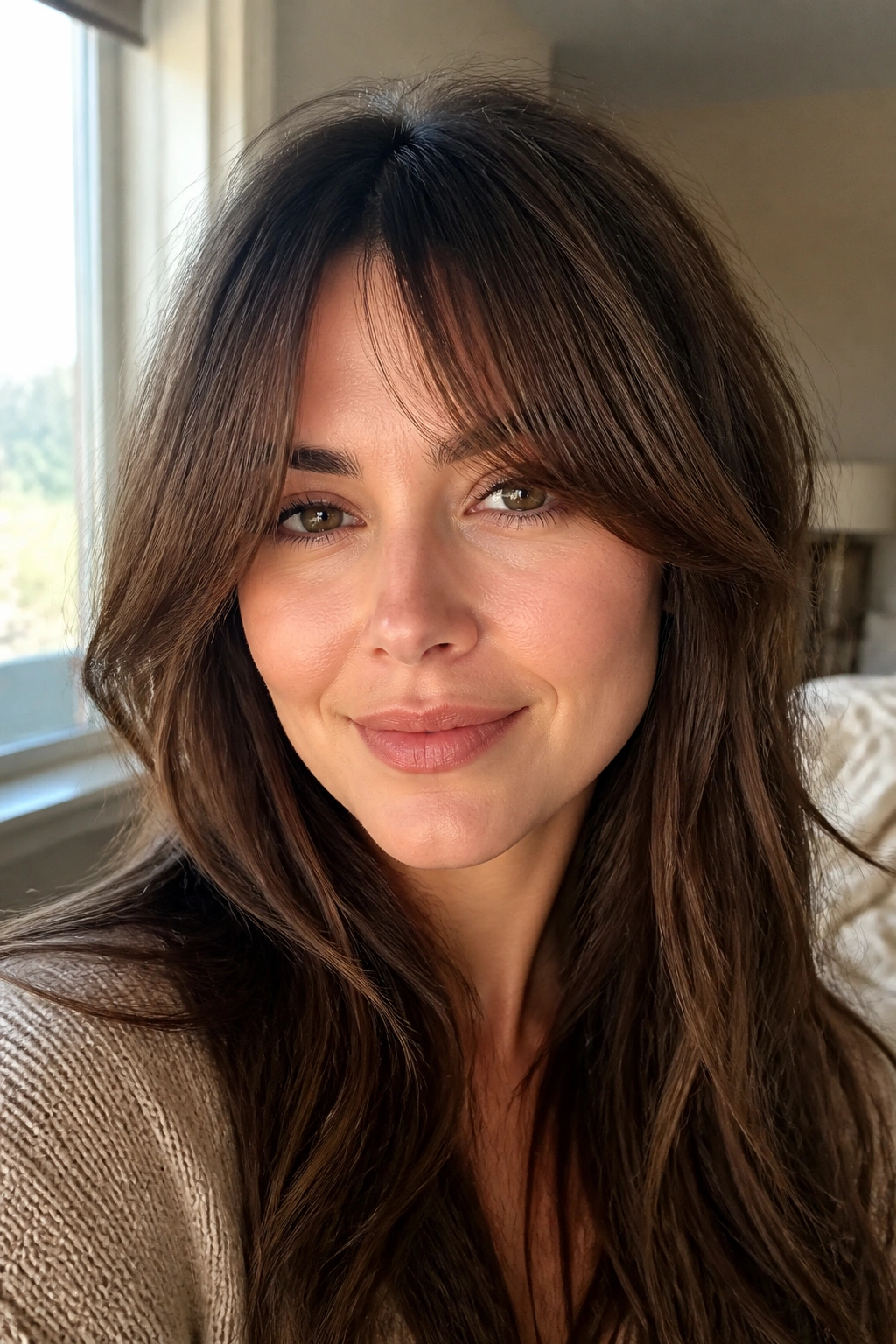
Soft curtain bangs are the easiest place to start if you want face-framing movement without a sharp line. The center opens the face, and the longer sides drift toward the cheekbones, which helps a round face look a little longer.
Why It Flatters the Shape
Ask for the shortest point to land just under the brows, then let the outer corners reach toward the top of the cheekbone. That diagonal shape matters. It breaks up width and gives the eye a clear path downward instead of straight across.
A good curtain bang should look soft even before styling. If the ends are sliced too bluntly, you lose that airy finish. Point-cutting the tips keeps the fringe from feeling heavy.
- Shortest point: just below the brow line
- Longest point: cheekbone level
- Best styling move: blow-dry away from the face with a small round brush
- Best finish: a touch of light serum on the ends only
Pro tip: keep the center a little lighter than you think you need. That tiny bit of air at the middle keeps the whole style from closing in on the face.
2. Side-Swept Medium Bangs With a Deep Part
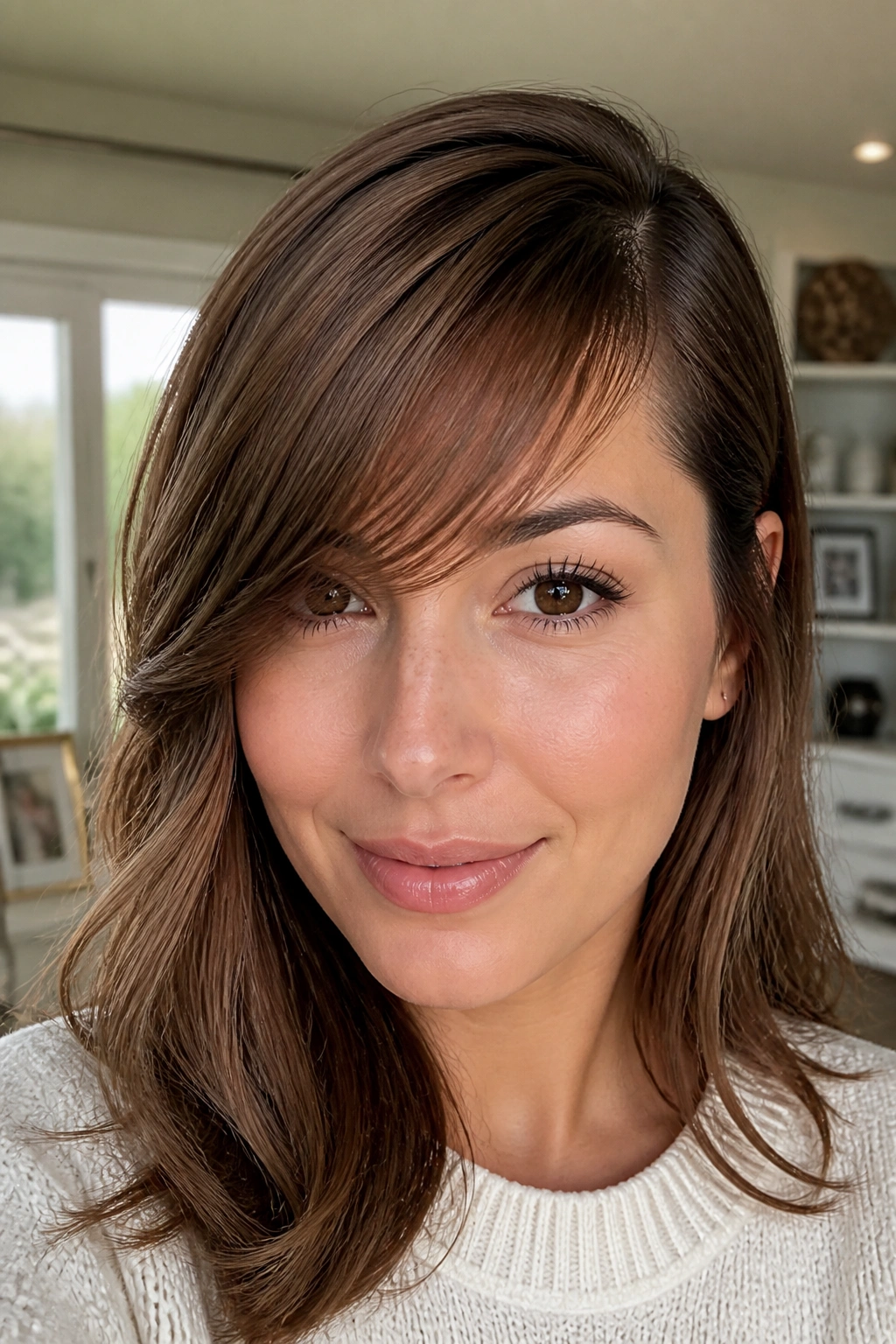
A deep side sweep does more for a round face than a lot of people expect. The diagonal line cuts across the forehead, which creates shape where a round face can sometimes read as soft all over.
These bangs work especially well if one side of your hair naturally falls flatter than the other. You can lean into that. Let the heavier side carry the fringe, then tuck the lighter side back or blend it into face-framing layers.
The trick is keeping the sweep long enough to move, not so long that it disappears. I like a part that starts an inch or so past the highest point of the brow arch. That gives the front some lift without making the forehead feel crowded.
3. Bottleneck Bangs With a Narrow Center
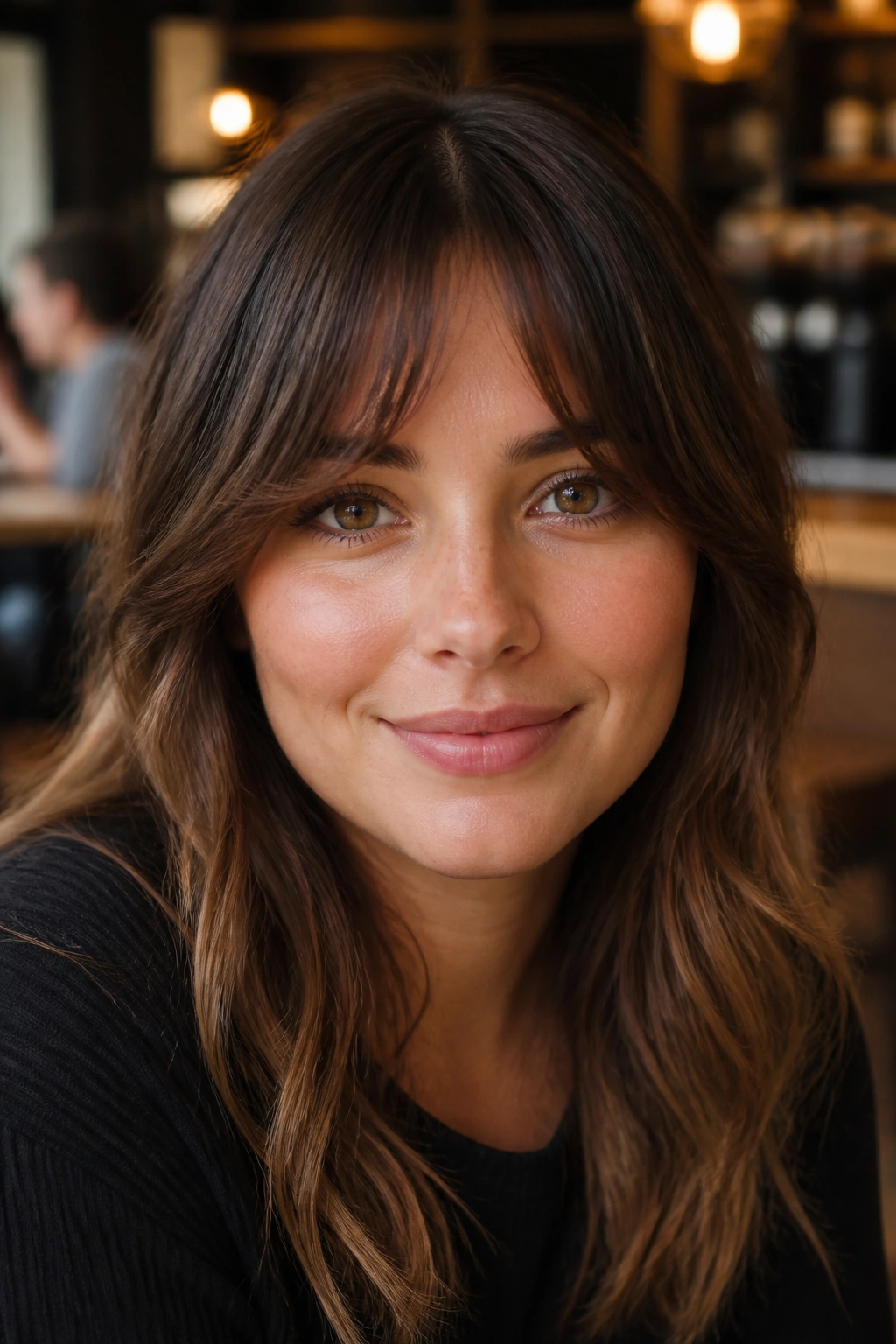
Why do bottleneck bangs keep showing up on round faces? Because they do two useful things at once. The narrow center opens the forehead, and the wider sides fan out toward the temples and cheekbones.
They’re named well, too. The middle stays slim and soft, then the fringe widens in a gentle curve before it blends into the sides. That shape keeps the eye moving instead of stopping at one blunt line.
How to Wear Them
Ask your stylist to keep the center piece a little shorter than the rest, then taper the sides so they graze the outer brows and cheekbones. The gap should feel soft, not severe. If the opening is too wide, the style can start looking accidental.
These bangs are a good pick if your hair has some natural bend. A loose wave gives them life. Straight hair can wear them too, but you’ll want a brush and a quick bend at the ends so they don’t sit flat and stiff.
4. Feathered Fringe With Face-Framing Layers
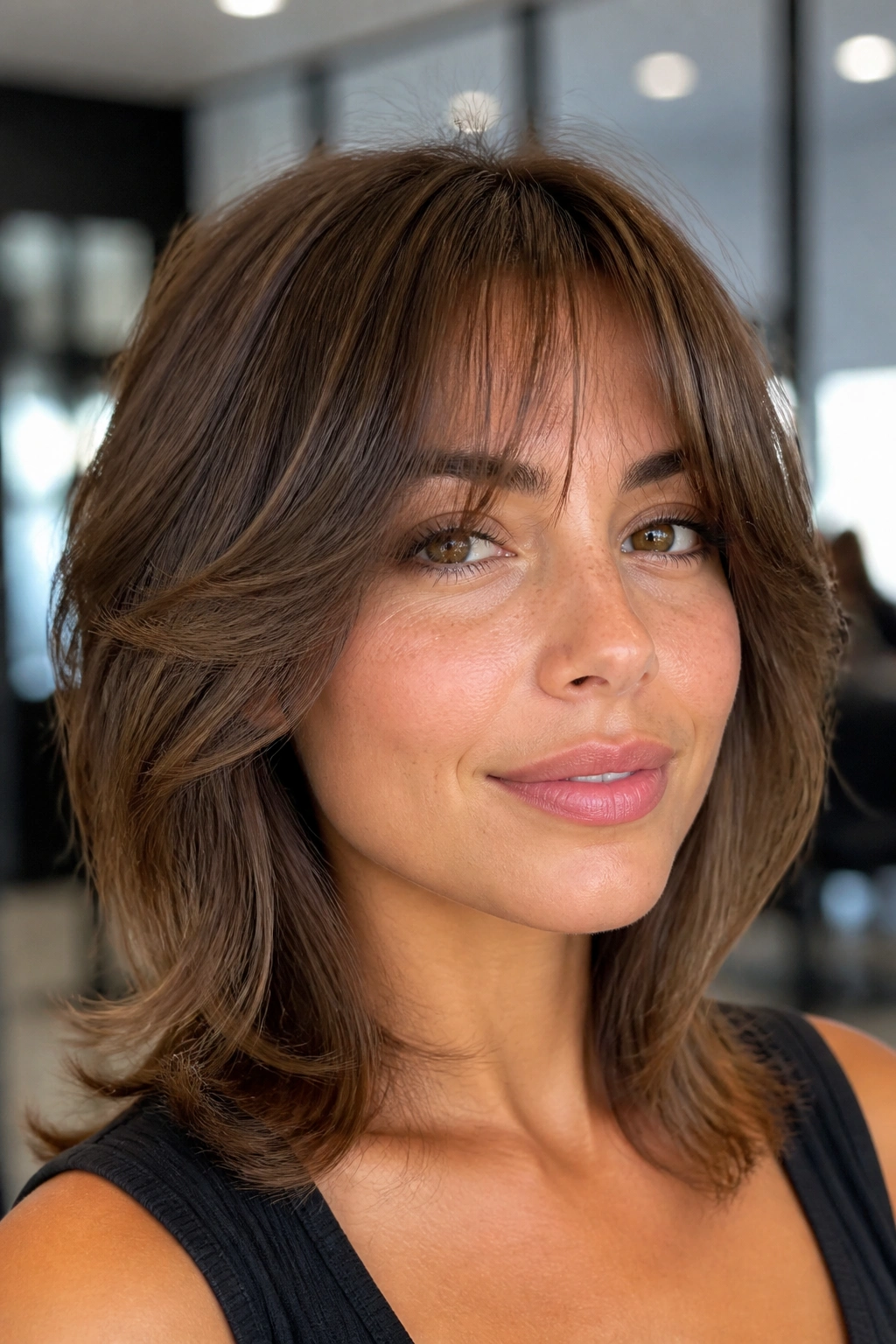
If you’ve ever left the salon with a fringe that felt too exact, feathering is the fix. It softens the outline, which is useful on a round face because a hard line tends to echo the face shape instead of balancing it.
The best feathered fringe blends into face-framing layers that start near the cheekbone. That lets the bangs become part of the haircut instead of sitting on top of it like a separate piece. It looks especially good when the front has a little movement around the temples.
- Ask for point-cut ends, not a blunt edge
- Keep the shortest pieces soft around the center
- Let the outer pieces blend into the jawline layers
- Avoid over-thinning if your hair is already fine
A feathered fringe is one of those styles that looks better when it is not too perfect. A few loose bits are part of the charm.
5. Brow-Skimming Arched Bangs
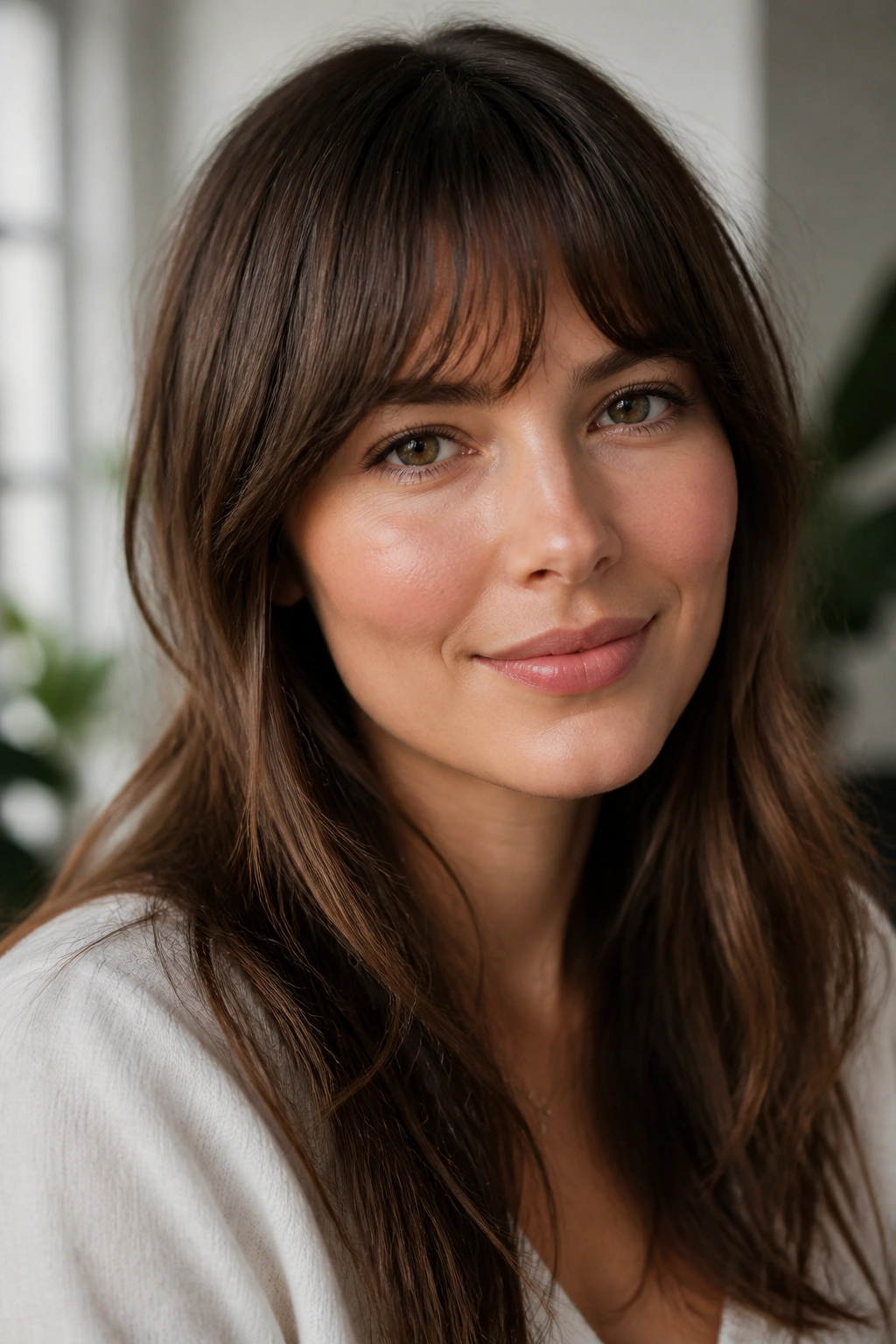
A soft arch can be a smart choice if you want your bangs to feel neat without looking rigid. On a round face, the gentle curve draws the eye upward, then back down around the eyes, which gives the front of the face more shape.
The arch should be subtle. Not doll-like. Not a cartoon rainbow across the forehead. The sweet spot is a line that sits close to the brows in the middle and rises just enough at the corners to keep it soft.
I like this style on straight to slightly wavy hair because the shape shows up cleanly. A small round brush helps, but so does a flat brush with a twist at the ends. Use the cool shot on your dryer before you let go of the section. That keeps the curve from collapsing.
6. Shaggy Piecey Bangs With a Loose Edge

Shag bangs are the opposite of stiff. That is the whole point. Instead of one smooth block of hair across the forehead, you get little separated pieces that make a round face look less broad at the top.
This style works best when the hair has some texture already. Wavy hair makes it easy. Straight hair can wear it too, but you’ll want a texturizing spray or a bit of dry shampoo at the roots so the pieces don’t cling together.
Unlike a blunt fringe, shaggy bangs let the forehead breathe. They also grow out in a nicer way, which matters more than people admit. A lot of fringes look cute for two weeks and annoying after that. This one is less dramatic about the grow-out.
7. Long Peekaboo Bangs
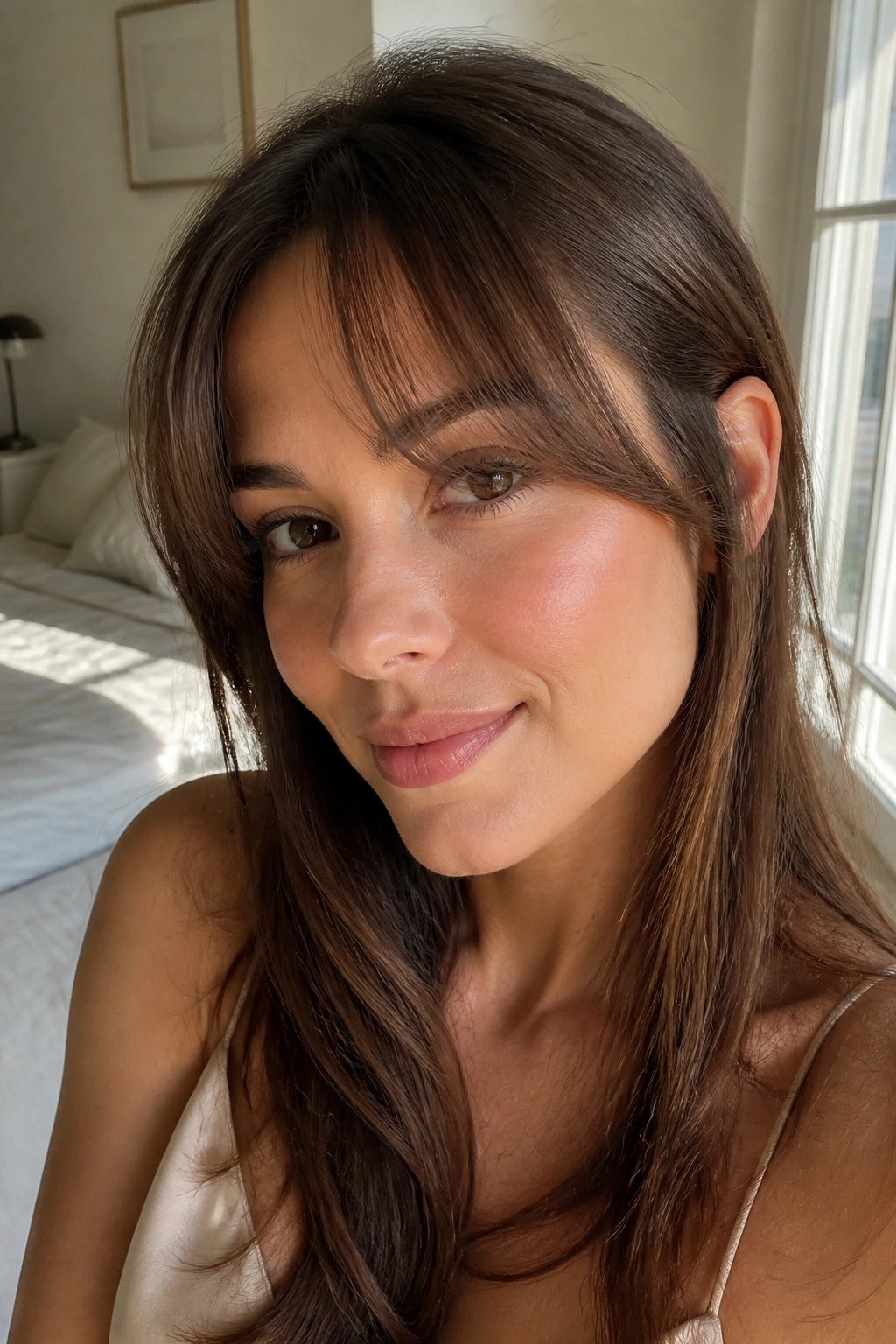
Barely there. That is the appeal. Long peekaboo bangs sit close to the eyes, then disappear into the rest of the front layers, so they frame the face without feeling like a full commitment.
For a round face, that hidden quality is useful. The bangs don’t draw a heavy line across the forehead, but they still give you a soft diagonal when they move. It is a good option if you tuck your hair behind your ears a lot or wear it half up.
What to Tell Your Stylist
- Keep the shortest point near lash level
- Let the longest pieces hit just above the cheekbone
- Ask for soft ends so the fringe can split naturally
- Skip this if you want a very crisp, obvious bang line
These look especially nice when the rest of the hair has a slight bend. A straight, glassy blowout can make them vanish a little too much.
8. Center-Parted Fringe With Two Soft Panels
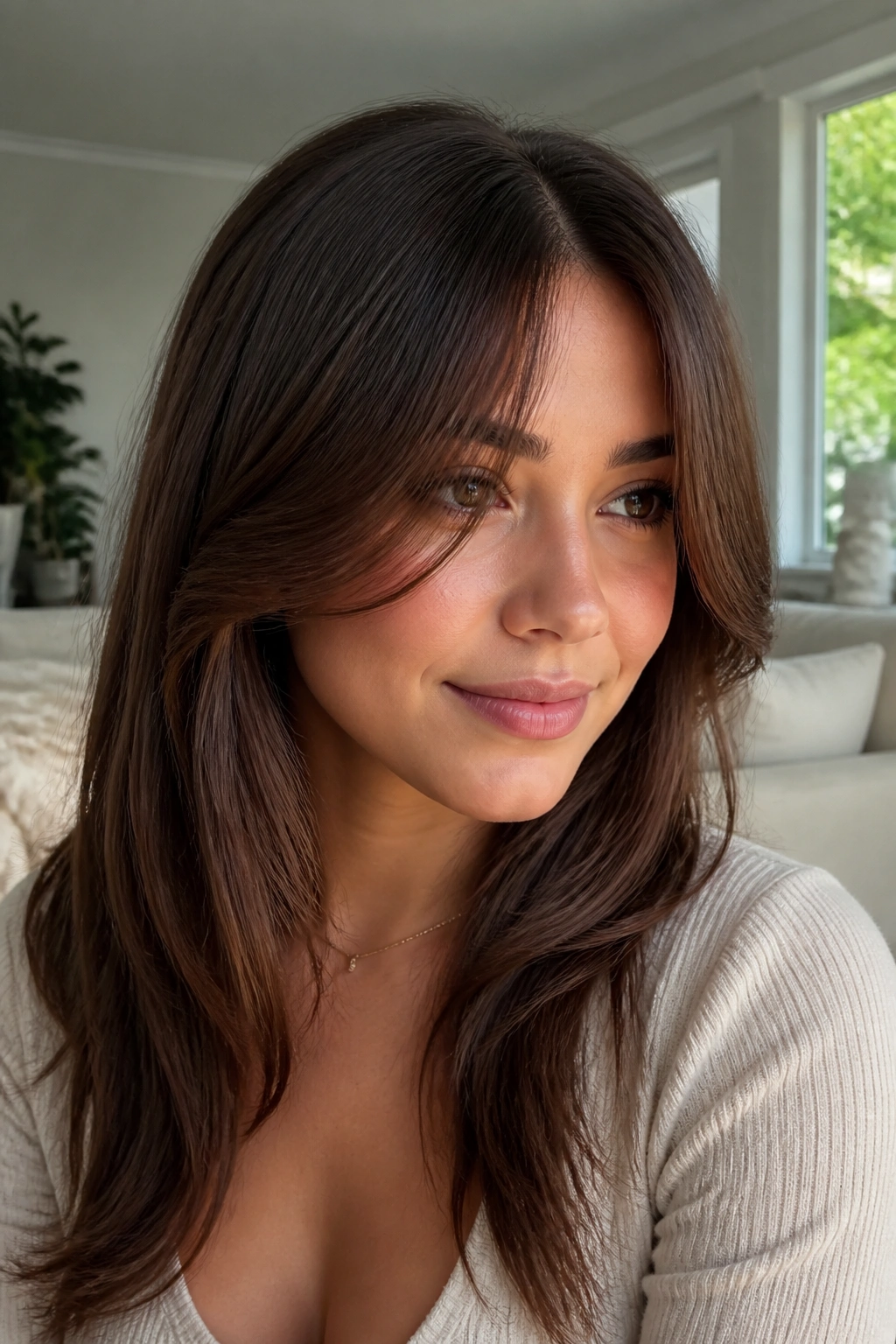
A center part is not the enemy of a round face. The problem is a heavy center part with no shape. Two soft panels fix that by framing the cheeks while leaving the forehead open.
This is basically a quieter version of curtain bangs. The difference is that the panels stay a little more compact and a little less dramatic. It works well if you want bangs that can disappear into your hair on days when you pull it back.
A good cut keeps the middle shortest just below the brows, then lets the side panels grow longer toward the cheekbones. That soft triangle shape helps the face look less wide at the sides. It also plays nicely with ponytails, buns, and loose clips.
9. Soft Blunt Bangs With Point-Cut Ends

Can blunt bangs work on a round face? Yes, if you keep the edge soft. A slightly blunt line gives structure, but the point-cut ends stop it from looking boxed in.
The key is density. You want enough hair for the fringe to read as intentional, but not so much that it becomes a thick shelf across the forehead. A lighter, softer blunt bang can actually flatter a round face because it gives a clean upper edge while the broken tips keep it from feeling heavy.
Ask your stylist to leave the corners a touch longer than the middle. That tiny slope matters. It gives the bang a little curve and keeps the eye moving outward instead of stopping at one straight horizontal line.
10. Rounded Bangs With Tapered Corners
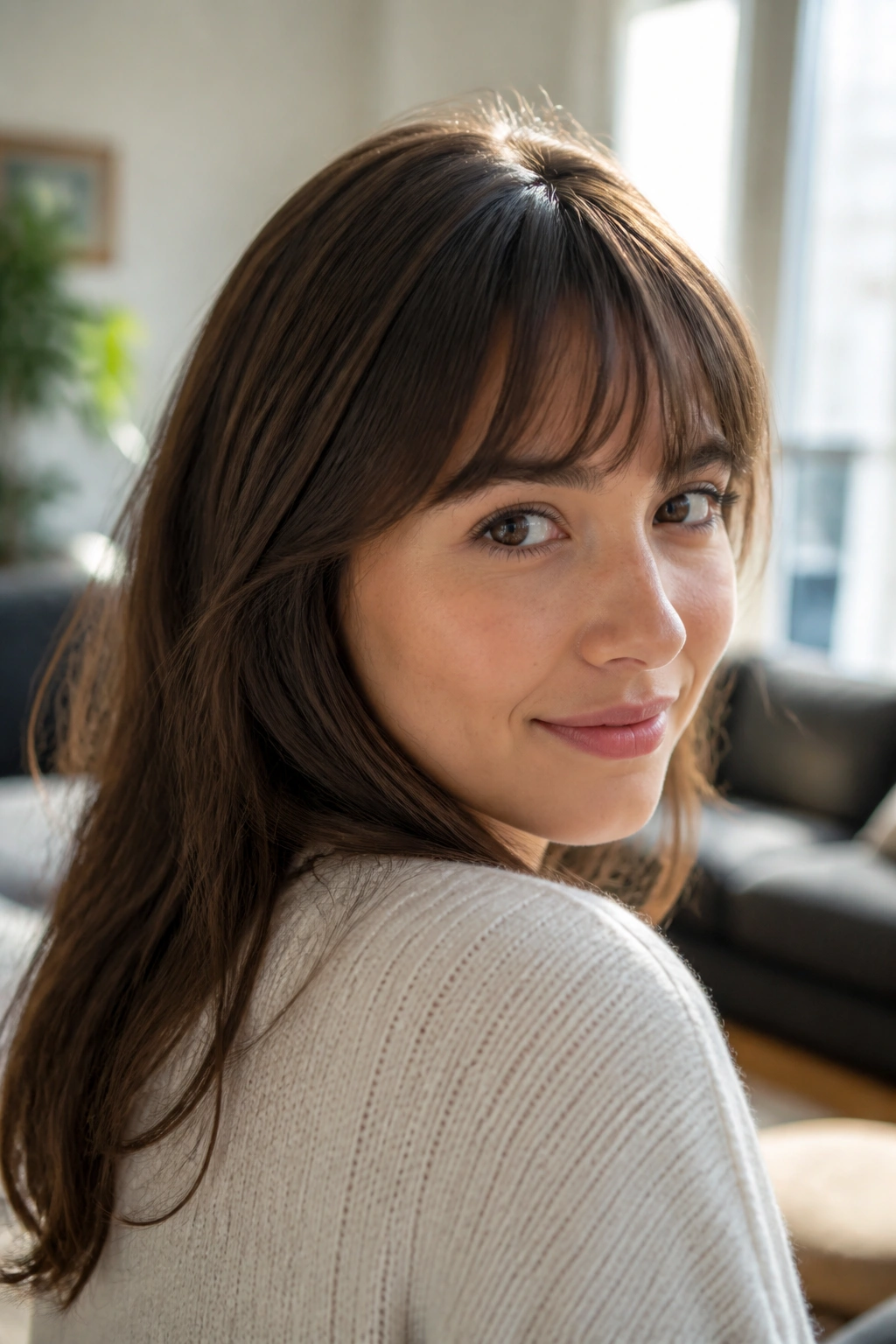
I like this shape on people who want a neat front section but don’t want the strictness of a full blunt bang. The line is rounded through the middle, then tapers gently toward the corners so it doesn’t box the face in.
That taper is the whole trick. On a round face, the corners should help stretch the shape a little. If they are cut too short or too square, the fringe can feel like a little curtain wall. Nobody needs that.
- Center: soft and slightly fuller
- Corners: longer and feathered
- Best hair type: medium to thick straight or wavy hair
- Styling move: brush the sides slightly outward, not inward
This style is best when it stays soft and touchable. A tiny bit of paste on the ends can keep the corners from puffing out.
11. Airy French-Girl Bangs

Airy French-girl bangs are less about a precise shape and more about a looseness you can feel right away. They sit softly on the forehead, separate a little, and move when you turn your head.
That softness is useful on a round face because it keeps the front from looking too heavy. Instead of one solid block of hair, you get light pieces that skim the brows and show a little skin. The face looks less boxed in.
They are best for people who do not mind a fringe that looks better with a bit of mess. If your hair likes to bend on its own, you’re in good shape. If it stays pin-straight, you may need a quick pass with a small brush or a touch of styling cream to keep the ends from floating too much.
12. Medium Bangs Blended Into a Lob
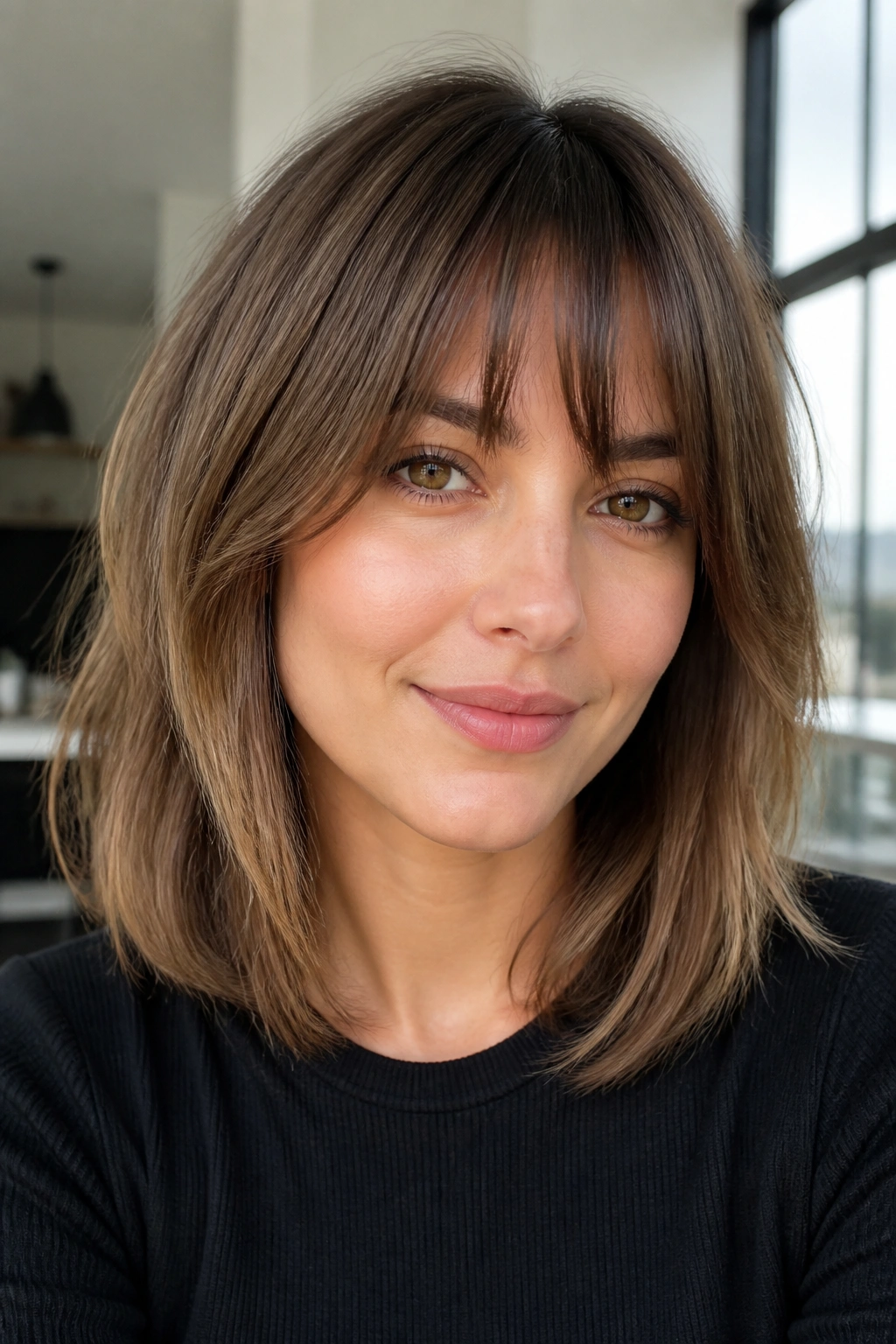
Unlike stand-alone fringe, these bangs are part of the haircut from the start. That makes a big difference on round faces because the front pieces can travel from the bang area into the lob without a hard stop.
The goal is smooth movement from forehead to cheekbone to jaw. Nothing feels cut off. The front should start around brow length in the center, then slide into longer pieces that sit near the cheek and collarbone.
This is a good pick if you wear your hair down most of the time and want the fringe to feel like part of the shape, not a separate feature you need to manage every morning. It also grows out in a calmer way than a straight, dense bang.
13. Side-Part Fringe With Lift at the Roots
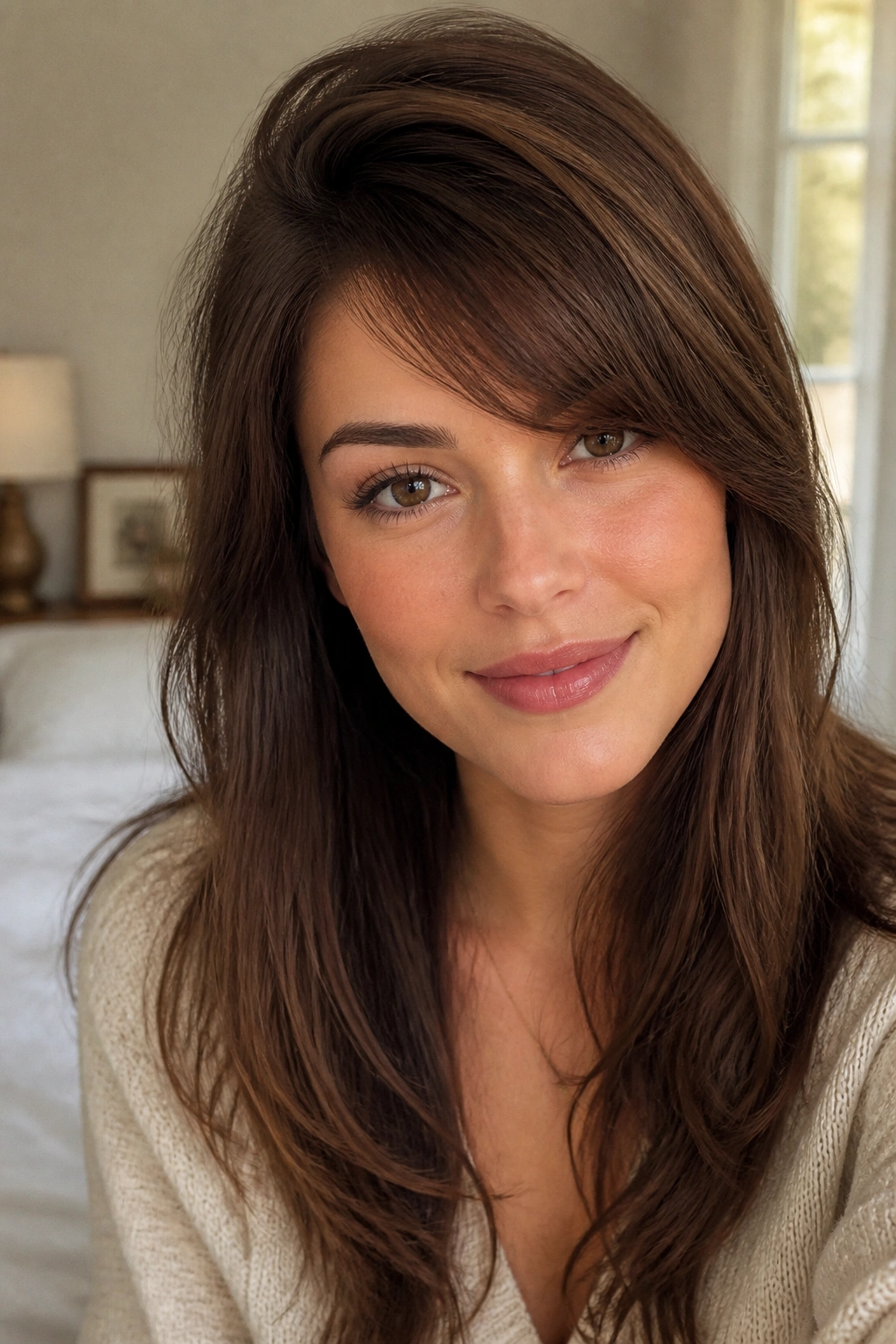
A side-part fringe can look flat if the roots collapse. Give it a little lift, and the whole style changes. The top gains height, the forehead gets a diagonal line, and the face looks less wide.
What Makes It Work
Blow-dry the front in the opposite direction first. That gives the roots a small bend and helps the hair stay where you place it. Then sweep it back into the side part and let the ends fall across the forehead.
This is one of my favorite options for medium-density hair because it does not need a huge amount of styling. A vent brush, a light mousse, and a quick cool blast are enough most days.
- Part the hair slightly off-center
- Dry the roots with lift
- Let the fringe curve across, not flatten down
- Finish with a light spray only at the ends
A little root height makes a round face look longer fast. That part is almost unfair.
14. Soft Swept-Under Bangs That Curl In
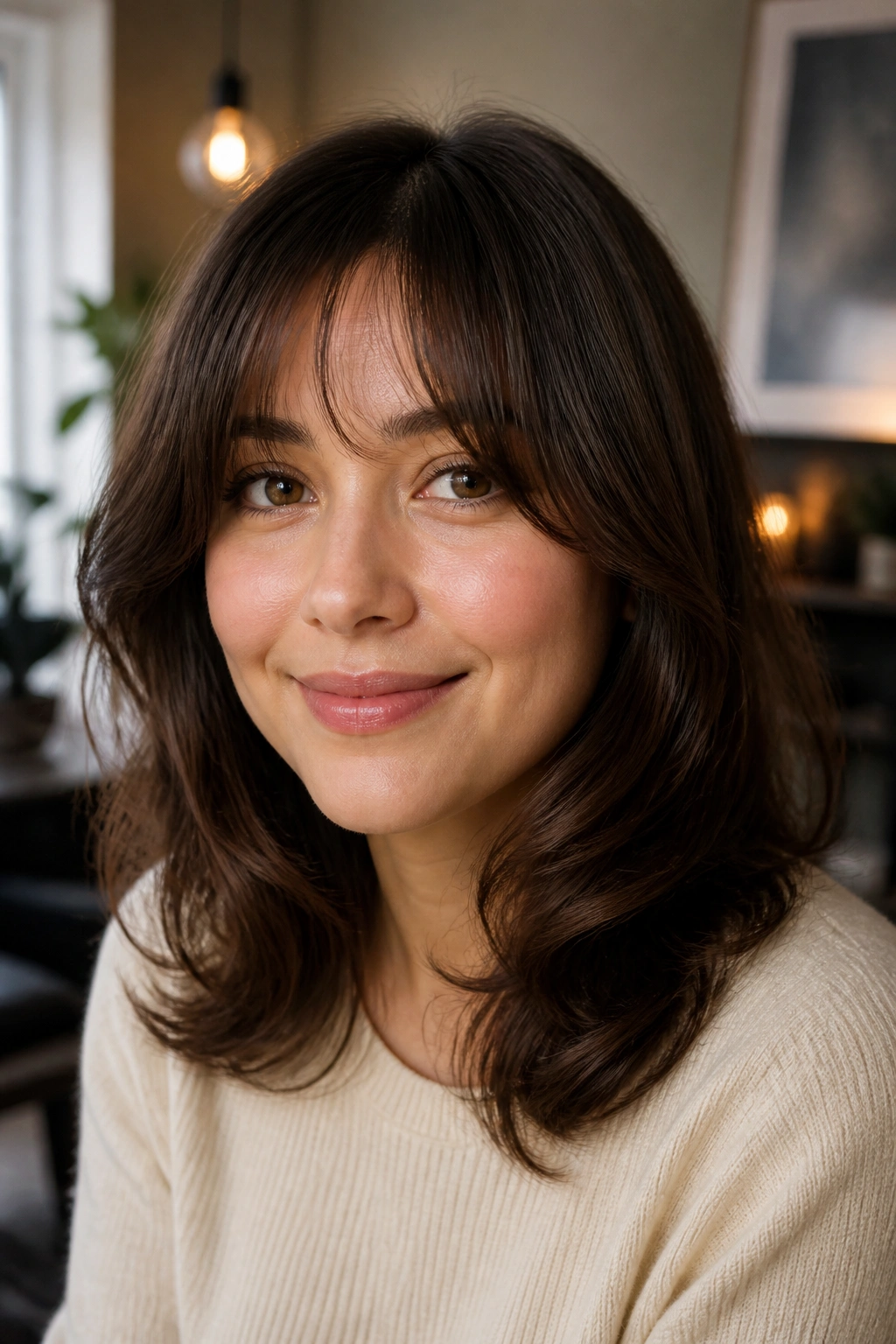
A bang that curls under can look softer than one that hangs straight. The bend at the ends rounds out the shape in a gentle way, which keeps the front from feeling sharp or stiff.
The style works best when the ends have enough weight to fold in. If the cut is too thin, the fringe can flick outward instead, and that usually looks messier than intended. I’d ask for a little fullness at the tips and a soft curve through the middle.
This is a good match for a polished blowout. Use a small round brush or a flat brush with a tucked-under finish, then let the bangs cool in place before you move them. The curve will hold better, and the face will look framed instead of covered.
15. Wispy Layered Bangs With Internal Texture
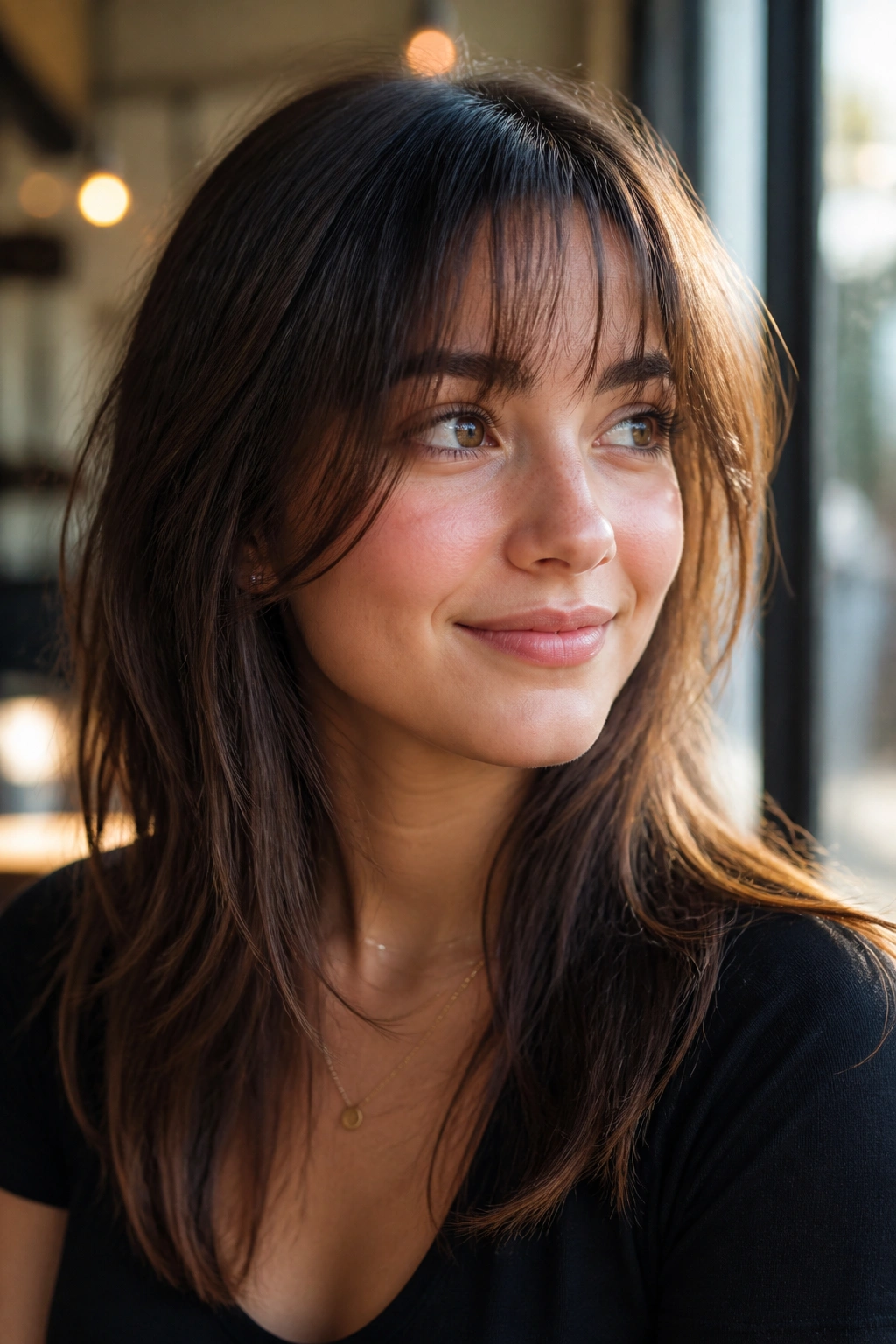
Why does internal texture matter? Because the surface can look neat while the inside stays light and movable. That is exactly what keeps wispy layered bangs from turning into a flat sheet on a round face.
The cut should remove some weight from the inside, not just slice away the ends. That creates air between the pieces, which helps the fringe sit softly against the forehead. It’s a small detail, but it makes the bang behave better once you style it.
How to Get It Cut
Ask for point-cutting through the interior and very light thinning near the corners. If your hair is fine, do not let anyone go wild with texturizing shears. Too much removal and the bang starts to split in odd places.
This style is best when the front has a bit of swing. Even one bend at the brow line changes the whole feel.
16. Split Fringe With Jawline Pieces
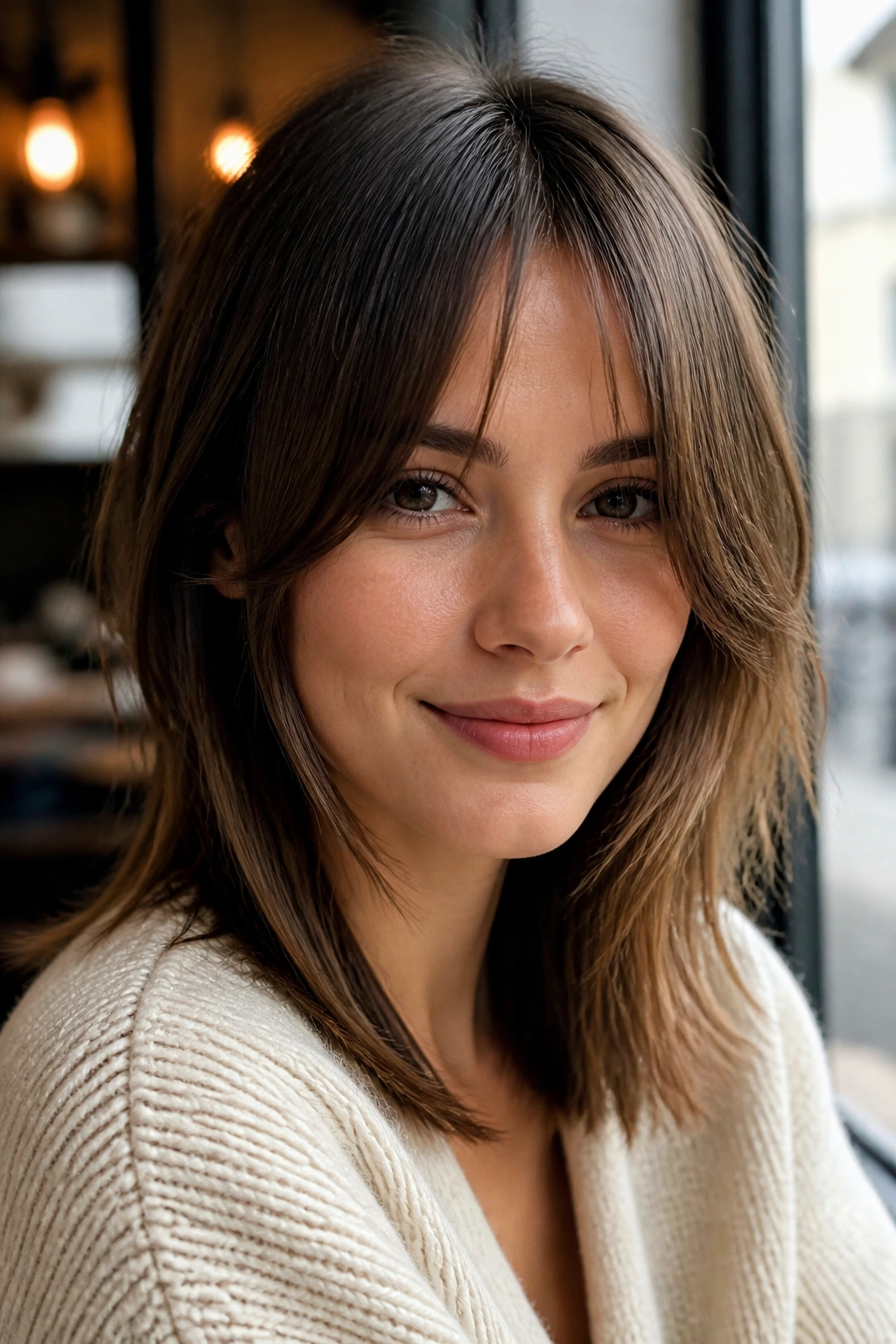
If you wear glasses or tuck your hair behind your ears, a split fringe can be a surprisingly easy choice. The center opens the forehead, and the side pieces travel down toward the jaw, which gives a round face more shape.
The split should look deliberate, not like the bang simply gave up in the middle. That means keeping enough density on each side so the pieces still frame the eyes. The longest ends can brush the jawline, which adds a bit of downward motion.
This works well with shoulder-length or mid-length hair because the fringe has somewhere to go. If the rest of the haircut is too short or too blunt, the split can feel disconnected. A little layering through the front helps the two sides blend into the rest of the style.
17. S-Curve Bangs That Bend at the Temples
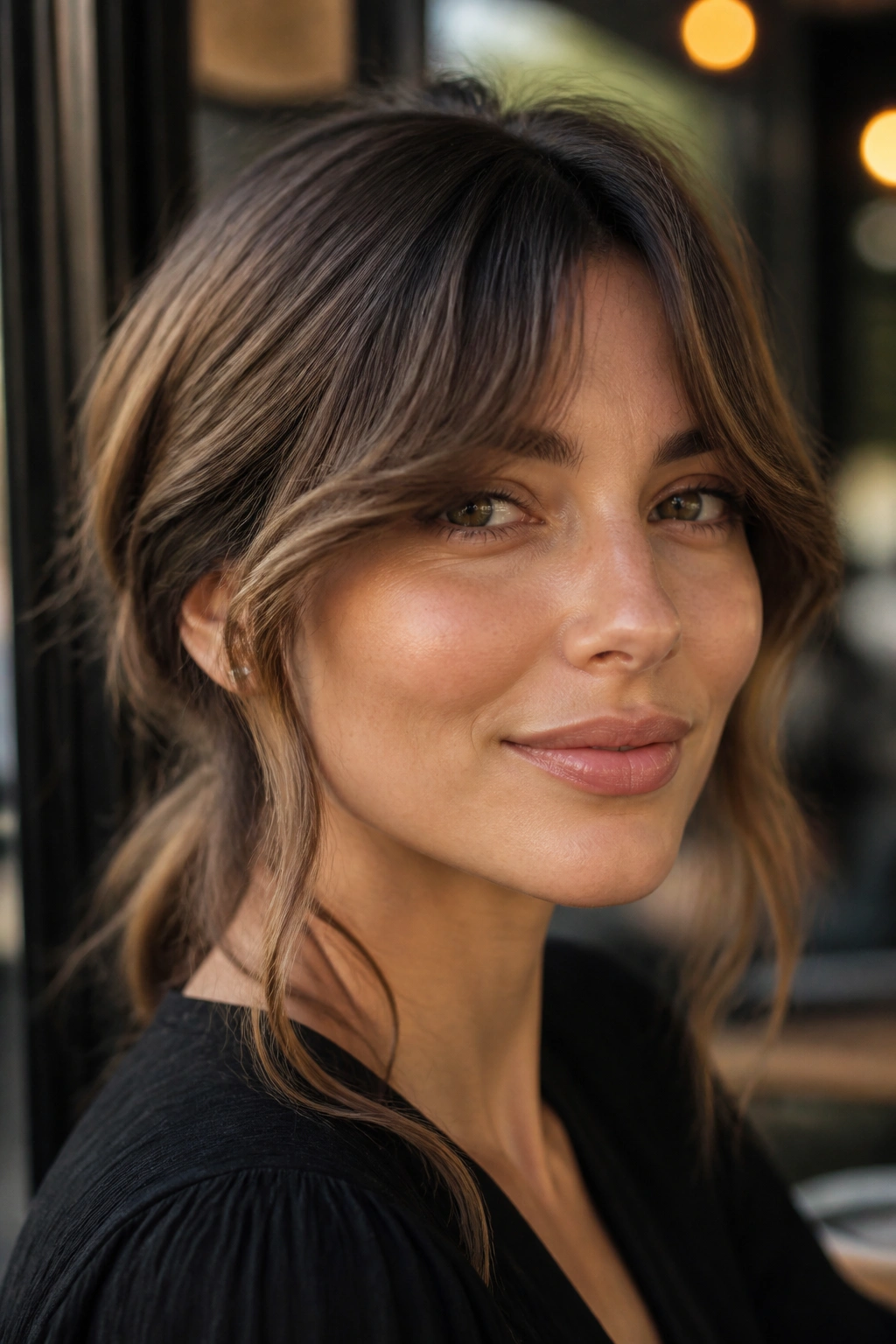
S-curve bangs are one of the softest shapes you can wear on a round face. The hair moves down near the center, bends out near the temples, then settles back in around the cheeks. That little curve keeps the face from feeling wide at the forehead.
The shape has a nice side effect too. It creates motion even when the rest of the hair is still. You can wear it tucked, loose, or clipped back a bit, and the curve still shows up.
A flat brush and a gentle twist at the temple are enough to set it. You do not need a huge blowout. You just need the front to follow the line of the face instead of sitting straight down like a curtain.
18. Tapered Shag Bangs With a Broken Outline
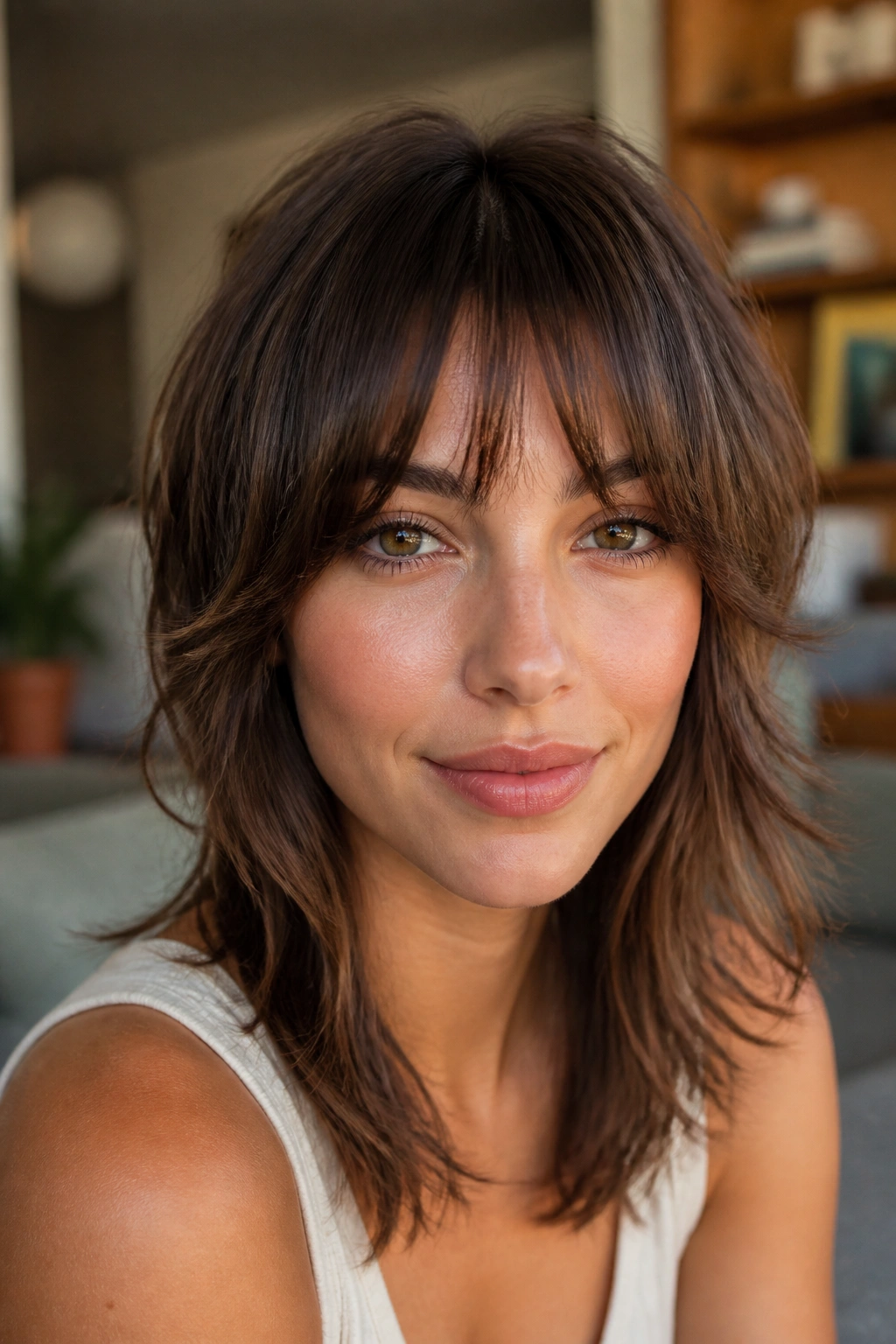
Compared with a standard shag fringe, tapering keeps the outline softer. That matters on a round face, because a broken edge can add shape without making the forehead feel heavier.
This version is best if you like air-dried hair, loose layers, and a little movement around the eyes. The center can stay a touch shorter, while the outer pieces fall longer into the cheek area. That taper gives the face a longer read and keeps the fringe from widening the top of the face.
It also ages well through the week. The bangs look a little fuller on day one and a little looser after that, but not in a bad way. A dry texture spray at the roots can keep the lift from collapsing.
19. Grown-Out Curtain Bangs That Still Look Intentional
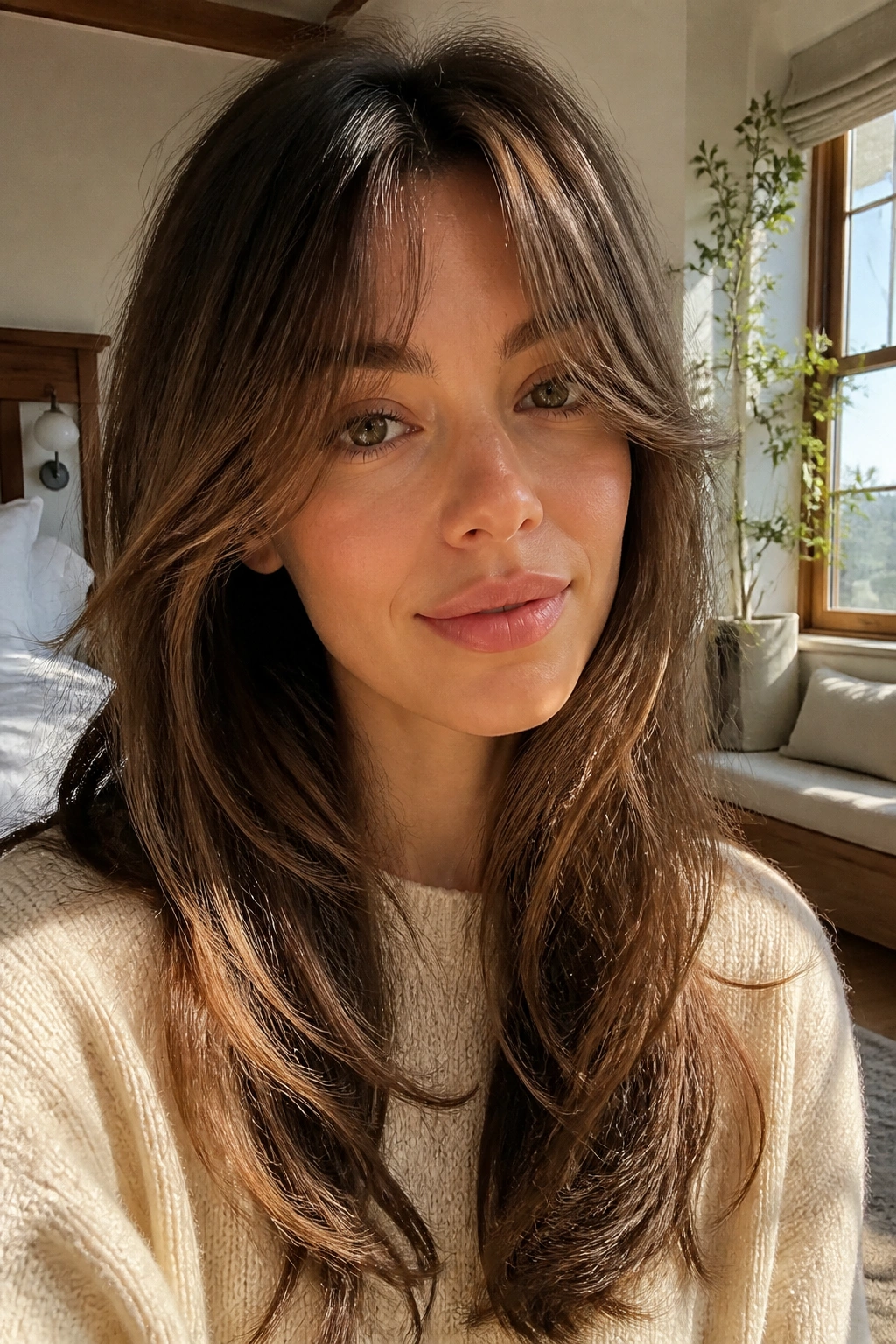
Not everyone wants a fringe that needs daily shaping. Grown-out curtain bangs solve that problem nicely. They are long enough to tuck away, short enough to frame the face, and soft enough to flatter a round face even when they are not freshly trimmed.
Why They Stay Useful
The shorter center can sit near the brows, while the longer sides reach the cheekbones or even a little past them. That keeps the face open without losing the frame around the eyes. It is the sort of bang that keeps making sense as it gets longer.
- Best for busy mornings
- Easy to pin back
- Easy to blend into layers later
- Good choice if you are bang-curious but cautious
If you are unsure about committing, this is the safe lane. Ask for the longer version first. You can always shorten it later.
20. Rounded Side Bangs That Skim the Forehead
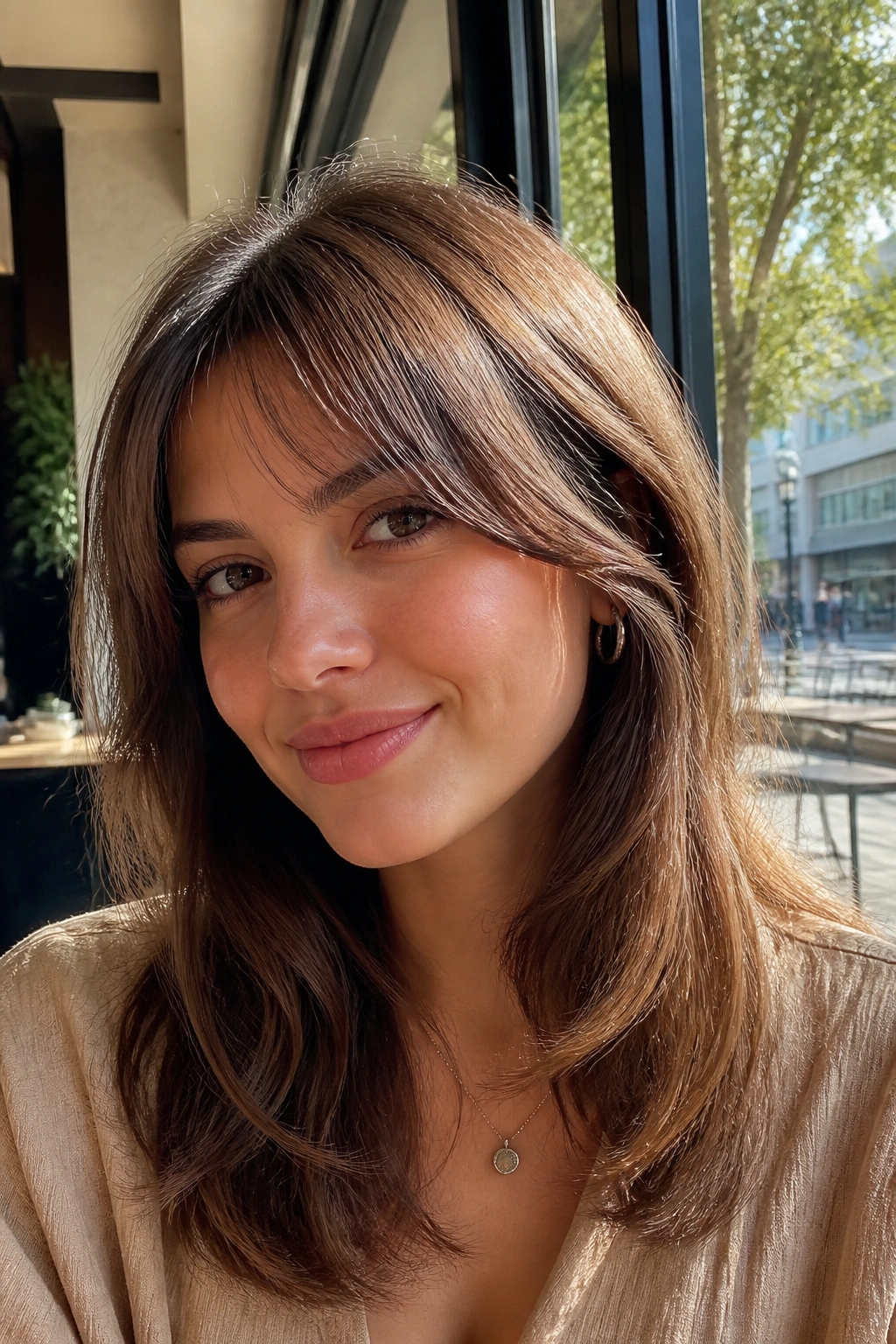
A side bang can still feel gentle if the curve is loose. Instead of a hard diagonal slash, the hair sweeps across the forehead in a soft arc and settles near the cheekbone.
That curve is what helps a round face. It creates a bit of vertical length on one side while keeping the front soft and movable. The shape works especially well if you want something polished but not severe.
I’d keep the styling light here. A cream that smooths, not a heavy wax, is usually enough. If the bang gets too shiny or too stiff, it loses the softness that makes it flattering in the first place.
21. Brow-Grazing Textured Fringe With Light Density
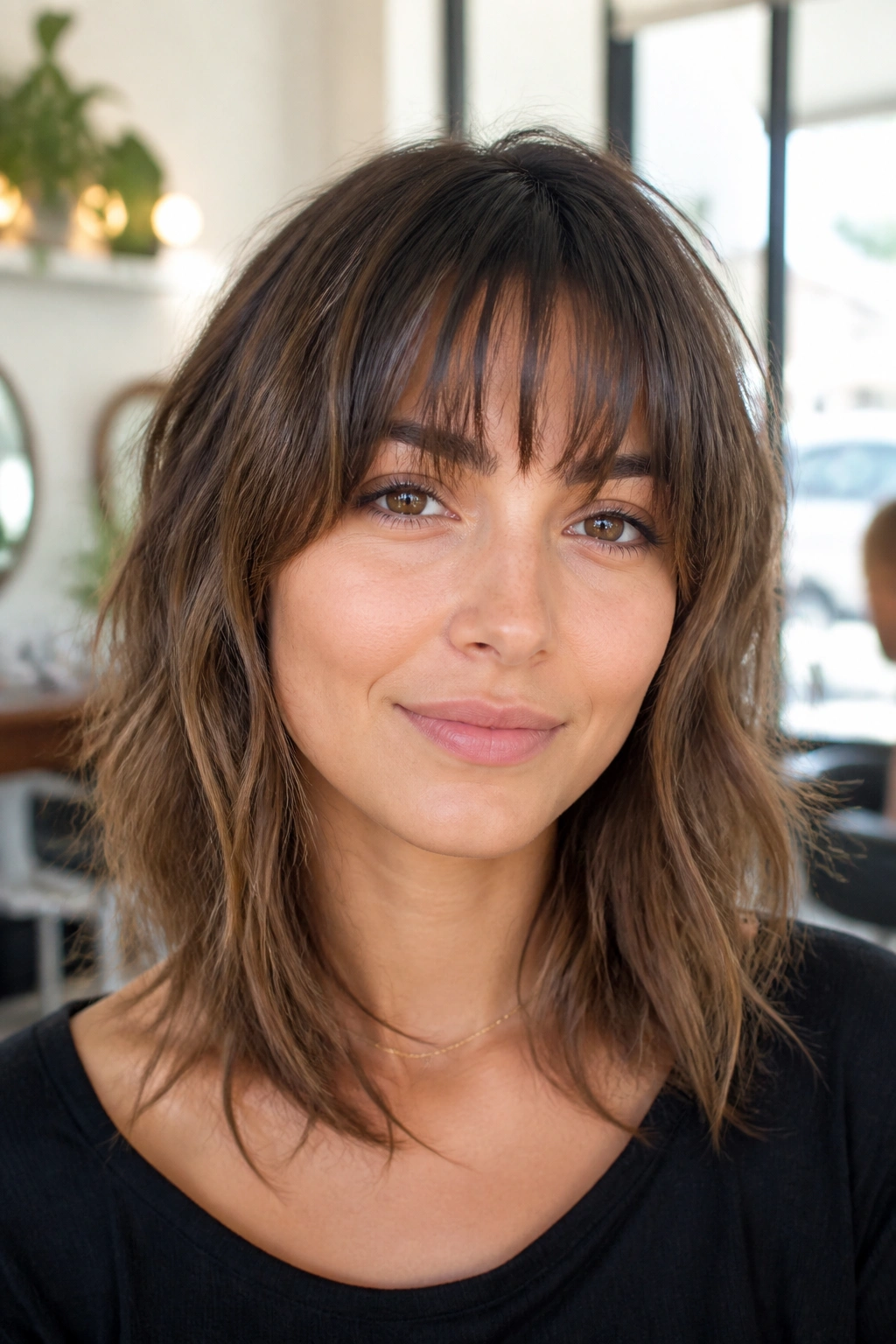
How short can you go and still keep it soft? Brow-grazing textured fringe is the answer when you want the eyes framed without a heavy block of hair.
The line should sit right at the brows or a hair below, but the ends must be broken up. That broken edge keeps the fringe from making the forehead look wider. On a round face, the difference between a soft edge and a blunt edge is bigger than people think.
What to Watch For
- Cowlicks at the front can push the fringe apart
- Very fine hair may need extra density at the center
- Thick hair usually needs point-cutting so it does not puff
- Glasses can change the length you want
This is one of those cuts that looks tiny on the floor and noticeable on the face. That is the good part.
22. Layered Fringe With Hidden Short Pieces
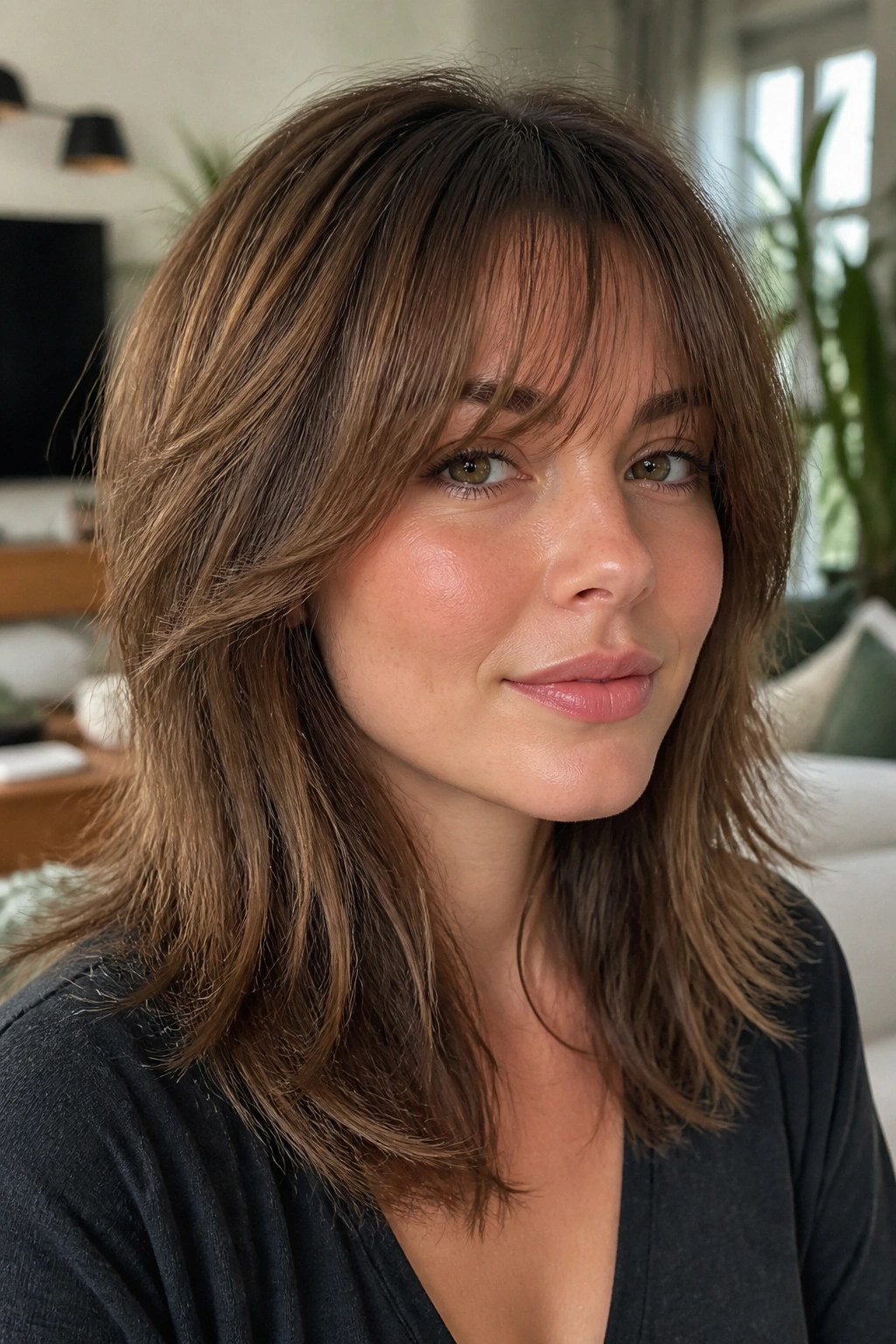
This style sounds simple, but it is sneaky in the best way. The top layer looks soft and long, while a few shorter pieces hide underneath and keep the fringe from falling flat.
That hidden structure helps a round face because it builds movement without stacking a lot of bulk on the forehead. The shorter pieces give lift. The longer pieces keep the whole thing gentle.
It’s especially useful if your bangs tend to separate into two random curtains by midday. The under-layer gives the hair something to rest on. Ask your stylist to leave the top pieces a little longer so the fringe still closes softly when you brush it down.
23. Air-Dried Wavy Bangs With a Soft Finish
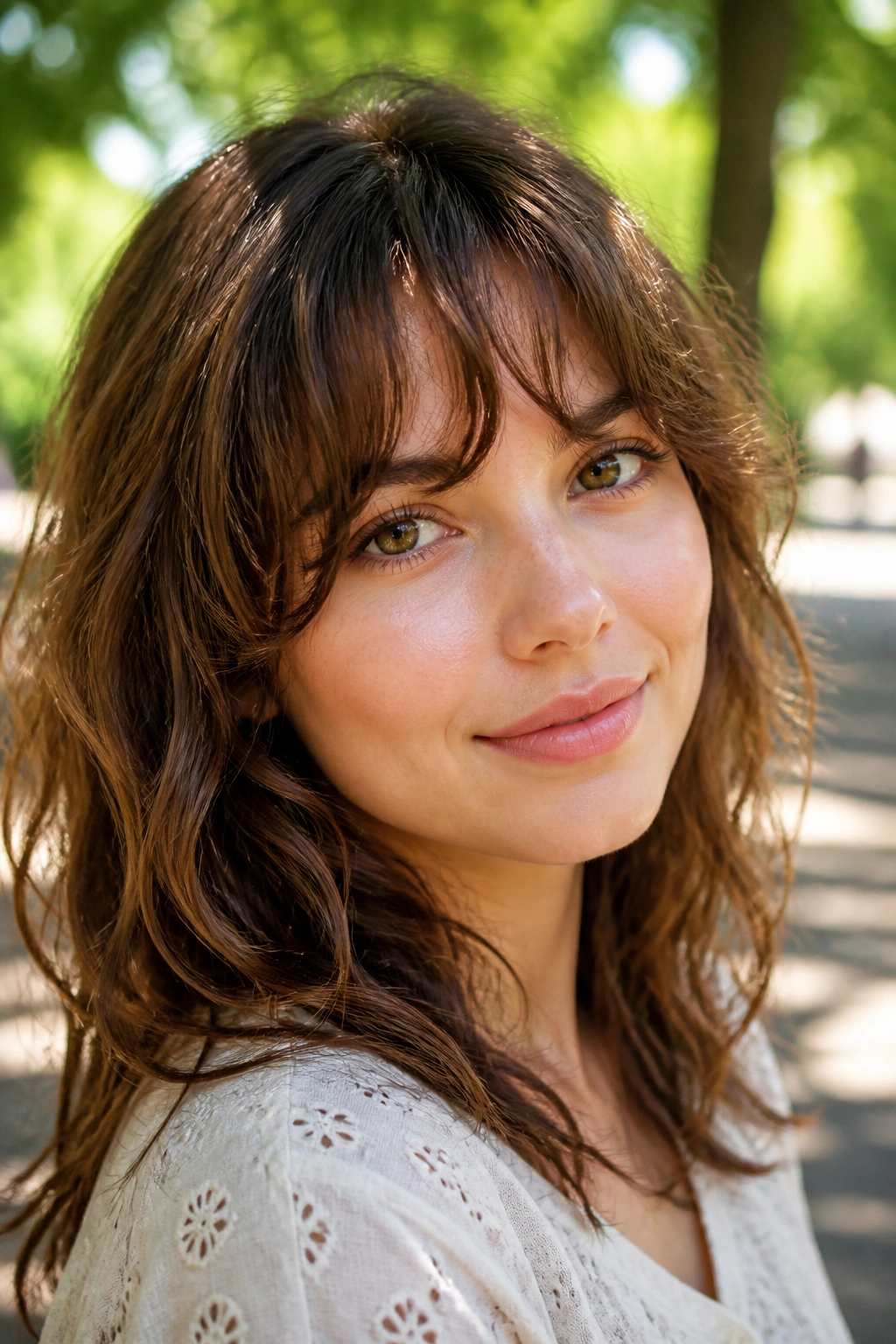
Wavy bangs should not be forced into a perfectly straight shape. That usually makes them puff at the ends and fight your natural texture. Let the wave do the work, and the front looks softer on a round face right away.
The easiest method is a little leave-in cream through damp bangs, a gentle twist with your fingers, and then hands off. Once they’re about 80 percent dry, you can separate the pieces slightly so they do not dry in one heavy clump.
If your hair swells in humidity, keep the product light. Too much cream turns the front sticky. Too little, and the bangs frizz up. There is a narrow middle lane here, and that is where the good version lives.
24. Sweeping Bangs With a Deep Side Part
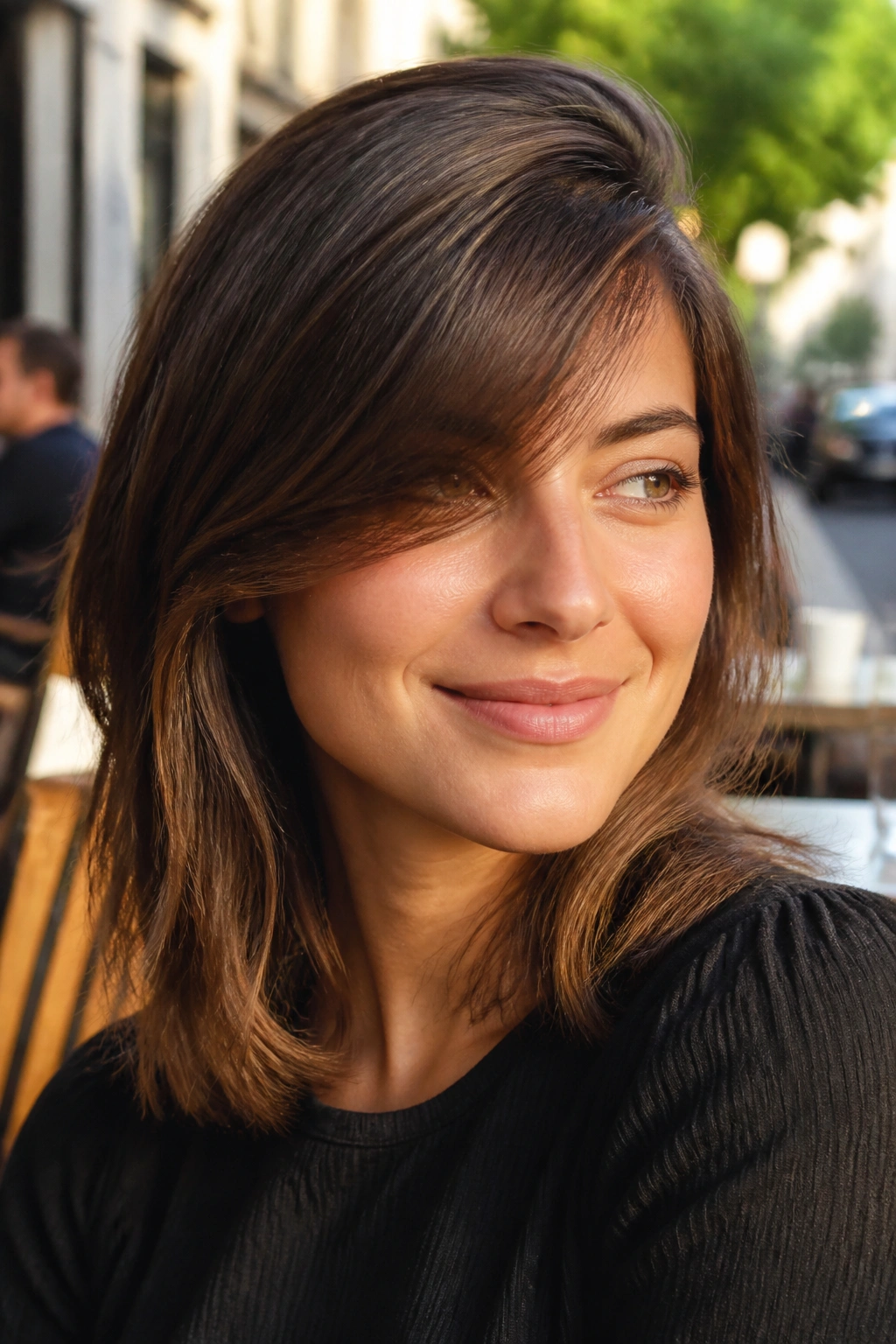
A deep side part gives the forehead a strong diagonal line, which is useful on a round face because it pulls the eye off the widest part of the cheeks. These bangs feel a little more dramatic than a soft curtain fringe, but they are still easy to wear.
The sweep should start high enough to build lift at the root, then fall across the forehead in one smooth movement. Keep the ends soft and slightly tapered so the style does not hard-stop at the cheek. A round brush, a touch of tension, and a cool shot at the end are enough to hold the shape.
This is the fringe I reach for when someone wants a bit more polish but does not want to look overly done. It has enough line to matter. It still bends.
25. The Grow-Out Friendly Soft Fringe for Round Faces

If you want one fringe that keeps behaving as it grows, this is the one. A grow-out friendly soft fringe starts with a longer center, soft corners, and enough face-framing length that it still makes sense a month later.
The best part is how forgiving it is. You can wear it parted in the middle, pushed to the side, tucked behind one ear, or blown straight down for a more polished look. On a round face, that flexibility matters because the shape keeps working even when the cut stops looking freshly sharp.
Ask for the shortest point to stay around brow level, the sides to drift toward the cheekbones, and the ends to be point-cut rather than sliced blunt. That combination gives you softness now and less frustration later.
If you are still deciding, choose the longer version first. Hair can come off in the chair. It does not go back on.
