



Round faces are not hard to style. They’re just honest. A fringe that lands in the wrong place will show it fast, which is why short fringe hairstyles for round faces work best when they add shape instead of width.
The trick is not to hide the face. It’s to build a line where the eye wants to travel: a little height at the crown, a little angle through the fringe, and enough texture that the cut doesn’t sit like one solid helmet. Short hair can do that beautifully. So can bangs, but only when the fringe is chosen with some care.
I’ve always thought the worst advice for a round face is “just get bangs.” Bangs are not one thing. A blunt brow-grazer, a broken micro fringe, a side-swept pixie bang, and a curly fringe all behave differently. Some soften the cheeks. Some pull the eye upward. Some do both. The good ones make the face feel a little longer without looking fussy. The bad ones sit across the widest part of the face and make everything feel fuller than it is.
What follows is a mix of cuts that actually do the job: pixies, bobs, bixies, crops, shags, and fringe styles that play nicely with rounder features. Some are polished. Some are messy. Some are low-maintenance on purpose. All of them can work, if the shape is right and the fringe is placed with a little brain behind it.
1. Side-Swept Pixie With Tapered Sides for Round Faces
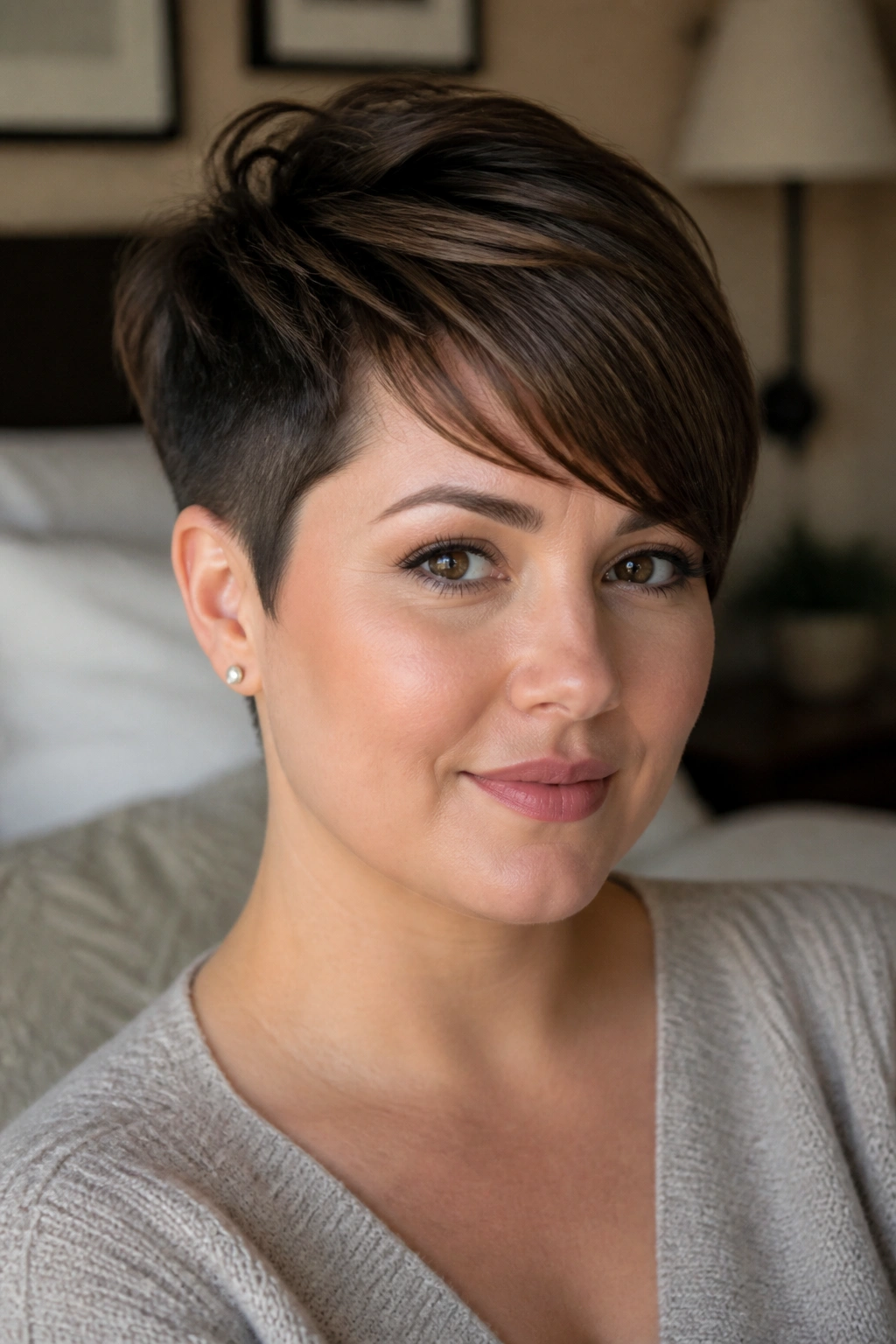
A side-swept pixie is one of the cleanest ways to sharpen a round face without making the haircut feel severe. The sides stay close to the head, the crown gets a bit of lift, and the fringe sweeps across the forehead instead of cutting it in half. That diagonal line matters. It breaks up the softness in the cheeks and gives the face a longer read.
Why It Works on Round Faces
The real magic is in the balance. You want height on top and narrowness at the sides, not width at the temples. A fringe that starts deep on one side and falls forward at an angle pulls the eye upward and out, which is exactly what a round face needs.
- Best for fine to medium hair that loses shape fast.
- Ask for the nape and around the ears to be tapered tight.
- Keep the fringe long enough to tuck behind one ear if you want.
- Style with a pea-sized amount of styling cream, then blow-dry the top forward and over.
My favorite part: it still looks deliberate on a messy morning. That matters more than people admit.
2. French Bob With Wispy Eyebrow Fringe

Can a bob hit at the jaw and still flatter a round face? Yes, if it stays soft. The French bob works because it sits short enough to feel chic, but not so blunt that it adds extra width where you don’t want it. Pair that with a wispy fringe that skims the eyebrows, and the whole cut turns airy instead of boxy.
The fringe should be light, not dense. You want little pieces that move when you blink, not a heavy curtain that sits like a wall. A slight bend at the ends of the bob helps, too. A flat, one-length bob right at the cheek can make the face feel broader. A softer jaw-skimming line feels lighter.
I like this cut on hair that already has a bit of natural bend. It air-dries well with a little mousse, and a quick pass with a 1-inch round brush gives the fringe enough polish without making it stiff. One good tuck behind the ear is often enough.
3. Textured Bixie With Piecey Bangs
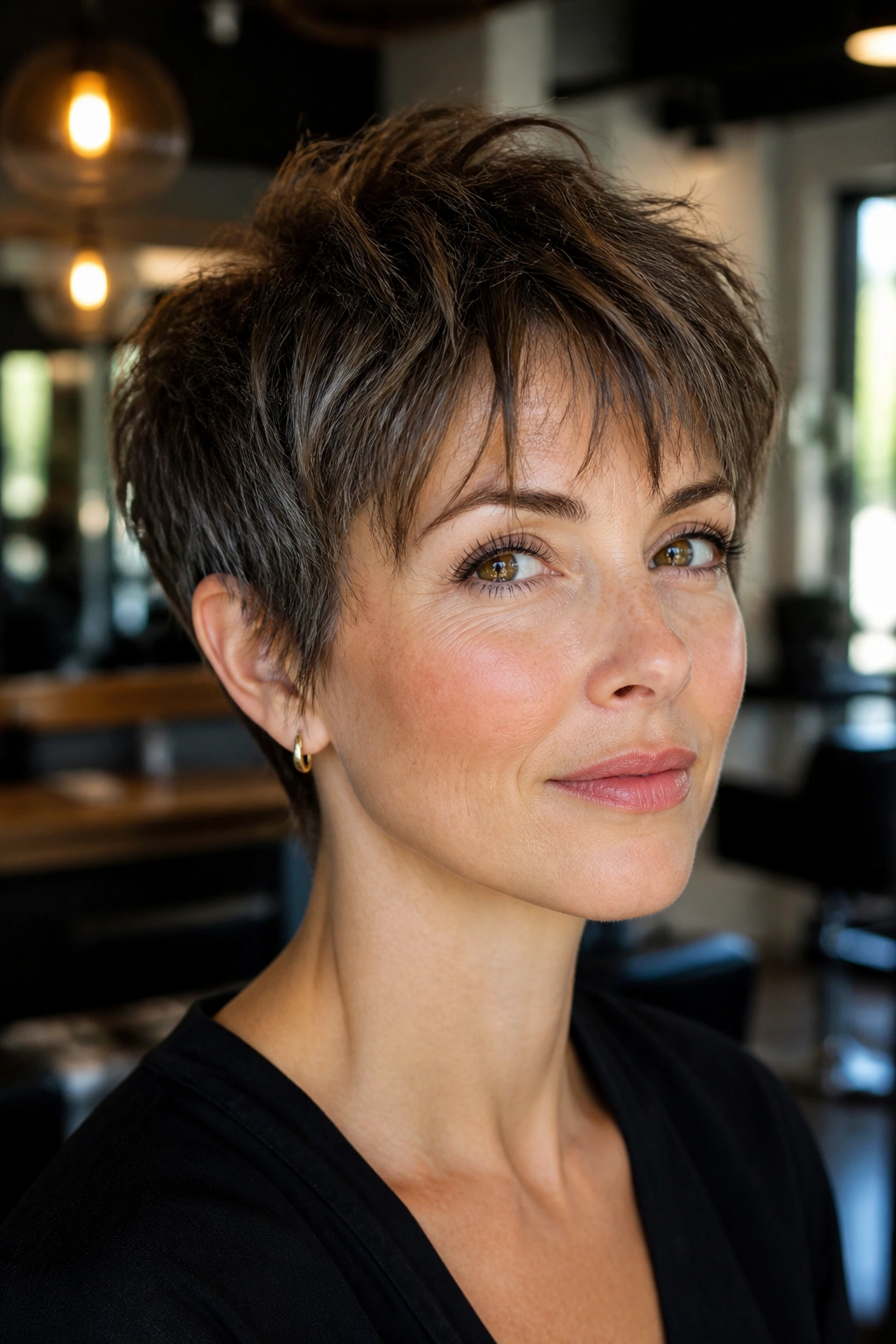
If your hair falls flat the moment you leave the salon, a bixie can be a relief. It lives somewhere between a bob and a pixie, which means you get short-hair ease with a little more length through the top and front. On a round face, that extra texture is useful. It gives the cut movement without adding bulk at the cheeks.
What to Ask For
Ask for shorter sides, a slightly longer crown, and piecey bangs that are point-cut instead of chopped straight across. That point-cutting is what keeps the fringe from looking thick and blunt.
- Top length: about 2 to 4 inches, depending on your styling habits.
- Fringe: broken into soft pieces, not one solid line.
- Sides: trimmed close enough to reveal the ear shape.
- Nape: tapered so the silhouette doesn’t puff out.
This is one of those cuts that looks better with a little grit in it. A matte paste or dry texture spray gives it shape fast. Clean shine is not the goal here. Movement is.
4. Jaw-Length Bob With Deep Side Fringe
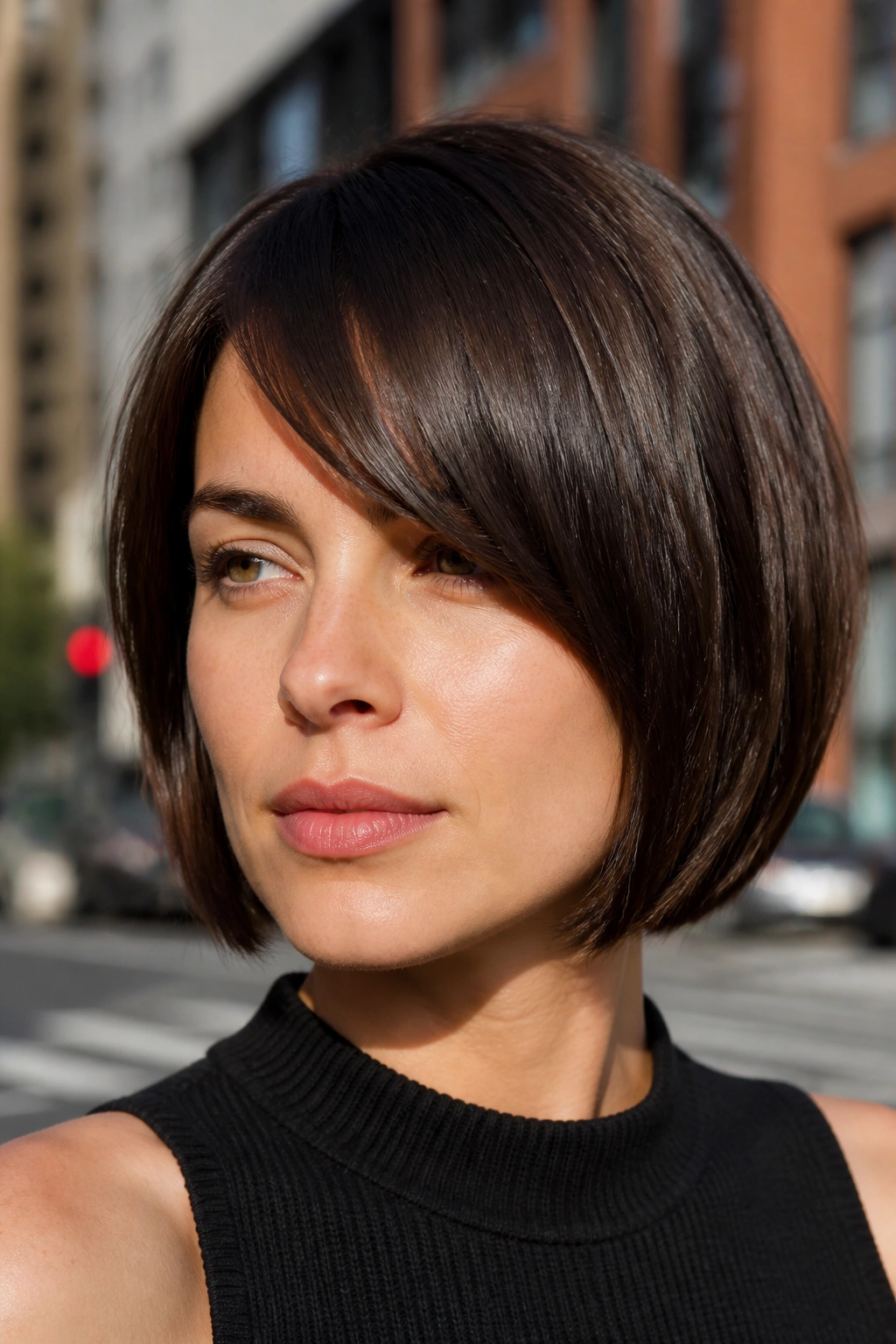
A full fringe is not the only way to frame a round face. Sometimes the better move is a jaw-length bob with a deep side fringe and a clean side part. That angle creates a diagonal across the front of the face, which is far kinder than a straight horizontal line landing on the widest point.
The length matters. If the bob ends too high, it can widen the cheeks. If it drops just to the jaw or a touch below, the eye follows the line downward. The deep side fringe softens the forehead and keeps the look from feeling too neat. There’s a little old-school glamour in it, which I think is half the charm.
Styling Note
Blow-dry the fringe forward first, then sweep it over while it’s still warm. That gives the bang a bend instead of a stiff flip. A round brush helps, but a flat brush and a light hand can work too.
This cut loves smooth hair and mild wave. It does not love puffiness. If your hair gets fluffy, keep serum off the roots and use it only on the ends.
5. Soft Shag Crop With Choppy Fringe
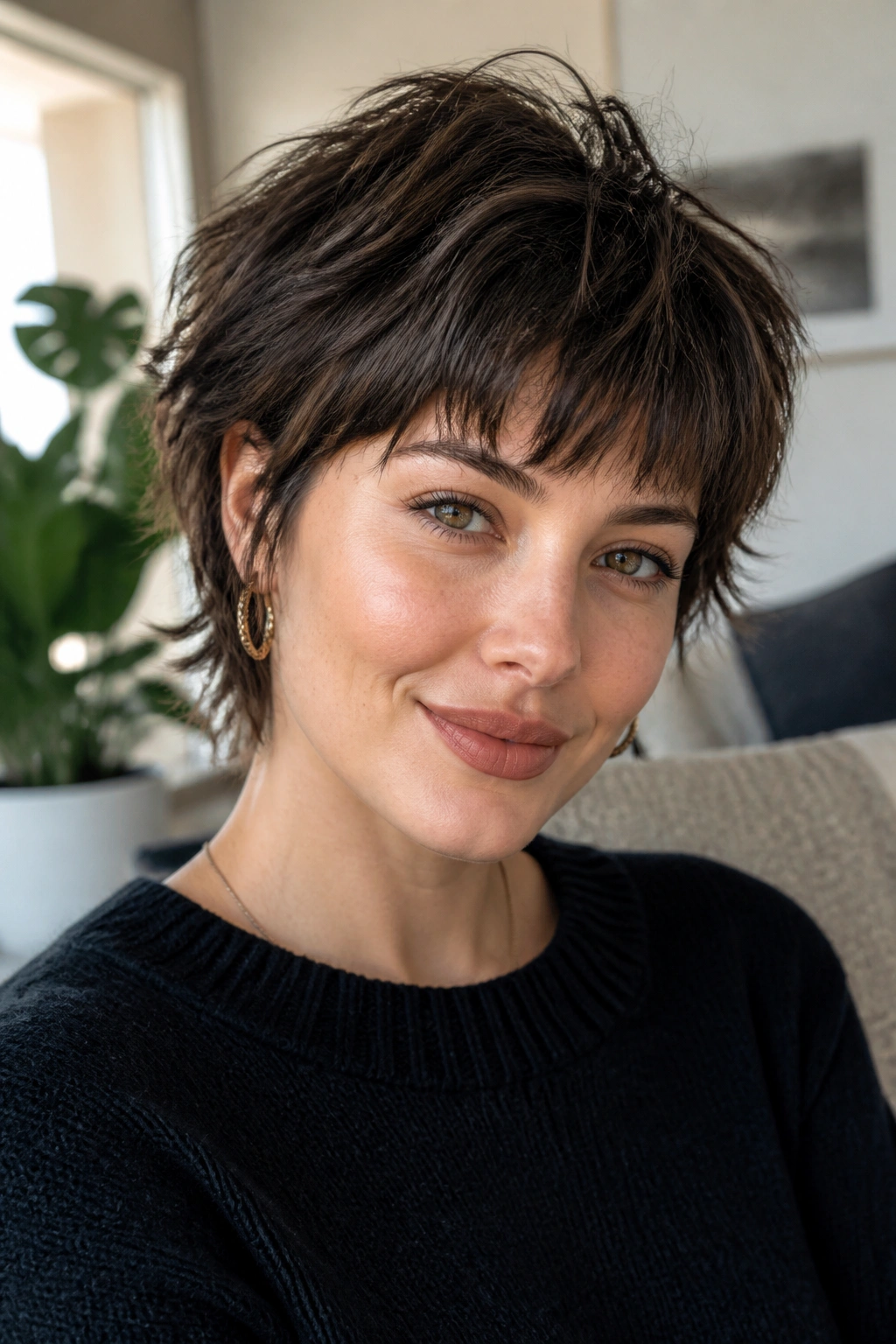
This cut feels breezy, a little wild, and never helmet-like. That alone makes it useful for round faces. The soft shag crop builds irregular layers through the top and sides, so nothing lands in one thick line. The choppy fringe breaks up the forehead and keeps the eye moving, which is where you want it.
The best version is not overdone. Too much shag and you get extra width near the temples. Too little and the cut loses its point. The sweet spot is a crop with short layers at the crown, a bit of length around the ears, and fringe pieces that stop and start instead of behaving like twins.
Wavy hair loves this. So does hair that refuses to stay sleek. Let it air-dry with a small amount of curl cream, then scrunch in a light texture spray once it’s dry. The shape should look lived in, not styled into submission.
6. Curly Crop With Curly Fringe
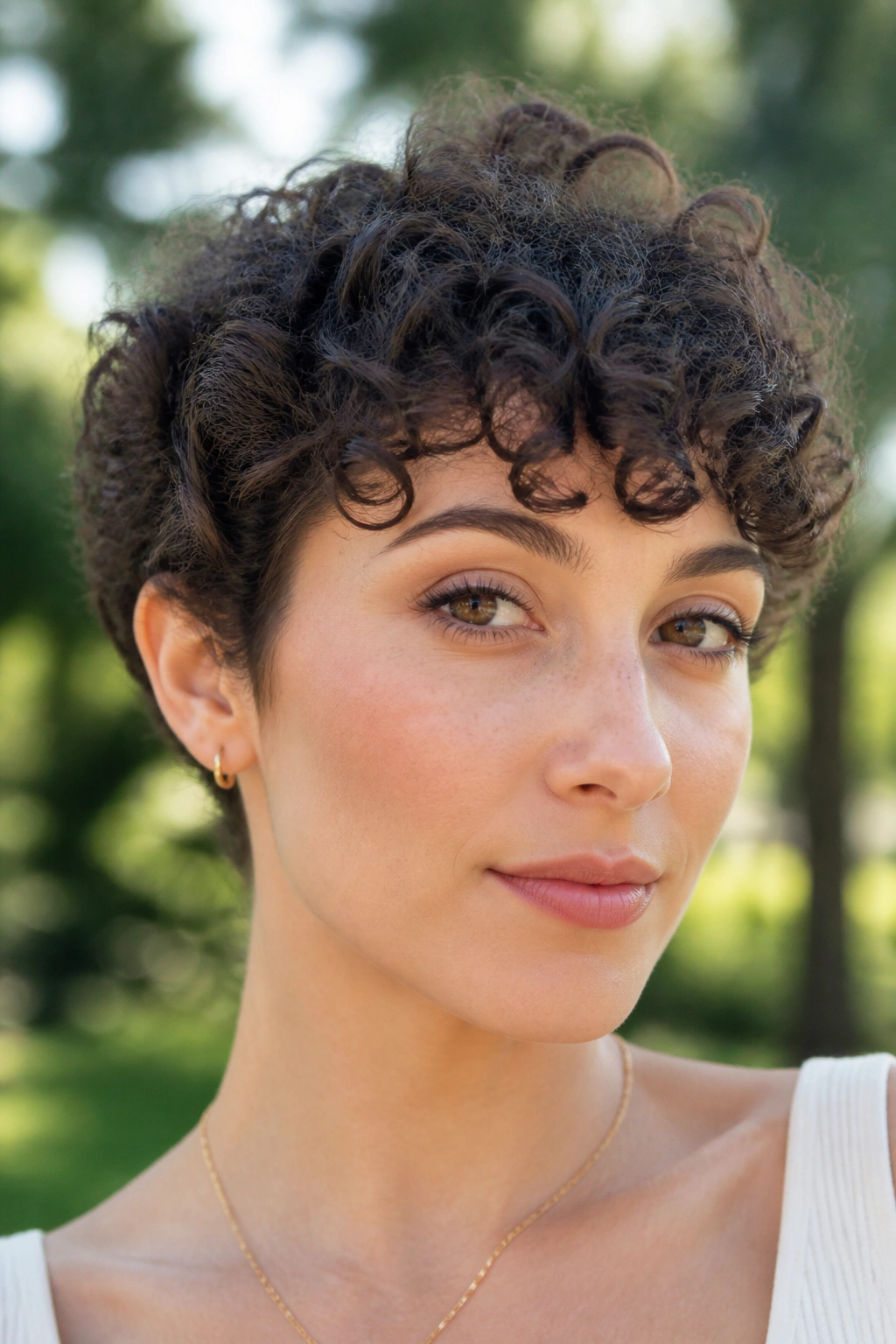
Unlike straight bangs, curly fringe should follow the curl pattern you already have. Fighting the curl only makes the front look shorter and broader. A curly crop works on round faces because the shape can be cut to lift at the crown while leaving the fringe soft and springy around the forehead.
Dry cutting helps here. Curls shrink, and shrinkage changes everything. If the fringe is cut too short while wet, it can jump up and sit awkwardly high. A smart stylist will leave more length in the front and refine it once the curls settle into place.
A good curly fringe should frame the eyes, not fight them. If the curl pattern is tighter, the fringe may need to sit a little longer at the center and shorter at the sides. If the pattern is loose, a soft arc works well. Use a diffuser on low heat and stop touching it once it starts forming. Too much fuss flattens the root and ruins the shape.
7. Asymmetrical Bob With Long Sweep
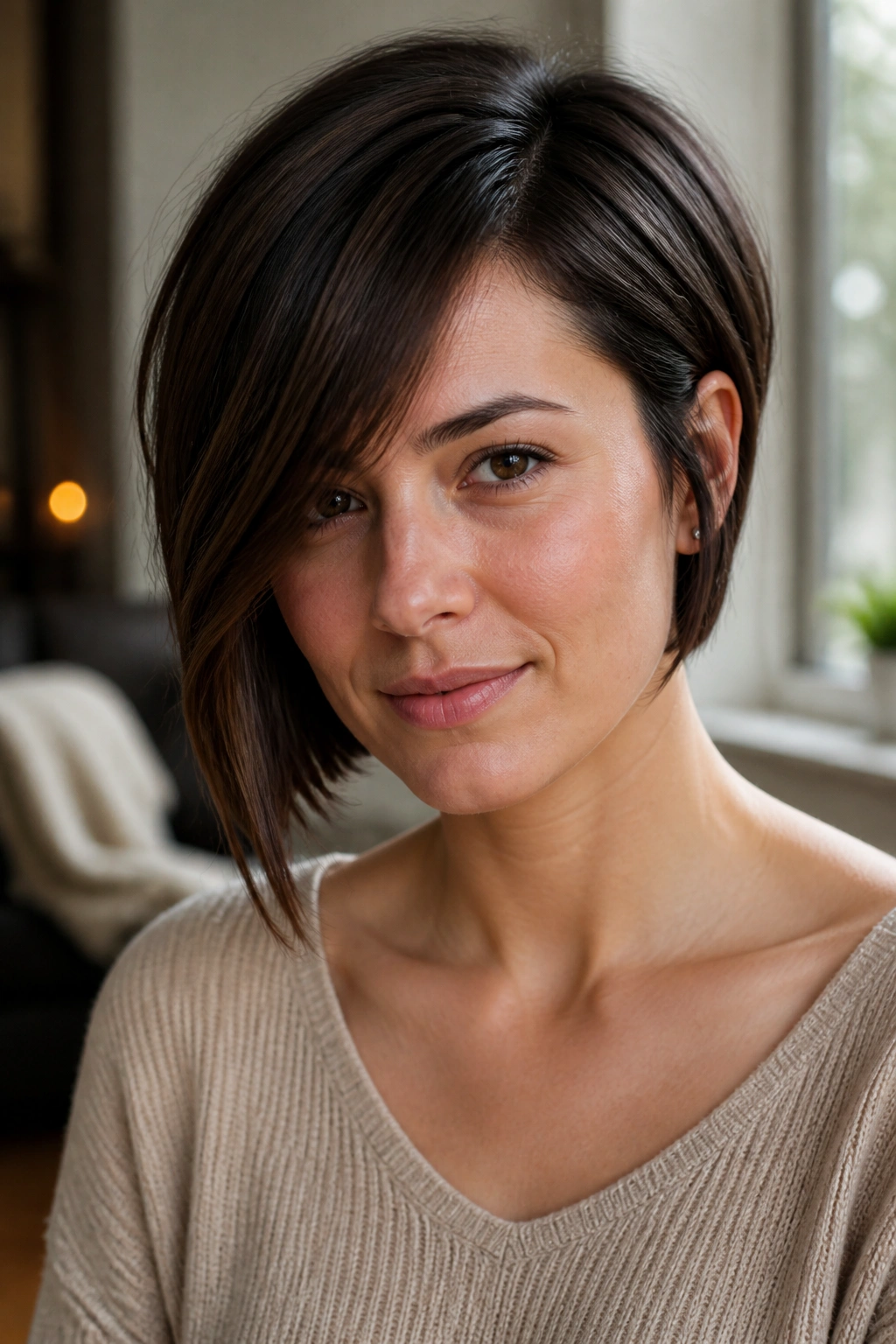
Imagine one side grazing the jaw and the other stopping a little higher, with a long sweep of fringe falling across the forehead. That’s the kind of asymmetry that flatters a round face without looking try-hard. The uneven line pulls the eye diagonally, which naturally lengthens the face.
This cut is not about drama for drama’s sake. A tiny shift in length is enough. You don’t need one side hanging way lower than the other. In fact, too much difference can start to look gimmicky. What you want is a bob that feels slightly off-center, slightly unexpected, and very intentional.
It works well on straight or lightly wavy hair. If your hair has a strong wave, the longer side may kick out in a way you don’t want. In that case, keep the line softer and ask for point-cut ends. The long sweep should be able to move, tuck, and fall across the forehead without splitting into awkward chunks.
8. Blunt Micro-Bob With Airy Baby Bangs
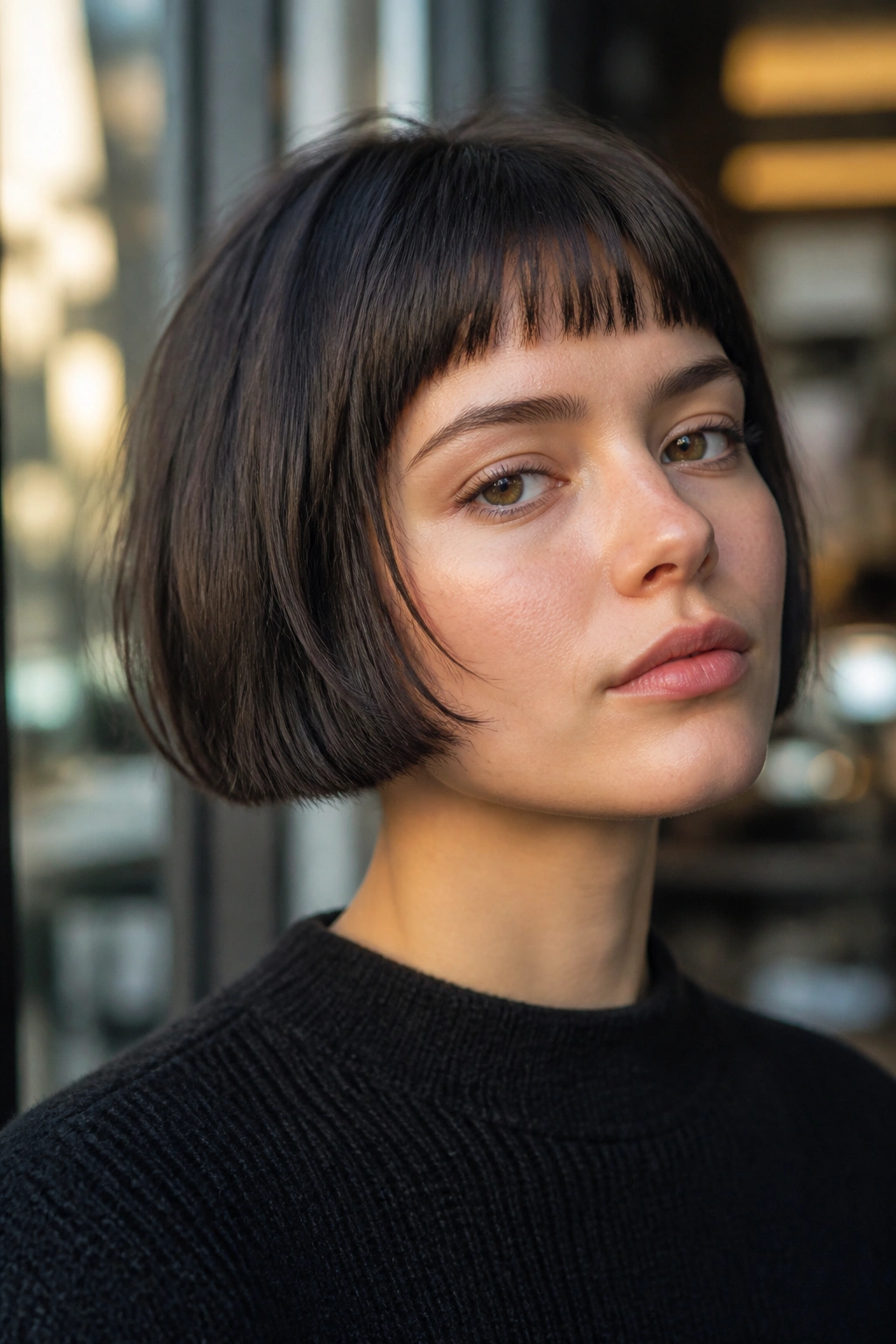
This one takes nerve. It can look sharp and editorial on a round face, but only if the proportions are right. A micro-bob that sits close to the jaw, paired with airy baby bangs, creates a strong horizontal line up top and a crisp shape below. That sounds risky, and sometimes it is. But on the right hair, it looks deliberate instead of cute in a bad way.
How to Keep It From Looking Heavy
The bangs need to be feather-light. Baby bangs should skim the forehead, not form a thick shelf. The bob itself should be clean, but not bulky at the sides. A slight bevel at the ends helps the cut hug the face instead of flaring out.
- Best on straight hair or hair that can be smoothed easily.
- Keep side volume tight.
- Ask for a soft internal shape so the bob does not balloon.
- Use a small flat iron or round brush for the fringe, not heavy wax.
This haircut is not shy. If you like a soft, invisible bang, skip it. If you want something sharper, it can look fantastic.
9. Tapered Afro Pixie With Short Fringe
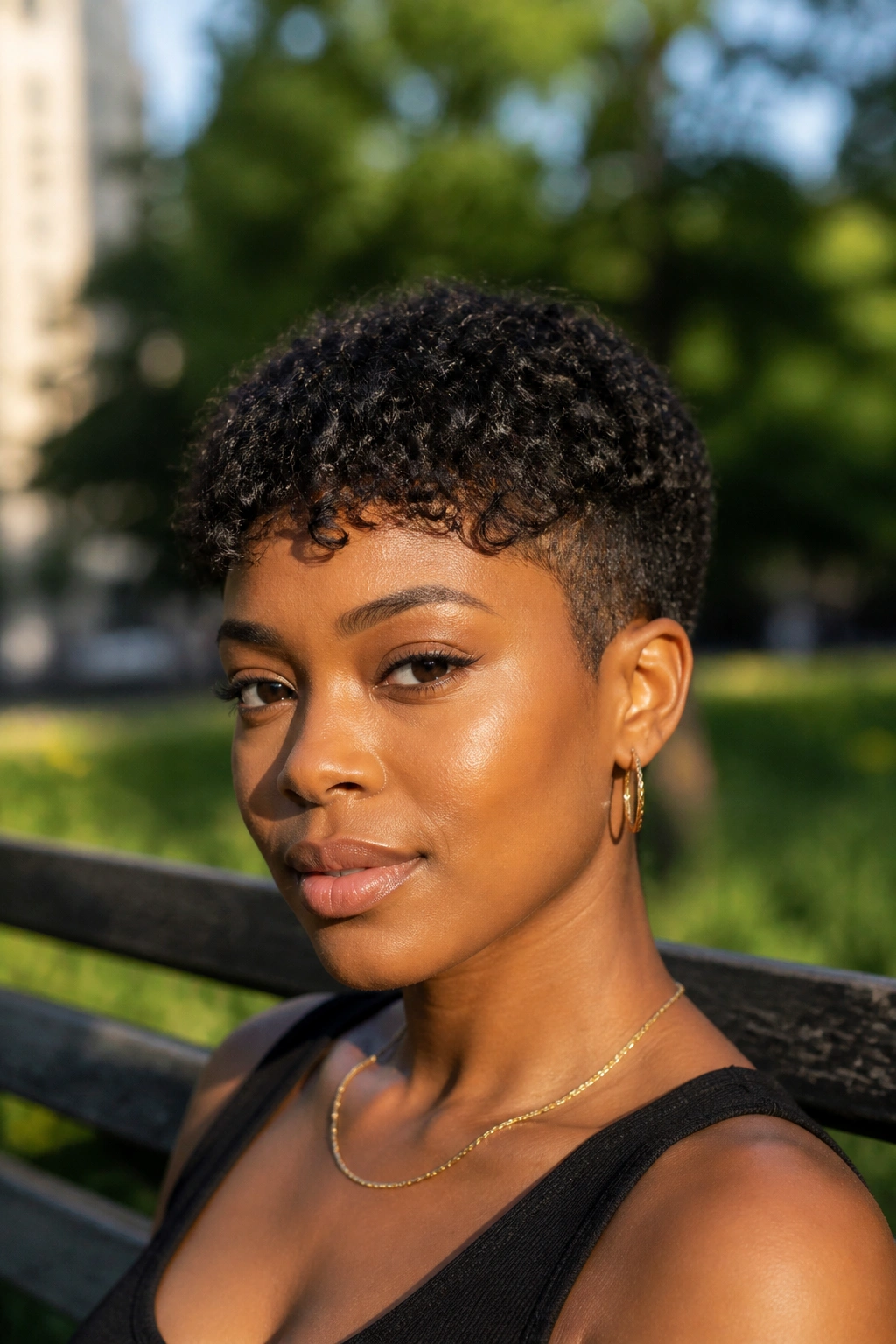
Texture can be the whole point. A tapered afro pixie uses the natural curl pattern to build height through the top while keeping the sides and nape neat. For a round face, that height helps stretch the shape upward. The short fringe keeps the front open without swallowing the forehead.
Dry cutting is the move here. Coils and tight curls shrink in a way that is hard to guess on wet hair. A good cut respects that shrinkage and leaves enough length to settle into the final shape. The fringe should be shaped around the actual curl pattern, not forced into a straight line that fights the hair every morning.
This style has real presence. It looks especially good when the edges are clean and the top has a little lift. A light curl cream or defining lotion is enough for most people. Heavy butter can weigh the fringe down and blur the shape. That’s the one thing to avoid.
10. Wavy Crop With Bottleneck Bangs for Round Faces

Want fringe that softens the forehead without boxing in the cheeks? Bottleneck bangs are a strong choice. They start narrower at the center, then open out near the cheekbones, so the fringe mimics the shape of a little hourglass. On a round face, that opening is useful because it frames without widening the center of the face.
The wavy crop underneath keeps the whole look relaxed. This is not a stiff, salon-only haircut. It likes a little movement. The bangs can fall forward or part in the middle once they get a touch of length. That makes them easier to live with than a dense straight fringe.
I like this style for people who want bangs but hate the feeling of having bangs. The grow-out is kinder, and the shape still reads as intentional. Blow-dry the fringe with a small round brush, turning the ends outward just a touch so they don’t sit flat against the cheek.
11. Chin-Length Inverted Bob With Light Fringe
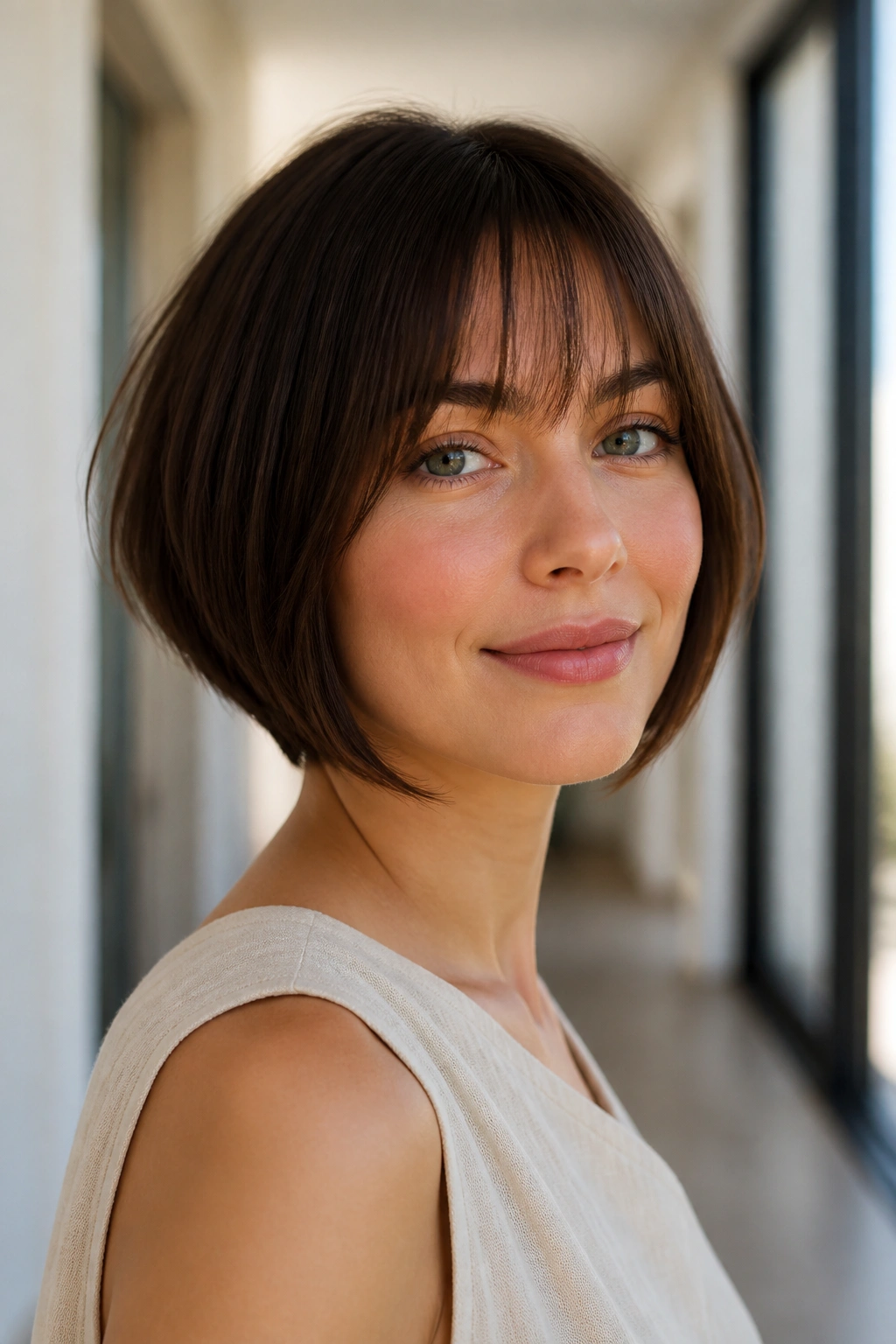
A little stack in the back changes everything. An inverted bob is shorter at the nape and longer toward the front, which gives the haircut a built-in angle. That front angle does a lot of work on a round face because it draws the eye down and forward instead of leaving it parked at the cheeks.
The fringe should stay light. If the front is stacked and the bangs are too dense, the whole cut can feel top-heavy. A soft fringe with a bit of separation keeps the front from becoming a block. This cut looks especially good when the ends curl under slightly, just enough to trace the jaw without hugging it too tightly.
It’s a good option for fine hair, too. The stacked back creates body without needing huge amounts of product. A round brush at the roots, a quick bend at the ends, and a light mist of flexible hairspray are enough. The shape should feel crisp, not helmet-like.
12. Razor-Cut Pixie Bob With Feathered Bangs
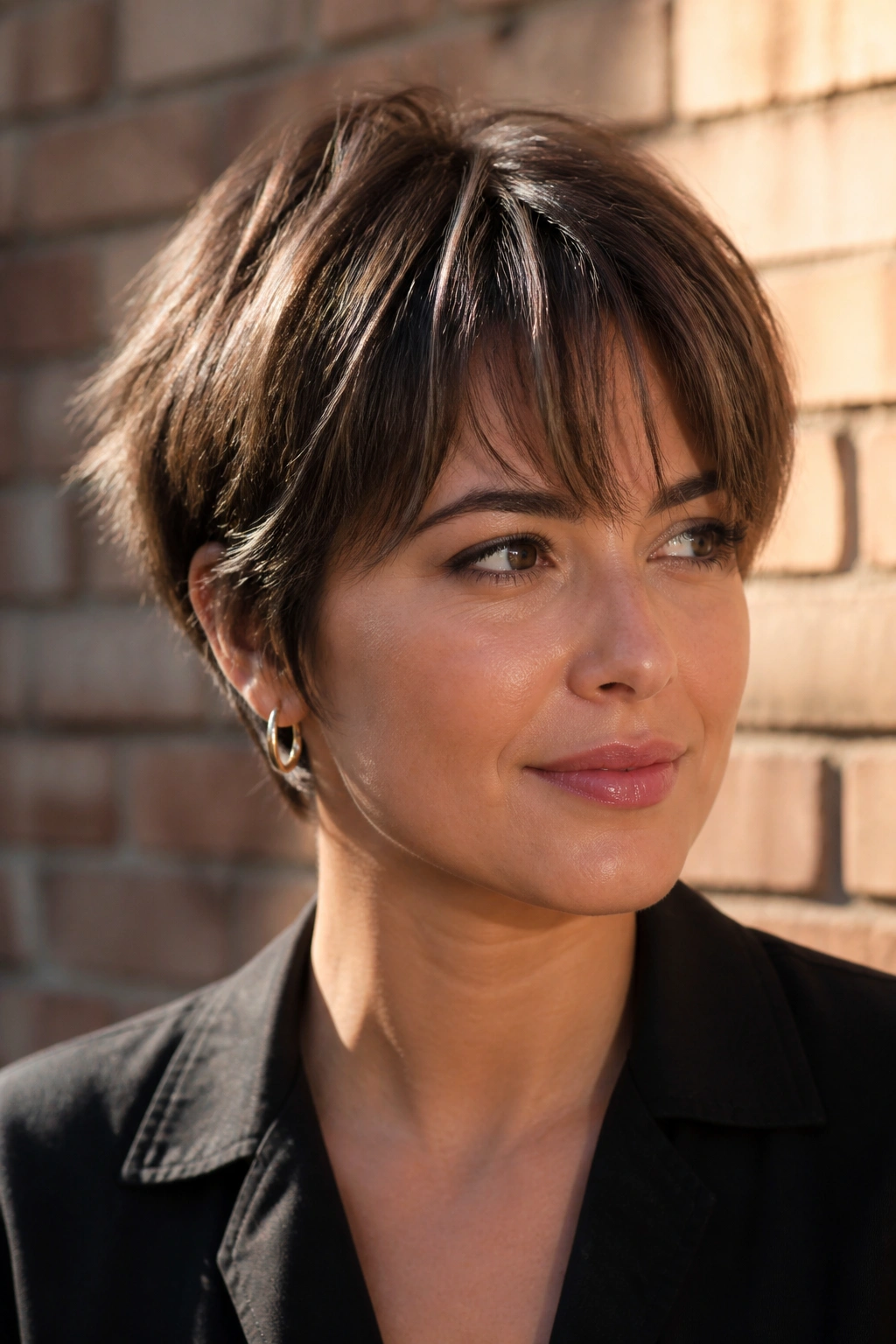
Unlike a blunt bob, a razor-cut pixie bob moves. The razor takes out bulk and leaves the ends softer, which matters a lot on thick hair or hair that grows out with a heavy edge. Feathered bangs make the front feel lighter, so the face doesn’t get boxed in.
This cut is good if your hair wants to sit in one block. The pixie-bob shape keeps the nape shorter, the crown slightly lifted, and the front pieces a little longer around the cheek. That front length gives the round face some visual stretch without dropping into long-hair territory.
What to Watch For
The razor can be a mess if it’s used too aggressively. Ask for a soft finish, not shredded ends. The fringe should still have shape; it should just feel airy.
A touch of texturizing spray at the roots and through the ends usually does more than any heavy cream ever will. Heavy products flatten this cut fast.
13. Messy Crop With Mullet-Inspired Fringe
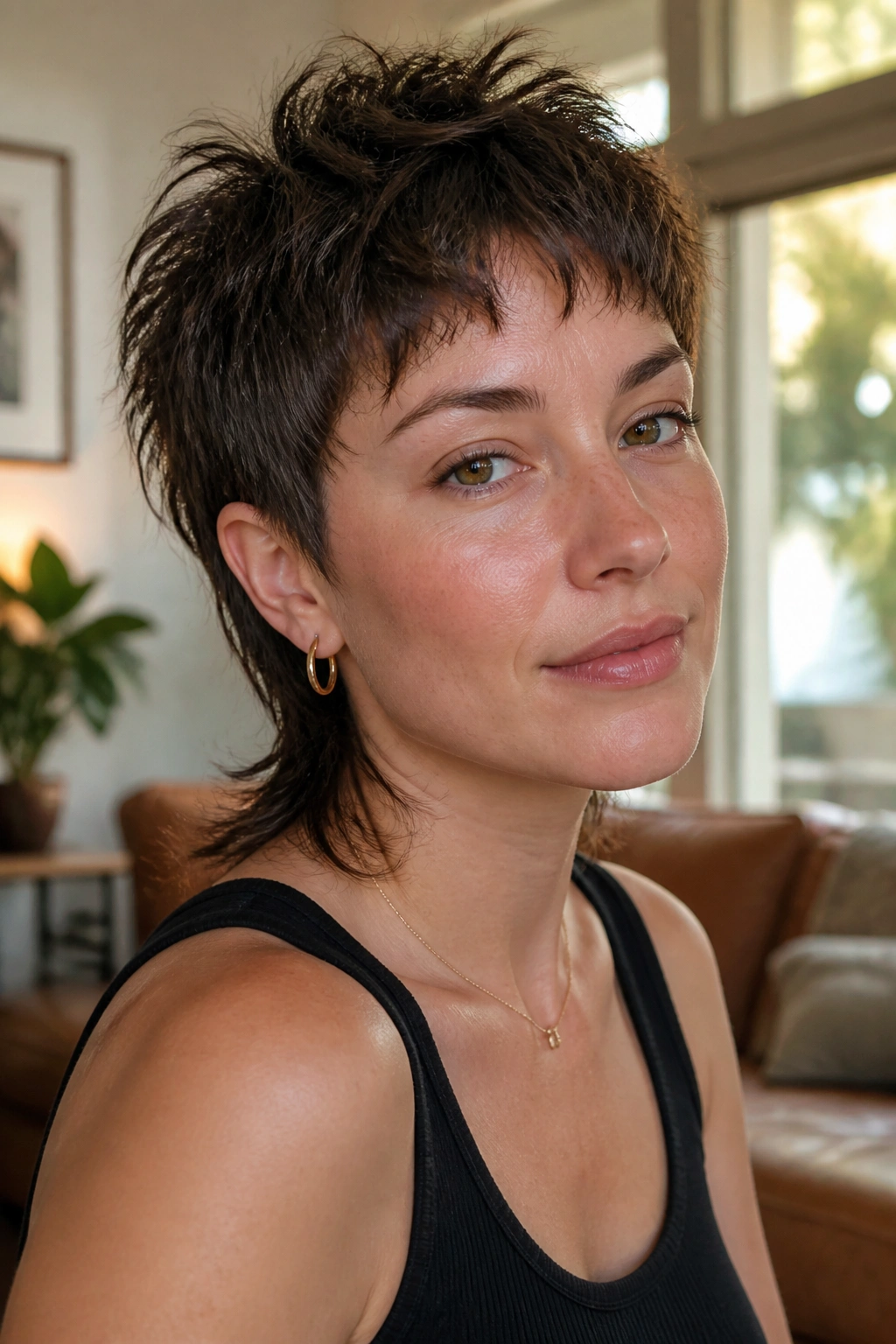
A little mess helps a round face. That sounds blunt, but it’s true. A messy crop with mullet-inspired fringe gives you short sides, a bit more length at the back, and broken pieces through the front. The result is angular enough to lengthen the face, but not so severe that it feels costume-like.
This is not a full mullet. Please do not confuse the two. The shape is still compact. What changes is the direction of the fringe and the way the layers move from front to back. That broken texture pulls attention downward and away from the widest part of the face.
It’s a good cut for people who don’t want to spend ten minutes arranging hair every morning. Air-dry it, scrunch a little paste into the front, and let the fringe fall where it wants. If it lands a touch messy, that’s part of the appeal. Polished is not the only way to look put together.
14. Undercut Pixie With Long Crown Fringe
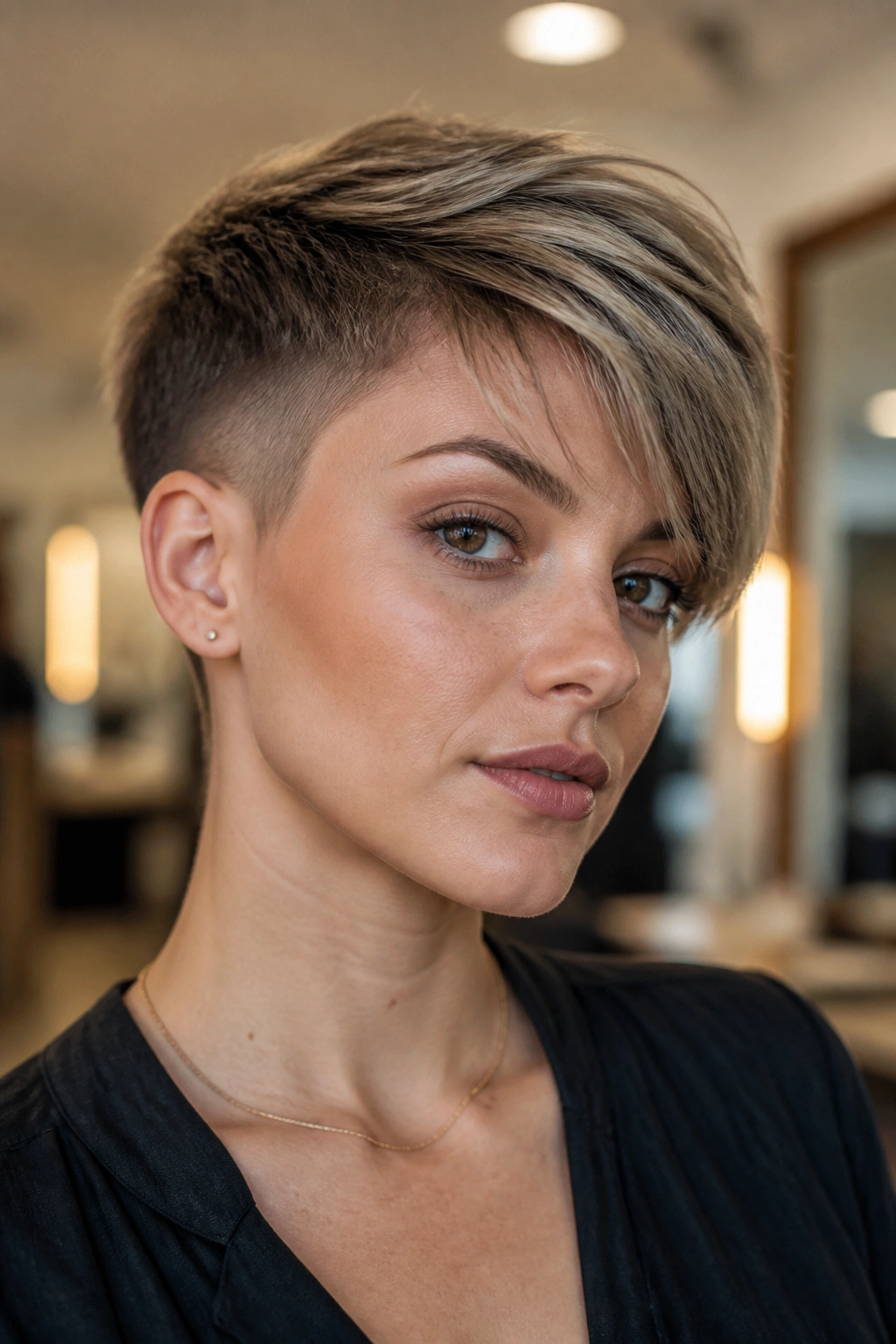
If your hair poofs at the sides, cut the sides off—politely. An undercut pixie removes bulk where round faces usually need less of it and leaves more hair up top, where a bit of height helps. The long crown fringe can sweep forward, curve to one side, or even lift back slightly for a sharper look.
The contrast is the point. Short underneath, longer on top. Clean around the ears, fuller through the crown. That structure makes the face feel longer because the volume is moving vertically instead of spreading outward.
This cut suits thick hair especially well. It can feel liberating, honestly. You lose some styling time, and the shape stops turning into a puffball by noon. Keep the top fringe soft with a matte paste or a light mousse. If it gets too polished, you lose the edge that makes the cut work.
15. Curled-Under Bob With Soft Curtain Fringe

A curled-under bob can look very neat on a round face, but the bend matters. You want the ends to tuck under just enough to follow the jaw, not curl so much that the line becomes another circle. The soft curtain fringe keeps the front open, splitting gently around the forehead and falling toward the temples.
This is a nice choice if you like hair that looks cared for without looking stiff. The curtain fringe adds a little length through the center of the face, and the tucked ends create a tidy outline. That combination flatters round cheeks better than a blunt line across the widest point.
It works best with straight to slightly wavy hair. Blow-dry the fringe away from the face first, then guide it inward with a round brush. A soft bend is enough. If you overcurl the ends, the bob can puff. And yes, that ruins the shape fast.
16. Cropped Shag With Side-Length Fringe
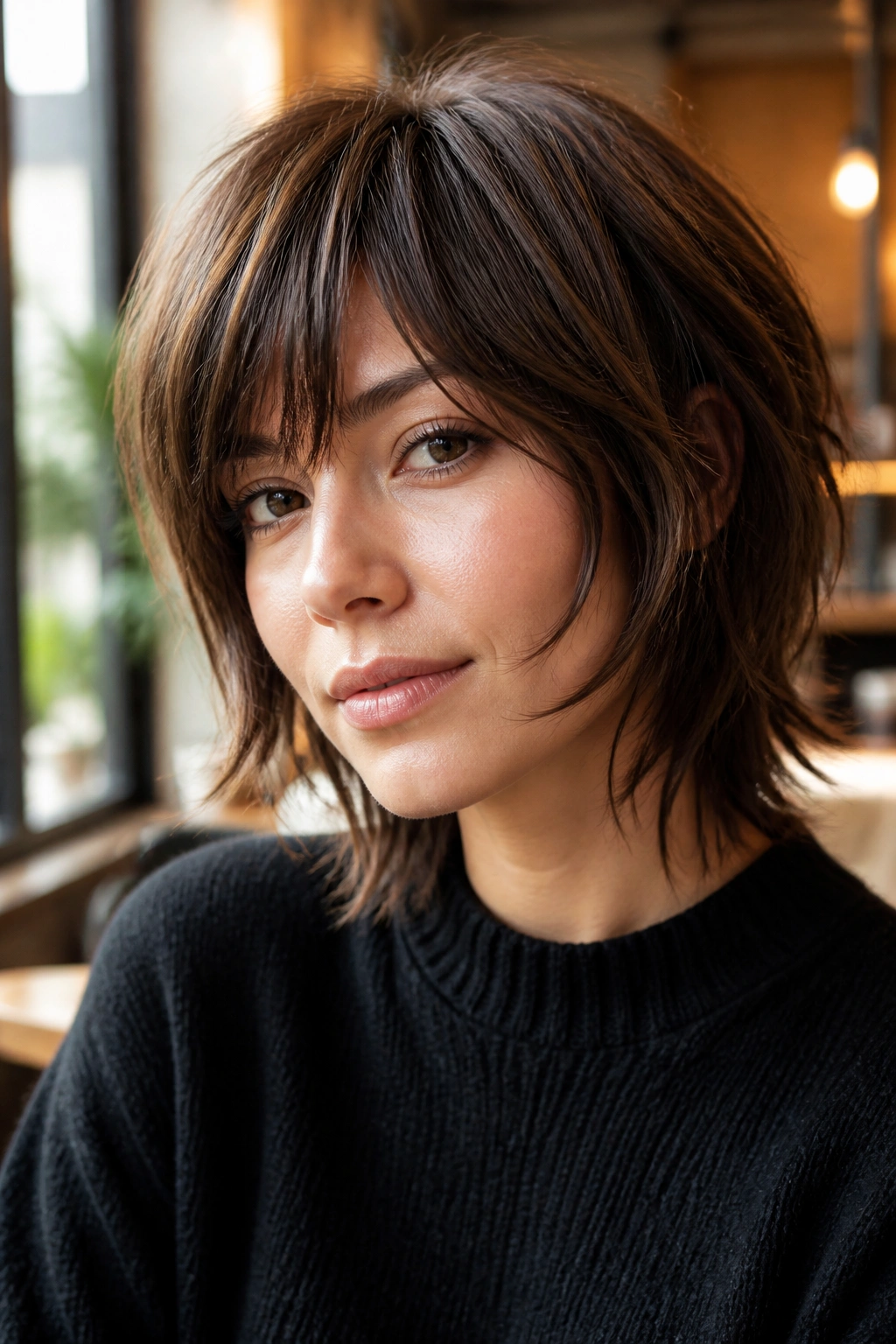
You can feel the movement in this cut. A cropped shag with side-length fringe keeps the layers loose around the face, so nothing sits in one heavy block. The fringe is long enough to brush the cheekbone, which is useful on a round face because that line pulls the eye downward and across, not straight out.
This style suits people who like hair that looks better after a little roughing up. The crown has texture, the sides are broken up, and the fringe can be worn swept away from the face or dropped forward on one side. It is forgiving, which is a nice word for a haircut that can survive real life.
A little salt spray can help, but go easy. Too much will dry out the ends and make the fringe look frayed in a bad way. The goal is separation, not chaos.
17. Rounded Bob With Full Fringe
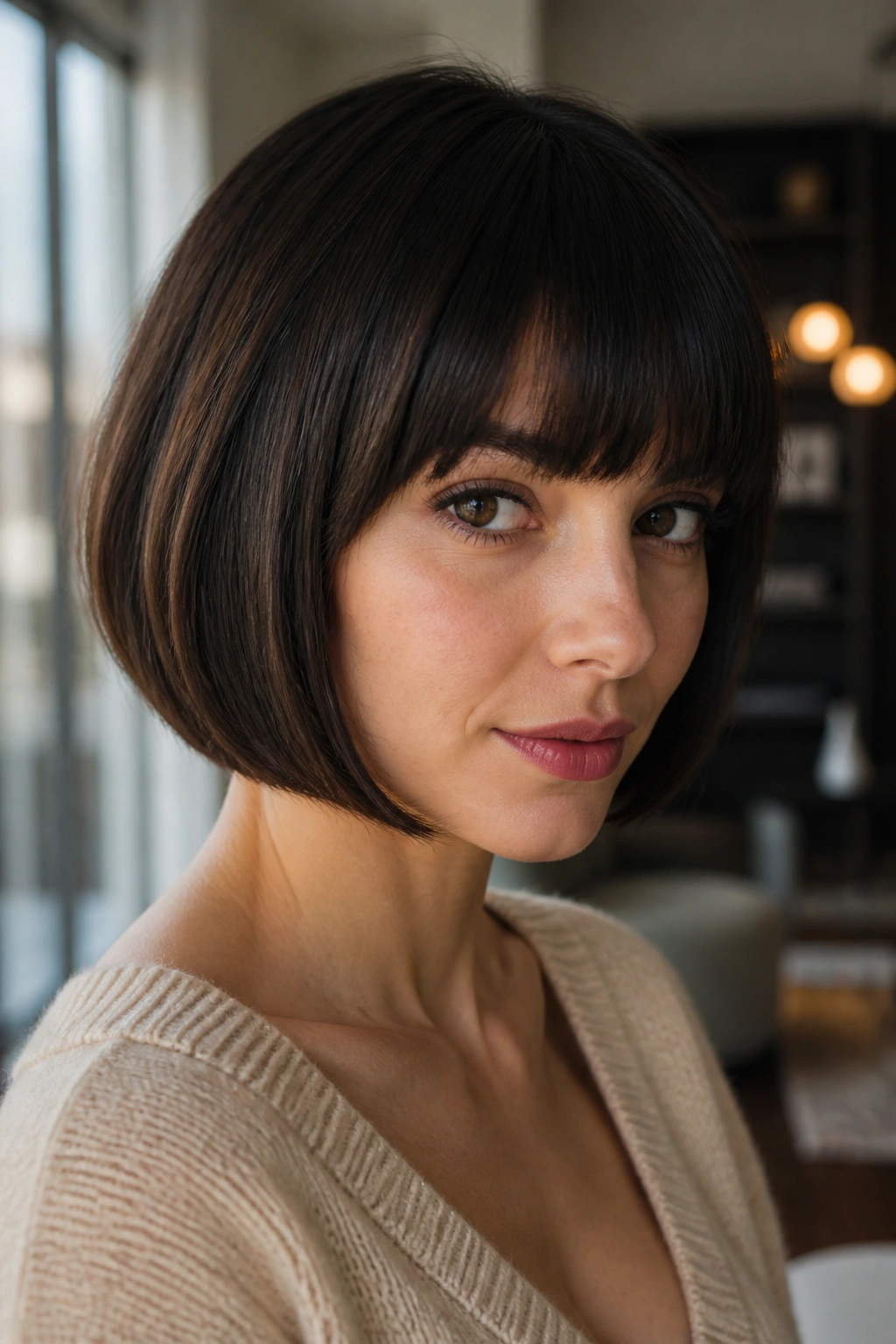
A rounded bob does not have to make a round face look rounder. The trick is in the placement. If the bob sits a bit below the jaw and the shape stays controlled through the sides, a full fringe can look graphic and chic instead of heavy. The fringe should be airy enough to show some forehead, even if it reads as full.
This is a cleaner, more classic look. It works when the hair has enough density to support the shape but not so much that the bob balloons out. Internal layers help a lot here. They remove some weight inside the cut while keeping the outside line smooth.
I like this one on straight hair, especially when the wearer wants a sharper, more polished finish. It needs regular trims. A full fringe grows fast and loses the effect quickly if it drops into the eyes. That’s the trade-off. The payoff is a very neat shape.
18. Tucked-Behind-Ears Bob With Diagonal Fringe

Why does a simple ear tuck matter so much? Because it opens up the face. On a round face, that tiny move exposes the cheekbone and jaw, which can instantly stop a bob from feeling too full. Add a diagonal fringe, and you get a cut that keeps the forehead soft while still showing off the face shape.
The fringe should not sit straight across. A diagonal line gives the haircut direction. It can be subtle, too. You do not need a dramatic swoop. Even a slight side angle changes the balance enough to matter.
This style is easy to live with. It looks neat in a tucked version and still holds shape when worn down. A dab of pomade at the ends keeps the tuck from slipping if your hair is silky. If your hair has wave, let one side fall free and tuck the other. That asymmetry gives the cut more personality.
19. Short Wolf Cut With Broken Fringe
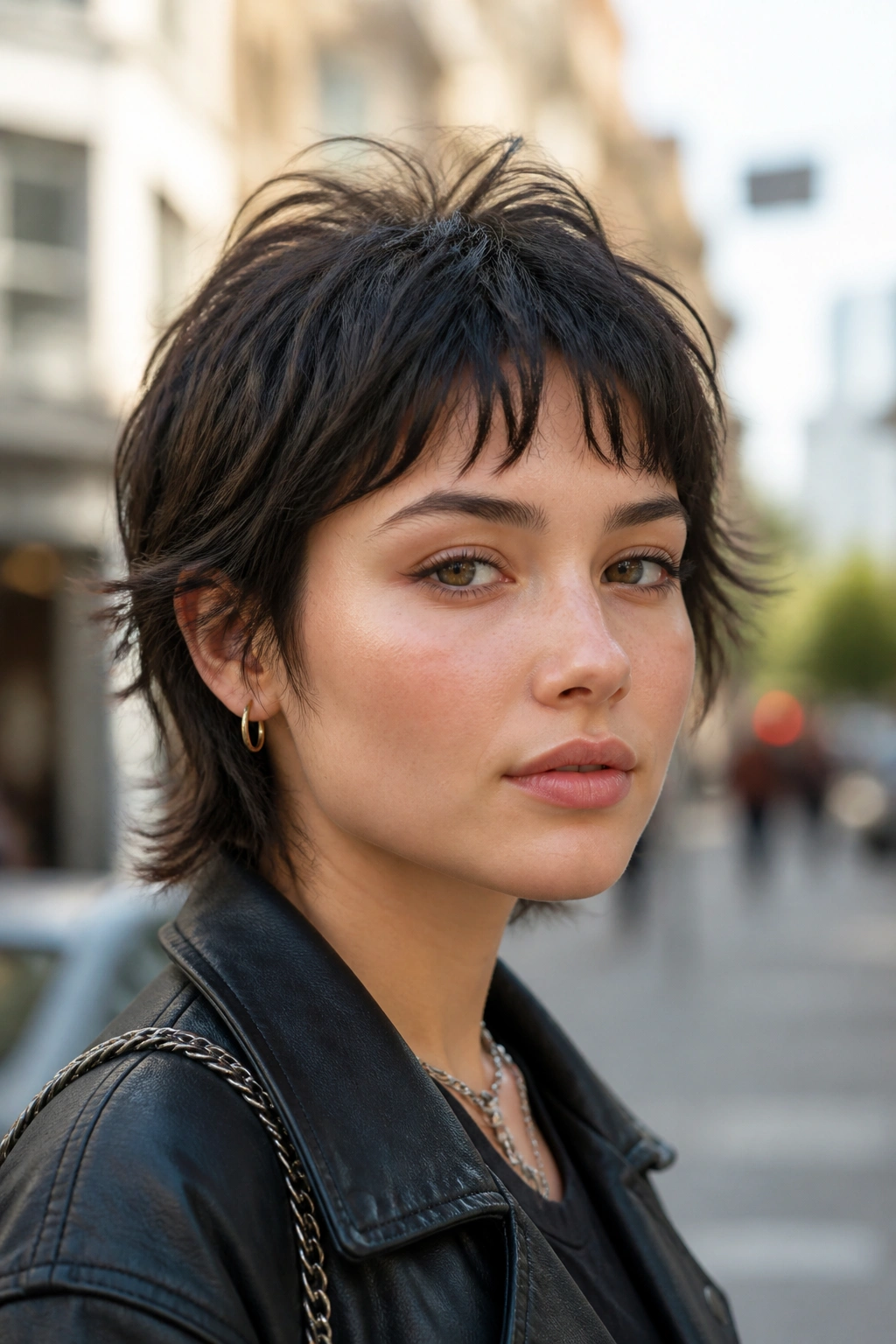
A short wolf cut keeps the edge of the shag but trims the bulk into something more wearable. The crown stays a little fuller, the lengths are choppier, and the fringe is broken into loose pieces. On a round face, that broken fringe is useful because it stops the front from turning into one thick band.
Unlike a heavy shag, the short wolf cut keeps the shape a little leaner around the face. That means you get texture without too much width. The whole cut has a slightly rebellious feel, which is half the fun. It looks like it can handle wind, movement, and a late morning.
This is a good choice if you like a cut that does not ask for perfect styling. A bit of mousse, a blow-dry at the roots, and some hand-drying in the fringe are enough. If the layers fall a little unevenly, that is part of the charm.
20. Cropped Cut With Heavy Crown Volume and Fringe
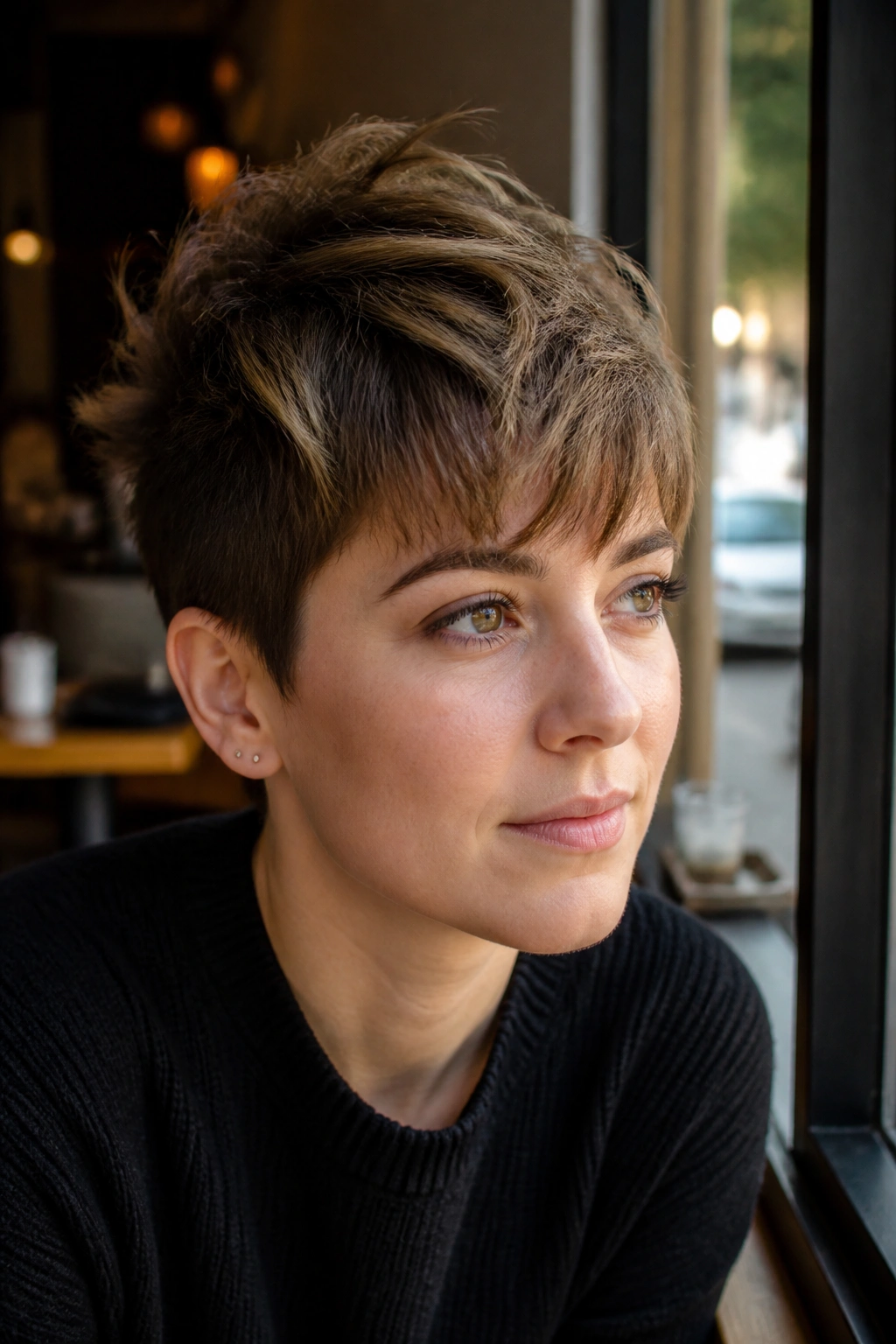
Height is your friend here. A cropped cut with heavy crown volume and fringe pulls the eye upward, which lengthens a round face in a way no amount of side width can fix. The sides stay tight, the top gets lift, and the fringe moves forward without sitting flat across the forehead.
This cut works best when the volume is concentrated at the crown, not spread through the temples. That distinction matters. Crown height stretches the silhouette; temple volume widens it. The fringe can be kept short and soft, or a touch longer and swept. Either way, it should support the upward shape, not compete with it.
I like this cut on people who want something bold but not fussy. A small round brush and a little root mousse go a long way. Blow-dry the top section upward first, then shape the fringe last. That order keeps the lift from collapsing before the style is set.
21. Salt-and-Pepper Crop With Soft Bang Arc

Gray hair can look sharp, not sleepy. A salt-and-pepper crop with a soft bang arc gives natural silver strands a clean shape and keeps the front from feeling too hard. The arc matters because it softens the forehead without making a straight line across the widest part of the face.
This style looks especially good when the fringe is a little translucent at the ends. Not thin, just light enough to show some skin underneath. That keeps the face open and prevents the crop from feeling dense. A soft arc also pairs well with the natural shine that silver hair often has.
A Small Styling Habit That Helps
Use a lightweight cream or serum only on the ends. Too much product makes gray hair collapse and can dull the shine.
A quick blow-dry at the roots is usually enough. If the crop is cut with a little internal movement, it will sit nicely with very little effort.
22. Fine-Hair Pixie With See-Through Fringe
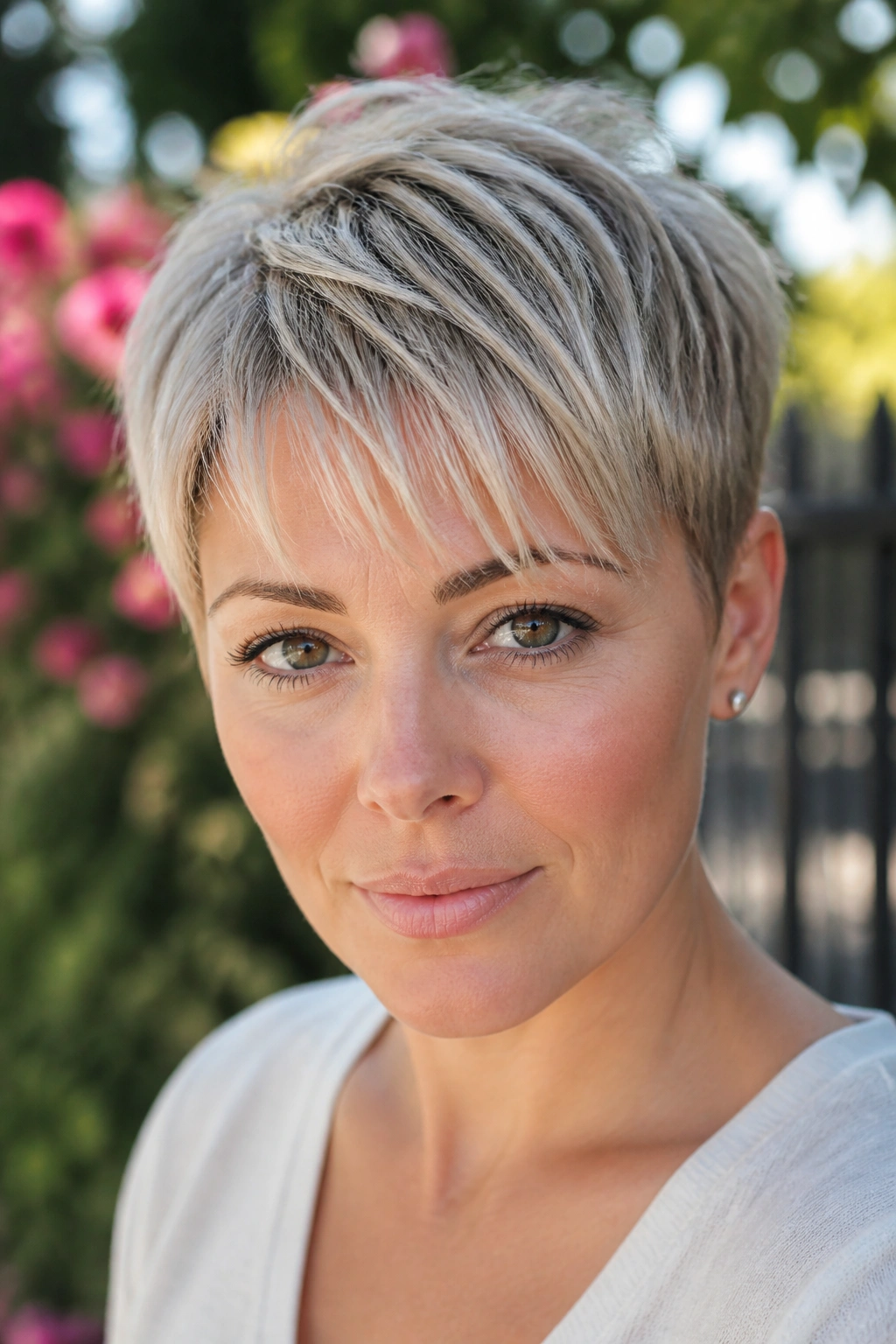
Thin hair needs less hair in the fringe, not more. A see-through fringe gives you softness across the forehead without building a heavy wall that droops by lunchtime. On a round face, that matters because a dense bang can crowd the center of the face and make it feel shorter than it is.
The pixie underneath should stay light and clean. A little lift at the crown helps, but the real win is the airy fringe. It should separate into tiny pieces when you finger-comb it. If the bangs are too thick, they’ll sit flat and pull the whole style down.
This is a good cut if you dislike heavy styling. A light mousse at the roots and a quick blast with the dryer can be enough. Skip thick creams; they weigh fine hair down fast. The cut should look soft, not sparse, and there’s a difference.
23. Thick-Hair Bob With Internal Layers and Fringe
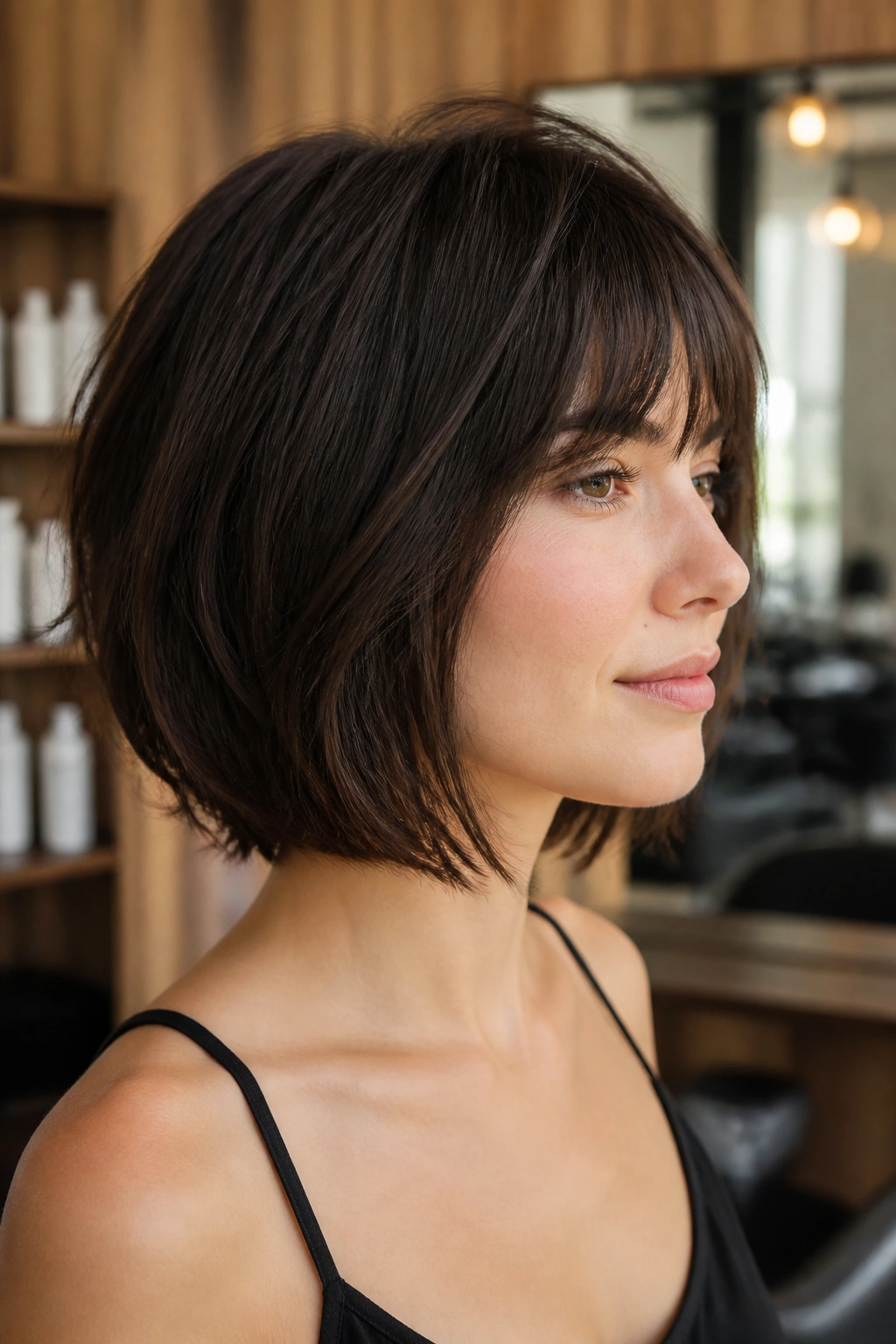
What if your bob turns into a helmet by noon? Internal layers are the fix. A thick-hair bob needs weight removed from inside the shape so the outer line can sit close to the head. On a round face, that keeps the sides from puffing out in the wrong place.
The fringe should stay piecey and controlled. Heavy bangs on thick hair can feel like too much of a good thing. A bit of separation through the front is enough to soften the forehead without taking over the face. The outer shape of the bob can stay sleek while the inside carries the work.
What to Ask Your Stylist
- Internal layers to remove bulk, not a choppy surface layer.
- A blunt or softly beveled perimeter.
- Fringe texturized enough to move, but not thinned to scraps.
- Ends that curve inward slightly instead of flipping out.
This is one of those cuts that looks expensive when it is cut well. When it’s not, it looks puffy in all the wrong places. The difference is the internal shape.
24. Playful Bixie With Swept-Off-Center Fringe
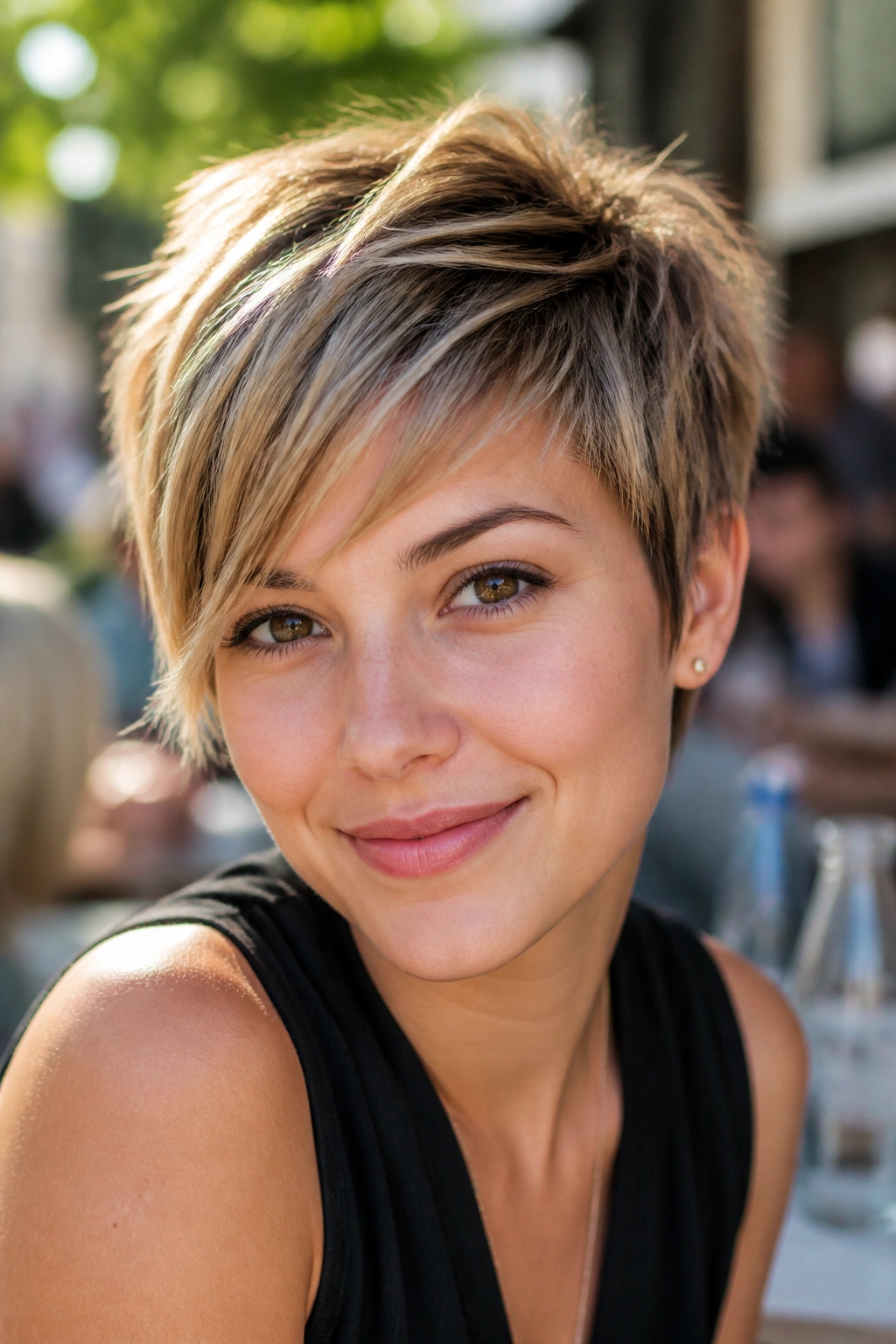
A bixie gives you room to grow. That’s a big deal if you don’t want to get trapped in one exact length. This version uses a swept-off-center fringe to break up the roundness of the face while keeping the overall shape short and lively. It sits between a bob and a pixie, but with a little more softness than either one alone.
I like it because it’s forgiving. The front can be styled toward one side on busy days, brushed forward when you want more face framing, or tucked back when you want the forehead open. That flexibility is useful, especially if you’re not ready to commit to a very strict fringe shape.
It works on straight, wavy, and lightly curly hair. The key is keeping the crown a little fuller than the sides. A bixie that goes flat on top loses its lengthening effect fast. A small amount of root spray and finger styling usually does the trick.
25. Grown-Out Pixie With Side Fringe for Round Faces
If you want the easiest cut to live with, start here. A grown-out pixie with side fringe for round faces keeps enough length at the top and front to style in different ways, but it never gets so long that it loses its short-hair energy. The side fringe is the part that saves it. It brings movement across the forehead and keeps the shape from feeling too boxy.
This is the kind of cut that works between salon visits, which is a practical detail people forget to ask about. A pixie that looks great on day one and awkward by week four is not a win. A grown-out version tends to age more gently because the fringe can slide from side to side as it gets longer.
It’s also one of the easiest options to personalize. If your hair is fine, keep the top light and the fringe wispy. If it’s thick, let the crown stay fuller and have the ends texturized. The cut should feel like it belongs to your hair, not like it was borrowed from a photo.
Final Thoughts
The best short fringe hairstyles for round faces all do some version of the same job: they create movement, direction, and a little height. The details change, but the goal stays steady. Keep the sides from getting too wide. Keep the fringe from sitting in one hard block. Give the eye somewhere to go.
One thing I always tell people is to save two photos, not one. Save the haircut shape you like, and save the fringe shape separately. Those are not the same decision, and a lot of bad bangs happen because people treat them like they are.
If you’re choosing between two cuts, pick the one that will still make sense after air-drying, a rushed morning, and a few weeks of grow-out. That’s the cut you’ll actually enjoy.
