



Platinum bangs on a round face can look sharp, soft, rebellious, or downright expensive-looking, but the shape has to earn its keep. A blunt line dropped across the forehead can make the face look wider than it is. A better fringe bends, breaks, or sweeps in a way that gives the eye somewhere else to go.
That is the whole game. Round faces usually look best when the fringe creates length, not width, and platinum hair makes every line more obvious because the color is so bright and reflective. A small change in angle matters more here than it would on darker hair. A side sweep looks more dramatic. A feathered edge looks lighter. Even a tiny off-center part can change the whole mood.
I’ve always liked platinum for this kind of haircut because it can feel icy and clean without looking stiff, but it does show everything. The cut, the part, the roots, the way the ends fall after a blow-dry — all of it is on display. That is why the right bang shape matters so much. It is not about copying one flattering formula. It is about picking the fringe that works with your forehead, your cheekbones, and how much styling effort you actually want to give it in the morning.
1. Long Side-Swept Platinum Bangs
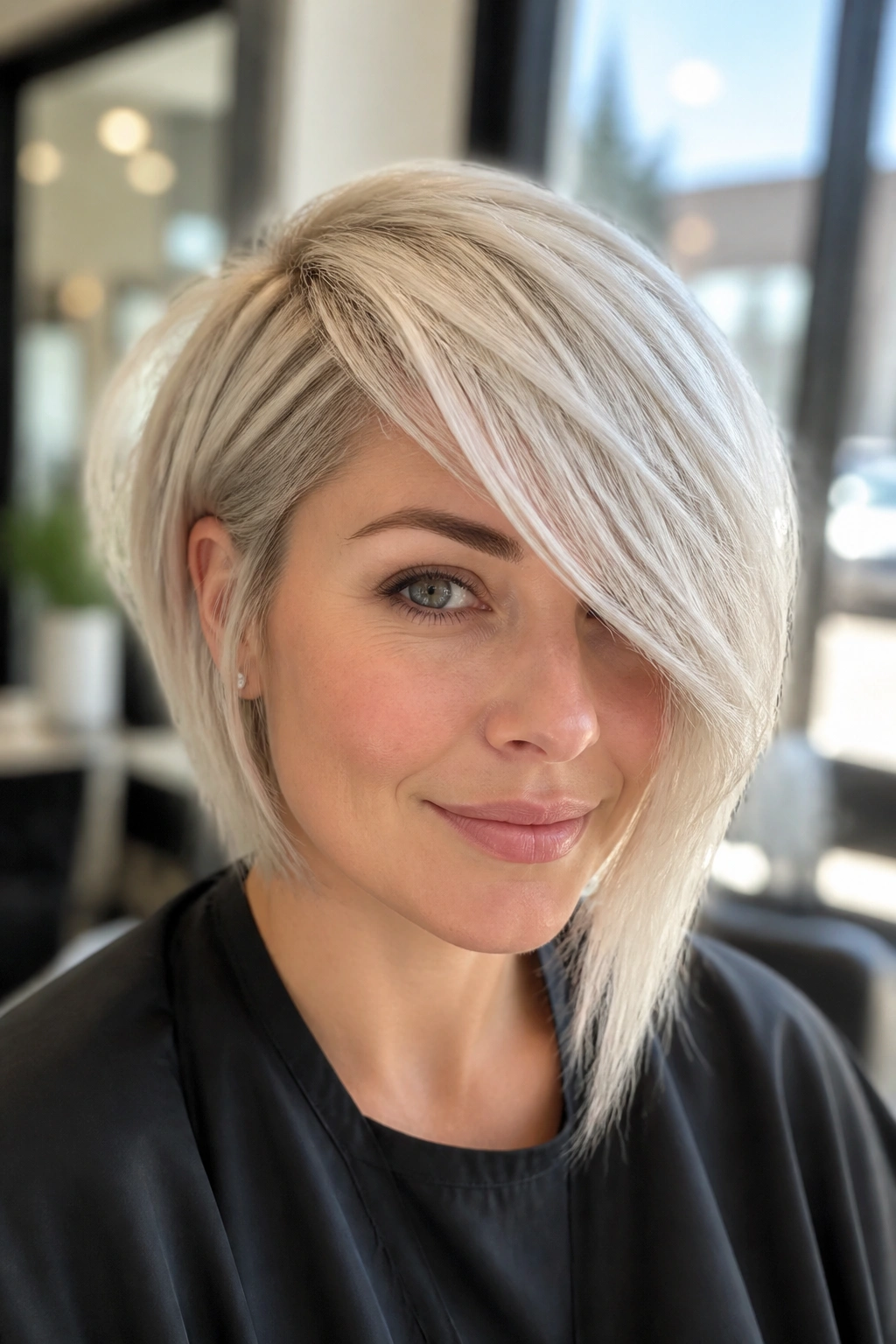
A long side-swept fringe is the safest place to start if you want your bangs to work with a round face instead of fighting it. The diagonal line pulls the eye across the face and down, which helps break up that soft circular shape. On platinum hair, the sweep looks even cleaner because the color catches every bend in the strand.
Why It Flatters a Round Face
The magic is in the angle. A bang that starts near the deep part and falls toward one cheekbone creates movement where a round face needs it most. It does not chop the forehead in half. It slices across it.
Ask for a fringe that can reach the outer corner of one eye when pushed forward, then blend into the front layers. That extra length gives you options. You can wear it tucked, swept, or clipped back on lazy days.
Salon note: request a soft, beveled edge rather than a hard blunt cut.
A long side-swept bang is also forgiving during grow-out. That matters more than people admit. Nobody wants to book a trim every three weeks just to keep a fringe from turning into a curtain of regret.
2. Curtain Bangs with a Soft Center Part
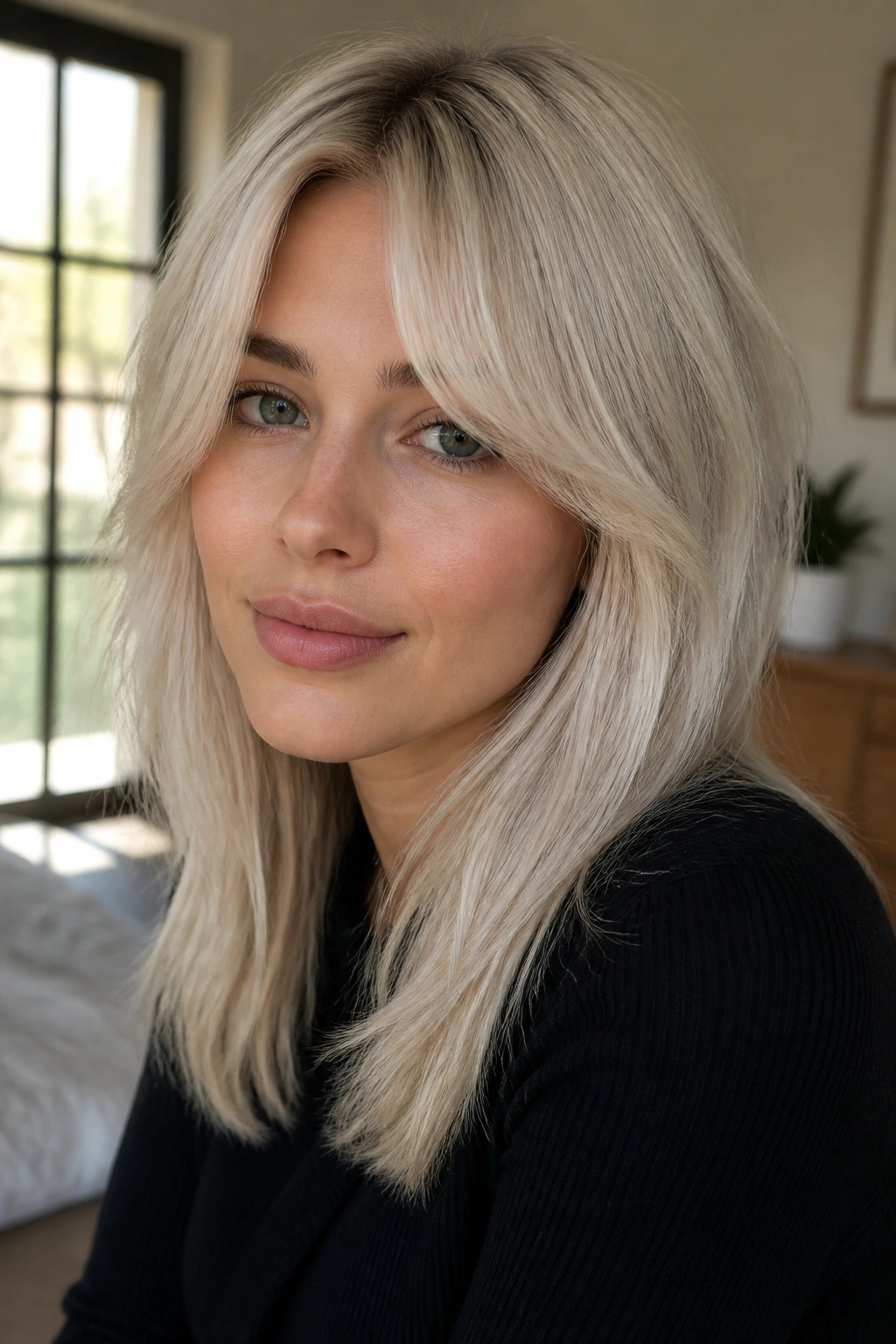
Curtain bangs may be the easiest yes on this list. They open in the middle, slide along the temples, and make a round face look a little longer without trying too hard.
The best version starts shorter in the center and gets longer near the cheekbones. Not too short. Not too perfect. If the shortest pieces sit around the brow line and the longest pieces touch the top of the cheek, the face gets a nice vertical frame without feeling boxed in.
How to Style Them
Blow-dry the center pieces forward first, then bend each side away from the face with a round brush. Use low heat and a cool shot at the end. If you curl the sides in too much, you lose the opening effect and the whole fringe can puff out at the widest part of the face.
Platinum curtain bangs look best when the roots have a little depth. A root shadow or soft melt keeps the shape from going flat and helps the fringe read as dimensional instead of washed out. That tiny bit of darkness near the part is useful. It keeps the whole cut from looking like one flat sheet of light.
3. Micro Fringe with a Sharp Edge
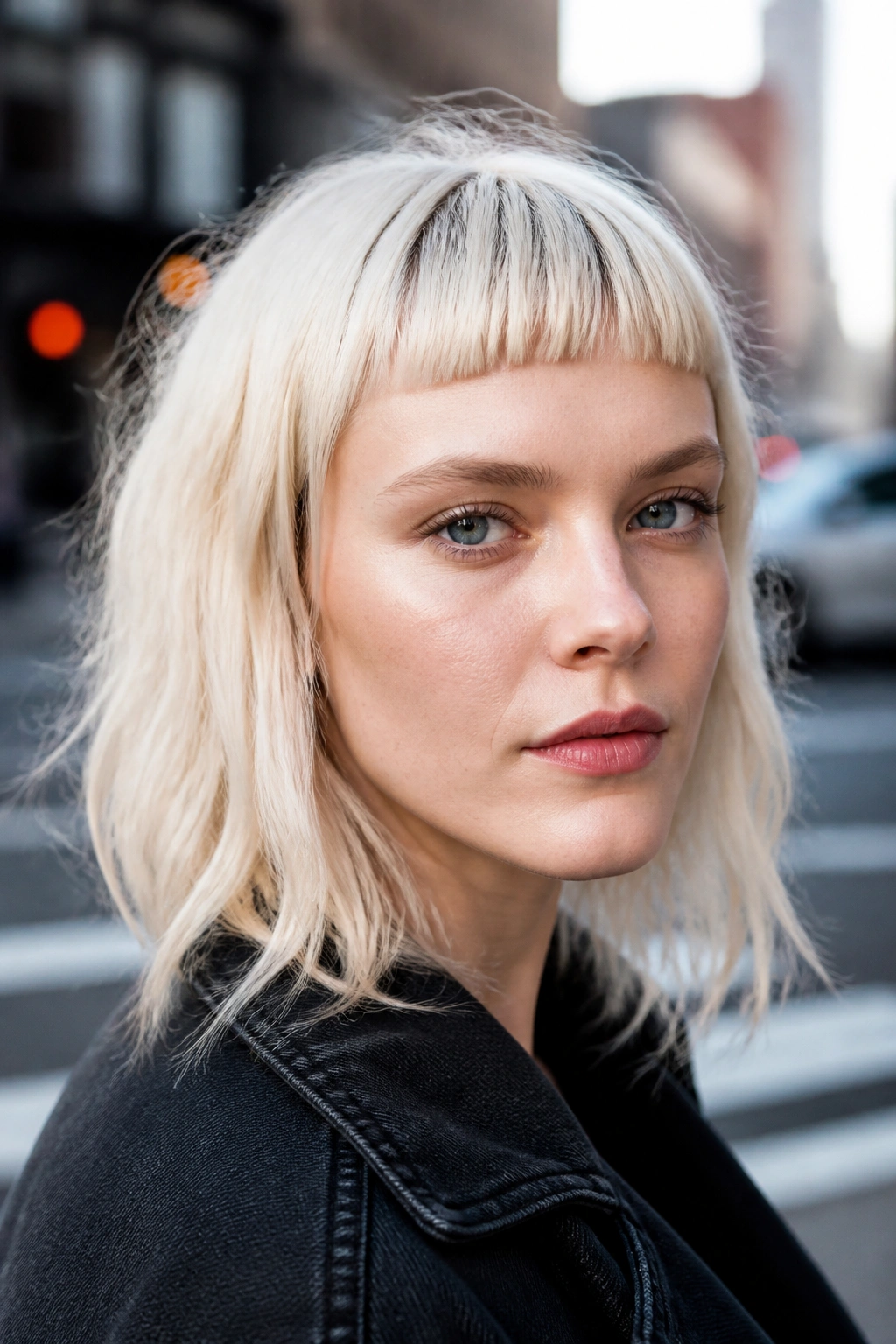
Micro bangs are not for shy haircuts. They are for people who want the fringe to say something before they do. On a round face, they work because they expose more forehead, which adds visual length, and platinum makes that short line look even sharper.
The trick is keeping the shape slightly imperfect. A micro fringe that is too straight and too dense can make the face look wider. A version with soft texturing, or a tiny bit of curve at the corners, feels far better. Think of it as a small graphic line, not a helmet.
What to Ask For
- Length that sits well above the brows, not grazing them.
- Slight point-cutting at the ends so the edge does not look blunt and boxy.
- A little width at the center, with softer corners at the temples.
- Enough density to hold its shape, but not so much that it looks heavy.
Micro bangs are happiest on someone who styles their hair every day, even if only for five minutes. Skip them if you want a wash-and-go fringe. Seriously. They show every cowlick, every bad trim, and every sleepy blow-dry.
4. Wispy Platinum Bangs with Airy Ends

Wispy bangs are the easygoing cousin in the fringe family. They use negative space on purpose, which is exactly why they suit round faces so well. Instead of drawing one thick line across the forehead, they leave tiny gaps that keep the face open.
The best wispy bang is cut with a light hand. You should be able to see through it a little. That transparency matters. It keeps the fringe from looking like a heavy curtain and helps the face stay long rather than wide.
Platinum hair makes wispy bangs look almost soft-focus, but only if the ends are lightly textured. A blunt wispy fringe can turn fluffy in an unhelpful way. The better version is piecey, touchable, and a little uneven at the tips.
Good If You Want This:
- A fringe that air-dries decently.
- Less forehead coverage.
- A cut that grows out without a hard line.
- Something that works with fine or medium hair.
I like this style on people who want bangs without the full commitment of a dense fringe. It is one of the few bang ideas that can feel casual and polished at the same time.
5. Bottleneck Bangs that Open at the Brow

Bottleneck bangs have a shape that earns the name. They sit narrower in the center, then flare outward as they move toward the cheekbones. That widening shape is useful on a round face because it creates movement without adding bulk across the whole forehead.
This style works especially well in platinum because the color shows the bend so clearly. You can see where the fringe opens, where it softens, and where it slides into the front layers. That little bit of structure can make the haircut look far more intentional than a generic curtain fringe.
Why the Shape Matters
The center should be short enough to give lift, but not so short that the bangs lose their softness. The sides should graze the brow or cheekbone depending on your face length. If the edge is too symmetrical, the fringe starts to behave like a blunt bang, and that is not the goal here.
Bottleneck bangs are a nice middle ground for people who want softness, but not mushiness. They feel designed. That is the appeal.
6. Deep Side-Part Fringe for Extra Length
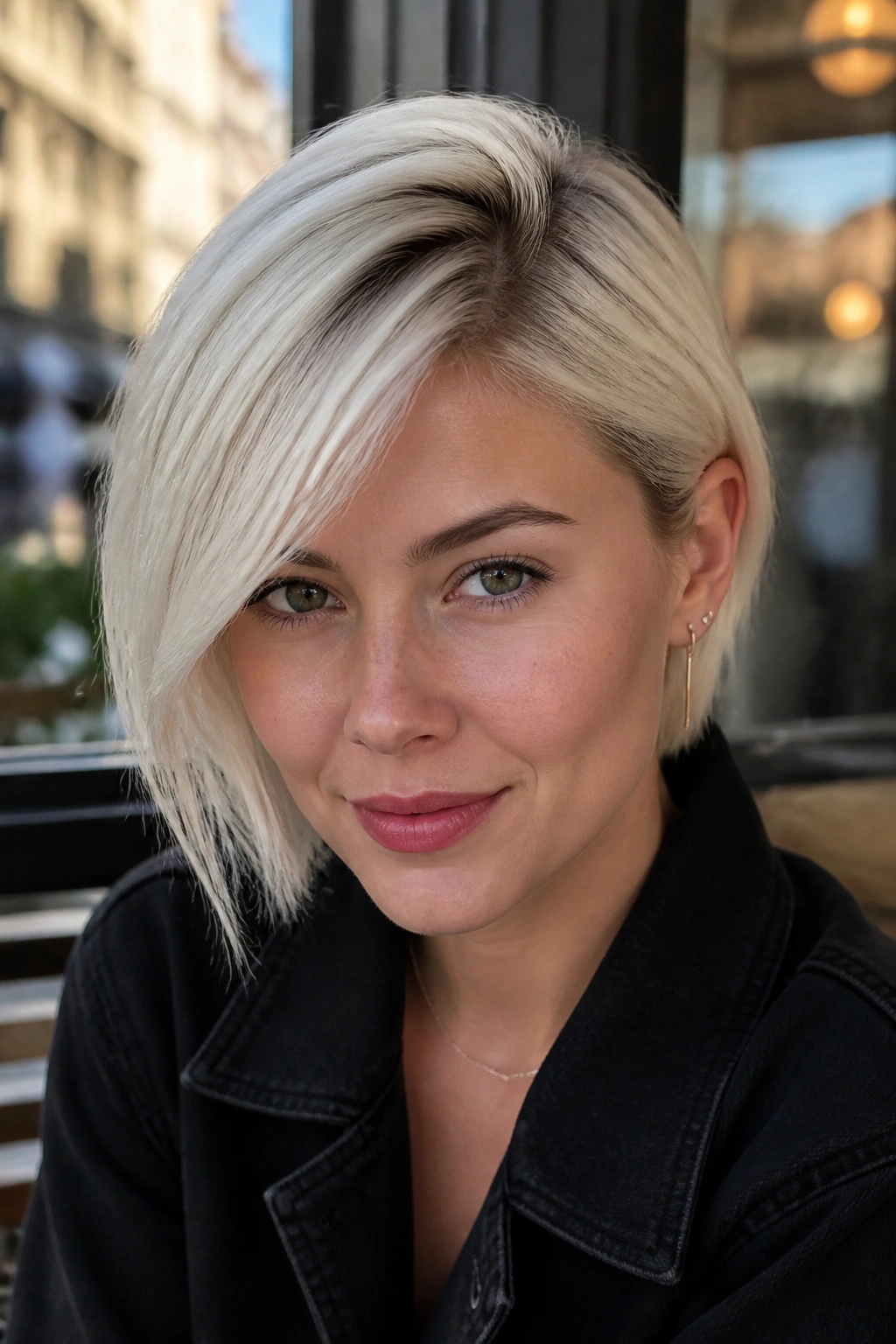
A deep side part does more for a round face than people give it credit for. It creates asymmetry right away, and asymmetry is your friend when you want a face to read longer and leaner.
With platinum hair, the deep part also catches light in a way that makes the forehead area look lifted. The darker root at the part, even if it is only a shadowed root for a week or two, gives the style a little depth. Flat platinum can look heavy. Platinum with a side sweep looks edited.
How to Wear It Well
The fringe should start near the highest point of the part and sweep diagonally across the forehead. Keep the shortest side long enough to tuck behind the ear if needed. That is the part many people miss. If it is too short, the style turns fussy fast.
A round brush or a flat brush works depending on your hair texture. Wavy hair usually behaves better with a quick bend from a blow-dryer and a little smoothing cream. Straight hair may need a soft clip while it cools so the part stays where you want it.
This is a grown-up look. Not boring. Just clean.
7. Choppy Textured Bangs with Piecey Movement

Choppy bangs are where round faces get some edge. The broken-up ends interrupt the circle of the face, which helps everything feel less soft and more sculpted. That matters if your hair tends to fall in one smooth curtain and you want a little life at the front.
Platinum hair shows the choppiness fast. Each separated piece catches the light on its own, so the fringe never looks like one thick block. That can be a blessing, and it can also look messy if the cut is done badly. Point-cutting helps. Razor work can help too, but only in the hands of someone who understands hair density.
What to Watch For
- Too much thinning can leave the bangs stringy.
- Too little texture can make them puff out.
- Heavy product weighs the piecey shape down.
- A little dry texture spray goes a long way.
This style is best if you like movement and do not mind a bit of styling. It is less suited to a person who wants their bangs to fall perfectly into place on their own.
8. Cheekbone-Grazing Fringe for Soft Contour

A fringe that skims the cheekbones is one of the smartest shapes for a round face. It creates contour where makeup usually would, except the “shadow” is simply the cut itself. The eye follows the line outward, which helps the face feel longer.
This is not a heavy bang. It should almost disappear into the front layers at the sides. The center can sit a little shorter, but the real point is the way the ends kiss the upper cheek and then melt away. That softness keeps the face from looking boxed in.
A lot of stylists love this shape on platinum because it looks expensive without needing a fussy finish. The hair can move. It can shift. It does not need to sit like a helmet.
Best For
- Medium to thick hair.
- People who wear their hair down most days.
- Anyone who wants bangs but fears a hard line.
- Round faces with softer jawlines.
If you want one bang style that feels flattering and believable on a real person, not just a photo, this is a strong candidate.
9. Arched Full Bangs with a Gentle Curve

Arched bangs can work on round faces, despite what people sometimes assume. The trick is keeping the arch gentle, not dramatic. A soft curve gives structure to the forehead, and that structure helps balance fullness in the cheeks.
Platinum makes the arch more visible, which is useful if the cut is intentional and a little polished. If the arch is too deep, though, it can start to look dated fast. The better version is softly rounded with beveled corners so the shape follows the natural curve of the brow.
What Makes This Different
A straight blunt fringe can stop the eye. An arched one keeps it moving. That subtle movement matters more than a lot of people think. The top line of the bang frames the face, while the curved edges stop the style from looking boxy.
This is a good pick if you like a bit of drama but still want your features to show. It also pairs well with strong brows, since the fringe and brow line can play off each other instead of fighting for attention.
10. Piecey Layered Fringe for Thick Hair
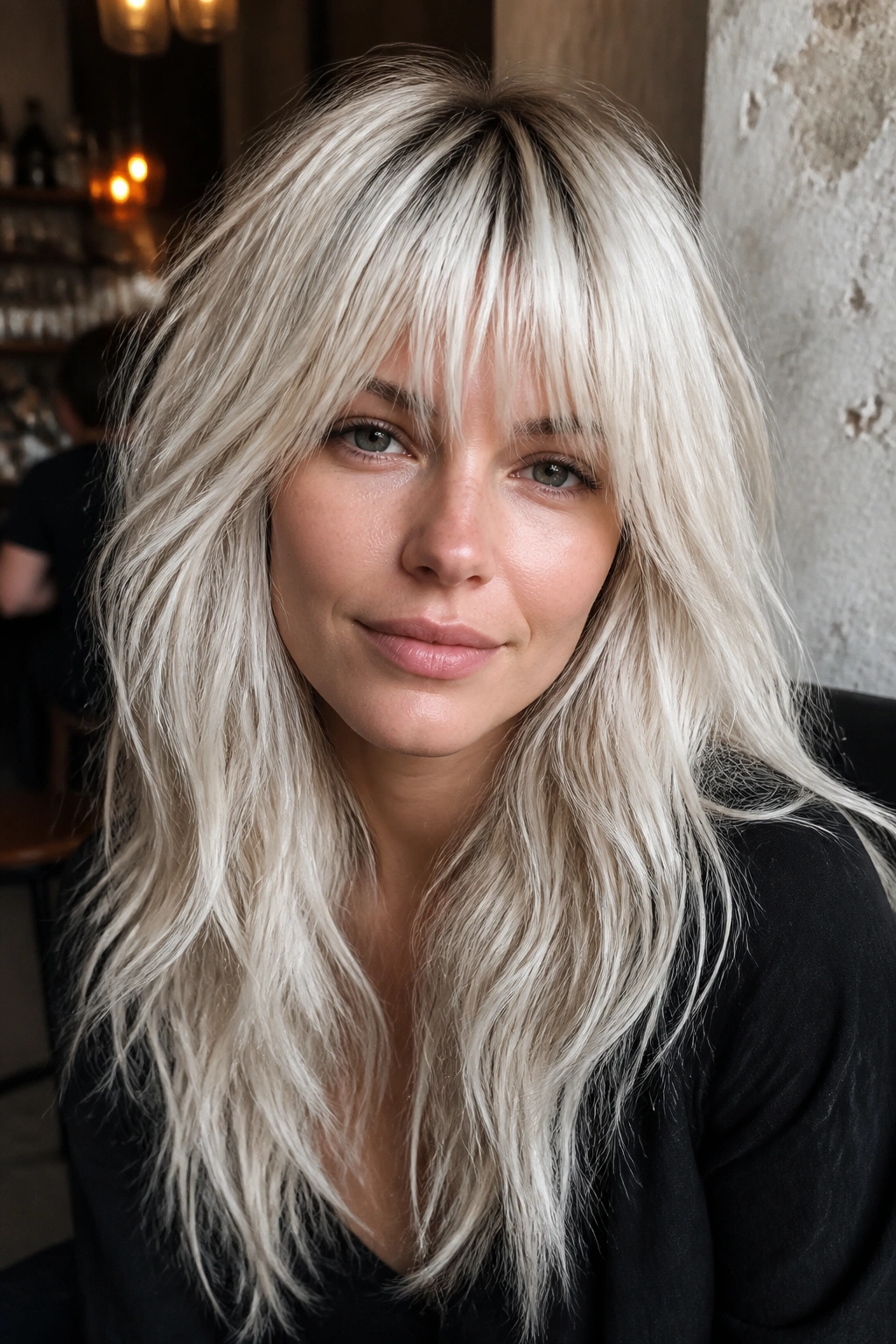
Thick hair and round faces can be a tough combo at the fringe line. Too much bulk at the forehead makes the face read even fuller. Piecey layered bangs solve that problem by removing weight in the right places and letting tiny strands break up the shape.
The key is not to over-thin. That is the mistake I see most often. Once bangs become wispy in the wrong way, they stop looking deliberate and start looking like they lost a fight with humidity. A good layered fringe keeps enough density to look healthy while still separating into clean pieces.
A Better Salon Request
Ask for internal layers, not just “thinning.” That phrase can mean all kinds of things in a salon chair, and not all of them are flattering. You want the weight reduced through the middle and the sides softened so the fringe can move.
Platinum reflects every chunk of texture, so this cut is especially good when you want the hair to look lively. A dab of flexible paste on dry ends can help define the pieces without making them sticky. Use less than you think. A pea-sized amount is usually enough.
11. Split Fringe with a Center Gap
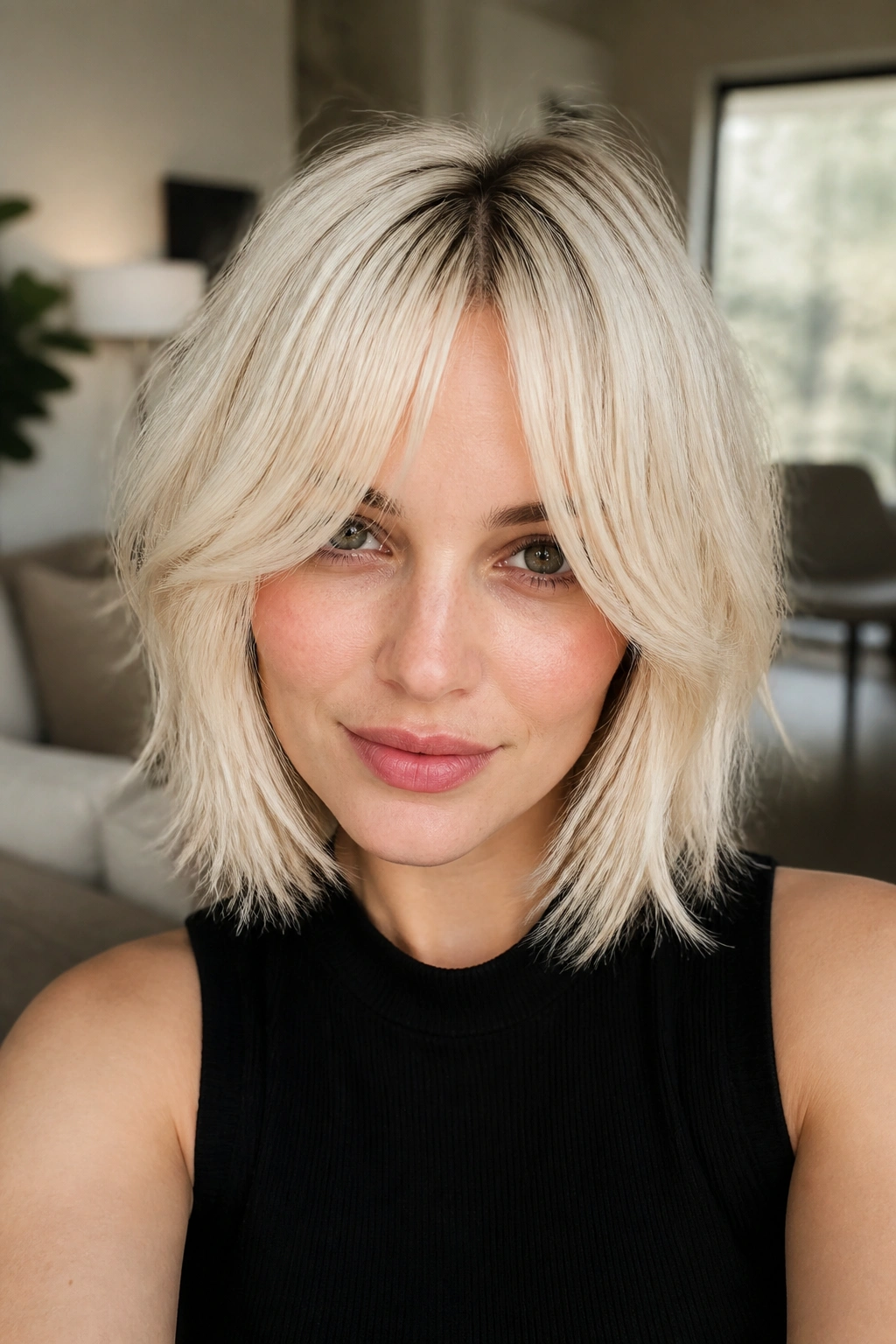
A split fringe is different from curtain bangs in one important way: it feels more deliberate and a little airier through the center. That gap creates a vertical line down the face, which is a nice trick for round shapes that need visual length.
The split can be narrow or wide. Narrow gives a quieter look. Wider feels more relaxed. On platinum hair, the separation reads clearly because the color highlights both sides of the part and the opening in the middle.
Why It Works So Well
Round faces often look best when the forehead is not covered in one block. A split fringe solves that by framing without closing off the face. The two sides can bend into the cheekbones or stop at the temples, depending on how much softness you want.
This is a good style if you like to tuck your hair behind your ears or wear it half up. It stays flexible. It also grows out gracefully, which is a nice bonus if you get bored quickly or hate regular bang trims.
12. Feathered Bangs with Tapered Ends

Feathering takes the weight out of a fringe without making it disappear. That is why it works so well on a round face. The ends move. The line stays soft. Nothing feels heavy at the forehead.
Platinum makes feathering easy to see, which is useful if you like hair that has texture and motion. A feathered bang can look almost light enough to lift. That is the effect you want. Not fluffy. Not sparse. Just soft at the edges and slightly flicked away from the face.
How to Style It
Use a small round brush and direct the ends away from the center as you dry. You do not want a big curled-under finish. You want a little bend and separation. A light spray wax or misted texture spray can keep the ends from collapsing by noon.
This style is also kind to people with cowlicks. The softness hides small irregularities. That is handy, because bangs always show the truth on wash day.
13. Crescent Bangs with a Soft U Shape
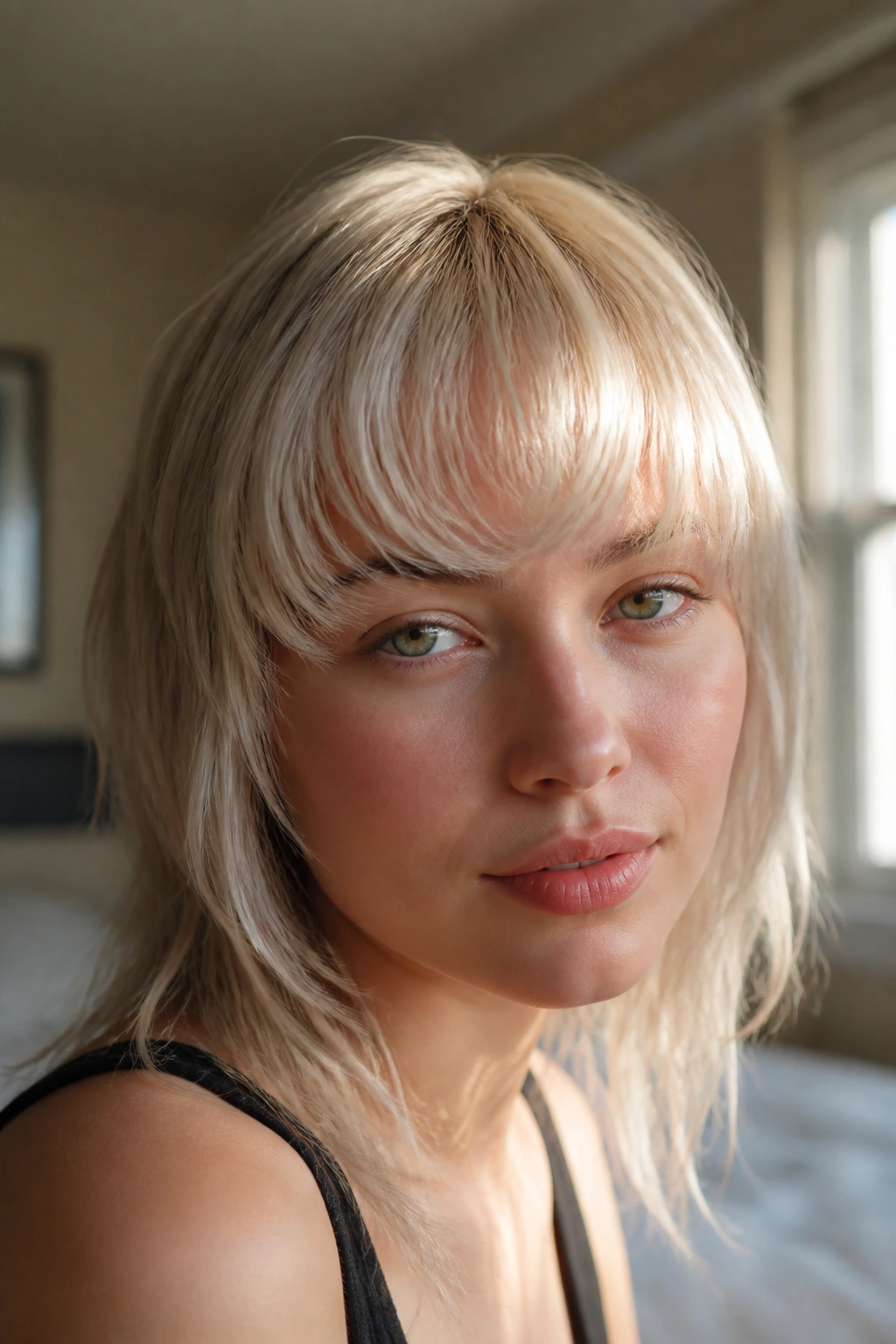
Crescent bangs sit fuller in the middle and taper longer toward the temples, which creates a soft U shape across the forehead. On a round face, that shape adds lift without making the forehead look chopped off. It frames the face in a way that feels polished, not severe.
The reason I like this cut in platinum is simple: the bright color shows the shape clearly, but the curve keeps the line gentle. You get definition without a blunt wall. That is a much better balance for softer features.
A Small but Useful Detail
The shortest point should land where your face can handle the most open space, usually around the center of the brow or slightly above it. The side pieces should blend into the front layers near the cheekbone. If they end too high, the shape can become boxy. If they end too low, the whole bang loses its lift.
Crescent bangs suit people who want a little polish with their fringe. They feel tailored. They also play nicely with rounded bobs and collarbone-length cuts, which is a nice bonus if you like your hair to feel cohesive from every angle.
14. Peekaboo Fringe with Long Front Layers
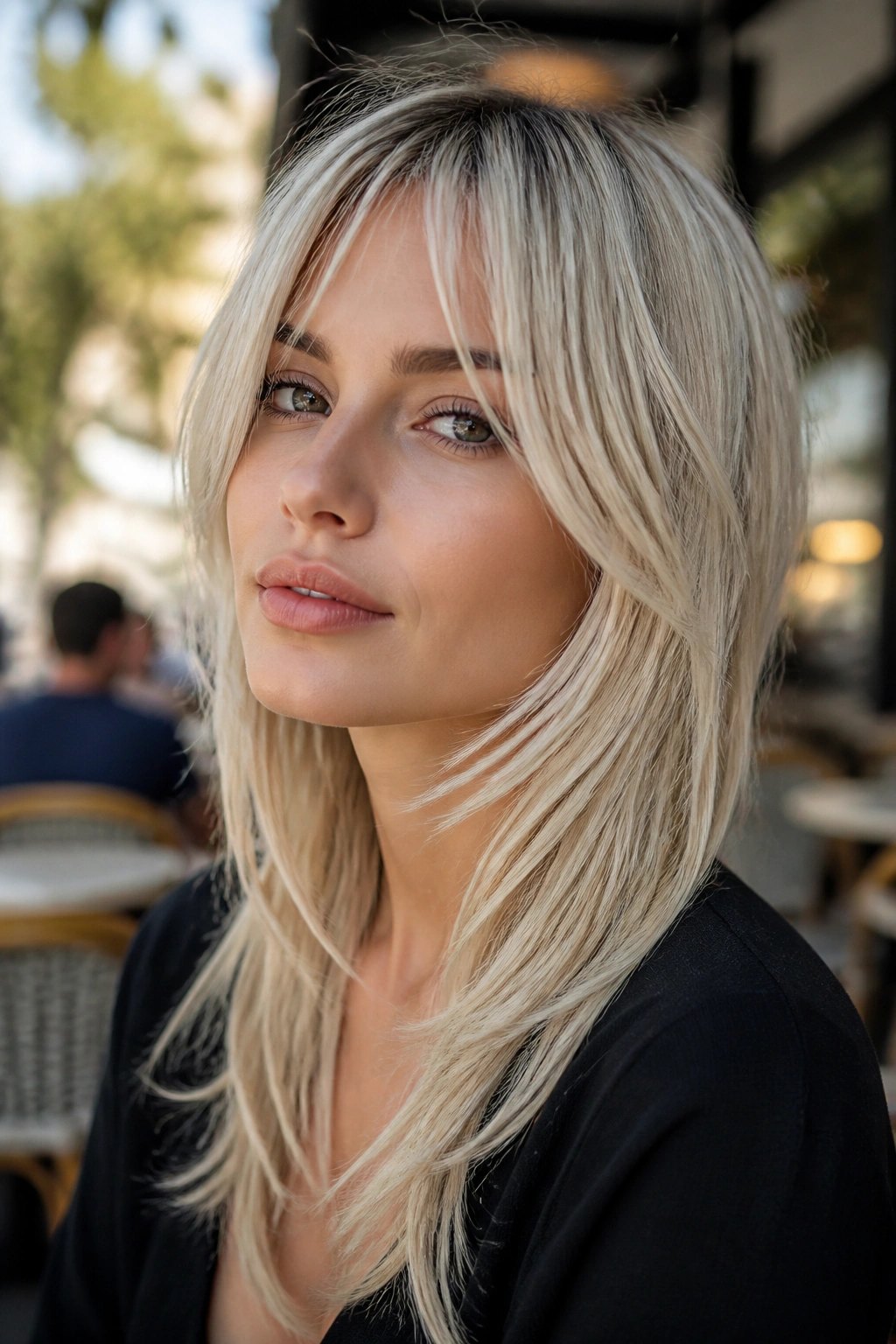
Peekaboo bangs are for people who want the idea of bangs without the full commitment of a closed forehead line. The fringe sits light and loose, then disappears into longer front layers, which gives a round face more vertical movement and less width.
This style is especially pretty in platinum because the lighter pieces shift and separate in daylight. The whole front of the haircut feels softer, almost floating. That can sound delicate, but it is actually practical. The cut grows out well and does not scream for daily styling.
Best When You Want Flexibility
A peekaboo fringe is easy to clip away on busy mornings. It can also be worn forward with a bend or separated a little in the center for a more relaxed look. The important thing is that the front layers stay long enough to skim the cheekbones or jaw.
If you want bangs but fear regret, this is one of the safest options. It gives you the face-framing effect without locking you into a heavy fringe. That freedom matters more than people admit.
15. Platinum Shag Bangs with Built-In Texture
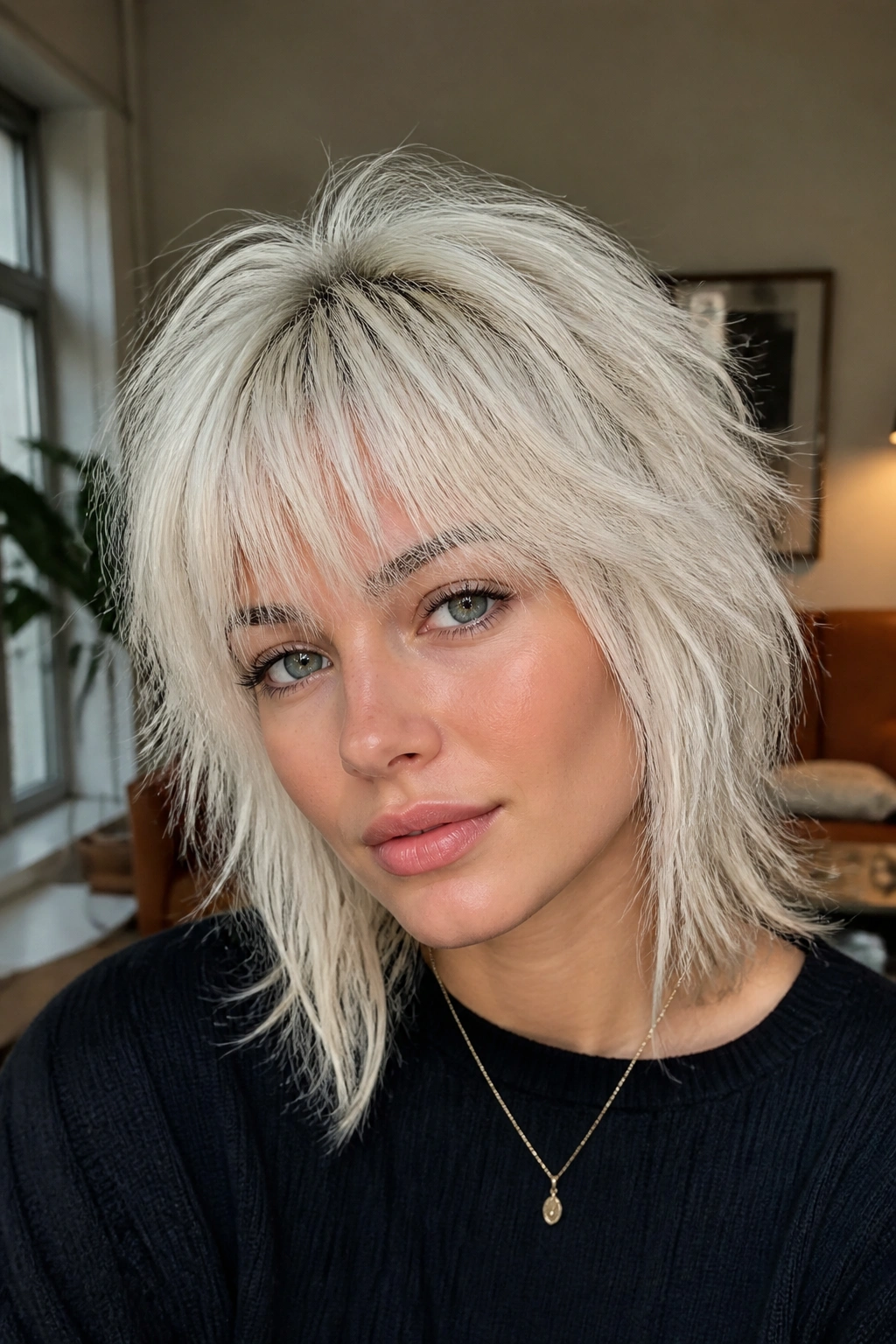
Shag bangs are messy in the best possible way. They work because they break up the face shape with texture, not just with length. For a round face, that means the fringe is never sitting as one solid line across the widest part of the cheeks.
The shag also adds lift at the crown, which helps the face look longer. That detail matters. A little height on top can change the whole balance. Platinum shag bangs look especially good when the ends are piecey and the layers around the temples are soft rather than blunt.
How to Wear the Shag Without Losing the Shape
A diffuser can help if your hair is wavy. If it is straight, a quick rough-dry with a little mousse at the roots is often enough. The point is not perfect polish. The point is movement with a bit of grit.
I’d skip this if you hate texture or if you want bangs that sit in a neat line all day. A shag fringe is gloriously less obedient than that. That is the charm.
16. Asymmetric Bangs for a Clever Off-Balance Look
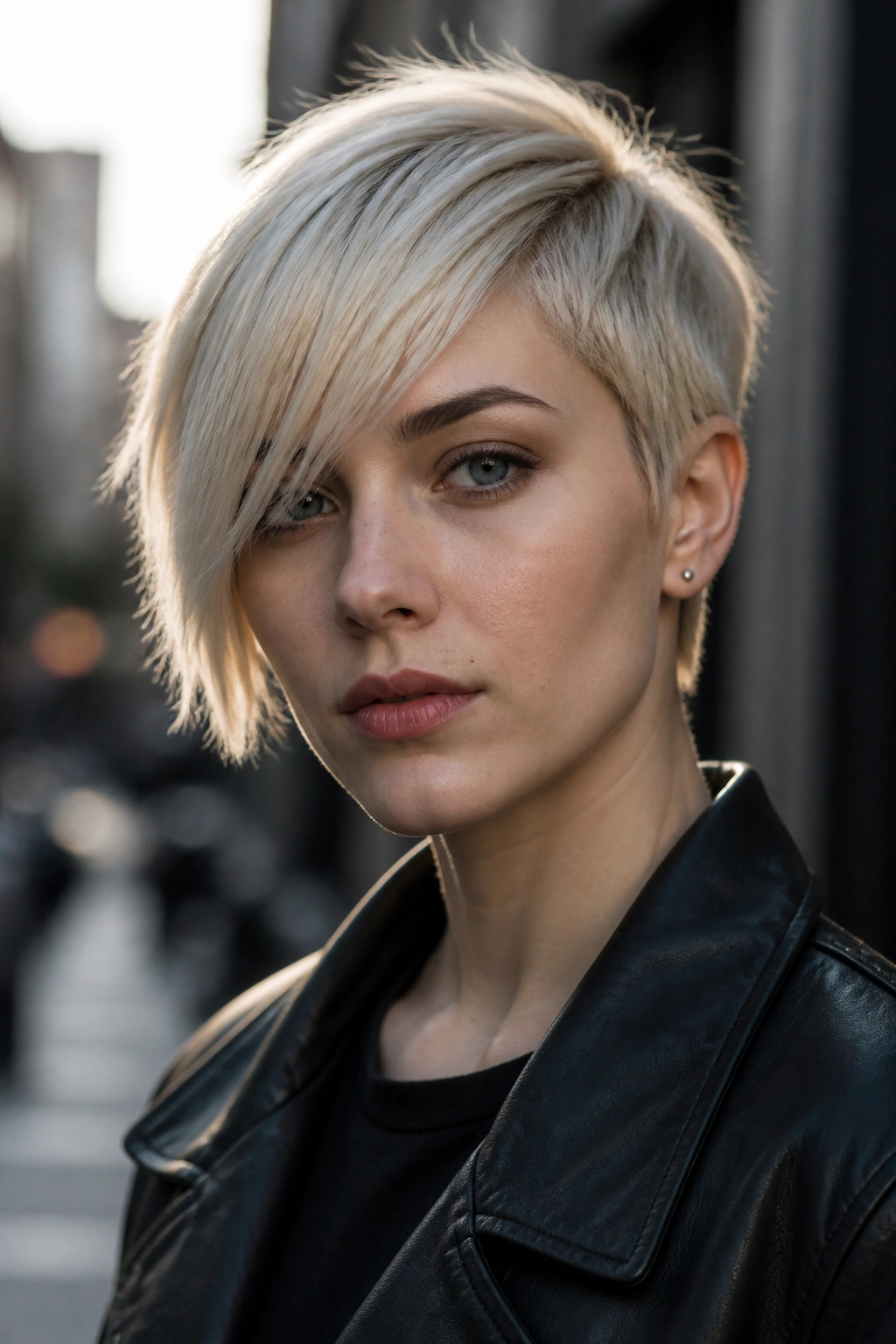
Asymmetric bangs are a smart choice when you want something a little unexpected. One side is longer than the other, which creates a diagonal line that naturally lengthens a round face. It also keeps the haircut from looking too sweet.
Platinum gives the asymmetry extra bite. The uneven edge reads immediately, so the style feels intentional rather than accidental. That matters. If the cut is too subtle, the asymmetry gets lost. If it is too severe, it can dominate the whole face. The sweet spot is somewhere in between.
What to Tell Your Stylist
- Keep one side grazing the brow.
- Let the longer side slide toward the cheekbone.
- Soften the ends so the line does not feel sharp in a bad way.
- Make sure the side part supports the asymmetry instead of fighting it.
This style is especially good if you like a little edge in your hair without going full avant-garde. It can be sleek, textured, or tucked behind one ear. Easy enough. Interesting enough.
17. Blunt Bangs with Beveled Ends

Blunt bangs are not automatically wrong for round faces. That idea gets repeated so often that it starts to sound like law, and it is not. A blunt fringe can work if the line is placed correctly and the ends are beveled so the edge does not feel heavy.
The best version sits a touch higher on the forehead and has softened corners. That keeps the bang from widening the face. Platinum hair can make blunt bangs look very crisp, which is the point if you like a strong haircut. You do need density for this one. Thin hair can go stringy fast.
Who Should Try It
People with a slightly longer round face often wear this shape well. So do anyone who likes a strong brow line and regular styling. If your hair dries with a natural bend, this may take more work than it looks like in a photo. A flat iron and a tiny amount of smoothing cream help a lot.
Blunt bangs are a commitment, yes. But they can be a very good one when the rest of the cut is clean and the platinum tone is maintained well. Grow-out is the tradeoff.
18. Face-Framing Bangs with Vertical Front Layers
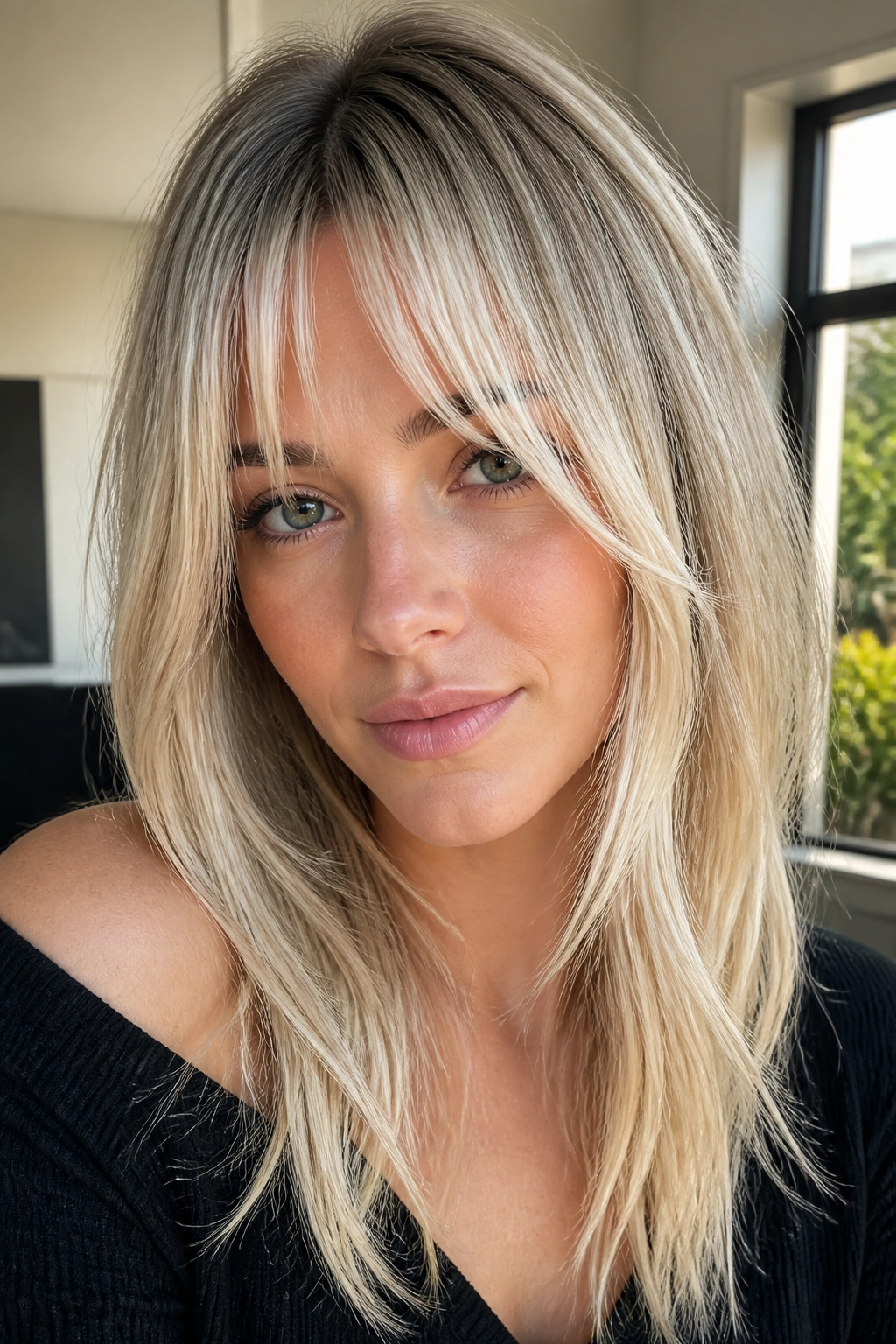
Not every bang has to live entirely on the forehead. Face-framing fringe starts near the brow or temple and keeps traveling downward in front layers, which is a quiet but effective way to flatter a round face. The vertical movement does the heavy lifting.
This is one of my favorite options for someone who wants a softer look that still changes the shape of the face. Platinum makes the front layers glow, especially when they sit against a slightly deeper root or a shadowed underside. That contrast gives the style more depth without needing a harsh cut.
Why It’s So Practical
The grow-out is forgiving. The layers turn into face-framing pieces instead of awkward half-bangs. You can tuck them, curl them, or leave them loose. That flexibility is worth a lot if you do not love spending time with a round brush every morning.
It also works with nearly every length, from a bob to long hair. If you want bangs without the feeling of being trapped by them, this is the one I’d point to first.
Final Thoughts
Round faces do not need to avoid bangs. They need bangs with shape. That is the difference. A good platinum fringe should pull the eye up, down, or diagonally — anywhere except straight across the widest part of the face.
If you want the easiest place to start, long side-swept bangs, curtain bangs, and cheekbone-grazing fringe are the safest bets. If you want more attitude, micro bangs, asymmetry, or a shag fringe can be fantastic, but they ask for more styling and a bit more nerve.
Platinum color makes all of this more interesting, and more unforgiving, which is half the fun. Keep the roots slightly soft, keep the edges intentional, and choose a fringe that gives your face room to breathe. That is where the flattering part really happens.
