



Round faces don’t need more hair sitting across the widest part of the cheeks. They need a line that goes somewhere else.
That’s why long inverted bangs work so well when they’re cut with a lighter center and longer sides. The shape pulls the eye downward and outward, which gives the face a little more length and a little less width without making the forehead disappear. Done well, they look soft, not severe. Done badly, they sit like a shelf. Huge difference.
The tricky part is that “long inverted” can mean a few different things once texture enters the chat. Fine hair needs movement, thick hair needs internal removal, wavy hair needs room to bend, and curly hair needs a much longer starting point than most people expect. A cut that looks airy on a straight bob can turn puffy on dense hair in about ten minutes flat.
So these long inverted bangs ideas for round faces aren’t just pretty variations. They’re real shapes you can bring to a stylist and actually wear. Start with the one that matches your texture and how much styling you’re willing to do before coffee.
1. Curtain-Style Long Inverted Bangs
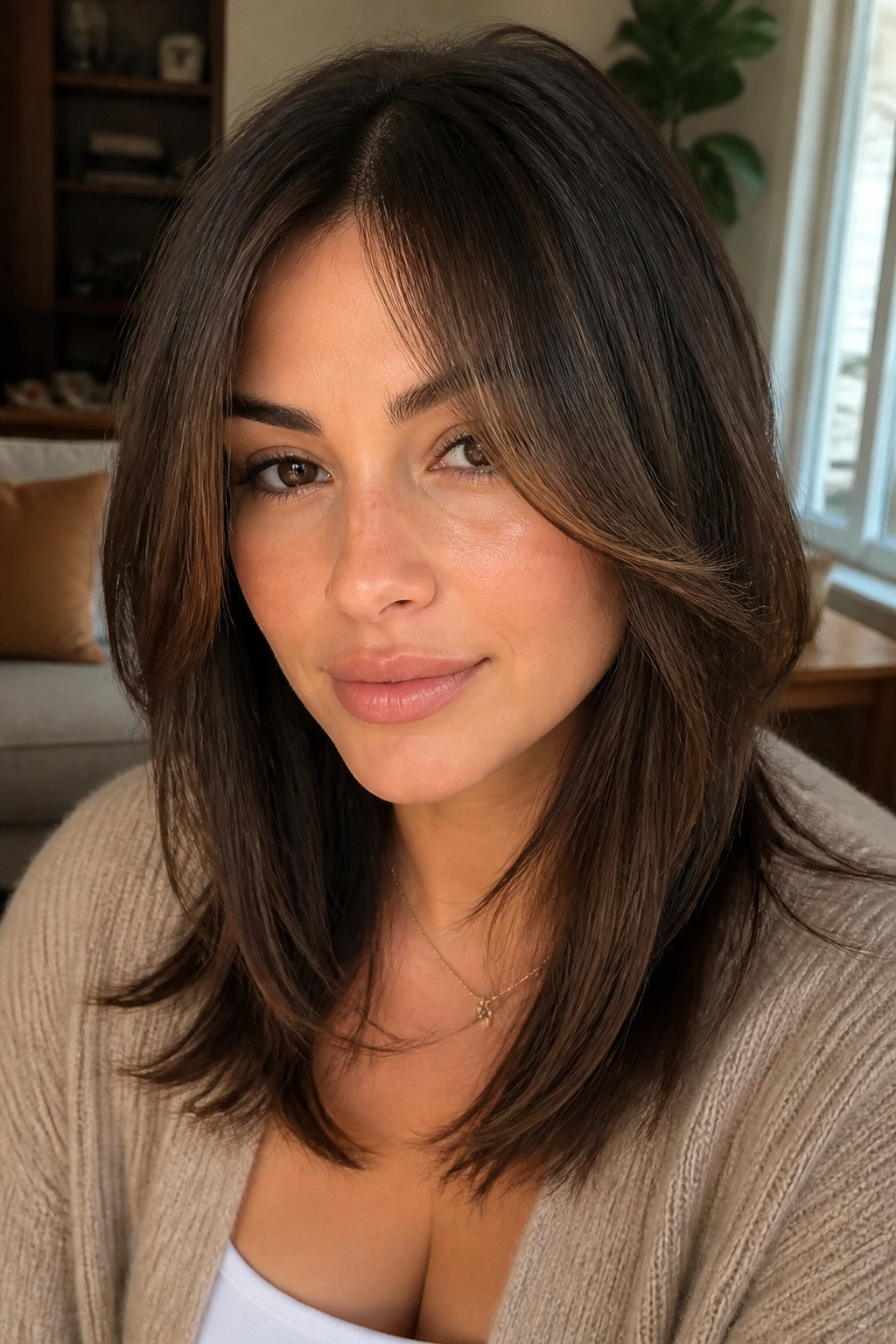
Curtain bangs are the safest place to begin if you want the inverted shape without a harsh edge. The center stays light and short enough to open the face, then the sides fall longer along the cheekbones and jaw. On a round face, that diagonal movement is doing a lot of work.
Why It Flatters a Round Face
The middle part breaks up the width at the forehead, and the longer outer pieces stop the face from reading too square through the cheeks. It’s soft, but it isn’t sleepy. That matters.
Ask for the shortest point to land around the bridge of the nose or just below the brows, then let the side pieces drop toward the top of the cheekbone. That little drop is what gives the cut its lengthening effect.
- Blow-dry with a 1.5-inch round brush, turning the ends away from the face.
- Keep the center piecey, not thick.
- Finish with a mist of light-hold spray, not heavy cream.
Best tip: if your bangs separate too much, mist them with water and rewrap them around the brush for 20 seconds. No drama. No overthinking.
2. High-Start Side-Swept Bangs
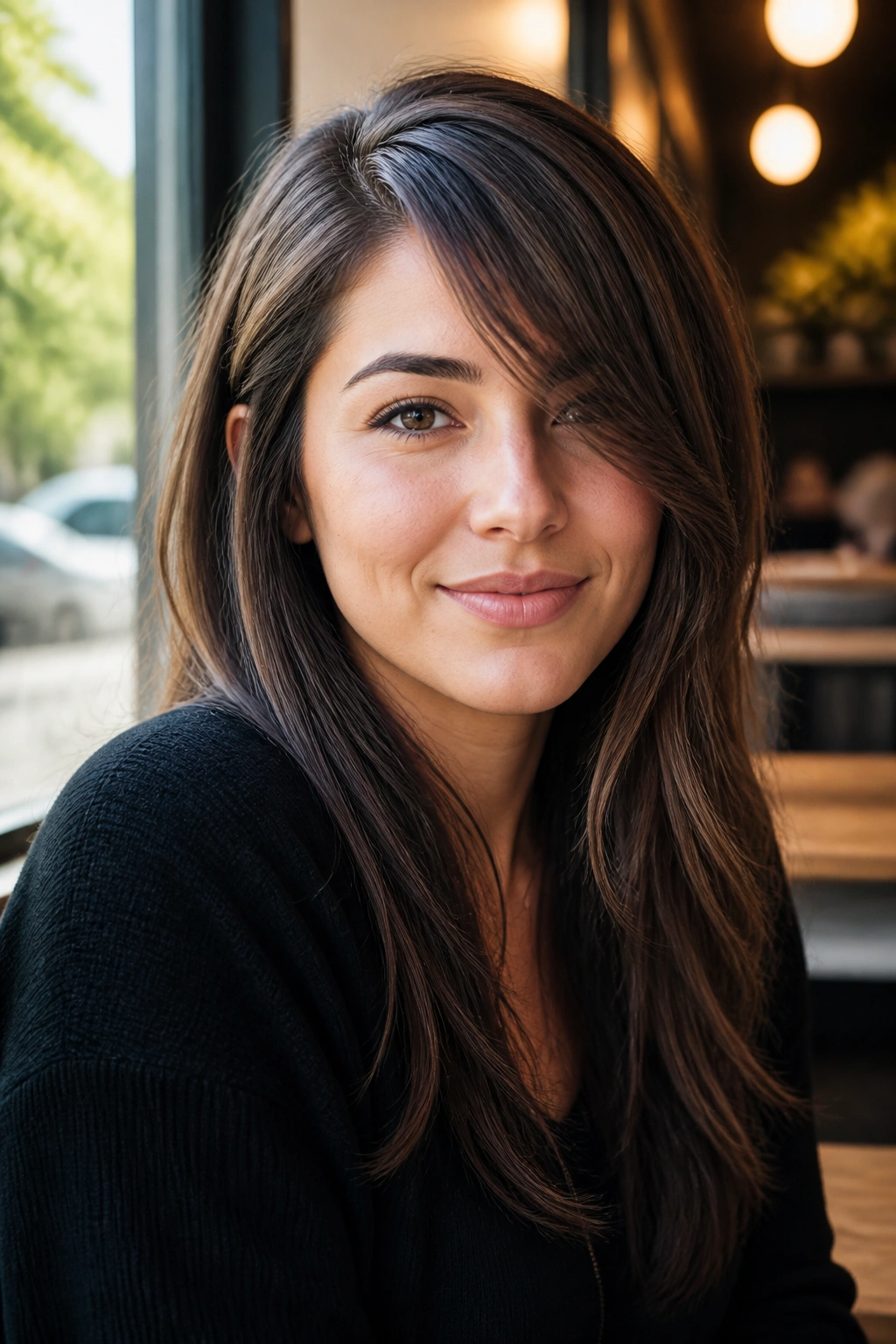
A high side part does one thing better than almost anything else: it creates lift. On a round face, that lift matters because it adds vertical space before the hair even reaches the cheek area. The bangs then sweep down in a long diagonal, which is a nice break from all that natural curve.
This version is sharper than curtain bangs, and I mean that in a good way. It doesn’t whisper. It leans into the angle. If your hair is straight or has a slight bend, it’s easy to wear. If your hair is coarse, the cut can still work, but you’ll want to keep the ends soft so the sweep doesn’t look heavy.
Wear it with a side part that starts farther back than feels normal. That’s the part most people skip. They leave the part too close to the center and wonder why the bangs look flat. They need room to travel.
3. Bottleneck Bangs With a Soft Middle Window
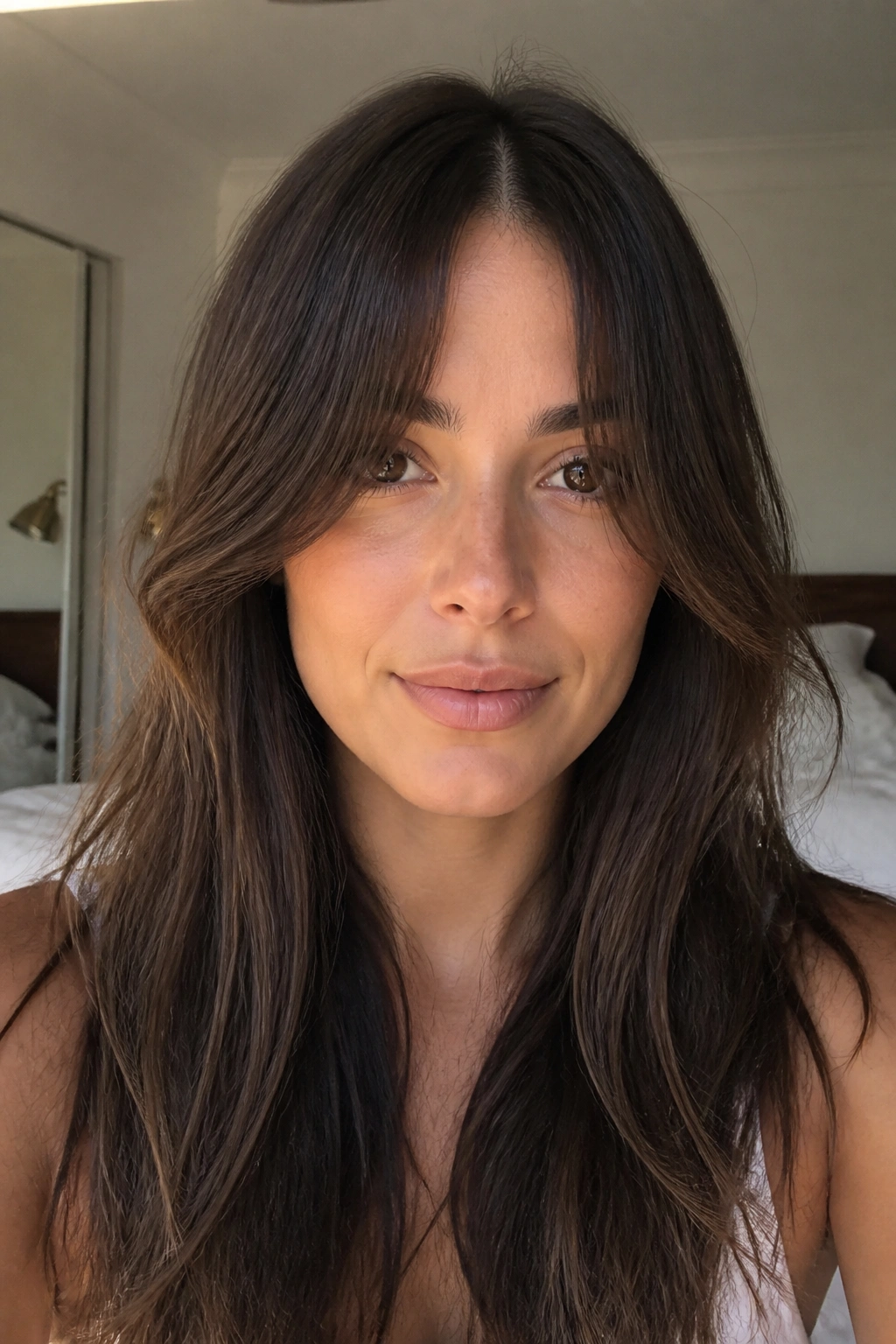
Why do bottleneck bangs keep showing up on round faces? Because the shape opens in the middle and widens near the eyes, which gives you coverage without closing off the forehead.
The narrow center creates a clean vertical line, then the outer edges soften into longer face-framing pieces. It’s a tiny shape shift, but it changes the whole read of the cut. Instead of one blunt curtain across the top of the face, you get a little architecture.
How to Style It
Use a small round brush or a blow-dry brush and move the center section straight down first. Then bend each side piece away from the face so the curve stays open. If you have a cowlick, dry that area first before the rest of the fringe gets any ideas.
The best version isn’t packed with volume. It’s light at the center and smooth through the sides. Too much puff at the brow line ruins the point of the cut.
4. Feathered Bangs That Skim the Cheekbones
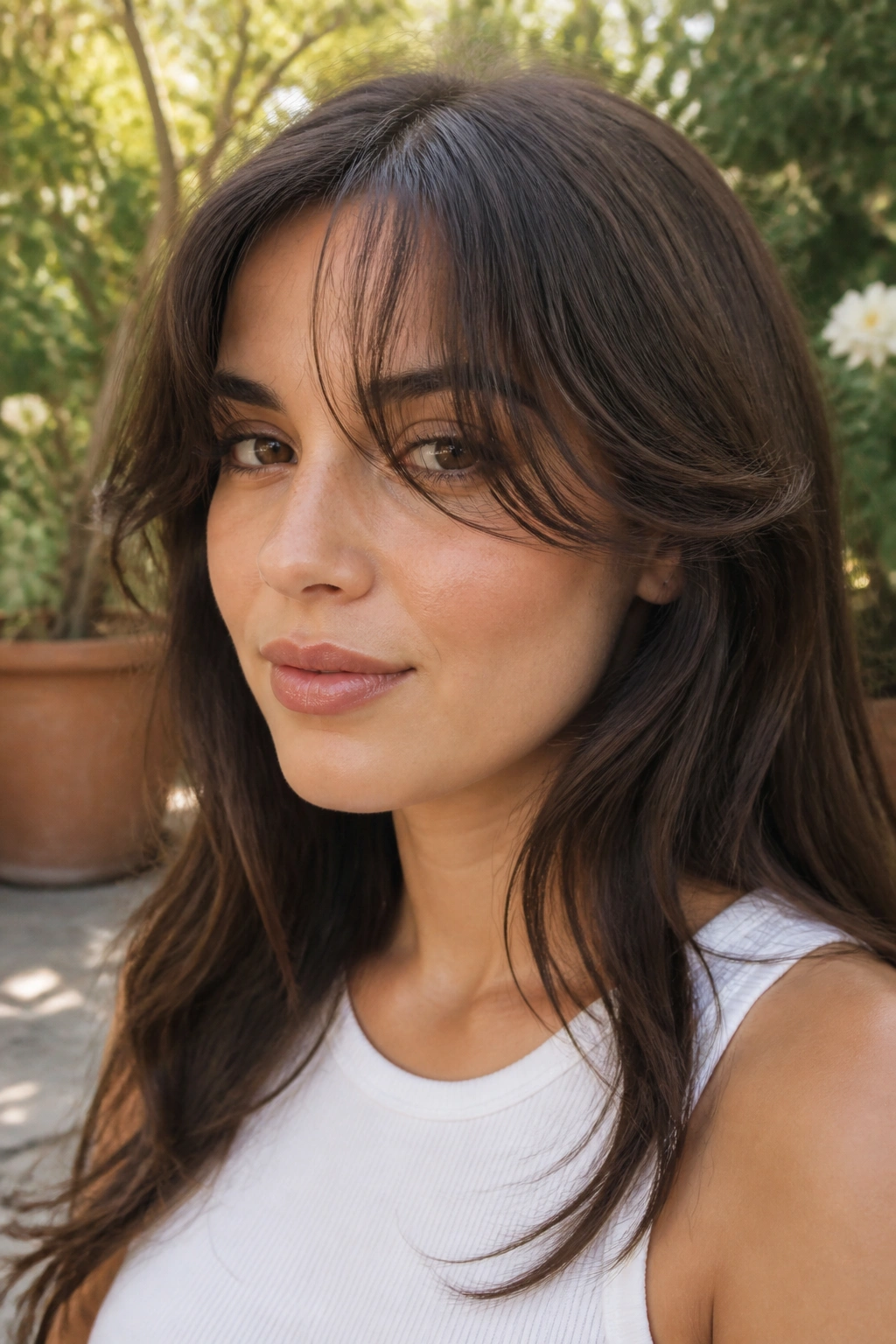
If your cheeks are the widest point of your face, this shape is a smart one. Feathered bangs skim right above and around that area, so they soften the front without boxing it in.
What I like about this look is the broken edge. Nothing sits in one heavy block. The ends are point-cut or feathered so the fringe feels airy, almost like it was brushed into place rather than carved out with a ruler. That makes the face look longer and keeps the style from taking over.
- Ask for soft point cutting at the ends.
- Keep the center a little shorter than the sides.
- Style with a lightweight mousse for bend, not stiffness.
- Avoid dense fringe cream if your hair is fine.
The whole thing should move when you turn your head. If it doesn’t, the cut needs more softness.
5. Long Razor-Cut Bangs
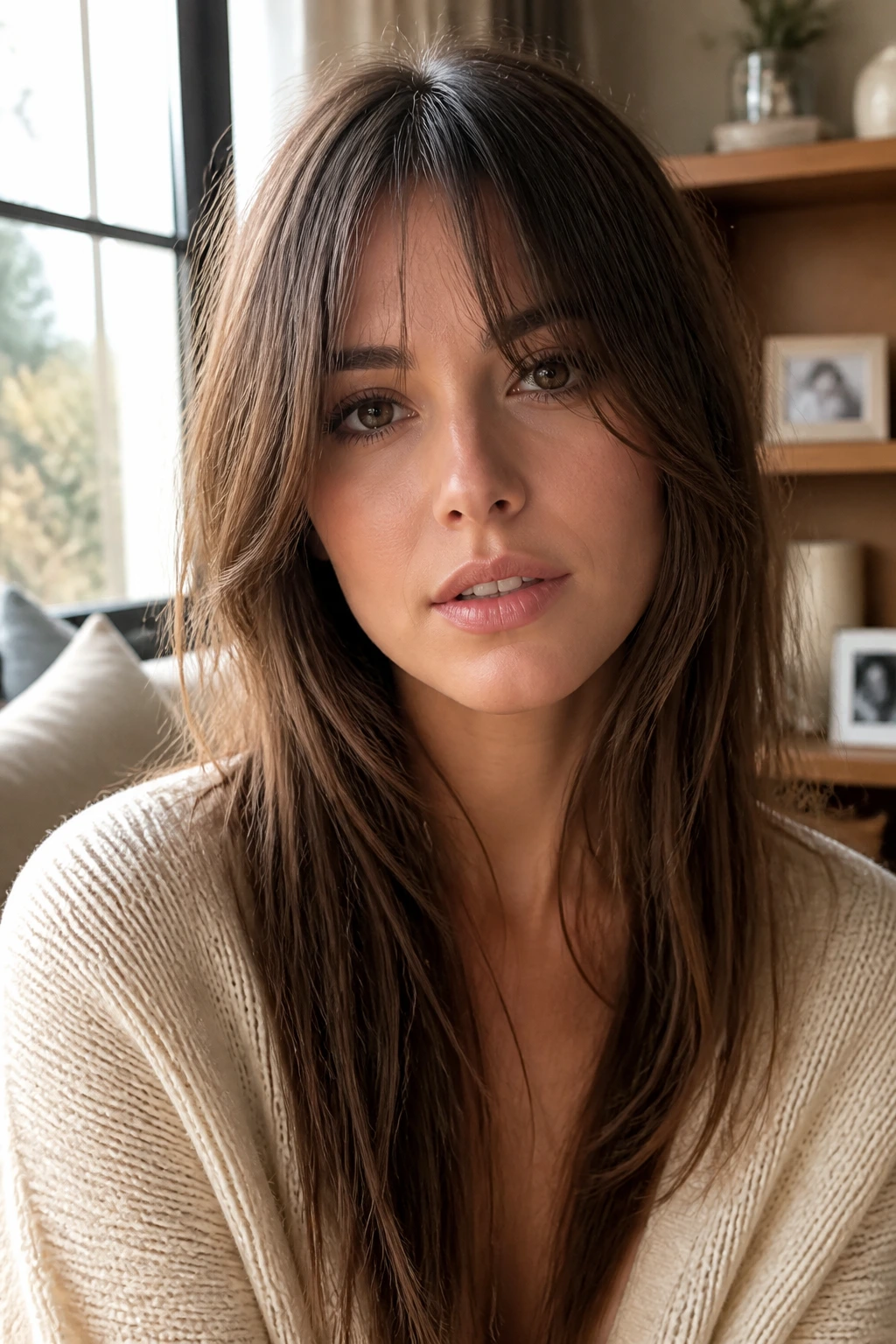
Razor-cut bangs have a little bite to them. Not a hard edge. More like a slice of air. On round faces, that softness is helpful because razor work removes bulk without leaving the front heavy or blunt.
I like this style best on hair that is straight to slightly wavy and not too fragile. A razor can make the ends look wispy in a nice way, but it can also make very fine, dry hair look frayed if the cut is too aggressive. That’s the catch. You want texture, not splintered ends.
The length should stay long enough to graze the cheekbone or just below it. That keeps the line from landing in the widest part of the face. A drop of serum on the ends helps, but only a drop. More than that and the texture disappears.
6. Deep Side-Part Fringe With Crown Lift
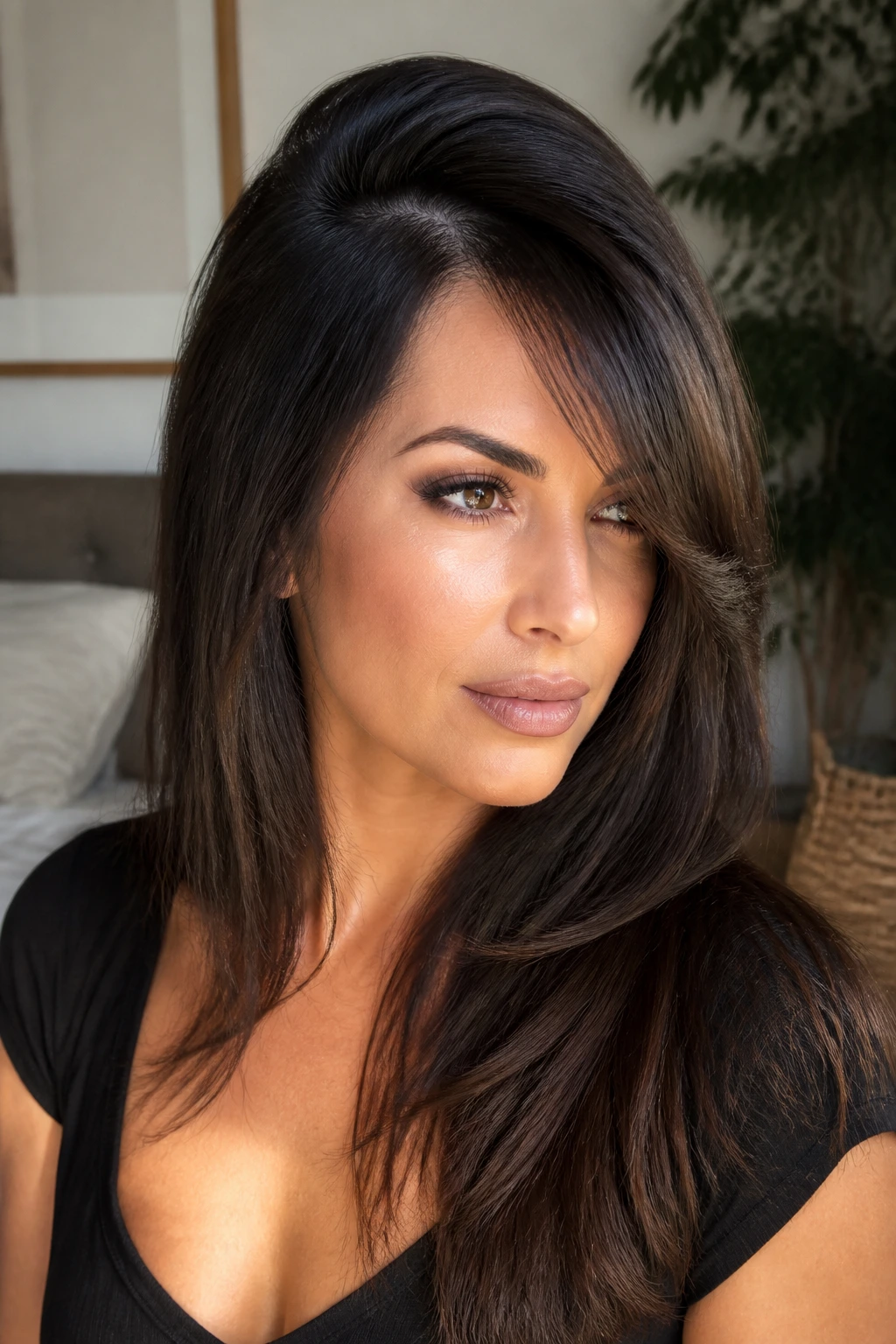
Unlike curtain bangs, this version commits to one side. That’s the point. A deep side part adds height at the crown, and height is one of the fastest ways to make a round face feel longer.
The fringe should start with a shorter inner corner near the part and then fall in one smooth sweep across the forehead. The longest piece can land around the outer cheekbone or even a touch lower if your hair is thick. The shape feels glamorous, but it also works on plain old weekday hair if you dry it the right way.
Use mousse at the roots before blow-drying. Then lift the front section with the brush and overdirect it slightly in the opposite direction of where you want it to land. That little trick gives the fringe memory. It also keeps the front from collapsing into your eyes by lunch.
7. Long Arched Bangs
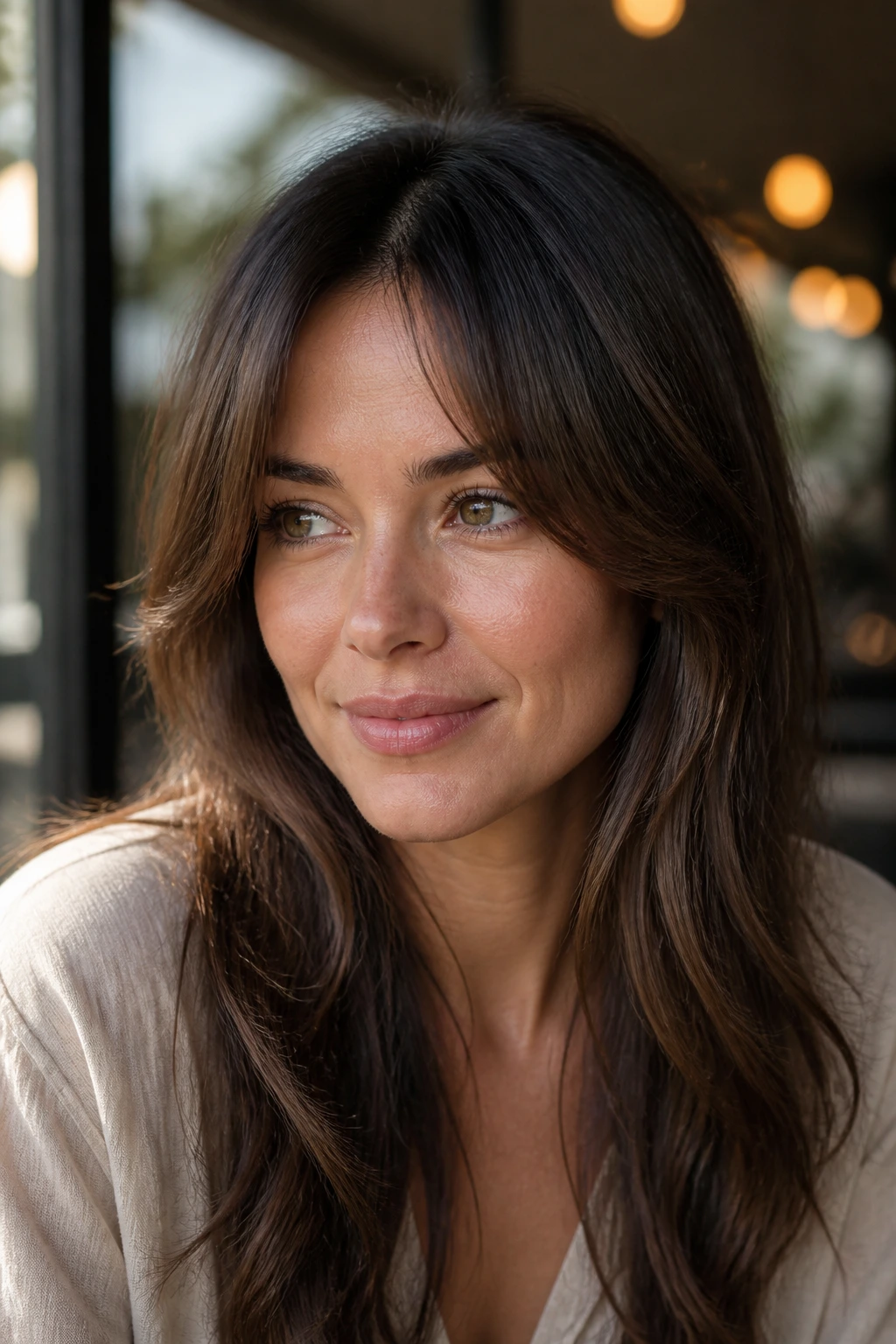
An arched fringe sounds dainty, but on a round face it can be surprisingly useful. The curve opens the center of the forehead while keeping the sides soft and extended, which helps the face read less wide.
The mistake people make here is making the arch too full. That gives you a bubble instead of a shape. The better version stays light through the middle and lands with tapered ends around the temples. Think curved line, not helmet.
This cut works well if your forehead is on the shorter side and you don’t want a straight horizontal fringe. It gives coverage without cutting the face in half. If your hair is flat, add a little root spray and dry the bangs upward first, then shape them down. That keeps the arch from sitting too close to the skin.
8. Wispy Airy Fringe
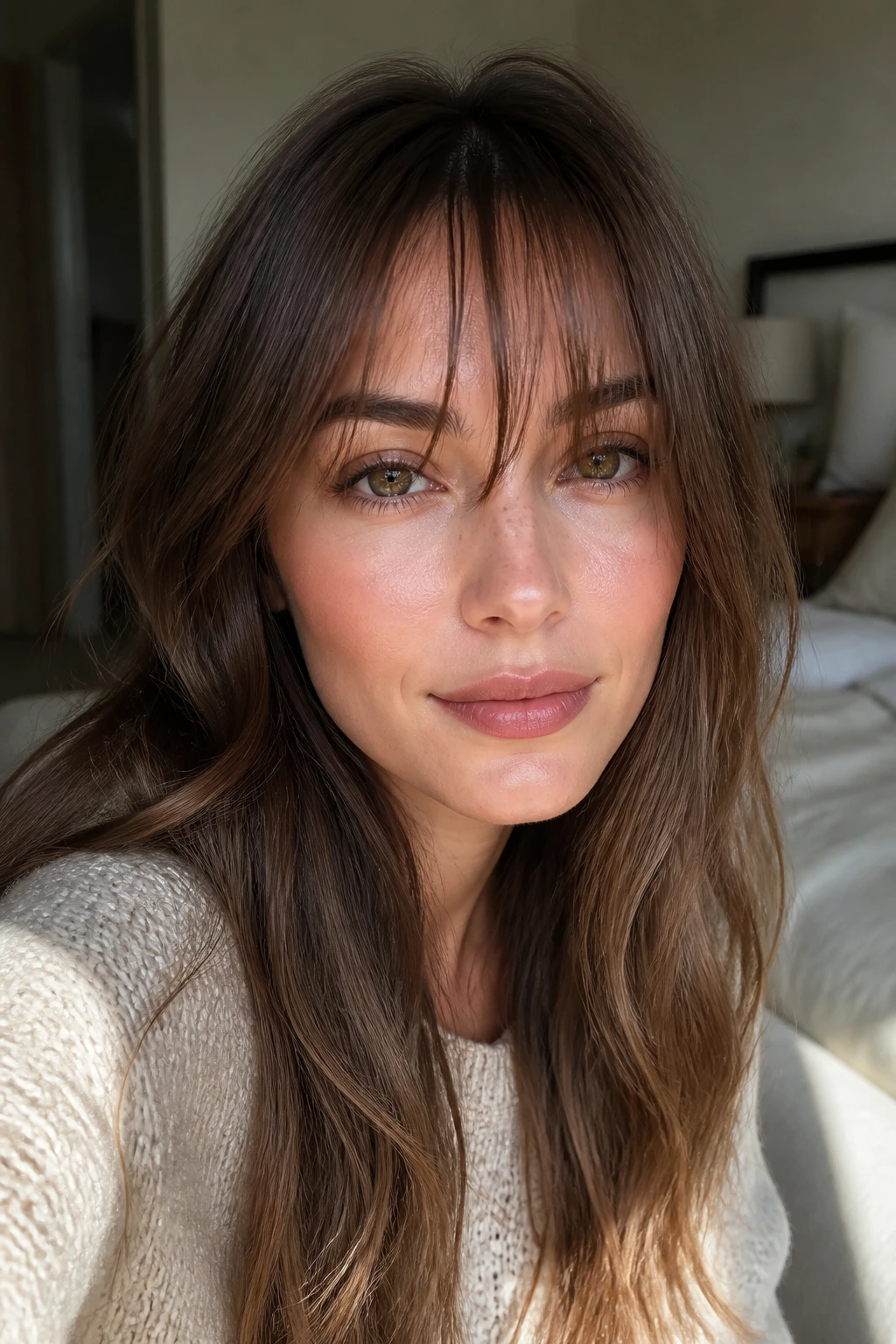
A wispy fringe is one of the easiest ways to keep a round face from feeling boxed in. The forehead shows through a little, the line stays soft, and the whole cut feels lighter than a full bang.
That lightness matters more than people think. A dense fringe can shrink the visible length of the face fast. A wispy one does the opposite. It creates soft vertical breaks, which is exactly what a round face likes.
You do have to be careful with product. Heavy cream or thick pomade will clump the strands together, and then you lose the airy part. A tiny bit of texture spray at the roots is enough.
If the fringe starts to look stringy, it usually needs a trim, not more product.
9. Face-Framing Bangs That Melt Into Layers
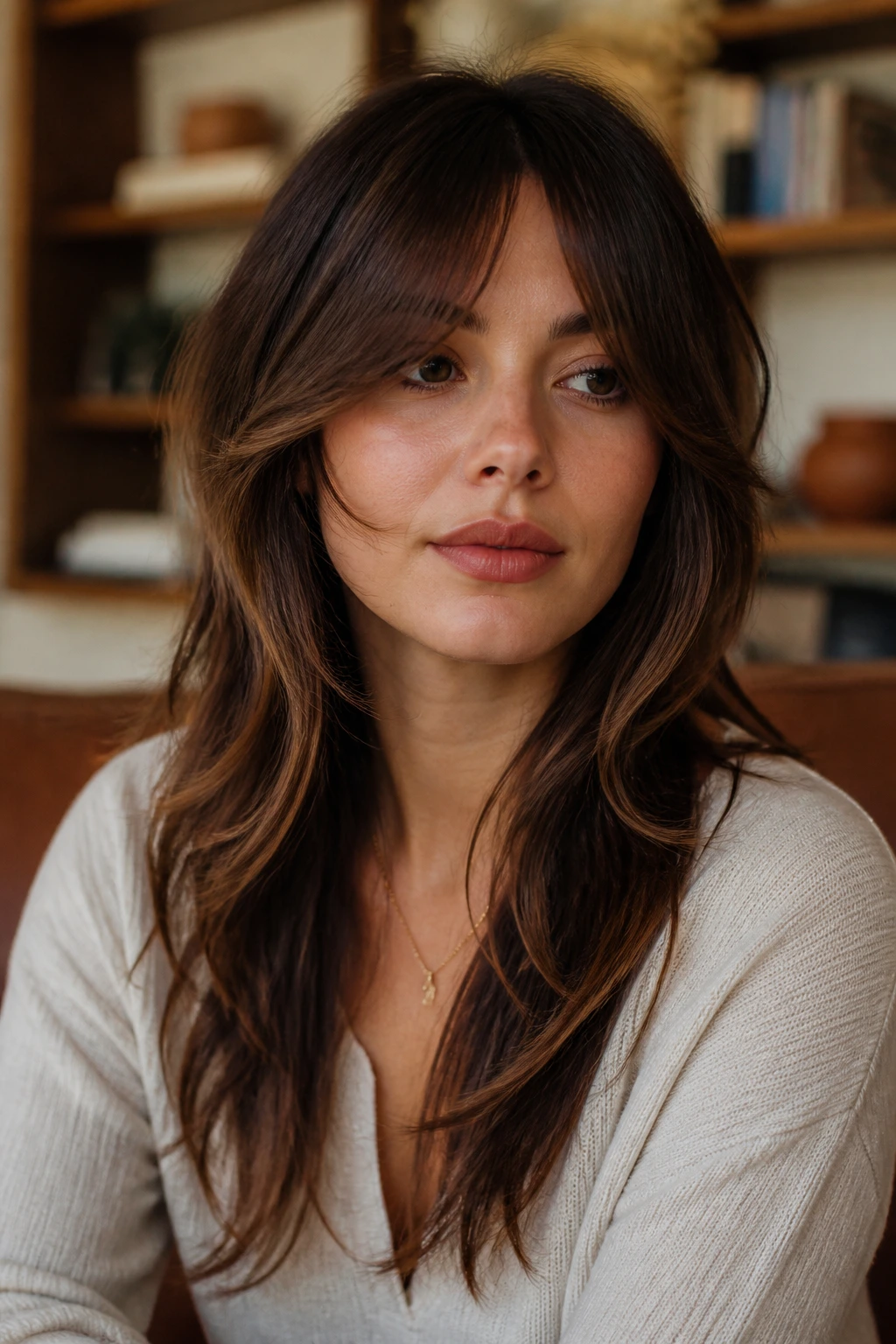
If you hate the idea of a strict bang line, this is the one to look at. The front pieces begin like bangs, then melt into cheekbone and jaw-length layers so the whole front of the haircut feels connected.
What to Ask Your Stylist
Ask for the shortest front piece to start around the center of the forehead, then let the outer pieces graduate into the layers around the face. That keeps the shape long and soft instead of blocky. It also helps the face look narrower because the eye keeps moving downward.
This style is especially good if you wear your hair down most days. It doesn’t fight the rest of the cut. It just folds into it.
A lot of people try to force bangs to behave like a separate piece. That’s usually where things go wrong. When the front layers work with the haircut instead of against it, the shape feels much more expensive, even if it’s technically simple.
10. Shaggy Long Fringe
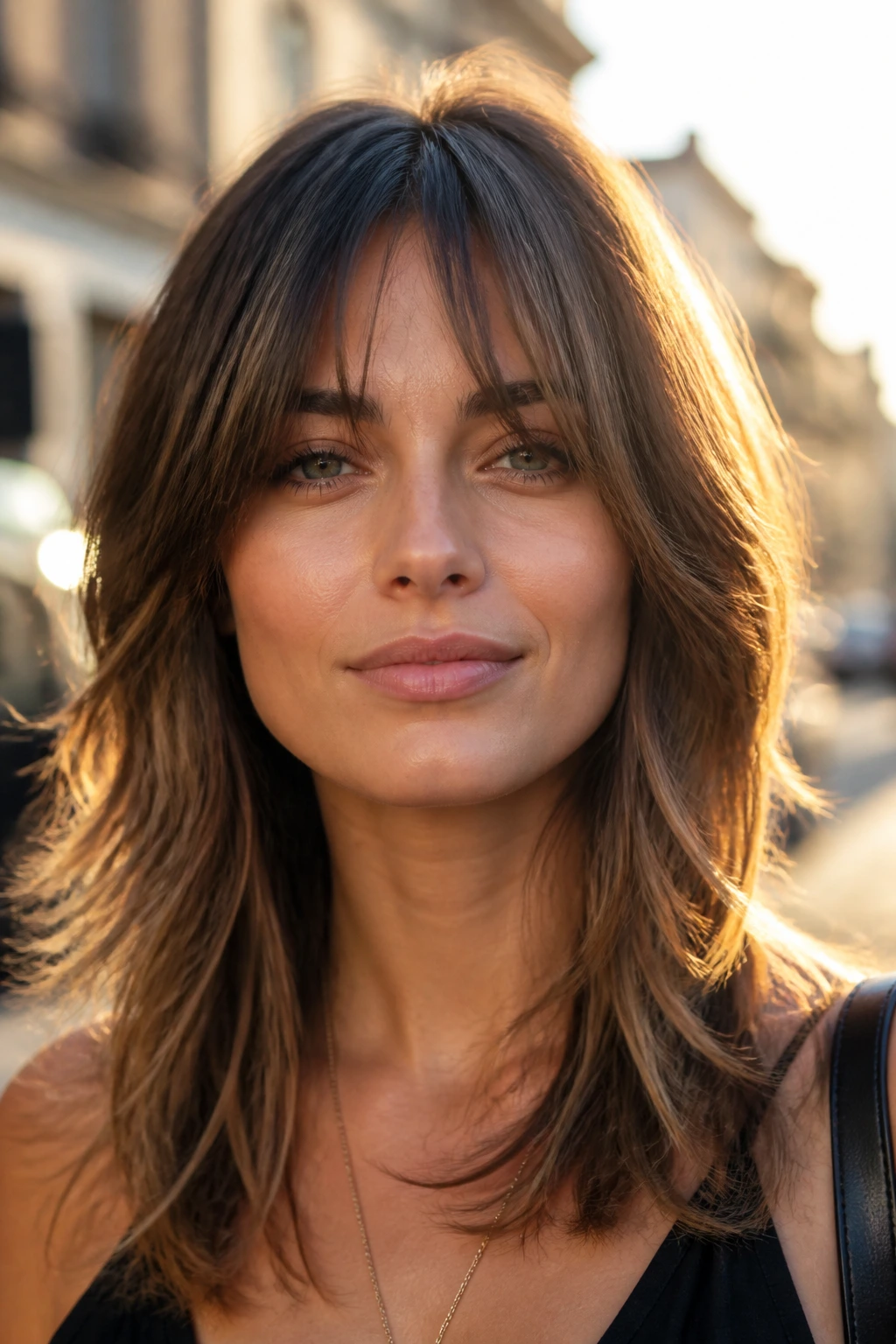
Shaggy fringe has a little mess to it, and that’s why it works. The texture breaks up the width of a round face and keeps the front from looking too tidy or too round in itself.
The best shaggy fringe is not random. It has a plan. The center is still a touch shorter, the sides are longer, and the ends are visibly textured so they separate instead of forming one thick panel. If your hair tends to swell at the front, this cut can keep that puffiness from becoming the whole story.
I like this with a medium-length shag or soft layers around the crown. The bangs feel intentional, not leftover. A bit of salt spray or matte paste can wake up the texture, but don’t overdo it. If the fringe feels crunchy, it’s too much.
11. Crescent Bangs With Curved Edges
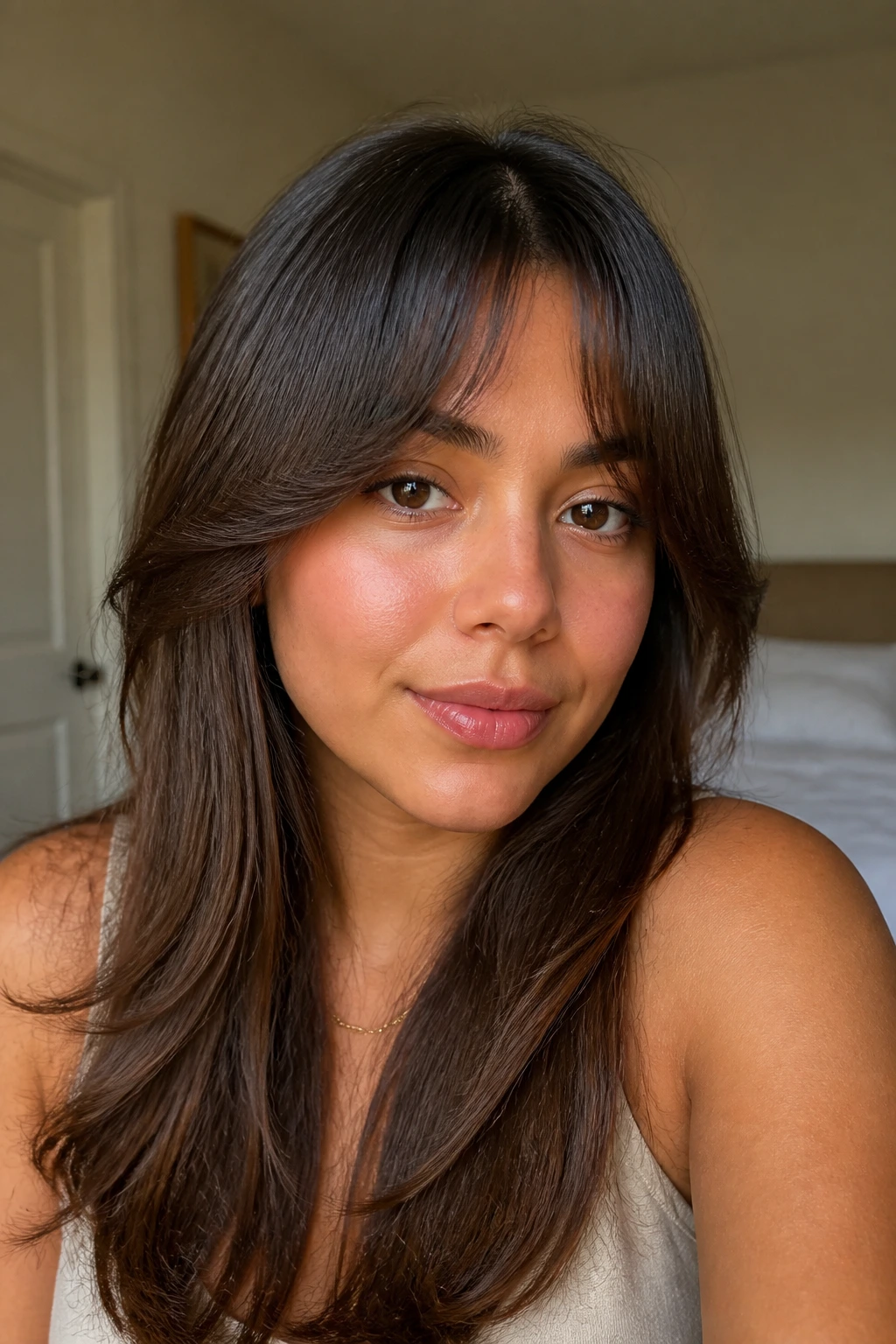
Crescent bangs are the softer cousin of a blunt fringe. The middle sits a little shorter, then the sides curve down in a crescent shape that follows the upper half of the face.
On a round face, that curve matters because it doesn’t stop abruptly at the cheeks. It glides. That glide creates a longer visual line, which is the whole reason this shape deserves attention.
The trick is keeping the curve controlled. If the center gets too short, the fringe can feel open in a way that looks accidental. If the sides get too full, the face gets crowded. Ask your stylist for soft corners and a gentle arc, not a thick half-moon. Softness is what keeps it flattering.
12. Polished Long Bend for Straight Hair
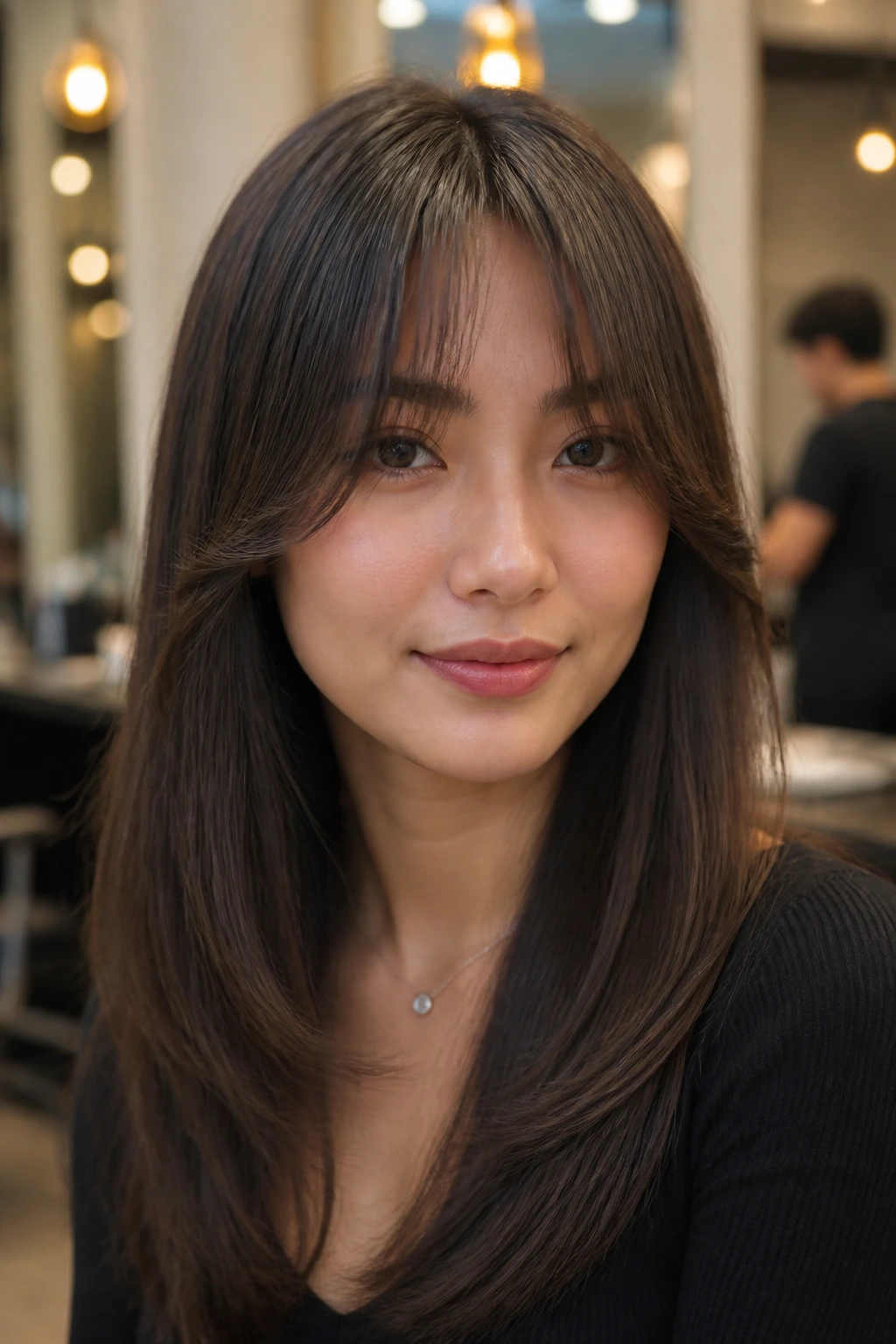
Straight hair can make bangs look severe if you don’t put some bend into them. That’s why this version is all about shape and movement, not raw bluntness.
The fringe starts long, usually around brow level or lower, then bends away from the face at the outer edges. The ends are polished, not ragged. On round faces, that slight bend gives you the length you want without a heavy curtain of hair sitting across the forehead.
The Round Brush Move
Dry the bangs forward first, then wrap only the last inch or so around a round brush and turn it away from the face. You are not curling them. You’re guiding them.
A flat iron bend can work too, especially on very straight hair that refuses to remember a brush. Keep the motion soft. A hard flip looks dated fast. A gentle bend looks deliberate.
13. Piecey Separated Fringe
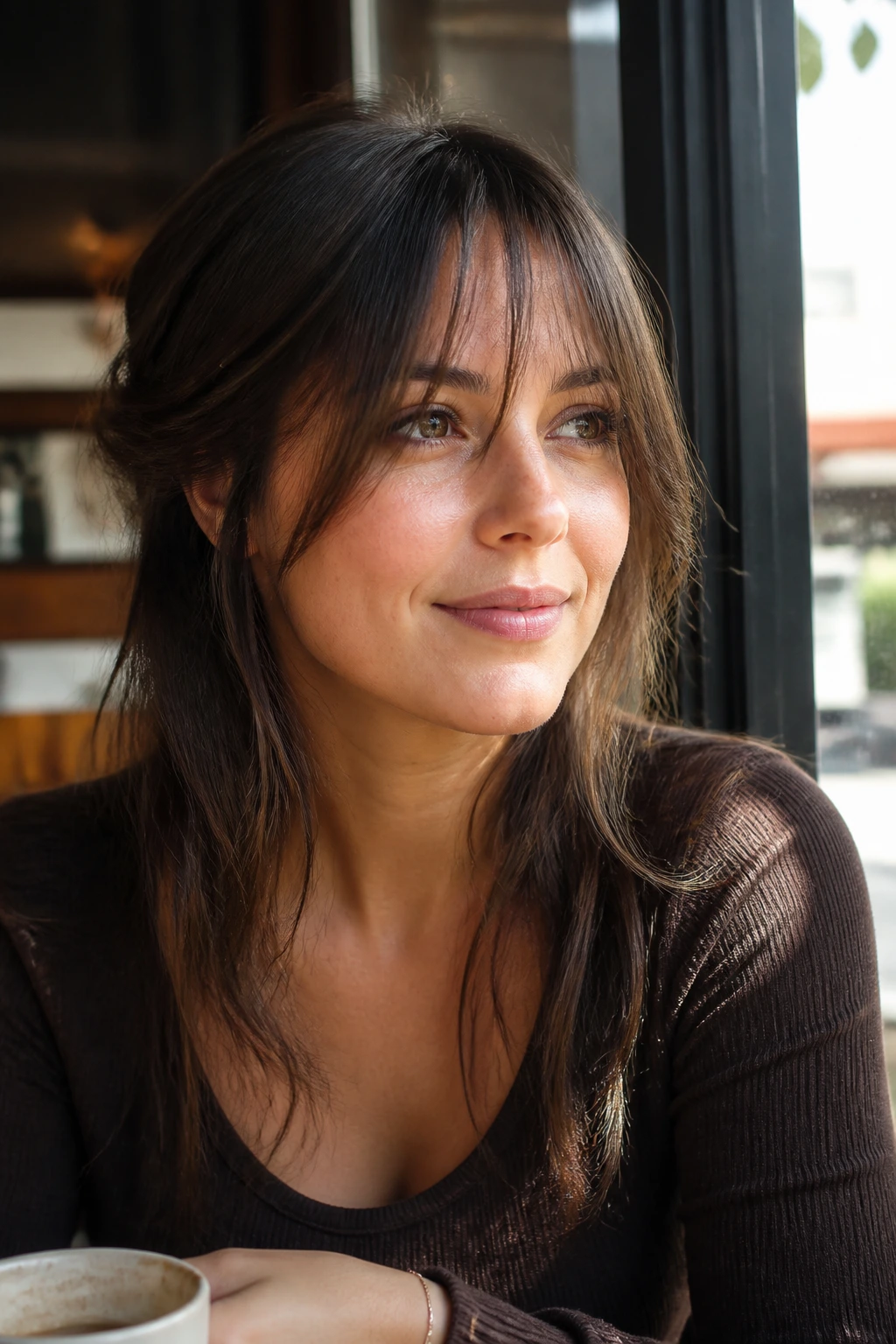
Piecey bangs are a good choice when you want the front to feel light instead of full. The little gaps between the strands let the forehead breathe, and that matters on a round face because it stops the style from reading like one wide shape.
This is one of those cuts that looks casual but needs decent shaping. You want separate pieces with visible length variation, not random wisps. The best version keeps the center light and leaves the outer pieces long enough to brush the cheekbones.
- Use a tiny amount of matte paste on dry fingers.
- Twist 2 or 3 pieces at a time, not the whole fringe.
- Keep the roots clean so the pieces don’t clump.
A piecey fringe is not high-maintenance, but it does look sloppy if you overload it. Less product. Always less.
14. Asymmetrical Bangs With One Longer Side
A strong diagonal can do a round face a lot of favors. Asymmetrical bangs pull the eye across the forehead and then down, which creates movement that straight-across bangs simply don’t give you.
The longer side can graze the cheekbone while the shorter side stays closer to the part. That imbalance is the magic. It doesn’t have to be dramatic to work, either. Sometimes a subtle difference of 1 to 2 inches is enough to change the whole line of the face.
This is the cut for someone who wants edge without looking severe. It also plays well with a sharp bob, a lob, or long layers. If you’re nervous, start softer than you think. You can always go more dramatic next time.
15. Layered Curtain Fringe for Wavy Hair
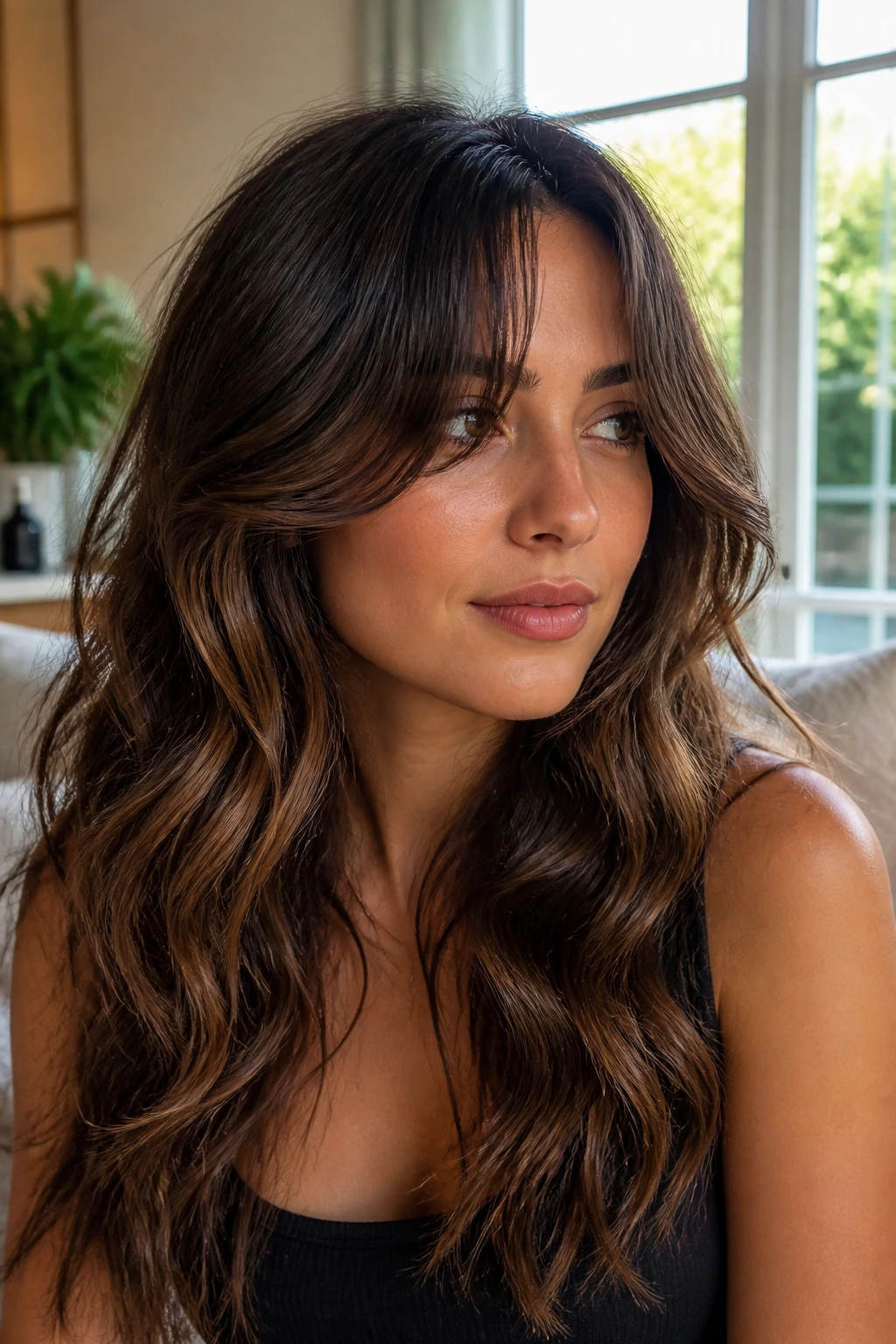
Wavy hair loves a layered curtain fringe because the texture already gives you motion. You’re not trying to flatten that wave out. You’re giving it a shape to live in.
The center should open easily, while the longer side pieces follow the natural bend of your hair. That keeps the fringe from spreading too wide across the face. On a round face, the goal is to let the waves fall downward and outward, not puff side to side.
Dry-Cut Rules
If your waves shrink when they dry, the bangs need to be cut longer than they look in the chair. A dry cut helps, or at least a very careful wet cut with a clear plan for shrinkage.
Use a diffuser on low heat or let the fringe air dry, then smooth only the top layer with your fingers. Don’t brush it a dozen times. Wavy bangs turn frizzy fast when they’re bullied.
16. Long Swoop Bangs That Land Below the Cheekbone
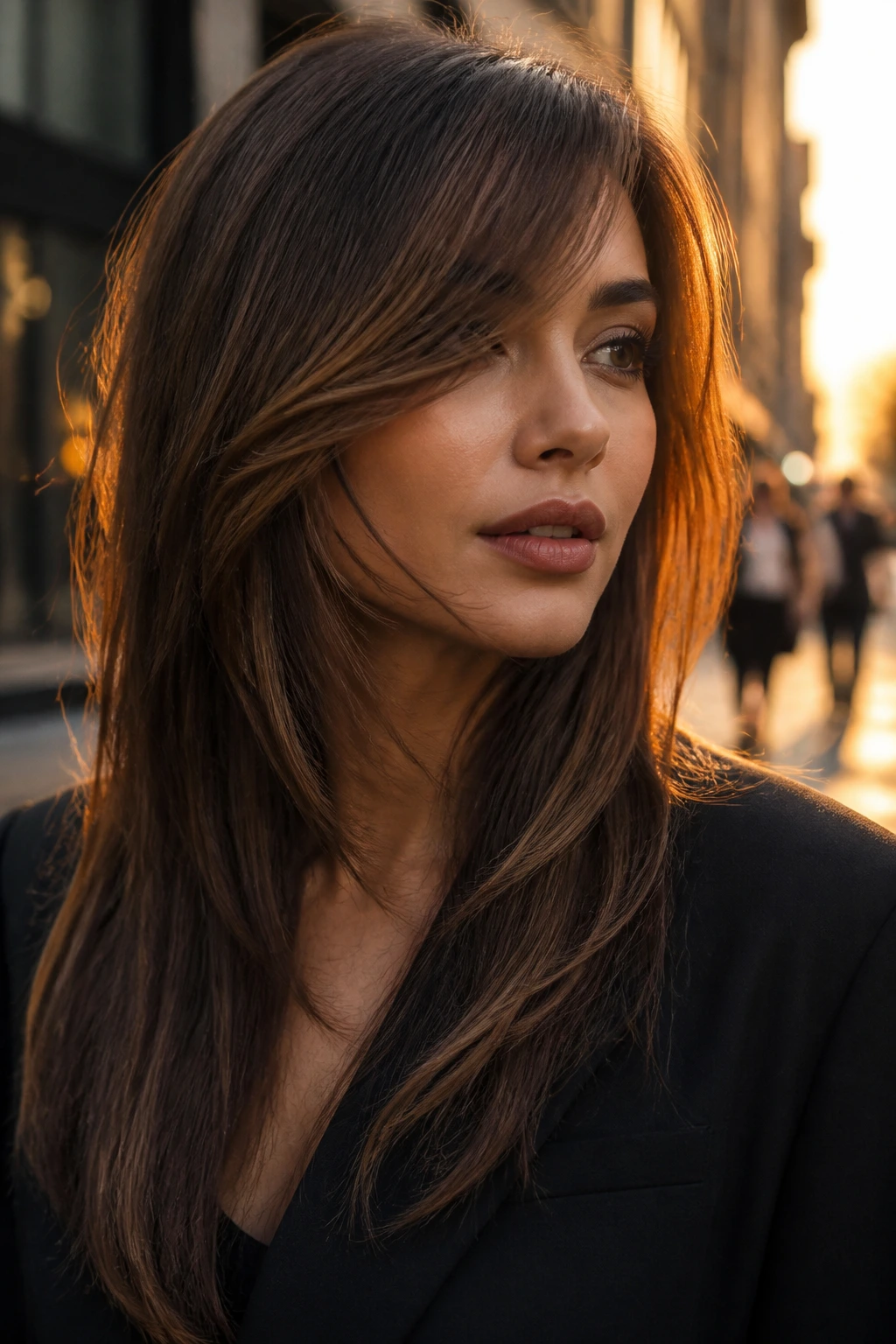
A long swoop is one of the most face-lengthening shapes you can wear. The hair starts at a side part and sweeps across the forehead in a long arc, then drops below the cheekbone instead of ending right there.
That drop is why it works. It keeps the eye moving down the face instead of stopping at the widest point. A round face benefits from that downward line, especially if the hair around the jaw is also a little longer.
This style feels more finished when the ends are slightly curved under or tucked outward, depending on the cut. It should look like the front of the haircut belongs to the rest of it. If you leave the swoop disconnected, it can feel like a wiggy add-on. Nobody wants that.
17. Hidden Internal Thinning for Thick Hair
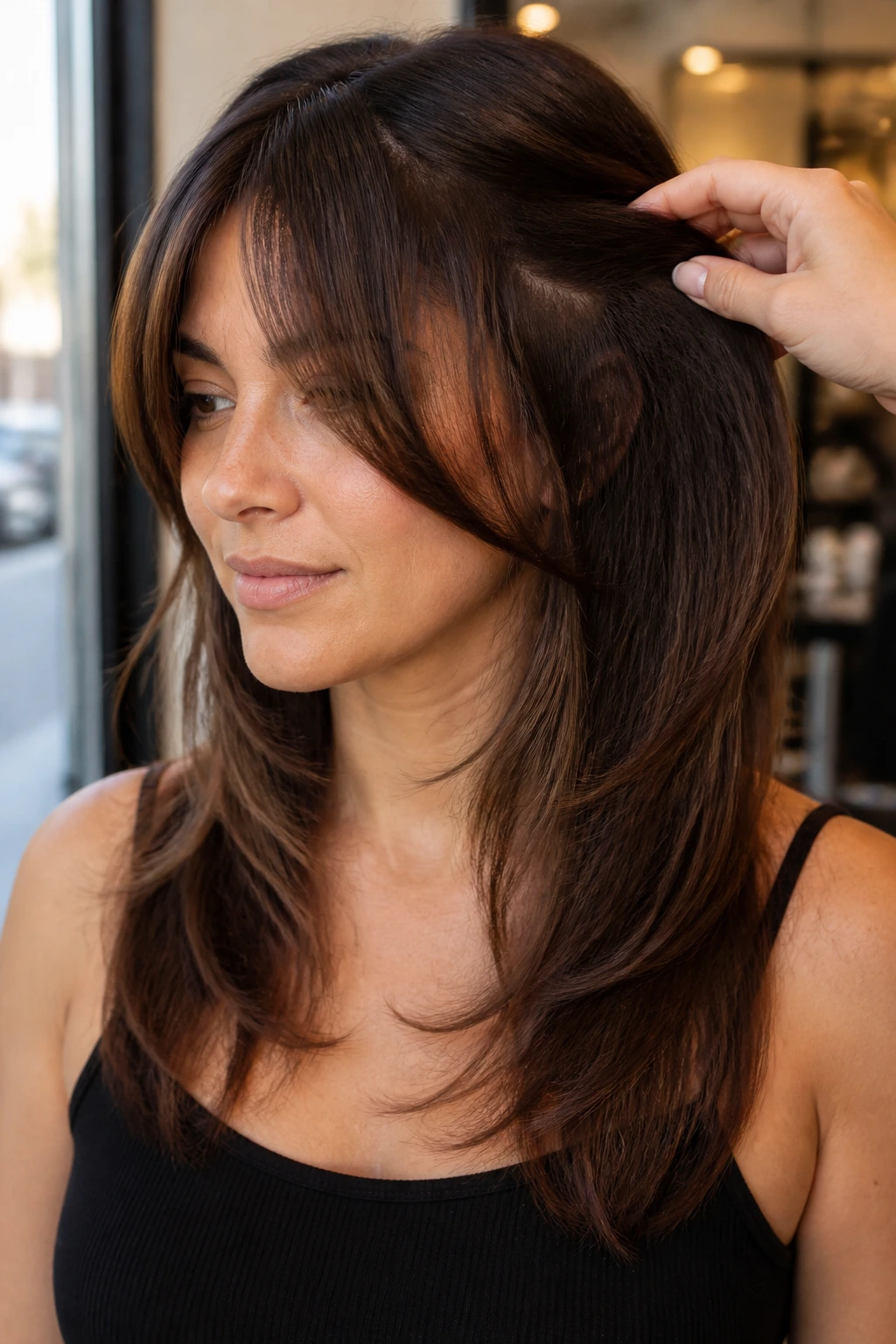
Thick hair can make long inverted bangs look gorgeous or bulky, and the difference usually comes down to how the inside is cut. External layers alone won’t fix a front section that’s too heavy.
The better move is internal removal. That means taking weight out from underneath while keeping the surface shape clean. The fringe still looks full, but it stops ballooning at the forehead. On a round face, that matters because extra bulk at the temples and cheeks makes everything feel wider.
A good stylist will use point cutting or controlled texturizing rather than hacking at the ends with thinning shears. Too much thinning at the very bottom can leave those fuzzy, see-through tips that stick out in all the wrong ways. The shape should drape. It should not fray.
18. Blowout Bangs That Flip Away From the Face
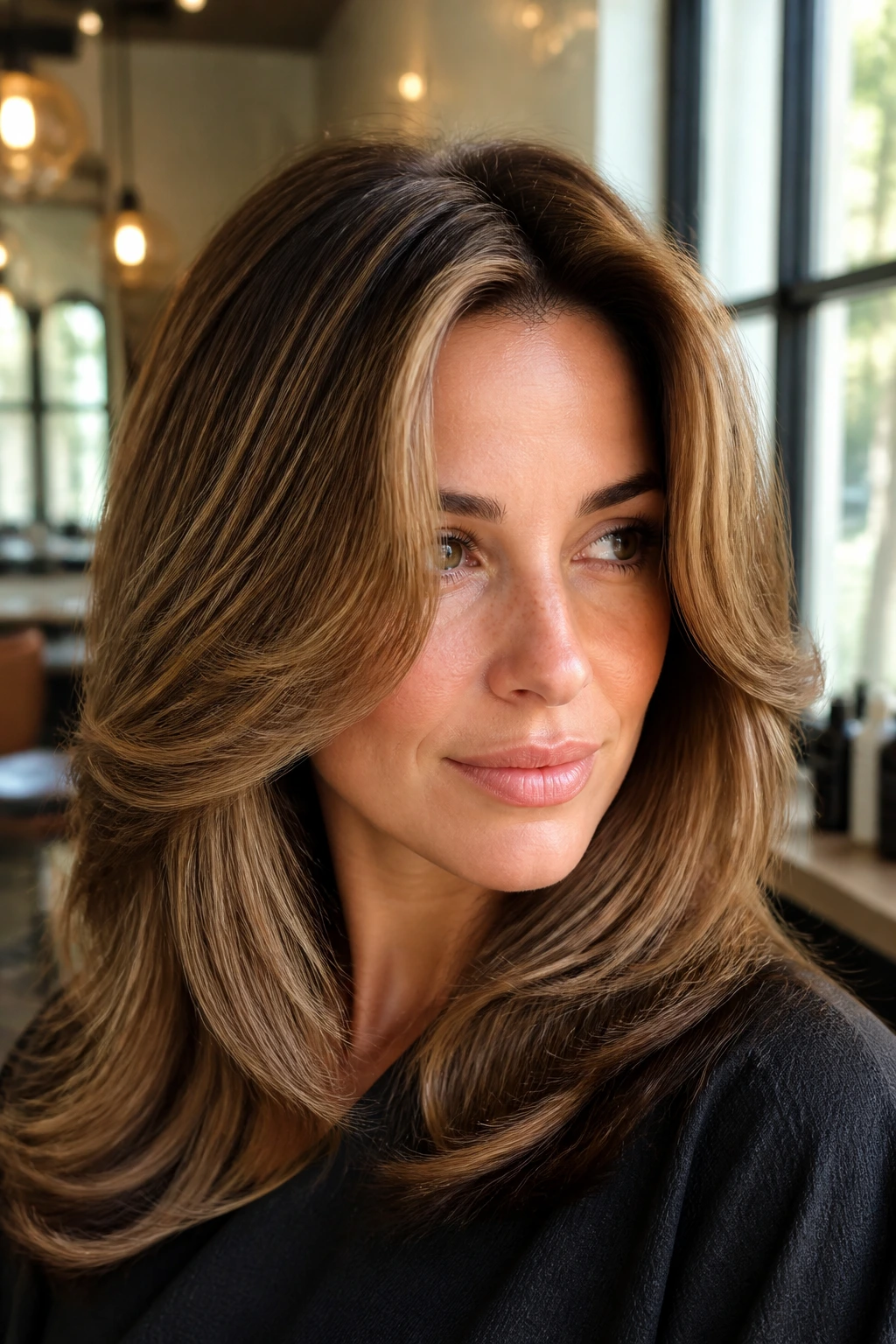
A blowout fringe is the polished version of this whole idea. The bangs lift at the root, curve away from the forehead, and land with a soft flip that makes the face feel open.
Compared with air-dried bangs, this style gives more height and cleaner movement. That makes it especially good for round faces, since height at the front helps stretch the shape visually. It also looks cleaner around the eyes, which is useful if your bangs grow fast.
Use a big round brush or a Velcro roller while the hair is still warm from the dryer. Let the bangs cool in that lifted position before touching them. Cooling is what locks the bend in place. Skip that part and the style falls flat in half an hour.
19. Soft Diagonal Fringe With a Sharp Part
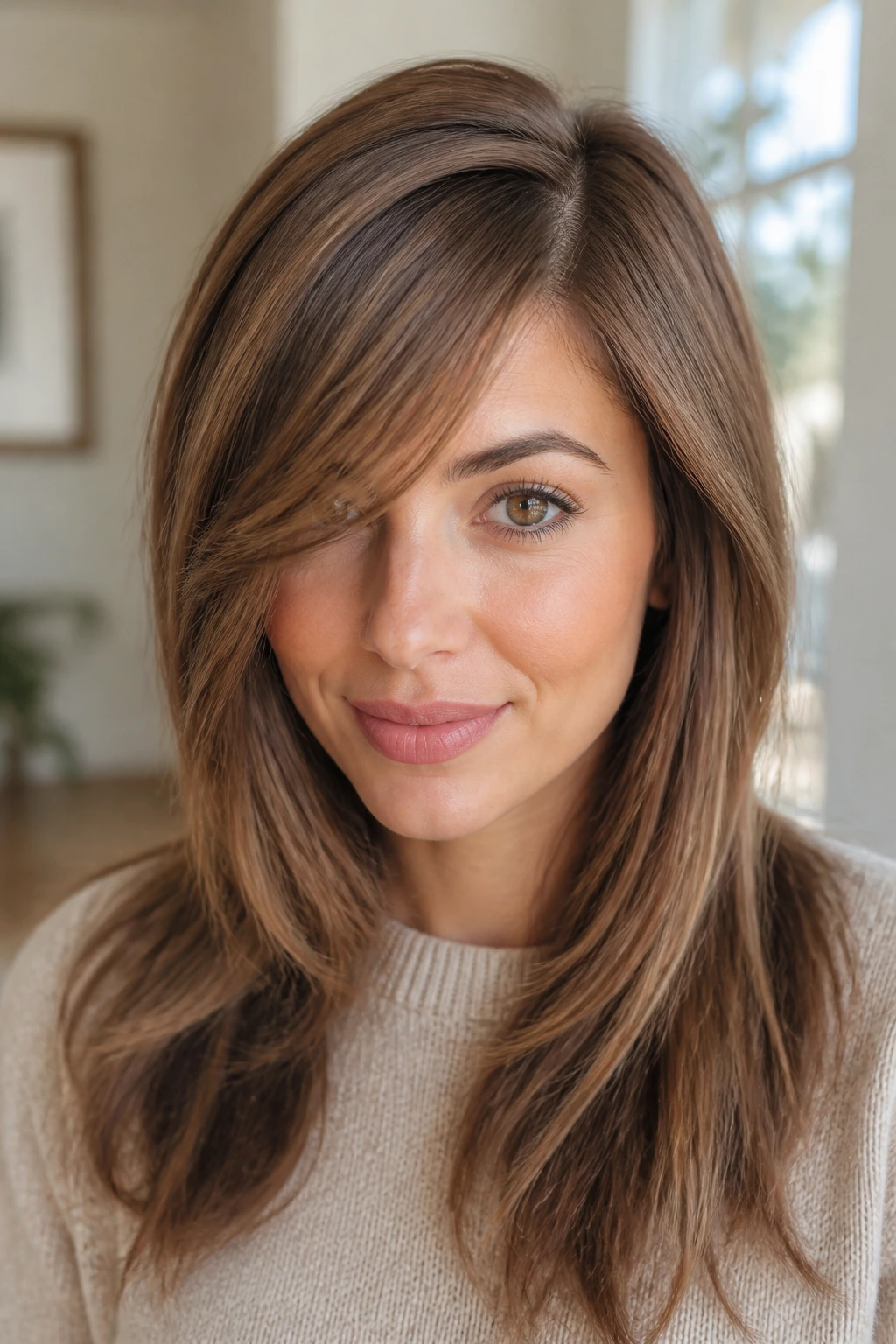
A diagonal fringe gets its strength from the part itself. The part is clean, the line is intentional, and the bangs travel across the forehead in a controlled slope that helps a round face look longer.
How to Keep It From Feeling Harsh
The diagonal part should be sharp, but the ends of the bangs should not be. That’s the balance. A clean part gives structure; soft ends keep the style from looking severe.
If your hair is fine, keep the fringe light through the middle and slightly longer at the outer edge. If it’s thick, reduce bulk at the underside so the diagonal can fall instead of puffing.
This is one of my favorite options when someone wants a cut that looks polished without trying too hard. It’s tidy. It’s sleek. It also works with a ponytail better than most bang shapes, which is a nice bonus nobody talks about enough.
20. Grown-Out Intentional Fringe
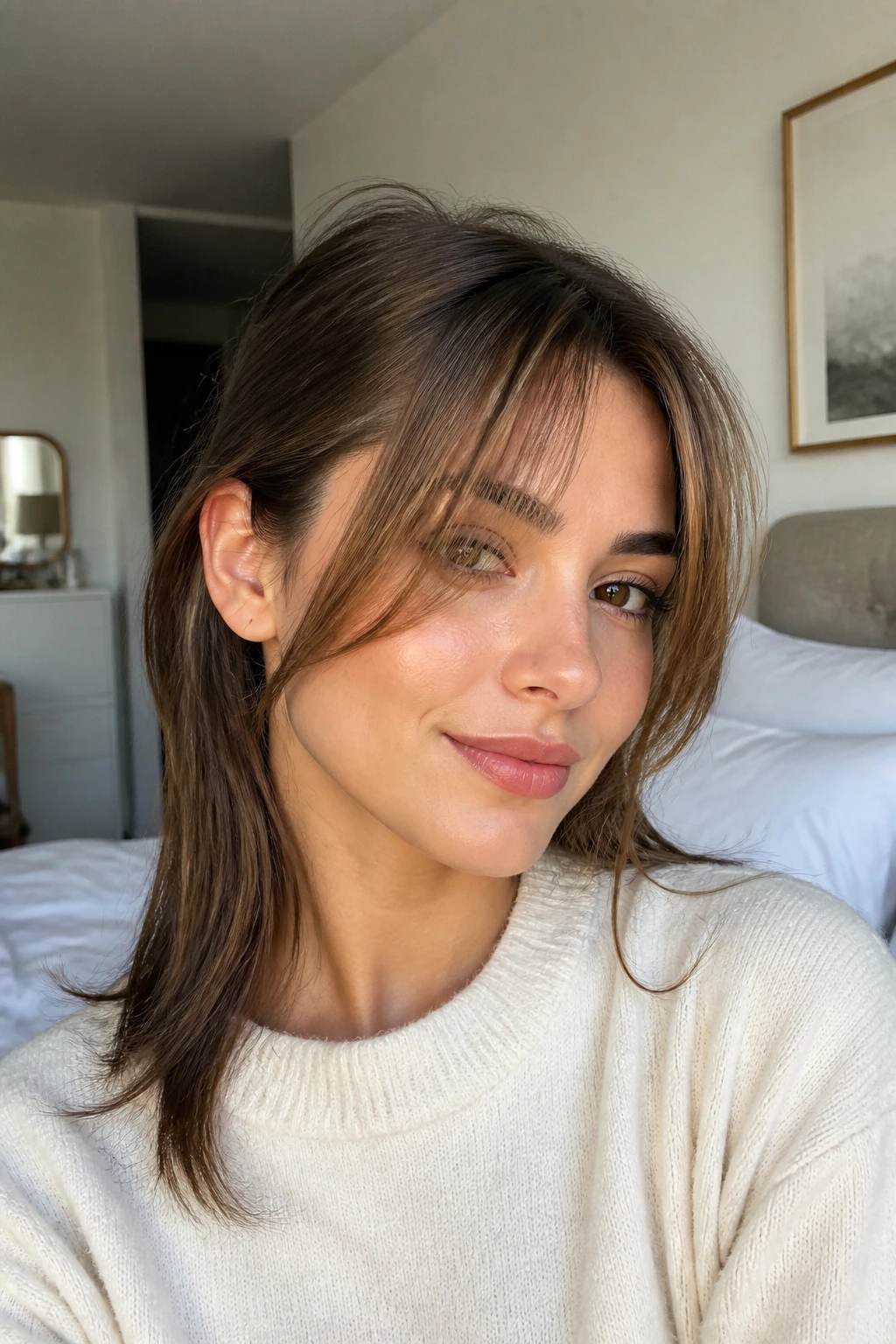
A grown-out fringe can be a blessing if it’s cut with intent. The idea is to start a little longer than a classic bang so the shape stays flattering as it grows, instead of hitting that awkward in-between stage after two weeks.
Round faces often benefit from this because the longer length keeps the front from cutting the face in half. The bangs can tuck behind the ear, sweep to the side, or split in the middle depending on the day. That flexibility makes the cut feel easy to live with.
The mistake is starting too short. Short bangs are cute until they aren’t, and on a round face they can make the forehead and cheeks feel closer together. If you want room to breathe, leave extra length at the first cut. You can always take more off later. You cannot glue it back on.
21. Rounded-Corner Fringe
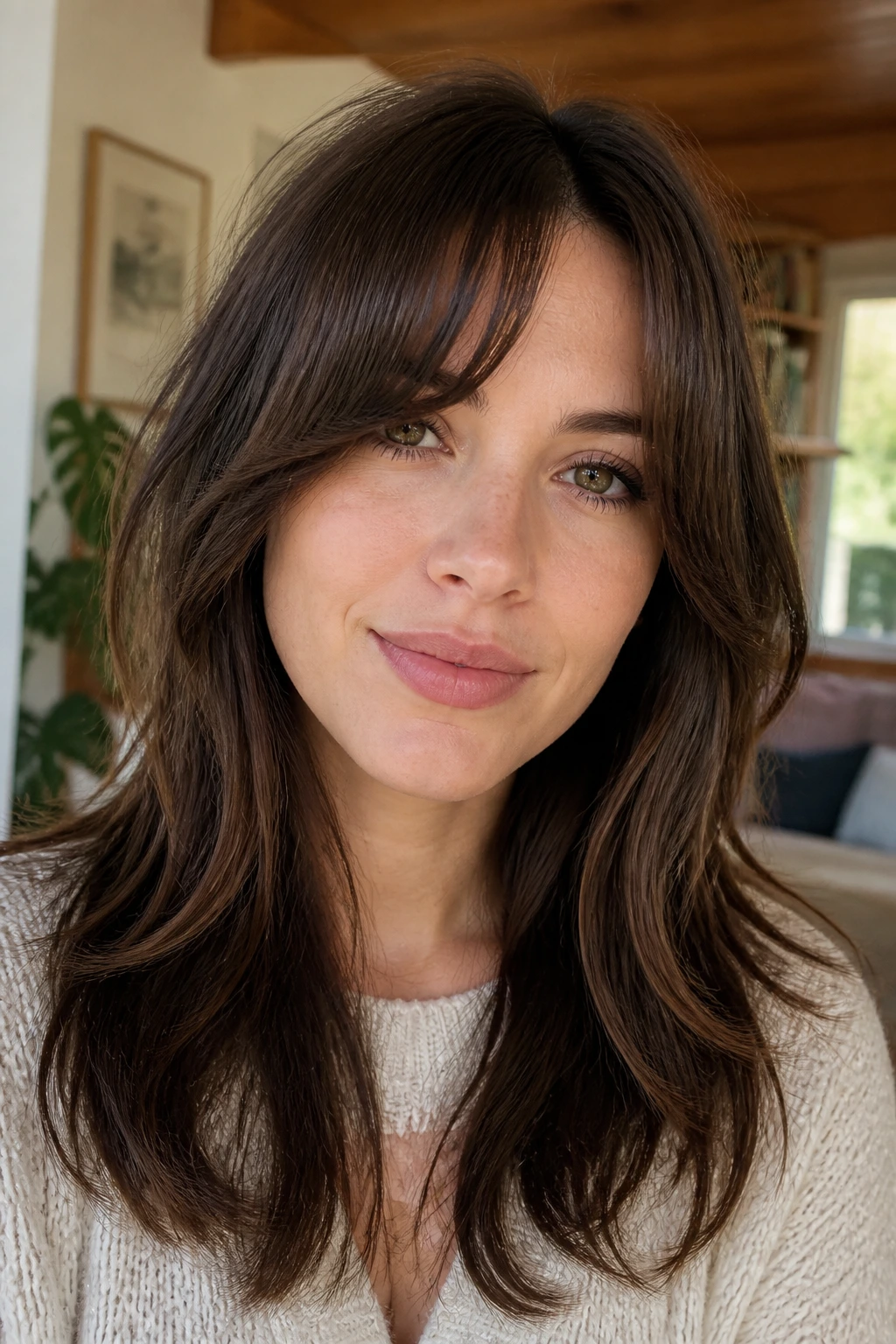
What if you want a fringe that feels soft but still has a little shape? Rounded-corner bangs are the answer.
The middle stays long enough to keep the face open, and the corners soften instead of dropping in a hard line. That small rounding at the sides makes the fringe feel less boxy, which is exactly what a round face needs. It gives you coverage without the blunt edge that can exaggerate width.
This cut looks especially good when the ends are brushed slightly outward during styling. Not curled. Just gently guided. That tiny movement keeps the corners from hugging the cheeks too closely. The shape should hover, not press against the face.
22. Choppy Fringe With Collarbone Layers
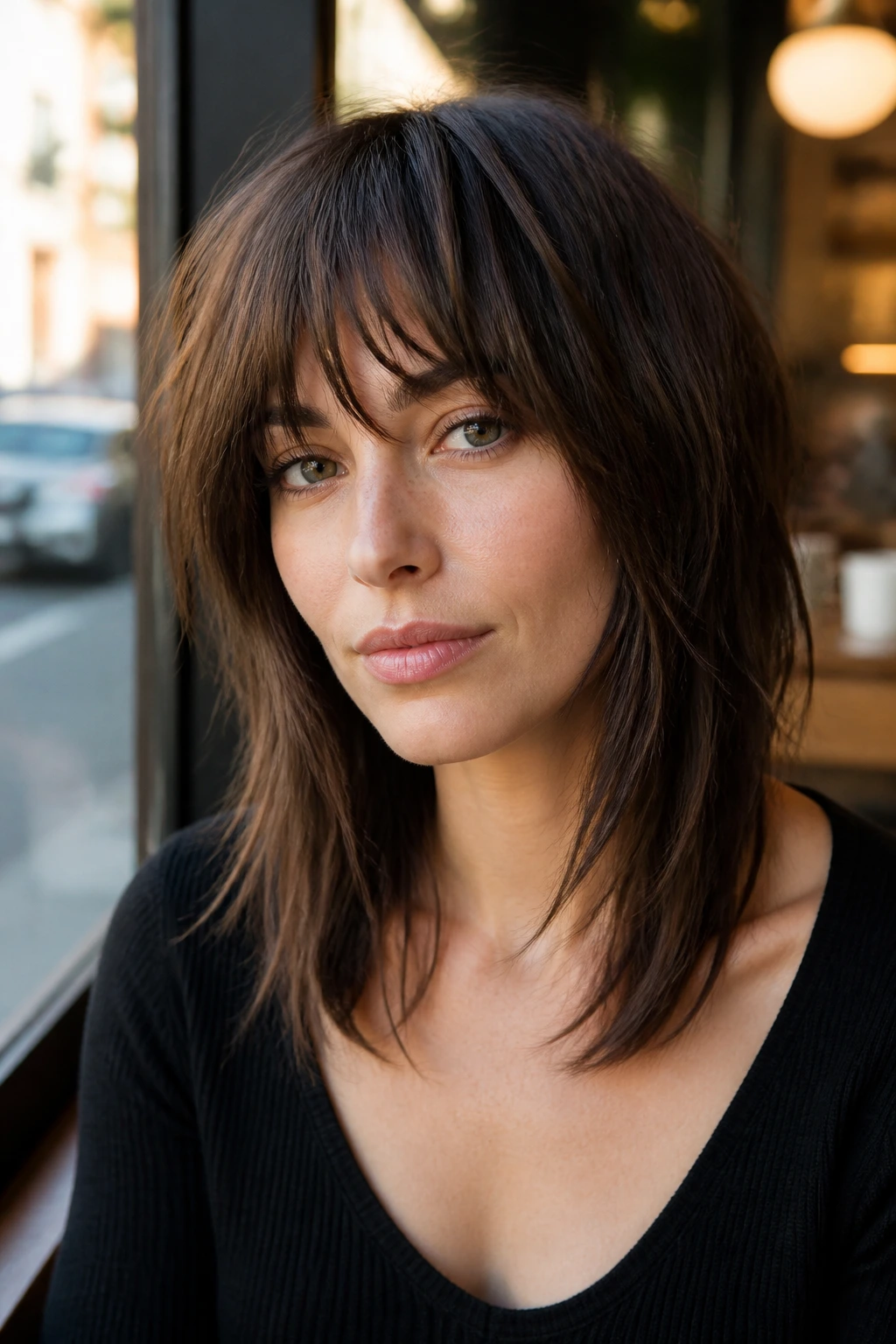
Choppy bangs work best when they have somewhere to go, and collarbone layers give them that runway. The front pieces drop in a broken, textured line, then connect into longer layers that land low enough to elongate the whole silhouette.
That connection is important. If the bangs end too abruptly, the face gets framed in the wrong place. When they feed into collarbone layers, the eye keeps traveling downward, which is exactly what you want on a round face.
- Ask for soft choppiness, not blunt chunks.
- Keep the shortest piece a little lower than a classic micro fringe.
- Style with a light spray wax if the ends need separation.
- Let the longer front pieces fall forward instead of pinning them back too fast.
This is a cool cut. A little messy, a little deliberate.
23. Curly Curtain Bangs That Open in the Middle
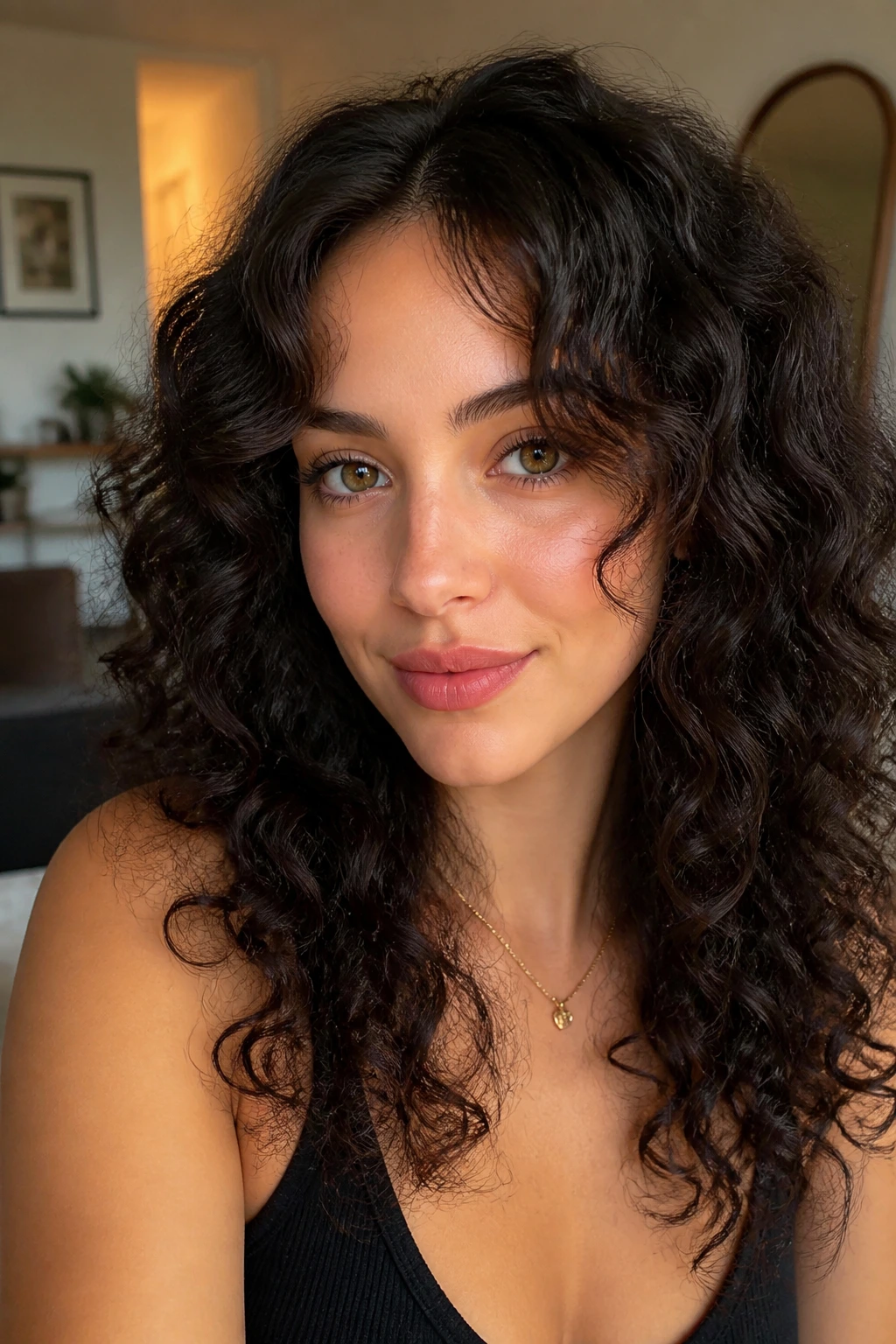
Curly hair needs a different conversation entirely. If you cut curly curtain bangs the same way you cut straight ones, you usually end up with a puffed center and short pieces that shrink far more than you expected.
The better move is to cut them dry, or almost dry, so you can see where the curls actually sit. The middle should open enough to show some forehead, while the sides fall longer and frame the cheeks without bunching up. On a round face, that open center is gold.
I also like curly bangs when the sides are longer than feels safe in the chair. Curly hair bounces up. A lot. If the stylist seems nervous about leaving length, that’s usually the right instinct. Err long. Then trim later if needed. It’s a cleaner problem to have than bangs that spring to the middle of your forehead.
24. Long Bangs With a Center Peak
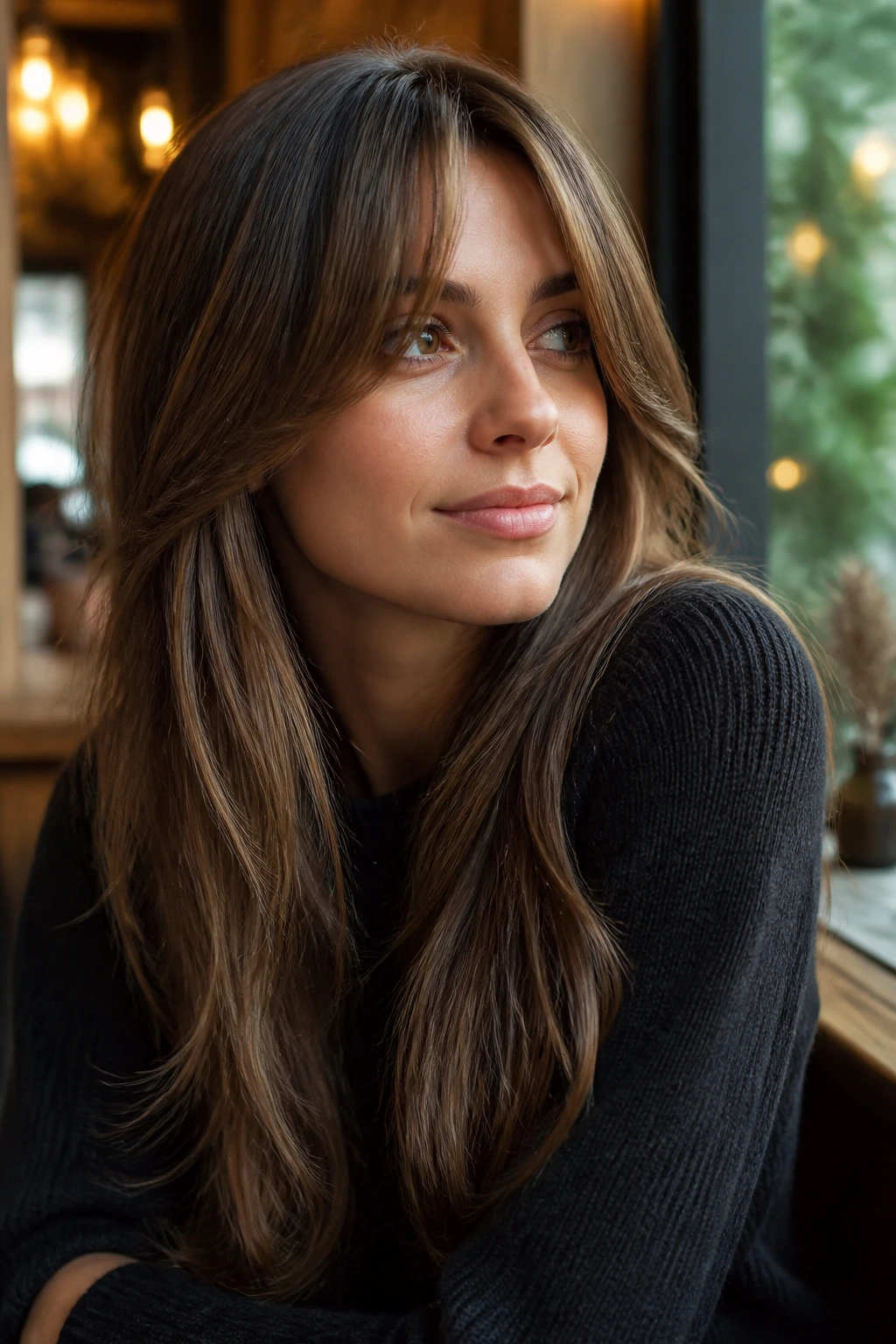
This shape sounds subtle, but it changes the whole mood of the cut. Instead of a flat center or a soft split, the shortest point sits in the middle like a tiny peak, and the sides slope down from there.
That small rise is useful on a round face because it breaks the horizontal line and gives a little lift right where the eye first lands. It’s not dramatic. It doesn’t need to be. The point is to keep the front from reading as one smooth circle.
This works best when the peak is soft, not pointy. Think gentle triangle, not sharp arrow. If the middle gets too short, the shape turns fussy fast. Keep the rest long enough to brush the temples and cheekbones, and the whole thing stays wearable.
25. Feathered Bangs for Coarse Hair
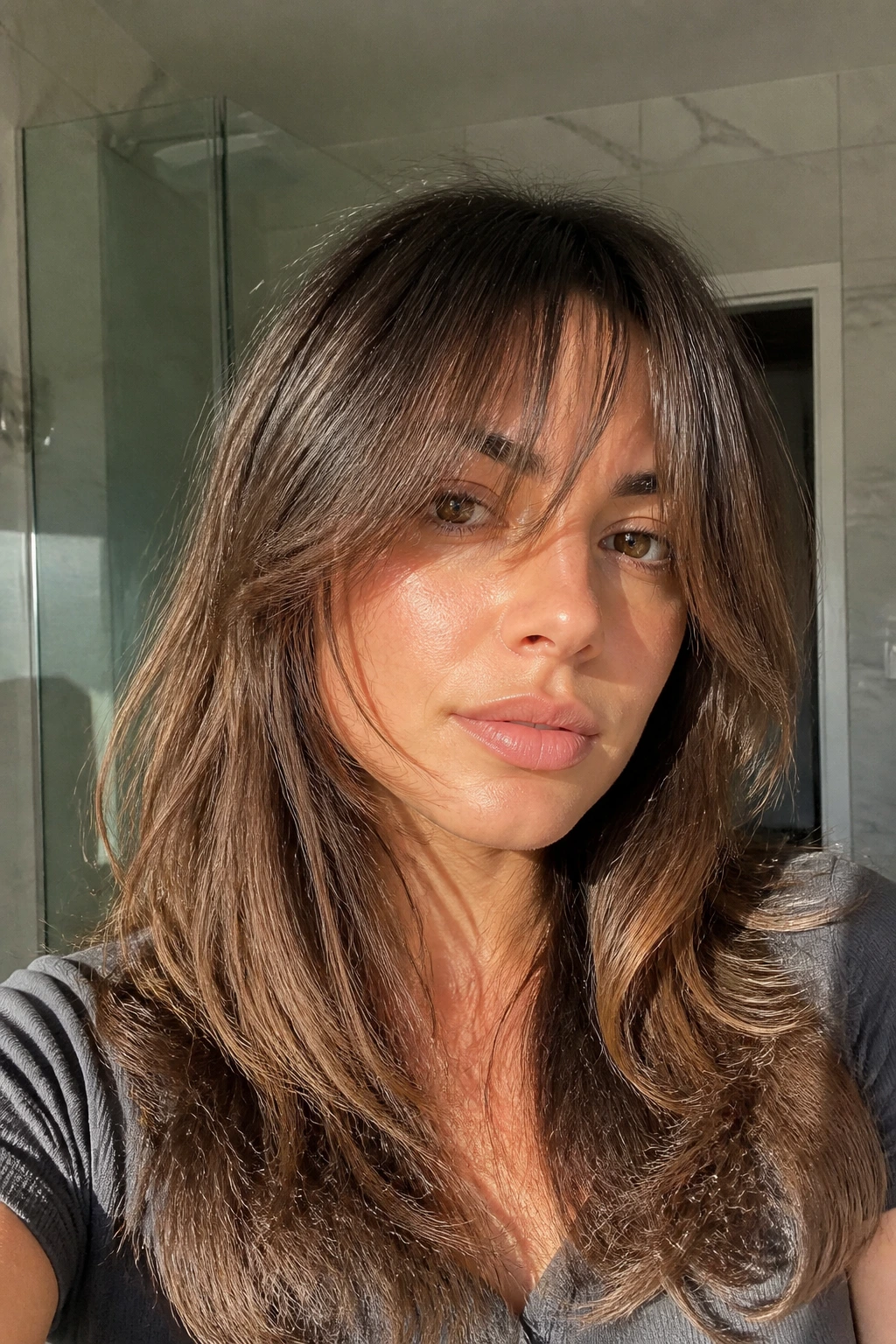
Coarse hair can be gorgeous in bangs, but it needs room. If the front is cut too blunt, the hair can sit like a little wall across the forehead. Feathering fixes that by softening the edge and removing some of the visual heaviness.
Why It Works on Coarse Hair
Feathered ends break up the density, which helps the fringe move instead of stacking. On a round face, that movement is useful because it stops the bangs from widening the front of the head. You want the hair to fall. You do not want it to puff.
- Ask for controlled feathering, not aggressive thinning.
- Keep the outer corners longer so the cut still frames the face.
- Use a cream with slip, then blow-dry on medium heat.
- Avoid stiff gels that freeze the texture in place.
This is one of those styles that gets better when it looks a little soft around the edges.
26. Slit Fringe With a Peekaboo Center
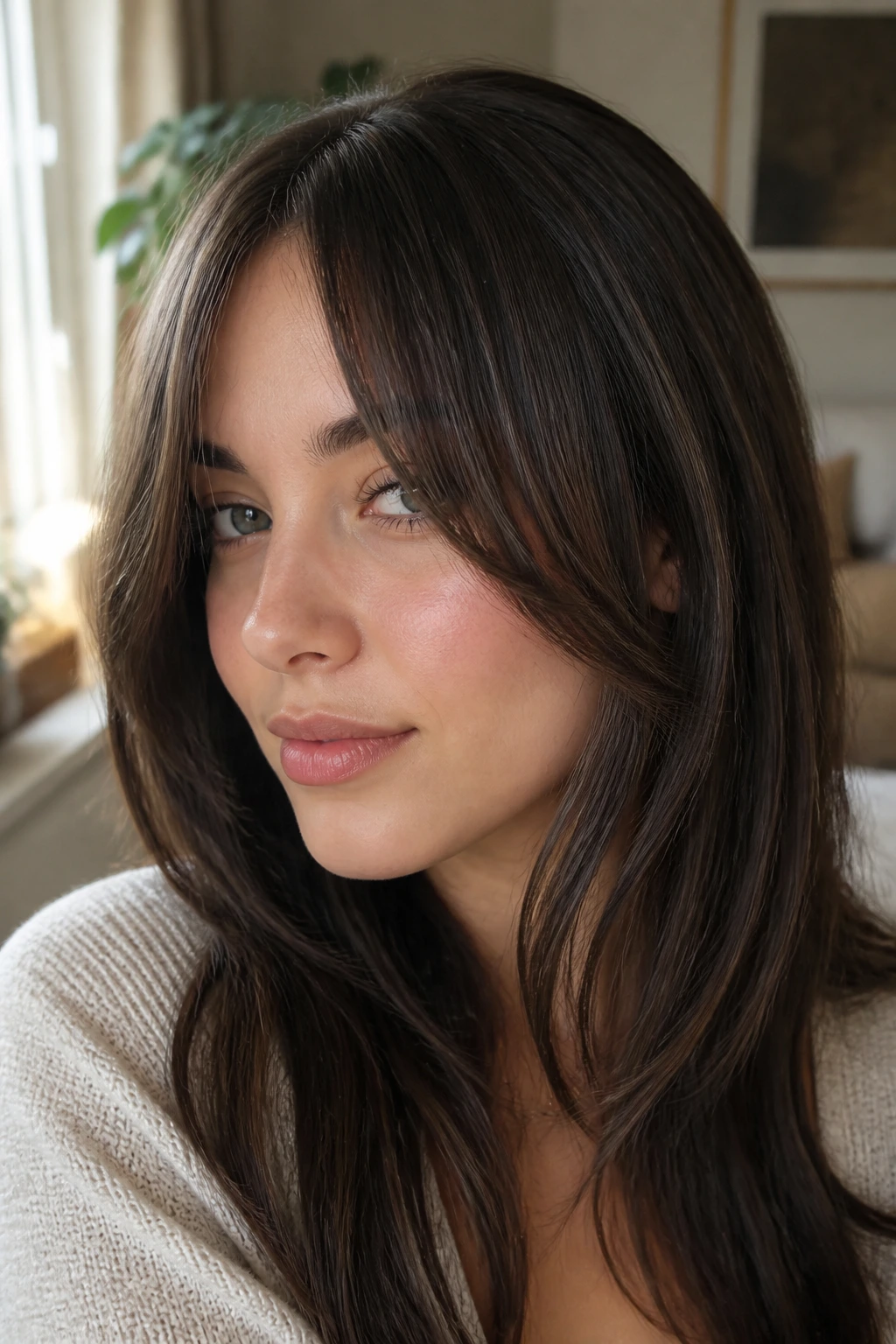
A slit fringe is a neat compromise if you want a center opening but don’t want full curtain bangs. The middle has a tiny peekaboo gap, then the rest of the fringe drops longer around it.
That gap helps the forehead breathe and gives a round face a little more vertical space. It also looks less formal than a strict center part. There’s a looseness to it. A small one, but enough.
This shape is especially useful if you wear glasses or have a smaller forehead. The slit keeps the front from crowding the eyes. If your hair is dense, make sure the opening is not swallowed by bulk. If it disappears, the whole point disappears with it.
27. Long Fringe With Bend and Movement
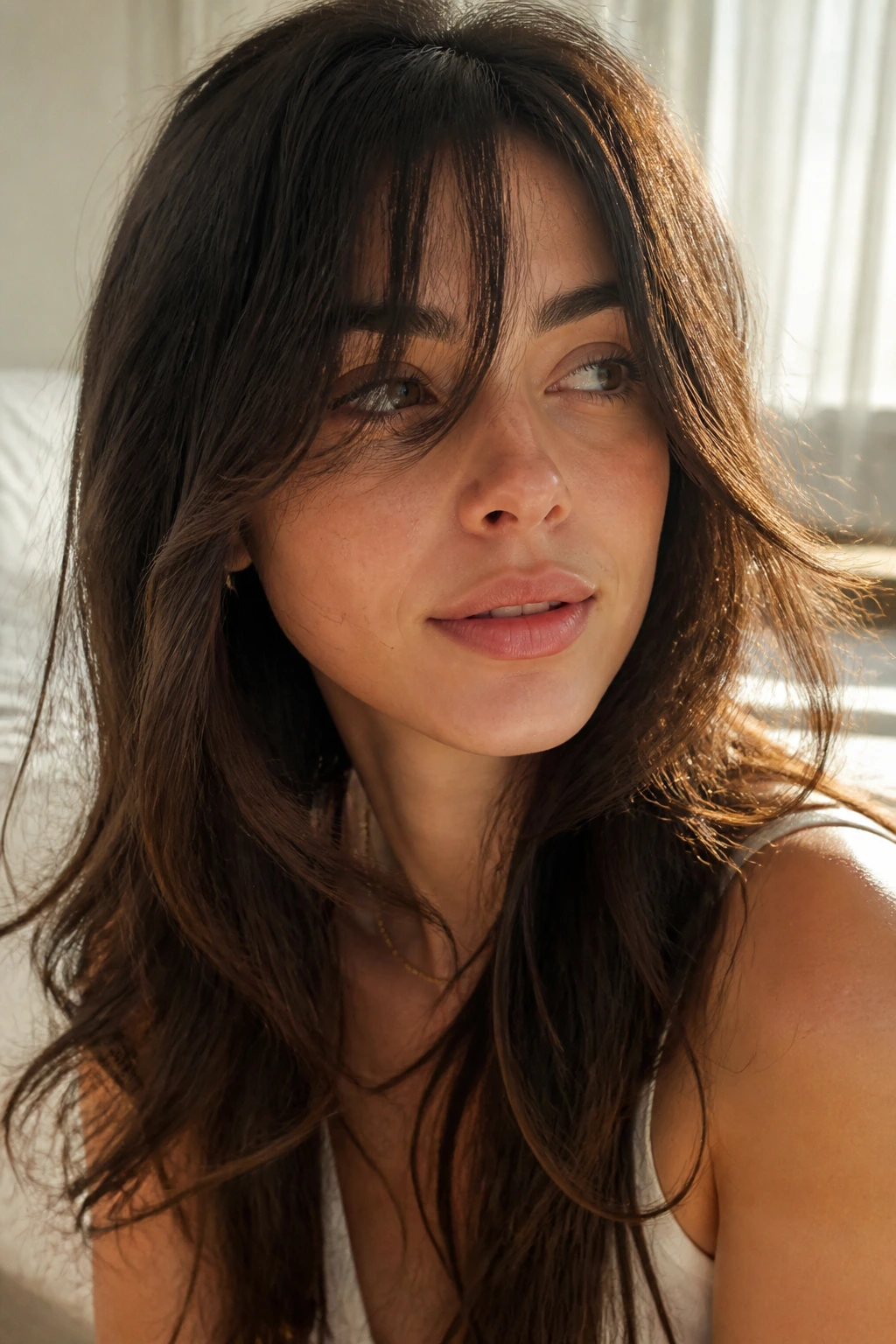
Long fringe with bend is the kind of cut that looks easy when it’s done right and annoying when it isn’t. The idea is to keep the bang long enough to move, then give it a soft curve instead of a flat fall.
That movement helps a round face because it creates a line that shifts as you move. The eye follows it. A dead-straight fringe just sits there. This one doesn’t.
How to Get the Bend
Use a 1.25-inch curling iron or a round brush, then wrap only the middle and ends for a second or two. You’re not making curls. You’re making direction.
Let the bangs cool before you touch them. Then rake them apart with your fingers. If they still feel too neat, mist them lightly and shake them out. That little bit of mess is what keeps the cut from looking stiff.
28. Glam Side-Sweep With Polished Volume
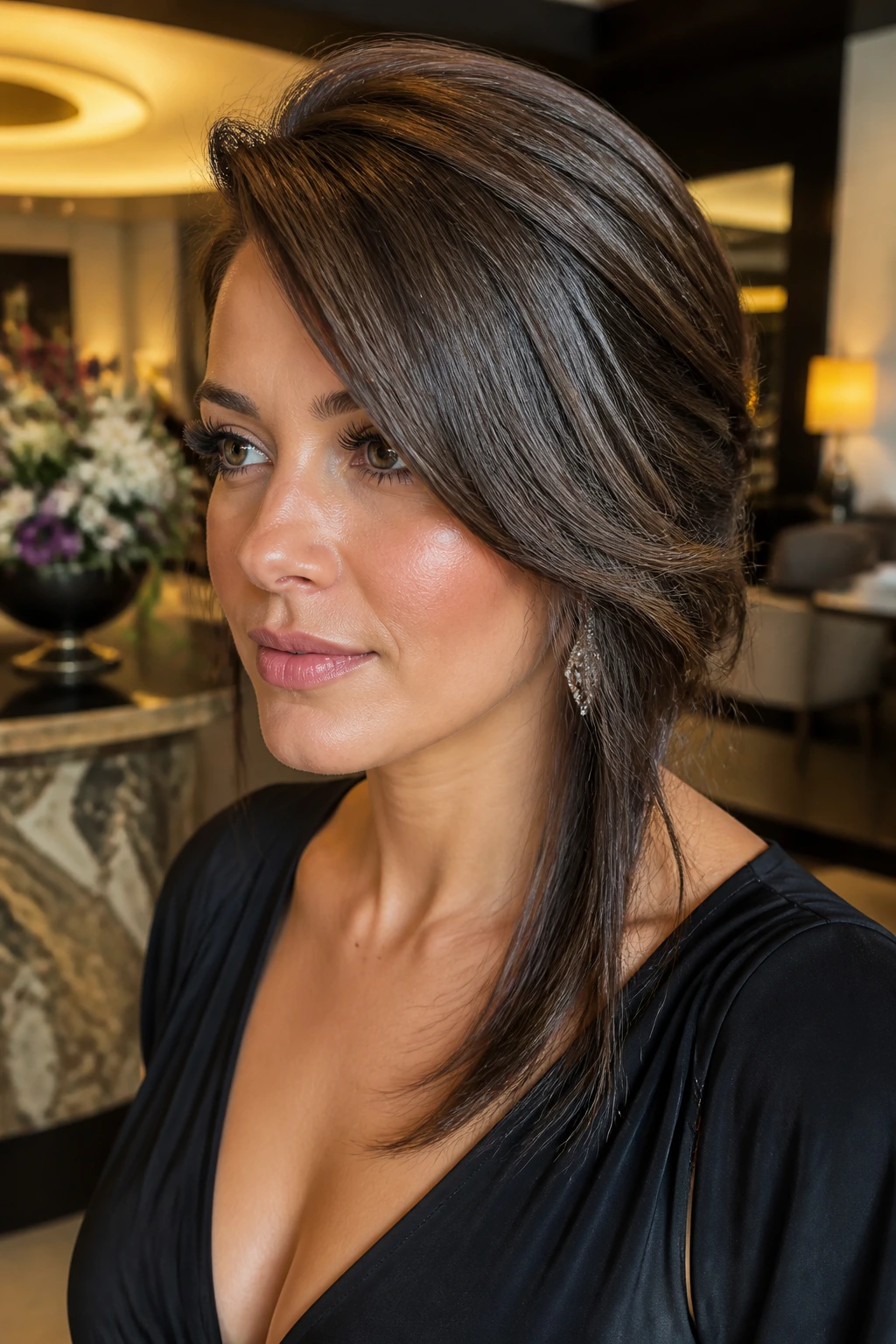
This is the fancy version of a side-swept bang. The difference is volume. More lift at the root, more polish through the lengths, and a longer sweep that feels intentional enough for a dinner out or a big event.
On a round face, the height at the front is doing the flattering work. The sweep then draws one clean line across the forehead and down the side of the face. It’s dramatic, but not in a loud way.
I like this shape when the rest of the hair is also styled with some body. A flat top and a giant fringe can feel disconnected. A smooth blowout or soft waves make the whole look read as one piece. That connection matters more than extra hairspray ever will.
29. Minimal-Maintenance Long Bangs That Grow Out Well
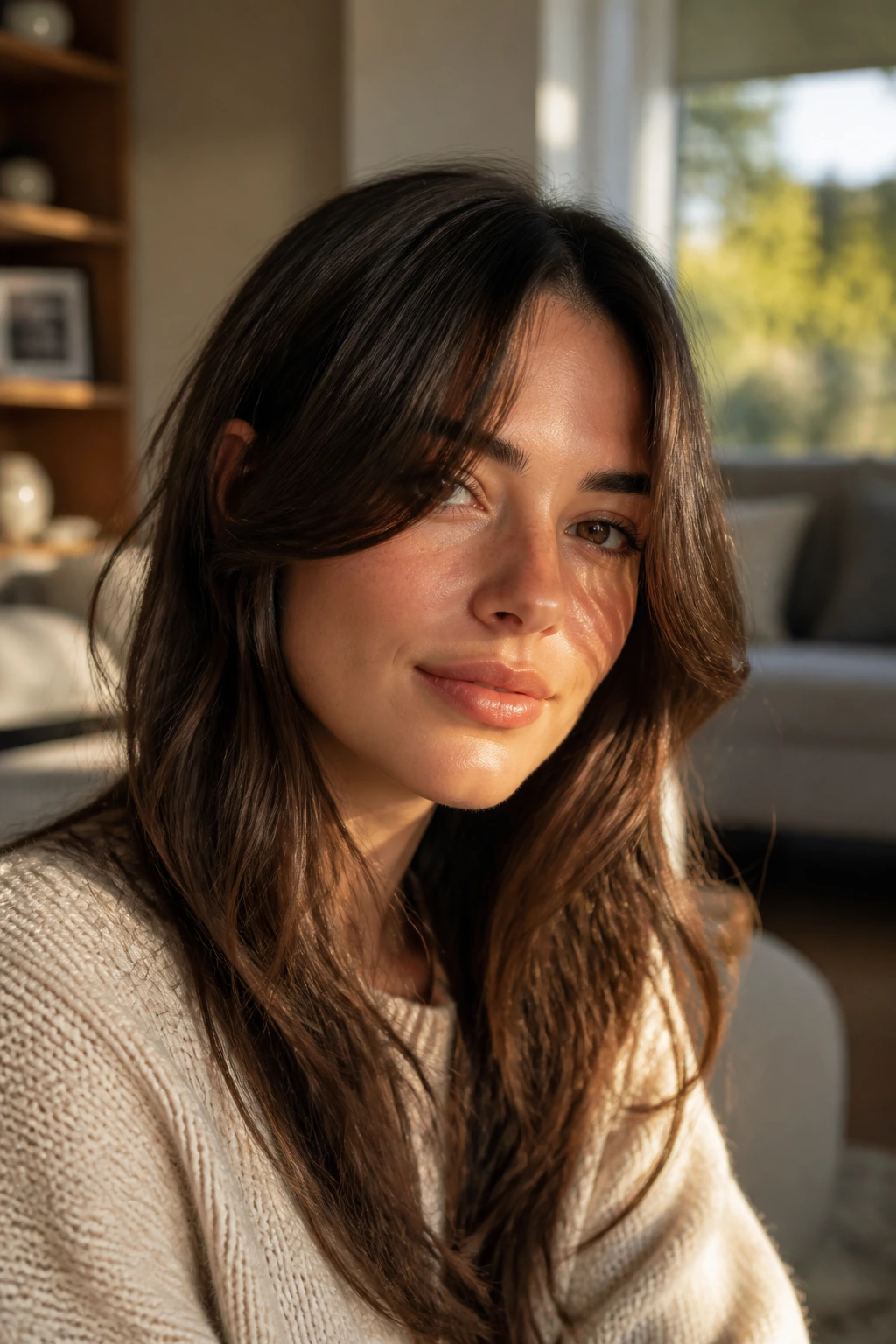
Not everyone wants a bang that needs trimming every few weeks. Some people want the face-framing effect and the easy grow-out. Fair.
This version starts long enough to tuck behind the ear, split in the center, or sweep to the side without falling apart. The shortest point still opens the face, but the sides are left long from day one. That means fewer awkward weeks and fewer appointments that feel urgent.
Round faces tend to do well with this because the longer lengths keep the front from closing in. The style still gives shape, but it doesn’t demand constant attention. If you hate fussing with your hair every morning, this is the honest choice. No apology needed.
30. Soft Reverse-V Long Inverted Bangs
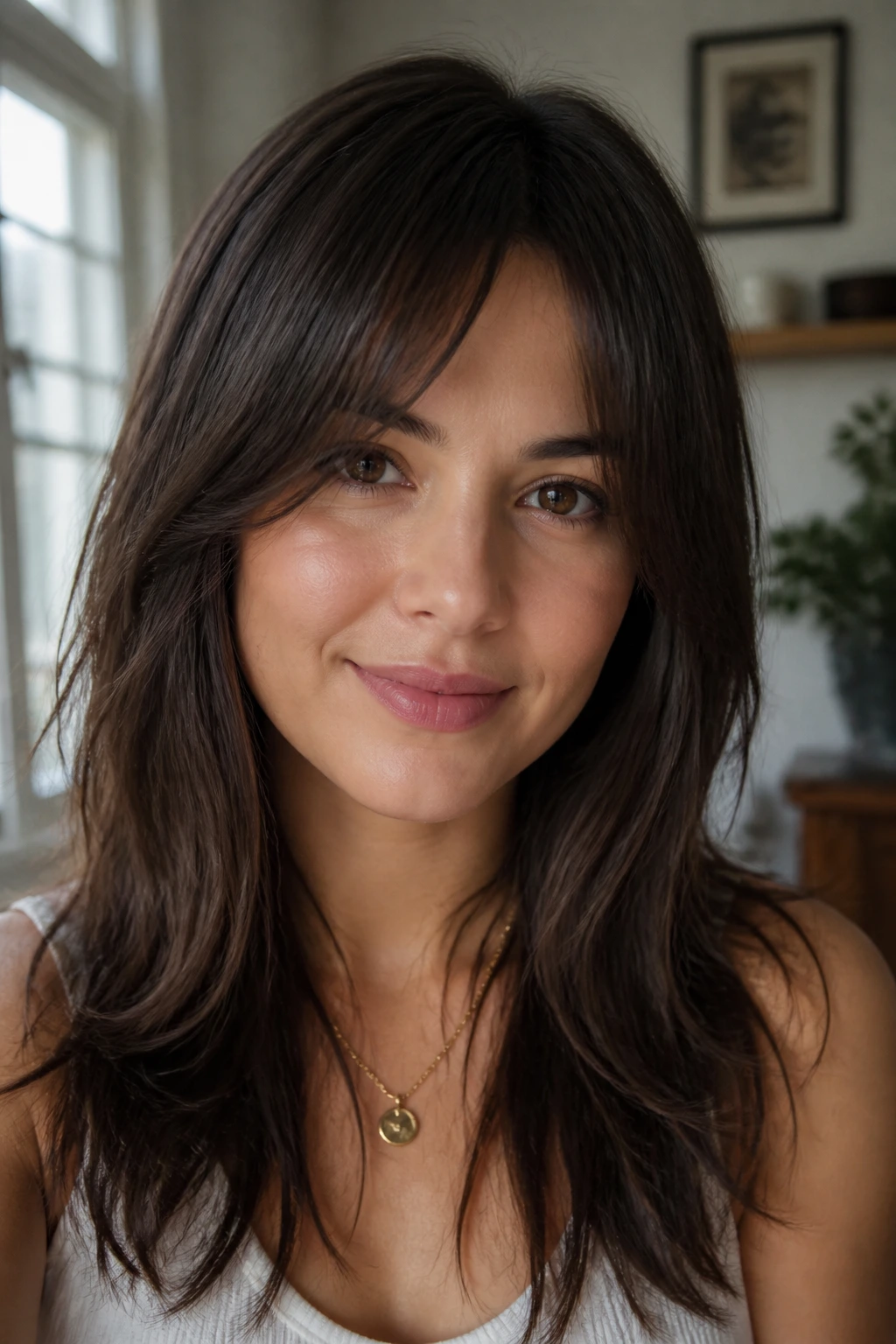
If you want the strongest lengthening effect, this is the version I’d put at the top of the pile. A soft reverse-V starts with a lighter center and lets the sides fall longer and fuller toward the temples, so the front creates a subtle downward point without looking sharp.
That shape works on round faces because it breaks the softness of the cheeks with a little angle. Not a lot. Just enough. It also keeps the forehead open in the middle, which helps the whole face read taller. That’s the whole game here.
What to Ask For
Ask for the center to sit around the brow or a touch below, then let the outer pieces drop toward the cheekbone or jaw. Keep the corners feathered so the V does not look stiff.
- Use a dry cut if your hair expands when it dries.
- Ask for soft internal weight removal if your hair is thick.
- Style the center flat and the sides away from the face.
- Keep the outer ends long enough to tuck or sweep.
This is the version that gives structure without making the cut feel severe.
Final Thoughts
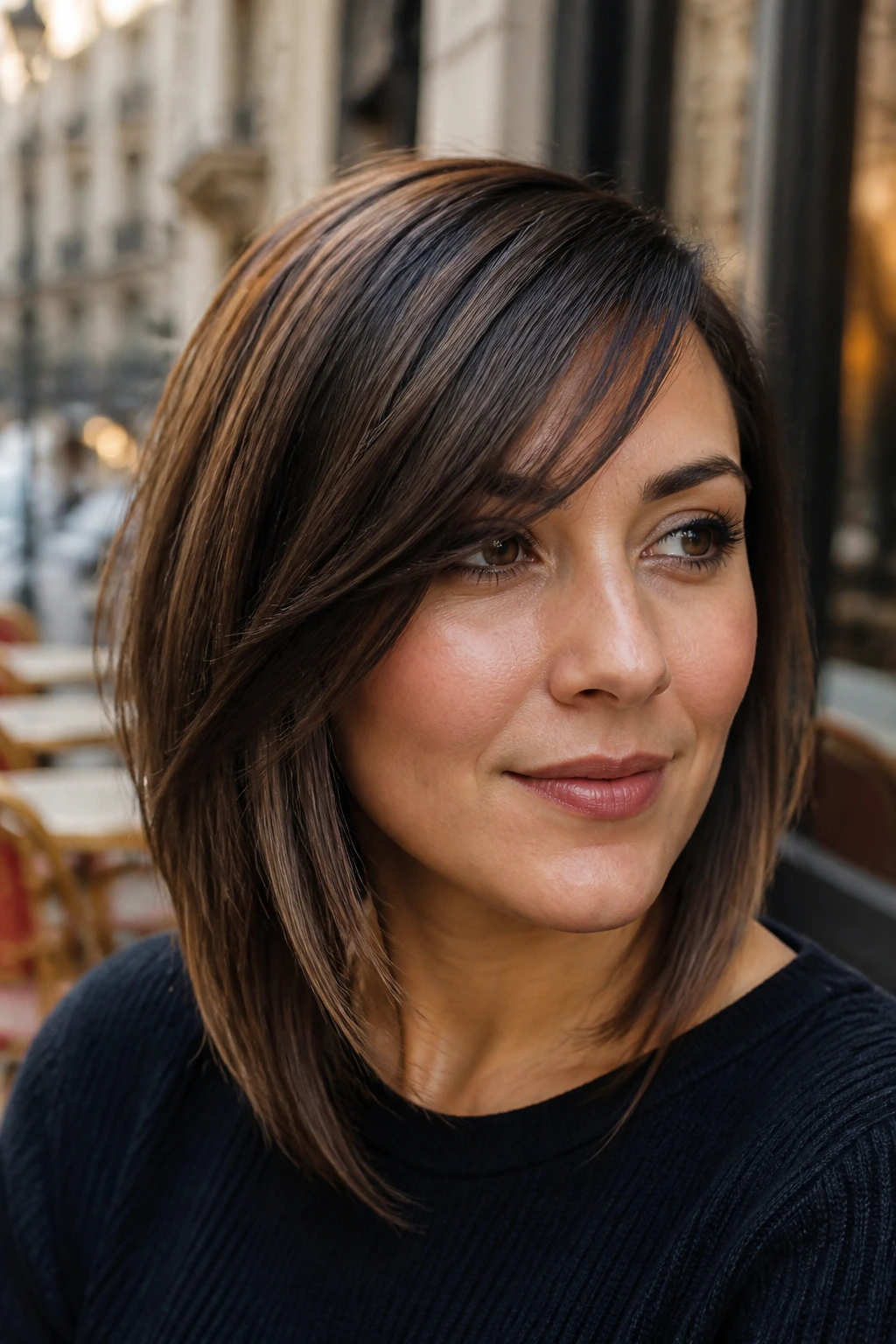
The best long inverted bangs for a round face are the ones that create a clear line without sitting like a wall across the forehead. Soft center opening, longer outer pieces, and enough movement to keep the face from feeling boxed in — that combination does the most work.
Texture matters more than the trend name. Fine hair needs lightness, thick hair needs weight removed from underneath, wavy hair needs space to bend, and curly hair needs length left on purpose. Get that part right and the style starts looking easy.
If you’re bringing a photo to a stylist, bring one with the same parting and similar hair texture. That saves a lot of bad guesses. And if you’re unsure, start a little longer. Bangs can always be shortened. Growing them out is a much slower hobby.
